Normal view

There are new articles available, click to refresh the page.
Yesterday — 13 July 2026Main stream

Innovator of Year Awarded to STA’s Wood at STN EXPO West

12 July 2026 at 22:33

RENO, Nev. — Cameron Wood, the lead electric vehicle performance analyst for school bus contractor Student Transportation of America, accepted the sixth annual Innovator of the Year award July 12 during the opening session of STN EXPO West.

Wood is highlighted on the cover and a feature article in the July issue of School Transportation News. He joined STA in 2024 after working as a systems engineer at Lockheed Martin. His background in engineering, algorithms and data analysis helped him bring a new perspective to student transportation.

From left: STN President Tony Corpin and Cameron Wood STN EXPO West, following Wood’s acceptance of the 2026 Innovator of the Year award.

He is recognized as Innovator of the Year for creating a machine-learning system that determines the appropriate state of charge for individual buses. The program combines real-time information from electric school buses, chargers and local weather with historical performance data. It then automatically recommends charging levels and adjusts charging times based on operating conditions, route needs and expected energy use.

The technology addresses challenges that can make electric school bus charging more complex than conventional fueling. Charging sessions can fail because of dirty connectors, improperly inserted plugs or communication problems between the vehicle and charger. Cold weather also increases energy consumption because heating systems draw power from the battery. These factors are especially important when buses must recharge between morning and afternoon routes or share sequential chargers.


Related: Sharda Presented with Innovator of the Year Award at 2025 STN EXPO West
Related: Zum’s Prakash Accepts Innovator of the Year Award at STN EXPO
Related: Innovator of the Year Talks School Bus Charging Solutions
Related: 2023 Innovator of the Year Drives Technological Advantages Needed for Fleet Growth
Related: Inagural Innovator of the Year Leads Electrification of North America’s Largest Fleet of School Buses


Before launching the automated program, Wood developed a calculator that required employees to enter charging and scheduling information manually. While useful, that approach could not easily scale as STA added more electric buses and chargers. Wood’s updated system, which is patent pending, now manages charging sessions throughout the day with minimal intervention, reducing work that could take employees several hours to a process completed in seconds. The automation also minimizes human error and gives drivers greater confidence that buses will be ready for their routes

During STN EXPO West conference, Wood was joined by his mother and her partner, as well as Rachel Lane, the company’s vice president of electrification and sustainability, and Thomas Yessman, the executive vice president of shared services at STA.

Cameron Wood (middle) stands with Rachel Lane (left), STA’s president of electrification and sustainability, and Thomas Yessman (right), the executive vice president of shared services at STA.

Tony Corpin, the president of STN Media Group and publisher of School Transportation News, introduced Wood as a passionate, intelligent and articulate individual.

“To say that I’m honored is an understatement,” Wood said on stage Sunday morning. “I want to thank Tony and the team at STN and along with NSTA for giving out this award every year. I want to thank Rachel Lane and Thomas Yesman for coming out from STA to support me. Especially Rachel, she’s a great boss. And thank you to my family, my mom and her partner came out all the way from Pennsylvania to support me and it means a lot. Thank you everyone.”


Related: School Bus Drivers Need Active Threat Training as Security Evolves, Experts Say
Related: Leadership Strategies Shared at STN EXPO West
Related: TD Summit Shares What the Business World Can Teach Student Transporters

The post Innovator of Year Awarded to STA’s Wood at STN EXPO West appeared first on School Transportation News.

Before yesterdayMain stream

Student Transportation of America Welcomes Tremblay’s Bus Company to the STA Family of Brands

By: STN
8 July 2026 at 22:06

WALL, N.J., Student Transportation of America (STA), a leader in student transportation, safety, and fleet services across North America, is pleased to announce the acquisition of Tremblay’s Bus Company, effective June 30, 2026.

Tremblay’s Bus Company is an ideal addition to the STA Family of Brands. Based in New Bedford and Fall River, Massachusetts, Tremblay’s operates a fleet of approximately 400 vehicles, serving school districts and communities throughout southeastern Massachusetts. The acquisition adds approximately $35 million in annual revenue and further strengthens STA’s strong and growing footprint across the Northeastern United States.

For STA, this acquisition is about far more than geography and growth. It’s about welcoming a company whose values closely mirror its own.

Founded in the late 1960s with a single station transporting local workers to nearby factories, Tremblay’s has grown into one of the region’s most respected transportation providers. Today, the company serves key customers including the New Bedford School Department, Fall River School Department, and Dartmouth School Department and is widely recognized for its longstanding commitment to safe, reliable service.

Tremblay’s has earned a reputation as an organization deeply connected to the communities it serves. For decades, Tremblay’s has supported veterans, public servants, seniors, youth organizations, and charitable causes throughout the greater New Bedford and Fall River area, becoming known for having a heart every bit as large as its fleet. STA values and celebrates this local commitment while supporting the business with corporate resources and best practices to ensure continued growth and success.

“Tremblay’s Bus Company represents exactly the kind of organization we are proud to welcome into the STA Family of Brands,” said Gene Kowalczewski, CEO of Student Transportation of America. “Their commitment to safety, their strong local leadership, and their deep ties to the communities they serve align perfectly with who we are as a company. We are excited to build on Tremblay’s remarkable legacy while continuing to support the students, families, employees, and school districts that have trusted them for generations.”

Across North America, STA’s Family of Brands is united by a shared focus on what matters most: safety, reliability, and care for people. The model combines local expertise and relationships with the resources, technology, and support of a larger organization—ensuring communities continue to receive personalized service while benefiting from industry-leading transportation practices.

STA will work closely with Tremblay’s leadership and employees to ensure a seamless transition for customers and staff. Day-to-day operations will continue without interruption, and the company looks forward to preserving the strong local relationships that have defined Tremblay’s success for more than half a century.

About Student Transportation of America
Student Transportation of America (STA) is an industry leader in school transportation, management, driver training, safety, routing, fleet services, maintenance, and innovative transportation solutions. Through the STA Family of Brands, the company operates more than 22,000 vehicles and serves communities across the United States and Canada with an unwavering commitment to safety, reliability, and customer service. For more information, please visit rideSTA.com.

The post Student Transportation of America Welcomes Tremblay’s Bus Company to the STA Family of Brands appeared first on School Transportation News.

July 2026

By: STN
1 July 2026 at 07:00
STA’s Cameron Wood, this year’s STN Innovator of the Year.
Photo courtesy of Student Transportation of America
Cover design by Kimber Horne

The July issue introduces the STN 2026 Innovator of the Year, Cameron Wood, the lead electric vehicle performance analyst for Student Transportation of America. Read the full story to learn how the 26-year-old is helping shape the future of electric vehicle charging. Read articles on how student enrollment affects transportation operations, cameras with new AI capabilities impact on driver training, school bus driver fatigue, alternative vehicles and learn more on the National Express to Summit Services contractor rebrand.

Read the full July 2026 issue.

Cover Story

Taking Charge
Cameron Wood, the lead electric vehicle performance analyst for Student Transportation of America, is this year’s STN Innovator of the Year. At only 26 years old, Wood is credited with developing a patent-pending program to help electric school buses charge smarter.

Features

Growth Spurt
Districts leaders say growth isn’t solely defined by an increase in student enrollment. Factors such as increased routes and new schools contribute to expanded transportation operations.

Smart Move
What do cameras with AI capabilities that record driver activity and student behavior mean for the future of school transportation?

Dealing with Driver Fatigue
While they love aspects of the job, school bus drivers share the many external and internal factors that contribute to burnout and resignation.

Special Reports

Same Goals, Different Vehicles
Increasingly, non-yellow vehicles are taking students to and from school and extracurricular activities. This makes it even more paramount that the bar of alternative transportation safety standards is set high.

Q&A: Industry Ascension
CEO Tim Wertner discusses the reasons for the recent rebrand of one of the largest school bus contractor groups and plans its companies have for the present and future.

Conversations
Ad Index

Editor’s Take by Ryan Gray
Safety in Sight

Publisher’s Corner by Tony Corpin
Fuel Choice, Budgets & Fresh Ideas

The post July 2026 appeared first on School Transportation News.

Oregon School Bus Driver Crowned Grand Champion at International Safety Competition

30 June 2026 at 19:39

KYLE, Texas – Each year, the Bill Loshbough Grand Champion award goes to the winner of the School Bus Driver International Safety Competition produced by the National School Transportation Association (NSTA). This year’s two-day event concluded over the weekend, and Brian Rickmann of Oregon’s Beaverton School District took home the honors.

Rickmann finished the event with a grand total of 694 points, which gave him a commanding lead in the Type D competition over second place winner James Hethcock of Colleyville Independent School District in Grapevine, Texas (571.53) and Kevin Beck of Salem-Keizer Public School District in Oregon (545.87).

For the title of Bill Loshbough Grand Champion across all categories, named for the Hall of Fame member of NSTA and the National Association for Pupil Transportation, the overall race was a little tighter. Rickmann’s 694 points bested the 628 points tallied by James Tiensvold of Dickson County School District in Tennessee in the Type A competition and the 624.67 points by Betty Nelson of Dean Transportation in Lansing, Michigan in Type C.

The 52nd edition of the School Bus Driver International Safety Competition took place in Uhland, Texas June 27 and 28 at the Hays Consolidated Independent School District transportation facility. The competition was sponsored by Beacon Mobility and hosted by the National School Transportation Association. Hays CISD has hosted the event since 2019, with no competition held 2020-2022 due to COVID-19. The site has proved to be the perfect fit for a competition of this sort, “This facility is really tailormade for a competition like this. As you can see, the spacing and just the layout is really helpful” said Curt Macysyn, NSTA’s executive director.

This year’s competition consisted of a total of 93 school bus drivers from 27 states and two Canadian provinces. In order to qualify for the international competition, each driver had to win their state, regional, or provincial competition, or be an NSTA Member Inclusion Driver.

Drivers were grouped by type, with 11 Type A (small bus) drivers, 30 Type D (conventional bus) drivers, and 52 Type C (transit bus) drivers. While drivers mainly competed with drivers in their classification, the Bill Loshbough Grand Champion was crowned to the driver with the most points overall.

The competition itself was split into two separate competitions: A CDL knowledge test, which took place Saturday, June 27, and the scored driving competition, which took place Sunday, June 29. An awards dinner followed.

The scored driving competition consisted of 10 different events along one continual course. Before driving the course, drivers toured the course by bus and received the details of each individual event.

The course started with student loading, followed by a railroad crossing, then a right-hand turn. It continued with the offset alley, which required drivers to shift to the left, right and back to the left without hitting any barriers.

After the offset alley, drivers completed a left-hand turn, which directed them to the straight-line test that required them to keep their right dual wheels within a straight line. Drivers then paralleled parked their buses and navigated the diminishing clearance.

The competitors then found themselves faced with what proved to be the toughest task of the day, the backup stall. The backup stall required drivers to back their buses into a tight stall and stop in a marked and measured parameter. Upon securing the buses, drivers were scored on the timing and accuracy. Drivers then needed to pull their bus forward out of the stall without hitting any obstacles and proceed to the final event of the competition: The stop line.


Related: Texas Team Takes Home Roadeo Award at TSD Conference
Related: 51st Edition of School Bus Driver International Safety Competition Winners Announced
Related: Beloved Missouri School Bus Driver Retires After 27 Years, More Than 1 Million Miles


Type A Results

Contestant Number 

Name 

State 

District-Company 

Total Points 

2 

James Tiensvold 

Tennessee

Dickson County School District 

628 

6 

Betsy Grove 

Tennessee

Dickson County Board of Education 

535.07 

3 

Kimberly Doyle 

Calgary 

Southland Transportation LTD 

500.4 


Type C Results

Contestant Number  Name  State  District-Company  Total Points 

46 

Betty Nelson 

Michigan 

Dean Transportation 

624.67 

7 

DanHill Marantal 

Texas 

Plano ISD 

604.33 

13 

Stephanie Johns 

Kansas

Auburn Washburn USD 437 

600 


Type D Results

Contestant Number  Name  State  District-Company  Total Points 

16 

Brian Rickmann 

Oregon

Beaverton School District 

694 

6 

James Hethcock 

Texas 

Grapevine Colleyville ISD 

571.53 

18 

Kevin Beck 

Oregon

Salem-Keizer Public School District 

545.87 

Each event was scrutinized by a set of judges stationed along the course at their respective events. All judges were volunteers, many of which came from school districts or companies. To avoid conflicts of interest, judges stepped away from the course when a competitor represented the same school district or company.

David Jorgensen, transportation operations manager of Salem-Keizer Public Schools in Oregon, did just that, as one of his district’s drivers, Kevin Beck, not only qualified for the competition, but also placed third amongst Type D drivers. Jorgensen, who judged the backup stall, had no shortage of pleasantries when speaking about NSTA and the competition as a whole.

“It’s fun to be out here. It’s fun to meet people from other places. It’s fun to watch the skills of the drivers and it’s just fun. It’s really smooth. It’s a great facility, the weather has been nice,” he commented. “Drivers have been doing okay. I mean, we are one of the most challenging events on the course, so anytime someone does well, that feels really good.”

Not only did the competition prove to be enjoyable, it allowed bus drivers from across North America to enhance their safety knowledge and skills, something that can go a long way in ensuring the safety of students.

Photos 

The post Oregon School Bus Driver Crowned Grand Champion at International Safety Competition appeared first on School Transportation News.

Hays CISD Hosts 52nd Edition of School Bus Driver International Safety Competition

By: STN
24 June 2026 at 22:39

National School Transportation Association (NSTA) bus driver event continues in 2026. When: Sunday, June 28, 2026 – 8:00 AM to 3:30 PM (CT). Host: National School Transportation Association (NSTA). Title Sponsor: Beacon Mobility. Participants: We are now up to 93 School Bus Drivers from 27 states, and 2 Canadian Provinces, who have qualified by winning a state, regional, or provincial competition, or been classified as NSTA Member Inclusion Driver. Where: Hays CISD Transportation Facility, 2385 High Road, Uhland, TX 78640. GPS Location: 29°58’10.5”N , 97°47’03.4”W|Tel.: 512-268-2141.

For the third time since 2019, NSTA hosts the SBDISC, as the event returns to the
Hays CISD Transportation Facility once again in 2026. In 2023, the NSTA Board of
Directors decided to revive this iconic event, and after careful consideration, the
organization approved Hays CISD Transportation Facility as the permanent location for
the event. This two-day Weekend Competition provides an opportunity for school bus
drivers to test their CDL Knowledge through a scored test and Driving Skills in one of
three (3) categories: Small Bus (Type A), Conventional Bus (Type C), or Transit Bus (Type D). Drivers must complete Driver Orientation and complete a CDL Knowledge Test on Saturday, June 27th, prior to the Driving Skills Competition on Sunday (June 28th). In order to qualify for the SBDISC, drivers must win in their Bus Type Classification at a state, regional, or provincial competition, or be granted NSTA Member Inclusion status,
in order to gain entry to compete in SBDISC.

Invitees: In addition to the approximately 93 drivers, there are 41 competition judges –
who volunteer to officiate at the event. Additionally, spectators are invited to attend the competition, and shuttle buses are provided to-and-from the Hays CISD Transportation
Facility directly from the event’s host hotel – the Austin Marriott

Downtown (304 E. Cesar Chavez St, Austin, TX 78701, Phone: 512-457-1111). The hotel is approximately 45 minutes away from the Hays CISD Transportation Facility. Food
Trucks will be available on-site at Hays CISD for spectators to purchase breakfast, lunch,
and other refreshments.

Cost: There is no cost to attend the Driving Skills Competition at Hays CISD on Sunday
morning, and a photo opportunity for all Driver-Competitors is scheduled for 4:30 PM
with NSTA President Patrick Dean at the host hotel. The Driver Awards Banquet will be
hosted at the Austin Marriott Downtown Hotel on Sunday evening from 5:30 PM to 8:00
PM (CT), and there is a $85.00 registration fee for spectators and guests to attend.
Notes: In 2024, the NSTA Board of Directors approved the Hays CISD Transportation
Facility to be the permanent location for the SBDISC – starting in 2024.

About NSTA: NSTA is the leading resource for school bus transportation solutions and the voice for private contractors for more than 60 years. We are a membership organization for school bus contract-operators engaged primarily in transporting students to and from school and school-related activities. Members range from small family businesses Private school bus contractors account for 38 percent of the nation’s pupil transportation services and employ more than 250,000 individuals as bus drivers, mechanics, maintenance workers, dispatch, and office workers. School transportation represents the largest form of mass transportation in the United States. Daily, almost 26 million K-12 students are transported by an estimated 480,000 yellow school buses.

The post Hays CISD Hosts 52nd Edition of School Bus Driver International Safety Competition appeared first on School Transportation News.

Japan’s Lexus ES Offers A Splitter Up Front And A Foot Deodorizer Down Below

  • Japan’s 2026 Lexus ES gets exclusive factory aerodynamic body kits.
  • Advanced illumination features project graphics onto the pavement.
  • Modellista drops the sedan an inch and lights up its illuminated side skirts.

Lexus has brought the eighth-generation ES sedan to its home market, following the sedan’s earlier debut in the US and Europe. The hybrid and electric powertrains carry over unchanged, but Japanese buyers get access to a wider selection of optional accessories, including subtle bodykits and interior lighting.

Review: We Drove The 2026 Lexus ES Hybrid And EV, And One Version Stands Out

The standout from the official catalog is the Lexus Genuine Aero Parts Set. It drops the sedan’s stance and sharpens its aerodynamics, with a splitter, side skirts, and a rear bumper extension finished in glossy black. The kit also pairs with droplet-shaped fins on each D-pillar, which Lexus says steady the vortices along the rear quarters to improve stability and steering response.

\\\\\

Lexus

For buyers chasing something different, Modellista has its Advanced Luxury Package. It adds body-colored pieces that cut ground clearance along the profile by up to 26 mm (1 inch). The side skirts are illuminated and paired with mirror covers that integrate fins. Rounding it out is a set of 21-inch forged aluminum wheels in dark premium metallic.

More: New Lexus ES Looks Great But This F-Sport Render Looks Even Better

While Japan has all of these options for the exterior, US buyers are currently restricted to black emblems, wheel locks, and protective films. Another difference between the two markets is the variety of lighting accessories.

Lighting And Projections

\\\\\\\\\\\\\\\

Lexus

The Japanese-spec ES can be had with Projection Welcome Illumination, which casts a Lexus emblem onto the pavement ahead of the car, joined by side-projection lighting that throws geometric graphics down the flanks.

The catalog also covers illuminated door sills, a cargo sill, and Lexus-branded puddle lamps, all available in the US too. Buyers who want more can add illuminated cup holders and door pockets in a range of colors.

More: This Lexus Wagon Looks So Good It’ll Make You Mad It’s Not Real

The rest of the interior list runs to headrest pillows, a rear footrest with deodorizing properties, seatback storage pockets with a tablet holder, and premium floor and luggage mats. The lineup also includes the ES350e Rr Comfort package, the equivalent of the US-spec Executive Package, aimed at owners who prefer the back seat. Lexus also doubles down on anti-theft measures with physical locks for the wheels and the steering wheel.

Japanese Pricing

\\\\\\\\\\\\\\\\\\\\\\\\

Lexus

The Lexus ES is on sale in Japan starting at ¥7,900,000 ($49,200) for the entry-level hybrid ES350h FWD. At the top sit the electric ES350e FWD with the Rr Comfort Package and the ES500e AWD Version L, both at ¥9,200,000 ($57,300). The US-spec car runs a bit higher, between $51,095 and $60,295 depending on trim.

More: Lexus’s New ES Infotainment Acts Like A Tablet, Talks Back In The Gender You Pick

In terms of optional upgrades, the Lexus Genuine Aero Parts Set retails for ¥293,700 ($1,800), the Aero Stabilizing Fins for ¥22,000 ($140), and the Modellista package for ¥642,400 ($4,000), with the 21-inch wheels adding another ¥964,700 ($6,000). The Projection Welcome Illumination is priced at ¥55,000 ($340) for the grille and ¥83,600 ($520) for the side.

And last but not least, Lexus offers a deodorizing footrest, for the driver and passenger whose feet have become a known issue, at ¥46,200 ($290), the headrest pillows ¥38,500 ($240), the seatback storage pocket ¥17,600 ($110), and the luggage mat ¥30,800 ($190).

\\\\\\\\\\\\\\\\

Modellista

Ford’s Reviving The Fiesta And Building A Bronco Only For Europe To Hold Off BYD

  • Ford plans five new cars and SUVs for Europe before the decade’s end.
  • Future lineup will include a compact Euro-Bronco SUV and a Fiesta revival.
  • It hopes rally styling and handling will win buyers from cheaper Chinese brands.

Ford’s European business has spent recent years shrinking faster than an Ozempic’d waistline. Now the company’s planning a comeback, and apparently the answer involves “rally-bred” styling and handling, Broncos, a Fiesta revival, and a direct fight against fast-growing Chinese automakers like BYD flooding Europe with affordable EVs and hybrids.

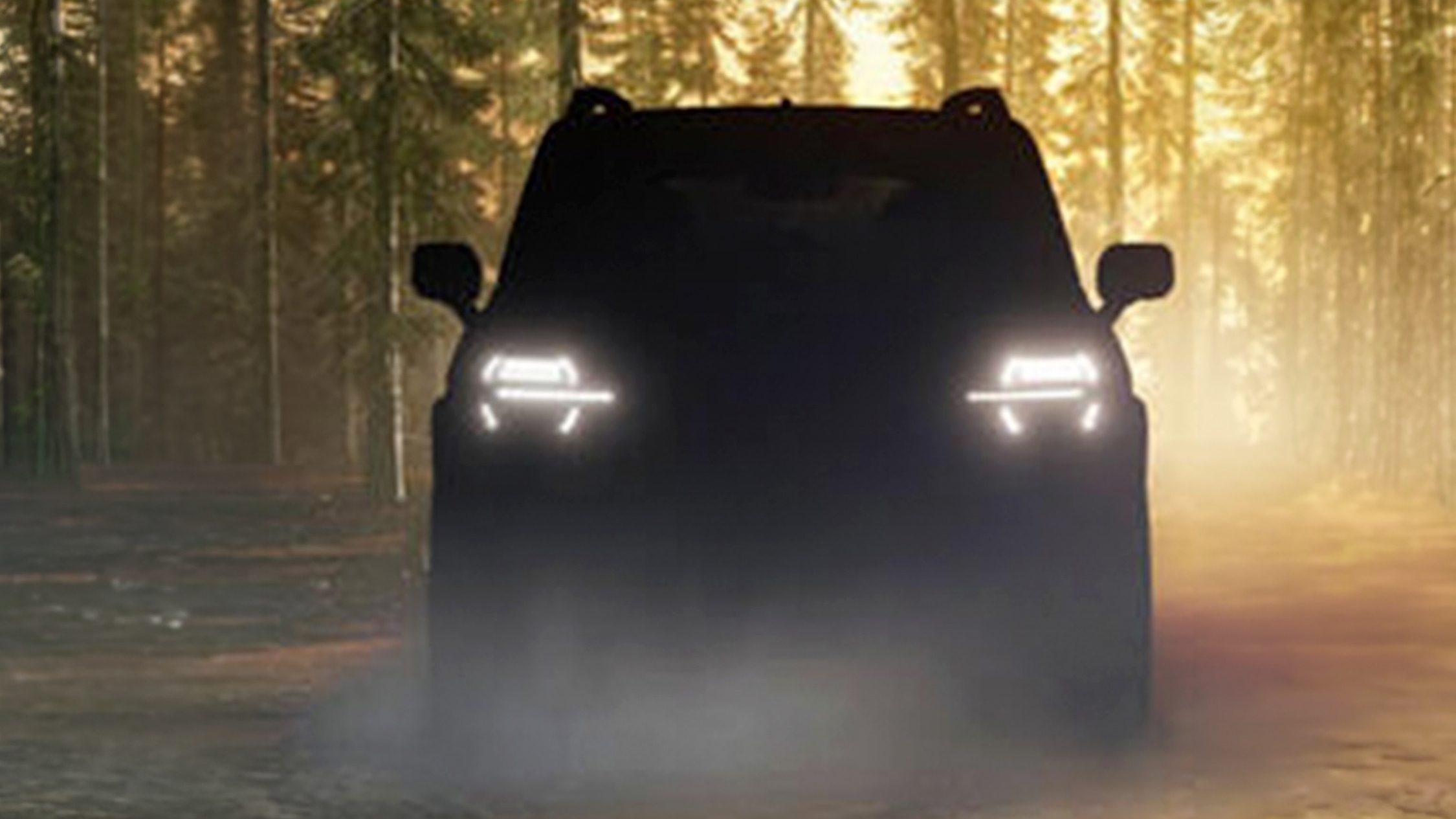
The company this week confirmed plans to launch five new passenger vehicles across Europe by 2029, including a Bronco SUV that riffs on the look and attitude of the US version, while being entirely unrelated. A single teaser image showed the Euro Bronco on the far left looking suitably tall and square. It will be built by Ford in its Valencia plant in Spain from 2028, offering a mixture of powertrain types.

Related: Ford’s CEO Said His Own Cars Were Boring, But What He’s Teasing Next Isn’t

Before buyers can get their hands on the Bronco, though, Ford will launch a new small electric hatch that’s almost certain to revive the Fiesta name. It’ll be based on the AmpR Small platform and running gear from the Renault 5, and will be joined by a related electric crossover that’s effectively Ford’s answer to the Renault 4, and a replacement for today’s Puma Gen-e. Both will be built by Renault.

Two additional crossovers using multi-energy platforms are also in development and will hit showrooms by 2029. It’s believed that one will replace the petrol-powered Puma, while the bigger one will take over from today’s Kuga. The automaker didn’t detail the powertrains, but mild-hybrid and plug-in hybrids look likely. And finally, Europe is also getting its hands on the tough, work-ready Ranger Super Duty that’s already available in Australia.

Ford Can’t Win A Price War

 Ford’s Reviving The Fiesta And Building A Bronco Only For Europe To Hold Off BYD
Ford’s new Euro Bronco

So why the big push? A decade ago, Ford ranked among Europe’s biggest automakers. Today, it’s slipped badly after axing household names like the Fiesta and Focus while betting heavily on VW-based electric SUVs and crossovers such as the Explorer and Capri. Meanwhile, brands like BYD have stormed into Europe with aggressively priced EVs and rapidly rising sales.

Rather than trying to outfox China on pricing, which it knows it could never do, Ford’s strategy appears focused on personality – something CEO Jim Farley has already talked about. The company says every new passenger model will feature “rally-bred” character inspired by decades of World Rally Championship success with icons including the Escort RS Cosworth, Focus WRC, and Fiesta WRC.

Ford Europe boss Jim Baumbick told Autocar magazine the company wants to deliver unmistakably Ford driving dynamics, even when using partner platforms from companies like Renault. “We don’t just want to compete, we’re here to play to win,” he said.

 Ford’s Reviving The Fiesta And Building A Bronco Only For Europe To Hold Off BYD
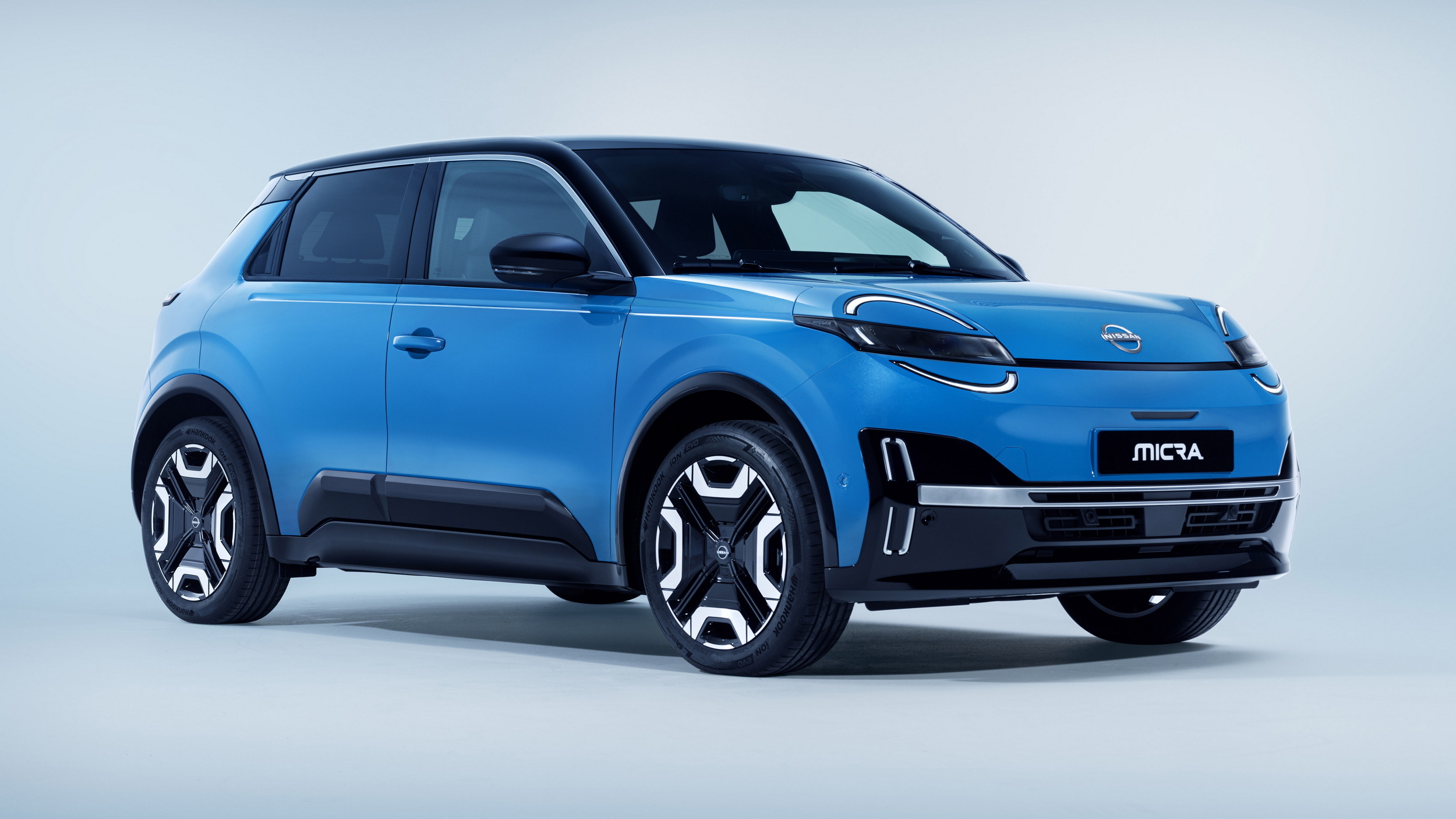
Renault’s 5 already resurected the Nissan Micra, next it’s bringing back the Fiesta.

The company’s also openly questioning Europe’s aggressive EV mandates.

“We don’t build vehicles to meet regulatory mandates; we build them for people,” Baumbick said. “The fastest route to zero emissions is the one customers will actually take. We can accelerate emissions reductions today with hybrid technologies that let customers drive electric whenever they can.”

Whether rally nostalgia alone can reverse Ford’s European slide remains unclear. But doing nothing isn’t an option, and making the most of your heritage – something Chinese buyers don’t have – seems like a good one.

 Ford’s Reviving The Fiesta And Building A Bronco Only For Europe To Hold Off BYD

Ford, Nissan

Don’t give up the fight – for the Boundary Waters and the future of the planet — this Earth Day

22 April 2026 at 10:15

A camp site on Fairy Lake in the Boundary Waters Canoe Area Wilderness in July 2025 (Ruth Conniff/Wisconsin Examiner)

The darkened sky in the early afternoon, the tornado sirens wailing as baseball-sized hail shattered windows and dented car roofs, sounding like a series of explosions as drivers hurried home at 4 p.m. last week — all of it felt like the eerie first scene in an apocalyptic movie. 

This is not a drill, I thought, watching the clouds tumbling and boiling overhead as my car radio and my phone began shrieking in unison and a robotic voice informed me that I should take shelter immediately from a tornado that was moving at 20 miles per hour directly toward my neighborhood. 

We’ve all grown accustomed to the low background hum of climate anxiety. Suddenly it’s as loud and immediate as the crack of a giant hailstone on the windshield. 

The changes to the planet we’ve been warned about for decades are suddenly hitting too close to home to ignore. Over the last year in Wisconsin we’ve endured smoke-filled skies from summer forest fires, massive floods, wild temperature swings and scarier, more serious storms. 

This should be a wakeup call. But instead of accelerating efforts to head off climate catastrophe, our federal government is canceling renewable energy contracts and pushing for more coal plants, more oil drilling, more toxic mining on public lands, undoing protections for clean air and water, and accelerating the destruction of our shared environment in order to extract resources and build more wealth for a handful of people in the short term. 

The price of this heedlessness is so enormous it hurts just to think about it. 

Two days after the hail storm and tornado warnings sent me and my neighbors scrambling for cover, the U.S. Senate passed a bill to allow sulfide mining in the Superior National Forest, on the edge of the Boundary Waters Canoe Area Wilderness — an inexpressibly beautiful place that is precious to my family, the scene of some of the most formative experiences of our girls’ childhood, and the most visited wilderness area in the U.S. The Forest Service spent years studying how acid mine drainage — the toxic byproduct of sulfide-ore mining — could contaminate the interconnected lakes and streams that make up the Boundary Waters. Once that contamination starts, there is no way to reverse it, which is why an overwhelming majority of Minnesotans weighed in against the mine, and the federal government blocked it. Until that protection was overturned last week.

Minnesota Sen. Tina Smith took a heroic stand on the Senate floor last Wednesday, arguing late into the night, trying to persuade her colleagues not just to hold off on destroying this pristine place, but to forgo using an obscure maneuver that, in a 50-49 vote, redefined land management and knocked down longstanding protections for every piece of national forest in the country. 

My colleague J. Patrick Coolican, editor of the Minnesota Reformer, described Smith pleading to an empty chamber, “I dearly hope the members of this body will think about their legacy in protecting the great places in this country.”

No future president can reinstate the mining ban that protected the Boundary Waters now that Congress used the obscure Congressional Review Act to strike it down. And it’s bigger than that. With their vote to open up mining near the Boundary Waters, “lawmakers have called into question the validity of every management plan issued by the U.S. Forest Service over the past several decades,” Alex Brown of Stateline reports. “That could result in legal chaos for thousands of permits covering logging, grazing, mining and outdoor recreation.” As Smith warned her Republican colleagues who want to protect the public lands they cherish in their home states, their vote means it’s now open season on those lands, too.

I couldn’t bear to talk with my daughters, who have spent every summer they can remember in the Boundary Waters, about the vote last week. 

But this week, Earth Week, it’s time to confront it. All is not lost. Just as they stood up to the masked federal agents who descended on Minneapolis to tear immigrant families apart, Minnesotans are organizing to fight Twin Metals, a wholly owned subsidiary of the Chilean mining company Antofagasta, as it seeks state permits to open up its toxic mine. While mining proponents tout the mine as a job creator (ignoring the economic costs of destroying the nation’s most-visited wilderness), the Senate’s action mostly benefits a foreign mining company, which has a history of flouting environmental regulations and creating toxic spills in other countries, and which will likely sell the copper it extracts from Minnesota to China.

The least we Wisconsinites can do is to help our neighbors as they try to repel this deadly invasion and seizure of a priceless natural resource.

Friends of the Boundary Waters, based in Minnesota, is filing a lawsuit arguing that the congressional maneuver that opened up the mine is illegal. The group and its allies are also urging the Minnesota DNR to cancel Twin Metals’ leases for the mine, and pushing the Minnesota state legislature to ban mining in this sensitive area.

As Wisconsin Sen. Gaylor Nelson, the founder of Earth Day put it in his 1970 speech kicking off the modern environmental movement, protecting the environment is “not just an issue of survival, but an issue of how we survive.” 

“Our goal is not just an environment of clean air and water and scenic beauty,” he said. “….Our goal is an environment of decency, quality and mutual respect for all human beings and all other living creatures. An environment without ugliness, without ghettos, without poverty, without discrimination, without hunger and without war.”

We need to protect that vision of life from the forces of greed and destruction that are engulfing us. We can’t let them write the end of the story.

GET THE MORNING HEADLINES.

❌
❌