Normal view

There are new articles available, click to refresh the page.
Before yesterdayMain stream

Renault Just Helped Us Unwrap The Facelifted Scenic’s Disguise

  • Scenic facelift appears ready with styling borrowed from updated Megane.
  • Google Gemini and new software features are likely to enhance the interior.
  • Range may remain unchanged thanks to already impressive battery capacity.

The facelifted Renault Scenic E-Tech has been spotted in disguised form again, but thanks to a strange timing quirk, Renault has accidentally made our job of decoding the upcoming changes much easier. The spy shots landed on the very same day the company unveiled the new-look Megane E-Tech, giving us a pretty clear preview of what’s next for the bigger Scenic SUV.

The updated Megane arrives with a completely reworked front end featuring a new grille treatment like the one on the Captur and Symbioz, fresh lighting elements, and a more assertive – and less obviously electric – look. The camouflaged Scenic prototype appears to be wearing much of the same visual makeover, which makes sense given the two EVs already share plenty of hardware beneath the skin.

Related: BMW Killed The Range-Extender EV. Ford And Renault Want To Bring It Back

The Scenic is already one of the stronger offerings in its segment, so it’s not like it requires any major help. It looks good, drives well, and has a great electric range, so unlike the Megane, which gains a larger battery as part of its update, the Scenic may not need major changes in that department.

With its existing 87 kWh battery already delivering more than 380 miles (612 km) of WLTP range, Renault could decide that a fresh face and upgraded technology are enough to keep the Scenic competitive for the next phase of its life. And since the new Megane stuck with the old one’s 217 hp (220 PS / 160 kW) electric output, the Scenic probably will, too.

Google Gemini Onboard

\\\\\\\\\\\\

The software enhancements introduced on the Megane seem almost certain to carry across. That means Google Gemini integration should be on the cards, allowing drivers to interact with the vehicle using more natural voice commands. There’s also a decent chance Renault will bring over some of the smaller improvements that debuted on the Megane, including new charging and connectivity features, expanded app support, new driver recognition functions, and upgraded connected services.

For now, Renault isn’t saying when the refreshed Scenic will make its official debut. But with prototypes already out testing and the Megane’s makeover now public, we’d be surprised if the wait stretched much longer than a few weeks. The official shots of the freshly-revealed Megane E-Tech in the gallery below give you an idea of what to expect from the Scenic.

\\\\\\\\\\\\\

SH Proshots, Renault

Renault Gave The Updated Megane EV A Meaner Face And A Slower 0-62

  • Renault refreshes Megane EV with Captur nose design and extra equipment.
  • New LFP battery boosts range to 310 miles and increases charge speeds.
  • Google Gemini joins expanded tech spec together with upgraded ADAS.

Last year at the Munich Motor Show, Renault CEO Fabrice Cambolive said the Megane E-Tech Electric was due for a hot hatch-inspired makeover. Nine months on, that update is here, and while it doesn’t deliver a real Megane hot hatch, and it’s actually slower, it does make the E-Tech even more appealing in just about every other way.

The design changes are impossible to miss because Renault has completely reworked the front end with a new bumper, grille and lights. The Megane E-Tech now has the same family face as other Renault models like the Captur and Symbioz, and looks much less cuddly. Other visual updates include fresh wheel designs and a new Satin Blue paint finish.

Related: Renault’s Rafale Looks Like A Coupe SUV Until It Starts Launching Drones

Under the skin, Renault has replaced the old 60 kWh battery with a new 67 kWh usable LFP pack. It pushes maximum WLTP range from a poor 285 miles (459 km) to a more reasonable 310 miles (499 km) and helps bring charging performance up a notch. Peak DC charging climbs to 165 kW, allowing a 15 to 80 percent recharge in around 24 minutes.

\\\\\

The front-wheel-drive powertrain remains familiar, with a 217 hp (220 PS / 160 kW) electric motor producing 221 lb-ft (300 Nm) of torque, just as before. The bigger battery appears to have put a tiny dent in performance though, increasing the zero to 62 mph (100 kmh) time from 7.5 to 7.6 seconds.

But engineers have also retuned the steering and revised the suspension setup to compensate for the larger battery, so there’s a chance you’ll not notice the difference out on the road.

Same Screens, New Software

\\\

Inside the Megane, it might also take a while to notice any differences. On the surface, nothing much has changed, but the software that runs the twin-screen dashboard gets a substantial update. Google Gemini joins the OpenR Link system, there are now more than 100 downloadable apps, and a new driver-recognition feature can automatically load personal settings when it recognizes who’s behind the wheel. 

The range has also been simplified to Techno and Esprit Alpine trims, both carrying more standard equipment than before. That word ‘more’ kind of sums up everything about this Megane makeover. It was already a solid electric family hatch, but these updates give it a sharper look, and boost both range and equipment. Now all we need is the true Megane RS hot hatch CEO Cambolive got us all hopeful for.

\\\\\

Renault

A $63,500 Range Rover Discounted To $26,600 Shows Why Brands Can’t Win The EV Debate

  • Range Rover discounts reportedly approach 60 % in China as demand collapses.
  • Locally built Evoque L SUV costs as little as $27,000, Bloomberg investigation reveals.
  • News comes as JLR adds hybrid option to EV-only baby Defender for ICE-loving US.

Poor old JLR can’t seem to get it right. The company confirmed today it’s re-engineering its upcoming baby Defender to accommodate hybrid powertrains because EV demand isn’t growing fast enough in gas-loving America. But also today we heard about a very different problem for the British automaker on the other side of the world, where EV obsession means ICE Range Rovers are being brutally discounted in China to secure a sale.

According to a report from Chinese media outlet Jiemian, a locally built Range Rover Evoque L has recently been advertised for as little as 179,800 yuan, equivalent to around $26,600. That’s nearly 60%, or a whopping $36,900 less than its official list price of  429,800 yuan ($63,500) and a startling discount for a premium SUV wearing one of the most prestigious badges in the business.

Gas Cars Are Bleeding Value Across China

 A $63,500 Range Rover Discounted To $26,600 Shows Why Brands Can’t Win The EV Debate

The Evoque’s plight isn’t unique. Data shows discounts on gasoline-powered cars climbing sharply from January to May 2026 as dealers struggle to move inventory. According to data from the China Passenger Car Association, the average gasoline-car discount ran to 33,000 yuan ($4,900) over the first five months of the year, nearly double the 17,000 yuan ($2,500) dealers were knocking off a year earlier.

Also: Range Rover Sport Is Getting Its First EV, But It Won’t Take The V8 Down With It

EVs and plug-in hybrids are holding up far better, reflecting just how rapidly Chinese buyers have embraced electrified vehicles.

The situation has become particularly painful in the used-car market. As more motorists trade combustion-powered vehicles for EVs, resale values have fallen sharply, creating a vicious cycle that makes buyers increasingly nervous about purchasing another gasoline vehicle. In May alone, the average ICE transaction price dropped 19 percent, and a typical three-year-old used car is now only worth 38 percent of its original value, versus 60 percent in 2023, Bloomberg reports.

US Wants MORE Gas Cars

 A $63,500 Range Rover Discounted To $26,600 Shows Why Brands Can’t Win The EV Debate

It’s fascinating how this contrasts with the announcement JLR made the very same day. The British automaker confirmed that its new compact Defender (above), along with future EMA-based models widely expected to include the next Velar and Evoque, will now offer a full hybrid option despite originally being conceived as EVs.

That move appears heavily influenced by disappointing EV sales in America, now JLR’s biggest market. While Chinese buyers are rapidly abandoning combustion power – and JLR products in general, forcing the company to withdraw Western-style vehicles – many US customers remain hesitant to make the jump to fully electric vehicles.

It’s a perfect illustration of the challenge facing every global automaker. Build too many EVs and you risk missing sales in America. Build too many gasoline cars and you could end up slashing prices in China. For companies like JLR, navigating that divide is complicated, expensive and full of risk.

 A $63,500 Range Rover Discounted To $26,600 Shows Why Brands Can’t Win The EV Debate

JLR, Baldauf

China’s Answer To Europe’s EV Tariffs Came With A Gas Tank

  • Chinese brands shifted toward plug-in hybrids after EV tariffs arrived.
  • European officials now appear ready to target that growing loophole.
  • New duties may slow growth but probably won’t stop China expansion.

When the European Union slapped tariffs on Chinese-built EVs in late 2024, the expectation was that it would slow the flood of low-cost imports heading into the region. Instead, many Chinese automakers simply reached for Plan B. That plan came with a fuel tank, and sales of Chinese hybrids have rocketed in Europe since then.

Related: Europe Tried To Block Chinese Cars But Ended Up Helping Them Instead

But according to a report from German business newspaper Handelsblatt, Brussels is preparing a fresh trade offensive aimed at Chinese plug-in hybrids. The move would effectively extend the tariff battle beyond pure EVs and close what many European manufacturers now see as an obvious loophole.

The Numbers Behind The Alarm

 China’s Answer To Europe’s EV Tariffs Came With A Gas Tank

One industry executive told Handelsblatt that Chinese manufacturers were quick to spot the opportunity and exploit it. In the executive’s view, it represents “an open flank that the EU must close.”

Some of the numbers help explain the concern. BYD’s European plug-in hybrid registrations reportedly climbed far faster than its EV sales this year, while Chery shipped tens of thousands of plug-in hybrids into the region and only a fraction as many battery electric vehicles, Handelsbaltt reports. For European automakers already struggling to defend market share against a Chinese industry that now supplies one in every 10 new cars sold in Europe, that’s an uncomfortable trend.

The proposed measures are still at the discussion stage, but reports suggest an official investigation is already being prepared. If approved by member states, tariffs could potentially be introduced in the coming months.

China Is One Step Ahead

 China’s Answer To Europe’s EV Tariffs Came With A Gas Tank

Not everyone believes they’ll change the bigger picture, though. UBS analyst Patrick Hummel argues that additional duties are unlikely to derail Chinese expansion plans completely because profit margins in Europe are still so attractive. Many automakers are also moving production closer to European customers, borrowing underutilized plants from established players like Nissan, or planning brand new local factories to avoid tariff problems for good.

Political attitudes appear to be shifting, and governments that were previously reluctant to provoke Beijing are becoming more receptive to tougher trade measures as concerns grow about industrial competitiveness. But at the same time consumer acceptance and interest in Chinese brands is only growing. Rules and tariffs might make life harder for the Chinese, but one thing’s for sure: they’re not about to U-turn on their European expansion plans any time soon.

 China’s Answer To Europe’s EV Tariffs Came With A Gas Tank

Jaecoo, BYD

Charger And Hummer EV Owners Most Likely To Drink, Speed, And Crash, But A Cheap Kia Stole The Headline

  • GMC Hummer EV drivers top nearly every bad behavior category in new study.
  • Dodge Charger Daytona EV follows close behind in Insurify’s bad-boy rankings.
  • Cybertruck owners crash often, but surprisingly avoid DUIs more frequently.

If we asked you to guess which EVs are most likely to be involved in crashes, attract speeding tickets, or land their drivers with a DUI, our guess is you’d probably start with the GMC Hummer EV and Dodge Charger Daytona. And according to a new study from insurance comparison site Insurify, you’d be absolutely right.

The Hummer EV tops the rankings with a 7.5 percent ticket rate, an 8.3 percent accident rate, and a whopping 6.4 percent DUI rate. Not far behind is the Charger Daytona EV at 7.0 percent, 7.7 percent, and 5.4 percent respectively. Given both EVs pack huge power figures and larger-than-life personalities, neither result comes as a huge surprise.

Related: A Tesla Is Twice As Likely To Reach 250,000 Miles As A Subaru

What’s more unexpected is what comes next. The Kia Soul EV ranks third overall with a 7.1 percent ticket rate, 6.5 percent accident rate, and 4.8 percent DUI rate. The Chevrolet Bolt follows closely behind at 4.8 percent, 4.6 percent, and 4.2 percent.

Neither of those cars is particularly fast or powerful. One possible explanation is demographics. Both have historically appealed to younger and more budget-conscious buyers, groups that statistically tend to take more risks behind the wheel.

Digging deeper into the numbers reveals some interesting outliers. The BMW i5 posts a relatively modest 4.6 percent ticket rate but a hefty 6.7 percent accident rate, one of the highest in the study. Meanwhile, the Chevrolet Blazer EV scores 6.2 percent for tickets and 7.0 percent for accidents, suggesting owners may enjoy using all that instant electric torque.

Cyber-Boozer

 Charger And Hummer EV Owners Most Likely To Drink, Speed, And Crash, But A Cheap Kia Stole The Headline

Surprised that Tesla’s Cybertruck didn’t make it to the top of the table? So were we, but it was hardly a saint. The angular pickup records a 4.9 percent ticket rate, which is the same as for a Model 3 and worse than for other Teslas.

The Model 3 is actually more accident-prone at 5.9 percent versus 5.4 percent for the Cybertruck. But Cuybertruck owners clearly like a drink, because their DUI rate (1.4 percent) is much higher than for any other Tesla product. Insurify data shows Model 3, Model S, and Model X drivers all post DUI rates of just 0.4 percent, while Model Y owners come in even lower at 0.3 percent.

EV Ticket, Accident And DUI Rates
EV Make & Model
Ticket
Rate
Accident
Rate
DUI
Rate
GMC Hummer7.5%8.3%6.4%
Dodge Charger Daytona EV7.0%7.7%5.4%
Kia Soul EV7.1%6.5%4.8%
Chevrolet Bolt4.8%4.6%4.2%
GMC Hummer Pickup4.7%5.3%3.9%
Chevrolet Blazer6.2%7.0%3.8%
Chevy Brightdrop 6003.9%4.4%3.4%
Chevrolet Bolt EUV5.1%6.2%3.1%
Kia EV94.4%4.9%2.3%
BMW i54.6%6.7%2.1%
GMC Hummer SUV2.6%3.2%1.8%
Tesla Cybertruck4.9%5.4%1.4%
Hyundai IONIQ 53.4%5.2%1.3%
Chevrolet Bolt EV2.9%3.8%1.3%
Jeep Wagoneer S2.6%2.8%1.2%
Honda Clarity1.8%2.7%1.2%
Hyundai IONIQ 62.5%4.0%1.1%
Mercedes EQS Sedan2.6%2.7%1.0%
Ford Focus5.6%6.4%0.8%
Hyundai IONIQ1.6%2.6%0.8%
Toyota BZ4X2.4%3.6%0.7%
Kia EV62.9%4.0%0.7%
Mercedes EQS-Class3.9%4.6%0.7%
Ford Ranger3.2%4.1%0.6%
Nissan Ariya2.6%4.2%0.6%
Honda Prologue3.1%5.3%0.6%
Toyota RAV43.2%4.4%0.6%
Kia Niro3.1%5.2%0.5%
Hyundai Kona4.2%6.1%0.5%
Tesla Model 34.9%5.9%0.4%
Ford Mustang Mach-E4.0%5.5%0.4%
Nissan Leaf2.3%3.7%0.4%
Tesla Model S3.3%4.3%0.4%
Tesla Model X3.4%4.8%0.4%
Chevrolet Equinox3.1%4.8%0.3%
Tesla Model Y3.4%4.9%0.3%
Ford F-Series Pickup1.6%2.1%0.3%
Volkswagen ID.43.1%4.8%0.3%
Chevrolet Silverado1.5%1.9%0.2%
SWIPE

Insurify, GM, Dodge

Honda’s Cheapest EV Has A Boost Button That Cuts Its 0-62 Time By Over 4 Seconds

  • Honda’s kei-derived EV on sale in the UK from £18,995 this summer.
  • Boost mode slashes 0-62 time by 4.5 seconds, adds fake gears, sounds.
  • Boxy design with flared fenders inspired by iconic 1980s City Turbo II.

It’s not hard to buy a used kei car outside of Japan, but for the past 20 years buying a new one in the West from an official franchised dealer has been almost impossible. Honda rights that wrong this summer when its Super-N lands in Europe with a bargain price and a full factory warranty.

If you haven’t met the Super-N before, it’s a pint-sized electric hatch based on Japan’s Super-One kei car and inspired by the now legendary City Turbo II hot hatch of the 1980s. More importantly, it starts at just £18,995 (equal to around $25,100 or €21,900 at current rates), making it both Honda’s cheapest EV in Europe and one of the cheapest EVs on sale in Britain.

At that price it should undercut rivals like the Renault Twingo E-Tech (sub-£20k est) and is only £345 ( $456 or €398) more than BYD’s most basic Dolphin Surf.

\\\\

The Super-N measures just 3,599 mm (141.7 inches) long and 1,573 mm (61.9 inches) wide, yet Honda claims it can comfortably accommodate four adults while delivering the kind of packaging genius the brand built its reputation on. It has the same fold-up “magic” rear seat base that made the Honda Jazz so much more useful than a Ford Fiesta back in 2001, for example.

Related: Mugen’s Super-One Looks Like A Race Car. Its Motor Disagrees

In normal driving mode, the compact e-Axle produces 63 hp (64 PS / 47 kW), enough to get the little electric hatch from 0 to 62 mph in a leisurely 14.5 seconds. But press the BOOST button and output jumps to 94 hp (95 PS / 70 kW), cutting the sprint time to 10.0 seconds.

Seven Fake Gears

\\\

No, that won’t trouble a hot hatch. But in a car weighing only 1,097 kg (2,420 lbs), it’s going to feel pretty eager squirting away from city stoplights. Especially since Honda has even added a simulated seven-speed transmission and an artificial engine soundtrack. We first saw this kind of tech in the Hyundai Ioniq 5 N, but even Porsche has jumped on the trend, this week adding it to the updated Taycan.

The Super-N’s range means the city is its natural habitat. A tiny 29.6 kWh battery delivers a WLTP combined figure of 128 miles (206 km), though Honda says urban driving can stretch that to 199 miles (320 km). Fast charging to 80 percent takes around 30 minutes.

Bose Hifi Is Standard

\\\\\\\\

For enthusiasts, though, the biggest attraction isn’t the range or the price, or the fact that the CarPlay/Android Auto-enabled infotainment system is hooked up to a standard Bose audio system. Or that Honda plans to offer multiple exterior graphics packages to make the little box stand out even more.

It’s the fact that Honda has leverage its existing kei catalog to bring a quirky, affordable, lightweight small car to Europe that genuinely looks like it’ll be fun to drive and own. If only America could buy one too.

\\\\\

Honda

Slate’s Website May Have Spilled The $24,950 Price It Was Hiding

  • Slate’s website code seemingly revealed entry-level truck pricing before launch.
  • Lineup apparently starts at $24,950 for an entry-level, no-frills, “Blank Slate” pickup.
  • Rival electric pickup currently being teased by Ford is expected to cost around $30k.

Slate Auto is promising to deliver America’s most bare-bones electric pickup while so far keeping one crucial detail under wraps. Now it looks like the internet may have done what the company wouldn’t and uncovered the price ahead of the production truck’s official June 24 debut.

According to a report from The Autopian, eagle-eyed readers digging through the source code of Slate’s preorder website discovered text apparently referencing a starting price of $24,950.

Related: Slate’s EV Pickup Is So Cheap It’ll Make You Wrap It At Home

The figure wasn’t displayed publicly on the page itself, but was reportedly buried within metadata connected to site content, and read: “The Slate Truck has all the essentials for the CONFIDENTIAL price of $24,950 (reminder: we’re all still under NDA and prohibited from sharing this).”

 Slate’s Website May Have Spilled The $24,950 Price It Was Hiding

Whether this counts as a genuine leak, an accidental oversight, or a carefully planted breadcrumb is up for debate. But it is backed up by a second leak spotted by an Autopian reader, this one more visible – if only temporarily – on Slate’s retail site that mentioned the same price.

If accurate, a $24,950 starting price would make the Slate Truck one of the cheapest new vehicles available in America, as well as one of the most basic. The standard model is designed around simplicity, featuring a regular cab layout, manually operated windows, and a stripped-back interior intended to keep costs under control.

Buyers wanting more creature comforts, a bigger battery or an SUV top can add them later. Slate’s entire business model revolves around offering a basic platform that owners can customize with accessories and upgrades over time.

Slate Playing David To Ford’s Goliath

 Slate’s Website May Have Spilled The $24,950 Price It Was Hiding

This Slate news lands just as Ford begins teasing its own affordable electric pickup. Ford’s compact truck is expected to arrive around 2027 with a starting price near $30,000. Unlike the Slate, it appears to feature a proper second row as standard, a large touchscreen, and all the modern conveniences buyers now expect. Wind-up windows almost certainly won’t be among them.

That leaves the two trucks chasing value-focused customers from very different directions. Ford seems to be pursuing affordability through manufacturing efficiencies and a highly optimized platform. Slate is taking the opposite approach by deleting as much equipment as possible and trying to build cult appeal.

Unfortunately, neither electric truck is likely to achieve the low-$20,000 (or even sub-$20k) transaction price many shoppers hoped for. The disappearance of federal EV tax credits following policy changes last fall means the sticker prices will only head one way, and that’s up. Would a $25k price be low enough to tempt you into a Slate Truck, or would you be happy to shell out more for Ford’s equivalent?

\\\\\\\

Slate Auto

Charger And Hummer EV Owners Most Likely To Drink, Speed, And Crash, But A Cheap Kia Stole The Headline

  • GMC Hummer EV drivers top nearly every bad behavior category in new study.
  • Dodge Charger Daytona EV follows close behind in Insurify’s bad-boy rankings.
  • Cybertruck owners crash often, but surprisingly avoid DUIs more frequently.

If we asked you to guess which EVs are most likely to be involved in crashes, attract speeding tickets, or land their drivers with a DUI, our guess is you’d probably start with the GMC Hummer EV and Dodge Charger Daytona. And according to a new study from insurance comparison site Insurify, you’d be absolutely right.

The Hummer EV tops the rankings with a 7.5 percent ticket rate, an 8.3 percent accident rate, and a whopping 6.4 percent DUI rate. Not far behind is the Charger Daytona EV at 7.0 percent, 7.7 percent, and 5.4 percent respectively. Given both EVs pack huge power figures and larger-than-life personalities, neither result comes as a huge surprise.

Related: A Tesla Is Twice As Likely To Reach 250,000 Miles As A Subaru

What’s more unexpected is what comes next. The Kia Soul EV ranks third overall with a 7.1 percent ticket rate, 6.5 percent accident rate, and 4.8 percent DUI rate. The Chevrolet Bolt follows closely behind at 4.8 percent, 4.6 percent, and 4.2 percent.

Neither of those cars is particularly fast or powerful. One possible explanation is demographics. Both have historically appealed to younger and more budget-conscious buyers, groups that statistically tend to take more risks behind the wheel.

Digging deeper into the numbers reveals some interesting outliers. The BMW i5 posts a relatively modest 4.6 percent ticket rate but a hefty 6.7 percent accident rate, one of the highest in the study. Meanwhile, the Chevrolet Blazer EV scores 6.2 percent for tickets and 7.0 percent for accidents, suggesting owners may enjoy using all that instant electric torque.

Cyber-Boozer

 Charger And Hummer EV Owners Most Likely To Drink, Speed, And Crash, But A Cheap Kia Stole The Headline

Surprised that Tesla’s Cybertruck didn’t make it to the top of the table? So were we, but it was hardly a saint. The angular pickup records a 4.9 percent ticket rate, which is the same as for a Model 3 and worse than for other Teslas.

The Model 3 is actually more accident-prone at 5.9 percent versus 5.4 percent for the Cybertruck. But Cuybertruck owners clearly like a drink, because their DUI rate (1.4 percent) is much higher than for any other Tesla product. Insurify data shows Model 3, Model S, and Model X drivers all post DUI rates of just 0.4 percent, while Model Y owners come in even lower at 0.3 percent.

EV Ticket, Accident And DUI Rates
EV Make & Model
Ticket
Rate
Accident
Rate
DUI
Rate
GMC Hummer7.5%8.3%6.4%
Dodge Charger Daytona EV7.0%7.7%5.4%
Kia Soul EV7.1%6.5%4.8%
Chevrolet Bolt4.8%4.6%4.2%
GMC Hummer Pickup4.7%5.3%3.9%
Chevrolet Blazer6.2%7.0%3.8%
Chevy Brightdrop 6003.9%4.4%3.4%
Chevrolet Bolt EUV5.1%6.2%3.1%
Kia EV94.4%4.9%2.3%
BMW i54.6%6.7%2.1%
GMC Hummer SUV2.6%3.2%1.8%
Tesla Cybertruck4.9%5.4%1.4%
Hyundai IONIQ 53.4%5.2%1.3%
Chevrolet Bolt EV2.9%3.8%1.3%
Jeep Wagoneer S2.6%2.8%1.2%
Honda Clarity1.8%2.7%1.2%
Hyundai IONIQ 62.5%4.0%1.1%
Mercedes EQS Sedan2.6%2.7%1.0%
Ford Focus5.6%6.4%0.8%
Hyundai IONIQ1.6%2.6%0.8%
Toyota BZ4X2.4%3.6%0.7%
Kia EV62.9%4.0%0.7%
Mercedes EQS-Class3.9%4.6%0.7%
Ford Ranger3.2%4.1%0.6%
Nissan Ariya2.6%4.2%0.6%
Honda Prologue3.1%5.3%0.6%
Toyota RAV43.2%4.4%0.6%
Kia Niro3.1%5.2%0.5%
Hyundai Kona4.2%6.1%0.5%
Tesla Model 34.9%5.9%0.4%
Ford Mustang Mach-E4.0%5.5%0.4%
Nissan Leaf2.3%3.7%0.4%
Tesla Model S3.3%4.3%0.4%
Tesla Model X3.4%4.8%0.4%
Chevrolet Equinox3.1%4.8%0.3%
Tesla Model Y3.4%4.9%0.3%
Ford F-Series Pickup1.6%2.1%0.3%
Volkswagen ID.43.1%4.8%0.3%
Chevrolet Silverado1.5%1.9%0.2%
SWIPE

Insurify, GM, Dodge

Honda’s Cheapest EV Has A Boost Button That Cuts Its 0-62 Time By Over 4 Seconds

  • Honda’s kei-derived EV on sale in the UK from £18,995 this summer.
  • Boost mode slashes 0-62 time by 4.5 seconds, adds fake gears, sounds.
  • Boxy design with flared fenders inspired by iconic 1980s City Turbo II.

It’s not hard to buy a used kei car outside of Japan, but for the past 20 years buying a new one in the West from an official franchised dealer has been almost impossible. Honda rights that wrong this summer when its Super-N lands in Europe with a bargain price and a full factory warranty.

If you haven’t met the Super-N before, it’s a pint-sized electric hatch based on Japan’s Super-One kei car and inspired by the now legendary City Turbo II hot hatch of the 1980s. More importantly, it starts at just £18,995 (equal to around $25,100 or €21,900 at current rates), making it both Honda’s cheapest EV in Europe and one of the cheapest EVs on sale in Britain.

At that price it should undercut rivals like the Renault Twingo E-Tech (sub-£20k est) and is only £345 ( $456 or €398) more than BYD’s most basic Dolphin Surf.

\\\\

The Super-N measures just 3,599 mm (141.7 inches) long and 1,573 mm (61.9 inches) wide, yet Honda claims it can comfortably accommodate four adults while delivering the kind of packaging genius the brand built its reputation on. It has the same fold-up “magic” rear seat base that made the Honda Jazz so much more useful than a Ford Fiesta back in 2001, for example.

Related: Mugen’s Super-One Looks Like A Race Car. Its Motor Disagrees

In normal driving mode, the compact e-Axle produces 63 hp (64 PS / 47 kW), enough to get the little electric hatch from 0 to 62 mph in a leisurely 14.5 seconds. But press the BOOST button and output jumps to 94 hp (95 PS / 70 kW), cutting the sprint time to 10.0 seconds.

Seven Fake Gears

\\\

No, that won’t trouble a hot hatch. But in a car weighing only 1,097 kg (2,420 lbs), it’s going to feel pretty eager squirting away from city stoplights. Especially since Honda has even added a simulated seven-speed transmission and an artificial engine soundtrack. We first saw this kind of tech in the Hyundai Ioniq 5 N, but even Porsche has jumped on the trend, this week adding it to the updated Taycan.

The Super-N’s range means the city is its natural habitat. A tiny 29.6 kWh battery delivers a WLTP combined figure of 128 miles (206 km), though Honda says urban driving can stretch that to 199 miles (320 km). Fast charging to 80 percent takes around 30 minutes.

Bose Hifi Is Standard

\\\\\\\\

For enthusiasts, though, the biggest attraction isn’t the range or the price, or the fact that the CarPlay/Android Auto-enabled infotainment system is hooked up to a standard Bose audio system. Or that Honda plans to offer multiple exterior graphics packages to make the little box stand out even more.

It’s the fact that Honda has leverage its existing kei catalog to bring a quirky, affordable, lightweight small car to Europe that genuinely looks like it’ll be fun to drive and own. If only America could buy one too.

\\\\\

Honda

Slate’s Website May Have Spilled The $24,950 Price It Was Hiding

  • Slate’s website code seemingly revealed entry-level truck pricing before launch.
  • Lineup apparently starts at $24,950 for an entry-level, no-frills, “Blank Slate” pickup.
  • Rival electric pickup currently being teased by Ford is expected to cost around $30k.

Slate Auto is promising to deliver America’s most bare-bones electric pickup while so far keeping one crucial detail under wraps. Now it looks like the internet may have done what the company wouldn’t and uncovered the price ahead of the production truck’s official June 24 debut.

According to a report from The Autopian, eagle-eyed readers digging through the source code of Slate’s preorder website discovered text apparently referencing a starting price of $24,950.

Related: Slate’s EV Pickup Is So Cheap It’ll Make You Wrap It At Home

The figure wasn’t displayed publicly on the page itself, but was reportedly buried within metadata connected to site content, and read: “The Slate Truck has all the essentials for the CONFIDENTIAL price of $24,950 (reminder: we’re all still under NDA and prohibited from sharing this).”

 Slate’s Website May Have Spilled The $24,950 Price It Was Hiding

Whether this counts as a genuine leak, an accidental oversight, or a carefully planted breadcrumb is up for debate. But it is backed up by a second leak spotted by an Autopian reader, this one more visible – if only temporarily – on Slate’s retail site that mentioned the same price.

If accurate, a $24,950 starting price would make the Slate Truck one of the cheapest new vehicles available in America, as well as one of the most basic. The standard model is designed around simplicity, featuring a regular cab layout, manually operated windows, and a stripped-back interior intended to keep costs under control.

Buyers wanting more creature comforts, a bigger battery or an SUV top can add them later. Slate’s entire business model revolves around offering a basic platform that owners can customize with accessories and upgrades over time.

Slate Playing David To Ford’s Goliath

 Slate’s Website May Have Spilled The $24,950 Price It Was Hiding

This Slate news lands just as Ford begins teasing its own affordable electric pickup. Ford’s compact truck is expected to arrive around 2027 with a starting price near $30,000. Unlike the Slate, it appears to feature a proper second row as standard, a large touchscreen, and all the modern conveniences buyers now expect. Wind-up windows almost certainly won’t be among them.

That leaves the two trucks chasing value-focused customers from very different directions. Ford seems to be pursuing affordability through manufacturing efficiencies and a highly optimized platform. Slate is taking the opposite approach by deleting as much equipment as possible and trying to build cult appeal.

Unfortunately, neither electric truck is likely to achieve the low-$20,000 (or even sub-$20k) transaction price many shoppers hoped for. The disappearance of federal EV tax credits following policy changes last fall means the sticker prices will only head one way, and that’s up. Would a $25k price be low enough to tempt you into a Slate Truck, or would you be happy to shell out more for Ford’s equivalent?

\\\\\\\

Slate Auto

The Baby Defender Was Supposed To Be Electric, JLR Just Changed Its Mind

  • JLR adds hybrid capability to the previously electric-only EMA architecture.
  • Upcoming baby Defender will now be offered in both hybrid and EV forms.
  • Land Rover will offer multiple powertrain types, but Jag stays EV-only.

JLR’s baby Defender isn’t even out yet, but it’s already gone through some big changes. Originally planned as an EV, the compact SUV will now also be available in hybrid form, JLR says. The company confirmed this week that the new EMA electric platform is being reworked to support hybrid powertrains as well.

That’s a notable shift from the original plan and a clear acknowledgement that the transition to EVs isn’t happening as quickly as many expected, particularly in the US, which is JLR’s biggest market.

Related: Land Rover’s Baby Defender EV May Not Stay Electric For Long

For enthusiasts, the most immediate impact concerns the compact Defender that we’ve already been spied testing multiple times. But JLR says the mini Defender won’t be the first model built on the EMA platform. That honor goes to a vehicle “from the Range Rover brand” that we suspect is the new Velar, which we’ve also spotted in prototype form. The next Evoque will also use the EMA architecture.

JLR chiefs are adamant that the baby Defender will be true to the name, no matter what powers it, so you can forget about any front-wheel drive options. But Defender boss Mark Cameron admitted to Autocar that packaging an underfloor battery creates compromises in terms of wheel articulation. He also noted that Defender’s upright shape and bluff rear end aren’t exactly ideal when you’re chasing maximum electric range.

Hybrid, But No Plug

 The Baby Defender Was Supposed To Be Electric, JLR Just Changed Its Mind

The new hybrid powertrain will be a traditional full hybrid, not a mild- or plug-in hybrid, but JLR didn’t divulge any more about the technical setup. It did, though, reveal that while the now-separate Range Rover, Defender, and Discovery brands will offer mild-hybrid, hybrid, plug-in-hybrid, and fully-electric options across their various model lines. The reinvented Jaguar brand is sticking steadfast to EVs. Jag’s Type 01 sedan, the four-door production version of the controversial 2024 Type 00 coupe concept, debuts later this year.

The US is the focus of JLR’s sales drive, the company says, and this week it reminded us that it recently signed a deal with Stellantis to explore products and technologies for the US market, with Defender singled out as the growth brand.

The company isn’t saying exactly what those products might be, but America’s appetite for trucks is hardly a secret. With Defender becoming a standalone brand and JLR openly targeting major US expansion, it’s not difficult to imagine an American-built Defender pickup – or maybe a jumbo-sized rugged SUV – sitting somewhere on the drawing board.

Given the Stellantis tie-up, there’s a real chance this model could ride on an existing Stellantis platform rather than JLR architecture.

\\\\\\\

Baldauf

VW’s Next Hot Hatch Could Be The First-Ever Rear-Drive GTI

  • A prototype of VW’s sportiest ID.3 Neo has been spotted testing in Germany.
  • Replacement for the old 322 hp ID.3 GTX could get the GTI badge this time.
  • Mostly undisguised Neo test car has an ID. Polo GTi-style lower front bumper.

Volkswagen only recently unveiled the heavily updated ID.3 Neo, but one important version was conspicuously absent. While buyers can currently choose from three sensible powertrains, there’s still no replacement for the departed ID.3 GTX. That now looks set to change.

Related: VW Spent Years Removing Knobs From Its Cars, The ID.3 Neo Puts Them Back

Our spy photographers have caught what they’re calling the first ID.3 Neo GTX prototype testing on public roads. Whether it actually reaches production wearing a GTX badge is another matter entirely.

\\\\\\

Baldauf

At first glance, the prototype doesn’t look dramatically different from the standard ID.3 Neo. But that’s partly because VW appears to be hiding its work. The lower front intake is disguised though we can still make out it has the same mouth-like shape as the new ID. Polo GTi. And the rear bumper features camouflage covering what looks like a redesigned diffuser section.

The fact that VW gave the hot electric Polo the GTI name is a strong indicator that the most performance-focused ID.3 Neo will get the same honor. Either way, the recipe is likely to remain familiar. Unlike the front-wheel-drive ID. Polo GTI, the ID.3 sits on VW’s older MEB architecture with a rear-mounted motor driving the back wheels. That would give it a layout no GTI has ever enjoyed before if it really does get that badge.

322 HP At A Minimum

 VW’s Next Hot Hatch Could Be The First-Ever Rear-Drive GTI

The most likely outcome is a carryover of the old electric GTX hardware. That would mean up to 322 hp (326 PS) and 402 lb-ft (545 Nm) of torque, and a 5.6-second zero to 62 mph (100 km/h) time. The old GTX achieved 373 miles (600 km) of WLTP range from its 79 kWh battery, but VW might squeeze a few more miles out for the refresh.

The standard ID.3 Neo currently tops out at 228 hp (231 PS) and offers up to 391 miles (630 km) of range. It also introduced sharper styling, a redesigned dashboard, improved materials, larger screens, and, perhaps most importantly, a return to physical buttons after years of complaints about touch controls. That interior overhaul should carry straight across to the hot version, but hopefully with plenty of plaid upholstery and red detailing.

Look for a European debut later this year, but as with the old GTX and new ID. Polo GTI, this updated electric hot hatch will be off-limits to Americans.

\\\\\\\

Baldauf

BMW Just Stuffed Its Biggest Battery Ever Into The New X5

  • BMW iX5’s 144 kWh battery dwarfs 113 kWh one in Porsche Cayenne Electric.
  • BEV iX5 M60 makes 570 hp, debuts this year; hydrogen iX5 follows in 2028.
  • ICE-powered X5 40 gets a bump from 375 to 395 hp; X5 50e sticks at 483 hp

BMW’s next-generation X5 is almost ready for prime time, and the latest details suggest the Bavarians aren’t holding anything back. Ahead of the SUV’s official debut this year, BMW has released fresh images of a disguised prototype and confirmed several key details, including an absolutely massive battery for the first-ever electric iX5 and a debut date for the hydrogen model.

While BMW’s recently unveiled iX3 was the first model built on the company’s dedicated Neue Klasse EV architecture, the iX5 takes a different route. Like the i5 sedan, it rides on an updated version of BMW’s CLAR platform, allowing the automaker to offer combustion, plug-in hybrid, electric, and even hydrogen powertrains within the same model family.

Related: BMW’s Electric M3 Concept Stands Next To The E30 And Hopes You Approve

Despite sticking with a multi-energy platform, the electric X5 still benefits from much of BMW’s latest EV technology. The iX5 uses sixth-generation eDrive hardware, an 800-volt electrical system, and the same cylindrical battery cells featured in Neue Klasse products. It’ll also support charging speeds of up to 400 kW.

\\\\

The headline figure, however, is the size of the battery itself. BMW says the iX5 60 xDrive will come with a 144 kWh (net) power pack in North America and a 141 kWh unit in Europe, making it the largest battery ever fitted to a production BMW EV. Expect a less powerful model with a smaller battery to join it later.

BMW hasn’t announced an official range figure, but the numbers are sure to be impressive. The smaller and lighter iX3 is rated at 500 miles (805 km) of WLTP range, so the iX5 60 should comfortably exceed 400 miles (644 km) on paper, and deliver a real-world driving range that could easily top 350 miles (563 km) despite a likely 6,600+ lbs (3,000 kg) curb weight.

Power Bump For The X5 40

 BMW Just Stuffed Its Biggest Battery Ever Into The New X5

Powertrain details for much of the lineup have also been revealed. ICE buyers will be able to choose from the 3.0-liter X5 40 xDrive with 395 hp (400 PS) – that power figure up from today’s 375 hp (380 PS) – or the X5 50e xDrive plug-in hybrid with an unchanged 483 hp (490 PS). The new, bi-motor electric iX5 60 xDrive pumps out 570 hp (578 PS / 425 kW).

BMW also confirmed that the first production hydrogen-powered model in its history will arrive in 2028 as the iX5 Hydrogen. The fuel-cell SUV will use a new flat storage tank system designed to maximize packaging efficiency while allowing it to be built alongside other X5 variants on the same production line. A diesel will be available in Europe at some point for buyers skeptical of what they might consider new-energy nonsense.

Neue Klasse Style And Panoramic IDrive

 BMW Just Stuffed Its Biggest Battery Ever Into The New X5

Although the X5 and iX5s aren’t built around BMW’s Neue Klasse platform, they will get the same design language showcased by the iX3 and i3 sedan, including the flush grille and integrated headlights. As before, double wishbones are stashed under the front arches, but this time BMW will supply wheels up to 23 inches. The hybrids and EV get the option of an adaptive system with air springs, four-wheel steering, and active roll control.

Inside, you’ll find a four-spoke steering wheel, Panoramic iDrive display, and tablet touchscreen. We first saw that setup on the iX3, then the i3, but it has since been rolled out to the updated 7-Series, and is headed for the facelifted 5-Series soon.

\\\\\\\\\\\\\\\\

BMW

Range Rover Sport Is Getting Its First EV, But It Won’t Take The V8 Down With It

  • Facelifted Range Rover Sport enters advanced Nürburgring testing.
  • Updated styling and technology tweaks should keep it competitive.
  • First ever Range Rover Sport EV to be offered alongside ICE models.

The facelifted Range Rover Sport has been spotted pounding around the Nürburgring, and while Land Rover is still keeping the details under wraps, the location itself tells us plenty.

Automakers don’t usually send prototypes to Germany’s most demanding racetrack just for sightseeing. When development programs reach the point where engineers are fine-tuning ride, handling, braking, and overall refinement, the Nürburgring often becomes the final proving ground before a model is signed off for production.

More: Range Rover Sport SV Recreates A 2015 Icon, This Time With BMW Power

That’s true for JLR, which has maintained a testing HQ at the famous circuit for nearly a quarter of a century. The company has used the track and the challenging public roads surrounding it to develop everything from Range Rovers and Defenders to high-performance Jaguar models.

\\\\\\

Baldauf

The latest prototype spied at the Ring is the facelifted Range Rover Sport, which is expected to arrive as a mid-cycle refresh for the current third-generation model later in 2026 as a MY27 SUV. Although camouflage still conceals the finer details, it looks like the Sport is getting revised front and rear fascias, updated LED lighting elements, and a couple of other small tweaks to update the design that debuted in 2022.

The biggest changes, though, might be hiding under that skin. An upgraded infotainment system, faster software, and additional driver assistance features are all likely candidates. JLR has been steadily modernizing its technology across the Range Rover lineup, and the Sport should benefit from the latest developments.

Sport Goes Electric, But ICE Options Live On

\\\\\

Baldauf

Powertrain changes are expected to be modest, at least on the combustion side of things. Existing six-cylinder, V8, and plug-in hybrid options should carry over with efficiency improvements and emissions tweaks. The bigger story remains the fully electric Range Rover Sport that’s already been spotted testing separately and is expected to share much of its technology with the upcoming 542 hp (550 PS / 405 kW) Range Rover EV.

That model could play a significant role in the Sport’s future as the world moves toward electrification, even if demand isn’t growing as rapidly as some brands once predicted in markets like the US, which is where JLR still makes most of its money.

Other EVs on the way from the company within the next 12 months include the first electric Velar and baby Defender Sport, plus of course Jaguar’s Type 01 sedan, the production version of 2024’s controversial Type 00 concept. And if the Jag generates as much conversation as we’d expect when it debuts this fall, it might be hard for the nipped and tucked Range Rovers to get as much attention, even if they’ll go on to sell in much bigger quantities.

\\\\\\\\\\\\\

Baldauf

GM Wants Your Parked EV To Sell Power Back To The Grid, But There’s A $20,000 Catch

  • GM says its EV fleet could help steady strained power grids nationwide.
  • More than 250,000 GM EVs exist, but grid gear costs about $20,000.
  • Owners may wait five years to break even, and EV fans worry about wear.

Most electric vehicles spend their nights doing absolutely nothing. They sit in driveways, plugged into chargers, waiting for morning. General Motors thinks that’s a missed opportunity and wants those parked Chevy, Cadillac and GMC EVs to become part of America’s energy infrastructure with the help of a simple software update – and an expensive hardware one.

In an open letter addressed to utility companies and energy policymakers, GM Energy vice president Wade Sheffer outlined the company’s vision for vehicle-to-grid technology. Instead of only drawing electricity from the grid, compatible EVs could also send energy back when demand spikes or supplies tighten.

Related: Ford Already Backed Away From One EV Truck, Now GM Is Backing Away From Four

GM says it already has more than 250,000 bidirectional-capable EVs on American roads. According to the company, those vehicles collectively store enough energy to help power roughly 120,000 homes for up to a week. As Sheffer put it, “The technology is already parked outside. Let’s turn it on together.”

The concept isn’t entirely new. Bidirectional charging systems have already been promoted as a way to keep homes powered during blackouts. GM now wants to expand that capability so EVs can help support local grids, potentially creating a new revenue stream for owners while reducing strain on utilities.

Of course, there’s a catch. Actually participating requires more than simply owning a compatible EV. Drivers need specialized bidirectional charging equipment, and current systems don’t come cheap. Wired reports that the required hardware package can cost around $20,000 before installation expenses are added, so it might take five years just to break even.

Bureaucratic Nightmare

 GM Wants Your Parked EV To Sell Power Back To The Grid, But There’s A $20,000 Catch

There are other hurdles too. Utility companies operate under different rules and regulations depending on where they’re located, meaning widespread adoption will require cooperation from thousands of organizations. GM is already working with Pacific Gas and Electric in California and DTE Energy in Michigan, but scaling the technology nationwide will be a much bigger challenge.

Beyond that, and the inevitable shock at the $20k setup cost, there’s the question many careful EV owners are likely to ask, which us if you’re regularly using your EV’s battery to support the grid, what impact does that have on long-term battery health? GM didn’t address that topic in detail in its letter, though it will almost certainly be part of the conversation as vehicle-to-grid programs expand.

For now, GM’s proposal remains more vision than reality. But with growing pressure on electrical grids from extreme weather, rising energy demand, and expanding AI infrastructure, future EVs could one day be doing a second job while you’re asleep.

 GM Wants Your Parked EV To Sell Power Back To The Grid, But There’s A $20,000 Catch

GM

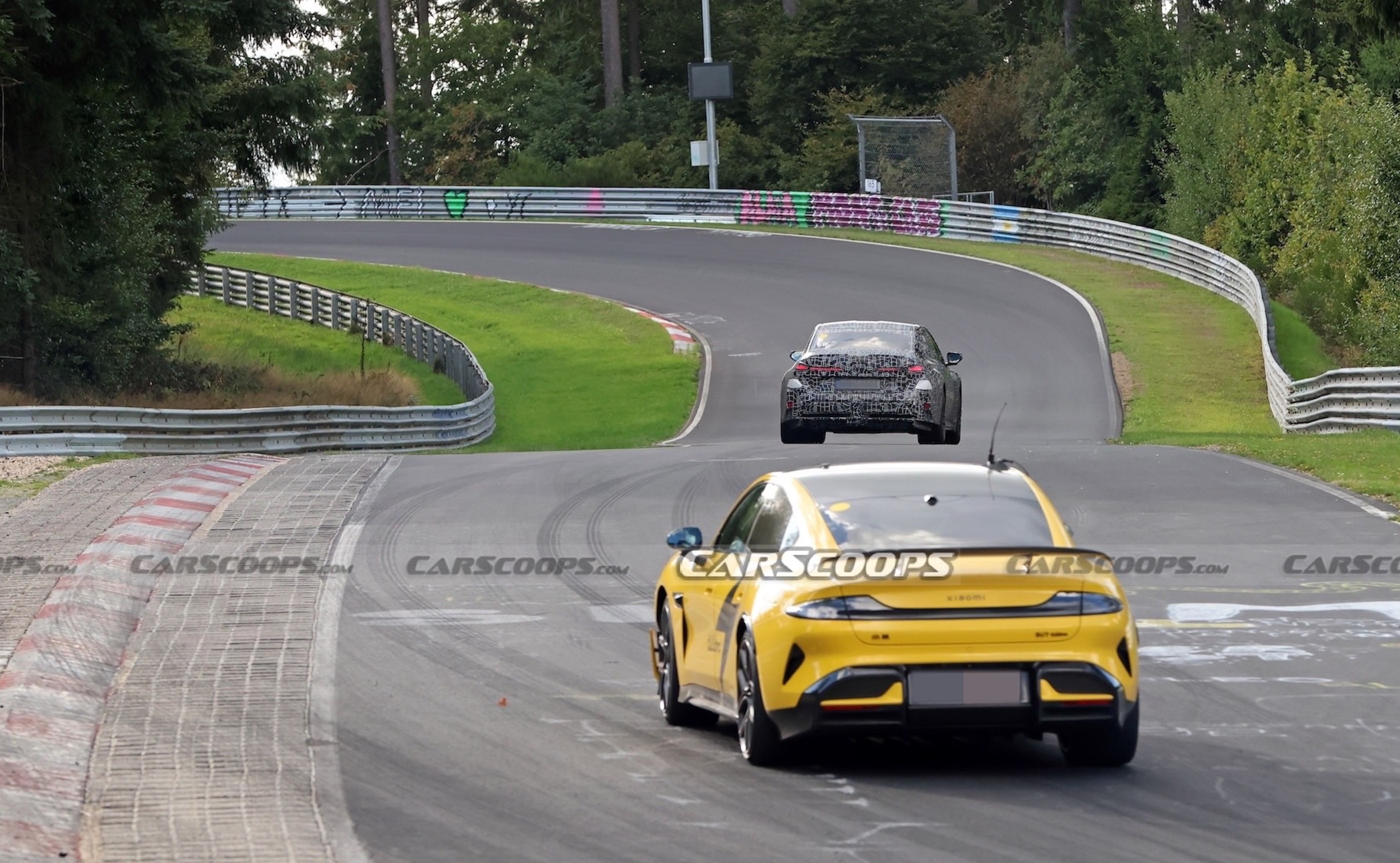
Xiaomi’s New Nurburgring Record Didn’t Need A Driver, But Might Have Required A Sundial

  • An image on social media suggests Xiaomi has set an autonomous Ring lap record.
  • Hero photo shows a YU7 GT SUV as the Nurburgring’s first fastest driverless car.
  • Actual time still TBC, but intel suggests human race drivers’ jobs are safe for now.

Xiaomi has already shown by setting multiple lap records that it knows its way around the Nurburgring. Now the Chinese smartphone giant turned EV maker looks set to prove its cars can find their way around without anyone touching the steering wheel. Whether they’ll find their way around quickly is another question entirely.

An Instagram post from @rollendereporter appears to reveal Xiaomi’s latest Nürburgring achievement before the company has had a chance to announce it. The behind-the-scenes image shows a Xiaomi-contracted photographer setting up a hero shot of a Lidar-equipped YU7 SUV beside an official Nurburgring plaque carrying the words “Nordschleife Autonomous Driving Prototype.”

Related: Xiaomi’s SU7 Ultra Held The EV Nurburgring Crown, Until Porsche Wanted It Back

The plaque also includes the words “Official lap time,” though frustratingly, the actual number isn’t visible in the published image. Pressed by followers in the comments, @rollendereporter admitted he could read the lap time in the original photo. But while he stopped short of revealing the number, he did offer a clue that might take some of the shine off Xiaomi’s upcoming announcement.

“It’s hard to see here, but I can read the numbers on the original photo,” he wrote. “Let’s just say it’s a lot quicker to take the wheel in your own hands 😅😂”

Some commenters were surprised to learn that an official autonomous driving category even exists. Others questioned what the point of such a record might be when the whole appeal of the Nürburgring is seeing what happens when talented drivers and fast machines are pushed to their limits.

YU7 Is Already In The Ring Record Books

 Xiaomi’s New Nurburgring Record Didn’t Need A Driver, But Might Have Required A Sundial

Still, Xiaomi clearly enjoys collecting Nürburgring silverware. Just last month, the 990 hp (1,003 PS) YU7 GT grabbed the SUV lap record with a 7 minute 22.755 second run, beating the Audi RS Q8’s previous benchmark by almost 4 seconds.

Before that, the 1,527 hp (1,548 PS) SU7 Ultra sedan clocked a stunning 7 minute 4.957 second lap, taking both the fastest EV and fastest four-door production car crowns from the Porsche Taycan Turbo GT. Porsche has since snatched it back with a 6:55 time thanks to some Manthey tuning and new Pirelli Trofeo RS tires.

So how fast do you think Xiaomi’s driverless YU7 went around the Nürburgring? And more importantly, would you be brave enough to ride shotgun while it tried to go faster?

Xiaomi, @rollendereporter

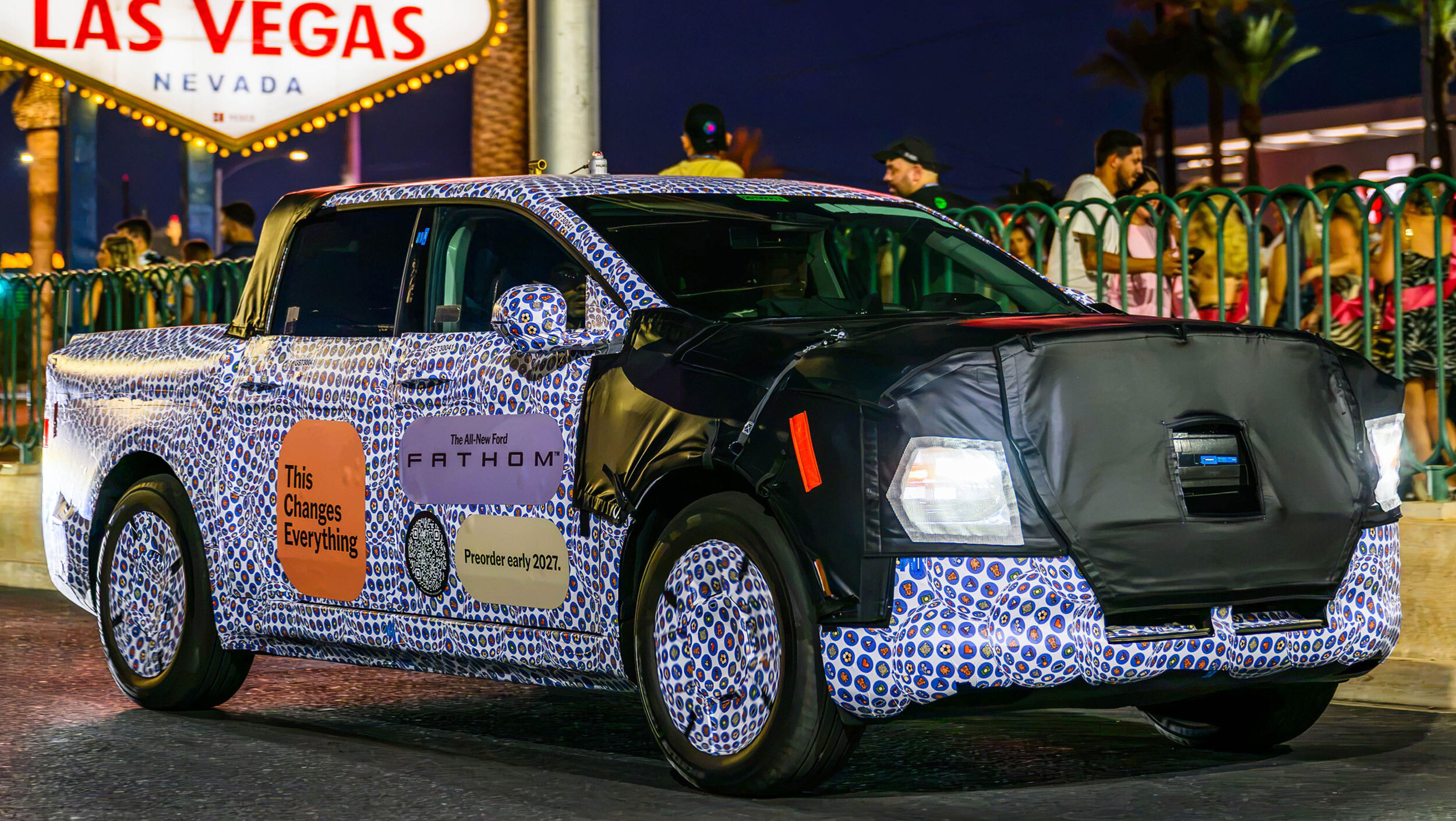
Ford’s $30K Electric Truck Looks So Tiny It Makes A Maverick Seem Grown Up

  • Ford’s affordable electric pickup prototype is testing in California.
  • Aerodynamic design is hidden under camo to fake a boxy look.
  • MY28 truck looks 1990s-grade small, but with a roomy second row.

Ford’s long-promised affordable electric pickup has finally been spotted in the wild, and one thing immediately stands out. This thing looks tiny.

The heavily camouflaged prototype was recently tracked down by The Autopian’s David Tracy on the West Coast, giving us our first look at the EV Ford hopes will shake up the entry-level truck market. And despite the camouflage doing its best to disguise the shape, it’s already clear this won’t be an electric Maverick. In fact, it might end up looking smaller.

Related: Ford Gives A Tiny Glimpse Of The $30K EV Truck Slate Should Be Worried About

The disguise gives the truck a traditional upright profile, but some key details poke through. Most obvious is the steeply raked windshield, which points to a far more aerodynamic design hiding beneath the camouflage. Previous design sketches hinted at a slippery front end and a more angled rear window, and the prototype seems to back that up.

The truck also appears remarkably compact in the real world. In footage captured by The Autopian, the Ford was driving alongside a full-size electric pickup and looked absolutely dwarfed by it. Even more telling, a Mazda B-Series truck trailing behind appeared almost the same size. Since that Mazda was essentially a rebadged version of the original Ford Ranger, that’s a pretty good indication this EV is going to be bijou by modern American standards.

Designed For Range, Not Trails

 Ford’s $30K Electric Truck Looks So Tiny It Makes A Maverick Seem Grown Up

The prototype’s low ride height and roofline also give away its priorities. Combined with aero wheel covers and what are almost certainly low-rolling-resistance tires, it’s clear Ford is chasing maximum efficiency rather than hardcore off-road capability. Don’t expect this one to spend much time crawling over boulders straight from the showroom.

Other details visible through the camouflage include a relatively narrow cabin that places occupants closer together than most modern trucks, a large central touchscreen, a shallow glasshouse, and what appears to be a reasonably usable second row. The bed looks short, however, Tracy estimates a length of around 4 ft (1.2 m)

 Ford’s $30K Electric Truck Looks So Tiny It Makes A Maverick Seem Grown Up
Ford’s teaser for the new EV platform.

Ford CEO Jim Farley has already revealed that it rides on an all-new low-cost EV architecture designed around what, by Ford standards, is some radical tech. The platform reportedly uses 20 percent fewer parts, 25 percent fewer fasteners, and requires 40 percent fewer workstations than conventional vehicle platforms.

Could Be Called Ranchero

 Ford’s $30K Electric Truck Looks So Tiny It Makes A Maverick Seem Grown Up

Ford is also embracing large aluminum castings similar to Tesla‘s gigacasting approach, while a dramatically simplified wiring harness is more than 4,000 ft (1.2 km) shorter and 22 lbs (10 kg) lighter than those used in the company’s first-generation EVs.

The first vehicle based on the architecture is expected to arrive in 2027 with a starting price of around $30,000. It will use lithium iron phosphate batteries and could even revive the Ranchero name Ford used on car-based trucks from the late 1950s to the late 1970s. Whatever Ford ends up calling it, one thing already seems certain. Nobody is going to accuse this truck of being a typical fat EV.

Thanks to The Autopian for letting us use a couple of its images. Check out the full story with more pics here.

Lexus Charges BMW Money On A Toyota Budget, And It’s Working

  • Lexus plans EVs and hybrids from one common vehicle architecture.
  • Flexible platforms help preserve profits if consumer tastes change.
  • Experts say Lexus benefits from Toyota technology and buying power.

For years, automakers, including Lexus that once pledged to go EV-only by 2035, told us the future would be electric. Now that EV growth has cooled in several key markets, many of those same companies are quietly changing course, often at a huge cost. Lexus, however, thinks it has found a smarter, less financially painful way forward.

Related: The 2027 Lexus TZ Borrows The Highlander’s Bones And The LFA’s V10 Voice

Instead of betting everything on dedicated EV platforms, or U-turning in favor of old-fashioned gas cars, Toyota’s luxury division is developing vehicles that can be built as either hybrids or fully electric models using much of the same underlying architecture. It’s a strategy designed to give Lexus maximum flexibility while competitors wrestle with expensive shifts in demand.

One Platform, Two Powertrains

 Lexus Charges BMW Money On A Toyota Budget, And It’s Working
The 2026 Toyota Highlander

Future products will be designed so the two brands can install either a battery pack or a hybrid powertrain within essentially the same vehicle structure, according to Lexus and Toyota executives who presented the plan to Handelsblatt and other media at the Shimoyama development center in Japan. That means Lexus can react faster if customer demand swings toward EVs, hybrids, or somewhere in between. Or if the next US president reinstates tax credits for cleaner vehicles.

Toyota CTO Hiroki Nakajima told reporters that Lexus’s upcoming TZ electric SUV is expected to be profitable from launch in North America. That’s a claim many automakers would love to make right now, because some, like Honda/Acura and Porsche, are hurting badly from having written off billions of dollars in EV development, and US EV sales are dire.

Christopher Richter, an automotive analyst at CLSA in Tokyo, traces that edge to Lexus’s lower cost base. Toyota doesn’t break out Lexus financials, but Richter told the German outlet he figures the brand’s margins sit well into the double digits. By comparison, Mercedes posted a return on sales of 5% last year and BMW managed 5.3%. The trick, Richter says, is that Lexus can charge BMW money while leaning on the purchasing volume and development resources of the world’s largest carmaker.

 Lexus Charges BMW Money On A Toyota Budget, And It’s Working

The TZ isn’t the first Lexus or only Lexus to benefit from common-platform thinking. The new ES sedan is already available as a hybrid or EV, both versions built from the same basic architecture. It’s not a strategy peculiar to Lexus. BMW and Mercedes also build some EVs and hybrid cars on shared platforms, including the X1 and iX1, 5-series and i5, and CLA.

But the two German brands also have EV-specific platforms. BMW’s new ICE 3-series sedan, for instance, will look almost identical to the i3 electric 3-series, yet they’ll ride on totally different architectures.

Profit Over Volume

BMW and Mercedes both sell more than twice as many cars as Lexus, which moved 882,291 vehicles worldwide in 2025, nearly half of them in North America. In particular, Mercedes shifted around 1.8 million that year and BMW close to 2.2 million under its core brand. But in the luxury game it’s profit, not registrations, that counts, and Toyota’s upscale division seems convinced it holds the better hand.

\\\\\\\\\

Lexus, Rivers/Carscoops

Jason Momoa Just Built Harley Davidson’s First PHEV

  • Electrogenic converted Jason Momoa’s vintage Land Rovers to electric power.
  • Two classic Harleys now combine combustion engines with electric propulsion.
  • A modern off-grid trailer packs enough battery power for month-long adventures.

Jason Momoa has developed an electromod habit that would make most petrol-loving classic car purists break out in hives. First came an electric 1929 Rolls-Royce Phantom II. Then a one-off miniature Bentley Blower EV. Now Hollywood’s Aquaman has handed a pair of rare Land Rovers and a trio of century-old Harley-Davidsons to an EV conversion company.

The latest chapter in Momoa’s increasingly eclectic garage comes courtesy of British EV specialist Electrogenic, which features prominently in the second season of his HBO Max documentary series On The Roam. This time, the company tackled five classic conversions, while also creating a battery-packed adventure trailer for extended off-grid expeditions.

Related: Jason Momoa Put A 666 Badge On His Tiny Bentley, But It’s Not What It Looks Like

Let’s start with the motorcycles, because they put a really different spin on the whole idea of converting old ICE machines to electricity. Rather than removing the original engines, Electrogenic transformed a pair of Harley-Davidson Model JDs from the 1920s into plug-in hybrids.

Choose Your Power

\\\\\\\\\\

Momoa can choose the bikes to be propelled by 15 hp (15 PS / 11 kW) of electric power, the original 20 hp (20 PS / 15 kW) gasoline power, or both at once on his 1924 and 1927 model JD plug-ins. There’s even enough electric assistance from the 190 lb-ft (260 Nm) electric motor to eliminate the traditional kick starter.

A third bike, a 1921 Harley-Davidson Model FD, went fully electric after its original engine was deemed beyond repair. All three use discreet 2.7 kWh battery packs hidden inside period-style panniers good for more than 50 miles (80 km) of electric riding, and feature modern braking upgrades.

\\\\\\\\\\\\

Photos Electrogenic

The Land Rover conversions are definitely more conventional. A 1949 Series I and a highly collectible 1961 Series IIA 109 Dormobile camper have both been converted to full electric power. Electrogenic retained the Landies’ original four-wheel-drive systems and transfer cases, meaning they should still be every bit as capable off-road, only much faster and quieter on it.

The Series I gets a 48 kWh battery and a 201 hp (204 PS / 150 kW) motor, while the Dormobile uses a larger 62 kWh pack paired with a 161 hp (163 PS / 120 kW) motor. Both offer around 150 miles (240 km) of real-world range and CCS fast charging. The Dormobile even swaps its original gas cooking setup for an induction hob, creating what is effectively a fully electric classic camper.

And finally, Electrogenic also kitted out Momoa’s Schutt Industries XVENTURE XV-2 camping trailer with a massive 93 kWh battery pack for those long, wilderness getaways. It can reportedly power camping equipment for up to a month while also serving as a mobile charging station. What do you think Momoa’s next EV commission should be?

\\\\\\\\\\\\\\\\\\\\\\

Photos Electrogenic

Cheap Chinese EVs Look Great Until The Trade-In Quote Arrives

  • Chinese EVs are depreciating rapidly in Europe, a new study reveals.
  • Weak residual values in Germany are concerning to lease companies.
  • Private buyers are also feeling the pain when it comes time to sell.

Chinese automakers have spent the last few years steamrolling into Europe with bargain prices, generous equipment, and monthly lease deals looking almost too good to ignore. But there’s a growing catch buyers are starting to notice. Those bargain EVs can lose value frighteningly quickly once they leave the showroom. 

Fresh figures from Germany’s DAT vehicle valuation group show Chinese EVs and plug-in hybrids are depreciating twice as fast as the industry average. And the rate of depreciation is only getting worse.

Related: They Nicknamed It The Temu Range Rover, Car Insurers Are Pricing It Like The Real One

That creates headaches for almost everyone involved. Owners face painful trade-in figures, manufacturers risk swallowing losses through guaranteed buyback schemes, and leasing companies suddenly discover the cars returning are worth far less than expected.

Martin Weiss from DAT told Autonews Europe that “it is not enough to launch a good product.” Brands also need strong support systems behind the scenes if they want used buyers to remain confident years later. Part of the problem is uncertainty. Plenty of European buyers wonder whether some Chinese brands will actually stick around long term. Concerns about servicing, replacement parts, and dealer networks continue making cautious used buyers think twice.

Not Just Chinese EVs Suffering

 Cheap Chinese EVs Look Great Until The Trade-In Quote Arrives

But it’s not only Chinese brands feeling the pressure. Britain’s EV market is also watching residual values tumble across the board, in part due to the influx of cars from China, the Financial Times reported recently. Quoting figures from Indicata, it claimed the average three-year-old EV as of last month was worth 38 percent of its original value, compared with 46 percent in Germany, France and Spain. In contrast, a same-age petrol car in the UK retained 45 percent of its value, and a hybrid, 51 percent.

Carmakers are under huge pressure to increase EV sales, so many are throwing massive discounts at new models to hit UK government targets. That’s pushed a Chinese car, the Jaecoo 7, to the top of the UK sales chart for the first time ever, but it leaves nearly-new EVs looking overpriced beside heavily incentivized factory-fresh cars.

Ironically, rapid technological progress is also hurting values. Chinese brands especially release updates at breakneck speed, meaning today’s cutting-edge EV can suddenly feel old-fashioned months later. Great for innovation perhaps, but brutal if you’re trying to protect resale values.

 Cheap Chinese EVs Look Great Until The Trade-In Quote Arrives

Aiways, Porsche, Audi

❌
❌