Reading view

There are new articles available, click to refresh the page.

Jaguar Thinks Its $180K EV Gamble Could Finally Ditch Its BMW Complex

  • Jaguar will abandon volume sales and chase ultra-premium margins.
  • First model in new era is a 1,000 hp tri-motor electric fastback.
  • Prices will start at $187K, doubling Jaguar’s current price range.

It’s not often that a legacy carmaker attempts a reinvention as complete as the one Jaguar is now pursuing. Long seen as struggling to match Germany’s premium heavyweights like BMW and Audi, the British brand has decided to shift course entirely.

Rather than chasing premium volume, Jaguar now aims to sell fewer vehicles at significantly higher prices, offering a tighter lineup of upscale electric cars. The first product of this rebooted identity is due next year.

Read: Jaguar Rolls Out Its Future In A New Color Right After Firing The Man Behind It

Previewed by last year’s radical Type 00 Concept, this new model will be a low-slung, four-door fastback powered by three electric motors and producing around 1,000 hp. It’ll be unlike any other Jaguar from recent years and that’s exactly what Jaguar wants.

What’s the Strategy?

 Jaguar Thinks Its $180K EV Gamble Could Finally Ditch Its BMW Complex

In an interview with Top Gear, Jaguar’s managing director Rawdon Glover acknowledged the current model wasn’t working. Competing head-to-head with Audi, BMW, and Mercedes-Benz in the so-called volume premium segment “didn’t work commercially,” he said.

Instead, Jaguar will now follow an approach closer to what Range Rover has done, with fewer models, each positioned higher up the market.

Also: JLR Denies Firing Gerry McGovern, But Won’t Say If He’s Still Employed Either

“In UK numbers, our average transaction price used to be about £55,000 (about $73,000 at current exchange rates),” Glover told TG. “This will be more than double that, so the centre of gravity in the UK would be about £120,000 ($160,000),” adding the launch edition of the road-going Type 00 will start at “£140,000 ($187,000).”

 Jaguar Thinks Its $180K EV Gamble Could Finally Ditch Its BMW Complex
Jaguar Type 00 Concept

Jaguar notes that by pricing its vehicles in the mid-£100,000s, it’ll be able to carve out a space of the market above what the volume brands from Germany offer, but below ultra-luxury brands like Bentley, Rolls-Royce, and Lamborghini, which sell vehicles closer to £300,000 ($400,000).

During the same interview, Glover added that “the days of seven or eight models [in Jaguar’s line-up] are gone,” noting we should “expect a condensed range, all around similar price points.”

The change will come with a leaner product catalog. “The days of seven or eight models [in Jaguar’s line-up] are gone,” Glover said. He added that Buyers should expect a much more focused range, with models clustered at “similar price points”.

Inside Jaguar’s Flagship EV

\\\\\\\\\\\\\\\

SHproshots

The first model in this new era will also be Jaguar’s most important. While its design is expected to spark debate, early feedback suggests the brand is working on a genuinely refined electric vehicle.

Several UK publications have already experienced it from the passenger seat. Autocar, among them, noted that the prototype rides better than any EV currently on the market.

Underpinning the vehicle is the new Jaguar Electric Architecture and a battery pack estimated to have a capacity of around 120 kWh. There are then three electric motors, two at the rear axle and one at the front, combing to produce roughly 1000 hp. Of that total, 30 percent is directed to the front wheels, with the remaining 70 percent going to the rear.

Then there’s the trick suspension. All four corners feature three-chamber air suspension, which, according to reports, delivers a level of ride quality that surpasses even the most opulent Range Rovers in the JLR stable.

Bad Timing?

 Jaguar Thinks Its $180K EV Gamble Could Finally Ditch Its BMW Complex

Still, the timing of all this raises questions. With the crucial American market going cold on EV adoption and Europe reconsidering the timeline for internal combustion phase-outs, Jaguar’s all-in electric pivot seems like a high-stakes bet.

Unless, of course, the real aim is elsewhere. China remains bullish on premium EVs, and for a brand like Jaguar, finding success there might be the difference between a daring reinvention and a costly miscalculation.

 Jaguar Thinks Its $180K EV Gamble Could Finally Ditch Its BMW Complex

Sources: Top Gear, Autocar

Farley Just Realized $55K EV Trucks Don’t Sell, After Ford Made Sure That’s All It Sold

  • Ford will take a $19.5B charge tied to its EV shift in 2026.
  • F-150 Lightning sales dropped as prices climbed past $50,000.
  • CEO says high-end EVs aren’t selling at expected volume levels.

Rewind a few years and Ford, like most of its rivals, charged full speed into the electric future. The goal was clear: catch up to Tesla and help turn the U.S. into a thriving hub for EV innovation. Fast forward to today, and the future looks very different.

Read: Jim Farley Warns Europe It’s Selling Its Future To Chinese Carmakers

Much of Ford’s early EV effort hinged on the F-150 Lightning. Promoted by some as a cornerstone of the brand’s future, and initially the most affordable electric pickup in the States, the Lightning carried a lot of weight on its metaphorical bed.

But just three years after it launched, Ford has pulled the plug. CEO Jim Farley recently confirmed that part of the reason comes down to simple economics: buyers aren’t lining up for EVs priced north of $50,000.

Are Expensive EVs the Problem?

During an interview with CNBC, Farley addressed Ford’s announcement that it will take a $19.5 billion charge in 2026, tied to its decision to pivot away from EVs and refocus on internal combustion models. According to him, the company’s electric lineup simply wasn’t aligned with what buyers actually want.

“More importantly, the very high-end EVs, the $50,000, $60,000, $70,000, and $80,000 vehicles, they just weren’t selling,” Farley said.

Back in 2021, when the F-150 Lightning was first revealed, the base price came in at a relatively digestible $39,974. But that didn’t last for long, as the Blue Oval made a series of price hikes. By 2025, the base model had swollen to $54,780, an increase of nearly 37 percent, pushing it out of reach for many of the truck buyers it was originally meant to appeal to.

\\\\\\\\\

Hybrids In Focus

While Ford is now shifting its focus away from EVs, that doesn’t mean it’s done with electric motors and battery packs. During the same interview, Farley said that the company is committed to “following customers to where the market is, not where people thought it was going to be, but to where it is today.”

As such, Ford will start to prioritize hybrid and extended-range EV models. There will be a “whole lineup” of new hybrid models, including a hybrid Bronco. Farley also pointed out that Ford has quietly secured the number three spot in U.S. hybrid sales, and dominates the hybrid truck space with an estimated 80 percent market share.

Farley added that the company expects its electric Model E division to reach profitability in 2029, three years later than initially expected. By 2030, he still expects half of Ford’s global sales to be electrified vehicles. But most of those, he clarified, will be hybrids and extended-range electrics, not pure battery EVs.

Sixteen States Say Trump’s Admin Is Illegally Holding EV Money Hostage

  • Lawsuit claims Trump admin unlawfully withheld charger funds.
  • Newsom says California will defend the Constitution in court.
  • Arizona Delaware Maryland Illinois Michigan and New York sued.

More than a dozen U.S. states are taking legal action against the federal government over what they argue is an unlawful freeze of funding for the national electric vehicle charging network.

At stake is billions of dollars already approved by Congress to expand EV infrastructure across the country, now stalled under the current administration.

Read: Trump Administration Rolls Out Updated EV Charger Program

The lawsuit, led by California Attorney General Rob Bonta and California Governor Gavin Newsom, includes 15 other states and the District of Columbia.

It alleges that the U.S. Department of Transportation, under the Trump administration, “has quietly refused to approve any new funding under two electric vehicle charging infrastructure programs,” in direct contradiction of federal law.

The Infrastructure Investment and Jobs Act, passed by Congress in 2022, was designed to deploy thousands of EV charging stations nationwide. But as of this spring, distribution of that funding has slowed to a halt.

In California alone, the program earmarked $59.3 million for medium- and heavy-duty EV freight corridors, $55.9 million for zero-emission freight transport routes, and $63.1 million for repairing and replacing out-of-service chargers.

What’s Being Contested?

 Sixteen States Say Trump’s Admin Is Illegally Holding EV Money Hostage

The lawsuit argues that the administration’s failure to release these funds violates both the separation of powers and the Administrative Procedure Act, which governs how federal agencies implement laws passed by Congress.

Who Else Is on Board?

Backing California’s legal challenge are attorneys general from Arizona, Delaware, the District of Columbia, Illinois, Maryland, Massachusetts, Michigan, New Jersey, New York, Oregon, Rhode Island, Vermont, Wisconsin, and Pennsylvania. Their shared position is that the federal government can’t simply decline to carry out programs that were funded and mandated by law.

“The Trump Administration is unlawfully withholding funds from the Bipartisan Infrastructure Law — investments Congress approved to build America’s EV charging network, reduce pollution, and create thousands of good-paying jobs. We won’t stand for it,” Governor Gavin Newsom said.

“California will defend the Constitution, our communities, and the future we’re building. With 2.4 million zero-emission vehicles on our roads and critical projects ready to move forward, we’re taking this to court.”

Attorney General Bonta added to the criticism, calling the funding freeze a threat to public health and environmental progress. “This is just another reckless attempt that will stall the fight against air pollution and climate change, slow innovation, thwart green job creation, and leave communities without access to clean, affordable transportation.”

 Sixteen States Say Trump’s Admin Is Illegally Holding EV Money Hostage

Rivian Owners Can Now Plug Into The Sun, But There’s A Limit You Should Know

  • Solar tonneau cover for Rivian generates up to 250 watts.
  • Optional battery stores energy for tools or camping gear.
  • Also offered for Ford, Chevy, GMC, and Dodge truck models.

If you drive a Rivian R1T and have been looking for a way to harvest solar energy while on the move, or even when the truck’s parked, there’s now an interesting option on the table. A US-based company has just launched a solar tonneau cover that might suit those aiming to get off the grid without cutting ties to modern convenience.

Developed by Worksport, the ‘SOLIS’ solar tonneau cover will be available from mid-January, offering up to 250 watts of on-board solar capacity. Importantly, you won’t have to immediately use any of the energy generated by the solar panels.

Read: Rivian Goes Plum Crazy With A New Color And Something Extra

Instead, the system includes a compact storage unit that charges in about four hours, storing energy gathered by the panels. That stored energy can then be used to run tools, lights, camping gear, or small electronics. What it won’t do, for now, at least, is recharge the R1T’s main battery.

\\\\\\\\\

In the future, though, Worksport hopes to work directly with OEMs like Rivian, potentially enabling its solar systems to feed energy straight into the vehicle’s main battery in future versions.

Solar Tonneau Covers For All

The cover is made from aircraft-grade aluminum and, according to Worksport, “provides exceptional strength and durability – without excess weight.” Interestingly, it’s not just the R1T that the company sells these solar tonneau covers for.

\\\\\\\

Worksport says its solar covers are compatible with dozens of pickups, including models as far back as 2002. Trucks from Chevrolet, Dodge, Ford, GMC, Nissan, Ram, and Toyota are all on the list, covering popular models like the Tundra, Frontier, and Sierra 1500.

Prices for the SOLIS cover vary depending on the size of the truck’s bed, generally ranging from $1,999 to $2,499. It’s not cheap, but considering what many of these owners already invest in their trucks, it’s unlikely to cause much sticker shock.

The Rivian R1T, with its comparatively smaller bed, comes in at the lower end at $1,999. Buyers who want the full package, including the inverter and battery, will need to budget another $949.

 Rivian Owners Can Now Plug Into The Sun, But There’s A Limit You Should Know

Ford Kills Major Battery Deal As EV Plans Rapidly Unravel

  • Ford ended a $6.5B battery deal with LG due to EV demand.
  • LG disclosed cancellation in a regulatory filing this past week.
  • The deal was set to power over 500,000 Ford EVs per year.

Just days after dialing back its electric vehicle plans, and barely a week after abandoning its $11.4 billion battery venture with South Korean firm SK On, Ford has now cancelled another high-stakes battery deal. The automaker has scrapped a $6.5 billion agreement with LG Energy Solution, citing shifting market conditions and a cooling appetite for electric vehicles.

Read: Ford Pulled The Plug On More EVs Than You Realize

The cancellation came to light in a regulatory filing made by LG in South Korea. It lands shortly after Ford outlined a sharp pullback in its EV rollout, including the decision to shelve the all-electric F-150 Lightning. The $6.5 billion figure represents roughly a third of LG’s total revenue from the previous year.

The Scale Behind the Deal

Ford and LG originally signed the deal in October 2024. Under its terms, LG committed to supplying Ford with 34 GWh of batteries between 2026 and 2030, enough to power around half a million EVs annually, assuming each one carries a 75 kWh battery pack.

Beyond that, LG was also set to deliver an additional 75 GWh of batteries for Ford’s commercial vehicle lineup between 2027 and 2032. These packs were to be built at LG’s manufacturing plant in Poland, then fitted into vehicles destined for the European market.

 Ford Kills Major Battery Deal As EV Plans Rapidly Unravel

In its regulatory filing, LG said, “this matter concerns the counterparty’s [Ford’s] decision to discontinue the production of certain electric vehicle (EV) models due to recent policy changes and shifts in EV demand forecasts, and the subsequent notice of contract termination.”

EV Demand Runs Cold

Since President Donald Trump returned to the White House for his second term, the EV market has quickly undergone a significant shakeup. Demand for EVs in the US remained strong through the first nine months of the year, but sales collapsed the moment the $7,500 federal EV tax credit was axed.

Also: The EU Blinked And Gas Cars Live To See Another Generation

More recently, the Trump administration has loosened fuel economy regulations, encouraging carmakers like Ford to build more ICE models. On top of that, the European Commission softened its stance on zero-emissions mandates, most notably by proposing a 90 percent CO₂ reduction target for new vehicles by 2035, rather than a full ban on internal combustion engines.

Ford chief executive Jim Farley recently said he expects EV sales to fall by as much as 50 percent in the US due to these key policy changes.

 Ford Kills Major Battery Deal As EV Plans Rapidly Unravel

A Mystery Brand Called Kosmera Is Coming To CES

  • A new automaker called Kosmera is debuting at CES next month.
  • Their first vehicle appears to be a sporty four-door sedan.
  • The mysterious company seemingly hails from Suzhou, China.

Many of us are looking forward to Christmas and New Year’s, but CES is right around the corner. As a result, we’re seeing announcements trickle out including one for an all-new company called Kosmera.

Details are limited, but the company is planning to stage its international debut at the show. They’re promising to take a “fundamentally different approach to mobility,” which apparently contrasts with firms chasing an “autonomous and connected future.”

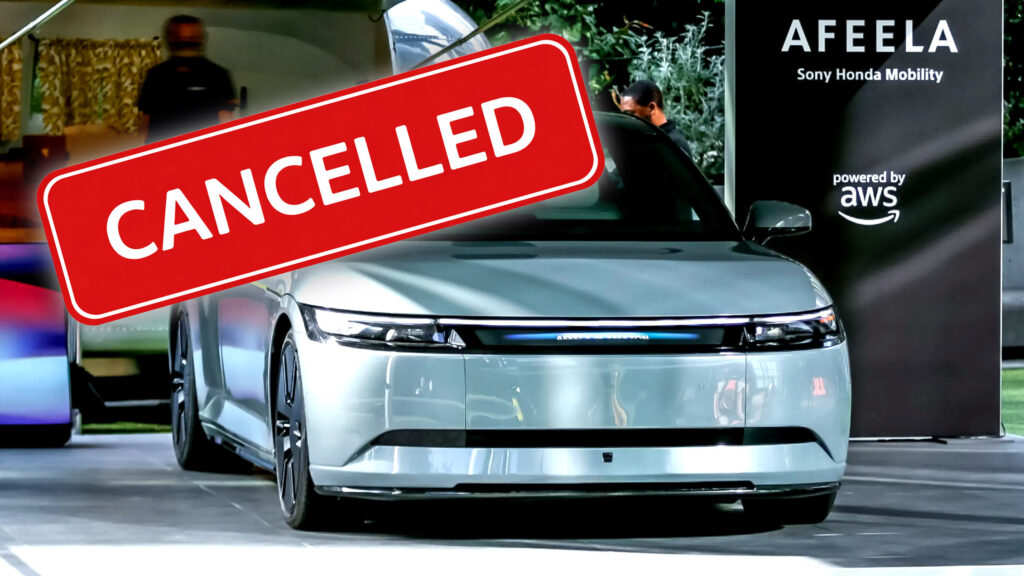
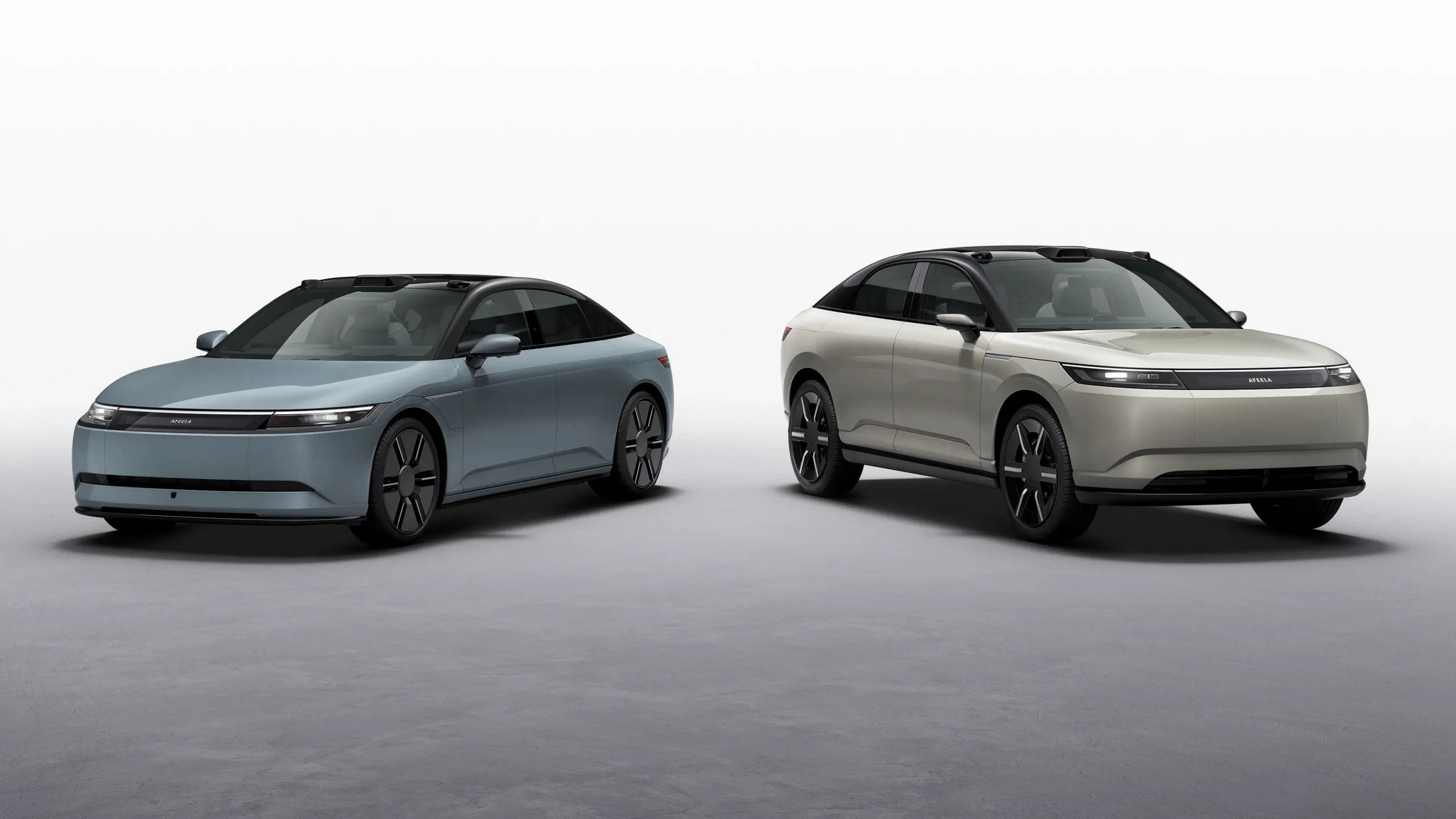
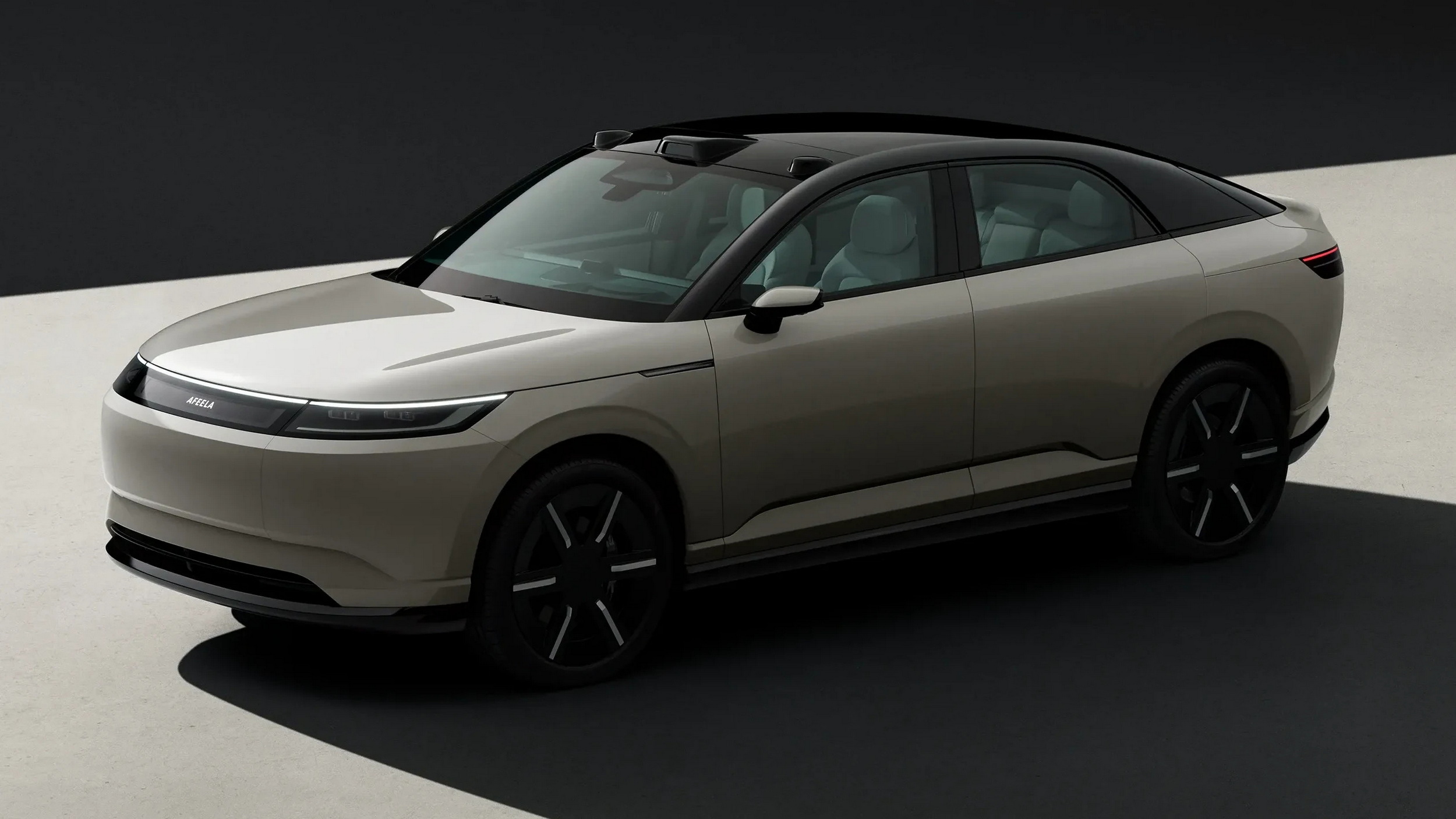
More: Sony Honda Mobility Bringing New Concept And Pre-Production Afeela 1 To CES

While would seemingly imply an analog driver’s car, Kosmera described themselves as “not just an automaker,” but a “technology-driven company developing a platform that connects people with real-world scenarios and digital services.”

That’s a head scratcher, but the company dropped an interesting teaser image. At first glance, it appears to show a stylish sports car that vaguely recalls the Porsche 718 Cayman.

Enhanced Teaser Image

 A Mystery Brand Called Kosmera Is Coming To CES

However, after playing around in Photoshop, we were able to enhance the image to reveal it shows a four-door sedan or liftback. We can also see muscular rear haunches and a seemingly massive front overhang. The latter is presumably some sort of distortion, but you get the idea.

Doing a little more digging, we were able to uncover a trademark application from earlier this month. It was for the Kosmera name and was made by Xing Chen Future Automotive Technology Co Ltd. While this doesn’t tell us much, we know the mysterious model hails from China.

We’ll learn more next month as Kosmera’s exhibit opens on January 6.

 A Mystery Brand Called Kosmera Is Coming To CES

Someone Ghosted Their Celestiq Order, And Now A Dealer’s Selling It

  • Cadillac built just 25 Celestiqs for the 2025 model year.
  • Buyers can skip the waiting list with this dealer-listed car.
  • Exterior paint alone adds a hefty $15,900 to the total price.

The Celestiq isn’t just Cadillac’s fanciest and most extravagant car in decades, it also carries the highest price tag in the brand’s history. And with only 25 examples scheduled for production in 2025, it’s one of the rarest Cadillacs ever made too. An ultra-luxury trifecta, really.

You can’t just hop onto Cadillac’s website and place an order, either. Buying a Celestiq involves direct contact with the brand, followed by a wait, possibly a long one.

The process is more aligned with how Rolls-Royce or Ferrari handles their customers, complete with a bespoke configuration experience where virtually every detail is customizable. No two cars will leave the factory looking the same.

Poll: Would You Spend Over $400K On A Cadillac Celestiq Or A Rolls-Royce Ghost?

Yet now, as picked up by Road&Track, one of these elusive machines has surfaced for sale, at a Cadillac dealership, no less. The car is currently listed through Cadillac Beverly Hills.

\\\\

The dealership hasn’t confirmed whether the original buyer backed out post-delivery, or if there’s another story behind how it ended up on the lot. Either way, it presents a rare opportunity for someone to bypass the usual waitlist, assuming one still exists.

How Much Does Bespoke Cost?

Cadillac hasn’t really shared many details publicly, including exact pricing. For the 2025 model year, the starting figure was confirmed at around $340,000. That’s since crept up, with the 2026 Celestiq now beginning in the “low $400,000s”, and that’s before diving into options.

Read: Think The 2025 Celestiq Was Expensive? 2026 Says That’s Cute

What makes this particular Celestiq even more interesting is that its spec sheet provides a rare peek behind the curtain at individual option pricing. The exterior is finished in Abalone White Tricoat, a paint choice that adds $15,900 to the bill.

It has also been equipped with a flamboyant combination of blue and orange leather upholstery that cost $8,910, as well as a $1,525 Cadillac Crest headstone ornament, and a $4,000 Uranus Recycled Paper Wood ornamental finish.

\\\\\\\\\\

Cadillac Beverly Hills

Inside, things get even more colorful. The cabin features a mix of bright blue and vivid orange leather, a combination priced at $8,910. There’s also a $1,525 Cadillac Crest headstone ornament, plus a $4,000 interior trim made from Uranus Recycled Paper Wood.

Would You Pay This Much?

The dealer is asking $418,575 for the rare luxury EV. That’s a lot of money, particularly since prices for the 2025 Celestiq the 2025 version started well below that before options were added. But with the 2026 Celestiq now beginning above $400,000, the dealer’s price isn’t entirely out of step.

There’s no doubt that the 650-horsepower Celestiq is special, but we wouldn’t be surprised if this car ends up sitting on the lot for quite some time. A buyer needs to be convinced to buy this, as opposed to a Rolls-Royce Phantom, and love the striking color combination, which we suspect will divide opinions.

\\\\\\\\\\\\

Cadillac Beverly Hills

Mercedes’ New VLE Is A Starry-Eyed Grille Seeker

  • New VLE minivan debuts March 10 with a massive grille.
  • First model built on new modular VAN.EA electric platform.
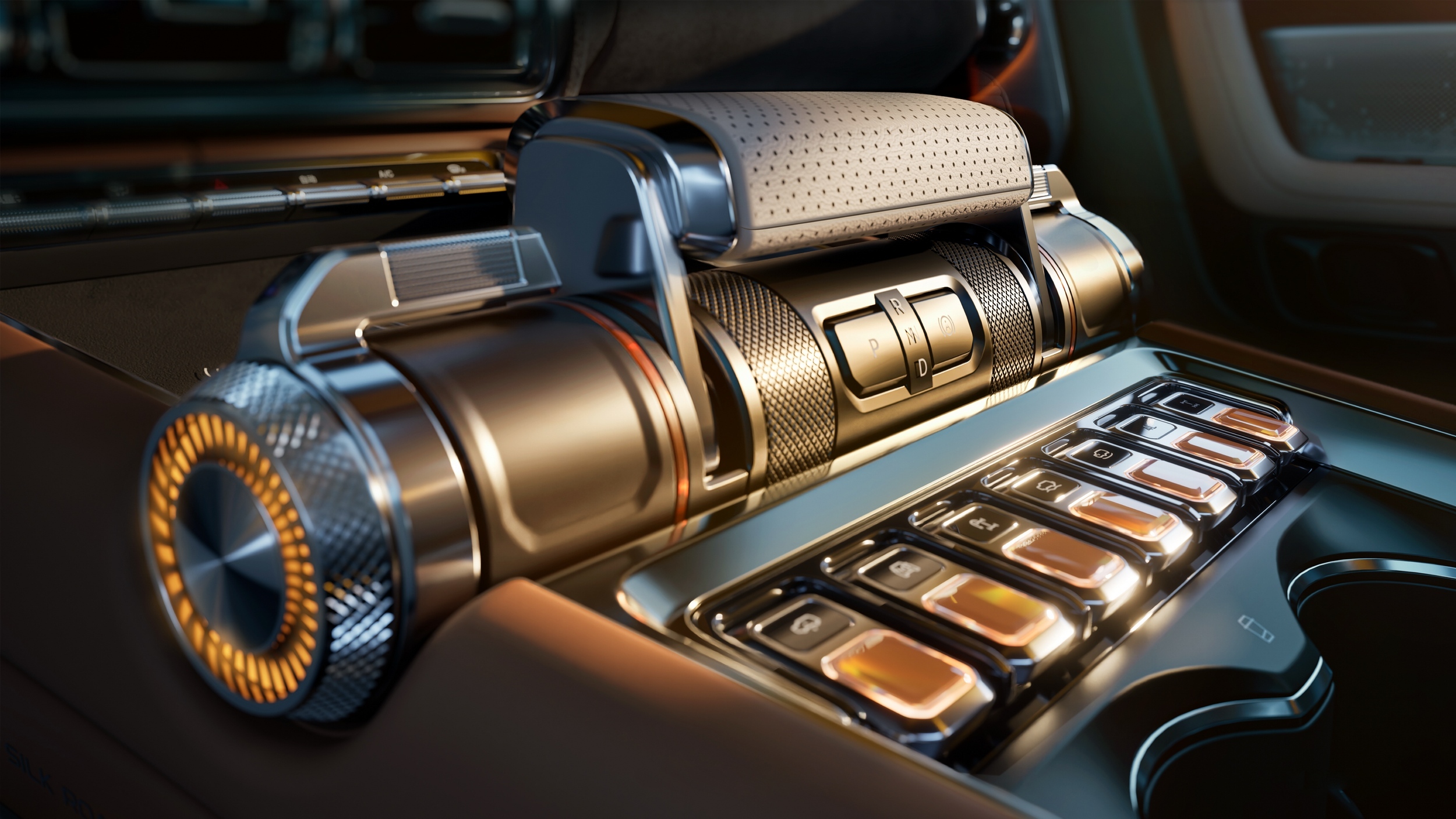
  • Offers up to eight seats and limousine-like ride comfort.
Mercedes has confirmed when its all-new VLE electric minivan will step into the spotlight, and the date is set for March 10 in Stuttgart. Along with the announcement, the company dropped a teaser image that gives us a close look at the front end. The bright star-patterned daytime running lights immediately tie the production VLE to the earlier Vision V concept.

Related: New Mercedes VLE Could Be The Most Opulent Minivan Ever In America

While the concept turned heads with its bold proportions and almost sci-fi surfacing, the VLE keeps things fractionally more grounded. Even so, the family resemblance is clear, and Mercedes is not shy about saying this is the start of a new era.

It will be the first model built on the brand’s fresh VAN.EA electric platform, which is modular and scalable to cover everything from basic people carriers to plush shuttles and big delivery vans.

 Mercedes’ New VLE Is A Starry-Eyed Grille Seeker

Mercedes says the VLE mixes limousine-like ride quality with MPV practicality. Think flexible seating for up to eight, a pillar-to-pillar MBUX Hyperscreen dashboard that runs the latest version of Mercedes-Benz’s (MB.OS) operating system, and tons of clever storage ideas.

A more luxurious VLS variant with lounge-style chairs and a huge 4K rear entertainment screen comes later for buyers who want full chauffeured opulence and fewer seats.

Biggest Grille Yet

The teaser image shows a smooth nose with an even bigger grille than the one on the new GLC EQ flanked by those star-shaped DRLs, which give the van a distinctive identity.

Recent prototypes caught winter testing suggested the overall shape will closely track the Vision V’s silhouette with a lower roofline and more sculpted body sides to avoid the usual slab-sided look of most big vans. Our own Carscoops rendering, seen below, shows how the production VLE could look.

 Mercedes’ New VLE Is A Starry-Eyed Grille Seeker
Josh Byrnes/Carscoops

Under the skin, the electric VAN.EA platform is expected to deliver single and dual motor options to cover a wide performance spread, entry versions making do with 268 hp (272 PS / 200 kW) and top models nudging 470 hp (476 PS / 350 kW).

300+ Mile Range

Battery sizes could vary from 90 kWh to almost 120 kWh, with WLTP ranges of over 300 miles (500 km) in the most efficient versions, and all VLEs are able to take 350 kW inputs thanks to their 800-volt electrics. Today’s combustion vans will still be offered, but they ride on a different platform.

Mercedes calls the VLE the world’s first luxury urban SUV, though really it is a high-end electric minivan with big ambitions that arrives after similar vans from Lexus, Volvo, and Zeekr.

We’ll get the full details in March, but the early signs suggest the people mover class is about to get a lot more glamorous, though maybe not quite as glamorous as the Vision V concept shown below.

\\\\\\\\\\\\\

Mercedes

Just Six Months Later, BMW’s Hiking Its 2026MY Prices Again

  • BMW is raising prices on most 2026 models starting January 1.
  • MSRP hikes range from $400 to $1,500 depending on the vehicle.
  • The company first increased prices of its 2026MYs in early July.

After Porsche’s recent round of price hikes, it looks like BMW will soon follow suit. According to a report from CarsDirect citing a dealer bulletin sent this week, BMW will be doing the same in the new year.

While it didn’t explicitly point to tariffs as the cause, the timing does invite speculation for certain models, even if the biggest increase happens to hit a model built right in the United States, where tariffs aren’t the go-to excuse.

Also: Porsche Keeps Making Customers Pay For Trump’s Tariffs

BMW’s internal notice reportedly states that most vehicles in its range will see a price increase of roughly 1 percent, though not every model is affected. The adjustment will result in MSRP hikes ranging from $400 to $1,500 and will go into effect on January 1, 2026.

 Just Six Months Later, BMW’s Hiking Its 2026MY Prices Again

The most significant increases apply to the M5 Sedan and Touring, both up $1,400, and the BMW X6 M Competition, which will now cost an extra $1,500. Interestingly, the i4, i5, iX, i7, 7-Series, Z4, and XM are excluded from the price hikes.

This isn’t the first time that BMW has increased prices over the past six months. Back in July, it announced that the MSRPs of most 2026 models would rise by as much as 1.9 percent, resulting in price hikes of $2,500 for vehicles like the BMW X5 M and X6 M.

Those two models are built in the States, alongside other SUVs at the automaker’s South Carolina facilities. So technically, they shouldn’t have been impacted by tariffs, or at least not significantly, unless imported components factored in. As usual, the truth sits in a grey area.

 Just Six Months Later, BMW’s Hiking Its 2026MY Prices Again

For buyers looking to sidestep the latest round of price changes, it may be worth checking local inventory for cars already on dealer lots. Vehicles delivered before the end of the year are likely to carry current pricing.

Tariffs may have influenced BMW’s pricing for 2026, but the broader pattern raises more pressing questions. This is the second increase in just six months, suggesting something beyond routine adjustments.

Annual price bumps aren’t unusual in the auto industry, particularly with new model years. But those are usually linked to updates or added content, not blanket, across-the-board hikes with no clear explanation, and certainly not with this frequency.

 Just Six Months Later, BMW’s Hiking Its 2026MY Prices Again

UK’s Cheapest EV Is Made In China, But Doesn’t Wear A Chinese Badge

  • British prices for the 2026 Dacia Spring start as low as £12,240.
  • Dacia is offering a £3,750 grant to undercut its Chinese rivals.
  • Two versions of the Spring are on offer with 70 hp and 100 hp.

We’ve become quite accustomed to hearing about impossibly cheap EVs coming out of China, easily undercutting those from Europe, the US, Japan, and elsewhere.

The Dacia Spring fits that mould in one sense, as it’s built in China, but it arrives wearing a European badge and undercutting everything else on the market. It’s the cheapest EV currently on sale in the UK, thanks to the new £3,750 ‘Dacia Electric Car Grant’.

Read: Dacia’s EV Tortoise Just Got A Hare Transplant

For the freshly updated 2026 model, the Dacia Spring starts at just £12,240 ($16,415 at current exchange rates) including all on-road charges.

 UK’s Cheapest EV Is Made In China, But Doesn’t Wear A Chinese Badge

That makes it cheaper than the long-reigning Dacia Sandero, which has typically held the title of Britain’s most affordable car, unless you count outliers like the Citroën Ami quadricycle. Even the Leapmotor T03, another low-cost Chinese EV, can’t quite match it on price, starting from £15,995 ($21,400).

In the UK, the high-riding hatchback with the crossover aesthetics is offered in two forms: the Expression Electric 70 and the Extreme Electric 100. The total, on-the-road price for the base model technically starts at £15,990 ($21,400), while the flagship model starts at £16,990 ($22,800).

However, both are available with Dacia’s £3,750 ($5,000) grant, bringing the prices down to £12,240 ($16,415) and £13,240 ($17,700), respectively.

What’s New For 2026?

 UK’s Cheapest EV Is Made In China, But Doesn’t Wear A Chinese Badge

Several important upgrades have been made to the Spring for 2026. For example, Dacia has revised the chassis, suspension, and brakes, aiming to make the EV “feel more secure, more composed, and more capable across a wider range of everyday situations.”

Additionally, both models now include a new 24.3 kWh lithium-ion phosphate battery.

Both the Expression Electric 70 and Extreme Electric 100 feature single electric motors, but as their names suggest, the base model is capped at 70 hp while the range-topper delivers 100 hp.

This version also includes copper-accented styling, electric rear windows, a larger 10.1-inch infotainment display with wireless Apple CarPlay and Android Auto, and a vehicle-to-load function. Both models can travel up to 140 miles on a charge.

\\\\\\\\\\\

BMW’s New Compact SUV Spills Its Innermost Secrets

  • Spy photographers appear to have snapped the redesigned iX1.
  • It’s expected to arrive in 2027 with a host of Neue Klasse technology.
  • SUV follows in the footsteps of the iX3 and adopts Panoramic iDrive.

The BMW iX1 will turn four years old in May, but major changes are in store as a Neue Klasse version is in the works. It promises to be a radical departure that ushers in some new technology we’ve already seen on the iX3.

More: BMW’s 2027 X5 Finally Shows Its Lights And What’s Hiding Inside

Spied at a charging station, the crossover adopts an all-new front end with a slender twin kidney grille. It’s accompanied by lighting units that closely recall those found on the iX3.

Further below, we can see a wide central intake that eschews the vertical element found on its larger counterpart. The bumper also appears pretty curvaceous, which should help to improve the model’s aerodynamics.

 BMW’s New Compact SUV Spills Its Innermost Secrets

Moving down the sides, there are pronounced wheel arches and streamlined bodywork. We can also see flush-mounted door handles and a familiar greenhouse.

The rear end is heavily disguised, but there’s a new liftgate with a license plate recess that has been moved closer to the bumper. The model also sports a flatter spoiler and a more rounded design.

 BMW’s New Compact SUV Spills Its Innermost Secrets

The Neue Klasse design continues inside the cabin, which has been equipped with Panoramic iDrive. It features a pillar-to-pillar display at the base of the windscreen as well as a freestanding infotainment system, which presumably measures 17.9 inches.

Elsewhere, we can see a new center console with a shifter and controls that appear to be lifted directly from the iX3. Additional details are hard to make out, but the crossover has a camera-mounted on the rearview mirror.

 BMW’s New Compact SUV Spills Its Innermost Secrets

While it was initially believed BMW was working on a Neue Klasse facelift for the X1 lineup, this appears to be a redesigned iX1. This suggests the ICE and EV variants will diverge in a similar fashion to the X3 and iX3.

As a result, the connections to the iX3 will be more than skin deep and the two models will likely share a lot in common. This should include an 800V architecture, cylindrical-cell battery packs, and efficient electric motors.

We’ll likely get a better idea of what to expect once BMW rolls out additional versions of the iX3. So far, we’ve only seen the 50 xDrive variant, which has a dual-motor all-wheel drive system producing a combined output of 463 hp (345 kW / 469 PS) and 476 lb-ft (645 Nm) of torque. The model also sports a 108.7 kWh battery pack, which provides a WLTP range of up to 500 miles (805 km).

\\\\\\

shproshots

VW’s Cheapest Electric SUV Steps Out Almost Undisguised

  • New ID. Cross prototype loses heavy disguise and mirrors concept.
  • VW uses clever tape tricks to fake gas cues but EV details obvious.
  • Likely to get 208 hp motor and 52 kWh battery from ID. Polo.

Spy photographers just caught VW’s smallest electric SUV running around almost completely undisguised – it was even wearing a VW badge. And the only thing more obvious than the ID. Cross‘s shape is the fact that Wolfsburg really wants us to think it’s not electric at all.

Related: VW’s Entry EV Packs More Power And Space Than You’d Think

Gone is the heavy swirly wrap. In its place is VW’s favorite optical illusion job where silver and black tape is slapped across the grille, lights and bumpers to impersonate an older gas powered model. It doesn’t work. Under the tape we can clearly see the exact contours of the ID.Cross concept shown a few months ago at the Munich auto show.

C pillars still hiding

 VW’s Cheapest Electric SUV Steps Out Almost Undisguised
Baldauf

The production doors are now almost fully exposed without their earlier cladding, although VW has even tried to hide the black lower plastic trim by covering it with body color tape. The C pillar treatment is also disguised, though only enough to hide the fun ID. Buzz style inserts that we know sit underneath.

Shape-wise nothing has changed. The bluff little nose, the tight overhangs and the tucked tail all match the concept almost panel for panel. Even the light graphics are visible through the tape and they look identical to the Munich show car’s with VW’s latest family face emerging loud and clear.

\\\\\\\\\\\\\\

Tablet touchscreen with AI

Though we can’t see inside on these latest images, we can be sure it will also closely echo what was on display at Munich. That means an 11-inch freestanding rectangular digital gauge cluster ahead of the steering wheel, and a much bigger, 13-inch tablet touchscreen mounted above the console and featuring ChatGPT-powered AI assistance.

Read: VW Has A Plan To Save EVs And It Involves Gas Engines

Under the skin the ID. Cross shares its MEB platform and hardware with the new ID. Polo. The Cross concept had a 208 hp (211 PS / 155 kW) front mounted motor, which is the punchiest of the three launch powertrains VW confirmed for the Polo EV this week.

 VW’s Cheapest Electric SUV Steps Out Almost Undisguised

ID.Cross GTI?

The other two Polo options make 114 hp (85 kW / 116 PS) and 133 hp (99 kW / 135 PS), and you can be sure that the second of those, if not both, will also make it to the ID. Cross.

How about an ID. Cross GTI? It’s theoretically possible, since VW plans to add a 223 hp (166 kW / 226 PS) motor to the Polo down the line to create its first electric hot hatch.

 VW’s Cheapest Electric SUV Steps Out Almost Undisguised
Baldauf

VW never confirmed battery dimensions for the concept, but did reveal a 261-mile (420 km) range. That ties in with the 280 miles (450 km) VW claims for the lighter, more slippery ID. Polo with a 52 kWh battery. Polos will also be available with a 37 kWh pack, though VW might not offer that on the SUV when it debuts in production form in 2026.

\\\\\\\\

Photos Baldauf / Carscoops

The EU Blinked And Gas Cars Live To See Another Generation

  • EU will allow ICE and hybrid cars beyond 2035 under new rules.
  • Carmakers can offset emissions using fuels and green steel.
  • No formal end date now exists for combustion car sales.

Europe’s big plan to end internal combustion by 2035 always seemed a bit like an immovable deadline carved into regulation. Now, that’s over as the European Union is walking back that goal. The European Commission just unveiled a major revision to its automotive regulations, and it adds a lot more flexibility moving forward. 

Read: Looks Like Gas And Diesel Cars Won’t Be Banned In Europe After All

Instead of requiring a 100 percent reduction in tailpipe CO₂ emissions compared to 2021 levels, automakers will now need to achieve a 90 percent reduction from 2035 onward. That remaining 10 percent can be offset using a mix of biofuels, e-fuels, and credits tied to the use of low-carbon steel produced within the EU. 

The full automotive regulation package, formally announced on December 16, will be presented to the European Parliament and Council in 2026 for formal review and approval.

What Happens After 2035?

 The EU Blinked And Gas Cars Live To See Another Generation

In practice, this opens the door for pure ICE cars, mild hybrids, plug-in hybrids, and range extenders to continue existing alongside EVs and hydrogen vehicles. Importantly, this revised proposal doesn’t include a new sunset date for combustion engines.

Once the 90 percent target is met, there is no hard legal endpoint for selling ICE-powered vehicles, provided manufacturers can balance their emissions through the approved compensation mechanisms.

Automakers will also benefit from softened 2030 requirements, as emissions targets will now be averaged over the 2030 to 2032 period, offering manufacturers additional flexibility similar to the approach taken with 2025 targets.

Also: Jim Farley Warns Europe It’s Selling Its Future To Chinese Carmakers

Again, all of this is coming in the wake of pressure from industry leaders like BMW, VW, Mercedes, Renault, and Stellantis. Even Ford’s CEO Jim Farley warned the EU that its previous targets were too stringent. It appears as if the corporate powers that be made their voices heard. 

Pressure From the Top

The move follows a year of high-level meetings between EU officials and the auto industry, part of a broader “strategic dialogue” aiming to rebuild trust after years of tension, much of it stemming from the fallout of the VW diesel-emissions scandal.

That said, the EU is not abandoning electrification. The Commission is doubling down on incentives for small, affordable electric cars built in Europe, granting them “super credits” that count more heavily toward manufacturers’ emissions compliance.

A new M1E vehicle category will also simplify regulations for EVs under 4.2 meters (13.7 ft) in length, making it easier for governments to support them with targeted incentives.

Lightening the Load

To give automakers more stability, the Commission is also proposing a 10-year freeze on new vehicle regulations. That pause could significantly reduce compliance complexity and offer clearer long-term planning for product cycles.

In short, the EU isn’t reversing course altogether, but it’s trading the rigidity it once held for a bit more realism. Combustion engines won’t die after 2035; they’ll just be managed more heavily than in the past. 

Alongside the policy update, the Commission is rolling out additional support for European battery production, investment in software-defined vehicles, and new local-content requirements for EVs. These steps are aimed at improving competitiveness, particularly in the face of mounting pressure from Chinese automakers.

If You Think EV Sales Are Dead, You’re Probably Staring At The Wrong Map

  • EV and PHEV sales climbed significantly in China and Europe.
  • Roughly 18.5 million electrified vehicles were sold this year.
  • North America’s EV market declined despite global momentum.

While the headlines might suggest an EV apocalypse is underway, with manufacturers pulling back and investments drying up, the reality is a bit more complicated. Sure, some markets are cooling and certain automakers are reconsidering their timelines, but the global picture paints a different story.

At least for now. The coming months could easily tip the scale again, especially in regions where policy and consumer behavior tend to swing fast.

Read: More Buyers Are Ditching EVs And Choosing Gas Again

New data shows that worldwide sales of battery-electric and plug-in hybrid vehicles have actually grown this year, bolstered by steady demand in China and across Europe.

According to figures from Rho Motion, approximately 18.5 million EVs and PHEVs have been sold globally between January and November 2025, representing a 21 percent increase from last year.

Where the Growth Is

Unsurprisingly, China leads the way with reported sales of 11.6 million, a 19 percent rise from the same period in 2024. While Europe remains a far smaller market, with 3.8 million EVs and PHEVs finding new homes, it experienced a higher growth rate with sales jumping 33 percent.

A closer look at Europe reveals that 35 percent more BEVs have been sold this year, and 39 percent extra PHEVs have been delivered. Contributing to this growth was France, where for the first time this year, year-to-date sales rose in November, although only by 1 percent.

EV Sales Jan-Nov 2025
Region YTD 2025YoY Change
Global18.5 million+21%
China11.6 million+19%
Europe3.8 million+33%
North America1.7 million-1%
Rest of World1.5 million+48%
SWIPE

Rho Motion

Italy also experienced a strong November with EV and PHEV sales jump to 25,000 units after an incentive program was launched, encouraging locals to sell their old ICE models.

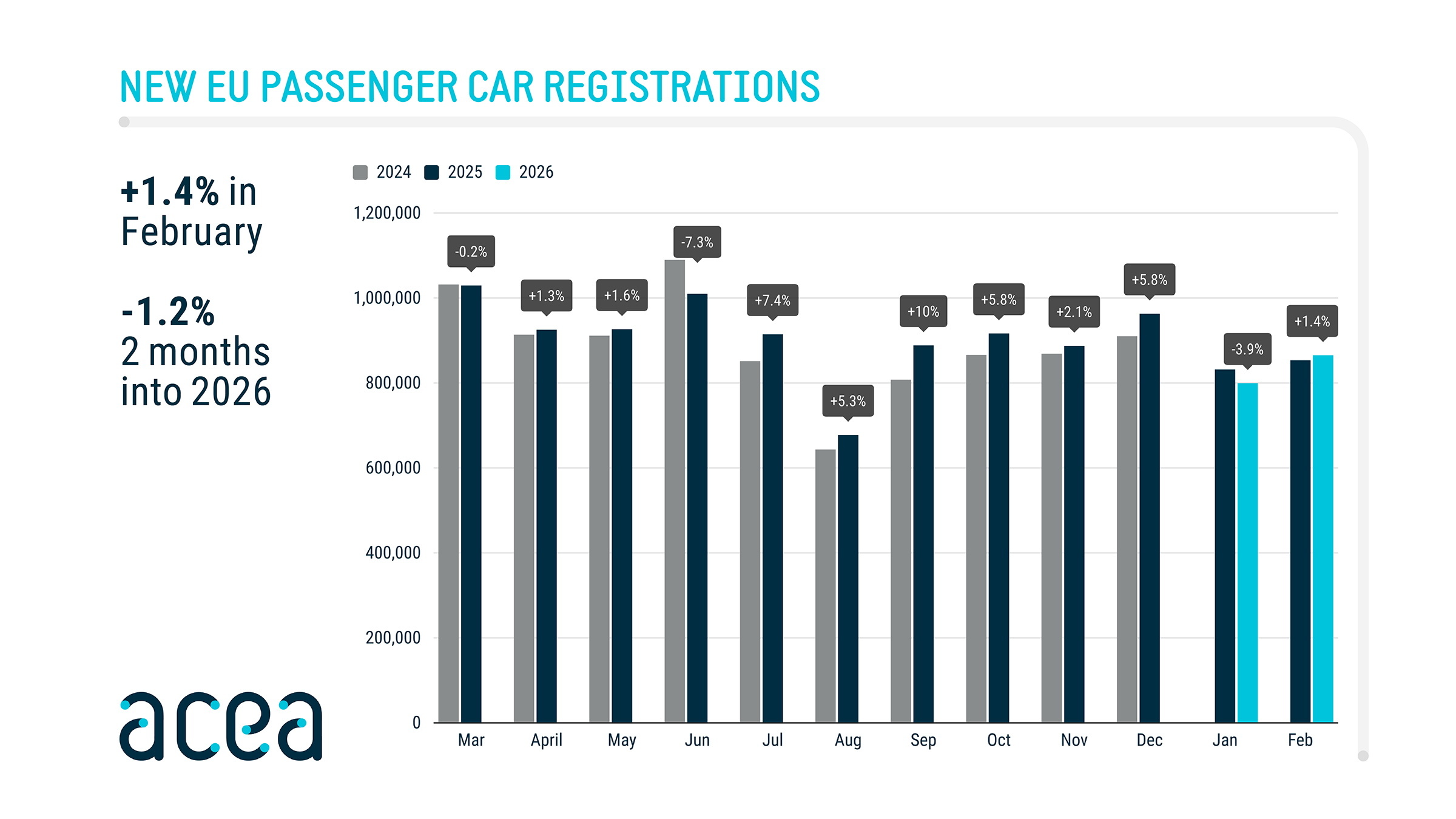
Still, the trajectory in Europe could change direction quickly. On Tuesday, the European Commission revealed plans to drop the proposed 2035 ban on new combustion-engine vehicle sales, a reversal largely driven by industry lobbying.

What About America?

 If You Think EV Sales Are Dead, You’re Probably Staring At The Wrong Map

Things couldn’t be anymore different in North America, in particular in the US. While EV sales increased in November compared to October, the first month without the federal EV tax credit, they are still far below what they were when the $7,500 credit was still available.

Data from Rho Motion notes that sales in North America have fallen 1 percent this year, meaning it’s quickly turned into a global laggard when it comes to global EV adoption.

Following President Trump’s decision to rollback CAFE fuel economy standards, sales of EVs and PHEVs are unlike to grow at a significant rate, and may ultimately decline.

In contrast, the rest of the world, grouped together in the dataset, logged 1.5 million EV and PHEV sales this year, up 48 percent compared to 2024. While the volumes are smaller, the growth suggests that in many regions, electrification is still gaining ground, just not always where the spotlight is aimed.

 If You Think EV Sales Are Dead, You’re Probably Staring At The Wrong Map

Australia And Other Markets Might Finally Get A Bronco, Just Not The One You Expect

  • Ford developed the Bronco Basecamp with its Chinese joint venture partner.
  • Both fully electric and range extender versions of the SUV are available.
  • Right and left-hand drive builds could allow exports to Australia and beyond.

Given Australia’s long-running affection for off-roaders and the popularity of models like the Ford Ranger and Ranger Raptor, it’s somewhat surprising that the Ford Bronco has never officially made it over there. That may soon change.

But rather than bringing in one of the two American-market Broncos, Ford could instead be planning to import a new, unrelated version just launched in China.

Read: Ford’s Electric Bronco Costs The Same As Ours And Gives You Twice The Power

Known as the Ford Bronco Basecamp, or Bronco New Energy, this model is the result of Ford’s joint venture with Jiangling Motors Corporation (JMC). It’s styled like a mash-up of the full-size US Bronco and the more compact Bronco Sport, yet it’s larger than both.

Importantly, unlike the Bronco sold stateside, Ford will build the Bronco Basecamp in right-hand drive configuration. According to the team from Wheelsboy, it will be exported to markets like Australia, as well as throughout Southeast Asia, the Middle East, and South America.

A New Angle on the Bronco

 Australia And Other Markets Might Finally Get A Bronco, Just Not The One You Expect

Unlike the American Bronco, which sits on a ladder-frame chassis, the Chinese version uses a unibody construction. That suggests it won’t be quite as competent in hardcore off-road situations, though it could be more agreeable on sealed roads.

And it’s no small thing, literally, as it measures 5,025 mm in length, or just over 197 inches, which makes it 101 mm longer than the Ford Everest already sold in Australia.

This shift in construction doesn’t just affect handling. It also reflects a different sort of appeal, likely aimed at buyers who want rugged looks with more livable day-to-day driving dynamics. As such, it feels less like a direct rival to traditional 4x4s and more like a large SUV with outdoorsy credentials.

EV And Range-Extender Power

\\\\\\\\\\

The powertrains are particularly interesting. All-electric versions of the Bronco Basecamp are equipped with a sizeable 105.4 kWh battery pack and two electric motors that combine to deliver 445 hp and 424 lb-ft (575 Nm) of torque. This gives it more horsepower than the ICE-powered Bronco Raptor, and almost as much torque.

In China, the Bronco Basecamp is also available as a range-extender, featuring a 1.5-liter turbocharged four-cylinder engine with two electric motors and a 43.7 kWh battery pack. It delivers a combined 416 hp and 442 lb-ft (600 Nm), all while being able to travel up to 220 km (137 miles) on a single charge.

It’s not yet clear if Ford could bring both of these powertrain options to Australia, or if it’ll limit the range to just one. While this won’t be the American Bronco that many locals have been clamoring for, it could be the next best thing.

\\\\\\\\\\\

Ford Pulled The Plug On More EVs Than You Realize

  • Ford cancels Lightning EV and planned electric vans worldwide.
  • Automaker shifts focus to hybrids and range-extended EV trucks.
  • It will also build a new van in Ohio with gas and hybrid engines.

Ford’s bad bet on electric vehicles continues to have brutal repercussions, so they announced plans to rationalize their “U.S. EV-related assets and product roadmap.” This will come with a steep price tag as the automaker announced plans to record about $19.5 billion in special items on their financial results.

Aside from wasting a ton of money, Ford revealed they no longer plan to “produce select larger electric vehicles where the business case has eroded due to lower-than-expected demand, high costs and regulatory changes.” This likely references today’s decision to axe the F-150 Lightning EV and eventually revive it as a range-extended pickup truck.

More: The F-150 Lightning Is Dead, But It’s Coming Back As A Range-Extended EV

The company also announced they will no longer build a previously planned electric commercial van for Europe. Plans for an electric van in North America have also been dropped, but they’re being replaced by an affordable commercial van that will offer gas and hybrid engines. This model will be built at Ford’s Ohio Assembly Plant in Avon Lake starting in 2029.

Ford previously abandoned three-row EVs, but they’re still committed to new electric vehicles based on the Universal EV Platform. These will be small and affordable, with the first variant arriving in 2027 for around $30,000.

 Ford Pulled The Plug On More EVs Than You Realize

Besides hitting the brakes on most BEVs, Ford confirmed they’ll “expand powertrain choice” by offering more hybrids and range-extended electric vehicles. The company expects the mix of these three powertrains will be approximately 50% of its global volume by 2030, which would be up from 17% this year.

To help fuel this projected jump in demand, Ford is planning a range of different hybrids. Some will focus on fuel economy, while others chase performance. We can also expect hybrids with exportable power, which has become popular with customers.

 Ford Pulled The Plug On More EVs Than You Realize

On the range-extended side of things, Ford implied the second-generation F-150 Lightning will be joined by range-extended versions of their larger SUVs. This likely means we can expect to see electrified versions of the Expedition and Navigator.

Ford went on to say that by the end of the decade, nearly every vehicle will offer a hybrid or “multi-energy powertrain choice.”

Given the shift away from EVs, Ford is renaming the Tennessee Electric Vehicle Center as the Tennessee Truck Plant. It will build new, affordable gas-powered trucks starting in 2029. This is a departure as the plant was originally supposed to build the next-generation F-150 Lightning.

Ford Battery Business

 Ford Pulled The Plug On More EVs Than You Realize

Despite throwing in the towel on most EVs, Ford announced plans to launch a battery energy storage system business. It will provides sales and service to support the electric grid and growing demand from data centers.

The pivot can partially be explained by the transition away from EVs as Ford has a lot of excess battery manufacturing capacity. As a result, they’re repurposing their Glendale, Kentucky plant to manufacture 5 MWh+ advanced battery energy storage systems. As part of the change, the facility will build “LFP prismatic cells, battery energy storage system modules, and 20-foot DC container systems.”

 Ford Pulled The Plug On More EVs Than You Realize

Ford also announced their BlueOval Battery Park in Marshall, Michigan will make residential energy storage solutions. They’ll be built alongside LFP prismatic battery cells for models based on the Universal EV Platform.

In a statement, Ford CEO Jim Farley said “This is a customer-driven shift to create a stronger, more resilient and more profitable Ford.” He added, “The operating reality has changed, and we are redeploying capital into higher-return growth opportunities: Ford Pro, our market-leading trucks and vans, hybrids and high-margin opportunities like our new battery energy storage business.”

 Ford Pulled The Plug On More EVs Than You Realize

Ford Just Proved Ram Had The Better Idea With The Next Lightning

  • Ford has killed off the fully electric F-150 Lightning.
  • The model will return as a range-extended electric truck.
  • It promises over 700 miles of range using a gas generator.

Ford had high hopes for the F-150 Lightning, but demand didn’t live up to expectations. As a result, production was indefinitely halted earlier this year so employees could focus on building more profitable and popular pickups at the Dearborn Truck Plant.

This left the fate of the F-150 Lightning up in the air and now we know it’s already dead. In a rather matter of fact way, Ford announced “production of the current F-150 Lightning ends this year.” They then clarified production has already “concluded.”

More: Ford’s CEO Talks Tariffs And New Range-Extended Vehicles

However, this isn’t the end of the story. Quite the opposite as Ford announced a second-generation F-150 Lightning, which will be an extended-range electric vehicle. In effect, Ford is admitting going fully electric was a mistake and they’re now following in the footsteps of the Ram 1500 REV, which used to be known as the Ramcharger.

The Blue Oval hasn’t disclosed much about the new model, but the headline figure is hard to miss: more than 700 miles (1,127 km) of total range. To put that number into perspective, the current F-150 Lightning maxed out at 320 miles (515 km).

\\\\\\\\\\\\\\

Ford went on to say the model will deliver the “pure EV driving experience” that customers love, while eliminating the need to stop and charge during long-distance trips. This will be made possible by an engine, which acts as a generator to recharge the truck’s battery pack.

The new model will presumably have a smaller and cheaper battery, but Ford confirmed the next Lightning will continue to offer “exportable electricity that can power everything from work sites to camp sites to homes during a power outage.” They added the new model “reinforces the F-Series legacy of innovation, giving owners the electric benefits they want with the reliability they need.”

 Ford Just Proved Ram Had The Better Idea With The Next Lightning

In a statement, Ford’s Doug Field said “Our next-generation F-150 Lightning EREV will be every bit as revolutionary [as the original]. It delivers everything Lightning customers love – near instantaneous torque and pure electric driving. But with a high-power generator enabling an estimated range of 700+ miles, it tows like a locomotive. Heavy-duty towing and cross-country travel will be as effortless as the daily commute.”

The second-generation F-150 Lightning will be assembled at the idled Rouge Electric Vehicle Center in Dearborn. There’s no word on when it will arrive, but it could be a ways off.

Note: Sketch of the current F-150 Lightning pictured in the opening image.

 Ford Just Proved Ram Had The Better Idea With The Next Lightning

VW’s Entry EV Packs More Power And Space Than You’d Think

  • Volkswagen shared details on the upcoming ID. Polo lineup.
  • EV launches with two batteries and three motor configurations.
  • A 223 hp ID. Polo GTI arrives one year after initial launch.

Volkswagen has released a slew of details about the ID. Polo, ahead of its launch next year. The company has a lot riding on its success, as it’s the first of four compact electric models that VW believes will reshape its small car lineup.

Since we’ve already seen camouflaged prototypes at the Munich Motor Show, we’ll simply note the car has a “Pure Positive” design that promises to offer space worthy of the “next higher class of vehicle.”

More: VW Revives Polo Name For EV Era And Teases First Ever Electric GTI

In this case, the car measures 159.6 inches (4,053 mm) long, 71.5 inches (1,816 mm) wide, and 60.2 inches (1,530 mm) tall with a wheelbase spanning 102.4 inches (2,600 mm). Volkswagen noted this is roughly the same size as the MQB-based Polo, but the interior is 0.7 inches (19 mm) longer with a lot of that helping to improve rear seat legroom. There’s also more headroom as well as extra interior width.

Practicality gets a noticeable lift in the boot as well. The ID. Polo offers more cargo room than the ICE-powered model. It holds 15.4 cubic feet (435 liters) of luggage, but that can be expanded to 43.9 cubic feet (1,243 liters) by folding the rear seats down.

Three Powertrains at Launch

When the ID. Polo debuts next spring, it will be offered with three front-mounted motors. They’ll have outputs of 114 hp (85 kW / 116 PS), 133 hp (99 kW / 135 PS), and 208 hp (155 kW / 211 PS). The ID. Polo GTI will arrive one year later with 223 hp (166 kW / 226 PS).

The 114 hp (85 kW / 116 PS) and 133 hp (99 kW / 135 PS) variants will come equipped with a small 37 kWh lithium iron phosphate battery. These versions will also have an underwhelming DC fast charging capacity of 90 kW.

The two range-topping variants up the ante with a larger 52 kWh nickel manganese cobalt battery, which promises to deliver up to 280 miles (450 km) of range.

Volkswagen went on to say the battery uses cell-to-pack technology, which “eliminates the intermediate step via module housings and combines the cells directly into a battery pack – reducing price, installation space, and weight while increasing energy density by about 10 percent.”

It’s also worth mentioning buyers will find an upgraded DC fast charging capability of 130 kW.

New Platform and Tech

\\\\\\\\\\\\\\\\\\\\\\\\\\\

The ID. Polo rides on the new MEB+ platform, which is described as a “further developed” version of the existing architecture. It benefits from reduced complexity, higher efficiency, and less weight.

Volkswagen also said we can expect next-generation driver assistance systems including a “significantly enhanced” version of Travel Assist. It provides “assisted lateral and longitudinal guidance” as well as automated lane changes on highways. The system also has traffic light and stop sign recognition.

According to Volkswagen brand CEO Thomas Schäfer, “The ID. Polo marks the beginning of a new generation of Volkswagen: with fresh design, intuitive operation, top quality and first-class driving characteristics – and finally with a proper name again.” He added the company will launch six new electric vehicles next year and the ID. Polo’s €25,000 ($29,388) starting price will make “electric mobility accessible to many people in Europe.”

\\\\\\\\\\\\\\\\\\\\\\\\\\\\\\\\\\\\\\\\\\\\\\\\

Bentley’s New Urban SUV Copies A Controversial Feature From Audi’s Q3

  • Bentley SUV sheds disguise and reveals production lighting.
  • Interior photo shows Porsche-style curved OLED display.
  • Electric SUV rides on VW PPE platform shared with Cayenne.

Bentley’s upcoming electric Urban SUV has stepped out in public again, and this time it has ditched the heavy plastic add-ons and cartoon headlights that made earlier prototypes look like a children’s drawing of a Bentayga. Winter testing is now underway, and the latest sighting gives us by far the clearest look yet at Crewe’s second SUV and first full EV.

Related: Bentley Rewrites Its Future With New Flying Spur Sedan That Breaks The Rules

The overall shape is familiar from previous spy runs, but with the production doors uncovered and the camouflage streamlined into a funky new wrap, the silhouette now reads much cleaner.

We can finally see a hint of the real lighting units peeking through too, rather than the fake circular decals Bentley used to throw us off the scent. They look far more modern, though definitely not as arresting as the ones on the EXP15 concept.

Family Interior Effort

\\\\

SH Proshots

But equally big news waits on the inside. For the first time, our photographers got a proper shot of the interior, and there is no pretending what inspired the layout.

A sweeping curved OLED display, similar to the Porsche Cayenne’s Flow Display, takes center stage, which makes perfect sense since both models ride on the same Premium Platform Electric.

The hardware is pure VW Group, including the multi-function left-hand column stalk, which we first saw on the Audi Q3, and a right-hand stalk serving as a transmission selector, as on VW’s ID.4. But the materials are unmistakably Bentley.

Even this early prototype shows a mix of rich leather, polished metal, and plush colors, including a steering wheel trimmed in black, red, and chrome.

Porsche-Plus Power

\\\\\\\\\\\

Bentley’s CEO Frank Steffen Walliser has already promised an impressive battery size and the fastest charging the company has ever offered. Meanwhile, Bentley’s own teaser claims the Urban SUV will add 100 miles (160 km) of range in just seven minutes.

Expect performance on par with or even above the Cayenne Electric’s outputs, which currently stretch from the 402 hp (408 PS / 300 kW) for the base Porsche in normal mode to 1,039 hp (1,155 PS / 850 kW) for the top-spec Turbo in launch control configuration.

Our guess is that Bentley’s base powertrain will be the circa-604 hp (612 PS / 450 kW) option that Porsche will add to its lineup when it unveils the Cayenne S EV next year.

We still don’t know the final name, though Bentley has trademarked “Mayon” and “Barnato,” so one of those could make the cut. What we do know is that the Urban SUV will be built in Crewe, revealed at the end of 2026, and reach customers in 2027.

\\\\\\\\\\

SH Proshots

This Tiny Truck Is Genuinely Happy To See You

  • CAM EV Microvan is Malaysia’s happiest LCV with playful decals.
  • It’s a rebadged Nextem Vaquita from Hong Kong with a smile.
  • Just 1.2 m / 48 in. wide, it offers flexible cargo configurations.

Small cars often wear cute faces to win us over, but some go all-in with the gimmick. That’s exactly the case with the CAM EV Microvan, a tiny electric cargo hauler built for squeezing through tight city streets with a smile on its face. Literally.

Recently unveiled at a show in Malaysia, the CAM EV Microvan is a rebranded version of the Nextem Vaquita from Hong Kong. Aside from a new badge, the most noticeable change is a set of cheerful stickers, transforming it into what might be the happiest delivery van on the planet.

Cartoon Cues and Branding Tricks

The design tweaks are minimal, limited to a grinning mouth on the charging port and cartoon-style eyelashes over the headlights. It’s unclear whether these decals will be offered as factory options or left up to owners with a roll of vinyl, but they’re a clever bit of theater on an otherwise utilitarian platform.

More: Trump Saw These “Really Cute” Cars In Japan And Now Wants Them On US Roads

If you’re curious about the name, Vaquita refers to a type of porpoise, one that’s critically endangered, with fewer than ten left in the wild, according to Wikipedia. Why a commercial van is named after a marine animal on the brink of extinction is anyone’s guess, but sure, let’s go with it.

The LCV itself is pitched as a low-cost, low-maintenance option aimed at small businesses that don’t mind a little existential irony with their deliveries.

The Specifications

\\\\\

CAM EV

In terms of dimensions, the EV measures 3,695 mm (145.5 inches) in length and just 1,220 mm (48 inches) in width. Inside, it’s strictly business: a central driving position, a single seat, a very basic dashboard, and plenty of hard plastics that prioritize practicality over comfort.

More: Renault’s Smallest And Quirkiest EV Is Dead

Where it gets interesting is the rear. The Microvan can be configured as a box van, pickup, garbage truck, sweeper, coffee truck, and more. Depending on the configuration, cargo volume reaches up to 2.8 cubic meters (99 cubic feet), with a maximum payload of 630 kg (1,390 pounds).

Power comes from a single electric motor driving the rear wheels. Top speed is capped at 80 km/h (50 mph), while the 15.97 kWh battery delivers an estimated 150 km (93 miles) of range per charge.

 This Tiny Truck Is Genuinely Happy To See You
Different versions of the Nextem Vaquita for professional use.

According to Paultan, the market launch of the CAM EV Microvan in Malaysia is scheduled for the second quarter of 2026.

Pricing is expected to start around 65,000 Malaysian Ringgit, or approximately $15,900 at current exchange rates. That’s not exactly bargain-bin territory for a vehicle of this size, which means the smiling decals may have to work overtime to win over budget-conscious buyers.

Beyond Malaysia, the Nextem Vaquita is expected to enter markets in Hong Kong, Indonesia, the Philippines, Thailand, and Portugal.

\\\\\\\\\\\

Nextem e-Moblity Limited

❌