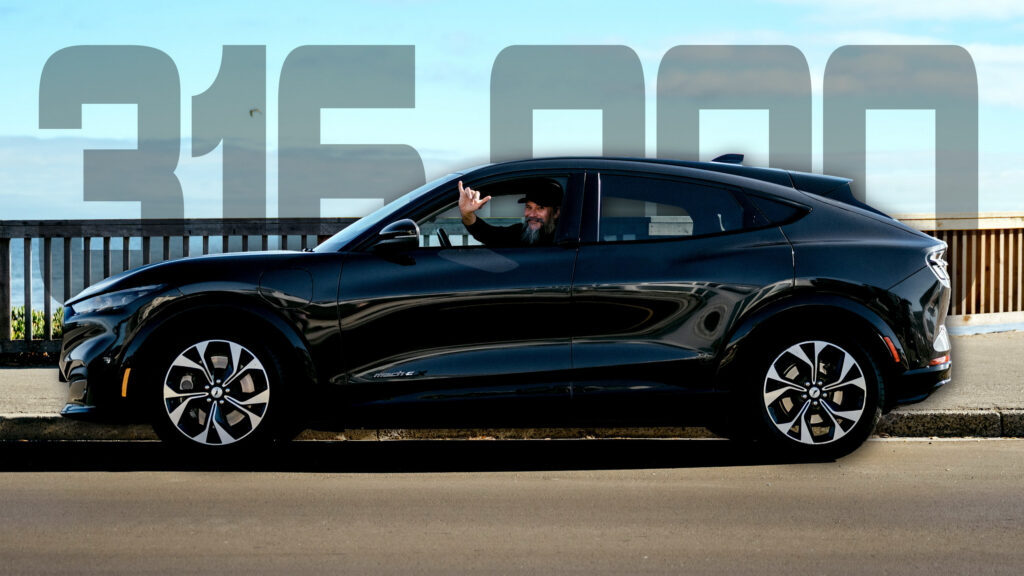
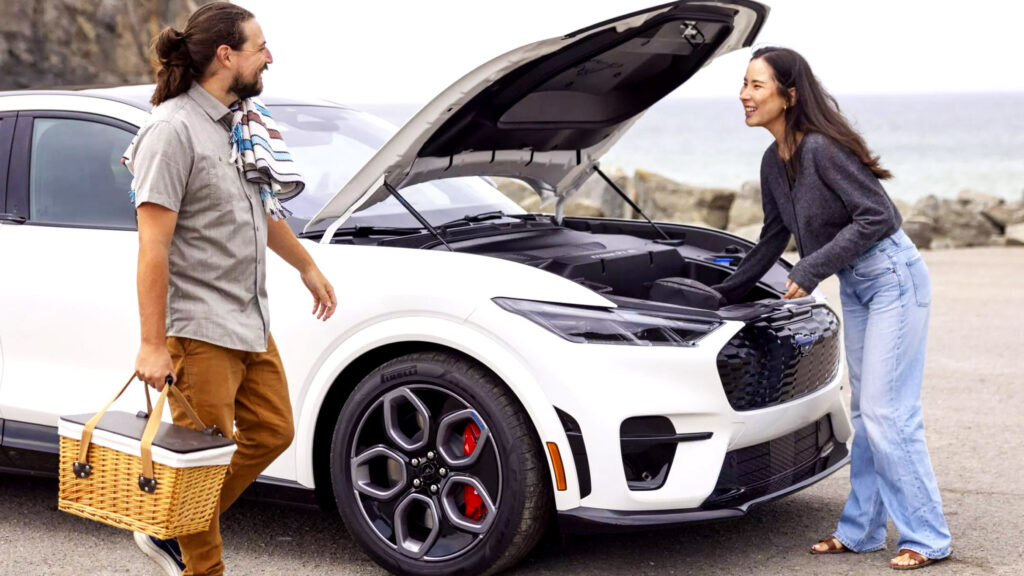
David Blenke runs a private car service in his 2022 Mach-E.
He can still squeeze nearly 300 miles (482 km) from it.
The SUV has needed six tire sets and seven cabin filters.
Many questioned Ford’s decision to launch the all-electric Mustang Mach-E in 2020, and the debate has not entirely faded. Despite early opposition, it has established itself as a solid option for buyers shopping for an electric SUV.
It has never managed to dethrone the Tesla Model Y, but for a stretch before federal tax credits expired last year, there were months when it actually outsold the gas Mustang. That has since flipped back the other way, though that is a different conversation altogether.
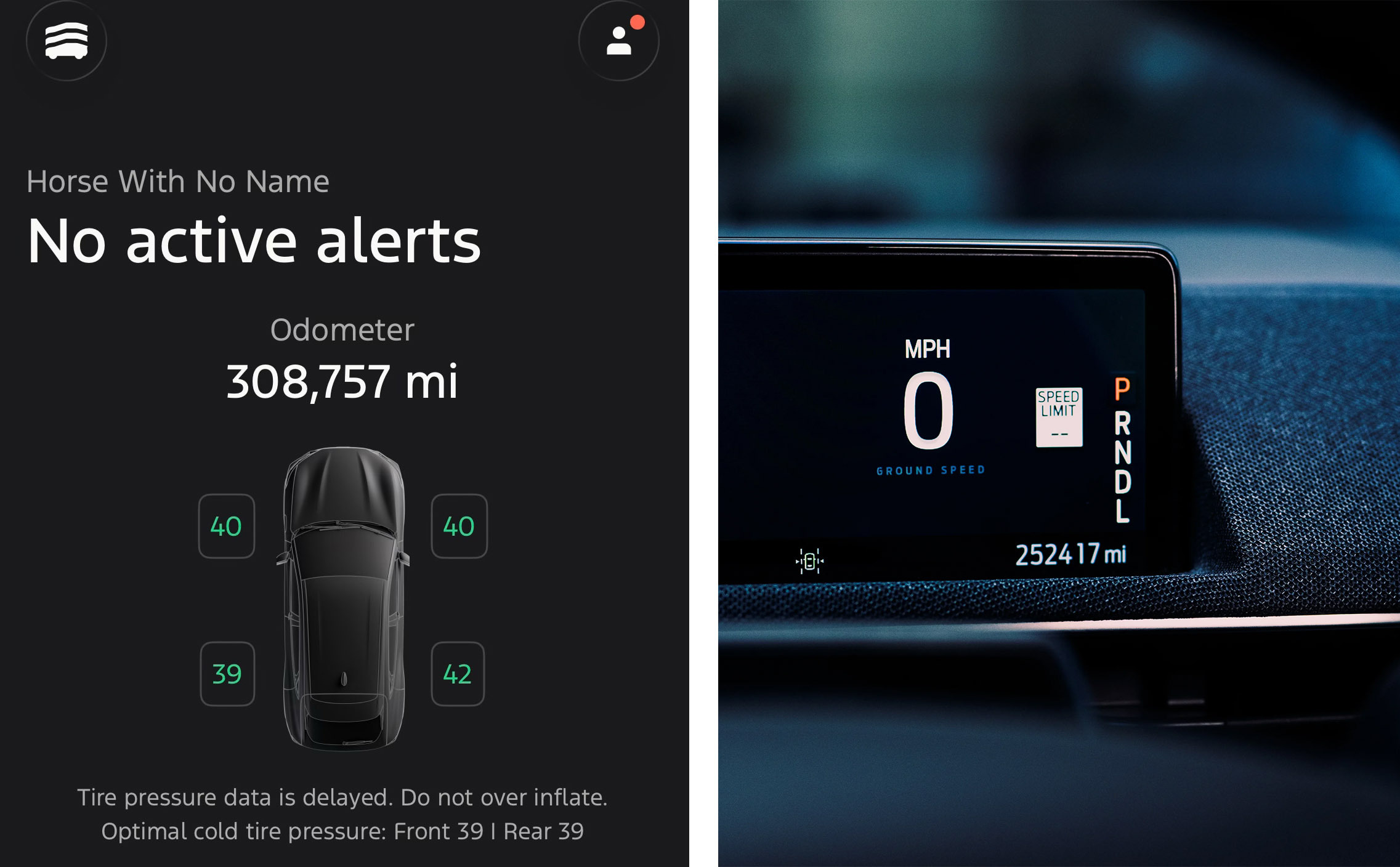
Of all the tens of thousands of Americans who own a Mustang Mach-E, few have put it to work like David Blenke. After purchasing a Premium model with the extended-range battery pack at the end of June 2022 and launching a private car service with it, he has driven more than 316,000 miles (508,500 km). Over the course of those miles, he has also carried more than 7,000 passengers.
He operates in the Santa Cruz, California area and bought the car at the height of the chip shortage. At one point, he faced a nine-month wait before locating an available example in Monterey.
How Much Battery Capacity Remains?
Ford itself celebrated Blenke’s Mustang Mach-E soldering past 250,000 miles (403,000 km) in July last year, and this week, he spoke with Forbes. Not only has he continued to rack up the miles in his Mach-E at a remarkable pace, but during the interview, he revealed the battery has only degraded 8 percent after all those miles.
According to Blenke, the Mach-E still delivers nearly 300 miles (482 km) of range. Battery degradation remains a common concern among EV buyers, but his experience with the Mustang Mach-E suggests outcomes can vary widely.
For a bit of perspective, data from EV analytics firm Recurrent suggests that most electric vehicles with more than 250,000 miles hang on to roughly 80 percent of their original battery capacity. If Blenke’s figure is accurate, that puts his reported 92 percent battery health notably higher than average.
What About Maintenance?
Under his ownership, Blenke says he has gone through six sets of tires, seven cabin filters, and more than twenty routine 10,000-mile checkups. Incredibly, he says the car has not needed any repairs and still uses the original brakes. Most of the time, he drives the car in Whisper mode, which is the most efficient.
No doubt, Blenke’s charging habits help keep the battery pack in good health. He says he charges to 90 percent every night and tries to avoid letting the battery slip below 20 percent. Most charging is done with a Level 2 charger at home and Electrify America’s public network while working. He also carries an adapter that allows access to Tesla’s Supercharger network when necessary.
Tesla had said FSD transfers applied to orders by March 31.
Now it requires vehicles be delivered by March 31 instead.
Many buyers chose the base Cybertruck expecting FSD transfers.
Few, if any, car manufacturers change their prices and sales policies as abruptly as Tesla, and it has become part of the brand’s public persona. The company famously reversed its resale ban for the Cybertruck a couple of years ago, and it has now unsettled customers again with its latest Full Self-Driving-related revision.
As Carscoops reported earlier this year, Tesla no longer offers Full Self-Driving (Supervised) as a one-time purchase and has shifted entirely to a monthly subscription model. It also announced that owners who had previously paid upfront for FSD would only be able to transfer it to their next vehicle if they took delivery of a new Tesla by March 31.
Soon after this announcement, Tesla revised the wording of its FSD Transfer program terms, stating that customers simply needed to place an order by March 31 to qualify for a transfer. That revision took effect on January 20, 2026, temporarily replacing the delivery-by deadline with an order-by cutoff and giving buyers more flexibility, especially those trying to secure one of the final custom-built Model S or Model X vehicles before production winds down.
It has now reversed that change, once again requiring vehicles to be delivered by March 31 rather than merely ordered by that date.
It is understood that customers who placed an order and received an expected delivery window on or before March 31 will remain eligible for an FSD transfer, even if delivery slips into April because of delays on Tesla’s side. However, those who placed an order but were given a delivery window beyond March 31 will not have their FSD transfer honored.
Bad News For Cybertruck Buyers
Those who placed an order for the new Tesla Model Cybertruck Dual-Motor AWD are likely to be most affected. After Tesla updated its policy to simply require an order placed by March 31, Not a Tesla App reports many shoppers placed orders for the new entry-level Cybertruck at its introductory price of $59,999, fully expecting to be able to transfer their FSD system, despite many deliveries not expected until next year. Now, those buyers appear to be out of luck.
Furthermore, that introductory price has since increased to $69,990, and deliveries for this specific trim are not expected to begin until the summer, effectively excluding all current order holders from the transfer window under the reinstated delivery rule.
Compounding the issue, there are no readily available Dual-Motor AWD Cybertruck units in existing inventory that would allow customers to pivot their transfer to an in-stock alternative.
In what seems to be an effort to ease frustration, Tesla is offering full refunds, including the $250 order fee, which is typically non-refundable.
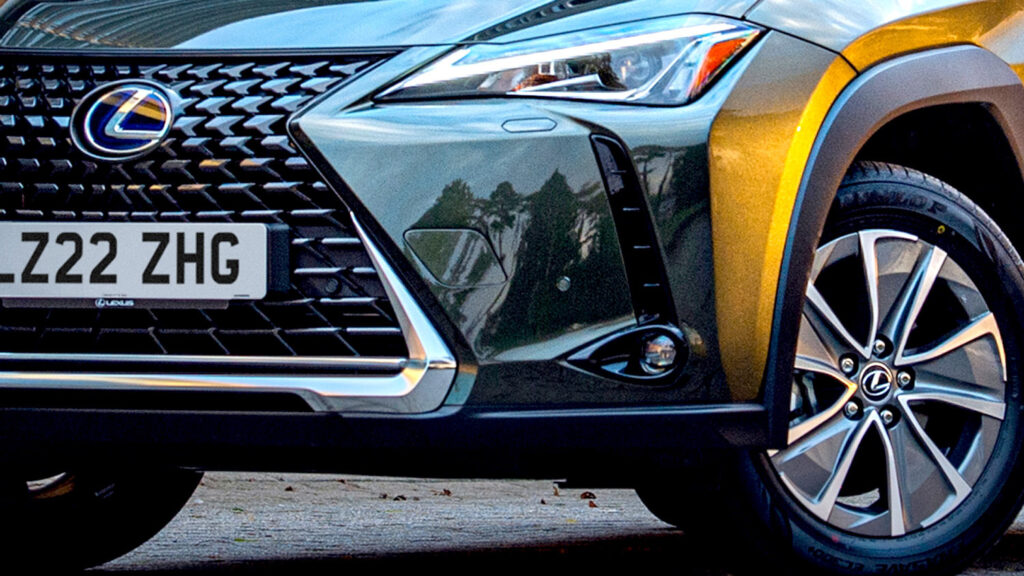
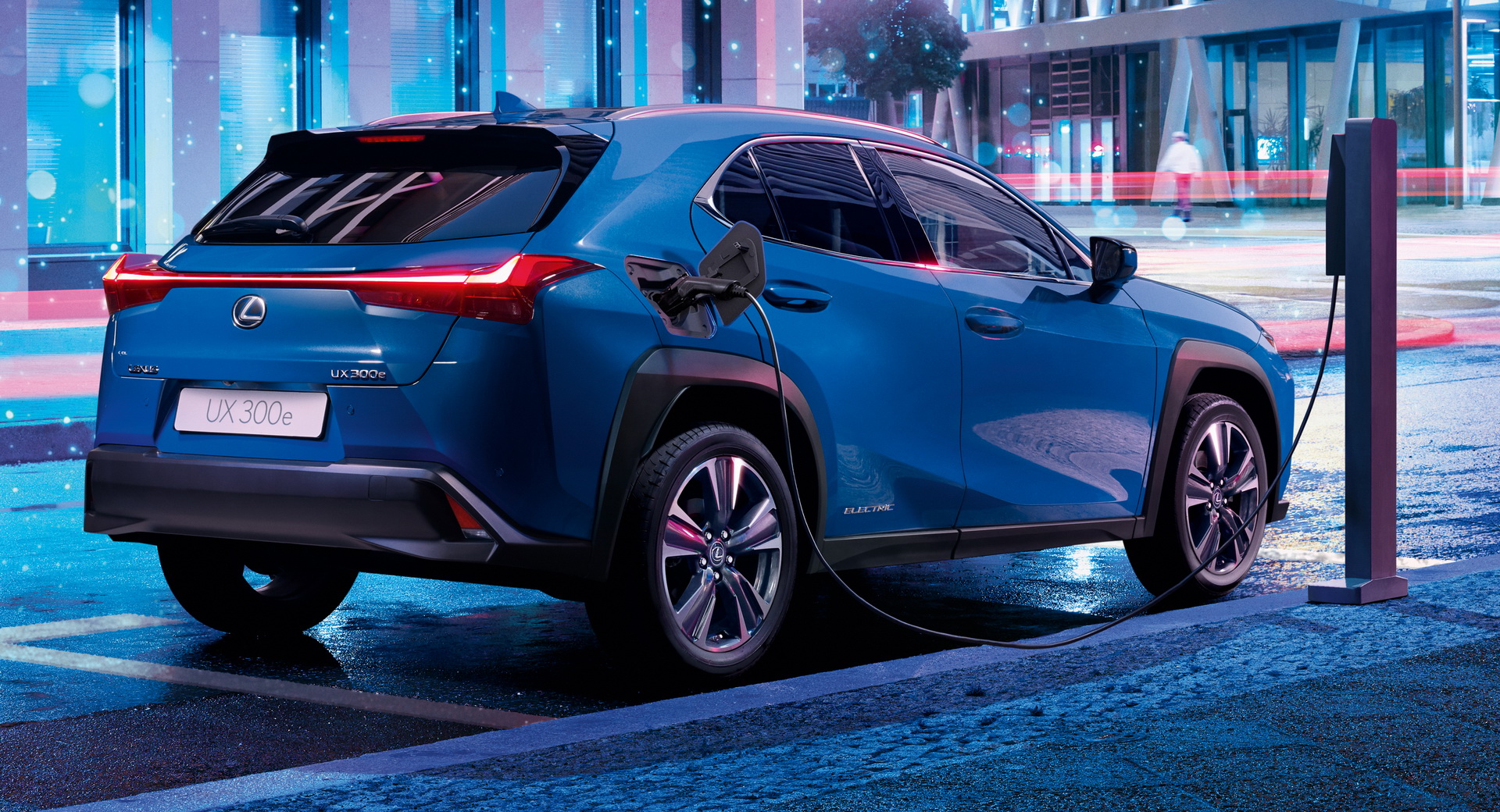
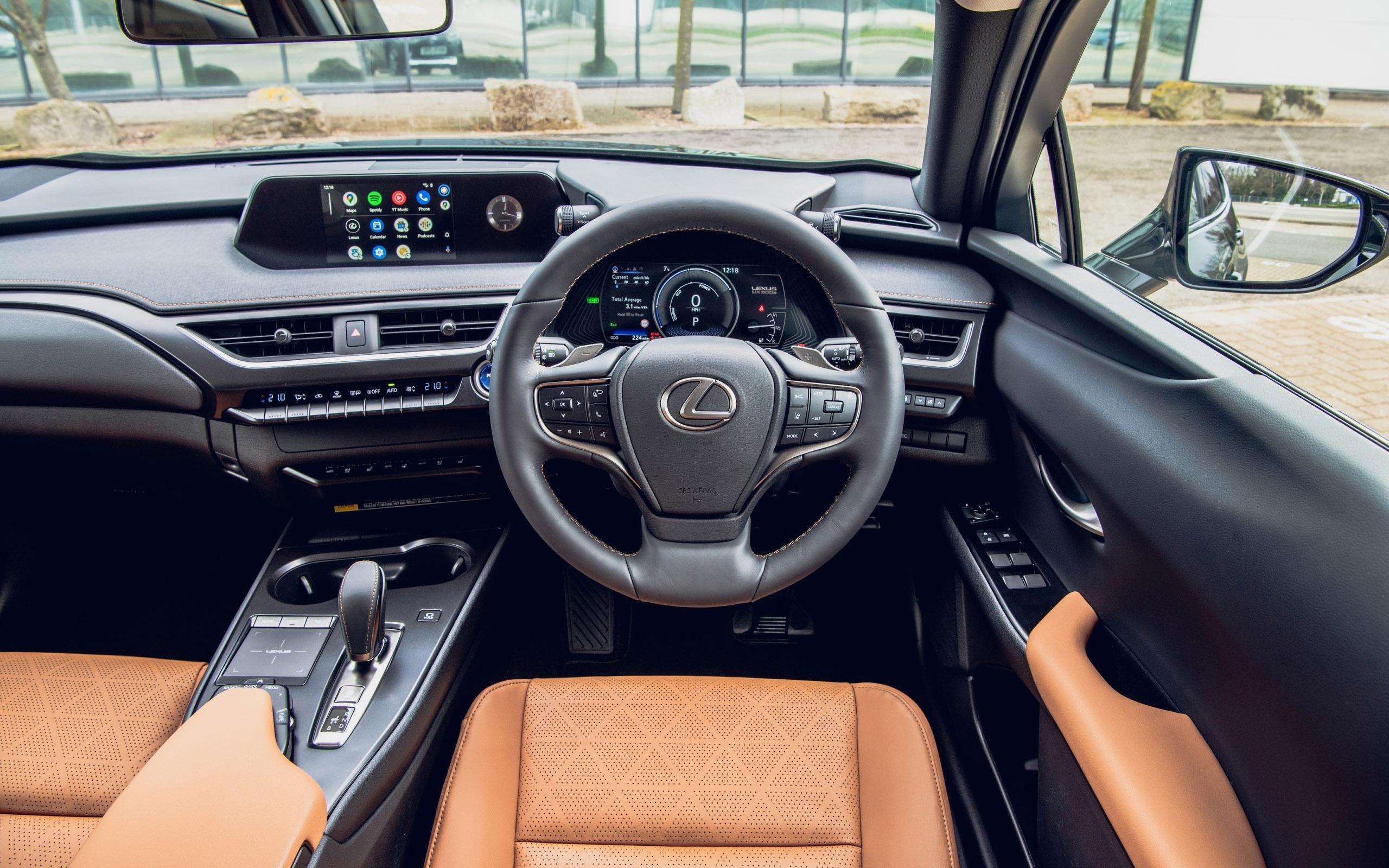
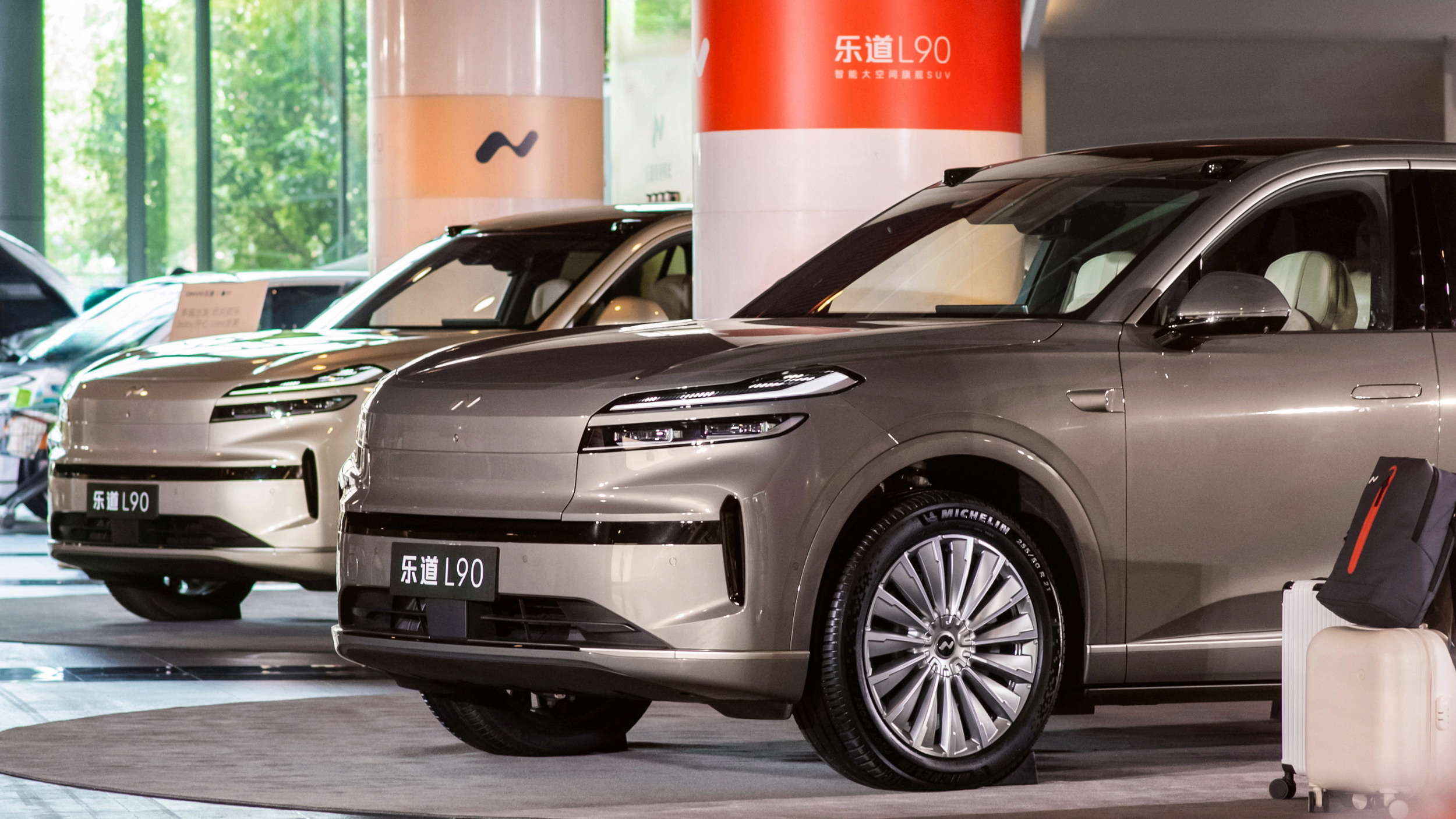
With the UX gone, the RZ stands as Lexus’s sole EV.
The UX 300e used a modest 54.3 kWh battery pack.
That small battery capped range at just 186 miles.
The all-electric Lexus UX 300e has quietly shuffled off the UK stage, five years after it first plugged in, and this is not just a local goodbye. Its exit is part of a wider wind-down across several global markets. The model’s demise means Lexus no longer has a small, relatively affordable EV available, and there’s no word on whether anything is in the works to replace it.
UK media first spotted that the UX 300e had vanished from the brand’s online configurator, which naturally sparked a round of speculation. Lexus soon confirmed the car had been removed from sale in late 2025.
Lexus offered no detailed explanation for pulling the plug, reports Auto Express. Slow sales seem the obvious culprit, coupled with the fact that the car was beginning to feel its age. Fewer than 3,400 examples were sold in Britain from launch to the end, which is not quite the breakout success you would hope for in a rapidly expanding EV market.
Never That Impressive
The regular UX soldiers on and is still a decent, if aging, option. The UX 300e, though, felt compromised from day one. Its 54.3 kWh battery delivered a rated 186 miles (300 km), which was underwhelming even at launch and quickly became difficult to justify. Then there was the CHAdeMo connector, once championed by the first-generation Nissan Leaf but now largely sidelined by the rest of the industry. Not a great combination if you were hoping for future-proof.
The UK isn’t the only market where the UX 300e has recently been cancelled. In mid-2025, it was also pulled from sale in Australia, likely also due to slow sales. It was also very expensive, starting at AU$80,720 ($56,500) and topping out at AU$88,190 ($61,800), making it more than AU$30,000 ($21,000) more expensive than some new Chinese rivals that offer similar levels of luxury and refinement but better driving ranges and charging speeds.
As Autoblog reported, the same pattern has played out elsewhere, with the electric version being discontinued across parts of Europe and Japan without much fanfare.
The demise of the UX 300e leaves the larger RZ as Lexus’s only current EV. The Japanese firm is planning other EVs, most notably its own version of the new Toyota Highlander, positioned as a large, expensive three-row SUV.
The road-going Concept C rides on the PPE platform.
Just three years pass from idea to production.
Its batteries mimic a mid-engined sports car layout.
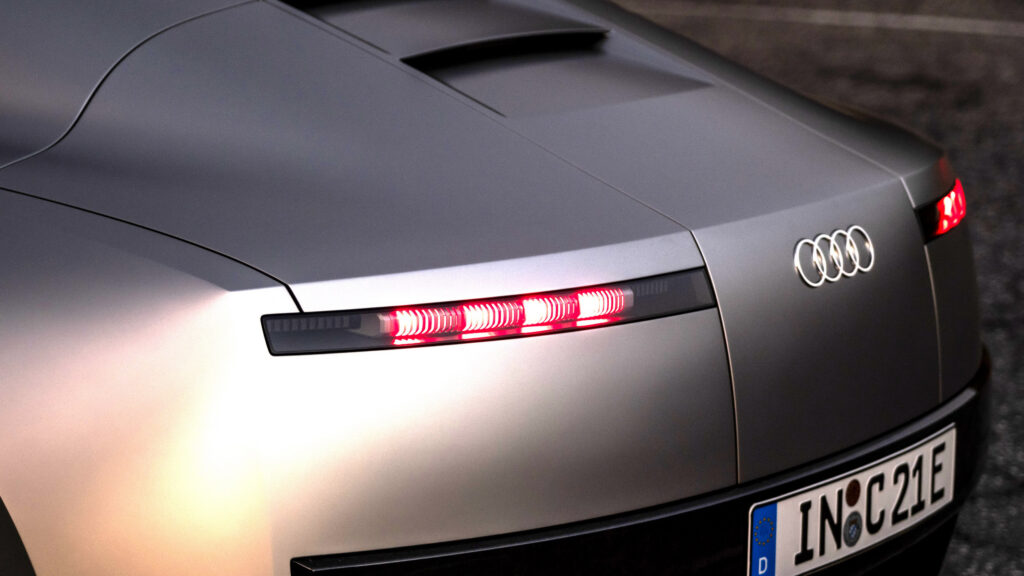
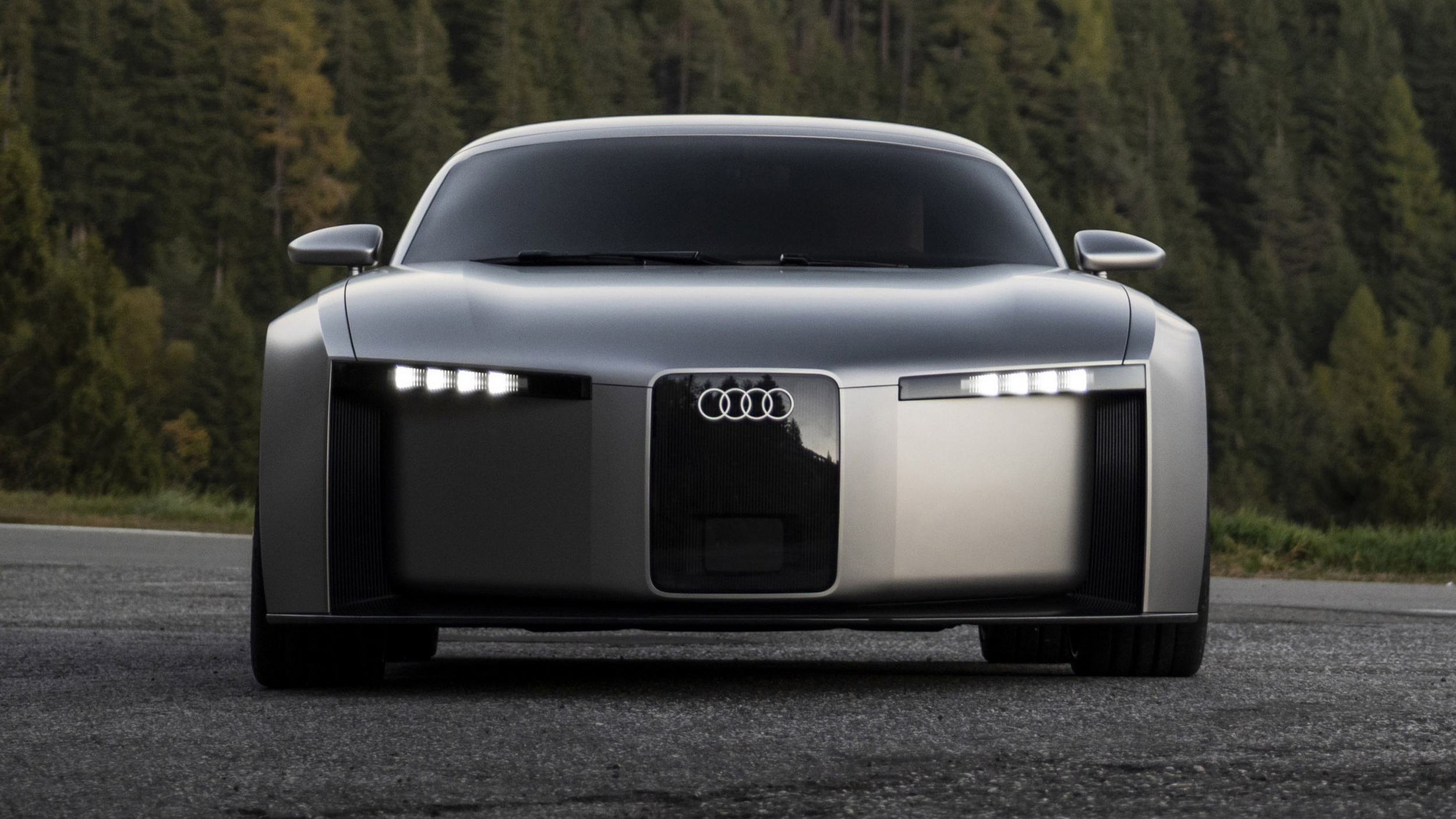
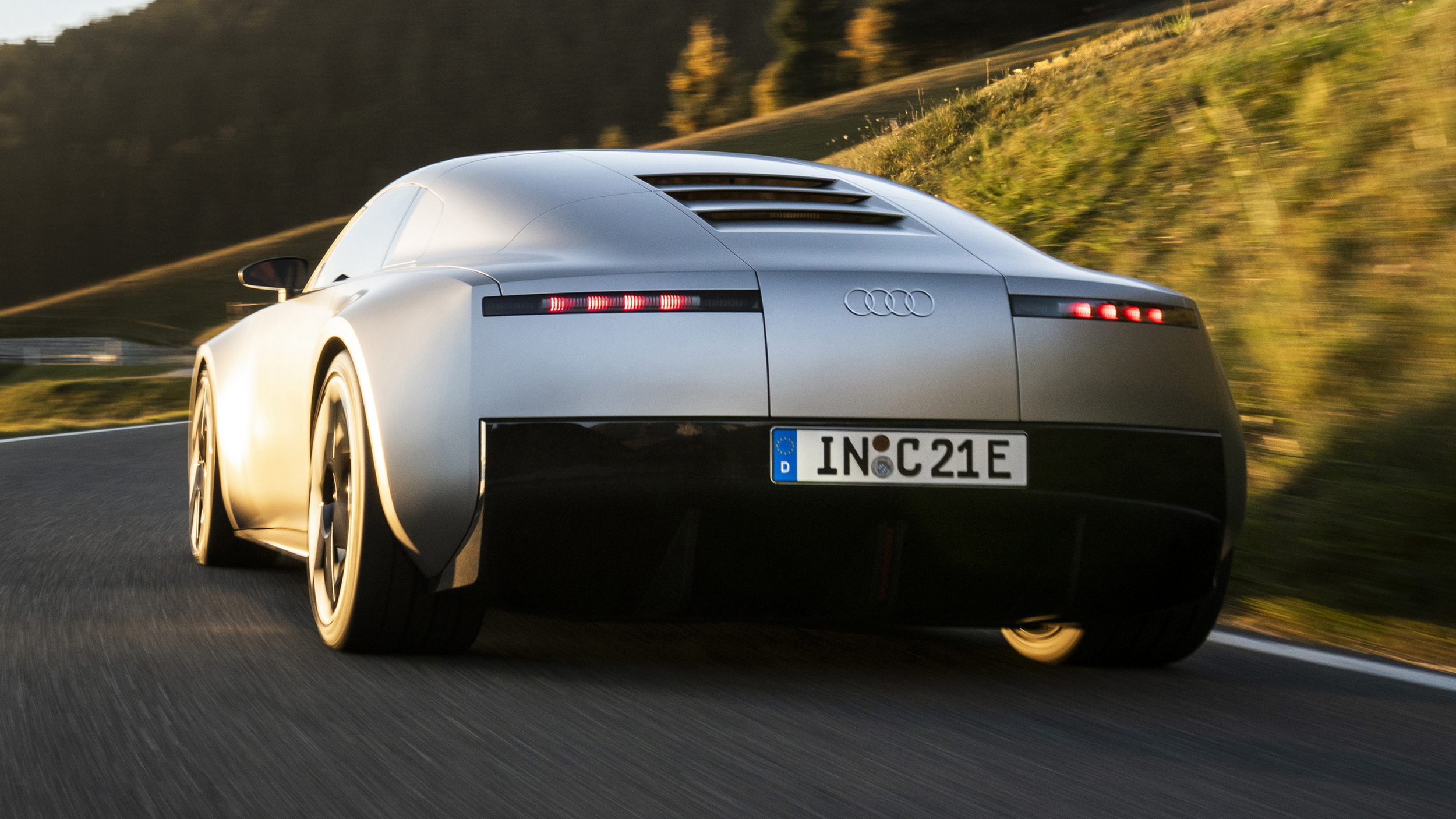
The recent Audi Concept C is not just a glimpse at the brand’s latest design direction. It is also headed for production as the long-awaited TT successor. And it will get there quickly, within just two years, as Audi leans hard into what it calls its “China speed” development playbook.
Following the cancellation of the TT, as well as the mid-engined R8, Audi no longer has a two-door sports car in its line-up, which makes the Concept C all the more important. From the time it was sketched out as an initial idea to when it hits production it will have been just three years, representing a much quicker development cycle than traditional Audi models.
“Whenever we present a new concept, that will always be a serious product,” Audi chief executive Gernot Döllner told GoAuto at the recent launch of the new RS5. “The first proof point to our strategy is the Concept C. We presented that last September, and within two years, we will have it in the market.”
Porsche Underpinnings
Audi will build the road-going version on an updated take of the VW Group’s Premium Platform Electric, or PPE, architecture. That is the same hardware developed for the next-generation 718 Cayman and 718 Boxster.
There have been some questions about the future of the electric 718s, with a recent report indicating they could be axed entirely. However, according to Car Sales, Dollner told Audi staff in an internal letter that “the delivery of the platform by Porsche is not in doubt,” adding that work on the Concept C is proceeding “in good collaboration between Team Porsche and Team Audi.”
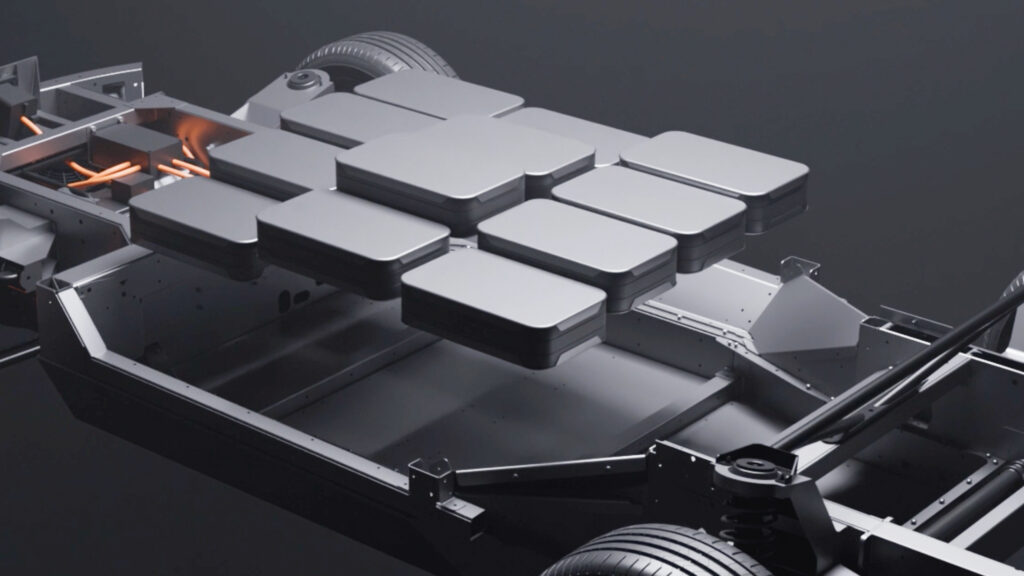
Details about the Concept C’s powertrain are limited, but it will be an EV. All signs point towards it having battery cells split between the cabin and the rear axle, allowing Audi to mimic the handling dynamics of a traditional mid-engined sports car.
China Speed
Helping to bring the car to life is the company’s new ‘China speed’ philosophy. It is ditching layered committees in favor of ‘project houses,’ encompassing design, engineering, manufacturing, procurement, supplier relations, quality, and validation staff under a single roof with one leader and direct access to the board.
“We (have) completely adapted that to our processes in Germany,” Dollner revealed. “Not so far in the future, we will prove that we are able to react as fast as we do in China – but in European programs.”
“Project houses are absolutely necessary if we want to be this fast,” he added. “You cut out committees. You have this speedy decision process with very fast involvement with the board. I am having spontaneous project meetings every week. The key to fast projects is in the early phase – the alignment between design, engineering and testing teams… to set up a stable project that can be validated in a very short timeframe.”
Dealers are slashing prices of the electric Dodge Charger.
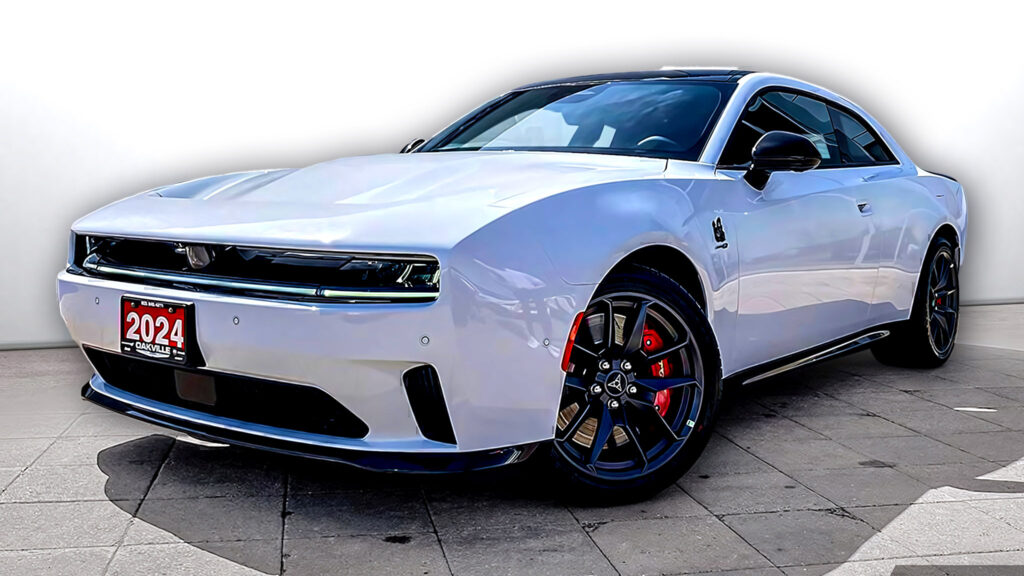
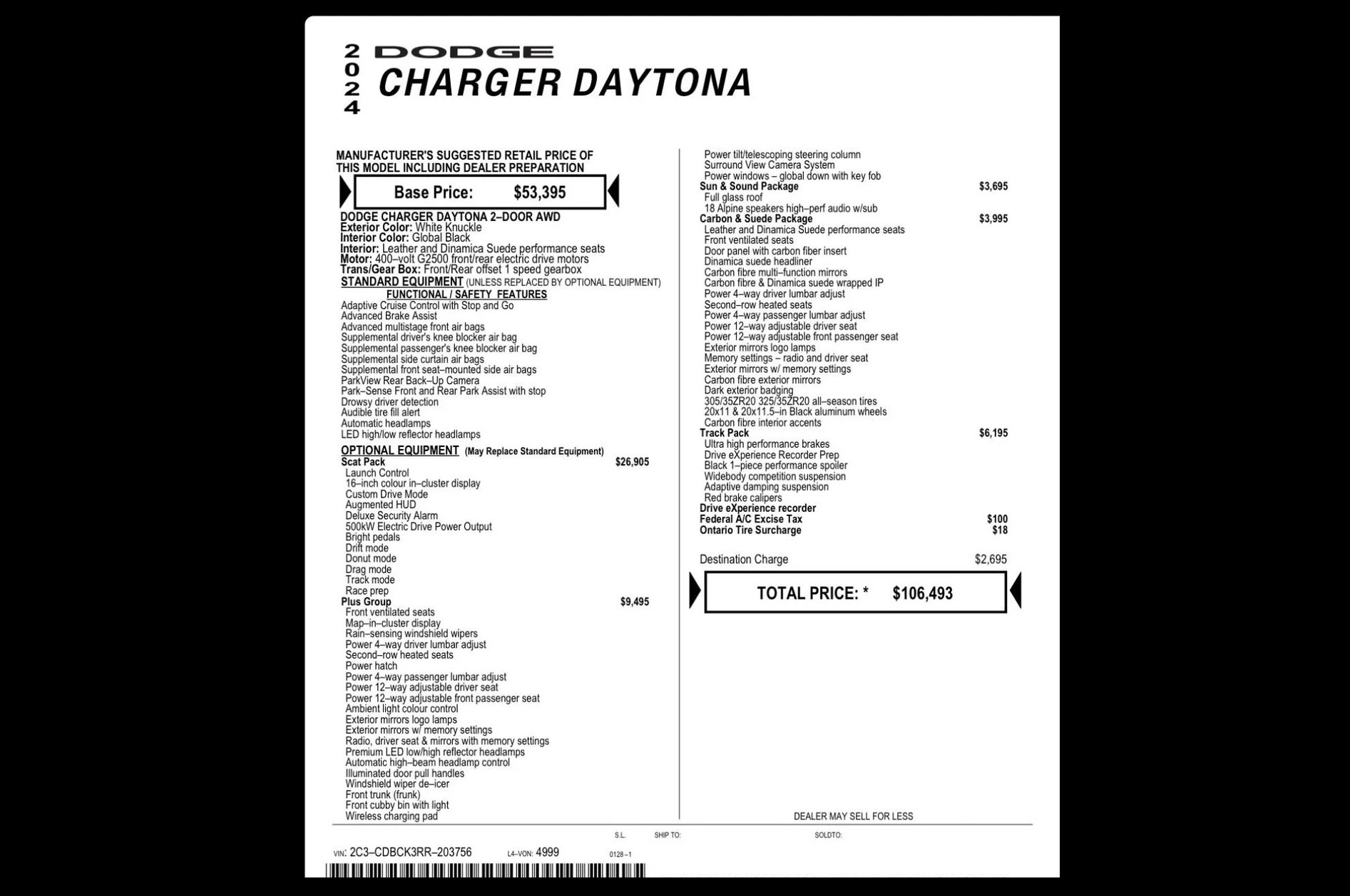
This 2024 example originally stickered at CA$106,493.
The Scat Pack version puts out 670 hp and 627 lb-ft.
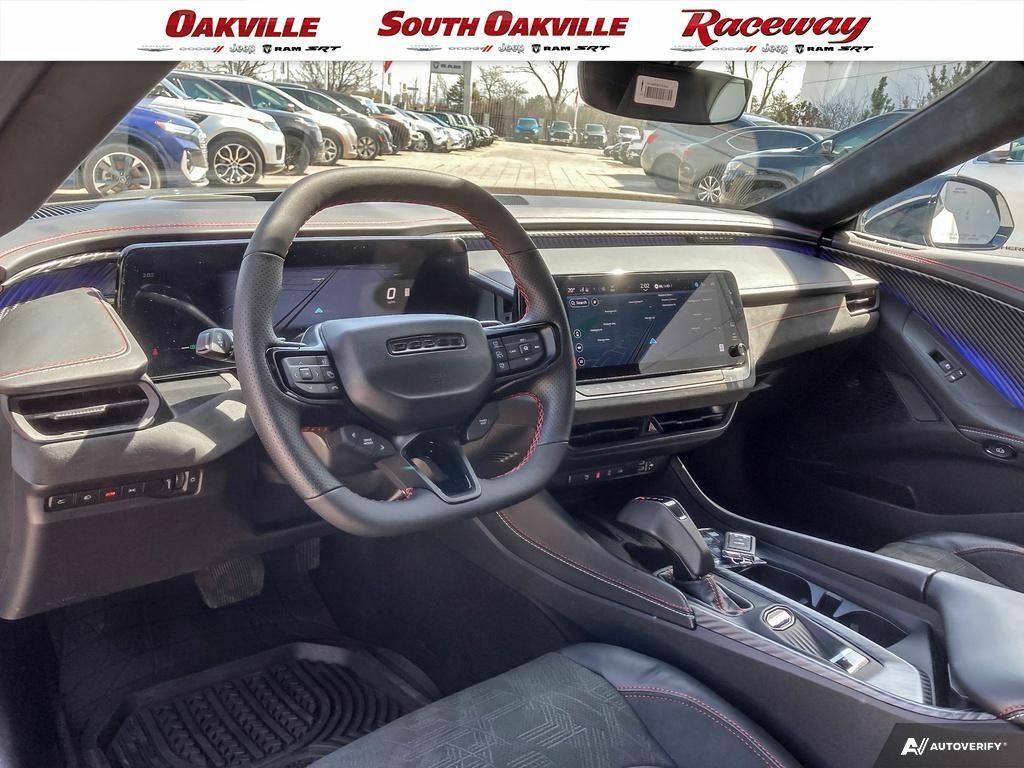
The all-electric Dodge Charger Daytona is big and heavy, and according to some owners, reportedly riddled with issues. In Canada, it can also be configured with tens of thousands of dollars in options, yet much of that added cost appears to evaporate the moment the car hits the market.
This white 2024 Charger Daytona has been listed for sale by Oakville Chrysler Dodge Jeep Ram in Ontario for CA$58,400 (US$42,700). On paper, that does not sound outrageous. Then you glance at the original window sticker and pause. With options included, this car started life at CA$106,493 (US$77,900). Let that sink for a moment.
Sticker Shock And Rapid Depreciation
Ready? Good, let’s carry on. In Canada, the most basic Charger Daytona opens at CA$53,995 (US$39,500). This one is the Scat Pack, which adds CA$26,905 (US$19,700) and pushes the total to CA$80,300 (US$59,200). In return, you get twin motors delivering 670 hp and 627 lb-ft (850 Nm), plus launch control, a head-up display, dedicated drive modes, and a 16-inch digital cluster to keep tabs on it all.
Next up, this Dodge was specified with the CA$9,495 (US$6,900) Plus Group. That buys you ventilated seats, power lumbar adjustment for both front occupants, ambient lighting, and a wireless smartphone charging pad. Comfort, in other words, does not come cheap.
There is also the CA$3,696 (US$2,700) Sun & Sound package, pairing a fixed glass roof with an 18-speaker Alpine audio system. On top of that sits the CA$6,195 (US$4,500) Track Pack, which brings high-performance brakes, a one-piece black spoiler, revised adaptive suspension tuning, and red brake calipers.
Rounding out the list of options is the CA$3,995 (US$2,900) Carbon & Suede package. As the name suggests, it adds carbon and suede accents, but you also get 20-inch black wheels wrapped in 305/25 front and 325/35 rear all-season tires.
It’s hard to see what Dodge was expecting here. Asking this sort of money for an electric Charger was always going to be a stretch. For similar cash, you could slide into a Lucid Air. Or, for CA$80,990 (US$59,200), you could drive away in a brand new Hyundai Ioniq 5 N and still have change left for the charging cable you will inevitably forget at home.
We hate to think about just how much more value this Charger could lose. It has already shed nearly CA$50,000 in under two years, despite covering just 275 km (171 miles). Even at CA$58,400 (US$42,700), you would not bet the house on it flying off the lot anytime soon.
Then again, something tells us that the dealer might be open to trimming that figure a little further just to move it along. You can check out the listing here.
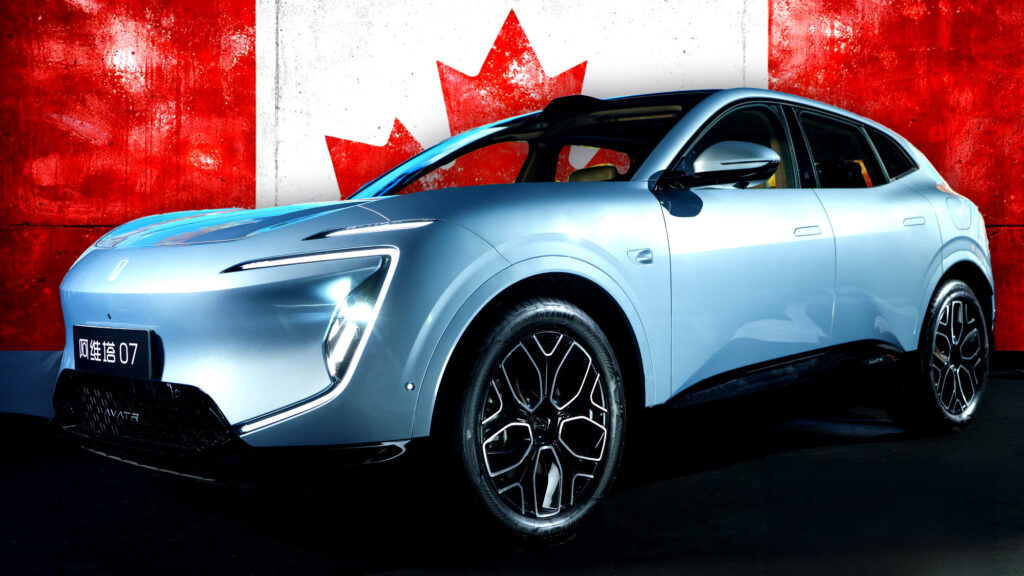
Canada is preparing to reopen its doors, at least partially, to Chinese-built electric vehicles. In the coming months, it will begin issuing permits at a sharply reduced tariff rate. However, locals should not expect the market to be immediately flooded with new and innovative EVs, as has happened in parts of Europe and Australia.
Under Canada’s new trade agreement with China, up to 49,000 EVs built in China can be imported at the reduced 6.1 percent tariff, down from the 106.1 percent rate imposed in 2024.
Global Affairs Canada said in an import-control notice published on February 26 that, from March 1 through August 31, the first 24,500 permits will be handed out on a simple first-come, first-served basis.
Given that it has only been six weeks since the reduced tariff was announced, automakers looking to enter the Canadian market for the first time are unlikely to secure a significant share of these initial permits.
Which Companies Stand To Gain Most?
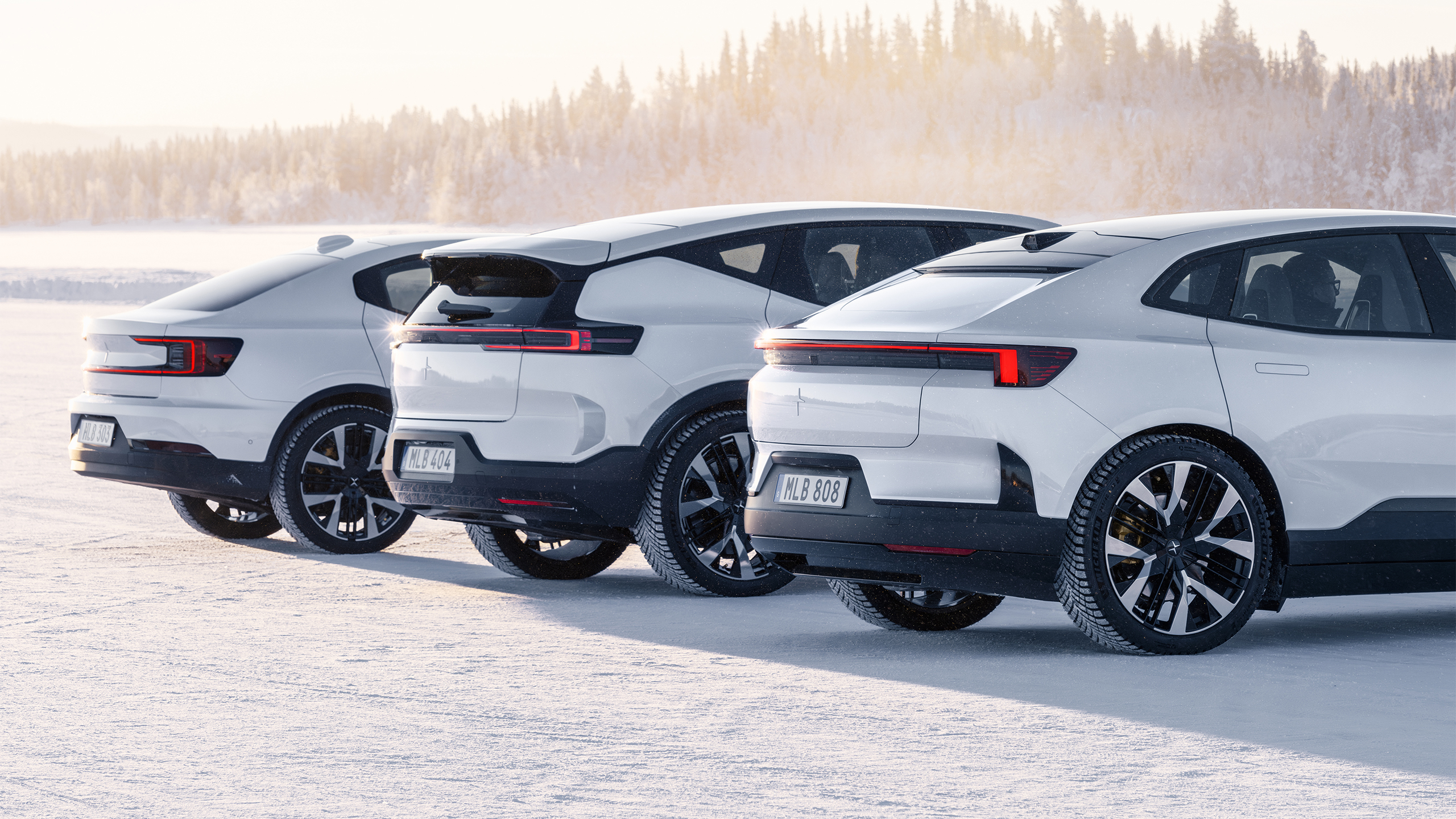
Instead, established firms are expected to benefit first. Volvo and Polestar, for example, had been exporting EVs from China to Canada prior to the 2024 tariff hike and likely retain the production flexibility to resume shipments for the Canadian market. Tesla also built China-made EVs for Canada before the tariffs took effect and is considered a frontrunner for the early permits.
Speaking to Auto News, Global Affairs spokesperson Samantha Lafleur said there is no predetermined limit on the number of permits each automaker may receive, although temporary limits could be introduced during the initial six months. Lafleur added that the department “will monitor the application and issuance of import permits for the purpose of providing equitable access to the quota to eligible applicants.”
Second Phase Of The Import Quota
The second quota of 24,500 permits will open on September 1, 2026, and run through February 28, 2027. Any permits unused during the first six months will be added to this second allocation period.
Canadians waiting for the most competitive offerings from China will be watching closely for the potential arrival of BYD and Geely, the country’s two largest automakers. As reported by Auto News, BYD has acknowledged it is evaluating sales in Canada. Geely, meanwhile, could expand its footprint beyond Volvo and Polestar by introducing additional brands such as its namesake marque and Zeekr, among others.
He argues EVs are simpler, cleaner, more efficient by design.
CEO warns traditional brands risk extinction if they stall.
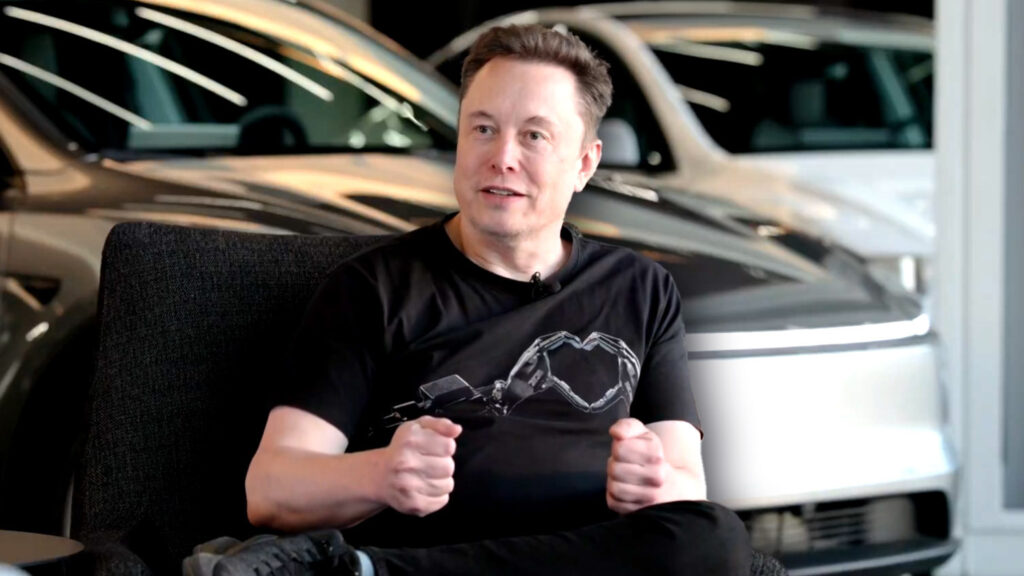
There’s no denying it. For all Elon Musk’s foibles, he and Tesla have played an instrumental role in accelerating the car industry’s shift towards electrification and autonomy. Love him or loathe him, the trajectory has shifted on his watch. Now, the controversial CEO says any legacy automaker that refuses to follow Tesla’s lead risks going the way of the dinosaurs.
Last week, the world’s richest man sat down with André Thierig, head of Tesla’s Gigafactory Berlin, for a deep dive into where Tesla is heading and where the wider industry should be going. In Musk’s telling, it has been obvious for more than 20 years that the endgame is fully electric, fully autonomous transport. The surprise, at least to him, is that some rivals still appear reluctant to accept it.
“The automotive industry has strongly rejected electrification,” Musk said during the interview. “They’ve dragged their feet, and they’ve had to be pushed there by the government, and whenever they have any opportunity to reduce the production of electric vehicles, they’ve done so. This is not a good strategic…like it doesn’t make sense.”
He went on to argue that the need for the car industry to shift to electrification would be true even “without environmental concerns.” Musk believes that “an electric vehicle is a fundamentally better architecture than a gasoline or combustion vehicle. It is much simpler, it is more efficient, it’s quieter, there’s no pollution in cities, so really all ground transport should be electric.”
“The future does not contain combustion vehicles, and there will be very few vehicles that are not autonomous. If the automotive industry does not move in that direction, they will be left out,” Musk added.
Carmakers Aren’t Doing Enough, Musk Says
When Thierig asked whether Tesla could learn anything from legacy automakers, or whether it should simply keep its head down and focus on its own path, Musk conceded, “You can always learn something from some competitors.” Still, he quickly returned to familiar territory. “Strategically, they’re heading in the direction of the dinosaurs, so they’re not heading in a good place. Dinosaurs are not around anymore.”
As for the risk of traditional brands copying Tesla’s ideas, he dismissed it, arguing that you cannot simply force a good idea onto companies that are not ready to embrace it.
None of this is especially new. Musk has long criticized established carmakers for moving too slowly, and with Tesla’s business tied so closely to EVs and autonomous driving systems, he has every reason to underline the advantages of both. It also does not hurt when that message reinforces confidence in Tesla’s long-term prospects.
Perhaps more intriguing is Tesla’s evolving self-image. The company no longer presents itself purely as an EV manufacturer, and some observers believe it may not even be building cars in a decade, shifting instead toward robotics.
Stronger Leapmotor ties could sharpen its VW, Renault fight.
A US ban on Chinese tech cars still poses a real hurdle.
Stellantis booked $26.1 billion in EV strategy write-downs.
Stellantis is deepening its ties with China’s fast-moving EV sector as it searches for a more efficient path through the electric transition. In 2023, the group inked a deal with Chinese EV startup Leapmotor, purchasing a 20 percent stake in the firm for $1.1 billion. The agreement made Stellantis the exclusive distributor of Leapmotor models in Western markets.
Now, it appears the relationship could extend beyond distribution, with Stellantis potentially tapping into its partner’s EV technology for brands such as Fiat, Opel, and Peugeot.
According to Autonews, unnamed sources say Stellantis wants access to Leapmotor’s battery and EV powertrain technologies. It’s understood that discussions are in their early stages, but using Leapmotor’s systems would help Stellantis save billions of dollars in development costs, and allow it to more quickly roll out rivals to vehicles from Chinese competitors like BYD and MG, in addition to legacy brands including the VW Group and Renault.
However, actually using Leapmotor’s battery and EV technologies could prove challenging. For example, vehicles using connected systems linked to China will be banned from importation and sale in the US from 2027.
What’s Next for the Partnership?
While speaking about the collaboration between the two companies, Stellantis chief executive Antonio Filosa said the “technical partnership… will help us in getting to higher level of competitiveness especially with electric cars and it is very important for Europe.”
He added the partnership will also “improve our collaboration also on new tech development,” noting that “2025 was a year of strategic implementation for the partnership, setting the stage for deeper integration”, according to Autonews.
EV Write-Downs And Reset
Earlier this month, Stellantis announced write-downs and charges of €22.2 billion ($26.1 billion) as it scaled down its EV strategy. However, it knows it can’t back away from EVs entirely, hence why it’s interested in deepening its ties with Leapmotor.
Through the Leapmotor International joint venture, Stellantis has helped the Chinese brand launch several of its models, like the C10 and B10, in markets including Europe and Australia. For a brief period, it was also building the small T03 in Poland, but this ended last year amid fluctuations in international trade policies. This year, Stellantis plans to start building Leapmotor vehicles at its Zaragoza plant in Spain.
Xiaomi unveiled its Vision Gran Turismo concept at MWC 2026.
Like the Aston Martin Valkyrie, it uses huge venturi tunnels.
The cocoon-like cockpit makes just enough space for two.
Chinese smartphone and consumer electronics giant Xiaomi, now very much a car manufacturer too, has become the first Chinese brand to unveil its own Vision Gran Turismo concept. Presented at the Mobile World Congress 2026 in Barcelona, Spain, the car is bold and offers a glimpse of what a legitimate hypercar from the tech juggernaut might look like if it ever reached production.
Underpinning the Vision GT is the company’s 900-volt Silicon Carbide platform. While no performance specifications have been released, it could deliver upwards of 1,900 hp from its electric powertrain. Most of the details shared by Xiaomi focus on the car’s design and aerodynamic intent.
According to Xiaomi’s head of automotive design, Li Tianyuan, the Vision GT concept posts a drag coefficient of 0.29 and has effectively been sculpted by the wind.
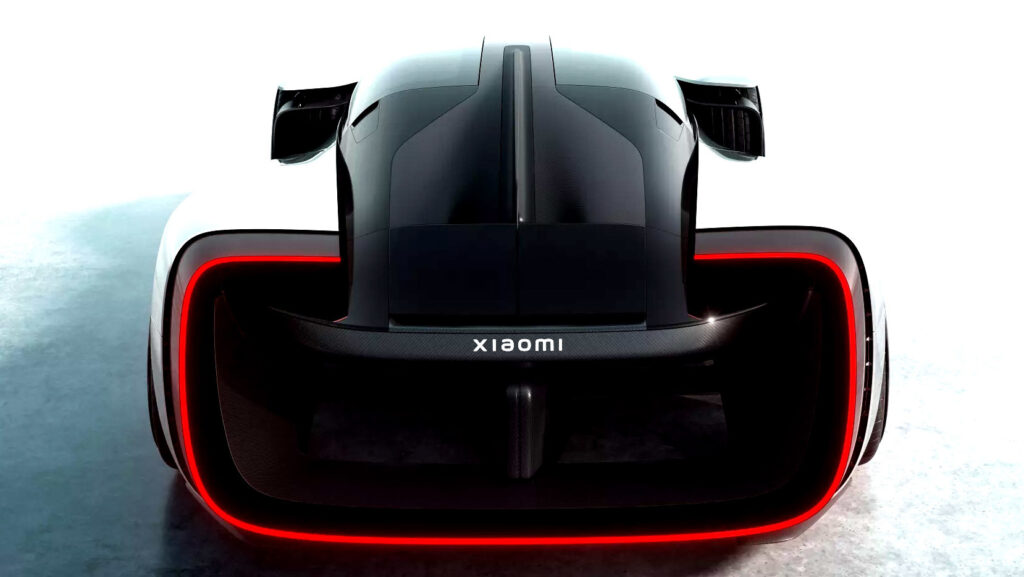
Like track-obsessed machines such as the Aston Martin Valkyrie and Red Bull RB17, the Vision GT runs vast venturi tunnels beneath its bodywork. They channel air through the underfloor and eject it at the rear, creating a dramatic tail section that works to pin the car to the tarmac at speed.
There’s no word on how much downforce it could have, but it’d inevitably be enough to warp your face while going around corners. The front-end includes a motorsport-inspired carbon fiber splitter and unobtrusive LED headlights. As mentioned, the rear is dominated by the huge venturi tunnels, but the LED taillight wrapping around the entire back of the car is also very striking.
Xiaomi has also imagined the Vision GT with a set of very intriguing wheels. Sitting over a set of carbon-ceramic brakes, the concept has a set of turbine fan rims with a floating cover over them, making it appear as though the wheels aren’t moving when the car is driving.
A Cabin From Another World
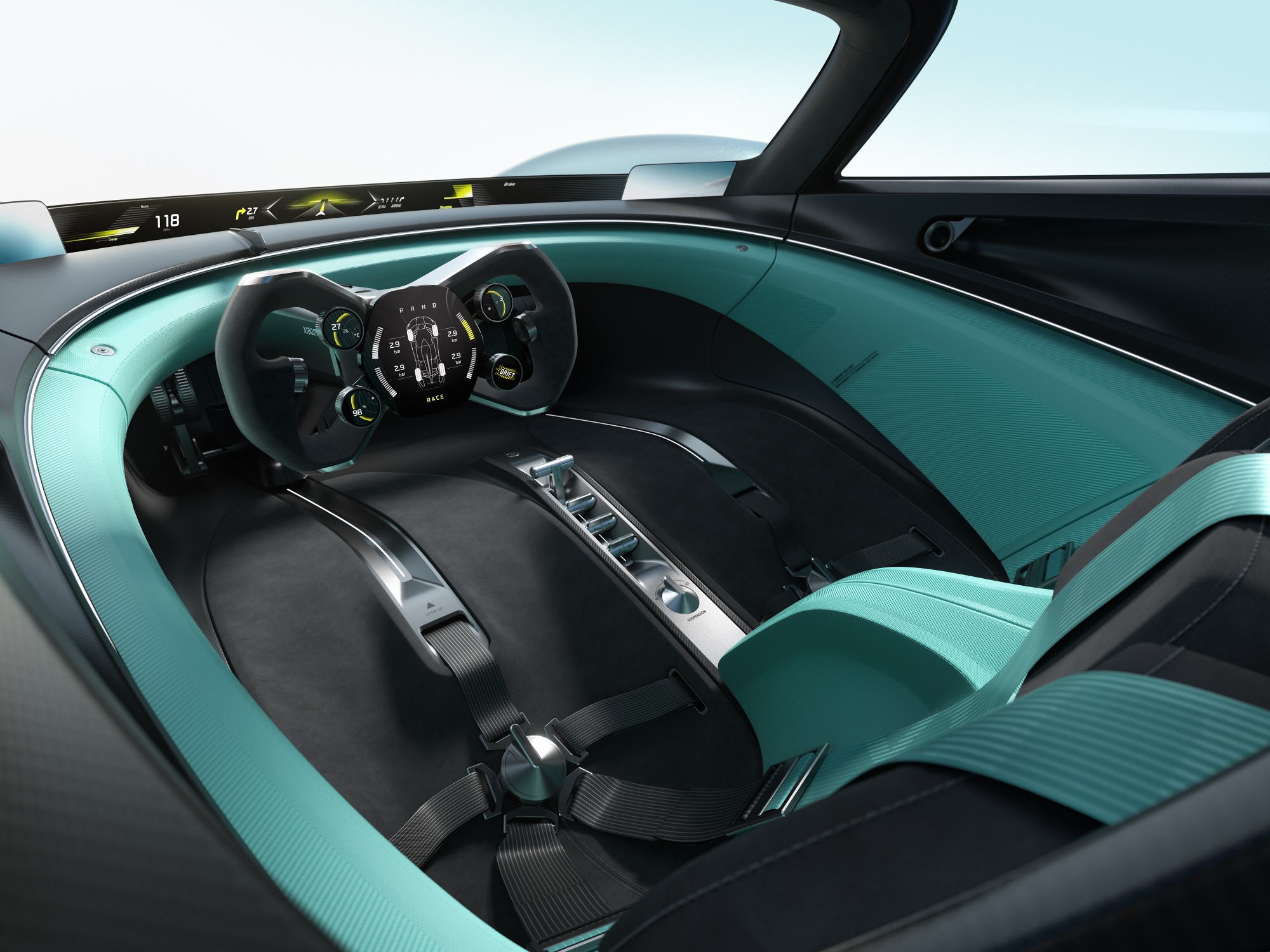
The cabin looks tight, but futuristic. Occupants sit in a pair of seats stuffed into the carbon fiber monocoque. There’s a panoramic head-up display similar to the new BMW iX3, as well as a steering wheel straight out of racing with five large circular screens, including a toggle for a drift mode.
There’s no word on when the car will be added to Gran Turismo, but it should be made available in the coming weeks. Will it influence a future road-going supercar from Xiaomi? Not likely, at least in that extreme form, but only time will tell.
If the Bentayga proved anything, it is that Bentley buyers have no issue with a luxury SUV wearing a winged badge. So a second one was never really in doubt. That follow-up is now deep into development, and it has just been spotted winter testing for the first time.
For now, it is referred to as the Urban SUV, though that name is almost certainly temporary. It will sit below the Bentayga in the range and, more significantly, it will be fully electric. Yes, the EV market has cooled slightly, but Bentley appears confident that its customers are still ready for a battery-powered SUV with the right badge on the nose.
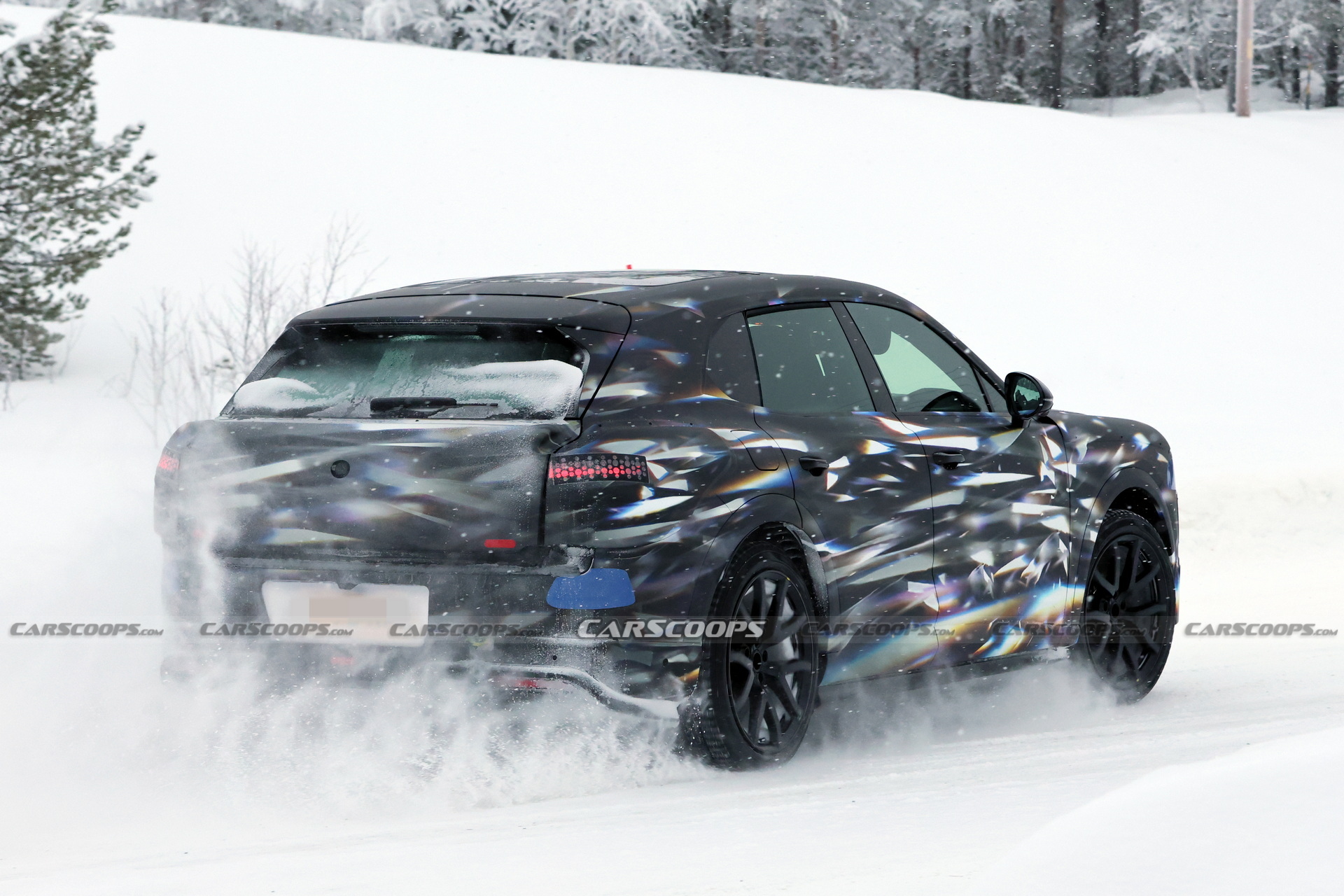
Several prototypes have been seen out on the road in recent months, but this is the first time one has appeared wearing this darker, more dramatic camouflage scheme. It’s been adorned with a large LED light bar at the front, ensuring the engineers testing it can still see after the sun sets in the depths of Europe’s winter.
SH Proshots
Most of the Urban SUV’s shape is still carefully disguised, but a few details are slipping through. Up front, the headlights feature four distinct lighting elements, giving it a signature that sets it apart from today’s Bentleys. Around the back, temporary cladding does its best to obscure the view, though slim LED taillights are clearly visible beneath the camouflage.
A Porsche Powertrain
Bentley is building its second SUV on the same Premium Platform Electric architecture as the new Porsche Cayenne Electric. That strongly suggests plenty of shared hardware with its German cousin, potentially including battery packs and motor configurations.
As it stands, the entry-level Cayenne Electric delivers 402 hp and tops out at 1,039 hp in the extraordinary Turbo variant. Our hunch is that the base Bentley will deliver around 600 hp. Whether or not it receives a flagship version with a four-digit horsepower figure remains uncertain.
One figure Bentley does seem keen to emphasize is charging speed. The SUV is expected to support ultra-fast DC charging, with the promise of adding 100 miles (160 km) of range in just seven minutes.
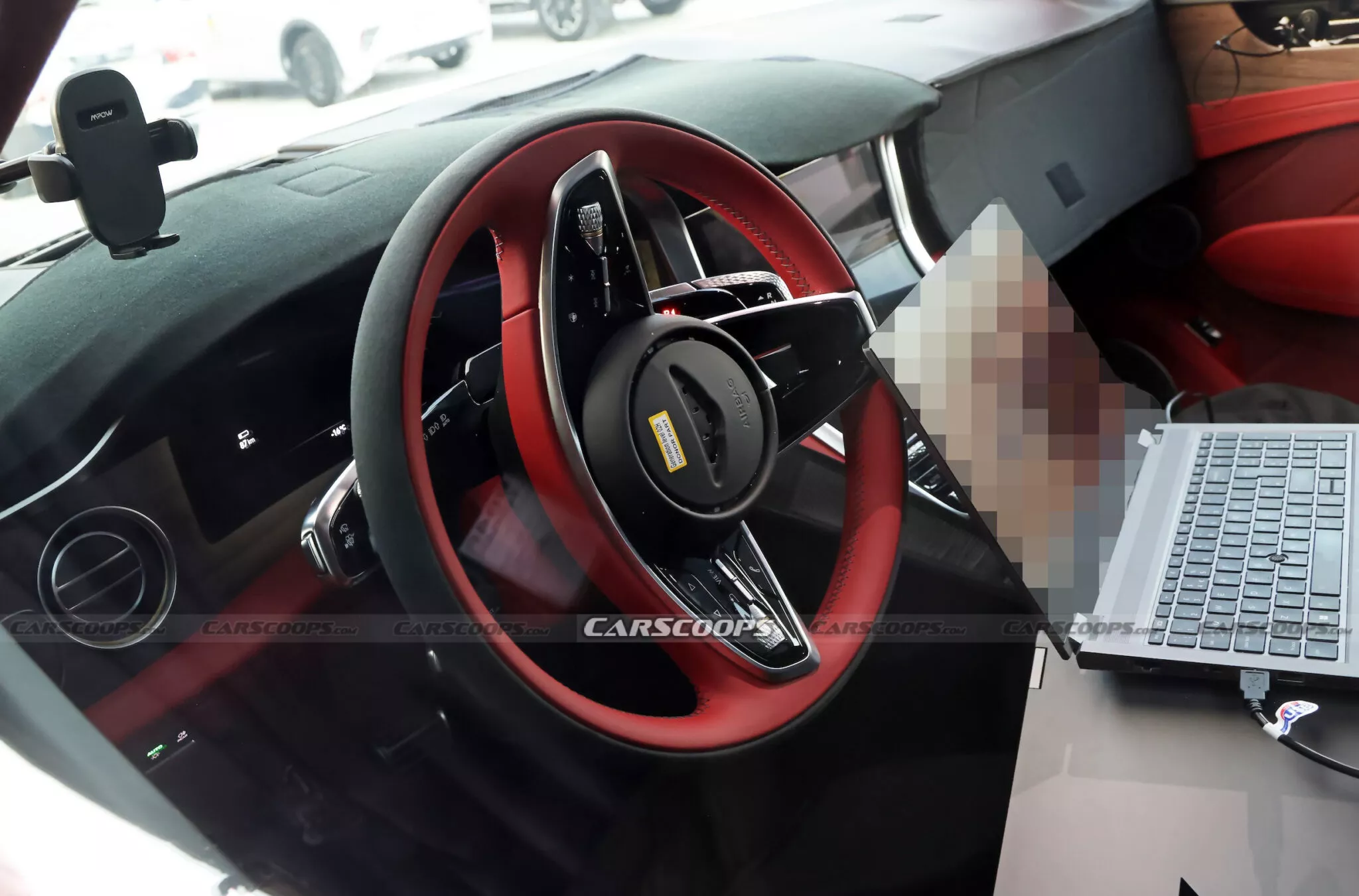
Late last year, our spy photographers finally caught the cabin in clear view. The images show a curved central infotainment screen that looks very close to the setup in the Cayenne Electric, paired with a separate digital instrument cluster ahead of the driver. It is familiar architecture, even if the surrounding materials will inevitably be pure Bentley.
There is more evidence of parts sharing lower down the steering column. Bentley’s compact electric SUV appears to use the same multi-function stalk arrangement as the new Audi Q3. Indicators, wipers, and headlight controls are grouped on the left stalk, while the right is dedicated solely to the shifter.
As for timing, Bentley could give us our first proper look at the production-ready model later this year. Customer deliveries of the Urban SUV are expected to begin in 2027, which gives Crewe a little time to perfect the details and, presumably, settle on a name that is not “Urban SUV.”
The new battery delivers 400 Wh/kg energy density.
Mass production is planned to begin next year.
BYD, SAIC, GAC, and CATL are developing similar packs.
Solid-state batteries have been “just around the corner” for what feels like an entire EV generation. Now, they might actually be arriving. In the third quarter of this year, China’s Changan will begin fitting its new solid-state packs to robots and EVs, with full mass production slated for 2027.
According to Chinese media, Changan claims its new solid-state battery has an energy density of 400 Wh/kg, and EVs using it will be able to travel upwards of 932 miles (1,500 km) on a single charge. While you could argue that this much range borders on excessive, it would make future Changan models far better suited to long road trips through remote areas where charging infrastructure remains sparse.
Breakthrough Energy Density
The pack is called the Golden Bell. Aside from being very energy-dense, it is said to be 70 percent safer than a conventional EV battery and, because this is 2026, it also uses artificial intelligence for remote diagnostics. Smarter batteries, apparently, are part of the plan.
Changan will build these units under its new Jingzhongzhao solid-state battery brand. The company intends to manufacture fully solid-state packs while also producing liquid and semi-solid-state batteries that rely on a liquid electrolyte.
China’s Solid-State Push
It is not alone. Other Chinese brands are also edging closer to making solid-state batteries mainstream. Earlier this year, Dongfeng Motor began testing its own solid-state battery in extreme cold weather. It has an energy density of 350 Wh/kg and a claimed range exceeding 620 miles (1,000 km). It also plans to roll them out in production cars this year, aiming for September.
BYD, Chery, SAIC, GAC, and CATL are all chasing similar breakthroughs. So are legacy names such as Mercedes-Benz, VW, BMW, Toyota, Nissan, Hyundai, and Honda. After years of promising headlines and laboratory milestones, solid-state batteries may finally be edging toward something tangible. If they deliver on even half of these promises, combustion engines will have one more reason to feel nervous.
Rescuers couldn’t open SU7’s electric door releases as it burned.
Eyewitnesses tried desperately to smash the driver’s side window.
China will ban electric door releases like the SU7’s from 2027.
An official investigation into the death of a man who crashed his Xiaomi SU7 in China last year has confirmed details previously reported by local media. The findings underscore how critical basic mechanical access can become in seconds. Authorities concluded that the 31-year-old died after being unable to open the electrically operated doors once the electric sedan caught fire.
While this case involves a Xiaomi, concerns about electronically actuated door systems have been debated across the industry and in global markets for years. This isn’t just a Tesla issue.
The crash occurred at approximately 3:15 a.m. on October 13, 2025, in Chengdu, reports Carnewschina. The Xiaomi driver, identified simply as Deng, was allegedly driving under the influence of alcohol at the time and slammed into another vehicle on Tianfu Avenue South before jumping over the central divider and bursting into flames.
Timeline Of The Crash
According to forensic findings cited by the Chinese magazine Caixin, the SU7 reached 203 km/h (126 mph) just three seconds before the crash. It then slowed to 167 km/h (104 mph) after striking the other car and was traveling 138 km/h (86 mph) when it hit the divider.
Harrowing footage captured in the immediate aftermath showed bystanders attempting to smash the driver’s side window and open the door in an effort to save him, but without success.
Why The Doors Wouldn’t Open
Investigators concluded that the doors could not be opened from the outside because the fire caused the low-voltage system to shut down, disabling the door handle release function. The report added that the SU7 has no mechanical latches accessible from the outside and relies solely on electric release buttons.
Xiaomi shares plunged nearly 9% after a fatal crash involving its SU7 electric car, Bloomberg reports
According to the outlet, a 31-year-old driver in China collided with another vehicle, crossed into the opposite lane, and the car caught fire. Witnesses tried to pull the man… pic.twitter.com/yPQ70FoKXN
The Xiaomi also uses electric release buttons inside the cabin. Although it is equipped with mechanical emergency releases, locating and operating them while disoriented after a crash would not be straightforward.
Regulatory Response In China
This fatal crash, along with others, has prompted regulators in China to ban electronic door handles on EVs. The new rule will take effect on January 1, 2027. It will require exterior handles that provide a handhold of at least 60 mm by 20 mm (2.36 inches x 0.79 inches), ensuring they can be used by rescuers in an emergency. In addition, mechanical releases inside the vehicle must include clear signage explaining how to open them during an emergency.
PROS ›› Good tech, comfortable ride, better than EV5 CONS ›› Poor ADAS, pricey, inefficient, slow-charging
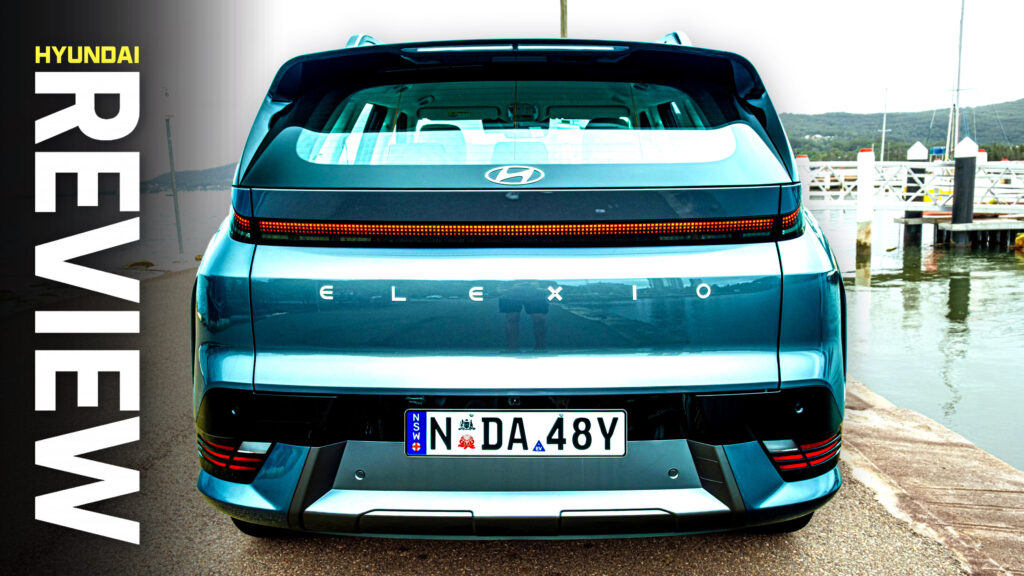
Electric vehicles make up just over 8 percent of new car sales in Australia, so they are hardly dominant. Yet the competitive noise has increased dramatically in recent years, thanks largely to a surge of new Chinese brands. Hyundai’s counterpunch is the Elexio, its latest EV and one aimed squarely at that fast-growing crowd.
The Elexio is unlike any other electric Hyundai so far. Crucially, it was not developed entirely in-house, but rather brought to life through its joint venture partnership with BAIC Motors.
This means it is built in China, tapping into the country’s vast manufacturing scale and efficiency, paired with the engineering experience and brand weight of a legacy player like Hyundai. When it was revealed last year, it looked set to remain a China-only model. Instead, it has now landed in Australia, and we were among the first to get behind the wheel earlier this month.
QUICK FACTS
› Model:
2026 Hyundai Elexio Elite
› Starting Price:
AU$61,990 ($44,000) as tested
› Dimensions:
181.6 L x 73.8 W x 65.8 in H (4,615 x 1,875 x 1,673 mm)
› Wheelbase:
108.2 in (2,750 mm)
› Curb Weight:
2,105 kg (4,640 lbs)
› Powertrain:
Single electric motor / 88.1 kWh battery
› Output:
215 hp (160 kW) / 236 lb-ft (320 Nm)
› 0-62 mph
~8.0 seconds
› Transmission:
Single-speed
› Efficiency:
19.5 kWh/100 km as tested
› On Sale:
Now
SWIPE
According to Hyundai, the Elexio has been designed to neatly slot between the Kona EV and Ioniq 5 in its line-up, serving as an all-electric alternative to the Hyundai Tucson. It’s Hyundai’s answer to popular competitors like the Tesla Model Y, Kia EV5, BYD Sealion 7, and Xpeng G6, and this is reflected in the price.
Can It Compete On Price?
Hyundai Australia
Two versions will be offered: the base Elexio and the flagship Elexio Elite. Prices for the base version will start at AU$58,990 (US$41,900) before on-road costs, while the Elite will be priced from AU$61,990 (US$44,000). However, the Elite will be available for AU$59,990 (US$42,600), including all on-road costs, in a limited-time deal running until the end of March.
Hyundai is predicting big things for the Elexio and expects it to be its best-selling EV in Australia. Achieving this won’t be easy. The Kia EV6 undercuts the Elexio at AU$56,770 (US$40,300), the Tesla Model Y Premium is available from AU$58,900 (US$41,800), and the BYD Sealion 7 Premium is available from AU$54,990 (US$39,000). The superb Zeekr 7X also undercuts it at AU$57,900 (US$41,100).
Big Battery, Modest Charging Speeds
So, what do you get for your money in the world of the Elexio? Like Hyundai’s Ioniq models, and unlike the Kia EV5, the Chinese-built Elexio uses the familiar E-GMP platform. However, it doesn’t have an 800-volt architecture like the Ioniqs, instead using a 400-volt system.
With this in mind, charging the battery pack 10-80 percent on a 150 kW charger, with peak speeds in the mid-120s, will take 38 minutes. This is slightly slower than the Kia EV5, which takes 36 minutes, but whereas it has a compact 64.2 kWh battery, the Hyundai has a much larger and more practical 88.1 kWh unit.
This battery powers a front-mounted electric motor with 160 kW (215 hp) and 310 Nm (236 lb-ft). Hyundai quotes a combined efficiency of 18.2 kWh/100 km, which is okay, but certainly not class-leading.
A Digital-First Cabin
Photos Brad Anderson/Carscoops
We only sampled the Elexio in flagship Elite trim, so first impressions came fully loaded. Stepping into the cabin for the first time, it is immediately clear this is not your typical Hyundai interior.
Dominating the interior is a massive widescreen 27-inch display, encompassing both the central infotainment display and a display for the passenger. This screen houses Hyundai’s new Connect-C infotainment system and runs on Android Automotive with a powerful Snapdragon 8295 processor and Unreal 3D graphics engine.
While there are several cars on sale in China with a similar passenger and infotainment screen, this is one of the first implementations of a display like this in a Western market. It looks great, providing excellent colors, clarity, and response. However, it’s not particularly practical to use, especially when you’re driving.
Photos Brad Anderson/Carscoops
I am quite tall with long arms, yet adjusting the climate controls or digging into vehicle settings on the move meant leaning forward and stretching almost to the limit. It should not feel like a light workout just to change the temperature. The more traditional screens in other current Hyundai models are much easier to reach, as are the tablet-like displays found in many of the Elexio’s rivals.
On the plus side, the new Connect-C system is good and is far more modern than Hyundai’s outgoing software. It has a much smartphone-like layout with convenient shortcuts on the driver’s side.
In a Hyundai first, a traditional gauge cluster has been replaced by a head-up display. In photos, it doesn’t look like a HUD at all, but rather a physical cluster positioned at the base of the windshield. In reality, it is a true head-up display, albeit it projects onto a small black area of the windshield, providing better contrast than HUDs that project onto normal glass.
The obvious downside of this is that if you chip or crack the windshield, you probably won’t be able to buy a generic HUD-compatible replacement, but rather need one from Hyundai with this black element.
Quality And Space
The rest of the cabin is quite minimal, as many EVs are today. In terms of fit and finish, it feels on par with some Chinese rivals, like the BYD Sealion 7, and is certainly more premium than the Kia EV5. There’s soft-touch suede on the dashboard and door panels, as well as heated and ventilated front seats, and plenty of leather. Dual wireless chargers are also standard on the Elite.
Overall, space and comfort are good, whether that be in the front row or the second-row. While the Elexio only has a wheelbase of 2,750 mm (108.2 inches), 5 mm (0.1 inches) less than the Tucson and 250 mm (9.8 inches) less than the Ioniq 5, there’s still plenty of legroom for rear passengers, and that includes adults. Cargo space is decent, rated at 506 liters (17.8 cubic-feet) or 1,540 liters (54.3 cubic-feet) with the rear seats folded 60/40 flat.
Disappointingly, neither Elexio model has a panoramic glass roof, which is common in electric SUVs at this price point, nor a frunk, even though there’s plenty of space for one.
How Does It Drive?
Photos Brad Anderson/Carscoops
Driving the Elexio revealed that it is a solid performer, and it does some things well. However, it fails to stand out from the competition and could benefit from some tweaks to lift it to a new level.
As any EV should, the Elexio’s powertrain is smooth and quiet, providing more than enough grunt for everyday driving duties, whether that be in urban settings or on the highway.
With 160 kW (215 hp) and 310 Nm (236 lb-ft), the Elexio has exactly the same power as the front-wheel drive Kia EV5. Crucially, it doesn’t suffer from the same horrible torque steer that the EV5 does. In fact, there’s no torque steer whatsoever, which is a great thing. However, like the EV5, the Elexio does love to spin up its inside front wheel should you get greedy with the throttle and play around with the traction control.
Efficiency is not so good. After several stints behind the wheel of the Elexio, we averaged 19.5 kWh/100 km, which is quite poor, particularly given that we averaged 20.5 kWh/100 km in the Sealion 7 Performance, and it has an extra 230 kW (308 hp) and 380 Nm (280 lb-ft) of torque.
Like other Hyundai and Kia EVs, the Elexio has paddle shifters behind the steering wheel to adjust the level of brake regeneration, which is something every EV should have. I spent most of my time in the one pedal i-Pedal mode, with it bringing the SUV to a smooth and predictable stop every time. The transition between the mechanical brakes and the regen is also imperceptible, so kudos to Hyundai for that.
The brand says that, like most of the cars it sells in Australia, the Elexio has been specifically tuned for local roads by teams of engineers from South Korea. I was pleasantly surprised with the Elexio’s ride, finding it to be comfortable and softer than many other EVs, which can be too firm and harsh over bumps.
Software Still Finding Its Feet
Photos Brad Anderson/Carscoops
In addition to tweaking the suspension for Australia, Hyundai insinuated during a press briefing that the Elexio’s advanced driver assistance system have also been set up for local conditions. Despite this, further refinements are needed.
During long highway jaunts, there were several instances when the lane-keeping assist and lane-centering functions failed to recognize clearly-marked lines, causing it to slowly drift into adjacent lanes. In addition, I experienced some slow ping-ponging between lane markings. This is odd as the dozens of other Hyundai and Kia models I’ve tested in recent years all have great lane-keeping systems, keeping you locked in the center of the lane on well-marked highways.
In addition, there was an instance where I had the adaptive cruise control enabled on a 100 km/h (62 mph) country road when suddenly, the Elexio suddenly braked to 75 km/h (47 mph) despite there being no object or car in front of me. I suspect the large semi-truck traveling in the opposite direction in the lane next to me fooled the system.
Like so many other new cars built in China, the Hyundai Elexio’s driver monitoring system is overactive, ringing the moment you yawn or take your eyes off the road. Additionally, turning it offer requires multiple steps through the menu, which is frustrating.
Verdict
Photos Brad Anderson/Carscoops
The Hyundai Elexio is definitely better than the Kia EV5, which has quickly gained popularity in Australia and is the best-selling EV from a legacy brand in the local market. With this in mind, there’s a good chance that the Elexio should also sell well for Hyundai, and it’ll likely attract many shoppers who were previously interested in the Kona EV or Ioniq 5.
However, it may be prudent for buyers to exercise some patience before getting an Elexio. Earlier this year, Hyundai slashed prices of the Inster by AU$7,288 ($5,200), and reduced the Kona Electric by more than AU$13,000 ($9,200). If internal sales targets are missed, similar price adjustments for the Elexio would hardly be surprising.
Just as importantly, Hyundai’s latest EV still needs a few software refinements, particularly to its ADAS, before it feels like the clear choice in an increasingly crowded segment.
Ford claims most Mach-E owners barely use the frunk.
Several standard features have been dropped for 2026.
The EV also gains new physical door handles at the rear.
Ford has given the Mustang Mach-E a light reshuffle for 2026, and one change jumps out immediately. The front trunk is no longer standard kit. If you want a frunk now, you will have to tick a box and pay for the privilege. And it’s a pretty expensive one at that.
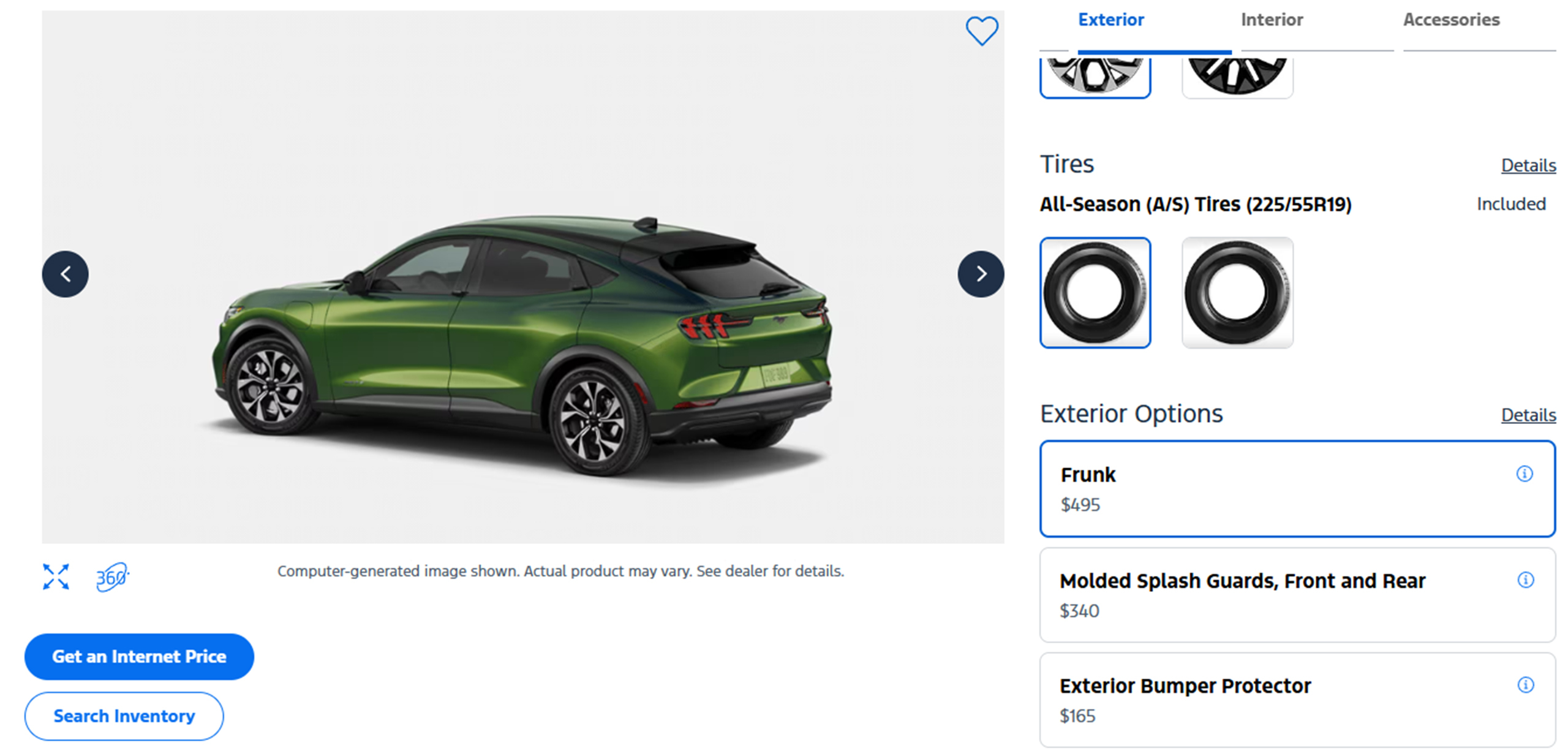
First noticed by Ford Authority, the updated online configurator reveals that the frunk is now a $495 option across the entire model line-up. While there are plenty of EVs out there that don’t have a frunk at all, this is the first time we’ve heard of one being offered as an optional extra. It may also be the first instance of a once-standard frunk becoming a paid add-on.
Ford says the decision was driven by customer behavior. Not many owners were using the frunk in the first place, or so the company claims. Removing it as standard helps cut costs, and the company insists those savings are being passed on.
To be fair, as we reported back in December, the Mach-E GT is almost $1,000 cheaper for 2026 than it was last year. The entry-level car, however, still starts at $37,795, which suggests the savings have not been distributed equally.
What Else Is Missing?
There are a few more trims to the lineup for 2026. For example, the front-seat map pockets have quietly disappeared, presumably in the name of saving a few pennies per car. The Mach-E Rally also parts ways with its standard rear spoiler and graphics, both now shuffled onto the options sheet. And if you were fond of the Bronze Appearance Package, it has been shown the door as well.
It is not all subtraction, though. Ford has made one practical addition at the back, fitting the rear doors with the same small grab handles used up front. You still have to press a button to pop the door open, because this is 2026, but at least there is now something physical to grab once it releases.
However, given how much bad press electronic door handles had over the past year, as well as regulatory changes in other markets, it’s possible Ford may eventually have to revert to more traditional door handles. We will see how long the current setup lasts.
Toyota and Lexus teamed up with Treehouse to simplify home charging.
Every 2026 and newer model includes a Level 1 and Level 2 charger.
Buyers can spend $524 on a stronger ChargePoint Level 2 unit.
Electric vehicles make plenty of sense if you are not clocking up cross-country miles every week and you have somewhere at home to plug in. The complication usually starts after you sign the paperwork, when you realize installing a home charger involves quotes, site visits, and more emails than expected. Toyota thinks it has found a way to smooth that part out.
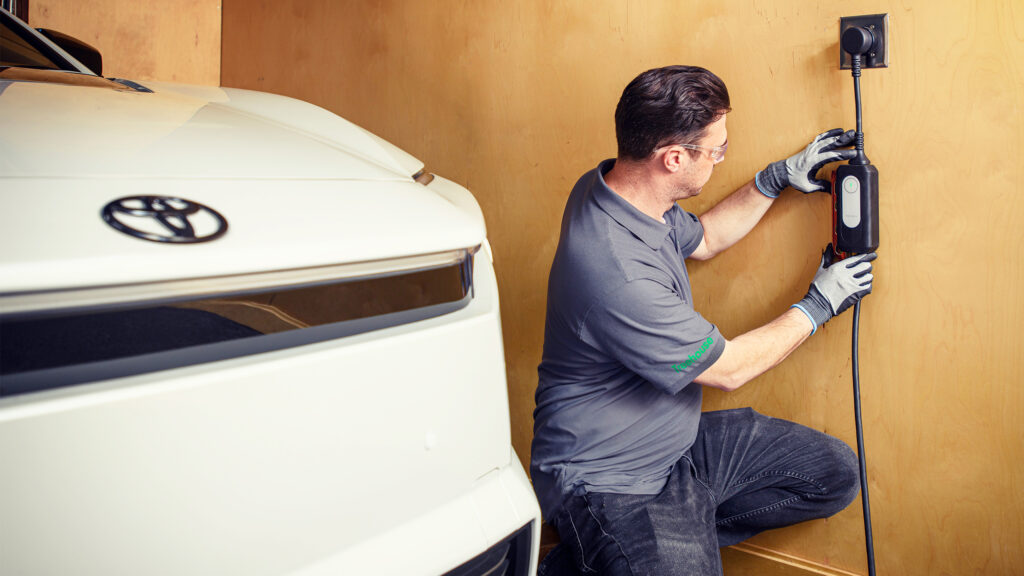
Toyota’s North American division has partnered with Treehouse, an EV charging infrastructure company, to simplify the process of getting a Level 2 AC home charger installed and operational.
Thanks to Treehouse, owners only need to upload a few photos and complete a short survey. From there, the company promises a quote within 48 hours and can then send technicians out to install the charger.
Traditionally, home charger installs can involve multiple visits, especially when someone needs to assess the right mounting location and electrical setup in person. This approach is meant to cut that step out entirely.
Treehouse says it relies on proprietary technology, along with the homeowner’s photos, to determine exactly what the installation requires. If upgrades are necessary, licensed electricians will step in to update or install any electrical systems needed to support home EV charging.
Standard Equipment On 2026 Models
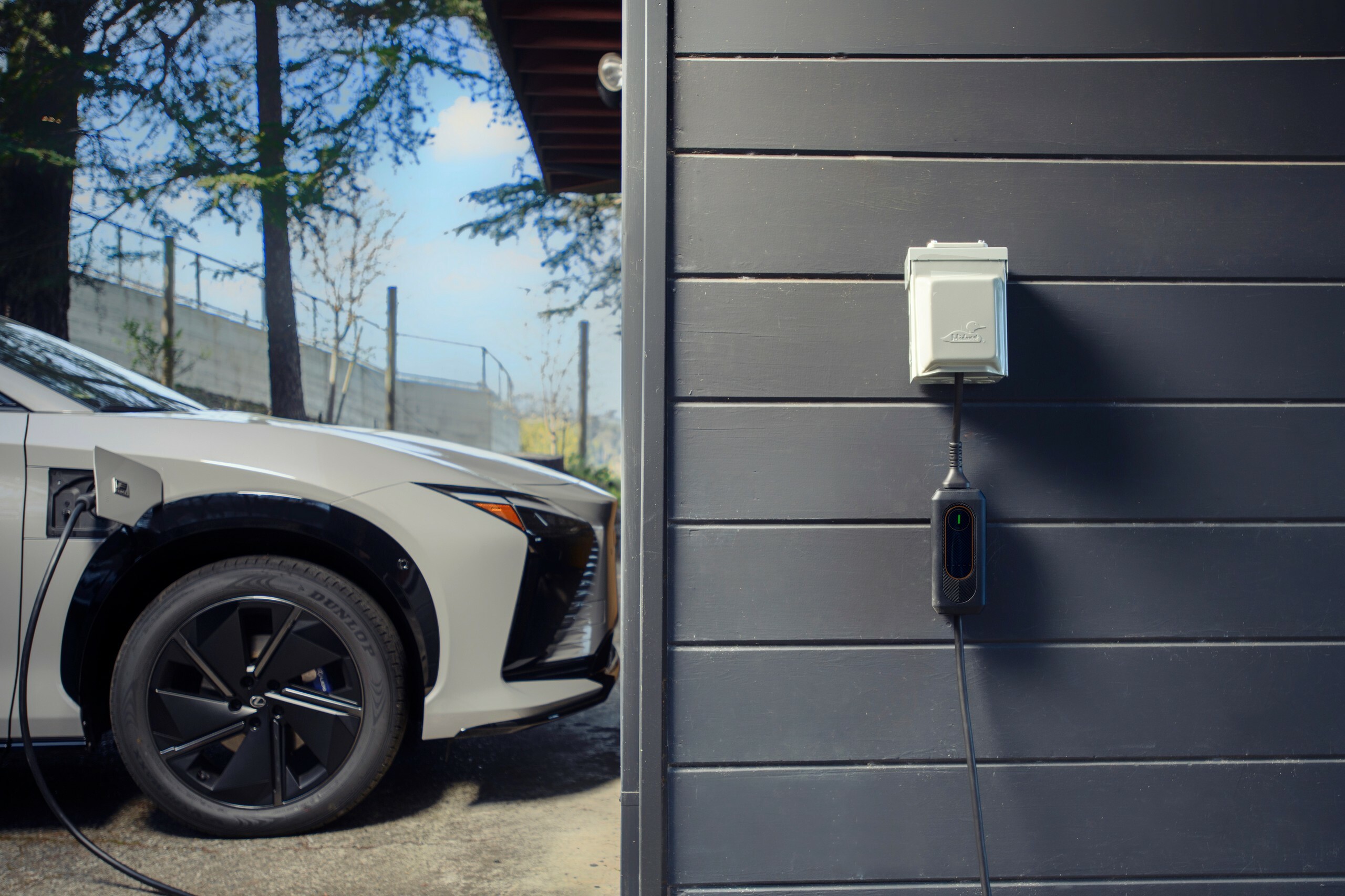
From 2026 onward, every Toyota and Lexus battery-electric vehicle and PHEV sold in the US will include a dual-voltage 120V/240V AC home charger. It supports both Level 1 and Level 2 charging, so you can plug into a standard outlet or step up to a quicker setup. In typical conditions, that is enough to take a battery from about 10 percent to full overnight, which should cover most daily routines.
If that still feels too leisurely, there is an upgrade. Owners can opt for a hardwired ChargePoint Home Flex Level 2 charger, installed by Treehouse, which Toyota says trims charging times by roughly 30 percent. The unit costs $524, assuming your electrical panel is feeling cooperative.
“We’re thrilled to work with Toyota to enhance the electrified vehicle and home charging experience for Toyota and Lexus customers,” Treehouse co-founder and chief executive Eric Owski said. “By bringing seamless, end-to-end home charging solutions into the EV ownership journey, this collaboration with Toyota reflects our shared commitment to making electrification easy and accessible for consumers.”
The YangWang U9 Xtreme makes 2,978 hp from four motors.
Former Top Gear host drove the limited-run model on track.
He also sampled the Xiaomi SU7 Ultra and Maextro S800.
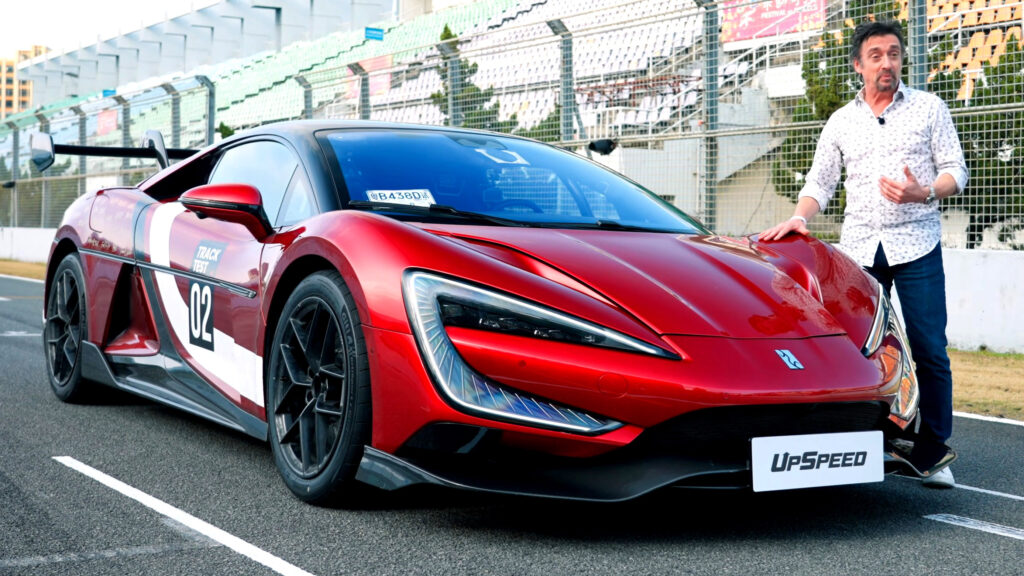
China’s most outrageous new hypercar has already brushed up against the outer limits of physics, and now it has handed the keys to Richard Hammond. Last year, the YangWang U9 Xtreme went faster than any production car before it, recording a one-way top speed of 308.4 mph or 496.22 km/h at the ATP Papenburg high-speed oval in Germany.
Because the run was completed in only one direction, however, SSC’s Tuatara technically still retains the official two-way average production car record at 282.9 mph (455.3 km/h).
Even so, it was a headline-grabbing run that instantly placed BYD’s halo car in rare company. Keen to showcase that achievement to a broader audience, BYD recently invited Richard Hammond to become the first Western journalist to drive the car. The result makes for compelling viewing.
As Hammond admits in his latest DriveTribe video, he doesn’t exactly have the greatest reputation when it comes to driving extremely fast, ultra-powerful cars. In 2017, he crashed the all-electric 1,224 hp Rimac Concept One while filming The Grand Tour. Back in 2006, he was seriously injured after crashing a dragster on the set of Top Gear.
BYD obviously put a lot of faith in him to keep the U9 Xtreme in one piece, particularly given that this four-motor electric beast delivers a maximum of 2,978 hp, more than any other production car.
Rather than driving it on the road, Hammond was able to put it through its paces on a racetrack. Understandably, he appears to take things quite easily, which is hardly a surprise given that a BYD test driver spun up the car’s wheels the day prior and crashed into a barrier. It would seem as though having almost 3,000 hp under your right foot requires a lot of care. Who would have thought?
Hammond Tests Xiaomi Too
Interestingly, this isn’t the only recent video that Hammond has made in China. Late last year, he joined what could best be described as the Chinese version of Top Gear, alongside three hosts for a road trip. In this video, he drove three of China’s most impressive new EVs: the Xiaomi SU7 Ultra, the ‘regular’ YangWang U9, and the luxurious Maextro S800.
The clip was originally shared only on Chinese social media but has since been translated and uploaded to YouTube for our viewing pleasure. It’s well worth a watch.
The new Freelander will be based on Chery’s T1X platform.
JLR is expected to sell the SUV in both EV and EREV guises.
Freelander becomes a sub-brand with multiple models.
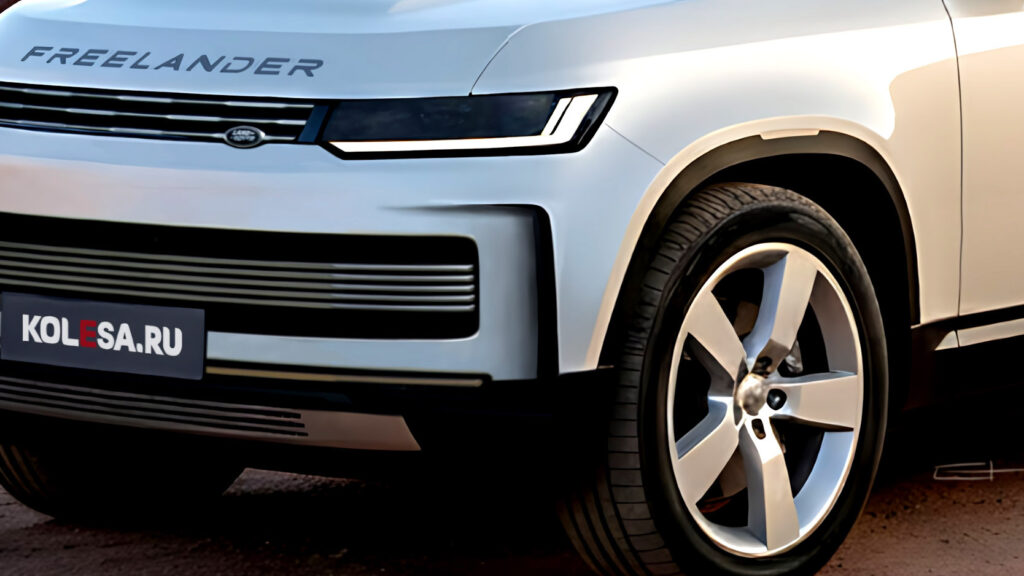
Land Rover is not only working on a smaller Defender, but it is also dusting off the Freelander badge for something altogether more targeted. This time, the name returns on an all-new, rugged SUV built specifically for China, and if these spy shot-based renderings are on the money, it will not be shy about looking the part.
The project is being handled by the Chery Jaguar Land Rover joint venture, better known as CJLR. Underneath, the new Freelander will sit on Chery’s existing T1X platform, which already underpins various Jaecoo, Omoda, and Chery SUVs. In plain terms, that means lower development costs and a much quicker route to market. Reinventing the wheel is expensive. Borrowing one from the parts bin is not.
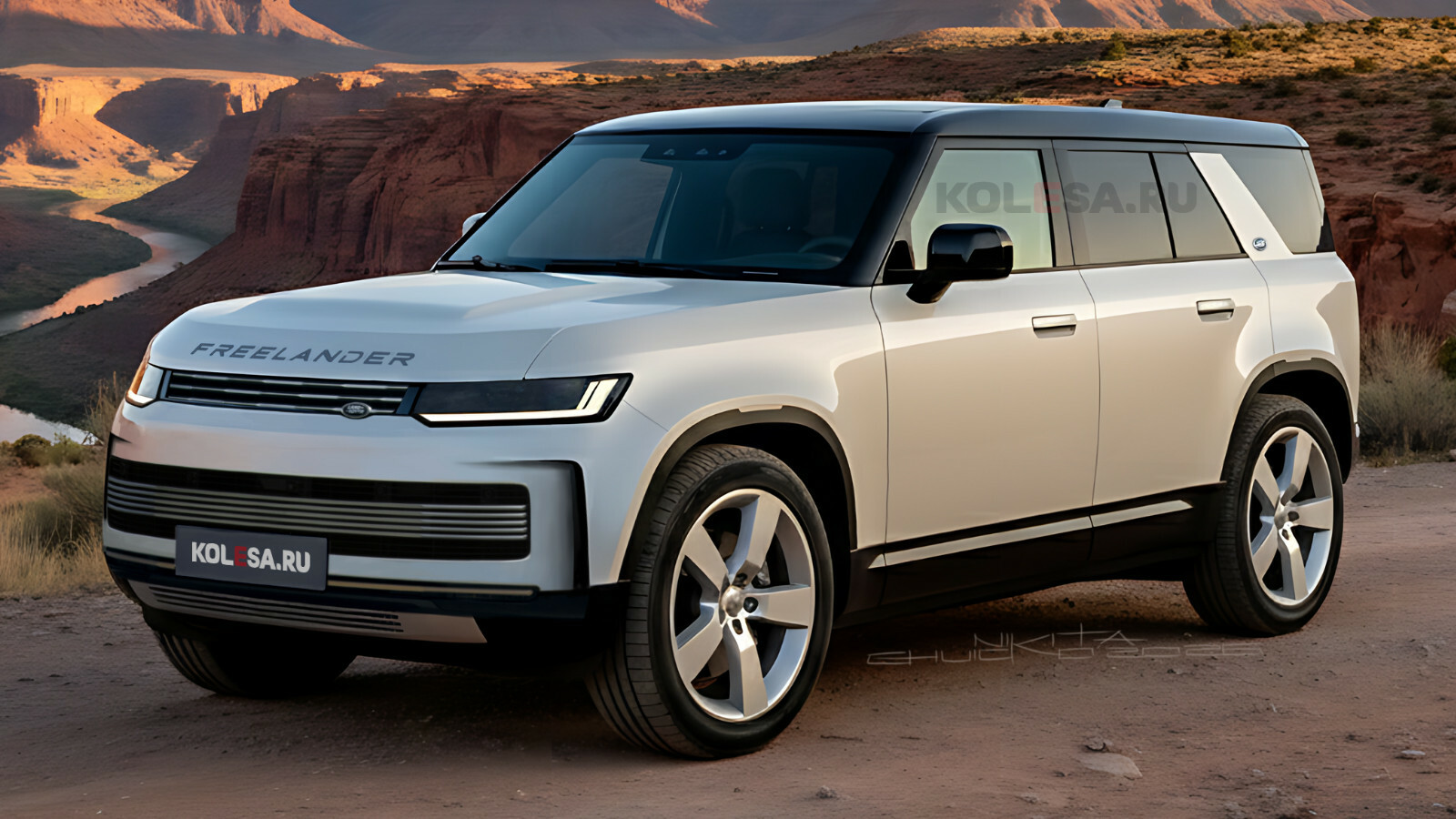
Interestingly, Land Rover won’t simply revive the Freelander name for a single model. Instead, it is spinning the name into its own sub-brand, with the potential to spawn several models over time. The first of these SUVs has been spied testing under heavy camouflage, leading to these detailed renderings from Nikita Chuyko for Kolesa.
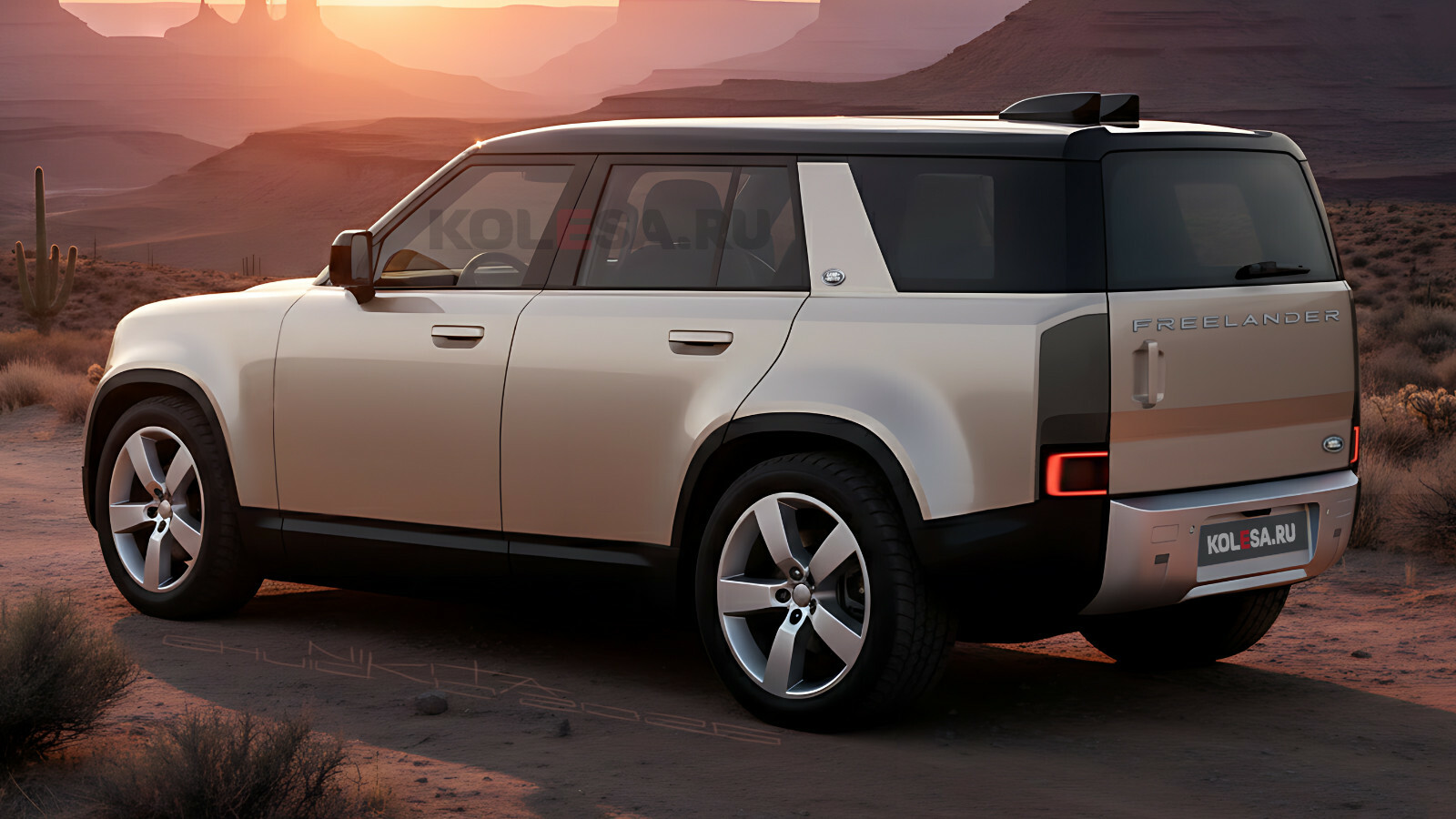
Based on recent spy shots, the first Freelander looks reassuringly boxy, exactly what you would expect from something wearing a Land Rover badge. Up front, it appears to feature slim headlights with simple DRLs, flanked by blacked-out split grilles and capped off with a hood that carries a noticeable bulge.
Similarities could also be shared with the larger Defender, particularly with the smooth profile of the side doors and the blacked-out roof and pillars. Like the previous Freelander, this new model features angled C-pillars painted in the same shade as the lower body.
The rear styling may prove more divisive. The renderings show small taillights mounted just above the bumper, which gives the back end a slightly awkward stance. Here’s hoping the lights of the eventual production model are positioned a little higher on the fascia. If not, it risks drifting into the same visual territory that has drawn mixed reactions for the current Hyundai Santa Fe.
Technical details about the new Freelander have not been confirmed, but it’s expected to be offered in both battery-electric and EREV guises. Production will be handled by the CJLR plant in Changshu.
Spy Shots: Chery-JLR Freelander SUV for China
Freelander is a new brand under Chery-JLR. The Chinese name is 神行者 (Shén Xíngzhě). Freelander will manufacture various SUVs based on Chery platforms.
The spy shots show a boxy off-road-style SUV during winter tests in Northern… pic.twitter.com/IduwHRG5vw
Donut Lab’s solid-state battery may be a breakthrough.
It charges from zero to 80 percent in just 4.5 minutes.
The company claims an energy density of 400 Wh/kg.
The battery world is hardly lacking in ambition, but it remains controlled by a tight circle of Chinese and Korean heavyweights. When Finnish startup Donut Lab claimed earlier this year that it had developed the world’s first all-solid-state battery for vehicles, it was never going to land quietly.
Donut Lab says it has built what many consider the holy grail of batteries. It claims the pack can charge faster than anything else on the market, delivers 400 Wh/kg of energy density, and is good for 100,000 cycles. Predictably, that raised questions.
Industry experts pushed back hard, which led Donut Lab to team up with Finland’s VTT Technical Research Center to demonstrate just how quickly its battery can actually charge.
In a newly released video, Donut Lab sets out to show the charging speed and thermal stability of its latest battery. The headline figure is a claimed charge rate of up to 11C (286A), which, if sustainable, would put it in rare company.
Cooling Reality Check
In the 11C charging test, the battery cell charged from 0 to 80 percent in just 4.5 minutes when equipped with two heatsinks. A full charge at 11C took just over 7 minutes. During this test, the battery temperature reached 63°C (145°F). In a separate test with just one aluminum heat sink, the temperature rose to 90°C (194°F), prompting a pause for 4 minutes while the battery cooled.
As noted by Electrek, Donut Lab claimed its battery required no active cooling to safely achieve its extraordinary charging speeds. However, this test suggests that some level of thermal management is necessary. Even so, the charging speeds are impressive, particularly for a company of this size.
According to Donut Lab chief executive Vile Piippo, “unlike other solid-state batteries requiring high compressive pressures and undergoing volume changes of up to 15-20 per cent during recharging cycles, the Donut Battery does not require special compression or more extensive cooling.”
Hitting Back At Critics
The company published the results of its fast-charging test on a new website, dubbed “iDonutBelieve,” in a thinly veiled swipe at those who said the firm was exaggerating its claims. It is promising that the results of another test will be released next week, with the aim of proving the pack’s energy density and 100,000-cycle claim.
The first vehicle to use the Donut Lab solid-state battery is an all-electric motorcycle from Verge. Dubbed the TS Pro, it’s set to arrive in the first quarter and will be offered with 20.2 and 33.3 kWh packs.
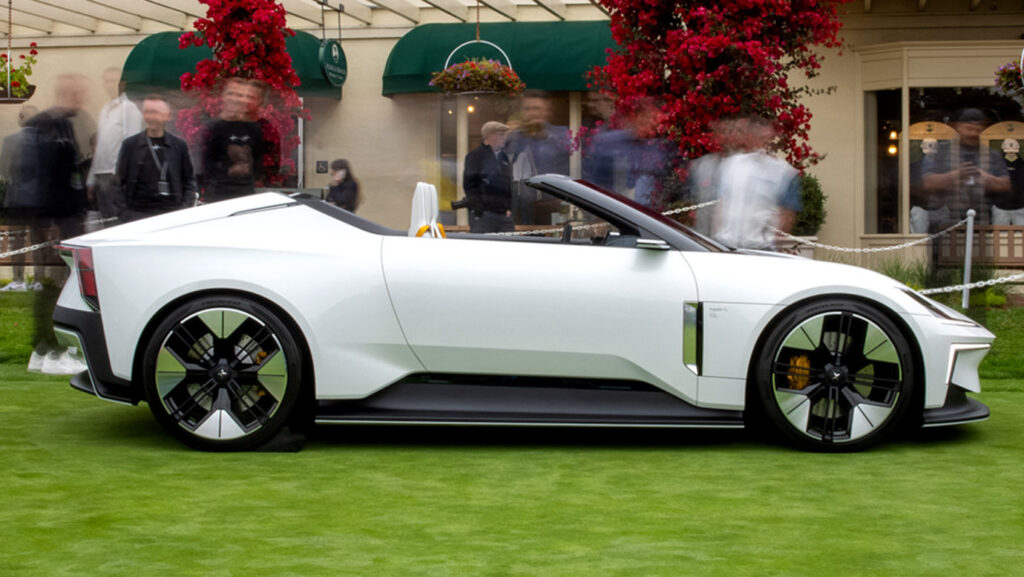
It is not only Tesla that struggles to turn a halo roadster into reality. The production version of Polestar’s stunning, two-door 02 Concept, known as the 6, was supposed to hit the market later this year. That’s no longer happening, and those who have already placed an order will have to wait until at least 2029 to take delivery.
Polestar, like many other young car manufacturers, has ambitions for a massive family of models, but it remains a relatively small player in the burgeoning, ultra-competitive EV market. With this in mind, the firm has put the Polestar 6 on the back burner for now, allowing it to prioritize the updated 2 and its next all-new product, the Polestar 7 small SUV.
While speaking with Auto Express at a recent company event in Gothenburg, Sweden, Polestar chief executive Michael Loscheller described the Polestar 6 as a “small volume” product, meaning customers will have to wait.
“We are targeting the big-profit potential of segments and that’s what we should have done in the first place,” he revealed. “We are working on the 6 as a high-end product. The 6 is still in the plan, but plans can change.”
The Next Tesla Roadster?
Delays like this aren’t uncommon in the automotive industry, but Polestar seems to be following the unfortunate lead of Tesla in this case. It’s been over eight years since the second-generation Tesla Roadster was unveiled, and those who placed $50,000 deposits have yet to receive their cars.
Similarly, Polestar began accepting $25,000 deposits for the limited-run 6 LA Concept, capped at just 500 units, in 2022 with the promise of launching it in 2026. Those who have locked in an order will now be waiting at least seven years for their car, and that’s only if the 2029 timeline doesn’t blow out further.
Just like the Polestar 5, the new 6 will be based around an 800-volt electric architecture and a 112 kWh battery pack. The flagship Polestar 5 Performance pairs this with two electric motors delivering 872 hp and 749 lb-ft (1,015 Nm), the same figures expected for the 6.
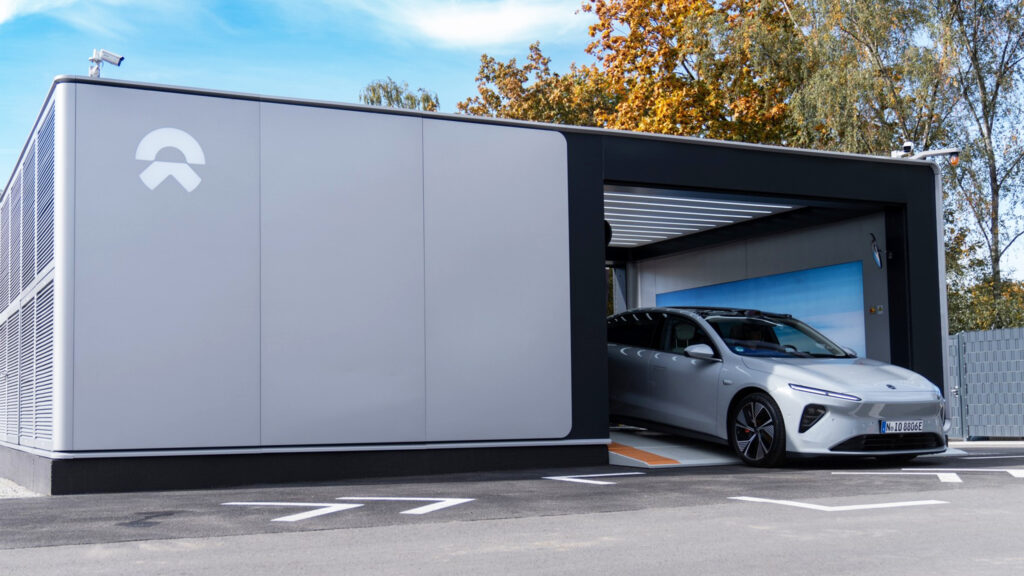
Back in 2013, Tesla flirted with the idea of battery-swapping for its EVs, even demonstrating a system that could replace a Model S battery in as little as 90 seconds. It was an impressive showpiece, but the company ultimately chose not to commercialize the concept. Nio, meanwhile, saw potential where Tesla stepped back. The Chinese startup embraced battery swapping and went on to build the largest EV battery-swapping network in the world.
Just how popular has Nio’s battery-swap service become? On February 21, Nio owners carried out a staggering 175,976 battery swaps across China in a single day. That figure translates to roughly one Nio having its battery changed every half a second.
This record was set on the second day of the Lunar New Year, typically the busiest travel day of the year in China.
How Wide Is Nio’s Network?
Nio currently operates more than 8,600 charging and battery-swapping stations across China. The network spans more than 550 cities and includes highway routes linking 16 of the country’s major urban centers. The company has also begun rolling out charging stations in Europe.
The Chinese electric car startup is currently on its fourth-generation swapping stations, with the latest version launched in mid-2024. The original stations could store just four to five batteries at a time. In contrast, the fourth-generation sites can hold 23 battery packs and handle up to 480 swaps per day. Each swap takes 2 minutes and 24 seconds, which is less time than refueling a combustion-powered car.
Soon, it will not just be Nio owners pulling into those swap bays. The company has struck agreements with Geely, Chery, FAW, GAC, and Changan to share its battery-swapping technology, opening the network to a much broader slice of China’s car market.

 Login
Login