Reading view

There are new articles available, click to refresh the page.

Porsche Custom Builds Usually Stay One-Off, Not These Four
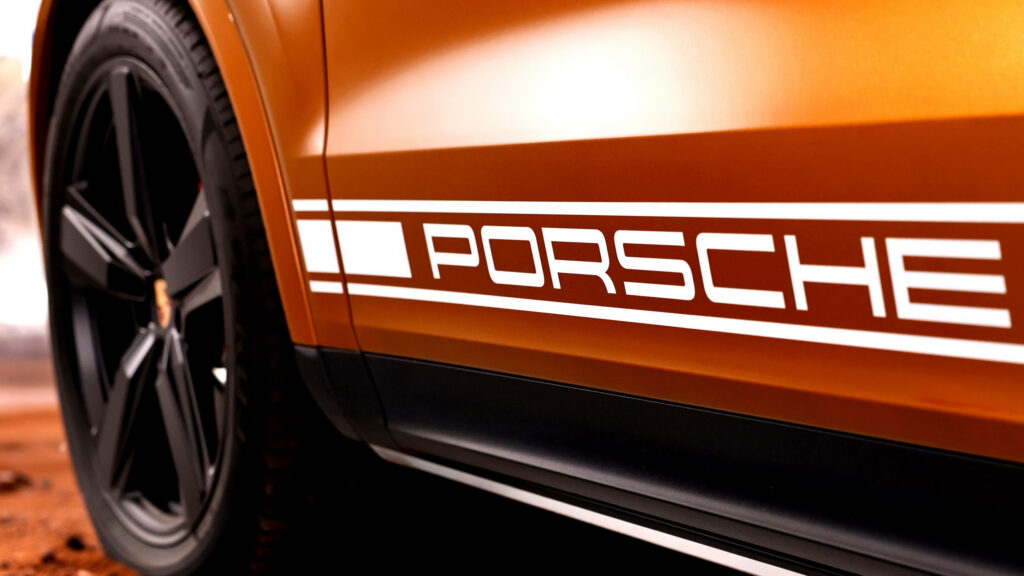
  • Porsche marks 75 years in Australia with four bespoke models.
  • Each car mirrors landscapes from four Australian regions.
  • Customers can recreate the builds via Porsche’s configurator.

Porsche is marking 75 years in Australia with a quartet of bespoke models inspired by some of the country’s most recognizable landscapes. Consider it both a birthday celebration and a (costly) reminder that Porsche’s customization department can turn just about any idea into paint, leather, and expensive options.

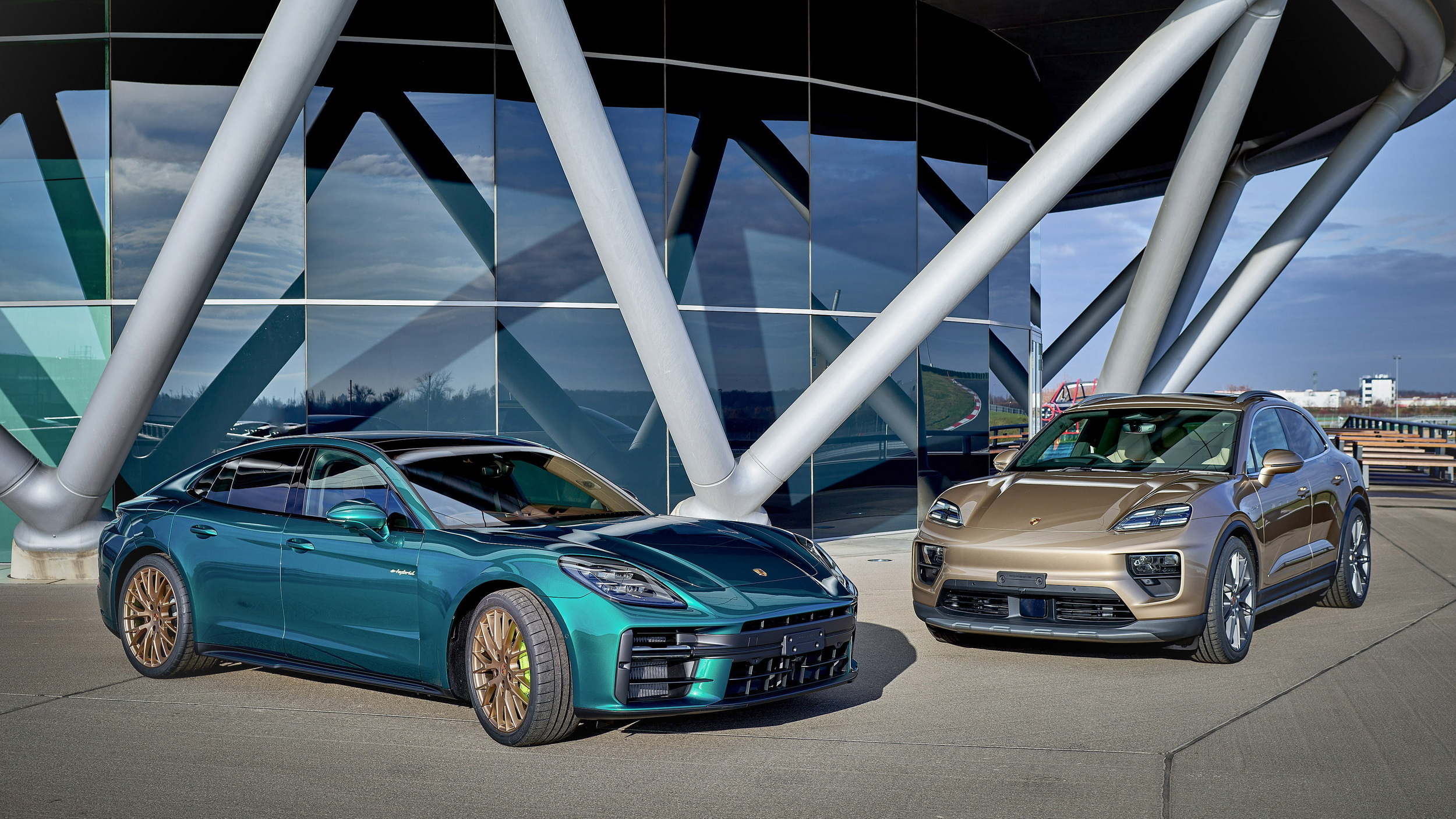
Debuting at the Australian Grand Prix in Melbourne this weekend, the collection spans the Panamera, Taycan, Macan, and Cayenne, highlighting the customization possibilities offered by Porsche Exclusive Manufaktur and the Sonderwunsch program.

More: When Porsche’s New EV Concept Gets Dirty, It Needs A Deckhand, Not A Detailer

Interestingly, these are far from being strictly one-off specials. Customers can actually recreate the same specifications through Porsche’s official configurator, assuming they are willing to spend enough time clicking through options and, of course, paying for them.

Go North With The Panamera

\\\\\\\\\\\\\\\\\\\\\\\\

The first model is based on the Porsche Panamera 4 E-Hybrid, finished with a livery inspired by the rainforests of Queensland and the Northern Territory. The exterior wears Emerald Green Metallic paint, paired with Neodyme 21-inch wheels and bright Acid Green accents on the brake calipers and hybrid emblems.

More: Porsche’s Panamera Is Crushing The Taycan EV, Now The 2028MY Wants To Squeeze Harder

Inside, the Club leather upholstery comes in Espresso with Night Green stitching, Neodyme accents, and Eucalyptus wood trim. The sedan also receives illuminated scuff plates with “Go North” lettering, a matching key, and 75th anniversary floor mats. For added practicality, it is also fitted with the optional Porsche Performance roof box, just in case the rainforest theme inspires an actual road trip.

Go East With The Taycan

\\\\\\\\\\\\\\\\\\\

The second model is based on the electric Taycan 4S Cross Turismo. Drawing inspiration from the surf culture of Australia’s Pacific coast, places like Noosa, Byron Bay, Newcastle, and Sydney, it wears an Ipanema Blue Metallic finish. The high gloss black 21-inch alloy wheels feature Crayon aero blades meant to evoke coral formations, while the Glacier Iceblue daytime running lights mirror the irises of the Pacific Blue Eye fish.

More: Porsche’s Most Extreme Taycan Yet Exists For A Very Personal Reason

The beach theme continues inside the cabin, where a mix of Black and Crayon leather echoes what Porsche describes as “the warm sands and shade of Australia’s eastern beaches.” References to the sea show up in the Dark Night Blue leather seat inserts and the Speed Blue stitching. The EV is also fitted with a panoramic roof featuring Variable Light Control, aluminum roof rails, a bespoke key, and illuminated scuff plates.

Go West With The Cayenne

\\\\\\\\\\\\\\\\\\\

The first SUV of the group is based on the V8-powered Cayenne S and draws inspiration from the vast open spaces of Western Australia’s Outback, terrain that dates back around 4.4 billion years. The exterior is finished in Ipanema Brown Metallic, paired with white decals and silk gloss black 22-inch alloy wheels.

More: Porsche’s Mega SUV Drops EV Plan For V8 Power And An Audi Link

The model is fitted with the optional Off-Road package, which adds rock rails, skid plates, extra underbody protection, and even a compass mounted on the dashboard, presumably for when the road disappears altogether. It also gets aluminum roof rails carrying a roof box.

Inside, Black leather is paired with Bordeaux Red inserts meant to echo indigenous rock formations. Like the other special editions, it also receives unique floor mats, keys, and illuminated scuff plates.

Go South With The Macan

\\\\\\\\\\\\\\\\\\\\\\\\

The final car in the set is the fully electric Macan 4S, styled as a tribute to the southern coastlines of Victoria, South Australia, and Tasmania. Its Gold Bronze Metallic paint is meant to mirror the cliffs along the Great Ocean Road, while the 22-inch RS Spyder wheels, finished in Vesuvius Grey, nod to the region’s rugged stone formations.

More: A 92-Year-Old Bought His First Porsche, Now He’s Already Planning His Second

The electric SUV also gets the Off-Road Design package, which brings Vesuvius Grey skid plates into the mix. Glacier Blue accents appear in the Matrix LED headlights and along the taillight strip. Inside, the cabin references South Australia’s volcanic landscapes with Black and Chalk Beige leather, punctuated by orange highlights across the seat centers, seatbelts, door cards, and dashboard.

Curiously, Porsche Australia’s 75th anniversary collection arrives without a 911. Still, when the theme revolves around the four cardinal directions, the math rather limits your options.
 Porsche Custom Builds Usually Stay One-Off, Not These Four

Porsche Australia

Drivers Want More Buttons, So Mercedes-AMG’s New Super Sedan Removes Most Of Them

  • Mercedes shows the cabin of the new AMG 4-Door Coupe.
  • Inside sits a triple-screen layout and three rotary dials.
  • The high-performance EV is set for a full debut this spring.

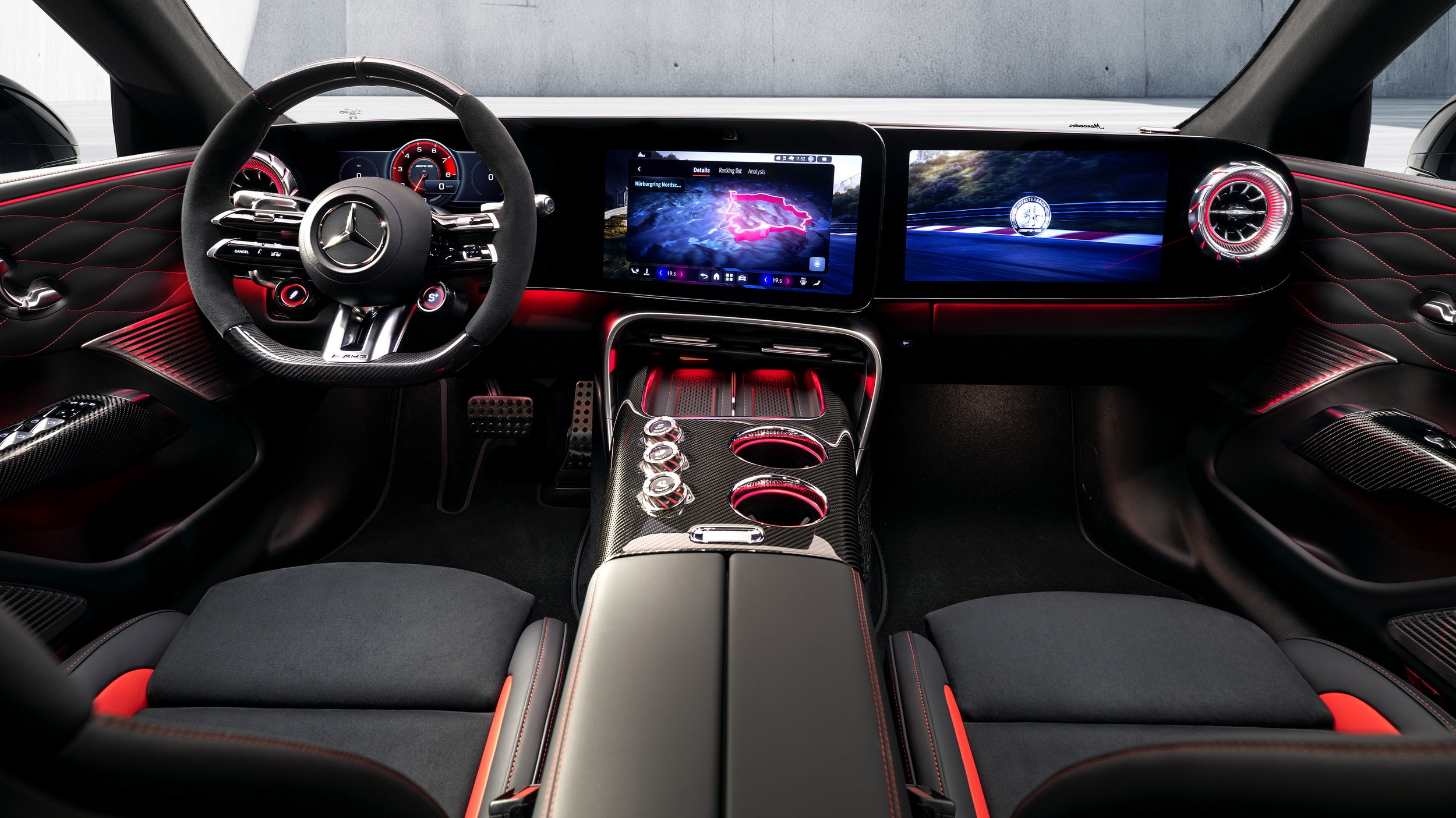
Mercedes-AMG has pulled the covers off the interior of its upcoming electric super-sedan. The next-generation AMG GT 4-Door Coupe is effectively the production version of last year’s AMG GT XX concept, aimed at the Porsche Taycan and the growing pack of high-performance EVs trying to redefine what a fast four-door should be.

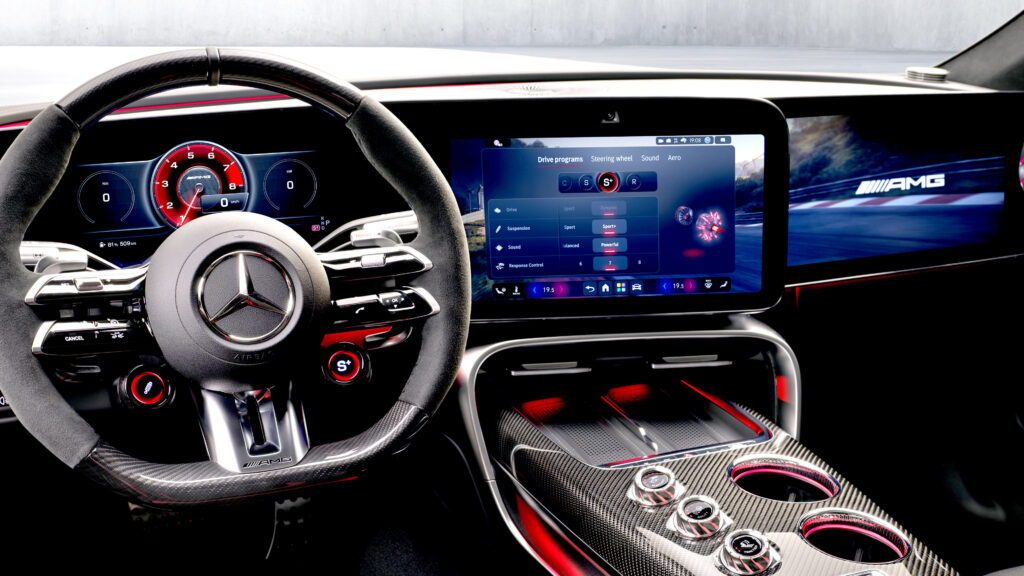
Unlike the symmetrical hyperscreen layouts used across the regular EQ lineup and the latest S-Class, the AMG’s center console is angled toward the driver. A 14-inch infotainment display dominates the layout, leaning just enough in the driver’s direction to remind you this is supposed to be the sporty one. That screen works alongside a 10.2-inch digital instrument cluster, with an optional 14-inch display available for the passenger.

More: Mercedes Teases A Flood Of New Models Coming Soon

Mercedes says the operating logic is “balanced,” blending haptic buttons, touchscreen inputs, and voice control. In practice, though, it seems AMG didn’t fully buy into the recent return to physical controls that several rivals have started embracing. The most obvious casualty is the climate system, which remains buried inside the MBUX infotainment menus

 Drivers Want More Buttons, So Mercedes-AMG’s New Super Sedan Removes Most Of Them
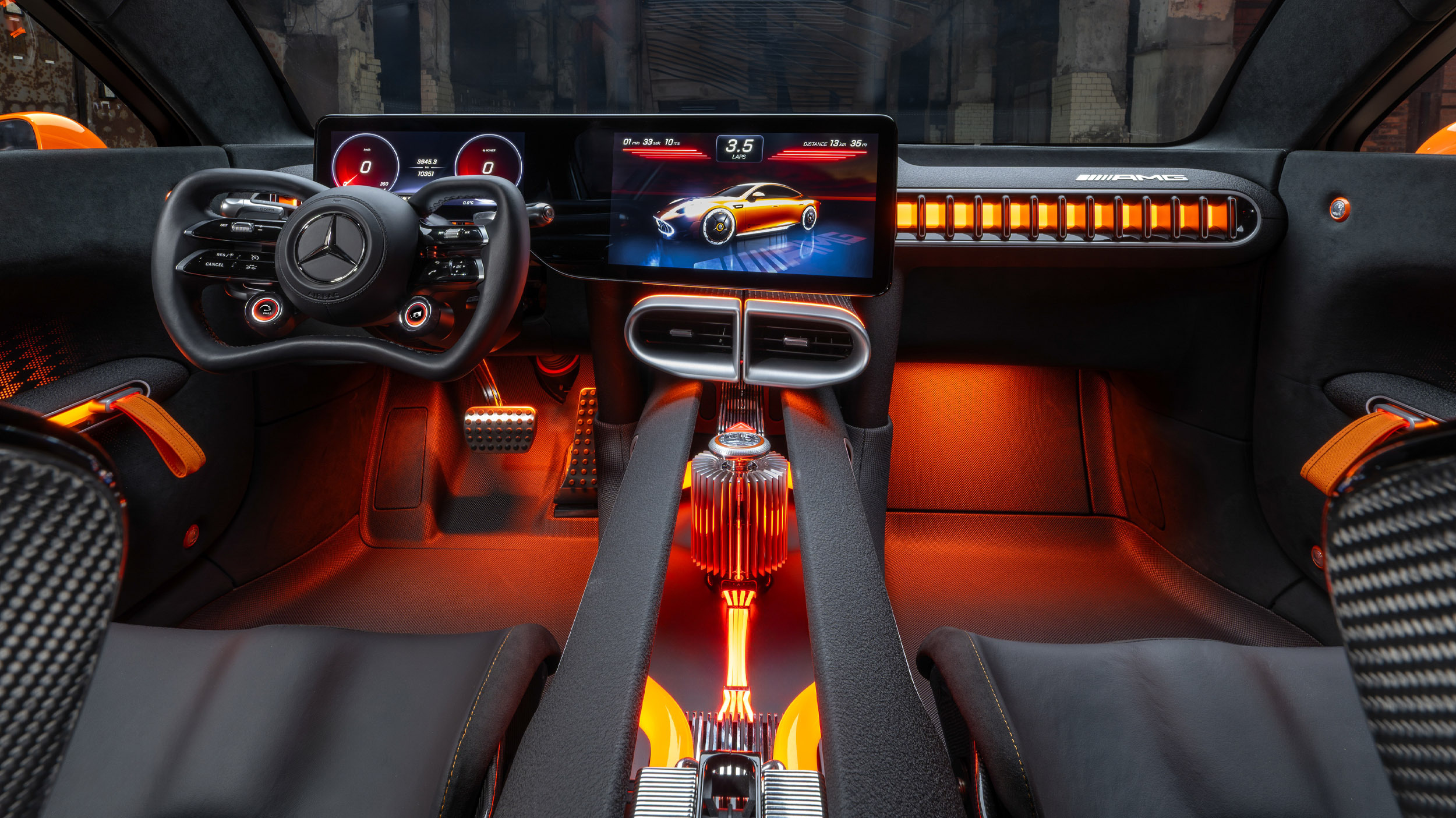
Production AMG GT 4-Door Coupe interior (above) vs. AMG GT XX Concept (below).
 Drivers Want More Buttons, So Mercedes-AMG’s New Super Sedan Removes Most Of Them

AMG-specific touches include illuminated climate vents styled to resemble jet engines, a flat-bottom steering wheel with carbon accents and haptic feedback, optional AMG Performance seats, and a metal-like wing element stretching across the center console.

Also: Mercedes Can’t Stop, Won’t Stop With Massive Screens

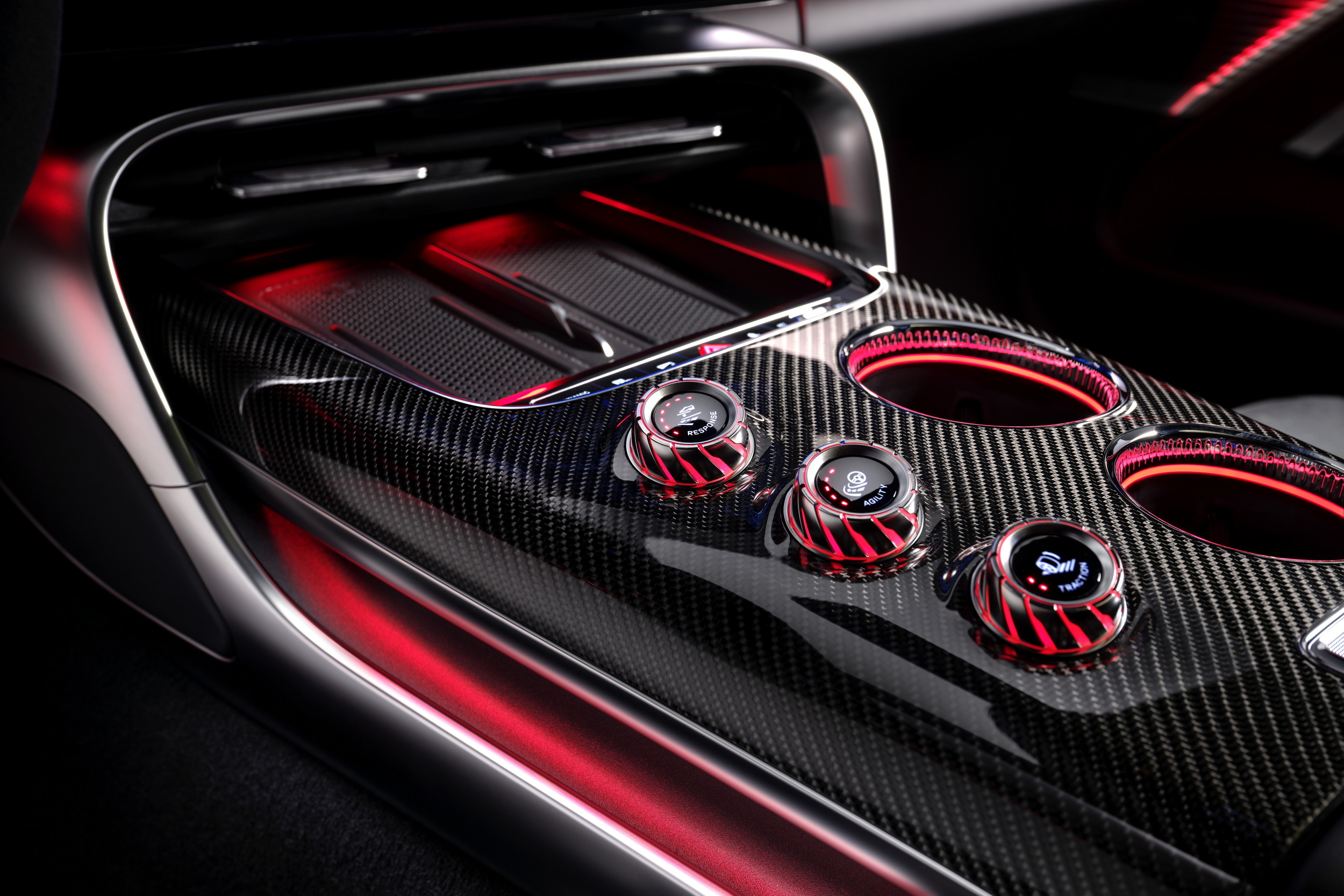
You also get three chunky rotary controllers on the center tunnel. Apparently, even in the EV age, AMG still believes drivers should have something physical to fiddle with.

Those dials tie directly into the car’s driving dynamics. Response Control adjusts the behavior of the e-motors and accelerator pedal, Agility Control tweaks cornering characteristics, and Traction Control offers nine stages of intervention through the new AMG Race Engineer system. The driver can also jump straight to key functions using two steering wheel buttons that feature their own LCD displays.

 Drivers Want More Buttons, So Mercedes-AMG’s New Super Sedan Removes Most Of Them

Smart Glass Roof Party Trick

One of the more eye-catching tech features is the Sky Control panoramic glass roof, which can switch between transparent and opaque states. At night, it can also project AMG emblems or racing stripes across the glass, matched to the colors of the ambient lighting system.

More: Mercedes Design Boss Admits “Screens Aren’t Luxury” And The Software’s Not Great Either

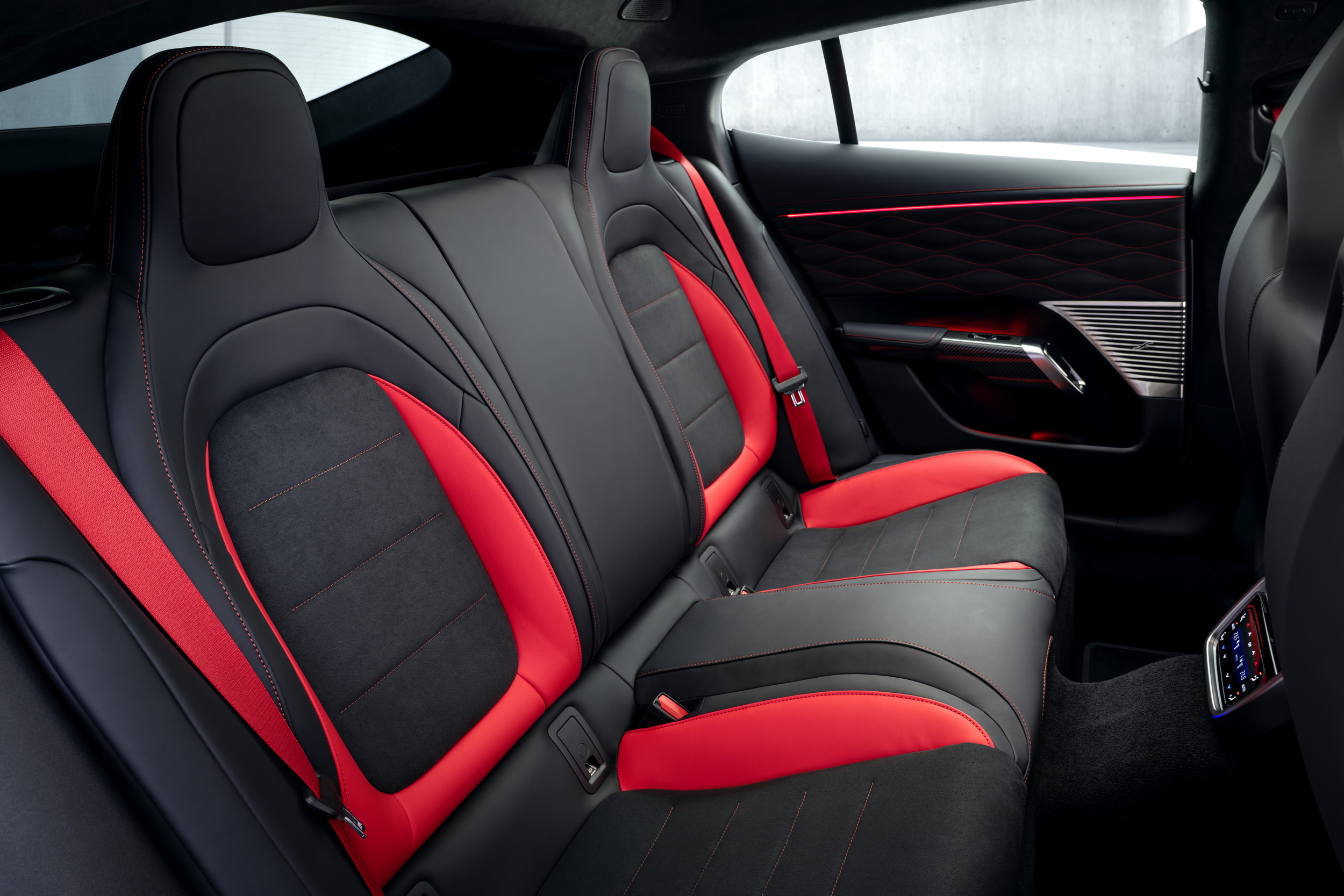
Up front, practicality gets a small but noticeable boost with illuminated cup holders and dual wireless charging trays. In the back, Mercedes promises “generous legroom, pleasant headroom, and a naturally comfortable knee angle,” all aimed at making longer journeys a bit less taxing. The standard layout is a four-seater, although buyers will also be able to opt for a five-seat configuration.

 Drivers Want More Buttons, So Mercedes-AMG’s New Super Sedan Removes Most Of Them

Coming Soon

The full reveal of the new AMG GT 4-Door Coupe is expected this spring, with deliveries scheduled to begin later in the year. The high-performance EV will also become the first production model to ride on Mercedes-AMG’s dedicated AMG.EA platform, which is being developed specifically for future electric performance cars.

More: AMG Hyper EV Circles The Globe In Seven Days And Smashes 25 Records

The concept version arrived with some properly serious numbers. It used three axial-flux motors producing a combined 1,341 hp (1,000 kW / 1,360 PS), complete with synthetic V8 sound. The battery pack also featured Formula 1-derived cooling technology and ultra-fast charging capability, allowing it to add 249 miles (400 km) of range in just five minutes

\\\\\\\\\\\\

Mercedes-AMG

Maserati Is Facelifting The Cars No One Bought, Hoping Someone Finally Does

  • Maserati is preparing updated versions of its grand tourers.
  • Prototypes show revised bumpers, larger intakes, and a new grille.
  • The brand hopes to reverse last year’s 7,900-unit sales slump.

Maserati finds itself in a tricky spot within the Stellantis empire after shifting just 7,900 cars in 2025. That is fewer than Ferrari managed, which is not the sort of comparison you want showing up in the sales charts.

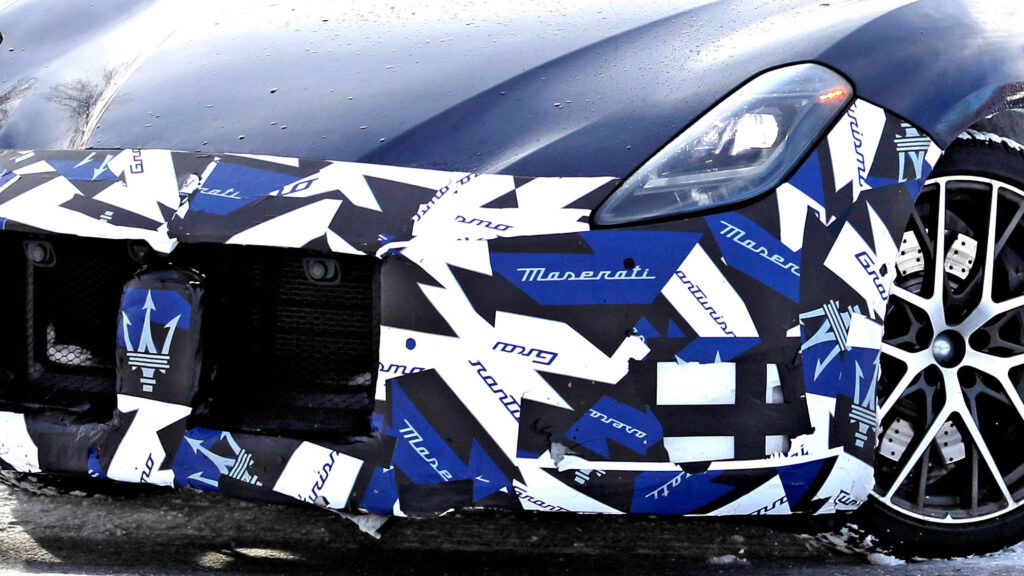
Even so, despite several future product cancellations, Maserati is still pressing on. Our spy photographers have spotted lightly camouflaged prototypes of the GranTurismo Trofeo and GranCabrio Folgore out winter testing, hinting that a facelift is already in the works.

More: This Might Be The Biggest Discount Any Luxury EV Has Ever Seen

The prototypes reveal a revised front bumper with larger air intakes and a fresh grille design. The rest of the bodywork remains uncovered, but the GranCabrio Folgore also sports a camouflaged rear diffuser. Another small but interesting detail is the clear taillights on the GranTurismo Trofeo test car.

\\\\\\\\\\\\\\\\\\

Baldauf, SH Proshots

While we did not get to see the interior, Maserati likely has limited room in the budget for substantial updates. Any cabin revisions could therefore be confined to new trim options or minor specification tweaks.

These changes suggest the grand tourers may receive a similar treatment to the MCPURA, effectively a facelifted MC20 supercar with updated styling cues and carryover mechanical components.

Personalization Is The Key

The current GranTurismo and GranCabrio were introduced in 2022 and 2024, respectively. Production was recently moved from Turin to Maserati’s headquarters in Modena, alongside the MC20 lineup.

Sales have been modest, to say the least, with Maserati leaning heavily on custom colors and interior configurations curated through the BottegaFuoriserie personalization program to attract buyers. eedless to say, it’s not working out particularly well.

\\\\\\\\\\\\\\\\

Last year, the Italian brand rolled out the Meccanica Lirica specials, complete with a reworked exhaust designed to give the twin-turbo 3.0-liter V6 Nettuno a more expressive voice. Not an easy assignment, considering it had to step in for the wonderfully noisy V8 from the previous generation. Whether that exhaust setup will appear on the facelifted models is still unclear, though it would hardly be a surprise.

More: Maserati Doesn’t Think You Need A V8 To Sound Glorious

Maserati has not set a debut date for the updated GranTurismo and GranCabrio twins, but chances are they will arrive for the 2027 model year, aiming to rejuvenate customer interest. As hinted at by the spy shots, the same improvements will be applied to the V6-powered (Modena, Trofeo) and fully electric (Folgore) variants.

Maserati has not announced a debut date for the updated GranTurismo and GranCabrio twins. A 2027 arrival seems possible as the brand looks for a gentle nudge in customer interest. Judging by the spy shots, the same updates should apply across the range, covering the V6-powered Modena and Trofeo versions as well as the fully electric Folgore variants.

\\\\\\\\\\\\

SH Proshots

VW Locks Gas Tiguan In Until 2035 With Two Major Updates Planned

  • VW confirmed two facelifts for the EU-spec Tiguan.
  • ICE-powered production now expected to last until 2035.
  • Facelifted ID.4 may adopt the ID. Tiguan name in 2027.

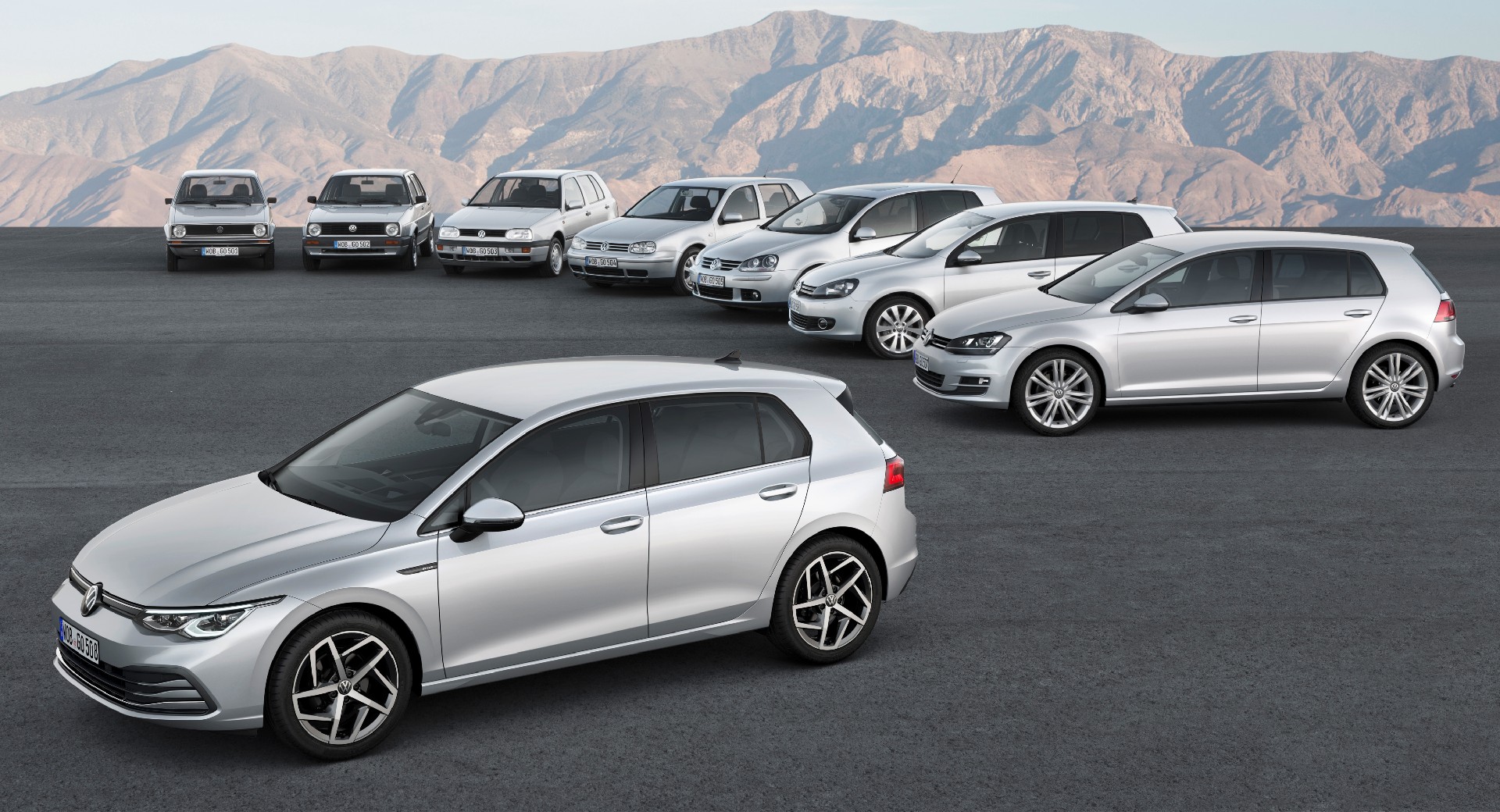
Volkswagen has offered the first glimpse of the next-generation Golf but the same announcement in Wolfsburg also brought notable news about the Tiguan. The compact SUV is set for two major updates that will effectively extend its lifecycle until at least 2035.

During the first meeting of 2026, Works Council Chairwoman Daniela Cavallo revealed that Volkswagen is planning “two extensive product upgrades for the best-selling Tiguan for the years 2028 and 2031”.

Review: We Drove The 2025 VW Tiguan And It’s Not What You Expect, But It’s What You Need

Cavallo was referring to the European-market Tiguan, which was followed by the larger Tayron in October 2024. That model later evolved into the North American-market Tiguan, although without the third-row seating and hybrid options.
The Double Facelift Strategy

Most models receive a single mid-cycle refresh before slowly drifting toward retirement. The Tiguan, however, is getting special treatment. VW has already locked in two updates for the SUV, which rides on the MQB Evo architecture.

 VW Locks Gas Tiguan In Until 2035 With Two Major Updates Planned

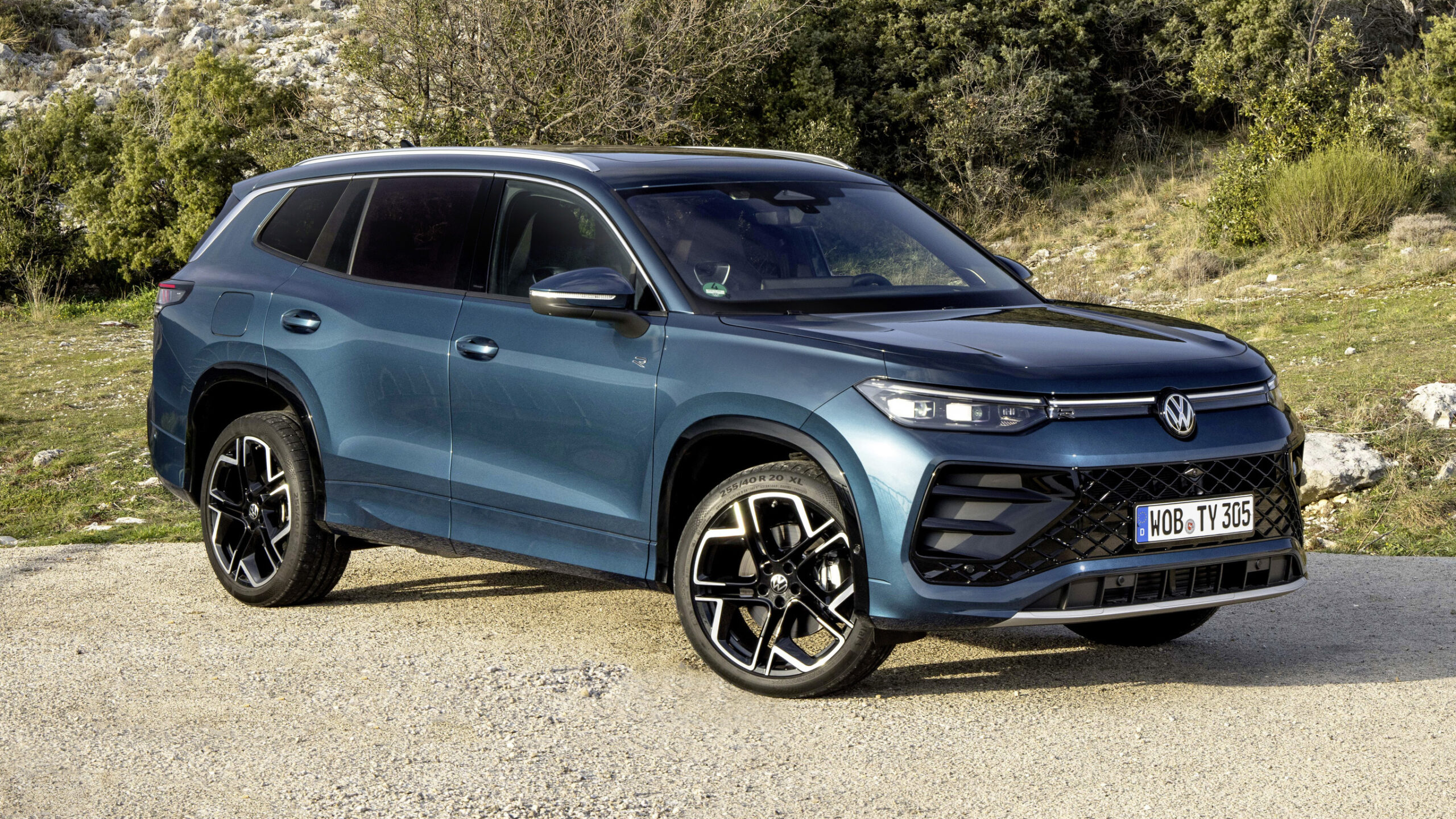
The first facelift, scheduled for 2028, will likely bring the interior tech up to speed with Volkswagen’s newer models. Expect a renewed focus on physical controls, paired with more capable software. If recent VW updates are anything to go by, exterior changes may stay fairly restrained, limited to revised bumpers and LED lighting signatures, plus a few new colors and wheel designs.

More: The Tiguan R Could Return Stronger Than Ever

The second facelift is planned four years later, or eight years after the current generation first arrived. That update should deliver more noticeable design revisions, keeping the Tiguan looking current in the crowded compact SUV segment and aligned with Volkswagen’s evolving design language.

Powertrains will also need attention. A stronger dose of electrification will likely be required to keep the lineup compliant with Europe’s steadily tightening emissions rules.

Increasing Life Expectancy

 VW Locks Gas Tiguan In Until 2035 With Two Major Updates Planned
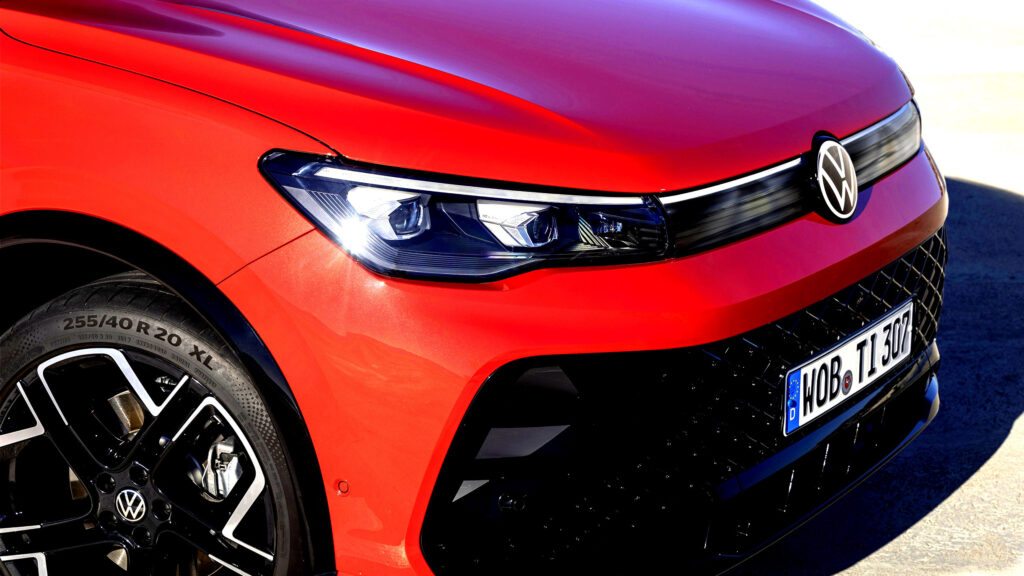
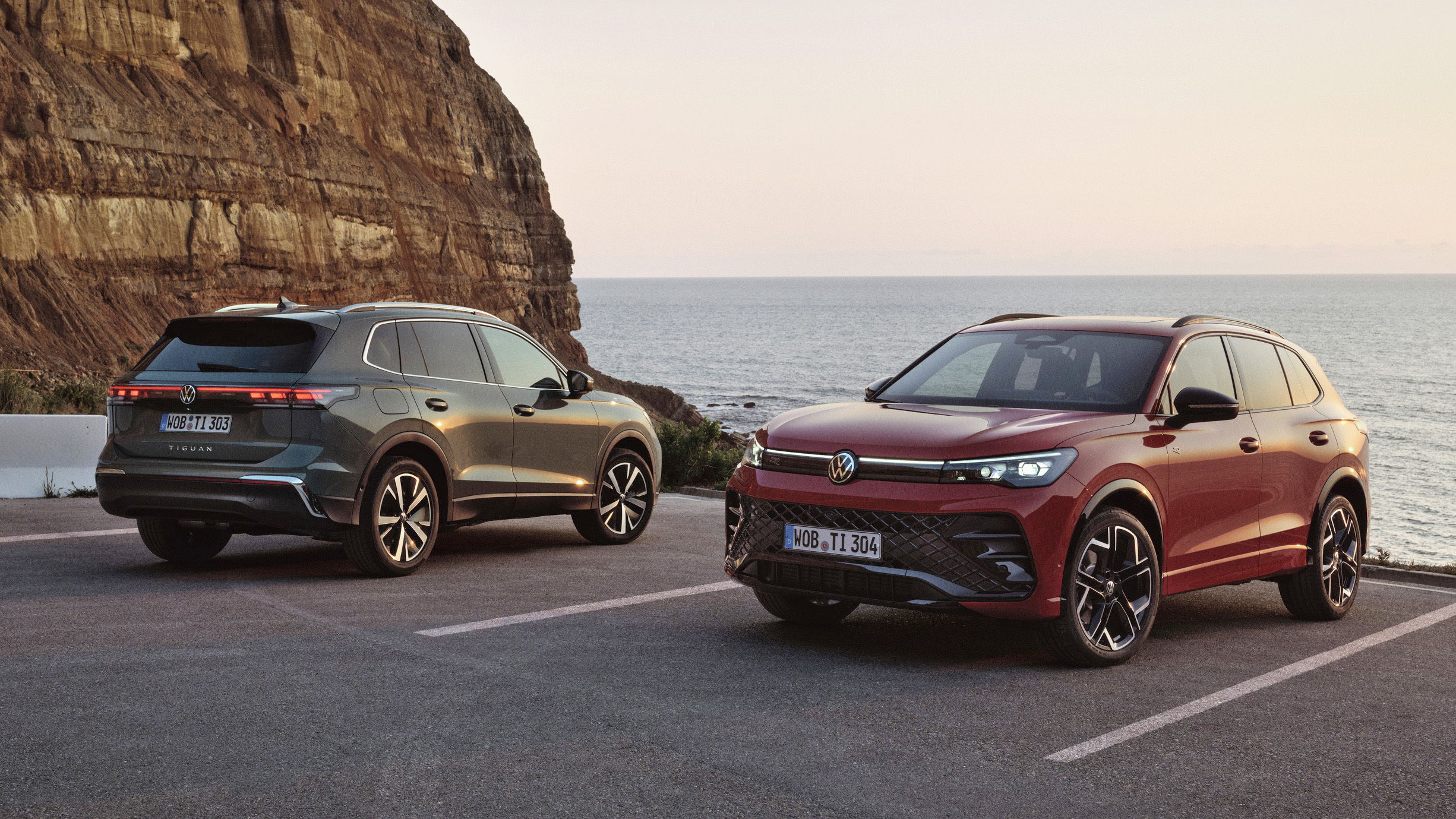
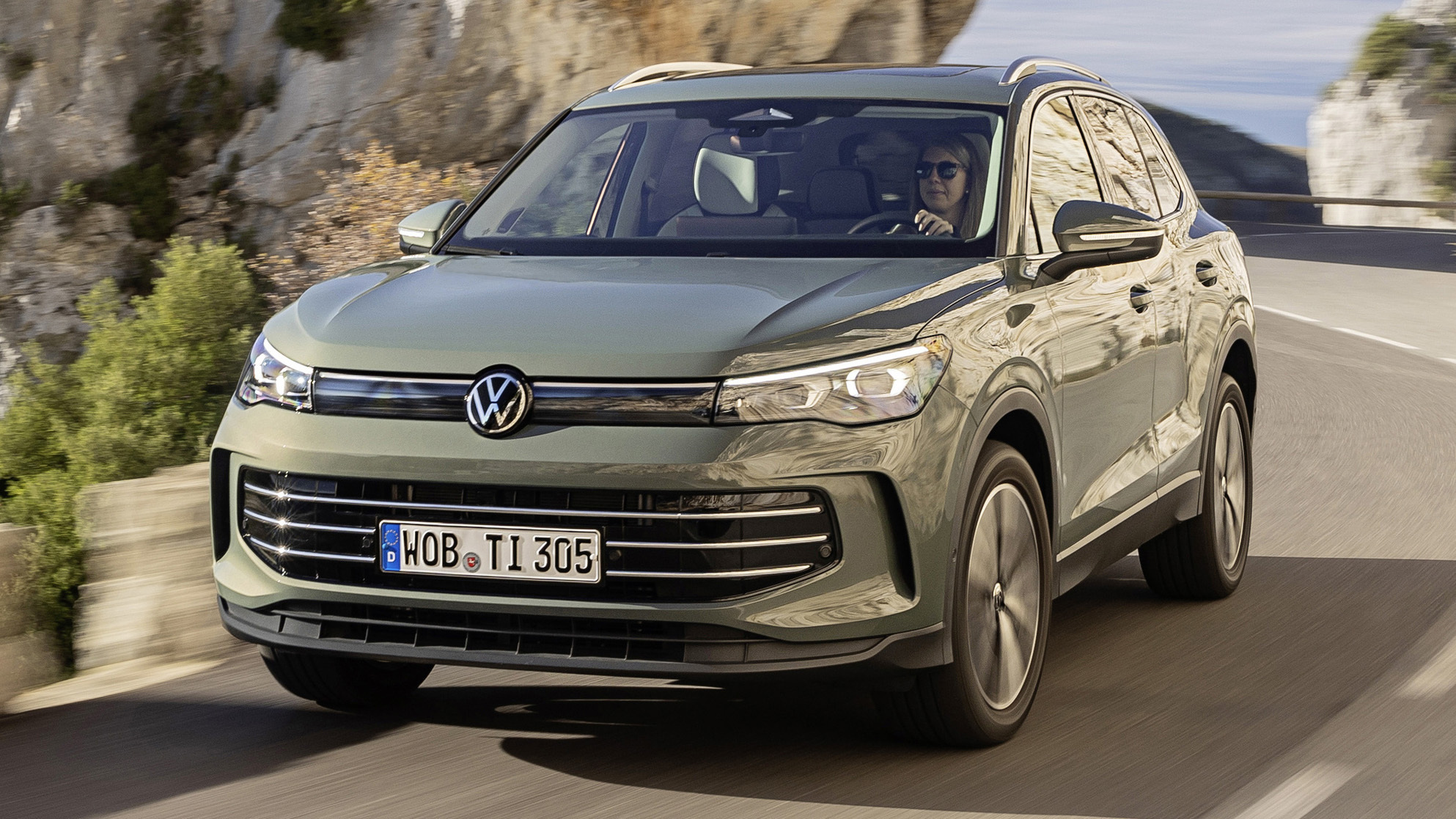
EU-spec VW Tiguan

By launching a major refresh as late as 2031, Volkswagen is effectively guaranteeing the ICE-powered Tiguan a long life. The new plan pushes the SUV’s lifecycle to at least 2035, lining up with company plans to keep combustion engines on sale in Europe until the middle of the next decade.

More: VW Liked Its Design Boss So Much, He’s Now Leading Every Brand

A similar fate appears likely for the current ICE-powered Golf. Reports suggest it could remain on sale until around 2035, even after the fully electric ID. Golf arrives before 2030. So while the electric future is clearly coming, Volkswagen is not in a rush to turn off the lights on its combustion models.

Production remains split across two continents. The EU-spec Tiguan is built in Wolfsburg, Germany, alongside the Tayron, while the US-spec version rolls out of Volkswagen’s Puebla plant in Mexico. The company has not confirmed long-term plans for either model, but a pair of facelifts sounds far more plausible than funding entirely new generations.

What About The ID Tiguan?

 VW Locks Gas Tiguan In Until 2035 With Two Major Updates Planned
EU-spec VW Tayron

Volkswagen has also confirmed two upcoming EVs built in Wolfsburg on the new SSP architecture. They are the ID. Golf and the ID. Roc, both expected to arrive toward the end of the decade. Before their arrival, the company plans substantial updates for the current MEB-based ID.3 and ID.4.

More: VW’s 1 Millionth EV Took 12 Years, Its 2 Millionth Took 10 Months

While nothing is official yet, the facelifted ID.4 is rumored to adopt the ID. Tiguan name as part of Volkswagen’s new naming strategy. The electric crossover is also expected to abandon its curvier styling in favor of a more traditional SUV design. Inside, look for a heavily revised cabin and mechanical upgrades aimed at improving power, range, and efficiency.

By keeping the Tiguan name alive across two different platforms, VW is hedging its bets. Whether buyers choose hybrid or fully electric, Wolfsburg seems keen to make sure there is still a Tiguan sitting in the driveway over the next decade.

 VW Locks Gas Tiguan In Until 2035 With Two Major Updates Planned
The current VW ID.4 GTX (left) and the Tiguan R-Line (right).

Volkswagen Gives First Official Look At Golf MK9

  • VW workers got the first glimpse of the ID. Golf silhouette.
  • The electric hatchback will use VW’s new SSP platform.
  • Production of the ID. Golf will remain in Wolfsburg.

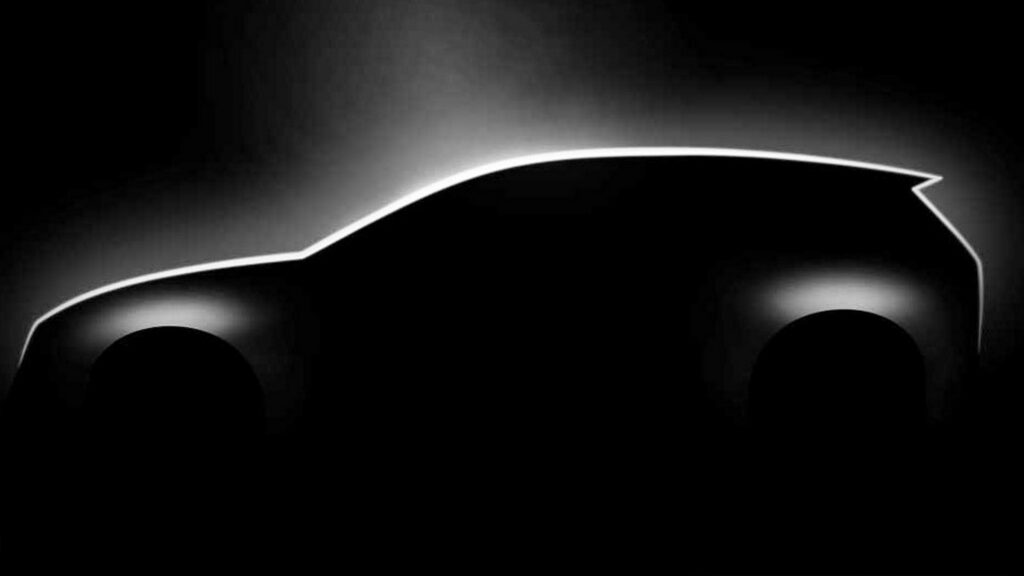
Volkswagen’s future is starting to take shape in Wolfsburg, and yes, it still looks like a Golf. During a works council meeting on March 4, 2026, trade union IG Metall revealed the first official teaser of the next-generation VW Golf, a model that will carry the icon into the EV era.

The file name includes the ID. Golf moniker, effectively confirming earlier rumors that VW plans to combine traditional nameplates with the ID prefix for future EVs. The approach was kick-started by the smaller ID. Polo and is expected to spread across a wide range of models.

The Return Of The King

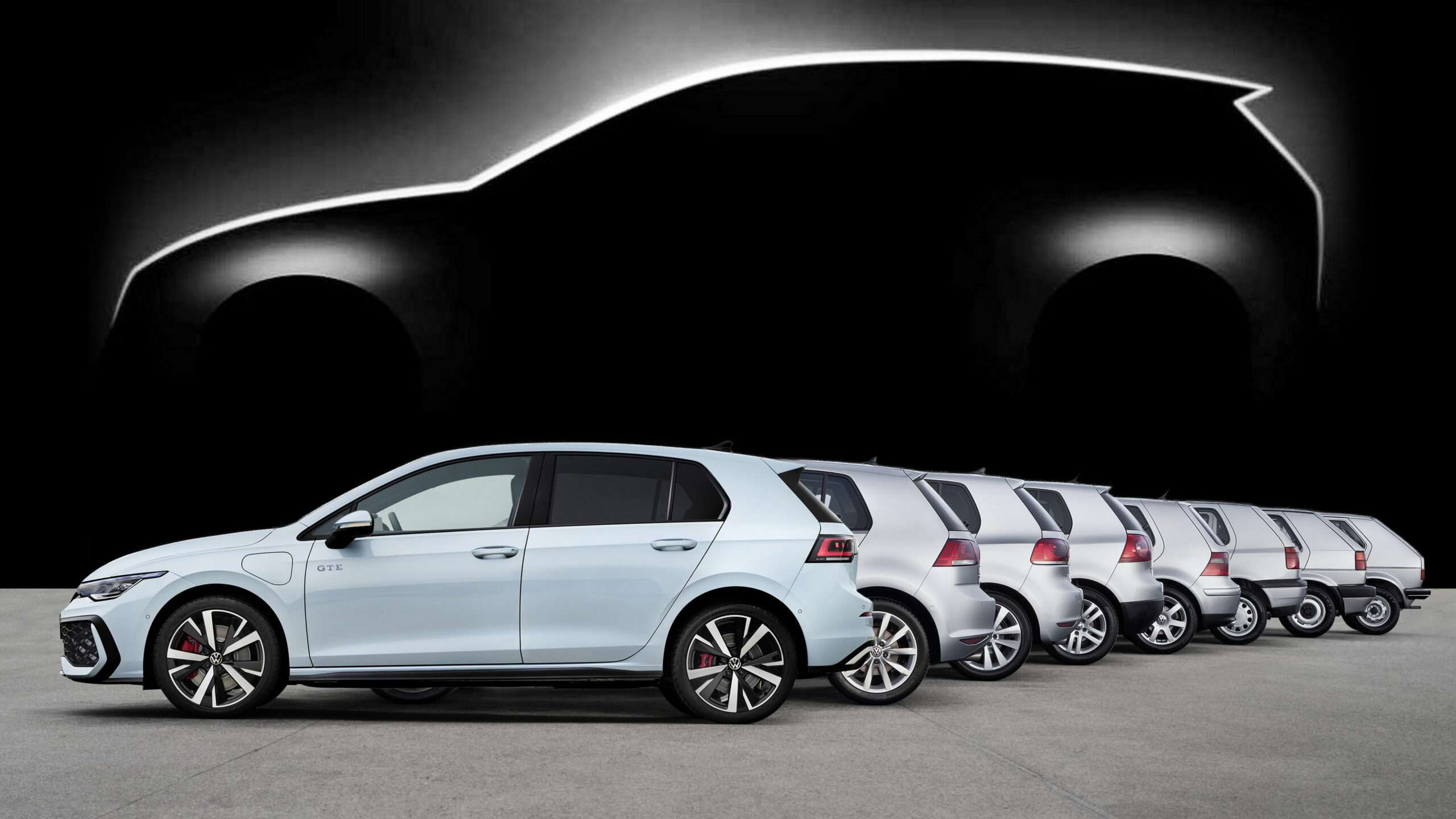
Everyone knows VW prefers to play it safe, particularly with one of its most important models. The Golf has evolved gradually over the decades, effectively turning into the Porsche 911 of mainstream hatchbacks.

More: VW Liked Its Design Boss So Much, He’s Now Leading Every Brand

Against that backdrop, the first teaser reveals a familiar shape with clear references to earlier generations of the Golf. The front end looks boxier than the current model, recalling the Golf III and the Corrado coupe from the ’90s.

 Volkswagen Gives First Official Look At Golf MK9
The new ID. Golf is a natural evolution of the previous generations.

The profile shows pronounced fenders reminiscent of the Golf VII, and it is expected to retain the signature C-pillar that has defined the nameplate since the beginning. Around the back, the tail blends cues from the Golf II and Golf VIII, topped by a large roof spoiler that extends the aerodynamic roofline.

More: The GTI Turns 50, And VW Is Teasing The Wild Cars It Never Built

Overall, the ID. Golf looks far more like a traditional hatchback than the ID.3 it is meant to replace. The current Golf VIII is not disappearing just yet, either. It will continue alongside the EV as an ICE-powered alternative.

 Volkswagen Gives First Official Look At Golf MK9
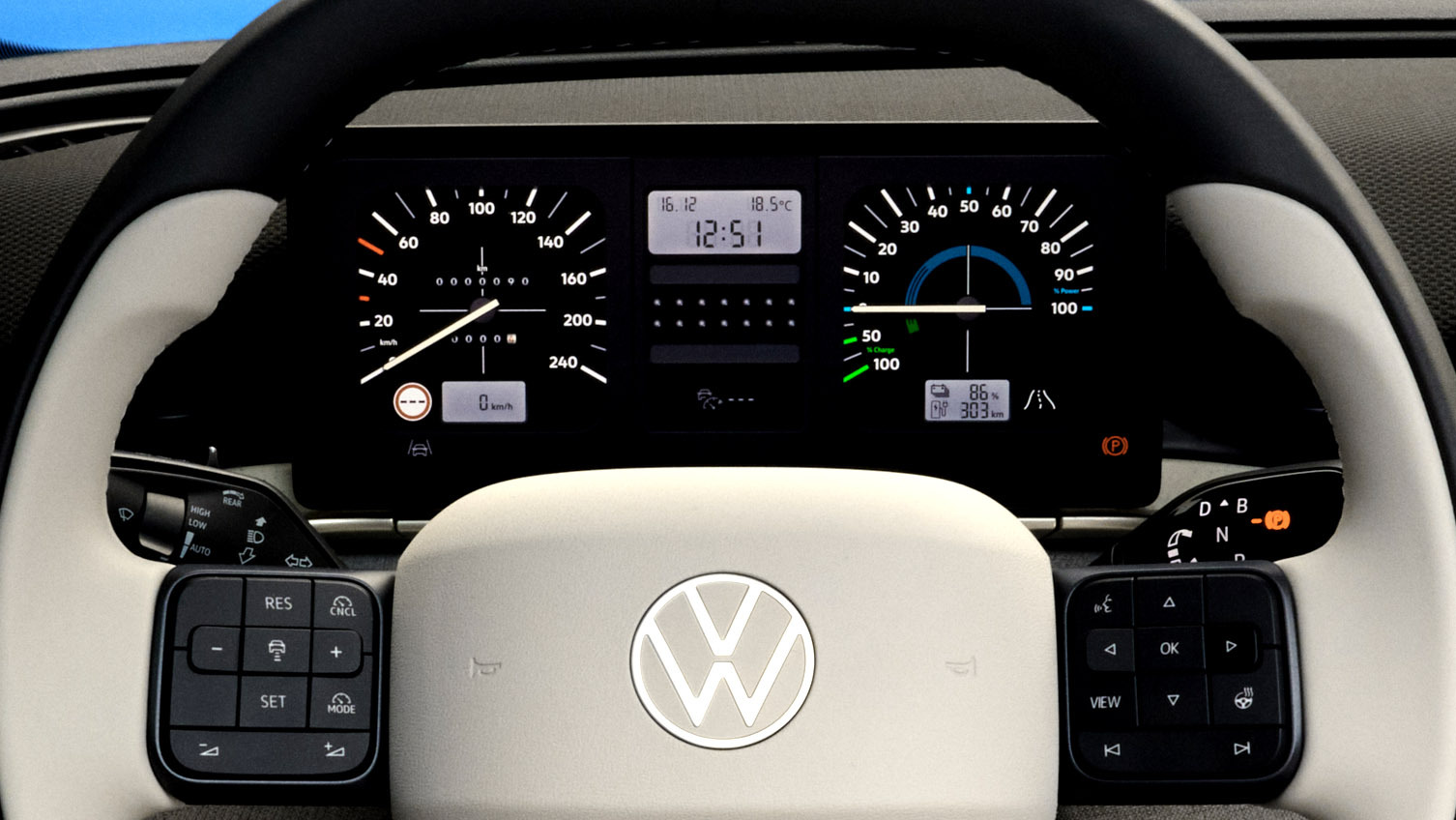
The digital instrument cluster of the smaller ID. Polo.

Inside, the Golf is expected to place greater emphasis on physical controls, paired with vintage-style graphics for the digital cockpit and sustainable materials for the upholstery. The odds are it will also be more spacious and practical than its predecessors.

New Underpinnings

The ninth-generation Golf will ride on the Scalable Systems Platform (SSP), using zonal architecture and software developed in partnership with Rivian. It will feature an 800-volt system and cell-to-pack battery technology, most likely with both single and dual-motor setups. Alongside the standard ID. Golf, hotter hatch variants wearing the GTI and R badges are expected.

Other VW Group models set to use the same underpinnings include the upcoming ID. Roc, ID. Tiguan, and ID. Touareg SUVs, along with the next Skoda Octavia.

When Will It Arrive?

 Volkswagen Gives First Official Look At Golf MK9

According to the Volkswagen Works Council newspaper, the fully electric hatchback is meant to carry the Golf’s long-running success story into the next decade as the company moves toward 2030.

More: VW Is Coming For Ford Maverick, Just Not On This Continent

VW has not confirmed a precise launch date. Earlier reports pointed to possible delays until 2030, blamed on production hurdles, shifting EV demand, and the ever-present issue of cost. However, some sources claim the new Golf will arrive sooner, with a debut in 2028, while other reports place it a year later, in 2029.

One thing that is confirmed is a reshuffle in production. Assembly of the current ICE-powered Golf VIII will move to Puebla, Mexico in 2027. That change frees up Volkswagen’s Wolfsburg plant in Germany to build the electric ID. Golf, which was the key takeaway from the recent announcement by the IG Metall union. To prepare for it, the facility is undergoing what VW describes as extensive renovations for state-of-the-art production processes.

 Volkswagen Gives First Official Look At Golf MK9

After Failing To Crack America, VinFast Wants A Crack At Rolls-Royce Buyers

  • VinFast has revealed two new Lac Hong models.
  • 800S and 900S draw cues from Rolls and Maybach.
  • Both electric flagships are due to arrive in 2027.

VinFast may be struggling to crack the world’s most lucrative market here in the US, but that is not stopping it from aiming higher up the food chain. The company has unveiled a pair of flagship ultra-luxury models intended to push its image far beyond the mainstream EV space.

The 800S SUV and the 900S sedan join the existing 900 LX in the Lac Hong high-end lineup, taking aim at the Rolls-Royce Cullinan and the Mercedes-Maybach S-Class, or at least daring to.

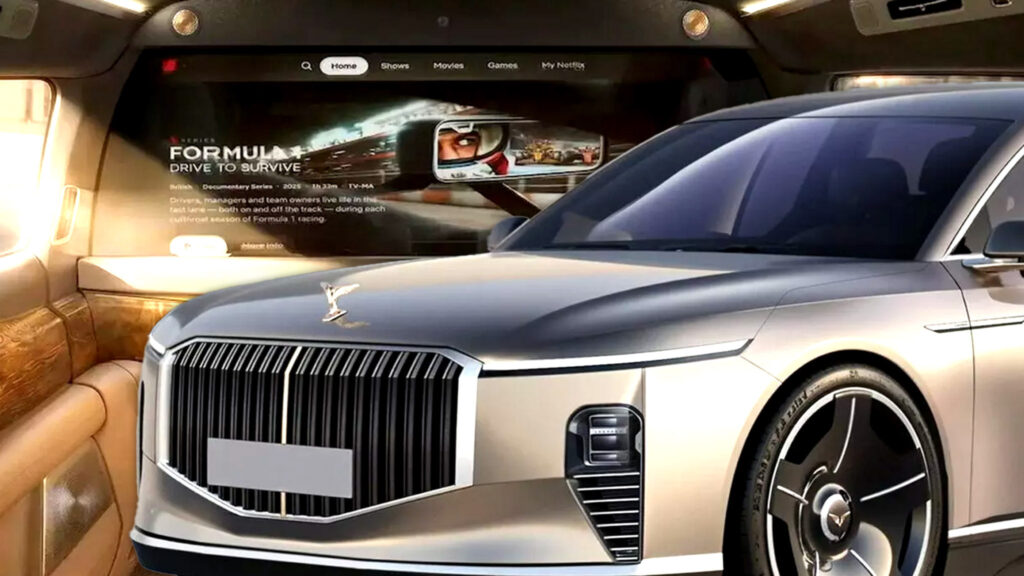
The new models feature a large grille with vertical slats inspired by Vietnamese bamboo, flanked by split LED headlights. A gold ornament on the hood depicts the mythical Lac bird, which also appears on the D-pillars and rear emblem. According to VinFast, the Lac Hong lettering on the tailgate is crafted from a genuine gold-plated alloy.

More: VinFast’s American Dream Is Cracking From The Inside Out

The 900S sedan rides on a massive wheelbase and adopts a sculpted profile accented with aluminum trim, while its black wheels look lifted straight from the Maybach playbook. A sloping roofline flows into a fastback-style rear end with T-shaped LED taillights and a pair of vents.

\\\\\

The 800S SUV, by contrast, mirrors the upright proportions of the Rolls-Royce Cullinan, with straight character lines, silver accents, multi-spoke wheels, and a thick D-pillar that reinforces its imposing stance.

Cabin Materials And Interface Layout

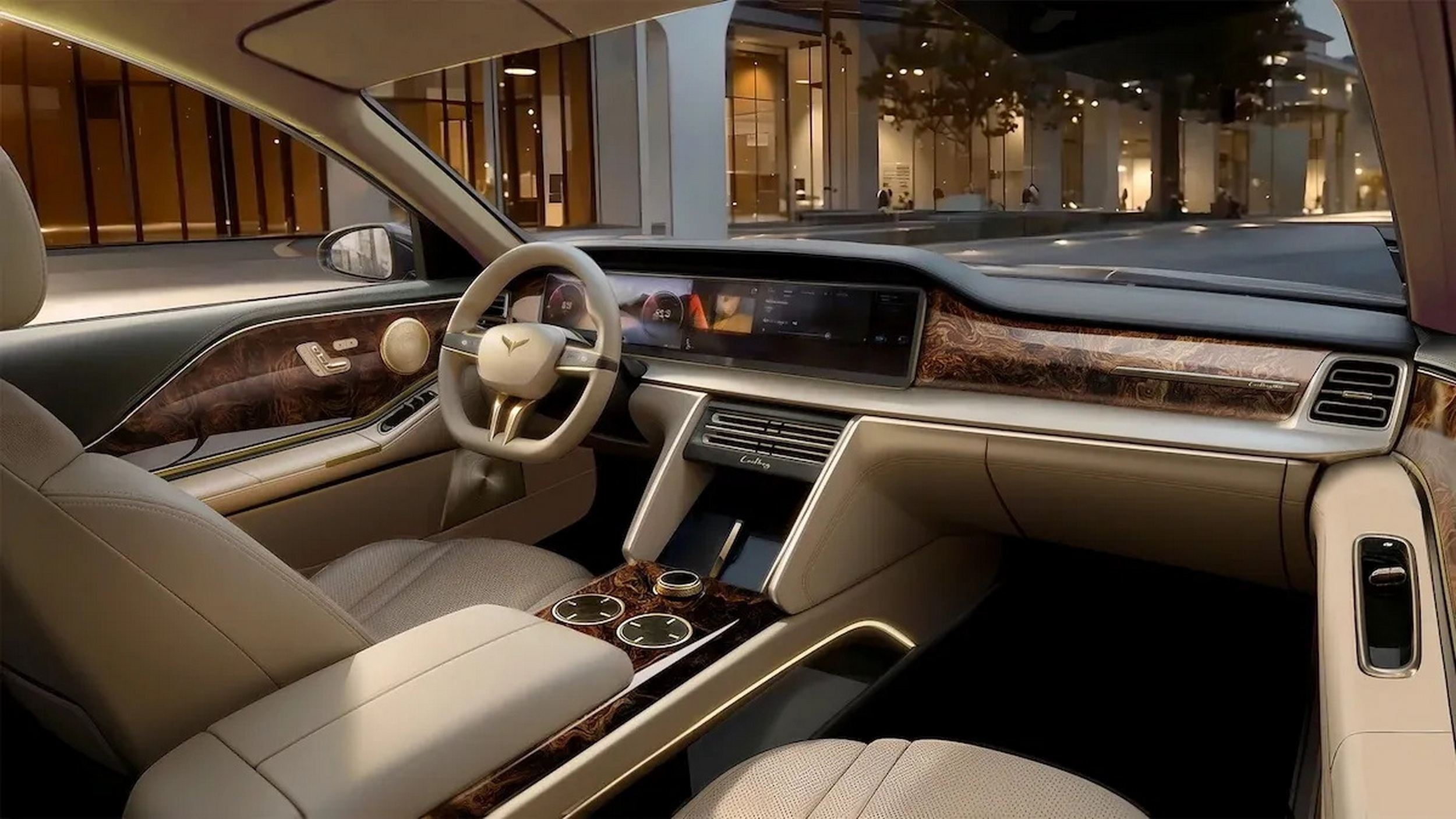
Inside, both models combine wood veneers with Nappa leather and gold-plated inserts. The dashboard integrates a single display that houses both the digital instrument cluster and infotainment system. A cylindrical knob on the center console recalls BMW’s iDrive controller. Dual wireless charging pads, manual controls for the power-adjustable seats, and gold-plated speaker grilles round out the presentation.

\\\\\\\

While both cars share much of their dashboard architecture, the 900S sedan shifts the spotlight firmly to those in the back. It promises generous rear legroom, zero-gravity executive seating, automatic power-assisted doors, and an available partition housing a large-format projection entertainment system and a foldable executive workstation. There is also a starry night headliner and warm ambient lighting to seal the deal.

Tri-Motor Power And Fully Active Suspension

Both models are fitted with an electric powertrain. The tri-motor option produces a combined 617 hp (460 kW / 625 PS), sending power to all four wheels. VinFast has not shared details on battery capacity or range, but it does promise an all-new fully active suspension system engineered to deliver exceptional ride comfort and dynamic stability. The EVs will also feature advanced intelligent technologies and comprehensive safety systems.

More: BMW And Porsche Just Lost China’s Luxury Market To A $100,000 Newcomer

 After Failing To Crack America, VinFast Wants A Crack At Rolls-Royce Buyers

The VinFast Lac Hong 800S and 900S are scheduled to go on sale in 2027. Pricing remains under wraps, though it is safe to assume a healthy step up from the brand’s VF mainstream passenger EVs and Green commercial mobility lines.

And it is not just Rolls-Royce, Maybach, and Bentley in the crosshairs. VinFast’s Lac Hong range will also have to contend with Chinese players such as the Huawei-backed Maextro, which promise similar presence and tech at far more competitive prices.

\\\\\

VinFast

Subaru Says STI Is “Not Dead”, But Its Boxer May Be

  • Subaru says STI is alive and working on new models.
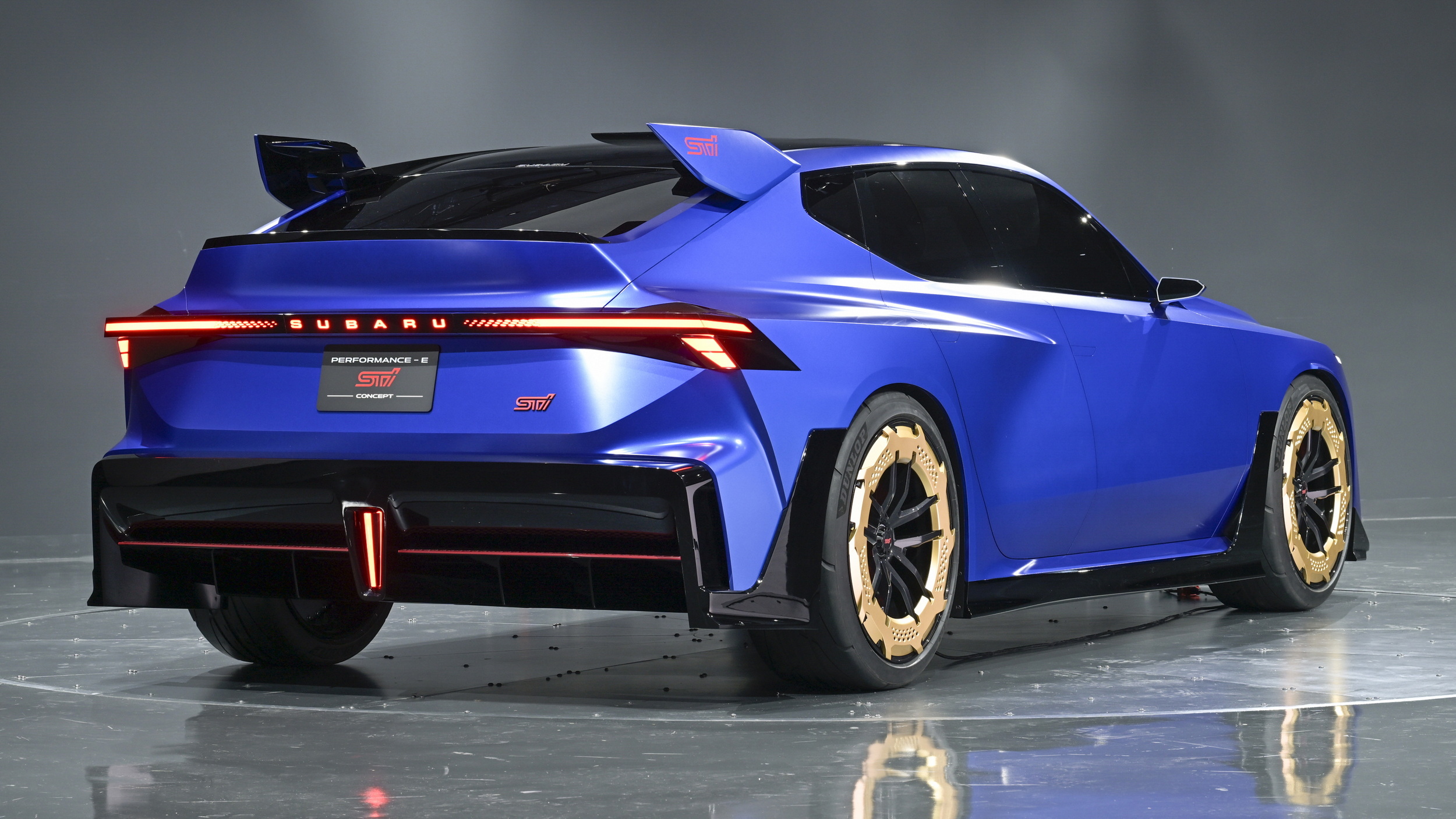
  • Electric Performance-E STI looks closer to production.
  • Trailseeker is the brand’s fastest production car ever.

The last proper Subaru WRX STI bowed out in 2021, and it left a crater in the brand’s performance lineup. Since then, Subaru Tecnica International loyalists have been clinging to hope for something new. According to company officials, that hope is not misplaced. The high-performance division is “not dead,” and there is apparently plenty going on behind closed doors.

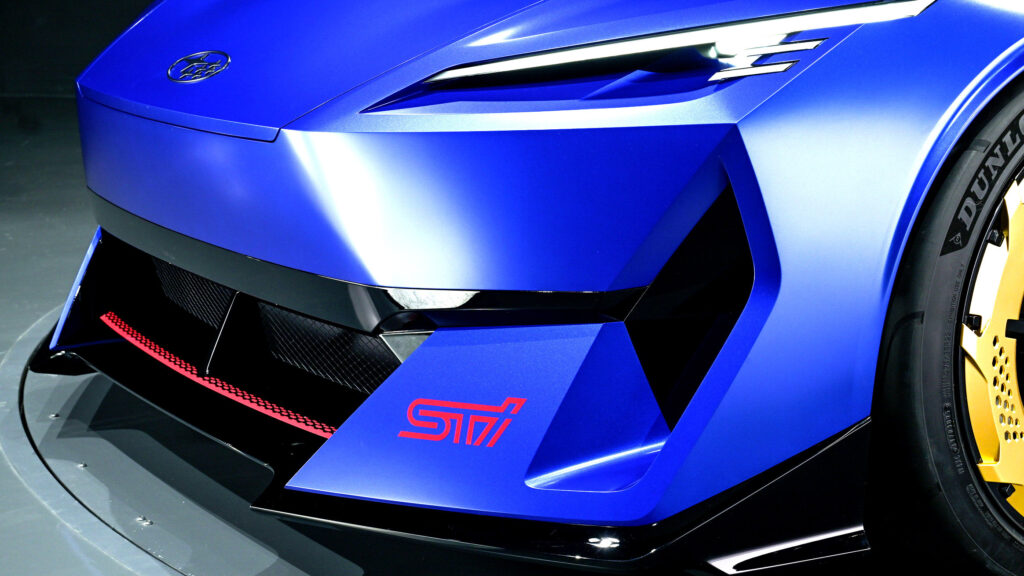
Over the past few years, Japanese buyers have had to settle for STI Sport editions of the WRX, Levorg, and Forester. Nice cars, certainly. But the real headline-grabbers were the two STI concepts unveiled at the 2025 Tokyo Motor Show.

More: Subaru Showed Four New STI Models, And Not Even One’s A Real STI

Scott Lawrence, General Manager of Subaru Australia, spoke to Drive.com.au about those concepts and the broader direction of the STI sub-brand:

“There has been a significant volume of feedback,” he said. “The tempo of news and activity out of STI publicly is picking up. It has the most vocal followers of the Subaru camp, put it that way. As those concepts proved, lots of work in that space – STI isn’t dead.”

Testing The Waters

 Subaru Says STI Is “Not Dead”, But Its Boxer May Be
Subaru Performance-E STI Concept

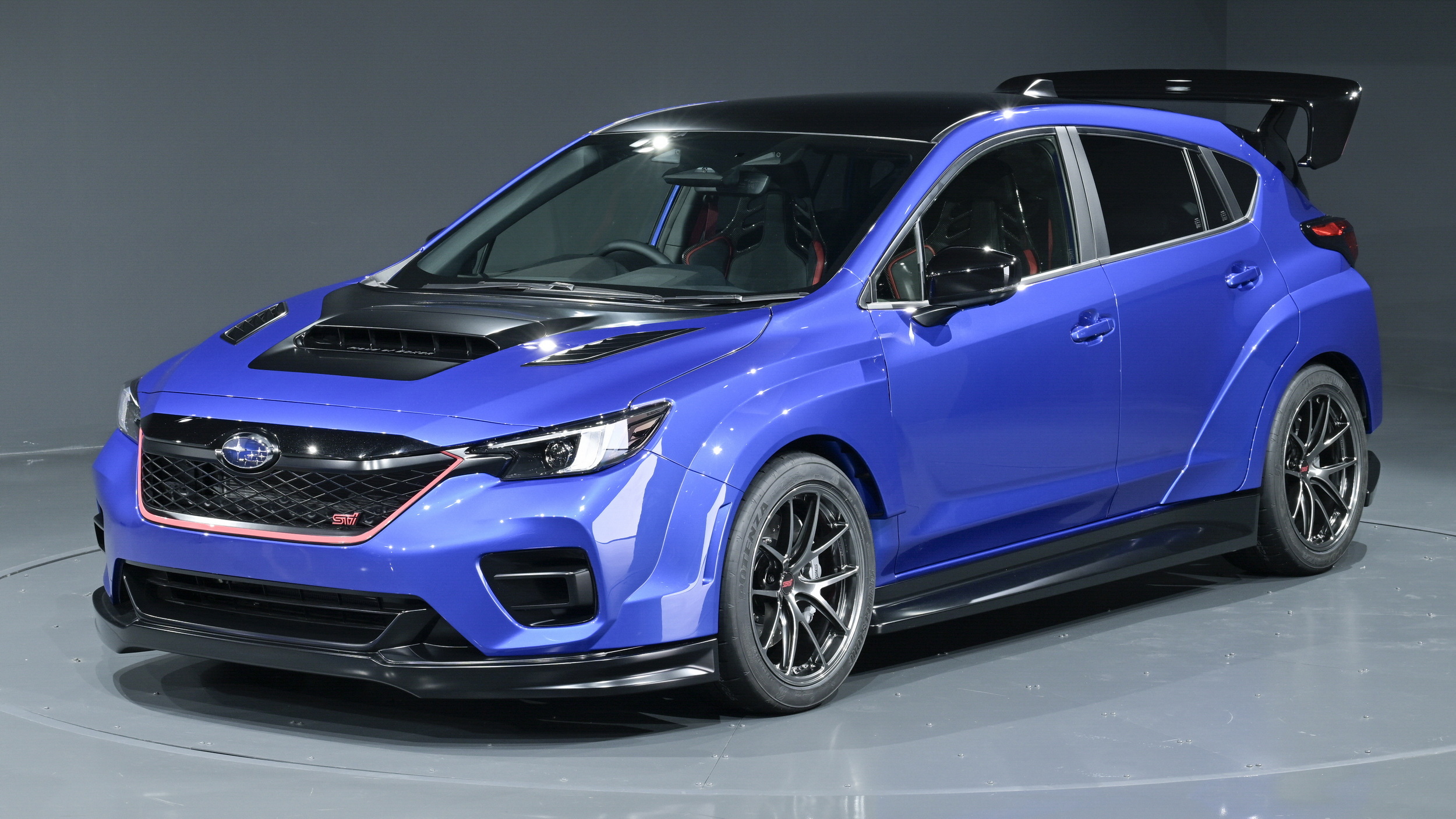
Subaru is using its latest STI concepts to measure enthusiast appetite and, more importantly, to justify the next halo car. The fully electric Performance-E STI looks like nothing else in the current lineup. At the same time, the gasoline-powered Performance-B STI is essentially a heavily reworked Impreza hatchback with a serious gym habit.

More: Subaru Made Two STIs And Now It’s Asking You To Choose

Initially, Subaru implied that fans would help decide which concept makes it to production. That democratic spirit now appears to have limits. The EV seems to have the inside track. According to the report, Subaru has confirmed the Performance-B will remain a concept, while staying carefully noncommittal about the Performance-E’s future.

The Fastest Current Subaru Isn’t An STI

 Subaru Says STI Is “Not Dead”, But Its Boxer May Be
Subaru Performance-B STI Concept

While we wait for a proper STI to reappear, the Trailseeker, Subaru’s electric alternative to the Outback, has become the quickest thing in the showroom. Not exactly the plot twist purists were hoping for. Its dual-motor setup delivers a combined 375 hp (280 kW), good for a 0-60 mph sprint in 4.4 seconds, although in our testing the crossover wagon managed to dip even lower.

Review: The 2026 Subaru Trailseeker Is An Insanely Fast Wagon That Just Happens To Be Electric

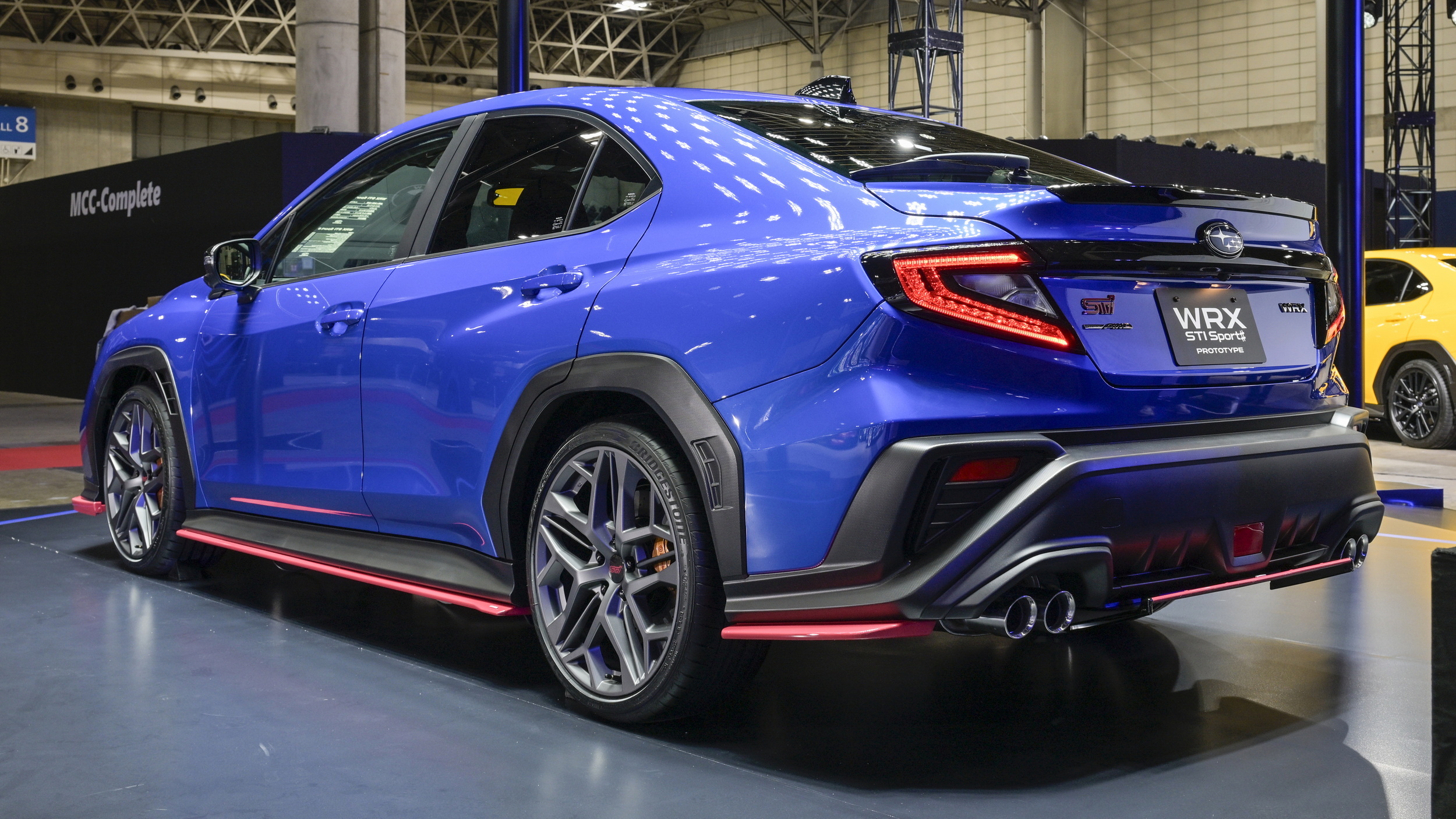
If you still prefer your performance with a sedan shape, the coolest kids on the block are the limited production S210 from last year, and the current STI Sport#, both based on the WRX. The latter debuted earlier this year with a six-speed manual gearbox, STI-tuned electronically controlled dampers by ZF, Brembo brakes with gold calipers, and 271 hp (202 kW) from the standard 2.4-liter boxer engine.

Subaru is clearly feeling its way toward whatever comes next for the STI sub-brand. Hybrid, fully electric, or something in between is still undecided. What seems less negotiable is the badge itself. It is sticking around, even if the boxer engine eventually is not.

 Subaru Says STI Is “Not Dead”, But Its Boxer May Be
2026 Subaru WRX STI Sport#

Texas PD Tests Model Y To See If Gas SUVs Really Cost Up To $12,000 More A Year

  • Murphy PD in Texas now runs the 2026 Model Y Juniper.
  • Each unit saves $4,100 to $12,000 a year in fuel and upkeep.
  • Its electric drivetrain could double the car’s service life.

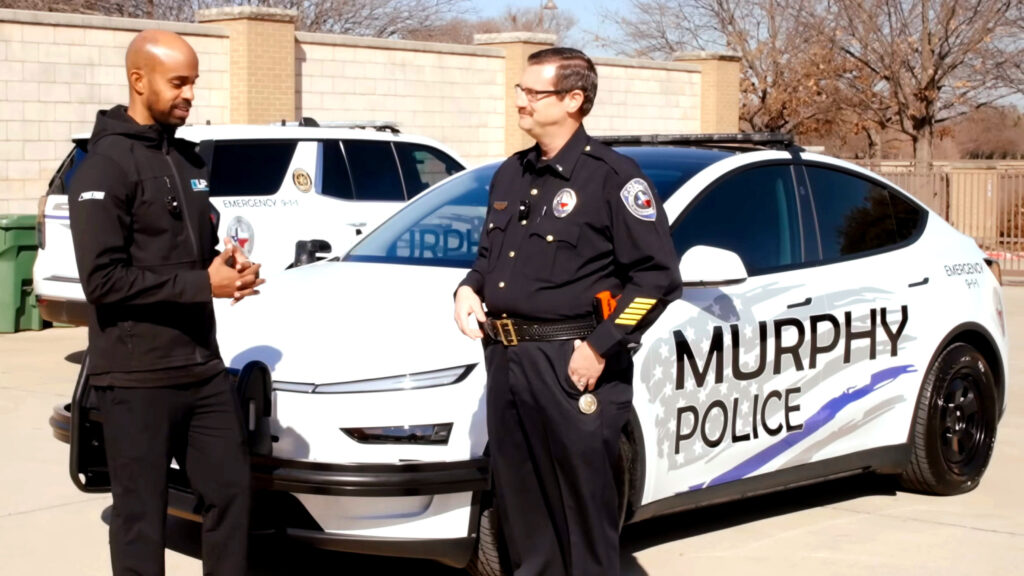
The Murphy Police Department in North Texas has become the first agency to roll out the refreshed 2026 Tesla Model Y Patrol, upgraded by Unplugged Performance. Instead of committing to a full fleet replacement, the department is running the EV in real-world conditions to see how it holds up to daily patrol duty.

Officials say the more persuasive case is financial. Each cruiser is projected to deliver measurable savings compared to a traditional ICE-powered patrol vehicle.

More: There’s A New Contender For The World’s Coolest Police Car

According to data from the City of Murphy, projected annual savings per vehicle range from $4,100 for single-officer units to as much as $12,000 for shared-shift cars clocking more than 140 hours per week. The bulk of that comes from eliminating fuel purchases, though the department will still incur electricity costs, along with a 75% reduction in maintenance compared to gasoline vehicles such as the Chevrolet Tahoe and Ford Explorer.

\\\\\\\\

No Idling Wear

The savings story does not stop at fuel and oil changes. EVs do not suffer engine wear from constant idling, which accounts for roughly 60% of a patrol car’s working life. As a result, they are expected to remain in service for up to twice as long as an ICE-powered equivalent.

More: Tesla Cybertruck Joins The Police, May Pull You Over This Year (If It Doesn’t Break Down)

Given that every hour spent idling is effectively equal to 33-35 miles (53-56 km) of driving wear, that difference adds up quickly. Without a combustion engine ticking away under the hood, the Model Y can sit on scene running lights, laptops, and climate control off its battery, without quietly shortening its lifespan.

Juniper Patrol Cars

\\\\\\\\\\\\\\\\\\\\

On the hardware front, the facelifted Tesla Model Y Juniper has been converted into a patrol unit by UP.FIT, the specialized fleet division of Unplugged Performance. Compared to the road-going version, it gains a front push bar, additional LEDs at the front and sides, a roof-mounted siren, and 18-inch forged aluminum wheels wrapped in pursuit-rated tires.

The police car is offered in RWD and AWD configurations, using the standard electric powertrains and delivering between 321-357 miles (517-574 km) of range per charge. That is more than enough for routine duty. And because police work occasionally involves pursuits, braking performance has been upgraded with six-piston calipers, stainless steel brake lines, specialized fluids, thermally upgraded components, and uprated rotors.

More: A Traffic Cop Just Got A 1,001 HP Company Car

Inside, officers get ventilated seats and improved sound insulation. Each vehicle is retrofitted with a customizable center console, a laptop mount, two weapon mounts, upgraded interior lighting, and a single rear prisoner partition.

Optional extras include ballistic protection for the front doors and custom reflective graphics.

UP.FIT has not disclosed the final MSRP for the Murphy units, though it insists the total cost of ownership undercuts everything else in the segment. Beyond the Model Y crossover, the company also offers police-ready conversions for the Cybertruck, Model S/X, and Model 3, in case your local department prefers its patrol cars in a different shape.

\\\\\

UP.FIT / Unplugged Performance

Stellantis Admits EV Bet Went Too Far, $26 Billion Later

  • Stellantis posts $26.3B net loss for FY 2025.
  • Dividend suspended, $5.9B bonds issued.
  • ICE and hybrid pivot lifts H2 shipments.

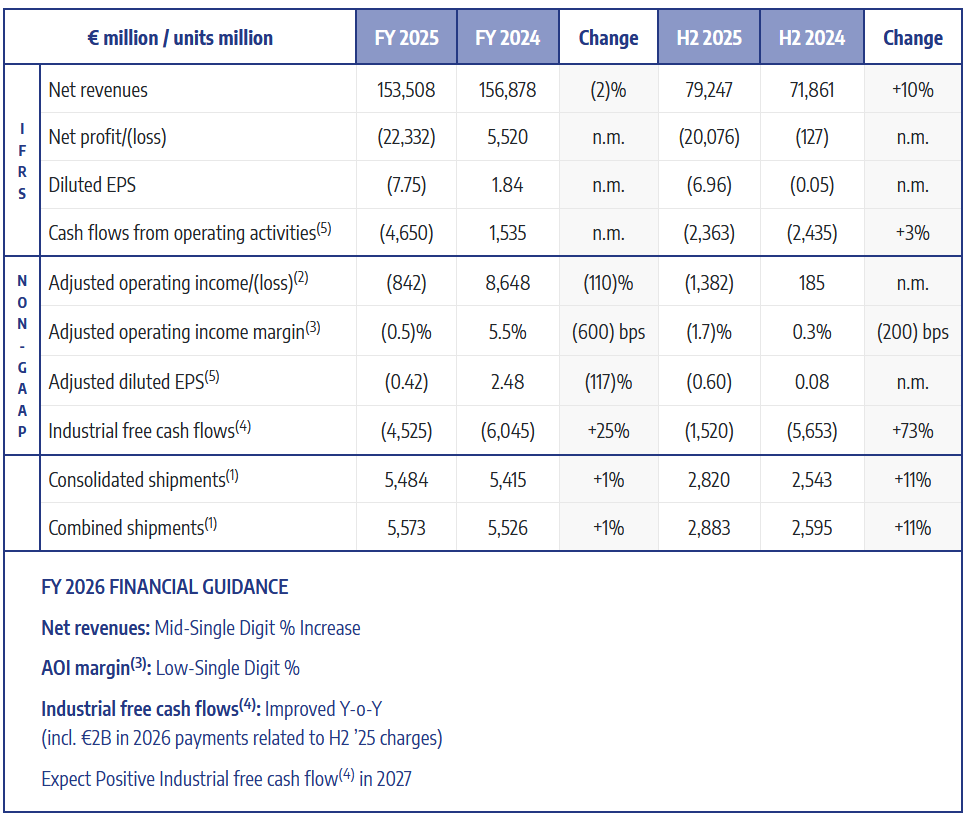
Stellantis has published its 2025 financial results, and they make for sobering reading. The headline figure is a €22.3 billion deficit, equal to $26.3 billion at current rates, marking the group’s first-ever annual loss. That swing looks even worse when set against 2024’s €5.5 billion ($5.8 billion) profit, which was already down 70% compared to 2023. In the span of two years, the company has gone from profitable to deep in the red.

The group, which owns 14 brands including Abarth, Alfa Romeo, Chrysler, Citroen, Dodge, DS Automobiles, Fiat, Jeep, Lancia, Maserati, Opel, Peugeot, Ram, and Vauxhall, attributes the damage to €25.4 billion ($30 billion) in “unusual charges,” largely tied to what it calls a “profound strategic shift to meet customer preferences.” In plain terms, Stellantis overestimated how quickly the market would pivot toward electric mobility and is now paying to recalibrate.

More: Stellantis Bet Big On EVs, Now It’s Betting On The Engine Europe Wrote Off

That is only part of the story. It wasn’t just a matter of customers being slow to embrace EVs. Several of Stellantis’ electric efforts, particularly in the US, struggled on their own terms. Models such as the Dodge Charger Daytona EV and the Jeep Wagoneer S were priced at the upper end of their segments yet struggled to justify that positioning against established rivals.

Rethinking Its EV Strategy

Regardless, that recalibration means canceling several electric models that were in development, mainly for the US market, and putting new emphasis on high-margin combustion engines. The return of the HEMI V8 in North America is the obvious attention grabber.

In Europe, diesel and mild-hybrid gasoline options are being folded back into the lineup across several current and upcoming models, including the now-delayed Alfa Romeo Stelvio and Giulia replacements.

 Stellantis Admits EV Bet Went Too Far, $26 Billion Later

“Our 2025 full year results reflect the cost of over-estimating the pace of the energy transition and of the need to reset our business around our customers’ freedom to choose from the full range of electric, hybrid and internal combustion technologies,” said Stellantis CEO Antonio Filosa.

“In the second half of the year we began to see initial, positive signs of progress with the early results of our drive to improve quality, strong execution of the launches of our new product wave and a return to top line growth. In 2026 our focus will be on continuing to close the execution gaps of the past, adding further momentum to our return to profitable growth.”

How Does Stellantis Plug The Gap?

The financial strain has prompted the board to suspend the 2026 dividend and authorize up to €5 billion ($5.9 billion) in hybrid bonds to shore up liquidity. Industrial free cash flow remained firmly negative at €4.5 billion ($5.3 billion), although that represents a 25% improvement on the previous year.

 Stellantis Admits EV Bet Went Too Far, $26 Billion Later

Net revenue totaled €153.5 billion ($181.1 billion), down 2% year-on-year. The decline is attributed to exchange rate headwinds and net pricing drops in the first quarter of 2025, neither of which tends to flatter the bottom line.

More: Stellantis Adds A Third Shift Where You Least Expect It

The group posted an adjusted operating loss of €842 million ($993.5 million). Still, the second half of the year showed signs of stabilization. Revenues rose 10% and shipments climbed 11% as inventories normalized. Stellantis also highlighted that H2 2025 marked the first six months under its renewed leadership team, a detail clearly intended to signal that the worst may already be in the rearview mirror.

Shipments Went Up But Shares Go Down

Combined shipments for 2025 reached 5.573 million vehicles, up 1% year-on-year. That keeps Stellantis in fifth place globally by volume, behind Toyota (11.3 million), Volkswagen Group (8.98 million), Hyundai Motor Group (7.27 million), and General Motors (6.11 million).

Momentum was stronger in the second half, with 2.883 million shipments, up 11% over H2 2024. North America did most of the heavy lifting, posting a 39% H2 increase as inventories returned to more normal levels and demand improved.

Investors, however, appear less convinced. Reuters reports that Stellantis shares have fallen by more than 30% this year, sliding to their lowest level since the PSA-FCA merger in 2021.

 Stellantis Admits EV Bet Went Too Far, $26 Billion Later

Stellantis

New Base Volvo EX30 In Europe Has 45% Less Power Than Yours

  • Europe gets a new base EX30 with 148 hp and 211 miles of range.
  • It adds updated UX and V2L, both coming via OTA updates.
  • Production moves from China to Europe to avoid EU tariffs.

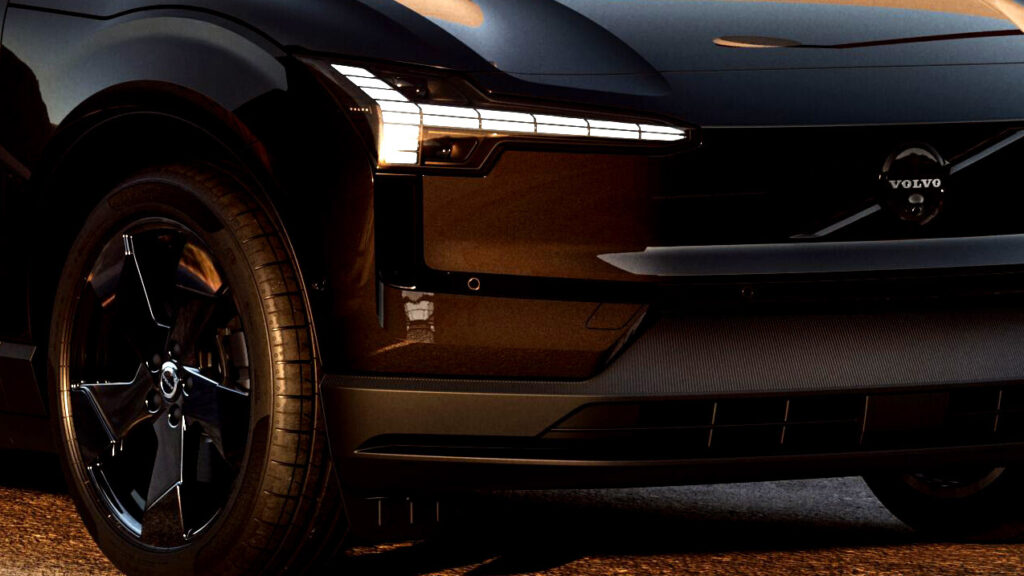
The Volvo EX30 has been updated in Europe for 2026, mirroring changes already introduced on the US-spec model. The range now gains a new entry-level powertrain, refreshed infotainment, new Vehicle-to-Load capability, and a Europe-exclusive Black Edition.

For European buyers, the headline is a lower entry point into the Volvo EV range. The EX30 now comes with a less potent electric motor producing 148 hp (110 kW / 150 PS), positioned as a more affordable alternative to the existing single-motor 268 hp (272 PS) and dual-motor 422 hp (428 PS) versions.

More: Volvo Pulls 40,000 EVs Back For Costly Battery Replacement

This new variant, not available in North America, can be paired with a 51 kWh battery pack delivering 339 km (211 miles) of WLTP range. Step up to the 69 kWh battery and the range increases to 476 km (296 miles). More miles, same compact footprint, and a little more choice at the showroom.

Turn Your Volvo Into A Power Bank

\\\\\\\\\\\\\

Volvo says the EX30 is now hardware-compatible with Vehicle-to-Load (V2L), though the feature will initially roll out in selected markets. With an optional adapter, the battery can power external kit such as electric bicycles, sound systems, or your increasingly elaborate camping setup.

More: Volvo’s Giving Millions Of Older Cars A New Brain Without Touching The Hardware

There is also an infotainment update, bringing what Volvo calls a completely redesigned settings and controls system, plus a customizable content bar. Crucially, existing EX30 owners are not being left behind. The new user experience and V2L functionality will arrive via over-the-air updates scheduled for this summer.

The EX30 Black Edition

\\\\\\

The EX30 only arrived in 2023, so there was no pressing need for a mid-cycle nip and tuck for either the standard model or the chunkier Cross Country. Instead, Volvo has opted for a wardrobe change. Enter the new Black Edition, now extended to its smallest SUV in line with the rest of the range.

Review: New Zeekr X Got Me Questioning My Feelings For Volvo

Despite the name, you are not limited to one shade of noir. The Black Edition can be specified in Onyx Black, Vapour Grey, or Crystal White. Whichever you choose, the chrome has been quietly retired in favor of a high-gloss black finish. That treatment covers the 19-inch alloy wheels, the Volvo badge up front, and the lettering across the tailgate.

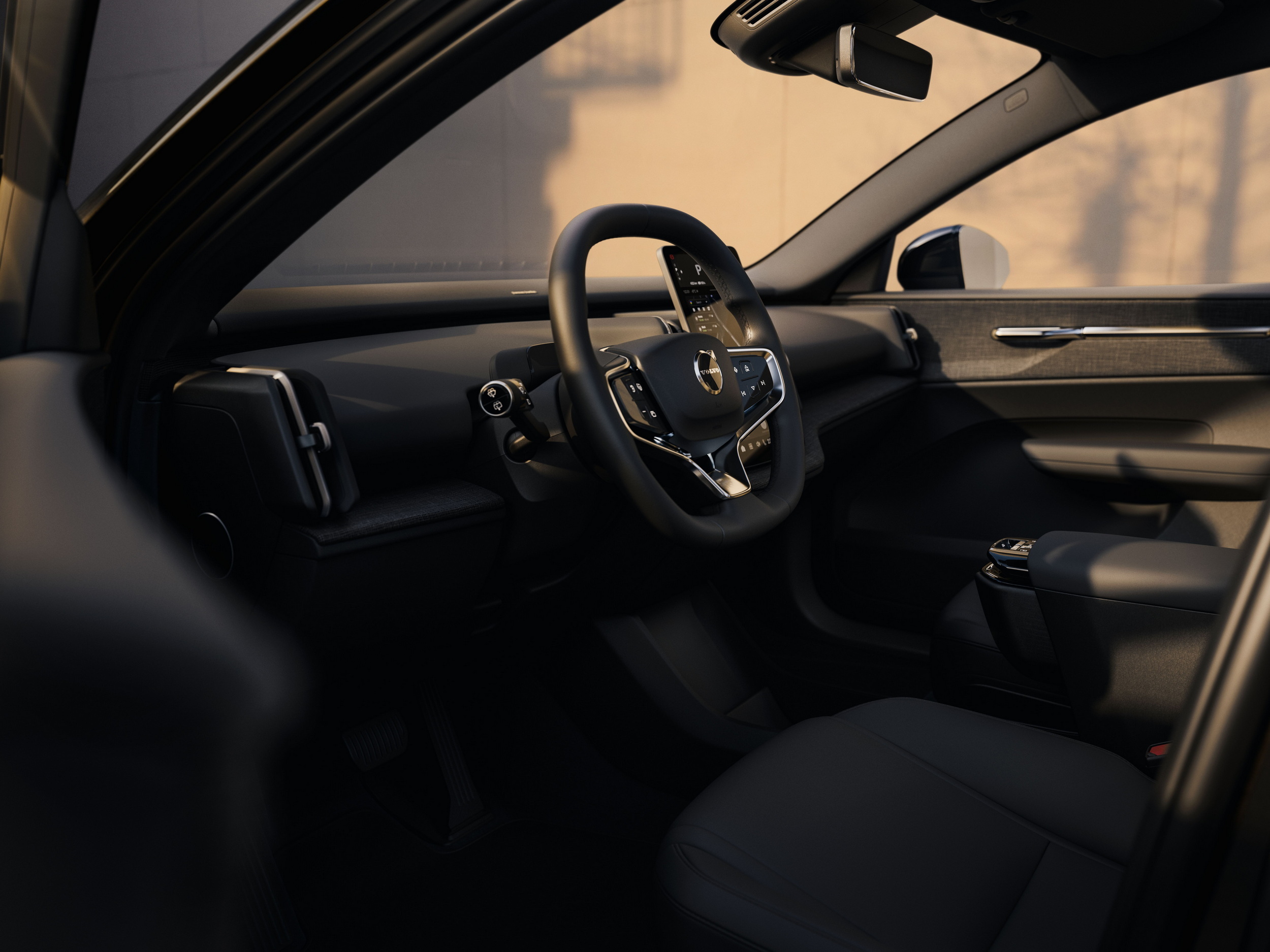
Inside, there is Nordico upholstery with contrasting stitching and dark flax decor to complete the theme.

 New Base Volvo EX30 In Europe Has 45% Less Power Than Yours

If you like the darker cabin but not the full blackout look, the Black interior specification is also available across the broader EX30 lineup. There is also a new option called Harvest. Inspired by late Scandinavian summer evenings, it brings light-colored, woven recycled textile upholstery for the seats and door inserts, paired with a Nordico dashboard, dark flax decor, and a black headliner.

Pricing for the updated range will be confirmed at a later date. European-market EX30s are now built in Belgium, after Volvo shifted production from China to sidestep import tariffs.

\\\\\

Volvo

New Lancia Crossover Appears In The Wild Hiding A Famous Old Name

  • Lancia’s flagship crossover was spotted in winter tests.
  • New Gamma will offer electric, mild-hybrid, and PHEV options.
  • It will be built in Melfi, Italy, alongside the DS No8.

Stellantis’ grand Lancia revival, or as they called it, ‘Renaissance’, has not exactly burst out of the gates. The new Ypsilon subcompact hatchback has struggled to gain momentum, which is not quite a surprise. Still, phase two is already taking shape, and it brings with it a familiar name. The Lancia Gamma is coming back.

More: Lancia HF Integrale Returns With White Wheels And Something To Prove

This time, it arrives as an electrified crossover, and our spies have spotted a prototype for the first time during winter testing. The test car reveals enough to give us a better sense of what to expect ahead of its official debut later this year.

\\\\\\

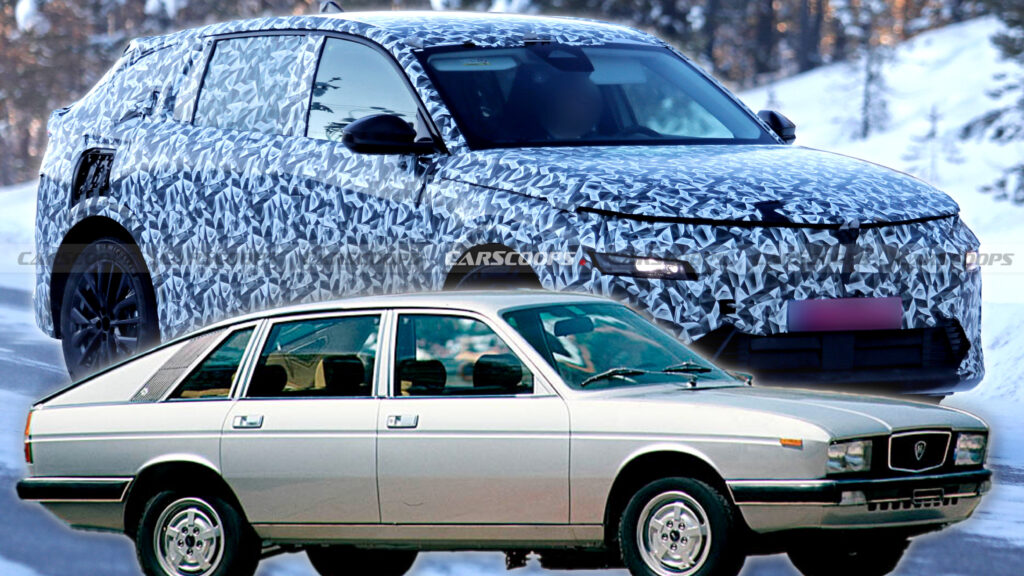
Unlike the original Gamma, which was offered from 1976 through 1984 as a fastback saloon and coupe, the new model takes a very different route. It is now a crossover, effectively the Italian sibling to France’s DS No8. From the spy shots, the Gamma appears more upright than the DS, leaning closer to coupe-SUV territory than to a traditional crossover.

Design Direction Takes Shape

\\\\\\\\

Baldauf

At the front, expect familiar cues borrowed from the smaller Ypsilon. The split LED headlight layout looks set to return, joined by an illuminated T-shaped grille that, intentionally or not, brings to mind a Mandalorian helmet. Down below, the lower bumper intake has a clean, contemporary design and seems to incorporate active shutters flanking an ADAS sensor.

Down the sides, the surfacing closely mirrors the DS, right down to the door handles and mirror caps, though the Gamma appears to get slightly larger windows. The wheels look modest in size, which is usually a giveaway that this is not the upcoming HF performance version.

More: One Lancia Ypsilon HF Is Fast The Other Just Pretends

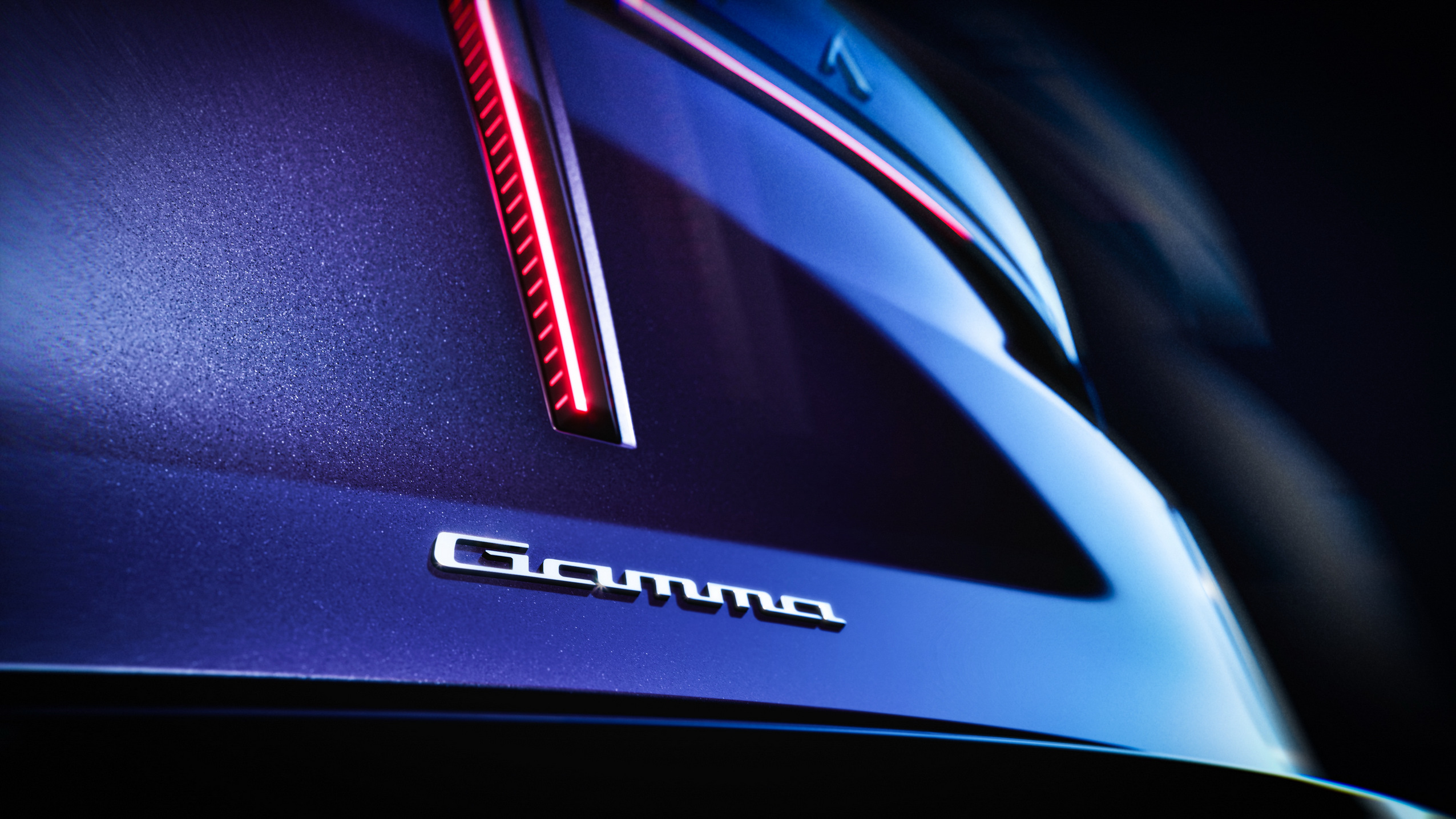
At the rear, heavy camouflage does its best to hide the details, but you can still make out the coupe-style rear glass flowing into what seems to be an integrated spoiler. An official teaser released in late 2024 indicates that the full-width LED taillights will adopt a T-shaped lighting signature, directing your eye toward the Gamma lettering across the sculpted tailgate. There are no visible tailpipes beneath the diffuser, reinforcing the likelihood that this particular prototype is fully electric.

Inside, expect a mix of premium and sustainable materials, along with Lancia’s signature “tavolino,” a mini round coffee-table integrated into the center console. The digital setup should include a 10.25-inch instrument cluster paired with a 16-inch infotainment display running the Lancia SALA system.

A Broader Powertrain Mix

 New Lancia Crossover Appears In The Wild Hiding A Famous Old Name

Like the DS No8, the Lancia Gamma will sit on Stellantis’ STLA Medium platform and roll out of the Melfi plant in Italy. Both models were originally pitched as fully electric, but Stellantis has since recalibrated. Mild-hybrid and plug-in hybrid options are now part of the plan.

More: Stellantis Bet Big On EVs, Now It’s Betting On The Engine Europe Wrote Off

Looking at what Stellantis already has on the shelf, we can speculate on the powertrain lineup. The entry-level Gamma is expected to be powered by a turbocharged 1.2-liter mild-hybrid unit generating 143 hp (107 kW / 145 PS). At the opposite end, the Gamma HF could pack dual electric motors delivering up to 370 hp (276 kW / 375 PS), complete with AWD.

\\\\\\\\\

In terms of range, the larger 97 kWh battery pack could allow the Gamma to cover up to 435 miles (700 km) between charging stops.

Lancia has confirmed the new Gamma will arrive in 2026, so expect a steady drip of details over the coming months. It will later be joined by a new Lancia Delta in 2028, rounding out a three-model lineup for the revived Italian brand.

\\\\\\\\\

Baldauf

Mazda Admits It Learned From China, And Its Future EVs Will Show It

  • Mazda says the CX-6e is a clear step beyond the 6e.
  • Working with Changan brought a steep learning curve.
  • Those lessons will shape Mazda’s future in-house EVs.

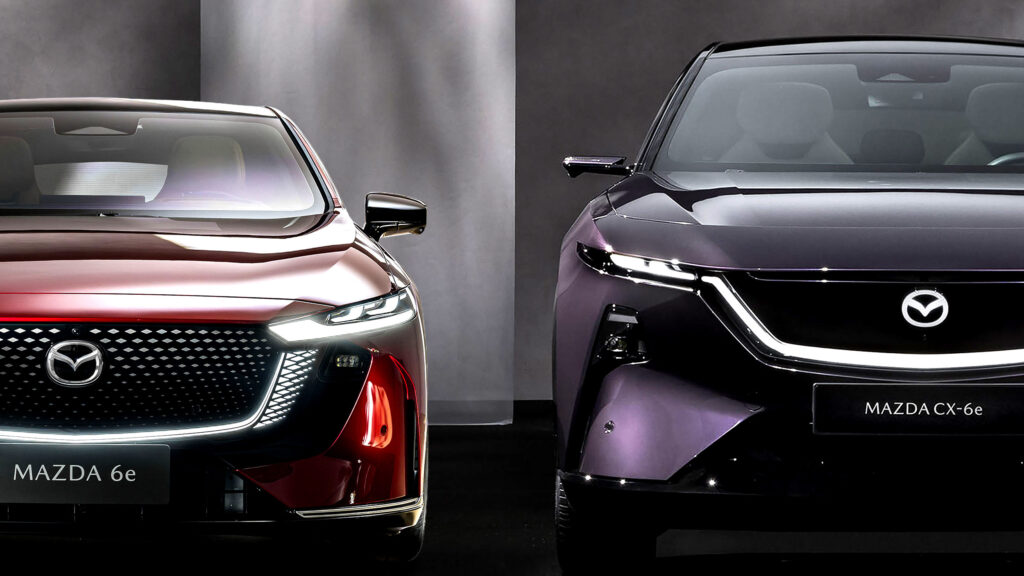
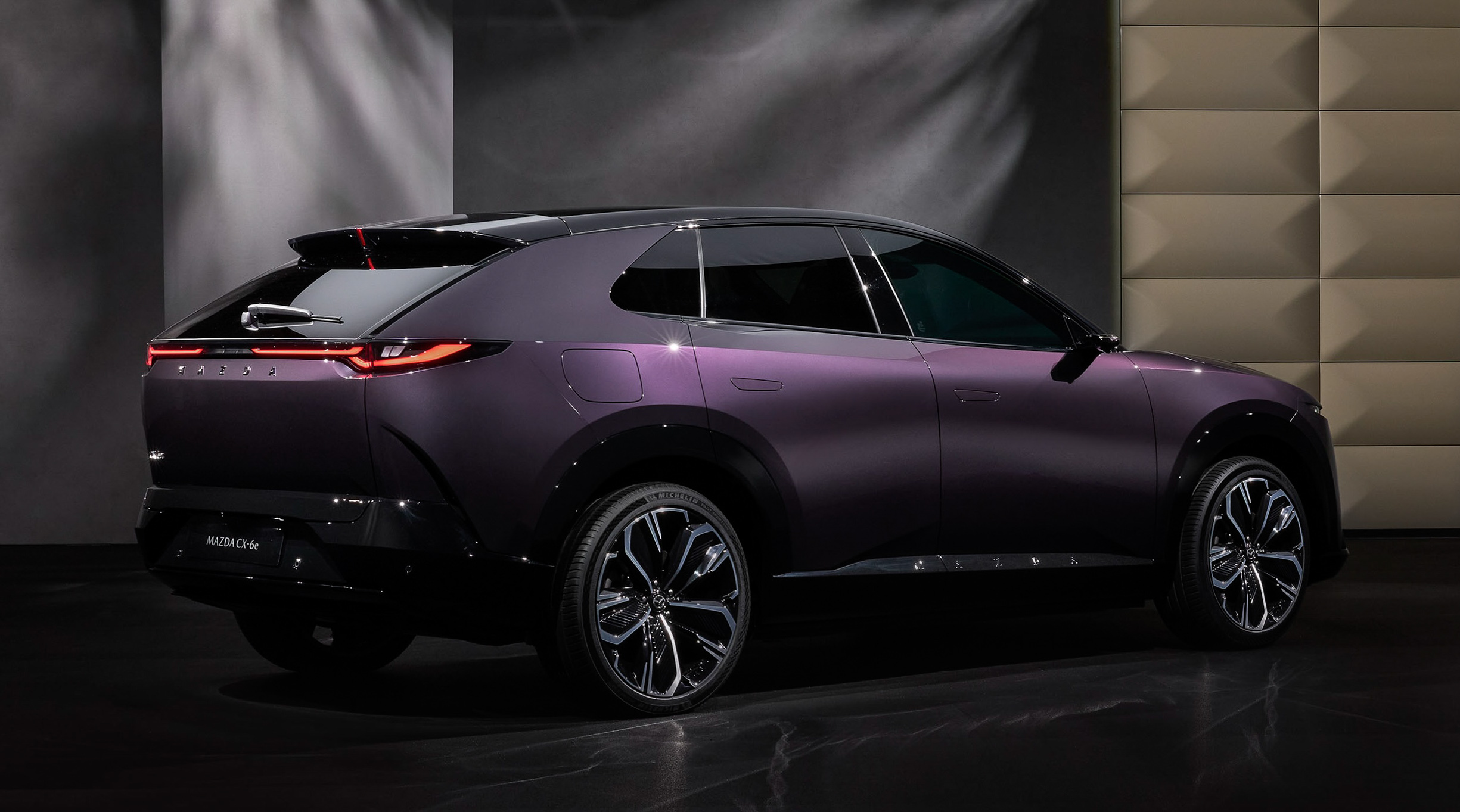
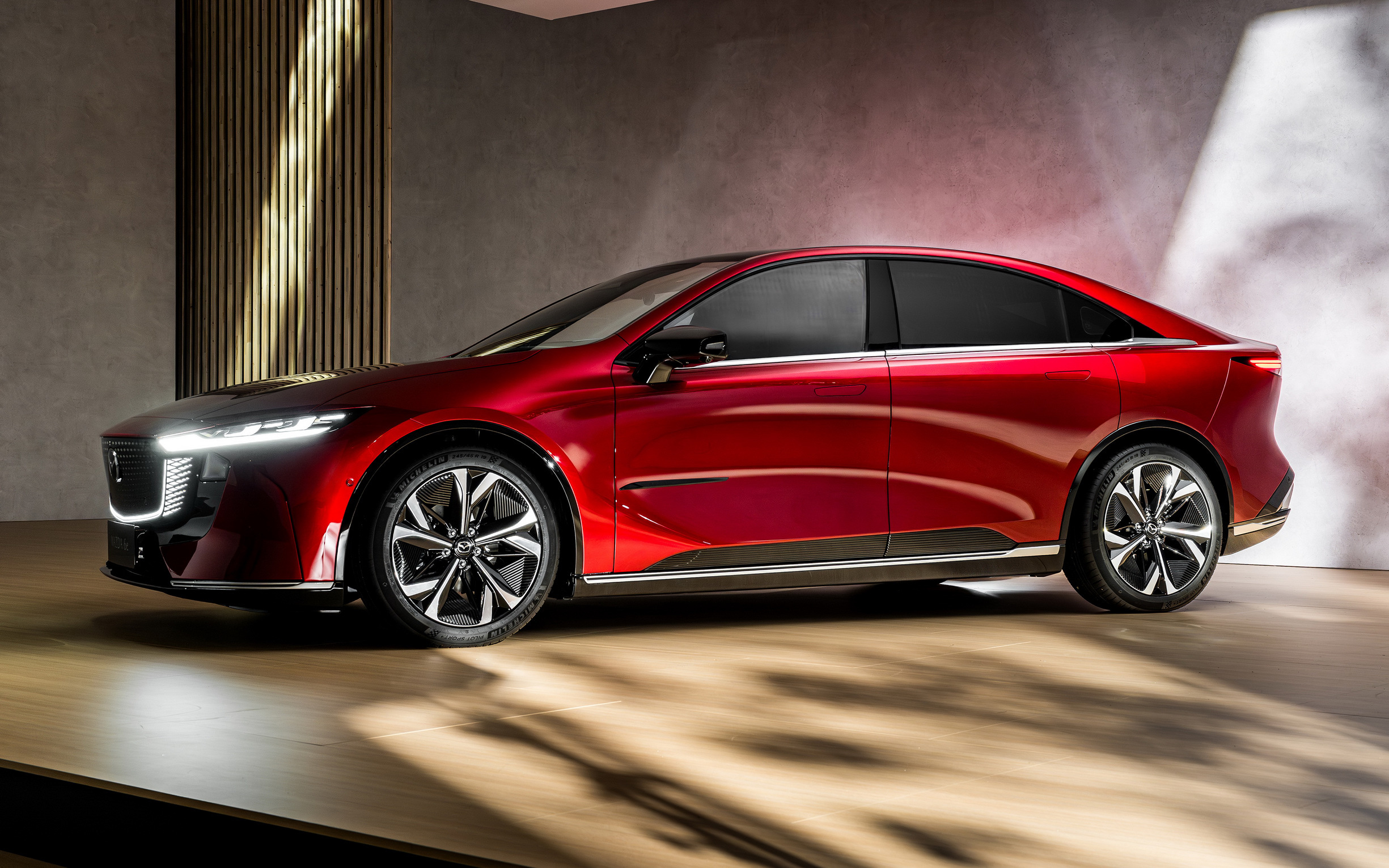
Mazda has moved on from the niche MX-30 crossover, reshuffling its fully electric lineup in China and select global markets, though not North America, with the 6e sedan and the CX-6e SUV. The two mechanically related EVs arrived in quick succession, yet a senior Mazda Europe executive says there is a noticeable development gap between them, largely due to the steep learning curve that came with partnering up with Changan.

Christian Schultze, Director of Technology Research at Mazda Europe, explained the process in an interview with AutoRAI. Both models are heavily based on the Deepal L07 sedan and S07 SUV from Changan’s dedicated EV brand, adapted for global markets under the Mazda joint venture.

Bridging Cultures Through Engineering

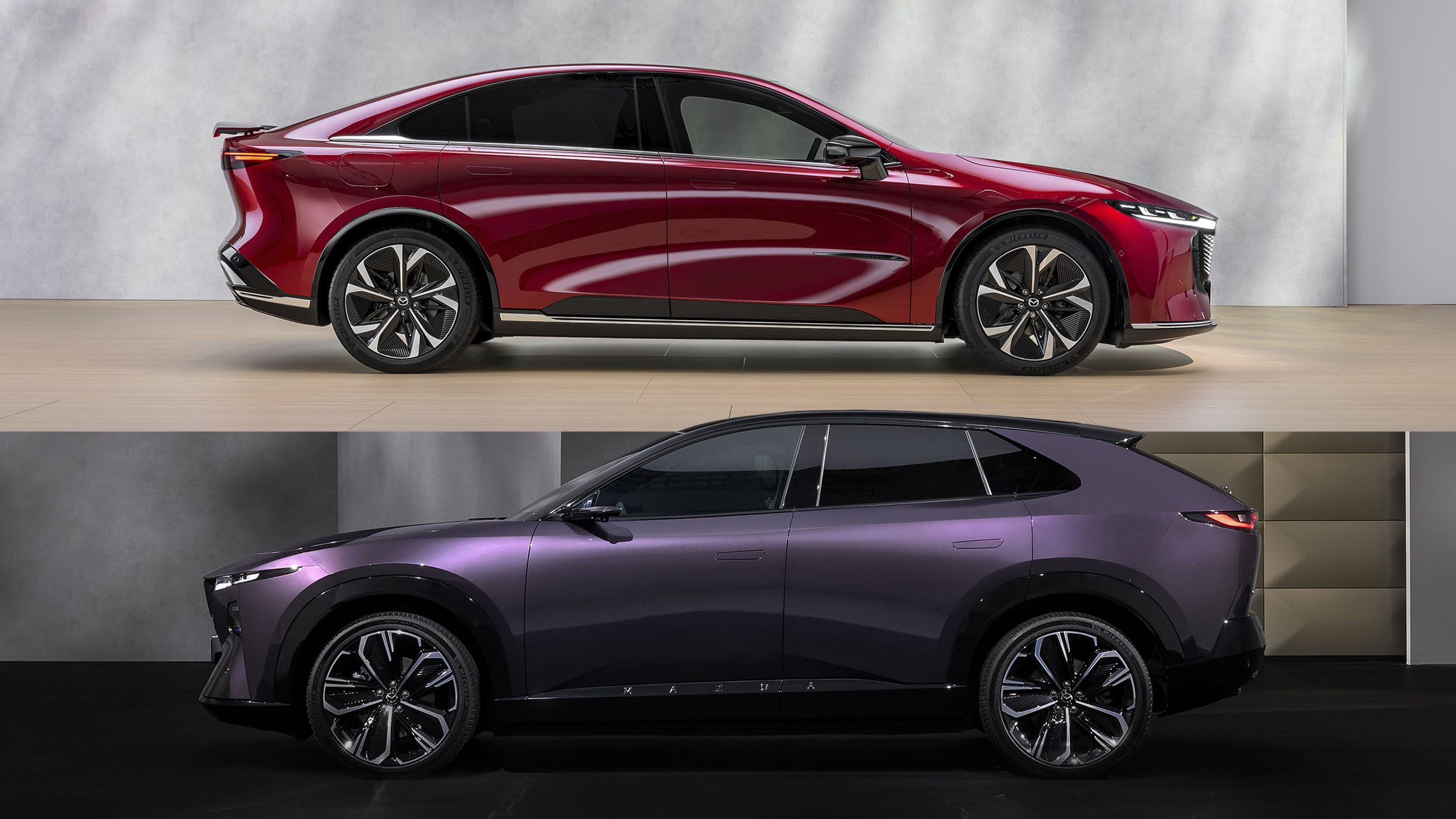
So what actually separates the Mazda 6e, launched in 2024, from the CX-6e that arrived a year later? According to Schultze, progress came in increments.

More: Mazda Secretly Built A V6 MX-5, Then Killed It Over One Ugly Problem

“I’d say we’ve taken another half-step forward. The 6e was the first joint development with our partner Changan Mazda Automobile for a car that would be sold in Europe. That was a huge learning experience for them, because they had never before developed a car specifically for the European market. It was also a learning experience for us, because we suddenly had to explain much more than we were used to heading into Hiroshima.”

 Mazda Admits It Learned From China, And Its Future EVs Will Show It
The Mazda 6e (above) and the CX-6e (below).

Schultze explained that while the R&D center in Hiroshima works seamlessly with the European team, adding Changan Mazda Automobile changed the dynamic. The shared understanding required for such projects had to be built from the ground up, a process that took more time and effort than Mazda initially expected.

More: New Mazda MX-5 NE Isn’t Going Electric, But It’s Not Staying Pure Either

Despite looking almost identical to the Chinese-spec Mazda EZ-6 sedan and EZ-60 SUV, the European versions had to meet different regulations. That proved challenging for engineers unfamiliar with European requirements.
“When we develop a car together with Hiroshima, we essentially already get about 98 percent of what we’re looking for. Then it’s mainly just fine-tuning here and there. With Changan Mazda Automobile, we had to go much further back to basics,” he said.

“For example, they had never created a setup for European radar systems. We had to explain the requirements and why they were important. What we appreciated was how quickly they responded and how willing they were to understand. But we first have to convey that understanding.”

The SUV Is More Mature

 Mazda Admits It Learned From China, And Its Future EVs Will Show It
Mazda CX-6e

Despite the early hurdles, the knowledge gained from the 6e program helped Mazda refine the CX-6e.

Schultze noted that the SUV’s electric motor is a “further development,” offering “greater efficiency and a higher continuous power output” than the sedan. That fits with Mazda’s philosophy of making each new model incrementally better.

More: Mazda’s Rotary Sports Coupe Plan Faces A Roadblock It Can’t Engineer Around

The Mazda 6e sedan currently sold in mainland Europe and the UK produces 255 hp (190 kW / 258 PS) in Standard Range form and 241 hp (180 kW / 245 PS) in Long Range trim. The CX-6e retains the higher output with the larger 80 kWh battery.

Lessons Beyond One Platform

 Mazda Admits It Learned From China, And Its Future EVs Will Show It
Mazda6e

Schultze confirmed that R&D lessons from the Changan joint venture will influence future EVs built on Mazda-developed architecture.

“We’re pursuing a strategy where we collaborate with partners, for example, in the field of electric vehicles, and develop our own electric models. Our roadmap shows that one of the next EVs will be based on a fully Mazda-owned platform. Moreover, our insights are growing every day, thanks in part to market feedback. For example, we learned a lot from the reactions to the Mazda 3, and those insights have been incorporated into our internal objectives. The same applies to the lessons we’re learning from the CX-6e.”

More: This SUV Just Did Something Only Two Other Mazdas In History Have Ever Done

He also highlighted how modern technology allows continuous improvement without waiting for a facelift or full generational change.

“The great advantage of today’s world is that many systems are digital or electronic. This means we can implement improvements even during ongoing production. In the past, in the purely mechanical world, if a switch felt too heavy, it would stay that way for four years until the next model change. Fortunately, those days are behind us.”

 Mazda Admits It Learned From China, And Its Future EVs Will Show It
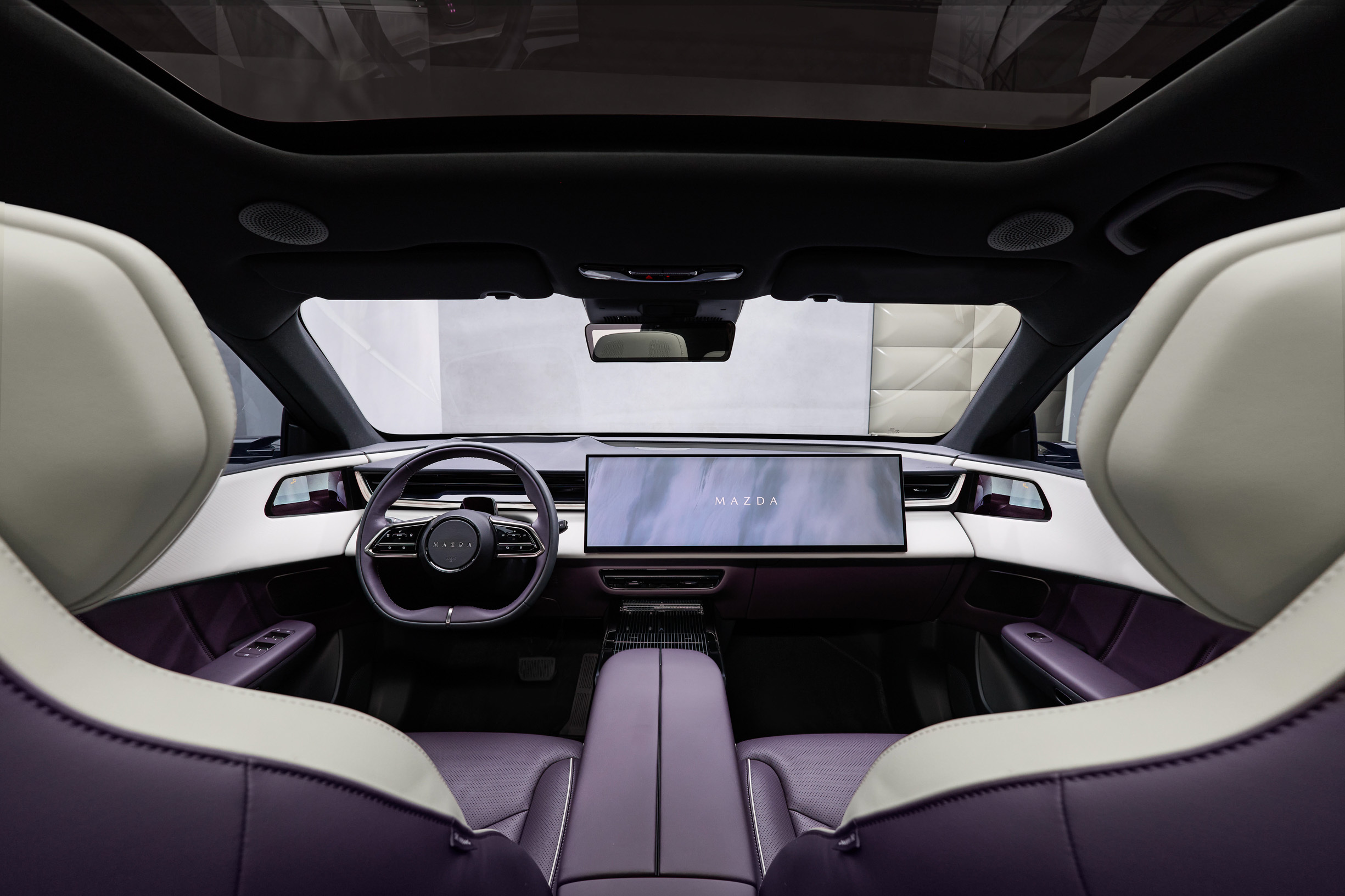
The interior of the Mazda CX-6e

Stellantis Revives Opel’s Hot Hatch, In A Very Different Form

  • The Corsa GSE is a fully-electric hot hatch version.
  • It will likely use a 278 hp motor with a limited-slip diff.
  • Expect sharper looks, bigger brakes, and tighter suspension

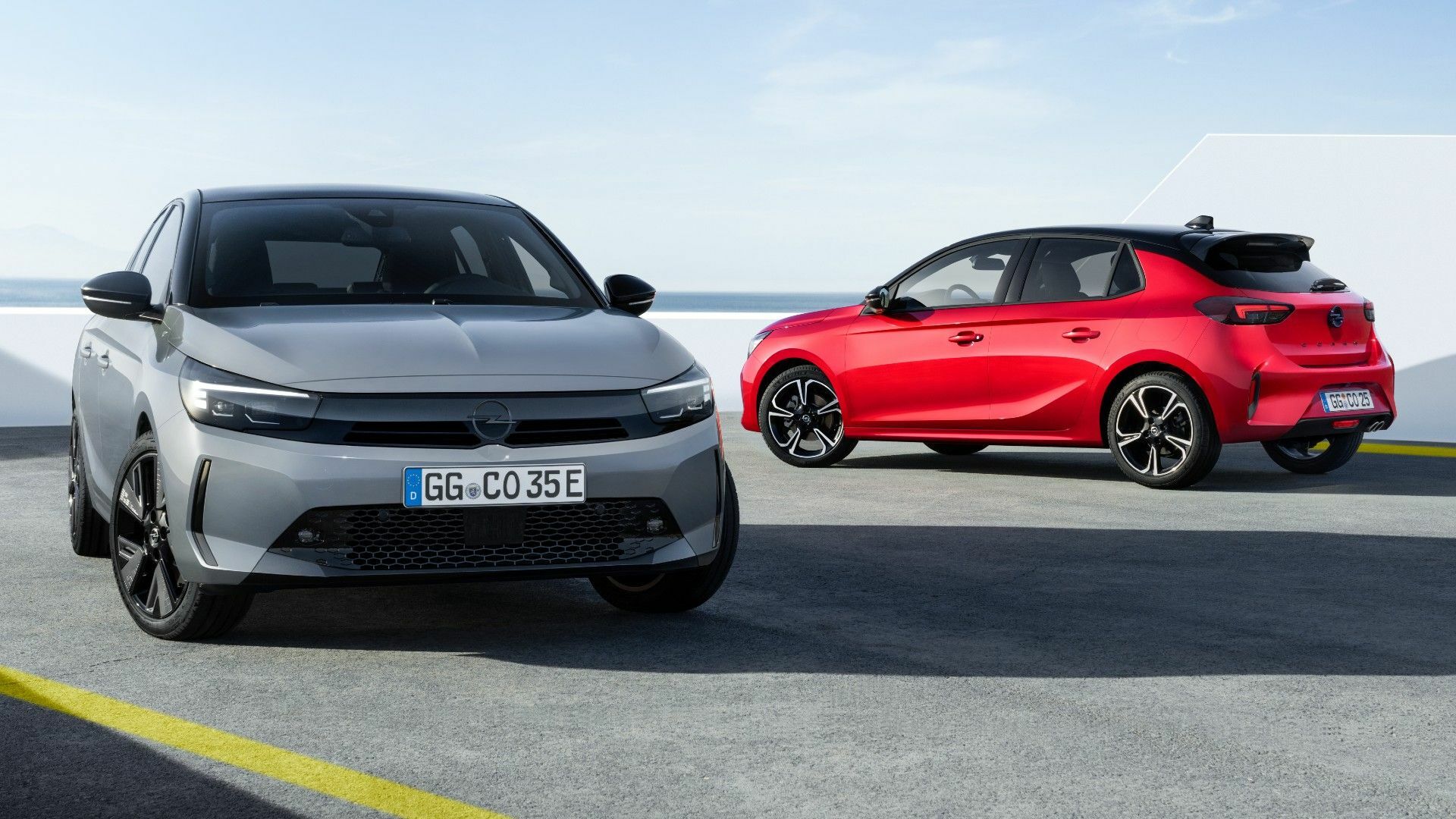
Stellantis has confirmed a new performance version of the Opel and Vauxhall Corsa subcompact hatchback. It will wear the GSE badge, effectively reviving the spirit of the long-retired Vauxhall Corsa VXR and its Opel Corsa OPC twin, only this time with electrons instead of petrol.

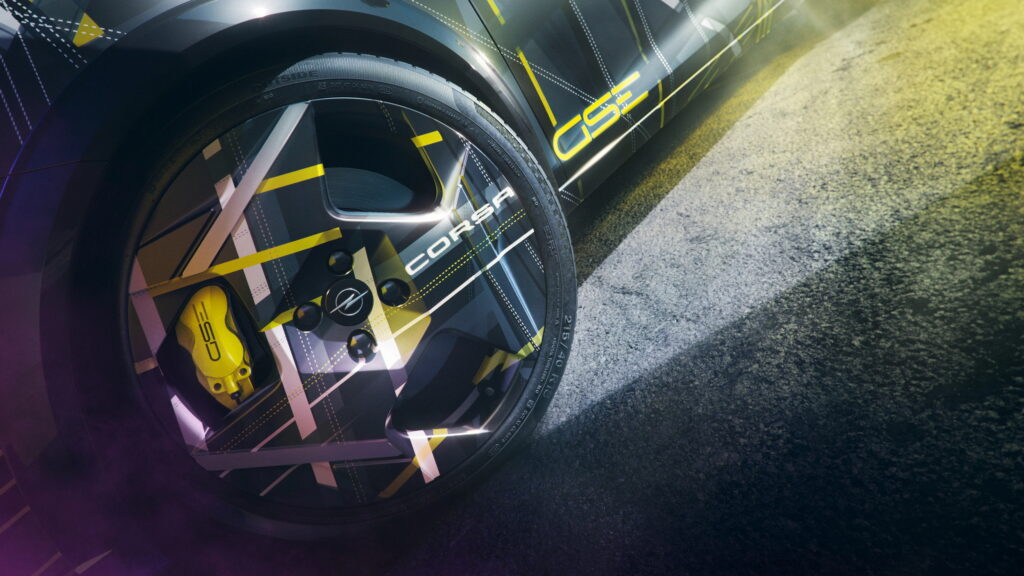
So far, the company has released a single teaser image of the upcoming hot hatch, zoomed tightly on the front wheel. The car wears a camouflage wrap featuring Corsa and GSE lettering, along with black, yellow, and white graphics. The 18-inch alloy wheels have a distinctive three-spoke design, with yellow brake calipers visible behind them.

More: The First Electric GTI Isn’t From VW

The body panels appear largely unchanged from the current-generation Corsa introduced in 2019 and updated in 2023. The GSE does gain additional cladding around the wheel arches, echoing the treatment seen on the new Peugeot E-208 GTI.

 Stellantis Revives Opel’s Hot Hatch, In A Very Different Form
Opel Mokka GSE

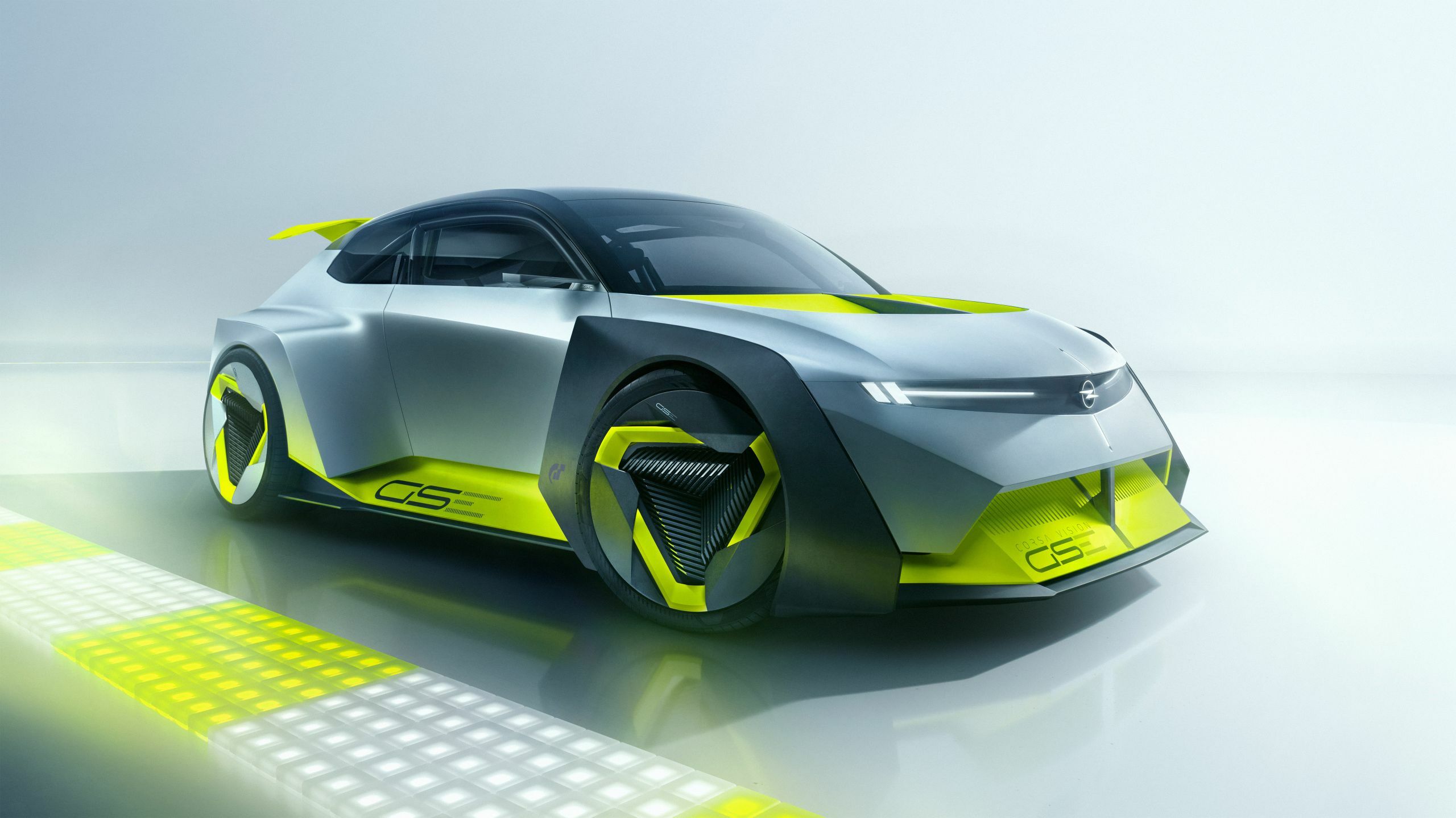
Expect redesigned bumpers and a few sharper details borrowed from the unhinged Opel Corsa GSE Vision Gran Turismo concept. Whether it also gains a slimmer Vizor grille with updated LEDs is still anyone’s guess, but it would hardly be a surprise.

Shared Underpinnings

Stellantis is keeping the hard numbers quiet for now, yet the safe money says the Corsa GSE will share its hardware with the Mokka GSE subcompact SUV. That puts it in the same technical family as the Abarth 600e, Alfa Romeo Junior Veloce, Peugeot E-208 GTI, and Lancia Ypsilon HF.

More: One Lancia Ypsilon HF Is Fast The Other Just Pretends

Like those cars, it is expected to use a front-mounted electric motor producing 278 hp (207 kW or 280 PS) and 345 Nm (254.5 lb-ft) of torque. A Torsen limited-slip differential, uprated brakes, and a firmer suspension setup complete the package. Power will likely come from the familiar 54 kWh lithium-ion battery, good for an estimated 200-230 miles (322-370 km) of range.

 Stellantis Revives Opel’s Hot Hatch, In A Very Different Form
Opel Corsa GSE Vision Gran Turismo Concept

According to Eurig Druce, Managing Director of Vauxhall and the Stellantis UK Group:

“The Corsa GSE will combine small and agile practicality with thrilling, pure electric, motorsport-inspired power and dynamics. Vauxhall has a proud heritage of hot hatches, and we’re excited to now offer customers those same thrills but combined with the electrifying performance and zero emissions in use of these new GSE models.”

More: Opel Corsa Gains Sporty Bits, Lowered Suspension, And More Power By Irmscher

The Opel and Vauxhall Corsa GSE will arrive in Europe and the UK later this year, stepping in as the new flagship of the Corsa lineup above the GS Line. Alongside its Peugeot E-208 GTI and Lancia Ypsilon HF relatives, it will square up against the upcoming VW ID.Polo GTI and the rumored Hyundai Ioniq 3 N.

 Stellantis Revives Opel’s Hot Hatch, In A Very Different Form
The facelifted version of the Opel Corsa F debuted in 2023.

Lamborghini Scraps EV Supercar After Admitting Interest Was ‘Close To Zero’

  • Lamborghini has canceled the electric Lanzador over low demand.
  • The brand will stick with plug-in hybrids across its range.
  • CEO Stephan Winkelmann says EVs risk becoming costly hobbies.

Lamborghini has officially shelved plans for its first production EV, deciding instead to lean harder into high-performance plug-in hybrids through 2030. In Sant’Agata’s world, electricity is welcome, just so long as it’s boosting a V8 or V12 rather than replacing one.

More: Audi Boss Says TT Successor Is Safe Even As Porsche Faces Doubts

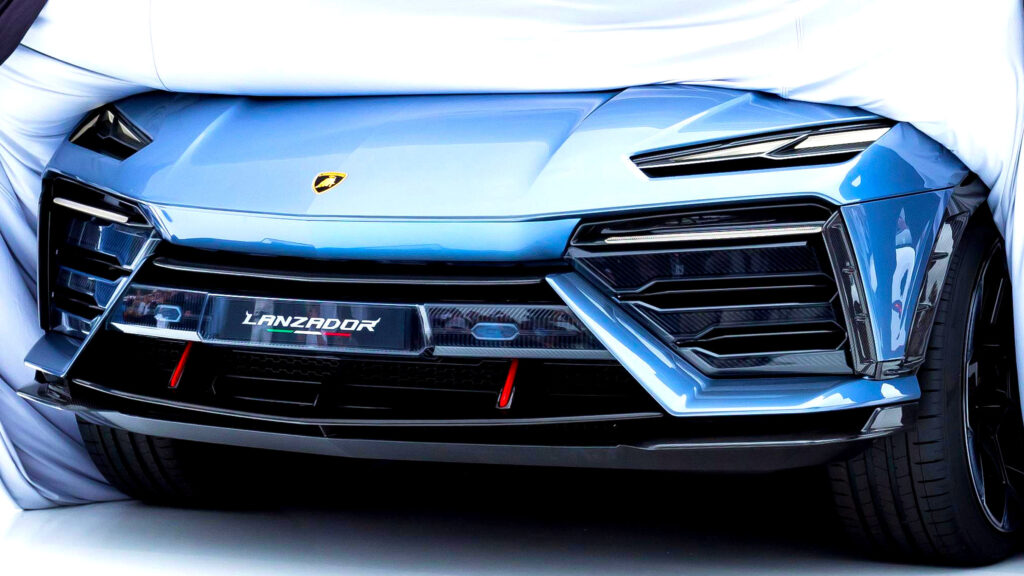
The model in question, previewed by the Lamborghini Lanzador concept in 2023, was supposed to arrive before the end of the decade as a fully electric 2+2 crossover. Instead, it is heading back to the drawing board, if not straight into the history books.

A Strategic Backflip On EVs

Speaking to the Sunday Times, Lamborghini CEO Stephan Winkelmann confirmed the EV won’t be joining the production lineup and will instead give way to another plug-in hybrid offering. He also cautioned that going all-in on electric could turn into an “expensive hobby,” noting that the “acceptance curve” for zero-emission tech among Lamborghini’s clientele is “close to zero.” Not exactly a ringing endorsement.

Winkelmann went on to say that Lamborghini buyers are still chasing the full “emotional experience,” meaning the styling, the performance, and, crucially, the noise. That, in his view, is something EVs cannot yet replicate in their current form. So for now, combustion engines remain very much on the menu, and will continue to be built “for as long as possible.”

Hybrids Take Priority

 Lamborghini Scraps EV Supercar After Admitting Interest Was ‘Close To Zero’
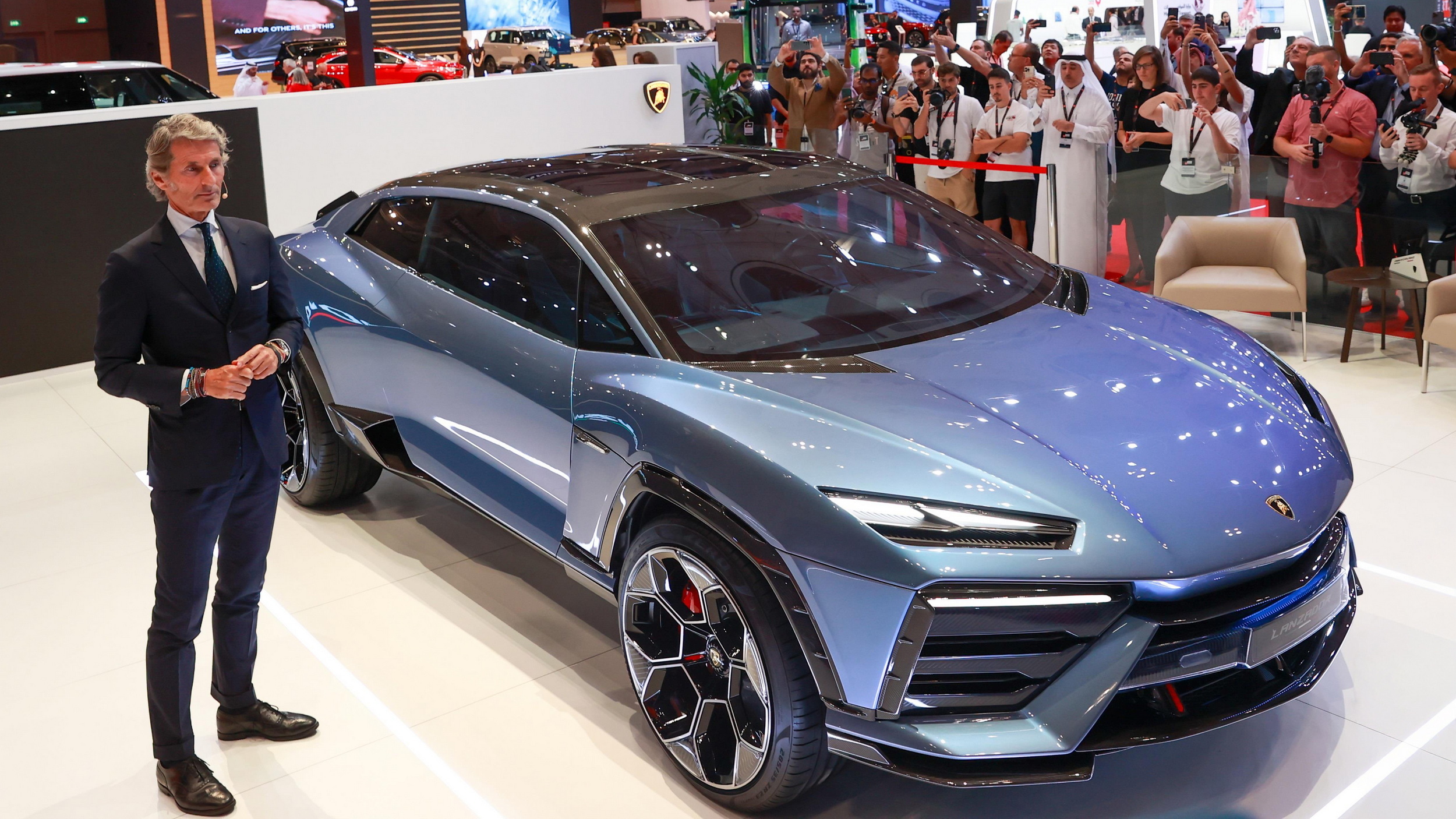
Stephan Winkelmann with the 2023 Lamborghini Lanzador Concept.

The call to axe the project was reportedly made behind closed doors late last year, after extensive talks with customers and dealers, along with a thorough market analysis. In other words, Lamborghini did the homework and did not like what it saw. As Winkelmann put it:

“Investing heavily in full-EV development when the market and customer base are not ready would be an expensive hobby, and financially irresponsible towards shareholders, customers [and] to our employees and their families. Plug-in hybrids offer the best of both worlds, combining the agility and low-rev boost of electric battery technology with the emotion and power output of an internal combustion engine.”

More: Ferrari’s First EV Exterior Is So Radical Even Its Designer Is Nervous About Your Reactions

Pressed by the Sunday Times on whether Lamborghini would ever build a full EV, Winkelmann left the door slightly ajar, albeit with a very firm hand on the handle.

“Never say never, but only when the time is right,” he said. “For the foreseeable future, only PHEVs. We will continue to develop electrification because we also need to be ready. The times we are living in are fast moving; if you don’t react fast, you risk going out of business or losing momentum. Therefore we need a solid financial base to reinvest in the future.”

 Lamborghini Scraps EV Supercar After Admitting Interest Was ‘Close To Zero’
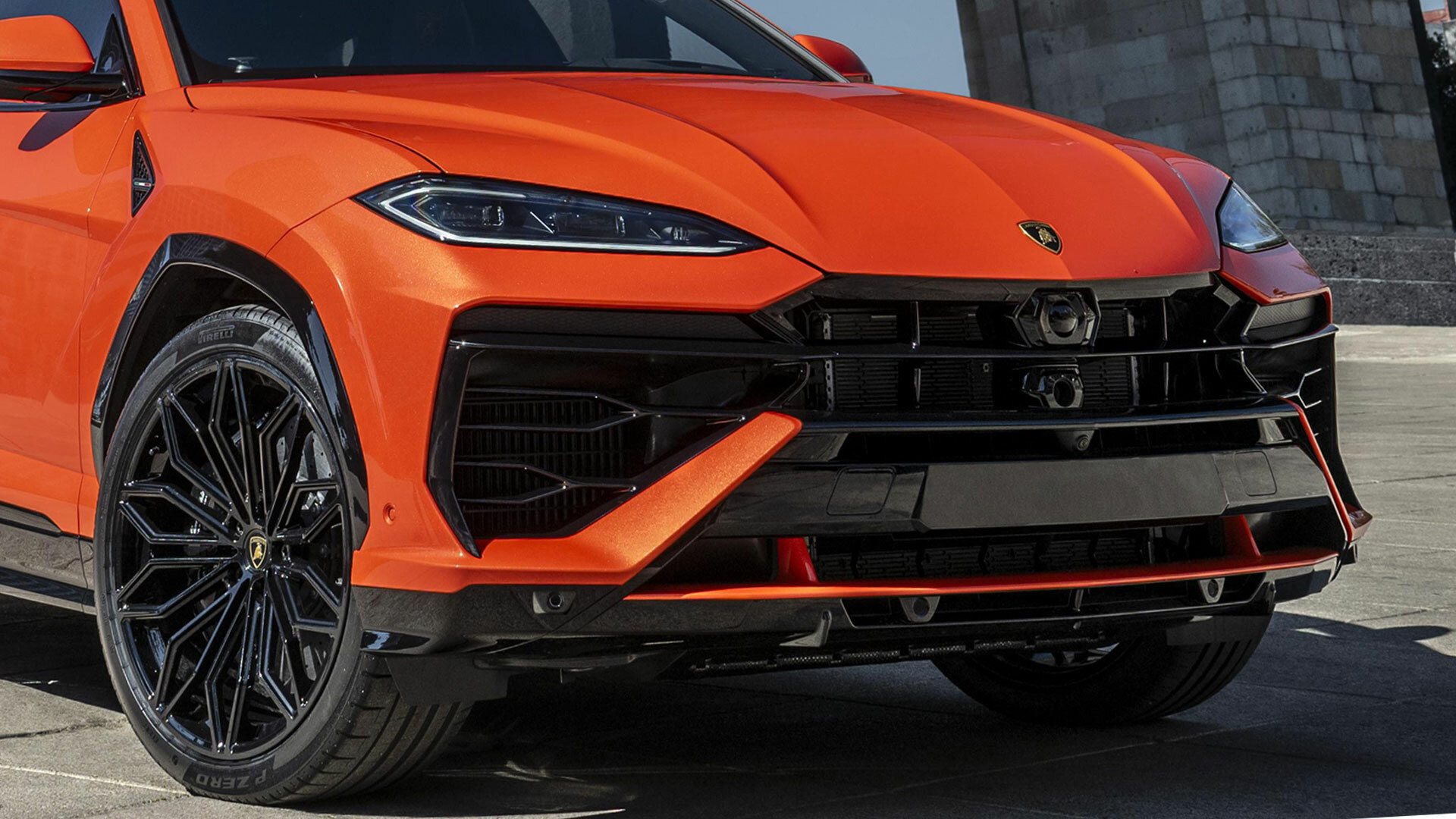
Lamborghini Urus

Lamborghini’s current lineup is now fully hybridised, from the Urus SUV to the Temerario and Revuelto supercars, each pairing combustion muscle with electric assistance. The formula seems to be working. Last year Sant’Agata shifted a record 10,747 cars, with the Urus comfortably leading the charge.

Protecting The Brand’s Best Seller

The performance-focused SUV was supposed to enter a new generation in 2029, transitioning to a fully electric powertrain, but that is no longer the case. After speaking with customer groups, Lamborghini concluded that a battery-powered Urus would not exactly set its order books alight.

More: Lamborghini’s Next Surprise Might Be A V12 Supercar You Can Take Camping

According to Winkelmann, they simply couldn’t risk it with their best seller. The Urus is the brand’s financial backbone. Supercars may command higher margins, but they occupy what he calls a “tiny segment” compared with the Urus market, which is “bigger and more stable.” In other words, you do not gamble with the model that pays the bills.

Winkelmann also pointed to the regulatory road ahead. “We have a big task as an automotive industry. Everybody’s speaking about 2035, but there’s a big date which is very dangerous at 2030, due to the emissions. And this is something which is not clear enough, in my opinion, today.”
 Lamborghini Scraps EV Supercar After Admitting Interest Was ‘Close To Zero’
The current Lamborghini lineup, including the Temerario, Urus, and Revuelto.

A Gullwing Door Hides The Coziest Room On Wheels

  • Isuzu Elf box truck was repurposed into a cozy room.
  • Inside are a wooden floor, shelves, a couch, and table.
  • Isuzu has also built camper and pickup versions of it.

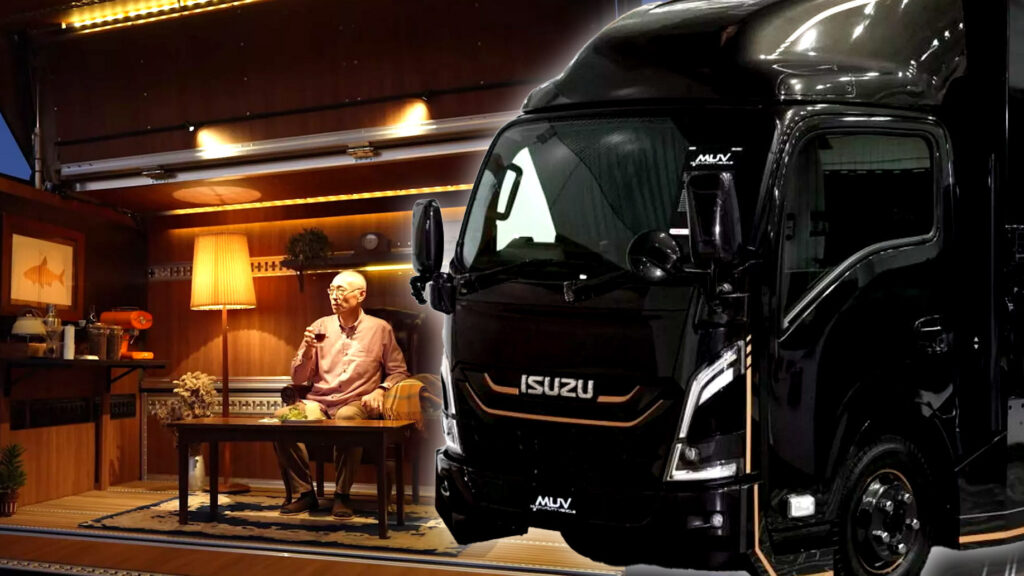
Forget the cold, hard plastics and hose-down austerity usually associated with commercial vehicle interiors. Isuzu’s latest creation flips that script, turning its Multi Utility Vehicle into something that lets you park your living room almost anywhere, preferably somewhere with a view worth staring at.

The concept is based on the standard cab version of the Isuzu Elf, featuring a black exterior with gold accents and aerodynamic panels on the roof and sides. But the real talking point is what Isuzu has done with the cargo area out back.

More: You Can Buy Isuzu’s Wildest Concept, But You Better Have A Big Lawn

A gullwing door and a drop-down side panel swing open to reveal a snug space that looks more theatre set than box truck. There is a wooden floor, lashing rails, modular shelving and actual furniture. A drop-down table is set up for brewing your coffee of choice, best enjoyed from the comfort of a proper couch rather than a fold-out stool.

\\\\\\\\

It feels tailor-made for a pop-up coffee shop, though in reality it would probably serve primarily as a promotional showpiece. In the accompanying video, one occupant seems perfectly content sipping his drink while watching the sun dip below the horizon.

The Elf MUV was created in collaboration with bodywork specialists Nippon Fruehauf and was exhibited at the Tokyo Auto Salon 2026. It is not heading for showrooms any time soon, but it highlights how much imagination can be squeezed out of a humble commercial vehicle.

\\\\\\\\\\

What About The Other Rooms?

If you like the idea of escaping into nature but would rather bring more than a sofa, Isuzu has another answer. The Be-Cam GeoRoam sits somewhere between camper and motorhome and was developed with Nippon Tokushu Body.

\\\\\\\\\\\\\\\\\\\

This build rides on the wide-cab, long-wheelbase Elf, which frees up a far more generous rear section. It also throws in some proper adventure kit, including a bull bar, roof rack and extra LEDs, giving it a stance that says it is ready to head well past the campsite entrance.

More: Tiny Kei Truck Becomes A Real Tiny Home On Wheels

The interior looks like a mini apartment, with warm tones and plenty of wood surfaces. You get a dining area, a fully equipped kitchen, a sofa that converts into a bed and a separate rear bedroom, complete with a projector for late-night film sessions.
\\\\\\\\\

The Rugged Workhorse

Isuzu has also rolled out a more work-focused take on the Elf. The Elfmio Cross Style Concept is a dropside pickup that swaps lounge vibes for a tougher look, helped along by new wheels and optional add-ons such as the rear metal frame. It is based on the Space Cab bodystyle, which means it can be driven in Japan with a standard driver’s license.

More: Isuzu’s New Pickup Is Luxury In The Front, Business In The Back

Across all three concepts, the mechanical bits are lifted straight from the regular Elf. That means a 3.0-liter turbodiesel paired with a nine-speed dual-clutch automatic and the option of 4WD. Output stands at either 148 hp or 173 hp. Alternatively, there is a zero-emission Elf powered by a 161 hp electric motor, drawing from a modular battery pack offered in 60, 100 or 180 kWh capacities.

Below are the official videos showcasing the different use-case scenarios. Which one would you take home?

Photos Isuzu / Tokyo Auto Salon

This Electric Crossover Starts At $7K, Batteries Not Included

  • The Tata Punch EV gets an early facelift in India.
  • Brings styling tweaks, more power, and extra range.
  • Starts at $7,150 if you lease the battery separately.

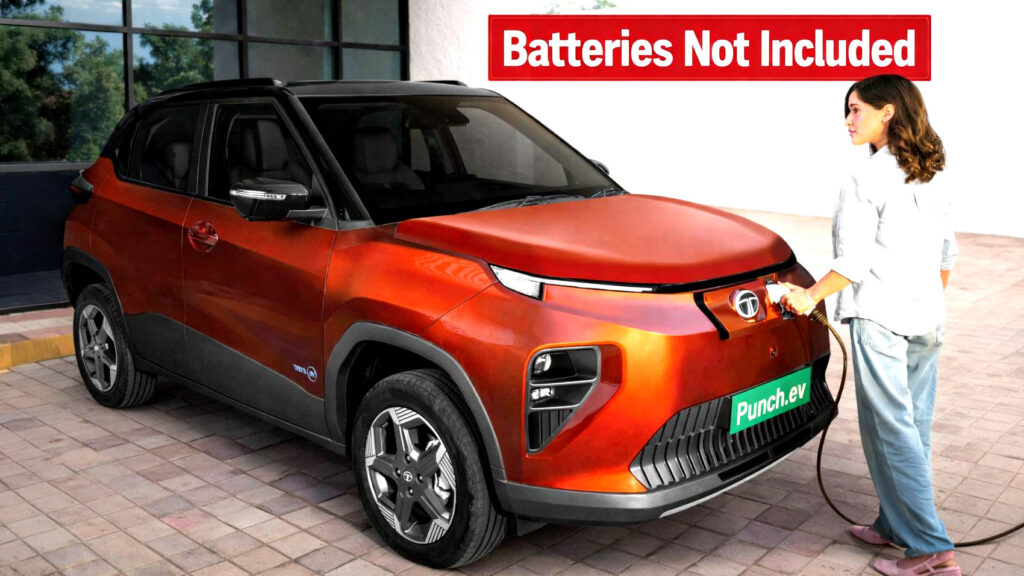
Two years. That’s all Tata Motors has given the fully electric Punch before wheeling out a facelift. In the fast-moving world of small EVs, standing still is not an option. The 2026 Tata Punch EV goes beyond a nip and tuck, bringing a larger battery, quicker charging, and a finance trick designed to make the sticker price look far friendlier.

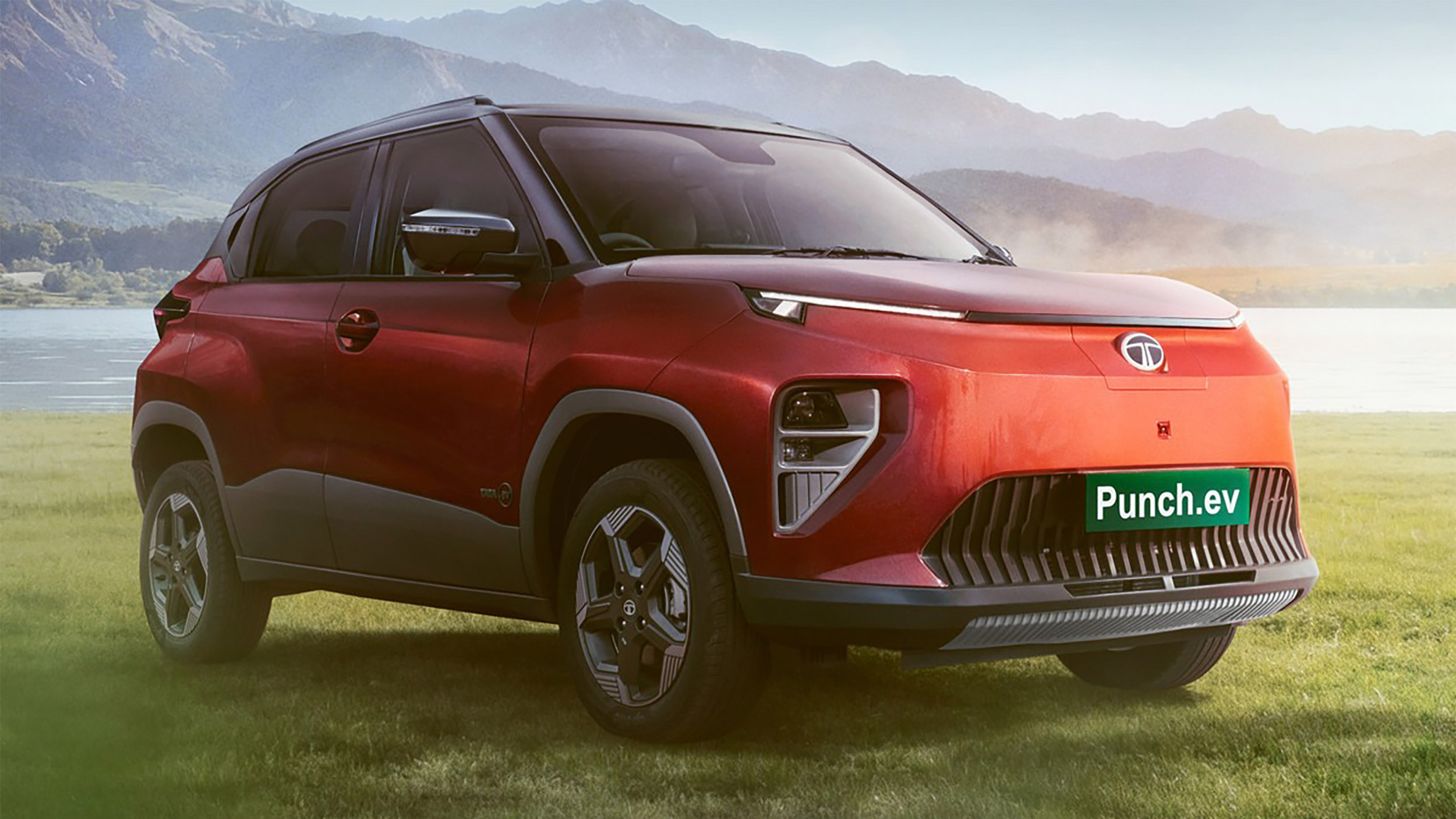
Starting with the exterior, the Punch EV gains a redesigned face with a cleaner bumper, though the split headlights have been carried over. It also benefits from new 16-inch alloy wheels and full-width taillights that mirror the recently facelifted ICE-powered Punch.

More: Land Rover’s Owner Built A Baby Land Rover For Less Than A Bespoke Paint Job

The interior is largely unchanged. Higher trims pack dual 10.25-inch displays, wireless charging, ventilated seats, a voice-activated sunroof, and a 360-degree camera. Six airbags are standard across the range, although the base car makes do without an infotainment screen.

More Punch And Longer Range

\\\\\\\\

More important changes hide under the skin. The Punch EV benefits from larger battery packs with capacities of 30 kWh and 40 kWh, each up by 5 kWh.

Tata claims a real-world range of up to 355 km (221 miles), which is 75 km (47 miles) more than before. Charging gets a lift too. The updated Punch EV now supports a 65 kW DC fast charger, up from 50 kW, cutting the 20-80 percent top-up time to 26 minutes.

There’s a modest bump in output as well. Power rises by 6 hp (5 kW). The Medium-Range version makes 85 hp (65 kW), while the Long Range variant produces 127 hp (95 kW). Tata says the latter hits 0-100 km/h (0-62 mph) in 9 seconds, trimming 0.5 seconds from the previous figure.

The Price Hack

\\\\\\\\\\\\\\\\\\\\\

Here’s where things get interesting. Despite the added kit, Tata has lowered the entry price. The attention-grabbing ₹6.49 lakh ($7,150) starting figure comes via a BaaS (battery as service) scheme. You buy the car, but lease the battery separately at ₹2.6 per km ($0.029 per mile).

More: JLR’s Parent Company Made An Electric SUV With Drift Mode For Just $25K

Prefer to own the lot outright? Prices then range from ₹9.69 lakh ($10,700) to ₹12.59 lakh ($13,900), depending on specification. Even so, that undercuts the pre-facelift model, which makes the updated Punch EV look like stronger value.

At 12,000 km a year, the battery lease works out to ₹31,200 (about $348). Drive 15,000 km and it rises to ₹39,000 (about $435) annually. Over five years at that higher mileage, you would pay ₹1.95 lakh (around $2,175). Add that to the ₹6.49 lakh ($7,150) purchase price and the total comes to roughly ₹8.44 lakh (about $9,325), still below the ₹9.69 lakh ($10,700) entry point of the version that includes the battery. The more you drive, the smaller the gap becomes.

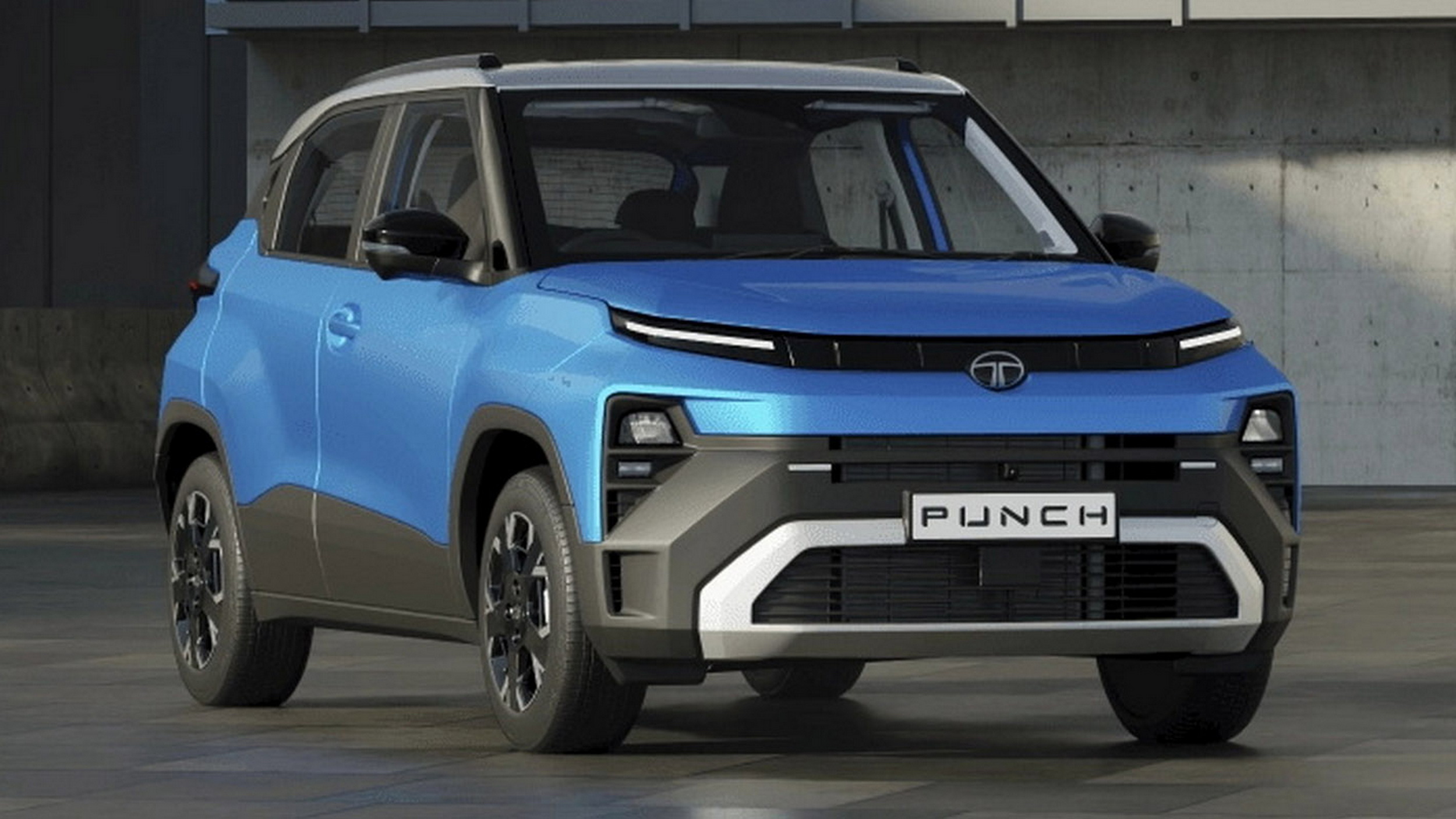
The ICE-powered Tata Punch, meanwhile, ranges from Rs. 5.59 Lakh ($6,200) to Rs. 10.54 Lakh ($11,700).

 This Electric Crossover Starts At $7K, Batteries Not Included
The Tata Punch EV (above) compared to the ICE-powered Punch (below).
 This Electric Crossover Starts At $7K, Batteries Not Included

This Scissor-Door Micro EV Packs Nearly Twice The Torque Of A Lamborghini V12 Supercar

  • DM Performance fitted a Stark Varg motor to the Twizy.
  • It delivers 692 lb-ft through a custom chain-drive diff.
  • Micro EV beat an Audi S1 to 100 mph and spun donuts.

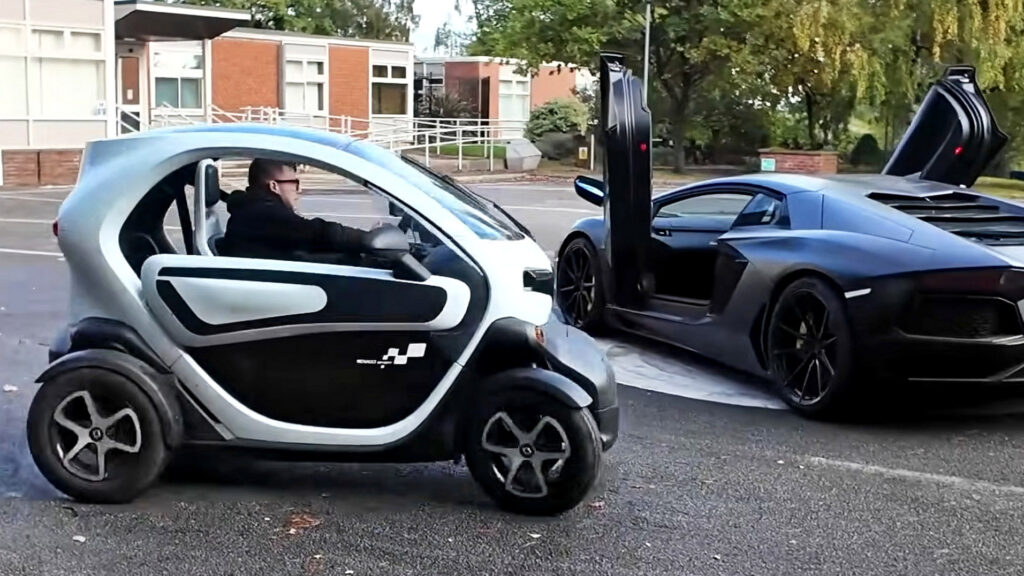
The now-discontinued Renault Twizy was known for its futuristic styling, scissor doors and unconventional seating layout, but never for outright performance. No one has ever accused it of being fast. That, naturally, made it the perfect candidate for something irresponsible.

Enter the UK-based mad scientists at DM Performance, who looked at this humble heavy quadricycle and decided it needed more chaos. Their solution was simple in theory and mildly unhinged in practice: rip out the weedy motor and transplant the heart of the world’s most powerful electric motocross bike.

More: Renault’s Smallest And Quirkiest EV Is Dead

The project started with a full teardown. Out went the factory-fit 17 hp (13 kW) motor. In came the powertrain from a Stark Varg, effectively the electric equivalent of a 450cc gasoline engine. The result is 80 hp (60 kW), a staggering 396 percent jump in output that completely rewrites the Twizy’s modest résumé.

\\\\\\\\

DM Performance / YouTube

But torque is the real headline here. The Stark Varg motor is rated at a frankly absurd 692 lb-ft (938 Nm). For context, the Lamborghini Aventador in the opening photo delivers 690 hp and 509 lb-ft (690 Nm), which means this pint-sized French creation is packing nearly double the torque of a V12 supercar!

More: World’s Least Powerful Gullwing Door Sports Car Finally Gets The Rotary Power It Deserved

It actually gets wilder. The supercharged 6.2-liter V8 in a 2027 Ram TRX produces 680 lb-ft (921 Nm). Now picture that sort of twist in a vehicle that weighs roughly ten times less than the Ram, and you begin to understand just how outrageous this thing really is.

Engineering The Swap

Making it all fit required serious surgery. DM Performance cut away the original rear cradle to accommodate the new motor and engineered a custom chain-drive system to replace the Twizy’s direct-drive transaxle.

\\\\\\

DM Performance / YouTube

To cope with the tidal wave of torque, they modified the original differential with a custom stainless steel casing and high-pressure grease to mimic the behavior of a limited-slip diff. A set of Maxpeedingrods coilovers was also installed to reduce the risk of an impromptu rollover.

Finally, the French EV received another transplant. The Stark Varg battery pack weighs 32 kg (70 lbs), significantly lighter than the Twizy’s 100 kg (220 lbs) battery, while offering slightly higher capacity and the ability to discharge massive amounts of energy for high-performance motors.

Smoke, Speed, And Proof

The unique “Stark Twizy” proved its performance credentials by winning a 100 mph (161 km/h) drag race against a more powerful Audi S1 Quattro hot hatch. The builders also took it for a drift session and even performed donuts around a Lamborghini Aventador.

A History Of Madness

This isn’t the first time DM Performance has turned a tiny EV from the heavy quadricycle segment into a monster. They previously completed a wild Citroen Ami using similar Stark Varg internals, though they noted the rear-wheel-drive layout of the Twizy made it a much better platform for hooning.

Electric swaps not your thing? They have also created a turbocharged Hayabusa-swapped Tuk Tuk tricycle. That machine weighs 460 kg (1,014 lbs) and produces a frankly terrifying 305 hp (227 kW / 309 PS) on the dyno.

The Next Lexus IS May Go In A Very Different Direction

  • Lexus plans to turn the next IS into a dedicated EV.
  • It may adopt styling cues from the 2023 LF-ZC concept.
  • Output could reach 500 hp with up to 620 miles of range.

Lexus has just given the aging IS another facelift, sharpening the nose, tidying up the cabin, and revising the chassis. It keeps the familiar formula alive a little longer. Behind the scenes, though, work on a full successor is underway, and reports from Japan suggest it will arrive in 2027 as an EV-only model.

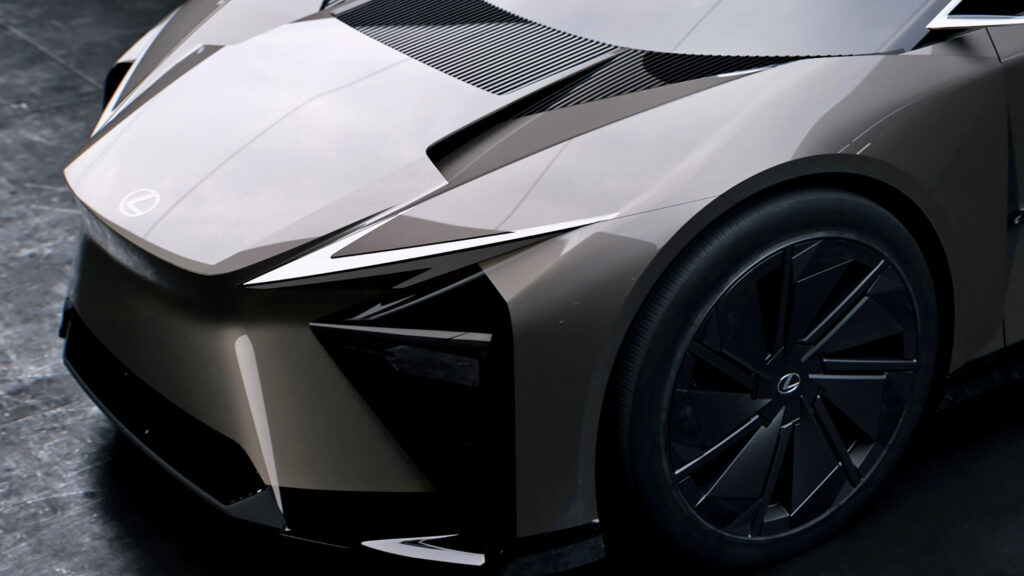
Talk of a zero-emission IS dates back to late 2021, when Lexus unveiled the Electrified Sedan concept. The LF-ZC concept that followed in 2023 offered a clearer look at a future production EV, promising a slippery shape, gigacasting manufacturing, and prismatic battery shells said to double range.

More: Japan’s Refreshed Lexus IS Gets Something You Don’t

Even as enthusiasm for EV sedans has cooled in some markets, though not all, with buyers drifting back to hybrids and governments trimming, or in the case of the US scrapping, tax incentives, Toyota has stuck to its multi-path strategy. Combustion, hybrid, and electric powertrains are all set to coexist in future models such as the Corolla.

\\\\\\\\\\\\\

Lexus

Despite these issues, there are signs Lexus may stick with the original EV-only vision for the next IS, echoing the brand’s recent concept-heavy direction with projects like the new LFA Concept and the six-wheeled LS Concept revealed in late 2025.

Targeting The German EV Trio

According to a report from Japan’s Best Car, the next Lexus IS will abandon internal combustion entirely and become a dedicated EV. It is expected to compete directly with the upcoming BMW i3 Neue Klasse, Audi A4 e-tron, and Mercedes-Benz C-Class EQ. All three German rivals are expected around 2027, which conveniently matches the rumored debut timing for the Lexus.

More: BMW’s New i3 Is Becoming Easier To Picture

\\\\\\\

The report suggests the production IS will draw heavily from the LF-ZC concept, adopting a low-slung silhouette that favors aerodynamics over traditional three-box sedan proportions. It is rumored to measure around 4,790 mm (188.6 inches) long, positioning it below the new Lexus ES, which has stretched to 5,140 mm (202.4 inches).
Expect Tesla-like gigacasting to feature in the manufacturing process, along with a high-tech interior packed with advanced connectivity and safety systems.
\\\\

Theottle

Digital artist Theophilus Chin has previously produced speculative renderings of the next IS, blending cues from the larger ES with the proportions of the 2021 Electrified Sedan concept. The results look closer to production, while still reflecting Lexus’ current design language. That said, Toyota has signaled it will grant Lexus more creative freedom, so the final car could end up more adventurous than these illustrations suggest.

Advanced Tech Beneath The Surface

Regardless of how radical it looks, the next IS is expected to double down on EV hardware. The report points to a lineup starting with a single-motor, rear-wheel-drive version, topped by a dual-motor AWD flagship producing close to 500 horsepower. A steer-by-wire system and a carefully tuned chassis aligned with the “Lexus Driving Signature” philosophy are also likely.

More: Audi A4 Returns As EV With Concept TT Styling To Give BMW Something To Worry About

What is more interesting is the potential of solid-state battery technology, with range estimates exceeding 620 miles (1,000 km). If that figure proves realistic, it would make the case for a hybrid alternative harder to justify and give Lexus a meaningful edge in the premium compact EV segment.

With a rumored launch in late 2027, the new Lexus IS should already be in advanced stages of development. Do not be surprised if Lexus starts dropping more direct hints about its electric sedan plans in the near future.

\\\\\\\\\\\\\\

Lexus

Ford’s $30K Pickup Wants To Beat Cybertruck At Its Own Game

  • Ford’s upcoming $30k electric truck reveals new details.
  • Sketches show an ultra-aerodynamic, wind-cheating shape.
  • Radical tech cuts weight, trims costs, and simplifies wiring.

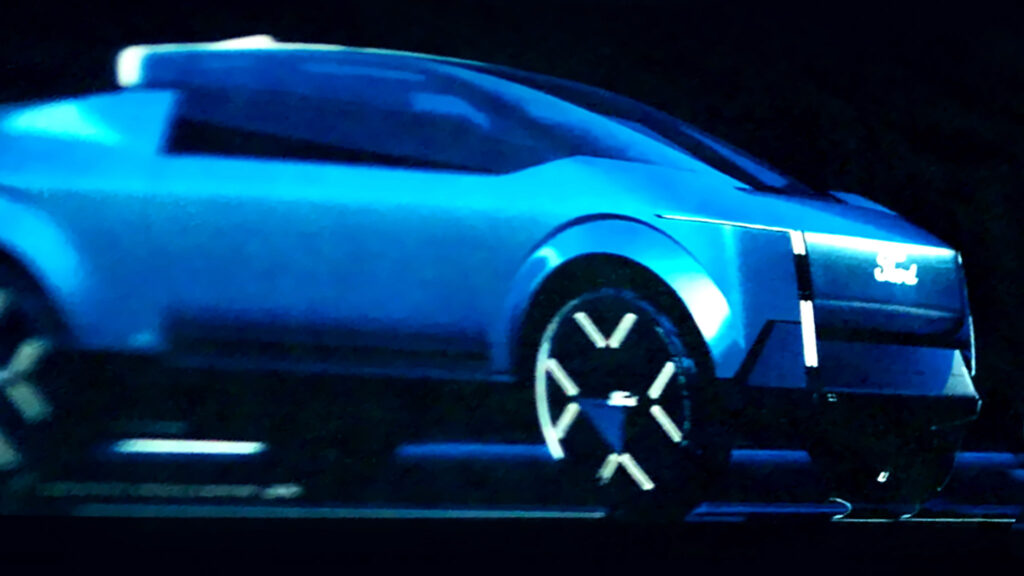
Ford has lifted the lid a little further on its so-called “Universal Electric Vehicle” project, the one tasked with delivering a brand-new $30,000 electric midsize truck in 2027. The tech breakdown in the 14-minute teaser packs plenty of stuff, but it is the design sketches that really grab your attention, offering the first glimpse of what this thing might look like in the metal.

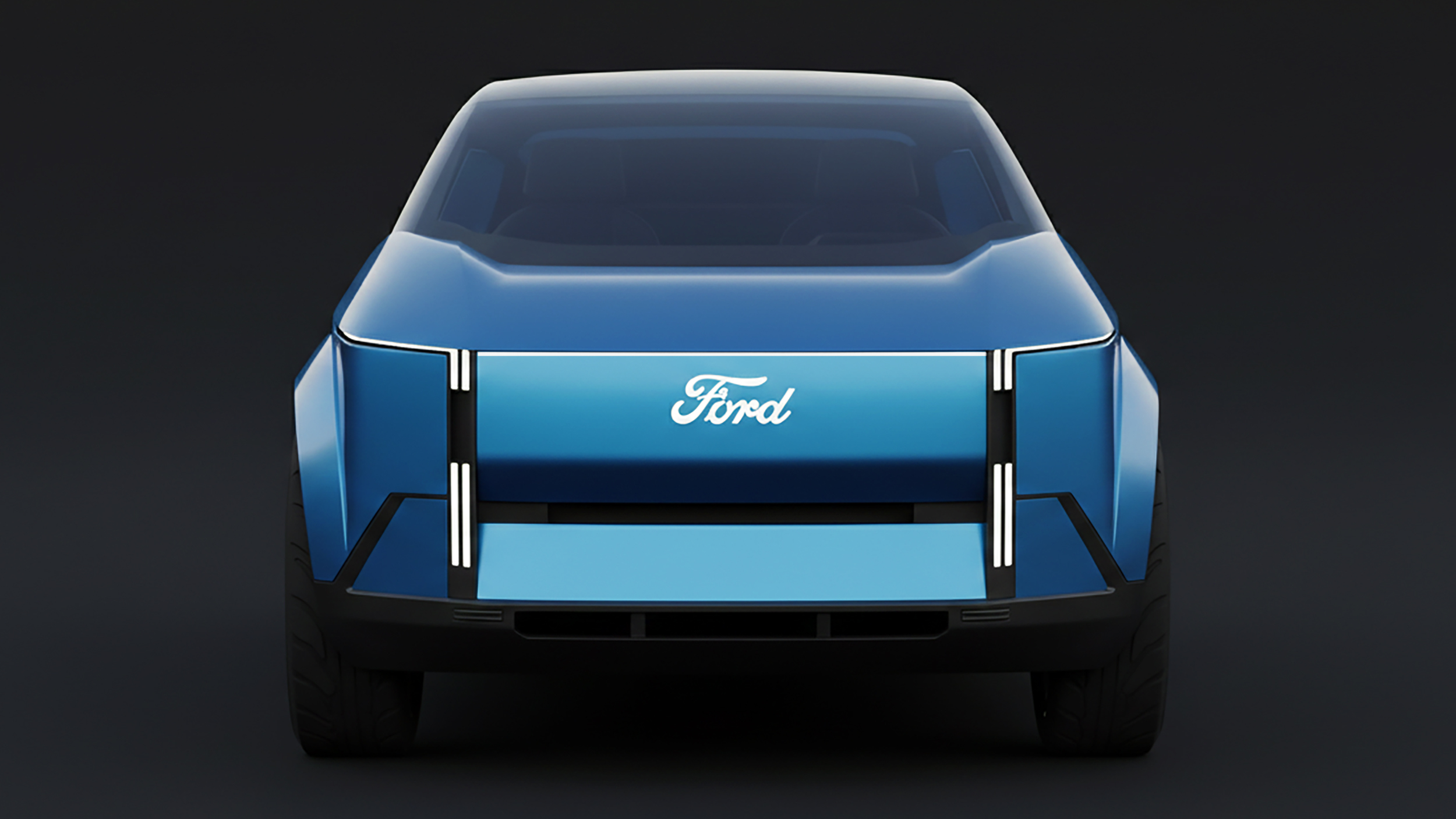
From those early drawings, which also align with the ghost images seen so far, the truck appears slippery and futuristic. Think of it as a softer, more rounded take on the larger Tesla Cybertruck, minus the origami and unpolished edges, not to mention with a far more reasonable entry price. Up front, there are slim vertical LEDs, an illuminated Ford badge, and horizontal intakes carved into the bumper.

More: The One Car Ford Refuses To Build Is One Dealers Want The Most

The windshield stretches deep into the hood and flows into an integrated roof spoiler at the rear. Despite the futuristic surfacing, this is still (likely) a Ranger-sized pickup with a traditional dual-cab layout. Practicality has not been shown the door.

\\\\\\\

Ford

Low Drag Is Key

Unsurprisingly, the aerodynamics team had a heavy hand in shaping this truck, with former F1 experts brought in to chase every last fraction of efficiency. The mission was simple: slash drag hard enough that smaller batteries could deliver the required range, keeping production costs in check.

More: Ford Says Every Millimeter Of Roof Saves $1.30 On Its New $30K EV Truck

The curved roof reportedly reduces the turbulence typically created by a pickup bed. The side mirrors are 20 percent smaller than standard items, adding 1.5 miles (2.4 km) of range, while specially designed underbody panels contribute another 4.5 miles (7.2 km).

In total, Ford estimates these measures deliver 50 miles (80 km) of additional range compared to a similarly sized truck with a more conventional shape. That is not a rounding error.

 Ford’s $30K Pickup Wants To Beat Cybertruck At Its Own Game
Speculative rendering based on the official teasers.

Lower Production Costs

Aerodynamics are only half the story. Ford has also focused heavily on reducing manufacturing complexity. The company will use large aluminum unicastings, broadly similar in principle to Tesla’s gigacasting method. Structural components drop from 146 pieces in today’s Ford Maverick to just two, and overall weight is said to be 27 percent lower than rival offerings.

More: Next Ford And GM Pickups May Swap Mechanical Linkages For Lines Of Code

Fewer parts and fewer joints mean fewer robots on the line, which Ford claims results in “measurable gains” in both build quality and production efficiency.

 Ford’s $30K Pickup Wants To Beat Cybertruck At Its Own Game

it also appears that Ford engineers have borrowed lessons from reverse-engineering Chinese and Tesla EVs. The new truck’s wiring is 4,000 feet (1.2 km) shorter than that of the Mustang Mach-E crossover, trimming 22 pounds (10 kg). It will run prismatic lithium iron-phosphate (LFP) battery cells and a separate 48V system for auxiliary functions.

More: Ford Could Bring Back Sedans After Realizing It Can’t Afford Not To

The skunkworks team behind Ford’s next generation of EVs is led by former Tesla executive Alan Clarke, bringing 12 years of experience from the rival automaker.

As for the name, Ford is staying quiet. A recent patent filing hints at a possible return of the Ranchero badge, though nothing is confirmed. The affordable pickup is due in 2027 and will be followed by additional affordable EVs, with a sedan reportedly on the wish list.

Polestar Boss Says It’s Time To Outrun BMW M And Mercedes-AMG

  • Polestar plans more BST variants across its future EV range.
  • CEO points to stronger focus on track and acceleration gains.
  • BST badge may grow into a full performance sub-brand soon.

Polestar’s designers and engineers may be working overtime to prepare four new EV launches by 2028, but management is already looking beyond the rollout. High-performance variants are on the agenda, suggesting that expansion will not come at the expense of speed.

Michael Lohscheller, Polestar CEO, spoke about the future during a media gathering at the Gothenburg headquarters in Sweden. As reported by Auto Express, he said:

“In terms of how we will continue to deliver performance with our future models, I think we’re going to deliver a more consistent way in terms of performance cars, in terms of the specifications. We want to focus a bit more on performance, because that is where we can do even better going forward, on track, on acceleration, but also in terms of being superior to others.”

More: One-Off Polestar Arctic Circle Edition Models Are Rally-Inspired EVs Ready For Action

Just a few months ago, Polestar was forced to shut down its last UK-based R&D facility as it took a $900 million loan from parent company Geely to survive heavy losses. Despite the closure of the engineering center responsible for the development of the Polestar 5, Lohscheller believes that the brand still has the expertise to take on BMW M, Mercedes-AMG, and Audi RS.

\\\\\\\\

Central to this strategy is the expansion of the “BST” (short for “Beast”) moniker, which will evolve from a limited-production experiment with the Polestar 2 BST Editions into a high-performance sub-brand. Note that Polestar itself used to be the performance sub-brand of Volvo.

More: New Polestar 5 Doesn’t Need A Rear Window To Put Porsche On Notice

While the CEO didn’t get into details, candidates for future BST variants are the next-gen Polestar 2 sedan, the recently updated Polestar 3 SUV, and the Polestar 4 coupe crossover, which will soon gain an estate bodystyle.

As for the Polestar 5 grand tourer, it already packs 872 hp (650 kW / 884 PS) in Performance guise, meaning that an even hotter version could challenge the likes of the Audi RS e-Tron GT, Porsche Taycan Turbo GT, and Xiaomi SU7 Ultra.

Back in 2024, the company revealed the track-focused Polestar Concept BST that was based on the 6 roadster. However, the rollout of this model has been pushed back, with focus being shifted to more profitable models in mainstream segments.

\\\\\\

Polestar

❌