
Normal view

There are new articles available, click to refresh the page.
Before yesterdayMain stream

‘One Type of Driver’ Training

17 December 2025 at 19:16

Whether it’s a full-size school bus with track seating running the length of the floor or a compact van with fixed belt points, no two vehicles secure a student the same way—and too often, drivers are left to figure it out on the fly.

That variability, experts warn, can compromise safety for students who rely on wheelchairs, car seats or booster seats, especially as alternative transportation expands and fleets grow more diverse. Driver training has never been more paramount.

Darren Reaume, the director of training for Q’Straint/Sure-Lok, explained that school buses from different OEMs and of various model years have different characteristics. This is why it’s so important that drivers know what’s available on the vehicle and how to use the wheelchair securement equipment.

“If you have 50 different buses in your fleet, chances are you have four or five varieties of different equipment, and your drivers need to know how to use all of that stuff because you don’t know which [vehicle] they’re going to have,” he said.

When transporting a student in a wheelchair as a van passenger, the space is going to be much more limited than in a school bus, where track seating will typically extend the length of the bus because of the need for traditional bench seats. In vans, everything is much more compact. This mean there could be a fixed location for the shoulder belt, for example.

“Sometimes we run into this disconnect where it’s easier to transport a small student in a side-entry van because it’s a smaller space and the device is small,”  he said. “But then the occupant securement doesn’t fit great on them because they’re a smaller individual.”

On the flip side, it might be harder to secure a larger student in their mobility device because it’s a small space, but the occupant securement fits better.

“So now, you’re taking into account the particular equipment and layout of that vehicle,” he said, adding that everything from the size of the securement location to how much space the driver has to operate in makes a difference in safely securing at student.

Certified passenger safety technician Cassidy Miller noted drivers are responsible for proper securement of the CSRS in their vehicles, and they need proper training or information on the student. Miller, who is also the director of transportation for Cashmere School District in Washington state, shared that a lower anchor system securing the car seat into a vehicle has a weight limit. The other option is using a seatbelt, which has no weight limit, to secure the car seat.

Miller suggested asking if contracted providers know each child’s weight, or are they guessing based on age and size? Regardless of weight, Miller added that if the child is being restrained in a forward-facing car seat, a strong U.S. recommendation is to use the top tether.

“And they need to make sure that the harness straps fit the child who they’re transporting,” she said. “If they’re transporting multiple [students] in a day, that can get tricky. They need to make sure that it’s adjustable.”

All are adjustable to a degree, she explained, but some are more complicated and require removing the car seat to make the adjustment.

The Alternative Student
Transportation Association


Greg Prettyman, vice president of First Alt, explained the creation of the Alternative Student Transportation Association that gives a voice to providers. He said the goal is for different companies to develop a unified message on issues as they arise. At the top of the to-do list is public outreach and creating a website as well as consulting on the National Congress on Student Transportation Alternative Transportation committee. Prettyman added NCST was the impetus for creating the association because each company was providing input individually.

Miller added that the harness needs to fit the child properly, and it needs to be snug to their body with the chest clip at armpit level. “Those points need to be monitored by the drivers, and sometimes that’s hard when they’re a company that has back-to-back rides or a lot of turnover,” she added.

She also recommended that families who are using an alternative transportation service also be educated about the car seat installation points. “Is the family looking to make sure that the car seat is installed properly for the child’s weight? Is it installed via seatbelt or lower anchors? Is the harness fitting them correctly? Is the chest clip at the right point, is the top tether attached to the back of the seat? … They should kind of have a mental checklist every day when they help load their child,” she recommended.

The liability falls on the school district but she said parents can serve as a second set of eyes to ensure the car seat is installed correctly. She provided an example at her previous district, where a family took pictures to prove the contractor wasn’t installing the car seat correctly.

“I took [the pictures] back to that transportation company, and I said, ‘Listen, here are five things wrong with this car seat right now. Those need to be addressed,” Miller recalled. “I know you say you train your drivers on using car seats, but this car seat has not shown up in an acceptable manner, and the parent has been reinstalling the car seat as properly as she can get because she doesn’t have the manual in hand whenever the car seat arrives. And it’s getting very frustrating.’”

Depending on the state, it might be hard for all independent contracted drivers to undergo securement training like district employees. Instead, she advised school districts ask for the driver training curriculum that contractors use and determine if it meets the standard. Plus, she recommends random checks.

“Go out to that elementary school at pickup and see and just observe that child. Observe that car seat as it’s waiting,” she said, adding it’s important to make extensive notes. “I would highly recommend all of those random checks just to ensure the drivers are in compliance with their company and or even if it’s your own drivers, that they’re in compliance with your standards.”

Training Drivers

Gregg Prettyman, the vice president of First Student subsidiary First Alt, said the driver training standard should be the same no matter the vehicle. He noted FirstAlt follows First Student’s driver vetting, training and credentialing standards.

“There’s a lot of different types of vehicles — Type A, Type B, Type C, vans and SUVs — but there really should only be one type of driver, and that’s just a driver that meets all of the state requirements for a bus driver,” he explained.

He said the only exception would be vehicle-specific licensing, adding that alternative vehicle drivers like those in Type A school buses don’t need a CDL. He added that when it comes to wheelchair securement, First Alt works with transportation companies that are established in correctly transporting people in wheelchairs, whether that’s to and from work or doctor’s appointments.

“We reach out to those companies who really are already experts in that and doing that in the state, and we certify, license and onboard them,” he said, adding the oversight provides an extra layer of protection “We still do verify that their drivers know how to secure and meet all the student securement transportation requirements. But the nice thing is, when you’re working with existing companies, they already have a lot of that training and expertise in place.”

Blake Smith, area general manager for the east for First Alt, agreed, noting the importance of being a part of First Student and how it has been asset for its training program.

“We really want to make sure that we’re doing our due diligence for the safety aspect and keeping with those First Student standards and core values to make sure that we’re properly securing these students and properly securing the equipment, because at the end of the day … we’re firm believers that the yellow school bus is the safest way to get these students to school, but in those instances where you’re not using a yellow school bus for a variety of reasons, we want to make sure that the safety isn’t sacrificed when we’re doing that.”

He said a session presented by industry consultant Alexandra Robinson at the National State Directors of Pupil Transportation Services annual conference in November touched on securement in yellow school buses as well as alternative transportation vehicles. CPST instructor Denise Donaldson is presenting a similar topic at STN EXPO East on March 28, “What’s the Difference?! CSRS Use in School Buses versus Alternative Vehicles.”

Smith said a takeaway from the NASDPTS presentation was ensuring the drivers know that information. “In the event that we have to take a car seat out because they’re doing another route where we need actual space in the vehicle, that we’re properly securing that piece of equipment back in the vehicle,” he said of the importance of training. “And understanding the different checkpoints of making sure that piece of equipment is secure in the vehicle.”

Even something like not securing a child in a puffy coat needs to be communicated to drivers, as they transport students in the Northeast, where kids are coming out of their houses in jackets.

“[We’re] making sure we’re doing our due diligence for those two pieces, helping the drivers and also the monitors — if we have monitors in those vehicles — not only properly secure the car seat, but secure the student properly.”

EverDriven CEO Mitch Bowling said every driver is required to complete the EverDriven Driver Education Course, “which is the first program in the industry designed specifically for transporting students with unique needs,” he claimed.

He explained the course covers everything from wheelchair securement to defensive driving to sensitivity training.

“It’s a six-module course that prepares drivers for real-world situations, like managing behavioral challenges or responding to emergencies,” he continued. “Drivers must pass a 40-question exam before they can drive students. While district requirements vary, our training is built to meet those needs and often goes beyond them.”

Bowling said a standardized training ensures every driver is ready for a variety of scenarios and can adapt to individual student needs, whether that involves mobility devices or behavior support.

Blake added that drivers are trained before they start any trips with First Alt, with a test at the end of the program to become certified. Every six months they do a refresher course. However, he noted states and districts will have other requirements. For example, some districts in the Dallas area require transportation to the school for the deaf and blind, and FirstAlt will send their drivers to be trained on courses that address that specific group of individuals.

The School of Philadelphia has a specific training course for monitors and Colorado has inclement weather training. “It’s not only important to have your own [standard] but to make sure you’re compliant with the unique training requirements of each state and each district,” he said.


Related: NAPT Statement Provides Recommendations for Alternative Transportation
Related: Alternative School Transportation: Roadmap for Decision-Making For Children with Disabilities and Special Needs
Related: NASDPTS Publishes Paper Espousing Safety of School Buses Over Alternative Transportation
Related: Beyond the Yellow School Bus: Alternative School Transportation


Prettyman said that alternative transportation can be so individualized at times that FirstAlt will partner with the district to ultimately support that one particular student.

“Maybe it’s a student where they’re trying to reinforce certain behaviors in the classroom, and we’re trying to figure out how do we extend that classroom to the classroom on wheels,” he said. “We’ve had drivers and monitors that we coordinate with at the school specifically to go in and observe that student in a classroom setting and better understand not only that student from when they’re just transporting, but also how are we understanding that student, and how can we support that student through transportation?”

Putting the driver classroom on wheels can heighten learning quickly.

“One small thing can become a major issue,” he said. “How can we partner with our districts, and also their teachers and paraprofessionals … to ultimately support these students on an individualized basis? Because that’s what alternative transportation does really well. The yellow school bus is great, but when it comes down to these individual students that have IEPs …how do we take that classroom environment and extend to the to the vehicle and also support safe transportation for that student?”

Jennifer Brandenburger, the senior vice president of Safety at HopSkipDrive, said dedicated programs for riders with specialized needs help ensure safety and compliance.

Drivers transporting younger riders “receive specialized education on proper installation and harnessing techniques, which is guided by certified child passenger safety technicians from Safe Kids Worldwide,” she said. “Only these approved drivers receive and use the company-provided car seats for these specific rides.”

Brandenburger added that HSD selected a car seat model that meets the impending standards set by the National Highway Traffic Safety Administration in consultation with expert advisors.

Wheelchair transportation, meanwhile, is facilitated by CarePartners. Brandenburger said these are “local professionals who undergo HopSkipDrive’s rigorous and comprehensive certification process, including name- and fingerprint-based background checks, clearing child abuse and neglect screenings where available, and enrolling in continuous criminal record monitoring.”

She said that CarePartners provide a wheelchair accessible vehicle (WAV) and are trained on the correct securement.

“By ensuring CarePartner drivers undergo our onboarding and management, we are able to monitor, manage, and ensure compliance with district requirements,” she concluded.

The post ‘One Type of Driver’ Training appeared first on School Transportation News.

Breaking Down Wheelchair Crash Testing at TSD Conference

16 December 2025 at 05:54

Miriam Manary, the lead research engineer at the University of Michigan, provided Transporting Students with Disabilities and Special Needs (TSD) Conference attendees an overview of crash-testing standards for wheelchairs in motor vehicles.

The Nov. 8 session emphasized why proper securement, crashworthy equipment and correct belt usage use are essential for occupant safety. She explained that testing is based on WC19, voluntary industry standards that establish minimum design and performance requirements for wheelchairs used as passenger seats in moving vehicles. It requires the wheelchairs to withstand a 30-mph frontal impact (30 mph delta-V)—a severity greater than 96 percent of real-world crashes. She explained that frontal impacts are the priority because they account for nearly half of crash events. Although side-impact testing methods have been developed, they are not yet incorporated into the standards.

Manary explained that side-facing and rear-facing wheelchair transport consistently fails crash tests because wheelchairs lack structural strength in those directions. Early tests demonstrated catastrophic failures, including seatback collapse and occupant head strikes on the vehicle interior. Only forward-facing transport currently offers a predictable, test-validated protection environment.

Manary added that the vehicle mass matters. Larger vehicles, such as school buses, experience lower delta-V in similar crash scenarios, thus reducing injury risk for all occupants. Still, correct equipment use remains essential, she said.

WC19 wheelchairs provide crash-tested securement points, stronger frames and accessible hook paths designed to allow all four tie-downs to be attached in under 10 seconds. Yet, many school transportation issues arise from insufficient space within the vehicle.

She added that poor securement remains a major challenge. Common mistakes include attaching tie-downs to removable parts such as footrests, armrests and quick-release wheels, Manary said. A securement point must always be a strong, welded portion of the main frame. Plus, using fewer than four straps dramatically increases rotation and instability, she added, noting a significant portion of injuries stems not from wheelchair movement but from improper or absent occupant restraints.


Related: Funding Among Potential Impacts of U.S. Education Department Dismantling on School Transportation
Related: BraunAbility Says New Wheelchair Lift Addresses Customer Needs
Related: Texas Team Takes Home Roadeo Award at TSD Conference
Related: School District Directors Share Strategies for Transporting Students with Disabilities


Riders in wheelchairs must wear crash-tested seatbelts because they lack the protection of compartmentalized seating, Manary continued, adding that a good fit is essential.

Lap belts must rest low on the pelvis, “If it’s not on the thigh, it’s too high,” angled 30–70 degrees from vertical. Shoulder belts must cross mid-shoulder, avoiding the neck but staying far enough inboard to prevent sliding off, she said.

Additional hazards come from loose equipment such as ventilators, trays or oxygen tanks. In crash tests, even an 11-pound device can become a dangerous projectile at high speeds.

Emerging research focuses on future mobility, including universal docking systems that allow wheelchair users to independently secure their chairs in autonomous vehicles and, potentially, aircraft. Early prototypes show promise, offering independence while meeting crash performance comparable to four-point tie-downs, Manary said.

The post Breaking Down Wheelchair Crash Testing at TSD Conference appeared first on School Transportation News.
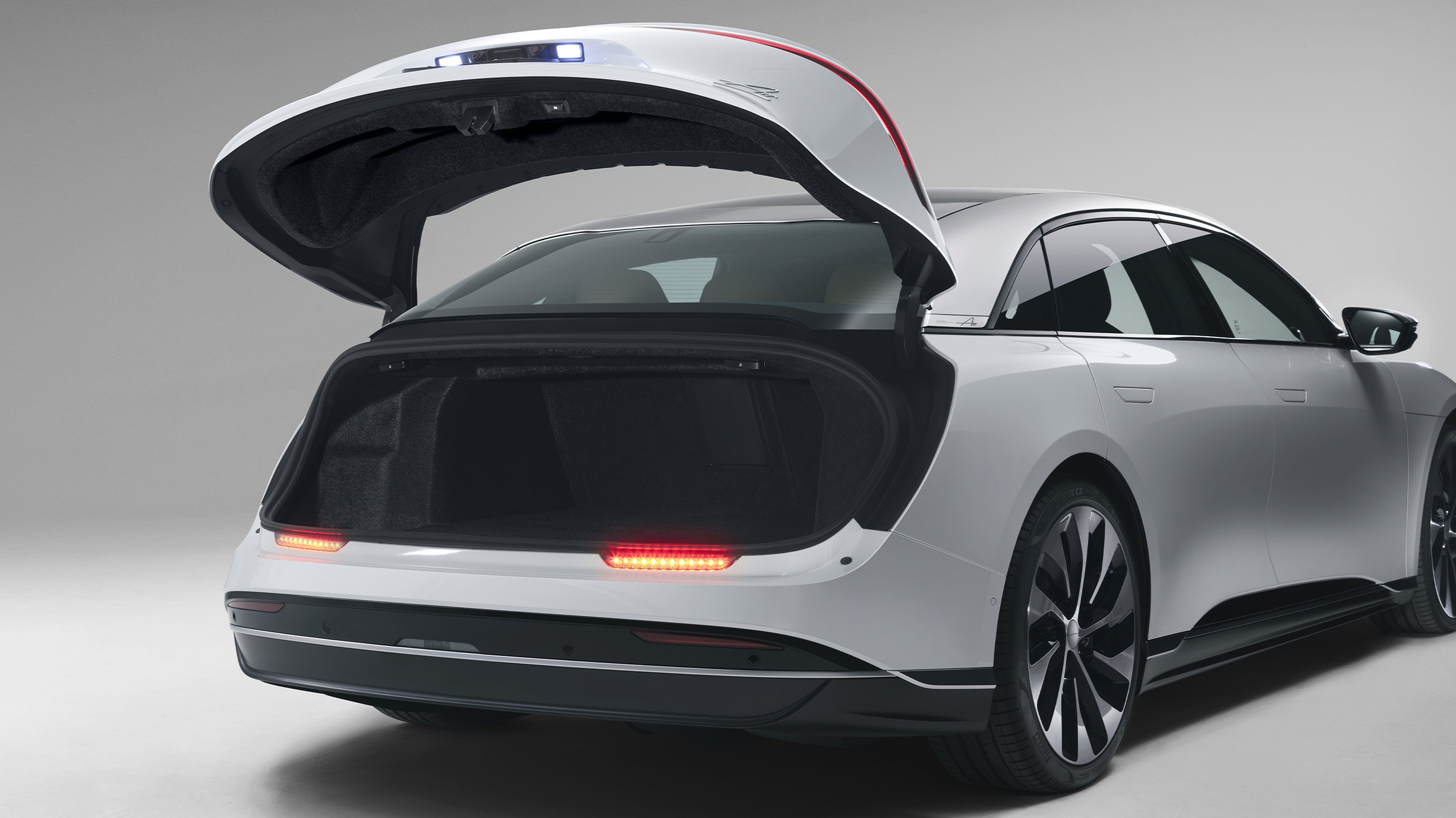
Spilled Water Bricks Lucid, Repair Costs As Much As A Used Corolla

  • A trunk spill caused limp mode, warning lights, and left the Air stuck.
  • Warranty coverage was denied, and insurance may reject the repair bill.
  • It follows a similar Ioniq 5 incident where a water spill cost nearly $12k.

Doctors and health influencers are always telling us that drinking tons of water is the secret to clearer skin, sharper minds, strain-free poops and longer lives. But if there’s one group that absolutely should not stay hydrated, it’s modern electric vehicles, because a few drops could leave them with a massive medical bill.

Just ask Reddit user u/raging_onyx who leased a Lucid Air and saw his Thanksgiving week turn into a $15,000 lesson in why electric cars and water should never meet.

What Happened?

The disaster started with a perfectly innocent trip to a grocery store to refill a water container. But a pothole encountered on the way back tipped that container over, causing a catalog of faults that eventually rendered the vehicle completely immobile.

Also: $4,900 For A Taillight? Lucid’s Ridiculous Lease Charges Are Scaring Off Buyers

Within seconds of the spill happening the dash lit up like Times Square, the EV jumped into limp mode, regen braking tapped out, and the driver got a warning to pull over. When he found a local residential area to stop and tried to reboot the system, the Air wouldn’t shift out of Park.

A Very Expensive Lesson

 Spilled Water Bricks Lucid, Repair Costs As Much As A Used Corolla

Lucid customer support, in an impressive display of holiday cheer, suggested two things: call insurance, and brace for the possibility the car was totaled. Happy Thanksgiving!

Also: Insurance Offered $1,700 For This R1T Mishap, Rivian Wanted A Fortune

There was more bad news when the first tow truck driver arrived and said he couldn’t move the sedan, since the Air wouldn’t shift into neutral. Fortunately, by the next day, neutral was found and a second truck was able to tow the stranded car.

Finally, the EV reached a service center, where the advisor initially estimated the repair at under $1,000. Bearable, right? This turned out to be off by roughly the price of a used Corolla.

 Spilled Water Bricks Lucid, Repair Costs As Much As A Used Corolla

The real number, the rep later confirmed, was about $15,000, and it wouldn’t be covered by warranty, because the spill was technically the driver’s fault.

More: A $2 Water Bottle Just Cost This Hyundai Driver Nearly $12,000

As of the Reddit post, the driver was still waiting to find out whether his insurance would step in to cover the costs. You’d think the answer would be yes, but that’s not always how these things always play out.

Just last month, we reported on a similar incident involving a Hyundai Ioniq 5. A small water spill in the rear footwell damaged the car’s wiring, and neither the manufacturer nor the insurance company was willing to cover the $11,882 repair bill.

 Spilled Water Bricks Lucid, Repair Costs As Much As A Used Corolla

Source: Reddit

BraunAbility Says New Wheelchair Lift Addresses Customer Needs

4 December 2025 at 21:55

Driving over 1,000 miles across multiple states and meeting with over a dozen customers, BraunAbility gathered feedback from operators, bus drivers, fleet managers and transportation directors in the public and school transport space on what they want to see in an updated lift.

The result was on display at the Transporting Students with Disabilities and Special Needs Conference in Frisco, Texas, Trade Show. BraunAbility’s Dual Parallel Arm Lift Refresh, available on Century and Millennium Series Lifts, updates a product that has seen changes since 2005.

Reed Christiansen, commercial product manager for the company, explained that in 2019 they conducted a survey to customers to understand exactly what they need.

“We tried to learn and understand their challenges and opportunities [were] to improve the lift,” Christiansen said, adding that while COVID-19 slowed down the process, they were able to learn and understand the updates needed to improve the passenger experience. These updates an auto-tite system to reduce drift and rattling, a new user-friendly hand pendant, an onboard diagnostics panel for obstruction alerts, new curved vertical channels and rounded parallel arm covers and a center line platform market to support easier and more symmetrical loading.

“This is a product that hadn’t changed in a long time,” Christiansen added. “It lasts a long time, and so that can also lead us to be not as urgent in updating the product, because from a life cycle perspective, it’s continuing to do very well, and customers are happy with it. We built a really good product in 2005 and designed a really good update then, but it was time to review that. We just want to continue to innovate and challenge ourselves and give the customers what they’re looking for.”

Colton Walle, the area sales manager for the company responsible for completing the customer survey, said after five or six customer visits he started to see a trend in features that were asked for.

Lift Sentinel by BraunAbility is the yellow bar that atomically deploys to ensure safety around the lift opening. It was on display at the 2025 TSD Trade Show.

Additionally, the company announced a new product that will be a standard feature on all Century and Millennium lifts. The Lift Sentinel is a guard that automatically deploys at the front of the lift to prevent someone from entering the open area when the lift is deployed. It bolts onto any model-year 2005 or newer lift.

“This is an enhanced security feature to make our operators and passengers more comfortable as they’re loading and unloading passengers,” Christiansen said.

The Lift Sentinel will be available for pre-orders in January, and the DPA Lift Refresh is expected to be available in the second quarter of next year.


Related: Legal Keynote Opens Attendees’ Eyes to Federal Special Needs Transportation Laws
Related: School District Directors Share Strategies for Transporting Students with Disabilities
Related: Parents Speak Out After Motorists Target Son with Disabilities at School Bus Stop

The post BraunAbility Says New Wheelchair Lift Addresses Customer Needs appeared first on School Transportation News.
WATCH: Fenton Mobility Wows Attendees at 2025 TSD Conference

22 November 2025 at 03:07

Caleb Caldwell at Fenton Mobility, gives School Transportation News Publisher and President Tony Corpin an up-close look at the future of wheelchair-accessible student transportation.

“This is the van school districts have been asking for,” Caldwell said, kneeling to demonstrate the Abilitrax removable flooring system. With a single tug, he unlatched the passenger seat and slid it forward twelve inches to lock back in place quickly and easily. “No tools, no drilling, no downtime. If a student’s mobility device changes tomorrow, we reconfigure the floor tonight. It also works with the Q’Straint tie-downs system.”

The AbiliTrax Modular Track System is rated to the current FMVSS & ADA safety standards yet remains infinitely adjustable. Districts can mix traditional forward-facing seats, flip seats, and multiple securement stations in the same vehicle without permanent modification.

Caldwell also demonstrates the Shift-N-Step with one smooth motion with a Braun Wheelchair Lift. “Attendees mouth dropped when they saw this innovative solution at the TSD Conference.”


Related: WATCH: Innovation Hits the Road: Transfinder’s Ride Along Tech Demo Steals the Show at 2025 TSD Conference
Related: (STN Podcast E283) Onsite at TSD 2025 (Part 2/2): Solution-Driven Partners + TD of the Year Interview
Related: Gallery: Trade Show at TSD 2025

The post WATCH: Fenton Mobility Wows Attendees at 2025 TSD Conference appeared first on School Transportation News.

Parents Speak Out After Motorists Target Son with Disabilities at School Bus Stop

21 November 2025 at 19:23

What should be a simple part of a morning routine has turned into years of stress for one Lancaster County family, reported Local 21 News.

The Miklos family of Strasburg told local news reporters they’ve endured daily harassment from impatient motorists, all because it takes their 7-year-old son, Sirus, a few extra minutes to get on and off his school bus.

Sirus was reportedly diagnosed with spinal muscular atrophy shortly after his first birthday. The rare neuromuscular disorder affects muscle movement, leaving him subject to a wheelchair. To get to school each day, he rides a bus specially equipped for children with disabilities. Loading and unloading takes about three minutes, just a few extra minutes compared to other stops, but the added time has sparked anger and cruelty from drivers stuck behind the bus.

“For the last three years, people have been swearing, honking and even swerving around the bus,” said Sirus’ father, Nate Miklos. “It erodes his self-confidence. He’s just trying to go to school like every other kid, and people are being impatient. He feels like that’s his fault.”

Sirus’ mother, Danielle, told reporters that the situation reached a breaking point this year.

“The final straw was a man coming down the street honking as Sirus was getting loaded,” she said. “As the bus pulled away, he yelled nasty things at us because he had to wait.”

The family reported the harassment to local law enforcement, but they say the behavior has only worsened.

“It’s about three and a half minutes of people’s commute in the morning that they have to stay while he gets on the bus,” Danielle said. “I don’t really think that’s a big deal.”

Frustrated but determined to raise awareness, Danielle shared their story. It gained attention and sparked a wave of compassion from their Strasburg neighbors. Within days, the community organized a special ride to school for Sirus, complete with local police officers who gave him a full escort.

“We got messages from people we don’t even know saying they saw him smiling the whole ride,” Danielle said via the news report. “It makes us feel like we belong in this community and that the community has our back.”

While the family says there’s still no permanent fix to stop the harassment, they hope their story will remind motorists to slow down and show empathy. “If it bothers you that much, take a different route,” Nate said. “But please, let our son get to school safely and with dignity.”

For Sirus, going to school remains the highlight of his day. He loves his teachers, his friends and learning new things. His parents say that despite the challenges, seeing his joy each morning reminds them why they continue to speak out.

Pennsylvania law requires all drivers to stop for school buses with flashing red lights, including those loading or unloading children with disabilities. Violators can face fines and license suspensions.


Related: Alternative School Transportation: Roadmap for Decision-Making For Children with Disabilities and Special Needs
Related: Gallery: Safe, Caring Transportation Promoted for Students With Special Needs
Related:Safety Expert Shares Transportation Social Story Strategies for Students with Disabilities
Related: Foundations of Transporting Students with Special Needs Returns to TSD Conference

The post Parents Speak Out After Motorists Target Son with Disabilities at School Bus Stop appeared first on School Transportation News.

Here’s how national flight reductions are impacting travelers in Wisconsin

7 November 2025 at 23:05

No airports in Wisconsin are among those directly hit by flight reductions, but the decision will likely have ripple effects on air travel around the country.

The post Here’s how national flight reductions are impacting travelers in Wisconsin appeared first on WPR.

Gallery: TSD Conference Hands-On Training, Ride & Drive, Welcome Party

8 November 2025 at 04:32

On Friday, Nov. 7, the Transporting Students with Disabilities and Special Needs Conference kicked off with hands-on securement training and a nearly four-hour Foundations of Special Needs session.

The day was followed by a keynote presentation by Michele Gay, who discussed developing and delivering safety curricula and training. The night ended with a Ride & Drive and Welcome Party at Topgolf The Colony.

1 of 26
Attendees on the first day of the TSD Conference on Nov. 7, 2025.

The post Gallery: TSD Conference Hands-On Training, Ride & Drive, Welcome Party appeared first on School Transportation News.

$4,900 For A Taillight? Lucid’s Ridiculous Lease Charges Are Scaring Off Buyers

  • A Lucid Air lessee was charged thousands for small cosmetic damages.
  • Most expensive part needed was a new right taillight due to a tiny crack.
  • Bank of America reportedly uses third-party inspectors for lease returns.

It seems Lucid just can’t stop tripping over its own shoelaces when it comes to end-of-lease charges. What began as a few isolated complaints has grown into a steady chorus of frustration, as more customers share stories online about the surprisingly steep bills arriving when their leases wrap up.

Read: Lucid Wants Thousands In Lease Charges For Scratches And A Missing Key Fob

The latest example might be the most egregious we’ve seen so far, and cases like this are already pushing some customers to abandon plans for leasing a Lucid altogether.

Mounting Lease Complaints

As we’ve seen in several recent instances, the first charge this customer faced was for a front bumper replacement. According to the inspector’s report, when the Air was returned, 10 small rock chips, a one-inch crack, and a one-inch scratch were deemed enough to justify replacing the entire bumper. The bill came in at $2,400.

However, this isn’t the most ridiculous charge. The owner notes that the right taillight had a small hairline crack along a glue line. They mentioned that the crack isn’t noticeable unless you zoom in, and that it’s so small it doesn’t even allow for any water ingress. Despite this, they’ve been charged $4,900 for a replacement.

The lessee was also billed $100 for minor damage to the left taillight, which seems inconsistent given the note that the entire unit would be replaced, something that can’t reasonably be done for that amount. Completing the tally was a $200 repair for a seven-inch scrape on the left front wheel.

The automaker’s leasing division, Lucid Financial Services, partners with Bank of America, which is believed to contract independent inspection firms to evaluate vehicles when leases conclude.

The Backlash Builds

Stories like this are taking a toll on Lucid’s image. On Reddit, one user said they had planned to switch from a Rivian to a Lucid when their current lease ended but changed their mind after seeing how these charges were handled. They added that they’d only reconsider “if Lucid get their act together.”

Another commenter said they canceled their Gravity order “100% because of” the excessive end-of-lease fees.

 $4,900 For A Taillight? Lucid’s Ridiculous Lease Charges Are Scaring Off Buyers

What Lucid Has To Say

It appears Lucid is aware of growing customer discontent. In an email recently sent to a leasing customer and shared to Carscoops, the car manufacturer acknowledged the issues and clarified what end-of-lease charges are appropriate:

“At Lucid Motors, we strive to deliver an exceptional experience at every stage of ownership, including the conclusion of your lease. We understand that some customers have encountered concerns or confusion during the lease-return process, and we want to acknowledge those experiences directly,” the letter reads.

“We sincerely apologize for any frustration or inconvenience you may have experienced. Your feedback has made it clear that, in some cases, our communication, inspection, and billing processes did not meet the standards of transparency and fairness that we hold ourselves to.

 $4,900 For A Taillight? Lucid’s Ridiculous Lease Charges Are Scaring Off Buyers

Lucid is currently reviewing all recent lease-end charges to ensure they are accurate, appropriate, and consistent with our published policies. We are also working closely with our finance and inspection partners to improve clarity in inspection reports, final billing, and the overall return experience.

In addition to these measures, please note that underbody plate scratches and any scratches smaller than 3.5 inches on the body of the vehicle are not subject to charges. We have also eliminated charges for wheel scrapes that are less than 3.5 inches, and reduced charges for wheel scrapes between 3.5 inches and 12 inches to $200. Additionally, there will be no charges for any interior stain that is less than 3.5 inches.

If you believe that a charge you received may be inaccurate or would like to request a review, please contact Lucid Financial Services at 1-833-423-0369.

Thank you for being part of the Lucid community and for giving us the opportunity to make this right. Your trust and satisfaction are of the utmost importance to us.”

While Lucid’s acknowledgment and policy adjustments suggest an attempt to regain trust, the lasting effect will likely depend on whether future lease customers see tangible change rather than another round of apologies.

\\\\\\\\

Hands-on Training Opportunities for Student Transporters at TSD Conference

26 August 2025 at 20:46

Attendees at the Transporting Students with Disabilities and Special Needs (TSD) Conference this fall will have access to a variety of hands-on training, geared toward working with students with special needs.

Alongside dozens of educational sessions and four inspiring keynotes, attendees have several opportunities to practice their skills and learn from expert instructors on how to safely transport students with disabilities and preschoolers as well as effectively manage the equipment used on routes.

Kicking off the conference on Friday, Nov. 7 is the National Highway Transportation Safety Association (NHTSA) Child Passenger Safety on School Buses National Training, an all-day class on the proper use of child safety restraint systems on school buses, with a concentration on preschool-aged children and children with disabilities.

Also on Friday, the three-hour Mastering Wheelchair & Occupant Training Certification Class feature instructors from AMF-Bruns of America. This class will teach the proper safety techniques on using occupant securements, understanding the WC-18 and WC-19 standards, wheelchair anchorage and how to correctly secure and deboard students, all with real equipment they can practice on.

On Sunday, Nov. 11, the Hands-on School Bus Evacuation for Students with Special Needs & Preschoolers will take place at Prosper Independent School District. Attendees will first review best safety practices and emergency evacuation protocol in an instructional classroom setting. They will then go outside to practice rescue skills on a school bus filled with theatre smoke. Class participants will have a time limit to rescue the “students” represented by training dolls.

There will also be a roadeo competition sponsored.by Q’Straint/Sure-Lok on Sat. Nov. 8 at Prosper ISD and an interactive sign American Sign Language training with instructors from the Texas School of the Deaf to close the conference on Tuesday, Nov. 11. Stay tuned for more updates at tsdconference.com.

The TSD Conference will be held Nov. 6-11 at the Embassy Suites Dallas-Frisco Hotel and Convention Center. Register by Oct. 3 to save $100 on main conference registration with the Early Bird Discount.


Related: TSD Conference Topics Plan to Cover Unique Aspects of Transporting Students
Related: TSD Keynote Speaker Looks to Reveal Power of Praise in Student Transportation
Related: Ride and Drive, Technology Product Demos Return to Texas in November

The post Hands-on Training Opportunities for Student Transporters at TSD Conference appeared first on School Transportation News.

TSD Conference Topics Plan to Cover Unique Aspects of Transporting Students

5 August 2025 at 22:06

The Transporting Students with Disabilities and Special Needs (TSD) Conference in Frisco, Texas this fall looks to address the unique challenges and considerations of transporting this at-risk population.

Providing the best care for the students, empowering the transportation staff, and building an operational culture of communication and clear policies will be discussed by industry veterans, transportation consultants, and school district and bus company staff members.

In the driver training category, session topics include how to model behavior interventions in transportation settings, training for empathy of children’s needs, providing training for the service of medically fragile riders, and other proactive training educational discussions.

For upholding legal requirements and federal standards, speakers will plan to address topics such as impact of the updated National School Bus Specifications and Procedures on operations, alternative transportation, Medicaid reimbursement funding, and developing policies for proper and safe usage of student restraint and seclusion practices.

To address collaborating with contractors or other resources to aid student transportation, examples of topics include how to avoid one-size-fits-all solutions, how to create successful partnerships between school districts and contractors, and the OT/PT Transporter Forum on multidisciplinary policy development.

In addition to the hands-on training classes that cover wheelchair securement, school bus evacuations and use of child safety restraint systems on school buses, instructors from the Texas School for the Deaf will provide training for student transporters on using American Sign Language to communicate.

For a full list of 2025 TSD conference topics, visit tsdconference.com.

Save $100 on regular conference registration with Early Bird registration by Oct. 3. The TSD Conference will be held November 6-11 in Frisco, Texas at the Embassy Suites Dallas-Frisco Hotel and Convention Center. Find more information on daily agenda, unique experiences, hotel and registration at tsdconference.com


Related: TSD Conference Registration is Open for Event in November
Related: TSD Evacuation Class Emphasizes Importance of Training
Related: (STN Podcast E236) TSD 2024 Recap: Supporting Students with Special Needs as Unique People

The post TSD Conference Topics Plan to Cover Unique Aspects of Transporting Students appeared first on School Transportation News.

Gallery: Intensive, Interactive Training on Day 2 of STN EXPO West

13 July 2025 at 06:10

RENO, Nev. — Jon Petz, a former sales executive turned professional magician, led dozens of transportation supervisors and vendor partners in discussions about creating genuine team connections.

Another group was bused Saturday to nearby Washoe County School District for the hands-on portion of the National School Bus Inspection Training, which included hands-on identification of defects on real school buses and an overview of electric school bus high-voltage components.

Back at the Peppermill Resort Casino, Darren Reaume of sponsor Q’Straint/Sure-Lok led an advanced course designed for experienced transportation directors, supervisors and trainers on wheelchair securement, troubleshooting techniques and best practice recommendations.

Additionally, the “So, You Wanna Be Transportation Supervisor?” seminar returned with an all-star panel of student transportation experts that provided best practices for attendees who wish to transition into a supervisory role, or who are looking to brush up on their managerial skillsets.

The day closed out with a “Fire & Ice” themed welcome party sponsored by Transfinder and School Bus Logistics.

1 of 62
Rosalyn Vann-Jackson, chief support services officer for Broken Arrow Public Schools in Oklahoma; Alexandra Robinson, a former executive director of transportation and current industry consultant; Tim Purvis of Pupil Transportation Information; and Pam McDonald former transportation director for Orange County, California, with over 34 four-years of experience, present on the “So, You Want to Be a Transportation Supervisor,” on July 12 at STN EXPO 2025.
Amanda Vincent who started at Sweetwater County

The post Gallery: Intensive, Interactive Training on Day 2 of STN EXPO West appeared first on School Transportation News.

❌
❌