Donut Lab’s solid-state battery may be a breakthrough.
It charges from zero to 80 percent in just 4.5 minutes.
The company claims an energy density of 400 Wh/kg.
The battery world is hardly lacking in ambition, but it remains controlled by a tight circle of Chinese and Korean heavyweights. When Finnish startup Donut Lab claimed earlier this year that it had developed the world’s first all-solid-state battery for vehicles, it was never going to land quietly.
Donut Lab says it has built what many consider the holy grail of batteries. It claims the pack can charge faster than anything else on the market, delivers 400 Wh/kg of energy density, and is good for 100,000 cycles. Predictably, that raised questions.
Industry experts pushed back hard, which led Donut Lab to team up with Finland’s VTT Technical Research Center to demonstrate just how quickly its battery can actually charge.
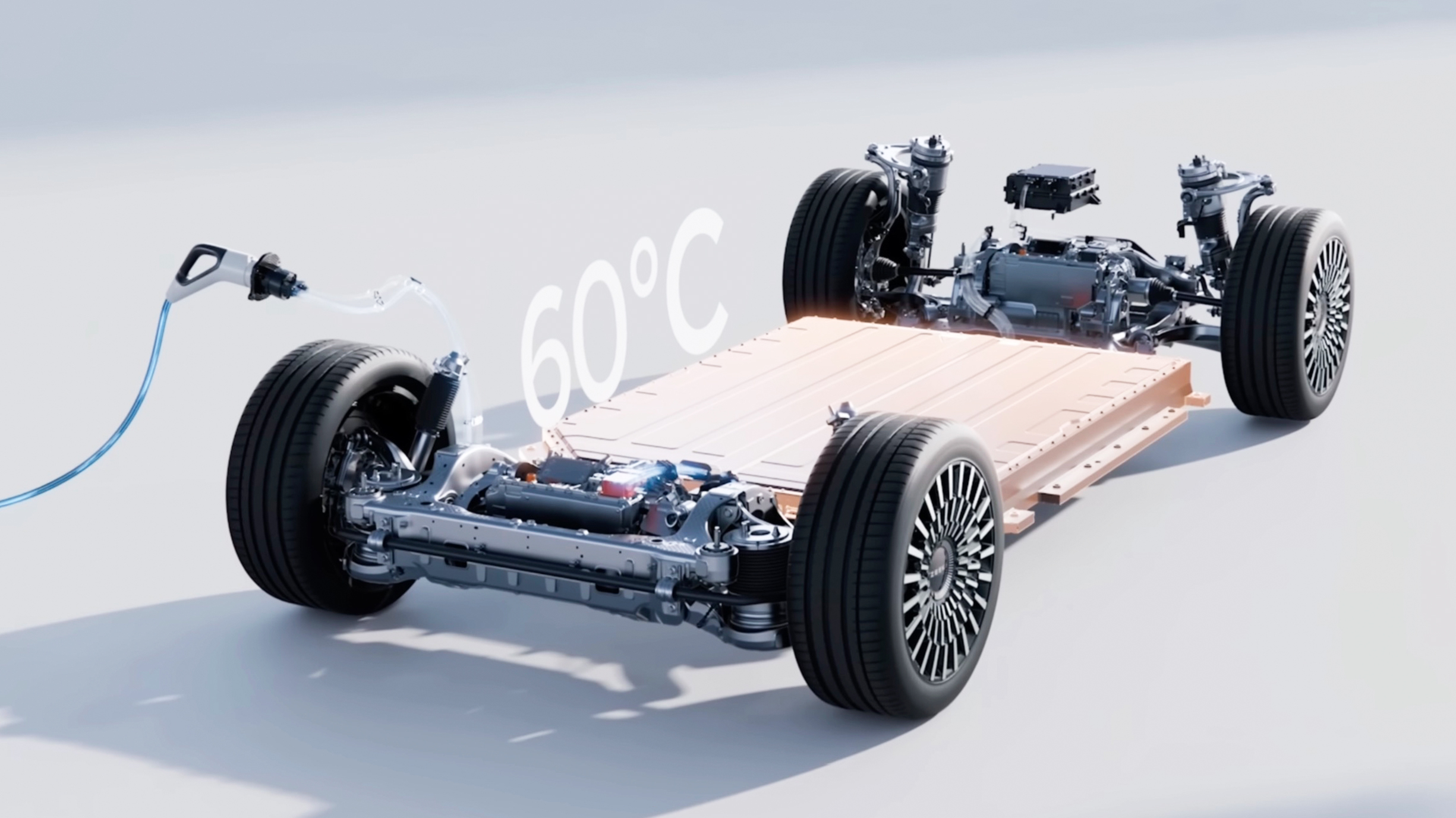
In a newly released video, Donut Lab sets out to show the charging speed and thermal stability of its latest battery. The headline figure is a claimed charge rate of up to 11C (286A), which, if sustainable, would put it in rare company.
Cooling Reality Check
In the 11C charging test, the battery cell charged from 0 to 80 percent in just 4.5 minutes when equipped with two heatsinks. A full charge at 11C took just over 7 minutes. During this test, the battery temperature reached 63°C (145°F). In a separate test with just one aluminum heat sink, the temperature rose to 90°C (194°F), prompting a pause for 4 minutes while the battery cooled.
As noted by Electrek, Donut Lab claimed its battery required no active cooling to safely achieve its extraordinary charging speeds. However, this test suggests that some level of thermal management is necessary. Even so, the charging speeds are impressive, particularly for a company of this size.
According to Donut Lab chief executive Vile Piippo, “unlike other solid-state batteries requiring high compressive pressures and undergoing volume changes of up to 15-20 per cent during recharging cycles, the Donut Battery does not require special compression or more extensive cooling.”
Hitting Back At Critics
The company published the results of its fast-charging test on a new website, dubbed “iDonutBelieve,” in a thinly veiled swipe at those who said the firm was exaggerating its claims. It is promising that the results of another test will be released next week, with the aim of proving the pack’s energy density and 100,000-cycle claim.
The first vehicle to use the Donut Lab solid-state battery is an all-electric motorcycle from Verge. Dubbed the TS Pro, it’s set to arrive in the first quarter and will be offered with 20.2 and 33.3 kWh packs.
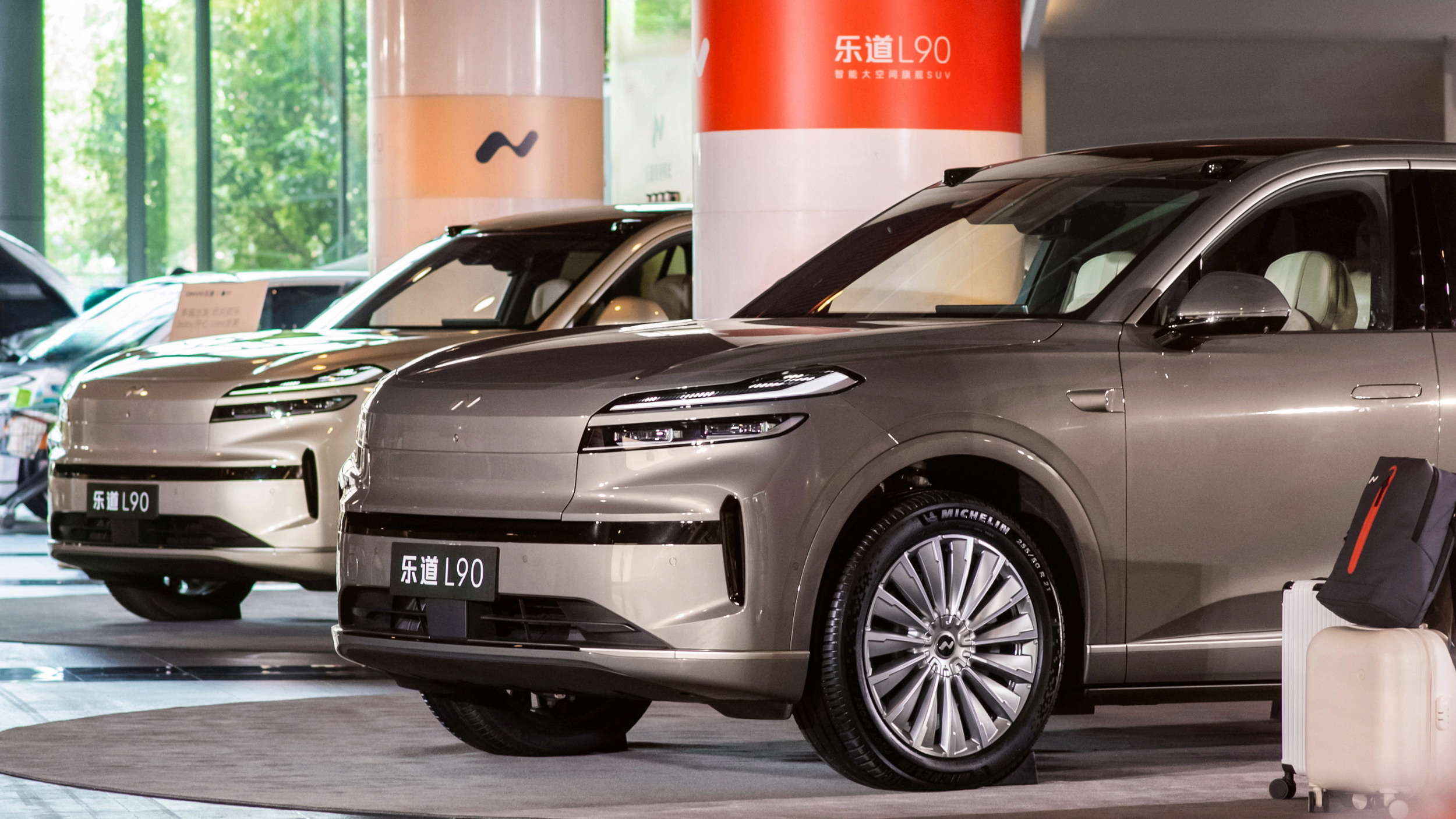
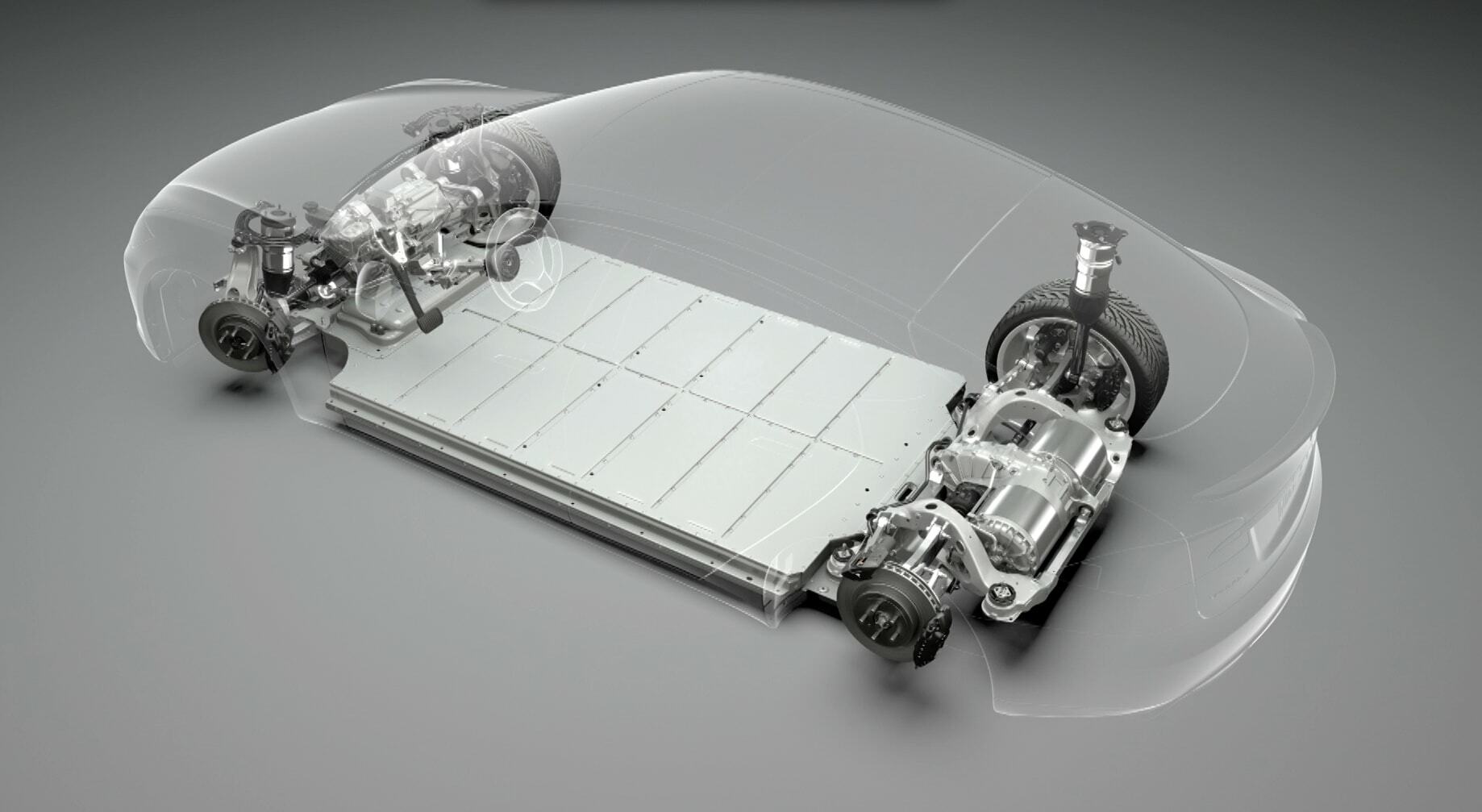
Back in 2013, Tesla flirted with the idea of battery-swapping for its EVs, even demonstrating a system that could replace a Model S battery in as little as 90 seconds. It was an impressive showpiece, but the company ultimately chose not to commercialize the concept. Nio, meanwhile, saw potential where Tesla stepped back. The Chinese startup embraced battery swapping and went on to build the largest EV battery-swapping network in the world.
Just how popular has Nio’s battery-swap service become? On February 21, Nio owners carried out a staggering 175,976 battery swaps across China in a single day. That figure translates to roughly one Nio having its battery changed every half a second.
This record was set on the second day of the Lunar New Year, typically the busiest travel day of the year in China.
How Wide Is Nio’s Network?
Nio currently operates more than 8,600 charging and battery-swapping stations across China. The network spans more than 550 cities and includes highway routes linking 16 of the country’s major urban centers. The company has also begun rolling out charging stations in Europe.
The Chinese electric car startup is currently on its fourth-generation swapping stations, with the latest version launched in mid-2024. The original stations could store just four to five batteries at a time. In contrast, the fourth-generation sites can hold 23 battery packs and handle up to 480 swaps per day. Each swap takes 2 minutes and 24 seconds, which is less time than refueling a combustion-powered car.
Soon, it will not just be Nio owners pulling into those swap bays. The company has struck agreements with Geely, Chery, FAW, GAC, and Changan to share its battery-swapping technology, opening the network to a much broader slice of China’s car market.
The Tata Punch EV gets an early facelift in India.
Brings styling tweaks, more power, and extra range.
Starts at $7,150 if you lease the battery separately.
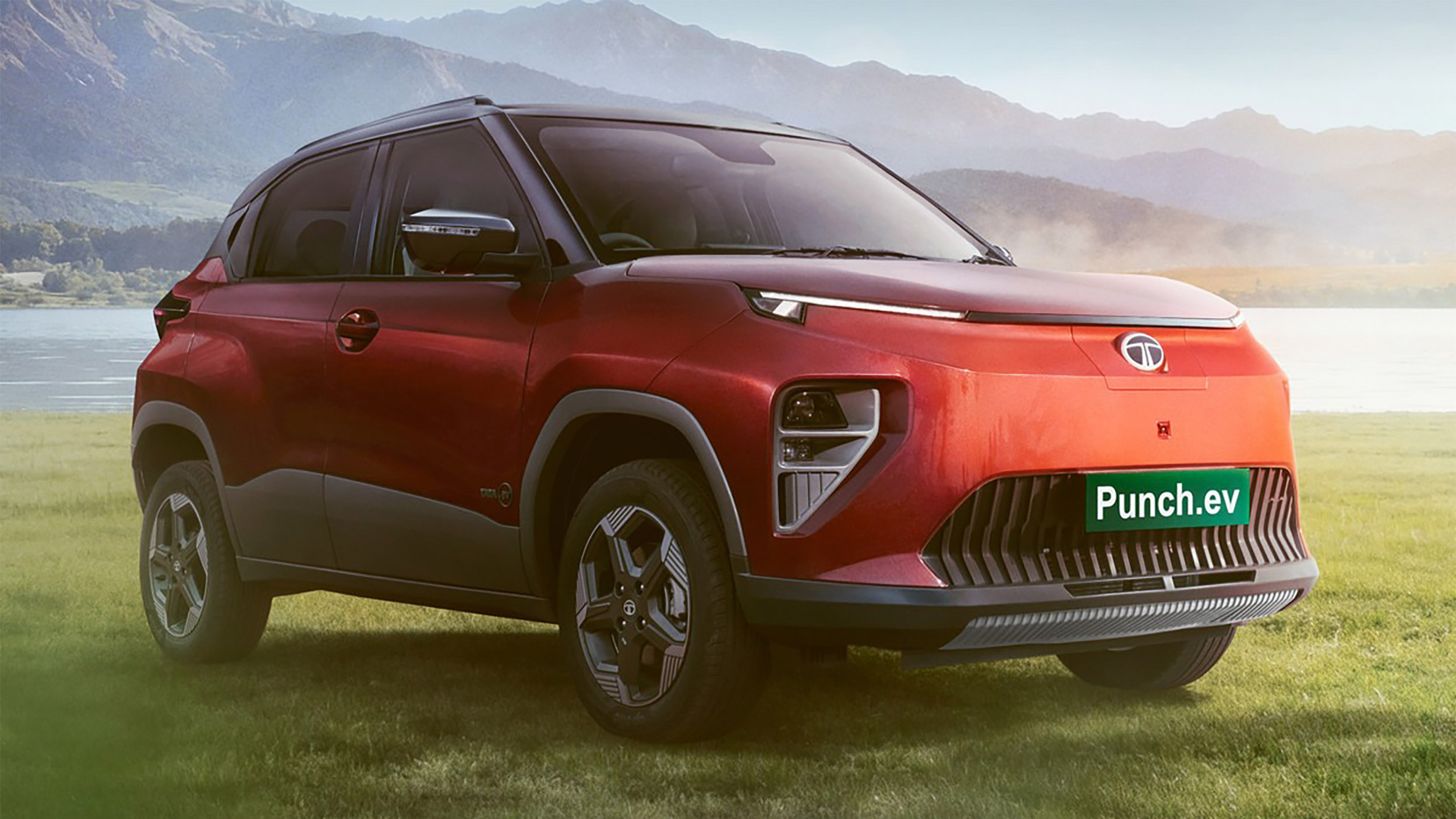
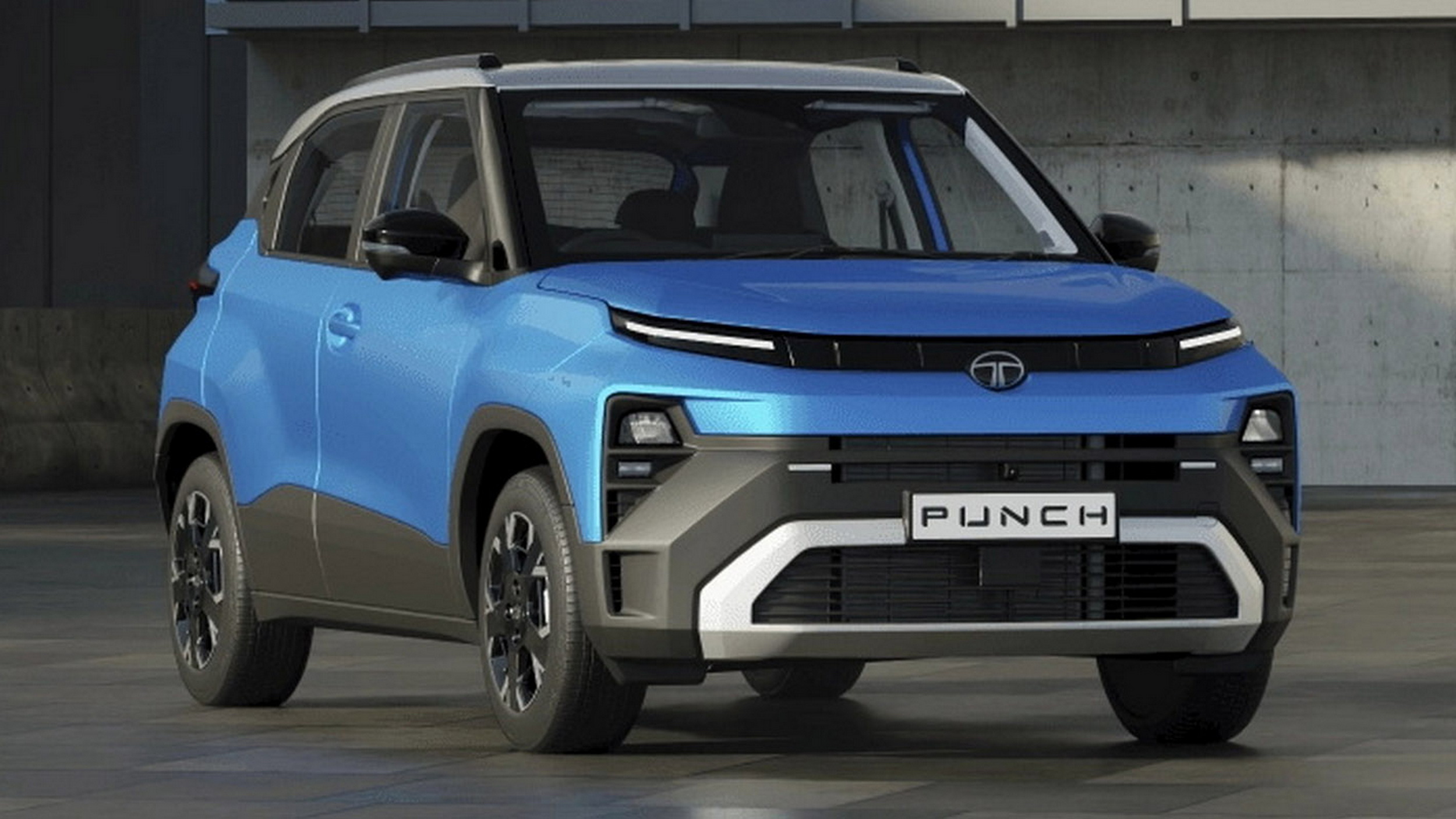
Two years. That’s all Tata Motors has given the fully electric Punch before wheeling out a facelift. In the fast-moving world of small EVs, standing still is not an option. The 2026 Tata Punch EV goes beyond a nip and tuck, bringing a larger battery, quicker charging, and a finance trick designed to make the sticker price look far friendlier.
Starting with the exterior, the Punch EV gains a redesigned face with a cleaner bumper, though the split headlights have been carried over. It also benefits from new 16-inch alloy wheels and full-width taillights that mirror the recently facelifted ICE-powered Punch.
The interior is largely unchanged. Higher trims pack dual 10.25-inch displays, wireless charging, ventilated seats, a voice-activated sunroof, and a 360-degree camera. Six airbags are standard across the range, although the base car makes do without an infotainment screen.
More Punch And Longer Range
More important changes hide under the skin. The Punch EV benefits from larger battery packs with capacities of 30 kWh and 40 kWh, each up by 5 kWh.
Tata claims a real-world range of up to 355 km (221 miles), which is 75 km (47 miles) more than before. Charging gets a lift too. The updated Punch EV now supports a 65 kW DC fast charger, up from 50 kW, cutting the 20-80 percent top-up time to 26 minutes.
There’s a modest bump in output as well. Power rises by 6 hp (5 kW). The Medium-Range version makes 85 hp (65 kW), while the Long Range variant produces 127 hp (95 kW). Tata says the latter hits 0-100 km/h (0-62 mph) in 9 seconds, trimming 0.5 seconds from the previous figure.
The Price Hack
Here’s where things get interesting. Despite the added kit, Tata has lowered the entry price. The attention-grabbing ₹6.49 lakh ($7,150) starting figure comes via a BaaS (battery as service) scheme. You buy the car, but lease the battery separately at ₹2.6 per km ($0.029 per mile).
Prefer to own the lot outright? Prices then range from ₹9.69 lakh ($10,700) to ₹12.59 lakh ($13,900), depending on specification. Even so, that undercuts the pre-facelift model, which makes the updated Punch EV look like stronger value.
At 12,000 km a year, the battery lease works out to ₹31,200 (about $348). Drive 15,000 km and it rises to ₹39,000 (about $435) annually. Over five years at that higher mileage, you would pay ₹1.95 lakh (around $2,175). Add that to the ₹6.49 lakh ($7,150) purchase price and the total comes to roughly ₹8.44 lakh (about $9,325), still below the ₹9.69 lakh ($10,700) entry point of the version that includes the battery. The more you drive, the smaller the gap becomes.
The ICE-powered Tata Punch, meanwhile, ranges from Rs. 5.59 Lakh ($6,200) to Rs. 10.54 Lakh ($11,700).
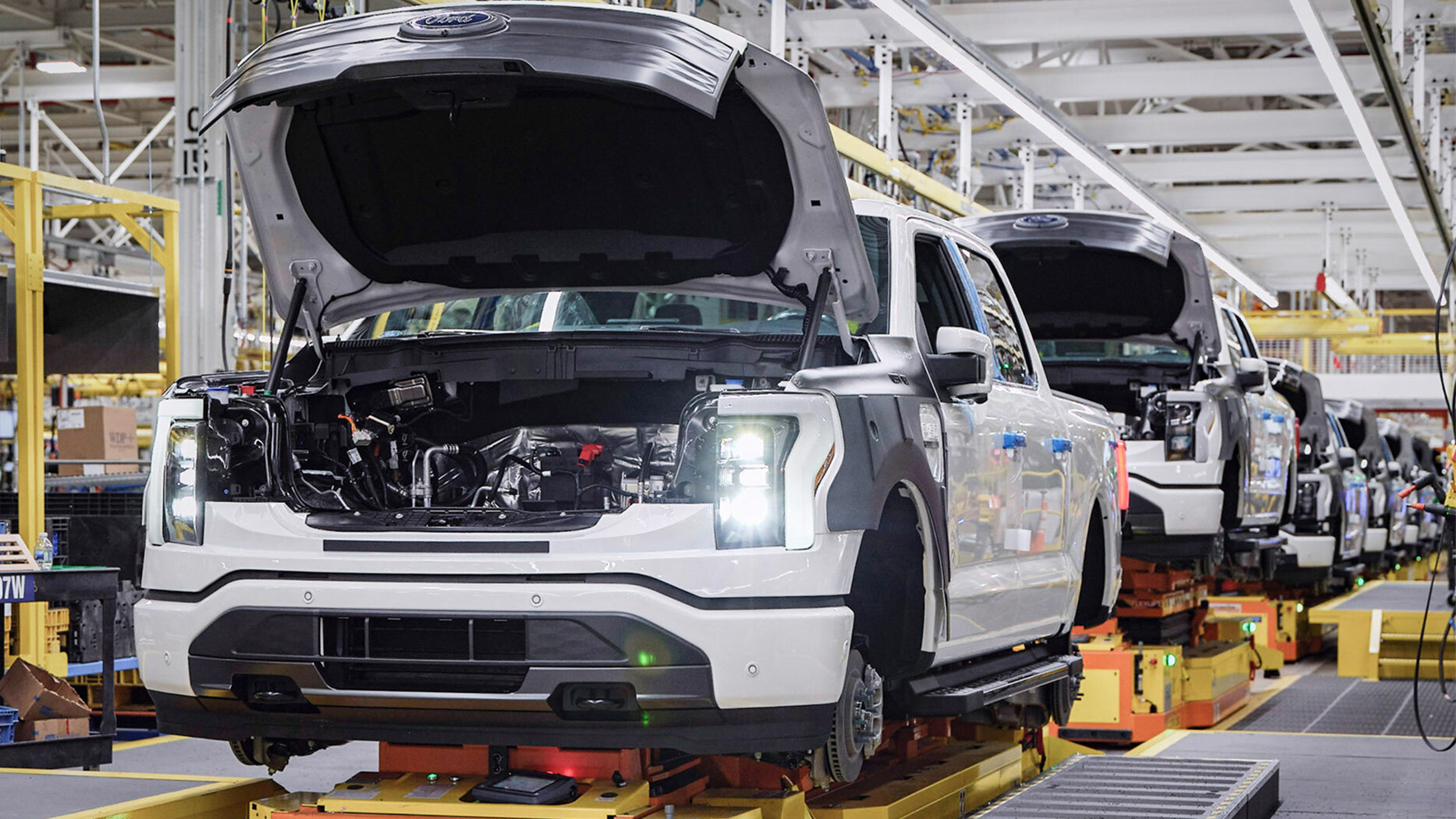
Ford closed Kentucky EV battery plant after just 4 months.
1,600 workers lost jobs after tax credit policy change.
Plant originally projected employment near 5,000 workers.
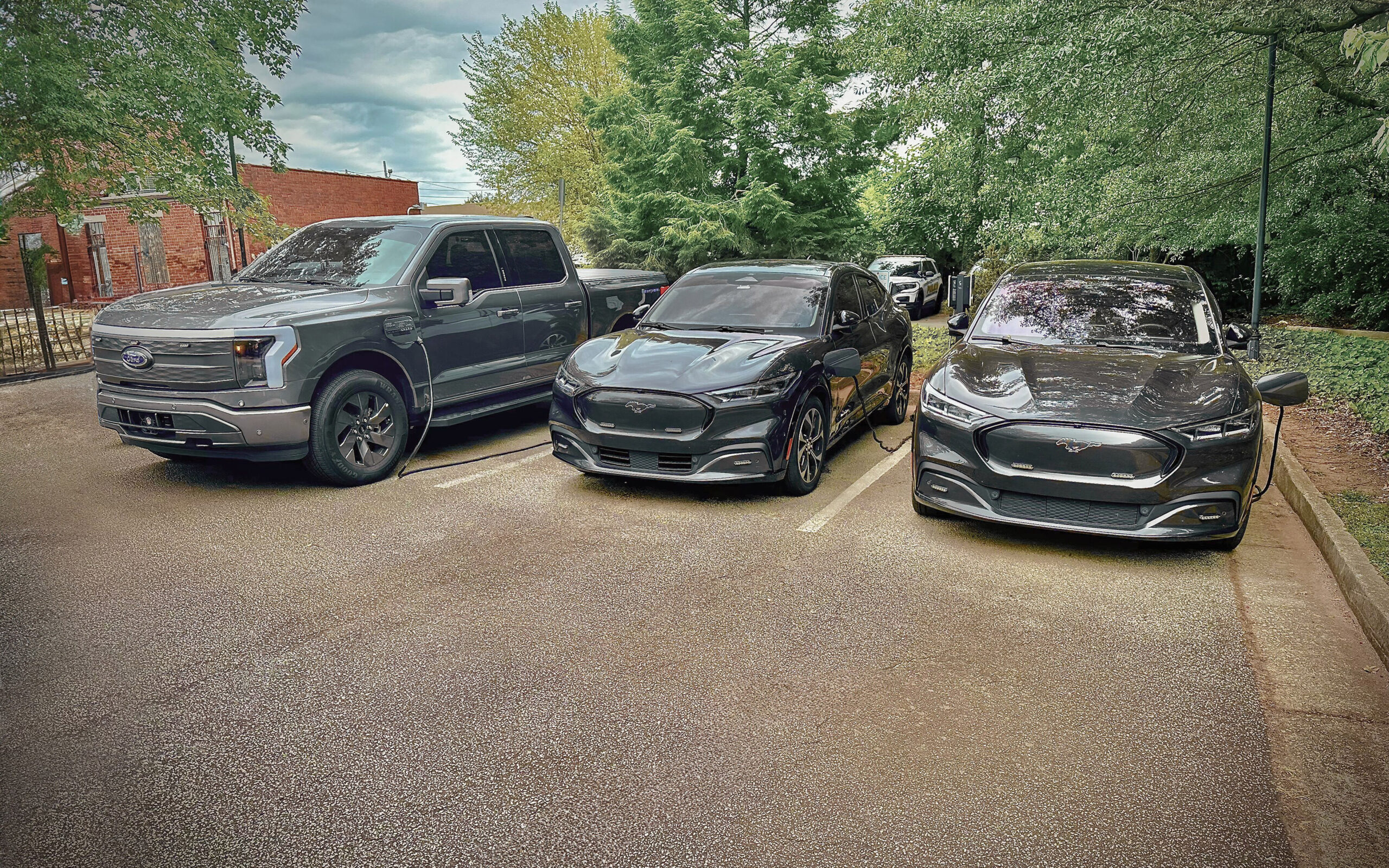
Ford’s sudden decision to cancel its multi-billion-dollar partnership with South Korean battery manufacturer SK On in December, just four months after the first batteries rolled off the line, left 1,600 people without jobs at the joint battery plant in Kentucky.
The move caught workers and locals off guard, and many are placing the blame squarely on Ford. That’s not surprising. Still, the political backdrop, including Trump-era EV policies that limited Ford’s options, played a larger role in how this ultimately unfolded.
The Ripple Effect Of A $7,500 Credit
All brands selling EVs in the US were hurt by the government’s decision to kill the federal tax credit, valued at up to $7,500 for new EVs. While some understandably criticized the program as artificially propping up the industry, there’s no denying that it played a hugely important role in convincing many Americans.
With fewer people buying EVs and other government policies relaxing CAFE fuel-economy standards, Ford acknowledged that “the operating reality has changed,” which is why it’s scrapped a slew of its more ambitious and important EV projects. “We are listening to customers and evaluating the market as it is today, not as everyone predicted it would be five years ago,” Ford recently said.
As reported by The New York Times, Kentucky’s Democratic governor, Andy Beshear, said: “1,600 Kentuckians lost their jobs solely because of Donald Trump pushing that big, ugly bill, eliminating the credits that had people interested and excited to buy EVs. I bet many, if not most, of those 1,600 people voted for him, and he basically fired them.”
Unexpected Closure
The site had only been manufacturing EV batteries for four months before it was shut down. Speaking with the NYT, Joe Morgan says he left a job of 24 years to start working at the plant, confident that EVs would grow in popularity.
Morgan, a registered Republican, acknowledges that “taking away the tax credits did play a little bit of a role in not selling EVs,” but he thinks it’s Ford that should take most of the blame. “I just think Ford made a bad decision when they came out with an F-150 that they wanted to make all electric.”
Derek Doughtery shares a similar view. Landing a job at the battery plant was a turning point for him after previously experiencing homelessness, especially with a second child on the way. He, like others, believes Ford may have misread the market and bears more responsibility than the government.
“At the end of the day, whatever the government policy would be, the company made the decision,” he said.
A Scaled-Back Future
Fortunately, the facility will not close entirely. Now under full Ford control, it will be retooled for battery storage production and is expected to employ roughly 2,100 people. That figure is well below the 5,000 jobs originally projected when the plant was dedicated to building EV batteries, but it offers at least some continuity for a site that only recently promised much more.
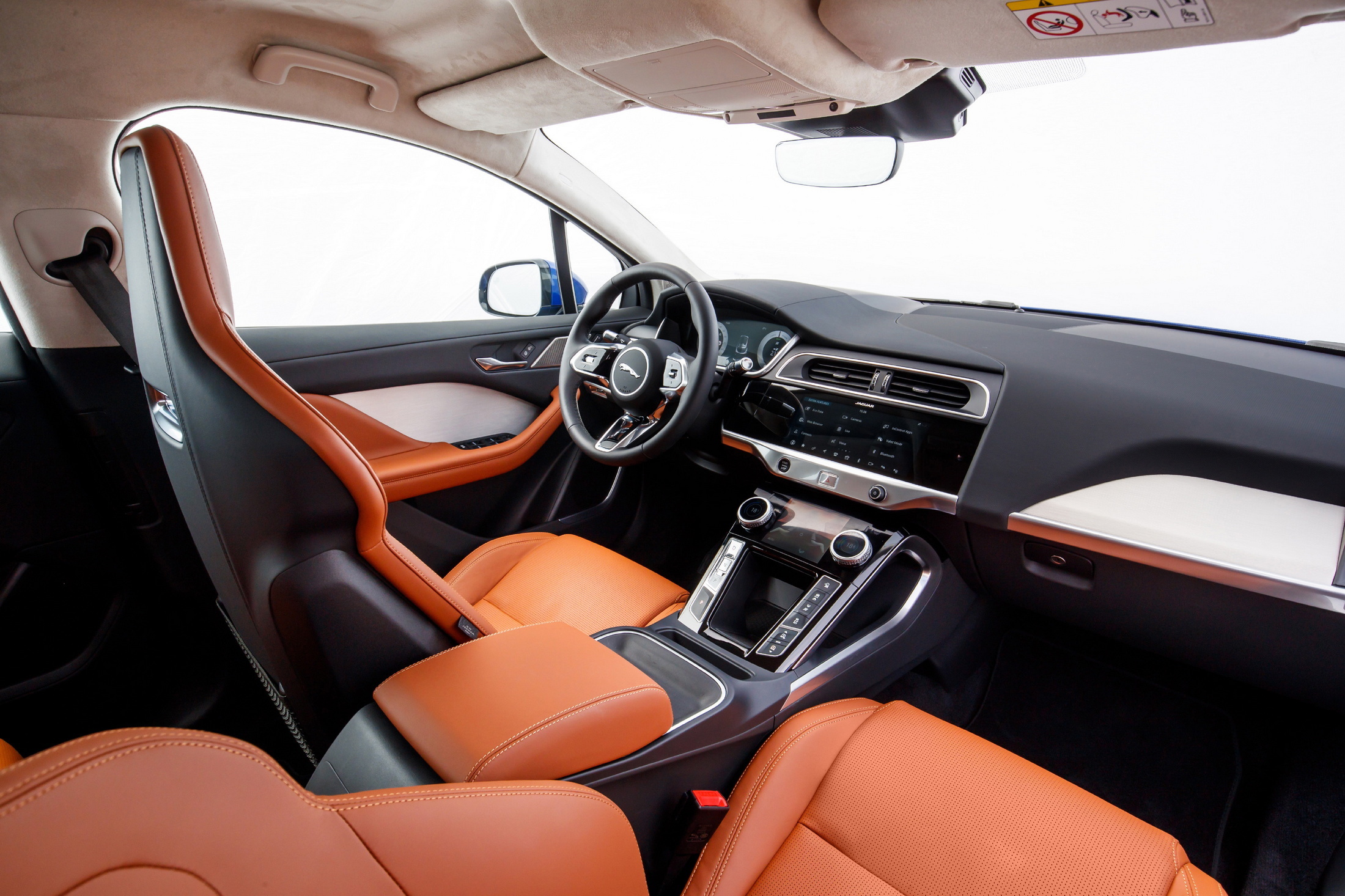
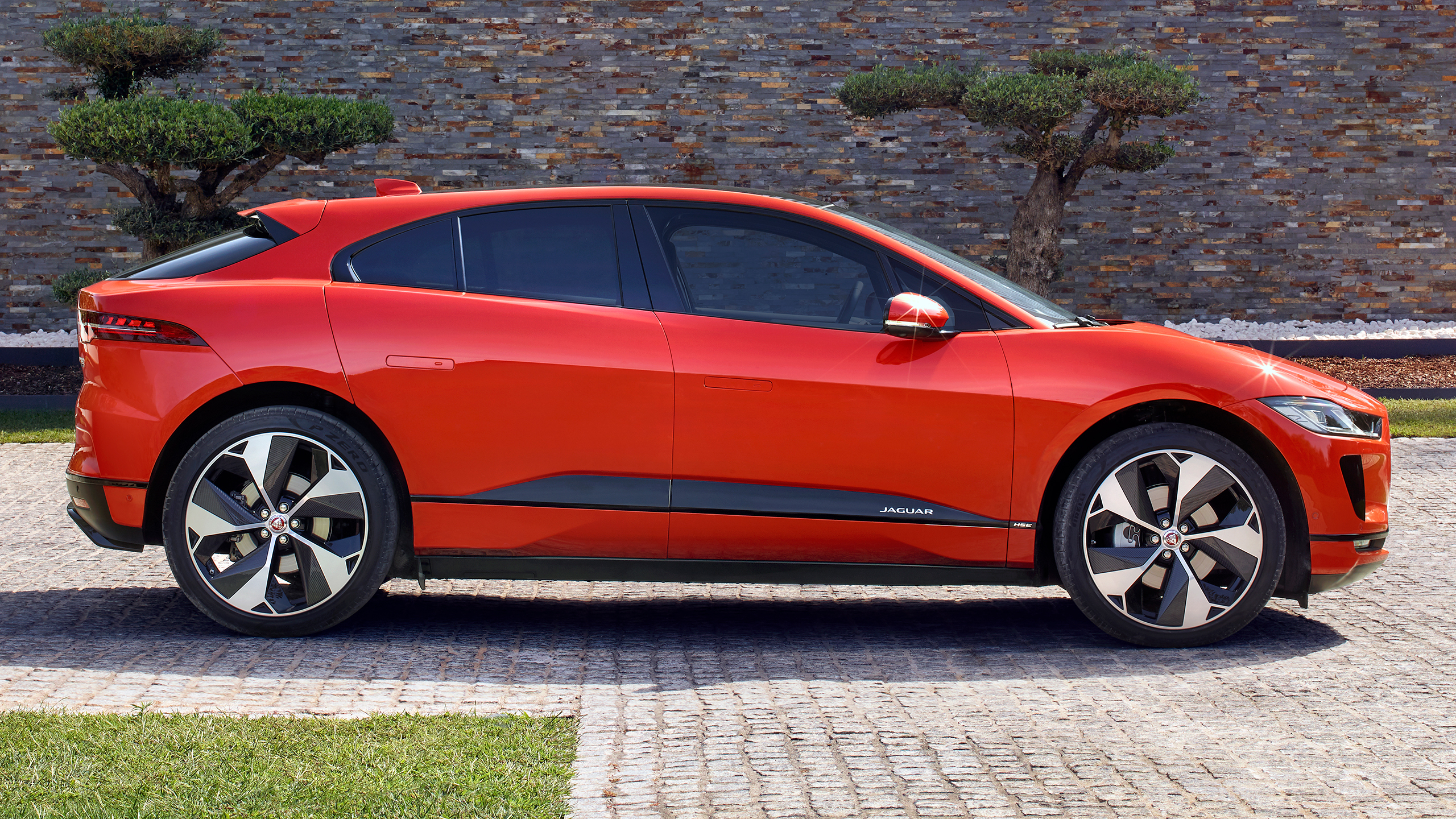
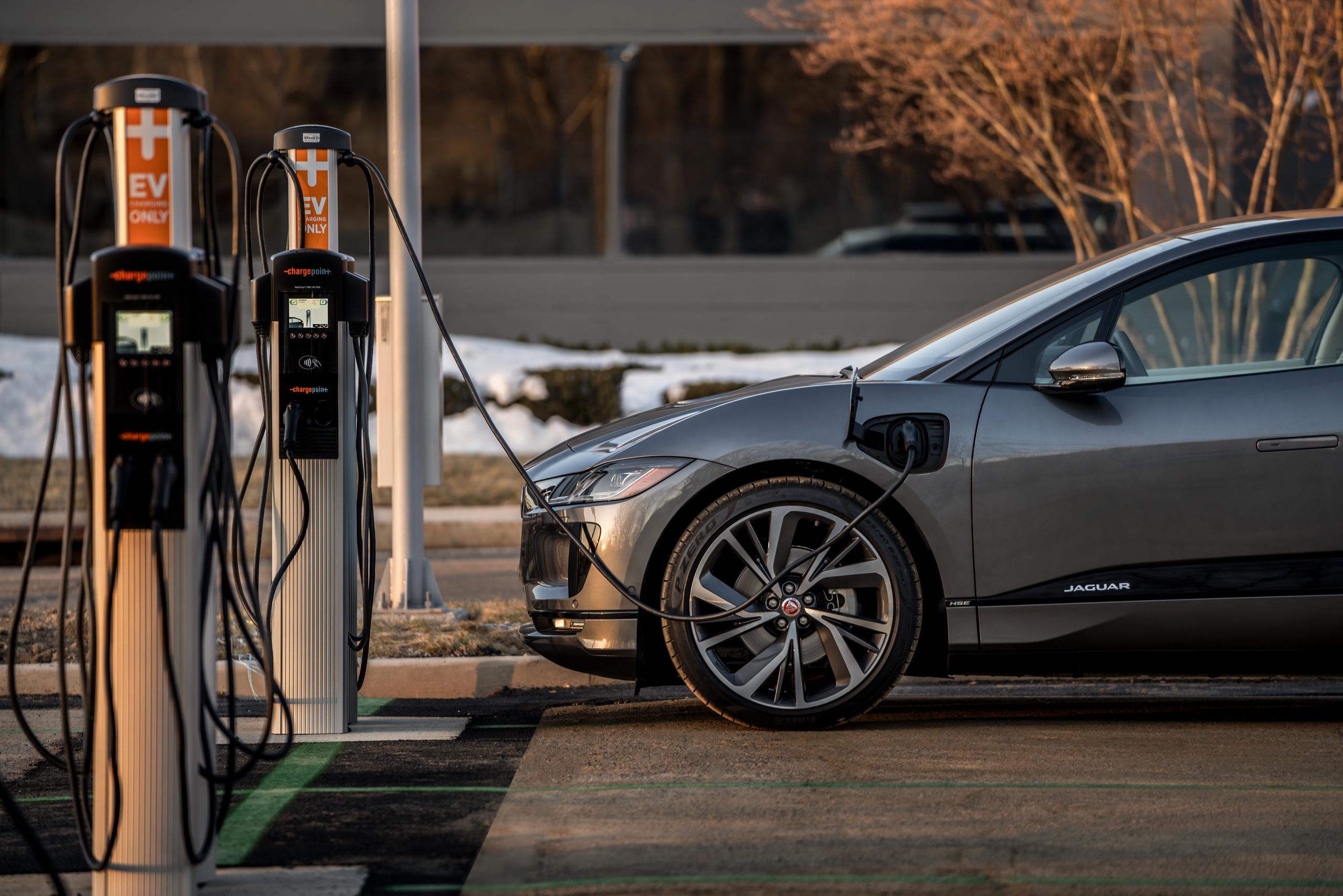
Jaguar is recalling 2,278 I-Paces in the United States.
Battery flaw may cause thermal overload and short circuits.
Affected I-Paces will get software limiting charging capacity.
The Jaguar I-Pace was praised upon its release in 2018, even being named both the World Car of the Year and European Car of the Year in 2019. But that early momentum hasn’t aged well. Over the years, the I-Pace’s reputation has unraveled under the weight of battery-related problems, repeated recalls, and even a US buyback program.
Now, the I-Pace is back in the spotlight for all the wrong reasons. Jaguar has issued yet another recall in the United States due to a serious battery defect, something that doesn’t bode well for its EV aspirations.
More Battery Trouble
This time, the culprit is thermal overload linked to a folded anode tab, which could cause a short circuit. Battery supplier LG has acknowledged there may be additional problems, though investigations are still ongoing.
This latest recall impacts 2,278 I-Paces. Of these, 1,824 are 2020 models built from April 8, 2019, to January 8, 2020, while 454 are 2021 models assembled from March 9, 2020, to June 10, 2021.
According to Jaguar, none of the vehicles involved in this latest recall were taken off the road under prior recall campaigns, nor have their battery packs been replaced, as other I-Paces have.
What Owners Are Being Told
Jaguar is so concerned about the battery issue that it is urging owners to take immediate precautions. Vehicles should be parked outdoors and kept away from buildings. Additionally, owners are being told to charge their vehicles to no more than 90 percent and only when outside.
The issue appears to be persistent. Jaguar has revealed that several 2019 I-Pace models recalled in the past for fire risk were subjected to another recall in 2024. These cases prompted a deeper examination of the battery system, leading directly to the current action.
Impacted models will will receive updated software that limits the maximum state of charge to 90 percent while Jaguar continues work on a permanent fix. Dealers will be notified of the recall starting February 19, and owners should expect official communication from Jaguar no later than April 3.
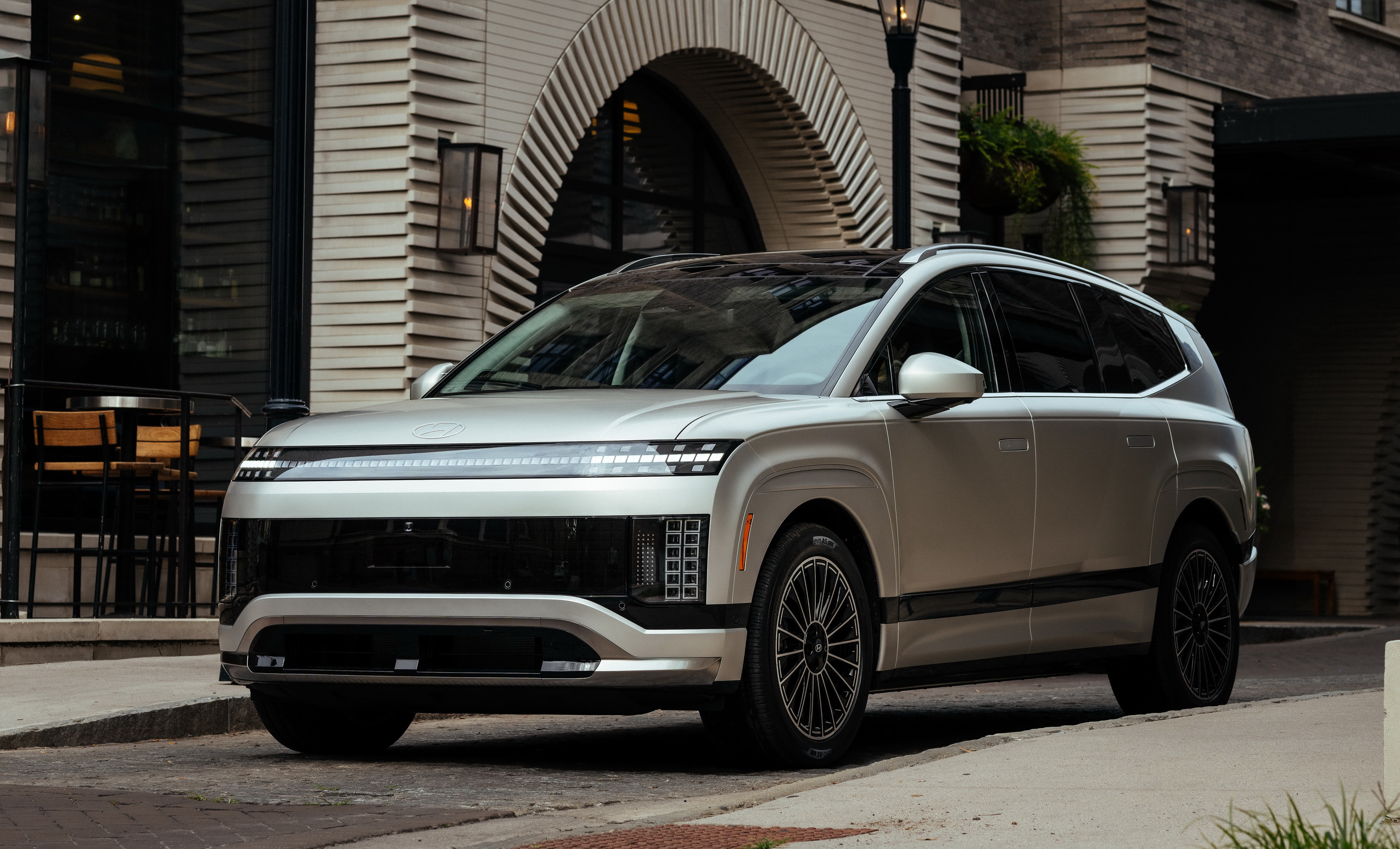
Hyundai recalled Ioniq 5 and 9 for a battery pack issue.
Some high-voltage busbars may not be torqued correctly.
Faulty bolts could lead to fire risk or fail-safe mode.
Hyundai is recalling two of its newest electric models, the Ioniq 5 and Ioniq 9, in the United States due to a potential fire risk stemming from a battery defect. Both models are currently produced at the company’s plant in Georgia.
According to Hyundai, the issue involves the battery pack’s internal components and could increase the risk of electrical fire if not addressed. Specifically, a recall notice points to improperly tightened high-voltage busbars during assembly.
If the retention bolts work loose over time, this could lead to electrical arcing within the battery pack, which in turn may trigger a fire. Hyundai also notes that these loose connections could disrupt voltage readings, pushing the vehicle into a fail-safe operating mode.
How Many Vehicles Are Affected?
The recall affects a very limited number of vehicles. Hyundai has identified 21 units of the Ioniq 5 from the 2025 to 2026 model years, built between January 24 and September 8, 2025. Additionally, just six Ioniq 9s produced from April 8 to September 12, 2025, are impacted.
The issue was first identified in November, when Mobis North America Electrified, Hyundai’s in-house battery supplier, discovered a battery system assembly unit that failed a quality test. The root cause was traced to under-torqued busbar bolts. By December, Hyundai had compiled a list of potentially affected VINs, and the recall decision followed in January.
Hyundai has confirmed that no related incidents have occurred in the field. So far, there have been no reports of crashes, fires, or injuries linked to the issue.
Starting April 6, Hyundai will notify both owners and dealers. The fix is straightforward. Dealers will inspect the busbar bolts in the battery system assembly and tighten them if necessary.
Owner averaged 373 miles daily, driving more than some taxis.
Brake pads never replaced, thanks to regenerative braking system.
Car used 47,800 kWh of power, equal to 506 full charge cycles.
The Xiaomi SU7 hasn’t been on the market for very long, but one owner in China put the electric sedan through its paces at a rate higher than most taxis. The model has covered an astonishing 165,134 miles (265,757 km) in just 16 months (476 days), offering a real-world look at how the EV hardware handles heavy use.
What is likely the highest mileage Xiaomi in existence was highlighted on a video that was uploaded on Bilibili by Jackson’s Sunset Drive. The vehicle in question is an Aqua Blue SU7 Pro owned by Mr. Feng, who drove an average of 373 miles (600 km) every day since he took delivery.
For context, the daily trip matches the distance between Los Angeles and San Francisco, with the total distance covered being the equivalent of 6.63 times the circumference of the Earth.
Battery Health After 165,000 Miles
The most impressive takeaway from the high-mileage experiment is the battery’s state of health, as measured by an official Xiaomi service station. Despite the intensive usage, the 94.3 kWh lithium iron phosphate Shenxing battery pack from CATL has retained 94.5% of its original capacity.
As Carnewschina points out, the rival Tesla Model 3 Long Range comes with an eight-year, 120,000-mile (193,120 km) warranty, promising a battery health of at least 70 percent after that period.
Minimal Wear And Tear
In the case of the Xiaomi, it isn’t just the battery that is holding up. The owner claims the vehicle has never required a brake pad replacement, which is a testament to the efficiency of its regenerative braking system. Furthermore, the coolant remains pure, with zero water contamination.
The Pro trim of the fully electric sedan is fitted with a rear-mounted motor producing 295 hp (220 kW / 299 PS) and 400 Nm (295 lb-ft) of torque. According to the automaker, the 94.3 kWh battery offers a CLTC range of 830 km (516 miles) in this variant.
Fuel Savings
Doing the math, based on an estimated efficiency of 18 kWh/100km, Mr. Feng’s Xiaomi has consumed roughly 47,800 kWh of electricity over the past 18 months. This translates to around 506 full charge/discharge cycles for the 94.3 kWh battery.
Overall, Mr. Feng estimates that by opting for the electric sedan over an ICE-powered vehicle he has saved over ¥100,000 ($14,400) in fuel costs over the 265,757 km (165,134 miles). That is a significant amount considering that the starting price of a Xiaomi SU7 Pro is ¥245,900 ($35,400) in China.
Predictably, the video has gained traction and was even shared by Xiaomi CEO Lei Jun. The owner revealed that he plans to continue racking up miles on his EV, targeting to reach 600,000 km (372,823 miles) within three years.
The Xiaomi SU7 has recently made headlines for outselling the rival Tesla Model 3 in China, with 258,164 units delivered in 2025. The company has already announced a refreshed version of the sedan, which is set to arrive in April 2026 with more advanced ADAS, a standard LiDAR, and a longer driving range of up to 560 miles (902 km) in the CLTC cycle.
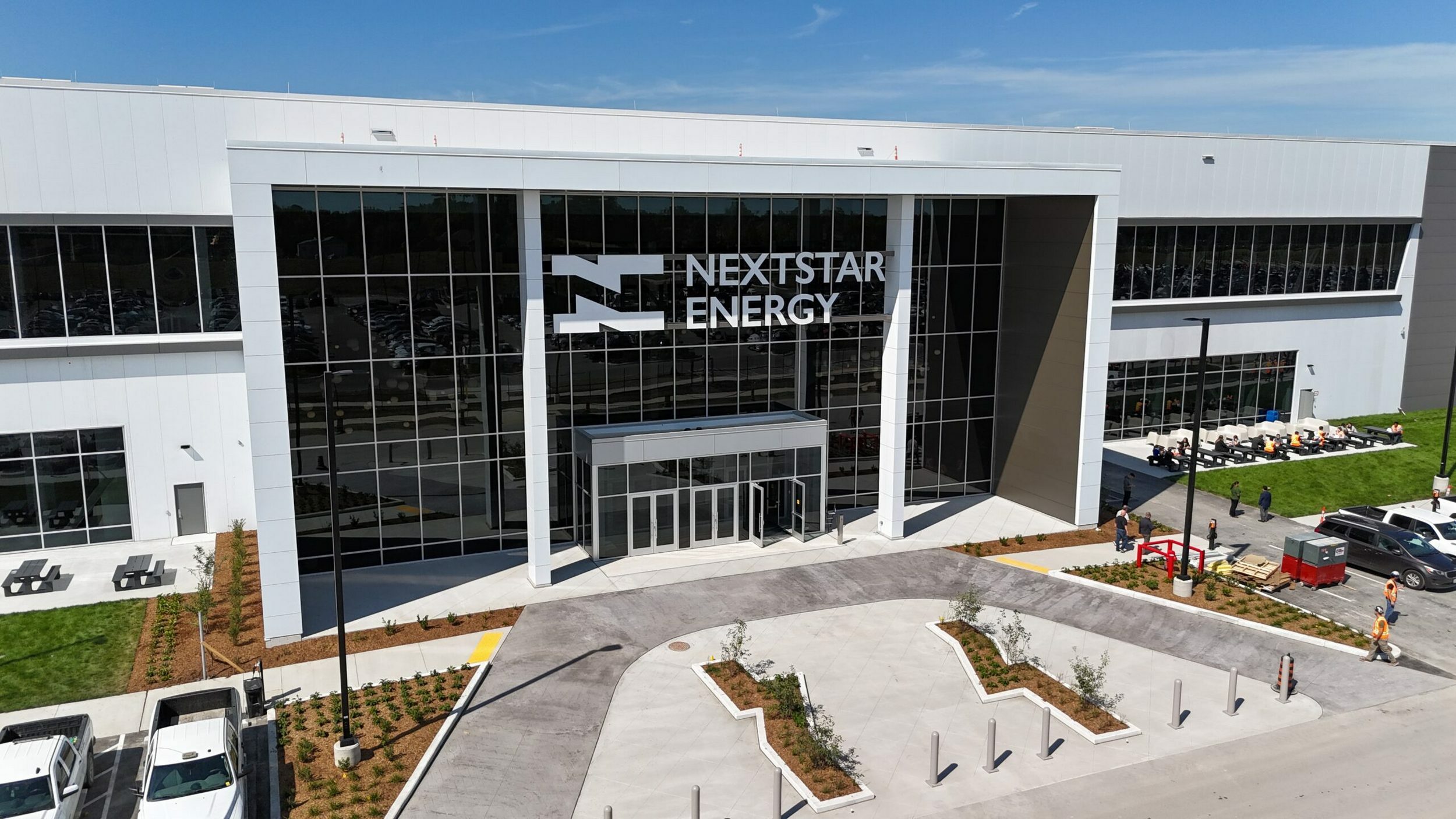
Stellantis is selling their stake in NextStar Energy for just $100.
Move comes amid lackluster EV sales and changing regulations.
LG is shifting focus from EVs to energy storage systems.
Stellantis is pivoting away from electric vehicles as the company embraces the ‘power of choice.’ This has cost them billions and they’re selling their 49% stake in NextStar Energy to LG Energy Solution.
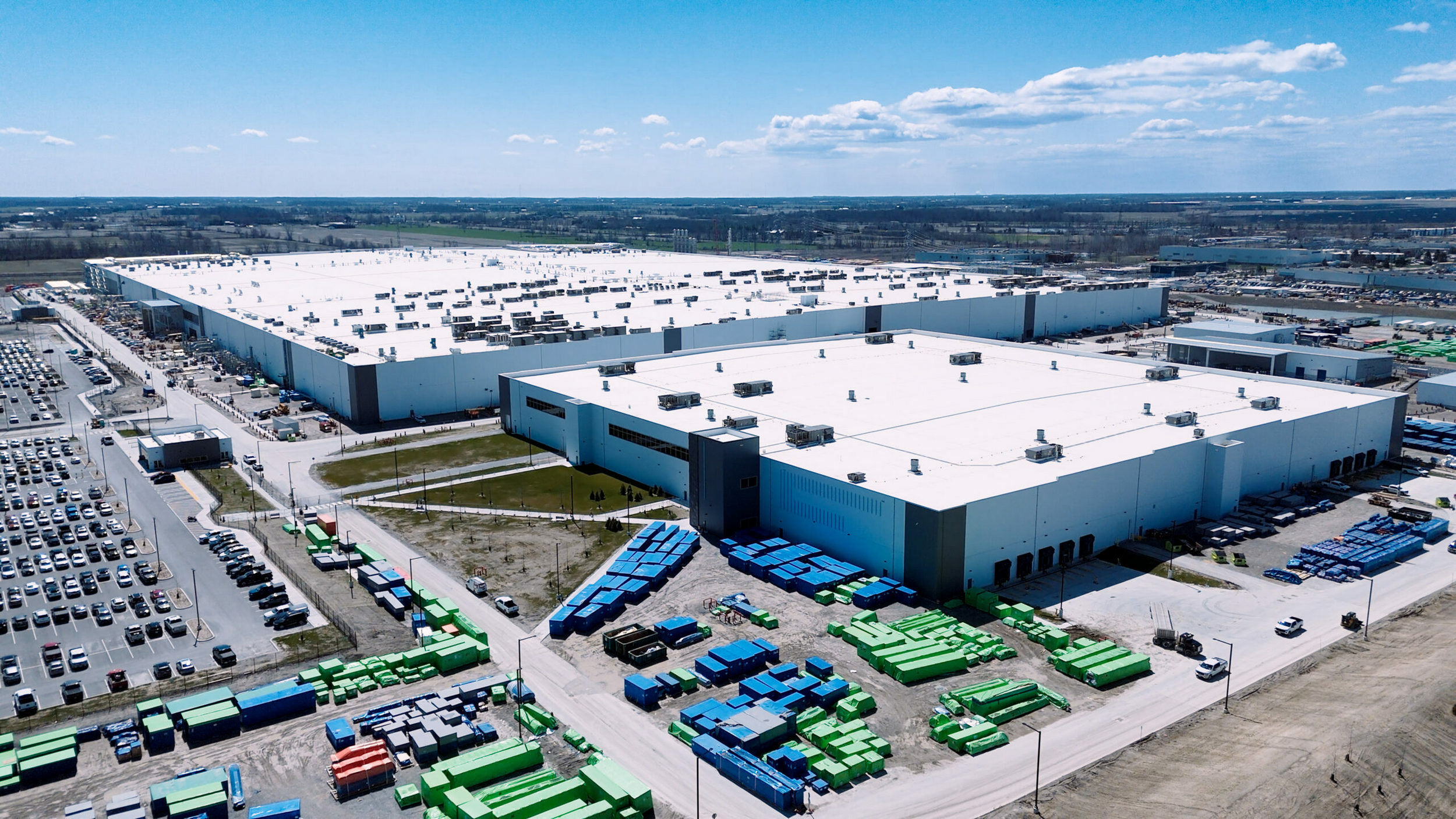
This is an interesting development as the NextStar Energy joint venture was established in 2022 and aimed to create Canada’s first large-scale battery manufacturing facility in Windsor. The plant was originally designed to employ approximately 2,500 people and have an annual production capacity of more than 45 gigawatt hours.
Battery module production began in the fall of 2024 and mass production of lithium-ion battery cells followed in November of 2025. While more than $3.7 billion ($5 billion CAD) has been invested into the facility, a lot has changed since 2022.
Electric vehicle adoption has grown more slowly than many automakers anticipated and the Trump administration recently eliminated federal tax credits. On top of that, tariffs have complicated things and automakers are now turning their attention away from EVs.
Stellantis didn’t go into many specifics, but called the move a “strategic decision” that was mutually agreed upon. They went on to describe themselves as a “committed customer” that “will continue to source battery products from NextStar Energy.”
Stellantis CEO Antonio Filosa said, “By enabling LG Energy Solution to fully leverage the Windsor facility’s capacity, we are strengthening its long-term viability while securing the battery supply for our electric vehicles. This is a smart, strategic step that supports our customers, our Canadian operations, and our global electrification roadmap.”
Those sentiments were echoed by LG Energy Solution CEO David Kim, who stated “LG Energy Solution sees growth opportunities in North America by situating a key production hub in Canada. Full ownership of NextStar Energy will enable us to respond swiftly to the growing demand from the ESS [Energy Storage System] market and position us to play a key role in Canada’s EV industry by securing additional North American-based customers.”
Despite the upbeat rhetoric, The Detroit News reports Stellantis sold their stake for just $100. That’s a token amount, especially given the sizable investment into the facility.
CATL says its new 5C battery lasts far longer than rivals.
Delivers 1.1M miles with repeated fast charging at 20 C.
Withstands 60 C heat and still offers over 500,000 miles.
New EVs come with long battery warranties, but used EV buyers picking one up years later don’t get that same safety net. And the thought that a car spent its early life tethered to a fast charger is a major worry. But according to one major Chinese battery supplier, that may not be the case for much longer.
CATL claims its latest 5C lithium ion pack can retain 80 percent of its original capacity after 3,000 full charge cycles when hooked up to a fast charger under ideal 20 degrees C (68 F) conditions. Do the math and that works out to roughly 1.1 million miles (1.8 million km). That’s taxi driver territory, not school run use.
Even when things get toasty, the numbers still look wild. CATL says that at 60 C (140 F), which it compares to a Dubai summer, the battery still holds 80 percent capacity after 1,400 cycles. That equates to around 520,000 miles (840,000 km), which is still more than many cars ever see.
Charge In 12 Minutes
The 5C label refers to charge rate in fills per hour. In simple terms, this battery can theoretically be charged from empty in about 12 minutes. Ultra fast charging like that normally hammers battery longevity, but CATL says clever chemistry and thermal management keep degradation in check.
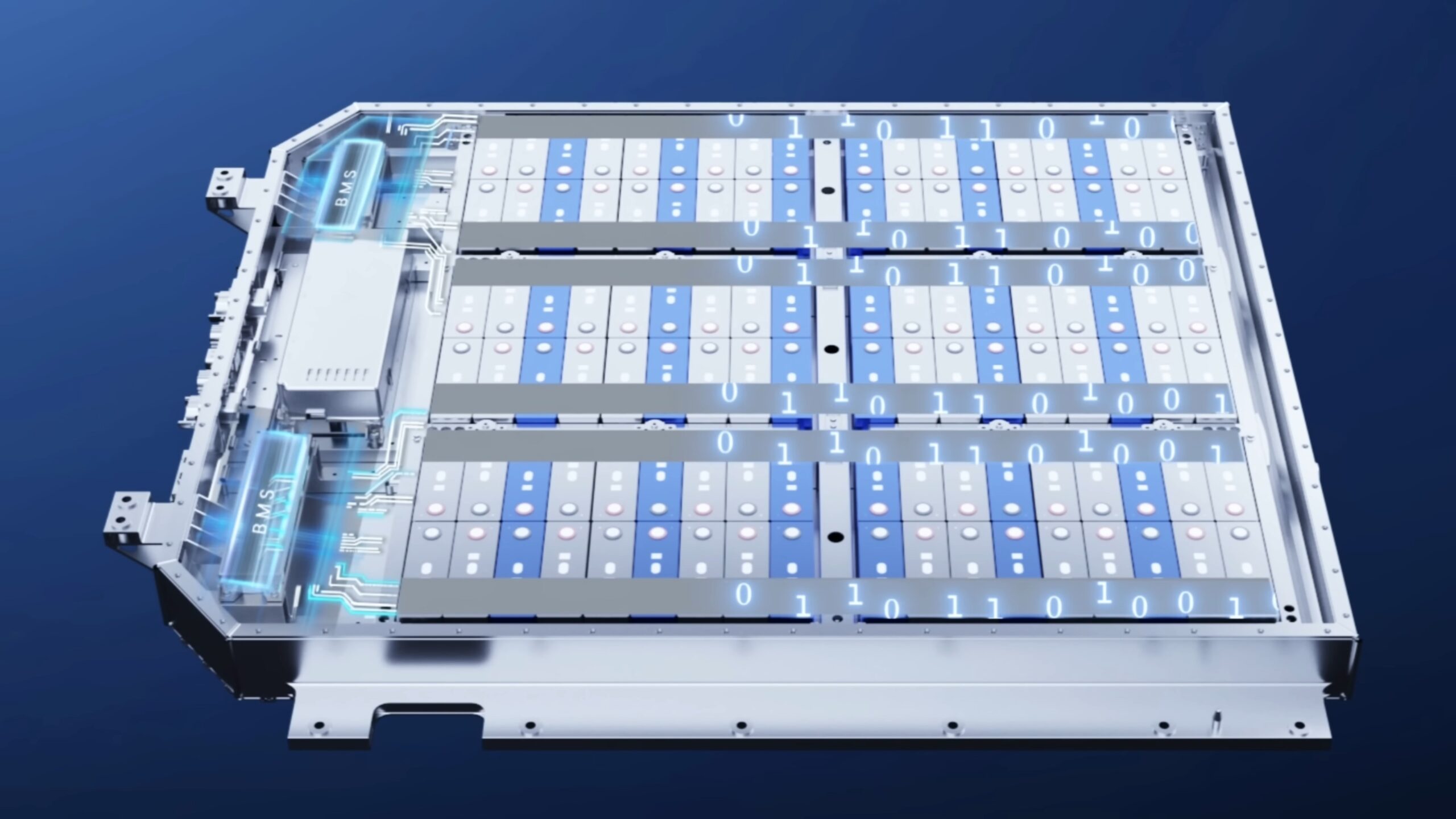
According to the company, the secret sauce includes a more uniform cathode coating to reduce structural damage, a special additive in the electrolyte that helps repair tiny cracks, and a temperature responsive layer on the separator that slows ion movement if things start getting too hot. The battery management system can also target cooling to specific hot spots inside the pack.
All of this is aimed at making fast charging routine rather than something owners try to avoid. That could be a game changer for high mileage users like taxis, ride hailing drivers and delivery fleets, where downtime really is money.
Of course, this is all on paper for now. CATL hasn’t said when mass production will start or which cars will get these long-life packs first. Real world results often look less glamorous than lab numbers.
Still, if even half these claims hold up, the idea that an EV battery might outlast the car wrapped around it suddenly sounds a lot less like science fiction and a lot more like your next used car bargain.
New Kaveya will use a U.S.-made solid-state battery pack.
Factorial’s battery tech also works with existing EV factories.
Karma delayed the hypercar to improve driving range and feel.
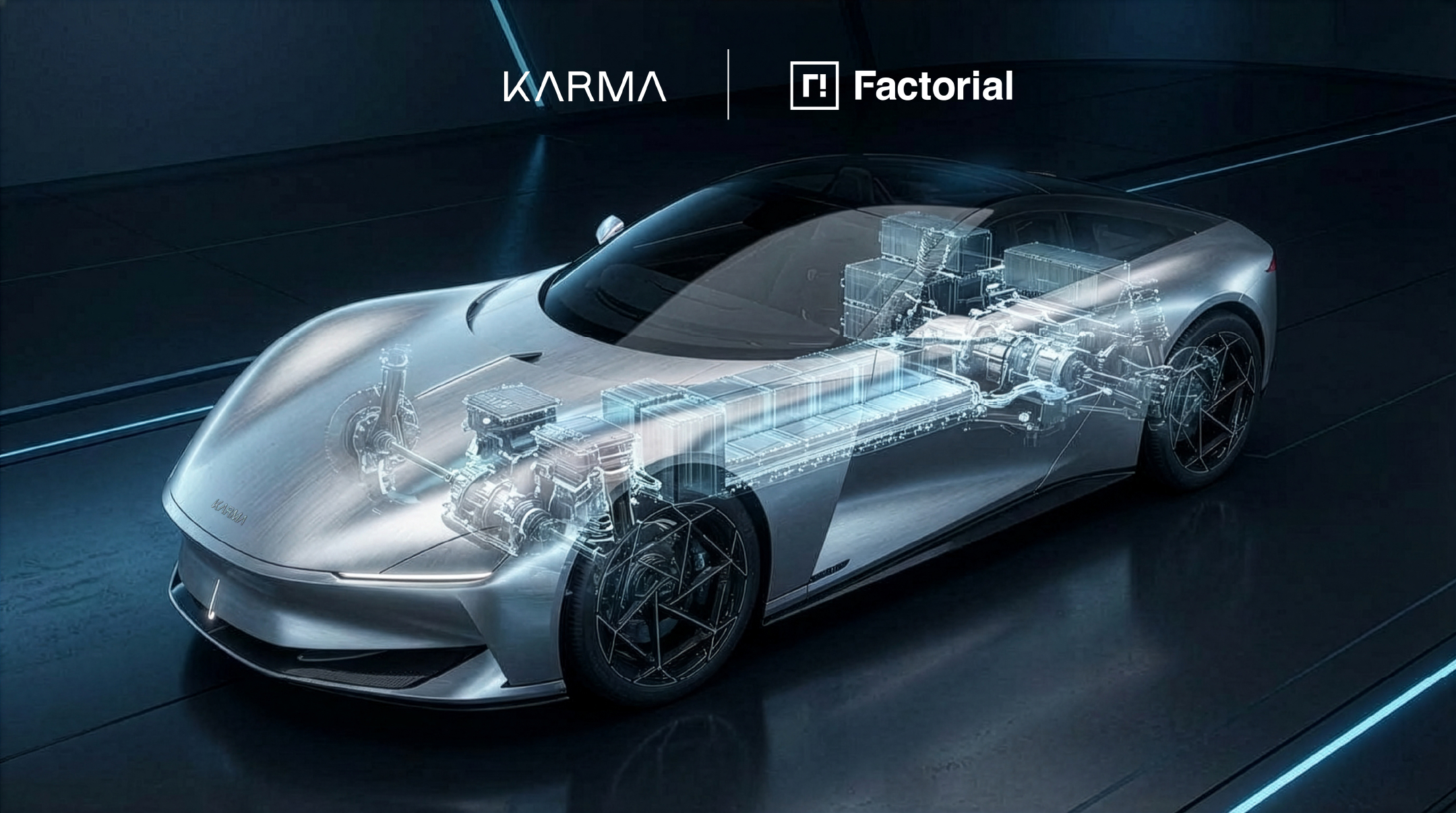
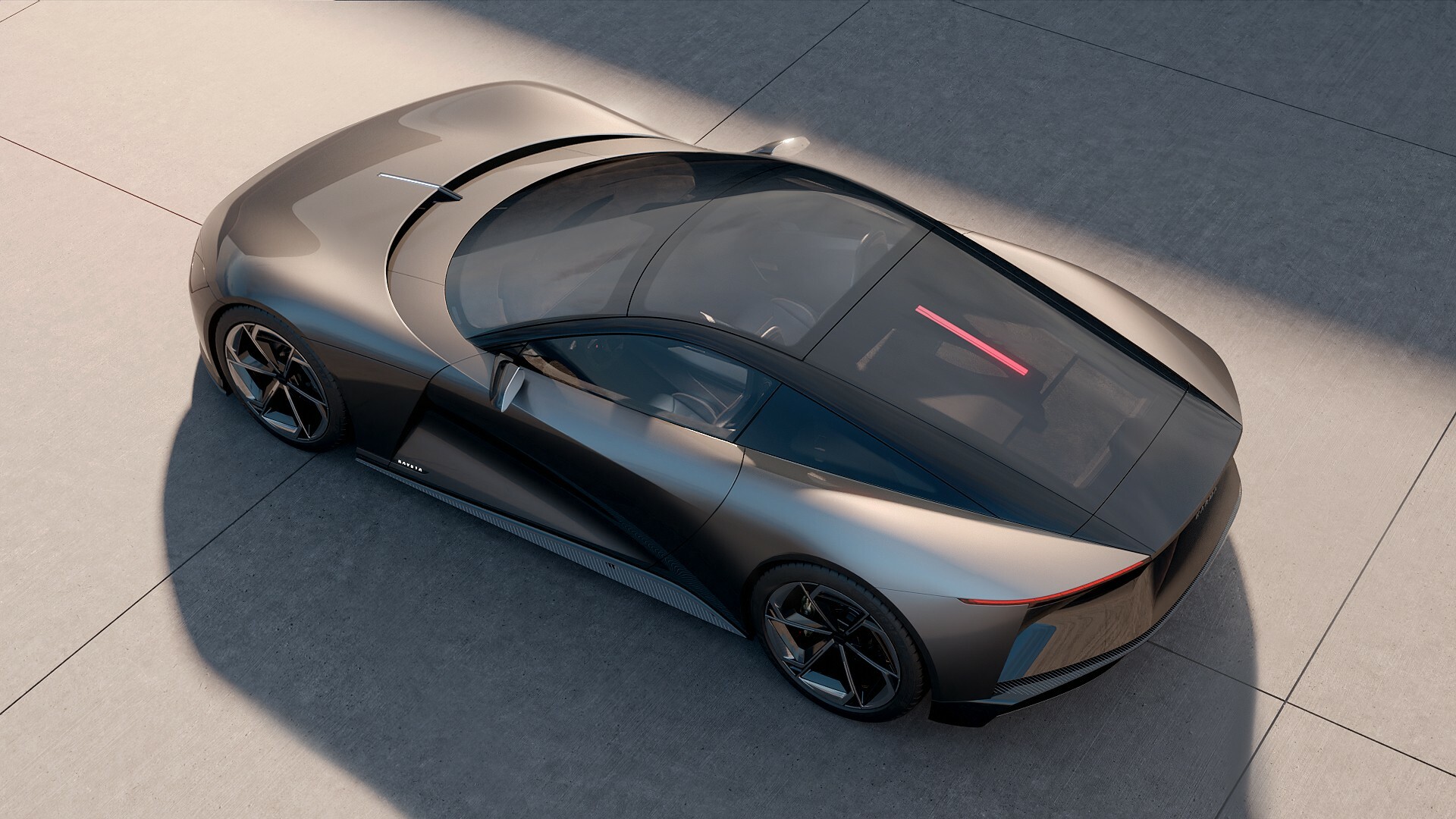
Karma Automotive, which emerged from the remnants of Fisker Automotive, recently ended production of its range-extender Revero and is now turning its attention to a far more ambitious project. In late 2023, the American brand previewed the Kaveya, a hypercar-rivaling electric coupe, and to bring it to life, it’s teaming up with a local solid-state battery manufacturer.
That partner is Factorial, a solid-state battery company with close ties to several global OEMs, including Mercedes-Benz, Hyundai, Kia, and Stellantis. Its technology will form the foundation of Karma’s upcoming electric platform, which will debut in the Kaveya.
Technical specifications for the battery pack are not yet known, but Factorial’s proprietary FEST (Factorial Electrolyte System Technology) solid-state design is engineered for compatibility with current lithium-ion manufacturing lines.
Up to 80 percent of the same production equipment can be reused, which could dramatically cut costs and speed up deployment. For a low-volume manufacturer like Karma, that’s a critical advantage.
Waiting Until the Tech Could Catch Up
Karma president and chief executive Marques McCammon says Karma delayed the launch of the Kaveya last year as it “did not yet see a clear path to fully delivering the uncompromising driving experience that should be expected from an American ultra-luxury vehicle company.”
Thanks to its partnership with Factorial, the company’s solid-state battery will offer better efficiency and a longer driving range compared with traditional lithium-ion batteries. When the Kaveya was first previewed, it was going to use a 120 kWh pack with over 250 miles (402 km) of range. In all likelihood, the new solid-state pack will be smaller and offer more range.
“Launching our first U.S. passenger-vehicle program with Karma is a meaningful milestone for Factorial,” said CEO Siyu Huang. “FEST was built to scale, and this milestone not only highlights the energy and performance solid-state technology can deliver but also underscores the global leadership of U.S. technology innovators. High-performance luxury vehicles require cutting-edge innovation, and this collaboration showcases what’s possible when performance leads.”
Hypercar Performance
Karma has already outlined some of the performance targets for the Kaveya. Dual electric motors will combine for a total output of 1,180 hp and 1,270 lb-ft (1,720 Nm) of torque. That should be enough to get the car from zero to 60 mph (96 km/h) in under 3 seconds, with a projected top speed north of 180 mph (290 km/h)
Neue Klasse iX3 demand is so strong BMW is adding production shifts early.
Strong early sales bode well for the Neue Klasse 3-Series arriving later this year.
BMW also upgrades charging, colors, and range for iX3 and other electric SUVs.
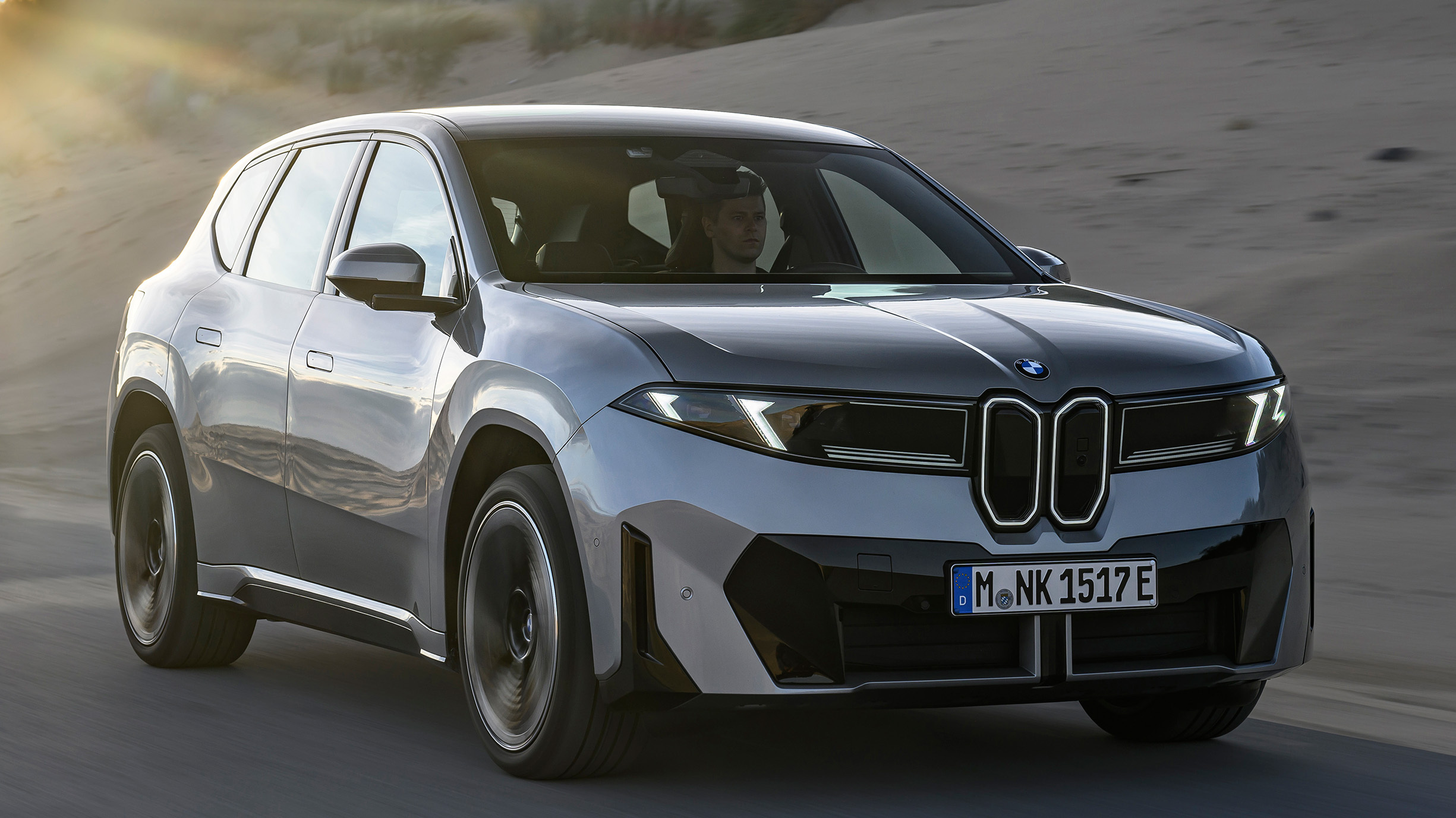
The Neue Klasse revolution has barely begun and already BMW has a problem. The good kind. Buyers are snapping up the new electric iX3 so quickly that it’s almost sold out through to the end of 2026, forcing the company to speed up plans for extra factory shifts.
That’s a big vote of confidence for a car customers haven’t even driven yet. Since its debut last autumn, the iX3 has made up around a third of BMW’s electric orders in Europe. Deliveries only start in March, yet much of the planned output is effectively gone.
To keep wait times from stretching into next winter, BMW is bringing forward a second production shift at its brand new Debrecen plant in Hungary, Auto News reports. The site is BMW’s first factory built purely for EVs, and while it’ll eventually build around 150,000 cars a year, it’s currently still ramping up. Clearly, that ramp needs to get steeper.
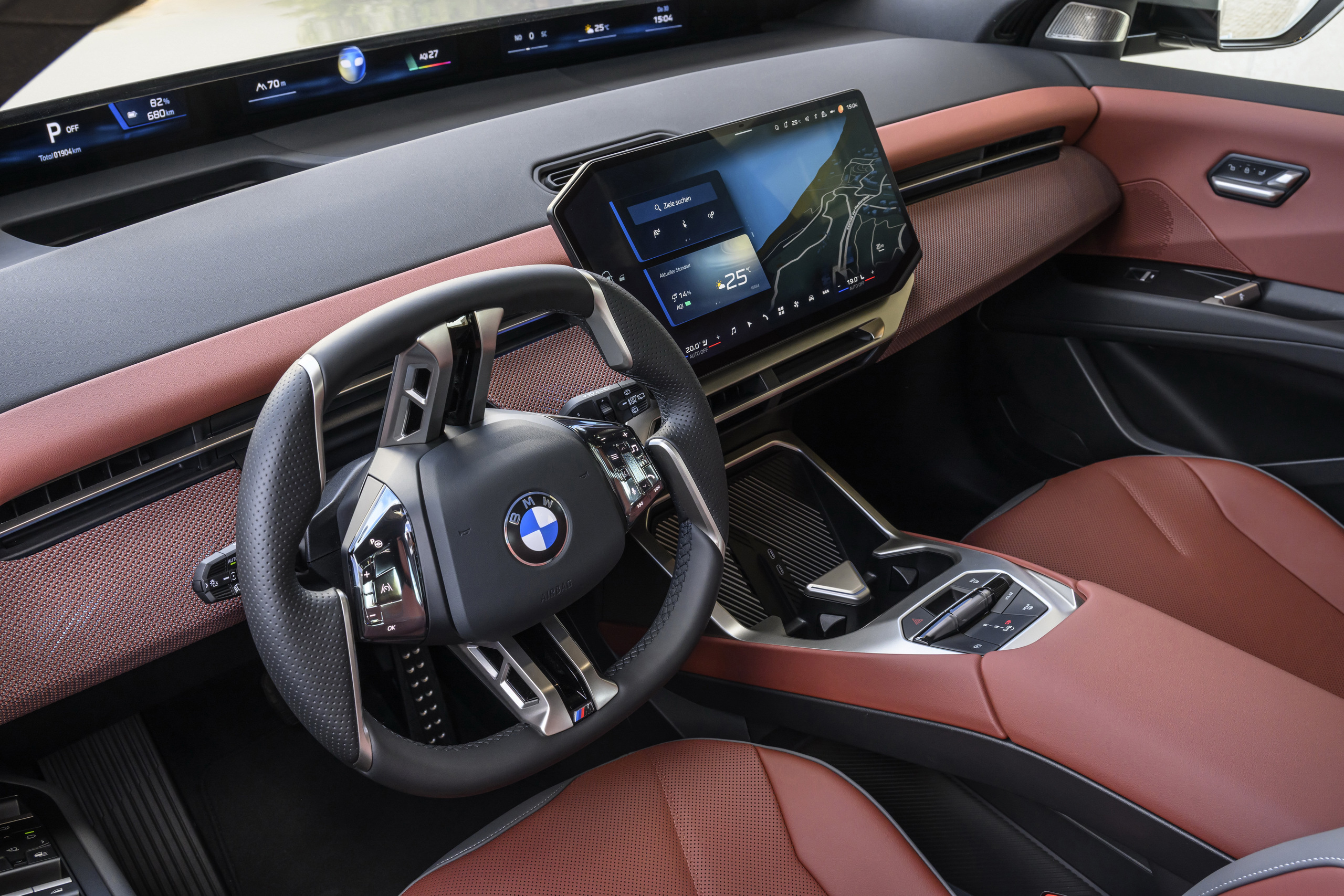
This matters far beyond one SUV. The iX3 is the first model on BMW’s all-new Neue Klasse platform and wears a bravely modern Neue Klasse design, as will the upcoming Neue Klasse 3-Series replacement later this year.
If buyers are this enthusiastic about the SUV, BMW executives will be feeling pretty good about the electric sports sedan waiting in the wings.
More Tech, More Color for 2027MY
BMW isn’t wasting time in adding polishing the package to make the iX3 even more desirable, either. From spring, the compact SUV gains an optional 22 kW AC charging upgrade, cutting home and workplace charging times. It also adds Vehicle to Load capability, letting owners power external devices at up to 3.7 kW and making camping trips more sophisticated.
There are fresh paint choices, too, including Eucalyptus Green metallic and Frozen Space Silver, plus some interior trim tweaks and the introduction of new options like a stainless steel loading sill, bright white steering wheel and an M-striped key.
Smaller SUVs Get Some Love Too
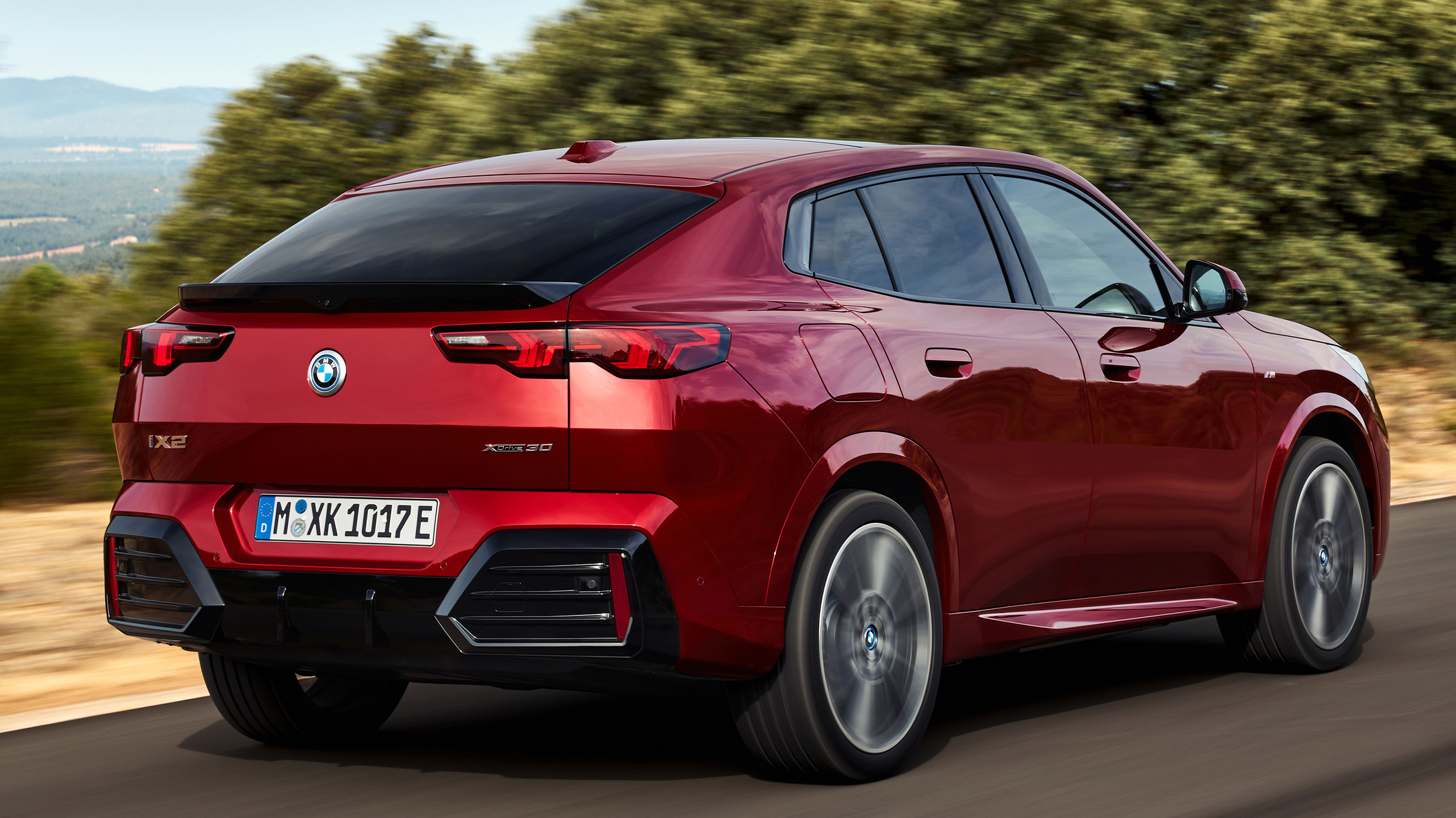
And BMW’s older electric crossovers aren’t being ignored this year, even if the iX3 is hogging the spotlight. The iX1 and iX2 receive more efficient silicon-carbide semiconductor components, boosting range by about 25 miles (40 km) depending on version. That’s a handy bump for everyday usability, improving the previously poor range of the best-performing eDrive20 to as much as 319 miles (514 km).
Tesla Model S battery replacement can exceed the car’s value.
Third-party battery options exist but still may not be worth it.
Used Model S values range between $10K and $15K today.
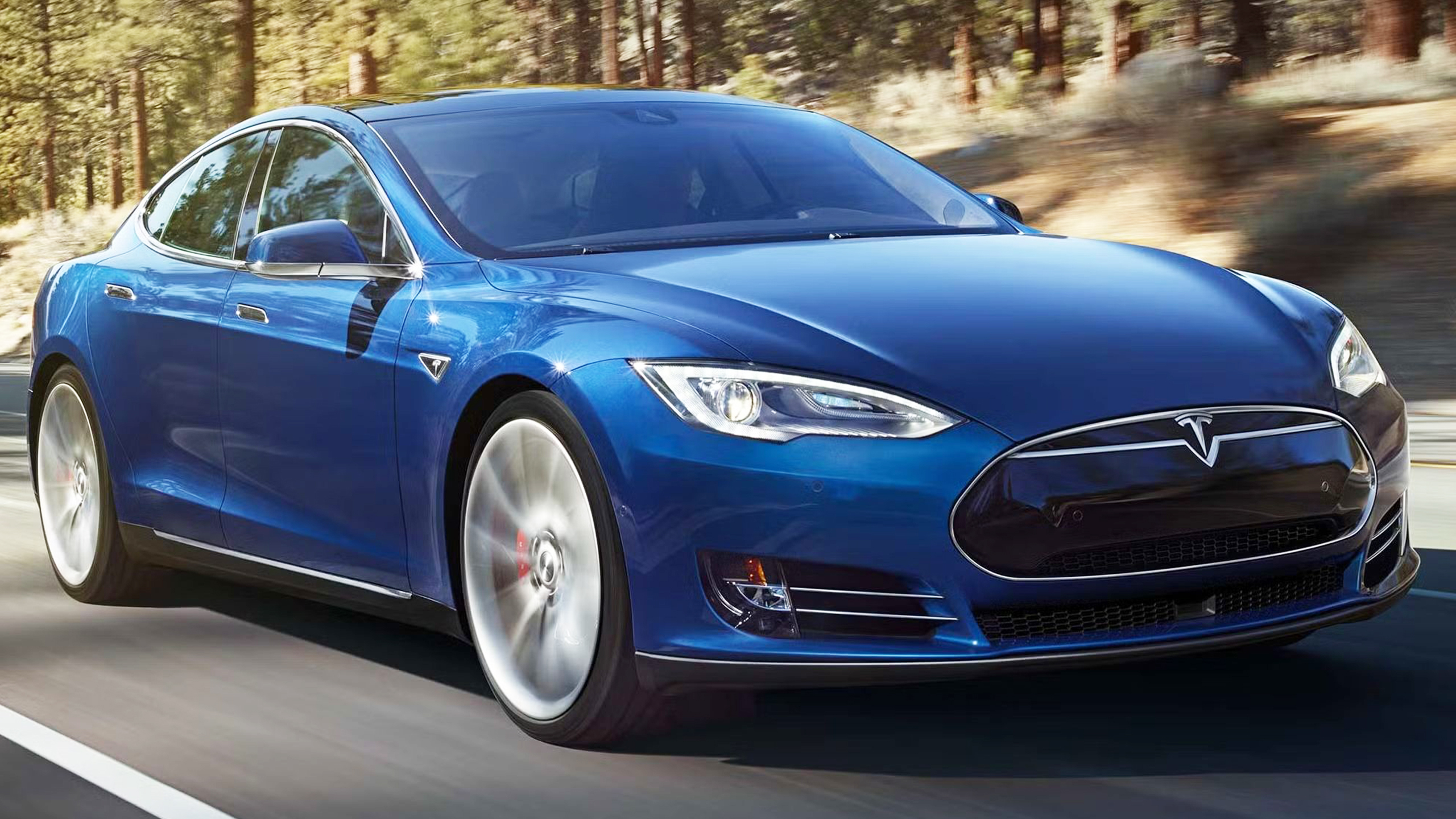
Electric vehicles come with some obvious perks, from impressive acceleration and near-silent driving to charging costs that are typically, though not always, lower than fueling up with gas. But there’s a flipside when things go wrong. Battery replacement isn’t just expensive, it can easily eclipse the value of the car itself.
Just ask the owner of this 2013 Tesla Model S, for example, now staring down a quote that’s far from reasonable.
This particular owner recently visited a Tesla service center in Madison, Wisconsin, to get estimates on a battery replacement. According to a post they shared on Reddit, they inquired about swapping out the existing 60 kWh pack for either the same model or a larger 90 kWh version. Both options came back with steep price tags that likely outstrip the resale value of the vehicle.
Battery Pricing Hits Hard
A replacement 60 kWh pack would cost $13,830. That includes $580.50 for labor, based on a 2.58-hour installation time. The rest, a hefty $13,250, covers just the battery itself. Not exactly light on the wallet for what is now Tesla’s smallest available battery on offer.
The price jumps significantly for the larger 90 kWh pack. The pack alone costs $18,000, with an additional $4,500 required to unlock its full capacity. Factor in installation and necessary replacement parts, and the total comes to $23,262.
That’s well beyond what most used Model S vehicles from the same year are currently worth. We found they typically range from $10,000 to $15,000, depending on trim and condition. From a financial standpoint, the upgrade cost doesn’t pencil out.
Reddit u/sirromnek
Reddit user u/sirromnek shared the experience, sparking discussion among other Tesla owners. While many have logged hundreds of thousands of miles on their original packs without issue, battery degradation isn’t unheard of. For some, the only path forward is a costly replacement.
While going directly to Tesla is an option, new batteries can also be purchased from third-party suppliers, often at a much lower price than Tesla offers. However, given that decade-old Tesla Model S sedans are barely fetching over $12,000, buying a replacement pack probably isn’t worth it.
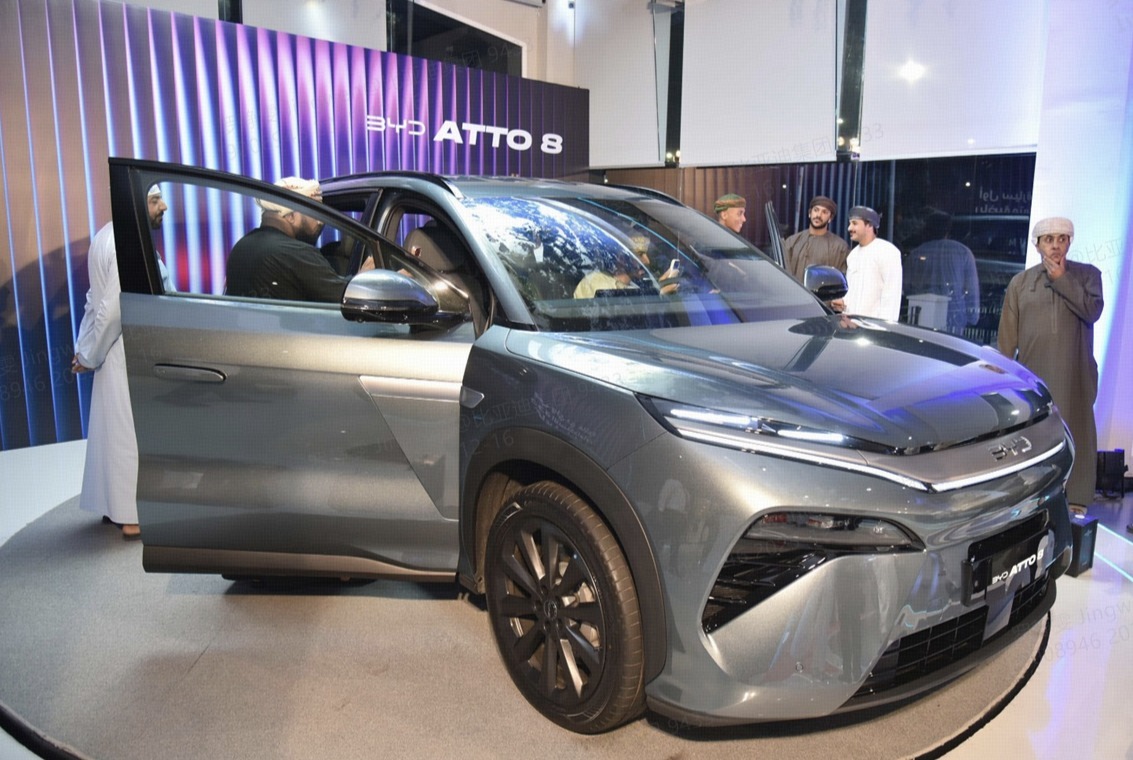
Ford is reportedly in early talks to source batteries from BYD.
Move follows Ford canceling projects and taking a $19.5B charge.
BYD has rapidly expanded battery production beyond China.
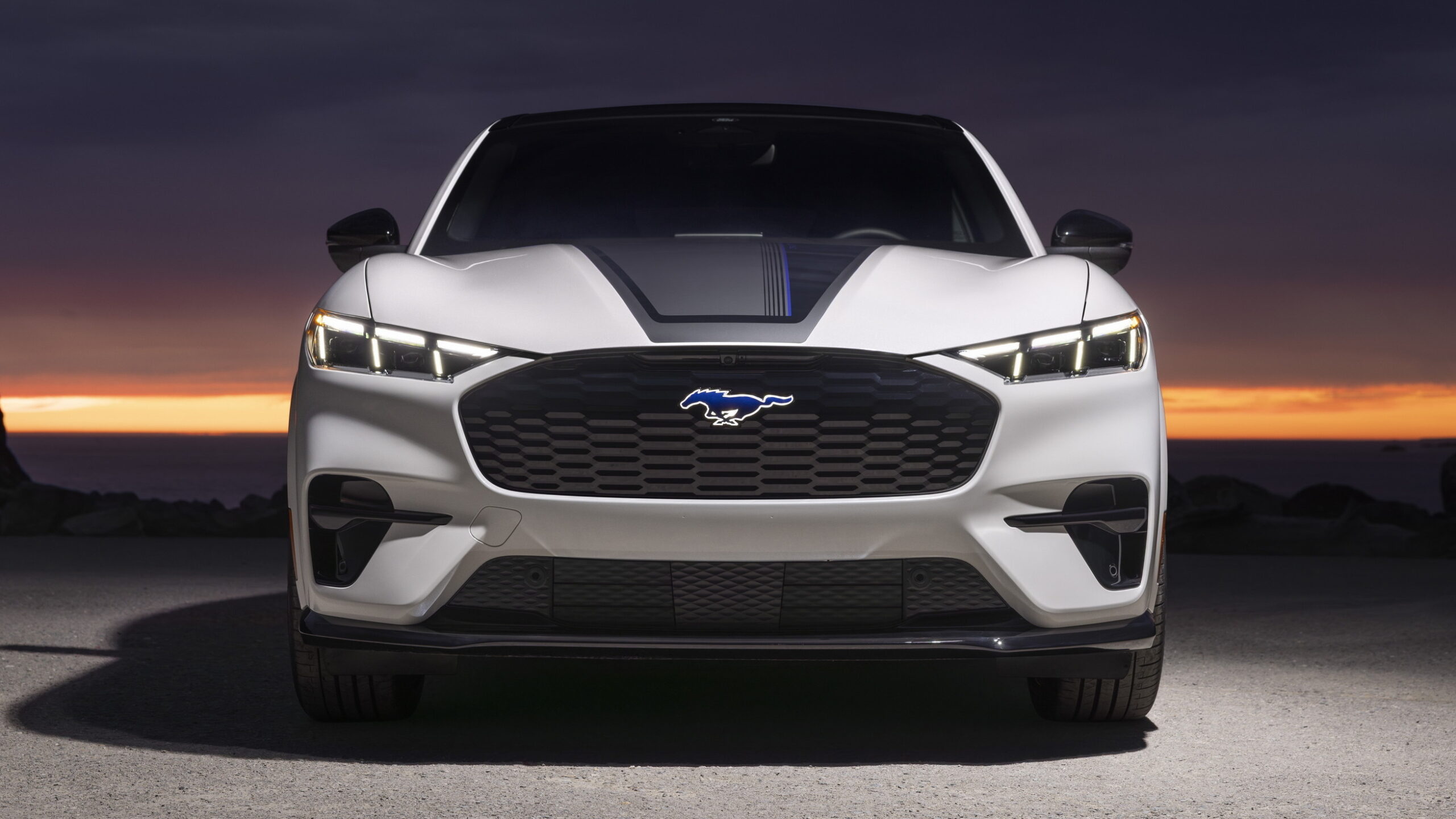
Ford may be pulling back on its EV spending, but it isn’t walking away from electrification. Instead, the company may be taking a different approach, and that path could lead through China. Specifically, Ford is reportedly in early talks with BYD, the Chinese automaker that recently overtook Tesla as the world’s top EV producer, to source batteries for its next hybrid models.
According to a report from the Wall Street Journal citing sources familiar with the discussions, nothing is finalized, and a deal may not materialize. But if it does, one idea under consideration is for Ford to begin importing BYD batteries for use in its factories outside the United States.
In response to the report, Ford didn’t confirm or deny the potential partnership. “We talk to lots of companies about many things,” the company told the newspaper. That kind of non-denial tends to say a lot without saying much at all.
BYD, while primarily known for its battery manufacturing in China, has been expanding its footprint globally, building production capacity in Brazil, Europe, and Southeast Asia.
Why BYD Might Be the Answer
The timing of these talks aligns with a major pivot inside Ford. The company recently took a $19.5 billion write-down after scaling back several electric vehicle initiatives, including high-profile battery joint ventures with South Korean firms SK On and LG Energy Solution. Alongside a renewed emphasis on internal combustion models, Ford plans to grow its hybrid lineup, an area where BYD already excels.
The Chinese company is one of the world’s largest producers of hybrid vehicles and battery packs for cars. Instead of launching new factories or reviving shelved partnerships, Ford might simply buy batteries directly, streamlining its supply chain as it targets a goal of having hybrids, plug-in hybrids, and EVs make up half of its global sales by 2030.
Will Washington Push Back on a BYD Deal?
Any such deal is unlikely to go over well with the Trump administration. Shortly after reports surfaced that Ford was speaking with BYD, top Trump trade advisor Peter Navarro hit out at the plan.
“So Ford wants to simultaneously prop up a Chinese competitor’s supply chain and make it more vulnerable to that same supply chain extortion?,” he wrote on X. “What could go wrong here?”
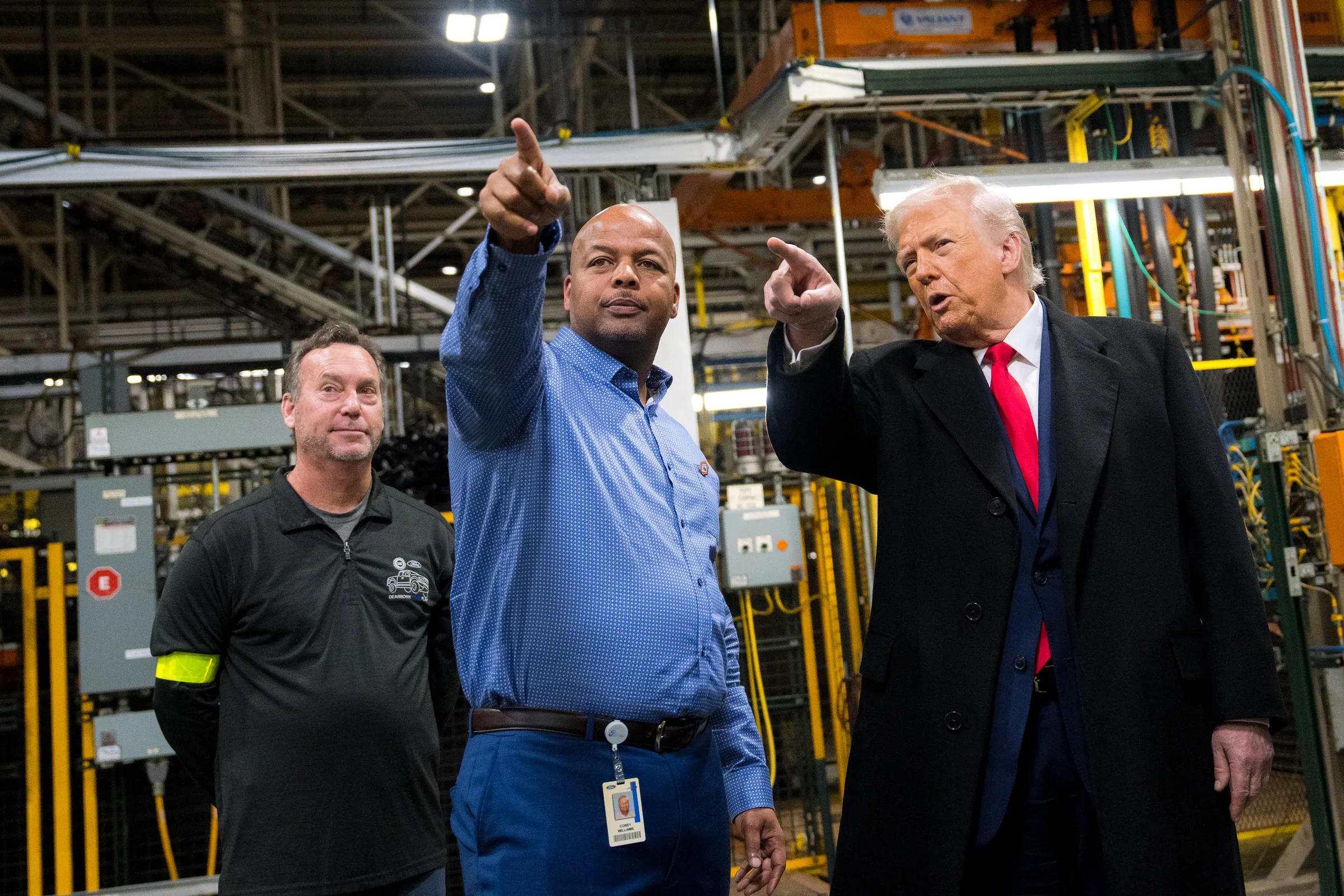
Meanwhile, Donald Trump took a different tack. Speaking to reporters in Detroit, the president said he welcomed foreign firms, including those from China and Japan, setting up shop in the States, as long as they employed American workers.
“You know, those tariffs are keeping the foreign autoworkers. Now, if they want to come in and build the plant and hire you and hire your friends and your neighbors, that’s great. I love that,” said Trump. ” Let China come in. Let Japan come in. They are. And they’ll be building plants, but they’re using our labor.
Advancements in battery innovation are transforming both mobility and energy systems alike, according to Kurt Kelty, vice president of battery, propulsion, and sustainability at General Motors (GM). At the MIT Energy Initiative (MITEI) Fall Colloquium, Kelty explored how GM is bringing next-generation battery technologies from lab to commercialization, driving American battery innovation forward. The colloquium is part of the ongoing MITEI Presents: Advancing the Energy Transition speaker series.
At GM, Kelty’s team is primarily focused on three things: first, improving affordability to get more electric vehicles (EVs) on the road. “How do you drive down the cost?” Kelty asked the audience. “It's the batteries. The batteries make up about 30 percent of the cost of the vehicle.” Second, his team strives to improve battery performance, including charging speed and energy density. Third, they are working on localizing the supply chain. “We've got to build up our resilience and our independence here in North America, so we're not relying on materials coming from China,” Kelty explained.
To aid their efforts, resources are being poured into the virtualization space, significantly cutting down on time dedicated to research and development. Now, Kelty’s team can do modeling up front using artificial intelligence, reducing what previously would have taken months to a couple of days.
“If you want to modify … the nickel content ever so slightly, we can very quickly model: ‘OK, how’s that going to affect the energy density? The safety? How’s that going to affect the charge capability?’” said Kelty. “We can look at that at the cell level, then the pack level, then the vehicle level.”
Kelty revealed that they have found a solution that addresses affordability, accessibility, and commercialization: lithium manganese-rich (LMR) batteries. Previously, the industry looked to reduce costs by lowering the amount of cobalt in batteries by adding greater amounts of nickel. These high-nickel batteries are in most cars on the road in the United States due to their high range. LMR batteries, though, take things a step further by reducing the amount of nickel and adding more manganese, which drives the cost of batteries down even further while maintaining range.
Lithium-iron-phosphate (LFP) batteries are the chemistry of choice in China, known for low cost, high cycle life, and high safety. With LMR batteries, the cost is comparable to LFP with a range that is closer to high-nickel. “That’s what’s really a breakthrough,” said Kelty.
LMR batteries are not new, but there have been challenges to adopting them, according to Kelty. “People knew about it, but they didn’t know how to commercialize it. They didn’t know how to make it work in an EV,” he explained. Now that GM has figured out commercialization, they will be the first to market these batteries in their EVs in 2028.
Kelty also expressed excitement over the use of vehicle-to-grid technologies in the future. Using a bidirectional charger with a two-way flow of energy, EVs could charge, but also send power from their batteries back to the electrical grid. This would allow customers to charge “their vehicles at night when the electricity prices are really low, and they can discharge it during the day when electricity rates are really high,” he said.
In addition to working in the transportation sector, GM is exploring ways to extend their battery expertise into applications in grid-scale energy storage. “It’s a big market right now, but it’s growing very quickly because of the data center growth,” said Kelty.
When looking to the future of battery manufacturing and EVs in the United States, Kelty remains optimistic: “we’ve got the technology here to make it happen. We’ve always had the innovation here. Now, we’re getting more and more of the manufacturing. We’re getting that all together. We’ve got just tremendous opportunity here that I’m hopeful we’re going to be able to take advantage of and really build a massive battery industry here.”
This speaker series highlights energy experts and leaders at the forefront of the scientific, technological, and policy solutions needed to transform our energy systems. Visit MITEI’s Events page for more information on this and additional events.
Kurt Kelty (right), vice president of battery, propulsion, and sustainability at General Motors, joined MITEI's William Green at the 2025 MIT Energy Initiative Fall Colloquium. Kelty explained how GM is developing and commercializing next-generation battery technologies.
Around 80 percent of global energy production today comes from the combustion of fossil fuels. Combustion, or the process of converting stored chemical energy into thermal energy through burning, is vital for a variety of common activities including electricity generation, transportation, and domestic uses like heating and cooking — but it also yields a host of environmental consequences, contributing to air pollution and greenhouse gas emissions.
Sili Deng, the Doherty Chair in Ocean Utilization and associate professor of mechanical engineering at MIT, is leading research to drive the transition from the heavy dependence on fossil fuels to renewable energy with storage.
“I was first introduced to flame synthesis in my junior year in college,” Deng says. “I realized you can actually burn things to make things, [and] that was really fascinating.”
Deng says she ultimately picked combustion as a focus of her work because she likes the intellectual challenge the concept offers. “In combustion you have chemistry, and you have fluid mechanics. Each subject is very rich in science. This also has very strong engineering implications and applications.”
Deng’s research group targets three areas: building up fundamental knowledge on combustion processes and emissions; developing alternative fuels and metal combustion to replace fossil fuels; and synthesizing flame-based materials for catalysis and energy storage, which can bring down the cost of manufacturing battery materials.
One focus of the team has been on low-cost, low-emission manufacturing of cathode materials for lithium-ion batteries. Lithium-ion batteries play an increasingly critical role in transportation electrification (e.g., batteries for electric vehicles) and grid energy storage for electricity that is generated from renewable energy sources like wind and solar. Deng’s team has developed a technology they call flame-assisted spray pyrolysis, or FASP, which can help reduce the high manufacturing costs associated with cathode materials.
FASP is based on flame synthesis, a technology that dates back nearly 3,000 years. In ancient China, this was the primary way black ink materials were made. “[People burned] vegetables or woods, such that afterwards they can collect the solidified smoke,” Deng explains. “For our battery applications, we can try to fit in the same formula, but of course with new tweaks.”
The team is also interested in developing alternative fuels, including looking at the use of metals like aluminum to power rockets. “We’re interested in utilizing aluminum as a fuel for civil applications,” Deng says, because aluminum is abundant in the earth, cheap, and it’s available globally. “What we are trying to do is to understand [aluminum combustion] and be able to tailor its ignition and propagation properties.”
Among other accolades, Deng is a 2025 recipient of the Hiroshi Tsuji Early Career Researcher Award from the Combustion Institute, an award that recognizes excellence in fundamental or applied combustion science research.
Before batteries lose power, fail suddenly, or burst into flames, they tend to produce faint sounds over time that provide a signature of the degradation processes going on within their structure. But until now, nobody had figured out how to interpret exactly what those sounds meant, and how to distinguish between ordinary background noise and significant signs of possible trouble.
Now, a team of researchers at MIT’s Department of Chemical Engineering have done a detailed analysis of the sounds emanating from lithium ion batteries, and has been able to correlate particular sound patterns with specific degradation processes taking place inside the cells. The new findings could provide the basis for relatively simple, totally passive and nondestructive devices that could continuously monitor the health of battery systems, for example in electric vehicles or grid-scale storage facilities, to provide ways of predicting useful operating lifetimes and forecasting failures before they occur.
The findings were reported Sept. 5 in the journal Joule, in a paper by MIT graduate students Yash Samantaray and Alexander Cohen, former MIT research scientist Daniel Cogswell PhD ’10, and Chevron Professor of Chemical Engineering and professor of mathematics Martin Z. Bazant.
“In this study, through some careful scientific work, our team has managed to decode the acoustic emissions,” Bazant says. “We were able to classify them as coming from gas bubbles that are generated by side reactions, or by fractures from the expansion and contraction of the active material, and to find signatures of those signals even in noisy data.”
Samantaray explains that, “I think the core of this work is to look at a way to investigate internal battery mechanisms while they’re still charging and discharging, and to do this nondestructively.” He adds, “Out there in the world now, there are a few methods that exist, but most are very expensive and not really conducive to batteries in their normal format.”
To carry out their analysis, the team coupled electrochemical testing with recording of the acoustic emissions, under real-world charging and discharging conditions, using detailed signal processing to correlate the electrical and acoustic data. By doing so, he says, “we were able to come up with a very cost-effective and efficient method of actually understanding gas generation and fracture of materials.”
Gas generation and fracturing are two primary mechanisms of degradation and failure in batteries, so being able to detect and distinguish those processes, just by monitoring the sounds produced by the batteries, could be a significant tool for those managing battery systems.
Previous approaches have simply monitored the sounds and recorded times when the overall sound level exceeded some threshold. But in this work, by simultaneously monitoring the voltage and current as well as the sound characteristics, Bazant says, “We know that [sound] emissions happen at a certain potential [voltage], and that helps us identify what the process might be that is causing that emission.”
After these tests, they would then take the batteries apart and study them under an electron microscope to detect fracturing of the materials.
In addition, they took a wavelet transform — essentially, a way of encoding the frequency and duration of each signal that is captured, providing distinct signatures that can then be more easily extracted from background noise. “No one had done that before,” Bazant says, “so that was another breakthrough.”
Acoustic emissions are widely used in engineering, he points out, for example to monitor structures such as bridges for signs of incipient failure. “It’s a great way to monitor a system,” he says, “because those emissions are happening whether you’re listening to them or not,” so by listening, you can learn something about internal processes that would otherwise be invisible.
With batteries, he says, “we often have a hard time interpreting the voltage and current information as precisely as we’d like, to know what’s happening inside a cell. And so this offers another window into the cell’s state of health, including its remaining useful life, and safety, too.” In a related paper with Oak Ridge National Laboratory researchers, the team has shown that acoustic emissions can provide an early warning of thermal runaway, a situation that can lead to fires if not caught. The new study suggests that these sounds can be used to detect gas generation prior to combustion, “like seeing the first tiny bubbles in a pot of heated water, long before it boils,” says Bazant.
The next step will be to take this new knowledge of how certain sounds relate to specific conditions, and develop a practical, inexpensive monitoring system based on this understanding. “Now, we know what to look for, and how to correlate that with lifetime and health and safety,” Bazant says.
One possible application of this new understanding, Samantaray says, is “as a lab tool for groups that are trying to develop new materials or test new environments, so they can actually determine gas generation or active material fracturing without having to open up the battery.”
Bazant adds that the system could also be useful for quality control in battery manufacturing. “The most expensive and rate-limiting process in battery production is often the formation cycling,” he says. This is the process where batteries are cycled through charging and discharging to break them in, and part of that process involves chemical reactions that release some gas. The new system would allow detection of these gas formation signatures, he says, “and by sensing them, it may be easier to isolate well-formed cells from poorly formed cells very early, even before the useful life of the battery, when it’s being made,” he says.
The work was supported by the Toyota Research Institute, the Center for Battery Sustainability, the National Science Foundation, and the Department of Defense, and made use of the facilities of MIT.nano.
The MIT researchers used a customized experimental platform to simultaneously record acoustic emissions and perform electrochemical tests on lithium ion batteries.
A German startup believes it has the recipe for electric vehicle battery cells that are cheaper, more energy dense, and less problematic for the environment than current lithium-ion cells. But commercialization seems a long way off. Theion announced Thursday in a press release that it is close to completing a 15 million euro (approximately $16.2...
Chinese researchers claim to have developed a process to recover nearly all of the lithium from used electric vehicle batteries for recycling. The Independent (via InsideEVs) reports on study results first published in the German academic journal Angewandte Chemie claiming recovery of 99.99% of lithium from a used battery, as well as 97% of nickel...
Deployment of 5-minute battery swaps could support hundreds of commercial EVs Ample says it's a straightforward retrofit, switching to its own battery packs Solution is less demanding on the grid than fast-charging stations California-based startup Ample is looking to deploy its battery-swapping tech with fleets of electric delivery trucks in...
Chinese battery firm CATL and automaker Nio are preparing to launch what the two companies claim will be the world's largest electric vehicle battery swapping network. CATL and Nio announced a technical partnership last year that included battery swapping, but on Tuesday they confirmed plans to start coordinating efforts as they build out battery...

 Login
Login