Industry consultant Derek Graham will take the stage at STN EXPO East to shed light on the trends of illegal passing trends involving school buses, the work of the National Highway Traffic Safety Administration to combat the crimes, and provide recommendations to protect the students on and off the yellow school bus.
The “Trends in Illegal Passing Awareness & Enforcement” session will be held March 29, on day four of the conference in Charlotte-Concord, North Carolina. Graham has a career history of passion for school bus safety as an industry consultant and former state director of pupil transportation with the North Carolina Department of Public Instruction as well as past president of the National Association of State Directors of Pupil Transportation Services (NASDPTS).
Graham’s home state of North Carolina was the first state to initiate an annual count of illegal passing trends, dating back to 1998. He co-coordinated the annual NASDPTS national school bus illegal passing count with Charlie Hood, at the time state director for Florida and later the association’s executive director, and worked with NHTSA to implement one of the first enforcement campaign using stop arm cameras.
During the STN EXPO East session, Graham will look at recent NASDPTS survey findings that found a drop in the number of illegal passing incidents last past school year. As he analyzes this and other federal data, he will explain the recent efforts of federally directed NHTSA studies that look at various components of the student transportation ecosystem to help reduce instances of illegal passing. This will include a breakdown of the NHTSA toolkit for planning safety school bus stops and routes and their evaluation of the technology offerings that target illegal passing as well their effectiveness. Graham will use his detailed knowledge of the nuance of federal laws and initiatives to summarize and explain how this research influenced NHTSA’s recommended actions to improve school bus safety.
Attendees will gain practical insights into how the results of these initiatives at the federal level can help further safety at their operations.
Early Bird savings ends Feb. 13. Register for the conference by the deadline to save $100 on main conference registration. The six-day conference will feature dozens of educational sessions, the Bus Technology Summit and Green Bus Summit, the hands-on National School Bus Inspection Training program and unique networking events including the Ride and Drive/Product Demo, Trade Show and Saf-T-Liner Thomas Built Buses Factory Tour. Some of these unique experiences have limited space, register now at stnexpo.com/east.
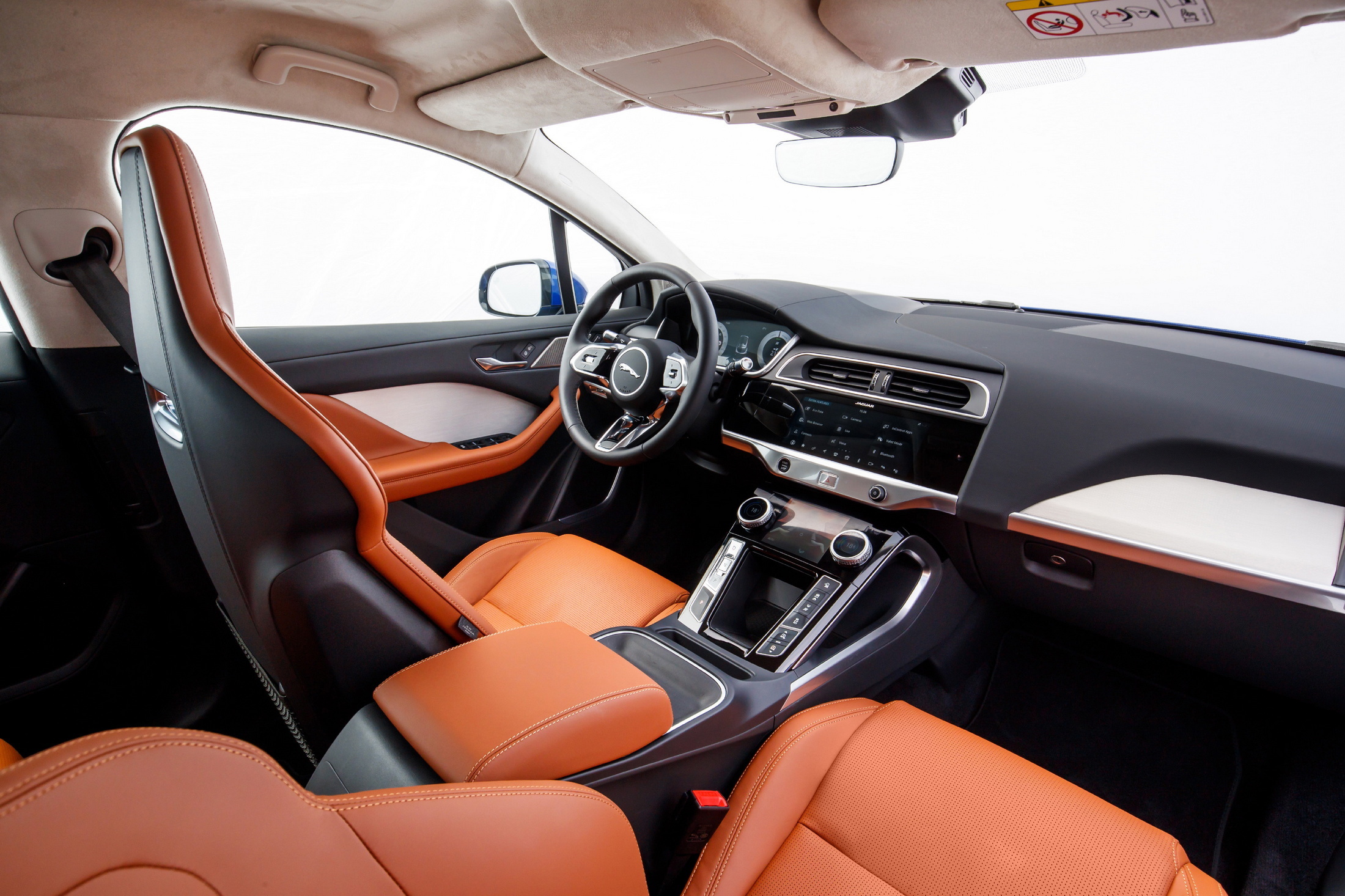
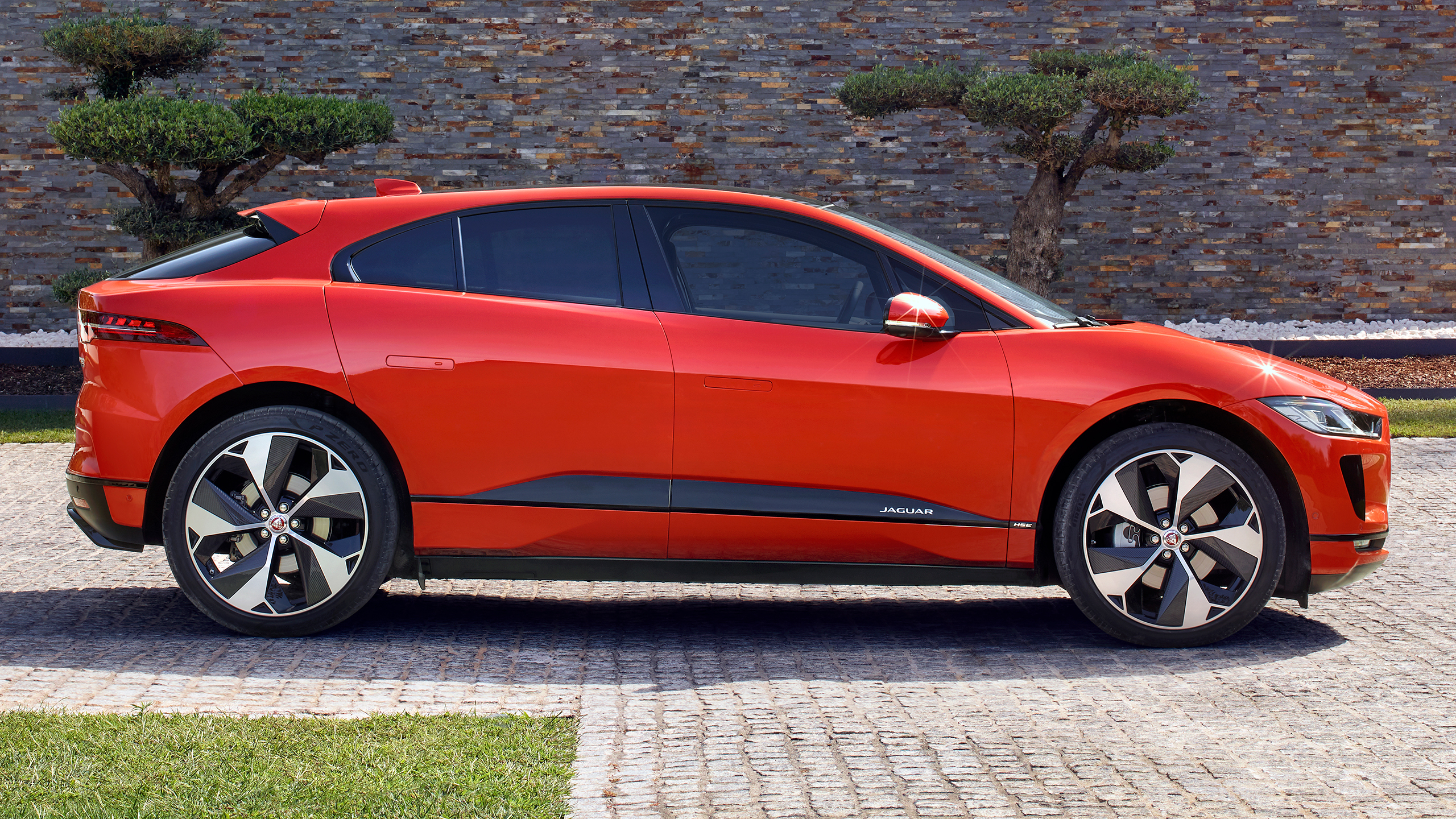
Jaguar is recalling 2,278 I-Paces in the United States.
Battery flaw may cause thermal overload and short circuits.
Affected I-Paces will get software limiting charging capacity.
The Jaguar I-Pace was praised upon its release in 2018, even being named both the World Car of the Year and European Car of the Year in 2019. But that early momentum hasn’t aged well. Over the years, the I-Pace’s reputation has unraveled under the weight of battery-related problems, repeated recalls, and even a US buyback program.
Now, the I-Pace is back in the spotlight for all the wrong reasons. Jaguar has issued yet another recall in the United States due to a serious battery defect, something that doesn’t bode well for its EV aspirations.
More Battery Trouble
This time, the culprit is thermal overload linked to a folded anode tab, which could cause a short circuit. Battery supplier LG has acknowledged there may be additional problems, though investigations are still ongoing.
This latest recall impacts 2,278 I-Paces. Of these, 1,824 are 2020 models built from April 8, 2019, to January 8, 2020, while 454 are 2021 models assembled from March 9, 2020, to June 10, 2021.
According to Jaguar, none of the vehicles involved in this latest recall were taken off the road under prior recall campaigns, nor have their battery packs been replaced, as other I-Paces have.
What Owners Are Being Told
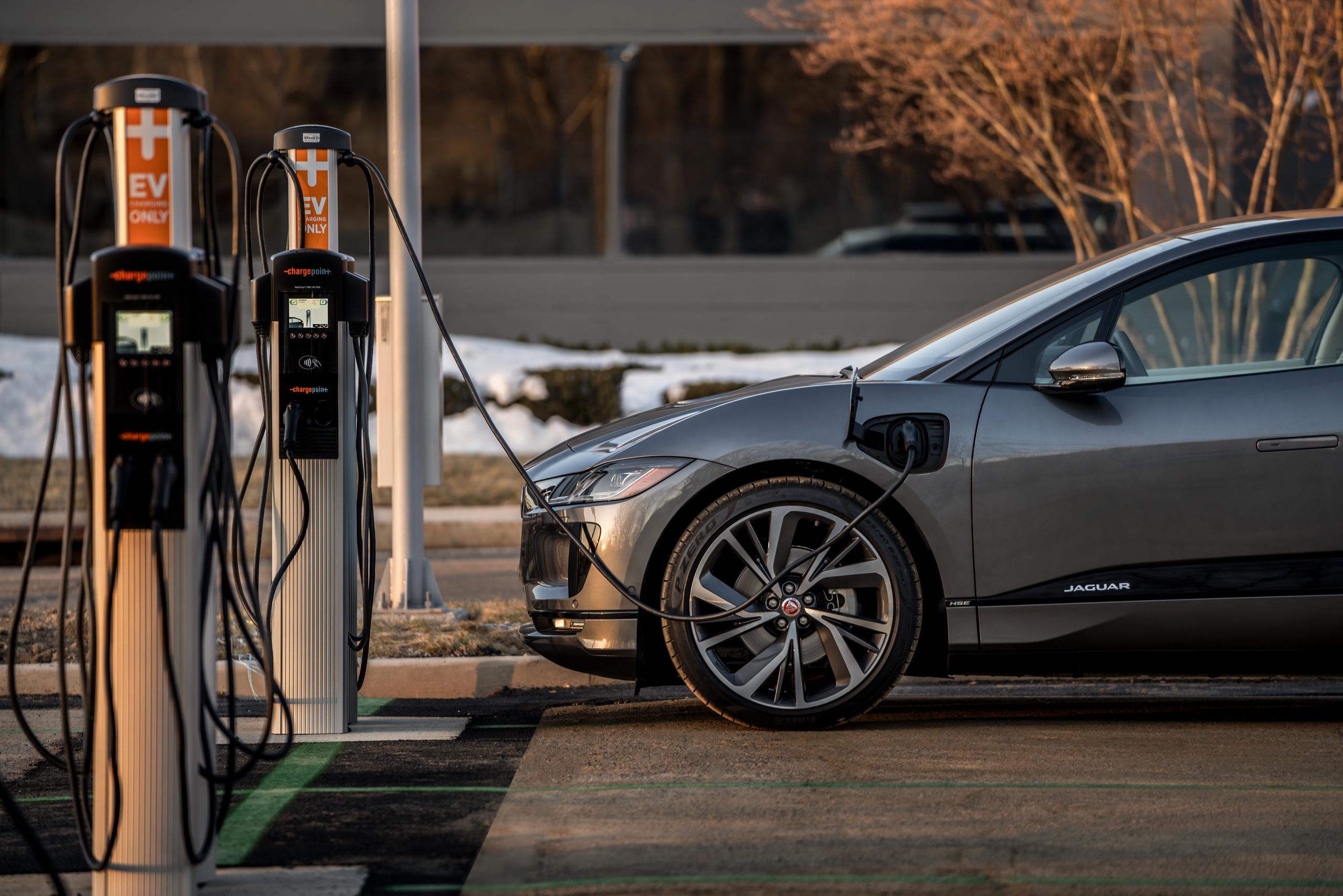
Jaguar is so concerned about the battery issue that it is urging owners to take immediate precautions. Vehicles should be parked outdoors and kept away from buildings. Additionally, owners are being told to charge their vehicles to no more than 90 percent and only when outside.
The issue appears to be persistent. Jaguar has revealed that several 2019 I-Pace models recalled in the past for fire risk were subjected to another recall in 2024. These cases prompted a deeper examination of the battery system, leading directly to the current action.
Impacted models will will receive updated software that limits the maximum state of charge to 90 percent while Jaguar continues work on a permanent fix. Dealers will be notified of the recall starting February 19, and owners should expect official communication from Jaguar no later than April 3.
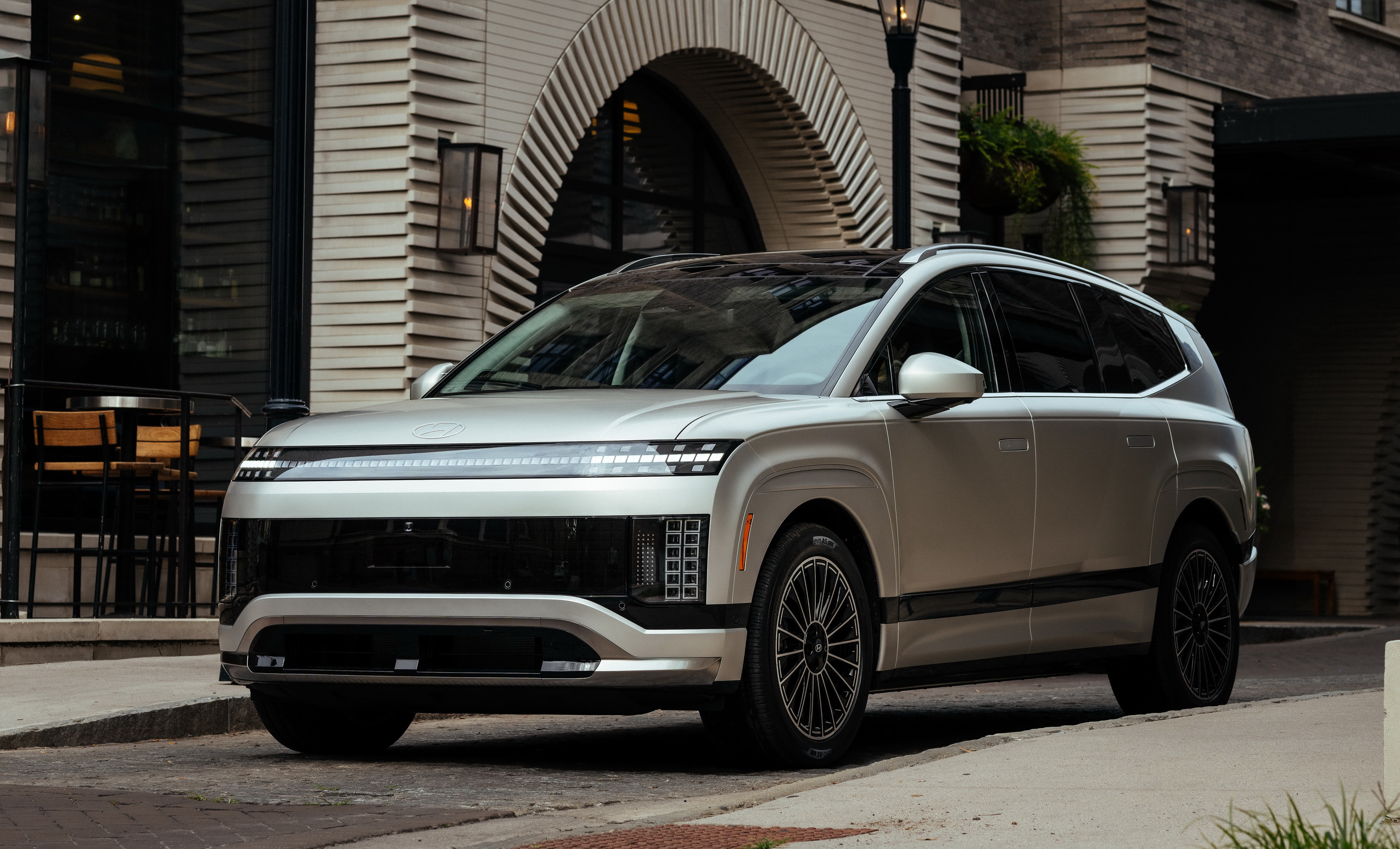
Hyundai recalled Ioniq 5 and 9 for a battery pack issue.
Some high-voltage busbars may not be torqued correctly.
Faulty bolts could lead to fire risk or fail-safe mode.
Hyundai is recalling two of its newest electric models, the Ioniq 5 and Ioniq 9, in the United States due to a potential fire risk stemming from a battery defect. Both models are currently produced at the company’s plant in Georgia.
According to Hyundai, the issue involves the battery pack’s internal components and could increase the risk of electrical fire if not addressed. Specifically, a recall notice points to improperly tightened high-voltage busbars during assembly.
If the retention bolts work loose over time, this could lead to electrical arcing within the battery pack, which in turn may trigger a fire. Hyundai also notes that these loose connections could disrupt voltage readings, pushing the vehicle into a fail-safe operating mode.
How Many Vehicles Are Affected?
The recall affects a very limited number of vehicles. Hyundai has identified 21 units of the Ioniq 5 from the 2025 to 2026 model years, built between January 24 and September 8, 2025. Additionally, just six Ioniq 9s produced from April 8 to September 12, 2025, are impacted.
The issue was first identified in November, when Mobis North America Electrified, Hyundai’s in-house battery supplier, discovered a battery system assembly unit that failed a quality test. The root cause was traced to under-torqued busbar bolts. By December, Hyundai had compiled a list of potentially affected VINs, and the recall decision followed in January.
Hyundai has confirmed that no related incidents have occurred in the field. So far, there have been no reports of crashes, fires, or injuries linked to the issue.
Starting April 6, Hyundai will notify both owners and dealers. The fix is straightforward. Dealers will inspect the busbar bolts in the battery system assembly and tighten them if necessary.
Another investigation is underway after a Waymo driverless vehicle hit a young pedestrian, this time in Santa Monica, California.
Last month, School Transportation News reported that Waymo’s driverless vehicles are still illegally passing Austin Independent School District school buses in Texas despite multiple attempts to correct the situation. The National Highway Traffic Safety Administration opened a preliminary evaluation Oct. 17, after a Waymo vehicle failed to stop and passed a school bus in Atlanta, Georgia a month earlier.
NHTSA opened another investigation Jan. 28 following the Santa Monica incident, which is about 15 miles west of downtown Los Angeles. The preliminary evaluation states that on Jan. 23 Waymo “reported to the Office of Defects Investigation (ODI) that a Waymo Automated Vehicle (AV) had struck a child near an elementary school earlier that day.”
The incident occurred within two blocks of the Santa Monica elementary school and during normal school drop off hours. Other children, a crossing guard and several double-parked vehicles were in the vicinity.
The child reportedly ran across the street from behind a double-parked SUV towards the school and was struck by the Waymo AV. Waymo reported that the child sustained minor injuries. The Waymo driverless vehicle was operated by the 5th Generation Automated Driving System.
“At Waymo, we are committed to improving road safety, both for our riders and all those with whom we share the road. Part of that commitment is being transparent when incidents occur,” the blog post states.
The company details the incident, noting that it contacted NHTSA and will cooperate with the investigation.
“The event occurred when the pedestrian suddenly entered the roadway from behind a tall SUV, moving directly into our vehicle’s path,” the post notes. “Our technology immediately detected the individual as soon as they began to emerge from behind the stopped vehicle. The Waymo Driver braked hard, reducing speed from approximately 17 mph to under 6 mph before contact was made.”
The Waymo post notes that “a fully attentive human driver in this same situation would have made contact with the pedestrian at approximately 14 mph. This significant reduction in impact speed and severity is a demonstration of the material safety benefit of the Waymo Driver.”
Following contact, the student pedestrian reportedly stood up and walked to the sidewalk, and Waymo called 911. The driveless vehicle moved to the side of the road and stayed there until law enforcement cleared the vehicle.
“This event demonstrates the critical value of our safety systems,” Waymo added. “We remain committed to improving road safety where we operate as we continue on our mission to be the world’s most trusted driver.”
Toyota bZ4X recall stems from incorrect taillights being sold.
Korea-spec lights lack the side marker lamp required in US.
Catalog wrongly listed Korea lights as suitable for US vehicles.
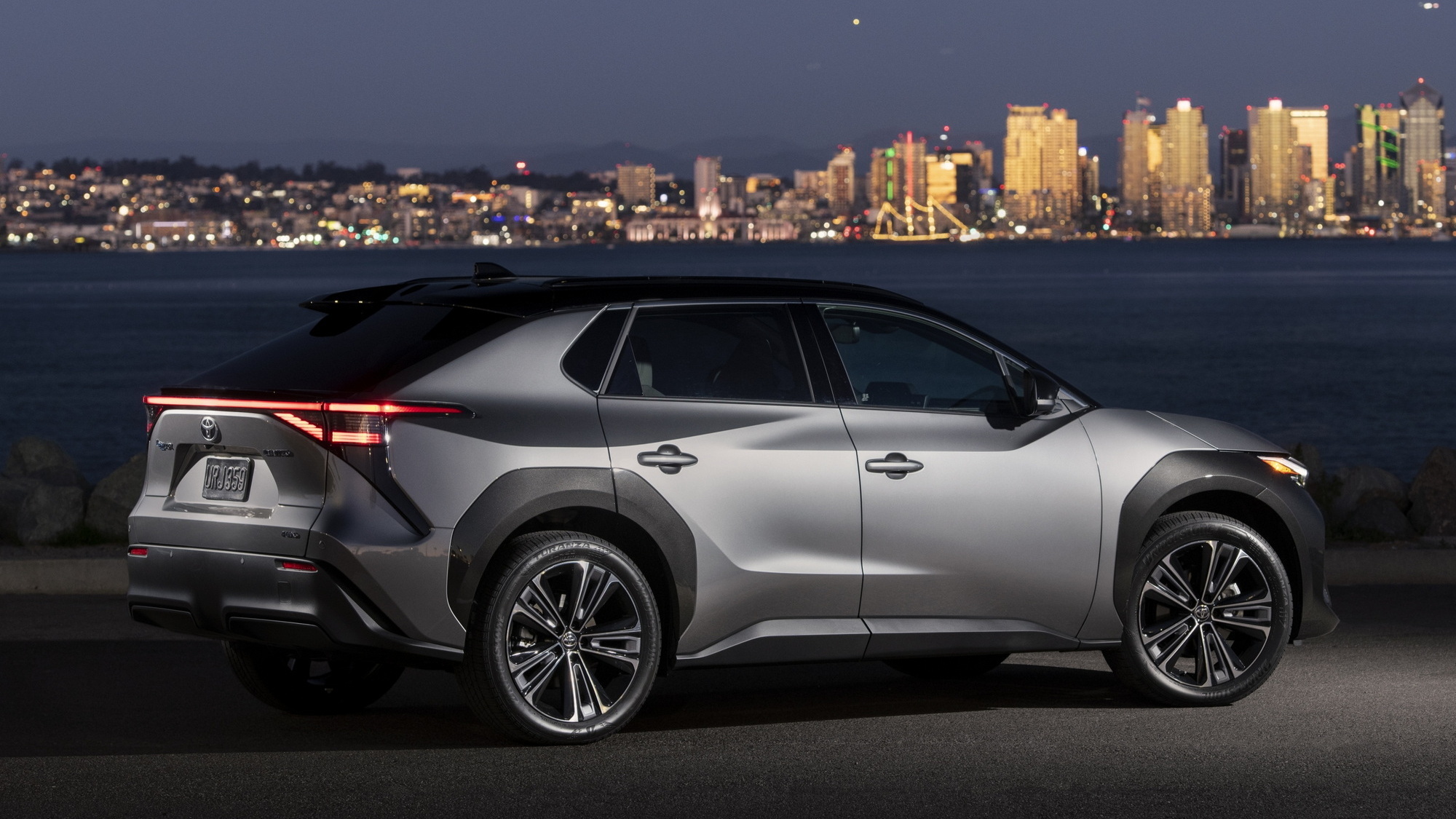
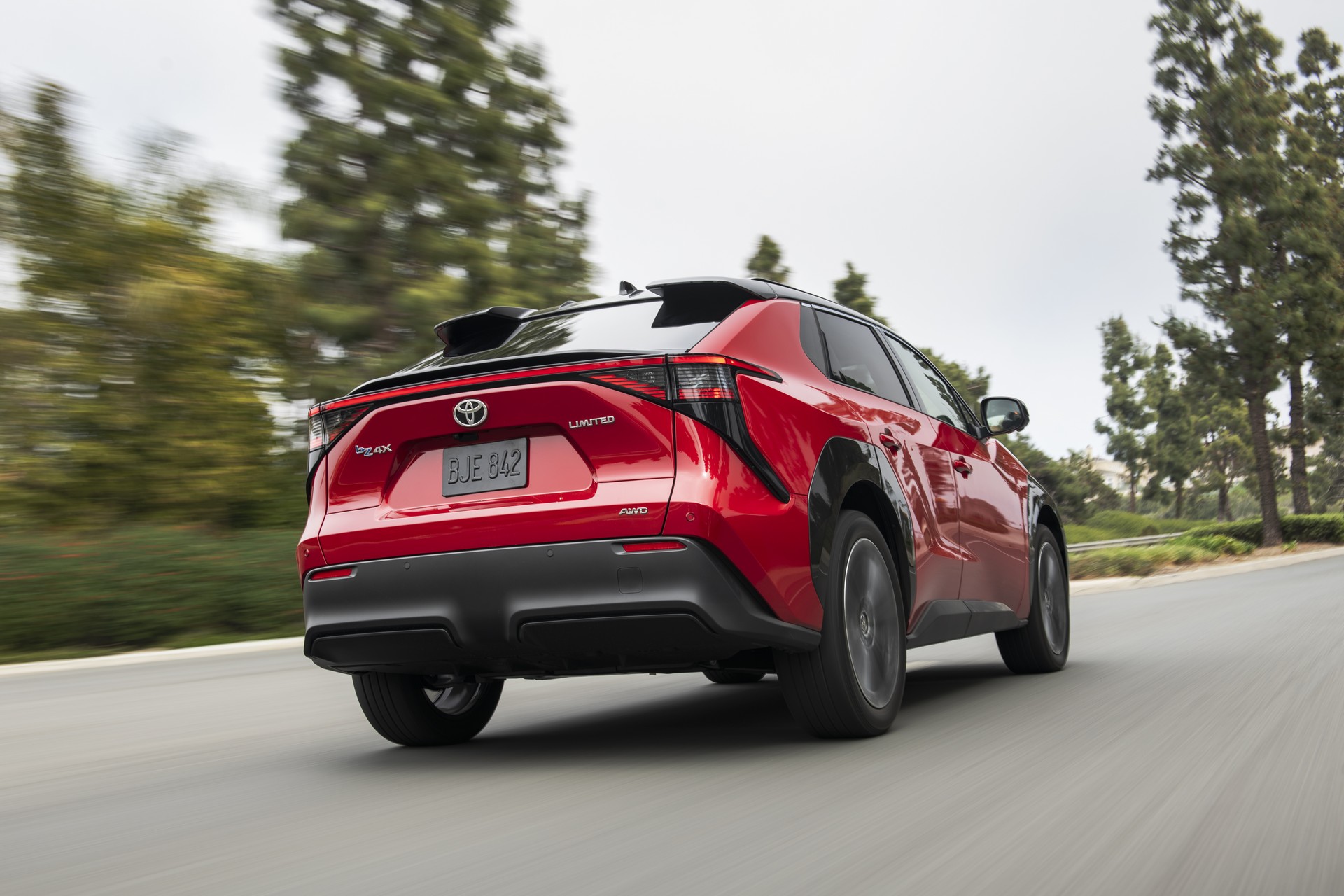
Even the most reliable brands can slip up now and then, and this time, it’s Toyota turn in the spotlight. While known for its solid track record in quality control, the automaker has nonetheless found itself navigating a rather awkward parts mishap involving the bZ4X.
Several units will now face a recall in the United States, all due to a mix-up with replacement taillights. So, what exactly went wrong?
Confused Parts Cross Borders
A recall notice issued by the National Highway Traffic Safety Administration (NHTSA) reveals that taillights originally intended for service replacements in South Korea were accidentally distributed in the U.S. Some of those may have ended up installed on American-market bZ4X models.
Due to differences in automotive lighting regulations between the two countries, the South Korean-spec taillights don’t meet American standards. The key issue lies in the side marker, as the Korean units include a side marker reflector, but U.S. regulations require a side marker lamp to comply with Federal Motor Vehicle Safety Standards.
Toyota first caught wind of the problem in October, when a parts order came through from Canada requesting a Korea-spec left-hand taillight assembly for the bZ4X. That raised a red flag, prompting the company to dig deeper.
The investigation revealed a potential cause of the mix-up. Both U.S. and Korean versions of the replacement parts had been listed in the catalog, but the Korean version also displayed the term “USA” in its description, likely confusing some who purchased a replacement light.
Toyota believes that a total of 79 right-hand and left-hand replacement taillight assemblies designed for South Korea could have ended up in the United States, although it hasn’t specified how many have been fitted to customer cars.
What Happens Now?
Owners who’ve had a taillight replaced on their bZ4X will be notified via mail. Toyota dealers will inspect the installed parts to determine whether the correct U.S.-spec lights were used. If any Korean-spec units are found, Toyota will replace them at no cost.
Rivian issued a recall for 869 R1T and R1S vehicles in the US.
Second-row seatbelt retractor bolt may be loose or missing.
Rattling noise near the C-pillar could hint at the loose bolt.
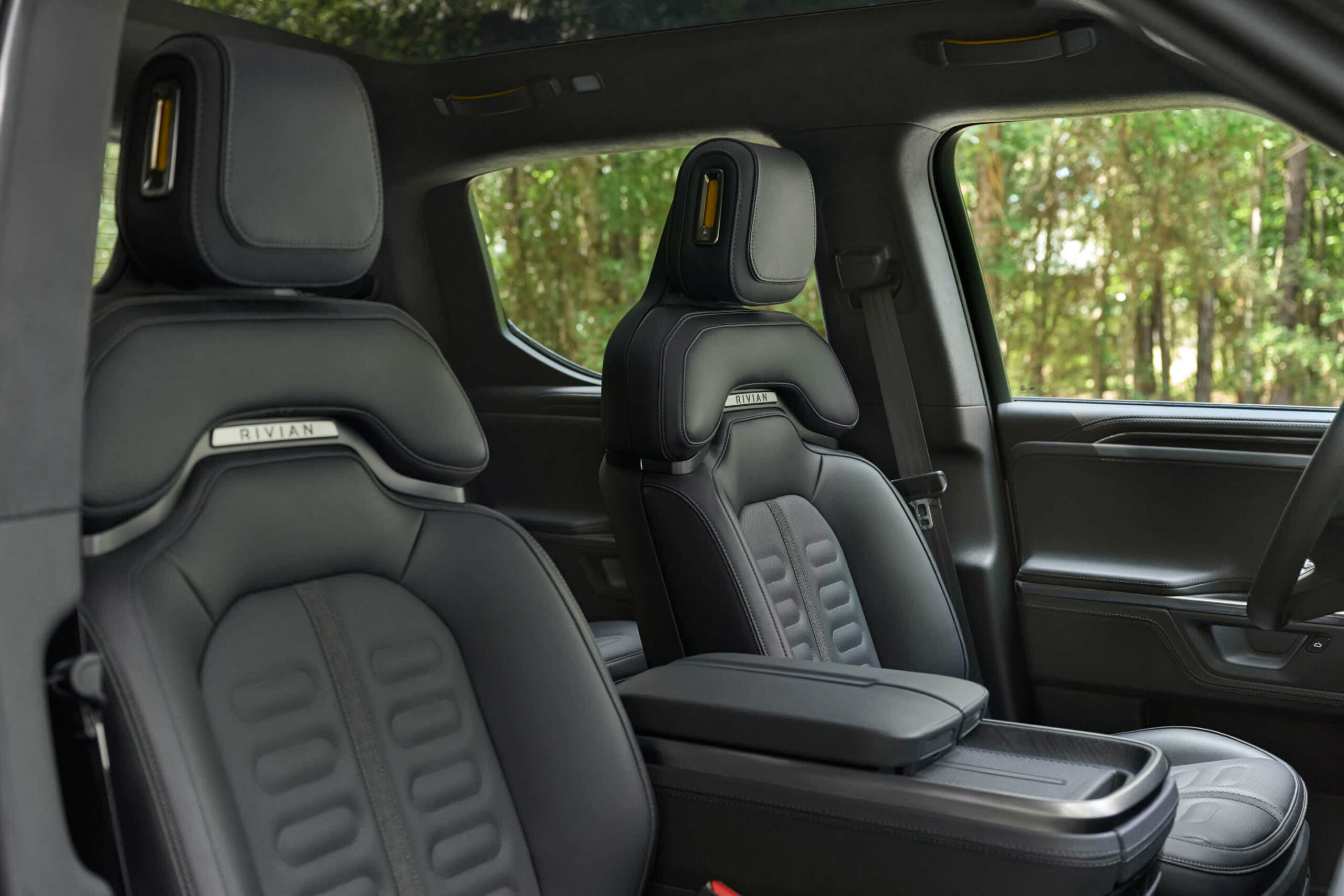
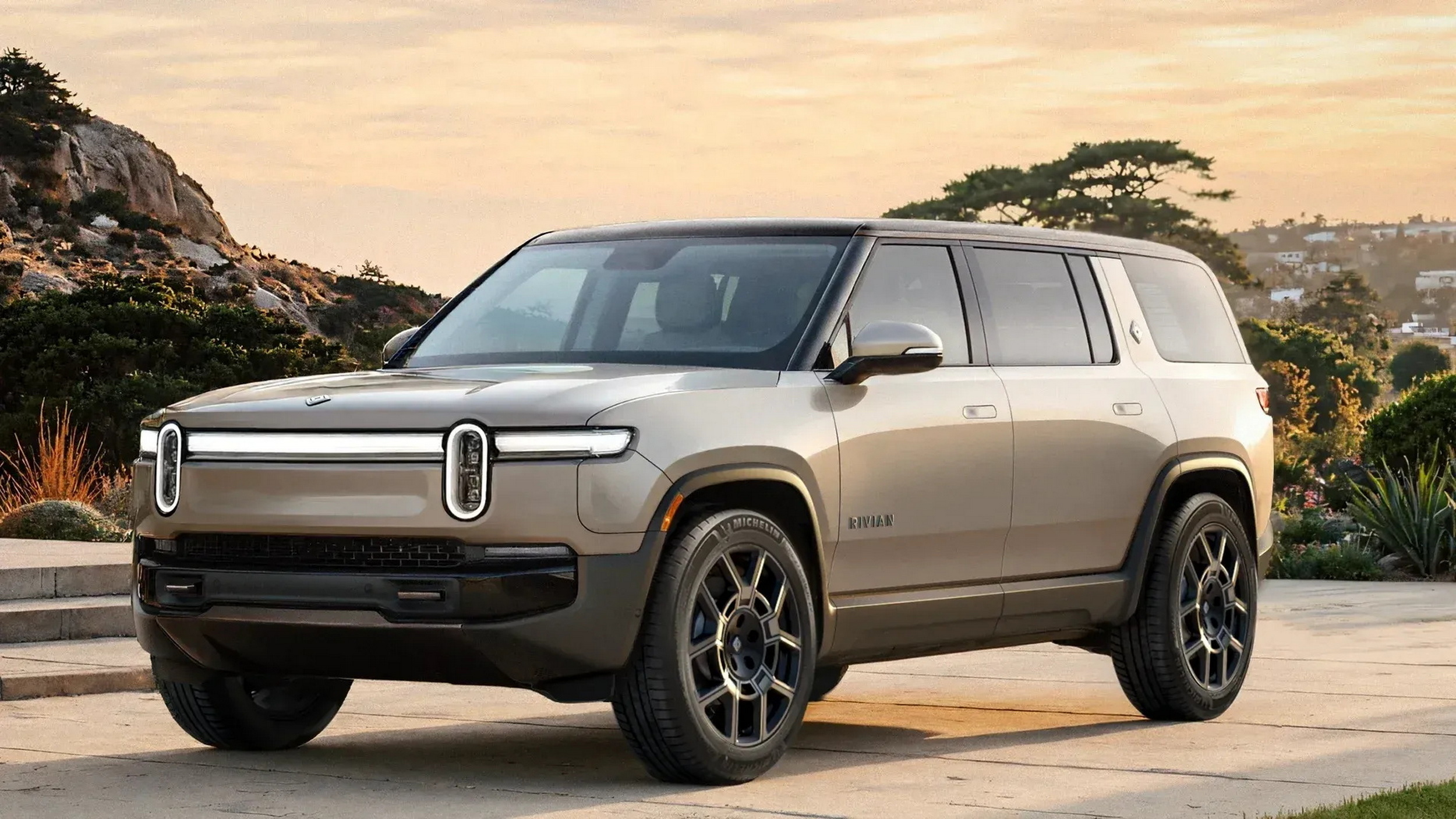
For the second time in as many months, Rivian has issued seatbelt-related recall in the States. While the last action involved nearly 35,000 units of its electric delivery van, this latest one affects a smaller number of consumer vehicles and specifically, the 2022–2025 Rivian R1T and the 2022–2026 Rivian R1S.
According to the company, the second-row seatbelt retractor bolt might not have been correctly installed during production. If improperly secured, the retractor could fail to restrain passengers in a crash, posing a higher risk of injury for those seated on the driver or passenger side.
Rattles May Hint at a Problem
In some cases, owners may notice a rattling sound coming from the area around the left or right C-pillar. Apparently, this can be an early sign that the seatbelt retractor wasn’t firmly fixed in place.
The recall affects a total of 869 vehicles, evenly split between both models. That includes 434 R1T trucks built from September 15, 2021, through April 10, 2025, and 435 R1S SUVs manufactured between May 9, 2022, and May 15, 2025.
Rivian reports no known accidents or injuries linked to the issue. The company first took notice on September 16, 2025, when a technician discovered a loose retractor during a routine service on an R1T. After months of follow-up, Rivian says it hasn’t uncovered additional defective assemblies but has still opted to move forward with the recall as a precaution.
Owners will be alerted to the recall from March 9. To resolve the problem, Rivian will properly secure the seatbelt retractor assembly in any affected vehicles free of charge.
This recall is unrelated to the earlier issue involving the company’s EDV vans. In that case, the problem stemmed from repeated misuse, where the seatbelt pretensioner could be damaged if the driver sat on the belt while it remained buckled beneath them.
GM recalled over 80,000 Equinox EVs in the United States.
The pedestrian warning system isn’t loud enough to hear.
This marks the second recall for the same safety issue.
The Chevrolet Equinox EV is one of GM’s most important electric vehicles, serving as a homegrown competitor to the likes of the Tesla Model Y and Ford Mustang Mach-E. But more than 80,000 units are now being recalled across the United States for a rather unusual reason: they’re too quiet.
Under US regulations, all new electric vehicles must emit a pedestrian warning sound at speeds below 6.2 mph (10 km/h) to ensure they’re audible in areas like parking lots. While the Equinox EV is equipped with such a system, GM has admitted it isn’t doing its job properly. The system was miscalibrated during production and doesn’t produce sufficient sound to alert nearby pedestrians.
Given the volume of vehicles rolling out of GM’s Ramos Arizpe Assembly plant in Mexico, this isn’t the sort of issue that should have slipped through unnoticed. According to the National Highway Traffic Safety Administration (NHTSA), an Equinox EV that can’t be heard poses a genuine risk to pedestrian safety.
The recall affects a total of 81,177 Chevrolet Equinox EVs. Of those, 59,537 are from the 2025 model year, built between July 22, 2024, and August 12, 2025. The remaining 21,640 units belong to the 2026 model year and were assembled between April 7 and December 16 of 2025.
GM launched an internal investigation in November after one of its engineers filed a report through the company’s Speak Up For Safety program, flagging the issue during testing of a 2025 model.
Surprisingly, this isn’t GM’s first brush with a too-quiet Equinox EV. In September of the previous year, the automaker recalled 23,700 units from the 2024 model year for the exact same problem. Those earlier vehicles used a different calibration than the 2025 and 2026 models now being flagged.
The one bit of relief for owners is that the fix is straightforward. GM will deploy an over-the-air update to recalibrate the body control module. For those who prefer in-person service, a dealership visit remains an option. Notifications will begin reaching owners on February 2.
Following a media report last month of a Waymo vehicle passing a school bus in Atlanta, Georgia, the National Highway Traffic Safety Administration issued a preliminary evaluation into the autonomous Uber option.
The evaluation is set to “investigate the performance of the Waymo (Automated Driving System) around stopped school buses, how the system is designed to comply with school bus traffic safety laws and the system’s ability to follow those traffic safety laws. During this investigation, NHTSA will seek to identify the scope of the issue presented by this incident and identify any other similar incidents,” the report states.
Waymo and Uber announced a partnership in select cities around the U.S., starting in Phoenix and expanding to Atlanta and Austin. Riders in these cities have the option to hail autonomous rides through the Uber app. Rides can also be booked through the Waymo app in San Francisco and Los Angeles.
However, the Waymo vehicle was captured on video Sept. 22 illegally passing a stopped school bus that was unloading children.
NHTSA opened the preliminary evaluation Oct. 17. In INOA-PE2503, the NHTSA’s Office of Defects Investigation states that a Waymo autonomous vehicle, or AV, failed to remain stopped “when approaching a school bus that was stopped with its red lights flashing, stop arm deployed and crossing control arm deployed.”
The report states that Waymo AV approached the right side of the school bus from a perpendicular side street. “The AV initially stopped but then drove around the front of the bus by briefly turning right to avoid running into the bus’s right front end, then turning left to pass in front of the bus and then turning further left and driving down the roadway past the entire left side of the bus. During this maneuver, the Waymo AV passed the bus’s extended crossing control arm near disembarking students (on the bus’s right side) and passed the extended stop arm on the bus’s left side,” the report continued.
At the time of the incident, the Waymo AV was operated by Waymo’s 5th Generation Automated Driving System and no safety operator was present in the vehicle. The report noted that Waymo has surpassed 100 million miles of driving as of July, approximately 2 million miles logged per week.
“Based on NHTSA’s engagement with Waymo on this incident and the accumulation of operational miles, the likelihood of other prior similar incidents is high,” the report states.
As schools reopen, students are flooding back to campuses on foot, bicycles, cars and school buses, bringing with them a spike in safety risks. The chaotic rush of drop-offs and pickups creates a perfect storm of traffic congestion, stressed drivers and heightened dangers around school zones.
With nearly 60 percent of parents citing concerns about school bus safety, pedestrian crossings and traffic management, according to a 2024 National Association of Elementary School Principals survey, the start of the
school year underscores safety challenges.
The frenzied pace of these early weeks amplifies risks, as distracted or hurried drivers navigate crowded school zones, increasing the likelihood of crashes. Data from Safe Kids Worldwide notes one in three drivers engage in unsafe behaviors during school drop-offs, while a 2024 National Center for Education Statistics survey noted 38 percent of school leaders see traffic patterns as a threat to student safety.
The question looms: Have safety measures kept pace with the growing hazards of the 2025 school start-up season?
According to the most recent National Association of State Directors of Pupil Transportation Services one day illegal passing survey, 218,000 illegal passing incidents were reported by 114,471 school bus drivers, or 31 percent of the nation’s total. These drivers reported a total of 69,408 vehicles passed their buses illegally. Extrapolated for a 180-day school year across all 50 states, 39.3 million illegal passes occur. The one-day count does represent a 13-percent decrease over last year’s 45.2 million but illegal passing remains a massive safety issue.
Last month, the Automobile Club of Southern California, an affiliate of AAA, shared specific tips for navigating school zones safely on social network X. It specifically advised “Watch for School Buses” and reminded drivers to slow down when a school bus yellow lights flash and to stop completely when red lights flash and the stop arm is extended.
AAA also emphasizes eliminating distractions like phone use, as distracted driving contributes to 4,000 to 8,000 crashes daily across the U.S. Drivers should put phones on “Do Not Disturb” or pull over safely to respond to urgent calls or texts.
Jeff Cassell from the School Bus Safety Company recently reminded me of behavioral norms, or the way we act without thinking about it. Norms are very powerful and govern most of what we do. For example, a safe driver always tries to stay at least four seconds in distance behind the vehicle they are following. They do this automatically as a norm. Cassell said following from a safe distance is an important practice, but there are dozens more safe practices we need to implement.
After extensive studies, he’s clearly identified 22 unsafe behaviors that lead to almost every crash. Cassell provided several recommendations to help prevent crashes around school buses. He emphasized minimizing student street crossings whenever possible, educating students on safe crossing practices, informing parents about these procedures, ensuring school bus drivers enforce them, and considering an extended stop arm.
Cassell also suggested specific morning and afternoon guidelines for students and parents. In the morning, students should wait at least 10 feet (five big steps) from the edge of the roadway, look at the bus driver after the bus stops, cross only when signaled by the driver, and walk directly across without running. In the afternoon, students should walk 10 feet away from the bus, move 10 feet ahead of the bus or crossing arm at the front of the bus, look at the driver and cross only when signaled. They should always check for traffic and wait if uncertain about moving vehicles. By following these tips, you can significantly reduce the risk of crossing accidents.
I recommend highlighting School Bus Safety Week, Oct. 20-24. It’s a great time to bring awareness to the dangers that exist around schools and school buses.
Also, NHTSA recently released updated School Bus Safety Resources, including shareable graphics, videos and statistics. Visit www.nhtsa.gov/school-buses to download the materials.
Leadership training around safety starts with leaders like you who can influence a culture of safety. I recommend you reinforce positive behaviors and establish norms to keep your school bus drivers, kids and parents updated about safe behaviors around the school bus. Safety and the elimination of risk should always be a main priority.
Editor’s Note: As reprinted from the September 2025 issue of School Transportation News.
Editor’s note — This article has been updated from an original version that failed to detail the federal and state requirements for motorcoach inspections.
A motorcoach crash near Wawayanda, New York, that killed two adults and injured dozens of students two years ago underscores the critical importance of tire inspection and preventive maintenance.
The National Transportation Safety Board (NTSB) released its final report this summer, concluding that a catastrophic failure of the left-front steer tire on a 2014 Prevost motorcoach caused the Sept. 21, 2023 crash. Investigators determined the failure resulted from prolonged tire under-inflation, prior impact damage, and eventual tread-and-belt separation. The bus veered sharply, breached a cable barrier and rolled into a ravine.
The motorcoach was carrying 40 high school students, three adult chaperones, and a 59-year-old driver en route to a band camp. Two chaperones were ejected and killed, the driver was seriously injured, 14 passengers sustained serious injuries, and 27 others were treated for minor injuries.
The Farmingdale Union Free School District, which chartered the motorcoach for its marching band trip, said the loss continues to reverberate across the community. Superintendent Paul Defendini described the tragedy as “unimaginable” for students, families and faculty, noting the emotional scars remain long after the wreckage was cleared.
While the crash involved a commercial motorcoach, the findings carry urgent lessons for school transportation.
Comparing School Buses & Motoroaches
School buses meet strict construction standards for crashworthiness regulated by the National Highway Traffic Safety Administration and undergo stringent inspections required by the Federal Motor Carrier Safety Administration and each state Department of Transportation — daily driver walk-arounds, preventive maintenance cycles, and recurring school district, bus company and state inspections.
School buses are largely exempted from most other FMCSA regulations though school bus drivers are held to the same drug and alcohol testing and medical review requirements.
But FMCSA requires motorcoaches not only have annual inspections but also that companies perform pre- and post-trip inspections and state and federal law enforcement officials performing en-route, destination and random inspections. Many states also include motorcoaches in commercial vehicle inspections, and school districts may subject contracted motorcoach companies to their own vehicle and driver inspection, noted Ken Presley, vice president of legislative affairs, industry relations, and the chief operating officer for the United Motorcoach Association.
While federal and varying state rules also focus on motorcoach driver hours-of-service and electronic data logging requirements, the vehicles don’t have to meet the same federal construction and crashworthiness standards as school buses, though they do meet federal roof-crush standards, have advanced glazing to remain intact and prevent intrusion in a crash, and must be equipped emergency exits and with lap/shoulder seatbelts. And motorcoach drivers don’t need the school bus “S” endorsement.
“This case underscores why school administrators and contractors should be paying attention to motorcoach inspection protocols, not just their yellow bus fleets,” said Bob Pudlewski, a longtime maintenance consultant and STN’s technical editor. “When a district hires a motorcoach for a trip, it’s still their students on board. Tire safety, driver checks and maintenance records all matter.”
NTSB has repeatedly flagged tire safety risks over the past decade, issuing recommendations to strengthen preventive maintenance across the passenger carrier industry. In past cases, under-inflation, aging tires and improper load ratings have contributed to deadly crashes.
In the case of Wawayanda, New York, investigators stressed that under-inflated and damaged tires are at high risk of sudden failure. The agency urged operators to adopt Tire Pressure Monitoring Systems (TPMS) or at minimum establish rigorous manual gauge checks to supplement visual inspections. It also reiterated the lifesaving value of lap/shoulder belts, noting that ejection remains a leading cause of death in rollovers.
“Tires that are inadequate or damaged pose an immediate risk to passengers and everyone else on the road,” Pudlewski said.
A Patchwork of State Requirements
Motorcoach oversight varies widely across states. Some jurisdictions mandate annual safety inspections, while others require semiannual checks or rely heavily on operator self-reporting. Federal regulations compel motor carriers to maintain preventive maintenance logs, but enforcement depends on state and local agencies, which may not always keep pace with operating cycles.
“Periodic regulatory agency inspections are not frequent enough to keep up with real-world operating cycles,” Pudlewski explained. “That’s why agencies require preventive maintenance checks conducted by owners, along with condition reports from drivers. Tires that are inadequate or damaged pose an immediate risk to passengers and everyone else on the road.”
Tires remain the single point of contact between a heavy vehicle and the road. A failure — whether from under-inflation, aging, or improper installation — can instantly compromise steering and stability. Pudlewski emphasized that operators must take ownership of this responsibility, outlining the following best practices for both school buses and motorcoaches:
Check air pressure: Over- or under-inflated tires affect performance and safety. Consider TPMS or implement a scheduled tire inspection program using calibrated gauges.
Measure tread depth: Document during every preventive maintenance cycle. Minimum: 4/32 inch on steer tires and 2/32 inch on rear tires.
Rotate tires: Every 5,000 miles to even out wear.
Torque wheel lugs: Follow OEM torque guidelines and sequences.
Maintain alignment: Improper alignment accelerates wear and stresses tires as though under constant cornering.
Liability for School Districts
The Farmingdale tragedy also raises questions of liability for school districts when contracting with outside carriers. While federal law requires motorcoach operators to meet safety and insurance standards, parents may still hold districts accountable if oversight is perceived as lacking.
Legal experts warn that failure to vet an operator’s maintenance records or safety ratings could expose districts to criticism or even liability. Transparency, safety audits and clear documentation may help build trust with parents and mitigate risk.
“The school bus industry has long led the way in preventive safety,” Pudlewski said. “Extending that same culture of vigilance to motorcoach trips is essential. At the end of the day, parents don’t distinguish between bus types—they just expect their children to get home safely.”
In the wake of the crash, New York lawmakers passed Assembly Bill A8557, requiring seatbelts on all charter buses and mandating their use. The law, which took effect in April, also increases penalties for noncompliance. State leaders say the measure is aimed at reducing fatalities and serious injuries in future crashes. Meanwhile, New York has required “seat safety belts” on school buses since 1987. The law does not specify if those seatbelts should be the two-point lap belt or three-point lap/shoulder belt variety.
The NTSB’s report shows how a single under-inflated tire can cascade into tragedy. For school leaders, maintenance directors, and contractors alike, diligence is not optional, concluded Pudlewski.
“Tires are the sole point of contact between a vehicle and the road,” Pudlewski added. “Their proper care isn’t optional—it’s essential for student safety.”
Technology to prohibit speeding is nothing new to school buses. While a federal proposal to require speed limiting devices on heavy-duty vehicles was recently scuttled, states and local governments continue to push for their use.
Where does the school bus industry stand with theses devices? Do they really increase safety?
Several manufacturers think so. Speed limiters, also known as intelligent speed assistance (ISA) technology, gained traction about three years ago in New York City. The devices were first placed on a variety of 50 government fleet vehicles but not school buses. However, the project has since been expanded three times, and currently speed limiters are now installed on 700 vehicles operating across the five boroughs, 50 of which are school buses powered by both diesel and electric.
Magtec Products provides advanced the ISA, which company names SafeSpeed, on vehicles in New York City. Gary Catapano, Magtec’s chief strategy and safety advisor, has extensive firsthand school bus safety experience. He oversaw transportation companies operating in the New York area as the senior vice president of safety for First Student as well as First Transit and Greyhound from October 2004 through October 2017.
“I’m really passionate about school bus safety and what school busses do every single day in North America. It’s a pretty incredible mission, moving all those children safely and securely, and by and large, they do a great job making that happen,” he said. “But speeding is one of those problems that affects not only the school bus industry, but every type of transport out there. … [I]t’s the leading cause of fatal injuries and crashes. Typically, from year to year, anywhere from 29 to 33 percent of all fatal crashes have speeding as a causal factor.”
He said when he left First Student, he started to work with Magtec because he had piloted the technology and saw how it could make fleets safer.
“Speed is at the center of our roadway safety problems in North America, and when you slow people down, you end up being able to avoid collisions,” Catapano said, adding that slowing down allows for more follow distance between vehicles and more time to conduct defensive driving maneuvers. School bus drivers have more time to react to other hazards on the roadway as well as actions of other motorists.
“So, not only does that eliminate speed related crashes but allows you to drive more defensively and help avoid non speeding related crashes,” Catapano added.
He noted that having ISA on school buses, especially those traveling in neighborhoods with children and bicyclists present, is critical to safety. Even traveling a few miles over the speed limit increases both crash risk and severity.
New York City vehicles have traveled over 5 million miles using Magtec’s SafeSpeed across a variety of vehicles and departments. Catapano noted that NYC is a challenging environment to operate vehicles due to its urban landscape, high skyscrapers and roadways with various speed limits.
The technology became a part of the city’s Transition to Safety plan. The report “NYC School Bus Fleet: Improving Road Safety Through Technologies and Training” published in January 2024 stated that the ISA system provides a warning (visual, haptic or a combination) to a driver that the target speed is exceeded.
After installing the technology on school buses, the report states “preliminary results on the first nine-bus pilot indicate that installing ISA on school buses decreased excessive speeding (11-plus mph above the speed limit) from 4.21 percent to 0.03 percent of overall driving time, representing a 99.29 percent decrease in excessive speeding time. These initial findings suggest that ISA is a feasible intervention to decrease speeding behaviors in school bus drivers.”
Catapano explained that NYC chose to enforce a speed limit that was above the posted limit by 11 miles per hour and matched the settings of the 2,000 speed cameras that are in placed around the city. Many NYC streets have a speed limit of 25 mph, putting the maximum speed a vehicle could travel at 36 mph. He noted the SafeSpeed device keeps track of the posted speed limits wherever the vehicle is traveling, regardless of if it’s on a highway or residential street.
Meanwhile, the 2025 NYC Safe Fleet Transition Plan, prepared by the Volpe National Transportation Center for the New York City Department of Citywide Administrative Services (DCAS), said ISA resulted in a 64 percent relative decrease in the amount of time that drivers exceeded the speed limit by at least 11 mph.
“With sufficient evidence that ISA is effective at reducing severe speeding, the technology has been recategorized from “exploratory” to a Tier 2 “best practice” technology,” the report states. It adds that the city plans to install ISA in an additional 1,600 fleet vehicles, which would be the largest single deployment of active ISA in the U.S.
In addition to safety, Catapano said the speed limiters are also saving fleets anywhere from 3 to 5 percent on fuel consumption. Plus, he said speeding results in tailgating, which leads to having to use the brakes more often, resulting in higher maintenance costs for parts replacement.
He added the technology is relatively affordable and easy to install—typically taking around one hour per bus.
Beyond speed regulation, the Magtec SafeSpeed system also offers remote vehicle shutdown capabilities, which can be used in emergency situations, such as when a bus driver is impaired or a vehicle is hijacked. Originally developed for military and high-value cargo protection, this security feature allows school districts to safely immobilize a vehicle from their dispatch office.
“Whether it’s an impairment issue, a medical emergency, or even a security threat, this technology gives districts a way to take control and protect both passengers and the public,” Catapano added, noting that no additional device is required.
Another Success Story
New York City’s adoption of ISA systems is already inspiring interest from other school districts, some with as many as 1,200 buses already equipped with the technology, Catapano noted. Yet adoption remains slow nationwide.
“Truthfully, the technology is very inexpensive and it’s readily available now,” Catapano said. “The real question is, why aren’t more districts using it?”
At least one more big city is. A new pilot program in Washington, D.C., featuring speed-limiting technology developed by LifeSafer, is making waves in the effort to reduce crashes, injuries and fatalities on the road. The program also centers around ISA technology that automatically prevents vehicles from exceeding the speed limit.
LifeSafer has a three-decades-long mission of preventing road deaths, starting with ignition interlock systems. But four years ago, the company pivoted toward broader applications of safety tech.
“I started asking, how else can we save lives?” said Michael Travars, president and general manager of LifeSafer.
That question led to the development of an ISA technology, a system already proven in large commercial fleets but largely untapped in the public sector—especially in school transportation.
The turning point came when Travars connected with Rick Burke, D.C.’s traffic safety officer, during a conversation about the city’s Vision Zero goal for eliminating traffic crash fatalities. That led to a pilot installation of ISA devices in 10 school vehicles used for the city’s School Connect program, which provides equitable transportation for students transferring between schools.
The pilot program launched in January and was designed to run for three months, focusing on school buses operating throughout the city at varying times and locations. After just 30 days, feedback from school bus drivers was overwhelmingly positive.
“The drivers loved it,” Travars relayed. “One of them told me, ‘I know my vehicle will go the speed limit, so I can pay attention to the kids.’ That’s the whole point.”
He said the technology is purposefully non-distracting and once installed—typically a 30-minute process—the system silently enforces preset speed thresholds. Using real-time data from mapping sources like HERE, Google and Waze, the system automatically calibrates to local speed limits. It never hits the brakes for the drivers but simply prevents further acceleration.
The goal, Travars said, is safe, seamless compliance. And if drivers need to override the limiter in an emergency, a manual override button provides temporary acceleration for a fixed time, after which the limiter resumes.
With the D.C. pilot now past its initial phase, LifeSafer is working closely with city officials to expand ISA technology across more school vehicles. At the same time, the company is actively speaking with other cities and districts interested in launching their own programs. And while cost is always a concern for school systems, LifeSafer is committed to flexibility.
“We’re being adaptive during this early adoption period,” added Travars. “We want to see proof of safety, and we’re happy to work with districts to make that happen.”
Feds Have a Different Opinion?
Meanwhile, despite positive feedback from NYC, D.C. and others, the National Traffic Highway Safety Administration and Federal Motor Carrier Safety Administration withdrew a proposal to require ISA on heavy-duty vehicles.
The proposal would have required heavy vehicles with a gross vehicle weight rating over 26,000 pounds to be equipped with speed-limiting devices, initially set to a speed—likely between 60 and 68 miles per hour—that was to be determined in the final rule.
It dates back to the Obama administration’s original proposal that trucks with a gross weight of more than 26,000 pounds be equipped with a speed-limiting device to keep them under 65 mph. The proposed rule was withdrawn during the first Trump administration, only to be revived and advanced in 2022 by the Biden administration.
However, FMCSA and NHTSA withdrew the rule once again earlier this year. Transportation Secretary Sean Duffy said the device is not only an inconvenience but a hazard for drivers who are forced to go slower than the flow of traffic. Reasons for the withdrawal include policy and safety concerns as well as continued data gaps that create considerable uncertainty about the estimated costs, benefits and other impacts.
Bus & Motorcoach News reported that the American Trucking Associations, United Motorcoach Association other industry advocates embraced the proposed rule, including large trucking firms, Coach USA and many four-wheel truck drivers.
The opposition centered on the hazards of speed differentials, increased crashes, traffic backups, driver fatigue and increased pressure on a dwindling driver pool for relief drivers, as many routes were previously accomplished without exceeding the driving hours of service.
The National Highway Traffic Safety Administration issued a letter of non-enforcement for school bus child safety restraint systems tied to updates made to FMVSS 213.
NHTSA proposed on May 30 amendments to Child Restraint System Standards FMVSS 213, FMVSS 213a and FMVSS 213b to exempt school bus child safety restraint systems from the requirement to comply with side-impact protection requirements defined in FMVSS 213a. Charlie Vits, a child passenger safety technician and consultant to school bus seating manufacturer IMMI, said during STN EXPO West in Reno, Nevada, that NHTSA issued a letter of non-enforcement for school bus CSRS, allowing for the continued use of the safety restraints designed for school buses.
On July 2, NHTSA stated that it “recognizes that because the date on which the comment period closes is the same as the compliance date for FMVSS No. 213a, it will not be possible to publish a final rule prior to the current compliance date. NHTSA is concerned that the regulatory uncertainty likely to arise for the period of time in between the June 30 compliance date and any published final rule will lead to a decrease in overall levels of CRS safety as fewer CRS options are available for the public,” it stated.
It noted that in the public interest, NHTSA is exercising its discretion to temporarily pause enforcement of the applicability of FMVSS No. 213a for CRSs produced on or after June 30, 2025, and until the date of publication of any rule finalizing the May 30 proposal.
“NHTSA emphasizes, however, that under 49 U.S.C. 30115(a), a manufacturer may not certify to a standard if, in exercising reasonable care, the manufacturer has reason to know that the certification is false or misleading in a material respect. As such, even while the enforcement of the applicability of FMVSS No. 213a is paused, if a manufacturer continues to certify to the standard, the manufacturer must have a good faith basis that the CRS meets the standard,” NHTSA added.
Meanwhile, in addition to delaying the side-impact protection compliance date for all other child restraint systems from June 30, 2025, to Dec. 5, 2026, the proposal provides that the Child Restraint Air Bag Interaction 12-month-old (CRABI)-12MO test dummy will not be used to test forward-facing CRSs.
NHTSA proposes to amend FMVSS No. 213, “Child Restraint Systems” and FMVSS No. 213b, child restraint systems: Mandatory applicability beginning Dec. 5, 2026,” to exclude school bus CRSs from the requirements and to provide attachments for connection to the vehicle’s LATCH child restraint anchorage system. These anchorages are only required in school buses that are 10,000 pounds GVWR and less.
Vits, a child passenger safety technician and a consultant to school bus seating manufacturer IMMI, said NHTSA has always been supportive of school bus child restraint systems since the 2003 introduction of IMMI’s SafeGuard STAR as well as the Besi Pro Tech and HSM PCR.
As currently designed for school transportation, NHTSA wants to assure their continued future availability and use, Vits said, adding the purpose of the Notice of Proposed Rulemaking (NPRM) published on the Federal Register last week is to remove three important but non-applicable regulatory details impacting their design and function.
“Unless these detailed requirements are removed from FMVSS 213, 213a and 213b as currently written, the production of these school bus child restraints will most likely cease on June 30, 2025, when the three requirements are to become effective,” he said.
These child restraint systems will no longer be compliant with the federal child restraint standards unless they are redesigned and constructed as a more costly and less usable product, Vits added.
Denise Donaldson, a certified passenger safety instructor and editor and publisher of Safe Ride News, noted the recent proposals are essentially housekeeping in nature.
“The more exciting development occurred in 2023, when NHTSA issued a final rule to create a product category specifically for school bus child restraint systems,” she explained. “Although these products were previously considered compliant with FMVSS 213 under the category harness, the new category’s description gives manufacturers greater freedom to innovate when designing products made exclusively for school bus use.”
From left: Denise Donaldson, the editor and publisher of Safe Ride News Publications, and Sue Shutrump, at the time the supervisor of OT/PT services for Trumbull County Educational Service Center in Ohio, discuss the importance of CSRS during STN EXPO Reno on July 14, 2024. (Photo courtesy of Vincent Rios Creative.)
When that rule was issued, Donaldson said incongruities with school bus CRSs remained in the regulatory text.
“Since these products install using a seatback mount, they needed to be made exempt from the standard’s requirement that car seats have a LATCH system for installation,” she added. “They should be exempt from the upcoming side-impact standard since the test in that standard replicates a passenger vehicle environment, substantially different from a school bus. These are loose ends, so the proposals are important for addressing these issues and satisfying the requests of petitioners, including manufacturers.”
Vits noted the NPRM cleans up regulatory language from current rulings that school bus child restraint systems could not meet due to the nature of their design.
Meeting the requirements would require costly redesigns resulting in a less usable school bus child restraint, he said, adding, “The intent of NHTSA is not to change anything that impacts the concept of the current school bus child restraint.”
In 2014, NHTSA first published proposed rulemaking to add side-impact crash protection to all types of child seats except harnesses, otherwise known as school bus vests, Vits said.
“IMMI commented on the NPRM that although it supported side-impact protection requirements in child restraints, school bus child restraints were similar to the excluded harnesses and not capable of meeting those requirements,” he added. “The nature of the web-based, no-shell design for these child restraints does not provide the necessary structure to meet these requirements. Therefore, school bus child restraint systems should also be excluded from meeting the side- impact protection requirements.”
NHTSA published the final ruling on side impact requirements as FMVSS 213a on June 30, 2022. But, Vits noted, NHTSA had yet to formally define school bus child restraints as a type of child restraint, so they could not exclude it from side impact requirements.
With FMVSS 213b in December 2023, NHTSA formally defined it as a type of child restraint but omitted excluding it from the requirements of FMVSS 213a. He said the oversight was to have been corrected in a to-be-published ruling last Oct. 9 but again was missed.
IMMI submitted a Petition for Rulemaking on Jan. 19 that formally requested NHTSA change the regulations to exclude school bus child restraints from the FMVSS 213a requirements, resulting in last week’s NPRM. IMMI also found the requirement to include LATCH and tether connectors and their associated labeling remained as a requirement for school bus child restraints, Vits said.
“IMMI submitted another Petition for Rulemaking on May 19, 2025, formally requesting NHTSA to change the regulations to exclude school bus child restraints from the LATCH connector and associated labeling requirements of FMVSS 213 and 213b,” he said, adding the change was also included in the NPRM.
Several other regulatory product developments impacted passenger vehicle child seat manufacturers and caused concern they would not be able to meet the FMVSS 213a effective date of June 30, 2025. In response to the petitions of these manufacturers,Vits said NHTSA published the NPRM to propose delaying the effective date of FMVSS 213a to Dec. 5, 2026, the same effective date of FMVSS 213b.
The proposals “are what is needed to set the standard’s school bus CRS category on the correct footing, allowing current CSRs models to be compliant and opening the door for future innovation,” Donaldson, who favors the proposals, pointed out.
“School bus child restraints have served the industry well for the past 22 years,” she added. “They have provided critical protection to pre-K children in numerous school bus crashes over the years. They need to continue to be available to school transportation for years to come.”
While Donaldson expressed confidence that NHTSA will make the necessary changes to FMVSS 213a and 213b, Vits commented that unless NHTSA acts immediately according to the proposed ruling, manufacturers will need to cease production.
“Although the comment period closes on June 30, NHTSA wants to hear from those in the industry as soon as possible due to the urgency to turn this NPRM into a final ruling,” he added. “They want to know that transporters of pre-K children want these school bus child restraints now and in the future.”
In providing input by June 30, Vits noted “comments should be short and simple, beginning with a statement in support of the May 30, 2025 NPRM, FR Doc. 2025-09750. Then, briefly share your positive experiences with these type of child restraints, especially if they have provided protection to any of your children in crashes.
“Express your need to have them continue in production without adding requirements to provide side impact protection and LATCH anchorage connectors.”
Donaldson noted in creating the school bus CRS category in 2023, NHTSA clearly signaled its support of this type of child safety restraint system.
“I feel confident that a rule that finalizes these important proposals, which are necessary to make that category viable, will be forthcoming,” she added.
Ronna Weber, executive director for the National Association of State Directors of Pupil Transportation Services, said the National Congress on School Transportation’s Resolution No. 6, Request for Clarification on FMVSS 213a and 213b Final Rules, approved by state delegates last month underscores the industry’s commitment to safely transporting preschool and special needs children, a sizeable industry component.
The resolution noted that any regulations should continue to ensure children requiring securement based on age and weight are carried safely and securely, CRSs are attached to the seat back to ensure a secure fit for the child. It is believed approximately 310,000 to 335,000 CRSs designed for school buses are on the road today.
NHTSA also published a total of 16 NPRMs on May 30, most of which are considered deregulatory by cleaning up obsolete ruling text related to requirements for vehicles produced more than 10 years ago. Rules pertaining to school buses include: FMVSS 207: Seating Systems, FMVSS 210: Seat Belt Assembly Anchorages, and FMVSS 222: School Bus Passenger Seating and Crash Protection
As no new requirements are being added, there is little merit in commenting on them, commented Charlie Vits, a certified passenger safety technician and consultant to IMMI.
Donaldson said those in the school transportation sector should be assured that their school-bus-only CSRS and any that they purchase while the NPRM is going through the rulemaking process continue to be safe and legal.
“These regulatory changes will not necessitate though would allow future redesign of these products,” she said. “However, another aspect of the 2023 final rule that applies to any forward-facing child restraint, including school-bus-only CSRS, requires labels and instructions to state a minimum child weight for riding forward facing of 26.5 pounds.
“The compliance deadline for this requirement is June 30, 2025. For school-bus-only CSRS, this means that a rider must be at least 26.5 pounds, which is slightly higher than the pre-rule-change minimum weight of 25 pounds for most models.”
Editor’s Note: This article has been updated to include the letter of non-compliance. Taylor Ekbatani contributed to this report.

 Login
Login