Normal view

There are new articles available, click to refresh the page.
Yesterday — 4 March 2026Main stream

The 2026 Subaru Trailseeker Is An Insanely Fast Wagon That Just Happens To Be Electric | Review

PROS ›› Lots of utility, genuinely quick, NACS charging CONS ›› Odd shifter, questionable styling, sub-330-mile range

Subaru’s first EV, the Solterra, didn’t exactly set the world alight. Lukewarm demand and an awkward early recall made it feel more like a cautious toe-dip into electrification than a confident leap.

The 2026 Trailseeker is the opposite. It’s bigger, quicker, and more capable. And somehow, almost by accident, it has become the most powerful and fastest production Subaru ever built.

Review: Hyundai’s Chinese 2026 Elexio EV Gets So Much Right, And That’s The Frustrating Part

That alone would make it worth a look. But here’s where it gets interesting. We didn’t test the loaded Touring trim dripping in features. We didn’t even grab the mid-tier Limited. Instead, we spent a full week with the Trailseeker Premium, which, despite the name, is actually the base model. Yes, “Premium” is doing some heavy lifting here. This is the $39,995 version most buyers will realistically consider.

Quick Facts
› Model:2026 Subaru Trailseeker Premium
› Starting Price:$39,995 (excluding destination)
› Dimensions:190.8 L x 73.2 W x 65.9 in H (4,846 x 1,860 x 1,674 mm)
› Wheelbase:112.2 in (2,850 mm)
› Curb Weight:4,376–4,453 pounds (1,985–2,020 kg)
› Powertrain:Dual electric motors / 74.7 kWh battery
› Output:375 hp (280 kW)
› 0-60 mph:3.9 seconds (GPS verified)
› Transmission:Single speed
› Range:280 miles (452 km)
› On Sale:First-half of 2026
SWIPE

On paper, it reads like a greatest-hits list for Subaru loyalists. Standard Symmetrical AWD, 8.5 inches (216 mm) of ground clearance, 3,500 pounds of towing, and 375 horsepower (280 kW). That’s not exactly timid. Subaru claims 0-60 mph in 4.4 seconds. We tested it. It’s quicker than that. And after a proper stretch behind the wheel, we’re fairly convinced this so-called base model might be the smartest pick in the entire lineup.

Does It Look The Part?

\\\\\\\\

Photos Stephen Rivers / Carscoops

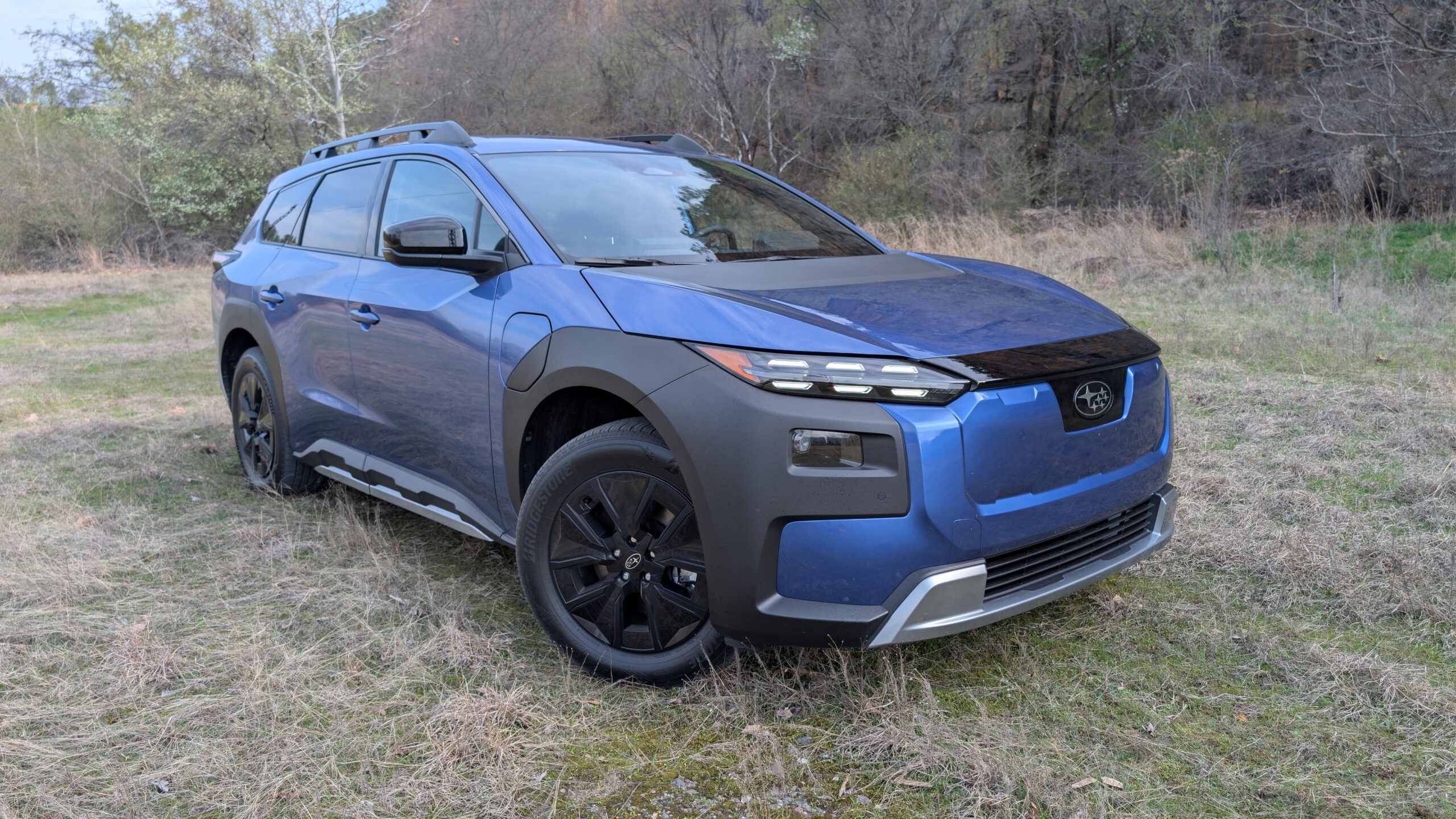
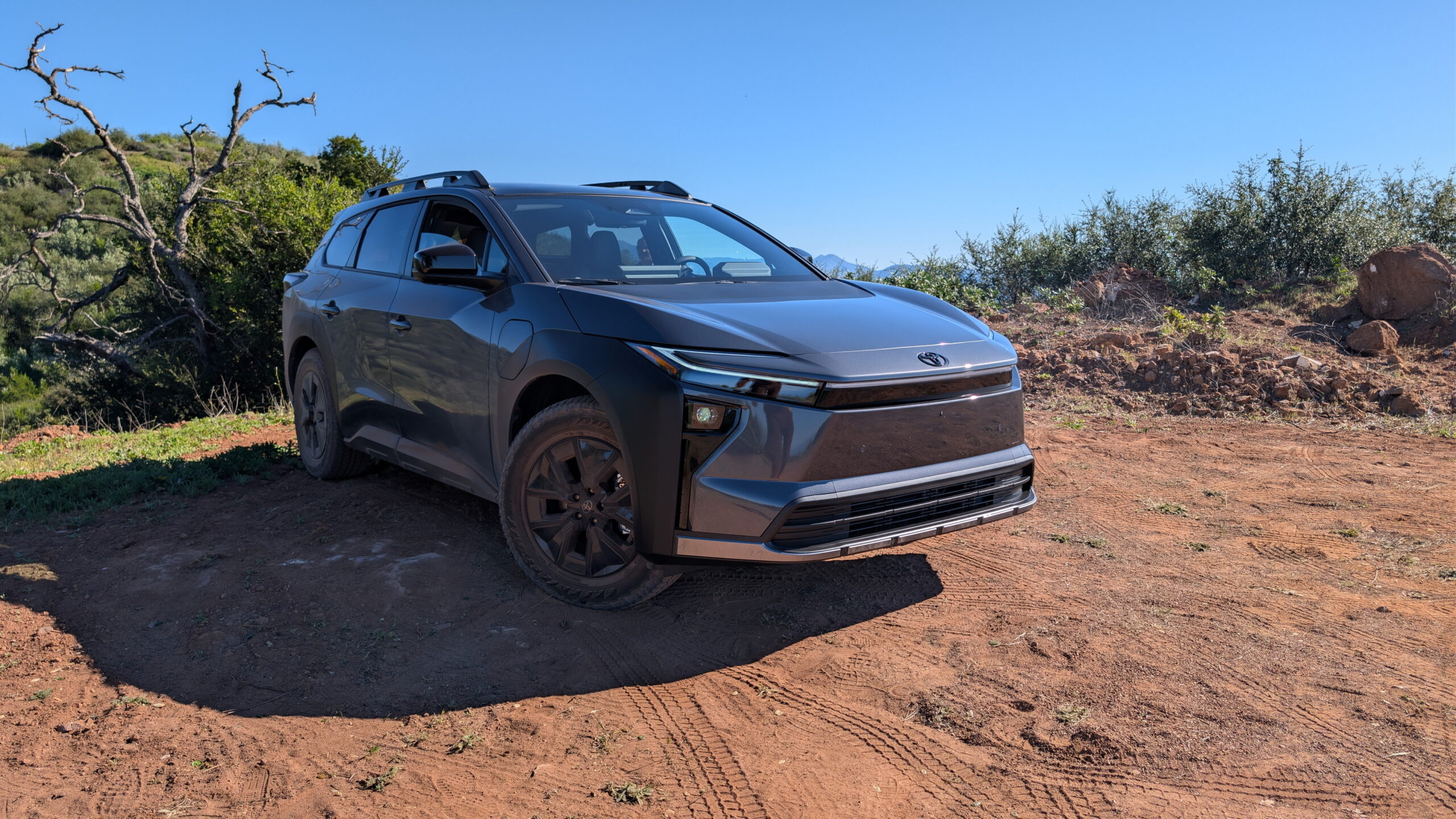
The Trailseeker looks like it belongs on a trailhead, not outside a charging station. Black lower cladding, ladder-style roof rails, squared-off proportions, and a clean light bar give it a tougher presence than the Solterra. It measures 190.8 inches (4,846 mm) long on a 112.2-inch (2,850 mm) wheelbase, stands 65.9 inches (1,674 mm) tall, and rides with best-in-class 8.5 inches (216 mm) of clearance.

More: Subaru’s New Trailseeker Costs $5,000 More Than The Outback

That clearance number matters. It puts the Trailseeker Premium ahead of rivals like the VW ID.4, Hyundai Ioniq 5 XRT, and Chevy Blazer EV AWD in pure ride height. That’s something Subaru emphasized heavily in its capability comparison charts. For buyers, it means worrying less when going over deeply rutted paths or rocky roads. 

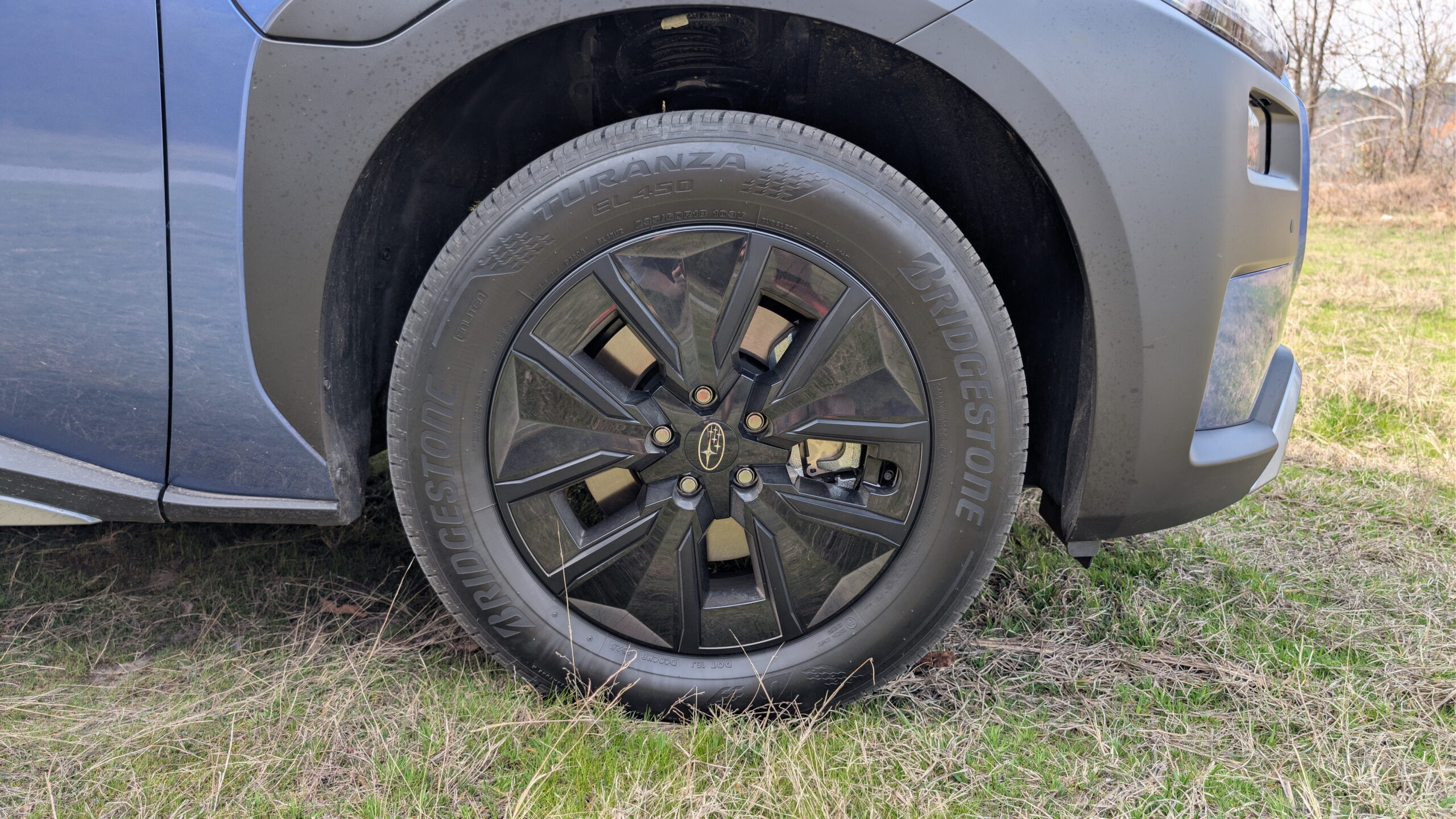
Even on 18-inch wheels with aerodynamic covers (Premium trim), it doesn’t look cheap. If anything, the smaller wheels add sidewall and reinforce the rugged vibe. Having now driven both this and the bZ Woodland, the Subaru appears a bit more cohesive in person. I’m still not sold on all of the plastic cladding, but I’d rather be seen in this than the Toyota personally. 

Tell Me About The Interior

\\\\\

Photos Stephen Rivers / Carscoops

This base Trailseeker had me searching for decontenting because it starts at $39,995. As we’ve covered, that’s thousands less than the base bZ Woodland. Despite my efforts, I never found anything that felt like a big letdown compared to the Toyota I tested a few weeks ago. Sure, we don’t have ventilated seats, heated outboard rear seats, or a panoramic sunroof, but honestly, those are luxuries, and what’s already here is pretty great for the money. 

Review: 2026 Toyota bZ Woodland Is Quicker Than A GR Corolla, But That’s Not Its Real Trick 

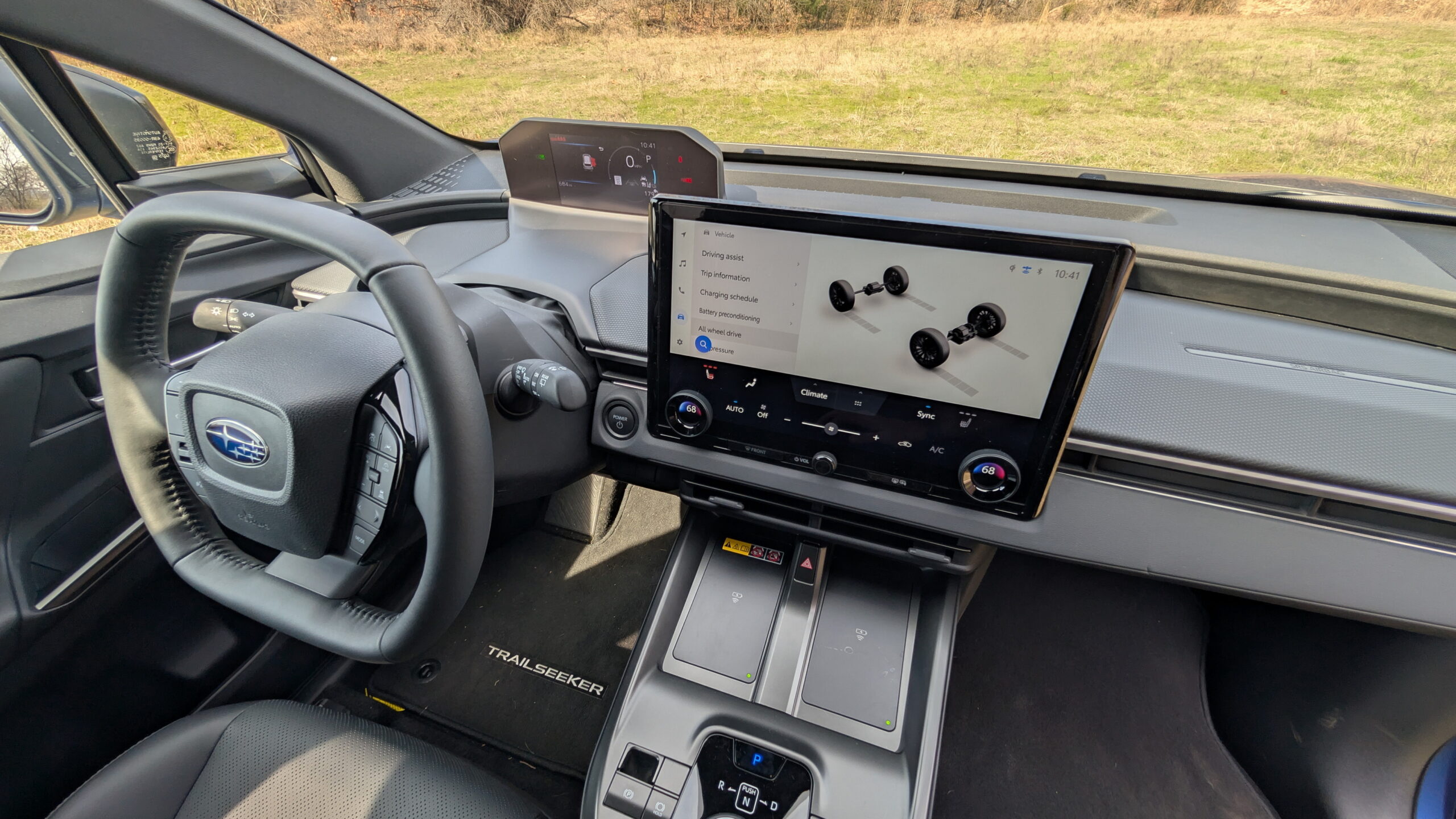
The dash has nice texturing, the steering wheel feels like it’s from the future, and the 14-inch infotainment screen is a massive leap forward for Subaru (thanks, Toyota!). The menu is intuitive and easy to navigate. Physical buttons exist for the volume, media on/off, defrost, hazards, and climate temperature. Fan speed, air flow direction, and heated seat settings are all in the touchscreen itself. It’s not as nice as having physical controls for everything, but it’s better than having none at all. 
 The 2026 Subaru Trailseeker Is An Insanely Fast Wagon That Just Happens To Be Electric | Review

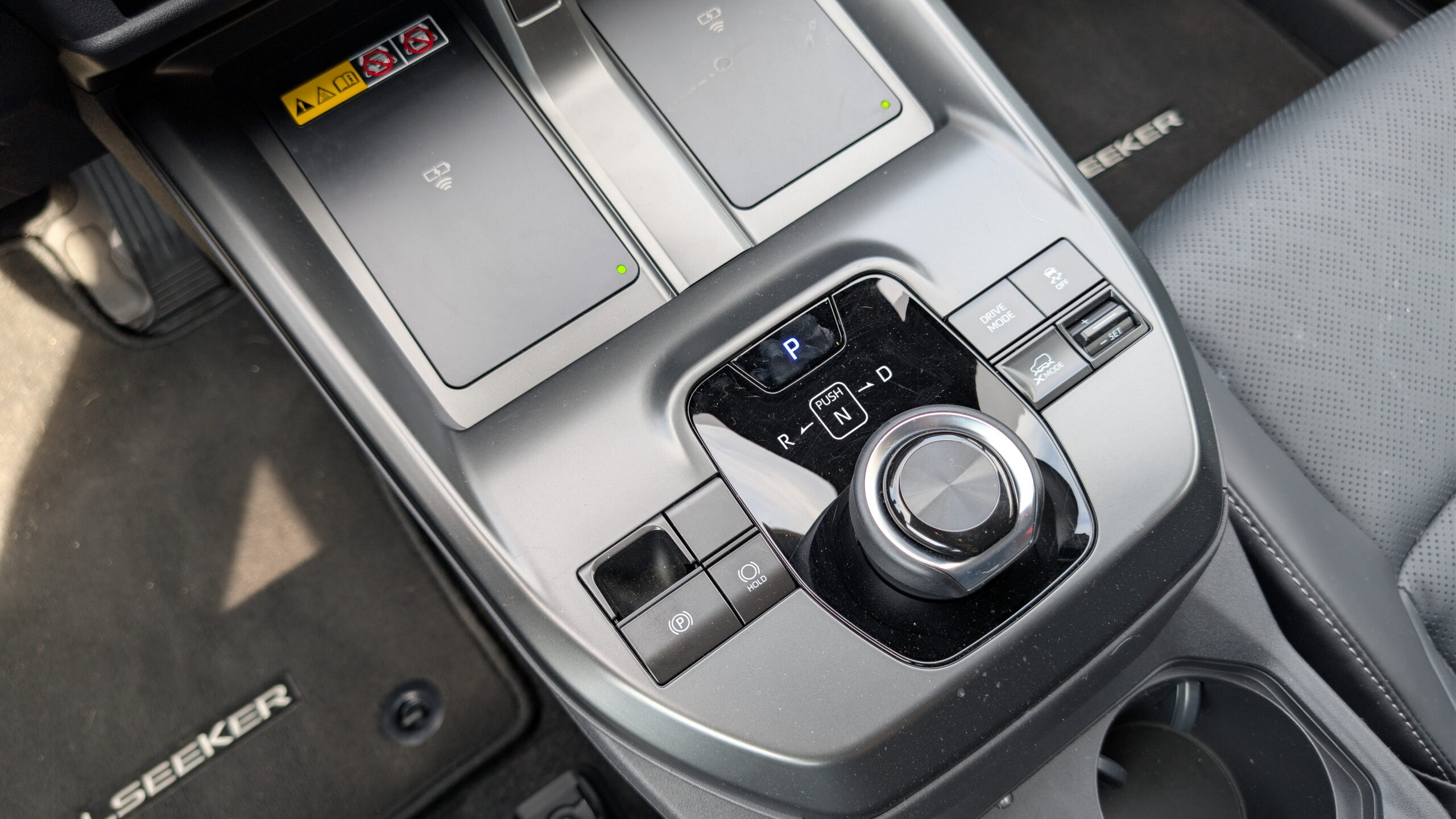
There are dual 15w wireless chargers under the screen, along with a parcel shelf underneath that. It’s key because there’s no glove box, so expect to store things differently in this car than in most others. A small ‘magic’ storage console sits behind the shifter and allows both front seat passengers to open it from their side, which is great. It doesn’t flip over like the one we tested in the latest Toyota RAV4. Speaking of that shifter, it’s one of the weirdest and perhaps least positive parts of this car. 
 The 2026 Subaru Trailseeker Is An Insanely Fast Wagon That Just Happens To Be Electric | Review

To use it, the driver pushes a ring down and then twists it left or right. Once you’re used to it it’s no big deal, but it does take getting used to. Everyone I handed the keys to needed a quick tutorial. Subaru places driving modes, of which there are three, normal, eco, and power, to the right of the shifter, along with X-Mode, a low-speed cruise control built for off-roading. 

First Drive: The 2026 Toyota C-HR Refuses To Grow Up And Goes All-In On EV Thrills

The seating is supportive and comfortable, but lacks the deep adjustability found in more expensive vehicles. That said, I’m happy to report that the Trailseeker can easily accommodate four adults who are above average height. The rear seats have just enough headroom for me at 6’6 to comfortably sit behind my own driving position in front. That’s impressive, though we should note that adding the panoramic sunroof detracts a bit of headroom. 

\\\\\

Photos Stephen Rivers / Carscoops

Speaking of space, there are over 30 cubic feet to use in the back of the Trailseeker. That’s a strong figure and reminds us why wagons are so practical in a world full of oversized SUVs. Fold the seats down, and cargo space more than doubles to over 70 cubic feet. That’s not half bad, though we wish Subaru had included a front truck to make that figure even bigger. Those who need even more space can tow up to 3,500 pounds. 

Shockingly Quick In Practice
 The 2026 Subaru Trailseeker Is An Insanely Fast Wagon That Just Happens To Be Electric | Review

Leave it to Subaru to cook up what it has in the Trailseeker from a driver’s perspective because it’s on two very different ends of the spectrum at the same time. For everyday pilots of this vehicle, it’ll feel totally normal, totally placid, and at times… it just seems to lack much character. Somehow, Subaru also just happened to make this the most powerful and quickest production car that it’s ever built. 

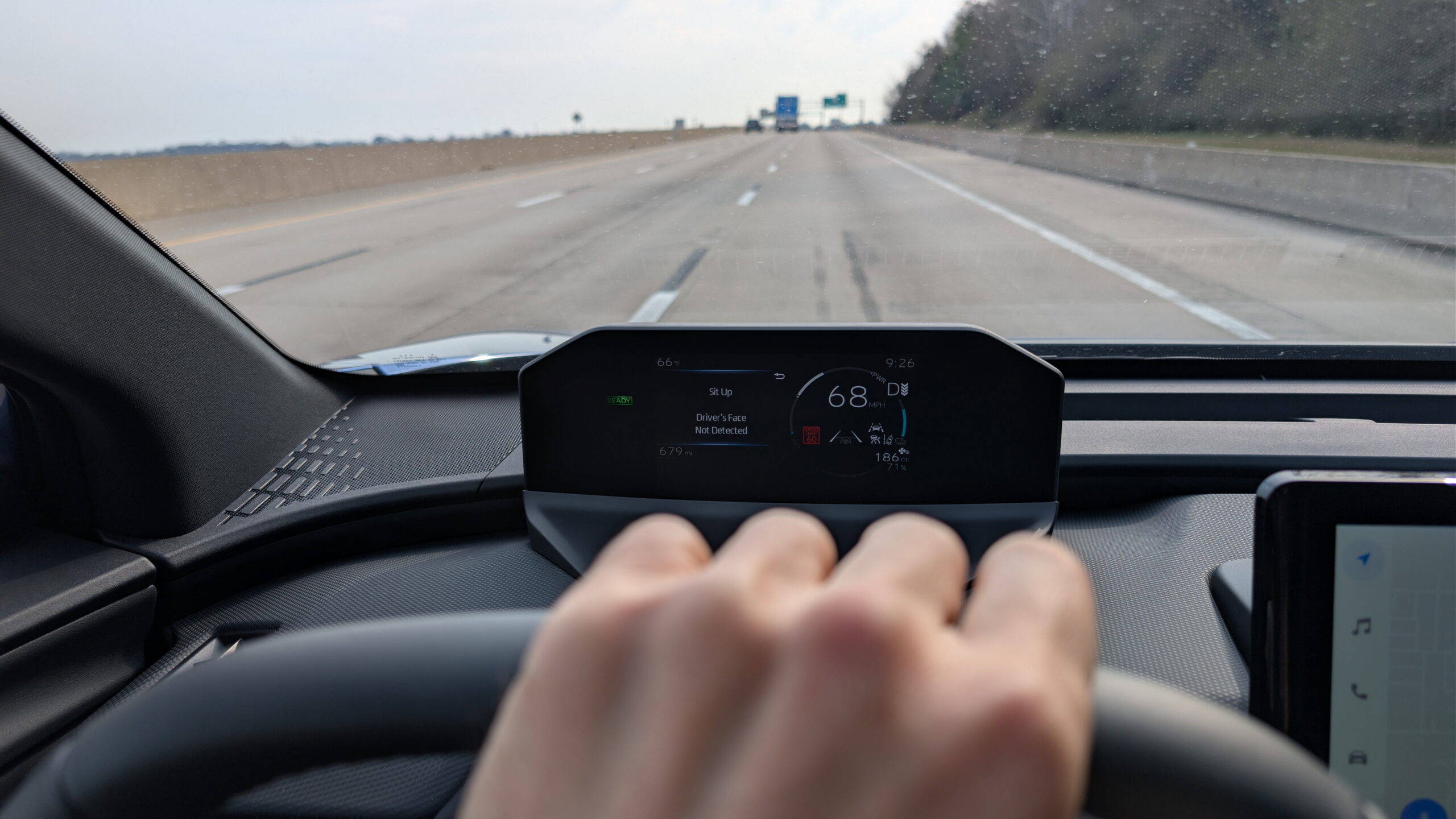
The steering is quick and communicative, the accelerator and brakes offer good linear feedback, and the chassis handles directional changes with composure and high aptitude. It even manages bad road conditions, gravel roads, rock-filled trails, and some off-road trails with ease and comfort. 
 The 2026 Subaru Trailseeker Is An Insanely Fast Wagon That Just Happens To Be Electric | Review
Stephen Rivers for Carscoops / A friend helped me snap this photo

There aren’t even any STI badges to show that performance envelope off. Every Trailseeker gets a dual AC synchronous motor setup with a combined 375 horsepower (280 kW). It leverages a 74.7 kWh battery pack, and Subaru says this wagon will rocket from 0-60 mph in just 4.4 seconds. It’s wrong about that, and we have the data to prove it. 

In the real world, we strapped a Dragy GPS tracker to ours and recorded multiple launches. With one foot of rollout, the quickest run came in at 3.88 seconds. Without rollout, it ran 4.11 seconds. You can read the full breakdown of our testing methodology and slope corrections in our separate acceleration analysis.

 The 2026 Subaru Trailseeker Is An Insanely Fast Wagon That Just Happens To Be Electric | Review
Stephen Rivers for Carscoops

That’s properly quick. Not “quick for a Subaru.” Just quick. In fact, it’s the fastest production Subaru we’ve ever tested. 

More importantly, the updated AWD logic gives it a stable, confidence-inspiring feel. It uses independent front and rear motors with variable power distribution, plus X-Mode with Snow/Dirt and Deep Snow/Mud settings. Grip is immediate and predictable, even when you provoke it.

Braking is handled by 12.9-inch front rotors and 12.5-inch rears, and regenerative braking offers multiple levels via paddles. It’s not WRX-level fun, but it’s far more engaging than most mid-size electric crossovers.
 The 2026 Subaru Trailseeker Is An Insanely Fast Wagon That Just Happens To Be Electric | Review

EPA-estimated range is 281 miles (452 km) for the Premium, slightly higher than the 274 miles quoted for Limited and Touring trims. Charging from 10–80 percent takes as little as 28 minutes at up to 150 kW, and it uses a standard NACS port for Supercharger access. We achieved a maximum estimated range of 239 miles as we achieved 3.2 miles per kW, but that’s with our 0-60 testing included. Drive like an adult, and the Trailseeker will almost certainly hit its 280-mile range. 

Plenty Of Competition
 The 2026 Subaru Trailseeker Is An Insanely Fast Wagon That Just Happens To Be Electric | Review

Subaru benchmarks the Trailseeker against the Kia EV6, Volkswagen ID.4, and Honda Prologue, but the reality is broader than that.

Tesla Model Y is the most obvious rival. In Long Range form, it offers more range and arguably better software. It also matches the Trailseeker’s 3,500-pound towing capacity and adds a usable frunk, something the Subaru notably lacks.

But the Model Y rides lower, lacks meaningful ground clearance, and doesn’t pretend to be trail-capable. If you want tech and efficiency first, Tesla wins. If you want capability baked into the chassis, Subaru has the edge.

Kia’s EV6 leans sportier. It feels lower, sharper, and more road-focused. In GT-Line or GT form, it’s quicker in a straight line, but it sacrifices ride height and off-road pretense. It’s the enthusiast’s EV crossover. The Trailseeker is the practical adventurer.

The Hyundai Ioniq 5 XRT gets closer philosophically. It adds rugged styling and a slight lift, but it still can’t match the Subaru’s 8.5 inches of clearance or 3,500-pound tow rating. Hyundai wins on interior tech polish and charging speed consistency. Subaru counters with real-world trail confidence.

The Toyota bZ Woodland is mechanically nearly identical. Same bones. Same dual-motor layout. Same basic mission. But in person, the Subaru feels more cohesive and slightly better resolved. And crucially, it undercuts the Toyota on price in base form. That matters.

The Trailseeker doesn’t dominate on range. It doesn’t dominate in outright interior luxury. What it does is combine quick acceleration, meaningful ground clearance, real towing capacity, and sub-$40,000 pricing in a way very few EVs currently do. That niche may be small, but it’s distinctly Subaru.

Final Thoughts
 The 2026 Subaru Trailseeker Is An Insanely Fast Wagon That Just Happens To Be Electric | Review

Here’s the surprising part: I’m not convinced you need to step up to the Limited or Touring. The Premium delivers the full 375-hp experience, the full AWD system, the full ground clearance, the same fast charging, and nearly identical range. The features it lacks feel like luxuries, not necessities.

That’s rare in today’s trim-walk world. If Subaru’s goal was to make its second EV feel unapologetically like a Subaru, capable, practical, quick, and ready for something more than commuting, it nailed it. And the base model might just be the smartest version in the lineup.

For those with just $5,000 extra to spend, they have their pick of the lineup… and the fastest production Subaru in history without giving up a shred of practicality. 

\\\\\

Photos Stephen Rivers / Carscoops

Before yesterdayMain stream

Sen. Mark Kelly lawsuit in illegal orders case set for May arguments in appeals court

2 March 2026 at 18:42
Arizona Democratic Sen. Mark Kelly speaks with reporters in the Mansfield Room of the U.S. Capitol building in Washington, D.C., on Monday, Dec. 1, 2025. (Photo by Jennifer Shutt/States Newsroom)

Arizona Democratic Sen. Mark Kelly speaks with reporters in the Mansfield Room of the U.S. Capitol building in Washington, D.C., on Monday, Dec. 1, 2025. (Photo by Jennifer Shutt/States Newsroom)

WASHINGTON — A federal circuit court announced Monday it will hold oral arguments in May to determine whether a lower court erred when it blocked the Pentagon from downgrading Arizona Democratic Sen. Mark Kelly’s retirement rank and pay for appearing in the “Don’t Give Up The Ship” video. 

The U.S. Court of Appeals for the District of Columbia Circuit’s new schedule came just days after the Trump administration requested an expedited timeline.

“In light of the public’s unusual interest in prompt disposition of this appeal, the government respectfully requests that this Court set an expedited briefing schedule that will allow the Court to hear oral argument this Term, before the Court’s summer recess,” Assistant Attorney General Brett A. Shumate wrote in a filing submitted Friday. 

The circuit court now expects the Trump administration to file a brief by March 20 explaining why it appealed the district court’s ruling and for Kelly’s legal team to file its reply brief by April 27. Attorneys for both sides would then present their oral arguments May 7. 

Karen LeCraft Henderson, nominated by President George H.W. Bush in 1990; Cornelia T.L. Pillard, nominated by President Barack Obama in 2013; and Florence Y. Pan, nominated by President Joe Biden in 2022, make up the three-judge panel that will rule on the appeal.  

90-second video

The Defense Department’s attempt to punish Kelly stems from when he and five other Democratic lawmakers posted a 90-second video last year, telling members of the military and those in the nation’s intelligence communities that they can and must refuse illegal orders. 

Kelly, a former Navy captain, was the only member of the group still subject to the military’s judicial system, leading Defense Secretary Pete Hegseth to issue a letter of censure and initiate proceedings to downgrade the senator’s retirement rank and pay. 

Kelly filed a lawsuit in January, seeking to block those efforts on several fronts, including that it violated his constitutional rights. 

“The First Amendment forbids the government and its officials from punishing disfavored expression or retaliating against protected speech,” Kelly’s lawsuit stated. “That prohibition applies with particular force to legislators speaking on matters of public policy. As the Supreme Court held 60 years ago, the Constitution ‘requires that legislators be given the widest latitude to express their views on issues of policy,’ and the government may not recharacterize protected speech as supposed incitement in order to punish it.”

Judge rules for Kelly

Senior Judge Richard J. Leon of the District of Columbia District Court wrote in his 29-page ruling granting Kelly a preliminary injunction that “it is a particularly valuable asset for our country to have retired veterans contributing to public discussion on military matters and policy. 

“Given their ‘distinct perspective and specialized expertise,’ it is essential for retired veterans to contribute to our ‘public discourse’ on issues of military policy. Allowing Defendants’ actions against Senator Kelly to stand would further chill the speech of these retired servicemembers and thereby ‘impoverish public debate on critical issues relating to our military and its role in domestic and foreign affairs.’”

The Department of Justice had sought a grand jury indictment against Kelly, Michigan Sen. Elissa Slotkin, Colorado Rep. Jason Crow, Pennsylvania Reps. Chris Deluzio and Chrissy Houlahan and New Hampshire Rep. Maggie Goodlander for their participation in the video. But it was unsuccessful

Musk Lectures Legacy Brands On Cars, Even As Tesla Drifts Beyond Them

  • Musk says legacy automakers resist electrification efforts.
  • He argues EVs are simpler, cleaner, more efficient by design.
  • CEO warns traditional brands risk extinction if they stall.

There’s no denying it. For all Elon Musk’s foibles, he and Tesla have played an instrumental role in accelerating the car industry’s shift towards electrification and autonomy. Love him or loathe him, the trajectory has shifted on his watch. Now, the controversial CEO says any legacy automaker that refuses to follow Tesla’s lead risks going the way of the dinosaurs.

Last week, the world’s richest man sat down with André Thierig, head of Tesla’s Gigafactory Berlin, for a deep dive into where Tesla is heading and where the wider industry should be going. In Musk’s telling, it has been obvious for more than 20 years that the endgame is fully electric, fully autonomous transport. The surprise, at least to him, is that some rivals still appear reluctant to accept it.

Read: Nearly Half Of Jury Pool Dismissed As Musk’s Lawyer Claims So Many ‘Hate Him’

“The automotive industry has strongly rejected electrification,” Musk said during the interview. “They’ve dragged their feet, and they’ve had to be pushed there by the government, and whenever they have any opportunity to reduce the production of electric vehicles, they’ve done so. This is not a good strategic…like it doesn’t make sense.”

He went on to argue that the need for the car industry to shift to electrification would be true even “without environmental concerns.” Musk believes that “an electric vehicle is a fundamentally better architecture than a gasoline or combustion vehicle. It is much simpler, it is more efficient, it’s quieter, there’s no pollution in cities, so really all ground transport should be electric.”

What’s next for Giga Berlin? Glad you asked pic.twitter.com/aaiBOOBxuu

— Tesla Manufacturing (@gigafactories) February 26, 2026

“The future does not contain combustion vehicles, and there will be very few vehicles that are not autonomous. If the automotive industry does not move in that direction, they will be left out,” Musk added.

Carmakers Aren’t Doing Enough, Musk Says

When Thierig asked whether Tesla could learn anything from legacy automakers, or whether it should simply keep its head down and focus on its own path, Musk conceded, “You can always learn something from some competitors.” Still, he quickly returned to familiar territory. “Strategically, they’re heading in the direction of the dinosaurs, so they’re not heading in a good place. Dinosaurs are not around anymore.”

As for the risk of traditional brands copying Tesla’s ideas, he dismissed it, arguing that you cannot simply force a good idea onto companies that are not ready to embrace it.

None of this is especially new. Musk has long criticized established carmakers for moving too slowly, and with Tesla’s business tied so closely to EVs and autonomous driving systems, he has every reason to underline the advantages of both. It also does not hurt when that message reinforces confidence in Tesla’s long-term prospects.

Perhaps more intriguing is Tesla’s evolving self-image. The company no longer presents itself purely as an EV manufacturer, and some observers believe it may not even be building cars in a decade, shifting instead toward robotics.

 Musk Lectures Legacy Brands On Cars, Even As Tesla Drifts Beyond Them

Texas PD Tests Model Y To See If Gas SUVs Really Cost Up To $12,000 More A Year

  • Murphy PD in Texas now runs the 2026 Model Y Juniper.
  • Each unit saves $4,100 to $12,000 a year in fuel and upkeep.
  • Its electric drivetrain could double the car’s service life.

The Murphy Police Department in North Texas has become the first agency to roll out the refreshed 2026 Tesla Model Y Patrol, upgraded by Unplugged Performance. Instead of committing to a full fleet replacement, the department is running the EV in real-world conditions to see how it holds up to daily patrol duty.

Officials say the more persuasive case is financial. Each cruiser is projected to deliver measurable savings compared to a traditional ICE-powered patrol vehicle.

More: There’s A New Contender For The World’s Coolest Police Car

According to data from the City of Murphy, projected annual savings per vehicle range from $4,100 for single-officer units to as much as $12,000 for shared-shift cars clocking more than 140 hours per week. The bulk of that comes from eliminating fuel purchases, though the department will still incur electricity costs, along with a 75% reduction in maintenance compared to gasoline vehicles such as the Chevrolet Tahoe and Ford Explorer.

\\\\\\\\

No Idling Wear

The savings story does not stop at fuel and oil changes. EVs do not suffer engine wear from constant idling, which accounts for roughly 60% of a patrol car’s working life. As a result, they are expected to remain in service for up to twice as long as an ICE-powered equivalent.

More: Tesla Cybertruck Joins The Police, May Pull You Over This Year (If It Doesn’t Break Down)

Given that every hour spent idling is effectively equal to 33-35 miles (53-56 km) of driving wear, that difference adds up quickly. Without a combustion engine ticking away under the hood, the Model Y can sit on scene running lights, laptops, and climate control off its battery, without quietly shortening its lifespan.

Juniper Patrol Cars

\\\\\\\\\\\\\\\\\\\\

On the hardware front, the facelifted Tesla Model Y Juniper has been converted into a patrol unit by UP.FIT, the specialized fleet division of Unplugged Performance. Compared to the road-going version, it gains a front push bar, additional LEDs at the front and sides, a roof-mounted siren, and 18-inch forged aluminum wheels wrapped in pursuit-rated tires.

The police car is offered in RWD and AWD configurations, using the standard electric powertrains and delivering between 321-357 miles (517-574 km) of range per charge. That is more than enough for routine duty. And because police work occasionally involves pursuits, braking performance has been upgraded with six-piston calipers, stainless steel brake lines, specialized fluids, thermally upgraded components, and uprated rotors.

More: A Traffic Cop Just Got A 1,001 HP Company Car

Inside, officers get ventilated seats and improved sound insulation. Each vehicle is retrofitted with a customizable center console, a laptop mount, two weapon mounts, upgraded interior lighting, and a single rear prisoner partition.

Optional extras include ballistic protection for the front doors and custom reflective graphics.

UP.FIT has not disclosed the final MSRP for the Murphy units, though it insists the total cost of ownership undercuts everything else in the segment. Beyond the Model Y crossover, the company also offers police-ready conversions for the Cybertruck, Model S/X, and Model 3, in case your local department prefers its patrol cars in a different shape.

\\\\\

UP.FIT / Unplugged Performance

DOJ appeals ruling in Sen. Mark Kelly illegal orders case; Kelly vows: ‘I won’t back down’

27 February 2026 at 19:08
U.S. Sen. Mark Kelly , D-Ariz., speaks on the failed grand jury indictment against him during a news conference at the U.S. Capitol on Feb. 11, 2026 in Washington, D.C.  (Photo by Heather Diehl/Getty Images)

U.S. Sen. Mark Kelly , D-Ariz., speaks on the failed grand jury indictment against him during a news conference at the U.S. Capitol on Feb. 11, 2026 in Washington, D.C.  (Photo by Heather Diehl/Getty Images)

WASHINGTON — The Trump administration must explain to a circuit court before the end of March exactly why it appealed a lower court’s ruling that allows Arizona Democratic Sen. Mark Kelly to keep his retirement rank and pay while a First Amendment case about the “Don’t Give Up The Ship” video plays out.

The U.S. Court of Appeals for the District of Columbia Circuit’s order gives the Department of Justice until March 30 to provide a series of documents in its appeal of the district court’s preliminary injunction.

That ruling, from Senior Judge Richard J. Leon of the District of Columbia District Court, said Defense Department officials, including Secretary Pete Hegseth, erred when trying to apply rules that affect active-duty military members to Kelly, a retired Navy Captain.  

“Secretary Hegseth relies on the well-established doctrine that military servicemembers enjoy less vigorous First Amendment protections given the fundamental obligation for obedience and discipline in the armed forces,” Leon wrote. “Unfortunately for Secretary Hegseth, no court has ever extended those principles to retired servicemembers, much less a retired servicemember serving in Congress and exercising oversight responsibility over the military. This Court will not be the first to do so!”

Leon was nominated by former President George W. Bush. 

DOD seeks to downgrade Kelly retirement rank

The lawsuit began earlier this year after the Defense Department began proceedings to downgrade Kelly’s retirement rank and pay for appearing in the 90-second video.

The six Democrats, all of whom are former members of the military or intelligence agencies, said in the video they understood the people working in those fields “are under enormous stress and pressure right now.” 

“Americans trust their military. But that trust is at risk,” they said. “This administration is pitting our uniformed military and intelligence community professionals against American citizens.”

They went on to say the “laws are clear” and that illegal orders can and must be refused. The video ended with them saying, “Don’t Give up the Ship,’ a long-held phrase in the U.S. Navy.

The Democrats’ video infuriated President Donald Trump, leading the Defense Department to open an investigation into Kelly.

Justice Department officials also launched an investigation into Kelly, Michigan Sen. Elissa Slotkin, Colorado Rep. Jason Crow, Pennsylvania Reps. Chris Deluzio and Chrissy Houlahan and New Hampshire Rep. Maggie Goodlander.

The Justice Department failed to get a grand jury to indict the lawmakers earlier this month. 

Kelly cites effects on millions of retired veterans

Kelly wrote on social media Tuesday, after the Justice Department filed its appeal on behalf of the Defense Department, that the Trump administration didn’t “know when to quit.” 

“A federal judge told Donald Trump and Pete Hegseth that they violated my constitutional rights and chilled the free speech of millions of retired veterans,” Kelly wrote. “There is only one reason to appeal that ruling: to keep trampling on the free speech rights of retired veterans and silence dissent. I went to war to defend Americans’ constitutional rights and I won’t back down from this fight, no matter how far they want to take it.”

Trapped Driver Died After Xiaomi’s Electronic Doors Reportedly Failed

  • Rescuers couldn’t open SU7’s electric door releases as it burned.
  • Eyewitnesses tried desperately to smash the driver’s side window.
  • China will ban electric door releases like the SU7’s from 2027.

An official investigation into the death of a man who crashed his Xiaomi SU7 in China last year has confirmed details previously reported by local media. The findings underscore how critical basic mechanical access can become in seconds. Authorities concluded that the 31-year-old died after being unable to open the electrically operated doors once the electric sedan caught fire.

While this case involves a Xiaomi, concerns about electronically actuated door systems have been debated across the industry and in global markets for years. This isn’t just a Tesla issue.

The crash occurred at approximately 3:15 a.m. on October 13, 2025, in Chengdu, reports Carnewschina. The Xiaomi driver, identified simply as Deng, was allegedly driving under the influence of alcohol at the time and slammed into another vehicle on Tianfu Avenue South before jumping over the central divider and bursting into flames.

Timeline Of The Crash

According to forensic findings cited by the Chinese magazine Caixin, the SU7 reached 203 km/h (126 mph) just three seconds before the crash. It then slowed to 167 km/h (104 mph) after striking the other car and was traveling 138 km/h (86 mph) when it hit the divider.

Read: Trapped Xiaomi Driver Dies After Doors Fail To Open In Fiery Crash

Harrowing footage captured in the immediate aftermath showed bystanders attempting to smash the driver’s side window and open the door in an effort to save him, but without success.

Why The Doors Wouldn’t Open

Investigators concluded that the doors could not be opened from the outside because the fire caused the low-voltage system to shut down, disabling the door handle release function. The report added that the SU7 has no mechanical latches accessible from the outside and relies solely on electric release buttons.

Xiaomi shares plunged nearly 9% after a fatal crash involving its SU7 electric car, Bloomberg reports

According to the outlet, a 31-year-old driver in China collided with another vehicle, crossed into the opposite lane, and the car caught fire. Witnesses tried to pull the man… pic.twitter.com/yPQ70FoKXN

— NEXTA (@nexta_tv) October 13, 2025

The Xiaomi also uses electric release buttons inside the cabin. Although it is equipped with mechanical emergency releases, locating and operating them while disoriented after a crash would not be straightforward.

Regulatory Response In China

This fatal crash, along with others, has prompted regulators in China to ban electronic door handles on EVs. The new rule will take effect on January 1, 2027. It will require exterior handles that provide a handhold of at least 60 mm by 20 mm (2.36 inches x 0.79 inches), ensuring they can be used by rescuers in an emergency. In addition, mechanical releases inside the vehicle must include clear signage explaining how to open them during an emergency.

 Trapped Driver Died After Xiaomi’s Electronic Doors Reportedly Failed
Opening image via Zhao Qing/The Paper

Richard Hammond Once Crashed A Rimac, Now Trusted With BYD’s 2,978 HP Hypercar

  • The YangWang U9 Xtreme makes 2,978 hp from four motors.
  • Former Top Gear host drove the limited-run model on track.
  • He also sampled the Xiaomi SU7 Ultra and Maextro S800.

China’s most outrageous new hypercar has already brushed up against the outer limits of physics, and now it has handed the keys to Richard Hammond. Last year, the YangWang U9 Xtreme went faster than any production car before it, recording a one-way top speed of 308.4 mph or 496.22 km/h at the ATP Papenburg high-speed oval in Germany.

Because the run was completed in only one direction, however, SSC’s Tuatara technically still retains the official two-way average production car record at 282.9 mph (455.3 km/h).

Even so, it was a headline-grabbing run that instantly placed BYD’s halo car in rare company. Keen to showcase that achievement to a broader audience, BYD recently invited Richard Hammond to become the first Western journalist to drive the car. The result makes for compelling viewing.

Read: China’s YangWang U9 Smashed Bugatti’s Speed Record But Still Isn’t Officially The World’s Fastest Car

As Hammond admits in his latest DriveTribe video, he doesn’t exactly have the greatest reputation when it comes to driving extremely fast, ultra-powerful cars. In 2017, he crashed the all-electric 1,224 hp Rimac Concept One while filming The Grand Tour. Back in 2006, he was seriously injured after crashing a dragster on the set of Top Gear.

BYD obviously put a lot of faith in him to keep the U9 Xtreme in one piece, particularly given that this four-motor electric beast delivers a maximum of 2,978 hp, more than any other production car.

Rather than driving it on the road, Hammond was able to put it through its paces on a racetrack. Understandably, he appears to take things quite easily, which is hardly a surprise given that a BYD test driver spun up the car’s wheels the day prior and crashed into a barrier. It would seem as though having almost 3,000 hp under your right foot requires a lot of care. Who would have thought?

Hammond Tests Xiaomi Too

Interestingly, this isn’t the only recent video that Hammond has made in China. Late last year, he joined what could best be described as the Chinese version of Top Gear, alongside three hosts for a road trip. In this video, he drove three of China’s most impressive new EVs: the Xiaomi SU7 Ultra, the ‘regular’ YangWang U9, and the luxurious Maextro S800.

The clip was originally shared only on Chinese social media but has since been translated and uploaded to YouTube for our viewing pleasure. It’s well worth a watch.

Screenshot Drivetribe/YouTube

Donut Lab Claims It Verified A 7-Minute Solid-State EV Battery Charge

  • Donut Lab’s solid-state battery may be a breakthrough.
  • It charges from zero to 80 percent in just 4.5 minutes.
  • The company claims an energy density of 400 Wh/kg.

The battery world is hardly lacking in ambition, but it remains controlled by a tight circle of Chinese and Korean heavyweights. When Finnish startup Donut Lab claimed earlier this year that it had developed the world’s first all-solid-state battery for vehicles, it was never going to land quietly.

Donut Lab says it has built what many consider the holy grail of batteries. It claims the pack can charge faster than anything else on the market, delivers 400 Wh/kg of energy density, and is good for 100,000 cycles. Predictably, that raised questions.

Industry experts pushed back hard, which led Donut Lab to team up with Finland’s VTT Technical Research Center to demonstrate just how quickly its battery can actually charge.

Read: Verge Fixed The Two Biggest Electric Motorcycle Problems At Once

In a newly released video, Donut Lab sets out to show the charging speed and thermal stability of its latest battery. The headline figure is a claimed charge rate of up to 11C (286A), which, if sustainable, would put it in rare company.

Cooling Reality Check

In the 11C charging test, the battery cell charged from 0 to 80 percent in just 4.5 minutes when equipped with two heatsinks. A full charge at 11C took just over 7 minutes. During this test, the battery temperature reached 63°C (145°F). In a separate test with just one aluminum heat sink, the temperature rose to 90°C (194°F), prompting a pause for 4 minutes while the battery cooled.

As noted by Electrek, Donut Lab claimed its battery required no active cooling to safely achieve its extraordinary charging speeds. However, this test suggests that some level of thermal management is necessary. Even so, the charging speeds are impressive, particularly for a company of this size.

\\\\\\\\

According to Donut Lab chief executive Vile Piippo, “unlike other solid-state batteries requiring high compressive pressures and undergoing volume changes of up to 15-20 per cent during recharging cycles, the Donut Battery does not require special compression or more extensive cooling.”

Hitting Back At Critics

The company published the results of its fast-charging test on a new website, dubbed “iDonutBelieve,” in a thinly veiled swipe at those who said the firm was exaggerating its claims. It is promising that the results of another test will be released next week, with the aim of proving the pack’s energy density and 100,000-cycle claim.

The first vehicle to use the Donut Lab solid-state battery is an all-electric motorcycle from Verge. Dubbed the TS Pro, it’s set to arrive in the first quarter and will be offered with 20.2 and 33.3 kWh packs.

\\\\\\\\\\\\\\\\\

Tesla Once Tested 90-Second Battery Swaps, Nio Scaled It To 176,000 In A Day

  • Record came during Lunar New Year travel surge.
  • Nio runs over 8,600 swap and charging stations.
  • Fourth-gen sites handle up to 480 swaps daily.

Back in 2013, Tesla flirted with the idea of battery-swapping for its EVs, even demonstrating a system that could replace a Model S battery in as little as 90 seconds. It was an impressive showpiece, but the company ultimately chose not to commercialize the concept. Nio, meanwhile, saw potential where Tesla stepped back. The Chinese startup embraced battery swapping and went on to build the largest EV battery-swapping network in the world.

Just how popular has Nio’s battery-swap service become? On February 21, Nio owners carried out a staggering 175,976 battery swaps across China in a single day. That figure translates to roughly one Nio having its battery changed every half a second.

Read: This Full-Size Electric SUV Packs 456 HP And Costs Less Than A Honda Civic

This record was set on the second day of the Lunar New Year, typically the busiest travel day of the year in China.

How Wide Is Nio’s Network?

Nio currently operates more than 8,600 charging and battery-swapping stations across China. The network spans more than 550 cities and includes highway routes linking 16 of the country’s major urban centers. The company has also begun rolling out charging stations in Europe.

The Chinese electric car startup is currently on its fourth-generation swapping stations, with the latest version launched in mid-2024. The original stations could store just four to five batteries at a time. In contrast, the fourth-generation sites can hold 23 battery packs and handle up to 480 swaps per day. Each swap takes 2 minutes and 24 seconds, which is less time than refueling a combustion-powered car.

Soon, it will not just be Nio owners pulling into those swap bays. The company has struck agreements with Geely, Chery, FAW, GAC, and Changan to share its battery-swapping technology, opening the network to a much broader slice of China’s car market.

 Tesla Once Tested 90-Second Battery Swaps, Nio Scaled It To 176,000 In A Day

A Gullwing Door Hides The Coziest Room On Wheels

  • Isuzu Elf box truck was repurposed into a cozy room.
  • Inside are a wooden floor, shelves, a couch, and table.
  • Isuzu has also built camper and pickup versions of it.

Forget the cold, hard plastics and hose-down austerity usually associated with commercial vehicle interiors. Isuzu’s latest creation flips that script, turning its Multi Utility Vehicle into something that lets you park your living room almost anywhere, preferably somewhere with a view worth staring at.

The concept is based on the standard cab version of the Isuzu Elf, featuring a black exterior with gold accents and aerodynamic panels on the roof and sides. But the real talking point is what Isuzu has done with the cargo area out back.

More: You Can Buy Isuzu’s Wildest Concept, But You Better Have A Big Lawn

A gullwing door and a drop-down side panel swing open to reveal a snug space that looks more theatre set than box truck. There is a wooden floor, lashing rails, modular shelving and actual furniture. A drop-down table is set up for brewing your coffee of choice, best enjoyed from the comfort of a proper couch rather than a fold-out stool.

\\\\\\\\

It feels tailor-made for a pop-up coffee shop, though in reality it would probably serve primarily as a promotional showpiece. In the accompanying video, one occupant seems perfectly content sipping his drink while watching the sun dip below the horizon.

The Elf MUV was created in collaboration with bodywork specialists Nippon Fruehauf and was exhibited at the Tokyo Auto Salon 2026. It is not heading for showrooms any time soon, but it highlights how much imagination can be squeezed out of a humble commercial vehicle.

\\\\\\\\\\

What About The Other Rooms?

If you like the idea of escaping into nature but would rather bring more than a sofa, Isuzu has another answer. The Be-Cam GeoRoam sits somewhere between camper and motorhome and was developed with Nippon Tokushu Body.

\\\\\\\\\\\\\\\\\\\

This build rides on the wide-cab, long-wheelbase Elf, which frees up a far more generous rear section. It also throws in some proper adventure kit, including a bull bar, roof rack and extra LEDs, giving it a stance that says it is ready to head well past the campsite entrance.

More: Tiny Kei Truck Becomes A Real Tiny Home On Wheels

The interior looks like a mini apartment, with warm tones and plenty of wood surfaces. You get a dining area, a fully equipped kitchen, a sofa that converts into a bed and a separate rear bedroom, complete with a projector for late-night film sessions.

\\\\\\\\\

The Rugged Workhorse

Isuzu has also rolled out a more work-focused take on the Elf. The Elfmio Cross Style Concept is a dropside pickup that swaps lounge vibes for a tougher look, helped along by new wheels and optional add-ons such as the rear metal frame. It is based on the Space Cab bodystyle, which means it can be driven in Japan with a standard driver’s license.

More: Isuzu’s New Pickup Is Luxury In The Front, Business In The Back

Across all three concepts, the mechanical bits are lifted straight from the regular Elf. That means a 3.0-liter turbodiesel paired with a nine-speed dual-clutch automatic and the option of 4WD. Output stands at either 148 hp or 173 hp. Alternatively, there is a zero-emission Elf powered by a 161 hp electric motor, drawing from a modular battery pack offered in 60, 100 or 180 kWh capacities.

Below are the official videos showcasing the different use-case scenarios. Which one would you take home?

Photos Isuzu / Tokyo Auto Salon

This Scissor-Door Micro EV Packs Nearly Twice The Torque Of A Lamborghini V12 Supercar

  • DM Performance fitted a Stark Varg motor to the Twizy.
  • It delivers 692 lb-ft through a custom chain-drive diff.
  • Micro EV beat an Audi S1 to 100 mph and spun donuts.

The now-discontinued Renault Twizy was known for its futuristic styling, scissor doors and unconventional seating layout, but never for outright performance. No one has ever accused it of being fast. That, naturally, made it the perfect candidate for something irresponsible.

Enter the UK-based mad scientists at DM Performance, who looked at this humble heavy quadricycle and decided it needed more chaos. Their solution was simple in theory and mildly unhinged in practice: rip out the weedy motor and transplant the heart of the world’s most powerful electric motocross bike.

More: Renault’s Smallest And Quirkiest EV Is Dead

The project started with a full teardown. Out went the factory-fit 17 hp (13 kW) motor. In came the powertrain from a Stark Varg, effectively the electric equivalent of a 450cc gasoline engine. The result is 80 hp (60 kW), a staggering 396 percent jump in output that completely rewrites the Twizy’s modest résumé.

\\\\\\\\

DM Performance / YouTube

But torque is the real headline here. The Stark Varg motor is rated at a frankly absurd 692 lb-ft (938 Nm). For context, the Lamborghini Aventador in the opening photo delivers 690 hp and 509 lb-ft (690 Nm), which means this pint-sized French creation is packing nearly double the torque of a V12 supercar!

More: World’s Least Powerful Gullwing Door Sports Car Finally Gets The Rotary Power It Deserved

It actually gets wilder. The supercharged 6.2-liter V8 in a 2027 Ram TRX produces 680 lb-ft (921 Nm). Now picture that sort of twist in a vehicle that weighs roughly ten times less than the Ram, and you begin to understand just how outrageous this thing really is.

Engineering The Swap

Making it all fit required serious surgery. DM Performance cut away the original rear cradle to accommodate the new motor and engineered a custom chain-drive system to replace the Twizy’s direct-drive transaxle.

\\\\\\

DM Performance / YouTube

To cope with the tidal wave of torque, they modified the original differential with a custom stainless steel casing and high-pressure grease to mimic the behavior of a limited-slip diff. A set of Maxpeedingrods coilovers was also installed to reduce the risk of an impromptu rollover.

Finally, the French EV received another transplant. The Stark Varg battery pack weighs 32 kg (70 lbs), significantly lighter than the Twizy’s 100 kg (220 lbs) battery, while offering slightly higher capacity and the ability to discharge massive amounts of energy for high-performance motors.

Smoke, Speed, And Proof

The unique “Stark Twizy” proved its performance credentials by winning a 100 mph (161 km/h) drag race against a more powerful Audi S1 Quattro hot hatch. The builders also took it for a drift session and even performed donuts around a Lamborghini Aventador.

A History Of Madness

This isn’t the first time DM Performance has turned a tiny EV from the heavy quadricycle segment into a monster. They previously completed a wild Citroen Ami using similar Stark Varg internals, though they noted the rear-wheel-drive layout of the Twizy made it a much better platform for hooning.

Electric swaps not your thing? They have also created a turbocharged Hayabusa-swapped Tuk Tuk tricycle. That machine weighs 460 kg (1,014 lbs) and produces a frankly terrifying 305 hp (227 kW / 309 PS) on the dyno.

Ford’s $30K Pickup Wants To Beat Cybertruck At Its Own Game

  • Ford’s upcoming $30k electric truck reveals new details.
  • Sketches show an ultra-aerodynamic, wind-cheating shape.
  • Radical tech cuts weight, trims costs, and simplifies wiring.

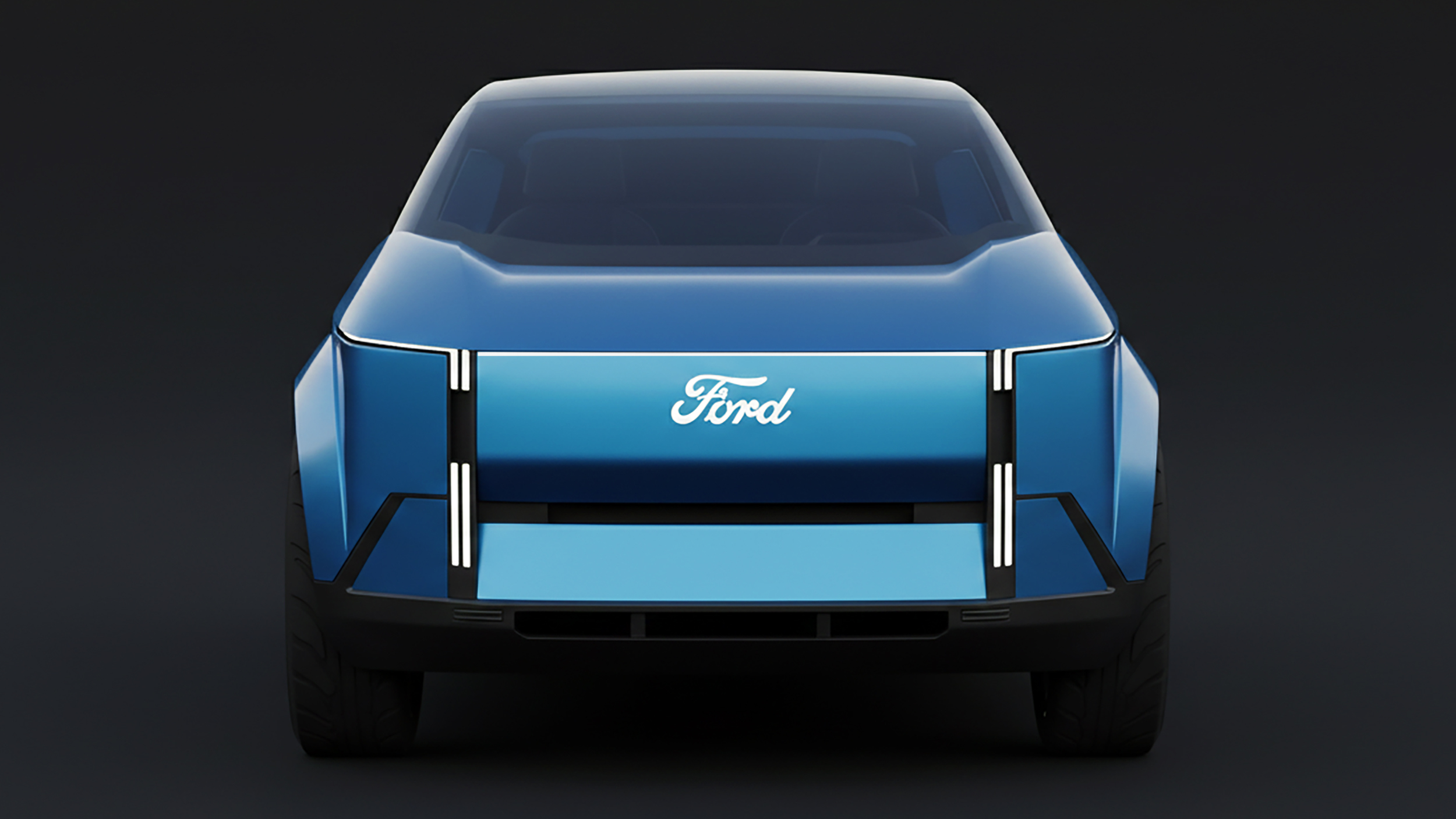
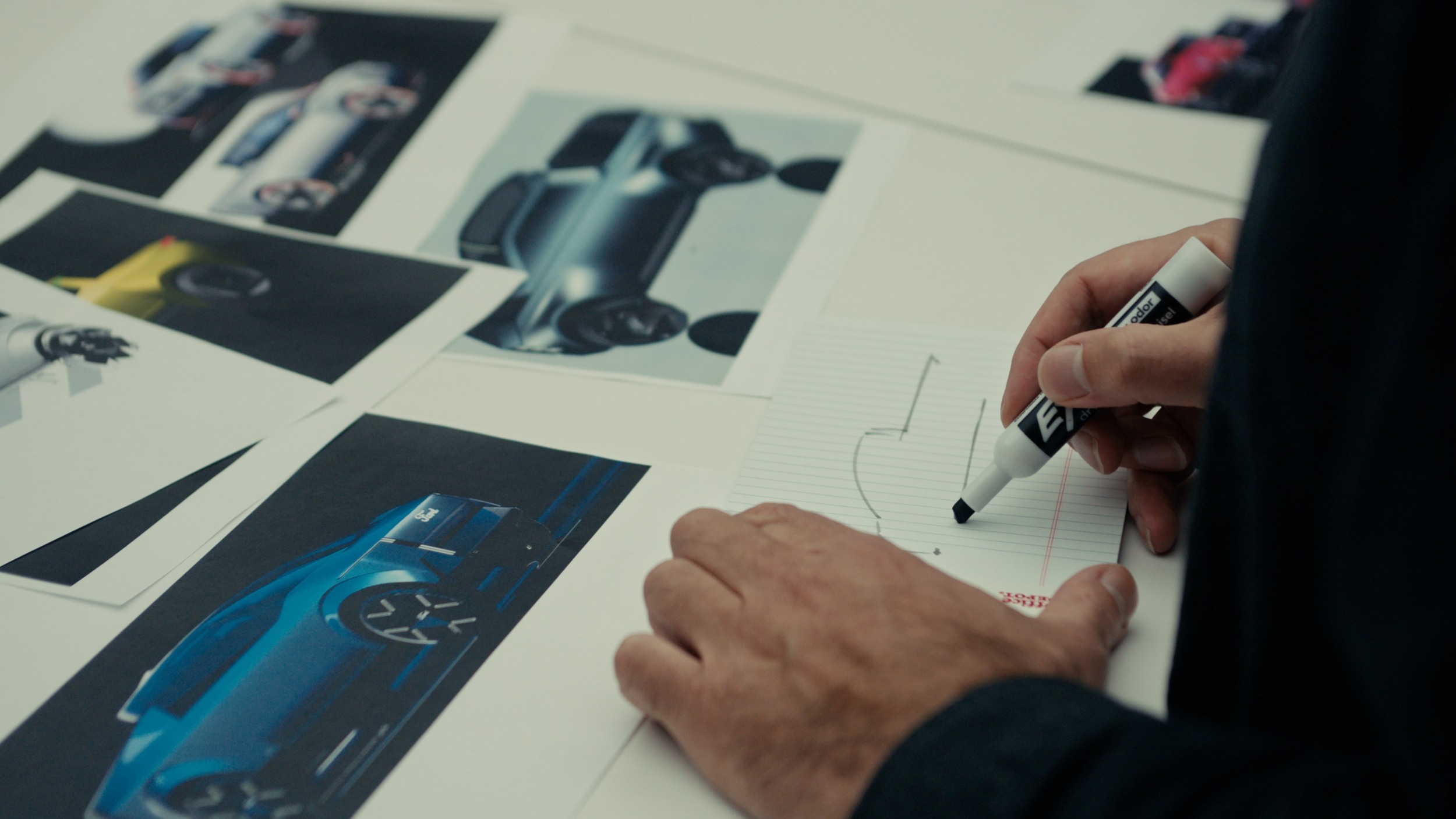
Ford has lifted the lid a little further on its so-called “Universal Electric Vehicle” project, the one tasked with delivering a brand-new $30,000 electric midsize truck in 2027. The tech breakdown in the 14-minute teaser packs plenty of stuff, but it is the design sketches that really grab your attention, offering the first glimpse of what this thing might look like in the metal.

From those early drawings, which also align with the ghost images seen so far, the truck appears slippery and futuristic. Think of it as a softer, more rounded take on the larger Tesla Cybertruck, minus the origami and unpolished edges, not to mention with a far more reasonable entry price. Up front, there are slim vertical LEDs, an illuminated Ford badge, and horizontal intakes carved into the bumper.

More: The One Car Ford Refuses To Build Is One Dealers Want The Most

The windshield stretches deep into the hood and flows into an integrated roof spoiler at the rear. Despite the futuristic surfacing, this is still (likely) a Ranger-sized pickup with a traditional dual-cab layout. Practicality has not been shown the door.

\\\\\\\

Ford

Low Drag Is Key

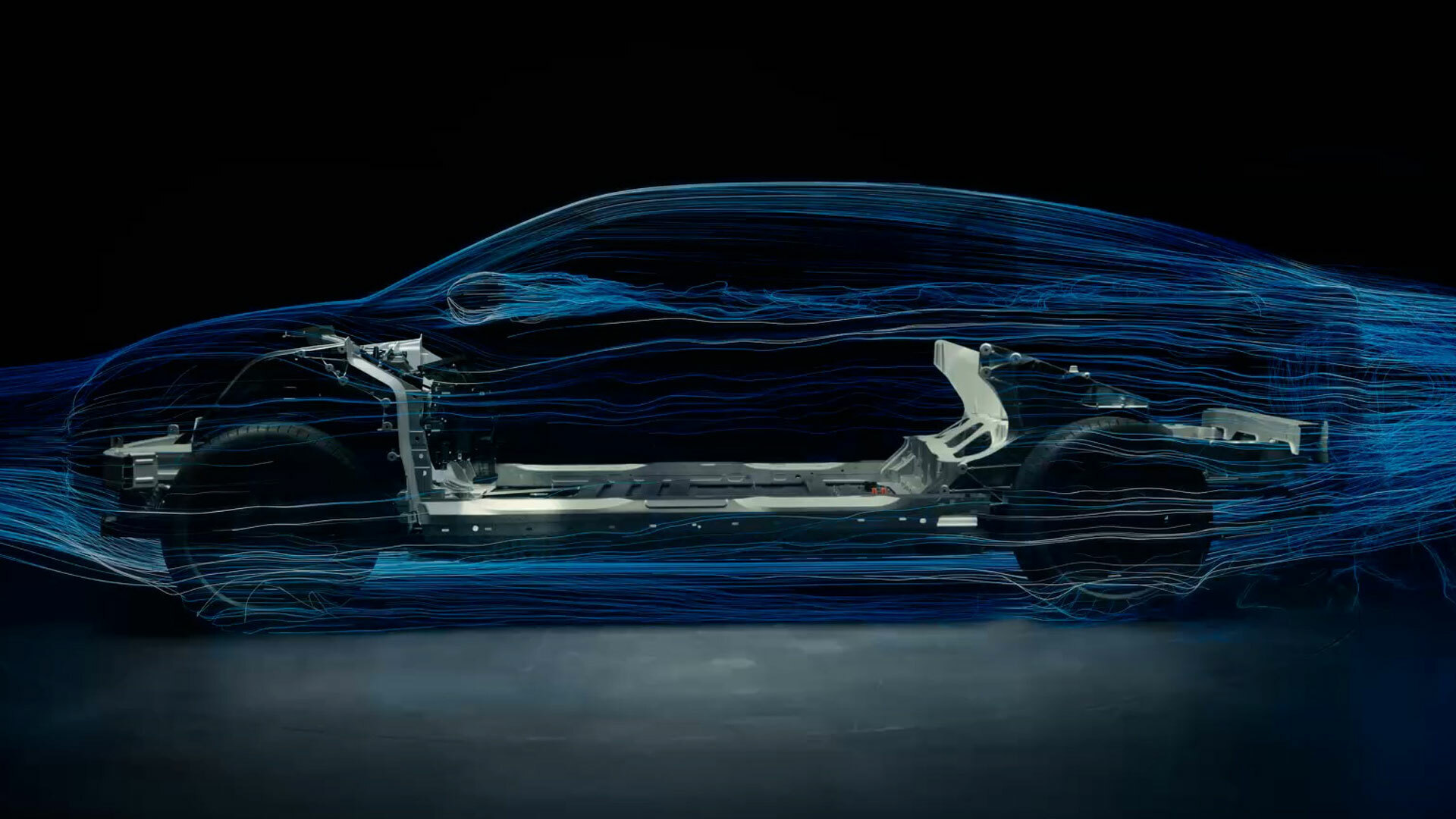
Unsurprisingly, the aerodynamics team had a heavy hand in shaping this truck, with former F1 experts brought in to chase every last fraction of efficiency. The mission was simple: slash drag hard enough that smaller batteries could deliver the required range, keeping production costs in check.

More: Ford Says Every Millimeter Of Roof Saves $1.30 On Its New $30K EV Truck

The curved roof reportedly reduces the turbulence typically created by a pickup bed. The side mirrors are 20 percent smaller than standard items, adding 1.5 miles (2.4 km) of range, while specially designed underbody panels contribute another 4.5 miles (7.2 km).

In total, Ford estimates these measures deliver 50 miles (80 km) of additional range compared to a similarly sized truck with a more conventional shape. That is not a rounding error.

 Ford’s $30K Pickup Wants To Beat Cybertruck At Its Own Game
Speculative rendering based on the official teasers.

Lower Production Costs

Aerodynamics are only half the story. Ford has also focused heavily on reducing manufacturing complexity. The company will use large aluminum unicastings, broadly similar in principle to Tesla’s gigacasting method. Structural components drop from 146 pieces in today’s Ford Maverick to just two, and overall weight is said to be 27 percent lower than rival offerings.

More: Next Ford And GM Pickups May Swap Mechanical Linkages For Lines Of Code

Fewer parts and fewer joints mean fewer robots on the line, which Ford claims results in “measurable gains” in both build quality and production efficiency.

 Ford’s $30K Pickup Wants To Beat Cybertruck At Its Own Game

it also appears that Ford engineers have borrowed lessons from reverse-engineering Chinese and Tesla EVs. The new truck’s wiring is 4,000 feet (1.2 km) shorter than that of the Mustang Mach-E crossover, trimming 22 pounds (10 kg). It will run prismatic lithium iron-phosphate (LFP) battery cells and a separate 48V system for auxiliary functions.

More: Ford Could Bring Back Sedans After Realizing It Can’t Afford Not To

The skunkworks team behind Ford’s next generation of EVs is led by former Tesla executive Alan Clarke, bringing 12 years of experience from the rival automaker.

As for the name, Ford is staying quiet. A recent patent filing hints at a possible return of the Ranchero badge, though nothing is confirmed. The affordable pickup is due in 2027 and will be followed by additional affordable EVs, with a sedan reportedly on the wish list.

Ford Says Every Millimeter Of Roof Saves $1.30 On Its New $30K EV Truck

  • Ford has released a new teaser video for their mid-size electric truck.
  • Arrives next year with an aerodynamic design and a focus on efficiency.
  • It will have LFP batteries as well as a new 48-volt low-voltage system.

Ford swung and missed with the F-150 Lightning, but the company continues to pour billions into electric vehicles. We’re starting to see some of the fruits of their labor as they’ve revealed more details about their next-generation of electric vehicles based on the new Universal EV platform.

Set to be launched on a mid-size electric truck in 2027, Ford is promoting the project with a 14 minute video that provides a few glimpses of the vehicle as well as a lot of talk without saying much.

More: $30K Ford Electric Truck Coming In 2027 Is Seriously Bad News For Slate

The end result feels like a waste of time, but there are a few interesting nuggets of information including that the model’s “aerodynamic efficiency is more than 15% better than any other pickup truck on the market today and will ultimately result in longer range and lower cost for our customers.”

We can see a rounded front end as well as a curved roof, which enables air to ‘skip’ over the bed. The model also has 20% smaller side mirrors that result in an extra 1.5 miles of range.

The video goes onto say the truck will have large aluminum unicastings that deliver a 27% advantage in casting weight compared to competitors. The model will also have two structural components compared to the Maverick’s 146.

Ford then talks about the truck’s cost-effective lithium iron phosphate battery pack and mentions an upgraded regenerative braking system, which reportedly saves $100 in battery costs.

Digging Deeper

\\\\\\\\\\\\

Putting the video aside, Ford noted most automakers have tackled range anxiety by adding large battery packs. This adds range, but it introduces a host of new problems as batteries account for roughly 40% of an EV’s total cost as well as around 25% of their total weight. As a result, bigger batteries mean heavy and expensive vehicles.

To keep prices low, Ford is betting on a small battery and a focus on efficiency. The latter saw them keep a close watch on weight, drag, and rolling resistance.

Ford also introduced a bounties system when developing the truck, which focused on “evaluating tradeoffs.” While there are always competing goals in vehicle development, Ford connected changes to a “specific value tied to the range and battery cost.”

How Much Is 1 mm Worth?

 Ford Says Every Millimeter Of Roof Saves $1.30 On Its New $30K EV Truck

As the automaker explained, their aerodynamic and interior teams could easily see that “adding even 1 mm to the roof height would mean $1.30 in additional battery cost or .055 miles of range. ”This process repeated itself over and over again in other areas, allowing Ford to create an efficient and affordable pickup.

The focus on efficiency didn’t stop there as the Blue Oval noted “power conversion within an electric vehicle platform can account for a surprising amount of wasted energy in a vehicle while charging or even taking energy from the 400V battery and converting it to 48V for the low-voltage devices.” To address this, the truck has a “fully electric vehicle charging ecosystem” that was designed in-house and uses their own software.

This promises to increase efficiency, reduce charging times, and maximize the lifespan of the battery. The company also revealed the model has a bi-directional charging capability and the company’s first 48-volt low-voltage system. Furthermore, the model’s wire harness is 4,000 feet (1,219 meters) shorter and 22 lbs (10 kg) lighter than on their first-generation of electric vehicles.

 Ford Says Every Millimeter Of Roof Saves $1.30 On Its New $30K EV Truck

The Rivian R2’s Hidden Rear Wiper Has A Trick To Survive Winter

  • Rivian R2 launches by June priced from about $45,000.
  • Sliding rear glass disappears fully into the tailgate area.
  • It claims wiper placement improves driving range too.

Rivian will begin deliveries of the long-awaited R2 by June this year, finally giving a much larger slice of the public the opportunity to buy one of its EVs. In many ways, it marks a pivotal expansion for the brand into a more accessible segment. Priced to start at around $45,000, it closely resembles the R1S but in a smaller package, and it brings several new features with it.

Read: Rivian’s R2 Still Doesn’t Fix A Critical Flaw That Matters When Seconds Count

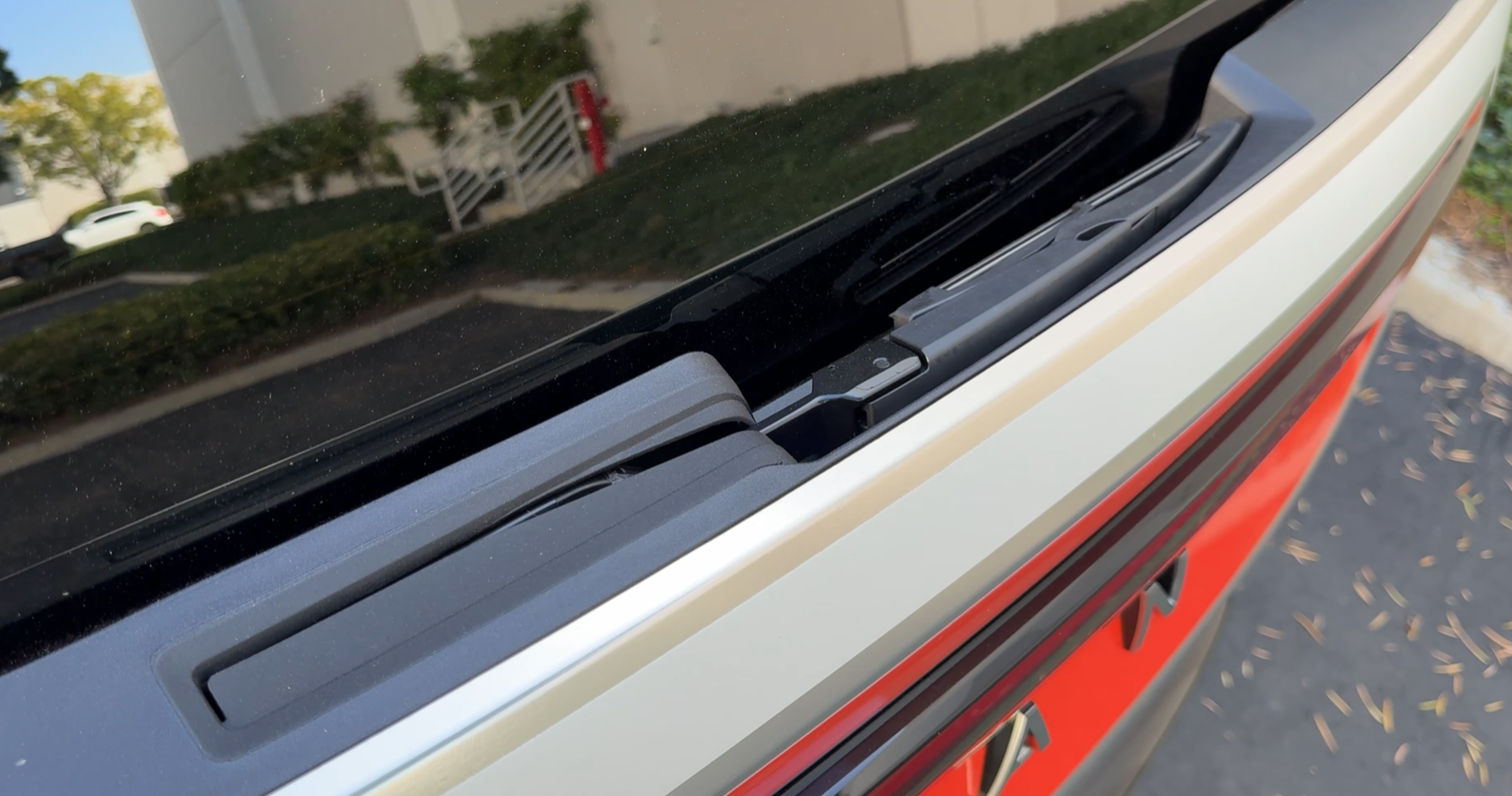
One of the highlights is the rear window. Seemingly inspired by vehicles such as the Toyota Land Cruiser, Lexus GX, and BMW 3 Series Touring, Rivian has designed a rear window that opens. However, rather than swinging open like some vehicles, the R2’s rear window rolls down into the tailgate, much like a side window.

 The Rivian R2’s Hidden Rear Wiper Has A Trick To Survive Winter
Screenshots Doug Demuro/YouTube

This sliding setup presented a challenge when Rivian needed to develop a rear wiper. Because the glass disappears completely into the tailgate, mounting the wiper directly to it was not an option. The R2’s teardrop-shaped roof and spoiler also ruled out placing the wiper higher up. As a result, the company developed a compact holder for the wiper within the tailgate itself.

Some Reddit users have questioned how this arrangement will function in the depths of winter, when snow and ice could easily build up around the mechanism. Rivian appears to have anticipated those concerns.

According to InsideEVs, the small compartment housing the wiper includes a hidden drain that channels water out from beneath the tailgate, preventing it from pooling. For those in the Northeast already thinking about freezing temperatures, the holder-and-drain assembly also integrates a heating element designed to melt accumulated snow or ice and guide the water away.

Rivian says that by placing the rear wiper in this position, it has been able to boost the R2’s range by a considerable six miles. It no doubt caused headaches for some designers and engineers, but it could prove worthwhile. Here’s hoping it’s adequately tested in winter conditions before customer deliveries begin.

Cadillac’s Electric Escalade Learns A Hard Lesson From Its Loudmouth V8 Sibling

  • Cadillac’s flagship SUVs are very evenly matched in a sprint.
  • Electric Escalade IQ packs 750 hp and 785 lb-ft of torque.
  • Escalade-V delivers an almighty 682 hp and 653 lb-ft total.

There’s something uniquely American about building an SUV with insane straight-line performance and then expecting it to hustle like a sports car. The Escalade-V and its unrelated Escalade IQ electric sibling may be two of the most gloriously excessive vehicles Cadillac sells today. Both deliver supercar levels of power, which makes the obvious question hard to resist.

More: There’s Only One Way A Mustang Dark Horse Can Beat A BMW M4 Like This

Curious to see which one is actually quicker, Edmunds lined them up for one of its U-drag races. Watching these two dinosaur-sized SUVs subjected to hard launches, heavy braking, and tight turns feels surreal and just plain absurd in the best possible way.

Gas V8 Power Versus Electric Surge

 Cadillac’s Electric Escalade Learns A Hard Lesson From Its Loudmouth V8 Sibling
2026 Cadillac Escalade-V

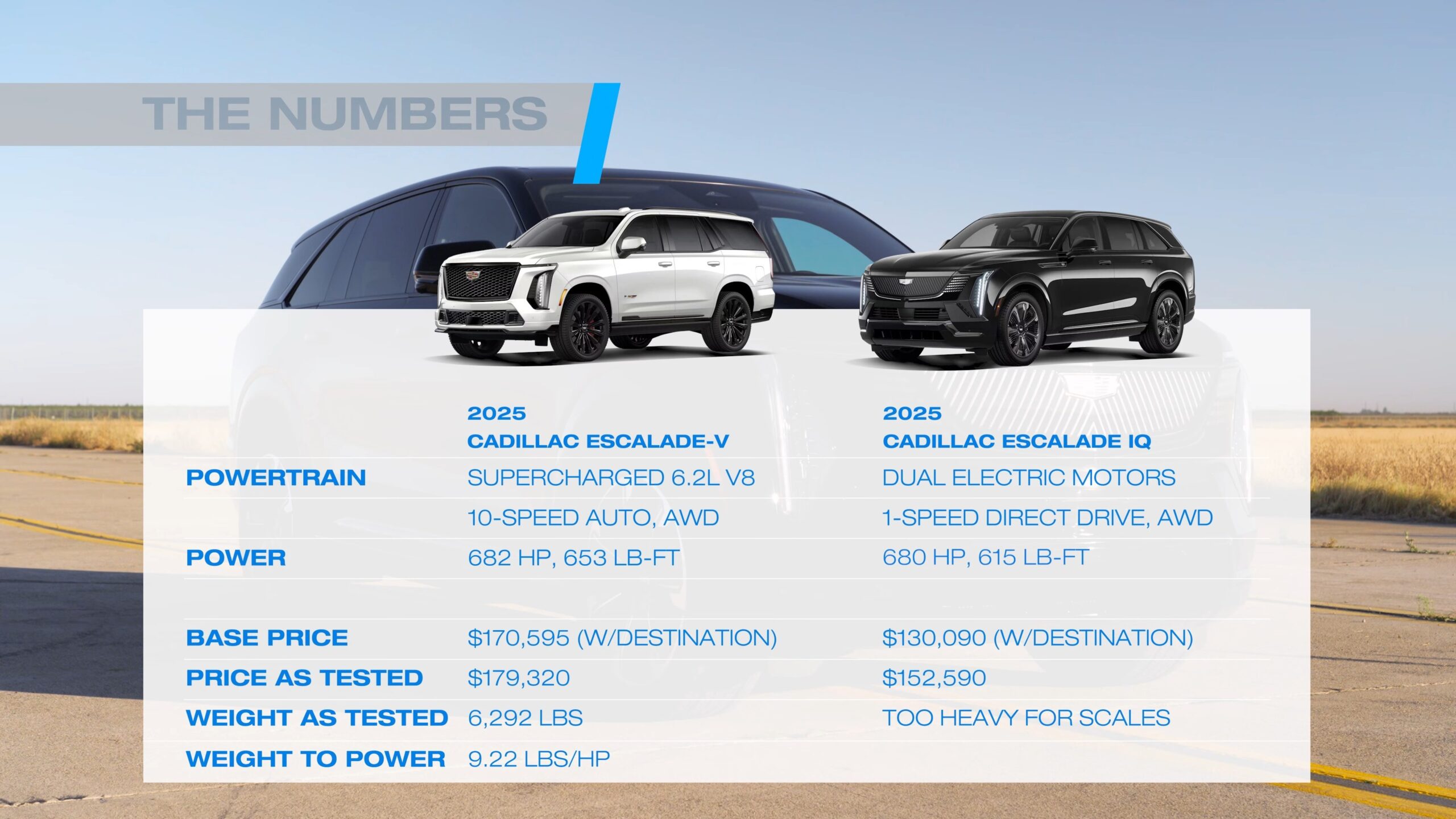
On paper, the Escalade-V and IQ are closely matched, even though their powertrains could not be more different. The V is powered by Cadillac’s 6.2-liter supercharged V8, producing 682 hp and 653 lb-ft (885 Nm) of torque, paired with a 10-speed automatic transmission that drives all four wheels.

By contrast, the Escalade IQ relies on a pair of electric motors and a substantial 212 kWh battery pack. In standard form, it delivers 680 hp and 615 lb-ft (834 Nm) of torque. Switch it into Velocity Max mode, and those figures climb to a healthier 750 hp and 785 lb-ft (1,063 Nm).

 Cadillac’s Electric Escalade Learns A Hard Lesson From Its Loudmouth V8 Sibling
Edmunds

The Escalade IQ needs this additional grunt to somewhat offset its insane heft. Whereas the combustion-powered V weighs around 6,300 lbs (2,857 kg), depending on configuration, the IQ weighs in at 9,100 lbs (4,127 kg), making it one of the heaviest passenger vehicles currently on sale.

Read: 2026 Cadillac Escalade IQL Is Long, Really Long

That weight difference shapes the entire contest. In a straight line, instant electric torque can mask mass for a moment, but physics always keeps score. The U-drag format, with its hard launch, heavy braking, tight turn, and sprint to the line, exposes not just power but how well each SUV manages it.

 Cadillac’s Electric Escalade Learns A Hard Lesson From Its Loudmouth V8 Sibling
2025 Cadillac Escalade IQ

During the first test, the V8-powered version got the jump off the line. After the U-turn, however, the transmission struggled to find the right gear, and the hesitation cost the Escalade-V its lead. That opened the door for the electric IQ to surge past and cross the line several lengths ahead.

Also: When A Super Venom Mustang Shows Up, Hellcats Turn Into Pussycats

Things were closer in the second race. This time, the electric model had the best launch, although the V regained some of that lost time under braking. The duo was neck-and-neck as they raced to the finish, but the IQ just ran out of puff at the top end, allowing the V to narrowly win.

This Rivian R1S Parking Incident Triggered A $54,000 Repair Bill

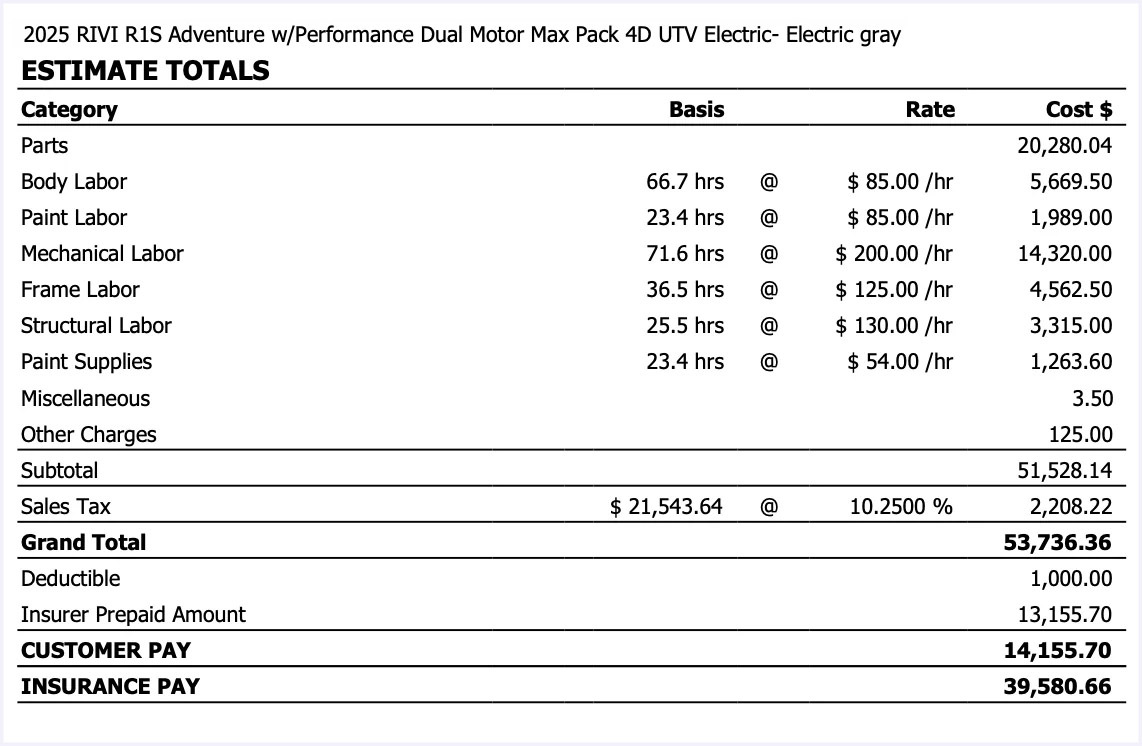
  • Rear quarter damage triggered a $53,736 repair bill.
  • Labor alone accounted for $29,856 of the estimate.
  • Quarter panel replacement requires major disassembly.

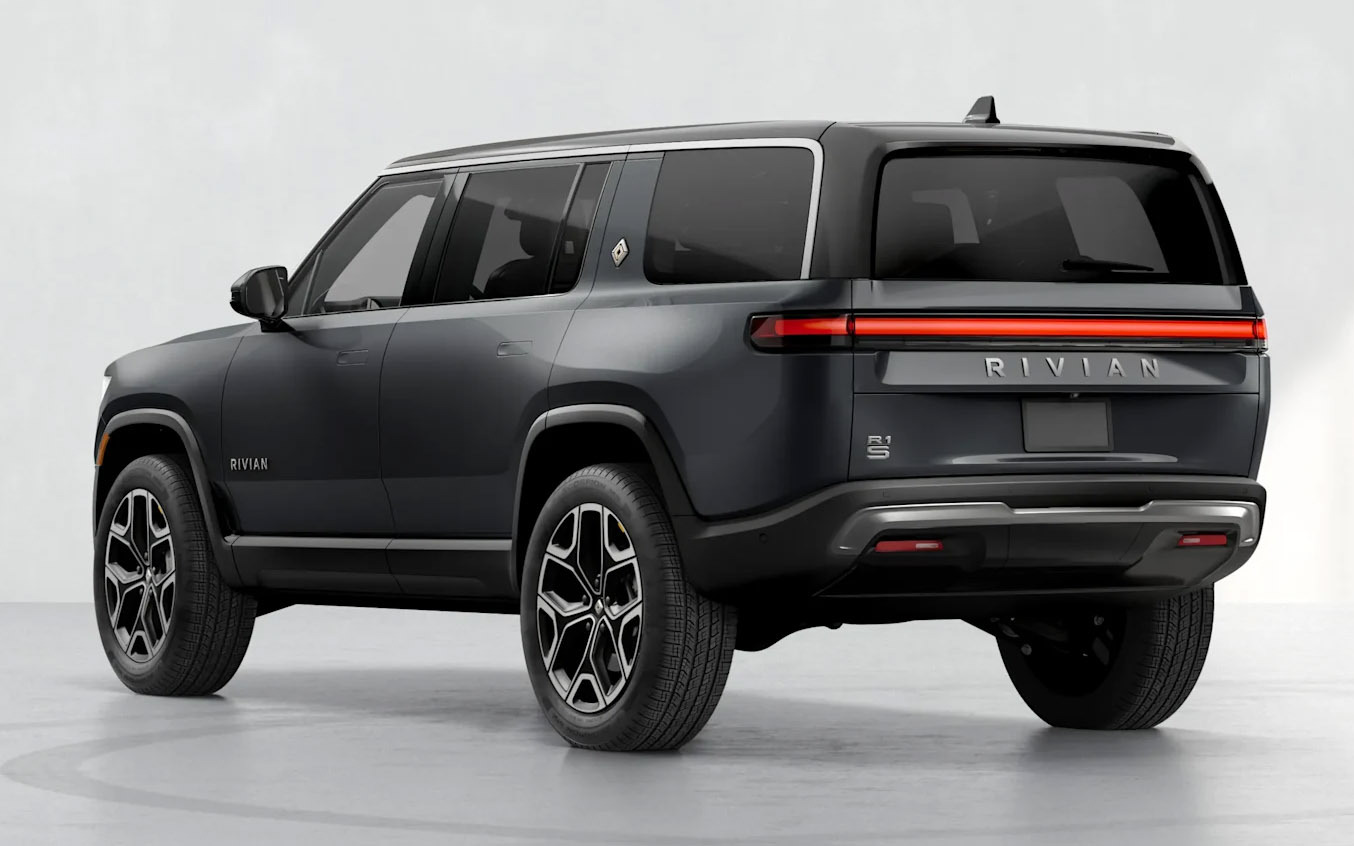
Modern vehicles may be packed with advanced engineering and clever design, but even a minor fender-bender can sometimes trigger catastrophic repair bills. If you own a Rivian R1S or R1T, you might want to keep your fingers crossed that one of the rear quarter panels is never damaged. If it is, repair costs can climb past $50,000, prompting some insurers to write off vehicles that, at least on paper, could be repaired.

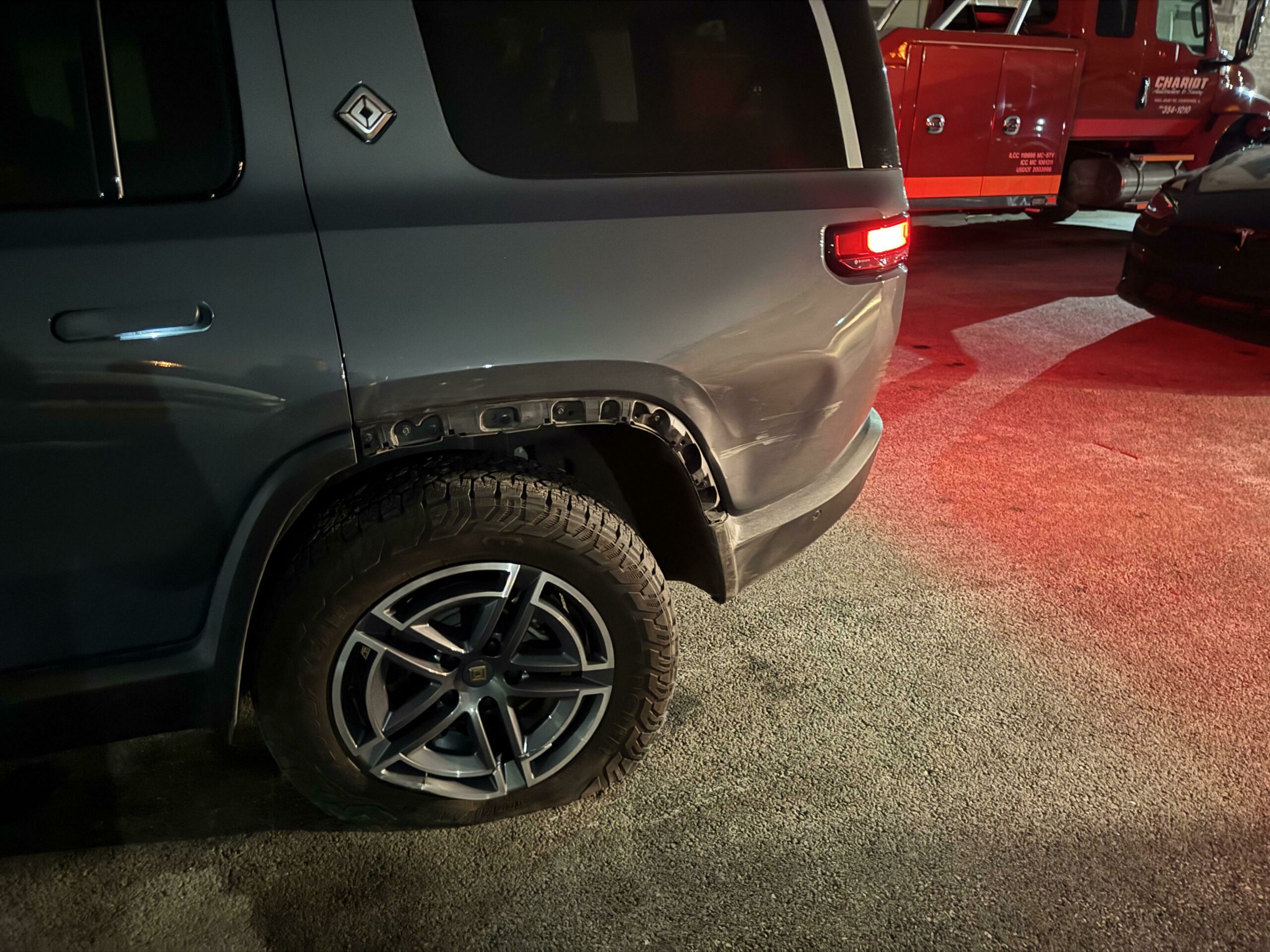
An R1S owner recently took to Reddit to share the bill shock he experienced after someone hit his wife’s SUV while it was parked. A photo posted on the forum shows a large dent in the rear quarter panel, along with damage to the wheel and, as it turns out, the frame and suspension too.

Read: Paintless Dent Removal Magician Saved Rivian R1 Owner From $41k Bodyshop Invoice

In the grand scheme of things, the damage does not appear catastrophic. You might reasonably assume the repair would run a few thousand dollars. That assumption would be wrong.

 This Rivian R1S Parking Incident Triggered A $54,000 Repair Bill
Reddit u/jgilbs

An authorized Rivian repair facility quoted the owner $53,736 to fix this R1S, or more than half the MSRP of a 2026MY that in this configuration, retails for around $100,000. Of that sum, $29,856 is attributed to labor alone. Insurance would cover close to $40,000, leaving the owner responsible for a little over $14,000.

Why Does It Cost So Much?

It appears much of the cost is related to the complexity of replacing the quarter panel, as it can’t simply be removed and replaced with another. Previous cases of similar damage indicate that much of the SUV’s interior must be stripped and that most of the R1S’s side must be removed, cut, and reassembled. In some cases, it’s been reported that the panoramic glass roof may also have to be removed.

Things can be even costlier for owners of R1T models, as the rear-quarter panel is even larger and stretches up and over the side windows, ending at the A-pillars.

 This Rivian R1S Parking Incident Triggered A $54,000 Repair Bill
Reddit u/jgilbs

According to the owner, “replacing the quarter panel is the majority of that cost. No motor battery or frame damage”. Some commenters questioned the reference to frame damage because the repair quote specifically mentioned it in one line item. The owner, however, clarified that “the side of the vehicle is considered an integral part of the frame”.

He also explained that “suspension work was quoted as 13 total hours of labor vs. about 250 hrs total. So roughly thats 5% of the price”, adding that this was “one of the top Rivian certified shops in our area, who Rivian themselves recommended”.

Also: Can You Believe This Rivian R1T Damage Repair Cost $21,000?

Without a more detailed breakdown, it is difficult to draw firm conclusions. Still, this is hardly the first time we’ve seen excessively high Rivian repair costs, including a $21,000 estimate for what was described as a relatively minor backup incident.

 This Rivian R1S Parking Incident Triggered A $54,000 Repair Bill

A Pattern Of High Repair Bills

While this particular example appears to involve underlying damage, which may justify more extensive work, the total still sounds steep. In cases without structural or deeper damage, more affordable solutions do exist.

More: Rivian Owner’s DIY Repair Saves Thousands After Mishap And Teaches Us A Lesson

Many paintless dent removal specialists have repaired similar quarter panel damage for a fraction of the quoted insurance repair cost, restoring the panel rather than replacing it. Just pray that you don’t damage the taillight too.

Federal judge blocks Pentagon attempt to demote Sen. Mark Kelly over illegal orders video

Arizona Democratic Sen. Mark Kelly outside the District of Columbia federal courthouse where his lawsuit against the Department of Defense was heard on Feb. 3, 2026. (Photo by Jennifer Shutt/States Newsroom)

Arizona Democratic Sen. Mark Kelly outside the District of Columbia federal courthouse where his lawsuit against the Department of Defense was heard on Feb. 3, 2026. (Photo by Jennifer Shutt/States Newsroom)

WASHINGTON — A federal judge issued a preliminary injunction Thursday, blocking the Department of Defense from downgrading Arizona Democratic Sen. Mark Kelly’s rank as a retired Navy captain for appearing in a video where he and other lawmakers reminded members of the military they aren’t required to follow illegal orders. 

Senior Judge Richard J. Leon of the District of Columbia District Court wrote in the 29-page ruling that Defense Secretary Pete Hegseth and others named in the lawsuit have “trampled on Senator Kelly’s First Amendment freedoms and threatened the constitutional liberties of millions of military retirees.”

In his scathing opinion loaded with emphasis and exclamation points, Leon wrote, “After all, as Bob Dylan famously said, ‘You don’t need a weatherman to know which way the wind blows.’ To say the least, our retired veterans deserve more respect from their Government, and our Constitution demands they receive it!” 

The senior judge ruled that Kelly is likely to succeed on the merits of his case. The preliminary injunction will block Pentagon action while the case proceeds through the courts.


The closing paragraph from Judge Leon's opinion.


Leon conceded that while active military personnel are subject to “well-established doctrine” limiting First Amendment rights, “(u)fortunately for Secretary Hegseth, no court has ever extended those principles to retired servicemembers, much less a retired servicemember serving in Congress and exercising oversight responsibility over the military.” 

“This Court will not be the first to do so!”

Leon was nominated by former President George W. Bush.

Leon concluded the ruling with a biting passage suggesting that “Rather than trying to shrink the First Amendment liberties of retired servicemembers, Secretary Hegseth and his fellow Defendants might reflect and be grateful for the wisdom and expertise that retired servicemembers have brought to public discussions and debate on military matters in our Nation over the past 250 years.” 

“If so, they will more fully appreciate why the Founding Fathers made free speech the first Amendment in the Bill of Rights! Hopefully this injunction will in some small way help bring about a course correction in the Defense Department’s approach to these issues,” Leon wrote.

‘This case was never just about me’

Kelly said in a lengthy statement following the ruling that the federal court “made clear that Pete Hegseth violated the constitution when he tried to punish me for something I said.” 

“But this case was never just about me. This administration was sending a message to millions of retired veterans that they too can be censured or demoted just for speaking out. That’s why I couldn’t let it stand,” Kelly said.

Kelly said the nation is at a “critical moment” to defend free speech.

“The First Amendment is a foundation of our democracy. It’s how we demand better of presidents like Donald Trump – whether they are jacking up the cost of groceries with tariffs or sending masked immigration agents to intimidate American communities.  

  “But Donald Trump and his administration don’t like accountability. They don’t like when journalists report on the consequences of their policies. They don’t like when retired veterans question them. And they don’t like when millions of everyday Americans peacefully protest. That’s why they are cracking down on our rights and trying to make examples out of anyone they can.”

The Department of Defense pointed to Hegseth’s X account as official comment on the matter.

The secretary wrote about the case: “This will be immediately appealed. Sedition is sedition, ‘Captain.’”

DOD investigation

Kelly, Michigan Sen. Elissa Slotkin, Colorado Rep. Jason Crow, Pennsylvania Reps. Chris Deluzio and Chrissy Houlahan and New Hampshire Rep. Maggie Goodlander, all Democrats with backgrounds in the military or national security, posted the video on Nov. 18

President Donald Trump reacted on social media a few days later, falsely claiming the video represented “SEDITIOUS BEHAVIOR, punishable by DEATH!”

The Defense Department announced on Nov. 24 that it had opened an investigation into “serious allegations of misconduct” against Kelly. Officials wrote the senator could face “recall to active duty for court-martial proceedings or administrative measures.” 

Hegseth wrote in a social media post on Jan. 5 that he had started the process to downgrade Kelly’s retirement rank as a Navy captain and his pay. 

Hegseth wrote Kelly’s “status as a sitting United States Senator does not exempt him from accountability, and further violations could result in further action.”

Kelly filed a lawsuit against the Department of Defense and Hegseth on Jan. 12, asking a federal judge to declare the effort “unlawful and unconstitutional.”

“Pete Hegseth is coming after what I earned through my twenty-five years of military service, in violation of my rights as an American, as a retired veteran, and as a United States Senator whose job is to hold him—and this or any administration—accountable,” Kelly wrote in a statement at the time. “His unconstitutional crusade against me sends a chilling message to every retired member of the military: if you speak out and say something that the President or Secretary of Defense doesn’t like, you will be censured, threatened with demotion, or even prosecuted.”

Court hearing

Leon held a hearing on Kelly’s request for a preliminary injunction on Feb. 3, where he asked the attorney representing the Department of Defense how any retired member of the military who is later elected as a member of Congress, especially one that sits on the Armed Services Committee, like Kelly does, could challenge any actions taken by the Defense Department. 

John Bailey, the Justice Department attorney, contended that Congress has determined that certain retired military members are still subject to the Uniform Code of Military Justice. 

Benjamin Mizer, one of the lawyers on Kelly’s team, told the judge the Defense Department’s actions represented a “clear First Amendment violation.” 

Grand jury non-indictment

The other Democratic lawmakers in the video aren’t subject to the military’s judicial system but rebuked the Justice Department Wednesday for seeking a grand jury indictment against them for publishing the video, where they told Americans in the military and intelligence communities they “can” and “must refuse illegal orders.”

“No one has to carry out orders that violate the law or our Constitution. We know this is hard and that it’s a difficult time to be a public servant,” they said. “But whether you’re serving in the CIA, in the Army, or Navy, or the Air Force, your vigilance is critical.”

Slotkin, a former CIA officer, posted a video on Feb. 5, saying she had informed U.S. Attorney General Pam Bondi and U.S. Attorney for the District of Columbia Jeanine Pirro that she wouldn’t be sitting for an interview. 

Slotkin said her letter to Bondi and Pirro also told them “to retain their records on this case in case I decide to sue for infringement of my constitutional rights.”

“To be honest, many lawyers told me to just be quiet, keep my head down and hopefully this will all just go away. But that’s exactly what the Trump administration and Jeanine Pirro want,” Slotkin said. “They are purposely using physical and legal intimidation to get me to shut up. But more importantly they’re using that intimidation to deter others from speaking out against their administration.

“The intimidation is the point and I’m not going to go along with that.”

House members 

Houlahan released her own video the same day saying she would not sit for an FBI interview and that the Democrats’ video “told the truth, it stated facts, it reiterated the law and it exercised speech explicitly protected by the First Amendment of the United States Constitution.” 

“Free speech is not a favor that the government can revoke,” Houlahan said. “It is a right and I will not surrender it, for myself or for anyone else.” 

Deluzio wrote in a social media post the following day that he would “not be intimidated by any harassment campaign” and does “not intend to sit down for a voluntary interview with DOJ or FBI officials sent to interfere with the important work I’m doing for my constituents.”

Goodlander wrote in a statement that the “Justice Department is targeting us for doing our jobs, and the aim here is clear: to intimidate, coerce, and silence us. It will not work. I will not bend the knee in the face of lawless threats and rank weaponization — I will keep doing my job and upholding my oath to our Constitution.”

Crow told CNN’s Pamela Brown last week that he was treating the FBI’s investigation as “an attempt to try to threaten, harass and intimidate political opponents.”

“(Trump’s) trying to make an example out of me and Mark Kelly and others because if he can make an example out of a member of Congress or a senator then why would everyday Americans stand up and protest and dissent? But he has chosen the wrong people.”

Rivian’s R2 Still Doesn’t Fix A Critical Flaw That Matters When Seconds Count

  • A handful of tech YouTubers recently got hands-on with the Rivian R2.
  • Like many other new EVs, Rivian is using electronic door handles.
  • Prices for the new mid-size R2 are expected to start at around $45,000.

After a string of high-profile crashes in the US and overseas, automakers are facing increased scrutiny over something as basic as door handle design. Once a simple mechanical feature, door handles have become unnecessarily complicated with the rise of electronic systems.

Companies like Tesla and Rivian are facing significant criticism for where they’ve located the emergency interior mechanical door releases if electronic issues prevent the buttons from working. Rivian’s solution for second-row passengers is particularly bad in the R1T and R1S, as they need to remove a large black plastic panel and then reach in to pull a cable to release the door.

Read: Rivian’s New $45,000 EV Is Coming By June

Is the upcoming Rivian R2 any better? Not really. A handful of tech YouTubers recently had the chance to check out pre-production versions of the R2, and JerryRigEverything has provided us with our first look at the R2’s mechanical latches.

Trouble In The Second Row

 Rivian’s R2 Still Doesn’t Fix A Critical Flaw That Matters When Seconds Count
The front emergency manual latch (above) is much simpler than the concealed rear one (below).
 Rivian’s R2 Still Doesn’t Fix A Critical Flaw That Matters When Seconds Count
Screenshots JerryRigEverything/YouTube

The latch in the front row is quite simple. Positioned on the underside of the floating storage compartment is a little black plastic handle used to open the doors in emergencies. It’s similar to what’s found in the R1T and R1S, although the emergency releases on those models are larger and easier to identify.

Then there’s the rear. The release is in the same position as the one up front, but bizarrely, passengers have to remove a small plastic cover and then pull a cord, just like they do in the R1 models. The only upside is that the placement has changed slightly for the better.

If you have to give your backseat passengers a tutorial on something as basic as opening the doors in an emergency, the design isn’t clever, it’s flawed. Why Rivian didn’t just carry over the simpler front-door setup is anyone’s guess, but it comes across as needless complexity at best, or cost-cutting by reusing the same flawed design at worst.

Is An Update Happening?

There had been some talk of changes. Rivian was reportedly reworking the R2’s emergency releases in response to incidents involving drivers trapped in burning Teslas. But based on this early look, it doesn’t seem like any major improvement has been made compared to the R1 models.

Although, as this example was a pre-production model, it’s possible that things will be changed for production. Or at least, that’s what we hope.

More: China Officially Bans Pop-Out Door Handles, And The World May Follow

Rivian isn’t alone here. Beyond Tesla, unsurprisingly the poster child for controversial design choices, even Ford has run into trouble with the Mustang Mach-E’s door latches.

And it’s not just the inside of the car that’s raising concerns. Exterior pop-out door handles have created so much controversy that China has decided to ban them on all electric vehicles starting in 2027.

\\\\\\\\

Honda’s Super-One Wants To Be A Hot Hatch So Bad It Pretends To Shift Gears

  • Honda reveals production Super-One ahead of its Japan launch.
  • Electric hot hatch gets wide arches, power boost, and fake noise.
  • UK, Europe, and Asia-Pacific markets confirmed for release.

Forget the clinical efficiency and silent hum of modern EVs. Honda has other ideas. The brand is channeling some of its spikiest ’80s spirit into the electric era, drawing a direct line from the analog madness of the City Turbo II to its latest pint-sized experiment.

After showing off a prototype at the Japan Mobility Show, Honda has pulled the curtain back on the production-ready Super-One via a new teaser site ahead of its domestic launch.

More: Honda Walks Back Its EV Plans As Losses Spiral

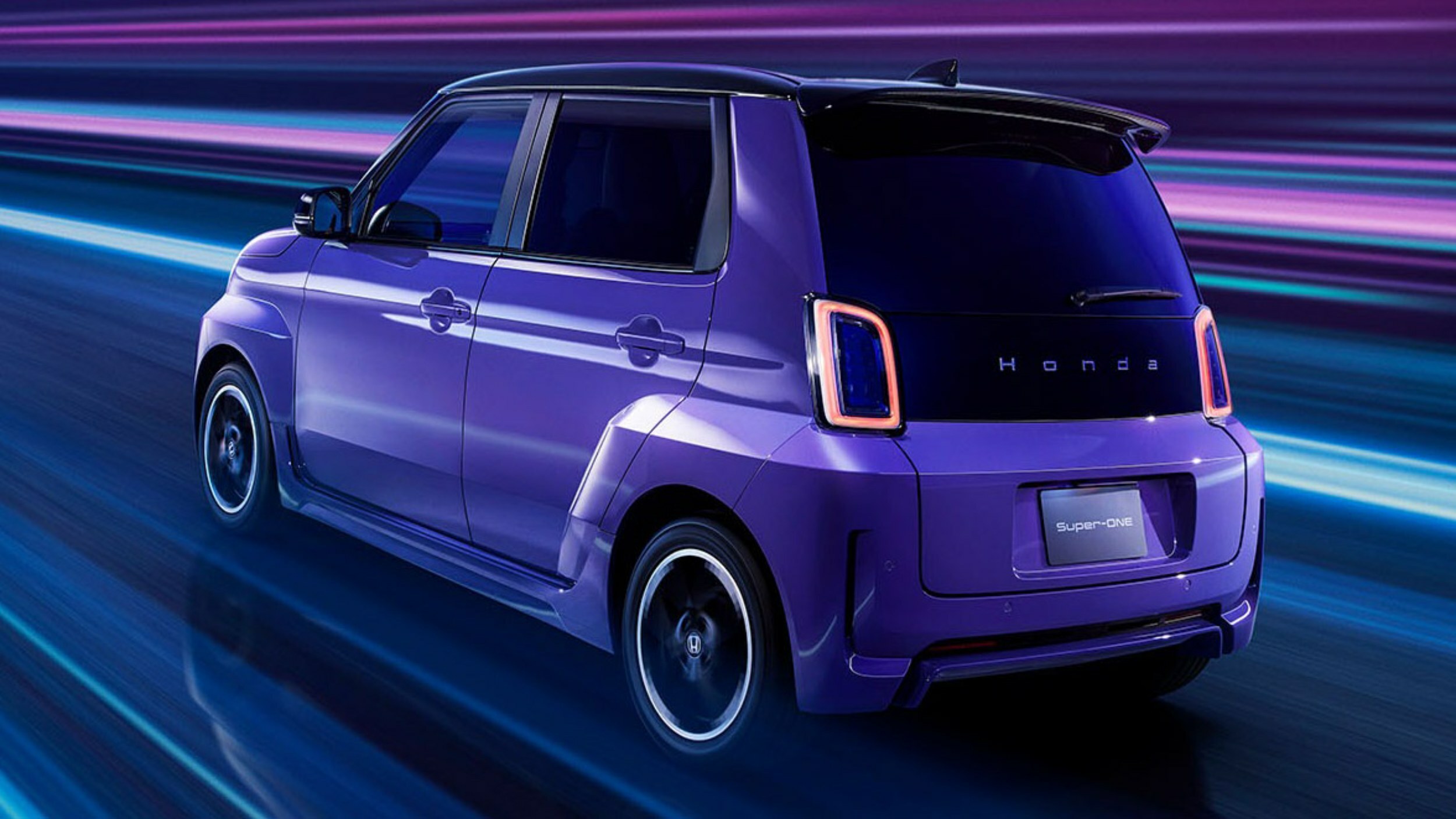
The Super-One isn’t just a slightly jazzed-up N-One e:. It’s a city-sized hot hatch, with a wider stance, upgraded chassis, and an electric powertrain that tries to evoke the grit of a gasoline engine with synthesized sounds. Honda says it’s a spiritual successor to the City Turbo II Bulldog from the 1980s.

Widebody Pocket Rocket

Visually, the Super-One stands out with reshaped bumpers featuring functional air ducts, distinctive “blister fenders” along the sides, and a roof spoiler. It also rides on a new set of 15-inch alloy wheels finished in matte Berlina Black with a machined face, paired with wider Yokohama tires.

\\\\\\\\\

In terms of size, the Super-One comes in at 3,589 mm (141.3 inches) long, 1,573 mm (61.9 inches) wide, and 1,616 mm (63.6 inches) tall. That makes it 194 mm (7.6 inches) longer, 98 mm (3.8 inches) wider, and 71 mm (2.8 inches) taller than the standard N-One e:, though it retains the same 2,520 mm (99.2-inch) wheelbase.

More: Prelude, Type R And CR-V Get Sporty HRC Makeovers, And Honda Didn’t Stop There

Honda has introduced a new color called Boost Violet Pearl, inspired by lightning and offered exclusively on the Super-One. Other available finishes include Platinum White Pearl, Crystal Black Pearl, Citron Yellow Pearl, and Mono Gray, each offered in both monotone and bi-tone combinations.

What About The Interior?

Inside, the dashboard layout is mostly carried over from the N-One e:, but the Super-One adds its own touches with reshaped seats featuring heavier bolsters, purple accents, and custom graphics for the 7-inch digital instrument cluster. When Boost Mode is activated, the display shifts to show a simulated tachometer.

\\\\\

Adding to the theatrics, the Active Sound Control system mimics gear shifts and engine growls through the standard eight-speaker Bose premium audio setup. Equipment levels are generous, with a 9-inch infotainment system, heated front seats, a heated steering wheel, and Honda’s full suite of advanced driver assistance features.

Power Boost

The pint-sized hot hatch is driven by a front-mounted electric motor. While Honda hasn’t officially confirmed the output, earlier details from the Singapore Motor Show in January suggest it delivers 94 hp (70 kW / 95 PS) in Boost Mode.

More: The Manual Honda That Thinks It’s A Baby Type R

That might not sound like a lot, but it represents a healthy increase over the 63 hp (47 kW / 64 PS) of the N-One e:. Even so, it is less powerful than the discontinued Honda e that produced 152 hp (113 kW / 154 PS) in its most potent form.

 Honda’s Super-One Wants To Be A Hot Hatch So Bad It Pretends To Shift Gears

The added power and increased width mean the Super-One will be classified as a passenger vehicle rather than a kei car. Honda has not yet revealed battery capacity or range figures, though the N-One e: uses a 29.6 kWh unit.

Rounding out the changes, the sporty EV features a custom chassis setup with a lowered suspension and wider tracks for improved handling.

How Much Does It Cost?

Full details on the Super-One’s pricing and launch timing will follow in the coming weeks. However, Japanese outlet Creative Trend reports that Honda is targeting a price range between ¥3,000,000 and ¥3,500,000 (approximately $19,700 to $22,900) before incentives.

That positions it higher than the standard N-One e:, which starts at ¥2,699,400 ($17,600) and can drop as low as ¥1,625,400 ($10,600) with full subsidies applied.

Following its debut in Japan, the Super-One will also reach additional markets including the UK, Europe, Australia, New Zealand, and select parts of Asia.

Democrats decry ‘authoritarian’ Trump attempt to indict them for illegal orders video

11 February 2026 at 19:33
Sen. Elissa Slotkin, D-Mich., listens as Sen. Mark Kelly, D-Ariz., speaks on the failed grand jury indictment against them during a news conference at the U.S. Capitol on Feb. 11, 2026 in Washington, D.C. (Photo by Heather Diehl/Getty Images)

Sen. Elissa Slotkin, D-Mich., listens as Sen. Mark Kelly, D-Ariz., speaks on the failed grand jury indictment against them during a news conference at the U.S. Capitol on Feb. 11, 2026 in Washington, D.C. (Photo by Heather Diehl/Getty Images)

WASHINGTON — Democratic members of Congress said Wednesday the Trump administration was using the “authoritarian playbook” when it tried to secure a grand jury indictment against them for releasing a video that reminded members of the military and intelligence communities they can refuse illegal orders. 

Arizona Sen. Mark Kelly and Michigan Sen. Elissa Slotkin said during a joint press conference they don’t expect this will be the last time administration officials seek to punish them for the video. They also expressed frustration and dismay that more Republicans haven’t spoken out.

“This isn’t the judicial system at work,” Kelly said. “It’s not supposed to be a president deciding right out of the gate here that members of the United States Senate should be hanged, calling for our execution. And then, I guess when he realized that was not a good idea, or somebody told him that that’s ridiculous. Then he went with prosecution for something that is in the First Amendment.”

Slotkin, a former CIA officer, said the unsuccessful attempt to convince a District of Columbia federal grand jury to indict her and the other five lawmakers in the video is not something she expected to happen in America.

“If things had gone a different way, we’d be preparing for arrest,” Slotkin said.  

The Department of Justice and the office of United States Attorney for the District of Columbia Jeanine Pirro did not respond to a request for comment. 

No word from Justice Department

Slotkin said she and the other Democrats learned about the attempt to indict them from news articles. The Justice Department didn’t reach out to say what they were trying to charge the lawmakers with or what law they allege they may have violated. 

Kelly noted during the press conference that he is waiting to learn if a federal judge will issue a preliminary injunction, blocking the Defense Department from downgrading his retirement rank and pay as a Navy captain for appearing in the video. 

Kelly, Slotkin, Colorado Rep. Jason Crow, Pennsylvania Reps. Chris Deluzio and Chrissy Houlahan, and New Hampshire Rep. Maggie Goodlander, all Democrats with backgrounds in the military or national security, posted the video on Nov. 18.

“No one has to carry out orders that violate the law or our Constitution. We know this is hard and that it’s a difficult time to be a public servant,” they said. “But whether you’re serving in the CIA, in the Army, or Navy, or the Air Force, your vigilance is critical.”

Trump reaction, DOD investigation

President Donald Trump reacted on social media a few days later, falsely claiming the video represented “SEDITIOUS BEHAVIOR, punishable by DEATH!”

The Defense Department opened its investigation into Kelly later that month and Secretary Pete Hegseth announced in January that officials had started the process to downgrade Kelly’s retirement rank and pay. 

Kelly filed a lawsuit shortly afterward, asking a federal court to block the Defense Department from moving forward and alleging its actions violated his constitutional rights, including the First Amendment. 

House members speak out

The four House Democrats in the video held a press conference of their own in the afternoon, criticizing the Trump administration for seeking a grand jury indictment and hinting at possible legal action of their own. 

“My lawyers just sent a letter today to the Department of Justice, putting them on notice that there will be costs,” Crow said. “We will not just sit back and let them lob false allegations after false allegations at us.”

Crow declined to answer several questions about what exactly he meant and his office did not return a request for details from States Newsroom. 

Houlahan said Trump administration officials do not get to pick which parts of the Constitution they are going to respect and which they are going to ignore, especially when criticized by members of Congress.  

“The First Amendment is not optional. It is not conditional. It does not expire because someone who’s in power is threatened by it,” Houlahan said. “It does, thankfully, limit the power of our government, especially when that power is tempted to punish lawful speech.”

Deluzio said the Trump administration’s actions show they wanted to “throw us in prison for stating the law.”

“I have little doubt that Donald Trump and those around him are willing to abuse their power. We’ve seen it with us, with other perceived political opponents,” Deluzio said. “There has to be accountability and there has to be justice. And I know that all of us will see that through.”

Goodlander said it was “truly sad and it is downright dangerous” that Trump became “so unglued by a cornerstone and completely uncontroversial principle of American law” that illegal orders should not be obeyed.

“A principle of law that was born of the hard-earned, the unparalleled tragedies of the Holocaust. A principle that has always guided us,” Goodlander said. “A principle that makes us who we are as Americans.”

❌
❌