All public employees in Wisconsin must retain records, per the state’s open records law. Except one group. The ones who wrote that law.
State legislators have exempted themselves from the retention portion of the law. Some want to change that.
“The public should not have to worry about legislators having secret conversations or deleting emails,” said state Rep. Clinton Anderson, D-Beloit, who is introducing a bill that would close this loophole despite the fact that the state Assembly adjourned last month for the rest of the year.
Anderson released the bill Monday because it is the start of Sunshine Week, a nonpartisan collaboration among groups in the journalism, civic, education, government and private sectors that shines a light on the importance of public records and open government.
Rep. Clinton Anderson, D-Beloit, left, listens as the Wisconsin Assembly convenes during a floor session, Jan. 14, 2025, at the State Capitol in Madison, Wis. (Joe Timmerman / Wisconsin Watch)
In Wisconsin, state legislators must comply with a records request, but if they have destroyed the record, they have nothing to send.
“Obviously, it’s troubling,” said Bill Lueders, president of the Wisconsin Freedom of Information Council. “It allows legislators to make things go away that they would rather not see the light of day.”
State Rep. Rob Brooks, R-Saukville, told the Wisconsin Examiner in 2021 that his office “frequently deletes emails during the normal course of business each day.”
And he’s not the only one.
“My office does not delete records on principle, and we should make sure every elected official is held to that same standard,” Anderson said.
In 2025, Gov. Tony Evers stepped in to close this loophole – his 2025 budget proposal included a measure to “remove the Legislature’s exemption from open records law by requiring that records and correspondence of any member of the Legislature be included in a definition of a public record to provide greater transparency for the people of Wisconsin.” The proposal also would have allocated funds and opened a full-time position with the Legislative Technology Services Bureau to carry out this new requirement. But the Republican-controlled Joint Finance Committee removed it from the final budget.
State Sen. Chris Larson, a Democrat from Milwaukee, has introduced bills to close that exemption for state legislators multiple times and is doing so again in the Senate this week in tandem with Anderson.
Wisconsin state Sen. Chris Larson, D-Milwaukee, is photographed during a state Senate session on June 7, 2023, in the Wisconsin State Capitol building in Madison, Wis. (Drake White-Bergey / Wisconsin Watch)
Before his election to the state Senate in 2010, Larson served on the Milwaukee County Board of Supervisors. As a public official, he had to maintain all his records there and assumed the same when he arrived in the Legislature.
But as his email inbox filled up and ran low on space, Larson said he was told by IT staff to simply delete old messages.
“People often wonder why so many wildly popular policies go session after session without a vote or even a public hearing, while special interest slop rises to the top of the agenda,” said Justin Bielinski, Larson’s spokesman. “The Wisconsin Legislature’s exemption from record retention requirements creates a perverse incentive to do the people’s business in secret. If lawmakers aren’t going to be responsive to their constituents’ needs, the least we can do is allow people to find out who they are listening to, and whose voices they choose to ignore.”
Larson’s bills to close the loophole have been ignored by Republicans who control the Legislature, he said. The majority party generally pays little attention to bills from the minority.
The exemption for legislators here “completely undermines Wisconsin’s public records law and the ability for citizens to trust their Legislature,” said David Cuillier, director of the University of Florida’s Brechner Freedom of Information Project. “It’s really quite bizarre and an outlier in the United States. The right thing to do is remove it and restore accountability and credibility to the institution.”
The Badger Project is an independent, reader-supported newsroom in Wisconsin.
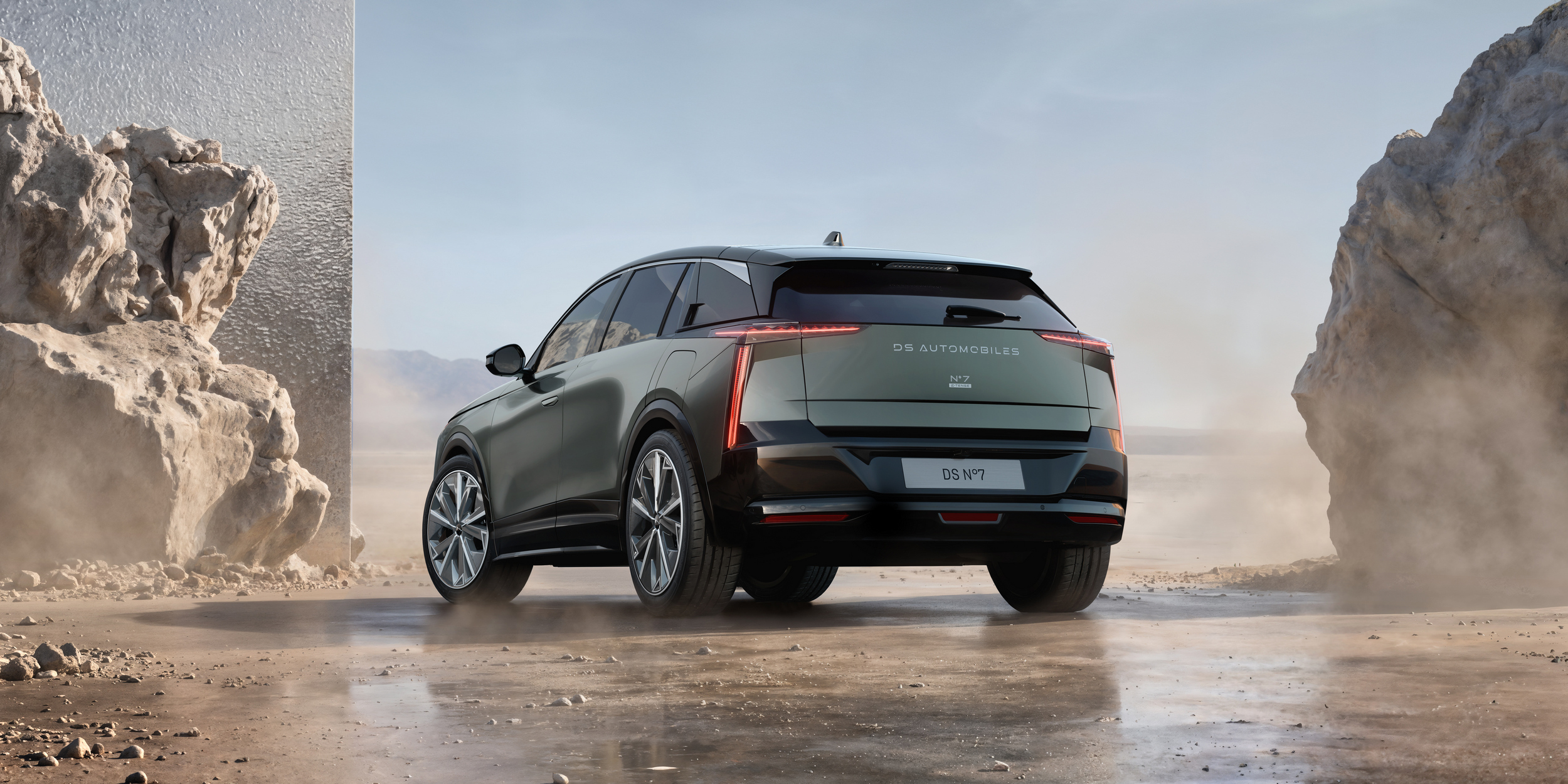
DS Automobiles has unveiled the all-new N°7, a model that points to where the brand is headed next. This compact crossover steps in for the outgoing 7, taking over from the company’s previous best-seller while marking a pivotal moment for the brand.
The premium model follows in the footsteps of the N°8 and adopts a familiar front end with V-shaped light blades and slender PixelVision headlights, which detect other road users and adapt their beams to avoid glare. They’re joined by a Luminascreen grille and gloss black accents.
Moving further back, we can see streamlined bodywork and flush-mounted door handles. Designers also gave the crossover a sloping roofline and longer rear doors. They’re accompanied by a 40% larger panoramic glass roof and wheels ranging in sizes up to 21 inches.
Speaking of size, the model measures 183.5 inches (4,660 mm) long, 74.8 inches (1,900 mm) wide and 64.2 inches (1,630 mm) tall with a wheelbase that spans 109.8 inches (2,790 mm). This means length is up by 2.8 inches (70 mm), while the wheelbase grows 2 inches (50 mm).
An Upscale And Minimalist Interior
The minimalist interior is dominated by a 10-inch digital instrument cluster and a 16-inch infotainment system with wireless Apple CarPlay and Android Auto. They’re joined by a heads-up display and an X-shaped steering wheel, which is billed as a new “brand signature” for DS.
Elsewhere, there’s a floating center console and a toggle-style shifter. The model also offers fabric, Alcantara, and Nappa leather upholstery as well as brushed aluminum or genuine wood trim. Customers can also get heated rear seats as well as heated, ventilated, and massaging front chairs with a neck warmer. Rounding out the highlights are an ambient lighting system, a digital rearview mirror, and a six- or 14-speaker audio system.
The automaker didn’t release full equipment details, but said the model will be offered with DS Drive Assist 2.0. It’s a semi-autonomous Level 2 system that combines lane centering and adaptive cruise control with a stop and go function. The crossover also has an automatic lane change function as well as a night vision system, which can detect pedestrians, cyclists, and animals up to 984 feet (300 meters) in front of the vehicle.
Electric And Hybrid Power
The N°7 rides on the STLA Medium platform and will be offered with an assortment of powertrains. The fully electric N°7 E-TENSE lineup begins with a 73.7 kWh battery pack that powers a front-mounted motor developing 227 hp (169 kW / 230 PS). This setup enables the crossover to have a WLTP combined range of up to 337 miles (543 km).
Customers can also get a long range variant, which features a larger 97.2 kWh battery as well as an upgraded motor producing 242 hp (180 kW / 245 PS). Besides the extra oomph, the range climbs up to 460 miles (740 km).
Last but not least, there’s a long range all-wheel drive variant with a combined output of 345 hp (257 kW / 350 PS). This drops the range down to a maximum of 422 miles (679 km).
All three powertrains have a boost function and the range-topping variant can temporarily produce 370 hp (276 kW / 375 PS). This enables the dual-motor variant to accelerate from 0-62 mph (0-100 km/h) in 5.4 seconds.
Buyers will also find a 160 kW DC fast charging capability, which can take the battery from a 20% to 80% charge in around 30 minutes. The EVs also have a plug and charge capability as well as automatic battery preconditioning.
If you’re not ready to go electric, there’s a hybrid with a turbocharged 1.2-liter three-cylinder petrol engine and a six-speed dual-clutch transmission with an integrated electric motor. This setup produces 143 hp (107 kW / 145 PS) and enables the model to have a fuel consumption of 5.4 L/100 km (43.5 mpg).
DS is currently accepting orders in France, where pricing starts at €64,200 (approximately $69,800 at current exchange rates) for the N°7 E-TENSE FWD ÉTOILE LIGNE BUSINESS.
Bentley is delaying most EVs as luxury demand stays uncertain.
Hybrids and gas models will take priority through the decade.
Only one EV is confirmed before 2030 despite earlier plans.
The automotive industry is undergoing a gigantic shift, and Bentley is changing too. The British luxury brand had big plans to go all electric, but consider that plan delayed big time. Now, it’ll launch just one EV before 2030, and the rest of the lineup will use gas or hybrid powertrains.
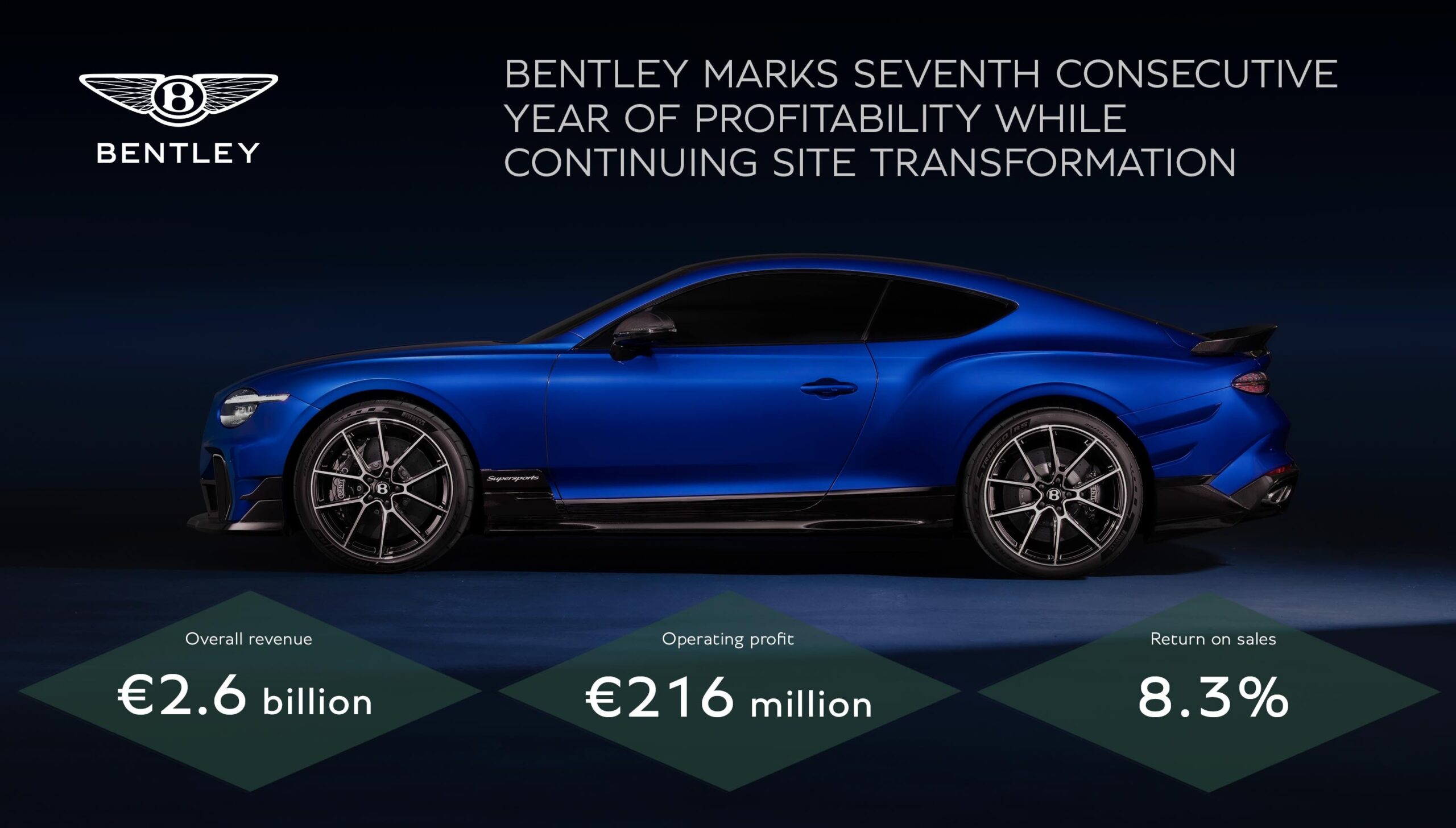
This all comes as Bentley reports its seventh straight year of profitability despite a 42 percent drop in that figure year over year, and layoffs hit the company.
The company had previously outlined an ambitious strategy that would see five fully electric Bentleys arrive by 2035. Now, only the first one, an SUV-like EV due in 2027, is still locked in, while the rest of the program has effectively been put on ice.
That first EV is expected to be revealed before the end of this year and will ride on Volkswagen Group’s Premium Platform Electric (PPE) architecture, which also underpins several other upcoming luxury EVs. The four additional EVs were originally being developed on the Porsche-led platform that has since been canceled, effectively ending those projects.
Future Lineup Prioritizes Hybrids
Instead of rapidly expanding its EV lineup, the brand will lean heavily on plug-in hybrids and gas engines. It might even keep traditional combustion models around longer than expected. That’s big news all by itself and provides an extra layer of exclusivity for future buyers.
Bentley CEO Frank-Steffen Walliser said the company has had to rethink its entire product plan as the market shifts. Some of that comes directly from customer demands. Recent plug-in hybrid versions of the Continental GT and Flying Spur were well received, and the company says these electrified V8 models can meet future emissions rules without giving up the performance buyers expect.
According to Car&Driver, he also noted that future models will continue adopting plug-in hybrid systems, and confirmed that retrofitting EVs with combustion or hybrid powertrains is not part of the company’s strategy due to feasibility constraints.
That said, it seems clear why Bentley is being cautious. The company reported its seventh straight year of profitability, but deliveries fell five percent, with weaker demand in China cited as a major factor. Bentley says it remains financially solid, but the changing market means it has to be selective about where it invests next. A 42 percent drop in profit is nothing to ignore, and Bentley is making moves to improve its position.
Bentley is also cutting some 140 jobs in the UK. That’s only a portion of total layoffs, which Walliser says will likely amount to 275 employees, mostly in office jobs. Some of the changes are due to forces outside of Bentley itself.
The Volkswagen group is no longer going to build the Porsche-led Scalable Systems Platform that was going to underpin multiple Bentley products. Without it, the brand had basically no choice but to abandon its plans. Despite that, it’ll still likely go EV-only at some point… just not anytime soon.
Volkswagen previews refreshed Caddy and Multivan vans for 2026.
Larger infotainment screens arrive with simpler, more intuitive menus.
Other models, including the ID. Buzz, are also lined up for upgrades.
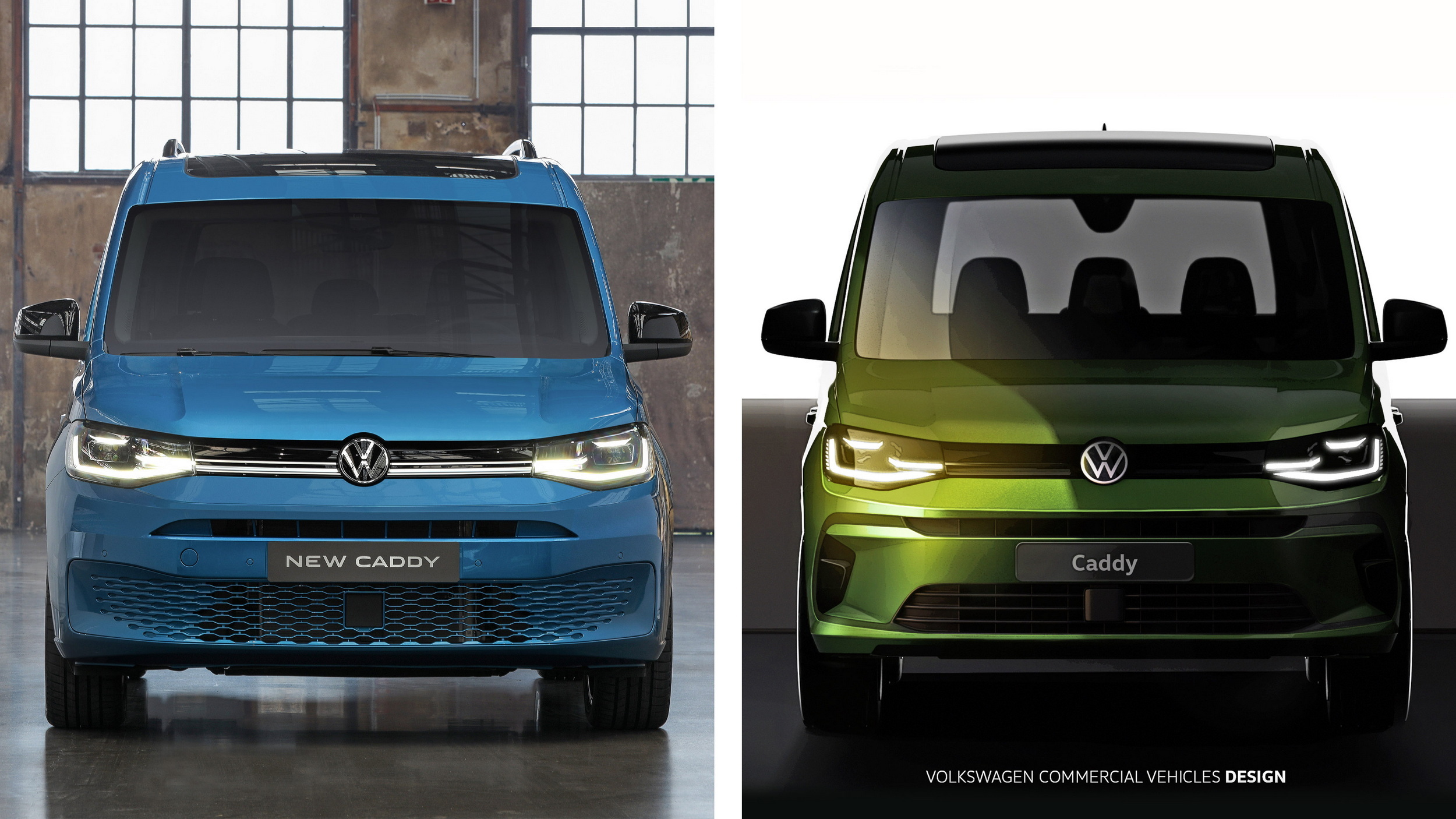
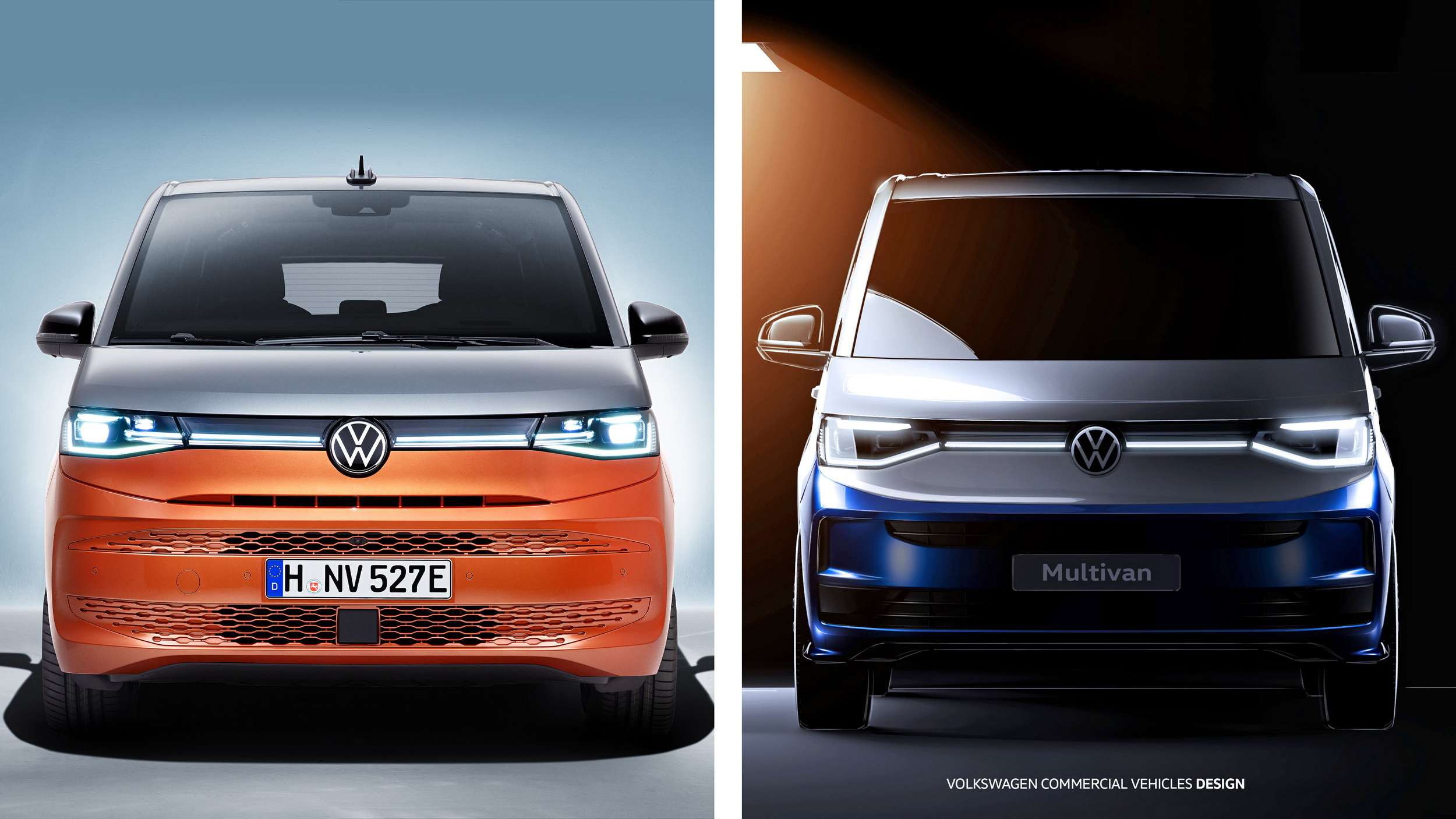
Volkswagen’s commercial vehicles division has offered a preview of what’s coming next for its van lineup at the 2026 Annual Media Conference. Alongside a business update, the company released official sketches teasing facelifted versions of the Caddy and the Multivan T7, both scheduled to arrive later this year with styling revisions and cabin upgrades.
The first teaser focuses on the Caddy. Up front, the van picks up a redesigned bumper that replaces the previous body-colored mesh pattern with more traditional cooling intakes. The grille shown in the sketch appears to drop illuminated elements altogether, though it remains unclear whether that detail will apply across the entire trim range.
The Multivan T7 receives a similar refresh, although its front end retains the LED light strip spanning the grille. The headlights adopt revised LED graphics, and the van shown in the teaser wears a new two-tone paint scheme that echoes the look of the ID. Buzz.
Beyond the exterior tweaks, Volkswagen says both vans will receive what it calls “significantly optimized interior solutions.” The most obvious change will be larger infotainment displays paired with simpler, more intuitive menus, an update the company claims will make everyday use noticeably easier for owners.
It has also been confirmed that the 2026 MY updates will be applied to the California version of the Multivan T7, which was caught by our spy photographers during winter testing. For now, Volkswagen has not indicated any mechanical changes. Powertrain options for the Caddy and Multivan are expected to carry over largely unchanged from the current lineup.
Upgrades For Other Vans
The update cycle is not limited to the Caddy and Multivan. Volkswagen also plans to expand electrified options across the rest of its van range in 2026. That includes new plug-in hybrid powertrains for the Ford-based VW Transporter and Caravelle, giving both models a partially electric option for the first time.
The fully electric ID. Buzz is also due for a few new tricks. Volkswagen plans to add Vehicle-to-Load (V2L) capability, allowing owners to power external devices directly from the van’s battery. A “Good Night” package and a dedicated Camp Mode are also on the way.
Finally, the Grand California flagship camper will be “comprehensively upgraded based on customer feedback”, and the Crafter will become available with a three-way tipper bodystyle.
Financial Hurdles Amid A Fresh Start
The product push comes as VW Commercial Vehicles tries to bounce back from a difficult 2025. Sales revenue actually rose 11% to €16.86 billion ($19.3 billion), but operating profit plunged 67% to €245 million ($281 million).
Much of the decline was attributed to provisions set aside for CO2 fines in the European Union, largely tied to the slower-than-expected ramp-up of fully electric LCVs. Even so, the brand maintained a solid net cash flow of €1 billion ($1.15 billion) to support future product updates. Deliveries also edged up, with VW Commercial Vehicles selling 428,000 units in 2025, a 6% increase compared to 2024.
Mercedes may sell the scaled-down G-Class as EV and hybrid.
The hybrid could borrow the CLA’s 1.5-liter engine setup.
The electric version may carry a sizable 85 kWh battery pack.
Given the cultural weight carried by the Mercedes G-Wagen, it’s a bit surprising the company has taken this long to pursue a smaller, more accessible version. Yet here it is at last. The so-called baby G is now deep into development, and these latest spy shots give us the clearest look yet at Mercedes’ downsized off-roader.
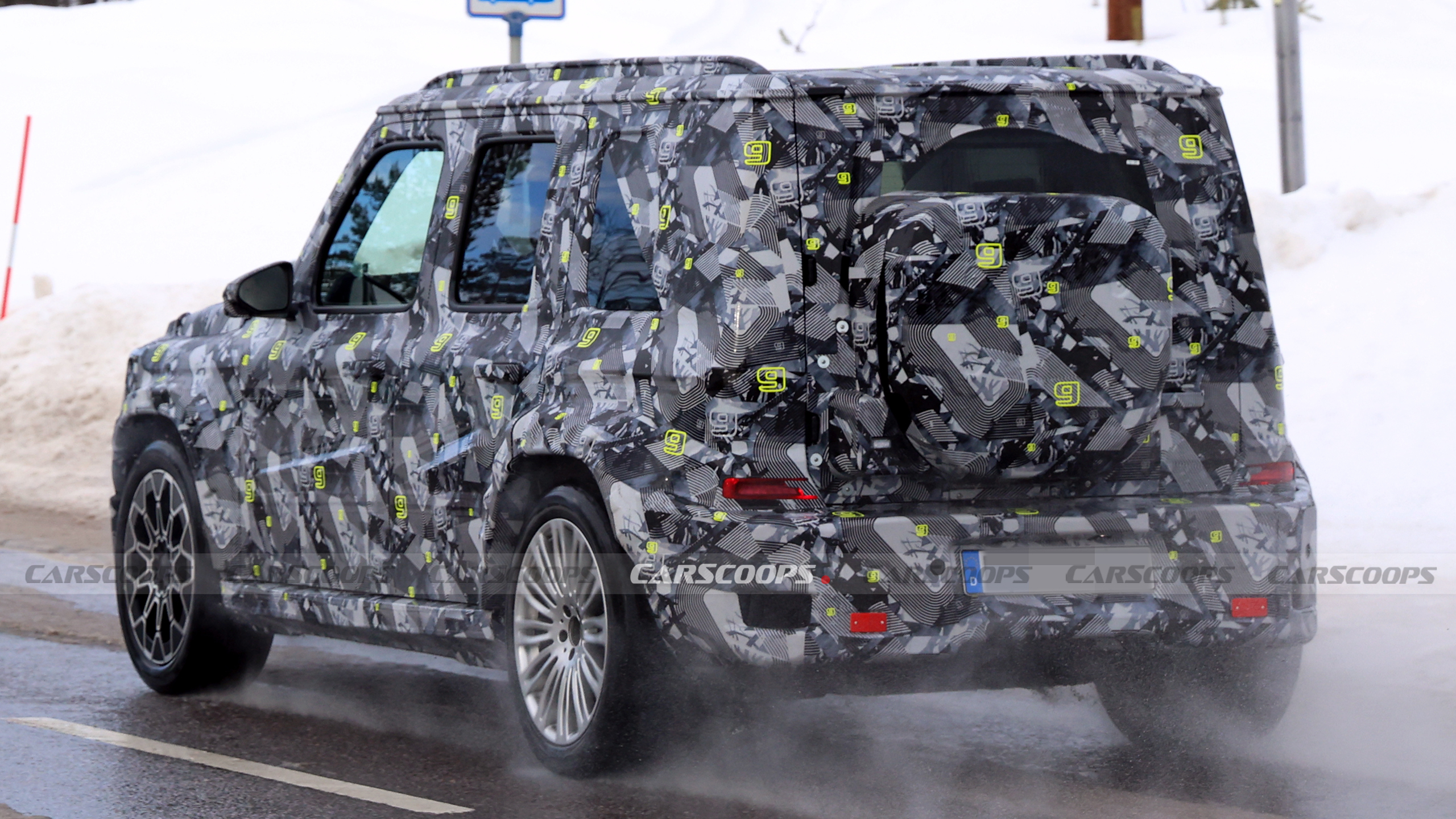
This prototype is sporting a distinctive new camouflage wrap that hides many of the more intricate details, but does nothing to shield the overall shape of the model from view. Look closely, and you’ll notice the wrap has hundreds of lower-case ‘g’ graphics, a playful nod to the model’s scaled-down identity.
Mercedes could easily have fallen into the trap of making the baby G-Class look a little too soft or restrained, perhaps little more than a lightly reworked GLB. Instead, the company appears to have taken the design of the full-size model, scaled it down, and applied a few subtler tweaks. Based on early impressions, the result looks very promising.
The front has round headlights just like you’d expect, as well as a pronounced hood. The sides come complete with flared wheel arches, squared-off side windows, and prominent roof rails. Found at the rear will be small taillights positioned lower on the fascia, just like the normal G, in addition to a large spare wheel carrier.
Clearly, Mercedes has nailed the design. But what about what’s underneath? According to Mercedes CTO Markus Schäfer, the baby G is being engineered as a fully bespoke model rather than using an adapted version of an existing Mercedes platform. The company is developing new modules, suspension components, and wheel setups specifically for the vehicle, although it will not use a traditional ladder-frame chassis.
An Electrified Line-up
Originally, the project was intended to be purely electric. Now, however, Mercedes appears to be reconsidering that strategy. Recent reports suggest the company is evaluating the addition of a hybrid variant as well, a decision that makes practical sense given the current state of the EV market, particularly in North America.
SH Proshots
If Mercedes follows through and offers a gas option, it could use the same hybrid powertrain found in the new CLA sedan. That system pairs a 1.5-liter engine developed through the Geely and Renault Horse Powertrain joint venture with electric assistance, producing 208 hp and 280 lb-ft (380 Nm). The German carmaker could recalibrate the setup for the baby G, squeezing out more power to better suit the SUV’s character.
As for the all-electric version, it could come fitted with an 85 kWh NMC battery providing 450 miles (724 km) of range and driving a pair of electric motors. Carscoops understands it could have a driving range of up to 450 miles (724 km), which would be very impressive considering the full-size electric G580 is only good for 280 miles (450 km).
When it finally reaches showrooms, the baby G-Class will not have the small off-roader space to itself. Rivals are already lining up, including a rumored compact version of the Land Rover Defender that aims to bring the same rugged image in a smaller package.
The Air Dream Edition Performance carried a hefty $170,500 MSRP.
After 22,000 miles, the depreciation works out to nearly $5 per mile.
Despite that, the luxury EV still sprints to 60 mph in just 2.5 seconds.
Luxury EVs have developed a nasty reputation for losing value at a frightening rate over the past few years, especially in the upper end of the market. However, you may be surprised to learn just how much this Lucid Air has depreciated since it was delivered in March of 2022.
The Air you’re looking at is the Dream Edition Performance, which was introduced as the flagship iteration of the all-electric sedan. With the exception of the almighty Sapphire, it’s the highest-powered version of the Air that’s been sold, thumping out a ridiculous 1,111 hp and 1,025 lb-ft of torque.
A look at the window sticker reveals the original owner paid $170,500 for the car. Given the performance it offers, the sleek exterior styling, and the upmarket interior, that’s not an unreasonable amount of money. But, after being driven 22,000 miles (35,000 km) over the past four years, the car’s value has plummeted, recently selling for $67,067 in Cars & Bids.
A Six Figure EV Bargain
Cars & Bids
The result is a staggering $103,433 wiped off the price. Spread across the 22,000 miles it covered, that works out to just under $5 lost for every mile driven.
For a sense of scale, that drop would cover a substantial chunk of a home in some US states. Bankrate data puts the median house price at about $282,400 in Alabama, $255,300 in Arkansas, $285,600 in Illinois, $230,600 in Iowa, $301,000 in Pennsylvania, and $249,300 in Michigan, to name a few. In other words, the money lost on this one car equals well over a third of a typical home in those places.
While it’s hard not to feel bad for the original owner, it’s nice to see a car as good as the Air becoming more accessible. The listing reveals the performance sedan has been fastidiously maintained over the past four years, and has had several parts replaced and numerous recall campaigns completed.
Cars & Bids
Off the line, the Air Dream Edition Performance can hit 60 mph (96 km/h) in just 2.5 seconds and storm down the quarter-mile in 9.9 seconds. Thanks to the sizeable 118 kWh battery pack, it can also travel up to 451 miles on a charge when equipped with the 21-inch wheels like this one.
Then there’s the cabin. While the Air may often be compared to the Tesla Model S, its interior is more luxurious and better equipped. Key features include Nappa full-grain leather upholstery, heated and ventilated front massage seats, a 34-inch infotainment and gauge cluster display, and a 21-speaker sound system. This Air also includes the Santa Monica interior trim, combining dark blue and light cream-colored leather.
Bad news for the first owner, great news for the next one. So the question is, would you buy a used Lucid Air knowing just how quickly these things depreciate?
Avatr previews the 06T electric shooting brake for China market.
The wagon body looks better balanced than the sedan version.
Battery EV models offer up to 955 hp in the range topping trim.
Sleek estate cars have become somewhat of a rarity these days. Buyers keep drifting toward crossovers and SUVs, and manufacturers have largely followed the money. Traditional wagons, especially the low and sporty ones, now feel like a niche choice. China, however, still has a few brands willing to keep the format alive. Avatr is one of them.
The company has now previewed its newest addition, a wagon called the 06T. Similar in size and profile to the Zeekr 007 GT, Avatr’s new model will be sold both as a range-extender and as a fully-electric wagon. It also has a seductive Shooting Brake shape that should get many car enthusiasts excited.
Measuring 4,940 mm (194.4 inches) long, 1,960 mm (77.1 inches) wide, and 1,475 mm (58 inches) tall, the 06T rides on a 2,940 mm (115.7-inch) wheelbase and shares its underpinnings with the existing 06 sedan. The sedan’s rear design has always looked a bit awkward, but stretching the roof into a wagon shape helps smooth out the proportions and gives the overall profile a more natural look.
The Juicy Details
Pictured here in a new color known as Liujin Orange, the fully electric version uses an 89.33 kWh battery pack. Buyers will have two rear-wheel-drive EV options to choose from. The entry model uses a pair of 302 hp (225 kW) motors, while the more powerful version upgrades to two 337 hp (251 kW) units.
Sitting above these two variants in the range will be an all-wheel drive variant. In addition to having the two 337 hp motors at the rear, it also includes a 282 hp (210 kW) unit at the front, combining to produce 955 hp (712 kW). There’s no word on how quickly it’ll hit 60 mph (96 km/h), but we know all models will be capped at a 149 mph (240 km/h) top speed.
Avatr will offer the three EV variants alongside an extended-range version of the 06T. This model uses a 1.6-liter turbocharged engine producing 154 hp (115 kW), which functions solely as a generator for the battery pack. Propulsion comes from two 248 hp (185 kW) electric motors mounted at the rear axle. Battery capacity has not yet been disclosed, and there is still no information on either the combined driving range or the all-electric range.
Ineos admits it rushed early plans for the Fusilier SUV.
The Fusilier will rival baby Defender and G-Class models.
The company says the new model is not years away now.
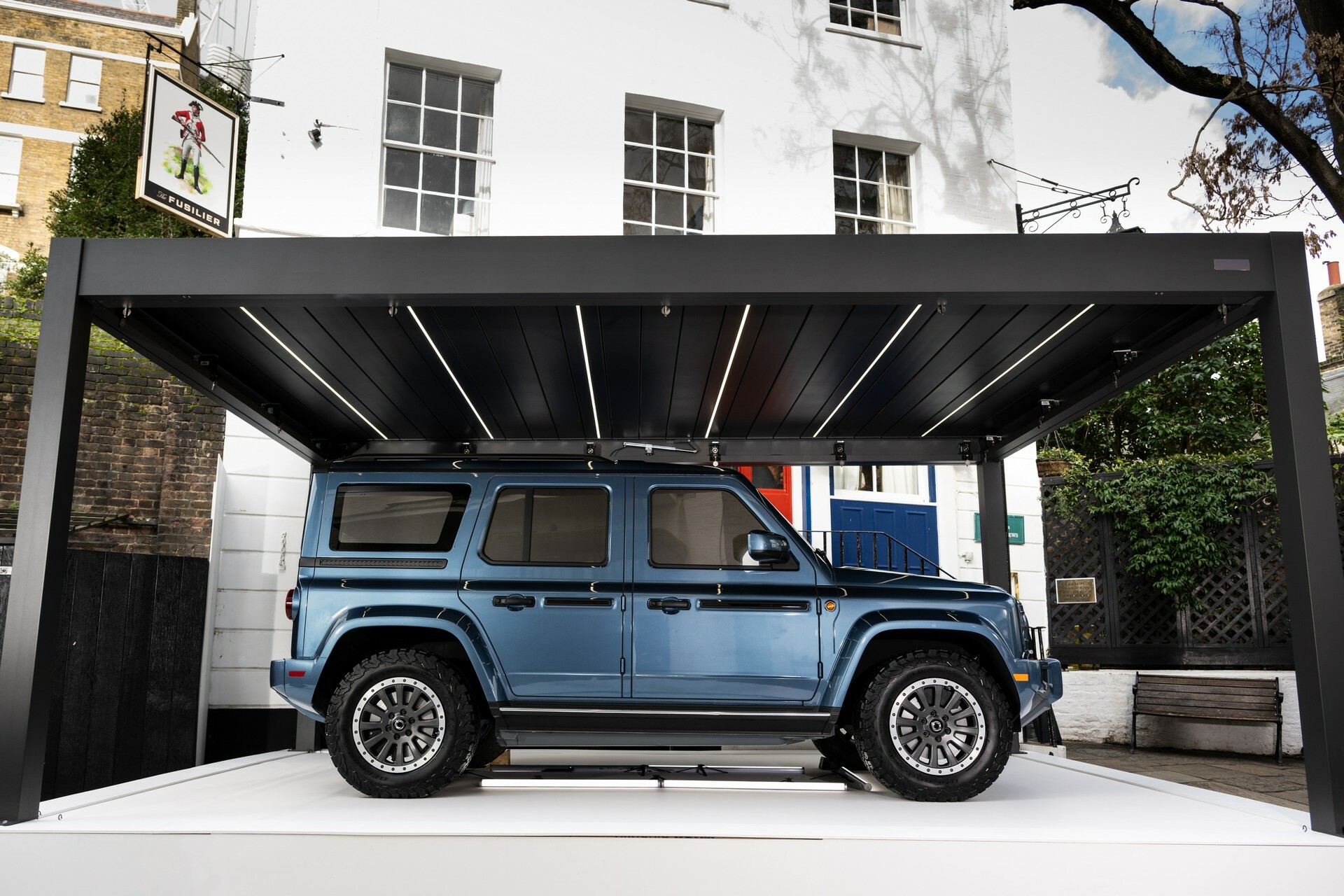
Ineos says development of the smaller Fusilier is back underway, nearly two years after the project was paused as enthusiasm for EVs began to cool. Exactly when it might appear in showrooms is still unclear, but the program itself is no longer sitting on the sidelines.
The company first pulled the wraps off the Fusilier in early 2024, outlining plans for a new bespoke skateboard platform underneath. Both a fully electric version and a range-extender variant were on the table from the start. In the bigger picture, the model is expected to become a key gateway into the Ineos lineup, positioned as a smaller, more attainable alternative to the Grenadier.
“The concept of the Fuselier – something that’s a bit smaller than the Grenadier – is still a vision that is alive and well in the company, and we’re actively pursuing what that vehicle would look like, or a vehicle like that would look like going forward,” the region director for Ineos in Australia, New Zealand, and APAC, Justin Hocevar told Car Expert. “That’s what we’ll be talking about in the not-too-distant future. In terms of announcing the timeline, I don’t think it’s years away.”
What’s Changed?
According to Hocevar, Ineos was “charging into” the Fusilier project too quickly, and had to pause it to ensure a range-extender powertrain could work with it.
“The project morphed over time, and part of the pause on that project had a lot to do with our desire to have an alternative new-energy powertrain in that vehicle – hybridization or a range-extender solution,” he said.
Hocevar stopped short of putting a firm date on the Fusilier’s arrival. Still, his suggestion that the wait is not “years away” hints that the project is moving along at a healthy pace, which should reassure anyone keeping an eye on Ineos’ next move.
Whenever it finally lands in showrooms, the compact off-roader will enter a growing niche. Mercedes-Benz is preparing a smaller G-Class and Land Rover has a baby Defender in the pipeline. Ineos appears ready to take a slightly different approach, leaning toward a more traditional, less tech-heavy interpretation of the segment.
Kia has dropped the Niro EV as focus shifts to dedicated EVs.
The refreshed Niro will now be sold only as a hybrid in Korea.
Rising competition made the electric Niro harder to justify.
Update: Kia America has responded to our request for comment, telling Carscoops that “Kia America has made no formal announcement regarding the Niro EV and it remains as an important element in our lineup of ICE and electrified vehicles.” That statement suggests the discontinuation confirmed for South Korea may not apply to the U.S. market, at least for now.
Original Story Follows
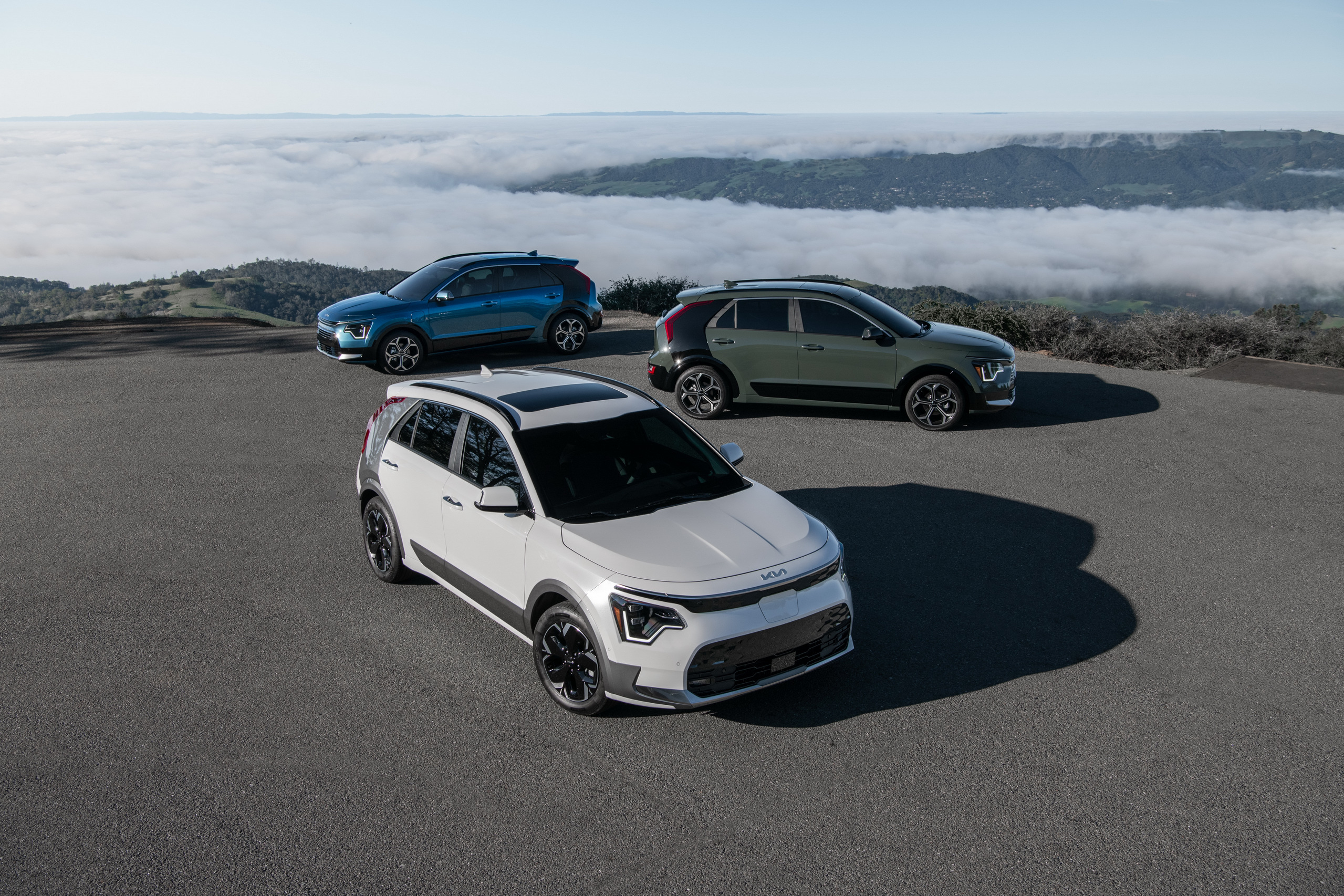
The latest Kia Niro has been around for almost half of a decade. When it launched, it was unique in the segment. It had an unconventional slashed body panel at the rear and came in hybrid, PHEV, and EV versions. The plug-in died recently, and now, as a facelift nears release, the EV version is also going the way of the Dodo.
The automaker confirmed the change for the Korean market. “The Niro EV, which had been produced until the previous model, has been discontinued,” Jung Yoon-kyung, a senior marketing manager at Kia, told The Korea Herald. “We plan to sell the remaining inventory available.” Carscoops reached out to the automaker to confirm the change in the U.S. market as well.
If this is indeed the situation for the States, it won’t be all that surprising. The Niro EV has always been a bit of an oddball in the family. Unlike the other EVs in the lineup, it was designed around a gas-burning powertrain. The others, all built exclusively as EVs, feature faster charging, longer range, and better overall packaging. Some even offered all of this for less than the price of the Niro EV. That’s a key piece of the puzzle here.
“Kia is strongly focusing on electrification. Starting with the EV3 and continuing through EV9, we have a range of vehicles with strong electrification capabilities and improved product competitiveness,” Yoon-kyung said. “In order to concentrate more on those models, we decided to discontinue the (Niro EV).” Those models are ones that are already set up for the U.S. market.
Now, Kia can better focus on those vehicles and streamline the Niro lineup at the same time. While we loved the Niro PHEV, EV, and Hybrid at launch, it was clear last year that they were beginning to show their age. This new shift in powertrains signals a tighter focus for the brand.
The facelifted BMW 7-Series debuts next month in Beijing.
Teaser hints at a redesigned front and new lighting signature.
The luxury sedan gains Neue Klasse “tech clusters” in update.
BMW is getting ready to freshen up its flagship sedan. After months of camouflaged prototypes roaming public roads, the company has finally released its first official teaser of the facelifted 7-Series, confirming the luxury sedan will make its global debut at Auto China in Beijing next month.
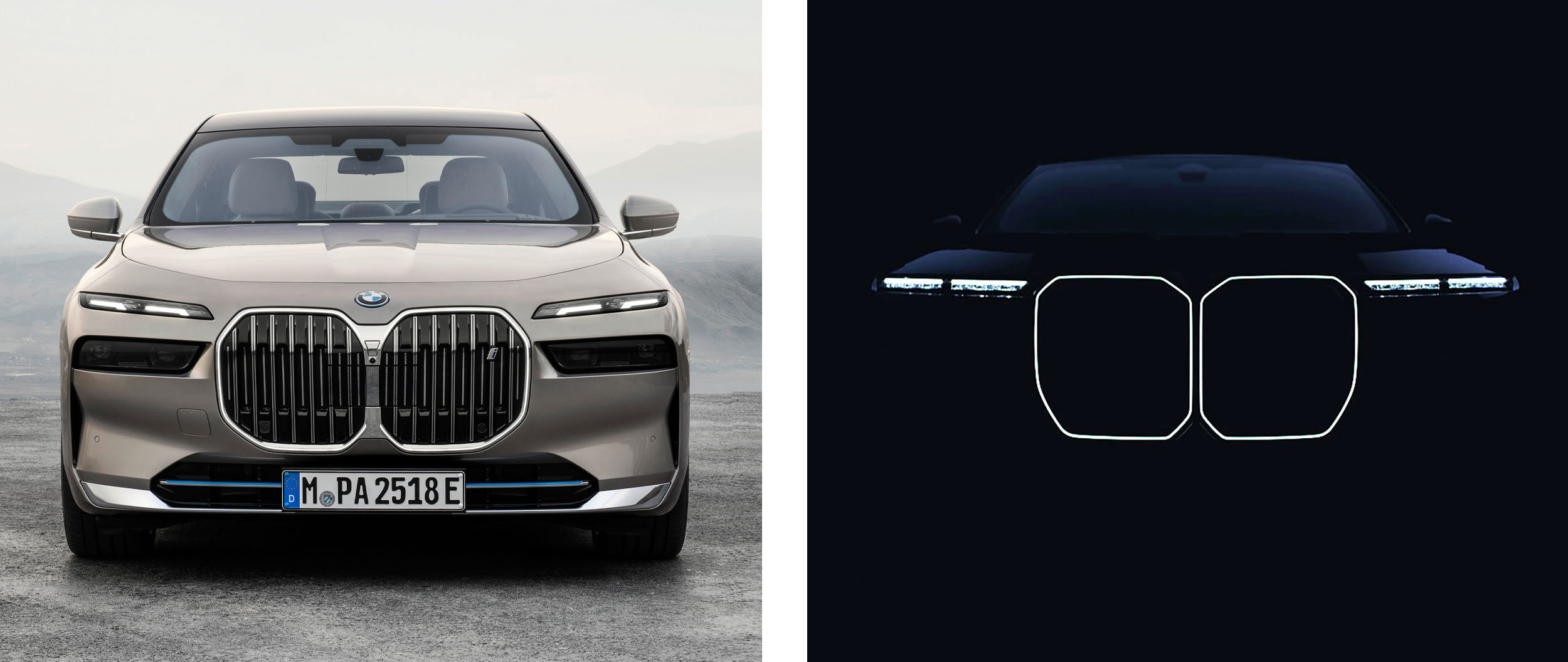
The current 7-Series generation arrived in 2022, which means it is right on schedule for BMW’s mid-cycle LCI update, short for Life Cycle Impulse. The shadowy teaser image focuses on the front end, revealing a new lighting signature with slimmer, more horizontal daytime running lights. They sit on either side of a larger, more squared-off illuminated kidney grille.
Judging from earlier spy shots, the kidney grille appears to switch from vertical slats to a horizontal layout. The split headlight arrangement remains, although the lower clusters that house the main beams look slightly smaller than before.
The side profile does not appear to be changing much. Expect the familiar long-wheelbase silhouette to carry over largely untouched, while the rear receives the usual facelift treatment with updated LED taillights and minor revisions to the bumper.
Neue Klasse Technology
At BMW’s 2026 Annual Conference, chairman Oliver Zipse confirmed that the facelifted 7-Series will serve as the first current model to inherit what the company calls “technology clusters” from the upcoming Neue Klasse lineup. The next-generation X5 is expected to follow shortly after, with its own debut slated for later this summer.
For the flagship sedan, that means several of the brand’s next-generation digital systems will make their way into the cabin. Among them is BMW Panoramic Vision, the wide pillar-to-pillar display stretching across the base of the windshield, along with the company’s new iDrive X operating system.
Behind the scenes, BMW also plans to integrate four central computing units, referred to internally as “Superbrains,” which handle major vehicle functions and software processes.
Despite those upgrades, the big sedan will not migrate to the Neue Klasse platform itself. Instead, the facelift keeps the current CLAR architecture underneath. As with the outgoing model, it will remain available with gasoline, plug-in hybrid, and fully electric (i7) powertrain options, possibly with small refinements. It is also safe to assume that the 7-Series will gain a new variant from the BMW Alpina sub-brand.
The teaser for the mid-lifecycle update of the BMW 7-Series arrives just weeks after Mercedes unveiled a heavily refreshed version of its longtime rival, the S-Class. The luxury sedan also faces growing competition in China from newcomers such as the Huawei-backed Maextro S800.
A Republican bill would allow the sale of public lands near a commercial egg farm as one of the country’s largest egg producers in Wisconsin has been forced to cull millions of birds due to avian flu.
Dacia will launch a sub-€18k urban EV later this year.
Three additional electric models are planned by 2030.
Electrified models may reach two-thirds of sales.
Dacia has revealed its future roadmap as part of Renault Group’s futuREady plan, outlining how the Romanian brand intends to expand its lineup and accelerate electrification. The automaker will launch four new EVs by 2030 while steadily increasing electrification across its entire range.
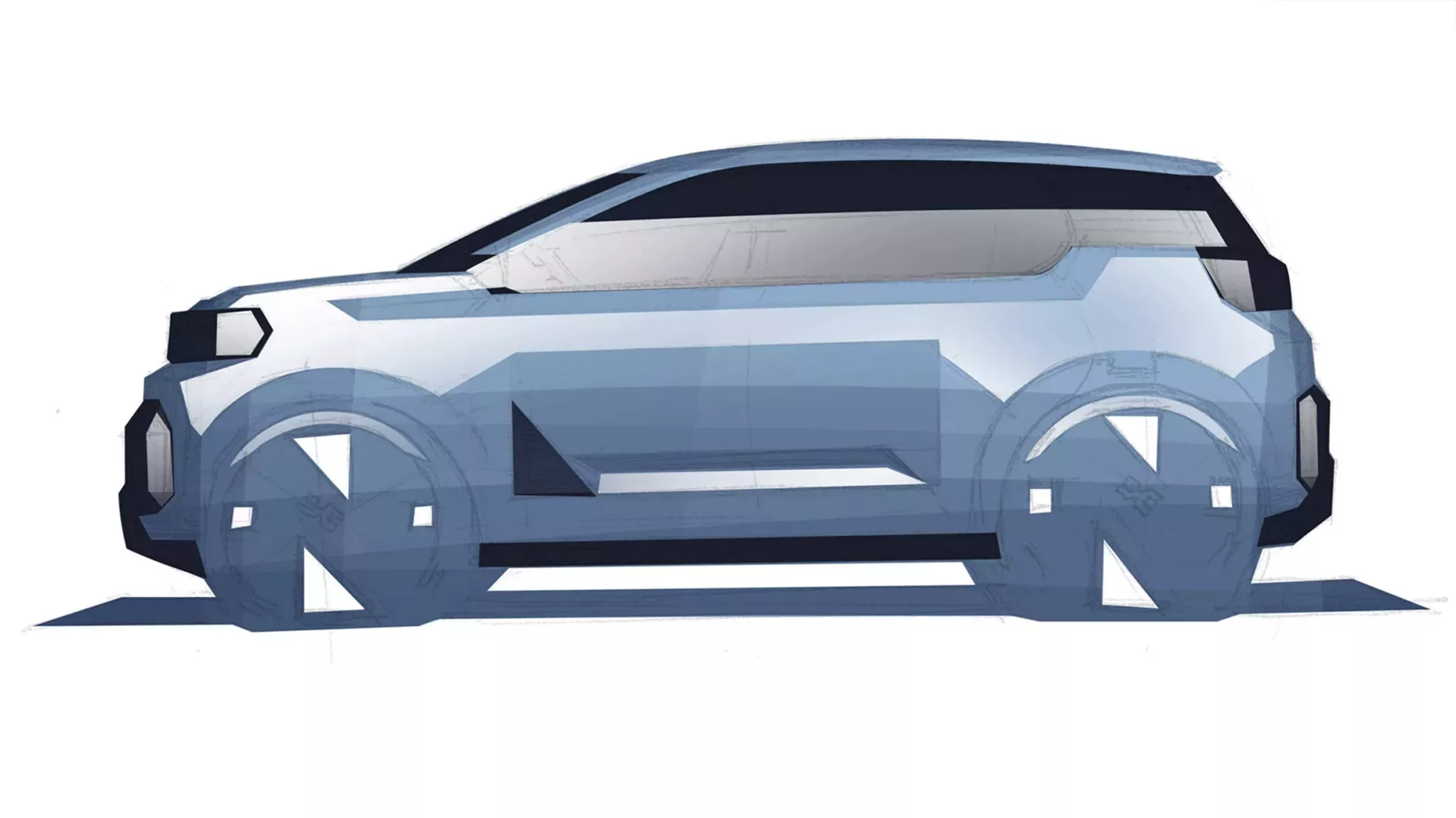
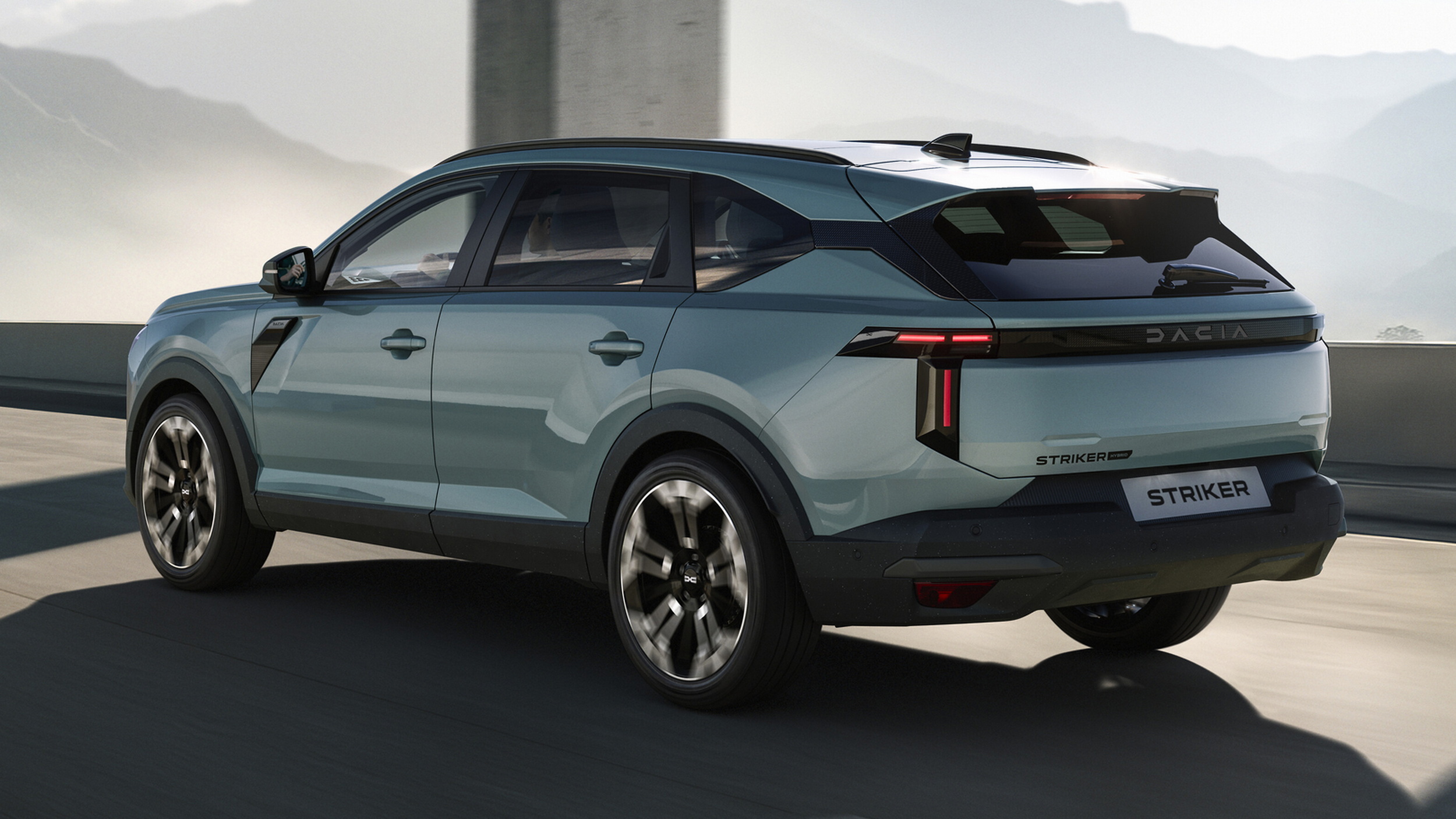
Furthermore, Dacia is also stepping up its presence in the compact segment. The new Striker crossover wagon will join the Bigster SUV, while the company continues work on the next generation of its best-selling Sandero.
New Urban Electric Model
Starting with the zero-emission plans, Dacia has confirmed that a new entry-level urban EV priced below €18,000 ($21k) will debut later this year. This model will coexist with the Chinese-built Dacia Spring despite their similar size and positioning.
The yet-unnamed model will ride on the RGEV architecture, which appears to be a new name for the AmpR Small platform used by the Renault Twingo E-Tech. The EV was developed in less than 16 months and is expected to be manufactured at Dacia’s Novo Mesto plant in Slovenia.
The company did not provide specifics about the other three EV debuts, but one is widely expected to be a fully electric version of the next-generation Sandero subcompact hatchback. Another possibility is a production version of the Hipster concept, which could target an even smaller segment.
Next Generation Sandero Plans
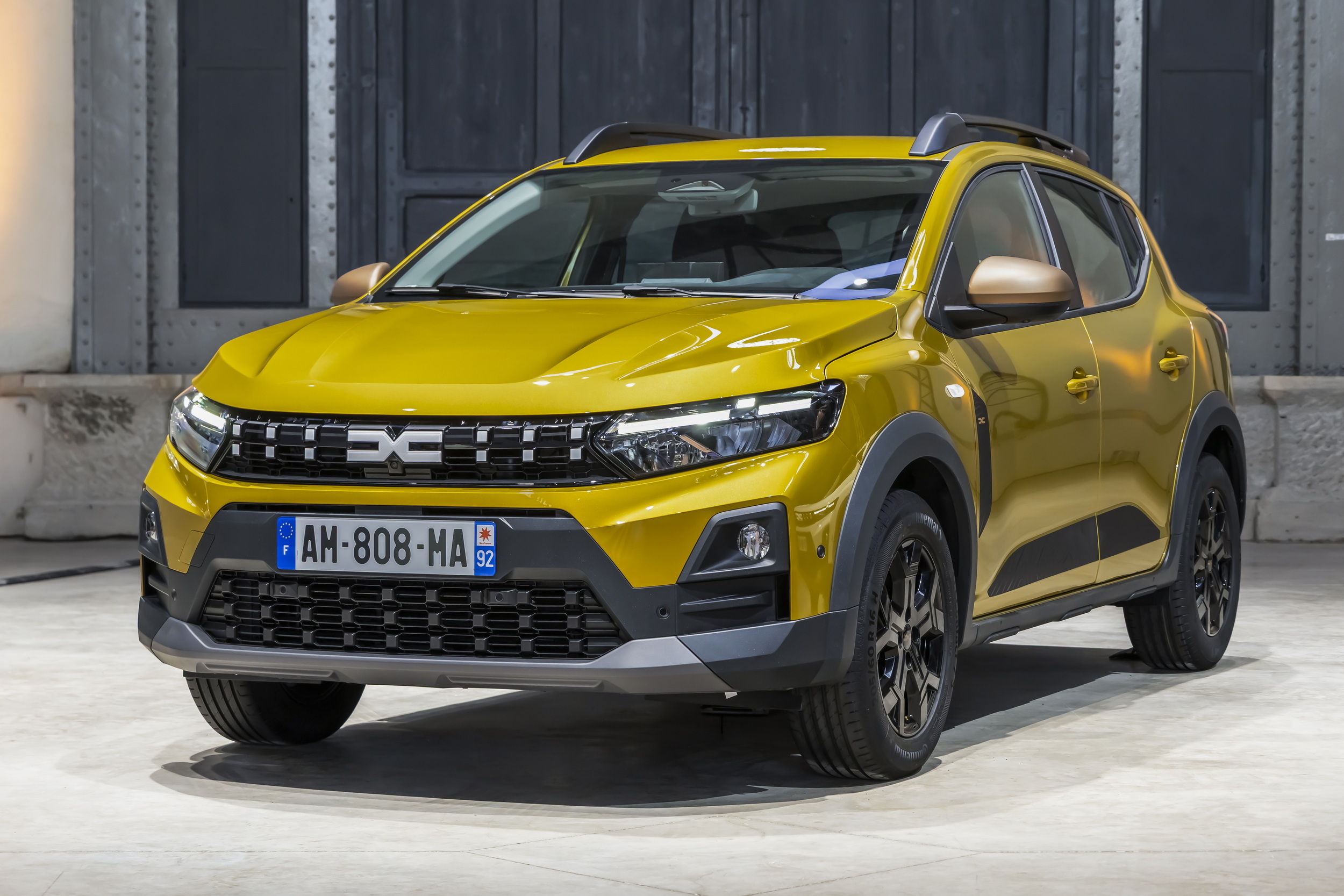
The Sandero was Europe’s best-selling passenger vehicle in both 2024 and 2025. It has also remained the “number one vehicle sold to private customers” since 2017. The current generation debuted in 2020 and received updates in 2022 and 2024, followed by a facelift for 2026. Even so, Dacia is already working on its successor.
The next Sandero will feature a “multi-energy powertrain range,” aligning with Dacia’s broader electrification roadmap. This points to hybrid and fully electric variants alongside a combustion option compatible with gasoline and LPG. Regardless of the powertrain mix, Dacia says the new generation will remain the value-for-money benchmark in the subcompact segment. Current reports suggest a debut in 2028.
Dacia has shown notable resilience over the past decades, evolving from a regional player into a major European brand. Last year, the Romanian automaker surpassed 10 million sales since its 2004 relaunch under Renault ownership.
As electrification expands across the lineup, Dacia expects its sales mix to shift significantly. The company believes electrified vehicles will account for about 67% of new car sales in the future, up from roughly 25% today. Alongside hybrids and EVs, the brand continues to emphasize LPG-powered models as part of its cost-focused strategy.
As you might expect, Dacia places strong emphasis on cost efficiency. Its business model delivers a 15% cost advantage compared with the rest of the market. According to the company, that edge comes from local integration, high factory utilization rates, and a distribution model that operates at less than half the average cost of Western European competitors.
Finally, Dacia highlights the loyalty of its customer base. In Europe, more than 70% of Dacia buyers remain with the brand for their next purchase, while another 10% move up to a Renault. At the same time, roughly 65% of first-time Dacia customers come from outside the Renault Group.
Renault Group will introduce 36 new models by 2030 including 16 new EVs.
800-volt RGEV platform offers 466-mile EV range, 879 with range extender.
Aims to cut EV costs by 40 percent and development times to just 24 months.
Renault has decided the best way to prepare for the future is to literally name its strategy after it. The company’s new futuREady plan promises dozens of new models, cheaper EVs, and dramatically faster development cycles as the French automaker tries to China-proof its business and become Europe’s “benchmark” carmaker.
The strategy builds on the Renaulution turnaround plan launched in 2021, which helped stabilize the company after several turbulent years. Now Renault wants to turn that recovery into long term growth with a roadmap that stretches through the end of the decade.
The headline figure is simple enough. Renault Group plans to launch 36 new models in the next five years, including 22 in Europe and 14 for international markets. Electrification will be a lynchpin, with 16 of those European launches set to be fully electric.
Hybrids will still have a role, though. Renault says hybrid technology will remain in its European lineup beyond 2030 while continuing to expand globally where charging infrastructure isn’t yet ready for a full EV takeover.
Dacia Expansion
Each brand has its own role in the plan. Renault aims to strengthen its European position while expanding internationally, targeting more than 2 million annual sales by 2030 with half delivered outside Europe, including a production version of the chunky Bridger combustion SUV set to do battle with the Suzuki Jimny in India (see gallery below).
Dacia will stick with its familiar value formula but add more electrification. By the end of the decade, about two thirds of its sales are expected to be electrified and the brand will expand further into the larger C segment.
Alpine will carry the performance torch and a new generation of the A110, this time as an EV, is coming alongside newer models like the electric A290 and A390. And the brand’s boss Philippe Krief confirmed that the electric A110’s platform will also be able to handle combustion power. But if you were hoping to buy one in the United States, Renault’s latest strategy rules out a North American adventure for any of its brands.
Compact Upgrade
One of the most important pieces of the plan is Renault’s upcoming RGEV medium 2.0 electric platform destined for its next generation of compact, C-segment vehicles. This architecture brings 800 volt charging technology to the company for the first time and promises some impressive numbers, including a 40 percent reduction in build costs. Renault teased its possibilities, and also the look of the next Espace, with the the R-Space Lab, a slippery EV concept (shown below).
Renault says EVs built on the platform could deliver up to 466 miles (750 km) of range, while a range extender version could stretch that figure to around 879 miles (1400 km). Power won’t be lacking either. The next-generation electric motor is expected to deliver up to 271 hp (275 PS).
Keeping Up With China
Software is another big piece of the puzzle. Future Renault models will move toward software defined vehicle architecture that allows most functions to be updated over the air and eventually managed by artificial intelligence systems. The company also wants to speed things up dramatically. Renault aims to reduce development cycles for new vehicles to just two years, something that will be crucial to keeping pace with Chinese automakers.
Renault’s platform strategy
Platform Family
Platforms
Type
Segments / Purpose
Electric Passenger Car Platforms
RGEV Small
EV platform
A and B segment small EVs
RGEV Medium 1.0
EV platform
First generation C segment EVs
RGEV Medium 2.0
EV platform
Next generation C and D segment EVs with 800V tech
Electric Commercial Platforms
RGEV Medium Van
EV platform
C segment light commercial vans
Modular Multi Energy Platforms
RGMP Small
Modular platform
B and C segment vehicles with multiple powertrains
A sign welcomes visitors to Bureau of Land Management land near Cedar City, Utah. Republicans in Congress have used a tool known as the Congressional Review Act to target management plans for public lands in Utah and elsewhere. (Photo by Spenser Heaps for Utah News Dispatch)
Over the past year, GOP leaders and the Trump administration have used a law known as the Congressional Review Act to push for coal mining in Montana, oil drilling in Alaska and copper mining in Minnesota, while also attempting to reverse protections for a national monument in Utah.
The rarely used act gives Congress a few months to revoke new federal regulations. Only in the past year has it ever been used to overrule land management plans.
Conservation advocates say Congress is recklessly throwing out detailed plans, which are created after years of research, public meetings and local collaboration. They fear lawmakers’ intervention could upend the long-standing management system that governs hundreds of millions of acres of public lands — with consequences that could threaten endangered species and coal miners alike.
But the fallout could be much more far-reaching than the rollback of protections for specific areas, some legal experts say. By using their review authority in a way that was never thought to apply to land management plans, lawmakers are calling into question the validity of well over 100 other such plans that were never submitted to Congress for review.
If those plans are challenged, it could create legal uncertainty for tens of thousands of leases and permits for oil and gas, mining, cattle grazing, logging, wind and solar farms and outdoor recreation.
“Using the Congressional Review Act (to revoke management plans) is really unprecedented and will have unforeseen consequences,” said Robert Anderson, who served as solicitor for the Department of the Interior during the Biden administration. “There’s a huge playing field of actions that would be forbidden if none of these management plans are lawfully in place. This could bring things to a screeching halt.”
Republicans have argued that congressional action is necessary to unleash President Donald Trump’s “energy dominance” agenda. Secretary of the Interior Doug Burgum frequently refers to public lands as “America’s balance sheet,” and has pledged to increase returns by extracting more resources like oil, minerals and timber.
Montana U.S. Rep. Troy Downing, a Republican who sponsored a resolution to revoke a management plan in his home state, argued during debate on the measure that Montana’s economy and energy demands rely on coal production.
“When the federal government acts recklessly, it is the responsibility of Congress to step in and course correct. … The war on coal must end,” he said.
What’s the Congressional Review Act?
The Congressional Review Act, which was signed into law in 1996, requires federal agencies to submit new regulations to Congress before they can take effect. Congress then has 60 working days to review those regulations, and may vote to revoke them.
If lawmakers reject a rule, federal agencies are barred from crafting a new one in “substantially the same form,” unless Congress passes a new law.
For 20 years, the Congressional Review Act was rarely invoked. But during Trump’s first term, Republicans used it to overturn 16 regulations, such as a rule to protect streams from coal mining pollution. Democrats used the act to revoke three rules from Trump’s first presidency.
But in 2025, Congress and Trump revoked 22 Biden-era rules.
“It seems increasingly popular from Congress as a way to get a quick win to reverse something that happened under the previous administration,” said Devin O’Dea, Western policy and conservation manager with Backcountry Hunters & Anglers, which has opposed efforts to open public lands for resource extraction. “The long-term implications are what we’re concerned about.”
Until recently, management plans for public lands were not considered subject to congressional review. Federal agencies have issued well over 100 such plans without ever submitting one to Congress. Those documents guide the work of agency officials who oversee specific areas of land, often covering millions of acres.
Created after years of public meetings and local feedback, they determine which landscapes will be leased for oil and gas drilling, protected for endangered species or open for off-road vehicles, along with a multitude of other uses.
But last year, Republicans asked the Government Accountability Office, a nonpartisan advisory agency for Congress, to affirm a sweeping new view of the Congressional Review Act. The office found that certain management plans were subject to review because their land-use decisions “prescribed policy,” and determined that lawmakers’ queries had opened the 60-day review “clock” for the plans in question.
“A very long deliberative process goes into these plans,” said Justin Meuse, government relations director for climate and energy with The Wilderness Society, a conservation nonprofit. “These plans are so broad and multifaceted and deal with so many different things. This is taking a hatchet to something that should be done with a scalpel.”
Using this new tool, Republicans have revoked plans that restricted mining and oil production on federal lands in Alaska, Montana, North Dakota and Wyoming. Meanwhile, House Republicans voted in January to overturn a regulation that blocked development of a mine near the Boundary Waters Canoe Area Wilderness in Minnesota, a move that now awaits a vote in the Senate.
And GOP lawmakers from Utah are seeking to overturn the management plan for Grand Staircase-Escalante National Monument in that state.
Conservation leaders say the rollbacks are unprecedented.
“It’s very surprising,” said Autumn Gillard, coordinator with the Grand Staircase-Escalante Inter-Tribal Coalition, a group of tribal nations working to protect the monument. “The (resource management plan) is created as a set of advisement points to land managers to reflect on when making decisions. It’s not a direct set of rules.”
In Minnesota, advocates for the Boundary Waters wilderness area say it is treasured for its pristine lakes, where paddlers can fill their water bottles straight from the surface. They fear efforts to allow a copper mine near the headwaters of the area will irreversibly pollute the most popular wilderness in the country.
“We weren’t expecting the Congressional Review Act to be on the table in this way,” said Libby London, communications director with Save the Boundary Waters, a coalition seeking to protect the wilderness area. “It sets a really scary precedent that undermines decades of land management decisions.”
Officials at the Department of the Interior and the Bureau of Land Management did not grant interview requests. Staff at the House Committee on Natural Resources did not grant an interview with U.S. Rep. Bruce Westerman, an Arkansas Republican who chairs the committee and who has championed using the Congressional Review Act to allow more mining and drilling.
Legal questions
Environmental groups have condemned Republicans’ use of the act to push for more resource extraction. If Trump wants more mining and drilling, they say, then federal agencies should take the time to draft new management plans using the same rigorous process.
But perhaps more concerning to some public land stakeholders are the potential implications for a whole host of other lands. None of the plans issued by federal land managers over the past 30 years were ever submitted for review, because no one at the time considered them to be rules.
In other words, hundreds of plans covering millions of acres of land could be deemed invalid under the new congressional interpretation that they qualify as rules.
Having something like an entire resource management plan rolled back would be a huge curveball.
– Ryan Callaghan, president and CEO of Backcountry Hunters & Anglers
“That right there is chaos,” said Peter Van Tuyn, a longtime environmental lawyer and managing partner at Bessenyey & Van Tuyn LLC. “Those (plans) go across the full spectrum of what land managers do: conservation and preservation, mining approvals, oil and gas drilling, resource exploitation, public access and recreation. There’s a very real chance that a court could say that a resource management plan was never in effect and all the implementation actions under the umbrella of that plan are invalid.”
In a letter to the Bureau of Land Management late last year, The Wilderness Society and other organizations identified more than 5,000 oil and gas leases that could be legally invalid, as they were issued under management plans that were never reviewed by Congress.
Public lands advocates say the same logic could be applied to mining leases, grazing permits, logging, outdoor recreation and many other activities covered by agency planning documents. Many industries that rely on public lands, such as hunting and fishing guides, could be thrown into chaos.
“Let’s say you’re operating as an outfitter,” said Ryan Callaghan, president and CEO of Backcountry Hunters & Anglers. “Having something like an entire resource management plan rolled back would be a huge curveball, and something you’d have an absolute inability to plan for as a business owner. It’s very reasonable to have a lot of questions as to what the ramifications are.”
Industry concerns
Some industry leaders are also worried about the precedent Congress is setting by wiping out plans that were created after years of local input and consultation.
“I’m fairly concerned about that,” said Kathleen Sgamma, a longtime oil and gas advocate who now serves as principal for Multiple-Use Advocacy, a consulting group focused on federal land policy. “It’s not unreasonable to think about a future day where there is a Democratic trifecta and they would be able to (revoke) old plans likewise.”
Sgamma was nominated by Trump to lead the Bureau of Land Management, but withdrew her nomination last spring amid fierce opposition from conservation groups, and following the publication of a memo in which she had criticized Trump’s role in the Jan. 6, 2021, attack on the U.S. Capitol.
She said she was less concerned with the idea that previous plans could be declared invalid. She argued that, if challenged, agency officials could submit those old plans to Congress and start the 60-day review “clock” before litigation advanced.
The greater uncertainty, Sgamma said, is the provision that agencies cannot adopt rules in “substantially the same form” as those that have been revoked by Congress. While Republicans intend to target restrictions on drilling and mining, they are using the Congressional Review Act to revoke entire plans. That could prevent agencies from issuing new plans covering less controversial topics, such as campgrounds and trails.
Van Tuyn, the environmental lawyer, shared that concern.
“If they have a plan that looks 80% like the previous plan, and a court says 80% is ‘substantially similar,’ what does the agency do? Go back to the drawing board and say 50%? You used to have all this public access and now you can’t?” he said.
The Public Lands Council, which advocates for ranchers who operate on public lands, did not respond to an interview request. Western Energy Alliance, which advocates for oil and natural gas production, did not grant an interview request. The American Petroleum Institute did not respond to an interview request. Public Lands For The People, which advocates for mining on public lands, did not respond to an interview request.
This story was originally produced by Stateline, which is part of States Newsroom, a nonprofit news network which includes Wisconsin Examiner, and is supported by grants and a coalition of donors as a 501c(3) public charity.
Porsche may merge Panamera and Taycan into a single lineup.
A shared sedan line could cut costs but keep two platforms.
The successor would likely offer ICE PHEV and EV options.
Are two separate Porsche sedans one too many? It’s a fair question, especially as the performance luxury world adjusts to the slower, slightly messier reality of electrification. The answer may well be yes, as the Zuffenhausen brand is reportedly considering a consolidation of its lineup that would see the Panamera and Taycan folded into a single model line, without actually turning them into the same car.
The whole “merging without actually merging” idea comes down to platform strategy. Porsche could build a future sedan family that follows the same dual-track playbook already used by the Macan and Cayenne, where combustion and hybrid models sit on one architecture while fully electric versions use another.
The news marks a fairly notable pivot from Porsche’s earlier line on the matter. Back in 2024, Kevin Giek, Vice President of the Taycan Product Line, described the Taycan as a “long-lasting” nameplate, putting it in the same durability bracket as the 911. He also made it clear that the facelifted model would not be the end of the road, with Porsche planning to keep evolving it over time.
According to a report from Autocar, the rethink comes down largely to cost. Porsche recently took a €1.8 billion ($2.1 billion) write-down tied to delays in platform development, which tends to sharpen the pencils in Stuttgart rather quickly. Folding strategies together could help the company avoid the less appealing option of canceling one of the engineering programs outright just to balance the books.
Which One Will Survive?
We still do not know which badge Porsche might send to the great brochure archive in the sky, the Panamera or the Taycan. What we do know is which one buyers currently prefer. Last year the combustion-powered Panamera shifted 27,701 units, nearly 70 percent more than the 16,339 Taycans delivered in the same period. Taycan deliveries have dropped sharply over the past two years, a slide significant enough to make Porsche take a long look at its electrification plans.
The third-generation Panamera arrived in late 2023 riding on Porsche’s MSB architecture, and it is already penciled in for a mid-cycle refresh around 2027. The Taycan, meanwhile, first appeared in 2019 on the EV-dedicated J1 platform and received its facelift in 2024. Read between the lines and the likely scenario is fairly clear. Proper replacements for both sedans probably will not arrive until sometime after the end of the decade.
What seems far more certain is the powertrain buffet. Whatever replaces today’s cars will almost certainly be offered with ICE, hybrid, and fully electric setups, giving buyers plenty of choice. Combustion-powered versions could sit on Porsche’s PPC architecture, while the EV variants would likely move to the newer SSP Sport platform. One sedan shape, several very different ways to make it go fast. Very Porsche, really.
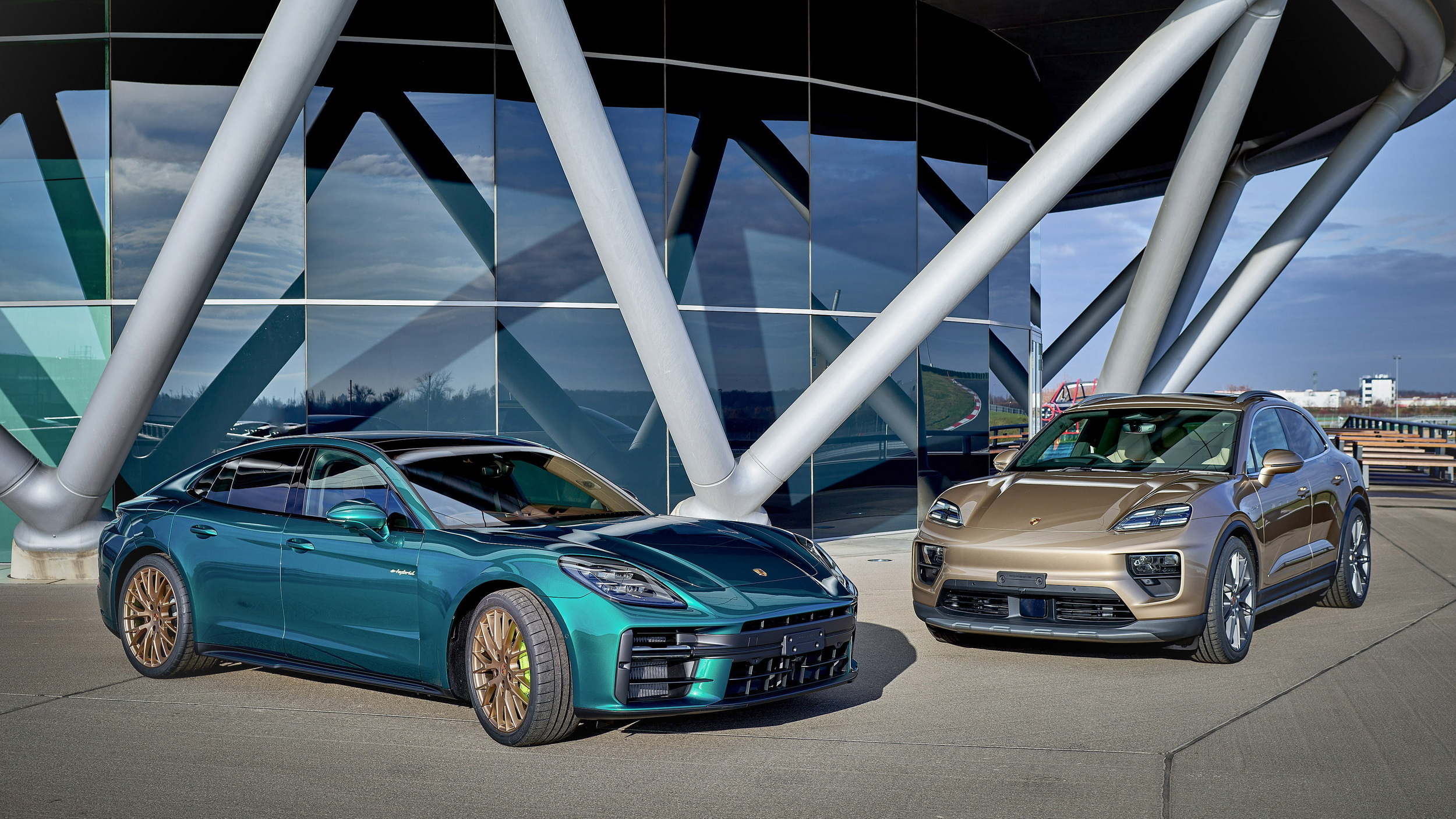
The two might occupy roughly the space and wear broadly similar shapes, but they go about it quite differently. The Taycan is the sportier-looking one, lower, tighter, and built with aerodynamics very much in mind. The Panamera, being the combustion car, stretches out a bit more. It is 89 mm (3.5 inches) longer, 44 mm (1.7 inches) taller, and rides on a wheelbase that is 50 mm (2 inches) longer.
There are differences in body styles too. The Panamera can be had in long-wheelbase form for those who prefer their Porsche with a little extra rear legroom. The Taycan, meanwhile, branches out into Cross Turismo and Sport Turismo variants.
If Porsche does march toward a unified sedan line, some of those distinctions will probably have to shrink. Even so, the electric version could still wear its own visual identity, much like the new Cayenne Electric.
Whether the Taycan name ends up as a trim level or the Panamera simply absorbs its electric sibling altogether, the real takeaway sits higher up the strategy ladder. Porsche’s focus is no longer on pushing electrification at any cost, but on building a proper multi-energy lineup that gives buyers a choice.
Porsche marks 75 years in Australia with four bespoke models.
Each car mirrors landscapes from four Australian regions.
Customers can recreate the builds via Porsche’s configurator.
Porsche is marking 75 years in Australia with a quartet of bespoke models inspired by some of the country’s most recognizable landscapes. Consider it both a birthday celebration and a (costly) reminder that Porsche’s customization department can turn just about any idea into paint, leather, and expensive options.
Debuting at the Australian Grand Prix in Melbourne this weekend, the collection spans the Panamera, Taycan, Macan, and Cayenne, highlighting the customization possibilities offered by Porsche Exclusive Manufaktur and the Sonderwunsch program.
Interestingly, these are far from being strictly one-off specials. Customers can actually recreate the same specifications through Porsche’s official configurator, assuming they are willing to spend enough time clicking through options and, of course, paying for them.
Go North With The Panamera
The first model is based on the Porsche Panamera 4 E-Hybrid, finished with a livery inspired by the rainforests of Queensland and the Northern Territory. The exterior wears Emerald Green Metallic paint, paired with Neodyme 21-inch wheels and bright Acid Green accents on the brake calipers and hybrid emblems.
Inside, the Club leather upholstery comes in Espresso with Night Green stitching, Neodyme accents, and Eucalyptus wood trim. The sedan also receives illuminated scuff plates with “Go North” lettering, a matching key, and 75th anniversary floor mats. For added practicality, it is also fitted with the optional Porsche Performance roof box, just in case the rainforest theme inspires an actual road trip.
Go East With The Taycan
The second model is based on the electric Taycan 4S Cross Turismo. Drawing inspiration from the surf culture of Australia’s Pacific coast, places like Noosa, Byron Bay, Newcastle, and Sydney, it wears an Ipanema Blue Metallic finish. The high gloss black 21-inch alloy wheels feature Crayon aero blades meant to evoke coral formations, while the Glacier Iceblue daytime running lights mirror the irises of the Pacific Blue Eye fish.
The beach theme continues inside the cabin, where a mix of Black and Crayon leather echoes what Porsche describes as “the warm sands and shade of Australia’s eastern beaches.” References to the sea show up in the Dark Night Blue leather seat inserts and the Speed Blue stitching. The EV is also fitted with a panoramic roof featuring Variable Light Control, aluminum roof rails, a bespoke key, and illuminated scuff plates.
Go West With The Cayenne
The first SUV of the group is based on the V8-powered Cayenne S and draws inspiration from the vast open spaces of Western Australia’s Outback, terrain that dates back around 4.4 billion years. The exterior is finished in Ipanema Brown Metallic, paired with white decals and silk gloss black 22-inch alloy wheels.
The model is fitted with the optional Off-Road package, which adds rock rails, skid plates, extra underbody protection, and even a compass mounted on the dashboard, presumably for when the road disappears altogether. It also gets aluminum roof rails carrying a roof box.
Inside, Black leather is paired with Bordeaux Red inserts meant to echo indigenous rock formations. Like the other special editions, it also receives unique floor mats, keys, and illuminated scuff plates.
Go South With The Macan
The final car in the set is the fully electric Macan 4S, styled as a tribute to the southern coastlines of Victoria, South Australia, and Tasmania. Its Gold Bronze Metallic paint is meant to mirror the cliffs along the Great Ocean Road, while the 22-inch RS Spyder wheels, finished in Vesuvius Grey, nod to the region’s rugged stone formations.
The electric SUV also gets the Off-Road Design package, which brings Vesuvius Grey skid plates into the mix. Glacier Blue accents appear in the Matrix LED headlights and along the taillight strip. Inside, the cabin references South Australia’s volcanic landscapes with Black and Chalk Beige leather, punctuated by orange highlights across the seat centers, seatbelts, door cards, and dashboard.
Curiously, Porsche Australia’s 75th anniversary collection arrives without a 911. Still, when the theme revolves around the four cardinal directions, the math rather limits your options.
The redesigned Lexus ES lineup lands in the US starting at $48,795.
Cheapest hybrid costs $2,200 more than the base electric ES 350e.
Dual-motor ES 500e adds AWD but has a disappointing 250-mile range.
Lexus has finally taken one of its most familiar cars fully electric, and the pricing might surprise you. The redesigned MY26 ES lineup now includes hybrid and battery electric versions, with the entry-level EV being the most affordable in the range, sneaking below the $50k mark.
That makes the new ES one of the more accessible luxury EV sedans on the market, at least on paper. The base electric model starts at $48,795 for the front-wheel-drive ES 350e Premium trim, which gets you a meager 220 hp (223 PS / 165 kW) and a zero-to-60 mph (97 km/h) in 7.7 seconds. Go for the snazzier 350e Luxury trim, and the price jumps to $57,195.
For buyers who want a little more punch, Lexus is also offering the dual-motor, all-wheel-drive ES 500e. That version starts at $51,795 in Premium form and climbs to $60,195 for the Luxury trim, both models delivering 338 hp (343 PS / 252 kW) and a more appealing 5.4-second sprint time.
Short Range Or Shorter Range?
The decider for many potential buyers could be the difference in the distances the two can travel before needing to find a charger. Neither has impressively long legs, but the 350e’s estimated 300-mile (484 km) range looks a lot more useful than the 500e’s 250 miles (254 km).
Hybrid Costs Extra
If you’re really bothered by range anxiety, though, you might want to consider an ES that fuses electric power with a 2.5-litre, four-cylinder gas engine. A combined 243 hp (246 PS) hauls the ES 350h Premium to 60 mph in 7.4 seconds in $50,995 front-drive form, and 7.2 seconds in $1,400-pricier all-wheel-drive guise. There’s no Luxury upgrade available for the hybrids, but stepping up to Premium+ inflates the sticker by $4,800.
Radical Redesign
Compared with the old ES, the new one is more than 6 inches (150 mm) longer, rides on a new platform, and has a fresh, edgier look. Inside, a 14-inch touchscreen sits at the center of the dashboard and works alongside a digital gauge display, while new ambient lighting and bamboo-inspired trim aim to make the cabin feel more lounge than cockpit.
Previous ES models for the US were built at the Lexus plant in Kentucky, but the new-generation cars will all be imports from Japan, Toyota having opted to end production of the sedan in America.
Lexus ES pricing
Model
MSRP*
ES 350e Premium
$48,795
ES 500e Premium AWD
$51,795
ES 350e Luxury
$57,195
ES 500e Luxury AWD
$60,195
ES 350h Premium
$50,995
ES 350h Premium AWD
$52,395
ES 350h Premium+
$55,795
ES 350h Premium+ AWD
$57,195
SWIPE
*Prices include $1,295 destination and delivery charges.
VW confirmed two facelifts for the EU-spec Tiguan.
ICE-powered production now expected to last until 2035.
Facelifted ID.4 may adopt the ID. Tiguan name in 2027.
Volkswagen has offered the first glimpse of the next-generation Golf but the same announcement in Wolfsburg also brought notable news about the Tiguan. The compact SUV is set for two major updates that will effectively extend its lifecycle until at least 2035.
During the first meeting of 2026, Works Council Chairwoman Daniela Cavallo revealed that Volkswagen is planning “two extensive product upgrades for the best-selling Tiguan for the years 2028 and 2031”.
Cavallo was referring to the European-market Tiguan, which was followed by the larger Tayron in October 2024. That model later evolved into the North American-market Tiguan, although without the third-row seating and hybrid options.
The Double Facelift Strategy
Most models receive a single mid-cycle refresh before slowly drifting toward retirement. The Tiguan, however, is getting special treatment. VW has already locked in two updates for the SUV, which rides on the MQB Evo architecture.
The first facelift, scheduled for 2028, will likely bring the interior tech up to speed with Volkswagen’s newer models. Expect a renewed focus on physical controls, paired with more capable software. If recent VW updates are anything to go by, exterior changes may stay fairly restrained, limited to revised bumpers and LED lighting signatures, plus a few new colors and wheel designs.
The second facelift is planned four years later, or eight years after the current generation first arrived. That update should deliver more noticeable design revisions, keeping the Tiguan looking current in the crowded compact SUV segment and aligned with Volkswagen’s evolving design language.
Powertrains will also need attention. A stronger dose of electrification will likely be required to keep the lineup compliant with Europe’s steadily tightening emissions rules.
By launching a major refresh as late as 2031, Volkswagen is effectively guaranteeing the ICE-powered Tiguan a long life. The new plan pushes the SUV’s lifecycle to at least 2035, lining up with company plans to keep combustion engines on sale in Europe until the middle of the next decade.
A similar fate appears likely for the current ICE-powered Golf. Reports suggest it could remain on sale until around 2035, even after the fully electric ID. Golf arrives before 2030. So while the electric future is clearly coming, Volkswagen is not in a rush to turn off the lights on its combustion models.
Production remains split across two continents. The EU-spec Tiguan is built in Wolfsburg, Germany, alongside the Tayron, while the US-spec version rolls out of Volkswagen’s Puebla plant in Mexico. The company has not confirmed long-term plans for either model, but a pair of facelifts sounds far more plausible than funding entirely new generations.
Volkswagen has also confirmed two upcoming EVs built in Wolfsburg on the new SSP architecture. They are the ID. Golf and the ID. Roc, both expected to arrive toward the end of the decade. Before their arrival, the company plans substantial updates for the current MEB-based ID.3 and ID.4.
While nothing is official yet, the facelifted ID.4 is rumored to adopt the ID. Tiguan name as part of Volkswagen’s new naming strategy. The electric crossover is also expected to abandon its curvier styling in favor of a more traditional SUV design. Inside, look for a heavily revised cabin and mechanical upgrades aimed at improving power, range, and efficiency.
By keeping the Tiguan name alive across two different platforms, VW is hedging its bets. Whether buyers choose hybrid or fully electric, Wolfsburg seems keen to make sure there is still a Tiguan sitting in the driveway over the next decade.
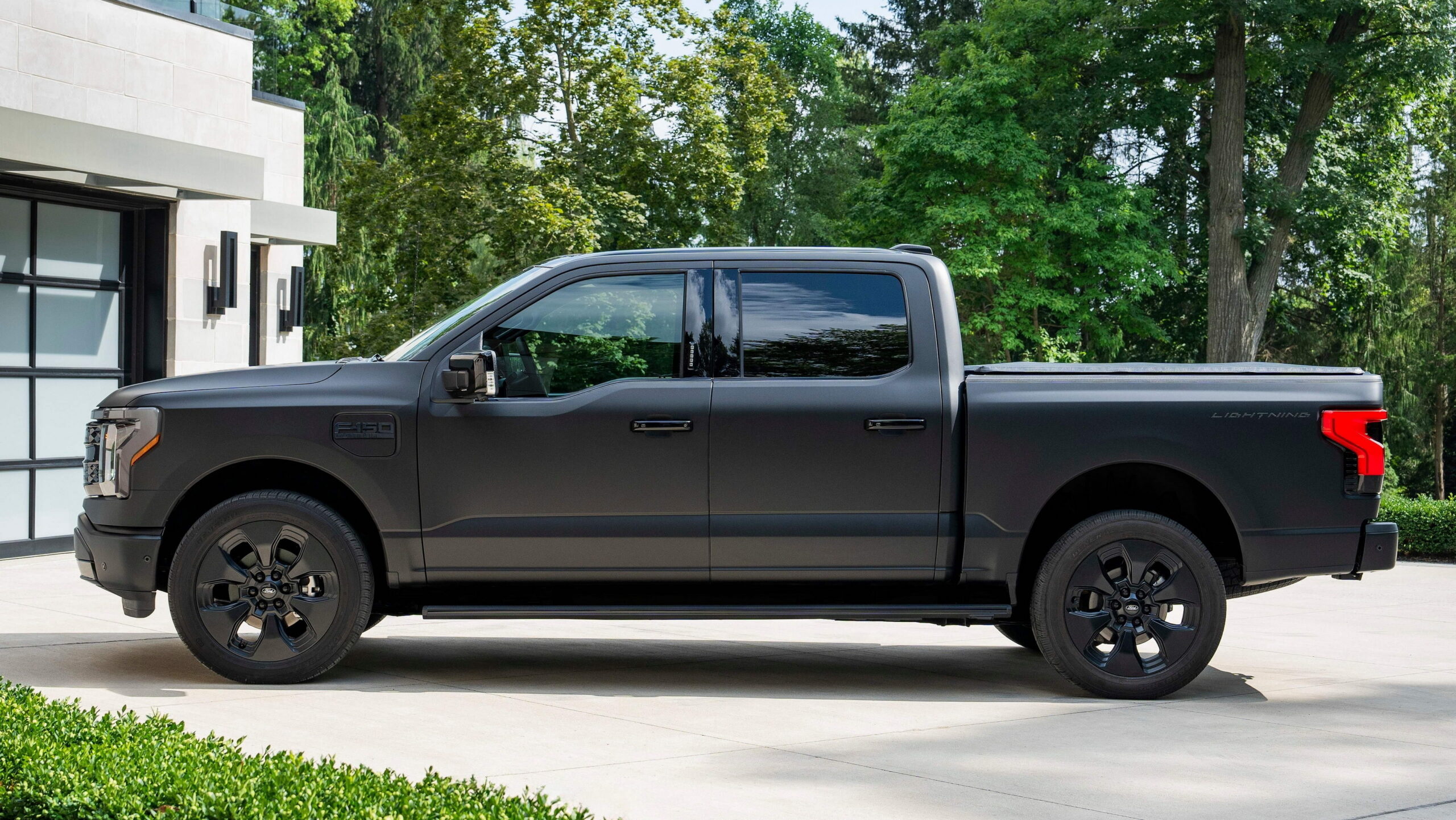
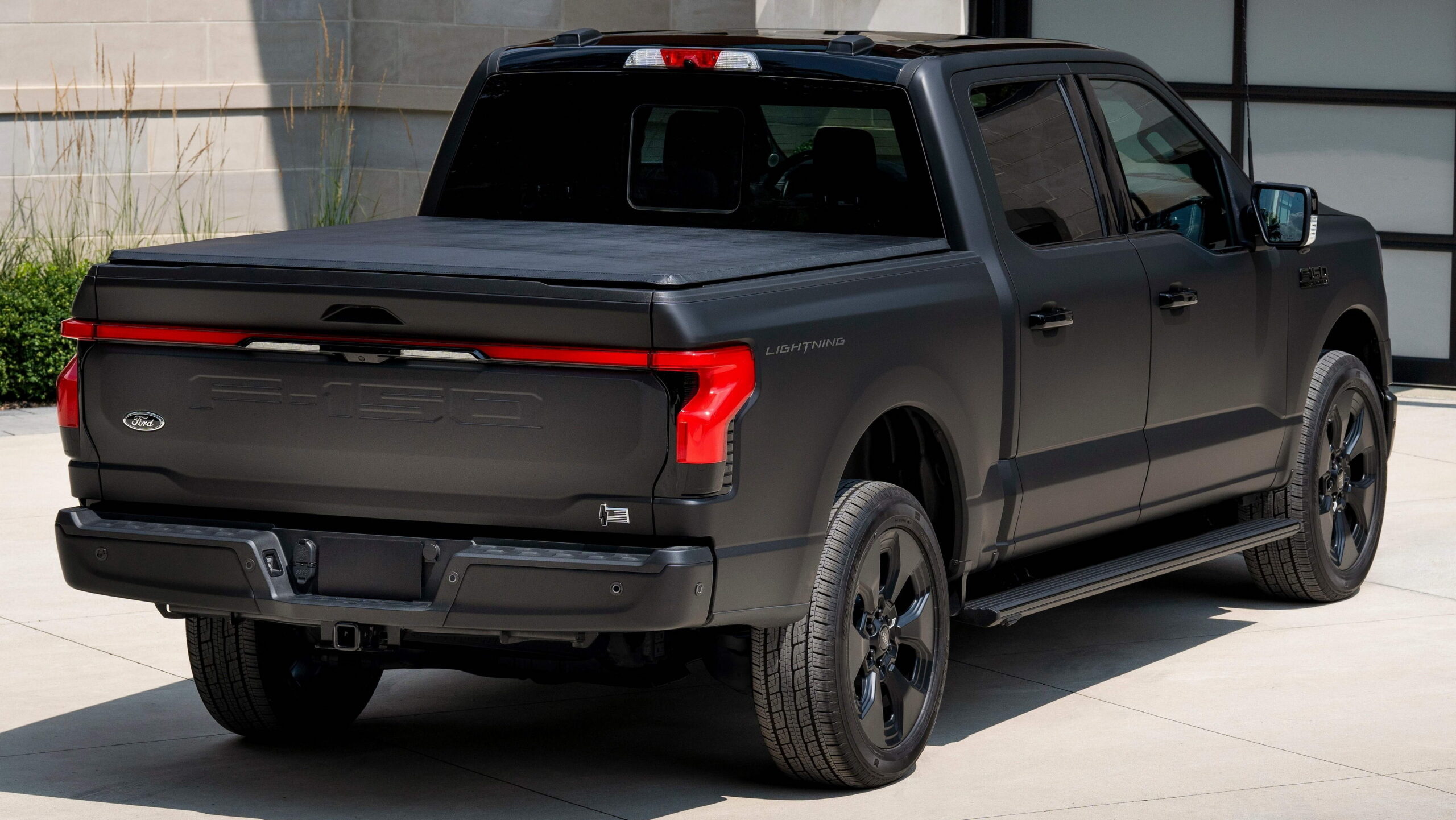
Jim Farley says Ford misread post-pandemic EV demand signals.
The F-150 Lightning will return as a 700-mile extended-range truck.
Ford’s new strategy prioritizes cost control and mainstream practicality.
The last decade has seen the automotive industry tipped on its head, and it hasn’t completely righted itself even now. Ford’s CEO Jim Farley says that shift is part of what led the brand to take missteps as he now sees them around the F-150 Lightning.
Now that the brand is pivoting to an extended range version of the truck, he’s spilling details on how the first Lightning got off to a hot start and then burned out fast.
After losing billions on its first-generation electric vehicles, Ford has scrapped its next-gen electric truck, canceled multiple three-row EV crossovers, and pulled the plug on a next-generation van. All of those choices have come down to what Farley says was an initial mis-reading of the market.
In a recent interview with CarAndDriver, he admits about the F-150 Lighting, “I totally would’ve done it differently. I mean, look, we didn’t know what we didn’t know… COVID totally was a false signal. Post-COVID, and during the chip crisis that was a result of it, there was such high demand for all vehicles. If you could build a vehicle, you were going to sell it basically at 30 or 40 percent higher prices than before COVID.”
Despite that big boom in profit, the reality was that production costs were too high to remain sustainable, says Farley. “I guess it didn’t take us long to learn that our internal-combustion-engine prejudice was so high that we hadn’t designed the [electric] cars right. We had a Mustang [Mach-E], we had an E-Transit, we had a Lightning, and people loved these products. The problem was they were never going to pay the cost we put into the vehicle.”
Tesla’s Big Assists
How did Farley come to this realization? As it turns out, Tesla had a hand in it.
“When we ripped apart a Tesla with Doug Field [Ford’s chief officer for EVs, digital, and design, formerly of Apple and Tesla], I was just absolutely flabbergasted,” Farley told the magazine.
“The Mach-E’s wiring harness was 70 pounds heavier and 1.6 kilometers longer. We didn’t know what was going on in [Tesla engineers’ ] minds. But now we understand. They had no prejudice. We had prejudice. We’d gone to our supply-chain person and said, ‘Buy another wiring harness.’ [Tesla] said, ‘Let’s design the vehicle for the lowest, smallest battery.’ Totally different approach.”
That shift might have played a role in Ford moving to a 48v architecture for its upcoming EV pickup. Tesla famously sent an instruction manual on building such a vehicle to Ford and other competitors. Not only does it help the brand save money on material costs, but it should also help the final product weigh less and have a longer range as a result.
While the first-gen Lightning might be something Ford wishes it could redo, it’s clear that the brand is going into the second generation with an all-new vision.
President Donald Trump speaks during a press briefing at the White House Feb. 20, 2026, in Washington, D.C., after the U.S. Supreme Court ruled against his use of emergency powers to implement international trade tariffs. Also pictured on stage, left to right, are Solicitor General John Sauer and Secretary of Commerce Howard Lutnick. (Photo by Kevin Dietsch/Getty Images)
WASHINGTON — Senate Democrats sent a letter to Treasury Secretary Scott Bessent on Friday demanding the administration refund businesses that paid tariffs to import goods into the United States under authority the Supreme Court has ruled the president never held.
“The American people — small business owners, importers, manufacturers, and the consumers who ultimately bore the cost of these illegal taxes — deserve better than this stonewalling,” the group wrote. “This money does not belong to the federal government. It belongs to the businesses and individuals you illegally taxed.”
The Supreme Court ruled on Feb. 20 that President Donald Trump wrongly instituted tariffs under the International Economic Emergency Powers Act, writing “that IEEPA does not authorize the President to impose tariffs.”
Trump held a press conference later that day declaring he would institute tariffs under other authorities that he and members of his administration believe Congress has granted the president. But he didn’t give a clear answer about whether the federal government would refund the businesses that paid IEEPA tariffs.
“They take months and months to write an opinion, and they don’t even discuss that point,” Trump said at the time. “I guess it has to get litigated for the next two years.”
Senate Democrats’ letter says the Trump administration “collected over $130 billion in illegal taxes and then refused — with a smile and a shrug — to give it back.”
Democrats wrote in the letter the administration must tell U.S. Customs and Border Protection “to begin processing automatic refunds for all tariffs and customs duties unlawfully collected under IEEPA since January 20, 2025.”
The Trump administration, they wrote, should release a timeline within 90 days for when it would begin those refunds.
The letter was signed by Senate Minority Leader Chuck Schumer, Whip Dick Durbin, Maryland Sen. Angela Alsobrooks, Connecticut Sen. Richard Blumenthal, Delaware Sens. Chris Coons and Lisa Blunt Rochester, Illinois Sen. Tammy Duckworth, New York Sen. Kirsten Gillibrand, Colorado Sens. Michael Bennet and John Hickenlooper, Hawaii Sen. Mazie Hirono, Virginia Sens. Tim Kaine and Mark Warner, New Jersey Sen. Andy Kim, Minnesota Sen. Amy Klobuchar, New Mexico Sen. Ben Ray Luján, Oregon Sens. Jeff Merkley and Ron Wyden, Rhode Island Sens. Jack Reed and Sheldon Whitehouse, Nevada Sen. Jacky Rosen, California Sens. Adam Schiff and Alex Padilla and Georgia Sen. Raphael Warnock.
The Treasury Department did not respond to a request for comment.

 Login
Login