The Lexus TZ arrives as a new three-row EV for global buyers.
Upscale cabin adds roomy seating plus synthetic driving sounds.
An AWD setup with 402 hp targets roughly 300 miles of range.
Lexus has pulled the wraps off the TZ, a fully electric three-row, six-seat SUV that gives the brand a proper family-hauling EV to slot above the RZ. It rides on the same architecture as the Toyota bZ Highlander but gets a reworked body, a more upscale cabin, and a stronger all-wheel-drive powertrain to justify the badge on the hood.
At 5,100 mm (200.8 in) long, the TZ stretches 50 mm (2 inches) beyond its Toyota sibling, though both share an identical 3,050 mm (120.1-inch) wheelbase and the same general proportions. From there, the styling diverges sharply.
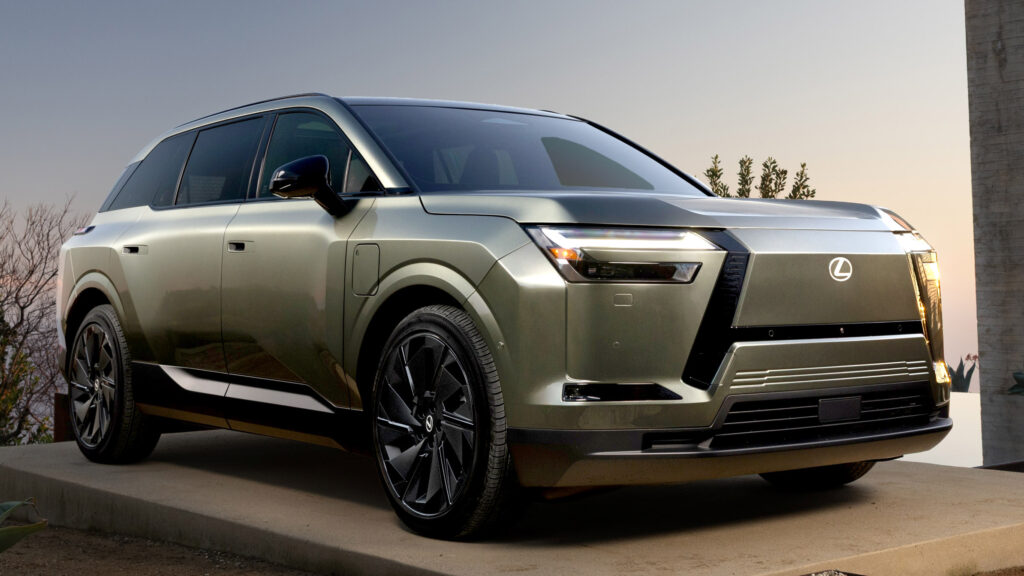
The front end leads with a closed-off spindle grille flanked by stacked, two-story LED headlights, and the squared-off hood borrows visual cues from the tougher Lexus GX. The sides are heavily sculpted around the wheel arches, drawing the eye to the standard 22-inch alloys, with 20s available for buyers who want to soften the ride and (likely) improve their driving range.
The semi-flush door handles and the pillars appear to be carried over from the Toyota, but the roofline drops towards the back leading to a slightly longer rear overhang. The rear end has a large roof spoiler, full-width LED taillights and vertical L-shaped indicators.
Quietest Lexus SUV Yet, With An LFA Soundtrack On Tap
Inside, Lexus is pitching the TZ as a “relaxing lounge experience” for every occupant, with six seats spread across three rows. The brand has thrown serious effort at sound insulation and NVH tuning, to the point that it claims the TZ will be the quietest cabin in their SUV lineup, flagship LX included.
The TZ doesn’t have to whisper at all times, though. An Active Sound Control system pipes in synthesized soundscapes tied to throttle inputs, including what Lexus describes as “musical chord sequences” and, more interestingly, a mode that mimics the howl of the LFA’s V10. Whether anyone shopping a three-row family EV actually wants their grocery runs scored by a fake supercar soundtrack is a separate question, but the option is there.
Three Rows Of Lounge Seating And Hidden Touch Controls
The front and second row seats offer ventilation and power leg rests, while even the third-row seats promise “sofa-like cushioning”. The second and third rows have a one-touch fold-down feature for expanding the cargo space. Passengers will also find various storage compartments including a removable rear console.
The dashboard is dominated by the large touchscreen with a new generation infotainment, joined by a digital instrument cluster. Unlike the Toyota that has a row of physical switches under the touchscreen, the Lexus opts for touch buttons that remain hidden on the dashboard trim and steering wheel trim when not in use, in combination with a textured volume cylinder.
The rest of the spec sheet reads like a Lexus showroom brochure: panoramic roof, soft-close doors, configurable ambient lighting, and a 21-speaker Mark Levinson audio system. Trim materials lean into the brand’s sustainability push, with forged bamboo inserts and bio-based UltraSuede upholstery throughout. The latest Lexus Safety System+ 4.0 ADAS suite comes standard.
Standard AWD And A 300-mile range
The SUV rides on a reinforced version of the TNGA architecture and will be exclusively available as an EV. Dual electric motors produce a combined 402 hp (300 kW / 408 PS) and up to 369 lb-ft (500 Nm) of torque, surpassing the most potent version of its Toyota sibling.
Power is transmitted to all four wheels via the standard Direct4 AWD system. The driver has access to a Dynamic Rear Steering system, five selectable drive modes (Normal, Sport, Eco, Range, Rear Comfort), and five levels of regenerative braking.
According to Lexus, the 0-62 mph (0-100 km/h) acceleration is completed in 5.4 seconds and the towing capacity is rated at 3,500 lbs (1,588 kg).
Buyers have a choice between two lithium-ion battery packs with capacities of 76.96 kWh and 95.82 kWh. The larger battery targets an EPA range of 300 miles (483 km), which is actually 20 miles (32 km) lower than the maximum range of the Highlander, most likely due to the extra power.
For global markets the WLTP rating is 530 km (329 miles), the WLTC range is 620 km (385 miles) and the more optimistic CLTC figure is 640 km (398 miles).
The North American TZ comes with a NACS port making it compatible with Tesla Superchargers. On the other hand, the global-spec model sticks with the CCS2 port. Both support up to 150 kW DC fast charging, meaning that a 10-80% charge can be completed in 35 minutes.
Production And Availability
The new Lexus EV will roll off two assembly lines. North American units will be built at the Georgetown facility in Kentucky alongside the Toyota Highlander, while Europe and Asia will be supplied by the Miyata plant in Japan.
The 2027 Lexus TZ is expected to reach North American dealers at the end of 2026, with Europe, Japan, China, and other international markets following in early 2027. Detailed pricing and trim structure will be announced later this year.
PROS ›› Exceptional performance, great sounds, fake DCT CONS ›› Design will divide opinions, expensive, poor range
Hyundai lit a fire under the performance EV world when it dropped the Ioniq 5 N a couple of years back. Not only was it the South Korean brand’s first crack at a high-performance electric car, it was arguably the first EV built with the driver, not the spec sheet, at the forefront.
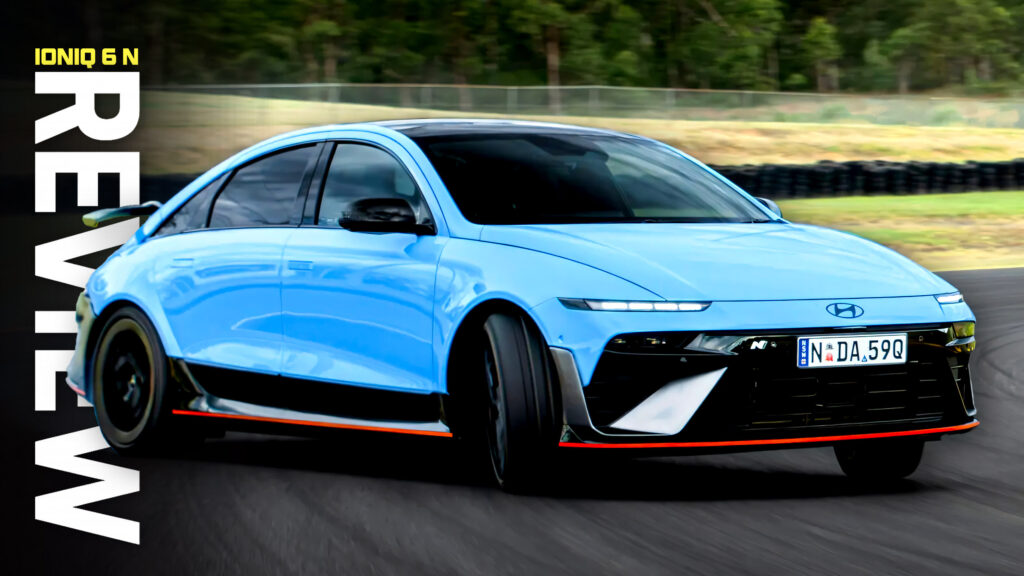
Now comes the follow-up. The Korean brand has launched its second high-performance EV, the Ioniq 6 N. Created around the same philosophy as the Ioniq 5 N, and sharing many of its parts, the 6 N promises even greater performance with far more adjustability, a slightly higher price tag, and quicker lap times, aided in no small part by the lower center of gravity.
The question is, can Hyundai have possibly made the already great Ioniq 5 N even better? We headed to Sydney Motorsport Park to find out, putting the Ioniq 6 N through its paces. It revealed itself to be a car so enjoyable to drive that it’s hardly even recognizable as an EV.
QUICK FACTS
› Model:
2027 Hyundai Ioniq 6 N
› Starting Price:
AU$115,000 ($82,800) plus on-road costs
› Dimensions:
194.3 L x 76.4 W x 58.9 H inches (4,935 x 1,940 x 1,495 mm)
› Wheelbase:
116.7 in (2,965 mm)
› Curb Weight:
2,166 kg (4,775 lbs)
› Powertrain:
Two electric motors / 84 kWh battery
› Output:
650 hp (478 kW) / 546 lb-ft (740 Nm) w/ N Grin Boost
› 0-62 mph
3.2 seconds (0-100 km/h) as tested
› Transmission:
Single speed
› Efficiency:
24 kWh/100 km as tested
› On Sale:
Now
SWIPE
What Makes It Special?
Significant improvements have been made to the Ioniq 6 to ensure it’s fitting of the N badge. It uses an 84 kWh battery pack and a pair of electric motors delivering 448 kW (601 hp) and 740 Nm (546 lb-ft) of torque as standard, and 478 kW (650 hp) with the N Grin Boost function enabled and launch control engaged. The battery packs support charging from 350-kW DC fast chargers, with peak charging rates of around 250 kW, enough to charge the pack from 10-80 percent in 18 minutes.
Photos Hyundai Australia
Like any N product, this one is about much more than improved power. Hyundai has tweaked the suspension geometry, lowering the roll center and installing new dual-layer bushings. It also uses an advanced, new stroke-sensing electronically controlled suspension system that adjusts damping based on driving conditions and travel stroke. There’s also an electronically limited-slip differential at the rear, a steering mounting void bushing to improve response, and Hyundai’s Integrated Drive Axle.
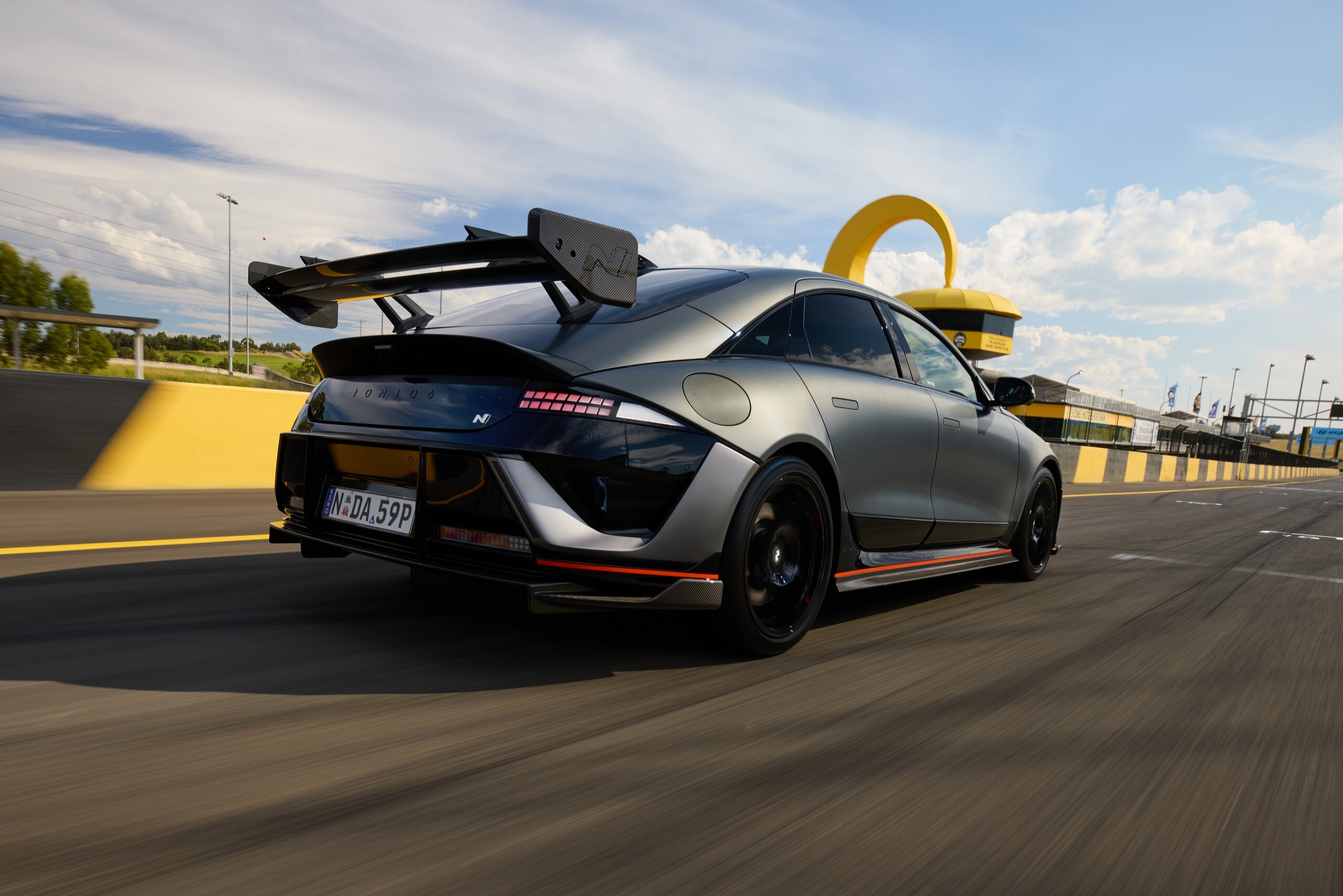
Hyundai has also added 44 additional weld points and an extra 340 mm (13.4 inches) of structural adhesive to the body-in-white, and installed new brakes with 400 mm (15.7-inch) discs with four-piston calipers up front. There are also two brake-feel modes, a slew of regenerative-braking settings, and several aerodynamic improvements, including a rear wing that delivers 100 kg (220 lbs) of downforce.
Like the Ioniq 5 N, the number of functions to enhance the driving experience is dizzying. There’s the N Drift Optimizer, N Launch Control, and an N Torque Distribution that allows for 11 different adjustments to how power is sent to the wheels, ranging from 95:5 front-to-rear to 5:95 front-to-rear. Hyundai has also included its N Pedal system to boost regenerative braking on the track and improve tuck-in response, N Grin Boost to increase power in 10-second bursts, and N Battery to optimize battery temperatures for drag, sprint, and endurance settings.
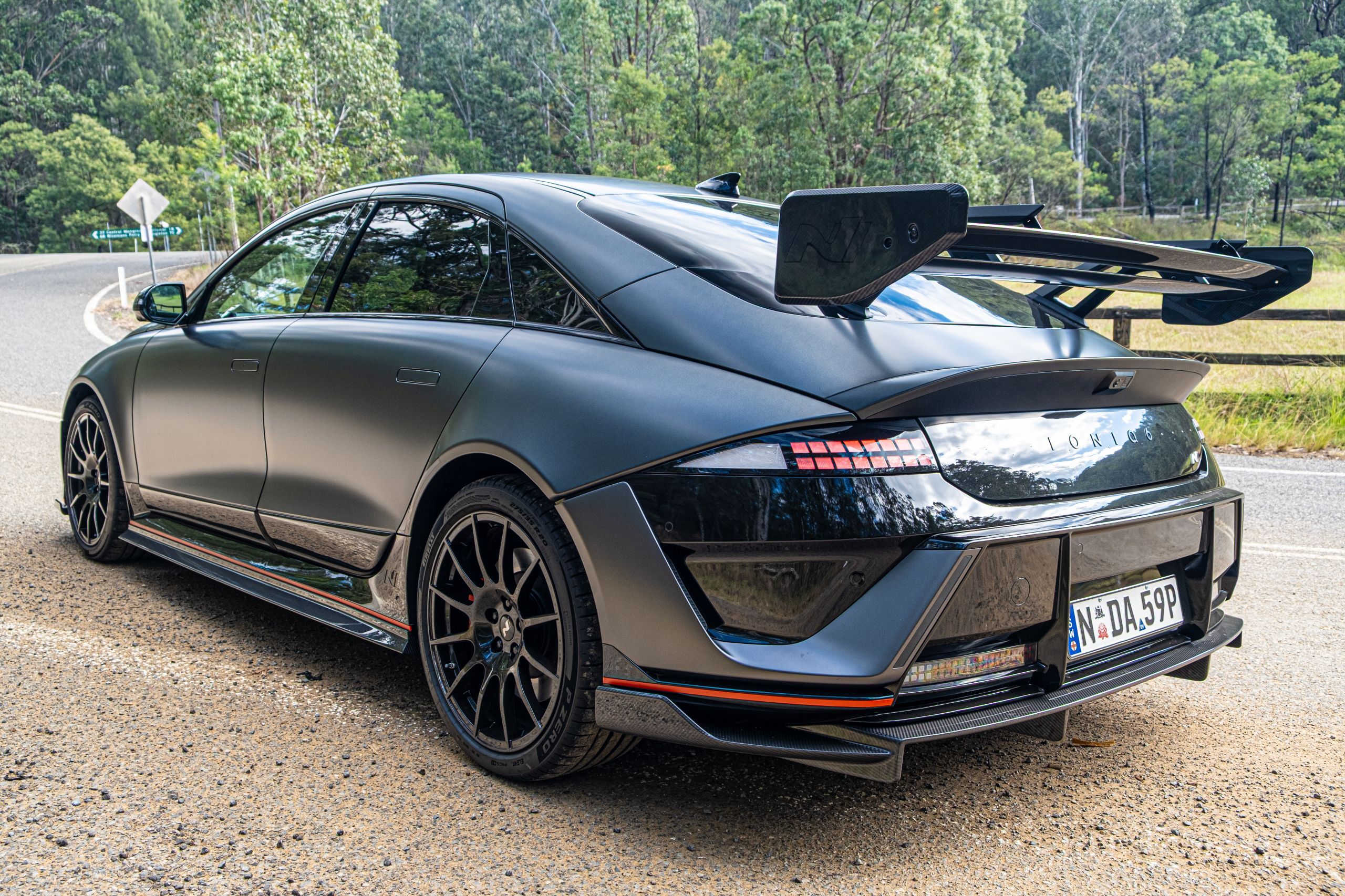
In Australia, prices start at AU$115,000 (US$82,800). In the US, it’s expected to start at around US$70,000. The matte grey model you’ll see in some photos includes several carbon fiber accessories, including a towering AU$7,289 (US$5,245) rear wing, a AU$2,484 (US$1,787) carbon splitter, AU$4,810 (US$3,461) side skirts, and a AU$4,090 (US$2,943) rear diffuser.
Sporty Cabin Tweaks
Photos Hyundai Australia
The interior has also been tweaked, although it’s not dramatically removed from the regular Ioniq 6. Key touches include a new N steering wheel, new head-up display graphics, bucket seats, and new leather and Alcantara surfaces.
As the N is based on the facelifted Ioniq 6, it has all of the same features. These include a configurable 12.3-inch digital instrument cluster, a 12.3-inch infotainment display, and, importantly, loads of tactile, physical buttons throughout, an increasing rarity in the EV space. It’s a lovely space to spend time, and the upgrades made to the N ensure it feels special.
Just like the Ioniq 5 N, the Ioniq 6 N is very much a niche product. This is not the type of vehicle that Hyundai expects to sell in high numbers. In Australia, roughly 500 expressions of interest have been received, although order books have yet to open, so it’s unclear how many of those will actually translate into buyers.
Driving
Photos Hyundai Australia
All it takes is a quick look at the Ioniq 6 N’s specs to understand that this is a car that means serious business. However, unlike some of the straight-line heroes that dominate the so-called ‘performance’ class of EVs, Hyundai’s latest creation is about much more than simply pulling away from an intersection quickly.
Of course, that’s not to say that this thing isn’t ferocious off the line. It is. According to Hyundai, the Ioniq 6 N can sprint to 100 km/h (62 mph) in just 3.2 seconds with the N Grin Boost function enabled, which bumps up peak power to 478 kW (650 hp) and 740 Nm (546 lb-ft) of torque for 10-second bursts. In our testing, we recorded repeated runs to 100 km/h in 3.2 seconds, while running from 60-120 km/h takes as little as 2.45 seconds.
Photos Hyundai Australia
While it’d be easy to shrug off these figures given how many quick EVs are on the market right now, it’s worth remembering that numbers like these were once the exclusive territory of high-end supercars costing half a million dollars, not a practical four-door sedan that stickers for a fraction of that and costs about a third of what a Porsche Taycan Turbo does.
Fitted as standard with Pirelli P Zero Elect tires, but equipped with P Zero Corsa rubber for our track sessions, the car simply bites into the pavement, delivering unrelenting, unforgiving acceleration.
No Electric Sedan Should Drive Like This
However, it’s the handling and overall driving dynamics of the Ioniq 6 N that stand out more than the acceleration.
Like the Ioniq 5 N, the 6 N uses a pair of powerful electric motors at the front and rear axles. It includes the N Torque Distribution function, allowing drivers to move from as much as 95 percent front-power bias to 95 percent rear-power bias. However, to extract peak power from the two motors, it’s best to keep the power split in its 50-50 mode.
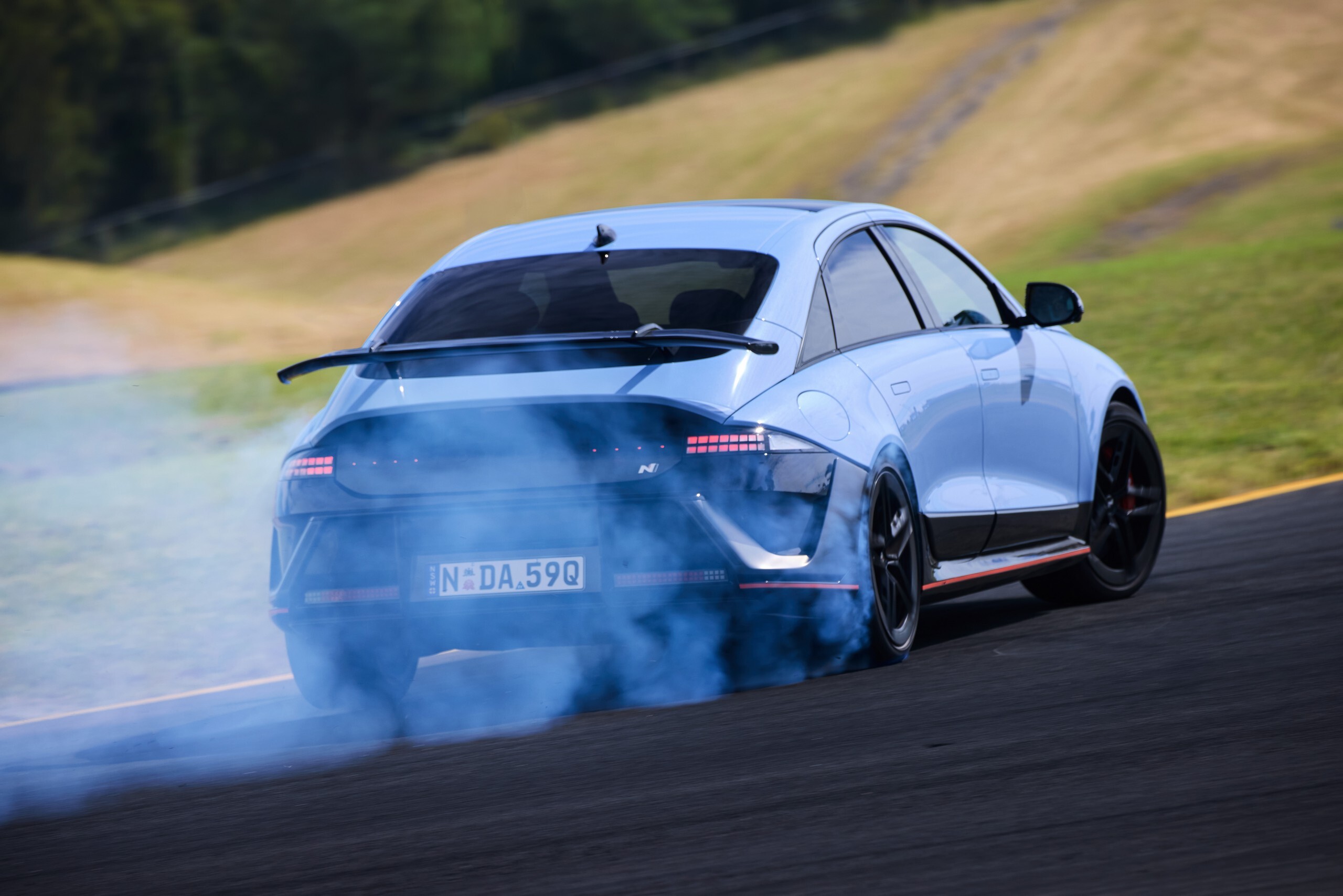
Even in this mode, with a 60-40 front-to-rear power split, the Ioniq 6 N feels inherently rear-biased and is even more playful than its SUV sibling. For several laps, I had the car’s power split in 50-50 mode with the ESC in Sport mode, and was left giddy by how the rear end gracefully starts to kick under power. When it does step out, the stability control system allows for a surprising amount of slide angle before reining things in, making the EV exceptionally easy to control at and beyond the limit.
Outright grip is exceptional and has been perfectly coupled with superb steering feel, despite it being an electrically assisted system. What’s particularly impressive is that the steering provides just as much feedback as Hyundai’s combustion-powered N models. There are no dramas in determining where the extremities of the grip are, either through the front or the rear axle.
Admittedly, the overall size of the Ioniq 6 N and its weight mean that both the road-focused P Zero Elect and P Zero Corsa tires start to overheat after three or four flying laps. This wasn’t helped by the fact that the tires of the cars we tested were dated back to 2023, so they were a little old.
Photos Brad Anderson/Carscoops
Improvements have been made to the car’s N e-Shift function. This is the system that aims to replicate the feel of Hyundai N’s eight-speed dual-clutch, providing a satisfying thump in the back and a change in torque just like an ICE car. Whereas the Ioniq 5 N had seven of these fake gears, the Ioniq 6 N has eight. With shorter ratios, even though they’re not real, it’s possible to enjoy even more shifts.
Those who haven’t experienced this system may be quick to dismiss it. After all, how can an EV’s software possibly mimic actually shifting gears? However, the team of Hyundai engineers who developed the N’s eight-speed dual-clutch also developed this system, and it’s almost indistinguishable from a normal transmission. It’s bewildering at first, but quickly becomes second nature.
Alterations have also been made to the car’s N Active Sound+ system. As in the Ioniq 5 N, the Ioniq 6 N’s system includes three modes, Ignition, Evolution, and Supersonic, although changes have been made to all three. Whereas the Ioniq 5 N’s system uses two channels, the Ioniq 6’s uses six, providing a richer, louder, and more authentic soundtrack, particularly in Ignition, which sounds just like the exhaust of the i30 N. However, the Active Sound+ system doesn’t faithfully recreate the sound of a turbocharged four-cylinder quite as well as the e-Shift does act like a genuine dual-clutch.
On-Road Performance
Photos Hyundai Australia
On the road, the Ioniq 6 N revealed itself to be a shockingly good cruiser, yet one that can transform into an animal at the press of the N button.
Given the performance on offer, it should come as no surprise that the Ioniq 6 N isn’t as efficient as the regular model. Sitting on the highway, it’ll average about 19 kWh/100 km, which is respectable. However, start driving it in a slightly sportier manner, and that figure will quickly rise deep into the 20s. On the track, when driven at its limits without regenerative braking, it’ll deplete the battery pack by about 8 percent over a 105-second lap. Using regen, it’s possible to lower this to around 5 percent.
A key masterstroke for the Ioniq 6 N’s on-road performance is how well it rides. The new and improved suspension works wonders, soaking up bumps beautifully in its softest setting while still delivering a sporty feel. Amp things up into one of the more aggressive modes, and it’s far less jarring than an i30 N, remaining perfectly suitable for everyday driving.
While the street tires can overheat on the track, you’d have to find a very long ribbon of tarmac to get them to do so on the road. They provide loads of grip and excellent feedback about the limits of grip. Just like we found while on the circuit, there’s no other EV that feels like this on the road. Dynamically, the car’s hard to fault, and it’s absolutely more capable than the Ioniq 5 N.
Perhaps the feel of the brakes isn’t as nice as some other performance cars out there, but that’s clutching at straws. One thing’s for sure: there’s no noticeable shift from regenerative to friction braking, a trademark of other Hyundai Group EVs.
Verdict
Photos Brad Anderson/Carscoops
Car manufacturers have struggled to develop and build EVs that tug at the heartstrings of driving enthusiasts. In general, these cars lack soul and passion, often devoid of any personality at all. That’s not the case with Hyundai, and there’s a good reason why Ferrari, Lamborghini, Porsche, and others have all benchmarked the Ioniq 5 N.
The Ioniq 6 N is the culmination of everything Hyundai’s N division has been developing since its establishment more than a decade ago. It’s expensive for a Hyundai, but it’s cheap compared to a Porsche Taycan or an Audi RS e-tron GT, and delivers thrills that neither of those two can. As we enter a world where performance-focused EVs will become increasingly common, it’s nice to know Hyundai is keeping the preferences of car enthusiasts at the top of its agenda.
Thanks to dismal sales, there are huge discounts on the electric van.
If you know where to look, you can get more than $20,000 off MSRP.
VW already confirmed it is skipping the 2026 model year entirely.
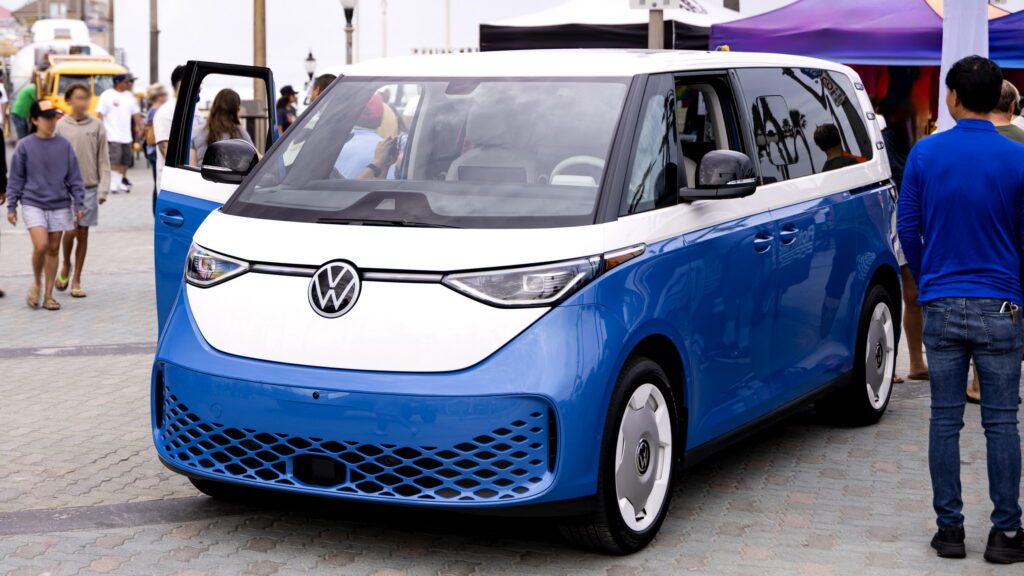
Volkswagen ID. Buzz sales plummeted 35.2% in the first quarter as dealers only moved 1,232 units. The disappointing result came roughly three months after the automaker confirmed they’ve made the “strategic decision” to skip the 2026 model year following a “careful assessment of current EV market conditions.”
They added a 2027 ID. Buzz would arrive later this year, once dealers clear out the existing inventory of 2025 models. That work continues and it appears the company only has about a month and a half supply of vehicles remaining.
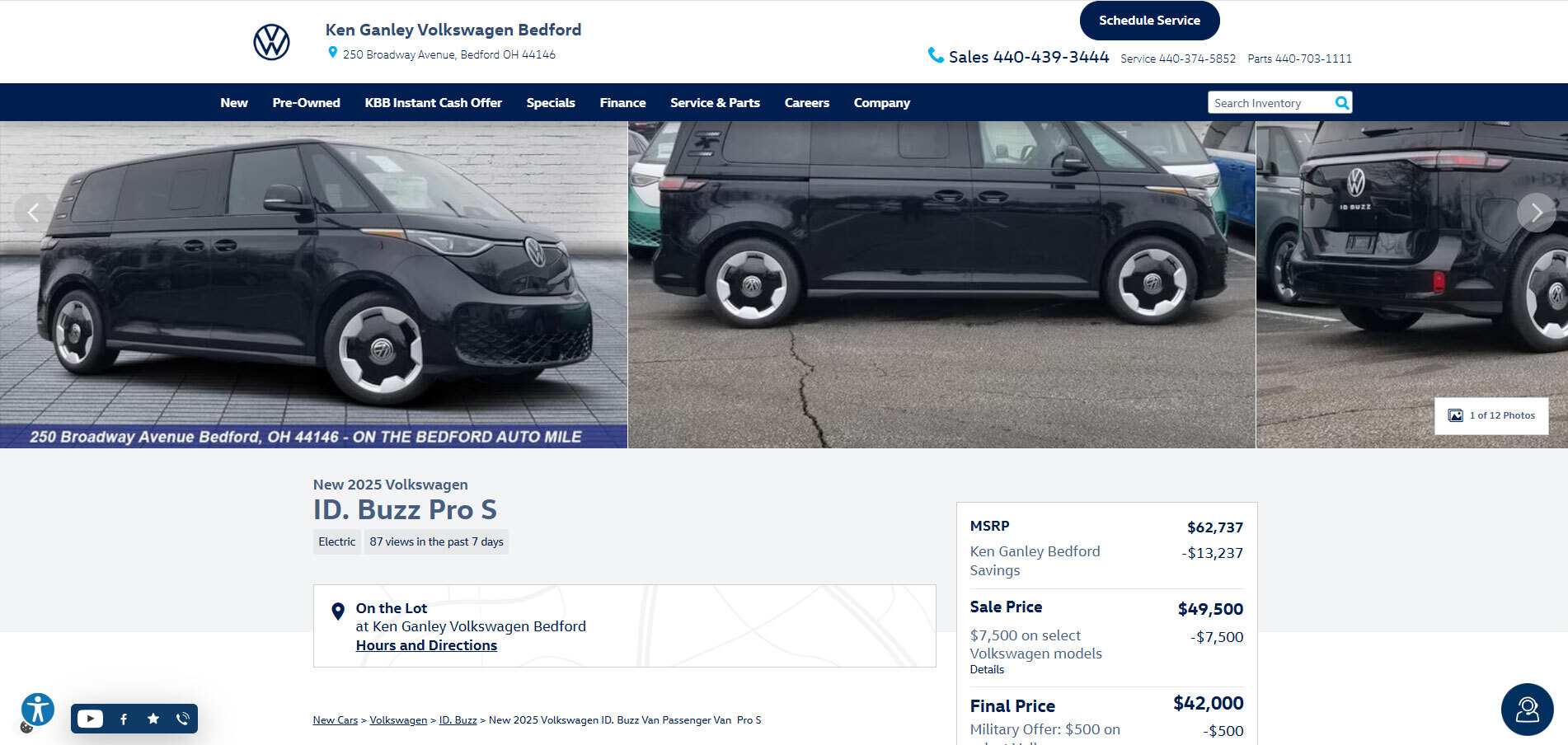
While that sounds like good news, some dealers are slapping on huge discounts to move inventory. Ken Ganley Volkswagen of Bedford, Ohio has a new 2025 ID. Buzz Pro S listed for $42,000. That’s $20,737 below the original MSRP of $62,737 and it undercuts the $42,795 Honda Odyssey.
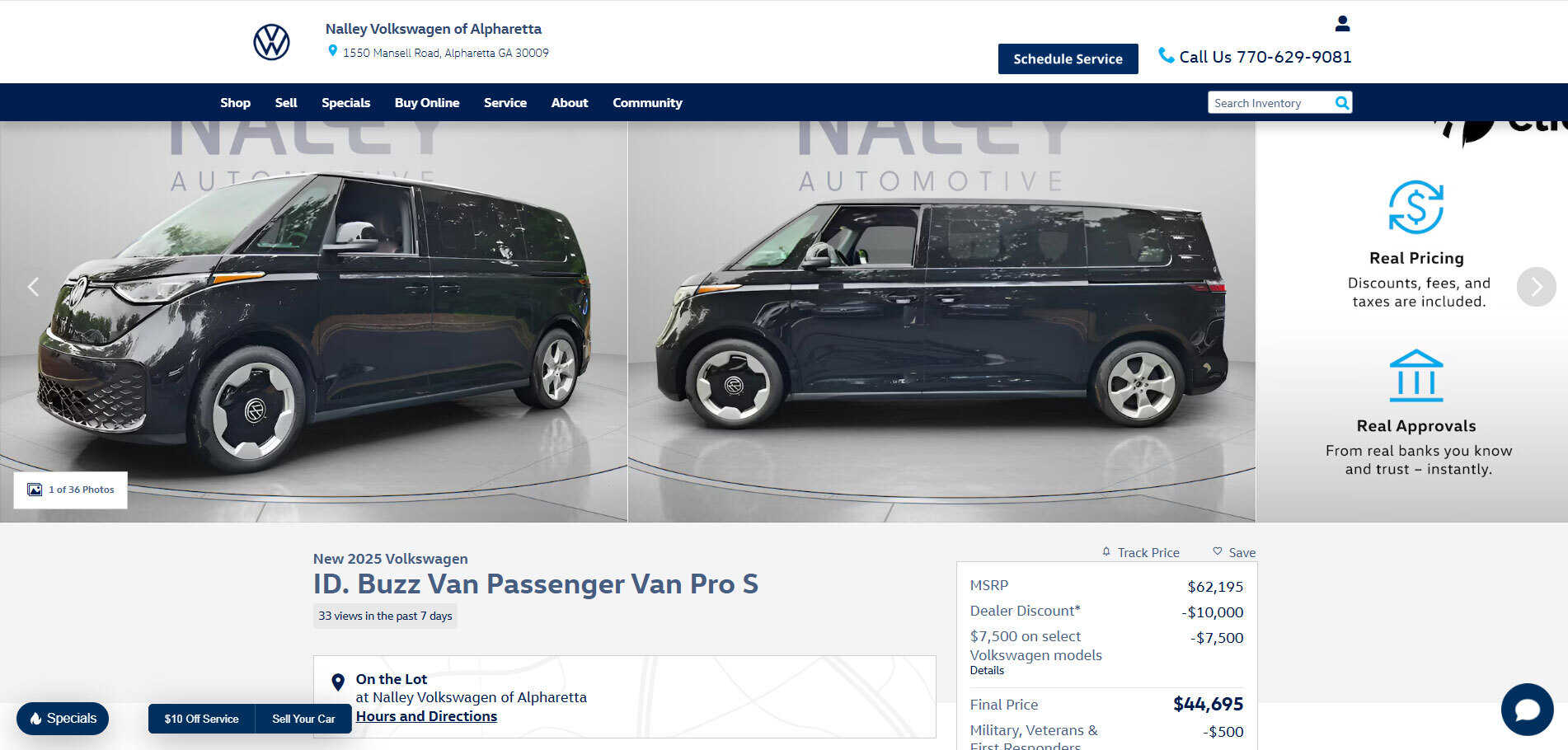
Outside of the Buckeye state, Nalley Volkswagen in Georgia has an electric van priced at $44,695. That’s significantly cheaper than the original sticker price of $62,195, thanks to a $10,000 dealer discount and a $7,500 incentive from Volkswagen.
Even dealers in EV-friendly California are offering sizable savings as New Century Volkswagen in Glendale has a $62,318 ID. Buzz on sale for $49,810. The $12,508 reduction was made possible thanks to the aforementioned $7,500 incentive as well as a dealer discount of $5,008.
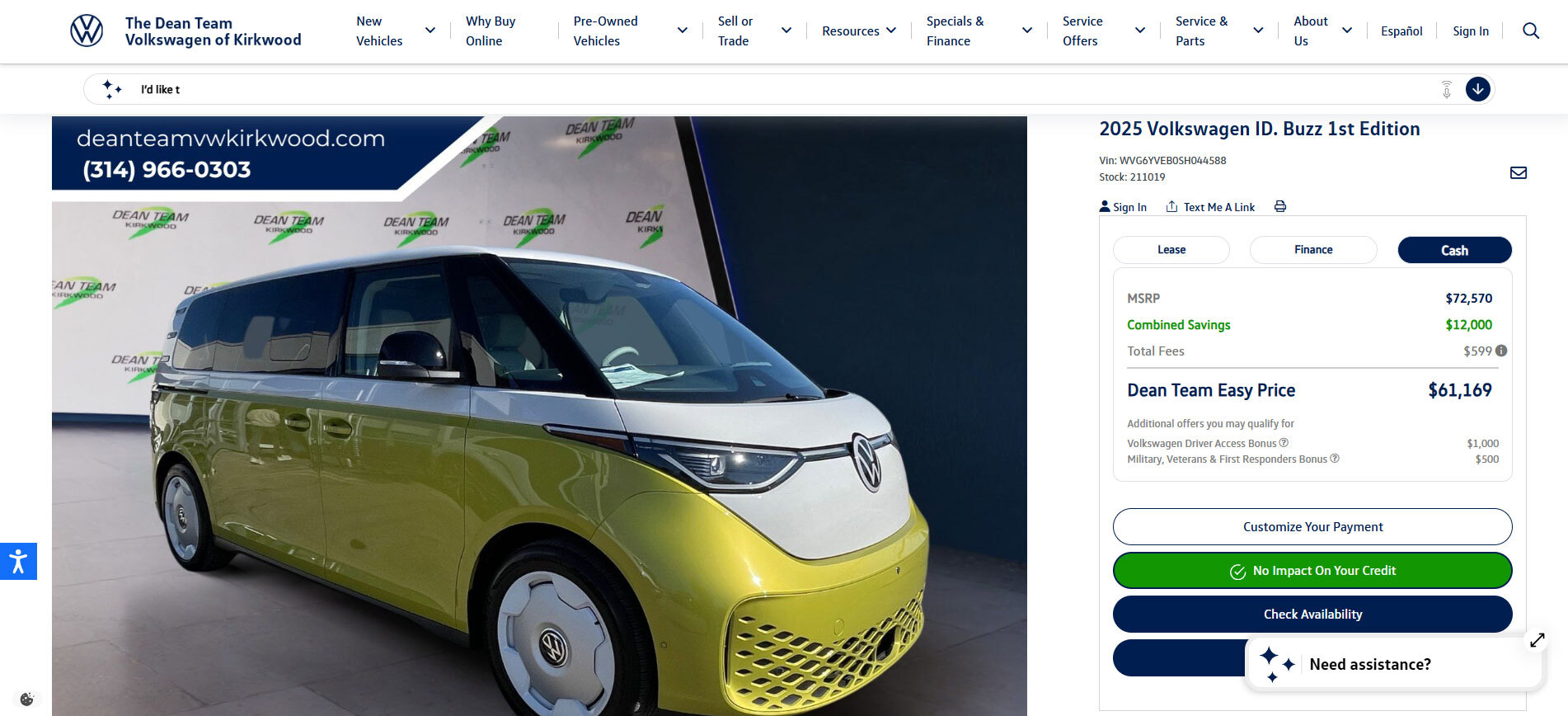
Those are just a few examples, but dealers are even discounting the ID. Buzz 1st Edition. Missouri’s Volkswagen of Kirkwood has a $12,000 discount on their van, which lowers the price to $60,570 before a $599 “admin fee.”
That’s still ridiculously expensive for a minivan, but it’s a far cry from the days when dealers were applying markups of between $5,000 and $35,000. It’s hard to say how much blame greedy dealers deserve for the ID. Buzz’s failure, but there’s plenty to go around.
Hong Kong is considering banning EVs with only electronic door handles.
China will require manual door releases on all new cars from 2027.
Officials say physical handles improve safety after crashes or power failures.
Electronic door handles have become one of the defining design trends of the EV era. They look futuristic, shave a bit of drag off the bodywork, and give cars like the Tesla Model S and Model Y their clean, button-free profiles. But now, Hong Kong is signaling it’s ready to follow China’s lead and shut the door on them.
Specifically, officials there say they’re preparing to ban new EVs equipped solely with electronic door handles. The move comes not long after mainland China’s decision to require physical mechanical releases on all new vehicles beginning in 2027. While Hong Kong is part of China, it maintains its own vehicle regulations and legal framework under the “one country, two systems” arrangement, meaning those rules don’t automatically apply there.
According to the South China Morning Post, Hong Kong Secretary for Transport and Logistics Mable Chan said the government is reviewing the mainland’s newly published GB 48001-2026 standard, which focuses specifically on automotive door-handle safety.
Chan said the Transport Department has already consulted the industry about adopting similar local standards and reminded importers last year that all vehicles must include manual door releases. Somewhat perplexingly, it only applies to EVs, so combustion cars can continue on with hide-away or electric handles.
That said, the EV door handle rule would require both interior and exterior mechanical door handles on future vehicles. The reasoning is simple after you’ve seen videos of EVs catching on fire quickly. Electronic systems can fail after a crash, during a fire, or if a vehicle loses power, potentially trapping occupants inside or slowing emergency responders trying to get in.
Chan said the China’s standard specifically focuses on “addressing issues such as failure in operating door handles after accidents.”
In some vehicles, the emergency mechanical release is hidden, difficult to access, or works differently from what occupants expect in a panic situation. That’s become a bigger concern as automakers increasingly replace traditional hardware with powered systems. Some modern EVs don’t just use electronic exterior handles but also electronic interior door-open buttons, with backup releases tucked away in less intuitive locations.
Ringo Lee Yiu-pui of the Hong Kong, China Automobile Association added that first responders often still lack an exterior mechanical way to access the vehicle during emergencies. He also warned that sales staff frequently fail to explain how emergency releases actually work.
Interestingly, these regulations could very well have a worldwide ripple effect. Automakers rarely engineer market-specific door systems if they can avoid it, meaning these rules could eventually influence vehicles sold in Europe, North America, and elsewhere.
Leapmotor’s B03X is expected to reach Europe with a sub-$30k price.
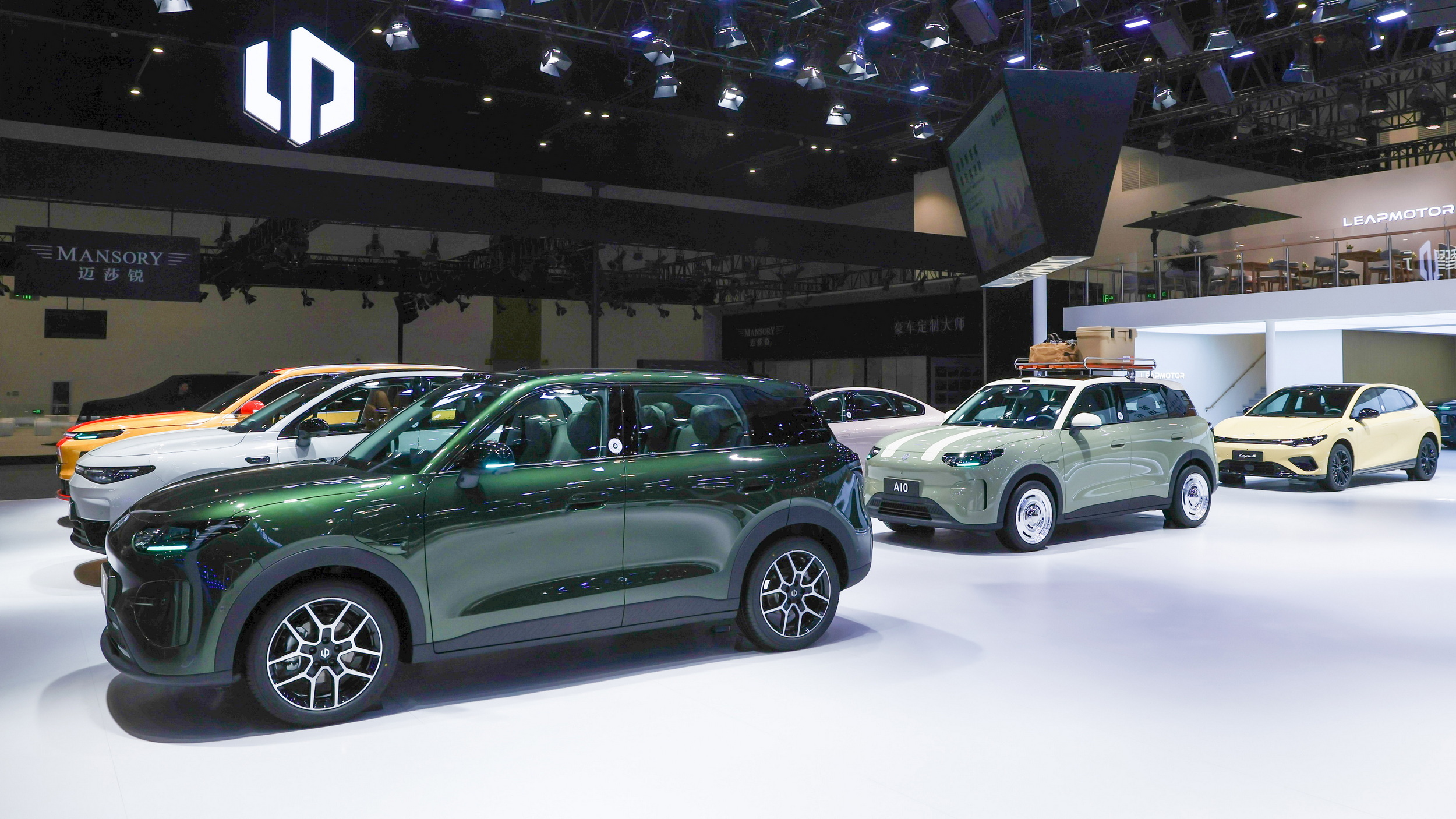
Electric SUV is already on sale in China as the A10 starting at $10k.
It promises to offer a spacious cabin and tech-heavy equipment.
Leapmotor, the Chinese EV brand that operates in Europe through its Leapmotor International joint venture with Stellantis, has just rolled out the affordable B05 hatchback, and the lineup is about to expand again. Next on the agenda is the B03X, an even more budget-friendly subcompact SUV set to land in European showrooms in autumn 2026.
The B03X’s biggest selling point will almost certainly be its sticker. According to German newspaper Handelsblatt, the EV will open at around €25,000 ($29,400), which would put it well below most European-branded rivals that tend to land closer to the €30,000 ($35,300) mark.
To put that in perspective, the new VW ID. Polo subcompact hatchback starts at €24,995 ($29,400), while the high-riding ID. Cross is expected to open from over €28,000 ($32,900). Other rivals in the crosshairs include the Skoda Epiq, the Renault 4 E-Tech, and Stellantis’ own twins, the Citroen e-C3 Aircross and Opel Frontera Electric.
The Leapmotor B03X was first unveiled in November 2025 and is already on sale in China under the A10 name. In its home market the EV is an even wilder bargain, with prices running between ¥65,800 and ¥86,800 ($9,600 to $12,700).
Chinese buyers get a choice of two battery packs at 40 kWh and 53 kWh, paired with power outputs of 94 hp (70 kW) or 121 hp (90 kW). Every version is front-wheel drive, which lines up with most other electric SUVs in this size class.
The numbers read well on paper. CLTC range tops out at 505 km (314 miles), though the WLTP figure that Europe cares about will land lower. Leapmotor also claims the battery can recover from 30 to 80 percent in 16 minutes.
On the outside, the 4,270 mm (168.1 inch) long SUV plays it safe with soft curves and styling that won’t turn any heads. The cabin is where it gets more interesting. Leapmotor is promising space and practicality, with rear seats that flip up Honda Jazz style and a 602-liter (21.3 cubic foot) boot that hides a washable underfloor compartment, much like the Ford Puma.
There is also a panoramic sunroof, ambient lighting, and a 14.6-inch infotainment display powered by the high-end Qualcomm Snapdragon 8295 chipset. In China, high-spec trims of the SUV come equipped with a LiDAR-based ADAS suite, although we don’t know if those will make it to Europe.
Made In Spain
While the A10 rolls off the line at Leapmotor’s Hangzhou plant in China, the B03X will be built in Spain alongside the European-market B05 hatchback and B10 SUV. Local production sidesteps the EU’s tariffs on Chinese imports, which keeps the sticker low and turns the little crossover into a headache for Western automakers who thought tariffs would buy them more time.
Honda has put a hold on plans to develop a new EV plant in Ontario.
Plans were announced in 2024, but then delayed by two years in 2025.
Honda recently scrapped three new EVs due to launch in North America.
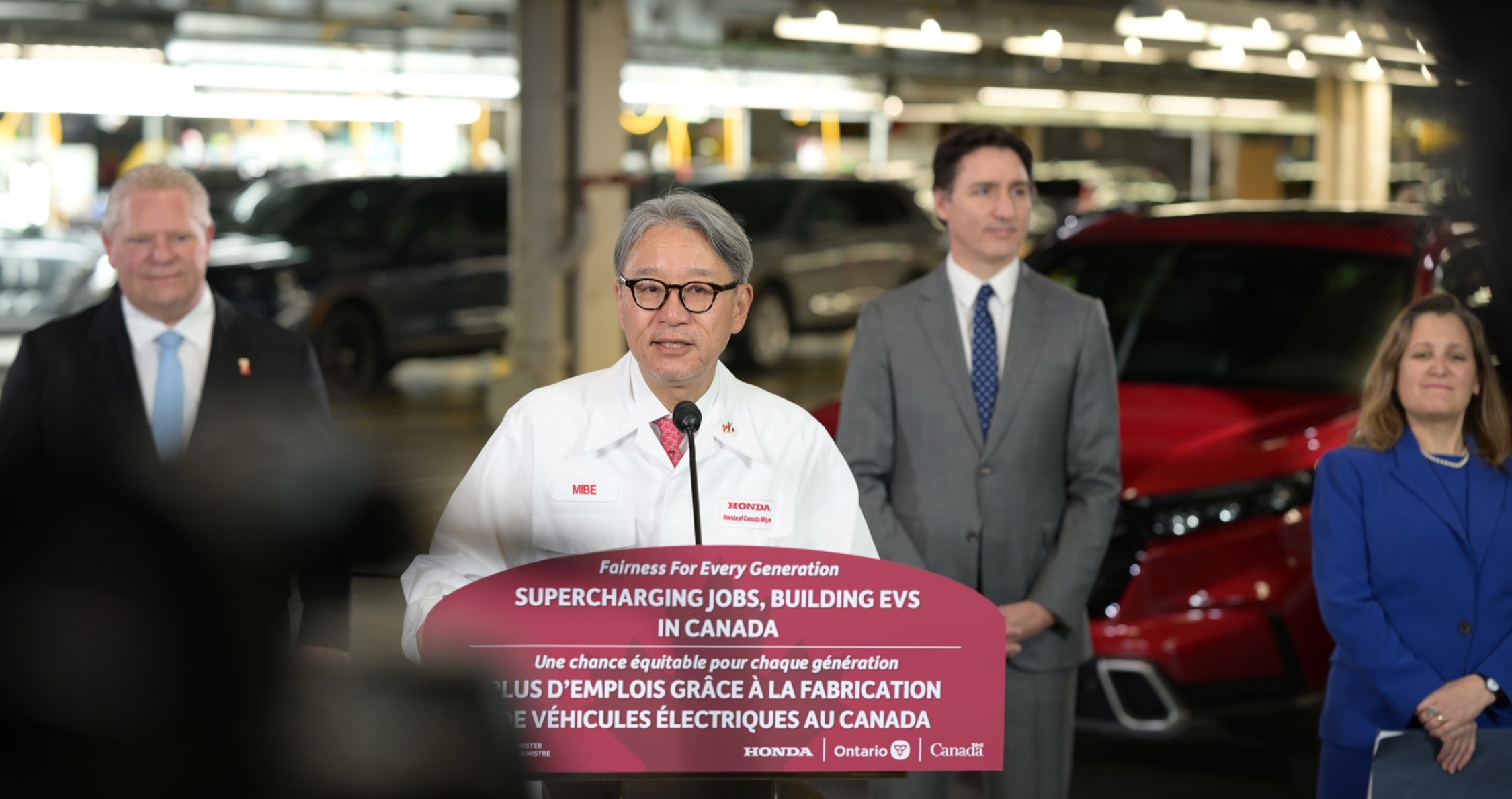
Honda’s electric future in North America just took its second major hit in as many months. The company is now hitting pause on plans for a massive EV and battery plant in Canada, and it might not restart anytime soon.
The project, originally announced in 2024, was going to be huge, with $15 billion CAD ($11 bn USD) earmarked for a new factory in Alliston, Ontario. But Honda has decided to shelve the plan indefinitely while it reassesses the market, Nikkei Asia reports.
It’s not hard to see why the plans collapsed. EV demand in the US isn’t where Honda expected it to be, and that’s forcing a rethink. Instead of going all in on electric, the company is doubling down on hybrids, which are selling strongly right now.
Policy changes haven’t helped either. The removal of federal EV incentives in the US has made electric cars more expensive overnight, while relaxed efficiency rules have reduced the urgency for automakers to push EVs hard. There’s also the issue of tariffs and trade uncertainty between the US and Canada, which adds another layer of risk to any long-term investment.
“American tariffs and changes to US domestic policies are creating real pressures for automakers, prompting some to delay or scale back investments in electric vehicle and battery projects,” Industry Minister Melanie Joly told Canada’s CTV News.
Already Delayed
Honda had already delayed the Alliston EV project once, pushing the timeline for the car plant and related battery plant back by two years in May of 2025, despite having already acquired the land and locked in financial help from Canada. Now it’s taking things further by putting everything on ice while it watches how the market evolves, though it will still build the Civic and CR-V at its existing Alliston plant that was opened in 1986.
Multiple Future EVs Scrapped
The shift in powertrain philosophy is already showing up in Honda’s new EV product plans. The company is winding down the Prologue EV, which it co-developed with GM, and earlier this year scrapped three exciting new Honda and Acura electric cars and SUVs destined for North American roads, even though they were in the final stages of development. Not long after that, Honda and Sony confirmed they were abandoning their plans to launch EVs under the Afeela brand.
Instead of EVs, Honda will focus on hybrids in North America, which are gaining popularity with buyers, and extend the life of existing models to save cash. That doesn’t mean Honda is abandoning EVs completely. It still has flexible production lines in Ohio that can build gas, hybrid, or electric models depending on demand, having spent $1 billion to upgrade the site. But for a while at least, fully electric models won’t be part of Honda’s future in the US or Canada.
BMW’s first Neue Klasse SUV in America starts at $61,500 plus fees.
The 483 hp xDrive 50 posts 434 miles, leaving Tesla’s Model Y behind.
BMW charges $4,000 for the M Sport pack with glow grille upgrades.
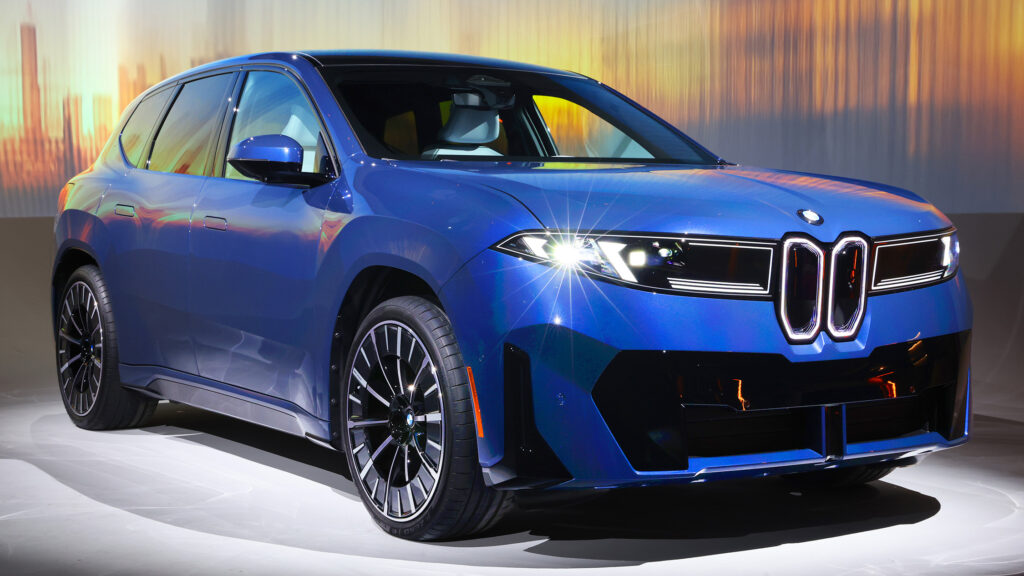
BMW of North America has dropped two crucial numbers for its new iX3 electric SUV, and they couldn’t have come at a more important time. Up to 434 miles (699 km) of EPA range isn’t just impressive, it might be exactly what the sagging US EV market needs right now. As is the price, which makes the electric X3 SUV cheaper than a less powerful combustion X3.
That headline range figure, which is even better then the 400 miles (644 km) originally estimated by BMW stateside, puts it ahead of most rivals, though it does come with an asterisk. It only applies to cars equipped with the no-cost-option 20-inch summer tires. Stick with the default all-seasons 20-inchers and it drops to 383 miles (616 km).
Here’s where it gets really weird, though. BMW reckons you’ll get 399 miles (642 km) if you upsize to the $600 21-inch wheels and all-season rubber, which actually give you 1 mile (1.6 km) more range than the 21-inch summer tires offer. It sounds all wrong but BMW says the strange numbers are the result of averaging range figures across various tire brands.
You can check out the full range-to-tire stats in the table below, but whichever combo you pick, you’re going to be going further between fills than any other electric SUV in the sector. Tesla quotes 294 miles (473 km) for the base AWD Model Y, 327 miles (526 km) for the Premium AWD, and 306 miles (492 km) for the Performance variant. While we’re still waiting on official figures for the Mercedes GLC 400 4Matic, based on the difference between it and the iX3 in the European WLTP numbers, we’d expect its EPA range to be around 380 miles (612 km) at best.
2027 iX3 Electric Range Vs Tires
Wheel & Tire Package
MPGe Combined
Range (mi)
20″ Summer Tires (No-cost option)
118
434
20″ All-Season Tires (Standard)
102
383
21″ Summer Tires
105
398
21″ All-Season Tires
105
399
22″ Summer Tires
104
392
SWIPE
It Undercuts The ICE X3 On Price
But range, and an ability to charge at 400 kW, adding 185 miles (298 km) in 10 minutes, isn’t the only thing the iX3 has on its side. It’s also competitively priced. The iX3 50 xDrive costs $62,850 including a $1,350 destination charge, which means it costs less than the brand’s own gas-powered $67,850 X3 M50 xDrive.
It also gives you 463 hp (469 PS) and 476 lb-ft (645 Nm) to the ICE SUV’s 393 hp (399 PS) and 428 lb-ft (580 Nm), and though the six-cylinder SUV gets to 60 mph (97 kmh) a touch quicker (4.4 plays 4.7 seconds) than the EV, we bet it’s the iX3 that feels the more urgent when you jump on the right pedal for a passing maneuver.
That kind of pricing is designed to hook in American drivers who’ve lost interest in EVs lately. BMW’s electric sales sank 16.7 percent last year and cratered by 45.5 percent in the fourth quarter after the Trump administration axed the $7,500 federal tax credit program. Mercedes will now be feeling the heat to price its GLC EV as close to $60k as possible.
M Sport Trim A $2,500 Option
Naturally there are plenty of opportunities to add to the iX3’s $62,850 base price. Standard kit includes BMW’s Panoramic Vision pillar-to-pillar digital display, Perforated Veganza Upholstery, smartphone charger, Digital Key Plus (which uses your phone as a key) and umpteen safety aids. But plenty of buyers will want to add the $1,500 Comfort Package (heated steering wheel, panoramic glass sunroof and multifunction seats), or $1,900 Technology Package (BMW Iconic Glow illuminted kidney grille, 3D head-up display, Harman/Kardon hifi). Or maybe even both.
And the M Sport package is sure to be a big draw. The base version of the package costs $2,500 and nets you BMW M interior and exterior trim, 20-inch M Aero V-Spoke wheels and a sports steering wheel, while the $4,000 Professional version adds the Iconic Glow light-up grille, a proper M sport wheel and M Sport brakes with red and blue calipers. That’s as near as you’ll get to an iX3 M this year, though we expect to see one of those before long.
More Affordable iX3 40 Arrives Later
And if even an options-free iX3 50 is too pricey for your pocket, there may be a solution arriving shortly. Though BMW hasn’t yet confirmed it’s coming to US roads, information that mistakenly appeared briefly on the brand’s website earlier this year before being taken down, suggested the 50 xDrive would be joined by a rear-wheel drive 40 sDrive and all-wheel drive 40 xDrive.
BMW has already debuted the single-motor 40 in Europe in March, revealing that it makes 316 hp (320 PS / 235 kW) and downgrades to a 82.6 kWh battery. The new base model needs 5.9 seconds to reach 62 mph (100 kmh) and going by the 395 miles (636 km) WLTP range, will probably get an EPA rating of around 340 miles (547 km).
You can configure your iX3 50 now and reserve it for $1,000. Get in early and you should get yours when deliveries kick off in September.
New Corsa GSE delivers 276 hp and 0-62 mph in 5.5 seconds.
FWD chassis gets a limited-slip diff and performance brakes.
Plaid bucket seats tip a hat to classic hot hatches from the ’80s.
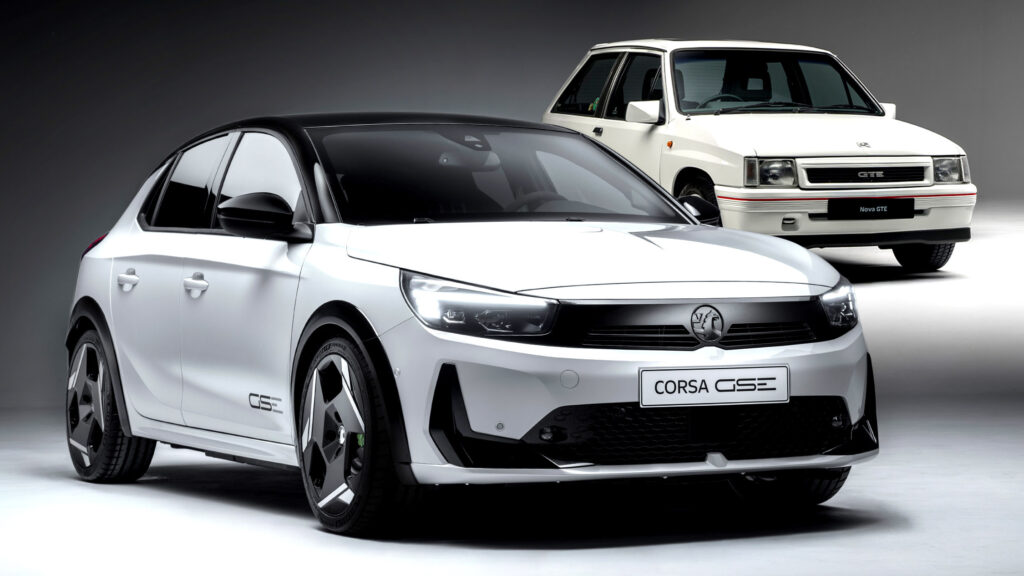
Opel and its badged-engineered British sister brand Vauxhall are rediscovering their hot hatch roots, but with a charging cable this time. The pair dropped their Corsa GSE today, along with a zero to 62 mph (100 kmh) time that says it’s faster than any rival electric hot hatch on the market.
That includes fellow Stellantis company Peugeot’s e-208 GTI whose platform, powertrain and basic chassis setup the GSE shares. Under the skin is a single electric motor that sends 276 hp (281 PS / 207 kW) and 254 lb-ft (345 Nm) of torque to the front wheels through a limited-slip differential, though only in Sport mode. In Normal you make do with 228 hp (231 PS / 170 kW).
Zero to 62 mph (100 kmh) takes 5.5 seconds in Sport, versus 5.7 seconds for the e-208 and 5.9 seconds for the 1,550 kg (3,420 lbs) Corsa’s mechanically identical, but 47 kg (104 lbs) heavier crossover brother, the Mokka GSE. That’s pretty damn swift for a small, front-wheel drive hatch, and also makes the Corsa GSE significantly quicker than its key non-Stellantis electric rivals like the Alpine A290 and Mini Cooper JCW, which need 6.4 and 5.9 seconds respectively to hit the 60 mph mark.
Stiffer, lower suspension and uprated brakes with four-pot calipers are part of the chassis package, Opel claiming that both the steering and pedal responses are massively improved over what you experience from the regular EV. Rolling stock is Michelin Pilot Sport 4S 215/40 R18 rubber wrapped around alloy rims whose three-spoke design is there to evoke memories of the 1980s Opel Corsa GSE, which traded blows with the Peugeot 205 GTI almost 40 years ago.
Plaid Buckets? Check!
Climb inside and you’ll find the sports seats have plaid centers to carry on the 1980s hot hatch theme. Other GSE interior details on the 2027 car include Alcantara trim, aluminum pedals, and strong yellow accents, plus a performance data display showing acceleration stats and G-force readings. On the outside, in addition to those three-spoke rims you get a black roof, rear spoiler and sportier bumpers.
As for range, we don’t have numbers yet, but we do know that the GSE uses the same 51 kWh (usable) battery as other Corsas and other Stellantis cars built on the same CMP platform. So we’d expect the GSE to roughly equal the e-208 GTI’s 217-mile (349 km) range, which will be fine for blasting around town, but not so good on longer trips.
VW’s ID. Polo GTI debuts any day, and should deliver more than 260 miles (418 km) of range, though with only 223 hp (226 PS / 166 kW) it won’t trouble the GSE in a race to 62 mph. Which one gets your vote?
Gas-powered vehicle sales fell 30 percent as electrified models rose.
In April, Toyota held first place, with BYD second and Kia third overall.
Other Chinese automakers gain ground, including Zeekr, Geely, and Chery.
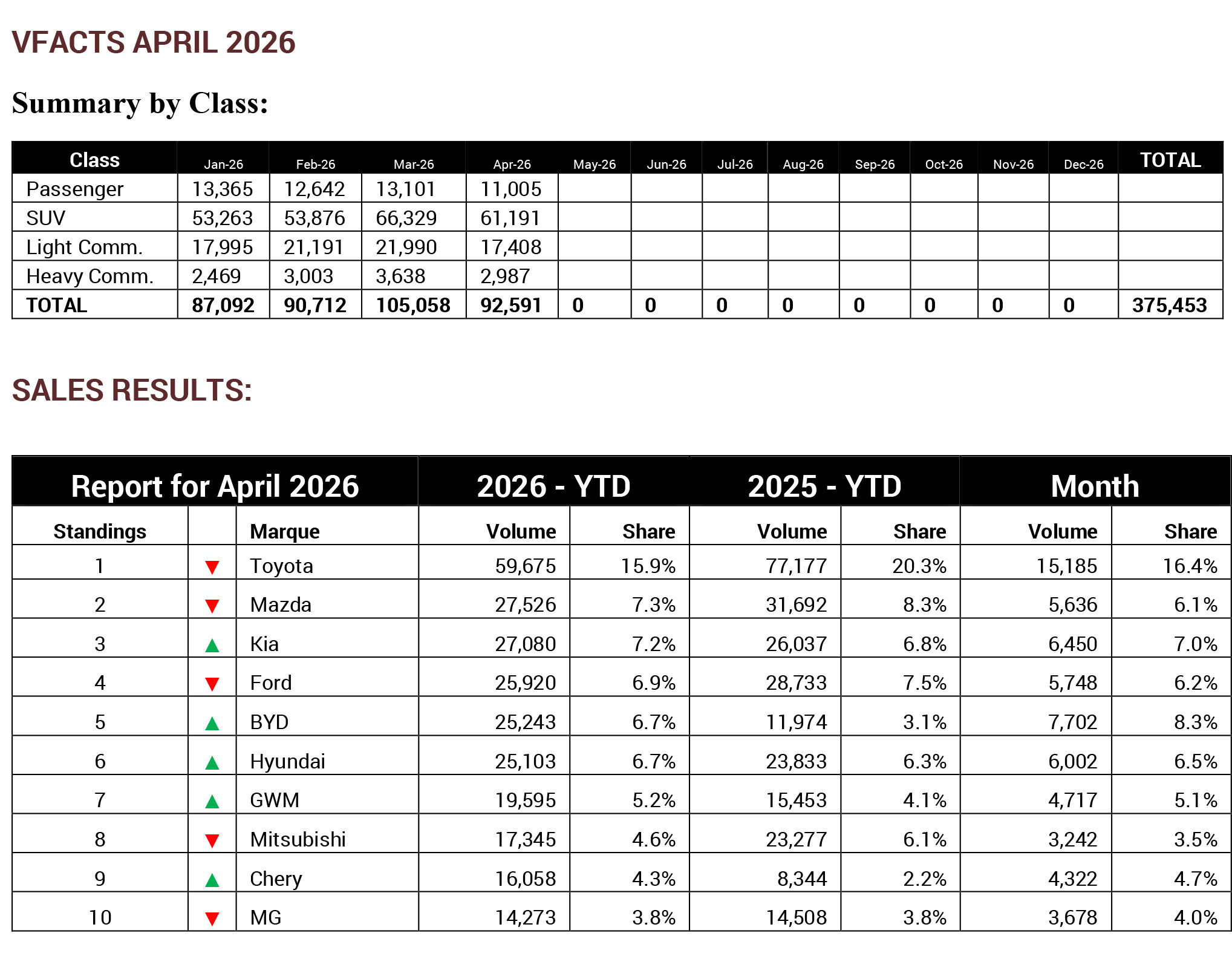
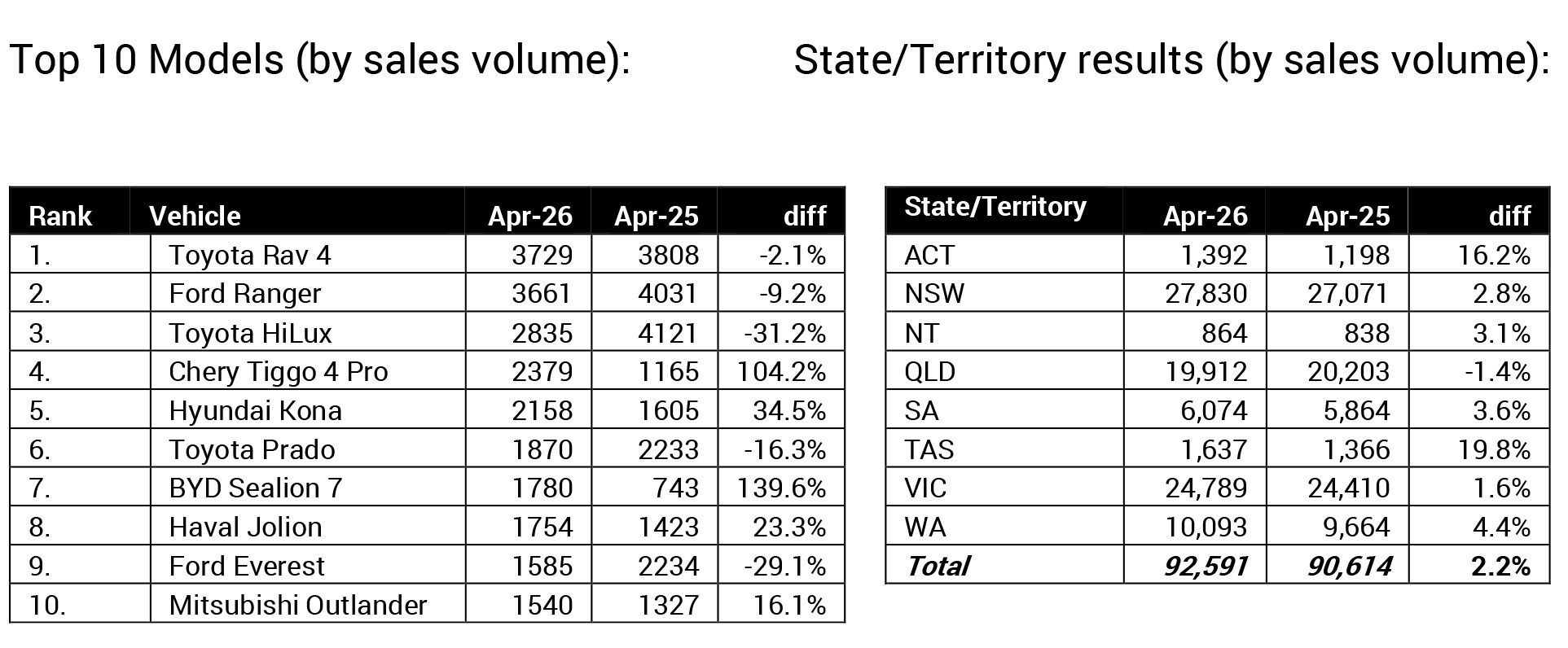
Data from Australia’s Federal Chamber of Automotive Industries and the Electric Vehicle Council reveal that, of the 92,591 new cars, SUVs, pickups, vans, and trucks sold in April 2026 (up 2.2% over the same month in 2025), 16.4% were battery-electric. This works out to 15,185 vehicles. In contrast, April 2025 saw just 6,010 new EV sales.
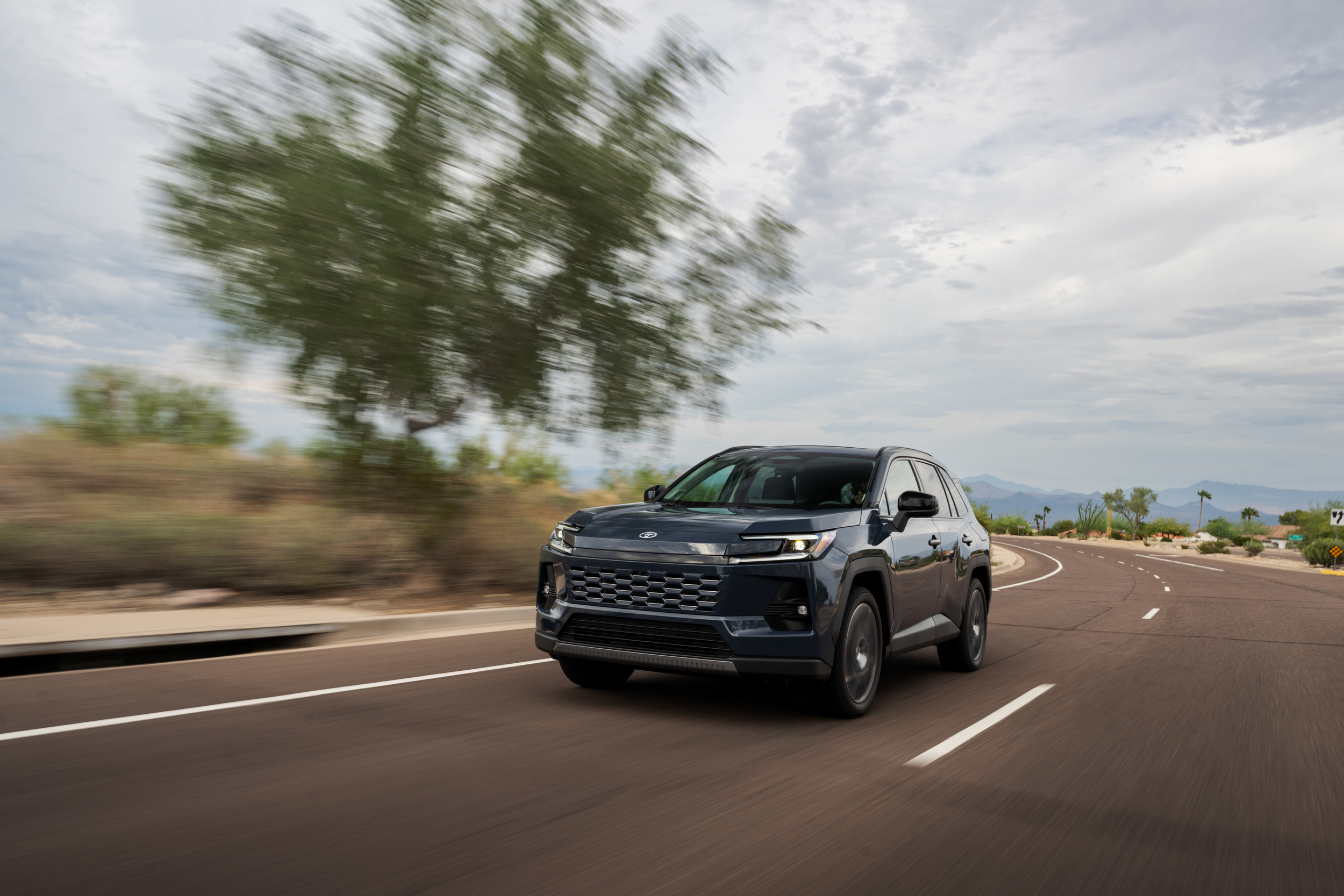
It’s not just EVs that saw strong numbers; hybrids were also in demand. In fact, 18,162 new hybrids found homes in April 2026, bolstered by the first full month of sales of the Toyota RAV4, which bagged best-selling car in Australia. Plug-in hybrids also saw 9,628 new units shifted in April 2026.
Petrol And Diesel Vehicle Sales Dwindle
While EVs, hybrids, and plug-in hybrids were enjoying the limelight, partly driven by tax incentives, traditional gasoline and diesel-powered vehicles took a hit in April 2026. Sales of new gasoline-powered vehicles saw a decline of 30.1% in comparison with April 2025 figures.
Diesel-powered new vehicle sales were down by 21.7%. These declines could also be attributed to the ongoing war in the Middle East, which has significantly affected crude oil deliveries to Australia. This has resulted in rising prices at the pump, as well as some scattered shortages.
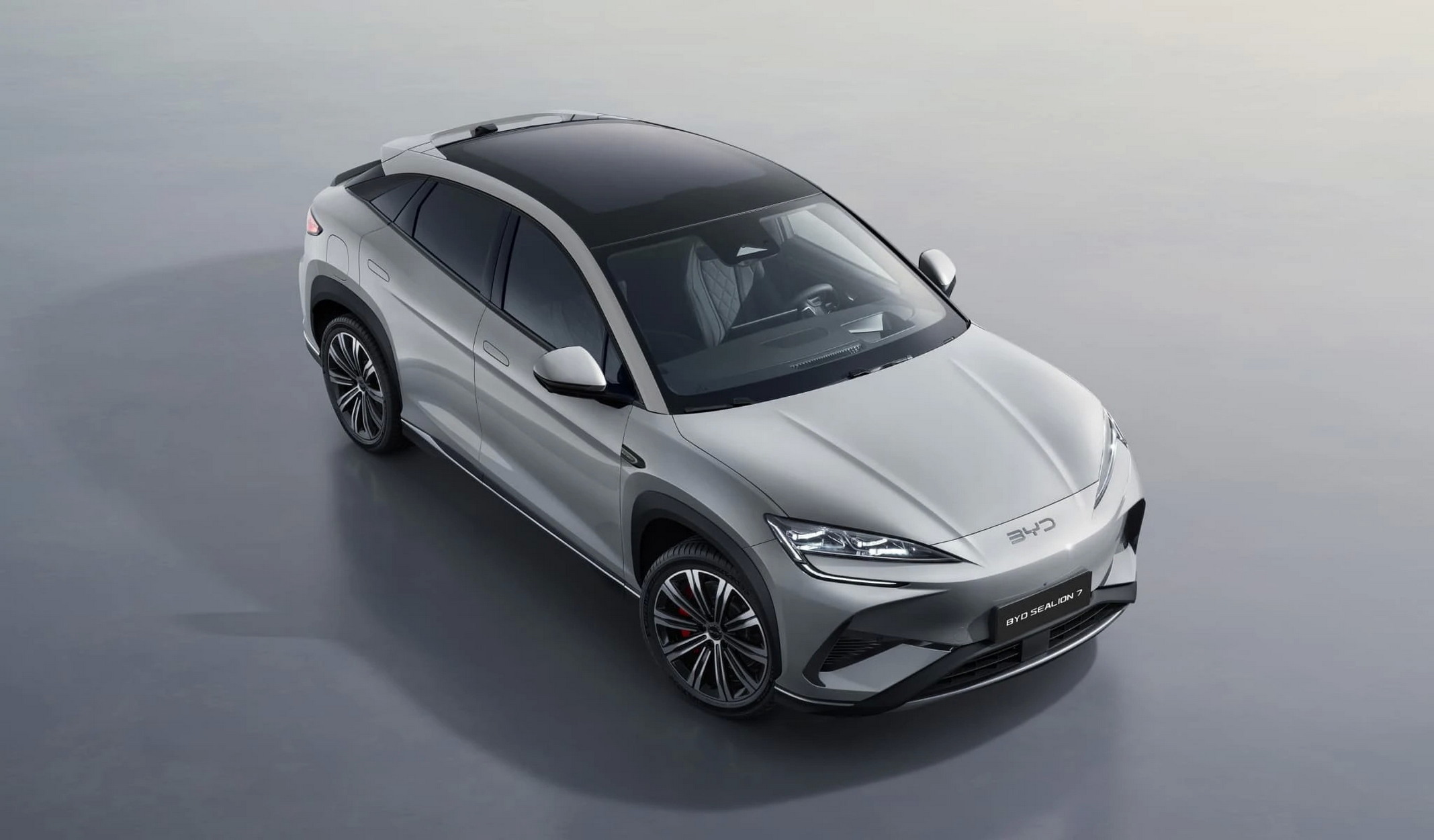
For April 2026, BYD’s Sealion 7 SUV dominated the EV rankings, with 1,780 units sold. Meanwhile, the Tesla Model Y sold nearly 1,000 fewer units, although it was up 193.6% year-on-year, as last year’s model was due for replacement.
The BYD brand as a whole shifted 7,702 new units. Other strong sellers in the Chinese EV space include the Geely EX5 with 1,202 deliveries, and 1,006 units from Chinese brand Zeekr, of which 973 were its 7X SUV. Shifting our attention to the car segment, Tesla’s Model 3 narrowly beat BYD’s Seal, with 403 versus 370 deliveries.
Toyota Still Leads, Ford And Mazda Drop From Podium
Despite a 21.6% reduction in year-on-year sales, Toyota remained top dog in Australian new vehicle sales through April 2026. They shifted 15,185 units, followed by BYD with a 7,702 new unit tally.
BYD’s rise to second place means that Ford and Mazda, the historical second and third-place finishers, are now fifth and sixth, with 5,748 and 5,636 units respectively. However, the Ford Ranger held on to the silver medal as the second best-selling vehicle, sandwiched between the RAV4 and Hilux.
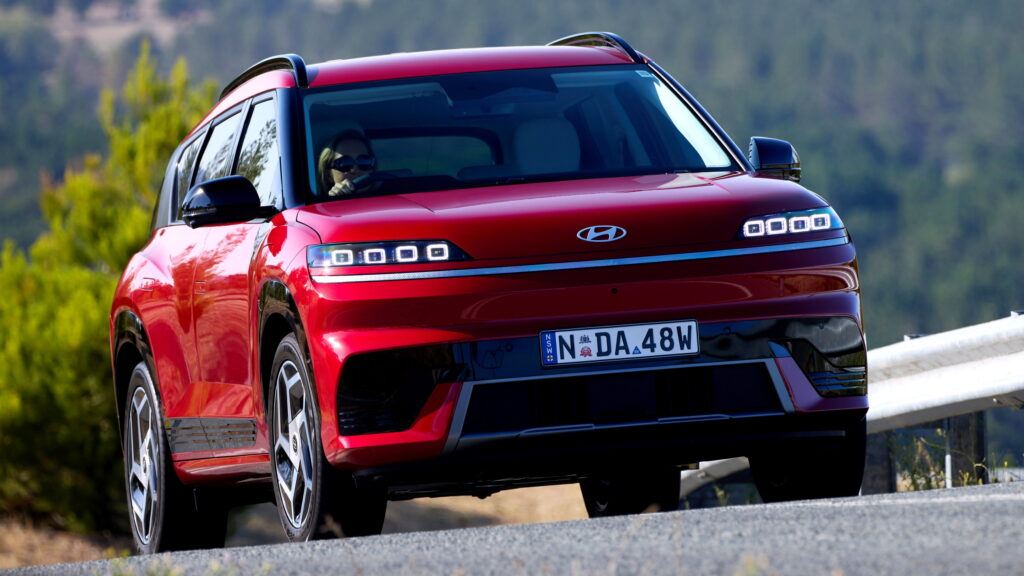
When looking at Australian new car sales as a whole, the new third- and fourth-place occupants for April are Kia and Hyundai, with 6,450 and 6,002 units sold respectively. Of course, these two automakers also have EVs and hybrids in their portfolio. The same is true for Chery in eighth place and MG in ninth, while Isuzu rounded off the Top 10 ahead of Mitsubishi.
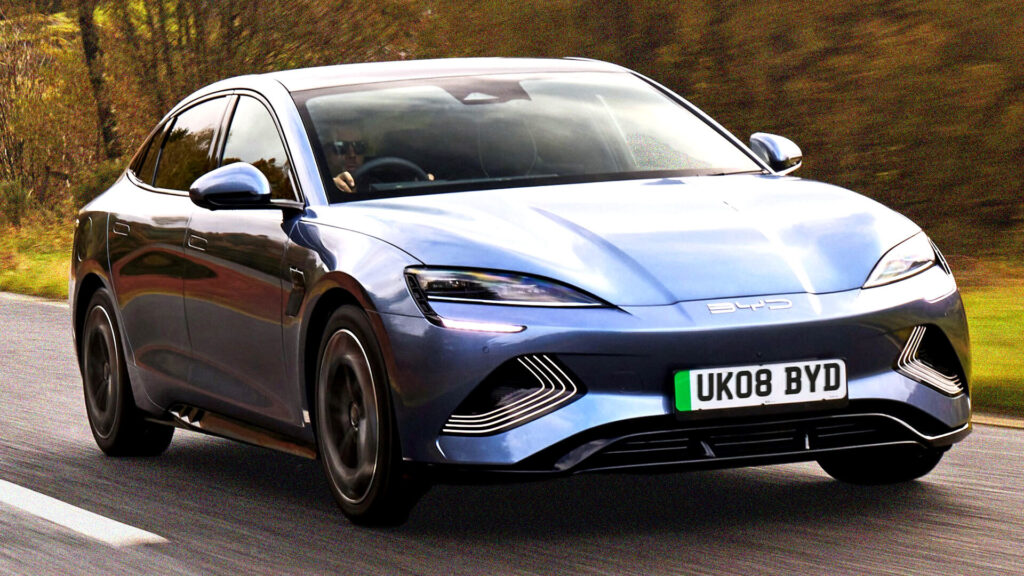
Citing data from the Society of Motor Manufacturers and Traders (SMMT), BYD said they have sold 12,754 EVs through April and that gives them over 7% of the market share. This makes the Chinese firm the “UK’s largest electric vehicle brand” and places them ahead of rivals such as BMW, Tesla, and Volkswagen.
BYD went on to note they’ve also “become the best-selling EV brand among private buyers.” This is a notable achievement since the company’s vehicles don’t qualify for government subsidies. The electric vehicle grant provides discounts of up to £3,750 ($5,079) for certain vehicles including the Ford Puma Gen-E, Nissan Leaf, and Mini Countryman Electric.
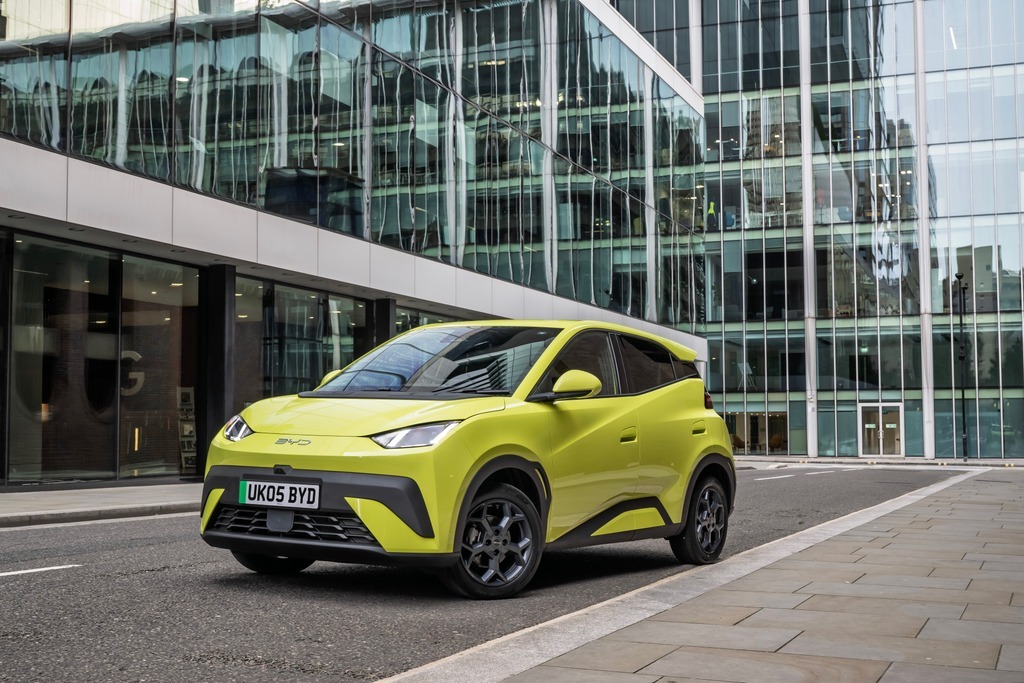
The automaker credited its success to a diverse lineup of vehicles that includes everything from the £18,675 ($25,290) Dolphin Surf to the £47,025 ($63,682) Sealion 7. The latter features an 82.5 kWh battery pack that provides a WLTP combined range of 300 miles (483 km), although higher-end variants have more advanced powertrains.
BYD UK’s Bono Ge said, “With fuel prices remaining high, more drivers are turning to electric vehicles as a smarter and more economical choice. We are delighted to see the UK EV market grow by 22% year-on-year, and even more proud that BYD has become the UK’s leading EV brand in a little over three years.”
Year-to-date BYD sales are up 124% to 26,396 units, which puts the brand ahead of a number of European automakers including Citroen (12,142), Cupra (15,171), and Dacia (10,250). The brand is also beating Fiat (2,320), Land Rover (25,313), Mini (18,814), and Renault (23,645) – among others.
The issue stems from cracking around brake rotor stud holes under load.
Only rear-wheel-drive units with base 18-inch wheels are affected.
Some serviced EVs may also carry the same potentially faulty parts.
The owners of 173 Cybertruck RWDs have a new problem to worry about. Tesla has issued a recall on the short-lived budget variant after discovering the wheels can come off while driving, which ranks somewhere near the top of the list of things you definitely do not want your vehicle to do.
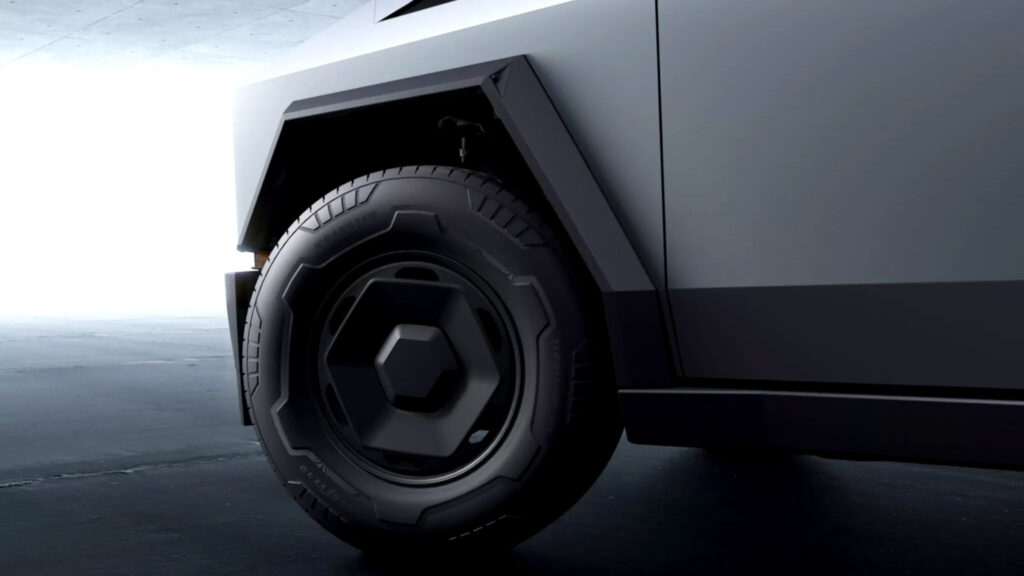
Tesla says that on-road disturbances and cornering forces can cause cracking around the stud holes in the brake rotors. If that happens, the entire wheel stud may separate from the hub. The company is not aware of any crashes or injuries tied to the issue, though it has logged three related warranty claims.
A total of 173 models built between March 21, 2024, and November 25, 2025, are included in the recall. Only Cybertruck RWD versions with the base 18-inch wheels are affected, not those fitted with the optional 20-inch setup.
Tesla first identified a potential problem in August of last year, when pre-production testing revealed some cracking in the brake rotors, even though all studs remained intact at the time. Further investigation, along with field reports, showed the issue was more serious than initially thought.
Not only did Cybertruck RWD models leave the factory with the defect, but some Tesla service centers were also using the potentially faulty brake rotors, so vehicles that have had their brakes replaced may also suffer from the same issue.
What’s The Fix?
While the recall notice lists vehicles produced from March 21, 2024, Tesla says it only began building Cybertruck RWD models with 18-inch wheels on August 28, 2025. Production ended less than three months later, on November 5, with the company citing limited demand for the variant.
Owners can expect notification from Tesla after June 20. They will be asked to bring their trucks to a service center, where technicians will replace the front and rear brake rotors, hubs, and lug nuts with updated, more durable components.
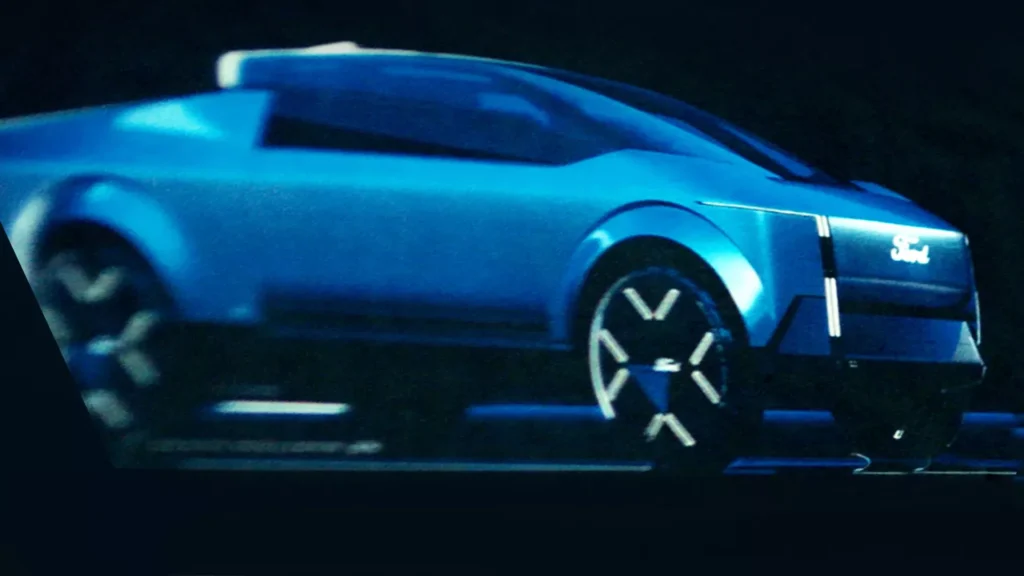
Ford’s secret EV team is rewriting how the company builds vehicles from scratch.
A $30,000 electric pickup aims to rival Chinese automakers and Tesla by 2027.
Radical manufacturing changes could determine if Ford’s EV future survives.
Ford hangs its hat on the creation of the assembly line. Now, it’s literally tearing one apart in the middle of the night. That’s a part of the brand’s new strategy to win over more buyers. If it’s successful, the work it’s doing now will allow it to not just beat domestic automakers in the U.S., but to compete against China worldwide with a cheap but robust electric car.
The “skunk works” project has been underway for quite some time now. Led by former Tesla and Apple employees, the team is aiming for something unheard of. It involves the confirmed $30,000 EV pickup truck (which can end up leading to several forms of cars) that offers some 300 miles of range and Mustang-like performance. That’s the kind of car that doesn’t exist in America, but it does exist elsewhere, namely China.
Ford’s CEO Jim Farley has tested Chinese cars in his everyday life. He’s also had a front row seat to the billions that his brand has burned through in building out its own EV platforms. According to the Wall Street Journal, that’s included too many parts, too much complexity, and old-school processes that don’t translate well to the EV space. So the team is cutting everything it can as aggressively as it can.
The manufacturing process itself is being flipped on its head. Instead of traditional step-by-step assembly, Ford is moving toward a modular system with large cast sections and fewer touchpoints. Put another way, it’s how Tesla and Chinese automakers build EVs today. According to Jolanta Coffey, the vehicle program director, “We’ve never blown the whole thing up before and just started over. If and when we build this, we will rewire Ford.”
All of this comes at a turning point for much of the industry. Automakers abroad are continuing their push toward electrification while domestic automakers rethink the near future. Hyundai Motor CEO José Muñoz, recently said of competing with Chinese EVs, “It is impossible… Unless they are subsidized by the government.” Ford’s betting he’s wrong. We all get to see who ends up being right as Ford is aiming for a 2027 launch.
The tech giant initially said it wouldn’t pay to ship the rider’s luggage back.
Waymo offered Di Jin two free rides to pick up his luggage from a depot.
As it turns out, there are some advantages to using human-driven taxis.
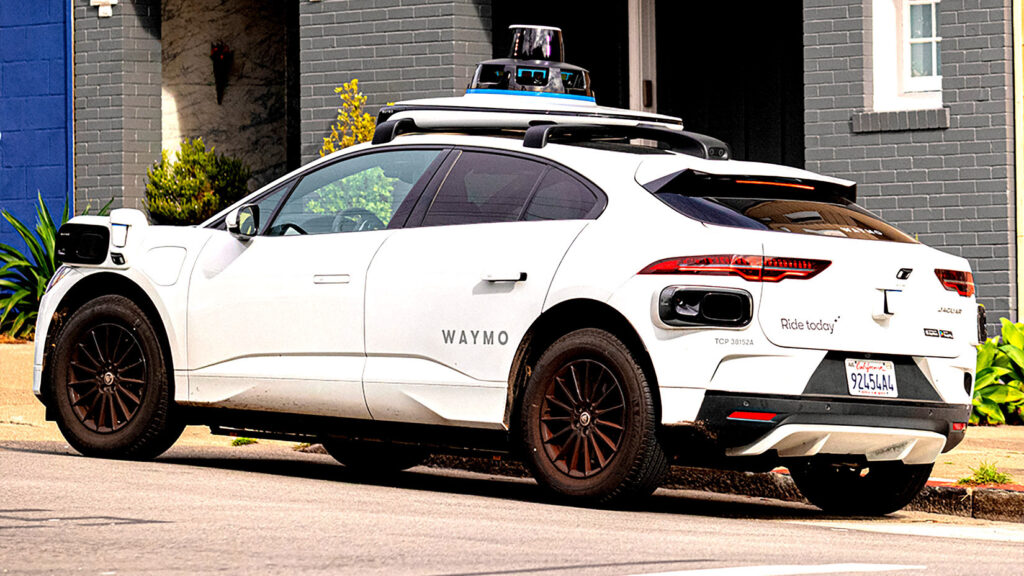
Taking a trip in one of Waymo’s robotaxis should be a smooth and stress-free experience, particularly since there’s no pressure to have an awkward conversation with a driver. However, for one Waymo user in California, taking a robotaxi to the airport left him without luggage for a business trip.
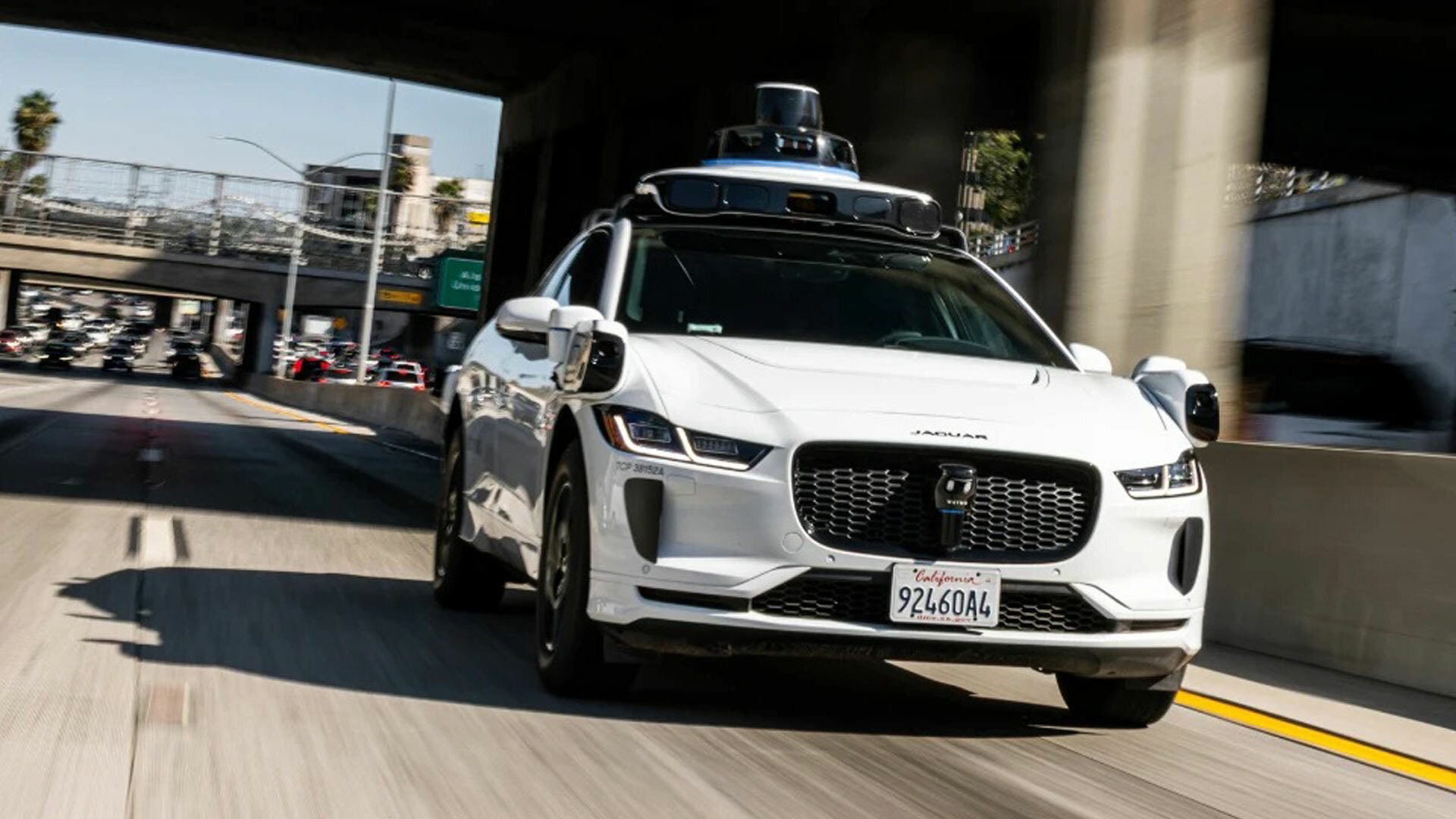
In late April, Di Jin took his first ride in one of Waymo’s robotaxis, traveling from Sunnyvale to San Jose Mineta Airport. The self-driving Jaguar I-Pace took him to the airport without issues, but when Jin got out of the car and attempted to open the trunk to get his luggage, the button did nothing. Moments later, the vehicle drove off, still carrying his luggage.
Speaking with NBC, Jin said he frantically contacted Waymo customer service but was told the robotaxi couldn’t be turned around and was heading to the depot. He was then forced to board his flight without any of his luggage.
The Californian man was informed later in the day that Waymo had retrieved his luggage at the depot. The only problem is that the depot is in San Francisco, and the company refused to pay shipping costs to get it back to Jin. If Jin didn’t want to pay for shipping, Waymo offered him two free rides to and from the depot to pick up his luggage.
Waymo Finally Steps Up
However, time is money, and Jin didn’t like the idea of wasting two hours getting his luggage. Waymo ultimately relented, confirming that it would pay to deliver his luggage after all.
Waymo notes that riders can open the trunk of one of its vehicles by pressing the physical trunk release button on the outside of the vehicle, or by tapping the ‘open trunk’ button in the Waymo app. For this rider, the trunk release apparently didn’t work, and with no human driver behind the wheel, he had no way of immediately notifying the car that he couldn’t retrieve his luggage. Perhaps human-operated taxis aren’t so bad after all.
Tesla is making the most out of reduced tariffs on Chinese-built EVs.
Up to 49,000 EVs built in China can be imported to Canada annually.
Base Model 3 RWD hits 62 mph in 5.2 seconds and has a 288-mile range.
As expected, Tesla has become the first EV maker to begin selling Chinese-made models in Canada after the two countries finalized a major trade deal earlier this year. It’s good news for Canadian car buyers, who now get access to Tesla models priced well below their American counterparts. In fact, it’s the cheapest Tesla EV ever sold in North America.
Thanks to the new trade deal, up to 49,000 EVs built in China can be imported into Canada at a reduced tariff rate of 6.1 percent, down from the 100 percent tariff imposed in 2024. Canadian officials began issuing permits for the first 24,500 vehicles in March, and Tesla moved quickly to capitalize.
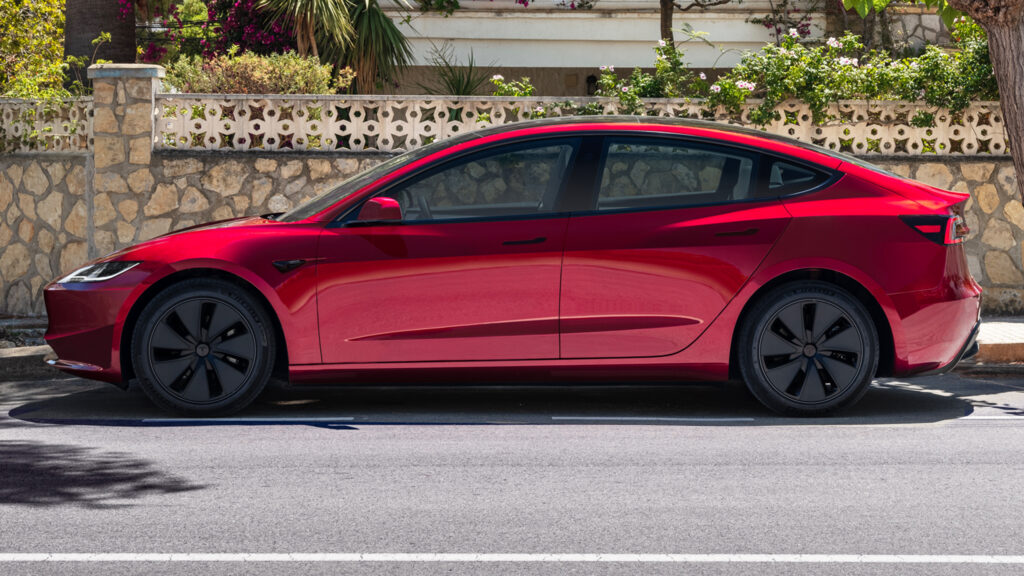
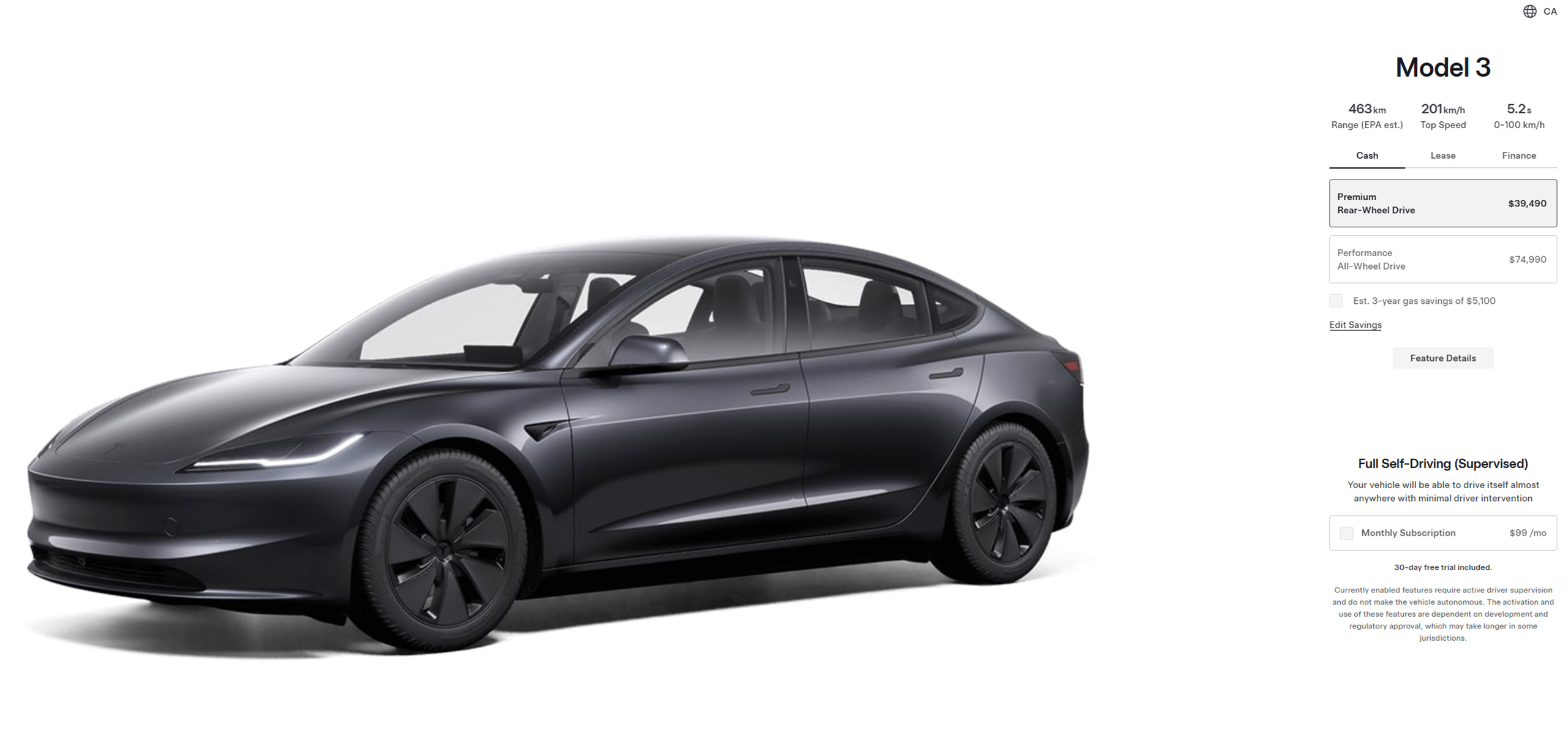
By importing from China, Tesla has reintroduced the entry-level Model 3 Premium RWD to Canada. It is priced from just CA$39,490 before delivery, or around US$29,007 at current exchange rates, undercutting the most affordable Model 3 in the US, the standard RWD model that starts at US$36,990 before taxes and delivery fees. The Shanghai-spec Model 3 has a quoted driving range of 463 km (288 miles) and can go from 0 to 100 km/h (62 mph) in 5.2 seconds.
Before the deal took effect, the most affordable Model 3 available in Canada was the Long Range AWD shipped up from Fremont, California, with a starting price of CA$79,990 (US$58,700). It isn’t a spec-for-spec comparison, but Tesla has effectively cut its Canadian entry point in half overnight.
Performance Gets A Price Cut
Canadian buyers can also order the Model 3 in Performance guise, now priced from CA$74,990 (US$55,050). That marks a 17 percent drop from CA$89,990 (US$66,070), bringing the Canadian price roughly in line with the US$54,490 sticker American buyers pay for the same trim. Tesla has not confirmed where it will source Model 3 Performance models for the Canadian market, though reports suggest Fremont remains the likely origin.
The only downside of Tesla now importing some Model 3s from China is that these models do not qualify for Canada’s Electric Vehicle Affordability Program (EVAP) rebate, valued at $5,000, according to Drive Tesla.
It remains unclear how many of the initial 24,500 permits Tesla will lock down, though Canadian officials have confirmed they’re being issued on a first-come, first-served basis. Unless rivals like Volvo and Polestar move quickly to get their own Chinese-built EVs across the Pacific, Tesla looks poised to walk away with the lion’s share.
In some states, it’s possible to lease the Uncharted for $345 per month.
Entry-level Uncharted models are front-wheel drive with a single motor.
The Uncharted’s RWD model has a driving range of 308 miles (496 km).
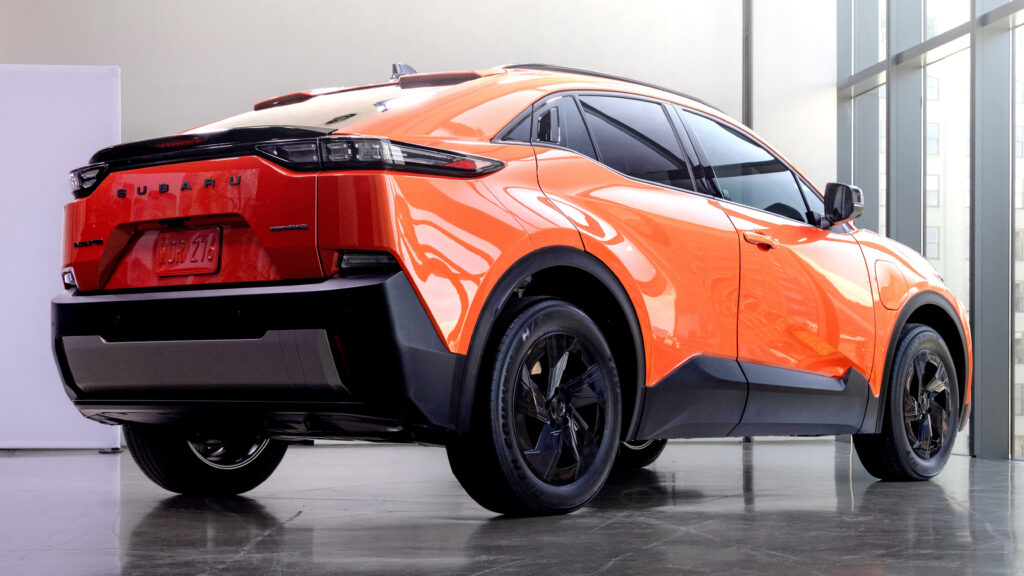
Subaru’s take on the all-electric Toyota C-HR, badged the Uncharted, may share a name with a 2022 Hollywood blockbuster starring Tom Holland and Mark Wahlberg, but it has a unique appeal that makes it stand out in this ever-competitive segment. It’s now also much cheaper to lease than it was last year.
In California, the Uncharted Premium can be leased for $345 per month with 10,000 miles a year and just $845 due at signing. Roll the drive-off into the payment, and the effective cost lands at $368 per month over 36 months, a $97 monthly savings versus the previous deal.
This actually makes the all-new Uncharted cheaper to lease in some areas than a Crosstrek Hybrid. As Cars Direct notes, a Crosstrek Hybrid Sport is available for $339 per month in Los Angeles but requires a $3,829 signing fee, effectively increasing the price to $445 per month. A standard gas-powered Crosstrek can be leased for as little as $345 per month, so it does undercut the Uncharted.
Through these lease cuts, the Uncharted is now $11 cheaper per month than the updated Subaru Solterra Premium.
Nationwide Savings
Lease deals vary across the country, but cuts have also been made in several other states, including New York, where prices are down 12 percent to an effective $410 per month when factoring in the $885 due at signing.
Importantly, these figures apply exclusively to the entry-level model, which is limited to front-wheel drive and comes with a single electric motor. This motor produces 221 hp and draws its juice from a 74.7 kWh battery pack. Although the front-wheel drive model can’t match the 338 hp offered up by the twin-motor AWD Sport and GT models, it does have the highest driving range of any Uncharted model, quoted at up to 308 miles (496 km).
BMW Group hits two million EVs just two years after first million.
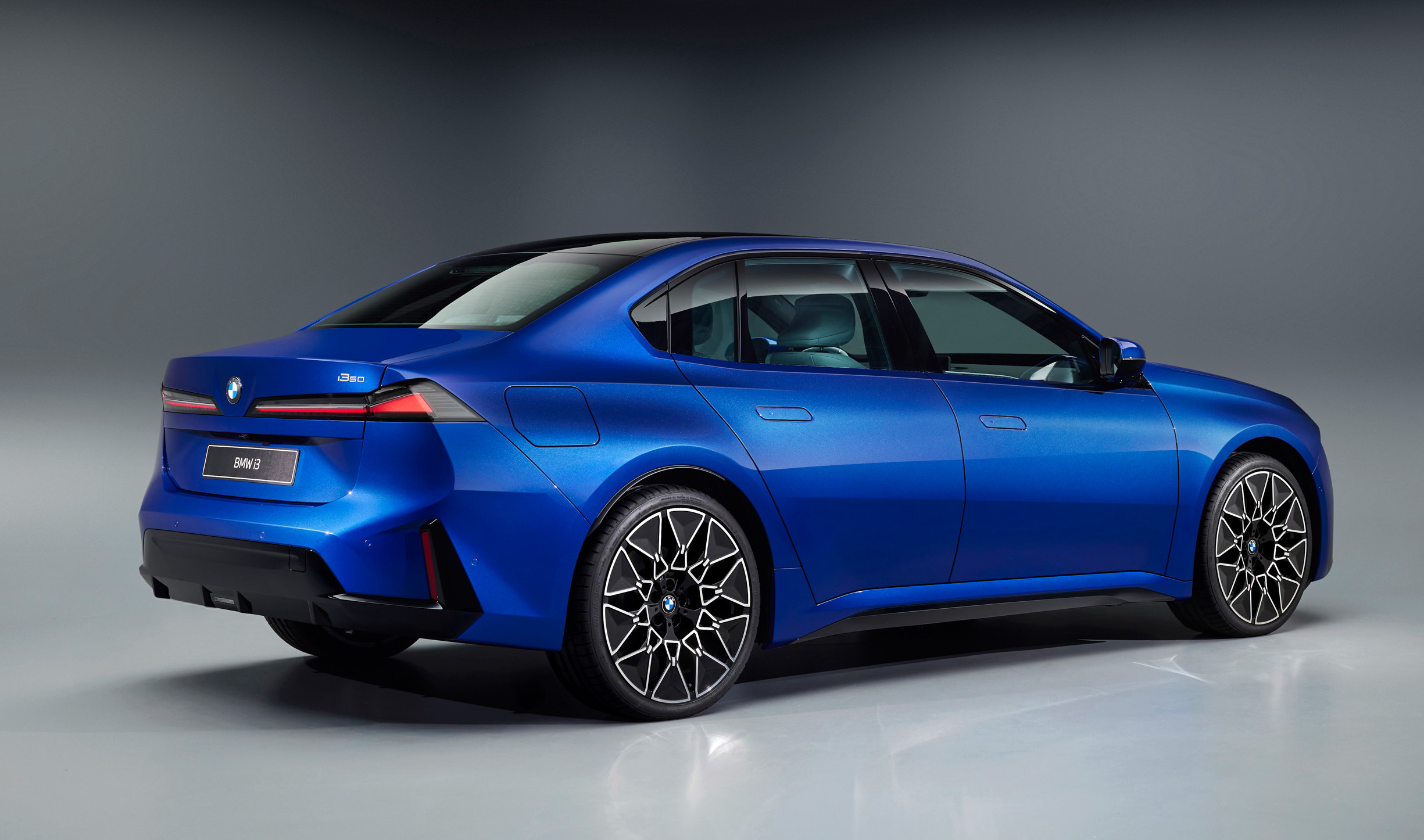
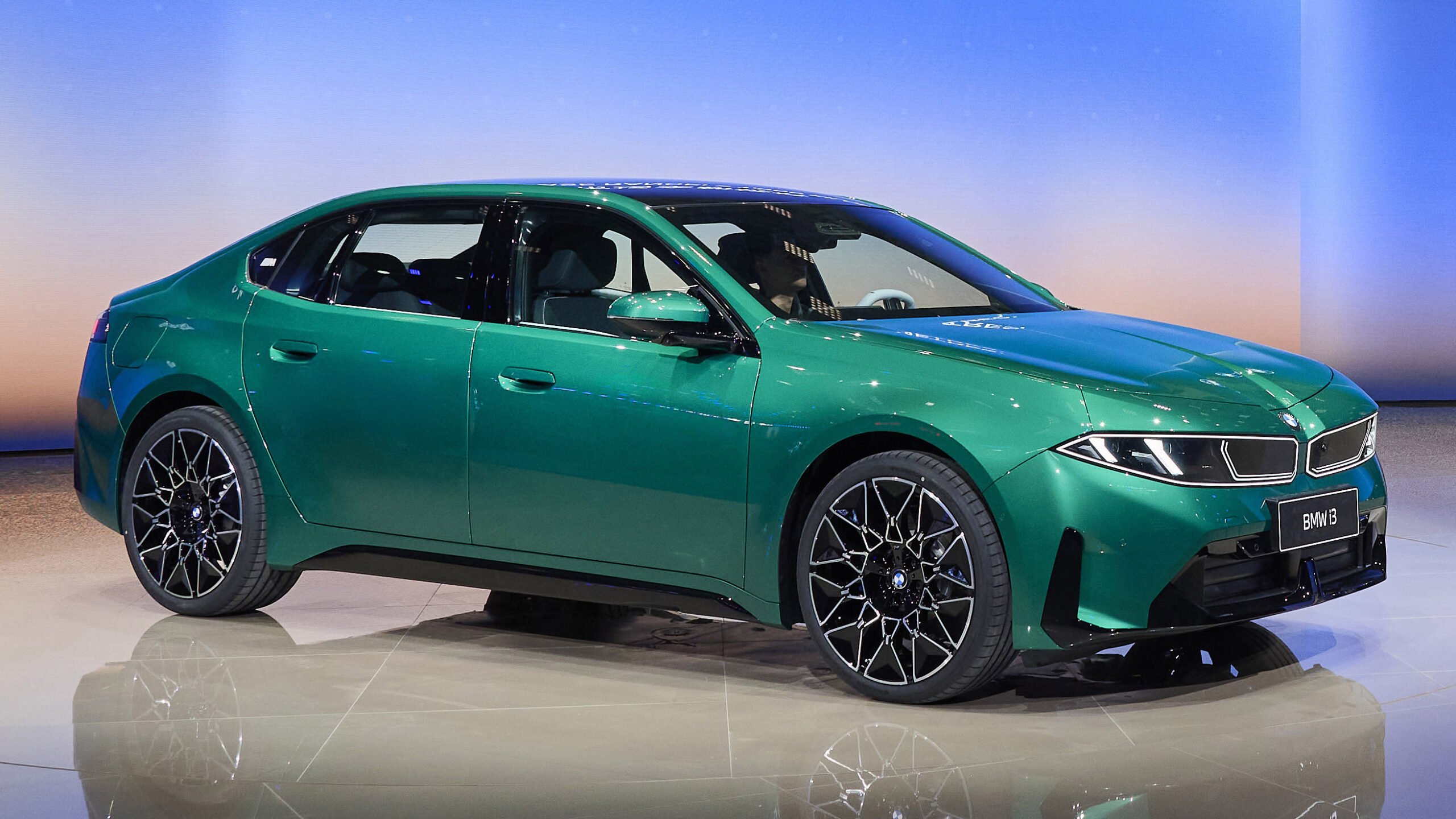
More important EVs coming through include i3 electric 3-Series.
Europe leads growth but US, China slowdown hurts momentum.
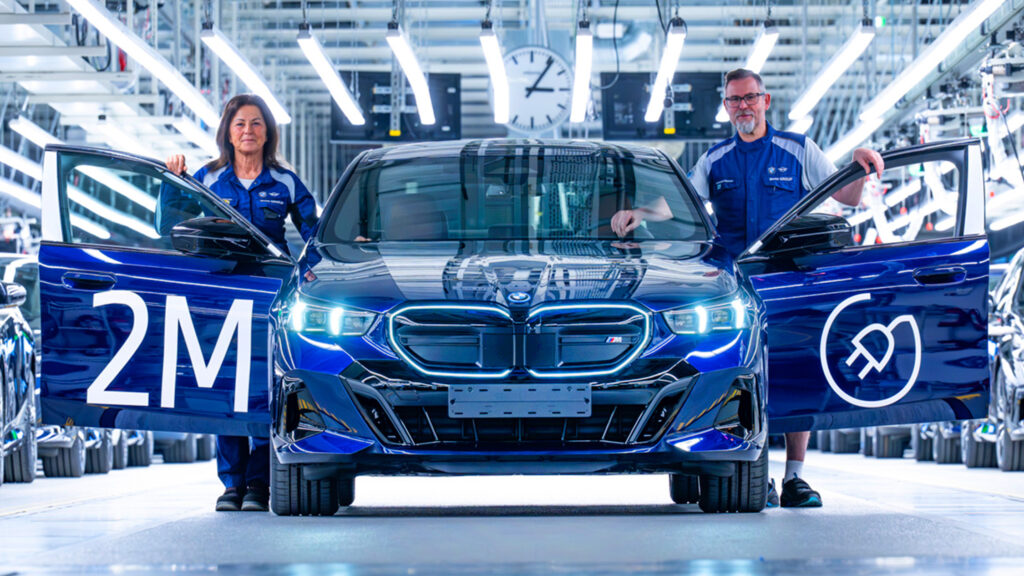
The BMW Group has just built its two millionth fully electric car, and the speed of that climb is impressive. It took almost 11 years after the first i3 hatch rolled off the line in 2013 to reach the first million, then only about two more to double it.
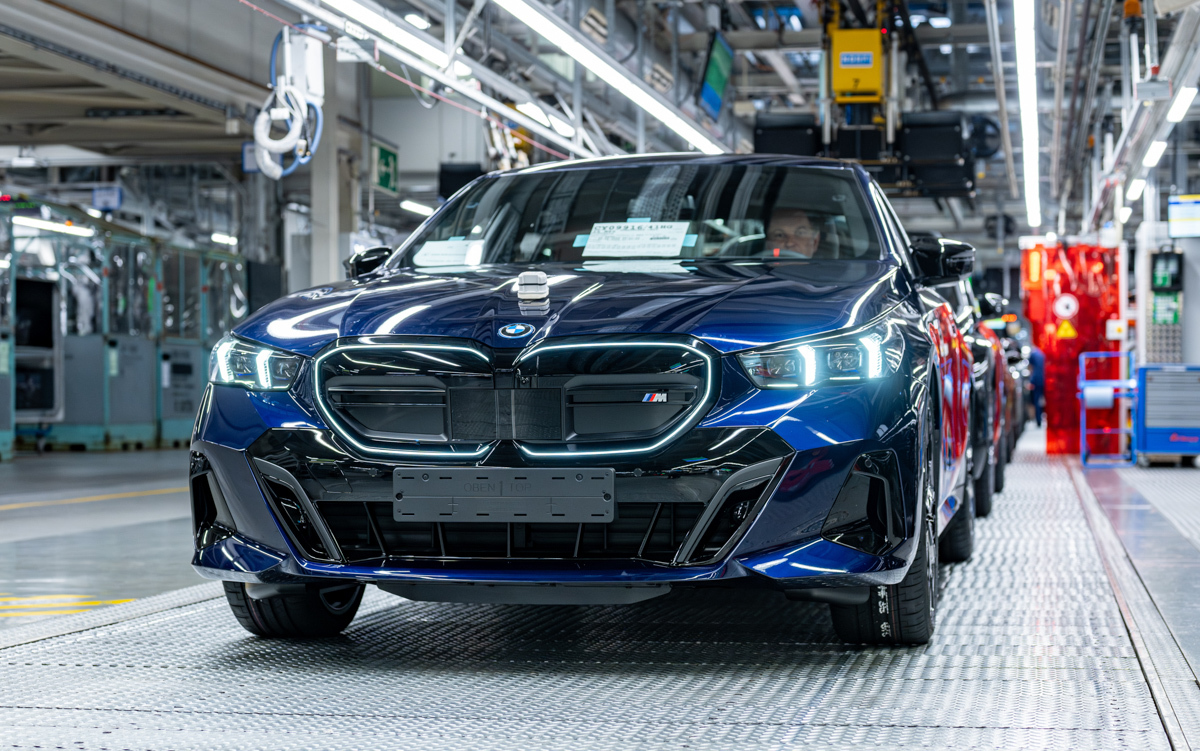
The milestone car is a BMW i5 M60 xDrive, built in Germany and heading to a buyer in Spain. That destination says a lot, because Europe is leading the way when it comes to EV demand right now. Sales of fully electric cars in the region jumped 28 percent in 2025, and one in every five cars sold in the EU is now an EV.
Production is ramping fast to accommodate that growth. BMW now builds EVs at all its German plants and mixes them with combustion cars on the same lines. That flexibility lets it react as demand shifts, and lately, demand has been shifting quite a bit, because Europe’s love for EVs isn’t mirrored in other regions.
Globally, BMW delivered 442,072 EVs in 2025, a modest increase that shows growth is still happening, just not at the same pace as before. Because in the United States, BMW’s EV momentum has clearly cooled. Battery electric sales fell to 42,484 units in 2025, down 16.7 percent year over year.
The drop was even sharper late in the year, with fourth quarter EV sales plunging 45.5 percent after federal EV tax credits were axed. At the same time, plug-in hybrids surged more than 30 percent, showing where buyers are heading. China isn’t helping either. Sales there dropped significantly, with the region down double digits overall, dragging on global performance.
Hot New Electric Metal Inbound
But on the plus side, BMW has just begun to roll out fresh EV product with cutting-edge design and technology. The iX3, the first of BMW’s Neue Klasse cars, is already in showrooms, and the i3 electric 3-Series that debuted this spring won’t be far behind. And it’ll be followed by the first-ever electric X5, while Rolls-Royce has its own electric SUV on the way, although the sales numbers will obviously be modest.
That lineup should help keep BMW Group’s EV registrations growing, but it might struggle to keep pace with another big German automaker. VW recently announced it had made its 2 millionth EV only 10 months after rolling out its millionth, and with the ID.3 now much improved and the ID. Polo arriving at dealers soon, its next million could come even quicker.
Dreame moved from vacuum cleaners into cars with three new brands.
Star Motor’s latest crossover-sedan concept borrows heavily from luxury icons.
Images show it sporting Rolls-Royce-style suicide doors with no B-pillar.
Just a few months ago, Dreame was a virtual unknown in the West, having primarily cut its teeth in China’s consumer electronics industry, making a name for itself with vacuum cleaners. The company has since pivoted hard into the automotive space, spinning up three separate car brands called Nebula Next, Kosmera, and Star Motors, each with its own stream of concepts. This is its latest creation.
The car appears to wear the badge of Star Motor, one of Dreame’s three new automotive sub-brands. It was introduced back in February with the T08 and T08L, a pair of boxy off-roaders that looked like carbon copies of Dongfeng’s M817 and M917. The brand also showed the D09, a luxury SUV that lifted heavily from the Rolls-Royce Cullinan playbook.
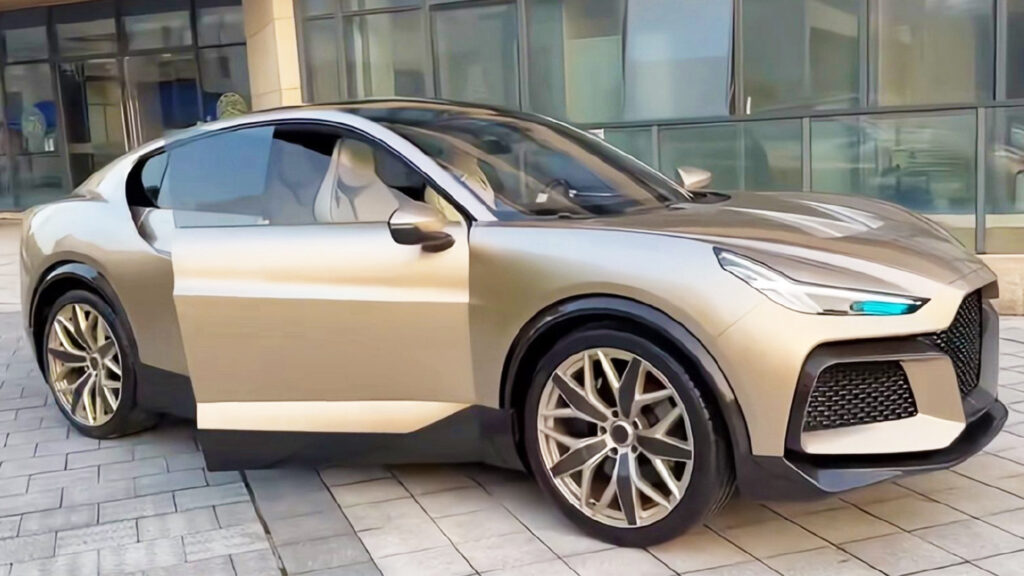
As for this latest concept, it was present at the recent Beijing Auto Show and may make a return appearance at the Chengdu Auto Show in September in more production-ready form. Dreame has shown a penchant for taking inspiration from other brands’ designs, and this sedan appears no different. If the Bugatti Chiron and Ferrari Purosangue had a baby, it would look a lot like this.
The front of the crossover-style sedan features a massive grille that recalls the Kosmera concept Dreame trotted out at CES back in January, only scaled up and turned more aggressive. It also sports wide, gaping air intakes and a set of sharp LED headlights.
The standout feature in profile is the set of Rolls-Royce-style rear suicide doors, though Star Motor has pushed the idea further than Goodwood does. Where the Phantom retains a structural B-pillar between the front and rear doors, this Dreame concept deletes it entirely, leaving one uninterrupted opening when both doors swing wide. Recent spy shots show the upcoming Genesis GV90 adopting the same pillarless layout.
Photos of the rear haven’t surfaced yet, but the C-shaped element wrapping the rear side windows and rear doors definitely looks reminiscent of the signature C-line used by Bugatti.
No details have emerged on the powertrain, assuming there’s even a working one under the sheetmetal, but in all likelihood, it will follow the lead of Dreame’s other concepts and run on pure electric power.
Whether any of these showcars will actually reach production remains anyone’s guess. Dreame has so far traded entirely in show cars and renderings.
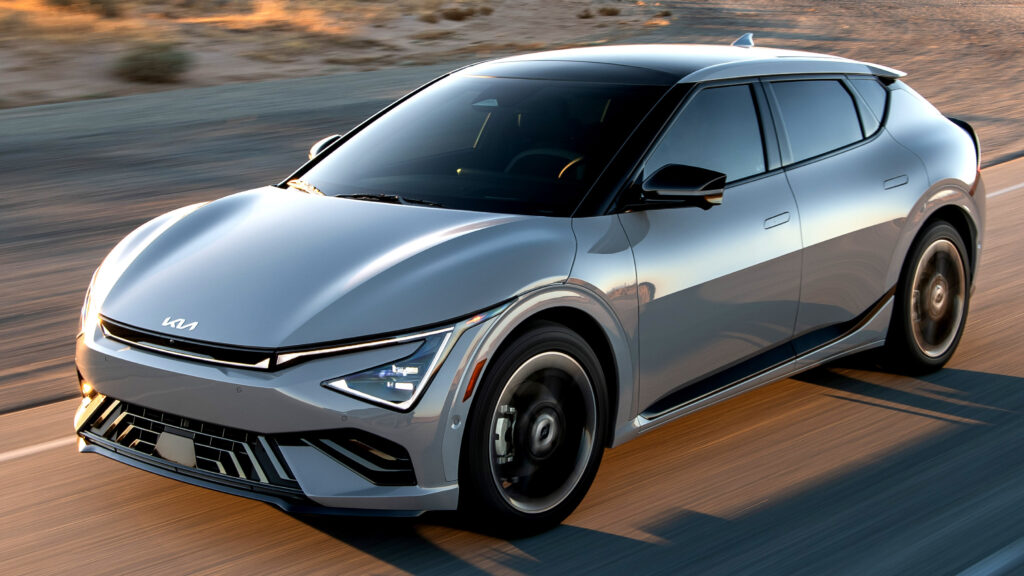
Through the first four months of the year, Kia EV6 sales have tumbled 37.4% to 2,751 units. That’s a steep decline and it can likely be attributed to the elimination of the federal electric vehicle tax credit.
Kia is now trying to shore up sales by announcing a steep price cut for 2026. Kicking things off is the EV6 Light Standard Range, which begins at $37,900 before a $1,545 destination fee. That’s a savings of $5,000 compared to the 2025 model.
The EV6 Light Long Range also sees a $5,000 price cut, while the all-wheel drive variant gets marked down $5,100. The Wind trim benefits from a $5,500 reduction across the board as pricing now begins at $44,800.
Last but not least, the GT-Line will set you back $48,700. That’s $5,500 less than last year’s model, while the AWD variant offers a savings of $5,900.
Kia didn’t mention the EV6 GT, but the automaker stopped importing the high-performance variant earlier this year “due to changing market conditions.”
Minor Model Year Updates
Besides lower prices, the 2026 EV6 now comes with a standard dual level charging cable. Buyers in ZEV states also get a free DC fast-charger adapter. Speaking of charging, the model now sports a plug and charge capability, which allows for automatic billing at compatible chargers via Kia Charge Pass.
Additional changes are limited, but the EV6 Light Long Range drops the Tech Package to “reduce complexity.” Buyers will also find an updated color palette inside and out.
As a refresher, the EV6 offers 63 and 84 kWh battery packs as well as ranges of between 237 miles (381 km) and 319 miles (513 km). Buyers will also find outputs of 167 hp (125 kW / 169 PS), 225 hp (168 kW / 228 PS), and 320 hp (239 kW / 324 PS).
Skoda has teased the interior of the fully electric Epiq crossover.
It sports a 5.3-inch digital instrument cluster and 13-inch display.
The affordable model debuts May 19 and will have three powertrains.
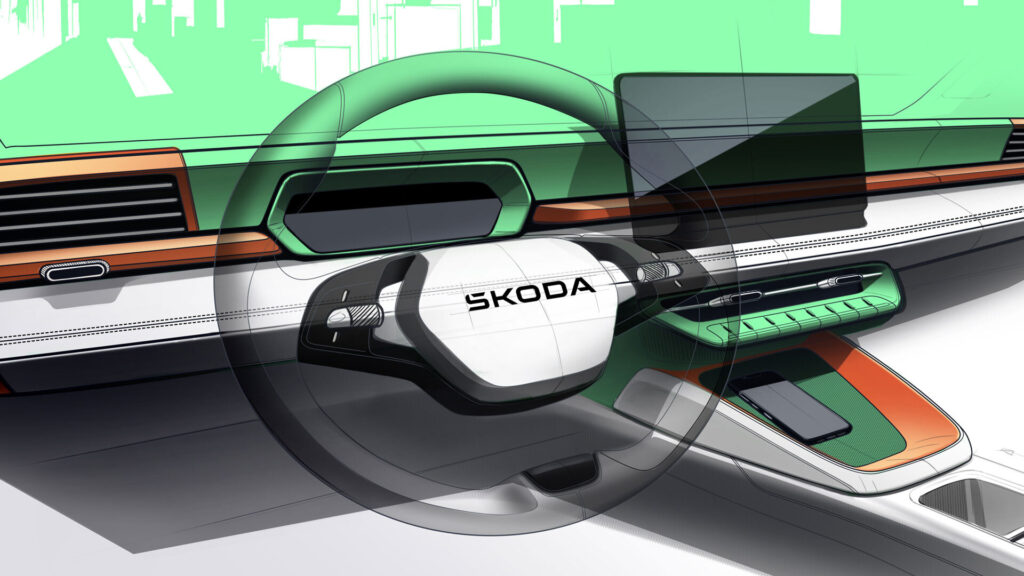
Skoda has teased the interior of the all-new Epiq and revealed the crossover will be unveiled on May 19. Billed as the “first series-production model to fully implement all aspects of the Modern Solid design language,” the cabin embraces a horizontal architecture as well as a minimalistic aesthetic. While few details were shared, we can see a tiered dashboard with an upholstered lower section as well as rectangular air vents.
Drivers sit behind a two-spoke steering wheel and find themselves looking at a hexagonal 5.3-inch digital instrument cluster. It’s joined by a freestanding infotainment system that spans 13 inches.
Beneath the large screen is slender air vents and a row of “haptic shortcuts,” which resemble buttons. The model also sports an open storage compartment, which has a wireless smartphone charger in the center.
Rounding out the highlights are a slender center console and an ambient lighting system, which creates a “welcoming, cozy atmosphere.” Skoda also noted the model will incorporate sustainable materials including “100% recycled PES for the seat textiles.”
The cargo compartment holds 16.8 cubic feet (475 liters) of luggage, but that can be expanded to 47.5 cubic feet (1,344 liters) by folding the rear seats down.
Three Powertrains And Up To 267 Miles Of Range
Like the Cupra Raval and Volkswagen ID. Polo, the model rides on the MEB+ platform. The entry-level Epiq 35 has a 38.5 kWh battery pack that feeds a front-mounted motor developing 114 hp (85 kW / 116 PS) and 197 lb-ft (267 Nm) of torque. It enables the crossover to accelerate from 0-62 mph (0-100 km/h) in a leisurely 11 seconds and have a range of 196 miles (315 km).
The mid-level Epiq 40 has the same LFP battery and range as the 35, but sports a more powerful motor developing 133 hp (99 kW / 135 PS) and 197 lb-ft (267 Nm) of torque. Thanks to the extra oomph, the dash to 62 mph (100 km/h) falls to 9.8 seconds.
The range-topping Epiq 55 is notable for featuring a larger 55 kWh NMC battery pack as well as a beefier motor producing 208 hp (155 kW / 211 PS) and 214 lb-ft (290 Nm) of torque. 62 mph (100 km/h) comes in 7.4 seconds, while the top speed of 99 mph (160 km/h) is 6 mph (10 km/h) faster than the other variants. Drivers can also expect to travel up to 267 miles (430 km) between charges.
Production will be handled in Spain, and Skoda has previously indicated pricing will open around €26,000 ($30,400), or about the same as its Kamiq gasoline equivalent.
Rivian says the R2 costs about 50% less to build than the R1 lineup.
Simplified design cuts parts count dramatically across key systems.
R2’s smaller footprint and higher volume targets also reduce cost.
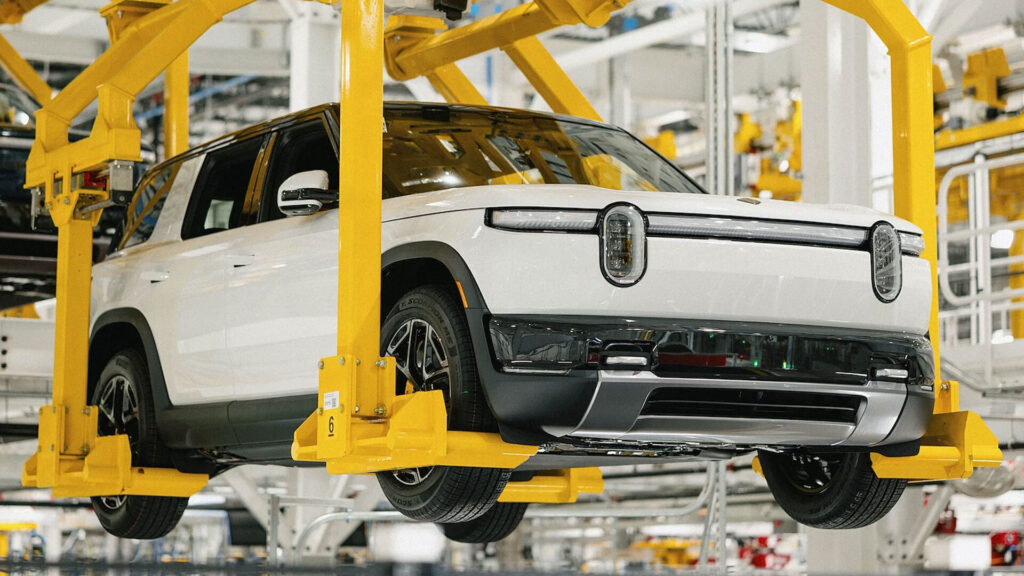
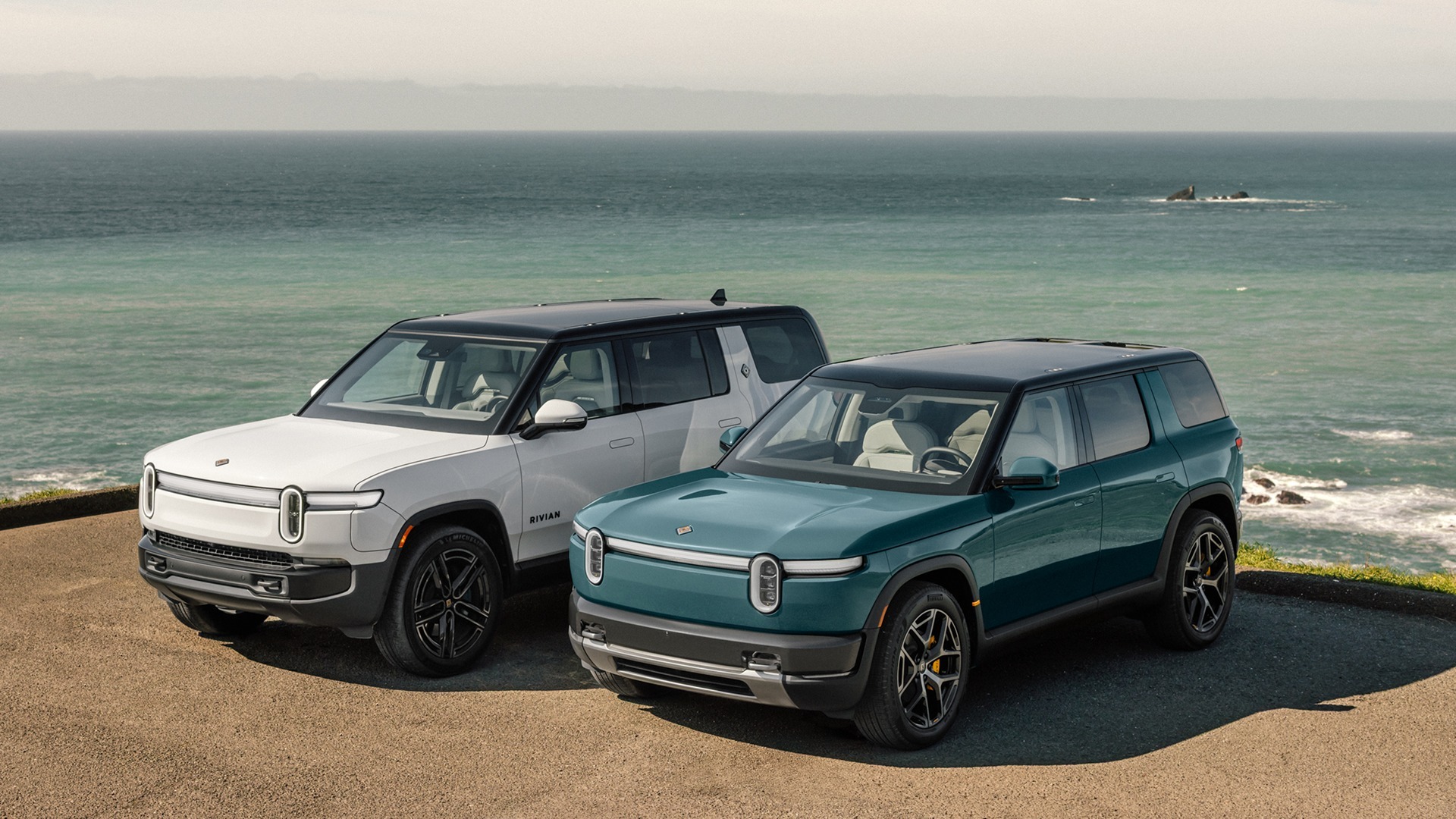
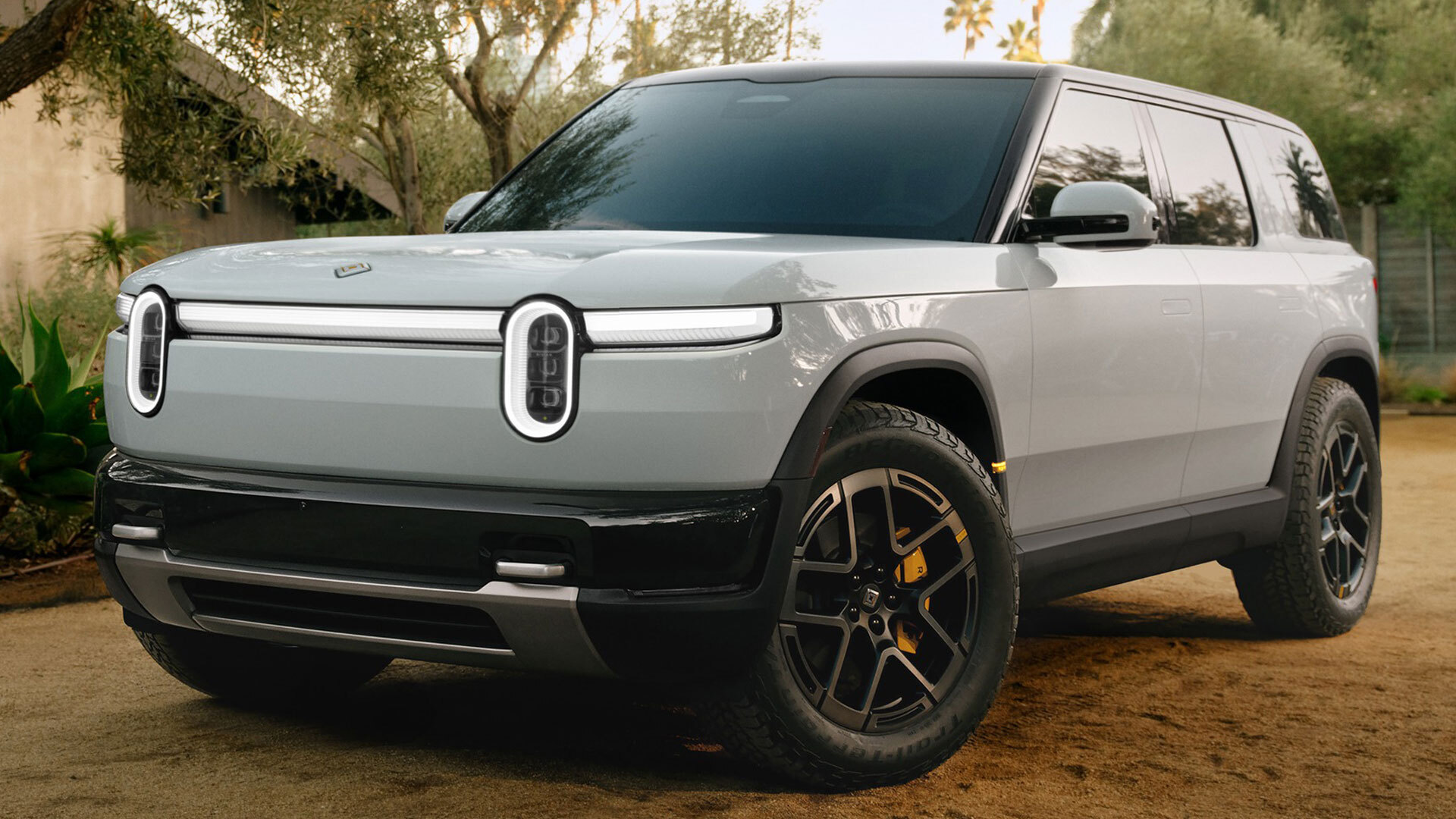
Rivian broke the mold by bringing the R1T, an electric pickup truck, to market before anyone else. Now, it’s trying to gain a far more stable foothold in the industry with its all-new R2. A new report sheds light on how Rivian cut costs but evidently not quality in this new SUV. According to the brand, it costs around half as much to build as the R1S despite keeping the performance and utility that fans love.
At the core of the R2’s cost-cutting approach is ruthless simplification. Rivian says its new zonal electrical architecture slashes wiring complexity, trimming 2.3 miles of harness length and reducing connectors by 60%. High-voltage cabling is down 70% thanks to consolidating multiple power modules into a single unit.
The same philosophy carries over to the powertrain. Rivian’s new “Maximus” drive unit uses 41% fewer parts than the Enduro units found in the R1 lineup. By integrating the inverter directly into the drive unit and even using its housing as a mounting structure, Rivian cuts both material cost and assembly time.
According to InsideEVs, even the sensors got a rethink. Swapping ultrasonic sensors for corner radars yields a claimed 50% cost reduction, a move that reflects a broader trend toward fewer, more capable components. In theory, that could help Rivian reduce repair costs, a known concern for the brand.
The front suspension ditches the more complex double-wishbone setup used in the R1 for a simpler MacPherson strut design, cutting costs by 70%. Large die-cast sections reduce underbody part count by 90%, while rear doors shed 65% of their complexity.
There’s also a less glamorous but equally important factor: scale. When Rivian launched the R1T and R1S, it was a newcomer building expensive, low-volume vehicles. Now, with higher production targets in sight, it can negotiate better supplier pricing.
Something as basic as a windshield reportedly costs half as much on the R2 compared to the R1. Add in the fact that the R2 is simply smaller, and therefore uses fewer raw materials, and the math starts to make sense. At this point, all that’s left is to see how Rivian executes on production and sales.

 Login
Login