Reading view

There are new articles available, click to refresh the page.

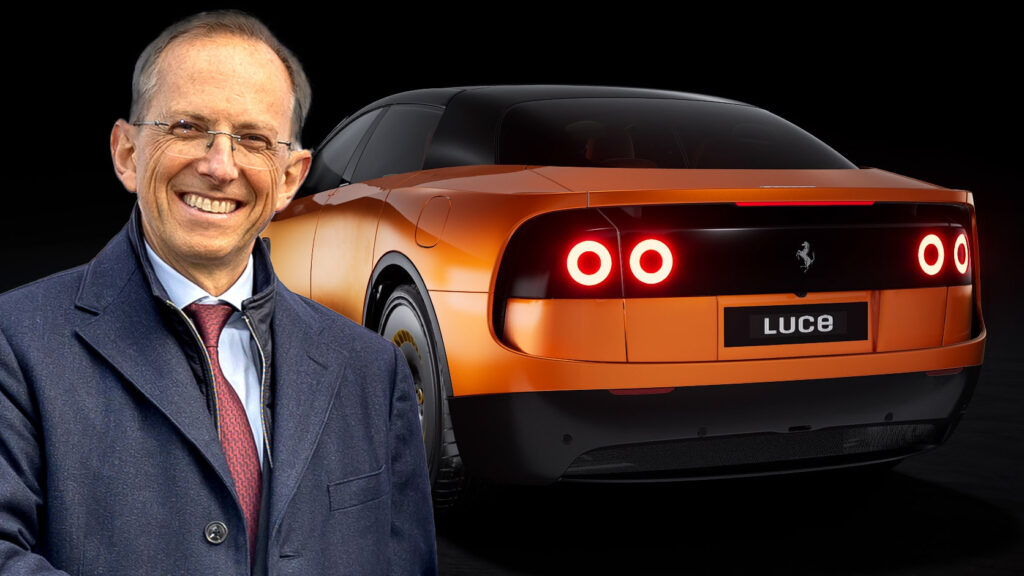
Ferrari Bet Big On Its First EV, Lamborghini’s Boss Says Its Buyers Want None Of It

  • Lamborghini says it doesn’t need an EV until at least 2030.
  • Ferrari’s controversial Luce debut appears to be influencing rivals.
  • Lamborghini will keep combustion engines alive with hybrids for now.

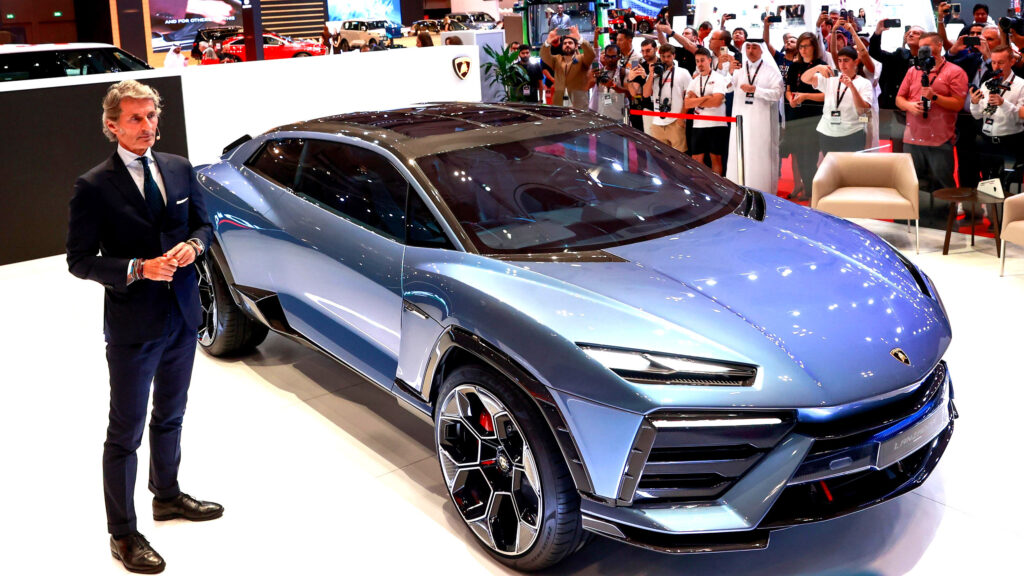
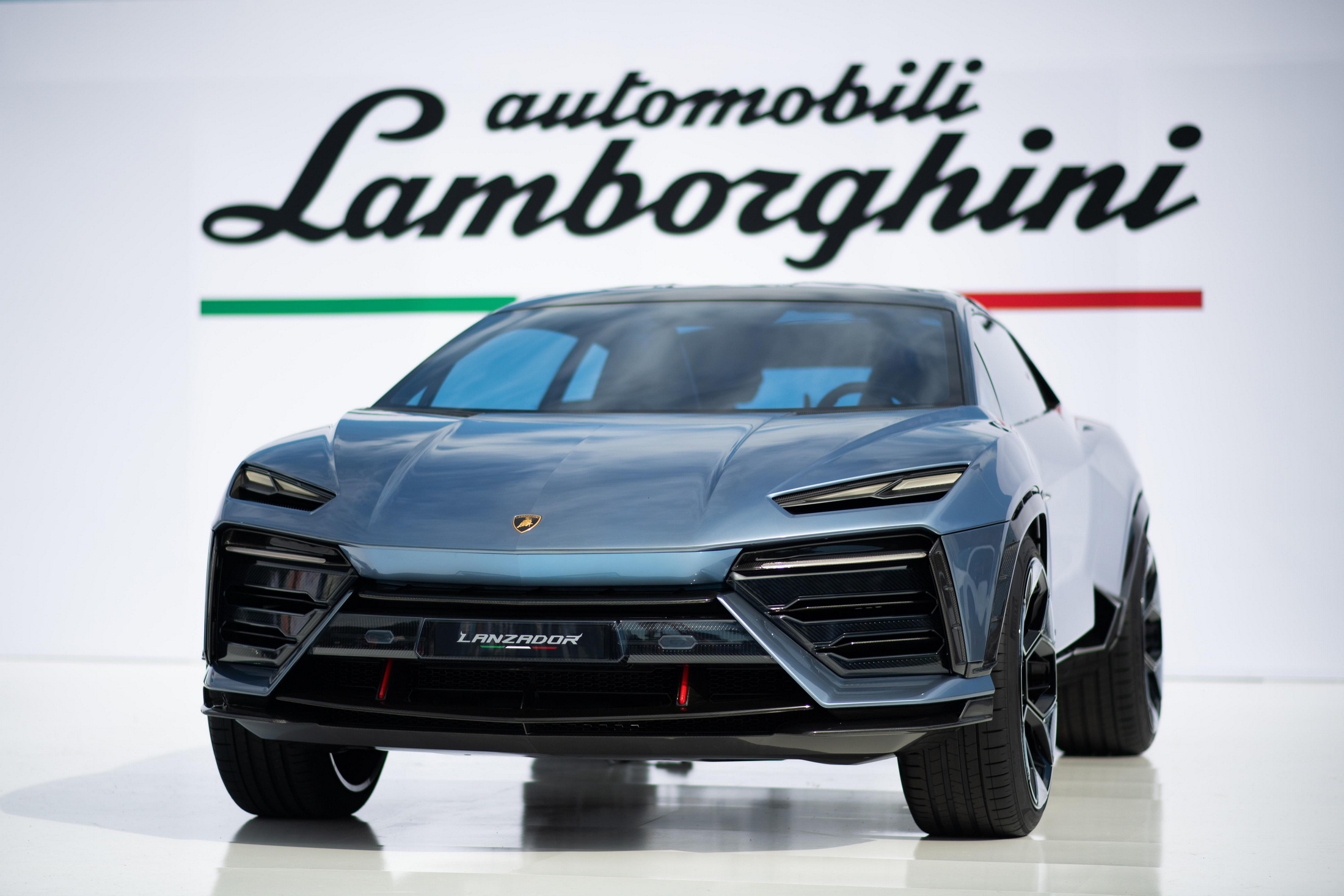
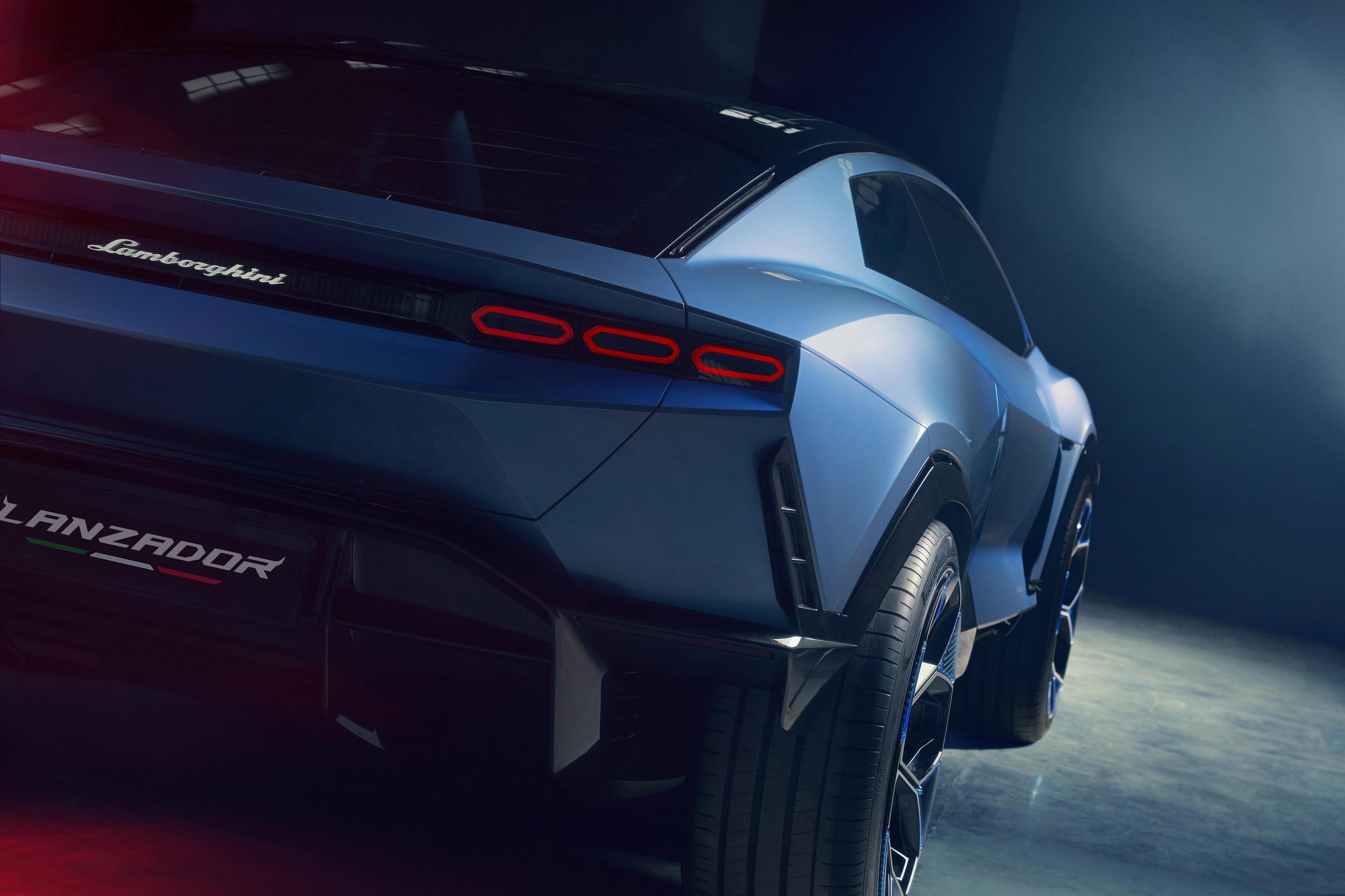
Ferrari’s controversial Luce debut got plenty of attention, though perhaps not the kind Maranello was hoping for. Rather than have cross-town rival Lamborghini feeling like it’s behind the times, it appears as though the brand’s CEO is even more content now that the Lanzador didn’t remain on schedule for an earlier debut. He’s openly doubling down on the idea that Lamborghini was right to delay the brand’s first EV.

In a round table with journalists, asked about the reaction to the Luce, Lamborghini CEO Stephan Winkelmann said his company made the “right decision” in postponing its first fully electric car, arguing that customer demand for electric supercars simply hasn’t materialized the way much of the industry assumed it would.

Read: EV Plans Wait As Lamborghini Expands V8 And V12 Lineup

According to Handelsblatt, Winkelmann said Lamborghini has spent years monitoring demand in the luxury segment. To no one’s surprise who’s been paying attention, the company found that acceptance of electric vehicles hasn’t climbed at anything close to the pace many had forecast.

The automaker had planned to launch the all-electric Lanzador before the end of the decade. Initially, production was simply delayed. Now, it won’t happen until at least 2030, if not later, because acceptance for EVs within the brand’s target demographic was “close to zero.” For now, Lamborghini has scrapped it and is looking at a new hybrid model to join the lineup in the near future.

 Ferrari Bet Big On Its First EV, Lamborghini’s Boss Says Its Buyers Want None Of It

Importantly, European regulations currently call for a ban on the sale of new combustion-powered vehicles beginning in 2035, although exemptions for e-fuels and certain low-volume manufacturers remain under discussion. While many exotic-car makers spent the last several years announcing ambitious EV programs, Lamborghini now appears content to let others test the waters first.

That’s probably a wise move considering its positioning. While nowhere near as successful as Ferrari, Lamborghini has its position underneath Volkswagen Group going for it. It’s currently one of the most profitable divisions. In 2025, it generated €3.2 billion ($3.7 billion) in revenue. Even though operating profit slipped from €835 million ($970 million) to €768 million ($892 million), the company still posted a remarkable 24 percent operating margin.

 Ferrari Bet Big On Its First EV, Lamborghini’s Boss Says Its Buyers Want None Of It

Lexus Charges BMW Money On A Toyota Budget, And It’s Working

  • Lexus plans EVs and hybrids from one common vehicle architecture.
  • Flexible platforms help preserve profits if consumer tastes change.
  • Experts say Lexus benefits from Toyota technology and buying power.

For years, automakers, including Lexus that once pledged to go EV-only by 2035, told us the future would be electric. Now that EV growth has cooled in several key markets, many of those same companies are quietly changing course, often at a huge cost. Lexus, however, thinks it has found a smarter, less financially painful way forward.

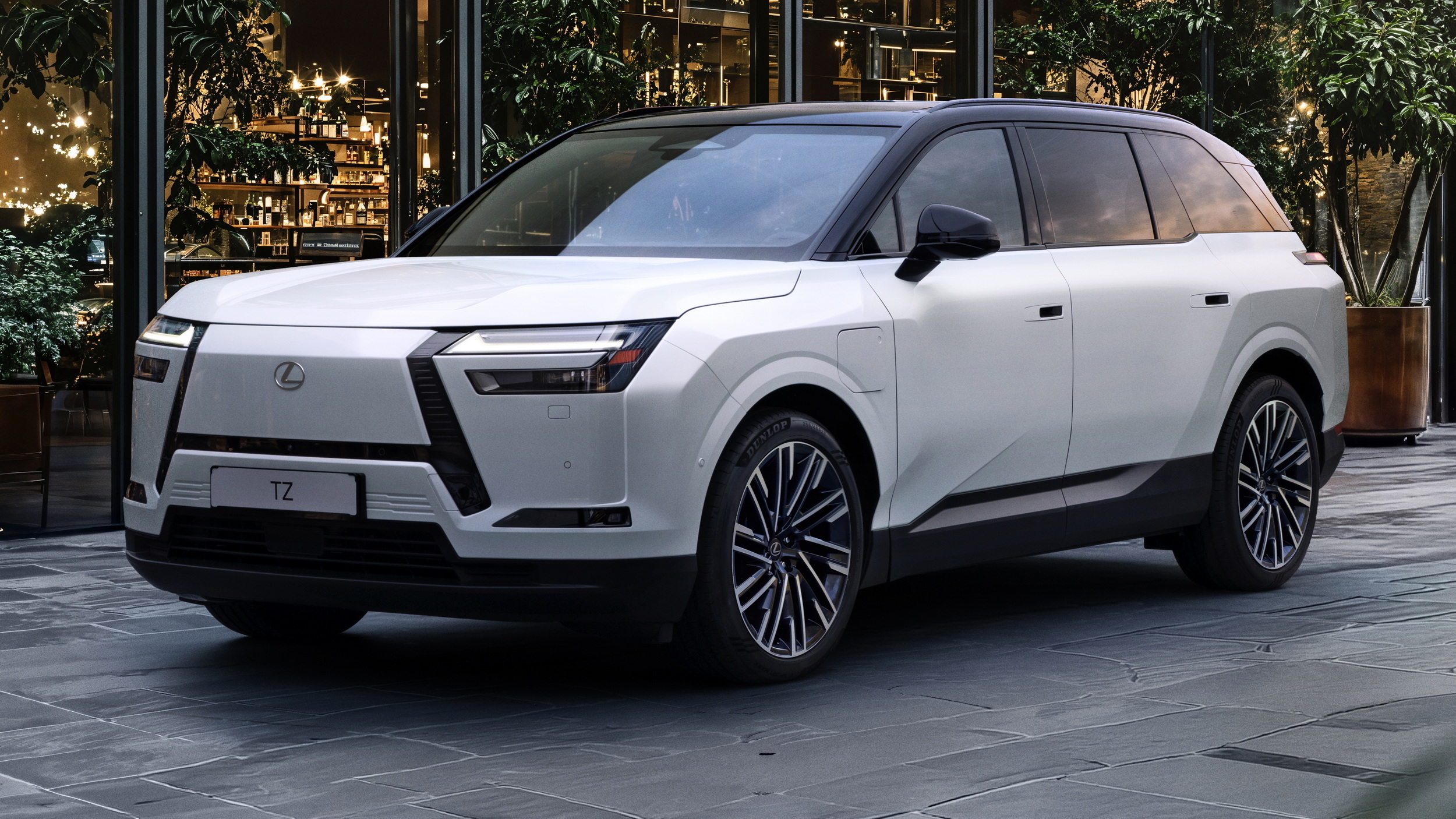
Related: The 2027 Lexus TZ Borrows The Highlander’s Bones And The LFA’s V10 Voice

Instead of betting everything on dedicated EV platforms, or U-turning in favor of old-fashioned gas cars, Toyota’s luxury division is developing vehicles that can be built as either hybrids or fully electric models using much of the same underlying architecture. It’s a strategy designed to give Lexus maximum flexibility while competitors wrestle with expensive shifts in demand.

One Platform, Two Powertrains

 Lexus Charges BMW Money On A Toyota Budget, And It’s Working
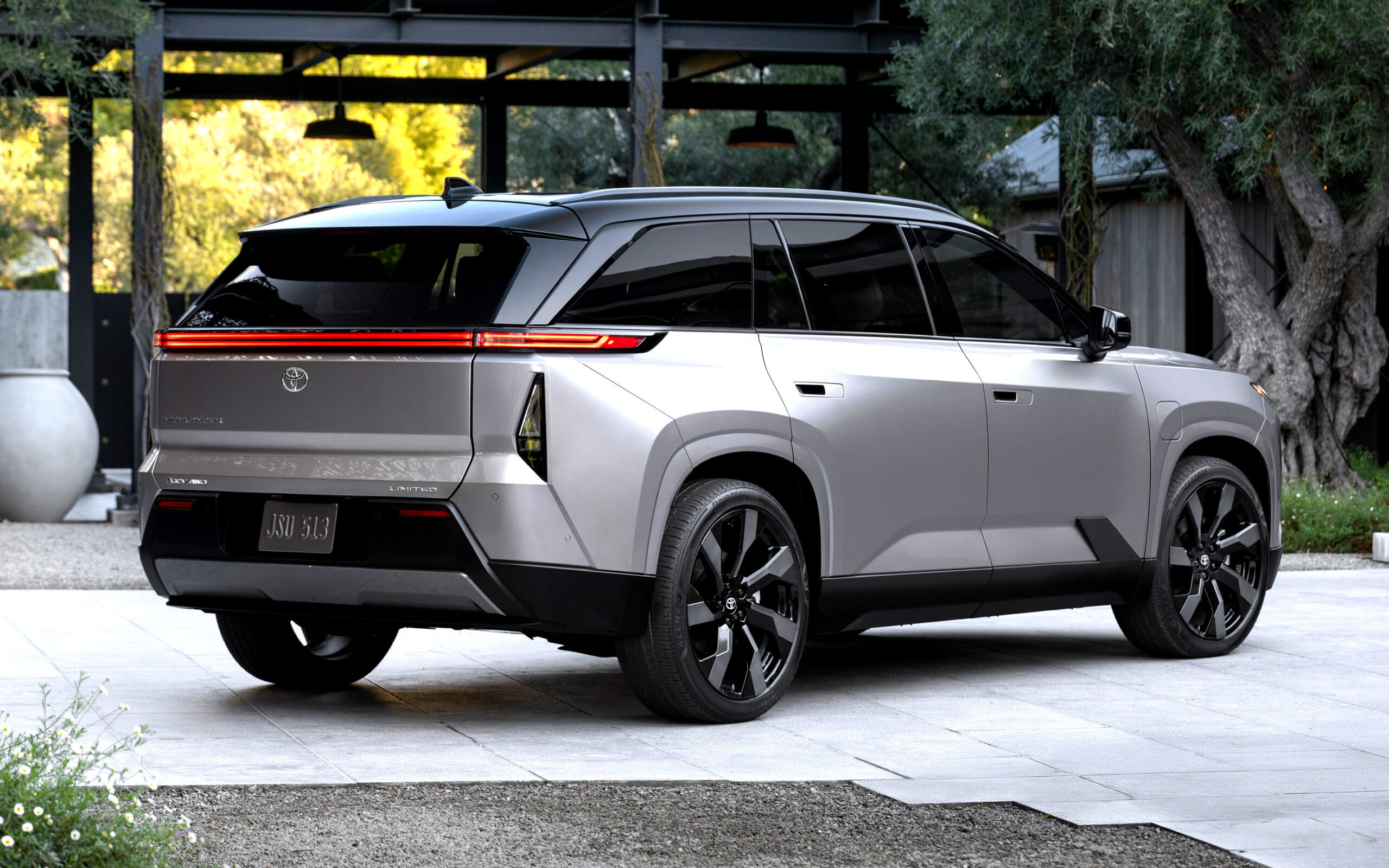
The 2026 Toyota Highlander

Future products will be designed so the two brands can install either a battery pack or a hybrid powertrain within essentially the same vehicle structure, according to Lexus and Toyota executives who presented the plan to Handelsblatt and other media at the Shimoyama development center in Japan. That means Lexus can react faster if customer demand swings toward EVs, hybrids, or somewhere in between. Or if the next US president reinstates tax credits for cleaner vehicles.

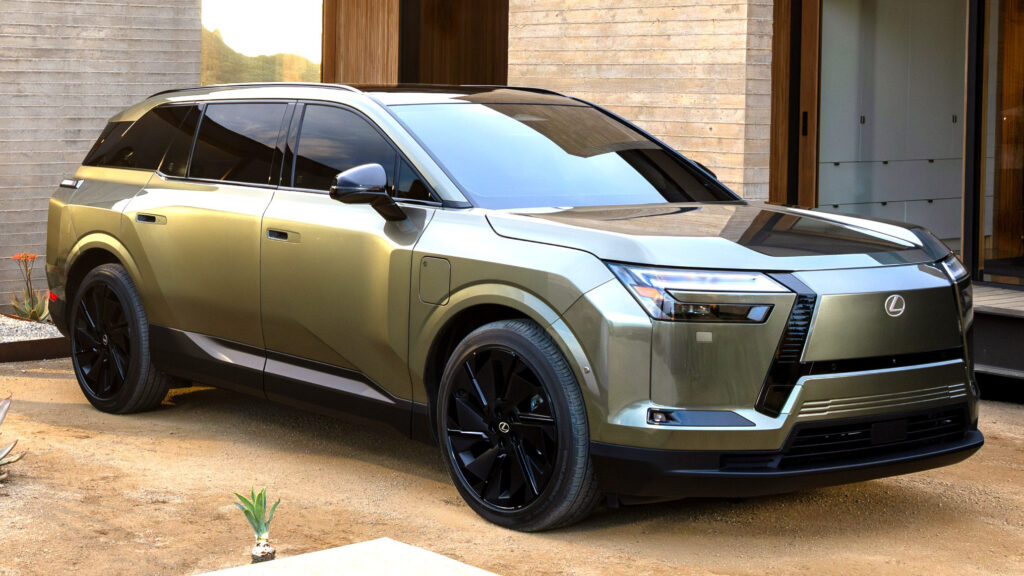
Toyota CTO Hiroki Nakajima told reporters that Lexus’s upcoming TZ electric SUV is expected to be profitable from launch in North America. That’s a claim many automakers would love to make right now, because some, like Honda/Acura and Porsche, are hurting badly from having written off billions of dollars in EV development, and US EV sales are dire.

Christopher Richter, an automotive analyst at CLSA in Tokyo, traces that edge to Lexus’s lower cost base. Toyota doesn’t break out Lexus financials, but Richter told the German outlet he figures the brand’s margins sit well into the double digits. By comparison, Mercedes posted a return on sales of 5% last year and BMW managed 5.3%. The trick, Richter says, is that Lexus can charge BMW money while leaning on the purchasing volume and development resources of the world’s largest carmaker.

 Lexus Charges BMW Money On A Toyota Budget, And It’s Working

The TZ isn’t the first Lexus or only Lexus to benefit from common-platform thinking. The new ES sedan is already available as a hybrid or EV, both versions built from the same basic architecture. It’s not a strategy peculiar to Lexus. BMW and Mercedes also build some EVs and hybrid cars on shared platforms, including the X1 and iX1, 5-series and i5, and CLA.

But the two German brands also have EV-specific platforms. BMW’s new ICE 3-series sedan, for instance, will look almost identical to the i3 electric 3-series, yet they’ll ride on totally different architectures.

Profit Over Volume

BMW and Mercedes both sell more than twice as many cars as Lexus, which moved 882,291 vehicles worldwide in 2025, nearly half of them in North America. In particular, Mercedes shifted around 1.8 million that year and BMW close to 2.2 million under its core brand. But in the luxury game it’s profit, not registrations, that counts, and Toyota’s upscale division seems convinced it holds the better hand.

\\\\\\\\\

Lexus, Rivers/Carscoops

Tesla Can’t Move Cybertrucks at Home, So Kazakhstan’s Government Bought Some

  • A matte black Cybertruck recently joined Kazakhstan state security.
  • The Ministry of Emergency Situations has acquired one as well already.
  • Its arrival follows the start of Cybertruck sales in the Middle East.

Tesla’s trouble moving the Cybertruck in any meaningful quantity on US soil is by now thoroughly documented. Before the electric pickup ever reached a showroom, Elon Musk boasted that Tesla could move as many as 500,000 a year. The reality has been less kind. In 2025, American buyers took home just over 20,000 of them.

While it seems the Cybertruck has lost a lot of its initial luster in the US, it is slowly being introduced in other markets. One of them is Kazakhstan, where a handful are being used by government departments, proving that the car’s controversial design does have its perks.

Read: Unplugged’s $18K Cybertruck Package Adds What Tesla Left Out

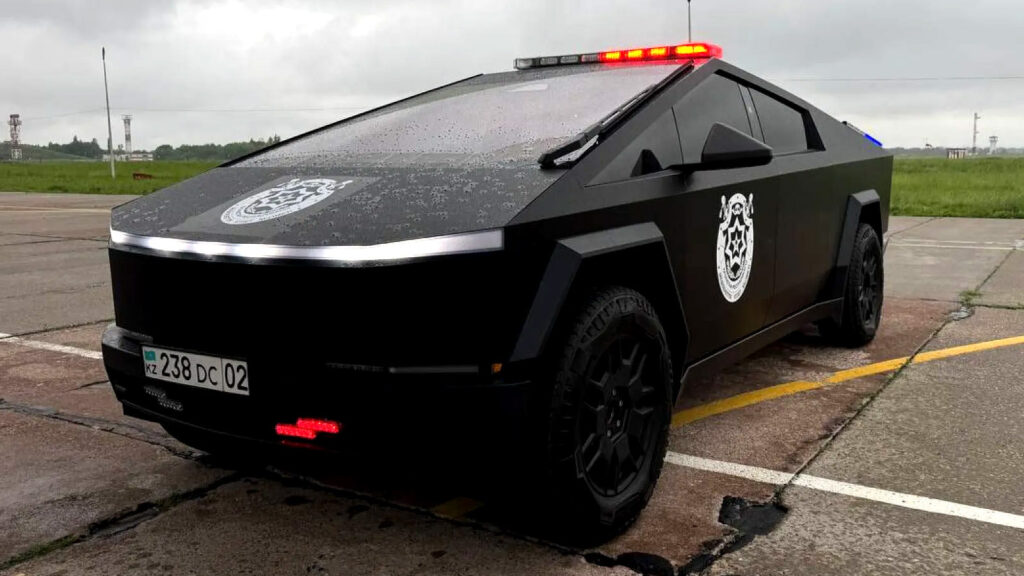
In mid-May, a matte black Cybertruck served the State Security Service during the Summit of the Organization for Turkic States, held in Kazakhstan’s Turkistan region. Fitted with flashing blue and red lights, the Tesla was reportedly donated to the authorities by a local entrepreneur.

It started out as a mobile command center, and from here it will take on a central role at major security events across the country, handling field coordination between units and providing communications support.

A Second Cybertruck

\\\

This isn’t the only Cybertruck roaming the roads of Kazakhstan. The Ministry of Emergency Situations has folded one into its fleet too, this one wrapped in matte white with orange and blue graphics. According to vice minister Yerbolat Sadyrbayev, the truck has proven itself capable of tackling the treacherous terrain of the country’s mountainous Almaty Region.

🇰🇿 The future has arrived in #Kazakhstan’s spiritual capital – #Turkistan#Cyber-police are patrolling the Turkic States Summit @Turkic_States #Cybertruck @Tes @elonmusk pic.twitter.com/ofKCXROnli

— Consulat général du Kazakhstan à Strasbourg (@KazStrasbourg) May 14, 2026

“Our ministry deals with situations where assistance must be provided as quickly as possible and every minute counts,” Sadyrbayev told Kazinform. “The Cybertruck has proven to be highly effective in responding to various emergency situations. We are talking about saving people’s lives.” The minister added that the government plans to add more Cybertrucks to its fleet, although he didn’t specify how many.

At this stage, it seems Tesla will take any Cybertruck order it can get. With US sales sliding from 39,965 in 2024 to just 20,237 in 2025, the company has been eager to sell the truck wherever there’s an appetite for one, even if it’s just for show. Earlier this year, it even started selling the electric pickup in the Middle East.

Rivian Won’t Add Buttons Back, Says You Should Talk To Your Car Instead

  • Rivian refuses to bring back the physical buttons rivals are restoring.
  • Its software chief believes voice should be the primary car interface.
  • The new R2 ditches HVAC buttons for scroll wheels on the steering wheel.

Some automakers have caved to buyer demand and started bringing physical buttons back, including VW, Audi, Mercedes-Benz, and Hyundai. Rivian, on the other hand, has no interest in joining them, insisting its advanced AI-driven voice assistant is simply a better way to control a vehicle’s functions.

While recently speaking with Rivian’s chief software officer, and co-CEO of the Rivian and VW joint venture, Wassym Bensaid, The Verge dug into the new Rivian Assistant, which rolled out to existing R1 models in mid-May. It’s built on a shared, multimodal AI foundation and can handle core vehicle functions, HVAC included.

Read: For $50 A Month, Rivian Will Make You A Passenger In Your Own EV

Existing Rivian R1 models, along with the new R2, are largely free of physical buttons, and given the brand’s commitment to its new assistant, that isn’t likely to change anytime soon.

“I deeply believe that voice has the chance to be the primary interface in the car,” Bensaid told The Verge. “I also think that buttons can exist, but they shouldn’t be the primary way with which you interact with the car. I think there’s more that is possible with voice since you can do more than one single function. You don’t have to fiddle with so many functions.”

Are Scroll Wheels The Solution?

“You don’t have to go deep into the touchscreen to look into specific features. A great voice experience can elevate all of that, allow users to talk to the car as a human would, and really take the overall experience to the next level,” he added.

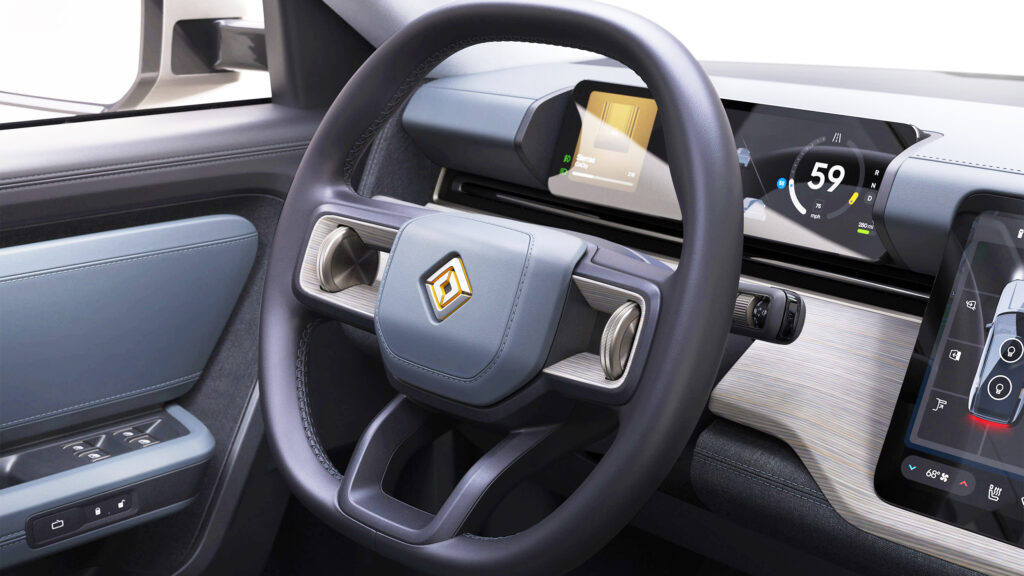
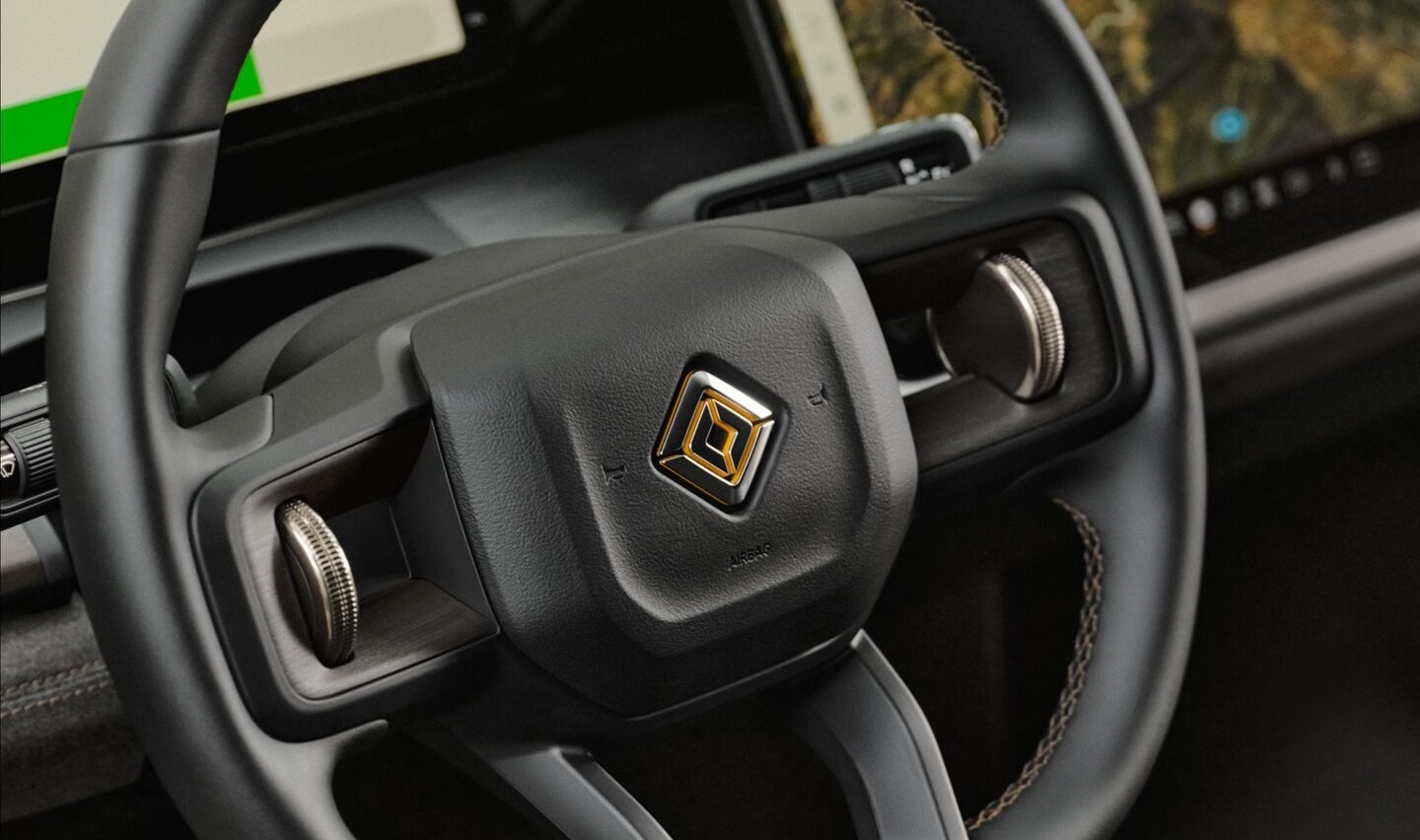
Bensaid went on to note that in the R2, there are no traditional HVAC buttons; instead, the large scroll wheels on the steering wheel can be used to adjust settings like fan speed on the fly. While not quite a button, they do seem like a better solution than tapping on a small icon on the touchscreen to tweak the fan speed.

 Rivian Won’t Add Buttons Back, Says You Should Talk To Your Car Instead
Scroll wheels on the Rivian R2’s steering wheel

According to Rivian, “the only reason that drivers and consumers do not interact with the car through voice is that, to put it really bluntly, the technology has been broken,” up until this point. A key difference between Rivian’s Assistant and those of competitors is that it uses its own Android-based infotainment system, which doesn’t offer support for Android Auto or Apple CarPlay, so the AI-assistant works seamlessly regardless of what screen is displayed.

Rivian also points out that the system takes a more conversational approach than traditional voice assistants. Instead of barking “Open the frunk,” for instance, you can simply say “I have a bag in the front of the car,” and the assistant will pop the frunk for you. It all sounds rather slick, though we’d still take a few physical buttons. What about you?

\\\\\\\\

Cars Killed The Horse, VW Thinks EVs Are About To Do The Same To Gas

  • A VW board member says more needs to be done to push the pros of EVs.
  • VW will use its expertise in China to help expand its European model range.
  • Despite this, the company won’t sell range-extender EVs in Europe.

One of VW’s most influential board members believes that once automakers actually convince buyers to go electric, internal combustion cars could end up viewed the same way we now see horses, an outdated form of transportation.

According to Martin Sander, VW’s board member for sales, marketing, and aftersales, more needs to be done to persuade people to buy an EV, rather than simply talking about ICE bans, such as the 2030 deadline in the UK.

More: VW’s Cheapest Golf Left America In 2021, Mexico Could Bring It Back

“[Today] I look out of the window: not many horses – it’s predominantly cars,” he told Auto Express. “This is why I hate the discussion about the ICE (internal combustion engine) ban. Everyone is just talking about the ICE ban. How do you convince customers about a new technology if you’re only talking about when there will be a date when you are not allowed to use these vehicles – vehicles you have got used to over the last decades – anymore?”

 Cars Killed The Horse, VW Thinks EVs Are About To Do The Same To Gas
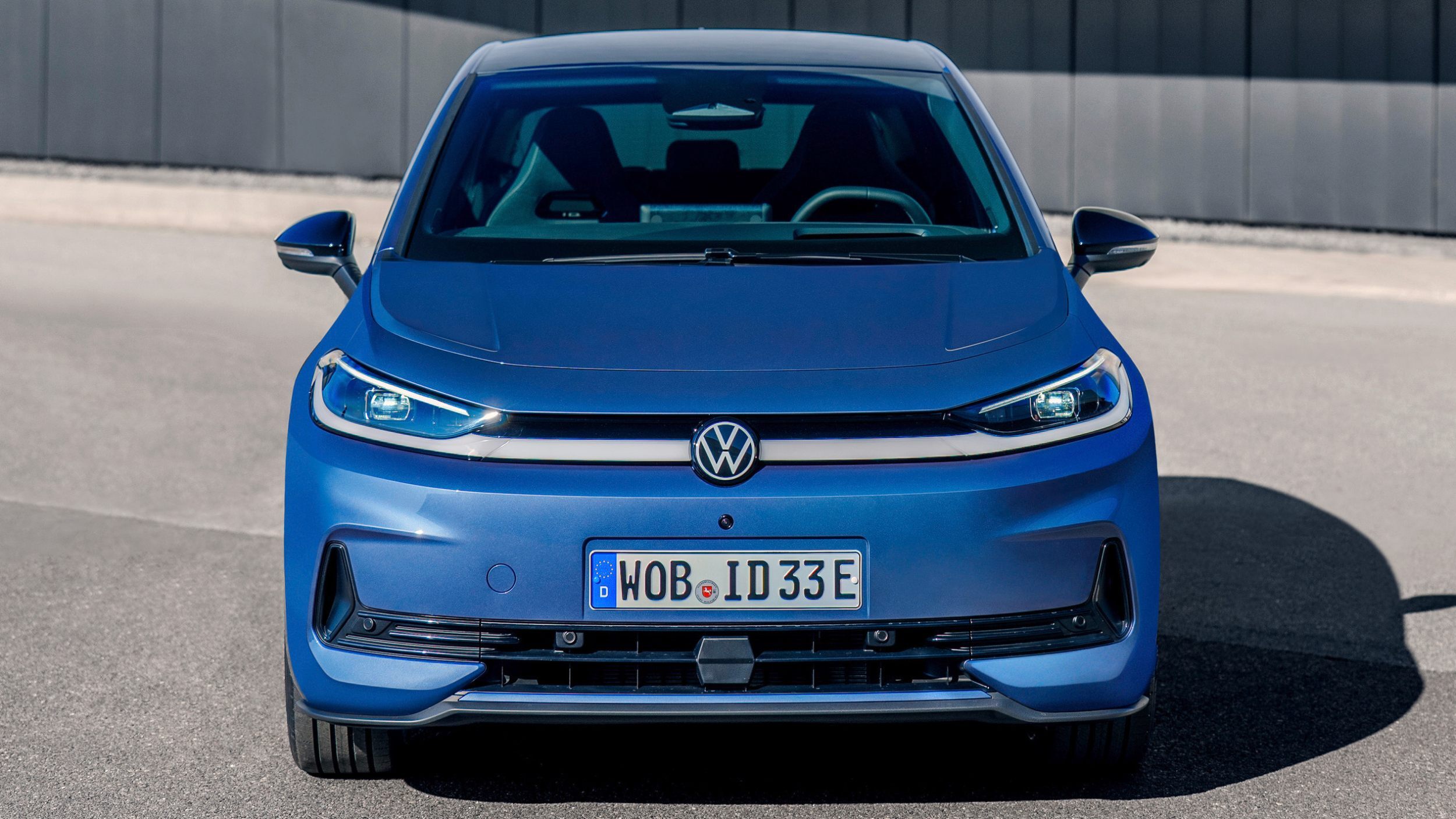
The recently updated VW ID.3 Neo.

Sander believes that “over time, more and more customers will be convinced” to buy an EV if barriers to ownership, such as improvements to charging infrastructure, are removed. “Let’s talk about what we need to do to actually convince customers: the charging infrastructure; talk positively about the advantages of electric vehicles, and possibly do something around the energy prices,” he noted.

Read: VW Kills Its Last Manual Gearbox Model In America

The board member suggested that if these conditions are met, the number of customers interested in owning an ICE-powered vehicle could drop to as little as “three, four, five percent” by 2035.

No EREVs For Europe

 Cars Killed The Horse, VW Thinks EVs Are About To Do The Same To Gas
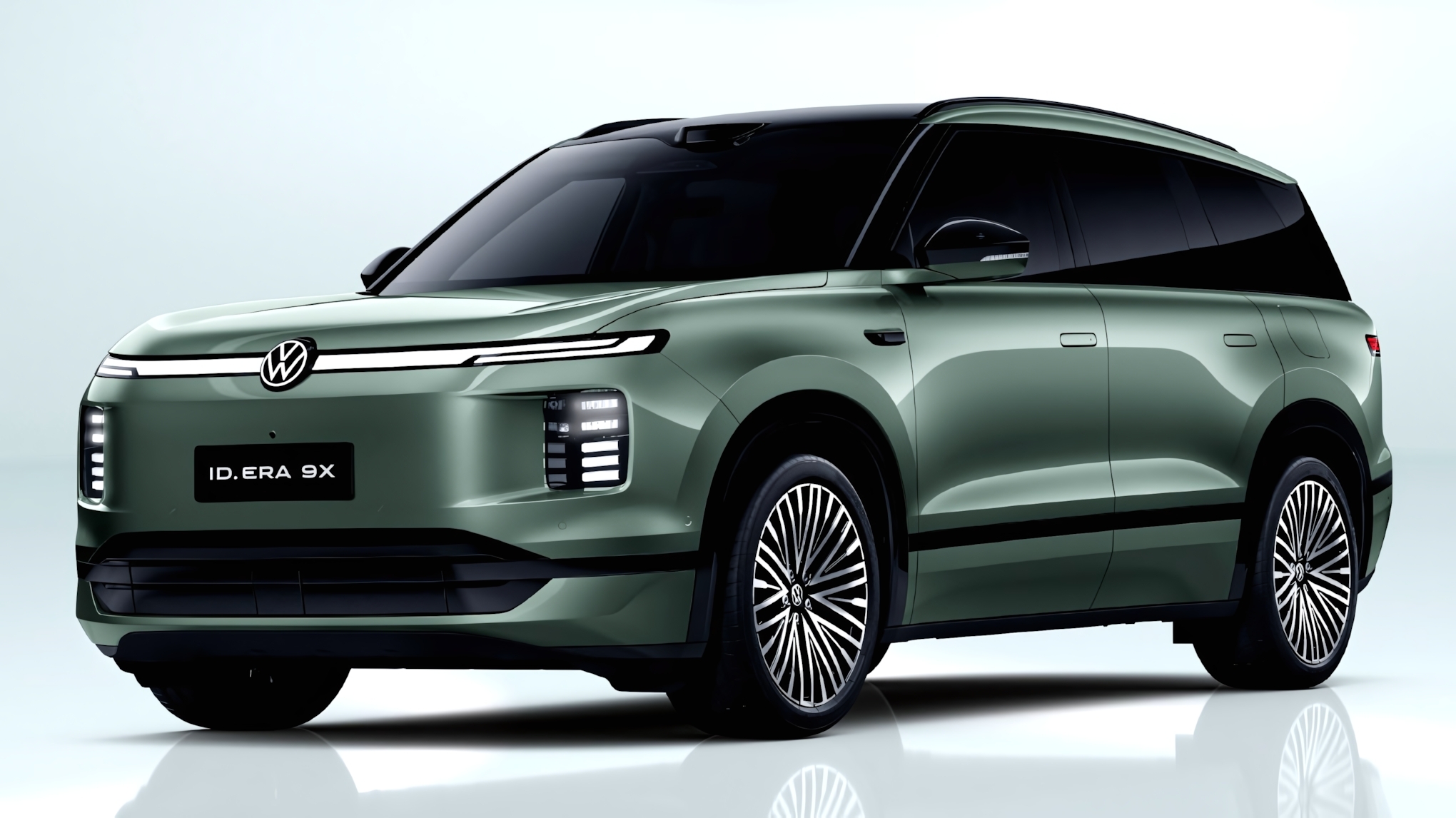
The Chinese-spec VW ID. Era 9X has a range-extender powertrain.

Interestingly, while VW transitions towards electrification in Europe, it doesn’t plan to introduce any of the range-extender EVs it offers in China, suggesting that demand for this powertrain won’t be strong enough in Europe.

Read: VW’s New $16,200 EV Sedan Is Longer Than A Jetta And Runs On Xpeng Tech

Despite this, Sander notes that the lessons VW is taking from its expansion of electrified vehicles in China will help it overseas.

“Everything we are learning in China will help us to be competitive in all the other markets around the globe where we are competing with the Chinese,” he said. “On our end it’s very much about scale, efficiency and cost, and this is what we are working on diligently. We have to be competitive. There’s no alternative.”

 Cars Killed The Horse, VW Thinks EVs Are About To Do The Same To Gas
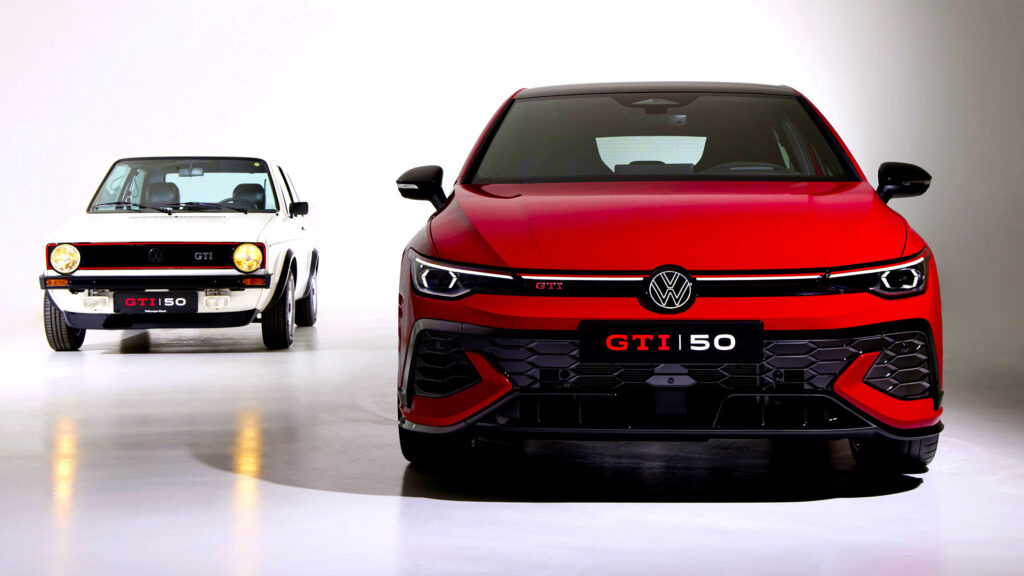
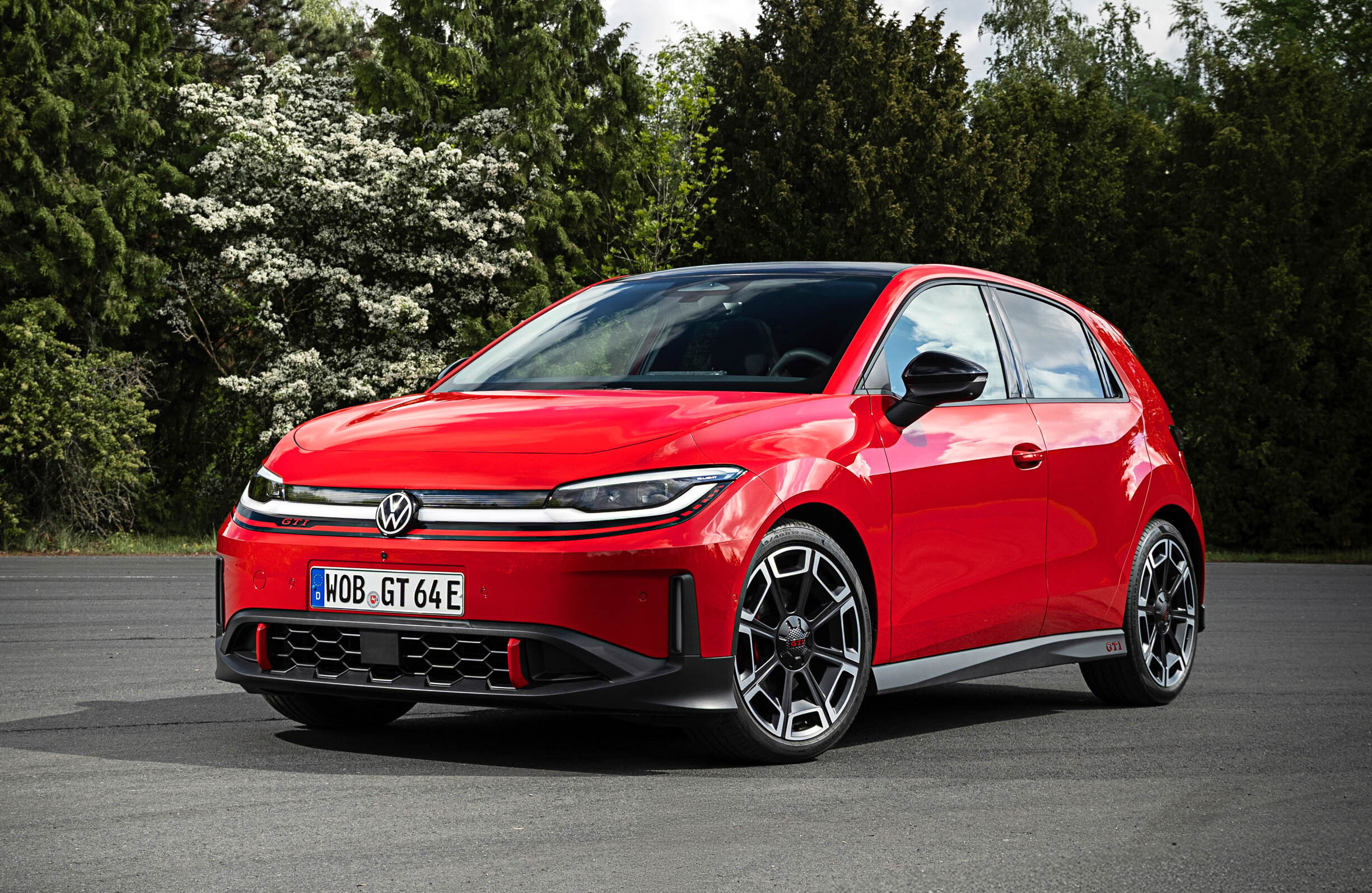
The fully electric VW ID.Polo GTI.

Rivian Doesn’t Care How Much You Like Interior Buttons, Voice Control Is Better

  • The EV maker says voice control will be the primary interface for new vehicles.
  • Owners of the Rivian R2 will be able to tweak fan speed through the steering wheel.
  • Rivian started rolling out its new AI-powered Assistant for the R1 models last month.

Some car manufacturers have caved to demand from buyers to bring back physical buttons, including VW, Audi, Mercedes-Benz, and Hyundai. Rivian doesn’t seem interested in following suit, declaring that its advanced AI-driven voice assistant system is a better way to control a vehicle’s functions.

While recently speaking with Rivian’s chief software officer, and the co-CEO of the Rivian and VW joint venture, Wassym Bensaid, The Verge dived head-first into the new Rivian Assistant, introduced to existing R1 models in mid-May. It’s built on a shared, multimodal AI foundation and can control core vehicle functions, including HVAC.

Read: For $50 A Month, Rivian Will Make You A Passenger In Your Own EV

Existing Rivian R1 models, as well as the new R2, are largely devoid of physical buttons, and given the brand’s commitment to its new assistant, it doesn’t appear as though this will change.

“I deeply believe that voice has the chance to be the primary interface in the car,” Bensaid told The Verge. “I also think that buttons can exist, but they shouldn’t be the primary way with which you interact with the car. I think there’s more that is possible with voice since you can do more than one single function. You don’t have to fiddle with so many functions.”

Are Scroll Wheels The Solution?

“You don’t have to go deep into the touchscreen to look into specific features. A great voice experience can elevate all of that, allow users to talk to the car as a human would, and really take the overall experience to the next level,” he added.

Bensaid went on to note that in the R2, there are no traditional HVAC buttons; instead, the large scroll wheels on the steering wheel can be used to adjust settings like fan speed on the fly. While not quite a button, they do seem like a better solution than tapping on a small icon on the touchscreen to tweak the fan speed.

 Rivian Doesn’t Care How Much You Like Interior Buttons, Voice Control Is Better
Scroll wheels on the Rivian R2’s steering wheel

According to Rivian, “the only reason that drivers and consumers do not interact with the car through voice is that, to put it really bluntly, the technology has been broken,” up until this point. A key difference between Rivian’s Assistant and those of competitors is that it uses its own Android-based infotainment system, which doesn’t offer support for Android Auto or Apple CarPlay, so the AI-assistant works seamlessly regardless of what screen is displayed.

Rivian also notes that it provides a more conversational approach than traditional voice assistant systems. For example, you don’t have to say “Open the frunk,” and can instead say “I have a bag in the front of the car,” and the system will automatically open the frunk. It all sounds rather nice, but we’d still prefer some physical buttons. What about you?

\\\\\\\\

Ford’s Secret $30,000 EV Truck Starts Public Testing Within Weeks

  • Ford’s secretive EV team is testing a new $30,000 electric pickup ahead of launch.
  • Midsize truck will debut a cost-focused EV platform designed for multiple models.
  • Ford says the new architecture must compete with both EVs and gas-powered vehicles.

Ford announced its “Model T Moment” a year ago. With it came the promise of an affordable electric pickup and other models on the same platform. According to a new report, we’re about to see prototypes on the road in Dearborn prior to its release next year.

According to Ford CFO Sherry House, prototypes of the automaker’s upcoming electric midsize pickup are already being built and tested as the company pushes toward a planned 2027 launch. While Ford later clarified that the camouflaged trucks aren’t yet driving on Michigan roads, spokesman Dave Tovar confirmed to The Detroit Free Press that they’ll be out in public within the next few weeks.

That means Detroit-area motorists could soon catch a glimpse of the vehicle Ford hopes will reshape its electric future.

Read: Ford Working On Affordable EVs, Setup A “Skunkworks Team” For New Platform

The truck is significant for more than simply being a brand-new platform and model. It’s the first product of Ford’s “skunkworks” team at the brand’s Electric Vehicle Development Center in Long Beach, California. More importantly, it will be the debut model for Ford’s new Universal Electric Vehicle platform.

Ford CEO Jim Farley first revealed the architecture in 2025, promising a family of affordable EVs built around a radically different cost structure. The first vehicle is expected to be a four-door midsize pickup starting at roughly $30,000.

 Ford’s Secret $30,000 EV Truck Starts Public Testing Within Weeks

House told investors the project remains on schedule. “We’re on plan for our 2027 launch,” she said, noting that Ford is already validating suppliers, testing prototype vehicles, and evaluating new manufacturing technologies, including megacasting.

Also: Ford Gives A Tiny Glimpse Of The $30K EV Truck Slate Should Be Worried About

The process, popularized by Tesla, can significantly reduce manufacturing complexity and costs. Ford believes those savings will be key to making the new truck profitable at a relatively low price point. “It’s going to be very feature-rich. It’s going to be very tech-forward,” House said. “It’s going to be affordable.”

Ford’s EV business has struggled to generate profits, making the success of this new architecture especially important. If House’s comments are any indication, Ford is betting that this vehicle and platform will turn the tide. We’ll get our first real look at that strategy once those heavily disguised prototypes start appearing on public roads.

 Ford’s Secret $30,000 EV Truck Starts Public Testing Within Weeks
Photos Ford

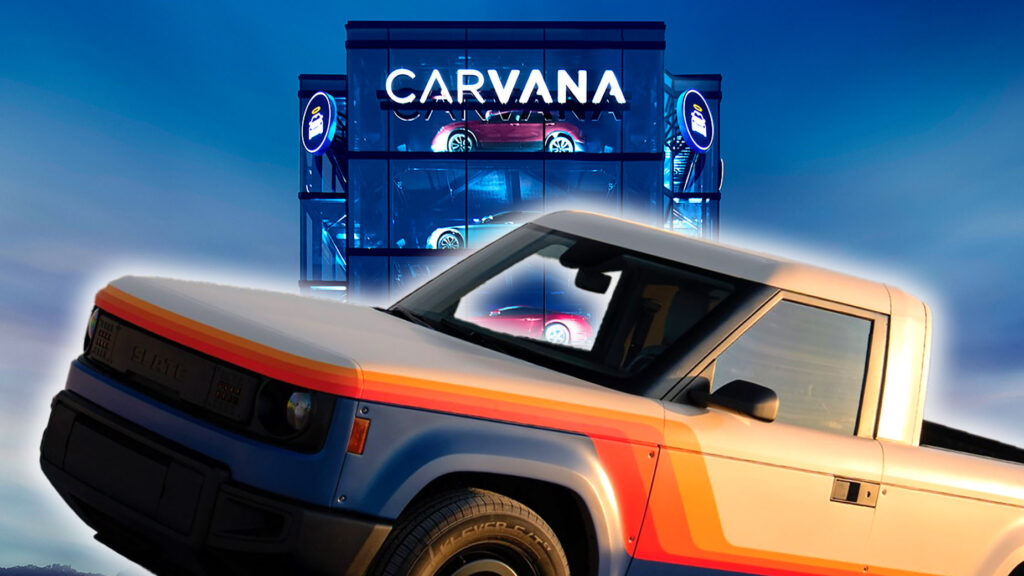
Carvana May Have A Foot In Bezos’s Slate Auto Already

  • Carvana may hold a stake in Slate Auto through an unconfirmed warrant.
  • Jeff Bezos remains one of the biggest names backing the EV startup.
  • Order books for the cheap electric truck are set to open later this month.

Slate Auto is pressing on with its plan to launch an affordable EV, and it is doing so at an awkward moment, with US appetite for electric cars on the wane. Order books open later this month, though the company still has not put a number on the car. As Slate inches toward production, a less obvious backer has come to light: Carvana.

While Carvana is best known as a used-car retailer, it has recently been expanding into new-car sales, snapping up several former Stellantis dealerships across the country. Last year, it was given a warrant to purchase shares in Slate Auto at roughly the same time the car manufacturer started organizing its Series C funding round, which raised $650 million.

Read: Slate Will Take Your Order For Its Cheap EV On June 24, Price Sold Separately

Filings with Delaware’s division of corporations have exposed the connection between the two companies, but they stop short of confirming whether Carvana actually exercised the warrant, and if it did, how many shares it walked away with.

According to a report from Tech Crunch, Carvana revealed in a March filing that it had been granted a warrant to purchase shares in an unnamed “products company” last year, noting the total value of the warrant was $1.5 million at the end of 2025. It’s unclear if this reference was in relation to Slate Auto or another company.

Who Else Has Invested?

\\\\\\

Slate Auto has raised approximately $1.4 billion to date, although limited details are available on its investors’ holdings. Amazon founder Jeff Bezos is known to be a major investor, as is the billionaire chief executive of Guggenheim Partners, Mark Walter. Other known investors include General Catalyst, Slauson & Co, and Amazon executive Diego Piacentini.

According to the automotive startup, prices for the all-electric truck will start somewhere in the “mid-$20,000” range. This is more than the sub-$20,000 price tag initially promised by Slate, but that was before the Trump administration axed the $7,500 federal EV tax credit.

\\\\\\\\

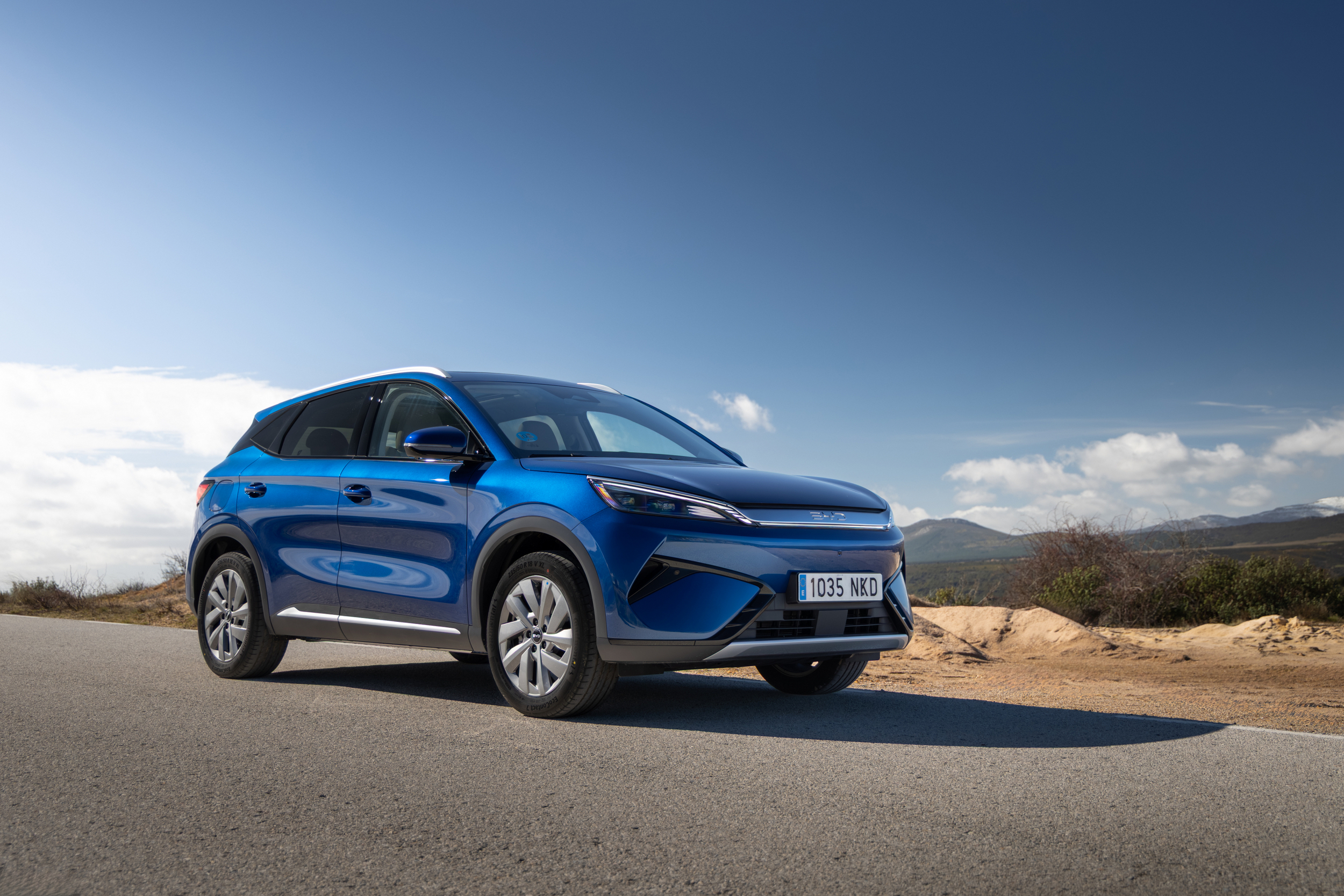
BYD Wants To Sell Humanoid Robots Right Next To Its Cars

  • BYD’s humanoid robots could include technology similar to that in its cars.
  • It’s possible the car manufacturer could work alongside existing robot firms.
  • Last year, rival brand Chery unveiled its own advanced humanoid robot.

The man who once couldn’t stop laughing at BYD probably isn’t laughing now. Back in 2011, Elon Musk dismissed the Chinese company outright when asked about it. These days BYD outsells Tesla over the course of a year and ranks among the largest carmakers on the planet, and like the brand it has overtaken, it now wants a piece of the world beyond cars.

Earlier this week, BYD executive vice president Li Ke revealed that the company is developing its own humanoid robots, noting that they will share common technologies with the brand’s cars. In addition, they could also be sold through BYD’s existing dealership network, not only in China, but also in other markets.

Read: BMW’s New Humanoid Workers Never Take A Break Or Get Paid

BYD hasn’t stated when its own humanoid robots could be ready to hit the market, nor has it said how it will develop and manufacture them. It’s possible they could be brought to life through an open platform where BYD works alongside established robotics companies, according to CarNewsChina. This would likely slash development times by relying on firms with extensive experience in this space.

China’s Robotic Future

 BYD Wants To Sell Humanoid Robots Right Next To Its Cars

While it’s Tesla that generates plenty of headlines for its humanoid robot, dozens of Chinese technology companies have already developed robots seemingly far more advanced than what Musk’s company has done. Earlier this year, more than 100 humanoid robots from different companies participated in a half-marathon in China. The winning robot, created by smartphone manufacturer Honor, needed just 50 minutes and 26 seconds to complete the half-marathon, almost seven full minutes quicker than the fastest half-marathon ever run by a human.

BYD isn’t the first Chinese brand to venture into the world of humanoid robots, either. Last year, Chery unveiled its own feminine humanoid robot, the Mornine M1, built by the company’s AiMoga subsidiary. Complete with long blonde hair, fake breasts, and a BBL, it’s a bizarre-looking creation that went on sale last month. It’s not cheap, however, starting at 285,800 yuan, or more than $41,000.

 BYD Wants To Sell Humanoid Robots Right Next To Its Cars
Chery’s Mornine M1 | Lead image Xpeng

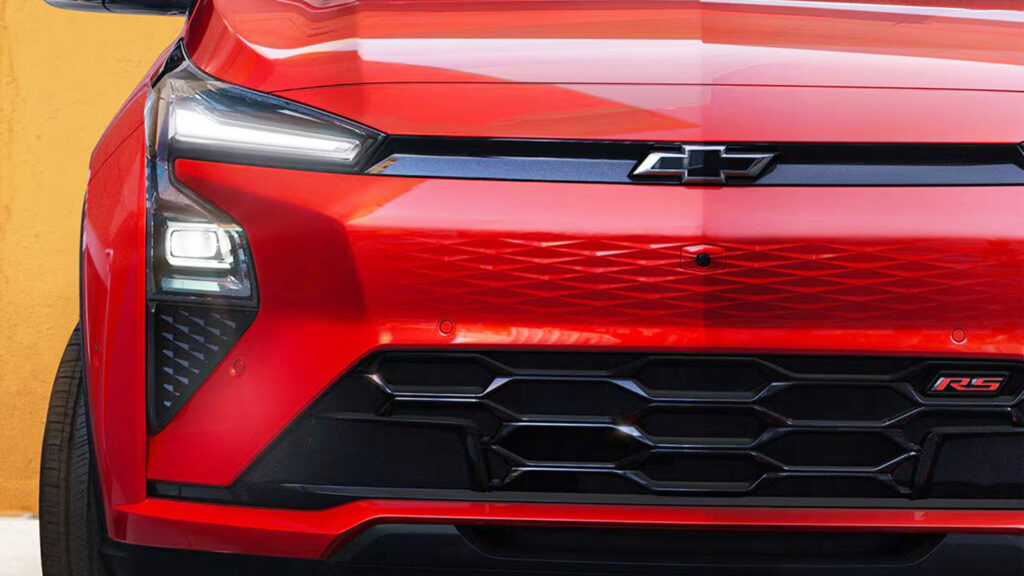
Chevy Builds 30 Identical Bolts At A Time And Keeps A Clone Of Each Version

  • Chevy builds 30 identical examples of the Bolt EV at the same time.
  • Building the EV in batches ensures suppliers deliver parts at the right time.
  • Company delivered just 791 examples of the Bolt in the first quarter.

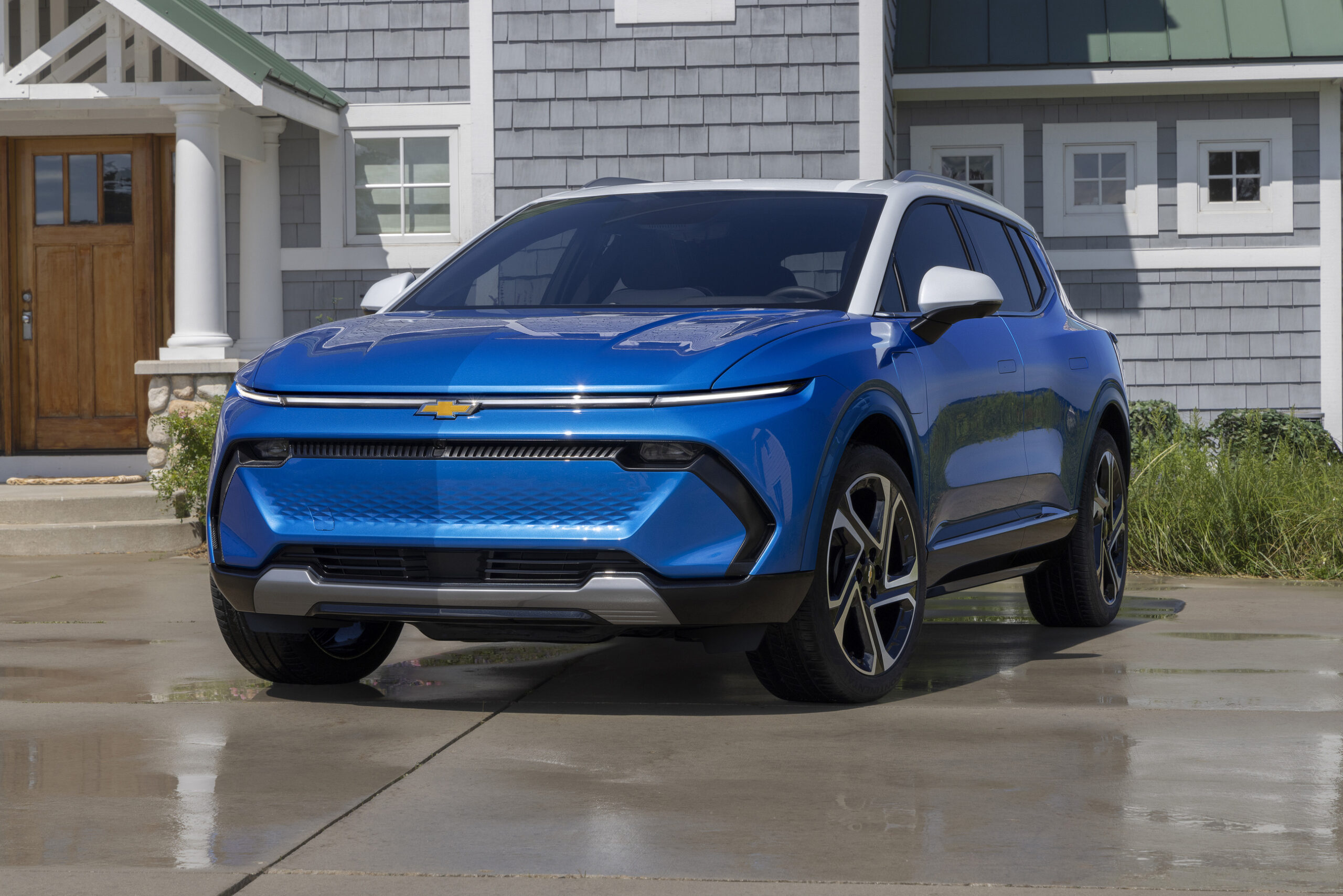
Reviving a discontinued nameplate is one thing. Building it profitably is another. In an effort to improve efficiency, reduce complexity, and boost quality for the 2027 Bolt, Chevrolet is employing a new batch production process for the affordable EV at its Fairfax Assembly plant.

The new-and-improved Bolt, unveiled late last year, is currently being built in relatively low numbers of between 2,000 and 3,000 vehicles a month. It is produced in batches of 30 identical copies at a time, all painted the same color, and it allows the carmaker to provide suppliers with a fixed seven-day schedule of exactly which models it’s building and when, ensuring parts arrive on site at the perfect time.

Read: Chevy Promised 255 Miles, The New Bolt Beats It Anyway

The logic is mostly about paint. By building 30 identically specced Bolts at a time, the paint shop equipment doesn’t need to be changed or cleaned as often, since all 30 get the same treatment. Seven exterior colors are on offer, so there might be 30 blue examples moving down the line together, followed by 30 red ones, and so on.

Speaking with Auto News, Michael Youngs, director of GM’s Kansas City plant, noted that the factory also keeps clones of each Bolt configuration to easily identify any issues with the models it’s building. If it finds one, the car will be pulled from the batch and replaced by another.

A New Production Process

\\\\\

“It was an idea that we had to look across the enterprise, not just in the plant but to suppliers, to say, ‘How do we make sure we can be as efficient as possible as we launch the Bolt?’ And the concept of batch was born,” Youngs said.

GM will continue building the Bolt in batches like this when the Fairfax also starts manufacturing the Chevrolet Equinox in 2027 and a new Buick crossover the following year. Indeed, the Equinox and this Buick will also be produced in similar batches.

For now, the Chevrolet Bolt remains a small seller for the brand, particularly when compared to the first-generation model, which posted several years of 20,000-plus sales. Through the first three months of this year, Chevy delivered just 791 examples of the 2027 Bolt, meaning it barely outsold the BrightDrop 400 and 600 electric delivery vans.

\\\\\\\

Ford Has No Regrets About Killing Its Sedans, Yet One Might Return As A Mustang

  • Ford executive Andrew Frick says there is still a market for sedans.
  • A new sedan would need to fit within an existing Ford vehicle family.
  • Rumors of a four-door Mustang have circulated for several years.

The American sedan has spent the better part of a decade being written off as dead, and Ford helped kill it. For years the company’s US lineup has carried no sedans at all, the bet placed entirely on high-volume SUVs and pickups. Now there are signs that bet is being reconsidered, and any sedan that returns may well wear a Mustang badge.

Late last year, Ford chief executive Jim Farley expressed his desire for Ford to launch a rear-wheel-drive performance sedan, potentially based on the company’s new Universal EV platform, which is first set to underpin an affordable new electric pickup. Andrew Frick, the president of Ford’s Blue and Model e divisions, also recently spoke about a potential new sedan, noting that there is a market for such a car.

Read: Ford CEO Hints At Affordable RWD Performance Sedan

“There is a percentage of the customer base that still buys sedans,” he told Auto News. “It’s a lot smaller than it once was. It used to be 50 percent, now it’s 16, 17 percent. We have a really great Mustang that people consider a car. We look to expand on the Mustang family as we move forward. I think, for us to do it, it’s going to have to make sense within our portfolio. It’s going to have to make sense within a family that we may already offer.”

That last point is the catch. Frick said any future sedan would have to be genuinely cost-effective to justify its slot, a condition he tied to Ford’s wider drive toward affordable new vehicles.

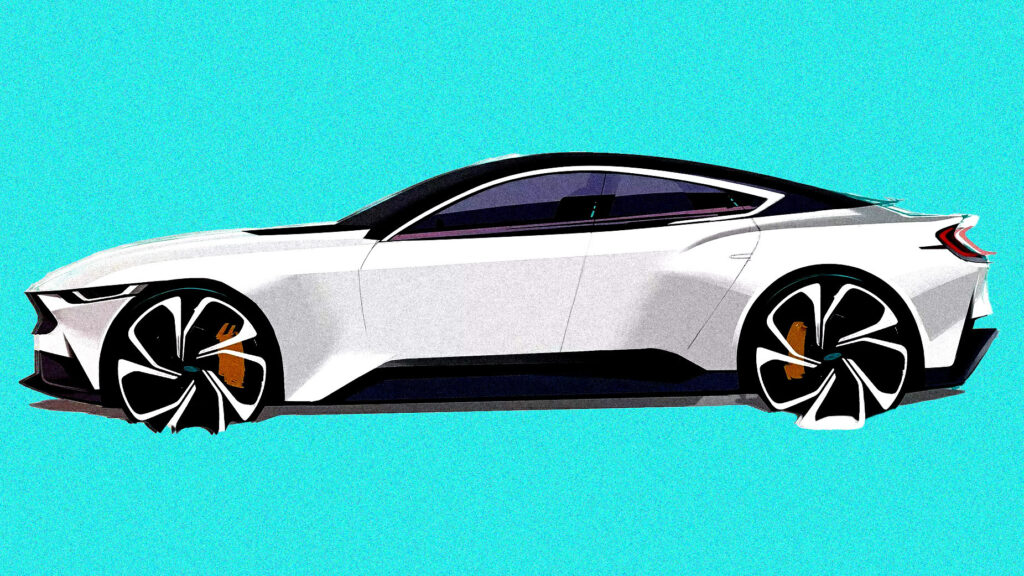
A Mustang Mach-4 Sedan?

 Ford Has No Regrets About Killing Its Sedans, Yet One Might Return As A Mustang
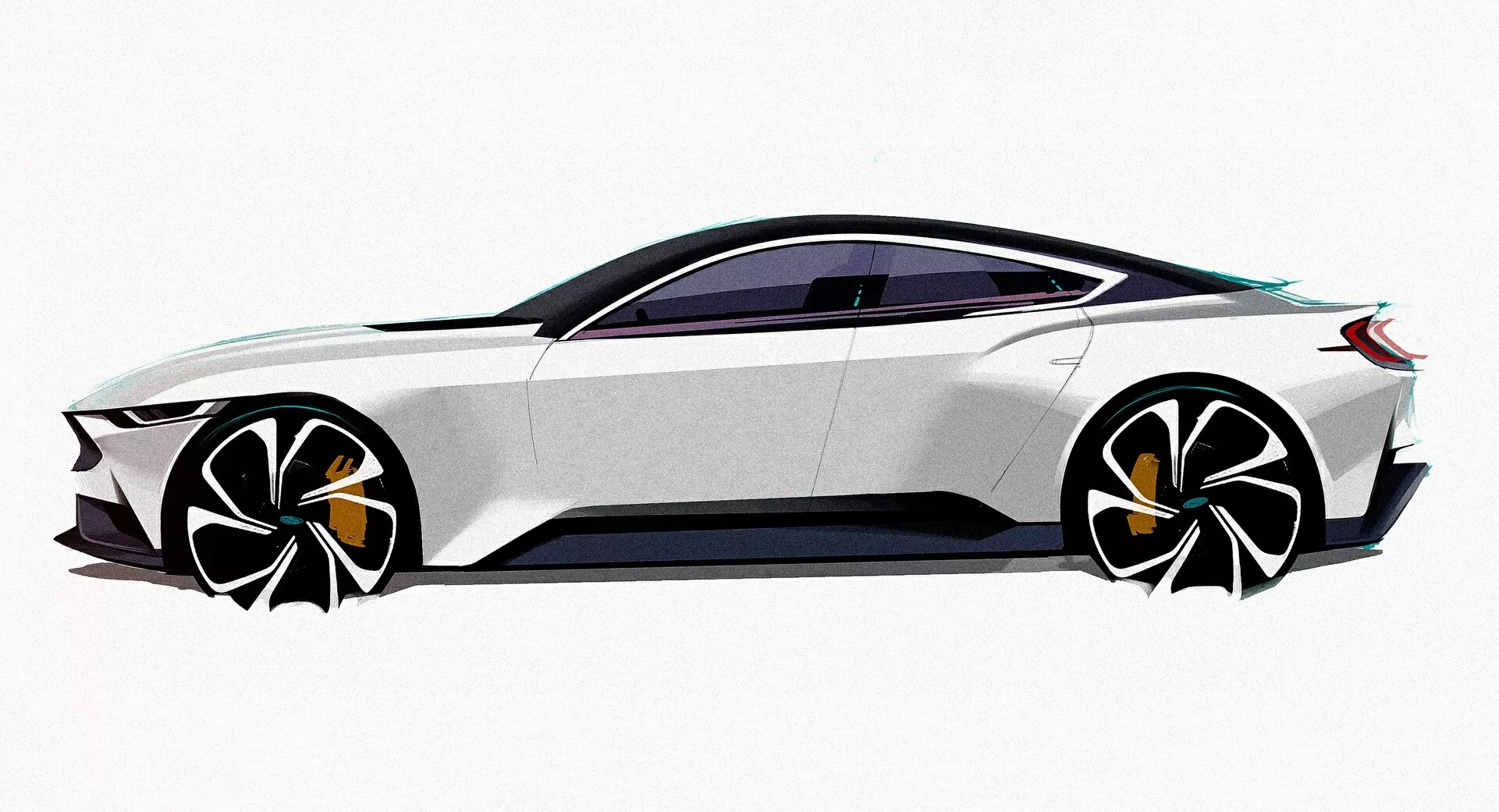
Official Ford sketch of a Mustang sedan study.

Frick’s statements that Ford is looking to grow the Mustang family, and that a new sedan would need to make sense within an existing vehicle family, lend credence to long-standing rumors about a Ford Mustang sedan. Ford already offers the Mach E crossover with the Mustang nameplate, so it’s not hard to imagine them launching a sedan with the same badge.

Whether that model could be electric or something based around the existing gas Mustang’s hardware, with a V8 and a manual, is anyone’s guess for now, as Frick gave no indication either way.

What we do know is that the company showed dealers two additional Mustang concepts in 2024, among them a four-door coupe and an all-wheel-drive off-road variant. Then came the “Mach 4” trademark filing in 2025, which only added fuel to the rumors.

No Regrets About Killing The Sedans

Interestingly, while it seems Ford is ready to pour money into a new sedan, Frick noted the company has no regrets about previously killing off its sedan models in the US, saying this allowed it to build models like the Bronco, Bronco Sport, and Maverick.

“In some of those vehicle lines, we were competing to compete,” he told the outlet. “We took that capital and put that in other products where we are playing to win. We wouldn’t have had a Bronco, we wouldn’t have had a Maverick or Bronco Sport. We wouldn’t have some of the product lines like Tremor. We wouldn’t have expanded Raptor the way we did…I would do it all over again.”

\\\\\

Photos Ford

Canada Let In 2,910 Chinese EVs Last Month, Only 18 Were Confirmed Non-Tesla

  • Up to 49,000 Chinese-made EVs can be imported to Canada at a reduced tariff rate.
  • The first 24,500 of the reduced-tariff quota will be allocated between March and August.
  • In May, 2,910 eligible vehicles were imported into Canada at the lower tariff.

Canada’s new trade agreement with China has cracked open the door for Chinese-built EVs, and the first cars are already landing on Canadian soil. The government has not said which brands are coming through, but the early money is on Tesla.

The math behind the deal is straightforward. EVs imported from China once faced a punishing 100 percent additional tariff. Now they pay just 6.1 percent. The catch is volume. For the program’s first year, imports at the reduced rate are capped at 49,000 units, split into two halves: 24,500 from March through August, and another 24,500 from September through February.

Read: Canada’s New Chinese EV Quota Has A Tesla-Sized Problem Already

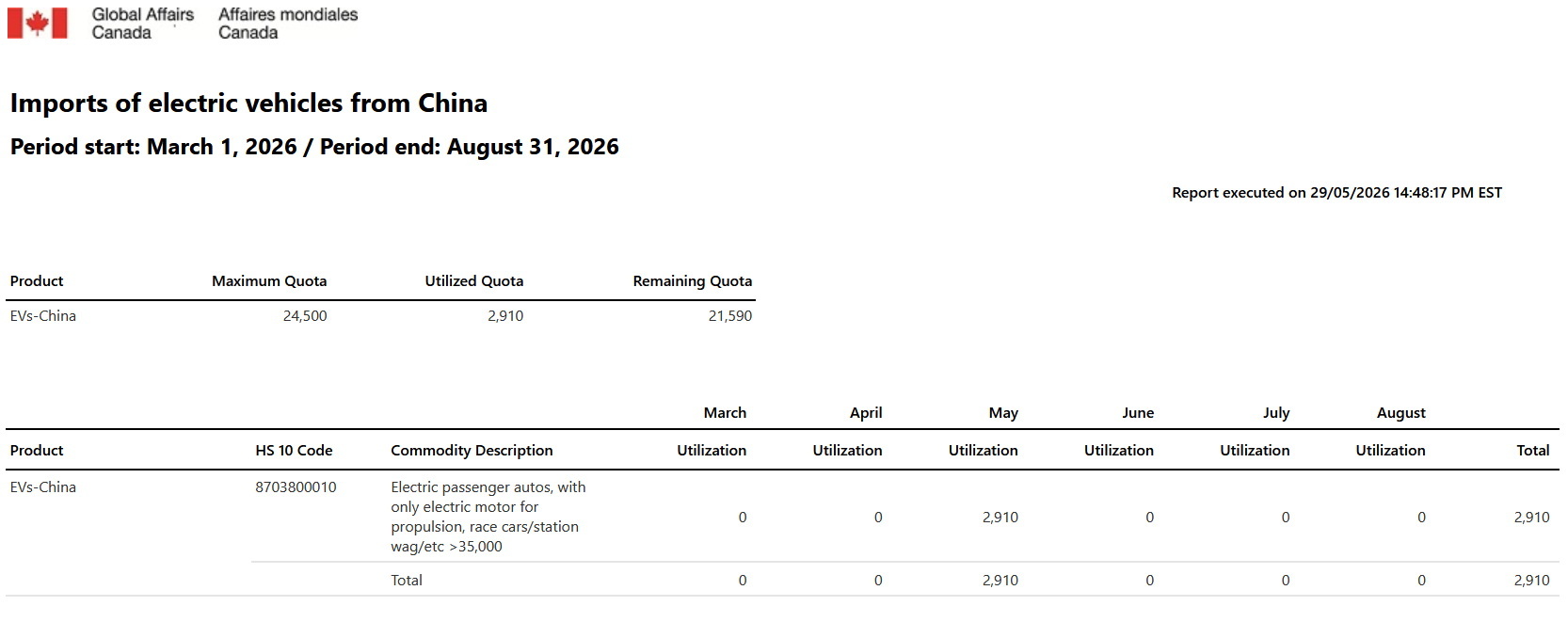
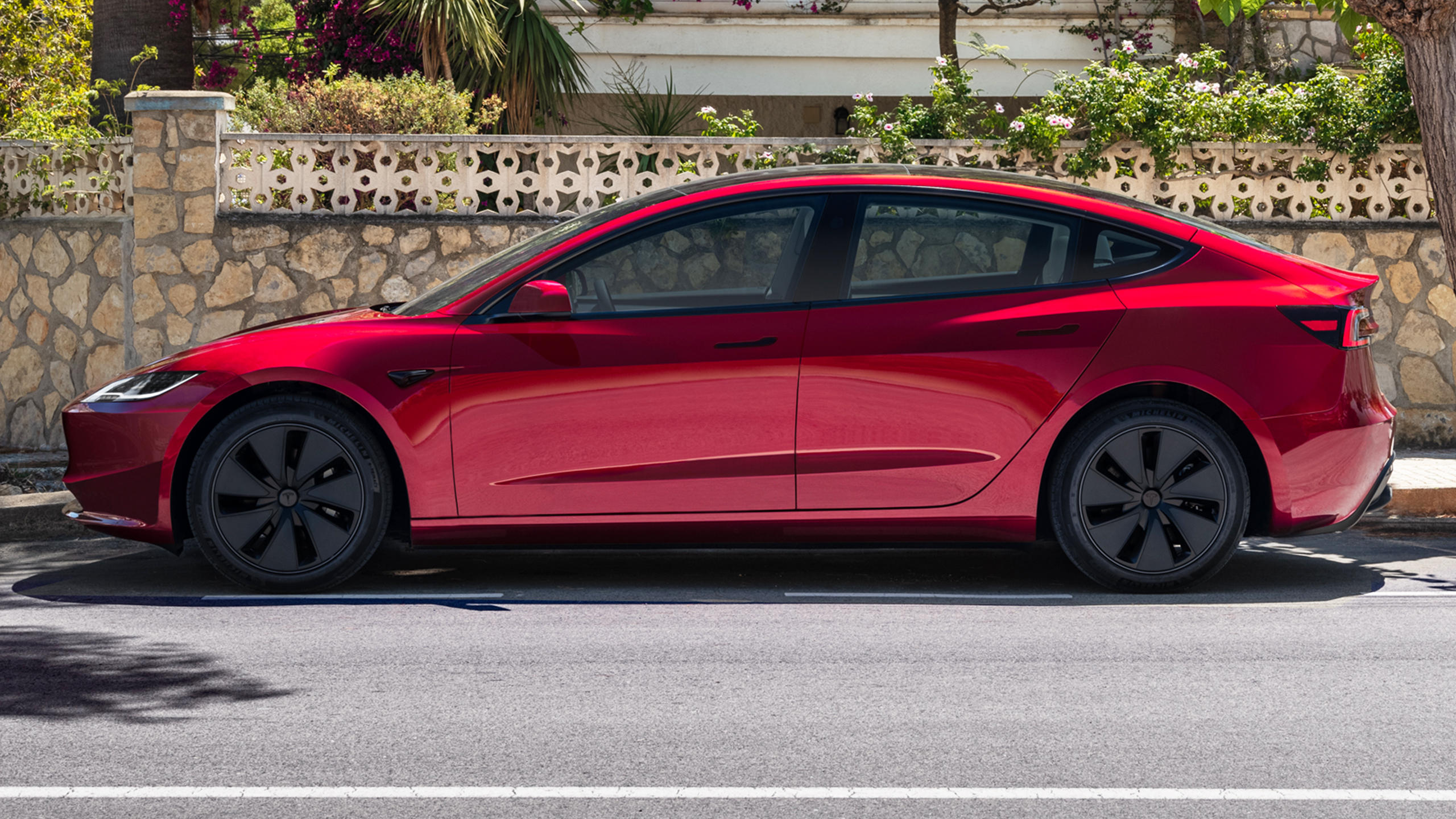
Data from Global Affairs Canada reveals that in May, 2,910 eligible vehicles were imported into Canada, accounting for just under 12 percent of the quota for the current six-month period. The government has made no mention of which brands received the lowered tariffs, but Tesla is thought to have accounted for the vast majority of them, given that it’s now building Model 3s at its Shanghai factory and exporting them to Canada.

 Canada Let In 2,910 Chinese EVs Last Month, Only 18 Were Confirmed Non-Tesla

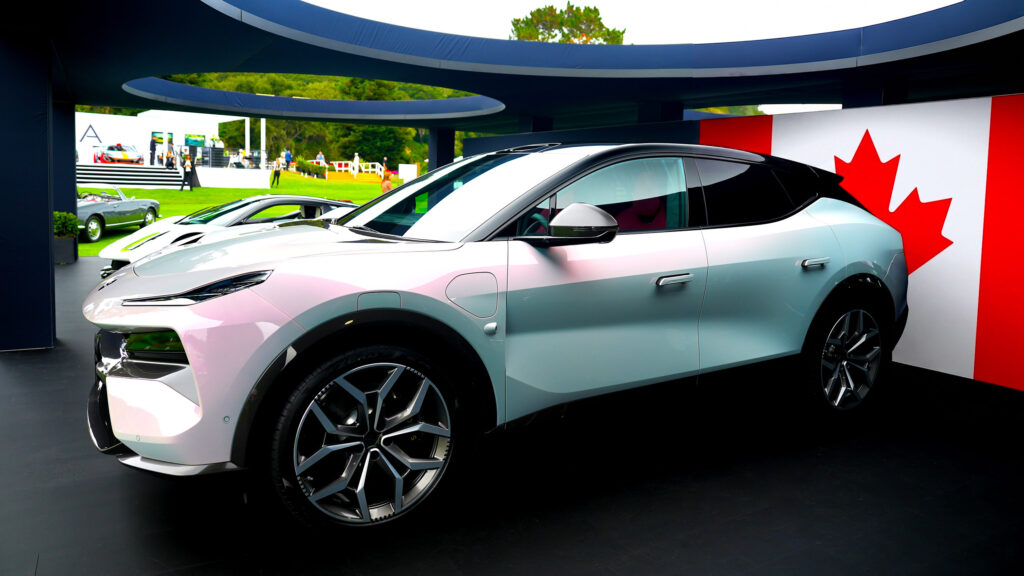
By comparison, most of Tesla’s Chinese rivals are still early in their Canadian expansions and aren’t ready to export yet. According to Drive Tesla Canada, the only non-Tesla EVs from China to reach Canada in May were 18 examples of the high-end Lotus Eletre.

Others Are Coming From China Too

From the moment the new tariff quota system was announced, Tesla was expected to take early advantage of it. In addition to Geely starting to import Lotus Eletres from China, the group also owns the Volvo and Polestar brands, both of which already sell their vehicles in the country. Models from these two brands are also expected to benefit from the lowered tariffs, although it doesn’t yet appear that they’ve done so.

 Canada Let In 2,910 Chinese EVs Last Month, Only 18 Were Confirmed Non-Tesla

As we reported last month, a slew of new brands are gearing up to launch in Canada. Among these is Chery, which is expected to soon roll out vehicles from its Jaecoo brand nationwide. In addition, it’s understood that BYD wants to open as many as 20 locations in Canada this year and may even build its own local factory.

Geely will also grow its footprint beyond the Lotus, Volvo, and Polestar brands. It is readying Zeekr for a local launch and has already started hiring for senior-level positions in Toronto.

\\\\

Dreame On: Robot Vacuum Maker With Zero Cars Wants To Crack Australia’s Top 10

  • Dreame will target three or four key vehicle segments in Australia.
  • The vacuum giant could even bring its own mid-size pickup to market.
  • Australian sales may begin as soon as next year for the new brand.

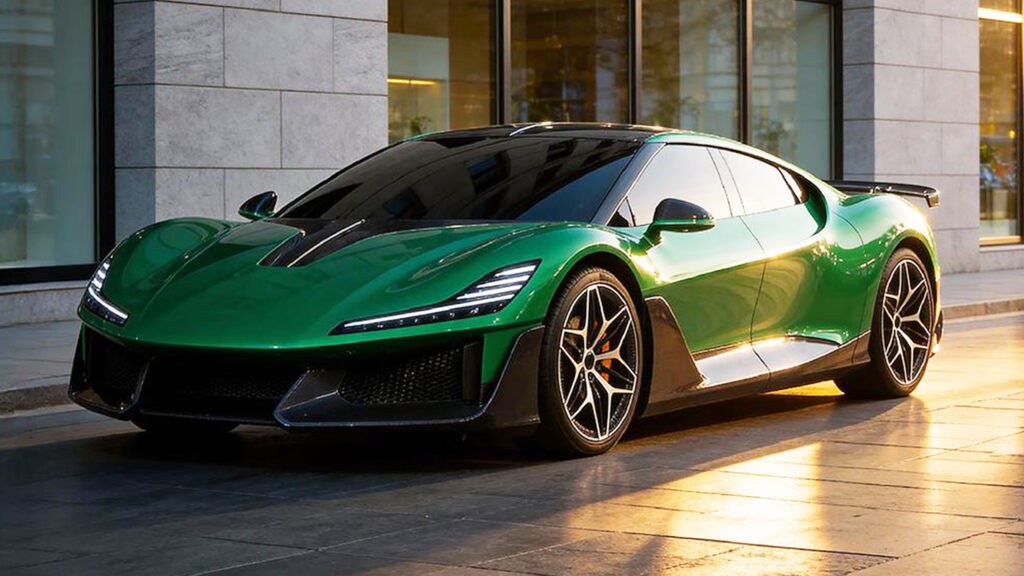
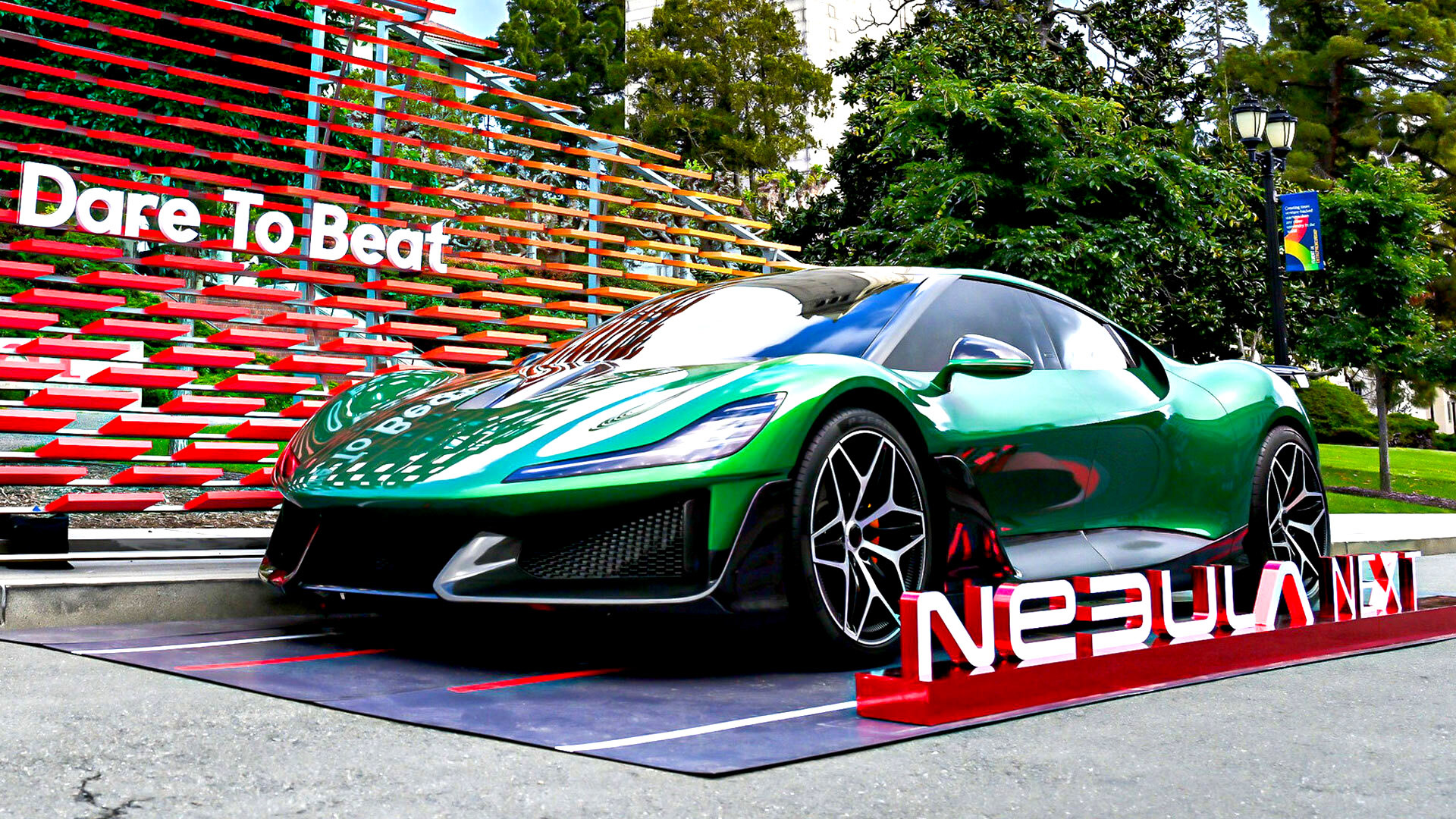
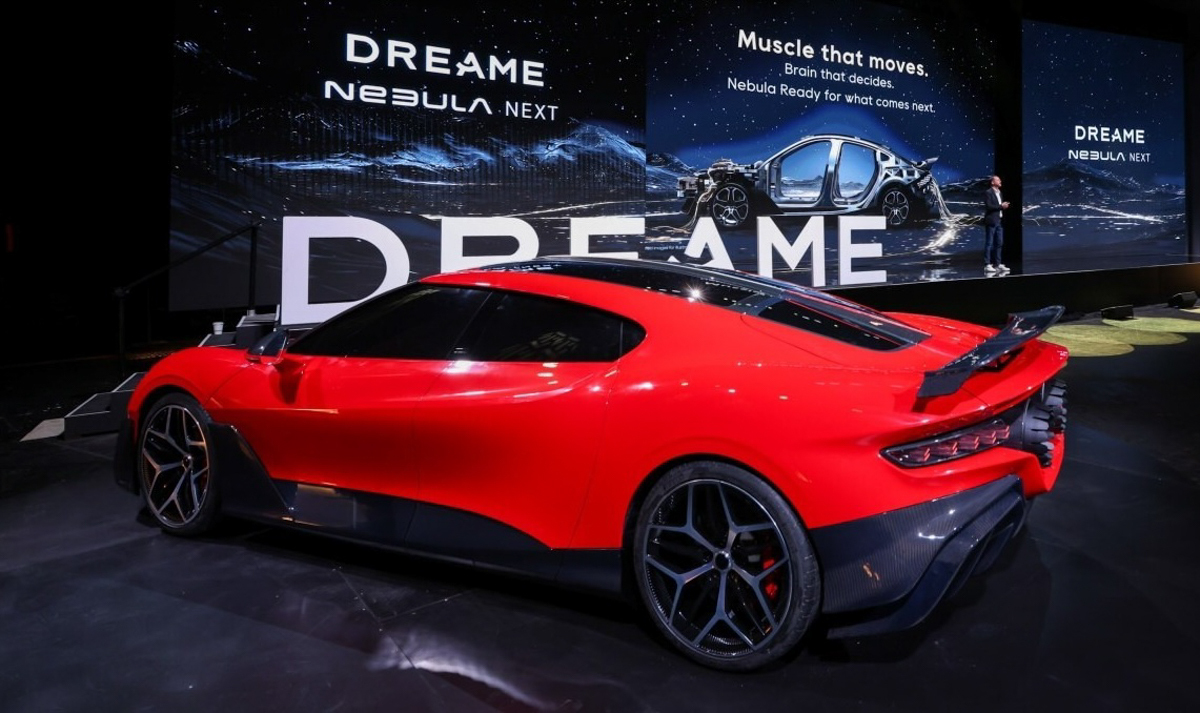
Over the past six months, Chinese consumer electronics manufacturer Dreame, best known for its robot vacuums, has unveiled several concept cars, including an electric supercar with rockets strapped to its rear. The brand could easily be dismissed as just another outfit using cars to drum up publicity for its core business. Yet Dreame, it seems, has real ambitions to become an important player in the automotive space.

Dreame has yet to produce a single production car, and it has already set its sights on expanding internationally. That includes a launch in Australia, where it wants to crack the top 10 of the nation’s best-selling brands within just five years. If it pulls that off, it would be a monumental achievement.

Read: If You Ever Dreamed Of A Cheap Bugatti Sedan, China Has You Covered

The company has already appointed a local, James Moore, to lead its operations in Australia and New Zealand, and he says Dreame plans to launch its first cars next year. Don’t expect the wild stuff, though. There will be no production version of the Nebula Next 01 or the Next 01X SUV, nor the Chiron-inspired Kosmera sedan, nor the two rugged SUVs from its Star Motor brand. Instead, the company will likely sell more mainstream SUVs, with utility vehicles and a pickup possibly to follow.

Chasing Volume

 Dreame On: Robot Vacuum Maker With Zero Cars Wants To Crack Australia’s Top 10
Dreame Nebula Next 01

“We are looking to benchmark ourselves at the mid to high tier. We are not interested in coming in as a race to the bottom,” Moore told Australia’s Drive. “We’ve seen many brands come in to compete at that budget price point, and it’s a very congested market. The amount of models we had selected from were… those volume segments of small SUV, medium SUV, large SUV, as well as potential pick-ups and utility vehicles as well.”

Moore added that the models bound for Australia will fall within three to four segments, focusing on the most popular areas of the market. He noted that, given the success of other brands, it’s possible an Aussie-focused pickup could also see the light of day.

Initially, Dreame’s vehicles will be all-electric, but it could add range-extender models and plug-in hybrids in the future, helping to broaden the firm’s appeal.

 Dreame On: Robot Vacuum Maker With Zero Cars Wants To Crack Australia’s Top 10

Illinois School Bus Driver Arrested Following Child Sexual Assault Allegation

A school bus driver contracted to transport students for the Rantoul City School District in Illinois has been arrested on allegations of predatory criminal sexual assault of a child, reported WCIA News.

According to the news report, 35-year-old Illinois school bus driver Johnnie C. McClendon Jr. was taken into custody May 28 following an investigation conducted by the Rantoul Police Department. Police said McClendon was arrested without incident.

McClendon is employed by First Student Inc., the transportation company contracted to provide bus services for the district, said police via the article.

“At this time, investigators have received no allegations of misconduct related to his employment, and the investigation appears to involve matters unrelated to his position with the company,” the police department said in a statement to local news reporters.

Police reportedly declined to release additional details, citing the need to protect the integrity of the investigation and the privacy of those involved. Court records had not been updated as of Friday to reflect formal charges filed by the Champaign County State’s Attorney’s Office. McClendon remained in custody following his initial court appearance.

Rantoul City Schools Superintendent Scott Woods said district officials were notified by police of the arrest and immediately contacted First Student regarding the driver’s status.

“We have confirmed with First Student that the individual will not be driving for our school district in future,” Woods said in a letter sent to families.

Woods said district officials have been informed that the allegations are not related to McClendon’s conduct while driving a school bus. However, he noted the district has not received information indicating whether the alleged conduct involved a student enrolled in the district.

“We take all matters involving the safety and well-being of children extremely seriously and are monitoring the situation closely,” Woods wrote. “Student safety remains our highest priority.”

The district said it will continue cooperating with law enforcement and communicating with First Student as appropriate.

Police encouraged anyone who may have experienced inappropriate conduct, whether related to the case or otherwise, to contact the Rantoul Police Department. The investigation remains ongoing.


Related: Former School Bus Driver Sentenced to 16 Years for Sexual Assault
Related: Child Sexual Assault Charge for Colorado School Bus Driver
Related: Connecticut School Bus Driver Charged After Alleged Failure to Stop Assaults
Related: Sexual Assault on School Transportation Vehicles: A Call for Action

The post Illinois School Bus Driver Arrested Following Child Sexual Assault Allegation appeared first on School Transportation News.

Planning the Perfect Rollout: Secrets for Successful Software, Hardware Upgrades

Many school transportation departments throughout the U.S. are currently engaged in software and hardware upgrades—from exploration to implementation—with goals to make the process as smooth as possible while reaping top-level returns on that investment.

Habersham County Schools in Clarkesville, Georgia transports some 4,000 of its approximately 7,000 students throughout the district’s 350 square miles. Stephanie Walker, director of transportation for the district, noted Habersham is in the final stage of a complete bus radio replacement, which entails all new equipment and installation.

“This upgrade was a result of our 911 emergency services upgrading their radio system, and we wanted to remain on the same system as we have always been,” she said. “This project has been a long process, and we are excited to see our radio coverage increase significantly throughout our school district.

“This has always been a safety concern because our existing coverage included portions of our district that had little or no coverage due to terrain and older equipment,” she continued. “We are thankful to be on the same radio network as our emergency services as it relates to safety and monitoring by our emergency management services.”

Walker noted the district is currently considering new software for routing to replace its existing program. “With this replacement, we are considering the addition of student tracking, parent app and live GPS,” she said. “We have evaluated several options and are moving forward with recommendations soon. I believe the additions of student tracking and live GPS will bolster our continuing efforts to maintain high levels of safety for our students.”

Meanwhile, Lamar Consolidated Independent School District in Rosenberg, Texas, which serves approximately 48,000 students, with an average of a little more than 22,000 students transported daily by school bus. Lamar CISD is also the home of the 2026 AASA Superintendent of the Year Roosevelt Nivens.

“Providing safe, reliable transportation at this scale requires a strong operational foundation supported by technology, communication and collaboration,” said Michelle Summers, the assistant director of transportation at the district’s Rosenberg location.

Regarding software and hardware updates, Summers noted the district currently utilizes student monitoring technology that allows students to scan on and off the bus. “This provides parents with visibility into where their student is and adds an additional layer of safety and accountability,” she added.

The district’s school buses also are equipped with tablets, enabling drivers to operate their routes in a hands-free environment, eliminating the need to handle paper route sheets while driving. “Additionally, we have a parent app that allows families to track their child’s bus in real time and view student scan activity,” said Summers. “Together, these tools enhance communication, situational awareness and overall safety for students, drivers and families.” Newport News Public Schools in Virginia recently completed the RFP process to purchase updated routing software.

“We are migrating to a new field trip software as our current software by App Garden is being absorbed by Pathwise,” said Sharon L. Moore, transportation operations manager for the district that transports 19,000 of its district’s 25,500 students via school bus. “There are plans to have our student referral process become digital. We are currently exploring different software to assist us in this goal.”

Addressing challenges and lessons learned, Moore noted it can be challenging during the RFP process to identify software that encompasses all district wish-list items.

“There must be concessions made by both sides to come to the point of making a purchasing decision,” she added. “In the past, we have had to understand that proposals put forth by vendors need to be looked at as a used car sales approach, where everything looks shiny and new. But when we get to implementation, that is where the dings and dents come to light and there is more work than anticipated to get the program up and running for the district.”

That has made district staff aware that they need to ask more in-depth questions during the proposal phase to ensure the product being presented will be adequate to meet its needs, she added.

“If we can weed out the programs that would not be able to do what we need them to do during the RFP process, it saves so much more time and energy during the implementation phase,” said Moore. “We had a situation where we had gotten to the implementation training for a major product and had to back out because it simply would not have worked for our district,” she added. “We found that had we asked more in-depth questions during the process, we could have saved both us and the vendor months of work.”

Walker said one of her biggest challenges is finding the best time to perform equipment replacement and/or installation of new software, including training of all staff and
verification of data transfer.

“We are just now reaching the equipment replacement portion of the new bus radio system and are scheduled as soon as we end our normal school year, for which I am thankful,” she continued. “The timing of the radio equipment will allow for a quicker, seamless installation. However, we were prepared to coordinate the best rotation possible if it were to occur during school days.”

Walker added that any upgrades to the routing software and the new addition of the student verification and parent app will likely occur during the next school year. “Part of our current discussions are planning for this to happen and how we feel is the best approach for the transition if we are able to move forward as we hope,” she noted.

Summers noted the challenges associated with implementation occurred prior to her start with the district. She was informed the process was “very rocky during the first few years.”

“As a district, we worked closely with Tyler Technologies to identify errors within the system and received much needed training. As a result of those efforts, the opening of the 2025–2026 school year was very smooth, showing significant improvement,” she continued,
adding some technology challenges remain, especially related to connectivity and RFID issues. “However, we have strong working relationships with Tyler Technologies and CI Solutions, our student badge provider.

Because of these partnerships, we are typically able to address issues before they become larger problems.” Addressing what a successful implementation looks like, Summers said that it can be challenging, as transportation has many moving parts. “Nothing will ever work perfectly 100 percent of the time,” she pointed out. “However, transportation must operate as close to 100 percent as possible because we have zero room for error when it comes to student safety.”

Summers noted a successful implementation includes strong support from district leadership, clear and consistent communication, healthy and responsive relationships with vendors, and systems that reduce stress rather than add to it.

“When these elements are in place, it creates a smoother, less stressful school year for everyone involved,” she said. Moore agreed a successful implementation should encompass a smooth transition from selection to implementation.

“There needs to be a strong implementation plan with a clear training schedule for all users,” she said. “Each user role and responsibility needs to be clearly defined and the training tailored for each user group needs.” There needs to be a realistic timeline between purchase, training and implementation when it goes live, Moore said.

“There may be a need to run dual programs for a period to ensure that as many bumps in the road with the new software can be handled without operational disruption because we still have the support of the old software,” she added.

Moore advised other districts to involve end-users in as much of the implementation process as possible to help with buy-in and comfort level with the new technology, so that when the software does go live, all users feel comfortable using the program.

To ensure a successful implementation, Moore said she makes all attempts to prepare for any scenario during an upgrade or installation of equipment and software. “I want to see the process as seamless as possible,” she shared. “However, I try to have plans B, C and D already laid out just in case. A successful implementation will come from preparing and planning not only at the school district level but with the vendor you are working with.”

Moore suggested that school districts looking to do upgrades should spend time researching and developing the right questions to ask. “Know what features you are looking for, even if some of them seem too outrageous,” she said. “Not all of the pie-in-the-sky features will be available or possible, but you may be surprised that some will be.

“These features will probably not be the shiny new car look that you see in the showroom but could be the hidden under the hood features that makes the software the right fit for your division,” she continued. Summers concurred that the best possible outcome is derived through research.

“Compare and contrast solutions, and seek direct feedback from your transportation team,” she said. “Ask what is working, what is not and what the software or program needs to accomplish. Every district has unique needs, and it is important to address those needs intentionally.

“It is also critical to take your time and avoid rushing implementation simply because of cost. Rushed implementations often result in greater costs later. Phasing in upgrades allows staff time to adapt and increase longterm success.”

Ensure the transportation team understands the why behind the upgrade and is willing to work with the new system, Summers said, adding buy-in from the people using the technology every day is essential.

“Prepare, prepare, prepare,” Walker noted. “Prepare for every possible situation and timing of installation or upgrades. Think about how that will affect the school day, or if it is during the summer, how will you prepare your staff when they return to new equipment or software?”

Prepare for ample training with staff, including the possibility of needing to do additional training based on the outcome of the initial training period, she added.

Logistics play a big part of planning for implementation, Walker pointed out. “Adding implementation and installation during a school day will take much longer and require some distinct phasing in, whether it be by school location, a specific department such as general education or special needs, and a truly thoughtful plan that walks through the school day [that] will serve you best,” she said. “It is very important to make sure your staff is aware of the changes and understand the plan and their role in such plans.”

Summer concluded that technology should support operations, not complicate.“With thoughtful planning, strong communication and realistic expectations, districts can implement solutions that truly improve safety and efficiency,” she said.

The post Planning the Perfect Rollout: Secrets for Successful Software, Hardware Upgrades appeared first on School Transportation News.

72% Of New EV Buyers Just Traded In A Gas Car, Even After Losing The $7,500 Credit

  • EV trade-in rates rose from 67.1% to 72.1% between January and April.
  • Used EV wholesale values jumped 11% this year and beat ICE prices for weeks.
  • Analysts urge caution, citing high rates and more expensive gasoline.

Data from Edmunds suggests the shift from gas to electric is gaining momentum at the dealership level. In January of this year, 67.1% of new EV purchasers at dealerships traded in a gas car. In April of this year, that figure had jumped to 72.1%. And it’s not just a first-time fad. Repeat EV purchase data also show an increase.

Numbers for January 2026 show that 26.2% of buyers traded in an old EV for a brand-new one. That figure leaped to 35.4% in April. Worth noting: this uptick comes despite the removal of the federal $7,500 EV tax credit and several state-level incentives. So, is this a definitive trend, then?

Read: America’s Used EV Market Is Heating Up For One Simple Reason

Speaking to CNBC, Ivan Drury, Senior Director of Insights at Edmunds, says it’s too early to draw a concrete conclusion, or to say whether it’s just the effect of the Middle East War and its resulting runaway fuel prices. “Oil and gas prices started rising after the U.S. and Israel attacked Iran on Feb. 28. About three more months of high gas prices and elevated EV trade-in numbers will give a better indication of whether customers feel pinched enough at the pump to consider a switch…” says Drury.

Car Prices Are Rising, But Especially EVs

With auto prices rising across the board, whether you buy a brand-new car or a used one, the chances are you’ll be paying more for it now than you would have six months ago, and much more than in 2020.

 72% Of New EV Buyers Just Traded In A Gas Car, Even After Losing The $7,500 Credit
Cox Automotive

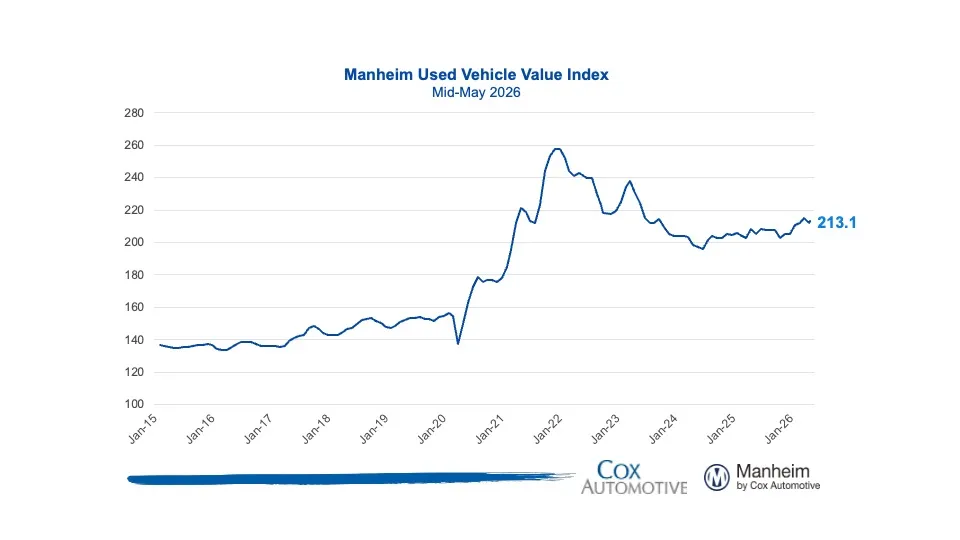
According to Cox Automotive, their Manheim Used Vehicle Value Index is approximately 4% higher than at the same time last year. And they’ve seen EVs leading the charge, with price increases notably higher than regular gas-powered vehicles.

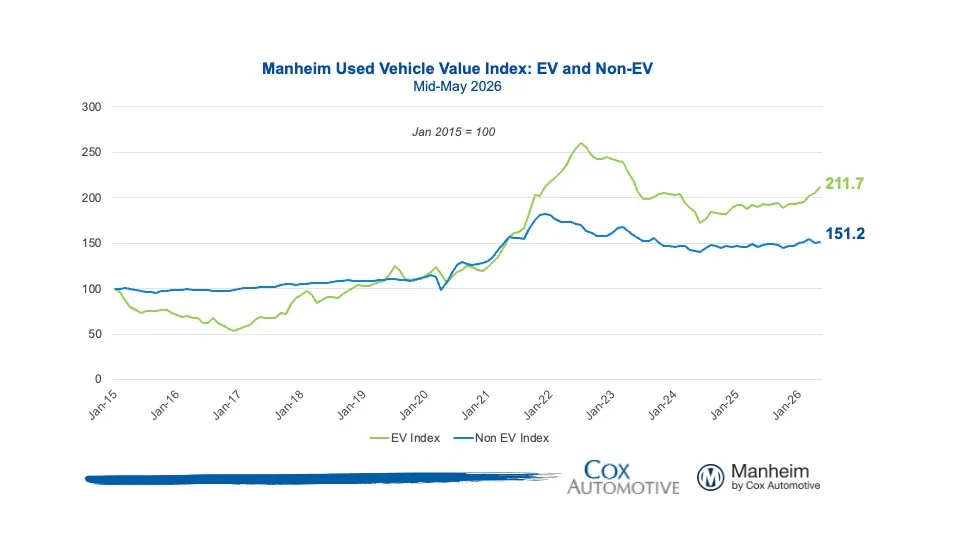
“Additionally, we continue to see EV prices rising faster and holding higher than non-EVs. Three-year-old EV prices have outpaced non-EVs for six weeks in a row and are 11% higher than they were at the start of the year. The longer gas prices remain elevated, the more we expect consumers to turn to fuel-efficient vehicles.

“As EV lease maturities continue to increase throughout the summer, it will be critical to follow EV price trends—especially if the Middle East conflict remains unresolved.” says Jeremy Robb, Chief Economist at Cox Automotive. So, it seems that buyers are willing to pay more upfront if it means lower running costs, which EVs have offered for quite some time now.

Unsurprisingly, ICE SUVs Have Appreciated Least

It’s no surprise to see that out of all the categories analyzed by Cox Automotive, used gas-powered SUVs and CUVs have appreciated by just 0.3% on average since last year. Given their gas-guzzling tendency and resultant tugging at pocket strings, it’s to be expected.

 72% Of New EV Buyers Just Traded In A Gas Car, Even After Losing The $7,500 Credit
Cox Automotive

Equally unsurprising is the fact that compact cars, a relatively fuel-efficient segment in the internal combustion engine class, saw the second-highest increase, at 7.6%. As Drury would likely agree, the data points in an interesting direction — but it’s still too early to call it a structural shift rather than a gas-price reaction.

 72% Of New EV Buyers Just Traded In A Gas Car, Even After Losing The $7,500 Credit
Chevrolet

Cheap Chinese EVs Look Great Until The Trade-In Quote Arrives

  • Chinese EVs are depreciating rapidly in Europe, a new study reveals.
  • Weak residual values in Germany are concerning to lease companies.
  • Private buyers are also feeling the pain when it comes time to sell.

Chinese automakers have spent the last few years steamrolling into Europe with bargain prices, generous equipment, and monthly lease deals looking almost too good to ignore. But there’s a growing catch buyers are starting to notice. Those bargain EVs can lose value frighteningly quickly once they leave the showroom. 

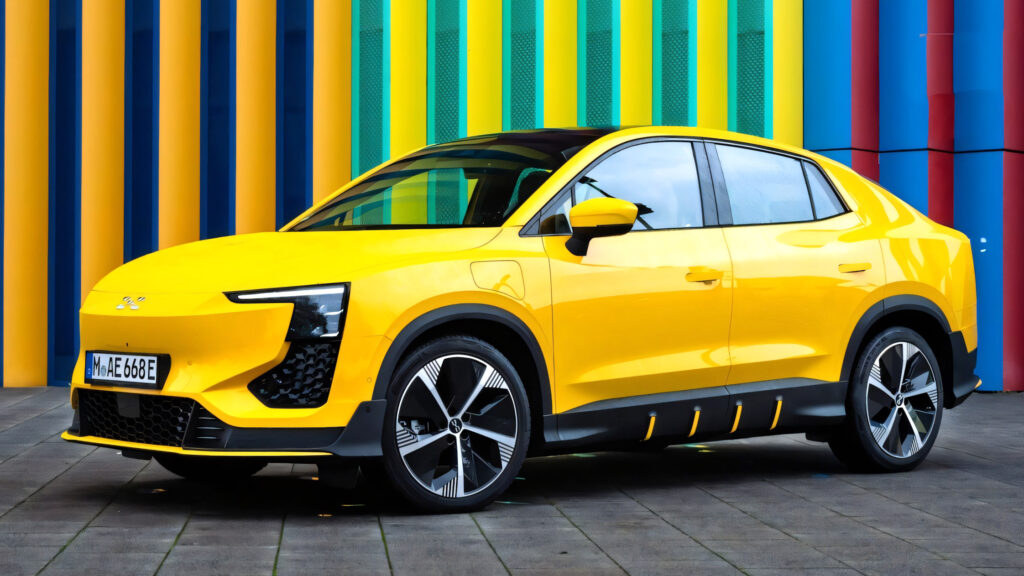
Fresh figures from Germany’s DAT vehicle valuation group show Chinese EVs and plug-in hybrids are depreciating twice as fast as the industry average. And the rate of depreciation is only getting worse.

Related: They Nicknamed It The Temu Range Rover, Car Insurers Are Pricing It Like The Real One

That creates headaches for almost everyone involved. Owners face painful trade-in figures, manufacturers risk swallowing losses through guaranteed buyback schemes, and leasing companies suddenly discover the cars returning are worth far less than expected.

Martin Weiss from DAT told Autonews Europe that “it is not enough to launch a good product.” Brands also need strong support systems behind the scenes if they want used buyers to remain confident years later. Part of the problem is uncertainty. Plenty of European buyers wonder whether some Chinese brands will actually stick around long term. Concerns about servicing, replacement parts, and dealer networks continue making cautious used buyers think twice.

Not Just Chinese EVs Suffering

 Cheap Chinese EVs Look Great Until The Trade-In Quote Arrives

But it’s not only Chinese brands feeling the pressure. Britain’s EV market is also watching residual values tumble across the board, in part due to the influx of cars from China, the Financial Times reported recently. Quoting figures from Indicata, it claimed the average three-year-old EV as of last month was worth 38 percent of its original value, compared with 46 percent in Germany, France and Spain. In contrast, a same-age petrol car in the UK retained 45 percent of its value, and a hybrid, 51 percent.

Carmakers are under huge pressure to increase EV sales, so many are throwing massive discounts at new models to hit UK government targets. That’s pushed a Chinese car, the Jaecoo 7, to the top of the UK sales chart for the first time ever, but it leaves nearly-new EVs looking overpriced beside heavily incentivized factory-fresh cars.

Ironically, rapid technological progress is also hurting values. Chinese brands especially release updates at breakneck speed, meaning today’s cutting-edge EV can suddenly feel old-fashioned months later. Great for innovation perhaps, but brutal if you’re trying to protect resale values.

 Cheap Chinese EVs Look Great Until The Trade-In Quote Arrives

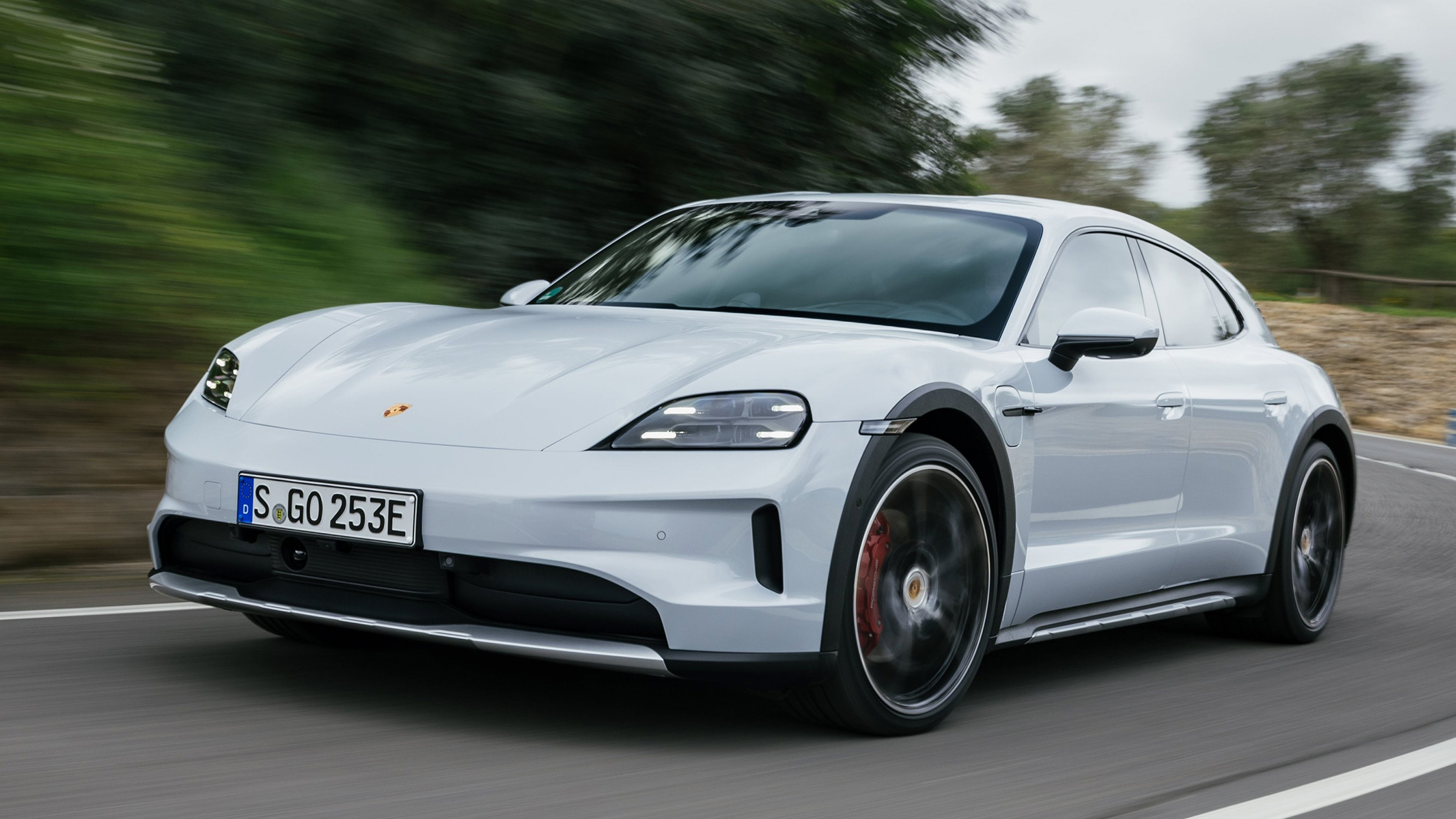
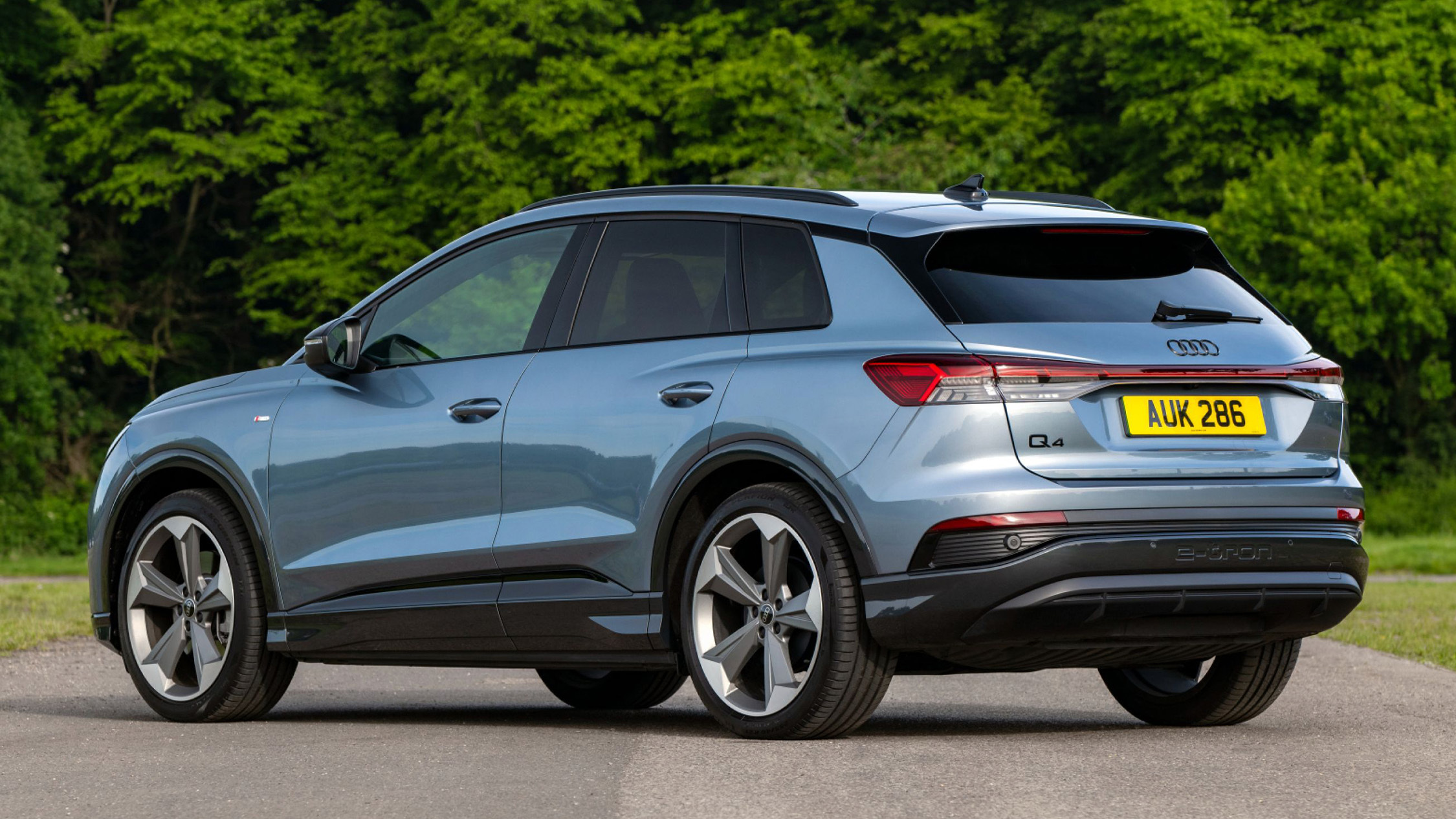
Aiways, Porsche, Audi

Hate The $640K Luce All You Want, Ferrari’s Boss Says The Money’s In

  • Ferrari CEO defends the Luce amidst heavy backlash from the public.
  • Vigna revealed they have already received bank transfers for the EV.
  • He also said the €550k ($640k) price is “fair to pay for innovation”.

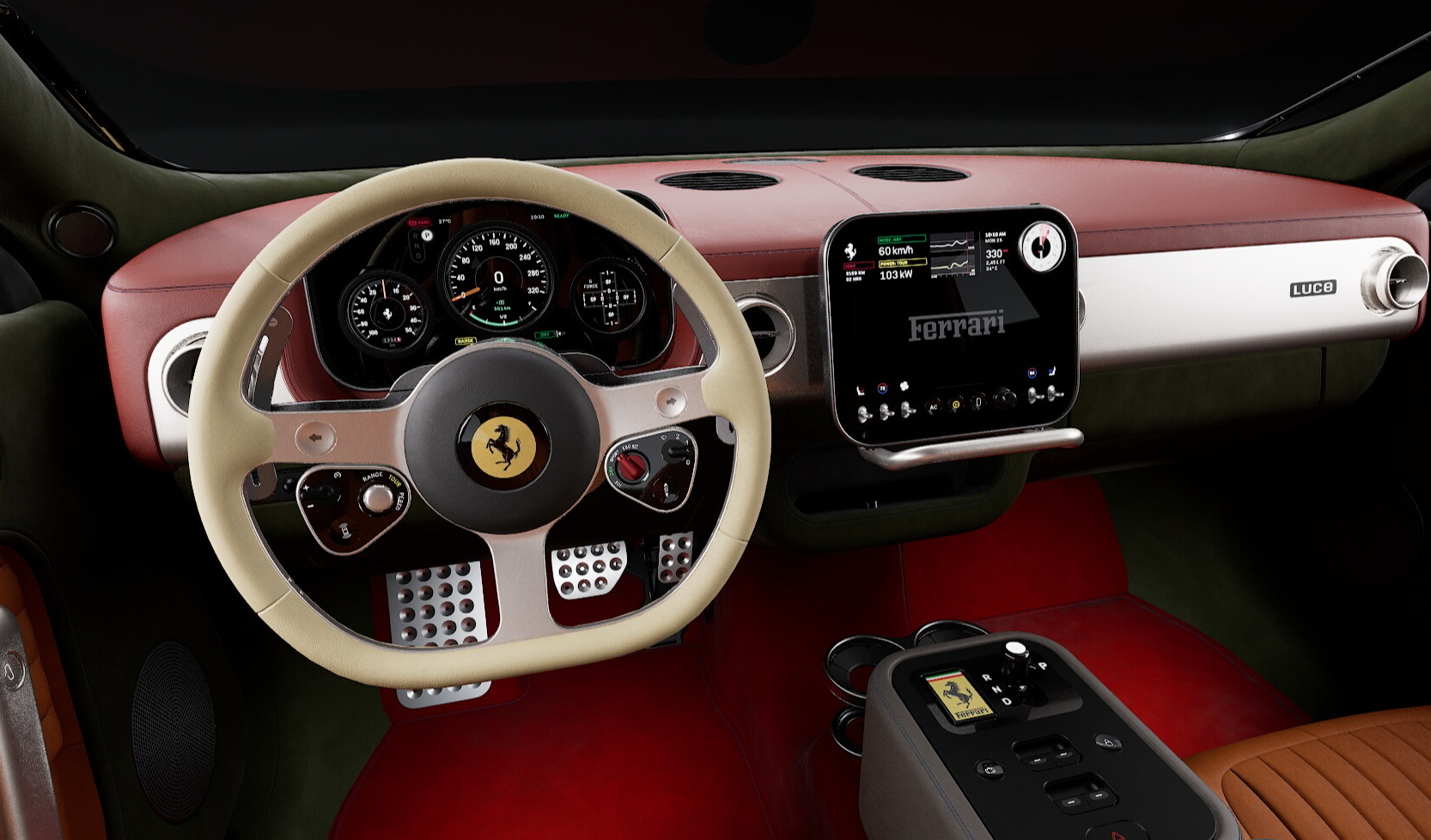
A car can be panned by the public and still find buyers, and Ferrari is betting the gap between the two is wider than the noise suggests. The Luce’s unveiling set off a wave of criticism and dragged on the company’s share price before it rebounded, yet CEO Benedetto Vigna insists there is “strong interest” from clients, and that the €550,000 ($640,000) asked for Ferrari’s first EV is “fair to pay for innovation.”

Vigna made the case at an event in Modena on Thursday, where he said there is “strong interest, including from new clients.” He claimed buyers who attended the debut earlier this week have already put money down. “We’ve already received bank transfers, clients who were there want it,” the CEO said.

More: Deepfake Video Has Ferrari’s CEO And Jony Ive Saying What They Really Think About The Luce

According to Reuters, around 1,600 prospective customers saw the EV in person on Monday and Tuesday in Rome, with order books opening on Wednesday. The company will announce precise figures about the number of Luce orders in July, as part of the financial results for Q2 2026.

\\\\\\\\\

Photos Ferrari

The loudest complaints concern the way the Luce looks, a design that breaks sharply with Ferraris of the past. The electric sedan was penned by LoveFrom, the studio founded by former Apple design chief Jony Ive and Marc Newson. Most fans came away cold, missing the emotion they expect from Maranello, while others pointed an uncomfortable resemblance to cars from far less exotic brands.

More: Ferrari’s Luce Is A Four-Door EV Designed By The iPhone Guy

The CEO believes that critics would change their minds if they saw the Luce in person: “If you see it and try it, you immediately understand it was not copied and it has ​nothing to share with other EVs you have seen ​and are ⁠produced by others, in terms of interiors, exterior and performance.”

 Hate The $640K Luce All You Want, Ferrari’s Boss Says The Money’s In

Vigna also stressed that the electric Luce is an addition to the range, not a replacement, and that Ferrari will keep building ICE and hybrid cars alongside it.

Ferrari shares are clawing back ground after sliding 8.8 percent in the wake of the Luce’s debut. The current CEO’s optimism isn’t universally shared. Former boss Luca di Montezemolo took a dimmer view, arguing the Luce is “hurting Ferrari” and that the company risks the “destruction of a legend.”

Who do you think is right? Sound off in the comments below.

\\\\\\\\

Photos Ferrari

DC Turns Streetlights Into EV Chargers, And Dirty Diesel Foots The Bill

  • Washington, D.C. is funding new curbside EV charging projects across the city.
  • Voltpost will retrofit existing streetlights and utility poles into Level 2 chargers.
  • Officials hope easier charging access will encourage more residents to switch to EVs.

There’s no doubt that the biggest issue facing electric vehicle adoption relates to range. Specifically, how fast and how easy it is to go from a low battery to a full one. While it’s easy to own an EV if you can charge at home overnight, it’s a totally different story for everyone else who doesn’t have that cheap daily access to power. Now, a company is trying to provide a solution, and it’s using existing street-side infrastructure to do it.

Rather than digging up sidewalks and installing entirely new charging stations, Washington, D.C., is helping fund a project that converts existing streetlights and utility poles into EV chargers. According to WJLA, the District’s Department of Energy and Environment (DOEE) recently awarded $609,500 in grants to three EV charging companies. One of the biggest winners is Voltpost, a startup that specializes in retrofitting existing poles with Level 2 charging equipment.

Read: Charging An EV Cost $11 More This Year, Filling A Sequoia Cost $1,623 More

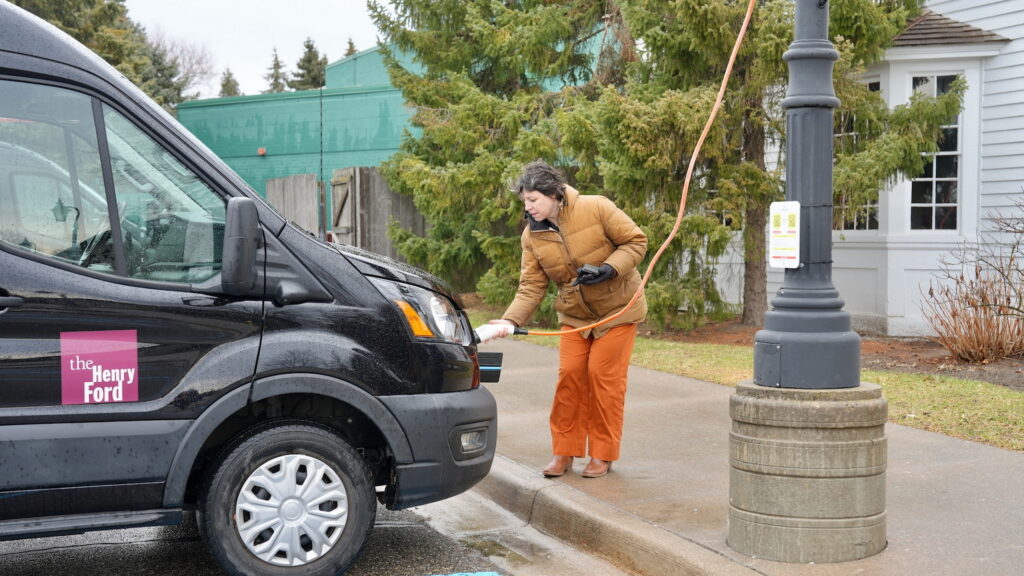
According to the company, its chargers can be installed in just a few hours by leveraging existing electrical infrastructure. That means no major construction work, no trenching, and potentially tens of thousands of dollars in savings compared to traditional charging installations. The company says it plans to deploy up to 16 chargers around the city, though exact locations are still being determined in coordination with local agencies and utility provider Pepco.

Funded By Dieselgate, Not Taxpayers

 DC Turns Streetlights Into EV Chargers, And Dirty Diesel Foots The Bill
Photos Voltpost

Voltpost wasn’t the only recipient. PowerUp America received funding to expand its charging footprint, while curbside charging specialist ‘It’s Electric’ also secured grant money. Together, the three companies are expected to significantly increase public charging access across the District. Importantly, none of the funding comes from local taxpayers. The cash actually comes from the money allocated to D.C. from Volkswagen’s emissions-cheating settlement with the EPA.

If this approach proves successful, it could help build a guideline for how urban areas nationwide could add relatively inexpensive public charging without major infrastructural changes. That alone could make EV adoption that much easier for those who can’t charge where they live otherwise.

 DC Turns Streetlights Into EV Chargers, And Dirty Diesel Foots The Bill

Photos Voltpost

The Brand That Worships Real Gears Loves Hyundai’s Fake One

  • Future EVs from Porsche could use simulated gears to boost driver involvement.
  • Several high-profile executives from the brand have praised Hyundai N’s fake gears.
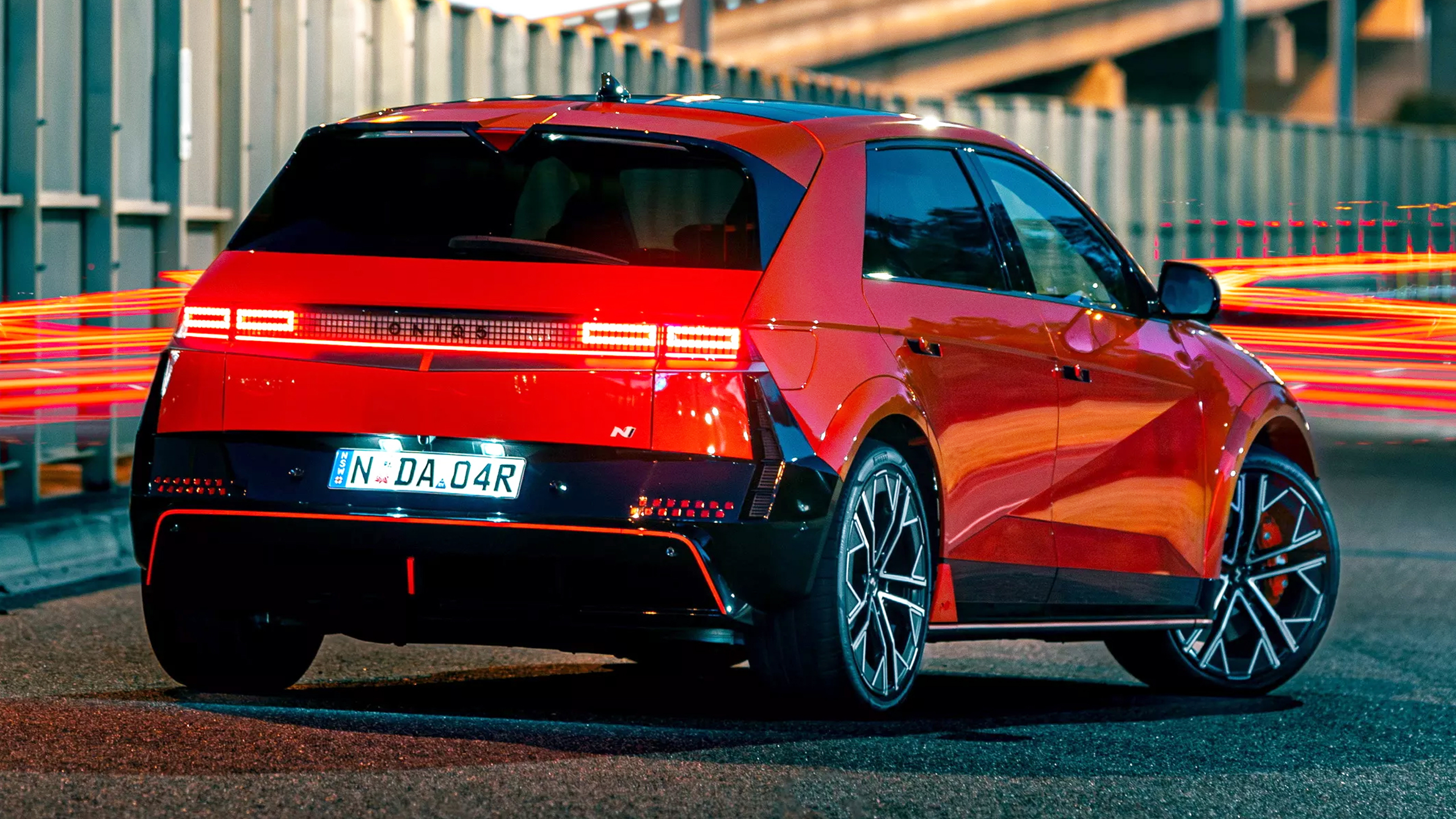
  • Porsche has also previously said it likes the fake ICE soundtrack of the Ioniq 5 N.

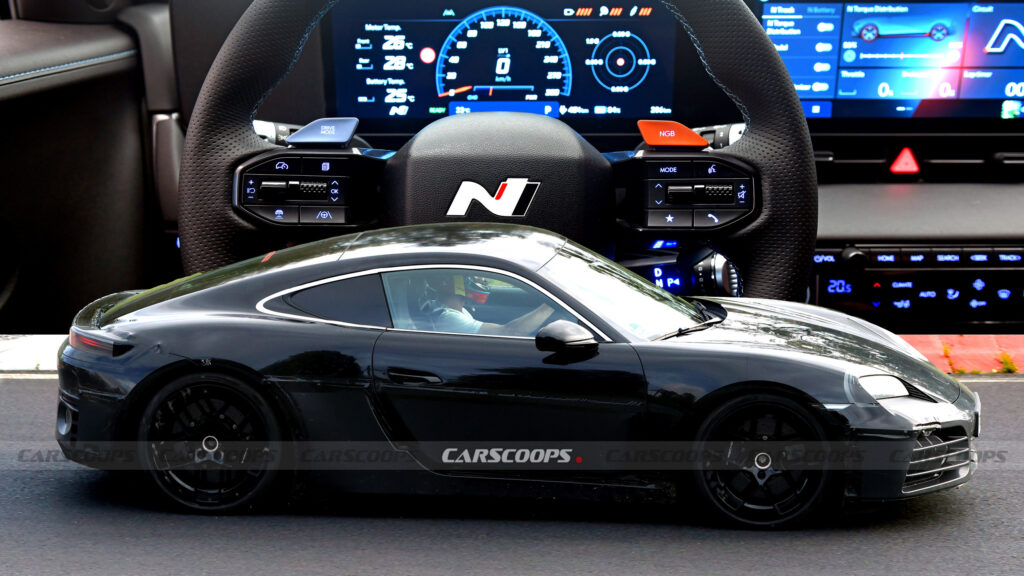
There was a time, not long ago, when the idea of brands like Porsche, Ferrari, Lamborghini, and Mercedes-AMG studying a Hyundai for engineering inspiration would have been absurd, even laughable. That time is over. The electric Ioniq 5 N has forced every serious performance brand to take notes, and several are openly trying to replicate what it does.

It’s been nearly three years since the Ioniq 5 N arrived and reset the bar for performance EVs. Rather than chasing ever-bigger acceleration numbers, Hyundai put the driving experience first. The tool it used was a simulated transmission, engineered by the same team behind the N division’s eight-speed dual-clutch gearbox, that feels close enough to the real thing to fool most drivers.

Read: Hyundai’s Gated Manual Patent Looks Like A Koenigsegg Idea On An Elantra Budget

Porsche has acknowledged it’s tested and looked at Hyundai’s technology, but is not yet ready to commit to launching something similar on any of its EVs.

“We’ll see what happens, but it is not a technology that we do not look at. It’s very interesting. To be honest, Hyundai did a really good job at it,” Porsche product spokesperson Ben Weinberger told Car Sales. “If we do it, it will definitely be a Porsche-typical solution, but it would be too early to talk.”

911 Bosses Like Hyundai’s Solution, Too

 The Brand That Worships Real Gears Loves Hyundai’s Fake One

Last year, the vice president of Porsche’s 718 and 911 lines, Frank Moster, and the head of Porsche’s GT cars, Andreas Preuninger, both heaped praise on the Ioniq 5 N, acknowledging that they learned a lot after testing it.

“This is the way,” Moser said while speaking about the simulated transmission and the Ioniq 5 N’s fake ICE-inspired soundtrack. “The customer could decide if he wants to drive in complete silent mode, or he wants to be part of the game, feeling the virtual sounds of a flat six and the virtual gear shifts. That would be the direction for the future.”

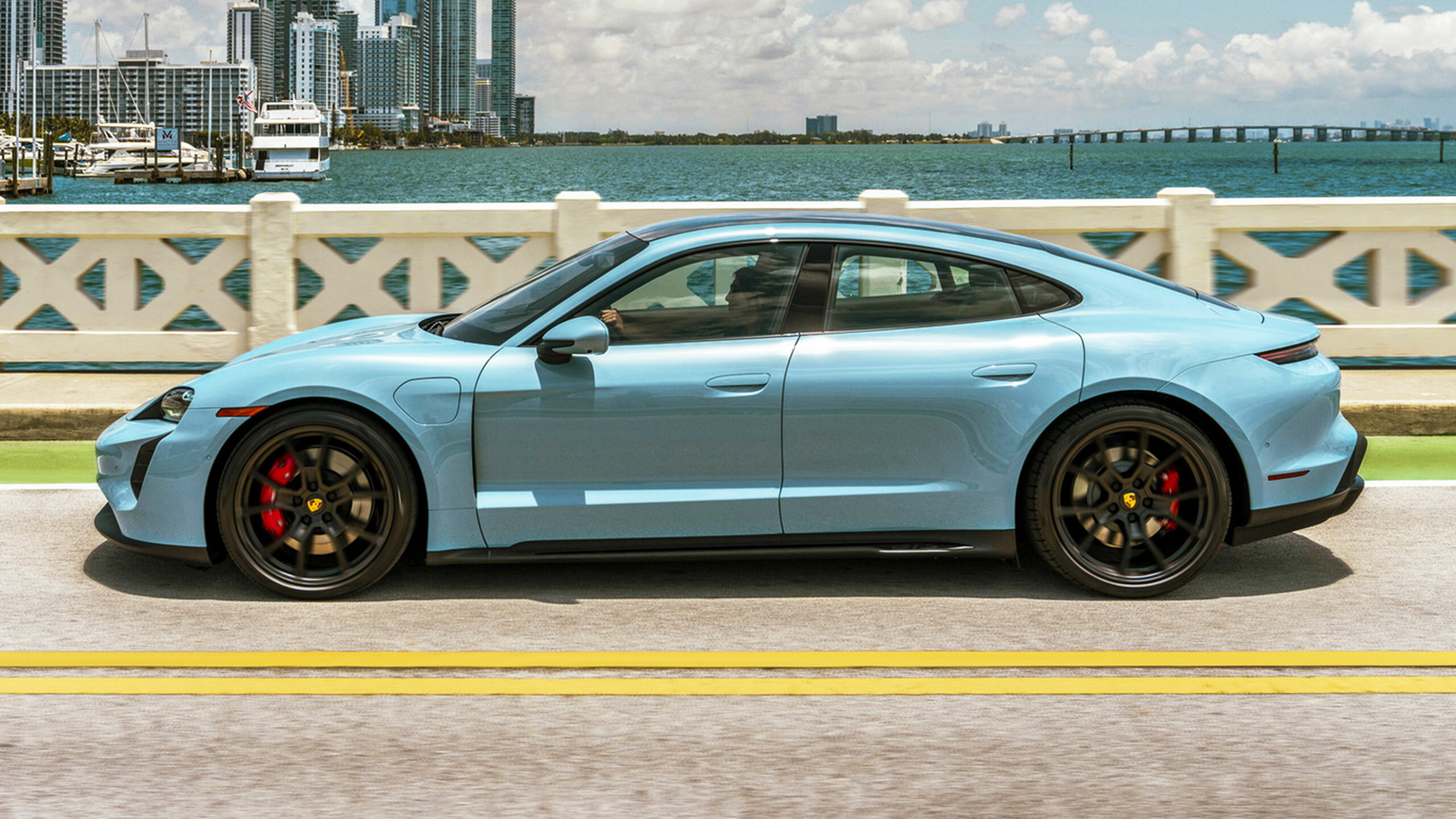
The all-electric Porsche 718 Cayman and Boxster would be the most logical choices to adopt something similar. But Porsche will also sell both with combustion power, which may give it less reason to engineer (read spend on) the kind of simulated mechanical feel that the Ioniq 5 N thrives on. Why fake gears when real ones could be on the options list? Then again, if the electric 718 shows up feeling sterile next to a three-year-old Hyundai, Porsche will have some explaining to do.

 The Brand That Worships Real Gears Loves Hyundai’s Fake One
❌