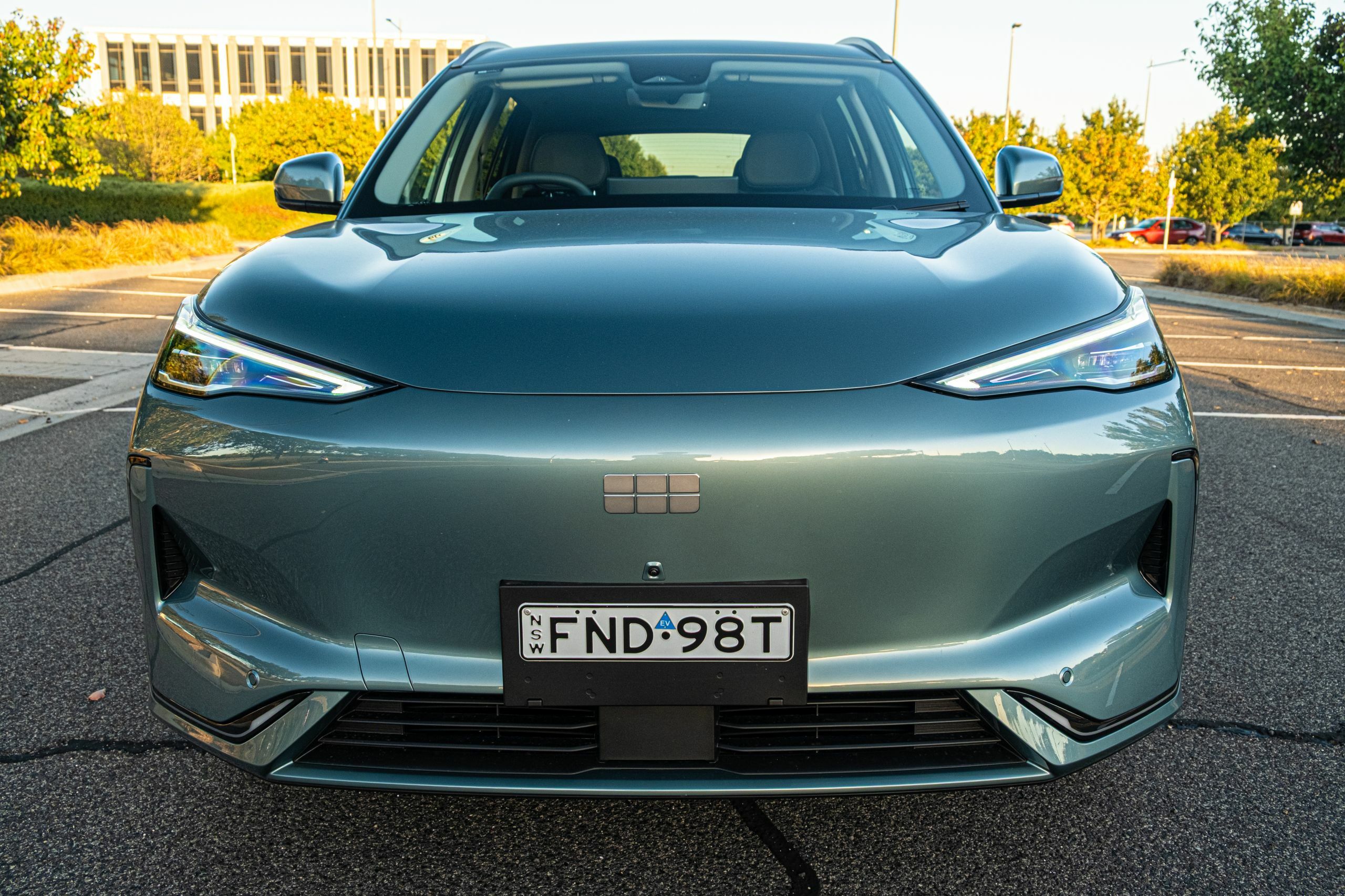
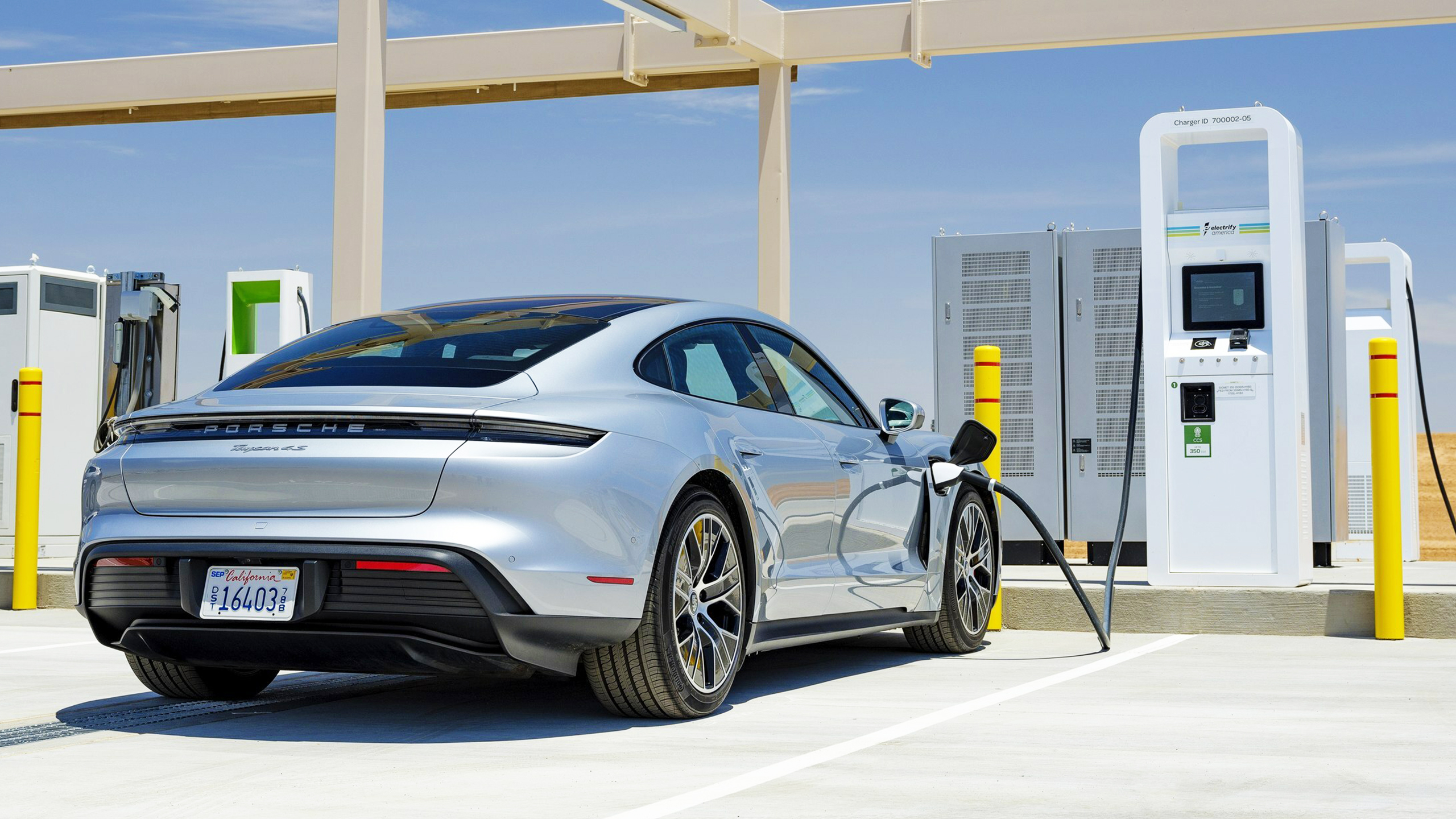
The updated SU7 looks the same, but changes have been made under the skin.
Xiaomi is selling the electric sedan with 73 kWh and 96.3 kWh battery packs.
Prices start at 219,900 yuan ($31,900) and top out at 303,900 yuan ($44,000).
It’s been only two years since the Xiaomi SU7 hit the market, and it has quickly become one of the most popular electric sedans in China. An updated version has just been launched, and it promises to be even better while still remaining an absolute bargain.
Ordinarily, it takes car manufacturers four or five years to update a model, but Xiaomi is more like Apple than a traditional car brand, and it’s used to updating its products on a yearly basis, so it’s perhaps no surprise the SU7 has already been refreshed. Like before, it’ll continue to be sold in Standard, Pro, and Max configurations, and it took just 8 hours for local enthusiasts to place 15,000 orders.
The base SU7 Standard is equipped with a 73 kWh lithium-iron phosphate battery and a rear-mounted motor with 315 hp (235 kW). It has a claimed CLTC range of 447 miles (720 km), and starts at just 219,900 yuan or around $31,900. Sitting above it is the SU7 Pro, fitted with a larger 96.3 kWh LFP battery and the same 315 hp (235 kW) motor, boosting its range to 560 miles (902 km) and bumping up the price to 249,900 yuan, roughly $36,200.
The SU7 Max comes equipped with a 101.7 kWh ternary lithium battery, dual motors delivering 681 hp (508 kW), and a 519-mile (835 km) range. It starts at 303,900 yuan or $44,000. There’s no word on whether an update is also being readied for the hypercar-rivaling SU7 Ultra, but changes are likely in the works.
Visually, the new model looks largely the same as the outgoing SU7, though all versions now come with a roof-mounted LiDAR, a 4D millimeter-wave radar, and the Nvidia Thor-U computing system. A new radar has also been added up front, and the rear tires are slightly wider, perhaps to improve grip and reduce the risk of crashes like this.
An Important Door Solution
Xiaomi has also added a new door unlocking mechanism with a triple-redundancy system, no doubt to ensure drivers don’t get stuck inside should they be involved in a serious accident. The mechanical release on the front passenger doors is also now finished in bright red, making it easier to spot in an emergency.
The rest of the interior is familiar, although the infotainment screen is slightly bigger at 16.1 inches. The dual wireless phone chargers have been retained, but Xiaomi has repositioned the cupholders from a vertical configuration to a horizontal one. It’s also removed the vertical row of buttons that had been fitted to the console, instead shifting them between the charging pads and the cupholders.
Lamborghini’s CEO hinted that an EV is still coming, but not any time soon.
Two new 2026 debuts likely, Revuelto Roadster and Urus Performante PHEV.
Record revenue and deliveries show brand thriving with V12 and hybrids.
The Lanzador crossover, the fourth Lamborghini model, and the one that was supposed to be its first EV, will now be a hybrid arriving before the end of the decade. That much we knew. But the brand’s CEO made clear this week that he hasn’t completely shut the door on a fully electric car. He’s just going to make sure he gives us plenty of V8s and V12s first.
“The recent announcement of a fourth hybrid model reinforces a long-term industrial vision focused on sustainable value creation, without compromising the future development of a fully electric model,” the company said this week as it announced its latest financial figures.
So it sounds like an EV is still on the cards, but don’t bank on seeing it any time soon.
The Lamborghini Lanzador EV Concept.
“Resistance to EVs has increased significantly worldwide in our segment”, Lambo’s boss Stephen Winkelmann told Reuters. “Many customers have tried EVs, but let’s say their experience didn’t quite live up to their expectations”.
The brand is still putting time and money into EV tech in readiness for the luxury and supercar market reaching a point where it’s ready to buy electric cars in large numbers. But Winkelmann, who recently described EVs as “an expensive hobby,” is in no rush.
“I can’t see the trend today, and I don’t see it for tomorrow either,” he added.
Revuelto Variants Incoming
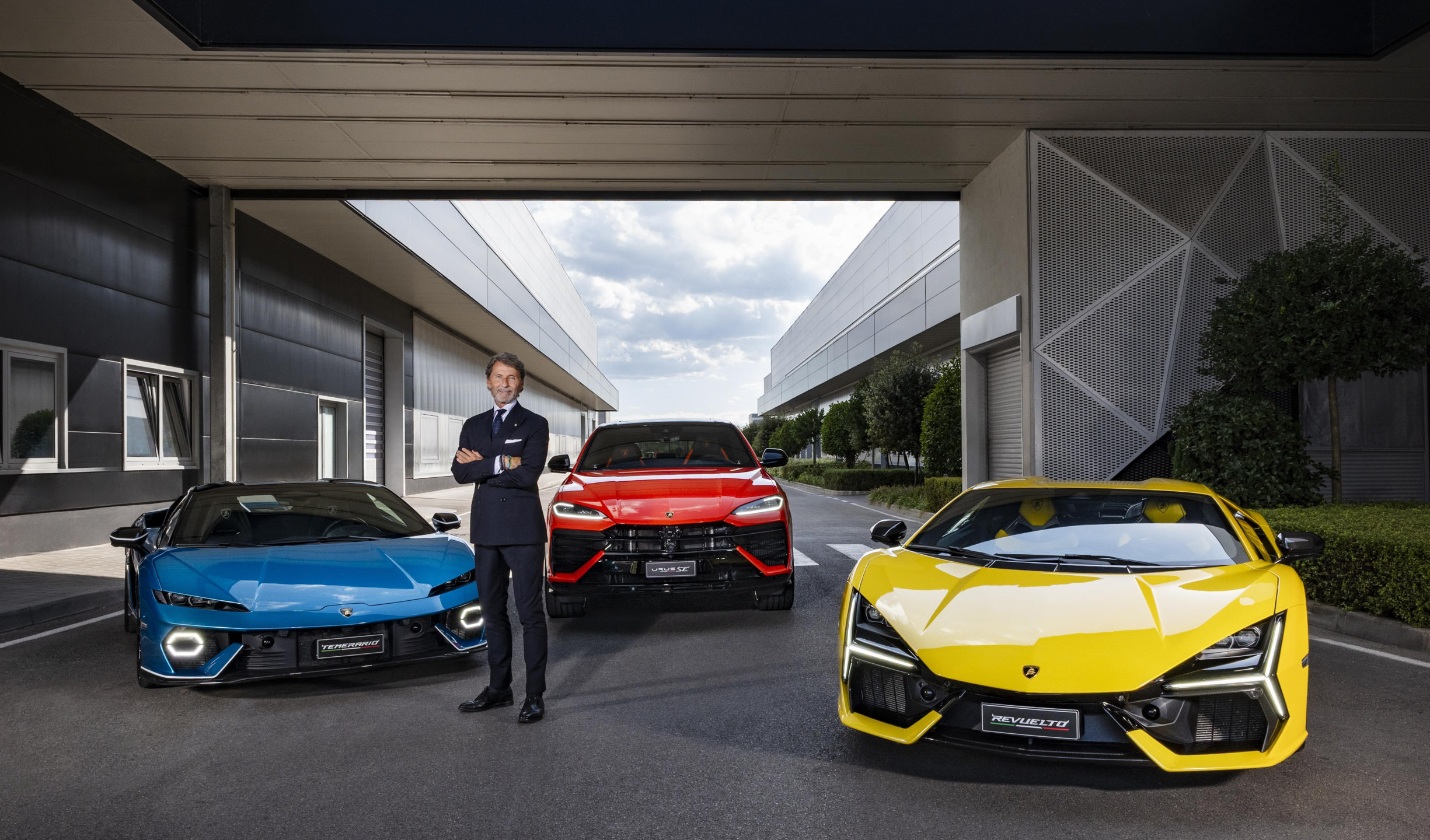
What’s happening right now is much more exciting anyway, if you like noise and mechanical drama. Lamborghini has already confirmed new, unnamed debuts for 2026 that will appear at events like Goodwood and Monterey Car Week, and everything points to a growing family of Revuelto- and Urus-based models leading the charge.
A Revuelto Roadster definitely feels like a solid bet at this point. The V12 hybrid flagship has been around long enough that a roofless version is overdue, and it’s hard to imagine Lamborghini resisting that opportunity. But don’t expect it to stop there.
A hotter, more driver-focused Revuelto variant is almost inevitable, though perhaps not this year, and you can bet a Roadster version of that won’t be far behind. Lamborghini knows exactly what its core audience wants, and it isn’t silence.
Performante Goes PHEV
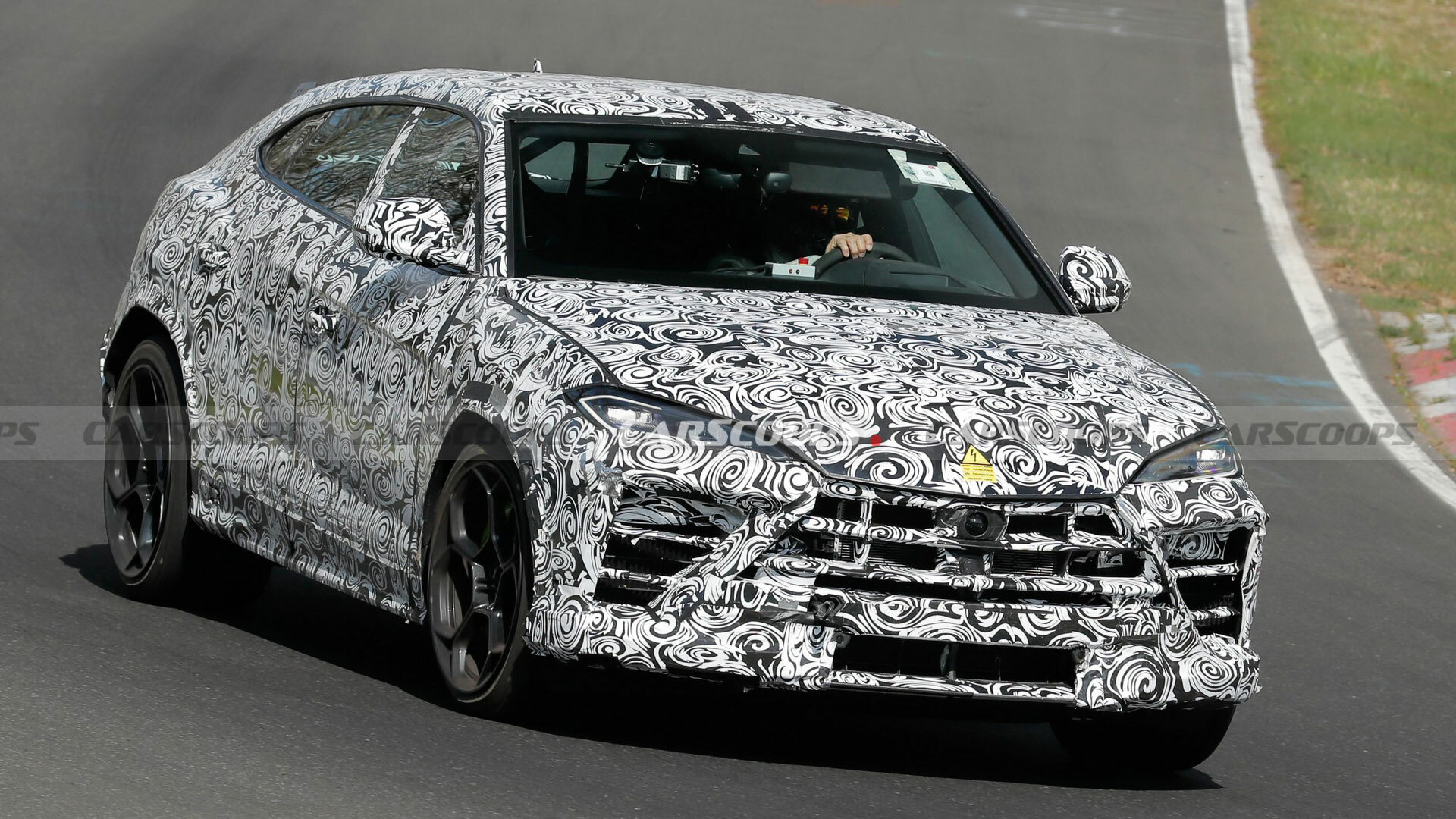
Alongside the V12 fireworks, the V8-powered Urus and Temerario aren’t being left alone either. A more aggressive Performante-flavored plug-in hybrid version of the US is expected to arrive soon, building on the potent Urus SE with even more power and sharper dynamics. We’ve already seen the new Performante PHEV testing, so a launch can’t be far off. And roofless and angrier Temerario variants are surely in the pipes.
Making Bank
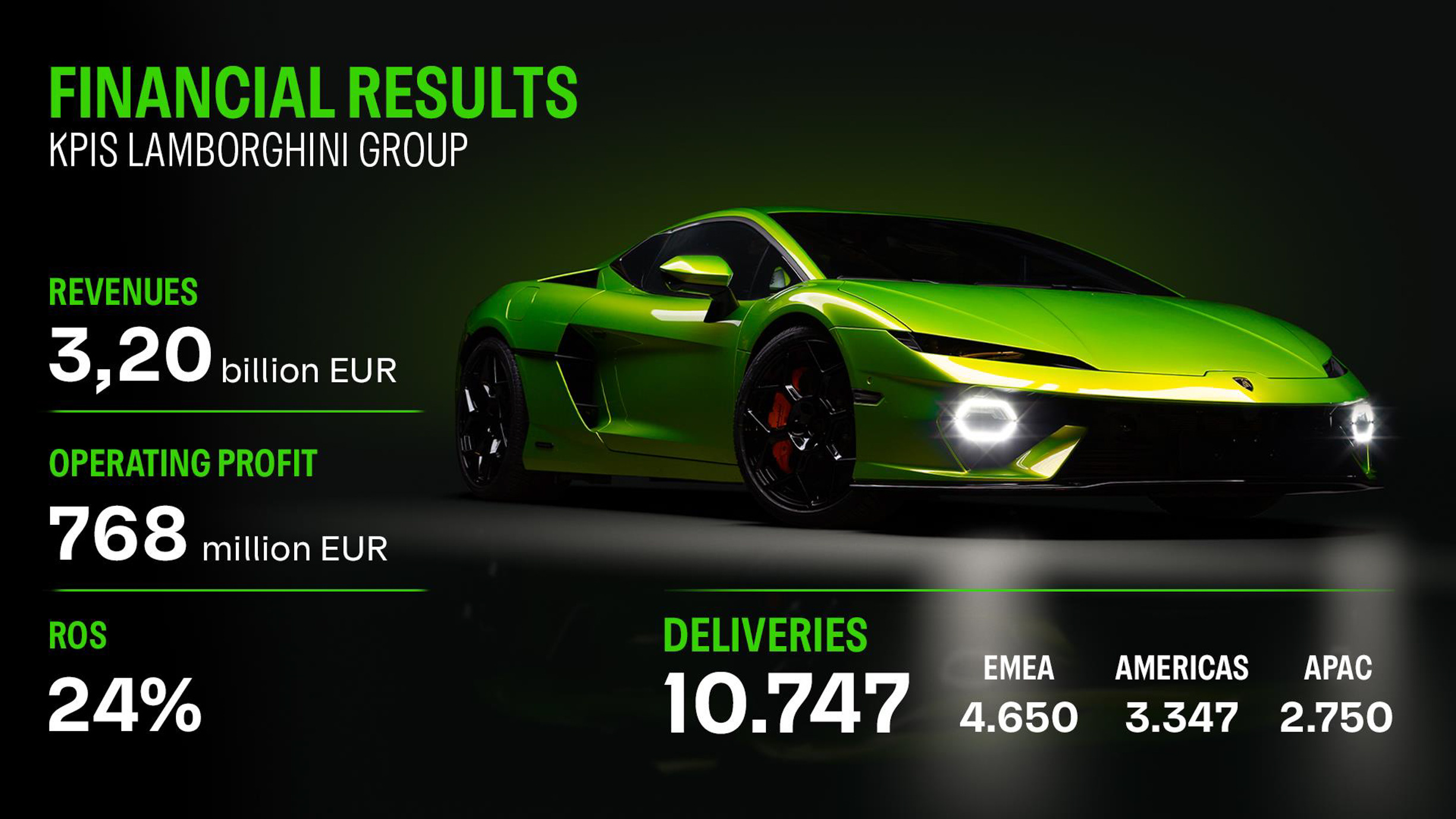
And here’s why Lamborghini can afford to double down on this formula. Business is good. The company delivered 10,747 cars in 2025, its best year ever and the third straight year above 10,000 units. And revenue climbed to €3.20 billion ($3.67 bn), up 3.3 percent on the previous year.
Operating income came in at €768 million ($881 m) with a 24 percent margin, only slightly down despite external pressures like exchange rates, tariffs and the costs of changing up its Direzione Cor Tauri (towards electrification) strategy to switch the Lanzador from an EV to a hybrid.
So yes, an electric Lamborghini is coming. Just don’t expect it to steal the spotlight from the V12 anytime soon.
Geely is preparing to launch its EV lineup in Canada soon.
The company is competing with BYD for early market entry.
Local production remains a possibility for market expansion.
Geely has begun taking the necessary steps to launch its vehicles in Canada and could start sales as early as this year. The move places it in direct competition with BYD, as both aim to become among the first Chinese EV-focused brands to enter the Canadian market following a recent trade deal between the two countries.
They are both locked in a race against Tesla, which appears positioned to secure, if not all, then most of the first batch of 24,500 Chinese-made EV permits available at a reduced tariff rate.
Geely Group chief executive Andy An says the company expects to secure the required certifications from Canadian officials soon, clearing the way for local sales. The automaker has been steadily climbing the ranks among the world’s largest car manufacturers and is now setting its sights on expansion across several key markets.
“We’re not only considering the Canadian market, but also Brazil, South America, Eastern Europe, and Southeast Asia,” An told Bloomberg. “Geely’s globalization is mostly through exports right now, but we will look to localize production.”
Geely ranks just behind BYD as China’s second-largest car manufacturer, and it already has a foothold in both Canada and the United States through Polestar and Volvo. Even so, steep 100 percent tariffs have long made exporting additional China-built models to Canada a tough business case.
Things are changing. Earlier this year, Canada and China agreed to a pivotal new trade deal, announcing that up to 49,000 Chinese-built EVs will be eligible for importation into the country at a reduced tariff rate of just 6.1 percent. That ceiling is expected to climb over time, reaching roughly 70,000 vehicles annually.
With those barriers easing, Geely, along with rivals like BYD and Chery, is lining up a Canadian market entry. The simplest route is to ship existing EVs from China, but local production, either through partnerships or independent operations, is very much on the table. Chery, for its part, is already recruiting in Canada as it prepares for its own arrival.
BMW iX1 adopts Neue Klasse styling with a cleaner look.
The EV is expected to share battery and motor tech with iX3.
Single-motor variants are expected to launch before dual.
BMW may have just revealed the new i3 sedan, but behinds the scenes, it’s already working on another EV. A redesigned iX1 is on the way, and fresh spy shots make one thing clear, it is moving in a very different visual direction.
The brand’s smallest electric SUV now appears to be taking heavy inspiration from the iX3, effectively shrinking down that model’s look while adopting the Neue Klasse design language that is gradually rolling out across the brand’s lineup.
While the company has gone to the trouble of wrapping the prototype in its typical black-and-white camouflage, there’s no hiding some of the biggest design changes. Most notably, we can see that the large kidney grilles of the outgoing EV have been ditched in favor of small, vertical units, similar to the iX3, which are also being added to the new X5.
Trick Tech And Quick Charging
Baldauf
The new grille will be joined by new headlights and a redesigned bumper. The side profile also looks noticeably cleaner than the outgoing iX1, and includes flush door handles. The rear is hidden from view, but we can see parts of the new LED taillights.
Based on early reviews, it looks like the second-generation iX3 is BMW’s first competitive offering against the tidal wave of Chinese electric SUVs. It’s equipped with the company’s sixth-generation battery pack and electric motors, providing it with class-leading range and performance.
Baldauf
The new iX1 will use similarly innovative tech for a, hopefully, dramatic improvement over the existing model. We don’t know yet if it will have the same 108.7 kWh battery as the iX3, given its smaller size, but if it shares its 800-volt electrical architecture, it will enable charging speeds of up to 400 kW.
These images don’t show the cabin of the new iX1, but earlier ones from December did, revealing the same basic interior setup as the iX3, including BMW’s new Panoramic iDrive system and tilted central infotainment display. In all likelihood, the iX3’s odd four-spoke steering wheel will also come standard, like in the all-new i3 sedan.
Mercedes-AMG’s track-ready CLE 63 will make 646 hp, new report claims.
Future lineup, including crossover EVs and G63 cabrio, was revealed to dealers.
North America is targeted as growth engine while China demand flattens out.
Mercedes-AMG might be talking a big EV game, but behind closed doors, it’s the return of a fire-breathing V8 that’s really getting hearts racing.
One of the biggest, rarest stars of the coming model blitz is the new CLE 63, and AMG isn’t playing it safe. Just 30 examples will reportedly be built worldwide, each believed to be equipped with a seriously spicy version of Benz’s new flat-plane crank V8. The intel claims an output of 646 hp (655 PS), though since the Germans love their nice round kW figures, we suspect it could be 637 SAE hp, which would be 475 kW or 646 PS.
Whatever the true number, enthusiasts will be thrilled to see it debut after the whole four-cylinder C63 experiment fell flat on its face. And this AMG-ized version of the V8, already doing business in the latest S-Class, won’t be restricted to just 30 CLE hot rods. It’s expected to spread across the lineup, potentially finding its way into future models, like the next C 63 sedan. Hopefully it’ll find its way into the new two-door GT Black Series that the same report also says is coming.
What Are AMG’s New EVs?
Of course, AMG isn’t ditching electrification. Far from it. Dealers were shown a trio of upcoming electric GT models, according to Auto News, including the sleek four-door GT coupe and two crossovers riding on a dedicated AMG platform. One has a stance similar to a Cayenne, while the other sits lower with a sportier, sloping roofline.
They sound quick, with strong range figures in the region of 400 miles (644 km) of range for the coupe and at least 300 (483 km) for the utilities, but not everyone’s convinced. Some dealers are already worried that three closely related electric AMGs could crowd showrooms and dilute the brand’s edge.
G-Class Blows Its Top
But all dealers need to do to reassure customers AMG is still bad-ass is show them the G-Class Cabriolet, which returns after a three-decade absence, and this time it’s finally heading to the US. The G 63 Cabriolet skips EV power, as it goes for the current G 63’s twin-turbo V8, and swaps in a fabric roof for maximum Insta flex.
G Cabrio production is expected to kick off in 2027, with American buyers firmly in focus. And that’s really the bigger story here. This entire product blitz is aimed squarely at North America, because with China flatlining, the US and Canada are the only hopes for growth for both Mercedes and AMG.
Last year, EVs cut oil use by 2.3 million barrels a day.
US drivers spent $1.65 billion more on fuel in just one week.
EV search interest surged after news of the Iran conflict.
Due to the ongoing conflict in the Middle East, oil prices have surged to a four-year high and are fast approaching $100 per barrel. Regardless of where you live, this means that if you’re driving an ICE-powered car, you’ll be paying more to fill it up. It’s perhaps the perfect time to own an EV instead.
A recent study indicates that last year’s increased adoption rate of EVs reduced oil consumption by 2.3 million barrels per day, and these fuel savings will continue to grow as more EVs are sold. By 2030, EVs could help to reduce global oil consumption by 5.25 million barrels per day.
As noted by BloombergNEF, a key contributor to the reduced oil demand is two- and three-wheeled EVs, which have surged in popularity, particularly across Asia. A separate, more conservative study that factors in how often plug-in hybrid vehicles run on fossil fuels pegged last year’s daily oil savings at 1.7 million barrels.
At this rate, and with average prices of $80 per barrel, the analysis says that China would save more than $28 billion a year in oil imports thanks to its massive EV industry. Similarly, Europe would save $8 billion, and India could save $600 million per year.
Is This The Break EVs Need?
The war in Iran has made regular fill-ups for ICE drivers far more expensive. Just this week, Bloomberg expects US drivers to pay an additional $1.65 billion at the pump. With gas prices showing no signs of stopping, it should come as no surprise that interest in EVs has jumped this month.
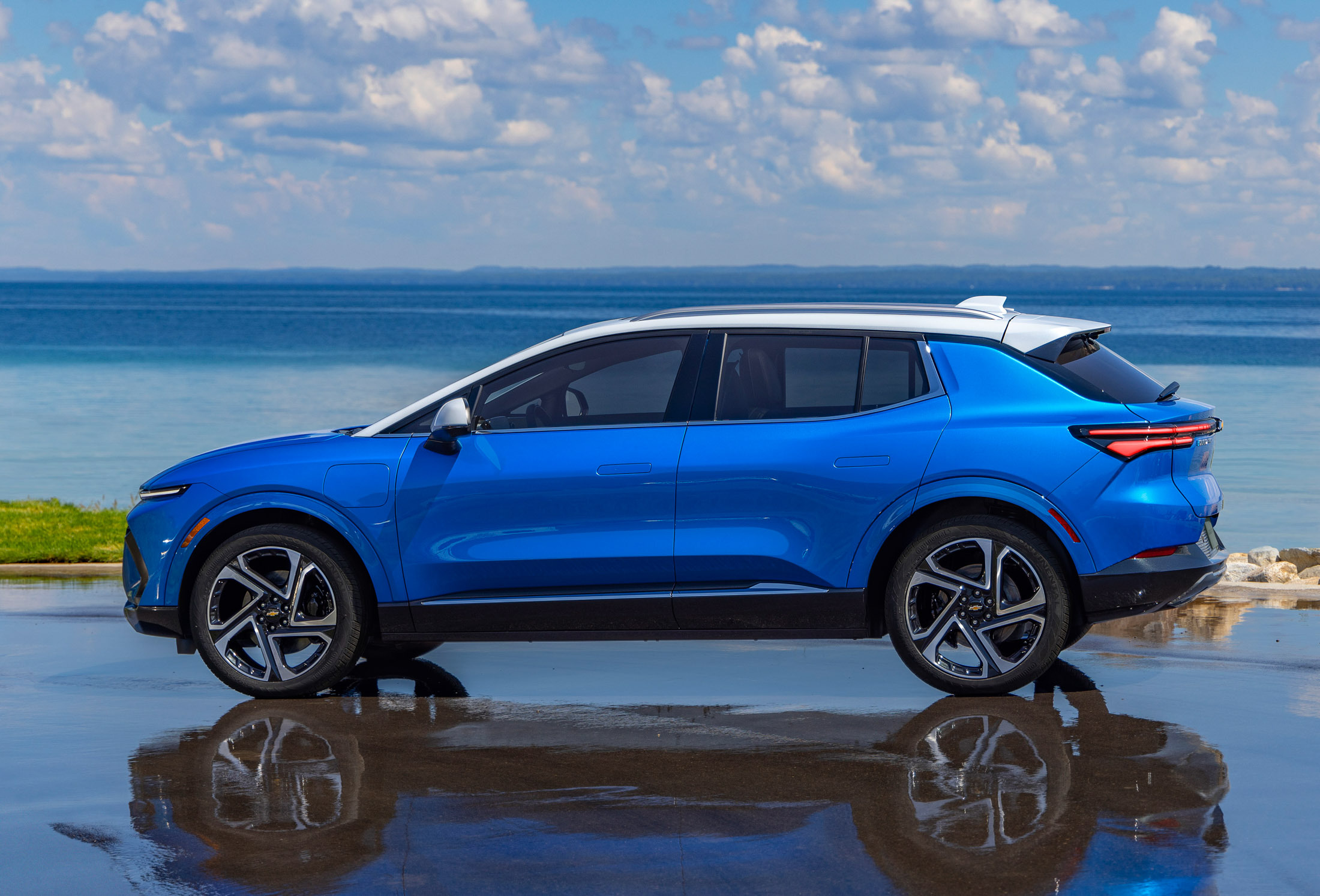
CarEdge reports that search traffic for electric vehicles jumped 20 percent in the week following the attack on Iran. Search traffic also nearly doubled for many of the market’s most popular EVs, including the Chevrolet Equinox EV and Tesla Model Y.
Of course, surging oil prices will likely also lead to increased electricity costs, meaning charging an EV could become more expensive. However, electricity rates won’t rise by as much, as only roughly a quarter of a typical US power bill is directly tied to fuel costs.
Fiat returns to the compact segment with two new production SUVs.
The “Giga Panda” in SUV and Fastback forms will premiere in Paris.
Other Stellantis debuts include the Lancia Gamma and two concepts.
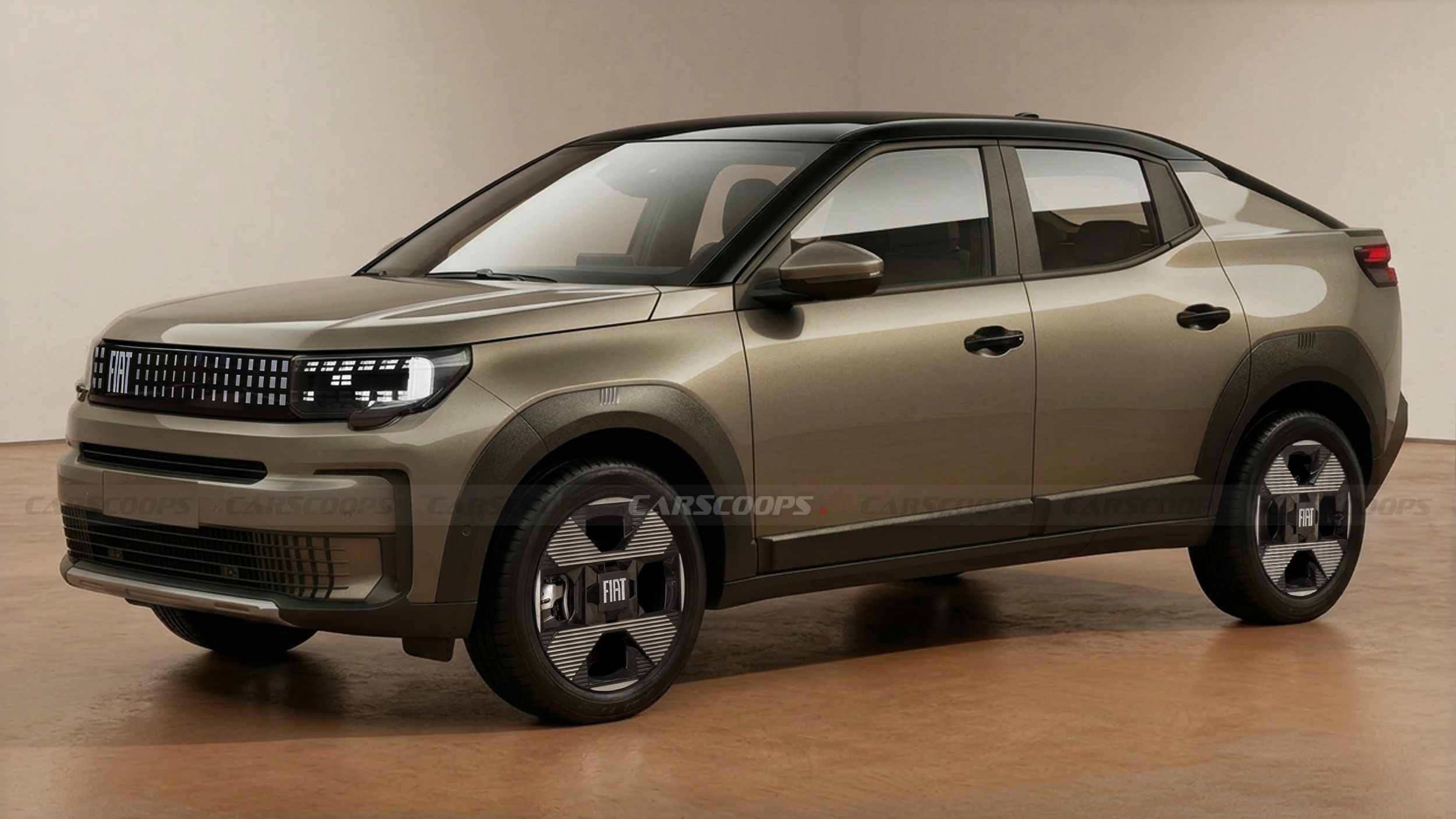
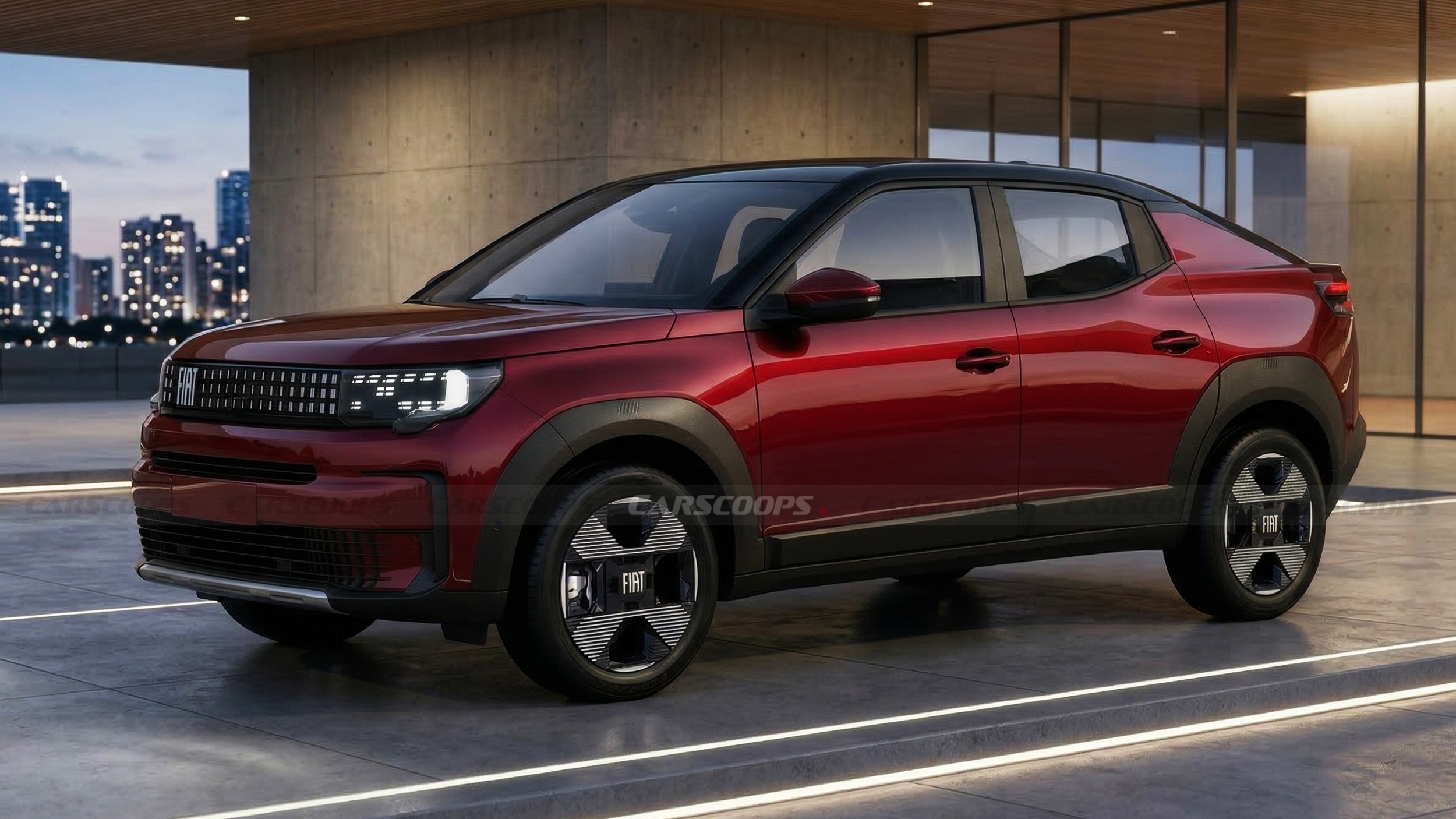
Fiat is lining up three debuts for the Paris Motor Show this October, two production cars and one concept. In the process, the brand returns to the compact segment, all but confirming that the long-teased “Giga Panda” SUV and Fastback will be the main attractions.
Building on the momentum of the Grande Panda, these new additions are set to be larger, more practical, and better suited to family duties. Their designs will closely follow the 2024 concepts, with the SUV adopting a more upright rear end, while the Fastback getting a sloping roofline similar to the Citroen Basalt.
Expect the two models to share a front-end design, featuring pixel-style LED lighting and a covered grille. Our speculative rendering, which is based on earlier prototype sightings, depicts the Fastback with modern styling cues borrowed from the smaller Grande Panda.
Underneath, both sit on Stellantis’ Smart Car platform, already in use on models like the Citroen C3 Aircross and the Opel Frontera. While it’s a cost-conscious architecture, it’s also a flexible one, supporting everything from combustion to mild-hybrid and fully electric powertrains.
Fiat has shared almost no details about the new concept, beyond vaguely calling it “exclusive.” Whether it previews another future addition to the expanding Panda family remains unclear.
What Else Will Stellantis Debut?
While Fiat focuses on the more affordable end of the spectrum, the wider Stellantis lineup is also bringing a few noteworthy debuts to this year’s Mondial de l’Auto in Paris.
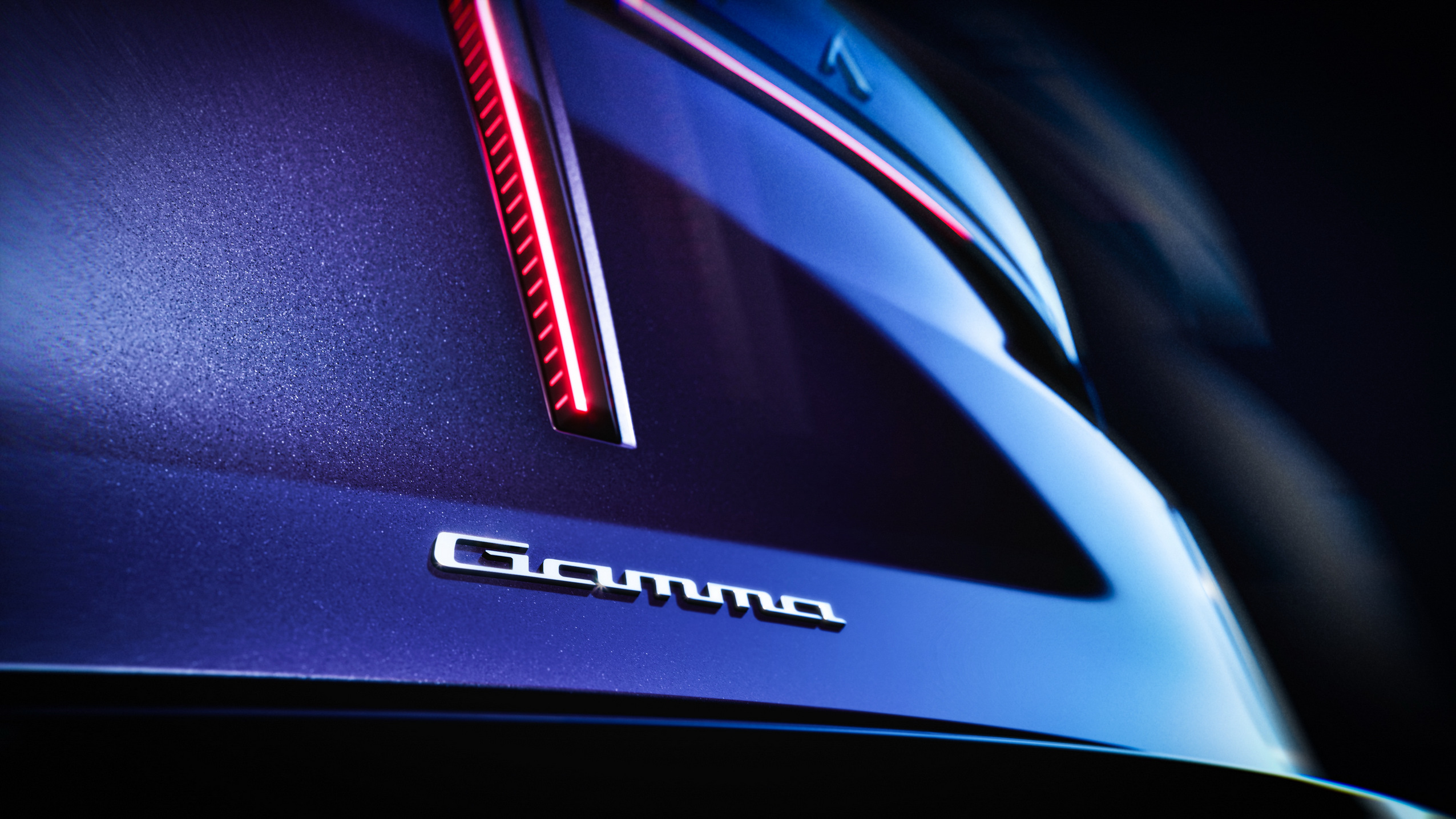
Lancia is set to take a leading role with the public debut of the all-new Gamma. It arrives as a sleek fastback-style crossover and will be built at the Melfi plant in Italy, alongside the DS No8. Underneath, it uses the STLA Medium platform, with a full spread of options including electric, mild-hybrid, and plug-in hybrid powertrains.
Citroen is also bringing a new concept to Paris, promising something “packed with personality.” Whether that means a pure design study in the vein of the late-2025 ELO concept or an early look at a future production model is still up in the air.
Leapmotor, the Chinese brand backed by Stellantis, will also make an appearance with the B03 subcompact hatchback, positioned as the lower, better-looking counterpart to the B03X SUV. A different shape, same idea.
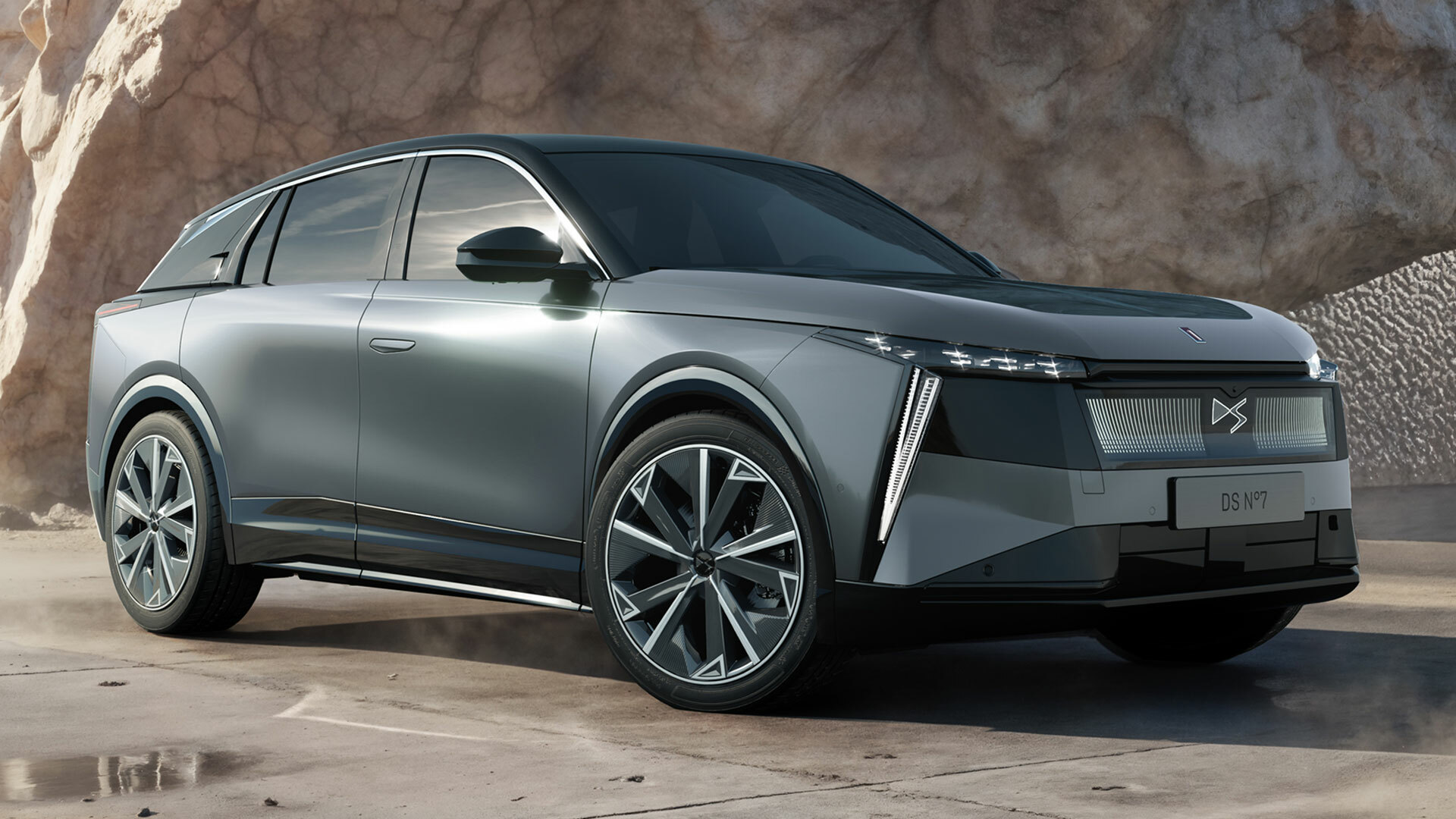
As for DS Automobiles, the more premium French brand is set to roll out the No7 SUV following its recent online reveal. The Stellantis roster, which includes Peugeot, Opel, and Alfa Romeo, will be on hand, though their displays will stick to models we have already seen.
The Aistaland GT7 mirrors the looks of the Taycan Sport Turismo.
It rides on an 800-volt architecture offering up to three motors.
The new model is set for its full debut at April’s Beijing Auto Show.
Porsche took a heavy hit in China last year, with sales tumbling 26 percent from 56,887 units to 41,938, a drop steep enough to force significant dealership cuts. While it continues to sell some very compelling cars, the rise of local brands offering similarly styled models at much lower prices has chipped away at Porsche’s luster. With EVs like this entering the scene, it’s not hard to see why.
What you’re looking at is an all-electric estate that clearly draws inspiration from the Porsche Taycan Sport Turismo. And no, this isn’t another take on the Xiaomi SU7, the SAIC Z7 unveiled a couple of weeks ago, or the upcoming MG 07 from the same company, even if all of them wear their Taycan influences quite openly.
Instead, this EV is called the GT7 and comes from Aistaland, a newly formed brand backed by Huawei and GAC. It will join the HIMA alliance, which already includes Aito, Luxeed, Maextro, Shangjie, and Stelato. For whatever reason, Chinese brands seem to have developed a habit of using the number ‘7’ for their Taycan-style lookalikes.
European Design With Chinese Tech
The GT7 will be unveiled in full next month, but at this stage, we know it’s 198.9 inches (5,050 mm) long, 77.9 inches (1,980 mm) wide, 57.9 inches (1,470 mm) tall, and rides on a 118.1-inch (3,000 mm) wheelbase. It uses an advanced 800-volt electrical architecture and will be available with up to three electric motors, one at the front axle and two at the rear.
There’s no word on how much power the GT7 will have, nor what kind of driving range it’ll hit the market with. But given that the Xiaomi SU7 delivers 664 hp in flagship dual-motor guise and 1,527 hp in the tri-motor SU7 Ultra, the GT7 will likely have output somewhere between those two models.
A Cut-Price Taycan
Obviously, the GT7 doesn’t just echo the Porsche Taycan in the way it’s engineered; it leans heavily on it for visual inspiration too. Up front, things are kept relatively clean, with large teardrop-shaped headlights and a small black grille doing most of the work. From the side, it’s even more familiar, with matching door handle placement and a shoulder line that could easily pass for Stuttgart’s handiwork.
The resemblance continues at the rear, where a full-width LED light bar closely echoes the Taycan’s look. Aistaland also seems to have taken a cue from the latest Tesla Model Y, adding two cut-outs above the light bar that glow red and give off a faint jet-thruster vibe.
There’s still no sign of the interior, and pricing remains unknown. However, if it lands close to the Xiaomi SU7, which starts at 229,900 yuan ($33,400), and the Z7, expected to begin around the same point, it would sit dramatically below the Porsche. In China, the Taycan starts at 918,000 yuan ($126,000) for the sedan and 1,008,000 yuan ($138,000) for the Sport Turismo, making Porsche’s position in China even harder to defend.
Rolls-Royce delays EV-only plan as customers continue demanding traditional V12s.
Electric Spectre remains, but petrol models stay as brand pivots to demand-led strategy.
Regulatory changes and market hesitation give Rolls-Royce room to rethink EV timeline.
Rolls-Royce once promised a whisper-quiet electric future. Turns out, its customers still prefer a different kind of whisper. The kind that comes from a silky V12 under a mile-long hood.
The British luxury marque has quietly backed away from its plan to go fully electric by 2030. Instead, it’ll keep building petrol-powered cars well into the next decade, because that’s what its ultra-wealthy clients are still asking for. And when your customers are dropping $400,000 or more on a car, you tend to listen.
According to CEO Chris Brownridge, demand for EVs just isn’t universal among Rolls buyers.
“For every client that loves an electric vehicle there is one who does not,” said Brownridge, according to The Times. “We recognise some clients would rather have a V12 engine. The V12 is part of our history.”
It’s also part of the experience. Rolls-Royce buyers aren’t chasing lap times or charging speeds. They want effortlessness, presence, and that unmistakable waftability a big combustion engine delivers.
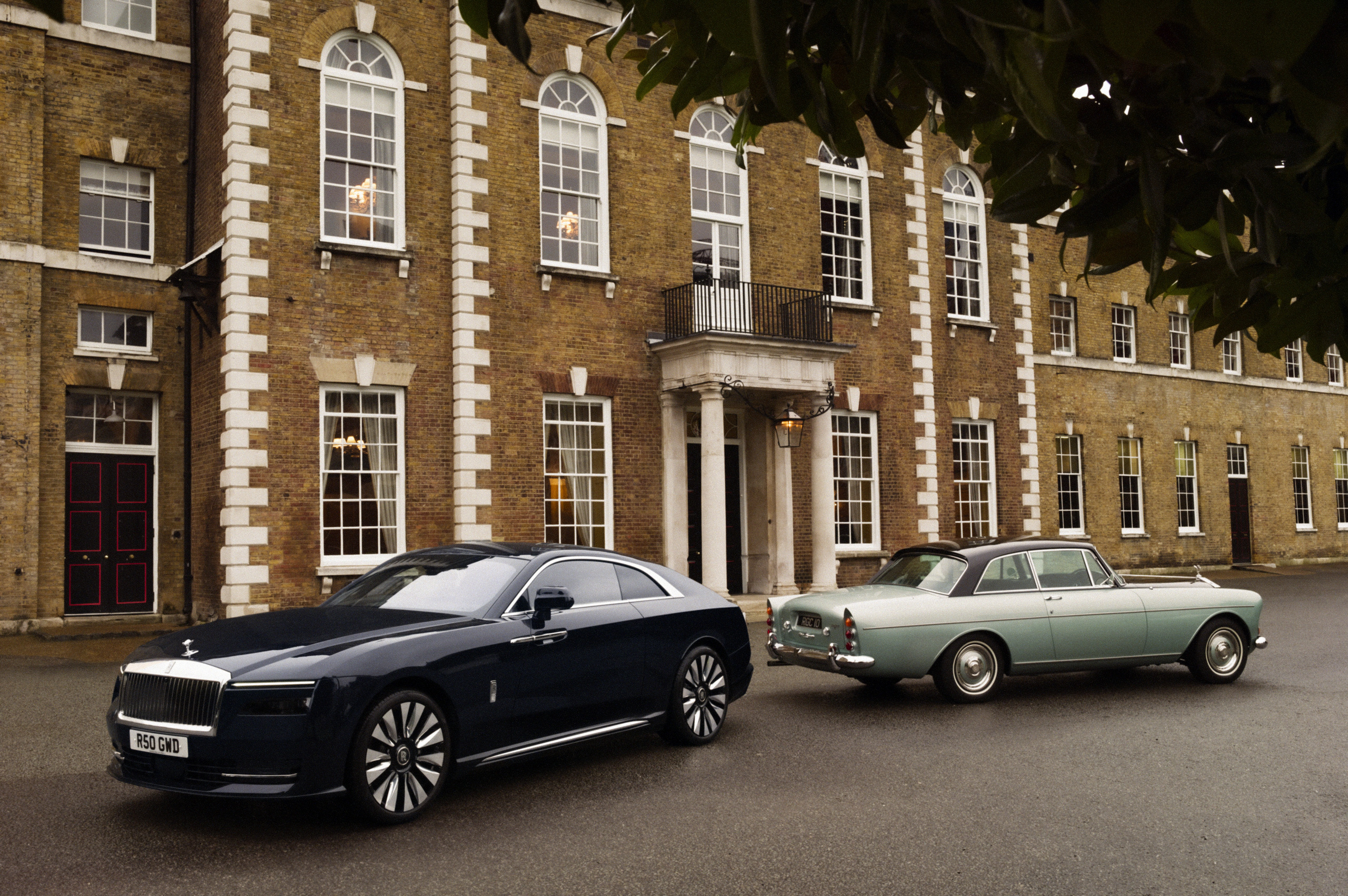
Though we can’t help thinking it’s maybe more about knowing there’s a V12 up front rather than experiencing it. A smooth, silent, effortlessly responsive electric motor setup like the one in the Spectre (seen below) that Rolls launched in 2022 seems like a logical fit for a uber-luxury sedan or coupe in the way it’s not for a $1 million hypercar that’s all about noise, drama and emotion.
Regulations Are Also Shifting
The shift isn’t just about customer taste, anyway. Changing regulations have played their part. Softer government EV targets in key markets have given Rolls-Royce more breathing room, and since it operates as a low-volume manufacturer, it isn’t bound by all of the same rules as mass-market brands.
That flexibility matters. Rolls builds cars to order, meaning it can adapt to what clients actually want rather than chasing arbitrary production targets. Right now, that means a mix of electric and petrol, not an abrupt switch to one or the other.
Rolls-Royce isn’t alone in hitting the brakes. Bentley, Aston Martin, and Lamborghini have all softened their EV timelines as reality catches up with ambition.
The rumored STI hatchback appeared in patent drawings in Japan.
A closer inspection suggests it is the Performance-B STI Concept.
Still, Subaru is rumored to be working on the return of a hot hatch.
The trail of breadcrumbs pointing to the return of a proper Subaru STI has been an entertaining one to follow. Shortly after the company put its new racing hatchback through testing, a set of patent drawings surfaced online, fueling more speculation about a potential production version.
The patents, filed at the Japan Patent Office, depict a Subaru hatchback with a wide body kit, WRX-sourced headlights, a new grille, and prominent aero components. It looks nearly identical to the Performance-B STI Concept from the 2025 Japan Mobility Show.
A closer look reveals only minor differences, namely the absence of extra vents on either side of the signature hood scoop and the lack of tailpipes at the rear. The latter likely relates to the patent application itself, much like the blank wheels and simplified lighting details.
Concept Design Captured In Patents
Japan Platform for Patent Information
As reported by Top Gear Philippines, which spotted the filing on the Japan Platform for Patent Information, the documents were submitted on September 29, 2025, one month before the show car’s debut on October 30. The timing, combined with the near-perfect visual match, strongly suggest these drawings depict the Subaru Performance-B STI Concept rather than a rumored 2027 production model.
A quick search of the same database shows that similar patents for the Subaru Performance-E STI Concept were filed on the very same day. They replicate the fully electric fastback’s design without any changes. This is standard practice, as automakers routinely secure design protection for both concepts cars and future production models ahead of their public debut to prevent copyright issues.
What About The Rumors?
While these patents likely exist for legal reasons, the timing of their discovery is what has enthusiasts paying attention. Subaru’s HiPerfX2 hatchback, essentially the racing counterpart to the Performance-B STI Concept, is set to compete in Japan’s Super Taikyu series, where it will double as a rolling development lab.
The race car pulls together an assortment of WRX STI sedan components, wrapped in a widebody hatchback silhouette that appears to draw from the Impreza. Under the hood sits a motorsport-tuned version of the turbocharged 2.4-liter boxer engine, producing 359 hp (268 kW / 364 PS), paired with a six-speed manual gearbox and an all-wheel-drive system.
Subaru Performance-B STI Concept
Talk of a 2027 return for the WRX STI hatchback starts to make more sense when you look at the gaps forming in Subaru’s current lineup. The company has confirmed it will stop taking orders for the WRX sedan in Japan, along with the Levorg and Layback wagons, leaving some notable space to fill.
Another telling move is the removal of the STI Sport grade from the WRX range, which could be less about trimming options and more about clearing the stage for something more exciting with the STI badge.
Whether this all points to a routine model year reshuffle or a deeper generational reset, one that finally brings the STI badge back to a hot hatch, is still an open question.
The flagship E7X has a sizeable 109.3 kWh battery pack.
AUDI will sell the SUV in both single- and dual-motor guises.
Pricing details will be announced at April’s Beijing Auto Show.
While some of the electric SUVs that Audi sells in Western markets already feel a little outdated compared to the competition, the carmaker has shown that, in China, it can build an EV that feels as if it’s been dropped off from the future. We’re, of course, talking about the E7X, previewed late last year but only just officially launched.
To bring this model to life, the German marque leaned on its partnership with SAIC through the dedicated AUDI brand, which debuted the E5 Sportback last year. Like that model, the E7X bears little resemblance to any Audi sold elsewhere. While pricing details have yet to be announced, it’s a safe bet it will be cheaper than many European alternatives.
The E7X is a big thing, stretching 198.7 inches (5,049 mm) long, 78.6 inches (1,997 mm) wide, and 67.3 inches (1,710 mm) tall, with a 120.4-inch (3,060 mm) wheelbase. As AUDI was under no obligation to follow traditional design cues in its development, there’s no single-frame grille in sight, just a collection of elements intended to appeal to Chinese buyers.
Chief among these touches is the front fascia, dominated by hundreds of tiny LEDs that replace a traditional grille. The side profile is also quite striking, with sharp lines, flush door handles, and cameras instead of traditional wing mirrors. Just like the front, the rear also sports some wild wraparound LEDs.
Sports Car Levels Of Power
It’s not just the design of the E7X that distinguishes it from typical Audi models, as its underpinnings are also distinct. All models will use CATL battery cells, with 100 kWh and 109.3 kWh packs being available. Depending on the battery pack and electric motor configuration, the SUV’s range will vary between 382 miles (615 km) and 466 miles (751 km).
The base model will be driven by a rear-mounted electric motor producing a hefty 402 hp. Sitting above it will be a dual-motor version delivering 671 hp. This dual-motor version will hit 62 mph (100 km/h) in just 3.97 seconds.
While AUDI has released a slew of new images of the E7X and more details about its powertrain, it’s yet to unveil the interior. Thankfully, we won’t have to wait long to see it in full, as the E7X will be displayed at next month’s Beijing Auto Show.
BMW i4 will reportedly go out of production next year.
Model will effectively be replaced by the new i3 sedan.
An i4 coupe is possible in the future, but likely a ways off.
BMW unveiled the updated i4 lineup less than a year ago, but the company is reportedly pulling the plug on the EV. This is hardly surprising as the automaker recently introduced the all-new i3.
While the new car is far more advanced, the i4 was a solid and attractive EV that debuted in 2021. The model was relatively popular and Americans snapped up 23,403 units in 2024. However, that number fell to 20,114 last year as the federal tax credit was phased out.
The i4 wasn’t just popular with the green crowd as it was the best-selling BMW M model between 2022 and 2024. In the case of the latest version, the i4 M60 produces up to 593 hp (442 kW / 601 PS) and can accelerate from 0-60 mph (0-96 km/h) in a mere 3.6 seconds. The model also offers up to 278 miles (447 km) of range, although opting for larger 20-inch wheels slashes that distance to a disappointing 232 miles (373 km).
Despite having a lot going for it, Autocar reports the i4 will be going out of production next year. The publication also talked to board member Jochen Goller, who said “When you look back on the last 20 years, you always had new models coming in and old models phasing out, so I think this is part of the history of our industry.”
That said, the i4 might not be gone for long, as some reports have suggested a new 4-Series is in the works and will be offered with gas and electric powertrains.
As for the i3, it’s a big step forward as it has an 800-volt architecture and a 400 kW DC fast charging capability. The i3 50 xDrive also has 463 hp (345 kW / 469 PS) and 476 lb-ft (645 Nm) of torque as well as an expected EPA range of 440 miles (708 km).
Bentley’s EV SUV may adopt the long-rumored Barnato name.
The name honors Le Mans winner and Bentley owner Woolf.
Platform design prevents adding hybrid or gas powertrains.
Bentley’s upcoming electric vehicle has been spied on numerous occasions, but its name has been a mystery. However, the “world’s first luxury urban SUV” could end up being called the Barnato.
The name has been rumored for years and reports from 2016 claimed the company was working on an entry-level sports car that could wear the moniker. More recently, in 2025, we noted the Barnato name was a strong possibility for the crossover as the automaker applied for the trademark.
Car & Driver seems to agree, having uncovered new trademark filings for the name across the European Union, the United States, and the United Kingdom. The American paperwork is for goods and services such as “motor vehicles and parts” including “electric vehicles.” It can also be used for electric charging cables, charging stations, and battery charging devices.
There’s Already Been A Barnato Edition
The moniker would pay tribute to Woolf Barnato, who purchased his first Bentley in 1925 and would go on to acquire the automaker. He’s also notable for winning the 24 Hours of Le Mans three times in a 4½ Litre and Speed Six.
Interestingly, Bentley has already honored Woolf’s daughter, Diana Barnato Walker, with a special edition. The Bentayga S was introduced in 2024 to honor “Bentley’s Flying Lady.”
She drove a 4¼ Litre Park Ward and joined the Air Transport Auxiliary during World War II to help deliver planes to the front lines. By the end of the war, she had delivered 260 Spitfires as well as numerous other aircraft.
Bentley Won’t Reengineer EV To Fit Gas Engine
In other news, Bentley CEO Frank-Steffen Walliser told Autocar the company has “no intention” to modify the vehicle to install a plug-in hybrid or gas powertrain. He added such a move isn’t even technically feasible due to its use of the PPE platform.
This is interesting to note as Porsche has pulled a U-turn on EVs. Besides reengineering the Boxster to accommodate internal combustion engines, the company’s flagship crossover will now have an engine instead of electric motors.
The fate of the model remains to be seen, but EV adoption has been slower than many companies anticipated. As a result, sales of the Barnato – or whatever it’s called – could be underwhelming. That being said, Walliser noted the Bentayga is sticking around, so customers looking for an SUV won’t be forced into buying an EV.
The C-Class EQ will use the Mercedes MB.EA architecture with 800-volt tech.
Mercedes will likely offer battery options ranging from 64 kWh to 94 kWh.
Early estimates indicate the C-Class EQ will have a driving range of 450 miles.
Hot on the heels of the new all-electric BMW i3, we can now turn our attention to its upcoming rival, the Mercedes-Benz C-Class EQ. Due for an April reveal, it will go head-to-head with the electric 3-Series, drawing on much of the same technology and drivetrain hardware as the GLC EQ.
As with the i3, which will be sold alongside a combustion 3-Series, the C-Class EQwon’t replace the gas-powered model but exist alongside it. Prototypes have been spotted testing for months, and a few journalists have already had early drives in production-intent cars.
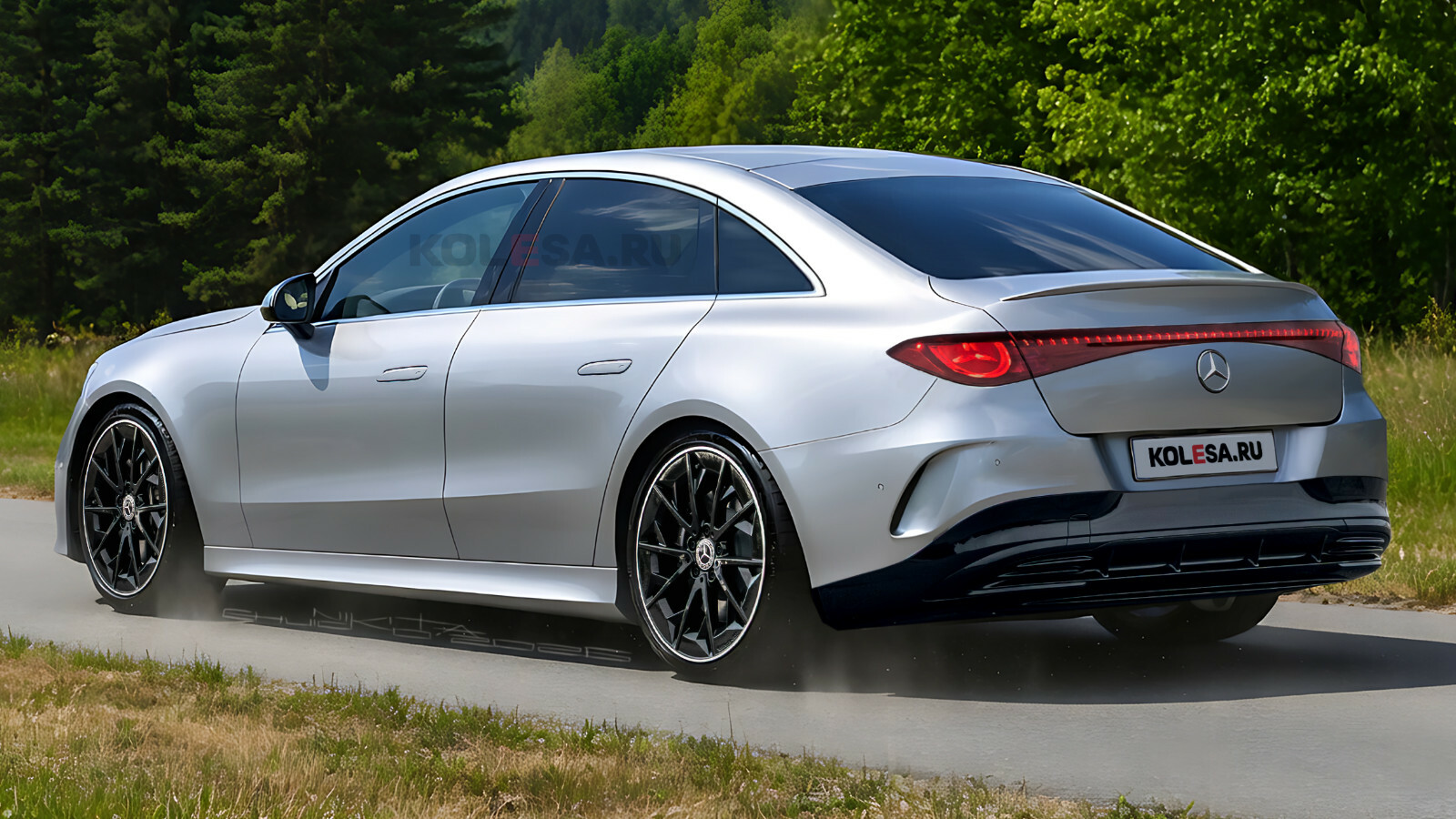
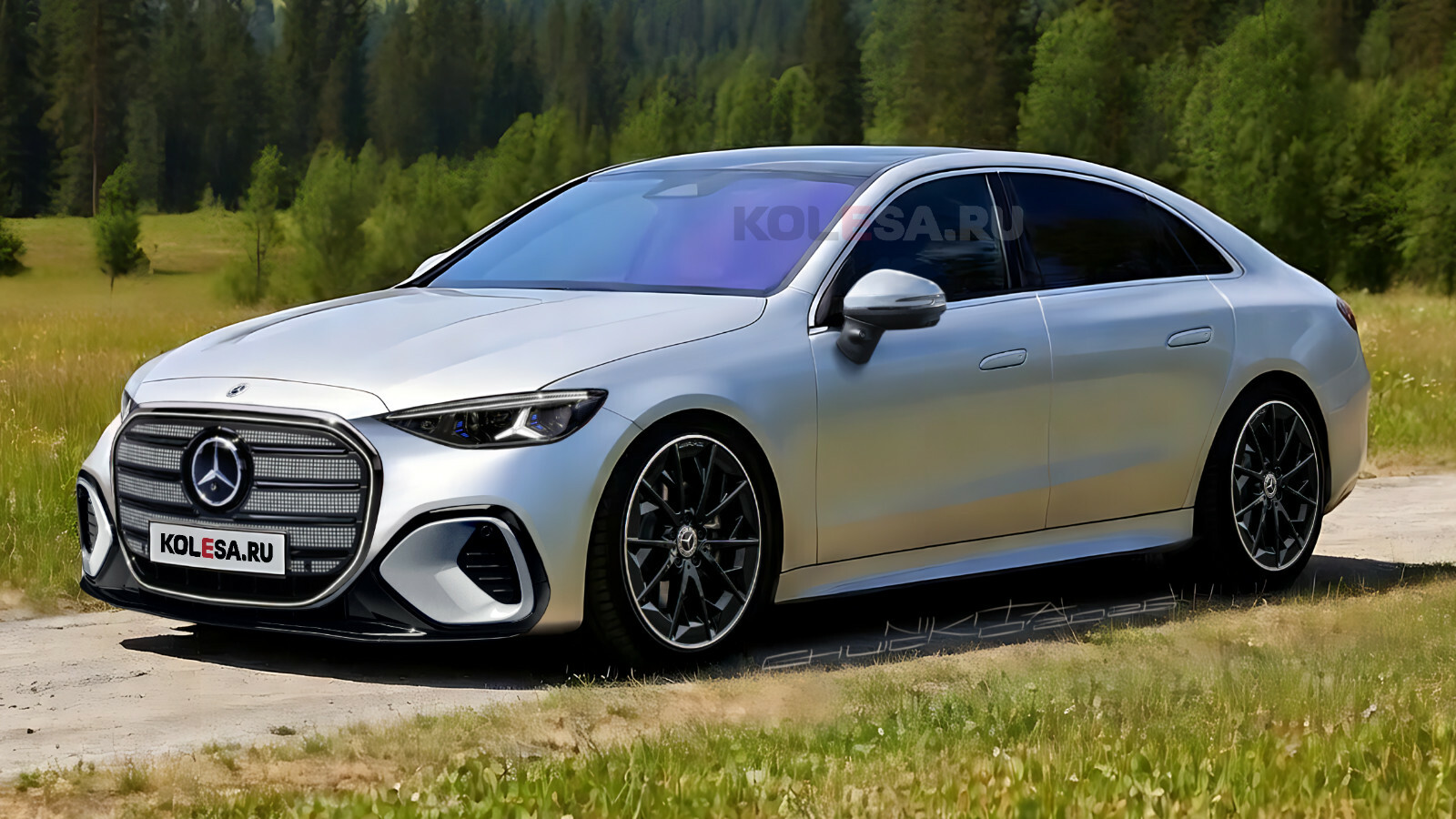
Visually, the biggest departure from the ICE version comes at the front. The EV is expected to feature an illuminated grille made up of hundreds of LEDs, much like the GLC EQ, as shown in these renderings created by Nikita Chuyko for Kolesa. Large grilles remain a divisive choice, and this one is unlikely to settle the debate, but it will certainly give the electric C-Class a distinct presence on the road.
During recent prototype testing, Autocar observed that the front end sits more upright than the current C-Class, while the rear window is set at a noticeably steeper angle. That extended rear glass is also reflected in these illustrations, giving the sedan a vibe reminiscent of the much-criticized EQS and EQE.
Unlike those models, however, Mercedes appears to be edging back toward a more conventional silhouette, complete with a longer hood, as it gradually moves away from its more experimental EQ design language.
It also sits lower than the combustion version and stretches out slightly, with a larger footprint overall. The payoff is more cabin room, helped by a longer wheelbase and wider tracks.
Prototype of the Mercedes-Benz C-Class EQ (Photos SHProshots)
Underpinning the new sedan will be Mercedes-Benz’s MB.EA architecture, also used by the GLC EQ, features 800-volt technology. The platform is expected to support a two-speed transmission to improve efficiency and performance, along with available rear-wheel steering and adaptive air suspension borrowed from higher-end models.
Power And Driving Range
Full powertrain details have yet to be confirmed, but the lineup is likely to mirror the GLC EQ, with battery packs ranging from 64 kWh to 94 kWh.
According to AutoExpress, one of the launch models will be the C 400 4MATIC Electric, offering up to 450 miles (724 km) of range on the WLTP cycle. That is short of the 559 miles (900 km) quoted for the i3, but it still puts the Mercedes among the more longer-range contenders in the segment. Charging should be competitive as well, with a peak DC rate of 330 kW. Not quite the i3’s 400 kW ceiling, but more than sufficient in everyday use.
Power comes from a dual-motor setup producing around 482 hp and 800 Nm (590 lb-ft) of torque, paired with all-wheel drive. Expect a 0-62 mph time of under 4.5 seconds. Pricing is projected to fall between $50,000 and $60,000, with a full market launch slated for late 2026.
BMW offered glimpses of the 3-Series Touring at i3 debut in Munich.
New i3 promises huge range and kicks off BMW Neue Klasse era.
Touring could be electric-only or still offer petrol and diesel options.
BMW did that thing where a brand casually drops something arguably cooler than the main event, just as it’s about to sign off. During the big reveal of its new electric 3-Series, the i3 sedan, a shadowy long-roof wagon shape popped up on the screen behind the brand’s CEO.
Yes, the 3-Series Touring is coming back, and this time it might plug-in rather than fill-up, but will probably be capable of both. The teaser was brief but unmistakable, showing a stretched roofline and that all-important hatch, plus a distinctive kink in the waistline behind the rear door and just before the classic Hofmeister kink.
“Business users and families will be particularly delighted,” Oliver Zipse said as the shadowy outline danced on the screen. “The Touring has always been a favorite with them.”
While those images were fleeting and unclear, between them and the official shots of the i3 sedan, it’s not hard to see how the wagon will look. We’ve mocked up a few images and put them in a gallery at the bottom of the post to give you an idea, and if the real thing is as sleek as our renders, then we know which body style we’ll be shopping for.
Range To Spare
The Touring’s wagon rear means it’ll have a ton more cargo space than the sedan, though that extra glass and metal will no doubt knock the i3 Touring’s electric range a little. Not that you’ll likely notice since BMW claims an impressive 400 miles (644 km) on the EPA cycle, and a massive 559 miles (900 km) on the European WLTP one, for the 463 hp (469 PS / 345 kW) i3 50 xDrive.
There’s still a bit of mystery though. BMW hasn’t confirmed whether this new Touring will be purely electric or if petrol and diesel versions will stick around. But we’re confident that both electric and combustion options will be available, the ICE Tourings getting a very similar Neue Klasse design, but riding on an update of today’s CLAR platform and not the Neue Klasse architecture that forms the basis of the i3.
Electric M3 Touring?
And given that the M3 Touring has been such a hit with enthusiasts, we’ve got our fingers crossed that it’ll return, too. Maybe we’ll even get an electric M3 Touring to go with the electric M3 sedan we know BMW is working on to live alongside the next ICE M3.
Don’t expect to see Tourings of any kind on the road until 2027 or 2028, though. We haven’t seen any prototypes on test yet, which means the debut is some way off, and sadly, when the Touring does arrive, it’ll likely remain out of reach for North American fans, although never say never.
2028 BMW 3-Series Touring illustrations by Carscoops.
The facility now builds LFP cells for grid and data use.
Retooling the plant cost the joint venture tens of millions.
LG is also shifting other battery plants to storage facilities.
Just a few months after Ford announced that one of its battery plants, originally destined for EV batteries, would instead start making batteries for energy storage systems, General Motors has done the same.
The car manufacturer, in partnership with LG Energy Solution, operates the Ultium Cells LLC joint venture and runs a large factory in Tennessee. This site opened in 2024, making cells for the Cadillac Lyriq and Vistiq, and the Acura ZDX. Late last year, more than 700 employees were laid off from the plant as GM, like its competitors, pulled back its EV investments.
Now, Ultium’s vice president of operations, Tom Gallagher, said that these workers will be rehired and return to work by the end of April, as the site is switching to lithium-iron phosphate cells for grid and data center customers.
An Expensive Pivot
Bloomberg reports that retooling the plant has cost the joint venture tens of millions of dollars, but will help prevent hemorrhaging even more money from its EV pivot. It will also help LG, which is also retooling four other EV battery plants in North America, including two in Michigan, one in Canada formed through a joint venture with Stellantis, and an Ohio plant established with Honda. All of these sites will now begin manufacturing LFP cells for storage systems.
“Having these facilities that are able to be converted in less than a year means that we can react and we can actually get up to capacity,” chief product officer from LG’s systems integration unit, Vertech, Tristan Doherty said. “We’re going to be supplying the majority of the US market with domestic cells.”
GM says staff at the joint venture battery plant will be retrained as part of the shift. But the car manufacturer is remaining silent about its longer-term plans for the site, having previously stated that it’d start producing lithium manganese-rich batteries in Tennessee by 2028.
BMW’s i3 brings Neue Klasse platform and design to the all-new 3-Series sedan.
800-volt tech brings 440-mile range, blistering charging, and 463 hp via dual motors.
Cabin goes full sci-fi with pillar-to-pillar head-up display and angled touchscreen.
It’s over a decade since the original i3 hatch arrived to kick-start BMW’s electric journey. That quirky little compact is long gone, but now the i3 badge is back on another, very different EV that’s even more important. The new i3 is the first electric 3-Series offered outside of China and everything from the way it looks, to the way it’s powered, to the way drives, is all new.
Petrol fans will have to wait a few more months for their new G50 3-Series, a gas-powered range of sedans that looks very much like this one but rides on an updated version of today’s CLAR platform. Today, we only get to meet the NA0-code electric version, based around BMW’s Neue Klasse EV architecture, but much of what we’re learning about the design and the interior will also apply to the ICE car.
Longer, Wider, Lower, Hotter
From the outside, the new i3 looks like a careful balancing act between familiar and futuristic. It’s not quite as lean as the various concepts that have previewed the look over the past few years, but it’s fresh, modern and has a kind of angular solidity that reminds us of the 1990s E36 with some E46 curves thrown in.
The front end gets the brand’s new visor face, along with a grille and lighting setup blended into one, as previously seen on the i3’s SUV brother, the iX3. And the side view reveals cleaner, unfussy surfaces with flush door handles and muscular swollen fenders even on the mid-ranking xDrive 50 launch model. Plus there’s a new assertive take on the classic Hofmeister C-pillar kink.
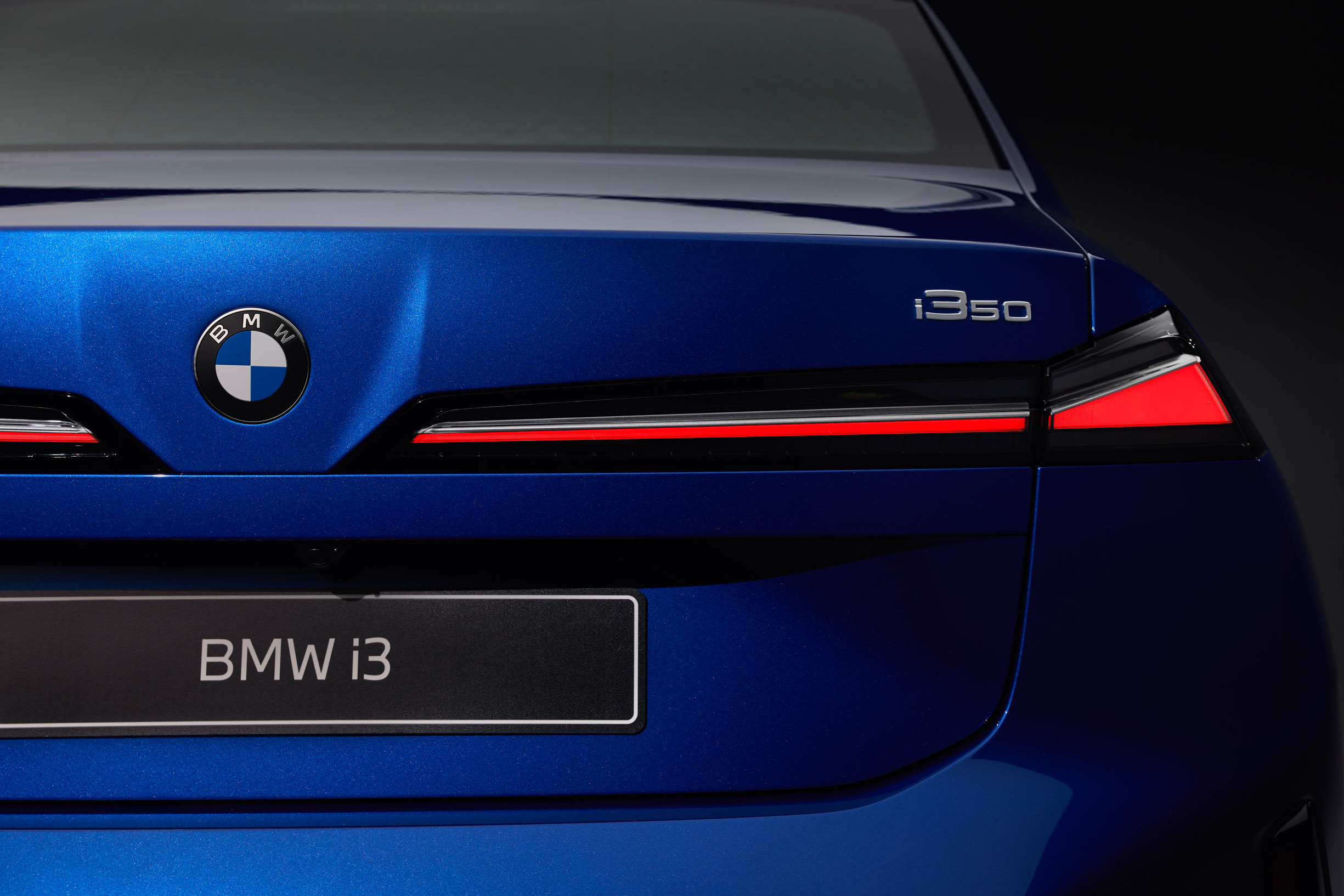
At the rear, the lights stay horizontal and reach into the shoulders and across the trunk lid to emphasize width. And you’ve probably noticed the strong new paint option. It’s called M Le Castellet Blue metallic, and is sure to be a massive hit. What doesn’t stand out as much from these images is that the 187.4-inch (4,760 mm) i3 is 1.8-inches (47 mm) longer, 1.5 inches (37 mm) wider, and 1.4 inches (36 mm) taller than the current gas-powered 3-Series in 330i xDrive form.
The 114.1-inch (2,898 mm) wheelbase is also 1.9 inches (47 mm) longer than the MY26 G20’s, although it still mostly retains traditional rear-drive sedan proportions. We say mostly, because the short distance between the front wheel-well opening and the driver’s door is a clue that there’s something very different going on under the hood.
2027 BMW i3 vs 2026 3-Series Sedan
Dimension
New i3
330i xDrive
Difference
Length
187.4 in (4,760 mm)
185.6 in (4,713 mm)
+1.8 in (47 mm)
Width
73.4 in (1,864 mm)
71.9 in (1,827 mm)
+1.5 in (37 mm)
Height
58.3 in (1,481 mm)
56.9 in (1,445 mm)
+1.4 in (36 mm)
Wheelbase
114.1 in (2,898 mm)
112.2 in (2,851 mm)
+1.9 in (47 mm)
Track (F)
63.2 in (1,605 mm)
61.9 in (1,573 mm)
+1.3 in (32 mm)
Track (R)
63.5 in (1,613 mm)
62.4 in (1,587 mm)
+1.1 in (26 mm)
SWIPE
Panoramic Dashboard
Inside, BMW seems determined to make the i3 feel like a concept car that accidentally made production. The cabin, which again borrows heavily from the iX3 SUV, features a wraparound-effect dashboard that runs into the door panels, large glass areas, and a standard panoramic roof, all of which should ensure life onboard feels less cave-like than in too many current cars.
The iX3’s controversial four-spoke steering wheel makes an appearance, and the central display is angled toward the driver, which is a nice reminder that somebody in Munich has been paying attention to 3-Series history.
The seats also sound promising, with even the standard chairs said to offer decent support as well as comfort, while optional multifunction seats and M Sport seats add extra lateral stick and a bit more theater. There are multiple interior themes, from leather-like materials to more upscale hides, and BMW says that buyers at the other end of the grade structure get cloth upholstery made from recycled fabrics, part of an i3 sustainability push that resulted in recycled materials being used for the wheels, bumpers and more.
Practicality hasn’t been ignored, either. The center console includes storage, wireless charging, and proper physical buttons for important stuff like the parking brake and hazards. But we’d like to see a few more non-digital buttons for other regularly-used functions, a philosophy VW is now employing on its newest EVs.
Infotainment And Tech
Now for the part where the i3 goes full spaceship. BMW’s new Panoramic IDrive combines a pillar-to-pillar lower windshield display, a massive 17.9-inch central infotainment screen, an optional 3D head-up display, and a new multifunction steering wheel with illuminated controls that only appear when needed.
That’s a lot, but BMW insists it’s all meant to reduce distraction rather than create it. Key information sits in the driver’s line of sight, while the central screen handles the rest. Widgets can apparently be dragged and dropped between displays, which sounds a bit like setting up your phone’s home screen, so should be intuitive. Voice control gets a major upgrade, too, using Amazon Alexa+ tech for more conversational responses and better access to cloud services.
BMW also says up to seven users can store their own profiles through a BMW ID, with settings for displays, seats, media, and more. So yes, your car now knows your name, your favorite songs, and probably your preferred ambient lighting color.
Powertrain
Underneath all the flashy design language and digital fireworks, the hardware is deadly serious. For now we’re only getting details on one model, the i3 50 xDrive, whose spec closely mirrors that of the iX3 xDrive50. That means dual motors, one on each axle, good for a combined 463 hp (469 PS / 345 kW) and 476 lb-ft (645 Nm) of torque.
You’ll no doubt be pleased to hear that the rear axle does most of the heavy lifting with an electrically excited synchronous motor, while the front gets an asynchronous motor to help with traction and overall efficiency. BMW says this combo cuts energy losses, reduces weight, and lowers manufacturing costs compared with the old setup.
More importantly, BMW keeps talking about how this car should drive. The new Heart of Joy control system manages drive, brakes, some steering functions, and recuperation, and supposedly reacts 10 times faster than previous systems. It sounds overly tech but BMW says it makes the car feel sharper, more predictable, and more natural on the move. There’s also a new five-link rear axle, standard stroke-dependent dampers, anti-roll bars with highly preloaded bearings, and an optional adaptive suspension setup.
Battery, Range, Charging
The i3 uses BMW’s sixth-generation eDrive setup, with an 800-volt architecture, cylindrical battery cells, and cell-to-pack construction. That means better energy density, flatter packaging, and up to an excellent 440 EPA miles (708 km) or 559 WLTP ones (900 km) on its preliminary test numbers. DC fast charging tops out at 400 kW, which is seriously punchy, allowing you at add 249 miles (400 km) in just 10 minutes.
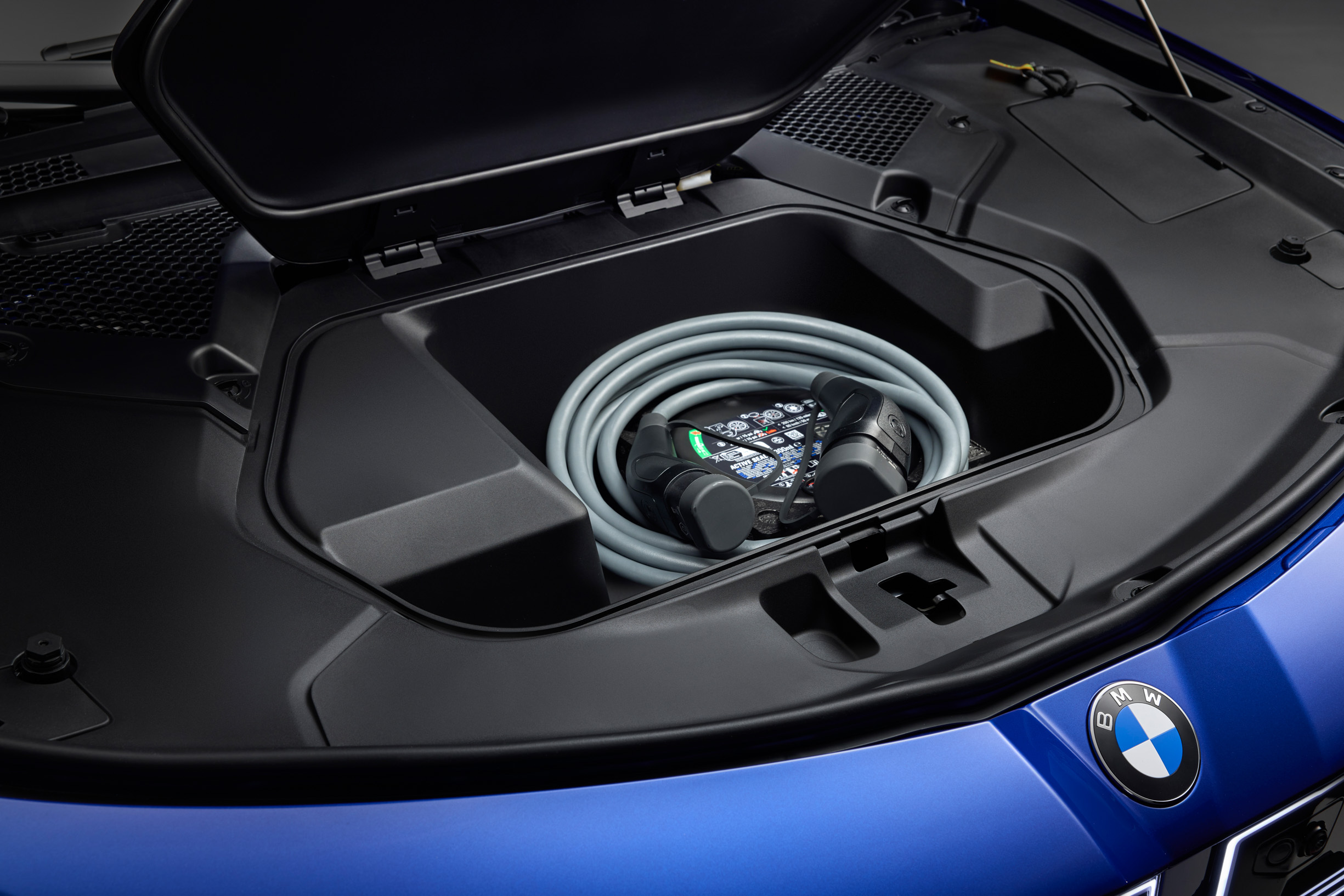
And like any self-respecting modern EV, the i3 gets bidirectional charging, so it can power appliances, help run a house, or send energy back to the grid. The charging flap even opens automatically when the car figures out you’re approaching a charger, and closes again by itself once you’ve finished charging. BMW’s route planning also factors in charging stops, station availability, costs, and nearby amenities. And in case wondering, yes, there’s a small frunk for a charging cable, but not much else.
When Can I Get One?
Production of the i3 starts in Munich in August, with first deliveries of MY27 cars beginning this fall. It’s one of the most important launches in BMW’s next wave, and not just because it’s electric. It’s also the first true EV version of one of the brand’s core nameplates, which gives it a lot more symbolic weight than your average new model reveal.
And the rollout doesn’t end here. More affordable single-motor models, plus more powerful M Performance ones, will follow, as will Touring wagons and combustion versions of the same. BMW is even working on the first ever electric M3. The 3-Series has never undergone such a radical transformation, and this eighth-generation car is bound to generate hate as well as love. Which side are you on?
Volvo will discontinue the EX30 in the U.S. after the 2026 model year.
Tariffs, tax-credit changes, and slowing EV demand likely sealed its fate.
Small electric SUV will remain on sale in Canada, Mexico, and other markets.
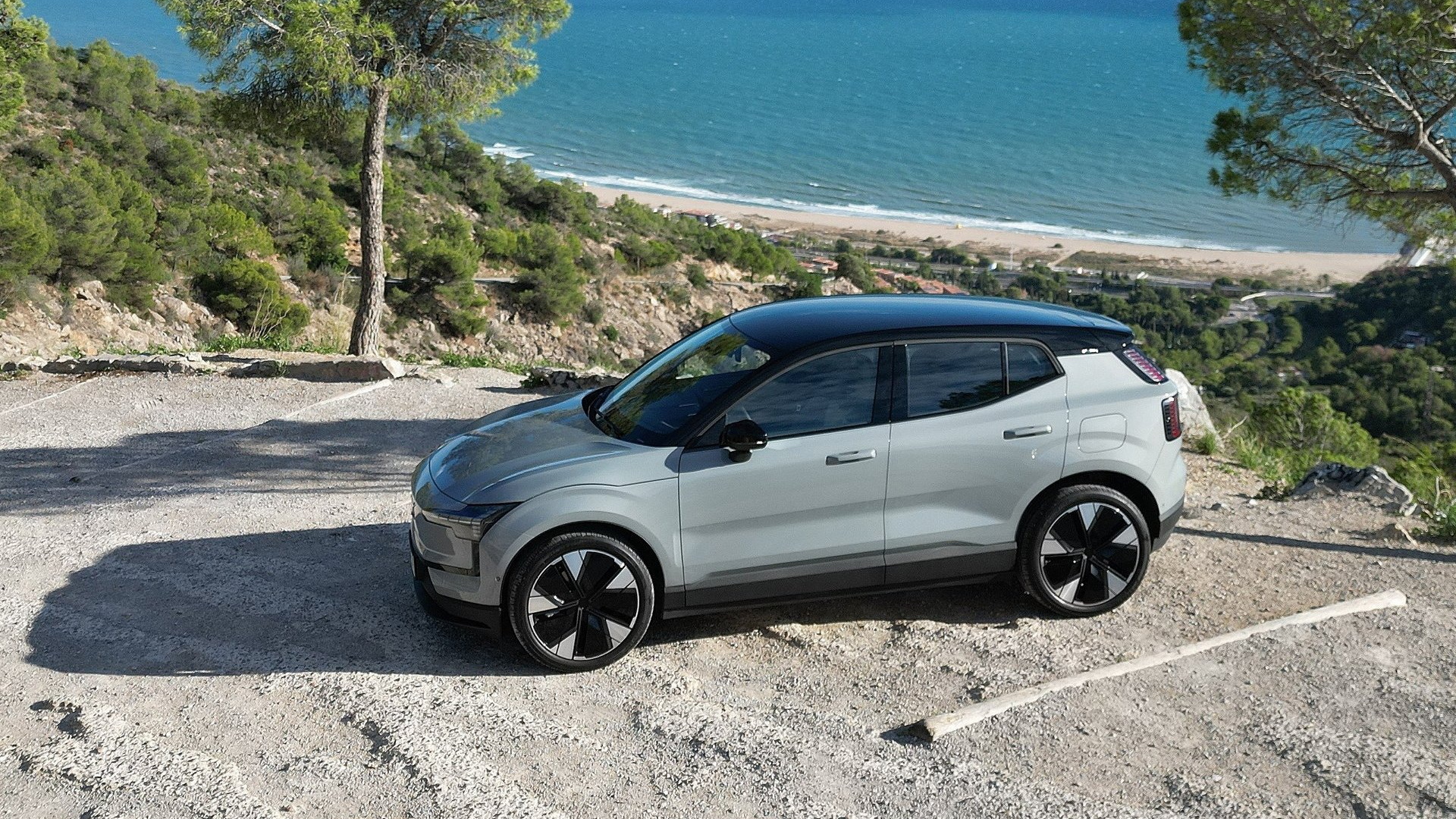
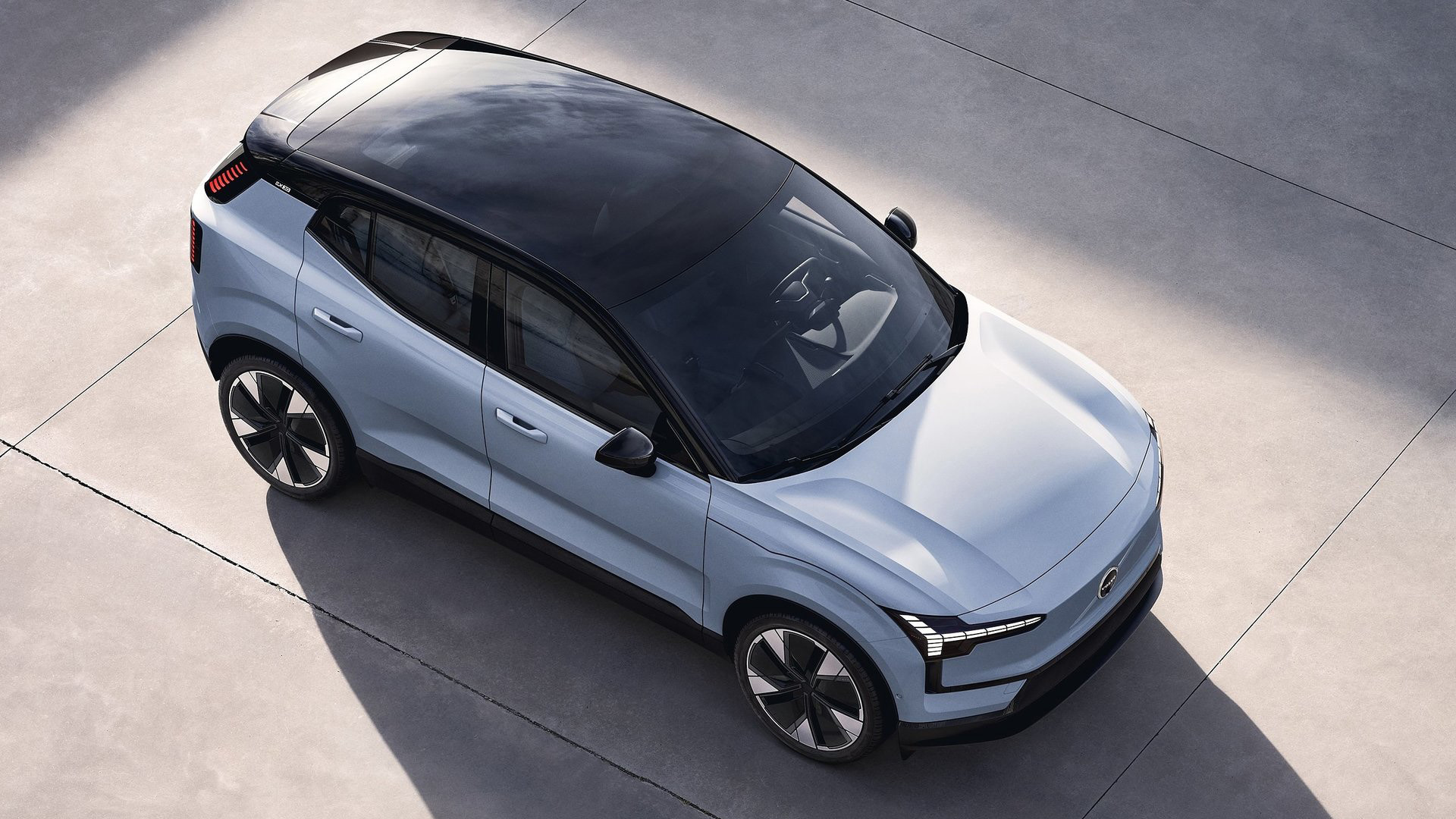
Volvo is suffering a new setback as the short-lived EX30 is leaving the USA after this model year. The automaker confirmed the news that will see both the normal and Cross Country versions of the electric crossover exit the U.S just two years after launch. Meanwhile, Volvo will continue selling it in Mexico and Canada, which makes the reasoning behind the decision easier to piece together.
On paper, the EX30 made a lot of sense. It was positioned as Volvo’s most affordable EV, starting at just over $40,000, with up to 422 horsepower in dual-motor form and EPA range estimates of around 253–261 miles depending on configuration. It was quick, stylish, and small enough to appeal to urban buyers who didn’t need a full-size electric SUV.
In reality, the U.S. market just wasn’t ready for it. The EX30 is tied to a Chinese-built EV architecture like the one used in the Zeekr X. That complicated life for Volvo when President Trump enacted steep tariffs on Chinese-made vehicles. Volvo shifted U.S. supply to Belgium to get around the issue, only to end up hit by more tariffs later on.
At the same time, Trump killed the EV tax credit for imported vehicles and then all vehicles. Sales reflected that change. Volvo shifted just over 5,400 EX30s in the U.S. during 2025. A Volvo spokesperson confirmed the situation to The Drive, saying it is “a thorough evaluation of our business and operational strategies and is a direct response to shifting market conditions and financial factors.”
Importantly, Volvo isn’t backing away from electrification overall. The brand will continue selling the EX40 and EX90 in the U.S., and the upcoming EX60 is still likely coming later this year. The EX30 didn’t flop in America because it was a bad car. It just ended up being launched at the worst time possible for a small, imported EV. Most automakers worldwide would struggle with such a task, and it’s why so many have changed their EV plans.
BMW i4 will reportedly go out of production next year.
Model will effectively be replaced by the new i3 sedan.
An i4 coupe is possible in the future, but likely a ways off.
BMW unveiled the updated i4 lineup less than a year ago, but the company is reportedly pulling the plug on the EV. This is hardly surprising as the automaker recently introduced the all-new i3.
While the new car is far more advanced, the i4 was a solid and attractive EV that debuted in 2021. The model was relatively popular and Americans snapped up 23,403 units in 2024. However, that number fell to 20,114 last year as the federal tax credit was phased out.
The i4 wasn’t just popular with the green crowd as it was the best-selling BMW M model between 2022 and 2024. In the case of the latest version, the i4 M60 produces up to 593 hp (442 kW / 601 PS) and can accelerate from 0-60 mph (0-96 km/h) in a mere 3.6 seconds. The model also offers up to 278 miles (447 km) of range, although opting for larger 20-inch wheels slashes that distance to a disappointing 232 miles (373 km).
Despite having a lot going for it, Autocar reports the i4 will be going out of production next year. The publication also talked to board member Jochen Goller, who said “When you look back on the last 20 years, you always had new models coming in and old models phasing out, so I think this is part of the history of our industry.”
That said, the i4 might not be gone for long, as some reports have suggested a new 4-Series is in the works and will be offered with gas and electric powertrains.
As for the i3, it’s a big step forward as it has an 800-volt architecture and a 400 kW DC fast charging capability. The i3 50 xDrive also has 463 hp (345 kW / 469 PS) and 476 lb-ft (645 Nm) of torque as well as an expected EPA range of 440 miles (708 km).
Bentley’s EV SUV may adopt the long-rumored Barnato name.
The name honors Le Mans winner and Bentley owner Woolf.
Platform design prevents adding hybrid or gas powertrains.
Bentley’s upcoming electric vehicle has been spied on numerous occasions, but its name has been a mystery. However, the “world’s first luxury urban SUV” could end up being called the Barnato.
The name has been rumored for years and reports from 2016 claimed the company was working on an entry-level sports car that could wear the moniker. More recently, in 2025, we noted the Barnato name was a strong possibility for the crossover as the automaker applied for the trademark.
Car & Driver seems to agree, having uncovered new trademark filings for the name across the European Union, the United States, and the United Kingdom. The American paperwork is for goods and services such as “motor vehicles and parts” including “electric vehicles.” It can also be used for electric charging cables, charging stations, and battery charging devices.
There’s Already Been A Barnato Edition
The moniker would pay tribute to Woolf Barnato, who purchased his first Bentley in 1925 and would go on to acquire the automaker. He’s also notable for winning the 24 Hours of Le Mans three times in a 4½ Litre and Speed Six.
Interestingly, Bentley has already honored Woolf’s daughter, Diana Barnato Walker, with a special edition. The Bentayga S was introduced in 2024 to honor “Bentley’s Flying Lady.”
She drove a 4¼ Litre Park Ward and joined the Air Transport Auxiliary during World War II to help deliver planes to the front lines. By the end of the war, she had delivered 260 Spitfires as well as numerous other aircraft.
Bentley Won’t Reengineer EV To Fit Gas Engine
In other news, Bentley CEO Frank-Steffen Walliser told Autocar the company has “no intention” to modify the vehicle to install a plug-in hybrid or gas powertrain. He added such a move isn’t even technically feasible due to its use of the PPE platform.
This is interesting to note as Porsche has pulled a U-turn on EVs. Besides reengineering the Boxster to accommodate internal combustion engines, the company’s flagship crossover will now have an engine instead of electric motors.
The fate of the model remains to be seen, but EV adoption has been slower than many companies anticipated. As a result, sales of the Barnato – or whatever it’s called – could be underwhelming. That being said, Walliser noted the Bentayga is sticking around, so customers looking for an SUV won’t be forced into buying an EV.

 Login
Login