Normal view

There are new articles available, click to refresh the page.
Yesterday — 6 May 2026Electric Vehicles - Latest News | Carscoops

Opel’s New Corsa GSE Beats Peugeot’s GTI Using Peugeot’s Own Powertrain

  • New Corsa GSE delivers 276 hp and 0-62 mph in 5.5 seconds.
  • FWD chassis gets a limited-slip diff and performance brakes.
  • Plaid bucket seats tip a hat to classic hot hatches from the ’80s.

Opel and its badged-engineered British sister brand Vauxhall are rediscovering their hot hatch roots, but with a charging cable this time. The pair dropped their Corsa GSE today, along with a zero to 62 mph (100 kmh) time that says it’s faster than any rival electric hot hatch on the market.

That includes fellow Stellantis company Peugeot’s e-208 GTI whose platform, powertrain and basic chassis setup the GSE shares. Under the skin is a single electric motor that sends 276 hp (281 PS / 207 kW) and 254 lb-ft (345 Nm) of torque to the front wheels through a limited-slip differential, though only in Sport mode. In Normal you make do with 228 hp (231 PS / 170 kW).

Related: Stellantis Just Decided Which Four Brands Actually Matter And Opel Isn’t One

Zero to 62 mph (100 kmh) takes 5.5 seconds in Sport, versus 5.7 seconds for the e-208 and 5.9 seconds for the 1,550 kg (3,420 lbs) Corsa’s mechanically identical, but 47 kg (104 lbs) heavier crossover brother, the Mokka GSE. That’s pretty damn swift for a small, front-wheel drive hatch, and also makes the Corsa GSE significantly quicker than its key non-Stellantis electric rivals like the Alpine A290 and Mini Cooper JCW, which need 6.4 and 5.9 seconds respectively to hit the 60 mph mark.

Stiffer, lower suspension and uprated brakes with four-pot calipers are part of the chassis package, Opel claiming that both the steering and pedal responses are massively improved over what you experience from the regular EV. Rolling stock is Michelin Pilot Sport 4S 215/40 R18 rubber wrapped around alloy rims whose three-spoke design is there to evoke memories of the 1980s Opel Corsa GSE, which traded blows with the Peugeot 205 GTI almost 40 years ago.

Plaid Buckets? Check!

\\\\

Climb inside and you’ll find the sports seats have plaid centers to carry on the 1980s hot hatch theme. Other GSE interior details on the 2027 car include Alcantara trim, aluminum pedals, and strong yellow accents, plus a performance data display showing acceleration stats and G-force readings. On the outside, in addition to those three-spoke rims you get a black roof, rear spoiler and sportier bumpers.

As for range, we don’t have numbers yet, but we do know that the GSE uses the same 51 kWh (usable) battery as other Corsas and other Stellantis cars built on the same CMP platform. So we’d expect the GSE to roughly equal the e-208 GTI’s 217-mile (349 km) range, which will be fine for blasting around town, but not so good on longer trips.

VW’s ID. Polo GTI debuts any day, and should deliver more than 260 miles (418 km) of range, though with only 223 hp (226 PS / 166 kW) it won’t trouble the GSE in a race to 62 mph. Which one gets your vote?
\\\\\\\\\\\\\\\\\\\

Opel/Vauxhall

One In Six New Cars Sold In Australia Is Now An EV As Gas Sales Fall Off A Cliff

  • Gas-powered vehicle sales fell 30 percent as electrified models rose.
  • In April, Toyota held first place, with BYD second and Kia third overall.
  • Other Chinese automakers gain ground, including Zeekr, Geely, and Chery.

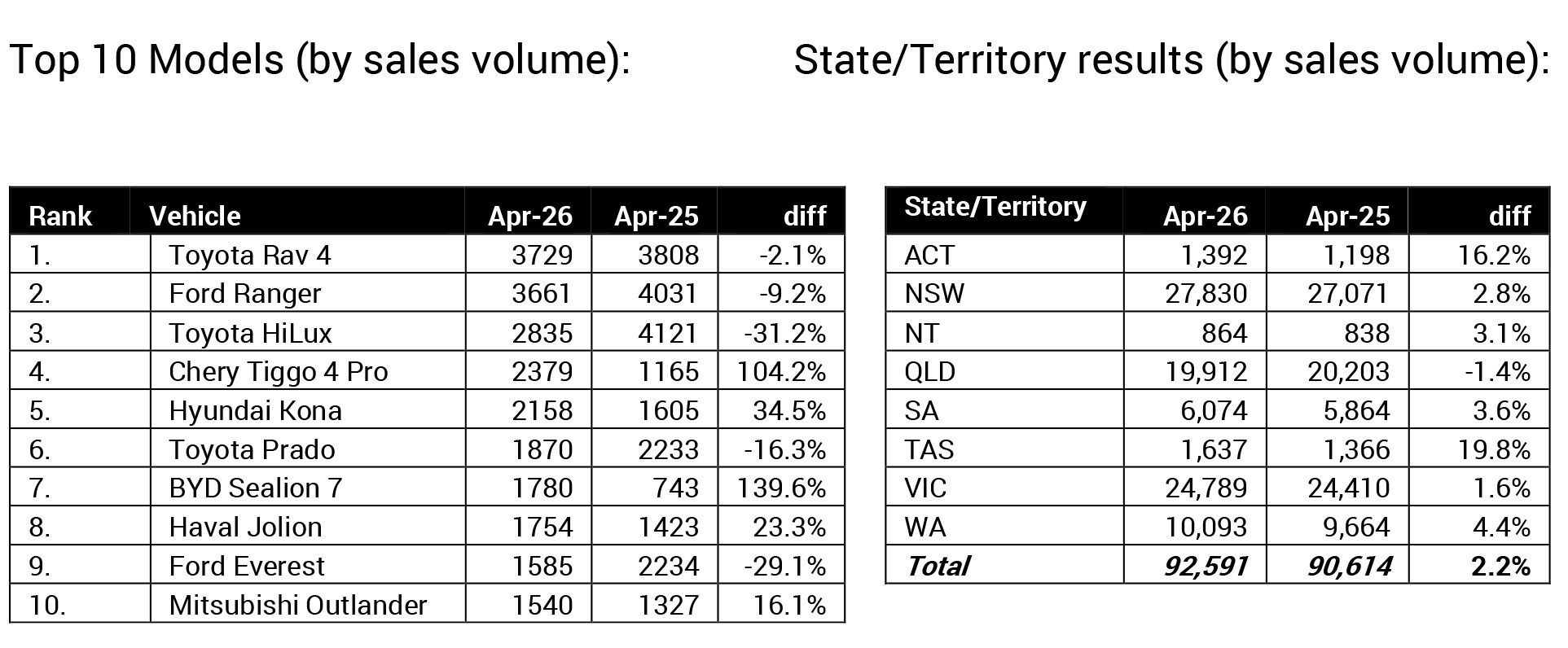
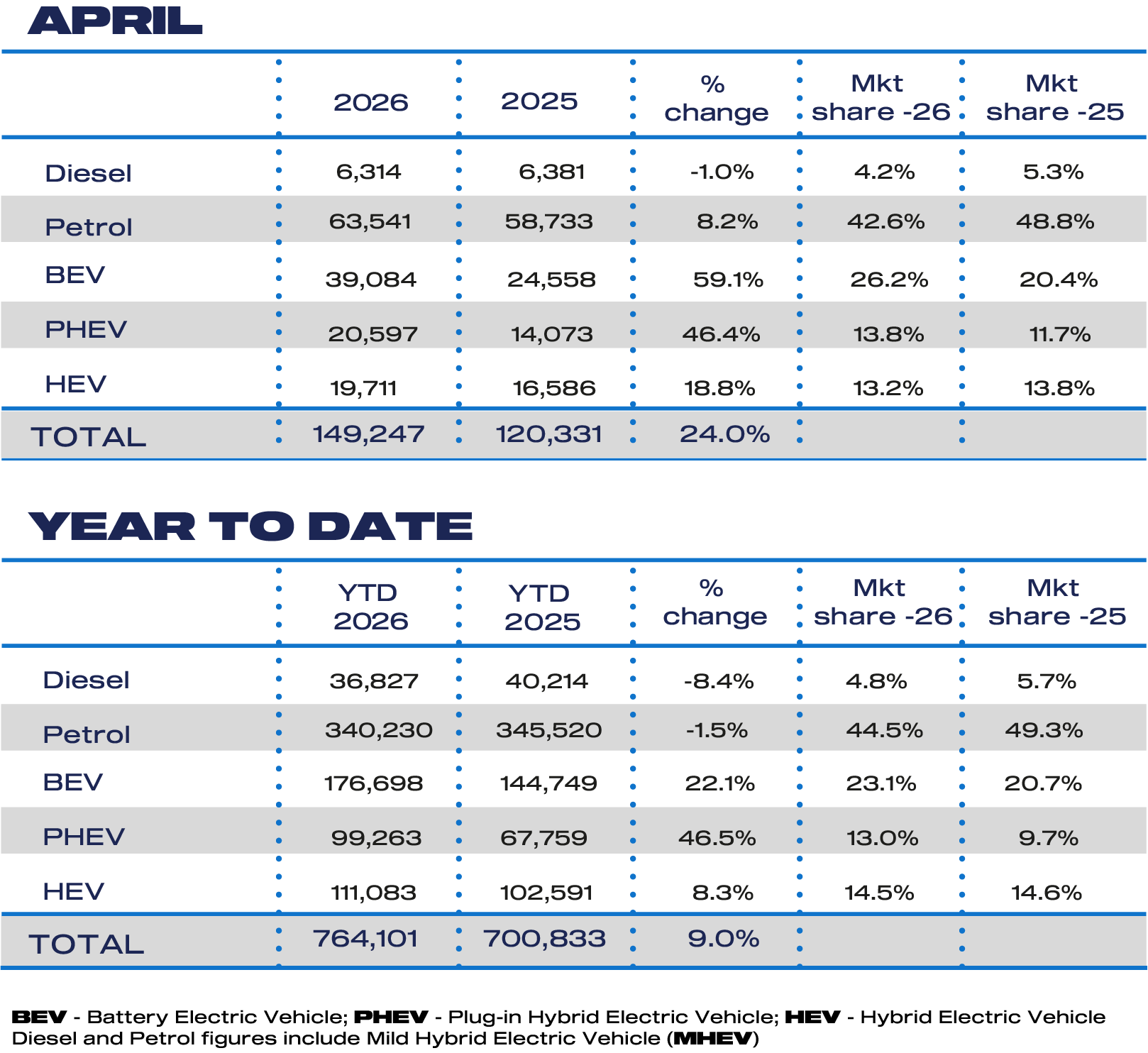
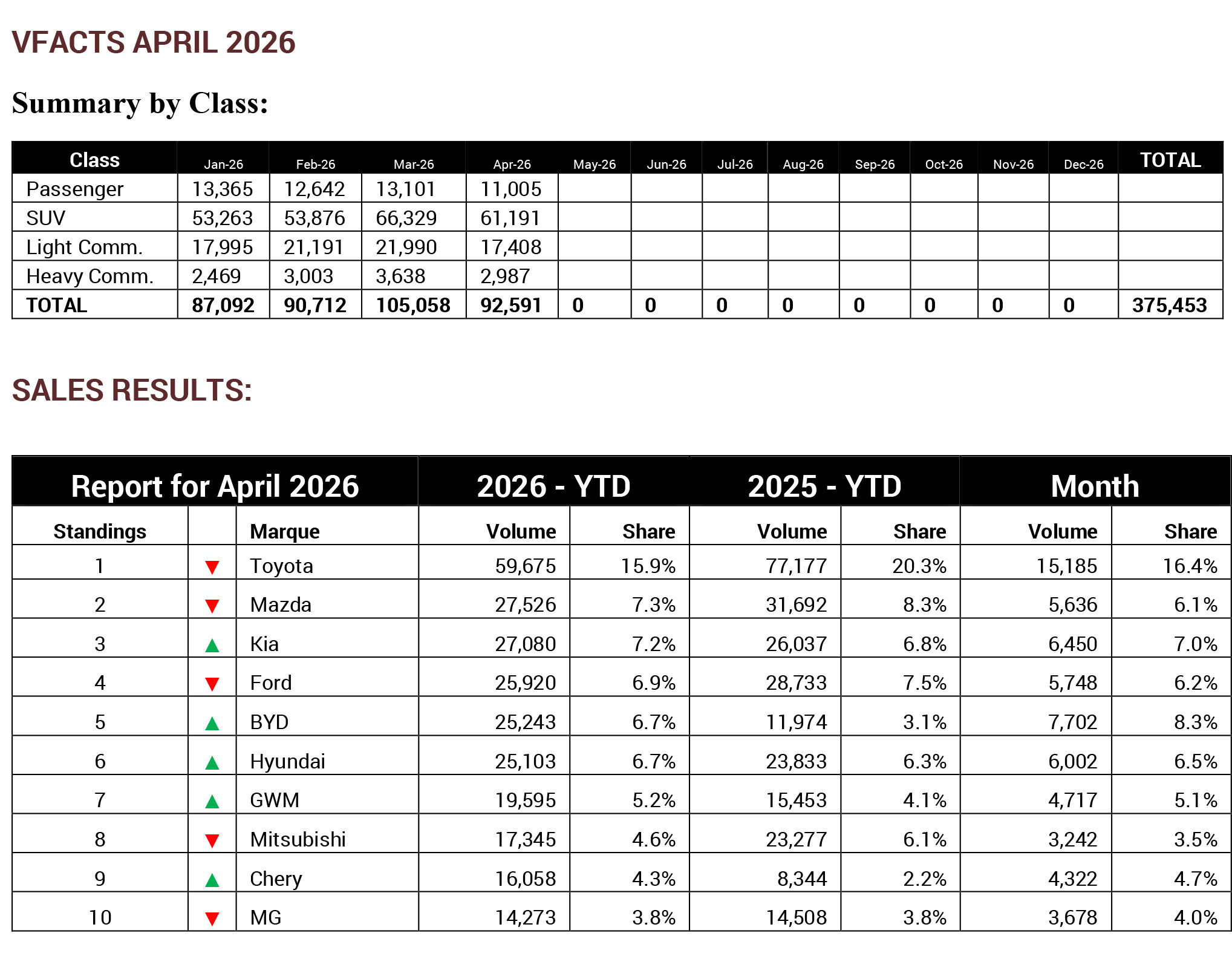
Data from Australia’s Federal Chamber of Automotive Industries and the Electric Vehicle Council reveal that, of the 92,591 new cars, SUVs, pickups, vans, and trucks sold in April 2026 (up 2.2% over the same month in 2025), 16.4% were battery-electric. This works out to 15,185 vehicles. In contrast, April 2025 saw just 6,010 new EV sales.

See Also: For The First Time, Electrified Car Sales Surpassed Gas Vehicles In Australia

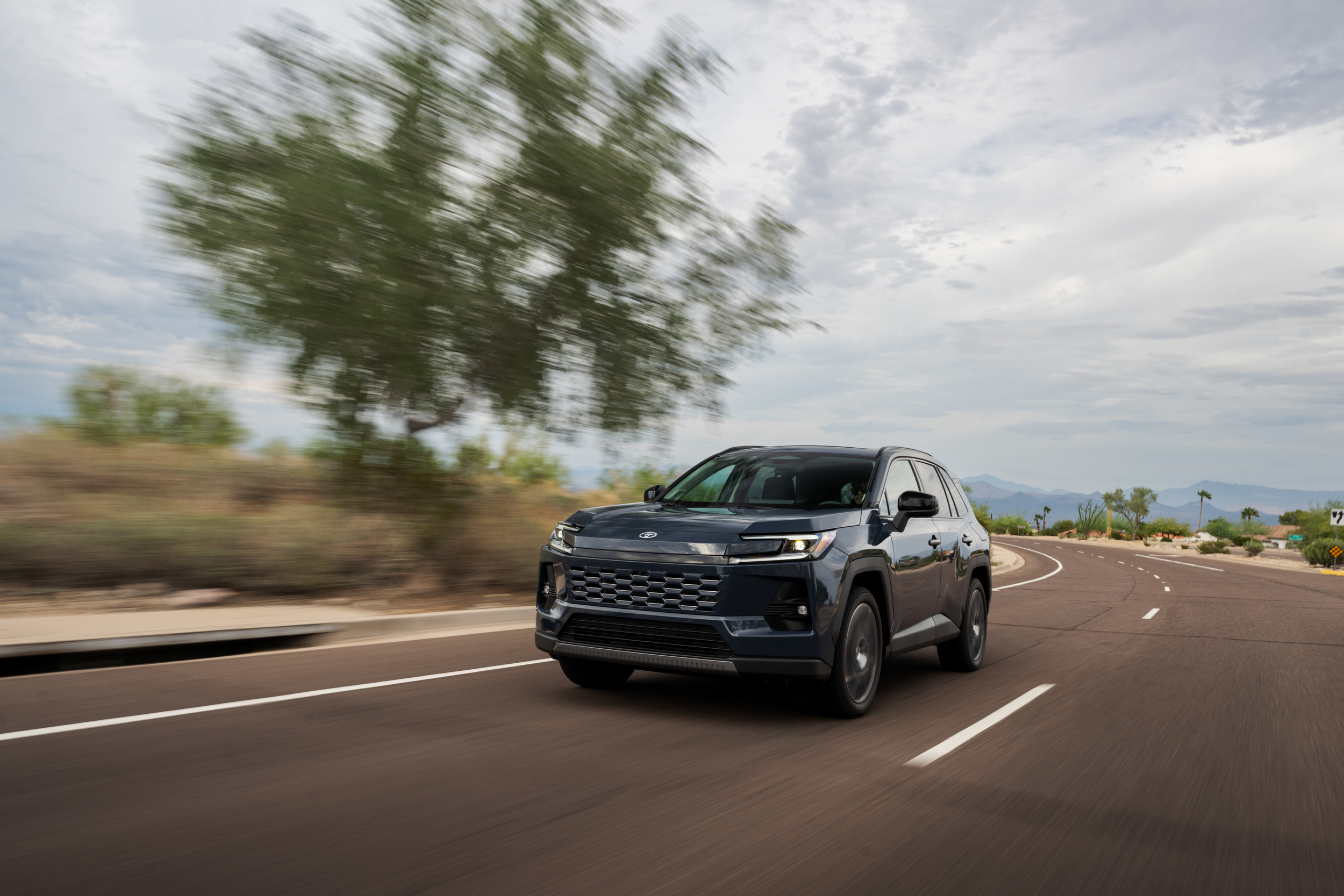
It’s not just EVs that saw strong numbers; hybrids were also in demand. In fact, 18,162 new hybrids found homes in April 2026, bolstered by the first full month of sales of the Toyota RAV4, which bagged best-selling car in Australia. Plug-in hybrids also saw 9,628 new units shifted in April 2026.

Petrol And Diesel Vehicle Sales Dwindle

While EVs, hybrids, and plug-in hybrids were enjoying the limelight, partly driven by tax incentives, traditional gasoline and diesel-powered vehicles took a hit in April 2026. Sales of new gasoline-powered vehicles saw a decline of 30.1% in comparison with April 2025 figures.

Diesel-powered new vehicle sales were down by 21.7%. These declines could also be attributed to the ongoing war in the Middle East, which has significantly affected crude oil deliveries to Australia. This has resulted in rising prices at the pump, as well as some scattered shortages.

For April 2026, BYD’s Sealion 7 SUV dominated the EV rankings, with 1,780 units sold. Meanwhile, the Tesla Model Y sold nearly 1,000 fewer units, although it was up 193.6% year-on-year, as last year’s model was due for replacement.

The BYD brand as a whole shifted 7,702 new units. Other strong sellers in the Chinese EV space include the Geely EX5 with 1,202 deliveries, and 1,006 units from Chinese brand Zeekr, of which 973 were its 7X SUV. Shifting our attention to the car segment, Tesla’s Model 3 narrowly beat BYD’s Seal, with 403 versus 370 deliveries.

Toyota Still Leads, Ford And Mazda Drop From Podium

 One In Six New Cars Sold In Australia Is Now An EV As Gas Sales Fall Off A Cliff

Despite a 21.6% reduction in year-on-year sales, Toyota remained top dog in Australian new vehicle sales through April 2026. They shifted 15,185 units, followed by BYD with a 7,702 new unit tally.

 One In Six New Cars Sold In Australia Is Now An EV As Gas Sales Fall Off A Cliff

BYD’s rise to second place means that Ford and Mazda, the historical second and third-place finishers, are now fifth and sixth, with 5,748 and 5,636 units respectively. However, the Ford Ranger held on to the silver medal as the second best-selling vehicle, sandwiched between the RAV4 and Hilux.

When looking at Australian new car sales as a whole, the new third- and fourth-place occupants for April are Kia and Hyundai, with 6,450 and 6,002 units sold respectively. Of course, these two automakers also have EVs and hybrids in their portfolio. The same is true for Chery in eighth place and MG in ninth, while Isuzu rounded off the Top 10 ahead of Mitsubishi.

 One In Six New Cars Sold In Australia Is Now An EV As Gas Sales Fall Off A Cliff

Britain’s Biggest EV Brand Isn’t Tesla, BMW Or Volkswagen

  • BYD has emerged as the biggest EV brand in the United Kingdom.
  • Chinese automaker sold 12,754 electric vehicles through April.
  • Overall BYD sales are up 124% and beating European competitors.

There’s a new electric vehicle king in the United Kingdom and it’s not one that you’d expect. Quite the opposite as BYD has taken the podium.

More: BYD Sold 700,000 Electrified Cars Last Quarter And Still Lost More Than Half Its Profit

Citing data from the Society of Motor Manufacturers and Traders (SMMT), BYD said they have sold 12,754 EVs through April and that gives them over 7% of the market share. This makes the Chinese firm the “UK’s largest electric vehicle brand” and places them ahead of rivals such as BMW, Tesla, and Volkswagen.

 Britain’s Biggest EV Brand Isn’t Tesla, BMW Or Volkswagen

BYD went on to note they’ve also “become the best-selling EV brand among private buyers.” This is a notable achievement since the company’s vehicles don’t qualify for government subsidies. The electric vehicle grant provides discounts of up to £3,750 ($5,079) for certain vehicles including the Ford Puma Gen-E, Nissan Leaf, and Mini Countryman Electric.

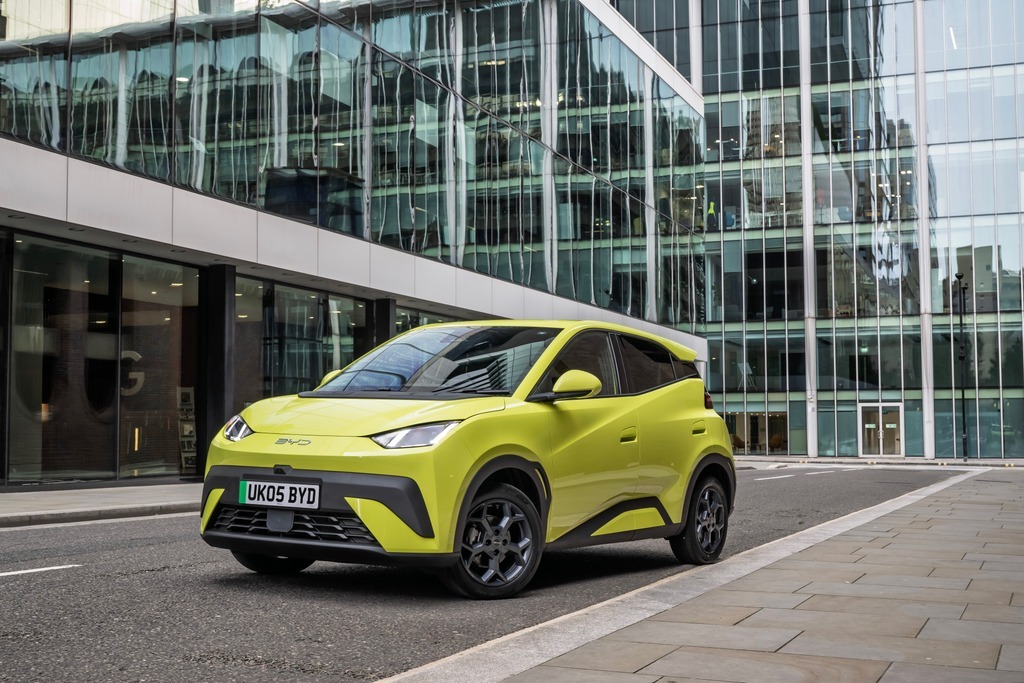
The automaker credited its success to a diverse lineup of vehicles that includes everything from the £18,675 ($25,290) Dolphin Surf to the £47,025 ($63,682) Sealion 7. The latter features an 82.5 kWh battery pack that provides a WLTP combined range of 300 miles (483 km), although higher-end variants have more advanced powertrains.

 Britain’s Biggest EV Brand Isn’t Tesla, BMW Or Volkswagen

BYD UK’s Bono Ge said, “With fuel prices remaining high, more drivers are turning to electric vehicles as a smarter and more economical choice. We are delighted to see the UK EV market grow by 22% year-on-year, and even more proud that BYD has become the UK’s leading EV brand in a little over three years.”

Year-to-date BYD sales are up 124% to 26,396 units, which puts the brand ahead of a number of European automakers including Citroen (12,142), Cupra (15,171), and Dacia (10,250). The brand is also beating Fiat (2,320), Land Rover (25,313), Mini (18,814), and Renault (23,645) – among others.

UK Sales April 2026
BrandApr-26Apr-25Diff. %YTD-26YTD-25Diff. %
VW12,88410,47423.059,87863,630-5.9
Kia8,9228,3207.243,53843,3830.4
BMW8,7008,086.007.642,60743,645-2.4
Ford8,2307,006.0017.541,00441,709-1.7
Audi8,0908,017.000.938,13335,8236.5
MG7,0053,78984.930,88328,4308.6
Mercedes6,9895,37130.135,28532,7867.6
Skoda6,2445,48313.930,67528,0559.3
Hyundai6,0776,524.00-6.930,27831,410-3.6
Vauxhall5,8895,16214.133,72932,5333.7
Peugeot5,3685,914-9.230,38634,450-11.8
BYD5,0592,511.00101.526,39611,782124.0
Volvo4,9924,23118.024,11723,1984.0
Toyota4,9815,301-6.030,38931,445-3.4
Renault4,8014,3699.923,64522,0627.2
Mini4,7742,51290.118,81415,56120.9
Nissan4,0794,899-16.728,38932,754-13.3
Jaecoo3,8771,053.00268.222,7894,288431.5
Land Rover3,8343,7871.225,31324,9321.5
Cupra3,3722,205.0052.915,17112,23724.0
Omoda3,275910259.912,3244,104200.3
Chery2,9000.000.010,97700.0
Citroen2,558958.00167.012,1425,347127.1
Dacia1,7981,977.00-9.110,25011,238-8.8
Geely1,6490.000.03,24400.0
Porsche1,5601,22527.46,0416,556-7.9
Suzuki1,3211,01530.29,9096,94042.8
Lexus1,1591,04311.15,2235,447-4.1
Honda1,1551,206.00-4.28,50610,108-15.9
Mazda1,1261,541-26.911,66912,537-6.9
Polestar1,07685925.35,2274,55414.8
Jeep8388152.84,6094,900-5.9
Tesla83151262.312,57012,986-3.2
Seat7901,842-57.15,6208,795-36.1
Fiat708289.00145.02,3204,373-47.0
Leapmotor580108437.03,6763011,121.3
Alpine37357.00554.41,08599996.0
Changan2160.000.096900.0
Alfa Romeo210209.000.5949950-0.1
Other British20116323.31,1051,00210.3
Smart15770124.374055732.9
Other Imports98125-21.6446731-39.0
KGM937229.267158514.7
Xpeng889877.844145880.0
Genesis7141.0073.2363460-21.1
Lotus644445.5299688-56.5
Subaru5291-42.9709916-22.6
Abarth3825.0052.0129159-18.9
Maserati3212166.713611419.3
Ineos1822.00-18.21017731.2
Gwm1638.00-57.91251240.8
DS1332.00-59.459230-74.4
Chevrolet124.00200.02231-29.0
Skywell42100.0199111.1
Fisker00.000.0000.0
Jaguar00.000.071,725-99.6
Maxus01-100.0032-100.0
Grand Total149,247120,33124.0764,101700,8339.0
SWIPE

* Includes all types of powertrains. Source SMMT

Tesla Is Recalling All 173 Cheap Cybertrucks Because Their Wheels Can Fall Off

  • The issue stems from cracking around brake rotor stud holes under load.
  • Only rear-wheel-drive units with base 18-inch wheels are affected.
  • Some serviced EVs may also carry the same potentially faulty parts.

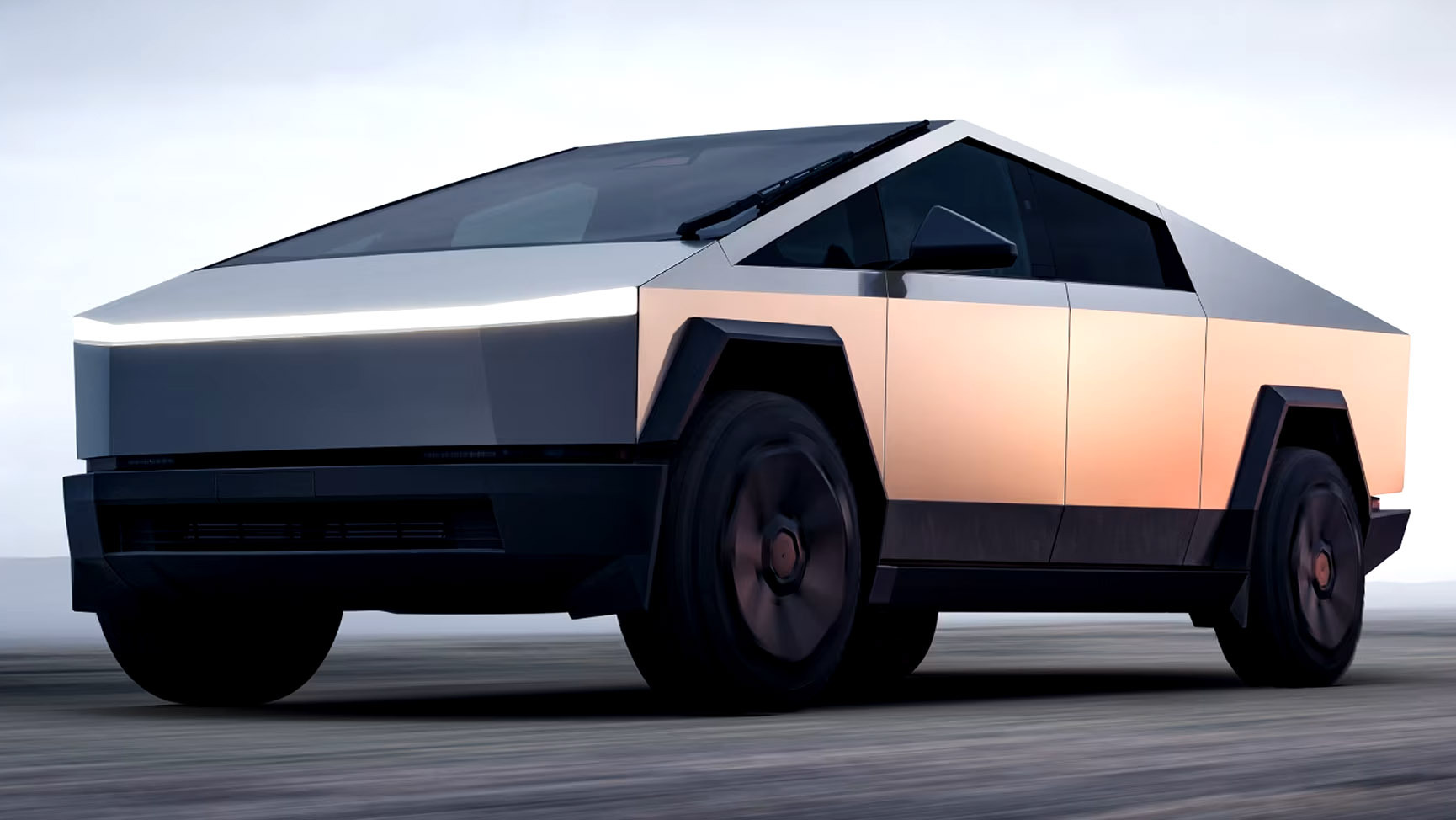
The owners of 173 Cybertruck RWDs have a new problem to worry about. Tesla has issued a recall on the short-lived budget variant after discovering the wheels can come off while driving, which ranks somewhere near the top of the list of things you definitely do not want your vehicle to do.

Tesla says that on-road disturbances and cornering forces can cause cracking around the stud holes in the brake rotors. If that happens, the entire wheel stud may separate from the hub. The company is not aware of any crashes or injuries tied to the issue, though it has logged three related warranty claims.

Read: His Cybertruck Made It to 100,000 Lyft Miles Before Sending A $7,200 Reminder

A total of 173 models built between March 21, 2024, and November 25, 2025, are included in the recall. Only Cybertruck RWD versions with the base 18-inch wheels are affected, not those fitted with the optional 20-inch setup.

Tesla first identified a potential problem in August of last year, when pre-production testing revealed some cracking in the brake rotors, even though all studs remained intact at the time. Further investigation, along with field reports, showed the issue was more serious than initially thought.

Not only did Cybertruck RWD models leave the factory with the defect, but some Tesla service centers were also using the potentially faulty brake rotors, so vehicles that have had their brakes replaced may also suffer from the same issue.

What’s The Fix?

 Tesla Is Recalling All 173 Cheap Cybertrucks Because Their Wheels Can Fall Off

While the recall notice lists vehicles produced from March 21, 2024, Tesla says it only began building Cybertruck RWD models with 18-inch wheels on August 28, 2025. Production ended less than three months later, on November 5, with the company citing limited demand for the variant.

Owners can expect notification from Tesla after June 20. They will be asked to bring their trucks to a service center, where technicians will replace the front and rear brake rotors, hubs, and lug nuts with updated, more durable components.

\\\\\

Hyundai Says Beating Chinese EVs Is Impossible, Ford’s $30K EV Is Betting Otherwise

  • Ford’s secret EV team is rewriting how the company builds vehicles from scratch.
  • A $30,000 electric pickup aims to rival Chinese automakers and Tesla by 2027.
  • Radical manufacturing changes could determine if Ford’s EV future survives.

Ford hangs its hat on the creation of the assembly line. Now, it’s literally tearing one apart in the middle of the night. That’s a part of the brand’s new strategy to win over more buyers. If it’s successful, the work it’s doing now will allow it to not just beat domestic automakers in the U.S., but to compete against China worldwide with a cheap but robust electric car.

More: Ford’s $30K Pickup Wants To Beat Cybertruck At Its Own Game

The “skunk works” project has been underway for quite some time now. Led by former Tesla and Apple employees, the team is aiming for something unheard of. It involves the confirmed $30,000 EV pickup truck (which can end up leading to several forms of cars) that offers some 300 miles of range and Mustang-like performance. That’s the kind of car that doesn’t exist in America, but it does exist elsewhere, namely China.

 Hyundai Says Beating Chinese EVs Is Impossible, Ford’s $30K EV Is Betting Otherwise

Ford’s CEO Jim Farley has tested Chinese cars in his everyday life. He’s also had a front row seat to the billions that his brand has burned through in building out its own EV platforms. According to the Wall Street Journal, that’s included too many parts, too much complexity, and old-school processes that don’t translate well to the EV space. So the team is cutting everything it can as aggressively as it can.

The manufacturing process itself is being flipped on its head. Instead of traditional step-by-step assembly, Ford is moving toward a modular system with large cast sections and fewer touchpoints. Put another way, it’s how Tesla and Chinese automakers build EVs today. According to Jolanta Coffey, the vehicle program director, “We’ve never blown the whole thing up before and just started over. If and when we build this, we will rewire Ford.”

 Hyundai Says Beating Chinese EVs Is Impossible, Ford’s $30K EV Is Betting Otherwise
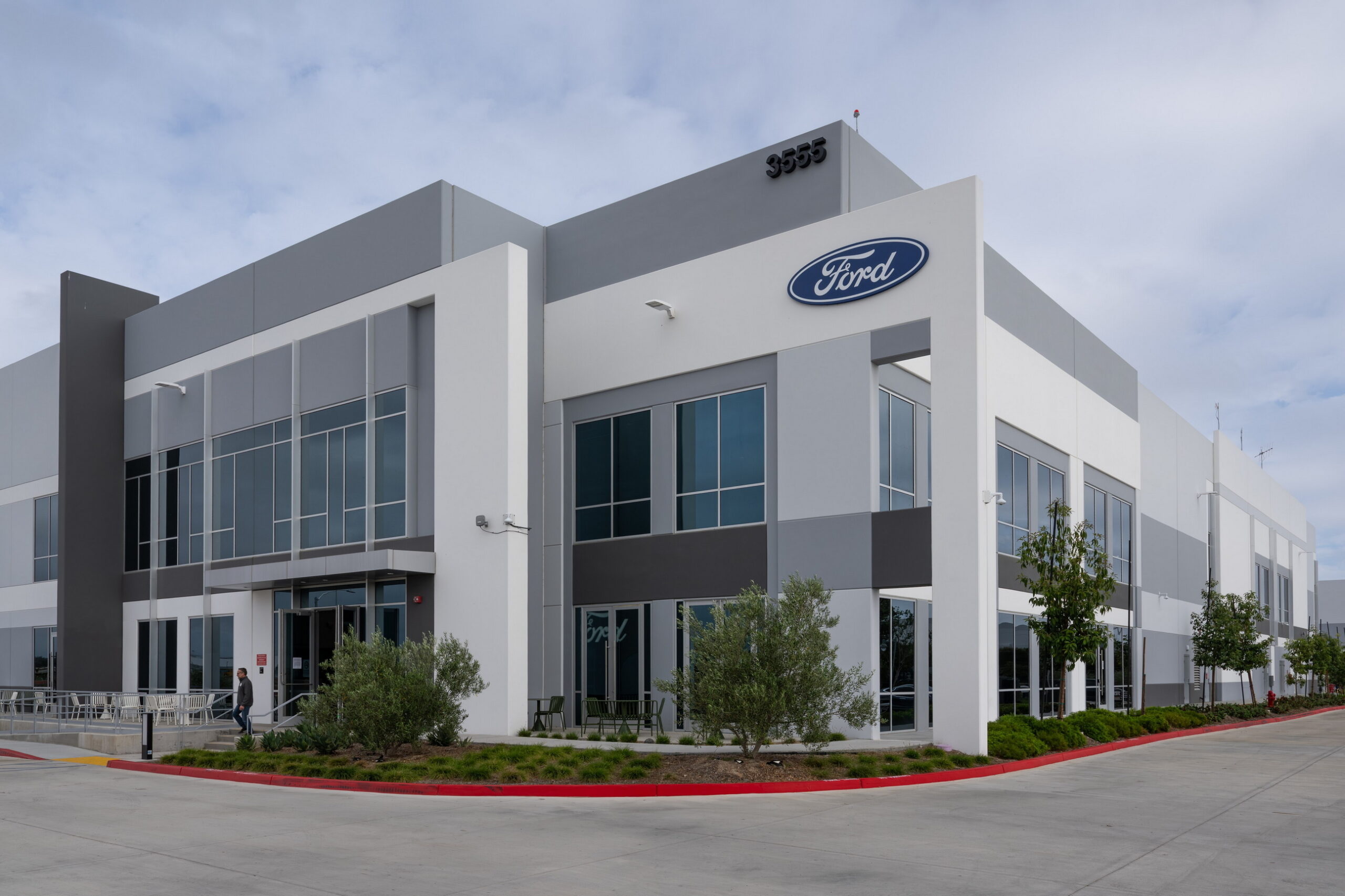
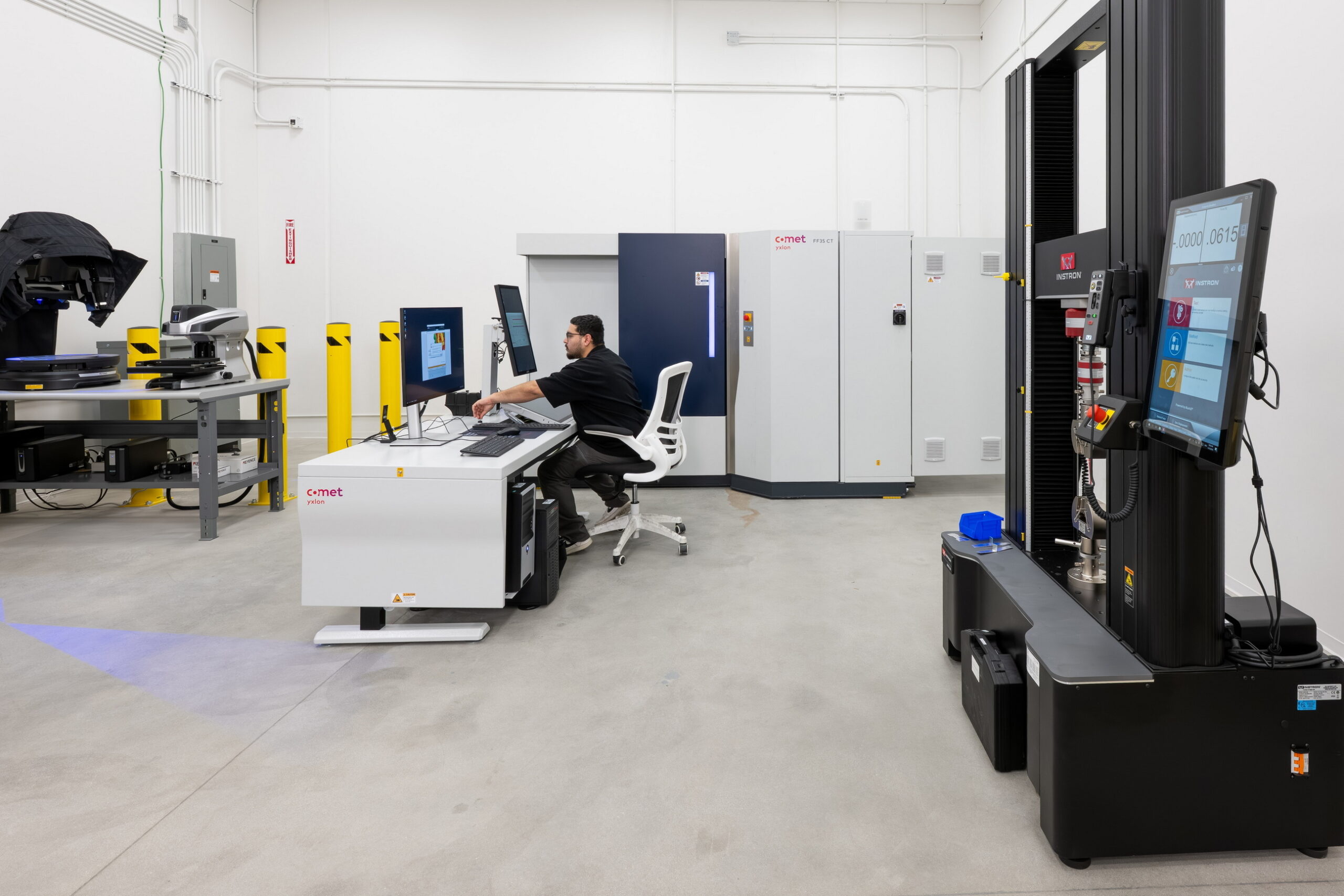
Ford’s electric vehicle development center

All of this comes at a turning point for much of the industry. Automakers abroad are continuing their push toward electrification while domestic automakers rethink the near future. Hyundai Motor CEO José Muñoz, recently said of competing with Chinese EVs, “It is impossible… Unless they are subsidized by the government.” Ford’s betting he’s wrong. We all get to see who ends up being right as Ford is aiming for a 2027 launch.

 Hyundai Says Beating Chinese EVs Is Impossible, Ford’s $30K EV Is Betting Otherwise
Photos Ford

Waymo’s Robotaxi Made It To San Jose, His Luggage Made It To San Francisco

  • The tech giant initially said it wouldn’t pay to ship the rider’s luggage back.
  • Waymo offered Di Jin two free rides to pick up his luggage from a depot.
  • As it turns out, there are some advantages to using human-driven taxis.

Taking a trip in one of Waymo’s robotaxis should be a smooth and stress-free experience, particularly since there’s no pressure to have an awkward conversation with a driver. However, for one Waymo user in California, taking a robotaxi to the airport left him without luggage for a business trip.

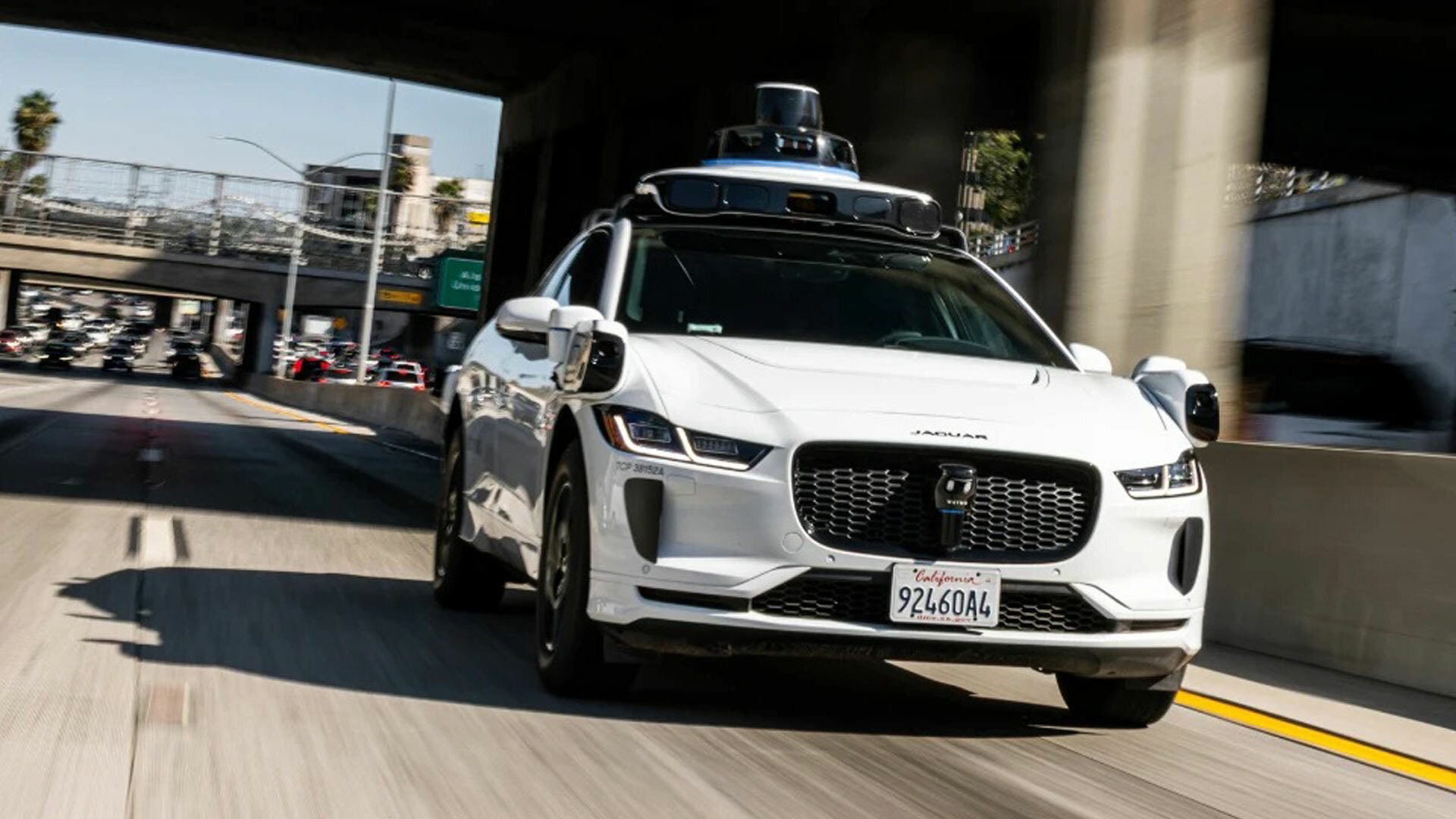
In late April, Di Jin took his first ride in one of Waymo’s robotaxis, traveling from Sunnyvale to San Jose Mineta Airport. The self-driving Jaguar I-Pace took him to the airport without issues, but when Jin got out of the car and attempted to open the trunk to get his luggage, the button did nothing. Moments later, the vehicle drove off, still carrying his luggage.

Read: Waymo’s Robotaxis Sometimes Receive Guidance By Some Guy In The Philippines

Speaking with NBC, Jin said he frantically contacted Waymo customer service but was told the robotaxi couldn’t be turned around and was heading to the depot. He was then forced to board his flight without any of his luggage.

The Californian man was informed later in the day that Waymo had retrieved his luggage at the depot. The only problem is that the depot is in San Francisco, and the company refused to pay shipping costs to get it back to Jin. If Jin didn’t want to pay for shipping, Waymo offered him two free rides to and from the depot to pick up his luggage.

Waymo Finally Steps Up

However, time is money, and Jin didn’t like the idea of wasting two hours getting his luggage. Waymo ultimately relented, confirming that it would pay to deliver his luggage after all.

Waymo notes that riders can open the trunk of one of its vehicles by pressing the physical trunk release button on the outside of the vehicle, or by tapping the ‘open trunk’ button in the Waymo app. For this rider, the trunk release apparently didn’t work, and with no human driver behind the wheel, he had no way of immediately notifying the car that he couldn’t retrieve his luggage. Perhaps human-operated taxis aren’t so bad after all.

 Waymo’s Robotaxi Made It To San Jose, His Luggage Made It To San Francisco
Photos Waymo

Americans Pay $37K For The Cheapest Tesla, Canada Got A Chinese One For $29K

  • Tesla is making the most out of reduced tariffs on Chinese-built EVs.
  • Up to 49,000 EVs built in China can be imported to Canada annually.
  • Base Model 3 RWD hits 62 mph in 5.2 seconds and has a 288-mile range.

As expected, Tesla has become the first EV maker to begin selling Chinese-made models in Canada after the two countries finalized a major trade deal earlier this year. It’s good news for Canadian car buyers, who now get access to Tesla models priced well below their American counterparts. In fact, it’s the cheapest Tesla EV ever sold in North America.

Thanks to the new trade deal, up to 49,000 EVs built in China can be imported into Canada at a reduced tariff rate of 6.1 percent, down from the 100 percent tariff imposed in 2024. Canadian officials began issuing permits for the first 24,500 vehicles in March, and Tesla moved quickly to capitalize.

Read: Canada Could Give China’s Biggest Carmaker A Backdoor Into The US Market

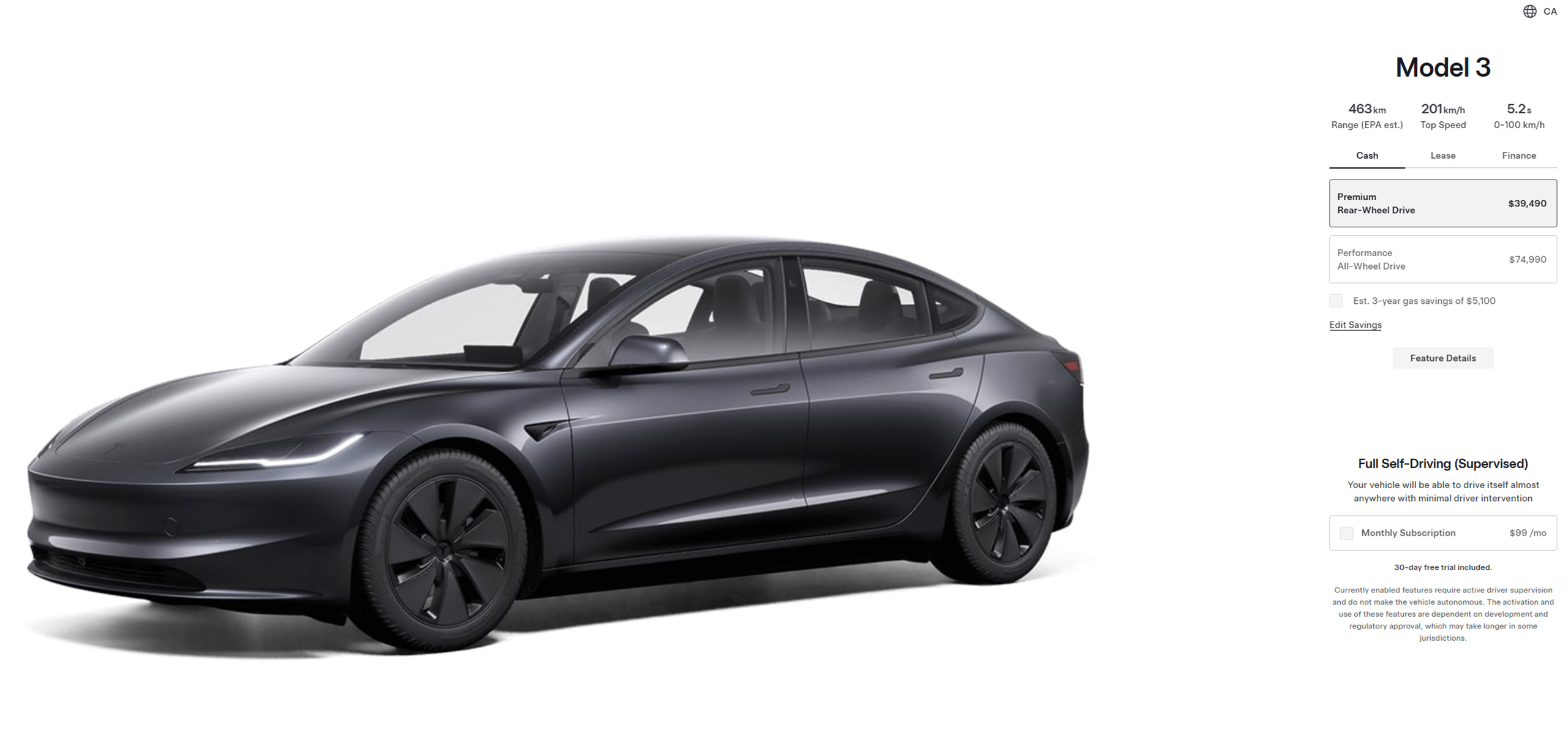
By importing from China, Tesla has reintroduced the entry-level Model 3 Premium RWD to Canada. It is priced from just CA$39,490 before delivery, or around US$29,007 at current exchange rates, undercutting the most affordable Model 3 in the US, the standard RWD model that starts at US$36,990 before taxes and delivery fees. The Shanghai-spec Model 3 has a quoted driving range of 463 km (288 miles) and can go from 0 to 100 km/h (62 mph) in 5.2 seconds.

Before the deal took effect, the most affordable Model 3 available in Canada was the Long Range AWD shipped up from Fremont, California, with a starting price of CA$79,990 (US$58,700). It isn’t a spec-for-spec comparison, but Tesla has effectively cut its Canadian entry point in half overnight.

Performance Gets A Price Cut

 Americans Pay $37K For The Cheapest Tesla, Canada Got A Chinese One For $29K

Canadian buyers can also order the Model 3 in Performance guise, now priced from CA$74,990 (US$55,050). That marks a 17 percent drop from CA$89,990 (US$66,070), bringing the Canadian price roughly in line with the US$54,490 sticker American buyers pay for the same trim. Tesla has not confirmed where it will source Model 3 Performance models for the Canadian market, though reports suggest Fremont remains the likely origin.

The only downside of Tesla now importing some Model 3s from China is that these models do not qualify for Canada’s Electric Vehicle Affordability Program (EVAP) rebate, valued at $5,000, according to Drive Tesla.

It remains unclear how many of the initial 24,500 permits Tesla will lock down, though Canadian officials have confirmed they’re being issued on a first-come, first-served basis. Unless rivals like Volvo and Polestar move quickly to get their own Chinese-built EVs across the Pacific, Tesla looks poised to walk away with the lion’s share.

\\\\\

Subaru’s New EV Leases For $345, Less Than A Crosstrek Hybrid

  • In some states, it’s possible to lease the Uncharted for $345 per month.
  • Entry-level Uncharted models are front-wheel drive with a single motor.
  • The Uncharted’s RWD model has a driving range of 308 miles (496 km).

Subaru’s take on the all-electric Toyota C-HR, badged the Uncharted, may share a name with a 2022 Hollywood blockbuster starring Tom Holland and Mark Wahlberg, but it has a unique appeal that makes it stand out in this ever-competitive segment. It’s now also much cheaper to lease than it was last year.

In California, the Uncharted Premium can be leased for $345 per month with 10,000 miles a year and just $845 due at signing. Roll the drive-off into the payment, and the effective cost lands at $368 per month over 36 months, a $97 monthly savings versus the previous deal.

Read: Subaru’s New $35K SUV Breaks Years Of AWD Tradition

This actually makes the all-new Uncharted cheaper to lease in some areas than a Crosstrek Hybrid. As Cars Direct notes, a Crosstrek Hybrid Sport is available for $339 per month in Los Angeles but requires a $3,829 signing fee, effectively increasing the price to $445 per month. A standard gas-powered Crosstrek can be leased for as little as $345 per month, so it does undercut the Uncharted.

Through these lease cuts, the Uncharted is now $11 cheaper per month than the updated Subaru Solterra Premium.

Nationwide Savings

\\\\\\\\\

Lease deals vary across the country, but cuts have also been made in several other states, including New York, where prices are down 12 percent to an effective $410 per month when factoring in the $885 due at signing.

Importantly, these figures apply exclusively to the entry-level model, which is limited to front-wheel drive and comes with a single electric motor. This motor produces 221 hp and draws its juice from a 74.7 kWh battery pack. Although the front-wheel drive model can’t match the 338 hp offered up by the twin-motor AWD Sport and GT models, it does have the highest driving range of any Uncharted model, quoted at up to 308 miles (496 km).

\\\\\\\\\

BMW’s First Million EVs Took 11 Years. The Second Took Two

  • BMW Group hits two million EVs just two years after first million.
  • More important EVs coming through include i3 electric 3-Series.
  • Europe leads growth but US, China slowdown hurts momentum.

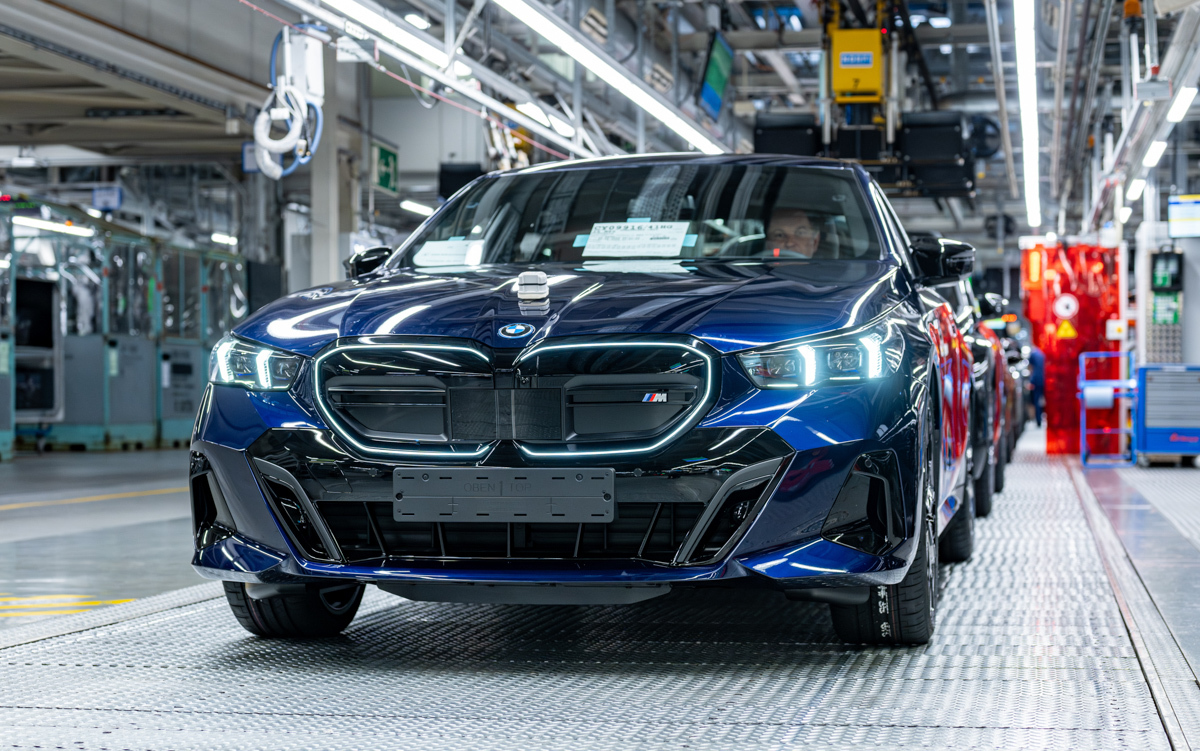
The BMW Group has just built its two millionth fully electric car, and the speed of that climb is impressive. It took almost 11 years after the first i3 hatch rolled off the line in 2013 to reach the first million, then only about two more to double it.

The milestone car is a BMW i5 M60 xDrive, built in Germany and heading to a buyer in Spain. That destination says a lot, because Europe is leading the way when it comes to EV demand right now. Sales of fully electric cars in the region jumped 28 percent in 2025, and one in every five cars sold in the EU is now an EV.

Related: BMW’s China-Only EVs Solve A Problem Tesla Owners Keep Running Into

Production is ramping fast to accommodate that growth. BMW now builds EVs at all its German plants and mixes them with combustion cars on the same lines. That flexibility lets it react as demand shifts, and lately, demand has been shifting quite a bit, because Europe’s love for EVs isn’t mirrored in other regions.

Globally, BMW delivered 442,072 EVs in 2025, a modest increase that shows growth is still happening, just not at the same pace as before. Because in the United States, BMW’s EV momentum has clearly cooled. Battery electric sales fell to 42,484 units in 2025, down 16.7 percent year over year.

The drop was even sharper late in the year, with fourth quarter EV sales plunging 45.5 percent after federal EV tax credits were axed. At the same time, plug-in hybrids surged more than 30 percent, showing where buyers are heading. China isn’t helping either. Sales there dropped significantly, with the region down double digits overall, dragging on global performance.

Hot New Electric Metal Inbound

 BMW’s First Million EVs Took 11 Years. The Second Took Two

But on the plus side, BMW has just begun to roll out fresh EV product with cutting-edge design and technology. The iX3, the first of BMW’s Neue Klasse cars, is already in showrooms, and the i3 electric 3-Series that debuted this spring won’t be far behind. And it’ll be followed by the first-ever electric X5, while Rolls-Royce has its own electric SUV on the way, although the sales numbers will obviously be modest.

That lineup should help keep BMW Group’s EV registrations growing, but it might struggle to keep pace with another big German automaker. VW recently announced it had made its 2 millionth EV only 10 months after rolling out its millionth, and with the ID.3 now much improved and the ID. Polo arriving at dealers soon, its next million could come even quicker.

\\\\\\\\

BMW

Before yesterdayElectric Vehicles - Latest News | Carscoops

If You Ever Dreamed Of A Cheap Bugatti Sedan, China Has You Covered

  • Dreame moved from vacuum cleaners into cars with three new brands.
  • Star Motor’s latest crossover-sedan concept borrows heavily from luxury icons.
  • Images show it sporting Rolls-Royce-style suicide doors with no B-pillar.

Just a few months ago, Dreame was a virtual unknown in the West, having primarily cut its teeth in China’s consumer electronics industry, making a name for itself with vacuum cleaners. The company has since pivoted hard into the automotive space, spinning up three separate car brands called Nebula Next, Kosmera, and Star Motors, each with its own stream of concepts. This is its latest creation.

The car appears to wear the badge of Star Motor, one of Dreame’s three new automotive sub-brands. It was introduced back in February with the T08 and T08L, a pair of boxy off-roaders that looked like carbon copies of Dongfeng’s M817 and M917. The brand also showed the D09, a luxury SUV that lifted heavily from the Rolls-Royce Cullinan playbook.

Read: The Chinese Vacuum Brand That Built A 1,973-HP Sedan Just Showed Up At Berkeley With It

As for this latest concept, it was present at the recent Beijing Auto Show and may make a return appearance at the Chengdu Auto Show in September in more production-ready form. Dreame has shown a penchant for taking inspiration from other brands’ designs, and this sedan appears no different. If the Bugatti Chiron and Ferrari Purosangue had a baby, it would look a lot like this.

\\

TychodeFeijter/X

The front of the crossover-style sedan features a massive grille that recalls the Kosmera concept Dreame trotted out at CES back in January, only scaled up and turned more aggressive. It also sports wide, gaping air intakes and a set of sharp LED headlights.

The standout feature in profile is the set of Rolls-Royce-style rear suicide doors, though Star Motor has pushed the idea further than Goodwood does. Where the Phantom retains a structural B-pillar between the front and rear doors, this Dreame concept deletes it entirely, leaving one uninterrupted opening when both doors swing wide. Recent spy shots show the upcoming Genesis GV90 adopting the same pillarless layout.

\\

Photos of the rear haven’t surfaced yet, but the C-shaped element wrapping the rear side windows and rear doors definitely looks reminiscent of the signature C-line used by Bugatti.

No details have emerged on the powertrain, assuming there’s even a working one under the sheetmetal, but in all likelihood, it will follow the lead of Dreame’s other concepts and run on pure electric power.

Whether any of these showcars will actually reach production remains anyone’s guess. Dreame has so far traded entirely in show cars and renderings.

\\\\\\\\\\\\\

Dreame Nebula Next Jet Concept

EV6 Sales Tumbled Nearly 38%, Kia’s 2026 Pricing Tells The Rest

  • Kia has slashed pricing for the 2026 EV6.
  • It now starts at $37,900 for a $5,000 savings.
  • Higher-end trims see discounts of up to $5,900.

Through the first four months of the year, Kia EV6 sales have tumbled 37.4% to 2,751 units. That’s a steep decline and it can likely be attributed to the elimination of the federal electric vehicle tax credit.

Kia is now trying to shore up sales by announcing a steep price cut for 2026. Kicking things off is the EV6 Light Standard Range, which begins at $37,900 before a $1,545 destination fee. That’s a savings of $5,000 compared to the 2025 model.

Review: The Kia EV6 GT-Line Still Feels Great, Yet Something’s Missing

The EV6 Light Long Range also sees a $5,000 price cut, while the all-wheel drive variant gets marked down $5,100. The Wind trim benefits from a $5,500 reduction across the board as pricing now begins at $44,800.

\\\\\\\\

Last but not least, the GT-Line will set you back $48,700. That’s $5,500 less than last year’s model, while the AWD variant offers a savings of $5,900.

Kia didn’t mention the EV6 GT, but the automaker stopped importing the high-performance variant earlier this year “due to changing market conditions.”

Minor Model Year Updates

Besides lower prices, the 2026 EV6 now comes with a standard dual level charging cable. Buyers in ZEV states also get a free DC fast-charger adapter. Speaking of charging, the model now sports a plug and charge capability, which allows for automatic billing at compatible chargers via Kia Charge Pass.

\\\\\\

Additional changes are limited, but the EV6 Light Long Range drops the Tech Package to “reduce complexity.” Buyers will also find an updated color palette inside and out.   

As a refresher, the EV6 offers 63 and 84 kWh battery packs as well as ranges of between 237 miles (381 km) and 319 miles (513 km). Buyers will also find outputs of 167 hp (125 kW / 169 PS), 225 hp (168 kW / 228 PS), and 320 hp (239 kW / 324 PS).

2026 Kia EV6 Pricing
TrimMSRP
EV6 Light SR RWD$37,900
EV6 Light LR RWD$41,200
EV6 Light LR AWD$45,200
EV6 Wind RWD$44,800
EV6 Wind AWD  $48,800
GT-Line RWD$48,700
GT-Line AWD$53,000
SWIPE

Prices exclude a $1,545 destination fee

The Epiq Is Skoda’s Cheapest EV, But Its Cabin Wants You To Forget That

  • Skoda has teased the interior of the fully electric Epiq crossover.
  • It sports a 5.3-inch digital instrument cluster and 13-inch display.
  • The affordable model debuts May 19 and will have three powertrains.

Skoda has teased the interior of the all-new Epiq and revealed the crossover will be unveiled on May 19. Billed as the “first series-production model to fully implement all aspects of the Modern Solid design language,” the cabin embraces a horizontal architecture as well as a minimalistic aesthetic. While few details were shared, we can see a tiered dashboard with an upholstered lower section as well as rectangular air vents.

More: Skoda’s Smallest EV Has One Big-Car Surprise

Drivers sit behind a two-spoke steering wheel and find themselves looking at a hexagonal 5.3-inch digital instrument cluster. It’s joined by a freestanding infotainment system that spans 13 inches.

Beneath the large screen is slender air vents and a row of “haptic shortcuts,” which resemble buttons. The model also sports an open storage compartment, which has a wireless smartphone charger in the center.

\\\\

Rounding out the highlights are a slender center console and an ambient lighting system, which creates a “welcoming, cozy atmosphere.” Skoda also noted the model will incorporate sustainable materials including “100% recycled PES for the seat textiles.”

The cargo compartment holds 16.8 cubic feet (475 liters) of luggage, but that can be expanded to 47.5 cubic feet (1,344 liters) by folding the rear seats down.

Three Powertrains And Up To 267 Miles Of Range

\\\\\\\\

Like the Cupra Raval and Volkswagen ID. Polo, the model rides on the MEB+ platform. The entry-level Epiq 35 has a 38.5 kWh battery pack that feeds a front-mounted motor developing 114 hp (85 kW / 116 PS) and 197 lb-ft (267 Nm) of torque. It enables the crossover to accelerate from 0-62 mph (0-100 km/h) in a leisurely 11 seconds and have a range of 196 miles (315 km).

The mid-level Epiq 40 has the same LFP battery and range as the 35, but sports a more powerful motor developing 133 hp (99 kW / 135 PS) and 197 lb-ft (267 Nm) of torque. Thanks to the extra oomph, the dash to 62 mph (100 km/h) falls to 9.8 seconds.

The range-topping Epiq 55 is notable for featuring a larger 55 kWh NMC battery pack as well as a beefier motor producing 208 hp (155 kW / 211 PS) and 214 lb-ft (290 Nm) of torque. 62 mph (100 km/h) comes in 7.4 seconds, while the top speed of 99 mph (160 km/h) is 6 mph (10 km/h) faster than the other variants. Drivers can also expect to travel up to 267 miles (430 km) between charges.

Production will be handled in Spain, and Skoda has previously indicated pricing will open around €26,000 ($30,400), or about the same as its Kamiq gasoline equivalent.

\\\\\\\\\

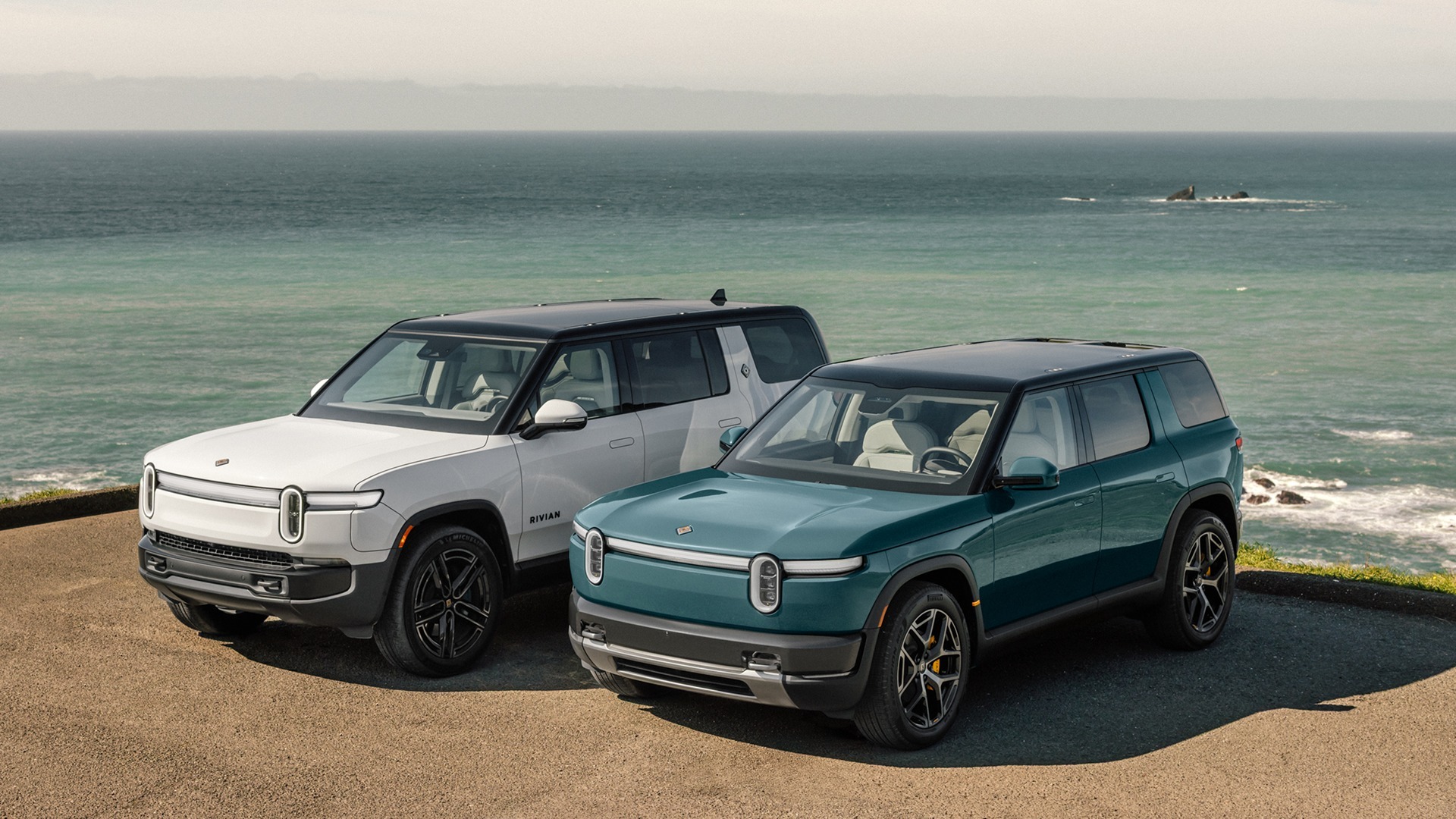
Rivian Built The R2 For Half What An R1 Costs To Make, And It’s Not The Battery

  • Rivian says the R2 costs about 50% less to build than the R1 lineup.
  • Simplified design cuts parts count dramatically across key systems.
  • R2’s smaller footprint and higher volume targets also reduce cost.

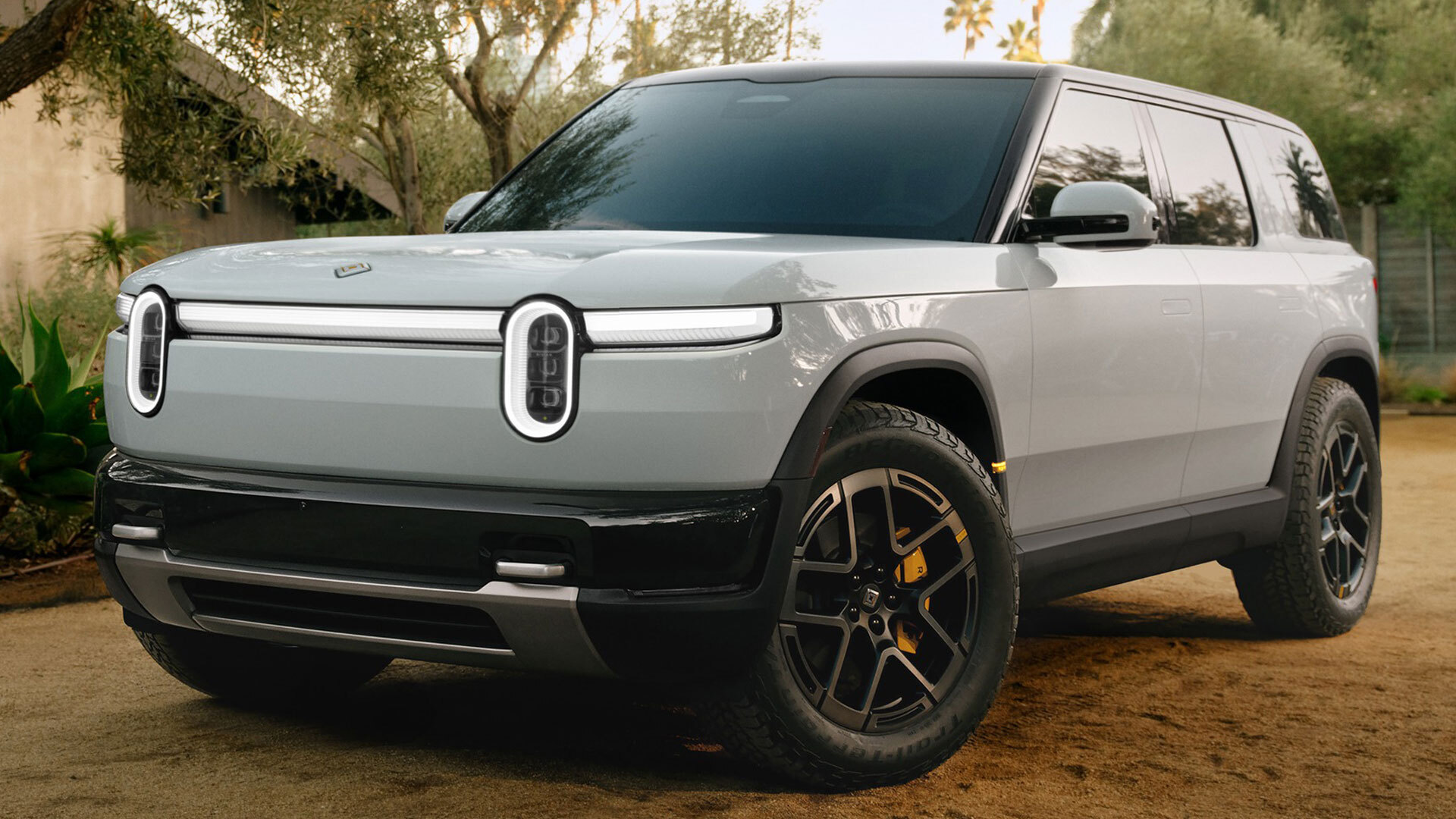
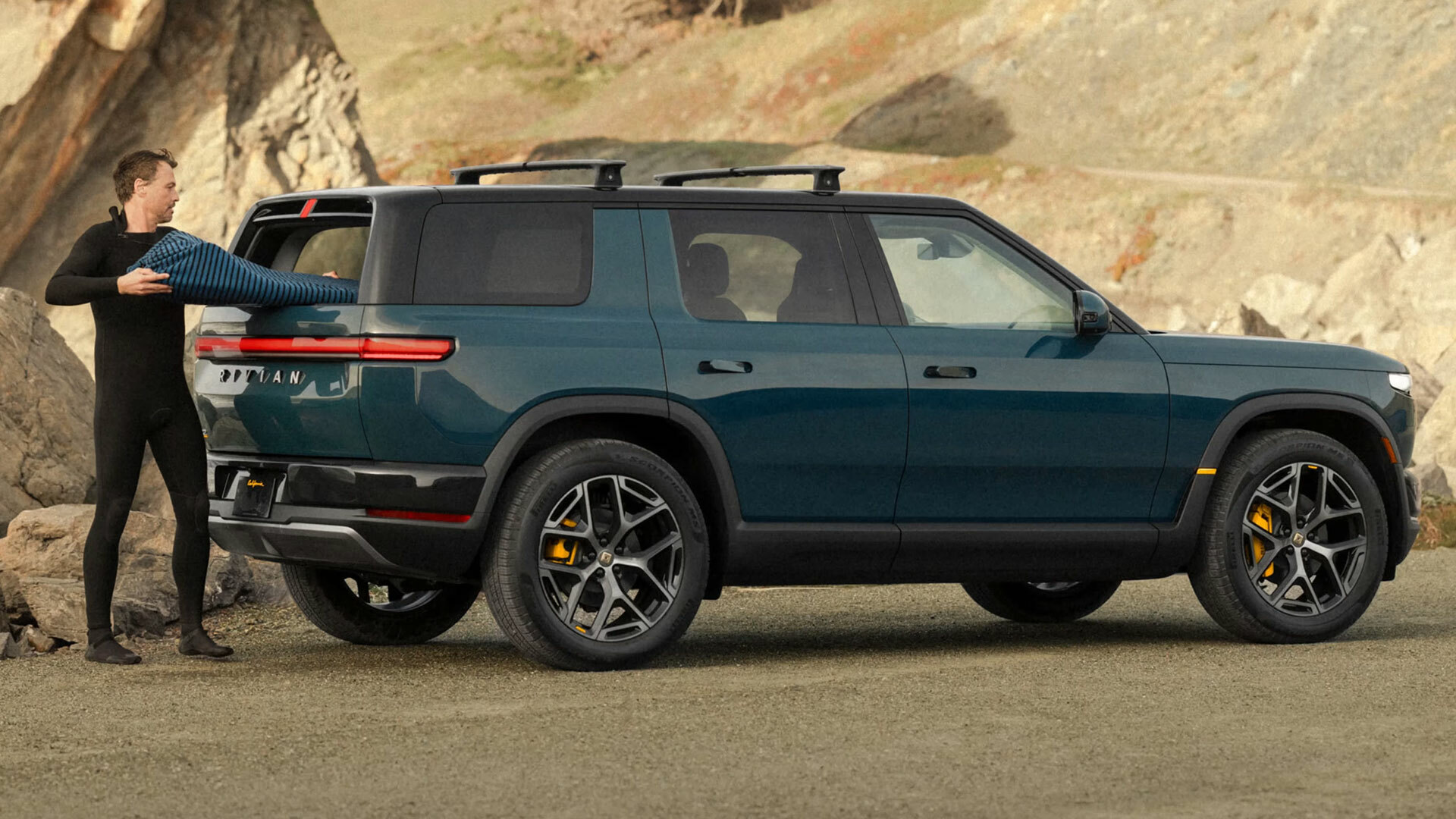
Rivian broke the mold by bringing the R1T, an electric pickup truck, to market before anyone else. Now, it’s trying to gain a far more stable foothold in the industry with its all-new R2. A new report sheds light on how Rivian cut costs but evidently not quality in this new SUV. According to the brand, it costs around half as much to build as the R1S despite keeping the performance and utility that fans love.

At the core of the R2’s cost-cutting approach is ruthless simplification. Rivian says its new zonal electrical architecture slashes wiring complexity, trimming 2.3 miles of harness length and reducing connectors by 60%. High-voltage cabling is down 70% thanks to consolidating multiple power modules into a single unit.

The same philosophy carries over to the powertrain. Rivian’s new “Maximus” drive unit uses 41% fewer parts than the Enduro units found in the R1 lineup. By integrating the inverter directly into the drive unit and even using its housing as a mounting structure, Rivian cuts both material cost and assembly time.

Read: Rivian Lost $416 Million Last Quarter And Just Bet Bigger On Georgia

According to InsideEVs, even the sensors got a rethink. Swapping ultrasonic sensors for corner radars yields a claimed 50% cost reduction, a move that reflects a broader trend toward fewer, more capable components. In theory, that could help Rivian reduce repair costs, a known concern for the brand.

 Rivian Built The R2 For Half What An R1 Costs To Make, And It’s Not The Battery

The front suspension ditches the more complex double-wishbone setup used in the R1 for a simpler MacPherson strut design, cutting costs by 70%. Large die-cast sections reduce underbody part count by 90%, while rear doors shed 65% of their complexity.

There’s also a less glamorous but equally important factor: scale. When Rivian launched the R1T and R1S, it was a newcomer building expensive, low-volume vehicles. Now, with higher production targets in sight, it can negotiate better supplier pricing.

Something as basic as a windshield reportedly costs half as much on the R2 compared to the R1. Add in the fact that the R2 is simply smaller, and therefore uses fewer raw materials, and the math starts to make sense. At this point, all that’s left is to see how Rivian executes on production and sales.

 Rivian Built The R2 For Half What An R1 Costs To Make, And It’s Not The Battery

A 1,000 HP Electric M3 And A 552 HP Gas M3 Will Have The Same Price Tag

  • BMW plans EV and ICE M3 pricing parity despite massive performance gap.
  • Electric version could hit 800-1,000 hp, gas model will make less than 600.
  • Manual gearbox and RWD options may disappear from combustion M3.

BMW is about to do something unusual with its most famous sports sedan. When the next-generation M3 arrives, buyers will get two very different machines wearing essentially the same badge and, crucially, roughly the same price.

According to a new report, BMW intends to sell the electric and combustion M3 side by side in the same price bracket. That might sound straightforward, but it gets interesting once you look at what each version actually delivers.

Related: BMW’s Electric M3 Tries To Simulate Everything It Just Replaced

The electric M3 could deliver close to 1,000 hp (1,014 PS) from its quad-motor setup, though base models are likely to deliver 700-800 hp (710-811 PS) at launch. Meanwhile, the combustion model will stick with an evolved twin-turbo straight-six boosted by mild hybrid tech to somewhere around 552 hp (560 PS).

Visually, the two cars won’t stray far from each other either. BMW wants them to feel like siblings, not alternatives from different worlds. Expect shared design cues inspired by the Neue Klasse look, even though they’re based on entirely different platforms, the combustion car sticking with an updated version of today’s M3’s CLAR platform.

Panoramic iDrive

Inside, both should follow the same minimalist, screen-heavy direction. That means fewer physical buttons and a more digital-first cabin, incorporating BMW’s Panoramic iDrive tech, which may divide opinion just as much as the powertrain choices.

Combustion M3
\\\\\\\\\\\\

Sylvia Neubauer, BMW M’s sales boss, is adamant that both cars will deliver what buyers expect. “It’s not only about acceleration and power, it’s about drivability, manoeuvrability and that level of trust and connection between the driver, car and road,” she told Autocar.

She also made it clear BMW knows not everyone will jump ship to electric overnight. “Obviously we will not convince 100 percent out of the petrolhead target group to buy an all electric BMW M3,” she admitted. “But out of 100 people that try it, we will be able to convince some.”

That explains why the combustion version isn’t going anywhere just yet, though some elements of it might be. Reports suggest the manual gearbox option, currently only available on the non-Competition version of the M3, might be retired. If that happens, even the petrol M3 edges further away from its analog roots.

Electric M3
\\\\\\\\\\\\\

Lead image BMW

Lotus Wants $189K For Its 905-HP Taycan Rival, UK Dealers Will Take $121K

  • UK Lotus dealers have slashed the prices of new all-electric Taycan rival.
  • One dealer’s unregistered EV has been priced down from £140k to £90k.
  • Lotus will launch hybrid versions of Emeya and Eletra to fight slow sales.

Around the world carmakers are u-turning on their plans to go big – or even all-in – on EVs, and Lotus is no different. The Geely-owned brand is developing hybrid versions of its Emeya sedan and Eletre SUV, but until they arrive, dealers have to focus on finding homes for the electric versions. And they’re offering huge discounts.

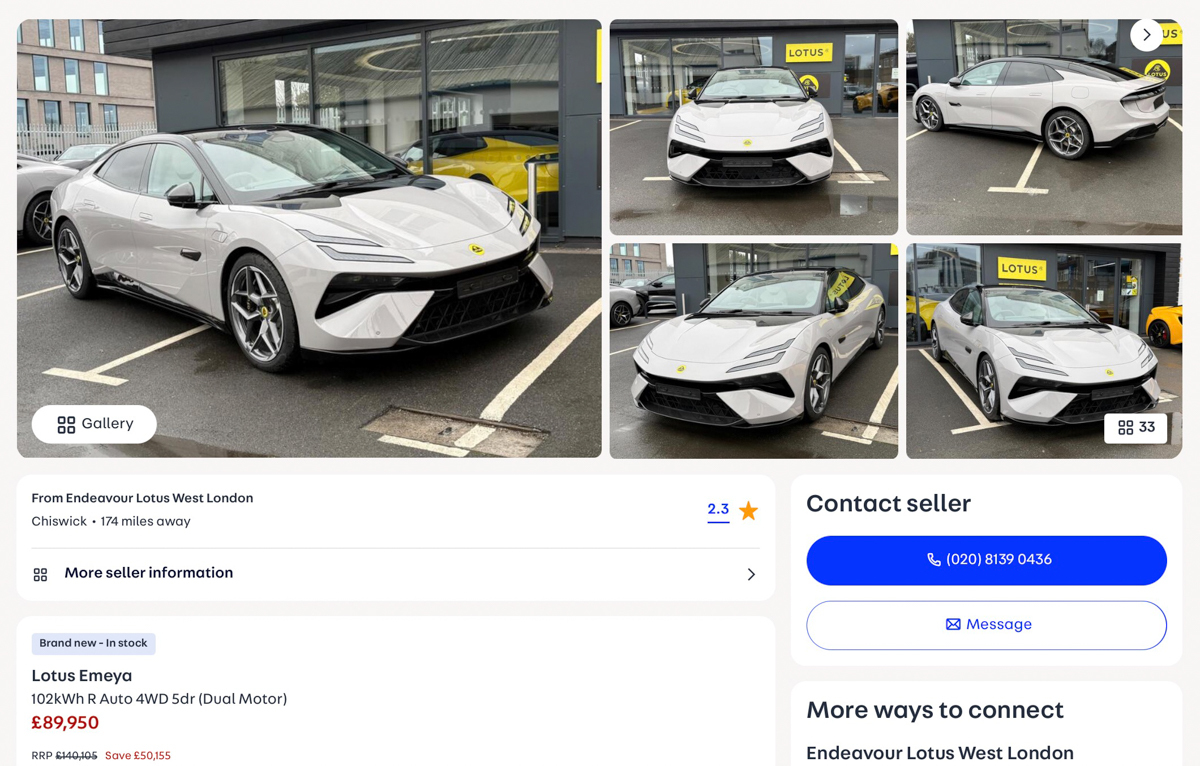
The UK’s Autotrader website currently has 15 brand new, unregistered examples of Lotus’s Porsche Taycan rival up for sale at prices that’ll bring tears to the eyes of anyone who paid full price for one of the EVs when they first became available in 2024.

Related: The Rarest Emira Coming To America Has A Name From The Dark Side

Most of the really crazy deals are on the flagship Emeya R, whose 905 hp (918 PS / 675 kW) bi-motor setup gets the emissions-free sedan to 62 mph (100 km/h) in less than 2.8 seconds. The biggest saving we could find was on a Kaimi Grey car at Endeavour Lotus West London. Originally priced at £140,105 ($189,330), it’s now up for £89,950 ($121,550). That’s a 40 percent (£50,155 /$67,900) haircut.

Not far away in Hatfield, another dealer has two new Rs price well below list, one of them promising a £43,755 ($59,130) saving. And a couple of hours away to the north east of the capital, Endeavour Lotus Colchester has a cut the price of another four Emeya Rs by similar amounts.

New Car, But An Old Badge

Technically, the R is an obsolete model, Lotus having now switched up its base, S, R grade structure for 600 and 900 names that reference the power outputs. But the powertrains themselves are carried over unchanged, so these heavily discounted Rs we’ve found look great value next to a new £129,990 ($175,660) 900 Sport or £139,990 ($189,180) 900 Carbon.

 Lotus Wants $189K For Its 905-HP Taycan Rival, UK Dealers Will Take $121K

And if you’re determined to have your Emeya in the current trim, dealers are offering some healthy savings on those too, including £15,000 ($20,300) off a brand new 603 hp (612 PS / 450 kW) Emeya 600 GT, which should cost £95,000 ($128,400) with options.

Hybrids This Year

Lotus is working on a hybrid Emeya, which is expected to match the spec of the bizarrely-named Lotus For Me, the new Chinese-market petrol-electric version of Lotus’s new Eletre SUV. Combining a 2.0-liter combustion engine, twin-motor 900-volt electrical system and a 70 kWh battery, the Eletre hybrid makes 939 hp (952 PS / 700 kW), and should arrive in Western markets – minus the silly name – this year. the Emeya hybrid shouldn’t ber far behind.

Would these big savings tempt you into an Emeya, would you rather wait for the hybrid, or skip the Anglo-Chinese Taycan rival altogether?

\\\\\\\\\\\\\\\\\\\\\

Endeavour Lotus/Autotrader UK

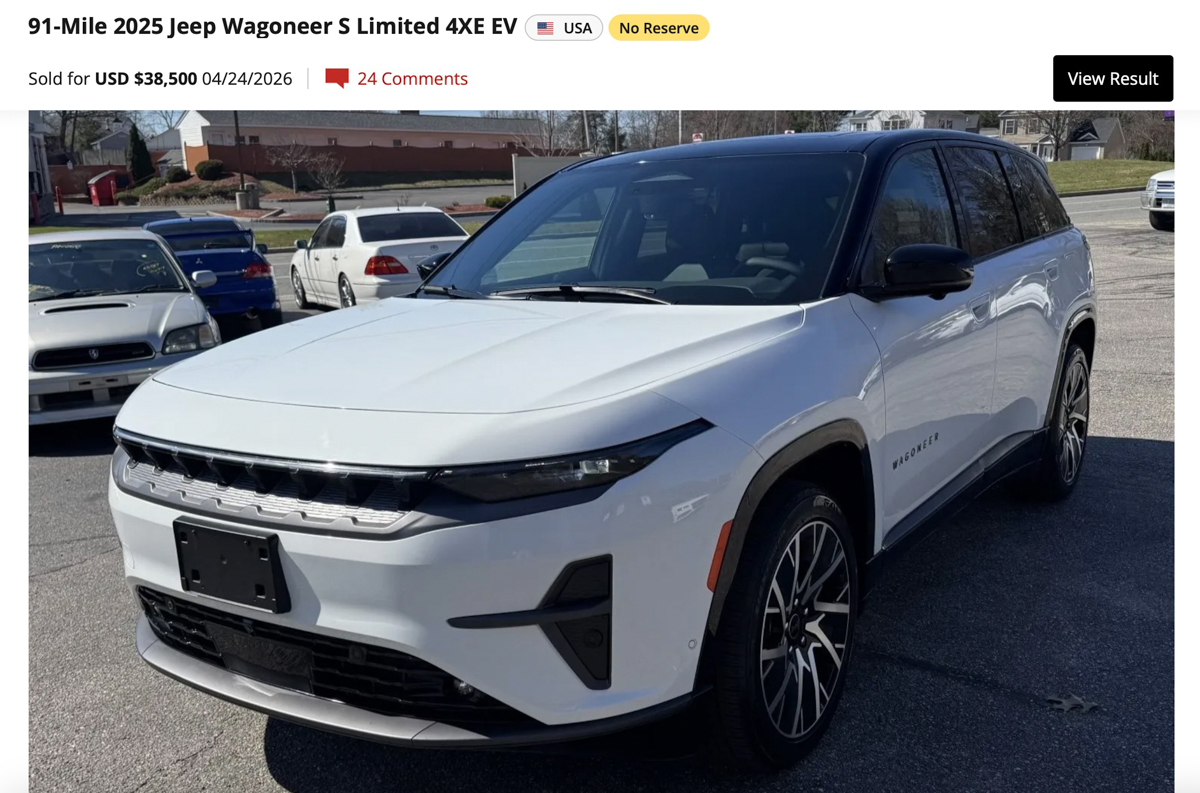
A New Jeep Wagoneer S Lost Nearly Half Its Value After Just 91 Miles

  • Nearly new Wagoneer S changed hands for huge discount.
  • 500 hp SUV sold for the price of a base, RWD Tesla Model Y.
  • Jeep’s maiden EV skips MY26, returns in 2027 with upgrades.

We knew Jeep’s first American EV was having a tough time, but this is something else. A nearly new Wagoneer S Limited 4xe just sold on Bring a Trailer for $38,500 after covering only 91 miles (147 km). That’s roughly $30,000 below its original sticker, and a sharp reminder that EV depreciation can be brutal.

On paper, the deal looks fantastic. The Wagoneer S packs dual motors, all-wheel drive, and a factory-rated output of 500 hp (507 PS) and 524 lb-ft (710 Nm) of torque. The quoted 294-mile (473 km) range from the 100 kWh battery isn’t amazing, but it’s tolerable, and the tailpipe-free Wagoneer is roomy enough for family duty and loaded with kit, making the auction result look like bargain-hunter gold.

Related: Wagoneer S Lost 93% Of Its Buyers, And Gas Charger Outsold Its Electric Twin 7 To 1

This example was a Limited trim finished in white with Jeep’s Dark Appearance package. The Limited stickered at $67,195 including destination and before options, and this one came with a panoramic roof, heated front seats, heated steering wheel, surround-view cameras, adaptive cruise control, wireless smartphone mirroring, a 12.3-inch touchscreen, and an Alpine nine-speaker audio system.

So it’s not exactly a stripped rental special, even if it is a rung below the 600 hp (608 PS), $72,195 Launch Edition.

\\\\\\\\\\\\\

So why the huge value crash? Because the Wagoneer S has struggled badly since launch. It arrived when automakers believed premium EV demand in America would keep climbing. Instead, the market cooled, incentives changed, and shoppers became more selective about price, charging access, and brand trust.

No More Tax Credits

The biggest blow came when the $7,500 federal EV tax credit disappeared last September. Before that, Jeep reportedly moved more than 10,000 Wagoneer S models across three quarters with the help of some big discounts. In the two quarters after the credit ended, sales fell to just 613 units.

 A New Jeep Wagoneer S Lost Nearly Half Its Value After Just 91 Miles

Jeep’s response has been telling. The brand won’t build a 2026 Wagoneer S at all, instead skipping straight to a 2027 model. Stellantis says the pause will allow upgrades to battery performance, software, capability, and interior quality. It’ll also gain a NACS charging port for easier access to Tesla’s growing Supercharger network.

A better Wagoneer S is coming, but we still think whoever bought this one got an absolute bargain. If he can live with uncertain resale and a model facing reboot status, $38,500 bought him a barely driven 500-hp electric SUV with lots of equipment. That’s hard to ignore, even if the first owner probably wishes they had.

\\\\\\\\\\\\\\\

Bring a Trailer

BYD Sold 700,000 Electrified Cars Last Quarter And Still Lost More Than Half Its Profit

  • BYD profits fell sharply in the first quarter of 2026 overall.
  • Revenue declined 12 percent year on year during the period.
  • Slower domestic sales in China drove much of the downturn.

BYD has recorded its steepest quarterly profit decline since 2020, underlining the mounting pressure facing the world’s largest electric vehicle seller in its home market despite success abroad. The company’s latest report showed that net profit in the first quarter of 2026 declined by 55.4 percent from the previous year, falling to 4.09 billion yuan, approximately $597 million.

Revenue dropped by nearly 12 percent to 150.2 billion yuan ($22 million), the third consecutive quarterly decline and the lowest quarterly revenue figure since Q2 2024. However, the result still bested analysts’ prediction that revenue would be around 132-140 billion yuan. BYD sold 700,463 “New Energy Vehicle” (EVs and PHEVS) units in the quarter, down 30% year-on-year and nearly 48% below the record volumes of Q4 2025.

Read: China Told Automakers To Stop Cutting Prices, BYD Just Made It Worse

The Chinese market for electric cars is fiercely competitive. BYD has taken over as the market leader because of its low-priced models, yet price wars in its home market are intense. Meanwhile, the government has scaled back subsidies. China exempted NEVs from purchase tax entirely in 2024–2025, but for 2026 and 2027, the relief has been halved to a maximum of 15,000 yuan per vehicle.

This policy shift pulled demand forward into Q4 2025, exacerbating the Q1 2026 slowdown. Sales in China have declined for several consecutive months, and profits are being squeezed even as exports grow strongly.

Global Push Becomes Critical As Domestic Sales Cool

 BYD Sold 700,000 Electrified Cars Last Quarter And Still Lost More Than Half Its Profit

BYD is looking to the overseas market as domestic sales decline. It plans to ship more than 1.5 million automobiles this year in an attempt to overcome sluggish domestic sales. Industry insiders expect massive export growth next year, but overall delivery growth will probably be less aggressive.

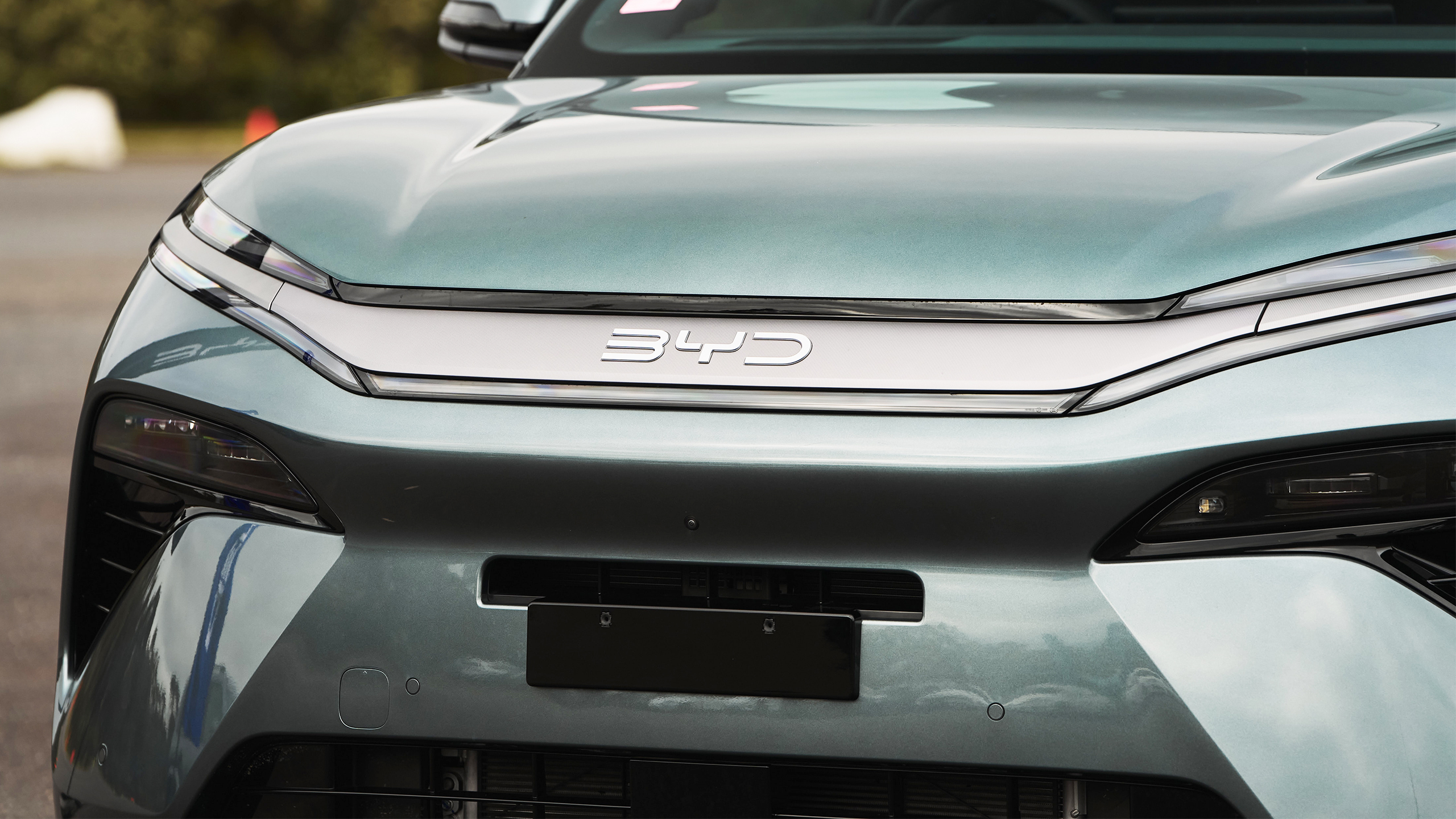
This strategic shift was on display at the Beijing Auto Show, where BYD launched new products targeting the premium segment, including the Datang (Great Tang), a full-size electric SUV priced from 250,000 yuan, which attracted more than 30,000 pre-orders on its first day. Moving beyond low-end models is intended to help the company sustain profitability amid the mass-market price war.

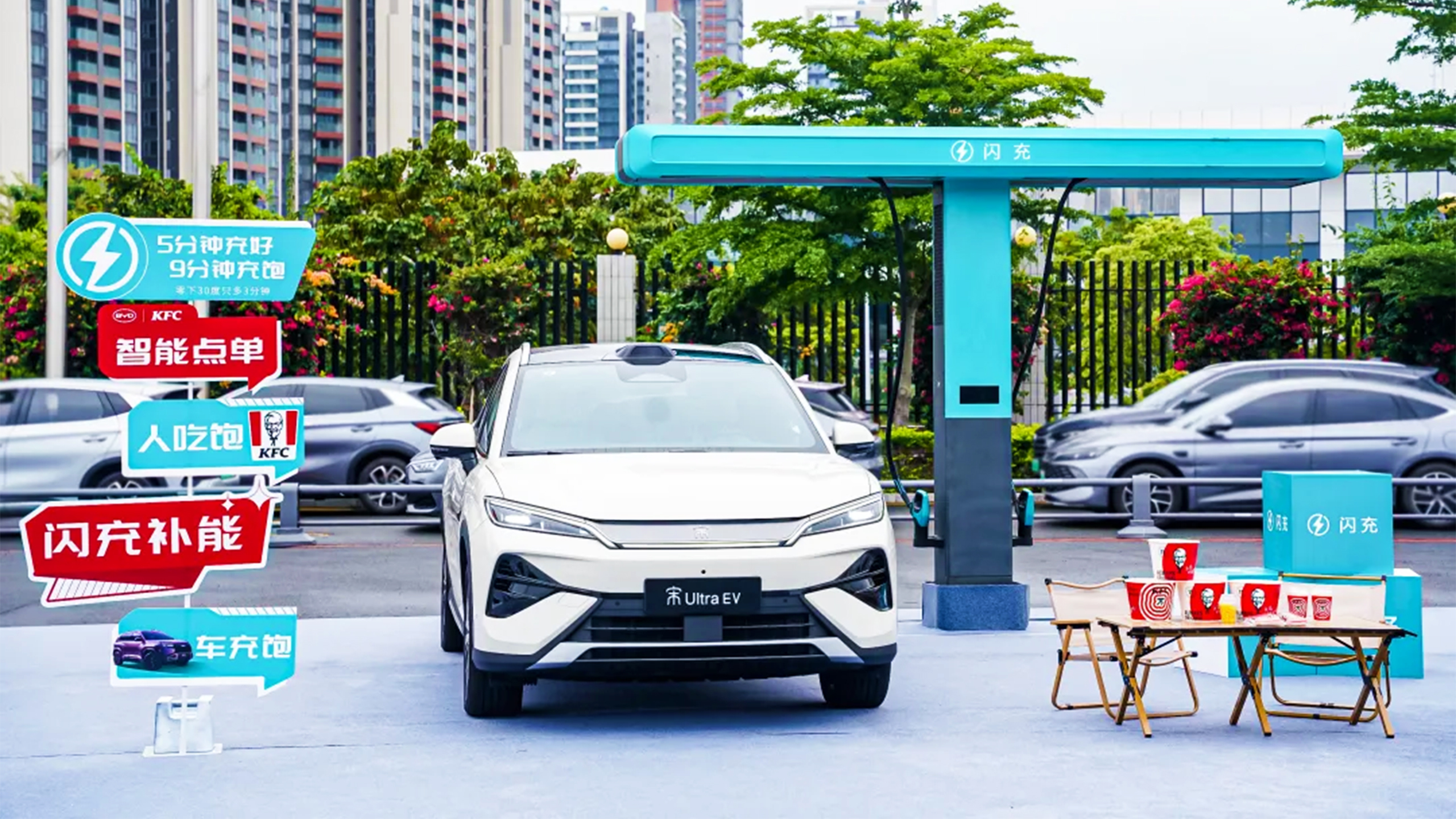
There’s a renewed focus on regaining technological superiority, too. The company is enhancing charging speed, among other features, to attract consumers who are not keen on switching from gas-powered cars.

But BYD is at a crossroads as it stands. Its expansion across borders may be the answer to whether it can bounce back. Analysts say the next few quarters will be critical, with domestic EV demand recovery and robust export growth seen as the keys to a profit rebound.

 BYD Sold 700,000 Electrified Cars Last Quarter And Still Lost More Than Half Its Profit

BYD’s 2,978 HP Hypercar Just Found Its First Buyers Willing To Pay Bugatti Money

  • The U9 Xtreme has four electric motors delivering 2,978 hp and hits 308.4 mph.
  • Last year, the limited-run U9 Xtreme lapped the Nurburgring in 6:57.147.
  • BYD is selling each YangWang U9 Xtreme for more than 20 million yuan.

Over the past few years, we’ve become accustomed to seeing new BYD models hit the market with absurdly low price tags. The record-breaking YangWang YangWang U9 Xtreme is not that kind of a car. It is, by some distance, the priciest thing the company has ever offered.

More: China’s YangWang U9 Smashed Bugatti’s Speed Record But Still Isn’t Officially The World’s Fastest Car

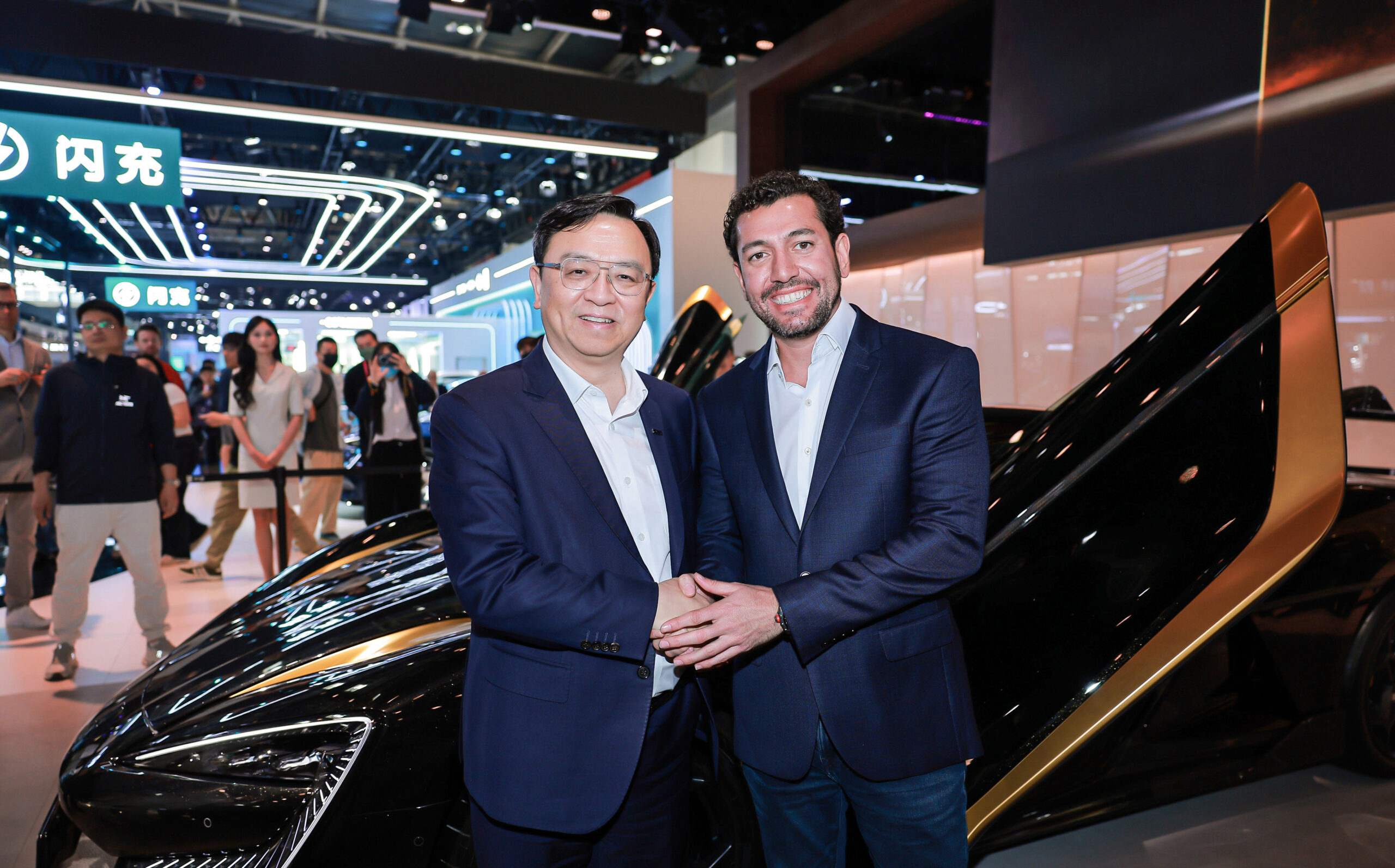
Li Yunfei, who runs branding and PR for BYD Group, posted on social media that several U9 Xtreme orders were locked in at the Beijing Auto Show. The price? North of 20 million yuan a pop, or roughly $2.92 million at current exchange rates.

 BYD’s 2,978 HP Hypercar Just Found Its First Buyers Willing To Pay Bugatti Money
Li Yunfei, BYD

This is more in line with hypercars from the likes of Koenigsegg and Bugatti than what we’d expect to see from BYD. It also makes it more than ten times as expensive as the ‘regular’ YangWang U9, which is available from 1.8 million yuan ($263,000).

Among those to have placed an order for the U9 Xtreme in Beijing was Nick Politis, an Australian businessman estimated to be worth over AU$4.5 billion ($3.2 billion). His car will be the only one sold in Australia and is expected to arrive early next year.

What will shoppers get for their money? Firstly, they get exclusivity, as just 30 units are bound for the production line. In addition, they get a car with four electric motors combining to produce an extraordinary 2,978 hp. This easily makes it the most powerful production car ever and the first to feature a 1,200-volt platform.

What Can It Do?

\\\\\\\\\\

All of the power means the U9 Xtreme can hit 308.4 mph or 496.22 km/h, a feat it achieved last year to eclipse the top speed of the Bugatti Chiron Super Sport 300+, while easily defeating the official two-way average top speed record holder of the SSC Tuatara, set at 282.9 mph (455.3 km/h). It’s unclear if customer cars will be able to hit these speeds, or if they’ll be software-limited to a slightly more reasonable pace.

The U9 Xtreme is also quite capable around a track. While it’s heavy, it lapped the Nurburgring Nordschleife in 6:57.147, outgunning the Rimac Nevera and Xiaomi SU7 Ultra. Admittedly, it is slower than a 500-hp Porsche 911 GT3 RS and almost 20 seconds slower than the new Ford Mustang GTD Competition.

Ford Gives A Tiny Glimpse Of The $30K EV Truck Slate Should Be Worried About

  • Ford teased its upcoming $30,000 electric pickup in a LinkedIn post.
  • It rides on a new in-house platform built by a skunkworks team.
  • Truck could revive the Ranchero name, unused since the late 1970s.

Ford has trimmed plenty from its electric vehicle plans, but the compact electric truck has survived the cuts, and the company still hopes it will deliver the success the F-150 Lightning never quite managed. A proper reveal isn’t on the cards yet, though a handful of images posted to LinkedIn give an early look at what’s coming.

Company boss Jim Farley posted these images to celebrate Doug Field’s last day with the company. One of the photos shows Field speaking about the new truck with Farley and other Ford executives, and includes a small glimpse of the EV’s bed. A separate image also seems to show the roofline of the new model, while another shows it with several roof-mounted accessories.

Read: $30K Ford Electric Truck Coming In 2027 Is Seriously Bad News For Slate

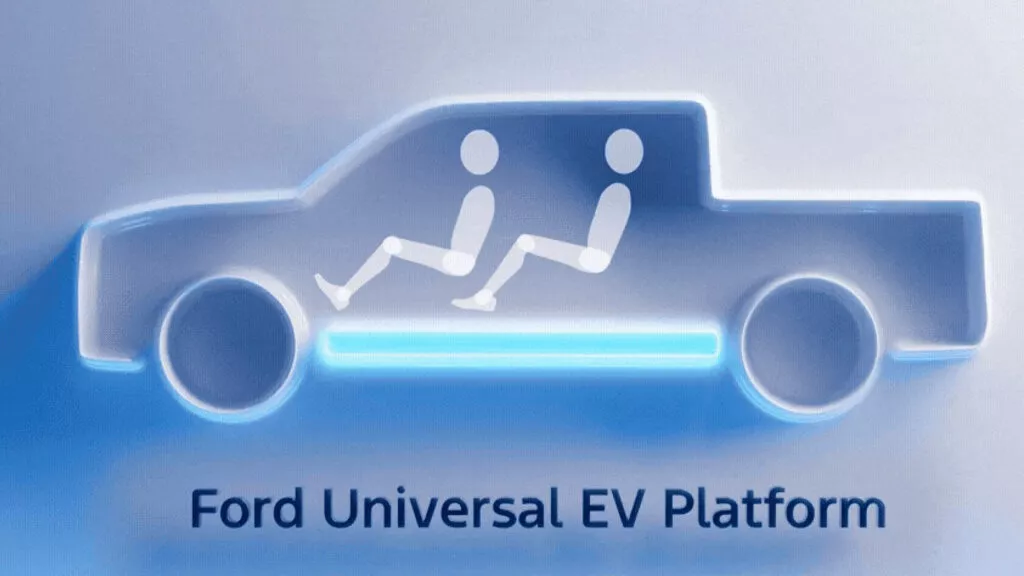
While these images don’t give us a good look at the new model, there’s plenty to get excited about. Underpinning the $30,000 pickup will be the new Ford Universal EV platform, developed in-house by a skunkworks team of engineers. This platform will be used by several other vehicles, including SUVs and vans.

Cheaper And More Efficient

\\\

According to Ford, the platform has 20 percent fewer parts, 25 percent fewer fasteners, and requires 40 percent fewer plant workstations than an ordinary platform. This will be aided by the new unicasting process, similar to Tesla’s gigacasting, in which important parts will use large single-piece aluminum castings. This process will also significantly reduce costs.

Speaking about the new truck last year, Farley noted its wiring harness will be more than 4,000 feet (1.3 km) shorter and 10 kg (22 lbs) lighter than its first-generation EVs. The company will also overhaul how it builds vehicles on this platform, manufacturing the front, rear, and structural battery pack in separate lines before joining them during final assembly.

Key specifications of the truck remain unclear, but we know it will use lithium iron phosphate batteries. It may also revive the Ranchero nameplate, which Ford hasn’t used since 1979.  

 Ford Gives A Tiny Glimpse Of The $30K EV Truck Slate Should Be Worried About

Rivian Lost $416 Million Last Quarter And Just Bet Bigger On Georgia

  • Rivian has revamped plans for their new factory in Georgia.
  • Facility will now be able to build 300,000 units annually.
  • DOE loan has been cut from $6.6 billion to $4.5 billion.

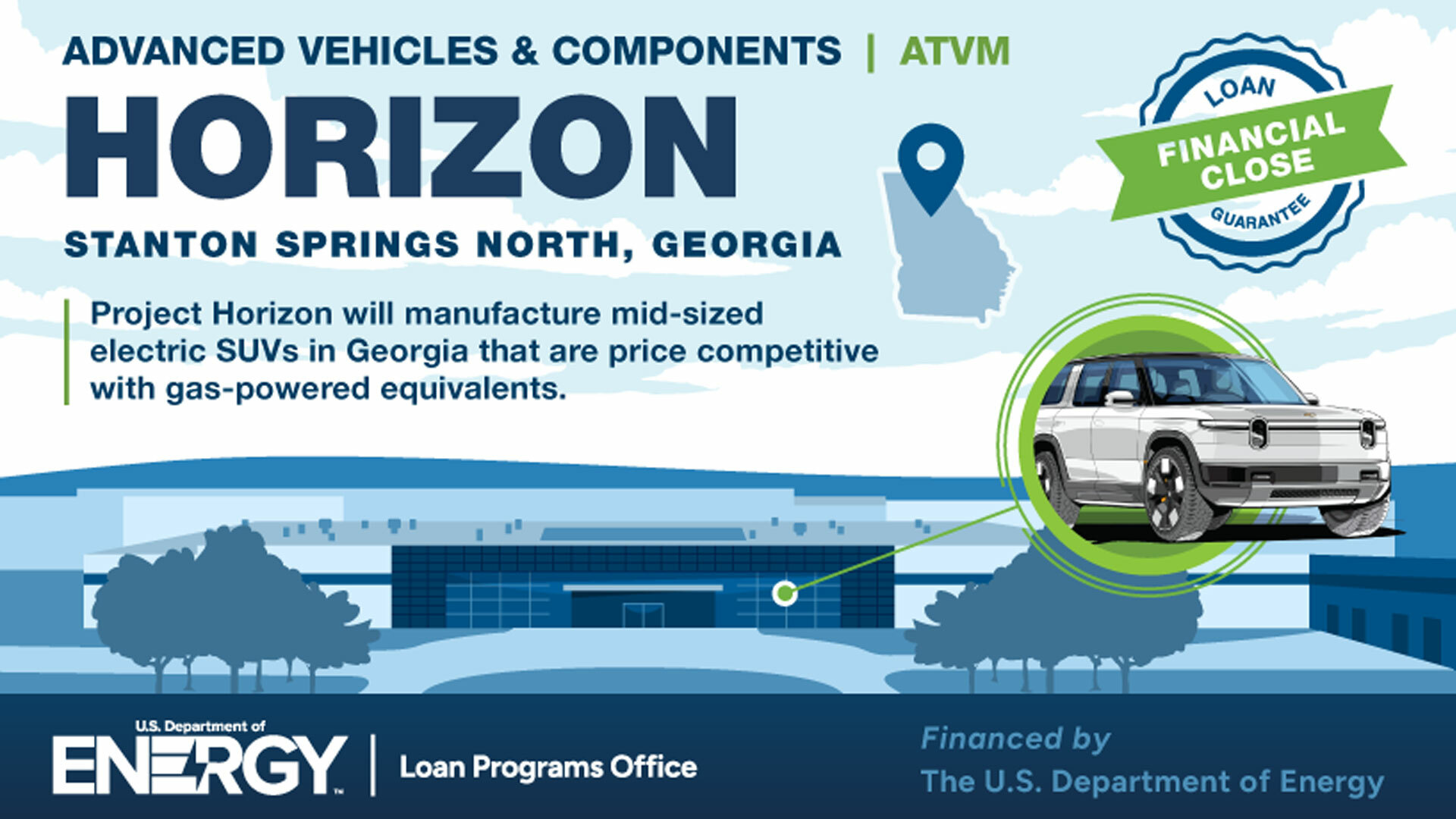
The R2 recently went into production in Normal, Illinois, and Rivian expects it to be a success. As a result, they’ve announced a new plan for their Stanton Springs North plant in Georgia.

Under the new strategy, the automaker is increasing the plant’s initial production capacity to 300,000 vehicles annually. That’s 100,000 units more than the original target and Rivian said the change will “facilitate a lower cost per unit, while also providing significant room for future expansion of capacity in later phases.”

More: Biden Admin Finalized Rivian’s $6.6 Billion Loan Before Trump Took Office

As part of the change, Rivian worked closely with the Department of Energy to update its original $6.6 billion loan. Its value has been reduced to $4.5 billion and is “aligned with the updated facility design and roadmap for the initial phase.”

 Rivian Lost $416 Million Last Quarter And Just Bet Bigger On Georgia

The devil is in the details, with CNBC reporting that the loan was originally structured for two phases of production and an annual capacity of 400,000 units. The new agreement reportedly just has one phase and enables Rivian to “draw on the loan sooner and have greater initial production.”

Rivian expects to start using those funds in 2027, and the plant is scheduled to begin production in late 2028. Vertical construction is set to begin this spring, and “preparations are underway for the development of the stamping press area, one of the most capital-intensive and technically demanding projects within the plant from a construction perspective.”

Q1 Results

 Rivian Lost $416 Million Last Quarter And Just Bet Bigger On Georgia

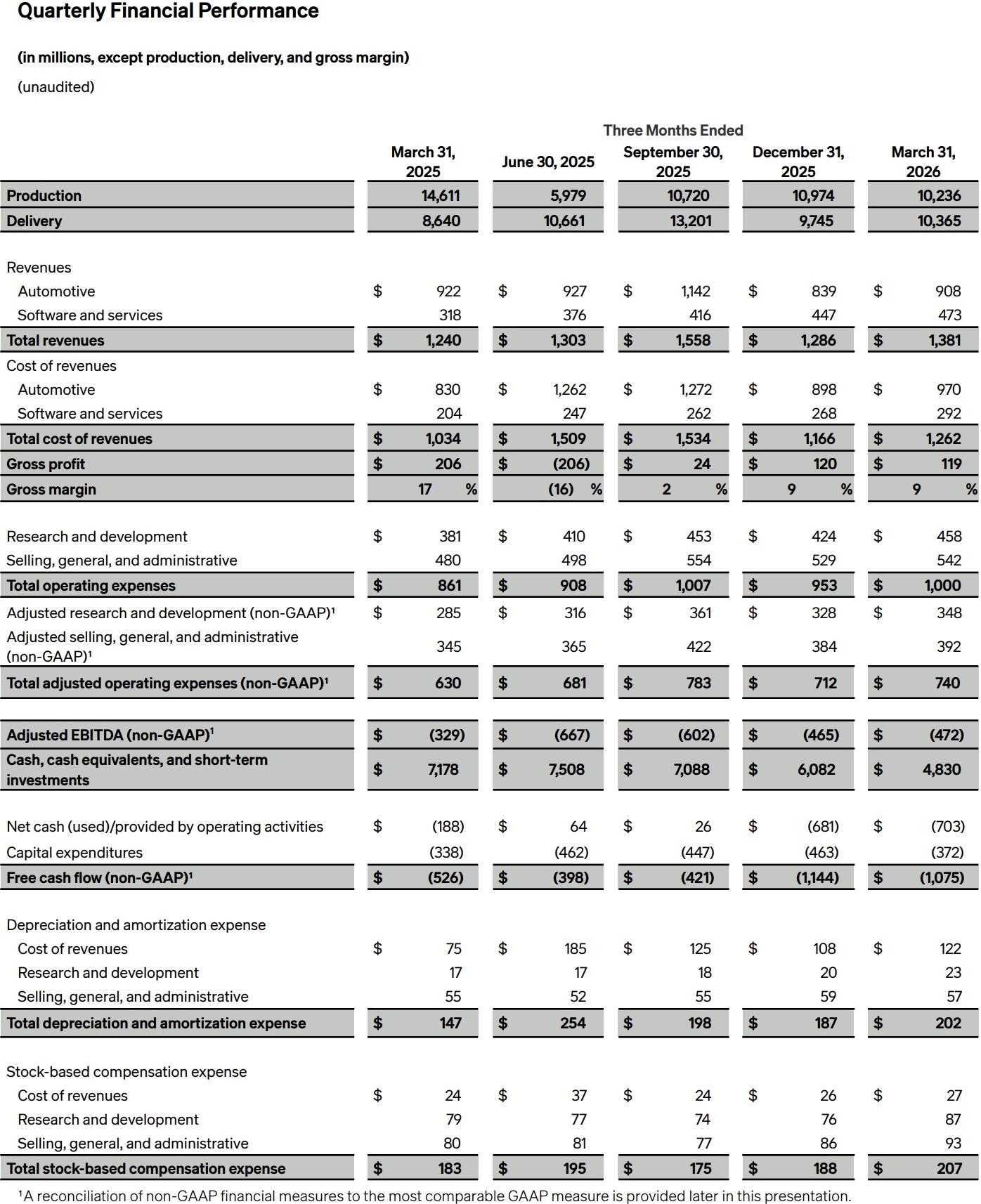
Besides the Georgia plant changes, Rivian announced its first-quarter results. The automaker built 10,236 vehicles and delivered 10,365 to customers.

Consolidated revenue increased 11% to $1.38 billion, and the company posted a $416 million net loss for the quarter. That’s down from a $541 loss in Q1 2025, but they “benefited from a $506 million gain in other income related to the Series A capital raise and related deconsolidation of Mind Robotics.”

Their outlook for 2026 isn’t stellar as they’re expecting to deliver between 62,000 and 67,000 vehicles. While those are decent numbers, their adjusted EBITDA is a $1.8 – $2.1 billion loss.

 Rivian Lost $416 Million Last Quarter And Just Bet Bigger On Georgia
❌
❌