Normal view

There are new articles available, click to refresh the page.
Today — 12 April 2026Main stream

Kia’s 2026 EV9 Earth Gets The Hard Part Right And Stumbles On The Obvious One | Review

PROS ›› Great power, extremely spacious, refined CONS ›› Ioniq 9 is more luxurious, expensive, inefficient

Kia’s EV9 arrived in Australia two years ago as the first fully electric SUV with three rows, and it didn’t try to blend in. The styling leaned hard into concept car territory, all sharp edges and presence, and it marked a turning point for the Korean brand as it pushed further upmarket. Locally, it wasn’t just another launch. It felt like a statement piece, and arguably the most important model Kia had put its name on in years.

In the two years since its launch, the segment hasn’t exactly exploded into life. Australia’s three-row EV space is still oddly thin, with only the Volvo EX90 and the sorted Hyundai Ioniq 9 joining the conversation so far. There’s also the looming arrival of the seven-seat Tesla Model Y L, which technically has three rows, in the same way a folding chair technically counts as living room furniture.

Review: The 2026 Ioniq 9 Calligraphy’s Biggest Threat Is Hyundai Itself

The question is, two years on, does the EV9 still hold the same appeal it had when it first launched, or has it been overshadowed by some of the newer competition? We spent a week with the mid-range Kia EV9 Earth to see where it now stands.

QUICK FACTS
› Model:2026 Kia EV9 Earth
› Starting Price:AU$119,273 ($84,231)
› Dimensions:197.2 L x 78 W x 69.1 in H (5,010 x 1,980 x 1,755 mm)
› Wheelbase:122 in wheelbase (3,100 mm)
› Curb Weight:2,552 kg (5,626 lbs)
› Powertrain:Dual electric motors / 99.8 kWh battery
› Output:380 hp (283 kW) / 516 lb-ft (700 Nm)
› 0-62 mph6.0 seconds
› Transmission:Single speed
› Efficiency:23 kWh/100 km as tested
› On Sale:Now
SWIPE

Local prices for the EV9 have remained steady since the model’s introduction. While this is a good thing, it still remains pricey. The range starts with the Air, priced from AU$106,404 ($75,100) when factoring in all the on-road costs and fees, while the Earth we lived with kicks off from AU$119,273 ($84,231).

Then there’s the performance-focused GT, set to arrive shortly and expected to start just shy of AU$150,000 ($106,000). At that point, you’re not just shopping for a big electric SUV. You’re making a fairly serious financial statement.

\\\\\\\\\\

Photos Brad Anderson/Carscoops

There’s a lot to like about the mid-range EV9 Earth on paper. It uses the same powertrain as the GT-Line, meaning there’s a 99.8 kWh battery pack and a pair of electric motors boasting 283 kW (380 hp) and 700 Nm (516 lb-ft) of torque. By comparison, the base model has a smaller 76.1 kWh pack and just a single, rear-mounted electric motor.

Kia quotes a solid driving range of 512 km (318 miles) in the EV9 Earth, the most of any model, as well as a 0-100 km/h (0-62 mph) time of 6.0 seconds. This is down from the GT-Line’s 5.3-second time and likely has to do with some electronic trickery, given it has the same powertrain.

Spacious, Functional, But A Bit Drab Interior

\\\\\\\\\\\

Photos Brad Anderson/Carscoops

Given the large footprint of the EV9, it should come as no surprise that the interior is absolutely vast. It’s a proper seven-seater – or six-seater when configured with the captain’s chairs – yet you quickly get used to the size of it.

Like other EV9 variants, as well as many other Kia EVs, the dashboard is dominated by a 12.3-inch infotainment display, a 5-inch climate control panel, and a 12.3-inch digital gauge cluster.

The implementation of the climate control screen leaves a little to be desired. It’s sandwiched between the two larger displays and is completely blocked by the rim of the steering wheel. Fortunately, Kia has included physical switches for the temperature and fan speed further down on the dash, so I very rarely had to use the screen to make adjustments. Even still, we’d prefer a narrow, horizontal display below the air vents for the climate settings.

\\\\\\\\\\\\

Photos Brad Anderson/Carscoops

Just a few months ago, we drove the Hyundai Ioniq 9, a vehicle that shares its underpinnings with the EV9. Australia only gets that model in flagship Calligraphy guise, priced from AU$128,413 ($90,700), and while it’s more expensive than the EV9 Earth, the interior feels far plusher.

This isn’t to say the cabin of the EV9 is a disappointment. In fact, it’s very nice. But, whereas Hyundai has used a host of different colors, materials, and shapes in the Ioniq 9, the cabin of the EV9 is rather drab, offered exclusively with black artificial leather. There are no metal accents, or even faux metal parts, and instead just a bunch of leather (which isn’t particularly soft), small pieces of fabric on the dashboard and door panels, and plenty of black plastic. We’d expect more at this price point.

Functionally, the interior is great. Wireless Apple CarPlay and Android Auto come standard, although the Earth misses out on the head-up display of the GT-Line. It also does without Parking Collision Avoidance Assist – Forward, Kia’s relaxation seats, dual sunroof, rear privacy glass, small cube LED headlights, alloy sport pedals, premium door scuff panels, second-row sun blinds, and a 14-speaker Meridian sound system. Instead, it makes do with an 8-speaker system that’s adequate, but not particularly inspiring.

\\\\\\\\\\\\\\\\\\\\\\\\

Photos Brad Anderson/Carscoops

There’s no knocking the space or comfort on offer, however. The front seats are great, as are the ultra-soft headrests. There are also plenty of charging ports, as well as heated and ventilated functions for the front seats.

Similarly, the second-row is incredibly spacious with ample legroom and headroom, even in the middle seat. Thanks to the upright roofline, there’s even plenty of headroom at the rear and slightly more than in the Ioniq 9. Cargo space is also good, with 828 liters (29.2 cubic feet) if the third row is folded down, and 2,318 liters (81.8 cubic feet) if the second- and third-row seats are folded away.

A GT Badge Isn’t Needed For Performance
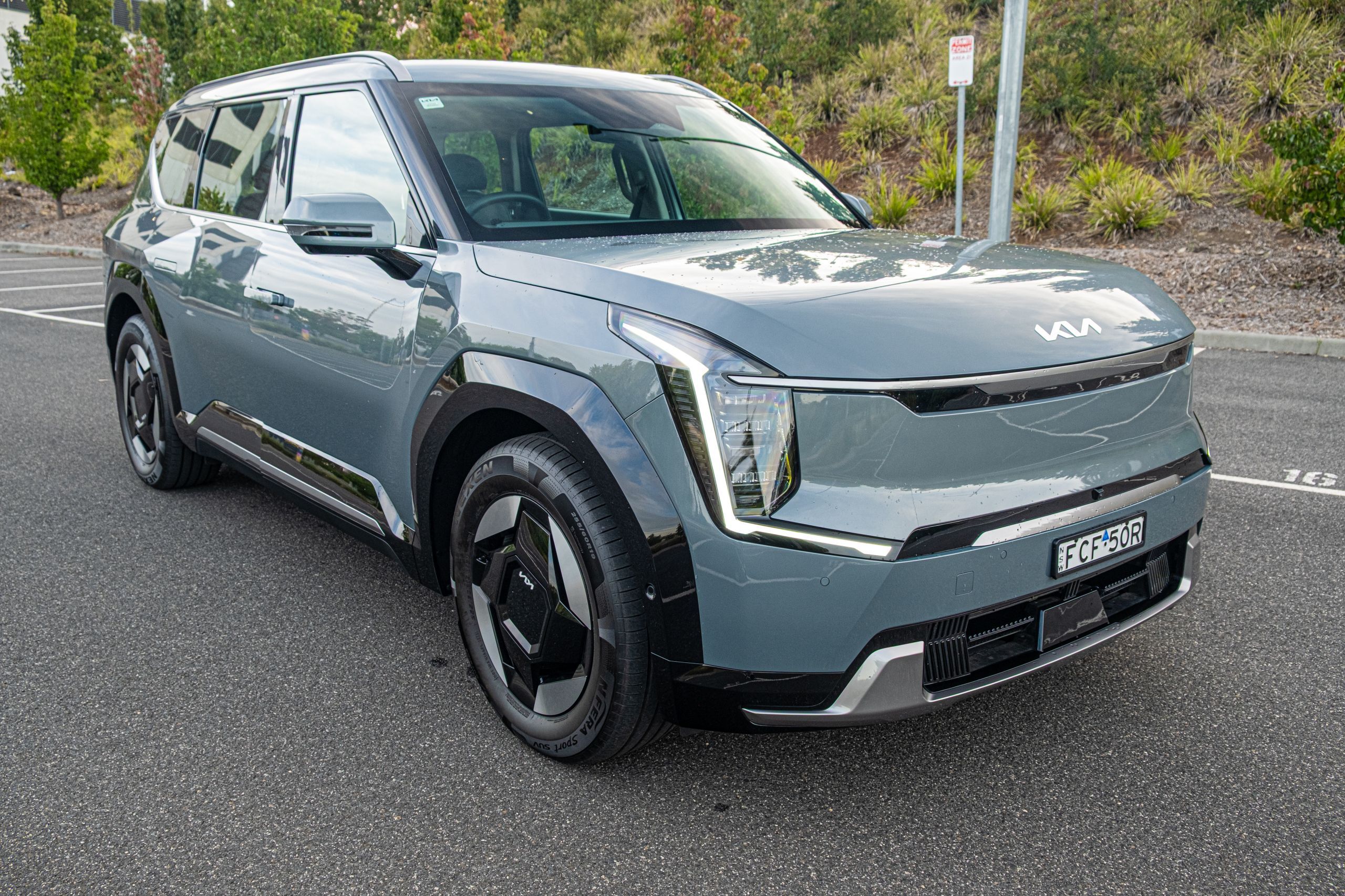
 Kia’s 2026 EV9 Earth Gets The Hard Part Right And Stumbles On The Obvious One | Review

While the Kia EV9 Earth isn’t marketed as a sporty SUV, unlike the GT-Line and GT models, it certainly has a sporty edge to it.

Unlike the Ioniq 9 Calligraphy, which has more power than all EV9 models bar the flagship GT, the EV9 doesn’t waft down the road quite the same. Instead, it rides noticeably firmer and has a more dynamic edge to it. This isn’t to say it feels like an out-and-out performance car, because it doesn’t, but it’s clear Kia’s engineers were eager to create something that driving enthusiasts like ourselves would appreciate.

It’s very common for big EVs to ride quite firmly – hardly a surprise given how heavy they can be. While the EV9 does lean towards firmness rather than suppleness, even in Earth configuration, it still remains comfortable and soaks up bumps nicely, almost as well as a high-priced European rival.

\\\\\\\\\\\

Photos Brad Anderson/Carscoops

Thanks to the suspension setup, the EV9 handles surprisingly well and offers a tremendous amount of grip given its size. The Nexen tires aren’t the most premium option, given the SUV’s hefty price tag. By comparison, the GT-Line rocks Continental rubber. Kia has done a commendable job of keeping the cabin quiet, eliminating any excessive tire or wind noise, even though the EV9 has a front area like a semi-truck.

Read: 2026 Kia EV9 GT Is A Family Hauler With Fake Gear Shifts That Hits 60 In 4.3 Seconds

The steering has a nice weight, even though it’s largely devoid of feel. Similarly, the brakes have been well-tuned, and there’s no noticeable crossover between the regenerative braking and the mechanical units. Like other Hyundai and Kia EVs, the regen can be adjusted on the fly with the paddle shifters.
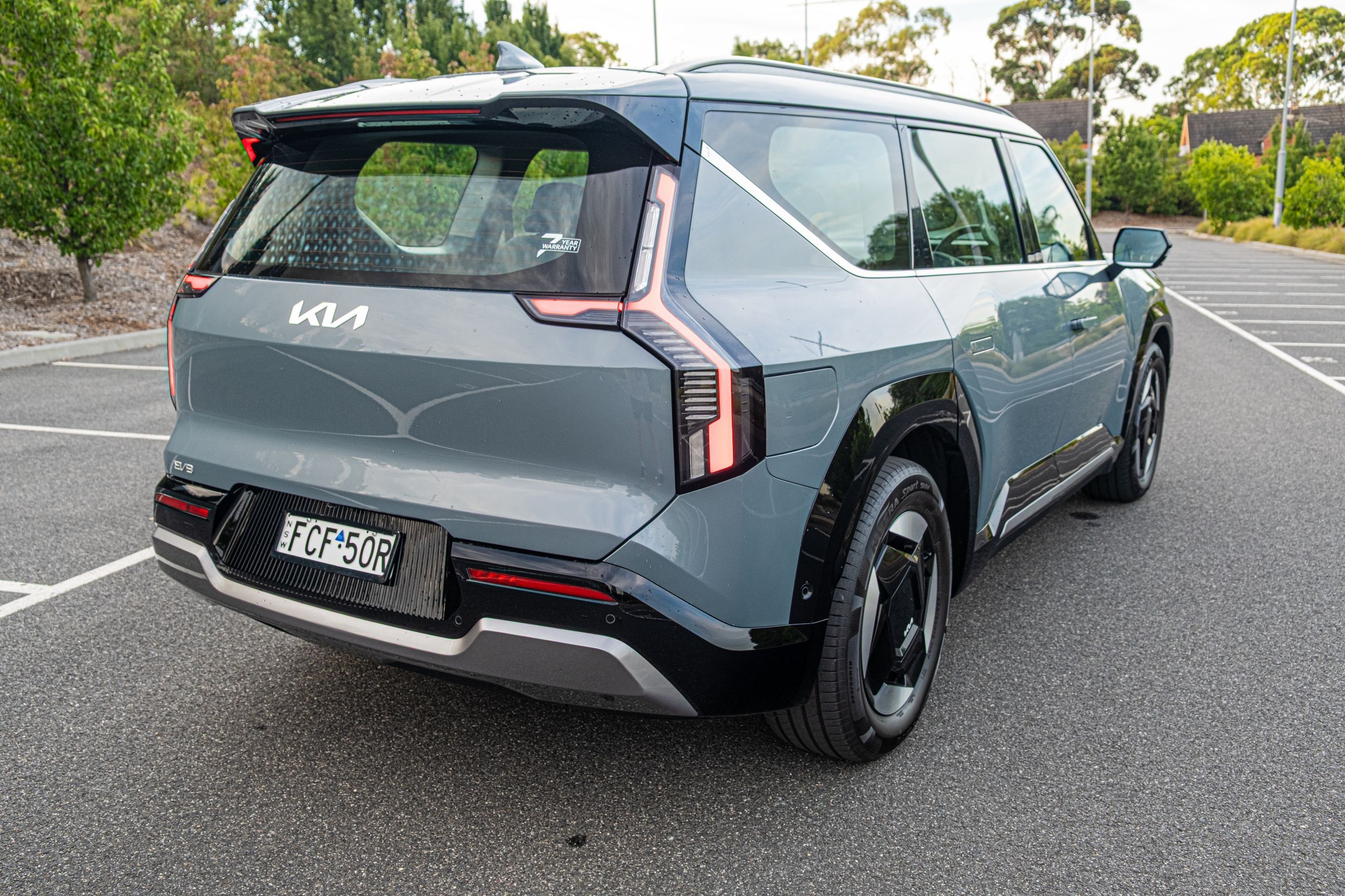
 Kia’s 2026 EV9 Earth Gets The Hard Part Right And Stumbles On The Obvious One | Review

Annoyances with the EV9 are few and far between, although the driver monitoring system is a little overactive, beeping and flashing even if you just take your gaze away from the road for a moment, even if that’s just to look in the mirrors. In addition, the multimedia shortcut buttons, incorporated into the dash with haptic buttons similar to what’s found in the Nissan Ariya, are very hard to use on the move.

The EV9’s 800-volt electrical architecture means the battery pack can be charged from 10-80 percent in just 24 minutes, which is impressive given the 99.8 kWh pack is quite sizeable. Yes, there are some Chinese brands that have pushed charging speeds to new levels in recent years, but the EV9 is more than adequate in this department.

In news that won’t surprise you, efficiency leaves a little to be desired. Kia quotes 22.3 kWh/100 km, but we ended up averaging 23 kWh/100 km, and that was driving almost exclusively in the Eco mode, always in one-pedal driving on a mix of urban roads and highways.

Verdict

\\\\\\\\\\\\\\\\

Photos Brad Anderson/Carscoops

The Kia EV9 has been a relatively strong performer for the brand ever since it was launched. In Australia, 269 examples were sold last year, and while that was down 50 percent from the year prior, it did outsell the Volvo EX90, which shifted 209 units. In the US, sales have been in freefall since the $7,500 federal EV tax credit was scrapped, and in 2025, 15,051 were sold, down from 22,017 the year prior.

Should Kia be panicking? Probably not. The market for all-electric, three-row SUVs will never be huge, and a drop in demand doesn’t mean the EV9 has somehow become less appealing since its introduction. Indeed, it is just as good now as it ever was.

However, not only does it have to deal with competition from within the Kia stable, such as from the Sorento and the Telluride, but shoppers also need to be convinced to buy it over the Hyundai Ioniq 9 which is better, even if it costs a little more. Like so many other EVs, it will likely remain most appealing to those only interested in owning an electric vehicle, not necessarily a spacious seven-seat SUV that provides the best value for money. If you’re still after that, Kia’s hybrid alternatives might be a better option.
\\\\\\\\\\\\\\\\\\\\\\\\\\\\\\\\\\\\\\\\\\\\\\\\\\\\\\\\\\\\\\\\\\\\\\\\\\\\\\\\\\\\\\\\\

Photos Brad Anderson/Carscoops

Yesterday — 11 April 2026Main stream

Porsche Is Confident That Buyers Who Got 700 HP For $40K Will Eventually Want To Pay More For Less

  • Porsche says Chinese brands present an intriguing opportunity for it.
  • Executives see Chinese EV brands as a pathway to future premium buyers.
  • Many current buyers are likely focused on value rather than brand prestige.

Surging demand for domestic brands in China has dealt a heavy blow to Porsche, pushing the company to shutter roughly 30 percent of its dealerships as sales have plunged 50 percent since 2022. The slide shows little sign of easing. In the most recent quarter alone, Porsche lost another 21 percent of its market share.

Yet despite the growing pressure from Chinese automakers, the brand insists the trend could work in its favor, at least in select Western markets such as Australia.

Read: Porsche Custom Builds Usually Stay One-Off, Not These Four

While the number of vehicles from China available in Australia continues to increase by the month, the German sports car maker doesn’t face the same level of competition as it does elsewhere. According to Porsche Cars Australia chief executive Daniel Schmollinger, many buyers entering the market through more affordable Chinese models may eventually set their sights higher.

“I wouldn’t call it concern; I wouldn’t call it worried; I look at it as an opportunity,” he told Australia’s Drive. “They’re obviously in a different price range from where we are. I’m actually happy to see these brands being successful here because at one point in time we will see, like after three years, first-time electric in a Chinese brand, people will want what’s next. And what is the next step? Then we are here for them.”

From Chinese To German?

 Porsche Is Confident That Buyers Who Got 700 HP For $40K Will Eventually Want To Pay More For Less

While this certainly seems possible, there’s absolutely no guarantee that those buying an EV from a Chinese company now will be interested in upgrading to a Porsche in the future. Indeed, if they’re after a new EV from China, they’re likely quite budget-conscious and are looking for something that presents good value for money.

Also: China’s $28K Taycan Clone Is Coming Whether Porsche Likes It Or Not

If, for example, someone were to buy a 700 hp EV from China for a third of the price of a Porsche, would they really have any interest in upgrading in a few years just for the German badge? Porsche is likely betting that these individuals’ incomes will grow, and as they do, it’s certainly possible they will start looking at more traditionally premium brands.

 Porsche Is Confident That Buyers Who Got 700 HP For $40K Will Eventually Want To Pay More For Less
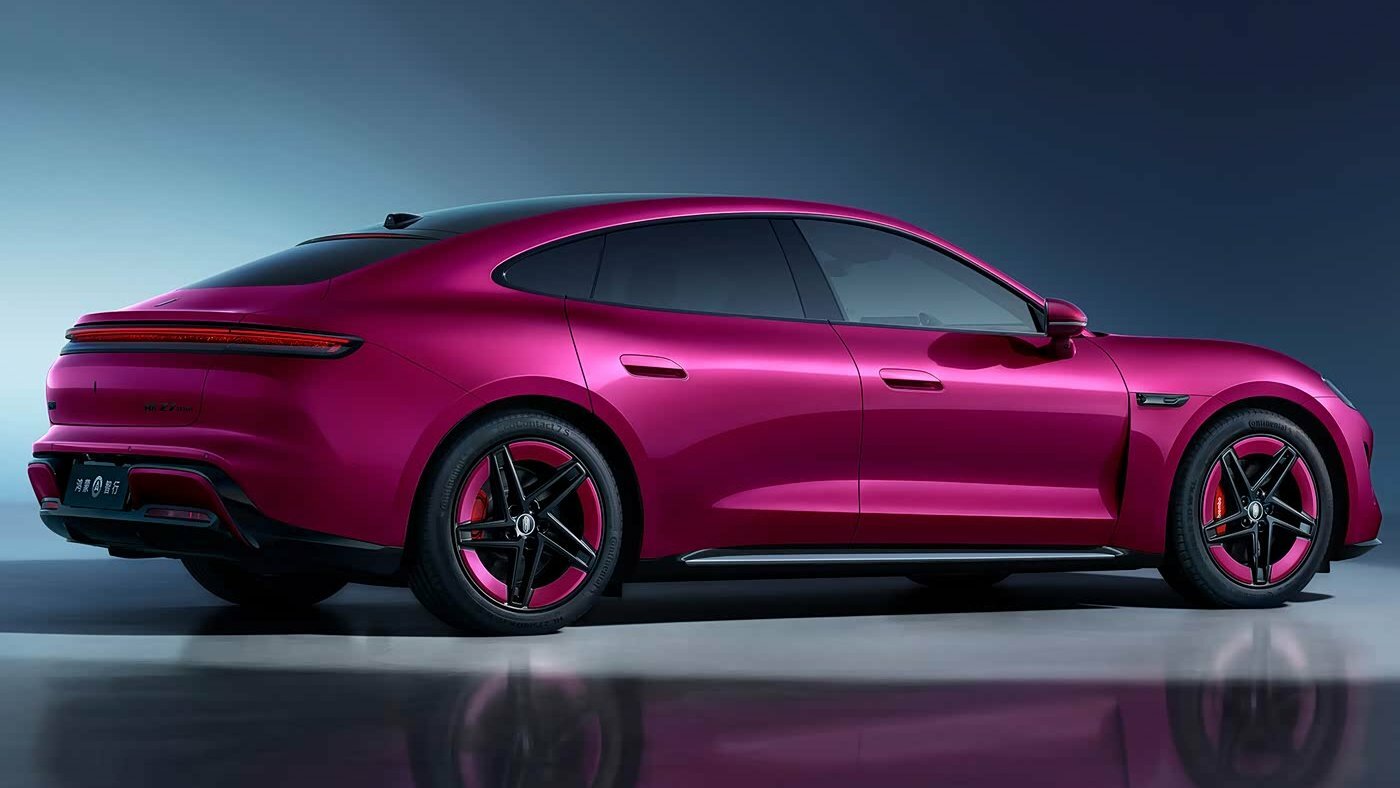
SAIC’s Shangjie Z7 electric sedan.

Polestar Is Dangling Up To $21,000 Off For Tesla Owners, More If You’re A Costco Member

  • After incentives, the base Polestar 3 is available for less than $50,000.
  • Existing Tesla owners are being offered a $3,000 conquest bonus.
  • Polestar is also offering a bonus for BMW, Audi, and Mercedes owners.

For most American buyers, Tesla remains the quintessential electric vehicle brand, accounting for roughly 46 percent of all EVs sold locally last year. Despite its stranglehold over the industry, competitors continue to announce incentives aimed at convincing current Tesla owners to jump ship, and Polestar is the latest.

Review: We Drove The Polestar 4 And It Wants To Change Your Mind On EVs

If you want to jump behind the wheel of a new Polestar 4 or Polestar 3, now could be the time to do it. Until April 30, the outgoing 2025 Polestar 3 includes an $18,000 ‘Polestar Clean Vehicle Incentive’ on purchases, slashing the SUV’s starting price. What’s more, it’s being sold with a $3,000 conquest bonus for any existing Tesla owner, regardless of whether someone wants to buy or at lease the 3.

 Polestar Is Dangling Up To $21,000 Off For Tesla Owners, More If You’re A Costco Member

It’s not just Tesla owners who can benefit. A $3,000 loyalty bonus is available to current Polestar owners, and a $1,000 conquest bonus is available to anyone who owns or leases an ICE or EV model from BMW, Audi, Mercedes-Benz, Porsche, or Cadillac. If you’re a Costco member, you may also be eligible to receive a discount of either $1,000 or $1,250. All up, we’re looking at potential savings of $21,000, or up to $22,250 for Costco members.

Importantly, these incentives are only for the 2025 Polestar 3, which has a 400-volt electrical architecture, whereas the 2026 model uses a more advanced 800-volt system. Nevertheless, it remains a good EV, and the base model can now be had for less than $50,000. The incentives also cut prices of the Long Range Dual Motor to under $55,000, while the Long Range Dual Motor with Performance Package can be purchased for less than $60,000.

Or Would You Prefer No Rear Window?

\\\\\\

Polestar is also offering several incentives for the 2026 Polestar 4. For starters, it’s available with a $10,000 clean vehicle incentive, which can be combined with a $4,000 conquest bonus for Tesla owners, a $3,000 loyalty bonus for existing Polestar owners, or a $1,000 conquest incentive for owners of BMW, Audi, Mercedes-Benz, Porsche, or Cadillac models.

Like the Polestar 3, the smaller 4 also offers up to $1,250 in incentives for Costco members. The main $10,000 incentive alone reduces prices of the Long Range Single Motor to $46,400, while the Long Range Dual Motor drops to $52,900.

\\\\\\\

Mazda Priced Its New CX-6e At $20,500 In China And Nearly Double That In Australia

  • The CX-6e comes exclusively with a 78 kWh battery and a rear motor.
  • Mazda Australia will sell the CX-6e in GT and Azami configurations.
  • Customer deliveries of the all-electric SUV will start in September.

As more Chinese-built EVs make their way into global markets, legacy brands are starting to blur traditional pricing expectations. Just a few months after Hyundai began selling its China-made Elexio in Australia, Mazda has launched its only all-electric SUV in the country, also built in China. The new CX-6e is positioned as a direct rival to the Tesla Model Y and undercuts it on price, although there is no dual-motor version available.

Read: Mazda’s Global $16,800 Chinese SUV Makes America’s Cheapest Cars Look Overpriced

The CX-6e is produced in China through the Changan Mazda joint venture and is closely related to the Deepal S07, which is already sold in Australia. Pricing for the entry-level GT starts at AU$53,990 (equal to US$38,000 at current rates) before on-road costs.

While it’s cheaper than the base Tesla Model Y Premium RWD that starts at AU$58,900 (US$41,500), it’s also nearly twice as expensive as the same model in China. There, the entry-level CX-6e EV starts at 139,900 yuan (US$20,500 or AU$28,900).

\\\\\\\\\\\\\\\\\\\\\\\\\\\\\\\\\\

Chinese buyers also benefit from a lower entry point thanks to a range-extended version. It pairs a 1.5-liter four-cylinder engine with a smaller 31.7 kWh battery, effectively using the engine as a generator. That variant starts at 129,900 yuan (US$19,000 or AU$26,900), though it isn’t offered in Australia.

For their money, Australian buyers will get a sharp-looking SUV with a 78 kWh lithium iron phosphate (LFP) battery and a rear-mounted electric motor with 255 hp (190 kW) and 214 lb-ft (290 Nm). Key features of the CX-6e GT include a huge 26.45-inch central infotainment and passenger display, 19-inch alloy wheels, radar cruise control, heated and ventilated front seats, a heated steering wheel, and a 23-speaker audio system.

Tech-Filled, And Cheap

\\\\\\\\\\\\\\\\\\\\\\\\\\\\\\\\

Those with a little more money to spend can opt for the CX-6e Azami, priced from AU$56,990 (US$40,100). It includes the same powertrain but adds digital wing mirrors, a digital rearview mirror, and 21-inch alloy wheels.

Both models have a claimed driving range of 301 miles (484 km) over the combined cycle. Mazda Australia hasn’t published the CX-6e’s peak DC charging speed, but notes the battery can be charged from 30-80 percent in 15 minutes, which is decent yet far from class-leading.

No doubt in a bid to help boost early interest in the SUV, the first 1,000 Australian customers who pre-order the CX-6e GT will receive a complimentary upgrade to the Azami. There is only one optional package, a Warm Beige interior trim available on both variants for AU$1,000 ($700).

\\\\\\\\\\\\\\\\\\\\\\\\\\\\\\\\\\\\\\\\\\\\\

BYD Flash Charges To 97% In 9 Minutes, And KFC Just Figured Out What To Do With The Wait

  • BYD opens its 5,000th fast charging station across China.
  • A new KFC tie-up links meals with rapid charging stops.
  • Expansion plans include thousands of sites across Europe.

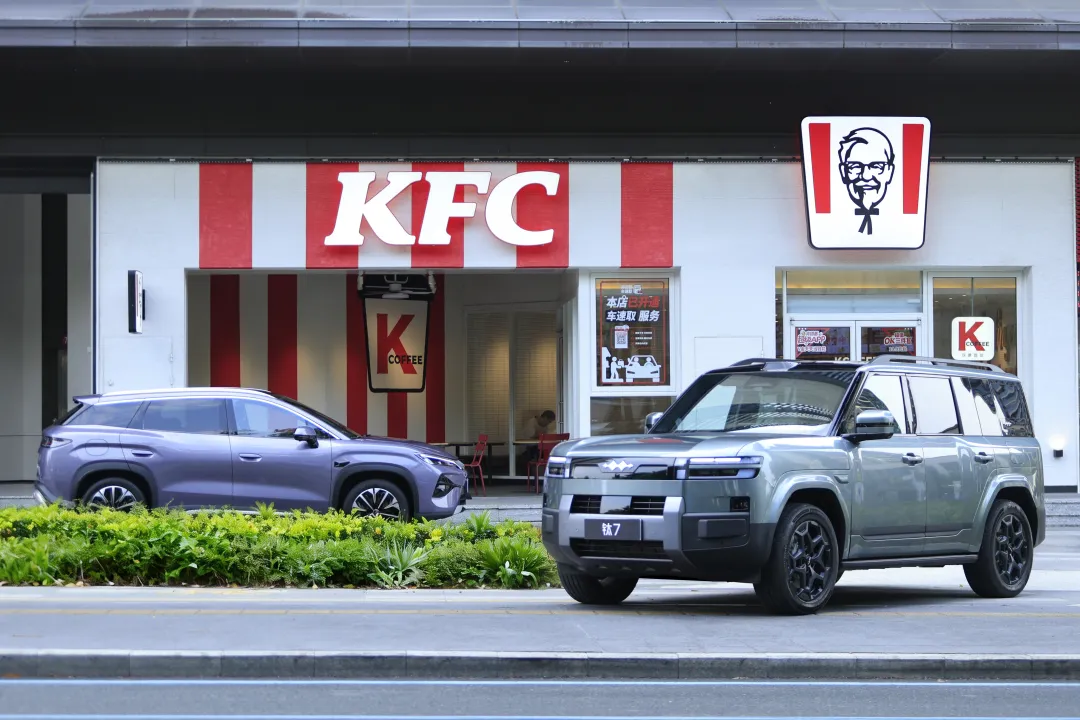
In China’s growing EV market, convenience is starting to matter just as much as range or charging speed. BYD isn’t the type of company that does things in halves. Only a month after announcing its new 1,500 kW charging technology, it has opened its 5,000th Flash Charging station in China and partnered with KFC to broaden its footprint.

Through a collaboration with the fast-food giant, BYD will establish so-called ‘9-minute drive-thru’ areas at KFC locations across the country, referencing the Flash Chargers’ ability to take one of the firm’s EVs from 10-97 percent in just nine minutes. The partnership is being developed with Yum China, the operator behind KFC’s extensive local network.

Read: BYD Says Its New Battery Can Recharge As Fast As Filling Up Your Gas Tank

For owners who enjoy grabbing a burger or fried chicken on the go, the deal makes practical sense. It also mirrors similar partnerships in the US involving Volvo, Mercedes, and Starbucks, where charging points have been added to many of the coffee chain’s stores.

To simplify ordering, the KFC app will be integrated into BYD infotainment systems. When an order is placed through the screen, the vehicle’s location is tracked as it approaches the nearest KFC, ensuring the food is ready and hot on arrival.

Flash Charging Goes Global

 BYD Flash Charges To 97% In 9 Minutes, And KFC Just Figured Out What To Do With The Wait

BYD has not said how many KFC locations will receive Flash Chargers, but it aims to install 20,000 stations across China by the end of the year. The company also plans to roll out 6,000 Flash Charging stations outside China throughout 2026, including 3,000 across Europe.

The Flash Charging stations can be configured similarly to traditional gas stations. According to BYD, vehicles equipped with its second-generation blade battery can charge from 10-70 percent in just 5 minutes and from 10-97 percent in nine minutes. The company also highlights performance in cold conditions, stating that vehicles can charge from 20-97 percent in 12 minutes even at -22° F (-30° C).

\\\\\\\

Denza Said 1,274 HP Was Enough. Its Updated Z9 Disagrees

  • Denza’s entry-level Z9 sedan uses a single rear motor producing 496 hp.
  • The existing Z9 GT Shooting Brake is heading to Europe and Australia soon.
  • Design changes include revised lighting, door handles, and new mirror options.

In a market where rapid model updates have become the norm, even relatively new EVs are already due for mid-cycle reinvention. Just 18 months after BYD’s Denza brand unveiled its all-electric Z9 sedan as a counterpart to the Z9 GT Shooting Brake, the first images and details of a revised version have surfaced. It has a thoroughly updated design and, fittingly, is now even more powerful.

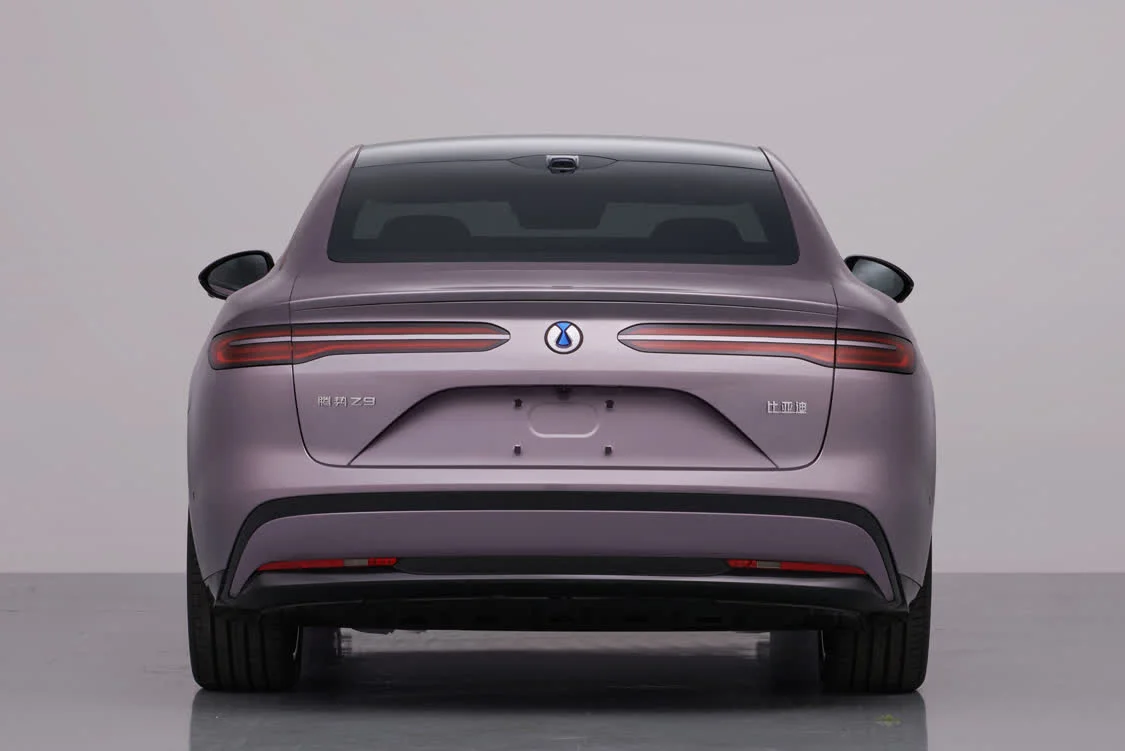
These images from China’s Ministry of Industry and Information Technology (MIIT) show the updated Z9 sports all-new bodywork. Visible at the front are revised split LED daytime running lights, while the headlights have been positioned alongside the black lower grille section.

Read: The Chinese Luxury Brand Mercedes Helped Create Is Now Coming For Mercedes’ European Buyers

The sides remain sleek, although there are now new optional wing mirrors similar to those used by Volvo and Polestar models. The door handles have also been redesigned, while new slim LED taillights are found at the rear. The car is 5,090 mm (200.3 inches) long, 1,980 mm (77.9 inches) wide, stands just 1,490 mm (58.6 inches) tall, and has a generous 3,025 mm (119-inch) wheelbase.

Power For All

 Denza Said 1,274 HP Was Enough. Its Updated Z9 Disagrees

Two distinct, all-electric versions are mentioned in the MIIT filings. The first is a single-motor version with a rear-mounted electric motor delivering 496 hp. There’s no word on how large the car’s battery pack will be, but the weight of this model will vary between 2,397 kg (5,284 lbs) and 2,438 kg (5,374 lbs), depending on the specification. The top speed is listed at 155 mph (250 km/h).

As we’ve learned from Denza, simply having almost 500 hp isn’t enough. Sitting at the top of the Z9 sedan family will be a tri-motor version with a pair of 416 hp motors and a single 362 hp motor, delivering 1,328 hp. That gives it a power advantage over the existing Z9 GT Shooting Brake that tops out at 1,274 hp. The top speed of this model will be 168 mph (270 km/h), and it’ll be a little heavier, weighing in at 2,588 kg (5,705 lbs).

Details of this new model emerged shortly after Denza announced it was taking the current Z9 GT Shooting Brake global and will start selling it in Europe and Australia. Given that an updated sedan is in the works, it seems likely a new version of the Shooting Brake is also on the cards, mimicking some of the design changes made to the sedan.

\\\\\

Hyundai’s Ioniq Concepts Forgot They Were Supposed To Look Like Hyundais, Especially The Lambo One

  • Hyundai has unveiled two Ioniq concepts, badged the Venus and Earth.
  • The Venus is a high-riding sedan that looks nothing like the Ioniq 5.
  • Both concept cars feature radical interiors to inspire production models.

China’s EV market has become a proving ground where global brands often rethink their playbook from the ground up. The Ioniq brand has served as Hyundai’s premium series of EVs in Western markets for several years. Now Hyundai is bringing Ioniq to China, but not with any existing models. Instead, it has revealed two concepts ahead of the Auto China show in Beijing.

Read: Hyundai’s New EV Sedan For China Could Be Everything The Ioniq 6 Wasn’t

All future Ioniq models bound for China will follow a new naming convention, one that swaps numbers for planets as Hyundai reshapes its electric lineup for the market. With this in mind, its first two concepts are dubbed the Venus and the Earth, the former a sharp looking sedan that strongly recalls a Lamborghini four-door, while the latter takes the form of an SUV.

According to Hyundai, the Ioniq series will “evolve beyond a product lineup into a broader mobility ecosystem tailored to local customers” as it develops.

\\\\\\\\\

Hyundai says the Venus and Earth serve as design ‘barometers’ for future production models. The Venus has been presented in a shade of Radiant Gold and looks unlike any other Ioniq model we’ve seen. Like an Ioniq 5, it sits quite high and has an aggressive front end with slim LEDs and a gaping grille.

The cabin is also quite intriguing, featuring a slew of gold accents and a panoramic screen for the infotainment system and the front passenger, similar to the current Hyundai Elexio built in China. Just how much of this concept’s interior will influence future production models remains to be seen, but it certainly makes a statement.

No Ordinary Hyundai

\\\\

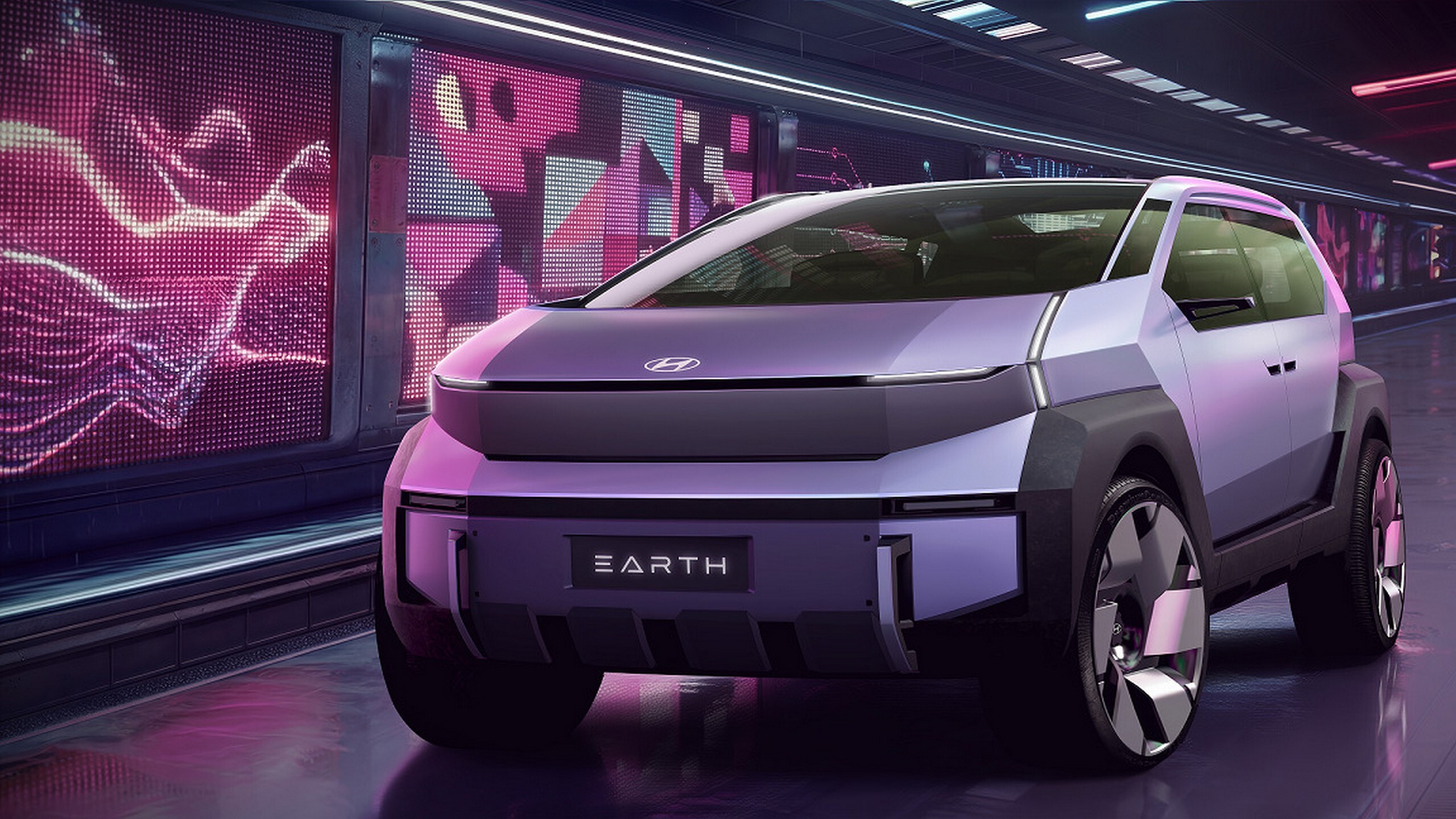
Hyundai’s Earth SUV is even more dramatic. Sharing some similarities to recent Kia concepts, it has a bold front fascia and a rugged design, painted in a shade Hyundai calls Aurora Shield. A peek inside the cabin reveals suicide rear doors, a tablet-like central touchscreen, and special seats with air-filled modules.

“Starting with the two concept cars unveiled today, we will continue to present products that reflect deep insight into Chinese customers and our genuine commitment to this market,” Beijing Hyundai Motor Company president Li Fenggang said.

“Built on IONIQ’s uncompromising principles of world-class safety and quality, we will soon introduce production models that seamlessly combine the smart driving and smart cabin experiences that Chinese consumers demand.”

Hyundai has yet to announce when the first of its China-only Ioniq models will be launched, but they shouldn’t be too far off.

Before yesterdayMain stream

Denza’s Z9 Sedan Is Getting Redesign And Hypercar Levels Of Power

  • The flagship Z9 will churn out an extraordinary 1,328 hp from three motors.
  • Denza is also readying a single-motor Z9 sedan with 496 hp at the rear wheels.
  • A slew of design changes have been made to the sleek Chinese sedan.

Just 18 months after BYD’s Denza brand unveiled its all-electric Z9 sedan as a counterpart to the Z9 GT Shooting Brake, the first images and details of a revised version have surfaced. It has a thoroughly updated design and, fittingly, is now even more powerful.

These images from China’s Ministry of Industry and Information Technology (MIIT) show the updated Z9 sports all-new bodywork. Visible at the front are revised split LED daytime running lights, while the headlights have been positioned alongside the black lower grille section.

Read: The Chinese Luxury Brand Mercedes Helped Create Is Now Coming For Mercedes’ European Buyers

The sides remain sleek, although there are now new optional wing mirrors similar to those used by Volvo and Polestar models. The door handles have also been redesigned, while new slim LED taillights are found at the rear. The car is 5,090 mm (200.3 inches) long, 1,980 mm (77.9 inches) wide, stands just 1,490 mm (58.6 inches) tall, and has a generous 3,025 mm (119-inch) wheelbase.

Power For All

 Denza’s Z9 Sedan Is Getting Redesign And Hypercar Levels Of Power

Two distinct, all-electric versions are mentioned in the MIIT filings. The first is a single-motor version with a rear-mounted electric motor delivering 496 hp. There’s no word on how large the car’s battery pack will be, but the weight of this model will vary between 2,397 kg (5,284 lbs) and 2,438 kg (5,374 lbs), depending on the specification. The top speed is listed at 155 mph (250 km/h).

As we’ve learned from Denza, simply having almost 500 hp isn’t enough. Sitting at the top of the Z9 sedan family will be a tri-motor version with a pair of 416 hp motors and a single 362 hp motor, delivering 1,328 hp. That gives it a power advantage over the existing Z9 GT Shooting Brake that tops out at 1,274 hp. The top speed of this model will be 168 mph (270 km/h), and it’ll be a little heavier, weighing in at 2,588 kg (5,705 lbs).

Details of this new model emerged shortly after Denza announced it was taking the current Z9 GT Shooting Brake global and will start selling it in Europe and Australia. Given that an updated sedan is in the works, it seems likely a new version of the Shooting Brake is also on the cards, mimicking some of the design changes made to the sedan.

\\\\\

Hyundai Goes Interstellar As Ioniq Brand Launches In China

  • Hyundai has unveiled two Ioniq concepts, badged the Venus and Earth.
  • The Venus is a high-riding sedan that looks nothing like the Ioniq 5.
  • Both concept cars feature radical interiors to inspire production models.

The Ioniq brand has served as Hyundai’s premium series of EVs in Western markets for several years. Now, Hyundai is launching Ioniq in China, but it’s not doing so with any existing models. Instead, it has presented two concepts ahead of the Auto China show in Beijing.

All future Ioniq models sold by Hyundai in China will be named after planets. With this in mind, its first two concepts are dubbed the Venus and the Earth, the first of which is a sleek sedan while the latter is an SUV. Hyundai has declared that its Ioniq series will “evolve beyond a product lineup into a broader mobility ecosystem tailored to local customers” as it develops.

Read: Hyundai’s New EV Sedan For China Could Be Everything The Ioniq 6 Wasn’t

Hyundai says the Venus and Earth serve as design ‘barometers’ for future production models. The Venus has been presented in a shade of Radiant Gold and looks unlike any other Ioniq model we’ve seen. Like an Ioniq 5, it sits quite high and has an aggressive front end with slim LEDs and a gaping grille.

The cabin is also quite intriguing, featuring a slew of gold accents and a panoramic screen for the infotainment system and the front passenger, similar to the current Hyundai Elexio built in China. Just how much of this concept’s interior will influence future production models remains to be seen, but it certainly makes a statement.

No Ordinary Hyundai

 Hyundai Goes Interstellar As Ioniq Brand Launches In China

Hyundai’s Earth SUV is even more dramatic. Sharing some similarities to recent Kia concepts, it has a bold front fascia and a rugged design, painted in a shade Hyundai calls Aurora Shield. A peek inside the cabin reveals suicide rear doors, a tablet-like central touchscreen, and special seats with air-filled modules.

“Starting with the two concept cars unveiled today, we will continue to present products that reflect deep insight into Chinese customers and our genuine commitment to this market,” Beijing Hyundai Motor Company president Li Fenggang said. “Built on IONIQ’s uncompromising principles of world-class safety and quality, we will soon introduce production models that seamlessly combine the smart driving and smart cabin experiences that Chinese consumers demand.”

Hyundai has yet to announce when the first of its China-only Ioniq models will be launched, but they shouldn’t be too far off.

\\\\\\\\\\

Opel And Alfa Romeo’s Next EVs May Be Built Around Chinese Tech, Not German Or Italian

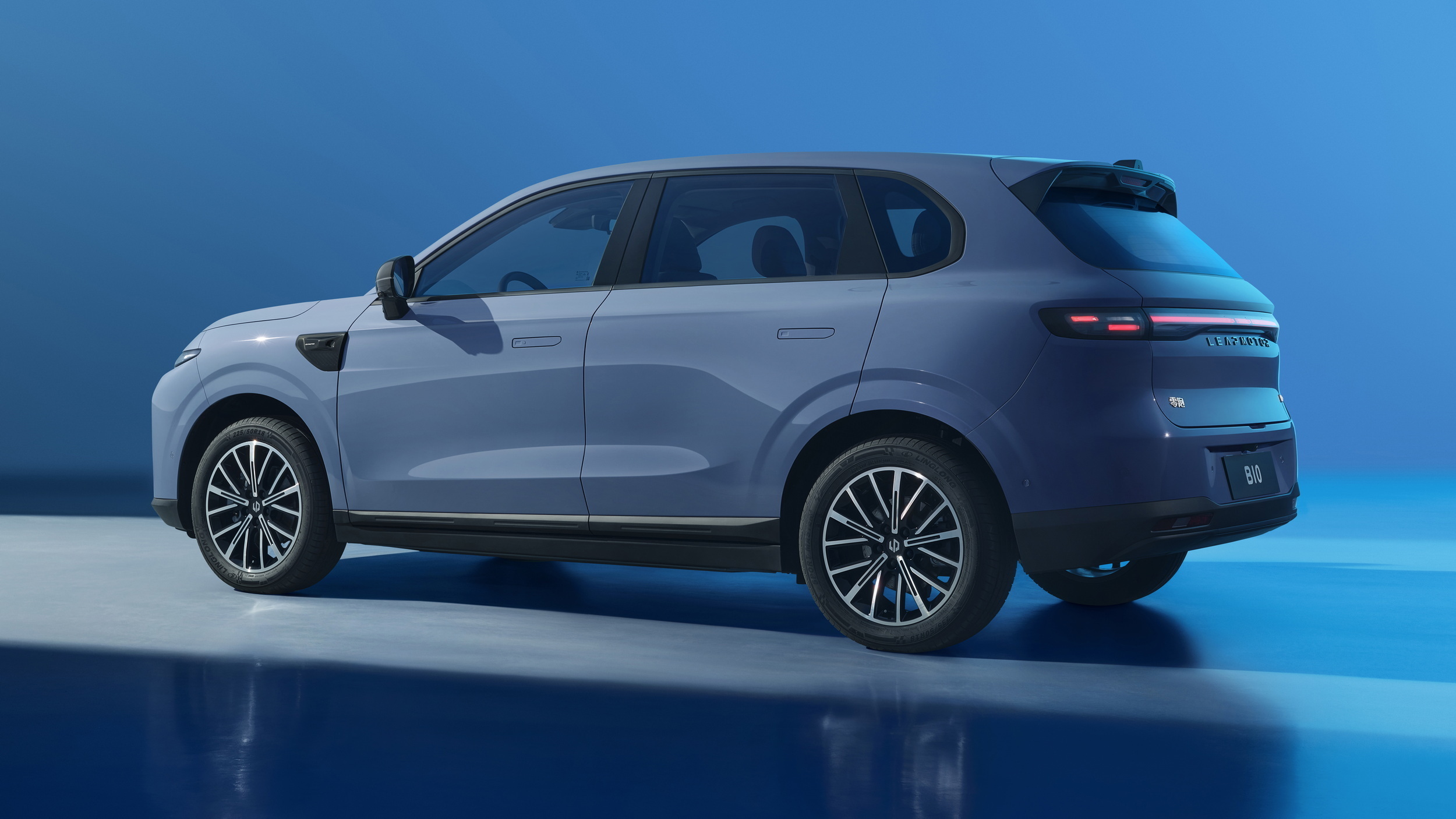
  • A new Opel EV may be built at a Spain plant alongside the Leapmotor B10 model.
  • Leapmotor is expected to supply key electrical and electronic parts to Stellantis.
  • Stellantis aims to deepen its ties after buying a 20 percent stake in the company.

Facing mounting pressure to cut costs and speed up timelines, Stellantis is looking beyond its own engineering bench. The automaker is reportedly exploring a plan to co-develop a new EV for Opel, and possibly Alfa Romeo too, with Leapmotor, leaning heavily on the Chinese firm’s underlying technologies.

Read: Stellantis’ Plan For Canada Looks Less Like A Car Factory And More Like A Chinese IKEA, Says Official

The move comes as Stellantis recalibrates its EV strategy following a $25 billion writedown tied to scaling back parts of its electric vehicle roadmap.

China-Based Development Plans

Unnamed sources claim that the new Opel could use the same architecture as the Leapmotor B10. Whether it will share the exact same powertrain remains unclear, but Leapmotor is expected to supply key systems, including electrical and electronic components, effectively doing much of the heavy lifting under the skin.

In addition, much of the development work would take place in China, with Opel focusing primarily on exterior design. Reuters reports that discussions between the two companies began late last year, and a deal could be finalized in the coming weeks.

Stellantis acquired a 20 percent stake in Leapmotor in 2023 and has since supported the brand’s international expansion through their joint venture, Leapmotor International. This entity oversees sales and production outside China. If approved, the new Opel SUV would be built at Stellantis’ Zaragoza plant in Spain, which is also set to assemble the Leapmotor B10 starting later this year.

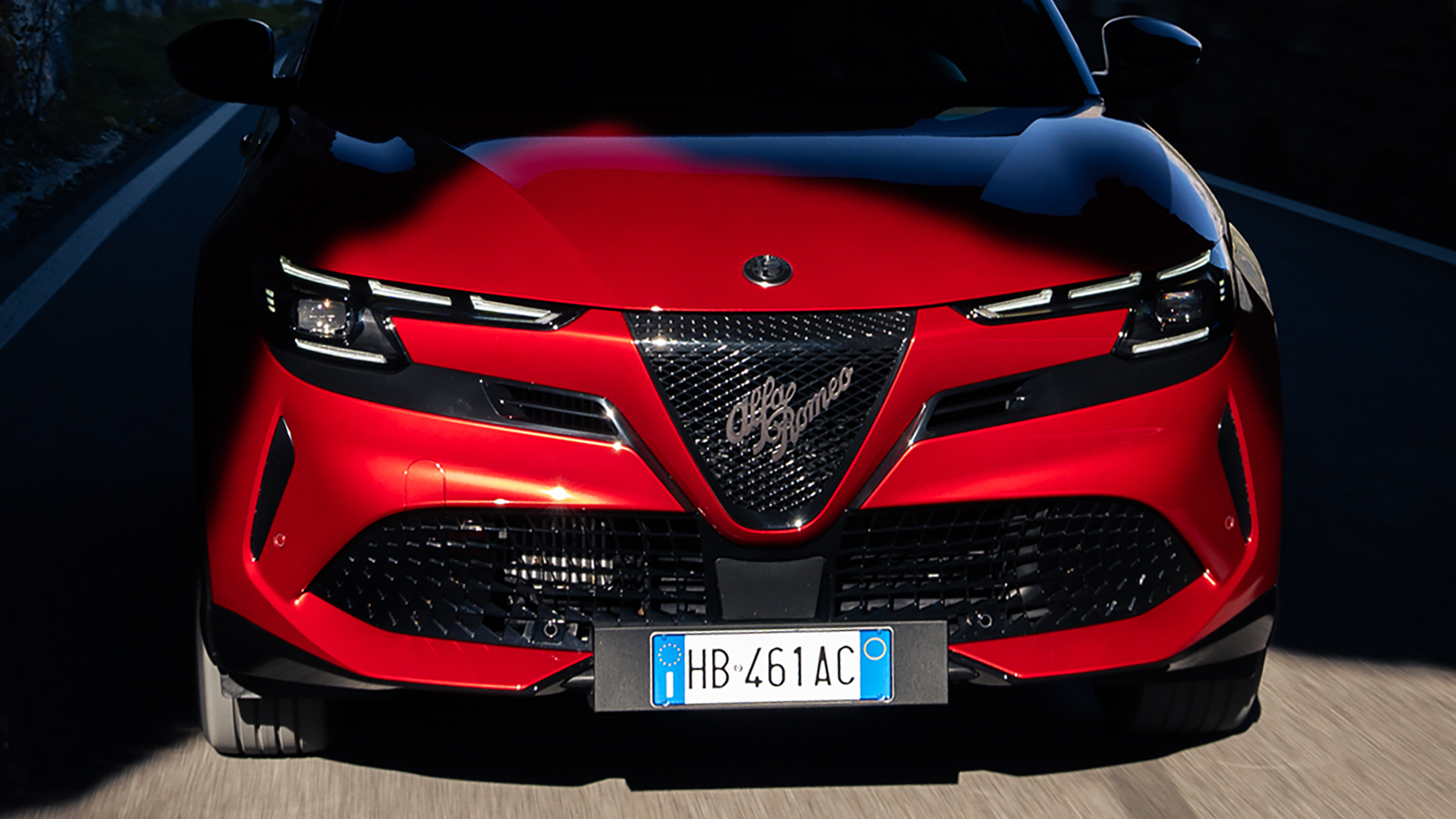
An Alfa Romeo Next?

 Opel And Alfa Romeo’s Next EVs May Be Built Around Chinese Tech, Not German Or Italian

It is understood that the new Opel could enter production in 2028, with annual output targeted at around 50,000 units. Leapmotor has responded cautiously to the reports, noting that it continues discussions with partners, including Stellantis, but has no plans for full platform-level collaboration. Instead, it remains focused on supplying its own in-house components.

The close-knit partnership between Stellantis and Leapmotor may extend beyond a single Opel EV. Early discussions have considered applying Leapmotor’s technology to smaller A-segment models, which would likely require separate production lines. The same report also points to a possible Alfa Romeo model based on the B10 architecture, which could also be produced in Zaragoza.

 Opel And Alfa Romeo’s Next EVs May Be Built Around Chinese Tech, Not German Or Italian

The Chinese Luxury Brand Mercedes Helped Create Is Now Coming For Mercedes’ European Buyers

  • The Z9 GT Shooting Brake makes 1,139 hp in EV guise, hitting 62 mph in 2.7 seconds.
  • A PHEV variant offers 126 miles of electric range and a combined total of 500 miles.
  • BYD plans 3,000 European charging stations within 12 months alongside the launch.

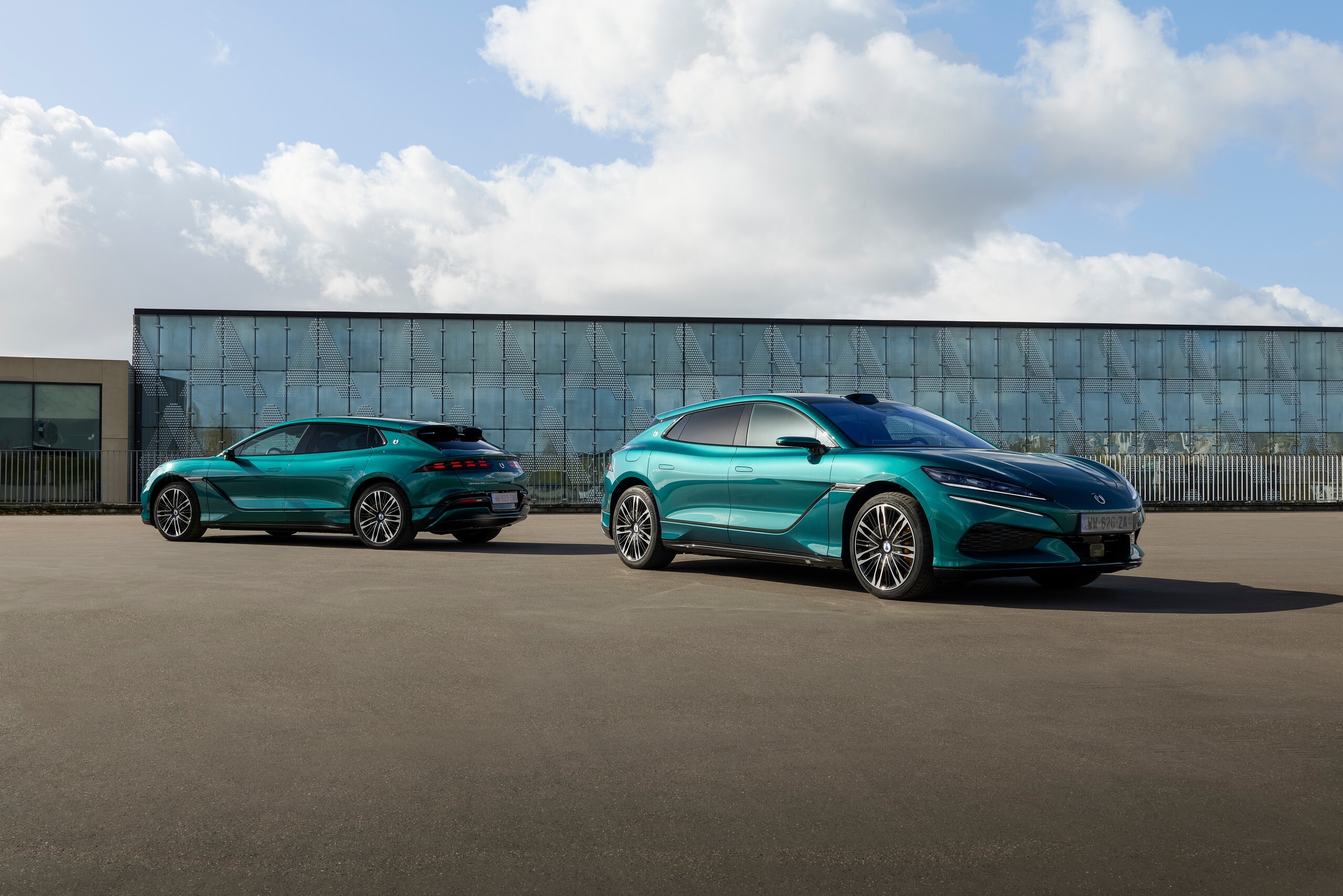
BYD isn’t content with its core brand competing against the world’s biggest carmakers. It has now launched its premium Denza brand in Europe. There’s a certain irony here, as Denza was originally created as a joint venture between BYD and Mercedes-Benz owner Daimler, blending Chinese EV expertise with German premium know-how. It was established in 2010 before Mercedes-Benz gradually stepped back and exited entirely in 2024.

The rollout begins in Germany, France, Italy, Spain, and the UK, with two key models leading the way. By the end of 2026, Denza is expected to be present in 30 countries across the continent.

Also: BYD Says Five-Minute Charging Adds 310 Miles, BMW Says Read The Fine Print

Those opening acts are the D9 DM-i minivan and the Z9GT Shooting Brake. The D9 leans on a plug-in hybrid setup, while the Z9GT gives buyers a choice between full electric and plug-in hybrid power. Their arrival also lines up with BYD’s wider push to roll out its Flash Charging system internationally. Over the next 12 months, the company aims to install 3,000 charging stations across Europe, with another 3,000 planned for markets beyond China.

 The Chinese Luxury Brand Mercedes Helped Create Is Now Coming For Mercedes’ European Buyers

Denza has already been selling the Z9GT Shooting Brake in China for quite some time, and it’s one of the country’s most intriguing family cars. Based on the firm’s e3 Platform, the all-electric model uses a sizeable 122.49 kWh battery pack, a front motor with 308 hp (230 kW) and 302 lb-ft (410 Nm) of torque, as well as two 416 hp (310 kW) and 295 lb-ft (400 Nm) motors at the rear axle, giving it a combined 1,139 hp (850 kW) and 892 lb-ft (1,210 Nm) of torque.

Read: BYD’s Premium Z Sports Car Is Gunning Straight For Porsche’s Pride

The sprint to 62 mph (100 km/h) is dealt with in just 2.7 seconds, and the top speed is 167 mph (269 km/h), more than enough for high-speed cruising on the German Autobahn. The EV has a quoted WLTP driving range of 372 miles (599 km), and thanks to BYD’s 1,500 kW Flash Charging system, it charges from 10-70 percent in five minutes and 10-97 percent in nine minutes.

A High-Powered Plug-In

\\\\\

The plug-in hybrid version uses a 2.0-liter turbocharged four-cylinder engine producing 170 hp (127 kW) and 236 lb-ft (320 Nm), along with a 268 hp (200 kW) front motor and two 248 hp (185 kW) rear motors producing 266 lb-ft (360 Nm) each, resulting in a combined output of 765 hp (570 kW) and 763 lb-ft (1,035 Nm).

More: BYD Boss Brags Z9 GT Is ‘Ten Times Better’ Than Premium Euro Rivals

It also features a sizeable 63.82 kWh battery and can travel 126 miles (203 km) on all-electric power, or 500 miles (805 km) when combined with the engine. It needs just 3.6 seconds to hit 62 mph (100 km/h) and tops out at 161 mph (259 km/h).

Both versions come standard with carbon ceramic brakes and include rear-wheel steering. They also included BYD’s advanced DiSUS-A dual-chamber air suspension system and can tow up to 2,000 kg (4,409 lbs). A rear-wheel-drive-only version of the electric Z9 GT will launch later this year, boasting greater driving range.

\\\

The D9 DM-i minivan features a plug-in hybrid, all-wheel-drive powertrain delivering up to 130 miles (209 km) of electric-only range and a combined range of 590 miles (950 km). It also supports BYD’s Flash Charging technology.

Market-specific pricing for the new Denza models has yet to be announced, though details are expected to follow shortly.

\\\\\\\\\\\\\

Denza Lands In Europe To Shake Up The EV Segment

  • The Z9GT Shooting Brake churns out a massive 1,139 hp in EV guise.
  • A plug-in hybrid version with a 63.82 kWh battery is also offered.
  • Joining the sleek Z9GT Shooting Brake is Denza’s D9 DM-i minivan.

Not satisfied with its namesake brand expanding worldwide and rivaling some of the world’s largest car manufacturers, BYD has officially launched its premium Denza brand in Europe. Bringing with it two compelling models, the firm is initially launching in Germany, France, Italy, Spain, and the UK, but by the end of 2026, it will be present in 30 countries across the continent.

The two models launched are the D9 DM-i minivan and the Z9GT Shooting Brake. The D9 is a plug-in hybrid, while the Z9GT is offered in all-electric and plug-in hybrid guises, and the launch of both models coincides with BYD’s planned international rollout of its new Flash Charging system. Within the next 12 months, it plans to establish 3,000 stations in Europe and 3,000 others in markets outside of China.

Read: BYD’s Premium Z Sports Car Is Gunning Straight For Porsche’s Pride

Denza has already been selling the Z9GT Shooting Brake in China for quite some time, and it’s one of the country’s most intriguing family cars. Based on the firm’s e3 Platform, the all-electric model uses a sizeable 122.49 kWh battery pack, a front motor with 308 hp (230 kW) and 302 lb-ft (410 Nm) of torque, as well as two 416 hp (310 kW) and 295 lb-ft (400 Nm) motors at the rear axle, giving it a combined 1,139 hp (850 kW) and 892 lb-ft (1,210 Nm) of torque.

The sprint to 62 mph (100 km/h) is dealt with in just 2.7 seconds, and the top speed is 167 mph (269 km/h), more than enough for high-speed cruising on the German Autobahn. The EV has a quoted WLTP driving range of 372 miles (599 km), and thanks to BYD’s 1,500 kW Flash Charging system, it charges from 10-70 percent in five minutes and 10-97 percent in nine minutes.

A High-Powered Plug-In

\\\\\

The plug-in hybrid version uses a 2.0-liter turbocharged four-cylinder engine producing 170 hp (127 kW) and 236 lb-ft (320 Nm), along with a 268 hp (200 kW) front motor and two 248 hp (185 kW) rear motors producing 266 lb-ft (360 Nm) each, resulting in a combined output of 765 hp (570 kW) and 763 lb-ft (1,035 Nm). It also features a sizeable 63.82 kWh battery and can travel 126 miles (203 km) on all-electric power, or 500 miles (805 km) when combined with the engine. It needs just 3.6 seconds to hit 62 mph (100 km/h) and tops out at 161 mph (259 km/h).

Both versions come standard with carbon ceramic brakes and include rear-wheel steering. They also included BYD’s advanced DiSUS-A dual-chamber air suspension system and can tow up to 2,000 kg (4,409 lbs). A rear-wheel-drive-only version of the electric Z9 GT will launch later this year, boasting greater driving range.

The D9 DM-i minivan is equipped with a plug-in hybrid, all-wheel drive powertrain offering 130 miles (209 km) of electric driving range, and a combined driving range of 590 miles (950 km). It also supports BYD’s Flash Charging technology.

Market-specific pricing details for the new Denza models have yet to be announced, but are expected to be confirmed soon.

Denza D9 DM-i
\\\
Denza Z9GT Shooting Brake
\\\\\\\\\\\\\

Germany’s EV Market Was In Freefall A Year Ago, Now EVs Are Outselling Gas Cars

  • New EVs are now out-selling petrol-powered cars in the country.
  • On January 1, Germany reintroduced subsidies for electric cars.
  • Sales of hybrid and plug-in hybrid models are also on the rise.

It hasn’t taken long for the EV pendulum to swing back in Germany. Less than a year after Europe’s biggest car market pulled the plug on EV subsidies and watched demand stumble, fresh incentives have stepped in and buyers are piling back in like the discount aisle just reopened.

Despite economic jitters tied to trade tensions and the war in Iran, Germany’s car market picked up pace in March, with registrations rising 16 percent compared to the previous month. A total of 294,161 vehicles were registered, and a striking 24 percent of them were battery-electric. That translates to 70,663 EVs sold during the month.

Read: EV Buyers Just Got A Huge Break In Germany That Lasts Ten Years

This surge has pushed EVs ahead of both petrol and diesel models, which now account for 22.8 percent and 12.8 percent of the market, respectively.

This represents a significant 66.2 percent increase over the 42,521 sold in March of last year. Year-to-date, a total of 159,630 BEVs have been sold, up 41.3 percent from the 112,968 sold across the January-March period in 2025.

Hybrids Join The Party

 Germany’s EV Market Was In Freefall A Year Ago, Now EVs Are Outselling Gas Cars

It’s not just EVs that have surged in popularity this year. Sales of hybrid models, including plug-in hybrids, climbed 16.2 percent in March to 117,845 units. First-quarter figures are up as well, rising 10.4 percent to 282,600 units. Hybrids now account for 40.1 percent of all new car registrations in the country.

Several brands contributed to the surge in electrified vehicle sales. For example, BYD sold 3,438 vehicles in March, up 327.1 percent from the year prior. Sales from Leapmotor also rose 318.1 percent to 1,388, and Tesla sales climbed 315.1 percent to 9,252 units. This year, 12,829 new Tesla models have been sold in Germany, up 160 percent from the same period last year.

Among established brands, Opel (+43.0%), Audi (+25.0%), and BMW (+16.5%) posted strong gains in March, while Skoda reached an 8.4 percent market share, making it the top import brand.

As of January 1, new electric vehicles registered in Germany are exempt from motor vehicle tax until December 31, 2035. Additionally, EVs are eligible for a base subsidy of €3,000 ($3,500) and up to €6,000 ($7,000) for lower-income households. Similarities, plug-in hybrids, and extended-range EVs can receive subsidies of up to €4,500 ($5,200).

Overall registrations for the first quarter of the year rose by 5.2 percent compared to the same period last year.

Germany Car Sales March 2026
BrandMar-26Market
Share
Mar-26
Diff. vs
Mar-25
Jan-Mar
26
Market
Share
YTD-26
Diff. vs
YTD-25
ALFA ROMEO5270.2-26.11,3520.2-30.1
ALPINE1240138.53660.1145.6
ASTON MARTIN6801420
AUDI22,0137.52551,5867.47.1
BENTLEY520131240-24.4
BMW24,3088.316.558,5478.48.1
BYD3,4381,2327.19,1201.3644.5
CADILLAC9050180-35.7
CITROEN4,9631.712.113,0551.912
DACIA6,5522.2-5.213,7702-21.1
DAF TRUCKS1020
DEEPAL80210
DS1930.1-45.34550.1-60.3
FERRARI1890.10.54210.1-8.3
FIAT6,5482.22917,0312.465.6
FORD9,5113.28.723,9053.4-7.4
GWM1830.136.63300-42.5
HONDA1,2700.4262,1920.310.3
HYUNDAI10,2733.529.523,7063.416.5
INEOS240-38.58601.2
IVECO127033.7271015.8
JAC1010
JAECOO80100
JEEP1,3110.48.52,8430.4-14.3
KGM3010.122.96400.1-20.7
KIA6,1722.133.314,3762.13.5
LADA20
LAMBORGHINI1350-17.23380-8.6
LAND ROVER1,6780.635.13,8010.514
LEAPMOTOR1,3880.5318.13,1680.5370.7
LEXUS3020.1-227940.1-26.5
LOTUS38018.8780-20.4
LUCID170142.9350
LYNK & CO13602640633.3
MAN880-47.63120-14.3
MASERATI450-44.41070-28.2
MAXUS10-92.330-86.4
MAZDA6,7522.327.612,8301.820.8
MERCEDES23,7108.17.559,0958.4-2.4
MG ROEWE2,5590.921.96,1770.912.3
MINI3,5401,242.39,1341.336.3
MITSUBISHI1,3770.5-233,0570.4-40.3
MORGAN16045.522015.8
NIO20-90.580-87.5
NISSAN4,2061.4-149,0781.3-3.2
OMODA1010
OPEL13,6974.74333,5644.838.9
PEUGEOT6,2192.13.515,4282.2-0.9
POLESTAR4560.227.71,2840.250.2
PORSCHE2,8351-12.18,3601,25
RENAULT6,1952.1413,3921.9-3.7
ROLLS ROYCE270-15.6750-25.7
SEAT16,3605.6-4.937,4435.4-14.6
SKODA24,8548.43462,4388.924.6
SMART6950.2189.61,5170.250
SUBARU3310.1-27.97950.1-26.5
SUZUKI2,7620.93.96,1900.91.5
TESLA9,2523.1315.112,8291.8160
TOGG330X950X
TOYOTA7,2832.5-1.415,7062.2-14.9
VINFAST17088.961010.9
VOLVO4,6521.6-10.412,6011.8-22.4
VW52,55617.93.2131,01218.7-5.3
XPENG5490.2211.91,2070.2179.4
ZEEKR80300
OTHER1,2150.47.92,7030.4
TOTAL294,161100%16%699,404100%5%
SWIPE
 Germany’s EV Market Was In Freefall A Year Ago, Now EVs Are Outselling Gas Cars

China Is Blocked From Selling Cars In America, Yet Three Democratic Senators Still Sent This Letter

  • Lawmakers oppose Chinese automakers building factories in the US.
  • Trump has expressed support for foreign firms investing locally.
  • China accuses the US of blocking fair access to its auto market.

While President Donald Trump has shown an unexpected openness to Chinese automakers building cars in the United States, three senators from the other side of the political spectrum have now joined Republican voices pushing to ensure that never happens.

Late last week, Democratic Senators Tammy Baldwin, Elissa Slotkin, and Chuck Schumer urged the administration not to allow Chinese car companies to manufacture vehicles locally, noting this could severely harm American companies. China is none too pleased and has accused the US of engaging in “trade protectionism.”

Read: US Senator Calls Chinese Cars “Cancer,” Wants Permanent Ban

“We must be clear-eyed that inviting China’s automakers to set up shop in the ⁠United States would confer an insurmountable economic advantage impossible for American automakers to overcome, and it would trigger a national security ​crisis that could never be reversed,” the senators wrote in a letter to Trump, first reported by Reuters.

 China Is Blocked From Selling Cars In America, Yet Three Democratic Senators Still Sent This Letter

They sent the letter to President Donald Trump following comments he made in January. Speaking at the Detroit Economic Club, Trump said that “if they [Chinese companies] want to come in and build a plant and hire you and hire your friends and your neighbors, that’s great, I love that.”

Responding to Reuters about the letter from Baldwin, Slotkin, and Schumer, the White House said that “while the administration is always working to secure more investment into America’s industrial resurgence, any notion that we would ever compromise our national security to do so is baseless and false.”

China’s Not Happy

Chinese car companies have effectively been banned from selling vehicles in the United States due to policies enacted by the Biden administration in early 2025. However, it appears the Trump administration is more open to Chinese companies coming to the US than ex-President Joe Biden was, particularly if it can help to reverse the trend of ongoing job losses in the manufacturing sector.

According to the Chinese Embassy in Washington, the US has “engaged in trade protectionism and set up obstacles, including discriminatory ⁠subsidy policies ​to obstruct access to the U.S. market by Chinese-made cars.”

 China Is Blocked From Selling Cars In America, Yet Three Democratic Senators Still Sent This Letter

Rivian’s R2 Performance Just Out-Ranged The Tesla Model Y, And It Weighs Nearly 800 lbs More

  • The R2 Performance will have an EPA range of up to 335 miles.
  • By comparison, the Tesla Model Y Performance has a 306-mile range.
  • The R2’s dual electric motors offer a combined 656 hp and 609 lb-ft.

We already had a solid picture of the new Rivian R2, but fresh EPA testing data fills in a few remaining gaps. Positioned below the R1S in price yet still focused on performance and practicality, the all-electric R2 is shaping up to be a crucial model for the brand.

According to internal reports shared on the Rivian Forums, the range-topping Performance variant will use an 86.8 kWh usable battery pack and come with a choice of 20-inch or 21-inch wheels. Wheel and tire setup makes a noticeable difference. Models fitted with 20-inch wheels and all-terrain rubber are rated at up to 314 miles (505 km), while versions on 21-inch, road-focused tires stretch that to 335 miles (539 km).

Read: Rivian’s Most Affordable Model Arrives First In Its Most Expensive Form

While the R2 looks quite boxy, it has a better range than the Tesla Model Y Performance, which comes with an EPA-estimated range of 306 miles (492 km). The Tesla, however, is significantly lighter, weighing 4,466 lbs (2,025 kg), making it 784 lbs (356 kg) lighter than the R2 Performance at 5,250 lbs (2,381 kg) when equipped with 21-inch wheels.

\\\\\\

The published documents also reveal that Rivian has developed a proprietary heat pump for the R2, aimed at improving cabin cooling in hot weather while reducing NVH levels. It should also perform better in cold climates, thanks to a high-voltage coolant heater. The R2 will also feature an integrated battery health monitoring system.

There’s More To Come

The only R2 variant referenced in the EPA tests is the $57,990 Performance, which will be the first to launch. Later this year, Rivian plans to introduce the more affordable R2 Premium, starting at $53,990. It’s expected to produce 450 hp and 537 lb-ft (727 Nm), compared to the Performance model’s 656 hp and 609 lb-ft (825 Nm). There’s no official range estimate yet, though it should exceed that of the R2 Performance.

A more accessible R2 Standard is also scheduled for 2027. It will deliver 350 hp and 355 lb-ft (481 Nm), with early estimates pointing to a 345-mile (555 km) range. The lineup is expected to be completed in late 2027 with an entry-level R2 featuring a smaller battery, believed to offer around 275 miles (443 km) of range.

\\\\\\\\\\\\\\\\

Photos Rivian

VW Spent Decades Selling Germans What China Wanted. Now China’s Selling VW What It Needs

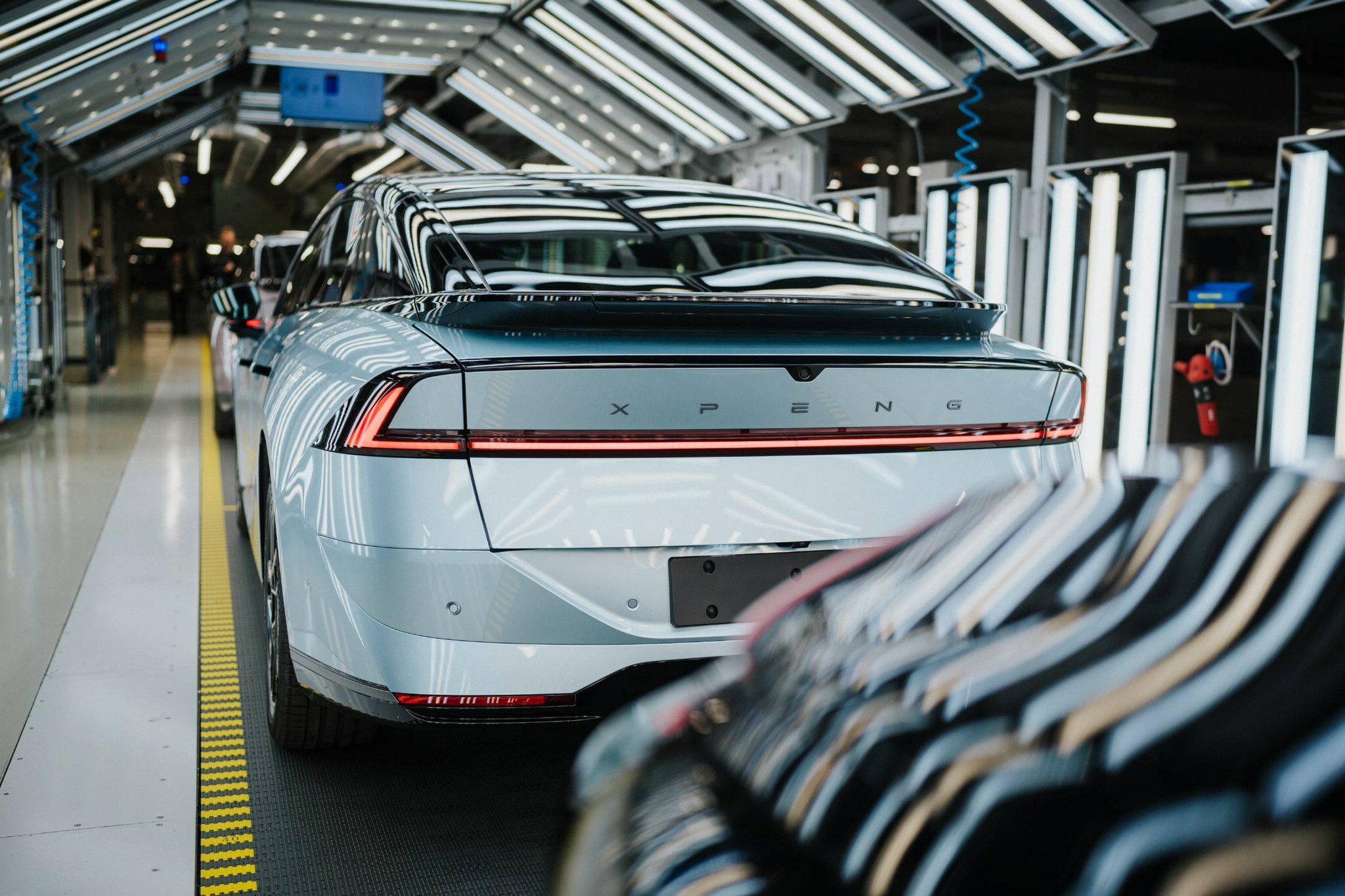
  • The new electric SUV uses VW and Xpeng’s advanced CEA architecture.
  • A high-tech driver assistance system will come standard on the new model.
  • VW is also working on Chinese EVs with its other local joint venture partners.

Volkswagen is working on yet another addition to its burgeoning range of electric cars sold in China. Whereas the brand’s range of EVs offered in Western markets is starting to feel a little old, some of its Chinese models appear to be up to the task of rivaling local brands.

Its latest model is being brought to life through the FAW-Volkswagen joint venture, rather than the Volkswagen Anhui partnership with JAC, which is responsible for the new ID. Unyx 08. Photos published online by VW show its next Chinese EV will be a large SUV sitting above the Unyx.

Read: VW’s New Compact Sedan Costs Less Than Half What Americans Pay For A Jetta

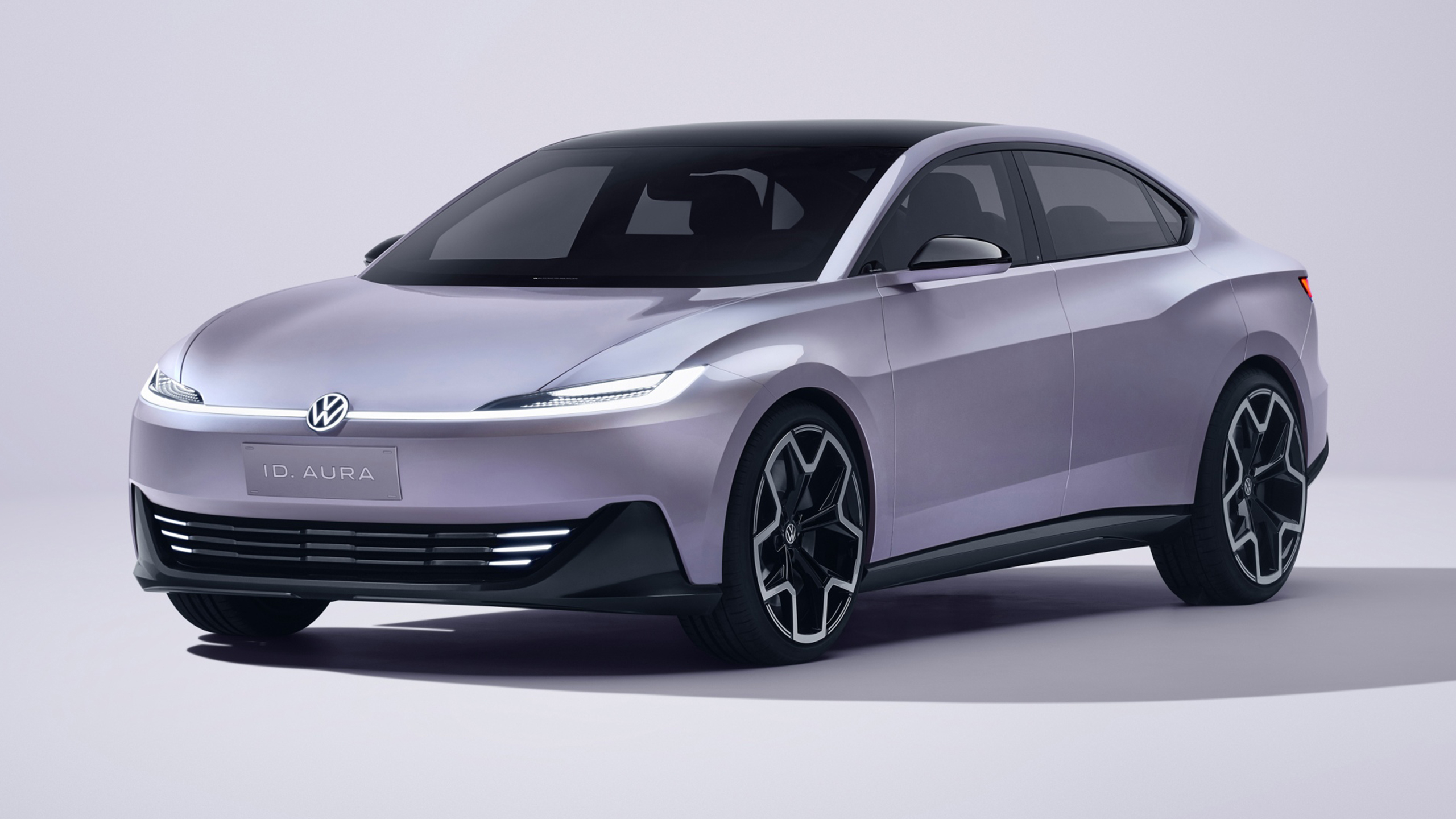
A final name for the model has yet to be confirmed, but we know this SUV will form part of VW’s ID.Aura family, previewed last year with a sleek, low-slung sedan. Like the ID. Unyx 08, it’s reported that this model is based on the CEA architecture that VW has co-developed with Xpeng, complete with 800-volt tech.

Advanced Driving Tech

\\\\

These images indicate the first ID.Aura model will be slightly more conventional in its shape than the Unyx. We can see it will have a split-headlight design and a front fascia that sits quite upright. Other notable elements of the design include bulging fenders and a LiDAR unit positioned above the windshield.

Elsewhere, this prototype can be seen sporting roof rails, a sunroof or panoramic glass roof, and a fairly traditional-looking tailgate. Small parts of the LED taillights are also visible.

It’s understood that the first model from the ID.Aura family will use an advanced driver assistant system developed by VW and Horizon Robotics, known as Carizon. Limited other details about it are known, including what powertrain it will have, what charging speeds it will support, and what kind of driving range will be on offer.

 VW Spent Decades Selling Germans What China Wanted. Now China’s Selling VW What It Needs
VW ID.Aura sedan concept

Jaguar Wants To Rival Bentley, But GT’s Cabin Goes In A Different Direction Entirely

  • The Jaguar GT has been fitted with a very unusual steering wheel.
  • A curved display has been perched on top of the car’s dashboard.
  • Jaguar has also added a pair of rather unusual steering wheel stalks.

Jaguar’s controversial EV is edging closer to a September reveal, and while its exterior remains concealed under camouflage, the company has now offered a first look inside. It marks a clear departure from anything the brand has produced before. As expected, the cabin design doesn’t follow familiar Jaguar themes.

As development enters its final phase, Jaguar recently invited a small group of journalists and social creators to get behind the wheel of the EV, currently referred to as the GT, though the final name has yet to be confiremd. The exterior is expected to closely mirror the divisive Type 00 Concept, though the production car has evolved from a two-door coupe into a four-door sedan.

Read: Jaguar Benchmarked Its Electric GT Against One Classic Above All Others

With the exterior leaning heavily on straight lines and sharp edges, the interior was always going to follow suit. These photos confirm it, revealing an all-new steering wheel that looks like it could have rolled straight out of a 1970s or 1980s concept car. It features thick horizontal spokes, each packed with large touch-sensitive surfaces handling a wide range of functions.

Stalks, But Not Normal Stalks

It’s hard to say with certainty, but it appears these could be touch-sensitive or haptic-style buttons, rather than physical ones, which is a shame but a sign of the times. Positioned on the left are controls for making calls and the car’s voice function, while the cruise control settings appear on the right. The airbag module also sits lower than normal.

Positioned behind the steering wheel are two large stalks, also with a squared-off design. The one on the left appears to control the lights, turn signals, and windshield wipers, while the right stalk houses Reverse, Neutral, Drive, and Park. While Jaguar wants to rival Bentley, the dash appears quite minimal, with a large, curved infotainment screen and gauge cluster, free of any physical dials.

What About Performance?

Beyond the cabin, we know Jaguar’s new GT is based on the company’s Electric Architecture and tips the scales at about 2,700 kg (5,962 lbs). To help somewhat offset that weight, it’ll be fitted with three electric motors delivering more than 986 hp and 959 lb-ft (1,300 Nm) of torque.

As for driving impressions, Andrew Frankel from The Intercooler notes that it doesn’t offer the same kind of bonkers performance as a Tesla Model S Plaid and has been configured for smooth, progressive performance.

\\\\\\\\\\\\\

Photos Jaguar, Lead Image SidewalkHustle/Instagram

AMG’s Drift Mode Survives Into The Electric Era, With A New Way Of Working

  • The new GT 4-Door will be equipped with three axial-flux electric motors.
  • Mercedes-AMG has developed an advanced air suspension for the sedan.
  • An Agility Control system can significantly alter the car’s handling balance.

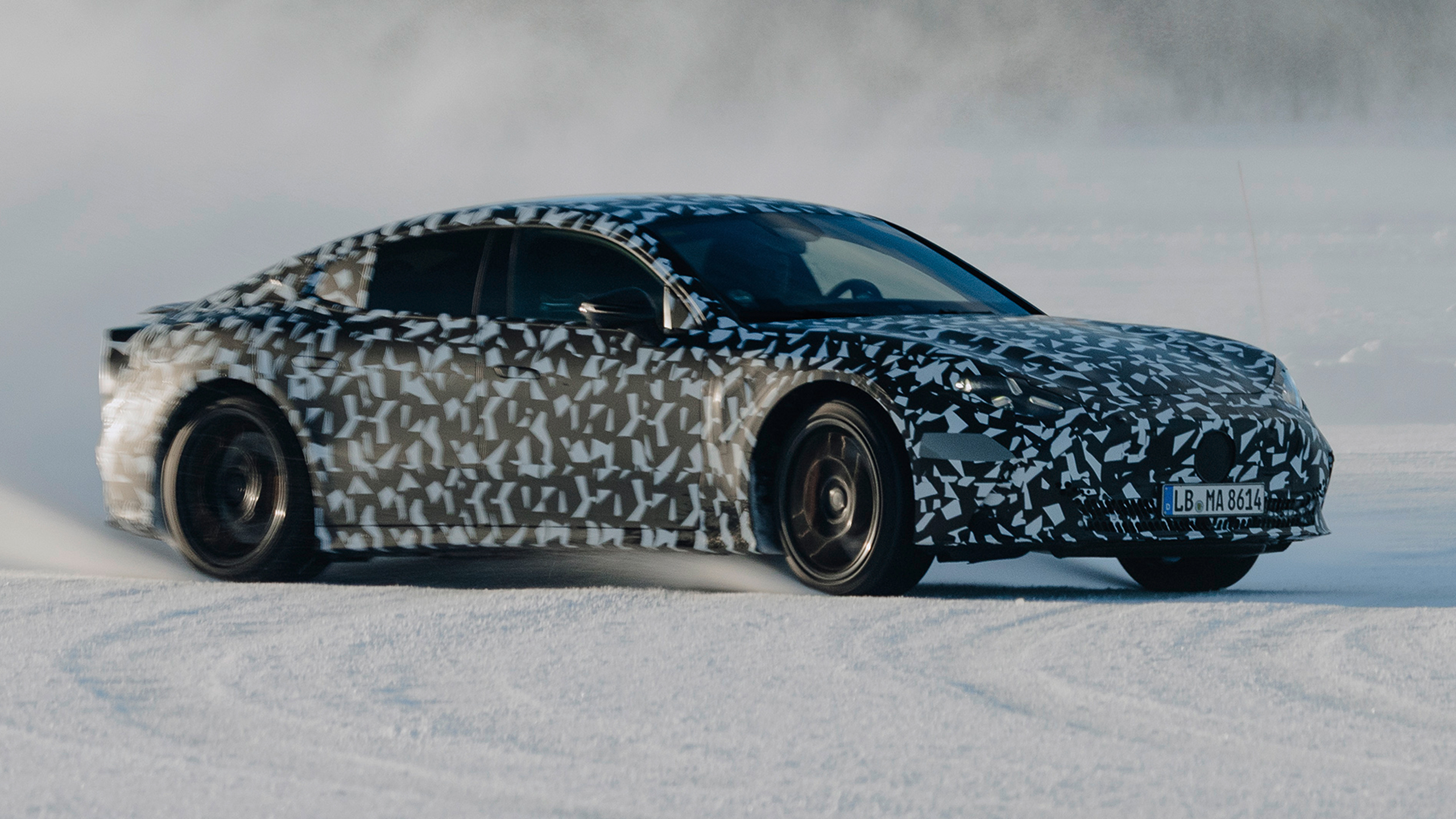
The build-up to the release of the all-electric Mercedes-AMG GT 4-Door has been painfully slow, but it’s inching closer to the market, recently finishing up winter testing in Northern Europe. Along the way, a handful of fresh details have surfaced, offering a better sense of how far Mercedes is willing to go to make this feel like a proper AMG, or at least convince you it is.

While Mercedes-AMG has yet to confirm the final power output for the production sedan ahead of its spring launch, the concept has already shown it can deliver up to 1,341 hp. AMG has confirmed the car will use three advanced axial-flux electric motors, enabling configurable rear-wheel-drive and all-wheel-drive setups. At the center of it all is a complex driving-dynamics control system, managed through three settings: Response, Agility, and Traction.

Read: Drivers Want More Buttons, So Mercedes-AMG’s New Super Sedan Removes Most Of Them

The Response Control system tweaks the behavior of the electric motors depending on different accelerator pedal commands and individual driving modes. The Agility Control system focuses specifically on tweaking the cornering behavior of the car, adjusting the power distribution on the fly to give the car the feeling of having a shorter or a longer wheelbase and varying from slight understeer to controlled oversteer. So while the car will be electric, you’ll still be able to drift it.

Can It Be A Fun EV?

 AMG’s Drift Mode Survives Into The Electric Era, With A New Way Of Working

Traction control goes unusually deep, offering nine selectable levels, similar to setups used in the previous-generation AMG GT R and AMG GT Black Series.

Mercedes-AMG has also confirmed a somewhat unconventional braking setup, pairing carbon-ceramic discs at the front with steel units at the rear. Then there’s the suspension system, which appears particularly advanced, and it better be with all that power at hand. After all, the suspension systems in the Porsche Taycan and Audi e-tron GT are already highly sophisticated, so AMG needs something that can genuinely keep pace.

\\\\\\\\\\\

The setup includes adjustable air springs paired with semi-active roll bars and configurable dampers. In theory, it should deliver a broad range of ability, smoothing out rough roads while still tightening everything up when the pace increases. AMG claims it will balance comfort and cornering precision, whether you’re commuting or pushing harder on track.

Advanced Battery Cooling System

Of course, no EV would be complete without some trick technology on the battery side of things. The cells of the AMG GT 4-Door are directly cooled and include a non-conductive oil that flows around each individual cell to maintain an optimal temperature regardless of the conditions. This should mean it’ll perform for lap after lap on a track, or while plowing through snow, and crossing deserts.

That’s all Mercedes is prepared to share for now, but more details should arrive in the coming weeks. Expect a clearer look at the final design, along with confirmed powertrain options. As for pricing, don’t expect any surprises in your favor. The current gas-powered model spans from $102,000 to $200,500, and this next chapter will almost certainly push beyond that range.

\\\\

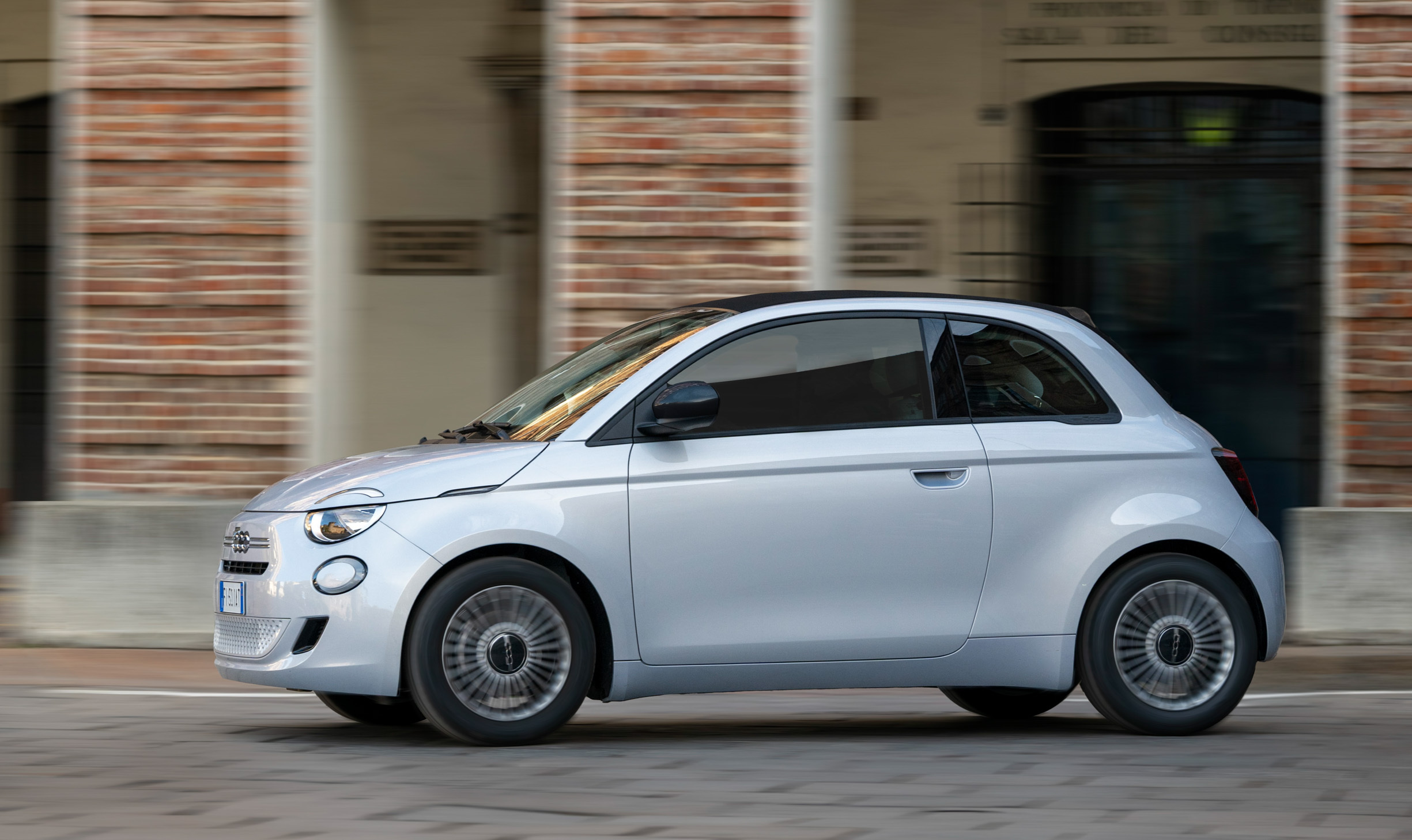
Fiat Sold Nearly 20 Times More 500e EVs in Canada Than In The US

  • Demand for the Fiat 500e has increased significantly over the last year.
  • Fiat’s electric 500 city car is much cheaper in Canada than in the US.
  • Total sales for Stellantis rose 15 percent in Canada in the first quarter.

Americans don’t seem particularly fond of new Fiat models, and the numbers make that pretty clear. The Italian brand sold just 155 vehicles in the US during the first quarter of 2025, down 70 percent from a year earlier, or roughly 1.75 cars per day. Across the border in Canada, however, the story takes a different turn.

While Fiat struggles with near nonexistent demand in the US, where 500e sales have plunged 85 percent to just 68 units and 500X deliveries slipped 4 percent to 71, the story looks very different north of the border. In Canada, sales of the tiny EV have surged.

Read: Stellantis Wants To Build Chinese Cars In Canada Instead Of The Jeeps It Promised

During the January–March period, Canadians buyers snapped up 1,287 examples of the electric 500e, the only model Fiat currently sells there. That’s 19 times more than it managed in the US, and a 72 percent jump from the 749 units sold in Q1 2025. It also works out to more than eight times Fiat’s total US sales over the same stretch.

 Fiat Sold Nearly 20 Times More 500e EVs in Canada Than In The US

No doubt contributing to the higher popularity of the 500e in Canada than in America is that it’s much cheaper. In the States, prices for the 500e start at $30,500, which is only about $5,000 less than a new Chevrolet Equinox EV that’s much larger, much more practical, and has more than double the driving range.

In Canada, the Fiat 500e starts at CA$30,290 (US$21,700 at current exchange rates), or effectively CA$25,290 (US$18,100), once a CA$5,000 (US$3,600) incentive from the country’s Electric Vehicle Affordability Program is applied. That makes it the cheapest EV on sale in Canada.

Some Stellantis Models Shine, Others Don’t

 Fiat Sold Nearly 20 Times More 500e EVs in Canada Than In The US

Fiat wasn’t the only brand from under the Stellantis umbrella to post gains in Q1 2026. Sales at Jeep rose 3 percent from 8,363 to 8,631, while Ram spiked 7 percent, hitting 12,463 units. Chrysler recorded the largest increase, with sales jumping 98 percent to 5,073, driven by a 256 percent surge in Pacifica demand.

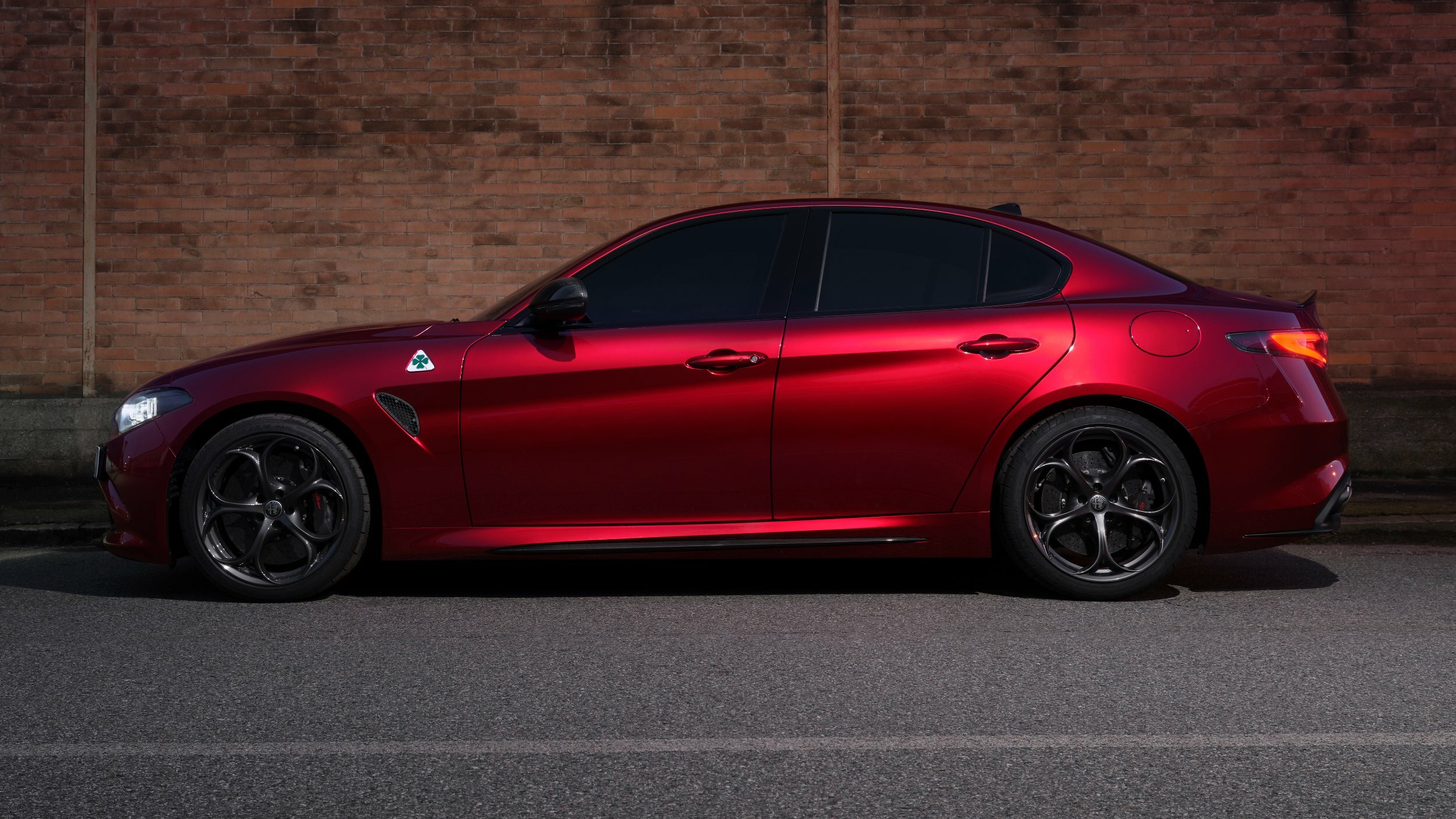
Things weren’t so pretty for Dodge as its sales fell 4 percent to 2,743 units. Additionally, Alfa Romeo plummeted by 51 percent to just 81 units, with a measly 15 Giulias, 46 Stelvios, and 20 Tonales finding new homes.

Stellantis Canada Sales

ModelQ1-26Q1-25Diff.
Compass2,0202,327-13%
Wrangler2,5182,821-11%
Gladiator53428389%
Cherokee126-96%
Cherokee (KM)9590NA
Grand Cherokee2,3342,3410%
Renegade03-100%
Wagoneer00NA
Wagoneer S29205-86%
Grand Wagoneer236357-34%
JEEP BRAND8,6318,3633%
Ram P/U11,5459,90317%
ProMaster Van9181,756-48%
ProMaster City00NA
RAM BRAND12,46311,6597%
300022-100%
Chrysler Grand Caravan1,0651,417-25%
Pacifica4,0081,126256%
CHRYSLER BRAND5,0732,56598%
Hornet37551-93%
Charger (LB)21416827%
Charger051-100%
Challenger123-96%
Caravan10NA
Durango2,4902,05121%
DODGE BRAND2,7432,844-4%
50000NA
500E1,28774972%
500X08-100%
FIAT BRAND1,28775770%
Giulia1521-29%
Stelvio4671-35%
Tonale2074-73%
ALFA BRAND81166-51%
TOTAL FCA CANADA30,27826,35415%
SWIPE

The Gap Between What Tesla Built And What It Sold Just Broke A Company Record

  • Tesla grew Q1 deliveries year over year, but missed analyst expectations.
  • Production outpaced sales, creating the largest inventory gap in years.
  • Shares dropped more than 4 percent after the company’s delivery report.

Tesla’s global sales edged up in the first quarter of 2026, but that did little to calm investors. Despite the increase, the company’s production and delivery figures sent shares down more than 5 percent on Thursday, marking their sharpest drop of the year. The stock is now down about 20 percent in 2026.

Read: Tesla’s Sales Collapsed By Nearly 90% In The Land Of EVs

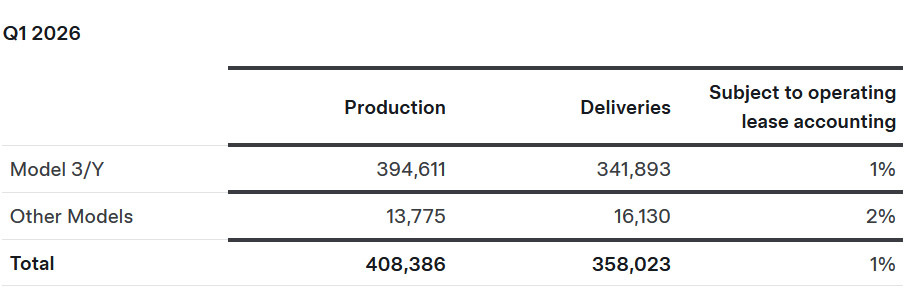
In total, Tesla sold 358,023 vehicles worldwide in Q1 2026. That marks a 6 percent increase over the same quarter last year, when it delivered 336,681 vehicles. The bigger contrast comes against the previous quarter. Deliveries are down 14.3 percent from the 418,227 vehicles handed over in Q4 2025.

US Sales Range Estimates

The company has not released a detailed breakdown for the US, but estimates from Autonews and Cox Automotive put first-quarter deliveries somewhere between 110,000 and 122,196 units. That range points to a decline of roughly 4.6 percent to 15 percent in its home market, depending on where the final number lands.

According to Morningstar analyst Seth Goldstein, there are two key reasons to explain why sales fell.

“Tesla’s first-quarter deliveries reflect the U.S. tax credit expiration as well as FSD ​not yet being approved in the EU,” he told Reuters. “These factors will likely continue to weigh on deliveries until Tesla gets EU approval and until we enter the fourth quarter in the U.S.”

 The Gap Between What Tesla Built And What It Sold Just Broke A Company Record

As deliveries softened compared to the previous quarter, the gap between vehicles produced and sold widened to its largest level in four years. Tesla ended the quarter with 408,386 vehicles built, leaving a surplus of 50,363 units in inventory.

Data cited by Business Insider shows this is the largest gap between production and deliveries the company has recorded. That stands out for a business that has typically kept supply and demand closely aligned. The closest comparison comes from the same period in 2024, when production exceeded deliveries by around 46,500 vehicles.

Lower Than Analyst Expectations

 The Gap Between What Tesla Built And What It Sold Just Broke A Company Record

The carmaker began to temper expectations for the first quarter last week, publishing a delivery consensus based on estimates from more than a dozen analysts. This suggests Tesla would end the quarter with 365,645 deliveries, but it fell short of that. Separate estimates from StreetAccount had projected around 370,000 deliveries.

The analysts also predicted Tesla would deploy 14.4 GWh worth of energy storage, but it actually delivered just 8.8 GWh of energy storage products. That figure is also down from 10.4 GWh in Q1 2025 and 14.2 GWh in Q4 2025.

As we’ve come to expect, the Model 3 and Model Y account for the bulk of the company’s sales, with 341,893 finding new homes. The remaining 16,130 vehicles delivered included a mix of the Cybertruck, Semi and the now-discontinued Model S and Model X.

\\\\\\
❌
❌