Hyundai Motor Group swept the top three places for battery performance.
The analysis ranked the Model 3 as Tesla’s best-performing vehicle.
Other strong performers include the Volvo XC40 Recharge and Polestar 2.
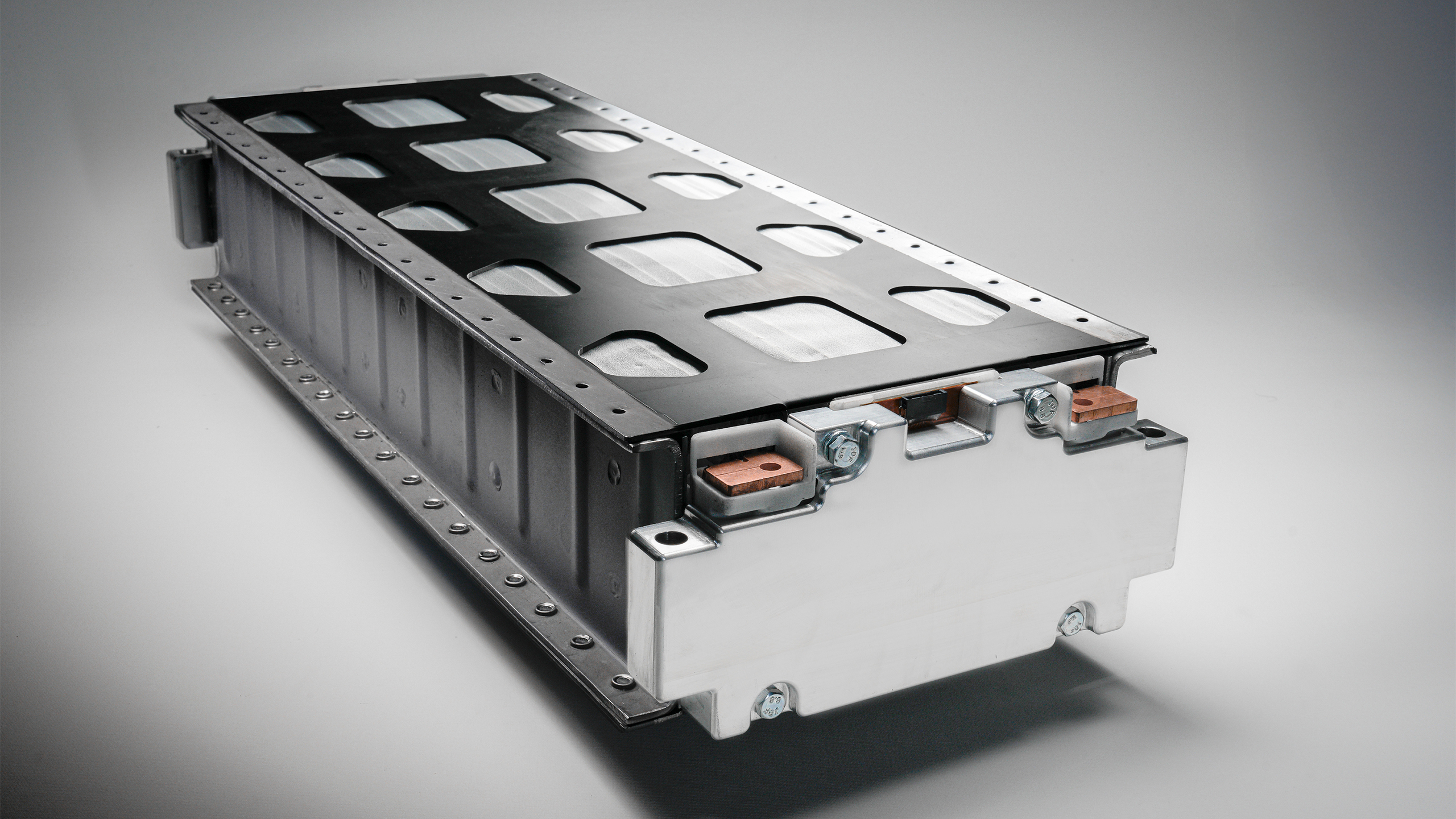
Several years ago, prospective EV buyers had every reason to feel nervous about how long the battery pack would last. Battery technology has come a long way since EVs went mainstream, though, and a new study out of Sweden puts a number on how much capacity new EVs hold onto after 62,000 miles, or 100,000 km, of driving. The results may surprise you.
The study, run by online car marketplace Carla, went through 9,954 battery tests of EVs sold in Sweden between 2022 and 2026, using a diagnostic tool from AVILOO that measures a pack’s true state of health instead of leaning on the estimates the car itself provides. That distinction matters, because in-car readouts can sometimes paint a rosier picture than reality.
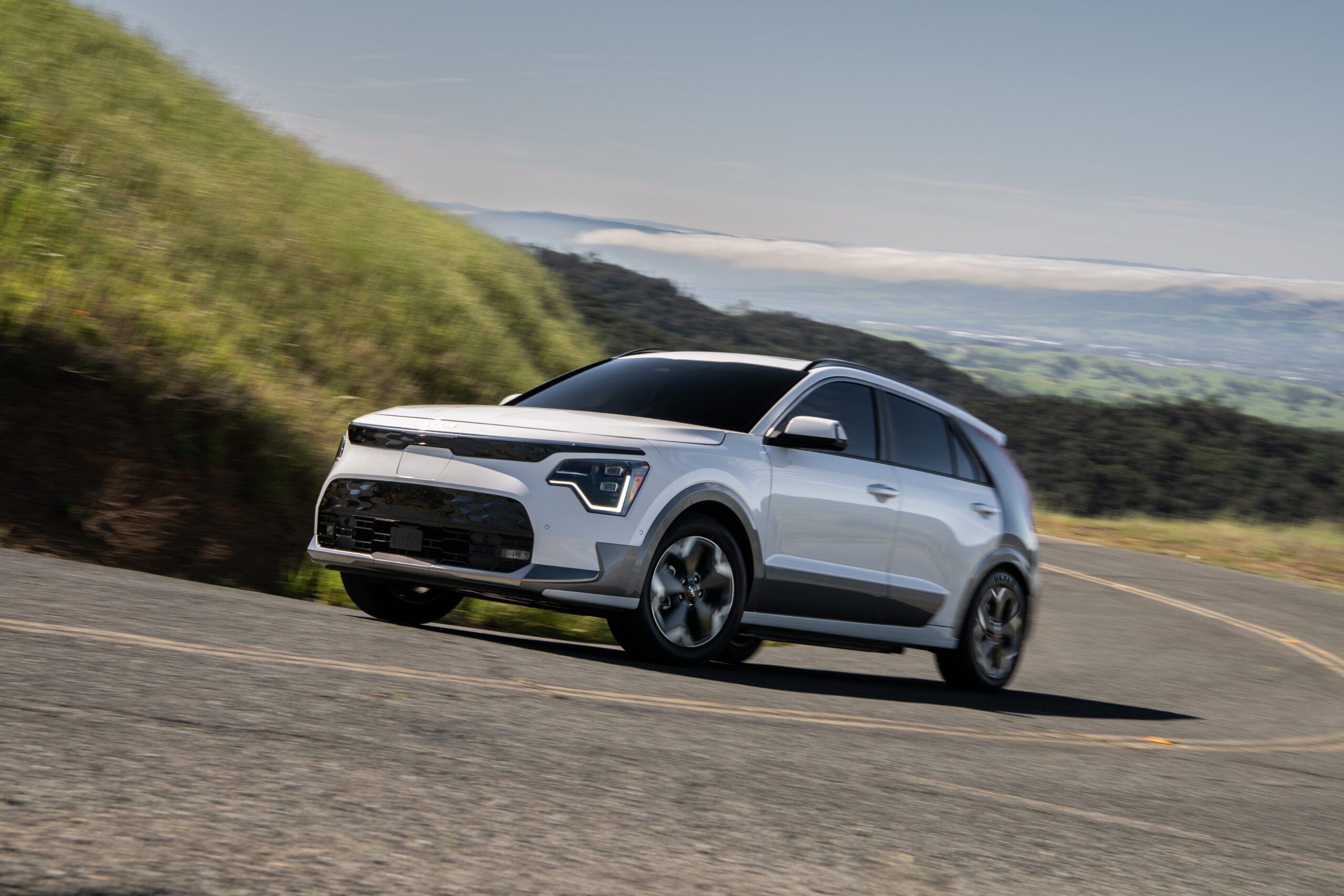
The Kia e-Niro came out on top, hanging on to an impressive 97.25 percent of its original capacity after 62,000 miles. It shares its 64 kWh battery with the Hyundai Kona, which nearly matched it at 97.18 percent, and the podium stayed within the Hyundai Motor Group family thanks to the Kia EV6 and its 77.4 kWh pack in third place.
Top-Performing EVs
Model
Battery Health After 62K Miles
Kia e-Niro – 64 kWh
97.25%
Hyundai Kona – 64 kWh
97.18%
Kia EV6 – 77.4 kWh
95.95%
Volvo XC40 Recharge – 69 kWh (CATL)
94.70%
Polestar 2 – 78 kWh (CATL)
94.35%
BMW i3 – 120 Ah
93.77%
Polestar 2 – 78 kWh (LG Chem)
93.53%
Tesla Model 3 – 60.5 kWh (CATL LFP)
93.34%
Audi e-tron 50 – 71 kWh
93.02%
Audi e-tron 55 – 95 kWh
92.93%
Skoda Enyaq iV – 77 kWh
92.88%
Tesla Model 3 – 78.8 kWh (LG Chem)
92.83%
Tesla Model S – 96 cells
92.80%
Volkswagen ID.4 – 77 kWh
92.77%
Skoda Enyaq iV – 77 kWh
92.60%
Tesla Model X – 96 cells
92.52%
Volkswagen ID.4 – 77 kWh
92.27%
Tesla Model Y – 78.8 kWh (LG Chem)
92.18%
Audi Q4 e-tron – 77 kWh
92.18%
Volkswagen ID.3 – 58 kWh
91.79%
SWIPE
The strongest European EV was the Volvo XC40 and its CATL-sourced 69 kWh battery, which held 94.70 percent of its capacity after 62,000 miles, trailed closely by the Polestar 2 and its 78 kWh CATL pack at 94.35 percent. The BMW i3 and the LG Chem version of the Polestar 2 landed close behind at 93.77 percent and 93.53 percent.
The best-placed model from EV leader Tesla was the Model 3 fitted with a 60.5 kWh LFP battery from CATL, retaining 93.34 percent of its capacity. This put it slightly above the Model 3 with an LG Chem-sourced NMC battery at 91.5 percent.
Among the other EVs ranked inside the top 20 were the Audi e-tron 50 and 55 at 93.02 and 92.93 percent, respectively, the Skoda Enyaq iV at 92.88 percent, the Tesla Model S with 92.80 percent, the VW ID.4 at 92.77 percent, and the Tesla Model X at 92.52 percent.
The bigger lesson here is that the old fear of an EV’s battery dying young no longer holds up. Every car in this ranking kept more than 90 percent of its capacity past 62,000 miles, and most owners will not even reach that figure until three or four years of driving. The pack is now likely to outlast the car wrapped around it.
The next-generation Lexus LFA may reset expectations of electric supercars.
This enticing new model shares its aluminum architecture with the Toyota GR GT.
Lexus isn’t interested in using simulated gear shifts like Hyundai and Porsche.
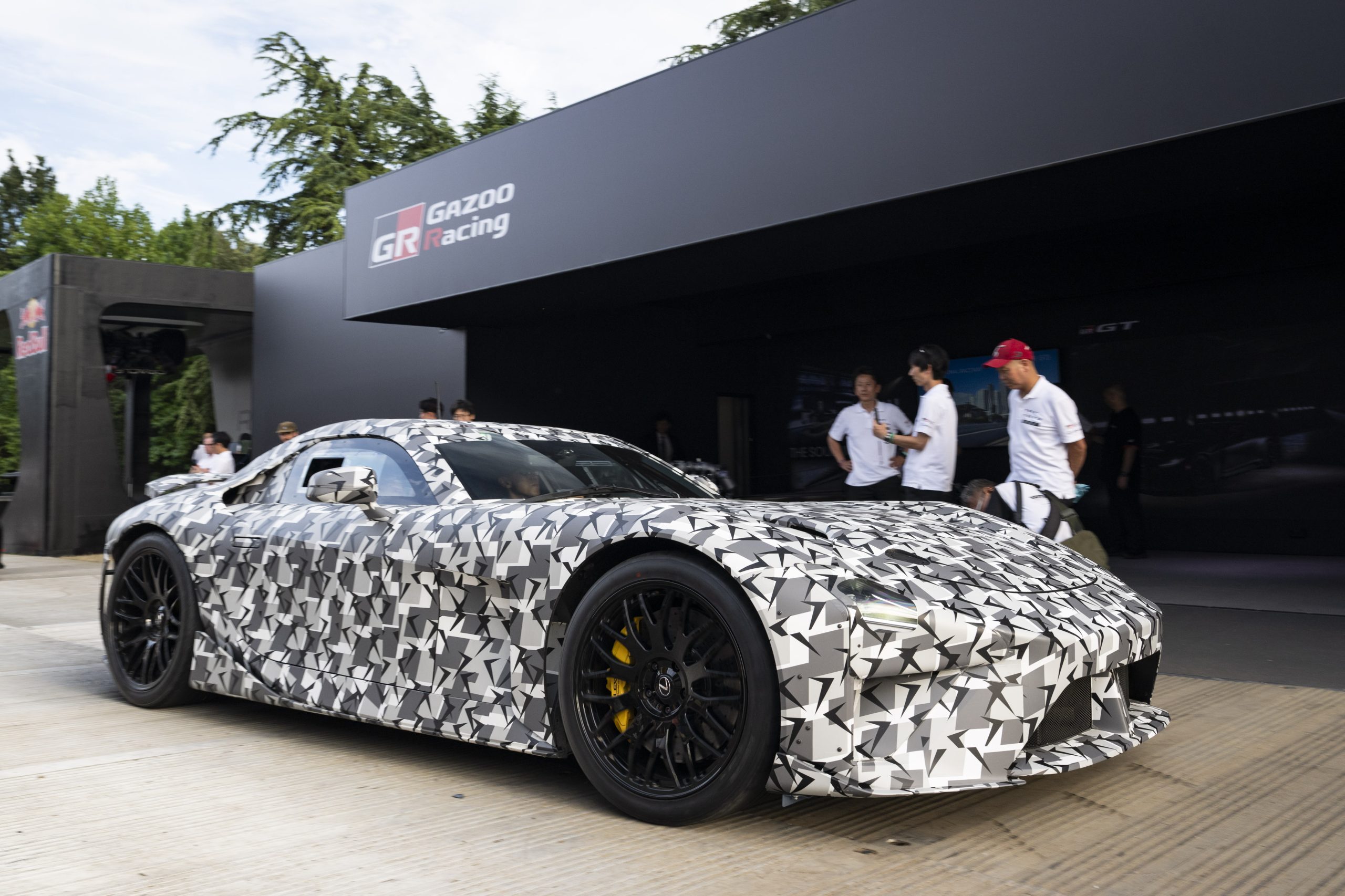
Amid a sea of high-revving, big-capacity supercars and hypercars at last week’s Goodwood Festival of Speed, the future Lexus LFA made a subtle and very silent dynamic debut. The successor to the company’s iconic supercar, you see, will be all-electric.
Lexus previewed the next-gen LFA last December, showcasing it alongside the Toyota GR GT, which shares its aluminum architecture. However, whereas that car uses a powerful V8 engine, the new LFA will be electric, a far cry from the original car’s all-screaming, all-conquering, Yamaha-tuned V10.
While this will disappoint many rev-heads, the new LFA could get tech enthusiasts very excited.
First Lexus On Solid-State Cells
According to a report from Autocar, the new LFA will be the first production Lexus to run advanced solid-state battery cells. Toyota has spent years developing them, and they now look close to ready for the road. Solid-state cells hold more energy in less space than the conventional liquid-based packs in use today, which is where their advantage lies.
Speaking to the publication, Shogo Kasamatsu, who penned the recent LFA concept, said Lexus wants to upend how people think about performance EVs. The concept’s restrained look drew on the original LFA, which he called “a very humble design, very artistic, and based on its true function.” The car was shaped to carry that message, he added, rather than march in step with Lexus’s current design language.
Similarly, LFA program general manager Yukihiro Yukita said Lexus wants to convince supercar buyers to opt for the LFA over a more conventional, ICE-powered alternative. He acknowledged that weak demand for high-priced performance EVs is the program’s biggest hurdle, but said Lexus intends to lead the shift from combustion supercars to electric ones.
Making A Fun EV?
“What I get from the market is that a BEV is fake,” he said, “because we imitate the sound [of an ICE], but that’s not something we want to do.” Lexus has no interest in trailing Porsche, Hyundai, and Mercedes-AMG by faking gear shifts or piping in engine noise. Yukita wants drivers to “feel like they are driving with an engine” without cheaply mimicking one.
“We’re not just wanting to replicate the sound of the engine, we want to redesign the sound itself,” he said. Engineering teams will strip out unnecessary noise and vibration and rework what remains, sharpening the sensory experience rather than manufacturing a fake one. EVs give up the sound and vibration that pull a driver in, he admitted, but electric motors answer with a responsiveness and linearity no combustion engine can match.
It all sounds rather fascinating, but it’s hard to imagine how Lexus will be able to get anywhere close to matching the thrills of that old V10.
Smaller electrical faults top repair requests for EVs in new Warrantywise study.
On-board chargers proved priciest common repair, some fixes costing thousands.
Main underfloor high-voltage batteries don’t figure in the list of top five EV faults.
If you’re shopping for a used EV, chances are the health and longevity of the high-voltage battery, the big slab of cells under the floor, is the thing keeping you awake at night. But according to a new analysis of warranty repair requests, it’s far from the problem owners encounter most often.
The study, based on repair request data collected by Warrantywise in the UK, found that the biggest EV reliability headaches are largely the same kinds of issues drivers have dealt with for years on cars running more conventional combustion powertrains. Electrical gremlins, suspension wear, and even the humble 12-volt battery appear far more frequently than failures involving the high-voltage battery pack.
Leading the list were general electrical faults, including sensors and central locking systems. Those repairs averaged around £810-900 ($1,085-1,205), although some individual claims climbed well beyond £3,000 ($4,020) and even topped £4,000 ($5,350) depending on the fault.
Suspension components, particularly wishbones, also featured prominently. Average repair requests exceeded £1,200 ($1,600), with the largest individual claim passing £4,100 ($5,490). That’s a reminder that even without an engine or gearbox, an EV still has plenty of conventional hardware that wears over time – and with more weight to bear, suspension takes an even bigger beating in an EV.
Top 5 EV Faults
Failure Area
Failure Part
Avg Repair Cost
Most Expensive Repair Cost
1
Electrical system
Sensors
£810 ($1,085)
£3,270 ($4,380)
2
Electrical system
Central locking mechanism
£900 ($1,205)
£4,060 ($5,435)
3
EV
On-board charger
£2,160 ($2,890)
£10,455 ($14,000)
4
Suspension
Wishbones
£1,230 ($1,650)
£4,120 ($5,515)
5
Electrical system
Auxiliary battery (12V battery)
£535 ($716)
£990 ($1,325)
SWIPE
The only genuinely EV specific component to crack the top five was the on-board charger. While the average repair request for one of those came in at £2,160 ($2,890), the largest single claim reached a hefty £10,455 ($14,000), showing that although these failures aren’t everyday occurrences, they can become scarily expensive.
Battery Problems Overblown
What about the high-voltage traction battery everyone worries about? It didn’t make the top five at all. That doesn’t mean battery failures never happen, only that they were comparatively rare in the warranty data, quite possibly because EV batteries are more robust than many people think, and they tend to have longer factory warranty cover than the rest of the car. When problems did occur, though, repair requests averaged more than £6,400 ($8,570).
The figures also showed average EV repair request values increased by 10.7 percent between 2024 and 2025. That rise isn’t necessarily down to worsening reliability, with inflation, labour costs, and parts prices all likely contributing to higher bills.
As with any warranty dataset, the results only reflect vehicles covered under those policies rather than every EV on the road. Even so, it points to the expensive battery that dominates so many buying conversations as not being the scary bill-in-waiting it’s made out to be.
A software update is throwing a fake battery warning at owners.
The alert tells drivers to replace the battery.
BMW says ignore it because nothing is actually wrong here.
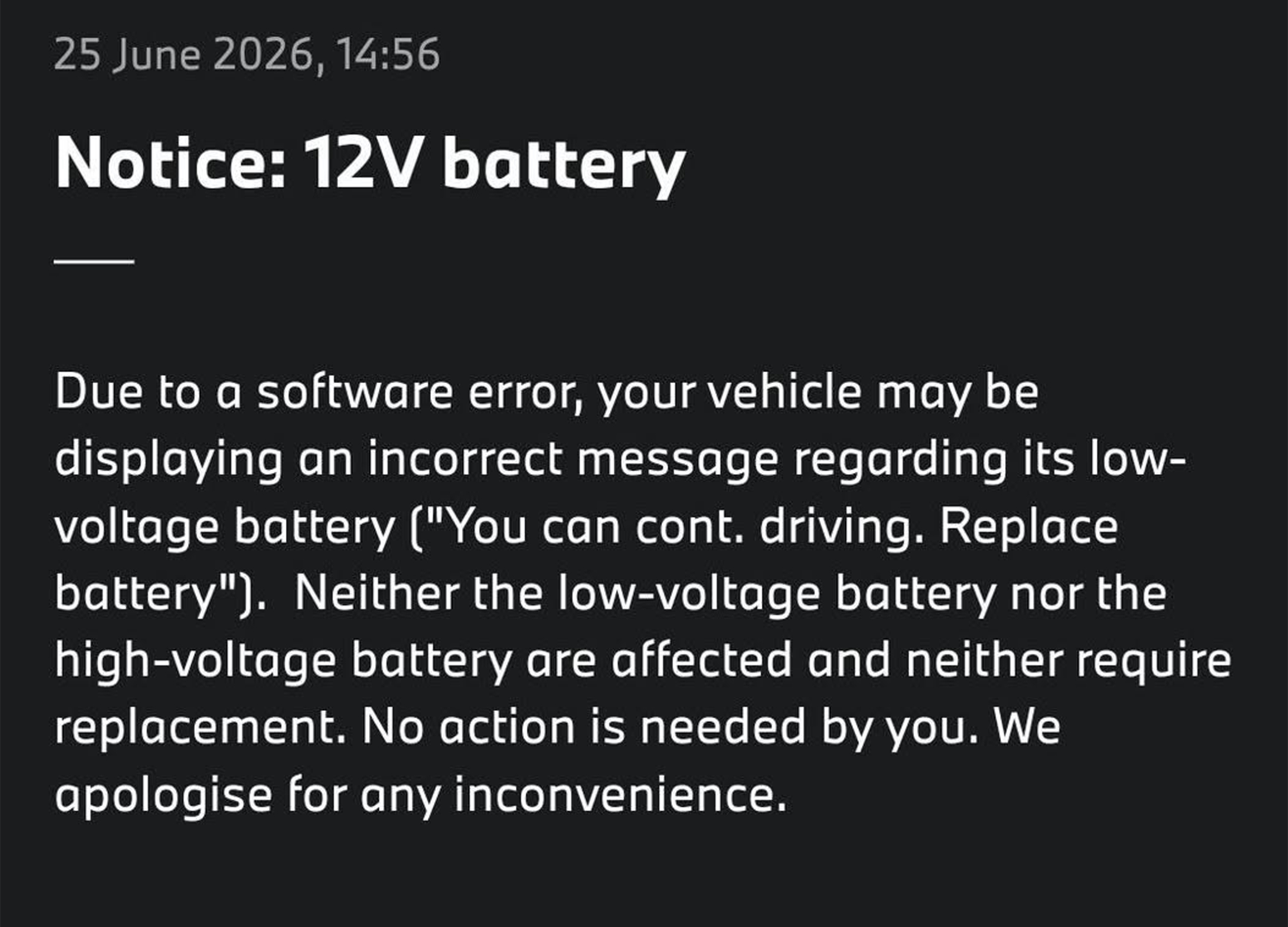
BMW is telling owners of the i3 and i4 to ignore a warning that says their battery needs replacing. The company traces the message to a recent over-the-air software update that misfired.
Over the past few days, it appears that thousands of BMW EVs worldwide started throwing the same alert: “Replace battery: You can continue driving. Have the problem checked by your service center.” Telling someone to keep driving and also replace the battery is the sort of contradiction that gets dealerships a lot of phone calls.
BMW has sold tens of thousands of i4s globally, and a large share of them appear to be caught up in this. Cars.com reports the i3 is affected too, which raises a question, because the original i3 hatchback most people picture never supported OTA updates for critical electrical systems. The more likely candidate is the i3 sold in China, an electric version of the current long-wheelbase 3-Series sedan. We’ve asked BMW to clarify which car is involved.
It’s reported that owners quickly began reaching out to dealerships when the warning messages appeared. Fortunately, BMW quickly determined it was caused by a software update pushed out to owners and has started alerting some to the issue through the My BMW app.
BMW Responds
“Due to the presence of an incorrect date in a system, a check control message is falsely appearing in some EVs,” the company confirmed. “The message advises the customer it is possible to continue driving the vehicle, but the battery would need to be replaced. This situation is temporary and no immediate action is required by those customers arising from this issue — replacing the battery is not necessary.”
BMW has also clarified that the message doesn’t actually refer to the high-voltage battery pack, as some owners had feared, but rather to the 12-volt battery. If a real issue appears with the battery pack, owners likely wouldn’t be told they can continue driving.
BMW is also working on a “high priority” software fix and says the warning message will automatically disappear once the update is rolled out. In some markets, dealers have already begun informing customers about the issue.
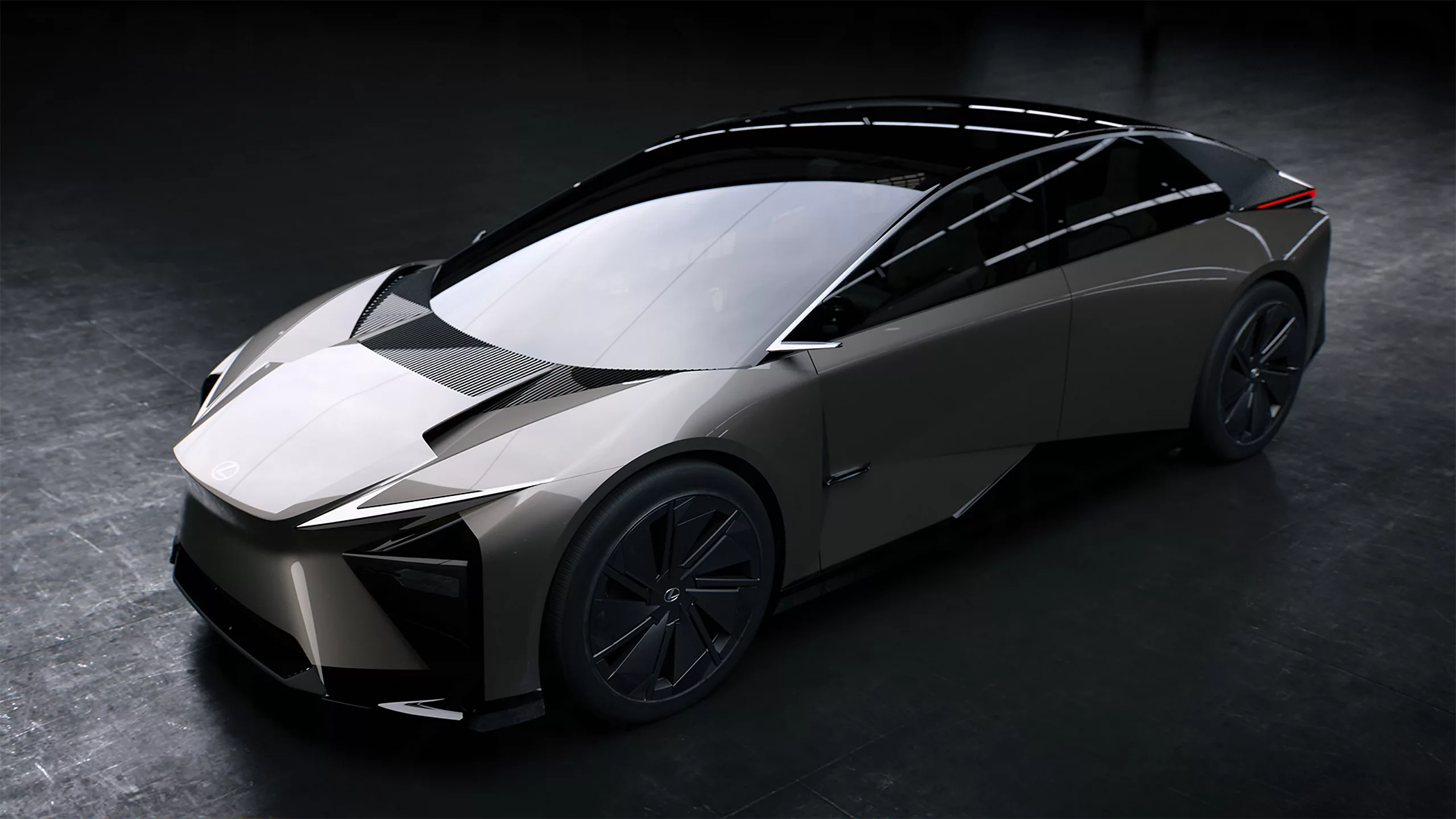
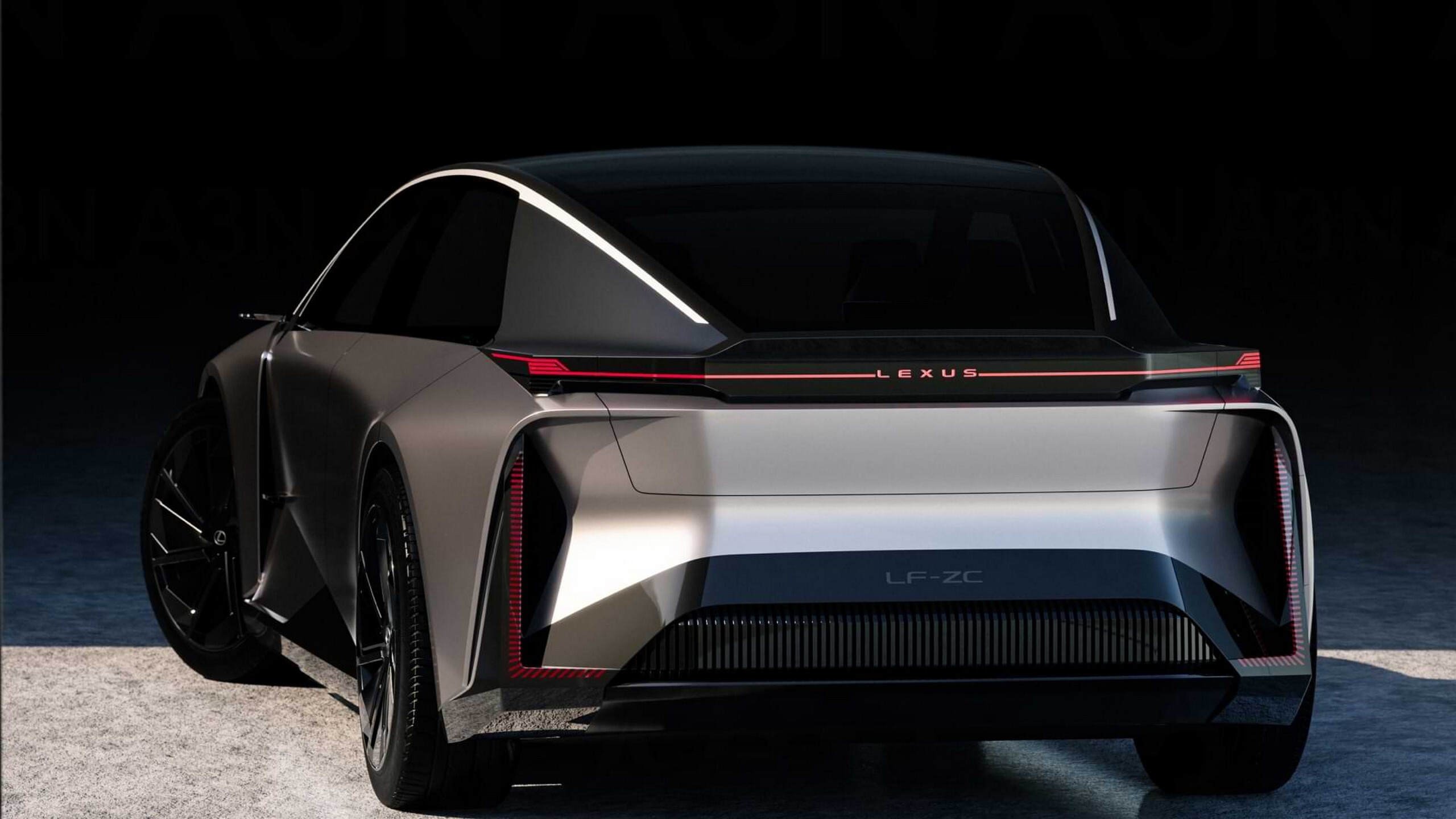
Lexus shelved the production version of the LF-ZC sedan concept.
Its gigacast modular platform survives and is still heading to production.
The smart money says the new EV arrives as a crossover, not a sedan.
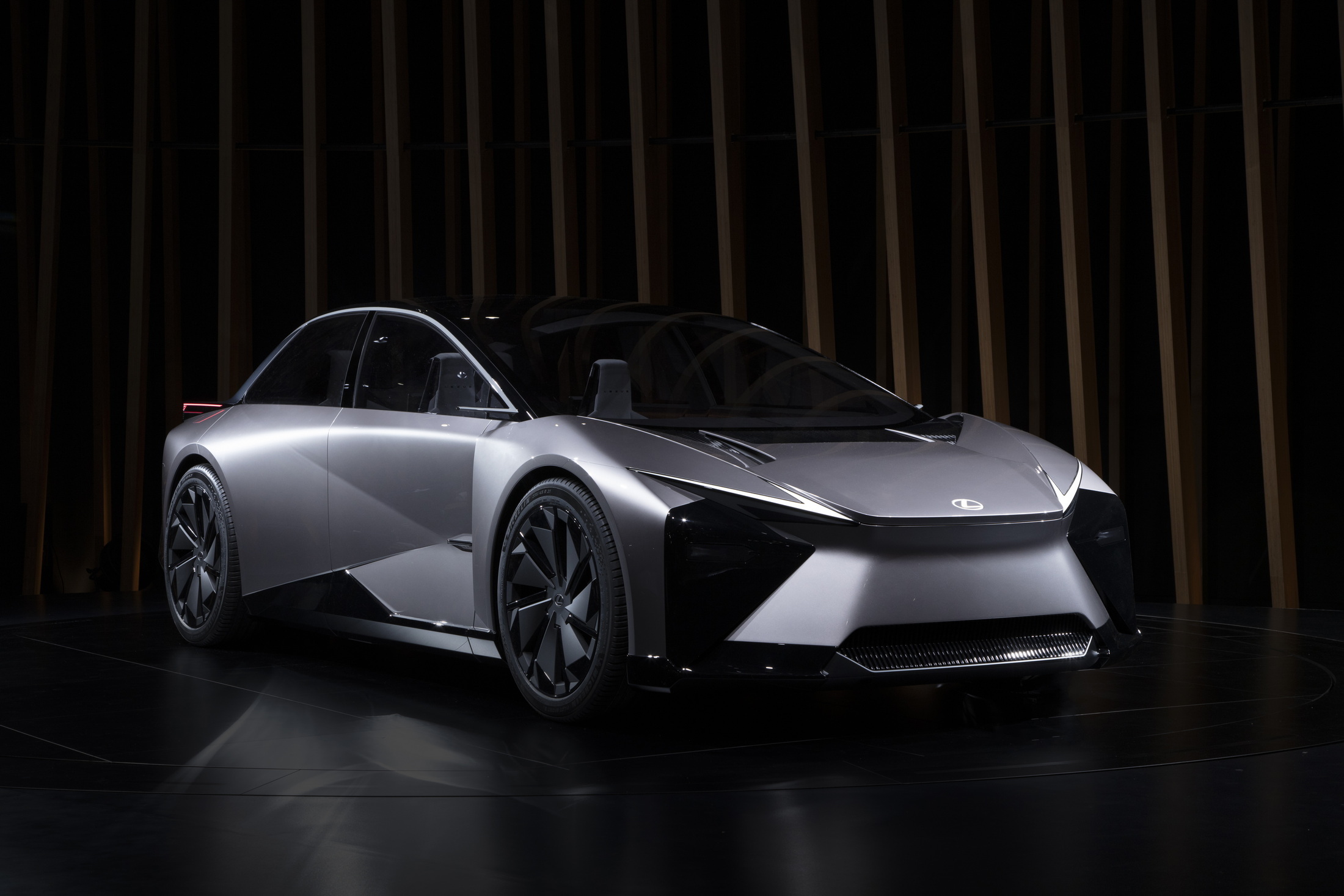
In late 2023, Lexus pulled the wraps off its innovative LF-ZC concept, a high-riding sedan riding on a new electric platform, with a launch planned for this year and the BMW i3 in its sights. The timeline slipped to mid-2027 before Lexus killed the program outright last month, ending a project that never made it past the concept stage.
Scrapping the LF-ZC doesn’t mean Lexus is walking away from electric cars. As we recently reported, much of the engineering created for the concept survives and heads to production anyway. That includes the gigacasted modular structure, which splits the body into separate front, center, and rear sections that bolt together as one.
In addition, the electrical and electronic platform used for new advanced driver-assistance systems will reach production, as will the concept’s prismatic battery cells. We may not have to wait long to see them reach the road.
Toyota vice president and chief technology officer Hiroki Nakajima says Lexus has already settled on a “successor vehicle” to take the place the canceled LF-ZC left open, which means the replacement was decided before the original was even cold.
Some Of The Hard Work Is Already Done
“We did indeed discontinue development,” he told Nikkei CrossTech. “It was at a point where we needed to make significant investments, such as arranging molds and mass production equipment for the LF-ZC. However, many new technologies cultivated during the development of the LF-ZC, such as Gigacast, a new electrical and electronic platform for advanced driver-assistance systems (ADAS), and miniaturization and weight reduction, have already been completed. We will develop a successor vehicle that utilizes these new technologies.”
Nakajima-san went on to reveal that Lexus approved a “successor” to the LF-ZC on the same day it canceled development of that model, agreeing to repurpose the LF-ZC’s technologies for this new model.
We don’t yet know what form this new EV will take. The safe money points to an electric crossover or SUV, on the logic that either would move more metal than another sedan. The new BMW iX3 and Mercedes-Benz GLA EQ just hit the market, and it’s possible Lexus may fancy its chances in developing a competitor to them.
The Tesla Cybertruck tips the scales at 3,113 lbs, which is quite light for an EV.
Recent Cybercab prototypes have been spotted with a steering wheel and pedals.
The EV’s real-world driving range will likely be around 280-290 miles.
A growing number of Tesla Cybercab prototypes have been seen out and about in the US, and we now have some juicy new details about the EV. Not only is it light, but it’s also shaping up to be very efficient, not that this should come as much of a surprise.
Documents submitted by Tesla to the Environmental Protection Agency (EPA) reveal that the Cybercab tips the scales at just 3,113 lbs (1,412 kg), which is reasonably light for a modern EV but about what you’d expect for one with just two doors and two seats. That makes it roughly 700 lbs lighter than the lightest Tesla Model 3 currently on sale.
The EPA data also notes that it has a gross vehicle weight rating of 3,730 lbs (1,691 kg), meaning the payload capacity is 617 lbs (280 kg), enough for a two-seater.
Then there’s power. The Cybercab will be driven by a single front-mounted electric motor producing 219 hp. That’s nothing compared to something like a Tesla Model S Plaid, but the Cybercab has been primarily designed as a robotaxi, so it doesn’t need to be a performance car. The EPA documents don’t precisely reveal battery details, other than noting it has a 146-amp-hour batteryoperating at 326 volts, which works out to 48 kWh.
EPA filings also indicate an efficiency rating of 165 Wh/mi, making the Cybercab the most efficient Tesla revealed to date and potentially one of the most efficient EVs on the market.
What About The Range?
The Cybercab’s driving range will obviously be hugely important. Using the EPA’s calculated test cycle, the range is listed at 418.2 miles (673 km). Crucially, this is simply under lab-testing conditions and not a real-world figure. InsideEVs expects the real driving range to be more like 280-290 miles (450-467 km).
It remains to be seen when exactly the Cybercab will launch. Tesla previously said it’d land before 2027, but we’re now halfway through the year, and it’s unclear if that deadline is still achievable. It’s also worth noting that while the Cybercab was initially conceived exclusively as an autonomous vehicle, prototypes have been filmed testing with a steering wheel and pedals, so it’s reasonable to expect it to first arrive with human-operated controls while Tesla continues to develop its self-driving systems.
Factorial’s solid-state batteries can charge from 15-90 percent in 18 minutes.
Stellantis is now starting a road-testing program for the innovative new battery.
Factorial counts Hyundai, Kia, Mercedes, and Stellantis among its investors.
Solid-state batteries could rewrite the rules for EVs, and nearly every major automaker has a team chasing them toward production. Stellantis belongs on that list, and it has just started testing advanced solid-state cells in what is arguably its least desirable EV.
Working with American battery manufacturer Factorial, Stellantis has equipped a Dodge Charger Daytona with new solid-state cells. The company says the cells were incorporated into the battery pack through a “new mechanical architecture,” designed in-house.
We don’t know how large the battery pack on this Charger Daytona prototype is, nor what driving range it offers. With that being said, Factorial’s cells have an energy density of up to 375 Wh/kg and can charge from 15 percent to 90 percent in just 18 minutes, all while working seamlessly in temperatures ranging from -30°C through to 45°C (-22°F – 49°F).
Stellantis will now commence a road-testing program for the solid-state battery pack, ensuring it’s up to scratch and delivers the reliability, range, and charging performance needed for solid-state battery technology to be adopted at scale, potentially replacing LFP and NMC batteries.
Mercedes Using The Same Tech
While you may not be familiar with Factorial, the company has financial backing from Mercedes, Hyundai, Kia, and Stellantis. Last year, a Mercedes-Benz EQS prototype covered 748.8 miles (1,205 km) on a solid-state pack from Factorial. What makes that run more impressive is that the car finished with an estimated 85 miles (137 km) of range to spare, so it could have gone even farther.
“We are deeply honored to work alongside Stellantis, one of the world’s great mass-market automakers, on this STLA Large-based development car,” Factorial chief executive Siyu Huang said. “What we have built together, from cell chemistry to pack architecture to enable real-world road testing, is exactly the kind of deep, full-stack collaboration that solid-state has always required.”
Stellantis hasn’t said when it wants to start producing and selling cars with solid-state batteries, but it’s likely at least a few years off.
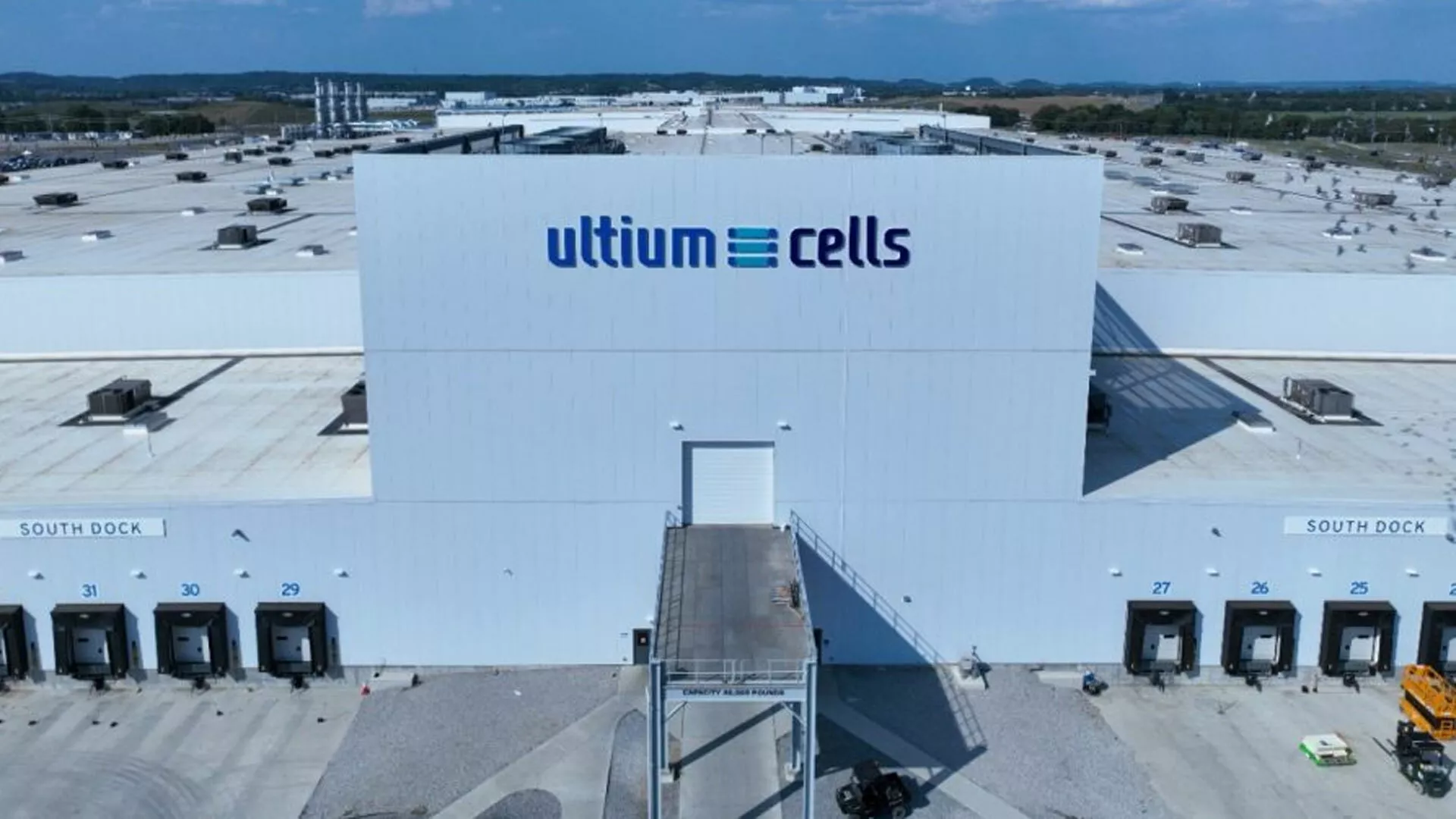
The Detroit giant has spent years developing LMR batteries, and the original plan called for building them next to conventional LFP cells. However, following recent confirmation that GM’s Tennessee battery plant with LG Energy Solution will now produce only LFP batteries for grid and data center customers rather than for cars, GM is doubling down on its pursuit of an LMR future.
While speaking with Reuters, GM battery chief Kurt Kelty described the LMR as the “workhorse” for GM, noting it will cost about the same as an LFP pack but store more energy while weighing roughly the same. “There is a possibility where LFP does not earn its way into our portfolio,” Kelty added. “That’s where we’re going to be using the big volume.”
Same Range, Cheaper Price
The vast majority of EVs released by GM in recent years have used nickel manganese cobalt (NMC) batteries, offering improved range over LFPs but not as well suited for charging to 100 percent capacity. The new Chevrolet Bolt is an exception to this, using LFP batteries sourced from Chinese battery behemoth CATL.
Moving forward, Kelty told TechCrunch that NMC batteries will be restricted to high-end GM vehicles, whereas LMR ones will be better suited to more affordable models. For the Chevrolet Silverado EV, which is currently equipped with an NMC battery, GM says an LMR battery of similar weight and size could retain the same 400-mile range while reducing the vehicle’s cost by at least $6,000.
“That is really going to be our bread and butter,” Kelty said when speaking about the LMR battery. “That is going to be our main product line.” Finally, it’s worth noting that GM isn’t alone in developing LMR batteries, as cross-town rival Ford is doing the same.
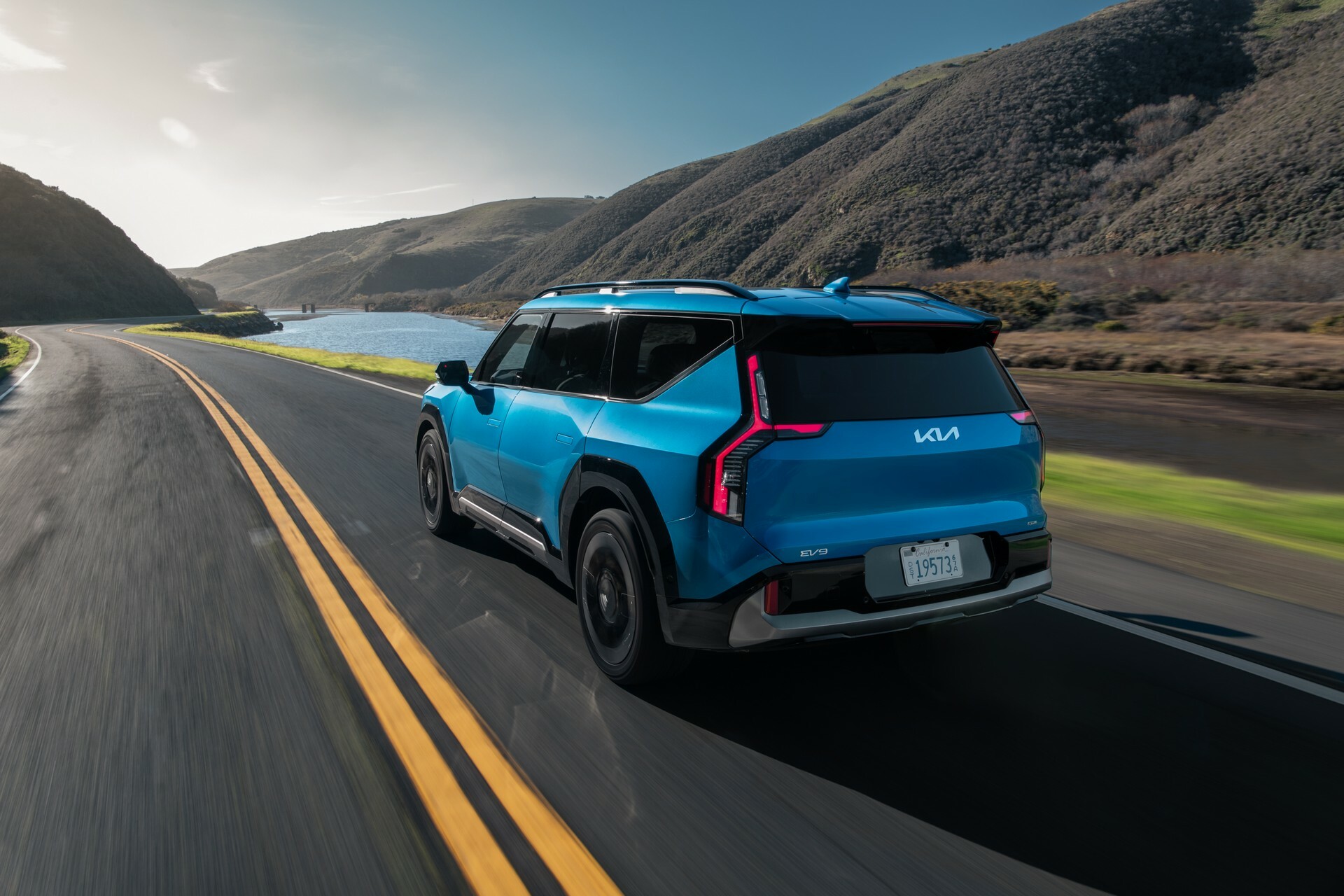
Dozens of Kia EV9 owners are reporting significant battery pack problems.
Some of the EV9’s battery modules appear prone to premature death.
Replacement packs can take months to arrive, leaving owners stranded.
As impressive as the Kia EV9 is, a growing number of owners are experiencing serious battery pack issues and enduring long waits for repairs. It will be a huge concern for Kia, particularly given that several other EVs from the broader Hyundai Group have also suffered serious powertrain-related faults in recent years.
Reports from EV9 owners have been swirling online since at least last year, and a UK writer from The Verge, who just so happens to own an EV9, has experienced them firsthand. It started with a small issue, where the 12-volt battery was drained, and he was unable to unlock the car. To get it up and running, he had to access the frunk manually and then hook up a booster to the battery. As it turns out, this fault would soon be the least of his worries.
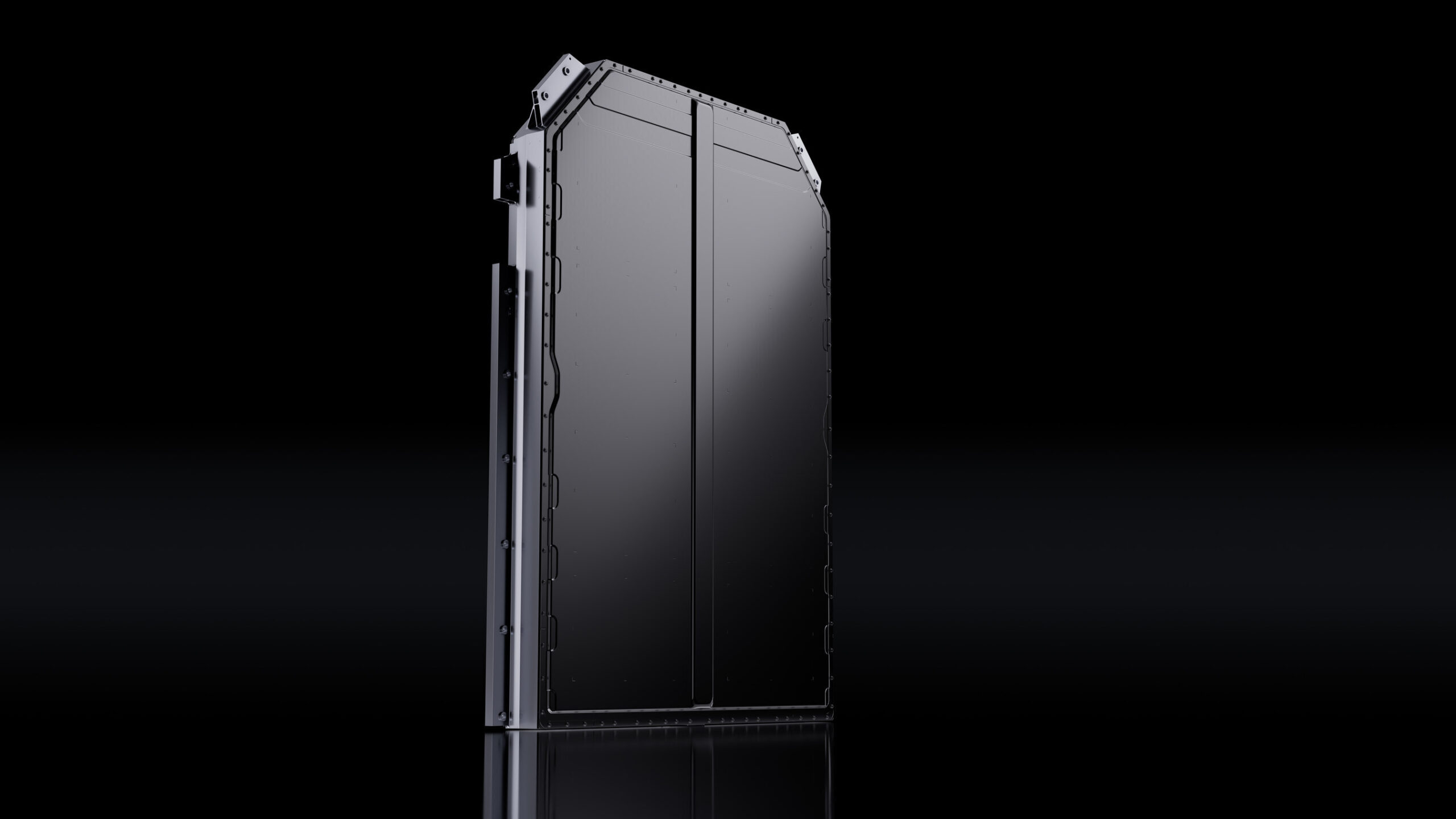
Several weeks later, he says the SUV’s battery would suddenly jump from 82 percent to 100 percent charge when plugged into his home AC charger. The EV’s estimated driving range at 100 percent also plummeted. After purchasing an OBD-II scanner, he discovered that when the Kia displayed 100 percent charge, it was actually only holding 71 kWh, despite having a 99.8 kWh pack. The scanner revealed that some of the pack’s 38 individual modules were dead.
Long Waits For Battery Replacements
A Kia dealership soon verified the issue and confirmed the SUV would need to have the high-voltage battery pack replaced. It’s been entered into Kia’s battery repair program, available through the eight-year warranty for the batteries in the UK, but there’s no clear timeline for when it will be repaired.
The Verge writer says he’s spoken with more than a dozen other EV9 owners in the country who have had similar problems, and some have been unable to continue driving their vehicles while waiting for a new battery. He says at least one has seen their EV9’s range drop to just 30 miles (48 km). Numerous owners in the US have also complained about battery pack failures, indicating this could be a global issue.
Widespread Faults Across Hyundai’s EV Lineup
For years, EVs from Hyundai, Kia, and Genesis have also suffered failures of the Integrated Charging Control Unit (ICCU). The automaker stayed quiet about the problem for a long time before finally acting in 2024, recalling every e-GMP-based EV sold in the US. That didn’t resolve things. Owners continued reporting faults, and Hyundai eventually extended warranties for electric vehicles with ICCU-related problems.
At this stage, no recall has been issued for battery pack failures in the EV9. However, if more owners start experiencing problems and these reports receive greater media coverage, the South Korean car manufacturer may be forced to act.
GM’s battery plant with Samsung was supposed to house 1,600 employees.
The plant would initially have 30 GWh of capacity for up to 300,000 EVs.
Site may switch from nickel-rich batteries to lithium iron phosphate batteries.
Another U.S. electric vehicle battery plant is on shaky ground as local EV demand keeps sliding. This one is the massive facility GM and Samsung have been building near New Carlisle, Indiana, and its future is now anything but certain.
The $3.5 billion plant was announced three years ago with initial plans for it to produce nickel-rich prismatic batteries. GM anticipated the site would initially have 30 GWh of capacity, meaning it could produce battery packs for up to 300,000 EVs annually. Capacity was then supposed to ramp up to 36 GWh.
The problem is what’s happened to the market since. With the Trump administration killing off the $7,500 federal EV tax credit, U.S. demand has cratered, and it’s getting harder for automakers and tech firms to justify writing checks this big for plants of this size.
GM has confirmed that construction of the plant will be paused. In a statement to Detroit News, GM spokesperson Kevin Kelly said: “Construction of the battery cell plant in New Carlisle, Indiana will be paused to align production capacity with current demand. GM and Samsung SDI will communicate plans for the site at a future date.”
The plan, for now, is to finish the building’s exterior as quickly as possible. However, after that, the future of the site remains unclear.
GM’s EV Mistakes
It’s possible the car manufacturer could completely withdraw from its joint venture with Samsung, which is exactly what it did in late 2024 when it pulled out of its partnership with LG Energy Solution on a Michigan battery plant. GM reportedly sold its stake to LG for $1 billion.
An alternative is for GM and Samsung to remain partners and instead manufacture more common lithium-iron phosphate batteries at the site.
If GM pulls out of its joint venture with Samsung, it’ll come at a cost. The company has already revealed it took up to $8.7 billion in EV-related charges and write-downs in 2025, and the money invested in the Indiana plant could be yet another misstep in its EV strategy. The site was supposed to employ up to 1,600 workers and initially set to set producing battery cells this year, although this was later delayed to 2027 a couple of years ago.
Despite regional variability in climate, electricity sources, congestion, and the wide variation in individual driving patterns, electric vehicles generate less greenhouse gas emissions and do not cost more than comparable gas-powered vehicles for drivers and vehicle fleet owners in most parts of the United States, according to a new study by MIT researchers.
The team’s approach captures many key factors that contribute to regional and individual differences in the life-cycle emissions and ownership cost of electric vehicles, including meteorological data, the distance and duration of trips, and fuel prices.
To paint a fuller picture of emissions and costs than was previously available, the researchers sourced data from thousands of U.S. zip codes and drilled down to the level of individual drivers within those locations. Their study considers time-averaged fuel prices so as not to be overly influenced by fluctuations in prices at any one point in time. They finalized their analysis at the end of 2024 and early 2025.
Their results indicate that a person’s driving behaviors can matter as much as regional factors like the local electricity mix when it comes to the emissions savings of an electric vehicle, compared to a similar gas-powered vehicle. In most locations, a battery-electric vehicle reduces emissions between 40 and 60 percent, with larger impacts in urban areas.
They also found that colder climates do not reduce overall emission benefits as much as some media reports assume.
The researchers utilized this detailed analysis to update a public tool they previously developed, carboncounter.com, which enables individuals to compare the life-cycle emissions and total ownership costs of nearly any car on the market. A new version of carboncounter.com is also being released today.
“There are a lot of statements being thrown around, like that electric vehicles don’t reduce emissions very much in cool climates, and we wanted to analyze these factors systematically and evaluate these statements against one another simultaneously. Rather than simply asking, ‘Are EVs better?’, this paper helps answer ‘better for whom, and under what conditions?’” says Marco Miotti PhD ’20, a senior researcher at ETH Zurich who completed this research while a graduate student in the Institute for Data, Systems, and Society (IDSS) at MIT.
Many prior studies that compare emissions and costs of electric vehicles (EVs) to combustion-engine vehicles cover a few factors, like the amount of renewable energy in the grid and how gas prices impact affordability, Miotti says.
“To our knowledge, there have been few efforts so far that bring all these factors together. But if someone wants to buy a car and have a better understanding of the factors that affect emissions and costs, this holistic approach is important,” he adds.
The researchers focused on two types of EVs: battery-electric vehicles, which only operate on electricity, and plug-in hybrid electric vehicles, which also have a combustion engine that works in tandem with the battery to optimize fuel savings.
The team expanded and improved a set of previously developed vehicle cost and emissions models to incorporate a wider variety of factors and data types.
For instance, they refined an existing model that estimates energy use and gas mileage so it could capture more nuances of local climate variability.
“But the real effort was not just in extending these different models, but in bringing together all these different data and making them work with the models in a consistent manner,” Miotti says.
The team sourced data on a wide variety of factors for each U.S. zip code, such as typical drive cycles, the amount of traffic, local gas and electricity prices, makeup of the regional electricity mix, meteorological profiles, and more. They used statistical approaches to amalgamate different types of data.
For example, the team used a probabilistic matching technique to combine data on how often people drive, which was drawn from nationwide travel surveys, with more detailed GPS data that includes factors like drivers’ acceleration patterns and the distance they usually drive on each day of the week.
The researchers designed their analysis to focus on the spatial picture of emissions and costs, based on U.S. zip codes, while simultaneously considering the impact of the size and features of each specific vehicle model.
“At the end of the day, it’s the vehicle and fleet owners who make decisions about vehicle purchases. So, we wanted to make sure to consider their wide-ranging individual perspectives rather than simply performing a region-by-region comparison,” says Trancik.
Lower emissions, comparable costs
In the end, their modeling framework revealed that all factors they analyzed matter about equally in determining emissions-reduction potential of EVs compared to internal combustion vehicles.
EVs reduce emissions the most in areas with a cleaner electricity mix, denser traffic, higher annual travel distances, and a mild climate, in decreasing order of importance. In each area, emission reductions increase for drivers who drive more often, drive larger vehicles, and are more frequently stuck in traffic.
In a colder area like North Dakota, fuel economy of battery-electric vehicles might be reduced by as much as 50 percent on a particularly frigid night, but the effect on annual emission benefits is minimal.
“We even did a sensitivity study to see if the range is reduced in very cold climates, and we found that, even in the most unfavorable conditions, EVs still reduce emissions by a substantial amount,” Miotti says.
On the cost side, the models show that, in most places across the U.S., EVs are competitive with comparable combustion-engine vehicles in terms of lifetime ownership cost, even without clean vehicle tax credits. And in areas where electricity is relatively affordable, battery-electric vehicles tend to cost less than their plug-in hybrid or combustion-engine counterparts.
In the future, the researchers want to expand this analysis to include a temporal dimension, so the framework also considers how changes in vehicle, fuel, and electricity prices affect emissions and costs over time.
“While we found that the electricity mix is a big driver of the spatial variation in emissions savings of EVs, the electricity grid is decarbonizing everywhere. As that happens, emissions savings across space will become more homogenous for EVs, but the differences across one driver to another will remain,” Miotti says.
They could also use the framework to explore regions outside the United States or incorporate data on hybrid-electric vehicles that cannot be plugged in.
This work was funded, in part, by the MIT Martin Family Society of Fellows for Sustainability.
A new MIT study finds that despite regional differences in climate, electricity sources, traffic, and driving patterns, electric vehicles produce fewer greenhouse gas emissions — and cost no more to own — than comparable gas-powered cars for most U.S drivers.
CATL says its new Shenxing 3 charges from 10 to 98 percent in 6.5 minutes.
The Qilin 3 promises 621 miles of range while weighing only 1,378 pounds.
Company is betting fast charging and battery swapping will drive EV adoption.
Electric vehicles are quick, quiet, and typically offer awesome packaging and an easier maintenance schedule than combustion-powered cars. Where they struggle to keep up with their gas-powered competition is on the refueling side of things.
Charging infrastructure is nowhere near what it is for gas-powered cars, and when one does find a charger, it can take a long time to get a battery that’s flat back to full. Now, CATL says it’s found a solution, and it’ll charge a battery from 10 to 98 percent in just 6.5 minutes.
According to The Wall Street Journal, the new Shenxing 3 battery hits that mark in roughly 6.5 minutes, beating the charging capability BYD revealed just last month, which took nine minutes to go from 10 to 97 percent, or seven minutes from 10 to 70. Bernstein analysts told the publication the new battery “effectively closes the gap with ICE vehicles.”
CATL says the new pack is capable of a 10C charging rate and can go from 10 to 80 percent in just 3 minutes and 44 seconds. Even more impressive, the company claims the battery can still charge from 20 to 98 percent in around nine minutes even when temperatures plunge to -22 degrees Fahrenheit (-30 Celsius).
Perhaps most impressive is that CATL says these charging speeds don’t destroy long-term battery life. Evidently, the Shenxing 3 still retains over 90 percent of its capacity after 1,000 full charging cycles.
CATL also introduced the new Qilin 3 battery, which it says can deliver up to 621 miles (1,000 km) of range while weighing just 1,378 pounds (625 kg). That makes it significantly lighter than comparable packs and, according to the company, improves efficiency, acceleration, braking, and handling. Oh, and wait, there’s more.
A new Qilin Condensed battery can deliver up to 932 miles (1,500 km) of range in a sedan or over 621 miles (1,000 km) in a full-size SUV. Obviously, that kind of range would be a giant benefit for the EV industry as it would reduce range anxiety and the need for additional charging infrastructure.
CATL says the Shenxing 3 and Qilin 3 batteries are intended for production vehicles rather than distant concepts, with the first applications likely arriving within the next year or so. The more ambitious Qilin Condensed battery appears further off, while CATL says its sodium-ion battery will enter mass production by the end of 2026.
CATL says its new Shenxing 3 battery charges in just 6.5 minutes.
The company also unveiled lighter batteries with up to 1,500 km range.
CATL is betting fast charging and battery swapping will drive EV adoption.
Electric vehicles are quick, quiet, and typically offer awesome packaging and an easier maintenance schedule than combustion-powered cars. Where they struggle to keep up with their gas-powered competition is on the refueling side of things. Charging infrastructure is nowhere near what it is for gas-powered cars, and when one does find a charger, it can take a long time to get a battery that’s flat back to full. Now, CATL says it’s found a solution, and it’ll charge a battery from 10 to 98 percent in just 6.5 minutes.
According to The Wall Street Journal, the new Shenxing 3 battery can hit that mark in roughly 6.5 minutes, beating the approximately nine-minute charging capability BYD revealed just last month. Bernstein analysts told the publication the new battery “effectively closes the gap with ICE vehicles.”
CATL says the new pack is capable of a 10C charging rate and can go from 10 to 80 percent in just 3 minutes and 44 seconds. Even more impressive, the company claims the battery can still charge from 20 to 98 percent in around nine minutes even when temperatures plunge to -22 degrees Fahrenheit (-30 Celsius). Perhaps most impressive is that CATL says these charging speeds don’t destroy long-term battery life. Evidently, the Shenxing 3 still retains over 90 percent of its capacity after 1,000 full charging cycles.
CATL also introduced the new Qilin 3 battery, which it says can deliver up to 621 miles (1,000 km) of range while weighing just 1,378 pounds (625 kg). That makes it significantly lighter than comparable packs and, according to the company, improves efficiency, acceleration, braking, and handling. Oh, and wait, there’s more.
A new Qilin Condensed battery can deliver up to 932 miles (1,500 km) of range in a sedan or over 621 miles (1,000 km) in a full-size SUV. Obviously, that kind of range would be a giant benefit for the EV industry as it would reduce range anxiety and the need for additional charging infrastructure.
CATL says the Shenxing 3 and Qilin 3 batteries are intended for production vehicles rather than distant concepts, with the first applications likely arriving within the next year or so. The more ambitious Qilin Condensed battery appears further off, while CATL says its sodium-ion battery will enter mass production by the end of 2026.
Future Mercedes models based on its MMA platform will use Samsung’s batteries.
Several existing Mercedes-Benz EVs already use advanced NMC battery packs.
The current Mercedes CLA 250+ and CLA 350 source battery packs from CATL.
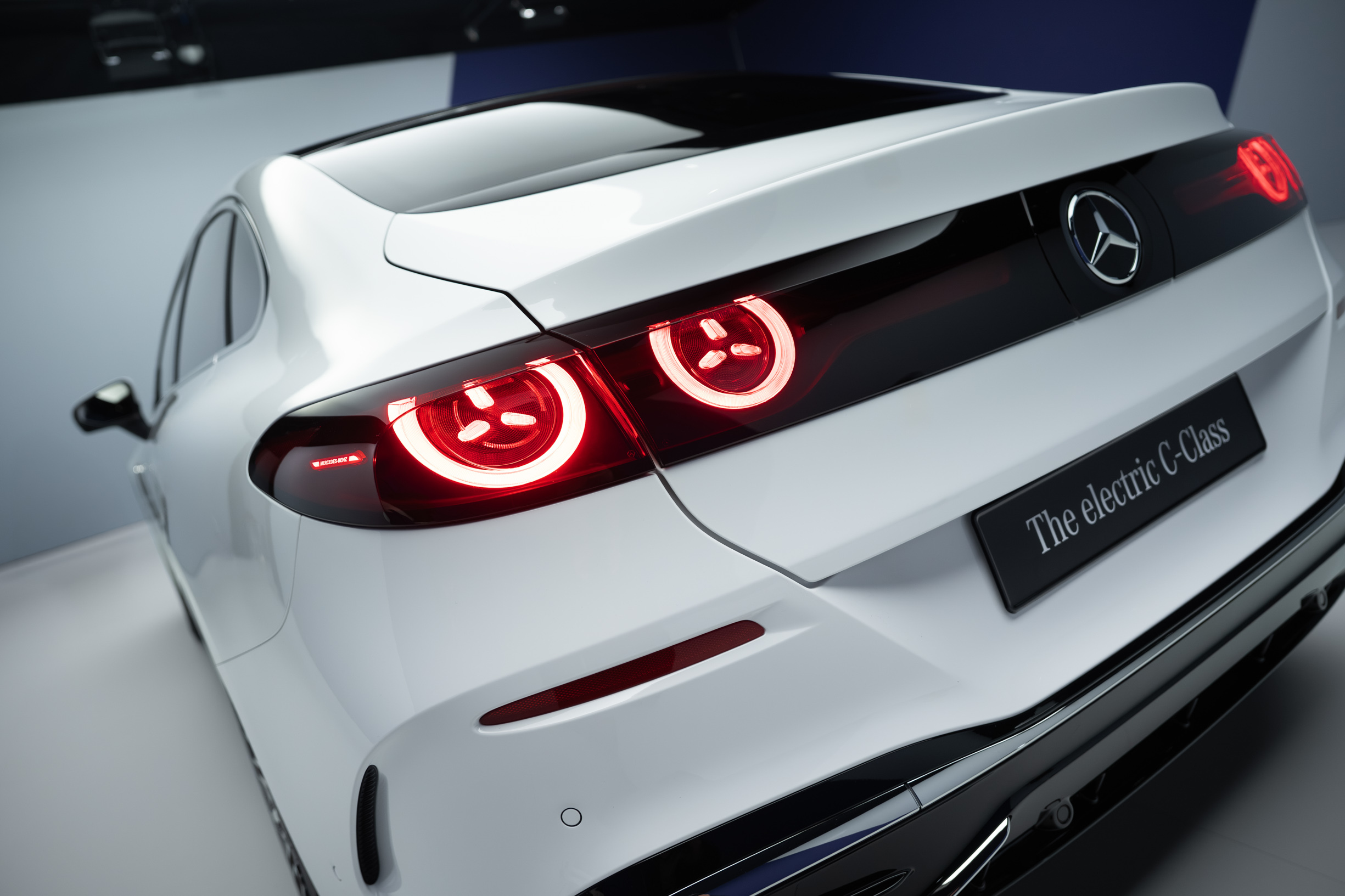
Just after unveiling its all-new electric C-Class, Mercedes-Benz confirmed a key piece of its future EV strategy. The next generation of its electric models will draw power from battery cells supplied by South Korea’s Samsung SDI.
The agreement, signed earlier this week, secures a steady flow of nickel, cobalt, and manganese (NMC) battery cells. Samsung claims these packs will deliver strong energy density, long service life, and the kind of sustained output and range figures premium EV buyers have come to expect, at least on paper.
Mercedes has yet to put a firm date on when these NMC batteries from Samsung will make their debut. Still, industry insiders point to models built on the upcoming Mercedes Modular Architecture (MMA) from 2028 onward. That would cover a wide spread of compact and mid-size SUVs, along with a handful of coupes that, for now, remain unnamed.
German Cars, Asian Batteries
The German brand already offers several of its EVs with NMC batteries, including the CLA 250+ and CLA 350 4Matic, sourced from China’s CATL. In addition, the all-electric Mercedes VLE uses a 115 kWh NMC battery pack, while the newly-revealed electric C-Class uses a 94.5 kWh NMC battery, promising a range of up to 472 miles (760 km).
“This partnership brings together the innovative DNA of both companies,” Samsung SDI said. “It is meaningful in that SAMSUNG SDI has secured a battery order aimed at strengthening its position in the global EV market.”
There are trade-offs between nickel, cobalt, and manganese (NMC) batteries and lithium iron phosphate (LFP) packs, the two chemistries currently dominating the EV space. NMC’s headline advantage is energy density, which means more range from a similarly sized battery, something premium brands tend to prioritize.
LFP, on the other hand, takes a more pragmatic approach. These packs are typically more durable over time and can be charged to 100 percent far more frequently without accelerating degradation. That makes them well suited to daily-use scenarios, even if they cannot quite match NMC’s outright range potential.
Battery maker CATL has just leaped ahead of BYD and Geely in charge speeds.
Its latest Shenxing LFP battery can charge from 10-35 % in only one minute.
A 10-80% charge takes 3 min 44 seconds, cold weather has minimal impact.
Some records stand for decades. Bob Beamon’s 8.9 m 1968 long jump, still unbroken 58 years later, is one. Others, like the 5 minutes it takes BYD’s Blade 2.0 battery to go from 10-70 percent, seem spectacular at the time, but here we are only weeks later and it’s already been smashed not once, but twice.
First it was Geely, whose Golden Brick battery can charge from 10-70 percent in 4 minutes 22 seconds. And now battery giant CATL has made even that look like it was hooked up to a household AC socket.
CATL’s 3rd-gen Shenxing LFP battery stops the clock at 3 minutes 44 seconds. And that’s not even charging to 70 percent, but to 80 percent. Geely’s battery needs almost two minutes longer to reach the same point.
And that’s not the only crushing stat. If you’ve ever charged an EV, you’ll know that charge rates aren’t linear. It takes a while to reach peak charge speed and then the rate falls away again as the battery gets closer to full. But the CATL pack comes out all guns blazing, charging from 10-35 percent in just 1 minute.
And from 10-98 percent takes only 6 minutes and 27 seconds. That compares with 8 minutes 42 seconds for a 10-97 percent fill with Geely’s Golden Brick and 9 minutes for BYD’s Blade 2.0. Or to put it another way, the CATL goes from flat to full 13 seconds faster than it takes a Ford Mustang GTD to lap the Nurburgring.
Cold Weather? No Problem
These numbers are all achieved in optimal temperatures, of course, but CATL threw out another one to show that even in less than ideal condition charging is still really rapid. Drop the temperature to -30˚ C (-22˚F) and the 10-98 percent top-up still only takes 9 minutes.
Unveiling the new battery at its Tech Day Event, CATL claimed the pack’s 0.25 milliohms internal resistance is 50 percent lower than the industry average. It also features multi-point temperature monitoring for each cell and Self-Heating tech that involves using pulses of heat to improve low-temperature charging speeds.
Long Lifespan
Just as importantly, CATL claims that the battery health remains above 90 percent even after 1,000 ultra-fast charge cycles, countering skepticism from BMW engineers about the viability of the new generation of insanely fast-filling Chinese batteries.
BYD has already begun to expand its Flash Charging network to Europe, and CATL also claims it’s looking into bringing its own tech behind China’s borders together with SAIC-GM-Wuling. But don’t bank on it arriving in the US any time soon.
Advancements in battery innovation are transforming both mobility and energy systems alike, according to Kurt Kelty, vice president of battery, propulsion, and sustainability at General Motors (GM). At the MIT Energy Initiative (MITEI) Fall Colloquium, Kelty explored how GM is bringing next-generation battery technologies from lab to commercialization, driving American battery innovation forward. The colloquium is part of the ongoing MITEI Presents: Advancing the Energy Transition speaker series.
At GM, Kelty’s team is primarily focused on three things: first, improving affordability to get more electric vehicles (EVs) on the road. “How do you drive down the cost?” Kelty asked the audience. “It's the batteries. The batteries make up about 30 percent of the cost of the vehicle.” Second, his team strives to improve battery performance, including charging speed and energy density. Third, they are working on localizing the supply chain. “We've got to build up our resilience and our independence here in North America, so we're not relying on materials coming from China,” Kelty explained.
To aid their efforts, resources are being poured into the virtualization space, significantly cutting down on time dedicated to research and development. Now, Kelty’s team can do modeling up front using artificial intelligence, reducing what previously would have taken months to a couple of days.
“If you want to modify … the nickel content ever so slightly, we can very quickly model: ‘OK, how’s that going to affect the energy density? The safety? How’s that going to affect the charge capability?’” said Kelty. “We can look at that at the cell level, then the pack level, then the vehicle level.”
Kelty revealed that they have found a solution that addresses affordability, accessibility, and commercialization: lithium manganese-rich (LMR) batteries. Previously, the industry looked to reduce costs by lowering the amount of cobalt in batteries by adding greater amounts of nickel. These high-nickel batteries are in most cars on the road in the United States due to their high range. LMR batteries, though, take things a step further by reducing the amount of nickel and adding more manganese, which drives the cost of batteries down even further while maintaining range.
Lithium-iron-phosphate (LFP) batteries are the chemistry of choice in China, known for low cost, high cycle life, and high safety. With LMR batteries, the cost is comparable to LFP with a range that is closer to high-nickel. “That’s what’s really a breakthrough,” said Kelty.
LMR batteries are not new, but there have been challenges to adopting them, according to Kelty. “People knew about it, but they didn’t know how to commercialize it. They didn’t know how to make it work in an EV,” he explained. Now that GM has figured out commercialization, they will be the first to market these batteries in their EVs in 2028.
Kelty also expressed excitement over the use of vehicle-to-grid technologies in the future. Using a bidirectional charger with a two-way flow of energy, EVs could charge, but also send power from their batteries back to the electrical grid. This would allow customers to charge “their vehicles at night when the electricity prices are really low, and they can discharge it during the day when electricity rates are really high,” he said.
In addition to working in the transportation sector, GM is exploring ways to extend their battery expertise into applications in grid-scale energy storage. “It’s a big market right now, but it’s growing very quickly because of the data center growth,” said Kelty.
When looking to the future of battery manufacturing and EVs in the United States, Kelty remains optimistic: “we’ve got the technology here to make it happen. We’ve always had the innovation here. Now, we’re getting more and more of the manufacturing. We’re getting that all together. We’ve got just tremendous opportunity here that I’m hopeful we’re going to be able to take advantage of and really build a massive battery industry here.”
This speaker series highlights energy experts and leaders at the forefront of the scientific, technological, and policy solutions needed to transform our energy systems. Visit MITEI’s Events page for more information on this and additional events.
Kurt Kelty (right), vice president of battery, propulsion, and sustainability at General Motors, joined MITEI's William Green at the 2025 MIT Energy Initiative Fall Colloquium. Kelty explained how GM is developing and commercializing next-generation battery technologies.
Around 80 percent of global energy production today comes from the combustion of fossil fuels. Combustion, or the process of converting stored chemical energy into thermal energy through burning, is vital for a variety of common activities including electricity generation, transportation, and domestic uses like heating and cooking — but it also yields a host of environmental consequences, contributing to air pollution and greenhouse gas emissions.
Sili Deng, the Doherty Chair in Ocean Utilization and associate professor of mechanical engineering at MIT, is leading research to drive the transition from the heavy dependence on fossil fuels to renewable energy with storage.
“I was first introduced to flame synthesis in my junior year in college,” Deng says. “I realized you can actually burn things to make things, [and] that was really fascinating.”
Deng says she ultimately picked combustion as a focus of her work because she likes the intellectual challenge the concept offers. “In combustion you have chemistry, and you have fluid mechanics. Each subject is very rich in science. This also has very strong engineering implications and applications.”
Deng’s research group targets three areas: building up fundamental knowledge on combustion processes and emissions; developing alternative fuels and metal combustion to replace fossil fuels; and synthesizing flame-based materials for catalysis and energy storage, which can bring down the cost of manufacturing battery materials.
One focus of the team has been on low-cost, low-emission manufacturing of cathode materials for lithium-ion batteries. Lithium-ion batteries play an increasingly critical role in transportation electrification (e.g., batteries for electric vehicles) and grid energy storage for electricity that is generated from renewable energy sources like wind and solar. Deng’s team has developed a technology they call flame-assisted spray pyrolysis, or FASP, which can help reduce the high manufacturing costs associated with cathode materials.
FASP is based on flame synthesis, a technology that dates back nearly 3,000 years. In ancient China, this was the primary way black ink materials were made. “[People burned] vegetables or woods, such that afterwards they can collect the solidified smoke,” Deng explains. “For our battery applications, we can try to fit in the same formula, but of course with new tweaks.”
The team is also interested in developing alternative fuels, including looking at the use of metals like aluminum to power rockets. “We’re interested in utilizing aluminum as a fuel for civil applications,” Deng says, because aluminum is abundant in the earth, cheap, and it’s available globally. “What we are trying to do is to understand [aluminum combustion] and be able to tailor its ignition and propagation properties.”
Among other accolades, Deng is a 2025 recipient of the Hiroshi Tsuji Early Career Researcher Award from the Combustion Institute, an award that recognizes excellence in fundamental or applied combustion science research.
Before batteries lose power, fail suddenly, or burst into flames, they tend to produce faint sounds over time that provide a signature of the degradation processes going on within their structure. But until now, nobody had figured out how to interpret exactly what those sounds meant, and how to distinguish between ordinary background noise and significant signs of possible trouble.
Now, a team of researchers at MIT’s Department of Chemical Engineering have done a detailed analysis of the sounds emanating from lithium ion batteries, and has been able to correlate particular sound patterns with specific degradation processes taking place inside the cells. The new findings could provide the basis for relatively simple, totally passive and nondestructive devices that could continuously monitor the health of battery systems, for example in electric vehicles or grid-scale storage facilities, to provide ways of predicting useful operating lifetimes and forecasting failures before they occur.
The findings were reported Sept. 5 in the journal Joule, in a paper by MIT graduate students Yash Samantaray and Alexander Cohen, former MIT research scientist Daniel Cogswell PhD ’10, and Chevron Professor of Chemical Engineering and professor of mathematics Martin Z. Bazant.
“In this study, through some careful scientific work, our team has managed to decode the acoustic emissions,” Bazant says. “We were able to classify them as coming from gas bubbles that are generated by side reactions, or by fractures from the expansion and contraction of the active material, and to find signatures of those signals even in noisy data.”
Samantaray explains that, “I think the core of this work is to look at a way to investigate internal battery mechanisms while they’re still charging and discharging, and to do this nondestructively.” He adds, “Out there in the world now, there are a few methods that exist, but most are very expensive and not really conducive to batteries in their normal format.”
To carry out their analysis, the team coupled electrochemical testing with recording of the acoustic emissions, under real-world charging and discharging conditions, using detailed signal processing to correlate the electrical and acoustic data. By doing so, he says, “we were able to come up with a very cost-effective and efficient method of actually understanding gas generation and fracture of materials.”
Gas generation and fracturing are two primary mechanisms of degradation and failure in batteries, so being able to detect and distinguish those processes, just by monitoring the sounds produced by the batteries, could be a significant tool for those managing battery systems.
Previous approaches have simply monitored the sounds and recorded times when the overall sound level exceeded some threshold. But in this work, by simultaneously monitoring the voltage and current as well as the sound characteristics, Bazant says, “We know that [sound] emissions happen at a certain potential [voltage], and that helps us identify what the process might be that is causing that emission.”
After these tests, they would then take the batteries apart and study them under an electron microscope to detect fracturing of the materials.
In addition, they took a wavelet transform — essentially, a way of encoding the frequency and duration of each signal that is captured, providing distinct signatures that can then be more easily extracted from background noise. “No one had done that before,” Bazant says, “so that was another breakthrough.”
Acoustic emissions are widely used in engineering, he points out, for example to monitor structures such as bridges for signs of incipient failure. “It’s a great way to monitor a system,” he says, “because those emissions are happening whether you’re listening to them or not,” so by listening, you can learn something about internal processes that would otherwise be invisible.
With batteries, he says, “we often have a hard time interpreting the voltage and current information as precisely as we’d like, to know what’s happening inside a cell. And so this offers another window into the cell’s state of health, including its remaining useful life, and safety, too.” In a related paper with Oak Ridge National Laboratory researchers, the team has shown that acoustic emissions can provide an early warning of thermal runaway, a situation that can lead to fires if not caught. The new study suggests that these sounds can be used to detect gas generation prior to combustion, “like seeing the first tiny bubbles in a pot of heated water, long before it boils,” says Bazant.
The next step will be to take this new knowledge of how certain sounds relate to specific conditions, and develop a practical, inexpensive monitoring system based on this understanding. “Now, we know what to look for, and how to correlate that with lifetime and health and safety,” Bazant says.
One possible application of this new understanding, Samantaray says, is “as a lab tool for groups that are trying to develop new materials or test new environments, so they can actually determine gas generation or active material fracturing without having to open up the battery.”
Bazant adds that the system could also be useful for quality control in battery manufacturing. “The most expensive and rate-limiting process in battery production is often the formation cycling,” he says. This is the process where batteries are cycled through charging and discharging to break them in, and part of that process involves chemical reactions that release some gas. The new system would allow detection of these gas formation signatures, he says, “and by sensing them, it may be easier to isolate well-formed cells from poorly formed cells very early, even before the useful life of the battery, when it’s being made,” he says.
The work was supported by the Toyota Research Institute, the Center for Battery Sustainability, the National Science Foundation, and the Department of Defense, and made use of the facilities of MIT.nano.
The MIT researchers used a customized experimental platform to simultaneously record acoustic emissions and perform electrochemical tests on lithium ion batteries.
A German startup believes it has the recipe for electric vehicle battery cells that are cheaper, more energy dense, and less problematic for the environment than current lithium-ion cells. But commercialization seems a long way off. Theion announced Thursday in a press release that it is close to completing a 15 million euro (approximately $16.2...
Chinese researchers claim to have developed a process to recover nearly all of the lithium from used electric vehicle batteries for recycling. The Independent (via InsideEVs) reports on study results first published in the German academic journal Angewandte Chemie claiming recovery of 99.99% of lithium from a used battery, as well as 97% of nickel...

 Login
Login