Normal view

There are new articles available, click to refresh the page.
Today — 14 August 2026Main stream

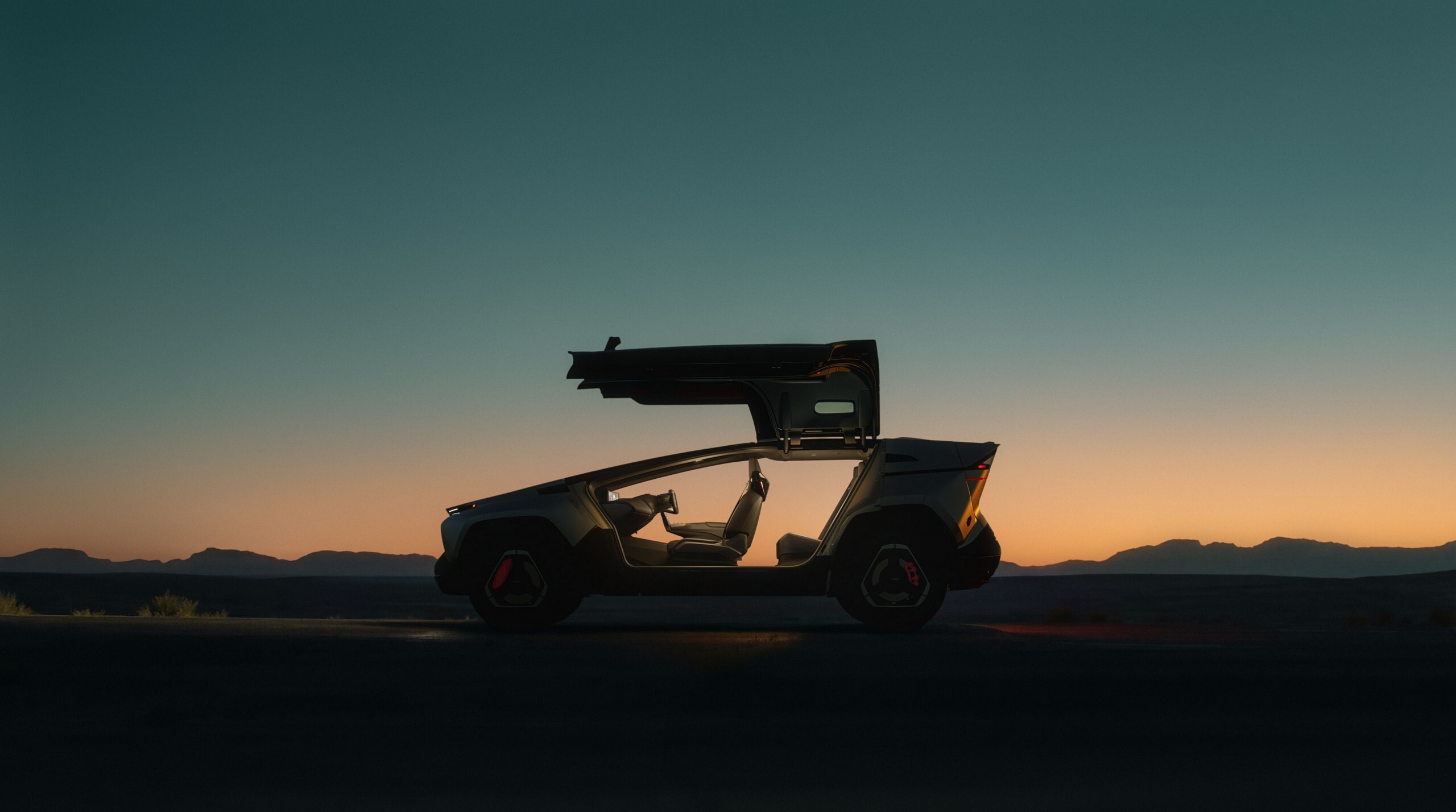
New Lucid Gravity GT-S Puts 1,070 HP In A Three-Row Family SUV

  • The Lucid Gravity GT-S now delivers 1,070 hp from more powerful motors.
  • A slew of blue accents on the exterior and interior make it stand out.
  • Prices for the flagship Gravity GT-S kick off at $125,900, excluding delivery.

Lucid may have just delayed plans for a cheaper, mass-market model, but that doesn’t mean the EV manufacturer wants to let its current range go stale. Enter the Gravity GT-S, a new high-performance flagship SUV that follows in the footsteps of the Air Sapphire.

Premiering at Monterey Car Week, the perfect location for a high-end, high-priced vehicle like this, the Gravity GT-S doesn’t look much different than the standard model, retaining most of the SUV’s subtle and sophisticated lines, while introducing just a few design tweaks.

Read: After Less Than A Year, This Lucid Gravity Lost Over $30,000

Chief among the changes are several blue exterior accents, including the brake calipers. The blue touches continue into the cabin of the Gravity GT-S, with blue stitching and piping on the steering wheel, door armrests, and front center armrest, as well as blue seat belts. The Lucid Bear has also been embossed onto the front seat headrests.

Performance is what really sets the Gravity GT-S apart from lesser models in the line-up. Thanks to upgraded motors, it now delivers 1,070 hp, the type of power which was once reserved for million-dollar hypercars, but is now becoming far more accessible thanks to high-end EVs like this.

How Quick Is It?

\\\\\\\

Lucid hasn’t quoted any weight figures for the Gravity GT-S, but notes the all-wheel drive traction allows it to hit 60 mph (96 km/h) in just 3.1 seconds. No quarter-mile time has been released, but given how quickly the Air Sapphire can power down the drag strip, expect to see the Gravity GT-S return times in the mid-9-second range, if not a little quicker.

Working alongside the upgraded powertrain is Lucid’s Dynamic Handling Package, now installed as standard. This upgrade includes independent rear-wheel drive and adaptive three-chamber air suspension, which automatically adjusts the ride height based on vehicle speed.

\\\\\\\\\\\

While Lucid says it’s opened orders for the Gravity GT-S, with prices starting from $125,900 excluding tax, title, license, options, and destination and delivery fees, it has failed to mention when customers can expect to take delivery. The only option will be a Tahoe leather interior, priced at $1,300.

“With Lucid Gravity GT-S, we’ve created a more expressive and exhilarating interpretation of the Gravity SUV,” Lucid chief creative officer Derek Jenkins said. “It combines extraordinary performance with the comfort, space, and versatility that define Gravity, delivering an exceptional experience for our customers that is uniquely Lucid.”

\\\\\\\
Yesterday — 13 August 2026Main stream

Porsche Walks Away From VW’s Emissions Pool To Partner With Chinese Brand

  • The VW Group missed its European fleet emissions target last year.
  • Porsche will pool emissions with Xpeng to help avoid a repeat in 2026-2027.
  • Carmakers face a €95 fine per vehicle for every gram of CO2 over the limit.

Rather than combining its European emissions with the Volkswagen Group across 2026-2027, Porsche will pool its figures with Chinese automaker Xpeng, according to a new report citing analyst Matthias Schmidt. The move puts the VW Group in a stronger position to hit its targets and steer clear of expensive fines, since carving Porsche out of the group average pulls that number in the right direction.

In 2025, the VW Group’s average European emissions, Porsche included, landed at 100 g/km, above the EU’s mandate of 93.6 g/km. Miss those targets and the conglomerate could be on the hook for as much as €1.5 billion ($1.7 billion) in fines across 2025-2027. As it stands, the penalty runs €95 ($109) per gram of CO2 over the limit, per vehicle.

Read: Xpeng CEO Eyes US Launch, Suggests Company Could Build Plants In America

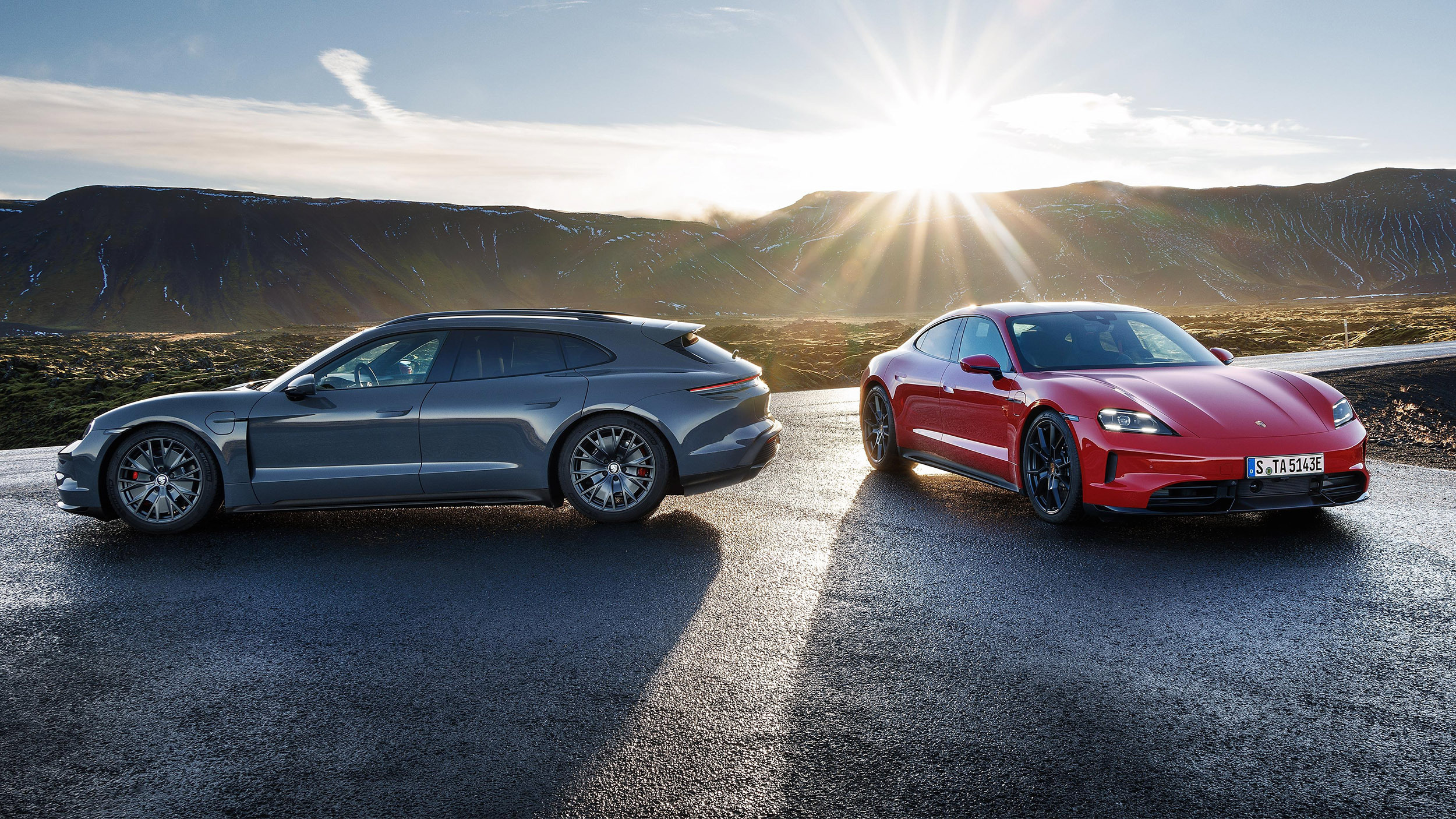
Porsche would likely weigh on the broader VW Group because its local EV sales have slipped, driven mostly by softening demand for the Taycan and the all-electric Macan. The brand has also pivoted back toward combustion-powered models.

There’s no word on how much Porsche is paying Xpeng to pool their emissions, but the company has clearly decided the cost beats pushing the VW Group over the limit and eating a fine. According to Auto News, Xpeng sold roughly 19,000 EVs across Europe in the first six months of this year, up 126 percent.

 Porsche Walks Away From VW’s Emissions Pool To Partner With Chinese Brand
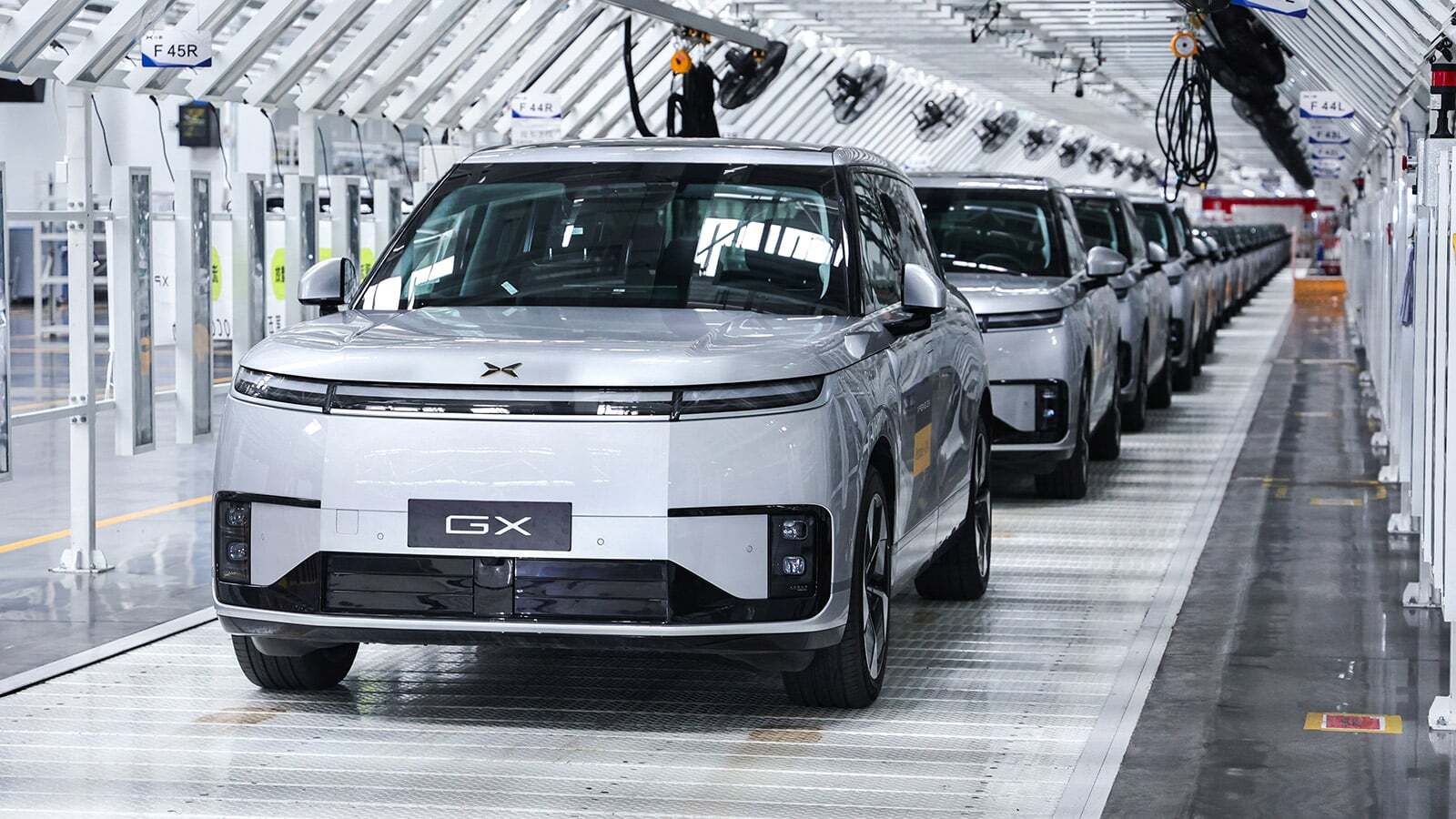
Xpeng GX

The Porsche and Xpeng pool remains open so other car manufacturers can choose to enter it should they wish. Pools can be joined until December 31. Two other important pools include a Tesla one, which includes Ford, Honda, Mazda, and Suzuki, as well as a Mercedes-Benz pool with Volvo, Polestar, and Smart.

It might look odd for Porsche to team up with Xpeng, but the VW Group already has a tight relationship with the automaker in China, where the two are developing a shared architecture and several new models together.

 Porsche Walks Away From VW’s Emissions Pool To Partner With Chinese Brand

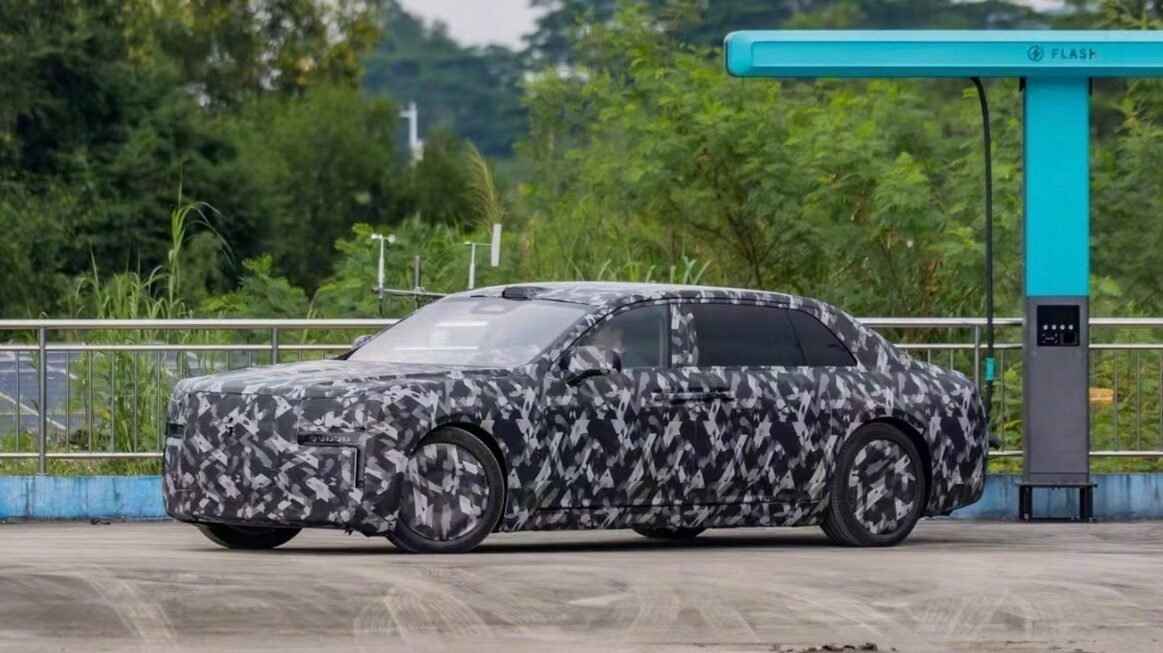
Genesis GV90 Flagship Specs Leak With A Bigger Battery Than Any Kia Or Hyundai EV

  • The electric GV90 needs plenty of power, as it will weigh over 6,600 lbs.
  • This version should offer an EPA range of around 300 miles in the US.
  • Genesis will sell six- and seven-seat GV90s, with rear coach doors.

The all-electric Genesis GV90 is nearly here, and ahead of its launch, a batch of key technical details has surfaced online courtesy of South Korea’s Ministry of Environment. The filings show the GV90 gets a larger battery pack than the related Kia EV9 and Hyundai Ioniq 9, along with more power.

Read: Genesis Is Really Putting Rolls-Royce Coach Doors On Its New Flagship

Found under the skin of the GV90 will be a sizeable 123.52 kWh gross battery pack with a usable 115 kWh capacity. By comparison, the biggest pack offered for the Kia EV9 is 99.8 kWh gross or 96 kWh usable, while the largest pack available for the Hyundai Ioniq 9 is 110.3 kWh gross, which works out to be roughly 106 kWh usable.

\\\\\\

SHproshots

The emissions certification document published in Korea and shared online by The Korean Car Blog then notes the GV90 will have a 322 hp front-mounted electric motor, while at the rear there will be a 335-hp unit. Combined, it works out to be 657 hp. Given the GV90 will tip the scales at 6,680 lbs (3,030 kg), it needs all the power it can get.

The paperwork also lists the GV90 as having a combined driving range of 481 km (299 miles), as well as a city range of 503 km (312 miles) and a highway range of 453 km (281 miles). While this may not sound very impressive given the size of the battery, Korea’s testing procedure is stricter than the WLTP cycle in Europe, so the European range is expected to be around 580 km (360 miles), while in the US, the range will probably end up close to 300 miles.

\\\\\\

SHproshots

It’s unclear if the GV90 will be offered with other battery pack and electric motor options, or if this powerful model will be the only version. Both six- and seven-seat versions are mentioned in the data.

Design-wise, the GV90 will follow in the footsteps of the Neolun Concept from 2024. No doubt the highlight will be the rear-facing suicide doors and black B-pillars, something largely unheard of for a vehicle expected to play in this price bracket.

\\\\\\\\\\\

Genesis Neolun Concept

Zeekr Says EV That Burst Into Flames At Chinese Charger Had A Crash It Never Told Anyone About

  • A dark green 7X caught fire at a charging station in China’s Ningbo City.
  • Security camera footage shows sparks and flames emanating from the battery pack.
  • The driver used a fire extinguisher to keep the flames under control.

Zeekr, one of China’s most popular premium EV and hybrid manufacturers, has quickly reacted to a clip spreading across local social media showing a 7X catching fire while parked at a charging station. According to the Geely-owned brand, this particular 7X had been in a collision beforehand and had never had its repairs inspected.

In the video, the driver of the 7X can be spotted leaning over the frunk while parked at a charging station, although the electric SUV wasn’t actually plugged in. Moments later, sparks and flames can be seen violently spewing out from the underside, triggering a plume of smoke to fill the air.

Read: Zeekr’s Biggest, Plushest SUV Rolls Into Europe With 897 HP To Take On The BMW X7

For a few seconds, it seems the 7X had decided against setting itself on fire. Then sparks and flames erupt from the rear, swallowing large sections of the SUV as the battery pack keeps throwing off sparks. A bystander, presumably the driver, grabs a fire extinguisher and manages to smother the flames.

The incident happened on Sunday in Ningbo City, and local fire crews arrived quickly and brought everything under control, CarNewsChina reports.

A PR Problem, And An Unanswered Question

Obviously, the sight of an EV seemingly randomly catching fire while parked isn’t the type of publicity any car manufacturer would want. Zeekr quickly sought to quell fears among owners, stating its initial investigation had revealed this 7X had previously been involved in a collision and that it had not been properly inspected or reported at a Zeekr facility.

However, the company has yet to provide an explanation as to what exactly triggered the blaze, although it certainly looks to be battery-related.

Like so many other brands in China, Zeekr initially launched exclusively in its home country, but it is embarking on an ambitious overseas expansion. In addition to already launching in markets like Australia, it has also arrived in Europe, selling its premium EVs and hybrids at prices that easily undercut similar vehicles from legacy rivals like Mercedes-Benz, BMW, and Audi.

 Zeekr Says EV That Burst Into Flames At Chinese Charger Had A Crash It Never Told Anyone About
Before yesterdayMain stream

Tesla Spent Two Years Calling Its Headlights Harmless. The NHTSA Called It A Recall

  • Tesla is recalling more than 20,000 cars over headlights.
  • The low beams exceed the intensity limit allowed on US roads.
  • A Canadian compliance test first flagged the fault back in 2019.

Few things grate more than driving at night while an oncoming car’s headlights sear your retinas. Usually that’s just the price of the powerful LEDs bolted to most new cars, but on certain Model 3s and Model Ys, Tesla has admitted the low beams genuinely exceed the maximum intensity allowed in the US, which is what triggered the recall.

The recall impacts 2017-2023 Tesla Model 3s and thousands of 2020-2023 Tesla Model Ys. According to Tesla, the headlights, sourced from Marelli Automotive Lighting, exceed the permitted intensity in the outer upper-right and outer upper-left areas. As Tesla’s recall notice rightly points out, this could reduce visibility for the driver and other road users, increasing the risk of a crash.

Read: Over 150 Complaints Of Teslas Losing Front Suspension Just Put 1.2 Million Under Probe

Interestingly, while the recall impacts Model 3 and Model Y vehicles from several different model years, surprisingly few vehicles are impacted. In the case of the Model 3, 1,614 examples are being recalled, all of which were manufactured from July 24, 2017, to December 2, 2023.

As for the Model Y, a total of 18,735 need to be repaired. These were built between February 11, 2020, and December 24, 2023.

An Issue Uncovered In Canada

 Tesla Spent Two Years Calling Its Headlights Harmless. The NHTSA Called It A Recall

Tesla became aware of a potential issue on January 16, 2024, several months after Transport Canada’s annual compliance program found the low beam headlights of a 2019 Tesla Model 3 failed to comply with local safety standards. The automaker first announced a recall related to the fault on March 9, 2024, and a few weeks later, petitioned the NHTSA for an exemption, claiming the fault was inconsequential to motor vehicle safety. The NHTSA denied this petition three weeks ago.

Most of the Model 3s and Model Ys impacted by this latest recall are the same as those originally covered by the 2024 recall. However, Tesla has added 432 vehicles to the list after discovering non-compliant headlights continued to be used in service longer than it had originally thought. Tesla is still working on a fix.

 Tesla Spent Two Years Calling Its Headlights Harmless. The NHTSA Called It A Recall

The Average EV Now Costs Less Than The Average Hybrid, And You Can Thank China

  • Battery costs fell 37 percent, dragging EV sticker prices down with them.
  • Hybrid prices climbed 16 percent while EVs moved the other way.
  • China’s battery glut and export surge did most of the heavy lifting here.

Electric vehicles have historically been more expensive than ICE-powered vehicles, but new data has revealed that last year, the average global prices for EVs were below those of hybrids. As you’d probably expect, this is largely due to the growing number of budget EVs from China hitting the roads across the world.

By looking at average sticker prices without accounting for subsidies, and weighting them based on sales volume, Mobility Global determined that last year, EVs typically averaged around $37,000, reports Nikkei Asia. This is down 9 percent from 2020. Over the same period, average hybrid prices rose 16 percent to $39,000.

 The Average EV Now Costs Less Than The Average Hybrid, And You Can Thank China
Ford LFP batteries

This comes primarily thanks to falling lithium-ion battery costs, which have fallen by 37 percent between 2020 and 2025. The battery pack typically accounts for 30-40 percent of an EV’s overall cost. BloombergNEF attributes much of that decline to a capacity glut in China, which controls roughly 80 percent of the battery market.

Read: The World’s Biggest EV Market Just Went Into Reverse After Years Of Growth

Importantly, a growing number of EVs are also adopting lithium-iron phosphate (LFP) batteries, free from cobalt, which frequently experiences significant fluctuations in prices. While LFP batteries have traditionally been considered less energy-dense, their performance has been improving. Renault and Volkswagen said last year that they would adopt the chemistry.

China’s Global Expansion

 The Average EV Now Costs Less Than The Average Hybrid, And You Can Thank China
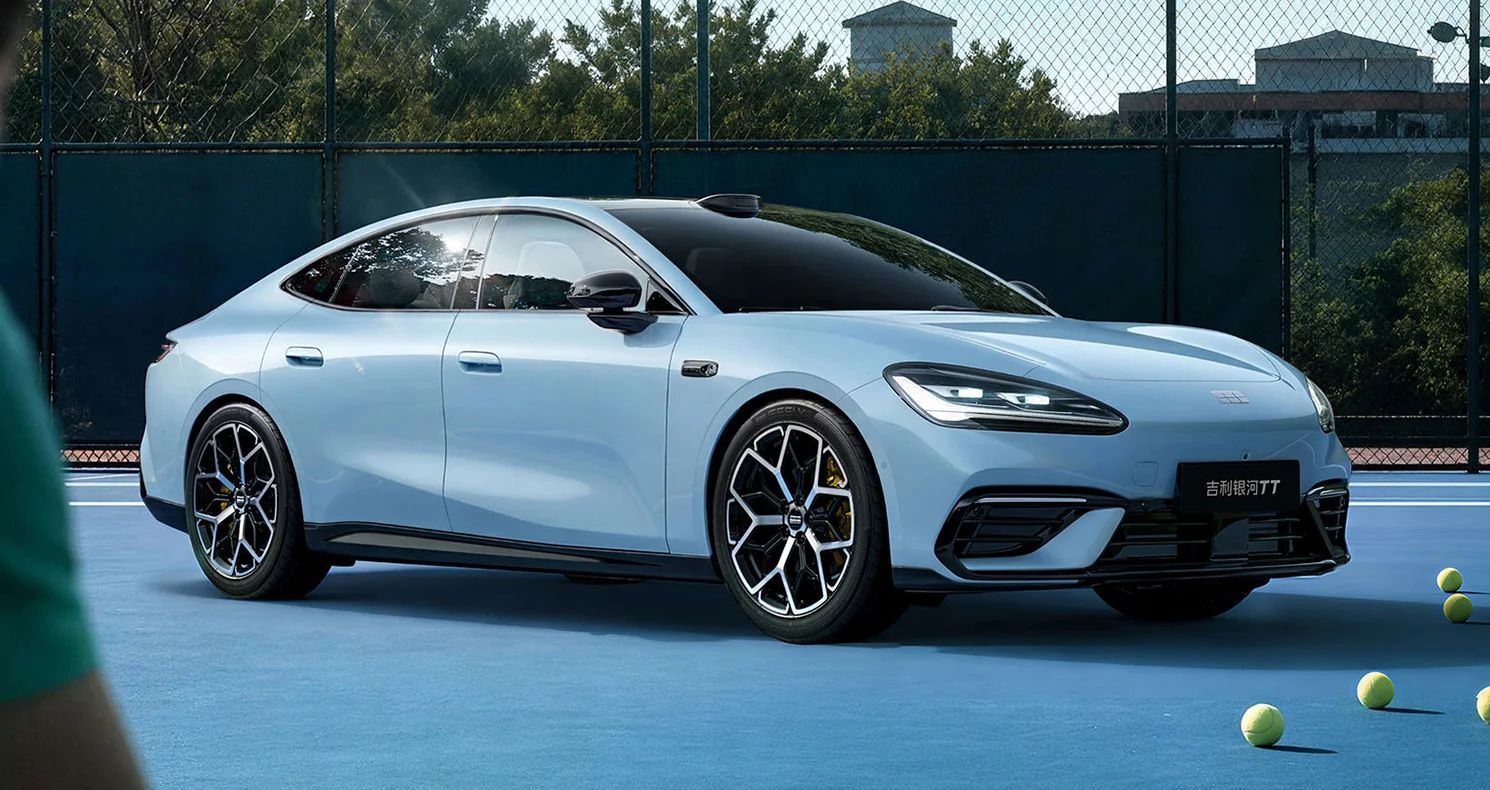
Zeekr 7GT

The ongoing global expansion of EV firms from China has played a crucial role in reducing average prices. In 2020, fewer than 100,000 electric cars were exported from China, whereas last year, that figure soared to 1.64 million units.

As noted by Nikkei Asia, emerging markets could follow in the footsteps of nations including Norway and China, where EVs are hitting the roads at a rapid pace. Across Southeast Asia and South America, for example, electric models are typically cheaper than the average hybrid. In Thailand specifically, Chinese brands currently make up almost 30 percent of new car sales.

ICE Prices Went the Other Way

Pricing data shows that while average EV prices have decreased over the past five years, average ICE prices have actually increased slightly. As this has happened, prices of plug-in hybrids have decreased considerably, likely also reflecting falling prices of lithium-iron batteries.

Adding fuel to EV demand in recent months is the ongoing conflict in the Middle East, which has driven a significant surge in oil prices. When gas gets more expensive, the math on an electric car starts to look better to a lot more buyers.

 The Average EV Now Costs Less Than The Average Hybrid, And You Can Thank China
Toyota RAV4

Tokyo Wants You In An EV So Badly A $30,150 Toyota Can Cost Just $13,820

  • Electric vehicles account for just 1.6 percent of new car sales in Japan.
  • A slew of generous subsidies aims to boost demand for EVs in the country.
  • Local subsidies in Tokyo vary depending on the make of the EV or hybrid.

Tokyo’s metropolitan government wants more residents behind the wheel of electric cars, and it’s rolling out fresh purchase subsidies worth as much as 1.3 million yen ($8,160) per vehicle to make it happen. How much a buyer actually pockets depends on which manufacturer built the car. Both individuals and businesses are eligible for the program, with no limit on the number of vehicles that can qualify.

Under the new scheme, subsidies for EVs and hybrids each climb by 300,000 yen ($1,880), pushing them to 1.3 million yen ($8,160) and 1.15 million yen ($7,220) respectively. Tokyo is keeping several existing incentives on the table too, among them a 100,000 yen ($620) payout for cars that come with vehicle-to-load capability.

Read: BYD’s Kei EV Has The Lowest Sticker In Japan And The Highest Price On The Road

On top of that, a 100,000-yen ($620) subsidy covers the installation of charging and discharging equipment, and another 150,000 yen ($940) goes to anyone signed up with an electricity provider running on 100 percent renewable energy. EV and hybrid buyers can qualify for a further 300,000 yen ($1,884) if their home or workplace uses solar power.

Not All Brands Are Treated Equally

 Tokyo Wants You In An EV So Badly A $30,150 Toyota Can Cost Just $13,820
BYD Racco

Those wanting to maximize their savings will need to carefully decide which brand they want to buy a new EV or hybrid from. According to a report from Nikkei Asia, Toyota, Nissan, and Honda models are all eligible to receive a 400,000-yen ($2,510) subsidy, while this incentive drops to 300,000 yen ($1,880) for models from Mitsubishi, BMW, Mercedes-Benz, and Tesla. Vehicles from BYD can only receive a 100,000-yen ($620) subsidy. Daihatsu models currently receive no additional manufacturer-based subsidy.

Additional incentives are offered depending on vehicle sales. For example, manufacturers who have sold at least 60 new zero-emission vehicles in Tokyo prefecture in 2025 can get an additional subsidy. An incentive worth up to 200,000 yen ($1,250) is also available as part of a “green transformation category.”

 Tokyo Wants You In An EV So Badly A $30,150 Toyota Can Cost Just $13,820

These incentives can be stacked with those offered by Japan’s federal government, which also offers incentives valued at up to 1.3 million yen ($8,160). However, like the savings offered in Tokyo, those from the federal government vary, with vehicles using Japanese batteries eligible for the most significant savings. By comparison, those from BYD get a minimum subsidy of 150,000 yen ($940). That creates a 1.15 million yen ($7,220) gap between BYD and models qualifying for the maximum national subsidy.

 Tokyo Wants You In An EV So Badly A $30,150 Toyota Can Cost Just $13,820

Toyota’s bZ4X is among the models that qualify for the full 1.3 million yen ($8,160) national subsidy. Stack that on top of Tokyo’s maximum incentive and the total discount could hit 2.6 million yen ($16,320), trimming the car’s 4.8 million yen ($30,150) sticker to roughly 2.2 million yen ($13,820).

It is hoped these subsidies will help encourage EV sales across the country. Due in large part to the price differential between EVs and combustion-powered cars locally, EVs accounted for just 1.6 percent of Japan’s new car market in 2025.

Tesla Expects A Rush

 Tokyo Wants You In An EV So Badly A $30,150 Toyota Can Cost Just $13,820

Thanks in part to these subsidies, Tesla is preparing for a surge in demand for its vehicles. The automaker sold more than 10,000 vehicles in Japan in 2025, comfortably beating its previous record of roughly 5,900 in 2022, reports Nikkei Asia. Demand has accelerated further this year, with around 12,000 vehicles sold in the first six months of 2026 alone. Tesla has also stopped selling its traditional premium models, including the Model S, to focus on the mass-market Model 3 and Model Y.

Handling that kind of growth takes infrastructure, so Tesla is growing its delivery network from seven locations to 11 by the end of the year. The automaker has also doubled its potential import capacity to roughly 48,000 vehicles a year, which leaves plenty of headroom above even this year’s accelerated pace.

 Tokyo Wants You In An EV So Badly A $30,150 Toyota Can Cost Just $13,820

Ex-Manager Claims Lucid Dismissed His Warnings About Defect Before Large Recall

  • Over 3,852 Lucid Airs were recalled across two separate actions.
  • A senior manager says he flagged the half-shaft fault back in April 2025.
  • He is now suing Lucid for a jury trial, lost pay, and damages.

A lawsuit filed in California late last week alleges that Lucid retaliated against a former engineering manager who says he warned about issues with the Air EV’s half-shafts, months before the automaker issued two separate recalls for the car in late 2025 and in March 2026, Runtimewire reports.

In total, 3,852 Lucid Air models have been recalled in the United States. According to the most recent recall, the half-shaft bolts on Lucid Air Pure models may not be properly secured, meaning the half-shaft could disconnect from the drive unit, resulting in an immediate loss of power.

Read: Lucid’s Fix For Losing Drive Power Is A Notification That You’re About To Lose Drive Power

According to the lawsuit he filed, Neil Milne warned Lucid of “multiple failure modes” of the part in April 2025. He says he consistently challenged Lucid’s testing, validation, and documentation for safety-critical engineering work, alleging weak manufacturing controls, insufficient auditing, and missing records for important engineered decisions. The complaint states that just 225 vehicles were recalled last October, with an additional 3,627 named in a separate recall by March this year.

 Ex-Manager Claims Lucid Dismissed His Warnings About Defect Before Large Recall

The lawsuit doesn’t specify whether the faults Milne reported were the same as those listed in the recalls, though he contends the timing and similarities point that way.

In an email the complaint says was sent to Lucid product-safety officer Rick Clementz on January 13, 2026, Milne wrote, “Will say what I said originally 9 months ago. Bad design, with multiple failure modes,” Runtimewire reports. Per the same report, Lucid initially relied on a “lash detection” algorithm to analyze the Air and identify vehicles with loose half-shaft bolts while investigating the half-shaft concerns, but determined that hundreds of vehicles had slipped through, which the report links to the second recall earlier this year.

Passed Over For A Promotion And Then Terminated

 Ex-Manager Claims Lucid Dismissed His Warnings About Defect Before Large Recall

After Milne raised concerns about the half-shafts, he alleges Lucid progressively stripped him of his authority, allegedly starting by moving him out of his senior-manager role for power-electronics systems and onto thermal programs. In February this year, he was told his performance rating “does not meet expectations,” and he claims he was passed over for a charging leadership role because he had raised the half-shaft concerns.

Milne alleges Lucid retaliated against him for whistleblowing and has also accused the EV maker of wrongful termination. According to the complaint, he is demanding a jury trial and seeking lost pay, bonuses, equity, and benefits, along with punitive damages, legal fees, and damages for emotional distress.

 Ex-Manager Claims Lucid Dismissed His Warnings About Defect Before Large Recall

China Built A C1 Corvette On BYD Bones And It’s Coming To LA

  • FullGood Motors builds retro-bodied EVs on Chinese underpinnings.
  • The company was known as Songsan Motors before its rebrand.
  • None of its creations will ever be officially sold to US buyers.

While China has spent the past few years throwing new EV brands at us faster than anyone can keep track, one of its oddest car companies has slipped by almost unnoticed. That company is FullGood Motors, previously known as Songsan Motors, and we first wrote about it nearly six years ago, back when Xiaomi wasn’t anywhere close to building a car.

FullGood began life as a motorcycle club three decades ago, and it has no interest in engineering EVs from a clean sheet. Its opening move was to take BYD underpinnings and drape them in bodywork lifted from American classics, chief among them the C1-generation Chevrolet Corvette. That car, sold as the Dolphin SS, broke cover in September 2020 as a proof of concept for what the outfit could pull off. While deliveries have yet to begin, it’s apparently sold out.

Read: Songsan’s SS Dolphin Is A Plug-In Hybrid Corvette C1 Knockoff From China

\\\

Photos Weibo

Youtube channel Everything Electric recently had the opportunity to tour the firm’s facility in Beijing and see not just the Dolphin SS, but other models the company plans to bring to the market as well. One of them is the Summer, a large bus inspired by the Volkswagen T1. Like the Dolphin SS, it was first unveiled in 2020, though this one is apparently edging closer to production and should be ready to test in the coming months.

Adorned with a fantastic retro design, there’s no denying the Summer has personality, particularly when finished in bright yellow. The interior is much more modern, with three rows of seats, all of which are on rails and can spin 360 degrees. Perhaps the most intriguing thing is that the Summer has three doors on each side, meaning there are doors for each row.

\\\

Photos Weibo

FullGood’s wildest creation is a blacked-out Hot Rod adorned with a huge chrome bumper, grille, and fake chrome-plated exhausts. It also sits on retro white-wall tires. Like the Summer, the interior is much more modern than the exterior, looking much like any other entry-level EV from China. FullGood has also created a four-door version of its Corvette-inspired Dolphin, although it uses a different architecture and powertrain.

Shockingly, and despite there is no chance these cars will ever be sold in the US, FullGood plans to bring several of its models to November’s LA Auto Show, so if you’ll be at the event, you will have the chance to see them in person.

 China Built A C1 Corvette On BYD Bones And It’s Coming To LA
Screenshot Everything Electric @ Youtube

An Oil Giant Is Ripping Out Its Gas Pumps To Install BYD’s 1,500kW Flash Chargers

  • BYD’s Flash Charging tech can charge an EV from 10-97% in just nine minutes.
  • Oil company Sinopec will work with BYD to replace gas stations with EV charging hubs.
  • EVs and PHEVs fitted with BYD’s second-gen Blade batteries support Flash Charging.

In many parts of the world, EV charging infrastructure has failed to keep pace with the electric cars and batteries it’s supposed to serve. That’s not the case in China, where BYD has been rapidly expanding its network of 1,500 kW Flash Charging stations, most recently teaming up with state-owned petroleum giant Sinopec to turn gas stations into EV charging locations.

The two companies have been working together since mid-2024, and the fruits of their labor have been shown at a new charging station in Shanghai. Previously, this had been a gas station operated by Sinopec, but the oil giant obviously saw the trend among Chinese buyers towards EVs and plug-in hybrids, and knew it had to get into the EV charging game.

Read: BYD Says Its New Battery Can Recharge As Fast As Filling Up Your Gas Tank

While this is the first Sinopec location converted into a Flash Charging hub from BYD, it won’t be the last. Plenty more of the company’s fuel stations are slated for the same treatment. Running at up to 1,500 kW, these chargers can take a battery from 10 to 70 percent in five minutes, and from 10 to 97 percent in as little as nine.

A Look Into The Future

 An Oil Giant Is Ripping Out Its Gas Pumps To Install BYD’s 1,500kW Flash Chargers

Thanks to the ultra-fast design, they don’t need to be arranged like typical DC chargers. Instead, they’re set up like gas pumps with six large T-shaped chargers installed at this site, each with two plugs. As this site was once a gas station, it still includes a small convenience store and a lounge where owners can sit while their cars are charged.

For years, EV critics have been stating that charging an EV would never be as quick as filling up a combustion-powered car. Not only has BYD’s Flash Charging brought charging speeds almost in line with pumping gas, but it’s now started to actually replace gas stations. In the event of a blackout, each Flash Charger has four spare Blade batteries with a capacity of 169 kWh or 185 kWh, which can be used to top up the brand’s eligible EVs and PHEVs.

\\\\\\\\\

Mitsubishi’s New 400HP ASX VR-e Isn’t Really A Mitsubishi

  • The new ASX VR-e wears Mitsubishi badges but is largely the same as the Foxtron Bria.
  • Foxtron’s electric hatchback was unveiled several years ago with Pininfarina styling.
  • A 57.5 kWh lithium-iron phosphate battery pack sits beneath the electric hatchback.

Mitsubishi is adding an intriguing new EV to its line-up, though it won’t be sold in the United States. Revealed in Australia as the ASX VR-e, this low-slung hatchback is a re-badged Foxtron Bria, and it reaches local dealerships in the fourth quarter. The name resurfacing on an electric hatch is its own small surprise, given the history the ASX badge carries in that market.

Previewed so far with only two images, the ASX VR-e looks all but identical to the Bria, save for the Mitsubishi branding, including the company badge and a large script where the car would normally read ‘Foxtron.’ You could argue the Japanese firm got lazy by leaving the styling untouched, but the Bria was penned by Pininfarina, so the result is easy on the eyes.

Read: Mitsubishi’s New 400HP Compact Comes From The Same Factory As Your iPhone

The front-end includes a full-width LED light bar, while the main headlamp clusters sit just below it. There’s also a large black grille incorporated into the bumper. A little like the electric Dodge Charger Daytona, there’s a large duct running under the floating light bar and along the hood, aiding in aerodynamics. No images of the car’s rear have been provided, but it too should be mostly the same as the Bria.

A Fresh ‘Mitsubishi’ Cabin

 Mitsubishi’s New 400HP ASX VR-e Isn’t Really A Mitsubishi

It’s a similar story in the cabin, although the Bria has so far only been showcased in left-hand drive while the ASX VR-e is right-hand drive. It includes a large floating infotainment display in the center of the dashboard, as well as a row of shortcut buttons positioned just below it. We can also see a digital instrument cluster, a four-spoke steering wheel, and a curvaceous dashboard exactly the same as the Bria’s and far removed from any other Mitsubishi model.

Mitsubishi Australia says it will sell the ASX VR-e in LS, Aspire, Exceed, and GSR configurations, although it’s yet to reveal specifications for these models. All versions of the Bria use a 57.5 kWh lithium-iron phosphate battery, offered in rear-motor configuration with 229 hp and as an all-wheel drive, dual-motor model with 400 hp. The ASX VR-e will use the same powertrain and power figures will probably go unchanged.

 Mitsubishi’s New 400HP ASX VR-e Isn’t Really A Mitsubishi
Mitsubishi ASX VR-e above, Foxtron Bria below.
 Mitsubishi’s New 400HP ASX VR-e Isn’t Really A Mitsubishi

“ASX VR-e marks a significant milestone in our refreshed Mitsubishi range as the first BEV since the i-MiEV – Australia’s first mass-produced electric vehicle,” Mitsubishi Motors Australia chief executive Shunichi Kihara said. “The new Mitsubishi ASX VR-e continues this path of innovation with an immersive infotainment system, bold design and excellent electric driving performance.”

Pricing details should be announced alongside in-depth specifications in the coming months.

\\\\\\\

Maserati Created A Fake Manual Gearbox For Its Axed Electric Sports Car

  • The fake shifter was going to be used in the since-canceled electric MC20.
  • Maserati says it developed and patented technology for its digital shifter.
  • Maserati’s engineering boss says the GranTurismo Folgore won’t get fake shifts.

A growing number of automakers are eager to transfer the joy of driving an internal combustion-powered car into their new EVs, adding fake sounds, simulated gearshifts, and, in the future, possible vibrations, too. Maserati has revealed that it has experience with synthesizing a gearbox into its EVs.

While it was Hyundai’s N division that first brought fake gears into an EV, creating a more engaging driving experience with its Ioniq 5 N, other companies, including Mercedes-AMG, Porsche, and Ferrari, have followed suit. Maserati engineering boss Davide Danesin says the Italian brand also developed and patented its own artificial transmission, but has yet to actually launch such a system.

Read: Porsche Gave The 2027 Taycan Eight Fake Gears, On Top Of The Two Real Ones

“I would consider artificial gearboxes for some applications [when] it can improve the driving experience … we have some prototypes of it in-house. Actually, we have also delivered some patents,” Danesin revealed to CarSales.com.au. “We found out that improving the experience and controllability of the car [was] a functional advantage.”

He added that Maserati initially developed the system for an all-electric version of the MC20. However, after sensing they’d be little demand for such a model, Maserati scrapped it in early 2025.

No Shifting For The GranTurismo

 Maserati Created A Fake Manual Gearbox For Its Axed Electric Sports Car

Danesin didn’t provide in-depth details about the system Maserati developed, or if it’s more similar to what Ferrari offers with the Luce. In the electric Ferrari, the Torque Index function uses the paddles to increase or decrease the amount of torque available and doesn’t include an artificial rev-limiter.

We’re unlikely to see an EV from Maserati launch with any kind of simulated transmission in the near future. Danesin said that such a system would not suit a car like the GranTurismo Folgore, noting it is “much more [about] driving comfortably at high speed on the motorway.”

 Maserati Created A Fake Manual Gearbox For Its Axed Electric Sports Car

BMW Just Started Building Its Model 3 Rival, And Munich Will Never Be The Same

  • Initial demand for the all-new i3 electric sedan has been strong, BMW says.
  • i3 will be joined by several other Neue Klasse models at the Munich plant.
  • BMW has initially launched the i3 in 50 xDrive guise with 463 hp.

BMW has kicked off production of the all-electric i3 sedan in Germany, and the significance runs beyond the car itself. The i3 is shaping up as a legitimate rival to the Tesla Model 3, but the bigger story sits with the factory itself. From next year, BMW’s Munich plant will build nothing but EVs, ending decades of combustion-car history at the site where the company has produced vehicles since the 1950s.

Getting there took a substantial rework of the facility. BMW added a new body shop to support production of the i3 and the Neue Klasse models that follow it, along with fresh vehicle assembly and logistics areas and a new delivery hall. The company credits those changes, plus new production technologies and tighter cooperation between departments and suppliers, with cutting manufacturing costs at the plant by 10 percent.

Read: BMW’s Electric i3 Wagon Just Got Caught, And Its Roofline Hides A Trick

Orders for the new i3 opened in mid-June, and BMW says the reception has been strong enough to trigger a steep production ramp-up. The company won’t say how many are rolling out each day, though it has noted that i3 demand has outpaced even the new iX3, which drew more than 50,000 orders in its first few months.

Efficient And Powerful

\\\\\\\\

“The start of production of the BMW i3 heralds a new era for our main plant,” BMW board member Raymond Wittman said. “With the fully-electric BMW i3, we are bringing together what belongs together: The 3 Series embodies BMW more than almost any other model – and Plant Munich represents our brand more than almost any other production site.”

The i3 is initially available in i3 50 xDrive configuration. This model uses a 108.7 kWh battery pack and has two electric motors combining to produce 463 hp and 476 lb-ft (645 Nm) of torque, allowing it to hit 62 mph (100 km/h) in 4.7 seconds. More impressively, the car boasts a WLTP driving range of up to 563 miles (906 km). What’s more, the 800-volt architecture and 400kW DC fast charging support allow 263 miles (423 km) of range to be added in just ten minutes.

\\\\\\\\\\\\

Peugeot’s Pledge To Drop Gas By 2030 No Longer Holds, Confirms Seven New Models

  • Kicking off the product roll-out will be the new electric 208 and 2008 models.
  • Peugeot is also working on replacements for the 308 hatch, 308 SW, and 408.
  • A pair of radical new models built with Dongfeng in China are also coming.

Peugeot has grandiose plans. By 2030, the French brand will roll out seven new or updated models across Europe, leaning on key technologies from parent company Stellantis and splitting its attention between electric cars on one side and combustion and hybrid models on the other.

Back in late 2021, Peugeot said its European lineup would consist of nothing but EVs by the end of the decade. That promise no longer holds, though a pair of significant new EVs sits just around the corner, including a new electric 208 and an electric 2008. Both will launch alongside updated petrol and hybrid versions of the same cars.

Read: Peugeot’s First Electric GTi Does 62 MPH In 5.5 Seconds

Peugeot hasn’t forgotten about its bigger models either. Speaking with Auto Express, chief executive Alain Favey confirmed that replacements for the 308 hatchback, 308 SW estate, and the 408 are all around the corner. Playing a key role in the creation of these new models is Peugeot’s positioning within Stellantis. Given that it’s a high-selling brand, it gets first dibs on important new technologies.

 Peugeot’s Pledge To Drop Gas By 2030 No Longer Holds, Confirms Seven New Models

“It’s based on our size: Peugeot sells 1.1-million cars a year, and we have the ambition to sell 1.5m in 2030,” Favey said. “And our scale, which allows us to swallow some additional costs better than a brand with smaller volumes. There’s a benefit for Peugeot: we access new technology first, which is very important because innovation has always helped drive the brand’s appeal.”

The new electric Peugeot 208 and 2008 models will be the first from Stellantis to use the new STLA One architecture and STLA Brain electronic systems. This platform can support hybrid models, but the updated petrol and hybrid 208 and 2008 won’t use it, instead sticking with their older underpinnings.

New Cars For China, Too

 Peugeot’s Pledge To Drop Gas By 2030 No Longer Holds, Confirms Seven New Models
Peugeot Concept 6 and Concept 8

Next year, Peugeot will also launch two new cars in China, produced in partnership with Dongfeng and previewed earlier this year with the Concept 6 and Concept 8. These two concepts introduced aggressive horizontal LED lighting at the front and rear, elements which will be present on other models. As per Favey, design is a key area where Peugeot can differentiate itself from new Chinese competitors.

“The important thing for me is on the first look at any new Peugeot, people have to be able to say within a tenth of a second: ‘That can only be a Peugeot’. I keep saying to our design team: ‘Bring me cars that cannot be a Hyundai or a Kia or whatever else.’ Ours need to stand out,” he said.

 Peugeot’s Pledge To Drop Gas By 2030 No Longer Holds, Confirms Seven New Models
Peugeot e-208 GTi

Subaru Is Spending $9,650 Per Solterra Just To Get Them Off Lots

  • Marketing costs at Subaru have soared as it tries to sell its EVs.
  • In the last quarter, Subaru spent $9,650 for each Solterra sold.
  • In July, just 1,574 Solterra, Uncharted, and Trailseeker EVs found new homes.

Subaru has thrown an extraordinary amount of money at selling EVs in the US, and it has almost nothing to show for it. The Solterra, Uncharted, and Trailseeker remain exceptionally niche vehicles for the automaker. In July, the WRX almost outsold all three of them combined.

The company ramped up incentive spending during the April-June period, and it shows. Those expenses cut ¥24.9 billion ($153.8 million) from global earnings and accounted for most of the decline. Marketing costs in the US jumped 40 percent in the second quarter, averaging $2,698 per vehicle, even as the company poured more into its electric models.

 Subaru Is Spending $9,650 Per Solterra Just To Get Them Off Lots
Subaru Outback

According to Autonews, citing industry data from Motor Intelligence, incentives on cars including the BRZ, Outback, and Legacy rose 27 percent, while average spending on trucks climbed 49 percent.

Read: WRX Sales Nearly Quadruple In June After Subaru Slashed Prices By Over $5,000

Even after the increase, Subaru’s average incentive spending stayed below the industry average of $3,479 per vehicle. Its 40 percent year-over-year jump, however, dwarfed the wider market’s 4.4 percent rise.

The EV Math Gets Ugly

 Subaru Is Spending $9,650 Per Solterra Just To Get Them Off Lots
Subaru Uncharted

Motor Intelligence reports that Subaru spent an average of $9,155 for every Uncharted sold last quarter, $9,650 for every Solterra, and $8,982 per Trailseeker. For comparison, average incentives on the Outback ran $3,036. None of the three electric models looks capable of meaningfully expanding Subaru’s slice of the EV market.

The heavy spending follows the repeal of federal EV tax credits last year, which stripped away support that had propped up demand.

Big Expenses, But Low Sales

Sales data shows that through the first seven months of this year, Subaru delivered 5,275 examples of the Solterra, down 34.6 percent compared to 8,063 sold over the same period last year. In July, sales tumbled 91.2 percent from 1,562 to just 138 units. The Trailseeker and Uncharted are newer entrants to Subaru’s range, so sales figures can’t be compared to this time last year, as they weren’t available.

 Subaru Is Spending $9,650 Per Solterra Just To Get Them Off Lots
Subaru Trailseeker

Nonetheless, they’re certainly not setting any records. Year-to-date, 3,513 Trailseekers have been sold, and 2,850 Uncharted models. In July, 359 Uncharted models were delivered, as well as1,077 Trailseekers. Add up that month’s figures for all three EVs, and you get just 1,574 units, barely ahead of the WRX’s 1,438.

As the spending climbed, Subaru’s operating profit fell from $472 million in the fiscal quarter ended June 30 last year to $263.2 million over the same period this year.

Subaru Sales July ’26
July ’26July ’25% ChgYTD ’26YTD ’25% Chg
Ascent4,1523,00738.1%23,77024,486-2.9%
BRZ2332224.9%1,7851,887-5.4%
Crosstrek15,78917,628-10.4%103,412107,962-4.2%
Forester15,87311,88633.5%123,727107,85814.7%
Impreza1,4582,373-38.6%9,84017,351-43.3%
Legacy201,918-98.9%2,20113,076-83.2%
Outback13,91714,982-7.1%76,87588,239-12.9%
Solterra1381,562-91.2%5,2758,063-34.6%
Trailseeker1,07700%3,51300%
Uncharted35900%2,85000%
WRX1,438457214.7%8,5466,88824.1%
TOTAL54,45454,0350.8%361,794375,810-3.7%
SWIPE

China Built A 585-HP EV That Looks Like A Ferrari And Sounds Like A Lexus

  • Chery and Huawei revealed the Luxeed RX in full after an earlier preview.
  • Its range tops out at a claimed 529 miles under China’s CLTC cycle.
  • Pricing stays unconfirmed but should track close to the Xiaomi YU7.

The Luxeed RX, which looks suspiciously like a cross between the Ferrari Purosangue and the Xiaomi YU7, itself already likened to the same Italian exotic, will soon open for orders in China with up to 529 miles (852 km) of range on tap. The design won’t win any awards for originality, but the RX may have just enough going for it to pry a buyers away from the competition.

Previewed a couple of months ago but only now revealed in full, the RX borrows its name from a Lexus and comes courtesy of Chery and Huawei through the Luxeed brand. Back in June, the company claimed a former Ferrari chief designer had drawn it, though whether that holds up is anyone’s guess. True or not, it looks a good deal better than the new Ferrari Luce.

Read: A Chinese Brand Claims An Ex-Ferrari Designer Penned Its EV, Ferrari Wants His Name

\\\\

It has a sleek shape characterized by wide hips, flowing door panels, and a low-slung roof. The RX looks quite aggressive from the front, sporting a blacked-out grille and black air intakes, in addition to sleek LED headlights and a black badge. Perched atop the windshield is a LiDAR sensor, while flap-style door handles have also been added.

RWD And AWD

Luxeed will sell the RX with three battery packs, in rear-wheel-drive and all-wheel-drive forms. The base pack is an 81.1 kWh unit, while the other two are 100 kWh units, likely from different suppliers and possibly running different chemistries. Base models use a single motor good for 371 hp, a fair number, if nothing earth-shattering by the standards new Chinese EVs have set these days.

 China Built A 585-HP EV That Looks Like A Ferrari And Sounds Like A Lexus

Those looking for a model with slightly more grunt will be able to order the RX with dual electric motors, combining to produce 585 hp. The EV’s driving range will vary significantly depending on the powertrain specification, sitting at 434 miles (700 km) in base configuration and climbing to as high as 529 miles (852 km) in one of the 100 kWh models. Those are impressive figures, even though they are under the optimistic CLTC test cycle.

There’s no word yet on how much the RX will cost, but it should line up closely with the Xiaomi YU7, which starts at RMB 253,500 or just over $37,000.

\\\\\

Huawei’s New Flagship SUV Runs 849 Miles On A Tank And A Battery

  • Huawei and BAIC created the G9 through their HIMA alliance.
  • Stelato will sell both range-extender EV and BEV versions.
  • A rooftop tent and awning option pitch the G9 at campers.

Stelato, the Chinese company operated by BAIC and Huawei through the Harmony Intelligent Mobility Alliance (HIMA), has just revealed its first luxury SUV, the G9. Although it doesn’t have a very evocative name, the G9 does seem to have plenty going for it.

Read: Rolls-Royce Won’t Touch Minivans, But China Will

At 204.9 inches (5,206 mm) long, 80.7 inches (2,050 mm) wide, and 74.6 inches (1,897 mm) tall, riding on a 124.4-inch (3,160 mm) wheelbase, the G9 slots between a Land Rover Defender 110 and a Defender 130 in length, though it sits lower and stretches its wheelbase further than either. Like a growing number of SUVs coming out of China, it leans hard into luxury, pitched as a home-away-from-home for buyers who want their adventures wrapped in technology.

Two Powertrains, One Big Number

Stelato has confirmed both range-extender and battery-electric versions of the G9. The EREV pairs a 1.5-liter turbocharged four-cylinder with a sizable 75 kWh battery pack and two electric motors making 586 hp. Stelato says this setup is good for up to 849 miles (1,366 km) between fuel and charging stops.

\\\\\\\

Those wanting complete silence while they drive will be able to order the G9 as a BEV with a larger 120 kWh battery and the same two electric motors, also delivering 586 hp. This version will have a range of 452 miles (728 km). We don’t have any information about charging times, but the G9 does include an 800-volt high-voltage electrical architecture, so it should support quick DC top-ups.

There’s nothing particularly remarkable about the G9’s exterior design, although the flashings of silver accents do make it stand out. The LED headlights and taillights are sharp too, and those headlights can project images onto the road ahead. There’s an advanced LiDAR sensor on board as well. Stelato clearly wants G9 owners thinking about the outdoors, showing the SUV with a large rooftop tent and a two-post awning.

A Tech-First Cabin

\\\\\\

Both two- and three-row versions are on offer, with 2+3 and 2+2+2 seating layouts. The cabin is every bit the tech showcase you’d expect, built around a fully digital, three-display dashboard in the mold of a Mercedes.

Pre-sales have already begun in China, where the G9 starts at 439,800 yuan, or a little over $65,000.

\\\\\\

Tesla Co-Founder’s Mini EV Truck Out-Tows A Standard Cybertruck

  • Telo’s MT1 is the size of a Mini Cooper yet packs a 106 kWh battery.
  • Towing capacity has climbed from 6,600 lbs to a stout 8,000 lbs.
  • Brand plans to begin MT1 electric truck production later this year.

While the cheap electric truck from Slate has grabbed most of the headlines over the past year, it isn’t the only small electric pickup in development on US soil. Telo has another, and the company has spent the past three years quietly refining its compact MT1. Tiny it may be, but the towing numbers tell a different story.

Telo got its start in 2022, founded by Jason Marks, Forrest North, and Yves Béhar. There’s a strong Tesla connection here too, as North helped engineer the battery packs in the original Tesla Roadster, and actual Tesla co-founder Marc Tarpenning sits on Telo’s board and has put money into the company twice.

Read: Telo’s First Electric Truck Promises Tacoma Utility In A Pickup The Size Of A Mini

The MT1, which is roughly the same length as a two-door Mini Cooper, manages to cram in a sizeable 106 kWh battery pack and dual electric motors with a combined 500 hp. Aside from the probably impressive acceleration, the powerful dual-motor setup allows the MT1 to tow more than a normal Tesla Cybertruck, rated at 7,500 lbs (3,400 kg), despite its tiny footprint. Admittedly, higher-spec versions of the Tesla can tow up to 11,000 lbs (4,989 kg).

\\\\\\\\\\\\\\\\\

Earlier on during the truck’s development, Telo said it’d be able to tow 6,600 lbs (2,993 lbs), which is a respectable figure. In the course of extensive testing, Telo co-founder and chief technology officer Forrest North revealed the company has been able to safely push this up to 8,000 lbs (3,628 kg). Keep in mind, the Telo weighs around 4,400 lbs (1,995 kg), so that means it can almost tow double its weight.

How Much Will it Cost?

Although Telo’s creation could be easily compared to the Slate truck, it isn’t targeting the same price point. Whereas the most basic Slate will start at $24,950, the cheapest M1T from Telo is said to cost $41,520, with the base model offering a single electric motor with 300 hp and 260 miles (418 km) of range. The all-wheel-drive model, in addition to boosting power to 500 hp, will also provide around 350 miles (563 km) of range, and is expected to start at around $50,000.

Last year, Telo received $20 million in Series A funding to help put its electric truck into production. The current aim is for production to begin before the end of this year, although in the startup automotive space, delays are not uncommon, so don’t be surprised if that date gets pushed out.

The Mustang Mach-E Has Lost Half Its Sales This Year

  • Ford has sold just 13,495 Mustang Mach-Es in the US this year.
  • Demand for the E-Transit has also decreased by 87 percent.
  • Sales of Ford’s hybrid models are also down 20.5 percent through the first half.

Ford sales continue to falter in the United States, and the decline accelerated last month, dropping by 10.2 percent compared to July of last year. Although Ford was probably expecting this, it may not have been prepared for the huge decline of its electric and hybrid vehicles.

In July, sales of Ford’s electrified vehicles fell 40.3 percent from 27,042 units last July to just 16,151 last month. This consisted of 2,065 EVs, a decline of 74.9 percent, and 14,086 hybrid vehicles, down 25.1 percent compared to the 18,813 sold in July 2025. Year-to-date numbers are also rather awful. Through the first half of the year, Ford sold just 18,671 EVs in the US, down 60.5 percent, while hybrids declined 20.5 percent to 108,408 vehicles.

Read: Ford Sales Plummet Nearly 14% Even With Employee Pricing For Everyone

In July, the Mustang Mach-E performed particularly poorly. Just 1,863 units found new homes across the country, down 64.9 percent from last year. Through the first half, Mustang Mach-E sales are down 50.2 percent, from 27,093 to 13,495. Then there’s the F-150 Lightning, which Ford ended production of last December. This year, 4,622 have been sold from its inventory, down 70.9 percent, and 141 were sold in July, a 95 percent decline.

 The Mustang Mach-E Has Lost Half Its Sales This Year

In addition to these models, demand for the electric E-Transit has fallen off a cliff. Just 554 have been sold this year, down 87 percent from 4,264, and only 61 were sold in July, a 32.2 percent drop.  

Several other models are suffering this year. For example, the Escape is down 71.5 percent year-to-date to 26,736 units after production of it ended late last year. Expedition sales were down 22.9 percent in July, Ranger dropped by 2.5 percent in the same month, and Mustang was down 19.5 percent last year, although it’s now up 15.7 percent this year.

The Lincoln brand has also suffered. Its year-to-date sales are down 12.6 percent to 55,099 units, led by a 46.2 percent drop for the Corsair, which has shifted just 8,148 units this year.

 The Mustang Mach-E Has Lost Half Its Sales This Year
Total Sales
CategoryJul-26Jul-25% DiffYTD-26YTD-25% Diff
Total Electrified Vehicles16,15127,042-40.3127,079183,551-30.8
Electric Vehicles2,0658,229-74.918,67147,217-60.5
Hybrid Vehicles14,08618,813-25.1108,408136,334-20.5
Internal Combustion153,800162,271-5.21,049,3871,119,148-6.2
Total Vehicles169,951189,313-10.21,176,4661,302,699-9.7
SALES BY TYPE
SUVs59,45875,574-21.3460,960532,261-13.4
Trucks107,087109,510-2.2683,375742,658-8.0
Cars3,4064,229-19.532,13127,78015.7
Total Vehicles169,951189,313-10.21,176,4661,302,699-9.7
SWIPE
Ford Sales
ModelJul-26Jul-25% DiffYTD-26YTD-25% Diff
Bronco Sport12,09510,93810.683,58283,3760.2
Escape2,62411,216-76.626,73693,805-71.5
Bronco13,07513,798-5.290,01185,8614.8
Mustang Mach-E1,8635,308-64.913,49527,093-50.2
Edge00N/A03,040-100.0
Explorer18,90418,8370.4145,829123,76617.8
Expedition5,7977,518-22.946,20852,298-11.6
Ford SUVs54,35867,615-19.6405,861469,239-13.5
F-Series68,75573,538-6.5426,556486,386-12.3
Memo: F-150 Lightning (electric)1412,831-95.04,62215,860-70.9
Ranger5,8235,974-2.539,89238,9512.4
Maverick15,52212,02229.197,23398,078-0.9
E-Series3,0133,576-15.721,24223,040-7.8
Transit12,94313,461-3.891,86889,5182.6
Memo: E-Transit6190-32.25544,264-87.0
Heavy Trucks1,0319399.86,5846,685-1.5
Ford Trucks107,087109,510-2.2683,375742,658-8.0
Mustang3,4064,229-19.532,13127,78015.7
Ford Cars3,4064,229-19.532,13127,78015.7
Ford Brand Total164,851181,354-9.11,121,3671,239,677-9.5
SWIPE
Lincoln Sales
ModelJul-26Jul-25% DiffYTD-26YTD-25% Diff
Corsair1472,052-92.88,14815,148-46.2
Nautilus1,8682,740-31.820,05021,273-5.7
Aviator1,4301,470-2.714,85213,49110.1
Navigator1,6551,697-2.512,04913,110-8.1
Lincoln SUVs5,1007,959-35.955,09963,022-12.6
Lincoln Brand Total5,1007,959-35.955,09963,022-12.6
SWIPE

Porsche’s Boss Saved The Electric 718 And Is Eyeing A Car Above The 911

  • Porsche’s CEO says the electric 718 models will be built.
  • Michael Leiters described the electric 718 as a “fantastic car.”
  • The next-gen 718 will still be offered with combustion engines.

While there doesn’t appear to be much interest in all-electric Porsche Cayman and Boxster models within the enthusiast community, the company’s boss has confirmed it’s pushing ahead with work on the two models, confirming they will not be scrapped as previously reported.

Read: Porsche Is Sneaking Gas Power Back Into The Next 718

Ex-McLaren CEO Michael Leiters joined Porsche at the start of this year, taking the reins from VW chief Oliver Blume. Under Blume, Porsche over-invested in EVs and dented its operating profit by €1.8 billion ($2.1 billion). Leiters’ job is to steer the German brand back on course.

\\\\\\

Baldauf

During a new interview with Frankfurter Allgemeine in Germany, Leiters appeared to acknowledge the electric 718s were on the chopping block, but the company ultimately decided to push forward with the project.

“With the electric 718, we have come to the conclusion that we will build the model – because it is the best economic solution and will become a fantastic car,” he said. Leiters also stressed that Porsche evaluates projects on their own commercial merits before considering any Volkswagen Group synergies.

Tech Shared With Audi

\\\\\

Baldauf

The publication claims Porsche is sticking with the electric 718 because Audi needs to borrow components for its own next-generation sports car, expected to be an all-electric successor to the TT. Leiters pushed back on that reading: “I initially look at each project exclusively from Porsche’s perspective: Does it make economic sense or not? Only after that do potential synergies within the group play a role.”

Although Porsche will still launch the electric 718 Boxster and Cayman models, the role they play in the company’s broader line-up won’t be as important as it was initially going to be. When Porsche first started work on the electric sports cars, its plan was to sell them exclusively as EVs. However, partway through development, Porsche revealed that flagship versions would continue to be offered with combustion engines, likely using the same naturally-aspirated six-cylinder units as models like the Cayman GT4, GT4 RS, and 718 Spyder RS.

Soon after, Porsche revealed it was also reverse-engineering the new 718 family to offer combustion engines lower down in the model range. As long as these ICE models are priced competitively, it’s hard to imagine them not easily outselling the EVs.

Flagship Plans And Taycan’s Future

 Porsche’s Boss Saved The Electric 718 And Is Eyeing A Car Above The 911
Porsche Mission X concept.

Leiters also signaled that Porsche is still weighing a flagship sports car positioned above the 911. He raised it as one of several future opportunities for the US market rather than a confirmed program, and didn’t elaborate on the project.

Separately, he dismissed suggestions that the Taycan could be dropped from the lineup as the company trims complexity, saying Porsche has no plans to discontinue it in the short term.

“We’ve already started doing that. With the Taycan, we will further reduce the number of models and thus decrease complexity. We have no plans to discontinue the Taycan in the short term. We’ve invested heavily in the model and want to monitor how demand develops,” he said.

 Porsche’s Boss Saved The Electric 718 And Is Eyeing A Car Above The 911
Porsche Taycan
❌
❌