Reading view

There are new articles available, click to refresh the page.

Kia Slashed $10,000 Off Its EVs. Buyers Still Walked Away

  • Kia is on track to set another all-time sales record this year.
  • EV6 sales fell sharply from 1,887 last Nov to only 603 units.
  • Key model gains like the K5 and Sportage helped lift sales.

Car manufacturers across the US are scrambling to rekindle interest in their electric vehicles as the federal tax credit of up to $7,500 fades into the rearview mirror. The loss of that incentive has left many brands looking for new ways to attract buyers, and Kia’s approach is simple enough: slash prices.

Read: Who Needs $7,500 Tax Credit When Kia Slashes EV Prices By $10,000

The company is offering discounts worth as much as $10,000 across several models, though the numbers suggest it’s not quite having the desired effect. At least not yet.

Kia announced last month that the 2025 Niro EV, 2025 EV6, and 2026 EV9 would all be available with $10,000 in customer cash. For the Niro EV, that amounts to roughly a 24 percent markdown on the base model. Yet despite the aggressive pricing, sales remain far below the levels seen when the tax credit was still in play.

Discounts Without Traction

Last month, Kia shifted 918 examples of the three-row EV9, almost triple the number of Hyundai Ioniq 9s sold over the same period, but down significantly from the 2,155 sold in November 2024. Year-to-date deliveries are also down 30 percent from 20,066 to just 14,032.

It’s a comparable story with the EV6. Despite receiving a comprehensive facelift, sales have dropped sharply from 1,887 in November 2024 to only 603 this year. Total sales for 2025 now stand at 12,188, down 38 percent from 19,604 over the same stretch in 2024.

Kia US Sales November 2025
ModelNov 25Nov 24Diff.YTD-25YTD-24Diff.
EV99182,155-57%14,03220,066-30%
EV66031,887-68%12,18819,604-38%
K4/Forte9,32111,005-15%126,919127,867-1%
K56,4306,3781%66,64240,67264%
Soul3,2804,031-19%47,67948,747-2%
Niro5,2301,624222%28,03728,302-1%
Seltos6,2863,77866%51,97356,221-8%
Sportage15,79514,05112%165,954146,49013%
Sorento6,7238,705-23%87,43385,7222%
Telluride10,05411,568-13%111,123103,0168%
Carnival7,3624,92549%65,17244,56146%
Total72,00270,1073%777,152723,1857%
SWIPE

Kia does not break down powertrain sales of the Niro, which is sold in ICE, hybrid, and EV guises in the US. What we do know is that overall Niro sales increased dramatically from 1,624 in November 2024 to 5,230 last month.

On Track For a Sales Record

Despite the underwhelming performance of its electric lineup, Kia’s overall sales tell a different story. November saw 72,002 vehicles delivered, up three percent from 70,107 a year earlier.

The brand has now sold 777,152 vehicles in 2025 and is on course to notch its third consecutive all-time annual sales record. The gains have been driven in part by a 64 percent jump in K5 sales, a 13 percent rise in Sportage deliveries, and an 8 percent boost for the Telluride.

\\\\\\

Nio EV Splits Open Like A Can Of Tuna In A Strange Crash

  • Nio EC6 hit a concrete barrier in Shanghai and split through the rear.
  • Driver and passenger escaped without injuries after the violent impact.
  • Battery pack survived the crash and avoided any fire or thermal issues.

All too often, we read about EVs catching fire after relatively minor accidents, and in some cases, occupants were trapped inside. This story is a little different though, as a Nio EC6 was recently destroyed in a crash in China, but remarkably didn’t catch fire despite almost completely splitting in two.

This incident happened in Shanghai on Monday. It’s understood that the light pink-colored EC6 hit a concrete crash barrier side-on after cutting in front of another vehicle, causing it to clip the rear of the Nio.

Local reports suggest that the top edge of the barrow, approximately 120 mm (4.7 inches) wide, applied an extraordinary amount of pressure on the C-pillar and the area of the floor.

Read: Nio’s Mass-Market Onvo Drops Its First 3-Row SUV With More Power Than An EV9 GT

This force caused a split through the rear of the car. Remarkably, the driver and passenger of the Nio were not injured in the crash. Additionally, the battery pack wasn’t severely damaged and did not catch fire.

According to a statement released by Nio, immediately after the crash, the vehicle’s onboard safety systems reported the accident. Nio staff were alerted to the impact and quickly responded to the scene, helping the occupants receive medical treatment.

Perhaps in a thinly-veiled dig at Tesla, Nio says that the EV’s doors immediately unlocked after the collision, allowing the driver and passenger to free themselves.

\\\\

Weibo

The car manufacturer also confirmed that the EC6’s driving assistance system was not enabled at the time.

The Nio EC6 was first unveiled in late 2019 before being thoroughly updated in February 2023. The example involved in this crash was one of the facelifted models.

It’s available with either a 75 kWh or 100 kWh battery pack and sold exclusively in dual-motor guise, producing a combined 483 hp and 516 lb-ft (700 Nm) of torque.

Sources: Weibo, Nio, CarNewsChina

As EV Sales Crash Badly, Hyundai Gets Its Lifeline From Elsewhere

  • Hyundai Ioniq 5 sales fell sharply after federal tax credits ended.
  • Ioniq 6 demand also dropped significantly with sales hitting new lows.
  • Hybrids surged strongly marking their best monthly performance yet.

Hyundai is selling more hybrids in the United States than ever, a result that surely has executives reaching for the champagne. The mood, however, is muted by a sharp downturn in the company’s electric vehicle fortunes. Since the federal EV tax credit expired on September 30, demand has plunged, leaving Hyundai’s battery-powered lineup scrambling to regain its footing

How Low Can It Go?

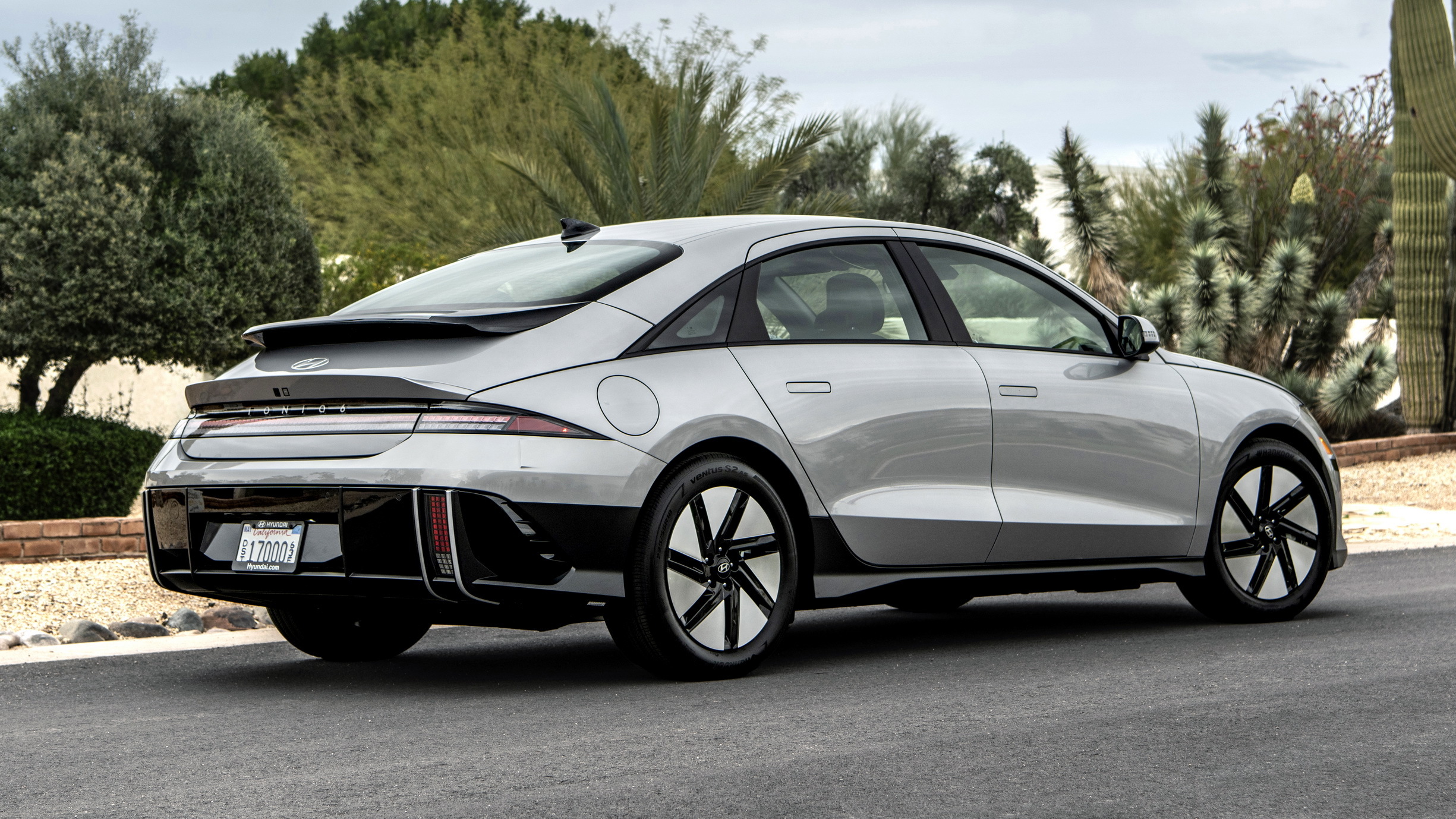
The Ioniq 5 remains Hyundai’s best-selling EV in the US, though November brought little reason to celebrate. Only 2,027 units found buyers across the country, a steep 59 percent drop from the 4,989 sold in November last year.

 As EV Sales Crash Badly, Hyundai Gets Its Lifeline From Elsewhere

There was some consolation in the fact that this figure edged up slightly from October’s 1,642 sales, but the wider picture is still uneven. Year-to-date results show a modest 12 percent improvement over 2024, totaling 44,760 cars sold.

Read: Hyundai And Kia EV Sales Collapse After Tax Credits Vanish Overnight

Things have been equally as bad for the Ioniq 6, with just 489 being sold this November, a decline of 56 percent. Cumulative sales have also slipped, from 11,055 cars in 2024 to 10,019 so far this year, marking a 9 percent decline.

The seven-seat, three-row Ioniq 9 wasn’t available last year, but it remains a relatively slow seller. A total of 315 found new homes last month, down slightly from the 317 sold in October. Year-to-date, 4,809 have been sold.

Hyundai Sales November 2025
VehicleNov-25Nov-24% Chg2025 YTD2024 YTD% Chg
Elantra10,38911,344-8%136,825125,113+9%
Ioniq 52,0274,989-59%44,76039,805+12%
Ioniq 64891,121-56%10,01911,055-9%
Ioniq 931504,8090
Kona5,7836,133-6%68,03076,326-11%
Nexo000%593-95%
Palisade9,9068,982+10%112,23799,757+13%
Santa Cruz1,5372,393-36%23,88929,991-20%
Santa Fe14,00412,376+13%127,964105,701+21%
Sonata4,0186,971-42%54,23861,701-12%
Tucson23,76220,178+18%212,037185,954+14%
Venue2,0591,521+35%27,94322,808+23%
Total Sales74,28976,008-2%822,756758,304+8%
SWIPE

Hyundai’s total November sales have fallen 2 percent from November last year to 74,289 units. So for this year, it still remains in the green, shifting 822,756 vehicles, an 8 percent rise from the 758,304 sold during the first 11 months of 2024.

Hybrids to the Rescue

The big story, though, is hybrids. Sales of electrified models jumped 42 percent, making November Hyundai’s strongest hybrid month on record. That surge has been critical in offsetting the EV slump and maintaining overall growth through the final quarter.

Among individual models, several performed particularly well. In November, The Palisade rose 10 percent to 9,906 units, Santa Fe gained 13 percent to 14,004, and Tucson continued its strong run with an 18 percent increase to 23,762. Even the pint-sized Venue grew 35 percent to 2,059 units.

The Sonata, meanwhile, took a noticeable hit in November, dropping 42 percent year-over-year to 4,018 sales, bringing its year-to-date total to 54,238, down 12 percent from the same period in 2024.

For now, Hyundai’s U.S. lineup shows a clear divide between hybrid gains and weakening EV demand. The next few months will show whether that hybrid momentum can do enough to steady the company’s position in a softening electric market.

 As EV Sales Crash Badly, Hyundai Gets Its Lifeline From Elsewhere

California EV Owners Now Risk A $490 Fine Under New Driving Rules

  • California ends solo EV access to carpool lanes after 25 years.
  • Drivers risk getting a ticket starting Dec 1 for using HOV lanes.
  • Enforcement started after a 60-day grace period for local drivers.

California has long been America’s champion of electric mobility, a place where environmental ideals and car culture somehow coexist on the same sun-baked freeway. For years, the state has rolled out incentives to get drivers into EVs, from tax credits to special lane privileges.

Chief among them was the right to glide past gridlock in carpool lanes, solo and smugly efficient. But that era has now come to a halt.

Read: California Won’t Replace $7,500 EV Tax Credit as Newsom Accuses GM of Selling Out

For more than 25 years, states have been free to decide whether EV drivers could use carpool lanes, spaces meant for vehicles carrying at least one passenger. California made its stance clear early on.

It offered qualifying motorists distinctive Clean Air Vehicle stickers, granting them unrestricted access to these faster lanes even when driving alone.

From Exemption to Enforcement

That all changed when the Trump administration declined to renew the federal authorization that supported the state’s exemption. The cutoff date was October 1, and once that law expired, so did the automatic right for solo EVs to cruise in carpool lanes.

The California Highway Patrol then gave motorists a 60-day grace period to adjust their driving habits and exit the carpool lanes. Starting from December 1, police can now issue a $490 fine.

 California EV Owners Now Risk A $490 Fine Under New Driving Rules

That’s not great news for local EV owners. Some suspect that by pulling EV drivers out of carpool lanes, which often sit empty during peak morning and afternoon hours, traffic on some of California’s highways may get even worse.

“It’s a huge, huge bummer for EV enthusiasts,” the president of the Tesla Owners of Silicon Valley club, John Stringer told The Press Democrat. “It has been one of the things we’ve been able to enjoy for years. It was one of the reasons why I bought my first EV.”

Stringer estimates that his carpool access saved him about 20 minutes each way on his daily commute, time that now returns to the general traffic pool.

In September, Rep. Mark DeSaulnier revealed that he had been lobbying in Washington, D.C., on behalf of EV drivers, trying to extend the carpool privilege for another six years through a House Resolution. Despite the effort, the proposal stalled before reaching a vote.

 California EV Owners Now Risk A $490 Fine Under New Driving Rules
Google Maps

Europe Might Not Be Ready For What China’s Most Luxurious Brand Plans Next

  • Hongqi plans 15 hybrid and EV models across 25 European markets.
  • The brand is scouting sites for local factories in multiple regions.
  • FAW-owned Hongqi sold just 771 vehicles in Europe through October.

Hongqi cars may be a common sight across China, but beyond its home market, the brand remains something of a mystery to most car buyers. That may soon change. China’s oldest and most luxurious automaker has set its sights on a sweeping European expansion, planning to introduce 15 electric and hybrid models and bring them to 25 markets by 2028.

Read: China’s Most Luxurious Brand Is Coming For Europe With 15 New Models And It’s A Red Flag

Like many of its Chinese peers, Hongqi sees global growth as essential, and Europe is high on the list. The brand’s plans, however, face a complicated landscape. The European Union has imposed heavy tariffs on Chinese-built electric vehicles, raising both costs and stakes.

In response, Hongqi is said to be exploring local production. Potential manufacturing sites are reportedly under consideration in southern Europe, eastern Europe, and the Nordic region. Building cars within the EU could soften tariff impacts and make logistics smoother, especially as the company works to establish itself in a new market.

\\\\\\\\\\\

Hongqi, a division of state-owned FAW, has sold just 771 vehicles in Europe through October, a modest figure compared with its home market reach. That number, though, may serve more as a baseline than a limit.

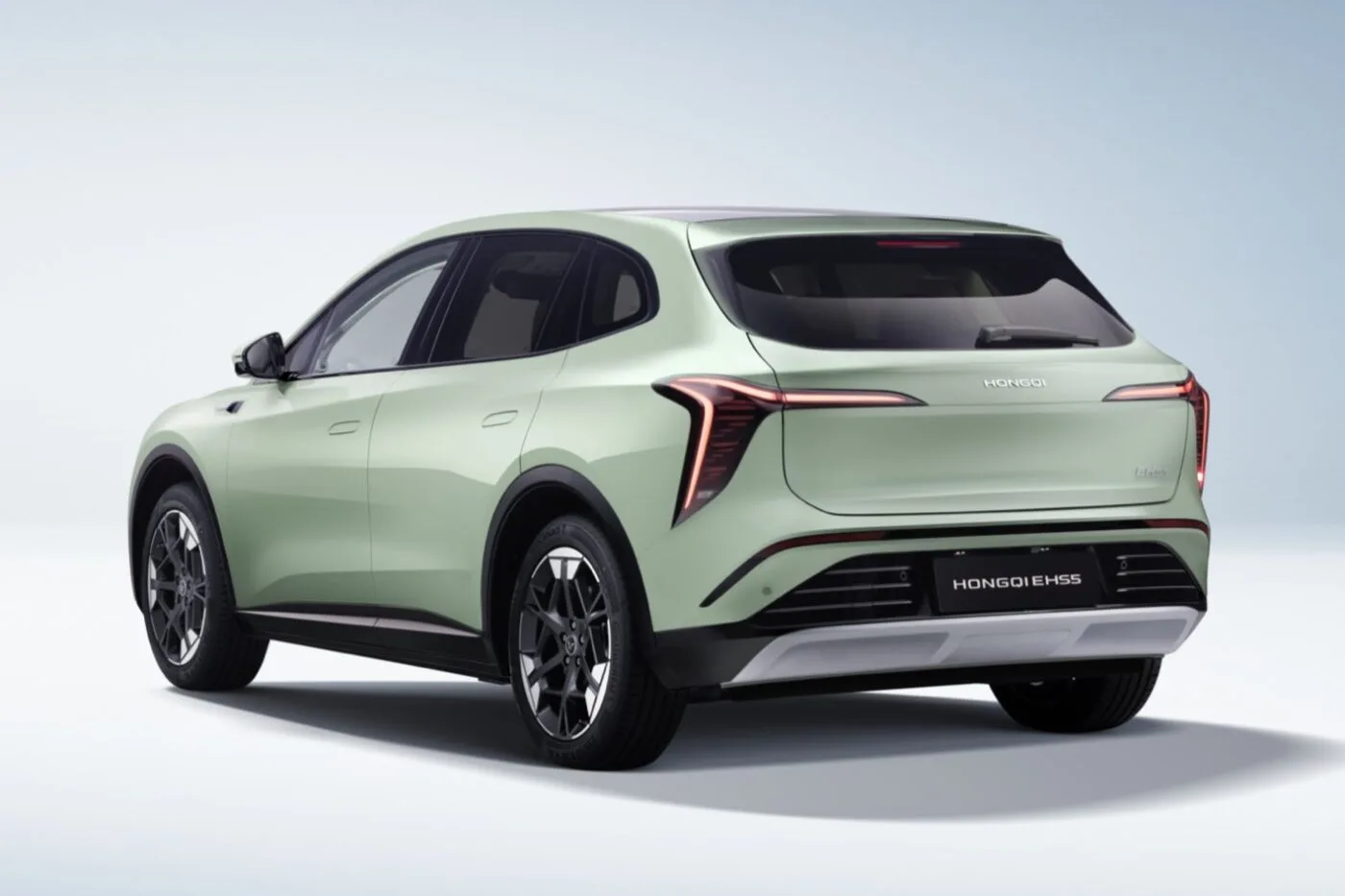
Its most significant newcomer is the EHS5, a mid-size electric SUV first shown at the Munich Motor Show. The model runs on an 85 kWh lithium-ion battery and offers a range of 342 miles (550 km).

European specifications haven’t yet been finalized, but in China the EHS5 comes in two versions: a 339 hp rear-wheel-drive model and a 610 hp all-wheel-drive setup. Until now, the EHS7 has been Hongqi’s top seller in Europe, but the new SUV could change that balance.

 Europe Might Not Be Ready For What China’s Most Luxurious Brand Plans Next
Hongqi EHS5

Pricing will be key to Hongqi’s success in Europe. Fellow Chinese brands, like MG, Chery, and BYD, have been steadily growing their sales across the region thanks to cut-price models.

FAW’s design chief, Giles Taylor, told Auto News that Hongqi’s government ties give it access to technology “at prices that you just wouldn’t believe.” That cost structure could be a powerful advantage.

“We can then leverage that pricing power whether it’s in domestic market or in Europe,” he said. “Do you really want to spend €5 for a Starbucks coffee when there’s a new little startup brand around the corner selling coffee for €1.50?”

\\\\\\\

Sources: Auto News

Alpine Thinks Driving Got Too Serious, So It’s Building EV Convertibles

  • Alpine plans two electric convertibles based on upcoming A310 and A110.
  • The A310 will debut as a fastback GT before spawning a droptop version.
  • The EVs may use the tri-motor setup from the new A390 crossover.

By 2030, Alpine plans to have seven electric models on the road, signaling a shift for the brand while still keeping room for drivers who prefer a more engaging experience. Among them will be a convertible built on the platform of the forthcoming fastback GT, currently referred to as the A310.

As we’re still quite some time away from seeing these new models in the market, details are limited. What we do know is that the A310 will initially hit the market as a four-door fastback, followed by a convertible version.

Given today’s market realities, it’s safe to assume the droptop will come as a two-door, since four-door convertibles have all but vanished.

Read: Alpine’s New A290 Rallye Throws Mud And Sparks At $70K

The fastback is expected to closely follow the design of the new Alpine A390. The sleek crossover has beautifully flowing bodywork, cutting an athletic figure on the road. Its aggressive looks, particularly the sharp front-end, would look excellent in a low-slung fastback package.

 Alpine Thinks Driving Got Too Serious, So It’s Building EV Convertibles
Alpine A390

It’s possible that the same tri-motor system as the A390 could be used, which includes a single motor at the front axle and two at the rear, delivering 396 hp in the GT model and 463 hp in the GT3.

Alpine’s New Electric Sports Car

Then there’s Alpine’s second new electric convertible. It will be based on the second-generation A110, expected to arrive next year. Unlike the outgoing model, this new one will also have a futuristic design similar to the A390. The roadster will be sold alongside the standard coupe model, according to Autocar.

As with the A310, little is known about the A110’s powertrain. Alpine presented an all-electric version of the current model, equipped with a 60 kWh battery and a rear-mounted electric motor with 239 hp and 221 lb-ft (300 Nm) of torque.

While those specs are somewhat promising, we’d expect the new model to hit the market with a larger pack and more power.

 Alpine Thinks Driving Got Too Serious, So It’s Building EV Convertibles

Source: Autocar

Ford Accused Of Advertising A Missing Feature On New Trucks

  • Ford is being sued over missing safety tech in 2024 F-150 Lightnings.
  • Plaintiffs claim Ford misrepresented features listed on window stickers.
  • Company offered $100 refunds, but owners say that barely covers losses.

Ford’s electric pickup has long been seen as a bellwether for mainstream EV demand, but the latest news surrounding it has little to do with torque or battery range. Instead, the company now faces scrutiny of an entirely different kind inside a courtroom.

Read: F-150 Lightning Production Halted Indefinitely As Ford Bets On Gas Trucks Again

Ford is being sued in the United States over claims that certain 2024 F-150 Lightning models advertised with a Forward Sensing System were delivered without it. The lawsuit alleges that customers have “incurred damages” due to the missing safety feature and that the company’s efforts to make amends have fallen short.

Missing Sensors or Missing Disclosure?

The class action, filed in the US District Court for the Eastern District of California, argues that the window stickers on 2024MY F-150 Lightning models clearly state the vehicles are equipped with the Forward Sensing System, which includes several parking sensors on the front bumper.

Ford reportedly notified U.S. dealerships on March 31 that every 2024 F-150 Lightning advertised with the system was actually built without it. The company subsequently began contacting customers, offering a $100 refund to address what it described as a window-sticker error.

 Ford Accused Of Advertising A Missing Feature On New Trucks

What the Plaintiff Claims

The plaintiff named in this new lawsuit, Ibrahim Lunawadawala, contends that the refund offer is negligible, pointing out that installing equivalent aftermarket sensors would cost substantially more. The filing states that Ford “has been unwilling to provide adequate compensation to aggrieved consumers.”

“Plaintiff Lunawadawala has suffered an ascertainable loss because of Ford’s misrepresentations, including but not limited to, diminished value of his vehicle and other consequential damages,” the lawsuit continues, as cited by Carcomplaints.

Production Pause and Broader Troubles

This legal development arrives just weeks after Ford confirmed it had indefinitely paused production of the all-electric F-150 Lightning, redirecting resources toward gas and hybrid models instead.

The decision was made not just to address falling sales of the model, but also because of a huge fire at a Novelis aluminum plant in Canada that supplies Ford with the aluminum it needs for all F-150 models.  

\\\\\\\\

Sources: Law, CarComplaints

Toyota Promises The Electric Hilux Will Be ‘Attainable’, Just Not Affordable

  • Hilux BEV could prove popular with mining companies in Australia.
  • Toyota confirmed the electric Hilux will cost more than diesel models.
  • A 59.2 kWh battery powers twin electric motors producing 193 hp/

Earlier this month, Toyota pulled the covers off its long-awaited battery-electric Hilux, built on the thoroughly reworked ninth-generation platform. While powertrain specifications for the model have been released, Toyota has yet to confirm pricing, saying only that it will be “attainable.”

Read: New Toyota Hilux Brings Sumo-Inspired Looks And EV Option

The complete list of markets where the Hilux BEV will be sold is unclear, but we do know that Australia will be among them. Local buyers will see the Hilux BEV arrive in the first half of 2026, with Toyota initially targeting fleets rather than private owners.

Large mining operations are expected to be the main customers, given the suitability of electric drivetrains for underground work.

Pricing Expectations

While recently speaking with local outlet Drive about the new truck, Toyota Australia vice president for sales and marketing Sean Hanley acknowledged the Hilux BEV will “be dearer than the diesel cars we’ve got right now.”

Prices for the new Hilux equipped with the mild-hybrid diesel engine will start at AU$65,990 ($42,800), and it’s not beyond the realm of possibility that the BEV could add AU$15,000 ($9,700) to that figure, meaning this model could be positioned near the top of the Hilux range.

\\\\\\\\\\\

“We know this is not going to be our biggest seller, but it’s got to be competitive and affordable for those that want it, so it’s got to be attainable,” Hanley added.

“There’s no point putting it out there if it’s going to be a hundred grand (AU$100,000), you know what I mean, like maybe you’re referencing. It’s got to be achievable, it’s got to be attainable.”

Toyota has equipped the Hilux BEV with a small 59.2 kWh battery pack and dual electric motors delivering 193 hp. The pickup has a quoted range of just 149 miles (240 km).

A Niche Future

\\\\\

Despite some interest from private buyers, Hanley is realistic about where this model fits. He describes it as a niche vehicle, built with clear intent rather than broad market ambition.

“Where this will appeal will actually be mining – massively. Again, I don’t wanna sit here and say to you ‘it’s gonna take the world by storm and volume’. [It’s] not going to do that. It’s not meant to do that. That’s not why we’re launching it,” he said.

Still, he admits there could be some crossover appeal. “There is a niche market out there where we can put this car, and in mining it will be, I think, our biggest target market. Now, that’s not to say some tradies may not want it. They may… it’s possible.”

\\\\\\\

Ford’s First Heavy Duty EV Truck Swaps Diesel Grit For Electric Grit

  • Ford F-Line E debuts as an all-electric heavy-duty truck in Europe.
  • Top-spec 6×2 version packs four 98 kWh batteries and 523 hp.
  • Smaller 4×2 variant uses three packs with a 315 hp electric motor.

While Ford has walked back some of its more ambitious electric vehicle goals lately, the company is still pushing forward with notable investment and new product launches.

The Ford Truck division’s first-ever, production battery-powered creation, however, isn’t something customers will find parked at their local dealership. Instead, it’s a dedicated all-electric rig called the F-Line E.

Read: Mercedes Takes On Tesla Semi With New eActros 600 EV Offering 311 Miles Of Range

Ford Trucks operates as the heavy-commercial arm of Ford Otosan, the long-running joint venture between Ford and Turkey’s Koç Holding. The partnership oversees the design, engineering, and production of tractors, construction vehicles, and heavy-duty haulers serving markets across Europe, the Middle East, and Asia.

Production of the F-Line E will take place under Ford Otosan, with the model making its first appearance at the Solutrans fair in France, displayed in both 4×2 and 6×2 configurations.

The largest of the available models has no fewer than four 98 kWh nickel manganese cobalt batteries, making for a combined 392 kWh or a usable 314 kWh. Ford says this is enough to give the F-Line a driving range of up to 186 miles (300 km).

Power is provided by a single electric motor at the rear wheels with 415 hp and 1,010 lb-ft (1,370 Nm) of torque during regular driving, but capable of producing up to 523 hp and 1,821 lb-ft (2,470 Nm). The 6×2 model also supports peak charging speeds of up to 285 kW.

 Ford’s First Heavy Duty EV Truck Swaps Diesel Grit For Electric Grit

By comparison, the smaller 4×2 version has three battery packs and a combined capacity of 294 kWh or 235 kWh usable. It also relies on a less powerful motor with 315 hp and a peak of up to 389 hp.

Ford says this version can travel up to 155 miles (250 km) on a single charge. Peak charging speeds on the 4×2 are capped at 213 kW. Both the 4×2 and 6×2 models are capped at 56 miles (90 km/h).

Built for Work

Ford Trucks positions the F-Line E as a flexible platform suitable for delivery fleets, municipal operations, and various vocational applications, including garbage collection. The truck’s modular design allows operators to tailor it for specific roles without major reconfiguration.

Alongside the F-Line E, Ford also revealed the updated F-Max at the same event. Significantly larger and powered by a revised 12.7-liter engine for 2025, the F-Max promises to trim fuel costs by 11 percent, showing that Ford’s commercial lineup isn’t going all-in on electrification just yet.

\\\\

China’s Getting Ready To Flood The World With Even Cheaper EVs And PHEVs

  • Chinese automakers debut budget EVs under $21,000 to expand abroad.
  • Falling EV prices spark fears of excessive competition and lower profits.
  • BYD and Great Wall Motor report 30 percent profit drops amid price cuts.

Chinese automakers are steering the electric era into a new phase, flooding the market with low-cost EVs and plug-in hybrids at the Guangzhou Motor Show.

With prices starting between 100,001 yuan ($14,100) and 150,000 yuan ($21,100), this new generation of vehicles sends a message that’s hard to miss: China intends to own the mass market for electrification.

Read: The Company That Started The EV Price War Now Says It’s Gone Too Far

According to Nikkei Asia, many of China’s biggest automakers are getting ready to export these budget-friendly newcomers. For Western legacy brands still wrestling with production costs and emissions targets, those prices don’t signal healthy competition so much as the opening act of a global price reckoning.

The Global Push Begins

 China’s Getting Ready To Flood The World With Even Cheaper EVs And PHEVs
Leapmotor A10

Several new EV and PHEV models took the stage at the show, among them the Leapmotor A10, which is expected to start around 100,000 yuan ($14,100) and head for export worldwide. The company’s Lafa 5 electric hatchback is set to launch at roughly the same figure.

Nio made a strong impression with its Firefly, shown for the first time in right-hand drive. Priced around 100,000 yuan ($14,100) in China, the Firefly will enter 17 new markets next year, reaching into Central America and beyond. GAC joined in with its Aion i60, a range-extender SUV starting at 109,800 yuan ($15,500).

Price Wars Continue

The Chinese automotive industry has been in a price war for the past few years, and there are no signs of cooling, as carmakers feverishly battle to gain market share. The lower end of the market is proving to be an especially fierce battleground, Nikkei Asia reports.

During the first nine months of this year alone, 2.35 million EVs and plug-in hybrids priced between 100,001 yuan ($14,100) and 150,000 yuan ($21,100) were sold in China. That makes it the nation’s largest market segment, up from fewer than 1.5 million in the same range last year.

By contrast, models priced between 150,001 yuan and 200,000 yuan ($21,100–$28,200) have held steady at around 2.3 million sales.

 China’s Getting Ready To Flood The World With Even Cheaper EVs And PHEVs
Firefly EV

There has also been significant growth in even more affordable NEVs. The number of vehicles sold in the $11,300 – $14,100 and $11,300-or-less price brackets has doubled to over 1 million units.

While the growing number of affordable models is good for Chinese customers, it’s hurting the automakers themselves. During the July-September quarter, BYD’s net profit fell 30 percent, its first decline in four years. Great Wall saw a similar hit, with profits falling 30 percent despite a 20 percent rise in sales.

Exports, meanwhile, are accelerating. Over the first three quarters of this year, Chinese brands shipped 1.75 million EVs and plug-in hybrids abroad, an astonishing 89 percent increase from the same period last year.

 China’s Getting Ready To Flood The World With Even Cheaper EVs And PHEVs

Source: Nikkei Asia

The Automaker That Swore Off Gas Engines Is Building Its Most Powerful Yet

  • Lotus reverses course with a new powerful plug-in hybrid SUV.
  • The first model launches in China in early 2026 before Europe.
  • The hybrid will recharge from 10 to 80 percent in ten minutes.

Five years ago, Lotus vowed to go fully electric, rolling out a host of battery-powered models like the Eletre, Emeya, and Evija. Yet, like several other automakers now revisiting the middle ground, it seems the British brand can’t entirely turn its back on hybrids.

Read: Lotus Hyper Hybrid Can Run 100% On ICE-Power

The first compromise looks set to arrive in the form of a plug-in hybrid Eletre, blending the company’s electric ambitions with a dose of combustion practicality. About a year ago, Lotus offered a glimpse of its newly developed hybrid system but has since kept the details close to its chest. That quiet stretch appears ready to end.

Hybrid Plans Take Shape

During the company’s most recent earnings call, chief executive Feng Qingfeng confirmed that Lotus’s first plug-in hybrid will pack 912 hp. The model will reach Chinese showrooms in the first quarter of 2026, with European deliveries following later that year.

The company has so far committed to launching three PHEVs. If the first of these is a new version of the Eletre, the second may be a hybrid version of the Emeya sedan.

As for the third model, Lotus has confirmed it will be a smaller SUV, slotting below the Eletre. This model will be launched in 2027 and is currently known as the Vision X.

Inside the Hyper Hybrid

 The Automaker That Swore Off Gas Engines Is Building Its Most Powerful Yet

Lotus has named its new powertrain the ‘Hyper Hybrid,’ built around a 900-volt electrical platform designed for ultra-fast charging. The system allows the battery to charge from 10 to 80 percent in just ten minutes when connected to suitable infrastructure.

The company also notes that the combustion engine will serve as a generator for “on-the-drive” charging, replenishing the battery while the car is in motion.

Lotus has not provided any details about the combustion engine it will use. That said, it’s a safe bet that it will be a turbocharged four-cylinder, as reported by Autocar.

Expanding The Range

 The Automaker That Swore Off Gas Engines Is Building Its Most Powerful Yet
Photo Brad Anderson / Carscoops

Feng explained that adding hybrid models broadens the company’s reach, particularly in regions where full EV adoption has been slower.

“The introduction of hybrid models offers more choice for luxury vehicle buyers and will help us expand into broader markets, including regions with slower EV adoption, such as Italy and Spain and Saudi Arabia,” he said.

Review: We Drove Lotus’ Electric SUV To See If It Can Silence Its Haters

In addition to offering performance comparable to its all-electric models, the PHEVs from Lotus will boast far greater driving ranges. Whereas the electric Eletre has a range of between 254 and 373 miles (409 – 600 km), models equipped with the Hyper Hybrid system will be able to travel up to 684 miles (1,100 km) between stops.

 The Automaker That Swore Off Gas Engines Is Building Its Most Powerful Yet

Sources: Lotus, Autocar

Audi Fixes One Of Its Most Hated Interior Features For 2026

  • Audi restores physical steering controls across its 2026 lineup.
  • Dynamic Plus mode adds sharper handling to S5 and S6 e-tron.
  • Autonomous lane-change feature joins Audi’s advanced driver aids.

Audi is preparing a host of upgrades for the 2026 model year, covering the A5, A6, Q5, A6 e-tron, and Q6 e-tron. It’s not just a set of software tweaks or safety updates either. The brand says these revisions are designed to make some of its most popular models more enjoyable behind the wheel.

Read: Audi’s AUDI Bets Big On China With A 671 HP Electric SUV That Means Business

However, Audi hasn’t yet said whether these updates will cross the Atlantic for American buyers, leaving the U.S. lineup unchanged for now.

What’s Changing Inside?

The biggest transformations happen inside. Like Volkswagen, Audi has come to appreciate that customers never really warmed to capacitive steering-wheel buttons. So from 2026 onward, all affected models will adopt a redesigned wheel fitted with two physical scroll controls, restoring the tactile precision that many drivers missed.

One of the upgrades that’s bound to be enjoyed by S5 and S6 e-tron customers will be the addition of a Dynamic Plus driving mode. Audi says that this will maximize the dynamics of both models, allowing for controlled oversteer despite their advanced quattro all-wheel drive systems and brake torque vectoring.

For all models built on the Premium Platform Electric (PPE), the regenerative braking system receives further refinement. Drivers will be able to use true one-pedal operation, bringing the car smoothly to a halt without engaging the friction brakes.

Smarter Tech

\\\\\\\\\\

Audi is also introducing a more advanced version of its driver-assistance system across its PPE and PPC models. From next year, these cars will include an autonomous lane-change function where the driver simply needs to toggle the turn signal, and the car will automatically change lane.

Following BMW’s lead, Audi will introduce a trained parking feature capable of autonomously navigating up to 200 meters on private property, retracing a saved route to or from a parking space.

Moreover, starting next year, the new A6 will come equipped with digital matrix LED headlights and digital OLED taillights that include configurable light signatures.

\\\\\\\\

Select models will gain the option of an integrated dashcam mounted at the base of the rear-view mirror. The 4K camera records both driving and parking footage, offering a built-in alternative to aftermarket systems.

Audi has also introduced several mood scenarios, or what it calls ‘experience worlds,’ into the cabin, which adjust the interior lighting, sound, climate control settings, and massage functions. Updates have also been made to the onboard gaming system, meaning controllers can now be paired over Bluetooth.

\\\\\\\\

Xiaomi’s YU7 Outsold Tesla’s Model Y And Now It’s Getting Personal

  • Xiaomi launched its Customization Service with 100 paint options.
  • Buyers can select special alloy wheels and colored Brembo calipers.
  • 24-karat gold and gold carbon fiber badges add unique touches.

Xiaomi’s YU7 has quickly found its stride in China. Only a few months into its launch, the electric SUV has seen a sharp rise in sales and, in October, even edged past the Tesla Model Y. For now, though, buyers outside China are still waiting for Xiaomi to take its EVs beyond the domestic market.

Last month, Xiaomi sold an impressive 48,654 vehicles across China. Of these, 33,662 were YU7s, meaning it is now comfortably outselling the SU7 sedan. By comparison, Tesla shipped approximately 61,500 Model Ys in October, but 35,400 of these were sent to overseas markets, meaning Chinese buyers snapped up roughly 26,100 units.

Read: A 60-Week Waitlist Just Made Xiaomi’s SUV A Flippers Goldmine

Since customer deliveries of the YU7 began in July, Xiaomi is believed to have shipped around 70,000 units in total. That’s a rapid rise for a newcomer, suggesting the SUV has struck a chord with Chinese buyers.

New Customization Options

 Xiaomi’s YU7 Outsold Tesla’s Model Y And Now It’s Getting Personal

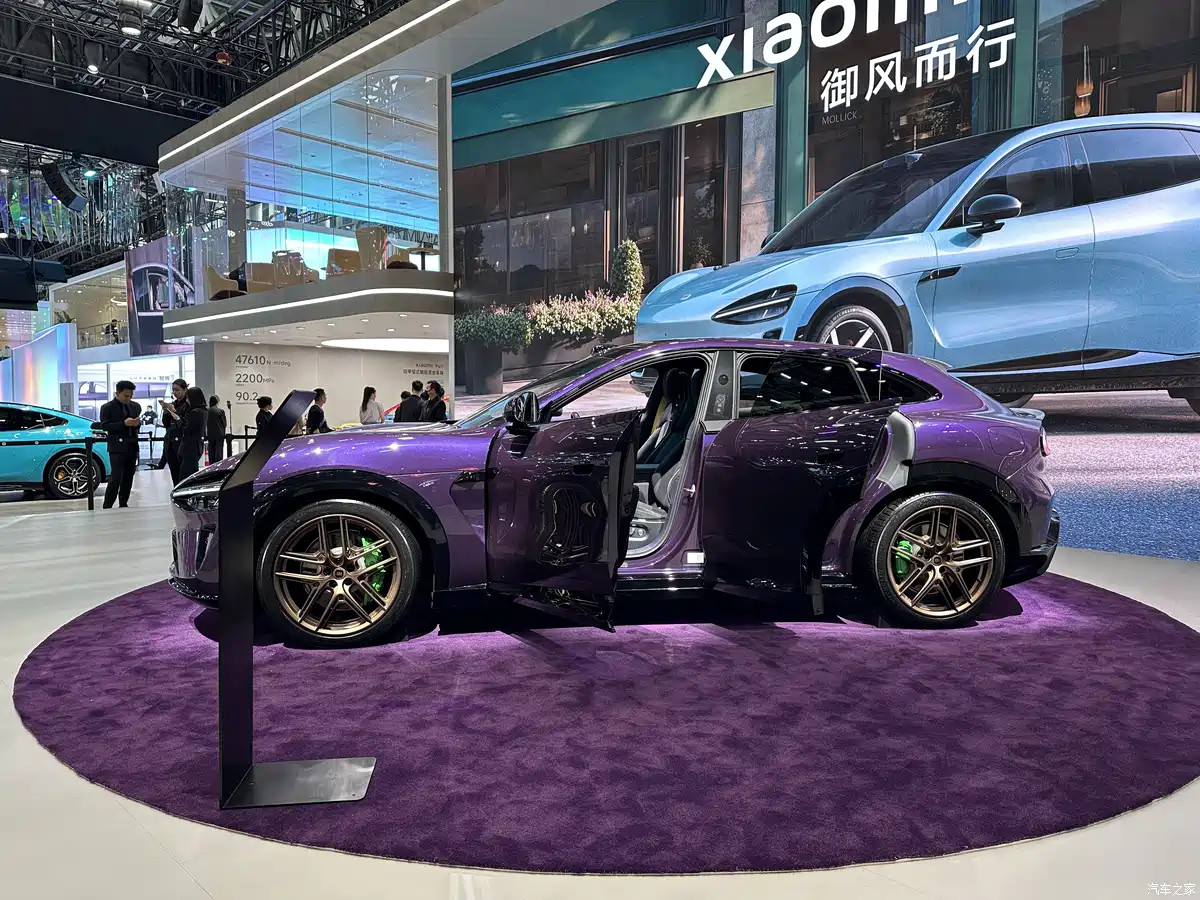
On the back of continued SUV sales success, Xiaomi announced its new Customization Service at the Guangzhou Auto Show, presenting a YU7 Max painted in Crystal Purple to mark the occasion.

The new service is effectively Xiaomi’s take on Porsche’s Paint to Sample program, with plans to roll out more than 100 new paint colors over the next three years. It’s a striking contrast to Tesla’s strategy, which restricts buyers to just a few standard colors and trims in the name of production efficiency and fatter profit margins.

The full list of paint colors has yet to be announced, but Xiaomi did say that the special finishes will be priced from 11,000 yuan ($1,500). Through the Customization Service, shoppers will also be able to choose from a selection of alloy wheels and colored Brembo brake calipers.

 Xiaomi’s YU7 Outsold Tesla’s Model Y And Now It’s Getting Personal

For buyers with a taste for extravagance, Xiaomi will also offer 24-karat gold badges or black-and-white emblems, along with gold carbon fiber versions.

Powering single motor versions of the YU7 is a rear-mounted unit delivering 315 hp (235 kW) and 389 lb-ft (528 Nm) of torque, fed by a 96.3 kWh battery pack. Xiaomi also offers dual-motor versions with 489 hp (365 kW) and 681 hp (508 kW), respectively.

An even more potent version of the YU7 is on the cards, but it’s too early to say if it will reach the same heights as the SU7 Ultra.

\\\\

This Classic BMW Coupe Swapped Its Soul For A Tesla Motor

  • Bavarian Econs Tech converted a 1972 BMW 2002 into an EV.
  • It uses a 33 kWh BMW i3 battery and a Tesla Model S motor.
  • Offers 178 hp, 125 lb-ft of torque, and a 124-mile driving range

Electric vehicles have a way of making everyday driving feel effortless. being quiet, smooth, and free from the clatter and compromise of combustion. As a daily companion, they can make traditional gas-powered cars seem like holdovers from another era.

But there’s a reason enthusiasts still care about engines. They give a car its personality, especially in vintage models like the BMW 2002. So here’s the question: would you want to cruise around in a 1972 BMW that’s been reworked to run on electric power?

Watch: Jay Leno Gives This Home-Brewed BMW 2002 Restomod His Stamp Of Approval

Currently listed on Bring a Trailer, this 1972 BMW 2002 in Golf Yellow, now known as the 2002te, has been given a new lease on life courtesy of Bavarian Econs Tech, a specialist outfit based in Munich. The conversion is thorough. The factory engine and drivetrain are long gone, replaced by the 33 kWh battery pack from a BMW i3.

Feeding that battery’s energy to the wheels is an electric motor sourced from a Tesla Model S. The motor delivers 178 horsepower and 125 lb-ft (170 Nm) of torque, all managed by a 400-volt electrical system.

Light, Quick, and Quiet

\\\\\\\\\\\\\\

Bring a Trailer

According to the seller, the car can drive up to 124 miles (200 km) on a single charge and run to 62 mph (100 km/h) in a swift 6.2 seconds, more than anyone really needs in most situations. It also tips the scales at just 2,400 lbs (1,088 kg), and we’re sure it’s plenty of fun to throw around corners.

However, in addition to lacking an engine and all of the associated noises and vibrations, the car doesn’t have a transmission, so the next owner won’t be able to enjoy the thrill of changing gears.

An individual from Bavarian Econs Tech who built the car says the 2002 arrived at their workshop with just 31,000 km (19,262 miles) under its belt and was free from rust. Impressively, the exterior paint remains original, as is most of the interior.

There are updates, though. A new set of bucket seats have been installed alongside refreshed carpets and an updated air conditioning system. Helping to further modernize the car is a Bluetooth audio system with eight Helix speakers and a subwoofer.

Adding to the car’s striking looks are 13-inch Alpina wheels clad in Michelin XDX-B tires. The EV-powered BMW has also been equipped with adjustable KW Racing V3 Classic coilovers and all of the important bushings have been replaced with polyurethane ones from Powerflex.

If a classic with an electric twist is right up your alley, the auction is now live on Bring a Trailer. Take a look at it over here and get your bid in while it’s still up.

\\\\\\\\\\\\\

Bring a Trailer

VW’s Chinese EVs Cost Half As Much And They’re Coming For The Rest Of The World

  • VW can build Chinese EVs for half the cost of European production.
  • Lower labor and faster R&D cut time by 30 percent at its Hefei hub.
  • Tariffs make exporting to Europe less viable for now, VW admits.

Volkswagen is leaning further into its Chinese operations, looking to export more vehicles built there to overseas markets. albeit with the notable exception of Europe. The strategy hinges on a striking cost advantage that makes developing cars in China significantly cheaper than in other regions.

As established European carmakers face growing pressure from newer Eastern brands, many are beginning to shift attention toward their Chinese production networks. For legacy manufacturers like VW, the appeal is increasingly hard to ignore.

Read: VW Will Start Selling Its Chinese Models Overseas

According to a report from the Financial Times, Volkswagen says it can develop and build a new electric vehicle in China from scratch for about half the cost of doing so elsewhere.

What Makes China So Efficient?

 VW’s Chinese EVs Cost Half As Much And They’re Coming For The Rest Of The World

Volkswagen has invested billions of dollars into the local market, and, thanks to things like lower labor costs, shorter development periods, better battery procurement, and supply chain efficiencies, costs can be reduced by 50 percent.

Part of this efficiency comes from VW’s new research and development hub in Hefei, which is playing a key role in shaping the company’s next-generation EVs. By optimizing integration across teams and disciplines, the automaker now claims it can develop a new electric model in roughly 30 percent less time than before, a process that would traditionally take around 50 months.

Thomas Ulbrich, chief technology officer at Volkswagen Group China, described the facility as offering “an entirely new level of integration,” with software, hardware, and vehicle validation processes all running in parallel.

“We can now run software, hardware and full-vehicle validation processes in parallel, shorten decision loops and bring innovations to maturity much faster,” he told the Financial Times.

 VW’s Chinese EVs Cost Half As Much And They’re Coming For The Rest Of The World
VW ID.Unyx 08

VW has already begun shipping Chinese-built petrol sedans to the Middle East, and Ulbrich confirmed the company is exploring similar exports to countries across Southeast and Central Asia. That said, there are no plans to bring these China-built vehicles to Europe.

The reason is twofold. First, the electronic architecture of China-developed vehicles doesn’t align with European standards. Second, tariffs on Chinese-made EVs would likely negate any cost benefits, undermining the very strategy that makes this approach viable elsewhere.

VW’s Chinese Plans

VW plans to release 30 new EV models in China over the next five years. These models will be crucial in helping the automaker regain market share in China.

Data reported by The Financial Times reveals that VW does not rank among the top 10 battery-electric or even plug-in hybrid brands in China, although it still holds a 20 percent share of pure ICE model sales.

 VW’s Chinese EVs Cost Half As Much And They’re Coming For The Rest Of The World

Source: Financial Times

BYD Sold Nearly Three Times As Many Cars As Tesla In Europe

  • Chinese automakers now hold 6.8% of total European new car sales.
  • BYD’s European sales jumped 206.8% in October compared to 2024.
  • Tesla’s sales plunged 48.5% in October to just 6,964 vehicles.

Chinese carmakers continue to accelerate their presence across Europe, steadily carving out a larger slice of the market. Once regarded as niche entrants, they now account for a 6.8 percent share of total European sales in October, with powerhouses like SAIC and BYD leading the charge while Tesla’s momentum falters.

Chinese Brands Gain Ground

In that month alone, around 75,000 vehicles from Chinese brands were sold across the European Union, the UK, and EFTA nations, which include Iceland, Liechtenstein, Norway, and Switzerland.

SAIC enjoyed a particularly strong month, with sales soaring from 17,552 in October last year to 23,860 this October. Across the January-October period, its sales have also risen 26.6 percent from 197,686 to 250,250 units.

Read: BYD’s European Expansion Is About to Explode

BYD is also enjoying a surge in demand and has almost triple Tesla’s sales. In October, the company sold a total of 17,470 vehicles across the region, a 206.8 percent rise from 5,695 last October. Year-to-date, its sales have increased by a monumental 285 percent, from 35,949 to 138,390 units.

Tesla’s Bloodbath

 BYD Sold Nearly Three Times As Many Cars As Tesla In Europe

Things are not looking so pretty for Tesla. In October, its European sales slipped 48.5 percent from 13,519 units in the same month last year to just 6,964 in 2025. That means it fell even behind Porsche, which itself recorded a 26 percent sales decline but still usurped Tesla with 7,653 sales. Through the first ten months of the year, the American brand’s local sales have fallen 29.6 percent to 180,688.

Of the new cars sold by Chinese brands across the region in October, 36 percent were battery-electric vehicles. Of these, the small BYD Dolphin was the best-seller.

EU + EFTA + UK New Car Sales
 BYD Sold Nearly Three Times As Many Cars As Tesla In Europe

Europe Sales Rise

Across Europe, new car registrations have edged up 1.4 percent, with battery-electric vehicles now holding a 16.4 percent share.

In the first ten months of 2025, 1,473,447 new battery-electric cars were registered across the EU. This growth owes much to the four largest markets, including Germany (+39.4%), Belgium (+10.6%), the Netherlands (+6.6%), and France (+5.3%), which together make up 62 percent of the total. In October alone, year-on-year battery-electric registrations rose by 38.6 percent.

Hybrid-electric cars continue to dominate as the most popular powertrain, holding a 34.6 percent share of the market. Between January and October 2025, registrations reached 3,109,362 units, led by Spain (+27.1%), France (+26.3%), Germany (+10.3%), and Italy (+8.9%).

 BYD Sold Nearly Three Times As Many Cars As Tesla In Europe

Plug-in hybrids are also on the upswing, totaling 819,201 registrations, a 43.2 percent increase over last year. Demand has been especially strong in Spain (+109.6%), Italy (+76.5%), and Germany (+63.4%). Plug-in hybrids now represent 9.1 percent of all EU registrations, up from 7 percent a year ago.

Petrol-powered cars still hold 27.4 percent of the market, though their share has dropped from 34 percent last year as combustion sales continue to contract. Through October, petrol registrations fell 18.3 percent across major markets, with France down 32.3 percent, Germany 22.5 percent, Italy 16.9 percent, and Spain 13.7 percent.

Diesel continues its downward trend too, shrinking by 24.5 percent to a 9.2 percent market share.

 BYD Sold Nearly Three Times As Many Cars As Tesla In Europe

Mercedes Built An EV That Pretends To Growl And Brad Pitt’s Selling It

  • The road version of AMG’s GT XX concept should make around 1,000 hp.
  • AMG’s Taycan and e-tron GT rival includes a realistic fake ICE soundtrack.
  • George Russell showed its drifting skills and sleek lines in a promo video.

Mercedes-AMG is steadily advancing development of its long-awaited all-electric GT 4 Door Coupe, and to give the project some star-powered visibility, it has enlisted Hollywood heavyweight Brad Pitt.

Fresh from his work on the upcoming Formula 1 film, Pitt made an appearance in Las Vegas during last weekend’s Grand Prix, where he took center stage in a new promotional push for the car.

Read: Mercedes-AMG’s New Hyper Sedan Sheds Most Of Its Camo At Vegas GP

The German brand brought along a lightly-disguised prototype of the new AMG GT 4 Door Coupe to Sin City, offering Mercedes F1 driver George Russell the chance to drive it down the Strip. The same car was also used in a commercial filmed with Pitt and Russell that highlights some of the car’s performance prowess.

In the video, Brad Pitt rocks up at a valet counter to pick up the keys to his ride, which is the camouflage prototype. The valet worker calls on the driver, none other than Russell himself, to bring the car up to Pitt.

In the process, Russell performs some epic burnouts and drifts through the hotel’s underground car park before bringing it up to the hotel’s entrance and handing it over to Pitt.

What Powers It?

\\\\\\\\\

The car featured is the road-going version of the AMG GT XX prototype that was unveiled earlier this year. Like that car, the production model has a sleek design that should nicely position it as a rival to the Porsche Taycan and Audi RS e-tron GT.

While the idea of an all-electric sedan from AMG will no doubt upset some purists, it’s clear the carmaker is eager to ensure it is fun to drive and provides more than enough driving thrills.

Underpinning the new AMG GT 4 Door Coupe is the AMG-EA platform using aluminum, steel and lightweight fiber composites in its construction. Like the concept, it should use a trio of axial flux motors combining to pump out upwards of 1,000 hp.   

Tesla Sued Again After Doors Wouldn’t Open As Car Burned

  • Lawsuit claims Model 3 doors failed to open after a fiery crash.
  • Witnesses tried rescuing the couple but couldn’t open the doors.
  • Complaint says Tesla sold cars with faulty door handle designs.

Another day brings another legal challenge for Tesla, this time centered on a tragic crash that once again raises questions about the company’s design choices.

The latest lawsuit claims that the electrically operated door handles of a 2018 Model 3 failed to function after a collision and subsequent fire, trapping one of the occupants inside and leading to her death.

Read: Trapped Children Die In Tesla Fire After Door Handles Allegedly Wouldn’t Open

It marks yet another serious concern for Tesla, one that could prove costly and push the automaker to reexamine how its vehicles handle emergency situations, particularly when power is lost.

Door Handles Under Scrutiny

Filed last week in the U.S. District Court for the Western District of Washington, the complaint outlines a sequence of events. On January 7, 2023, Jeffrey Dennis was driving his Tesla Model 3 with his wife in Tacoma, Washington, when the car reportedly accelerated suddenly and struck a utility pole at the corner of South 56th and South Washington Streets.

Shortly after impact, the EV caught fire. It’s alleged that several witnesses tried to open the Tesla’s doors to rescue the couple, but were unable to do so because they failed to operate without battery power. The lawsuit says that some witnesses even tried to break the Model 3’s windows with a baseball bat, but it also failed.

First responders eventually managed to extract the pair, though Wendy Dennis succumbed to her injuries at the scene. Jeffrey Dennis suffered severe burns to his legs.

Could It Have Been Prevented?

 Tesla Sued Again After Doors Wouldn’t Open As Car Burned
US District Court

The complaint says the Model 3 has a “unique and defective door handle design” that prevented rescuers from freeing the couple. It is also alleged that Tesla knew about the defect with the door handle but failed to address it, and continued to market and sell the popular EV.

The lawsuit doesn’t stop at the door handles. It also claims that Tesla’s Automatic Emergency Braking system failed to activate as the vehicle sped toward the utility pole. In addition, it accuses the company of using “a highly explosive battery chemistry” despite the existence of safer, more practical, and less costly alternatives.

Jeffrey Dennis is seeking financial relief for the wrongful death of his wife and his long-term injuries, as well as compensatory damages and punitive damages under California law.

EU Regulator Tells Tesla Fans To Quit Acting Like Spam Bots After FSD Denial

  • RDW denies Tesla’s claim it committed to approving FSD by February.
  • Tesla urged fans to contact the regulator, sparking a backlash online.
  • Experts warn such tactics risk undermining regulatory independence.

Tesla took to X over the weekend to announce that Dutch automotive safety regulator RDW had committed to approving its Full Self-Driving (Supervised) system in February 2026. As it turns out, Elon Musk’s company jumped the gun, and the agency made no such commitment.

Watch: Tesla Fans Gave FSD The Wheel For Elon’s Coast-To-Coast Trip

The claim sparked quick clarification from the regulator and a flurry of online chatter about Tesla’s ongoing bid to expand FSD beyond American roads.

While Tesla has been offering its Full Self-Driving system in the United States for years, it hasn’t been able to do the same in Europe.

Europe’s Roadblock

According to the carmaker, it has already provided FSD demonstrations “to regulators of almost every EU country” and believes the most effective path to rolling out the system across the continent is through the RDW, with the goal of securing an exemption for the feature.

In its X post, Tesla Europe & Middle East proclaimed that “RDW has committed to granting Netherlands National approval in February 2026.” The company even urged followers to contact the regulator directly to “express your excitement & thank them for making this happen as soon as possible.”

However, the regulator quickly pushed back. In a statement published on its website, the regulator explained that it expects Tesla to demonstrate FSD next February, but it denied making any commitment to approval.

Tesla has been working hard toward shipping Full Self-Driving (Supervised) in Europe for over 12 months now. We have given FSD demos to regulators of almost every EU country. We have requested early access, pilot release programs or exemptions where possible.

We have developed…

— Tesla Europe & Middle East (@teslaeurope) November 22, 2025

“We do not share details about ongoing applications from manufacturers, as this concerns commercially sensitive information,” it wrote. “Both RDW and Tesla are aware of the efforts needed to reach a decision on this matter in February. Whether this timeline will be met is yet to be determined in the coming period.”

Regulator Grows Tired of Tesla Fans’ Calls

The regulatory agency also asked Tesla’s fans to stop contacting it about FSD, noting that “it takes up unnecessary time for our customer service,” adding “this will have no impact whatsoever on whether or not the schedule will be met.”

Recently, Tesla boss Elon Musk said, “pressure from our customers in Europe to push the regulators to approve would be appreciated.”

Speaking with Bloomberg, the head of safe autonomy at the University of Warwick, Siddartha Khastgir, said it’s unusual to see a carmaker attempting to pressure the RDW.

“An approval process of an automated driving system is a deeply technical one to ensure the safety of the public,” he explained. “The sanctity of any such approvals is ensured by its independence and rigor, not force. While public sentiment is important for all authorities, this shouldn’t undermine the rigor of the approval process.”

The EV Battery Bubble Might Be About To Burst

  • AlixPartners predicts EV battery capacity will triple global demand by 2030.
  • Ford cuts its planned battery capacity by 35 percent amid lower EV sales.
  • Panasonic’s expansion stalls as Tesla demand dips in North America.

Many automakers spent the past few years racing to electrify their lineups, betting heavily that global demand for electric vehicles would surge. The industry poured billions into new EV battery plants across the world, particularly in North America.

Now, a new report suggests that much of that production capacity could end up sitting idle by the end of the decade.

Overcapacity Ahead

AlixPartners speculates that global production of EV batteries will be roughly three times greater than demand for EVs in 2030. By that time, EV battery production capacity in North America is expected to roughly quadruple.

According to Nikkei Asia, many manufacturers are already scaling back their ambitious battery production plans. Ford, one of the most aggressive investors in U.S. battery manufacturing, is a prime example. The company is building a $5.8 billion facility in Kentucky with its partner SK On, which is expected to employ about 5,500 people by 2030.

Read: Massive US Battery Plant Grinds To A Halt After Trump’s Tariffs

However, the Blue Oval already reduced its planned battery capacity by 35 percent. It also recently halted production of the F-150 Lightning indefinitely due to dwindling demand in North America.

 The EV Battery Bubble Might Be About To Burst

General Motors has also been forced to make changes. It has been confirmed that 1,550 workers at the battery plants it operates alongside LG Energy Solution in Ohio and Tennessee will be sacked due to “slower near-term EV adoption and an evolving regulatory environment.”

Nikkei Asia also reports that Panasonic opened a new battery factory in Kansas in July, but has yet to say when it will reach full-scale production. Initially, it was expected to hit this mark by the end of the 2026 fiscal year. However, as a major supplier to Tesla, it has been affected by the fall in demand for EVs as well.

Slowing EV sales in the States have led to the cancellation of some endeavors entirely. T1 Energy was planning to build a battery plant in Georgia, but has since canned the project.

Changing Policy Winds

The Trump administration’s policies have further tilted the scales toward internal combustion vehicles. By removing the $7,500 federal EV tax credit and scrapping penalties for missing emissions targets, the government has made it easier for carmakers to ramp up traditional ICE production once again.

 The EV Battery Bubble Might Be About To Burst

Source: Nikkei Asia

❌