BYD will start large-scale production in Hungary before the end of the year.
Existing and underutilized factories in Spain, France, and Italy are under consideration.
BYD is also looking to establish a battery plant in Europe in the future.
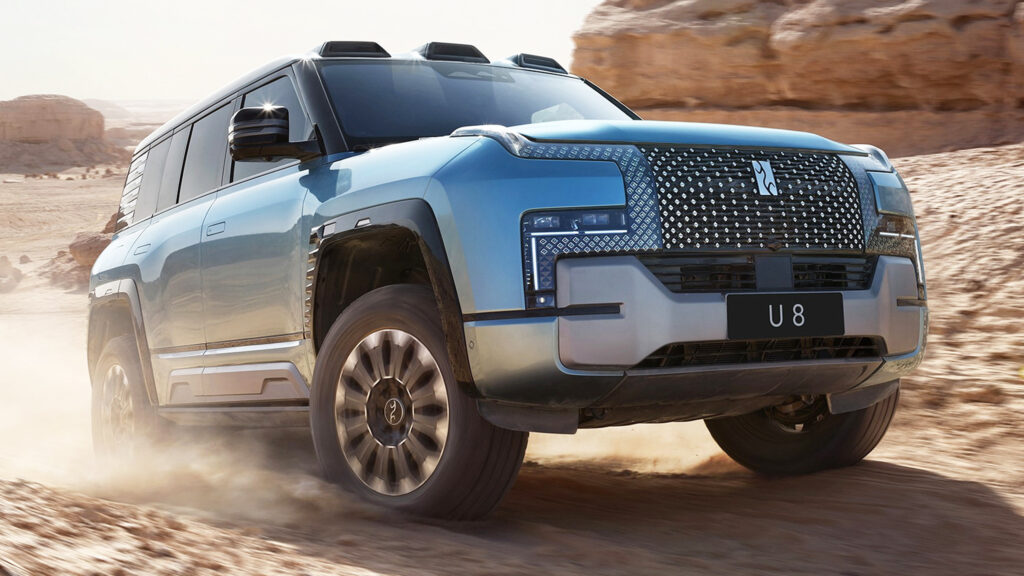
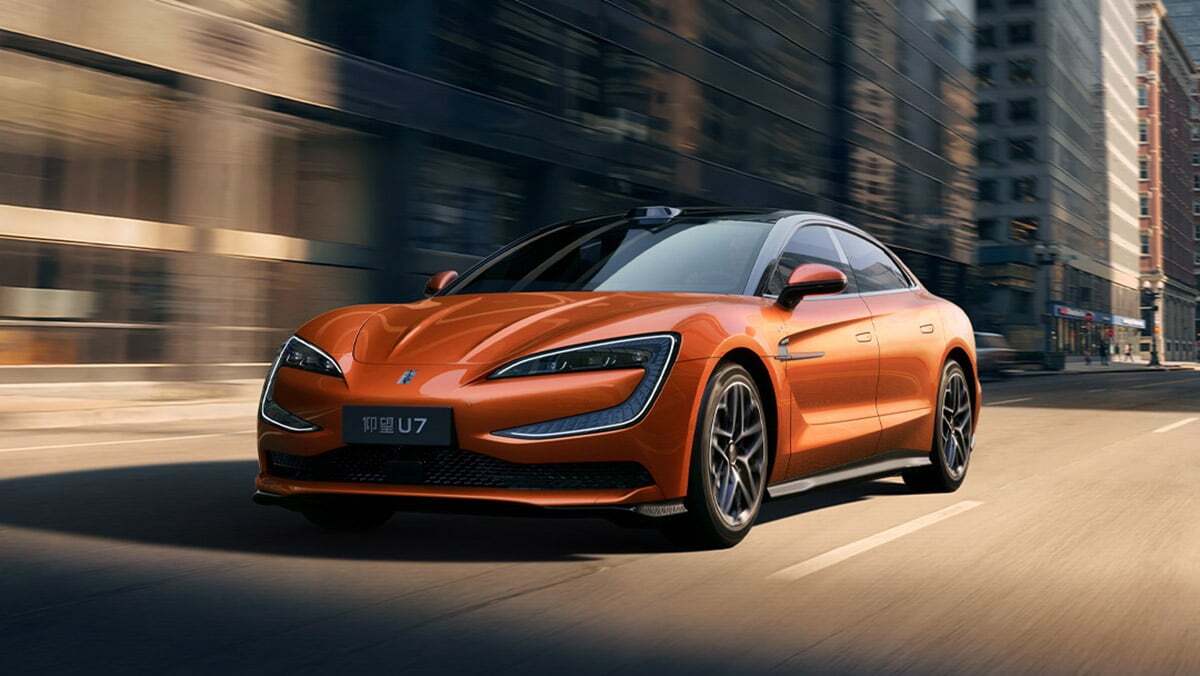
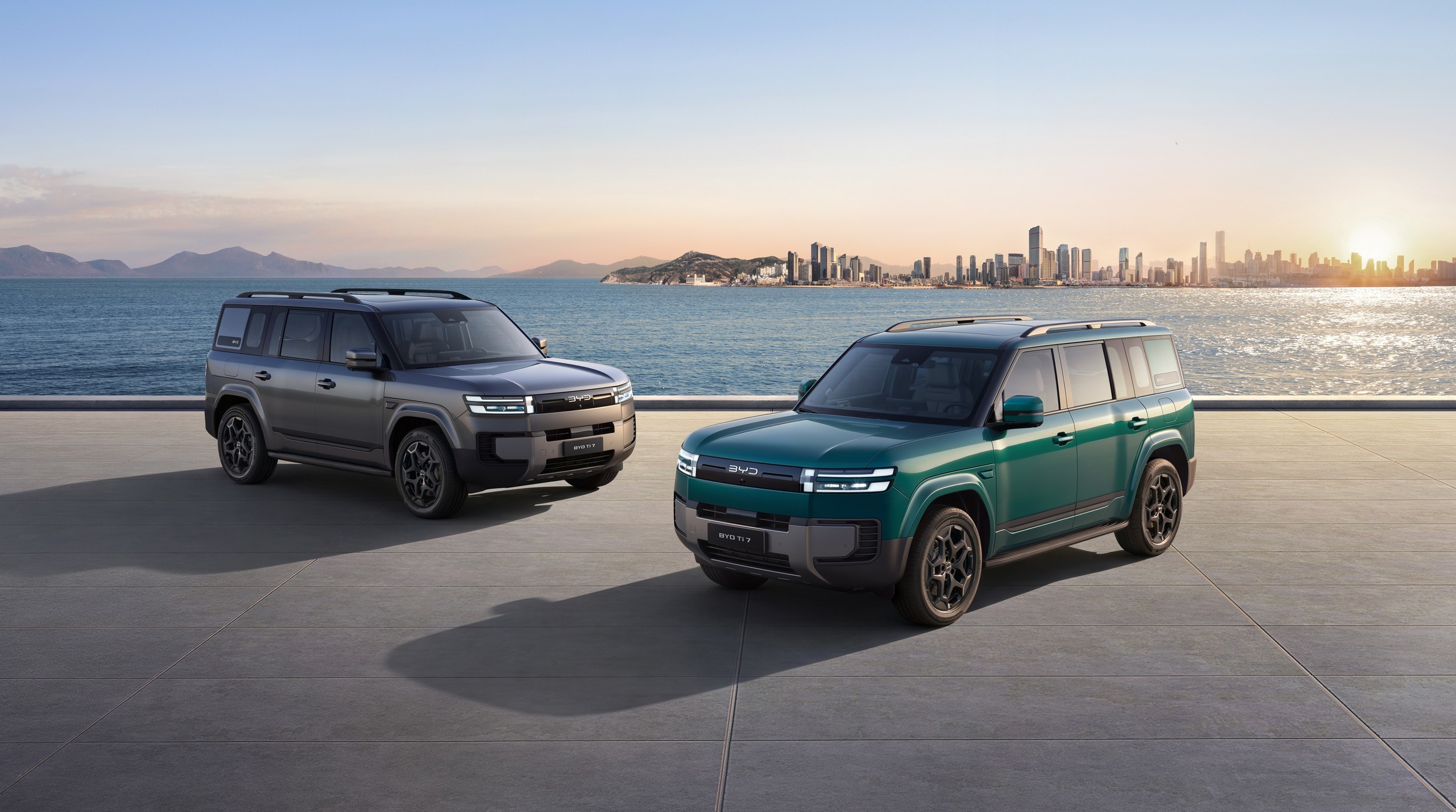
Having established itself as the largest car manufacturer in China, BYD is looking to conquer overseas markets. This includes Europe, where it believes it will need four factories as part of a significant local expansion that threatens to shake up the industry and will no doubt leave legacy rivals trembling with fear.
Current advisor for BYD’s European operations, and former Fiat Chrysler executive Alfredo Altavilla, revealed earlier this week that BYD wants to establish three vehicle assembly plants in Europe, in addition to a site dedicated to assembling batteries for EVs.
BYD has just finished building a factory in Szeged, Hungary, and has kicked off trial production. Altavilla says the brand has already started speaking with car manufacturers and governments in Spain, France, and Italy for other sites, as it’s looking to potentially acquire underutilized factories instead of building all-new ones.
“Over the longer term, we will need three assembly plants and one battery plant,” Altavilla revealed to Reuters. “Obviously, this is not something that will happen overnight. However, it is clear that, to achieve the volume targets we have in mind, while at the same time complying with European regulations, that is what we will need.”
Altavilla said BYD wants to decide on the location of a second manufacturing site by the end of the year. It will then need to decide whether it prioritizes a third manufacturing plant or a local battery plant.
Surging Overseas Demand
BYD’s site in Hungary will have the capacity to produce up to 200,000 vehicles annually, with current plans calling for large-scale production to commence in either November or December. In 2024, BYD announced plans for a plant capable of building 150,000 vehicles annually in Manisa, Turkey, originally hoping to start production in late 2026. However, work at this site has been put on indefinite hold.
The automaker is focusing on overseas markets as sales in China decline. This year, BYD sales in its home market have fallen 32.7 percent to 1.505 million. By comparison, overseas deliveries have soared, and the brand expects to end 2026 having sold between 1.9 million and 2.0 million vehicles internationally.
GM is working alongside a Denver firm for energy storage system batteries.
Low-cost sodium-ion batteries will help GM establish a large local supply chain.
GM believes it can leapfrog some of the battery technologies in China.
Days after the Trump administration slammed Ford for cozying up to Chinese companies, including battery manufacturer CATL, crosstown rival General Motors says it’s working to ensure its next generation of battery cells are backed by a strong domestic supply chain, rather than one that relies on overseas sources.
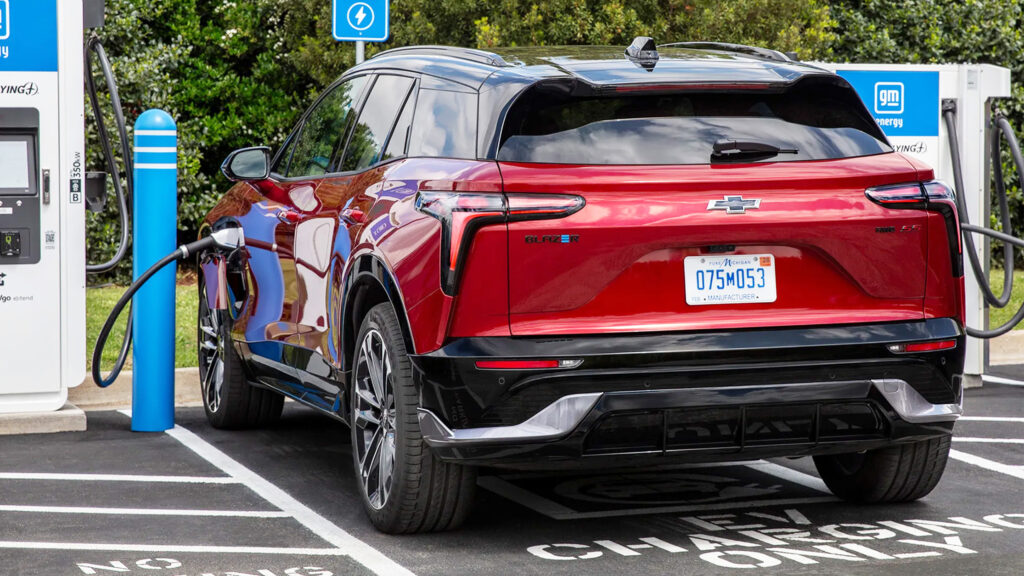
A key area of GM’s local battery focus is on cells that’ll be used for energy storage systems, including data centers, other businesses, and homes. According to vice president of battery and sustainability at GM, Kurt Kelty, “We’re developing a supply chain such that, two years from now, three years from now, it will be domestic.”
A company spokesperson added to CNBC that GM will prioritize local production of battery cells for its forthcoming electric vehicles.
The federal government has criticized Ford for licensing battery technology from CATL, which it will use for energy storage systems. By comparison, GM is working with Denver firm Peak Energy on advanced sodium-ion battery cells for energy storage.
CNBC notes this deal will let GM reduce its reliance on China for materials including lithium and ferrous sulfate, instead sourcing materials more prevalent in the US, including sodium derived from soda ash. These new battery cells created with Peak Energy could be deployed as soon as 2029.
“It’s a really good story, because you’ve got the resources [in the U.S.] that you can keep it totally domestic,” Kelty said. “It’s going to take some time to build this industry up, but the potential for sodium-ion is just much greater than LFP.”
Kelty is so optimistic about the future of sodium-ion battery cells that he believes pursuing them can allow GM to leapfrog some of the most advanced battery technologies coming out of China.
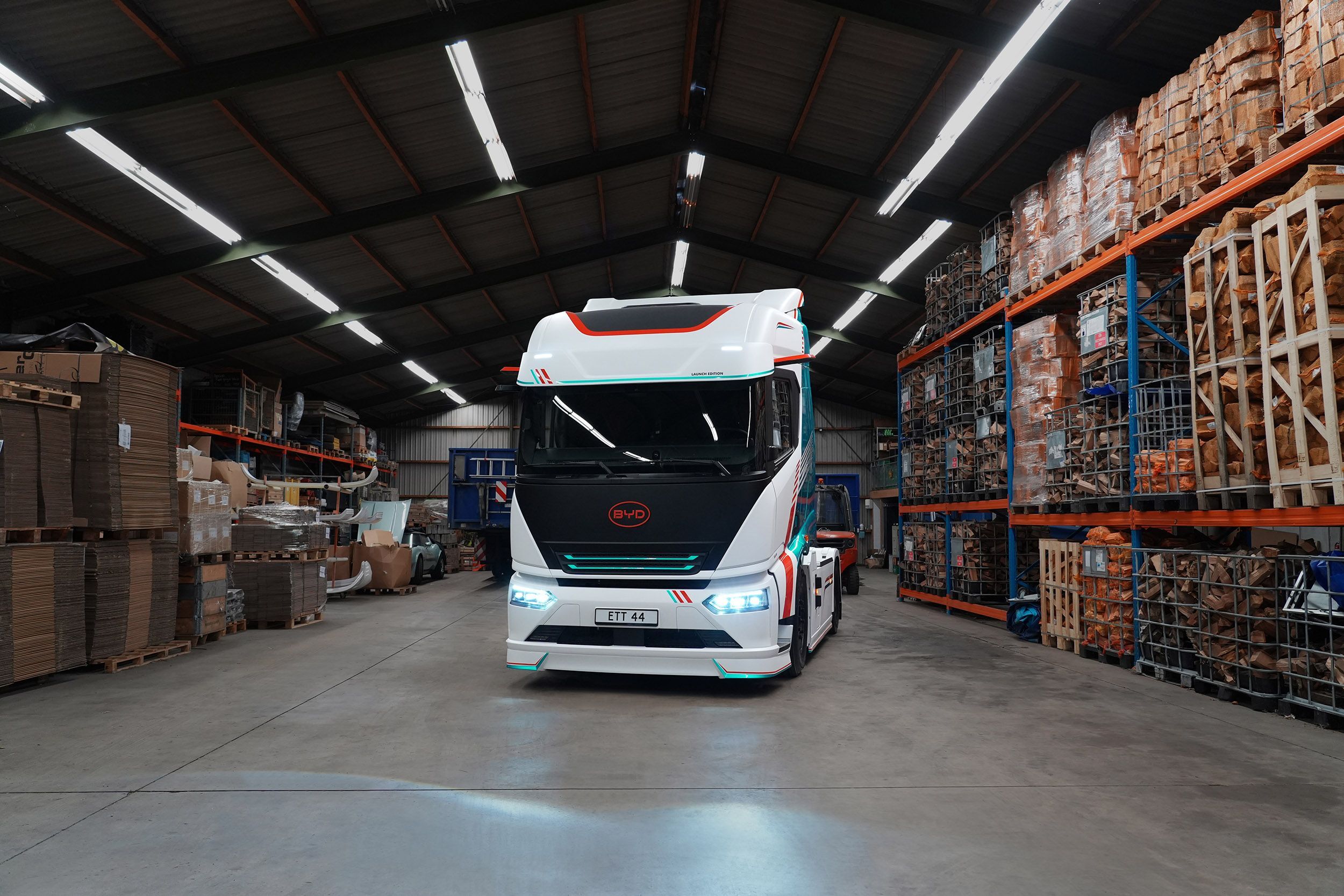
BYD debuts the ETT44 electric heavy-duty tractor in Hannover.
It packs up to 1,006 hp and a massive 651 kWh Blade battery.
1.5 Megawatt charging adds 248 miles of range in 20 minutes.
Chinese automotive giant BYD has made headlines at the IAA Transportation 2026 in Hannover with the premiere of its new commercial flagship vehicle. The ETT 44 is a fully electric heavy-duty tractor designed for Europe’s long-haul transport sector bringing loads of power, a massive battery pack and ultra-fast charging.
Visually, the ETT 44 shares the upright cab-over design with the existing ETH 20, ETH 28, and ETH 8 heavy-duty rigs, and comes standard with a high-roof sleeper cab layout. The launch edition is distinguished by aero add-ons on the front bumper, side skirts, above the windshield, and on the roof, alongside a custom grille and a special livery.
The interior boasts a digital instrument cluster, a 12.8-inch infotainment display, and large screens for the mirror-replacing cameras. We can also see an array of physical controls, a car-like gear knob, multiple cup holders, storage compartments, and a radio. Behind the seats is a bed for the driver. The ETT 44 rides on air suspension and comes equipped with an extensive ADAS suite.
BYD
Under the skin, the specs beat the European-market Tesla Semi, which was also introduced at the same event. BYD’s 4×2 electric tractor is powered by a single electric motor generating up to 1,006 hp (750 kW / 1,020 PS). It is available with two LFP BYD Blade battery options with capacities of 434 kWh and 651 kWh, with advertised range figures of 400 km (249 miles) and 600 km (373 miles) respectively.
The base version has a maximum charging rate of 950 kW, which increases to an impressive 1,500 kW in the long-range variant. This means that both models can charge from 20-80% in as little as 20 minutes when connected to a compatible MCS charger. For comparison, the EU-market Tesla Semi has a 550 km (342-mile) range and supports charging speeds of up to 800 kW.
Weight Figures
BYD
The BYD ETT 44 measures 6,400 mm (252.0 in) long, 2,530 mm (99.6 in) wide, and 3,820 mm (150.4 in), tall with a 3,800 mm (149.6 in) wheelbase. This footprint is similar to other European heavy-duty tractors such as the Mercedes-Benz eActros 600, Man eTGX, Scania 45 R Electric, and DAF XF Electric.
Its curb weight ranges between 10,950-11,140 kg (24,141-24,560 lbs) with a gross weight rating of 20 tons (44,092 lbs) and a gross combination weight of 44 tons (97,003 lbs) as dictated by European regulations. BYD says that the model would be capable of a gross combination weight of 65 tons (143,300 lbs).
Notably, even the capped gross figure is higher than the Tesla Semi, which maxes out at 40 tons (80,000 lbs), although it has a lighter curb weight of 9,100 kg (20,062 lbs).
BYD has yet to announce pricing for the ETT 44, which is expected to hit European roads in the coming months. However, the company has already confirmed a standard 10-year or 1.2 million km (750,000-mile) warranty for the battery pack, offering peace of mind to future owners.
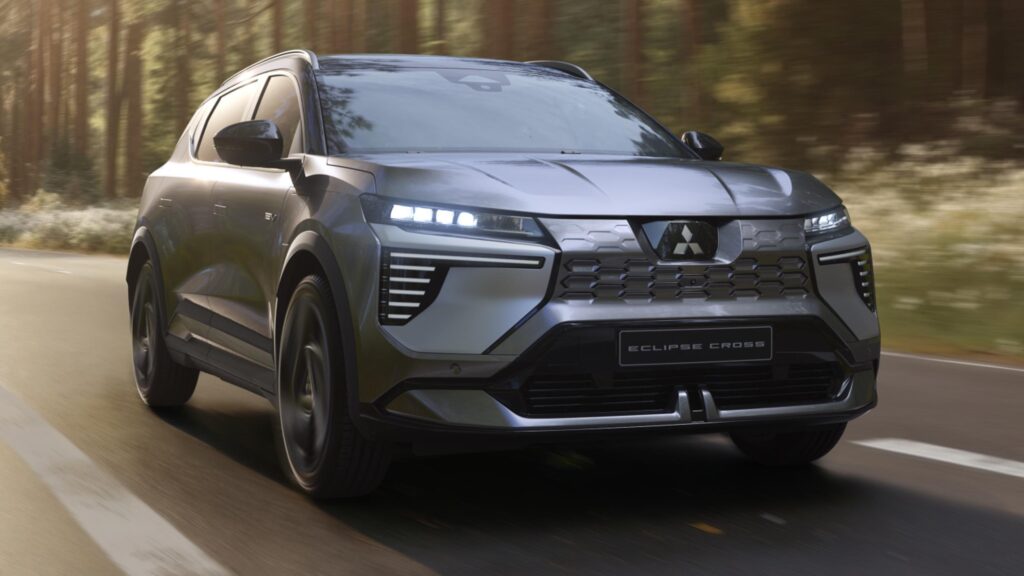
The Mitsubishi Eclipse Cross EV receives updates one year after its debut.
The EV gains a new 67 kWh battery option and an upgraded 89 kWh unit.
The electric crossover with Renault bones has a much lower entry price.
Americans might be stuck with the aging Mitsubishi Eclipse Cross for now, but Europeans have access to a new generation with electric power. Exactly one year after its debut, the Mitsubishi Eclipse Cross EV gains new battery options, mirroring the technical updates introduced by its French twin – the Renault Scenic E-Tech.
The highlight is the addition of a smaller 67 kWh battery option with Lithium Iron Phosphate (LFP) chemistry, offering a WLTP range of 472 km (293 miles). The same unit is already used in the facelifted Renault Megane E-Tech.
The larger battery option retains the Nickel Manganese Cobalt (NMC) chemistry but its capacity has grown from the original 87 kWh to 89 kWh. As a result, the maximum WLTP range has been increased by 15 km (9 miles) to a more generous 650 km (404 miles).
Both batteries are compatible with DC charging, replenishing 15-80% of their charge in 24 and 28 minutes respectively. Independently of the battery pack, power comes from a single front-mounted electric motor generating 220 hp (164 kW / 223 PS), which is 5 hp (4 kW) more than before.
Mitsubishi
Predictably, Mitsubishi didn’t bother changing anything on the exterior design of the EV after a year on sale. The interior has also been carried over with dual 12.3-inch displays running Renault’s Google-based infotainment software.
The updated Mitsubishi Eclipse Cross EV will be available to order in European markets from November 2026. In the Netherlands, the cheapest Mid-Range option with the 67 kWh battery starts at a discounted €32,990 ($38,300) including an electric benefit of €3,000 ($3,500).
The Long-Range variant with the upgraded 89 kWh battery will arrive later on, but the outgoing model is still available starting from €40,490 ($46,900). Note that the Eclipse Cross EV had an introductory price of €45,690 ($53,000) in the Dutch market when it arrived last year, meaning that the entry point in the lineup has dropped by €12,700 ($14,700).
Transportation Secretary Sean P. Duffy has criticized recent Ford business deals.
Duffy criticized Ford’s battery licensing deal with Chinese giant CATL.
Ford says the Trump administration is simply trying to capture headlines.
The Trump administration isn’t pleased with Ford’s close ties to certain Chinese companies, prompting a fierce rebuke from Ford, which continues to tout itself as “the most American automaker.” The tit-for-tat comes just before a meeting between US President Donald Trump and Chinese President Xi Jinping later this month.
In a letter to Ford chief executive Jim Farley dated September 3 and recently made public, Transportation Secretary Sean P. Duffy expressed “profound concern” about the “strategic trajectory of Ford,” claiming the historic brand is “actively intertwining its future with Chinese state-backed enterprises.”
Ford’s relationship with Chinese battery manufacturer CATL appears to have rubbed the Trump administration the wrong way. The licensing deal, first signed in 2023, would have allowed Ford to manufacture EV batteries using CATL’s chemistry. Still, a recent decline in demand for EVs in the US prompted Ford to start assembling lithium-iron phosphate cells using CATL tech for energy storage systems.
“The prioritization of imported Chinese technical expertise and operational know-how – even in a scaled-back capacity – challenges the spirit of American national and economic security and supply-chain independence policies,” Duffy wrote.
The transportation secretary also took issue with Ford’s recent deal with Geely in Spain, saying it “helps strategic adversaries secure a vital foothold in Western markets.” The letter also addressed ongoing talks between Ford and BYD to share hybrid vehicle components.
“When a company intentionally chooses to deepen operational dependencies on strategic competitors, it fails to act as the reliable partner the American public and this DOT require,” Duffy added.
Ford Responds
It didn’t take long for Ford to respond. The company described Duffy’s letter as “a wrongheaded attempt to capture headlines at the expense of a company that has done more for American manufacturing than virtually any other in the nation’s history.”
“BlueOval Battery Park Michigan in Marshall is a Ford-owned and Ford-operated facility representing billions of dollars in investment and approximately 1,700 new American jobs,” Ford’s statement reads, noting “it is producing batteries in Michigan, with American workers, for Ford vehicles also built in America.”
Top performers include the Hyundai Ioniq 5, Audi Q8 e-tron, and BMW i4.
Mercedes CLA retained 94 percent health, but the Model Y retained just 90.3 percent.
The largest ever EV battery degradation study also revealed several weak options.
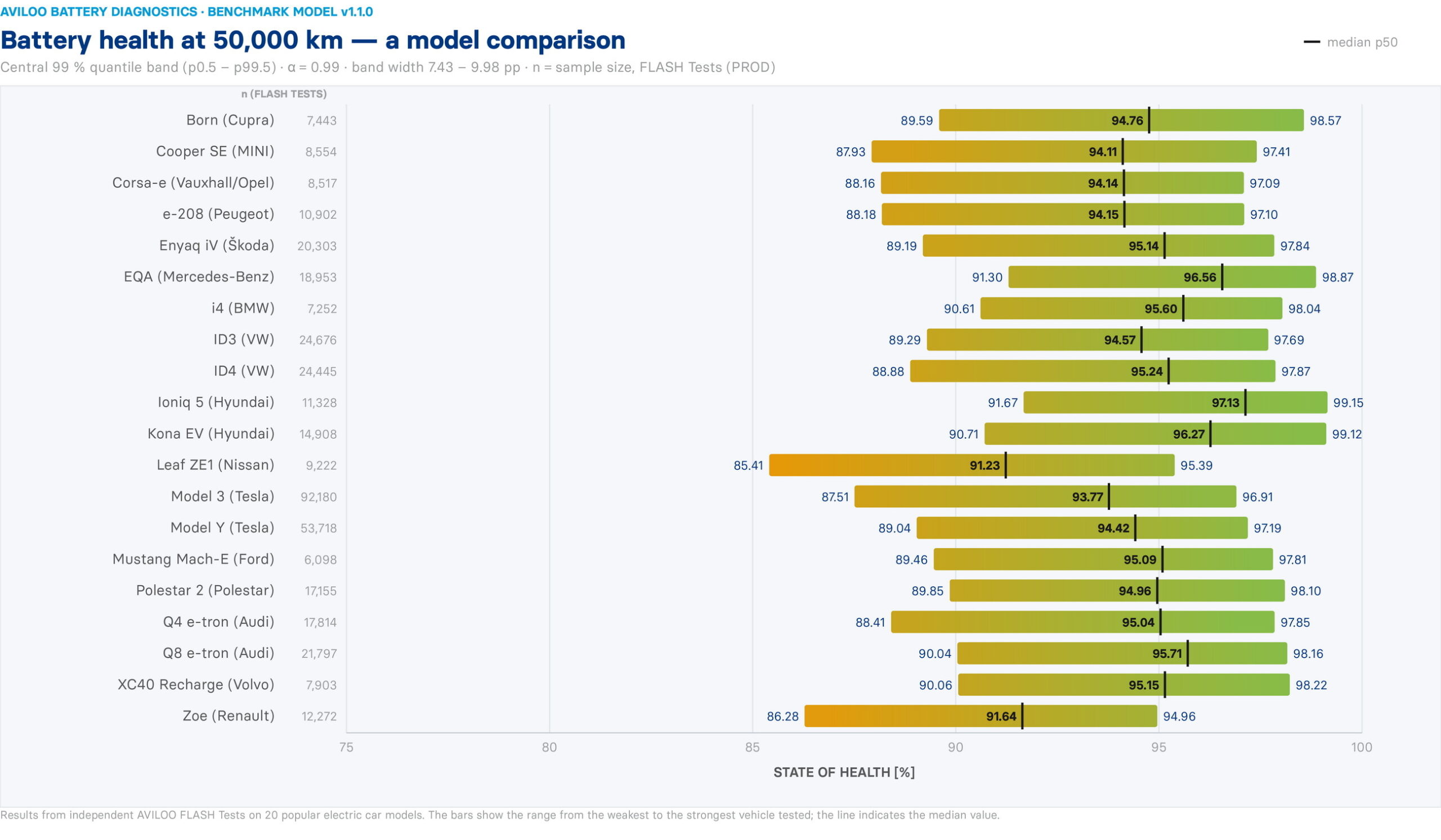
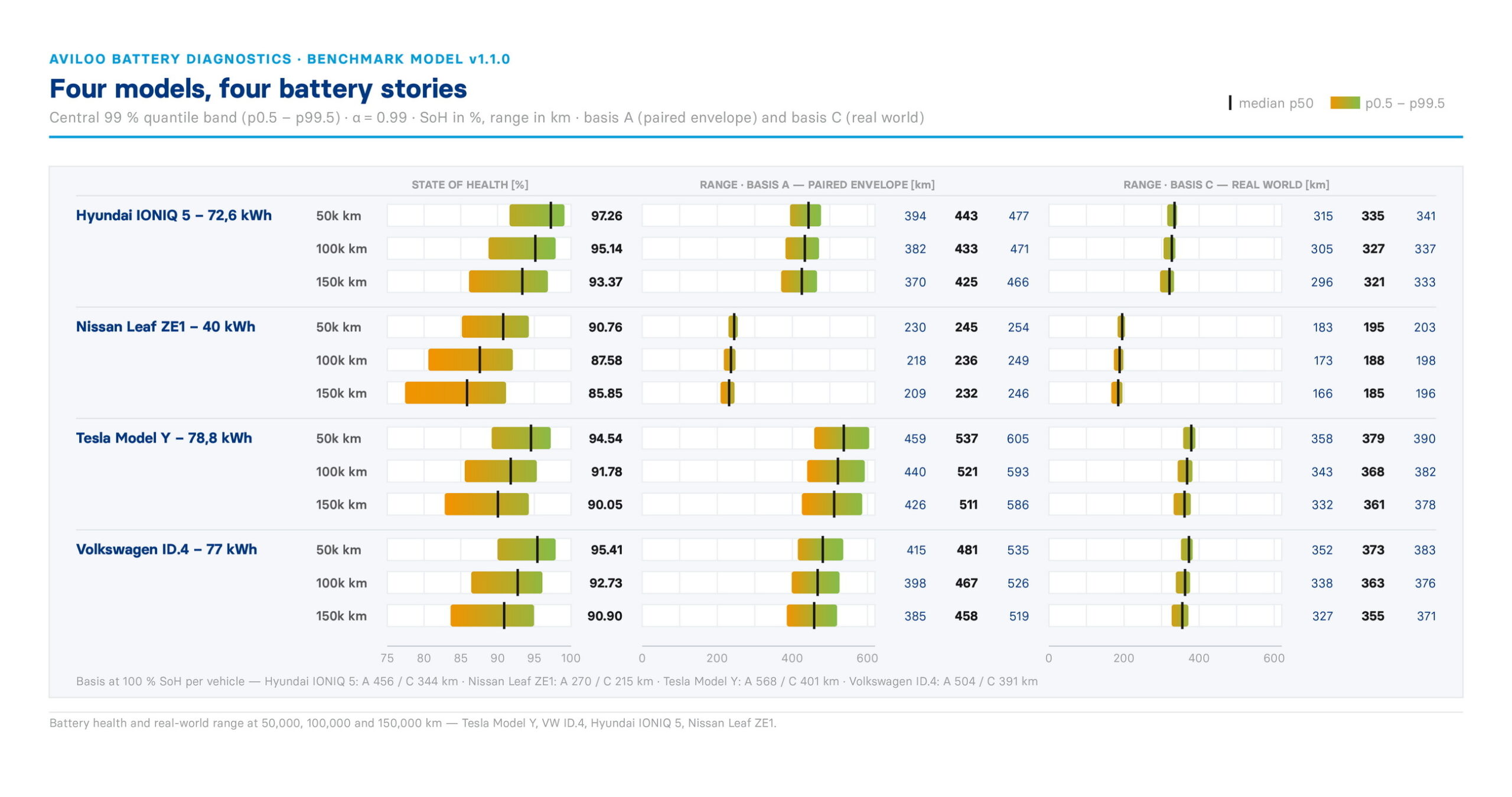
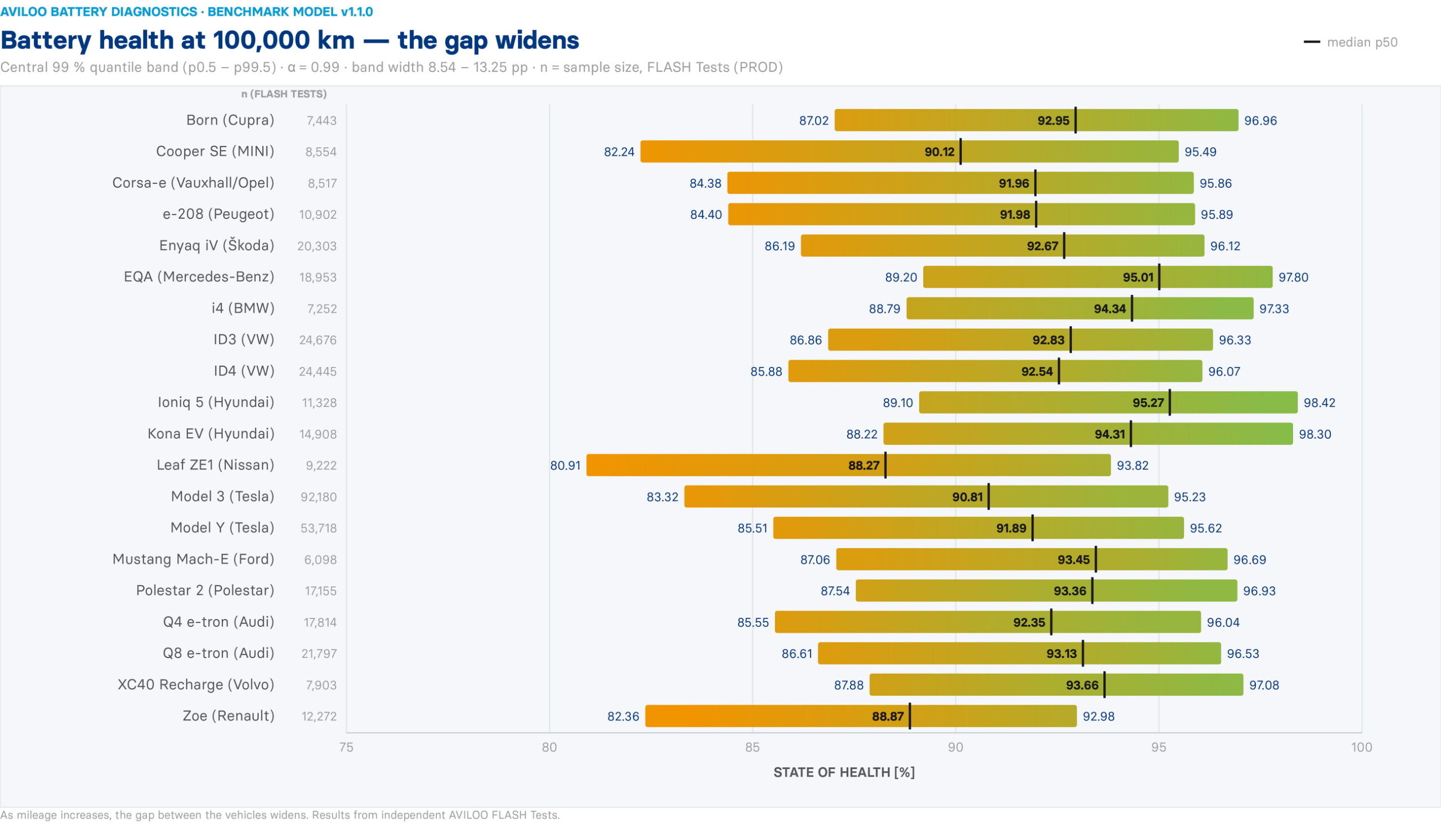
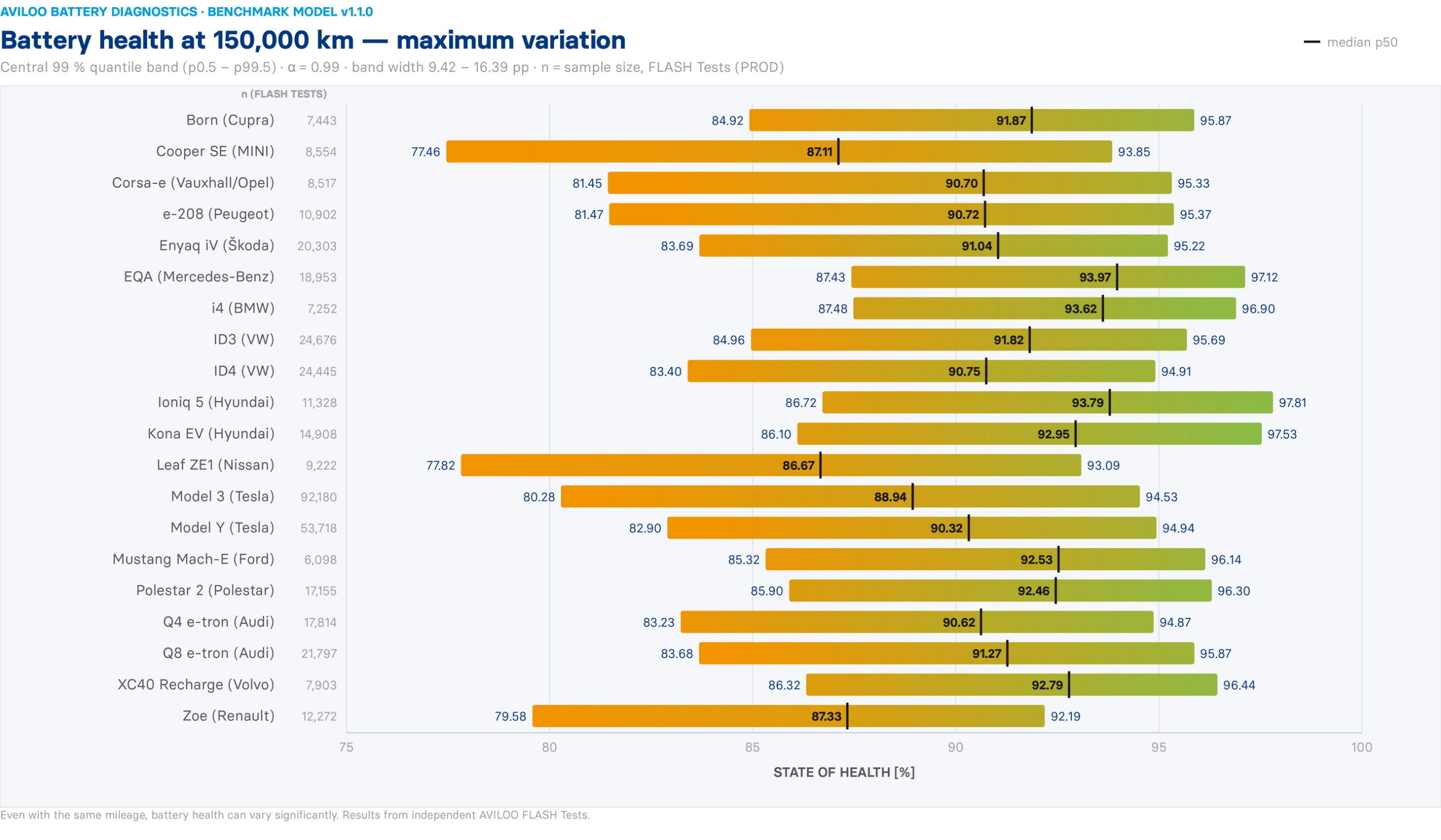
Battery degradation has long been one of the reasons new car buyers have held out on purchasing an EV. However, data from a new study reveal that the top-performing EVs lose less than 5 percent of their range after 93,205 miles (150,000 km) of driving, meaning battery packs will easily last the average life of most new cars.
The study, published by Aviloo, has been labeled the largest independent study of used EV batteries ever conducted. More than 500,000 battery tests have been published, and the results show how 20 of the industry’s most popular EVs perform.
The Hyundai Ioniq 5 performed best after 31,068 miles (50,000 km) of testing, retaining 97.1 percent of its original usable capacity. Other strong performers after 31,068 miles included the Mercedes-Benz CLA at 96.6 percent, the Hyundai Kona EV at 96.3 percent, the Audi Q8 e-tron with 95.7 percent, the BMW i4 with 95.6 percent, and both the Volvo XC40 Recharge and VW ID.4 at 95.2 percent battery retention.
After 93,205 miles of driving, the Mercedes-Benz CLA came out on top with a battery health of 94 percent. This placed it ahead of the Hyundai Ioniq 5 (93.6 percent), Hyundai Kona EV (93 percent), Volvo XC40 Recharge (92.8 percent), Ford Mustang Mach-E (92.5 percent), and the Polestar 2, also at 92.5 percent.
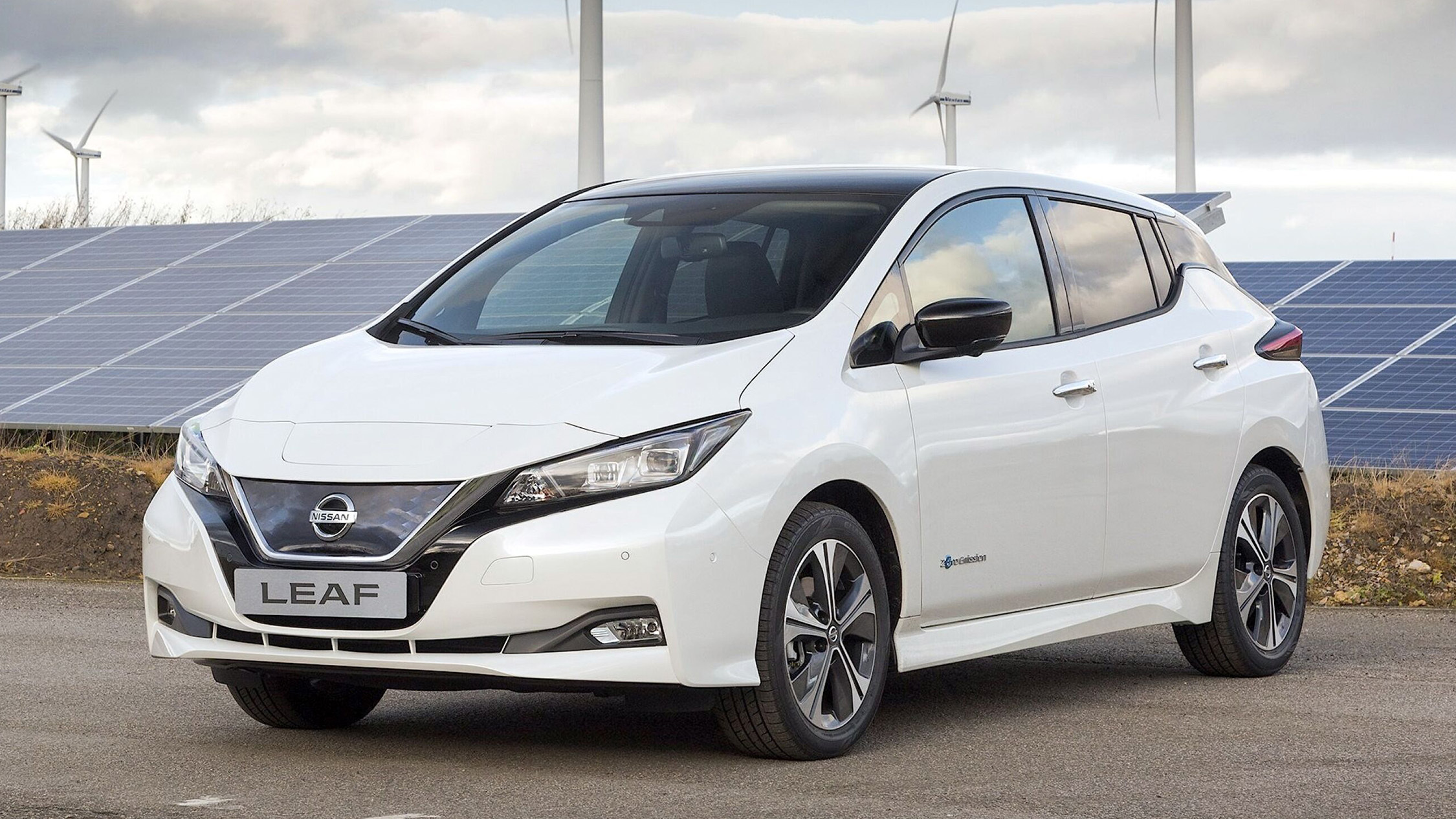
Several popular EVs did not perform as well as the competition. Most notable was the Tesla Model Y, which retained just 90.3 percent of its battery capacity after 93,205 miles, and the Tesla Model 3, which retained 88.9 percent of its battery capacity. Other poor performers included the Renault Zoe (87.3 percent), Mini Cooper SE (87.1 percent), and Nissan Leaf (86.7 percent), all of which have relatively small batteries.
Importantly, the results of this study don’t mean every Mercedes-Benz CLA will have 94 percent battery health after 93,205 miles, or every Peugeot e-208 will have 90.7 percent battery health. The study examined the median across all vehicles and found that good and bad examples of the same car can have battery health ratings that vary by as much as 13.5 percent. Nevertheless, the study demonstrates just how good current EV batteries are.
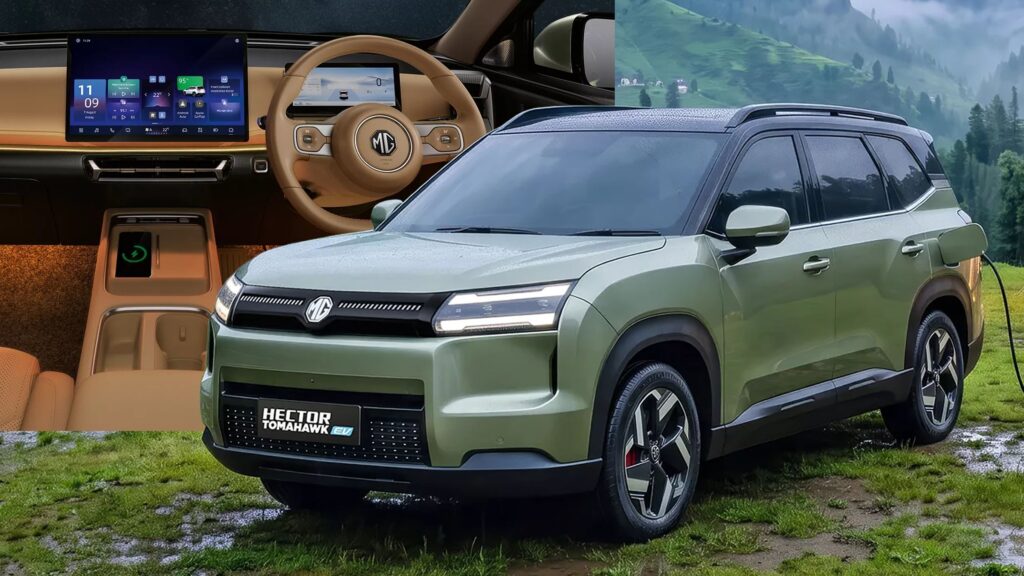
MG launched the Hector Tomahawk EV three-row SUV in India.
It is a rebadged Wuling available with EV and PHEV powertrains.
Prices start at ₹13.99 lakh ($14,600) for the EV minus the battery.
Chinese automakers have put out an average of 3.6 new models per day across the past five months, a pace that guarantees a certain amount of overflow into markets beyond China. The new MG Hector Tomahawk is one of those exports, a three-row SUV that has just gone on sale in India with a choice of fully electric or plug-in hybrid power.
The name suggests a relationship that does not exist, because the Hector Tomahawk shares nothing with the ICE-powered Hector. What MG has actually done is rebadge the Wuling Starlight 560, a model that broke cover in late 2025 and reached Chinese showrooms in early 2026.
Visually, the BEV and the PHEV variants are distinguished by the different grille and front bumper, each introducing small differences compared to the equivalent models from Wuling. The PHEV has a body-colored nose, a larger cooling intake, loads of black cladding, and an aluminum-style skid plate. The EV adopts a simpler and boxier face looking nearly identical to its Wuling sibling.
Regardless of powertrain type, the SUV measures 4,745 mm (186.8 in) long, has a 2,810 mm (110.6 in) wheelbase and a ground clearance of 230 mm (9.1 in).
MG
The right-hand-drive cabin comes with two or three rows of seating. Cargo space is 610 liters (21.5 cubic feet) in five-seat form, dropping to 192 liters (6.8 cubic feet) once the third row is in place. The kit list runs to a 15.6-inch infotainment screen, an 8.8-inch digital gauge cluster, gesture controls for the touchscreen, a dual-pane panoramic sunroof, 256-color ambient lighting, and a 10-speaker stereo. The party piece is an AI-powered assistant with a karaoke mode and a library of more than 8,000 songs across multiple genres.
The Hector Tomahawk EV utilizes a single front-mounted electric motor producing 201 hp (150 kW / 204 PS), with a 69.2 kWh battery allowing over 500 km (311 miles) of range while supporting 90 kW DC fast charging and V2L/V2H functions.
On the other hand, the Hector Tomahawk PHEV pairs a naturally aspirated 1.5-liter engine/generator with a single electric motor and a smaller 20.5 kWh battery pack. The combined range is over 1,100 km (684 miles), including 115 km (71 miles) on EV power alone.
The Battery Rental Math
MG
The MG Hector Tomahawk EV costs between ₹19.49 lakh ($20,400) and ₹23.49 lakh ($24,500) in India. Buyers can also take it under the Battery-as-a-Service (BaaS) scheme, which drops the entry price to ₹13.99 lakh ($14,600) and then charges ₹4.90 ($0.05) per kilometer (₹7.89 or $0.08 per mile) for the privilege of using the battery.
Meanwhile, the MG Hector Tomahawk PHEV starts at ₹25.70 lakh ($26,900) outright, or ₹21.79 lakh ($22,800 / €19,600) under BaaS with a battery rental rate of ₹3.20 ($0.03) per kilometer. Deliveries for the EV begin in September, followed by the PHEV in November.
Range could top 621 miles, rivaling what a diesel tank delivers today.
The new batteries will have a power density of up to 500 Wh/kg.
Models from Zeekr, Lynk & Co, Volvo, and Polestar could get them first.
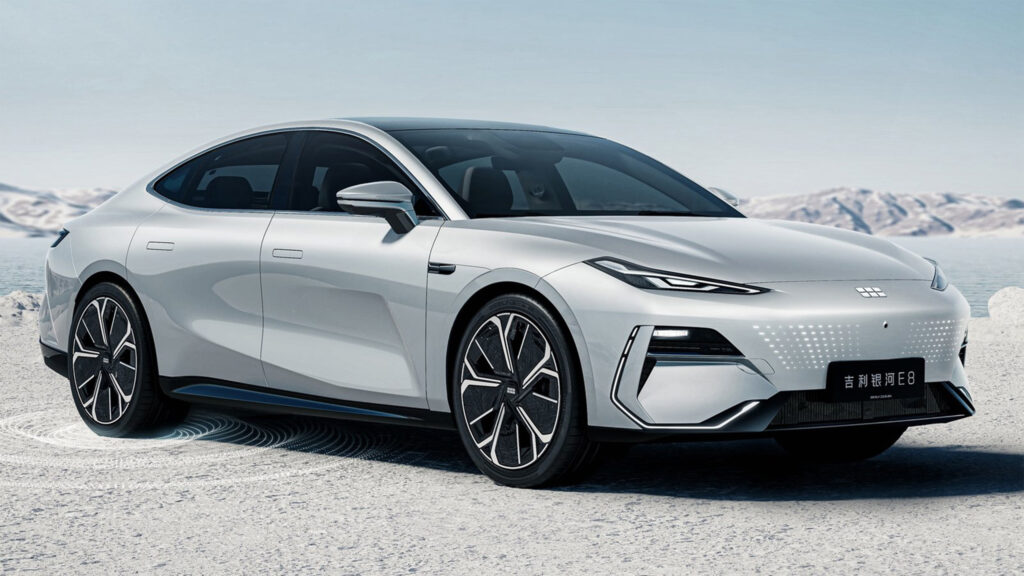
After waiting for what seems like an eternity, advanced solid-state batteries are getting closer to hitting the market. In news that shouldn’t surprise anyone, a major Chinese brand is set to be among the first to put the technology into customer cars on a pilot basis.
The company in question is Geely. It has spent years developing these new cells and has already begun testing them in prototypes. Its new packs will offer power densities of up to 500 Wh/kg, and starting next year, vehicles from within the broader Geely group will start to receive these batteries.
Geely says vehicles equipped with its new solid-state batteries will offer driving ranges equivalent to more traditional diesel-powered cars, exceeding 621 miles (1,000 km) between charges. The new packs will be piloted across major Geely brands next year, including Zeekr, Lynk & Co, Volvo, Polestar, Lotus, and Smart.
It’s not only exceptional energy density that promises to make Geely’s solid-state batteries a game-changer. The carmaker says these batteries will have a lifespan of up to 621,000 miles (1 million kilometers), quelling any fears about longevity, CarNewsChina reports. Although the new batteries are just around the corner, Geely hasn’t said whether it’ll be ready to start mass production of them next year, or whether buyers will actually be able to take delivery of a solid-state-equipped EV when pilot work is complete.
As the United States continues to impose heavy tariffs on cars from China, Geely’s solid-state batteries are unlikely to ever make their way stateside. However, this doesn’t mean solid-state batteries don’t also have the potential to revolutionize the American car industry.
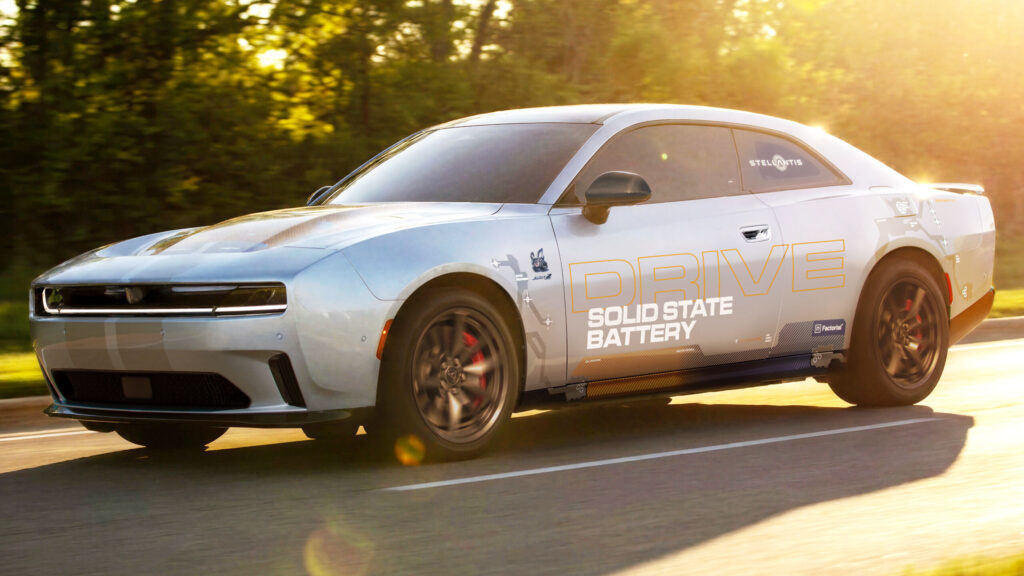
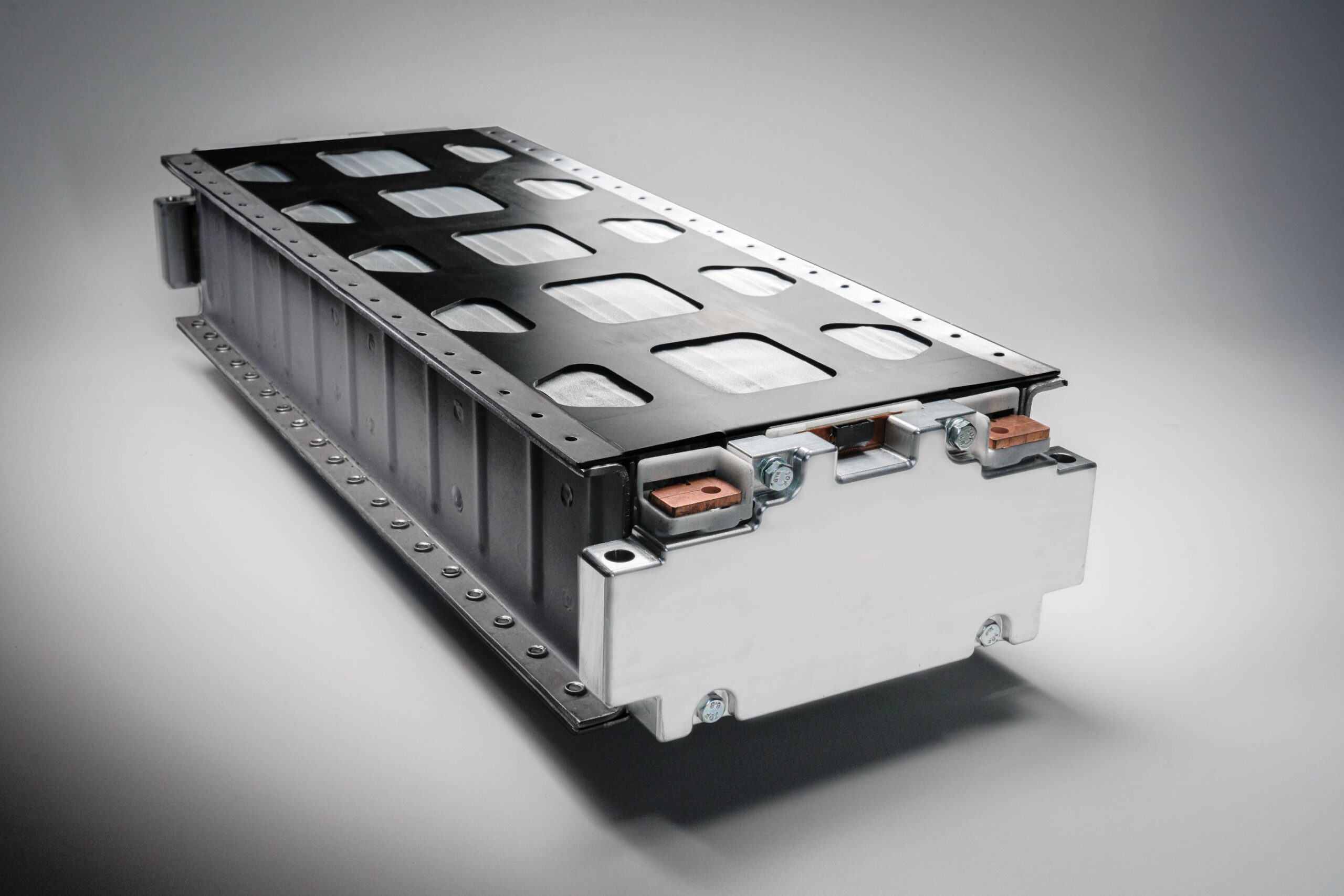
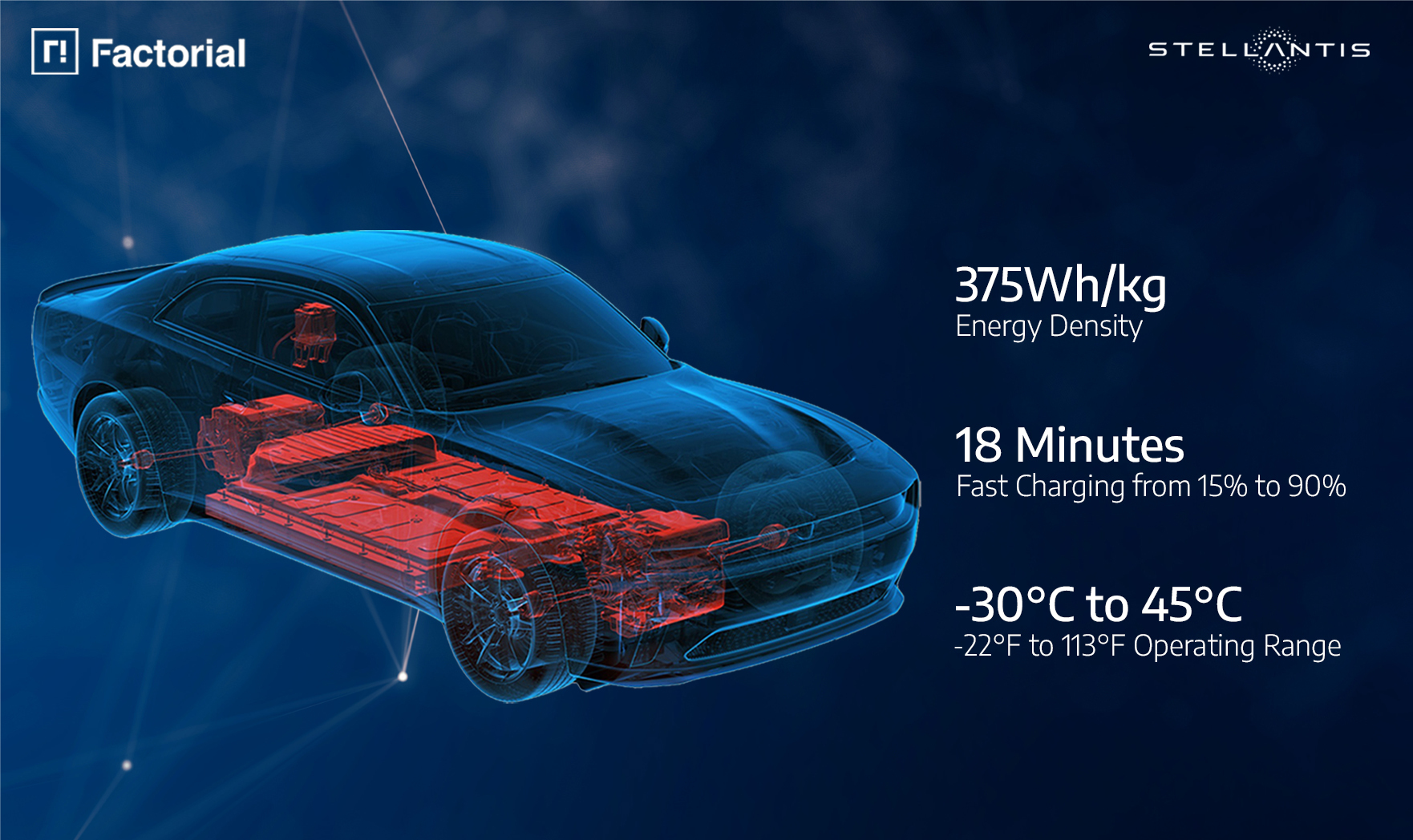
Other automakers, including Stellantis and Karma, are already working with battery company Factorial on advanced solid-state batteries. Ford has solid-state work of its own underway, though its near-term money is going toward cheaper chemistries, lithium manganese rich (LMR) among them. GM is taking the same approach.
BYD will introduce 300 Flash Charging stations in the UK over the next year.
Technology can charge a new EV battery from 10-97 percent in just 9 minutes.
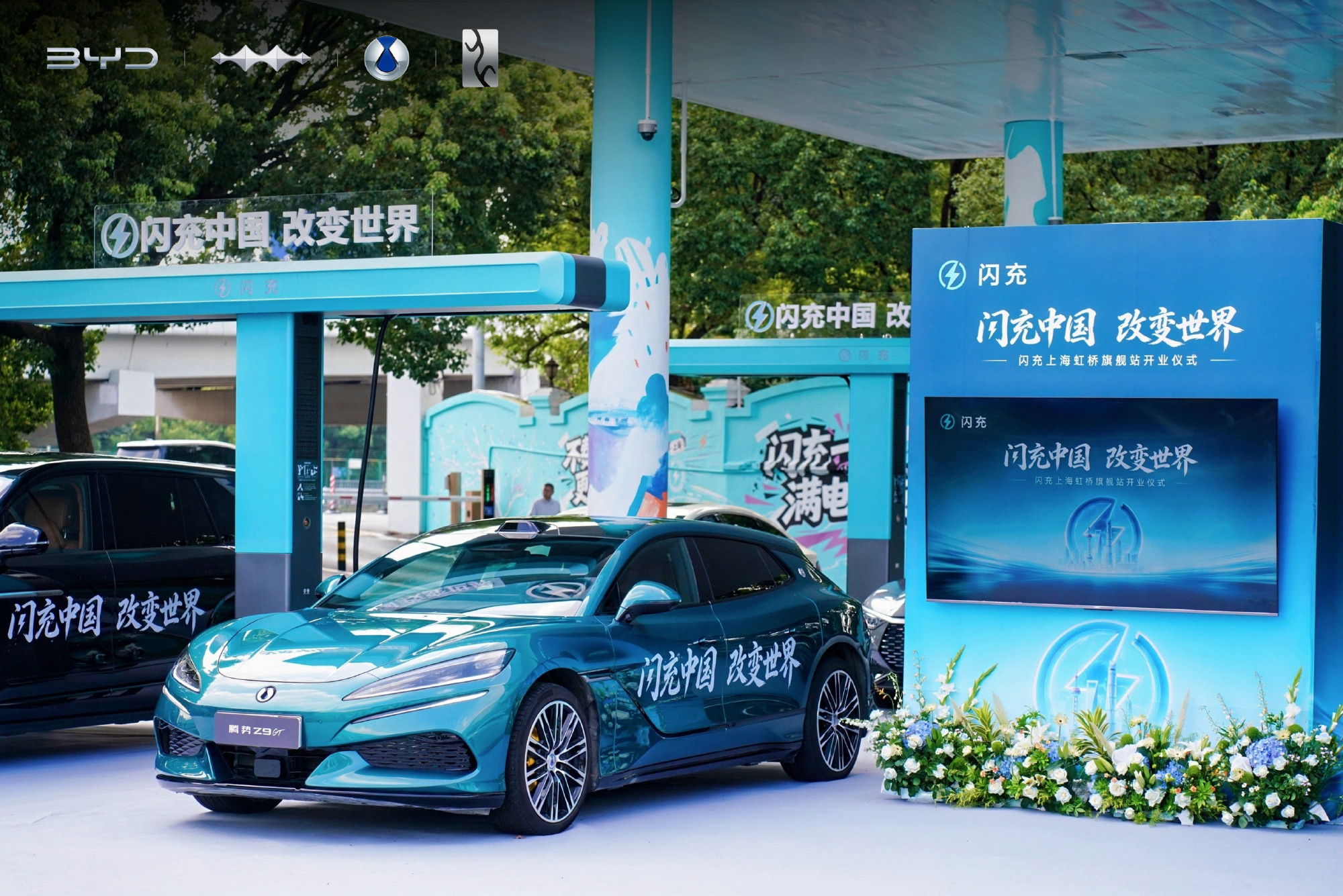
The first eligible model to be sold in the UK will be the powerful Denza Z9 GT.
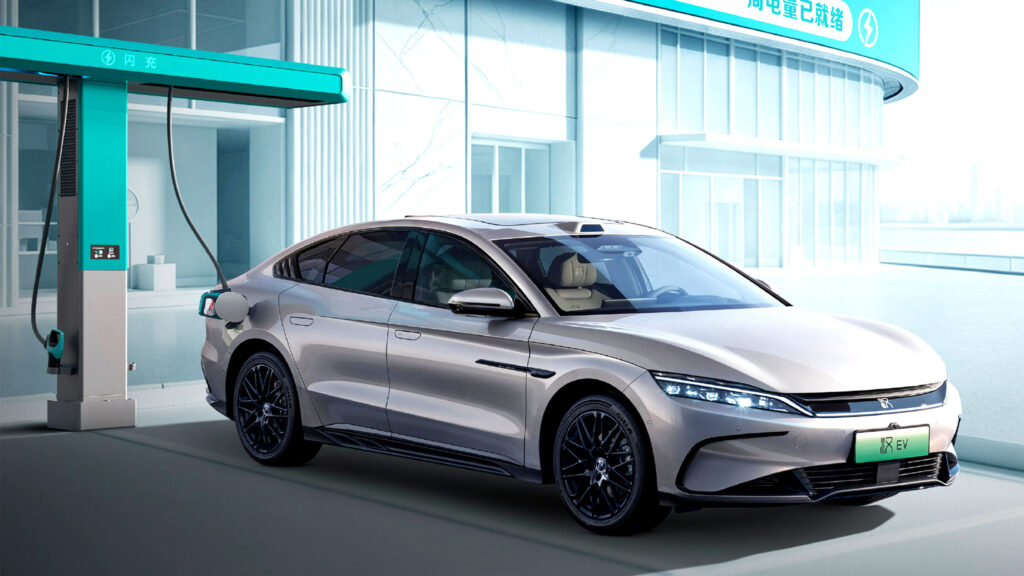
Owning an EV in the UK is about to become much more convenient. In the coming weeks, BYD will introduce its first Flash Charging stations in the country, dramatically reducing charging times and potentially convincing many to make the jump and purchase their first electric car.
Unveiled earlier this year, BYD’s Flash Charging stations have already been deployed en masse across China and are now rolling out in Europe. Each charger includes two connectors, and when one is in use, peak charging speeds of 1,500 kW can be achieved. When both connectors are being used by two vehicles, each plug can supply up to 1,000 kW.
Charging speeds are extraordinary. It takes just five minutes to charge a battery pack from 10-70 percent, and a mere nine minutes to charge from 10-97 percent. Even in freezing temperatures of -30°C (-22°F), a 20-97 percent charge takes just 12 minutes.
To get an idea on how far ahead of the pack that is, Tesla’s UK Supercharger network runs V2 units at 150 kW and V3 and V4 units at 250 kW. On a 250 kW post, a Model 3 needs around 25 to 30 minutes to go from 10 to 80 percent, or 15 minutes to pick up roughly 170 miles (274 km) of range. V5 hardware is coming and will reach 500 kW, assuming your car can actually take it. That is still a third of what BYD is quoting.
World-Leading Battery Tech
The secret to these extraordinary charging speeds is the batteries. Each Flash Charger uses two on-site storage batteries, each with a capacity of 185 kWh. The energy from these batteries is then transferred to the vehicle. The storage batteries are charged and topped up via the grid at speeds of up to 560 kW.
BYD plans to install 300 Flash Charging stations across the UK over the next 12 months, focusing on BYD and Denza dealerships as well as motorway service stations and existing charging hubs. The brand’s first model to support 1,500 kW charging is the Denza Z9 GT. BYD’s latest-generation plug-in hybrid models with the Blade Battery 2.0 also support ultra-fast DC charging, starting with the D9 MPV.
Charging prices have not yet been announced. BYD says that owners of compatible vehicles will qualify for preferential electricity rates “that will be considerably lower than prevailing ultra-rapid charging retail prices” across the country. EVs from other brands will also be able to use the chargers, although they will have to pay more.
Battery costs fell 37 percent, dragging EV sticker prices down with them.
Hybrid prices climbed 16 percent while EVs moved the other way.
China’s battery glut and export surge did most of the heavy lifting here.
Electric vehicles have historically been more expensive than ICE-powered vehicles, but new data has revealed that last year, the average global prices for EVs were below those of hybrids. As you’d probably expect, this is largely due to the growing number of budget EVs from China hitting the roads across the world.
By looking at average sticker prices without accounting for subsidies, and weighting them based on sales volume, Mobility Global determined that last year, EVs typically averaged around $37,000, reports Nikkei Asia. This is down 9 percent from 2020. Over the same period, average hybrid prices rose 16 percent to $39,000.
This comes primarily thanks to falling lithium-ion battery costs, which have fallen by 37 percent between 2020 and 2025. The battery pack typically accounts for 30-40 percent of an EV’s overall cost. BloombergNEF attributes much of that decline to a capacity glut in China, which controls roughly 80 percent of the battery market.
Importantly, a growing number of EVs are also adopting lithium-iron phosphate (LFP) batteries, free from cobalt, which frequently experiences significant fluctuations in prices. While LFP batteries have traditionally been considered less energy-dense, their performance has been improving. Renault and Volkswagen said last year that they would adopt the chemistry.
The ongoing global expansion of EV firms from China has played a crucial role in reducing average prices. In 2020, fewer than 100,000 electric cars were exported from China, whereas last year, that figure soared to 1.64 million units.
As noted by Nikkei Asia, emerging markets could follow in the footsteps of nations including Norway and China, where EVs are hitting the roads at a rapid pace. Across Southeast Asia and South America, for example, electric models are typically cheaper than the average hybrid. In Thailand specifically, Chinese brands currently make up almost 30 percent of new car sales.
ICE Prices Went the Other Way
Pricing data shows that while average EV prices have decreased over the past five years, average ICE prices have actually increased slightly. As this has happened, prices of plug-in hybrids have decreased considerably, likely also reflecting falling prices of lithium-iron batteries.
Adding fuel to EV demand in recent months is the ongoing conflict in the Middle East, which has driven a significant surge in oil prices. When gas gets more expensive, the math on an electric car starts to look better to a lot more buyers.
BYD’s Flash Charging tech can charge an EV from 10-97% in just nine minutes.
Oil company Sinopec will work with BYD to replace gas stations with EV charging hubs.
EVs and PHEVs fitted with BYD’s second-gen Blade batteries support Flash Charging.
In many parts of the world, EV charging infrastructure has failed to keep pace with the electric cars and batteries it’s supposed to serve. That’s not the case in China, where BYD has been rapidly expanding its network of 1,500 kW Flash Charging stations, most recently teaming up with state-owned petroleum giant Sinopec to turn gas stations into EV charging locations.
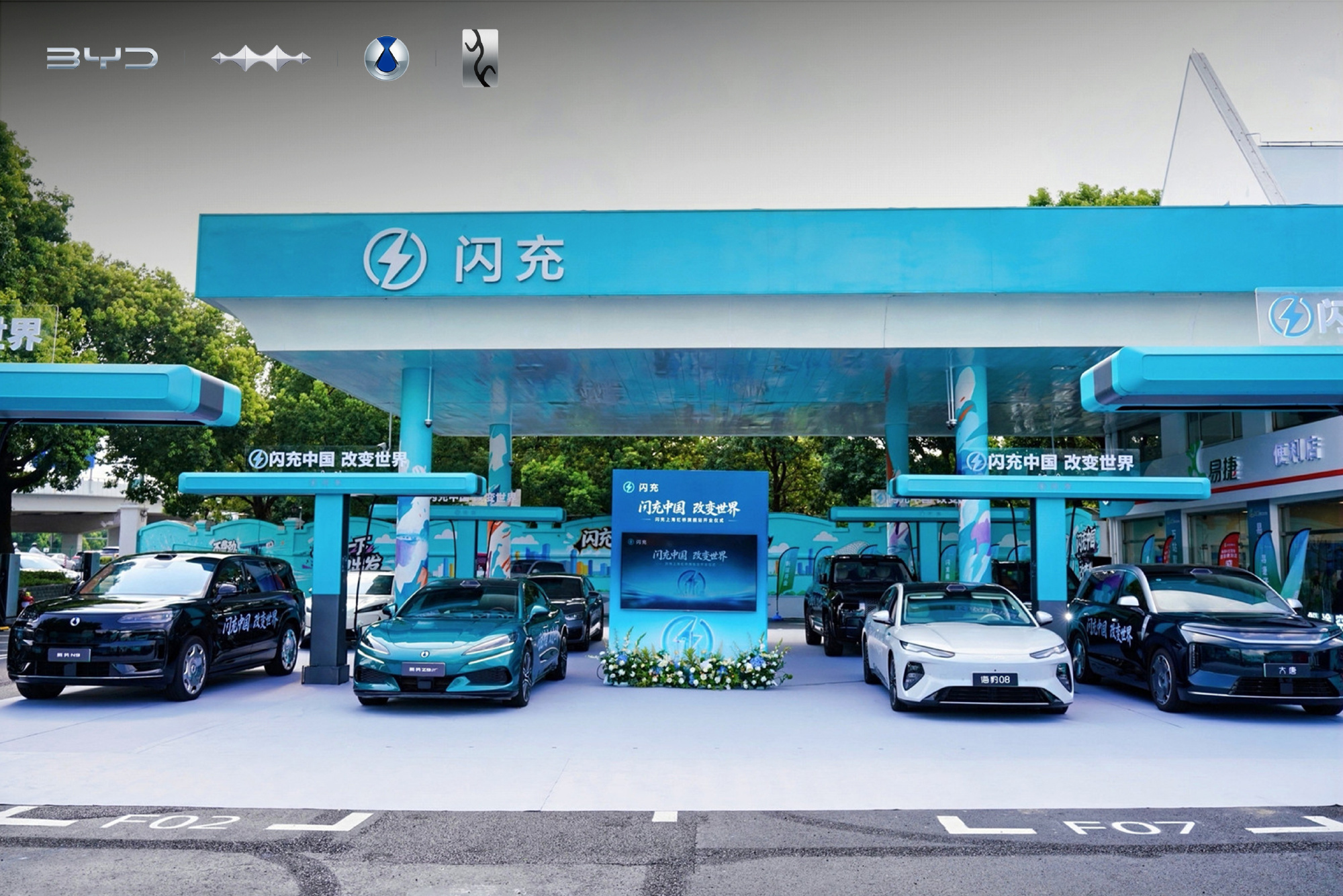
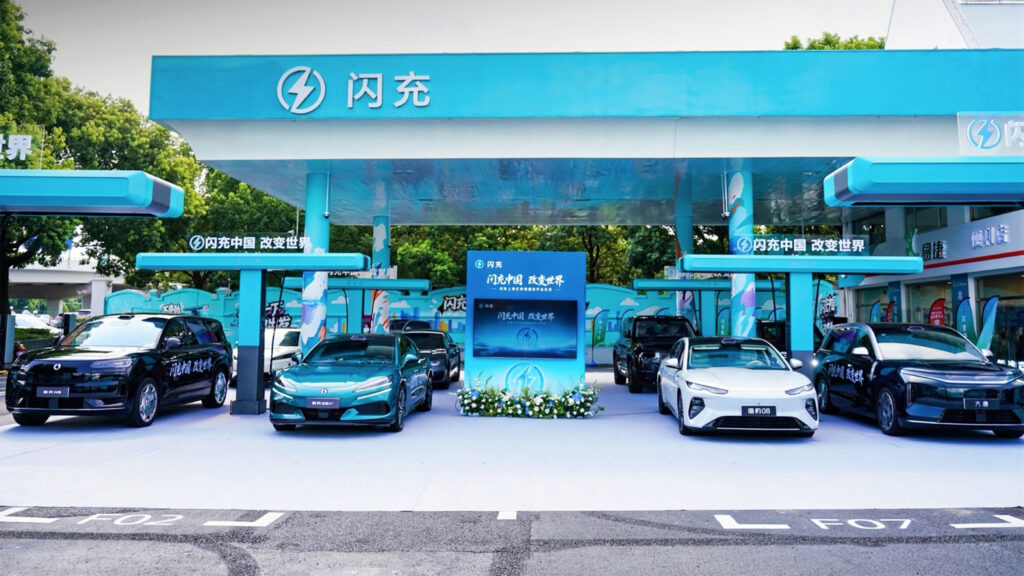
The two companies have been working together since mid-2024, and the fruits of their labor have been shown at a new charging station in Shanghai. Previously, this had been a gas station operated by Sinopec, but the oil giant obviously saw the trend among Chinese buyers towards EVs and plug-in hybrids, and knew it had to get into the EV charging game.
While this is the first Sinopec location converted into a Flash Charging hub from BYD, it won’t be the last. Plenty more of the company’s fuel stations are slated for the same treatment. Running at up to 1,500 kW, these chargers can take a battery from 10 to 70 percent in five minutes, and from 10 to 97 percent in as little as nine.
A Look Into The Future
Thanks to the ultra-fast design, they don’t need to be arranged like typical DC chargers. Instead, they’re set up like gas pumps with six large T-shaped chargers installed at this site, each with two plugs. As this site was once a gas station, it still includes a small convenience store and a lounge where owners can sit while their cars are charged.
For years, EV critics have been stating that charging an EV would never be as quick as filling up a combustion-powered car. Not only has BYD’s Flash Charging brought charging speeds almost in line with pumping gas, but it’s now started to actually replace gas stations. In the event of a blackout, each Flash Charger has four spare Blade batteries with a capacity of 169 kWh or 185 kWh, which can be used to top up the brand’s eligible EVs and PHEVs.
Lithium-ion batteries are the leading choice in today’s electric vehicle and battery energy storage system industries, but they contain a number of critical minerals — including lithium, cobalt, nickel, and graphite — that are considered essential for economic and national security reasons, and therefore vulnerable to supply chain disruptions. As renewable energy, electrified infrastructure, and high-power digital technologies continue to grow, there is an increasing need for energy storage systems that are low-cost, resource-abundant, and capable of fast charging and discharging.
That need, among other reasons, has motivated a group of researchers — based at MIT and led by Ju Li, the Carl Richard Soderberg Professor of Power Engineering in the departments of Nuclear Science and Engineering (NSE) and Materials Science and Engineering — to develop complementary energy storage solutions.
The team is looking, in particular, at sodium-metal batteries, which offer several attractive features. Sodium is about 1,000 times more abundant than lithium and, pound for pound, about one-hundredth the cost. A key challenge, however, is that sodium metal is highly reactive, making it difficult for these batteries to achieve both long-term stability and fast cycling.
A new paper in the journal Joule — written by 15 members of the MIT team and published online this week — shows how this dilemma can be addressed by finding the right electrolyte for this battery system.
Electrolytes behaving badly
An electrolyte is one of three main components of a battery, along with the negative electrode (the anode) and the positive electrode (the cathode). The electrolyte acts like the “blood” of the battery, allowing electrically charged ions to move between the two electrodes. “The electrolyte is supposed to just transmit those ions,” explains Li. “It’s supposed to be an ion conductor.” But unfortunately, most electrolytes get involved in unwanted chemical reactions with the electrodes, which can greatly undermine battery stability.
The consequences of these “side reactions” can be severe, says Weiyin Chen, a postdoc in NSE and one of four lead authors of the Joule paper. Insoluble compounds produced during the reactions can build up on the electrodes, creating a barrier that blocks ion transport and can eventually cause the battery to fail.
Until recently, Chen says, no electrolyte used in sodium-metal batteries was fully stable against these unwanted reactions at both the anode and cathode, even though such stability is essential for rechargeable batteries to achieve a long cycle life. An initial breakthrough occurred in 2021, when the Li group and their collaborators identified a “sulfonamide” molecule — consisting of sulfur, oxygen, and nitrogen atoms — that, when used as a solvent, “is magically stable at both electrodes in lithium batteries,” according to Li. This molecule is known as DMTMSA.
Building on that discovery, Li and his colleagues set out to see if related molecules could improve sodium batteries. The goal was not only to maintain stability, but also to enable fast charging and discharging. If charging is too slow, it could take all night to recharge, and if discharging is too slow, the battery cannot deliver much power when needed.
How did the solvent cross the road?
Chen explains the idea with an analogy: Suppose you need to cross a street jam-packed with pedestrians, much like ions traveling from one electrode to another. “You can move more quickly through the crowd with a small backpack that is snug against your body, rather than dragging a bulky suitcase on wheels,” Chen says.
A similar situation occurs in batteries: When sodium ions are surrounded by smaller solvents, they can move faster than when they are surrounded by larger, bulkier solvents. Faster ion transport enables more-rapid charging and discharging. The team’s goal, accordingly, was to identify solvent molecules that are small enough to improve ion transport while still maintaining electrolyte stability.
There is, however, a complicating factor — a trade-off to be addressed: Faster ion transport often comes at the expense of electrolyte stability. Many highly conductive electrolytes react more easily with the electrodes, shortening battery life. Fortunately for their plan, Li says, “reducing the size of solvents provides a new pathway to overcome this trade-off.”
The question then becomes how to find a smaller solvent that has other desirable properties. The idea they adopted is to look for molecules that are “congeneric,” says Li, “meaning that they belong to a similar family and are molecularly similar.” In particular, they searched for molecules related to DMTMSA, hoping to find candidates that were smaller but could retain the stability that made DMTMSA so promising.
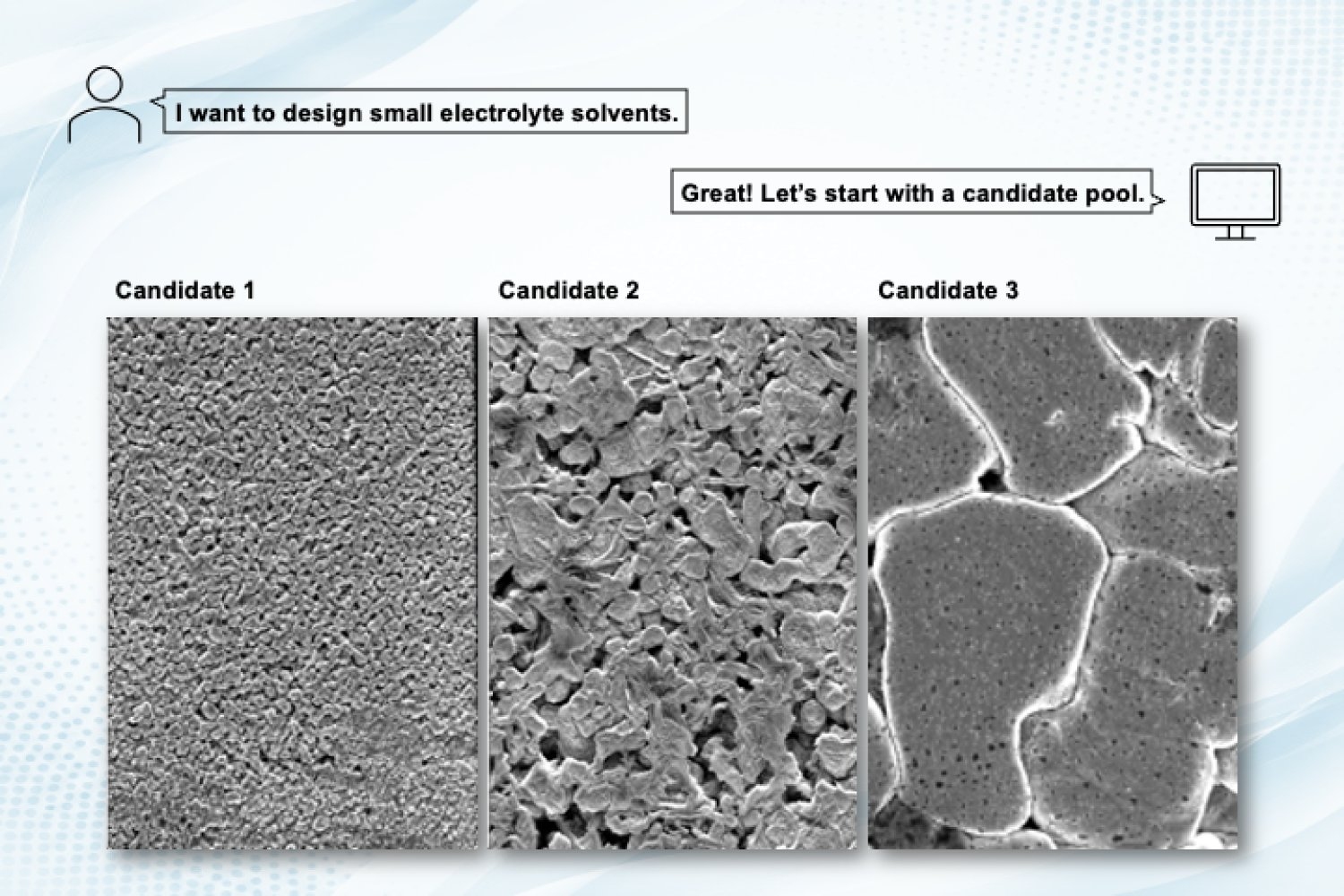
Chia-Wei Hsu, an MIT PhD student in materials science and engineering, created an AI-guided algorithm, which designed 100,000 candidate molecules on his computer within 24 hours. Hsu then narrowed down the pool to 200 candidates by applying a set of technical criteria — including similarity in shape to DMTMSA and comparable electronic properties. Twenty-seven representative candidates covering the full range of possibilities were selected for experimental tests.
“We tested them all under the same conditions to make it a fair, head-to-head competition,” Chen says. A clear winner emerged, a solvent called DMFSA, which was both the smallest and the best.
Small is beautiful
This work, claims Jinhyuk Lee, an associate professor of materials engineering at McGill University who is not part of the study, “addresses one of the most persistent challenges in battery research: improving battery performance at high charging and discharging rates without sacrificing long-term stability. By carefully tailoring the size of solvent molecules, the authors demonstrate a new design strategy that could enable lower-cost, higher performance batteries.”
The group is not done. A new search is underway to find an even better solvent. This time, the approach is similar, but DMFSA (rather than the larger DMTMSA molecule) serves as the starting point. Chen believes the new solvents they are uncovering could eventually lead to rechargeable sodium-metal batteries that combine low-cost, abundant materials with fast charging and high-power performance, opening the door to broader energy storage applications.
The overriding goal of this work, the authors emphasize, is not only to advance sodium batteries. It’s also to introduce a new approach to electrolyte design that uses solvent size and molecular similarity as the key guideposts. Viewing the research in this light, sodium-metal batteries serve as a model system for demonstrating a more general design principle.
“Because the concept is broadly applicable,” Lee comments, “its impact could extend well beyond sodium batteries and influence the design of a wide range of future energy storage technologies.”
This work was supported, in part, by a National Research Foundation of Korea grant funded by the government of Korea government, as well as U.S. National Science Foundation graduate research fellowship. The characterization equipment used in this project is partly from the MIT.nano Characterization Facilities.
A machine-learning-guided pipeline enables researchers to generate solvent candidate pools on demand, narrow the selections down, and experimentally test the most promising electrolyte recipes. These scanning electron microscopy images show the morphology of sodium-metal deposits obtained from three different electrolyte candidates.
Revoy introduced a swappable electric trailer for diesel trucks.
The 575 kWh plug-in module can cut emissions by 85 percent.
It is available to fleet operators with a per-mile subscription model.
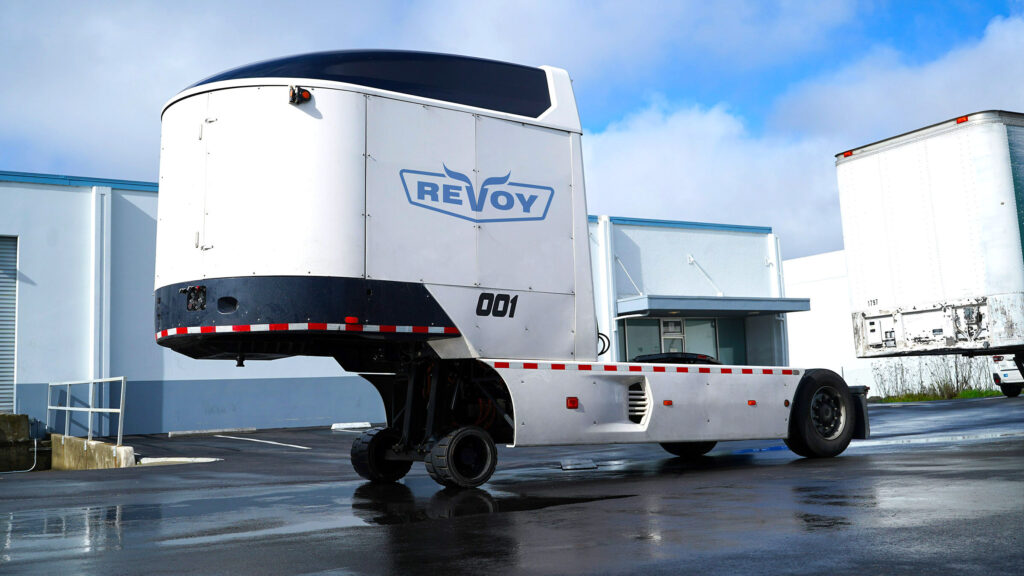
Fully electric semi trucks can cut operating costs for fleet operators, but they routinely cost two to three times what a diesel equivalent does, and they come saddled with range limits and charging headaches. San Francisco startup Revoy has a clever way around that, turning existing diesel semis into hybrids with a swappable, plug-in electric dolly. The setup also buys more life out of the diesel trucks a fleet already owns, rather than making it replace them outright.
Revoy was founded in 2020 by CEO Peter Reinhardt and CTO Ian Rust. Rust, who previously worked at autonomous driving startup Cruise, said the idea grew out of collaborative robotics, closer in principle to an exoskeleton for humans than to a conventional EV drivetrain. “Instead of removing the driver, we’re using robotics to switch the fuel source,” he told Bloomberg.
What Actually Bolts On
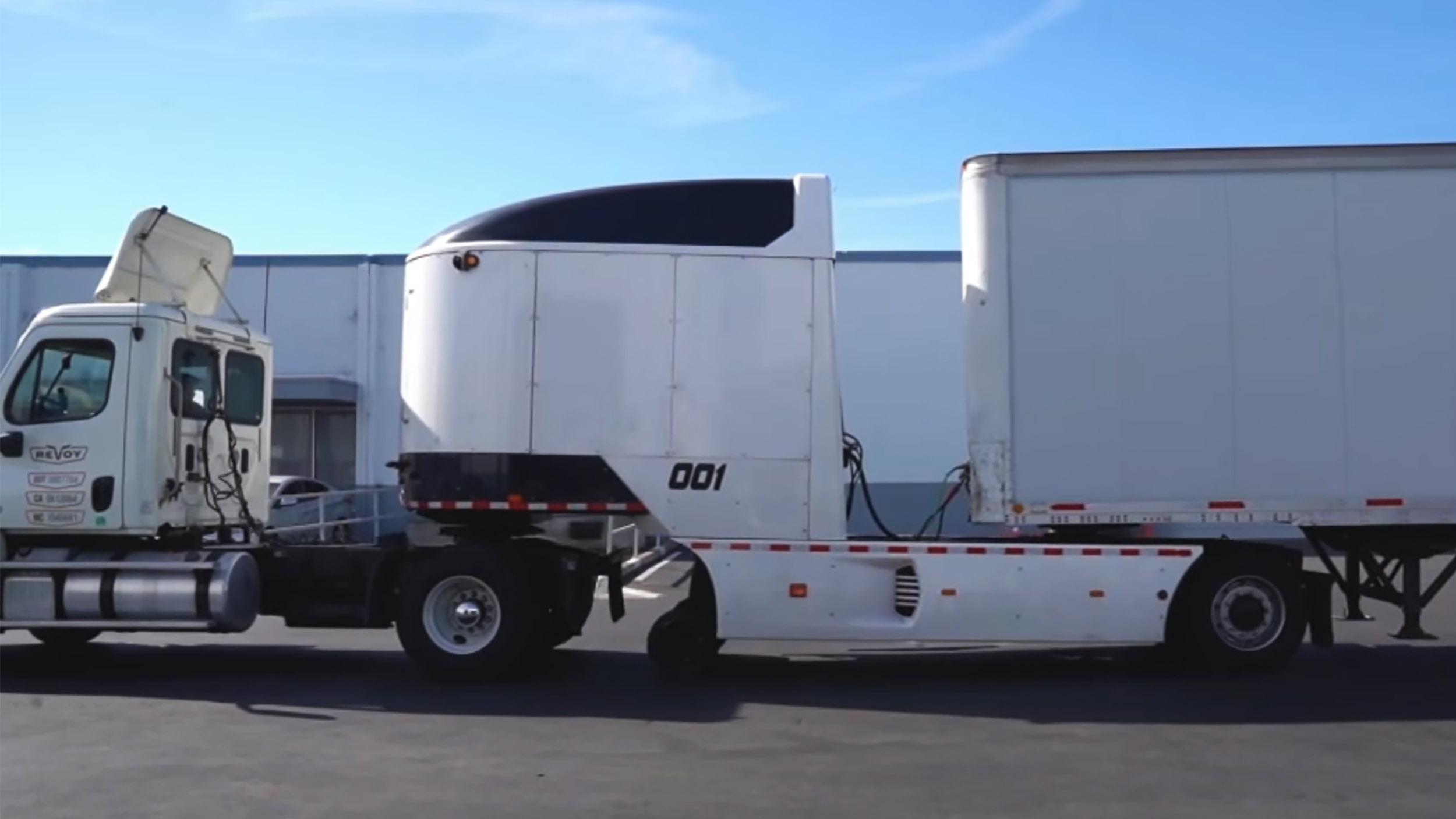
The product is a self-powered unit that connects directly between the tractor’s fifth-wheel hitch and the cargo trailer. The electric add-on measures 13 feet (3.96 meters) long and tips the scales at 22,000 lbs (9,979 kg). Inside sits a 575 kWh lithium-iron-phosphate battery that feeds an electrically driven axle, which is where all the real work happens.
When the truck driver hits the throttle, the system reads the load demand and engages the electric motor to shoulder the heavy lifting, keeping the diesel engine from straining. Under braking, the motor flips to regenerative mode, topping up the battery while helping slow the truck. The dolly also runs active safety systems that guard against rollovers, flipping, and jackknifing, and it supports blind-spot detection and automatic reversing.
The Benefits In Fuel Economy And Emissions
With the add-on fitted, a standard semi hauling an 80,000 lbs (36,287 kg) gross vehicle weight can cover more than 200 to 250 miles (322 to 402 km) on electric power alone, which is enough to reshape how a lot of regional routes get run.
The company says average fuel economy on the diesel hybrid can climb from the usual 6 to 8 mpg (29.4 to 39.2 lt/100 km) to 20 to 35 mpg (6.7 to 11.8 lt/100 km), and touch 40 mpg (5.9 lt/100 km) on short-haul runs under 150 miles (241 km). Those are real savings at a moment when diesel prices have spiked because of the ongoing war with Iran.
Reinhardt says US retail diesel still sits about 40 percent above the pre-war level of roughly $3.80 per gallon, and fuel usually accounts for more than a fifth of a truck owner’s operating costs. At the same time, carbon emissions drop by as much as 85 percent.
Rather than parking a rig for hours to charge that enormous battery, Revoy built the dolly to be swapped. The company is putting together a network of highway hubs where a truck can trade a drained unit for a fresh one, with the whole exchange wrapping up in under five minutes.
According to Bloomberg, the 3 million registered heavy-duty freight trucks in the United States each cover roughly 60,000 miles (96,561 km) per year. That adds up to a $900 billion market that throws off around 300 million tons of carbon dioxide annually, or 6.7 percent of all US greenhouse emissions. An earlier report from FleetOwner pegged the potential savings at an average of $25,000 per truck each year in fuel costs, which is the kind of number that gets a fleet manager’s attention.
Dolly by Subscription
Instead of selling the hardware outright, Revoy hands the electric dolly to fleet operators as a service with a subscription fee. The company secured regulatory approval from the National Highway Traffic Safety Administration in 2023, then wrapped a yearlong pilot with freight company Ryder System Inc. in 2024. Its first commercial operation starts in 2026 in Oregon, deploying an initial fleet of four dollies built from Chinese components. That run will cover a 200-mile stretch near Portland using second-hand diesel trucks bought by Revoy’s partners, with the company training those partners’ drivers to operate the dollies.
Revoy raised $27 million in its latest funding round, pushing total funding to $41 million, reports Bloomberg. With that money, the company is developing a cheaper second-generation dolly that pairs a smaller battery with the same 200-mile EV range. The plan is to scale production and have dozens of second-gen units running US shipping routes by late 2027. For now Revoy is focused on the US, though Rust hopes the technology can eventually reach other markets.
For Hugh Smith, the challenge of building an energy-secure future isn’t about creating the world’s “best” battery. It’s about designing the right battery for the right job.
As a fifth-year PhD candidate in MIT’s Department of Materials Science and Engineering, Smith studies sodium-ion batteries, an emerging alternative to the lithium-ion batteries that power everything from smartphones to electric vehicles. By replacing expensive critical minerals like lithium, nickel, and cobalt with more readily available elements like sodium, iron, and manganese, his research aims to make energy storage both more affordable and more sustainable.
“I’ve believed for a very long time that the biggest engineering problem humanity faces is the transition to clean energy,” Smith says. “Batteries are a critical bottleneck in that transition.”
Growing up in Albany, New York, Smith was drawn to materials science because it combined two of his favorite subjects: chemistry and math. What kept him interested, however, was the field’s ability to touch nearly every aspect of everyday life.
“Anytime you interact with a solid material, there are people who intentionally designed that material for a specific purpose,” he says.
That idea of designing materials with a real-world purpose eventually led him to batteries. After earning his undergraduate degree in materials science from Case Western Reserve University, Smith came to MIT to explore how new battery chemistries could reduce costs without sacrificing performance.
Consumers often want batteries that charge quickly, last for years, store large amounts of energy, and remain inexpensive. But in reality, improving one characteristic of this technology usually means compromising another. A smartphone battery, for example, prioritizes energy density and long lifespan, while a battery storing electricity for the power grid doesn’t need to be lightweight or compact. Instead, cost and reliability become the most important considerations.
Rather than chasing an all-encompassing solution, Smith focuses on finding the right balance for specific applications, often juggling competing priorities. Instead of strengthening a singular characteristic, Smith works to maximize as many components of the battery as possible, including cost, performance, sustainability, and reliability, depending on how it will be used.
“It’s trying to balance everything,” he says. “It’s not catering extremely to some properties and then abandoning others.”
The sodium-ion batteries Smith studies could eventually provide lower-cost options for electrical grids or more affordable electric vehicles. Because sodium-ion batteries can largely be manufactured using the same infrastructure already developed for lithium-ion batteries, they also offer a potentially smoother path toward commercialization than many emerging battery technologies.
Smith’s graduate school journey has been defined as much by the process of learning how to do research as by the science itself. He joined a brand-new research group at MIT as its first graduate student, and helped establish the lab run by Professor Iwnetim Abate. Without senior graduate students or postdocs to turn to for day-to-day guidance, he often had to teach himself new techniques and how to troubleshoot when things went wrong.
“I learned not to be fearful of new things,” Smith says. “Just because I didn’t know how to do something didn’t mean I couldn’t figure it out.”
He says the experience transformed him into a more independent researcher and someone who is willing to dive headfirst into unfamiliar problems.
Before beginning graduate school, Smith spent seven months at the Battery Innovation Center in Newberry, Indiana, an experience that broadened his understanding of how scientific discoveries become real technologies. Working alongside materials scientists, chemists, mechanical engineers, and chemical engineers showed him that no single discipline can solve the challenges of battery development alone.
“It requires a huge team effort,” Smith says. “It requires a lot of different types of knowledge.”
He says the experience also helped him better understand where his own expertise could make the greatest impact and when collaboration across disciplines is essential.
Outside the lab, Smith makes time to stay active through MIT’s intramural sports program, where he plays soccer, ultimate frisbee, football, and volleyball on teams with fellow graduate students. The games offer a chance to unwind after long days of research while strengthening the friendships he’s built throughout graduate school. He also enjoys fishing around the Boston area with friends and exploring New England’s coastal towns, museums, and historic sites.
As he prepares to graduate in the winter and pursue a career in battery research and development, Smith hopes to continue designing technologies that support the transition to clean energy.
“Lots of smart people have already made wind and solar very cheap,” Smith says. “The issue is reliability, and batteries can help solve that problem. I hope the work I’m doing helps to affordably unlock the transition to an electric grid powered by reliable clean energy, and an electrified transportation network.”
“Lots of smart people have already made wind and solar very cheap,” Hugh Smith says. “The issue is reliability, and batteries can help solve that problem.”
SK On could build solid-state batteries at its current lithium-ion factories.
Advanced solid-state batteries have the chance of reinventing the EV industry.
Mercedes, Stellantis, and Karma are already testing Factorial’s tech.
Factorial Energy, one of the most promising battery companies in the United States, has signed a Memorandum of Understanding (MoU) with South Korean battery leader SK On to explore large-scale production of advanced new solid-state batteries. As the EV industry pushes forward, deals like this have the potential to change the market.
Through the MoU, the companies will explore the technical feasibility and manufacturing considerations for Factorial’s FEST solid-state batteries. Although the company may not be as well-known as some other battery firms, like CATL, it’s the firm behind the solid-state batteries being tested by Mercedes-Benz, Stellantis, Karma, and others.
While solid-state battery technology has come a long way in recent years, it has yet to be commercialized at scale. SK On already operates a massive manufacturing footprint for lithium-ion batteries and could be the perfect partner for Factorial, helping its cells reach the mass market.
“A battery breakthrough only matters if it can be manufactured at scale,” Factorial chief executive Siyu Huang said. “That is what makes this partnership with SK On so significant. Their manufacturing footprint spans some of the world’s most advanced battery facilities, and their expertise will be critical in shaping how solid-state battery technology integrates into global production ecosystems.”
The Solid-State Future
Factorial notes that it has never been focused on manufacturing its solid-state batteries alone, or at dedicated facilities. Instead, it’s all about developing new battery technologies that can leverage existing manufacturing infrastructure. In addition to working on solid-state batteries for cars, it’s also looking to work with SK On to use these batteries in the mobility and high-performance markets, as well as energy storage.
Many view solid-state batteries as the next frontier in automotive technologies. Several car manufacturers in China are getting close to producing solid-state cells at scale, as are Japanese firms, including Toyota.
Hyundai Motor Group swept the top three places for battery performance.
The analysis ranked the Model 3 as Tesla’s best-performing vehicle.
Other strong performers include the Volvo XC40 Recharge and Polestar 2.
Several years ago, prospective EV buyers had every reason to feel nervous about how long the battery pack would last. Battery technology has come a long way since EVs went mainstream, though, and a new study out of Sweden puts a number on how much capacity new EVs hold onto after 62,000 miles, or 100,000 km, of driving. The results may surprise you.
The study, run by online car marketplace Carla, went through 9,954 battery tests of EVs sold in Sweden between 2022 and 2026, using a diagnostic tool from AVILOO that measures a pack’s true state of health instead of leaning on the estimates the car itself provides. That distinction matters, because in-car readouts can sometimes paint a rosier picture than reality.
The Kia e-Niro came out on top, hanging on to an impressive 97.25 percent of its original capacity after 62,000 miles. It shares its 64 kWh battery with the Hyundai Kona, which nearly matched it at 97.18 percent, and the podium stayed within the Hyundai Motor Group family thanks to the Kia EV6 and its 77.4 kWh pack in third place.
Top-Performing EVs
Model
Battery Health After 62K Miles
Kia e-Niro – 64 kWh
97.25%
Hyundai Kona – 64 kWh
97.18%
Kia EV6 – 77.4 kWh
95.95%
Volvo XC40 Recharge – 69 kWh (CATL)
94.70%
Polestar 2 – 78 kWh (CATL)
94.35%
BMW i3 – 120 Ah
93.77%
Polestar 2 – 78 kWh (LG Chem)
93.53%
Tesla Model 3 – 60.5 kWh (CATL LFP)
93.34%
Audi e-tron 50 – 71 kWh
93.02%
Audi e-tron 55 – 95 kWh
92.93%
Skoda Enyaq iV – 77 kWh
92.88%
Tesla Model 3 – 78.8 kWh (LG Chem)
92.83%
Tesla Model S – 96 cells
92.80%
Volkswagen ID.4 – 77 kWh
92.77%
Skoda Enyaq iV – 77 kWh
92.60%
Tesla Model X – 96 cells
92.52%
Volkswagen ID.4 – 77 kWh
92.27%
Tesla Model Y – 78.8 kWh (LG Chem)
92.18%
Audi Q4 e-tron – 77 kWh
92.18%
Volkswagen ID.3 – 58 kWh
91.79%
SWIPE
The strongest European EV was the Volvo XC40 and its CATL-sourced 69 kWh battery, which held 94.70 percent of its capacity after 62,000 miles, trailed closely by the Polestar 2 and its 78 kWh CATL pack at 94.35 percent. The BMW i3 and the LG Chem version of the Polestar 2 landed close behind at 93.77 percent and 93.53 percent.
The best-placed model from EV leader Tesla was the Model 3 fitted with a 60.5 kWh LFP battery from CATL, retaining 93.34 percent of its capacity. This put it slightly above the Model 3 with an LG Chem-sourced NMC battery at 91.5 percent.
Among the other EVs ranked inside the top 20 were the Audi e-tron 50 and 55 at 93.02 and 92.93 percent, respectively, the Skoda Enyaq iV at 92.88 percent, the Tesla Model S with 92.80 percent, the VW ID.4 at 92.77 percent, and the Tesla Model X at 92.52 percent.
The bigger lesson here is that the old fear of an EV’s battery dying young no longer holds up. Every car in this ranking kept more than 90 percent of its capacity past 62,000 miles, and most owners will not even reach that figure until three or four years of driving. The pack is now likely to outlast the car wrapped around it.
The next-generation Lexus LFA may reset expectations of electric supercars.
This enticing new model shares its aluminum architecture with the Toyota GR GT.
Lexus isn’t interested in using simulated gear shifts like Hyundai and Porsche.
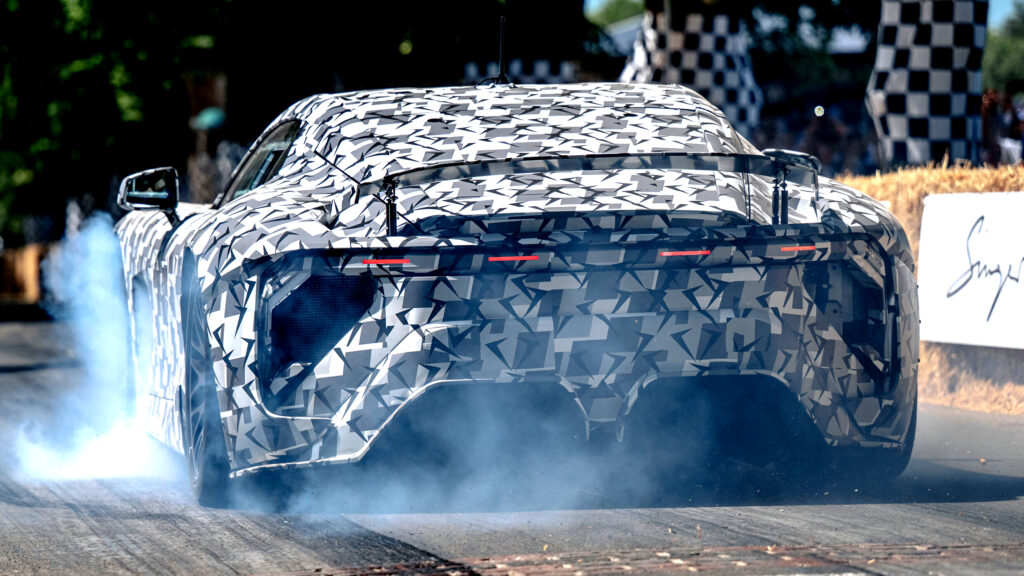
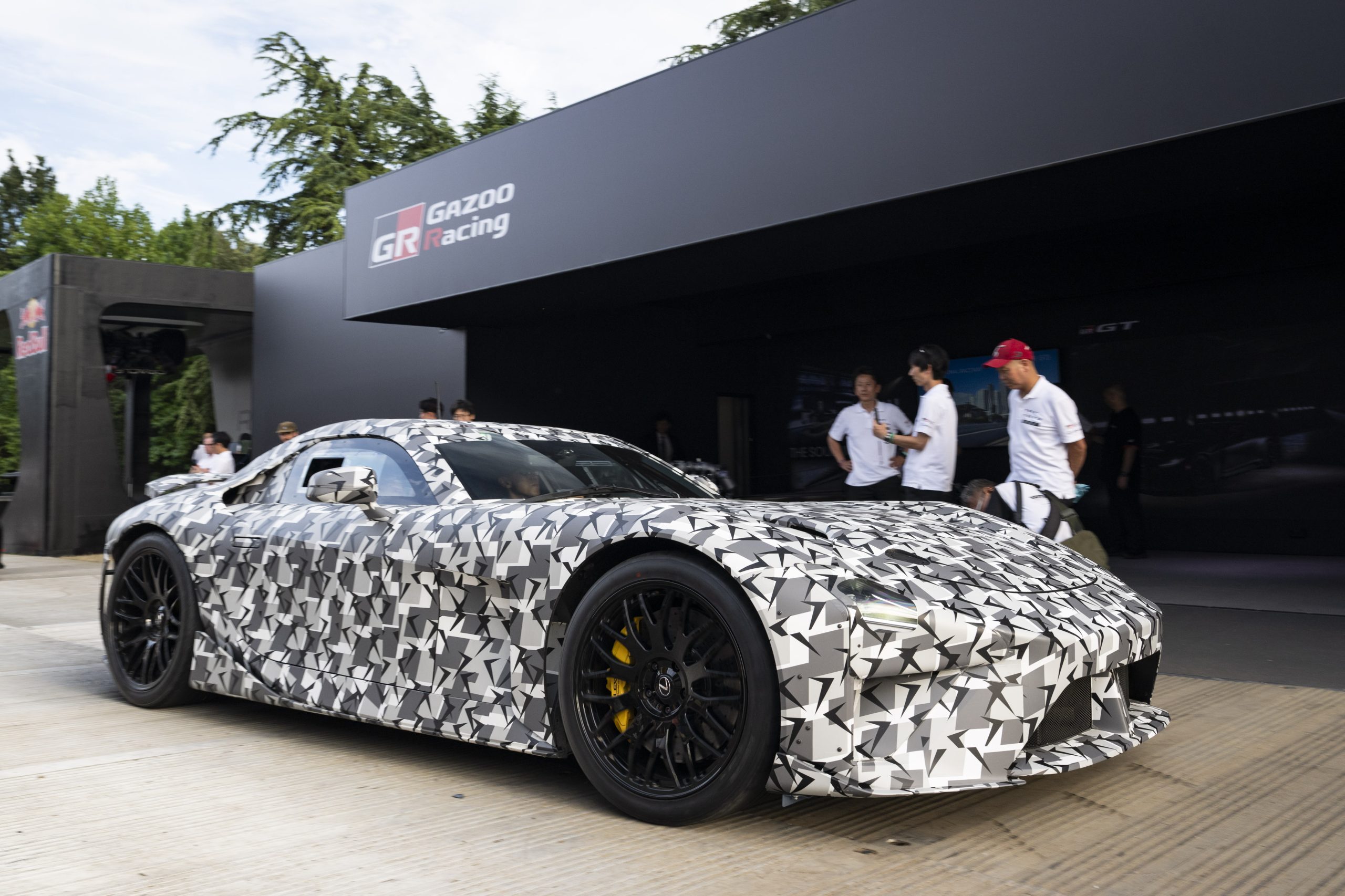
Amid a sea of high-revving, big-capacity supercars and hypercars at last week’s Goodwood Festival of Speed, the future Lexus LFA made a subtle and very silent dynamic debut. The successor to the company’s iconic supercar, you see, will be all-electric.
Lexus previewed the next-gen LFA last December, showcasing it alongside the Toyota GR GT, which shares its aluminum architecture. However, whereas that car uses a powerful V8 engine, the new LFA will be electric, a far cry from the original car’s all-screaming, all-conquering, Yamaha-tuned V10.
While this will disappoint many rev-heads, the new LFA could get tech enthusiasts very excited.
First Lexus On Solid-State Cells
According to a report from Autocar, the new LFA will be the first production Lexus to run advanced solid-state battery cells. Toyota has spent years developing them, and they now look close to ready for the road. Solid-state cells hold more energy in less space than the conventional liquid-based packs in use today, which is where their advantage lies.
Speaking to the publication, Shogo Kasamatsu, who penned the recent LFA concept, said Lexus wants to upend how people think about performance EVs. The concept’s restrained look drew on the original LFA, which he called “a very humble design, very artistic, and based on its true function.” The car was shaped to carry that message, he added, rather than march in step with Lexus’s current design language.
Similarly, LFA program general manager Yukihiro Yukita said Lexus wants to convince supercar buyers to opt for the LFA over a more conventional, ICE-powered alternative. He acknowledged that weak demand for high-priced performance EVs is the program’s biggest hurdle, but said Lexus intends to lead the shift from combustion supercars to electric ones.
Making A Fun EV?
“What I get from the market is that a BEV is fake,” he said, “because we imitate the sound [of an ICE], but that’s not something we want to do.” Lexus has no interest in trailing Porsche, Hyundai, and Mercedes-AMG by faking gear shifts or piping in engine noise. Yukita wants drivers to “feel like they are driving with an engine” without cheaply mimicking one.
“We’re not just wanting to replicate the sound of the engine, we want to redesign the sound itself,” he said. Engineering teams will strip out unnecessary noise and vibration and rework what remains, sharpening the sensory experience rather than manufacturing a fake one. EVs give up the sound and vibration that pull a driver in, he admitted, but electric motors answer with a responsiveness and linearity no combustion engine can match.
It all sounds rather fascinating, but it’s hard to imagine how Lexus will be able to get anywhere close to matching the thrills of that old V10.
Smaller electrical faults top repair requests for EVs in new Warrantywise study.
On-board chargers proved priciest common repair, some fixes costing thousands.
Main underfloor high-voltage batteries don’t figure in the list of top five EV faults.
If you’re shopping for a used EV, chances are the health and longevity of the high-voltage battery, the big slab of cells under the floor, is the thing keeping you awake at night. But according to a new analysis of warranty repair requests, it’s far from the problem owners encounter most often.
The study, based on repair request data collected by Warrantywise in the UK, found that the biggest EV reliability headaches are largely the same kinds of issues drivers have dealt with for years on cars running more conventional combustion powertrains. Electrical gremlins, suspension wear, and even the humble 12-volt battery appear far more frequently than failures involving the high-voltage battery pack.
Leading the list were general electrical faults, including sensors and central locking systems. Those repairs averaged around £810-900 ($1,085-1,205), although some individual claims climbed well beyond £3,000 ($4,020) and even topped £4,000 ($5,350) depending on the fault.
Suspension components, particularly wishbones, also featured prominently. Average repair requests exceeded £1,200 ($1,600), with the largest individual claim passing £4,100 ($5,490). That’s a reminder that even without an engine or gearbox, an EV still has plenty of conventional hardware that wears over time – and with more weight to bear, suspension takes an even bigger beating in an EV.
Top 5 EV Faults
Failure Area
Failure Part
Avg Repair Cost
Most Expensive Repair Cost
1
Electrical system
Sensors
£810 ($1,085)
£3,270 ($4,380)
2
Electrical system
Central locking mechanism
£900 ($1,205)
£4,060 ($5,435)
3
EV
On-board charger
£2,160 ($2,890)
£10,455 ($14,000)
4
Suspension
Wishbones
£1,230 ($1,650)
£4,120 ($5,515)
5
Electrical system
Auxiliary battery (12V battery)
£535 ($716)
£990 ($1,325)
SWIPE
The only genuinely EV specific component to crack the top five was the on-board charger. While the average repair request for one of those came in at £2,160 ($2,890), the largest single claim reached a hefty £10,455 ($14,000), showing that although these failures aren’t everyday occurrences, they can become scarily expensive.
Battery Problems Overblown
What about the high-voltage traction battery everyone worries about? It didn’t make the top five at all. That doesn’t mean battery failures never happen, only that they were comparatively rare in the warranty data, quite possibly because EV batteries are more robust than many people think, and they tend to have longer factory warranty cover than the rest of the car. When problems did occur, though, repair requests averaged more than £6,400 ($8,570).
The figures also showed average EV repair request values increased by 10.7 percent between 2024 and 2025. That rise isn’t necessarily down to worsening reliability, with inflation, labour costs, and parts prices all likely contributing to higher bills.
As with any warranty dataset, the results only reflect vehicles covered under those policies rather than every EV on the road. Even so, it points to the expensive battery that dominates so many buying conversations as not being the scary bill-in-waiting it’s made out to be.
Despite regional variability in climate, electricity sources, congestion, and the wide variation in individual driving patterns, electric vehicles generate less greenhouse gas emissions and do not cost more than comparable gas-powered vehicles for drivers and vehicle fleet owners in most parts of the United States, according to a new study by MIT researchers.
The team’s approach captures many key factors that contribute to regional and individual differences in the life-cycle emissions and ownership cost of electric vehicles, including meteorological data, the distance and duration of trips, and fuel prices.
To paint a fuller picture of emissions and costs than was previously available, the researchers sourced data from thousands of U.S. zip codes and drilled down to the level of individual drivers within those locations. Their study considers time-averaged fuel prices so as not to be overly influenced by fluctuations in prices at any one point in time. They finalized their analysis at the end of 2024 and early 2025.
Their results indicate that a person’s driving behaviors can matter as much as regional factors like the local electricity mix when it comes to the emissions savings of an electric vehicle, compared to a similar gas-powered vehicle. In most locations, a battery-electric vehicle reduces emissions between 40 and 60 percent, with larger impacts in urban areas.
They also found that colder climates do not reduce overall emission benefits as much as some media reports assume.
The researchers utilized this detailed analysis to update a public tool they previously developed, carboncounter.com, which enables individuals to compare the life-cycle emissions and total ownership costs of nearly any car on the market. A new version of carboncounter.com is also being released today.
“There are a lot of statements being thrown around, like that electric vehicles don’t reduce emissions very much in cool climates, and we wanted to analyze these factors systematically and evaluate these statements against one another simultaneously. Rather than simply asking, ‘Are EVs better?’, this paper helps answer ‘better for whom, and under what conditions?’” says Marco Miotti PhD ’20, a senior researcher at ETH Zurich who completed this research while a graduate student in the Institute for Data, Systems, and Society (IDSS) at MIT.
Many prior studies that compare emissions and costs of electric vehicles (EVs) to combustion-engine vehicles cover a few factors, like the amount of renewable energy in the grid and how gas prices impact affordability, Miotti says.
“To our knowledge, there have been few efforts so far that bring all these factors together. But if someone wants to buy a car and have a better understanding of the factors that affect emissions and costs, this holistic approach is important,” he adds.
The researchers focused on two types of EVs: battery-electric vehicles, which only operate on electricity, and plug-in hybrid electric vehicles, which also have a combustion engine that works in tandem with the battery to optimize fuel savings.
The team expanded and improved a set of previously developed vehicle cost and emissions models to incorporate a wider variety of factors and data types.
For instance, they refined an existing model that estimates energy use and gas mileage so it could capture more nuances of local climate variability.
“But the real effort was not just in extending these different models, but in bringing together all these different data and making them work with the models in a consistent manner,” Miotti says.
The team sourced data on a wide variety of factors for each U.S. zip code, such as typical drive cycles, the amount of traffic, local gas and electricity prices, makeup of the regional electricity mix, meteorological profiles, and more. They used statistical approaches to amalgamate different types of data.
For example, the team used a probabilistic matching technique to combine data on how often people drive, which was drawn from nationwide travel surveys, with more detailed GPS data that includes factors like drivers’ acceleration patterns and the distance they usually drive on each day of the week.
The researchers designed their analysis to focus on the spatial picture of emissions and costs, based on U.S. zip codes, while simultaneously considering the impact of the size and features of each specific vehicle model.
“At the end of the day, it’s the vehicle and fleet owners who make decisions about vehicle purchases. So, we wanted to make sure to consider their wide-ranging individual perspectives rather than simply performing a region-by-region comparison,” says Trancik.
Lower emissions, comparable costs
In the end, their modeling framework revealed that all factors they analyzed matter about equally in determining emissions-reduction potential of EVs compared to internal combustion vehicles.
EVs reduce emissions the most in areas with a cleaner electricity mix, denser traffic, higher annual travel distances, and a mild climate, in decreasing order of importance. In each area, emission reductions increase for drivers who drive more often, drive larger vehicles, and are more frequently stuck in traffic.
In a colder area like North Dakota, fuel economy of battery-electric vehicles might be reduced by as much as 50 percent on a particularly frigid night, but the effect on annual emission benefits is minimal.
“We even did a sensitivity study to see if the range is reduced in very cold climates, and we found that, even in the most unfavorable conditions, EVs still reduce emissions by a substantial amount,” Miotti says.
On the cost side, the models show that, in most places across the U.S., EVs are competitive with comparable combustion-engine vehicles in terms of lifetime ownership cost, even without clean vehicle tax credits. And in areas where electricity is relatively affordable, battery-electric vehicles tend to cost less than their plug-in hybrid or combustion-engine counterparts.
In the future, the researchers want to expand this analysis to include a temporal dimension, so the framework also considers how changes in vehicle, fuel, and electricity prices affect emissions and costs over time.
“While we found that the electricity mix is a big driver of the spatial variation in emissions savings of EVs, the electricity grid is decarbonizing everywhere. As that happens, emissions savings across space will become more homogenous for EVs, but the differences across one driver to another will remain,” Miotti says.
They could also use the framework to explore regions outside the United States or incorporate data on hybrid-electric vehicles that cannot be plugged in.
This work was funded, in part, by the MIT Martin Family Society of Fellows for Sustainability.
A new MIT study finds that despite regional differences in climate, electricity sources, traffic, and driving patterns, electric vehicles produce fewer greenhouse gas emissions — and cost no more to own — than comparable gas-powered cars for most U.S drivers.
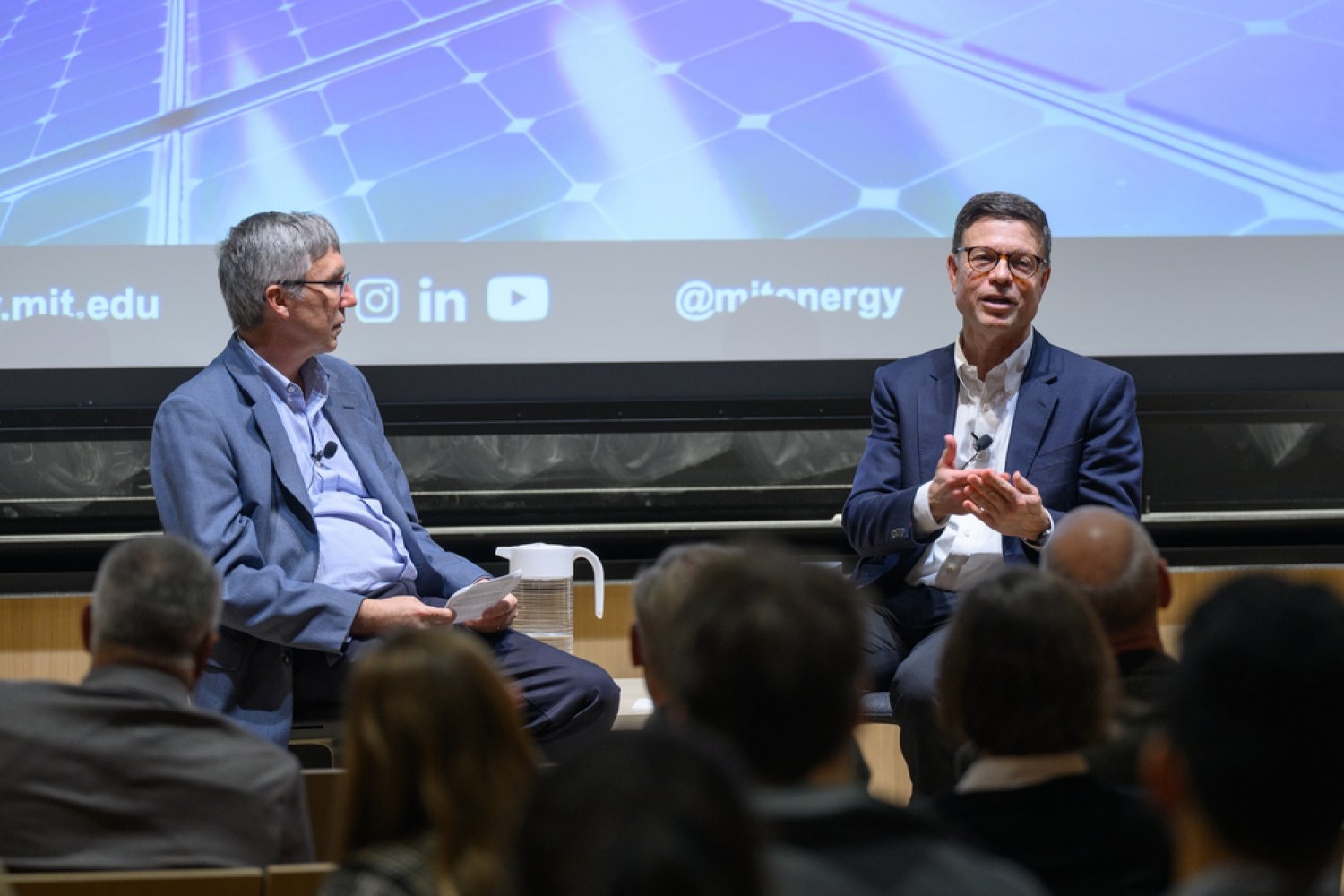
Advancements in battery innovation are transforming both mobility and energy systems alike, according to Kurt Kelty, vice president of battery, propulsion, and sustainability at General Motors (GM). At the MIT Energy Initiative (MITEI) Fall Colloquium, Kelty explored how GM is bringing next-generation battery technologies from lab to commercialization, driving American battery innovation forward. The colloquium is part of the ongoing MITEI Presents: Advancing the Energy Transition speaker series.
At GM, Kelty’s team is primarily focused on three things: first, improving affordability to get more electric vehicles (EVs) on the road. “How do you drive down the cost?” Kelty asked the audience. “It's the batteries. The batteries make up about 30 percent of the cost of the vehicle.” Second, his team strives to improve battery performance, including charging speed and energy density. Third, they are working on localizing the supply chain. “We've got to build up our resilience and our independence here in North America, so we're not relying on materials coming from China,” Kelty explained.
To aid their efforts, resources are being poured into the virtualization space, significantly cutting down on time dedicated to research and development. Now, Kelty’s team can do modeling up front using artificial intelligence, reducing what previously would have taken months to a couple of days.
“If you want to modify … the nickel content ever so slightly, we can very quickly model: ‘OK, how’s that going to affect the energy density? The safety? How’s that going to affect the charge capability?’” said Kelty. “We can look at that at the cell level, then the pack level, then the vehicle level.”
Kelty revealed that they have found a solution that addresses affordability, accessibility, and commercialization: lithium manganese-rich (LMR) batteries. Previously, the industry looked to reduce costs by lowering the amount of cobalt in batteries by adding greater amounts of nickel. These high-nickel batteries are in most cars on the road in the United States due to their high range. LMR batteries, though, take things a step further by reducing the amount of nickel and adding more manganese, which drives the cost of batteries down even further while maintaining range.
Lithium-iron-phosphate (LFP) batteries are the chemistry of choice in China, known for low cost, high cycle life, and high safety. With LMR batteries, the cost is comparable to LFP with a range that is closer to high-nickel. “That’s what’s really a breakthrough,” said Kelty.
LMR batteries are not new, but there have been challenges to adopting them, according to Kelty. “People knew about it, but they didn’t know how to commercialize it. They didn’t know how to make it work in an EV,” he explained. Now that GM has figured out commercialization, they will be the first to market these batteries in their EVs in 2028.
Kelty also expressed excitement over the use of vehicle-to-grid technologies in the future. Using a bidirectional charger with a two-way flow of energy, EVs could charge, but also send power from their batteries back to the electrical grid. This would allow customers to charge “their vehicles at night when the electricity prices are really low, and they can discharge it during the day when electricity rates are really high,” he said.
In addition to working in the transportation sector, GM is exploring ways to extend their battery expertise into applications in grid-scale energy storage. “It’s a big market right now, but it’s growing very quickly because of the data center growth,” said Kelty.
When looking to the future of battery manufacturing and EVs in the United States, Kelty remains optimistic: “we’ve got the technology here to make it happen. We’ve always had the innovation here. Now, we’re getting more and more of the manufacturing. We’re getting that all together. We’ve got just tremendous opportunity here that I’m hopeful we’re going to be able to take advantage of and really build a massive battery industry here.”
This speaker series highlights energy experts and leaders at the forefront of the scientific, technological, and policy solutions needed to transform our energy systems. Visit MITEI’s Events page for more information on this and additional events.
Kurt Kelty (right), vice president of battery, propulsion, and sustainability at General Motors, joined MITEI's William Green at the 2025 MIT Energy Initiative Fall Colloquium. Kelty explained how GM is developing and commercializing next-generation battery technologies.

 Login
Login