Utilities are convincing lawmakers around the U.S. to delay bills that would allow people to buy solar panels, plug them into an outlet and begin generating electricity.
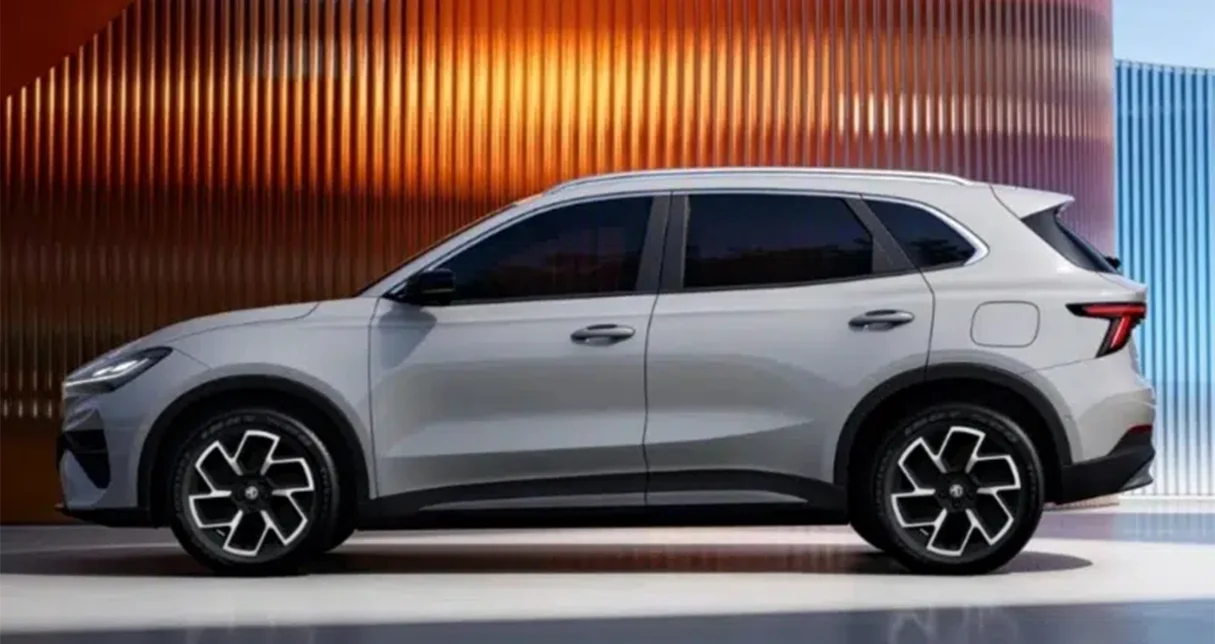
MG unveils the MG4X electric SUV with semi-solid-state tech.
New battery chemistry targets better range and heat stability.
Shares E3 electronic architecture with the MG4 hatchback.
The new MG 4 lineup is expanding with a slightly larger addition called the MG 4X. Positioned as a higher-riding SUV counterpart to the hatchback, the model brings one particularly notable feature with it. Like its smaller sibling, the MG4X uses an advanced semi-solid-state battery pack.
Sitting between the axles is a 53.95 kWh battery that contains only 5 percent liquid electrolyte, which is why MG classifies it as semi-solid-state. The chemistry is intended to improve thermal stability and cope better with both very cold and very hot conditions. Even with a battery that is not especially large by modern EV standards, MG says the setup is good for a driving range of 317 miles (510 km).
For now, MG is keeping the performance figures to itself. Power output remains undisclosed, and there is still no word on the electric motor or motors that will power the SUV. What has been confirmed is the underlying tech. The MG4X runs on the same E3 electronic architecture as the latest MG4 hatchback, and it is clearly aimed at competitors like the BYD Atto 2.
A BYD Rival
It is 4,395 mm (173 inches) long, 1,842 mm (72.5 inches) wide, 1,551 mm (61 inches) tall, and sits on a 2,750 mm (108.2-inch) wheelbase. It also has a curb weight of just 1,485 kg (3,273 lbs). Visually, it resembles the hatchback but has its own unique style.
The front end is quite imposing, complete with large air intakes and a lower grille, as well as triangular headlights with a thin light bar. Early images of the SUV also show it rocking black wing mirrors, a large panoramic glass roof, and sharp taillights, appearing to be similar in shape to the current MG S5, which sits right above it in MG’s range.
We don’t yet know what the cabin of the MG 4X will be like, but it’s safe to assume it will share parts with the hatchback. This could include the same central infotainment display, co-developed with smartphone manufacturer Oppo. It may also feature a handful of proper physical buttons on the steering wheel and console, ensuring that it’s not too minimalist.
Details about the Rivian R2 have leaked ahead of its debut.
Launch model starts at $57,990, and offers 330 miles of range.
Affordable variants will follow, including a base model for $45K.
Rivian is gearing up to introduce the highly anticipated R2 tomorrow, but waiting is so overrated. Arstechnica knows that feeling all too well as they jumped the gun and published full details of the crossover a day early.
While the article was quickly removed, the internet never forgets and it was archived for posterity. Thanks to this, we know virtually everything about the upcoming model.
Set to arrive this spring, the R2 will be launched in Performance guise that starts at $57,990 before a $1,495 destination fee. The range-topping model reportedly has a 87.9 kWh battery pack, which powers a dual-motor all-wheel drive system producing 656 hp (489 kW / 665 PS) and 609 lb-ft (825 Nm) of torque.
The R2 Performance is said to have a semi-active suspension and a range of up to 330 miles (531 km). We can also expect a fast charging capability that will take the battery from 10-80% in as little as 29 minutes.
In terms of equipment, we can expect a stylish interior with birch wood trim as well as heated and ventilated front seats. The rear seats are also heated, while other highlights include a nine-speaker audio system and a flashlight that’s integrated into the front door. They’re joined by matrix LED headlights and 21-inch alloy wheels.
A more affordable R2 Premium is scheduled to arrive later this year for $53,990. Its powertrain largely echoes the Performance variant, but it has weaker motors producing 450 hp (356 kW / 456 PS) and 537 lb-ft (727 Nm) of torque.
Those aren’t the only tradeoffs as the model reportedly eschews the fancy suspension and rides on smaller 20-inch wheels. Buyers will also find three fewer drive modes.
R2 Standard
If that’s still too pricey, you can hold off until the R2 Standard arrives in 2027. It retains the 87.9 kWh battery, but it’s paired to a rear-mounted motor producing 350 hp (261 kW / 355 PS) and 355 lb-ft (481 Nm) of torque. This helps the model to be slightly more efficient as the range climbs to 345 miles (555 km).
The equipment list gets shorter as there’s a basic five-speaker audio system, heated front seats, and an “all-black” interior. The drop-down rear window is also absent, while the crossover is shod in smaller 19-inch wheels.
The base R2 is set to arrive in late 2027 with a smaller battery that provides around 265 miles (426 km) of range. Little else is known about this variant, but it’ll cost $45,000.
Other Details
Trims aside, the model measures 185.9 inches (4,722 mm) long, 78.1 inches (1,984 mm) wide, and 66.9 inches (1,699 mm) tall with a wheelbase that spans 115.6 inches (2,936 mm). The R2 is also said to have up to 9.6 inches (244 mm) of ground clearance.
Other highlights include a NACS charging port and a cargo capacity of up to 79.4 cubic feet (2,248 liters). However, that falls to 28.7 cubic feet (813 liters) with the rear seats up.
A separate leak also suggested the model will be offered in eight colors known as Borealis, Catalina Cove, Esker Silver, Forest Green, Glacier White, Half Moon Grey, Launch Green, and Midnight.
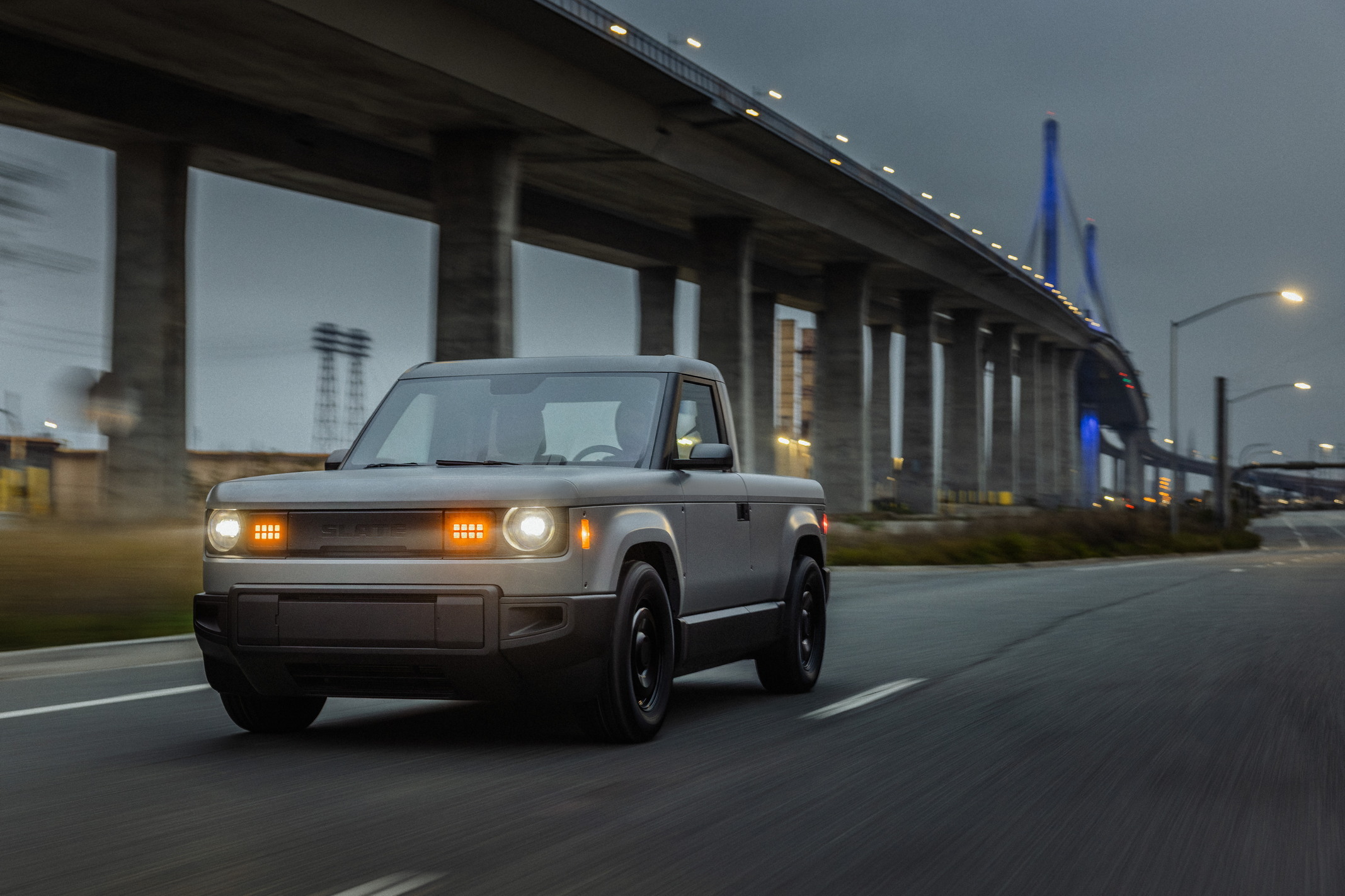
Slate Auto appoints former Amazon executive Peter Faricy as CEO.
Chris Barman stays on as President of Vehicles at the EV startup.
Leadership shift arrives before launch of its budget EV pickup.
Slate Auto is becoming an example of what a small startup can do with vast amounts of cash. It’s navigated several trials and tribulations and market shifts that other, less well-funded EV startups simply couldn’t survive. Now, it’s handling another as it appoints a new CEO just months before launching its first product, a heavily promoted $25,000-$30,000 electric truck.
The company announced that Peter Faricy, a former Amazon executive, has taken over as Chief Executive Officer, Newsweek reported. He replaces longtime Chrysler veteran Chris Barman, who will remain at the company as President of Vehicles with a focus on engineering, manufacturing, and product development. Keep in mind that Amazon founder Jeff Bezos is an investor in Slate Auto.
The leadership shift comes as Slate prepares to switch from development mode to real-world sales. The startup says customers will soon be able to configure and order their vehicles, with reservations expected to convert into orders by the end of the year.
The Slate Auto pickup is stripped down and simplified to what some would call an extreme degree. For example, it doesn’t have an infotainment screen, it features crank windows, and customers are offered several options to add after initial purchase. The company said it has around 160,000 reservations and believes it can build 150,000 trucks annually at its Indiana manufacturing plant.
The CEO Shift
Slate is going to sell cars direct-to-consumer the same way Rivian, Tesla, and Lucid do. To that end, the shift to Faricy begins to make more sense. He previously worked at Ford before moving through roles at Borders and eventually Amazon, where he spent more than a decade helping build the company’s Marketplace platform into a global ecosystem for third-party sellers.
He later served as CEO of solar company SunPower from 2021 to 2024 and most recently worked with venture capital firm Bessemer Venture Partners.
According to Newsweek, Faricy will oversee the company’s commercial operations, digital strategy, finance, HR, legal, and IT divisions, while Barman focuses on building and delivering the vehicles. One thing is certain: an undertaking of this magnitude can only benefit from more hands on deck.
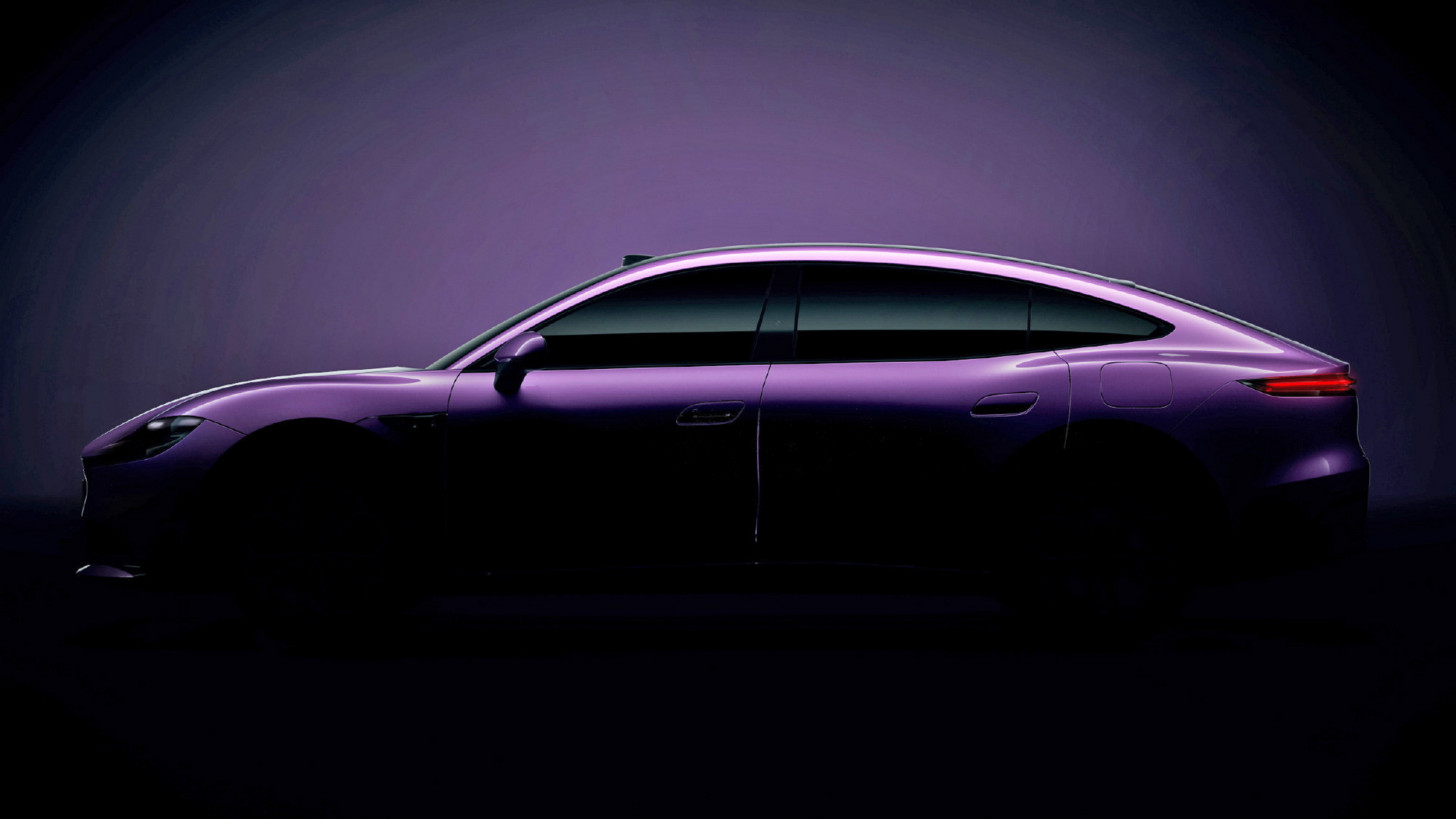
MG 07 teaser reveals styling clearly inspired by Porsche.
Fastback shape pairs Taycan style vents with Panamera tail.
SAIC’s Nebula platform will support EV and PHEV options.
The newly-released SAIC Z7 electric sedan and shooting brake already turned heads for looking suspiciously like Porsche’s Taycan models. Not “inspired by,” not “loosely referencing,” but very much in the same visual neighborhood. And it seems SAIC isn’t done visiting that neighborhood either.
The upcoming MG 07 continues the theme, borrowing liberally from Porsche’s modern design language, with the rear in particular appearing to have spent quite a bit of time studying the view from Zuffenhausen.
The teasers reveal a five-door fastback silhouette, reminiscent of the MG7 that was introduced in 2022. While the two models share a similar greenhouse, the MG 07 has cleaner surfacing, and semi-concealed door handles.
MG’s designers have also borrowed a few cues from the Taycan, including the inlets behind the front fenders. They are paired with side gills reminiscent of the Avatr 06. The most Porsche-like element, though, is the rear, which looks like a blend of the Panamera and the Taycan. Pronounced shoulders flow into full-width LED taillights with clear lenses, positioned just above the MG emblem.
From the profile view, the front end is only partly visible, but it hints at styling cues reminiscent of the Nissan Z and even a touch of Maserati. Expect it to follow the aggressive theme established by the MG7, likely toned down with a smaller grille. A roof-mounted LiDAR unit is also visible, suggesting the car will offer more advanced driver-assistance systems.
Despite the Porsche-inspired exterior, the cabin is expected to take a more localized approach. The MG 07 will likely feature a large central display running an infotainment system developed in collaboration with Oppo, rather than the Huawei-backed setup used in the SAIC Z7.
Specifications remain under wraps for now, but Chinese media reports that the MG 07 will ride on SAIC’s Nebula platform. The architecture is expected to support both fully electric and plug-in hybrid powertrains. A slim battery pack may also incorporate semi-solid-state technology, which could help deliver a competitive driving range.
The MG 07 is expected to debut soon in China. Its competitors will likely include the Porsche-inspired Xiaomi SU7 and similarly sized sedans such as the BYD Seal, Zeekr 007, Luxeed S7, Deepal SL03, Leapmotor C01, and Tesla Model 3. The electrified fastback may also find its way into other markets later on, following the export path taken by the ICE-powered MG7.
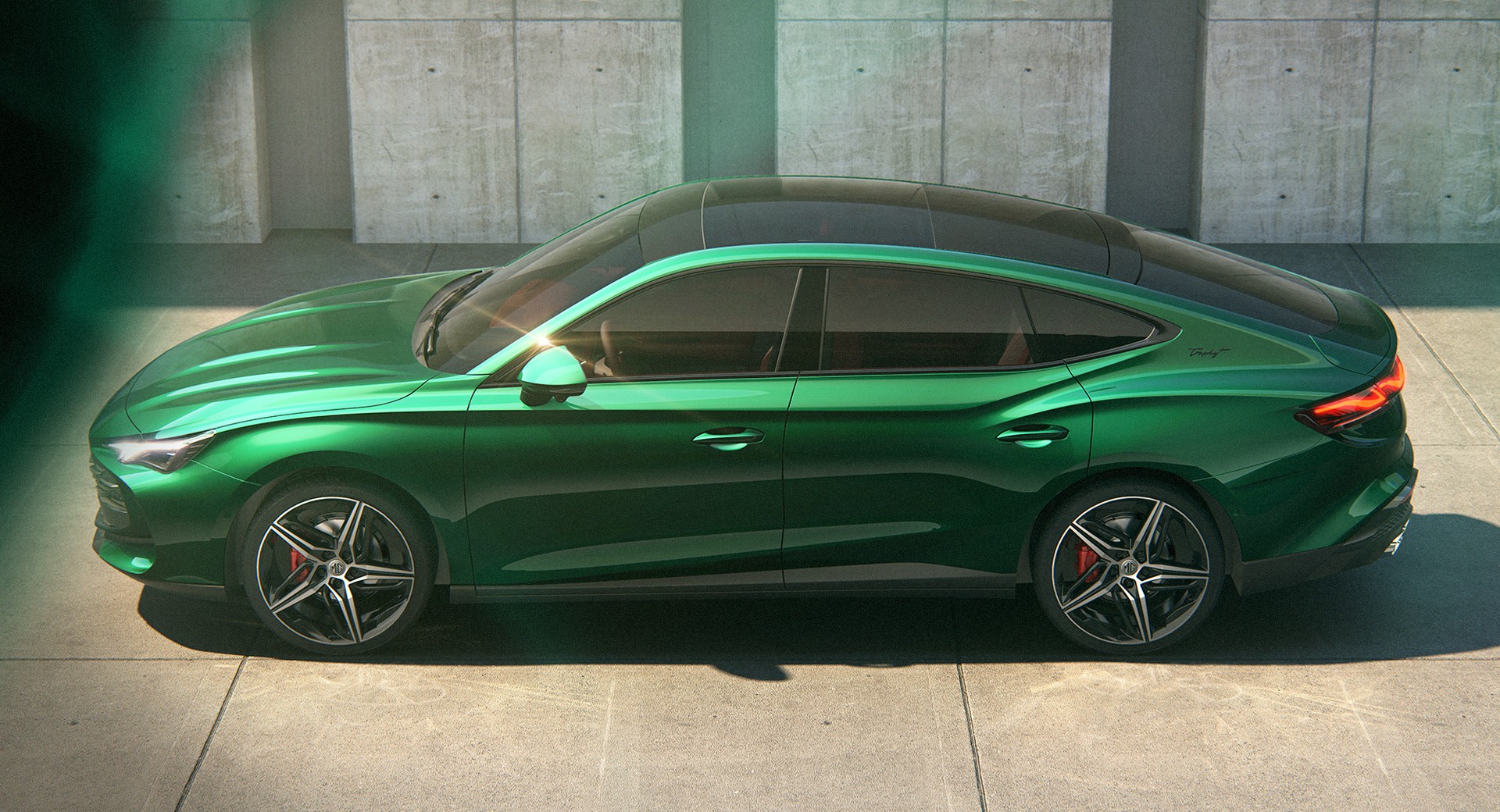
The next-gen Range Rover Velar will be sold only as an EV.
The new model will ride on JLR’s EMA electric platform.
Land Rover is reshaping the Velar into a high-riding sedan.
An all-new Range Rover Velar is just around the corner, and it will be very different from the model we know today in more ways than one. The next generation will switch to EV-only power, marking a seismic change for the nameplate. It will also look quite different. Land Rover will move away from the traditional SUV silhouette of the current version and adopt a lower-slung shape that resembles a high-riding sedan.
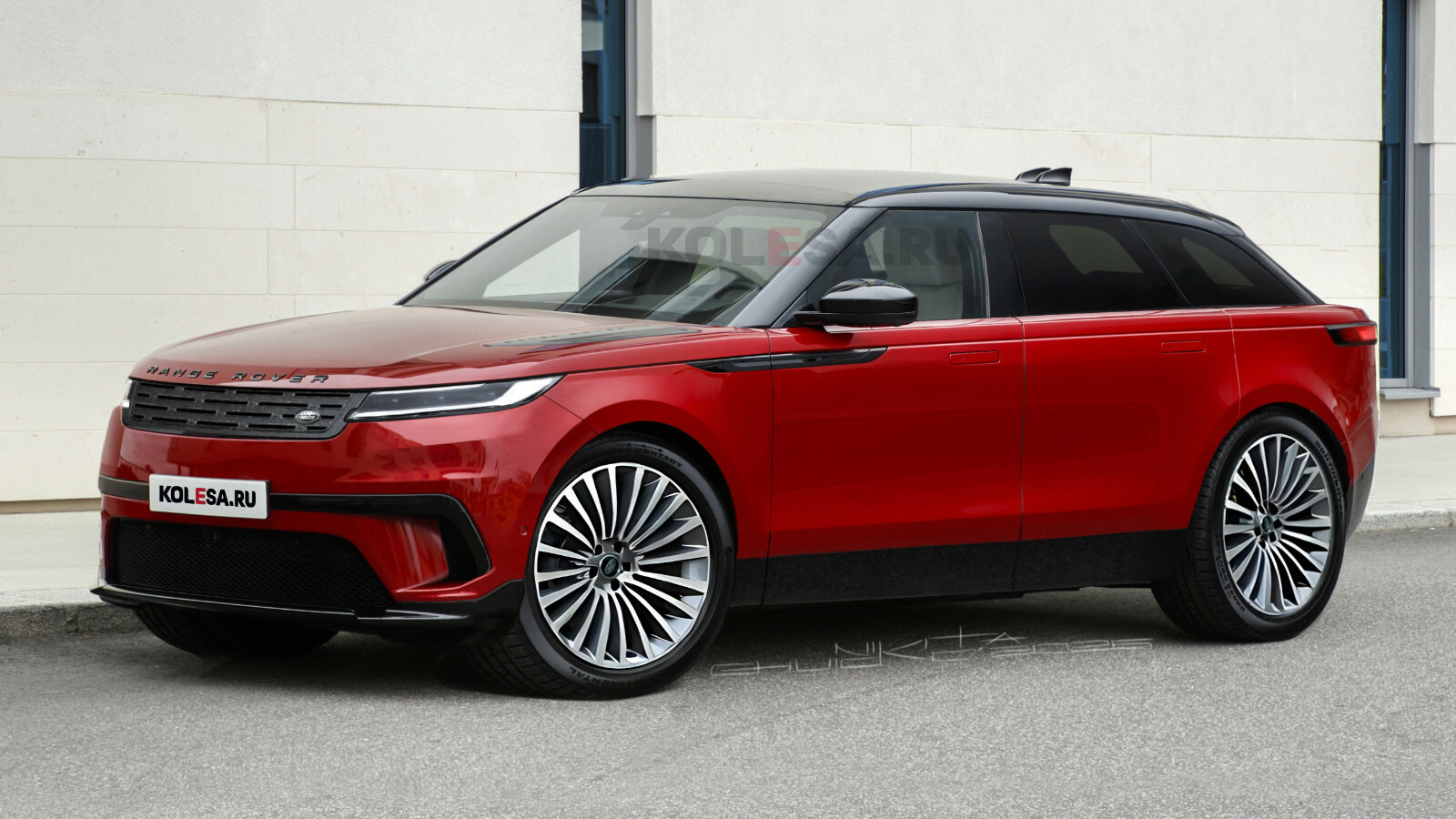
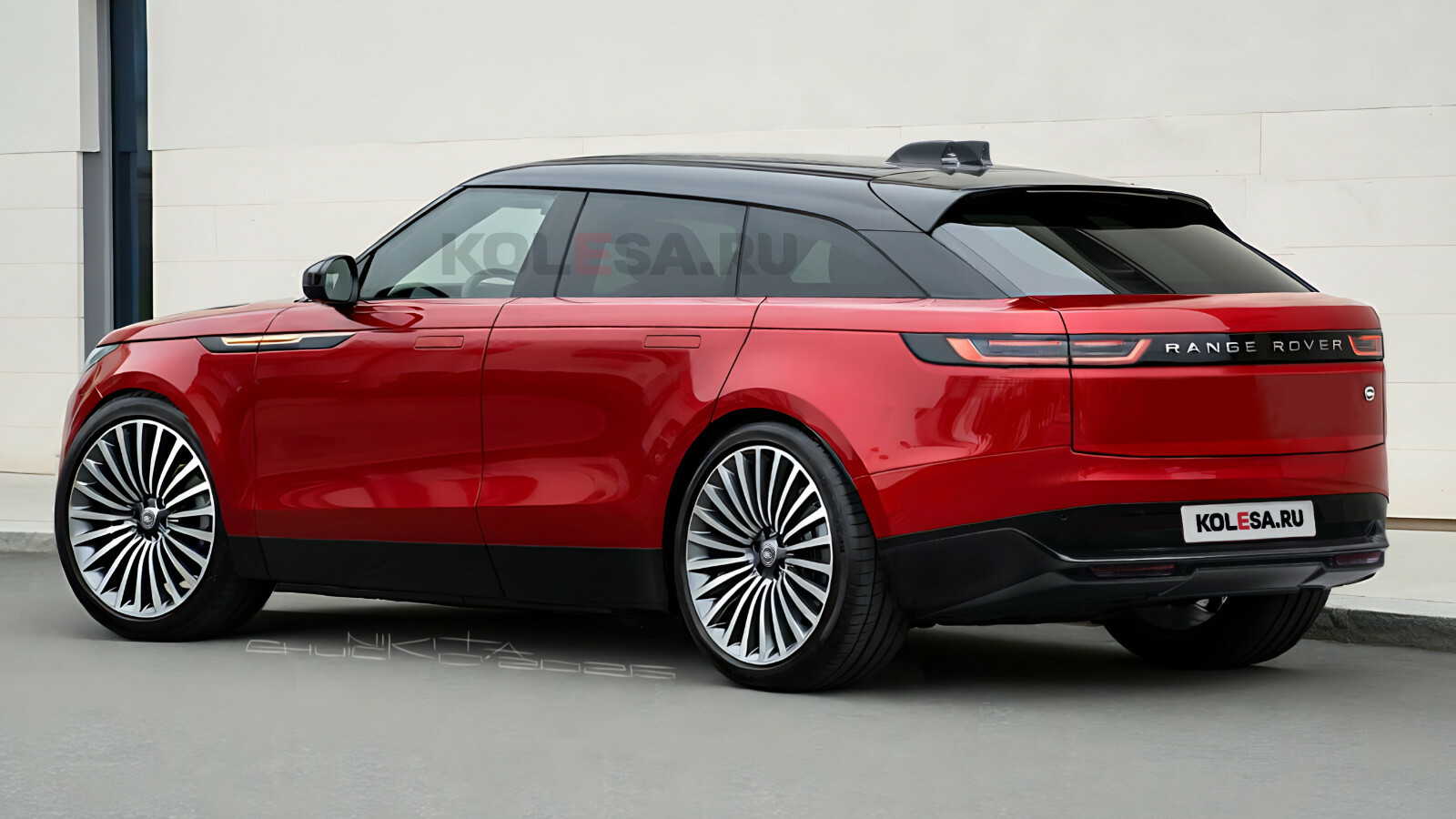
Hot on the heels of a camouflaged prototype of the new Velar testing in the European snow, a pair of fresh renderings previewing the model has surfaced. We will have to wait and see whether the second-generation Velar looks like this when it reaches production, but if it does, it will certainly stand apart.
These images, created by Nikita Chuyko for Kolesa, suggest the next Velar will retain a few recognizable cues from today’s model, though they have been reshaped into something closer to the Volvo ES90’s fastback-like profile. Up front, it still looks unmistakably Range Rover, with slim LED headlights and a relatively small upper grille defining the face
The body itself sits noticeably lower. That would be controversial on something like a Land Rover Defender, but it is unlikely to trouble most Velar buyers. Realistically, few owners ever take their vehicles off-road, so the move toward a sleeker, road-focused profile may make sense.
No doubt the most curious element of the redesigned Velar will be its rear. As spy shots have shown, there’s a short and stubby decklid, as well as a steeply raked rear window, which looks a little odd. Also visible in these renders are slim LED taillights and a blacked-out lower bumper.
The Juicy Details
Underpinning the new Velar will be the new Electrified Modular Architecture (EMA), as it will be sold exclusively as an EV. It could debut with the same 117 kWh battery pack planned for the full-size Range Rover Electric, although a slightly smaller pack remains possible. Either way, engineers will face pressure to ensure it delivers enough range and performance to replace the outgoing combustion-powered version.
Porsche launches recovery plan after steep 2025 sales declines.
CEO Michael Leiters aims to make the brand leaner and faster.
Strategy adds higher margin models and extends ICE hybrids.
Porsche has outlined a recovery plan after a bruising year, aiming to streamline operations and cut costs as it works to regain its financial footing. Under new CEO Michael Leiters, the former McLaren and Ferrari executive, the company hopes to restore its reputation as a profit powerhouse while reshaping itself into what Leiters calls a “leaner, faster, and even more desirable” brand. He took over at the start of the year, replacing Oliver Blume.
A Year Of Tough Numbers
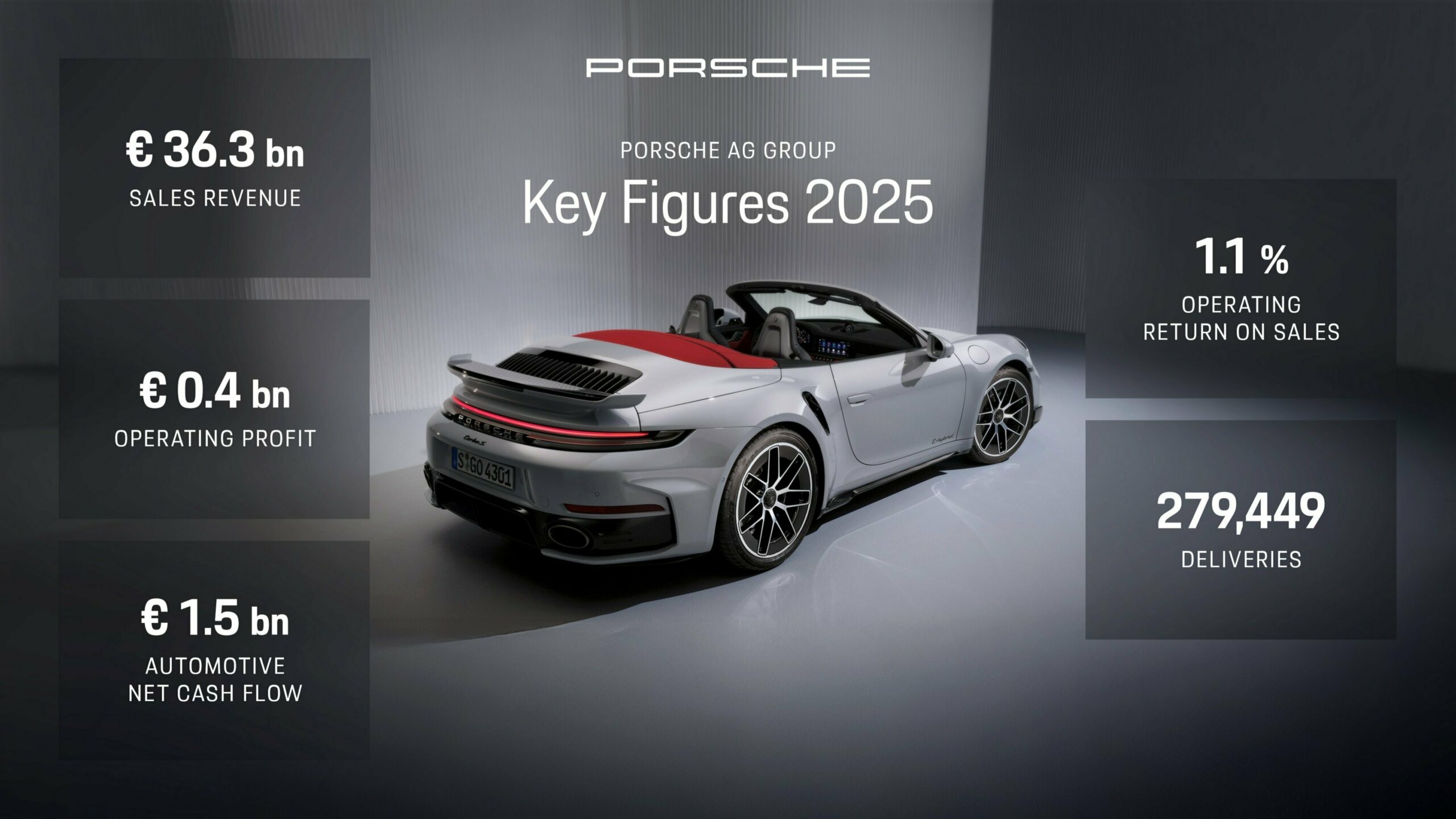
The reset follows a difficult set of results. Porsche’s operating profit plunged 92.7% from €5.64 billion ($6.55 billion) in 2024 to just €413 million ($479 million) in 2025. Revenue also slipped, falling 9.5% to €36.27 billion ($42.10 billion). Operating return on sales shrank to a narrow 1.1%, while global deliveries dropped to 279,449 units, down 10.1%.
Several factors combined to produce that outcome. Porsche booked €3.1 billion ($3.6 billion) in one-time restructuring charges, absorbed €700 million ($813 million) related to US tariffs, and faced a steep 26% drop in sales in China.
Porsche CFO Dr. Jochen Breckner said: “The global challenges and the company’s realignment impacted earnings in 2025. In 2026, our recalibrations measures will continue to have one-off effects on earnings in the high three-digit million euros range. In order to secure adequate margins by Porsche standards in the medium term and strengthen our resilience in the long term, we accept these burdens.”
The Solution
During Porsche’s annual press conference in Stuttgart, Leiters acknowledged that the turnaround plan is still taking shape. With the new leadership only just past its first 100 days, he admitted the company does not yet have “an answer to every question or a solution for every problem.” Even so, he used the event to outline the direction Porsche intends to take.
“We will streamline our management structure, reduce hierarchies and cut back on bureaucracy. We have also already begun to focus more strongly on our core business. We are using the current challenges as an opportunity to act even more decisively. We will comprehensively reposition Porsche, make the company leaner, faster and the products even more desirable.”
Porsche is also planning significant changes in China, where the company intends to shrink its dealer network from 150 outlets to just 80 by the end of 2026 in an effort to protect pricing power.
To stop the bleeding, Leiters is looking upmarket. One of the first moves will be to simplify Porsche’s product portfolio by cutting complexity and reducing the number of variants. According to the CEO, the changes will focus on models with weaker demand, which likely points to the Taycan. Even so, Porsche says it plans to introduce “emotive new derivatives” of certain models later this year, though it has not revealed exactly which ones.
At the same time, Porsche’s boss confirmed the company is developing new models aimed squarely at higher-margin segments. “We stand for uncompromisingly good sports cars that you want to drive yourself, that are fun, that convey performance and passion. And all this regardless of the type of powertrain,” said Leiters.
“We are considering the expansion of our product portfolio in order to grow in higher-margin segments. In doing so, we are looking at models and derivatives both above our current two-door sports cars and above the Cayenne,” he added
The reference to two-door sports cars clearly points to the 911. What might sit above it is less clear. Leiters did not elaborate, but the possibilities range from a modern interpretation of the 928 to something far more exotic, such as a supercar or even a flagship hypercar.
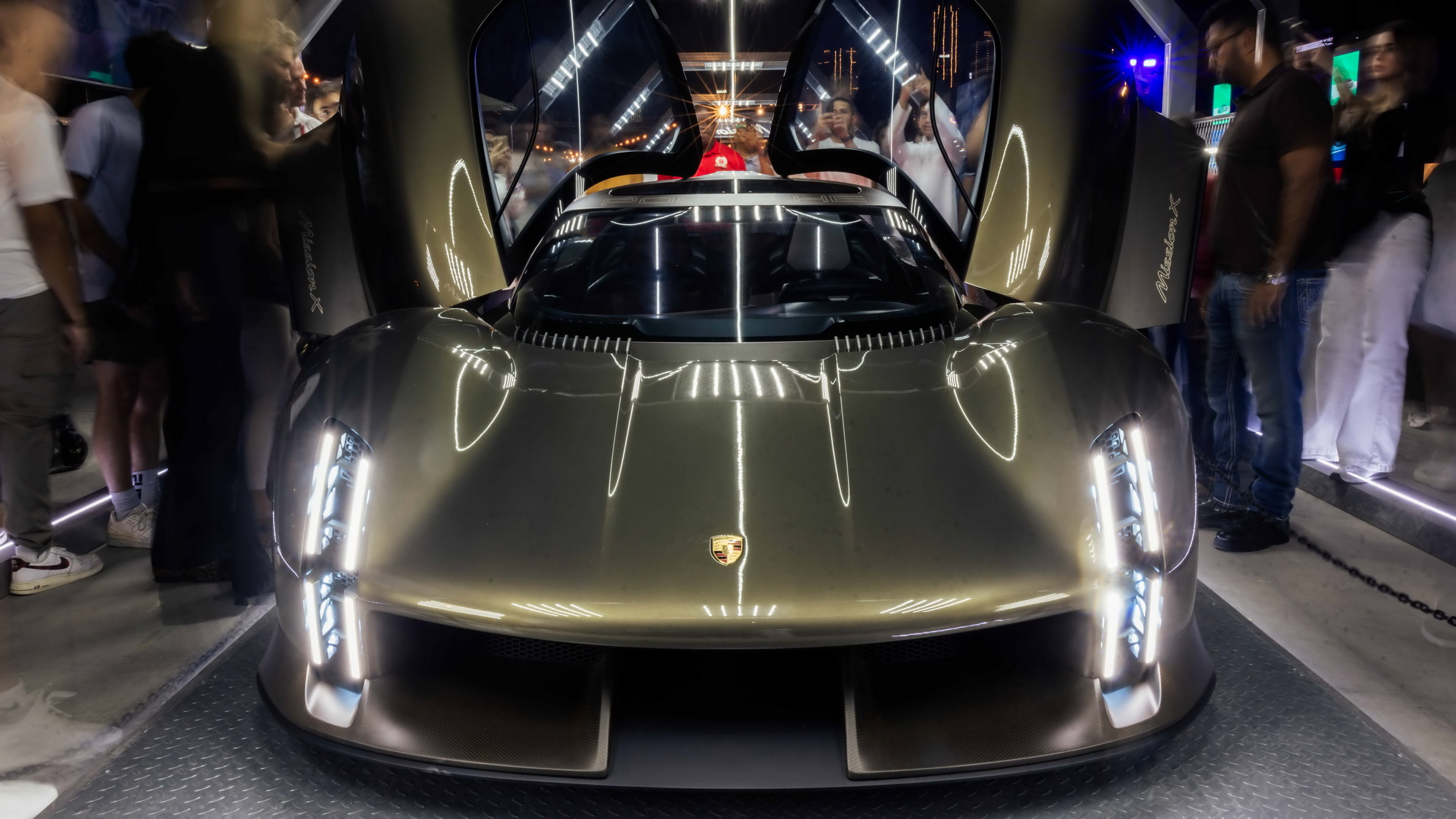
Porsche has been exploring that territory for years, with potential successors to the 918 Spyder. The Mission X concept hinted at one possible direction before enthusiasm for electric hypercars cooled.
The other confirmed project is a long-rumored three-row SUV flagship positioned above the Cayenne. Codenamed K1, it is expected to target markets such as the United States and the Middle East and could offer V6 or V8 powertrains.
The new offerings will benefit from the expansion of “high-margin customization programs” that will “further strengthen the exclusivity of the brand” helping it move into a new territory closer to the likes of Ferrari and Lamborghini.
Leiters acknowledged that Porsche needs to rethink what he called “the right drive technology.” Early momentum behind the fully electric Taycan has run into a tougher reality as regulations, demand patterns, and customer expectations have shifted in recent years. Slower-than-expected demand has forced the company to “adjust the ramp-up and portfolio of fully electric vehicles while extending the life of combustion and hybrid offerings.”
The ultimate goal is to reduce upfront and direct costs by “fundamentally rethinking the development of our sports cars.” In the process, Leiters effectively confirmed earlier reports that the next generation of the 718 series will follow a multi-energy path. Porsche also plans to “leverage further synergies between our models,” using platforms and industry solutions more flexibly.
Xiaomi engineered working vanes to make its aero hood functional.
Last year, the company was sued over an aero hood that did nothing.
The upgrade installs at a dealer and takes about two to three hours.
Xiaomi looks ready to close the chapter on the ‘fake’ aerodynamic hood controversy that rattled the company last year. The Chinese carmaker has now turned its optional carbon fiber hood into a genuinely functional component, a response that many established carmakers might study with interest.
Back in early 2025, Xiaomi began offering a special carbon fiber hood for the SU7 Ultra. The design took inspiration from the record-setting SU7 Prototype and featured two prominent air ducts that were supposed to help cool the brakes and battery. On paper, it sounded convincing. In practice, it turned out to be something else.
Soon after customers started taking delivery of SU7s equipped with the 42,000 yuan ($6,100) hood, owners discovered the promised performance benefits simply were not there. The structure beneath the hood had not been changed at all, meaning the vents were purely decorative and did nothing for cooling or aerodynamics.
Unsurprisingly, the reaction was swift. Owners pushed back, some threatened to walk away from the brand, and the situation quickly spilled into the courts.
Making The Carbon Hood Functional
Fast forward 12 months, and Xiaomi has announced it will start making these hoods functional to owners, free of charge. The company says that engineers have modified the internal structure of the front air ducts so they can work with the active grille and increase downforce over the front axle.
According to CarNewsChina, fitting the upgrade takes between 2 and 3 hours and includes the fitment of adjustable plastic vanes beneath the carbon fiber hood. It’s a big win for owners, and Xiaomi will be hoping the move helps repair some of the trust lost during the controversy.
The controversy had already reached the courts before this fix arrived. In October last year, a Chinese court sided with an SU7 Ultra owner who sued Xiaomi over the hood. The ruling required the company to refund the owner’s hood deposit, pay 126,000 yuan ($18,300) in compensation, and cover 10,000 yuan ($1,400) in legal fees. Xiaomi also promised 20,000 reward points to each customer who bought the hood, worth roughly 2,000 yuan ($290)
Disaster costs fell in the U.S. in 2025. Still, it was the fourth time in five years that extreme weather inflicted more than $100 billion in annual losses. Industry experts say the growing financial toll will make insurers wary of rushing to cut rates.
(Image credit: ALLISON JOYCE/AFP via Getty Images)
We unpack the National Action Plan for School Bus Safety, which sheds light on the non-fatal effects of illegal passing. Plus, transportation directors comment on green buses during a recent EPA Clean School Bus webinar.
Denise Donaldson, the editor and publisher of Safe Ride News Publications and a frequent trainer at STN EXPO and the TSD Conference, previews her STN EXPO East workshop on when to use child safety restraint systems (CSRS) in school buses or alternative vehicles.
The Iowa Department of Education launched its first Iowa School Bus Safety Week Poster Contest, inviting students across the state to showcase their artistic talents while promoting an important safety message.
According to a press release, the inaugural 2025–2026 post contest theme, “Safe Rides, Everyday Heroes,” recognizes the vital role school bus drivers and transportation staff play in safely transporting Iowa students each day.
The poster contest is open to students in four divisions: Kindergarten through second grade, third through fifth grade, sixth through eighth grade, and computer-aided drawing (CAD). All entries must be received by April 17 at 11:59 p.m. CST. Students may submit their posters either by mail or electronically through the official contest entry form.
Poster Contest Rules
To be eligible, each poster must display the theme exactly as written, including punctuation, and include at least part of a yellow school bus. Posters that fail to reflect the theme verbatim will be disqualified.
Entries must measure either 11 inches by 17 inches or 12 inches by 18 inches and may be oriented vertically or horizontally. While there is no limit on colors or artistic media, certain materials, including lamination, collage elements, glued-on pieces, stenciled or preprinted lettering, and copyrighted images such as logos, clip art, or stock graphics, are prohibited. All artwork must be original and promote positive school bus safety behaviors.
Mail-in submissions must be delivered flat to the Department of Education’s Bureau of School Business Operations in Des Moines and include a completed entry label securely fastened to the back of the poster with the required student and school information. Digital submissions must be provided as a PDF or high-resolution png or jpg file at a minimum of 300 dpi for proper printing.
Winning artists will receive recognition fn May, and printed copies of the top posters will be distributed statewide ahead of National School Bus Safety Week Oct. 19–23. First-place winners in each division will also advance to national competition. Posters will be judged by professionals in pupil transportation based on safety impact, originality, artistic quality, and overall visual impact.
School bus safety takes many forms and starts many conversations. Take illegal passing. Or lap/shoulder seatbelts. Proper securement of preschoolers and kindergartners on school buses compared to other vehicles. The required training to do so. Driver vetting, coaching and retention.
From the brightest, visibility of school buses to ensuring no student is sleeping on board—and forgotten—at a route’s conclusion, student transportation professionals fill their days planning and conjuring training topics. Emergency response and collaboration with fire, police and EMS departments. Timely, thorough evacuations. The list is endless.
But one of the most important school bus safety and security topics is the national debate on how to cure rising chronic absenteeism in our schools. Everywhere I turn is another headline on the topic.
Research has shown that the school bus ride is one of the best options to ensure students as young as kindergarten age attend classes and ultimately graduate high school. We’ve reported on a study conducted by the University of California, Santa Barbara that found 50,000 fewer kindergartners would miss school if they had access to school bus rides. And that was back in 2017. In the age of universal kindergarten and transitional kindergarten, what could those numbers be now? Put that question into the perspective of decreasing overall student ridership figures nationwide.
Last summer, I reached out to UC-Santa Barbara study author Michael Gottfried—he’s now a professor at the University of Pennsylvania—and asked if there are any new studies he’s working on or aware of. And why is there not so much of a mention of transportation options as a solution when state superintendents call together a committee on chronic absenteeism? Tongue service from a spokesperson after the fact doesn’t cut it.
“You’re absolutely correct that no one is talking about school transportation,” Gottfried told me.
He pointed out a lack of data that connects school transportation to student outcomes. Gottfried asked me to stay in touch and said he will let me know if his research strays back into the area. Fortunately, those in the best position to take up such research or at least strongly advocate for it are reading this column right now. Time and again, the student transportation industry has proactively developed guidelines and best practices when few, if any others were willing, in the position of or knowing how to help.
Certainly, school buses aren’t the only vehicle in town to help with chronic absenteeism. “Alternative vehicles” are trending but school busing has long been supplemented by other options. Transit for the older kids, Mom and Dad or the carpool for the younger. Dare I mention taxis? Even the other national pastime of walking or biking when living within a couple blocks of school.
The school bus traditionalists will argue, “Every child on a school bus.” The safety record is unflappable. Yet putting all children on school buses has never been attainable and is even less realistic today.
But just because a school bus isn’t being or can’t be used doesn’t mean student transporters should wash their hands. I had a recent conversation with a spokeswoman for the National Safe Routes to School Partnership, who told me the organization would welcome collaboration with transportation departments. NASDPTS worked with Safe Routes years ago to push for federal funding of sidewalks, which safe bus stops need just as much as kids walking and biking to and from class.
The bottom line is, student transportation leaders need to advocate for safety in all forms of transportation, not simply that on and around school buses. And student transporters should involve themselves in public policy debates centering on student outcomes as getting them to and from school by whatever means can be one of the biggest drivers—literally.
School buses can and should be the model of consistency for students in accessing educational services. They are iconic. They are highly visible. They are reliable. But when they are unavailable, those who manage school transportation still play an active role in ensuring options, those that are the safest possible, readily exist.
Editor’s Note: As reprinted from the March 2026 issue of School Transportation News.
A school bus driver is facing dozens of charges after authorities say she drove a bus carrying 54 elementary school children while heavily intoxicated.
An arrest warrant was issued for Kelly Weber, 46, of Boyertown. She is charged with driving under the influence, 54 counts of endangering the welfare of children, 54 counts of reckless endangerment and several summary offenses, according to the office of Kevin R. Steele and Robert B. Evans.
Police said the drunk driving incident with children on board occurred around 4 p.m. Feb. 6 in Douglass Township after authorities received reports of a school bus driving erratically, narrowly missing other vehicles and nearly striking a telephone pole.
An officer located the bus near Second Avenue and Gilbert Road, where it had come to rest in a snowbank.
Investigators said the bus belonged to Quigley Bus Service. Officers reported finding an open 750-milliliter bottle of Tito’s Handmade Vodka on the bus, along with two empty 50-milliliter bottles of the same brand. Police also recovered a receipt showing the alcohol had been purchased at a Fine Wine & Good Spirits earlier that morning.
Authorities said Weber consented to a blood test. Results from NMS Labs showed her blood alcohol concentration was 0.331. Testing also detected Delta-9 Carboxy THC at a level of 6.6.
Drunk Driving Incident Endangers Dozens of Children
Investigators determined that 54 children were on the bus during the route, including five under age 6. Authorities said several children contacted their parents during the ride, saying they were frightened by the driver’s behavior. One child got off the bus early and was picked up by parents.
“More than 50 young children were in a dangerous situation created by this defendant, who chose to consume a significant amount of alcohol and then get behind the wheel of a school bus and drive miles while intoxicated,” Steele said in a statement.
Officials said Weber checked herself into a rehabilitation facility shortly after the incident. Police said arrangements are being made for her to surrender to authorities, after which she will be arraigned on the drunk driving and endangerment charges, and bail will be set.
An informative seminar at the STN EXPO East conference will combine classroom education with hands-on demonstrations to illustrate the importance of ensuring proper mirror placement on school buses and combatting distracted driving.
The “Focused Driver 111: Proper Mirror Adjustment and Distracted Driving” session is scheduled for March 28. Safe School Bus Consulting owner Dave McDonald will start with a classroom session on Federal Motor Vehicle Safety Standard (FMVSS) 111 guidance. This will include the history and subsequent evolution of the standard and then lead into school bus driver responsibilities regarding proper mirror adjustment to ensure that the driver has the required field of view around the bus.
Attendees will proceed to the parking lot and participate in a real-life demonstration of determining blind spots and making sure the mirrors are properly adjusted to cover them. McDonald will use traffic cones to mimic the cylinders called for by FMVSS 111 to conduct a grid exercise developed for testing the mirrors. The purposes is to confirm that the mirrors are mounted and adjustable to a position to see the parts of the grid needed. The placement of the cones will represent where young children could be approaching and walking near the school bus.
Driver Training With an Eye on Distractions
McDonald will also discuss distracted driving, including the many distractions that could pull away the attention of a school bus drivers. He will also discuss how to train drivers to take responsibility of reviewing their mirrors before even starting the vehicle. McDonald plans to review video cases of distracted driving, including a recent incident involving a girl in Brooklyn who was struck and killed by a school bus, and engage with attendees to identify what could have been done differently. He said he plans to outline not only distracted driving causes but deterrents, preventions and potential consequences for failing to follow guidelines.
McDonald worked for Rosco Vision Systems, the sponsor of the training session, for 26 years in product development of cross view mirror systems as well as in sales and engineering. McDonald said he hopes to empower and equip attendees with information that explains the common mistakes made by transportation departments.
The STN EXPO East conference will be held on March 26-31 at Embassy Suites by Hilton Charlotte Concord Golf Resort & Spa. Main conference registration gives access to five days of educational sessions, hands-on training, unique networking events, product demonstrations and updates on the latest industry happenings. Register at stnexpo.com/east.
Rivian appears to be killing off the entry-level R1 Dual Standard.
Prices could climb by $7,000, but buyers would get more range.
Move appears to be in response to the R2, which debuts this week.
Rivian is gearing up to launch the highly anticipated R2 on March 12, but it looks like they’re also planning to trim the R1 lineup. This is unfortunate, but the company sent out a rather ominous e-mail announcing the “Dual Standard is ending.”
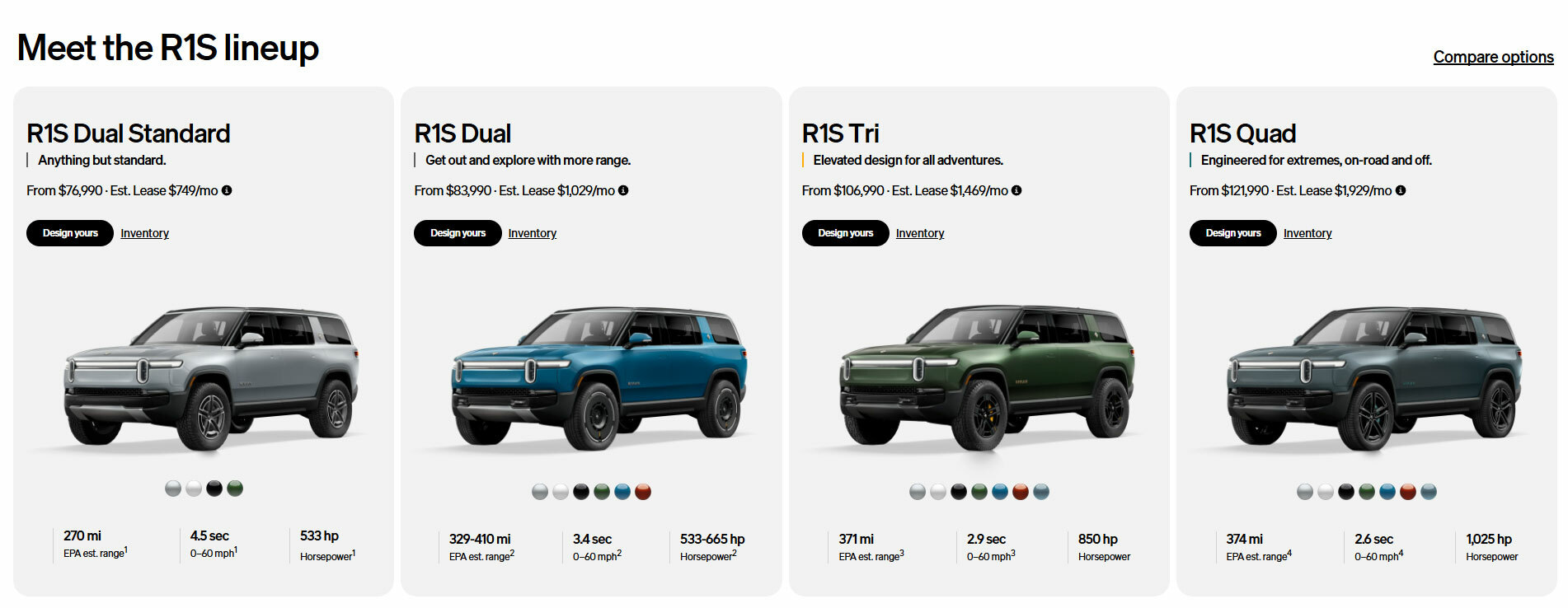
The R1S Dual Standard starts at $76,990 and offers 270 miles (435 km) of range. The R1S Dual, on the other hand, begins at $83,990 and has a larger battery pack that enables owners to travel 329 miles (529 km) on a single charge.
The R1T Dual Standard also has 270 miles (435 km) of range, but it’s even cheaper as pricing starts at $72,990. Its death will force people to get the R1T Dual, which begins at $79,990.
The automaker isn’t saying much, but confirmed “we have changes coming to our vehicle lineup later this year.” They then suggested customers get an R1 Dual Standard “while you can.”
Rivian went on to promote leases starting at $749 per month for 36 months with a $3,000 incentive on R1T and R1S Dual Standard models ordered by March 19. While there’s enough fine print to call in a lawyer, the company suggested customers could get a new vehicle for only $5,644 due at signing – although that appears to exclude a $1,895 destination fee.
While Rivian didn’t say why they’re apparently discontinuing the R1 Dual Standard, it’s likely in response to the R2. The model is slated to begin around $45,000 and this will undoubtedly pull some customers away from the R1. Eliminating the entry-level R1 helps put some distance between the vehicles, while also simplifying production at the company’s plant in Normal, Illinois.
Mercedes has taken the wraps off the fully electric VLE.
It has a 115 kWh battery pack as well as up to 409 hp.
Van offers private jet-style seats and 31.3-inch rear display.
Mercedes-Benz has introduced the new 2028 VLE, which is being billed as a “grand limousine.” Marketing hyperbole aside, it’s essentially a luxurious electric minivan that should appeal to everyone from families to executives when it goes on sale in the United States in 2027.
Looking sleek and modern, the model has a bold grille with an available illuminated surround. It’s flanked by starry lighting units and a power dome hood with a tri-star ornament. Customers can also opt for an AMG package that adds a sportier bumper as well as a revised grille with a star emblem in the center.
Moving down the sides, we can see streamlined bodywork and flush-mounted door handles. They’re joined by power sliding doors with fully retractable windows.
Designers also gave the van an expansive greenhouse and wheels ranging in sizes from 19- to 22-inches. Other highlights include a low drag coefficient of 0.25 and an upright rear end with arc‑shaped taillights that are integrated into the van’s spoiler. The model also has an opening rear window and an odd charging port that opens downward.
It’s pretty big too. The minivan measures 209.0 inches (5,309 mm) long, 78.7 inches (1,999 mm) wide, and 76.5 inches (1,943 mm) tall. The wheelbase spans 131.6 inches (3,342 mm). A longer version arriving later will stretch to 215.9 inches (5,484 mm) overall and ride on a 138.5-inch (3,517 mm) wheelbase.
For some perspective, the standard Cadillac Escalade measures 211.9 inches (5,382 mm) long with a 120.9-inch (3,071 mm) wheelbase, while the Chrysler Pacifica minivan is 204.3 inches (5,189 mm) long and rides on a 121.6-inch (3,089 mm) wheelbase.
Fancy Seats And Screens Galore
The interior is luxurious and high-tech as it offers an optional MBUX Superscreen, which consists of a 10.25-inch digital instrument cluster, a 14-inch infotainment system, and a 14-inch front passenger display. Customers can also get a rear entertainment system that has a 31.3-inch panoramic screen that deploys from the headliner. It echoes the one found in the BMW 7-Series and features 8K resolution, split-screen functionality, and an eight-megapixel camera for use with teleconferencing software.
Other highlights include a 22-speaker Burmester 3D surround sound system and a Sky View panoramic fix glass roof with an ambient lighting surround. The van also has folding tables and an assortment of consoles that offer wireless smartphone chargers as well as heated/cooled compartments.
The VLE will be offered with six to eight seats as customers can get second- and third-row captain’s chairs, second-row captain’s chairs, and two rear benches. Mercedes is particularly proud about the seats and manually operated ones have four integrated wheels, which allow them to be moved effortlessly both inside and outside the vehicle.
Higher-end variants have power seats, which can be controlled by the infotainment system or a smartphone app. Mercedes said adjusting them is “almost like choreographing a ballet.”
Speaking of higher-end variants, the company offers Premium Comfort and Grand Comfort seats. The latter are worthy of a private jet as they have a foot rest, lumbar support, a massage function, a pillow, and a wireless phone charger.
Two Powertrains And 435 Miles Of Range
Mercedes only released a handful of powertrain details, but confirmed the first model out of the gate will be the VLE 300. It has a 115 kWh NMC battery pack and a front-mounted motor producing 272 hp (203 kW / 276 PS). This setup promises a class-leading WLTP range in excess of 435 miles (700 km).
A VLE 400 4MATIC will follow with a dual-motor all-wheel drive system producing a combined output of 409 hp (305 kW / 415 PS). This will enable the van to accelerate from 0-60 mph (0-96 km/h) in just 6.4 seconds.
When the battery is low, owners will be thankful for the model’s 800-volt technology and 300+ kW DC fast charging capability. It allows the van to get up to 221 miles (355 km) of range in as little as 15 minutes.
Rounding out the highlights are an AirMatic air suspension and a rear-axle steering system, which enables the wheels to turn up to 7 degrees. This enables the VLE to have a turning circle of 35.75 feet (10.9 meters), which is comparable to the CLA.
The van will also have 12 ultrasonic sensors, 10 cameras, and five radar sensors. They provide information to the available MB.Drive Assist Pro system, which allows for hands-free operation in cities as well as on highways.
Mercedes has not revealed pricing yet. Still, considering the technology on board, the lavish interior, and its self-described “grand limousine” positioning, it is unlikely to land anywhere near the affordable end of the spectrum. Expect more details to surface closer to launch next year.
Ford has announced a series of updates for the Explorer EV.
Standard Range gets upgraded motor and new LFP battery.
SUV gains upgraded technology and new special edition.
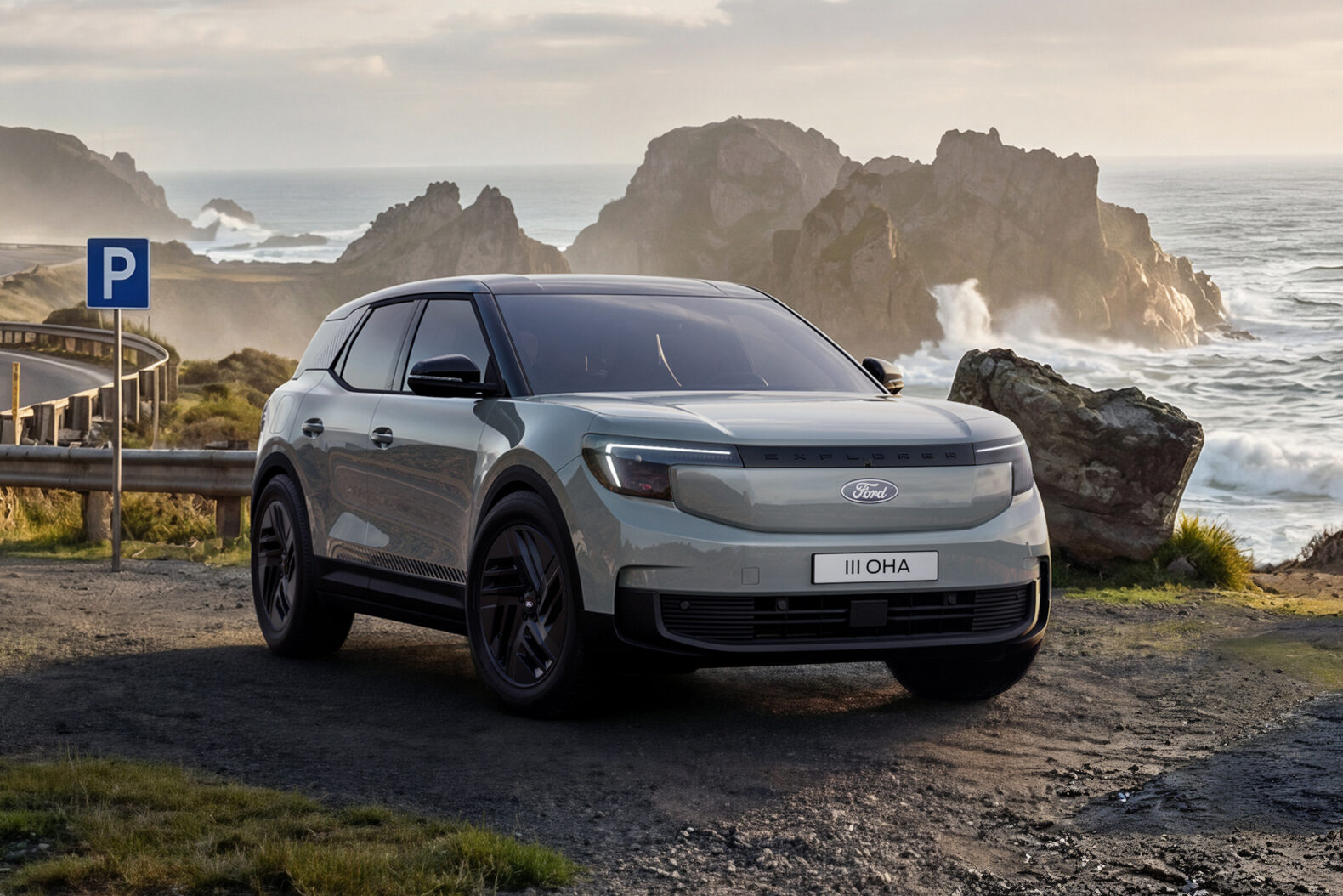
The European market Ford Explorer EV hasn’t lived up to expectations, but it’s getting better with age as the company has announced an updated powertrain and a new special edition. The automaker has also updated the infotainment system and added several new driver assistance systems.
Starting with performance, the Explorer Standard Range adopts a new lithium iron phosphate battery and an “enhanced” electric motor that produces 188 hp (140 kW / 190 PS) and 258 lb-ft (350 Nm) of torque. Thanks to these changes, the model offers a WLTP range of up to 276 miles (444 km), which is an increase of more than 37 miles (60 km).
As for the motor, the output appears to climb by 20 hp (15 kW / 20 PS) and 30 lb-ft (40 Nm). This lowers the 0-62 mph (0-100 km/h) time from 8.7 to 8.0 seconds.
New Driver Assistance Technology
Besides powertrain updates, the Explorer gains an improved Intelligent Adaptive Cruise Control system with Traffic Light Recognition. It can automatically slow or stop the crossover if it detects a red or amber light ahead.
The model also receives Reversing Assist, which automatically records the vehicle’s last 164 feet (50 meters) of travel and can replicate the steering in reverse. The system is designed for backing out of tight quarters, such as alleys, and drivers need to operate the accelerator and brakes.
It’s accompanied by Trained Park Assist, which enables owners to program a parking maneuver that is up to 164 feet (50 meters) long. Once learned, the vehicle can automatically park itself while taking care of acceleration, braking, and steering.
The EV also has a new one-pedal driving mode as well as a driver monitoring system known as Driver State Assist. If the driver becomes unresponsive, the Explorer can turn on the hazard lights, come to a controlled stop, unlock the doors, and call emergency services.
Pro Power And Updated Infotainment
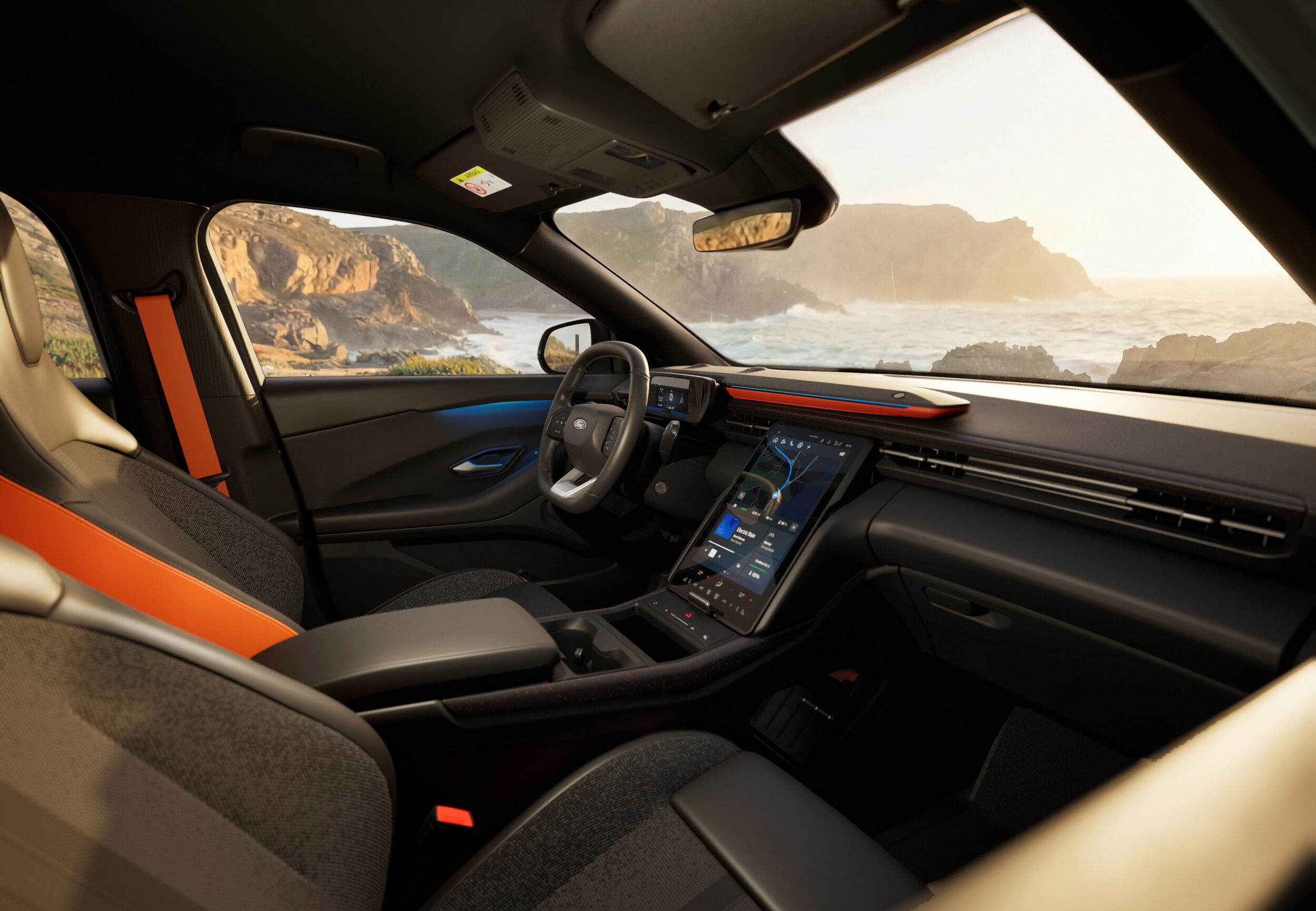
Speaking of technology, the 14.6-inch infotainment system is now based on Android for “smoother operation.” The system has also been given a fresh design theme that promises greater clarity and ease of use.
Furthermore, Pro Power Onboard turns the Explorer EV into a big battery pack. An outlet is located in the cargo area and it can be accompanied by an optional adapter that plugs into the vehicle’s charging port. These outlets enable owners to export 2.3 kW of power to other devices such as laptops, lights, or power tools.
Explorer Collection
Buyers looking for something more unique can opt for the Explorer Collection. The special edition features a unique Cactus Grey exterior with 20-inch wheels sporting a Satin Black finish. The model is also notable for having a black roof, black skid plates, and black graphics.
The Black Onyx interior has contrasting orange accents on the seats, seatbelts, and dashboard. Elsewhere, there is black and orange speckle effect trim as well as “2D knit” inserts on the seats. The latter is said to be inspired by the “texture and appearance of high-quality sport clothing.”
Honda faces lawsuit over persistent Prologue axle noise.
Two owners cite popping and clicking after early delivery.
Dealers replaced CV axles but noises reportedly remain.
Honda’s all-electric Prologue has found itself under legal scrutiny following reports of some rather odd drivetrain noises. Not long after the company warned US dealers that certain 2024–2026 Prologue models might require repairs due to clicking or ratcheting-type sounds from the drive axles, a lawsuit followed. Owners say the noises can linger even after a trip, sometimes more than one, to the dealership.
A class action lawsuit filed in Pennsylvania names two Prologue owners who say their SUVs developed unusual noises from the front axle. One of them, Ashley Custer, leased a 2024 Prologue in May 2025 and soon began hearing the sounds, prompting a trip to the dealer with just 4,039 miles (6,500 km) on the odometer.
After she reported a creaking noise when turning, the Honda dealer replaced the CV axles. That, however, didn’t solve the problem. Custer returned to the dealership in November, where she was told no repair was currently available. An associated repair order reportedly noted that she was “experiencing the suspension noise that we are familiar with and have seen on other Prologues,” adding that it is a “known issue that Honda is working on.”
She took her Prologue to a dealer last month, but was again told that no repairs were available. Similarly, the second plaintiff, Jorge Santiago, drives a 2024 Prologue and started noticing popping and clicking sounds shortly after taking delivery. Despite the car also being taken to a dealership, it hasn’t been fixed.
What’s The Fix?
In December, Honda issued a Tech Line to dealerships, asking them to verify the noise of faulty Prologue models, inspect for damage, and make any necessary repairs. However, the lawsuit claims that the fix is pointless as Honda is simply using the same defective front axles and components. As such, the noise continues, even after multiple dealership visits.
The lawsuit claims that Honda was aware of the “abnormal and anxiety-inducing noises” when it first started selling the all-electric Prologue.
Ferrari fits the Luce with a 122 kWh battery and over 986 hp.
Its exterior may blend modern design with subtle retro cues.
Deliveries are expected to begin in 2027 after the May reveal.
While there will always be enthusiasts who scoff at Ferrari launching an EV, there’s an inevitability that even the most exotic of car manufacturers would need to venture into all-electric vehicles. Ferrari is doing exactly that with the Luce, and the company has now released a short clip offering a glimpse of its exterior. Well, sort of, because there is not much, if anything, to make out.
In this video, we’re given a brief teaser of the electric car, filmed at night. Don’t expect to see much detail, though, as the car appears to be wearing the same white-and-black camouflage seen on recent prototypes.
What Will Power It?
What we can say with confidence is that the Luce will be a four- or five-seater, slightly smaller and sleeker than the Purosangue. Power will come from four electric motors, combining to produce more than 986 hp, enough to send the car to 62 mph (100 km/h) in 2.5 seconds and on to a top speed of 193 mph (310 km/h), an impressive figure for an EV.
Integrated into the Luce’s floorpan will be a large 122 kWh battery pack that supports charging speeds of up to 350 kW, giving the Luce a range exceeding 329 miles (530 km). To ensure the first electric Ferrari still delivers some sense of drama from behind the wheel, the company has developed a system that amplifies the powertrain’s mechanical vibrations, producing distinctive tones that vary with speed and torque delivery.
Ferrari has confirmed the Luce will be revealed in full in May, with the first customer deliveries expected to begin next year.

 Login
Login