BMW M is planning to introduce around 30 models by 2029.
This includes new and facelifted M or M Performance vehicles.
The future of the manual looks bleak, given low global demand.
Last year, BMW announced a major product blitz that will see the company introduce over 40 new or updated vehicles by 2027. Unsurprisingly, BMW M is working on a major offensive of their own.
Speaking to CarSales, BMW M CEO Frank van Meel said “We’re working on up to 30 new models that will come out in the next two and a half years.” That’s a lot, but it’s important to note the number includes both M and M Performance vehicles.
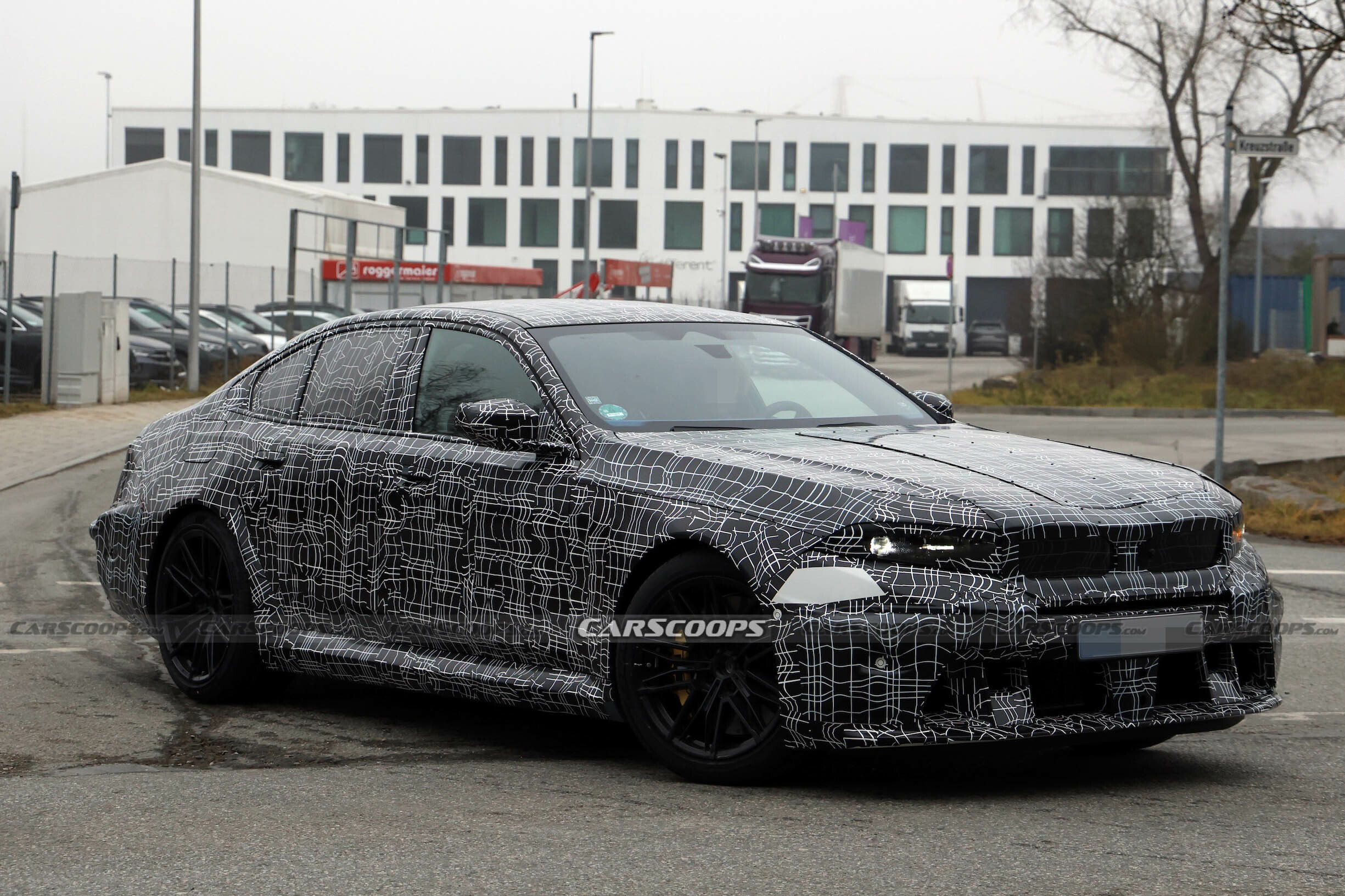
While the executive didn’t say what to expect, other than the i3 M, spy photographers have snapped an assortment of prototypes in recent months. Besides the facelifted M5 and M5 Touring, the company is working on a new M3 and iX3 M.
They’ll be joined by redesigned versions of the X5, X6, and X7, which will spawn a mix of M and M Performance variants. We can also expect M Performance versions of the facelifted 7-Series.
The Rise Of M Performance EVs
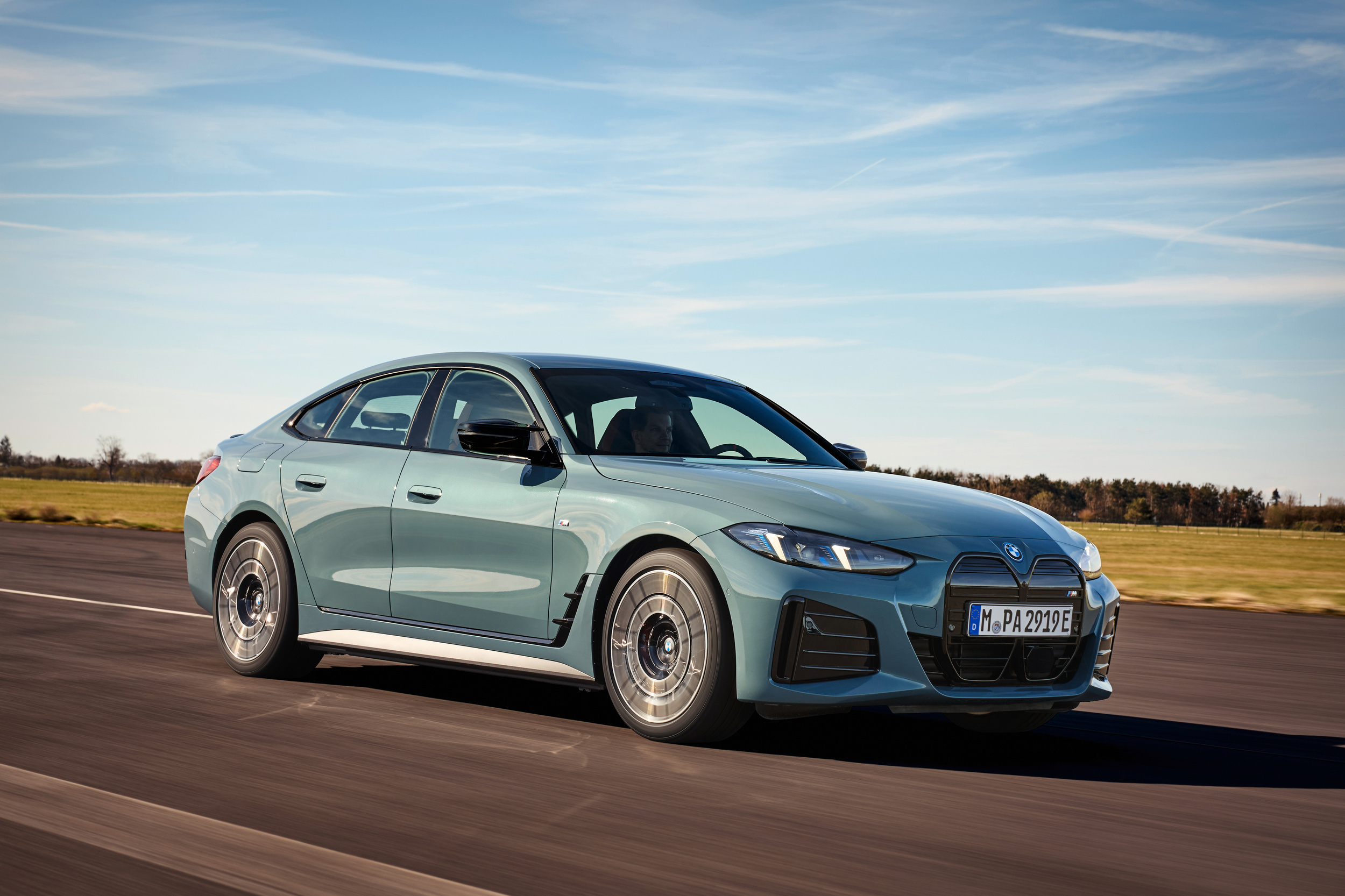
Speaking of M Performance variants, van Meel said electrified models – such as the i4 M60 – have proven popular in countries where regulations on combustion engines make traditional performance cars expensive. As he noted, “In France, you have to pay 18,000 euros ($21,212) CO2 tax on a combustion engine M2.”
That’s ridiculously steep and it bodes well for the upcoming i3 M, which will feature a quad motor powertrain. However, the executive said he isn’t sure how customers will respond to the model. While only time will tell, van Meel believes the vehicle has “exactly the technology everyone has been waiting for … in a high-performance [electric] car.”
Despite the focus on electric vehicles, BMW M isn’t putting all its eggs in one basket. Quite the opposite as the executive said they have a “long tradition” of six- and eight-cylinder engines, and “we are planning to continue this because we have a big community worldwide, and also a lot of people that are maybe not ready yet, or live in environments where it’s really difficult, to charge the electric cars.”
Manual Seems Doomed
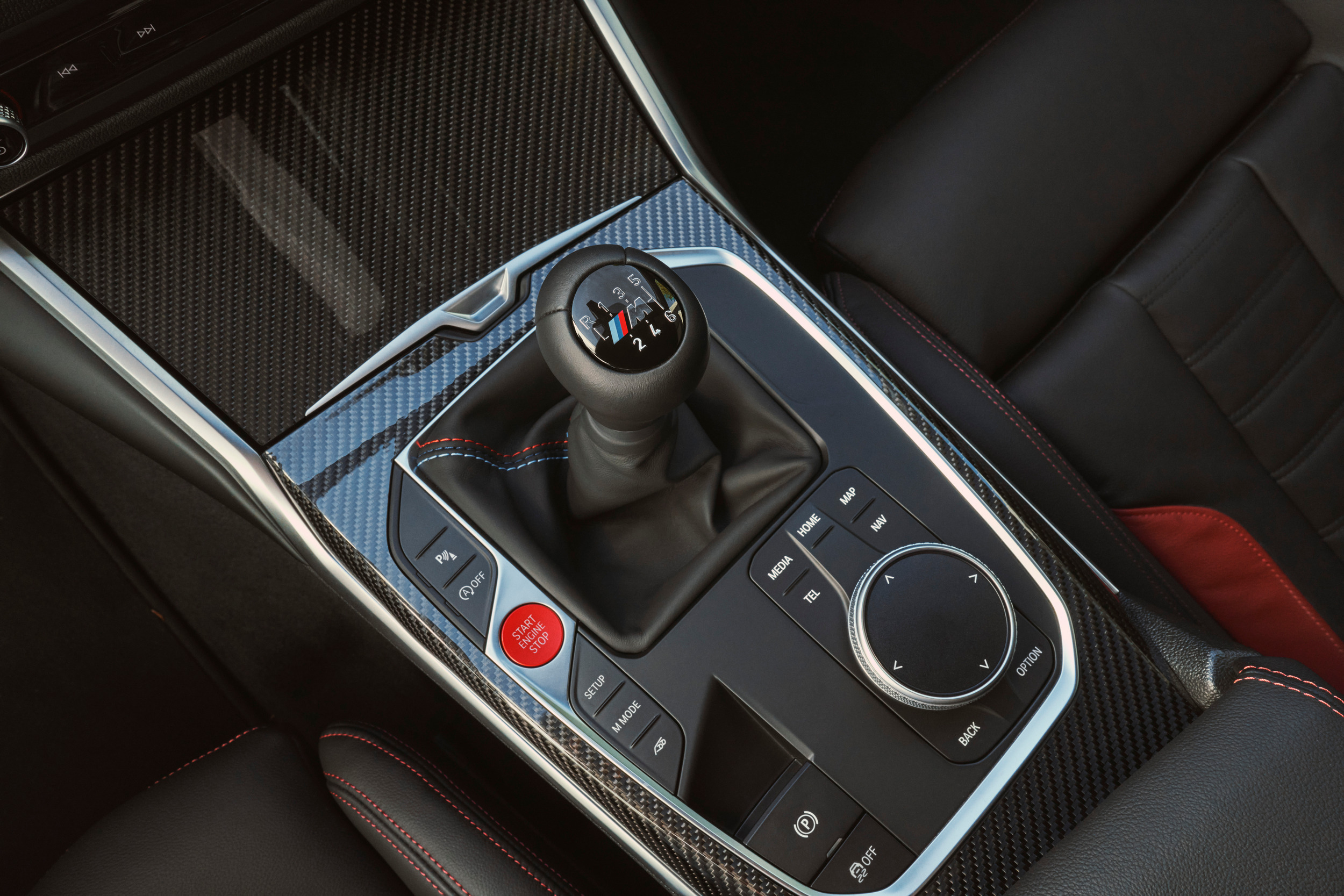
While internal combustion engines are sticking around, the manual might not be as lucky. As van Meel explained, “From an engineering standpoint, the manual doesn’t really make sense because it limits you in torque and also in fuel consumption.”
However, he added that from an emotional and customer standpoint, “a lot of people still love manuals, so that’s why we kept them, and we intend to keep them as long as possible.”
Unfortunately, the clock appears to be ticking as he said “It’s going to be quite difficult, in the future, to develop completely new gearboxes because the segment in the market is quite small, and the suppliers are not so keen on doing something like that.” This means manual transmissions will likely be safe for the “next couple of years,” but it will likely become “difficult to keep the manuals alive, especially in the next decade.”
EV owner satisfaction has reached an all-time high.
Best models come from Tesla, BMW, and Cadillac.
Most EV owners would consider getting another one.
Electric vehicles have come a long way in the past few years, and the progress is finally showing up where it matters most: in owner satisfaction. According to the latest data, these steady gains in technology and infrastructure are translating into record-high approval from drivers.
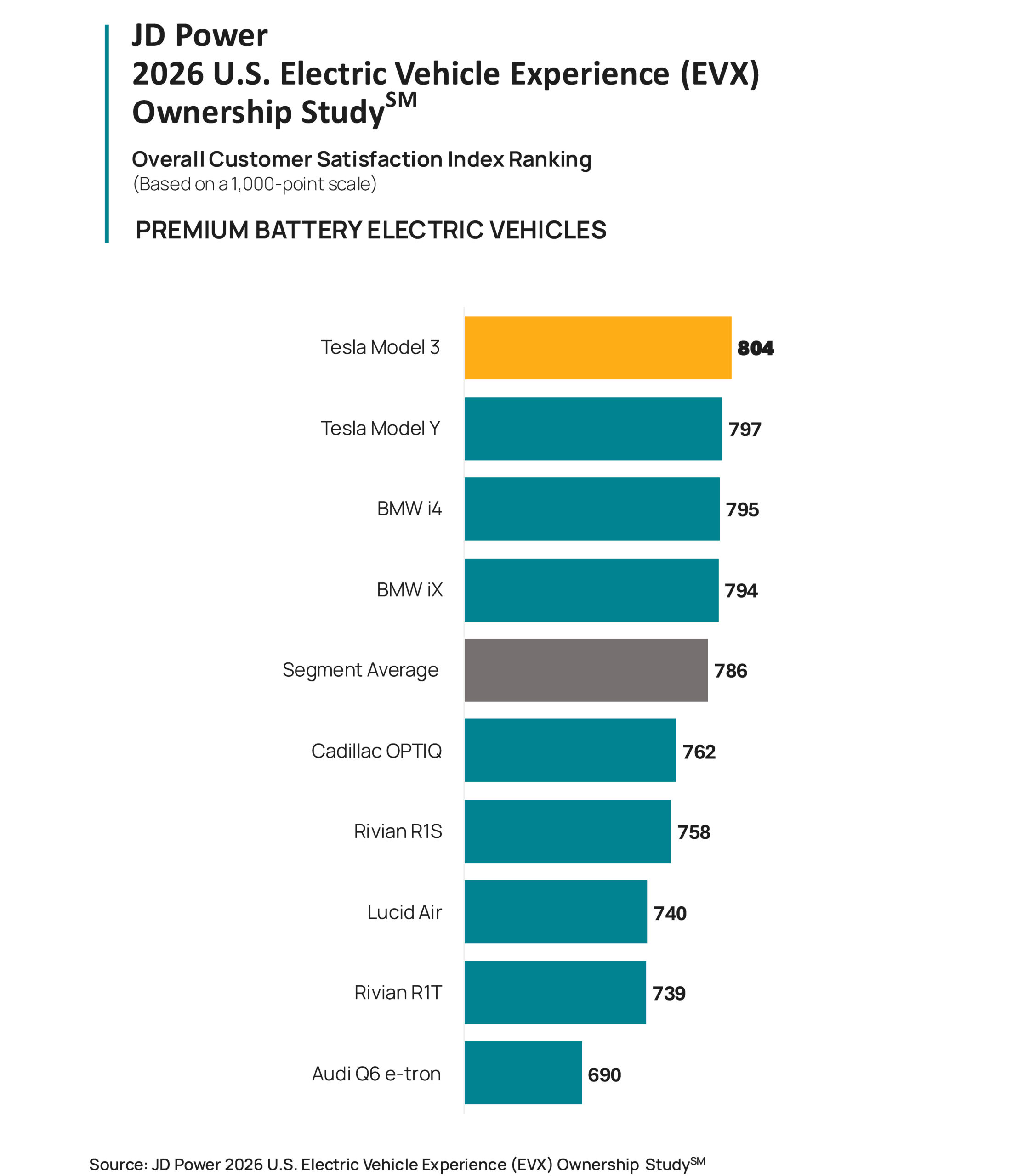
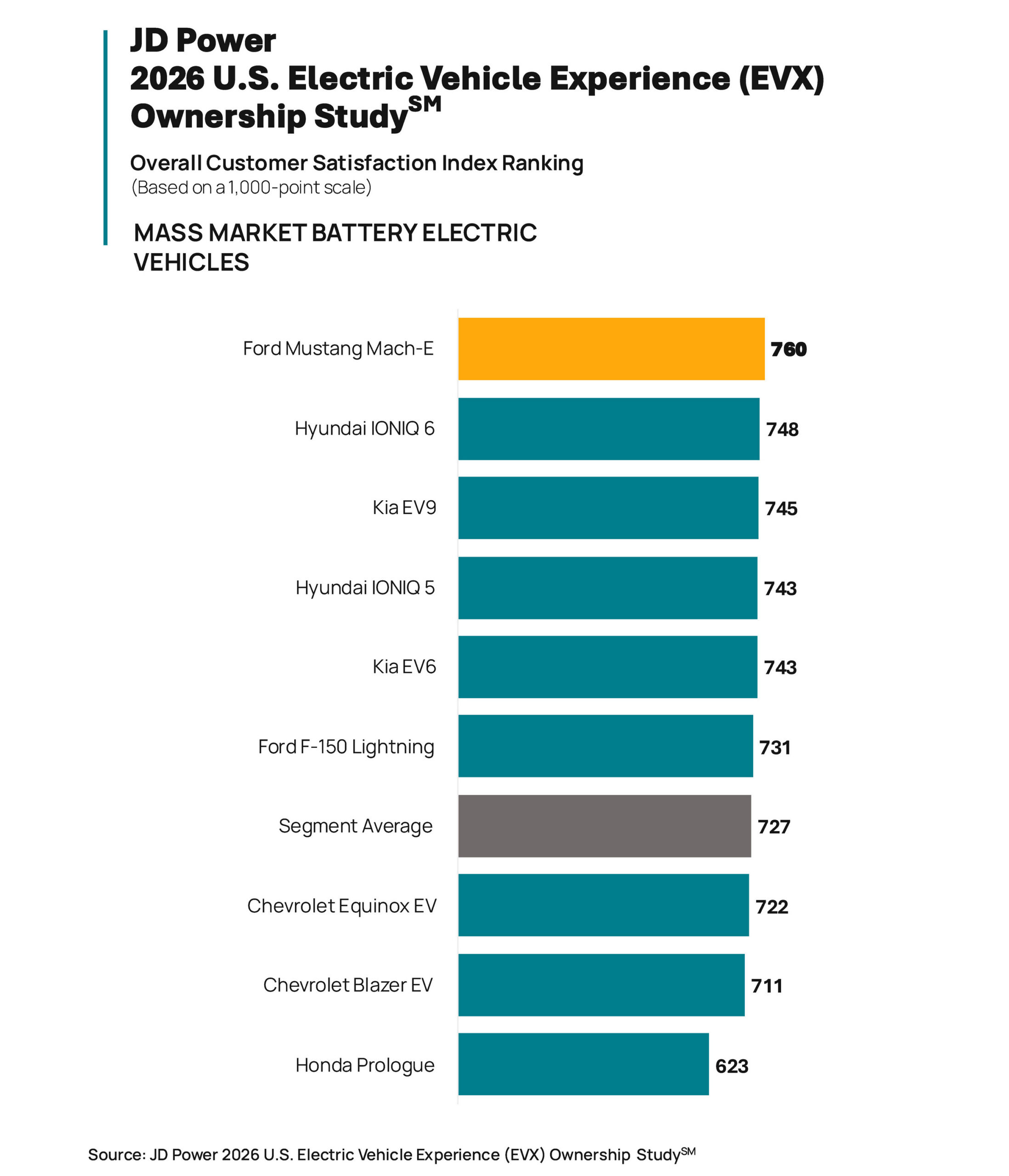
That’s the verdict from JD Power’s 2026 U.S. Electric Vehicle Experience Ownership Study, which found premium EV satisfaction climbed from 756 points last year to 789 in 2026. Mainstream EVs also improved two points to hit 727 out of 1,000.
The highest rated premium EVs were the Tesla Model 3 (804), Tesla Model Y (797), and BMW i4 (795). On the flip side, the new Audi Q6 e-tron came in dead last at 690. It placed well below the Lucid Air (740) and Rivian R1T (739).
Segment Standouts And Stragglers
On the mass market side of the equation, the Ford Mustang Mach-E took top honors with a score of 760. The electric pony car was followed by the Hyundai Ioniq 6 (748) and Kia EV9 (745). Interestingly, the two lowest rated EVs were the Chevrolet Blazer EV (711) and Honda Prologue (623). That’s a huge point spread considering both models are built by GM and have a lot in common.
Of course, things aren’t completely straightforward as the study examined ten different factors. This includes the “accuracy of stated battery range, availability of public charging stations, battery range, cost of ownership, driving enjoyment, ease of charging at home, interior and exterior styling, safety and technology features, service experience, and vehicle quality and reliability.”
Encouragingly, 96 percent of EV owners said they would consider buying or leasing another one and the study also found quality has improved. That’s especially true of premium EVs, which had 15.9 fewer problems per 100 vehicles compared to last year. This brought the total down to 75 and JD Power said this was driven by noise improvements as well as fewer problems with driver assistance technology.
Is Charging Still A Concern?
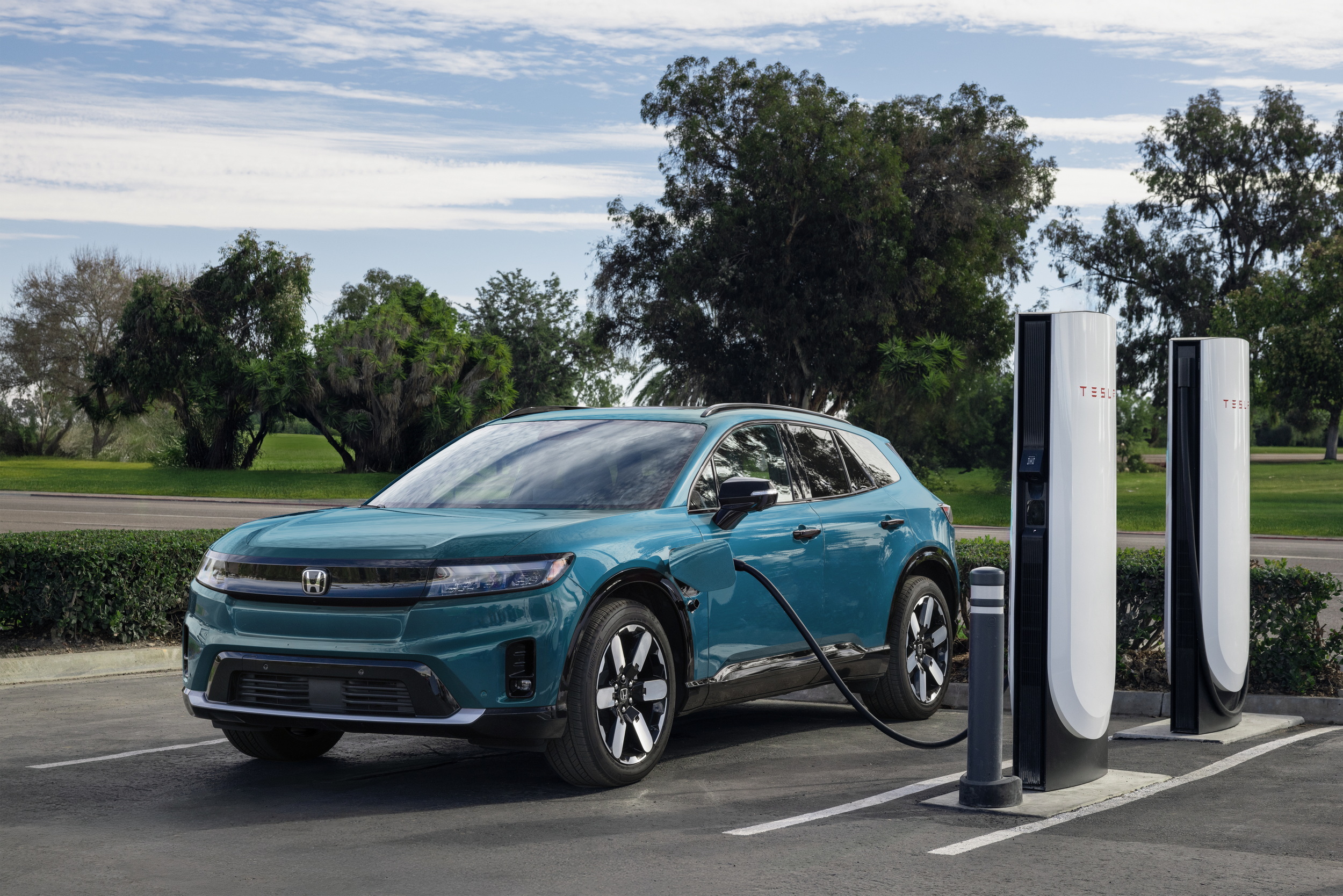
The study also found that EV drivers are becoming more satisfied with public charging. Scores climbed by over 100 points and this is being attributed to growing charging infrastructure as well as the opening of Tesla’s Supercharger network to other automakers.
Last but not least, EV drivers are more satisfied than those with plug-in hybrids. Premium EVs scored 114 points higher than their PHEV rivals, while mainstream electric vehicles had a 117 point advantage. Part of this can be chalked up to the cost of ownership as plug-in hybrid drivers have to deal with a more complex powertrain that involves gas and electricity.
In a statement, JD Power’s Brent Gruber said “Improvements in battery technology, charging infrastructure and overall vehicle performance have driven customer satisfaction to its highest level ever. What’s more, the vast majority of current EV owners say they will consider purchasing another EV for their next vehicle, regardless of whether they benefited from the now-expired federal tax credit.”
Tesla says the first Cybercab has left the Texas line.
Musk still targets a sub-$30,000 version by 2027.
Milestone revived MKBHD’s viral head-shaving bet.
Don’t look now, but Tesla might actually be on schedule, if not slightly ahead, at least for now, with its Cybercab program. The automaker says the first production example rolled off the line on Tuesday, more than a month earlier than Elon Musk previously suggested. Its CEO also confirmed pricing.
Of course, plenty of hurdles remain if Tesla plans to sell one before the end of the decade. And yes, at least one major YouTuber could end up shaving his head if Musk’s team pulls it off.
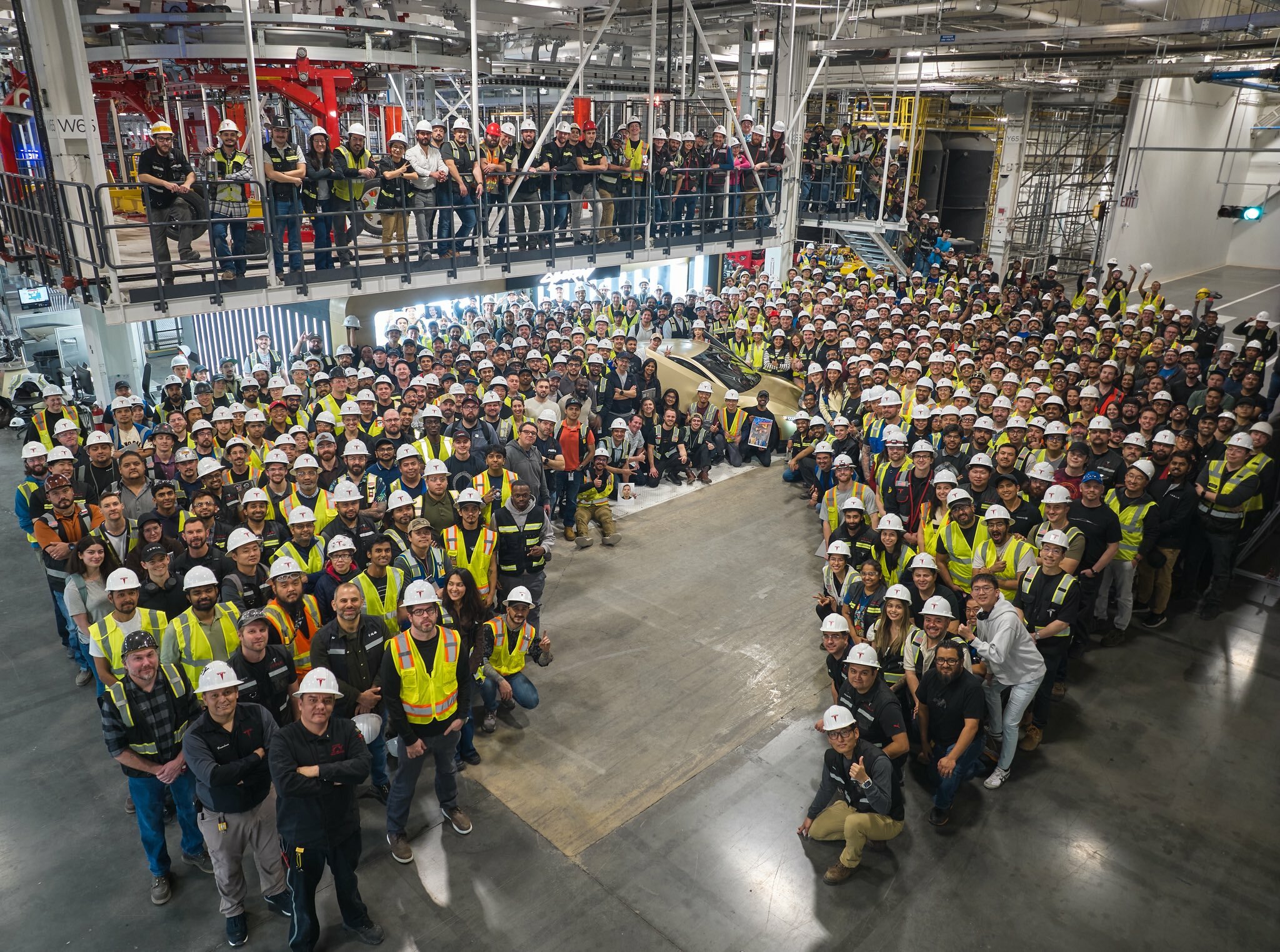
Tesla posted a photo on February 17 showing the team at Gigafactory Texas surrounding the first production Cybercab. While there’s still no clear timetable for full-scale production, Musk previously indicated that manufacturing wouldn’t even begin until April. I double-checked my calendar, and it still says February.
Importantly, this is almost certainly a pilot build and not a car destined for a customer. That said, it’s a significant step forward for a brand often associated with shifting timelines.
Public Bets And Pricing
That reputation likely played a role in Marques Brownlee (MKBHD) saying in 2024 that if Tesla launched the car before 2027 at a price below $30,000, he’d shave his head on camera.
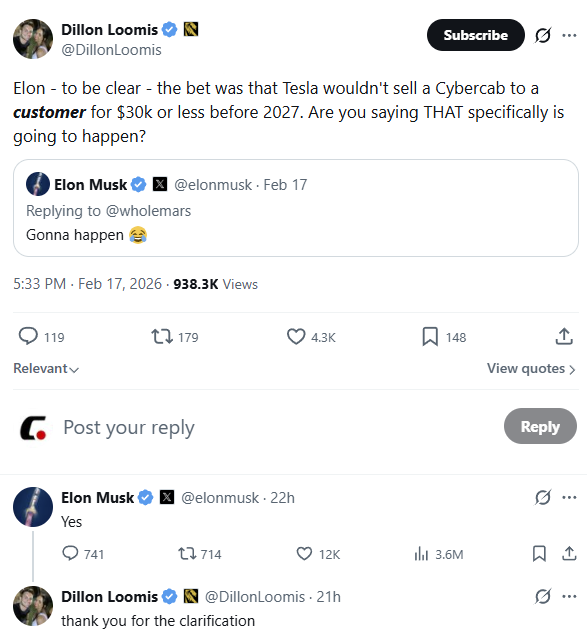
After Tesla announced the milestone, meme versions of a bald MKBHD quickly spread across X. Musk joined in, replying “Gonna happen 😂” to one such post. In a separate exchange, he also confirmed that Tesla still plans to sell a consumer version of the Cybercab before 2027 for “$30,000 or less”.
Hurdles Ahead
That all sounds promising, but Tesla has to do more than simply build the car. The Cybercab is meant to be the brand’s first true autonomous vehicle sold without a steering wheel or pedals. Since unveiling it, however, Tesla has hinted that those controls could return if regulations require them.
And that’s where the real challenge begins. Federal vehicle safety standards assume a human driver is present, and insurance frameworks do too. The NHTSA may need to grant exemptions for certain rules, while individual states could impose their own restrictions on autonomous vehicles operating on public roads.
In other words, building the Cybercab might prove easier than getting it legally approved. Whether Tesla can clear those hurdles before 2027 remains an open question.
CHP warned cold weather drains EV batteries faster.
The alert came after a Rivian R1S ran out of charge.
The incident took place in snowy Truckee, California.
California is known for its beach vibes, but the state’s climate offers a little bit of everything. That’s especially true in the mountain town of Truckee, which reportedly received more than 10 inches of snow in the past 24 hours.
While snow is a fact of life in the Sierra Nevadas, some people aren’t used to the cold conditions. That appears to include a Rivian R1S driver, who discovered how weather can impact range.
On Facebook, the California Highway Patrol posted a short clip of an R1S that apparently ran out of juice in the middle of a snow covered intersection. Authorities didn’t say what happened, but the video was accompanied by a message saying “Cold weather drains batteries faster than you think. If you’re rolling over the Summit, make sure your charge level matches your confidence level.”
They also advised drivers to charge up, slow down, and carry snow chains. While that’s a good reminder, police appeared to mock EVs and the driver as the post was tagged #ItsElectric and #MakeGoodDecisions.
Last week, they joked about a Tesla driver who lost control and went down an embankment. In that post, they said “Chain control was lifted earlier this morning and some of you took that as a personal challenge to full send anyway.” It was accompanied by an assortment of tags including #MakeGoodDecisions, #DonnersGonnaDonner, and #SlowYourRoll.
This appears to be a common theme with the Truckee post, but the criticism isn’t limited to EV drivers. Some people seem to get a kick out of this as one popular comment was “My new winter goal is to not be featured on your social media page.”
Chain control was lifted earlier this morning and some of you took that as a personal challenge to full send anyway….
A touchless car wash tore off a Rivian R1T roof panel.
Clips and adhesive were ripped loose in the incident.
Repairs may require interior trim removal for access.
A Rivian R1T owner has just learned the hard way that “touchless” does not mean “harmless.” Sure, these washes skip the spinning brushes, but that does not make them gentle. As it turns out, high-pressure water and moving hardware can still do a number on a six-figure electric pickup.
Posting on Reddit, the owner says he recently took his R1T through a touchless car wash for the first time when a black plastic panel at the rear of the EV’s roof suddenly popped off. That panel covers a fair bit of electronic gubbins, including the antenna, and is secured with clips and adhesive. Obviously, it is meant to stay put.
Photos show several of those clips torn loose, with adhesive strips peeled back as if the truck had tried to shed its own roof trim. It would be easy to blame water pressure or the industrial-strength dryers at the end of the tunnel, but that does not appear to be what happened.
According to the owner, one of the wash’s spraying arms became lodged under the roof panel, apparently misjudging the height of the pickup. Instead of gliding past, it hooked underneath and pried the piece upward. Not exactly part of the premium wash package.
Some commenters on the Reddit thread suggest that in order for Rivian to repair the rear roof panel, it’s possible that part of the interior will have to be removed to gain access to all of the wires positioned beneath the panel. Additionally, the third brake light of the R1T is positioned directly above the rear window near this panel, and may also need to be replaced.
Then there’s the matter of who will end up paying for the repairs. The owner says the car wash’s insurance will cover the costs, though that likely means a round of negotiations between insurers before any money changes hands. In the meantime, the damaged truck could spend weeks, possibly longer, waiting in a body shop bay for parts and repairs. So much for a quick rinse.
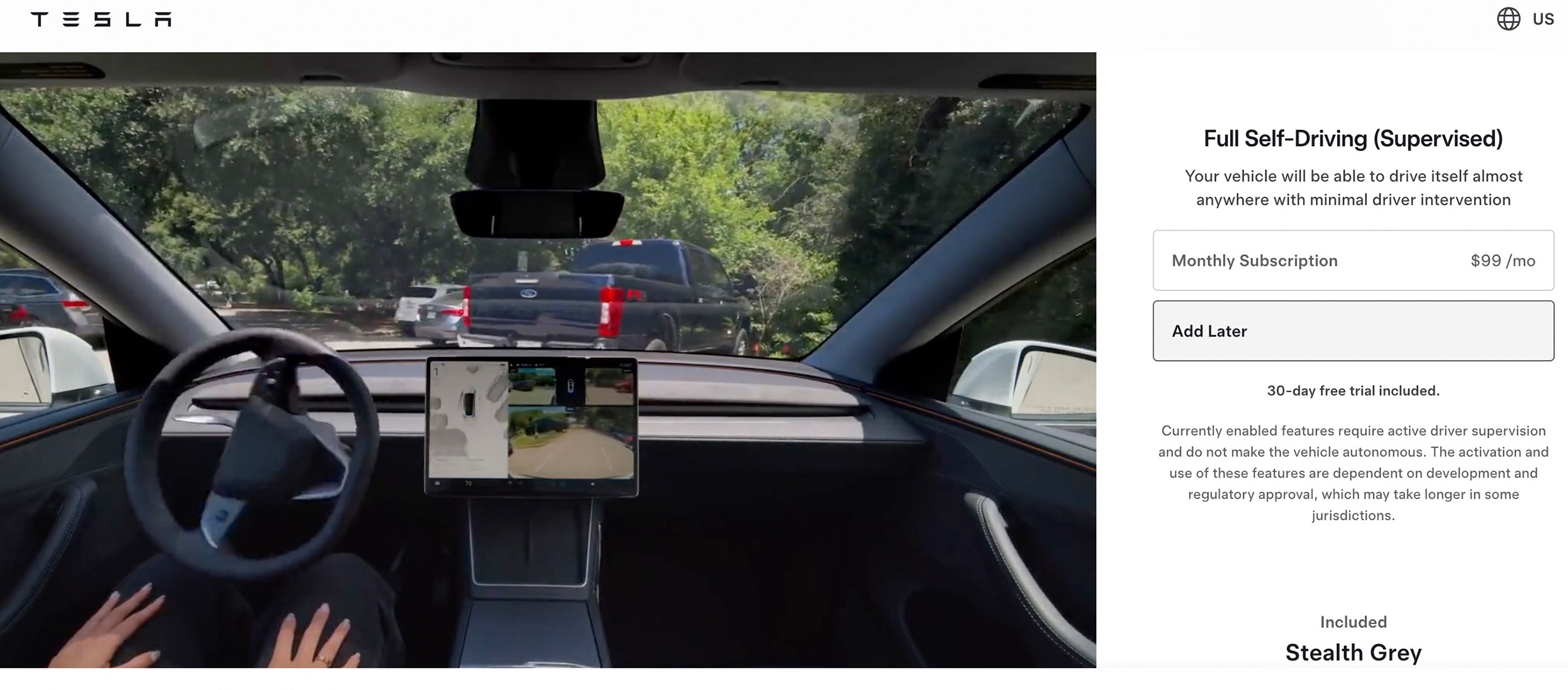
Tesla drops Autopilot term in California to avoid license suspension.
Brand’s new models now only come with cruise control as standard.
EV buyers are being pushed towards $99 FSD subscriptions instead.
After years of sparring with California regulators, Tesla has agreed to stop using its famous Autopilot term in the state, neatly sidestepping a 30-day suspension that would have frozen sales in its biggest US market with nearly 180,000 deliveries last year.
The California Department of Motor Vehicles (DMV) wasn’t amused by Tesla’s marketing language, arguing that phrases like “Autopilot” and “Full Self Driving Capability”, later softened to “Full Self-Driving (Supervised)”, gave buyers the impression their cars could drive themselves. The DMV pointed out that they can’t now, and never could, operate as autonomous vehicles.
The formal accusations were filed in 2023, though regulators traced the issue back to marketing language used as early as May 2021. At the time, Tesla described its system as capable of handling short and long-distance trips with no action required by the person in the driver’s seat, a claim the DMV said crossed a legal line.
60 Days To Find A Fix
A judge agreed and proposed suspending Tesla’s dealer and manufacturer licenses for a month. That would have been awkward timing for a company trying to convince the world that robotaxis are just around the corner. The DMV offered Tesla 60 days to fix the issue before the suspension started, and instead of digging in, Tesla wisely took corrective action.
“The DMV is committed to safety throughout all California’s roadways and communities,” said DMV Director Steve Gordon. “The department is pleased that Tesla took the required action to remain in compliance with the State of California’s consumer protections.”
So Autopilot, as a marketing term, is now gone in California (though you’ll still find it on the brand’s EVs elsewhere in the world). The company had already softened Full Self Driving into Full Self Driving Supervised to make it crystal clear that, no, the car is not fully autonomous. By complying with the deadline, Tesla avoided the suspension and kept the revenue rolling in.
Autopilot Feature Phased Out
This is not just a word swap, though. We reported last month that Tesla had already begun phasing out the previously standard Autopilot system on its cars, replacing it with Traffic Aware Cruise Control and pushing buyers toward a $99 per month Full Self Driving subscription.
Lane centering that rivals include as standard now lives behind a paywall, and CEO Elon Musk has hinted that the subscription price could rise over time. From a business perspective, it’s clever, but from a branding perspective, it looks like a climbdown.
Autopilot was one of Tesla’s most recognizable terms, though it was also one due to be left behind in the coming years as the far more sophisticated FSD improves to the point where it really can deliver full self-driving.
Jony Ive admits anxiety before the Luce’s big reveal.
Ferrari’s first EV pursues a singular, radical design.
It debuts in May ahead of its planned 2028 launch.
Ferrari is no stranger to controversy, and it rarely shies away from it either. Its upcoming all-electric Luce could turn out to be the most polarizing project yet. The man behind the design, Jony Ive, Apple’s former design chief who shaped the iPhone and several other era-defining products, admits he is feeling the pressure.
That seems like a perfectly reasonable response with a historic unveiling just two months away, especially when you are tasked with redefining what a Ferrari is supposed to be in the modern era.
This isn’t just another EV launch after all. It is Ferrari, a brand built on racing at the highest levels and on exciting V12 supercars, sometimes only obtainable through wild buying rituals, and now venturing into the silent world of EVs.
A Defining Electric Debut
SHProshots
Calling it a big deal would be a massive understatement, which is probably why Ferrari hired Ive and fellow designer Marc Newson for the task of shaping the Luce.
The exterior, in fact, has been penned by LoveFrom, the design house founded by Ive and Australian designer Newson, which makes this less a routine Ferrari project and more a collision between Maranello and Silicon Valley minimalism.
Speaking to Autocar, Ive openly admitted that he’s “anxious” about revealing the car to the world. It’s not concern over the design itself that sparks that feeling, but instead the gravity of just how big this moment is for Ferrari. He called it “still clearly a Ferrari,” but went on to say that “It’s a different manifestation based on some of the beliefs around simplicity and the inherent beauty of something.”
On the flip side, his co-designer, Newson, highlighted the freedom offered with such a project. “One of the great and serendipitous sort of things is that this is an electric vehicle, the first electric Ferrari, right? So that afforded us a degree of freedom that perhaps we would otherwise have not had: literal physical freedom or creative freedom… on many levels here,” he said.
Inside The Luce Philosophy
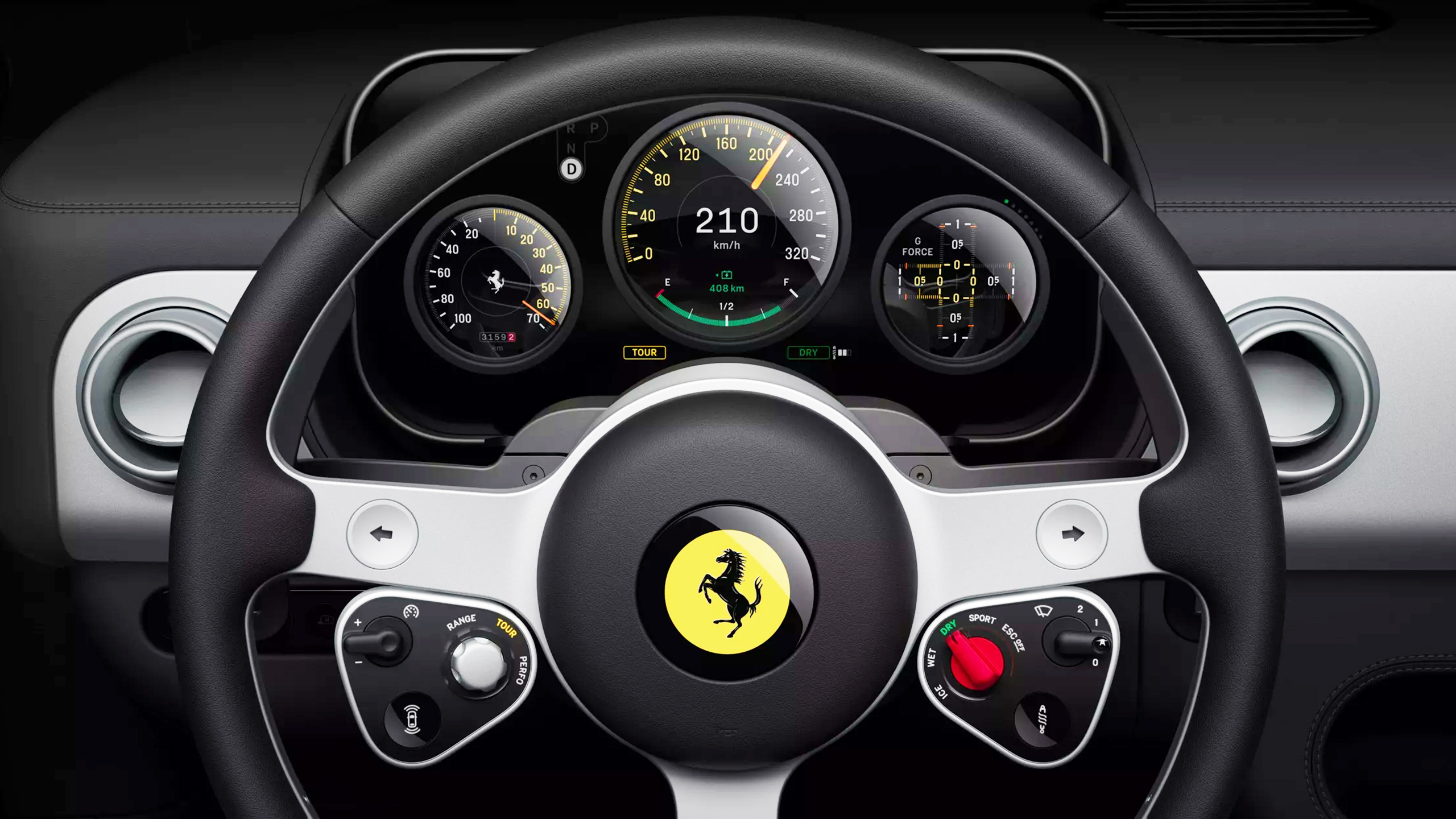
At this stage, we’ve already seen official bits of the interior. The brand unveiled the dash earlier this month. It’s quite the departure from other modern Ferraris. That’s key because Ive and Newson say that the entire car has a “consistency and a singularity” about it.
Ive has also stressed that there is “no disconnection” between the exterior and interior, noting that both were designed simultaneously rather than by separate departments. In his view, that approach results in a complete package that feels cohesive rather than pieced together.
What we also know so far is that the Luce will be a four-door, four-seat GT with a ride height similar to the Purosangue, and that it will feature a 1000hp four-motor powertrain. Ive has hinted that the car will be “big” in its proportions and just as radical on the outside as it is within.
Will The Luce Use Rear-Hinged Doors?
SHProshots
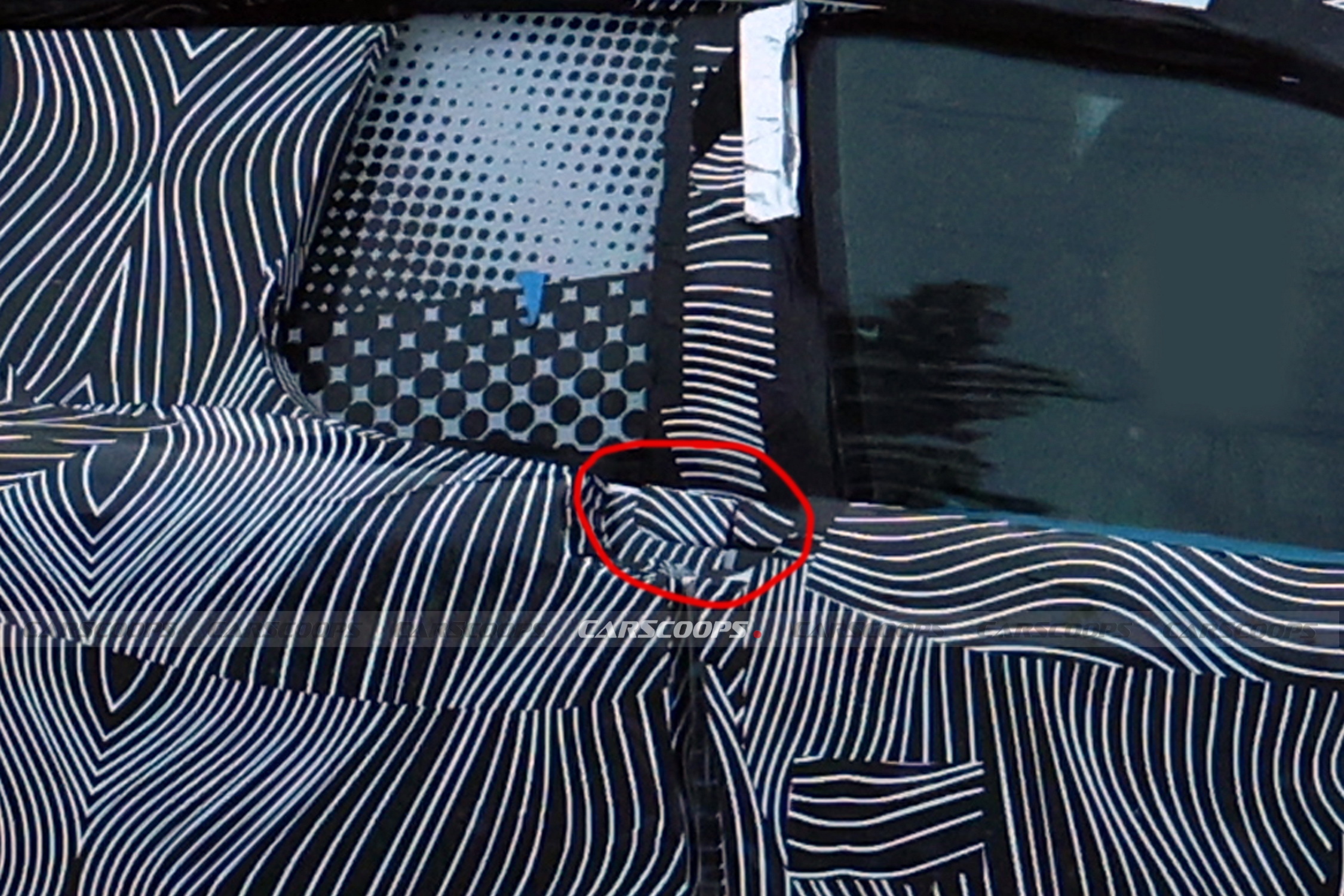
To that end, we wonder if the exterior will be far more retro-futurist than previously expected. While Ive was talking about the new Luce, our spies caught another heavily disguised prototype undergoing testing in northern Sweden this week.
Like earlier Luce testers, this one was wrapped in makeshift panels from top to bottom, making it extremely difficult to interpret what is happening underneath beyond a general sense of its proportions and size.
One detail our photographers did catch appears to be a set of door handles, circled in red, positioned just under the B-column in the middle section. According to our photographer, the Luce may be using suicide-style rear doors that open toward the front of the vehicle, similar to the Purosangue. This has not been officially confirmed, and it could just as easily be Ferrari engaging in a bit of cheeky misdirection.
We will know for certain in May, when Ferrari finally unveils its first EV.
A more practical Polestar 4 wagon arrives this year.
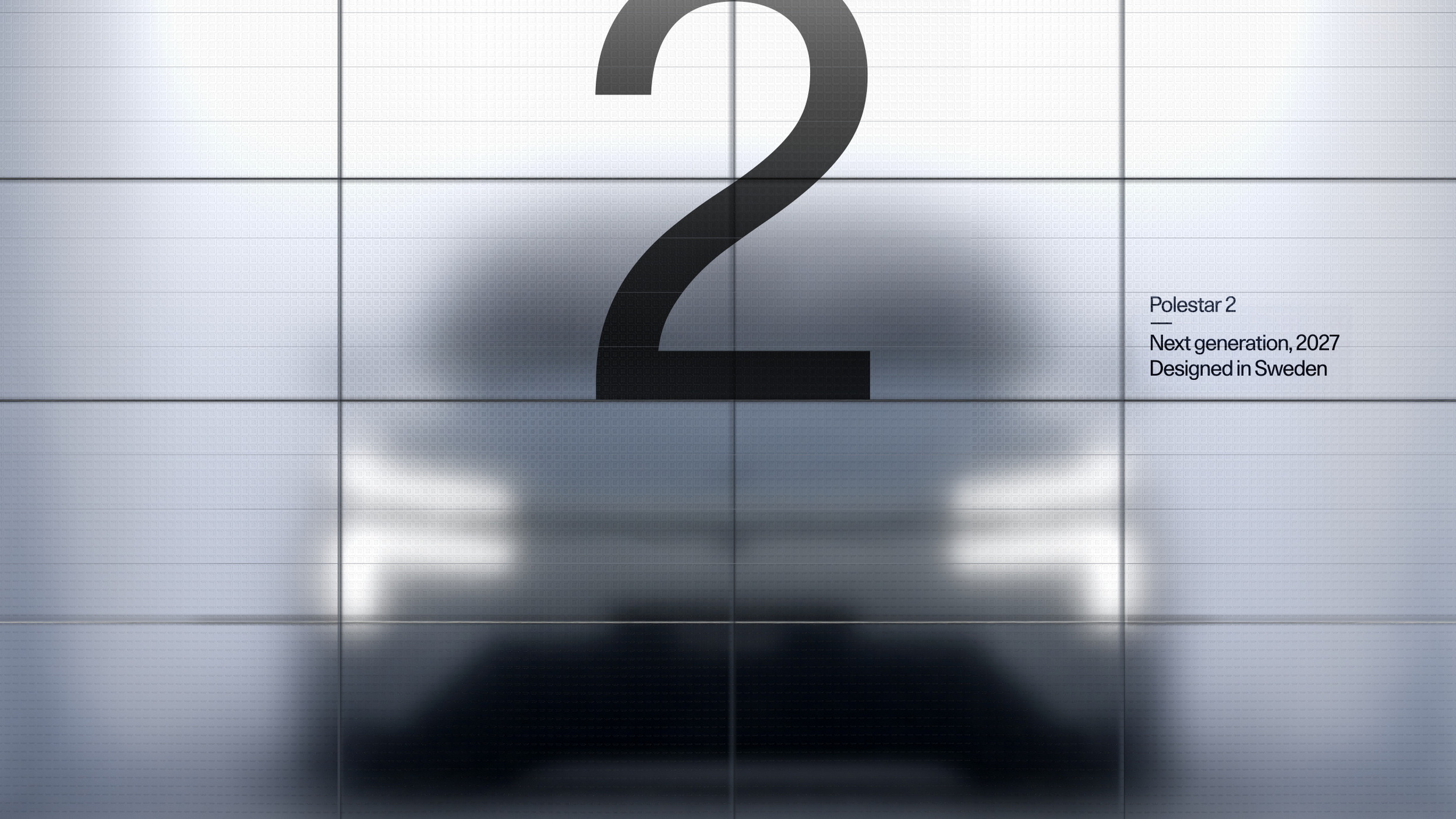
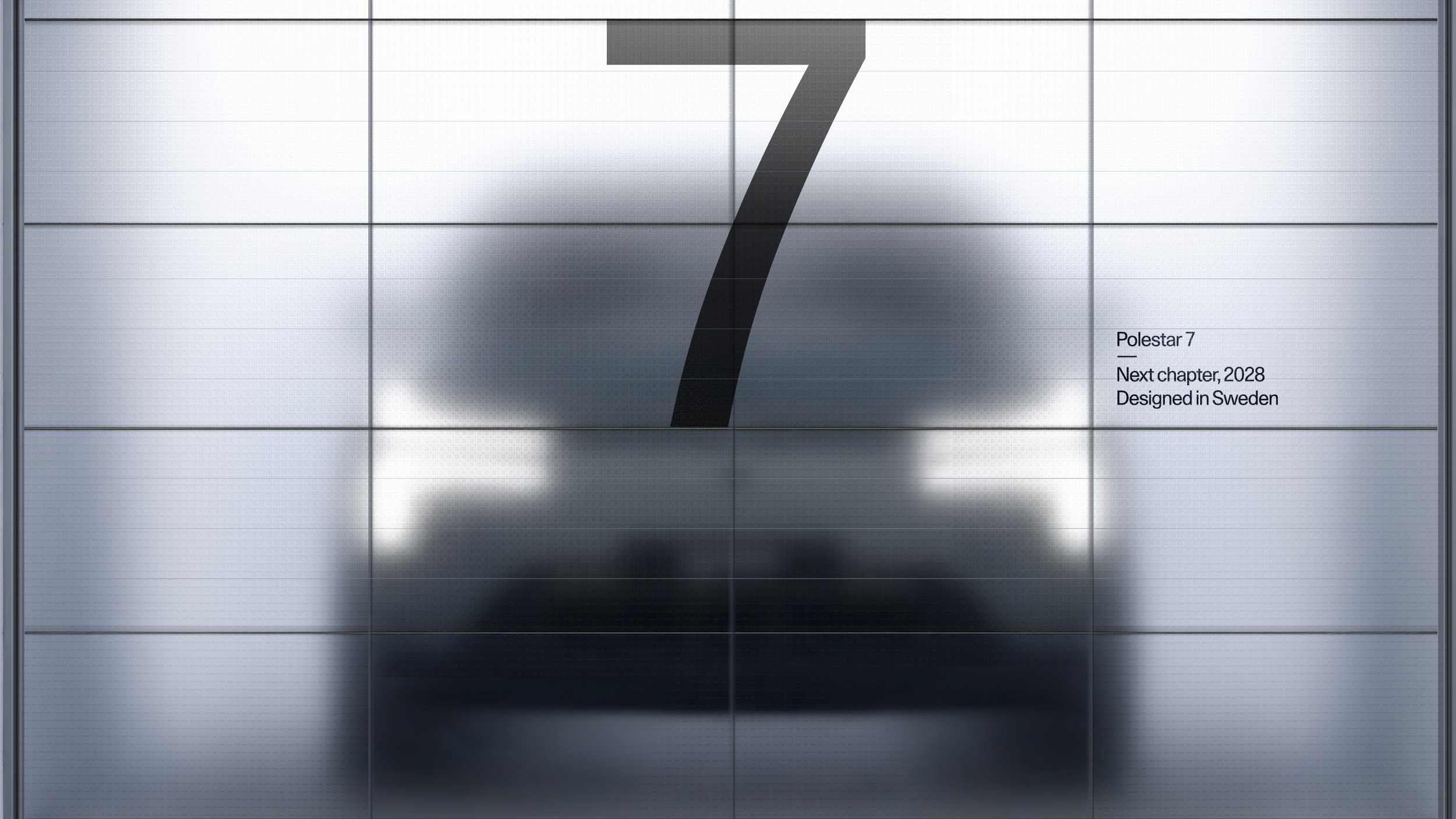
A new Polestar 2 and 7 SUV will also join the range.
Polestar may be wrestling with the sort of losses that keep finance teams awake at night, but it is not backing off. The Geely-owned brand has four new EVs lined up before 2028, each aimed at the market’s sweet spots. On the way are the 5 grand tourer, a more practical wagon take on the 4, a fully reworked 2 sedan, and an all-new 7 compact SUV. Busy times ahead.
The “Wagon” Polestar 4
Polestar’s current best seller is the 4, though its coupe-style roofline has always leaned more toward drama than practicality. That changes in the fourth quarter of 2026, when a new variant arrives with roof rails and a redesigned tail, complete with an actual rear window. Revolutionary, we know.
The aim is to attract a “wider customer base”, which is executive-speak for people who enjoy seeing out the back.
CEO Michael Lohscheller says the updated 4 “combines the space of an estate and the versatility of an SUV with the dynamic performance that is Polestar”. In plain terms, it keeps the same underpinnings as today’s car but swaps in a reshaped silhouette and a roomier cabin. Same bones, more boots-and-dogs potential.
The Next-Gen Polestar 2
Next up is a full new generation of the Polestar 2, due in early 2027. The current Tesla Model 3 rival has been around since 2019 and received a mid-lifecycle update in 2023, so a deeper rethink feels timely.
An official, albeit blurry, teaser suggests the 2 will trade its slightly crossover-ish stance for something lower and sleeker, complete with split LED headlights and a pared-back bumper design. Less high-riding fastback, more grounded sports saloon. Or at least that seems to be the direction of travel.
Europe-Built Compact SUV
Then there is the Polestar 7, landing in 2028 as a contender in Europe’s largest EV segment. And yes, Polestar’s naming scheme remains mildly baffling. It will be built in Slovakia and share its hardware with Volvo models. Lohscheller describes it as a “progressive performance-driven car” offered at “a very attractive price point”.
The Grand Tourer Is Here
At the top of the tree sits the Polestar 5 grand tourer, which only reinforces the point about that confusing nomenclature. Revealed in production form at the 2025 Munich Motor Show, it is scheduled to begin European deliveries in summer 2026. This is the halo car, the statement piece.
It rides on a lightweight bonded aluminum platform and, in Performance guise, packs a dual-motor setup producing up to 872 hp (650 kW / 884 PS). That is comfortably in the realm of serious performance, and proof that Polestar still wants to talk about speed as much as sustainability.
Optimism Despite Heavy Losses
All of this comes against a complicated financial backdrop. Last year, Polestar posted its best-ever retail sales, shifting 60,119 vehicles, up 34 percent, while also wrestling with deepening losses.
Even so, the mood at the top remains upbeat. Despite what Lohscheller calls a “challenging geopolitical and economic environment”, he remains optimistic about the future: “We are targeting the heart of the EV market, where customer demand and profit pools are high.” Confident words. Now comes the hard part.
PROS ›› Genuinely quick, nimble handling, faithful design features CONS ›› Tight rear seating, Uncharted undercuts it, limited cargo space
A quick look around the automotive industry would have most thinking that EV adoption is slowing down. Whether that perception holds true or not, Toyota is moving ahead full steam with not one, but three new electric vehicles, and the C-HR might be the most playful of the bunch. Yesterday, we talked about how the bZ Woodland is a great improvement on the old bZ4x.
Today, the focus shifts to the C-HR, a revived nameplate that now returns exclusively as an EV. It’s a huge deal beyond just the fact that it’s going electric. It’s the first formerly gas-powered Toyota nameplate to go fully electric. Sure, it only beat the new Highlander by a few months, but that’s more than enough. Both will have a big impact on Toyota moving forward.
While we don’t know what the Highlander will end up selling for, the C-HR is clearly aimed at a different demographic. With a starting price shy of $38,000 before destination and handling, it’s aimed at Tesla Model Y buyers wanting something a touch smaller. Packing standard all-wheel drive, 338 hp (252 kW), and almost 300 miles of range, it’s a new face in the segment that will no doubt blow up one day.
Quick Facts
› Model:
2026 Toyota C-HR
› Starting Price:
$37,000 (excluding destination)
› Dimensions:
177.9 L x 73.6 W x 63.8 in H (4,519 x 1,870 x 1,621 mm)
› Wheelbase:
108.3 in (2,751 mm)
› Curb Weight:
4,322 lbs (1,960 kg)
› Powertrain:
Dual electric motors / 74.7 kWh battery
› Output:
338 hp (252 kW)
› 0-60 mph
4.9 seconds
› Transmission:
Single speed
› Range:
Up to 287 Miles
› On Sale:
First-half of 2026
SWIPE
Now, all that’s left is to figure out if it’s good enough that it’ll gain a foothold for a long ride, or if it’s still a battery cell or two away from a fully-formed EV. Thankfully, a week of testing it in hilly Ojai, California, helped us figure out the good from the bad.
Styling
Photos Stephen Rivers/Carscoops
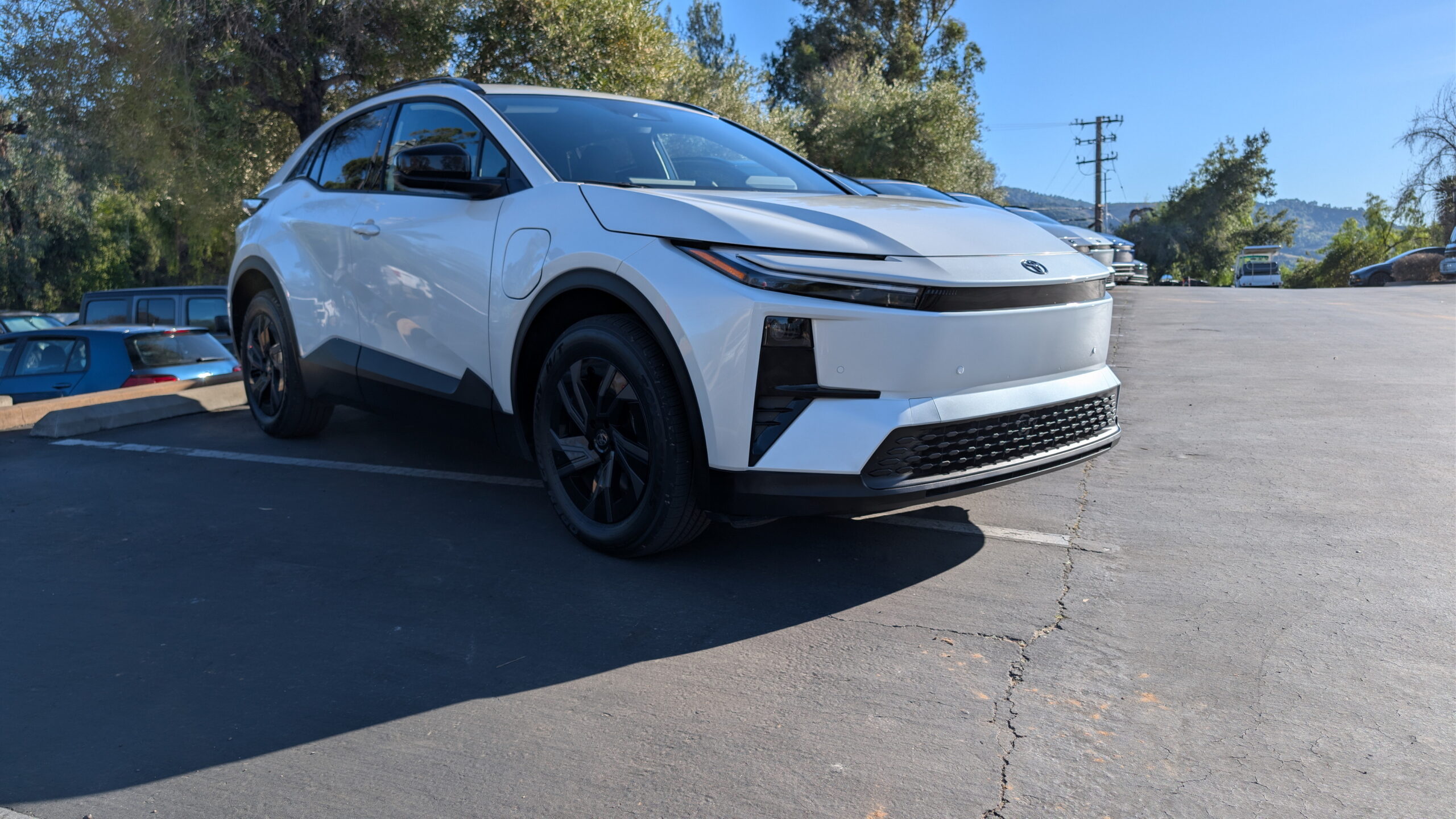
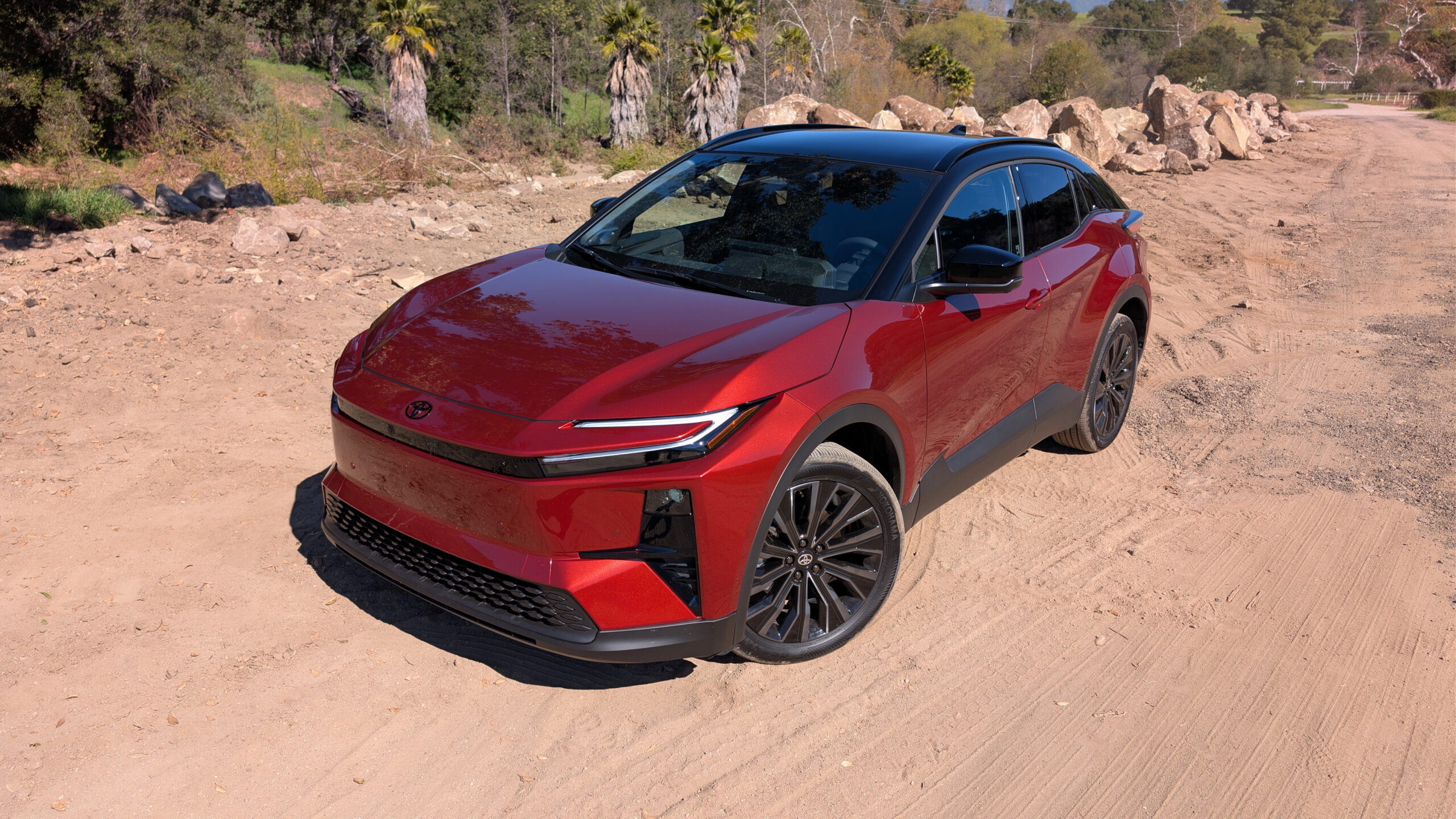
Let’s not play coy. While the C-HR’s nomenclature has always invited comparisons to Honda’s HR-V, the exterior designs couldn’t have been much more different when it first arrived. We’re happy to report that the same playful attitude carries over to this new electric version of the crossover.
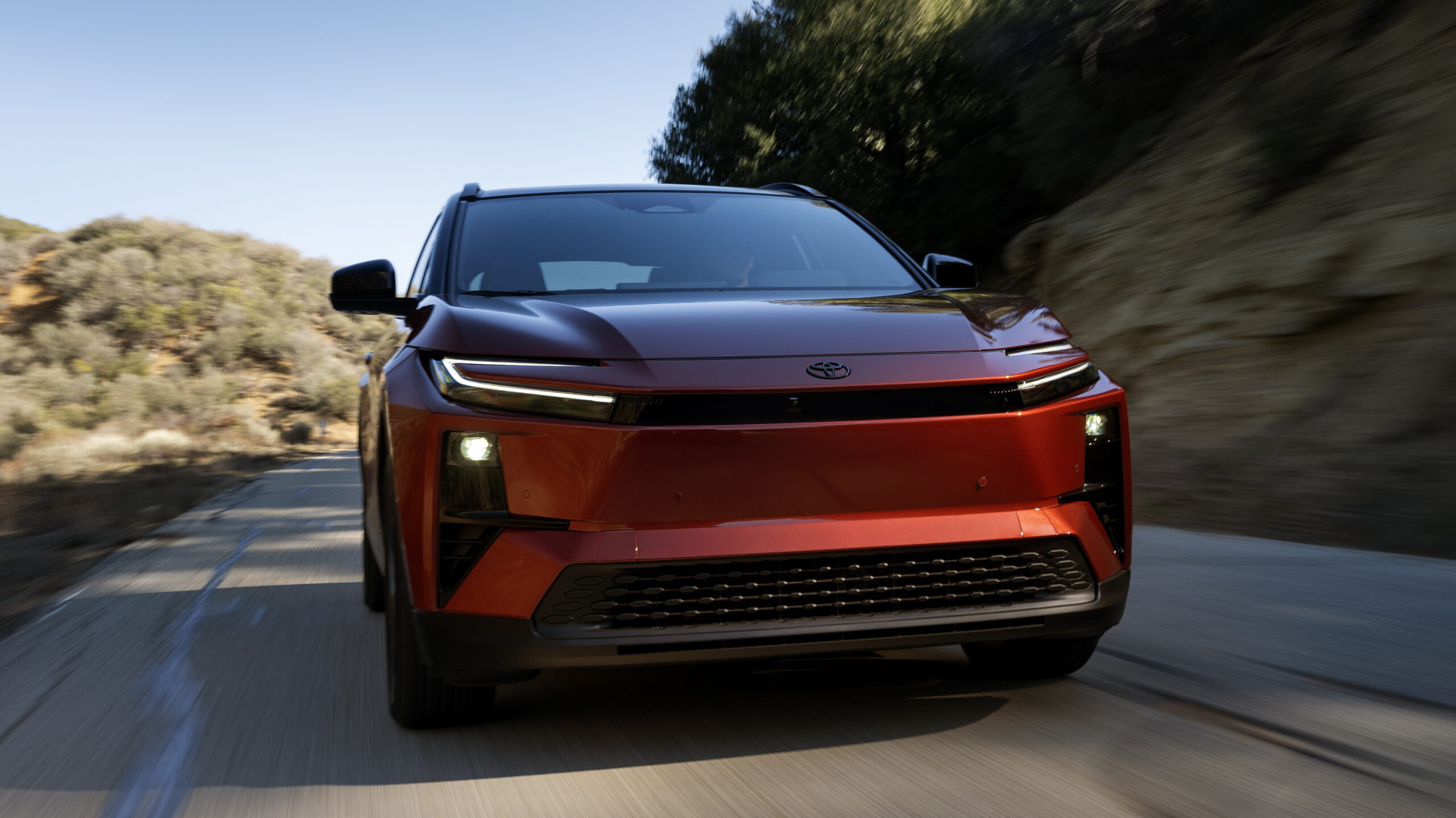
The front end adopts Toyota’s newer hammerhead design language, with a low, aggressive nose and slim lights that visually widen the car. The coupe-like roofline flows cleanly into the rear, and from certain angles, the C-HR almost looks more hatchback than crossover, which works in its favor. It feels athletic despite being clearly compromised on that front.
Compared to the bZ Woodland, the C-HR looks tighter and more urban. It’s clearly aimed at buyers who want something sporty and expressive rather than rugged or adventurous. The wheel options help sell that image, too, with 18-inch alloys on the SE and aggressive 20-inch wheels on higher trims.
If the old C-HR was bold but polarizing, this one is more mature. It’s still stylish, but it’s less desperate for attention and more apt to provide an experience worthy of an offbeat appearance.
Cabin Space
Photos Stephen Rivers/Carscoops
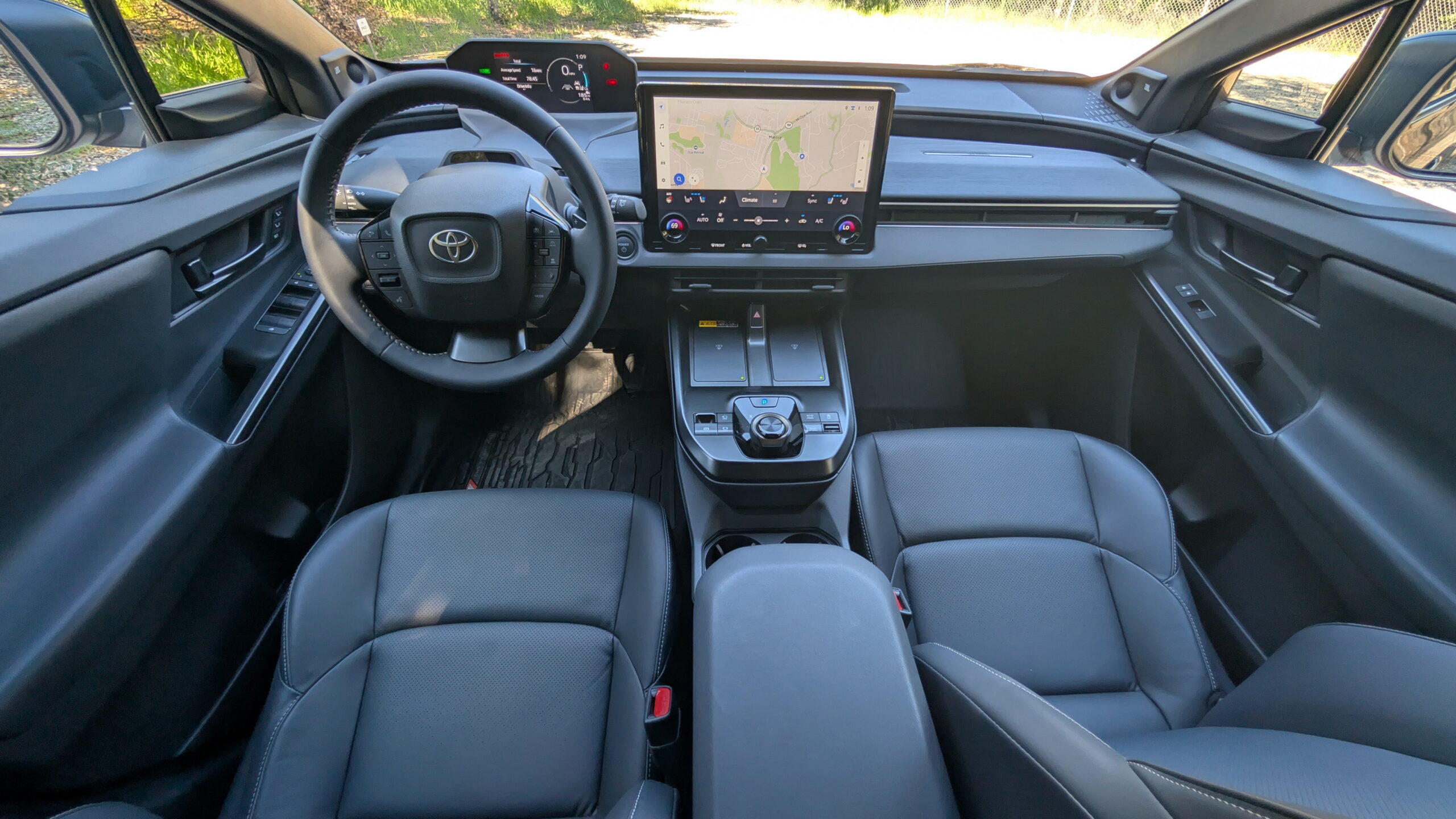
Toyota told us early on that we’d see a lot of crossover between this and the bZ Woodland, and it was right. It leverages supportive front seats, an intuitive infotainment setup, a steering wheel that feels good in your hands, and visibility that’s better than the sloping roofline suggests. The driver’s position feels good, though; we’d love a little more adjustability from the steering wheel.
Photos Stephen Rivers/Carscoops
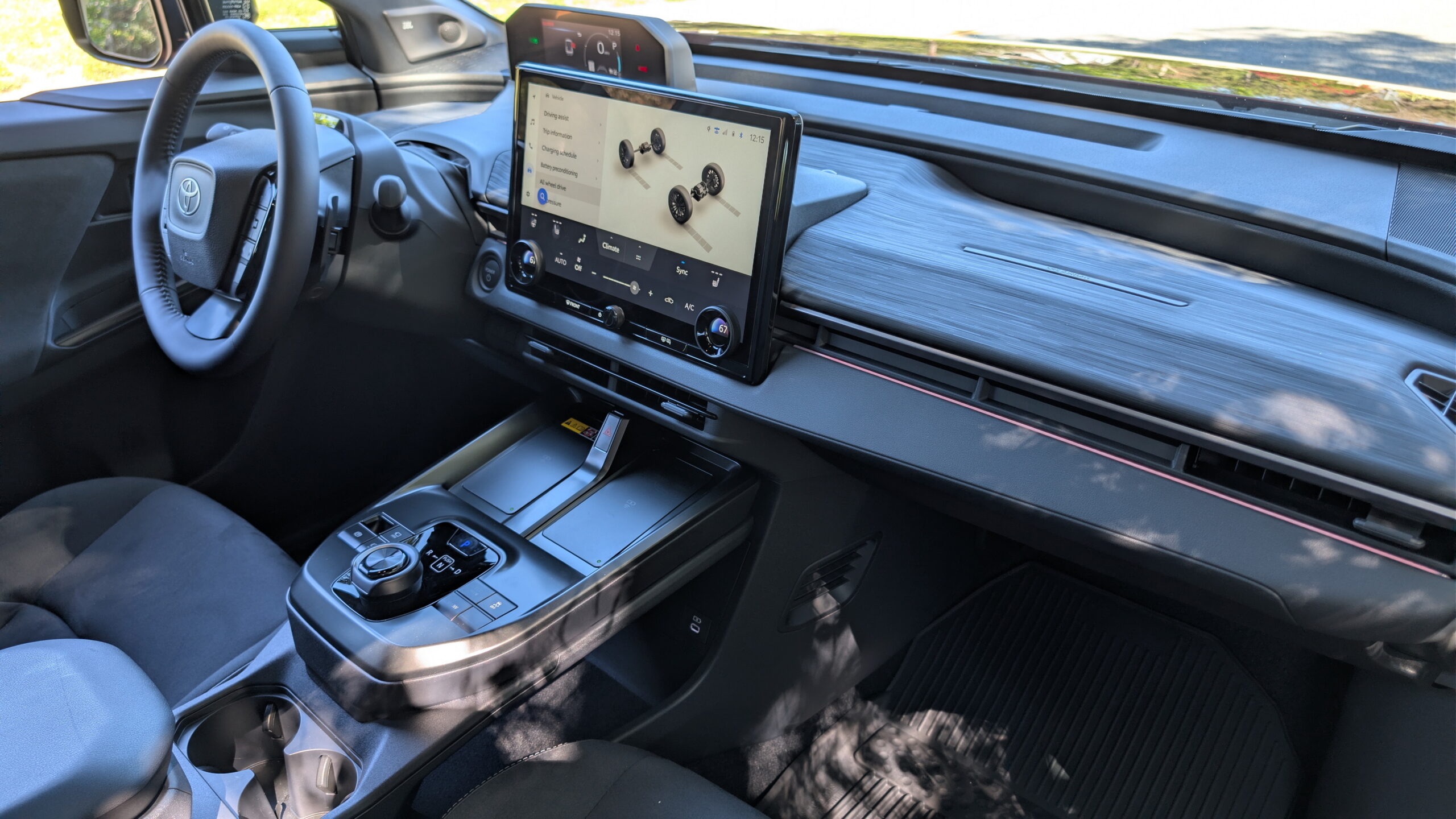
The 14-inch touchscreen dominates the dashboard and comes standard across the lineup. It’s responsive, cleanly laid out, and avoids the over-complicated UI issues that plague some competitors. Dual wireless charging pads and practical storage touches reinforce that Toyota still knows how to design for daily life.
Material quality is a step up from Toyota’s earlier EV efforts, too. Soft-touch surfaces and ambient lighting keep things modern without crossing into gimmicky territory. And then you climb into the rear seats. Things go from perfectly livable to suddenly only for the smallest around us.
How Tight Is Too Tight?
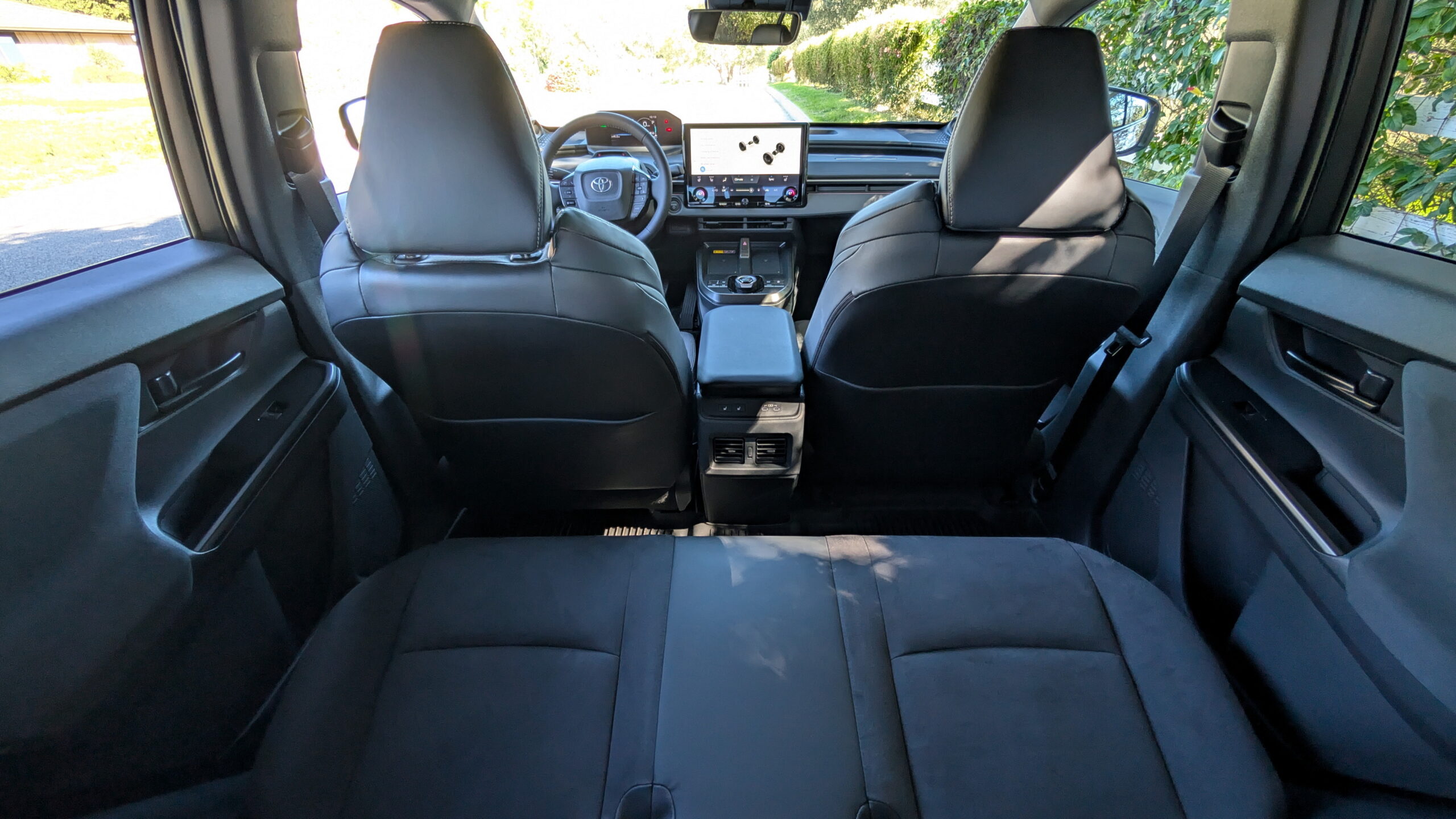
I get that as a taller-than-average guy, I won’t fit everywhere, but I was sincerely shocked at just how tight the back seats of the C-HR are. This is a compact crossover, and that’s clear as soon as we compare it to another new crossover in the form of the Mazda CX-5.
The Mazda has a wheelbase that is just 2.5 inches (63 mm) longer. Despite that, the CX-5 offers 7.7 inches (195 mm) of additional legroom, up to 2.8 inches of headroom, and in total over 10 cubic feet of extra space in the rear seats. Put simply, rear-seat occupants won’t be happy in the C-HR unless they’re relatively small. That said, they’ll fit kids just fine.
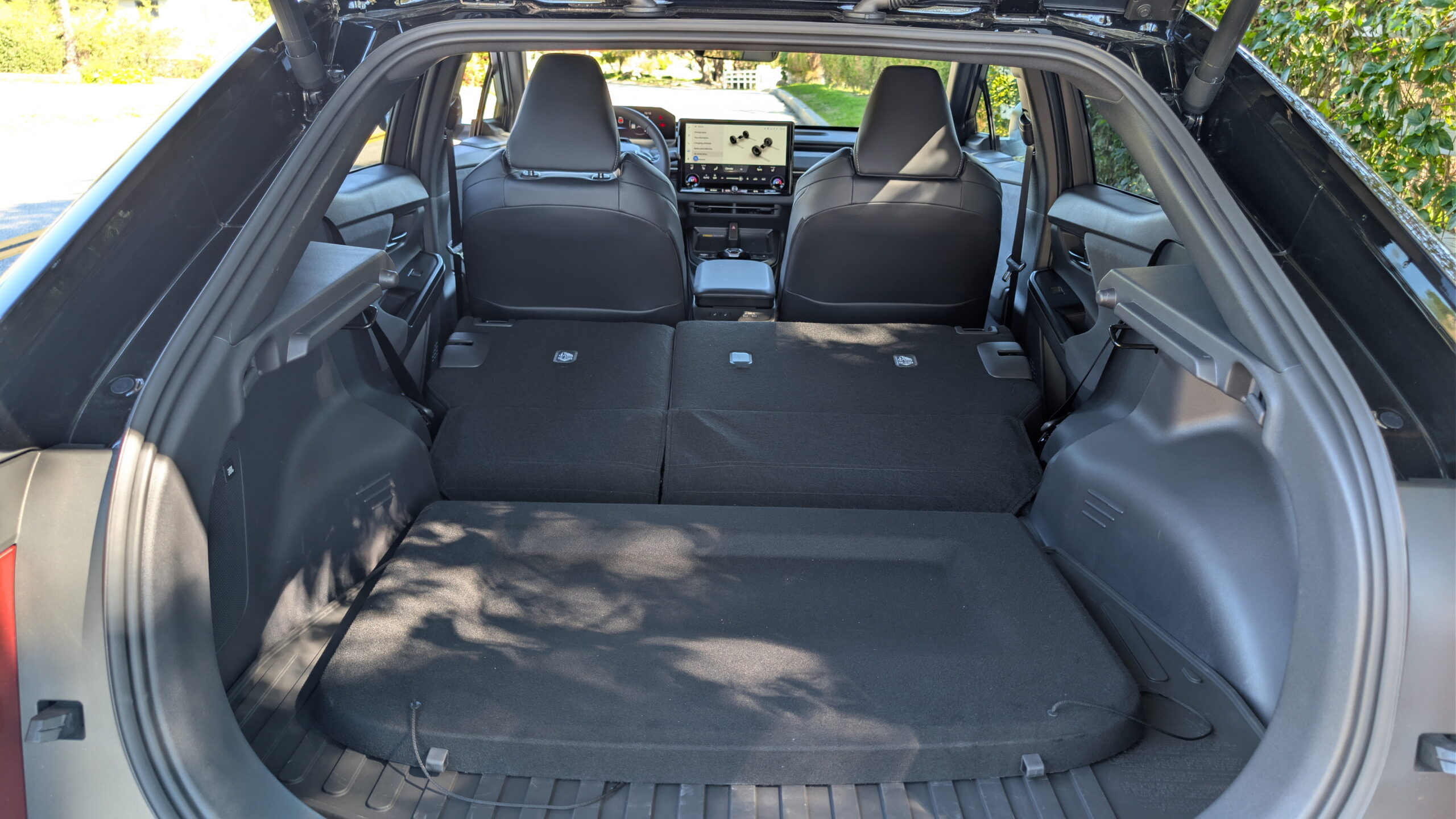
Cargo space fares better, with 25.3 cubic feet behind the rear seats and nearly 60 cubic feet with them folded. That’s perfectly usable for daily life, but the passenger packaging tells you clearly where Toyota’s priorities were.
Driving Impressions
Here’s where the plot thickens, in the best way possible. EVs are well-known for their instant torque, but that doesn’t automatically make one good to drive. The way the C-HR moves about the world is with more authority than one might expect. It’s sharp. The short wheelbase helps it manage bends with confidence. And the steering is more communicative than in the larger bZ Woodland.
Toyota claims 0-60 mph in 4.9 seconds, and it absolutely feels believable. This thing moves… not with the aggressive chaos of a GR Corolla, but with the smooth, relentless urgency only an EV can deliver. In fact, this might be the quickest pseudo-practical car in Toyota’s lineup right now. It’s not trying to be a sports car, yet it’s faster in a straight line than many cars that are.
The low battery placement keeps the center of gravity down, and the chassis feels planted through corners. Steering is light but accurate enough that you want to push a little harder than you probably expected. There’s a maturity to the tuning. It’s composed, predictable, and easy to trust. The brakes are excellent, too.
The regenerative braking paddles let you adjust deceleration on the fly, which adds a layer of driver involvement often missing from mainstream EVs. It’s not revolutionary, but it does make the driving experience feel more interactive.
Ride quality strikes a nice balance, too. It’s firm enough to feel sporty without punishing you over rough pavement. The C-HR doesn’t feel like a small SUV pretending to be sporty. It just feels like a well-sorted EV with some genuine personality. No, it’s a far cry from a Hyundai Ioniq 5 N or a Tesla Model Y Performance, but it’s the EV I’d pick from Toyota’s lineup if driving feel was all that mattered.
From a more practical standpoint, range tops out at 287 miles on the SE trim, dropping slightly with the larger wheels. Charging speeds max out at 150 kW DC fast charging. That’s enough to go from 10–80 percent in roughly 30 minutes under ideal conditions. As we’ve seen in the past, ideal conditions can be rare, but the inclusion of Tesla’s NACS port should help.
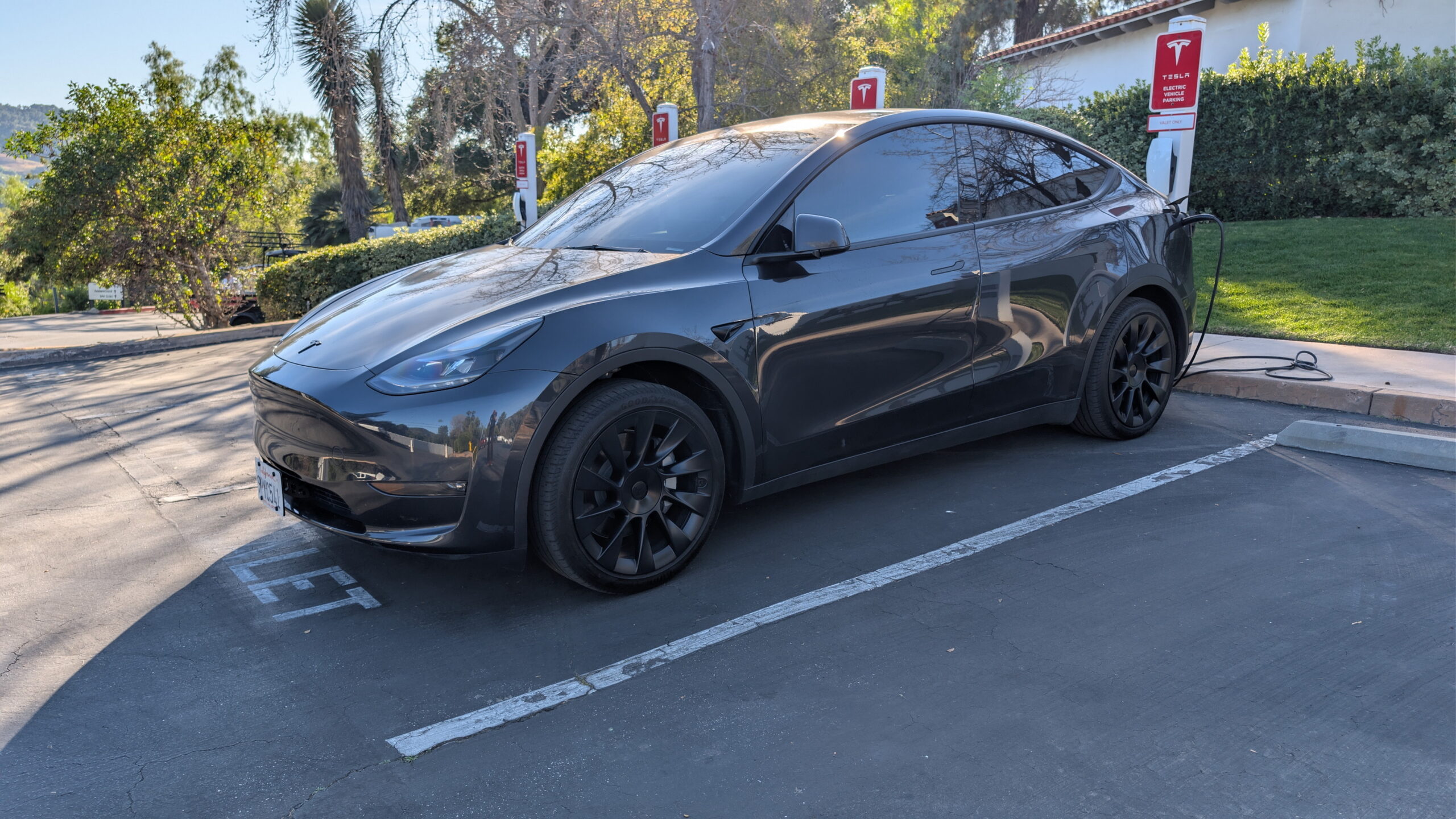
The C-HR lands in an increasingly crowded space, but its personality gives it, like the bZ Woodland, a unique angle. The Tesla Model Y remains the benchmark for space and usability. It’s roomier, more versatile, and easier to live with if rear-seat comfort matters. The Model 3, while technically a sedan, also beats the C-HR for rear-seat comfort despite looking smaller.
Frankly, comparing it on paper to most cars in the segment makes the C-HR look like a middling choice at best. Even pairing it against its badge-engineered sibling, the Subaru Uncharted, it costs more and isn’t available with front-wheel drive, which unlocks more range. That said, I’m not about to start complaining that we need more front-wheel drive cars.
Where the C-HR stands out is key, though. All-wheel drive is something that plenty of folks want and or need where they live. Second, it’s probably the easiest car in the segment to park, thanks to great sightlines and one of the shortest wheelbases here. That matters.
No, it’s not the quickest, cheapest, or most spacious. Instead, it’s leaning into the vibe of a compact, economical electric vehicle to the best of its ability in its current form. And that form just so happens to be quite attractive and fun.
The Verdict
Toyota just launched the new Highlander in all-electric form, which is a huge deal in itself, but let’s not forget that this new C-HR is the first formerly gas-powered Toyota to go all-EV in America. That’s also a big deal, and it makes this little commuter car an important inflection point in history.
To that end, it’s great to see that Toyota didn’t hold back here regarding performance. The C-HR is properly quick, genuinely fun to pilot, and even fun to look at. The front seats, infotainment, and overall driving position are all excellent, and on the road, it feels composed, lively, and far more engaging than many electric crossovers in its segment.
That said, it’s not without compromise. Rear-seat space is tight enough to be a real consideration, especially if you regularly carry adults. This is a crossover that prioritizes style and driving feel over maximum practicality. And honestly, that might be exactly the point. Here, the fun comes first, and the practicality, while important, comes in second place. Will it be a mix that sells well? Only time will tell.
New report cites unspecified “technical problems”.
Volkswagen has invested billions in the revival.
Volkswagen is spending billions on Scout’s rebirth, but things might not be going according to plan. Quite the opposite as a new report out of Germany claims the company is postponing the launch by a year.
A report from Spiegel attributes the delay on “technical problems,” although specifics are hazy and said to include a financial component. However, in a statement to The Drive, a spokesperson said “Scout Motors has not shared any timing or product update announcements.”
That sounds like a carefully worded response that doesn’t confirm or deny anything, only the fact they haven’t announced any updates. Regardless, the company’s website says initial production is targeted to begin in 2027.
Still, Scout gives themselves plenty of wiggle room as the launch date is accompanied by a disclaimer that reveals the timeline is “based on current projections and is subject to change.” The automaker goes on to say the “anticipated production date is an estimate and may be affected by various factors.”
While the brand is staying tight-lipped, Scout introduced updated Traveler and Terra concepts at the Los Angeles Auto Show last year. They were minor evolutions of the original models that were introduced in October of 2024 and more closely preview the production truck and SUV.
Scout has shared little about the vehicles recently, but they’ll be offered with electric and range-extended powertrains. The former will have a range of approximately 350 miles (563 km), while the latter increases that distance to more than 500 miles (805 km) thanks to a gas engine that acts as a generator.
The company has reportedly received over 150,000 refundable reservations and roughly 85 percent are said to be for the range-extended variant. However, there’s still a lot we don’t know about the vehicles and it appears they could be running behind schedule.
Ford has released a new teaser video for their mid-size electric truck.
Arrives next year with an aerodynamic design and a focus on efficiency.
It will have LFP batteries as well as a new 48-volt low-voltage system.
Ford swung and missed with the F-150 Lightning, but the company continues to pour billions into electric vehicles. We’re starting to see some of the fruits of their labor as they’ve revealed more details about their next-generation of electric vehicles based on the new Universal EV platform.
Set to be launched on a mid-size electric truck in 2027, Ford is promoting the project with a 14 minute video that provides a few glimpses of the vehicle as well as a lot of talk without saying much.
The end result feels like a waste of time, but there are a few interesting nuggets of information including that the model’s “aerodynamic efficiency is more than 15% better than any other pickup truck on the market today and will ultimately result in longer range and lower cost for our customers.”
We can see a rounded front end as well as a curved roof, which enables air to ‘skip’ over the bed. The model also has 20% smaller side mirrors that result in an extra 1.5 miles of range.
The video goes onto say the truck will have large aluminum unicastings that deliver a 27% advantage in casting weight compared to competitors. The model will also have two structural components compared to the Maverick’s 146.
Ford then talks about the truck’s cost-effective lithium iron phosphate battery pack and mentions an upgraded regenerative braking system, which reportedly saves $100 in battery costs.
Digging Deeper
Putting the video aside, Ford noted most automakers have tackled range anxiety by adding large battery packs. This adds range, but it introduces a host of new problems as batteries account for roughly 40% of an EV’s total cost as well as around 25% of their total weight. As a result, bigger batteries mean heavy and expensive vehicles.
To keep prices low, Ford is betting on a small battery and a focus on efficiency. The latter saw them keep a close watch on weight, drag, and rolling resistance.
Ford also introduced a bounties system when developing the truck, which focused on “evaluating tradeoffs.” While there are always competing goals in vehicle development, Ford connected changes to a “specific value tied to the range and battery cost.”
How Much Is 1 mm Worth?
As the automaker explained, their aerodynamic and interior teams could easily see that “adding even 1 mm to the roof height would mean $1.30 in additional battery cost or .055 miles of range. ”This process repeated itself over and over again in other areas, allowing Ford to create an efficient and affordable pickup.
The focus on efficiency didn’t stop there as the Blue Oval noted “power conversion within an electric vehicle platform can account for a surprising amount of wasted energy in a vehicle while charging or even taking energy from the 400V battery and converting it to 48V for the low-voltage devices.” To address this, the truck has a “fully electric vehicle charging ecosystem” that was designed in-house and uses their own software.
This promises to increase efficiency, reduce charging times, and maximize the lifespan of the battery. The company also revealed the model has a bi-directional charging capability and the company’s first 48-volt low-voltage system. Furthermore, the model’s wire harness is 4,000 feet (1,219 meters) shorter and 22 lbs (10 kg) lighter than on their first-generation of electric vehicles.
Rivian R2 launches by June priced from about $45,000.
Sliding rear glass disappears fully into the tailgate area.
It claims wiper placement improves driving range too.
Rivian will begin deliveries of the long-awaited R2 by June this year, finally giving a much larger slice of the public the opportunity to buy one of its EVs. In many ways, it marks a pivotal expansion for the brand into a more accessible segment. Priced to start at around $45,000, it closely resembles the R1S but in a smaller package, and it brings several new features with it.
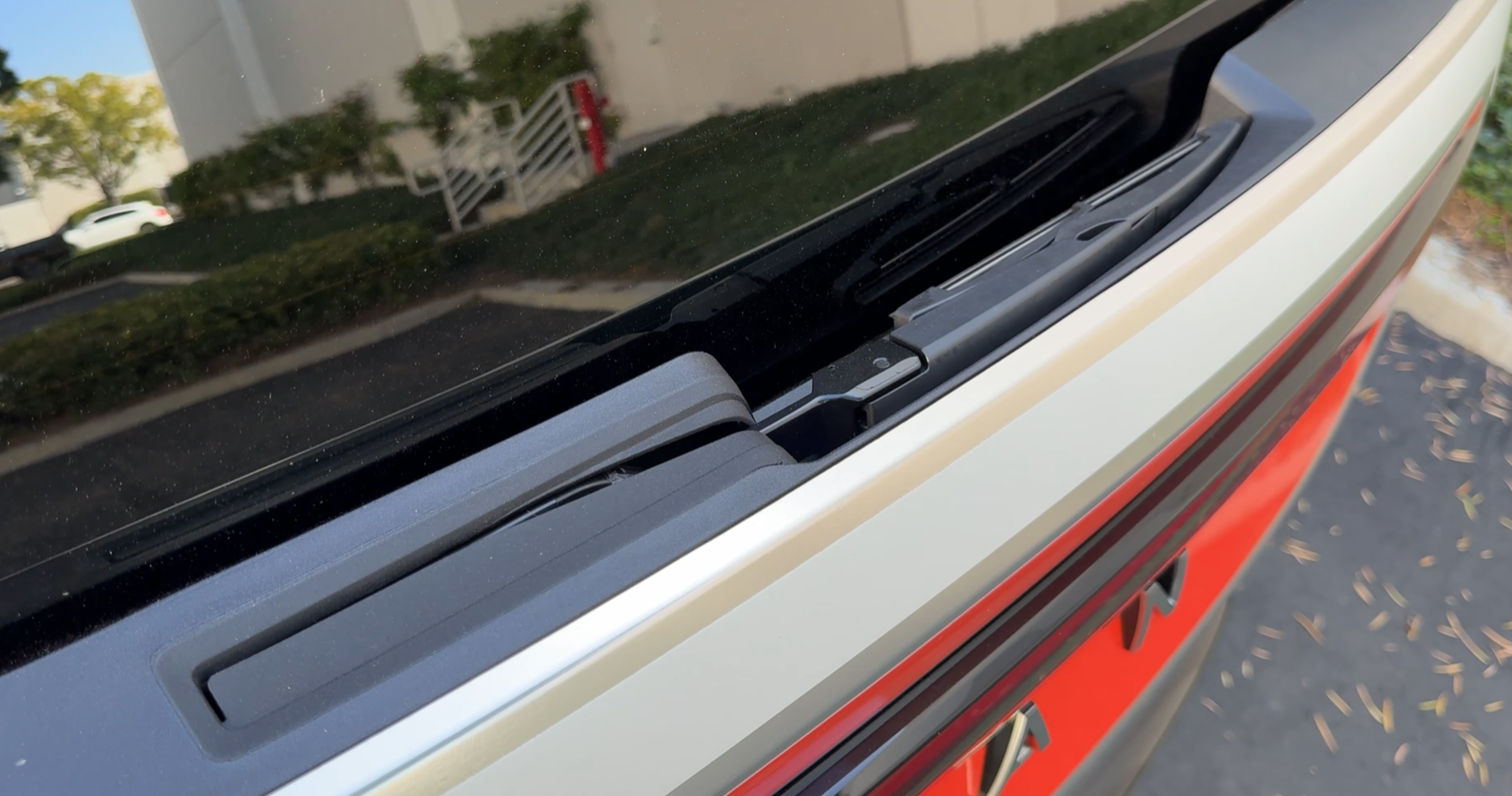
One of the highlights is the rear window. Seemingly inspired by vehicles such as the Toyota Land Cruiser, Lexus GX, and BMW 3 Series Touring, Rivian has designed a rear window that opens. However, rather than swinging open like some vehicles, the R2’s rear window rolls down into the tailgate, much like a side window.
This sliding setup presented a challenge when Rivian needed to develop a rear wiper. Because the glass disappears completely into the tailgate, mounting the wiper directly to it was not an option. The R2’s teardrop-shaped roof and spoiler also ruled out placing the wiper higher up. As a result, the company developed a compact holder for the wiper within the tailgate itself.
Some Reddit users have questioned how this arrangement will function in the depths of winter, when snow and ice could easily build up around the mechanism. Rivian appears to have anticipated those concerns.
According to InsideEVs, the small compartment housing the wiper includes a hidden drain that channels water out from beneath the tailgate, preventing it from pooling. For those in the Northeast already thinking about freezing temperatures, the holder-and-drain assembly also integrates a heating element designed to melt accumulated snow or ice and guide the water away.
Rivian says that by placing the rear wiper in this position, it has been able to boost the R2’s range by a considerable six miles. It no doubt caused headaches for some designers and engineers, but it could prove worthwhile. Here’s hoping it’s adequately tested in winter conditions before customer deliveries begin.
PROS ›› Lots of utility, genuinely quick, quiet cabin CONS ›› Tight rear space, Trailseeker is cheaper, divisive styling
Toyota is one of the few brands that still seems intent on giving enthusiasts something to get excited about. Vehicles like the Land Cruiser, GR Corolla, and GR Supra make that clear. But what about the eco-conscious buyer with a family? Until now, that same energy hasn’t really carried over to its EV lineup. The bZ Woodland is meant to change that.
It would be easy to look at it and assume this is just another trim level dressed up with black plastic cladding and a roof rack meant to suggest capability more than deliver it. After all, Toyota is still a long way from securing a serious foothold in the all-electric space. This SUV, which actually looks more like a wagon on stilts, not dissimilar to older Subaru Outbacks, pushes the brand more squarely into the conversation.
190.2 L x 73.2 W x 63.8 in H (4,830 x 1,860 x 1,620 mm)
› Wheelbase:
112.2 in (2,850 mm)
› Curb Weight:
4,376–4,453 pounds (1,985–2,020 kg)
› Powertrain:
Dual electric motors / 74.7 kWh battery
› Output:
375 hp (280 kW)
› 0-60 mph:
4.4 seconds (97 kmh)
› Transmission:
Single speed
› Efficiency:
21.0 kWh/100 km as tested
› On Sale:
First-half of 2026
SWIPE
On paper, this could be the vehicle to move Toyota’s EV aspirations higher. It’s a family hauler. It sounds like it’ll be reasonably capable off-road. Clearly, on-road performance is something the automaker considered as well. Does it all actually pay off in the real world, though? That’s what we went all the way to California to find out.
Rugged Cues With Familiar DNA
Photos Stephen Rivers/Carscoops
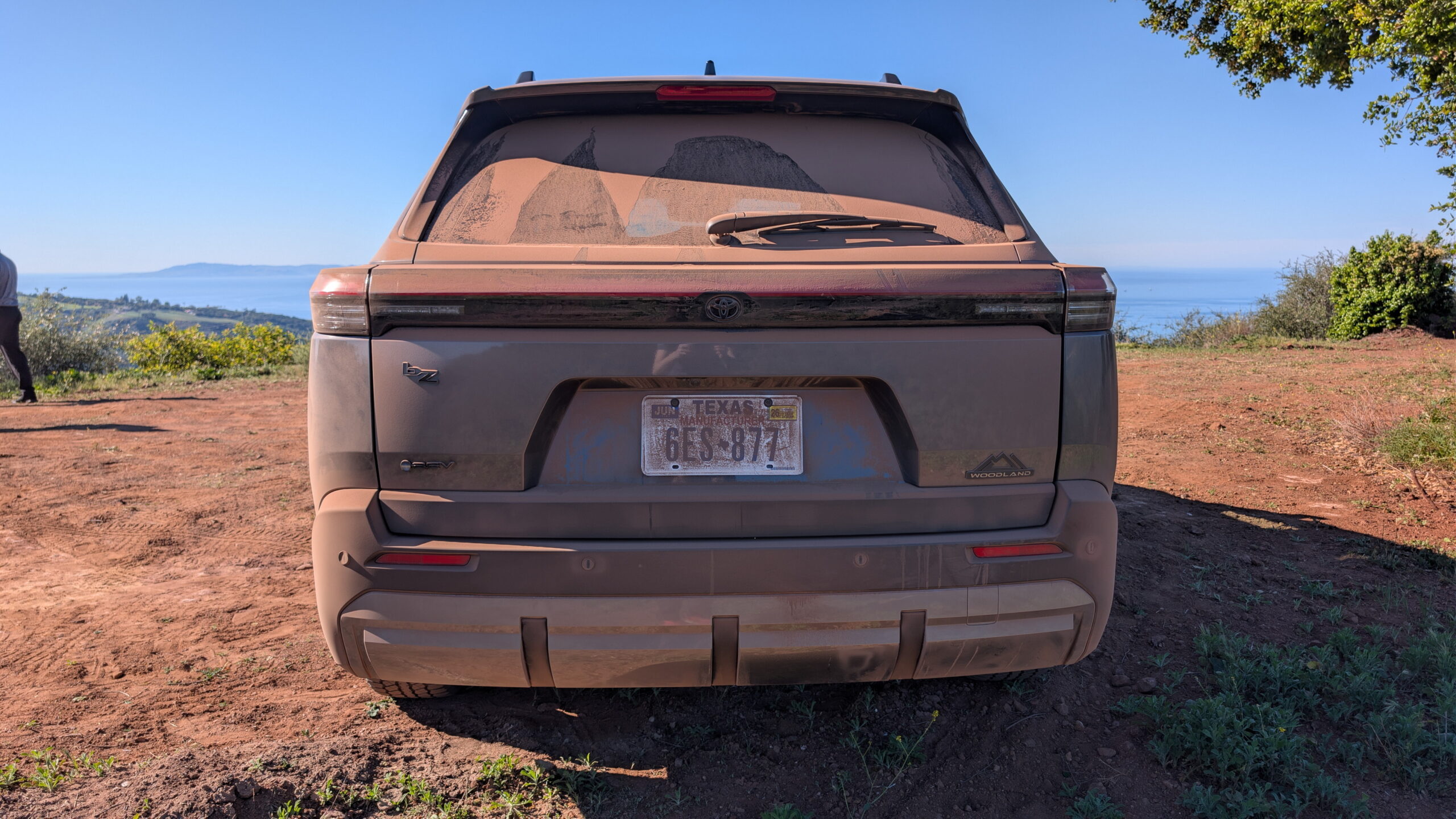
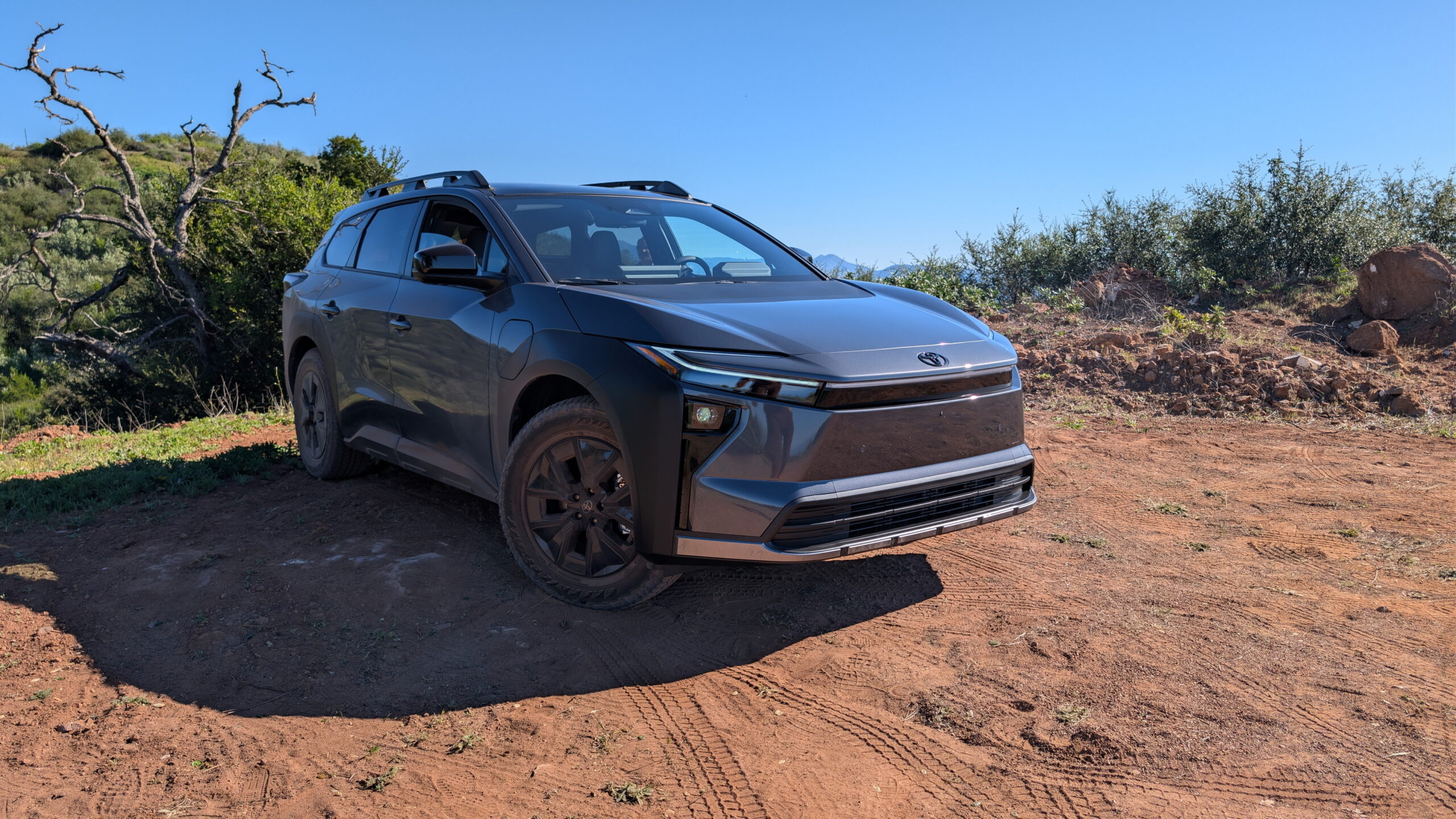
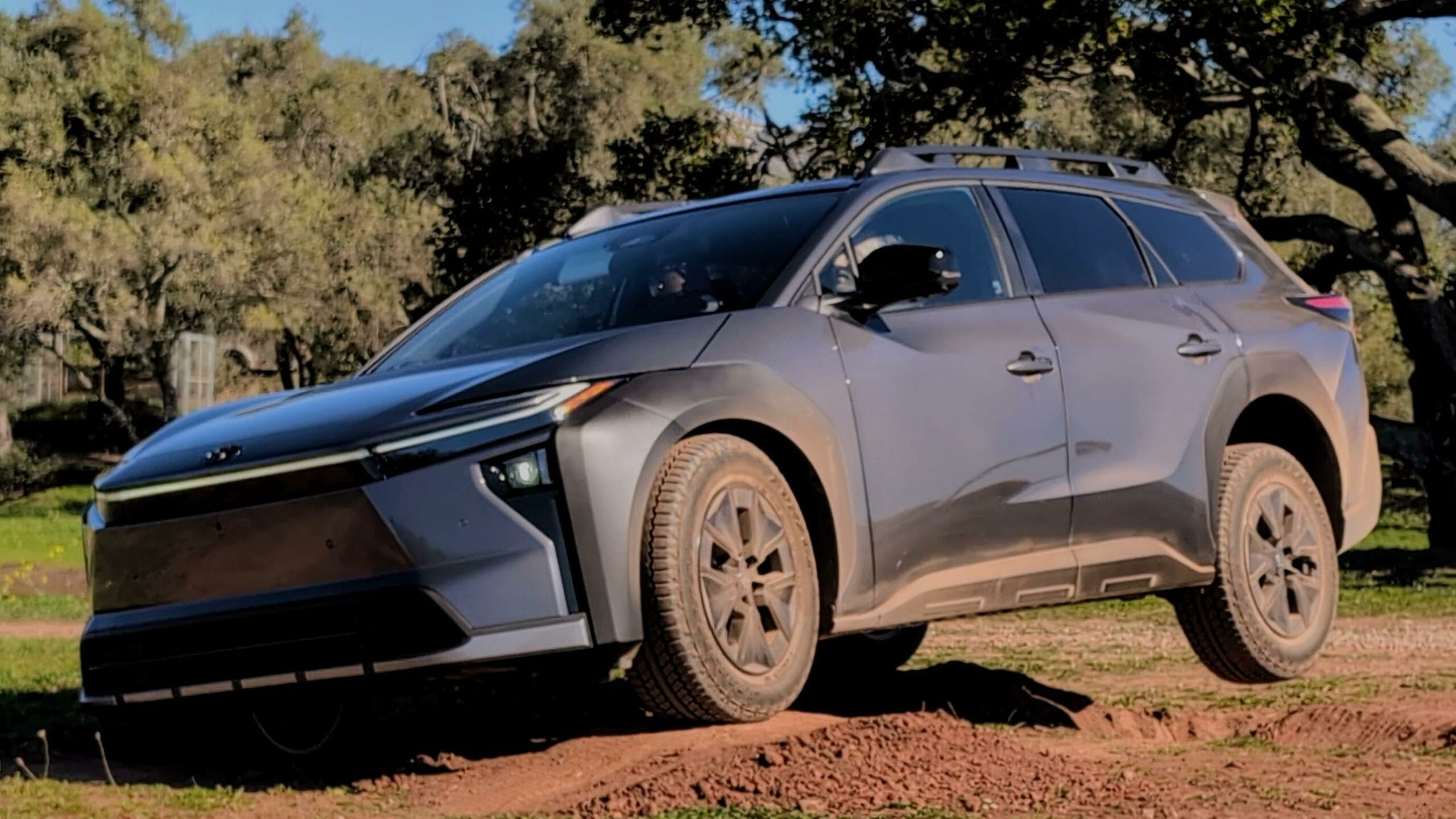
From afar, the bZ Woodland looks like it’s gone out into the world in a monotone plaid shirt. It’s trying to stand out and appear rugged, but not shouting for others to look at it. Some will love it and appreciate the understatedness, and others will think it’s trying too hard and is a bit overdone. Personally, I’m not sure the black plastic cladding is doing much good, but once it has some dirt on it, the overall package does appear appropriate.
That said, it’s far from a departure from Toyota’s previous design efforts. The hammerhead nose, first introduced on the widely-loved new Prius design, is here and is complemented by a full-width LED lightbar and DRLs. The sideskirts and rear of the car offer more cladding and even a faux diffuser treatment below another full-width LED lightbar.
Photos Stephen Rivers/Carscoops
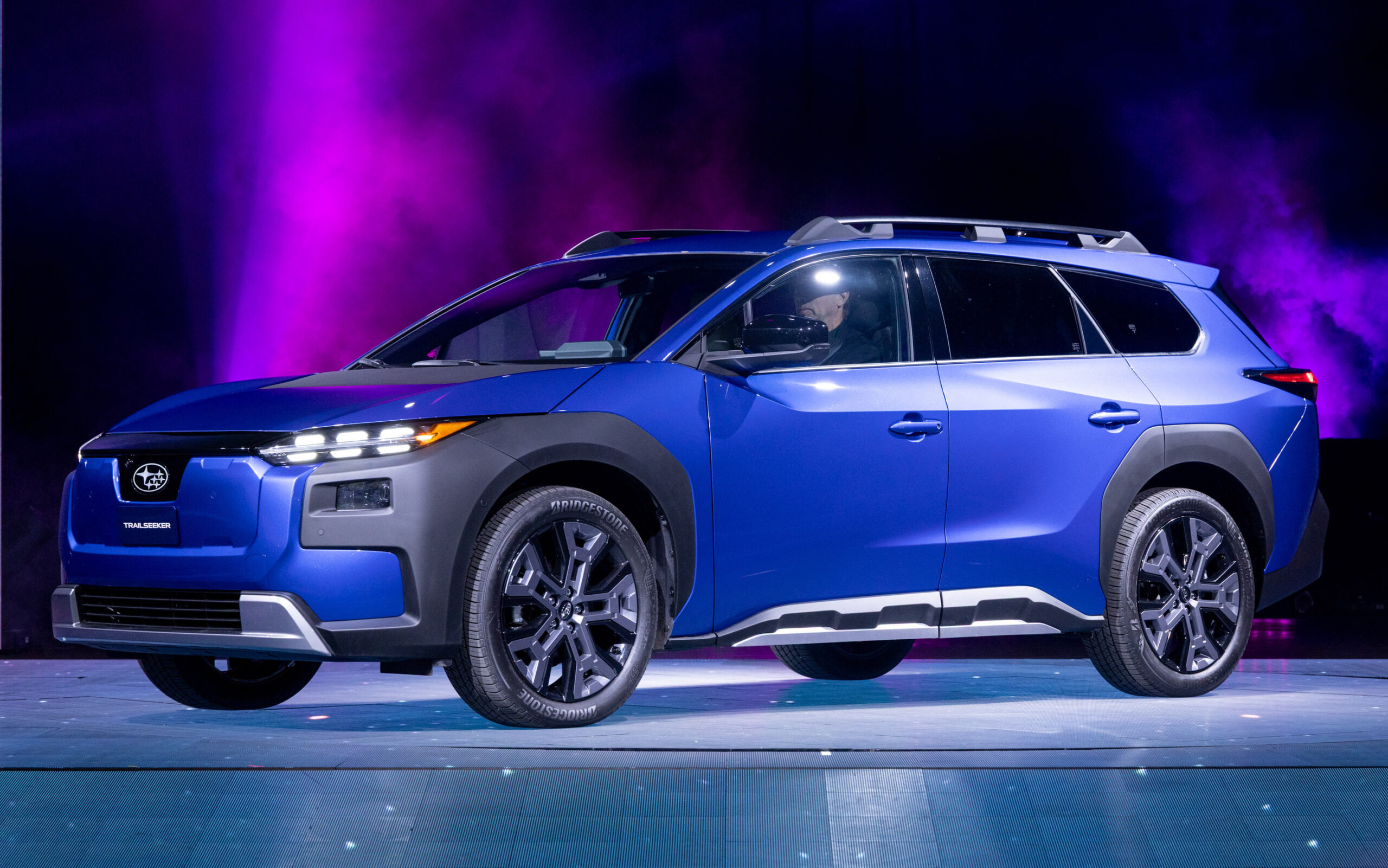
If you’re getting Subaru vibes from the shape, don’t feel bad. This SUV rolls off a Subaru production line with that brand’s Trailseeker SUV. The two share just about everything under the skin, but compare them side to side, and to my eye, it’s the Toyota that seems to have a more cohesive design overall.
Cabin Design And Layout
In the cabin, this crossover walks a fine line between rugged and refined. The materials feel good overall. They’re not luxurious or even what I’d call premium necessarily, but there’s a lot of thoughtful little touches to enjoy. Take, for example, the visual texturizing of the dashboard edges and upper door cards.
It elevates what could otherwise be a very plain space. That said, it’s all monotone. Black and more black, unless you opt for Stone Brown. I wish there were a little more visual drama inside, but from a business standpoint, Toyota probably made the smart call.
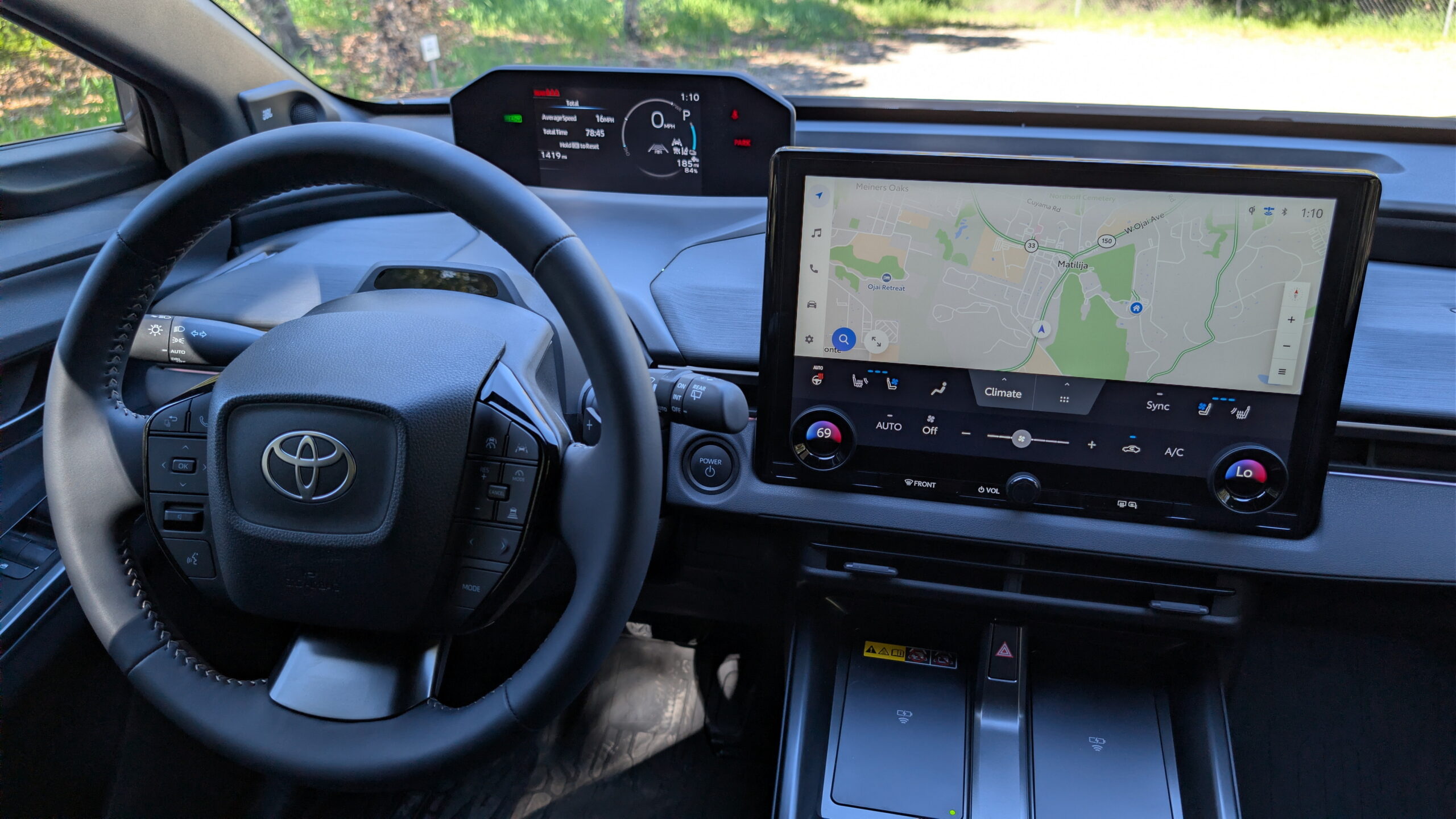
The cabin layout is straightforward to the point of being almost clinical. The 14-inch infotainment screen dominates the dash. It’s fast, intuitive, and thankfully backed up by integrated physical controls for key functions. The steering wheel feels tech-forward, with buttons for lane centering, voice commands, regenerative braking adjustments, and more. It’s busy, but logical.
Ergonomics And Everyday Usability
Photos Stephen Rivers/Carscoops
One potential issue, especially for shorter drivers, is that the steering wheel doesn’t have much in the way of maneuverability. My drive partner, Jason Torchinsky from our friends over at The Autopian, specifically remarked on how shorter drivers will struggle to see the entire gauge cluster without having the wheel block a significant portion of it.
In other words, shorter drivers might have to pick between seeing the whole road or seeing the whole gauge cluster because doing both at once might be impossible.
Another strange choice is the shifter knob. You have to press down on a ring and then rotate it in the direction you want. It’s not terrible. But it’s not intuitive, either. And it doesn’t feel like it adds anything meaningful. That space could’ve been used more creatively. Ahead of it, dual wireless chargers are a genuinely nice touch. It’s the kind of small usability win that makes daily life easier.
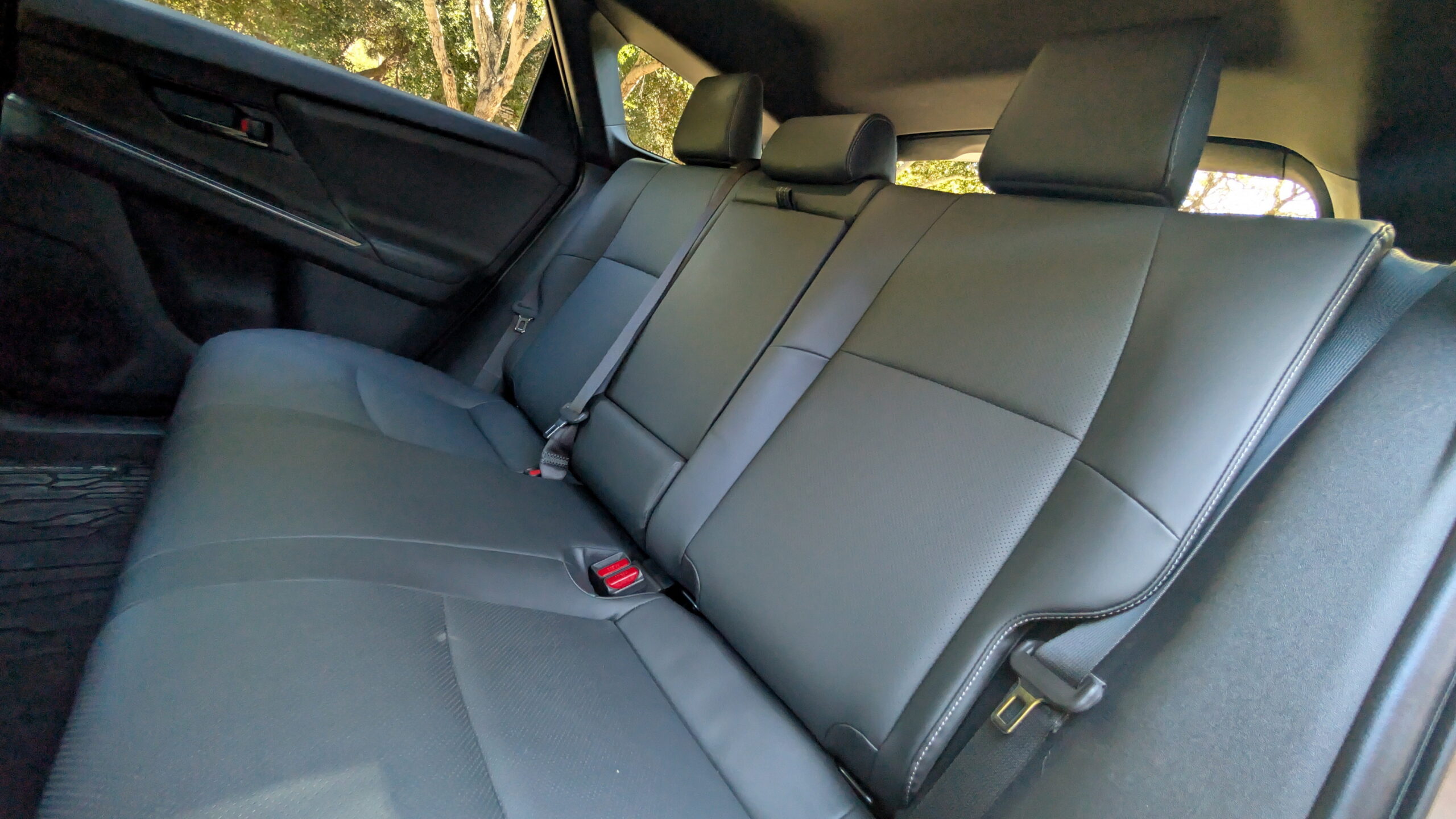
Rear seat space is where reality sets in. For a relatively large crossover, comparable in footprint to something like a Crown Signia, it’s tight back there. At 6’6″, I’ve endured my share of cramped rear benches, but I wasn’t expecting to have to slouch this much. Average-sized adults will be fine. Taller passengers should absolutely call shotgun.
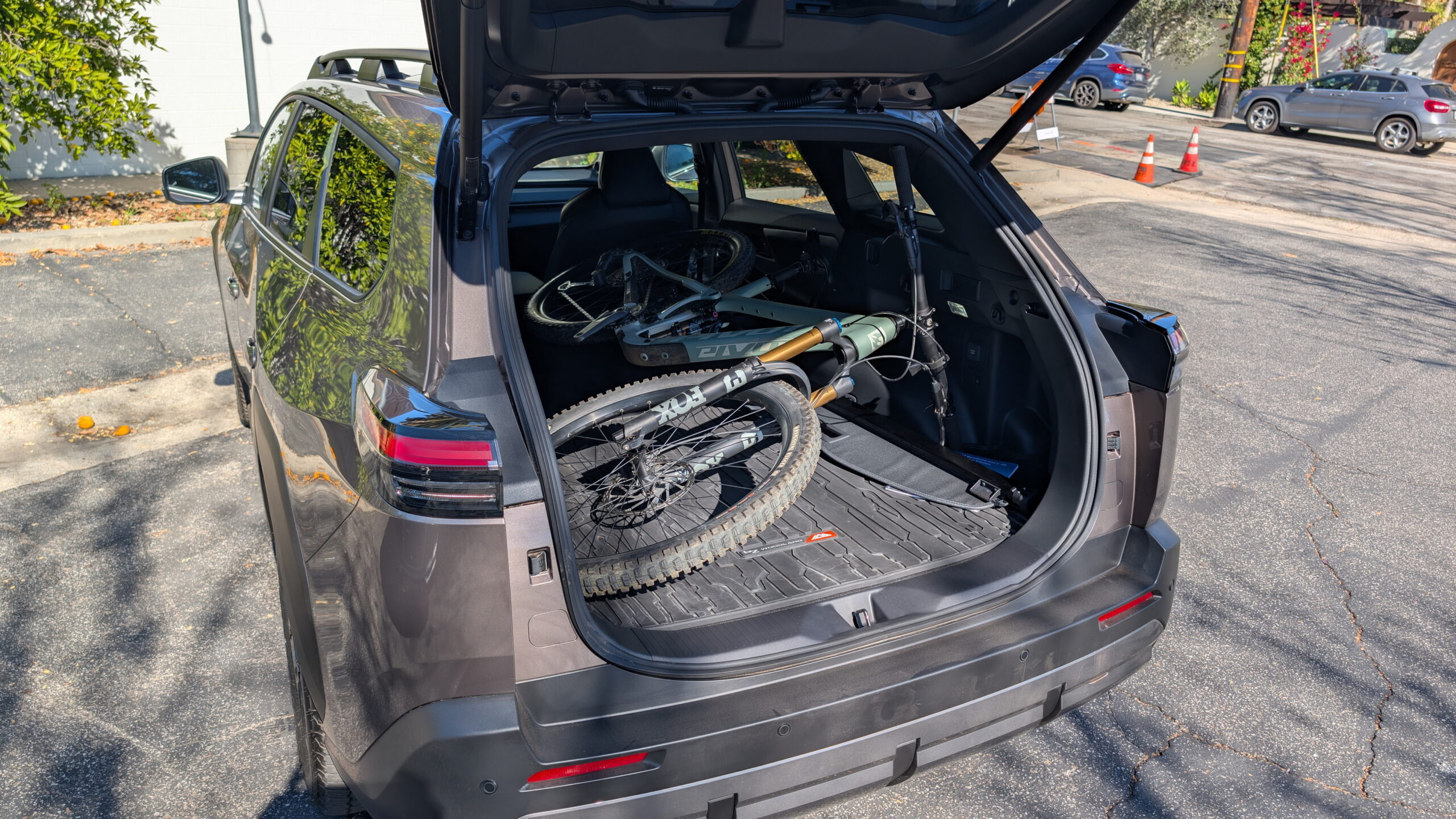
Cargo space makes up for it. With 74.9 cubic feet available with the seats folded, it’s genuinely cavernous. I fit a full-size, full-suspension mountain bike in the back, thanks to The Mob Shop, without removing the front wheel. That’s impressive.
It speaks not only to total volume but to how large and usable the rear opening is. If it swallows a modern mountain bike that I could ride whole, it’ll handle just about anything else you throw at it. If that’s not enough, it can also tow up to 3,500 pounds (1,588 kg).
Technology And Charging
Toyota loads the Woodland well. The 14-inch touchscreen runs Toyota’s latest multimedia software with wireless Apple CarPlay and Android Auto. The system is quick and easy to navigate. Dual Bluetooth pairing, Wi-Fi hotspot capability, and available JBL audio round things out nicely.
Charging is handled via a North American Charging Standard (NACS) port, giving access to a broad network of fast chargers. Under ideal conditions, Toyota says it’ll go from 10% to 80% in around 30 minutes. There’s also battery preconditioning and Plug & Charge capability to simplify public charging. That alone is a huge step in the right direction.
Steering-wheel-mounted paddles allow you to adjust regenerative braking intensity on the fly. It’s a useful way to fine-tune the driving experience depending on terrain or traffic. Toyota Safety Sense 3.0 comes standard, along with features like Blind Spot Monitoring, Rear Cross-Traffic Alert, Panoramic View Monitor with Multi-Terrain Monitor, and Safe Exit Alert.
It’s a comprehensive package that just about all buyers will benefit from.
Drive Impressions
Here’s where things take another unexpected turn, and this time, it’s decidedly for the better. Testing crossovers often means evaluating a vehicle that starts out compromised by design. What you don’t expect is something that does so many things at an above-average level, but that’s exactly where the bZ Woodland lands from a driver’s perspective.
Within 60 seconds of the opening presentation surrounding this vehicle, Toyota was proudly boasting that it has a 0-60 time of just 4.4 seconds. That’s unusual both in how it’s positioned and in terms of outright quickness.
For context, that’s quick enough to leave a GR Corolla (4.8 seconds) for dead and to almost keep up with a GR Supra manual (4.2 seconds). It actually beats the older four-cylinder version of the Supra (5.0 seconds). That said, this car isn’t really about outright speed. It’s about well-rounded capability.
Photos Stephen Rivers/Carscoops
What matters is how broad its competence is. On steep dirt roads, even with minimal momentum, the Woodland climbed confidently. On an off-road course with deep ruts that frequently lifted a wheel into the air, it slowly and methodically found traction and worked its way forward.
Grip Control functions like a low-speed cruise control for rough terrain, maintaining a steady crawl (roughly 3–5 mph or 5–8 km/h)) without constant throttle or brake input. In my testing, it wasn’t strictly necessary, but I can see it being useful on tight trails where steering precision matters more than pedal modulation.
On pavement, it’s exactly what most buyers want. Quiet. Smooth. Stable. Even on the optional all-terrain tires, road noise is impressively subdued.
Is it engaging? Not really. It’s more forgettable than fun. But it’s also sharp enough and consistent enough that you won’t complain. Visibility is good. Controls are balanced. Feedback is predictable. It’s faster than most people need, more capable off-road than most buyers will ever test, and more comfortable in daily driving than you’d expect from something with this much performance on tap. That’s a pretty compelling blend.
Range And Real World Efficiency
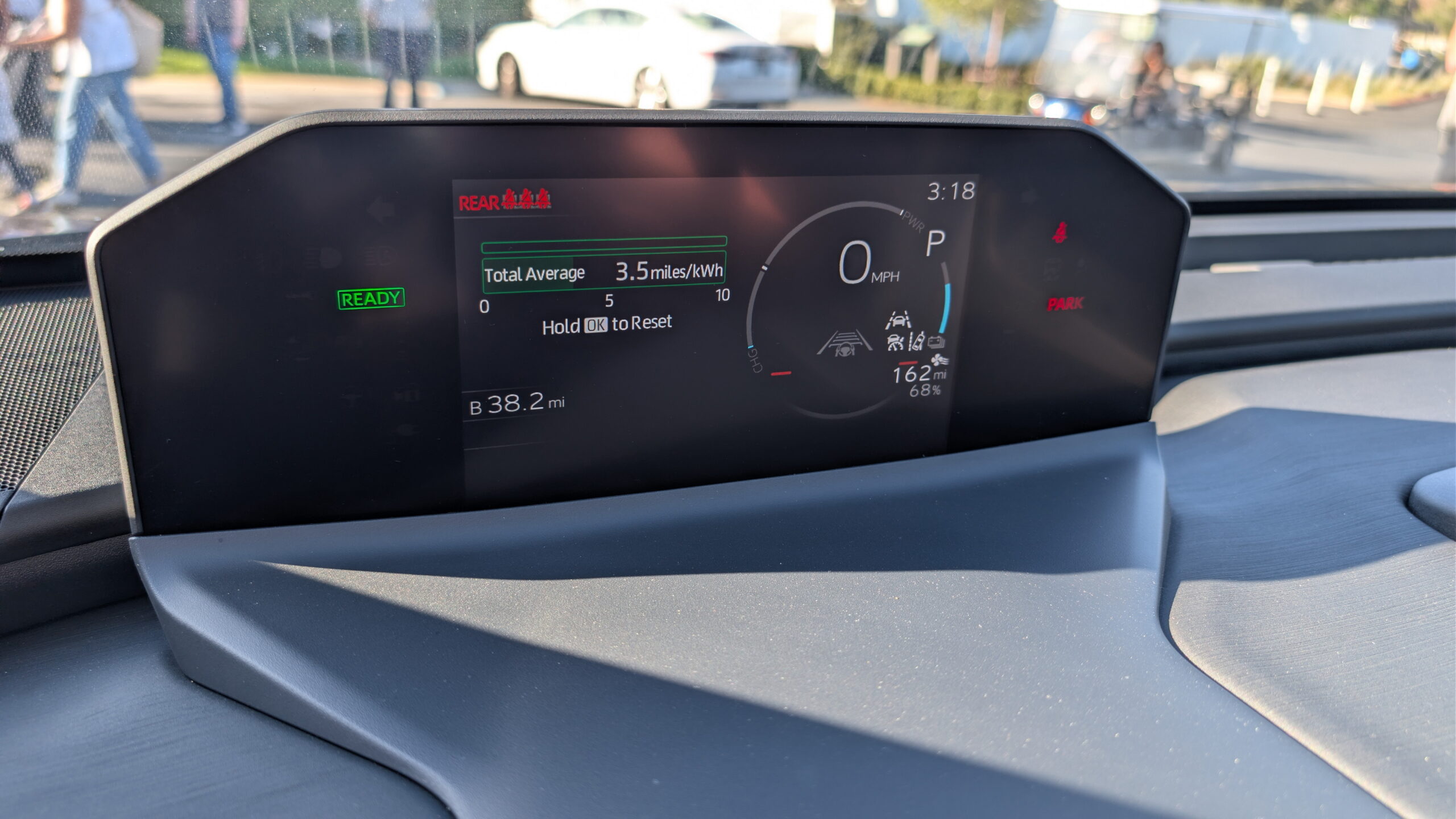
Toyota says the bZ Woodland will get up to 281 miles of range or 260 with its $0 optional all-terrain rubber. We drove different versions to different degrees of accelerator pedal excess, but managed one key finding in the end. During one restrained trip on a car equipped with all-terrain tires, we managed 3.5 miles per kWh.
Considering the 74.7 kWh battery pack under the floor, that works out to a potential 261 miles (420 km) on a single charge, assuming conditions stayed consistent. It’s difficult to view that as anything but a win, especially given that this wasn’t a tightly controlled test facility but real-world driving in Ojai, California, where the roads are rarely flat or straight.
Sure, we’d love even more range, but for now, we’ll take just barely beating an EPA estimate. After all, few folks will use up 260 miles of range in a day anyway.
Market Rivals And Positioning
Unquestionably, the biggest competition for the bZ Woodland will be from the Subaru Trailseeker. Positioned as an electric version of the well-loved Outback, the Trailseeker starts at around $5,000 less ($39,995) than the bZ Woodland ($45,300) and features the same underpinnings, battery, and AWD system. We haven’t sat in one, but based on photos, the cabin looks very similar. We expect the two to drive and handle almost identically as well.
Beyond the Subaru, there aren’t many EVs in this same niche. Rivian’s upcoming $45,000 R2 is likely the closest as it attempts to pair off-road capability with a premium cabin and on-road performance. Even so, it lacks the brand loyalty and recognition Toyota commands, along with the broader availability and ownership advantages, including a vast dealership network and established service infrastructure, that come with choosing a legacy automaker rather than a startup still finding its footing.
Other automakers like Tesla, Ford, Chevrolet, and Honda all have two-row crossovers or SUVs that could go up against the bZ Woodland on the road. None of them really has the same off-road capability angle to their game, though. Some, like Tesla, can’t come close to matching Toyota’s 3,500-lb towing capacity either. We expect that it’ll help Toyota capture a portion of the market that these others simply can’t touch.
Final Thoughts
The bZ Woodland reminds me of something like the Ford F-150. It’s very capable, but very few folks will ever use it to eight tenths of its performance envelope, much less ten tenths. That said, it’s hard to ignore just how much of Toyota’s DNA and ethos managed to find its way into this crossover. The original bZ4x never really felt all that akin to the brand from an identity standpoint.
Toyota’s newest EV offers serious practicality, objective soft-roading capability, and even a bit of serious performance on paved roads. Yes, the rear seat is tight for tall passengers. Yes, the shifter is odd. And yes, the interior could use a little more visual excitement.
But taken as a whole, the bZ Woodland is a genuinely well-rounded electric crossover that does more things well than it does poorly. And for a first serious swing at an adventurous, all-electric Toyota SUV, that’s a strong place to start.
Photos Stephen Rivers/Carscoops
Before yesterdayElectric Vehicles - Latest News | Carscoops
The Skoda Peaq has been spied ahead of its summer debut.
Electric three-row crossover previewed by Vision 7S concept.
Expected 89 kWh battery could provide a 373-mile WLTP range.
Skoda recently confirmed its upcoming three-row electric crossover would be called the Peaq and now spy photographers have caught a lightly camouflaged prototype undergoing cold weather testing.
Previewed by the Vision 7S concept, the production model will debut this summer and sport a design reminiscent of the Hyundai Ioniq 9. While stickers provide plenty of misdirection, we can see angular air curtains as well as a trapezoidal lower intake sporting stylized lines.
The grille and headlight treatment is designed to throw people off as the camouflage hides a new “Tech‑Deck Face,” which appears to resemble the one used on the concept. A closer inspection appears to show C-shaped headlights that are connected by a lower band.
SHProshots
Moving further back, we can see slender A-pillars that flow into a long, sloping roof. They’re joined by an expansive greenhouse, streamlined bodywork, and flush-mounted door handles. The model also has pronounced wheel arches, but the disguise appears to add some extra thickness.
The rear end has a stylish liftgate with a trapezoidal accent as well as a distinctive spoiler. The taillight graphics are fake, but presumably hide T-shaped lighting units that echo those found up front.
What About The Interior?
SHProshots
Spy photographers didn’t get a look inside, but Skoda has previously said the seven-seater will bring “spaciousness and practicality to a whole new level.” We can also expect a relatively upscale cabin as the Peaq will become the brand’s range-topping model.
MEB Platform And Battery Expectations
SHProshots
Powertrain details remain elusive, but the crossover will ride on the MEB platform and likely offer an assortment of powertrains. If the concept is any indication, the road-going model could have an 89 kWh battery pack and a WLTP range in excess of 373 miles (600 km). The Peaq may also offer a DC fast charging capability of around 200 kW.
The model could take a few cues from the Enyaq, which offers dual-motor all-wheel drive systems with outputs of 282 hp (210 kW / 286 PS) and 335 hp (250 kW / 340 PS). That being said, the newer Peaq could have more powerful and efficient motors.
RS-style Taycan prototype now wears production aero parts.
Engineers chase Nürburgring glory after Xiaomi stole record.
Could make even more power than the 1,019 hp Taycan GT.
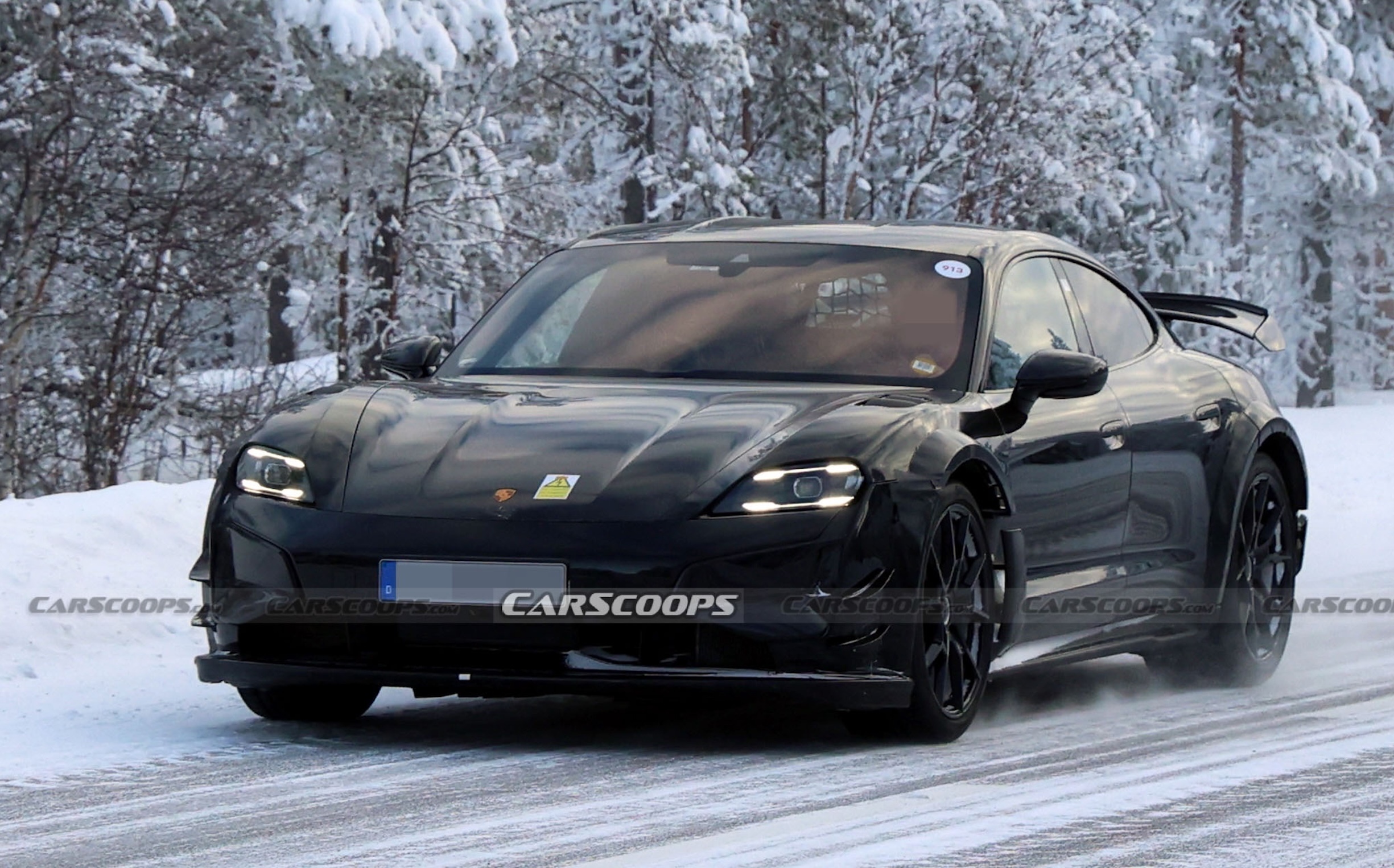
It’s eight months since Xiaomi smashed Porsche’s production EV sedan record at the Nurburgring, but 2026 is the year the Germans fight back. Fresh spy shots from northern Sweden show a vicious-looking, track-ready Taycan ahead of a new record attempt later this year.
Visually, this prototype has matured since we last saw it bullying the Nürburgring in September. The aero components, heavily inspired by the mighty 911 GT3 RS, now look less like prototype science projects and more like showroom-ready hardware.
The front splitter is a different shape and no longer held on with motorsport-style bars, and the fat arch spats designed to cover a much wider track now have cooling slots behind the front wheels. Less visible this time, though, due to this car’s disguise, are the saw-tooth vents cut into each fender top whose job is to vent air pressure built up in the wheelhousings.
Toned-Down Rear Wing
SH Proshots
At the back is the same gigantic diffuser we saw on the last prototype, but here it’s paired with a different trunk spoiler. The latest wing looks less race-car-like, its end planes moulded into the overall shape rather than being bolted on. It’s more like the Weissach-kitted Turbo GTs but with an added lip, though it still rides high above the tail to grab as much of the passing air as possible.
We can expect some advanced chassis trickery under the skin and more power than even the 1,019 hp (1,033 PS / 760 kW) the Taycan Turbo GT delivers. The Xiaomi SU7 Ultra’s 1,526 hp (1,547 PS / 1,138 kW) powertrain played a major role in helping the Chinese brand pull off a 7-minute 4.957-second lap of the Ring, beating the Taycan Turbo GT’s record by over 2.5 seconds.
Sub-Seven?
Separately, a stripped-down prototype version of the SU7 recorded 6:22.091, and though we doubt Porsche’s new Taycan will beat that in fully road-legal form, it should become the first production EV to go sub-seven. We’ll find out in a few months when the weather is good enough for Porsche to try for an official timed run.
We’ll also find out if the hottest Taycan will get an RS badge to match those RS aero goodies. If it does, it’ll be the first EV to be granted those letters, and it’ll have a price to match. The Taycan Turbo GT already costs $243,700 with or without the Weissach package, so an RS is surely going to be close to $300k.
Ford closed Kentucky EV battery plant after just 4 months.
1,600 workers lost jobs after tax credit policy change.
Plant originally projected employment near 5,000 workers.
Ford’s sudden decision to cancel its multi-billion-dollar partnership with South Korean battery manufacturer SK On in December, just four months after the first batteries rolled off the line, left 1,600 people without jobs at the joint battery plant in Kentucky.
The move caught workers and locals off guard, and many are placing the blame squarely on Ford. That’s not surprising. Still, the political backdrop, including Trump-era EV policies that limited Ford’s options, played a larger role in how this ultimately unfolded.
The Ripple Effect Of A $7,500 Credit
All brands selling EVs in the US were hurt by the government’s decision to kill the federal tax credit, valued at up to $7,500 for new EVs. While some understandably criticized the program as artificially propping up the industry, there’s no denying that it played a hugely important role in convincing many Americans.
With fewer people buying EVs and other government policies relaxing CAFE fuel-economy standards, Ford acknowledged that “the operating reality has changed,” which is why it’s scrapped a slew of its more ambitious and important EV projects. “We are listening to customers and evaluating the market as it is today, not as everyone predicted it would be five years ago,” Ford recently said.
As reported by The New York Times, Kentucky’s Democratic governor, Andy Beshear, said: “1,600 Kentuckians lost their jobs solely because of Donald Trump pushing that big, ugly bill, eliminating the credits that had people interested and excited to buy EVs. I bet many, if not most, of those 1,600 people voted for him, and he basically fired them.”
Unexpected Closure
The site had only been manufacturing EV batteries for four months before it was shut down. Speaking with the NYT, Joe Morgan says he left a job of 24 years to start working at the plant, confident that EVs would grow in popularity.
Morgan, a registered Republican, acknowledges that “taking away the tax credits did play a little bit of a role in not selling EVs,” but he thinks it’s Ford that should take most of the blame. “I just think Ford made a bad decision when they came out with an F-150 that they wanted to make all electric.”
Derek Doughtery shares a similar view. Landing a job at the battery plant was a turning point for him after previously experiencing homelessness, especially with a second child on the way. He, like others, believes Ford may have misread the market and bears more responsibility than the government.
“At the end of the day, whatever the government policy would be, the company made the decision,” he said.
A Scaled-Back Future
Fortunately, the facility will not close entirely. Now under full Ford control, it will be retooled for battery storage production and is expected to employ roughly 2,100 people. That figure is well below the 5,000 jobs originally projected when the plant was dedicated to building EV batteries, but it offers at least some continuity for a site that only recently promised much more.
The electric i3 will be sold alongside a new ICE 3-Series.
Design influence comes from the 2023 Vision Neue Klasse.
Sixth-gen motors and batteries shared with the iX3 SUV.
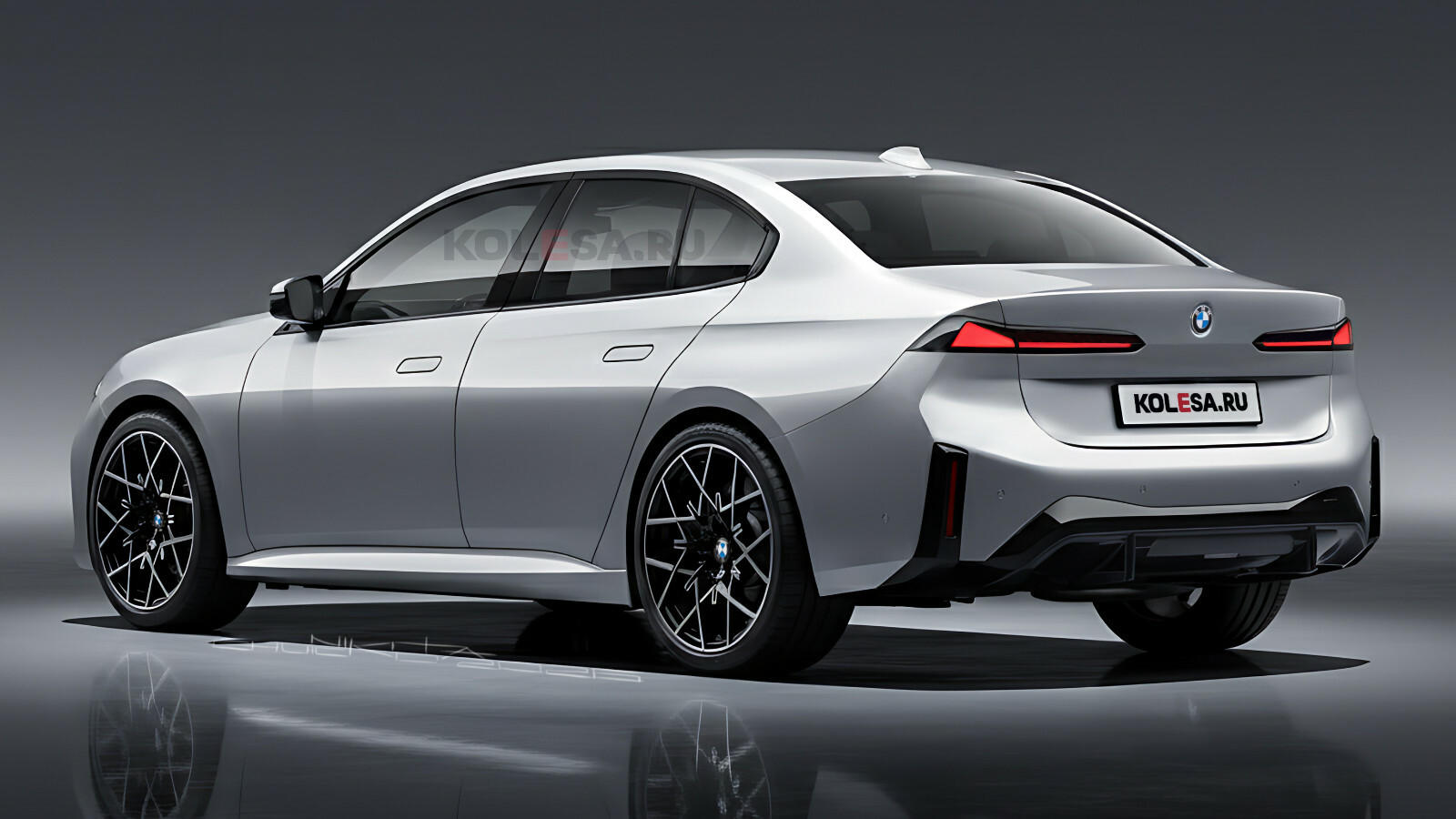
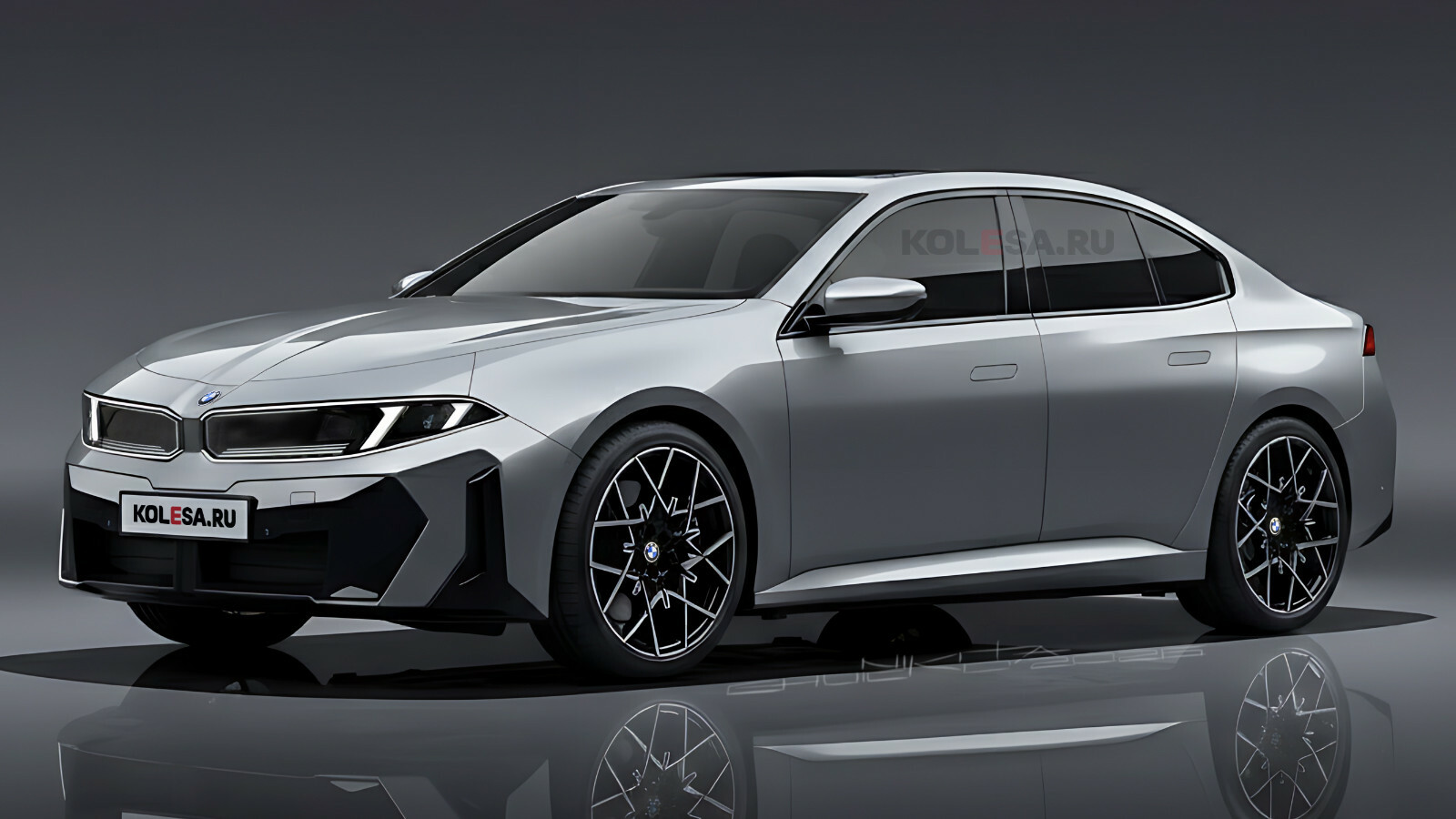
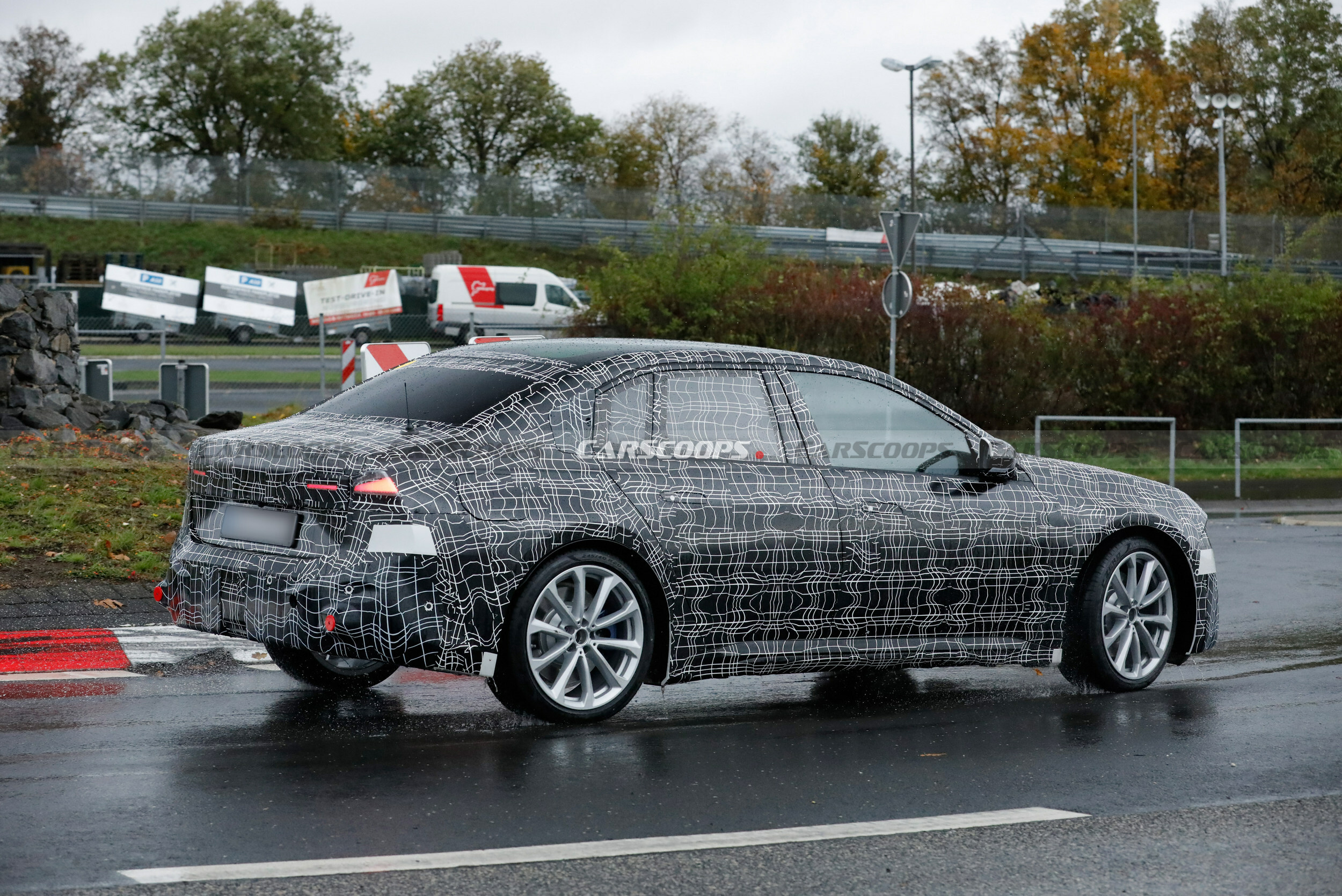
The next chapter in BMW’s electric transition is beginning to come into focus as a new i3 edges closer to the market. It brings technology closely aligned with the second-generation iX3, now packaged in sedan form. With pre-series production now underway and official images of a camouflaged prototype already released, new renderings have begun to fill in the remaining blanks.
Much of the i3’s design will be inspired by the Vision Neue Klasse concept unveiled in 2023. However, whereas the subsequent Vision Neue Klasse X ended up looking almost identical to the new iX3, it appears BMW has calmed some of the sedan concept’s most dramatic elements, and the production model should look better.
While the concept featured large illuminated kidney grilles flowing into the LED headlights, recent spy shots and renderings indicate the production model might adopt smaller and slimmer units, better suited to a sedan of this size.
These renderings by Nikita Chuyko for Kolesaalso show the new electric sedan with a sharper lower front bumper and gloss-black accents. Along the sides, it departs noticeably from the current 3-Series, with split shoulder lines and flush door handles that give the bodywork a cleaner, more contemporary look.
Some uncertainty still surrounds the taillight design. Recent prototypes indicate they will be much smaller than those on the Vision Neue Klasse concept and, in these renderings, they resemble scaled-down versions of the old 2-Series Gran Coupe units.
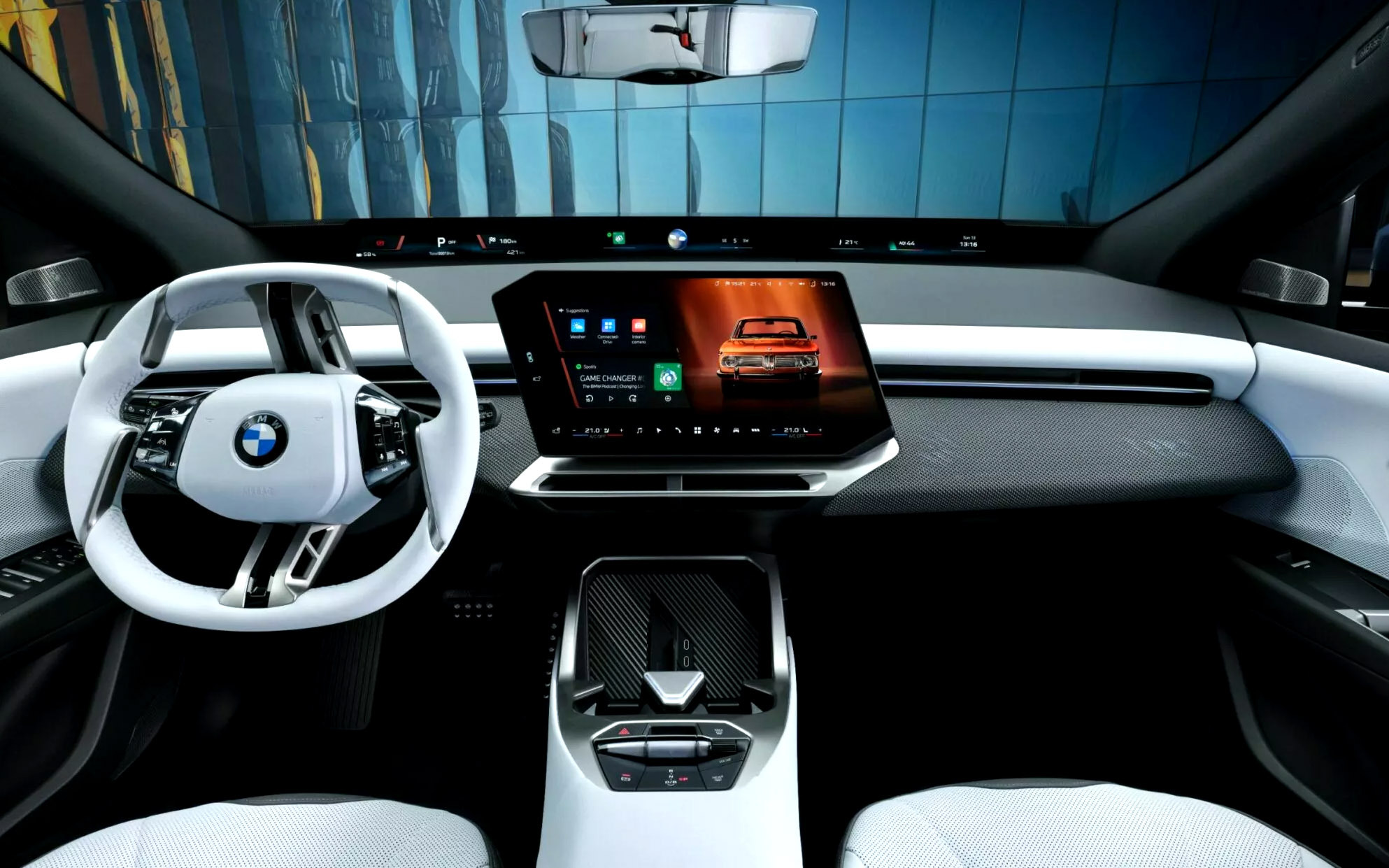
Inside, the change may feel even more dramatic than the exterior. Anyone climbing out of a current 3-Series should brace for a clear break from the more traditional cockpit BMW has refined over the years. If you are coming from the iX3, however, none of this will feel particularly shocking. The i3, along with the next combustion-powered 3-Series, will mirror BMW’s first production Neue Klasse model, down to a dashboard layout.
Front and center will be BMW’s new ‘Panoramic iDrive’ concept, paired with the brand’s latest software. The conventional instrument cluster is gone, replaced by key information projected across the base of the windscreen, while a large touchscreen sits on the center console.
Shared Underpinnings
Beneath the surface, the i3 rides on the same Neue Klasse EV platform as the new iX3. For anyone concerned that it might fully replace the 3-Series, there is no need. The combustion-powered 3-Series is being updated separately, continuing on a revised version of BMW’s CLAR architecture.
The i3 is expected to launch with BMW’s sixth-generation electric motors and battery technology, along with an 800-volt electrical system shared with the iX3. Early reports suggest one of the first variants will be the i3 50 xDrive, potentially producing around 463 hp, placing it within reach of today’s BMW M3. A less powerful rear-wheel drive model is also planned, along with a flagship electric iM3 featuring four motors.
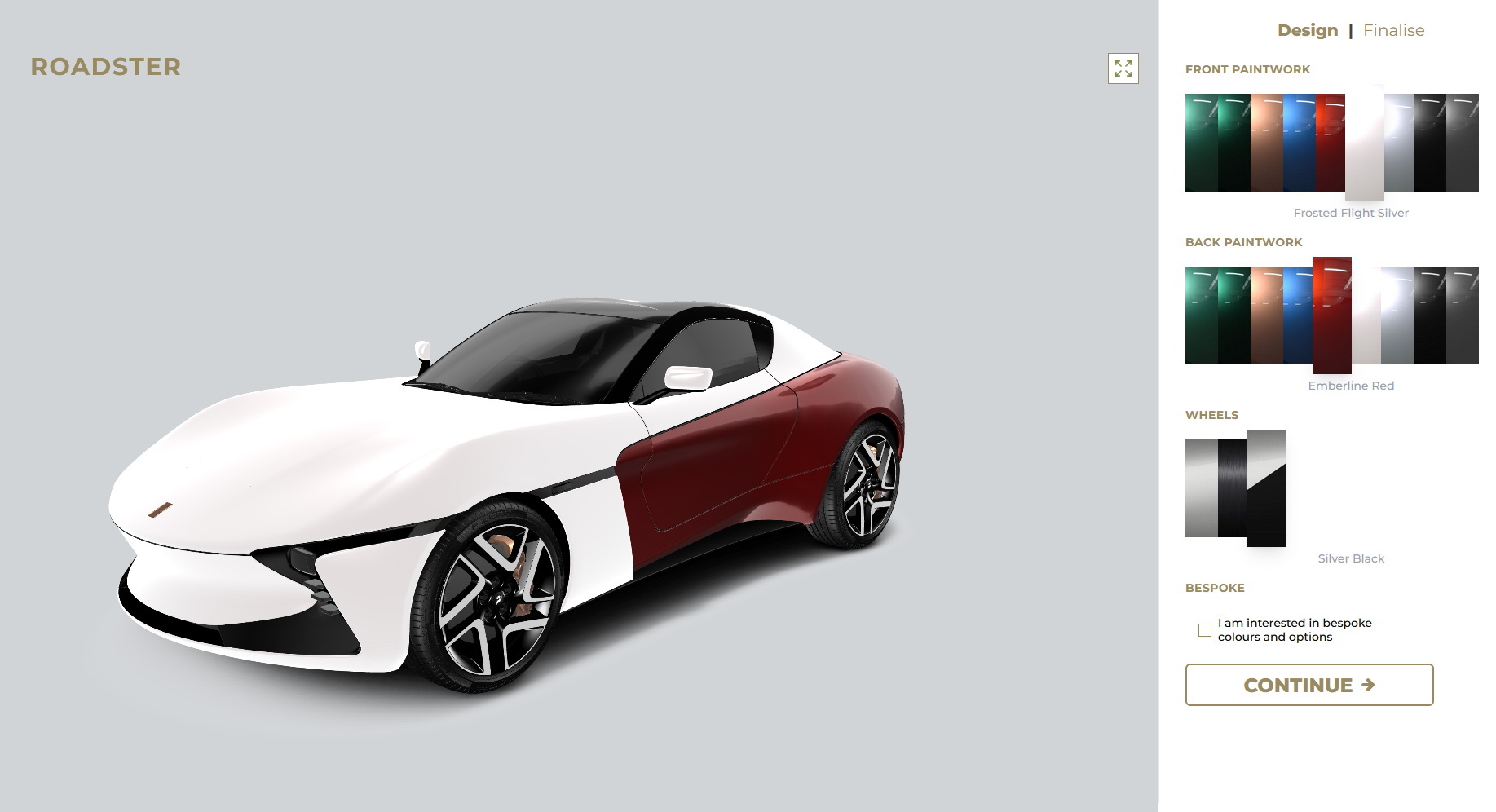
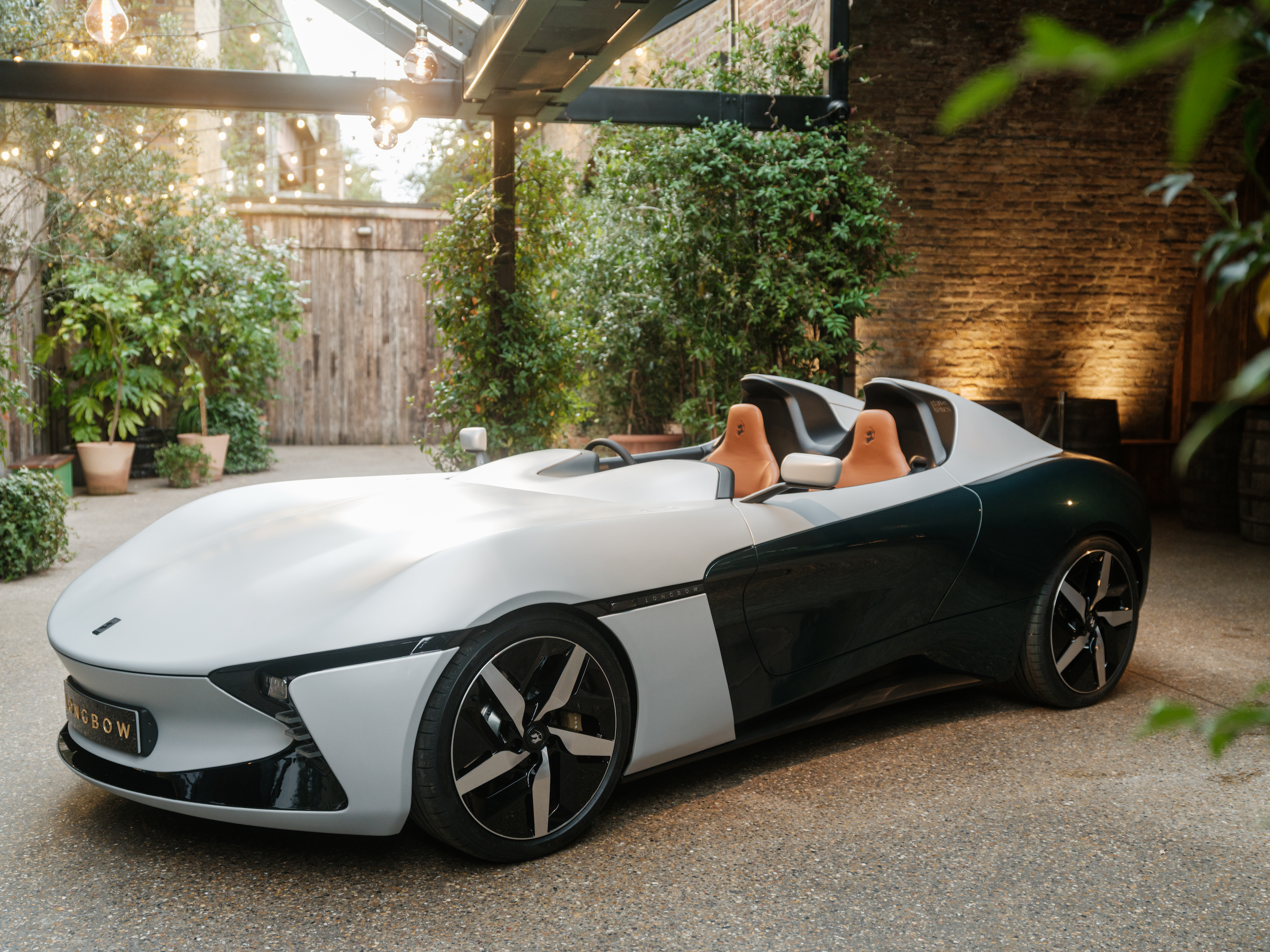
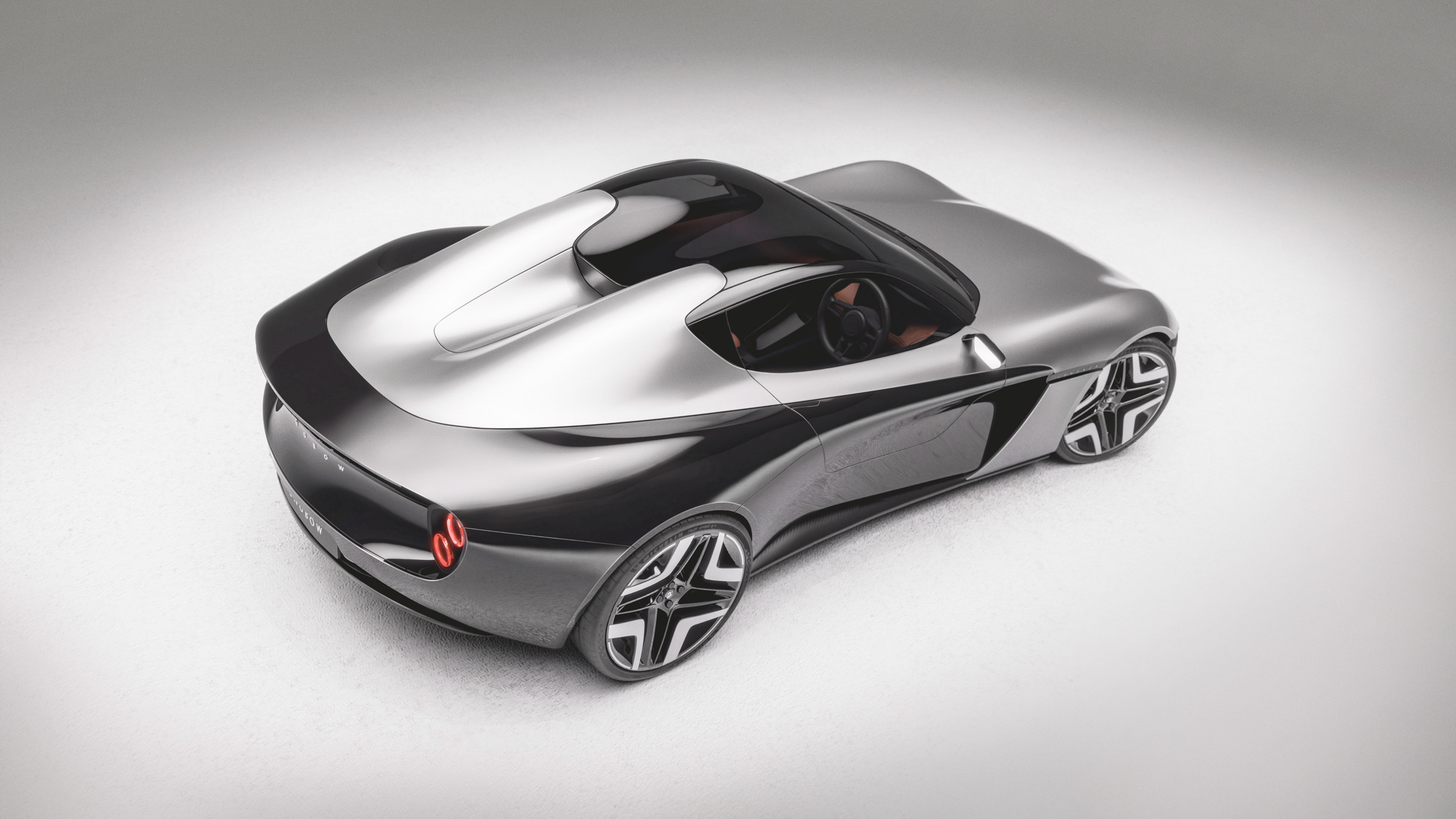
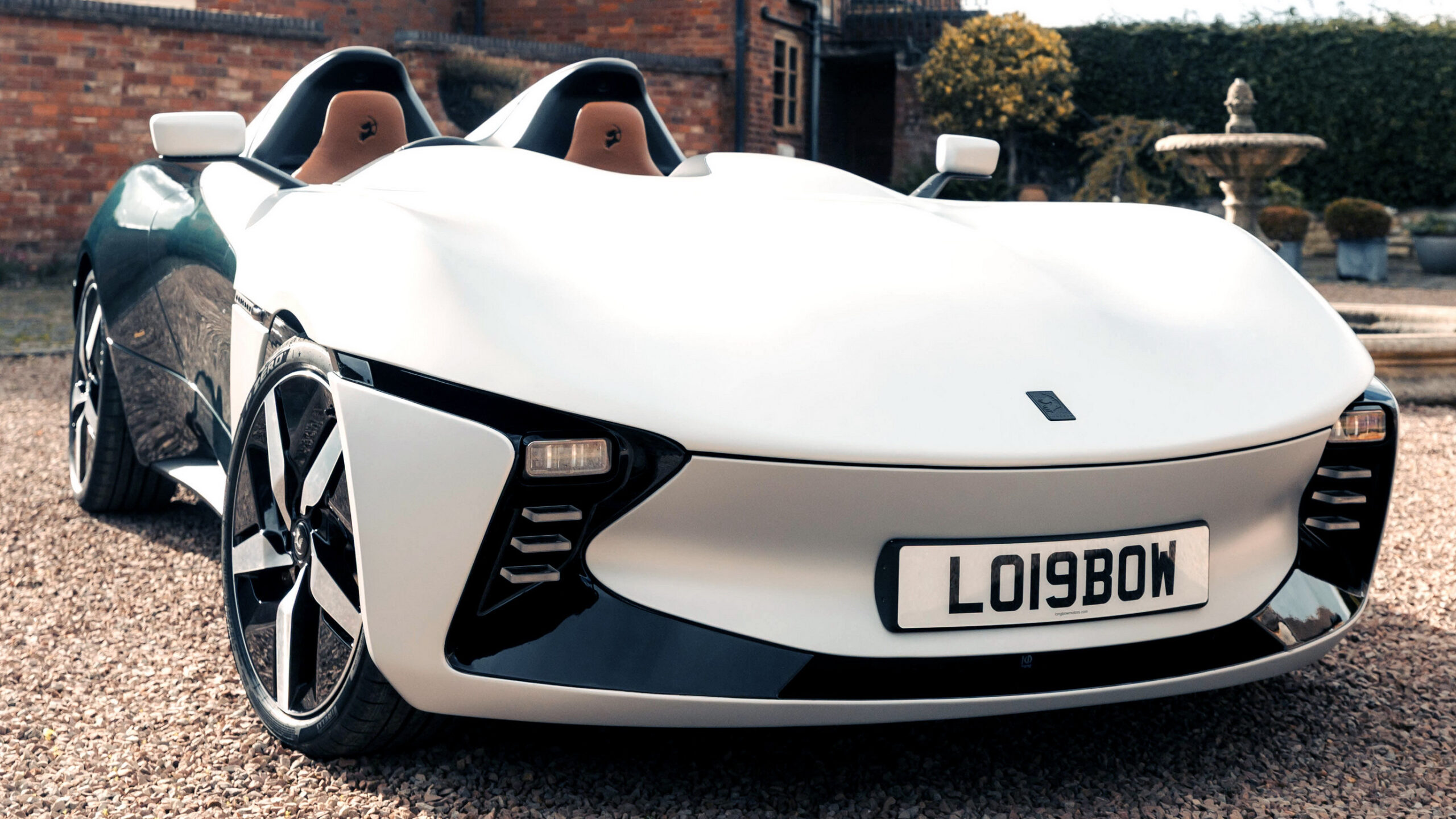
The company wants EVs to feel like sports cars not tech showcases.
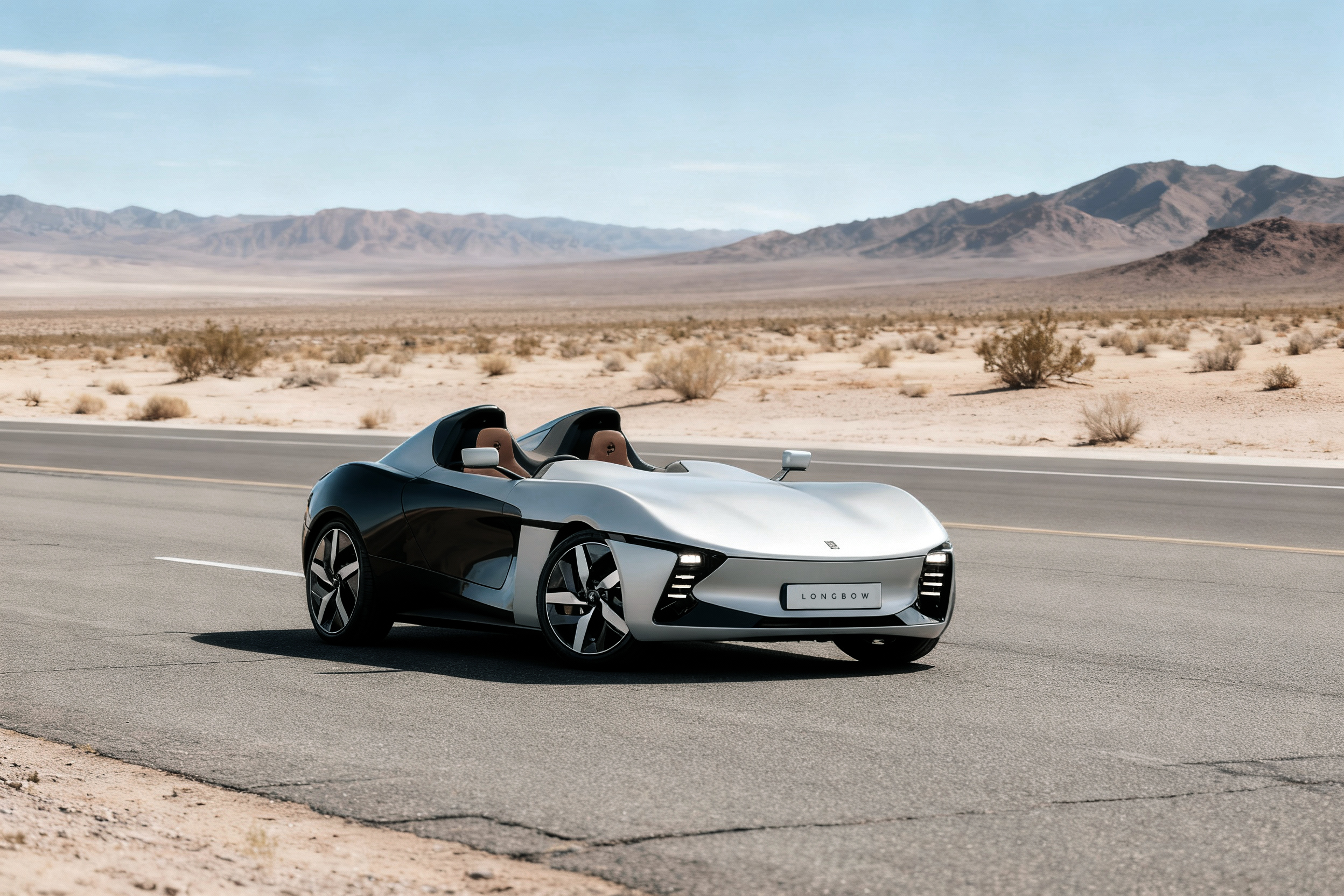
For many modern electric vehicles, progress has come to mean more. More batteries, more screens, more driver aids, and more weight. Longbow doesn’t see that as a requirement, or even desirable, for that matter.
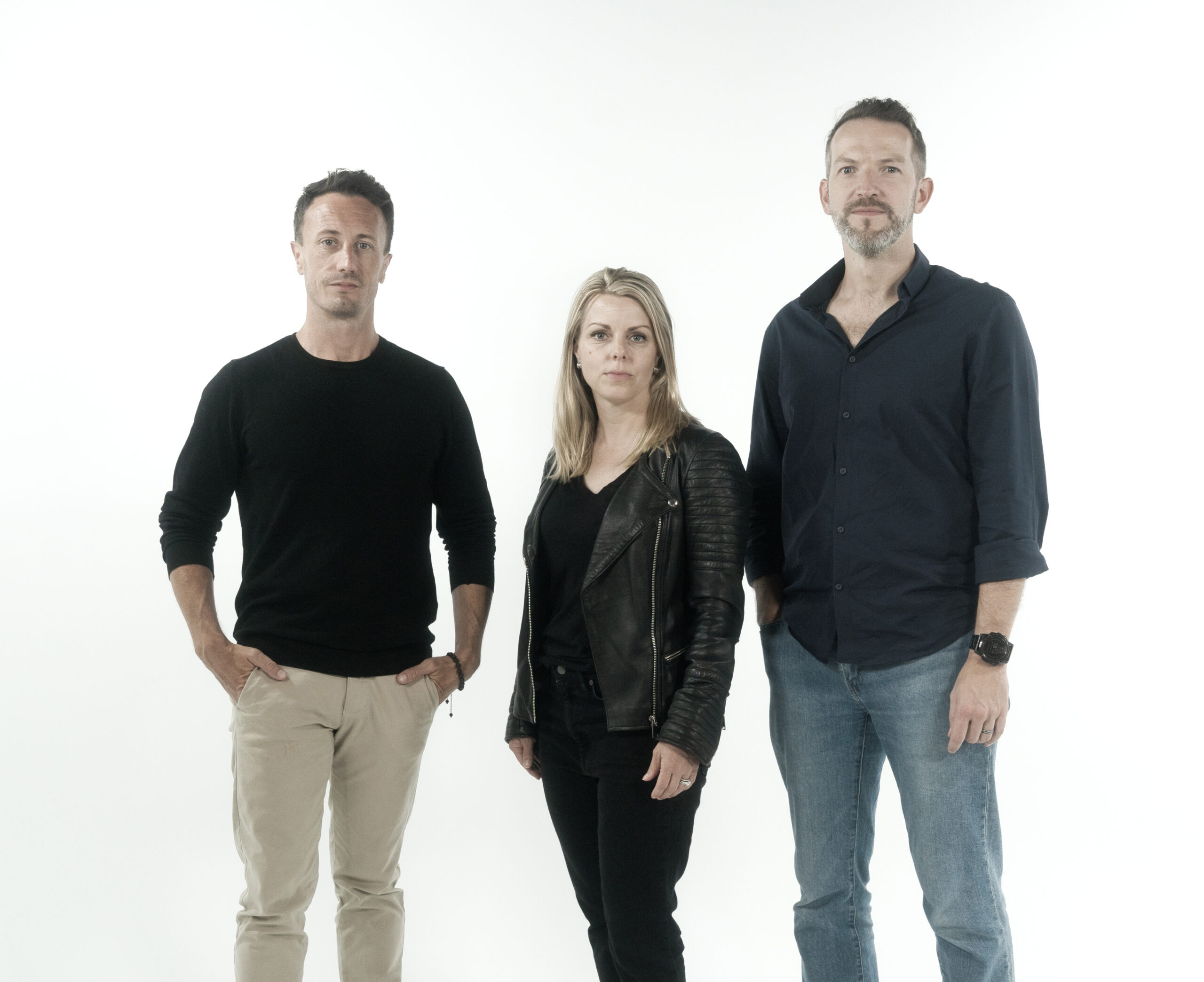
The company was founded in 2023 by Daniel Davey and Mark Tapscott, both veterans of Tesla and Lucid, so they have seen firsthand how ambitious EV concepts hold up once they leave the presentation slide. At the end of 2025, former X Shore CEO Jenny Keisu joined the leadership team, bringing experience from the electric marine world into the mix.
Speaking exclusively with Carscoops, Tapscott outlined an engineering philosophy rooted in first principles, lightweight design, and a rejection of the idea that electrification must automatically lead to oversized, tech-heavy vehicles.
Does Every EV Need To Be Built From Scratch?
“I think it’s just a strengthening of resolve, to be honest,” Tapscott said when asked whether shifting industry conditions had forced a rethink. Rather than chasing vertical integration or speculative future technologies, Longbow is focused on building a sports car using proven components that already exist.
That mindset was reinforced early on through conversations with one of Tesla’s original co-founders, Tapscott told us, though he did not specify which one. Tesla was founded in 2003 by Martin Eberhard and Marc Tarpenning. “He sort of explained to us… that it’s exactly how they wanted to build Tesla 15–20 years ago,” Tapscott said. Back then, the supply chain simply wasn’t ready. Today, it is.
Instead of pouring resources into building motors or factories from scratch, Longbow is deliberately sourcing components with millions of miles of validation behind them. “There are so many suppliers making incredible products that we can take advantage of,” he explained. “The industry is helping us in what it’s doing.”
Physics First, Always
Tapscott says Longbow didn’t need to “unlearn” much when forming the company, largely because its founders came from motorsport, startups, and consultancy work rather than traditional OEM bureaucracy. What they did adopt, and continuously return to, is physics-based thinking.
“We always come back to that, which is the ‘why’ every single time,” he said. “It’s always ‘why this, ok, why that,’ until we get to that physics first-principle reason. And very often, there isn’t a reason—it’s just a choice.” A clear example is Longbow’s battery architecture. Instead of layering cells inside multiple cases and mounts, the company questioned whether those layers were truly necessary.
“Cells go into a case. That case is in another case. And then it goes into the vehicle, which is another case,” Tapscott explained. “So you end up having these extra layers of unnecessary weight and volume.”
By stripping those layers away and integrating the battery structure directly into the chassis, Longbow says it has achieved significant stiffness gains. According to Tapscott, the resulting structure is “at least twice as stiff as the Lotus chassis,” often cited as a benchmark for lightweight aluminum sports cars.
Clearing The Air On In-Wheel Motors
Longbow’s CES appearance sparked plenty of conversation around in-wheel motors. The brand touted a potential output of 900 horsepower, but it left us wondering how those motors would affect unsprung mass. Tapscott was quick to clarify that what was shown was a demonstration, not a production specification.
“The vehicle that we showed at CES… was really a demonstration,” he said. The goal was to highlight the flexibility of the underlying chassis rather than preview a finalized drivetrain. For production, Longbow is sticking with what Tapscott described as a “beautifully engineered, tiny little watchmaker’s motor” mounted within the vehicle. Still, he sees long-term potential in hub motors, particularly as technology matures.
“There is development work to be done on in-wheel motors,” he said. “We do think there is definitely a future for them… because it gives you so much more opportunity within the vehicle.” So for now, put a pin in the hub motors, but don’t forget them. They could pop back up in a future Longbow product.
Weight Loss As A Daily Discipline
Ask where weight was spent most reluctantly, and Tapscott doesn’t point to a single component. Instead, he describes an internal philosophy that governs every decision. “Our engineers are given two tasks,” he said. “Every day, they need to lose at least one gram from anything they’re designing. And the second is the best design they can do is no design at all.”
That ethos borrows heavily from Colin Chapman, whose influence Tapscott freely acknowledges. Still, Longbow isn’t pursuing minimalism at all costs. Some elements, like a physical shifter, exist purely to enhance the experience. “There are things we’re adding… for the theatrics,” he said. “Customer enjoyment is important.”
Additive Manufacturing And A Different Production Model
One of the most under-the-radar aspects of Longbow’s approach may be how it’s using additive manufacturing beyond prototyping. “At the moment, a lot of the development prototype cars we’ve been producing have been fully 3D printed on the exterior,” Tapscott said, noting how it enables rapid iteration during development.
Looking ahead, he sees additive manufacturing changing how low-volume cars are supported and customized. Instead of maintaining warehouses full of body panels across different markets, parts could be printed locally, on demand.
“You can actually just have one printer that can print off that part in that country immediately, without any delay,” he said. The same approach could also enable personalization without the cost typically associated with bespoke programs. “It could be entirely personalized to you,” Tapscott added. “That’s something that hasn’t been explored as much in production automotive.”
An EV That Puts The Driver First
Ultimately, Longbow’s message is that electrification doesn’t have to erase driver engagement. “An EV powertrain doesn’t mean a D-segment SUV with all of the extra cameras and weight and everything else,” Tapscott said. “Those two things are different.”
Longbow wants its car to be a tool – powerful, precise, and rewarding- but only when paired with an engaged driver. Or, as Tapscott put it, borrowing from the company’s own name: the weapon matters, but the archer matters more. Modern EVs are often defined by their tech-heavy approach, but that leads directly to just being outright heavy. Longbow’s approach to cutting out the fat might be its sharpest edge in the market.
Range extenders are enjoying a bit of a renaissance at the moment. Early examples like the Chevrolet Bolt and BMW i3 gave the world a preview of what these powertrains were capable of, but they largely fell out of favor in the middle of the last decade as carmakers shifted their focus to fully electric models.
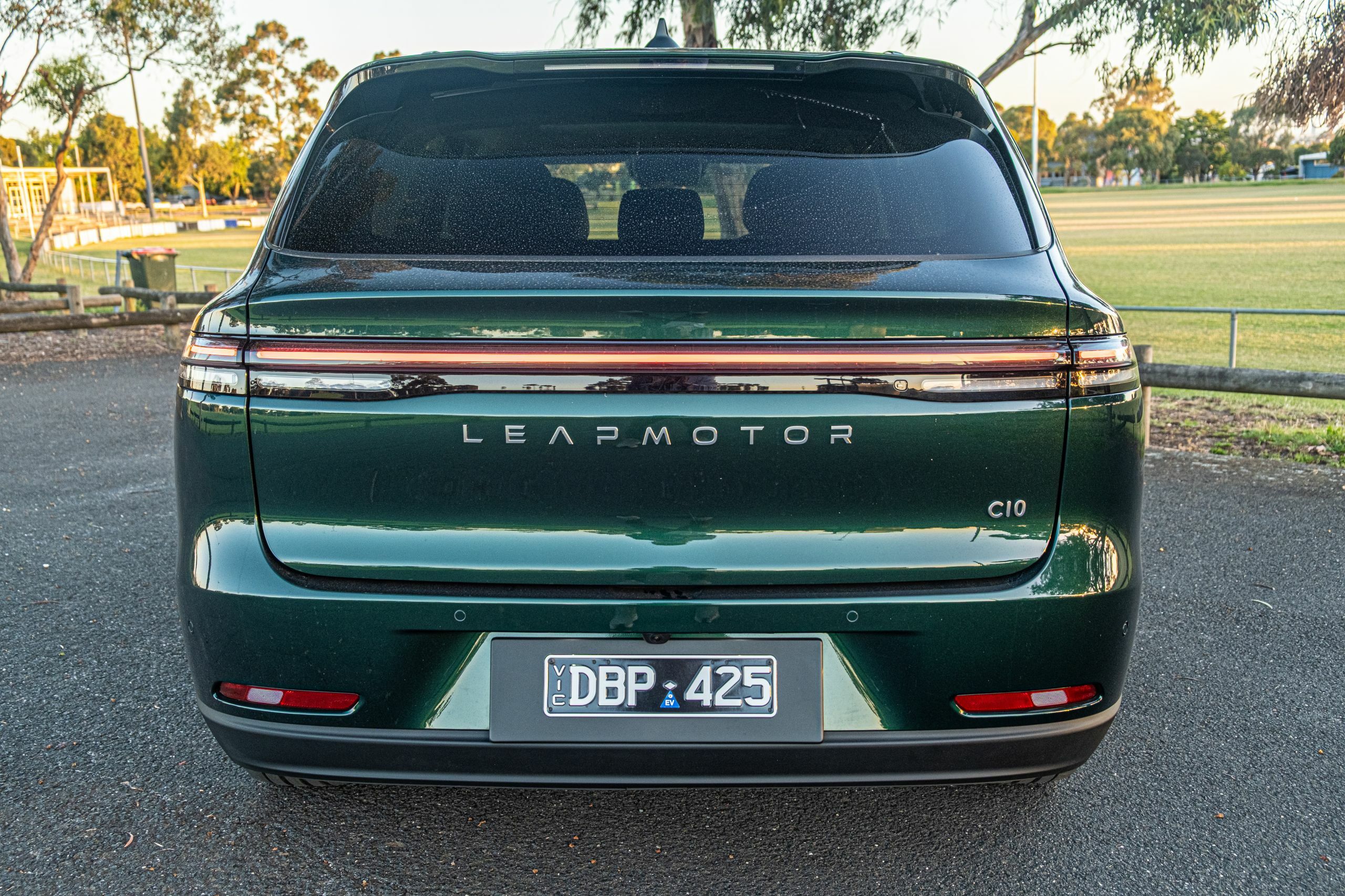
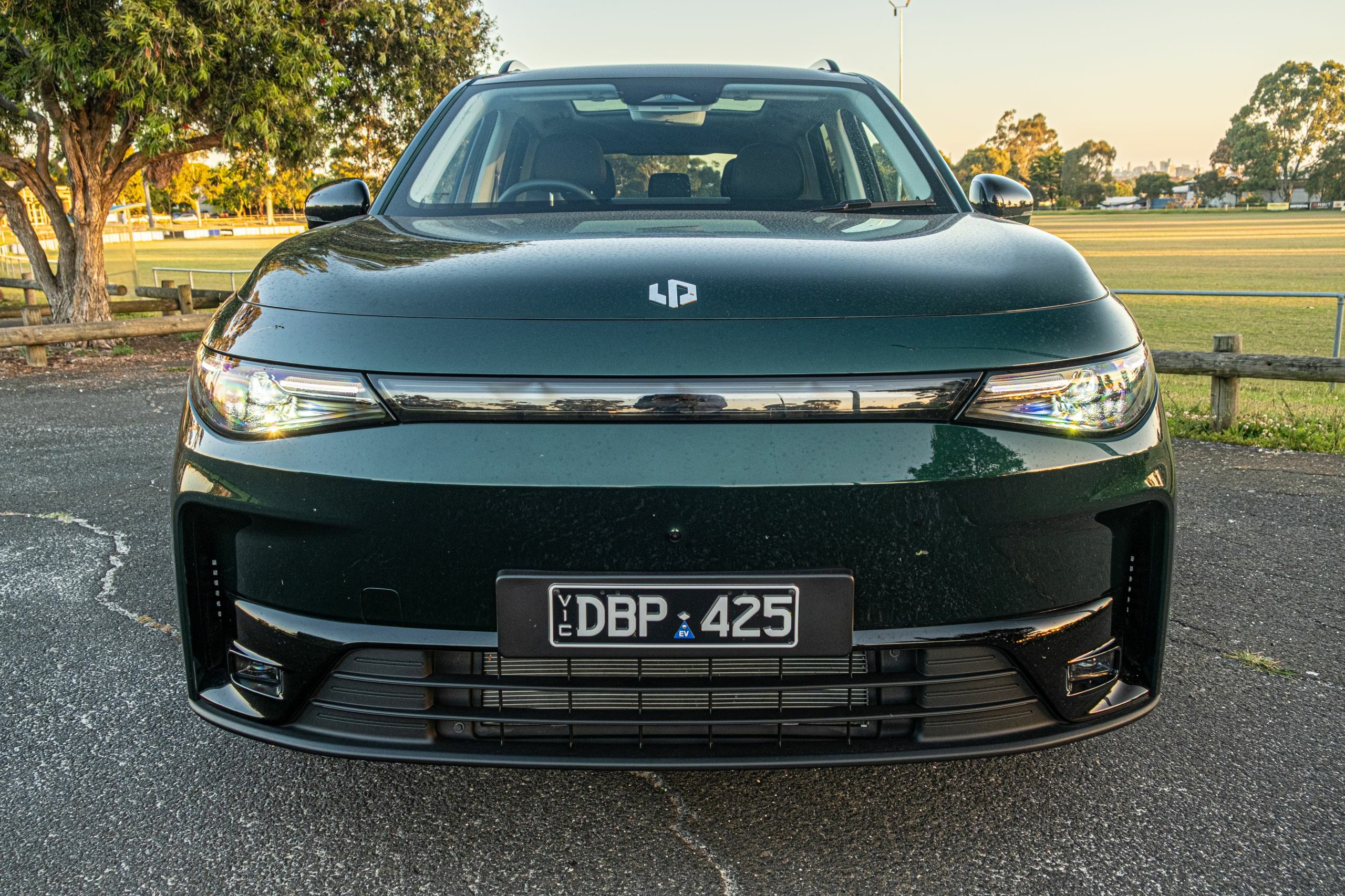
Things have changed. Thanks in large part to several major Chinese manufacturers, range-extender EVs are becoming more common and are even being adopted by legacy brands like Ford and Hyundai. Last year, Leapmotor, Stellantis’ Chinese partner brand, joined the movement by adding a range-extender option to its mid-size C10 SUV, and we had the chance to live with it over the Christmas period.
QUICK FACTS
› Model:
2026 Leapmotor C10 REEV Ultra Hybrid
› Price:
AU$47,888 (US$33,500) as tested
› Dimensions (L x W x H):
186.5 x 74.8 x 66.1 in (4,739 x 1,900 x 1,680 mm)
› Wheelbase:
111.2 in (2,825 mm)
› Curb Weight:
1,950 kg (4,299 lbs)
› Powertrain:
1.5-liter four-cylinder / Single electric motor
› Output:
212 hp (158 kW) / 236 lb-ft (320 Nm)
› 0-62 mph:
8.5 seconds
› Transmission:
Single speed
› Efficiency:
14.5 kWh/100 km, 6.1 l/100 km as tested
› On Sale:
Now
SWIPE
In markets where charging infrastructure is still patchy and long-distance driving is simply part of life, the range-extender idea holds up. You get the smooth, instant response of an EV without planning your schedule around charging stops.
On paper, the C10 REEV arrives at the right moment, pitching itself as sensible rather than compromised. In reality, while the powertrain delivers on that promise, the experience is undercut by a collection of nagging tech issues that chip away at its appeal.
What Changes With The REEV?
Photos Brad Anderson/Carscoops
The first Leapmotor I tested last year was the regular C10 EV, equipped with a 69.9 kWh battery and a rear-mounted electric motor with 215 hp and 236 lb-ft (320 Nm). The C10 REEV is quite a bit different.
Under the hood sits a 1.5-liter four-cylinder that never drives the wheels, serving solely as a generator to charge the battery pack. That battery is a 28.4 kWh unit powering a rear-mounted electric motor rated at 158 kW (212 hp) and 320 Nm (236 lb-ft) of torque.
Leapmotor says the C10 REEV can travel up to 1,150 km (715 miles) between top-ups and charges, average 15.2 kWh/100 km in electric operation, and has a quoted fuel consumption of 0.9 l/100 km (261 US mpg).
Visually, there’s nothing differentiating the C10 REEV from the EV. That means it looks as uninspiring as the EV, with not even the slightest bit of personality.
How’s The Interior?
Photos Brad Anderson/Carscoops
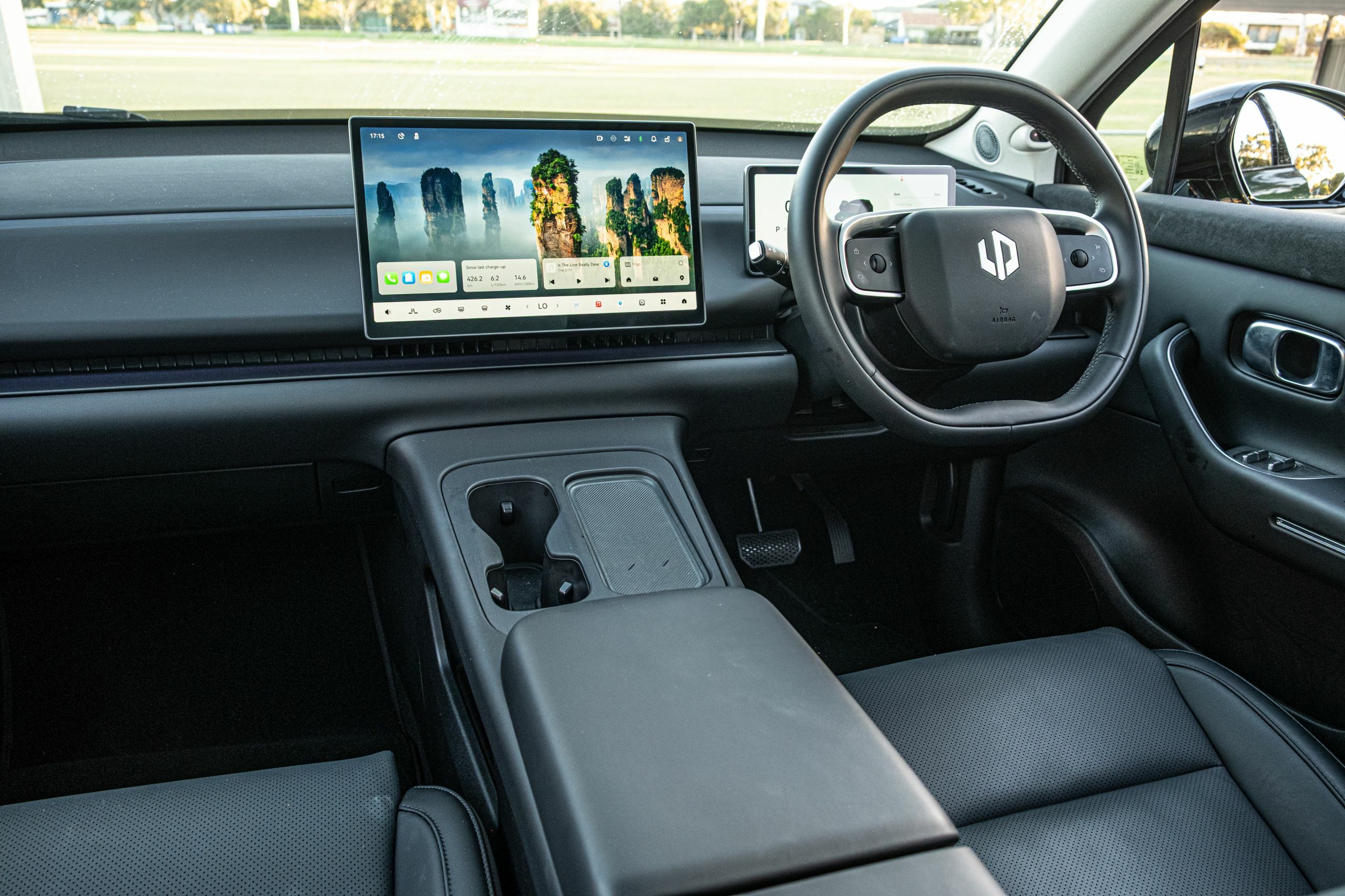
In the cabin, it’s also very familiar. Leapmotor has done exactly what Tesla popularized with the Model 3 and Model Y, opting for an ultra-minimalist design that some people will love, but others will hate.
A 14.6-inch infotainment display sits at the center of the dash running on Leapmotor’s in-house operating system, which uses Android as its base. While we wouldn’t go as far as to describe the C10’s infotainment as good as Tesla’s, it’s surprisingly not far off.
The tablet-like design doesn’t require a steep learning curve to get used to, and the display is very responsive to the touch. Admittedly, some of the settings hidden in the menu are a little too comprehensive, and it can be difficult to find things while on the move. Fortunately, there is a swipe-down notification menu that can be configured with dozens of different toggles for important vehicle functions, ensuring they’re never more than a couple of touches away.
Photos Brad Anderson/Carscoops
Frustratingly, the display does not support smartphone mirroring, so there’s no Android Auto or Apple CarPlay, leaving me to place my phone in the cupholder for navigation. Additionally, the quality of the reversing camera is shocking and not up to modern standards. The infotainment system also needs 15 seconds to load after the car is turned on, by which time I’d often already reversed without the camera loading and started driving away.
All of the materials used feel pleasantly plush, particularly the soft-touch leather adorning the seats, door panels, dashboard, and center console. However, I found that the leather marked very easily, so while it looks nice, it doesn’t stay clean for very long.
Entering and exiting the C10 REEV also turned into a bigger hassle than it should have been. In the first C10 I tested, I easily synced my phone with it and used it as the key. When I tried to use the Leapmotor app on my phone to do the same with this C10, it refused to work. A bit of digging suggests this could have been because the VIN had already been assigned to another device. Apparently, resetting the infotainment system should have fixed it. It didn’t.
Do Small Annoyances Add Up?
This left me with no choice but to use the silly keycard for my two weeks with the C10 REEV. Not only is a keycard inferior to a traditional key in every single way, but it also doesn’t have any buttons, meaning I had to tap the NFC logo on the driver’s side mirror every time I wanted to lock or unlock it. It doesn’t even have a proximity locking/unlocking function, so when unloading things out of the passenger side or the trunk, I’d have to walk back around to the driver’s mirror and tap it.
I get it, keycards are in fashion (thanks, Tesla…), but they are just not nice to use.
My issues didn’t stop here. The air conditioning is genuinely disappointing. With the temperature turned down to its lowest setting, the AC on, and the fan speed at full, the C10 would only blow out mildly cool air, equivalent to what most cars do with the AC turned off and just the fans running. In the Australian summer, that was very annoying.
Set those issues aside, and the cabin of the C10 REEV is a nice place to spend time. It’s spacious, and there’s plenty of room in the rear, too. Cargo space is also good, as it can swallow up to 546 liters (19.2 cubic feet) or 1,375 liters (48.5 cubic-feet) with the rear seats folded down.
Smooth Power
Photos Brad Anderson/Carscoops
Out on the open road, I quickly grew quite fond of the range-extender powertrain, and actually preferred it to the more traditional full-EV version.
As the engine is only ever operating in the background to charge the battery, it doesn’t intrude on the driving experience at all. In fact, even when I had the Leapmotor in the mode that prioritizes the engine charging the battery, the four-cylinder barely ever revved to beyond 2,000 rpm, so it couldn’t be heard. Around town, it’ll happily sit at less than 1,200 rpm, remaining completely silent while the instant power and torque of the rear-mounted electric motor make the REEV drive just as smoothly as an EV.
I ended my two weeks with the C10 REEV averaging 14.5 kWh/100 km, while fuel consumption sat at 6.1 l/100 km (38.5 US mpg).
On The Road
Admittedly, the Leapmotor isn’t particularly fun or engaging to drive. It takes 8.5 seconds to reach 100 km/h (62 mph) and isn’t the type of SUV that likes to be driven in a sporty manner. Drive it calmy, and it does the job just fine.
As I found in my first test of the all-electric C10, the driver assistance systems leave a lot to be desired. The SUV includes both adaptive cruise control and active lane centering, neither of which works well. Even if the adaptive cruise is set and the C10 detects a vehicle ahead, it’ll struggle to maintain a consistent distance from it, repeatedly accelerating and decelerating to hold position.
The lane centering also needs improvement. I spent hours on end sitting on well-marked highways during my time with the Leapmotor, and it’d consistently ping-pong between the lines. That’s unacceptable in this day and age.
The C10 REEV also has several other overactive sensors, like the driver attention monitoring system and speed limit warnings. Fortunately, these can be easily disabled in the swipe-down menu, and I didn’t find them to be as intrusive as I did when I first tested the C10 six months ago.
Ride quality is good most of the time, but there were a few instances when it felt like I hit the bump stops after going over speed bumps a little too fast, which most cars would have easily dealt with. The steering is exceptionally light, particularly in the Comfort setting, but it can be configured to feel slightly firmer in Sport mode.
Verdict
Photos Brad Anderson/Carscoops
The Leapmotor C10 REEV has promise. The trick hybrid powertrain works well, combining all of the benefits of a traditional EV like smoothness and instant power, without any of the downsides like range anxiety, particularly in Australia, where the charging network is sub-par.
However, the overall experience of living with the C10 is marred by poorly calibrated safety systems and some tech gremlins that need to be fixed. If these systems can be improved with software updates, the C10 REEV would be a very tempting proposition.
Cadillac’s flagship SUVs are very evenly matched in a sprint.
Electric Escalade IQ packs 750 hp and 785 lb-ft of torque.
Escalade-V delivers an almighty 682 hp and 653 lb-ft total.
There’s something uniquely American about building an SUV with insane straight-line performance and then expecting it to hustle like a sports car. The Escalade-V and its unrelated Escalade IQ electric sibling may be two of the most gloriously excessive vehicles Cadillac sells today. Both deliver supercar levels of power, which makes the obvious question hard to resist.
Curious to see which one is actually quicker, Edmunds lined them up for one of its U-drag races. Watching these two dinosaur-sized SUVs subjected to hard launches, heavy braking, and tight turns feels surreal and just plain absurd in the best possible way.
On paper, the Escalade-V and IQ are closely matched, even though their powertrains could not be more different. The V is powered by Cadillac’s 6.2-liter supercharged V8, producing 682 hp and 653 lb-ft (885 Nm) of torque, paired with a 10-speed automatic transmission that drives all four wheels.
By contrast, the Escalade IQ relies on a pair of electric motors and a substantial 212 kWh battery pack. In standard form, it delivers 680 hp and 615 lb-ft (834 Nm) of torque. Switch it into Velocity Max mode, and those figures climb to a healthier 750 hp and 785 lb-ft (1,063 Nm).
The Escalade IQ needs this additional grunt to somewhat offset its insane heft. Whereas the combustion-powered V weighs around 6,300 lbs (2,857 kg), depending on configuration, the IQ weighs in at 9,100 lbs (4,127 kg), making it one of the heaviest passenger vehicles currently on sale.
That weight difference shapes the entire contest. In a straight line, instant electric torque can mask mass for a moment, but physics always keeps score. The U-drag format, with its hard launch, heavy braking, tight turn, and sprint to the line, exposes not just power but how well each SUV manages it.
During the first test, the V8-powered version got the jump off the line. After the U-turn, however, the transmission struggled to find the right gear, and the hesitation cost the Escalade-V its lead. That opened the door for the electric IQ to surge past and cross the line several lengths ahead.
Things were closer in the second race. This time, the electric model had the best launch, although the V regained some of that lost time under braking. The duo was neck-and-neck as they raced to the finish, but the IQ just ran out of puff at the top end, allowing the V to narrowly win.

 Login
Login