Normal view

There are new articles available, click to refresh the page.
Yesterday — 29 July 2026Electric Vehicles - Latest News | Carscoops

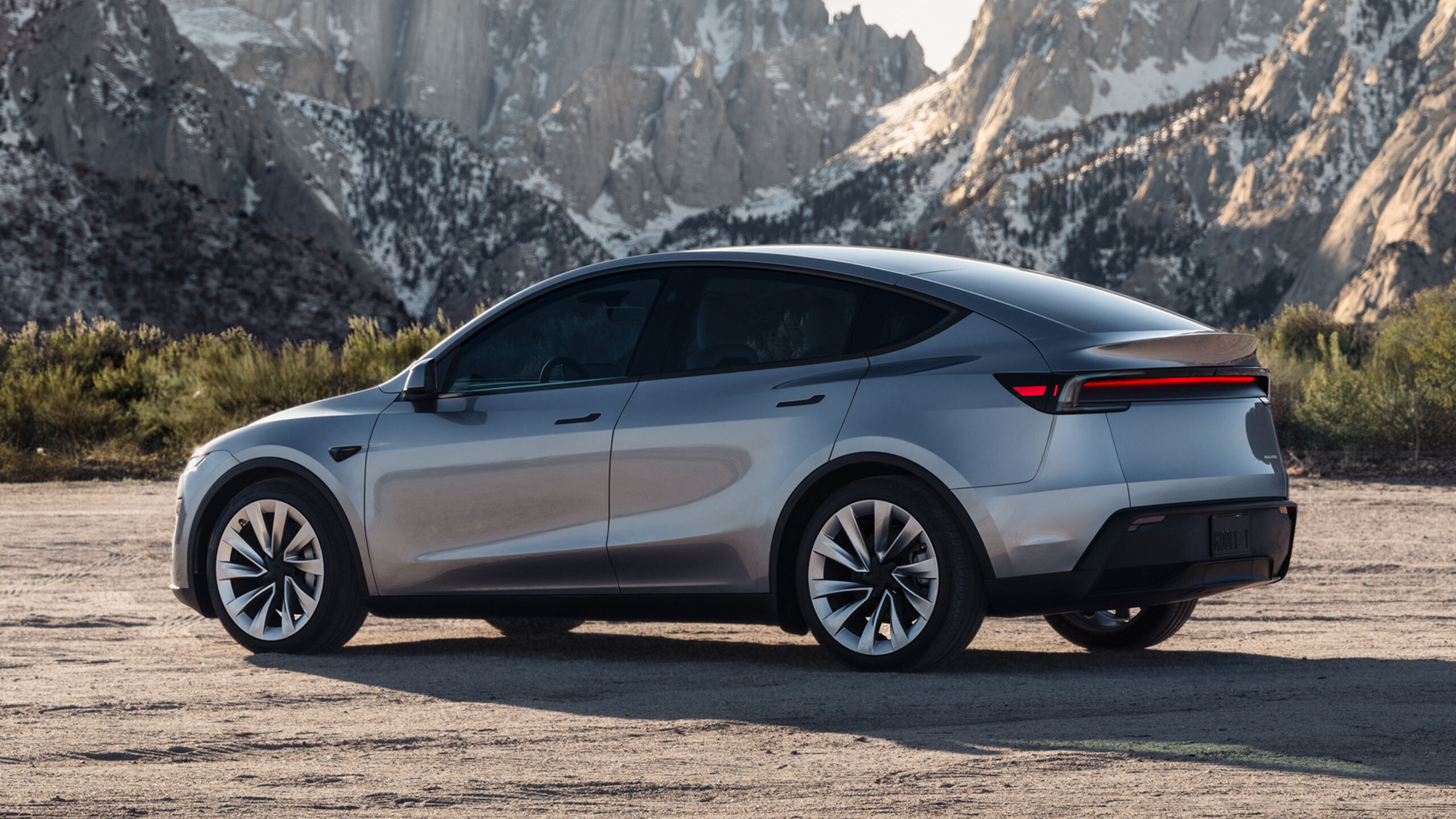
World’s Biggest Car Carrier Left Shanghai With Enough Teslas To Stretch 22 Miles

  • One Chinese-built ship carried a record 7,738 vehicles in a single voyage.
  • Every car aboard was a Tesla Model 3 or Model Y bound for Europe.
  • Shanghai’s export port sits barely six miles from Tesla’s Gigafactory.

China keeps tightening its grip as the world’s largest new car exporter, and a big part of meeting the extraordinary global appetite for its vehicles comes down to the enormous car-carrying ships now being built on home soil. One of the newest of them, the Glovis Nova, swallows enough cars to cover 9.5 football fields.

Read: China’s EV Giant BYD Now Exports Cars In Its Own Purpose-Built Mega-Ship

On Sunday, the Malta-flagged vessel was loaded with 7,738 electric vehicles at Shanghai’s South Port Terminal and set off for Zeebrugge in Belgium, where the cars will be distributed across Europe. The trip set a new Chinese record for the number of electric vehicles shipped from a domestic port on a single ship.

A Tesla-Only Cargo

Instead of hauling a mix of EVs and plug-in hybrids from several brands, the Glovis Nova carried nothing but Tesla Model 3s and Model Ys built in Shanghai. Sticking to passenger cars also squeezed the most out of its capacity, since bulkier loads like buses and engineering equipment eat up far more deck space.

A report from the South China Morning Post notes that the Glovis Nova can carry up to 10,800 vehicles at once and runs on a liquefied natural gas dual-fuel power system. It left port at the same time as the Panama-flagged Glovis Leader, another Chinese-built carrier with the same enormous capacity, which was bound for Busan, South Korea. Both came out of Guangzhou Shipyard International, a subsidiary of China State Shipbuilding Corporation and one of the largest shipbuilding groups on the planet.

The record haul owed a lot to the Glovis Nova’s optimized deck layout. Lined up bumper to bumper, those 7,738 cars would stretch about 36km (22 miles) and cover roughly 67,600 square meters.

Why Tesla?

Tesla’s factory in Shanghai is perfectly positioned to make use of these new ships. The South Port Terminal in Shanghai, located just 6 miles away, serves as a roll-on, roll-off vehicle export hub, and it’s possible for newly built vehicles to leave Tesla’s factories and arrive on ships in just a matter of hours.

Of course, it’s not just Tesla that is benefiting from China’s expertise in building massive cargo ships. BYD operates its own fleet of car carriers, introducing the first of them, known as the Explorer No. 1, in early 2024. It has since added seven other ships to its fleet, allowing it to send thousands of its electrified vehicles to markets around the world.

In early June, almost 5,000 plug-in hybrid and electric vehicles were exported from China to Australia on the BYD Zhengzhou ship thanks to a surge in demand for the brand’s models in part due to the war in Iran and surging oil prices.
 World’s Biggest Car Carrier Left Shanghai With Enough Teslas To Stretch 22 Miles

Stellantis-Backed Leapmotor Offers LiDAR On A New $7,400 Car

  • Leapmotor has launched the A05 electric hatchback in China.
  • It offers up to 510 km (317 miles) of range and optional LiDAR.
  • Global B03 version is headed to international markets soon.

Leapmotor has a new electric subcompact hatch, the A05, and it’s going straight after the BYD Dolphin. The Stellantis-backed Chinese brand isn’t keeping this one at home, either. Europe and other export markets will get it as the Leapmotor B03.

The A05 / B03 is the hatchback version of the A10 / B03X subcompact SUV, and it certainly looks like it. The two share the same design language, with similar LEDs, bumper graphics, and soft curves around the bodywork. The hatch sets itself apart with a more aerodynamic windshield, a lower stance, and none of the plastic cladding that covers its SUV sibling.

More: Europe’s Small Hatches Stuck With Mild Hybrids, BYD Brings 621 Miles And A Plug

Stellantis says the A05 / B03 measures 4,175 mm (164.4 inches) long, 1,790 mm (70.5 inches) wide, and 1,560 mm (61.4 inches) tall, with a 2,605 mm (102.6 inches) wheelbase. That slots it between the smaller VW ID. Polo and the larger ID.3 Neo on length, though the wheelbase lines up closely with the Polo’s.

\\\\\\\\

One standout for the class is the optional roof-mounted LiDAR sensor. Leapmotor claims the A05 is the only hatchback in the segment to offer LiDAR-backed, parking-space-to-parking-space navigation-assisted driving (NAP), plus memory parking and highway pilot assist.

More: Europe Spent Years Locking Chinese Carmakers Out, Now It’s Handing Them Factories

Inside, the dashboard looks to be lifted from the A10 / B03x SUV. The kit list runs to an 8.88-inch digital instrument cluster and a 14.6-inch floating infotainment touchscreen running Qualcomm’s flagship Snapdragon 8295 processor. There’s also a two-spoke steering wheel, a wireless charging pad, customizable ambient lighting, and a two-tone theme.

Like its crossover sibling, the hatch comes with a choice of two outputs, 94 hp (70 kW / 95 PS) and 121 hp (90 kW / 123 PS), and two battery sizes, 40 kWh and 53 kWh. Leapmotor puts CLTC range at 405 km (252 miles) and 510 km (317 miles) respectively, 5 km (3 miles) more than the A10 / B03x manages.

Pricing and Availability

Leapmotor hasn’t released pricing for the A05 yet, though Chinese buyers can lock in a reservation for a deposit of just ¥99 yuan ($15). Local media peg the starting price at around ¥50,000 yuan ($7,400), undercutting the A10 crossover, which currently runs between ¥65,800 and ¥86,800 ($9,700-12,800).

After its official Chinese launch later this summer, the B03-badged global model should widen Leapmotor’s overseas reach through its joint-venture distribution network with Stellantis. Going by the European pricing of the B03x crossover, the EU-spec B03 hatch will likely start under €24,900 ($28,400), close to the VW ID. Polo and Renault 5 E-Tech.

\\\\\\\

Leapmotor

BMW’s iX3 Is Nearing 100,000 Orders Before Its First Birthday

  • BMW has built the 50,000 second-gen iX3 in just nine months.
  • Company is on track to receive more than 100,000 orders shortly.
  • Strong demand pushed automaker to add a second-shift early.

The second-generation BMW iX3 debuted less than a year ago, but the electric crossover is already a hit. More than 10,000 units were sold in Europe within a matter of months and the company has seen an influx of orders.

Speaking of the latter, the automaker recently announced they’re on track to hit 100,000 orders relatively soon. To meet the “high demand,” BMW has been ramping up production in Debrecen, Hungary.

More: Two Months Was All BMW’s iX3 Needed To Crack 10,000 Sales In Europe

\\\\

Production began last fall and the influx of orders pushed BMW to add a second shift in February 2026. The company noted that was “well ahead of schedule.”

Thanks to the rapid ramp up, BMW has already built the 50,000 iX3. This came just nine months after production began and BMW’s Raymond Wittmann said, “Never before have we built so many vehicles so quickly at a new plant.”

Those sentiments were echoed by Debrecen plant president Hans-Peter Kemser, who said “The production of the 50,000th BMW iX3 reflects the dedication and expertise of our team. As the home of the first series-produced Neue Klasse model, Plant Debrecen is helping shape the future of the BMW Group’s global production network.”

\\\\\

BMW has a lot riding on the iX3 as 40 new or updated models will incorporate Neue Klasse designs and technologies by the end of 2027.

As a refresher, the crossover launched in iX3 50 xDrive guise, featuring a 108.7 kWh battery pack and a dual-motor all-wheel drive system with a combined output of 463 hp (345 kW / 469 PS) and 476 lb-ft (645 Nm) of torque. It enabled the model to have a WLTP range of up to 500 miles (805 km).

More recently, the automaker introduced a cheaper iX3 40. It features a smaller 82.6 kWh battery as well as a rear-mounted motor developing 316 hp (235 kW / 320 PS) and 369 lb-ft (500 Nm) of torque. This enables the crossover to accelerate from 0-62 mph (0-100 km/h) in 5.9 seconds, hit a top speed of 124 mph (200 km/h), and have a WLTP range of up to 395 miles (636 km).

\\\\\\\\\
Before yesterdayElectric Vehicles - Latest News | Carscoops

BMW Is Building The Electric Convertible Everyone Else Gave Up On

  • BMW’s electric i4 Convertible has made its spy debut ahead of a 2028 launch.
  • Neue Klasse bones could deliver over 400 EPA range miles in 463-hp i4 50 trim.
  • Coupe and electric M4 versions are coming too, alongside six-cylinder M models.

Electric convertibles are still about as common as affordable apartments in Monaco, but BMW wants to change that. These fresh spy shots give us our first look at the new i4 Convertible, a two-door, soft-top relative of the recently revealed i3 sedan that’s headed for showrooms around 2028.

Known internally as NA3, the i4 Convertible will be sold alongside a visually similar combustion drop-top 4-series, featuring a classic-style folding cloth soft top. BMW moved away from the retractable hardtop trend in 2020 to cut weight and improve trunk room, and a soft top makes even more sense when you’re already hauling a large battery around underneath the floor.

Related: BMW’s Electric i3 Wagon Just Got Caught, And Its Roofline Hides A Trick

The prototype spotted on test in Germany is still covered in BMW’s usual wrap, which looks like the result of a seismograph trying to scribe the earth’s movements after it was T-boned by another planet. But we can see that it retains almost all of the Neue Klasse design cues already seen on the i3 sedan launched earlier this year.

Shorter Wheelbase, Bigger Questions

\\\\\\

SH Proshots, Baldauf

What it doesn’t retain, judging by these pictures, is the sedan’s 2,898 mm (114.1 inches) wheelbase. The current 3-series sedan and 4-series coupe and convertible ride on identical wheelbases, but this i4 has noticeably less metal between the axles than the i3 sedan, making us wonder if it really is a genuine four-seater, or whether BMW has shrunk it to a 2+2 to help mask the gap in its lineup that axing the Z4 has left.

The i4 also won’t be as structurally stiff as the sedan. Convertibles normally compensate with extra reinforcement underneath. Trouble is, that’s precisely where an EV carries its battery. Keeping the body stiff without turning the i4 into a Bavarian cruise ship could be one of BMW’s trickier engineering challenges.

More Than 400 Range Miles Possible

\\\\\\\\\\\\\\\\\

SH Proshots, Baldauf

Powertrain details haven’t surfaced yet, but the i3 provides a useful preview. Its 50 xDrive pairs two electric motors for 463 hp (469 PS / 345 kW) and uses a 108.7 kWh battery, 800-volt architecture, and charging at up to 400 kW for 440 EPA range miles (708 km) and 559 miles (900 km) on the WLTP Euro cycle.

This prototype’s wheels and brake calipers tell us it’s an i4 50 xDrive, but a cheaper i4 40 could borrow the iX3 40’s 316 hp (235 kW / 320 PS) rear motor and smaller 82.6 kWh battery pack. BMW might not even be able to fit the 50’s full 108.7 kWh battery given how much shorter the wheelbase seems.

iDrive Goes Panoramic

 BMW Is Building The Electric Convertible Everyone Else Gave Up On

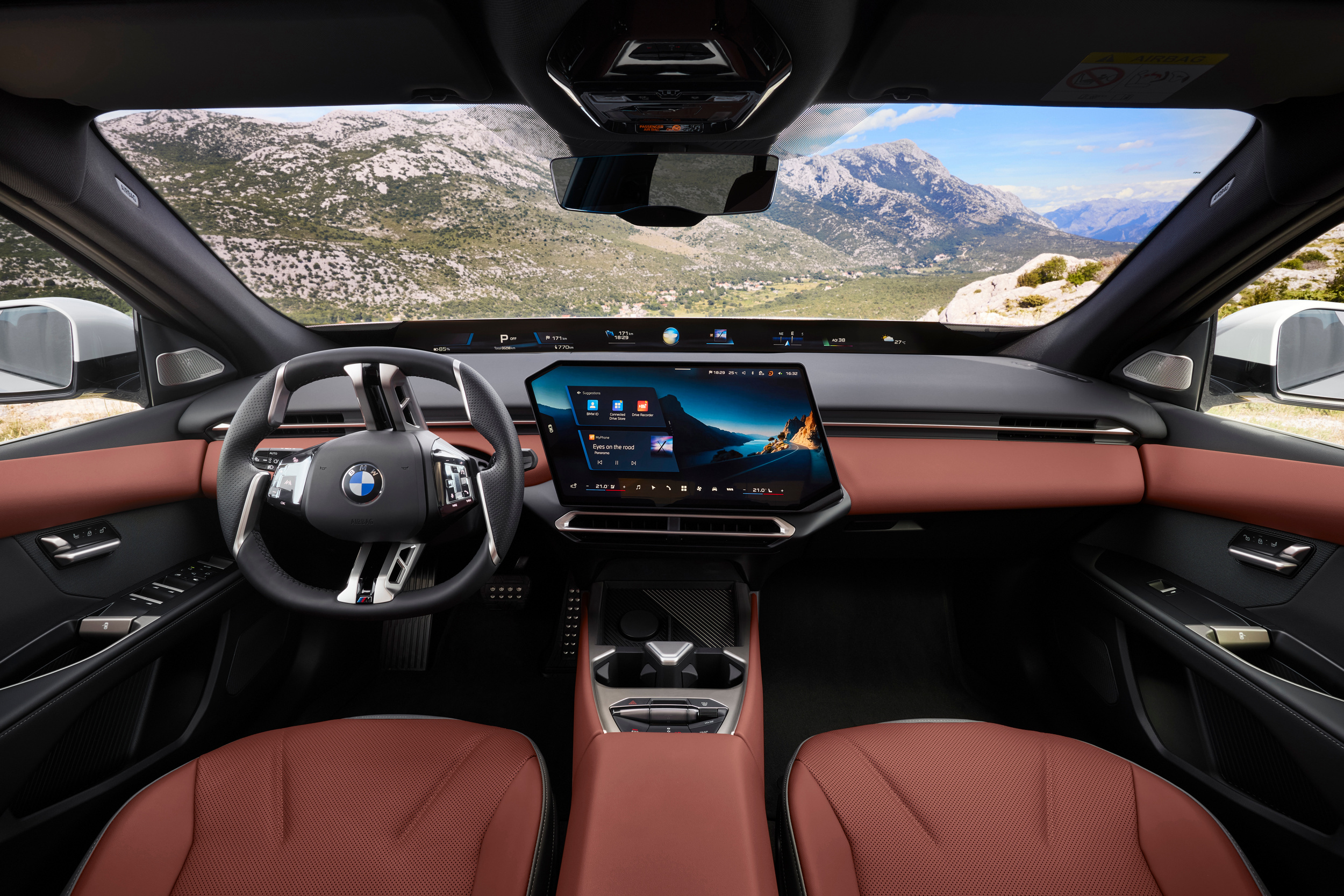
Inside, expect BMW’s Panoramic iDrive setup, combining a display stretching across the base of the windshield with a huge 17.9-inch touchscreen, plus an available 3D head-up display. This infotainment setup made its debut on the iX3, but is now being rolled out to BMW’s other new and facelifted models, including the i3 sedan (shown in image above).

And the convertible won’t be lonely. A fixed-roof i4 Coupe is also coming, as well as visually similar combustion-powered i4s in both open and closed-roof forms. BMW is also developing electric M4 Coupe and Convertible models with styling influenced by the M Concept Neue Klasse. Six-cylinder M4s will survive alongside them too.

That means BMW’s future 4-series lineup should have something for almost everyone. And if you want electric power, sunshine and (just about) four seats, this i4 might have remarkably little competition.

\\\\\\\

SH Proshots, Baldauf

It Takes A 1,600-Pound Battery To Move A BYD Sedan Longer Than An S-Class

  • BYD’s Da Han slots above the Han as the brand’s flagship sedan.
  • Every electric version uses the same 102-kWh battery pack.
  • A plug-in hybrid variant will also be offered, with up to 422 hp.

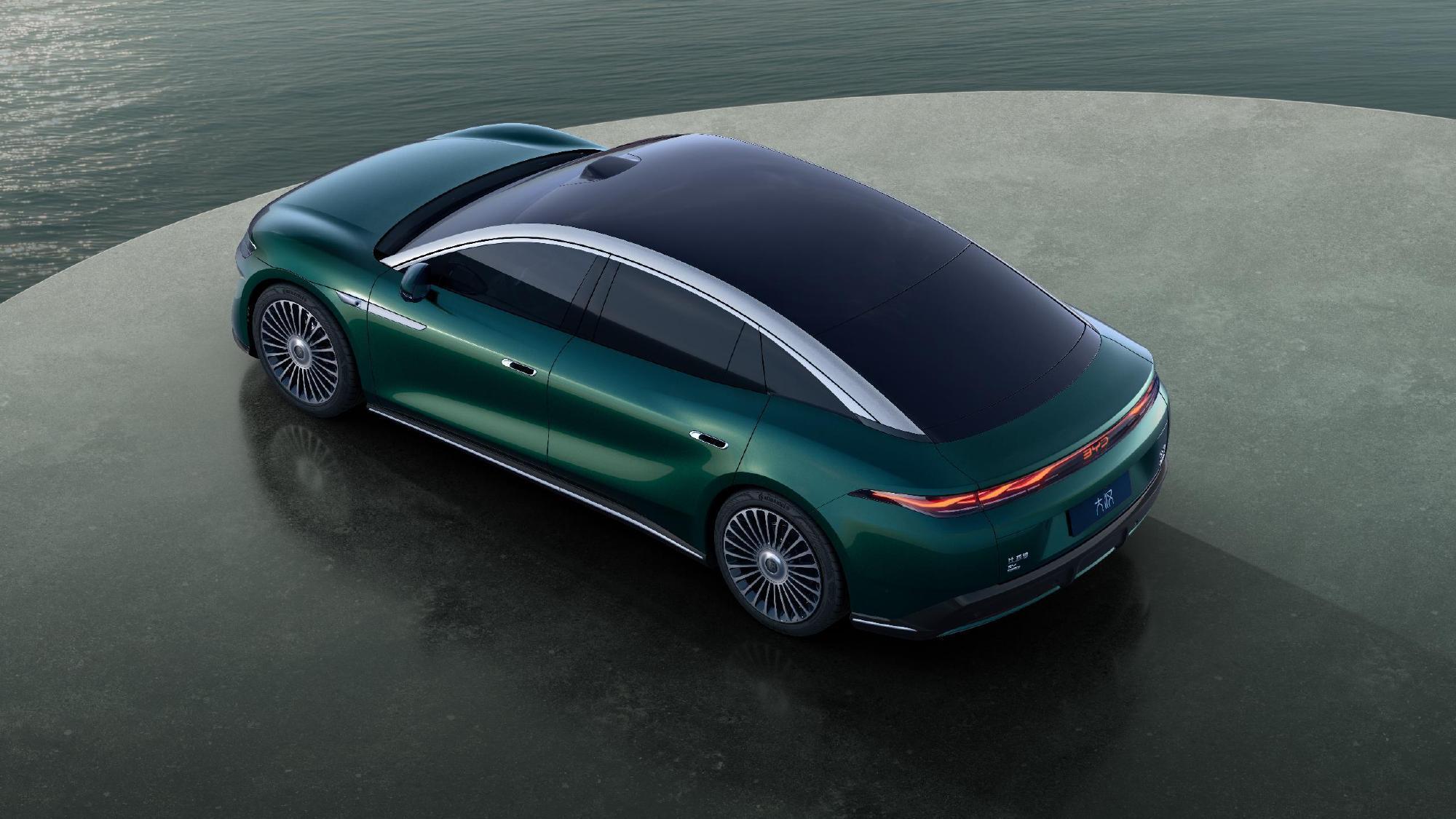
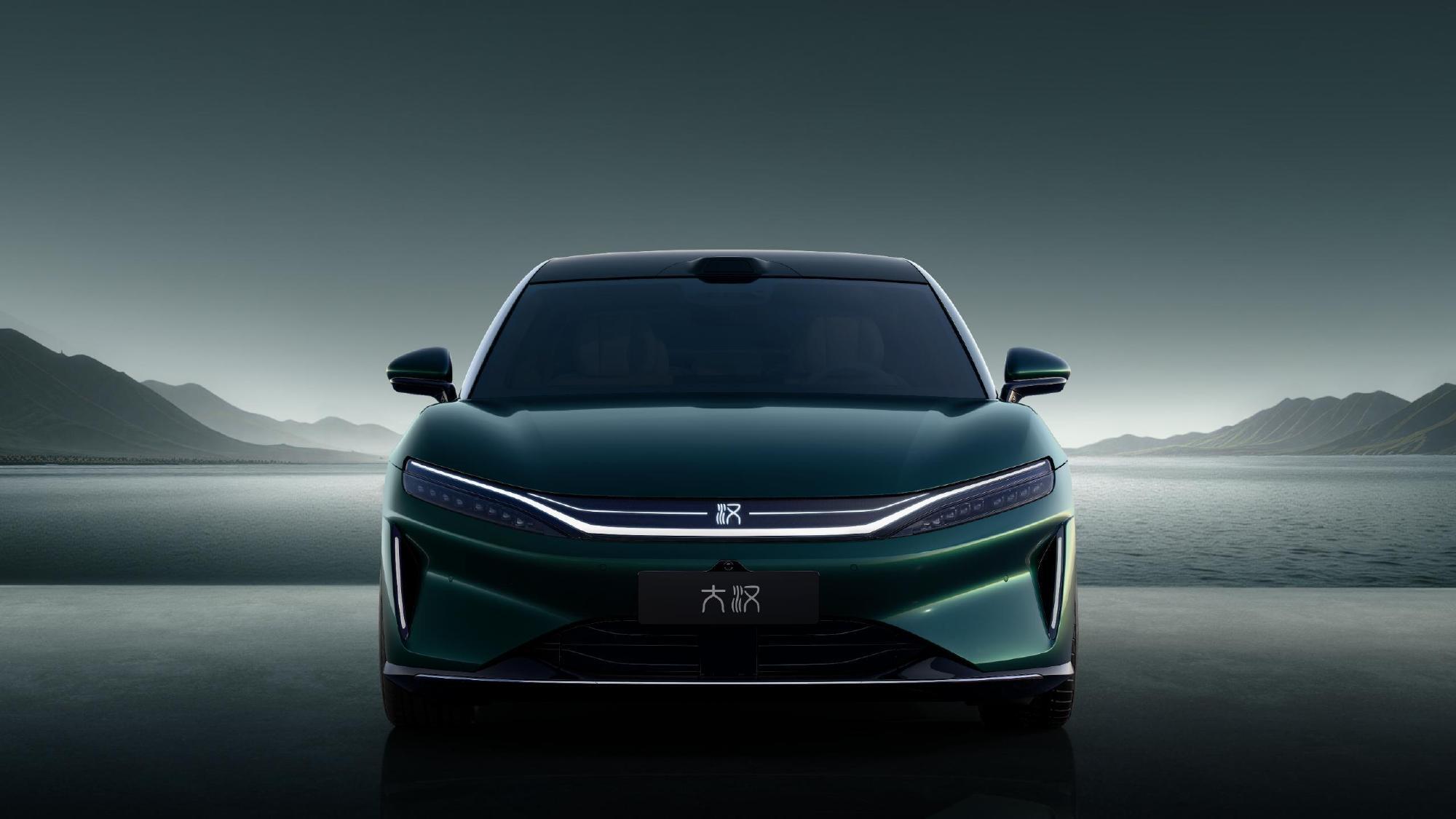
BYD has a new flagship sedan, and it’s called the Da Han. Get past the name and you’ve got a big electric four-door that stretches longer than an S-Class, cracks 760 hp in its hottest form, and claims north of 600 miles between charges.

The Da Han joins BYD’s Dynasty line-up and sits above the Han in the range. Previously referred to as the Great Han, it measures 207 inches (5,256 mm) long, 78.7 inches (1,999 mm) wide, and 59.4 inches (1,510 mm) tall, riding on a generous 123.2-inch (3,130 mm) wheelbase. That’s longer than a standard Mercedes S-Class, which runs 203.9 inches (5,179 mm) on a 122.2-inch (3,106 mm) wheelbase.

Read: BYD Has An Explanation For The EV Motor Hanging Out Of This Tang

The first official photos show the car in dark green, a shade that plays up the aerodynamic bodywork. The nose sits low, with tapered LED headlights, a light bar, and a black lower grille. It looks especially clean from the side, helped by contrasting silver roof rails and black B-pillars that blend into the side glass.

 It Takes A 1,600-Pound Battery To Move A BYD Sedan Longer Than An S-Class

For as striking as the Da Han is to look at, it’s the specifications are what land. An all-electric version leads the charge, but a plug-in hybrid will also be available, ensuring it caters to as many new car buyers as possible.

All-electric versions of the Da Han share the same 102 kWh battery pack. This hefty pack, apparently weighing in at 1,600 lbs (725.9 kg), drives a rear-mounted electric motor in the entry-level version, producing 496 hp (370 kW) and giving it a driving range of either 603 miles (970 km) or 626 miles (1,008 km), depending on the configuration.

Dual-Motor Power

 It Takes A 1,600-Pound Battery To Move A BYD Sedan Longer Than An S-Class

Shoppers after more performance can step up to an all-wheel-drive version that keeps the same battery and rear-mounted motor but adds a front one, lifting combined output to 764 hp (570 kW). Range on the AWD models varies between 509 miles (820 km), 528 miles (850 km), and 547 miles (880 km). Impressive as those figures are, China’s CLTC cycle runs notoriously optimistic, so real-world numbers will come in lower.

As for the plug-in hybrid model, it will use a 1.5-liter turbocharged engine working alongside a 54.4 kWh battery and a single electric motor, resulting in a combined 422 hp. The electric driving range of this version will be a solid 292 miles (470 km).

\\\\\\\

Bentley Showcases High-Tech Interior For New Torcal EV

  • Bentley has teased the interior of the upcoming Torcal EV.
  • Model sports curved displays and diamond-shaped accents.
  • Crossover will have a unique “floating diamond grille.”

The teaser campaign for the Bentley Torcal is kicking into high gear as the company has released a new clip that showcases the interior. The ultra-luxury brand has also released a few new details about their first electric vehicle.

Starting outside, the automaker said the crossover will have a “jewel-like floating diamond grille” that “transforms a functional necessity into a captivating design statement – one that is unmistakably Bentley and unlike anything else on the road.” The video doesn’t give us a very good look at it, but the grille is expected to echo the one found on the EXP 15 concept.

More: Bentley’s Electric SUV Has An Ultra-Lux Interior With Curved Displays

Bentley also provided a peek at the three dimensional taillights, which have a diamond pattern. The pointy shape is a bit of a theme for the Torcal and the company noted the historical design feature has been “reinterpreted for a new era.”

The automaker went on to say they teamed up with Cumbria Crystal to commission “bespoke hand-cut crystal objects designed specifically for the project.” Details are limited, but the company suggested the crystals will be illuminated to create a “distinctive visual signature rich in depth, movement and texture.”

\\\\\\\

Putting marketing hyperbole aside, we can see the crossover will have sculpted door panels with an interesting ridge-like pattern. Elsewhere, there are knurled climate controls and a rotary dial with a start/stop button. They’re joined by physical buttons as well as dedicated Sport and Comfort modes.

The latest pictures also give us another look at the crossover’s curved infotainment system. It features a portrait orientation as well as a lower bar that shows climate and seat information.

While there isn’t much else to see, previous spy photos have shown the model will have a three-spoke steering wheel with wing-like stalks similar to the Audi Q3. The right side has a shifter, while the left side has an assortment of light and wiper controls.

Well-heeled customers will also find a curved digital instrument cluster and circular air vents. They’ll be joined by real metal accents and a wide swath of wood trim on the passenger side dashboard.

Performance specifications remain mysterious, but the Torcal will ride on the PPE platform that underpins an assortment of models including the Porsche Cayenne Electric. It sports a 113 kWh battery pack, a 390 kW DC fast charging capability, and outputs of 435 hp (324 kW / 441 PS), 657 hp (490 kW / 666 PS), and 1,139 hp (849 kW / 1,155 PS). The Bentley will likely fall somewhere in between the latter two numbers and the company has already confirmed the model will be capable of getting 100 miles (161 km) of range in as little as seven minutes.

A debut is scheduled for September 23 and the model will arrive in the United States in the third quarter of 2027. When it does, it’s expected to start around $200,000 to $250,000.

\\\\\\\\\

A 5,831-lbs Porsche Hit 167 MPH Underneath A Plane As It Took Off

  • Porsche chased Roc, the plane with the widest wingspan on Earth.
  • The stunt unfolded at California’s Mojave Air and Space Port.
  • Roc’s six engines combine for 340,500 pounds of thrust.

Eager to launch the all-new Porsche Cayenne Electric with the right amount of fanfare, the German brand went looking for a very special stunt, and it settled on one involving the largest aircraft in the world. While we’re not sure it’s as impressive as the time VW used a Touareg V10 TDI to tow a Boeing 747 two decades ago, it’s a decent effort all the same.

The whole thing took place at the Mojave Air and Space Port and involved Roc, the plane with the largest wingspan on Earth. The thing is so enormous it has two fuselages and can take off fully loaded at up to 1.3 million pounds (589,670 kg).

Read: Porsche’s New Cayenne Coupe EV Hits 60 As Fast As The 911 Turbo S And Can Still Tow Your Boat

In the past, we’ve seen plenty of supercars racing fighter jets off the line, but extracting maximum acceleration from the Cayenne Electric to outpace Roc wasn’t the objective here. Instead, Porsche wanted to trail behind Roc as it sped down the runway before taking off, in what it describes as a “test of precision, stability and power.”

To keep the Cayenne, and driver Patrick Long, safe, the SUV had to be positioned perfectly in between the plane’s two fuselages. If positioned too far back, it’d be hit by the jet blast from the plane’s six powerful engines that combine to deliver 340,500 lbs (154,448 kg) of thrust, enough to throw the Porsche into the air. Too far forward and Long could have been at risk of hitting the landing gear.

As Roc accelerated down the runway, Long had to push the Cayenne Electric through to 167 mph (269 km/h) and then got the perfect view of the massive plane taking off mere feet away from him.

\\\\\\\\

“It was probably one of the most focused and intense moments of my life,” Long said. “We believed in the data, and I knew I could rely on the Cayenne and the pilots of Roc – we had a good team. Operating with a fully charged battery, we started slow – I was using minimal power and holding the car exactly where it needed to be, and I knew I had the performance to maintain my position no matter what.”

The new Cayenne Electric was the obvious weapon of choice for this stunt. The current flagship Cayenne Turbo Electric uses a pair of electric motors delivering up to 1,138 hp and 1,106 lb-ft (1,500 Nm) of torque, and whereas a lighter vehicle may have been tossed around by the jet blast, the Porsche remained rock solid. Indeed, it weighs in at a hefty 5,831 lbs (2,645 kg).

\\\\\\\

Photos Porsche

Tesla Quietly Raised Its Cheapest Model 3 Lease By 12%

  • The cheapest Model 3 lease now works out to $418 per month in the US.
  • The Performance version comes to $731 monthly over 36 months.
  • Lease prices across the lineup have climbed by as much as 12 percent.

Leasing a Tesla Model 3 in the US has just gotten more expensive, so anyone hoping to get behind the wheel of a new one may find that paying cash makes more sense than signing a lease, at least in some cases.

Lease prices have crept up quietly across the entire Model 3 family, and the increases start with the base Rear-Wheel Drive model, which now runs $379 per month over 36 months with an annual mileage cap of 10,000 miles. That figure looks reasonable enough on its own, but it leaves out the $4,075 due at delivery, a sum made up of a $3,000 down payment, the first monthly payment, and an acquisition fee.

Read: Tesla’s First Model Y Price Hike In Two Years Skips The Cheapest Version

After factoring this in, you get an effective rate of $481 per month, which is roughly 12 percent higher than earlier this year. As recently as last week, the EV was offered at $329 per month with a lower $4,024 fee due at signing.

Lease prices have also increased for other Model 3 variants. For example, the Premium Rear-Wheel Drive commands $399 per month over 36 months, excluding the $4,094 fee that’s due up front. Add that into the equation, and you’re looking at an effective rate of $501. The Premium All-Wheel Drive is more expensive at $479 per month with a higher fee of $4,174, meaning it works out to $581 per month over the life of the lease.

 Tesla Quietly Raised Its Cheapest Model 3 Lease By 12%

Then there’s the Model 3 Performance. It has a monthly lease of $629 plus the $4,324, which is due at delivery. Do the math, and it works out to $731 per month for 36 months.

While this is roughly 4.3 percent higher than previously, it’s not necessarily a bad deal. Earlier this year, Hyundai was offering the Ioniq 5 N for $699 per month over 36 months with $3,999 due at signing, working out to $810 per month.

\\\\\\\\\\\\\\\\\\\\\\\\\\\\\\\\\\\\\\\\\\\\

Hyundai’s New Kona Looks So Much Like An Ioniq You’d Think It Went Electric

  • The next-generation Hyundai Kona was caught completely undisguised.
  • It will bring a boxier and more mature styling alongside advanced tech.
  • The SUV could merge with the Creta and underpin a new GM crossover.

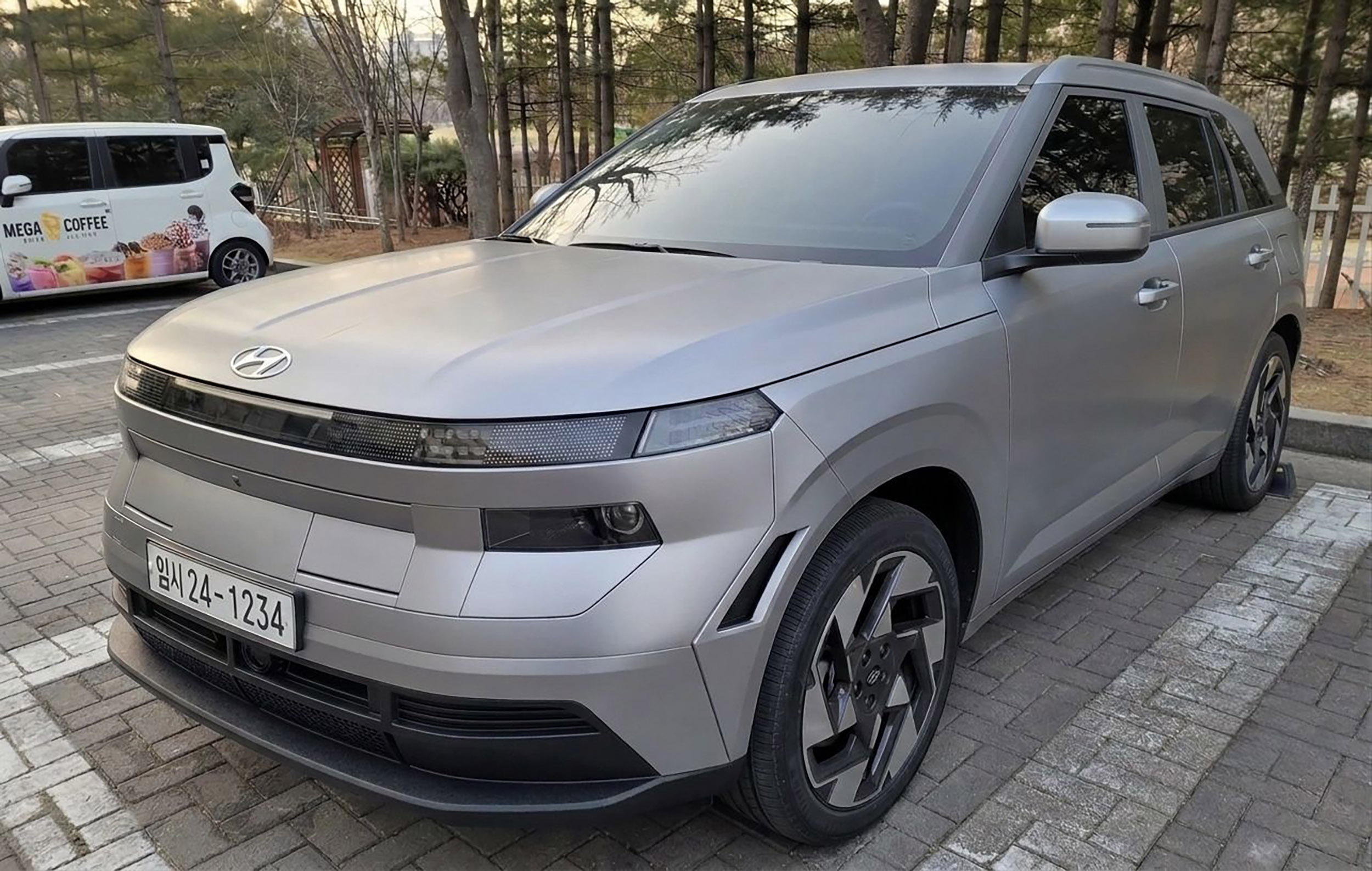
Hyundai pulled the wraps off the second-generation Kona in December 2022, but rather than settle for a mid-cycle nip and tuck, the automaker is preparing a more thorough redesign for 2027. After earlier runs of camouflaged prototypes, the new Kona has now turned up completely undisguised in Korea, and the exposed sheetmetal reveals a taller, more upright stance than the car it replaces.

The styling is only part of the story here, as reports suggest Hyundai wants to fold the Kona and Creta lines into a single global model, a logical move given their size and where each sits in the market. There’s also talk that the SUV’s underpinnings could be shared with the next Chevrolet Tracker, the product of an agreement struck with General Motors.

More: Redesigned Hyundai Tucson Spied Alongside The Current Model

The photos making the rounds on social media, including a set posted by @EWVexillary, point to a Kona that borrows the rugged cues from the Crater concept. At the same time, the cleaner surfacing pulls it visually closer to the Ioniq EV family, splitting the difference between off-road attitude and electric-era modernity.

Mature Styling

 Hyundai’s New Kona Looks So Much Like An Ioniq You’d Think It Went Electric
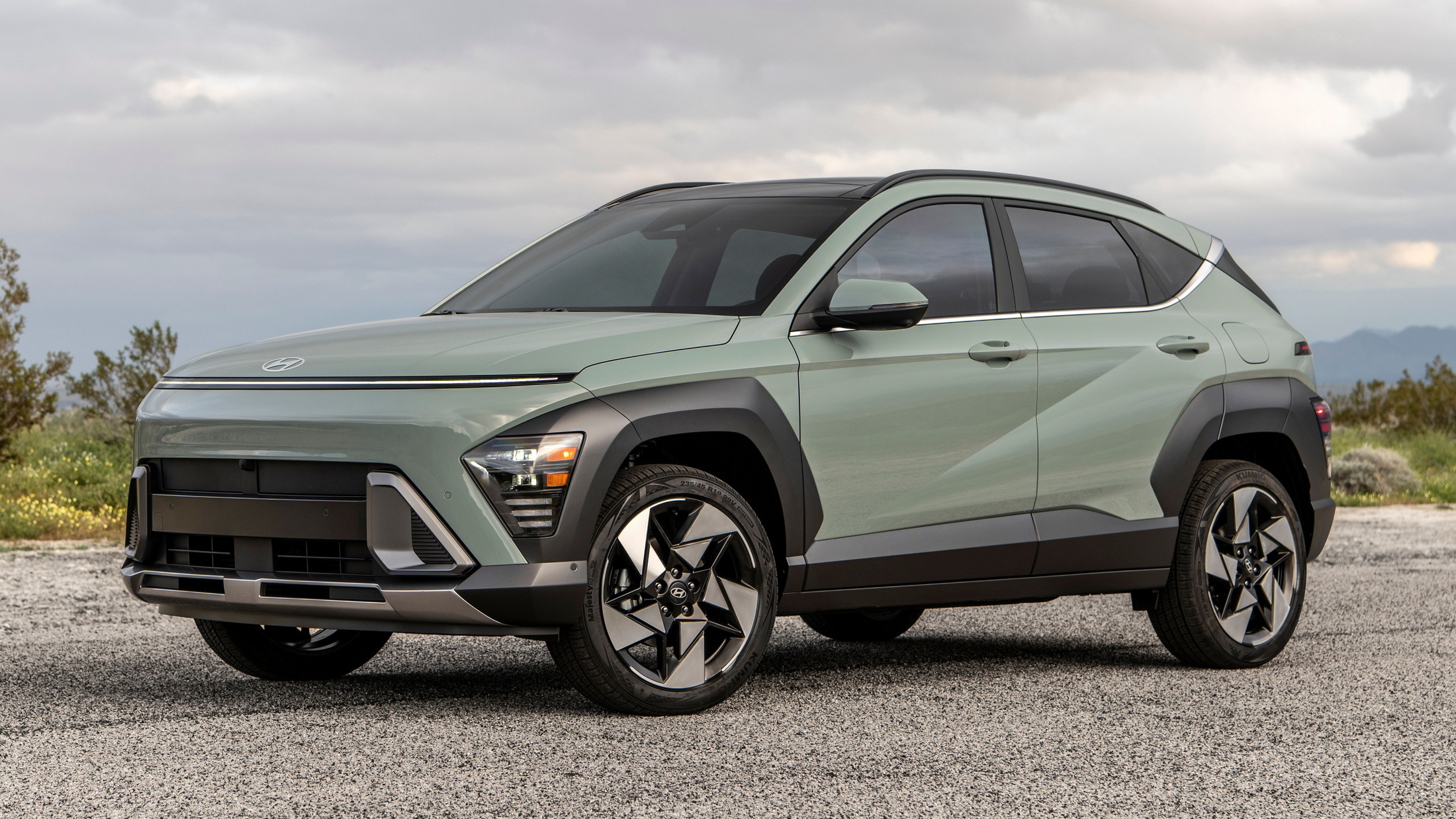
An undisguised prototype of the new Kona (above) compared to the outgoing model (below).
 Hyundai’s New Kona Looks So Much Like An Ioniq You’d Think It Went Electric

The front end keeps the split-headlight arrangement of the previous generations, though the main units are much smaller now and the full-LED bar runs thicker than before. Below sits a sculpted bumper with smaller intakes and what looks like a covered grille.

More: Hyundai’s Popular Three-Row SUV Is Going Under The Knife

The profile is defined by what’s gone, namely the unpainted plastic cladding, which lends the car a more modern stance. A subtle two-tone treatment reinforces the effect, pairing gray pillars against matte silver bodywork. The flanks trade the diagonal creases of the outgoing model for cleaner surfacing, and the greenhouse is entirely new, its straight belt line running back to a more upright tail.

Dimensions haven’t been confirmed, but the SUV could grow, following the lead of the mechanically related Kia Seltos, which stretches to 4,430 mm (174.4 inches) long. By comparison, the current Hyundai Creta measures 4,330 mm (170.5 in), and the Kona is slightly longer at 4,350 mm (171.3 in).

Hyundai Kona 2027
Tamamen sızdı .

Segment büyüdü stil Ioniq ‘leşti.
Pleos gelecek https://t.co/tXX8fNP2po pic.twitter.com/TNuBdBLW6e

— Elvis Will Vexillary 🔋 (@EWVexillary) July 21, 2026

A further increase in size could help the Kona cement its position between the subcompact and compact SUV segments in Europe, bridging the gap between the smaller Bayon and the larger Tucson. Rivals will include the likes of the VW T-Roc, the Toyota C-HR, the Honda HR-V, and the Mazda CX-30.

New Tech Inside

 Hyundai’s New Kona Looks So Much Like An Ioniq You’d Think It Went Electric
The dashboard of the Hyundai Ioniq 3 with the Pleos infotainment.

Inside, the crossover will most likely gain a digital cockpit with larger screens, following the lead of the Ioniq 3. Those run on the new Hyundai Pleos Connect infotainment, built on Google’s Android. Hyundai isn’t ditching buttons either, keeping physical controls for the functions that matter. Practicality should improve too, with a slightly larger footprint freeing up more room for passengers and their bags.

More: Hyundai Strips The New Ioniq 3 Down To Its Cleaner, Cheaper Self

Depending on the market, the powertrain range may include a naturally aspirated 2.0-liter, a turbocharged 1.6-liter, and a self-charging hybrid 1.6-liter in FWD and AWD forms. Hyundai might also keep the fully electric variant around and potentially add a range-extender setup.

The unified third-generation Kona and Creta is expected to make its formal global debut within the next few months, likely as a 2027 model.

\\\\\\\

Baldauf

A Zeekr SUV Locked Its Owner Out For Over 30 Hours As Soon As It Left China

  • The owner says the plug-in hybrid’s fuel filler cap was locked after he left China.
  • Zeekr says it locks down elements of the 9X for security reasons if they leave the country.
  • Mr. Liu is planning a cross-continent trip in his 9X, traveling from China to Europe.

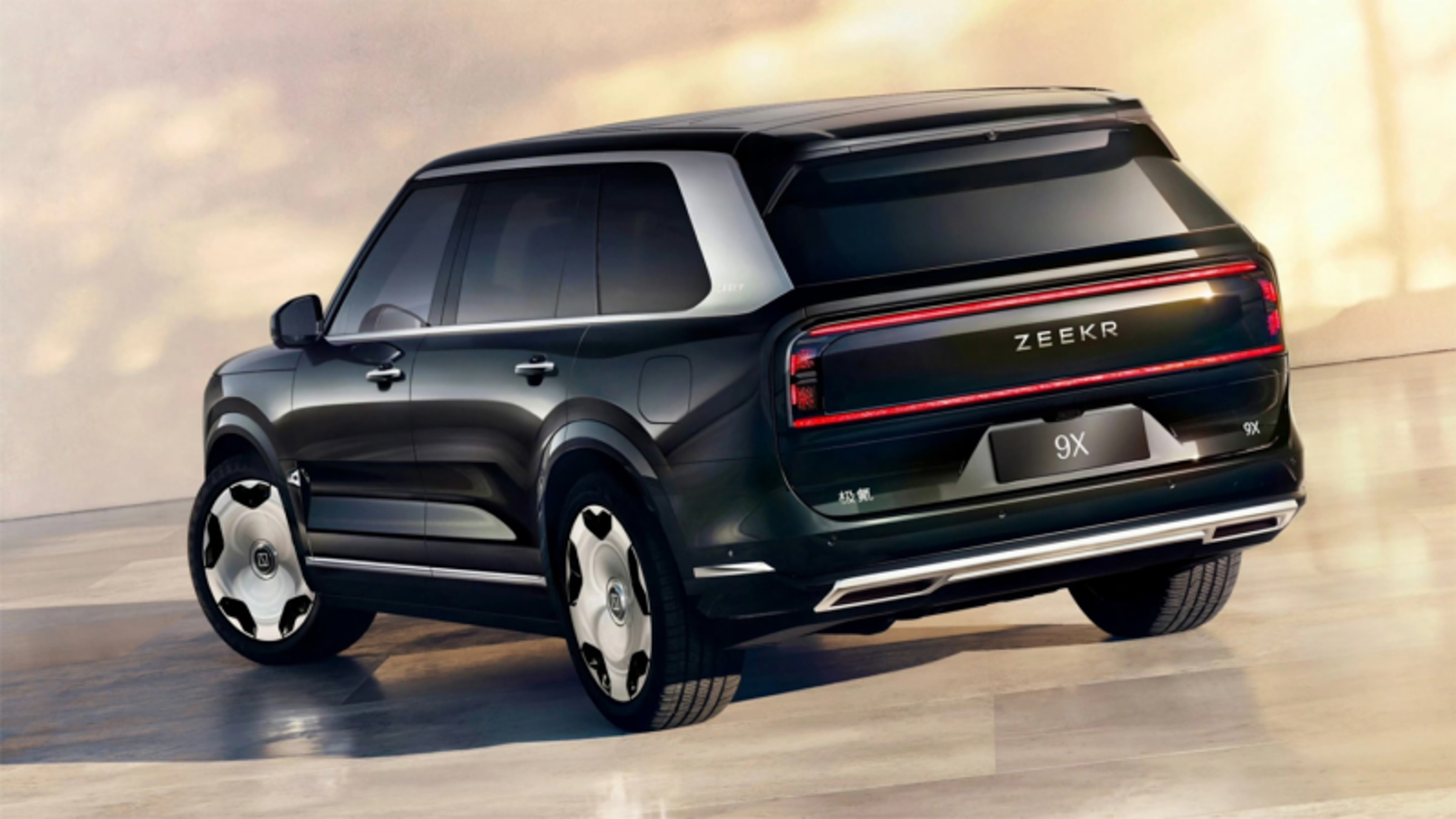
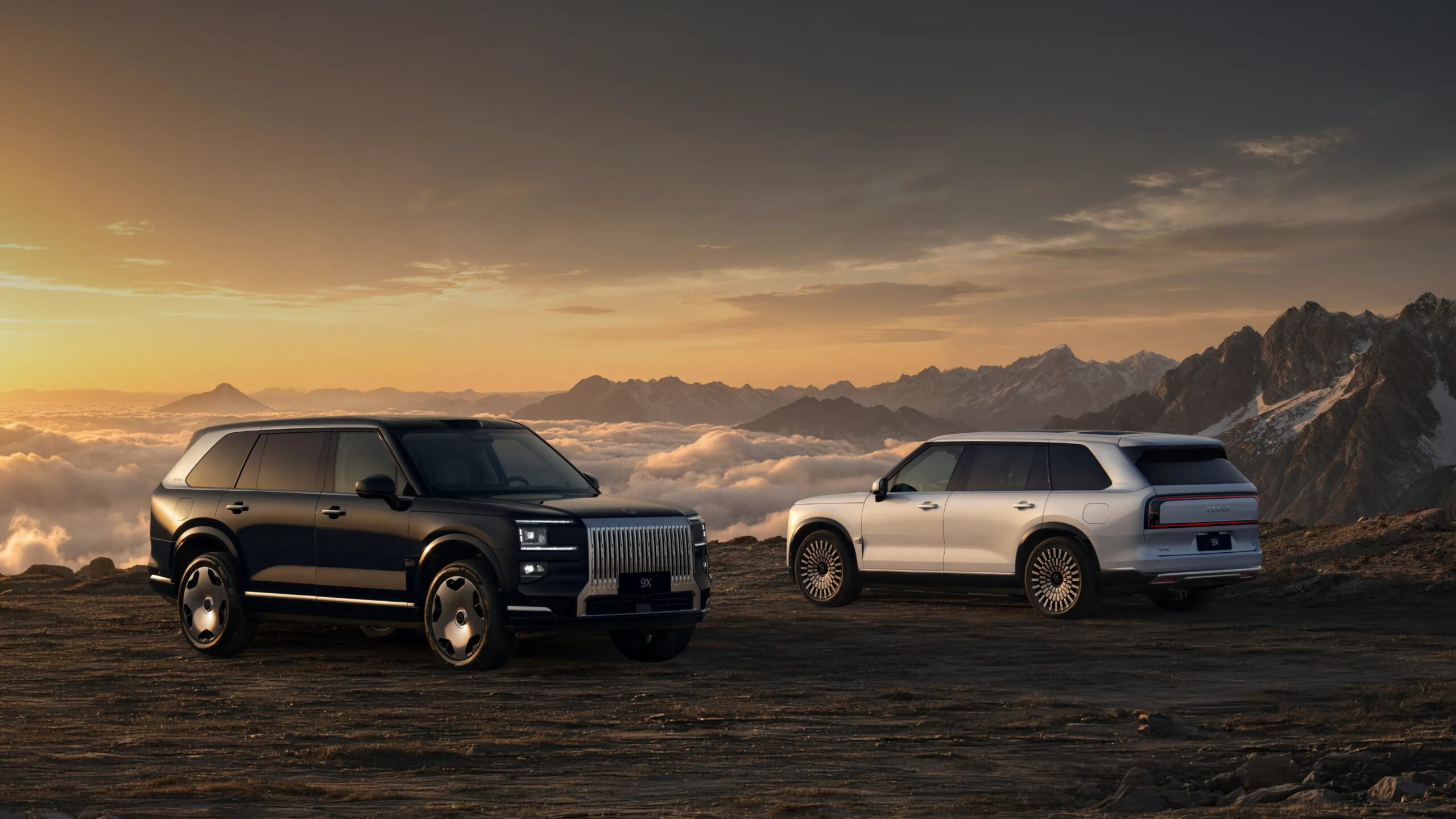
The Zeekr 9X is a deeply luxurious SUV stuffed with technology, and by most measures that counts as a selling point, but one owner in China has run into the flip side of all that intelligence. As he found out, the 9X may be smart enough to become a problem for the person who actually paid for it.

Earlier this month, 9X owner Mr. Liu set off on a planned road trip from China all the way to Europe, a journey meant to be the ultimate test of Zeekr’s flagship SUV. Things went sideways as soon as he crossed into Kazakhstan, forcing the brand to step in so his trip could continue.

Read: Zeekr’s Flagship 9X Costs Lincoln Money But Crushes Hypercar Power

Liu claims that once he left China, his 9X clamped down hard. The navigation quit, the glove box locked itself, and, most maddening of all, the electronically operated fuel filler cap stayed shut for more than 30 hours. He points out that his local Zeekr dealer knew about the trip ahead of time, since the 9X was in for routine maintenance beforehand, yet nobody mentioned these limits.

Too Much Tech?

 A Zeekr SUV Locked Its Owner Out For Over 30 Hours As Soon As It Left China

No doubt eager to get its side of the story out before Liu’s experience went viral, Zeekr spoke to the National Business Daily and explained that the SUV’s security mechanisms kicked in the moment it left China. That triggers on-screen prompts and pop-up warnings and also restricts certain functions. The system, Zeekr later said, is meant to deter theft and smuggling.

Although Zeekr says the powertrain and brakes will continue to operate normally, it is not possible to open the fuel filler cap or charging port electronically, as is usually done in the 9X. Instead, the only way to open the fuel filler door is to hold the hazard light button inside the cabin for five seconds. Additionally, the charging flap can be opened by applying direct and firm pressure to it. While this all sounds rather easy, we suspect very few 9X owners know the hazard light switch can double as an opener for the fuel cap.

 A Zeekr SUV Locked Its Owner Out For Over 30 Hours As Soon As It Left China

The restrictions were ultimately lifted through an authorization code sent to the 9X. However, CarNewsChina understands this may be something the owner has to do every time he crosses into a new country. Zeekr has since apologized, saying that real safety “shouldn’t be solely defined by the manufacturer” and framing its revised approach as “control by the user & protection by the manufacturer.”

A Passcode And An Apology

 A Zeekr SUV Locked Its Owner Out For Over 30 Hours As Soon As It Left China

The company has now added a passcode generator to its companion app, letting owners create their own unlock codes after a cross-border lockout. Whether those codes work offline is unclear, since signal is hard to find near international crossings. Zeekr has also promised an over-the-air update with an opt-out toggle that turns cross-border lockouts off by default, sparing Liu a fresh authorization code every time he enters a new country.

Zeekr has already expanded into multiple countries, Europe included. Vehicles sold there presumably skip these location-based restrictions, given how often drivers hop between countries in a single trip.

 A Zeekr SUV Locked Its Owner Out For Over 30 Hours As Soon As It Left China

BMW’s Latest X5 Out-Rooms The X7 And Has An 8K Cinema, But It’s Not For You

  • The long-wheelbase versions of the X5 and iX5 use self-driving tech from Momenta.
  • BMW partnered with Momenta in mid-2025 to power its local self-driving systems.
  • One of the iX5’s all-electric versions will have a driving range of over 621 miles.

Less than a month after the all-new BMW X5 premiered, long-wheelbase versions of it and the electric iX5 have arrived in China, and beyond the added length you would struggle to spot anything separating them from the X5s headed to Western markets.

The stretch comes from reworked underpinnings, giving the Chinese models a wheelbase 5.1 inches (130 mm) longer and pushing the gap between the axles to 124.6 inches (3,165 mm). To put that into perspective, the larger X7 sold globally measures 122.2 inches (3,105 mm) between its wheels, so anyone who plans to spend more time in the back seat than behind the wheel might find this X5 the smarter buy.

Read: BMW’s X5 Will Remind You Of Musk Every Time You Turn On The Lights

When BMW rolled out the domestic long-wheelbase versions of the new i3 and iX3 earlier this year, it dropped the pop-out door handles used on those models globally, switching to flap-style handles to satisfy Chinese regulations. The X5 L and iX5 L needed no such fix, keeping the handle tabs built into the pillars, an approach shared with the Ford Mustang Mach-E.

Chinese Autonomy

\\\\\\\\\

Perhaps the biggest change related to the driver-assistance systems. It runs software from Chinese company Momenta, using locally trained end-to-end artificial intelligence and providing ‘address-to-address driver assistance.’ While it does not include a LiDAR, as many new cars from China do, it’s likely to be more advanced than the system BMW offers elsewhere.  

One minor visual change made to the SUV is the presence of distinctive graphics near the Hofmeister kink and different wheel designs. As standard, the X5 L and iX5 L also feature diagonal daytime running lights, rather than the X-shaped lights of their global model. However, these units will be offered as an option. BMW’s Chinese team has also added extra light strips between the DRLs and the kidney grilles. The front bumper is also slightly less imposing.

Interior Upgrades

\\\\\

Several changes have been made to the cabin, making the long-wheelbase model even more luxurious than the standard model. These include new seats for the front passenger and rear occupants, and a fold-down theatre screen in the second row that supports 8K streaming and gaming. There are also different color options.

BMW has yet to publish powertrain figures for either car, but the company says the local iX5 L will cover more than 621 miles (1,000 km) between charges on the CLTC cycle.

\\\\\\\

EVs Actually Got 18% Cheaper, So Why Did The Median Price Go Up?

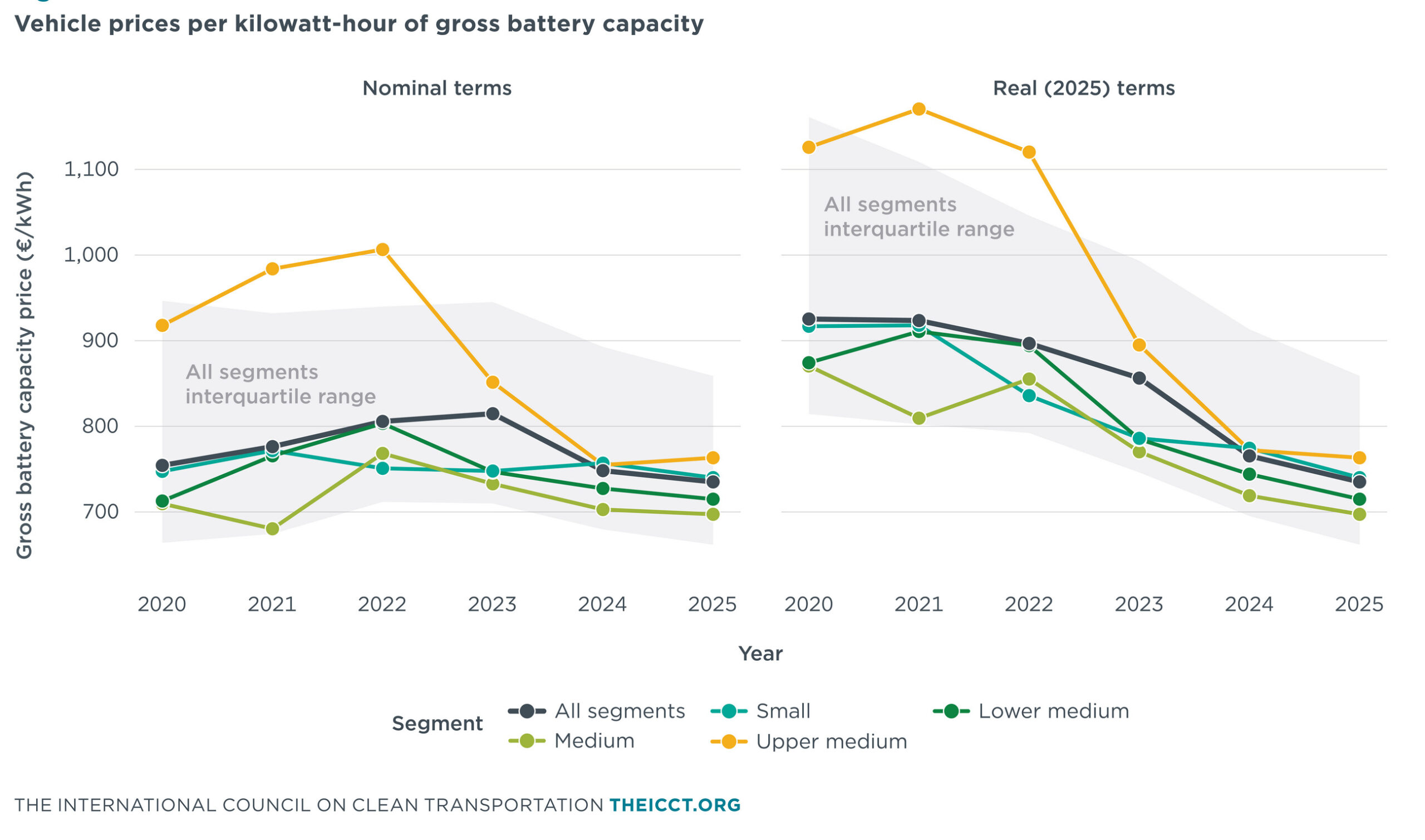
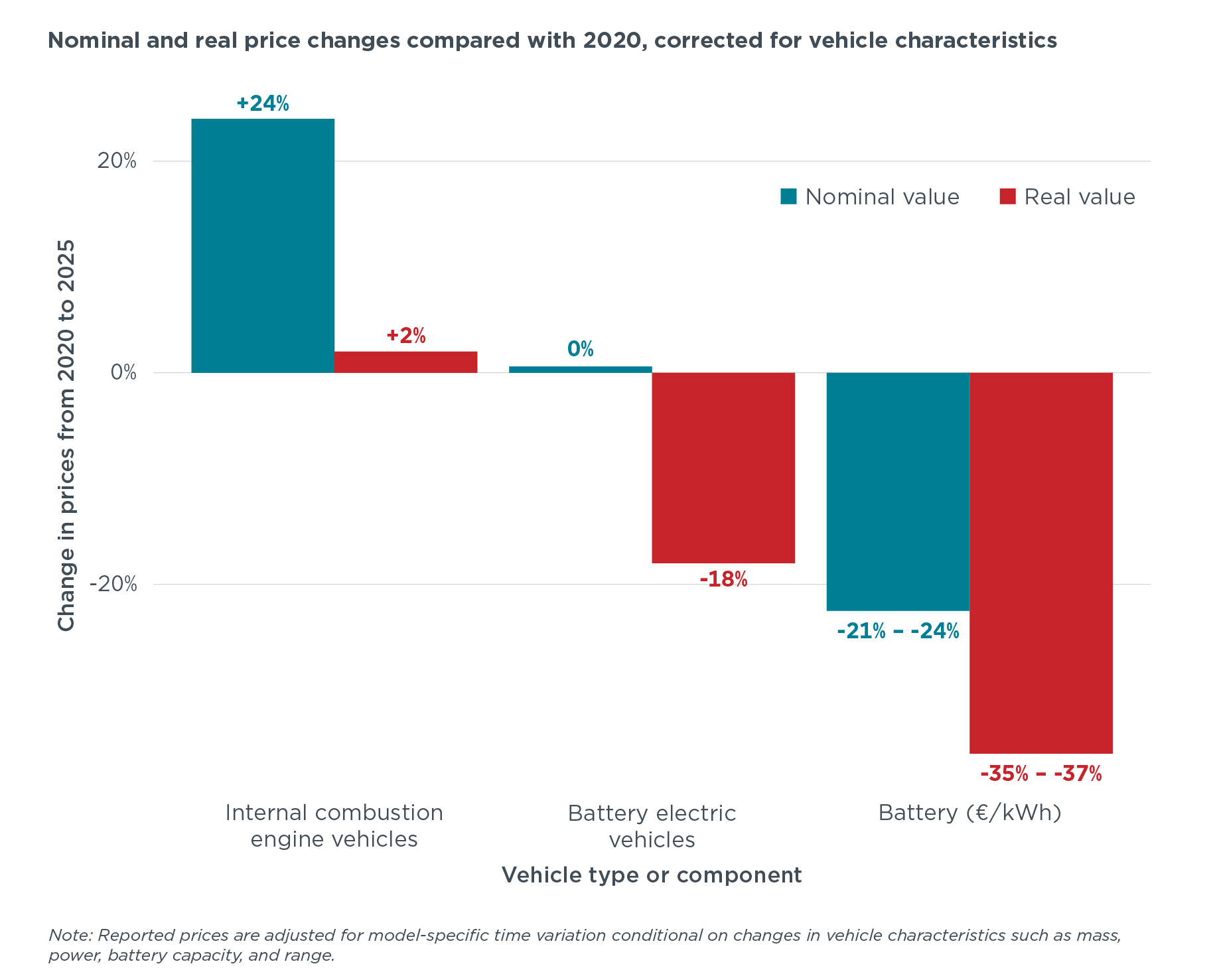
  • Battery costs fell about 35 percent in real terms since 2020.
  • Equivalent electric models dropped roughly 18 percent over five years.
  • Combustion cars moved the other way, growing about 2 percent.

Every year we’re told the next breakthrough in battery technology will finally make EVs more affordable. Quietly, that’s already started happening… at least on the manufacturing side. According to a new study out of Germany, global battery costs have fallen by roughly 35 percent in real terms since 2020. Yet if you’ve been shopping for an EV lately, you’ve probably noticed they haven’t become dramatically cheaper. In fact, the median advertised price actually went up. Here’s why.

Read: Used Hybrid And EV Prices Have Jumped $3,600 Even After The Tax Credit Died

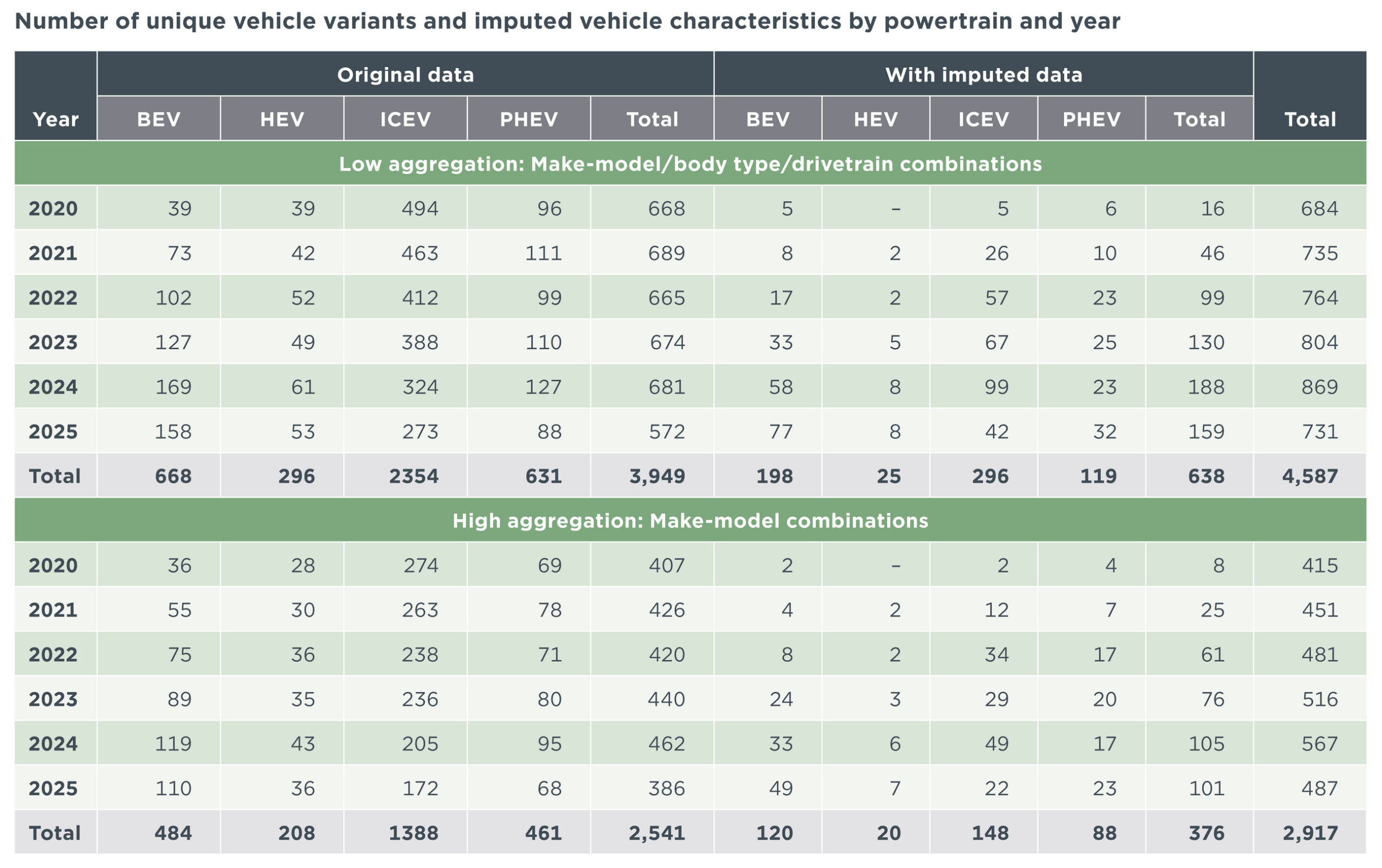
Researchers from the International Council on Clean Transportation (ICCT) analyzed more than 100,000 passenger car configurations sold in Germany between 2020 and 2025. When comparing equivalent models and adjusting for inflation, vehicle weight, power output, battery capacity, and electric range, they found battery electric vehicle prices fell by about 18 percent in real terms over the five-year period. Yes, prices fell by almost one-fifth. At the same time, internal combustion vehicles became roughly 2 percent more expensive.

 EVs Actually Got 18% Cheaper, So Why Did The Median Price Go Up?
Credit: ICCT
 EVs Actually Got 18% Cheaper, So Why Did The Median Price Go Up?

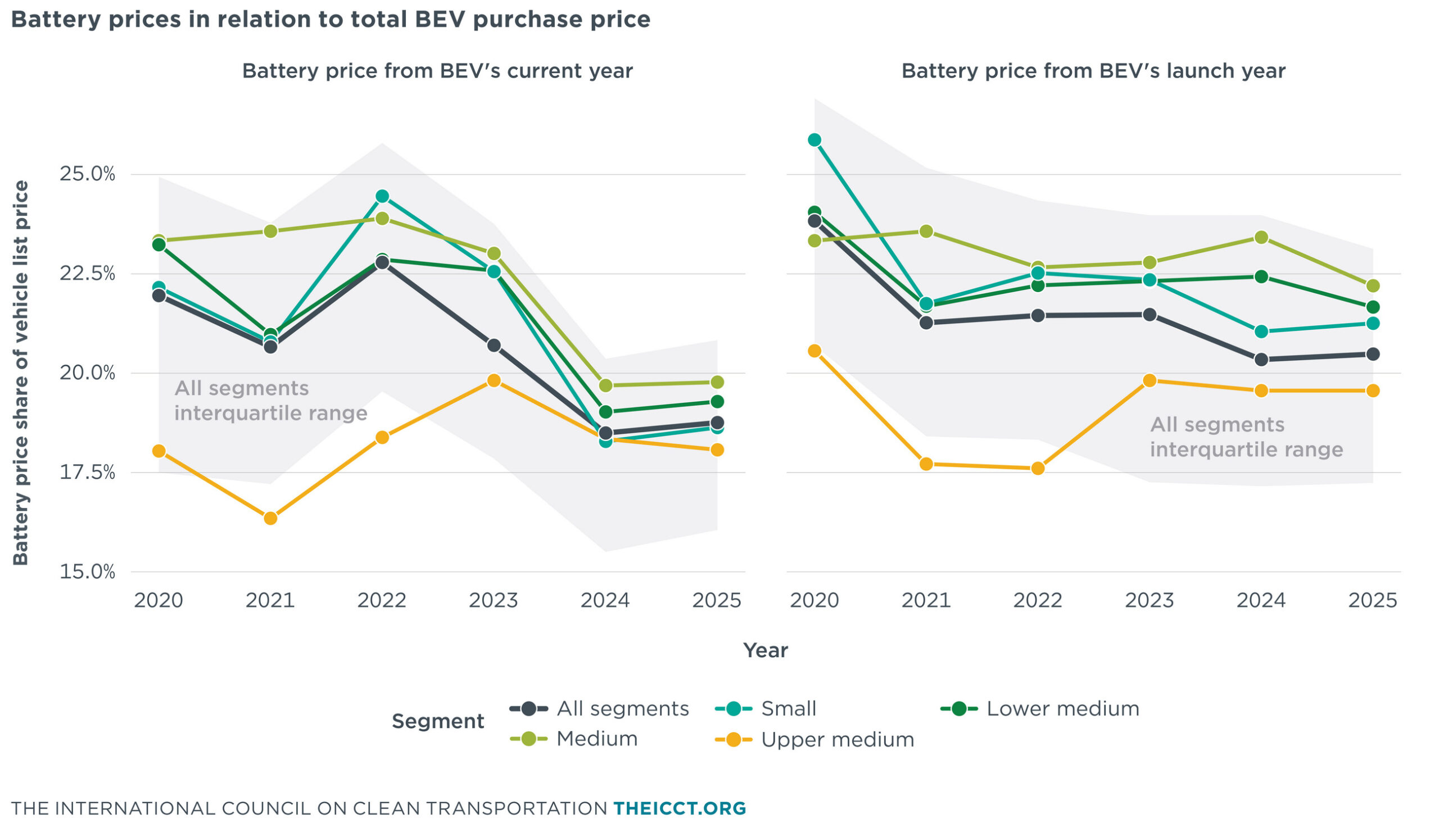
The study attributes much of that price drop to falling battery costs. What’s particularly interesting is the gap between the roughly 35 percent decline in battery prices and the 18 percent reduction in vehicle prices. Researchers say manufacturers appear to have used some of those savings to increase driving range, improve vehicle specifications, or offset research and development costs instead of cutting sticker prices even further.

Why The Median Price Climbed

On top of that, the overall market tells us an even more interesting story. The study confirms that individual EV models became cheaper while the median advertised price across the entire German market actually went up, growing from around €38,000 ($44,000) in 2020 to €54,000 ($62,000) in 2025.

 EVs Actually Got 18% Cheaper, So Why Did The Median Price Go Up?
Credit: ICCT

That’s largely because the number of available EV models exploded from 38 to 159 during the study period, with much of that growth coming from larger, more expensive vehicles in the lower-medium, medium and upper-medium segments. Buyers shopping for smaller, more affordable EVs still have relatively few choices, with mini and small cars accounting for just 14 percent of all BEV models on sale.

It’s worth noting that the findings reflect the German market rather than the United States, where incentives, taxes and consumer preferences differ considerably. Even so, the report highlights an important reality for anyone expecting dramatically cheaper EVs. Falling battery costs don’t automatically translate into lower sticker prices. Sometimes they become longer range, more equipment, or simply more expensive vehicles.

 EVs Actually Got 18% Cheaper, So Why Did The Median Price Go Up?
Credit: ICCT

Used Porsche 911 Prices Drop $14,000 As Used EVs Get More Expensive

  • Used EV prices rose sharply in the US while overall used market softened.
  • Tesla models dominated price increases but 911 values dropped by 10 %.
  • Higher fuel costs due to Iran war may have pushed shoppers back to EVs.

For the past few years, buying a used EV has been a waiting game, with would-be buyers often waiting for prices to fall a little further. That strategy may no longer be paying off. Used electric vehicle prices are climbing rapidly while the rest of the used car market continues to drift in the opposite direction, making dream cars like the Porsche 911 more affordable.

New data from iSeeCars suggests the turnaround isn’t a one-month anomaly, either. Used EV prices have now posted three straight months of year-over-year gains, moving from a 2.7 percent increase in April to 5.2 percent in May before reaching 7.4 percent in June.

Related: This Is How Much A 17K-Mile EV From A Dead Brand Sells For After 3 Years

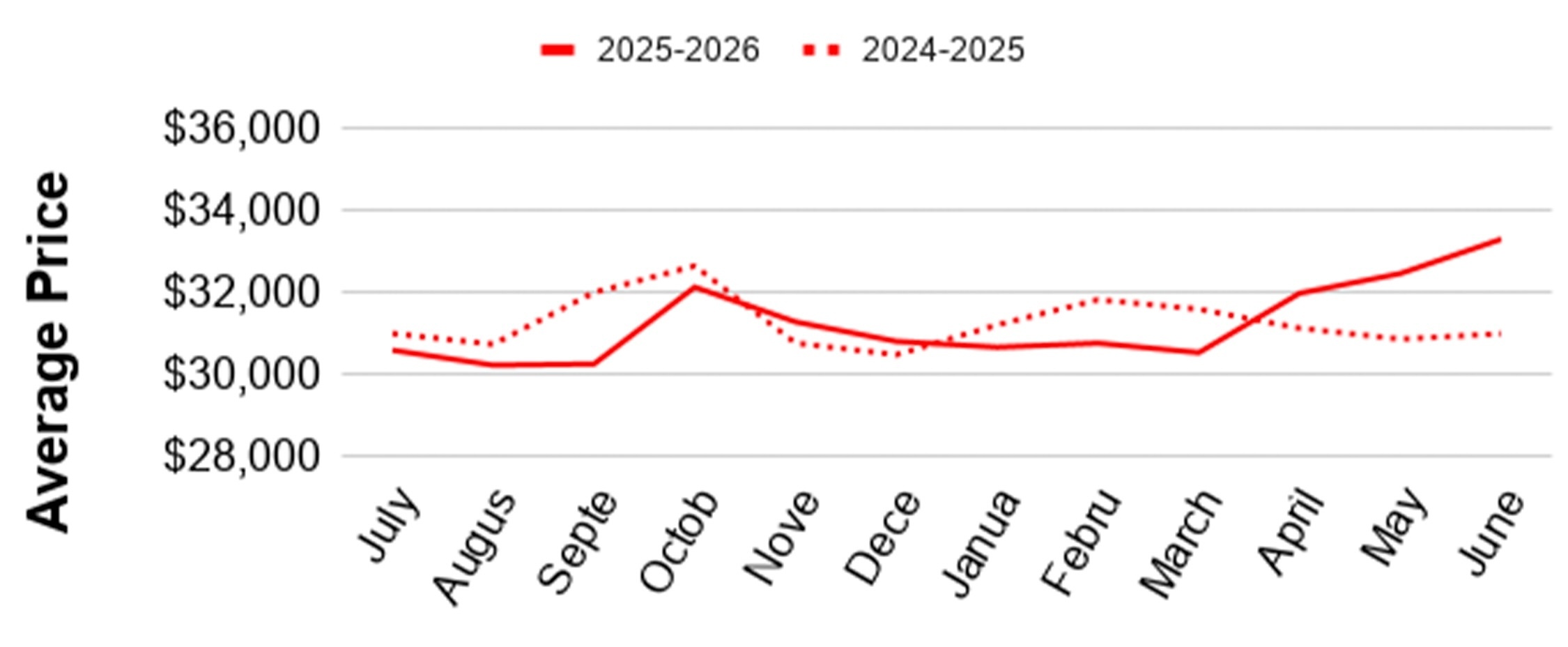
That pushed the average price of a one- to five-year-old used EV to $33,305 in June. Compared with the same month last year, that’s an increase of $2,308. Meanwhile, the average used vehicle price fell by 1.3 percent year over year, highlighting just how differently the EV segment is behaving.

Rising fuel costs may have helped trigger the shift, iSeeCars Executive Analyst Karl Brauer logically suggests. Gasoline prices rose sharply during the Iran conflict earlier this year, but it took several weeks before buyers adjusted their shopping habits and begin gravitating back toward EVs.

Average 1-5 YO EV Prices
 Used Porsche 911 Prices Drop $14,000 As Used EVs Get More Expensive

Tesla was the biggest beneficiary of the trend. All four of the brand’s core models landed among the 10 used vehicles with the largest year-over-year price increases. The Model X led the entire market, jumping 17.5 percent to an average price of $60,950.

The Model 3 wasn’t far behind with a 13.5 percent increase, while the Model S climbed 13.1 percent and the Model Y gained 12.0 percent. “Tesla makes up nearly half of the top 10 used models with the highest price increase,” Brauer noted.

Perhaps just as telling is what didn’t appear in the rankings. Not a single EV showed up among the 20 used vehicles with the steepest price declines. Instead, that list was populated by a mix of luxury vehicles, pickups, SUVs, hybrids, and conventional gasoline-powered models. The Lincoln Corsair posted the biggest percentage value drop (-14.7 %), but the Porsche 911 was right behind it (-10.6 %), and reminds us that there’s a silver lining to every cloud.

Used Cars With The Biggest Price Increases
 Used Porsche 911 Prices Drop $14,000 As Used EVs Get More Expensive
RankModelAvg Price$ Diff YoY% Diff YoY
1Tesla Model X$60,950$9,06617.5%
2BMW X2$33,956$5,03517.4%
3MINI Countryman$30,535$4,23116.1%
4Ford Mustang (convertible)$32,524$4,02514.1%
5Tesla Model 3$28,520$3,38813.5%
6Alfa Romeo Giulia$30,320$3,59113.4%
7Tesla Model S$52,787$6,11613.1%
8Honda Pilot$37,301$4,17212.6%
9Tesla Model Y$32,916$3,52912.0%
10Lexus ES 300h$43,057$4,36511.3%
11INFINITI QX80$48,756$4,87111.1%
12Lexus ES 350$41,289$4,10211.0%
13Hyundai Santa Fe Hybrid$33,619$3,25510.7%
14Cadillac CT5$36,613$3,47910.5%
15MINI Hardtop 2 Door$27,428$2,58710.4%
16Acura TLX$35,470$2,9299.0%
17Porsche Taycan$85,147$6,9478.9%
18Nissan Murano$27,917$2,2128.6%
19Nissan Armada$40,513$3,1578.5%
20Lexus IS 300$36,421$2,7468.2%
OverallAverage$32,395-$412-1.3%
SWIPE

Used Cars With The Biggest Price Drops
 Used Porsche 911 Prices Drop $14,000 As Used EVs Get More Expensive
RankModelAvg Price$ Diff YoY% Diff YoY
1Lincoln Corsair (hybrid)$37,312-$6,454-14.7%
2Porsche 911$118,025-$14,063-10.6%
3Audi Q5 (hybrid)$36,890-$3,012-7.5%
4Mercedes-Benz G-Class$127,727-$9,927-7.2%
5Audi A5 Sportback$33,495-$2,495-6.9%
6Ford Bronco$45,341-$2,763-5.7%
7Buick Encore GX$21,038-$1,116-5.0%
8Ford F-150 (hybrid)$46,201-$2,299-4.7%
9GMC Sierra 1500$45,426-$2,222-4.7%
10Nissan Rogue$22,401-$1,093-4.7%
11Audi A6$34,872-$1,700-4.6%
12Genesis GV80$44,892-$1,990-4.2%
13Mercedes-Benz GLB$30,863-$1,355-4.2%
14Jeep Wrangler$36,067-$1,479-3.9%
15Volkswagen Atlas$30,149-$1,044-3.3%
16Audi Q5 Sportback$37,189-$1,276-3.3%
17Chevrolet Blazer$26,706-$878-3.2%
18Ford Explorer Hybrid$29,979-$981-3.2%
19Chevrolet Malibu$18,619-$590-3.1%
20Mercedes-Benz S-Class$77,349-$2,371-3.0%
OverallAverage$32,395-$412-1.3%
SWIPE

iSeeCars

Mercedes’ New GLA Breaks Cover July 29, But Spy Shots Got There First

  • New spy photos reveal production GLA bodywork beneath reduced camouflage.
  • Electric crossover shares platform, cabin technology, hardware with CLA sedan.
  • GLA will also be available with hybrid power and potentially as a 671 hp AMG EV.

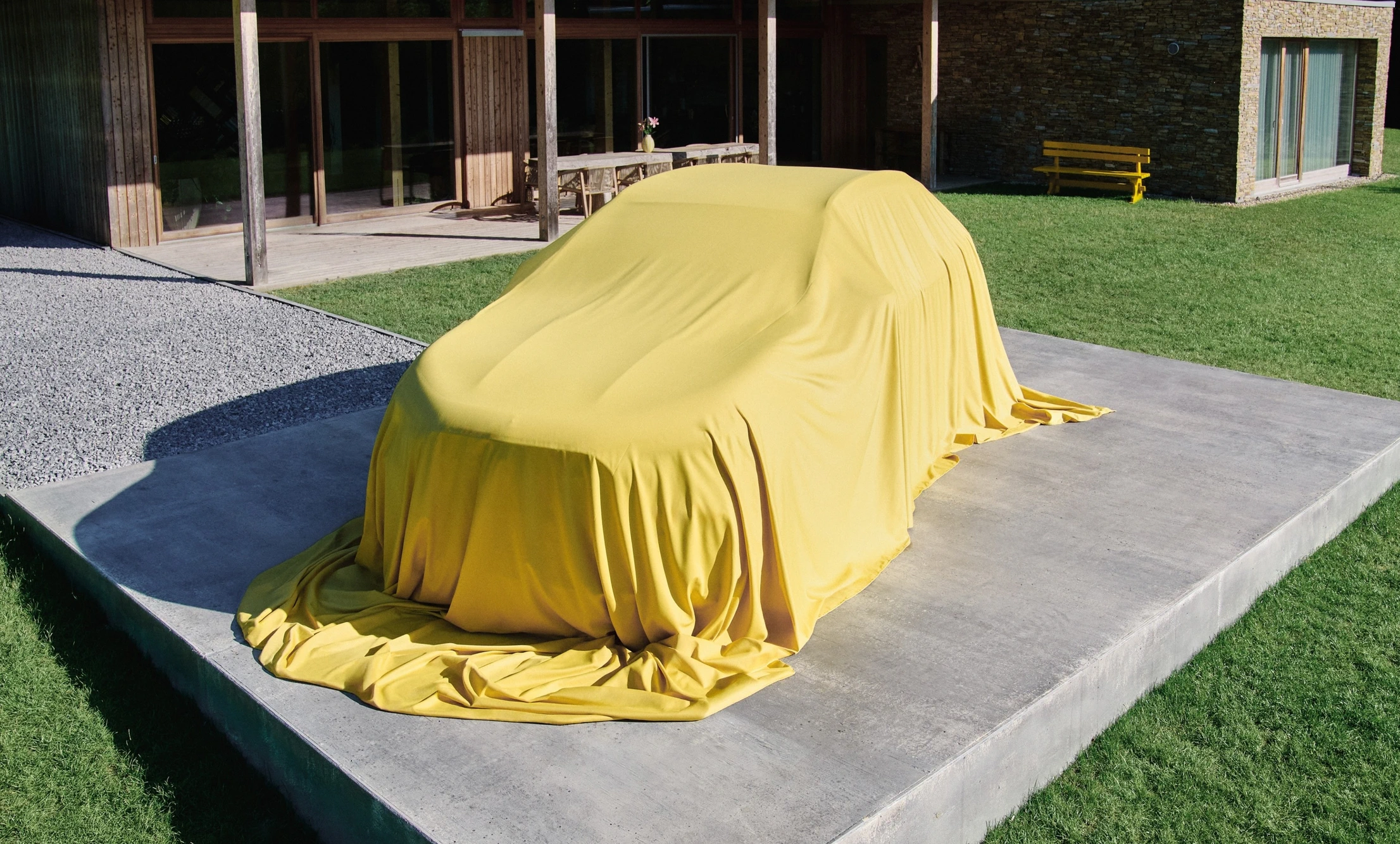
Mercedes has been gradually peeling back the layers on its next-generation GLA, and now it’s put a date on the full unveiling. . The company has confirmed the small crossover will break cover on July 29, releasing a teaser of the sheet-draped car to mark the occasion. The lineup follows the same multi-fuel approach as the new GLB: combustion versions keep the GLA name, while an electric model called the GLA Electric takes over from the outgoing EQA.

 Mercedes’ New GLA Breaks Cover July 29, But Spy Shots Got There First
Mercedes-Benz GLA teaser before July 29 reveal.

These latest spy shots, meanwhile, finally give us a much clearer look at its shape. While the front and rear remain disguised, the sides have largely stepped out of witness protection.

Related: Mercedes EV Sales Jumped 28% While The Rest Of The Brand Shrank

Compared with the heavily camouflaged prototypes we spotted earlier this year, this latest tester reveals its doors, glasshouse, and much of its body surfacing. The result is a cleaner and more sophisticated design that looks noticeably more aerodynamic than today’s GLA.

\\\\\

Baldauf

The newly exposed profile confirms several styling details we could previously only guess at. Flush-mounted door handles are present, helping to reduce drag, while a rising window line injects a little visual drama into an otherwise smooth-sided body. Combined with the gently sloping roofline, the overall effect is once again more sleek crossover than upright SUV. If it’s boxy you want, you need the new GLB that’s already on sale.

The GLA’s nose remains hidden behind camouflage, but Mercedes has already shown us the direction it’s heading. Expect a scaled-down interpretation of the retro-futuristic grille treatment introduced on the larger GLC EQ.

Stars-Shaped DRLs

\\\\\

Baldauf

The rear end is similarly concealed, though there are still clues hiding beneath the camouflage. Look closely and you can just make out the signature star-shaped lighting graphics that Mercedes has been rolling out across its latest EVs. Expect those illuminated three-pointed stars to feature prominently at both ends of the production GLA.

Up To Three Screens Available

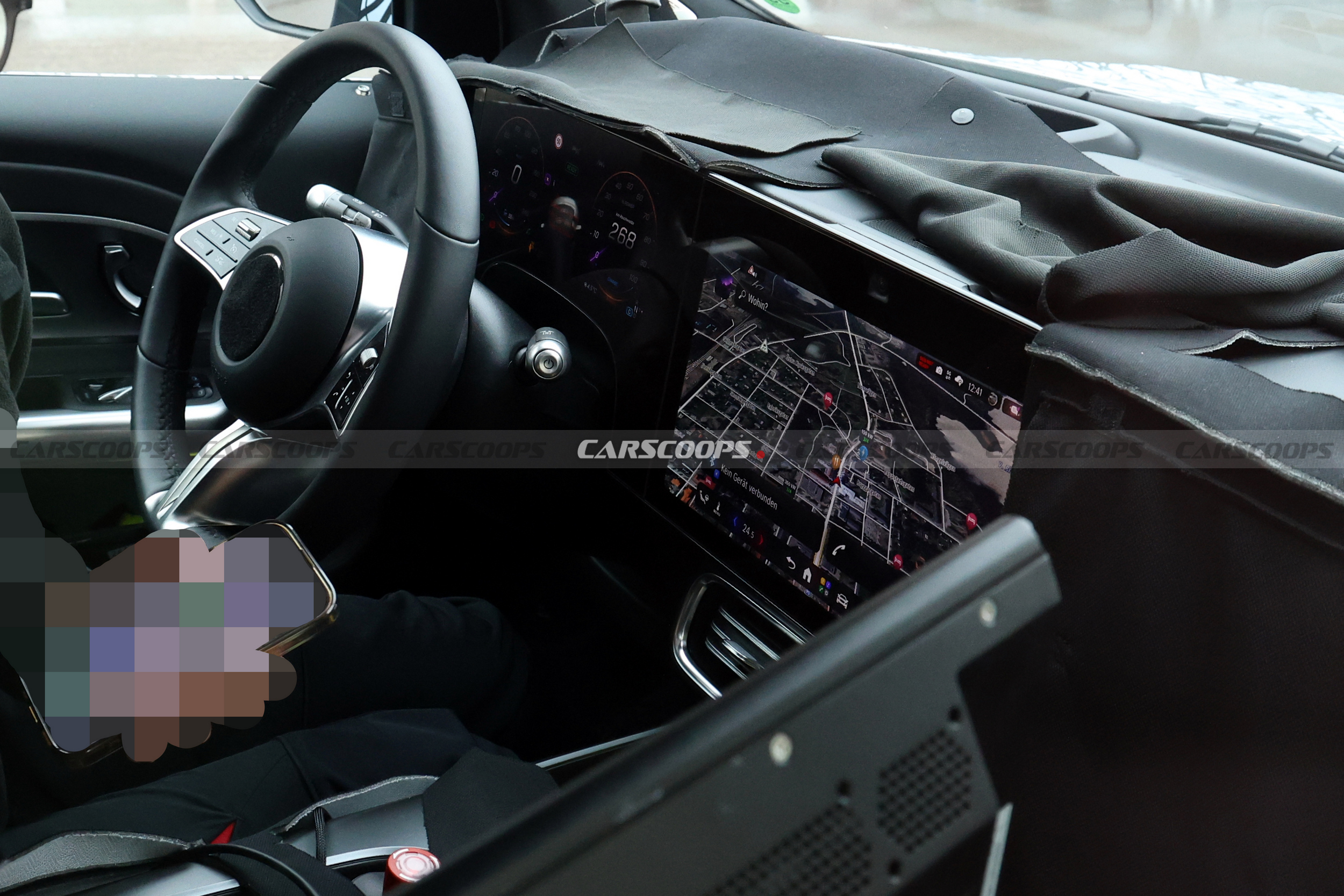
Unfortunately, these photos don’t provide a fresh look inside, but that’s not a huge problem because we’ve already seen the goodies in a previous spy shot haul (below). Like the CLA and GLB, the GLA EQ should offer an optional MBUX Superscreen setup combining a 10.25-inch digital cluster with dual 14-inch displays stretching across the dashboard.

 Mercedes’ New GLA Breaks Cover July 29, But Spy Shots Got There First

Underneath, the newcomer shares its platform and powertrains with its compact Mercedes brothers. That likely means a rear-drive version producing 268 hp (272 PS / 200 kW) and an all-wheel-drive model generating 349 hp (354 PS / 260 kW). Both should draw energy from an 85 kWh battery and benefit from an 800-volt electrical architecture capable of ultra-fast charging.

And for anyone worried the GLA EQ might be too sensible, don’t forget we’ve already caught an electric AMG version testing. If it borrows the hardware from the upcoming AMG CLA, this compact crossover could eventually pack as much as 671 hp (680 PS /500 kW).

Of course not everyone wants an EV, so Mercedes has ICE fans covered too, or it will have. The EV arrives this fall but combustion versions of the new GLA fitted with 1.5-litre hybrid engines will follow in spring 2027.

\\\\\\

Baldauf

Bad News Rivian Flippers, A Day One Holder’s R2 Cleared Sticker By Just $2,015

  • One of the first Rivian R2s has been auctioned online.
  • The $61,485 SUV only fetched four bids and $63,500.
  • R2 Performance sports 656 hp and 330 miles of range.

Rivian launched the highly anticipated R2 on June 9 and it appears the excitement was short-lived. One of the first models recently sold at auction and it only garnered four bids.

The electric crossover ended up selling for $63,500, which was only $2,015 above its sticker price of $61,485. This means the seller likely ended up losing money on the vehicle after factoring in taxes and expenses.

More: Rivian’s Most Affordable Model Arrives First In Its Most Expensive Form

The R2 Performance Launch Edition was listed on Cars&Bids and the auction wrapped up yesterday. The Catalina Cove crossover only had 71 miles (114 km) on the odometer and it was purchased last month.

\\\\\\\\

Cars&Bids

The seller said they were a “day 1 deposit holder,” which suggests they reserved the R2 back in March of 2024. The seller added they’ve owned several Rivians over the years, but ended up buying a Kia EV9 for his wife.

Despite this, they decided to take the first Catalina Cove R2 that arrived at their local center with the expectation of keeping it and selling the EV9. She apparently liked the three-row EV better, so they decided to flip the Rivian.

While that could just be a story, it seems plausible enough as it’s hard to plan out your vehicle needs and timing nearly two and a half years in advance.

Regardless, it’s interesting that the R2 didn’t sell for more money. The model is still in short supply and the company is “inviting reservation holders to order in rolling batches.” If you reserve today, it’ll take roughly a week to get estimated timing for your order invitation.

As a refresher, the R2 Performance starts at $57,990 and features a dual-motor all-wheel drive system developing 656 hp (489 kW / 665 PS) and 609 lb-ft (825 Nm) of torque. It enables the crossover to accelerate from 0–60 mph (0-96 km/h) in 3.6 seconds and travel up to 330 miles (531 km) on a single charge.

It comes nicely equipped with Matrix LED headlights, Compass Yellow accents, and 21-inch wheels. Buyers will also find 12-way power front seats with heating and ventilation as well as heated rear seats and a heated steering wheel. They’re accompanied by birch wood trim, a nine-speaker premium audio system, and a flashlight integrated into the driver’s door.

The Launch Edition adds a handful of notable extras including a special key fob and a lifetime subscription to Autonomy+, which provides Universal Hands-Free driving on over 3.5 million miles (5.6 million km) of roads in the United States and Canada. The special edition also comes with a tow package that enables the model to haul up to 4,400 lbs (1,996 kg).

\\\\\\\\

Cars&Bids

A Cadillac Escalade EV Is One Way To Lose Nearly $50,000 After Just 13K Miles

  • A 2025 Cadillac Escalade IQ sold for nearly $47,000 less than its original MSRP.
  • Electric SUV had covered only around 13k miles and showed no accident history.
  • Even heavily optioned luxury EVs continue to face steep early depreciation.

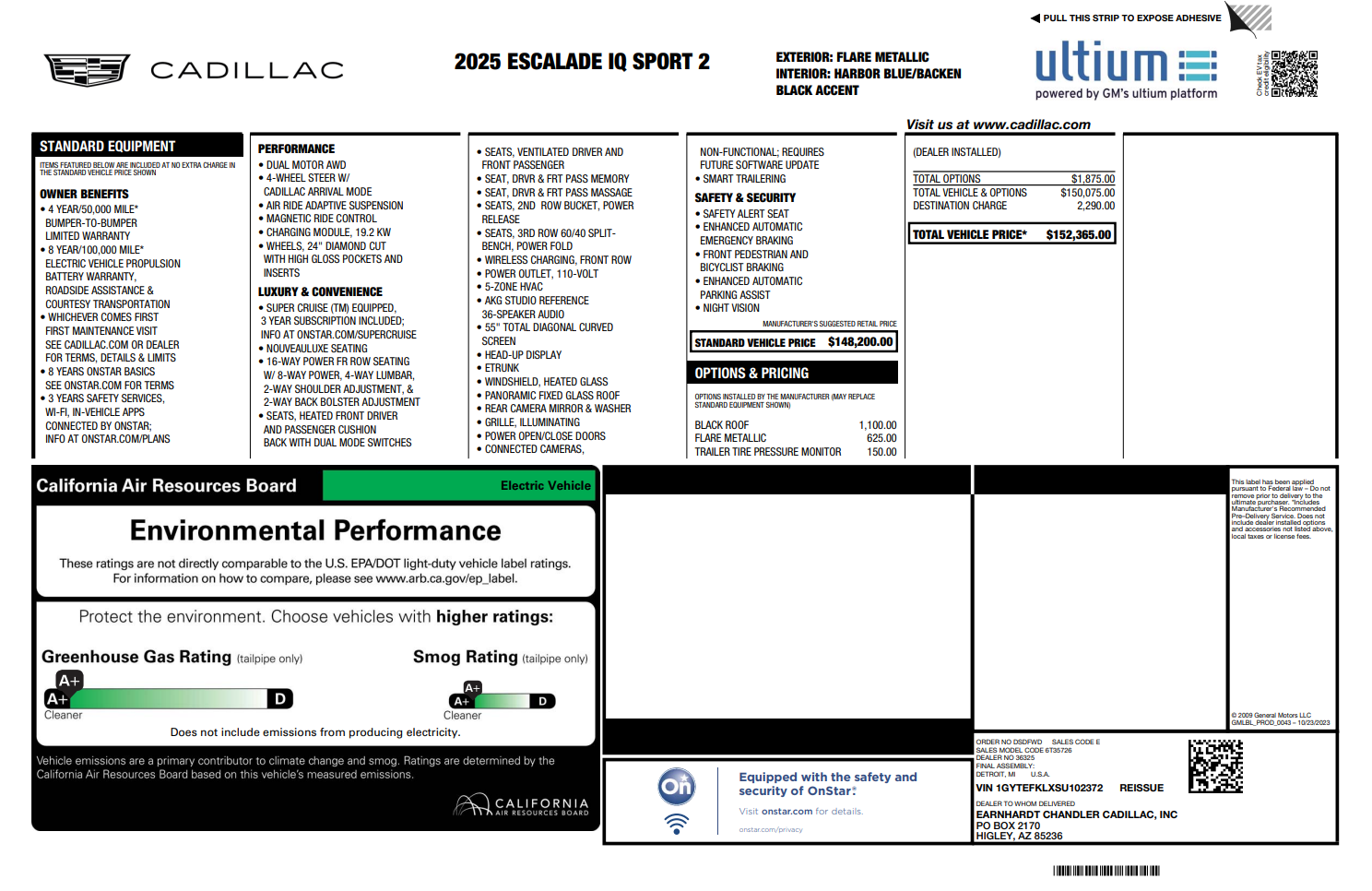
Luxury vehicles have never been immune to depreciation, but the latest sale of a nearly new Cadillac Escalade IQ shows just how punishing the first year of ownership can be for high-end EVs. After covering just 13,000 miles, a 2025 Escalade IQ Sport 2 changed hands for $105,000 despite carrying a window sticker of more than $152,000 when new. That’s roughly $47,000 that just went up in smoke over what amounts to barely a year’s worth of driving.

Sold on Bring a Trailer on July 19, the Flare Metallic example attracted 24 bids before the hammer fell at $105,000. While that’s still a six-figure SUV, it’s approximately 31 percent below its original MSRP of $152,365. Put another way, the original buyer, if they paid MSRP, lost $3.64 for every mile that this SUV was on the road. That doesn’t account for electricity, insurance, or maintenance.

Review: Cadillac’s 2026 Escalade IQ Nails The Entrance, Then Spends A Week Undoing It

\\\\\

Photos BaT

The sale highlights a trend that’s become increasingly common across premium electric vehicles. Buyers willing to shop the used market can often save tens of thousands of dollars while getting a vehicle that’s barely broken in. This particular Escalade IQ wasn’t exactly a stripped-down example either. It featured Cadillac’s dual-motor all-wheel-drive powertrain producing up to 750 hp (559 kW) and 785 lb-ft (1,064 Nm) of torque in Velocity Max mode, fed by a massive 205-kWh battery pack.

 A Cadillac Escalade EV Is One Way To Lose Nearly $50,000 After Just 13K Miles

It also came loaded with virtually every luxury feature buyers expect from Cadillac’s electric flagship. Highlights included Air Ride Adaptive Suspension, four-wheel steering, Super Cruise, Night Vision, a 36-speaker AKG Studio Reference sound system, heated and ventilated massaging front seats, heated second-row captain’s chairs, a panoramic glass roof, and the massive 55-inch curved dashboard display.

\\\\\\\\

Photos BaT

The seller also fitted custom 24-inch Vivid Racing forged wheels, removed the rear badging, and added gloss-black vinyl accents to the grille surround and C-pillars, though the original appearance could easily be restored. Importantly, the Carfax was clean, showing no reported accidents or damage, although it did note at least one open recall.

Don’t get us wrong. $105,000 is a boatload of money for any vehicle. Nobody needs something this expensive. But having tested one in person, it’s a truly luxurious machine in most of the ways that matter. Letting someone else absorb the depreciation just makes the ownership experience sweeter.

\\\\\\

Photos BaT

Mach-E Owner Watched A Car Hacking Video, Then Found The Same Device Under His Dash

  • A Mach-E owner discovered a hidden tracking module beneath his dashboard.
  • The device appears linked to a recently disclosed security vulnerability.
  • Most owners face little real-world hacking risk despite the alarming headlines.

Car hacking is becoming a more alarming issue every day, it seems. Just this week, security researchers announced that they’d found another major vulnerability that could affect any car from any brand built in the last few decades. After watching a video about the hack, one Ford owner found exactly that same type of device in his own car. Here’s why you might want to take a peek in your own vehicle and why the threat in this case isn’t as scary as it may seem.

More: Toyota GR Corolla Buyer Finds Dealer-Installed GPS Tracker Hidden In Car

The Reddit user said the idea came after watching a recent Wired video detailing security researchers’ discovery of vulnerabilities in the KARR Security System. That’s an aftermarket alarm and tracking device frequently installed by dealerships. We’ve covered similar products in the past. In this case, the owner was simply curious, so he pulled a panel out from under his dash and, sure enough, found the module.

How To Find One In Your Own Car

These devices are often plugged into the OBDII port via a splitter, so they’re hard to spot initially. Some can route directly to or from the battery as well. The owner wasted little time removing the module, which appears to have been installed using a plug-and-play T-harness beneath the dashboard. With that simple action, he disconnected himself from the vulnerability. If you have a similar device hidden in your vehicle, removal is often that simple.

Researchers at the University of California San Diego recently disclosed a Bluetooth vulnerability affecting certain KARR Security System modules, estimating that more than two million vehicles could have the devices installed. According to the researchers, the flaw could allow someone within Bluetooth range to unlock a vehicle, trigger its alarm, or disable its ignition until the owner installs a firmware update. Importantly, they cannot start the car with this hack. The company behind the system has since released a patch.

Why You Probably Shouldn’t Panic

That said, this isn’t a reason for owners to panic. While the researchers successfully demonstrated the vulnerability in controlled testing, exploiting it requires specialized software and close proximity to the vehicle. Moreover, while two million cars is an objectively big number, it also accounts for less than one percent of cars on the road in America. With that in mind, the chances of someone targeting your car this way remain extremely low.

Instead, the bigger takeaway may be that many owners have no idea aftermarket electronics are tucked behind their dashboards in the first place. Dealers often install them for theft prevention, inventory management, or as part of an optional security package. In this case, our Mustang Mach-E owner says his purchase paperwork never mentioned it. Thankfully, a little insight into its possible existence was enough for him to find and delete it.

Tracker found in Mach-E
by u/EpicLift in MachE

Photos: Epiclift on Reddit

Kia’s Electric Stinger Successor Quietly Showed Off A Second Bodystyle

  • New Kia design story video reveals a shooting brake Meta Turismo model.
  • The electric GT concept adopts a more practical estate layout.
  • Engineering feasibility for a production version of the sedan is underway.

The Kia Vision Meta Turismo Concept is a sleek electric sports sedan that has us hungry for a proper successor to the sadly gone Stinger. A new video walking through the concept’s design story hints that Kia might have a second bodystyle in mind.

The official footage, shot inside the design studio, shows a pair of scale models sitting next to hand-drawn sketches. They look like early variations on the Meta Turismo theme, each with a different silhouette.

More: Kia’s Affordable Niro Gets An Upscale Makeover For 2027 And Drops The EV

Next to the coupe-style sedan sits a model with a reworked roofline that reads as a futuristic shooting brake. The long-roof version differs from the final concept in a few other details beyond its distinctive greenhouse, though it uses the same wheels and overall dimensions.

\\\\\\\\\\\\\\\\\

Kia Worldwide / YouTube

The Meta Turismo Shooting Brake hasn’t progressed to a full-size prototype and may never leave the early ideation stage. Its appearance in the video, and in the opening image, still confirms that Kia’s designers didn’t restrict their grand touring vision to a single bodystyle.

More: Kia Is Killing Its Flagship Luxury Sedan After Sales Cratered 87%

If it gets the green light for production, such a model would offer extra headroom and superior cargo capacity while retaining the striking visual impact of a low-slung GT. It would also mark Kia’s return in the estate segment after the discontinuation of the Kia Ceed SW, and the closely related ProCeed in some markets, including Europe.

A Sports Sedan For Gamers

In the design story, Kia’s creative team shed light on the core philosophy behind the Meta Turismo project. The initial briefing tasked designers with envisioning a performance sedan tailored specifically for the “gamer generation”. According to Kia, the target group is drivers who move seamlessly between digital and physical environments.

Inside, the futuristic interface includes a removable retro gaming console mounted on the side of the dashboard. There are four individual seats, with the driver’s chair styled differently from the passengers’, plus organic and sustainable materials including silk and wood. The team also noted that a cab-forward architecture let them maximize cabin space without wrecking the proportions.

Will It Reach Production?

The Vision Meta Turismo concept broke cover in December 2025, then appeared publicly at Milan Design Week and the Busan International Mobility Show in spring 2026. Pitched as the spiritual heir to the Stinger, it swaps that car’s twin-turbo 3.3-liter V6 for a fully electric powertrain.

More: Kia Admits The Tasman’s Looks Need Fixing, But Not With A Facelift

While Kia has yet to confirm production intent, Global Design Chief Karim Habib and Europe Design Boss Oliver Samson have previously revealed that engineering feasibility work is already underway. The primary hurdle remains establishing a viable business case for a new halo car. Here’s hoping Kia finds one, and brings the more practical sibling along for the ride too.

\\\\\\\\

Kia

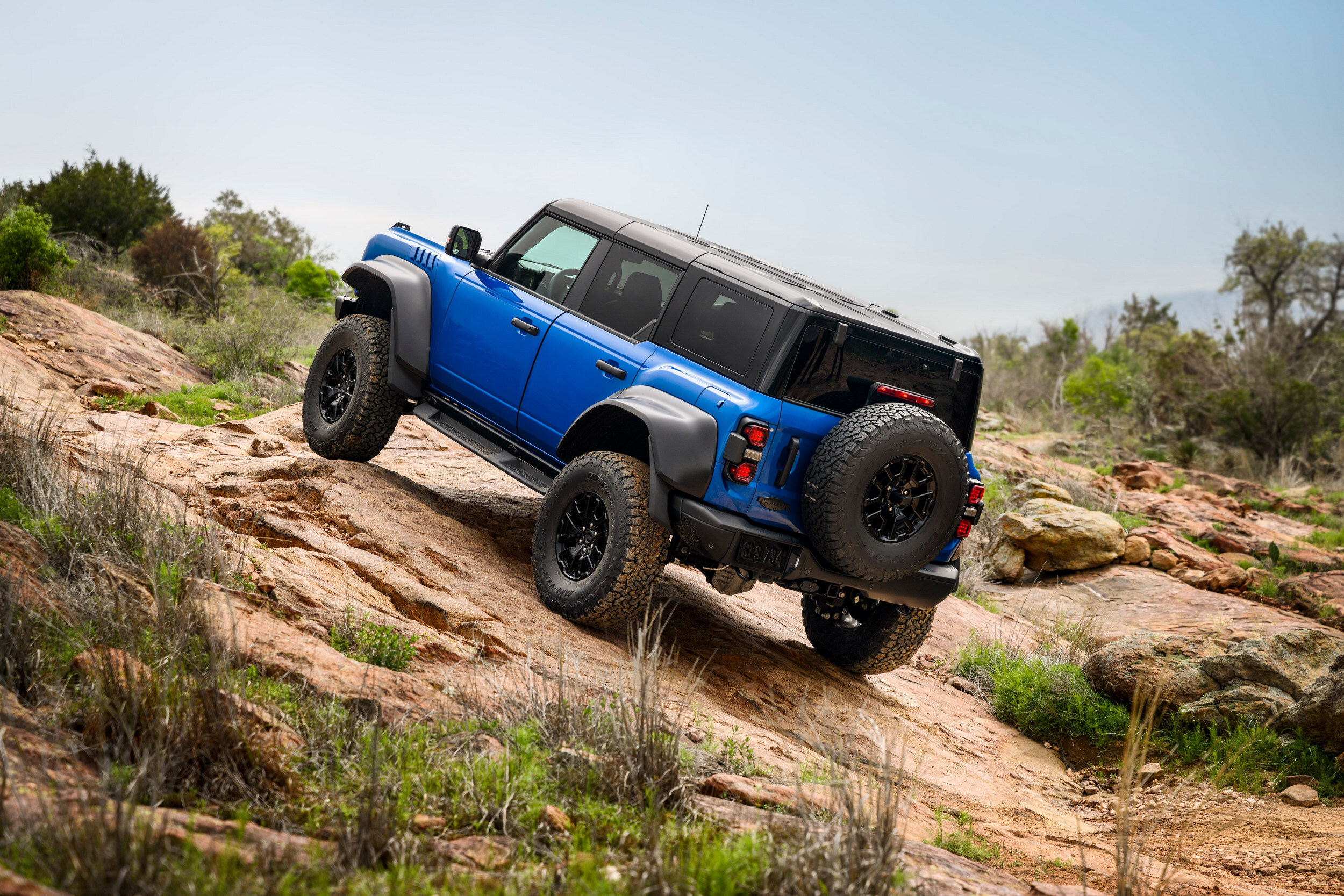
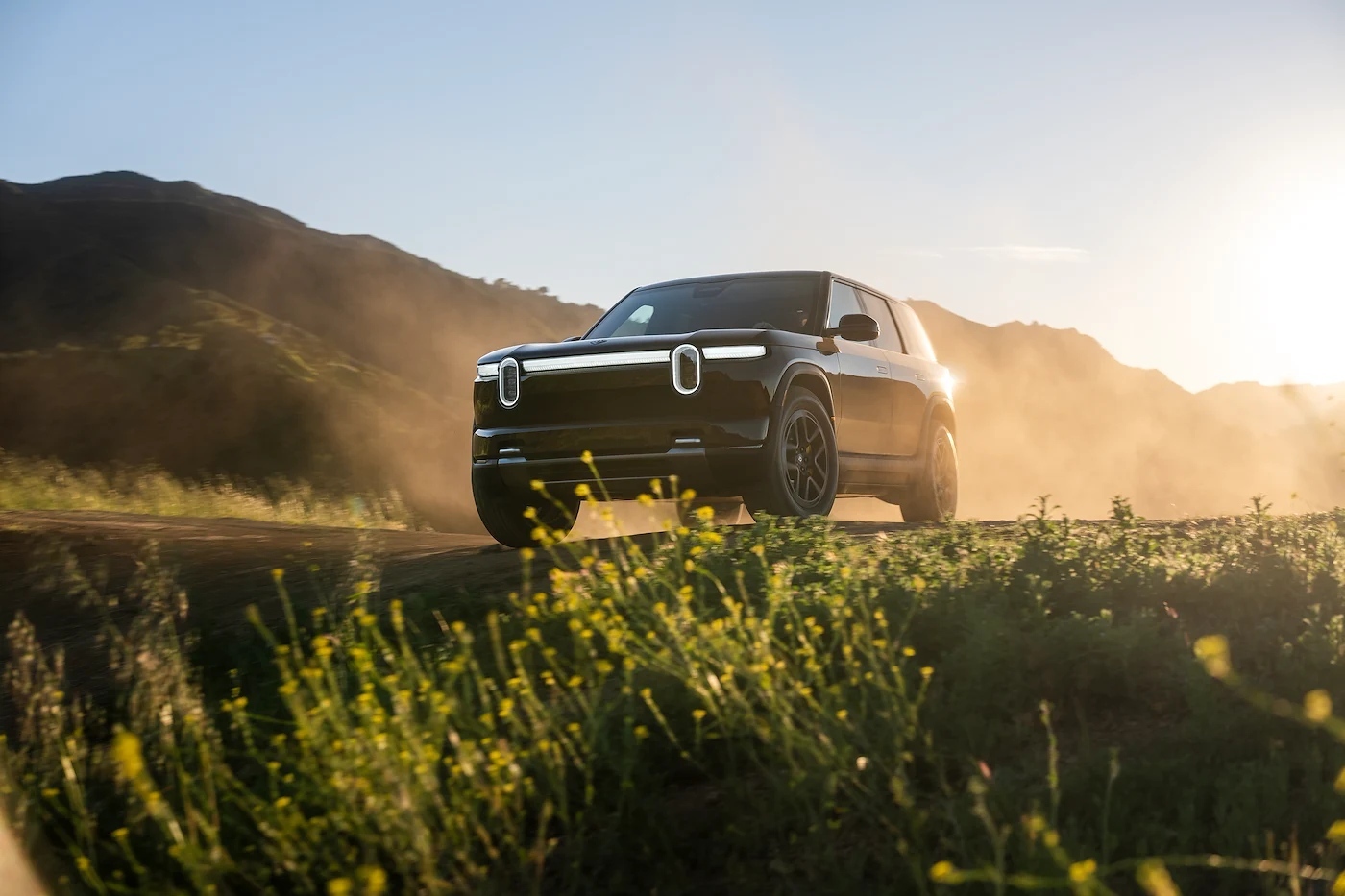
8 Out Of 10 Americans Would Rather Take A Gas SUV Off-Road Than An EV

  • Plenty of Americans yearn for adventure, but not in an electric SUV or pickup.
  • Hankook’s new study says 64% of Americans want to go off-roading this summer.
  • The study shows local pickup drivers would take an ICE over an electric off-roader.

A new study has revealed that Americans are feeling adventurous this summer, eager to get away from civilization and enjoy some off-roading. Of those surveyed, the overwhelming majority would take a combustion-powered vehicle over an EV.

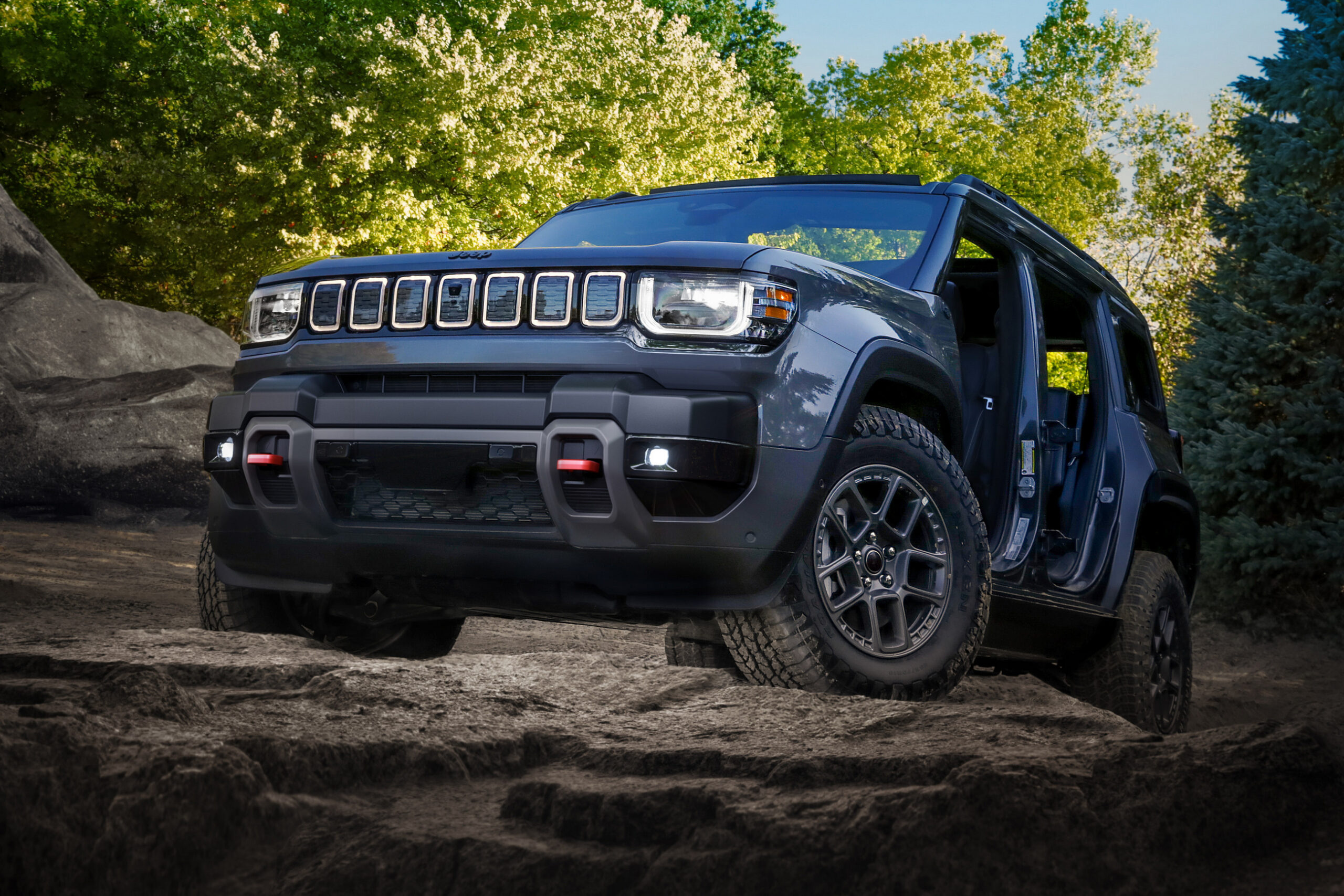
Read: Jeep’s Next EV Could Be Made In China Instead Of Ohio After Stellantis Deal

Hankook Tire’s latest Gauge Index survey found that 64 percent of respondents are interested in taking an all-terrain or off-road driving adventure this year. That’s a huge jump from the 34 percent who expressed interest in doing the same last year.

 8 Out Of 10 Americans Would Rather Take A Gas SUV Off-Road Than An EV

But, as is often the case with studies like these, there’s more than meets the eye. Last year’s survey asked a different question. The 34 percent figure didn’t measure people planning an off-road adventure at all; it counted respondents who named “off-roading proficiency” as the top recreational driving skill they wanted to learn.

74 percent of Gen Z and 72 percent of Millennials want to take an off-road trip this year. However, it’s not just younger folk who want to make the most out of summer, as 57 percent of Gen X drivers and 42 percent of Baby Boomers want to do the same.

ICEs Rule Over EVs

 8 Out Of 10 Americans Would Rather Take A Gas SUV Off-Road Than An EV

The study also sheds light on what types of vehicles motorists think are best for these trips. 52 percent believe an SUV is best, while 36 percent would go with a pickup truck. Unsurprisingly, most people still favor combustion engines over EVs, with 79 percent preferring a gas-powered SUV over an electric one, while 87 percent of pickup drivers would take an ICE model over an EV.

It appears most of those interested in an off-road experience want something tame, rather than climbing over rocks at Moab. As such, 45 percent said they plan to take a trip along wooded trails while just 17 percent would prefer exploring a desert.

Of course, it’s worth noting that this study, just like so many others you read about, only polled a small group of people. In fact, Hankook quizzed just 1,000 randomly selected American drivers aged 18 and older. So, if you’re someone who has no interest in off-roading, you can rest easy knowing millions of others feel the same.

 8 Out Of 10 Americans Would Rather Take A Gas SUV Off-Road Than An EV

VW Studied A Gas Backup Engine For The ID. Buzz But Ran Out Of Room

  • VW once considered a range-extender version of the ID. Buzz.
  • Tight overhangs and EV-dedicated platform made it impossible.
  • A new multi-energy Space platform will underpin future vans.

The fully electric VW ID. Buzz hasn’t found the audience VW hoped for in North America, and that has the company weighing some drastic options. One was a range-extender powertrain, an idea that died on packaging grounds. Meanwhile, VW is developing a new multi-energy architecture for its future LCV lineup, meant to reduce complexity and cut costs.

The ID. Buzz news comes from Stefan Mecha, CEO of VW Commercial Vehicles. Speaking to Australian outlet Go Auto, he conceded that a combustion-engined variant had been on the table: “I would not be telling the truth if I said we have not looked at this. Is this a feasible exercise? Probably not… I think from this end, the ID. Buzz is an electric vehicle and it will stay an electric vehicle.”

More: VW’s 2026 ID. Buzz Adds 335 HP And Real Buttons, America Gets Neither

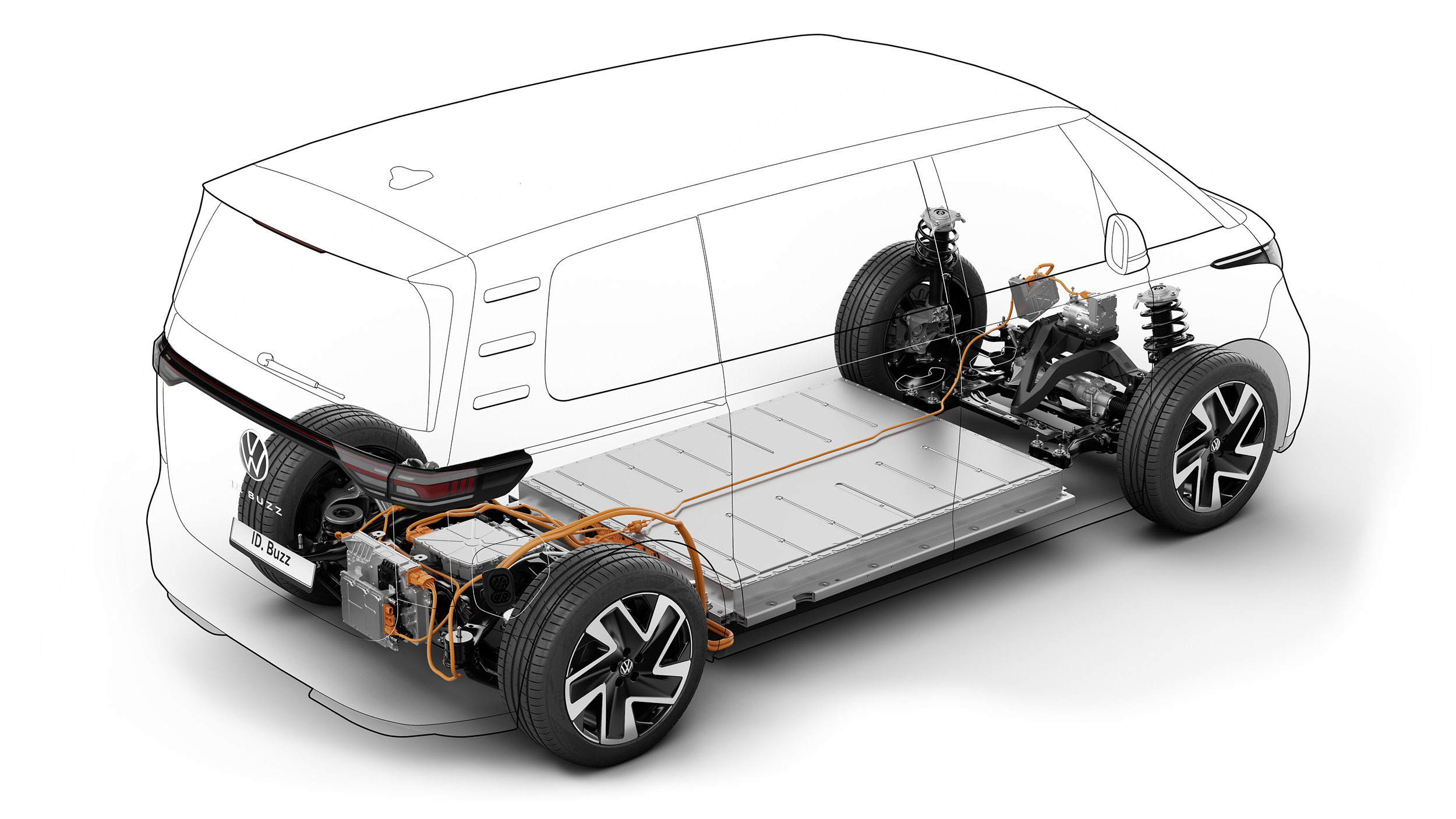
The van’s short overhangs and EV-only bones left nowhere to put a range extender. The MEB architecture was built for battery electric vehicles and nothing else, so shoehorning in a combustion engine would have meant an expensive redesign.

 VW Studied A Gas Backup Engine For The ID. Buzz But Ran Out Of Room

VW moved 60,700 ID. Buzz vans in 2025, double its 2024 tally. North America accounted for just 6,140 of them, which is why the brand skipped the 2026 model year entirely to clear leftover stock. The EV returns to the US for 2027 with minor updates and a camping-friendly trim joining the lineup.

One Platform To Rule Them All

In the same interview, Mecha laid out a structural overhaul aimed at what he calls “costly platform fragmentation” across the LCV portfolio.

More: 140,000 Jobs Are At Now Risk At VW

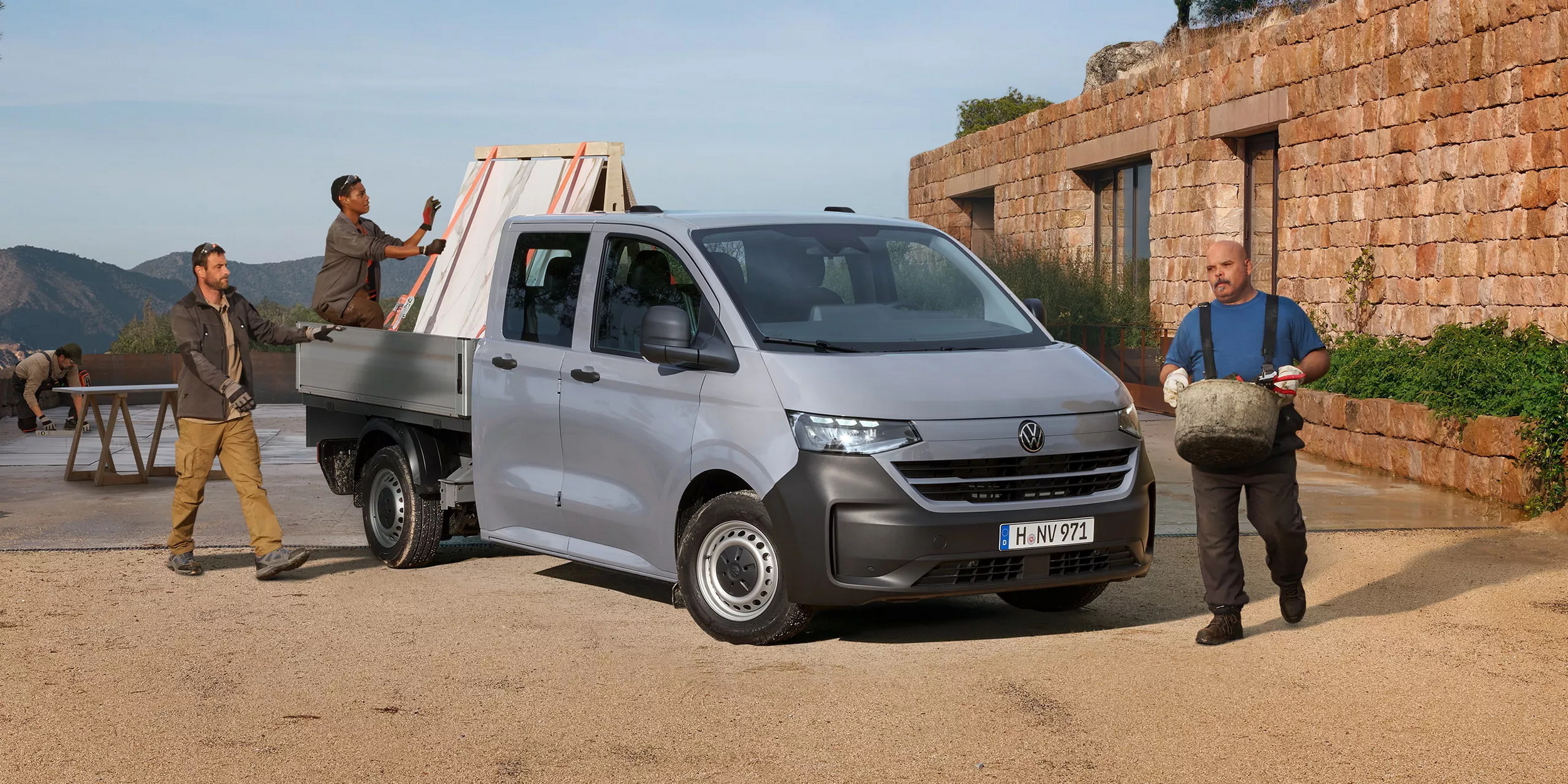
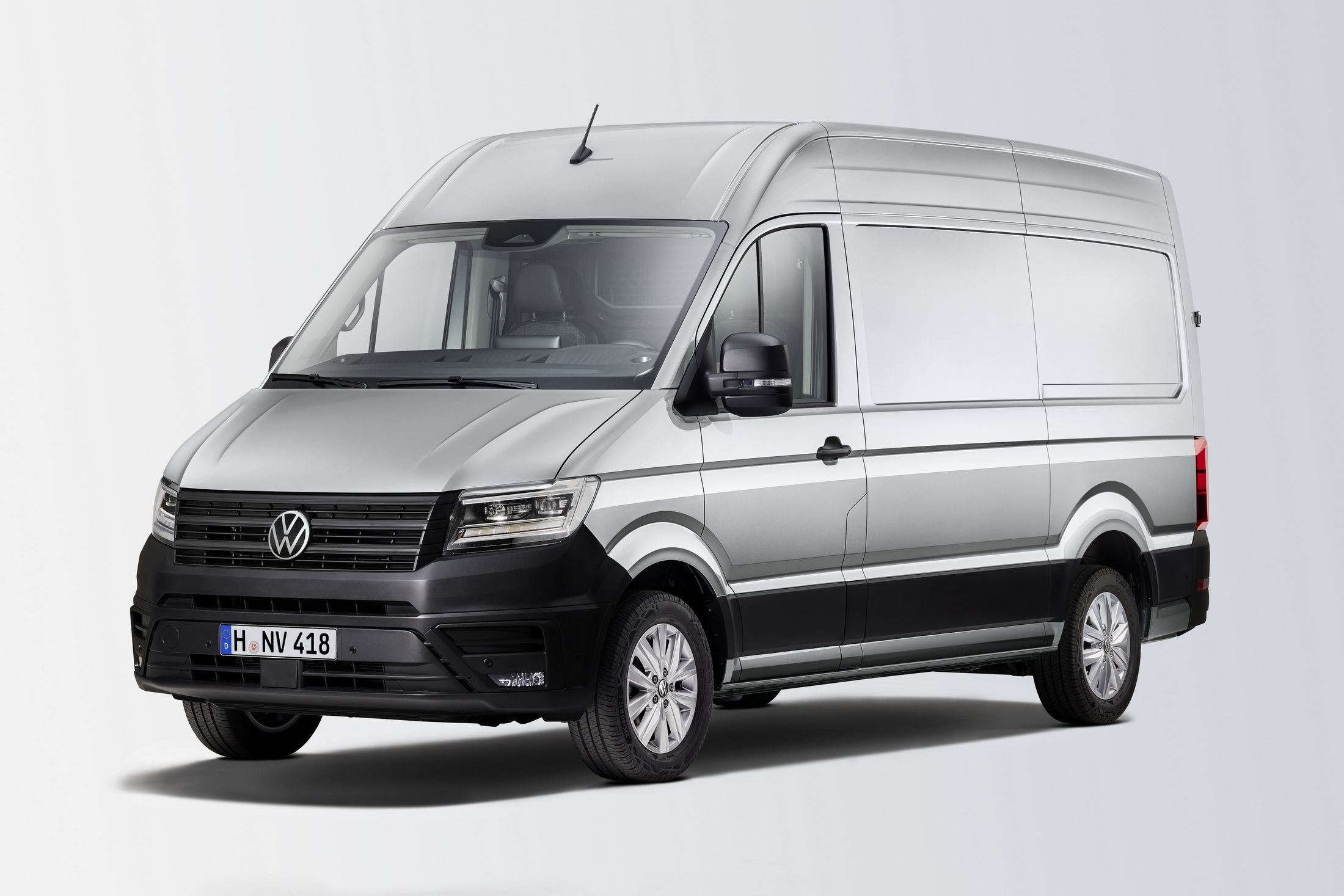
The company currently relies on four separate platforms right now. The Caddy and Multivan T7 sit on MQB, the ID. Buzz uses MEB, the Transporter T7 shares its underpinnings with the Ford Transit Custom, and the Crafter has a larger bespoke chassis of its own.

 VW Studied A Gas Backup Engine For The ID. Buzz But Ran Out Of Room
The Ford-based VW Transporter T7 in pickup bodystyle.

To streamline manufacturing and R&D, Volkswagen will retool its Hanover plant and develop a new common architecture for the next decade dubbed the Space platform. This is expected to underpin the next-generation Caddy, Multivan, and Transporter lineups, and supply components for the next Crafter.

Drawing conclusions this early would be premature, but the ID. Buzz faces an uncertain future given the scale of the cuts announced across the VW Group range.

More: VW Group Is Killing Half Its Cars By 2030, And Some Big Names Are At Risk

Mecha said commercial buyers are moving to fully electric vans more slowly than expected, leaving VWCV on the hook for hefty carbon emissions penalties under European fleet rules. The Space platform was conceived as an EV architecture, but it’s being adapted to take hybrid powertrains as well.

More Electric Vans

 VW Studied A Gas Backup Engine For The ID. Buzz But Ran Out Of Room
VW Crafter

Before the new platform arrives, VW is working on expanding its electric LCV lineup next to the ID. Buzz and the e-Transporter. One is a successor to the e-Crafter that was sold between 2018 and 2022. The updated model will likely offer a significantly longer range, improving the usability of the large van to rival the Ford e-Transit and Renault Master E-Tech.

More: VW Revives A Decades-Old Name For The Multivan, But Not Everywhere

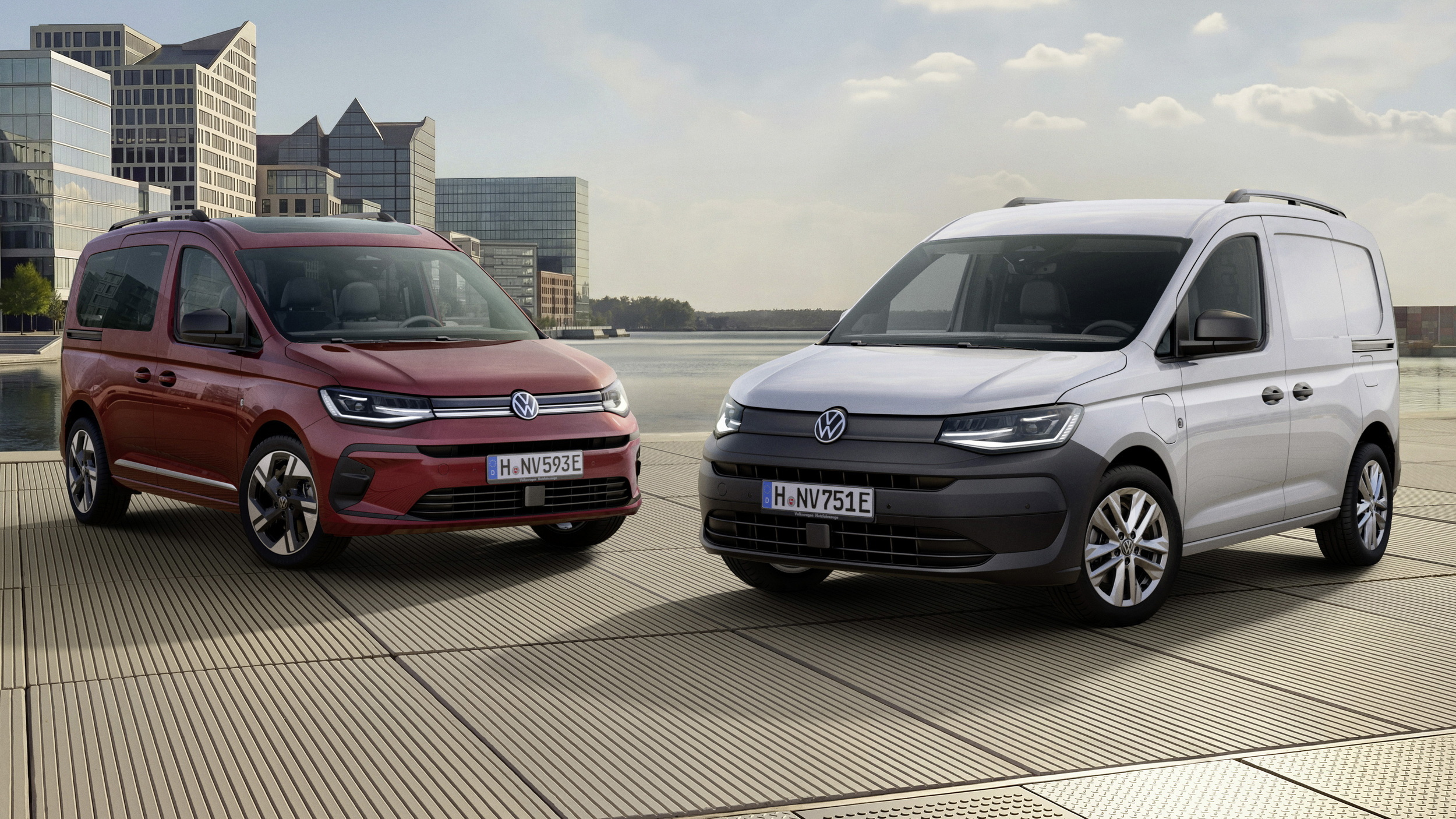
The automaker is also considering a zero-emission variant of the Caddy. The current generation of the compact van debuted in 2020 and received a facelift in mid-2026, offering diesel and PHEV powertrain options.

It remains to be seen whether the e-Caddy will utilize an electrified version of the MQB architecture, as seen in the discontinued e-Golf, or jump into the MEB platform.

 VW Studied A Gas Backup Engine For The ID. Buzz But Ran Out Of Room
The facelifted VW Caddy in passenger and LCV forms.
❌
❌