The Cybertruck Long Range RWD was only built for a limited time last year.
This pickup has a single electric motor and a 123 kWh battery pack.
Tesla lowered the Cybertruck’s towing capacity from 11,000 lbs to 7,500 lbs.
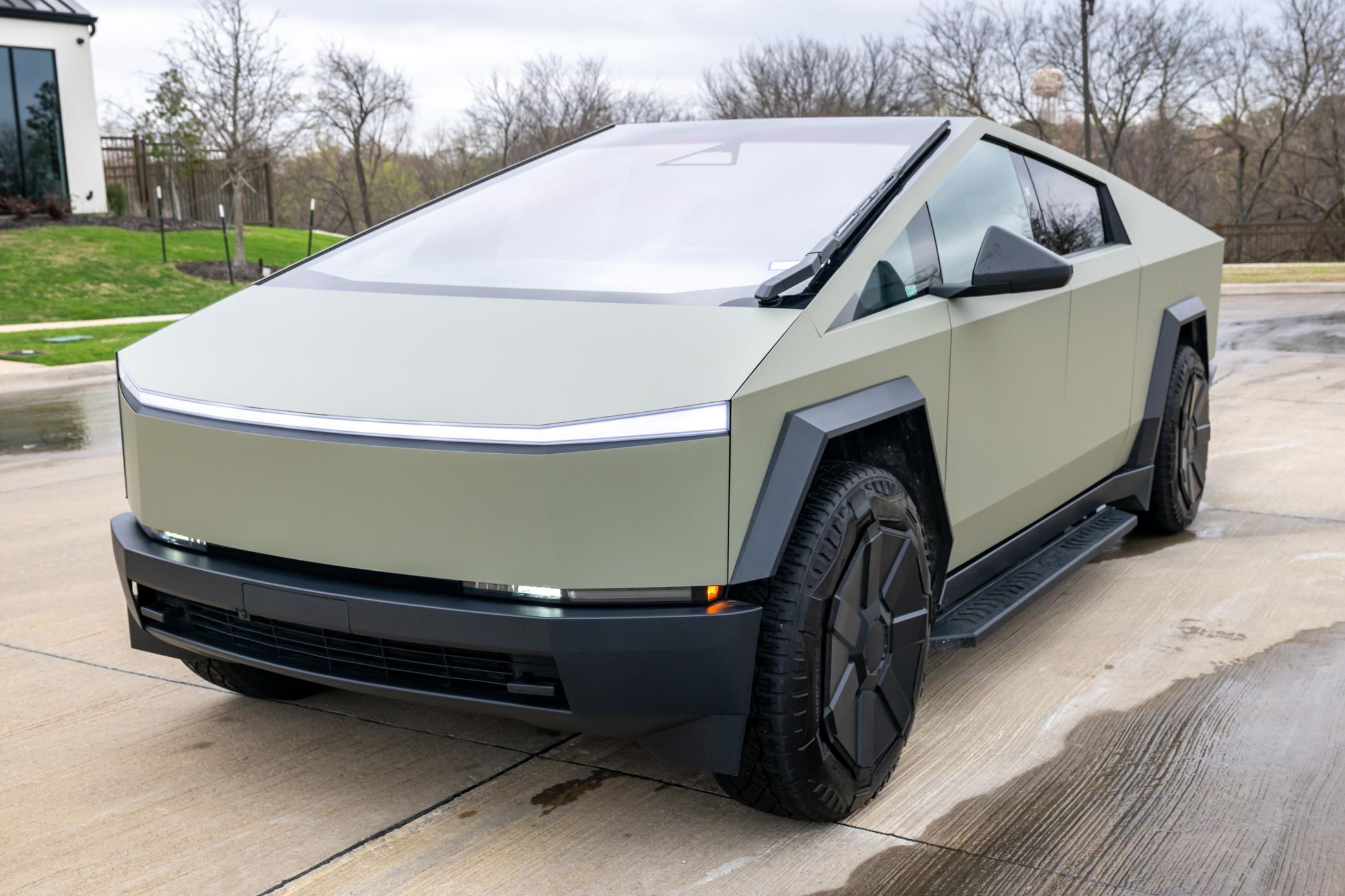
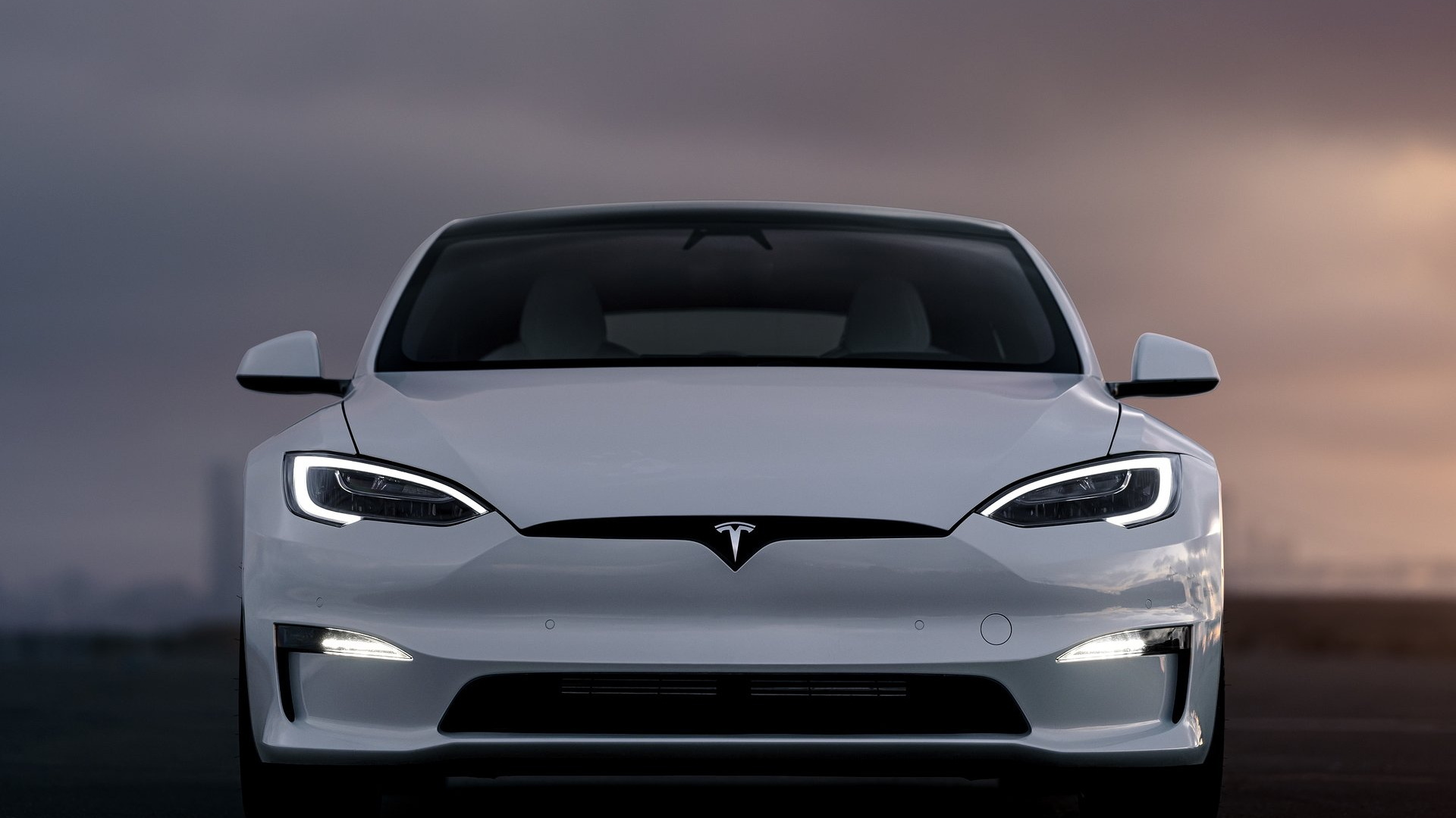
The Tesla Cybertruck’s Long Range RWD variant was short-lived, produced for less than six months, yet that rarity has done little to shield it from steep depreciation. Just look at this 2025 example, which recently changed hands for just $56,500.
Tesla introduced the Cybertruck Long Range RWD last year, pricing it from $69,990 and undercutting the All-Wheel Drive model by $10,000. However, it never proved particularly popular as Tesla cut out some important features to achieve the somewhat more approachable price tag.
To get there, Tesla stripped back more than just an electric motor. The front axle is left unpowered, and buyers also miss out on a powered tonneau cover, 120/240V outlets, and the premium 15-speaker sound system, replaced here by a basic seven-speaker setup. The interior takes another step down with textile seats instead of leather and no rear touchscreen.
Capability takes a hit too. Towing drops from 11,000 lbs (4,989 kg) to 7,500 lbs (3,401 kg), while payload falls from 2,500 lbs (1,133 kg) to 2,006 lbs (910 kg). It’s a long list, and not the kind that quietly disappears once you’ve signed the paperwork.
With this in mind, it’s perhaps no surprise that demand for used examples isn’t particularly strong. This Cybertruck was sold on Cars & Bids earlier this week, falling well short of its original price tag of $73,490, which included optional $3,500 20-inch Cyber wheels with 35-inch tires.
The Least Desirable Cybertruck?
Cars & Bids
The fact that the owner also spent several thousand dollars to wrap the truck in Halo Green, add aftermarket side steps, and fit leather seat covers doesn’t seem to have boosted interest. It has just 5,800 miles (9,334 km) on the clock, which should have helped its value, but clearly hasn’t made much difference.
There is, at least, one clear strength. The RWD Long Range model carries a sizeable 123 kWh battery pack, giving it the best range of any Cybertruck at an EPA-rated 350 miles (563 km). That should be a headline advantage. Still, pairing that range with a rear-wheel-drive setup in a pickup limits how useful it feels in the real world, especially for buyers who expect capability to match the look.
In the end, this version lands in an awkward middle ground. It is cheaper, yet not cheap enough. It goes farther, yet gives up too much along the way. And in a segment where image and ability matter just as much as numbers, that balance does not seem to be working.
The 2025 Audi RS e-tron GT Performance starts at $170,500.
A new 13-mile example in Las Vegas is listed $54,005 under MSRP.
Listings nationwide show multiple cars already priced below sticker.
The new Audi RS e-tron GT Performance is a road-going rocket ship, blending hypercar-level acceleration with genuine long-distance comfort. It delivers extraordinary pace alongside impressive Grand Touring ability, yet like the model it replaces, it’s already shedding value quickly in the US. That makes now a surprisingly sensible moment to snag yourself a bargain.
The RS e-tron GT starts at $170,500, though that figure climbs past $180,000 once a few options are added. With 912 hp and 757 lb-ft (1,027 Nm) of torque available, that pricing isn’t outlandish on paper, but the market is clearly suggesting it’s too steep for a luxury EV.
A quick scan of current classifieds shows dozens of 2025 and 2026 RS e-tron GT models listed across the United States, many showing minimal or delivery mileage and asking prices already below MSRP. The cheapest example we found is a lightly used 2025 model with 1,930 miles (3,106 km) listed by Audi Beverly Hills.
Prices Are Going Down, Down, Down
Audi Beverly Hills
That listing doesn’t specify the original MSRP, but with the $5,900 forged carbon package included, it would have cost at least $180,000 new. It’s now listed at just $123,993.
If you’re shopping for a new one, it’s worth checking out a 2025 model listed at Audi Las Vegas for $124,590, down from an MSRP of $178,595. It has just 13 miles (21 km) on the clock, essentially delivery mileage, and has already shed $54,005 in value without ever being registered. The gods of depreciation have clearly taken a liking to this electric Audi.
Audi Las Vegas
Despite the upgrades to the refreshed RS e-tron GT, it’s likely going to suffer the same fate as the original model, plummeting in value the moment it’s driven off the showroom floor. Some examples of the pre-facelift RS e-tron GT, which offers up to 637 hp and 612 lb-ft (830 Nm), have asking prices under the $50,000 mark, and the facelifted model is trending in that direction.
Faraday Future avoids SEC action after a four-year investigation.
Regulators scrutinized the company’s 2021 reverse merger with a SPAC.
Company now faces Nasdaq $1 share price compliance deadline.
Few car manufacturers have had a history as turbulent as Faraday Future. Founded more than a decade ago as one of America’s most promising EV startups, it’s been teetering on the edge of financial collapse for years, but has just reported one of its most significant wins.
Over the weekend, Faraday Future revealed that the US Securities and Exchange Commission has concluded its four-year investigation into the company and has decided not to take any action against it. Founder and co-CEO Jia Yueting, as well as Faraday Future President Jerry Wang, have also avoided the court room.
The SEC had been investigating Faraday Future over its 2021 merger with a special purpose acquisition company (SPAC) that allowed it to go public, alleging the company made several false and misleading statements. Throughout the SEC’s investigation, it subpoenaed the company and took depositions from multiple former employees and executives.
The Troubles Don’t Stop Here
Last year, it appeared the SEC was stepping up its action against Faraday Future, issuing ‘Wells Notices’ to Yueting and other executives, notices usually issued when the SEC has been recommended to take enforcement action. According to Tech Crunch, approximately 85 percent of cases where Wells Notices are issued result in the individuals facing the SEC in court.
“The conclusion of the SEC’s investigation means that the long-standing overhang and sources of instability that had constrained the Company have now been removed,” Faraday Future said in a statement. “This is the strongest and cleanest response to potential illegal short sellers. Some short sellers used the time when the investigation was still open to spread rumors, defame the Company, create panic, and profit illegally. Now, the SEC’s conclusion means FF’s reputation is being restored, and confidence is coming back.”
Admittedly, Faraday Future isn’t out of hot water yet, as it recently received a notice from Nasdaq for failing to meet the minimum $1-per-share price requirement over 180 days. It now has 180 days to boost its shares to over $1 and hopes to do so without issuing a reverse stock split.
The EV2 starts at €26,600, positioning it as an accessible entry EV.
Multiple trims and seating layouts give buyers flexibility across the lineup.
Kia has confirmed the EV2 will not be sold in the United States.
Fresh off the Kia EV2’s global premiere in Brussels earlier this year, the brand has opened order books for its latest all-electric SUV in Germany and other European markets, revealing a starting price of just €26,600 ($30,800 at current exchange rates). At that level, it feels like a missed opportunity that the EV2 isn’t headed to the United States, though tariffs would likely erode much of its affordability if it ever made the trip across the Atlantic.
For European shoppers who’d rather not pay upfront for the EV2, the new car can be leased for as little as €239 ($275) per month. There are also plenty of versions on offer, ensuring there’s an EV2 to suit everyone.
The base version is known as the Light and comes equipped with a 42.2 kWh battery pack and a single electric motor rated at 146 hp. This model has a relatively limited range of 197 miles (317 km), but that should be enough for most Europeans, particularly those living in large urban centers. Helping to further lower the cost of this version is the fact that it’s sold exclusively as a four-seater.
What Else Is On Offer?
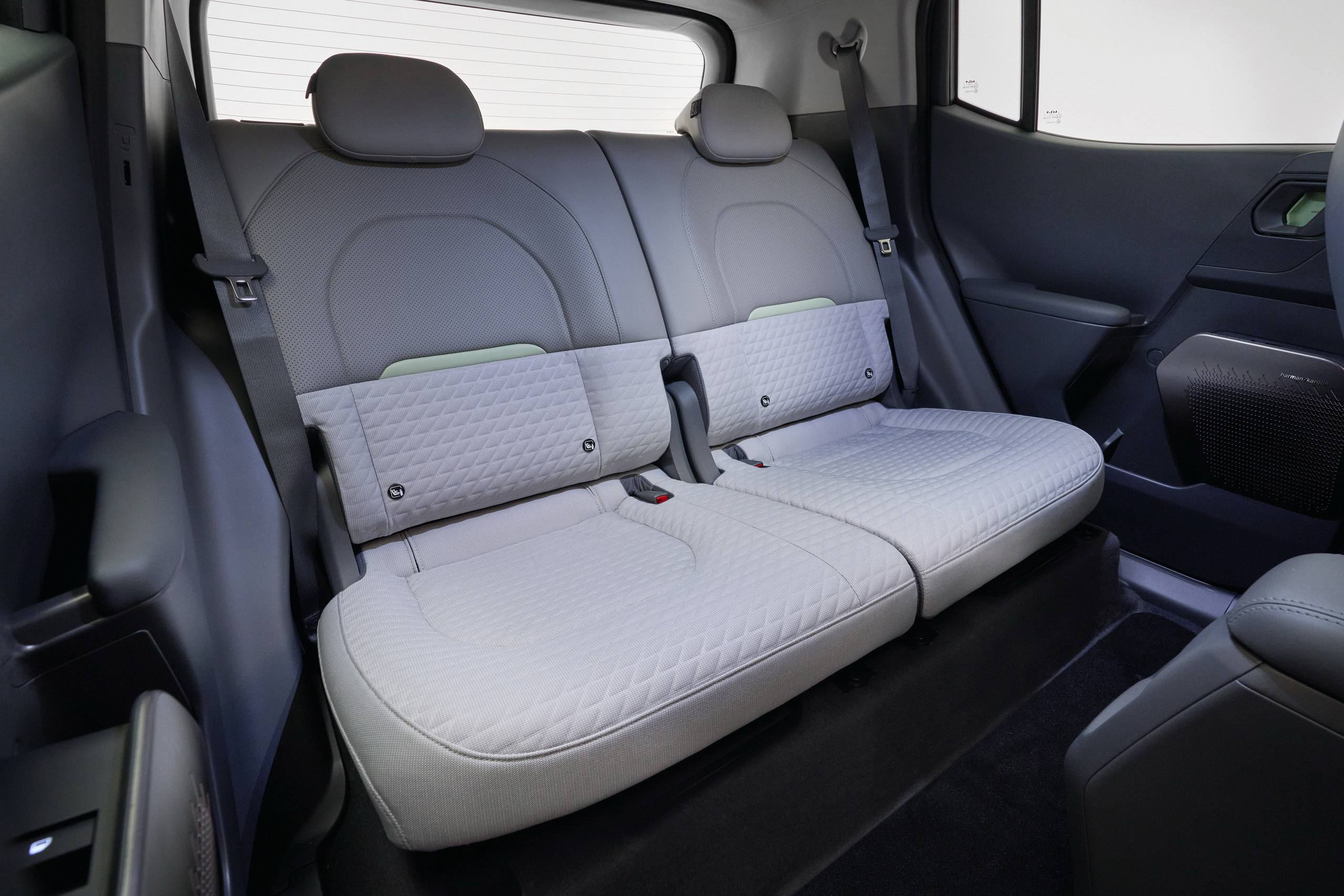
Sitting above the EV2 Light is the Air, which is a five-seater. It retains the same battery and motor as the Light in standard guise, but starts at €28,990 ($33,600). Kia also sells it with a larger 61 kWh battery pack and a 135 hp motor, boosting the range to 281 miles (453 km). This version starts at €33,490 ($38,800).
Kia will also sell the EV2 in Earth and GT-Line configurations. The Earth is available as either a four-seater or five-seater with the 42.2 kWh pack and 146 hp motor, priced from €31,290 ($36,200), topping out at €31,590 ($36,600), and both with a 191-mile (308 km) driving range.
The GT-Line then starts at €36,890 ($42,700) for the five-seater with the 61 kWh pack and 135 hp motor, and tops out at €37,190 ($43,100) for the four-seater with the same powertrain. Both versions have a claimed driving range of 256 miles (413 km).
It’s not just the EV2 that the US misses out on. Kia originally intended to sell the EV4 in the United States but axed those plans late last year, likely due to concerns that it wouldn’t sell well.
The C10 AWD Sports+ delivers 590 hp from a twin-motor setup.
Australian pricing starts at a competitive AU$53,888 plus costs.
A 81.9 kWh battery offers up to 272 miles of WLTP-rated range.
The standard Leapmotor C10 is an electric SUV that could be best described as adequate. It’s not exciting or engaging to drive, but aside from a few tech gremlins, it drives quite nicely and is well priced. Now, a new version of the C10 has been launched, and it might be enough to get people excited.
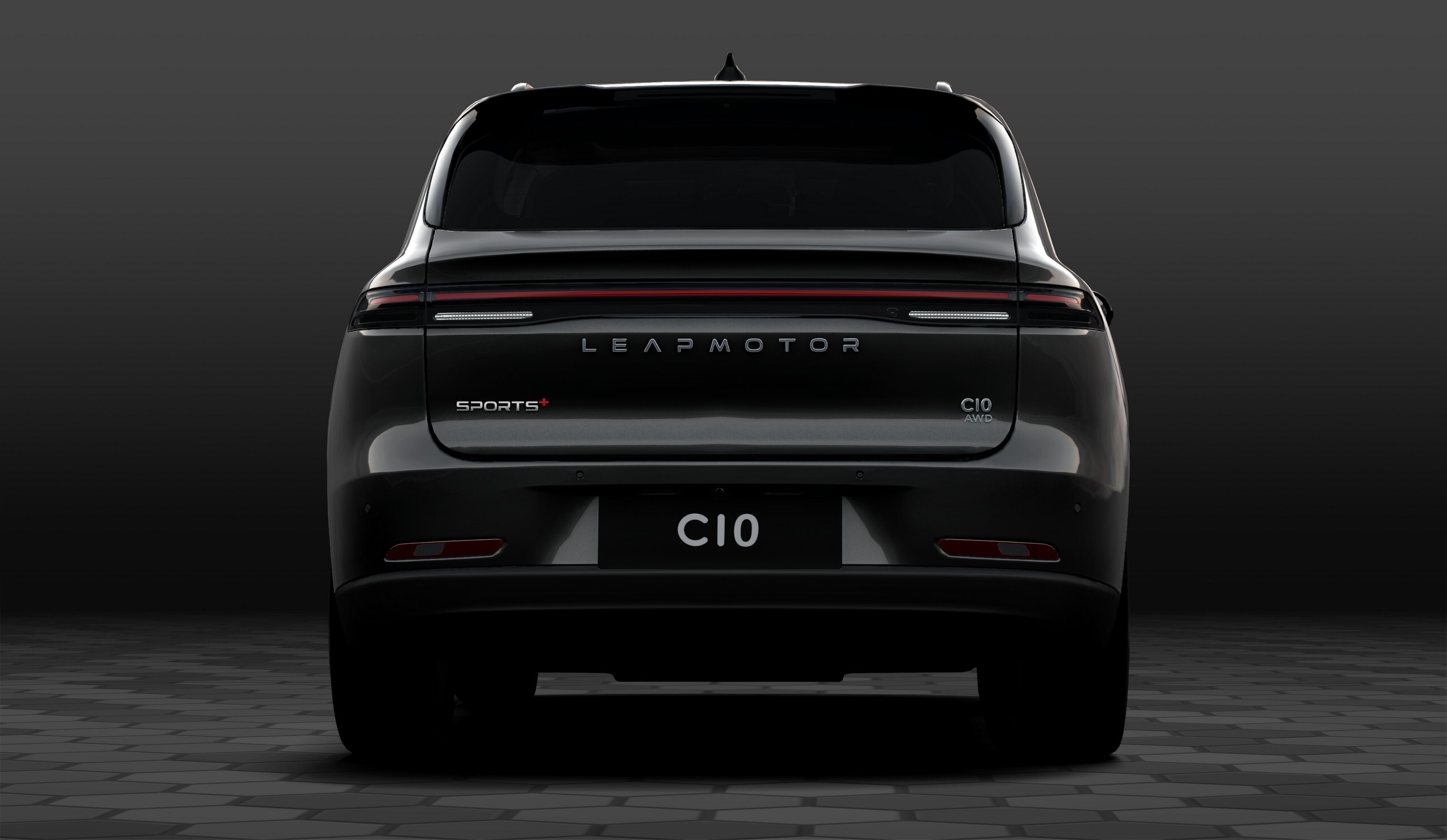
Known as the Leapmotor C10 AWD Sports+ Special Edition and just introduced in Australia, the power on offer and the SUV’s price tag are simply absurd. Whereas the standard C10 has a single electric motor with 215 hp (160 kW) and 236 lb-ft (320 Nm) of torque, the AWD version has a pair of upgraded motors delivering 590 hp (440 kW) and 561 lb-ft (760 Nm).
To put those figures into perspective, the original Lamborghini Huracan LP 610-4 had 602 hp and 413 lb-ft (560 Nm), while the rear-wheel drive only LP 580-2 was rated at 572 hp and 398 lb-ft (540 Nm). Leapmotor says its new flagship needs just 4 seconds to hit 100 km/h (62 mph), which is impressive, but perhaps a little slower than we’d expect given the horsepower and torque figures.
A Price To Stun
Arguably just as impressive as the C10’s performance is the fact that it’ll start at just AU$53,888 ($37,600) plus on-road costs, or just AU$10,000 ($7,000) more than the standard model. This allows it to easily undercut the BYD Sealion 7 Performance that starts at AU$63,990 ($44,700), and even undercuts less powerful, rear-wheel drive versions of the Tesla Model Y (AU$58,900 / $41,100) and Zeekr 7X (AU$57,600 / $40,200).
Complementing the more powerful motors is a larger 81.9 kWh LFP battery that provides the oddly-named C10 AWD Sports+ Special Edition with up to 272 miles (437 km) of WLTP range. It supports DC charging speeds of up to 180 kW, meaning the battery can charge from 30-80 percent in 22 minutes, which is below par in this segment despite the C10 having an 800-volt architecture.
Leapmotor has failed to mention if any upgrades have been made to the C10’s suspension or braking systems to cope with almost triple the power of the standard model.
Nearly 12,000 Wagoneer S SUVs from 2024 to 2026 are recalled.
The liftgate hinge cover may not clip in and could fall off.
Jeep is aware of 17 warranty claims related to the fault in the US.
Nearly 12,000 examples of Jeep’s all-electric Wagoneer S are being recalled in the United States, highlighting a quality lapse that arguably should have been caught earlier. Now, owners will need to visit a dealership to have their vehicles inspected and the faulty component repaired or replaced.
A recall notice issued by the NHTSA states that 2024–2026 Wagoneer S models may have been built with a liftgate hinge cover that lacks sufficient design tolerances. Stellantis explains that in some cases, the rear liftgate hinge cover may not clip securely into place and could detach from the vehicle, creating a potential road hazard.
Owners might get an early warning. The company notes that occupants could hear a rattling noise or notice that one or both hinge covers aren’t sitting flush.
FCA’s Technical Safety and Regulatory Compliance team opened an investigation on January 8. Over the next five weeks, it worked with FCA US Engineering and Manufacturing to review production data and design revisions tied to the hinge cover, focusing on pinpointing the root cause of the issue.
Warranty Claims Start Piling Up
Jeep says that as of February 18, it had logged two customer assistance cases, 17 warranty claims, and 32 field reports potentially tied to the issue. In total, 11,767 vehicles are being recalled, all built between March 21, 2024, and July 24, 2025. The automaker estimates that 6.7 percent of them may actually have the defect in question.
The problematic component comes from Magna International, with owner notifications set to go out starting May 1. Dealers have been told to inspect the hinge cover and, if needed, repair or replace it with an updated version that stays put.
This isn’t the only recall recently issued by Jeep in the US. In February, more than 80,000 Grand Cherokees were called in for repairs because the rear coil springs may have been installed incorrectly as part of a previous recall. In this case, Jeep revealed the spring could detach from the vehicle entirely, presenting a serious safety risk.
PROS ›› Sleek looks, cheap, efficient, comfortable ride CONS ›› Annoying safety tech, smallish trunk, not fun to drive
The all-electric SUV space has transformed at a remarkable pace in recent years, shifting from niche curiosity to mainstream battleground. Over the past five years in particular, growth has been rapid, driven in no small part by a surge of ambitious entrants from China.
If you’re a Carscoops regular, you’ll no doubt be familiar with all of the new and compelling EVs coming out of the People’s Republic. It’s bad news for those living in the US, as none of them are available, but across Europe, Asia Pacific, and elsewhere, these EVs have forced legacy carmakers to up their game and cut prices, which is great news for consumers.
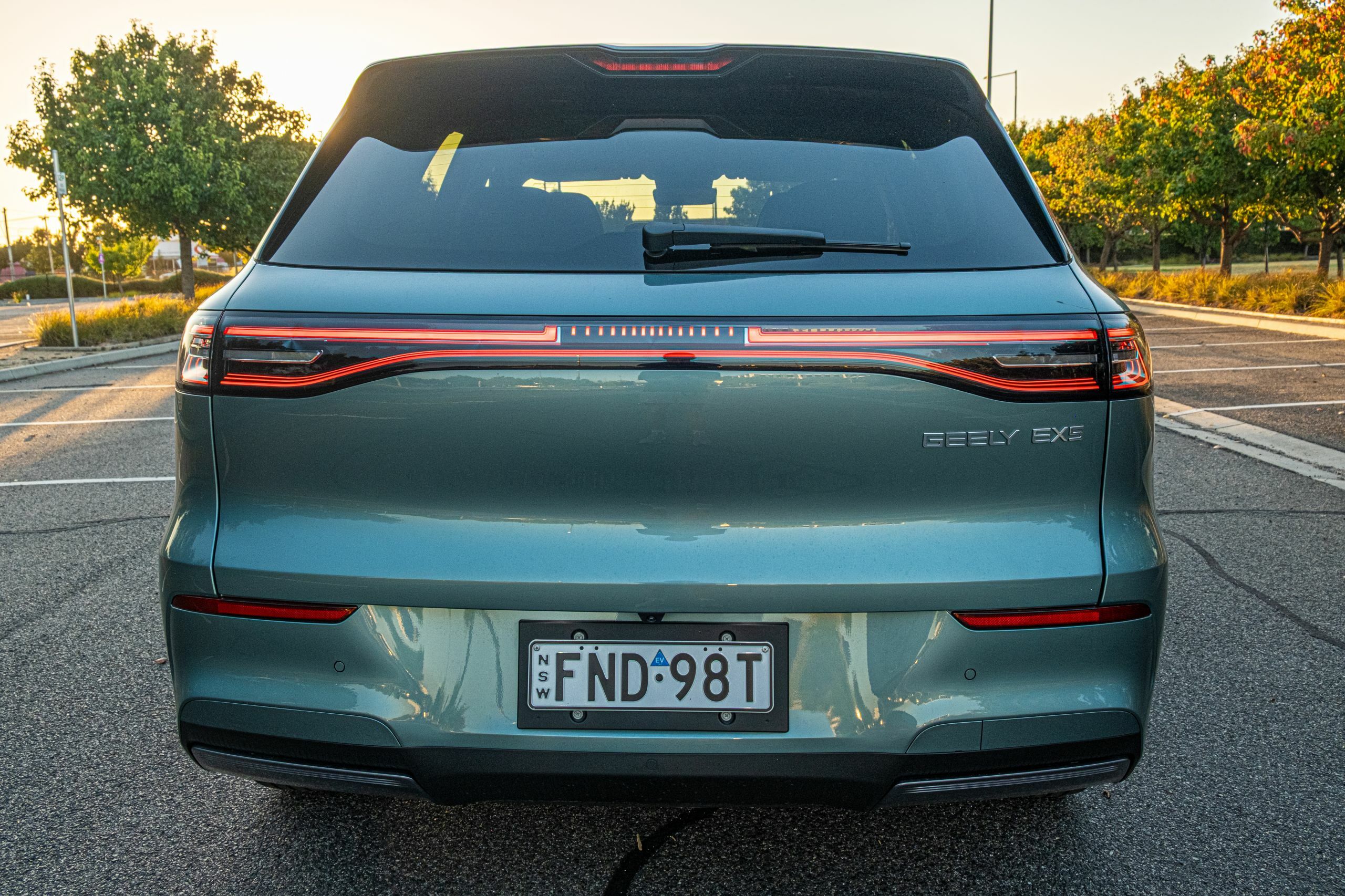
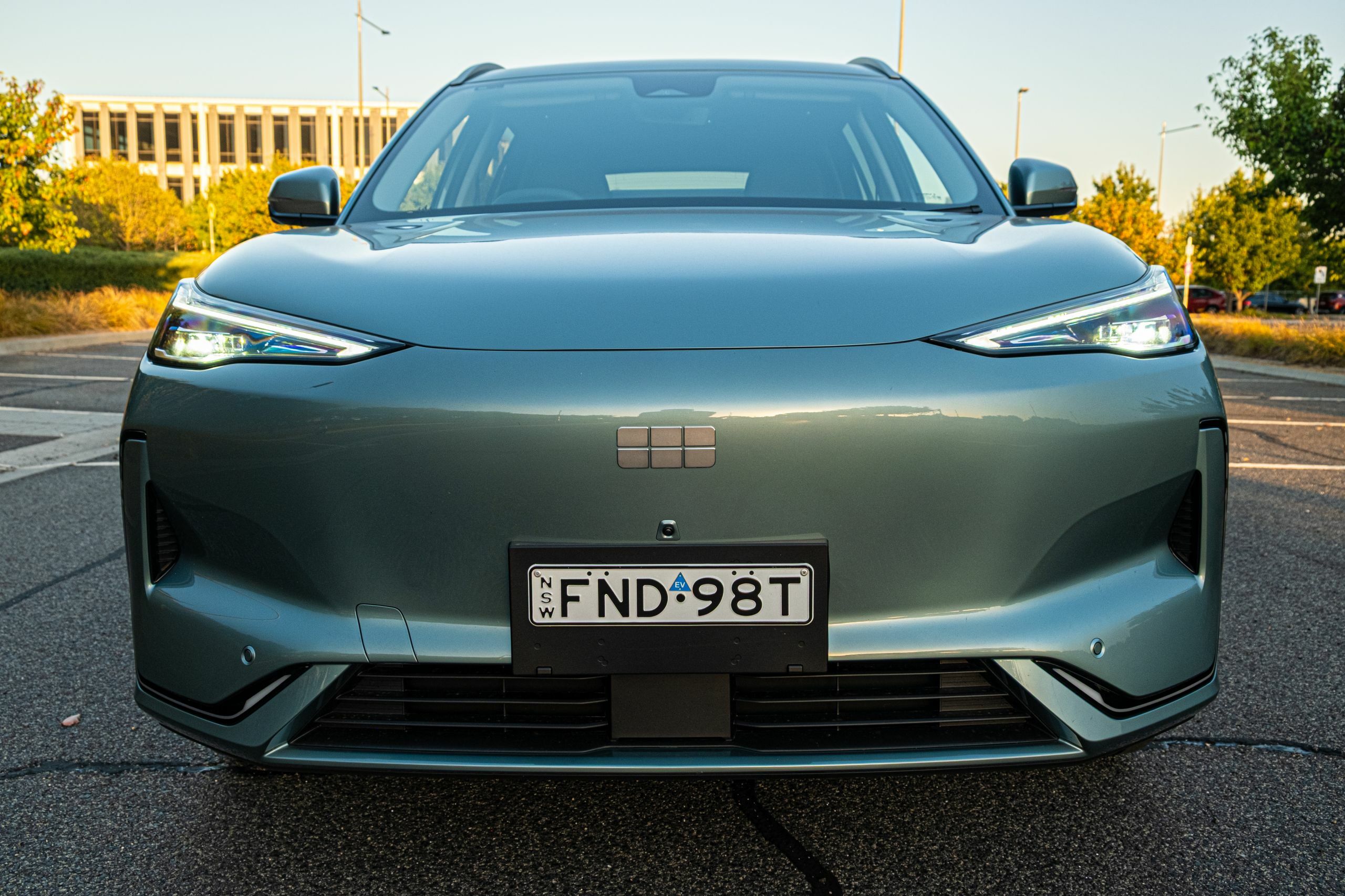
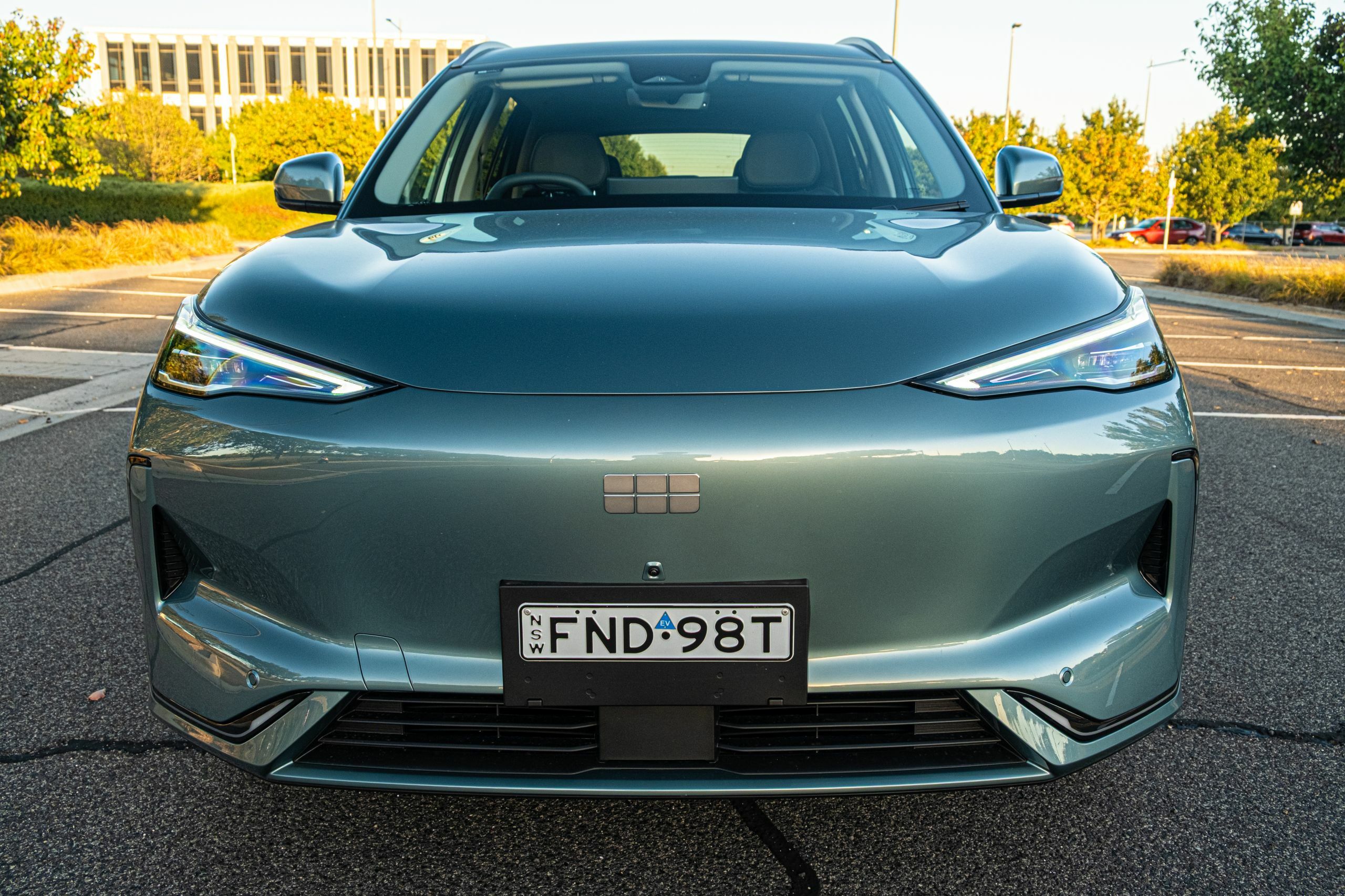
One of the country’s key players is the Geely Group, which continues to expand the reach of its core brand alongside a portfolio that includes Lotus, Volvo, Polestar, and Zeekr. In markets such as Australia, its most significant new EV is the Geely EX5, aimed squarely at the Tesla Model Y and competing Chinese models like the Xpeng G6 and BYD Sealion 7. It may not turn many heads or deliver an especially engaging drive, but it does tick loads of boxes.
QUICK FACTS
› Model:
2026 Geely EX5 Inspire
› Starting Price:
AU$45,990 ($32,500)
› Dimensions:
181.7 L x 74.8 W x 65.7 in H (4,615 x 1,901 x 1,670 mm)
› Wheelbase:
108.3 in (2,750 mm)
› Curb Weight:
1,765 kg (3,212 lbs)*
› Powertrain:
60.2 kWh battery / single electric motor
› Output:
215 hp (160 kW) / 236 lb-ft (320 Nm)
› 0-62 mph
6.9 seconds*
› Transmission:
Single-speed
› Efficiency:
16.2 kWh/100 km*
› On Sale:
Now
SWIPE
*Manufacturer
Photos Brad Anderson/Carscoops
What Do You Get For Your Money?
Two versions of the Geely EX5 are currently available in Australia – the Complete and the Inspire. Last month, we lived with the flagship Inspire for a week. Prices start at AU$41,990 ($29,600) for the Complete and rise to AU$45,990 ($32,500) for the Inspire, which translates to AU$50,061 ($35,300) when factoring in on-road costs.
Neither the Complete nor the Inspire offers any optional extras. All customers must choose from one of six available paint finishes and two available interior colors.
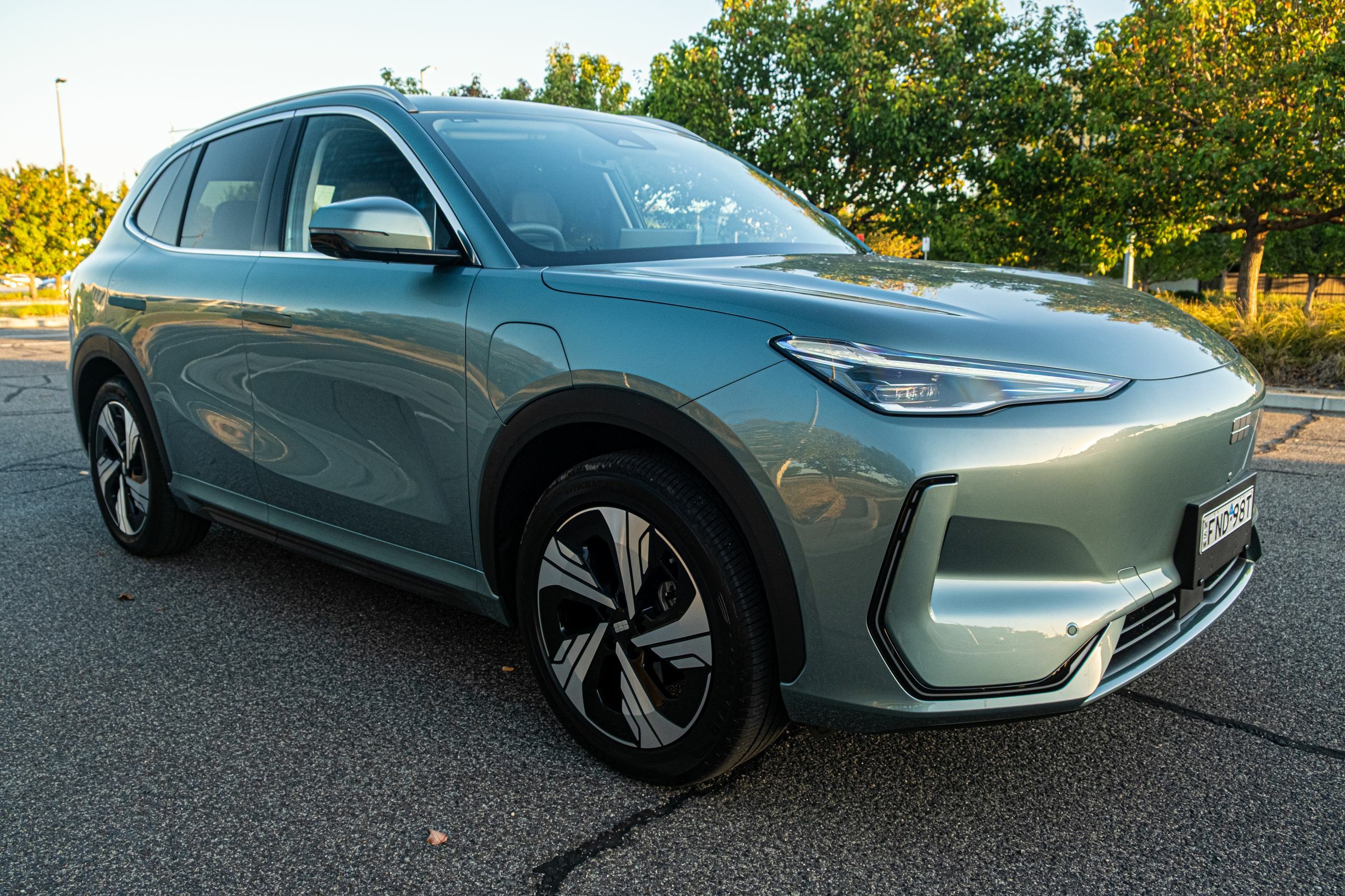
The EX5 is slightly smaller than a Tesla Model Y and BYD Sealion 7, but it’s also considerably cheaper. The new Model Y Premium Rear-Wheel Drive starts at AU$58,900 ($41,600), a difference of AU$16,910 ($12,000), while the larger Sealion 7 kicks off from AU$54,990 ($38,800). The EX5 also undercuts the Xpeng G6, starting at AU$54,800 ($38,700), and the Leapmotor C10, priced from AU$47,990 ($33,900).
The EX5 is based on Geely’s GEA architecture and features a compact 60.2 kWh lithium-iron phosphate battery pack with a single electric motor driving the front wheels. Both versions deliver the same 160 kW (215 hp) and 320 Nm (236 lb-ft) of torque.
Due to the small battery pack, the 430 km (267 miles) quoted range of the Complete and the 410 km (255 miles) driving range of the Inspire aren’t all that impressive, but the EX5 does promise to be pretty efficient, averaging as low as 15.8 kWh/100 km.
A Sleek Cabin
Photos Brad Anderson/Carscoops
I stepped into my week with the EX5 just after handing back the keys to Geely’s new Starray EM-i plug-in hybrid. From behind the wheel, the two look and almost feel the same, which is certainly no bad thing.
The EX5’s basic dashboard, steering wheel, door panels, and floating center console are all virtually identical to the Starray. While it’d be nice to have a little more differentiation between the two models, I can’t imagine there’ll be any EX5 buyers not completely satisfied with the fit and finish of the cabin.
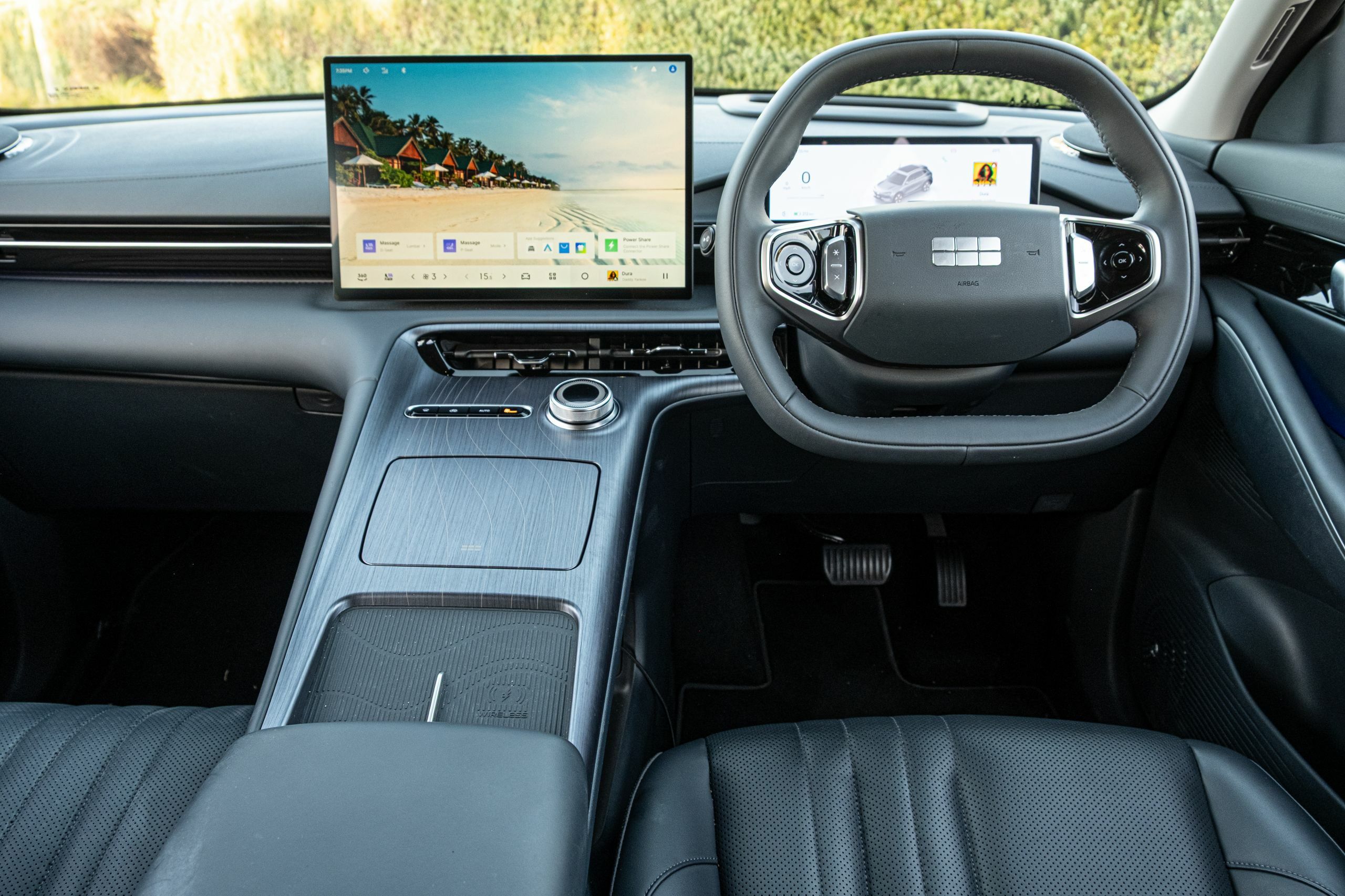
Perched in the center of the dashboard is a 15.4-inch infotainment display using Geely’s Flyme OS. It’s an excellent system, using a snappy processor and having logical and easy-to-understand menus. I especially liked the ability to customize which functions remained fixed to the taskbar at the base of the screen, such as temperature controls, fan speed, and seat adjustments.
A large 10.2-inch digital cluster is also used. Just like in the Starray EM-i, only the right side of it can be configured to display things like your media and trip functions. The rest of the screen remains unconfigurable.
Our tester had the available black interior finish, and it felt more premium than the price tag would suggest. There are some areas with piano black plastic, including the steering wheel and parts of the door panels, but Geely hasn’t gone overboard with them. Found on the floating center console are climate-control shortcuts and a configurable scroll wheel.
The Good And The Bad
Photos Brad Anderson/Carscoops
Sliding into the driver’s seat for the first time, I was relieved that the faux leather felt very real and was beautifully soft to the touch. However, I was disappointed that, like in the Starray, there is no ability to adjust the lumbar support. This is an odd exclusion, particularly given that Geely has gone to the trouble of fitting ventilated, heated, and massaging front seats.
Speaking of the massage seats, they are superb and remarkably forceful, unlike most other cars in this price range with massage seats.
When launched, the EX5 only included wireless Apple CarPlay, but no Android Auto connectivity. Thankfully, our test car benefited from a software update just before we collected it, adding wireless Android Auto, which worked seamlessly. The Inspire also comes standard with a panoramic sunroof and a solid 16-speaker audio system.
Externally, the EX5 looks quite small, but much to my surprise, there’s plenty of room for adults in the second-row, including plenty of legroom and headroom. However, it seems Geely has robbed some cargo volume to make the rear seats as spacious as they are.
As such, there’s just 302 liters (10.6 cubic feet) of space in the rear, although this does increase to 410 liters (14.5 cubic feet) if you include the generous under-floor storage area. Fold the seats down, and you’re looking at 1,877 liters (66.2 cubic feet), or about 200 liters (7 cubic feet) less than the Starray.
Smooth And Sharp
Photos Brad Anderson/Carscoops
Spend any amount of time behind the wheel of the EX5, and it’s obvious that it feels just as polished as some of the more expensive competition.
As an EV like this should, it’s quiet on the open road, but it does have an especially loud pedestrian warning hum when driving at lower speeds. Figures of 160 kW (215 hp) and 320 Nm (236 lb-ft) are largely par for the course for a vehicle like this, and just so happen to be identical to the recently-launched Hyundai Elexio.
Power feels absolutely adequate. Were this a combustion-powered SUV, it may feel a little underpowered, but as all of the grunt is available the moment you stab the throttle, the EX5 gets going surprisingly well. Indeed, it can hit 100 km/h (62 mph) in 6.9 seconds, which is very respectable. Geely has also done a good job of ironing out any hints of torque steer under hard acceleration.
Efficiency is also good. I averaged 16.2 kWh/100 km during my time with it, a lot better than I recently averaged in the larger and admittedly heavier Hyundai Elexio.
The ride also feels polished and plush, and that’s not something that can be said about many EVs. Given these vehicles have heavy battery packs in the floor, carmakers often give them quite harsh suspension setups. That’s not the case here as the EX5 eases over bumps smoothly and comfortably. Similarly, the steering is light and direct with several different settings to tweak the weighting.
What Could Be Improved?
Photos Brad Anderson/Carscoops
Just like we found in the Starray, most of the frustrations with driving the EX5 can be traced back to overzealous safety systems, like the speed limit warning and the driver monitoring system. In the more expensive Zeekr 7X, also from the Geely Group, these systems can be easily and quickly disengaged by swiping down from the top of the central screen and pressing on the large shortcut settings. Additionally, they stay off, even after you’ve left the car.
Things aren’t so easy in the EX5, as you have to dive into the menu in a process that can take 10-15 seconds. Whenever I would get ready to drive off, I’d have to disable them. It’d be nice to see Geely tap some of Zeekr’s UX engineers on the shoulder for some advice on how to incorporate similar shortcut toggles.
Is the EX5 particularly fun or engaging to drive? No, as it simply doesn’t have the performance or suspension setup to thrill, but it handles well, thanks in large part to the fact that it’s relatively light.
Shortly after we returned the keys to our 2025 model, Geely presented the 2026 EX5 in Australia, complete with a slightly larger 68.39 kWh battery, but retaining the same 160 kW (215 hp) front-mounted motor. In the future, we’d like to see Geely broaden the EX5’s appeal further, perhaps by launching a more powerful all-wheel drive version.
Verdict
As it stands, the Geely EX5 is a very solid choice for those in the market for an all-electric, mid-sized SUV. While it’d be nice for some of the safety systems to be calibrated more accurately, the minor niggles they have aren’t a deal-breaker.
For growing families, the EX5 could prove to be a little too small, so it would be best suited to couples and those with young children. It’s well-priced, reasonably efficient, and comfortable to drive daily. However, even though the model we drove is known as the EX5 Inspired, it felt a little uninspired and isn’t the type of vehicle that tugs at the heartstrings, as is the case with a number of alternatives.
NHTSA upgrades FSD probe to engineering analysis stage.
Over 3.2 million Tesla vehicles are included in investigation.
FSD may fail to detect vehicles in low visibility conditions
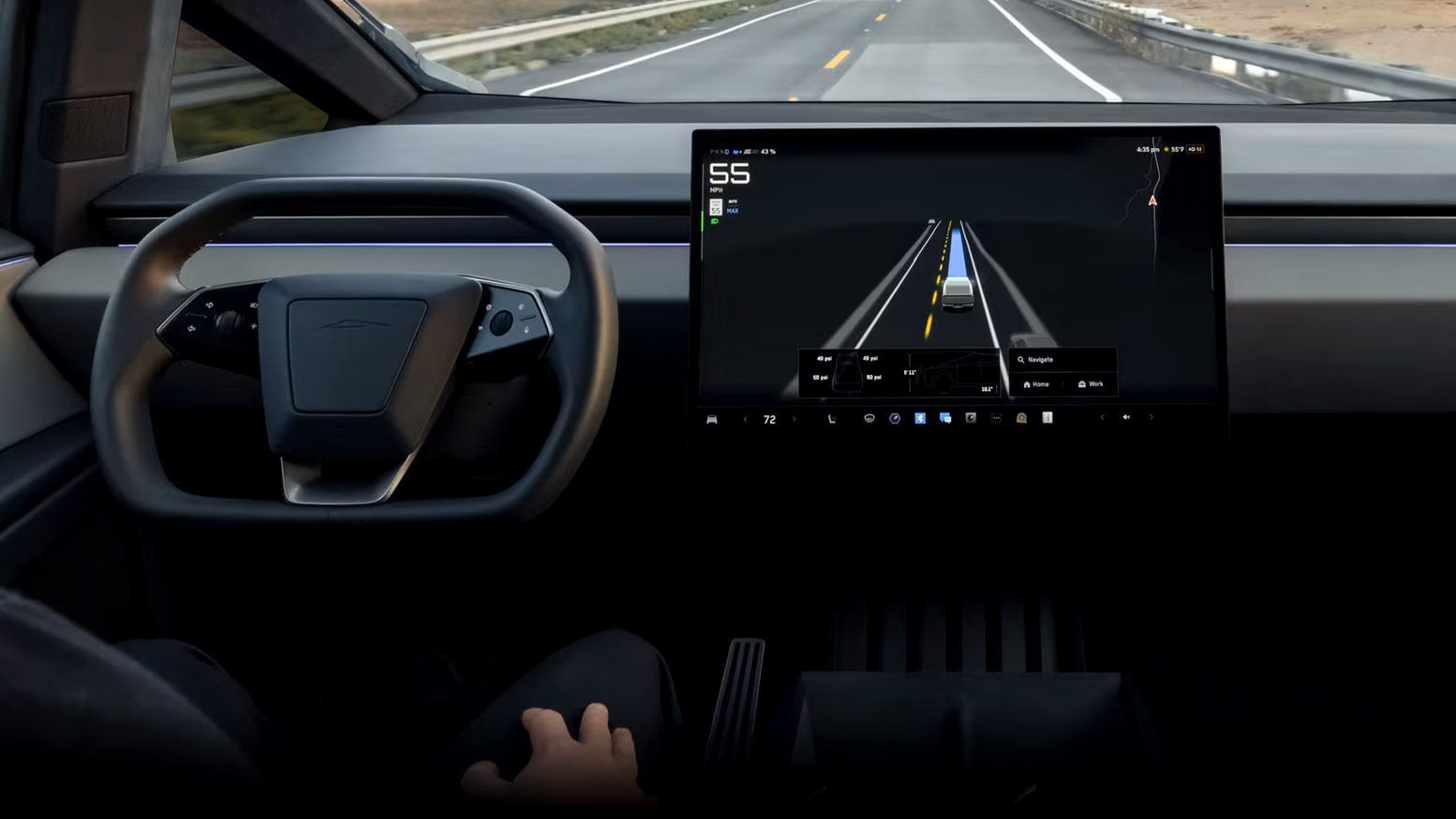
The NHTSA has intensified its scrutiny of Tesla’s Full-Self Driving system, focusing on how it copes when visibility drops. That escalation pushes the probe closer to a potential recall, one that could affect more than 3.2 million vehicles across the United States.
The agency first opened a preliminary evaluation in October 2024 to assess FSD’s ability to detect and respond appropriately in reduced roadway visibility. That probe has now been upgraded to an engineering analysis, which will examine how the vision-only system behaves in adverse conditions and whether it can alert drivers with enough time to react.
According to regulators, Tesla developed and implemented a degradation detection system after transitioning to its camera-based vision setup in mid-2021, abandoning radar and other sensors. The company began working on an update to this system in June 2024, following a report of a fatal crash involving one of its vehicles on November 28, 2023
Rain Is FSD’s Enemy
In its preliminary evaluation, the NHTSA began piecing together how Tesla’s Full Self-Driving system behaves in less-than-ideal conditions. The agency learned from Tesla that FSD’s ability to detect and respond to poor road conditions may have contributed to 3 of the 9 incidents identified by the Office of Defects Investigation (ODI).
In the crashes reviewed, the system failed to recognize common roadway conditions that affected camera visibility and did not issue alerts when camera performance degraded until just before impact.
A subsequent review of Tesla’s responses uncovered other crashes that occurred under similar circumstances. In these cases, the FSD system also lost track or “never detected a lead vehicle in its path.” The NHTSA also notes that Tesla says internal data and labeling limitations have prevented a uniform identification and analysis of crash events with the system engaged, meaning there is a possibility of under-reporting crashes.
The probe covers an estimated 3,203,754 Tesla vehicles, including the 2016-2026 Model S and X, 2017-2026 Model 3, 2020-2026 Model Y, and 2023-2026 Cybertruck models equipped with FSD.
A second-generation F-Type was in development before cancellation.
Jaguar will reveal its production Type 00 electric sedan this year.
Ian Callum designed new XF and F-Pace models before leaving in 2019.
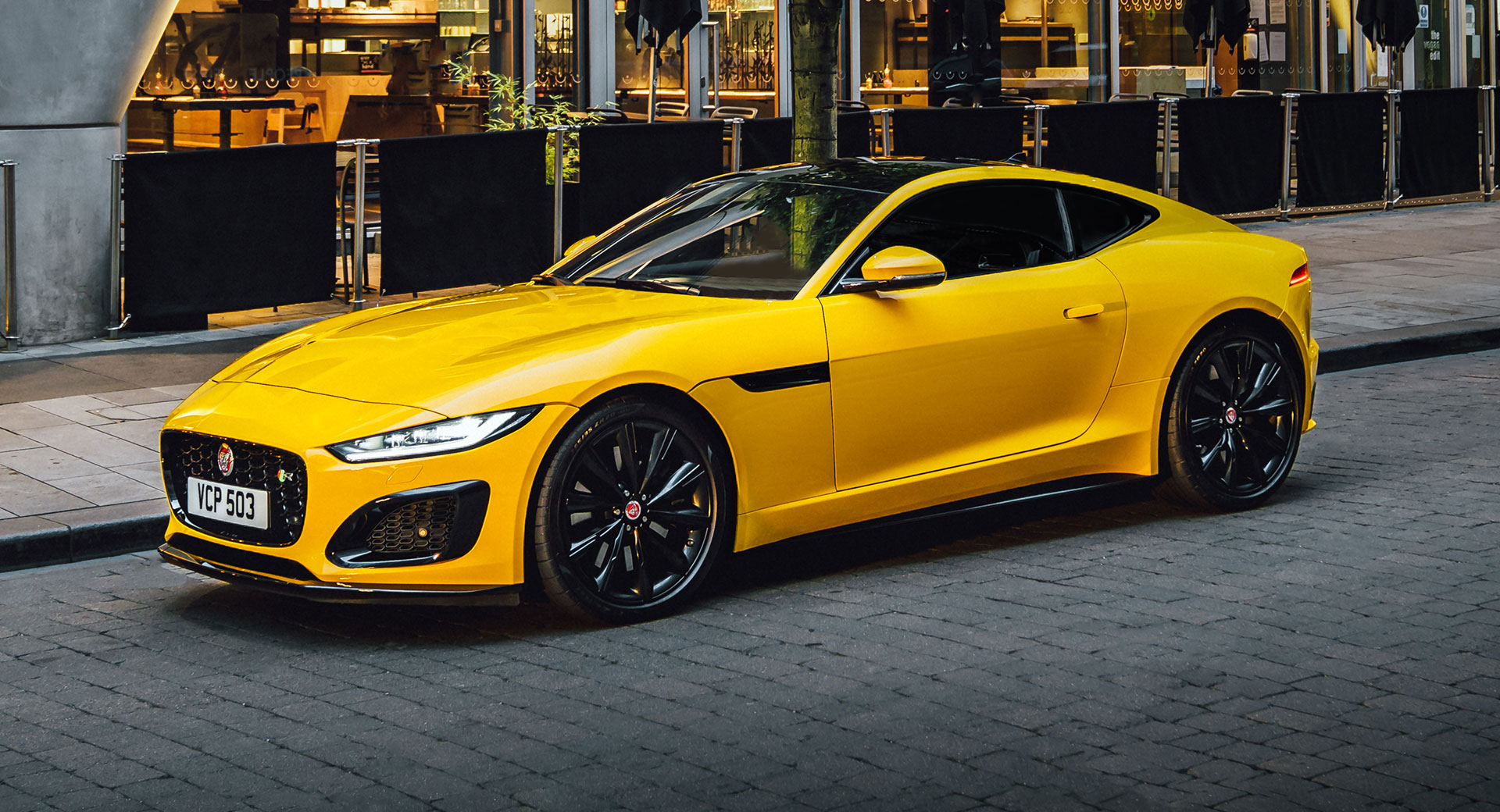
Jaguar’s radical pivot to electric vehicles, anchored by a four-door GT sedan, has proven deeply controversial. And once you learn about some of the planned future Jaguar models that had to be killed to make way for the Type 00, you may deride Jaguar’s EV shift even more.
For years, it was known that Jaguar had been developing an all-new XJ before abruptly changing course, cancelling the project mere months before it was ready. The car was going to be electric, but the platform was flexible enough to support a six-cylinder engine if the market demanded it.
In a recent chat on the Road to Success Podcast, Jaguar’s former design director Ian Callum revealed he had also designed a new XF sedan and an F-Pace SUV before departing the company in 2019. Both were scrapped to clear the path for the Type 00. The most painful revelation, perhaps, is that a successor to the F-Type was also in development.
What Could Have Been
Callum didn’t say how far work on a second-generation F-Type had progressed when he left. He considers the original one of the last great Jaguars, before the company’s strategy shifted beneath it. At a time when sleek, front-engined two-door sports cars are disappearing from the market, losing the F-Type to make room for a grand touring EV is a difficult pill to swallow.
Speaking about the company’s new EV, Callum described it as a “handsome car,” adding that “it’s bold, it’s brave, and it’s got a lot of good design attributes about it, but it’s not beautiful and Jaguars need to be beautiful.” He also said the Type 00 is “too retro.”
What Can We Expect From The Type 00?
Jaguar wants to establish itself as a legitimate rival to Bentley and Rolls-Royce with the Type 00, abandoning its pursuit of volume sales and chasing the likes of BMW, Audi, and Mercedes-Benz. The production model will stick true to the concept’s radical design, though it will add two extra doors and have a longer wheelbase.
Power comes from three motors, a 350 hp unit up front and two at the rear producing a combined 950hp, with Jaguar promising at least 1,000 hp total along with just over 1,000lb ft of torque. According to Top Gear, that translates to a 0-62 mph (100 km/h) sprint in around 3.3 seconds, a limited top speed of 155 mph (250 km/h), and a driving range of approximately 430 miles (692 km).
The Ferrari Luce has paddle shifters to adjust the torque deployment.
Ferrari will also enhance the motors’ sounds for added auditory pleasure.
Unlike some of the brand’s other cars, the Luce won’t be a track model.
The high-end EV market is facing some struggles, but despite this, Ferrari is plowing ahead with its first-ever electric car, the aptly named Luce. While the brand is perhaps the last you’d ever expect to enter the EV world, it’s confident the model will offer all the driving thrills expected of a Prancing Horse.
During a recent interview, Ferrari chief executive Benedetto Vigna insisted that the Luce will deliver each of the five key drivers of driving thrills, ensuring it is befitting of the brand’s badge and can succeed where some EVs have failed: to tug at the emotional heartstrings.
Speaking with Autocar India, Vigna said one element “is longitudinal acceleration,” agreeing with the interviewer that perhaps this acceleration in EVs is too linear, and also “too much, because sometimes it’s disturbing our brain.” He went on to reveal that Ferrari has worked with NASA to “understand what is the level of acceleration that is disturbing people,” and that too much acceleration is not a good thing.
Sounds And Shifts
SHProshots
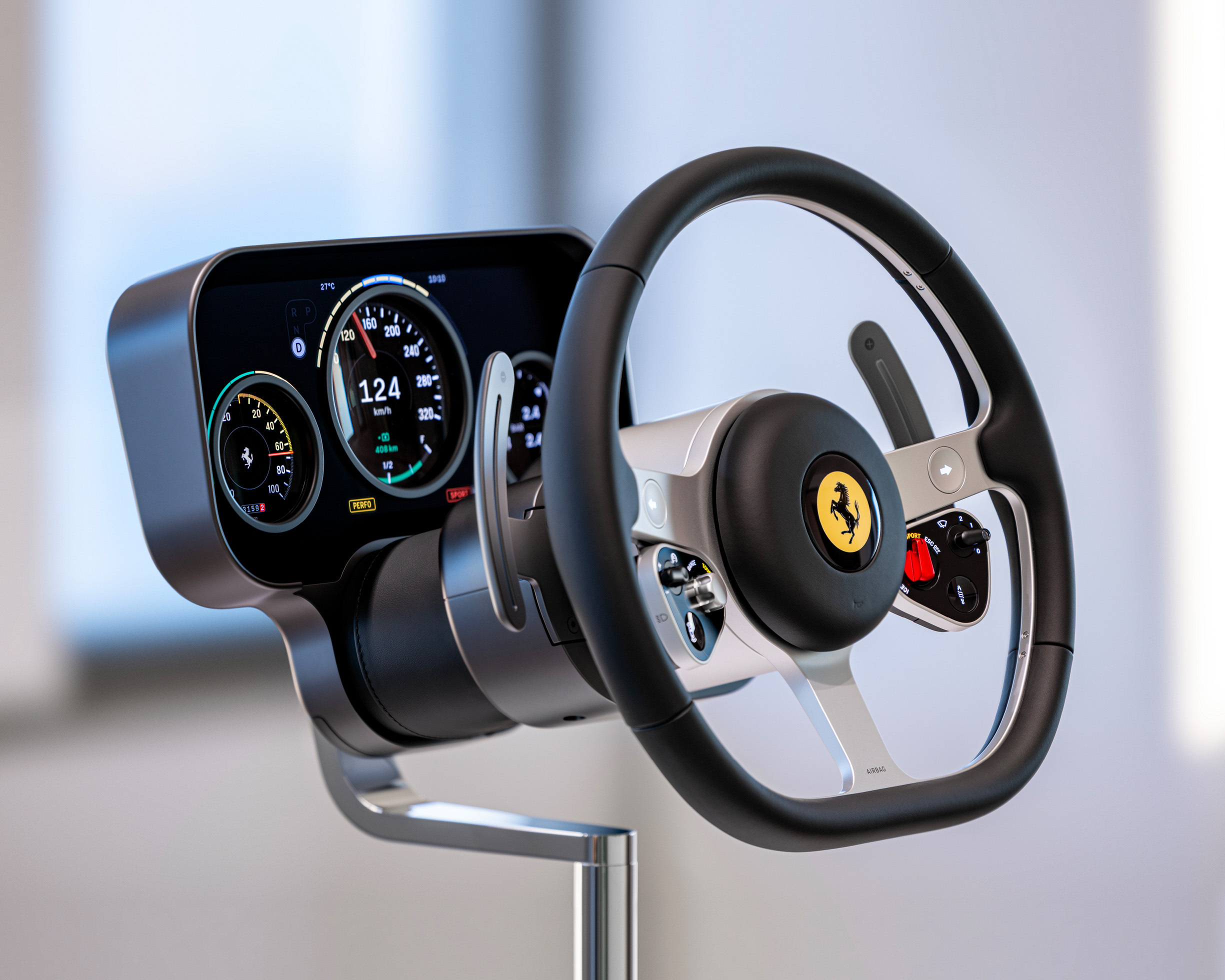
Another important contributor to driving thrills is “transversal acceleration, followed by the braking experience, the gearshift, and the sound. As recent images of the Luce’s interior revealed, it will include paddle shifters, and unlike some EVs, these won’t be used to adjust the level of brake regeneration but instead to adjust the level of torque engagement.
Vigna stopped short of confirming that the system will mimic traditional shifts, as in the Hyundai Ioniq 5 N, but it certainly sounds like that is what Ferrari is aiming for. Then there’s the all-important sound.
As patents have revealed, Ferrari won’t aim to mimic the sound of an internal combustion engine with the Luce, and instead will amplify the sounds of the electric motor.
“The electric motor is not silent,” he said, “there is a sound there. The problem sometimes today [is that] most of us associate the sound of electric motor with something high frequency that is disturbing. But, there are also low frequency, there are also ways to pick up the sound in an authentic way, in the original way, to avoid the two looking like a DJ.”
Vigna went on to add that the Luce will have a driving range of over 311 miles (500 km), and while that may not sound all that impressive, he noted it has not been designed with track use in mind, indicating that the battery technology is not in a place to make such cars achievable.
The updated SU7 looks the same, but changes have been made under the skin.
Xiaomi is selling the electric sedan with 73 kWh and 96.3 kWh battery packs.
Prices start at 219,900 yuan ($31,900) and top out at 303,900 yuan ($44,000).
It’s been only two years since the Xiaomi SU7 hit the market, and it has quickly become one of the most popular electric sedans in China. An updated version has just been launched, and it promises to be even better while still remaining an absolute bargain.
Ordinarily, it takes car manufacturers four or five years to update a model, but Xiaomi is more like Apple than a traditional car brand, and it’s used to updating its products on a yearly basis, so it’s perhaps no surprise the SU7 has already been refreshed. Like before, it’ll continue to be sold in Standard, Pro, and Max configurations, and it took just 8 hours for local enthusiasts to place 15,000 orders.
The base SU7 Standard is equipped with a 73 kWh lithium-iron phosphate battery and a rear-mounted motor with 315 hp (235 kW). It has a claimed CLTC range of 447 miles (720 km), and starts at just 219,900 yuan or around $31,900. Sitting above it is the SU7 Pro, fitted with a larger 96.3 kWh LFP battery and the same 315 hp (235 kW) motor, boosting its range to 560 miles (902 km) and bumping up the price to 249,900 yuan, roughly $36,200.
The SU7 Max comes equipped with a 101.7 kWh ternary lithium battery, dual motors delivering 681 hp (508 kW), and a 519-mile (835 km) range. It starts at 303,900 yuan or $44,000. There’s no word on whether an update is also being readied for the hypercar-rivaling SU7 Ultra, but changes are likely in the works.
Visually, the new model looks largely the same as the outgoing SU7, though all versions now come with a roof-mounted LiDAR, a 4D millimeter-wave radar, and the Nvidia Thor-U computing system. A new radar has also been added up front, and the rear tires are slightly wider, perhaps to improve grip and reduce the risk of crashes like this.
An Important Door Solution
Xiaomi has also added a new door unlocking mechanism with a triple-redundancy system, no doubt to ensure drivers don’t get stuck inside should they be involved in a serious accident. The mechanical release on the front passenger doors is also now finished in bright red, making it easier to spot in an emergency.
The rest of the interior is familiar, although the infotainment screen is slightly bigger at 16.1 inches. The dual wireless phone chargers have been retained, but Xiaomi has repositioned the cupholders from a vertical configuration to a horizontal one. It’s also removed the vertical row of buttons that had been fitted to the console, instead shifting them between the charging pads and the cupholders.
Geely is preparing to launch its EV lineup in Canada soon.
The company is competing with BYD for early market entry.
Local production remains a possibility for market expansion.
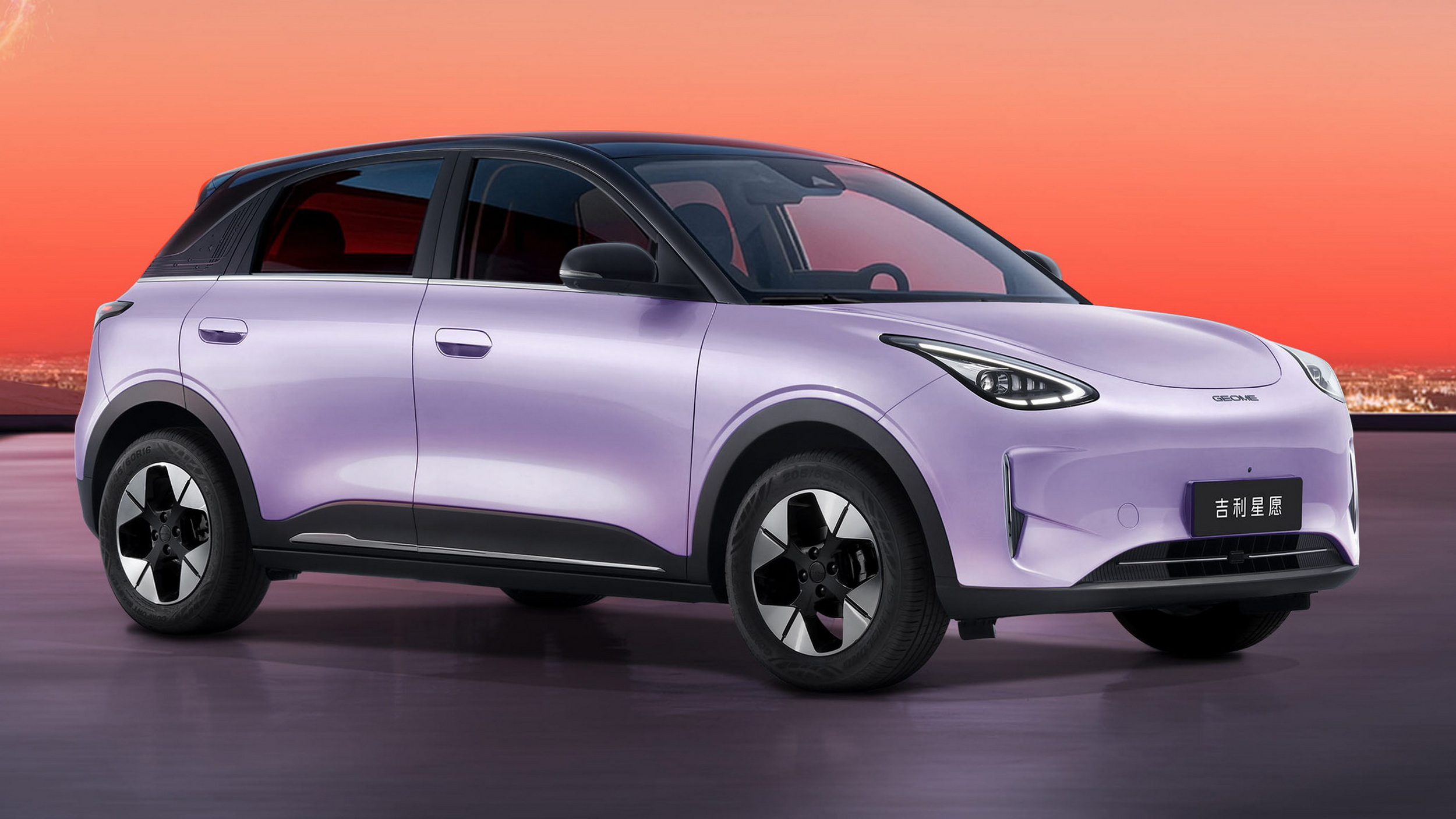
Geely has begun taking the necessary steps to launch its vehicles in Canada and could start sales as early as this year. The move places it in direct competition with BYD, as both aim to become among the first Chinese EV-focused brands to enter the Canadian market following a recent trade deal between the two countries.
They are both locked in a race against Tesla, which appears positioned to secure, if not all, then most of the first batch of 24,500 Chinese-made EV permits available at a reduced tariff rate.
Geely Group chief executive Andy An says the company expects to secure the required certifications from Canadian officials soon, clearing the way for local sales. The automaker has been steadily climbing the ranks among the world’s largest car manufacturers and is now setting its sights on expansion across several key markets.
“We’re not only considering the Canadian market, but also Brazil, South America, Eastern Europe, and Southeast Asia,” An told Bloomberg. “Geely’s globalization is mostly through exports right now, but we will look to localize production.”
Geely ranks just behind BYD as China’s second-largest car manufacturer, and it already has a foothold in both Canada and the United States through Polestar and Volvo. Even so, steep 100 percent tariffs have long made exporting additional China-built models to Canada a tough business case.
Things are changing. Earlier this year, Canada and China agreed to a pivotal new trade deal, announcing that up to 49,000 Chinese-built EVs will be eligible for importation into the country at a reduced tariff rate of just 6.1 percent. That ceiling is expected to climb over time, reaching roughly 70,000 vehicles annually.
With those barriers easing, Geely, along with rivals like BYD and Chery, is lining up a Canadian market entry. The simplest route is to ship existing EVs from China, but local production, either through partnerships or independent operations, is very much on the table. Chery, for its part, is already recruiting in Canada as it prepares for its own arrival.
BMW iX1 adopts Neue Klasse styling with a cleaner look.
The EV is expected to share battery and motor tech with iX3.
Single-motor variants are expected to launch before dual.
BMW may have just revealed the new i3 sedan, but behinds the scenes, it’s already working on another EV. A redesigned iX1 is on the way, and fresh spy shots make one thing clear, it is moving in a very different visual direction.
The brand’s smallest electric SUV now appears to be taking heavy inspiration from the iX3, effectively shrinking down that model’s look while adopting the Neue Klasse design language that is gradually rolling out across the brand’s lineup.
While the company has gone to the trouble of wrapping the prototype in its typical black-and-white camouflage, there’s no hiding some of the biggest design changes. Most notably, we can see that the large kidney grilles of the outgoing EV have been ditched in favor of small, vertical units, similar to the iX3, which are also being added to the new X5.
Trick Tech And Quick Charging
Baldauf
The new grille will be joined by new headlights and a redesigned bumper. The side profile also looks noticeably cleaner than the outgoing iX1, and includes flush door handles. The rear is hidden from view, but we can see parts of the new LED taillights.
Based on early reviews, it looks like the second-generation iX3 is BMW’s first competitive offering against the tidal wave of Chinese electric SUVs. It’s equipped with the company’s sixth-generation battery pack and electric motors, providing it with class-leading range and performance.
Baldauf
The new iX1 will use similarly innovative tech for a, hopefully, dramatic improvement over the existing model. We don’t know yet if it will have the same 108.7 kWh battery as the iX3, given its smaller size, but if it shares its 800-volt electrical architecture, it will enable charging speeds of up to 400 kW.
These images don’t show the cabin of the new iX1, but earlier ones from December did, revealing the same basic interior setup as the iX3, including BMW’s new Panoramic iDrive system and tilted central infotainment display. In all likelihood, the iX3’s odd four-spoke steering wheel will also come standard, like in the all-new i3 sedan.
Last year, EVs cut oil use by 2.3 million barrels a day.
US drivers spent $1.65 billion more on fuel in just one week.
EV search interest surged after news of the Iran conflict.
Due to the ongoing conflict in the Middle East, oil prices have surged to a four-year high and are fast approaching $100 per barrel. Regardless of where you live, this means that if you’re driving an ICE-powered car, you’ll be paying more to fill it up. It’s perhaps the perfect time to own an EV instead.
A recent study indicates that last year’s increased adoption rate of EVs reduced oil consumption by 2.3 million barrels per day, and these fuel savings will continue to grow as more EVs are sold. By 2030, EVs could help to reduce global oil consumption by 5.25 million barrels per day.
As noted by BloombergNEF, a key contributor to the reduced oil demand is two- and three-wheeled EVs, which have surged in popularity, particularly across Asia. A separate, more conservative study that factors in how often plug-in hybrid vehicles run on fossil fuels pegged last year’s daily oil savings at 1.7 million barrels.
At this rate, and with average prices of $80 per barrel, the analysis says that China would save more than $28 billion a year in oil imports thanks to its massive EV industry. Similarly, Europe would save $8 billion, and India could save $600 million per year.
Is This The Break EVs Need?
The war in Iran has made regular fill-ups for ICE drivers far more expensive. Just this week, Bloomberg expects US drivers to pay an additional $1.65 billion at the pump. With gas prices showing no signs of stopping, it should come as no surprise that interest in EVs has jumped this month.
CarEdge reports that search traffic for electric vehicles jumped 20 percent in the week following the attack on Iran. Search traffic also nearly doubled for many of the market’s most popular EVs, including the Chevrolet Equinox EV and Tesla Model Y.
Of course, surging oil prices will likely also lead to increased electricity costs, meaning charging an EV could become more expensive. However, electricity rates won’t rise by as much, as only roughly a quarter of a typical US power bill is directly tied to fuel costs.
The Aistaland GT7 mirrors the looks of the Taycan Sport Turismo.
It rides on an 800-volt architecture offering up to three motors.
The new model is set for its full debut at April’s Beijing Auto Show.
Porsche took a heavy hit in China last year, with sales tumbling 26 percent from 56,887 units to 41,938, a drop steep enough to force significant dealership cuts. While it continues to sell some very compelling cars, the rise of local brands offering similarly styled models at much lower prices has chipped away at Porsche’s luster. With EVs like this entering the scene, it’s not hard to see why.
What you’re looking at is an all-electric estate that clearly draws inspiration from the Porsche Taycan Sport Turismo. And no, this isn’t another take on the Xiaomi SU7, the SAIC Z7 unveiled a couple of weeks ago, or the upcoming MG 07 from the same company, even if all of them wear their Taycan influences quite openly.
Instead, this EV is called the GT7 and comes from Aistaland, a newly formed brand backed by Huawei and GAC. It will join the HIMA alliance, which already includes Aito, Luxeed, Maextro, Shangjie, and Stelato. For whatever reason, Chinese brands seem to have developed a habit of using the number ‘7’ for their Taycan-style lookalikes.
European Design With Chinese Tech
The GT7 will be unveiled in full next month, but at this stage, we know it’s 198.9 inches (5,050 mm) long, 77.9 inches (1,980 mm) wide, 57.9 inches (1,470 mm) tall, and rides on a 118.1-inch (3,000 mm) wheelbase. It uses an advanced 800-volt electrical architecture and will be available with up to three electric motors, one at the front axle and two at the rear.
There’s no word on how much power the GT7 will have, nor what kind of driving range it’ll hit the market with. But given that the Xiaomi SU7 delivers 664 hp in flagship dual-motor guise and 1,527 hp in the tri-motor SU7 Ultra, the GT7 will likely have output somewhere between those two models.
A Cut-Price Taycan
Obviously, the GT7 doesn’t just echo the Porsche Taycan in the way it’s engineered; it leans heavily on it for visual inspiration too. Up front, things are kept relatively clean, with large teardrop-shaped headlights and a small black grille doing most of the work. From the side, it’s even more familiar, with matching door handle placement and a shoulder line that could easily pass for Stuttgart’s handiwork.
The resemblance continues at the rear, where a full-width LED light bar closely echoes the Taycan’s look. Aistaland also seems to have taken a cue from the latest Tesla Model Y, adding two cut-outs above the light bar that glow red and give off a faint jet-thruster vibe.
There’s still no sign of the interior, and pricing remains unknown. However, if it lands close to the Xiaomi SU7, which starts at 229,900 yuan ($33,400), and the Z7, expected to begin around the same point, it would sit dramatically below the Porsche. In China, the Taycan starts at 918,000 yuan ($126,000) for the sedan and 1,008,000 yuan ($138,000) for the Sport Turismo, making Porsche’s position in China even harder to defend.
The flagship E7X has a sizeable 109.3 kWh battery pack.
AUDI will sell the SUV in both single- and dual-motor guises.
Pricing details will be announced at April’s Beijing Auto Show.
While some of the electric SUVs that Audi sells in Western markets already feel a little outdated compared to the competition, the carmaker has shown that, in China, it can build an EV that feels as if it’s been dropped off from the future. We’re, of course, talking about the E7X, previewed late last year but only just officially launched.
To bring this model to life, the German marque leaned on its partnership with SAIC through the dedicated AUDI brand, which debuted the E5 Sportback last year. Like that model, the E7X bears little resemblance to any Audi sold elsewhere. While pricing details have yet to be announced, it’s a safe bet it will be cheaper than many European alternatives.
The E7X is a big thing, stretching 198.7 inches (5,049 mm) long, 78.6 inches (1,997 mm) wide, and 67.3 inches (1,710 mm) tall, with a 120.4-inch (3,060 mm) wheelbase. As AUDI was under no obligation to follow traditional design cues in its development, there’s no single-frame grille in sight, just a collection of elements intended to appeal to Chinese buyers.
Chief among these touches is the front fascia, dominated by hundreds of tiny LEDs that replace a traditional grille. The side profile is also quite striking, with sharp lines, flush door handles, and cameras instead of traditional wing mirrors. Just like the front, the rear also sports some wild wraparound LEDs.
Sports Car Levels Of Power
It’s not just the design of the E7X that distinguishes it from typical Audi models, as its underpinnings are also distinct. All models will use CATL battery cells, with 100 kWh and 109.3 kWh packs being available. Depending on the battery pack and electric motor configuration, the SUV’s range will vary between 382 miles (615 km) and 466 miles (751 km).
The base model will be driven by a rear-mounted electric motor producing a hefty 402 hp. Sitting above it will be a dual-motor version delivering 671 hp. This dual-motor version will hit 62 mph (100 km/h) in just 3.97 seconds.
While AUDI has released a slew of new images of the E7X and more details about its powertrain, it’s yet to unveil the interior. Thankfully, we won’t have to wait long to see it in full, as the E7X will be displayed at next month’s Beijing Auto Show.
The C-Class EQ will use the Mercedes MB.EA architecture with 800-volt tech.
Mercedes will likely offer battery options ranging from 64 kWh to 94 kWh.
Early estimates indicate the C-Class EQ will have a driving range of 450 miles.
Hot on the heels of the new all-electric BMW i3, we can now turn our attention to its upcoming rival, the Mercedes-Benz C-Class EQ. Due for an April reveal, it will go head-to-head with the electric 3-Series, drawing on much of the same technology and drivetrain hardware as the GLC EQ.
As with the i3, which will be sold alongside a combustion 3-Series, the C-Class EQwon’t replace the gas-powered model but exist alongside it. Prototypes have been spotted testing for months, and a few journalists have already had early drives in production-intent cars.
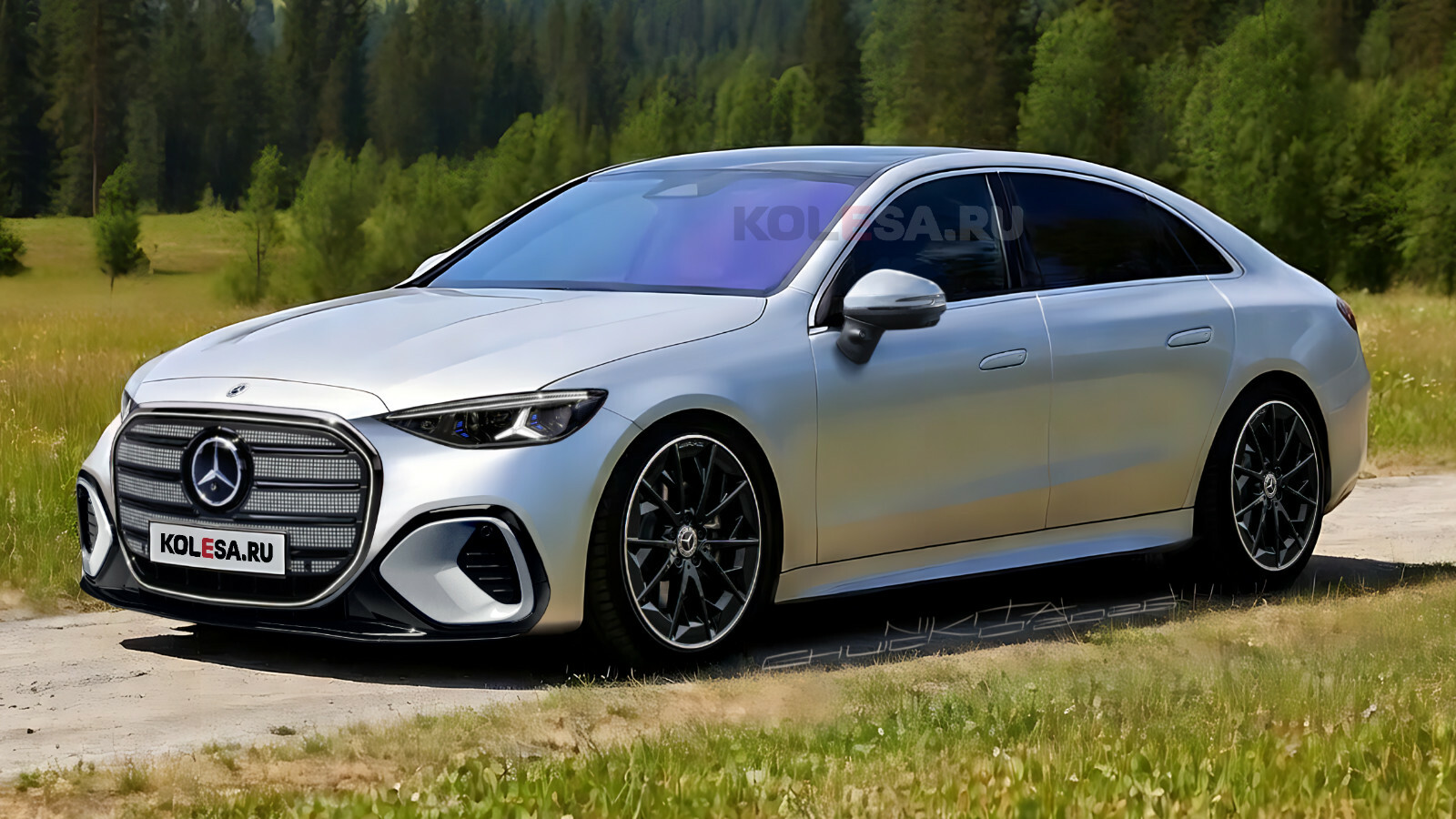
Visually, the biggest departure from the ICE version comes at the front. The EV is expected to feature an illuminated grille made up of hundreds of LEDs, much like the GLC EQ, as shown in these renderings created by Nikita Chuyko for Kolesa. Large grilles remain a divisive choice, and this one is unlikely to settle the debate, but it will certainly give the electric C-Class a distinct presence on the road.
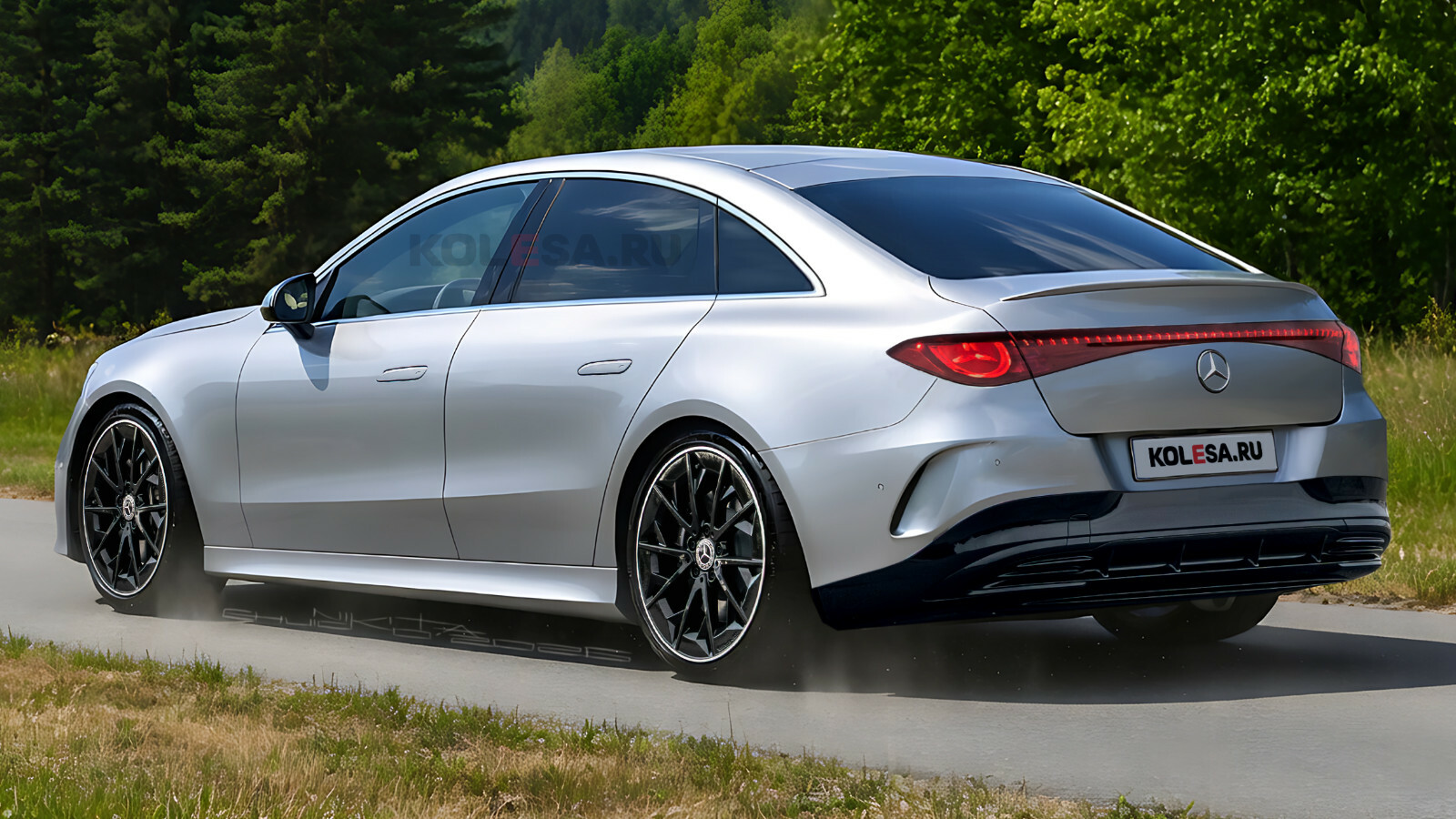
During recent prototype testing, Autocar observed that the front end sits more upright than the current C-Class, while the rear window is set at a noticeably steeper angle. That extended rear glass is also reflected in these illustrations, giving the sedan a vibe reminiscent of the much-criticized EQS and EQE.
Unlike those models, however, Mercedes appears to be edging back toward a more conventional silhouette, complete with a longer hood, as it gradually moves away from its more experimental EQ design language.
It also sits lower than the combustion version and stretches out slightly, with a larger footprint overall. The payoff is more cabin room, helped by a longer wheelbase and wider tracks.
Prototype of the Mercedes-Benz C-Class EQ (Photos SHProshots)
Underpinning the new sedan will be Mercedes-Benz’s MB.EA architecture, also used by the GLC EQ, features 800-volt technology. The platform is expected to support a two-speed transmission to improve efficiency and performance, along with available rear-wheel steering and adaptive air suspension borrowed from higher-end models.
Power And Driving Range
Full powertrain details have yet to be confirmed, but the lineup is likely to mirror the GLC EQ, with battery packs ranging from 64 kWh to 94 kWh.
According to AutoExpress, one of the launch models will be the C 400 4MATIC Electric, offering up to 450 miles (724 km) of range on the WLTP cycle. That is short of the 559 miles (900 km) quoted for the i3, but it still puts the Mercedes among the more longer-range contenders in the segment. Charging should be competitive as well, with a peak DC rate of 330 kW. Not quite the i3’s 400 kW ceiling, but more than sufficient in everyday use.
Power comes from a dual-motor setup producing around 482 hp and 800 Nm (590 lb-ft) of torque, paired with all-wheel drive. Expect a 0-62 mph time of under 4.5 seconds. Pricing is projected to fall between $50,000 and $60,000, with a full market launch slated for late 2026.
The facility now builds LFP cells for grid and data use.
Retooling the plant cost the joint venture tens of millions.
LG is also shifting other battery plants to storage facilities.
Just a few months after Ford announced that one of its battery plants, originally destined for EV batteries, would instead start making batteries for energy storage systems, General Motors has done the same.
The car manufacturer, in partnership with LG Energy Solution, operates the Ultium Cells LLC joint venture and runs a large factory in Tennessee. This site opened in 2024, making cells for the Cadillac Lyriq and Vistiq, and the Acura ZDX. Late last year, more than 700 employees were laid off from the plant as GM, like its competitors, pulled back its EV investments.
Now, Ultium’s vice president of operations, Tom Gallagher, said that these workers will be rehired and return to work by the end of April, as the site is switching to lithium-iron phosphate cells for grid and data center customers.
An Expensive Pivot
Bloomberg reports that retooling the plant has cost the joint venture tens of millions of dollars, but will help prevent hemorrhaging even more money from its EV pivot. It will also help LG, which is also retooling four other EV battery plants in North America, including two in Michigan, one in Canada formed through a joint venture with Stellantis, and an Ohio plant established with Honda. All of these sites will now begin manufacturing LFP cells for storage systems.
“Having these facilities that are able to be converted in less than a year means that we can react and we can actually get up to capacity,” chief product officer from LG’s systems integration unit, Vertech, Tristan Doherty said. “We’re going to be supplying the majority of the US market with domestic cells.”
GM says staff at the joint venture battery plant will be retrained as part of the shift. But the car manufacturer is remaining silent about its longer-term plans for the site, having previously stated that it’d start producing lithium manganese-rich batteries in Tennessee by 2028.
The C-Class EQ will use the Mercedes MB.EA architecture with 800-volt tech.
Mercedes will likely offer battery options ranging from 64 kWh to 94 kWh.
Early estimates indicate the C-Class EQ will have a driving range of 450 miles.
Hot on the heels of the new all-electric BMW i3, we can now turn our attention to its upcoming rival, the Mercedes-Benz C-Class EQ. Due for an April reveal, it will go head-to-head with the electric 3-Series, drawing on much of the same technology and drivetrain hardware as the GLC EQ.
As with the i3, which will be sold alongside a combustion 3-Series, the C-Class EQwon’t replace the gas-powered model but exist alongside it. Prototypes have been spotted testing for months, and a few journalists have already had early drives in production-intent cars.
Visually, the biggest departure from the ICE version comes at the front. The EV is expected to feature an illuminated grille made up of hundreds of LEDs, much like the GLC EQ, as shown in these renderings created by Nikita Chuyko for Kolesa. Large grilles remain a divisive choice, and this one is unlikely to settle the debate, but it will certainly give the electric C-Class a distinct presence on the road.
During recent prototype testing, Autocar observed that the front end sits more upright than the current C-Class, while the rear window is set at a noticeably steeper angle. That extended rear glass is also reflected in these illustrations, giving the sedan a vibe reminiscent of the much-criticized EQS and EQE.
Unlike those models, however, Mercedes appears to be edging back toward a more conventional silhouette, complete with a longer hood, as it gradually moves away from its more experimental EQ design language.
It also sits lower than the combustion version and stretches out slightly, with a larger footprint overall. The payoff is more cabin room, helped by a longer wheelbase and wider tracks.
Prototype of the Mercedes-Benz C-Class EQ (Photos SHProshots)
Underpinning the new sedan will be Mercedes-Benz’s MB.EA architecture, also used by the GLC EQ, features 800-volt technology. The platform is expected to support a two-speed transmission to improve efficiency and performance, along with available rear-wheel steering and adaptive air suspension borrowed from higher-end models.
Power And Driving Range
Full powertrain details have yet to be confirmed, but the lineup is likely to mirror the GLC EQ, with battery packs ranging from 64 kWh to 94 kWh.
According to AutoExpress, one of the launch models will be the C 400 4MATIC Electric, offering up to 450 miles (724 km) of range on the WLTP cycle. That is short of the 559 miles (900 km) quoted for the i3, but it still puts the Mercedes among the more longer-range contenders in the segment. Charging should be competitive as well, with a peak DC rate of 330 kW. Not quite the i3’s 400 kW ceiling, but more than sufficient in everyday use.
Power comes from a dual-motor setup producing around 482 hp and 800 Nm (590 lb-ft) of torque, paired with all-wheel drive. Expect a 0-62 mph time of under 4.5 seconds. Pricing is projected to fall between $50,000 and $60,000, with a full market launch slated for late 2026.
The facility now builds LFP cells for grid and data use.
Retooling the plant cost the joint venture tens of millions.
LG is also shifting other battery plants to storage facilities.
Just a few months after Ford announced that one of its battery plants, originally destined for EV batteries, would instead start making batteries for energy storage systems, General Motors has done the same.
The car manufacturer, in partnership with LG Energy Solution, operates the Ultium Cells LLC joint venture and runs a large factory in Tennessee. This site opened in 2024, making cells for the Cadillac Lyriq and Vistiq, and the Acura ZDX. Late last year, more than 700 employees were laid off from the plant as GM, like its competitors, pulled back its EV investments.
Now, Ultium’s vice president of operations, Tom Gallagher, said that these workers will be rehired and return to work by the end of April, as the site is switching to lithium-iron phosphate cells for grid and data center customers.
An Expensive Pivot
Bloomberg reports that retooling the plant has cost the joint venture tens of millions of dollars, but will help prevent hemorrhaging even more money from its EV pivot. It will also help LG, which is also retooling four other EV battery plants in North America, including two in Michigan, one in Canada formed through a joint venture with Stellantis, and an Ohio plant established with Honda. All of these sites will now begin manufacturing LFP cells for storage systems.
“Having these facilities that are able to be converted in less than a year means that we can react and we can actually get up to capacity,” chief product officer from LG’s systems integration unit, Vertech, Tristan Doherty said. “We’re going to be supplying the majority of the US market with domestic cells.”
GM says staff at the joint venture battery plant will be retrained as part of the shift. But the car manufacturer is remaining silent about its longer-term plans for the site, having previously stated that it’d start producing lithium manganese-rich batteries in Tennessee by 2028.

 Login
Login