The Juke EV shares its platform with the Nissan Ariya and Renault Megane E-Tech.
Nissan will continue selling the outgoing hybrid model alongside this new EV.
The new electric crossover will hit the market in the spring of 2027.
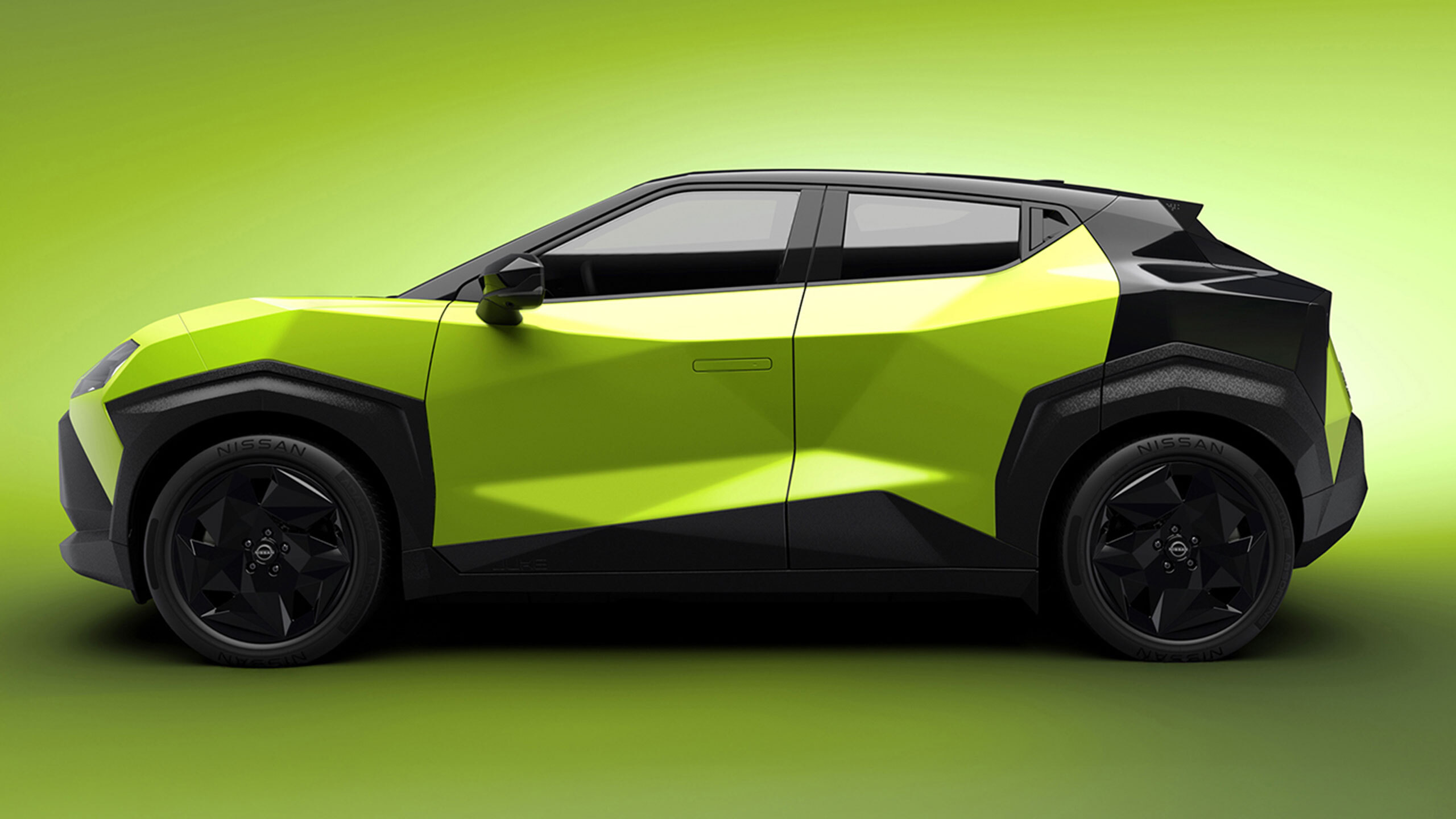
The Nissan Juke has always stood out from the crowd, sporting a unique shape that’s allowed it to remain a solid option despite competition in its segment always increasing. At its Vision event in Japan, Nissan has unveiled the third-generation Juke, and it’s even more striking than we could have predicted.
The new Juke will be sold exclusively as an EV and will be built at the brand’s British site in Sunderland, alongside the Leaf. It’s based on the CMF-EV or AmpR Medium platform used by the likes of the Renault Scenic E-Tech, Alpine A390, and Nissan Ariya, and is scheduled to launch globally in the spring of next year.
Nissan has yet to release final specifications for the Juke, nor has it released any photos of the crossover’s interior. However, it has unveiled the full exterior design, and it looks unlike any other model Nissan sells. In fact, the design is striking enough that it looks more like a concept car than one that’ll be sold to the public.
Concept Looks
The design is dominated by sharp and jagged lines, starting at the front with a large blacked-out grille and intriguing headlights. It’s also been showcased with angular black wheel arches, while much of the body is finished in a bright shade of green. This color really helps to highlight the profile of the Juke, particularly the wild door skins.
As with the outgoing Juke, the handles for the rear doors remain on the C-pillars. Like the front, the rear is bold with intricate LED taillights and a distinctive tailgate.
Like the current Leaf, the new Nissan Leaf EV will support vehicle-to-grid technology. The battery packs will likely mimic those of the Nissan Leaf, meaning it could be offered with 52 kWh and 75 kWh packs. Interestingly, the existing second-generation Juke isn’t going anywhere.
Despite originally planning to replace the old model with this new one, the second and third-gen versions will instead be sold alongside each other. It’s understood that Nissan will update the design of the old model to mimic the new EV.
Renault has been caught testing a facelifted Megane E-Tech due next year.
New LED headlights and revised taillights are visible on the prototype.
The current model’s 60 kWh battery pack lags behind Renault’s own Scenic.
It’s been four years since Renault made the controversial decision to launch an electric SUV with the Megane nameplate. While the Megane E-Tech has failed to trouble the market’s most popular electric SUVs, Renault isn’t willing to throw in the towel just yet and is readying an update for it.
Pictured here for the first time is a facelifted version of the Megane E-Tech, expected to hit the market next year. Since the launch of the current model, Renault has introduced several other new SUVs, including the Symbioz and Scenic E-Tech, and tweaks to the Megane could make it look a little more like those models.
This heavily camouflaged prototype retains the same overall shape as the existing model, and we can clearly see some changes have been made to the headlights. While the shape of the main headlamps looks familiar, the LED daytime running lights are clearly different, even though we can only see small parts of them.
Updates have also been made to the rear of the Megane E-Tech with new LED taillights visible and what appears to be a tweaked bumper.
New Batteries?
Baldauf
It’s unclear what changes will be made under the skin of the updated Megane E-Tech. Currently, the SUV is offered with 40 kWh and 60 kWh battery packs, both of which are quite small for a vehicle of this size. By comparison, the admittedly-bigger Scenic E-Tech offers a much larger 87 kWh pack, which is more in line with what we’d expect from an SUV like the Megane.
Like the Scenic, the Megane E-Tech is based on the company’s AmpR Medium architecture, also used by vehicles like the Nissan Ariya and Nissan Leaf, which offer 90 kWh and 75 kWh battery packs, respectively.
Given the shared platform, Renault might have the scope to increase the size of the Megane’s battery pack. Recent reports have suggested it could source new batteries from AESC and produced in France. This should help to boost the EV’s driving range, which currently tops out at 454 km (282 miles).
Maserati is testing facelifted prototypes of its Grecale SUV.
Both ICE and Folgore EV versions of the Macan rival spotted.
New bumpers seen in photos but rear, interior look unchanged.
Maserati is having a rough old time, its sales sinking from 51,500 cars in 2017 to a pitiful 7,900 last year across all of its model lines. Porsche was down too, in 2025, but to 279,449 vehicles, and the Macan alone accounted for over 84,000 of them.
But now Porsche has goofed, giving Maserati a chance to boost its own performance with a refreshed version of its Grecale, the Italian firm’s Macan rival. Fresh spy shots show Maserati is working on updates for both the combustion and the Folgore electric variants of its smallest SUV that are likely to be MY27 cars.
So what exactly is this open goal Porsche has gifted Maserati? It’s the end of combustion Macan production. The SUV is already off-sale in mainland Europe due to its failure to comply with European cybersecurity regulations, and though it’s still available in other markets for the time being, production ends this summer.
The Macan Electric EV, which Porsche conceived as taking over from the ICE version altogether, will still be available, but that’s not the one most buyers want. In the first quarter of this year Porsche sold 18,209 Macans of all powertrain types, but only 8,079 of them were EVs. The Stuttgart crew already knows it made a mistake killing off one of its most popular models, and has greenlit a new combustion Macan it never expected to make, but it’s going to be 2028 before its available.
Maserati Needs To Capitalize On Porsche’s Mistake
That presents Maserati – presuming parent company Stellantis doesn’t decide to cut its losses – with a small opportunity to pick up sales for the Grecale, which is still available in both ICE and EV form.
The camouflage on the nose of both the white combustion prototype and gray Folgore EV (above) suggests we can expect some very mild front-end changes, and it looks like the lower bumper shape has changed. We can’t see any tweaks to the headlights or anything at the undisguised rear, but we might see some mods on later prototypes as we closer to the launch.
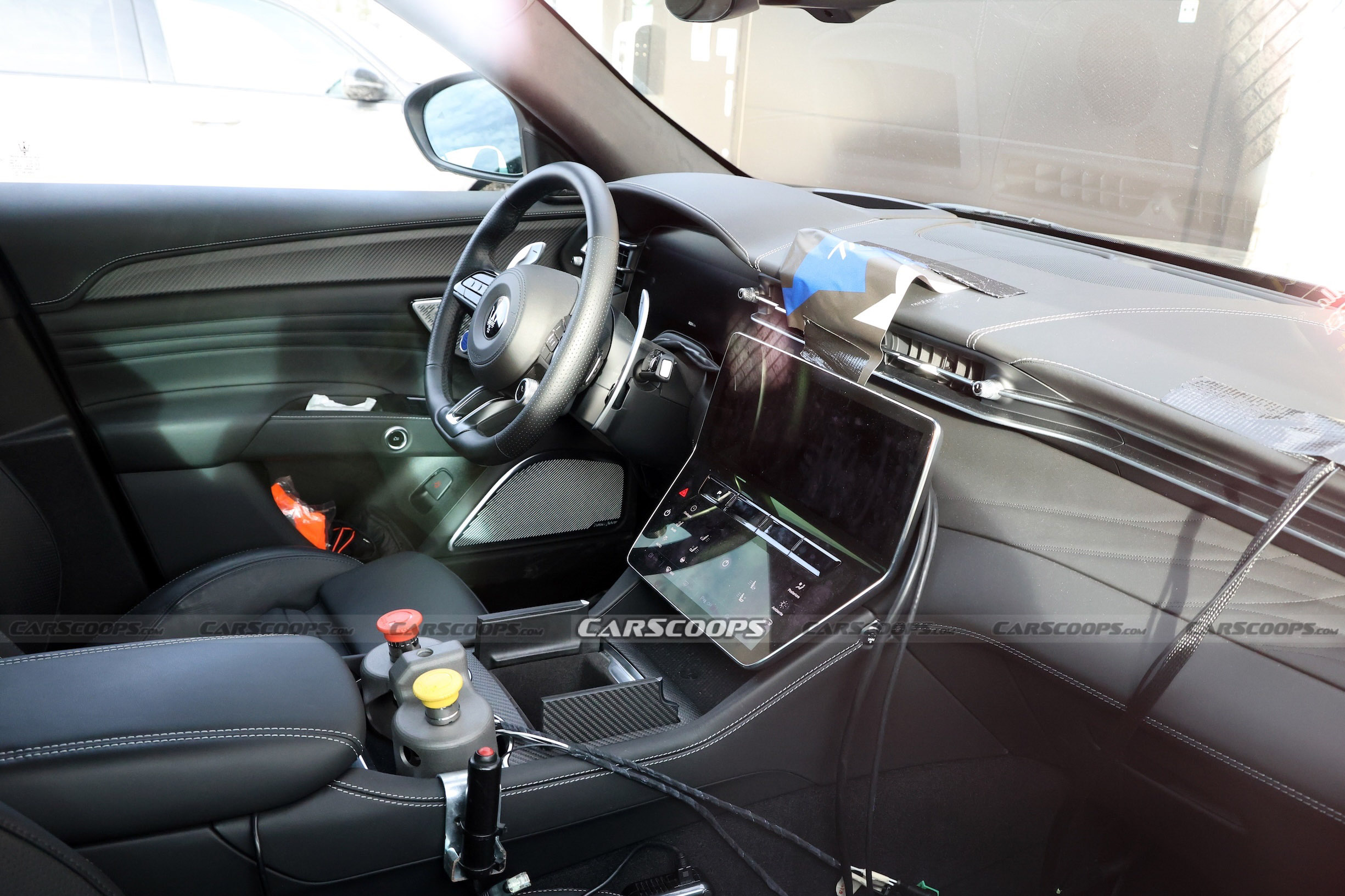
One shot showing the interior tells us Maserati hasn’t got any big updates planned for the dashboard, whose upper navigation screen and lower climate one are separated by a bank of transmission buttons. We’ve tried the current Grecale and came away impressed with the handling balance and quality, but less enamoured with the lack of physical switches, brake pedal feel and four-cylinder engine noise.
Grecale Already Updated For 2026
We don’t know yet what Maserati has planned under the hood of the facelifted cars, but we wouldn’t be surprised to see improvements to the Folgore’s 550 hp (558 PS / 410 kW) power output. The 275 mile (443 km) EPA range stats could also be bumped though they were already upped by 30 miles (48 km) for 2026 thanks to a new all-wheel drive disconnect function.
Also for 2026 Maserati junked the unloved 2.0-liter four-cylinder from entry-level and mid-spec US-market cars, replacing them with a version of the brand’s 3.0-liter twin-turbo Nettuno V6 making 385 hp (390 PS). The Trofeo halo model has a 523 hp (530 PS) take on the same powertrain.
The Macan’s absence isn’t going to dramatically change Maserati’s fortunes, but if the brand really is to survive it needs to leverage the hell out of the advantage Porsche has given it.
The Nevo Q06 will be sold as an EV and as a range extender.
Changan’s EREV version will use a 1.5-liter four-cylinder with 97 hp.
Sleek headlights and taillights help the new SUV catch the eye.
China’s EV scene isn’t short on low, sleek SUVs, and here’s another one sliding into the mix. Called the Changan Nevo Q06, it lands in roughly the same size and shape territory as the Xiaomi SU7, though this one looks set to come in at a lower price point, with less emphasis on outright performance.
Images published by China’s Ministry of Industry and Information Technology (MIIT) show the SUV shares obvious design similarities to the Nevo A06 sedan. With that in mind, it has a pair of split headlights with a full-width light bar, in addition to a black lower grille section and black air intakes.
Changan has also equipped it with gloss black wheel arches, a roof-mounted LiDAR, and door handles sitting flush with the bodywork. The side profile looks particularly sleek, especially thanks to the flowing shoulder line and bulging rear quarter panels. Found at the rear is a light bar and a color-matched diffuser.
Early details also reveal the Nevo Q06 will come with 14 different wheel designs, a two-tone rear spoiler, optional privacy glass, and a panoramic glass door. The SUV is 4,837 mm (190.4 inches) long, 1,970 mm (77.5 inches) wide, and stands 1,670 mm (65.7 inches) tall with a 2,940 mm (115.7-inch) wheelbase.
A Powertrain For Everyone
Unlike the YU7, which is sold exclusively as an EV, the Nevo Q06 will offer all-electric and range-extender powertrains. Two rear-driven electric models will be available, delivering 282 hp and 302 hp, respectively. Those seeking additional power can opt for a 444 hp dual-motor model that raises the top speed from 200 km/h (124 mph) to 230 km/h (143 mph).
There’s no word on the capacity of the available battery packs, but we know they will be LFP batteries sourced through Changan’s partnership with CATL.
Changan will also sell the Nevo Q06 as a range extender. This model will use a 1.5-liter naturally aspirated four-cylinder engine producing 97 hp, already used by several Deepal models, alongside a pair of electric motors at the rear axle. Details of the battery aren’t known, but it may get an innovative sodium-ion pack like the A06 sedan.
Ford has morphed the Explorer EV into a commercial vehicle in Europe.
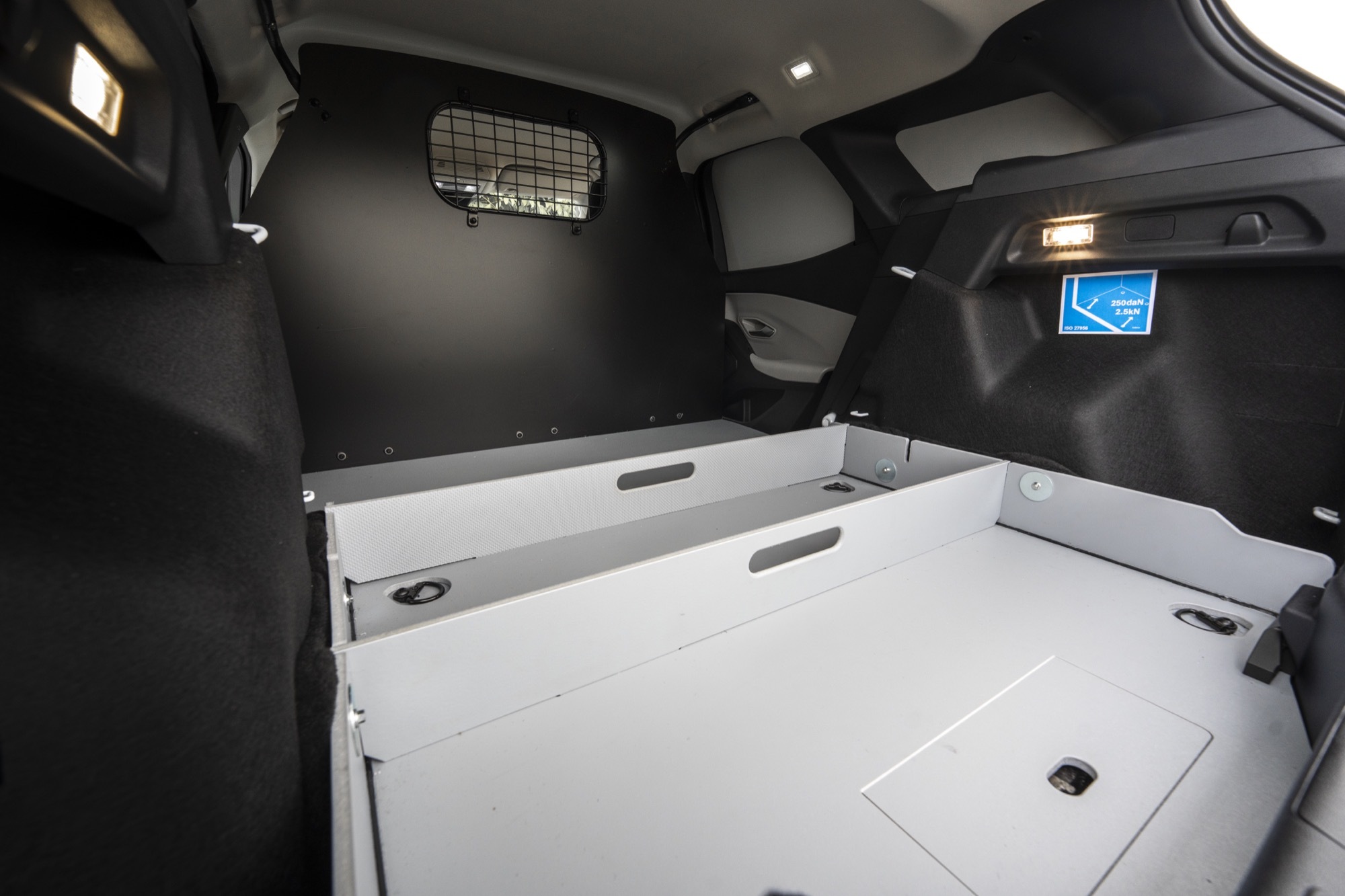
A fixed bulkhead has been added behind the front seats to boost space.
The Explorer Van is equipped with black steelies sporting yellow lug nuts.
This may look just like a base-level Ford Explorer EV, but thanks to some modifications, the all-electric SUV is now considered a commercial vehicle in Europe and has been rebadged the Explorer Van. While it may look like an undercover police car in America, it’s designed to carry things around, just like a Transit, albeit on a much smaller scale.
What starts out as a regular Explorer EV has been modified by Ford Pro’s Dagenham Conversion Centre in the UK and has been equipped with a permanent bulkhead behind the front seats, meaning it’s now considered a commercial vehicle rather than a passenger car. This offers purchasers important tax advantages and could prove popular among fleet buyers.
Beyond the inclusion of a new bulkhead, the Ford Explorer Van features a flat floor to maximize storage capacity, with several hooks and adjustable dividers. Those seeking even more practicality can order the EV with a Utility Pack, adding frunk storage, a roof rack, seat covers, and rear window mesh.
Ford also offers the stripped-down Explorer Van with a Commercial Pack that includes an amber lightbar, a tailgate work camp, and tailgate beacons, as well as a Welfare Pack with a fire aid kit and an eye washing and hand sanitizer station.
Without a doubt, the most intriguing element of the EV is the simple, blacked-out steel wheels with bright yellow lug nuts. Add some blue and red lights and upgraded bumpers, and you’d have the perfect undercover SUV.
Two different powertrains are on offer. The base model is equipped with a rear-mounted electric motor delivering 282 hp and capable of towing up to 2,204 lbs (1,000 kg). An all-wheel drive version is also offered, complete with 335 hp and an improved 2,645 lbs (1,200 kg) towing rating. The rear-motor version can drive up to 374 miles (602 km) on a single charge, but no range figure has been announced for the dual-motor version just yet.
Ford has morphed the Explorer EV into a commercial vehicle in Europe.
A fixed bulkhead has been added behind the front seats to boost space.
The Explorer Van is equipped with steel black wheels with yellow lug nuts.
This may look just like a base-level Ford Explorer EV, but thanks to some modifications, the all-electric SUV is now considered a commercial vehicle in Europe and has been rebadged the Explorer Van. While it may look like an undercover police car in America, it’s designed to carry things around, just like a Transit, albeit on a much smaller scale.
What starts out as a regular Explorer EV has been modified by Ford Pro’s Dagenham Conversion Centre in the UK and has been equipped with a permanent bulkhead behind the front seats, meaning it’s now considered a commercial vehicle rather than a passenger car. This offers purchasers important tax advantages and could prove popular among fleet buyers.
Beyond the inclusion of a new bulkhead, the Ford Explorer Van features a flat floor to maximize storage capacity, with several hooks and adjustable dividers. Those seeking even more practicality can order the EV with a Utility Pack, adding frunk storage, a roof rack, seat covers, and rear window mesh.
Ford also offers the stripped-down Explorer Van with a Commercial Pack that includes an amber lightbar, a tailgate work camp, and tailgate beacons, as well as a Welfare Pack with a fire aid kit and an eye washing and hand sanitizer station. Without a doubt, the most intriguing element of the EV is the simple, blacked-out steel wheels with bright yellow lug nuts. Add some blue and red lights and upgraded bumpers, and you’d have the perfect undercover SUV.
Two different powertrains are on offer. The base model is equipped with a rear-mounted electric motor delivering 282 hp and capable of towing up to 2,204 lbs (1,000 kg). An all-wheel drive version is also offered, complete with 335 hp and an improved 2,645 lbs (1,200 kg) towing rating. The rear-motor version can drive up to 374 miles (602 km) on a single charge, but no range figure has been announced for the dual-motor version just yet.
PROS ›› Great power, extremely spacious, refined CONS ›› Ioniq 9 is more luxurious, expensive, inefficient
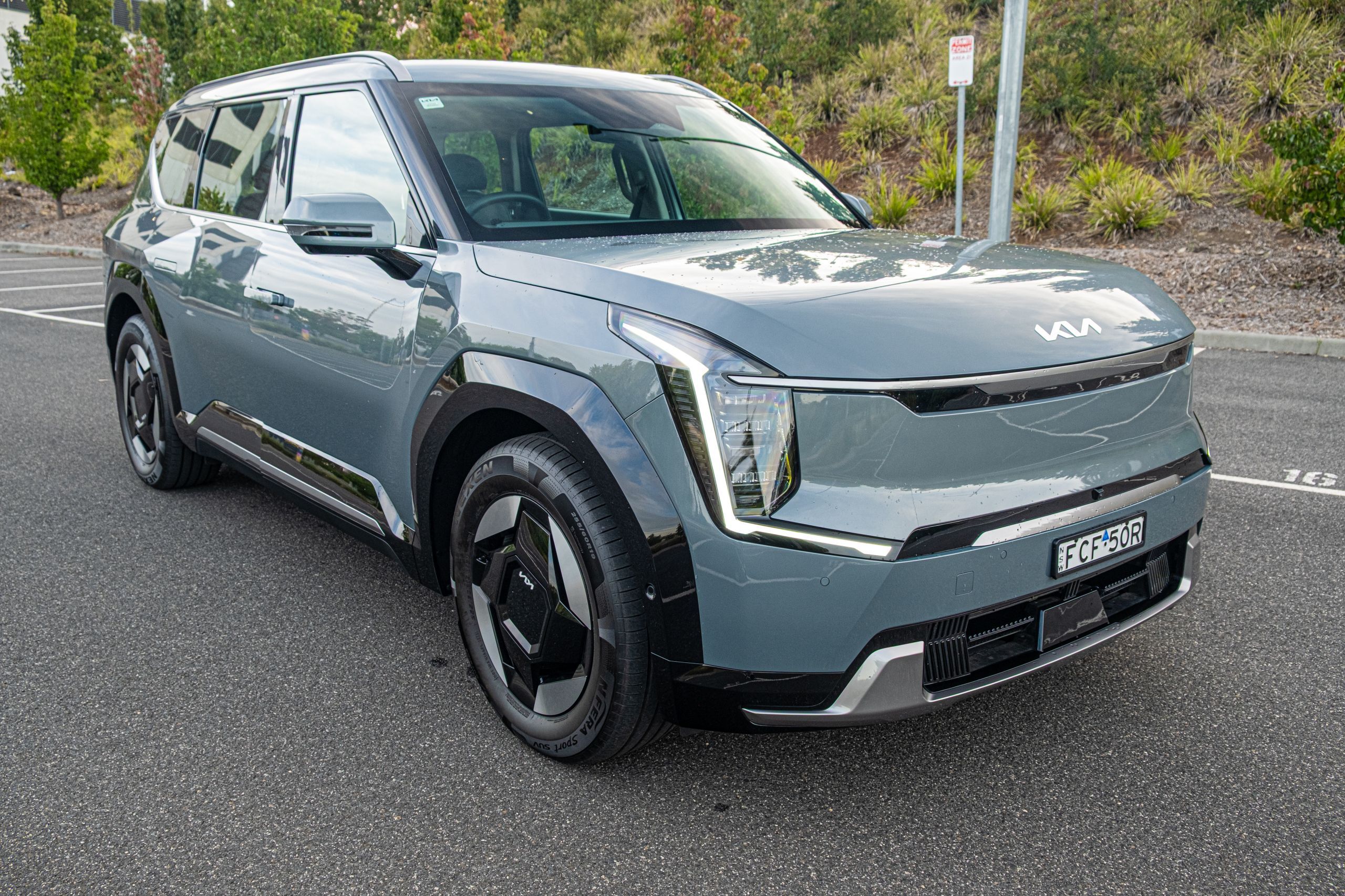
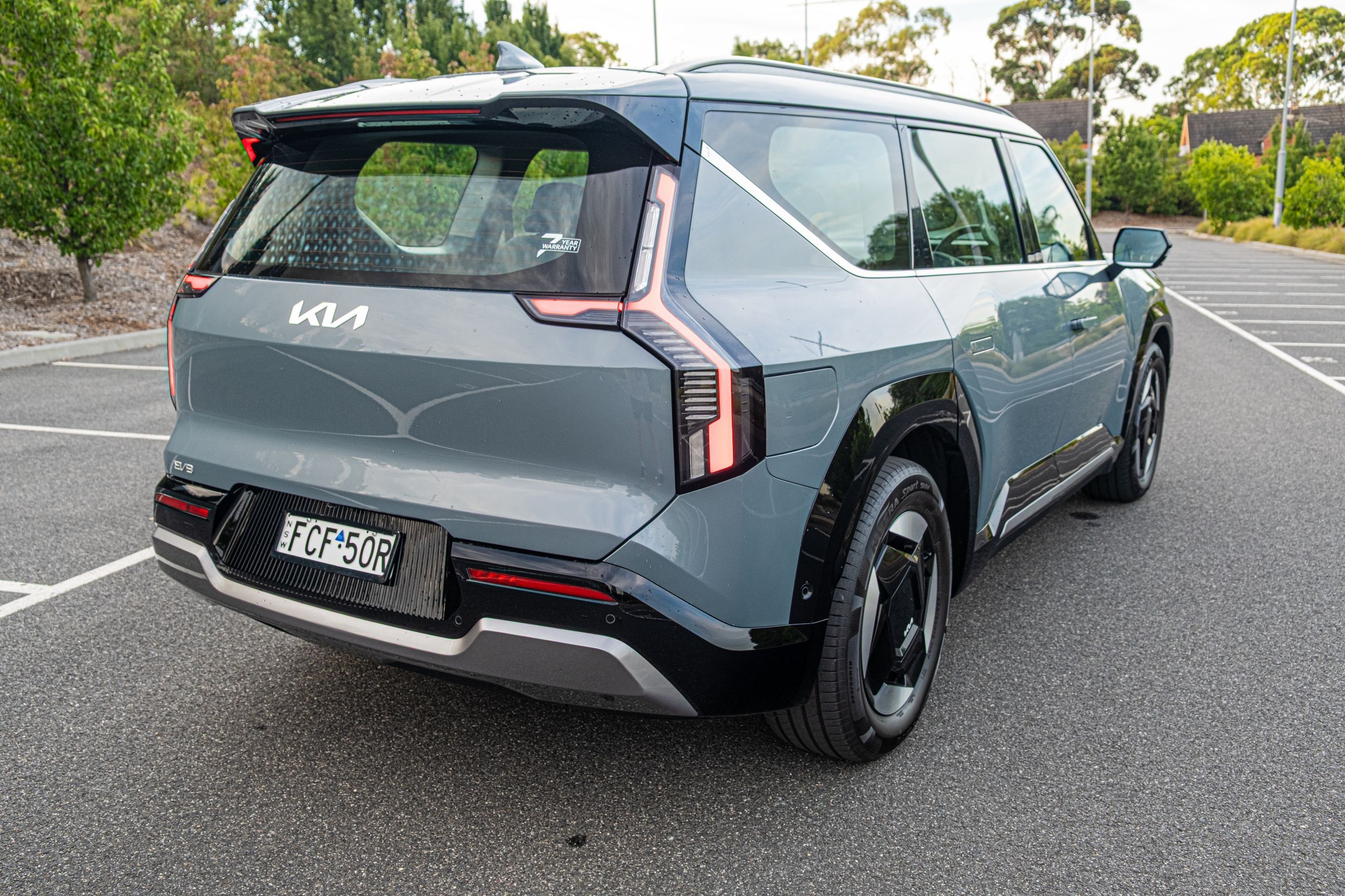
Kia’s EV9 arrived in Australia two years ago as the first fully electric SUV with three rows, and it didn’t try to blend in. The styling leaned hard into concept car territory, all sharp edges and presence, and it marked a turning point for the Korean brand as it pushed further upmarket. Locally, it wasn’t just another launch. It felt like a statement piece, and arguably the most important model Kia had put its name on in years.
In the two years since its launch, the segment hasn’t exactly exploded into life. Australia’s three-row EV space is still oddly thin, with only the Volvo EX90 and the sorted Hyundai Ioniq 9 joining the conversation so far. There’s also the looming arrival of the seven-seat Tesla Model Y L, which technically has three rows, in the same way a folding chair technically counts as living room furniture.
The question is, two years on, does the EV9 still hold the same appeal it had when it first launched, or has it been overshadowed by some of the newer competition? We spent a week with the mid-range Kia EV9 Earth to see where it now stands.
QUICK FACTS
› Model:
2026 Kia EV9 Earth
› Starting Price:
AU$119,273 ($84,231)
› Dimensions:
197.2 L x 78 W x 69.1 in H (5,010 x 1,980 x 1,755 mm)
› Wheelbase:
122 in wheelbase (3,100 mm)
› Curb Weight:
2,552 kg (5,626 lbs)
› Powertrain:
Dual electric motors / 99.8 kWh battery
› Output:
380 hp (283 kW) / 516 lb-ft (700 Nm)
› 0-62 mph
6.0 seconds
› Transmission:
Single speed
› Efficiency:
23 kWh/100 km as tested
› On Sale:
Now
SWIPE
Local prices for the EV9 have remained steady since the model’s introduction. While this is a good thing, it still remains pricey. The range starts with the Air, priced from AU$106,404 ($75,100) when factoring in all the on-road costs and fees, while the Earth we lived with kicks off from AU$119,273 ($84,231).
Then there’s the performance-focused GT, set to arrive shortly and expected to start just shy of AU$150,000 ($106,000). At that point, you’re not just shopping for a big electric SUV. You’re making a fairly serious financial statement.
Photos Brad Anderson/Carscoops
There’s a lot to like about the mid-range EV9 Earth on paper. It uses the same powertrain as the GT-Line, meaning there’s a 99.8 kWh battery pack and a pair of electric motors boasting 283 kW (380 hp) and 700 Nm (516 lb-ft) of torque. By comparison, the base model has a smaller 76.1 kWh pack and just a single, rear-mounted electric motor.
Kia quotes a solid driving range of 512 km (318 miles) in the EV9 Earth, the most of any model, as well as a 0-100 km/h (0-62 mph) time of 6.0 seconds. This is down from the GT-Line’s 5.3-second time and likely has to do with some electronic trickery, given it has the same powertrain.
Spacious, Functional, But A Bit Drab Interior
Photos Brad Anderson/Carscoops
Given the large footprint of the EV9, it should come as no surprise that the interior is absolutely vast. It’s a proper seven-seater – or six-seater when configured with the captain’s chairs – yet you quickly get used to the size of it.
Like other EV9 variants, as well as many other Kia EVs, the dashboard is dominated by a 12.3-inch infotainment display, a 5-inch climate control panel, and a 12.3-inch digital gauge cluster.
The implementation of the climate control screen leaves a little to be desired. It’s sandwiched between the two larger displays and is completely blocked by the rim of the steering wheel. Fortunately, Kia has included physical switches for the temperature and fan speed further down on the dash, so I very rarely had to use the screen to make adjustments. Even still, we’d prefer a narrow, horizontal display below the air vents for the climate settings.
Photos Brad Anderson/Carscoops
Just a few months ago, we drove the Hyundai Ioniq 9, a vehicle that shares its underpinnings with the EV9. Australia only gets that model in flagship Calligraphy guise, priced from AU$128,413 ($90,700), and while it’s more expensive than the EV9 Earth, the interior feels far plusher.
This isn’t to say the cabin of the EV9 is a disappointment. In fact, it’s very nice. But, whereas Hyundai has used a host of different colors, materials, and shapes in the Ioniq 9, the cabin of the EV9 is rather drab, offered exclusively with black artificial leather. There are no metal accents, or even faux metal parts, and instead just a bunch of leather (which isn’t particularly soft), small pieces of fabric on the dashboard and door panels, and plenty of black plastic. We’d expect more at this price point.
Functionally, the interior is great. Wireless Apple CarPlay and Android Auto come standard, although the Earth misses out on the head-up display of the GT-Line. It also does without Parking Collision Avoidance Assist – Forward, Kia’s relaxation seats, dual sunroof, rear privacy glass, small cube LED headlights, alloy sport pedals, premium door scuff panels, second-row sun blinds, and a 14-speaker Meridian sound system. Instead, it makes do with an 8-speaker system that’s adequate, but not particularly inspiring.
Photos Brad Anderson/Carscoops
There’s no knocking the space or comfort on offer, however. The front seats are great, as are the ultra-soft headrests. There are also plenty of charging ports, as well as heated and ventilated functions for the front seats.
Similarly, the second-row is incredibly spacious with ample legroom and headroom, even in the middle seat. Thanks to the upright roofline, there’s even plenty of headroom at the rear and slightly more than in the Ioniq 9. Cargo space is also good, with 828 liters (29.2 cubic feet) if the third row is folded down, and 2,318 liters (81.8 cubic feet) if the second- and third-row seats are folded away.
A GT Badge Isn’t Needed For Performance
While the Kia EV9 Earth isn’t marketed as a sporty SUV, unlike the GT-Line and GT models, it certainly has a sporty edge to it.
Unlike the Ioniq 9 Calligraphy, which has more power than all EV9 models bar the flagship GT, the EV9 doesn’t waft down the road quite the same. Instead, it rides noticeably firmer and has a more dynamic edge to it. This isn’t to say it feels like an out-and-out performance car, because it doesn’t, but it’s clear Kia’s engineers were eager to create something that driving enthusiasts like ourselves would appreciate.
It’s very common for big EVs to ride quite firmly – hardly a surprise given how heavy they can be. While the EV9 does lean towards firmness rather than suppleness, even in Earth configuration, it still remains comfortable and soaks up bumps nicely, almost as well as a high-priced European rival.
Photos Brad Anderson/Carscoops
Thanks to the suspension setup, the EV9 handles surprisingly well and offers a tremendous amount of grip given its size. The Nexen tires aren’t the most premium option, given the SUV’s hefty price tag. By comparison, the GT-Line rocks Continental rubber. Kia has done a commendable job of keeping the cabin quiet, eliminating any excessive tire or wind noise, even though the EV9 has a front area like a semi-truck.
The steering has a nice weight, even though it’s largely devoid of feel. Similarly, the brakes have been well-tuned, and there’s no noticeable crossover between the regenerative braking and the mechanical units. Like other Hyundai and Kia EVs, the regen can be adjusted on the fly with the paddle shifters.
Annoyances with the EV9 are few and far between, although the driver monitoring system is a little overactive, beeping and flashing even if you just take your gaze away from the road for a moment, even if that’s just to look in the mirrors. In addition, the multimedia shortcut buttons, incorporated into the dash with haptic buttons similar to what’s found in the Nissan Ariya, are very hard to use on the move.
The EV9’s 800-volt electrical architecture means the battery pack can be charged from 10-80 percent in just 24 minutes, which is impressive given the 99.8 kWh pack is quite sizeable. Yes, there are some Chinese brands that have pushed charging speeds to new levels in recent years, but the EV9 is more than adequate in this department.
In news that won’t surprise you, efficiency leaves a little to be desired. Kia quotes 22.3 kWh/100 km, but we ended up averaging 23 kWh/100 km, and that was driving almost exclusively in the Eco mode, always in one-pedal driving on a mix of urban roads and highways.
Verdict
Photos Brad Anderson/Carscoops
The Kia EV9 has been a relatively strong performer for the brand ever since it was launched. In Australia, 269 examples were sold last year, and while that was down 50 percent from the year prior, it did outsell the Volvo EX90, which shifted 209 units. In the US, sales have been in freefall since the $7,500 federal EV tax credit was scrapped, and in 2025, 15,051 were sold, down from 22,017 the year prior.
Should Kia be panicking? Probably not. The market for all-electric, three-row SUVs will never be huge, and a drop in demand doesn’t mean the EV9 has somehow become less appealing since its introduction. Indeed, it is just as good now as it ever was.
However, not only does it have to deal with competition from within the Kia stable, such as from the Sorento and the Telluride, but shoppers also need to be convinced to buy it over the Hyundai Ioniq 9 which is better, even if it costs a little more. Like so many other EVs, it will likely remain most appealing to those only interested in owning an electric vehicle, not necessarily a spacious seven-seat SUV that provides the best value for money. If you’re still after that, Kia’s hybrid alternatives might be a better option.
The CX-6e comes exclusively with a 78 kWh battery and a rear motor.
Mazda Australia will sell the CX-6e in GT and Azami configurations.
Customer deliveries of the all-electric SUV will start in September.
As more Chinese-built EVs make their way into global markets, legacy brands are starting to blur traditional pricing expectations. Just a few months after Hyundai began selling its China-made Elexio in Australia, Mazda has launched its only all-electric SUV in the country, also built in China. The new CX-6e is positioned as a direct rival to the Tesla Model Y and undercuts it on price, although there is no dual-motor version available.
The CX-6e is produced in China through the Changan Mazda joint venture and is closely related to the Deepal S07, which is already sold in Australia. Pricing for the entry-level GT starts at AU$53,990 (equal to US$38,000 at current rates) before on-road costs.
While it’s cheaper than the base Tesla Model Y Premium RWD that starts at AU$58,900 (US$41,500), it’s also nearly twice as expensive as the same model in China. There, the entry-level CX-6e EV starts at 139,900 yuan (US$20,500 or AU$28,900).
Chinese buyers also benefit from a lower entry point thanks to a range-extended version. It pairs a 1.5-liter four-cylinder engine with a smaller 31.7 kWh battery, effectively using the engine as a generator. That variant starts at 129,900 yuan (US$19,000 or AU$26,900), though it isn’t offered in Australia.
For their money, Australian buyers will get a sharp-looking SUV with a 78 kWh lithium iron phosphate (LFP) battery and a rear-mounted electric motor with 255 hp (190 kW) and 214 lb-ft (290 Nm). Key features of the CX-6e GT include a huge 26.45-inch central infotainment and passenger display, 19-inch alloy wheels, radar cruise control, heated and ventilated front seats, a heated steering wheel, and a 23-speaker audio system.
Tech-Filled, And Cheap
Those with a little more money to spend can opt for the CX-6e Azami, priced from AU$56,990 (US$40,100). It includes the same powertrain but adds digital wing mirrors, a digital rearview mirror, and 21-inch alloy wheels.
Both models have a claimed driving range of 301 miles (484 km) over the combined cycle. Mazda Australia hasn’t published the CX-6e’s peak DC charging speed, but notes the battery can be charged from 30-80 percent in 15 minutes, which is decent yet far from class-leading.
No doubt in a bid to help boost early interest in the SUV, the first 1,000 Australian customers who pre-order the CX-6e GT will receive a complimentary upgrade to the Azami. There is only one optional package, a Warm Beige interior trim available on both variants for AU$1,000 ($700).
The NX8 arrives in two flavors, pure electric and range-extender.
Longest-range EREV version covers over 900 miles on a full tank.
Pricing ranges between ¥149,900-199,900 ($21,900-29,200).
Update: The new NX8 is now on sale in China. Pricing starts lower than expected, and Nissan is offering both a pure electric and a range-extender version. This story has been updated with full pricing, specs, and new photos.
Nissan has introduced a new midsize SUV developed in partnership with Dongfeng in China, marking the latest addition to its growing, budget-conscious N-series lineup. Named the NX8, the model joins the existing N6 and N7 sedans and is offered with a selection of electrified powertrains.
The exterior design follows the same styling language as its sedan counterparts, with clean surfacing and a grille-free front fascia. A full-width daytime running light runs across the split headlights and wraps around the front fenders, while OLED tail lights extend across the rear.
The overall shape leans toward conventional SUV proportions, marked by flush-fitting door handles and pronounced shoulders.
How Big Is It?
The midsize NX8 measures 4,870 mm (191.7 inches) in length, 1,920 mm (75.6 inches) in width, and 1,680 mm (66.1 inches) in height, with a wheelbase of 2,917 mm (114.8 inches).
That makes it 222 mm (8.7 inches) longer than the Rogue (X-Trail) and 152 mm (6 inches) shorter than the Pathfinder. Interestingly, its wheelbase is 17 mm (0.7 inches) longer than the Pathfinder’s, which should translate to slightly better interior space.
A High-Tech Interior
Inside, we find dual 15.6-inch infotainment displays on the dashboard, which are separate from the 10.25-inch digital instrument cluster and run on the Qualcomm Snapdragon 8295P chipset. The flagship trim adds a 63-inch augmented reality head-up display and a 25-speaker audio system.
Additional highlights include AI Zero Gravity Seats 2.0 with massage, heating, and ventilation, along with contactless airflow control, an onboard refrigerator, and Motion Sickness Prevention Technology 3.0.
The five-seater cabin can transform into a comfortable couch/bed by fully reclining the front seatbacks. Furthermore, the boot has extra space under the floor, and is complemented by a frunk in the battery electric versions.
In terms of safety, the SUV is fitted with up to 29 sensors including a roof-mounted lidar unit. This the hardware for the Momenta-based Advanced Driver Assistance promising sophisticated autonomous capabilities.
Powertrain Options
The Nissan NX8 is offered with both range-extender (EREV) and fully electric (BEV) powertrains, each using lithium iron phosphate battery packs supplied by CATL.
The EREV pairs a turbocharged 1.5-liter engine acting as a generator with a single electric motor producing 335 hp (250 kW/ 340 PS). It delivers an EV-only range of 310 km (193 miles) and a combined range of 1,450 km (901 miles) under CLTC testing.
The BEV variant produces either 288 hp (215 kW / 292 PS) or 335 hp (250 kW / 340 PS). Range is rated at 580 km (360 miles) and 650 km (404 miles), respectively, under the CLTC cycle. These figures exceed the Leaf’s 303-mile EPA rating on paper, though CLTC estimates typically run 20 to 30 percent higher than EPA results, so real-world differences may be smaller than they appear. The larger 81 kWh battery supports ultra-fast charging at up to 463 kW, taking it from 10 to 80 percent in 12 minutes.
How Much Does It Cost?
Nissan has initially launched the NX8 in China but as with the N6 and N7 sedans, it is expected to be exported to additional markets. Whether that will include Western regions like Europe and Australia, however, remains to be seen.
In its home market, the SUV is currently priced between ¥149,900-199,900 ($21,900-$29,200), depending on the powertrain and trim level. That’s roughly in line with what you would pay for the older Kicks Play in the US ($21,520), which remains Nissan’s most affordable model there, and still less than the new Kicks ($22,430). It also comes in well below the new Leaf EV, which starts at $29,990 in America.
These figures reflect introductory pricing for the launch period, with standard pricing set at ¥159,900-209,900 ($23,400-30,700). Even so, the China-spec model remains considerably cheaper than the Nissan Rogue, which starts at $29,490 in the US market.
Honda faces product drought in North America after cancelling multiple EV programs.
No major redesigns expected until the new CR-V SUV arrives sometime around 2027.
Losses mount while rivals push ahead with fresher lineups and faster development.
Honda slammed the brakes on its EV push, and now it faces the prospect of being stuck at a development red light with not much new to show customers. After canceling several electric models, the company is staring down a product gap in North America that could stretch into 2027 and far beyond.
That’s a problem in a market where newness sells. Analysts say there may be no fully redesigned core models arriving next year, leaving Honda to rely on cars that are starting to feel a little long in the tooth.
The irony is that only a couple of months ago, Honda dealers were preparing for a massive influx of exciting new metal. Honda had gone all in on EVs, shifting engineers and resources away from traditional development. Then demand softened, policies shifted, and suddenly those future models didn’t make financial sense anymore.
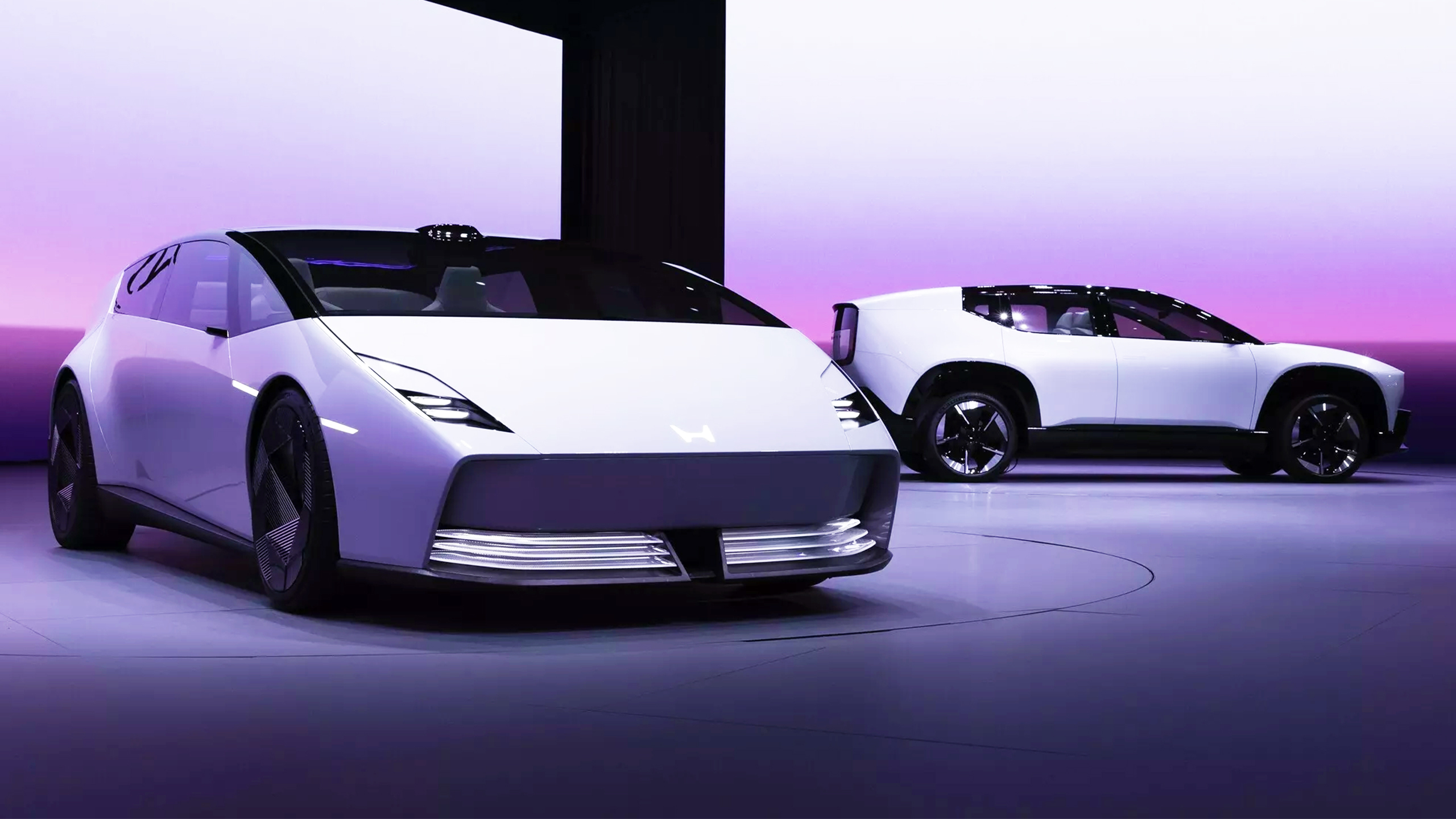
So the company pulled the plug. That included the wild looking 0 Saloon, the 0 SUV, and even Acura’s planned RSX revival. Cool ideas, all gone, along with billions in investment. What’s left is the hangover. Development pipelines for gas powered cars have slowed, and the company is left trying to rebuild momentum while competitors keep rolling out fresh vehicles. Its first fresh vehicle will be a redesigned CR-V due in 2027, Nikkei Asia reports.
Rivals More Efficient
It’s not just about product timing either. Honda’s development efficiency has been under scrutiny for years, and the gap versus rivals like Toyota isn’t helping. Pricing pressure is another concern. In the US, Honda is already offering bigger incentives than some rivals to keep cars moving. If newer competitors arrive while Honda’s lineup stays largely unchanged, those discounts may have to climb even higher.
No New Cars But Plenty Of Bills
Financially, things don’t look much rosier. The EV retreat is expected to trigger massive losses, and not just in wasted development time and money. Nikkei Asia says the automaker could have to pay $10 billion to suppliers who were all geared up and ready to build parts for the cancelled electric cars. And there’s growing chatter that dividends could come under pressure if earnings don’t recover soon.
Honda insists it’s stabilizing things and focusing on hybrids while reorganizing development to speed things up again, and there’s even talk of potential collaboration with Nissan in North America. But nothing concrete has emerged yet, so don’t expect many new-model fireworks for a couple of years.
The R2 Performance will have an EPA range of up to 335 miles.
By comparison, the Tesla Model Y Performance has a 306-mile range.
The R2’s dual electric motors offer a combined 656 hp and 609 lb-ft.
We already had a solid picture of the new Rivian R2, but fresh EPA testing data fills in a few remaining gaps. Positioned below the R1S in price yet still focused on performance and practicality, the all-electric R2 is shaping up to be a crucial model for the brand.
According to internal reports shared on the Rivian Forums, the range-topping Performance variant will use an 86.8 kWh usable battery pack and come with a choice of 20-inch or 21-inch wheels. Wheel and tire setup makes a noticeable difference. Models fitted with 20-inch wheels and all-terrain rubber are rated at up to 314 miles (505 km), while versions on 21-inch, road-focused tires stretch that to 335 miles (539 km).
While the R2 looks quite boxy, it has a better range than the Tesla Model Y Performance, which comes with an EPA-estimated range of 306 miles (492 km). The Tesla, however, is significantly lighter, weighing 4,466 lbs (2,025 kg), making it 784 lbs (356 kg) lighter than the R2 Performance at 5,250 lbs (2,381 kg) when equipped with 21-inch wheels.
The published documents also reveal that Rivian has developed a proprietary heat pump for the R2, aimed at improving cabin cooling in hot weather while reducing NVH levels. It should also perform better in cold climates, thanks to a high-voltage coolant heater. The R2 will also feature an integrated battery health monitoring system.
There’s More To Come
The only R2 variant referenced in the EPA tests is the $57,990 Performance, which will be the first to launch. Later this year, Rivian plans to introduce the more affordable R2 Premium, starting at $53,990. It’s expected to produce 450 hp and 537 lb-ft (727 Nm), compared to the Performance model’s 656 hp and 609 lb-ft (825 Nm). There’s no official range estimate yet, though it should exceed that of the R2 Performance.
A more accessible R2 Standard is also scheduled for 2027. It will deliver 350 hp and 355 lb-ft (481 Nm), with early estimates pointing to a 345-mile (555 km) range. The lineup is expected to be completed in late 2027 with an entry-level R2 featuring a smaller battery, believed to offer around 275 miles (443 km) of range.
The new electric SUV uses VW and Xpeng’s advanced CEA architecture.
A high-tech driver assistance system will come standard on the new model.
VW is also working on Chinese EVs with its other local joint venture partners.
Volkswagen is working on yet another addition to its burgeoning range of electric cars sold in China. Whereas the brand’s range of EVs offered in Western markets is starting to feel a little old, some of its Chinese models appear to be up to the task of rivaling local brands.
Its latest model is being brought to life through the FAW-Volkswagen joint venture, rather than the Volkswagen Anhui partnership with JAC, which is responsible for the new ID. Unyx 08. Photos published online by VW show its next Chinese EV will be a large SUV sitting above the Unyx.
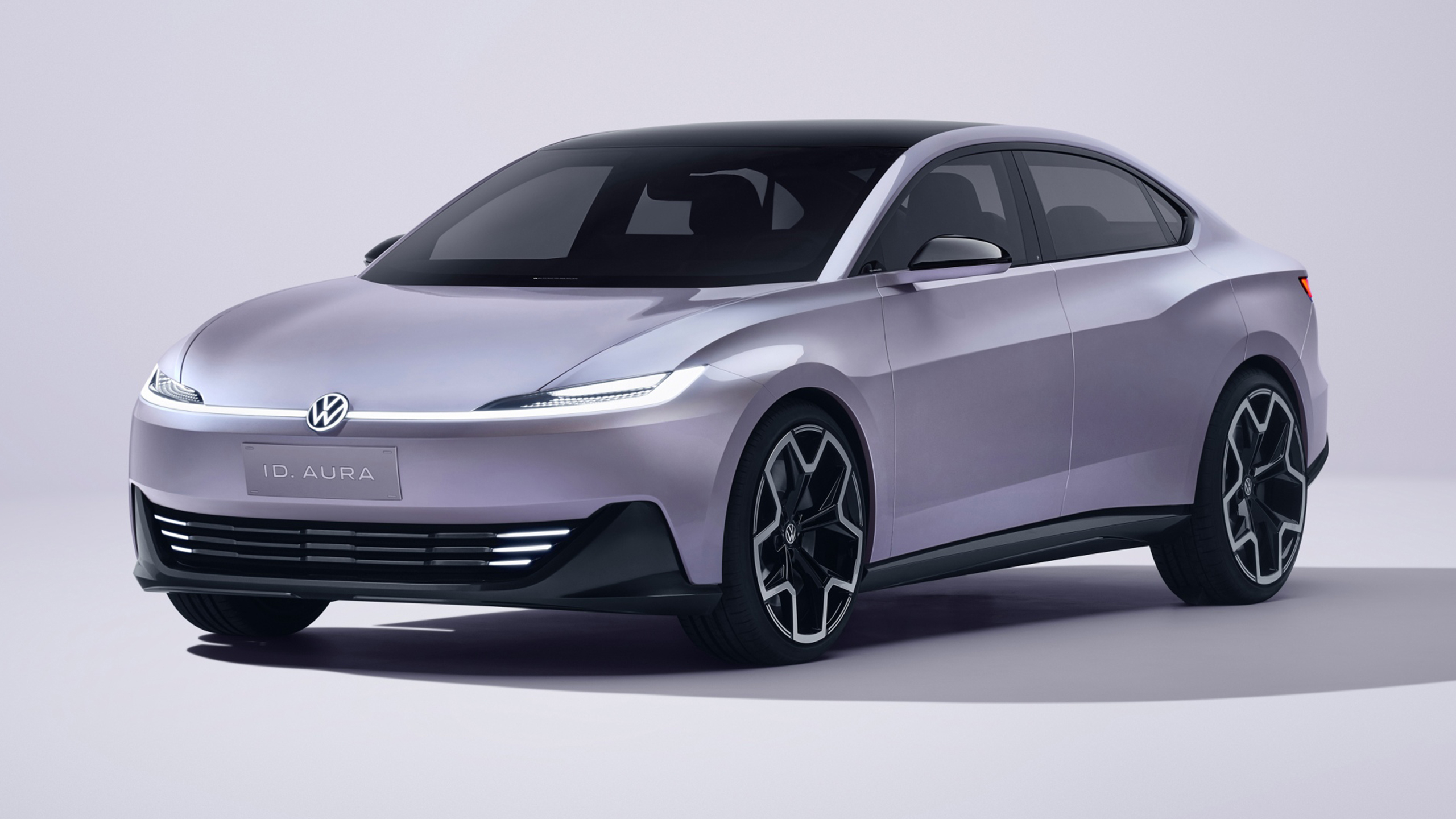
A final name for the model has yet to be confirmed, but we know this SUV will form part of VW’s ID.Aura family, previewed last year with a sleek, low-slung sedan. Like the ID. Unyx 08, it’s reported that this model is based on the CEA architecture that VW has co-developed with Xpeng, complete with 800-volt tech.
Advanced Driving Tech
These images indicate the first ID.Aura model will be slightly more conventional in its shape than the Unyx. We can see it will have a split-headlight design and a front fascia that sits quite upright. Other notable elements of the design include bulging fenders and a LiDAR unit positioned above the windshield.
Elsewhere, this prototype can be seen sporting roof rails, a sunroof or panoramic glass roof, and a fairly traditional-looking tailgate. Small parts of the LED taillights are also visible.
It’s understood that the first model from the ID.Aura family will use an advanced driver assistant system developed by VW and Horizon Robotics, known as Carizon. Limited other details about it are known, including what powertrain it will have, what charging speeds it will support, and what kind of driving range will be on offer.
BMW iX7 spotted testing again as brand prepares biggest EV yet.
Electric X7 will share design with combustion model but lose tailpipes.
Launch expected around 2027, probably ahead of combustion version.
BMW unveiled a radically redesigned and all-electric 3-Series last month, but the sports sedan isn’t the only machine with a blue and white propeller badge that’s getting its first EV makeover. So is the big X7, as these spy shots of the new iX7 prove.
We first saw this upcoming electric flagship a few months ago, but in the wake of the arrival of the smaller Neue Klasse cars we now have an even better idea of what to expect when it it comes to the onboard tech.
Visually, don’t expect a revolution. The iX7 and combustion X7 are heading into BMW’s Neue Klasse design era, but way less aggressively than the i3 and iX3, which are targeting a younger audience. That means a familiar shape, now with Neue Klasse surfacing and flush handles, but still with an older-style big grille and split headlights rather than the visor-style nose treatment seen on its iX3 little brother.
SH Proshots
Flush-type grille kidneys, iX7 badges and of course the absence of tailpipes will help other drivers distinguish it from the X7, but otherwise, like the 5-Series and i5, and 7-Series and i7, the two differently-powered SUVs will look almost identical.
And like the i7, both versions of the X7 will ride on an updated version of BMW’s existing large SUV platform, so the company can build petrol and electric models side by side. It’s a pragmatic move, even if it means the iX7 won’t go full futuristic like the smaller Neue Klasse EVs.
800-Volt Fast Charging And A Long Range
SH Proshots
But that doesn’t mean it’ll miss out on all the good NK tech. BMW’s latest battery know-how should make an appearance, with more energy-dense cells and faster charging thanks to 800 volt architecture. If the smaller iX3 can manage over 500 miles (805 km) of WLTP range, expect the iX7 to go equally far, helped by a much larger, probably 100+ kWh battery pack.
Dual motors and all-wheel drive will be standard, and as for power, don’t be surprised if a range-topping version pushes well beyond 800 hp (811 PS), because even those kind of numbers look pretty ordinary in the electric SUV world these days.
Grab a seat inside and you’ll be met with BMW’s latest tech-heavy cabin, including its Panoramic iDrive media setup and head-up display. But the price of admission to that cabin is going be hefty when sales start in 2027, so don’t think you’re going to take one home for less than six figures.
Brits can now order a seven-seat Tesla Model Y for £54,490.
Option is only available on the pricey Long Range AWD trim.
Seven-seats are already available in America and in Europe.
The Tesla Model Y is trying to win back big families and maybe a few lost sales rankings too. Tesla has quietly slipped a seven-seat option back into the UK lineup, and it might be just the nudge the crossover needs.
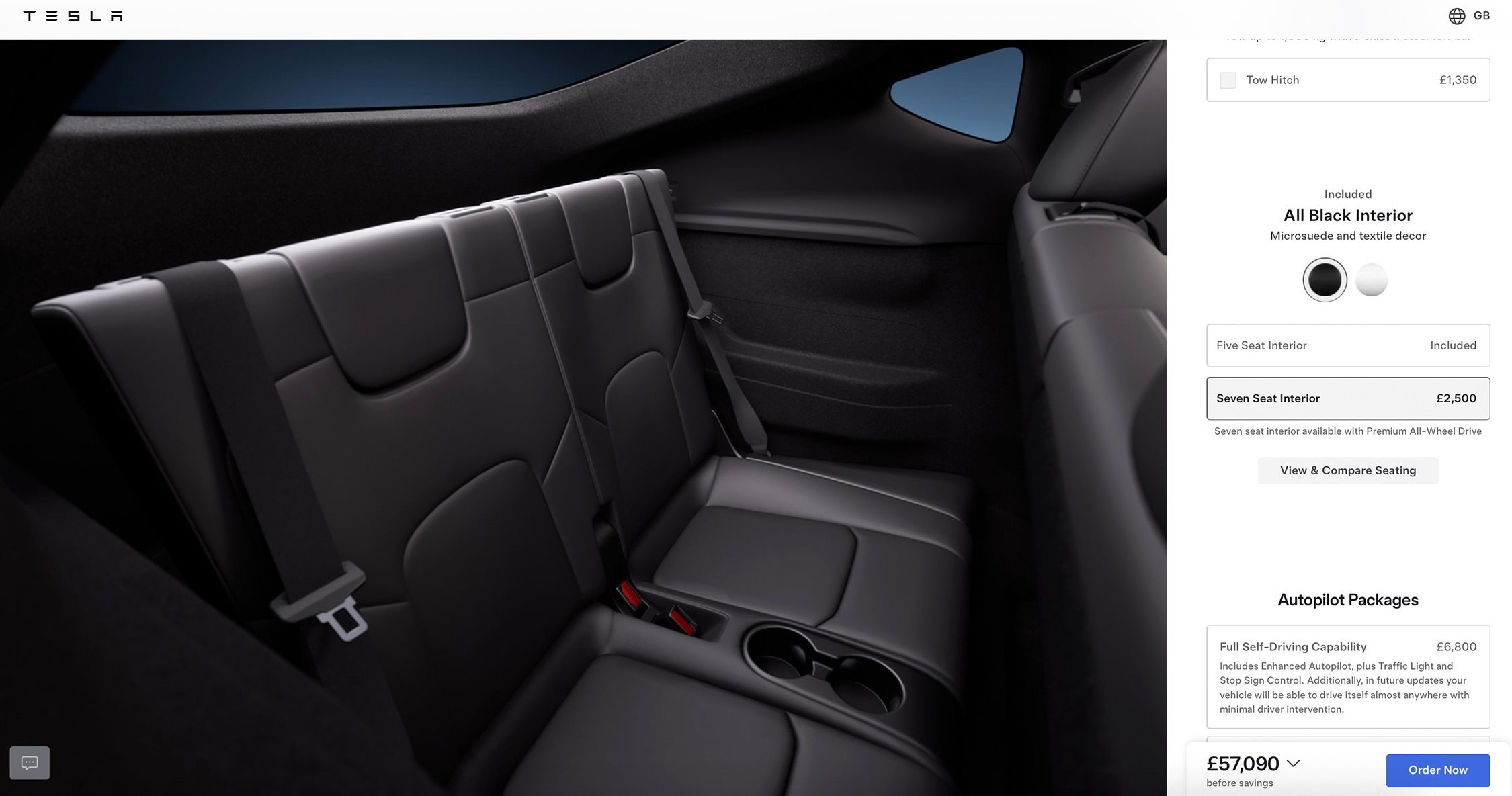
For £54,490 (equal to $68,500 at current rates), buyers get a pair of extra seats tucked neatly into the boot, an option already available in the US and the EU. That is £2,500 ($3,100) more than the regular version, versus $2,500 in the US, but that’s not the real catch. The bummer here is you can only have those extra chairs if you also choose the Long Range All-Wheel Drive model which costs £10k ($12,500) more than the entry-level single-motor SUV.
At least it means you still get plenty of punch to move seven bodies around. Twin motors deliver brisk acceleration, hitting 60 mph (97 kmh) in about 4.6 seconds, which is quicker than most people need when ferrying kids to school.
Tesla’s online configurator shows an identical sprint time for the five-seat version, and also suggests both are rated at 391 miles (630 km) WLTP. But UK websites like Auto Express claim the extra chairs cut the electric range to 372 miles (599 km). Even if that lower number is true, the Model Y would still be among the longest-legged seven-seat electric SUVs.
With all seven seats up, there is still room for a couple of carry-on suitcases, plus extra storage in the frunk. Fold the rearmost row flat and the Model Y turns back into a load-lugging champ. But the third row itself is best described as optimistic. Tesla admits it is more suited to children, and the lack of Isofix points limits its usefulness for younger passengers. Still, there are USB-C ports and cupholders, so at least those in the back will not feel entirely forgotten.
Not The Only Seven-Seat EV
This move also drops the Model Y back into the ring with rivals like the Peugeot E-5008 and Mercedes EQB, both of which have been courting family buyers looking for electric practicality with three rows of seats.
The bigger question is whether this is enough to boost Tesla’s fortunes in the UK. The Model Y used to dominate sales charts but slipped out of the top ten in 2025 despite a facelift. Adding two extra seats might not sound revolutionary, but for growing families it could be exactly what was missing.
Toyota plans to offer seven electric models in the US lineup by 2027.
US-built Highlander EV will be joined by another electric SUV.
EV sales are climbing, with the bZ outselling the Prius in Q1 2026.
While much of the industry is quietly backing away from aggressive EV rollouts, Toyota is doing the opposite. The company is doubling down on its zero-emission push in North America, wagering that more Americans are ready to make the switch, even after the scrapped tax credits and incentives last year.
By 2027, Toyota plans to offer seven fully electric models in the country. Among them is a still-unnamed mystery SUV that will be built in the United States.
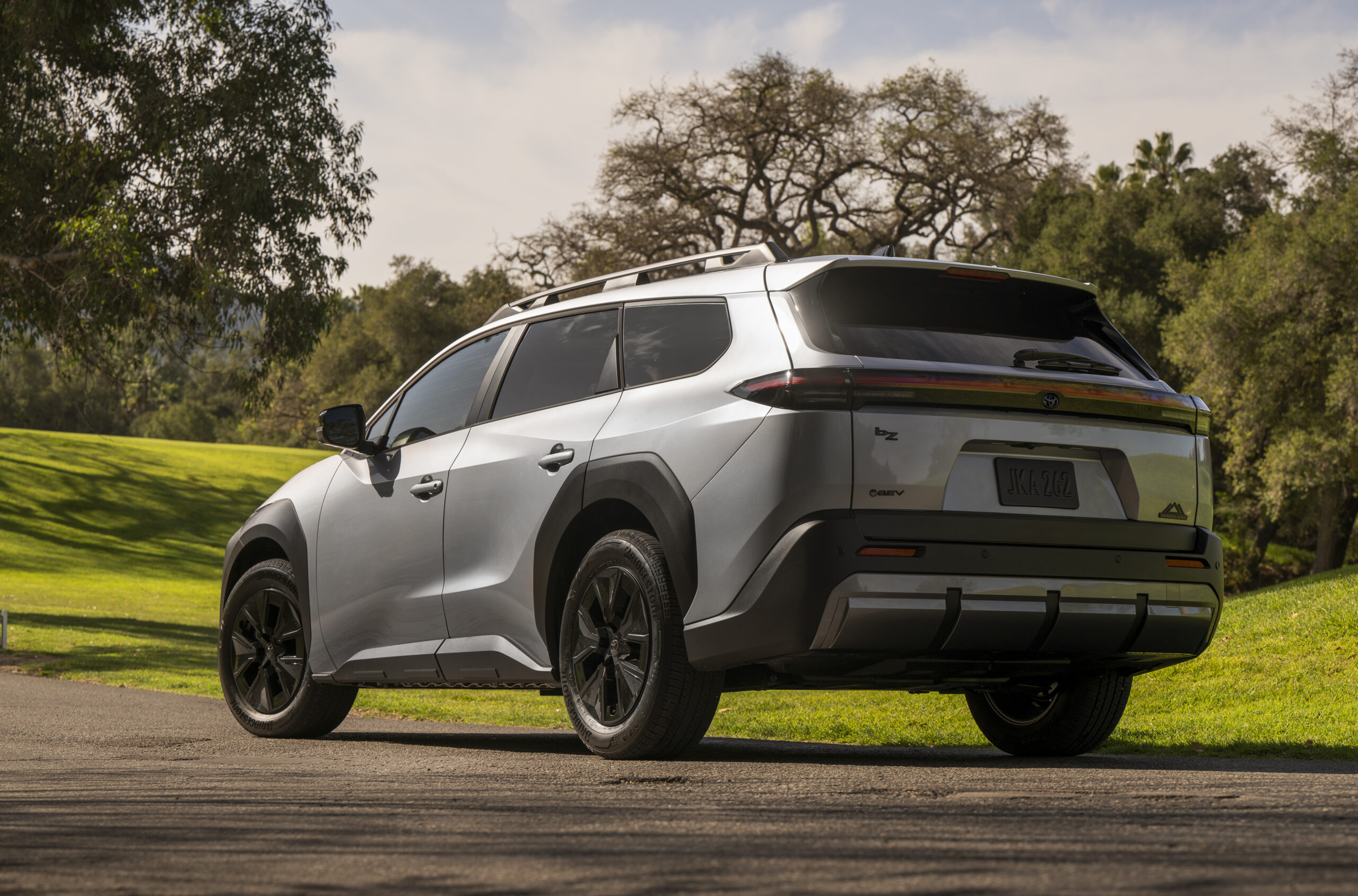
Right now, the Japanese automaker’s North American EV lineup sits at four models, and all of them are imported. That group includes the Toyota bZ, bZ Woodland, C-HR, and Lexus RZ. A fully electric Lexus ES sedan is set to arrive later this month, with the all-electric 2027 Toyota Highlander scheduled to follow in late 2026.
The Highlander EV marks a turning point for the brand. It will be the first electric Toyota built in North America, assembled in Kentucky, with batteries sourced from North Carolina. But this is really just the first step in Toyota’s USA EV strategy.
According to a Bloomberg report, the second US-built EV is set to be an SUV already in development. Details remain scarce, including its size and where it will fit within the lineup, but production is also slated for Kentucky, with a planned start in 2027.
Mark Templin, executive vice president and chief operating officer at Toyota Motor North America, says the company plans to give buyers “multiple options.” The idea is fairly simple: if Toyota can secure 15% of the overall market in the US, it should be able to capture a similar share of the EV segment.
He also gave a better sense of who these upcoming EVs are meant to attract, referring to them as “Tesla killers.” The target, in his view, is a familiar group.
“We’ll probably see what I call boomerang customers, people who loved Prius for being the greenest car in the industry that maybe went to a Tesla – and then we get those people back. Two weeks ago in Japan, I drove three of our future battery electric cars. They’re fantastic. And I think they’re going to be Tesla killers.”
Toyota didn’t exactly nail its first swing at EVs. The bZ4X landed with a bit of a thud, but things are starting to look promising. The updated bZ and the related Lexus RZ are finally gaining traction, with deliveries more than doubling in March 2026.
The numbers are revealing, with the bZ reaching 10,029 sales in Q1 2026, up from 5,610 a year earlier, a jump of about 79%. Over the same period, Prius sales fell to 9,737 from 16,653, a drop of roughly 42%. That’s been enough for the bZ to move ahead of the Prius so far this year, which shows just how quickly things can flip.
Hybrids Remain The King
Even so, hybrids are still doing the heavy lifting. They made up 55% of Toyota’s North American sales in March 2026, up from 49% a year earlier. And that number probably doesn’t tell the whole story, since plenty of buyers are still stuck on waiting lists despite factories running flat out.
Toyota clearly knows where its strength lies. The company has committed $10 billion to its U.S. operations in the coming years, including $1 billion to expand plants in Kentucky and Indiana. EVs are part of the plan, but hybrids remain the safe bet that keeps the numbers moving.
Lucid’s second Gravity recall stems from a supplier change no one approved.
A seatbelt anchor weld falls short of federal safety requirements in most SUVs.
Affected owners will have their seats repaired or replaced at no charge.
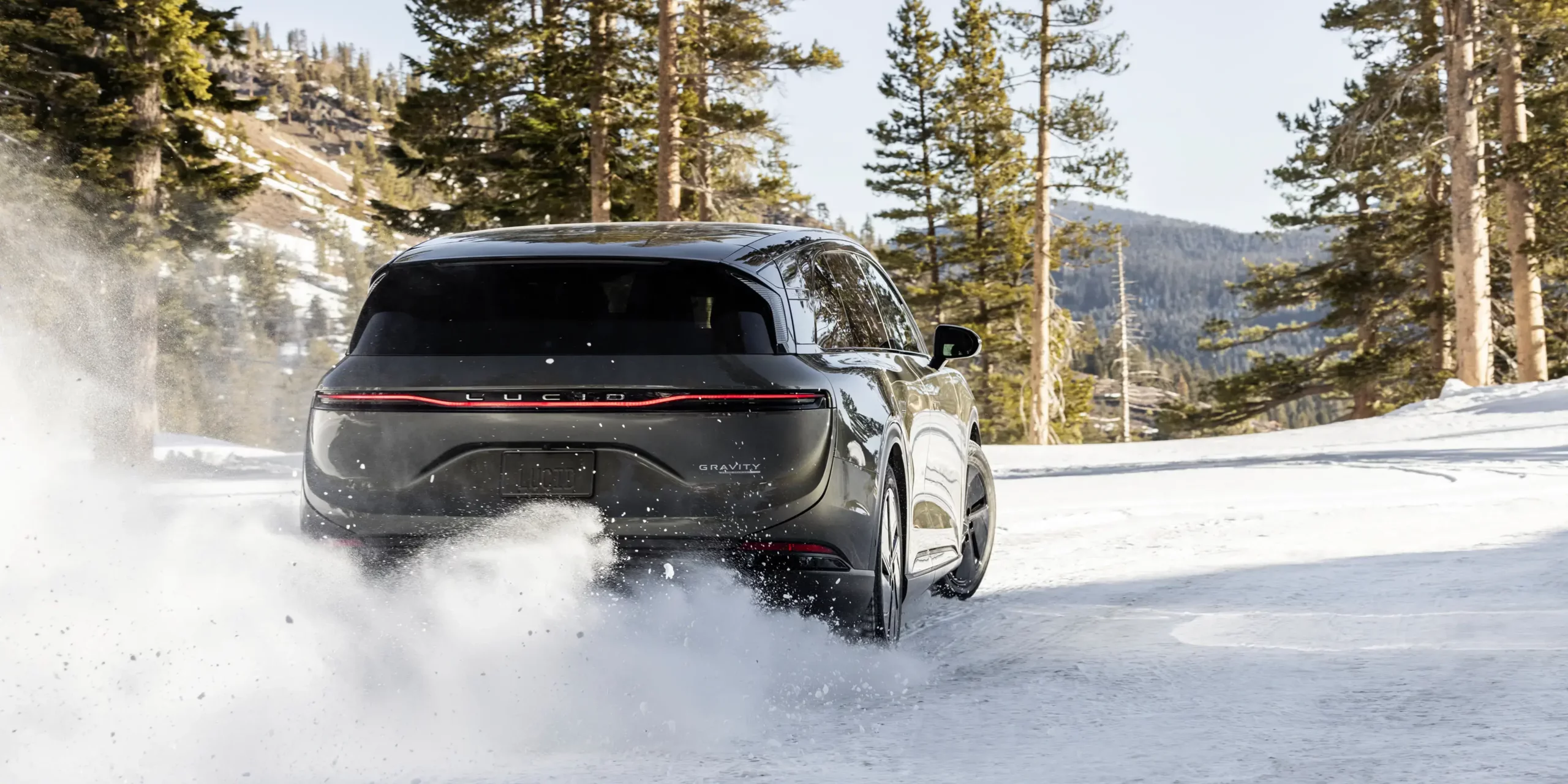
Just a few months after the Lucid Gravity was recalled over seat covers that could prevent the airbag from functioning properly, the electric luxury SUV has been recalled yet again. This time, it’s due to a potential defect in the second-row seatbelt anchors.
The EV maker says that during internal tests for another issue, it discovered the outboard lap belt anchor bracket weld in the second row is shorter than it should be and not positioned correctly. The reason? Lucid says seat manufacturer Camaco made a change to the manufacturing process without notifying the company or obtaining its approval.
Vehicles with an insufficiently welded lap belt anchor fail to comply with Federal Motor Vehicle Safety Standards and may increase the risk of injury in a crash. Unlike December’s recall, which impacted just 66 vehicles, this one is much more widespread.
In fact, the recall involves 4,476 Lucid Gravity models built from December 2, 2024, to February 3, 2026, and listed as 2025-2026 model year vehicles. Of these, 97 percent are estimated to have the issue.
What Happens Next?
This recall comes shortly after Lucid issued a brief stop-sale for the Gravity earlier this year as it ran tests to determine whether the seat belts could meet safety standards with or without a reinforcing bracket. Even with a bracket, they failed to meet load requirements, prompting Lucid to ensure the components sourced from Camaco meet its standards.
Lucid will start informing its owners of the recall on May 22. Dealers will inspect impacted vehicles, and if a non-conforming weld is found, it will be repaired with either a reinforcing bracket and adhesive or, if necessary, the entire seat will be replaced free of charge.
The flagship YU7 GT will have two electric motors, providing blistering performance.
New spy shots show that Xiaomi has upgraded parts of the electric SUV’s exterior.
With camouflage stripped away from this prototype, a reveal may be coming soon.
Not satisfied with only building an all-electric sedan with the performance to match multi-million-dollar hypercars, Chinese tech giant Xiaomi is finalizing development of a high-performance, GT-branded version of the YU7 SUV. It has the potential to lay the smackdown on Porsche.
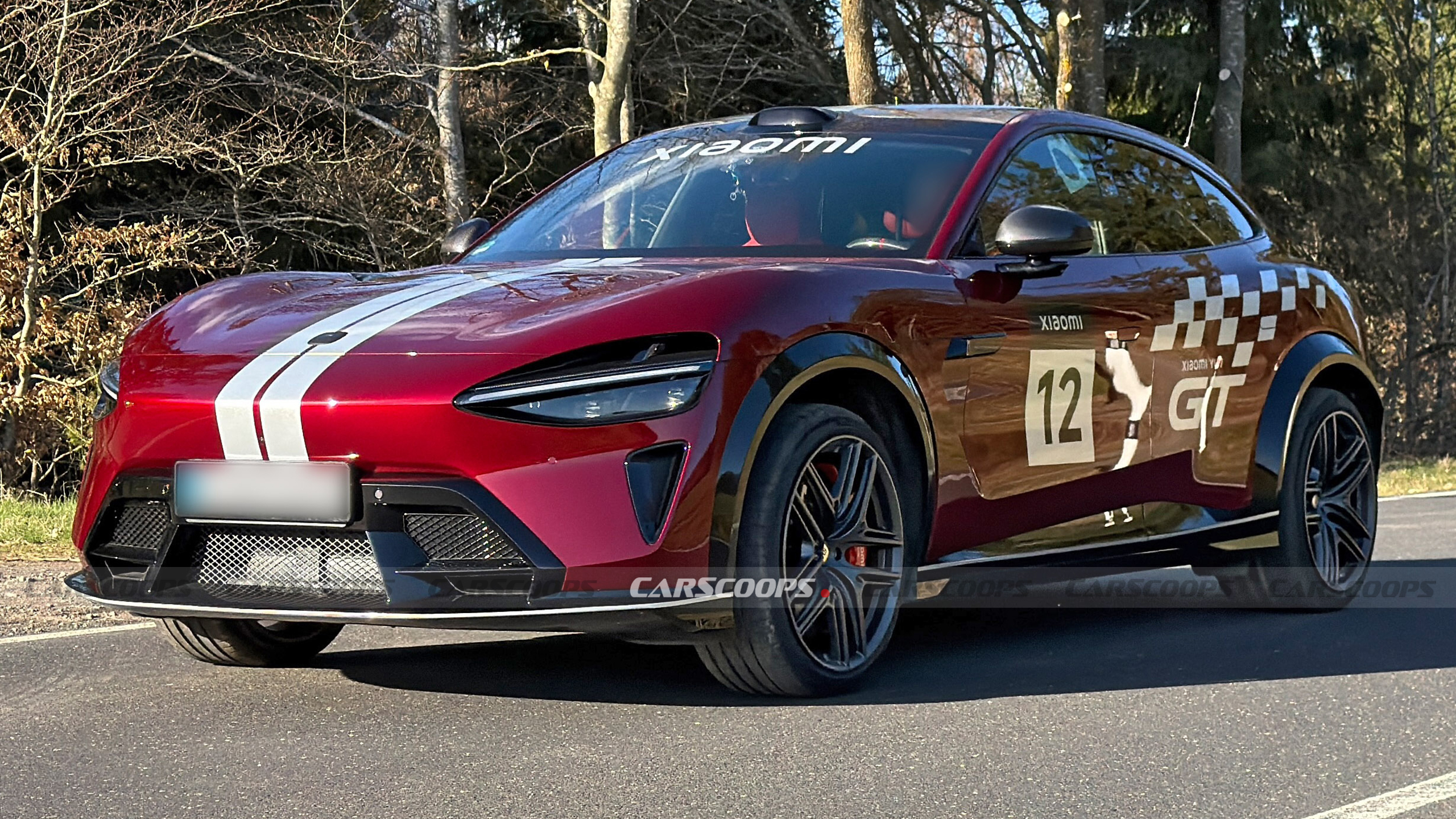
We’ve seen Xiaomi testing the YU7 GT in the past, but this is our first time seeing it without any camouflage. These photos were snapped as Xiaomi conducted an official photoshoot for the SUV near the Nurburgring. It looks just as extreme as the SU7 Ultra and appears ready to conquer race tracks and drag strips around the world.
A host of design changes have been made to the SUV, ensuring it stands out from the regular model. The alterations start at the front-end, where Xiaomi has redesigned the lower front grille of the SUV and added a new splitter to it.
Beefed Up And Aggressive
Baldauf
We can also see the company’s designers have crafted dramatic flared fenders for the YU7 GT, allowing for the fitment of wider wheels and tires. Hiding behind these new wheels are enlarged brakes, including absolutely gargantuan red calipers. Plenty of changes have also been made to the rear, including a more aggressive diffuser and a different bumper.
This particular prototype also features a silver, motorsport-style livery, complete with racing stripes that run the length of the body, adding to the track-ready impression.
Recent Chinese filings have revealed how much performance the new EV will pack. Whereas the SU7 Ultra uses three high-powered electric motors to deliver 1,548 hp and 1,305 lb-ft (1,770 Nm) of torque, this model doesn’t use Ultra branding and isn’t quite as extreme. With that being said, it will still deliver around 1,000 hp from its twin-motor setup, enough to reach an 186 mph (300 km/h) top speed.
Testing at the Nürburgring suggests Xiaomi isn’t just chasing headlines, it’s putting real effort into serious on-track performance. Whether that translates into genuine driving excitement, though, is still an open question.
Prices have yet to be announced, but rumors point towards it costing between 450,000 yuan and 500,000 yuan, or between $65,000 and $73,000.
Honda will build the 0 α SUV in India to take advantage of lower production costs.
The smaller 0 α is distinct from the 0 SUV that was cancelled for the U.S. market.
Japan is confirmed as an export destination, though other markets remain open.
It’s been a couple of weeks since Honda pulled the plug on plans to build the 0 Saloon, 0 SUV, and Acura RSX EVs in the US. However, not all of that investment is going to waste, as the smaller 0 α SUV has now been confirmed for production in India, with exports planned for other markets as well.
Last month, Honda began testing the all-electric SUV in India for the first time, putting it through a wide range of driving conditions. Engineers are also evaluating performance in extreme heat and monsoon environments, alongside testing its charging capabilities.
Deciding on Indian production is an obvious move for Honda. Having already poured billions of dollars investing too heavily in EVs, Honda will be eager to make the most of lower labor costs in India. It’s revealed that not only will the 0 α SUV be built and sold in India, but it will also be exported to its home market of Japan, among other “key markets”, though Honda won’t say which ones at this stage.
Deciding on Indian production is a logical move. After pouring billions into EV development with limited return, Honda will be keen to capitalize on lower labor costs. The plan now is for the 0 α SUV to be built and sold in India, while also being exported to Japan and other “key markets”, though the company has yet to specify which ones.
This Isn’t The American Model
The Honda 0 α SUV was unveiled as a concept in late 2025 and looks almost identical to the 0 SUV that had been destined for the US. However, the 0 α is smaller and designed to be more affordable. In a world where lots of SUVs look the same, the 0 α stands apart, largely due to its unusually tall rear end. Whether buyers will embrace the design remains an open question.
Developed under Honda’s new ‘Thin, Light, and Wise,’ approach, the Honda 0 α SUV will hit the market with a thin and lightweight battery pack, although capacity details are not yet known. Honda has also committed to mounting the batteries and power units as low as possible to reduce the center of gravity.
Honda says the new 0 α SUV will be introduced during the 2026-2027 financial year, likely launching first in India and Japan before expanding to other regions.
According to Honda, “The start of pan-India Public Road Verification testing is a key milestone in our electrification journey. India has unique driving and climate conditions, and it is important for us to test our electric vehicle thoroughly in real-world environments. This programme reflects Honda’s global engineering strengths combined with a strong focus on local customer needs, as we prepare to introduce an electric SUV that offers reliability, comfort, and ease of use.”
The Getaway is a three-row electric SUV built on Toyota’s Highlander EV platform.
Its dual-motor AWD setup produces 420 horsepower, topping the Toyota’s output.
Pricing has not been confirmed, but Subaru expects the Getaway to start near $55K.
Subaru has spent the past few years dabbling in EVs, but the Solterra always felt more like a compliance exercise than a serious attempt to challenge segment leaders. The new Trailseeker and Uncharted take the brand to new heights. Now, the Getaway, another EV built in partnership with Toyota, wants to add more passengers to the mix.
Revealed at the New York Auto Show, the Getaway is Subaru’s first three-row EV and easily its boldest electric model yet. It’s also the most powerful production Subaru ever built, with dual electric motors producing a combined 420 hp (313 kW), which is a lot more than the Highlander’s 388 horses.
According to Subaru, that’s enough to send the family hauler from 0-60 mph in under five seconds, which means it’ll outrun plenty of sports sedans while carrying six or seven people and all of their luggage.
Three-Row Space And Practicality
From a design standpoint, it’s easy to see the clear ties to Toyota’s new Highlander EV, which, like the Getaway, will debut later this year. Subaru says its new three-row SUV offers 45.6 cubic feet of cargo room behind the second row.
That’s more than Kia’s EV9 manages. There’s also 15.9 cubic feet of space behind the third row, captain’s chairs or a bench seat in the second row, depending on trim, and allegedly enough headroom and legroom for six-foot adults in all three rows.
Inside, the Getaway gets a standard 14-inch infotainment display, a 12.3-inch digital gauge cluster, wireless Apple CarPlay and Android Auto, USB-C ports in every row, and available luxuries including ventilated seats, heated rear seats (including the third row), and a panoramic roof.
Every Getaway comes standard with all-wheel drive, 8.3 inches of ground clearance, and the brand’s X-Mode system. The SUV can tow up to 3,500 pounds (1,588 kg). Power comes from a 95.8 kWh battery pack that Subaru says will deliver over 300 miles (483 km) of range. In 2027, a “standard-range” version will arrive with a 77 kWh battery pack, but Subaru didn’t release a range estimate for it.
The Getaway comes with a NACS charging point, which means that owners will have access to Tesla’s Supercharger network. The Getaway has a maximum charging speed of 150 kW, which is not very quick compared to most new EVs, but Subaru says it’ll go from 10 to 80 percent in around half an hour.
Expected Pricing Range
The biggest question at this point is what will pricing look like? For now, expect it to start at around the low-to-mid $50,000 range. That’s right in line with the Kia EV9 and a few thousand cheaper than the Hyundai Ioniq 9. Likely, the Getaway will also undercut the new Toyota Highlander by roughly the same margin.
Either way, we’ll know later this year, and Subaru will find out how big an appetite its fans have for what is likely the heaviest and somehow fastest production car it’s ever made.
EV3 finally arrives in North America after success in overseas markets.
Up to 320 miles of range from the biggest of two available battery packs.
GT version delivers 288 hp, all-wheel drive, and sportier suspension tune.
The all-new 2027 Kia EV3 has officially debuted in the US at the New York Auto Show, and it’s about time. This compact electric SUV, positioned above the smaller EV2 in Kia’s global lineup, has already built momentum in overseas markets. Now it’s finally set to take on American buyers, with an estimated starting price in the low-to-mid $30,000 range.
Positioned as the most attainable EV in the brand’s North American lineup, the EV3 opens the possibility of electric Kia ownership to a very different audience. A 105.5-inch (2,680 mm) wheelbase means it’s smaller than the EV5 Kia offered in Canada, though not the US, and tiny compared to the three-row EV9. But it doesn’t look or feel like a stripped-down option, or a copycat one.
Under the skin, it rides on the same dedicated E-GMP EV architecture as its bigger relatives like the EV9, but with 400- rather than 800-volt electrics. Buyers get a choice of two battery packs, starting with a 58.3 kWh unit available only on the entry-grade Light trim, delivering up to 220 miles (354 km) of EPA range. Step up to the 81.4 kWh battery on Wind and Land trims, and that climbs to an estimated 320 miles (515 km) in front-wheel drive form.
All-wheel drive is available with the larger battery as an option on Wind and Land, and comes standard on the GT-Line and GT, giving the EV3 a bit more scope for distance work. Charging is quick enough to keep things convenient, with a 10 to 80 percent top-up taking around 29 minutes on the smaller pack, which is only available on single-motor models, and just over 30 minutes on the larger one that gets you the choice of front- or all-wheel drive
Performance depends on trim, and though Kia in the US doesn’t quote an output for the single-motor powertrain, it rates it at 201 hp (204 PS / 150 kW) in Europe. If it’s the same setup, expect mid-seven-second zero to 60 mph (97 km/h) times and enough kick to handle most city sorties.
GT Should Eat GTIs
Dual-motor all-wheel drive models are confirmed to offer 261 hp (265 PS / 195 kW), and the range-topping GT gets a further lift to 288 hp (292 PS / 215 kW). That ought to be enough to drop the 60 mph time to 5.5 seconds, judging by the Euro numbers for the same model. No match for Volvo’s EX30, which goes a second quicker, true, but since Volvo’s just axed it in the US, Kia can breathe easy.
Besides, you get more than an extra 17 hp when you step up to the GT. Kia also throws in sport-tuned suspension and steering, plus the option to equip your EV3 with the same kind of Virtual Gear Shift (VGS) and Active Sound Design (ASD) noise generator that’s already won heaps of praise on other Hyundai Group cars like the Ioniq 5 N.
Netflix or Disney?
The EV3 is similar in size to the second-generation Seltos, which Kia is debuting alongside it at New York, and there are more parallels inside the cabin. You get a variation on the same conjoined display setup used on most new Kias, which means dual 12.3-inch screens and a 5-inch climate display sandwiched between them.
The Navigation Cockpit (ccNC), which we first met on the EV9, lets you stream Netflix and YouTube as well as view content from the likes of Disney, Marvel and National Geographic. Want to make the most of those movie jump scares? Select the available Harman Kardon audio system, one of several tasty options you’ll find on the configurator alongside a panoramic roof, a Digital Key for your smartphone, a power liftgate, and a 360-degree camera.
Arrives Late 2026
Full trim details will be announced along with prices closer to the end-of-year on-sale date, but we know GT-Line cars get a three-spoke steering wheel, metal pedals, and off-white dual-tone seats. Splash for the true GT and you bag 19-inch wheels with green brake calipers, plus matching flashes of green on the seatbelts, steering wheel, and other interior trim.
The EV3 was meant to be one of an army of smaller, affordable electric Kias heading stateside, but the brand decided not to bring the EV4 hatch and sedan, or EV5 SUV, after all. That means a lot is riding on this little utility, which we know from our UK drive is a great EV, but one that arrives in the US when EV sales are falling. How do you rate its chances?

 Login
Login