❌

Normal view

There are new articles available, click to refresh the page.
Today — 27 October 2026Main stream

Alverno College doubles down on women’s sports to boost enrollment

26 October 2026 at 10:00

After years of struggling with declining enrollment, Alverno College changed its recruitment strategy with a renewed focus on athletics — and it’s starting to work. 

The post Alverno College doubles down on women’s sports to boost enrollment appeared first on WPR.

What Does the Dismantling of U.S. Education Department Mean to School Transportation?

By: STN
26 October 2026 at 18:58

School districts nationwide are assessing how the dismantling of the U.S. Department of Education (ED), including workforce cuts and interagency agreements (IAAs), could affect school transportation service and funding. While full closure requires full congressional approval, which hadn’t occurred at this publication, a majority of its core duties have been reassigned to other federal agencies.

Civil rights and student privacy functions have moved to the U.S. Department of Justice (DOJ), while special education functions tied to the Individuals with Disabilities Education Act (IDEA) have shifted in part to the Department of Health and Human Services (HHS). Prior to the formation of ED by Congress in 1979, the precursor to IDEA, the Education for All Handicapped Children Act, as well as other federal education initiatives operated within the Department of Health, Education and Welfare.

Rosalyn Vann-Jackson, the chief support services officer for Broken Arrow Public Schools in Oklahoma and NAPT Region 4 director, said the impact is difficult to predict. But it could disrupt continuity of services and increase existing challenges.

Transportation as a related service under IDEA is already severely underfunded, she said, even as the number of students requiring specialized transportation continues to increase locally and nationally while specialized transportation gets expensive.

The IAAs “may cause us to not focus on ramping up that service that is needed in an existing challenge we have in funding,” Vann-Jackson said, adding the same is true of the McKinney-Vento Homeless Assistance Act, which continues to operate within ED.

School transportation is a significant indicator of educational outcomes regarding equity for students, Vann-Jackson noted, adding “attendance is critical for our families in light of the economy and challenges we are experiencing.

While there may be a loss of institutional knowledge, there are opportunities through a new set of eyes and lens to those challenges and a greater opportunity to engage industry experts, Vann-Jackson said.

Industry experts Vann-Jackson cites include School Transportation News’ Transporting Students with Disabilities & Special Needs conference, the National Association for Pupil Transportation, the National School Transportation Association, and the National Association of State Directors of Pupil Transportation Services.

“Many of these organizations have political or organizational advocacy committees tied into legislative efforts at the federal level,” she said, noting the best approach for districts is to stay engaged and diplomatically voice concerns.

Special education attorney Julie Weatherly observed it is difficult to assess the impact moving the Office for Civil Rights (OCR) to the DOJ will have on students with disabilities, given significant staffing reductions as well as the closure of seven OCR regional offices with no specific plans as to how the changes will work.

“While OCR has allowed for significant backlogs in complaint resolution to accumulate over time, my experience working with OCR in the Section 504 complaint process has traditionally involved a more administrative and collaborative approach focused on resolution and remedies for a specific student, rather than the more litigious and broader approach often utilized by DOJ,” said Weatherly, who keynotes next month’s TSD Conference.

She emphasized transportation departments serving students with disabilities may face DOJ investigative procedures examining systemic violations of the Americans with Disabilities Act (ADA) and Section 504 complaints referred by OCR and filed more like a class-action lawsuit.

“DOJ traditionally will ask for all kinds of district-wide information through deposition-style interviews, extensive records, data review requests and on-site visits and observations during its investigations with a much more heavy-handed approach,” she explained. “Transportation departments should conduct internal audits of their practices, policies and procedures regarding transportation of students with disabilities to ensure they are aligned with the nondiscrimination requirements of the ADA and Section 504.”

Departments should be prepared to respond to student and staff safety issues, discipline, appropriate supervision, student and staff-based bullying and harassment, service animal transportation, and the provision of equitable, timely, and appropriate and required accommodations and transportation services to students with disabilities in accordance with their IEPs and 504 plans, she added.

“They also need to ensure documentation of compliant practices, policies and procedures and implementation thereof exists and is ready if ever requested,”
Weatherly said, sharing that legal counsel should be sought to assist in an internal review as well as if an OCR complaint is filed in order to prepare for addressing and responding appropriately to DOJ’s enforcement process.

Glenna Wright-Gallo, a former assistant secretary of the Office of Special Education and Rehabilitation Services at ED and current vice president of strategic research and policy for adaptive technologies provider Everway, noted while the entitlement doesn’t change, the June 2026 IAA moving IDEA Parts B, C, and D operations from ED’s Office of Special Education and Rehabilitation Services (OSERS) to HHS introduces “real friction risk on the administrative side.”

Under the IAA, HHS is supporting specified IDEA administrative functions including grant administration, monitoring-related work, data functions and fund drawdowns, she noted.

“ED retains statutory authority and ultimate responsibility for IDEA oversight, policy and enforcement functions,” Wright-Gallo added. “For districts, that means a new point of contact and a new system learning curve at exactly the point where transportation directors need fast answers on allowable uses, reimbursement timing and compliance questions.”

There is recent precedent for this kind of disruption. The Career and Technical Education and adult education programs Perkins V and Workforce Innovation and Opportunity Act (WIOA) Youth Program Title II moved to the Department of Labor (DOL) in the first pilot IAA in May 2025 and again when Every Student Succeeds Act Title I, Title II-A, and Title IV-A followed in November 2025, Wright-Gallo noted.

“Rural school leaders reported receiving funds roughly two months late because DOL’s grant system did not recognize state education agencies’ existing bank accounts, which was a basic onboarding failure,” she added. “That same category of risk applies to the fiscal year 2027 transition of IDEA grants into HHS’ GrantSolutions and Payment Management System. Fiscal year 2026 awards remain in ED’s G5 system for now, so delays are not imminent.”

She noted three compounding factors raise the odds of delay or confusion, including reduced technical assistance capacity, mixed federal messaging and staffing shortages, including among school bus drivers.

While the legal right to transportation as a related service hasn’t changed, Wright-Gallo said the risk is delay through a slower drawdown of IDEA funds, a teacher’s aide request backlog, or a rocky fiscal year 2027 systems transition. That could push back the purchase of adapted vehicles, hiring and training of aides, or approval of specialized routes tied to a student’s IEP.

Wright-Gallo noted while federal restructuring has changed the operational home of programs, federal staffing, and the movement of grant systems and guidance for some non-students with disabilities, those changes do not alter IDEA, Section 504 or McKinney-Vento requirements.

She noted the McKinney-Vento Education for Homeless Children and Youth (EHCY) program was not transferred by any IAA. A separate proposal to fold it into an 18-program block grant and reduce funding from $6.5 billion to roughly two billion dollars was not adopted during the fiscal year 2026 appropriations process, but it may emerge in fiscal year 2027 negotiations.

The open question is whether the agencies now responsible for grant administration and oversight can maintain the same pace and consistency ED built up over time, particularly during the fiscal year 2027 systems transition, Wright-Gallo noted.

“For transportation and special education staff, that translates into a practical planning task of confirming current federal contacts and grant-system requirements, rather than a change in what students are entitled to,” she added.

Wright-Gallo said states carry independent IDEA monitoring responsibilities regardless of federal restructuring, adding it gives states “a natural role in backstopping any reduction in direct federal oversight, although how well that works in practice depends on each state agency’s staff capacity.”

Addressing where documentation gaps actually occur, Wright-Gallo noted the recurring pattern is information loss at handoff points, not generally due
to gaps in the law itself.

Wright-Gallo said there are six funding streams beyond the standard pupil transportation budget that districts may consistently leave on the table, thus an eligible student may not receive a transportation support for which they
otherwise qualify.

They include state-administered reimbursement for health-related services delivered to Medicaid-eligible students, which requires billing infrastructure most districts haven’t built specifically for transportation.

Others include 21st Century Community Learning Centers, vocational rehabilitation, WIOA Title I, Part A and Impact Aid, Elementary and Secondary Education Act (ESEA) Title VII.

Wright-Gallo suggested districts confirm allowability with the relevant administering entity before obligating funds.

“Administrative oversight for several of these programs has moved to new federal agencies as part of ongoing restructuring at the Department of Education,” she said. “Program eligibility and allowable uses for students have not changed as a result.”

Wright-Gallo noted there are 15 funding sources that can support transportation a district provides to get students to and from school or school-related services and can be used alongside the district’s transportation cost data to identify which streams are already captured and which may be worth exploring for students who currently lack an adequate transportation solution.

They include IDEA Part B Section 611, the McKinneyVento Homeless Assistance Act, the U.S. Environmental Protection EPA Clean School Bus Program, the EPA Diesel Emissions Reduction Act, and the Federal Highway Administration Safe Routes to School/Transportation Alternatives Program.

Others include ESEA Title I Part A, ESEA Title II Part A, ESEA Title IV Part A, 21st Century Community Learning Centers (Title IV-B), Impact Aid (ESEA Title VII), Medicaid School-Based Services, IDEA Travel Training (34 CFR §300.39) / VR / WIOA Youth, state categorical funding, state funding formula inclusion, and state reimbursement of district costs.

Alexandra Robinson, president of A. Robinson Consulting and a former NAPT president, noted the most obvious issue is that HHS focuses on a medical perspective.

“When we are educating and transporting students with disabilities, we want to focus on an educational perspective,” said the TSD Conference Tenured Faculty member. “We’ve been lucky enough to have a team of people at the [ED], in the office of special education programs, whose expertise is education, instructional interventions, and assisting states and local entities with technical assistance.

“This will either not exist in that same way or be extremely lacking. For large urban school districts and in states where there is strong accountability and oversight, things may be okay. But in those places where we already have issues with equitability and numerous cases of IEP and IDEA violations, there will be no incentive for any ongoing accountability, especially if the Office of Civil Rights does not exist as it does now.”

Robinson noted McKinney-Vento is now covered under the Every Student Succeeds Act.

“In those states and districts where there is a strong liaison dealing with students who are homeless or temporarily housed, it should be business as usual,” she said, adding the unfunded mandate and reduced federal oversight may mean students are missing necessary, instructional minutes and classroom time because of lack of ownership, responsibility and a sense of urgency at the local levels.

“It’s easy to let administrative noise stand in for a change in obligation when it isn’t one,” added Wright-Gallo. “Our responsibility, professionally, is to hold that line: To keep documentation, training and coordination tight enough that a shift in who processes a grant never becomes a gap in what a student actually receives.

“It’s a reminder of why this work matters in the first place,” she continued. “The bus that shows up on time, the aide who knows a student’s behavior plan, the ride that gets a homeless student back to the only school that still feels like home, aren’t abstracts of policy. They’re the daily, unglamorous proof that the laws are doing what they were written to do.”

Editor’s Note: As reprinted from the October 2026 issue of School Transportation News.


Related: (STN Podcast E320) Unpacking Updates: Legal Eagle Illuminates U.S. Department of Education Shifts
Related: Update: U.S. Department of Transportation Enacts CDL Restrictions on Non-Domiciled Workers
Related: NTSB, FMCSA Officials Discuss School Transportation Safety Priorities at NAPT
Related: Iowa DOE Releases Report, Will Allow Sensor Systems on School Buses

The post What Does the Dismantling of U.S. Education Department Mean to School Transportation? appeared first on School Transportation News.

18-Year-Old Student Charged in Alleged Sexual Assaults on Georgia School Bus

26 October 2026 at 18:53

An 18-year-old student faces multiple felony charges after allegedly sexually assaulting two juvenile students aboard an Elbert County school bus on separate occasions, reported Fox 5.

The Elbert County School District notified the Elbert County Sheriff’s Office Oct. 20 about two reports of possible sexual misconduct on a school bus, according to authorities.

During the subsequent investigation, detectives said they determined that an adult student allegedly assaulted two children on different occasions while the students were riding school bus route 45. Authorities did not disclose when the alleged assaults occurred or whether both incidents happened during the same school year.

Deputies reportedly arrested the 18-year-old following the investigation. The student is charged with one count of aggravated child molestation, one count of aggravated sodomy and one count of child molestation.

The suspect also faces two counts of first-degree cruelty to children and two counts of false imprisonment. The allegations and charges involve two separate juvenile victims.

Investigators have not publicly released the suspect’s name, despite the student being of an age that is legally considered as an adult. Authorities also have not identified the school site or sites attended by the suspect and the two children.

The ages and genders of the victims were not disclosed. Officials also did not provide details about what reportedly occurred during either incident or explain how the allegations first came to the district’s attention.

Authorities confirmed that the families of both victims were notified of the investigation. No information was provided about whether the accused student remains enrolled in the school district or has been removed from transportation or campus while the criminal case proceeds.

It was also not immediately clear whether any other students or adults were riding the school bus when the alleged assaults occurred, whether surveillance video captured either incident, or whether a bus driver or attendant reported witnessing suspicious activity.

Written with the assistance of AI.


Related: Pennsylvania School Bus Aide Charged with Indecent Assault of Student
Related: Indiana 15-year-old Accused of Sexual Assault on Ohio School Bus
Related: Teen Arrested After Allegedly Hitting Student Waiting for School Bus in New York
Related: Alabama School Bus Driver Charged on Sex Acts with Teen

The post 18-Year-Old Student Charged in Alleged Sexual Assaults on Georgia School Bus appeared first on School Transportation News.

Before yesterdayMain stream

‘Dream come true’: Milwaukee Brewers set to play in first World Series games since 1982

23 October 2026 at 10:00

Game 1 of the World Series is Friday night at American Family Field. Brewers ace, and likely National League Cy Young award winner Jacob Misiorowski, is expected to start the game.

The post ‘Dream come true’: Milwaukee Brewers set to play in first World Series games since 1982 appeared first on WPR.

Mini-Dirt Bike Rider, 13, Critically Injured in Collision with School Bus

22 October 2026 at 22:50

A 13-year-old boy remains in critical condition after the mini-dirt bike he was riding collided with a school bus, reported KTVB 7.

The crash reportedly occurred Monday shortly after 4 p.m. at an intersection in Caldwell, Idaho. State police said v the school bus was traveling south on Colorado Avenue when the teen, identified by his family as Daniel, struck the bus while riding the mini-dirt bike.

Daniel underwent surgery and sustained multiple broken bones and injuries to his brain and lungs, his family told local news reporters. His brother, David Corral, asked the community to pray for Daniel, their family and everyone involved.

“At the end of the day, all that matters to me and my family right now is Daniel’s health,” Corral said. “We hope God does a miracle.”

The bus had eight students and two adults on board, including the driver, at the time of the collision. All occupants were wearing seatbelts, the type unspecified, and no one aboard the bus was reportedly injured. State police said Daniel was not wearing a helmet while riding the mini-dirt bike.

Caldwell Mayor Eric Phillips said he met with Daniel’s family Monday night and prayed with them. Phillips emphasized that Daniel is a child and said the immediate priority should be helping him recover.

Authorities are also investigating how Daniel obtained the mini-dirt bike. David Snider said that Daniel took the mini-dirt bike from his son before the crash. Snider explained that Daniel approached his son and another child, asked to ride the bike, and then pushed them away before leaving with it.

Daniel’s family disputed that account. Authorities have not announced any charges related to the allegations.

Snider said his son was shaken by the incident but sympathized with Daniel and did not wish him harm.

The intersection remained closed for approximately an hour as first responders worked at the scene. Both the collision and the allegations involving the dirt bike remain under investigation.

Written with the assistance of AI.


Related: Student, Motorist Killed in Florida School Bus Crash
Related: Boy on Scooter Collides with School Bus in Northwest Miami-Dade
Related: Minnesota Teen Faces Charges in Connection to School Bus Crash
Related: Maryland Bus Driver Pays Fine for Crash that Killed 11-Year-Old Bicyclist

The post Mini-Dirt Bike Rider, 13, Critically Injured in Collision with School Bus appeared first on School Transportation News.

Minnesota Man Stops Runaway School Bus After Driver Suffers Medical Emergency

21 October 2026 at 20:22

A 27-year-old Minnesota man is being credited with stopping a runaway school bus carrying nearly 20 children after the driver suffered a medical emergency, reported ABC News.

Ebro Ahmed told local news reporters that he was standing outside Ya Bricks Snacks and Tobacco on Monday, when he noticed a school bus traveling past the convenience store with its door wide open.

After looking inside, Ahmed said he saw the driver experiencing what appeared to be a seizure. He immediately ran toward the runaway school bus, jumped aboard and pulled the emergency brake, stopping the vehicle before it could crash.

“I really felt like it was my duty,” Ahmed said. “Also, too, it’s kids we’re talking about, you know. Even if I were to die, it would still be worth it.”

Surveillance video released by the convenience store captured Ahmed running alongside the bus before climbing aboard. The footage also showed the bus coming to a stop shortly afterward.

Ahmed said some of the students were screaming while others remained calm during the incident. He credited two girls seated near the front of the bus with helping him manage the situation.

“These two girls on the front really did help me a lot,” Ahmed said. “I threw my phone and my glasses at one of them, and I told her to hold it.”

Ahmed also said the long-running television medical drama “Grey’s Anatomy” helped him remain composed during the emergency. He said the program offers lessons about how to react in unexpected situations.

Saint Paul Public Schools confirmed via the news report that a medical emergency occurred aboard one of its buses, and that paramedics responded to the scene. The district did not disclose additional information about the driver’s condition.

No injuries were reported among the students or others involved, according to the district.

Students aboard the runaway school bus were transferred to another vehicle and taken home following the incident. Counselors also checked in with the students Tuesday to offer support after the frightening experience.

The district did not immediately provide further details about the bus route, the school the students attended, or how far the vehicle traveled before Ahmed stopped it.

Written with the assistance of AI.


Related: Pennsylvania Students Stop School Bus After Driver Experiences Medical Emergency
Related: Students Praised for Stopping School Bus, Helping Driver During Medical Emergency
Related: California Farmworkers Hailed as Heroes After Rescuing 20 Children from Burning School Bus
Related: Minnesota School Bus Driver Hailed Hero for Avoiding Head-On Crash With Semi

The post Minnesota Man Stops Runaway School Bus After Driver Suffers Medical Emergency appeared first on School Transportation News.

Rolling History: Vintage School Buses Preserve the Industry’s Past 

By: Ryan Gray
16 October 2026 at 21:27

Long before GPS, onboard cameras and electric drivetrains, students climbed aboard horse-drawn wagons, wood-bodied buses and heavy-duty coaches built for routes that could be as demanding as the communities they served. Today, a small number of those vehicles survive in museums, company collections and private hands, offering a tangible record of how student transportation evolved.

The familiar yellow school bus did not arrive fully formed. In rural North America, getting children to school was once a local problem solved with whatever transportation was available. In the U.S., horse-drawn “kid hacks,” short for hackney carriages, and school wagons carried students before purpose-built motorized buses became common. Wayne Works developed a horse-drawn School Car in 1892 and a motorized version by 1914. By 1932, 63,000 school buses were operating in the U.S., according to the Smithsonian’s National Museum of American History.

Those buses were also changing education itself. Transportation made it possible for rural districts to close small one-room schools and move students to larger consolidated schools.

A similar transition occurred across Canada, and surviving vehicles at the Western Development Museum in Saskatchewan help tell that story.

Kaiti Hannah, curatorial associate for the Western Development Museum, told School Transportation News that the museum’s Saskatoon location includes a small display about the shift during the 1950s from one-room schoolhouses to busing students to larger urban schools.

Among the museum’s most evocative artifacts is the Conquest school bus, a horse-drawn vehicle displayed near a one-room schoolhouse. The museum also has an archival image of the bus dating to 1926. Hannah said the museum does not have extensive information about the vehicle’s early history, but it entered the collection in 1961.

Another early Saskatchewan bus, displayed at the museum’s North Battleford location, has a more detailed provenance. It was one of eight school buses purchased by the Viscount School Board in 1923 from William Landa’s Landa Carriage Works in Saskatoon. Each cost $350, and the buses served in the school district for about 20 years. The surviving example entered the Western Development Museum collection in 1949.

Hannah said she is not aware of any preserved early Canadian motorized school buses or private Canadian collectors specializing in historic pupil transportation vehicles, though she noted examples may exist elsewhere. That uncertainty is part of the preservation challenge. Unlike locomotives, automobiles or aircraft, school buses were working vehicles that often stayed in service until they were worn out, repurposed or disposed of.

Vehicles like those are reminders that “school bus” once described a much broader range of equipment than the standardized vehicles familiar today.

In the U.S., that standardization took a major step forward in 1939, when rural education specialist Frank W. Cyr organized a national conference at Teachers College, Columbia University. Delegates developed 44 standards covering such details as body dimensions, aisle widths and doors. They also selected the yellow-orange color that became the enduring visual identity of the American school bus.

The National Congress on School Transportation was born.

Before 1939, buses could appear in a variety of colors and configurations. Cyr’s conference brought representatives together to establish greater consistency, with visibility and safety among the considerations. Yellow was gradually adopted across the country. What began as a standardization decision became one of the most recognizable symbols of public education.


Related: Cyr Foundation Launches School Bus Driver Training Series
Related: Roundup: The Noxious History of ‘School Bus Chrome’


Building a Better School Bus

Before that standardization, manufacturers were already experimenting with stronger bodies and purpose-built designs.

One of the most significant survivors is Blue Bird No. 1, completed by Albert L. Luce in 1927. Luce had previously mounted a purchased wood bus body on a Ford truck frame for a customer, only to see the body begin to shake apart on rough Georgia roads. He responded by reinforcing a later body with a steel framework beneath the wood. The Henry Ford Museum of American Innovation in Dearborn, Michigan, now identifies that 1927 vehicle as the oldest surviving school bus in America.

Julianne Barclay, a Blue Bird spokesperson, said the original bus was sold to a customer and placed into school bus service. Only later did it become known retroactively as Blue Bird “No. 1.”

The Luce family reacquired the bus in 1946 and restored it, placing the body on a Ford Model TT chassis, Barclay said. It was restored again in the 1970s and donated to The Henry Ford Museum in 2008. A replica is displayed at Blue Bird’s Fort Valley, Georgia, facility.

The preservation story is continuing as Blue Bird approaches its 100th anniversary in 2027. Barclay said the Luce family traditionally kept a bus approximately every 10 years, and a couple of those historic vehicles are being restored by Blue Bird dealers as part of the centennial. Blue Bird also plans to develop a more formal archive as the company looks toward its next century.

The 1927 bus captures an era when school bus construction was still evolving rapidly. Its wood and steel body seems far removed from a modern Type C or Type D bus, but the engineering problem behind it remains recognizable: Build a vehicle durable enough to carry students safely over the roads it will encounter every day.

A preserved 1940 Chevrolet school bus at the North Carolina Transportation Museum illustrates another important step in that evolution. The bus was built by the company then known as Perley A. Thomas Car Works. Perley A. Thomas had worked as chief engineer for Southern Car Company before establishing his own business in 1916 after the company closed. His operation initially focused on streetcars before moving into school bus manufacturing as automobiles and road transportation expanded. Thomas Built Buses began building school buses in 1936.

Matt Abbott, collections manager for the North Carolina Transportation Museum, said the museum’s 1940 Chevrolet Thomas Built Bus was used by Iredell County until it was retired around 1960. The county continued using it in parades after its regular service life ended.

Thomas Built Buses regained possession of the bus in 1995. It was restored in 2003 and donated to the museum in February 2007, Abbott said.

The bus is an especially striking contrast with today’s interiors. According to Thomas Built Buses, the all-steel vehicle has a six-cylinder gasoline engine and four long benches on which children sat facing each other rather than facing forward.

Meanwhile, International’s IC Bus traces its origins to a similar time, in 1936 with predecessor Ward Body Works’ first all-steel school bus.

That difference is more than cosmetic. School bus design increasingly became shaped by formal safety requirements. Federal school bus standards that took effect April 1, 1977, addressed rollover protection, body joint strength and passenger seating and crash protection. Federal Motor Vehicle Safety Standard 222 established the compartmentalization concept used in large school buses, including higher, stronger seat backs, additional padding and controlled seat spacing.

Preserved buses make those changes visible in a way a written timeline cannot. Walk from an early side-bench interior to a later high-back school bus seat, and decades of safety engineering are immediately apparent.

Keeping History on the Road

Not every preserved bus spends its retirement standing still.

At the Templeton Historical Museum in Templeton, California, a restored 1933 school bus remains licensed, insured and roadworthy. The bus was purchased new by the Templeton School District in 1933 and remained in student transportation service until 1949, according to the district’s history. Museum volunteers later spent five years restoring it.

This 1933 school bus sits in the Templeton Historical Museum located near Paso Robles, California. It is a regular entry in the local July 4 parade. 

Steve Vize of the Templeton Historical Museum said the vehicle continued serving the district even after its days of transporting students ended.

“It was later used as a truck within the school district for various tasks,” Vice said, adding that auto shop students drove it during the 1970s.

The bus also developed a second life as a community fixture. Vice said it appeared in Templeton’s Fourth of July Parade in the 1970s. Restoration reporting from 2014 said the bus had not had a running engine since its last parade appearance in 1985, before volunteers returned it to operating conditions.

Today, history is moving again.

“It is licensed and insured, and we drive it in the July 4 parade every year,” Vice added. “It is always on display when we have community events.”

The bus offers a particularly literal example of living history. It does not simply show visitors what school transportation once looked like. It returns to the same community streets where generations have seen it work, parade and reappear.

Even darker periods in school bus history are preserved. The Brights Pioneer Museum near LeGrand, California houses the actual International Loadstar Chowchilla school bus that three armed men kidnapped with its school bus driver and 26 children on board on July 15, 1976. The museum is housed about 16 miles to the northwest of Chowchilla, California.


Ryan Hahn, a consultant who has worked in student transportation for 25 years, takes a similar approach with vintage Gillig buses that he still puts to work at industry-related events.

“One of the things that we do to preserve history and also to make it a point when we advertise is we use vintage school buses like this one,” Hahn said of his 1969 Gillig.

He purchased the bus from a church that had owned it for 35 years and kept it in a garage. As a result, Hahn said, the vehicle remains in “really, really excellent condition.”

Rather than treating the Gillig only as a display piece, Hahn uses it to carry people to local events, trade shows, dinners and functions for school business officials and superintendents. Industry professionals can experience the vehicle as a bus, not simply view it behind a barrier.

Gillig itself has roots reaching back to the 19th century and moved into school bus manufacturing in the 1930s. The manufacturer later became known on the West Coast for rugged school bus designs and introduced diesel power to its school bus line in the 1950s.

Hahn’s second vintage Gillig, a 1970 model, demonstrates just how specialized some of those buses became. The vehicle was owned by Shasta College in Redding, California, and transported college students to sporting events. Hahn said the college also operated routes that picked up students at hub locations during the 1960s and 1970s.

The bus uses a midship engine mounted on its side, commonly described as a “pancake” engine, rather than a rear-engine layout. It is also a tandem-axle vehicle with both rear axles driven.

“A lot of districts and school systems would buy these for heavy loads,” Hahn explained.

His bus seats 97 students and operated in snow country, where the driven tandem rear axles and locking differential could provide additional traction. The layout placed the engine beneath the floor near the center of the bus, creating a mechanical configuration that would look unusual to many technicians and drivers accustomed to current conventional or rear-engine school buses.

The capacity itself speaks to a particular chapter of school transportation history, when manufacturers developed extremely large buses to accommodate growing student populations and demanding routes.


Related: The History of Seat Belt Development
Related: Innovative School Bus Technology is Forever Preserved as Part of American History in National Museum
Related: A History of School Bus Safety Design
Related: The History of the CamWrap (a.k.a Seat Mount for School Buses)
Related: Another Online School Bus History Resource


Across the surviving buses, the details differ: Wood bodies, steel reinforcements, side-facing benches, midship diesels, tandem axles and capacities that would raise eyebrows today. But together they document the same long-running challenge: Finding dependable ways to connect students with education.

They also show how much of student transportation history can disappear when vehicles are scrapped after their useful service life. Museums can preserve examples, manufacturers can maintain corporate artifacts and private owners can restore buses. But the number of surviving vehicles becomes smaller with each generation.

That makes the preservation work taking place now especially valuable. Blue Bird’s approaching centennial celebration is prompting new attention to company archives and restorations. Museums in Saskatchewan, North Carolina and California are maintaining vehicles tied to local education and manufacturing history. And collectors such as Hahn are keeping old buses operational enough to let a new generation step aboard.

For an industry built around moving forward, these buses provide a reason to look back.

Long before telematics, alternative fuels and advanced driver-assistance systems, there were school wagons crossing rural communities, early bodies rattling over rough roads, all-steel buses replacing wood construction and massive diesel coaches engineered to move nearly 100 students at a time.

The technology has changed dramatically. The mission has not.

The post Rolling History: Vintage School Buses Preserve the Industry’s Past  appeared first on School Transportation News.

Maryland School Bus Driver Removed After Kitten Rescue Stop

16 October 2026 at 21:06

Parents in a rural Maryland community are calling for a longtime school bus driver to be reinstated after she was removed from her route for allowing a student to leave the bus and rescue an injured kitten, reported WBNG News.

Cynthia Morgan, 67, had driven students in the Harford County Public Schools system for 11 years. Morgan said losing her position devastated her.

Video recorded along Heaps School Road shows the school bus stopped as a North Harford Elementary School student retrieved the kitten. Parents acknowledged that allowing the child to exit created a safety concern but argued that removing Morgan was excessive.

Carolyn Kalambihis, whose children have ridden Morgan’s bus for five years, told local news reporters that the area has little traffic and Morgan would not have made the same decision on a busier road. She said Morgan used her own money to buy students’ school supplies, holiday gifts and birthday cards.

“She is an angel. She’s the most caring person,” Kalambihis said.

Kalambihis and other parents are circulating an online petition asking that Morgan be returned to her route. She said Morgan’s 11 years of service should be considered. Calls for her restatement have circulated across social media.

Meanwhile, Kalambihis added that she believes Morgan recognizes that allowing the student to leave the bus was a mistake. “It shouldn’t have happened,” she said. “I believe she knows that and understands and, looking back, knows she made a mistake and should not have done what she did.”


Related: Episode 3: Sip, Sip, No Way!
Related: Pennsylvania School Bus Driver Retires After 44 Years Receives Kidney Donation
Related: Updated: NTSB Investigates Fatal Florida School Bus Crash, Bus Driver’s Response Praised
Related: School Bus Safety Month Again Unanimously Supported in Senate


Harford County Public Schools reportedly said Morgan was employed by an independent contractor rather than a district employee. However, the district is responsible for certifying drivers who transport its students.

“Certification and decertification are not always based on a single factor but often involves consideration of multiple circumstances and requirements,” the district said via the news report. “Student safety remains our top priority, and all certification decisions are made with that responsibility in mind.”

The district declined to discuss Morgan’s case specifically. The name of her employer and whether she was terminated by the contractor or only removed from the district route were not immediately clear.

The post Maryland School Bus Driver Removed After Kitten Rescue Stop appeared first on School Transportation News.

Vandalism Disrupts New York School Bus Routes

16 October 2026 at 17:44

School bus service was disrupted after multiple buses were reportedly vandalized at a contractor Durham School Services’ transportation lot over the holiday weekend, reported CBS News.

The Schenectady Police Department said Tuesday that officers responded at approximately 5:40 a.m. after Durham officials reported that multiple school buses had been damaged at its facility.

At least two school buses at the lot reportedly had damaged windows with what appeared to be impact marks, possibly caused by rocks or another object. Police said the vandalism likely occurred sometime during the holiday weekend.

According to the news report, the Schenectady City School District described the damage as severe and said it affected Durham’s entire fleet, preventing the transportation contractor from operating its regularly scheduled morning routes.

The district reportedly notified families of the disruption Tuesday morning and advised parents and guardians that morning transportation would be unavailable. It did not immediately specify how many buses were damaged, how many routes were affected, or the estimated cost of repairs.

Despite the morning cancellations, the district said Durham would provide afternoon transportation for all students who normally receive school bus service.

All after-school programs were also expected to operate as scheduled, with transportation available to participating students.

However, the district warned families that buses could arrive later than usual because of the vandalism and resulting operational changes. “We are asking for your patience as buses may be arriving at stops later than expected,” the district stated via the article.

The Schenectady Police Department is investigating the incident. No information about potential suspects or arrests was immediately available.

The district did not indicate whether surveillance footage captured the vandalism or whether additional buses would be brought in to restore normal service. It also had not announced whether regular morning routes were expected to resume Wednesday.

Families were encouraged to monitor communications from the district for additional transportation updates. Further information about the investigation and the extent of the fleet damage was not immediately released.

Written with the assistance of AI.


Related: Parent’s Vandalism Arrest Results from School Bus Disturbance in California Gold Country
Related: Catalytic Converter Thefts Delay Wisconsin Contractor’s School Bus Routes
Related: South Carolina Man Charged in Connection to School Bus Arson, Vandalism
Related: School Buses in Georgia Vandalized, Suspect in Custody

The post Vandalism Disrupts New York School Bus Routes appeared first on School Transportation News.

Pennsylvania School Bus Driver Retires After 44 Years Receives Kidney Donation

13 October 2026 at 22:28

Longtime Sullivan County School District bus driver Nancy Ritinski celebrated her retirement alongside the woman who gave her another reason to celebrate, reported WNEP

Family members, friends and former passengers gathered at the American Legion in Dushore in northeast Pennsylvania to recognize Ritinski’s 44 years behind the wheel. During her career, she remained on the same route and transported multiple generations of some local families.

Theresa McCarthy said both of her daughters rode Ritinski’s bus before graduating, followed years later by McCarthy’s grandchildren.

For Ritinski, the children were the most meaningful part of the job. “I love them all,” she told local news reporters, adding that she cried whenever students graduated.

The retirement celebration also honored Bobbie Butler of Scranton, who reportedly entered Ritinski’s life as a stranger and became her living kidney donor.

According to the news report, Ritinski learned about three years ago that she needed a kidney transplant. Her relatives were not compatible donor matches, and she eventually began undergoing dialysis while waiting for a suitable kidney.

Butler initially hoped to donate to the father of a friend, but that proposed transplant did not work out. She then asked to be matched with another patient in need. Testing showed that Butler was compatible with Ritinski.

The two women reportedly met for the first time earlier this year, about one week before the transplant surgery. Ritinski said they connected immediately. The transplant was performed in June, and Ritinski said her recovery has gone well.

Butler said via the article that witnessing the improvement in Ritinski’s health following the operation was incredible. She described Ritinski and her relatives as her “kidney family.”

The celebration reflected both Ritinski’s impact on the rural community and the bond created through organ donation.

Now retired from a career that allowed her to watch generations of students grow up, Ritinski is beginning a new chapter with Butler considered part of her family.

Ritinski’s relatives are also encouraging others to consider living organ donation. Her daughter plans to donate a kidney to another recipient later this year.

Written with the assistance of AI.


Related: Retired Man Now Drives a School Bus and Sings to Children
Related: Texas Retired Couple Hands Out Easter Baskets at School Bus Stop
Related: Retirements Spur Summer Hiring Push to Address School Bus Driver Shortages
Related: Beloved Missouri School Bus Driver Retires After 27 Years, More Than 1 Million Miles

The post Pennsylvania School Bus Driver Retires After 44 Years Receives Kidney Donation appeared first on School Transportation News.

National School Bus Contractor of The Year Credits People for Success

13 October 2026 at 16:57

At school bus contractor B.R. Williams, Inc., the company president and CEO credits the
foundation of its success to its people. “We’re always telling our story ending with
that we are always looking for ‘good people’,” said Chloe Williams, president and CEO. “We can teach a good person to drive, but we can’t teach a good driver to be a good person.”

During its annual meeting in Denver, Colorado in July, the National Association of School Transportation (NSTA), in partnership with School Transportation News, presented B.R. Williams the Contractor of the Year Award. “B.R. Williams is a third-generation school bus contractor operating primarily in southern New Jersey. The current president of the company, Chloe Williams, is an active member of the NSTA board of directors and she
also served as past president of the New Jersey School Bus Contractors Association (NJSBCA),” NSTA executive director Curt Macysyn noted.

“Chloe has been an integral part of several projects at NSTA, and her school bus operation is viewed as a testament to best practices in pupil transportation,” he
continued. “She and the company engage with vendor partners in a collaborative way, and B.R. Williams is always looking to improve and enhance their systems to the benefit of the students and communities they serve.” The company serving Salem, Gloucester and Cumberland counties has been honored throughout the past several years as the “Best of Salem County – Transportation,” Williams noted.

B.R. Williams has been family-owned and operated since it start in 1935 by Chloe’s grandfather Benjamin Riley Williams, known as a hard-working farmer who took
his children to school after milking the cows.

Chole Williams grew up in the family business, going on to earn a bachelor’s degree in hotel and restaurant management from Pennsylvania State University. She spent a decade working at Marriott Hotels as part of a task force opening properties and then served as
general manager for the company’s Courtyard division before returning to B.R. Williams in 1996 to continue the three-generation legacy with the stipulation her parents should travel and enjoy themselves.

B.R. Williams is known for “a flexible working environment and a longstanding reputation for safe, courteous transportation” as well as deep community involvement, said Williams, adding community involvement is important to her personally and in representing her company.

Upon learning of the NSTA honor, Williams said “grateful” is the first word that came to mind: Gratitude for “my family, who taught me that hard work pays off and our staff, who comes in daily wanting to do the right thing and with a caring heart to take care of ‘our kids.”

She expressed gratitude for the school transportation industry, specifically NSTA and the NJSBCA for “bringing together competitors and vendors who are committed to supporting one another and upholding the standards that make school transportation the safest mode of travel in the nation.”

Additionally, she indicated she is, “Gateful to God. He never lets me down.” Williams said staff members noted, “being considered for such a prestigious award is a great accomplishment.

“They were excited and proud to be honored for their service and that they are viewed favorably for showing their core values not just within the company, but throughout the community,” she added.

The company’s core values are “respect, professional, friendly, dependable” with a focus on ”our family safely transporting your family,” Williams noted.

Employees take special pride in “being part of a tremendous association made up of many deserving companies,” said Williams, adding they indicated while they “don’t do this for trophies, it sure feels good to be honored.”

Employees told Williams they were even more proud to wear the company’s logo and indicated “we’re a family here. It feels like a family celebration.” Williams indicated the company’s approach to driver recruitment is to be consistent and never stop recruitment efforts.

Cover all the bases: Billboards, placemats, social media, recruitment sites, yard signs, job fairs, New Jersey’s One-Stop Career Centers, radio, newspapers, sporting event banners, flyers, back-to-school nights, and school newsletters,” she said.

Williams also advised companies to sponsor community events and speak at local civic organizations and events as part of overall community involvement.

B.R. Williams’ Driving Academy offers people the opportunity to earn a CDL for driving a school bus at no cost, a $4,000 value, for those who agree to work for the company after graduation. For school transportation or field trips, the company offers a starting salary of $26.50 an hour starting 30 days after completing and passing the course, which requires five days of classroom study and 40 hours of behind-the-wheel, instructor-led training.

No prior experience or existing CDL license is required. Applicants must pass a drug test, background check and have a relatively clean driving record.

Williams noted her company is “constantly looking for new ways to make our routes safer and our staff’s work easier.”

Ninety-nine percent of the company’s fleet is equipped with GPS, camera systems with communication capability and maintenance telematics.

Williams noted the company constantly evaluates needs and adjusts current technology capabilities as needed, adding, “Every decision is made with a careful eye on value, budget and long-term impact.”

B.R. Williams uses artificial intelligence in its operations. “We love AI for simple daily tasks, assisting in writing letters, notes and policies, evaluating options. The list goes on,” she said. “Its greatest impact has been within our safety program. Our AI-driven camera technology has elevated driver performance, strengthened accountability and made it easier to track and support meaningful improvement. Learning and understanding
the capabilities of AI is ongoing and ever-changing.”

Williams emphasized company culture centers around the staff. “It may have originated from my grandfather and carried through the generations,” she added. “But on a daily basis, our staff shows up every day with a genuine commitment to doing what’s right and living our core values.

“They bring heart, integrity and an unwavering sense of responsibility to the children we transport, always treating them as ‘our kids.’ Their dedication is the backbone of our operation,” she concluded.

Editor’s Note: As reprinted from the October 2026 issue of School Transportation News.


Related: AI Takes a Larger Role in School Transportation Management
Related: Does your local superintendent prioritize the use of AI for student transportation services?
Related: Does your school district have a policy on how to use AI?
Related: District Says ‘No Looking Back’ After Using Artificial Intelligence Routing System

The post National School Bus Contractor of The Year Credits People for Success appeared first on School Transportation News.

Jeep Could Go Back To Basics With A Modern Willys

  • Jeep is exploring a modern Willys revival for European markets.
  • It could take the form of a low-cost EV targeting Chinese rivals.
  • Jeep will expand its European lineup to six models by 2030.

Jeep might not be part of the massive Stellantis stand at the Paris Motor Show, but it still managed to steal our attention with an unexpected announcement. The European chief of the American brand hinted at a new project inspired by the spirit of the iconic Willys Jeep.

Xavier Peugeot, Head of Jeep Brand Enlarged Europe, revealed bits of information about the future project during a press briefing in Paris. As reported by Autocar, he said that the Willys is a key topic of interest for the brand, and one of several new ideas for future products.

More: 2027 Jeep Cherokee Trailhawk Debuts With A Lift And Real Off-Road Capability

The high-ranking official clarified that Jeep is “not confirming any concrete launch”. Still, he implied that the Willys project could follow after the confirmed launches from Jeep’s current “Road to 2030” strategic roadmap.

 Jeep Could Go Back To Basics With A Modern Willys

During the presentation, Peugeot showed an image of the Willy’s Jeep next to a wooden crate, featuring a “Not Fragile” stamp. This explains the mysterious teaser of a shipping container shared by Jeep last week.

Review: The New 2027 Jeep Compass e-Hybrid’s Rugged Looks Write A Check It Can’t Cash

Italian media Quattroruote reports that Jeep is currently evaluating ideas combining a compact footprint, off-road capability, electrification, and iconic styling. This suggests that the Willys revival could be positioned in the small segment, potentially below the Avenger and the future Renegade.

Peugeot admitted that Jeep’s values are important to fight the Chinese models in Europe, with the Willys described as “a key card to play.” Still, the project is at an early ideation stage, with the European chief adding: “Give us some time and we’ll come back to tell you more.” 

 Jeep Could Go Back To Basics With A Modern Willys

Jeep

Reading between the lines, a new Willys-inspired Jeep is not expected to hit European markets before 2030. While details are scarce, we picture a small boxy SUV with a no-frills character, an electrified powertrain, and an affordable price tag. However, before the project gets the green light for production, Jeep has several new models in store.

More SUVs For Europe

The company plans to expand its European lineup from two to six models by 2030. The recently facelifted Avenger and the new Compass will be joined by a new generation of the Renegade, the fully electric Recon, a yet-unnamed B-SUV (subcompact) and and a flagship D-SUV (midsize) developed in collaboration with Dongfeng.

More: Jeep’s Next Flagship SUV For Europe Comes From China, Not America

Xavier Peugeot confirmed the upcoming arrival of the Renegade, adding that Jeep “would be mad not to consider it” based on the sales of the original. He also said that the Recon will arrive in Europe in 2027 serving as a fully electric replacement for the five-door Wrangler.

 Jeep Could Go Back To Basics With A Modern Willys

Jeep

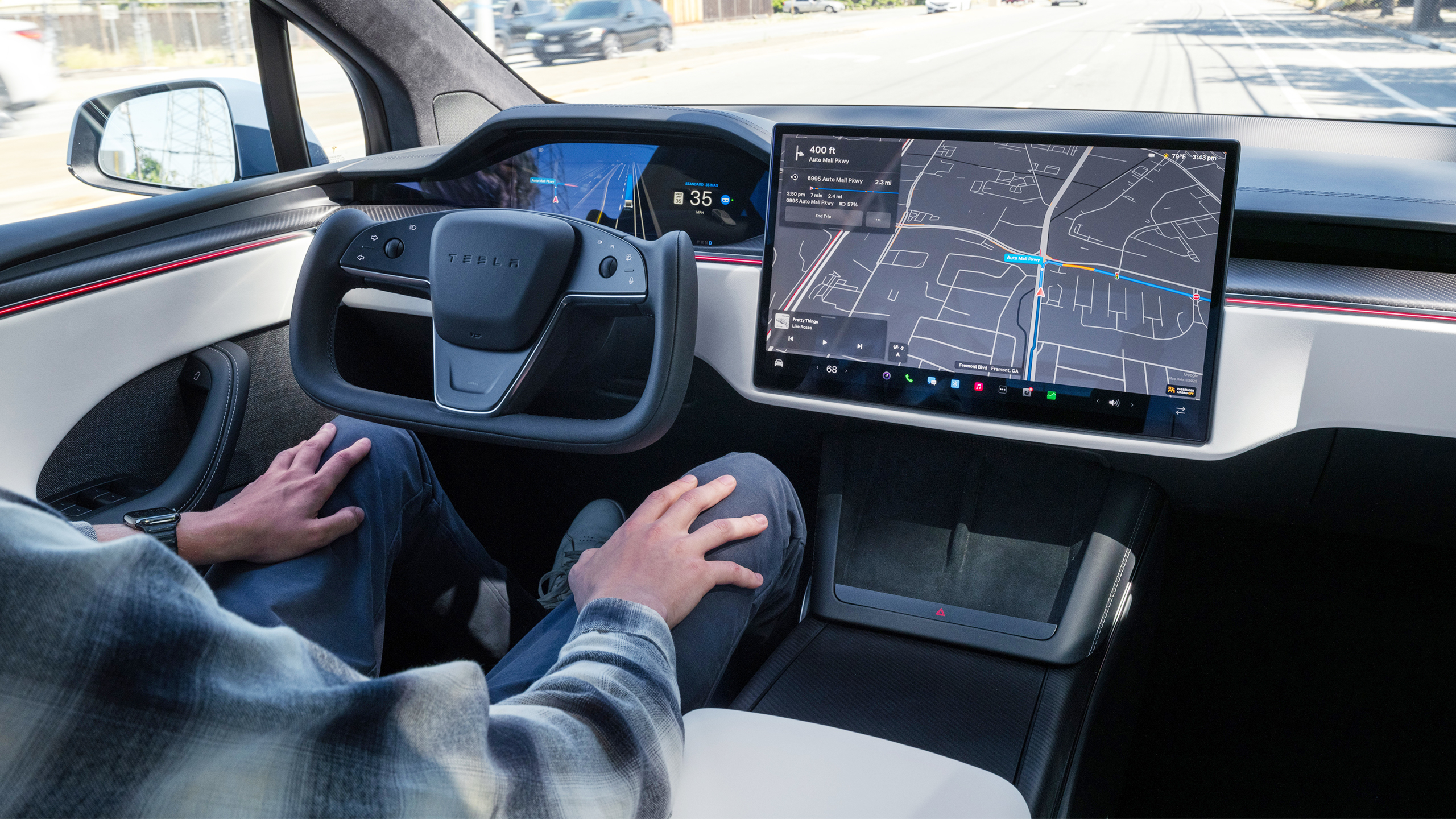
Tesla Drops ‘Full Self-Driving’ Name For ‘Assisted Driving’ In Europe

  • Tesla has finally dropped the “Full Self-Driving” name, but only in Europe.
  • The company is chasing EU-wide approval for its driver-assistance system.
  • Several European regulators have expressed concern about the FSD name.

For years, Tesla has been criticized for branding its advanced driver-assistance system as “Full Self-Driving.” While FSD is one of the most complex systems of its kind on the market, it doesn’t offer full self-driving in all scenarios, nor does it offer driver-assistance operations that allows the driver to switch off while behind the wheel. Finally, it appears the electric carmaker has recognized the dangers of the name, though not because of a newfound sense of altruism.

Over the last week, Tesla has rebranded Full Self-Driving as “Tesla Assisted Driving” across its European websites, including in Spain, Germany, Sweden, the Netherlands, and other markets. Tesla has also updated its online owner’s manuals in each market to reflect the change.

Read: Belgian Test Finds Tesla FSD Speeding And Trying To Pass Cyclists Illegally

The name change comes roughly six months after Dutch regulator RDW gave Tesla the green light to introduce the Full Self-Driving system following months of secretive testing. In the months after FSD was approved in the Netherlands, seven other countries in the European Union gave the go-ahead for the driver-assistance functions to be introduced across local fleets. These include Croatia, Slovenia, Czechia, Estonia, Lithuania, Denmark, and Belgium. Slovakia is expected to approve the system soon.

Concerns About The FSD Name

 Tesla Drops ‘Full Self-Driving’ Name For ‘Assisted Driving’ In Europe

However, as Reuters reports, safety regulators in several countries have said the Full Self-Driving name was misleading. They have a point. Like Autopilot, the naming of the system could give drivers false confidence that the vehicle can drive itself in all scenarios, and that they no longer need to focus on the road. This comes despite Tesla labeling the system as Full Self-Driving (Supervised) and repeatedly warned customers on its websites and social media accounts that the technology does not make vehicles fully autonomous or replace a human driver.

By changing the system’s name, Tesla has easily and quickly addressed one of the main concerns among regulators. Company boss Elon Musk has been feveriously pushing for EU-wide approval of the system, declaring it as a crucial part of the company’s future.

A vote on the technology was scheduled to take place this month but has since been delayed until December. For the system to be introduced across the entire bloc, a qualified majority of 15 of the EU’s 27 member states must vote in favor of it.

 Tesla Drops ‘Full Self-Driving’ Name For ‘Assisted Driving’ In Europe

US senators from both parties blast Trump order to import Russian diesel as illegal

12 October 2026 at 19:58
Gas and diesel prices in Indiana on Sept. 17, 2026. (Photo by Niki Kelly/Indiana Capital Chronicle)

Gas and diesel prices in Indiana on Sept. 17, 2026. (Photo by Niki Kelly/Indiana Capital Chronicle)

The Trump administration’s order to allow import of Russian diesel violates a 2022 law banning Russian energy imports while the country’s war with Ukraine is ongoing, according to a bipartisan group of U.S. senators.

Following an Oct. 9 call between President Donald Trump and Russian President Vladimir Putin, the U.S. Treasury Department’s Office of Foreign Assets Control lifted sanctions against the “import sale, delivery, offloading, or importation” of Russian diesel. Prices of diesel have skyrocketed in recent months during Trump’s war in Iran.

The administration did not consult with Congress before lifting the sanctions, which is required by the 2022 law, six senators said Sunday in a statement.

Senate Foreign Relations Committee ranking Democrat Jeanne Shaheen of New Hampshire, Democrat Richard Blumenthal of Connecticut and Republicans Susan Collins of Maine, John Curtis of Utah, Lisa Murkowski of Alaska and Thom Tillis of North Carolina called on Trump to “immediately reverse course.”

“Congress explicitly banned Russian energy imports in 2022 to prevent American dollars from financing Putin’s brutal war against Ukraine,” they wrote. “Congress was clear: the U.S. should not import oil from Russia until it ends its aggression against Ukraine and ceases threats against our NATO Allies. 

“President Trump’s decision to allow Russian diesel imports to the U.S. runs directly counter to that law,” the group added.

U.S. Rep. Lloyd Doggett, a Texas Democrat who sponsored the 2022 law blocking imports of Russian energy products, also said in a Monday statement the administration’s move was illegal.

“Trump is directly violating that law, lifting sanctions to permit the first Russian diesel imports into the United States since the law took effect, without satisfying the specific legal conditions it requires,” he wrote. “He illegally rewards his pal Putin while once again blaming Zelensky for not capitulating to Putin. Meanwhile, every day Putin murders more Ukrainian civilians.”

Broad support for law 

The law passed the Senate unanimously and the House 413-9 before President Joe Biden signed it in April 2022, shortly after Russia invaded Ukraine.

It allows for the president to lift sanctions on Russian energy imports, after consultation with Congress, if Russia has withdrawn from Ukraine, recognized Ukraine’s right to independence and poses no immediate threat to any NATO members. 

Throughout his second term, Trump has attempted to use trade policy, including an aggressive tariffs schedule, to extract concessions from foreign governments.

Gas and diesel prices in Forest Glen, Maryland, on Oct. 5, 2026. (Photo by Jane Norman/States Newsroom)

But reopening Russian energy imports appears to break with that record. Trump did not announce any accommodation Russia provided to reenter the U.S. market, instead framing the move explicitly in domestic economic terms.

“Between our TOTAL CONTROL of the Strait of Hormuz, and this great announcement on Russian Energy, Diesel Prices for Americans and, indeed, the World, will be COMING DOWN, IN RECORD NUMBERS, AND FAST,” he wrote on social media Friday. “Lower prices for Americans, especially our Great Farmers, Ranchers, and Truckers, is my Greatest Priority. This is a very big and important announcement.”

The agreement is in effect until April 7, 2027.

The nationwide average price for a gallon of diesel last week was $6.20, according to the U.S. Energy Information Administration. That marks a $2.49 increase, or 67%, from a year ago. 

The price of fuel, including diesel, and other consumer goods is among the top campaign issues for the Nov. 3 midterm elections. 

Diesel prices are particularly important in farm states like Iowa, Kansas and Texas. Democrats in U.S. Senate races in those generally red states are polling unusually well this year.

Spokespeople for the White House and Treasury Department did not respond to messages seeking comment Monday.

Pickup Driver Sought After Two Students Struck at Massachusetts Bus Stop

9 October 2026 at 23:14

Authorities are seeking the driver of a pickup truck that struck two 16-year-old students with its side mirror as they waited to board a school bus, reported WCVB News.

Carver police said via the news report that the students, who attend Old Colony Regional Vocational Technical High School in Rochester in Massachusetts, were injured Thursday when a dark-colored pickup truck passed their bus stop. The driver fled the scene, and investigators are asking the public for information that could help identify the vehicle or the person behind the wheel.

According to the article, the school bus was approaching the stop with its yellow warning lights flashing when the truck struck the teenagers. Police described the pickup as having LED lights.

Officers were reportedly notified of the incident at approximately 7:20 a.m. by Old Colony Bus Company. The authorities asked anyone who was in the Forest Street area around 6 a.m. to contact investigators.

One student was taken right after the incident to a hospital by a family member, received treatment, and was released. Family members took the second student to a hospital later in the day for treatment. Both teenagers are expected to recover, and the extent of the injuries were not disclosed.

Aaron Polansky, superintendent-director of Old Colony Regional Vocational Technical High School, said the school had contacted the students’ families following the collision.

“We have reached out to the families of the injured students,” Polansky told local news reporters. “We are keeping both students and their families in our thoughts and wish them a fast and full recovery.”

Polansky also urged community members to help investigators locate the driver. “We encourage members of the community to assist the Carver Police Department with their investigation in any way possible,” he said.

The description released by investigators identifies the truck’s dark color and LED lights. Police are asking people with information about the vehicle to share it as they work to identify the driver.

Written with the assistance of AI.


Related: Texas District Approves School Bus Cameras After Girl Nearly Struck by Pickup
Related: West Virginia Student Struck by Vehicle
Related: Maine Student Struck by School Bus Dies from Injuries
Related: Student Hit by Vehicle Near Arkansas School Bus Stop

The post Pickup Driver Sought After Two Students Struck at Massachusetts Bus Stop appeared first on School Transportation News.

Audi Could Make Its EVs Better By Making Them “Worse”

  • The German brand could add sounds, vibrations, and smells to future EVs.
  • A patent also describes windshield graphics and synthetic turbo lag.
  • Like Hyundai and Ferrari, Audi wants to make its EVs more entertaining to drive.

One of the best things about electric cars is how remarkably smooth and quiet they are. A sense of calm washes over you as you drive a good EV, as you no longer have to worry about jerky gear shifts or an unpleasant engine rattling away. These attributes make EVs great for regular consumers who use cars as nothing more than a means of transport. But for driving enthusiasts like us, electric cars don’t usually get us excited. Audi might have the answer.

A patent filed by the company with the German Patent and Trade Mark Office describes several different systems that could boost the engagement of driving an EV. Loads of other car manufacturers have already done this, most notably Hyundai N with its fake dual-clutch transmission and ICE-inspired audio systems. More recently, Porsche, Mercedes-AMG, and Ferrari have all launched EVs with a similar focus on driving thrills.

Read: AUDI’s E7X Is Bigger Than A Q7 And Cheaper Than A Q3

The first piece of tech that Audi has patented relates to sounds and vibrations. It could add a physical connection from the powertrain directly to the cabin, transmitting vibrations to the driver and passengers. Additionally, less sound deadening could be used to amplify those mechanical noises we all love, and Audi may even let EV owners rev their cars by decoupling the electric motor, Car and Driver reports. Pump in some artificial sounds and it might be possible to develop and build an EV that traditional gearheads would actually want to drive.

\\\\\\

Audi’s ideas don’t stop here. By tweaking a car’s software, it could add in synthetic turbo lag, giving EVs a more traditional driving feel without the instant power we’ve all come to expect. Engineers from the German brand have even started dreaming up ways to create scents that’ll get drivers excited. If you want to cruise, a scent could be pumped into the cabin to calm you, or a more evocative smell could fill the car when you stamp down the throttle.

An advanced projection system has also been envisioned, allowing exciting displays to be projected onto the windshield. While we could see something like this appealing to the younger, gaming generation, we suspect it may be a little too distracting for some motorists. As always, there’s no guarantee that any of the technologies that Audi is looking to patent will become a reality, but we’re hopeful at least some will.

 Audi Could Make Its EVs Better By Making Them “Worse”

Texas District Approves School Bus Cameras After Girl Nearly Struck by Pickup

8 October 2026 at 22:12

The Anahuac Independent School District board approved a $159,150 in funding for purchasing and installing video cameras on existing school buses after a pickup truck nearly struck a 9-year-old girl approaching her bus in Chambers County, Texas, reported KFDM News.

Angela Nelson told local news reporters that her daughter, Lorigan, was preparing to board her school bus outside her home Sept. 18, when a pickup truck passed the stopped bus.

Video Nelson shared with local news shows Lorigan looking both ways before approaching the bus, which had its stop arm extended and red lights flashing. The girl spotted the pickup and moved away just before it passed, reportedly missing her by inches.

Chambers County Sheriff Brian Hawthorne said investigators had identified and spoken with the motorist, who could face a reckless driving charge, a Class B misdemeanor.

Angela Nelson said the county attorney indicated that additional video and other evidence would be gathered and that the case could be presented to a grand jury.

Nelson also provided investigators with footage from a camera outside her home. That recording reportedly shows the school bus coming into view with its lights flashing several seconds before the pickup passes.

Texas law requires motorists approaching in either direction to stop for a school bus loading or unloading students, when its required visual signals are activated. Drivers may proceed when the bus moves, its driver signals them to proceed, or the signals stop.

Anahuac Superintendent David Walker told local reporters that the district currently has no cameras on its buses. He presented information to trustees who approved the new bus purchase and additional camera equipment.

The district was reportedly considering systems with approximately five interior cameras and two exterior cameras per bus. Walker is reviewing vendors, costs and potential funding sources, including the Texas Commission on Environmental Quality’s Supplemental Environmental Projects program.

Written with the assistance of AI.


Related: Wisconsin Teen Injured After Being Struck by Pickup While Boarding School Bus
Related: 9-year-old Boy Struck by SUV While Waiting for School Bus
Related: Two Students Struck After High School Student Illegally Passes School Bus
Related: Kentucky Motorist Arrested After Illegal Passing School Bus, Hitting Child

The post Texas District Approves School Bus Cameras After Girl Nearly Struck by Pickup appeared first on School Transportation News.

❌
❌