Mercedes and Geely are reportedly in early talks to deepen ties.
The German brand could tap Geely to cut costs and development times.
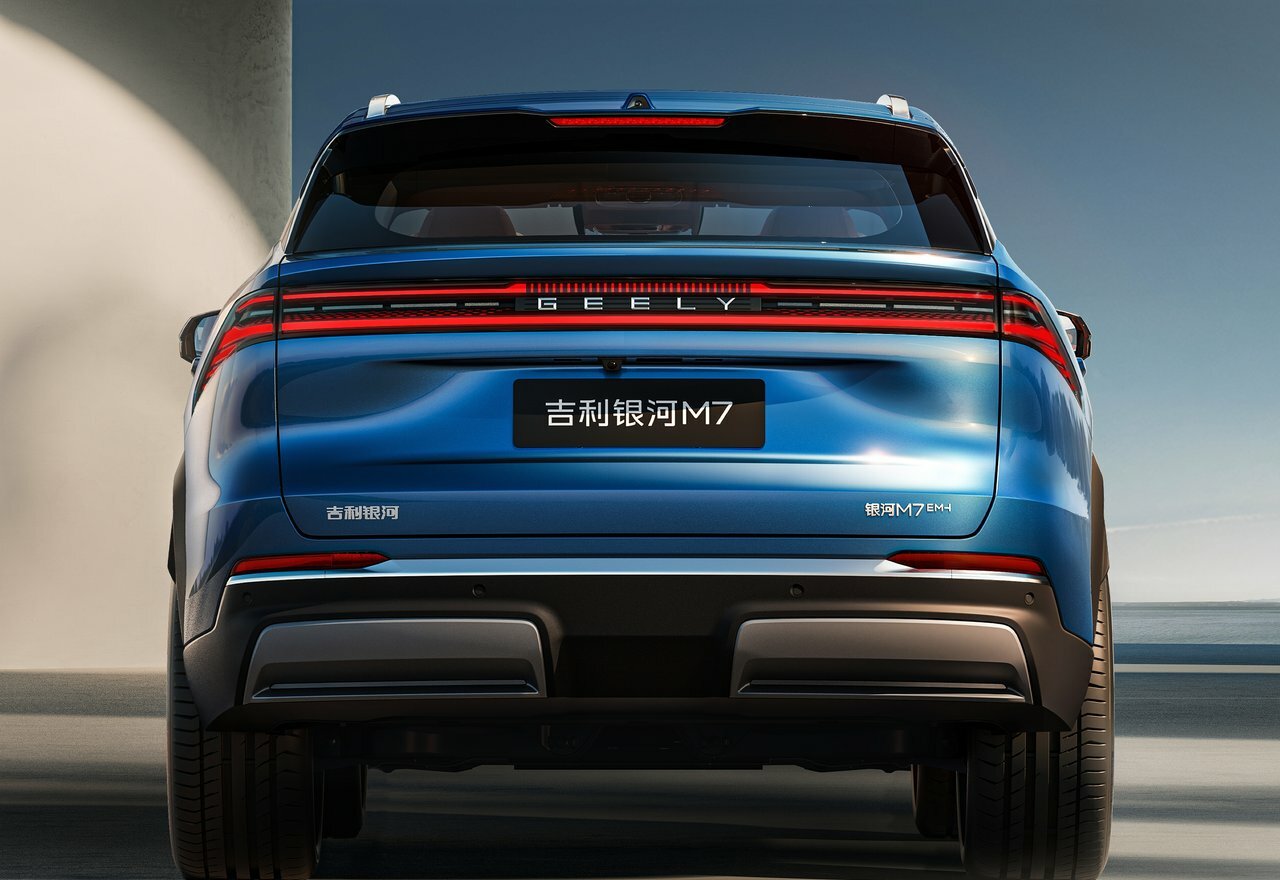
Mercedes is already partnered with Geely for Smart’s current range of EVs.
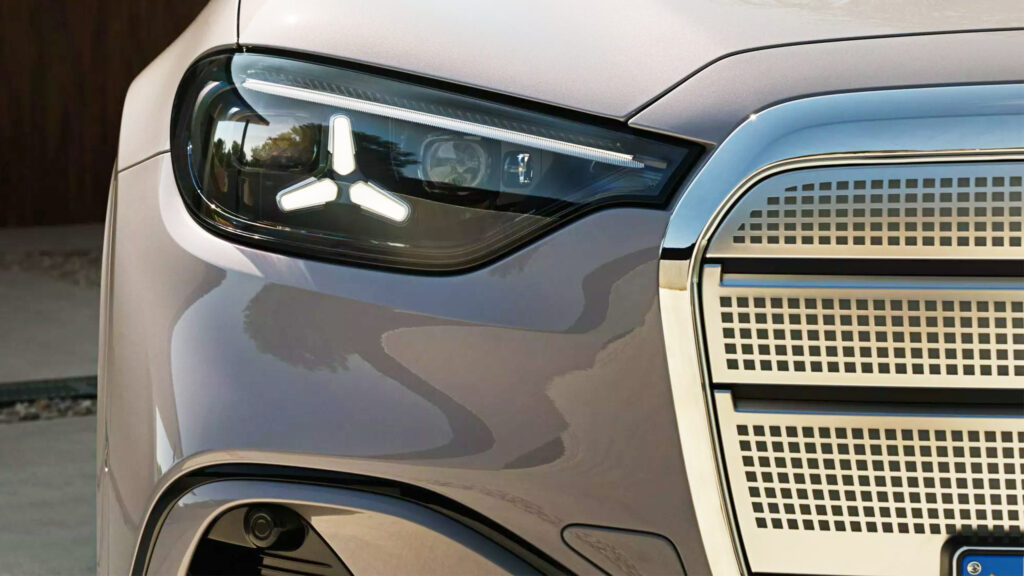
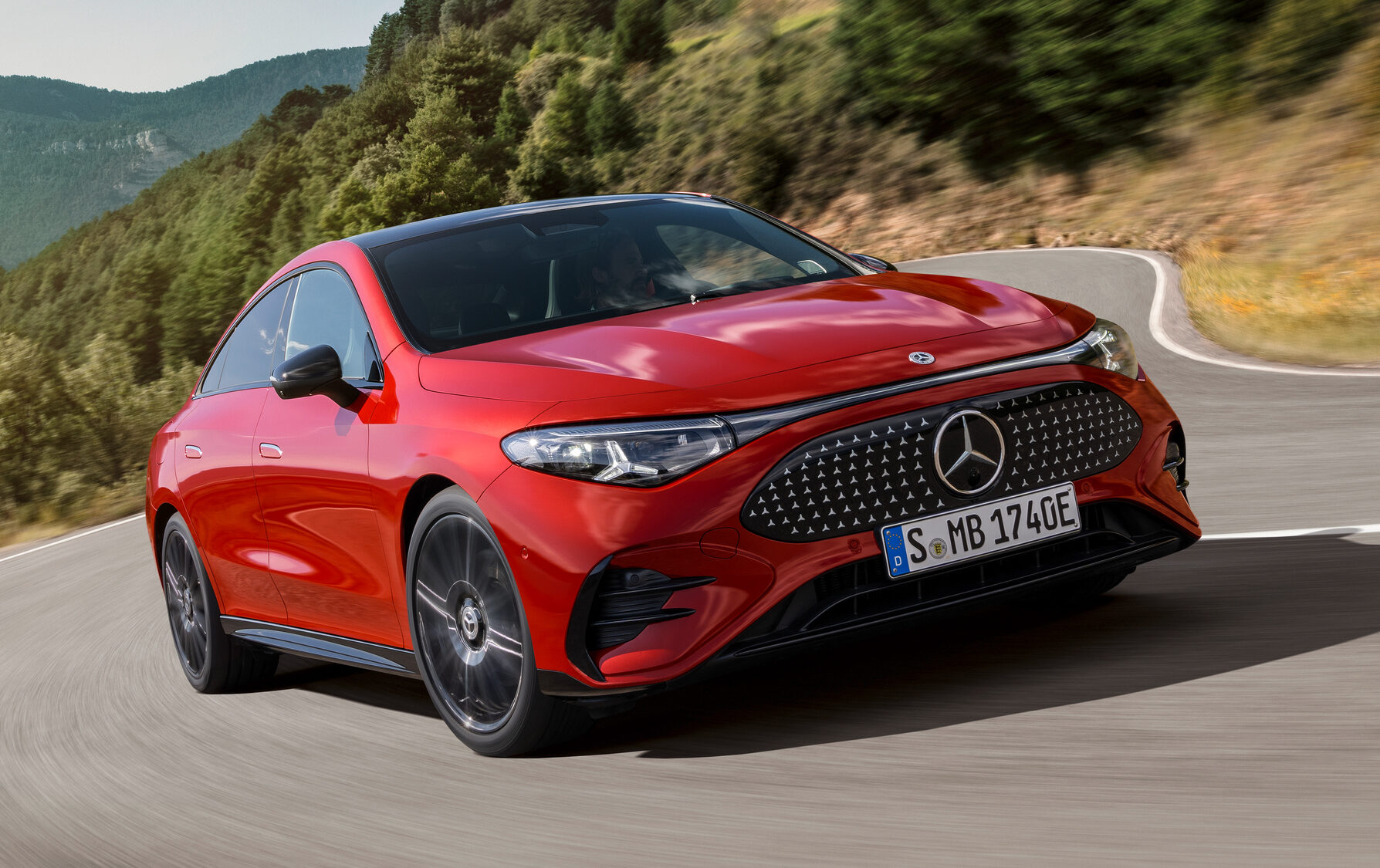
Mercedes-Benz has a pair of very interesting new EVs in its line-up, namely the latest-generation CLA and GLC, but that doesn’t mean it’s not thinking even further into the future. According to a new report, the brand may look to deepen ties with China’s second-largest car manufacturer for its next generation of EVs.
Unnamed sources claim that Mercedes has had early-stage discussions with Geely about its future EVs. It’s possible these vehicles will feature componentry from the Chinese brand, which would no doubt help cut engineering costs and shorten development times.
While Geely declined to comment on the report, a Mercedes spokesperson acknowledged that the firm “is continually reviewing ways to make research and development faster, better and more efficient — both in China and globally.” Importantly, the same spokesperson told Bloomberg that there are no discussions about Mercedes and Geely sharing platforms.
Germany Joins With China
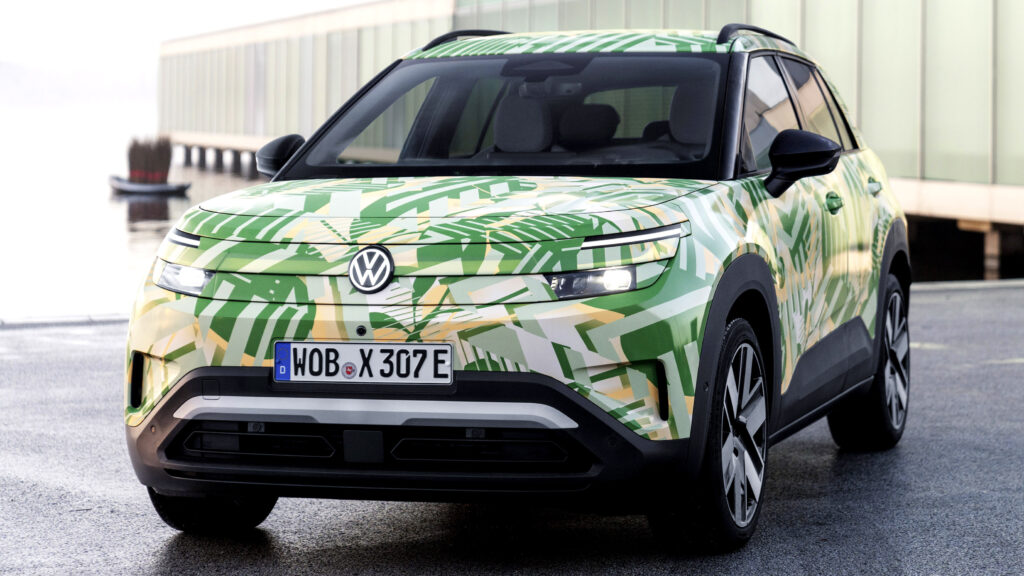
This contrasts with what fellow German brand VW has done. It has partnered with Chinese brand Xpeng and is sharing architectures with the relatively young EV startup for some of its future EVs, including a new ID-badged sedan. Companies like Xpeng, as well as BYD, Geely, Chery, and others, have streaked ahead of many Western legacy automakers, developing more advanced batteries and electric motors.
Mercedes already has very strong ties with Geely and operates the Smart brand with its Chinese partner. Once exclusively a purveyor of small city cars, the Smart brand has been revitalized as an EV manufacturer with designs penned by Mercedes, while engineering and manufacturing are handled by Geely.
While Mercedes says it’s not interested in platform sharing with Geely, a recent report from China claims that the German company could develop its next-gen EV platform using Geely’s GEEA electronic and electrical architecture as its base. This report from 36Kr claims that the new platform has been dubbed ‘Phoenix’ and will be used for entry-level EVs sold worldwide, potentially launching as soon as 2030 as a replacement for the current MMA architecture.
Volkswagen has teased the ID. Cross, ahead of its fall debut.
Buyers will get two battery options and three power outputs.
Pricing in Europe will start from around €28,000 ($32,220).
Spy photographers recently caught the ID. Cross virtually undisguised, but Volkswagen put the camouflage back on for an official photo shoot in Amsterdam. That’s not all as the company has released a handful of initial specifications.
The electric crossover is scheduled to arrive in Europe this fall with a starting price of about €28,000 ($32,218), according to Volkswagen. It rides on the MEB+ platform and shares a lot in common with the ID. Polo. This includes a choice of three front-mounted motors with outputs of 114 hp (85 kW / 116 PS), 133 hp (99 kW / 135 PS), and 208 hp (155 kW / 211 PS).
The ID. Polo lineup will also receive a GTI variant with 223 hp (166 kW / 226 PS). It will arrive in the spring of 2027, although there’s no word yet on whether the ID. Cross will get the same treatment.
Volkswagen also confirmed the crossover will have 37- and 52 kWh battery packs. Like on the ID. Polo, the smaller one should have a lithium iron phosphate chemistry and a 90 kW DC fast charging capability. It should power versions developing 114 hp (85 kW / 116 PS) and 133 hp (99 kW / 135 PS).
The 52 kWh battery will likely have a nickel manganese cobalt chemistry and Volkswagen has said it’ll give the small crossover a range of up to 280 miles (450 km). It will also have a slightly higher 105 kW DC fast charging capability.
In terms of size, Volkswagen confirmed the model will measure 163.5 inches (4,153 mm) long, 70.6 inches (1,794 mm) wide, and 62.2 inches (1,581 mm) tall with a wheelbase that spans 102.4 inches (2,601 mm). The ID. Cross will also offer 20-inch wheels as well as a towing capacity of 2,645 lbs (1,200 kg).
Volkswagen didn’t release interior pictures, but the cabin should echo the ID. Polo and have a 10.25-inch digital instrument cluster as well as a 13-inch infotainment system. The automaker also revealed the model will have a cargo capacity of 16.8 cubic feet (475 liters), but that can be expanded to 47.3 cubic feet (1,340 liters) by folding the rear seats down. If that’s not enough, there’s an extra 0.7 cubic feet (22 liters) of space in the frunk.
EV registrations fell sharply in January as market momentum faded.
Cadillac ranked as the No. 2 EV brand behind Tesla with modest growth.
Gas and hybrid vehicles gained market share as EV demand softened.
Newly-released sales figures from the United States is starting to reveal just how much electric vehicle demand leaned on the federal EV tax credit that was discarded on September 30 last year. With that incentive now gone, the early numbers suggest the market is already feeling the adjustment, and it has not been a subtle one.
Data from S&P Global Mobility shared by Auto News show that 59,802 new EVs were registered in January, a massive 41 percent drop from a year earlier. Out of nearly 1.2 million vehicles registered that month, that leaves fully electric models with just a 5.1 percent share of the market, down from 8.3 percent a year earlier.
Meanwhile, gasoline vehicles quietly expanded their hold, rising 2.3 percentage points to claim 76.6 percent of registrations. Hybrids also edged upward, gaining 1 point to reach a 14.7 percent share.
Tesla still sits comfortably at the top of the US EV market, which will surprise absolutely no one. In January alone, 32,123 new Teslas were registered. Even so, Tesla is not immune to the slowdown, with registrations down 26 percent from a year earlier. Despite that drop, its share of the EV market jumped 11 percent to 53.7 percent.
Cadillac ranked a distant second with 3,189 registrations, more than ten times behind Tesla. However, the brand was one of the few to post growth, with registrations rising 8.1 percent year over year. Its share of the EV market also increased by 2.3 percent to 5.3 percent.
Many other carmakers have also seen their EV sales fall off a cliff. For example, there were 3,027 new Hyundai EVs registered in January, down 23 percent from the year prior. This decline was led by the Ioniq 5, which saw its deliveries slide 22 percent to 2,101 vehicles.
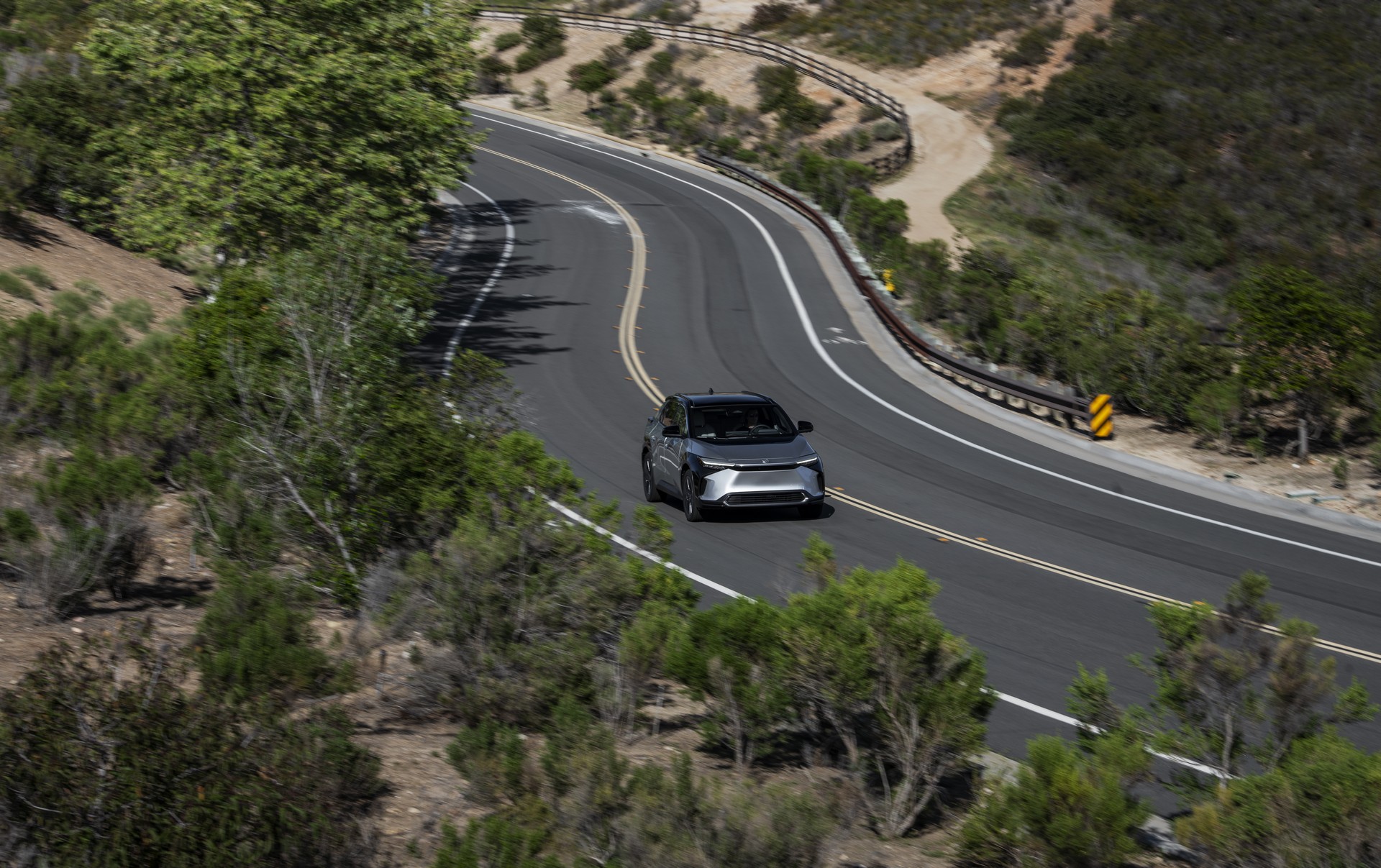
Ford’s EV registrations also dropped 67 percent to 2,772, while Chevrolet’s fell 55 percent to 2,658. Toyota, however, reported a 25 percent increase, although its EV registrations totaled just 2,529, meaning it still trails many competitors.
According to iSeeCars executive analyst Karl Brauer, “there’s going to be a shakeout to the new reality with no federal EV incentives, which was the carrot, and no greenhouse gas penalties, which was the stick.”
Auto News notes that EV registrations have declined year over year every month since the tax credit was scrapped on September 30. S&P Global Mobility analyst Tom Libby says the drop was “expected,” adding, “it’s a reset, and it’s going to be a very slow process moving forward.”
Volkswagen previews refreshed Caddy and Multivan vans for 2026.
Larger infotainment screens arrive with simpler, more intuitive menus.
Other models, including the ID. Buzz, are also lined up for upgrades.
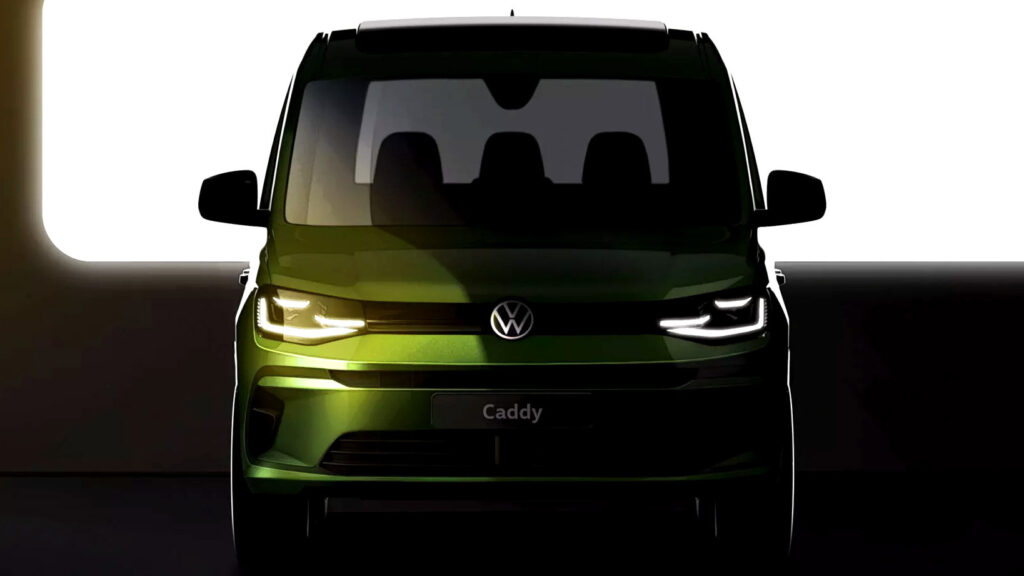
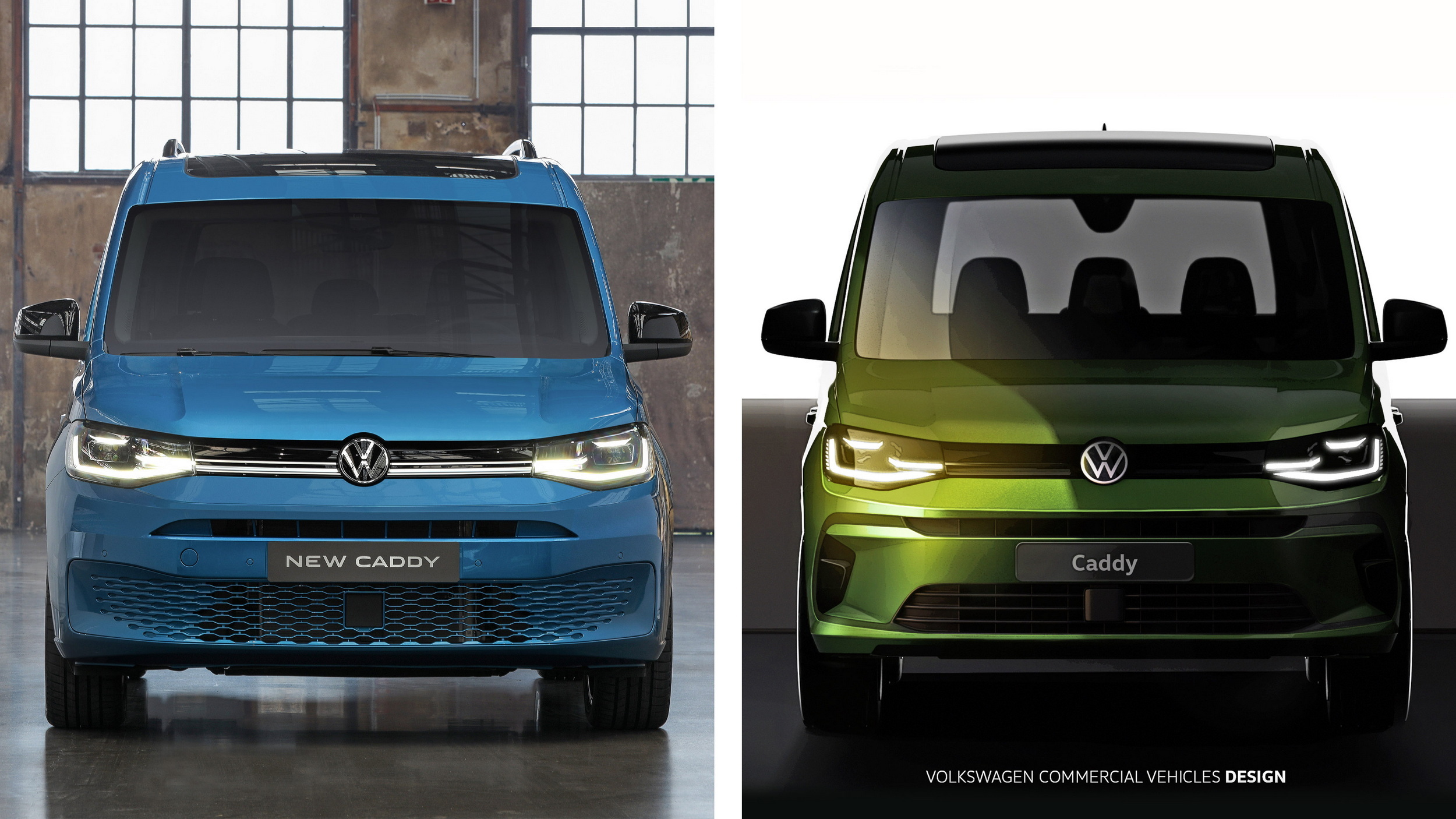
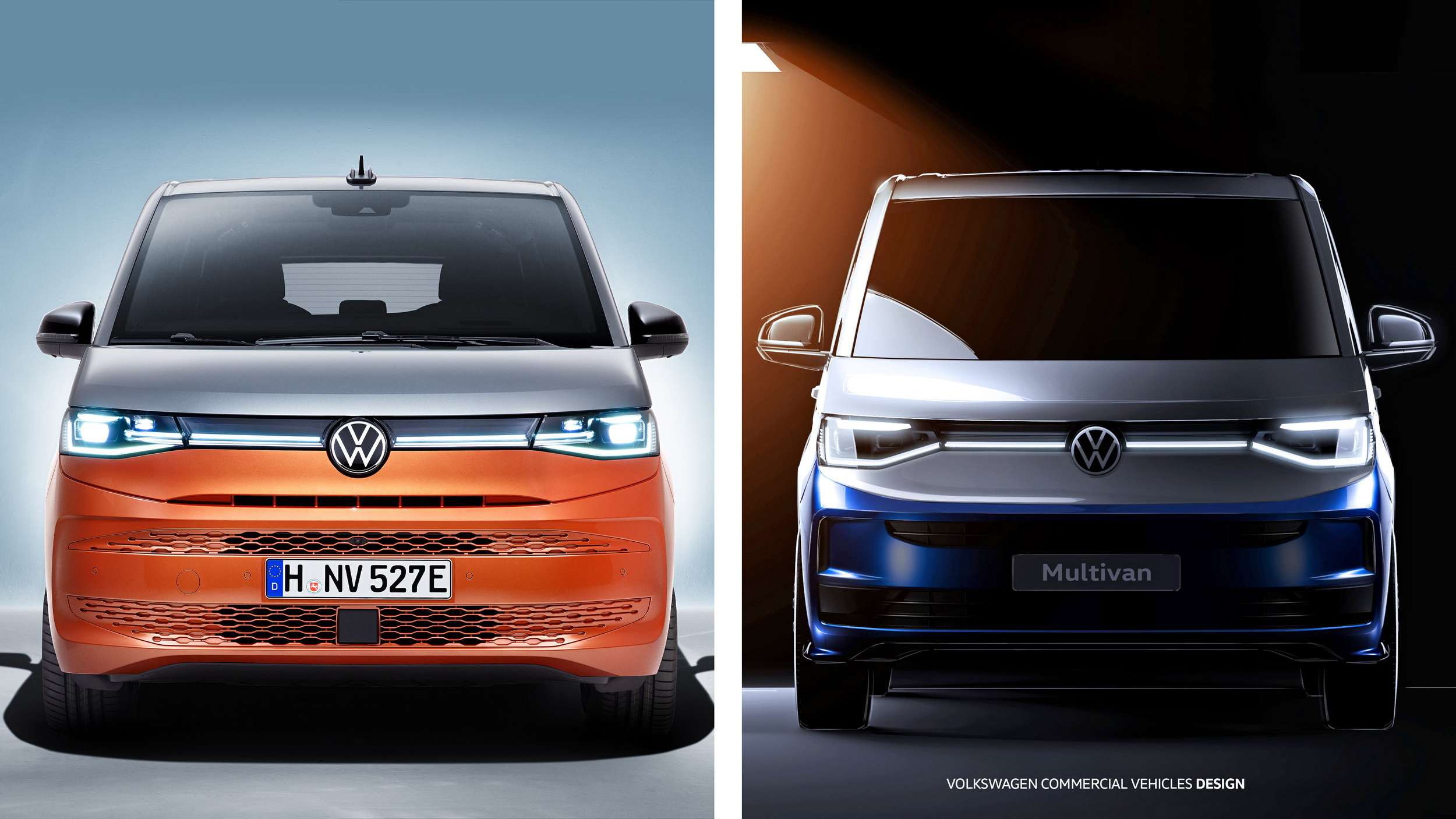
Volkswagen’s commercial vehicles division has offered a preview of what’s coming next for its van lineup at the 2026 Annual Media Conference. Alongside a business update, the company released official sketches teasing facelifted versions of the Caddy and the Multivan T7, both scheduled to arrive later this year with styling revisions and cabin upgrades.
The first teaser focuses on the Caddy. Up front, the van picks up a redesigned bumper that replaces the previous body-colored mesh pattern with more traditional cooling intakes. The grille shown in the sketch appears to drop illuminated elements altogether, though it remains unclear whether that detail will apply across the entire trim range.
The Multivan T7 receives a similar refresh, although its front end retains the LED light strip spanning the grille. The headlights adopt revised LED graphics, and the van shown in the teaser wears a new two-tone paint scheme that echoes the look of the ID. Buzz.
Beyond the exterior tweaks, Volkswagen says both vans will receive what it calls “significantly optimized interior solutions.” The most obvious change will be larger infotainment displays paired with simpler, more intuitive menus, an update the company claims will make everyday use noticeably easier for owners.
It has also been confirmed that the 2026 MY updates will be applied to the California version of the Multivan T7, which was caught by our spy photographers during winter testing. For now, Volkswagen has not indicated any mechanical changes. Powertrain options for the Caddy and Multivan are expected to carry over largely unchanged from the current lineup.
Upgrades For Other Vans
The update cycle is not limited to the Caddy and Multivan. Volkswagen also plans to expand electrified options across the rest of its van range in 2026. That includes new plug-in hybrid powertrains for the Ford-based VW Transporter and Caravelle, giving both models a partially electric option for the first time.
The fully electric ID. Buzz is also due for a few new tricks. Volkswagen plans to add Vehicle-to-Load (V2L) capability, allowing owners to power external devices directly from the van’s battery. A “Good Night” package and a dedicated Camp Mode are also on the way.
Finally, the Grand California flagship camper will be “comprehensively upgraded based on customer feedback”, and the Crafter will become available with a three-way tipper bodystyle.
Financial Hurdles Amid A Fresh Start
The product push comes as VW Commercial Vehicles tries to bounce back from a difficult 2025. Sales revenue actually rose 11% to €16.86 billion ($19.3 billion), but operating profit plunged 67% to €245 million ($281 million).
Much of the decline was attributed to provisions set aside for CO2 fines in the European Union, largely tied to the slower-than-expected ramp-up of fully electric LCVs. Even so, the brand maintained a solid net cash flow of €1 billion ($1.15 billion) to support future product updates. Deliveries also edged up, with VW Commercial Vehicles selling 428,000 units in 2025, a 6% increase compared to 2024.
Mercedes may sell the scaled-down G-Class as EV and hybrid.
The hybrid could borrow the CLA’s 1.5-liter engine setup.
The electric version may carry a sizable 85 kWh battery pack.
Given the cultural weight carried by the Mercedes G-Wagen, it’s a bit surprising the company has taken this long to pursue a smaller, more accessible version. Yet here it is at last. The so-called baby G is now deep into development, and these latest spy shots give us the clearest look yet at Mercedes’ downsized off-roader.
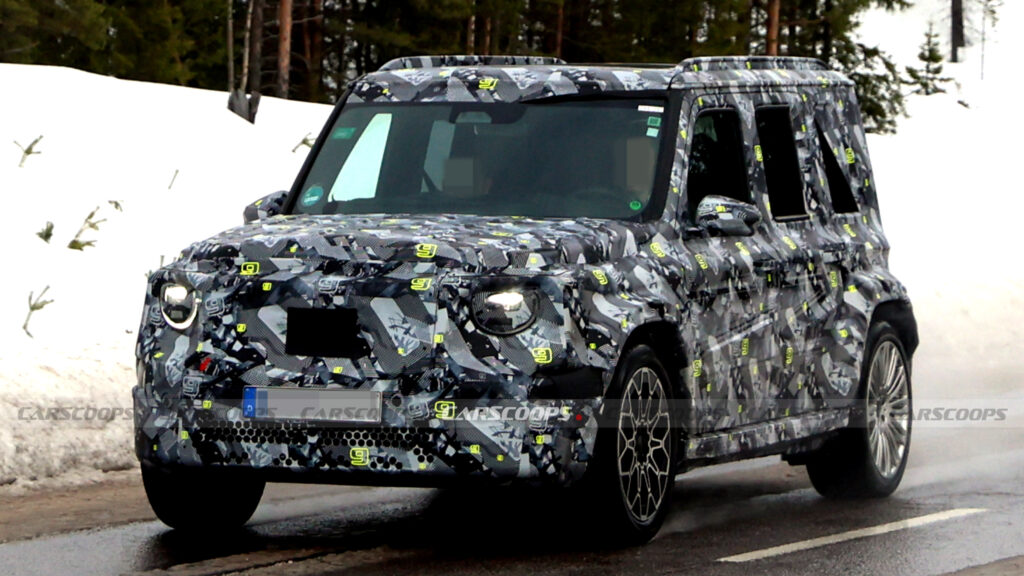
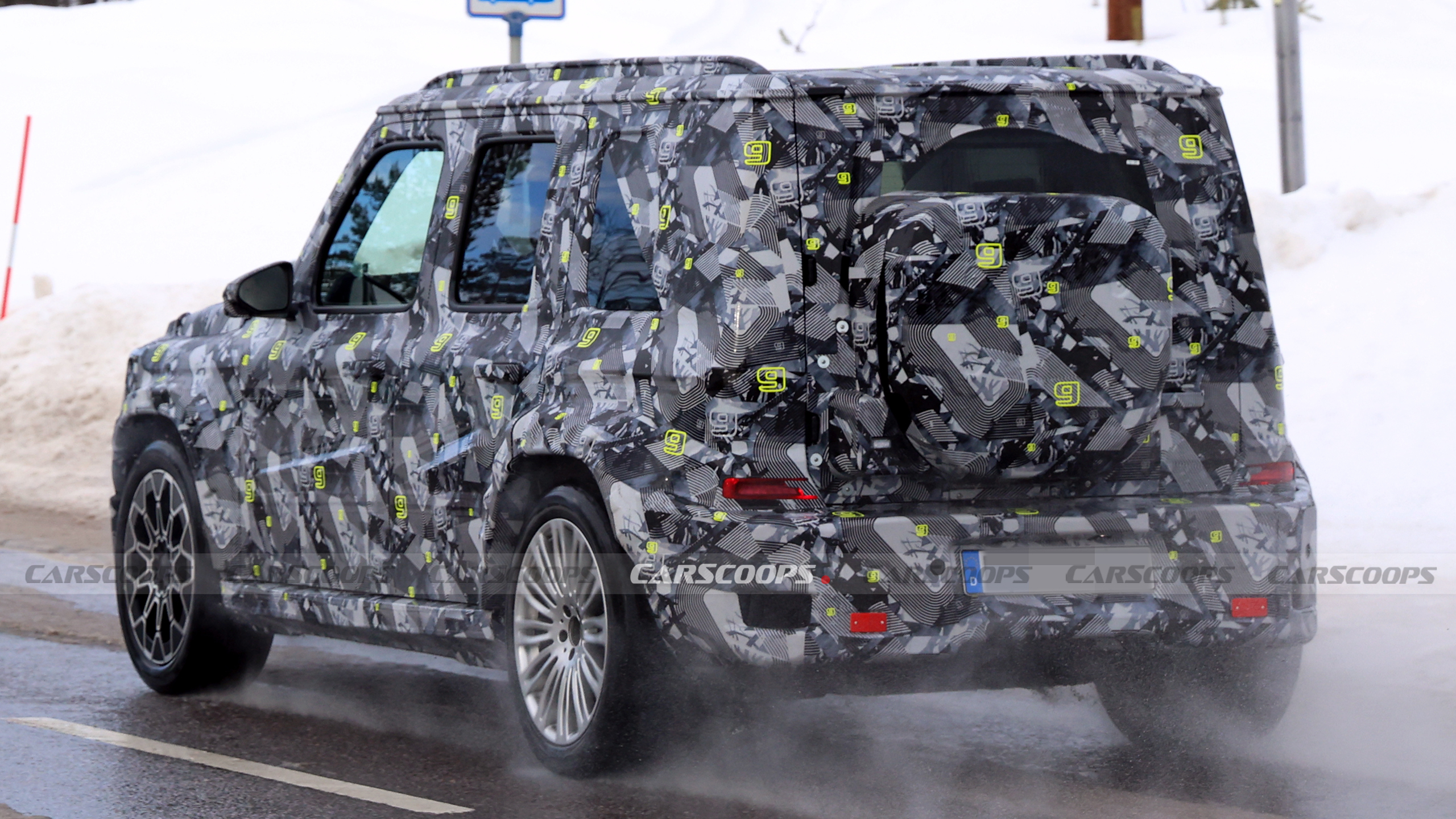
This prototype is sporting a distinctive new camouflage wrap that hides many of the more intricate details, but does nothing to shield the overall shape of the model from view. Look closely, and you’ll notice the wrap has hundreds of lower-case ‘g’ graphics, a playful nod to the model’s scaled-down identity.
Mercedes could easily have fallen into the trap of making the baby G-Class look a little too soft or restrained, perhaps little more than a lightly reworked GLB. Instead, the company appears to have taken the design of the full-size model, scaled it down, and applied a few subtler tweaks. Based on early impressions, the result looks very promising.
The front has round headlights just like you’d expect, as well as a pronounced hood. The sides come complete with flared wheel arches, squared-off side windows, and prominent roof rails. Found at the rear will be small taillights positioned lower on the fascia, just like the normal G, in addition to a large spare wheel carrier.
Clearly, Mercedes has nailed the design. But what about what’s underneath? According to Mercedes CTO Markus Schäfer, the baby G is being engineered as a fully bespoke model rather than using an adapted version of an existing Mercedes platform. The company is developing new modules, suspension components, and wheel setups specifically for the vehicle, although it will not use a traditional ladder-frame chassis.
An Electrified Line-up
Originally, the project was intended to be purely electric. Now, however, Mercedes appears to be reconsidering that strategy. Recent reports suggest the company is evaluating the addition of a hybrid variant as well, a decision that makes practical sense given the current state of the EV market, particularly in North America.
SH Proshots
If Mercedes follows through and offers a gas option, it could use the same hybrid powertrain found in the new CLA sedan. That system pairs a 1.5-liter engine developed through the Geely and Renault Horse Powertrain joint venture with electric assistance, producing 208 hp and 280 lb-ft (380 Nm). The German carmaker could recalibrate the setup for the baby G, squeezing out more power to better suit the SUV’s character.
As for the all-electric version, it could come fitted with an 85 kWh NMC battery providing 450 miles (724 km) of range and driving a pair of electric motors. Carscoops understands it could have a driving range of up to 450 miles (724 km), which would be very impressive considering the full-size electric G580 is only good for 280 miles (450 km).
When it finally reaches showrooms, the baby G-Class will not have the small off-roader space to itself. Rivals are already lining up, including a rumored compact version of the Land Rover Defender that aims to bring the same rugged image in a smaller package.
BMW has already secured more than 50,000 orders for the new iX3.
The all-electric SUV is currently being produced in Hungary.
Production is expected to expand to plants in China and Mexico.
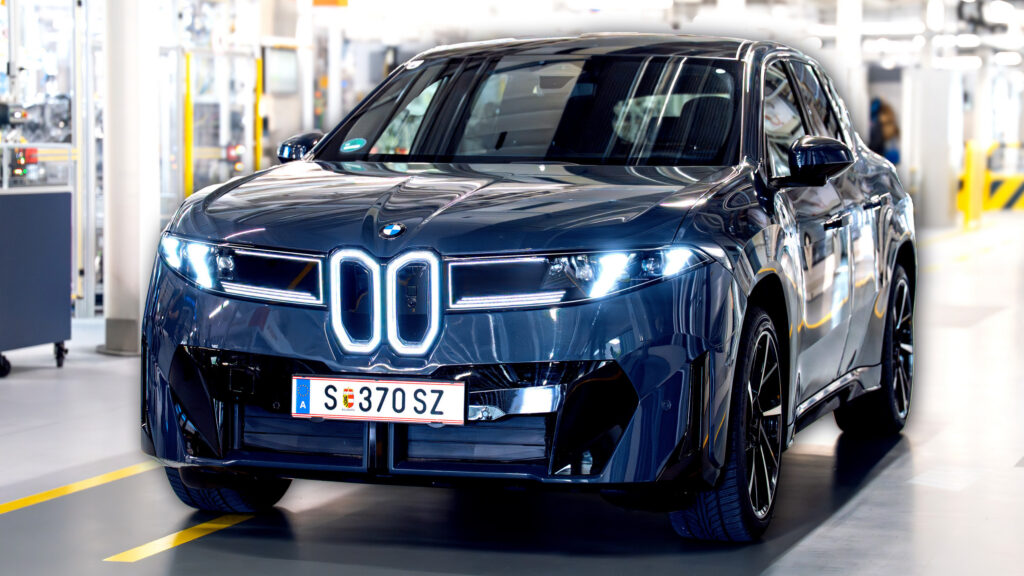
It’s been just six months since BMW unveiled the second-generation iX3, and the electric SUV is already gathering significant momentum. The early response suggests the company’s new wave of EVs may be off to a strong start. Indeed, the German brand has already announced a second shift at the Debrecen plant where it’s manufactured.
During its most recent earnings report, BMW chief executive Oliver Zipse noted that production of the iX3 has been ramping up at the plant in Hungary and that European deliveries have just started. He revealed that “order books for the iX3 are full and reach well into this year,” noting it’s proving to be popular among private and fleet customers.
Zipse went on to reveal that more than 50,000 orders have been placed for the new iX3, a very impressive figure for what is the first in a new generation of EVs from BMW. At full capacity, the plant in Debrecen will be able to build up to 150,000 vehicles annually.
There’s More To Come
Making the demand for the iX3 particularly impressive is the fact that only a single version has been released at this stage. This model, badged the iX3 50 xDrive, has a sizeable 108 kWh battery and a pair of electric motors combining to produce 463 hp and 476 lb-ft (645 Nm) of torque. It has a class-leading driving range of up to 500 miles (805 km) and supports charging speeds of up to 400 kW.
By the time the new iX3 range has matured, the 50 xDrive is expected to be positioned in the middle of the family. Sitting below it will be 40 and 40 xDrive versions, both of which are expected to use a smaller battery pack, while also costing quite a bit less.
Sitting towards the top of the range should be an M60 model, potentially delivering upwards of 600 hp from its upgraded motors. As reported by BMW Blog, this model could then be joined by a fully-fledged M variant in late 2027, rated at more than 800 hp.
Production of the iX3 will also spread. BMW is also expected to produce it in China and in Mexico, which should give it enough capacity to meet global demand for the EV.
The Air Dream Edition Performance carried a hefty $170,500 MSRP.
After 22,000 miles, the depreciation works out to nearly $5 per mile.
Despite that, the luxury EV still sprints to 60 mph in just 2.5 seconds.
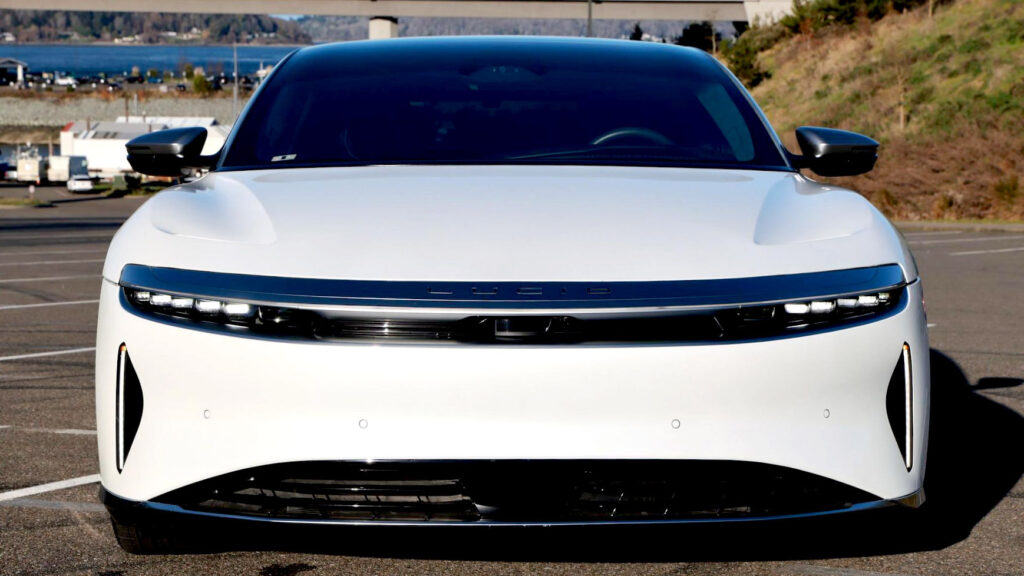
Luxury EVs have developed a nasty reputation for losing value at a frightening rate over the past few years, especially in the upper end of the market. However, you may be surprised to learn just how much this Lucid Air has depreciated since it was delivered in March of 2022.
The Air you’re looking at is the Dream Edition Performance, which was introduced as the flagship iteration of the all-electric sedan. With the exception of the almighty Sapphire, it’s the highest-powered version of the Air that’s been sold, thumping out a ridiculous 1,111 hp and 1,025 lb-ft of torque.
A look at the window sticker reveals the original owner paid $170,500 for the car. Given the performance it offers, the sleek exterior styling, and the upmarket interior, that’s not an unreasonable amount of money. But, after being driven 22,000 miles (35,000 km) over the past four years, the car’s value has plummeted, recently selling for $67,067 in Cars & Bids.
A Six Figure EV Bargain
Cars & Bids
The result is a staggering $103,433 wiped off the price. Spread across the 22,000 miles it covered, that works out to just under $5 lost for every mile driven.
For a sense of scale, that drop would cover a substantial chunk of a home in some US states. Bankrate data puts the median house price at about $282,400 in Alabama, $255,300 in Arkansas, $285,600 in Illinois, $230,600 in Iowa, $301,000 in Pennsylvania, and $249,300 in Michigan, to name a few. In other words, the money lost on this one car equals well over a third of a typical home in those places.
While it’s hard not to feel bad for the original owner, it’s nice to see a car as good as the Air becoming more accessible. The listing reveals the performance sedan has been fastidiously maintained over the past four years, and has had several parts replaced and numerous recall campaigns completed.
Cars & Bids
Off the line, the Air Dream Edition Performance can hit 60 mph (96 km/h) in just 2.5 seconds and storm down the quarter-mile in 9.9 seconds. Thanks to the sizeable 118 kWh battery pack, it can also travel up to 451 miles on a charge when equipped with the 21-inch wheels like this one.
Then there’s the cabin. While the Air may often be compared to the Tesla Model S, its interior is more luxurious and better equipped. Key features include Nappa full-grain leather upholstery, heated and ventilated front massage seats, a 34-inch infotainment and gauge cluster display, and a 21-speaker sound system. This Air also includes the Santa Monica interior trim, combining dark blue and light cream-colored leather.
Bad news for the first owner, great news for the next one. So the question is, would you buy a used Lucid Air knowing just how quickly these things depreciate?
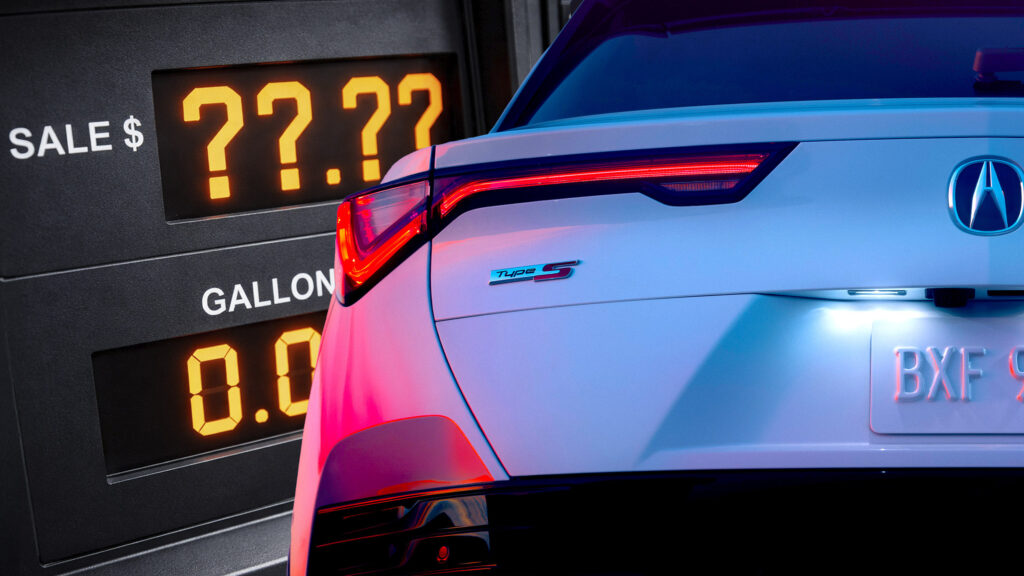
Oil prices are climbing amid Iran tensions, pushing gas higher.
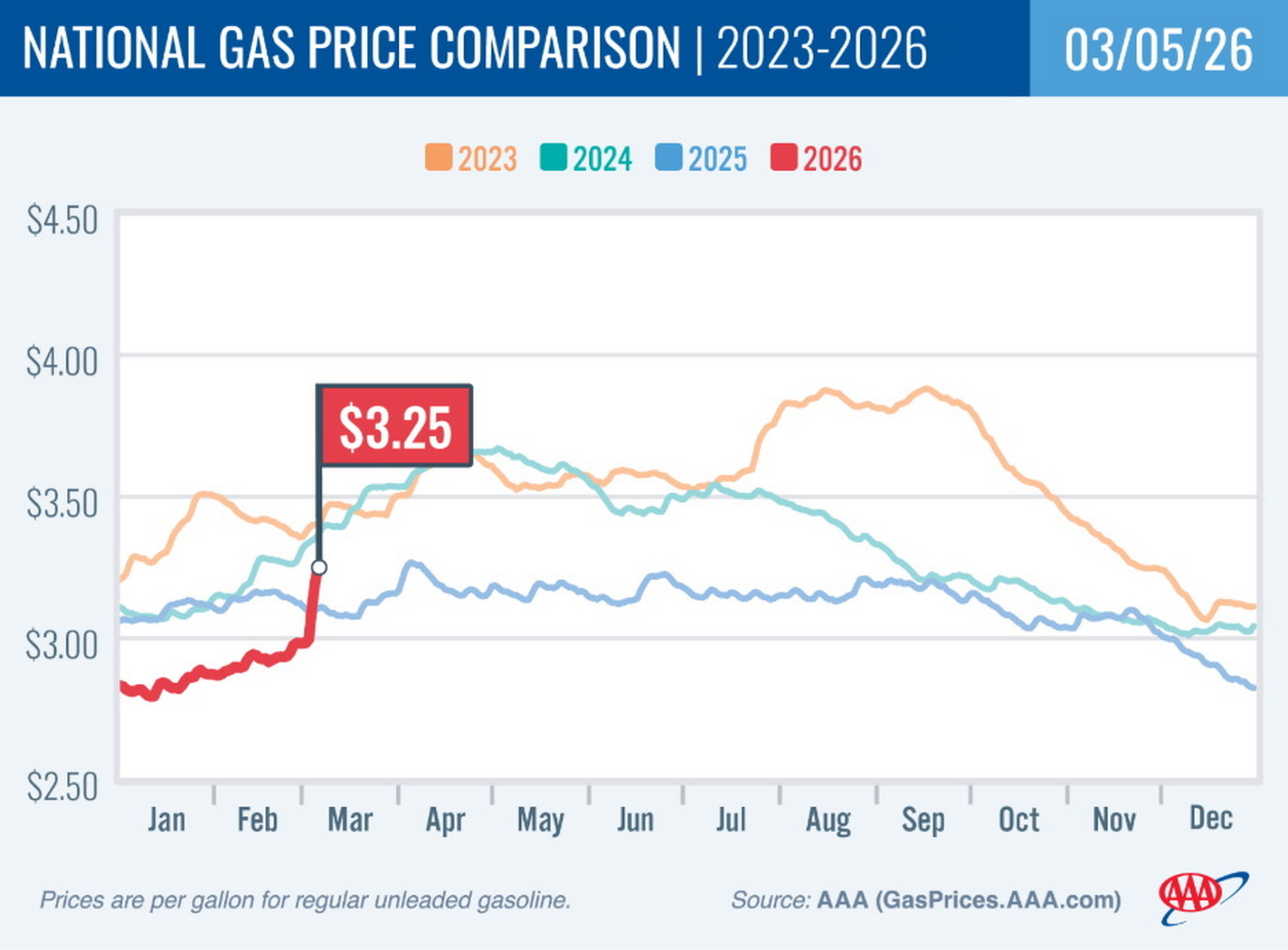
AAA says the U.S. average recently jumped to about $3.25.
Some forecasts warn gasoline prices could stay high for months.
Gas prices are already starting to climb as tensions in the Middle East push oil markets higher. The increases haven’t been dramatic yet, but depending on how the war with Iran unfolds, they could keep creeping up for quite some time. How bad would it have to get for those of you with gas cars to switch to an EV?
According to AAA, the U.S. average recently climbed to about $3.25 per gallon after a sharp weekly jump, as crude markets react to the fallout from the U.S.-Israeli conflict with Iran. And there’s a good chance this is only the beginning.
Analysts say the biggest risk is disruption to oil shipping through the Strait of Hormuz, one of the most important energy choke-points in the world. If supplies stay tight, gas prices could keep rising for weeks or even months.
Recent forecasts tied to the ongoing war suggest crude could stay elevated for a while. The U.S. Energy Information Administration expects oil to remain high enough to push U.S. gasoline prices higher in 2026, even if the conflict cools down, with average prices projected around the mid-$3 range.
In more extreme scenarios, oil staying near or above $100 per barrel for an extended period could drive inflation higher and make everyday driving significantly more expensive. In fact, Reuters reports that some big names in the banking and finance industry worry that it’ll climb to $120 a barrel. Some analysts think $150 a barrel is possible.
For reference, when oil prices hit $130 a barrel in 2022, gas prices reached about $5 per gallon. At $150 or more, we could see $6 or $7 a gallon fuel prices. That’s exactly the kind of situation where EVs suddenly start looking a lot more appealing, even to those who wouldn’t normally consider buying one.
So where do you draw the line? If fuel prices keep climbing with no sign of relief, when would you finally consider parking the gas-powered car and moving to an EV?
Sales of the Maextro S800 now exceed key German luxury rivals.
Domestic EV brands are winning buyers once loyal to foreign cars.
Porsche deliveries in China dropped 26 percent last year.
Most people outside China have probably never heard of the Maextro S800. Yet this large Chinese luxobarge has quietly begun outselling some very familiar names. In recent months, it has moved more units than the Porsche Panamera, BMW 7-Series, and Mercedes-Maybach S-Class combined in China.
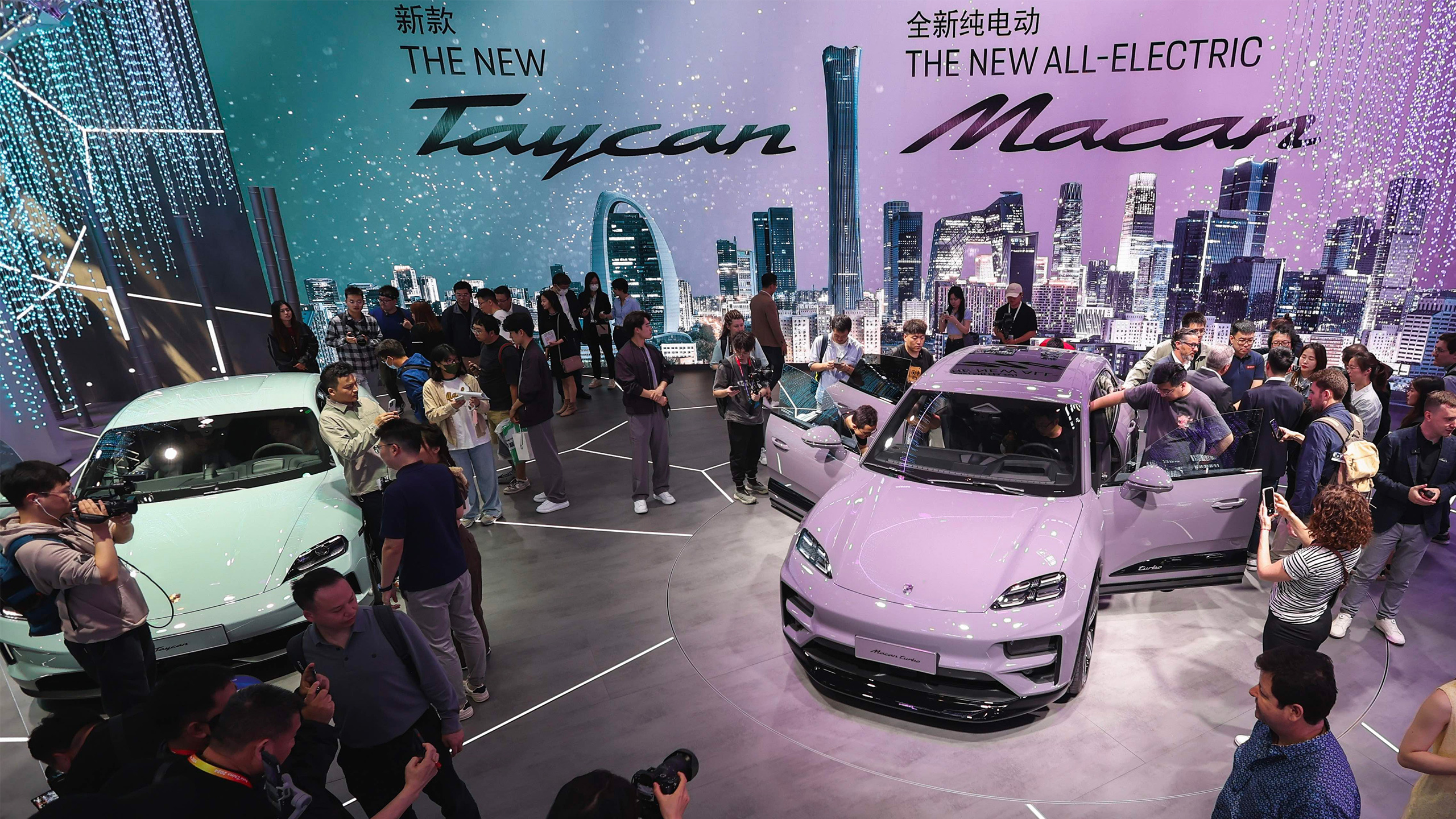
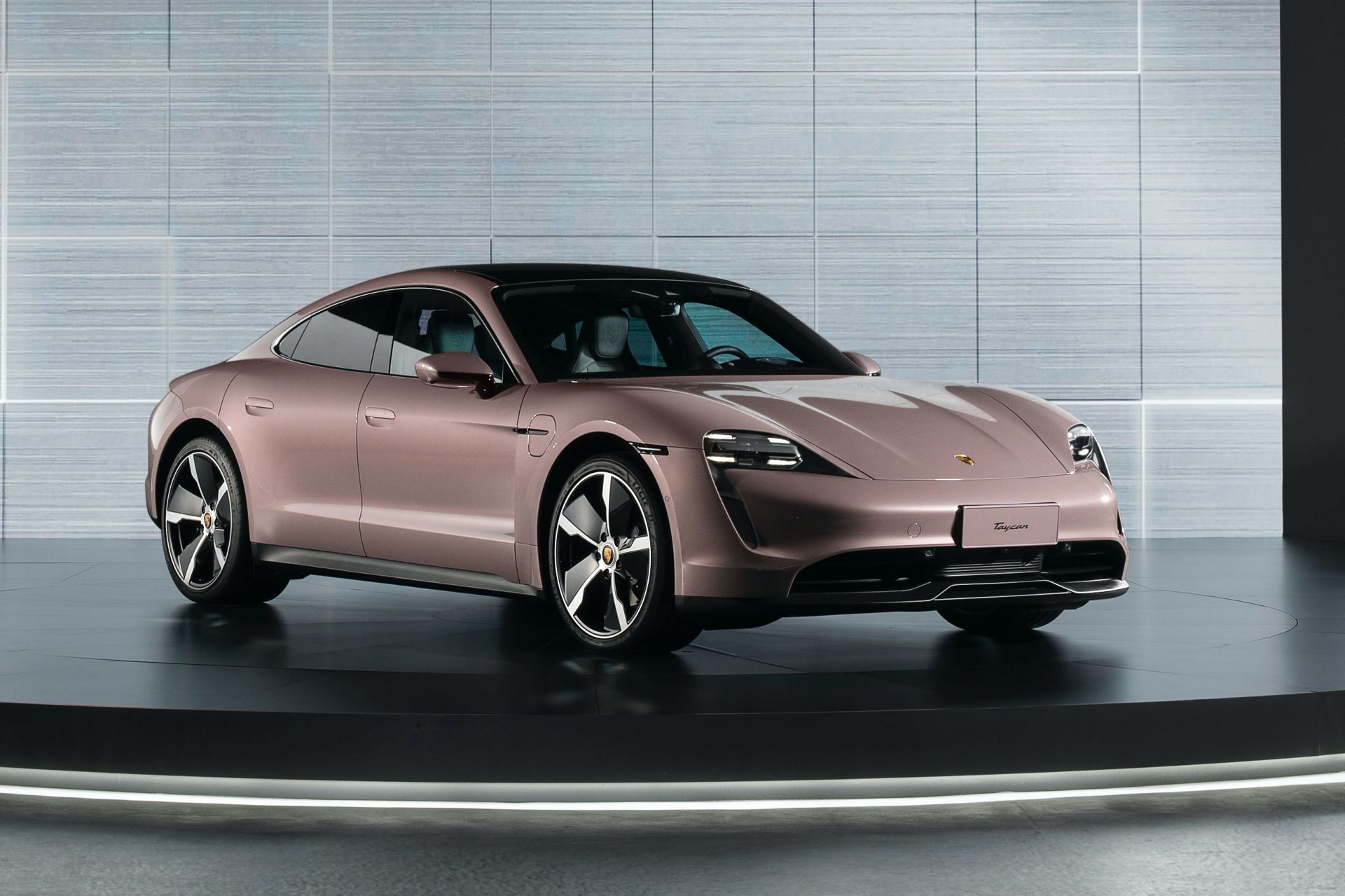
Foreign automakers are all struggling to compete with homegrown competition in the Chinese market, not least of all, Porsche. The German sports car brand is at a problematic stage, experiencing one of the biggest drops in sales, both in China, and globally.
The number of deliveries in China fell by approximately 26 percent last year, Bloomberg reports. And, for all its territories in 2025, Porsche had supplied approximately 279,449 cars to customers all around the world. That’s 10 percent below the year prior.
Chinese Demand Wanes
Maextro S800
For years, China had been Porsche’s single most important growth engine. Wealthy buyers were drawn in by the brand’s reputation for performance and status. That dynamic has shifted with the emergence of a new generation of consumers, who are more aware of the advantages of electric vehicles and the idea of electric propulsion.
Combine that with Chinese automaker’s unique grasp of how to cater to the wants and needs of the home market consumer, as well as the ability to consistently beat Western offerings on price and performance, and it’s little wonder why cars like the S800 are doing so well in a segment that was once rich with Germany’s finest.
Still, the rate at which Chinese automakers have been able to capitalize within the luxury automobile market is nothing short of alarming. Their model lines are competing head-on with long-established luxury brands throughout Europe and, in most instances, provide highly advanced digital and battery technology that buyers are seeking.
However, for consumers, local EV makers are viewed as a representation of innovation, rather than being compromised, especially when it comes to younger buyers.
Strong Local Offerings
Maextro S800
Brands like Huawei’s Maextro, Xiaomi, and BYD have gained market share in the luxury EV range. The S800, for instance, starts at the equivalent price of $103,000, which is around 40 percent cheaper than the Panamera.
Xiaomi’s SU7 EV, meanwhile, is not only quicker than the all-electric Taycan to 100 km/h (2.1 seconds vs 2.7 seconds), it has a higher top speed (350 km/h vs 270 km/h) and offers nearly double the horsepower and torque (1,548 PS / 1,770 Nm vs 884 PS / 890 Nm). And it does all that, while costing a third of the price of the Porsche.
Having expansive product offerings and high levels of domestic loyalty, such firms have started attracting clients who, not too long ago, would have only considered a car with a foreign badge as worthy.
But, in the case of Porsche, this change is a challenging fact. Prestige alone is no longer sufficient to ensure success. So much so that Bloomberg reports that Porsche is not only downsizing its dealer structure, but is also in the process of winding down its EV charging network.
Righting The Ship
Under the leadership of its new CEO, Michael Leiters, Porsche has started to re-evaluate its strategy. The company is leaning on its traditional strengths, focusing on relatively high-margin sports cars and SUVs and pushing a bit heavier on the full complexity electrification. The idea is not to compete on price with the domestic manufacturers of EVs but to shore up what makes the brand unique.
Leiters has told investors the company is looking to see margins improve, though modestly this year. These difficult times have tightened Porsche’s operations’ profit margins, and the company hopes for better cost control and a well-defined product strategy to stabilize performance. The approach is cautious optimism as opposed to quick promises of a turnaround.
China Still Remains Part Of The Plan
Even though Porsche are scaling back their presence in China, they’re not ready to throw in the towel just yet. “The needs of Chinese customers have fundamentally changed,” Porsche China President Alexander Pollich said. “We are a niche brand, a small-scale manufacturer that can hardly change the economic environment, nor reverse the overall market trend. What we can do is to truly examine ourselves and strengthen the core capabilities.”
Porsche will be launching the all-electric Cayenne in the near future and will also introduce more gasoline-powered and plug-in hybrid SUVs, with China-only models high on the agenda. To support this effort, the company is establishing an all-new development hub in Shanghai that will operate independently from Germany.
First on the agenda is designing a new infotainment system that can better match the unique demands of Chinese buyers, likely with native integration for the local apps many owners use daily, rather than relying on the global software stack developed in Germany. In a market that is evolving as quickly as China’s, that kind of local focus may prove just as important as performance or prestige.
VW will rename the updated ID.4 as the ID. Tiguan in 2027.
Design shifts closer to the familiar look of the brand’s SUVs.
Physical buttons return, replacing the much-criticized sliders.
Volkswagen’s replacement for the ID.4 is not shaping up as a clean-sheet electric SUV. Instead, the company seems set to give the existing formula a fairly thorough rethink, reworking what it already has rather than tearing it up and starting again from scratch.
And it will likely arrive wearing a badge most buyers already know. Volkswagen is preparing to pin the Tiguan name onto what will become its core compact EV, a move meant to make the brand’s electric lineup feel less like a collection of tech codes and more like the VW showroom people already recognize.
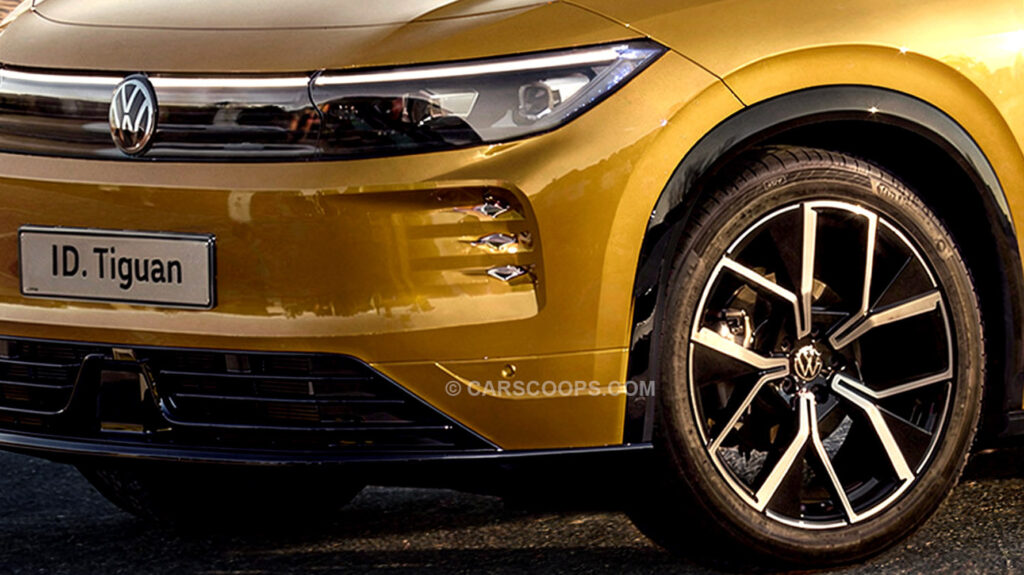
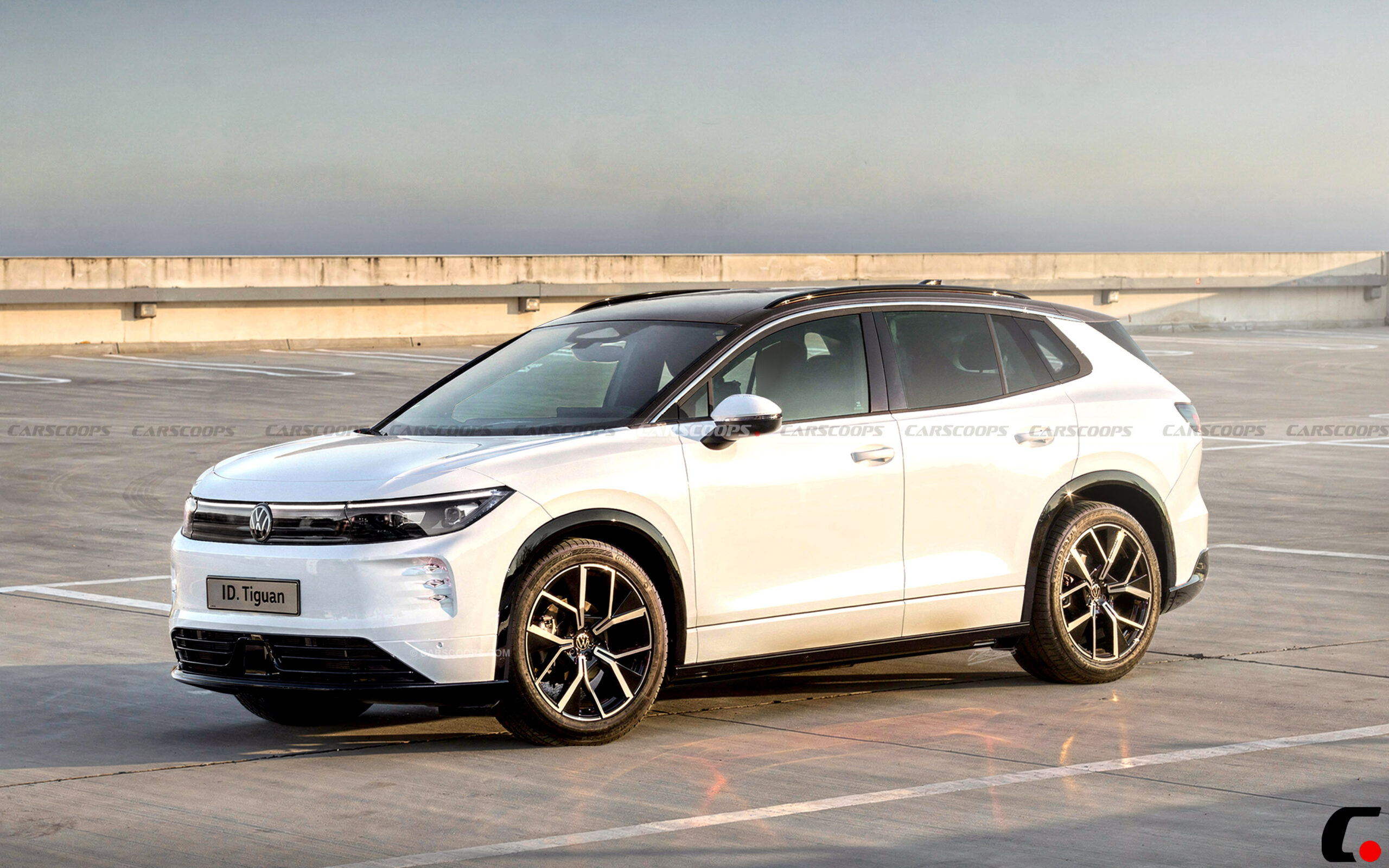
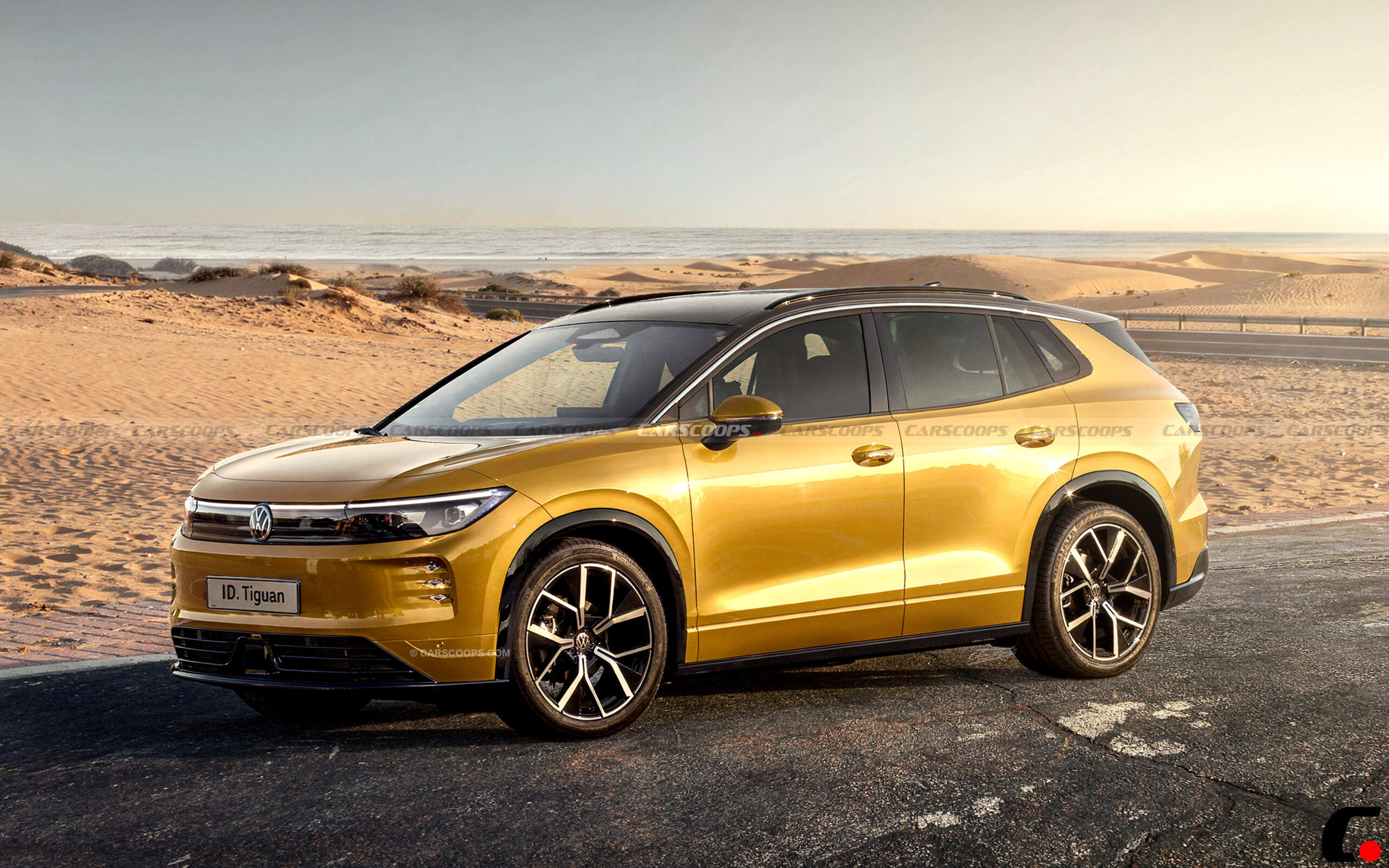
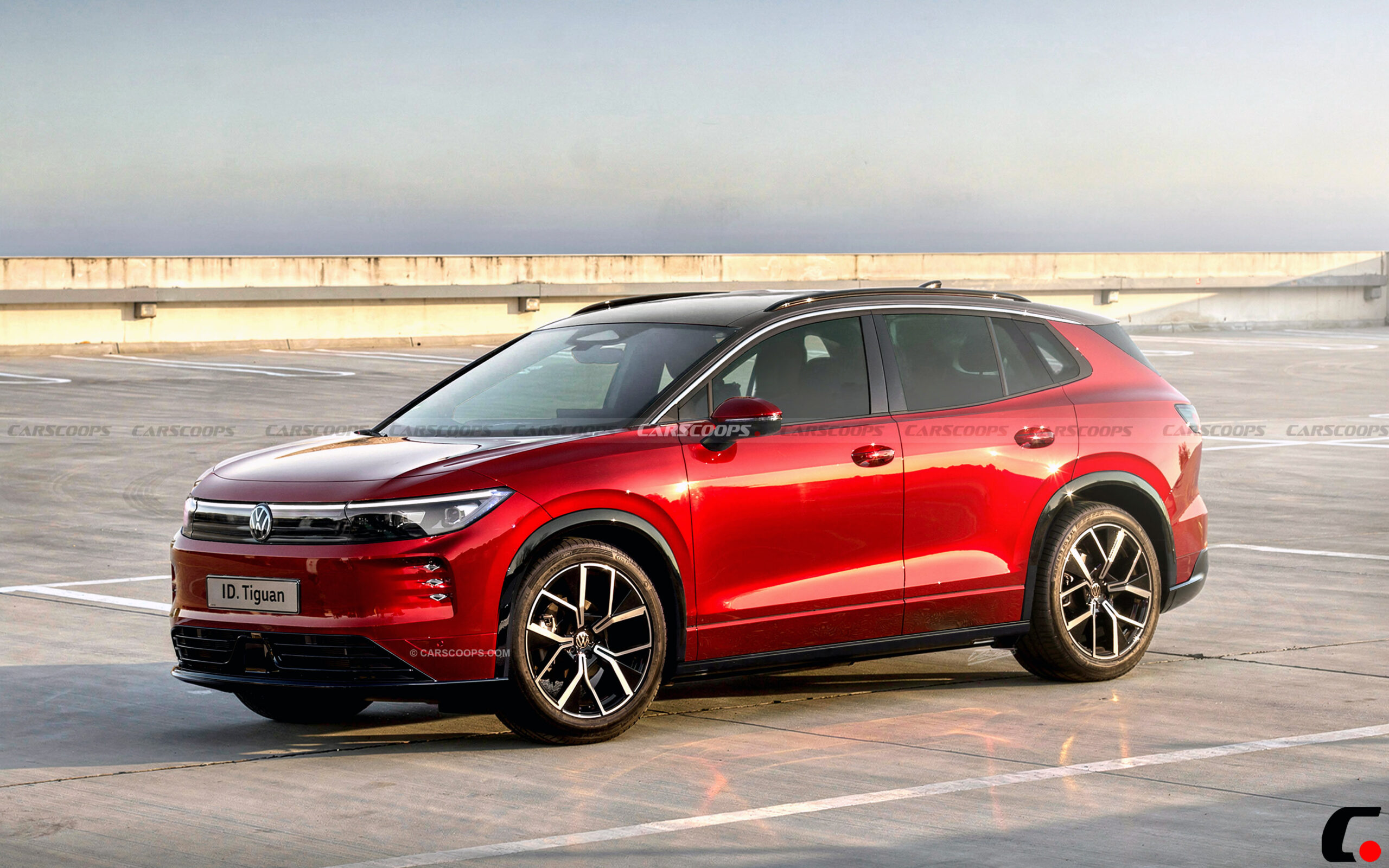
Recent prototype sightings give us a good idea of where the design is headed. Using those clues, we put together a production-style rendering and gathered everything currently known about the upcoming model.
Arguably, the electric Tiguan won’t get your pulse racing in the same way, say, Mazda’s new CX-6e will, but that’s okay. Visually, the ID. Tiguan retains the ID.4’s underlying proportions but refines them with more conventional SUV cues.
The front fascia is a squarer affair, ditching the rounded look in favor of rectangular LED headlights connected by a full-width light bar and an illuminated VW badge. A more upright bumper with subtle vertical elements exudes minimalism.
In profile, it now has a straighter shoulder line, revised window graphics, and linear lower cladding. The roofline remains largely unchanged, while the flush door handles have been replaced by a conventional ‘pull-action’ setup. Out back, a full-width taillight cluster mirrors the front, while a revised bumper and subtle roof spoiler clean up the overall look.
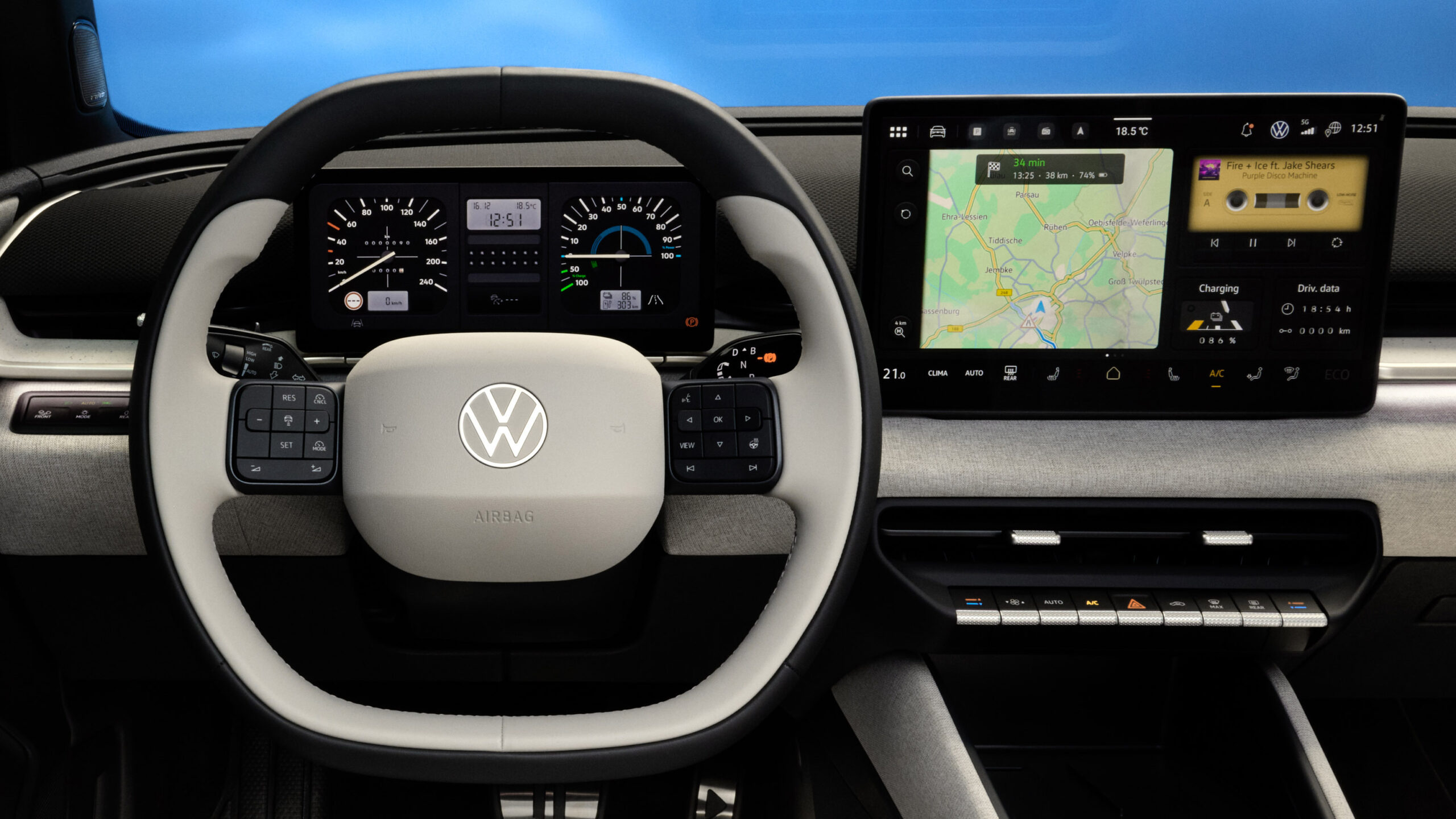
Inside, the previous and much-despised haptic feedback and slider setup from the ID.4 will be ditched. A large infotainment screen will remain, but like the new ID. Polo, it will bring back proper physical buttons for the steering wheel and HVAC controls, plus an actual volume knob.
On the tech front, it will bring AI integration with ChatGPT, conversational voice commands, and other connected services. Interior quality is also set to improve, with increased recycled materials and fabric surfaces. Occupant space will largely stay the same, offering generous rear-seat legroom and a flat floor.
Under the skin, the ID. Tiguan will continue to ride on Volkswagen Group’s MEB architecture, most likely in its updated MEB+ form. The overall battery and chassis layout should remain familiar, with MacPherson struts up front and a multi-link rear suspension. Expect recalibrated driver-assistance systems and a handful of upgraded safety features to round out the updates.
As previously reported, powertrain options are also expected to closely mirror the current lineup with minor tweaks. Base variants will continue to use a single motor on the rear axle, developing around 282 hp (210 kW). Dual-motor, all-wheel-drive versions will yield close to 335 hp (250 kW).
The 400-volt system will employ LFP batteries with roughly 77kWh to 86kWh of capacity, targeting WLTP metrics in the 311-342 mile (500–550km) range, alongside improved DC fast-charging capability.
Rivals and Reveal
When it arrives, the ID. Tiguan will find itself in very busy territory. The usual suspects are all here, including the Tesla Model Y, Ford Mustang Mach-E, Hyundai Ioniq 5, Kia EV6, Skoda Enyaq, Zeekr 7X, and Peugeot e-5008. Volkswagen is expected to reveal the model sometime in 2026, with sales likely following in 2027.
So, what do you make of the ID. Tiguan’s familiar, slightly more conventional look? Let us know your thoughts in the comments.
Global EV sales fell by 11% in Feb, and are down 8% year-to-date.
Europe surged 21%, but the biggest region, China, suffered a 26% drop.
Carmakers and suppliers are now moving into energy storage systems.
Electric cars were supposed to take over the world in a neat upward line. Instead the global EV market and new-vehicle buyers threw in a curveball and carmakers are scrambling to adapt.
Approximately 1.1 million electric vehicles were sold worldwide in February, according to new data from Benchmark Mineral Intelligence, which sounds impressive until you look closer. Sales were down 11 percent compared with the same month last year and also down 11 percent compared with January.
So yes, EV demand is still big. But it’s not as big as it was, and it differs wildly from region to region. Europe, for instance, is still booming. EV sales there are up 21 percent so far this year, helped heavily by subsidies and government incentives. Germany (up 26 percent) and France (+30 percent) are leading the charge, and Italy’s market has nearly doubled thanks to generous EU backed incentives.
Ford’s Tough Time
Meanwhile, North America is heading the opposite direction. True, February sales climbed 8 percent, but year-to-date they’re down a staggering 36 percent as demand weakens. Some automakers are feeling the pain more than others. Ford’s EV sales have reportedly dropped 70 percent so far this year.
China, still the biggest EV market, is somewhere in between. Domestic EV sales are down 26 percent since the start of the year after the country reintroduced purchase taxes and tweaked its trade in incentives. But Chinese brands are making up for that by exporting more EVs than ever. In the first two months of 2026 alone, Chinese EV exports more than doubled and topped half a million units.
EV Sales Jan-Feb 2026
YTD ’26
Change vs ’25
Global
2.2 million
-8%
China
1.1 million
-26%
Europe
0.6 million
21%
North America
0.17 million
-36%
Rest of World
0.37 million
84%
SWIPE
Benchmark Minerals
For automakers the slowdown creates a practical problem. Billions have been invested in battery factories designed to feed a huge wave of EV demand. And when that demand softens, those batteries still need a job.
That’s why more automaker and suppliers are turning toward energy storage. Large grid scale battery systems are suddenly becoming a convenient way to soak up spare production while also helping stabilize electricity networks.
VW Hooks Up
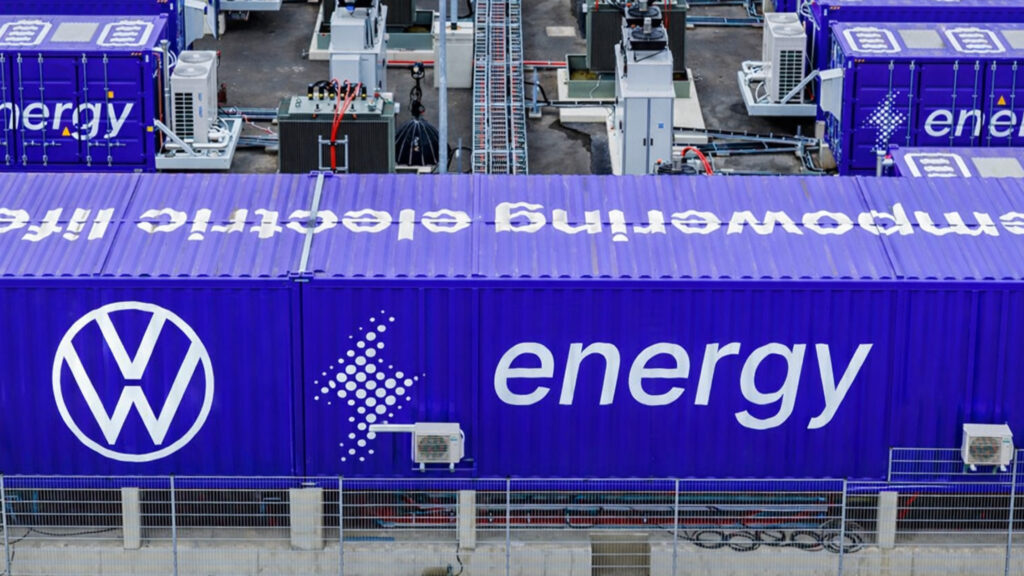
Volkswagen, for example, recently switched on its first large scale battery storage facility in Germany. In Salzgitter, the VW Group’s energy subsidiary Elli has connected a storage system to the grid with an output of approximately 20 megawatts (MW) and a storage capacity of 40 megawatt-hours (MWh).
Instead of powering cars, the batteries help store renewable electricity and release it when the grid needs extra juice. Other automakers including Tesla, BYD, GM, Ford, Renault, Mercedes and Hyundai are also either already selling energy storage systems or working on them.
Used EV sales rose 21 percent year over year in January.
Resale values fell sharply as lease returns expanded supply.
Battery durability data helps ease buyer reliability fears.
While the world continues to grapple with virtually universal rises in pump prices, could we be in for an EV renaissance? As automakers wrestle with long-term electrification strategies, another trend is gaining attention, the growing acceptance of used electric vehicles in the USA.
Yes, EVs are no longer just for first adopters. In the States, the falling resale value and a rising number of used cars in inventory are introducing normal consumers to the used EV marketplace much faster than expected. What may previously have felt like an experiment now looks like a practical solution to stubbornly high new car prices.
Used EV demand is climbing at a noticeable pace. In January alone, sales were 21 percent higher than a year earlier. Figures cited by Reuters show the trend stretching across the entire year, with used EV sales in 2025 ending up 35 percent higher than in 2024.
EV Depreciation Is Real
Price movement is a major reason. Data from Cox Automotive, gathered across major automotive marketplaces, indicates that the decline in prices for used EVs has been much sharper in the past year, narrowing the gap between them and comparable gas-powered vehicles.
The premium for used EVs over comparable gasoline vehicles narrowed to $1,376 in January from $2,591 in December. Analysts attribute that change to a glut of lease returns, deep discounts on new electric models, and federal tax credits that are evolving how shoppers crunch the numbers.
Best-Selling Used EVs In The U.S. In 2025
Vehicle
Units Sold
Tesla Model 3
72,673
Tesla Model Y
53,847
Tesla Model S
18,257
Ford Mach-E
16,355
Chevy Bolt
14,103
SWIPE
Source: Cox Automotive (Tesla totals exclude vehicles the company sold directly)
It was not only Tesla showrooms that were impacted when Tesla reduced the prices of three new models in 2023 and 2024. These reductions lowered resale in the entire electric market. When the new cars had gone cheaper, used cars were forced to be drop their prices too.
Add to that car rental firm Hertz’s large-scale sale of Teslas, and you suddenly have many more second-hand options in the used EV market.
Confidence in EV Ownership Is Improving
Affordability helps, but confidence is just as important. Data on battery performance still continues to show that modern packs are built to last well past 100,000 miles. Most manufacturers offer long battery warranties, which gives peace of mind to shoppers who fear costly repairs.
Charging access has also improved. Public fast charging stations are being added along highways and in urban areas with the help of both private companies and federal funding. With increased visibility and reliability of infrastructure, the fear of being stranded with a low battery for many drivers is a thing of the past.
AMG tuned electric C-Class prototype shows spoiler and big brakes.
New MB.EA platform brings 800V charging and up to 800 horses.
Rivals include BMW’s Neue Klasse iM3 and maybe a hot Audi RS4 EV.
Mercedes is cooking up its first fully electric C-Class and AMG clearly isn’t planning to miss out on the performance possibilities. Fresh spy shots show a hotter version of the upcoming C-Class with EQ Technology testing in disguise, and even under camouflage it looks ready to pick a fight.
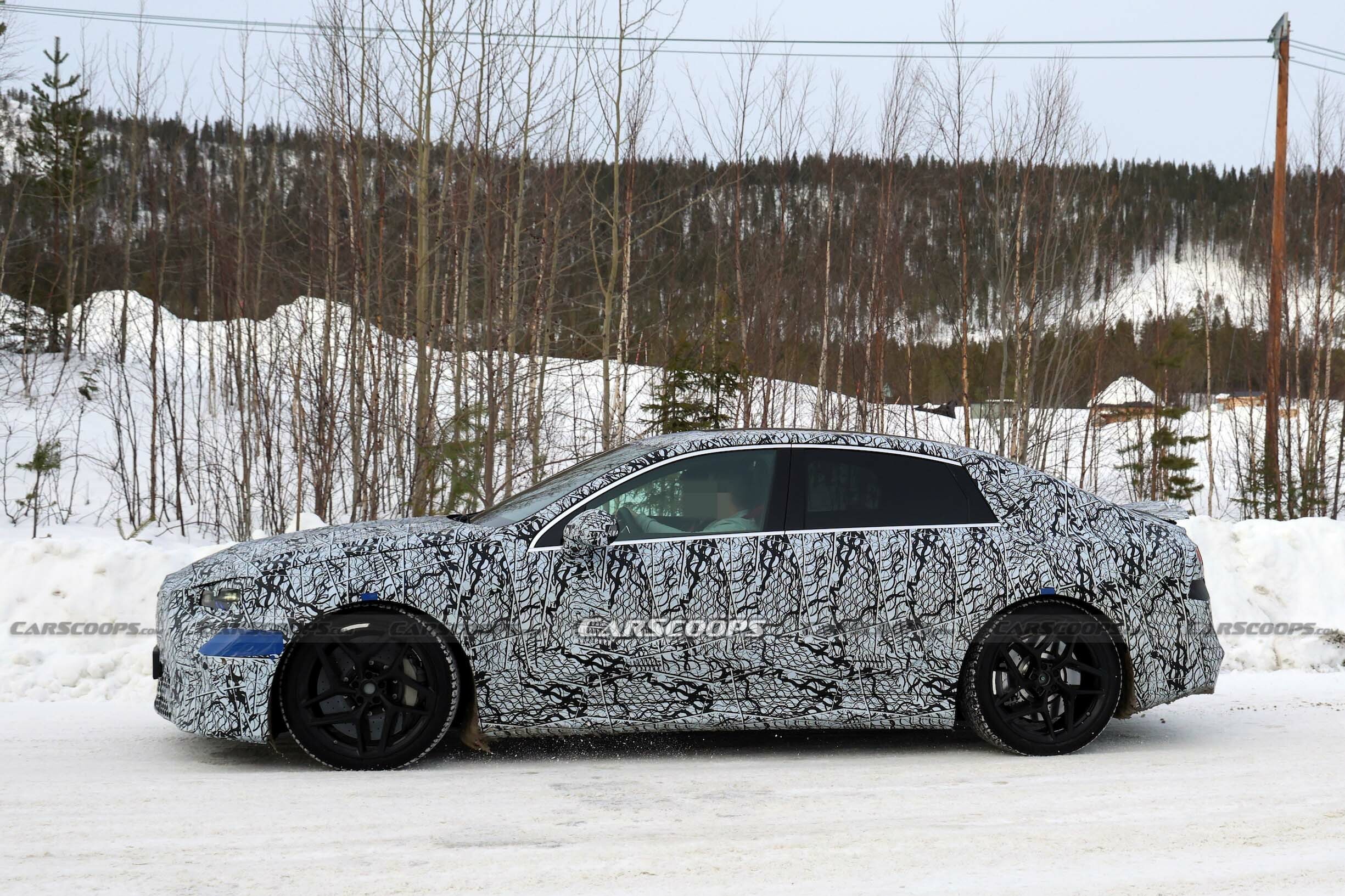
At first glance the prototype already looks different from the traditional combustion C-Class formula. Instead of the familiar three-box sedan shape, this EV shows off a sleeker fastback profile. It feels a little sportier and a little less buttoned up, if less dynamic than the new BMW i3.
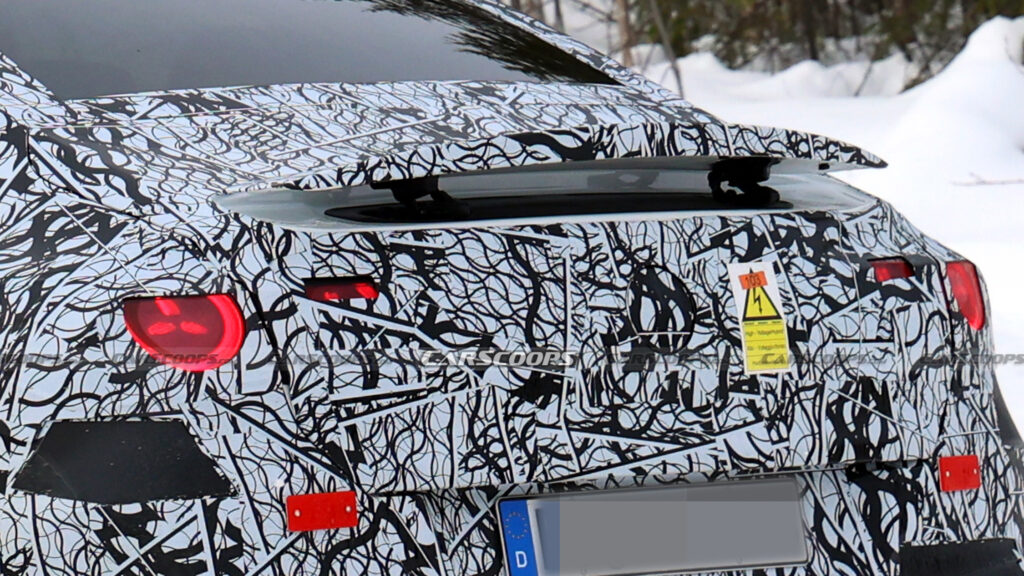
Look closer and the AMG clues start piling up. The test car rides on big forged alloy wheels that barely hide the massive drilled brake rotors behind them. There’s also a subtle but unmistakable party trick at the back. Tucked just under the rear window sits a pop up active spoiler to keep the EV tied down at high speed.
SH Proshots
Up front and out back you can also spot Mercedes’ latest star themed lighting signatures. The distinctive star-design daytime running lights are becoming a brand trademark for the next generation of EVs, and together with a huge new illuminated grille they’ll make the production C-Class instantly recognizable as a Benz even at night.
Three Motors, Up To 800 hp
Under the skin the AMG-flavored C-Class EV shares its MB.EA architecture with the recently revealed GLC with EQ Technology. That platform is designed specifically for electric models and supports an 800 volt electrical system for ultra fast charging and improved efficiency. Mercedes has confirmed the stock non-AMG models’ 94 kWh battery will offer a driving range of up to 497 miles (800 km), though the performance derivative will likely sacrifice a few miles.
In return, it’ll generate far more muscle. According to our spy photographer, the system output could reach 789 hp (800 PS / 588 kW) thanks to Mercedes’ new eATS 2.0 motor generation and a tri-motor setup.
New technology, old foes
If those numbers hold true, the electric C-Class AMG might deliver performance that embarrasses plenty of old school V8 sports sedans. Competition will be fierce, though. BMW’s upcoming Neue Klasse-based i3 will spawn its own M performance versions, and expect Audi to cook up some speedy versions of the electric A4, too.
Mercedes is expected to officially unveil the electric C-Class lineup later this year, though we’ll have to wait a few months after that to see the AMG version in full.
Tesla filed a new “Vehicle Seat System” patent with the U.S. office.
The design replaces gears with flexible hinges for motion.
Electric motors are swapped for smaller multi-axis actuators.
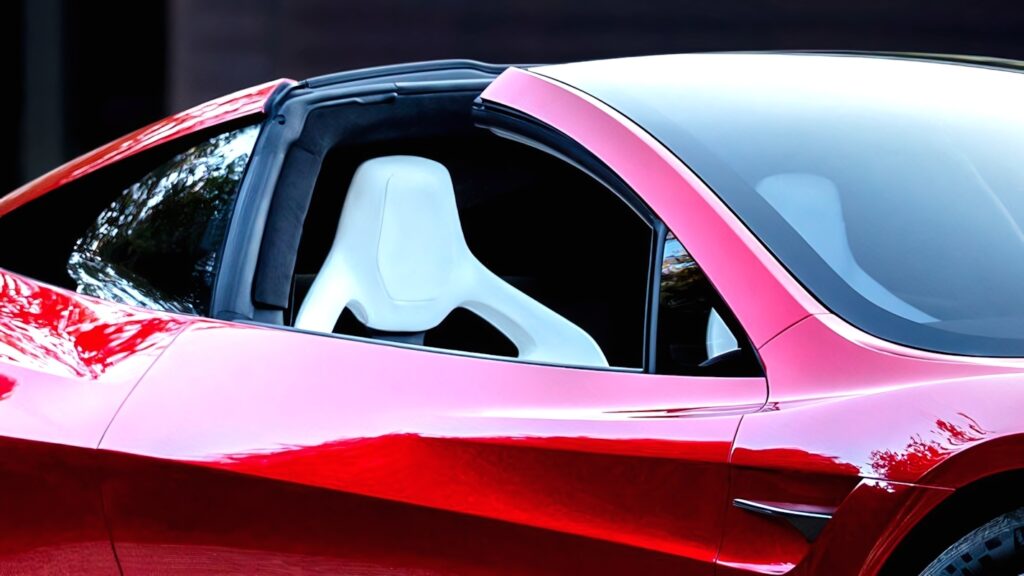
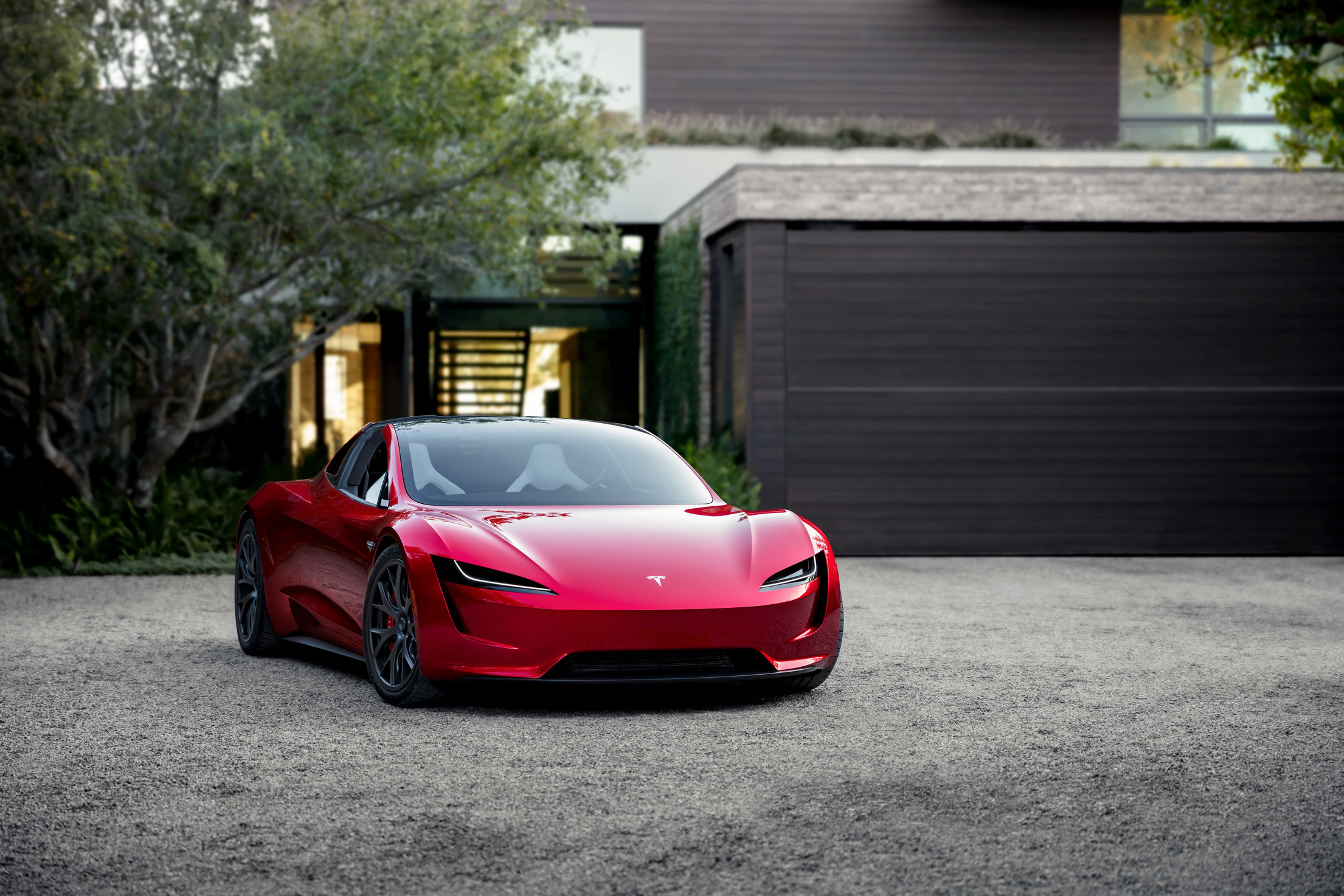
Tesla has a knack for dropping surprises at just the right time, and its latest patent has sent anticipation for the new Roadster skyrocketing. A filing published this month describes a new approach to performance seating, one that replaces the normal train of metal brackets and hinges with a single sculpted shell.
The document that was first spotted by Teslarati outlines a monolithic frame that integrates the seat base, backrest, headrest, and side supports into a single composite structure. It’s a radical departure from the multi-piece setups of most sports cars. The fact that such materials as Kevlar-nylon and carbon-nylon composites are mentioned gives us an indication of Tesla’s purpose of reducing unnecessary weight while providing the seat with more strength.
Conventional seats also depend on dozens of connected parts, each of which adds mass and introduces possible points of failure. By making the seat all in one, the engineers are hoping for a lighter build with fewer places for the wear and tear of time.
Design Built For Performance
The patent also points out the way Tesla wants these seats to behave. Rather than having metal gears recline the structure, they depend on what they call an integrated flexible hinge which means the material itself flexes where it is needed to do so. And that allows the frame to bend in certain areas, but be rigid in others, enabling designers to fine-tune the seat for support during hard acceleration or tight cornering.
Tesla isn’t stopping at the frame though. The patent substitutes for ordinary electric motors and rails with small actuators that can move the seat in various directions. With the six degrees of freedom, the system is capable of moving the seat with more precision than most luxury vehicles. It’s a degree of adjustability normally reserved for high-end performance interiors.
An Imminent Reveal?
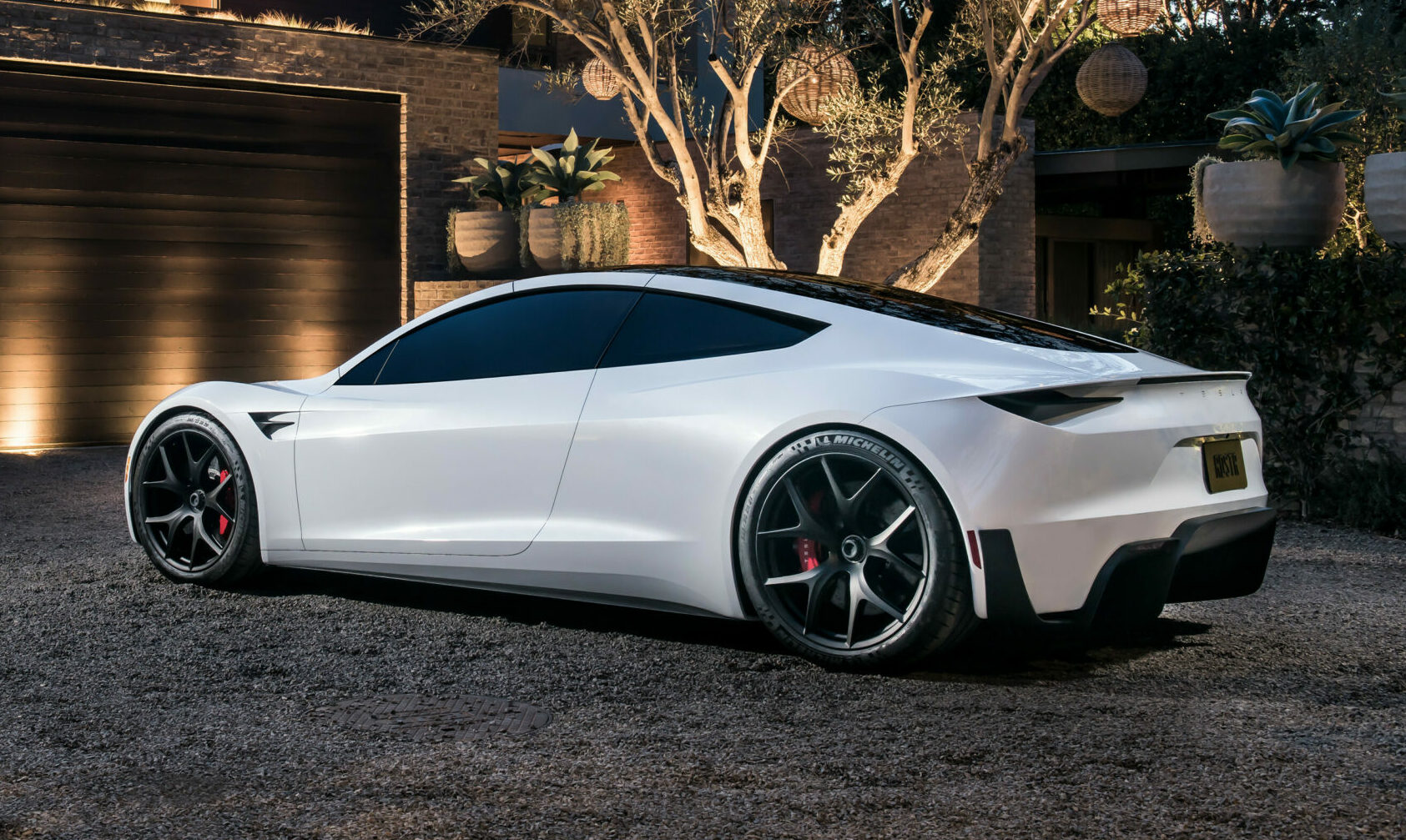
This patent comes at a time when Tesla fans also are watching closely. Elon Musk recently announced that the Roadster’s design reveal is on April 1, and it’s cause for high expectations for a car that has been stuck in the development limbo for years.
The timeline has stretched far beyond the original plan. Tesla first showed a Roadster prototype back in 2017 and initially targeted a 2020 launch. That deadline came and went. Still, recent trademark filings for updated Roadster badges suggest the company may finally be preparing to reveal the production version in full.
Weight reduction has always been one of Tesla’s tenets as an engineering company, as well as the move to large castings for structural components. A more graduated and integrated seating configuration makes a lot of sense in that strategy, especially for a vehicle that is eyeing extreme acceleration figures.
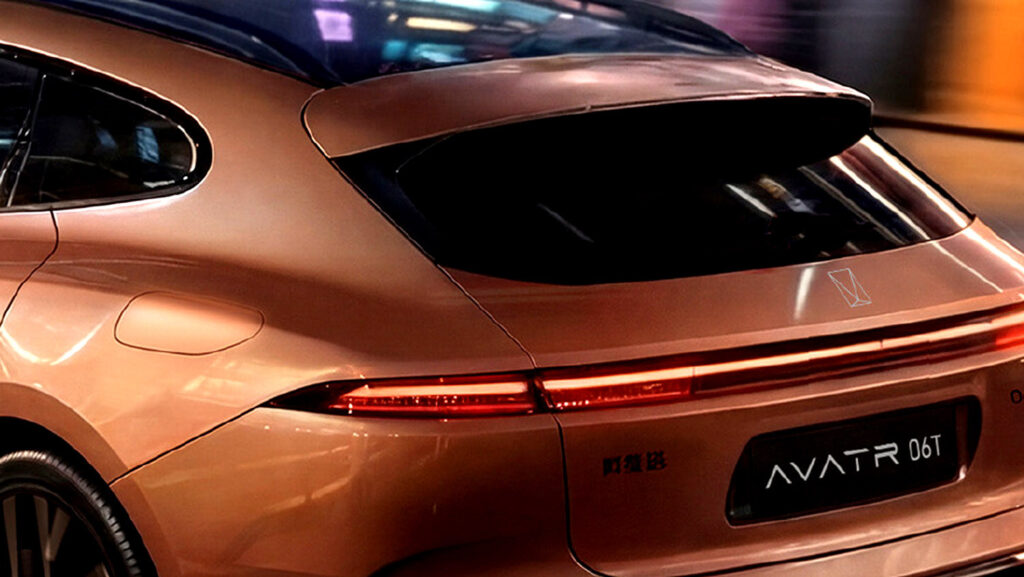
Avatr previews the 06T electric shooting brake for China market.
The wagon body looks better balanced than the sedan version.
Battery EV models offer up to 955 hp in the range topping trim.
Sleek estate cars have become somewhat of a rarity these days. Buyers keep drifting toward crossovers and SUVs, and manufacturers have largely followed the money. Traditional wagons, especially the low and sporty ones, now feel like a niche choice. China, however, still has a few brands willing to keep the format alive. Avatr is one of them.
The company has now previewed its newest addition, a wagon called the 06T. Similar in size and profile to the Zeekr 007 GT, Avatr’s new model will be sold both as a range-extender and as a fully-electric wagon. It also has a seductive Shooting Brake shape that should get many car enthusiasts excited.
Measuring 4,940 mm (194.4 inches) long, 1,960 mm (77.1 inches) wide, and 1,475 mm (58 inches) tall, the 06T rides on a 2,940 mm (115.7-inch) wheelbase and shares its underpinnings with the existing 06 sedan. The sedan’s rear design has always looked a bit awkward, but stretching the roof into a wagon shape helps smooth out the proportions and gives the overall profile a more natural look.
The Juicy Details
Pictured here in a new color known as Liujin Orange, the fully electric version uses an 89.33 kWh battery pack. Buyers will have two rear-wheel-drive EV options to choose from. The entry model uses a pair of 302 hp (225 kW) motors, while the more powerful version upgrades to two 337 hp (251 kW) units.
Sitting above these two variants in the range will be an all-wheel drive variant. In addition to having the two 337 hp motors at the rear, it also includes a 282 hp (210 kW) unit at the front, combining to produce 955 hp (712 kW). There’s no word on how quickly it’ll hit 60 mph (96 km/h), but we know all models will be capped at a 149 mph (240 km/h) top speed.
Avatr will offer the three EV variants alongside an extended-range version of the 06T. This model uses a 1.6-liter turbocharged engine producing 154 hp (115 kW), which functions solely as a generator for the battery pack. Propulsion comes from two 248 hp (185 kW) electric motors mounted at the rear axle. Battery capacity has not yet been disclosed, and there is still no information on either the combined driving range or the all-electric range.
Honda recently posted $15.7 billion in expenses for its EV U-turn.
EV registrations in the US collapsed 48 percent in December.
Ditching the $7,500 federal EV tax credit has eroded EV demand.
The new year hasn’t been kind to traditional automakers, many of which now find themselves confronting an EV reality in the U.S. that looks very different from what they had been planning in boardrooms not long ago. A mix of policy changes and cooling demand is forcing several manufacturers to rethink electrification plans that, until recently, sat at the center of their long-term strategies.
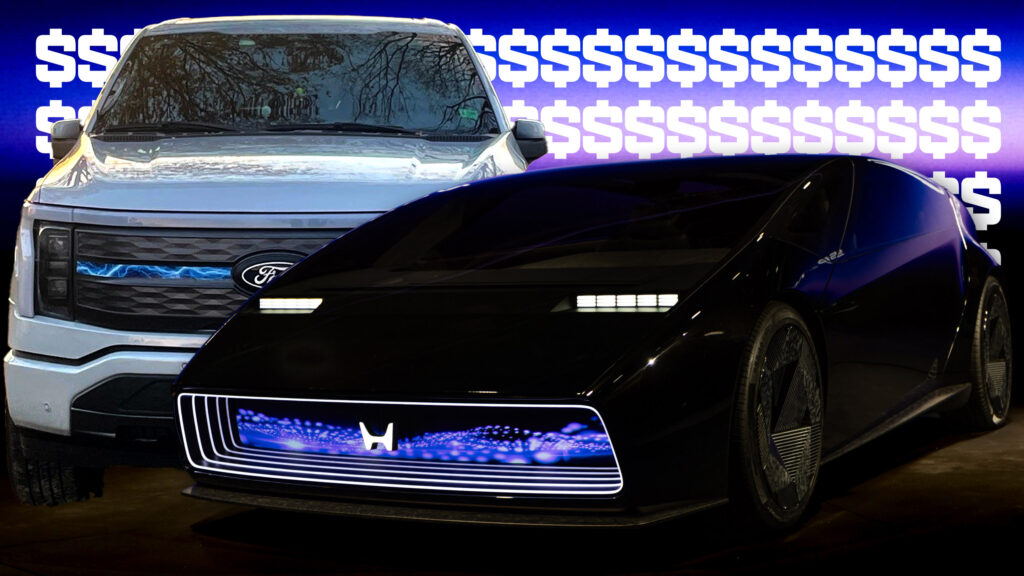
Honda is the latest to change course. The company confirmed this week that it will scrap all three electric vehicles it had planned to build in America, citing weakening demand, especially in the US market. The move places it alongside Ford, GM, and Stellantis, all of which have recently scaled back their own EV programs.
Taken together, the retreat is proving expensive. Those four automakers alone have absorbed close to $70 billion in losses tied to their EV investments, reports Auto News. And that figure doesn’t even include other manufacturers, such as Porsche, which have also begun dialing back their electrification plans.
The drop in EV demand in the US can be largely traced to decisions made by the Trump administration. New government policies not only encourage manufacturers to prioritize combustion-powered models, but the removal of the $7,500 federal EV tax credit has also further weakened demand at a time when adoption was already slowing.
In fact, EV registrations fell 48 percent in December compared to last year, dropping to just 75,427 vehicles. As a result, EV market share slipped from 9.9 percent to 5.3 percent.
The EV Graveyard
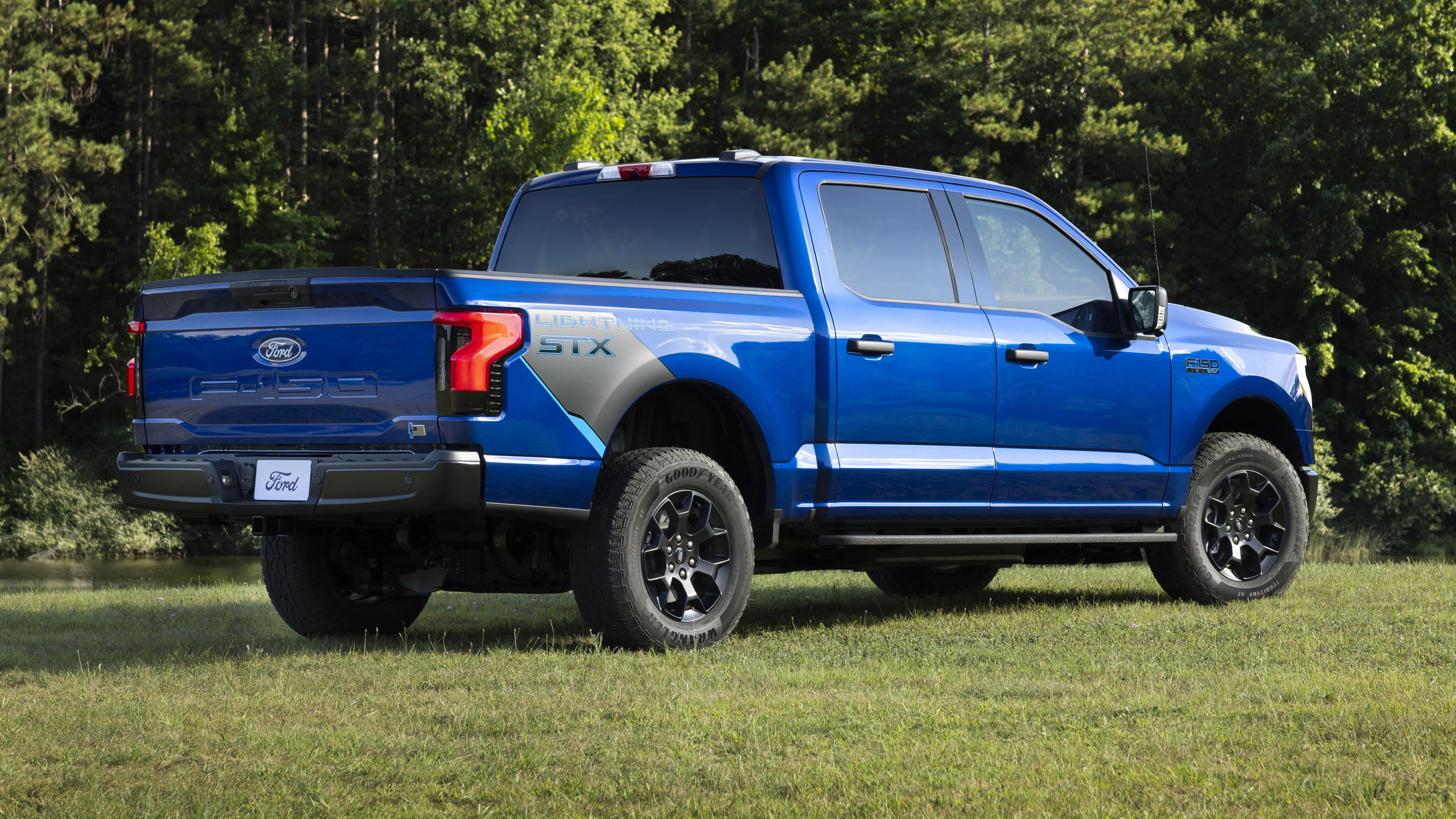
Ford has already revealed that its retreat from EVs has cost roughly $21 billion. The company scrapped plans for a three-row electric SUV and ended production of the F-150 Lightning last year after it failed to meet sales expectations.
Stellantis recently said its EV pullback will cost about $26 billion, following the cancellation of several electric models. GM has also stepped back, halting production of the Chevrolet BrightDrop electric van in Canada and repurposing a Michigan plant for gas trucks after originally planning to build EVs there.
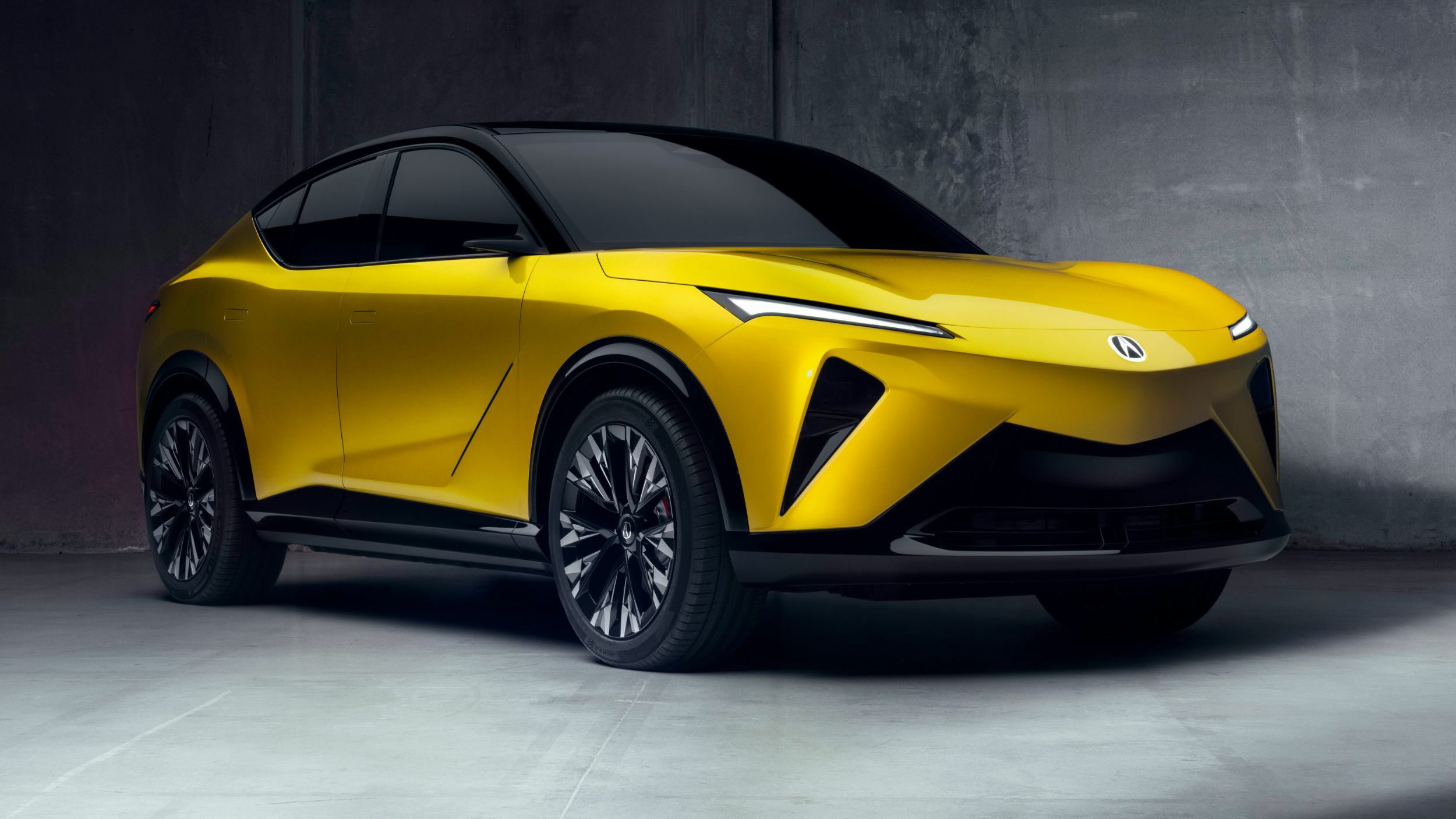
As noted by Auto News, Honda is booking 2.5 trillion yen or $15.7 billion in expenses and losses due to its EV U-turn. In addition to killing off the 0 Saloon and the 0 SUV, the car manufacturer has killed off the all-electric Acura RSX. That sleek coupe SUV was unveiled as a pre-production prototype last year and would have been the first to use Honda’s in-house global EV platform.
Honda is booking 2.5 trillion yen or $15.7 billion in expenses and losses tied to its EV U-turn. Alongside the cancellation of the 0 Saloon and the 0 SUV, the automaker has also killed the all-electric Acura RSX. The stylish coupe SUV debuted as a pre-production prototype last year and was set to become the first model built on Honda’s in-house global EV platform.
Honda may cancel Prologue after current production ends this December.
EV sales plunged after federal tax credits vanished and demand cooled.
Honda is now pivoting toward hybrids after scrapping several planned EVs.
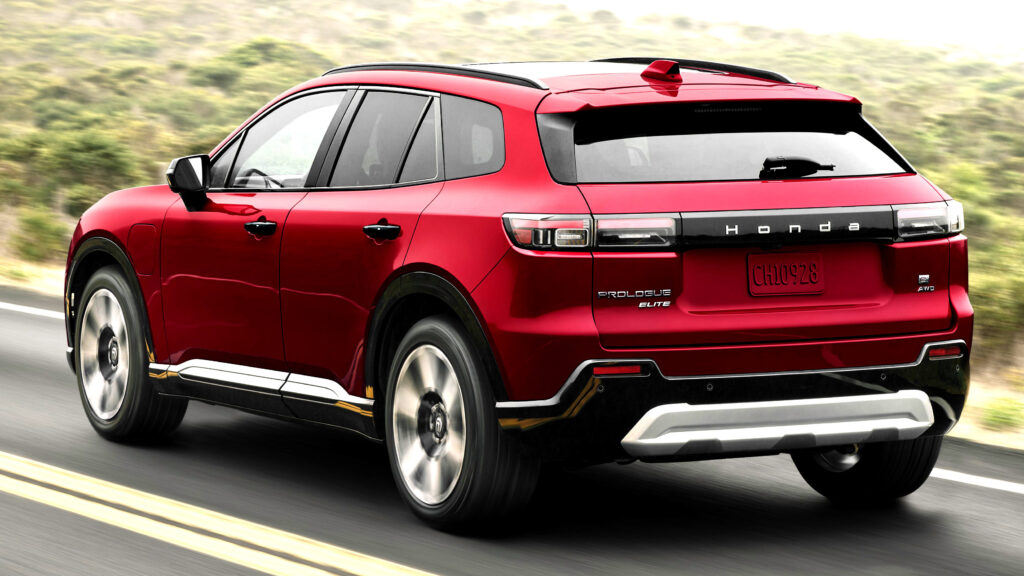
Honda’s big electric push in the United States may soon get a lot smaller, and not just because the company has scrapped three new EVs at the eleventh hour. According to a report from Auto News citing AutoForecast Solutions, Honda isn’t planning a second generation of the Prologue crossover once the current production run ends later this year. And if that happens, the brand would effectively exit the US EV market altogether.
The Prologue only launched in 2024 and initially looked like a success story. Nearly 39,000 buyers took one home in 2025, helped along by heavy incentives and a handy federal tax credit worth $7,500. Then the incentives disappeared, and so did much of the demand.
After the US government scrapped the EV tax credit, Prologue sales reportedly plunged. Deliveries in early 2026 have fallen about 74 percent compared with the same period last year, Auto News reports. Honda has already cut production roughly in half and now expects to sell fewer than 18,000 units this year.
We asked Honda about the report and it refused to confirm that the Prologue was on its way out, but didn’t categorically deny it either. “The Automotive News article is based purely on speculation,” a spokesperson told us. “The Prologue remains in our lineup.”
Regardless of whether it stays or goes, the Prologue was always a slightly unusual project anyway. It isn’t built by Honda but by General Motors at a plant in Mexico using GM’s electric platform. Honda essentially borrowed the technology as a fast way to get an EV into American showrooms while it developed its own architecture. Acura already cancelled its version of the Prologue, the ZDX, last September, after just one year of production.
Now the company appears ready to pull back even further. Earlier this week, Honda confirmed it is scrapping several future electric models planned for North America and due to be built in Ohio. Those three models shown in the gallery below are the 0 Series SUV, the futuristic 0 Series Saloon, and the upcoming Acura RSX crossover.
Suppliers Were Already Up And Running
The strategy shift could cost the automaker up to $15.8 billion in write-downs and expenses, and suppliers Auto News spoke to are also in line for some hurt. They’d already started building RSX parts and had begun hiring and training staff in readiness for the start of EV production in July.
Honda dealers, however, aren’t exactly mourning the change. Many say customers simply prefer hybrids right now and are happy to skip expensive full electric models altogether.
The Gravity Dream Edition packs 1,070 hp and 909 lb-ft.
Early resale prices show the luxury EV losing value quickly.
The base version starts under $80,000 with 560 hp.
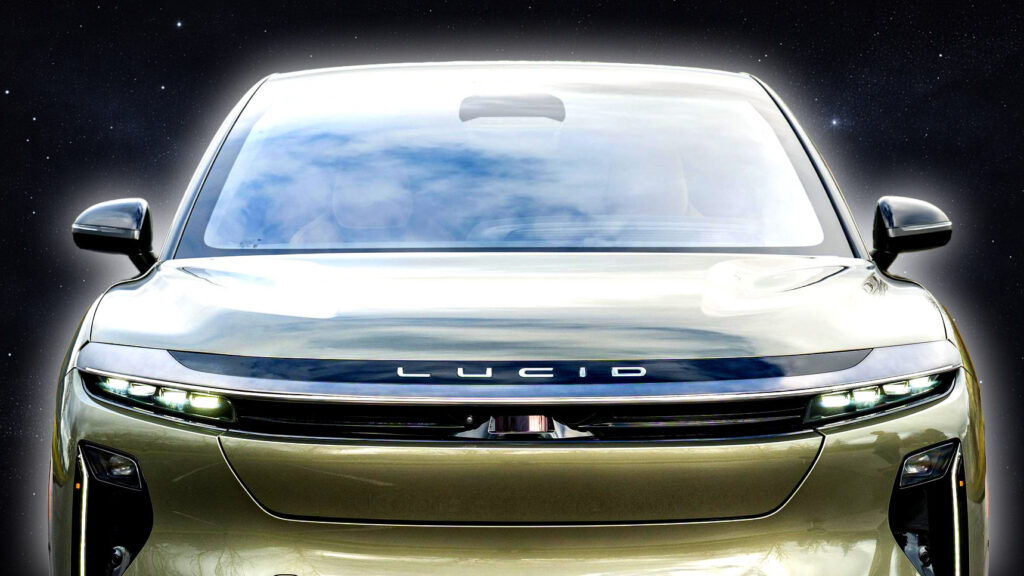
If you were among those who rushed to buy a new Lucid Gravity, you may want to look away now. Early resale results can reveal a lot about how the market values a new model. A flagship Dream Edition with just 3,500 miles (5,632 km) has sold for $96,000, nearly $46,000 below its original MSRP, offering a clear snapshot of how buyers currently price the SUV on the used market.
There’s a lot to like about the Gravity, particularly the Dream Edition model. It features a 123 kWh battery pack, four electric motors, and a combined 1,070 hp and 909 lb-ft of torque. Does anyone need an SUV with this much power? No, but being able to hit 60 mph (96 km/h) in 3.1 seconds and storm down the quarter-mile in 10.6 seconds in a luxury SUV is still pretty cool.
The Dream Edition is also equipped with all the luxury features you could ever want, including the Comfort and Convenience Package, which adds soft-close doors and power rear window shades, alongside an AR HUG, dynamic ambient lighting, and Nappa leather upholstery and seats with heated, ventilated, and massaging functions.
Cars & Bids
Perhaps the biggest downside of the Dream Edition is the cost. In the US, it has an MSRP of $141,550, including destination charges, which feels like a lot, particularly given that the entry-level Gravity Touring with 560 hp is available from just $79,900.
Sure, it has roughly half the power, but most of the same features. Additionally, the 828-hp Gravity Grand Touring starts at $94,900, and also seems like a relatively bargain compared to the Dream Edition.
As the Cars & Bids auction shows, depreciation has been significant. This particular example was registered in early December and driven just 3,500 miles, yet it lost $45,550 in value. That works out to roughly $13 lost for every mile driven.
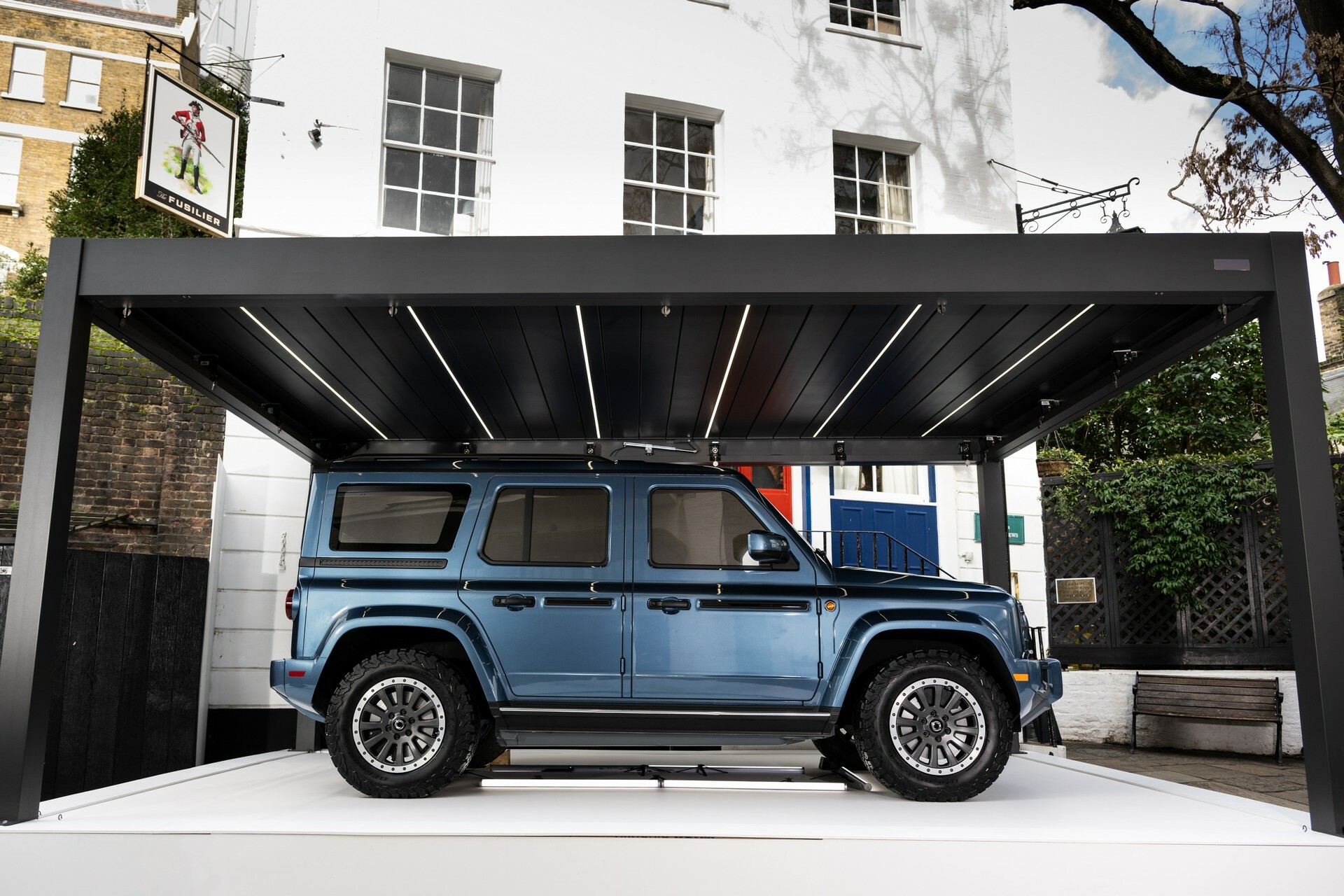
Ineos admits it rushed early plans for the Fusilier SUV.
The Fusilier will rival baby Defender and G-Class models.
The company says the new model is not years away now.
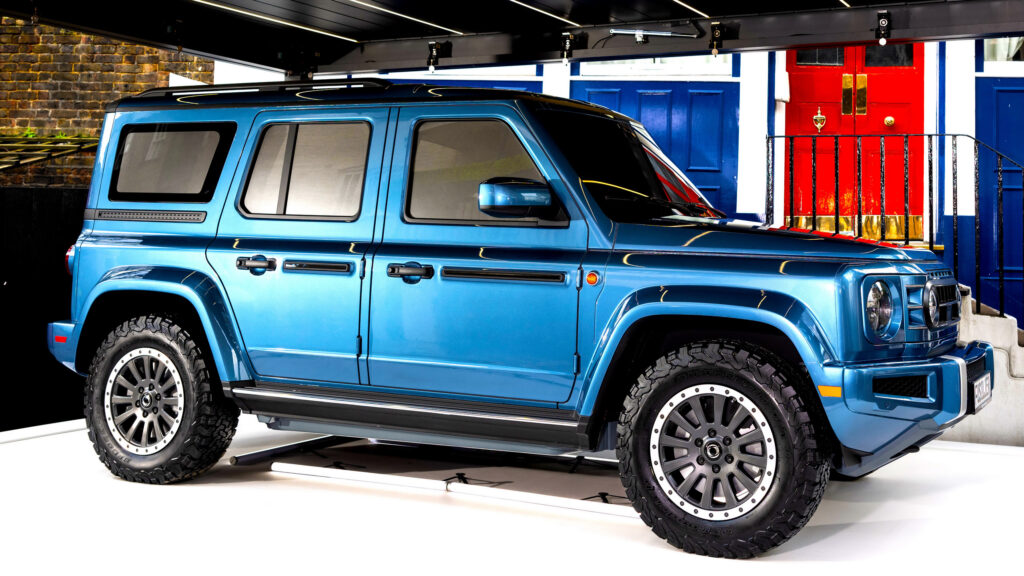
Ineos says development of the smaller Fusilier is back underway, nearly two years after the project was paused as enthusiasm for EVs began to cool. Exactly when it might appear in showrooms is still unclear, but the program itself is no longer sitting on the sidelines.
The company first pulled the wraps off the Fusilier in early 2024, outlining plans for a new bespoke skateboard platform underneath. Both a fully electric version and a range-extender variant were on the table from the start. In the bigger picture, the model is expected to become a key gateway into the Ineos lineup, positioned as a smaller, more attainable alternative to the Grenadier.
“The concept of the Fuselier – something that’s a bit smaller than the Grenadier – is still a vision that is alive and well in the company, and we’re actively pursuing what that vehicle would look like, or a vehicle like that would look like going forward,” the region director for Ineos in Australia, New Zealand, and APAC, Justin Hocevar told Car Expert. “That’s what we’ll be talking about in the not-too-distant future. In terms of announcing the timeline, I don’t think it’s years away.”
What’s Changed?
According to Hocevar, Ineos was “charging into” the Fusilier project too quickly, and had to pause it to ensure a range-extender powertrain could work with it.
“The project morphed over time, and part of the pause on that project had a lot to do with our desire to have an alternative new-energy powertrain in that vehicle – hybridization or a range-extender solution,” he said.
Hocevar stopped short of putting a firm date on the Fusilier’s arrival. Still, his suggestion that the wait is not “years away” hints that the project is moving along at a healthy pace, which should reassure anyone keeping an eye on Ineos’ next move.
Whenever it finally lands in showrooms, the compact off-roader will enter a growing niche. Mercedes-Benz is preparing a smaller G-Class and Land Rover has a baby Defender in the pipeline. Ineos appears ready to take a slightly different approach, leaning toward a more traditional, less tech-heavy interpretation of the segment.
Stellantis deepens ties with German tuner Irmscher again.
Leapmotor B10 Dynamic will be limited to just 500 units.
Lower suspension and new wheels sharpen the EV’s stance.
Stellantis has already made its position clear when it comes to competing with China’s fast-moving EV industry. Rather than trying to match those manufacturers head on, the group chose a different path, investing in Leapmotor and taking responsibility for selling the brand’s cars across Western markets.
Now it is strengthening another partnership as well. The automaker has deepened its relationship with German tuning house Irmscher, suggesting Stellantis sees more value in outside expertise than in building a dedicated in-house performance division like many rival brands have done.
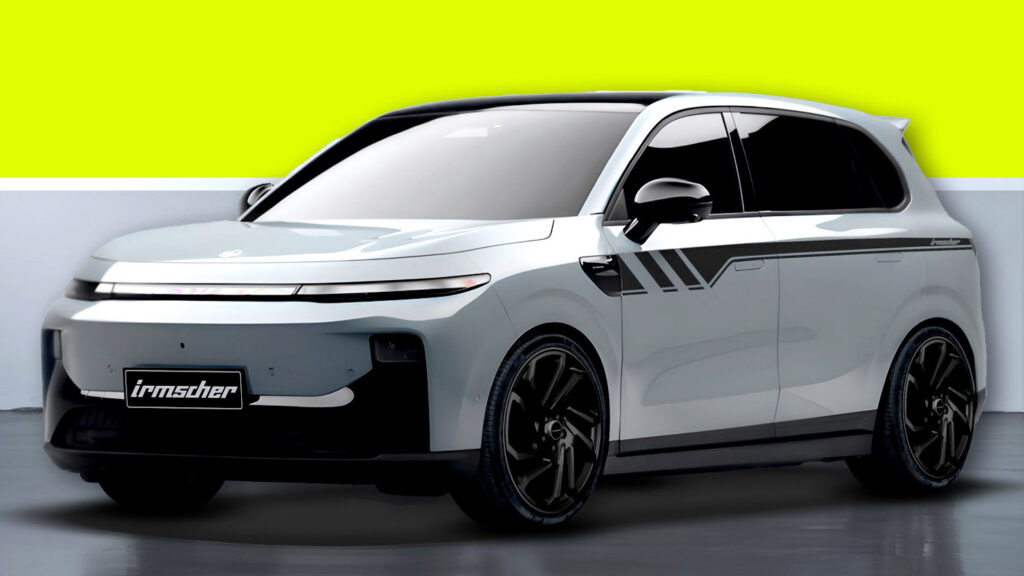
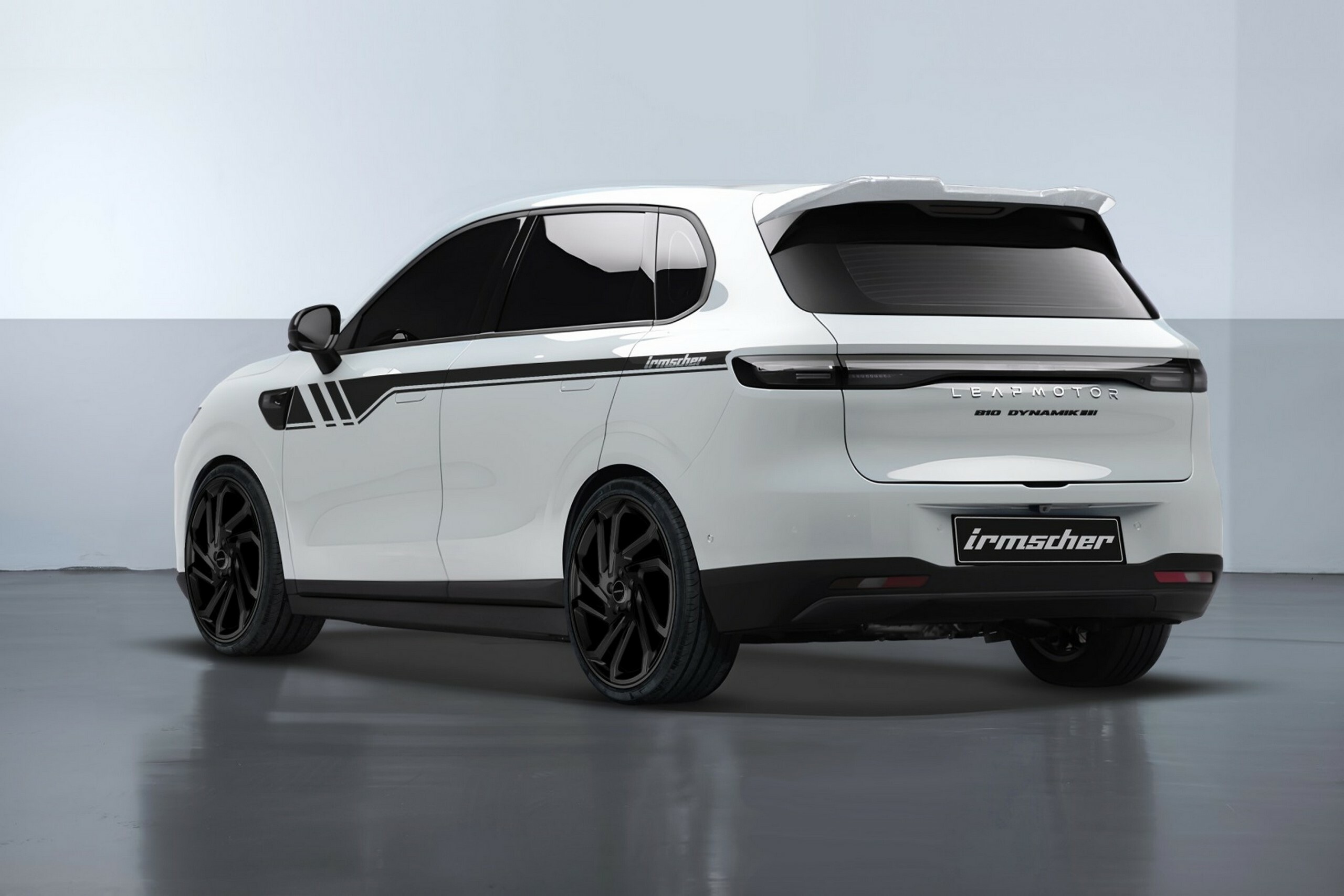
This second collaboration between Leapmotor and Irmscher is for the new B10, sitting below the slightly larger C10 in the company’s range. Known as the B10 Dynamic, the finished vehicle will be capped at just 500 units and has undergone a series of updates. Could you call it desirable? Probably not, but it does make the B10 that little more interesting.
Immediately making this B10 differ from a regular one is that it sits 1.1 inches (30 mm) lower, presumably due to the fitment of lowering springs. A new set of 19-inch wheels has then been installed, perfectly fitting within the arches. According to Imrscher, chassis changes mean the B10 offers better steering feel and reduced body movement, improving handling.
A True Tuner Special
Further adding to the sporty vibe of the B10 are black graphics positioned along the doors and running across the rear quarter panels. These graphics, combined with the black wing mirrors, the wheels, black bumpers, and black rocker panels, may look a little too wannabe-racer for some. For others, they may be just about right.
Stellantis has only released photos of the B10 Dynamic’s exterior, but says the interior has been tweaked too, now including Irmscher embroidery and decorative stitching. There’s also an aluminum plaque in the cabin, denoting each car as one of 500.
Each example being built is based on the B10 Pro Max. This version has a 67.1 kWh battery pack and a 218 hp motor driving the rear wheels. Irmscher hasn’t touched the powertrain, so those figures remain the same. As for the price? It’s a rather hefty €38,500 ($44,300).

 Login
Login