Reading view

There are new articles available, click to refresh the page.

GM’s Barra Says Biden’s Fuel Rules Nearly Parked Its Plants For Good

  • GM says strict fuel rules nearly forced it to cut gasoline models.
  • CEO claims compliance pressure could have closed GM plants.
  • Trump rollback eases targets automakers struggled to meet fully.

General Motors CEO Mary Barra recently acknowledged that federal fuel efficiency standards were set so aggressively under the Biden administration that her company would have been forced to scale back production of internal combustion engine vehicles just to stay compliant.

More: GM’s CEO Defended Tesla And Musk To Biden, But The Snub Happened Anyway

Barra shared this during a conversation at a high-profile industry conference hosted by The New York Times, where she discussed the internal pressures major automakers face under the current regulatory environment.

Timing matters, of course, as her comments came shortly after President Donald Trump confirmed that fuel efficiency standards are being rolled back, reducing the pressure on automakers to build EVs and providing them with more flexibility to manufacture and sell more combustion-powered models.

“Had to Start Shutting Down Plants”

 GM’s Barra Says Biden’s Fuel Rules Nearly Parked Its Plants For Good

Under the Biden-era rules, automakers would have been required to reach a fleet-wide fuel economy average of 50 miles per gallon by 2031. According to Bloomberg, achieving that would have meant electric vehicles making up more than half of all sales by that point.

Read: GM CEO Says EV Shift To Happen “Over Decades”

If GM couldn’t meet those benchmarks, and if the administration didn’t revise the rules to reflect market realities, Barra claims that the company would have had little choice but to curtail sales of its gasoline-powered lineup.

She added that internal forecasts indicated the company would have “had to start shutting down plants” if its EV sales didn’t grow quickly enough.

Barra also touched on several other topics with Andrew Ross Sorkin, the interviewer and the founder and editor at large of DealBook. At one point, he asked her about GM flip-flopping in supporting policies during the first Trump administration, again when Joe Biden was elected, and once more after Trump returned to the White House in January.

Bending The Knee Or Business As Usual?

Barra responded by framing GM’s approach as pragmatic, not political. The company, she said, wants to build vehicles people want to buy, and it simply has to work within the regulatory frameworks set by whoever is in office.

Also: Ford’s CEO Applauds Trump’s CAFE Rollback, Says They Were Forced Into EVs

Now, thanks to the rollback of CAFE standards, it will have the freedom to better manufacturer vehicles based on what their customers want, rather than simply what they must build to meet regulatory requirements.

How this will impact the American car industry remains to be seen, but if those rules remain in place in the future, we don’t expect to see EVs accounting for a significant share of the market any time soon.

 GM’s Barra Says Biden’s Fuel Rules Nearly Parked Its Plants For Good

GM’s CEO Defended Tesla And Musk To Biden, But The Snub Happened Anyway

  • Biden excluded Tesla from the 2021 White House EV summit.
  • GM was wrongly credited for leading the EV transformation.
  • Mary Barra privately told Biden Tesla deserved more credit.

In 2021, a high-profile EV summit at the White House brought together some of the biggest names in the auto industry. Hosted by then-President Joe Biden, the event was pitched as a landmark moment for the nation’s transition to electric vehicles. Executives from GM, Ford, and Stellantis were all present.

But conspicuously absent? Elon Musk, or anyone from Tesla, for that matter. That absence didn’t go unnoticed, especially when Biden publicly credited GM with leading the EV revolution.

Read: GM’s Mary Barra Promises Cleaner Engines, But Looser Rules Fuel More Gas Guzzlers

As history has shown, Musk likes to hold a grudge. And while it may have seemed like a fleeting political oversight at the time, the snub may have had consequences that extended far beyond the Beltway.

What Was Behind the Snub?

Little has been said publicly about the summit in the years since, but during an interview at the 2025 New York Times DealBook Summit, GM president Mary Barra shed new light on what happened behind the scenes. According to Barra, she spoke privately with President Biden at the event to redirect some of the praise being sent her way.

“He was crediting me and I said, ‘Actually, I think a lot of that credit goes to Elon and Tesla,’” Barra told the audience. “You know me, Andrew. I don’t want to take credit for things.”

The snub was thought to have been done in part to throw the White House’s support behind the United Auto Workers and GM, Ford, and Stellantis, all of which have unionized labor. Tesla, on the other hand, doesn’t. Musk has been openly critical of labor unions for years, a stance that’s often put him at odds with Democratic policymakers.

The Fallout That Followed

The story didn’t end there. As reported by the Business Insider, in her recent memoir, then-Vice President Kamala Harris acknowledged that leaving Musk off the invite list was, in hindsight, a misstep.

“If you are convening the nation’s manufacturers of electric vehicles and the biggest player in the field is not there, it simply doesn’t make sense,” she wrote. “Musk never forgave it.”

Speaking in a separate interview, Harris reflected further: “So, I thought that was a mistake, and I don’t know Elon Musk, but I have to assume that that was something that hit him hard and had an impact on his perspective,” she said, according to Fox News.

 GM’s CEO Defended Tesla And Musk To Biden, But The Snub Happened Anyway

It’s hard to quantify exactly how much the snub shaped Musk’s political outlook, but for years, the Tesla CEO had aligned himself with Democratic candidates, casting votes for figures like Barack Obama and Hillary Clinton.

But around 2022, Musk’s political leanings began shifting to the right, and he would go on to play a significant role in helping elect Donald Trump to a second term. Whether things might have turned out differently if Biden had acknowledged him is anyone’s guess.

Let’s not forget the White House giving Tesla the cold shoulder, excluding us from the EV summit and crediting GM with “leading the electric car revolution” in the same quarter that they delivered 26 electric cars (not a typo) and Tesla delivered 300 thousand.

— Elon Musk (@elonmusk) December 24, 2023

Trump Just Made It Clear Who’s Paying For Detroit’s EV Investments

  • Trump refuses to repay automakers for EV-related spending.
  • Rollback removes key EV incentives from future planning.
  • Ford and GM support looser fuel economy requirements.

The Trump administration is rolling back fuel-economy standards in the United States, encouraging car manufacturers to build more combustion-powered vehicles and reducing their impetus to build EVs. It’s a move that’s been a long time coming.

While companies like Ford, Stellantis, and GM have thrown their support behind the new “common sense” rules, they shouldn’t expect any handouts from the government to offset the billions they invested in EVs under Biden-era regulations.

Read: Trump Admin Pushes Fuel Economy Shakeup And The Impact Could Be Huge

During the recent CAFE standards announcement at the White House, a reporter from the Detroit Free Press asked President Trump whether automakers deserved compensation for those investments, given that they were made under policies assuming continued federal support for EV sales.

“No, I’m not doing it,” President Trump quickly replied, triggering laughter among those standing behind the Resolute Desk. “Nope, no, I’m not letting them recoup, they’re going to do just fine. You know how they recoup? From this point forward they’ll do very well.”

During the same presentation, the President suggested that thanks to his controversial tariffs, Stellantis, Ford, and GM are all coming back to the United States.

“The people that are up here from Stellantis and Ford and General Motors, great companies … they wouldn’t be here today if we didn’t have tariffs,” Trump claimed.

“They’d be building their plants in Mexico and other places. They’re leaving Mexico and they’re leaving Canada. They’re leaving because they ripped off our country, they took our businesses away from us. And now because of tariffs they’re all coming back, so it’s a great thing,” the president added.

Ford CEO Thrilled With Changes

According to Ford chief executive Jim Farley, previous CAFE standards “was totally out of touch with market reality,” claiming that “we were forced to sell EVs and other vehicles.”

More: Ford’s CEO Applauds Trump’s CAFE Rollback, Says They Were Forced Into EVs

He noted that Ford wants to give customers the freedom to choose, noting “we have a lot of EVs and a lot of hybrids at Ford, but now customers get a chance to choose what they want, not by what we force on them.”

Farley added that the rollback will allow it to “offer more affordability on our popular models, and we’ll be able to launch new vehicles built in America that are more affordable because of this rule change.”

 Trump Just Made It Clear Who’s Paying For Detroit’s EV Investments

Source: Detroit Free Press

Rivian Van Owners Are Learning A Small Habit Can Lead To A Big Problem

  • The recall covers nearly 35k EDVs from 2021 to 2025 in the US.
  • Drivers can inadvertently damage the seat-belt pretensioner.
  • Rivian first sold the van to Amazon but now offers it to others.

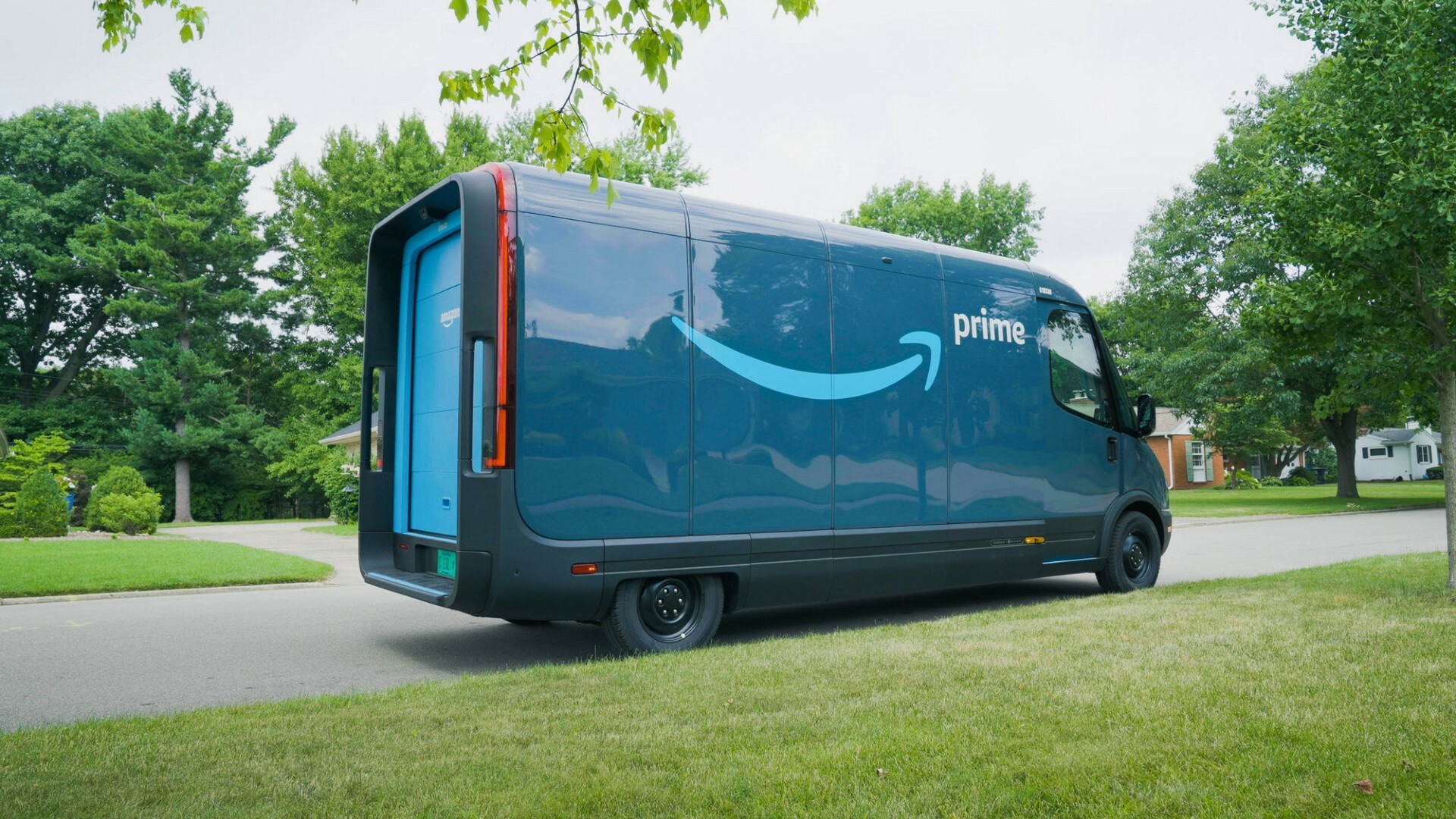
Two months after the NHTSA opened an investigation into thousands of Rivian’s all-electric delivery vans, the carmaker has announced a recall impacting almost 35,000 units.

Rivian says that on certain examples of the EDV, the driver’s side seat belt pretensioner could be damaged from repeated misuse. It notes that misuse could include the driver sitting on the seat belt while it’s buckled underneath them.

If the pretensioner cable is damaged, it may not adequately restrain the occupant in a crash, increasing the risk of injury.

Read: Rivian Recalls Thousands Of Cars For A BMW Feature No One Asked For

While Rivian notes that “a damaged pretensioner may be visibly detectable to the driver in some cases”, it presumably won’t be noticeable in others. Even so, the carmaker says it is not aware of any accidents or injuries related to the issue.

The initial probe, launched by the NHTSA’s Office of Defects Investigation, involved 17,198 examples of the 2022 and 2023 model year Rivian EDVs. However, the recall also impacts 2024 and 2025 models. All of them were manufactured between December 10, 2021, and November 8, 2025, and a total of 34,824 units are affected.

 Rivian Van Owners Are Learning A Small Habit Can Lead To A Big Problem

According to Rivian, it has already released an over-the-air update that enables automatic detection of driver seat belt misuse and has committed to inspecting and, if necessary, replacing the driver’s seat belt pretensioner assembly at no cost. It will also reimburse any owners who have paid out of pocket to fix the issue.

Rivian initially developed the EDV exclusively for Amazon, with the retailer placing an order for 100,000 examples, all of which are scheduled to be delivered by 2030. However, it’s now also available to other companies and sold as the ECV, or electric commercial van.

\\\\\\

The Lexus LFA Returns, But You’re Not Going To Like What They Did

  • LFA Concept shares its aluminum chassis with Toyota’s new GR GT.
  • The concept skips Toyota’s twin turbo V8, even though it could fit.
  • Styling evolves the earlier Sport Concept with clear refinements.

This is the Lexus LFA Concept, and it’s quite unlike the V10-powered weapon that preceded it. For years, enthusiasts assumed the next LFA would be little more than a Lexus-badged take on Toyota’s new GR GT. Instead, what’s emerged is something very different. It’s electric. Yes, really.

The concept made its debut in Japan this evening alongside the twin-turbo V8 Toyota and was first teased months ago under the name Lexus Sport Concept. That early study has now morphed into the more production-ready LFA Concept, carrying a fully electric powertrain.

Read: Toyota’s GR GT Drops With TT V8 Hybrid And At Least 641 HP

According to Lexus, the ‘LFA’ name is “not bound to vehicles powered by internal combustion engines,” but instead symbolizes a vehicle that “embodies the technologies that engineers of its time should preserve and pass on to the next generation.”

Toyota Underpinnings

\\\\\\\

While Toyota has already shared a trove of details about its new halo performance car, Lexus is staying quiet on the finer points of its electric sibling. The company has yet to release any figures for the LFA Concept’s powertrain, leaving its performance potential open to speculation.

Whatever its output, it’s safe to say no amount of kilowatts will replicate the unmistakable howl of the original LFA’s V10, or even the sound of the Toyota’s new V8.

Interestingly, the LFA Concept is based on the same all-aluminum platform as the Toyota GR GT and GR GT3. That presumably means Lexus had the option of using the same V8 as its parent company, but opted against it.

\\\\\\\\

While the choice of powertrain seems odd, particularly given poor demand for high-performance electric sports and super cars, there’s no denying the LFA Concept looks beautiful, which isn’t a word we’d use for the Toyota. The interior is also wildly different than the Toyota, although this isn’t a surprise given the LFA is still a concept.

When Will it Launch?

\\\\\\\\\

What does the future hold for the LFA Concept? We know it’s headed for production, and the renaming of the Sport Concept to the LFA Concept suggests it will indeed be sold as the second-generation Lexus LFA.

When it will reach public roads remains uncertain, but if we had to place a bet, it’s likely to arrive around the same time, or perhaps a little later, than the Toyota GR GT, which is expected in 2027.

\\\\\\\\\\\\\\\\\\\\\\

Mercedes Says Its New EV Tech Might Make Rear Brakes Pointless

  • New Mercedes-AMG EVs will use advanced axial flux electric motors.
  • Engineers say rear brakes may shrink dramatically or even disappear.
  • New in-wheel motor pairs with a compact 15 kg dual inverter unit.

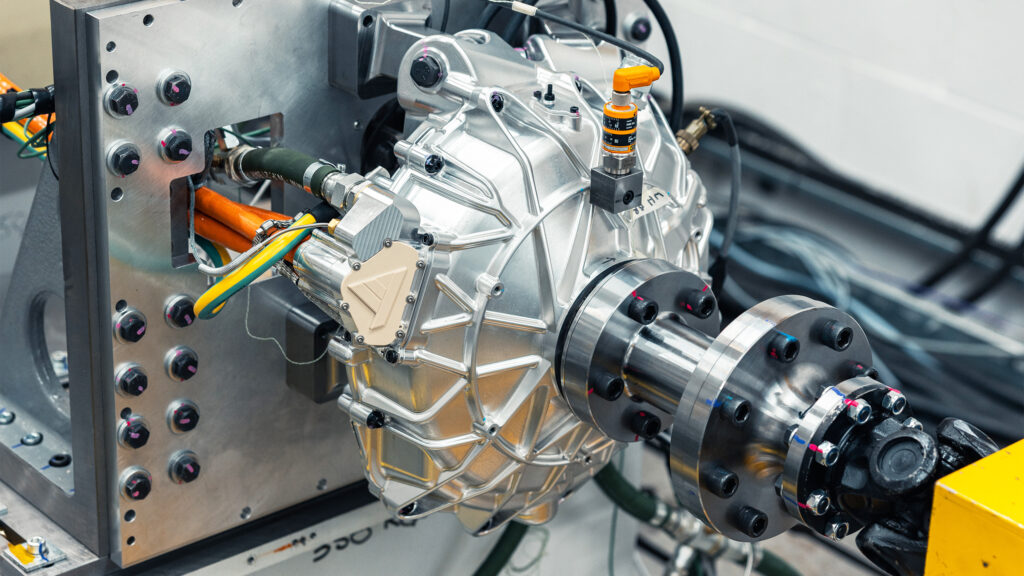
Just over a month ago, Mercedes-owned brand Yasa unveiled a record-breaking electric motor that weighs just 12.7 kg (28 lbs) and has the ability to produce up to 1,006 hp (750 kW). The company has now revealed that this axial flux motor will be used as an in-wheel unit for its next-generation EV powertrains and could even replace traditional rear wheel braking systems.

While in-wheel electric motors are nothing new, they haven’t been widely adopted in the EV market, in part because they’re heavy and generally aren’t particularly powerful. Yasa’s new motor set an unofficial electric motor power density record of 59 kW (79 hp) per kilogram, or 35 hp per pound.

Read: Mercedes’ Axial Flux Motor Weighs Less Than A Toddler And Makes Over 1,000 HP

While the motor can deliver a peak of up to 1,006 hp, the firm notes that its continuous power output ranges between 469 hp and 536 hp. It can then be paired with a 15 kg (33 lbs) dual inverter that Yasa has also developed in-house, and could prove perfect for high-powered hypercars and other performance EV applications.

Then there’s the matter of braking. Yasa says its in-wheel motor offers such “incredible regenerative performance” that the system could potentially negate the need to use traditional rear brakes.

This could allow carmakers to not only ditch important brake componentry, but also rear driveshafts, potentially saving up to 200 kg (441 lbs) from current models and as much as 500 kg (1,100 lbs) on new models developed from the ground-up.

\\\\\\

“Thanks to its exceptional regenerative capability, this system has the potential to dramatically downsize rear brakes on an EV – or even remove them entirely in certain architectures,” Yasa chief of New Technology, Simon Odling, said.“And by capturing a much greater proportion of regenerative braking energy, this technology can also deliver a significant increase in EV range.”

“What’s more, our new in-wheel motor powertrain not only enables significantly lighter, more efficient and higher performance EVs, but also dramatically creates space within the architecture of an EV too, giving car makers unprecedented freedom to redesign and optimize the packaging, aerodynamics and kinematics of their next-generation vehicles,” he added.

Yasa’s axial flux motors will be used in the new all-electric Mercedes-AMG GT 4-Door sedan and SUV. However, these models are not expected to use these motors as an in-wheel application, and will instead have one motor at the front axle and two at the rear.

\\\\\\\\\\\\\\\\\\\

Guido ten Brink/SB-Medien – Stefan Baldauf

Hyundai’s Latest Robots May Be Eyeing Your Job

  • Hyundai launched two MobED versions with distinct capabilities and uses.
  • The Pro model adds full autonomy while the Basic relies on remote input.
  • Cameras, LiDAR, and AI let the robot navigate tight and crowded places.

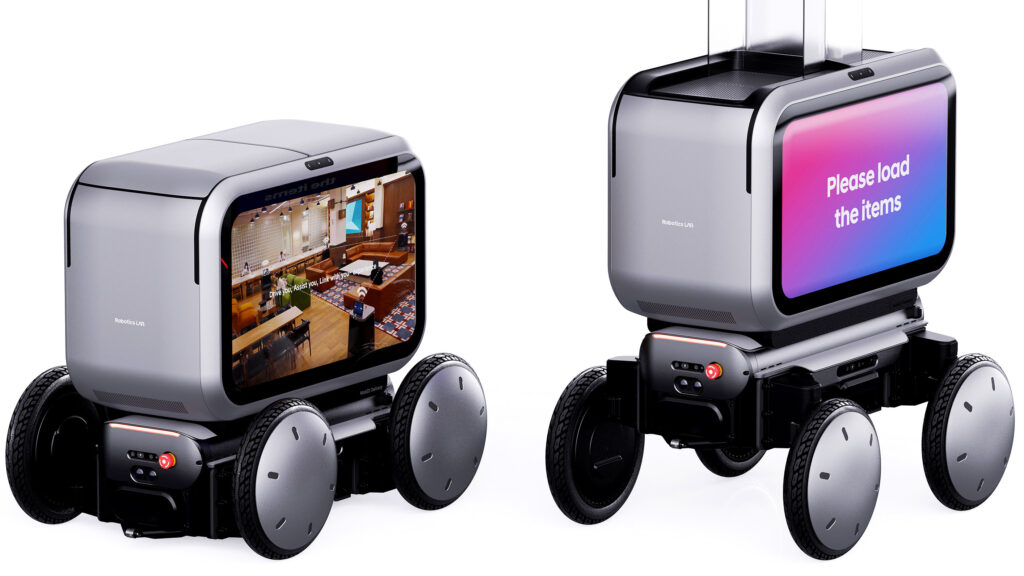
Four years after first showing its Mobile Eccentric Droid (MobED) concept, Hyundai’s Robotics LAB has now revealed the production version in Tokyo, Japan. The debut marks an important step in the company’s expansion into advanced robotics.

The compact platform has been engineered to be fully autonomous and uses advanced artificial intelligence that allows it to cruise over different surfaces and provide incredible adaptability for different use cases.

How Does It Move?

Central to MobED’s capability is its Eccentric Control Mechanism, a clever system that lets the robot adjust its posture and each wheel individually. The result is an uncanny steadiness, even when crossing inclined or uneven terrain.

Read: Like All Eccentrics, Hyundai’s New Mobile Eccentric Droid May Be Going Into The Film Business

For spatial awareness, Hyundai equipped the platform with a suite of advanced cameras and LiDAR sensors. An AI-driven obstacle detection system adds another layer of awareness, helping the robot navigate confined or crowded spaces without missing a beat.

Hyundai envisions it taking on various roles, from last-mile deliveries to logistics support, with minimal human intervention.

Two Flavors Of Droid

 Hyundai’s Latest Robots May Be Eyeing Your Job

Hyundai has revealed two versions of the robot: the Basic and the Pro. The Basic measures 1,150 mm (45.2 inches) in length, 750 mm (29.5 inches) in width, and 430 mm (16.9 inches) in height. It weighs 78 kg (172 lbs) and can carry up to 57 kg (125 lbs).

The Pro variant stands a little taller at 650 mm (25.5 inches) and heavier at 88 kg (194 lbs), though its payload capacity drops slightly to 47 kg (104 lbs).

Where they diverge most is autonomy. The Pro comes equipped with Hyundai’s full self-driving system, while the Basic relies on manual operation via remote control.

What Keeps It Rolling?

\\\\\\

Powering both versions is a small 1.47 kWh battery that provides up to 4 hours of operating time. However, compared to some of Hyundai’s EVs, the MobED charges slowly, needing 2.5 hours to juice up the battery from 10 to 90 percent.

Each robot also features universal mounting rails that make it easy to attach a variety of tools and modules. In the future, they could perform a range of important tasks in factories and warehouses, as well as crucial functions at production facilities, reducing the need for human labor.

Commercial sales of the MobED are expected to begin in the first half of 2026. Hyundai has yet to announce pricing, though it’s clear the company sees the robot as more than a novelty.

Bentley Is Going To Release A Smaller SUV Few Are Asking For

  • Bentley’s second SUV will share its electric powertrain with the Cayenne.
  • New model is smaller than the Bentayga and launches exclusively as an EV.
  • Company plans to reveal its new electric SUV sometime in mid 2026.

Believe it or not, it’s been a decade since Bentley introduced the Bentayga SUV, and it’s proven to be the brand’s best-selling model during this time. It’s perhaps a surprise then that it’s taken them ten years to start work on a second SUV, designed to slot below the Bentayga.

This new model is currently known as the Urban SUV, but expect a fancier name once production is near. Unlike the Bentayga, it will be sold exclusively as an EV, a decision that, given the current uncertainty surrounding Western markets, might not prove Bentley’s most strategic choice.

Read: This Is Bentley’s First EV And It’s Built To Haul More Than Just Your Ego

Hindsight, of course, is 2020, but it’s reasonable to assume Bentley also had China in mind, where electric vehicles now dominate the premium segment. Either way, with fellow VW-owned brand Porsche already having two electric SUVs of its own, it was only a matter of time before Bentley followed suit.

What’s Hiding Under There?

\\\\\\\\\

Baldauf

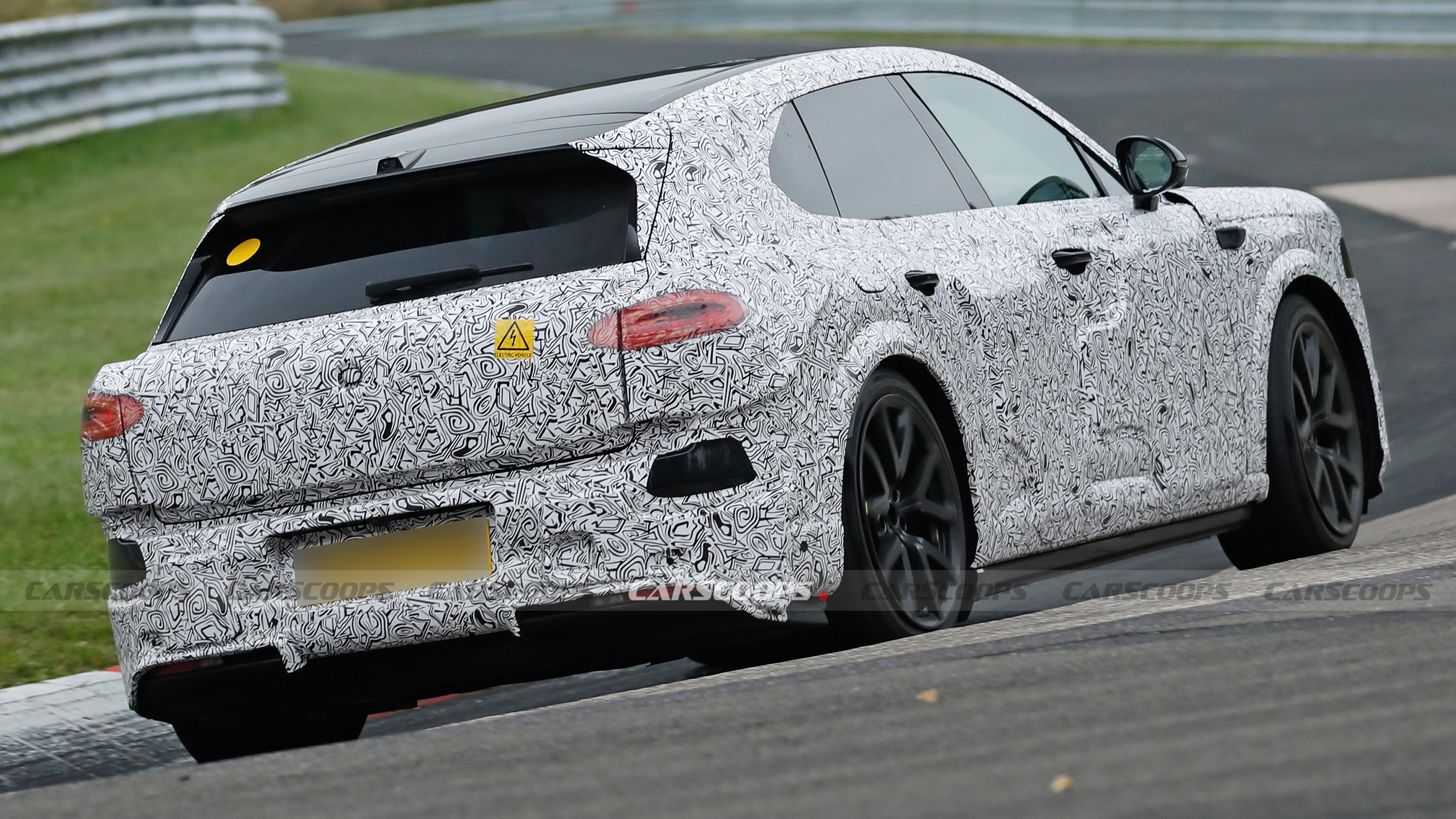
Pictured here for the first time during testing at Germany’s Nürburgring Nordschleife, the Urban SUV is hiding under camouflage and body cladding, keeping most of its design details a secret. Included as part of the disguise are four fake circular headlights, similar in shape to those of the current Bentayga.

A few months ago, Bentley unveiled the wild EXP15 concept, complete with vertical headlights. However, the headlight clusters we can see don’t look like the concept’s.

As with the headlights, it is difficult to discern the shape of the grille, as it too has been hidden from view. What we can see is that this new model is smaller than the Bentayga and has a lower roofline. This isn’t to say it’s small, however. It’ll likely be about the same size as the new Porsche Cayenne Electric.

Our spy photographer was able to catch a glimpse of the SUV’s interior, although it’s difficult to pinpoint any highlights. What we can say with certainty is that it won’t follow the current trend of many EVs that feature tacky tablet-like displays for the gauge cluster and then giant infotainment screens on the dash.

Cayenne Electric Power?

 Bentley Is Going To Release A Smaller SUV Few Are Asking For
Baldauf

Powertrain details have not been confirmed, but the Bentley is widely expected to share many components with the Cayenne Electric.

This could include the same 113 kWh battery pack and 800-volt electrical architecture, ensuring the Bentley will have decent range and support fast-charging. In the case of the Cayenne, Porsche says it needs just 16 minutes to charge from 10-80 percent.

Two versions of the Cayenne Electric have been confirmed, one with 402 hp as standard or 435 hp with launch control enabled, and the flagship Turbo that boasts 844 hp during normal driving and 1,139 hp and 1,106 lb-ft at launch control. It’s safe to assume the Bentley’s power figures could slot somewhere between the two Cayenne models.

Bentley is expected to unveil the Urban SUV in mid-2026, with first deliveries planned for 2027.

\\\\\\\\\

Baldauf

Rivian Goes Plum Crazy With A New Color And Something Extra

  • Borealis purple debuts as a $3,000 option for R1S and R1T buyers.
  • Rivian has also announced a special Lease Bonus for both models.
  • Some R1S and R1T trims qualify for lower monthly payments now.

It seems to be that time of year for Rivian again. Fresh off unveiling its limited-run Miami Edition, the company has decided it’s time for a new splash of color, one that might actually be its best yet. Called Borealis, it’s a deep, moody shade of purple inspired by the Northern Lights, offered on the Tri and Quad variants of the brand’s EVs.

Purple tones aren’t as popular as some other colors in the car industry, but when done right, they can look superb. We’ll reserve full judgment on Borealis until we see it under natural light, but based on early images, it flatters the R1S slightly more than the R1T, whose pickup shape doesn’t highlight the color in quite the same way.

Read: Rivian Turns One-Off Miami Showpiece Into A Very Pricey Limited Run

Like every Rivian finish beyond the standard LA Silver, Borealis comes at a premium, $3,000, to be exact. That puts it in line with other paid options such as Red Canyon, Rivian Blue, and Storm Blue.

The company hasn’t confirmed whether Borealis will filter down to the more affordable Dual Standard and Dual trims, though it’s easy to imagine that decision hinging on how buyers respond to the initial rollout.

\\\\\\\\

Rivian’s new purple looks especially nice when accented against its available 20- and 22-inch burnished bronze wheels. Paired with a set of bright blue brake calipers, shoppers can get a Rivian that really stands out.

A New Lease Deal

The addition of a new color isn’t the only thing that prospective Rivian owners can get excited about. The company has announced that several 2026 R1T and R1S models are eligible for a $5,000 Lease Bonus if customers take delivery by December 31.

Models eligible for the deal include the 2026 R1S and R1T Tri, R1S and R1T Dual Standard, and both the R1S and R1T Dual with the Large battery and Performance Upgrade. Importantly, Rivian notes this deal is only available while supplies last.

 Rivian Goes Plum Crazy With A New Color And Something Extra

Even with that bonus, leasing an R1T or R1S remains a costly proposition. For example, the R1T Dual Standard, priced at $72,990, still comes to $709 per month over 36 months, with $8,604 due at signing, an effective monthly rate of $948 before adding the $1,895 destination fee and state taxes.

For those willing to sacrifice a little cargo space for a lower payment, the R1S Dual Standard presents a slightly better deal. Its lease terms come in at $699 per month with $3,594 due at signing, translating to an effective monthly rate of $798, plus destination.

\\\\\\\\\

Jaguar Rolls Out Its Future In A New Color Right After Firing The Man Behind It

  • Jaguar’s Type 00 concept returns in London finished in matte red paint.
  • British brand will unveil a dramatic four-door production EV next year.
  • The production EV promises 430 miles of range and ultra-fast charging.

This time last year, Jaguar revealed the wild Type 00 concept, the first look at its all-electric future and a statement of intent to compete with Bentley and Rolls-Royce.

As development of the production version continues, a matte red example of the concept has been spotted on London’s streets, marking the marque’s 90th anniversary and coinciding with the unexpected departure of its longtime design chief, the figure behind the brand’s polarizing rebrand.

The Type 00 was originally shown in Miami Pink and London Blue during the official launch. Earlier this year, the model was dressed in a French Ultramarine livery and made a surprise appearance during the Paris Fashion Week.

Read: Jaguar’s Future GT Has No Rear Window And No Patience For Cargo

The company has now unveiled a fourth color variation, London Red with a matte finish, as the concept makes its arrival in the UK capital. The new shade draws inspiration from the redbrick Victorian architecture of Kensington, one of London’s most recognizable neighborhoods.

\\\\\

Jaguar

The freshly repainted concept was photographed alongside a classic 1935 Jaguar SS outside the Chancery Rosewood Hotel.

For those wondering, no other changes have been made to the concept’s exterior. It still rides on the same 23-inch alloy wheels, while the minimalist cabin remains finished in white and gray upholstery accented by ambient lighting.

Photos shared by Jaguar UK Director Santino Pietrosanti on LinkedIn show the Type 00 parked alongside some exotic company, including a Bugatti Chiron, Rolls-Royce Cullinan Black Badge, Ferrari F8 Tributo, and Lamborghini Aventador SVJ.

\\\\\\

Santino Pietrosanti / LinkedIn

The brand’s rebrand has been met with mixed reactions. Its ad campaign, oddly enough, featured no cars at all, leaving many scratching their heads. It was also rather odd that it initially showcased the Type 00 in a bright shade of pink, which didn’t do the car any favors.

Still, under London’s gray winter light, the matte red finish lends the concept a sense of gravitas. Out in the open, it naturally draws attention, albeit that’s not really surprising for a concept car. Much like the Tesla Cybertruck, its unconventional form challenges expectations so completely that people can’t decide whether they admire it or despise it. There seems to be little middle ground.

The Road Car

 Jaguar Rolls Out Its Future In A New Color Right After Firing The Man Behind It

Prototypes of the production version suggest Jaguar plans to stay faithful to the concept’s striking proportions. The roadgoing model will, however, take a more practical shape with four doors and a longer wheelbase, built on the company’s new Jaguar Electrical Architecture platform.

More: Jaguar’s Future GT Has No Rear Window And No Patience For Cargo

As per recent reports, the EV should have a driving range of up to 430 miles (692 km) and support fast charging, adding 200 miles (322 km) of range in just 15 minutes.

Only time will tell if those who would ordinarily shop for a Bentley or Rolls-Royce will be willing to spend their money on a vehicle that looks as controversial as this.

JLR Design Chief Axed

In separate news, it has been confirmed that Jaguar Land Rover design boss Gerry McGovern has departed from the brand. No official reason has been given for this high-profile departure, but it comes shortly after former chief financial officer at Tata, PB Balaji, was named as JLR’s new chief executive.

Citing insider sources, Autocar India reports that McGovern was “escorted out of the office” on Monday, with his contract being terminated with immediate effect. The man behind Jaguar’s relaunch has spend over two decades at JLR, being responsible for successful models including the new Land Rover Defender.

According to business economics professor at the University of Birmingham, David Bailey, McGovern’s exit marks a “symbolic end of an era.” He told The Guardian that it may also be a sign that Tata wants to exert more control over the British company.

Thanos Pappas contributed to this story.

Kia Slashed $10,000 Off Its EVs. Buyers Still Walked Away

  • Kia is on track to set another all-time sales record this year.
  • EV6 sales fell sharply from 1,887 last Nov to only 603 units.
  • Key model gains like the K5 and Sportage helped lift sales.

Car manufacturers across the US are scrambling to rekindle interest in their electric vehicles as the federal tax credit of up to $7,500 fades into the rearview mirror. The loss of that incentive has left many brands looking for new ways to attract buyers, and Kia’s approach is simple enough: slash prices.

Read: Who Needs $7,500 Tax Credit When Kia Slashes EV Prices By $10,000

The company is offering discounts worth as much as $10,000 across several models, though the numbers suggest it’s not quite having the desired effect. At least not yet.

Kia announced last month that the 2025 Niro EV, 2025 EV6, and 2026 EV9 would all be available with $10,000 in customer cash. For the Niro EV, that amounts to roughly a 24 percent markdown on the base model. Yet despite the aggressive pricing, sales remain far below the levels seen when the tax credit was still in play.

Discounts Without Traction

Last month, Kia shifted 918 examples of the three-row EV9, almost triple the number of Hyundai Ioniq 9s sold over the same period, but down significantly from the 2,155 sold in November 2024. Year-to-date deliveries are also down 30 percent from 20,066 to just 14,032.

It’s a comparable story with the EV6. Despite receiving a comprehensive facelift, sales have dropped sharply from 1,887 in November 2024 to only 603 this year. Total sales for 2025 now stand at 12,188, down 38 percent from 19,604 over the same stretch in 2024.

Kia US Sales November 2025
ModelNov 25Nov 24Diff.YTD-25YTD-24Diff.
EV99182,155-57%14,03220,066-30%
EV66031,887-68%12,18819,604-38%
K4/Forte9,32111,005-15%126,919127,867-1%
K56,4306,3781%66,64240,67264%
Soul3,2804,031-19%47,67948,747-2%
Niro5,2301,624222%28,03728,302-1%
Seltos6,2863,77866%51,97356,221-8%
Sportage15,79514,05112%165,954146,49013%
Sorento6,7238,705-23%87,43385,7222%
Telluride10,05411,568-13%111,123103,0168%
Carnival7,3624,92549%65,17244,56146%
Total72,00270,1073%777,152723,1857%
SWIPE

Kia does not break down powertrain sales of the Niro, which is sold in ICE, hybrid, and EV guises in the US. What we do know is that overall Niro sales increased dramatically from 1,624 in November 2024 to 5,230 last month.

On Track For a Sales Record

Despite the underwhelming performance of its electric lineup, Kia’s overall sales tell a different story. November saw 72,002 vehicles delivered, up three percent from 70,107 a year earlier.

The brand has now sold 777,152 vehicles in 2025 and is on course to notch its third consecutive all-time annual sales record. The gains have been driven in part by a 64 percent jump in K5 sales, a 13 percent rise in Sportage deliveries, and an 8 percent boost for the Telluride.

\\\\\\

Nio EV Splits Open Like A Can Of Tuna In A Strange Crash

  • Nio EC6 hit a concrete barrier in Shanghai and split through the rear.
  • Driver and passenger escaped without injuries after the violent impact.
  • Battery pack survived the crash and avoided any fire or thermal issues.

All too often, we read about EVs catching fire after relatively minor accidents, and in some cases, occupants were trapped inside. This story is a little different though, as a Nio EC6 was recently destroyed in a crash in China, but remarkably didn’t catch fire despite almost completely splitting in two.

This incident happened in Shanghai on Monday. It’s understood that the light pink-colored EC6 hit a concrete crash barrier side-on after cutting in front of another vehicle, causing it to clip the rear of the Nio.

Local reports suggest that the top edge of the barrow, approximately 120 mm (4.7 inches) wide, applied an extraordinary amount of pressure on the C-pillar and the area of the floor.

Read: Nio’s Mass-Market Onvo Drops Its First 3-Row SUV With More Power Than An EV9 GT

This force caused a split through the rear of the car. Remarkably, the driver and passenger of the Nio were not injured in the crash. Additionally, the battery pack wasn’t severely damaged and did not catch fire.

According to a statement released by Nio, immediately after the crash, the vehicle’s onboard safety systems reported the accident. Nio staff were alerted to the impact and quickly responded to the scene, helping the occupants receive medical treatment.

Perhaps in a thinly-veiled dig at Tesla, Nio says that the EV’s doors immediately unlocked after the collision, allowing the driver and passenger to free themselves.

\\\\

Weibo

The car manufacturer also confirmed that the EC6’s driving assistance system was not enabled at the time.

The Nio EC6 was first unveiled in late 2019 before being thoroughly updated in February 2023. The example involved in this crash was one of the facelifted models.

It’s available with either a 75 kWh or 100 kWh battery pack and sold exclusively in dual-motor guise, producing a combined 483 hp and 516 lb-ft (700 Nm) of torque.

Sources: Weibo, Nio, CarNewsChina

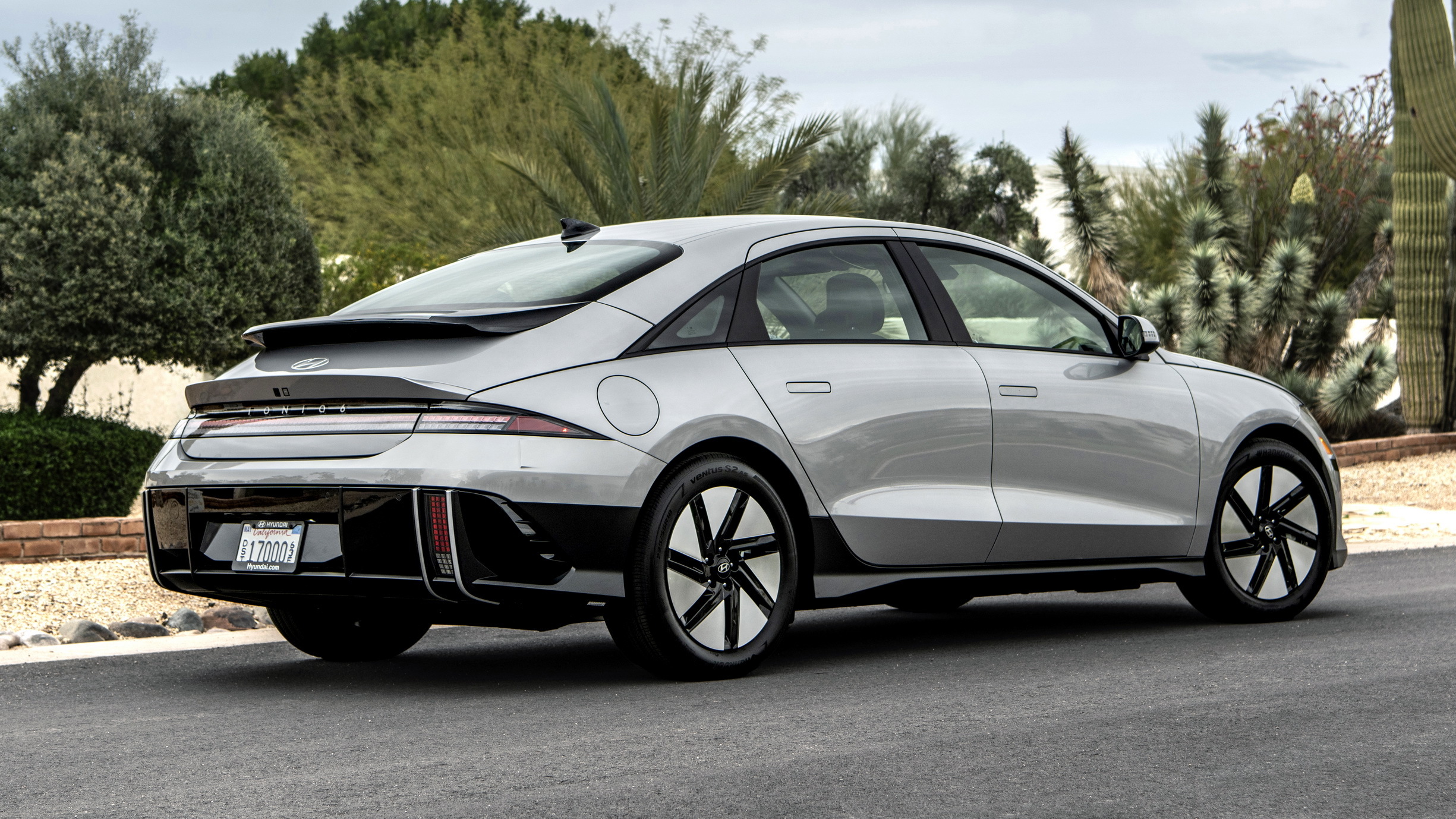
As EV Sales Crash Badly, Hyundai Gets Its Lifeline From Elsewhere

  • Hyundai Ioniq 5 sales fell sharply after federal tax credits ended.
  • Ioniq 6 demand also dropped significantly with sales hitting new lows.
  • Hybrids surged strongly marking their best monthly performance yet.

Hyundai is selling more hybrids in the United States than ever, a result that surely has executives reaching for the champagne. The mood, however, is muted by a sharp downturn in the company’s electric vehicle fortunes. Since the federal EV tax credit expired on September 30, demand has plunged, leaving Hyundai’s battery-powered lineup scrambling to regain its footing

How Low Can It Go?

The Ioniq 5 remains Hyundai’s best-selling EV in the US, though November brought little reason to celebrate. Only 2,027 units found buyers across the country, a steep 59 percent drop from the 4,989 sold in November last year.

 As EV Sales Crash Badly, Hyundai Gets Its Lifeline From Elsewhere

There was some consolation in the fact that this figure edged up slightly from October’s 1,642 sales, but the wider picture is still uneven. Year-to-date results show a modest 12 percent improvement over 2024, totaling 44,760 cars sold.

Read: Hyundai And Kia EV Sales Collapse After Tax Credits Vanish Overnight

Things have been equally as bad for the Ioniq 6, with just 489 being sold this November, a decline of 56 percent. Cumulative sales have also slipped, from 11,055 cars in 2024 to 10,019 so far this year, marking a 9 percent decline.

The seven-seat, three-row Ioniq 9 wasn’t available last year, but it remains a relatively slow seller. A total of 315 found new homes last month, down slightly from the 317 sold in October. Year-to-date, 4,809 have been sold.

Hyundai Sales November 2025
VehicleNov-25Nov-24% Chg2025 YTD2024 YTD% Chg
Elantra10,38911,344-8%136,825125,113+9%
Ioniq 52,0274,989-59%44,76039,805+12%
Ioniq 64891,121-56%10,01911,055-9%
Ioniq 931504,8090
Kona5,7836,133-6%68,03076,326-11%
Nexo000%593-95%
Palisade9,9068,982+10%112,23799,757+13%
Santa Cruz1,5372,393-36%23,88929,991-20%
Santa Fe14,00412,376+13%127,964105,701+21%
Sonata4,0186,971-42%54,23861,701-12%
Tucson23,76220,178+18%212,037185,954+14%
Venue2,0591,521+35%27,94322,808+23%
Total Sales74,28976,008-2%822,756758,304+8%
SWIPE

Hyundai’s total November sales have fallen 2 percent from November last year to 74,289 units. So for this year, it still remains in the green, shifting 822,756 vehicles, an 8 percent rise from the 758,304 sold during the first 11 months of 2024.

Hybrids to the Rescue

The big story, though, is hybrids. Sales of electrified models jumped 42 percent, making November Hyundai’s strongest hybrid month on record. That surge has been critical in offsetting the EV slump and maintaining overall growth through the final quarter.

Among individual models, several performed particularly well. In November, The Palisade rose 10 percent to 9,906 units, Santa Fe gained 13 percent to 14,004, and Tucson continued its strong run with an 18 percent increase to 23,762. Even the pint-sized Venue grew 35 percent to 2,059 units.

The Sonata, meanwhile, took a noticeable hit in November, dropping 42 percent year-over-year to 4,018 sales, bringing its year-to-date total to 54,238, down 12 percent from the same period in 2024.

For now, Hyundai’s U.S. lineup shows a clear divide between hybrid gains and weakening EV demand. The next few months will show whether that hybrid momentum can do enough to steady the company’s position in a softening electric market.

 As EV Sales Crash Badly, Hyundai Gets Its Lifeline From Elsewhere

California EV Owners Now Risk A $490 Fine Under New Driving Rules

  • California ends solo EV access to carpool lanes after 25 years.
  • Drivers risk getting a ticket starting Dec 1 for using HOV lanes.
  • Enforcement started after a 60-day grace period for local drivers.

California has long been America’s champion of electric mobility, a place where environmental ideals and car culture somehow coexist on the same sun-baked freeway. For years, the state has rolled out incentives to get drivers into EVs, from tax credits to special lane privileges.

Chief among them was the right to glide past gridlock in carpool lanes, solo and smugly efficient. But that era has now come to a halt.

Read: California Won’t Replace $7,500 EV Tax Credit as Newsom Accuses GM of Selling Out

For more than 25 years, states have been free to decide whether EV drivers could use carpool lanes, spaces meant for vehicles carrying at least one passenger. California made its stance clear early on.

It offered qualifying motorists distinctive Clean Air Vehicle stickers, granting them unrestricted access to these faster lanes even when driving alone.

From Exemption to Enforcement

That all changed when the Trump administration declined to renew the federal authorization that supported the state’s exemption. The cutoff date was October 1, and once that law expired, so did the automatic right for solo EVs to cruise in carpool lanes.

The California Highway Patrol then gave motorists a 60-day grace period to adjust their driving habits and exit the carpool lanes. Starting from December 1, police can now issue a $490 fine.

 California EV Owners Now Risk A $490 Fine Under New Driving Rules

That’s not great news for local EV owners. Some suspect that by pulling EV drivers out of carpool lanes, which often sit empty during peak morning and afternoon hours, traffic on some of California’s highways may get even worse.

“It’s a huge, huge bummer for EV enthusiasts,” the president of the Tesla Owners of Silicon Valley club, John Stringer told The Press Democrat. “It has been one of the things we’ve been able to enjoy for years. It was one of the reasons why I bought my first EV.”

Stringer estimates that his carpool access saved him about 20 minutes each way on his daily commute, time that now returns to the general traffic pool.

In September, Rep. Mark DeSaulnier revealed that he had been lobbying in Washington, D.C., on behalf of EV drivers, trying to extend the carpool privilege for another six years through a House Resolution. Despite the effort, the proposal stalled before reaching a vote.

 California EV Owners Now Risk A $490 Fine Under New Driving Rules
Google Maps

Europe Might Not Be Ready For What China’s Most Luxurious Brand Plans Next

  • Hongqi plans 15 hybrid and EV models across 25 European markets.
  • The brand is scouting sites for local factories in multiple regions.
  • FAW-owned Hongqi sold just 771 vehicles in Europe through October.

Hongqi cars may be a common sight across China, but beyond its home market, the brand remains something of a mystery to most car buyers. That may soon change. China’s oldest and most luxurious automaker has set its sights on a sweeping European expansion, planning to introduce 15 electric and hybrid models and bring them to 25 markets by 2028.

Read: China’s Most Luxurious Brand Is Coming For Europe With 15 New Models And It’s A Red Flag

Like many of its Chinese peers, Hongqi sees global growth as essential, and Europe is high on the list. The brand’s plans, however, face a complicated landscape. The European Union has imposed heavy tariffs on Chinese-built electric vehicles, raising both costs and stakes.

In response, Hongqi is said to be exploring local production. Potential manufacturing sites are reportedly under consideration in southern Europe, eastern Europe, and the Nordic region. Building cars within the EU could soften tariff impacts and make logistics smoother, especially as the company works to establish itself in a new market.

\\\\\\\\\\\

Hongqi, a division of state-owned FAW, has sold just 771 vehicles in Europe through October, a modest figure compared with its home market reach. That number, though, may serve more as a baseline than a limit.

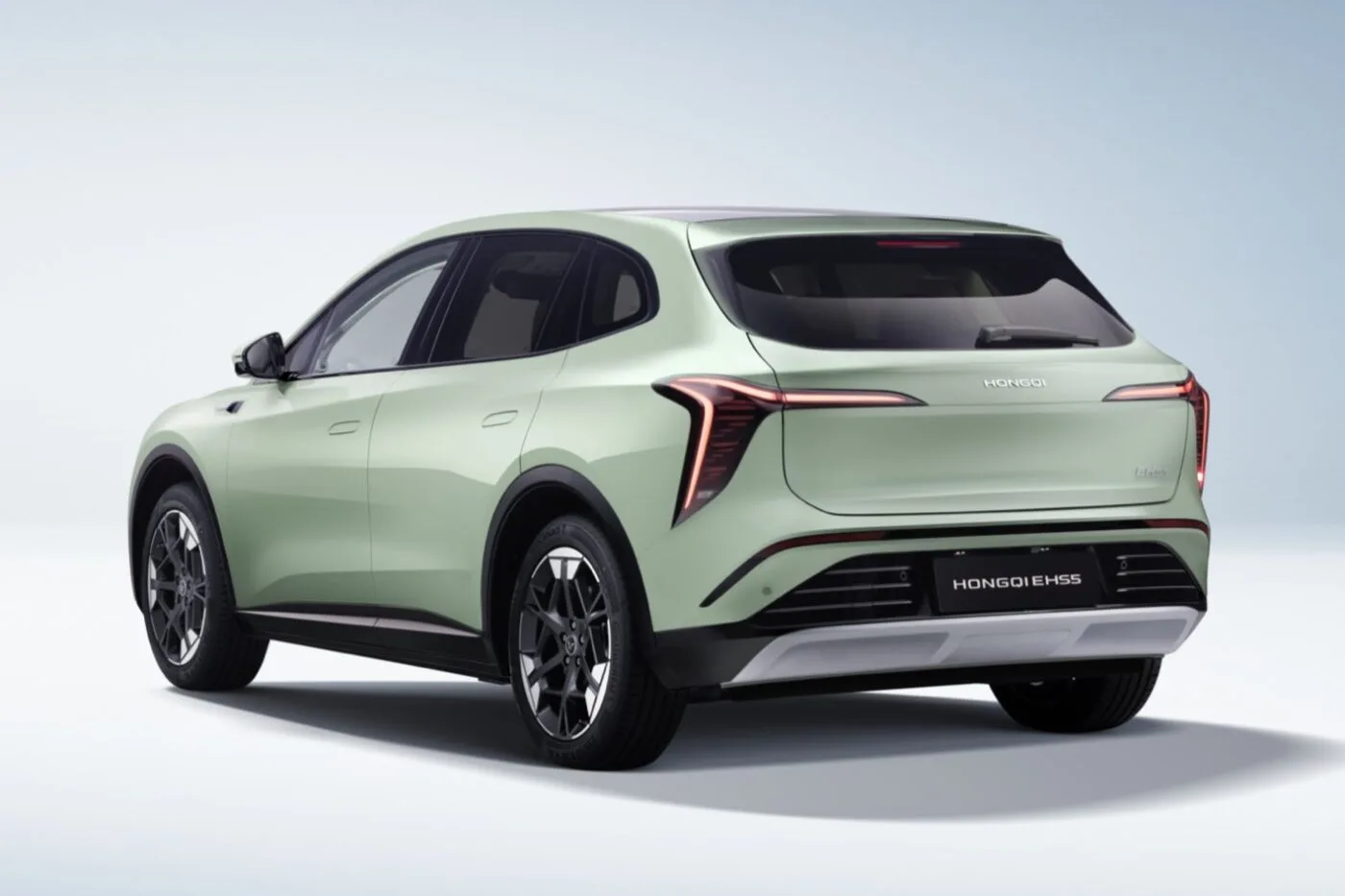
Its most significant newcomer is the EHS5, a mid-size electric SUV first shown at the Munich Motor Show. The model runs on an 85 kWh lithium-ion battery and offers a range of 342 miles (550 km).

European specifications haven’t yet been finalized, but in China the EHS5 comes in two versions: a 339 hp rear-wheel-drive model and a 610 hp all-wheel-drive setup. Until now, the EHS7 has been Hongqi’s top seller in Europe, but the new SUV could change that balance.

 Europe Might Not Be Ready For What China’s Most Luxurious Brand Plans Next
Hongqi EHS5

Pricing will be key to Hongqi’s success in Europe. Fellow Chinese brands, like MG, Chery, and BYD, have been steadily growing their sales across the region thanks to cut-price models.

FAW’s design chief, Giles Taylor, told Auto News that Hongqi’s government ties give it access to technology “at prices that you just wouldn’t believe.” That cost structure could be a powerful advantage.

“We can then leverage that pricing power whether it’s in domestic market or in Europe,” he said. “Do you really want to spend €5 for a Starbucks coffee when there’s a new little startup brand around the corner selling coffee for €1.50?”

\\\\\\\

Sources: Auto News

Alpine Thinks Driving Got Too Serious, So It’s Building EV Convertibles

  • Alpine plans two electric convertibles based on upcoming A310 and A110.
  • The A310 will debut as a fastback GT before spawning a droptop version.
  • The EVs may use the tri-motor setup from the new A390 crossover.

By 2030, Alpine plans to have seven electric models on the road, signaling a shift for the brand while still keeping room for drivers who prefer a more engaging experience. Among them will be a convertible built on the platform of the forthcoming fastback GT, currently referred to as the A310.

As we’re still quite some time away from seeing these new models in the market, details are limited. What we do know is that the A310 will initially hit the market as a four-door fastback, followed by a convertible version.

Given today’s market realities, it’s safe to assume the droptop will come as a two-door, since four-door convertibles have all but vanished.

Read: Alpine’s New A290 Rallye Throws Mud And Sparks At $70K

The fastback is expected to closely follow the design of the new Alpine A390. The sleek crossover has beautifully flowing bodywork, cutting an athletic figure on the road. Its aggressive looks, particularly the sharp front-end, would look excellent in a low-slung fastback package.

 Alpine Thinks Driving Got Too Serious, So It’s Building EV Convertibles
Alpine A390

It’s possible that the same tri-motor system as the A390 could be used, which includes a single motor at the front axle and two at the rear, delivering 396 hp in the GT model and 463 hp in the GT3.

Alpine’s New Electric Sports Car

Then there’s Alpine’s second new electric convertible. It will be based on the second-generation A110, expected to arrive next year. Unlike the outgoing model, this new one will also have a futuristic design similar to the A390. The roadster will be sold alongside the standard coupe model, according to Autocar.

As with the A310, little is known about the A110’s powertrain. Alpine presented an all-electric version of the current model, equipped with a 60 kWh battery and a rear-mounted electric motor with 239 hp and 221 lb-ft (300 Nm) of torque.

While those specs are somewhat promising, we’d expect the new model to hit the market with a larger pack and more power.

 Alpine Thinks Driving Got Too Serious, So It’s Building EV Convertibles

Source: Autocar

Ford Accused Of Advertising A Missing Feature On New Trucks

  • Ford is being sued over missing safety tech in 2024 F-150 Lightnings.
  • Plaintiffs claim Ford misrepresented features listed on window stickers.
  • Company offered $100 refunds, but owners say that barely covers losses.

Ford’s electric pickup has long been seen as a bellwether for mainstream EV demand, but the latest news surrounding it has little to do with torque or battery range. Instead, the company now faces scrutiny of an entirely different kind inside a courtroom.

Read: F-150 Lightning Production Halted Indefinitely As Ford Bets On Gas Trucks Again

Ford is being sued in the United States over claims that certain 2024 F-150 Lightning models advertised with a Forward Sensing System were delivered without it. The lawsuit alleges that customers have “incurred damages” due to the missing safety feature and that the company’s efforts to make amends have fallen short.

Missing Sensors or Missing Disclosure?

The class action, filed in the US District Court for the Eastern District of California, argues that the window stickers on 2024MY F-150 Lightning models clearly state the vehicles are equipped with the Forward Sensing System, which includes several parking sensors on the front bumper.

Ford reportedly notified U.S. dealerships on March 31 that every 2024 F-150 Lightning advertised with the system was actually built without it. The company subsequently began contacting customers, offering a $100 refund to address what it described as a window-sticker error.

 Ford Accused Of Advertising A Missing Feature On New Trucks

What the Plaintiff Claims

The plaintiff named in this new lawsuit, Ibrahim Lunawadawala, contends that the refund offer is negligible, pointing out that installing equivalent aftermarket sensors would cost substantially more. The filing states that Ford “has been unwilling to provide adequate compensation to aggrieved consumers.”

“Plaintiff Lunawadawala has suffered an ascertainable loss because of Ford’s misrepresentations, including but not limited to, diminished value of his vehicle and other consequential damages,” the lawsuit continues, as cited by Carcomplaints.

Production Pause and Broader Troubles

This legal development arrives just weeks after Ford confirmed it had indefinitely paused production of the all-electric F-150 Lightning, redirecting resources toward gas and hybrid models instead.

The decision was made not just to address falling sales of the model, but also because of a huge fire at a Novelis aluminum plant in Canada that supplies Ford with the aluminum it needs for all F-150 models.  

\\\\\\\\

Sources: Law, CarComplaints

Toyota Promises The Electric Hilux Will Be ‘Attainable’, Just Not Affordable

  • Hilux BEV could prove popular with mining companies in Australia.
  • Toyota confirmed the electric Hilux will cost more than diesel models.
  • A 59.2 kWh battery powers twin electric motors producing 193 hp/

Earlier this month, Toyota pulled the covers off its long-awaited battery-electric Hilux, built on the thoroughly reworked ninth-generation platform. While powertrain specifications for the model have been released, Toyota has yet to confirm pricing, saying only that it will be “attainable.”

Read: New Toyota Hilux Brings Sumo-Inspired Looks And EV Option

The complete list of markets where the Hilux BEV will be sold is unclear, but we do know that Australia will be among them. Local buyers will see the Hilux BEV arrive in the first half of 2026, with Toyota initially targeting fleets rather than private owners.

Large mining operations are expected to be the main customers, given the suitability of electric drivetrains for underground work.

Pricing Expectations

While recently speaking with local outlet Drive about the new truck, Toyota Australia vice president for sales and marketing Sean Hanley acknowledged the Hilux BEV will “be dearer than the diesel cars we’ve got right now.”

Prices for the new Hilux equipped with the mild-hybrid diesel engine will start at AU$65,990 ($42,800), and it’s not beyond the realm of possibility that the BEV could add AU$15,000 ($9,700) to that figure, meaning this model could be positioned near the top of the Hilux range.

\\\\\\\\\\\

“We know this is not going to be our biggest seller, but it’s got to be competitive and affordable for those that want it, so it’s got to be attainable,” Hanley added.

“There’s no point putting it out there if it’s going to be a hundred grand (AU$100,000), you know what I mean, like maybe you’re referencing. It’s got to be achievable, it’s got to be attainable.”

Toyota has equipped the Hilux BEV with a small 59.2 kWh battery pack and dual electric motors delivering 193 hp. The pickup has a quoted range of just 149 miles (240 km).

A Niche Future

\\\\\

Despite some interest from private buyers, Hanley is realistic about where this model fits. He describes it as a niche vehicle, built with clear intent rather than broad market ambition.

“Where this will appeal will actually be mining – massively. Again, I don’t wanna sit here and say to you ‘it’s gonna take the world by storm and volume’. [It’s] not going to do that. It’s not meant to do that. That’s not why we’re launching it,” he said.

Still, he admits there could be some crossover appeal. “There is a niche market out there where we can put this car, and in mining it will be, I think, our biggest target market. Now, that’s not to say some tradies may not want it. They may… it’s possible.”

\\\\\\\

Ford’s First Heavy Duty EV Truck Swaps Diesel Grit For Electric Grit

  • Ford F-Line E debuts as an all-electric heavy-duty truck in Europe.
  • Top-spec 6×2 version packs four 98 kWh batteries and 523 hp.
  • Smaller 4×2 variant uses three packs with a 315 hp electric motor.

While Ford has walked back some of its more ambitious electric vehicle goals lately, the company is still pushing forward with notable investment and new product launches.

The Ford Truck division’s first-ever, production battery-powered creation, however, isn’t something customers will find parked at their local dealership. Instead, it’s a dedicated all-electric rig called the F-Line E.

Read: Mercedes Takes On Tesla Semi With New eActros 600 EV Offering 311 Miles Of Range

Ford Trucks operates as the heavy-commercial arm of Ford Otosan, the long-running joint venture between Ford and Turkey’s Koç Holding. The partnership oversees the design, engineering, and production of tractors, construction vehicles, and heavy-duty haulers serving markets across Europe, the Middle East, and Asia.

Production of the F-Line E will take place under Ford Otosan, with the model making its first appearance at the Solutrans fair in France, displayed in both 4×2 and 6×2 configurations.

The largest of the available models has no fewer than four 98 kWh nickel manganese cobalt batteries, making for a combined 392 kWh or a usable 314 kWh. Ford says this is enough to give the F-Line a driving range of up to 186 miles (300 km).

Power is provided by a single electric motor at the rear wheels with 415 hp and 1,010 lb-ft (1,370 Nm) of torque during regular driving, but capable of producing up to 523 hp and 1,821 lb-ft (2,470 Nm). The 6×2 model also supports peak charging speeds of up to 285 kW.

 Ford’s First Heavy Duty EV Truck Swaps Diesel Grit For Electric Grit

By comparison, the smaller 4×2 version has three battery packs and a combined capacity of 294 kWh or 235 kWh usable. It also relies on a less powerful motor with 315 hp and a peak of up to 389 hp.

Ford says this version can travel up to 155 miles (250 km) on a single charge. Peak charging speeds on the 4×2 are capped at 213 kW. Both the 4×2 and 6×2 models are capped at 56 miles (90 km/h).

Built for Work

Ford Trucks positions the F-Line E as a flexible platform suitable for delivery fleets, municipal operations, and various vocational applications, including garbage collection. The truck’s modular design allows operators to tailor it for specific roles without major reconfiguration.

Alongside the F-Line E, Ford also revealed the updated F-Max at the same event. Significantly larger and powered by a revised 12.7-liter engine for 2025, the F-Max promises to trim fuel costs by 11 percent, showing that Ford’s commercial lineup isn’t going all-in on electrification just yet.

\\\\

China’s Getting Ready To Flood The World With Even Cheaper EVs And PHEVs

  • Chinese automakers debut budget EVs under $21,000 to expand abroad.
  • Falling EV prices spark fears of excessive competition and lower profits.
  • BYD and Great Wall Motor report 30 percent profit drops amid price cuts.

Chinese automakers are steering the electric era into a new phase, flooding the market with low-cost EVs and plug-in hybrids at the Guangzhou Motor Show.

With prices starting between 100,001 yuan ($14,100) and 150,000 yuan ($21,100), this new generation of vehicles sends a message that’s hard to miss: China intends to own the mass market for electrification.

Read: The Company That Started The EV Price War Now Says It’s Gone Too Far

According to Nikkei Asia, many of China’s biggest automakers are getting ready to export these budget-friendly newcomers. For Western legacy brands still wrestling with production costs and emissions targets, those prices don’t signal healthy competition so much as the opening act of a global price reckoning.

The Global Push Begins

 China’s Getting Ready To Flood The World With Even Cheaper EVs And PHEVs
Leapmotor A10

Several new EV and PHEV models took the stage at the show, among them the Leapmotor A10, which is expected to start around 100,000 yuan ($14,100) and head for export worldwide. The company’s Lafa 5 electric hatchback is set to launch at roughly the same figure.

Nio made a strong impression with its Firefly, shown for the first time in right-hand drive. Priced around 100,000 yuan ($14,100) in China, the Firefly will enter 17 new markets next year, reaching into Central America and beyond. GAC joined in with its Aion i60, a range-extender SUV starting at 109,800 yuan ($15,500).

Price Wars Continue

The Chinese automotive industry has been in a price war for the past few years, and there are no signs of cooling, as carmakers feverishly battle to gain market share. The lower end of the market is proving to be an especially fierce battleground, Nikkei Asia reports.

During the first nine months of this year alone, 2.35 million EVs and plug-in hybrids priced between 100,001 yuan ($14,100) and 150,000 yuan ($21,100) were sold in China. That makes it the nation’s largest market segment, up from fewer than 1.5 million in the same range last year.

By contrast, models priced between 150,001 yuan and 200,000 yuan ($21,100–$28,200) have held steady at around 2.3 million sales.

 China’s Getting Ready To Flood The World With Even Cheaper EVs And PHEVs
Firefly EV

There has also been significant growth in even more affordable NEVs. The number of vehicles sold in the $11,300 – $14,100 and $11,300-or-less price brackets has doubled to over 1 million units.

While the growing number of affordable models is good for Chinese customers, it’s hurting the automakers themselves. During the July-September quarter, BYD’s net profit fell 30 percent, its first decline in four years. Great Wall saw a similar hit, with profits falling 30 percent despite a 20 percent rise in sales.

Exports, meanwhile, are accelerating. Over the first three quarters of this year, Chinese brands shipped 1.75 million EVs and plug-in hybrids abroad, an astonishing 89 percent increase from the same period last year.

 China’s Getting Ready To Flood The World With Even Cheaper EVs And PHEVs

Source: Nikkei Asia

❌