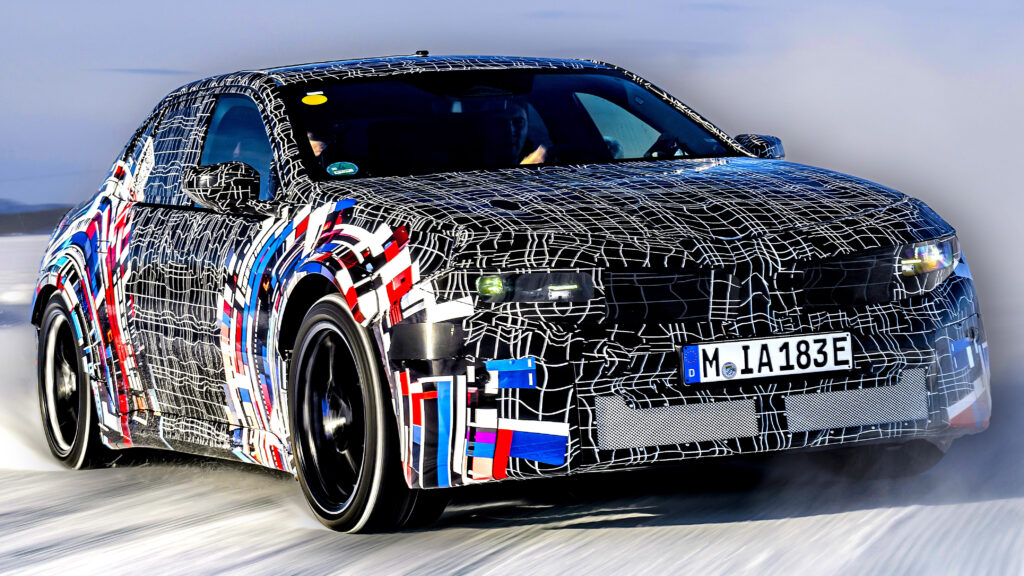
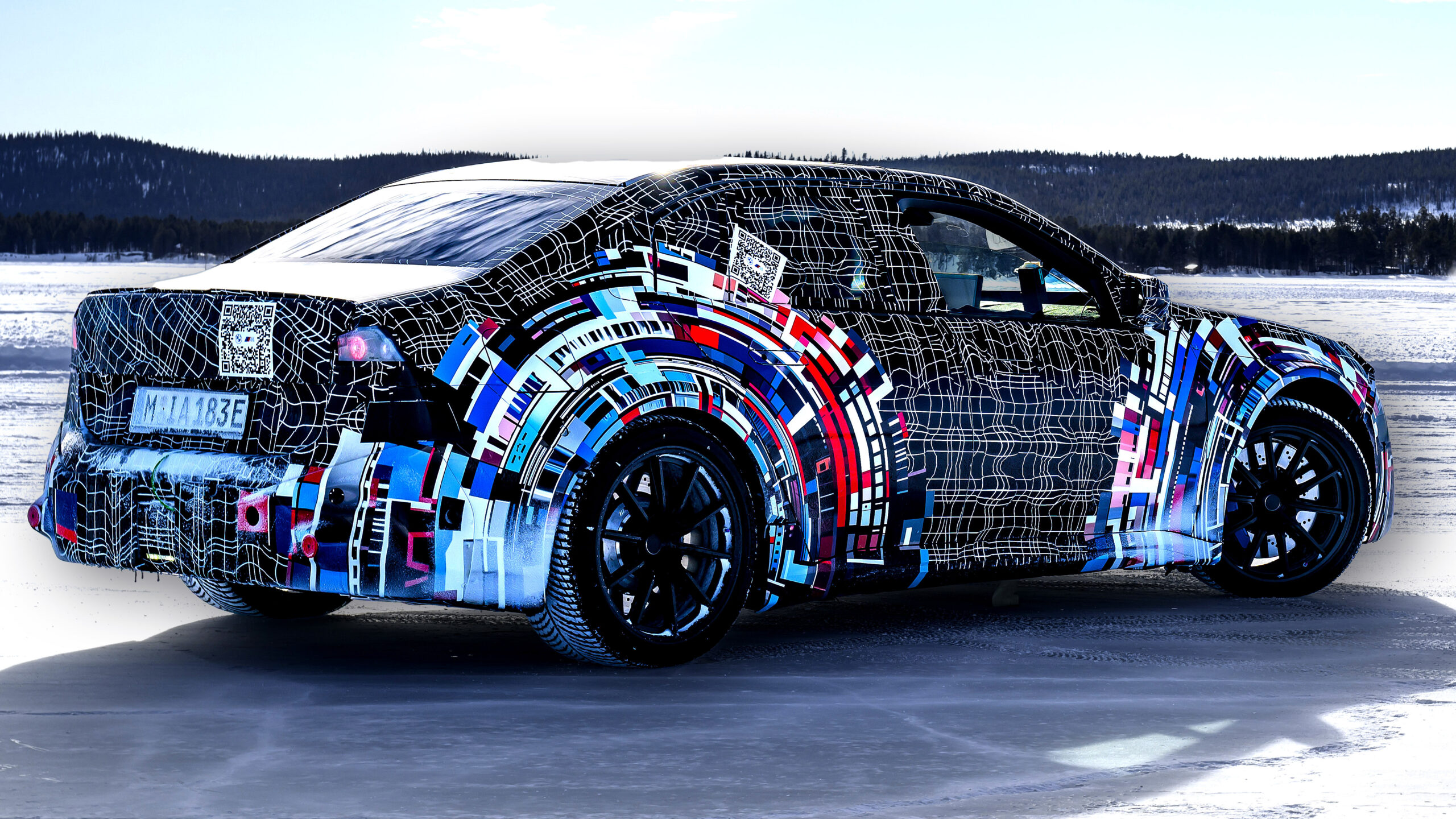
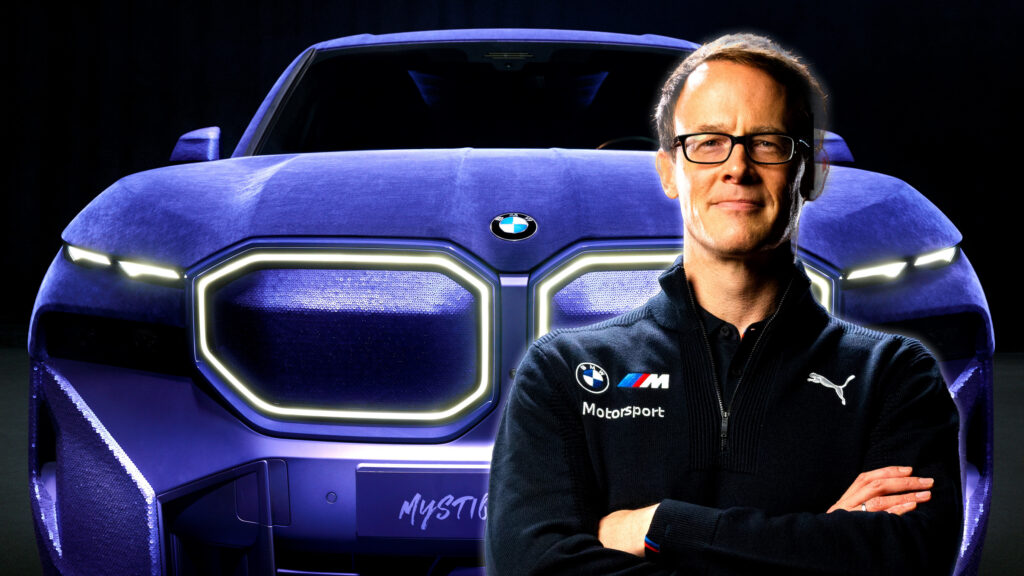
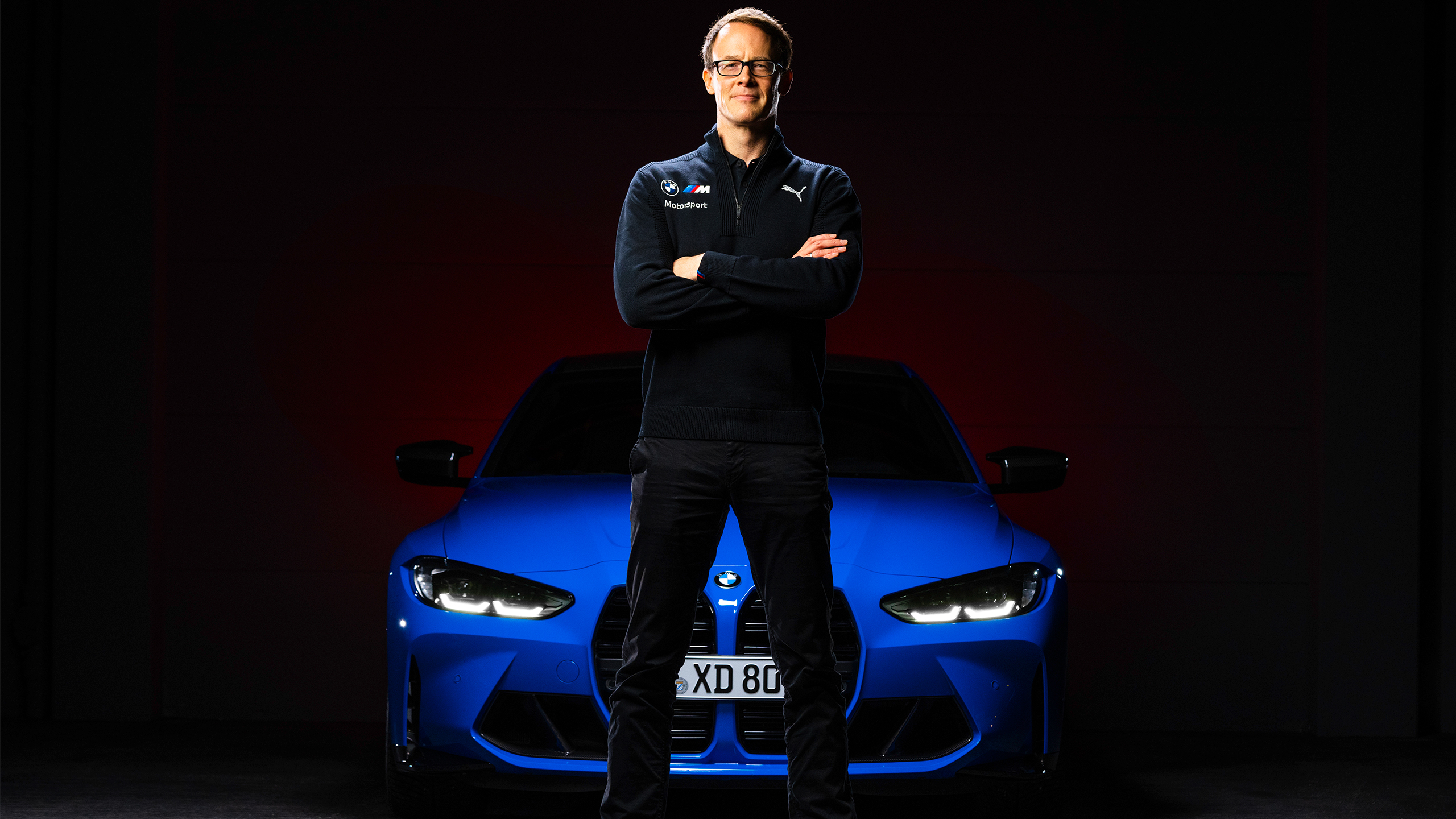
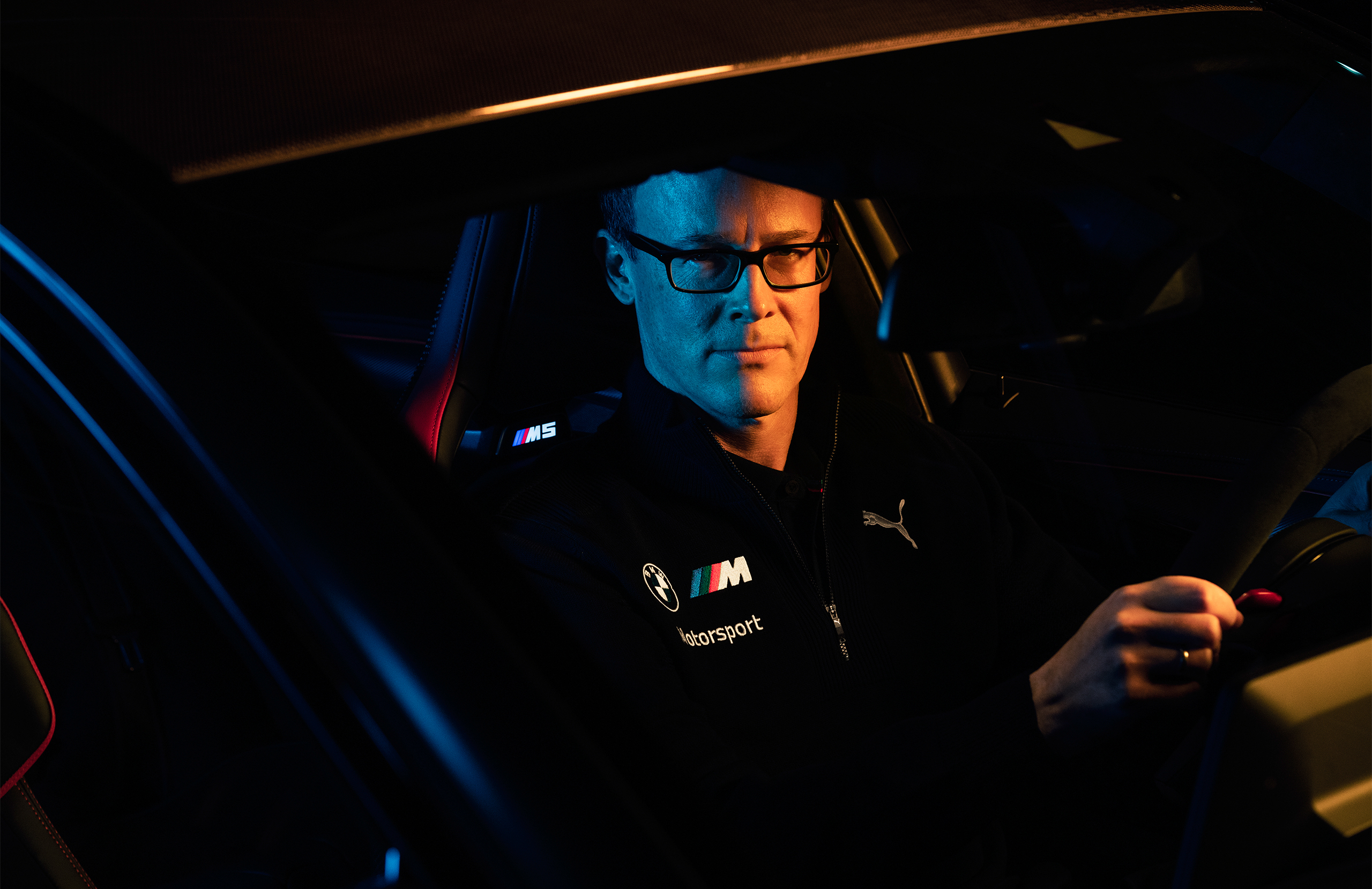
BMW M confirms the first quad-motor EV will debut in 2027.
The electric M3 will use a 100 kWh cylindrical cell battery pack.
Simulated gears and sound aim to give emotional engagement.
The era of all-electric performance cars from BMW M is nearly upon us. For years, the brand has been feverishly developing its next generation of cars and has confirmed that the first of these new models, the electric M3, will debut in 2027.
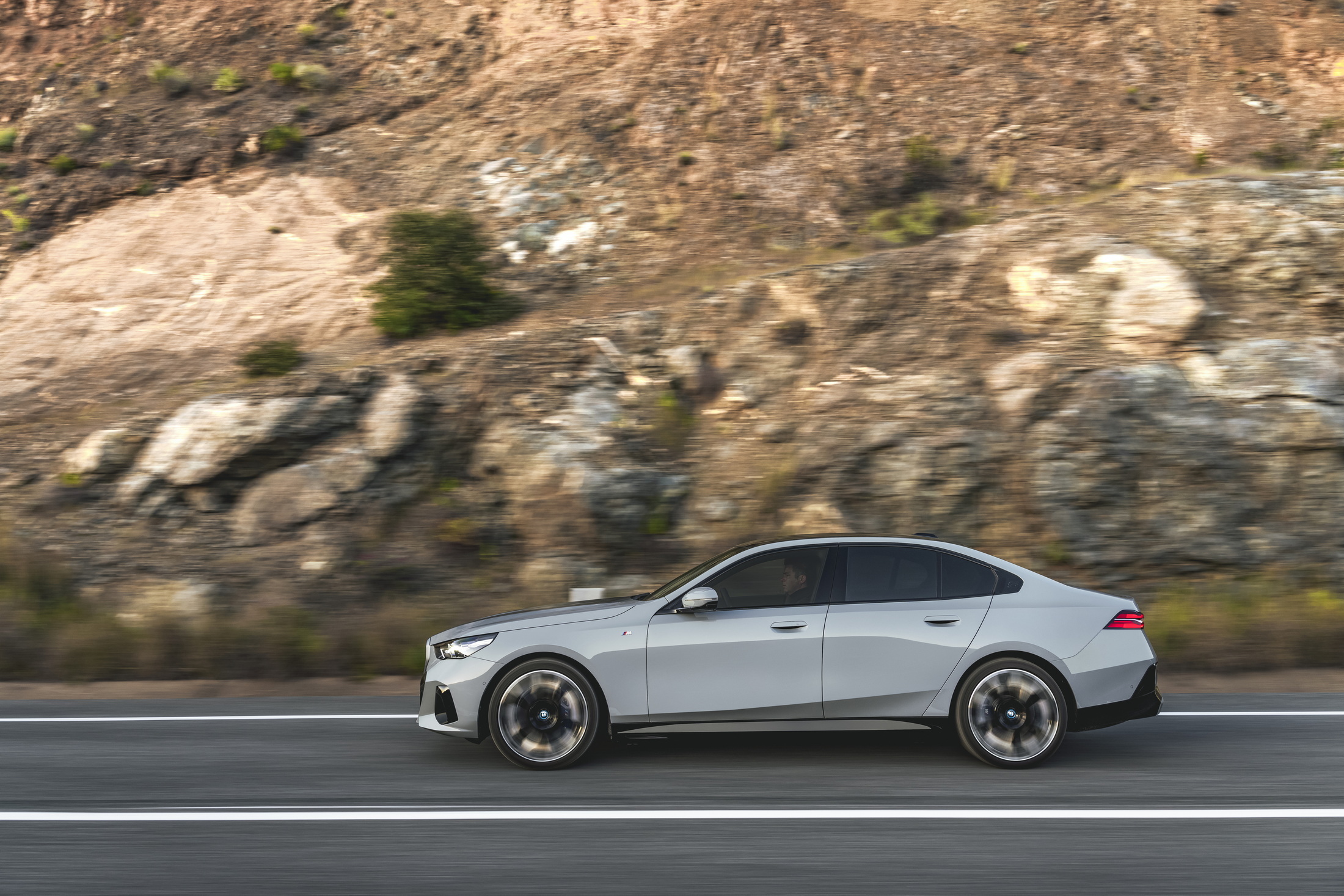
BMW isn’t officially calling the prototype shown here the Electric M3, or even the i3 M, though both names might seem like logical picks. If we had to guess, the latter feels like the more likely direction.
What Powers the Neue Klasse M?
At the center of all future electric models from BMW M, starting with the M3, will be an innovative powertrain based on the sixth-generation technologies found across the standard Neue Klasse family. At the front axle, there will be two motors, while at the rear, there will be a further two motors, each of which drives a single rear wheel.
BMW isn’t yet ready to reveal how much power its quad-motor system will produce, but don’t be surprised if future EV Neue Klasse models have four-digit horsepower ratings.
The motors are arranged in parallel, delivering power to one gearbox per wheel. Each of the two drive units also incorporates an inverter. The motors also allow for the precise control of power and torque at each wheel, creating what BMW says is a driving experience “that has never been achieved before.”
Supplying the motors will be a 100 kWh battery pack using BMW’s latest cylindrical cells. Driving ranges will obviously vary depending on the model, but the brand notes the pack has been designed to withstand the rigors of racetrack use. To offset some of the hefty weight of the electric powertrain, these electric M models will include lightweight natural fiber components.
Rear-Drive When You Want It
In news that will no doubt please hardcore driving enthusiasts, M says the front axle can be fully decoupled, turning its models into rear-wheel-drive beasts. Switching into RWD will also improve efficiency and boost driving range, so you can save the planet and spin up the wheels at the same time.
Channeling Hyundai’s Playbook
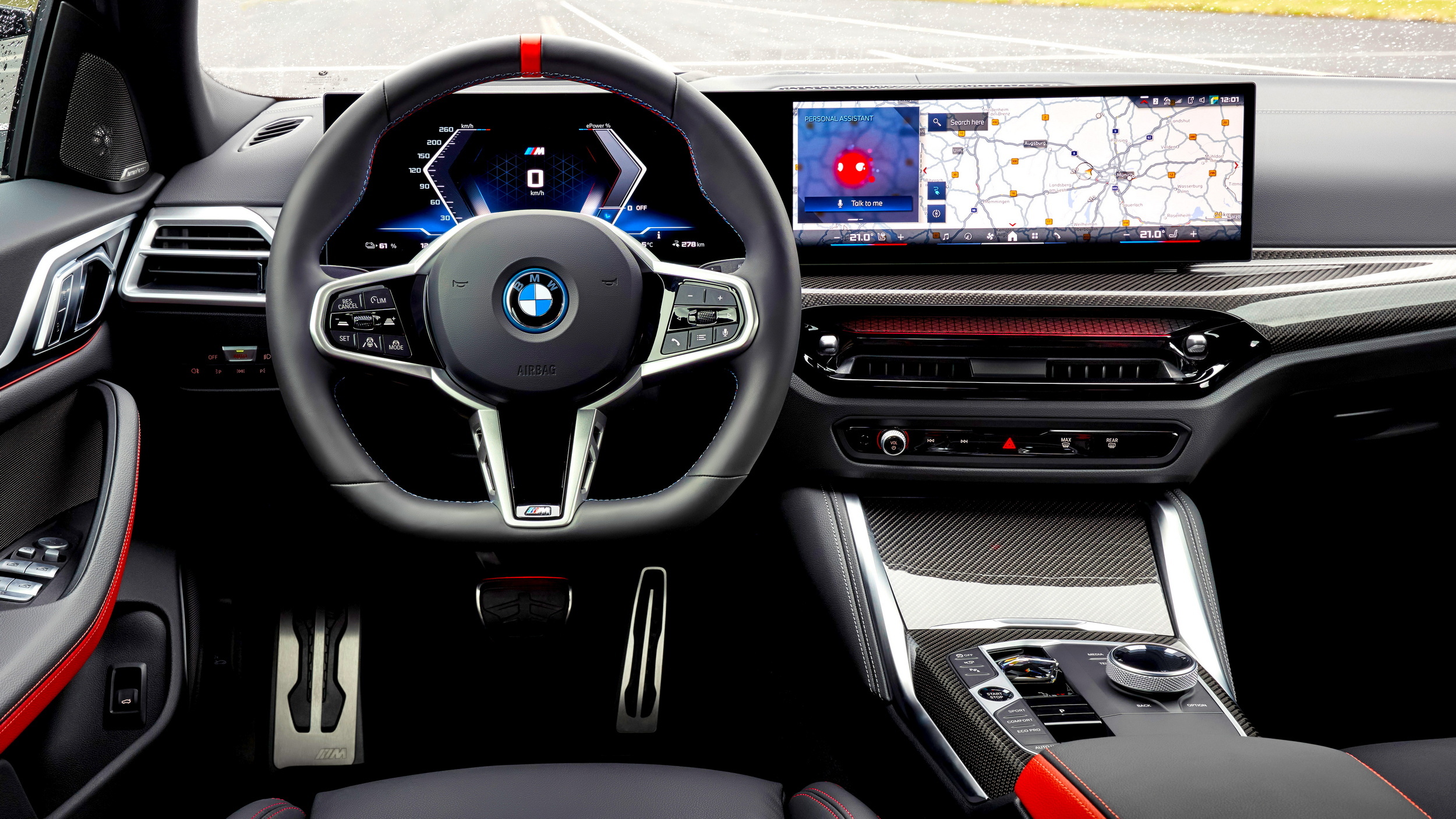
This isn’t where the driver-focused features will end. Much like the Hyundai Ioniq 5 N, electric M Neue Klasse models, like the M3 EV, will include simulated gear shifts and a special soundscape, aiming to add some emotion into the EVs, which are often void of excitement.
The ’Heart of Joy’ high-performance control unit will control all driving-related processes, like control of the wheels and the steering, operating alongside four high-performance computers. To put it simply, M’s Neue Klasse models will be tech fests aiming to put the driver at the center of the experience.
BMW cut prices across 31 models to stay competitive in China.
Fourteen brands launched incentives before the New Year rush.
Officials fear price cuts could trigger harmful deflation risks.
Price cuts aren’t just a domestic strategy for Chinese automakers. Even Western legacy brands are jumping in. Last week, BMW announced sweeping reductions across 31 of its models in China, highlighting a more aggressive effort to keep pace with intensifying competition in the world’s largest auto market.
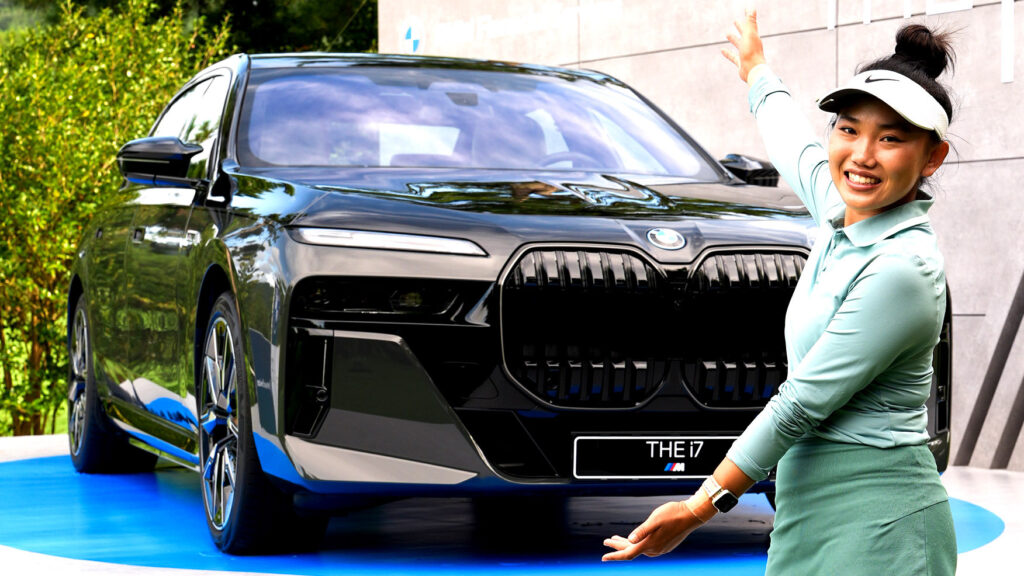
The biggest cut came to the BMW i7 M70L, the high-performance flagship of the all-electric 7-Series. This dual-motor sedan delivers 659 horsepower and 811 lb-ft (1,100 Nm) of torque. As of last week, it now carries a price tag that’s 301,000 yuan lower, a reduction of roughly $42,000.
While the i7 had the largest drop in raw numbers, the steepest percentage cut went to the iX1 eDrive25L. BMW trimmed the price of the long-wheelbase variant of the compact SUV by 24 percent, bringing the new starting figure to 228,000 yuan, or about $32,600.
Speaking to Bloomberg, BMW said the price changes are part of its “regular price management,” adding that “final transaction prices are independently negotiated and determined between authorized BMW dealers and customers.”
How Far Will Discounts Go?
Behind the curtain, though, the timing suggests more than just routine recalibration. November marked the second straight month of declining sales in China, according to data from the China Passenger Car Association. That slide has spurred several automakers to adjust pricing.
Meanwhile, regulators have introduced measures designed to prevent brands from undercutting costs, prohibiting sales below production cost and banning dealer incentives that push prices beneath that threshold, Bloomberg reports.
BMW’s recent cuts appear to bring official pricing closer to what customers were already paying after negotiations. According to Yale Zhang, managing director at Automotive Foresight, the updated stickers largely reflect existing transaction norms rather than undercutting them. “The new prices aren’t any lower than typical dealer selling prices,” Zhang noted.
When Deals Become a Warning Sign
Big savings could be just around the corner. With the Chinese New Year approaching in February, many manufacturers are expected to introduce further incentives in hopes of front-loading first-quarter sales.
At least 14 car brands have already rolled out some form of discount or incentive program since the beginning of 2026. Zhang believes this trend is less a temporary blip than a reflection of broader pressures within the market.
“Various kinds of promotional activities may ebb and flow in the market from time to time, but they are here to stay,” Zhang told the news outlet.
Chinese authorities, meanwhile, are taking a cautious stance. With more manufacturers opting to slash prices, regulators are increasingly concerned about the potential knock-on effects. They worry that an extended period of discounts could spark deflation, disrupt the automotive supply chain, and put downward pressure on wages.
Electric BMW iX4 spied testing ahead of official debut this year.
Coupe-like crossover shares styling cues with the new iX3 SUV.
Dual-motor AWD setup expected to deliver 463 hp and quick pace.
If you liked the BMW iX3, but wished it came in a slightly sportier and less practical package, you’re in luck as spy photographers have snapped the new iX4.
Caught undergoing testing in Europe, the electric crossover follows in the footsteps of its more conservative SUV counterpart, the newly lauched iX3. This is clear up front as it adopts a vertical twin kidney grille that is flanked by the company’s new “horizontal light signature.”
Coupe-Inspired Proportions
Changes occur further back as the iX4 has a rakish windscreen that flows into a steeply sloping roof. The sportier design results in new doors and a shrunken down greenhouse. We can also see a rounded shoulder, which contrasts with squared off wheel arches.
The rear end is unique to the crossover coupe as there’s a special spoiler with an integrated third brake light, which doesn’t appear to be working on the prototype. The model also bucks the iX3 by eschewing a rear wiper.
Shproshots
That being said, the rest of the design appears to echo its counterpart as we can see familiar taillights peeking out from beneath the camouflage. The rear bumper also looks similar, although it’s hard to be certain with all that camouflage.
Spy photographers didn’t get a glimpse inside, but the cabin should echo the iX3 and have a pillar-to-pillar Panoramic iDrive display as well as a 17.9-inch infotainment system. We can also expect a futuristic steering wheel, a 3D head-up display, and an intelligent personal assistant.
What Will It Deliver Underneath?
On the performance front, there should be an iX4 50 xDrive with a dual-motor all-wheel drive system producing a combined output of 463 hp (345 kW / 469 PS) and 476 lb-ft (645 Nm) of torque. This enables the iX3 to accelerate from 0-60 mph (0-96 km/h) in 4.7 seconds, before hitting a top speed of 130 mph (210 km/h).
The motors are powered by a 108.7 kWh lithium-ion battery pack, which provides a WLTP range of up to 500 miles (805 km). The impressive figures extend to the 400 kW DC fast charging capability, which enables the battery to go from a 10-80% charge in as little as 21 minutes.
We can also expect additional variants, which will be previewed by upcoming iX3 derivatives.
BMW hit a new sales record in the United States last year.
Every pure EV model experienced a decline in US demand.
Gas-powered SUVs remained the brand’s strongest sellers.
BMW just wrapped up its most successful year ever in the US, with more cars leaving dealership lots than in any other year in the company’s American history. But beneath the record-breaking headline, a more complicated picture is starting to emerge for EVs, as sales momentum falters following the White House’s decision to eliminate the generous federal tax credit that had helped keep demand afloat.
In 2025, BMW sold 388,897 vehicles across the country, a 4.7 percent increase from the 371,346 units it delivered in 2024. The gain came even though fourth-quarter sales slipped 3.4 percent, dropping from 117,506 to 113,512 units. MINI also posted growth, with a 9.3 percent year-on-year rise and a total of 28,749 cars sold.
EV Sales Crater
Then there’s the EV situation, which looked considerably less upbeat. BMW sold 42,484 fully electric vehicles in the US last year, down 16.7 percent from the 50,981 it managed in 2024. The decline was particularly sharp in Q4. After the federal government pulled the $7,500 EV tax credit, sales in the final three months collapsed by 45.5 percent to just 7,557 units.
BMW USA Sales 2025
Model
Q4 ’25
Q4 ’24
% Change
2025
2024
% Change
i3
0
0
0.0%
1
1
0.0%
i8
0
0
–
0
0
–
2 Series
6,213
5,011
24.0%
20,975
15,384
36.3%
3 Series
11,185
9,552
17.1%
33,031
31,330
5.4%
4 Series
7,502
11,254
-33.3%
39,379
42,608
-7.6%
5 Series
6,097
8,147
-25.2%
27,107
25,315
7.1%
6 Series
1
1
–
2
1
–
7 Series
2,862
3,806
-24.8%
11,393
10,714
6.3%
8 Series
1,167
1,287
-9.3%
4,029
5,345
-24.6%
Z4
510
658
-22.5%
2,113
2,129
-0.8%
X1
6,906
10,092
-31.6%
27,386
27,306
0.3%
X2
1,847
1,455
26.9%
6,739
3,619
86.2%
BMW cars
44,290
51,263
-13.6%
172,155
163,752
5.1%
X3
26,537
18,890
40.5%
76,546
68,798
11.3%
X4
998
2,487
-59.9%
5,910
9,978
-40.8%
X5
24,376
26,323
-7.4%
76,246
72,348
5.4%
X6
4,139
3,787
9.3%
12,000
9,481
26.6%
X7
9,806
9,953
-1.5%
31,575
29,632
6.6%
XM
657
589
11.5%
1,878
1,974
-4.9%
iX
2,709
4,214
-35.7%
12,587
15,383
-18.2%
BMW trucks
69,222
66,243
4.5%
216,742
207,594
4.4%
BMW brand
113,512
117,506
-3.4%
388,897
371,346
4.7%
Cooper S Hardtop 2 Door
1,380
2,268
-39.2%
6,670
8,445
-21.0%
Cooper S Hardtop 4 Door
1,273
1,677
-24.1%
5,405
3,216
68.1%
Cooper S Convertible
973
20
4765.0%
3,729
2,208
68.9%
Cooper S Clubman
1
12
-91.7%
14
783
-98.2%
Countryman
3,260
4,771
-31.7%
12,931
11,647
11.0%
MINI brand
6,887
8,748
-21.3%
28,749
26,299
9.3%
BMW GROUP
120,399
126,254
-4.6%
417,646
397,645
5.0%
SWIPE
Every one of BMW’s battery-electric models in the US saw a meaningful drop in sales. The i4, which remained the top-selling EV in the lineup, slipped 14.1 percent from 23,403 to 20,114 units. The i5 fell even more sharply, dropping 21.5 percent to 6,877. The i7 was down 15.3 percent to 2,905 units. The iX also struggled, with an 18.2 percent decline that left it at 12,587 sales for the year.
On a more encouraging note for the brand, BMW’s plug-in hybrids gained traction. Sales rose by 30.7 percent, climbing from 19,398 in 2024 to 25,351 in 2025. It wasn’t enough to offset the EV downturn, but it’s a sign that US buyers haven’t turned their backs entirely on electrification.
X Marks the Spot
The X3 led the lineup once again as BMW’s top-selling model, rising 11.3 percent to 76,546 units. That was just enough to slightly edge out the larger and more expensive X5, which posted 76,246 sales, a 5.4 percent increase over 2024.
Several other models also recorded solid gains. The 2 Series, which groups together the mechanically unrelated Gran Coupe and two-door variants, jumped 36.3 percent to 20,975 units. The 3 Series climbed 5.4 percent to 33,031, while the X6 posted a 26.6 percent increase, reaching 12,000 sales. As for the controversial XM, it recorded a 4.9 percent drop in sales compared to 2024.
BMW’s next-gen X5 adopts a new face with a simplified grille.
Neue Klasse styling elements appear throughout the X5’s design.
A wide mix of gas, diesel, plug-in hybrid, and EVs will be on offer.
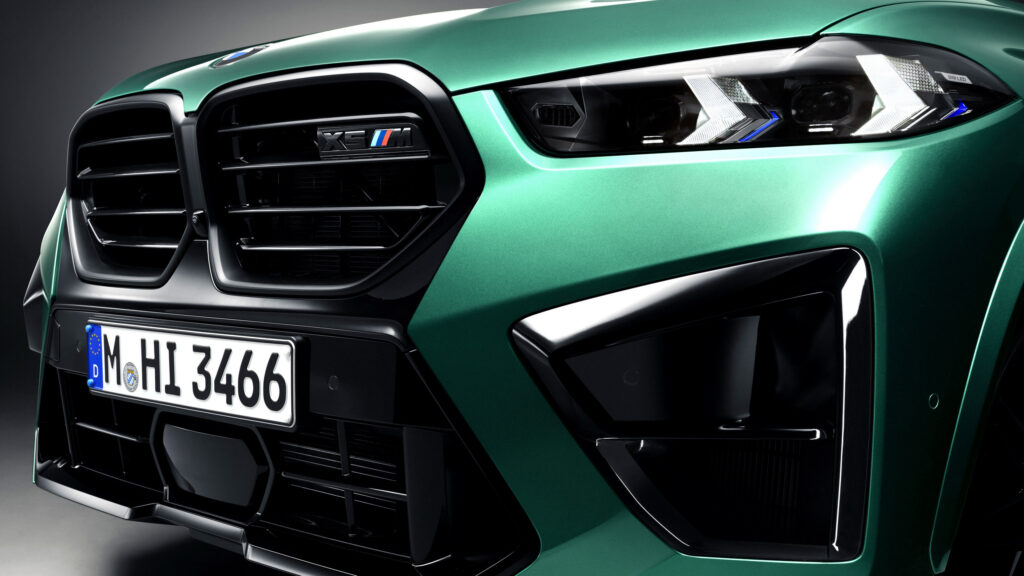
The X5 has never been BMW’s wildest design, but it’s managed to avoid the extremes seen elsewhere in the lineup. Still, the oversized kidney grilles on the current model don’t do it many favors. They don’t sink the look entirely, but they certainly don’t flatter it either.
The good news is that a new generation is on the way, and early signs suggest a cleaner direction, along with a range of powertrain options that stretches well beyond what most would expect.
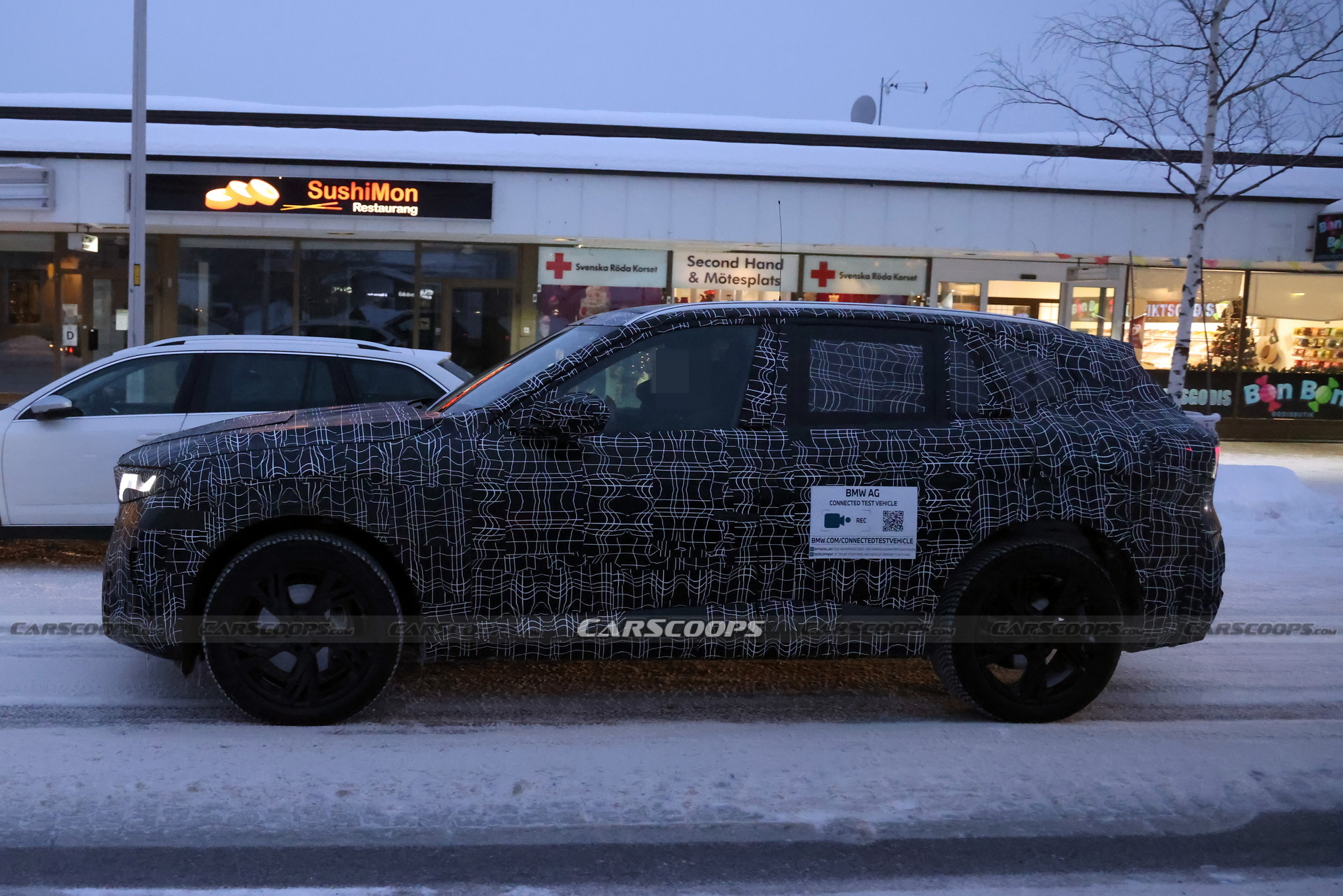
BMW has begun testing the upcoming X5, internally designated G65, and sent a prototype north to Sweden for winter trials. While still clad in camouflage, it’s already clear that the SUV will wear design elements from BMW’s Neue Klasse era.
Neue Klasse Meets X5
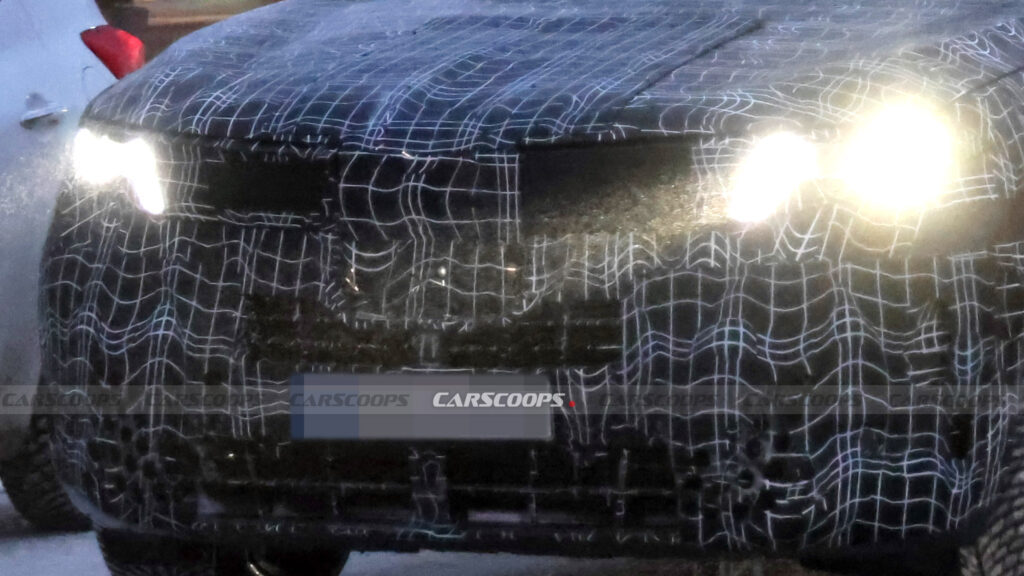
Like the second-generation iX3, the new X5 sports reworked headlights with sharply defined daytime running lights and a more technical front-end aesthetic. A gloss-black panel extends toward the center of the fascia, echoing the EV’s layout, and will house a pair of vertically oriented kidney grilles. Though still concealed by camouflage on this prototype, their shape is clearly visible beneath the surface.
SHproshots
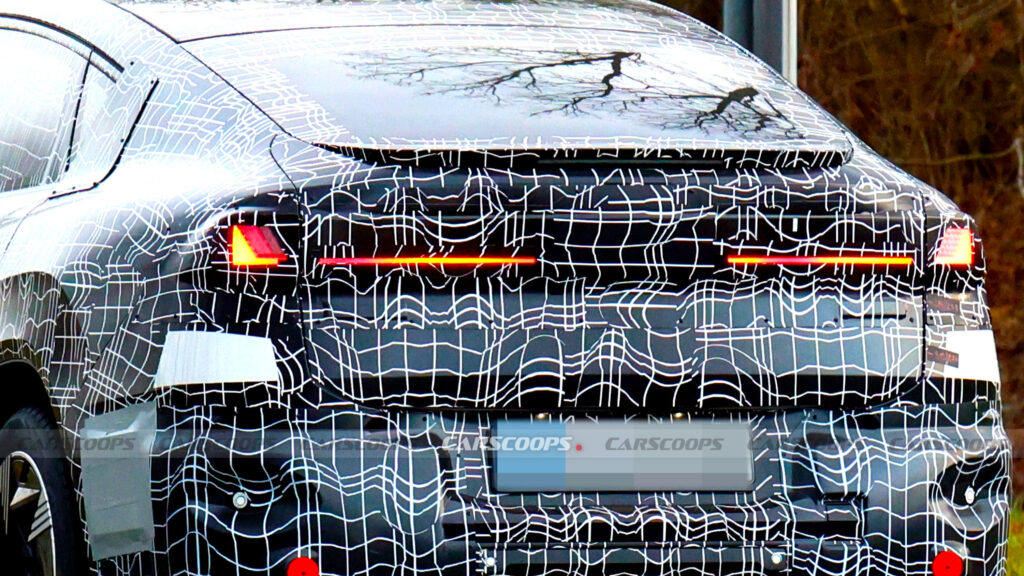
The rear end of the new X5 will also be a dramatic departure from the current model. It ditches the traditional taillights of the outgoing model and replaces them with thin, horizontal LED units that appear reminiscent of those used by the XM. This prototype also has a curvy rear spoiler stretching out above the window, adding to the striking new design.
Interior Changes
SHproshots
The cabin is also in line for a thorough redesign. Recent spy shots have confirmed that the new X5 will adopt the same Panoramic iDrive setup as the iX3. This includes a narrow display spanning the base of the A-pillars, paired with a sharply angled central infotainment screen.
While the steering wheel on this prototype may differ from the iX3’s squared-off four-spoke unit, it looks likely to use a more conventional two-spoke design, with enough visual weight to stand out on its own.
Powertrain Options
SHproshots
Beneath it all, the G65 X5 will continue to ride on BMW’s CLAR architecture, albeit in an updated form. This means a familiar chassis with enough flexibility to support combustion, hybrid, and electric variants without needing to reinvent the platform.
According to CarScoops sources, the combustion model will be sold in 40, 40 xDrive, 40d xDrive, 50e xDrive, M60 xDrive, and M60e xDrive forms. A potent X5 M version also seems inevitable. In addition to selling a slew of combustion-powered models, the brand will introduce an all-electric iX5 model, set to be sold in 50 xDrive, 60 xDrive, and M70 xDrive forms.
The powertrain options won’t end there. In addition to the gas, diesel, plug-in hybrid, and electric models, there could be a range-extended version of the iX5, dubbed the Rex, complete with a driving range of up to 621 miles (1,000 km). The new X5 will also be BMW’s first mass-market model available with a hydrogen fuel-cell powertrain.
Electric M3 expected to launch with four motors and 700 hp.
Neue Klasse design adds compact grilles and modern surfacing.
Swollen arches and bold front give this EV serious presence.
The all-electric BMW M3 is no longer just a concept talked about in forums or teased through obscure patents. It’s taking shape in the real world, and these latest spy shots give us the clearest view yet of BMW’s upcoming super sedan.
The idea of an all-electric M3 might ruffle a few feathers among traditionalists, but there’s little need for panic. Alongside this electric version, BMW will continue to offer a combustion-powered M3 that carries over the same twin-turbo inline-six as the current model without being fully hybridized. Purists won’t be left out in the cold.
The electric version, possibly named iM3, will be built on the new i3 platform that’s set to debut next year as BMW’s reimagined electric 3-Series sedan. As with that car, the M variant will follow BMW’s Neue Klasse design philosophy.
That includes abandoning the current M3’s polarizing grille in favor of something sleeker and, arguably, more cohesive.
Stephen Hancock
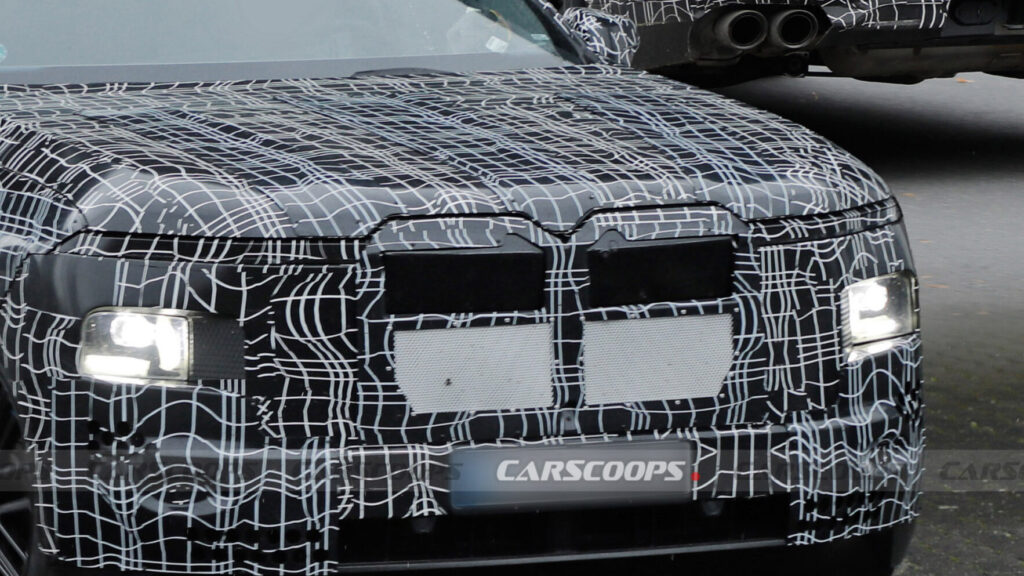
Judging by the latest prototype, the headlights look close to production spec. The daytime running lights are integrated cleanly into the headlight units and line up precisely with the redesigned kidney grilles.
There’s a strong sense of alignment here, literally and visually, something that hasn’t always been a given with recent BMWs.
It’s also hard not to be taken aback by just how beefy this prototype looks. Both the front and rear wheel arches sit nice and wide, giving it an ultra-aggressive look, perfectly fitting of an M-branded model. It may not sound as good as the current M3, but it’s definitely shaping up to have just as much visual presence.
Then there’s the matter of performance. We know that BMW is developing an electric powertrain with four motors for the new model, and has said its setup can deliver up to 1,341 hp.
That said, it’s unlikely the production model will hit those numbers. BMW is expected to limit output to around 700 hp, which keeps it safely below the upcoming electric M5 and maintains a performance hierarchy within the lineup.
Even so, with that kind of power it would comfortably outpace the next-generation combustion M3, which is projected to land somewhere near 550 hp. That performance edge could be a major talking point once both cars hit the road.
One key tradeoff will be weight. Spy shots from earlier this year suggest the electric M3 could come in as much as 465 kg, or 1,025 lbs, heavier than the current petrol version. That’s a significant increase, and how BMW balances that extra mass with chassis tuning will be crucial to the car’s driving character.
BMW is raising prices on most 2026 models starting January 1.
MSRP hikes range from $400 to $1,500 depending on the vehicle.
The company first increased prices of its 2026MYs in early July.
After Porsche’s recent round of price hikes, it looks like BMW will soon follow suit. According to a report from CarsDirect citing a dealer bulletin sent this week, BMW will be doing the same in the new year.
While it didn’t explicitly point to tariffs as the cause, the timing does invite speculation for certain models, even if the biggest increase happens to hit a model built right in the United States, where tariffs aren’t the go-to excuse.
BMW’s internal notice reportedly states that most vehicles in its range will see a price increase of roughly 1 percent, though not every model is affected. The adjustment will result in MSRP hikes ranging from $400 to $1,500 and will go into effect on January 1, 2026.
The most significant increases apply to the M5 Sedan and Touring, both up $1,400, and the BMW X6 M Competition, which will now cost an extra $1,500. Interestingly, the i4, i5, iX, i7, 7-Series, Z4, and XM are excluded from the price hikes.
This isn’t the first time that BMW has increased prices over the past six months. Back in July, it announced that the MSRPs of most 2026 models would rise by as much as 1.9 percent, resulting in price hikes of $2,500 for vehicles like the BMW X5 M and X6 M.
Those two models are built in the States, alongside other SUVs at the automaker’s South Carolina facilities. So technically, they shouldn’t have been impacted by tariffs, or at least not significantly, unless imported components factored in. As usual, the truth sits in a grey area.
For buyers looking to sidestep the latest round of price changes, it may be worth checking local inventory for cars already on dealer lots. Vehicles delivered before the end of the year are likely to carry current pricing.
Tariffs may have influenced BMW’s pricing for 2026, but the broader pattern raises more pressing questions. This is the second increase in just six months, suggesting something beyond routine adjustments.
Annual price bumps aren’t unusual in the auto industry, particularly with new model years. But those are usually linked to updates or added content, not blanket, across-the-board hikes with no clear explanation, and certainly not with this frequency.
Spy photographers appear to have snapped the redesigned iX1.
It’s expected to arrive in 2027 with a host of Neue Klasse technology.
SUV follows in the footsteps of the iX3 and adopts Panoramic iDrive.
The BMW iX1 will turn four years old in May, but major changes are in store as a Neue Klasse version is in the works. It promises to be a radical departure that ushers in some new technology we’ve already seen on the iX3.
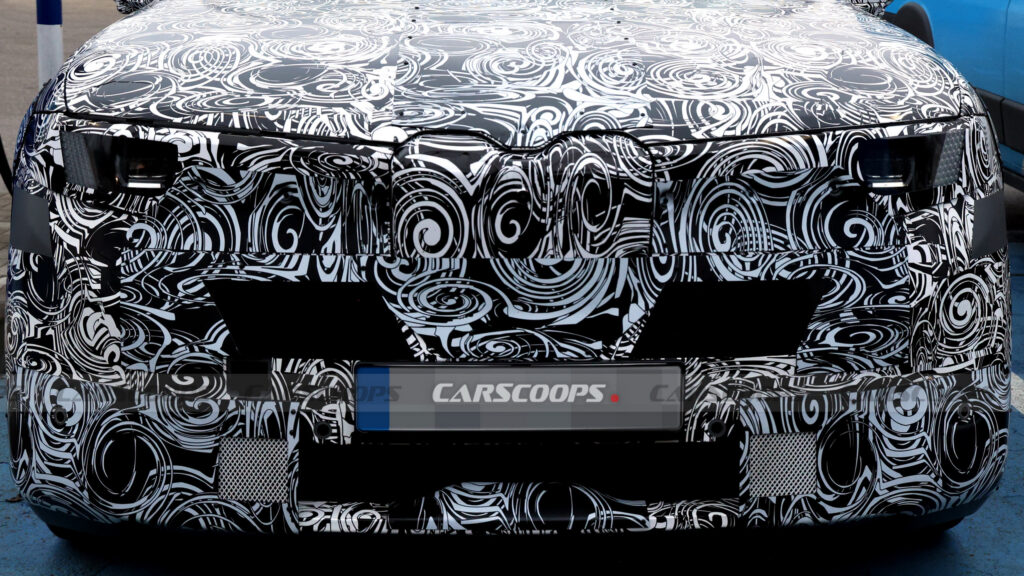
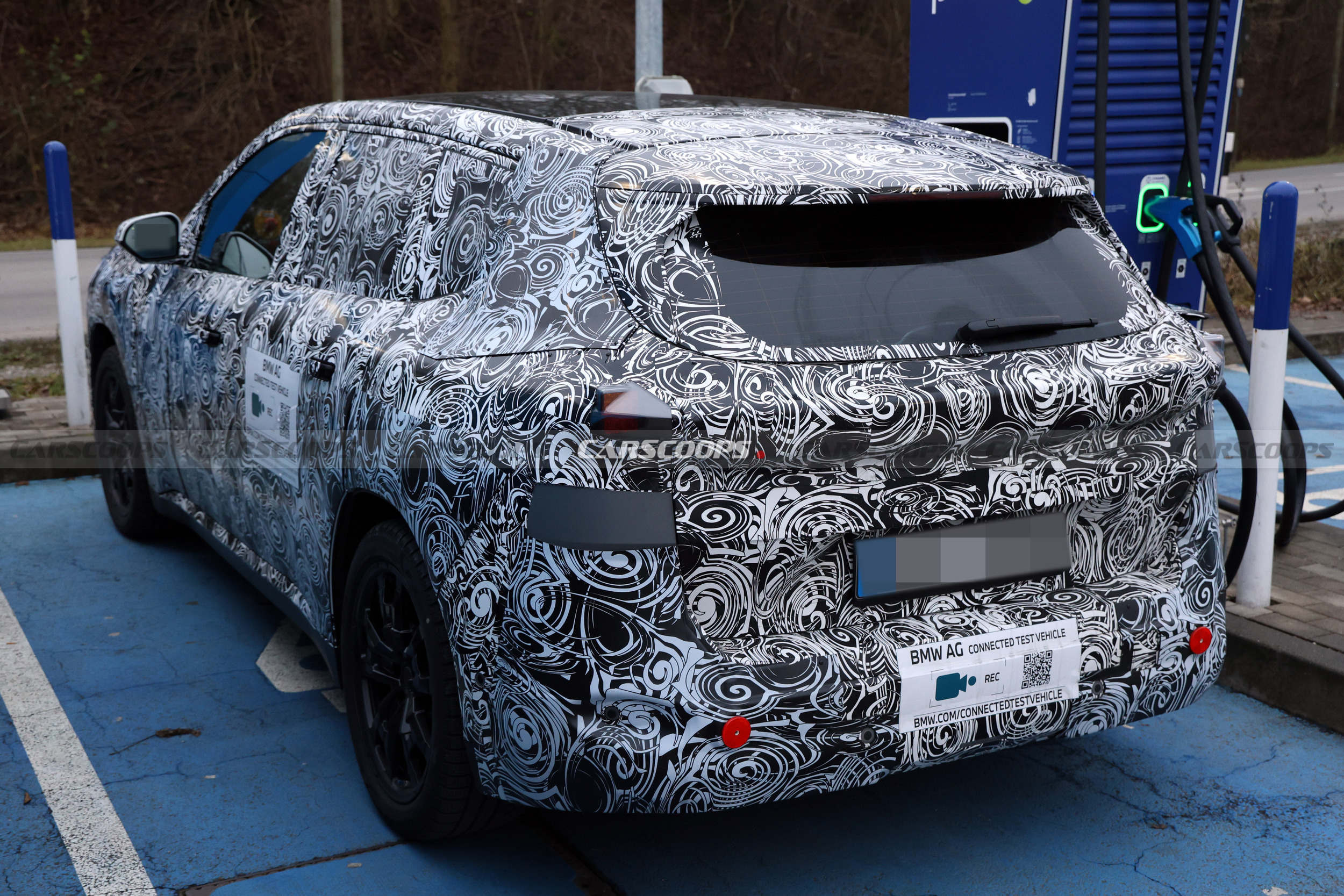
Spied at a charging station, the crossover adopts an all-new front end with a slender twin kidney grille. It’s accompanied by lighting units that closely recall those found on the iX3.
Further below, we can see a wide central intake that eschews the vertical element found on its larger counterpart. The bumper also appears pretty curvaceous, which should help to improve the model’s aerodynamics.
Moving down the sides, there are pronounced wheel arches and streamlined bodywork. We can also see flush-mounted door handles and a familiar greenhouse.
The rear end is heavily disguised, but there’s a new liftgate with a license plate recess that has been moved closer to the bumper. The model also sports a flatter spoiler and a more rounded design.
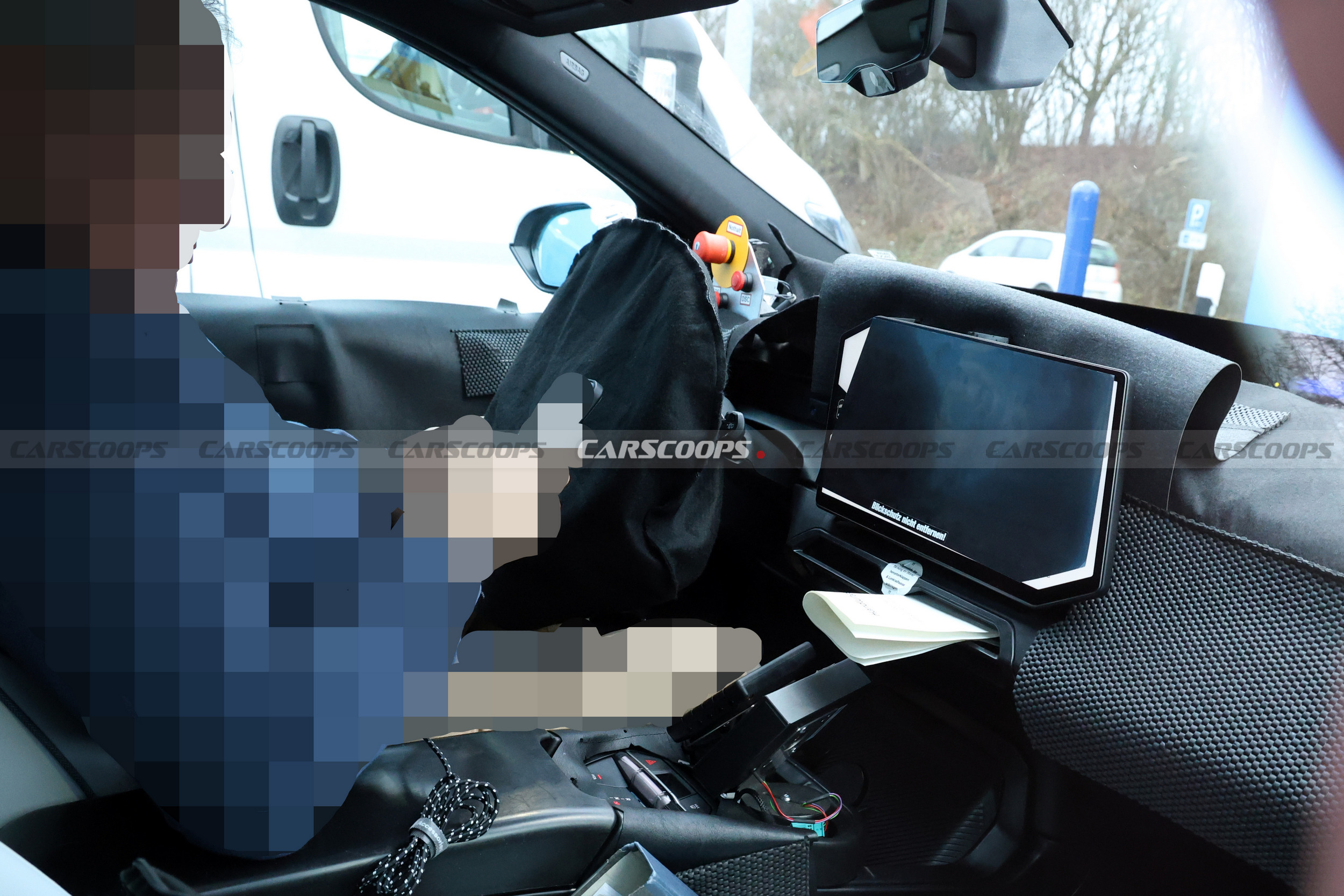
The Neue Klasse design continues inside the cabin, which has been equipped with Panoramic iDrive. It features a pillar-to-pillar display at the base of the windscreen as well as a freestanding infotainment system, which presumably measures 17.9 inches.
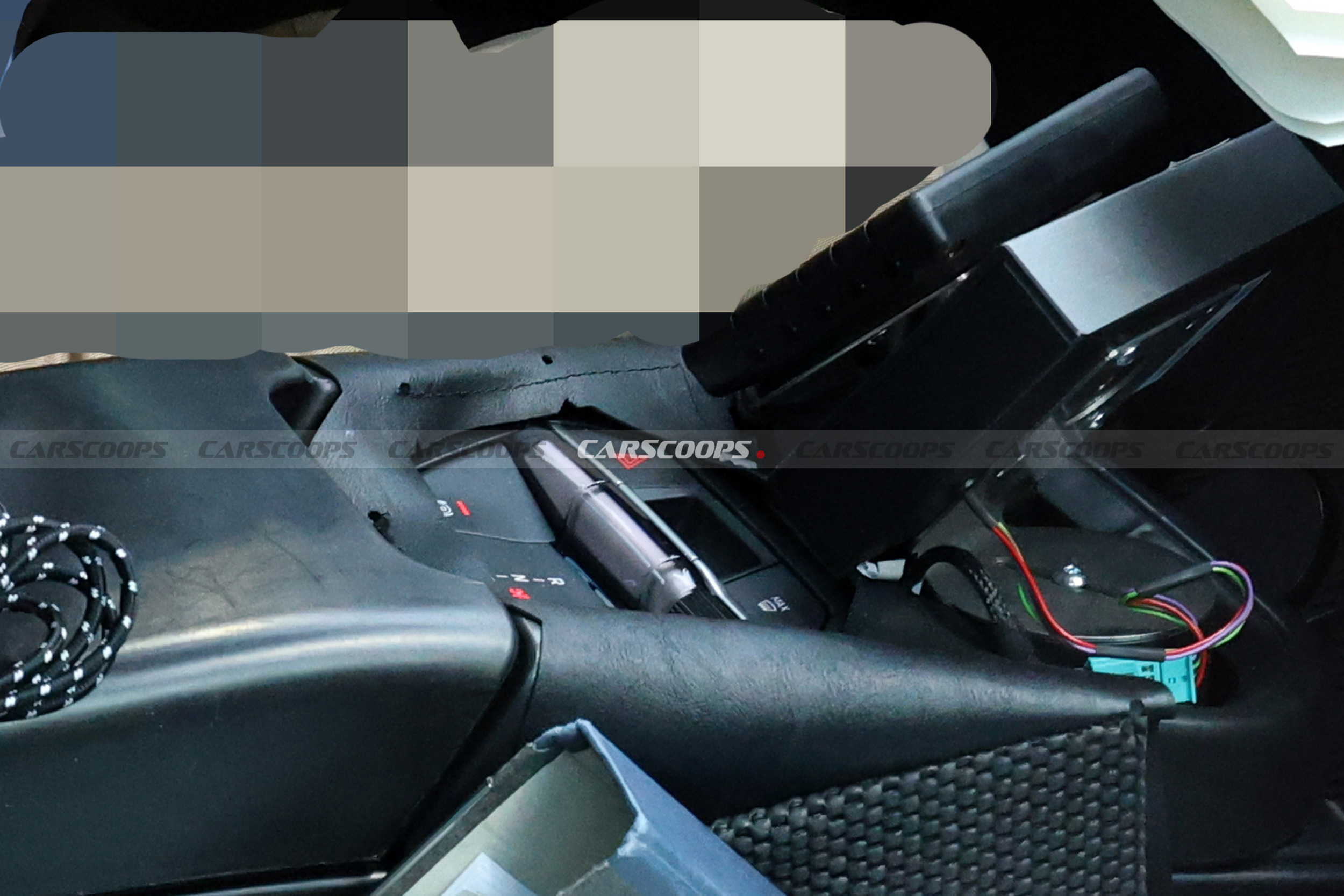
Elsewhere, we can see a new center console with a shifter and controls that appear to be lifted directly from the iX3. Additional details are hard to make out, but the crossover has a camera-mounted on the rearview mirror.
While it was initially believed BMW was working on a Neue Klasse facelift for the X1 lineup, this appears to be a redesigned iX1. This suggests the ICE and EV variants will diverge in a similar fashion to the X3 and iX3.
As a result, the connections to the iX3 will be more than skin deep and the two models will likely share a lot in common. This should include an 800V architecture, cylindrical-cell battery packs, and efficient electric motors.
We’ll likely get a better idea of what to expect once BMW rolls out additional versions of the iX3. So far, we’ve only seen the 50 xDrive variant, which has a dual-motor all-wheel drive system producing a combined output of 463 hp (345 kW / 469 PS) and 476 lb-ft (645 Nm) of torque. The model also sports a 108.7 kWh battery pack, which provides a WLTP range of up to 500 miles (805 km).
Average transaction price hovers near $50K with no slowdown.
Affordable cars fade as luxury trucks and SUVs dominate sales.
EV prices soften slightly but rely heavily on rising incentives.
If you were hoping falling interest rates, bigger incentives, or sheer consumer exhaustion might finally drag new-car prices back to Earth, number-crunching industry experts have some bad news.
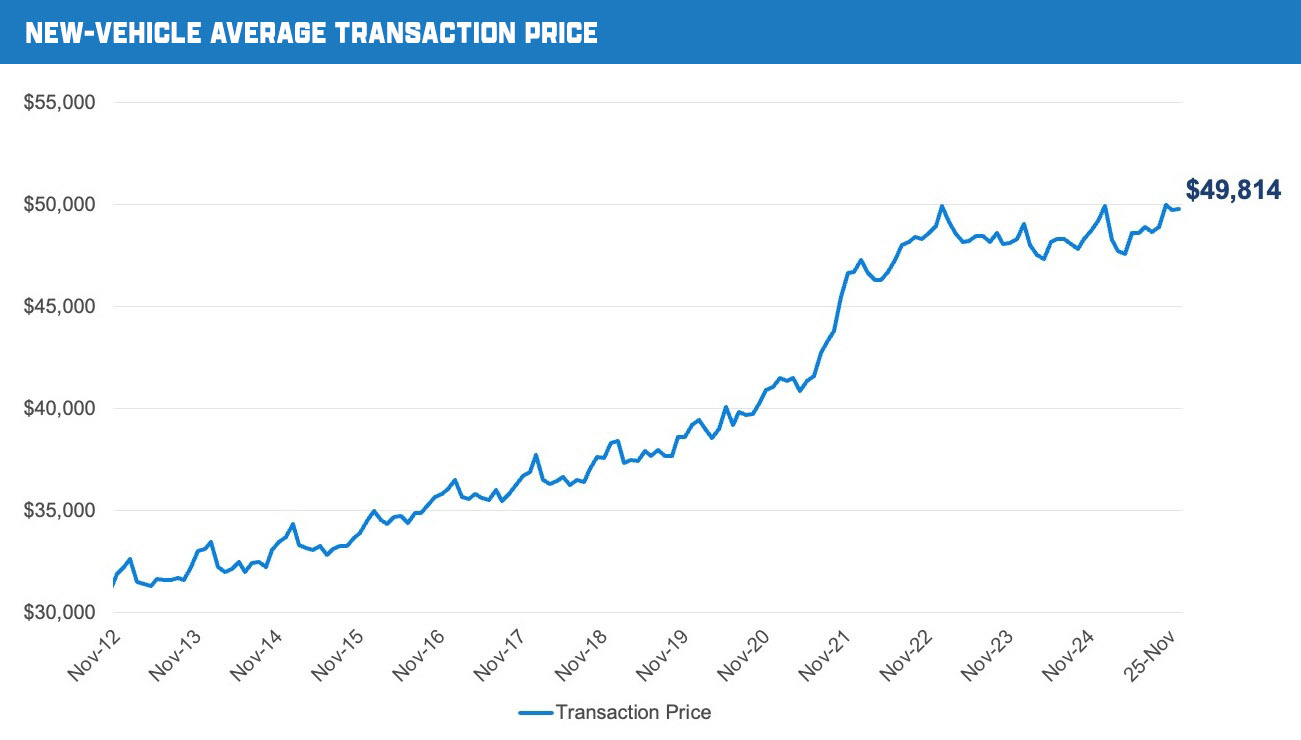
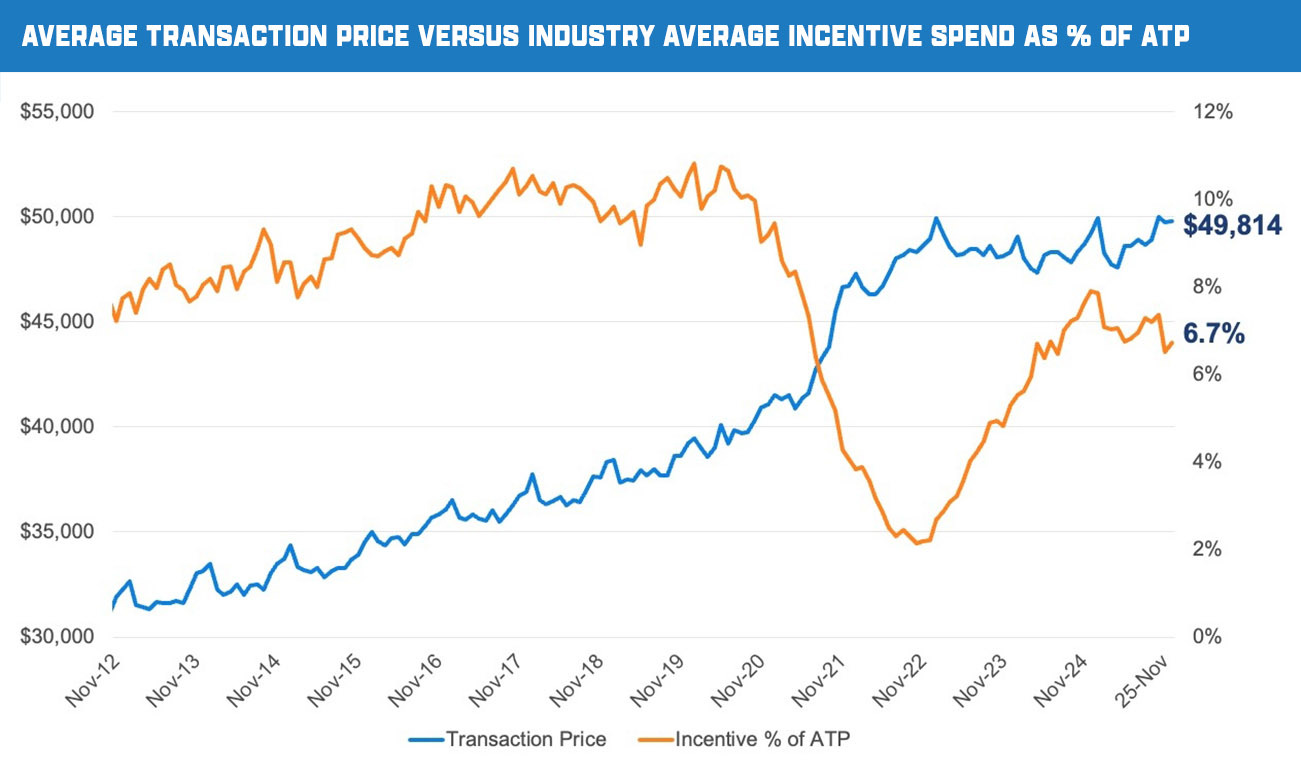
According to the latest Kelley Blue Book data, the average transaction price of a new vehicle in the US hit $49,814 in November, and it’s showing no real sign of dropping.
That figure is up 1.3 percent year over year and effectively unchanged from October, suggesting the industry has settled into a comfortable rhythm where fifty grand is the new normal.
Cox Automotive says prices usually peak in December, meaning the holiday season could push things even higher as buyers gravitate toward well-optioned trucks, luxury SUVs, and vehicles that require six figures of income and very little financial anxiety.
Fewer Incentives
Incentives are still around, but they are not doing the heavy lifting they once did. In November, incentives averaged 6.7 percent of average transaction prices, down from nearly 8 percent a year ago.
Automakers simply do not need to discount aggressively when buyers keep selecting expensive trims with panoramic roofs, giant screens, and fancy wheels.
The data makes one thing clear. Cheap cars are disappearing from the sales mix. Vehicles with MSRPs under $30,000 accounted for just 7.5 percent of November sales, down sharply from 10.3 percent a year earlier.
Meanwhile, more than one in 10 vehicles sold cost over $75,000. The most popular sub-$30K survivors remain familiar names like the Toyota Corolla, Chevrolet Trax, and Hyundai Elantra, clinging on like endangered species.
While transaction prices may have leveled off for now, average MSRPs, commonly known as the asking price, are still inching upward, reaching $51,986 in November. That marks a 1.7 percent increase over last year.
Blame Pricey Trucks
Trucks continue to be a major contributor to price inflation. Full-size pickups now average more than $70,000 for the third month in a row and accounted for over 14 percent of all sales in November, with nearly 183,000 units delivered. That helps explain why the industry average keeps floating upward even when compact and midsize segments remain relatively stable.
Electric vehicles add another twist. The average EV transaction price fell slightly month over month to $58,638, but remains up 3.7 percent year over year. Incentives jumped to over 13 percent of prices as sales softened again, dropping more than 40 percent compared with last year.
Tesla’s average transaction price rose to $54,310 in November, even as sales fell 22.7% year over year, largely due to sharp declines in Model 3 demand. Prices for the Model Y, the best-selling EV in the U.S., edged up slightly. Cybertruck sales fell to 1,194 units, their lowest monthly total of 2025, though its average price rose to $94,254.
Who’s Really to Blame?
According to Cox Automotive Executive Analyst Erin Keating, today’s prices aren’t just the result of inflation or supply hangovers, but they reflect what consumers are choosing to buy.
“It’s important to remember that the KBB ATP reflects what consumers choose to buy, not what’s available,” she explained.
“Many new-car buyers today are in their peak earning years and are less price-sensitive, opting for vehicles at the higher end of the market to get the features and experiences they value most. In November, sales of vehicles priced above $75,000 outpaced those below $30,000, underscoring this preference for premium products” Keating added.
The takeaway is simple. Prices are high because buyers keep buying high. Until that changes, the average US driveway will continue to look alarmingly expensive.
We just have to hope the trend doesn’t discourage automakers from developing and building the more affordable models that less affluent Americans still need.
Next generation BMW X7 appears in new spy shots ahead of 2027.
Split headlights stay but the large SUV gets redesigned bodywork.
Gas hybrid and electric powertrains will all be offered globally.
BMW engineers are burning the midnight oil to prepare a wave of 40 new or refreshed “Neue Klasse” models by the close of 2027. Among them is the next-generation X7, recently caught in fresh spy shots out of Germany.
At first glance, the camouflaged prototype might pass for a routine facelift, but the changes run far deeper, pointing clearly to a full generational shift. The current X7, launched in 2018, already underwent a mid-cycle refresh in 2022, so this next step arrives on schedule.
Unlike other Neue Klasse entries, the X7 will keep its distinctive split LED headlight setup, now framing what appears to be an even larger kidney grille. The headlights themselves are smaller and sit lower on a redesigned bumper that features more squared-off intakes.
In profile, the new X7 adopts cleaner surfacing along its pronounced fenders, and the conventional door handles give way to slim fins that likely improve aero. The glasshouse remains largely familiar, although the D-pillar looks set to adopt a more pronounced take on the Hofmeister kink.
Baldauf
At the rear, heavy camouflage hides the design, and the prototype still wears placeholder taillights. These will almost certainly be swapped for full-width units in production, borrowing cues from the smaller iX3 Neue Klasse and what’s coming for the next X5 and iX5.
Tech Upgrades and Interior Overhaul
Inside, BMW is expected to introduce the Panoramic Vision display, running across the base of the windshield. It will be joined by a larger central touchscreen, an upgraded AI assistant, and a new-look steering wheel with a more concept-like aesthetic.
Processing capabilities will get a serious upgrade courtesy of BMW’s new “Superbrains,” the central computing architecture that acts as the vehicle’s digital backbone.
The X7 will continue offering a seven-seat, three-row layout, one of the key factors setting it apart from other BMW SUVs and placing it in direct competition with the Mercedes-Benz GLS and Volvo’s EX90 and XC90.
Electric and Gasoline Together
Baldauf
The latest prototype spotted on the road features quad round tailpipes and sits on sizable alloy wheels, pointing to a mild-hybrid V8 powertrain, likely in an M-badged variant. That said, earlier prototypes confirmed that the new generation will also include a fully electric iX7 model for the first time.
In contrast to BMW’s smaller models, where combustion and electric variants ride on separate platforms, the X7 and iX7 will share the same architecture. This will reportedly be a development of the current CLAR platform, adjusted to support both traditional and EV setups.
BMW hasn’t locked in a release date for the next X7 and iX7, but the roadmap suggests a 2027 launch. Both models will be built in BMW’s Spartanburg plant in South Carolina, alongside the X3, X5, X6, XM, and a brand-new rugged SUV aimed squarely at the Mercedes G-Class.
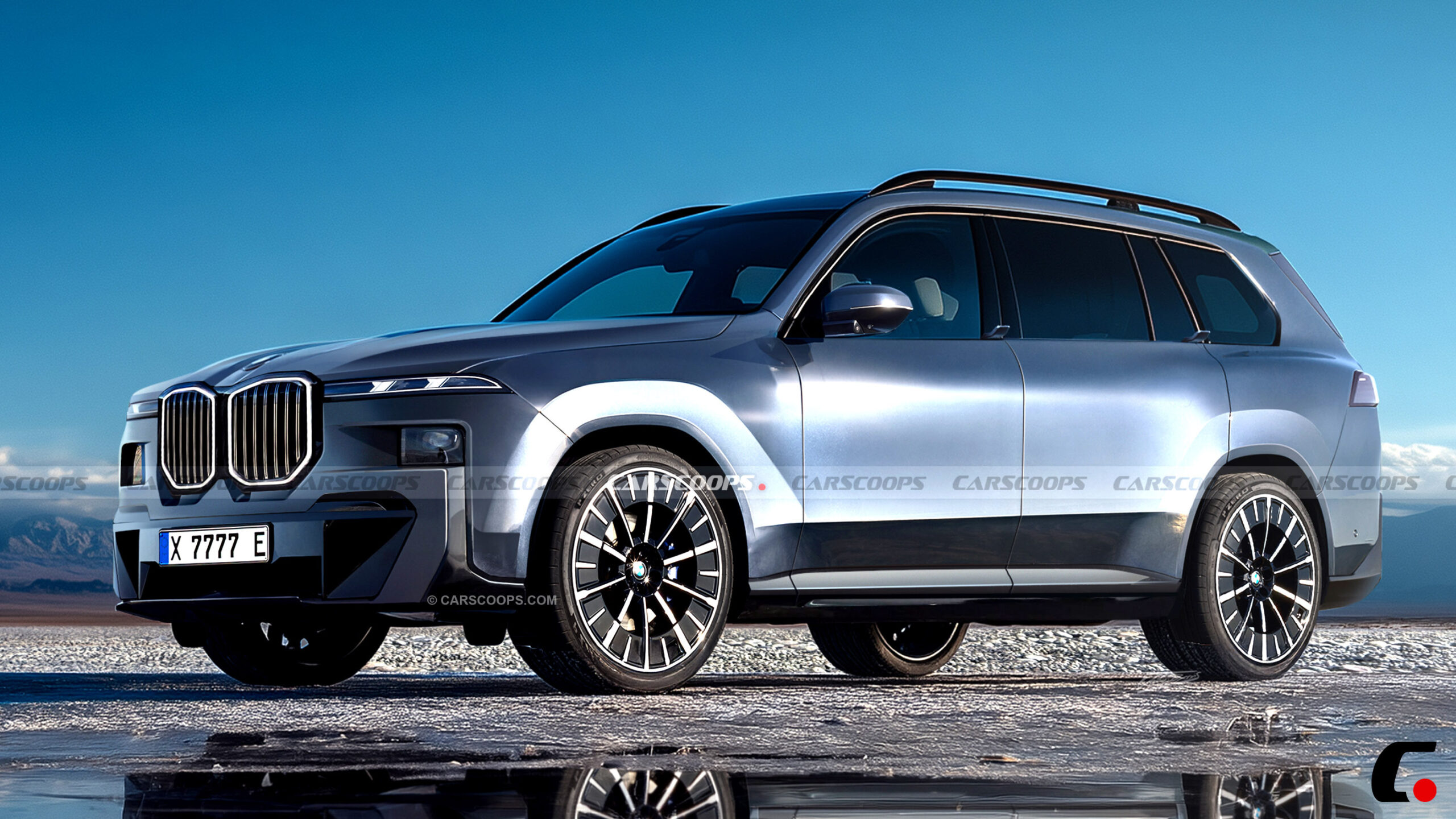
Below, you’ll find a speculative rendering of the next-generation X7, created by our own Josh Byrnes.
BMW M’s next generation will lean heavily into electrification.
Dirk Hacker retires after 37 years as BMW M’s development boss.
The brand’s future lineup includes an all-electric version of the M3.
As BMW prepares for a significant leadership change at the very top of the pyramid, a key shift is also happening within its high-performance division. Just days after the company confirmed that Milan Nedeljkovic will succeed Oliver Zipse as CEO next year, BMW M has named a new head of development.
Stepping into the role is Alexander Karajlovic, best known for overseeing one of M’s most polarizing recent projects, the BMW XM SUV.
Karajlovic’s track record within BMW includes a range of roles that place him squarely in the performance and SUV space. Between November 2017 and 2020, he led development for BMW’s X derivatives and served as project manager for the XM, the M division’s first standalone model since the M1 in 1978, and arguably one of its most divisive to date.
He also served as vice president for the BMW M Product Line for two years, before heading back to the broader BMW group and worked in the areas of Requirements, Concepts, and Driving Experience Integration.
He now steps in for Dirk Hacker, a veteran who’s been with the BMW Group for 37 years and spent the last 11 of those at BMW M. Hacker has led development since 2015, a tenure that included not only technical oversight but hands-on involvement as a driving instructor with BMW’s Driving Experience program. The last model launched under his direction was the new M5 Touring.
“Dirk Hacker’s departure sees the long-term Head of Development at BMW M GmbH bow out to start his well-earned retirement,” BMW M chief executive Franciscus van Meel said. “His name is inextricably linked with an unprecedented product offensive, superior product quality and yearly sales records at BMW M.”
BMW M’s Future Plans
Karajlovic takes over at a time of transition, as the M brand begins laying groundwork for its next-generation lineup. Among the most closely watched projects is the upcoming M3, which is being developed in both all-electric and twin-turbo six-cylinder versions.
The fully electric model, a major technical shift for the badge, is expected to feature four electric motors and deliver upwards of 700 hp, a configuration that will likely spark no shortage of conversation among fans and skeptics alike.
BMW names Milan Nedeljkovic as its next CEO replacing Oliver Zipse.
Nedeljkovic joined BMW in 1993 and leads production operations.
Zipse will remain CEO until the 2026 Annual General Meeting.
BMW has named its next chief executive officer, confirming that Milan Nedeljkovic, the brand’s current head of production, will take the reins next year. His appointment comes at a pivotal moment for the company, as it pushes deeper into electrification and prepares to usher in its Neue Klasse generation of vehicles.
Nedeljkovic won’t be stepping into the role immediately, though. Incumbent CEO Oliver Zipse will continue leading the company until BMW’s Annual General Meeting on May 13, 2026. After that, Nedeljkovic is set to begin his term, with a contract that runs through 2031.
Zipse has been at the helm for seven years, steering BMW through an unusually turbulent stretch. His time in charge included the COVID-19 pandemic, widespread supply chain disruption, and a bevy of product rollouts that ranks among the most intensive in the company’s history.
“Oliver Zipse has always prioritized BMW’s success,” chairman of the supervisory board of BMW AG, Dr. Nicholas Peter described. “He consistently took a clear stance—even in the face of great external headwinds—and thus kept the company on track during turbulent times.”
Nedeljkovic, meanwhile, is a BMW veteran. He joined the company in 1993 as a trainee and has since held senior roles at its Oxford, Leipzig, and Munich facilities. According to Dr. Martin Kimmich, deputy chairman of the supervisory board and chair of the Global Works Council, he’s built strong relationships inside the company.
“He is held in high regard by and enjoys the trust of BMW’s workforce,” Kimmich said. “Together with him, we look forward to continuing the long tradition of cooperative collaboration between the Works Council and corporate management as a foundation for our BMW success story.”
The Future of BMW
The next five years will be hugely important for the BMW brand. It plans to launch more than 40 new or updated models by the end of 2027, all of which will use the same computing systems as the new iX3.
That includes a full facelift of the company’s vehicle range, unified under the design direction set by the second-generation iX3. Many of those models will also adopt the iX3’s new Panoramic iDrive system, marking a significant update to both interface and in-cabin tech.
BMW slips a mysterious EV silhouette into its latest holiday video.
The teaser links to current electric models mentioned in the clip.
The shape suggests a crossover possibly related to the new iX3.
The holiday season is upon us and that means automakers have rolled out an assortment of Christmas-themed campaigns such as Lexus’ December to Remember. These are easy to overlook, so it’s surprising that BMW decided to sneak a teaser in one of them.
The video begins with an advent calendar opening to reveal an assortment of models including the 7-Series. It then zooms in on December 24 and the box opens as question marks shoot out.
We’re then shown a darkened silhouette of a mysterious vehicle. It’s hard to tell what’s being displayed, but the accompanying text gives us some clues. In particular, it notes the video shows the iX1 xDrive30, iX2 xDrive30, i4 M50 xDrive, i5 M60 xDrive Touring, and i7 xDrive60.
All five of them are electric, so it’s safe to assume the mystery model is as well. The vehicle also appears to be a crossover that recalls the new iX3.
We’re not sure what BMW has up their sleeve, but spy photographers have already snapped pictures of the iX3 M60. It’s expected to have a sport-tuned suspension and beefier brakes. We can also expect styling tweaks inside and out.
Another possibility is the new i3. BMW has been teasing the car for months and the automaker could use Christmas Eve to share more details.
Another outside possibility is a glimpse at the upcoming iX5. It’s expected to debut next year and prototypes have already been spied on numerous occasions.
Still, the safest bet remains a new take on the iX3. In fact, when BMW introduced the iX3 50 xDrive in September, they said “further fully electric variants will follow, including a single-motor rear-wheel drive model.” The holiday clip may be the brand’s quiet way of saying that time is near.
Redesigned BMW 3-Series and i3 sedans were spied undergoing tests.
Each model rides on a unique platform, featuring unique, but similar styling.
The i3 50 xDrive could have 463 hp and an EPA range of around 400 miles.
BMW is working on 40 new or updated models and that includes the redesigned 3-Series and 3-Series EV, known as the i3. Both were recently spied undergoing testing and they sport some notable differences.
While both cars have a Neue Klasse front end, the gas-powered model has a prominent lower intake that appears to have an active shutter grille. The lower bumper on the i3 is covered by camouflaged mesh, but it should feature a similar setup.
More notable differences are revealed in the comparison images as we can see the two models have different rooflines. The i3’s is relatively flat, while the 3-Series has a subtle slope.
We can also see slightly different greenhouses with diverging rear door designs. The ICE-powered model has a nearly vertical partition, while the EV has a more angular design with a triangular base. Furthermore, both cars have unique rear quarter glass.
Baldauf
Even something as mundane as the location of the charging/fuel door is different. On the 3-Series, it’s located towards the front of the rear fender and sits slightly above the top of the rear taillights. This contrasts with the i3, which has a charging port that is located lower and towards the middle of the panel.
All of this suggests a lot of manufacturing complexity and few shared components – at least on the outside. Speaking of which, spy photographers did get a glimpse of the cabin and it shows a freestanding display and a new steering wheel.
The rest of the interior is covered by black cloth, but one of the images clearly shows a pillar-to-pillar Panoramic iDrive display at the base of the windshield.
Powertrain details remain scarce, but the i3 should follow in the footsteps of the iX3. The crossover is being launched in 50 xDrive guise, which features a dual-motor all-wheel drive system producing a combined output of 463 hp (345 kW / 469 PS) and 476 lb-ft (645 Nm) of torque.
This enables the model to accelerate from 0-62 mph (0-100 km/h) in 4.9 seconds, before hitting a top speed of 130 mph (210 km/h).
The motors are powered by a 108.7 kWh lithium-ion battery pack, which provides a WLTP range of up to 500 miles (805 km). The impressive numbers extend to the 400 kW DC fast charging capability, which enables the battery to go from a 10-80% charge in as little as 21 minutes.
Baldauf
BMW has already confirmed further electric variants will follow including an entry-level model with rear-wheel drive. It’s likely that a number of these powertrains will be shared with the i3.
The 3-Series will be more evolutionary as it will ride on an updated version of the CLAR platform. However, previous reports have suggested we can expect an updated engine lineup including a new M350 with over 400 hp (298 kW / 406 PS).
Bavarian Econs Tech converted a 1972 BMW 2002 into an EV.
It uses a 33 kWh BMW i3 battery and a Tesla Model S motor.
Offers 178 hp, 125 lb-ft of torque, and a 124-mile driving range
Electric vehicles have a way of making everyday driving feel effortless. being quiet, smooth, and free from the clatter and compromise of combustion. As a daily companion, they can make traditional gas-powered cars seem like holdovers from another era.
But there’s a reason enthusiasts still care about engines. They give a car its personality, especially in vintage models like the BMW 2002. So here’s the question: would you want to cruise around in a 1972 BMW that’s been reworked to run on electric power?
Currently listed on Bring a Trailer, this 1972 BMW 2002 in Golf Yellow, now known as the 2002te, has been given a new lease on life courtesy of Bavarian Econs Tech, a specialist outfit based in Munich. The conversion is thorough. The factory engine and drivetrain are long gone, replaced by the 33 kWh battery pack from a BMW i3.
Feeding that battery’s energy to the wheels is an electric motor sourced from a Tesla Model S. The motor delivers 178 horsepower and 125 lb-ft (170 Nm) of torque, all managed by a 400-volt electrical system.
Light, Quick, and Quiet
Bring a Trailer
According to the seller, the car can drive up to 124 miles (200 km) on a single charge and run to 62 mph (100 km/h) in a swift 6.2 seconds, more than anyone really needs in most situations. It also tips the scales at just 2,400 lbs (1,088 kg), and we’re sure it’s plenty of fun to throw around corners.
However, in addition to lacking an engine and all of the associated noises and vibrations, the car doesn’t have a transmission, so the next owner won’t be able to enjoy the thrill of changing gears.
An individual from Bavarian Econs Tech who built the car says the 2002 arrived at their workshop with just 31,000 km (19,262 miles) under its belt and was free from rust. Impressively, the exterior paint remains original, as is most of the interior.
There are updates, though. A new set of bucket seats have been installed alongside refreshed carpets and an updated air conditioning system. Helping to further modernize the car is a Bluetooth audio system with eight Helix speakers and a subwoofer.
Adding to the car’s striking looks are 13-inch Alpina wheels clad in Michelin XDX-B tires. The EV-powered BMW has also been equipped with adjustable KW Racing V3 Classic coilovers and all of the important bushings have been replaced with polyurethane ones from Powerflex.
If a classic with an electric twist is right up your alley, the auction is now live on Bring a Trailer. Take a look at it over here and get your bid in while it’s still up.
One in five cars in Germany failed annual roadworthiness inspection.
VW’s Golf, Touareg, and T-Roc dominated rankings across segments.
Mercedes led long-term quality with lowest defects among older cars.
Germany’s car-check watchdog has crunched the reliability numbers and once again, Tesla finds itself parked at the very bottom of the heap. The 2026 TÜV-Report, covering annual roadworthiness inspections of approximately 9.5 million vehicles between July 2024 and June 2025, found that Tesla EVs occupied the two bottom spots in the league table.
The Model 3, which was the worst-ranked car for the two previous years was found to have a defect rate of 13.1 percent, meaning one in every 7.6 cars in the two-to-three-year-old ages group failed the Hauptuntersuchung safety check.
Why Is The Model Y So Troubled?
But the Model Y was even worse. It had a defect rate of 17.3 percent, versus 3.5 percent for a Mini Cooper SE, making it the worst TÜV has seen in this age group in a decade. The biggest defect culprits were the axle assembly, suspension, brakes and lighting.
Pulling back to look at the bigger picture covering cars of all ages reveals that 21.5 percent, or one in five cars failed the inspection due to a “significant” or “dangerous” defect, an increase of 0.9 percent on last year, ADAC reported. And the proportion with minor defects rose 0.8 percent to 12.3 percent.
Other reliability villains include the BMW 5-series and 6-series in both the 4-5-year-old and 8-9-year-old age groups, the Dacia Duster in the 6-7 and 10-11 age groups and the Renault Clio among 12-13-year-old cars.
But with every list of losers there has to be a list of winners, and for cars that have passed their fourth birthday, this one is headed by Volkswagen.
The VW Golf wagon and T-Roc scored well in the 4-7-year-old categories and the automaker’s Touareg was top of the oldies. The Mazda CX-3 and Mercedes B-Class were also commended.
Looking at the 2-3-year-old group, Fiat’s 500e toped the small car category, proving to Tesla that EVs can be reliable, the Mazda 2 and BMW 1-series were the top-rated small car and compact, and the C-class took the mid-range award (if you’re reading from the US, those classifications will look kinda messed up).
The T-Roc popped up again to take best SUV, and the B-class bagged most reliable nearly-new minivan.
One big change in this year’s study is the introduction of an award for long-term quality, handed out to brands whose vehicles, aged 10+ exhibit the lowest average defect rate for safety-related faults and stand for quality, durability, and good service.
Mercedes took gold with an 18.5 percent defect rate – almost matching that of a 2-3-year-old Model Y – Audi was second with 19.2 percent and Toyota snuck onto the podium’s last step with a 22 percent defect rate.
BMW’s iX3 50 xDrive completed a 626-mile drive from Hungary to Munich.
The team finished with 2 percent battery left, enough for another 12 miles.
The SUV used smaller 20-inch wheels and skipped HVAC to save energy.
BMW’s latest step into its electric future comes with more stamina than we expected. The second-generation iX3 , unveiled a few months ago with a projected range of 497 miles (800 km) under the WLTP cycle, has quietly outperformed even BMW’s own estimates, though, as always, there are a few caveats tucked in the fine print.
In a real-world run, the electric SUV managed to stretch its legs to more than 621 miles (1,000 km) on a single charge.
Eager to see how far their new creation could really go, a small team from BMW decided to take the iX3 on a proper road trip. They set off from the Debrecen plant in Hungary, where the model is built, and pointed it toward Munich, the automaker’s home base in Germany.
Not only did they complete the 626.1-mile (1,007.7 km) journey, but they did so with 2 percent charge remaining, which could have been enough to travel an extra 12 miles (20 km).
What Are The Caveats?
As you could have probably guessed, the team did everything they could to extend the iX3’s driving range. For example, they avoided highways during the journey, sticking to smaller and lower-speed roads where the SUV’s regenerative braking system would be most effective.
Additionally, the iX3 was equipped with smaller 20-inch wheels, rather than the 21- and 22-inch wheels it’s also available with. They also didn’t use the heating, cooling, or radio during the test, to save as much energy as possible.
BMW picked the iX3 50 xDrive, the only version announced to date, which has a pair of electric motors delivering 463 hp and 476 lb-ft of torque, meaning it can hit 60 mph (96 km/h) in just 4.7 seconds, and a sizeable 108.7 kWh battery pack.
BMW could introduce a two-door i4 Coupe EV by late 2028.
These renderings show the car with Neue KIasse design cues.
It’s possible an i4 Convertible could follow up on this model.
BMW is deep into one of the most ambitious product overhauls in its history. Over the next few years, dozens of new or comprehensively reworked models are set to arrive, and among them may be something rather special: a two-door i4 Coupe.
Believed to carry the internal codename NA2, this sleek coupe is expected to serve as the all-electric successor to today’s 4-Series Coupe, provided it receives final approval for production. It could even pave the way for an i4 Convertible, reportedly called the NA3.
The renderings shown here offer a glimpse of how that future might look in coupe form.
Created by Sugar Design, these illustrations envision the two-door i4 adopting the styling cues of BMW’s recent Neue Klasse concept cars, albeit made to look even classier.
The front end stretches long and low, framed by sharp headlights and slender kidney grilles. Though the new model will be offered solely as an EV, it’s hard not to imagine what sort of combustion engine BMW might have tucked beneath that hood in another era.
There’s a lot to like about the sides, too. As a two-door, it instantly looks better than the four-door Vision Neue Klasse that was unveiled two years ago. The rear also looks pretty neat, sporting thin horizontal LED taillights.
What Do We Know About The i4 Coupe?
Talk of a two-door i4 first surfaced last year, with reports suggesting the car had already been given the go-ahead for production starting in the latter half of 2028, likely sharing most of its parts with the upcoming i3 Sedan. That timeline, however, may not be set in stone.
With the global auto market shifting rapidly, BMW could easily adjust its schedule, or even its entire strategy, before the car reaches showrooms.
There’s also a broader question of timing. The market for new EVs has cooled from early expectations in the States, BMW’s most crucial market, and two-door models typically attract smaller crowds even when there’s a combustion engine under the hood.
For BMW, launching an electric coupe right now would be less about market logic and more about image. It’s the kind of car built to make a point rather than a profit. Whether that’s enough to make the NA2 a reality will depend on how the next few years play out.
The 2026 i4 lineup gains both extra power and extended range.
Now travels up to 333 miles per charge with improved efficiency.
The new i4 M60 delivers up to 593 horsepower in Sport mode.
BMW introduced the updated i4 lineup earlier this year and now the company has announced US specifications. They’re worth getting excited about as customers will find more power and range.
Kicking things off with the entry-level i4 eDrive40, the model gains more efficient SiC inverters from the i5. Thanks to the change, the car offers up to 333 miles (536 km) of range when equipped with 18-inch wheels. That’s an improvement of 15 miles (24 km).
Upgrading to 19-inch wheels comes at a cost as the range falls to 307 miles (494 km). However, that’s still 12 miles (19 km) more than last year’s model.
Meet The New i4 M60
The i4 M50 gives way to the new i4 M60, which gains power as well as new SiC inverters. Starting with performance, the car now produces 510 hp (380 kW / 517 PS) at start-up. That’s a sizable increase of 41 hp (31 kW / 42 PS).
When My Modes Sport is selected, the output climbs to an impressive 593 hp (442 kW / 601 PS). That’s up 57 hp (43 kW / 58 PS) and it means the car can rocket from 0-60 mph (0-96 km/h) in a mere 3.6 seconds. To put that into perspective, that’s a half second faster than the standard M3 and is almost as quick as the M3 Competition xDrive.
Aside from the extra oomph, the model is more efficient than its predecessor as M60s with 19-inch wheels have 278 miles (447 km) of range. With 20-inch wheels, the model maxes out at around 232 miles (373 km). Those are improvements of 11 miles (18 km) and 5 miles (8 km), respectively.
Besides increased range and performance, there are a handful of other minor updates. All models now come with a Seal & Drive Tire Kit, while a Drive Recorder has been added to the Parking Assistant Professional package. Customers can also get optional glass controls on all i4 models.
On the styling front, there isn’t much to report. However, black mirror caps and M Sport brakes with blue calipers are now part of the Shadowline package on the i4 eDrive40 and xDrive40. These items are also available as standalone options.
The 2026 i4 will go into production in November and pricing starts at $57,900 for the i4 eDrive40. The i4 xDrive40 will set you back $62,300, while the range-topping i4 M60 begins at $70,700.
BMW will expand Neue Klasse with a new i1 electric hatch.
Rendering imagines the i1 with sporty shooting brake styling.
Market demand in Europe keeps BMW’s compact lineup alive.
BMW’s next generation of models is rolling out fast, and the brand isn’t shy about spreading the Neue Klasse concept across its range. What began with the iX3 will soon expand to the fully electric i3 sedan, and not long after, the iX4 Coupe SUV too, which we covered earlier today.
The 1-Series hatchback is also being prepared for a new chapter, one that could see it offered with both combustion engines and electric power. The EV variant, expected to wear the i1 badge, might resemble what you see here in these new renderings.
Created by digital artist Sugar Design, the i1 hatch blends cues from the Neue Klasse concepts with elements of the second-generation iX3. At the front, it wears BMW’s latest interpretation of the kidney grille.
Unlike the iX3, this interpretation of the i1 uses the elongated grille design previewed by the Neue Klasse sedan concept, merging the lighting units into a single visual element.
Sugar Design
Of course, it’s the overall shape of the i1 that has us really excited. It has an elongated roof and a steeply raked rear window, giving it the Shooting Brake vibes that so many car enthusiasts love, all in a more compact, hatch profile.
Admittedly, not having a more upright rear window would impact luggage capacity, but if you look this cool, who cares?
The Next 1-Series
Earlier this year, the senior vice president of BMW Brand and Product Management, Bern Koerber, underscored the importance of the combustion 1-Series and said that it will live on. The current ICE model is crucial in markets including Greece, Spain, and Italy, and serves as an appealing entry into the BMW family.
Technical details about the next-generation 1-Series are still limited, though it’s expected to share much of its underpinnings with other Neue Klasse models. It may also incorporate components from within the broader BMW Group, particularly from Mini.

 Login
Login