Denza Z Convertible debuts in China with a focus in export markets.
The model will also be available in coupe and track-focused variants.
Expect over 1,000 hp, sophisticated technology, and a bargain price.
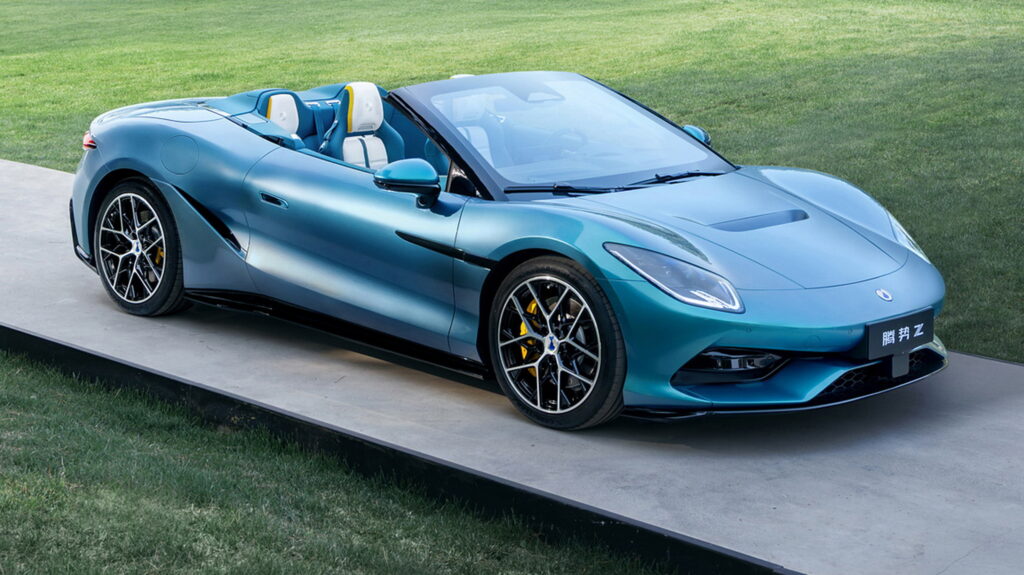
Denza, a BYD-owned brand with a focus in export markets, has unveiled a new production model that could haunt the dreams of the Maserati GranCabrio Folgore. The production version of the Denza Z will be offered in coupe, convertible, and track-focused variants combining sleek styling with a high-performance electric powertrain and sophisticated electronics.
The Z Convertible looks more elegant compared to its closed-roof sibling, despite the fact it shares most of its body panels. The exposed four-seater cabin and the redesigned rear deck help create sexier proportions, with the design of the bumpers being more refined than the track-hungry bodykit of the previous show car.
The example that was showcased at the 2026 Beijing Auto Salon combines a bluish green shade with a satin finish and a tri-color interior, sending strong Maserati vibes. While we didn’t get to see the soft reclining roof in action, earlier spy shots confirm it is made of fabric.
The model was designed under the guidance of former Audi design chief Wolfgang Egger, who is responsible for the styling of BYD brands Denza, Fang Cheng Bao, and YangWang.
The Z series will be powered by three electric motors offering AWD capabilities and a combined output of around 1,000 hp (746 kW / 1,014 PS). It will also be equipped with BYD’s DiSus-M electromagnetic suspension system, the latest “Eye of the God” driver assistance, and a battery pack compatible with flash charging.
Global Aspirations
Interestingly, the Denza Z will launch in Europe and other global markets first, before landing in Chinese showrooms. Following its premiere at the Beijing Auto Show, the model will make its dynamic debut at the Goodwood Festival of Speed in the UK.
In China, local media estimate it will be priced in the region of ¥400,000-500,000 ($58,600-73,200), undercutting sportscars and supercars from Western brands.
The Mercedes GLC L EV is a China-focused take on the familiar SUV.
It stretches the wheelbase and adds length at the rear for more room.
Buyers can opt for six seats and suspension derived from the S-Class.
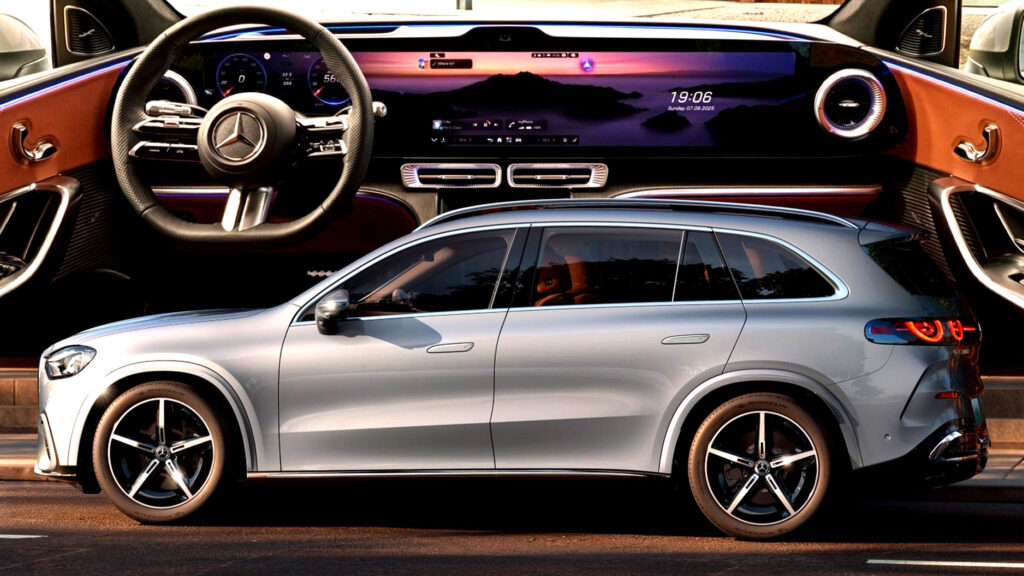
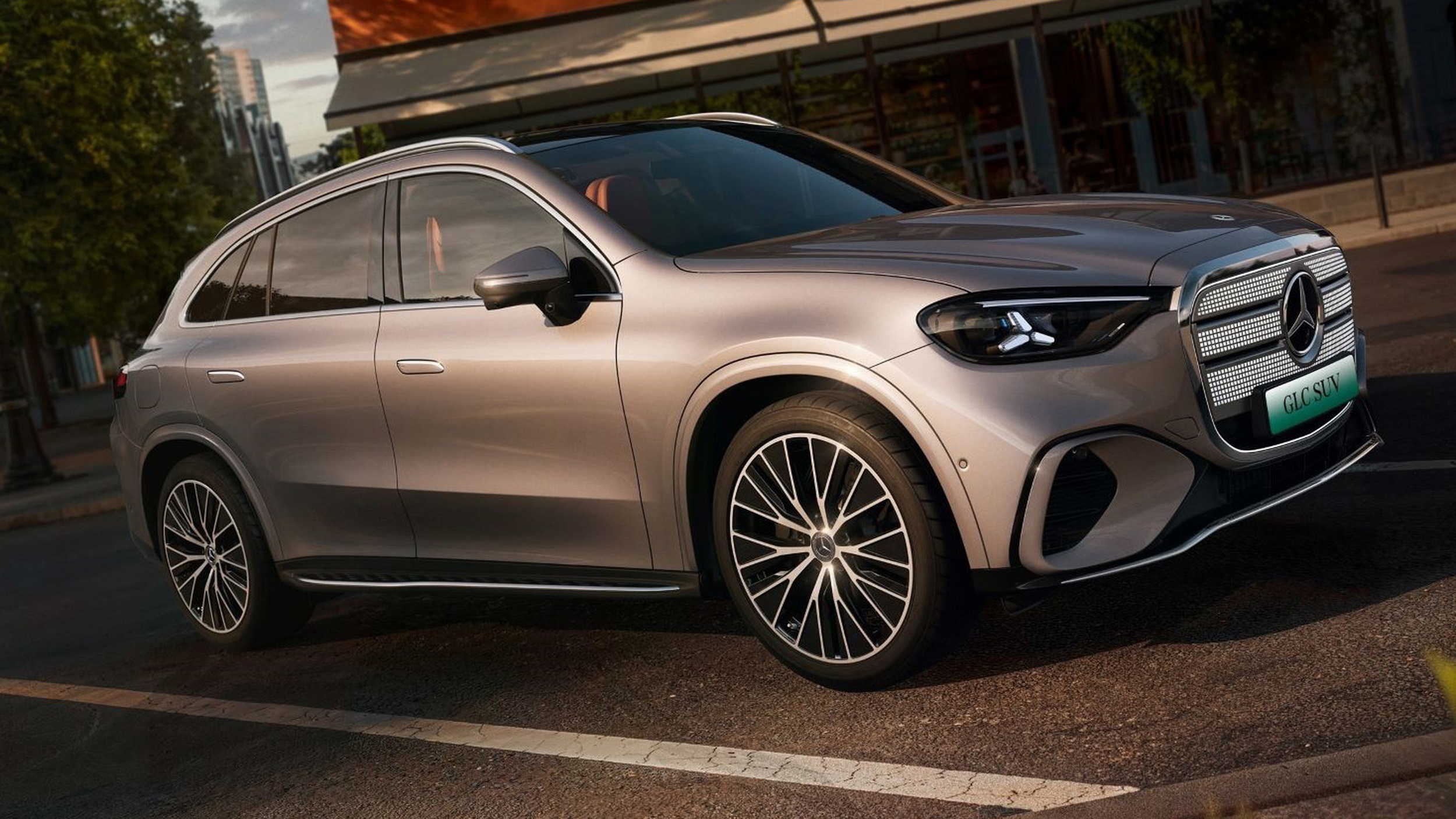
Mercedes is doing what every premium brand now does in China, stretching a familiar shape to suit a very specific brief. It has unveiled the long-wheelbase version of the new GLC EQ at the Beijing Auto Show, positioning it against the also new BMW iX3 LWB. The new electric SUV has a six-seater layout and borrows chassis tech from the brand’s flagship sedan.
Its overall length now sits at 4,950 mm (194.9 inches), paired with a 3,027 mm (119.2 inches) wheelbase. That makes it 105 mm (4.1 inches) longer than the standard global model, with 55 mm (2.1 inches of that added between the axles. It also edges past the EQE SUV by 87 mm (3.4 inches) and stretches 64 mm (2.5 inches) beyond the BMW iX3 LWB
The added length is easy to spot. Rear doors are longer, the quarter glass stretches further back, and the tail sits a touch more upright as a result. Otherwise, it keeps close to the standard GLC EQ, right down to the star-pattern LED lighting and the now-familiar illuminated grille.
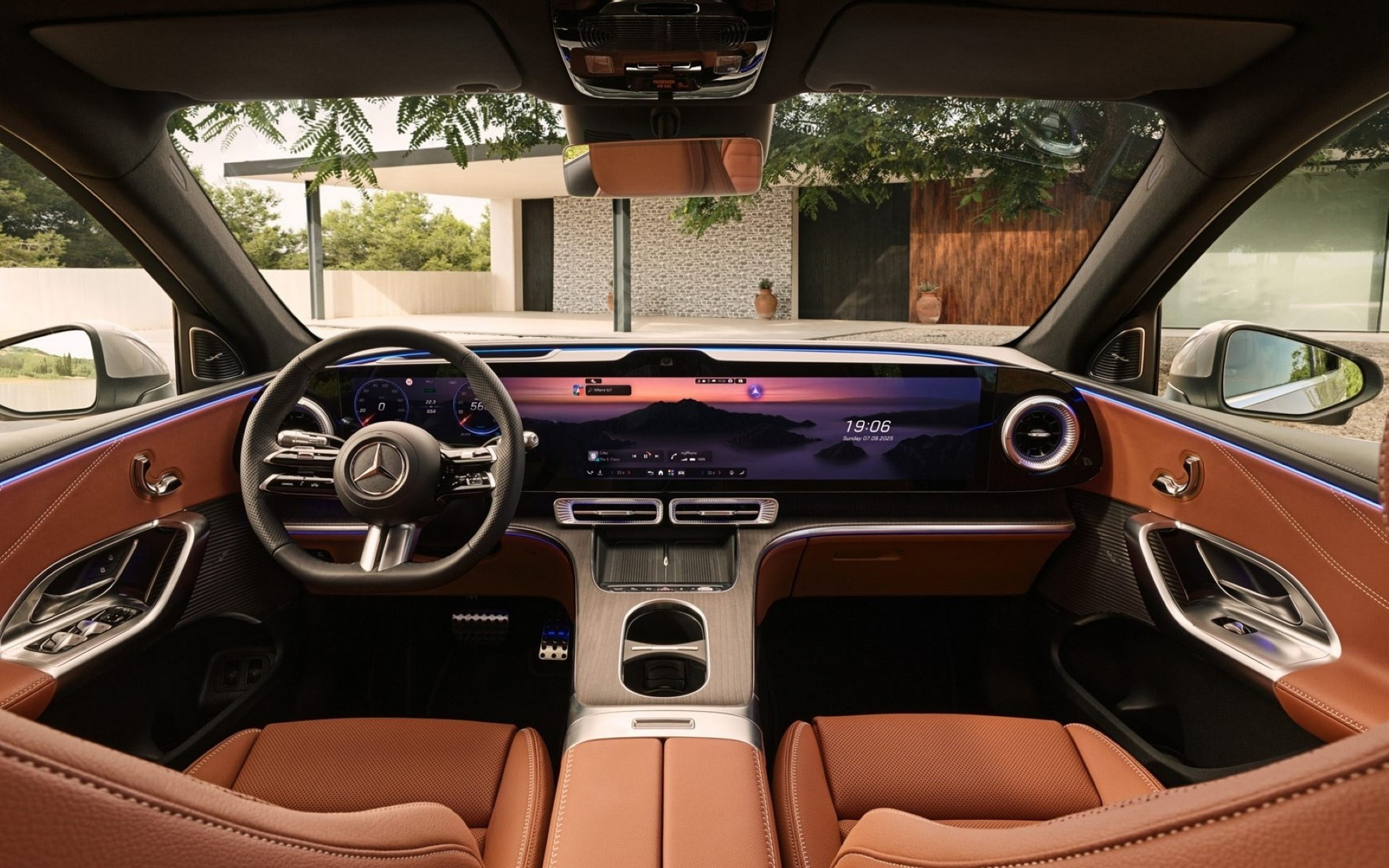
Inside, Mercedes has not held back on screen real estate. A 39.1-inch MBUX Hyperscreen spans the dashboard, as expected at this end of the market, but the more relevant change sits further back. The GLC L EV can be configured with three rows and six seats, giving it a practical edge over the BMW. Second-row passengers get individual captain’s chairs with heating, ventilation, and massage, which should make the middle row the place to be.
Different Specs
The GLC L EV will be initially available with dual electric motors generating 416 hp (310 kW / 421 PS) and 800 Nm (590 lb-ft) of torque. That is down on the global dual-motor GLC EV, which delivers 483 hp (360 kW / 489 PS), though few buyers in this segment are likely to notice the shortfall in daily use.
Interestingly, the Chinese-spec SUV has a smaller battery pack with a capacity of 85.5 kWh instead of 94 kW. Even so, Mercedes quotes a CLTC range of more than 700 km (435 miles). The reduced capacity likely comes down to a mix of weight targets, local sourcing, and the realities of packaging a third row into what began as a five-seat platform.
Chassis Technology From The S-Class
The GLC L EV rides on a stretched version of Mercedes’ MB.EA platform, complete with an 800V architecture shared with the new electric C-Class. For China, it also borrows more than just space. Option the Agility & Comfort Package and you get S-Class hardware, including Airmatic air suspension and rear-axle steering, for greater comfort and maneuverability.
Fang Cheng Bao reinvents itself with a supercar and sleek sedans.
Formula X brings 1,000 horsepower and a full carbon-fiber build.
The S, SL, and GT take aim at Porsche’s Taycan from three angles.
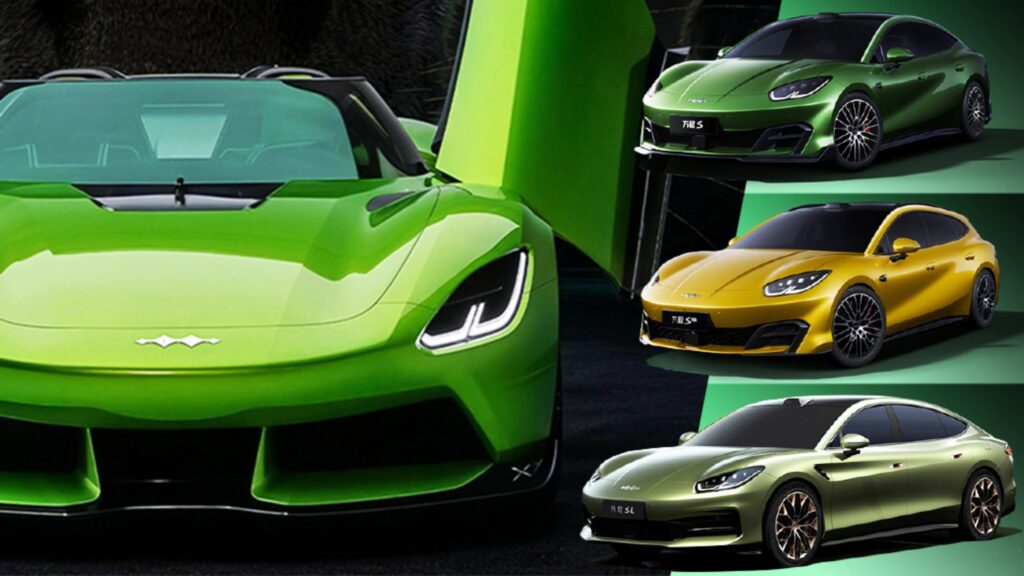
In China’s fast-moving EV market, brand identities can flip in an instant. Fang Cheng Bao built its name on squared-off SUVs that look ready for a quarry. At the 2026 Beijing Auto Show, it arrived with something else entirely. The BYD-owned brand has pivoted hard, unveiling a supercar and a trio of low-slung EVs under a new Formula line.
The Formula X is the undisputed showstopper. This open-air supercar evolved from the Super 9 speedster concept from 2024 and features balanced proportions, aggressive LED headlights, upward-opening doors and no less than 19 functional air vents. The overall styling aligns closely with Denza, another BYD brand that already carries a handful of rebadged Fang Cheng Bao models.
The structure leans heavily on carbon fiber, from the body panels to a bespoke monocage chassis. The exposed two-seater cabin has a futuristic “battle cockpit” wrapped around the driver, and does without the structural bridge of the earlier concept.
The supercar uses a tri-motor setup that produces a combined 1,000 hp (746 kW / 1,014 PS) and 1,000 Nm (738 lb-ft) of torque. A decade ago, figures like these would have been considered extreme. Today, they sit in the shadow of BYD’s record-breaking YangWang U9 Xtreme, which reaches a staggering 2,977 hp (2,220 kW / 3,018 PS).
Even so, the Fang Cheng Bao Formula X’s numbers still land where they need to. More to the point, this is not just a concept parked under bright lights. BYD has confirmed a 2027 market launch, suggesting this will make the jump from show stand to road. Whether it travels beyond China remains unclear.
A Hatchback and Two Sedans
Beyond the supercar, the Formula lineup moves into more familiar territory. The Formula S is positioned as a rival to the Porsche Taycan, the Formula S GT adopts a shooting brake shape, and the Formula SL sits at the top of the range as a more upscale take on the sedan.
The S and S GT are essentially two bodystyles of the same model, both of which could pass for something wearing a Denza badge. The SL sets itself apart with redesigned bumpers, a more sculpted profile, and gold-finished 21-inch alloy wheels.
All three sit on the same electric underpinnings, built around an 800V architecture with a tri-motor AWD setup producing up to 1,000 horsepower. They also feature BYD’s DiSus-M magnetic ride control. In terms of size, each rides on a 3,100 mm (122,1 inches) wheelbase and stretches beyond 5,000 mm (196.8 inches) in length.
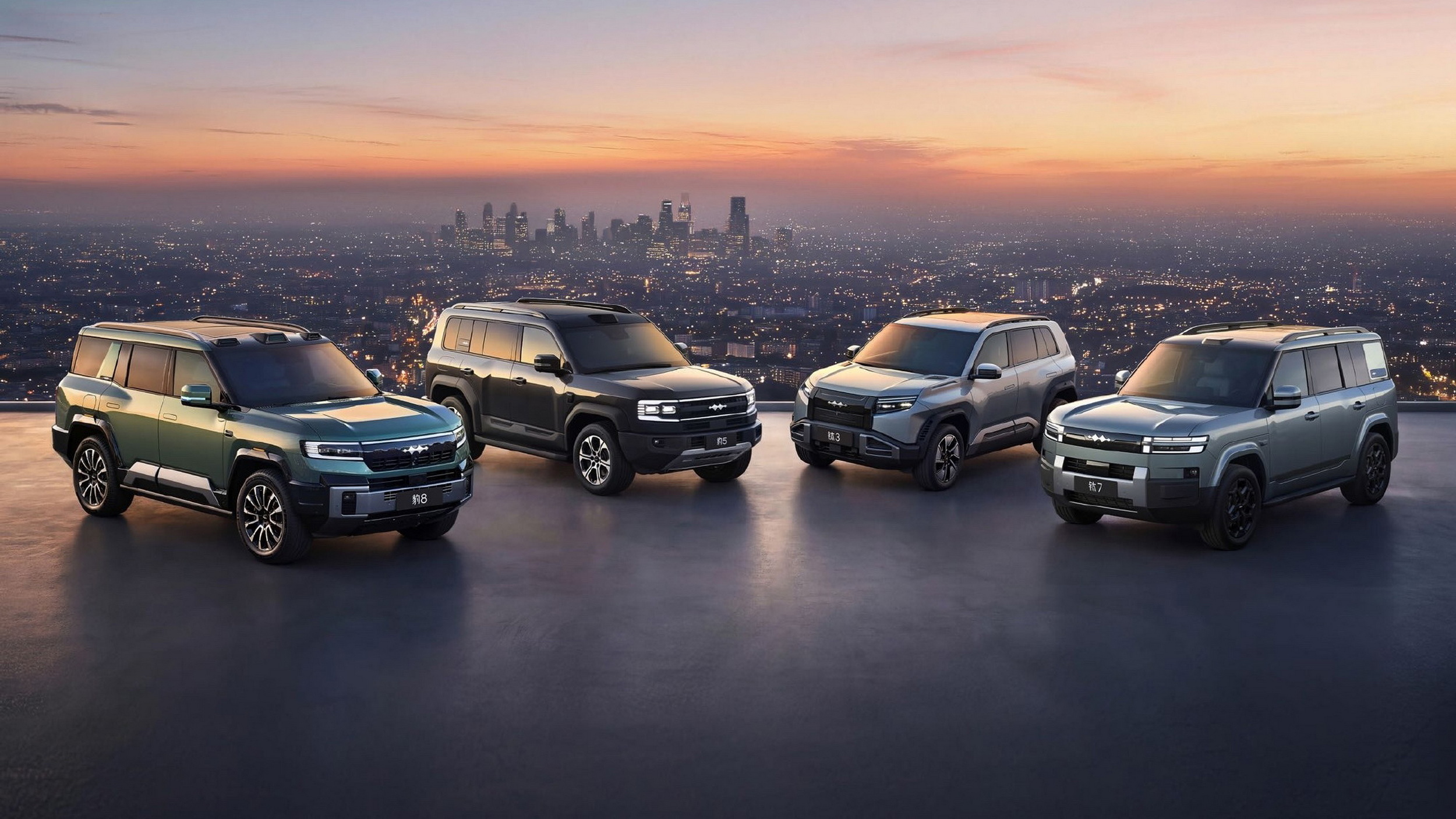
The high-performance EVs are due in Chinese dealerships in late 2026. These low-slung models will broaden the Fang Cheng Bao lineup alongside the existing Leopard SUVs. Given that some of those SUVs already appear overseas under the Denza brand, a similar export strategy would not be surprising here.
Fang Cheng Bao unveils a striking electric supercar dubbed Formula X.
It is joined by the Formula S and SL sedans, and the GT hatchback.
All four high-performance EVs will enter production by next year.
Fang Cheng Bao, the BYD-owned brand that built its reputation on boxy and rugged SUVs, has undergone a radical transformation at the 2026 Beijing Auto Show. The automaker has unveiled a striking supercar, along with three low-slung EVs under the Formula series.
The Formula X is the undisputed showstopper. This open-air supercar evolved from the Super 9 speedster concept from 2024 and features balanced proportions, aggressive LED headlights, upwards opening doors and no less than 19 functional air vents. Overall, the styling language is similar to Denza, a BYD brand with European aspirations.
The sculpted bodywork is made of carbon fiber, as is the custom “monocage” chassis. The exposed two-seater cabin has a futuristic “battle cockpit” wrapped around the driver, and does without the structural bridge of the earlier concept.
The supercar is powered by three electric motors producing a combined 1,000 hp (746 kW / 1,014 PS) and 1,000 Nm (738 lb-ft) of torque. These numbers would be labeled extreme a decade ago, but we now live in a world where BYD’s record-breaking YangWang U9 Xtreme generates a staggering 2,977 hp (2,220 kW / 3,018 PS).
In any case, the specs of the Fang Cheng Bao Formula X still sound quite promising. More importantly, the model is not just a show piece, as BYD announced plans for a market launch in 2027. It will be interesting to see whether the high-performance EV will be offered outside China.
A Hatchback and Two Sedans
Besides the high-performance EV, the Formula series expands into the executive sector. The Formula S is a Taycan-rivaling sedan, the Formula S GT is a hatchback/wagon with a shooting brake stance, and the Formula SL is a high-end version of the aforementioned sedan.
The S and the S GT are effectively two different bodystyles of the same model that could easily wear the Denza emblem. The SL is distinguished by the redesigned bumpers, the more sculpted profile, and the gold-finished 21-inch alloy wheels.
All three models share the same electric foundation, riding on an 800V platform with a tri-motor AWD powertrain generating up to 1,000 horsepower. They also utilize BYD’s DiSus-M magnetic ride control. In terms of footprint, they have an identical wheelbase of 3,100 mm (122,1 inches), and measure over 5,000 mm (196.8 inches) long.
The high-performance EVs are scheduled to hit the roads in late 2026. The low-slung models will expand the Fang Cheng Bao lineup next to the existing Leopard series of SUVs.
The previously SUV-only lineup of the Fang Cheng Bao brand.
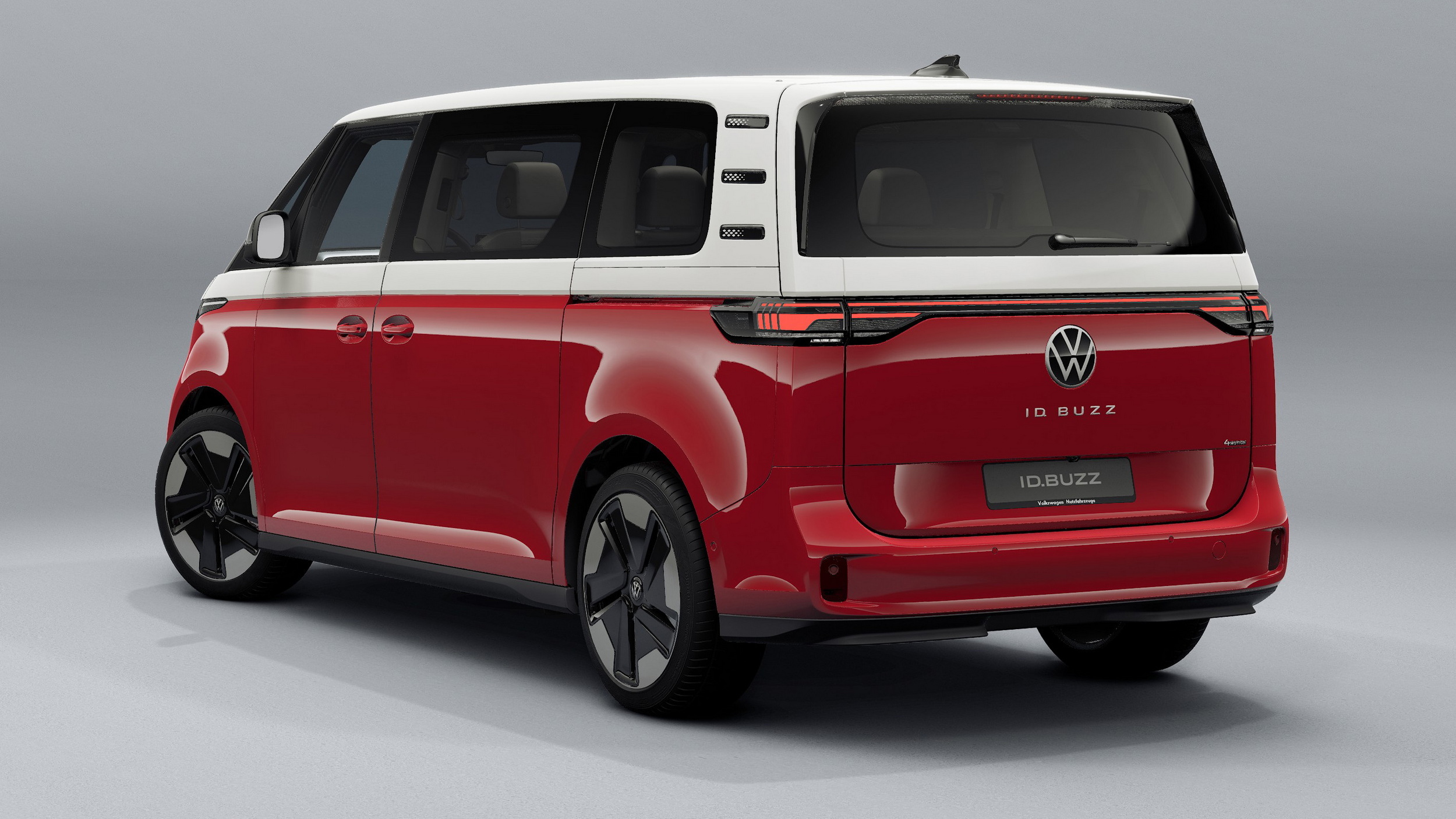
The 2026 ID. Buzz gets updates in Europe, while the US still waits.
New infotainment arrives, along with proper physical steering buttons.
It also adds AWD, one-pedal driving, and useful V2L capability.
Volkswagen is giving the ID. Buzz a round of updates, adding power and finally addressing some of the cabin’s most complained-about ergonomics. There is a catch, though. These changes are currently limited to Europe and the UK, with North America set to skip the 2026 model year entirely.
The biggest addition is the new ID. Buzz Pro 4Motion. It brings a dual-motor setup producing 335 hp (250 kW), a figure that was previously reserved for the hotter GTX variant. Buyers get a 79 kWh battery in short-wheelbase form, while the long-wheelbase version steps up to an 86 kWh pack.
More importantly, the switch to all-wheel drive is not just about traction. Towing capacity gets a useful bump, up by 600 kg (1,323 lbs) over the rear-wheel-drive models. That pushes the maximum to 1,800 kg (3,968 lbs) for the standard version, although the longer, heavier model sees that figure trimmed slightly to 1,600 kg (3,527 lbs).
Smarter Tech Inside
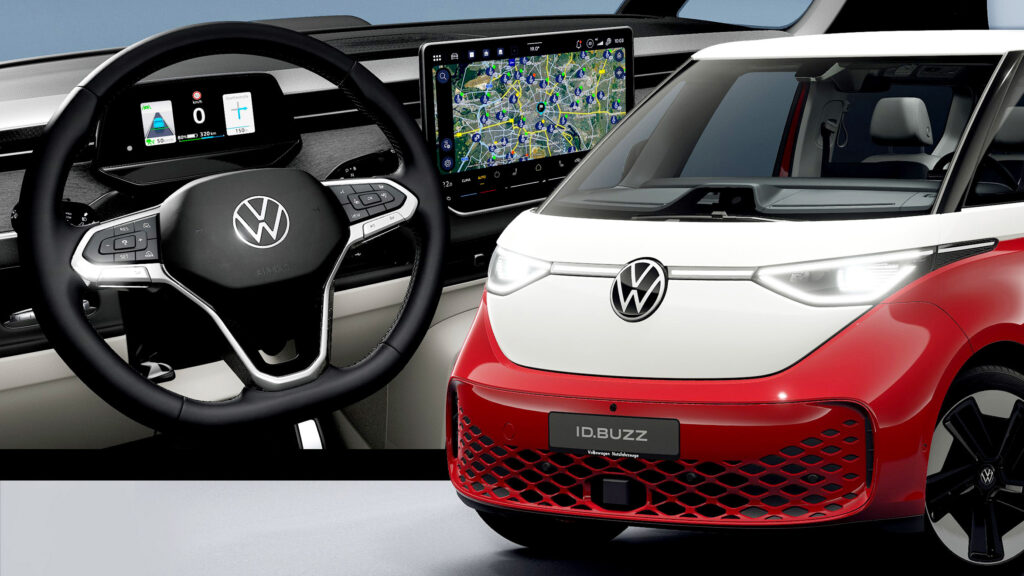
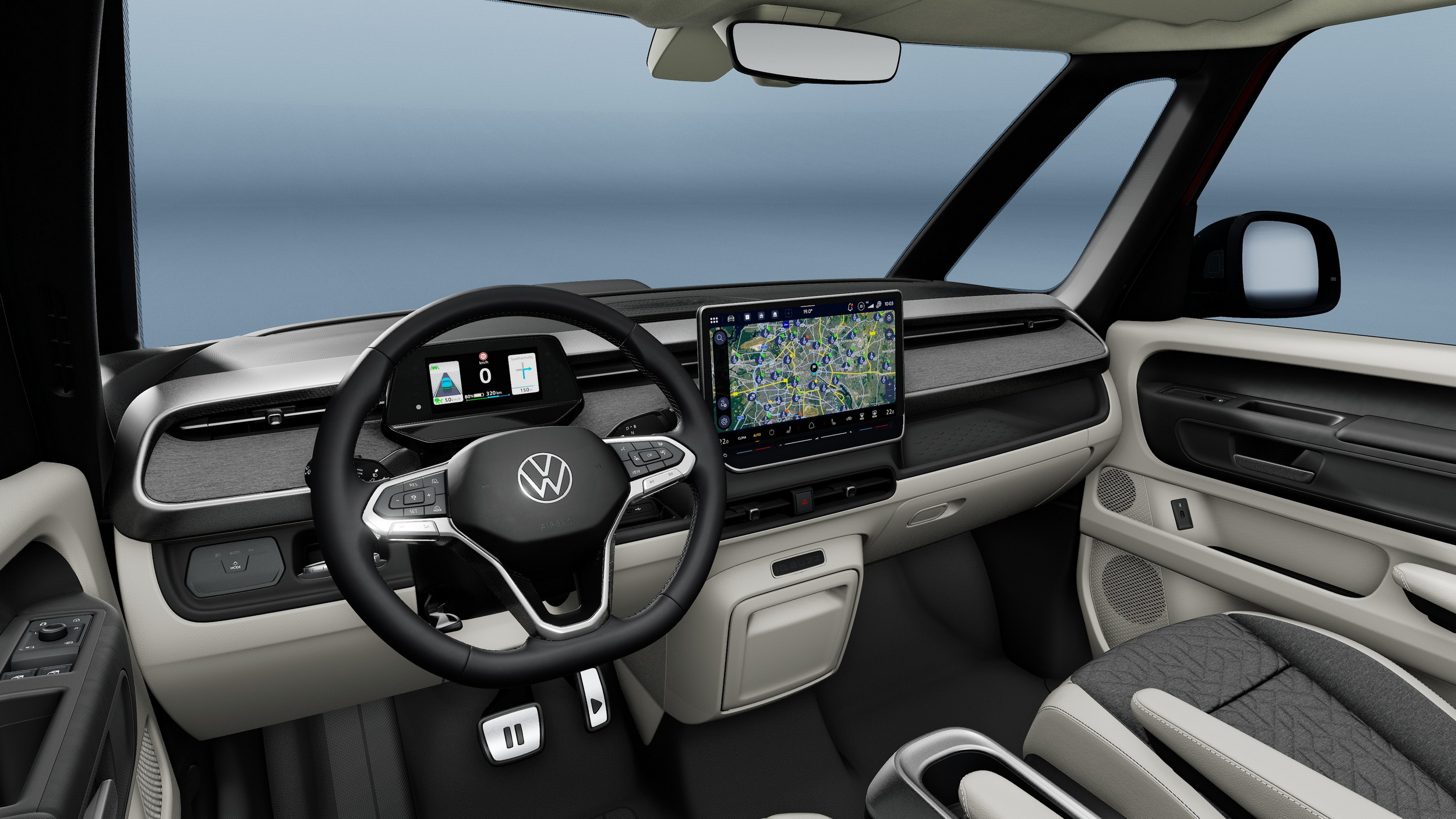
Volkswagen is also using this update to tidy up the cabin, focusing on usability while layering in a few new tech features. The ID. Buzz now gets the latest Innovision infotainment system, bringing cleaner menus and access to a new App Store covering audio, video streaming, parking, charging, and even gaming. It is the same setup already seen in the ID.3 Neo, and it will roll out to the facelifted Caddy and Transporter T7 later this year.
One of the more welcome fixes sits right in front of the driver. Proper physical buttons return to the steering wheel, replacing the fiddly touch-sensitive controls that never quite convinced anyone. That said, VW is still holding onto the touch sliders below the main screen, which remain as divisive as ever.
There is also a practical upgrade. Vehicle-to-Load functionality is now available, allowing the ID. Buzz to power external devices like e-bikes or other equipment through a dedicated adapter, turning the van into a mobile power source when needed.
The fully electric microbus will finally offer one-pedal driving, allowing regenerative braking to bring it to a standstill when the driver lifts their foot off the gas. Finally, safety equipment has been improved with the optional Connected Travel Assist, featuring traffic light recognition.
The 2026 VW ID.Buzz will reach dealers in Europe and the UK this summer. While the updates are currently limited to the other side of the Atlantic, there is a chance they will be applied to the US-spec ID.Buzz for the 2027 model year.
The Smart Concept #2 previews a successor to the Fortwo.
The urban EV promises a range of 186 miles (300 km).
The production version will debut at the Paris Motor Show.
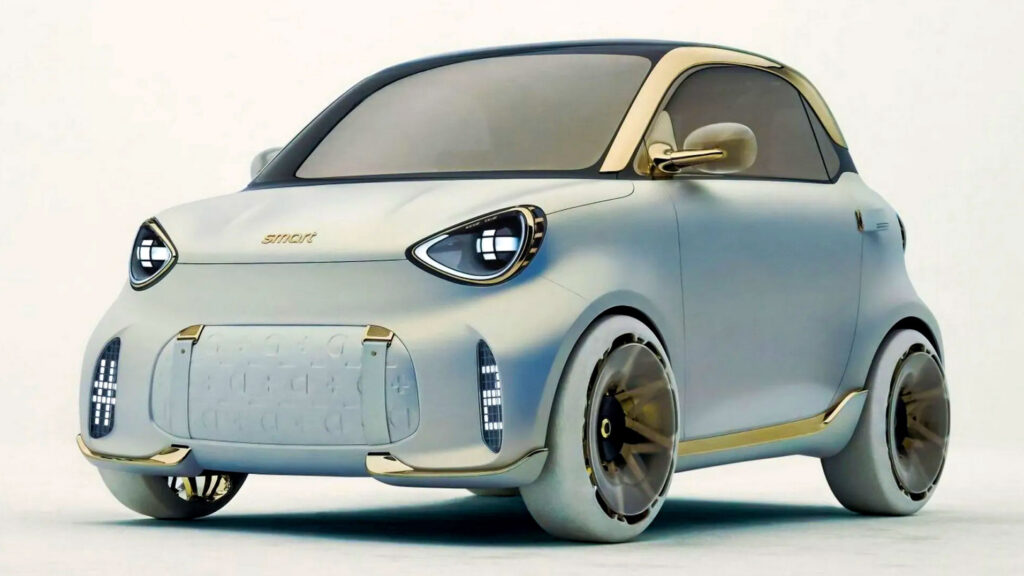
Smart goes back to basics with a successor to the original Fortwo microcar that put the company on the map. At the “Change of Perspectives” event in Beijing, the brand unveiled the Concept #2, which serves as a close preview of a tiny urban EV set to arrive later this year.
The model was designed by Mercedes-Benz, looking like a natural evolution of the EQ Fortwo that was discontinued in 2024. It has a familiar two-door silhouette with a very short hood and large wheels positioned at the corners. Other highlights include the aggressive LED headlights and the clean surfacing.
The concept features futuristic wheels with transparent aero covers shod in light-colored rubber, trick DRLs with #2 lettering, leather straps instead of door handles, and a blocked grille that looks like a luxury suitcase, while at the rear it sports a small matrix screen that can display various messages. Those elements will likely be toned down for production, as with the shiny gold finish of the floating roof.
The Concept #2 measures 2,792 mm (109.9 inches) long, making it the largest interpretation of a two-door city car from Smart. It is 292 mm (11.5 inches) longer than the original Smart and 97 mm (3.8 inches) longer than the last generation of the EQ Fortwo.
Still, the EV remains the smallest contestant in Europe’s A-Segment, being 840 mm (33 inches) shorter than the Fiat 500e and 997 mm (39 inches) shorter than the Renault Twingo E-Tech. In fact, the new Smart is closer in size to heavy quadricycles like the Citroen Ami and the Fiat Topolino than actual cars.
New Underpinnings
Under the skin lies a new Electric Compact Architecture (ECA) developed in house. Since Smart is co-owned by Mercedes and Geely, it is safe to assume that the platform uses technology from the Chinese automaker.
The #2 will be exclusively available with an electric powertrain, similar to the #1 and #3 and unlike the larger #5 and #6, which are also available in plug-in hybrid forms.
Smart has yet to announce detailed specifications, but mentioned a targeted range of around 186 miles (300 km), which is more than double the 135 km (84 miles) range of the EQ Fortwo. The battery will charge from 10-80% in under 20 minutes and will support V2L (Vehicle-to-Load) functions. Chances are that the #2 will stick to the RWD layout of its rear-engined predecessors.
The presentation didn’t include photos of the interior, but the packaging of the EV-dedicated platform promises a more spacious two-seater cabin which is also expected to be more premium than before.
The production Smart #2 will debut at the Paris Motor Show in October, ahead of its market launch. The model will be likely focused in Europe and the UK, although it could also find its way into other markets around the world.
The Smart Concept #2 previews a successor to the Fortwo.
The urban EV promises a range of 186 miles (300 km).
The production version will debut at the Paris Motor Show.
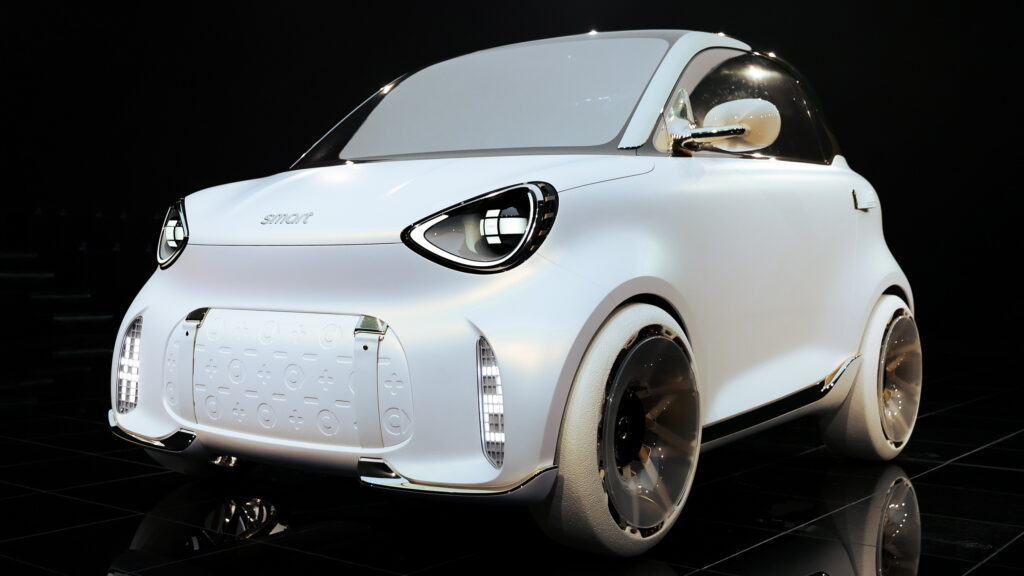
Smart goes back to basics with a successor to the original Fortwo microcar that put the company on the map. At the “Change of Perspectives” event in Beijing, the brand unveiled the Concept #2, which serves as a close preview of a tiny urban EV set to arrive later this year.
The model was designed by Mercedes-Benz, looking like a natural evolution of the EQ Fortwo that was discontinued in 2024. It has a familiar two-door silhouette with a very short hood and large wheels positioned at the corners. Other highlights include the aggressive LED headlights and the clean surfacing.
The concept features futuristic wheels with transparent aero covers shod in light-colored rubber, trick DRLs with #2 lettering, leather straps instead of door handles, and a blocked grille that looks like a luxury suitcase, while at the rear it sports a small matrix screen that can display various messages. Those elements will likely be toned down for production, as with the shiny gold finish of the floating roof.
The Concept #2 measures 2,792 mm (109.9 inches) long, making it the largest interpretation of a two-door city car from Smart. It is 292 mm (11.5 inches) longer than the original Smart and 97 mm (3.8 inches) longer than the last generation of the EQ Fortwo.
Still, the EV remains the smallest contestant in Europe’s A-Segment, being 840 mm (33 inches) shorter than the Fiat 500e and 997 mm (39 inches) shorter than the Renault Twingo E-Tech. In fact, the new Smart is closer in size to heavy quadricycles like the Citroen Ami and the Fiat Topolino than actual cars.
New Underpinnings
Under the skin lies a new Electric Compact Architecture (ECA) developed in house. Since Smart is co-owned by Mercedes and Geely, it is safe to assume that the platform uses technology from the Chinese automaker.
The #2 will be exclusively available with an electric powertrain, similar to the #1 and #3 and unlike the larger #5 and #6, which are also available in plug-in hybrid forms.
Smart has yet to announce detailed specifications, but mentioned a targeted range of around 186 miles (300 km), which is more than double the 135 km (84 miles) range of the EQ Fortwo. The battery will charge from 10-80% in under 20 minutes and will support V2L (Vehicle-to-Load) functions. Chances are that the #2 will stick to the RWD layout of its rear-engined predecessors.
The presentation didn’t include photos of the interior, but the packaging of the EV-dedicated platform promises a more spacious two-seater cabin which is also expected to be more premium than before.
The production Smart #2 will debut at the Paris Motor Show in October, ahead of its market launch. The model will be likely focused in Europe and the UK, although it could also find its way into other markets around the world.
VW debuts the ID. Aura T6 SUV and ID. Unyx 09 sedan in China.
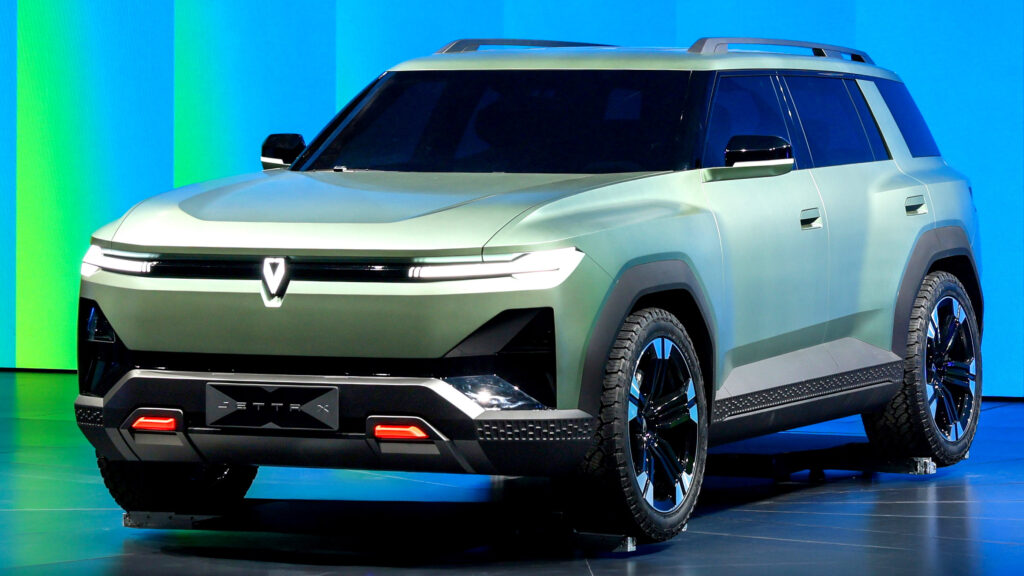
The Jetta X Concept previews an affordable electric SUV.
The VW Group has also revealed the production AUDI E7X SUV.
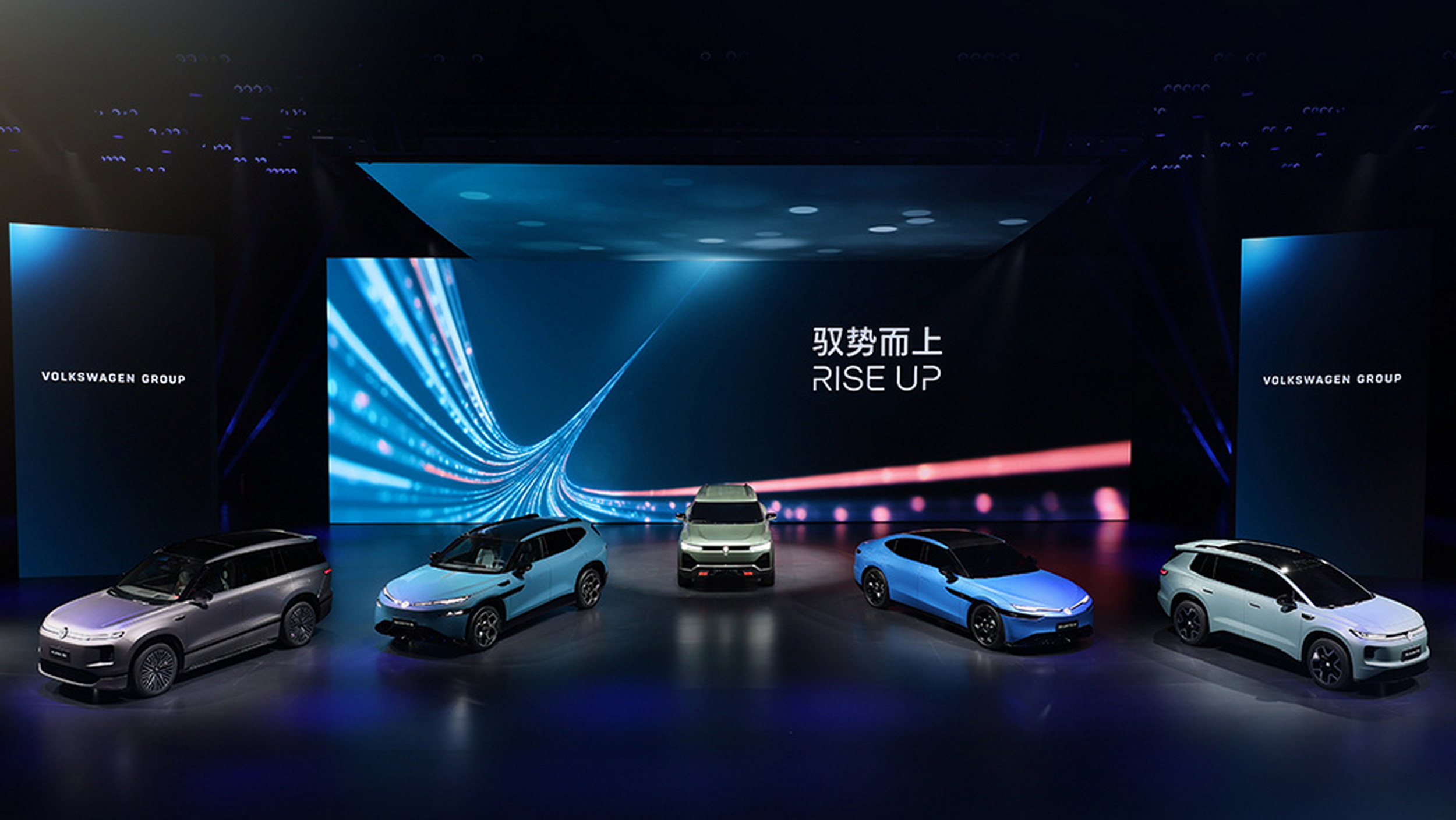
The Volkswagen Group arrived in China with a full plate, using its Media Night ahead of the Beijing Auto Show to roll out a mix of production models and near-future previews. There is a clear pattern running through it all, heavy local collaboration, faster development cycles, and a lineup that looks increasingly tailored to Chinese tastes rather than global consistency.
Among the reveals were the VW ID. Aura T6 from FAW, the ID. Unyx 09 co-developed with XPeng, and the AUDI E7X from SAIC. Sitting slightly off to the side, but arguably just as important, was the Jetta X Concept, previewing a cheaper, more accessible electric SUV.
The ID. Aura T6 is a fully electric midsize SUV built specifically for China, and at a glance, it could pass as an ID. Tiguan. It comes from the FAW-VW joint venture and leans into familiar design cues, split LED headlights, a full-width rear light bar, proper door handles, and a five-seat layout. It is also the first member of the ID. Aura family, even though the initial concept from 2025 was a sedan.
VW ID. Aura T6
Next up is the ID. Unyx 09, an electrified sedan borrowing technology from Xpeng. It is a sibling to the recently unveiled ID Unyx 08 SUV, adopting a similar styling language. The low-slung model features slim LEDs and the signature black trim piece that connects the main headlights with the ADAS sensors on the profile.
VW didn’t get into details, but the ID. Unyx 09 will likely share the electric powertrains with the ID. Unyx 08, including CATL-sourced battery packs. Its market launch in China is scheduled for the second half of 2026.
VW ID. Unyx 09
Both the ID. Aura T6 and the ID. Unyx 09 feature the new CEA electric and electronic architecture, a result of VW’s partnership with Xpeng. This supports Level 2+ driving assistance and high-tech infotainment systems with an integrated AI Intelligent Assistant.
During the Media Night, VW Group also showed the production version of the AUDI E7X. The fully electric SUV is produced as part of its joint venture with SAIC, joining the E5 Sportback in the Chinese lineup.
A New Jetta SUV
Then there is the Jetta X Concept, which might be the most telling piece of the puzzle. It is a rugged-looking SUV with an electrified powertrain, styled with a kind of no-nonsense simplicity that feels closer to Dacia than anything wearing a VW badge. That is not accidental. With Skoda exiting China after a prolonged sales slide, Jetta now steps into its place as the value-focused brand.
The Jetta X rides on the Compact Main Platform (CMP), developed in China. More importantly, it is expected to reach production by FAW later this year, with a rumored starting price under the ¥100,000 ($14,700) mark. Overall, the Jetta lineup will grow with five new models by 2028, including four NEVs (models with electrified powertrains).
VW Group’s Offensive In China
VW plans to launch 20 new electric vehicles this year as part of its “In China, for China” strategy. The company promises they will use “state-of-the-art electrical architectures, ADAS systems, an intelligent cockpit and AI features,” designed to fulfil the needs of Chinese customers.
Honda is withdrawing the e:Ny1 SUV from most European markets.
Global EV plans, including the Sony Afeela, have been canceled.
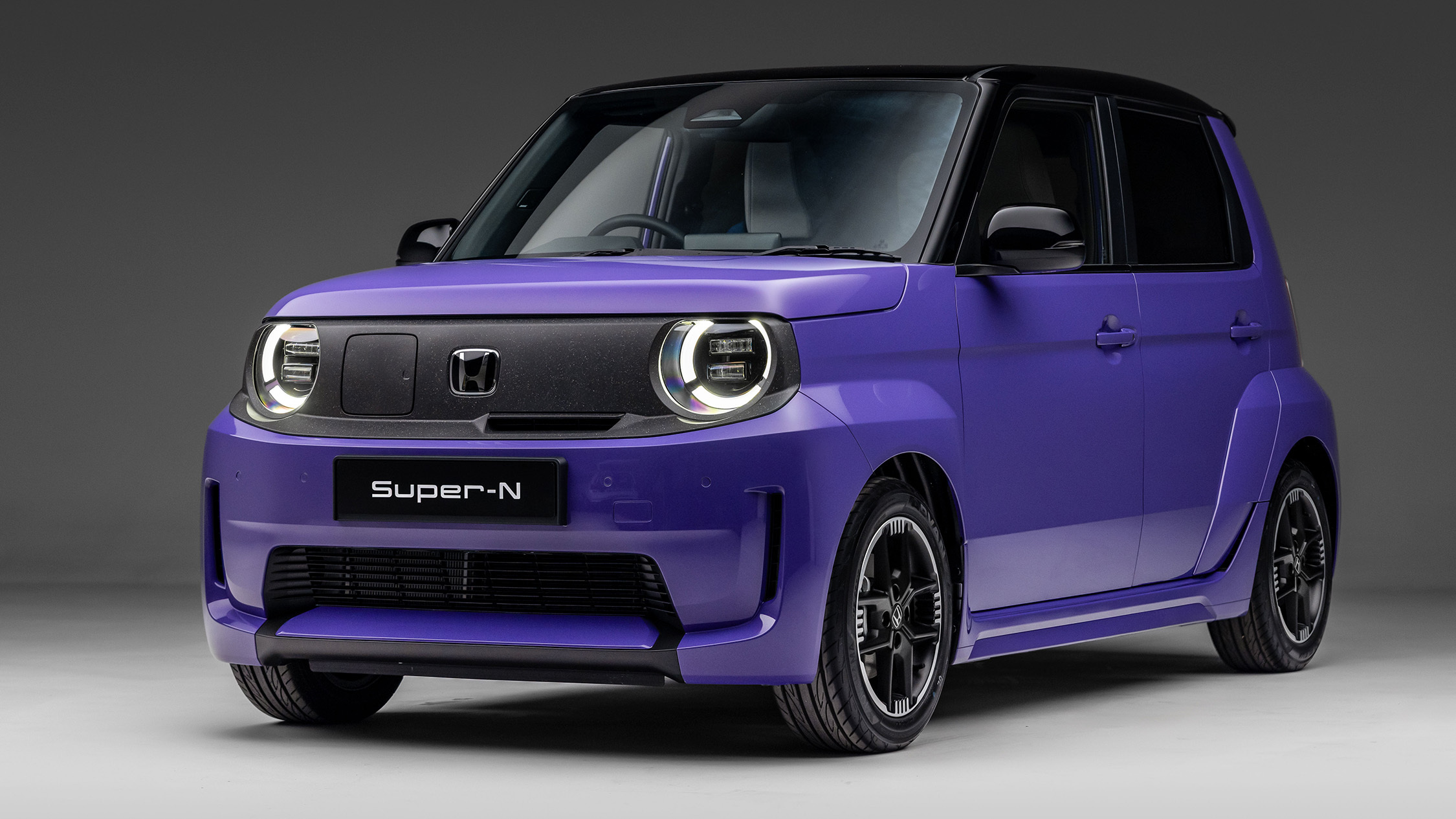
A new Super-N hatchback will arrive in Europe and the UK in July.
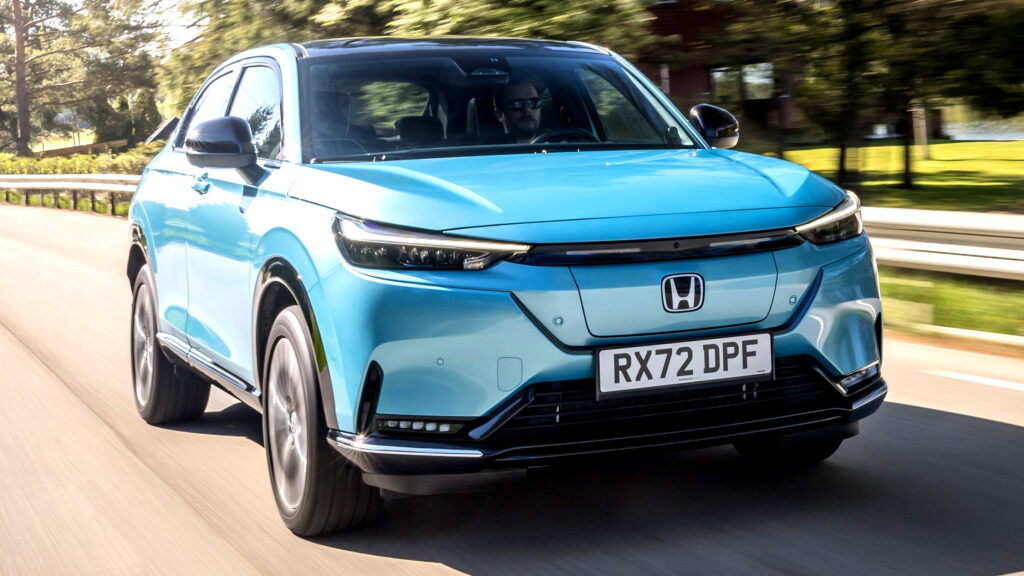
Honda is preparing to pull the plug on its only fully electric model currently sold in Europe. As part of a rethink of its EV strategy, the automaker will take the e:Ny1 off sale just three years after it arrived. That sounds abrupt, and it is. This is not a full EV retreat, though. The new Super-N hatchback is waiting in the wings, set to step in where the e:Ny1 leaves off, even if it targets a very different slice of the market.
A product of Honda’s joint venture with Dongfeng, the e:Ny1 arrived in Europe in mid-2023 as the electric counterpart to the local-spec HR-V. It looks closely related to the hybrid crossover, but its roots trace back to China, where it has been sold as the e:NS1 and e:NP1 since 2022.
As reported by German newspaper Handelsblatt, the e:Ny1 has already disappeared from configurators in several major markets, including Germany, Italy, and Spain. The SUV remains available to order in France and Austria, but Honda is reportedly directing remaining stock toward the UK and Nordic regions, where demand has been stronger.
The model struggled to gain ground against newer, more affordable rivals from both European and Chinese brands. Even after a price cut in Germany from €47,590 ($56,100) to €38,990 ($46,000), Honda managed to sell just 105 units of the e:Ny1 last year.
The e:Ny1 rides on the “e:N Architecture F” platform and uses a single electric motor producing 201 hp (150 kW / 204 PS). A 68.8 kWh battery delivers a WLTP range of 412 km (256 miles). Compared with the EU-spec HR-V, it features a redesigned front end with a charging port integrated into the grille, clear taillights, and a 15.1-inch portrait touchscreen inside.
Honda Takes A Step Back
This European scale-back mirrors a wider global pivot. Honda recently confirmed it has canceled several planned EVs intended for North America, including the Acura RSX, the 0 Series Saloon and SUV, and the Afeela sedan and SUV from the Sony Honda Mobility joint venture.
Despite the gloomy outlook for its larger EVs, Honda isn’t pulling the plug entirely. The Super-N will reach UK and Europe shortly after its initial roll-out in Japan. The pint-sized electric hatchback draws inspiration from the Honda City Turbo II, pairing a sporty body kit with a 94 hp motor. Pricing is expected to start below £20,000 (€23,000 / $27,100), aiming to attract buyers with a more accessible entry point and a distinct character.
The rest of Honda’s European lineup is exclusively available with self-charging hybrid and plug-in hybrid powertrains, as all ICE-only offerings were phased out in late 2022.
The Hyundai Ioniq 3 is a fully electric “aero hatchback”.
The new model is the baby brother of the Ioniq 5.
It shares its underpinnings with the Kia EV3 and EV4.
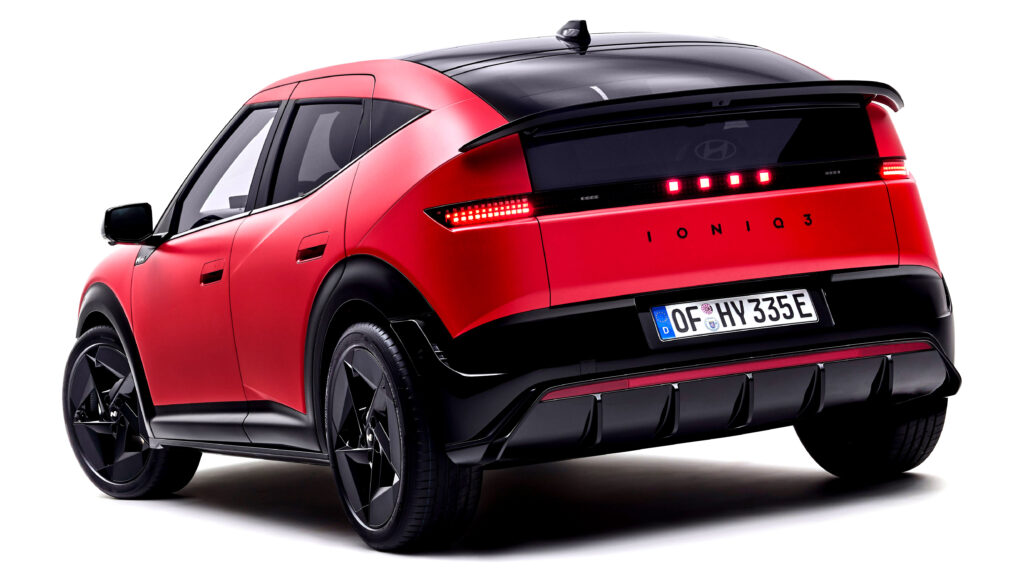
Hyundai has unveiled a new gateway model for its electric Ioniq range in Europe. The Ioniq 3 develops last year’s Concept Three into a new production model described as an “aero hatchback” though it does come with various crossover styling cues.
Measuring 4,155 to 4,170 mm (163.6 to 164.2 inches) in length, depending on the version, the EV is roughly the same size as the Hyundai Bayon. Its 2,680 mm (105.5-inch) wheelbase, however, matches the Elantra. Within Hyundai’s zero-emission lineup, it sits above the Inster and below the Kona Electric, effectively taking on the role of a junior Ioniq 5.
The more experimental bits from the concept have quietly disappeared. No Veloster-style asymmetrical doors here. Just a regular five-door layout that is easier to live with and, more importantly, easier to sell. Up front, split LED lighting is paired with four illuminated dots that echo across the rear, spelling out an “H” in Morse code.
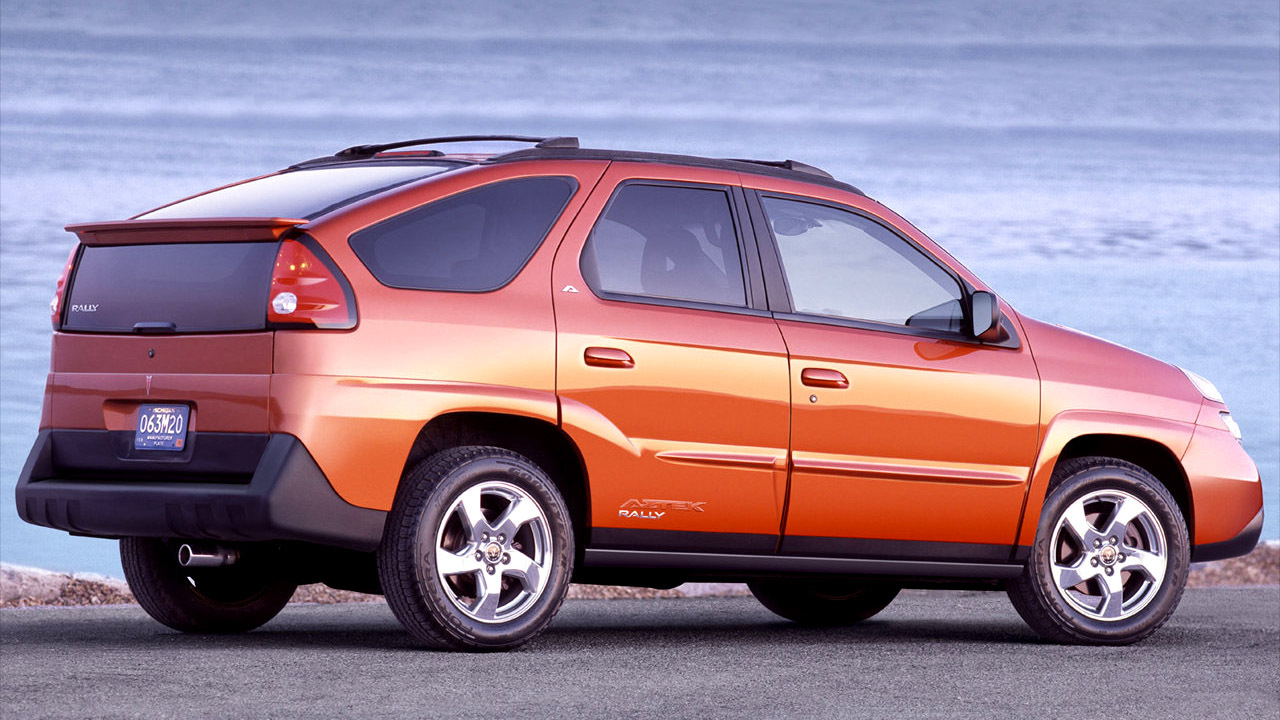
Speaking of the rear, the stubby silhouette flirts with some less flattering comparisons, not least the infamous Pontiac Aztek. A split rear window, bisected by a thick horizontal bar that holds a rear wing, does it no favors, though to be fair, it still comes off better than the much-derided Pontiac effort.
Elsewhere, the production model adds visual weight through chunkier surfacing and more plastic cladding than the concept suggested. Hyundai claims a drag coefficient of 0.263, which is respectable given the shape.
Hyundai showed the range-topping N Line, set apart by sportier bumpers, an integrated diffuser, a rear spoiler, and model-specific 19-inch alloy wheels (base model rides on 16-inch wheels). Those elements are finished in black, tying in with the roof, A-pillars, side skirts, and the cladding around the wheel arches.
Xavier Martinet, President and CEO of Hyundai Motor Europe, said that the Ioniq 3 is “Built for people’s real everyday needs”, combining “segment-leading driving range and aerodynamics with extraordinary levels of space, comfort and practicality”.
High-Tech And Spacious Interior
Inside, the centerpiece is a 14.6-inch free-standing touchscreen, while lower trims make do with a smaller 12.9-inch display paired with a compact digital instrument cluster. Both run Hyundai’s new Google-based Pleos infotainment system, making its debut in a production model. Thankfully, there’s a row of physical switches mounted above the climate vents and additional tactile controls on the N-branded steering wheel.
Hyundai designers integrated the gear lever on the right stalk, freeing up space on the slim two-story center tunnel for cup holders, storage cubbies, and a wireless charging pad. Other highlights include a practical tray on the dashboard, heated and ventilated Relaxation Seats, rear climate vents, a panoramic sunroof, a Bose Premium audio system and a comprehensive Hyundai SmartSense ADAS suite.
The boot has a double floor with a Ford Puma-style Megabox underneath. Total capacity stands at 441 liters (15.6 cubic feet), which is competitive for something this size.
Two Electric Powertrain Options
Underneath, the Hyundai Ioniq 3 rides on a 400-Volt version of the E-GMP architecture, just like the Kia EV3 and EV4 siblings. At launch, it will be offered in two front-wheel-drive configurations.
The Standard Range model comes with a 144 hp (108 kW / 147 PS) electric motor and a 42.2 kWh battery offering 214 miles (344 km) of WLTP range. The Long Range features a slightly less potent 133 hp (100 kW / 135 PS) electric motor and a larger 61 kWh battery, stretching the range to 308 miles (496 km) on a full charge. Both variants have the same 250 Nm (184 lb-ft) of torque.
What About A Proper Hot Hatch?
For those after something with a bit more edge, Hyundai’s N division is reportedly exploring a baby hot hatch spun from the Ioniq 3. It is an easy leap, given the platform already supports dual-motor setups delivering up to 288 hp (292 PS / 215 kW), as seen in the range-topping Kia EV3 GT-Line.
Besides the extra punch, the Ioniq 3 N will likely benefit from a more aggressive stance along with a unique setup for the chassis and the electronics, borrowing a few tricks from the Ioniq 5 N and Ioniq 6 N stablemates.
Market Availability
The Hyundai Ioniq 3 is set to launch in Europe later this year, with production based in Turkey. That also explains its absence from the US market, where tariffs would push pricing beyond what makes sense for a car in this segment.
It will step into a crowded field, going up against electric subcompact SUVs like the Kia EV3, Mini Aceman, Renault 4 E-Tech, Ford Puma Gen-E, Jeep Avenger, Alfa Romeo Junior, Volvo EX30, and Opel Mokka Electric. On the hatchback side, it will also face off against the Renault 5 E-Tech, BYD Dolphin, MG4 EV, and the upcoming VW ID. Polo.
Lynk & Co debuts its first GT concept at the Beijing Auto Show.
Low-slung 2+2 EV features active aero and foldable screens.
Electric RWD setup allows 0-62 mph sprint in 2 seconds.
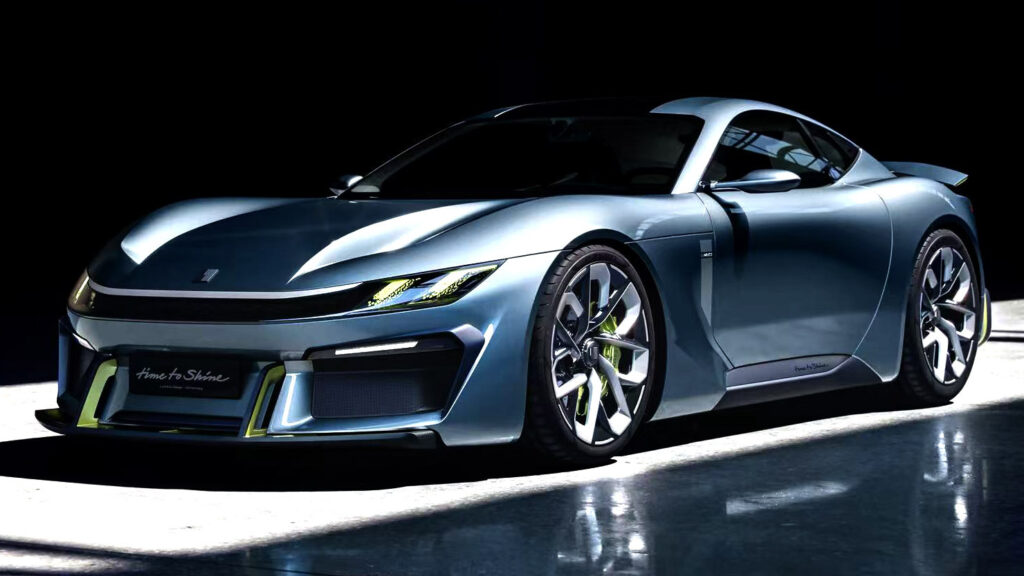
Lynk & Co’s production range has, until now, played it safe with SUVs and sedans. That may be about to change. The Geely-owned brand is marking its 10th anniversary with the “Time to Shine” GT concept at the 2026 Beijing Auto Show.
At 4,780 mm (188.2 inches) long, the coupe lands in roughly the same footprint as the Ferrari 12Cilindri, though it trades the V12 theatrics for a fully electric setup. The proportions still do the heavy lifting, with a long dash-to-axle ratio, a low, sculpted stance, and properly planted rear haunches.
The design does that familiar thing we’re seeing from some Chinese concepts, pulling in a few well-known ideas and blending them together. Up front and along the profile, there’s a passing resemblance to the Ferrari Amalfi, while the rear leans into an Aston Martin-style look.
The real talking point is its shape-shifting tricks. Tap a button on the center console and the rear wing rises, while the front and rear bumpers extend, stretching the car by 100 mm (3.9 inches) to chase extra downforce. At the same time, the suspension drops by 15 mm (0.6 inches), and the digital displays retract, clearing the cabin of distractions when it matters.
Inside, the 2+2 cabin is finished in white leather, offset by carbon fiber accents. The digital cockpit leans hard into the futuristic brief, pairing two screens in the instrument cluster with three more across the center console, though it hasn’t abandoned physical controls entirely.
While technical specifications remain under wraps, Lynk & Co has confirmed an electric rear-wheel-drive setup capable of dispatching 0–100 km/h (0–62 mph) in 2 seconds flat. There’s also talk of an AI-driven digital chassis, tuned with track-focused intent, though what that actually amounts to remains unclear.
Taken as a whole, the GT underlines the brand’s motorsport credentials, something it has built through its success in TCR Touring Car Championship. Lynk & Co joined the series in 2019, effectively picking up where the now-defunct Volvo Polestar Racing left off.
What’s interesting is that this electric GT may be more than a one-off design exercise. Lynk & Co says it plans to “use feedback from the public and its community to help shape any future decisions regarding powertrain options and potential production.”
If it does get the green light, the model could end up taking aim at the Denza Z from BYD, along with established sports cars like the Porsche 911 and the Mercedes-AMG GT. At least in theory, as this is the sort of company where you don’t just arrive, look pretty, and expect a seat at the table.
Mugen reveals upgrades for the Honda Super-One EV platform.
A widebody kit with carbon aero parts adds visual aggression.
Changes focus on style and dynamics rather than outright power.
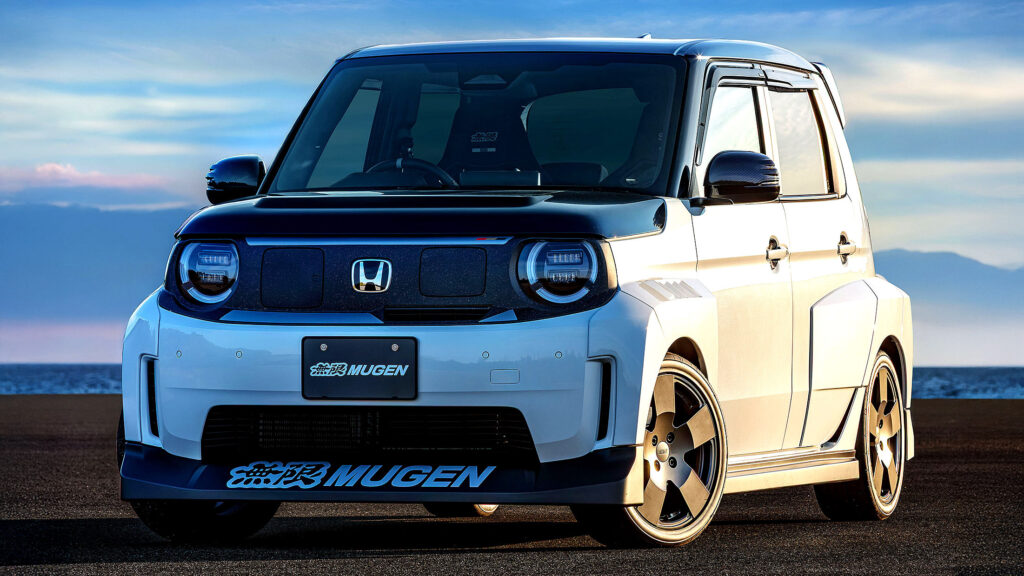
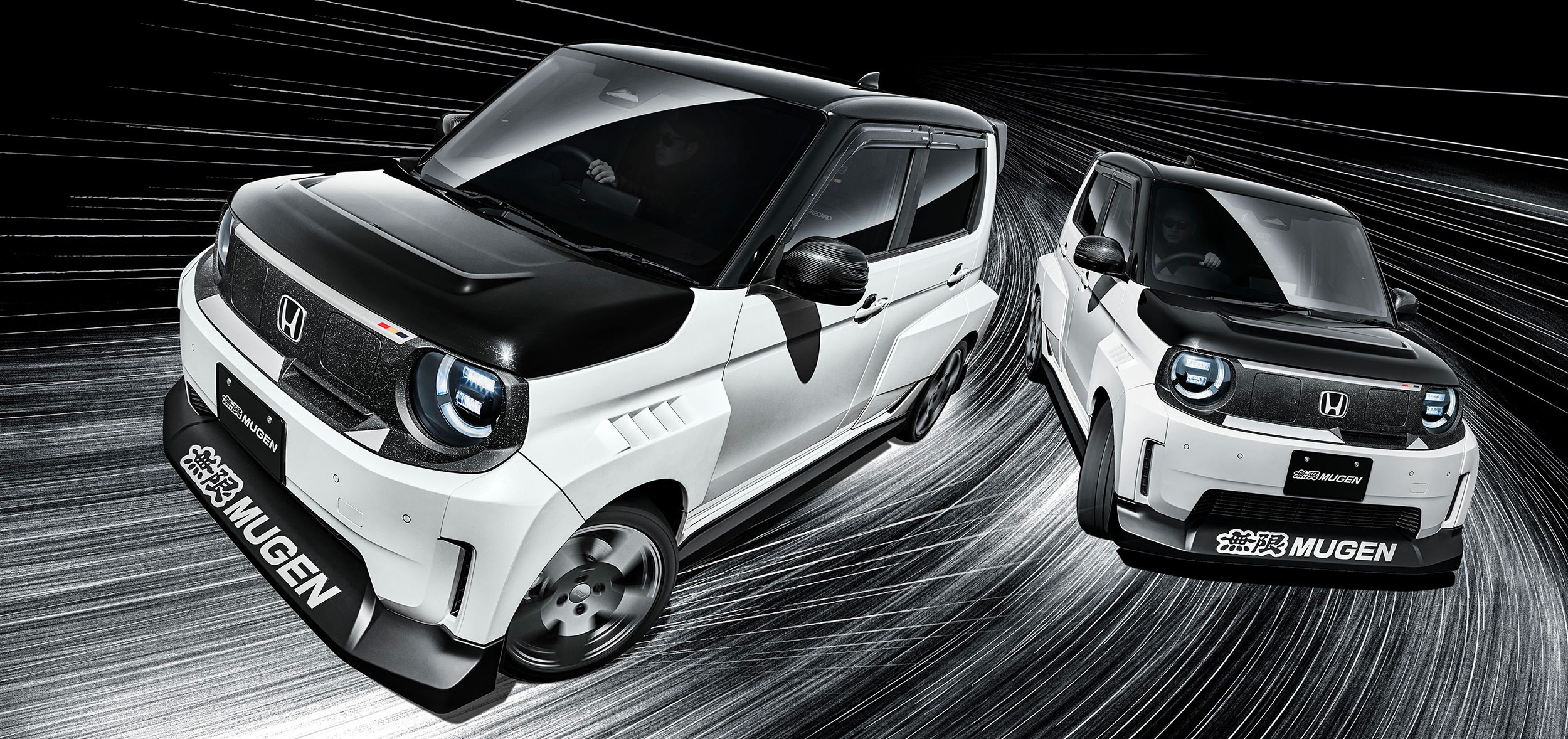
The new Honda Super-One taps into a growing appetite for retro-flavored EVs, borrowing heavily from the irreverent charm of the City Turbo II from the ’80s. While the standard model already leans into a sporty aesthetic, Mugen has taken it further with a more aggressive bodykit, interior tweaks, and a set of performance dampers to back up the look.
Starting with the exterior, the Japanese tuner injects a dose of motorsport attitude into the Super-One. Up front, it gains a black chin spoiler and a vented hood, but the real standout sits along the sides, where vented wide fender extensions are mounted over the already flared arches.
Those arches are complemented by carbon mirror caps, deeper side skirts, and a set of 16-inch forged aluminum wheels with a five-spoke design. Around back, Mugen adds a sizeable roof spoiler and sharper extensions to the rear bumper.
Inside, the front seats have been swapped with semi-buckets from Recaro, complementing the track-ready stance. Buyers can also get special floor and luggage mats, scuff plates, and protective door trim with Mugen branding, which can also be found on the rim of the two-spoke steering wheel. Other accessories include the hydrophobic mirrors and the window visors.
Under the skin, Mugen is offering Performance Dampers developed in collaboration with Yamaha, which are said to improve handling and reduce vibrations. Note that the Super-One has a more aggressive chassis setup compared to the N-One e: kei car, featuring a lowered suspension and wider tracks.
Unfortunately, the zero-emission powertrain is left untouched. The Super-One sticks with a single electric motor producing 94 hp (70 kW / 95 PS) in Boost Mode. It is not a headline-grabber, though Honda tries to add some theatre with an Active Sound Control system that pipes in simulated gearshifts and engine noise through the speakers.
Mugen has yet to put a price on any of these upgrades, as they remain under development. A market launch in Japan is scheduled for late May 2026.
Beyond Japan, the Super-One is headed to the UK, Europe, Australia, New Zealand, and parts of Asia, which raises the prospect of a one-make series. It would suit the car rather well.
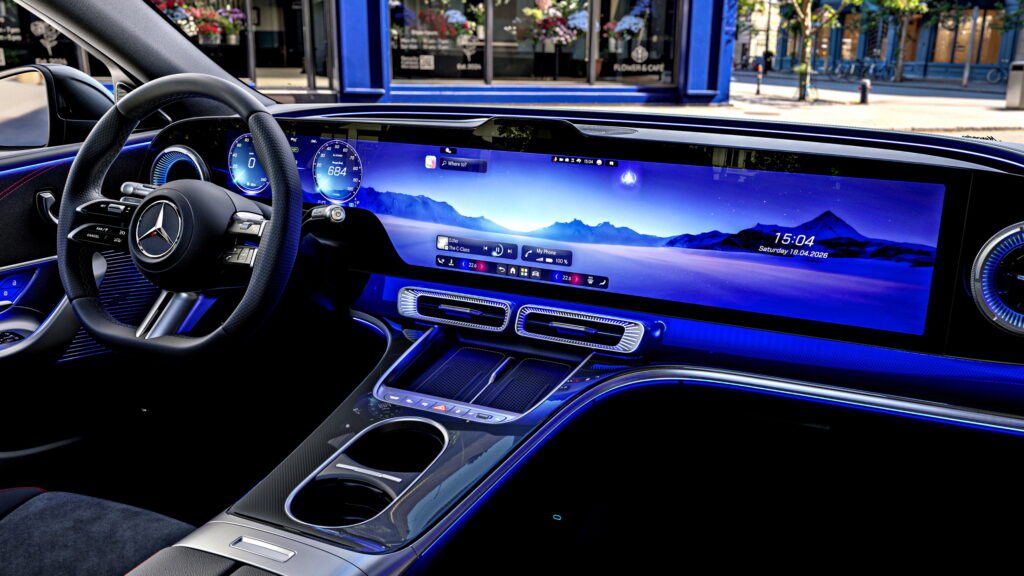
The new electric C-Class adopts a full-width digital dashboard layout.
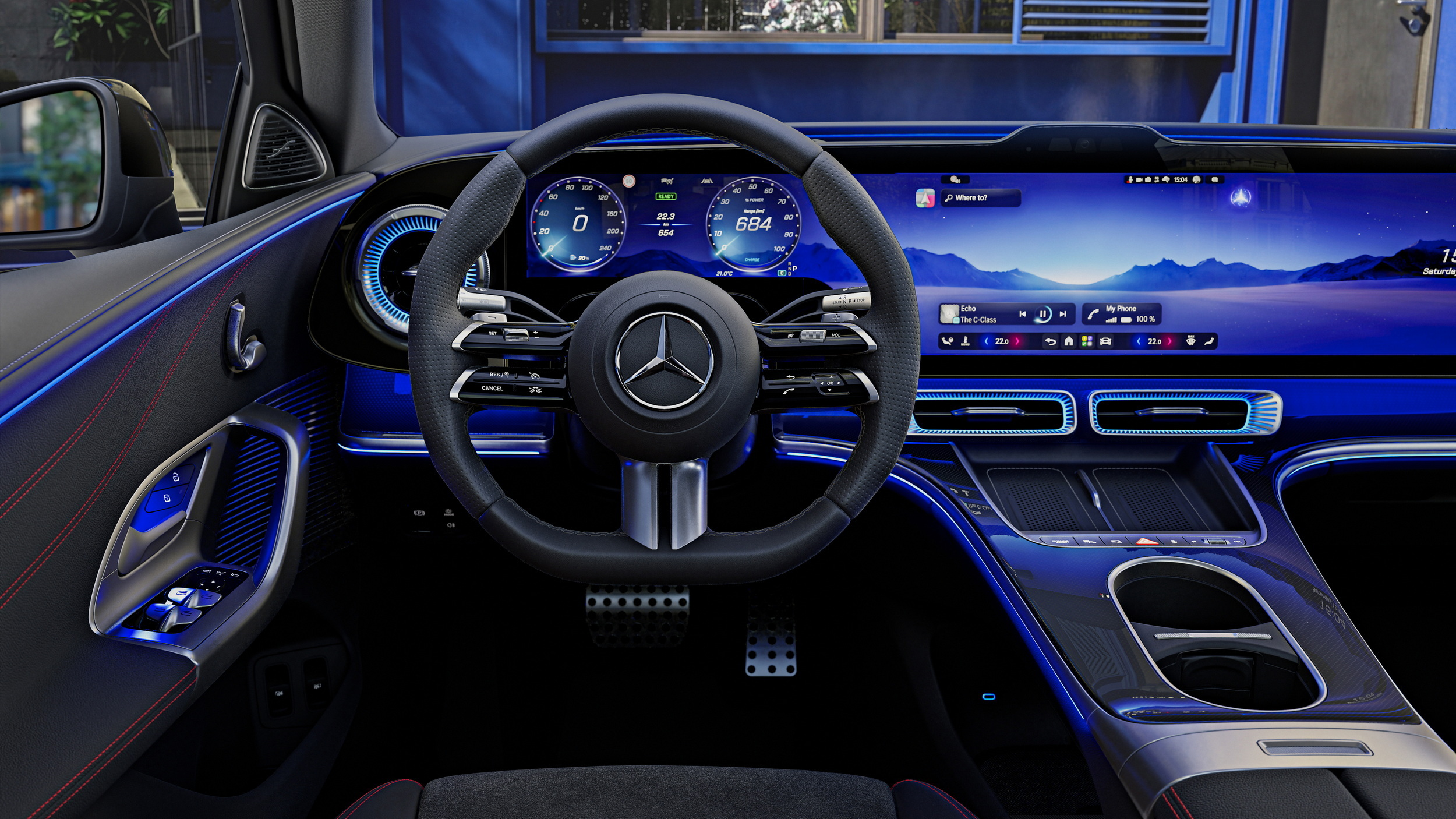
A 39.1-inch Hyperscreen dominates the cabin with few physical controls.
Mercedes promises improved space, long-distance comfort, and sportiness.
Mercedes is getting ready to reveal its all-electric C-Class on April 20, but the interior has already made an early appearance. Front and center is a massive MBUX Hyperscreen stretching almost the full width of the dashboard, uninterrupted and unmistakably similar to what we have already seen in the GLC EV.
The company describes the new interior of the electric sedan as a “driver-oriented refuge”, though it reads more like a rolling digital billboard from where we’re sitting. The display appears to mirror the 39.1-inch Hyperscreen from the GLC EV, which makes the recently updated EQS and S-Class flagships feel either a step ahead or already behind, depending on your perspective.
With approximately 10 million pixels, the giant display aims to reduce the need of menus, having everything within reach. Even so, experience keeps reminding us that glass can’t replace the certainty of a proper button or dial. There are at least a few holdouts here, with physical controls still present on the center console and steering wheel, the latter seemingly lifted straight from its SUV counterpart.
Besides the attention-grabbing Hyperscreen, Mercedes also mentions the Superscreen, which is a more conventional triple-screen layout reserved for lower trim levels of the sedan. Both setups offer the option between ten ambient styles with different colors to fit your mood.
More Space And Comfort
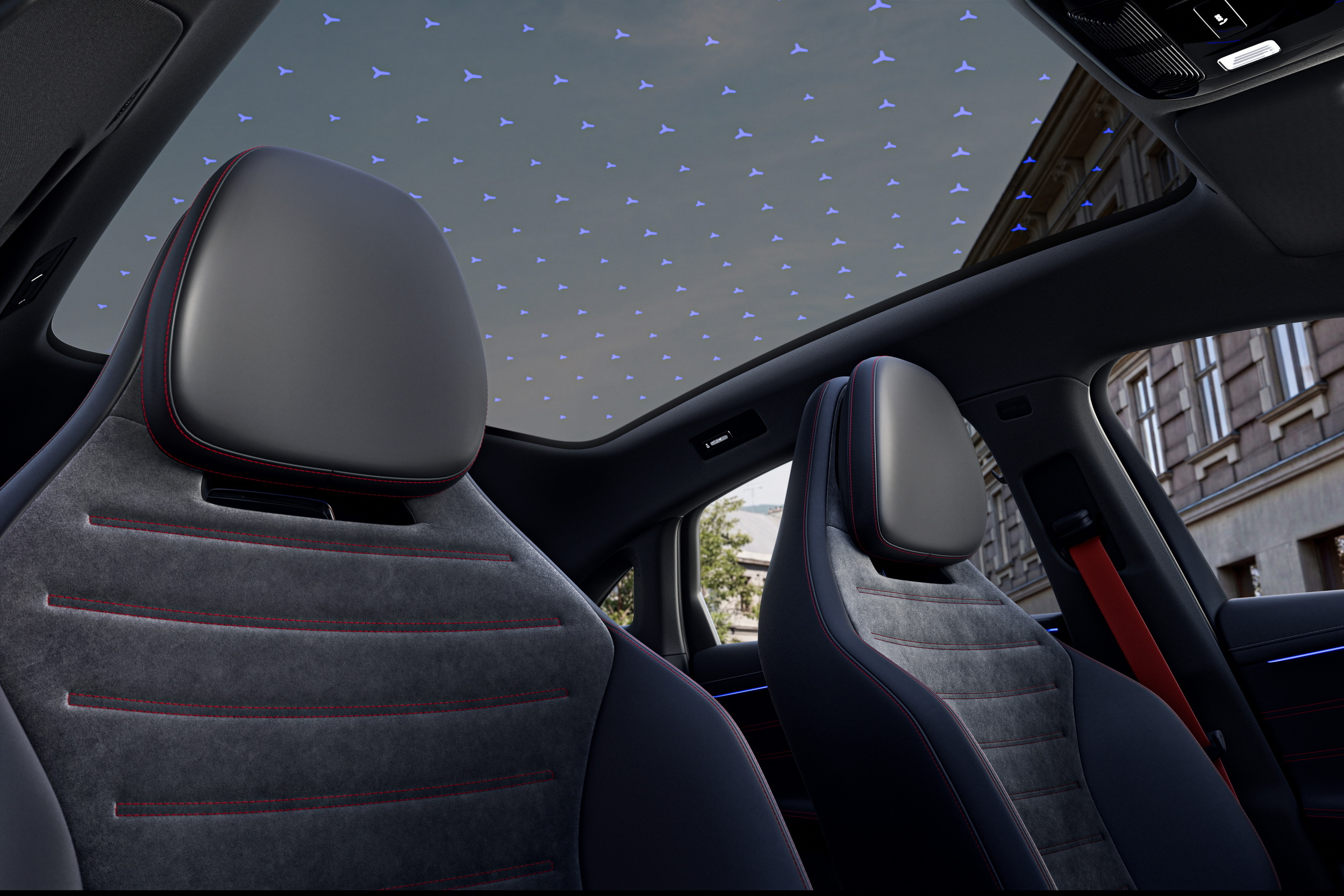
The company promises that the electric sedan will be the best and sportiest C-Class yet, while offering more space than ever before. It will also bring “exceptional” long distance comfort thanks to the new seats, the optional star-shedded panoramic sunroof, the sophisticated climate control system, and the extensive sound insulation.
The front seats come with electro-pneumatic four-way lumbar support, 4D sound, massaging and ventilation functions. These are coordinated with the Energizing Comfort programs designed for “mental and physical rejuvenation” while on the go. Furthermore, the climate system features a multi-source heat pump that can heat the cabin twice as fast as a combustion vehicle while using 50% less energy.
The electric C-Class will also offer a vegan-certified interior with soft-touch surfaces. Other options include the Softtorino leather grain, the Twisted Diamond Nappa leather, and the 3D-relief stainless steel speaker grilles for the Burmester 3D sound system.
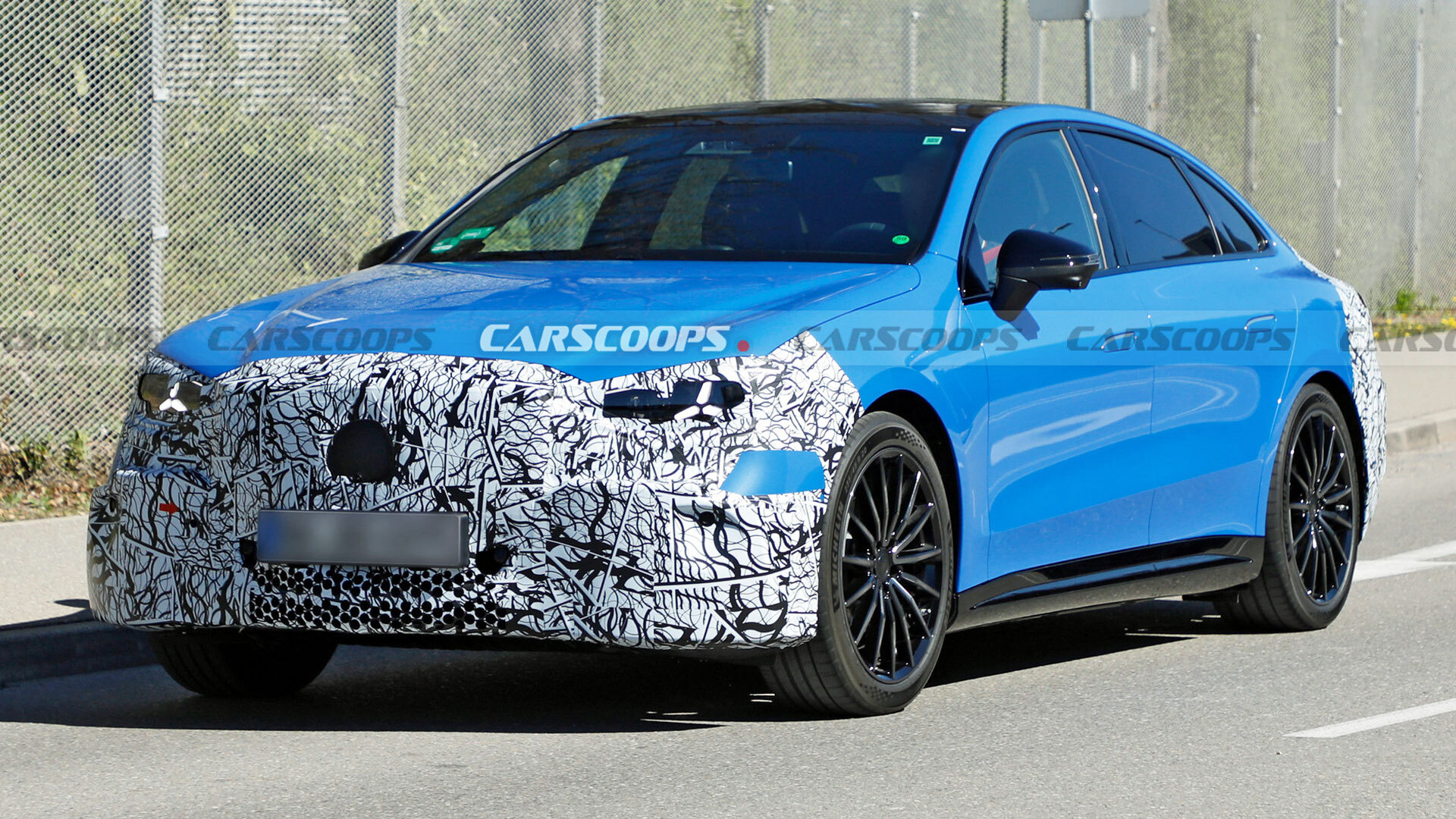
In terms of exterior design, we already know that the model will adopt a large illuminated grille flanked by aggressive headlights with star-shaped LED graphics.
Recent spy shots have also revealed the sleek surfacing of the profile, looking like an evolution of the EQE and EQS sedans albeit with more pronounced front and rear volumes to avoid an egg-shaped silhouette. Expect sportier bumpers and different wheels for the AMG Line trims.
Any Specs?
Mercedes has yet to announce the technical specifications of the electric C-Class, but the model will most likely ride on the same 800-volt MB.EA platform with the GLC. The SUV produces 483 hp (360 kW / 490 PS) and 800 Nm (590 lb-ft) of torque from dual electric motors, with a 94 kWh battery offering a WLTP range of 673 km (418 miles).
In terms of the chassis setup, the company claims that the sedan “raises performance and driving dynamics”, making our appetite for future AMG-branded versions.
We will learn everything about the new model at its official debut in South Korea on April 20. The EV will be joined by a facelifted version of the ICE-powered C-Class, also expected to be unveiled later this year. It’s biggest rival is the new BMW i3 Neue Klasse sedan that debuted last month.
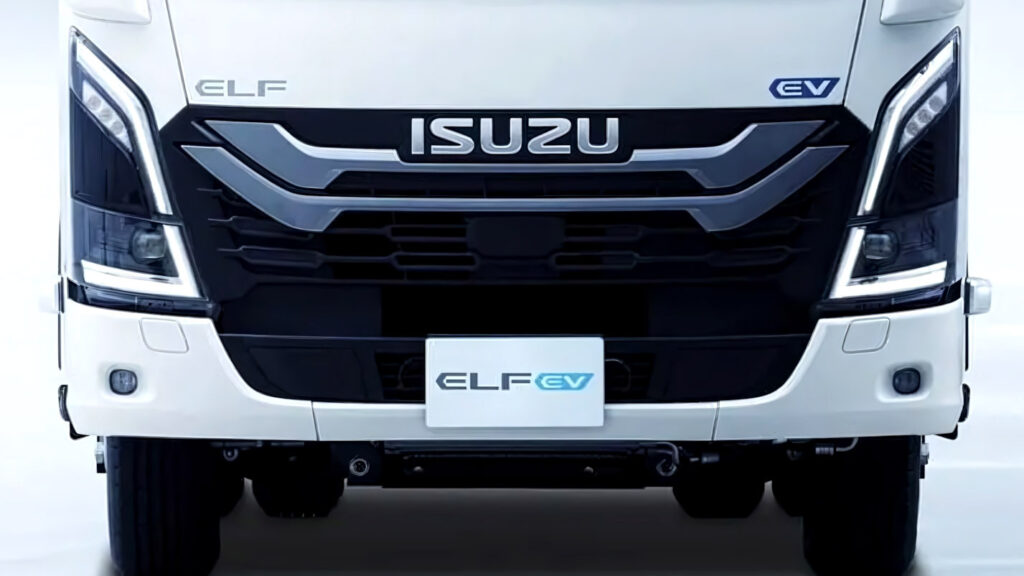
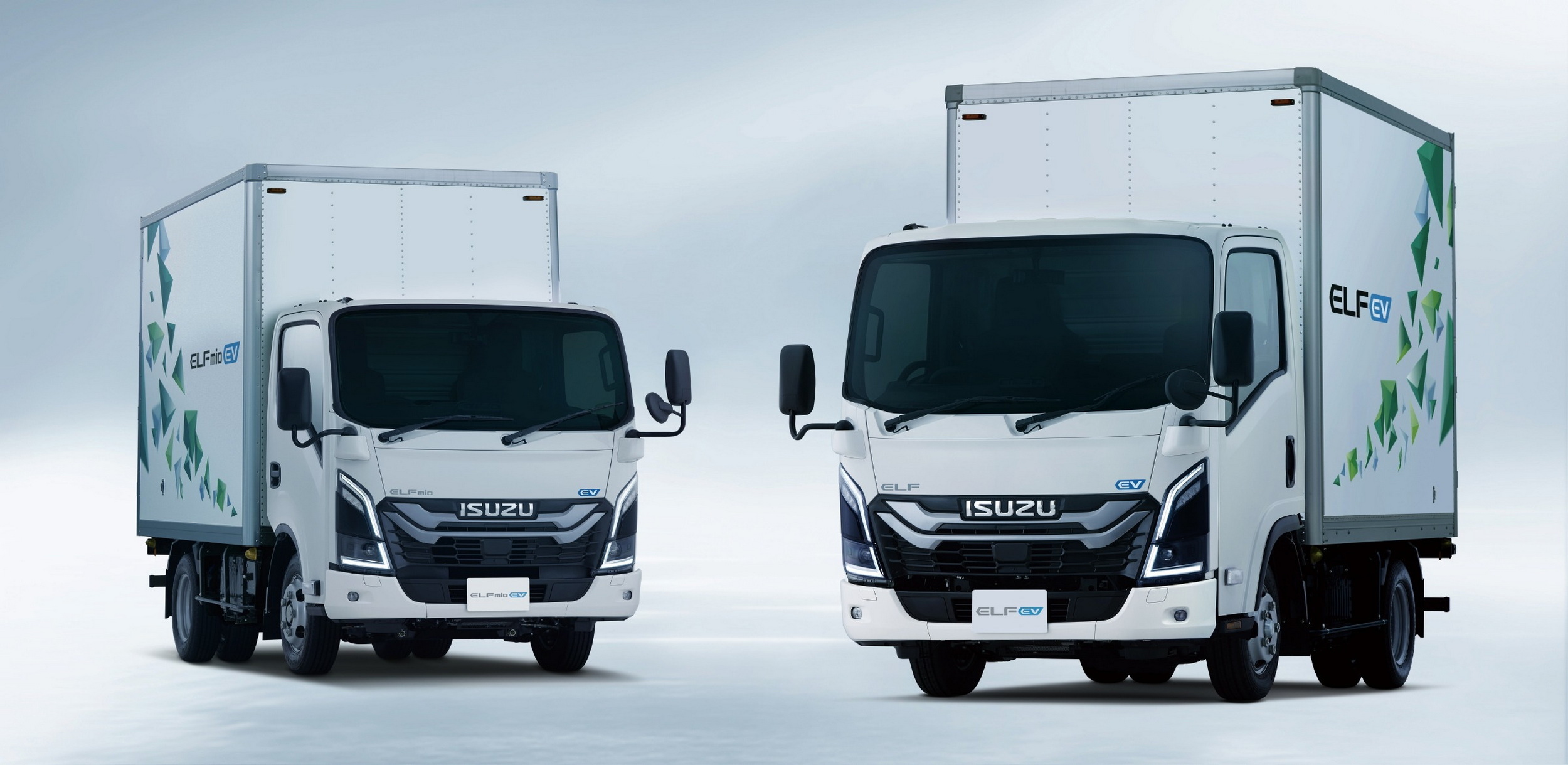
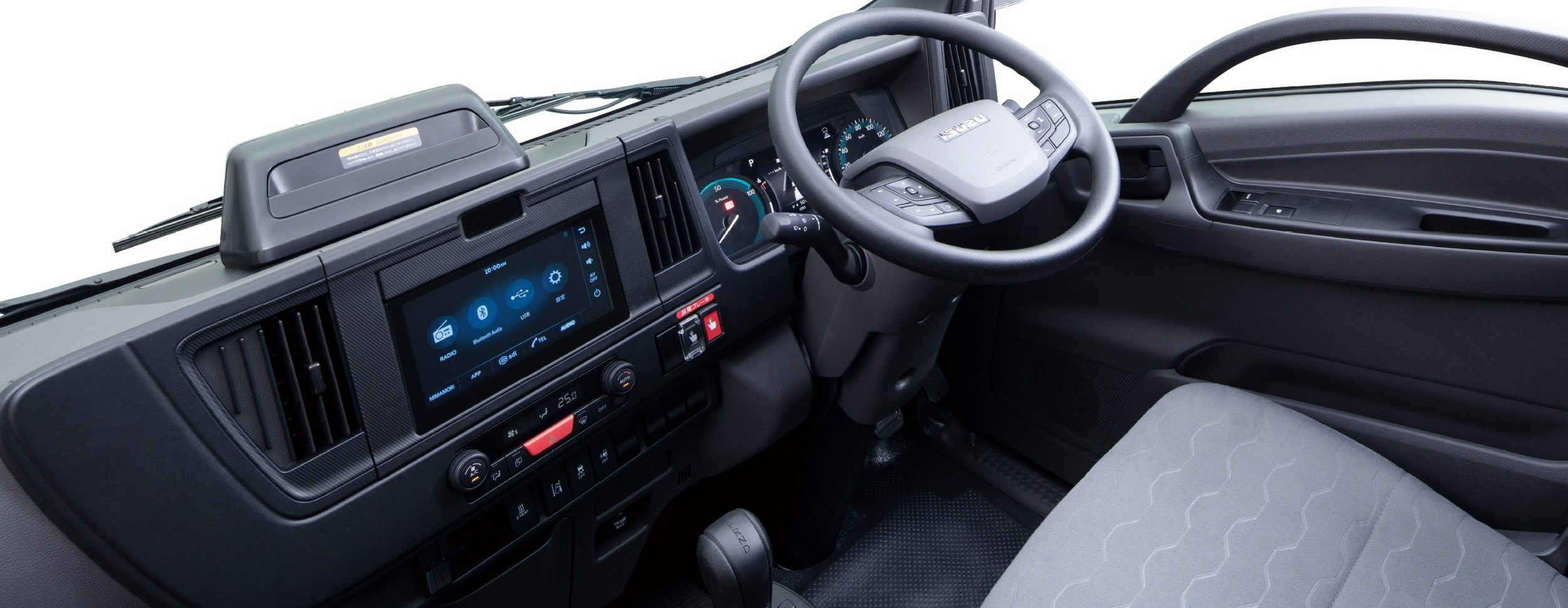
Isuzu and Toyota are building Japan’s first hydrogen light-duty truck.
The fuel cell hardware is Toyota’s, the chassis is Isuzu’s Elf EV.
Toyota’s next fuel cell system delivers 20% better efficiency than before.
Hydrogen mobility might not be moving forward as quickly as expected in passenger cars, but it still has clear promise in the commercial space. The latest move comes from Isuzu and Toyota, which have teamed up to develop Japan’s first mass-produced light-duty fuel-cell electric truck, expected to reach the road within the next two years.
This won’t be a ground-up rethink. Instead, it rides on the familiar ladder-frame chassis of the Isuzu Elf EV. The electric Elf, known globally as the N-Series, arrived in 2023 with modular 20 kWh battery packs, scaling from 40 to 180 kWh depending on spec.
The real story sits under the skin. Toyota’s upcoming third-generation fuel-cell system takes center stage here, bringing a claimed 20% improvement in efficiency over the current setup. It is also expected to last longer and cope better with hard use, which matters when your daily routine involves stop-start urban logistics or hauling refrigerated goods across a city.
Why Hydrogen?
One of the primary drivers behind this FCEV project is the inherent limitation of battery-electric trucks in certain commercial roles. Light-duty trucks used for supermarket and convenience store deliveries often require heavy refrigeration equipment that drains battery power quickly. Furthermore, the long charging times associated with large battery packs can disrupt tight delivery schedules.
Hydrogen refueling, which takes roughly the same amount of time as diesel, offers a more seamless transition for fleet operators, while offering an extended driving range. At the same time, an FCEV truck produces much fewer vibrations and noise compared to a diesel-powered equivalent, while having zero CO2 emissions.
Reducing Costs Is The Key
The sticking point remains cost. Fuel-cell vehicles are still expensive, and hydrogen infrastructure is far from widespread. Isuzu and Toyota say the answer lies in smarter engineering, from optimizing the vehicle structure to rethinking manufacturing processes, alongside continued development of the fuel-cell system itself.
Production of the light-duty fuel cell truck is scheduled to start in the Japanese fiscal year 2027, which ends on March 30, 2028.
This isn’t the first time the two companies have worked together on hydrogen. Isuzu and Toyota are already collaborating on the ERGA FCV, an urban flat-floor bus with hydrogen tanks integrated on its roof structure.
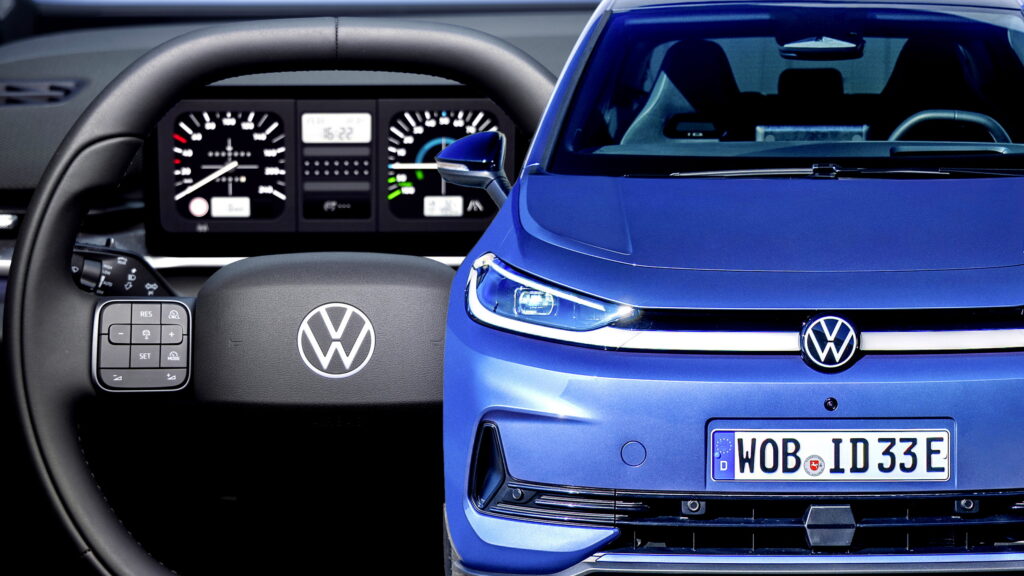
The VW ID.3 Neo arrives as a successor with several key updates.
It gets sharper styling and an interior with welcome physical controls.
Three battery options are offered, with up to 391 miles of range.
Volkswagen has revealed a heavily updated version of its electric compact hatchback, giving it a new identity and a much-needed hardware boost to carry it through until the electric ID. Golf arrives later this decade. The ID.3 Neo brings cleaner styling and a welcome return to physical controls, along with more power and range at the top end.
The compact EV, still absent from North America, was originally introduced in 2019 and received a mild facelift in 2023. While the ID.3 Neo is not a new generation, it represents a comprehensive update designed to keep it competitive against the growing competition from China.
Starting with the exterior, the biggest change is the adoption of a thicker full-width LED strip that connects the slightly tweaked headlights and is joined by black trim. The VW emblem is positioned slightly lower than before, while the bumper gains sharper intakes.
The rest of the bodywork is carried over, but the A-pillars, roof, rear spoiler, and tailgate gain a body-colored finish, replacing the previous glossy black treatment. According to the company, this makes the ID.3 Neo appear “longer, flatter, and more dynamic” than its predecessor.
Overall, the styling updates are not as extensive as one would expect, but they do bring the compact hatchback closer to the upcoming ID. Polo.
Overhauled Interior
Inside, Volkswagen has listened to critics and replaced its controversial touch-sensitive sliders and with traditional buttons. Those can be found on the new two-spoke steering wheel, and on the center console. The dashboard has been slightly redesigned with simpler lines and improved materials, while a wider center tunnel sits higher than before.
Besides the clicky controls, the centerpiece is a new digital cockpit comprising a larger 10.25-inch instrument cluster and a 12.9-inch infotainment display. Those feature fresh graphics and simpler menus, following the example of the ID. Polo. The Innovision infotainment system comes with an integrated app store, offering options for video streaming, gaming, parking, and charging.
Premium features such as an augmented reality head-up display, a panoramic sunroof, front seats with massage and memory functions, and a Harman Kardon Audio system are available as options.
In terms of safety, the ID.3 Neo will be available with an enhanced Connected Travel Assist system featuring optional traffic light recognition, and the optional Park Assist Pro with a memory function. Those join various standard ADAS such as Lane Assist, Front Assist, and turning brake function.
Powertrain Options
The ID.3 Neo launches in Europe with three outputs and battery configurations, bringing improved efficiency. The Entry model delivers 168 hp (140 kW / 170 PS) from a 50 kWh battery. The Mid version nudges that to 188 hp (140 kW / 190 PS), paired with a 58 kWh pack.
At the top, the High model makes the case for sticking around a bit longer. It produces 228 hp (170 kW / 231 PS) and uses a 79 kWh battery, good for a claimed WLTP range of 391 miles (630 km). That is the number that matters here, and it does most of the heavy lifting.
Charging capacity has also been improved at 105 kW in the Entry and Mid versions, and up to 183 kW in the High. Furthermore, the EV gains Vehicle-to-Load (V2L) capability, allowing it to power external devices.
For anyone still holding out for a bit of life, Volkswagen is said to be working on a quicker follow-up to the performance-focused ID.3 GTX. The smart money is on a GTI badge, which gives it some heritage to lean on, even if the driving experience has to do the rest of the talking.
Simplified Lineup
Pre-sales for the ID.3 Neo start in Germany and other European markets on April 16. While official pricing has yet to be announced, VW has simplified the trim structure reducing it to Trend, Life, and Style grades.
Rolls-Royce’s Nightingale is a fully electric, two-seat coachbuild.
At 226.8 inches, it matches the Phantom sedan in overall length.
The cabin ceiling uses 10,500 stars patterned on a nightingale’s song.
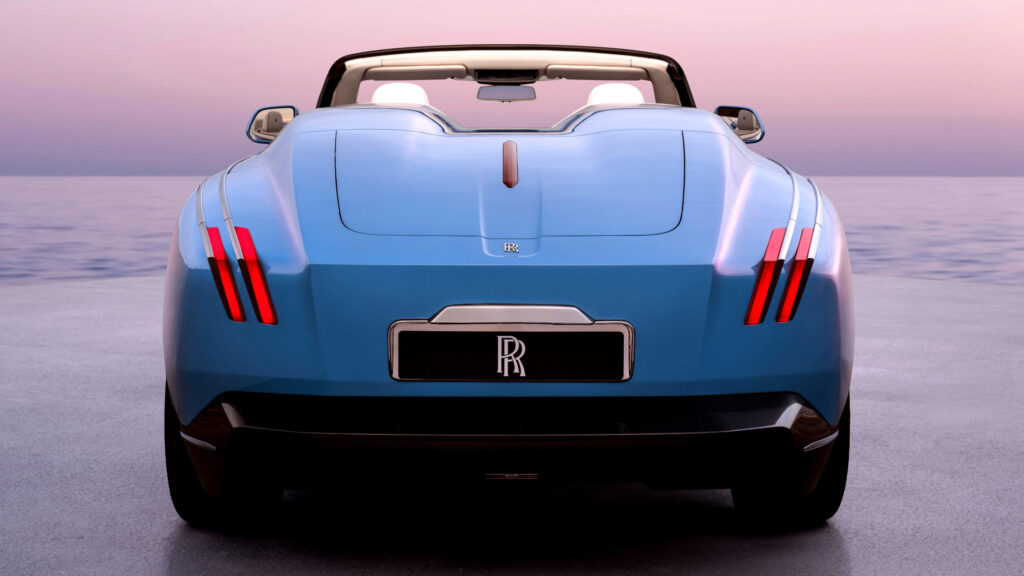
While several automakers quietly scale back their EV projects, Rolls-Royce is doing the opposite, and doing it in typical fashion. The Project Nightingale arrives as an exclusive two-door convertible, marking the first entry in the company’s Coachbuild Collection with bespoke styling and a strictly limited run of 100 units
With a length of 5.76 meters (226.8 inches), the Nightingale closely mirrors the Phantom sedan in sheer presence. It adopts a raked windscreen, a two-seat cabin, a long, tapering tail, and a set of 24-inch directional wheels styled to echo yacht propellers.
The front is dominated by the Pantheon Grille, carved from a solid block of stainless steel, and flanked by ultra-slim vertical LED headlights. Those are connected to the split LED taillights through polished stainless-steel bands that run across the entire length of the car. Furthermore, a sophisticated diffuser manages airflow without the need for a spoiler, a feat made possible by the absence of exhaust pipes.
The pictured model is painted in Cote d’Azur Blue infused with subtle red flakes, combined with silver accents and a matching soft top. This pale blue shade is inspired by the experimental Rolls-Royce 17EX from 1928.
Two-Seater Cabin
Inside, the dashboard looks familiar, but the cabin only has two seats, framed by horseshoe-shaped forms. The saddle-like armrest glides rearwards to reveal the Spirit of Ecstasy controller, which is one of the five rotary controls.
Another highlight is the “Starlight Breeze” with 10,500 individual fiber-optic stars that wrap around the occupants. In typical Rolls-Royce fashion, these are not arranged in a random order, but with a special pattern derived from the sound-wave analysis of a nightingale’s song
For the launch vehicle, designers chose a combination of Charles Blue with Grace White, joined by Deep Navy details, Peony Pink accents, and Openpore Blackwood inserts.
To maintain the romance of open-top driving, the roof uses a composite blend of cashmere and high-performance fabrics, specifically tuned to let the sound of raindrops through while blocking mechanical noise.
Shared Underpinnings
Naturally, the Nightingale shares the “Architecture of Luxury” aluminum spaceframe chassis with the rest of the Rolls-Royce lineup. It also uses the same fully electric powertrain, currently employed by the Spectre.
Specifications remain under wraps, but the company promised to unveil more details as the vehicle “progresses through its global testing and development program”.
Rolls-Royce Decides Who Will Buy It
The Nightingale is significantly less exclusive than coachbuilt specials from the recent past like the Sweptail, Boat Tail, and Drop Tail. More specifically, the model will be manufactured in 100 units, with owners hand-picked from the firm. Deliveries are scheduled to begin in 2028.
As reported by Autocar, the starting price is approximately £7 million ($9.5 million), although the final cost is expected to climb following extensive personalization options. Besides the vehicle itself, the Coachbuild Collection program includes behind-the-scenes access to design and testing, plus global curated events.
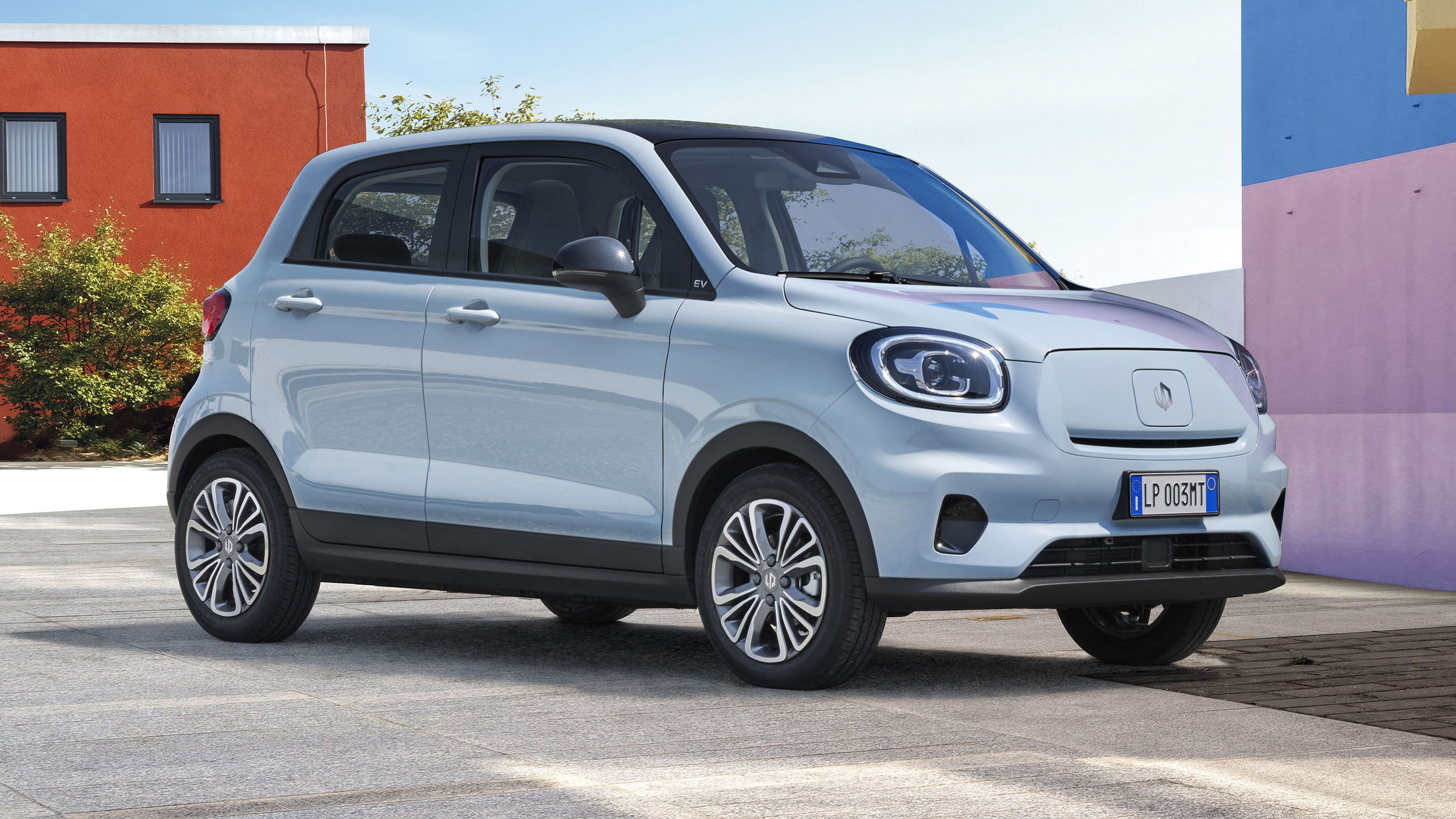
The Leapmotor T03 urban EV transforms into a pint-sized van.
It offers a 657-liter cargo area and 220 kg payload capacity.
The model will hit dealers this summer, starting at €14,590.
Stellantis is broadening its lineup with a slightly left-field addition, rolling out a last-mile delivery vehicle for Europe through its Leapmotor joint venture, based on the tiny T03. Its compact footprint makes it well suited to the cramped streets of Europe’s city centers, backed by a zero-emission powertrain and pricing pitched to keep fleet buyers interested.
As with most LCV conversions of existing models, the T03 has been reworked into a two-seat van. The rear bench is gone, replaced by a 657 lt (23.2 cubic feet) cargo area. Access comes via the tailgate and rear doors, though the openings are predictably tight.
Payload is less convincing. It is rated at just 220 kg (485 lbs), which limits what it can realistically carry. Then again, this is more about parcels and city drops than shifting bags of cement, so for its intended job, it may be enough.
Inside, it’s better equipped than you’d expect from something pitched at delivery duty. You get an 8-inch digital instrument cluster, a 10.1-inch infotainment touchscreen, and a full suite of ADAS features.
On the outside, the five-door hatchback is unchanged from the standard Leapmotor T03, measuring 3,620 mm (142.5 inches) long. The LCV version sets itself apart with 15-inch steel wheels finished in black, while the color choices are limited to Caribbean Blue, Light White, and Canopy Grey.
Power comes from a single electric motor producing 95 hp (70 kW) and 158 Nm (116.5 lb-ft) of torque, identical to the passenger model. A 37.3 kWh battery delivers up to 256 km (159 miles) of WLTP range, with support for 45 kW DC fast charging.
According to Stellantis, “production finalization” for European markets will take place at the Mirafiori plant in Turin. In reality, that likely means the LCV conversion is handled there, as the Leapmotor T03 itself continues to be built in Jinhua, China, after plans for production at the Tychy plant in Poland were quietly dropped.
Orders for the Leapmotor T03 LCV will open in select EU markets later this month, with the first deliveries expected to land this summer.
Pricing starts at €14,590 ($17,100) excluding VAT, putting it among the most affordable commercial vehicles on sale in Europe. Stellantis is not new to the small EV game either, already offering an LCV version of the even smaller Citroen Ami heavy quadricycle.
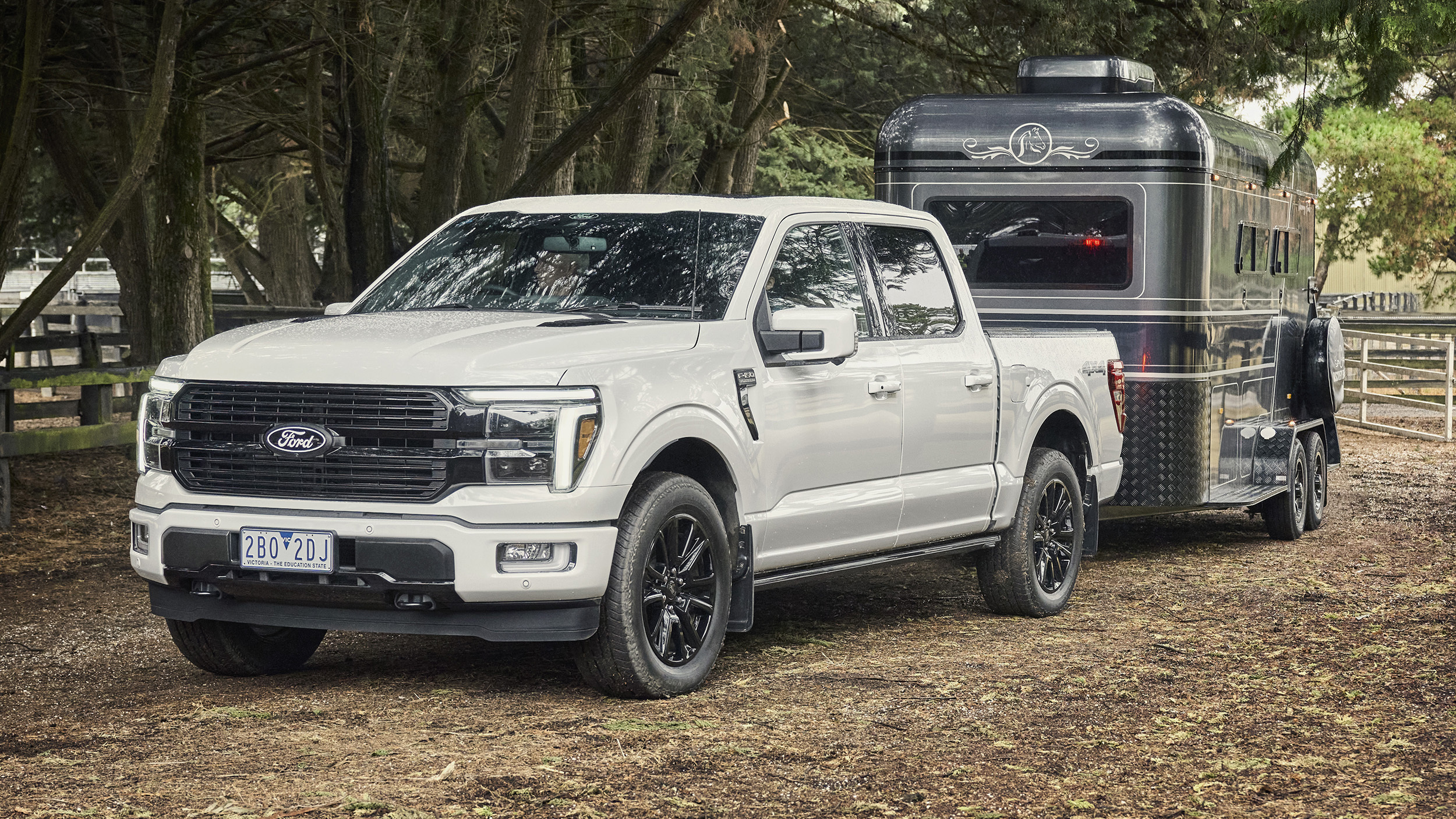
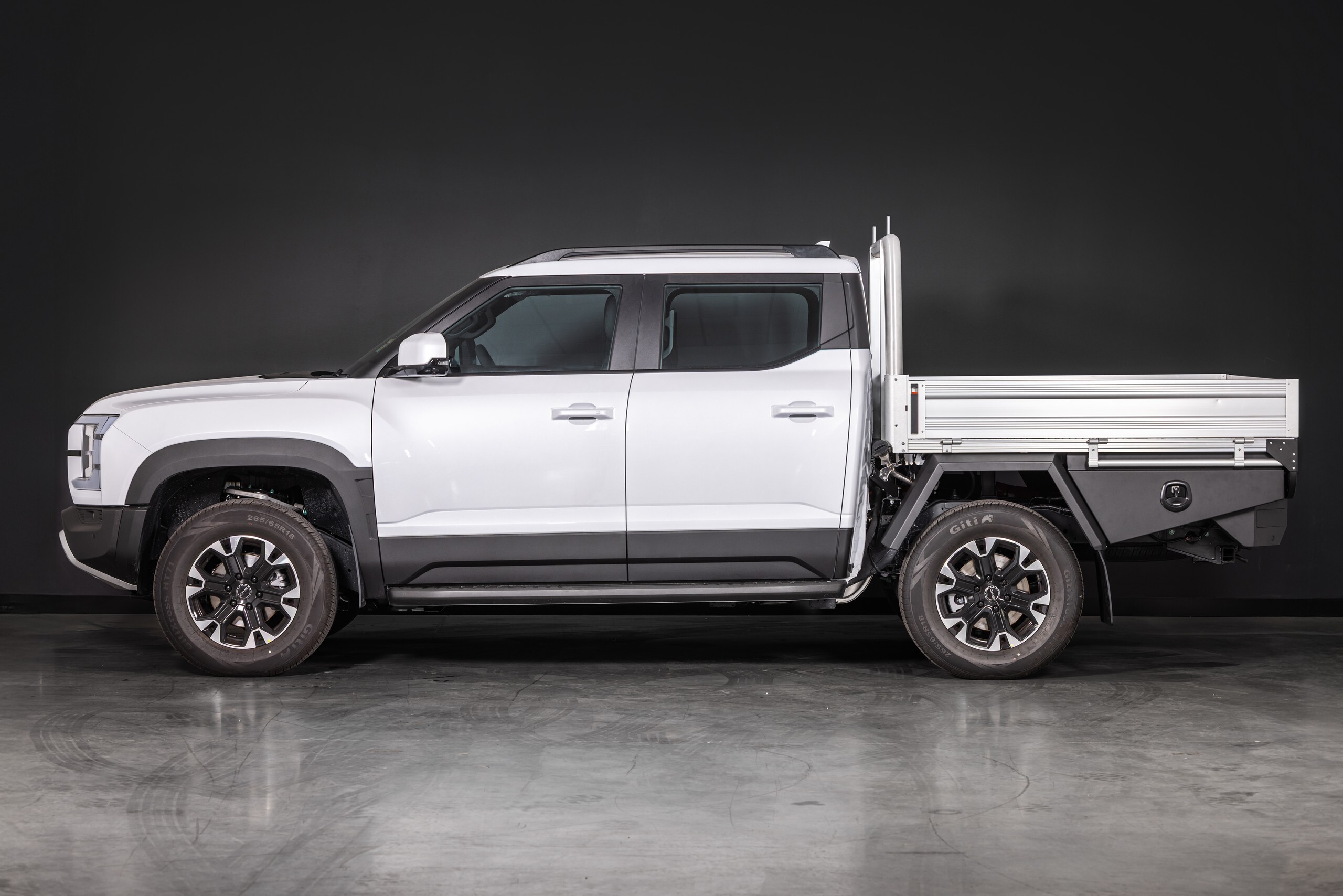
BYD is developing a rival to the Ford F-150, Ram 1500, and Chevy Silverado.
The “super-sized” truck is a response to strong customer demand in Australia.
Company is also reportedly considering an EV counterpart to the Shark 6.
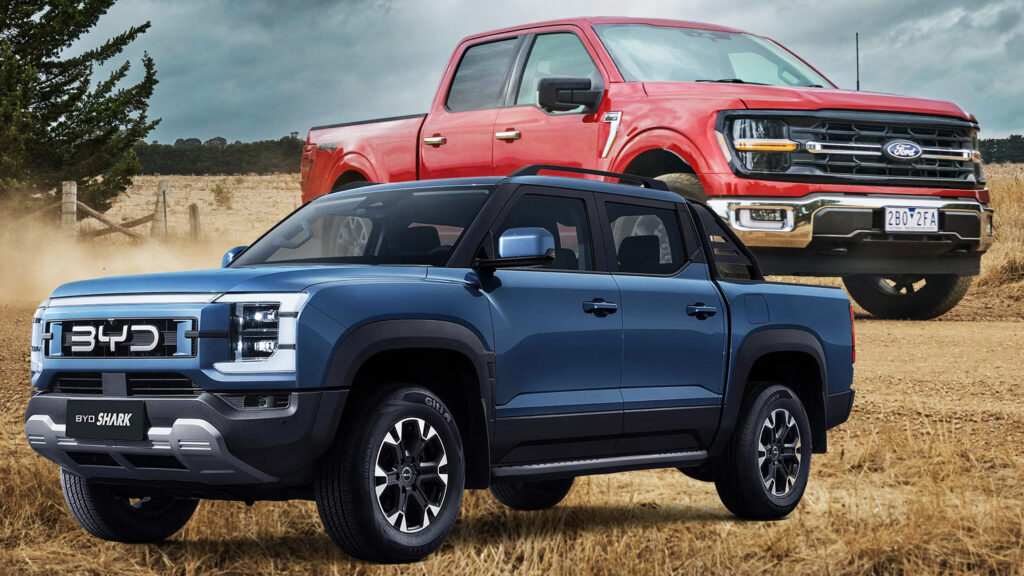
BYD isn’t content with just taking on the Ford Ranger. China’s most successful automaker is already looking to move up a weight class to challenge the Ford F-150. That next step won’t involve the US market, though, as this larger model is being developed with Australia in mind.
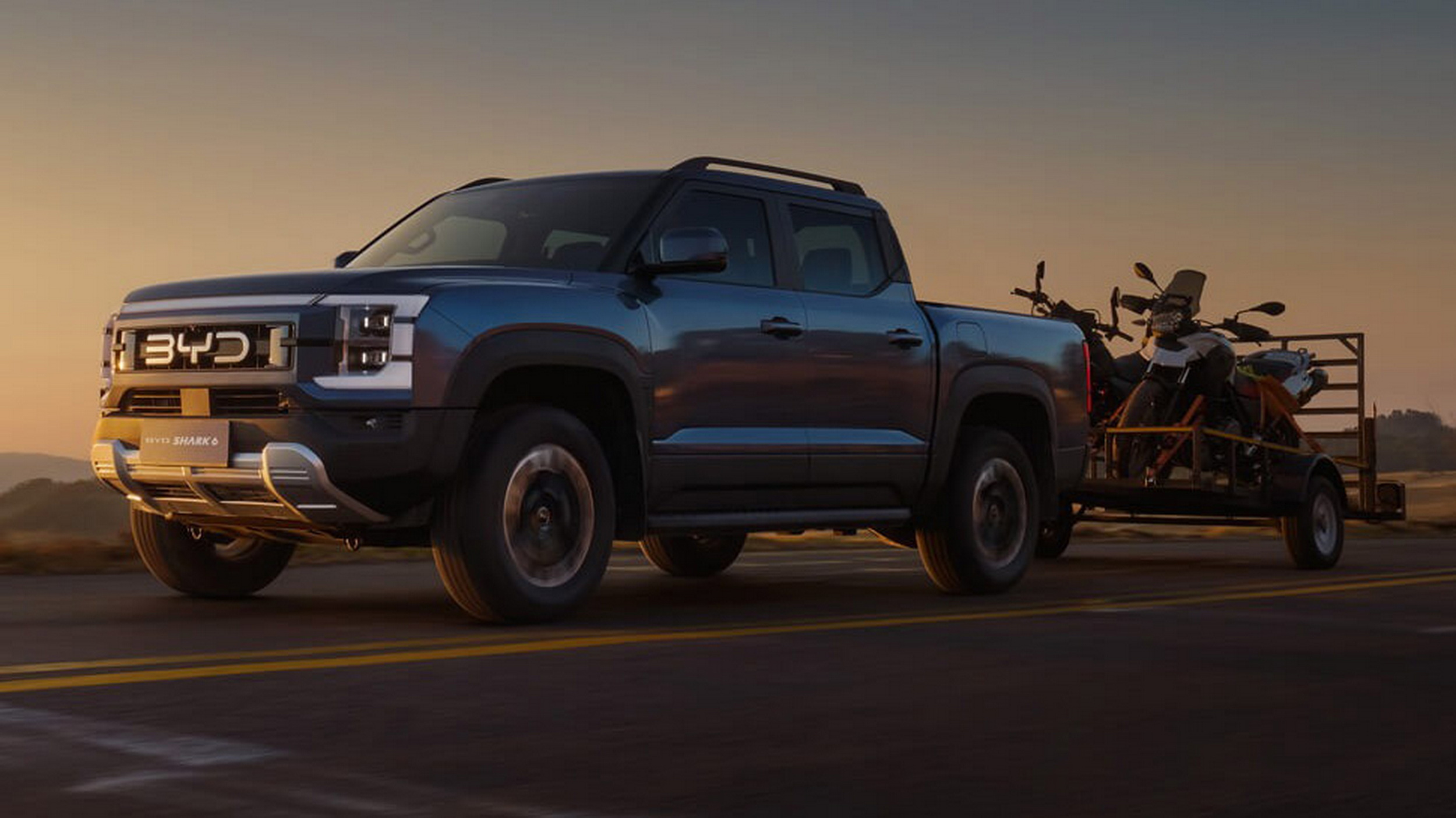
BYD’s first pickup in Australia, the Shark 6, arrived in late 2024 wearing a face that looked more than a little inspired by the F-150. At 5,457 mm (214.8 inches) long, it sits just beyond the typical midsize footprint and comes equipped with a plug-in hybrid powertrain.
The Shark 6 was a runaway success, becoming Australia’s best-selling PHEV truck in 2025 with 18,073 deliveries. For 2026, BYD has doubled down, introducing a Performance trim with a more potent powertrain along with a chassis-cab bodystyle driven by customer demand.
Moving Up to the Heavyweights
However, Australians have been asking for something even bigger. Liu Xueliang, managing director of BYD Asia Pacific, said: “Some customers have requested a full-size Shark 6, similar in size to the Ford F-150. We are on our way to try to get there.”
Word of the program first slipped out in early 2025, when David Smitherman, then CEO of EVDirect, said a full-size BYD pickup was “absolutely in development.” Since then, things have gone quiet on timing, but the working expectation points to a 2027 arrival if everything stays on track.
According to CarExpert, the real pressure isn’t coming from private buyers chasing something bigger. It’s fleet operators, particularly mining companies, that are pushing for a larger, more capable truck with electrification baked in from the start.
In Australia, the full-size segment currently includes the Ford F-150, Ram 1500, Chevrolet Silverado, and Toyota Tundra. With a combined sales of 8,763 units in 2025, full-size trucks are a niche compared to the midsize segment, as the Ford Ranger alone sold 56,555 units becoming Australia’s best-selling vehicle overall for the third consecutive year. Still, the profit margins are significantly higher, which explains BYD’s interest.
Factory right-hand-drive conversions for full-size trucks don’t come cheap, and in Australia they can easily push past AU$150,000 (US$105,800). The F-150 starts from a little over AU$122,000 (US$87,000) in XLT trim climbing to over AU$152,000 (US$108,000) for the Lariat, both with the 3.5L engine. BYD sees an opening here. Build the truck properly from the start in right-hand drive, price it more sensibly, add a tech-heavy cabin and an electrified powertrain, and suddenly those inflated conversion costs start to look like yesterday’s problem.
More BYD Trucks On The Horizon
That move upmarket isn’t happening in isolation. Liu Xueliang has already suggested a fully electric counterpart to the Shark 6 is in development, aimed squarely at industries that no longer want diesel on site. Mining is the obvious target. If it lands as expected, it will go head-to-head with the electric workhorses now lining up, including the Toyota Hilux BEV, the upcoming Isuzu D-Max BEV, and the LDV eTerron 9.
At the other end of the scale, BYD is also sketching out something smaller. A compact pickup is in the works, expected to ride on a unibody platform and use a plug-in hybrid setup. This one isn’t chasing job sites. It’s aimed at buyers who want the look and versatility of a pickup without committing to something oversized or overly serious.
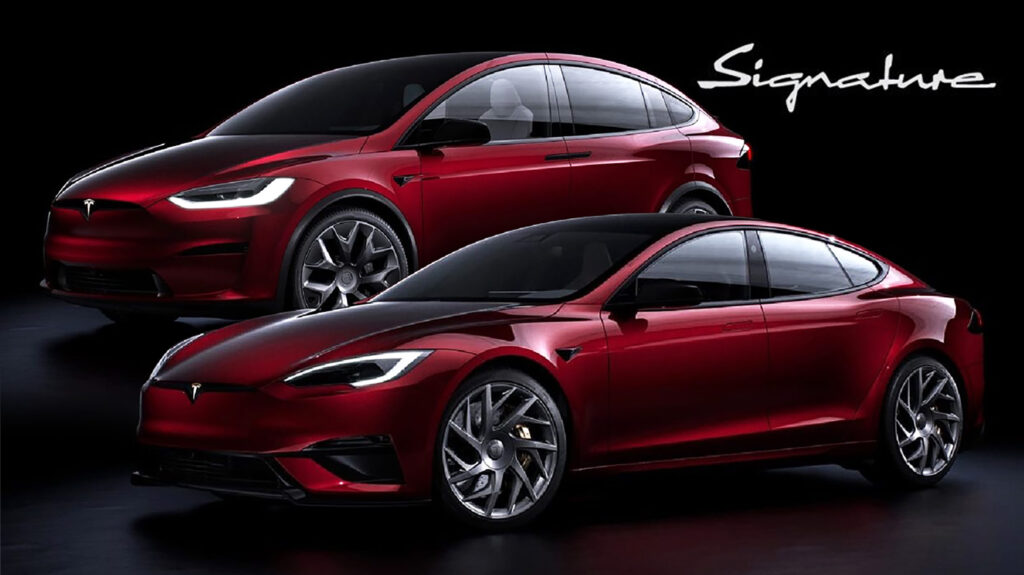
Tesla ends Model S and X run with Signature Edition farewell specials.
Limited versions go to invited buyers only, each priced at $159,420.
They stand out with Garnet Red paint paired with gold accents.
Tesla is preparing to phase out the two EVs that defined its early success, but not without giving them one last push into the spotlight. Just days after reports emerged that remaining Model S and Model X inventory had been hit with $15,000 price hikes, there is a new sting for anyone who paid up. Both models are being sent off with a final, tightly capped Signature Edition, reserved for a small group of buyers who received email invites.
The Model S sedan and Model X SUV have been around since 2012 and 2015, respectively. After a final update in mid-2025, Tesla confirmed in January 2026 that both would leave production later this year, clearing space at the Fremont plant in California for humanoid robot assembly.
While Tesla has not formally announced the send-off, the news surfaced on X through Ryan McCaffrey, host of the Ride the Lightning podcast. Invitations have already gone out, with a private launch event reportedly set for May.
Tesla will build 250 units of the Model S and just 100 units of the Model X Signature Editions. Both are priced at $159,420. Yes, the last three digits are a wink to Musk’s well-known favorite number, a reference rooted in cannabis culture. And yes, it is a ridiculously steep jump, with premiums of $59,430 for the sedan and $54,430 for the SUV over the standard Plaid versions. For what is essentially a farewell package, that is serious money, even by Tesla standards.
Signature Edition Visual Identity
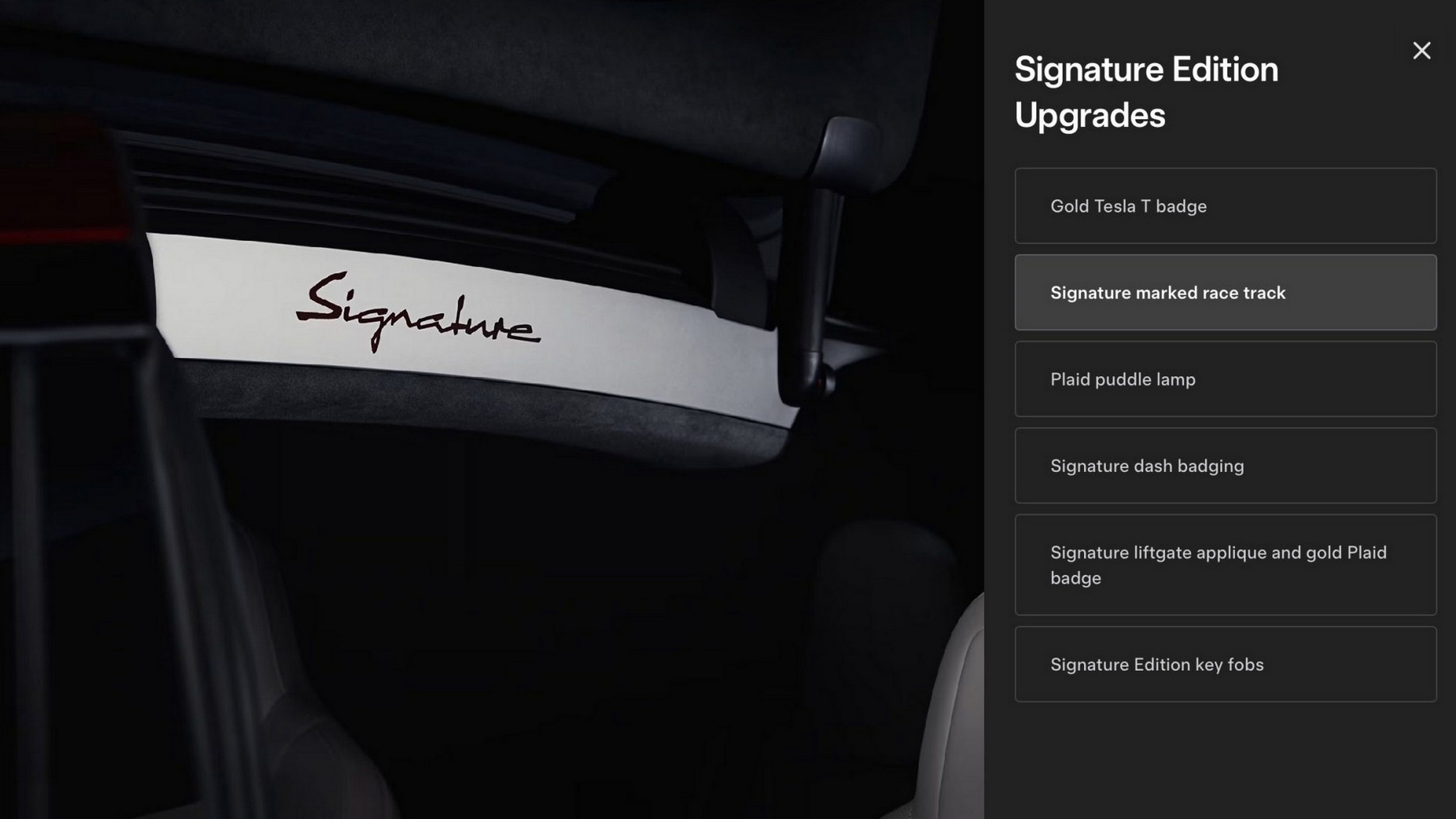
Both models wear an exclusive Garnet Red finish, inspired by the original Model S launch color. It is paired with gold emblems, giving the cars a celebratory tone. Inside, there is a white Alcantara interior, a yoke steering wheel, and Signature branding throughout.
The Model S sits on 21-inch Velarium wheels with gold brake calipers over carbon ceramic brakes. The Model X gets 22-inch Machina wheels.
Tesla has also added a numbered plate on the dashboard, special key fobs, and Plaid puddle lights. Finally, the EVs come standard with a Luxe Package including free lifetime access to Tesla Superchargers and the Full Self-Driving (FSD) system.
Underneath, nothing changes mechanically. Both cars retain the tri-motor Plaid setup, delivering 1,020 hp (760 kW / 1,034 PS) and 1,420 Nm (1,047 lb-ft) of torque. Still absurdly quick, still more than enough, if you can stomach that $60K pill.
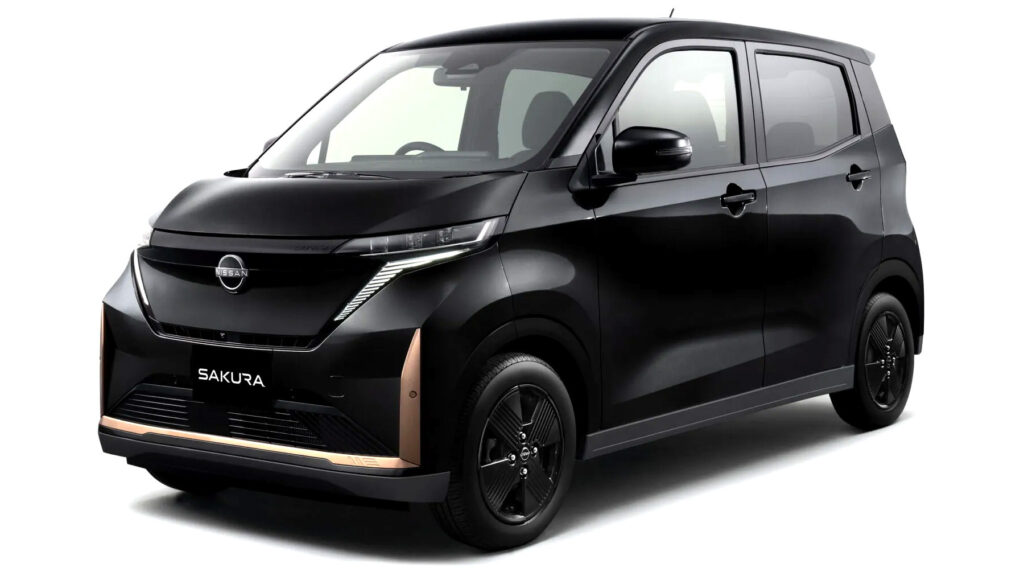
Facelifted Nissan Sakura adopts a redesigned grille and bumper.
It also gains a new color and an extra cup holder inside the cabin.
There are no changes to the 63 hp e-motor and 20 kWh battery.
Update: After a short teaser run, Nissan has now fully revealed the model in Japan, with fresh images and additional details added below.
Nissan’s Sakura isn’t broken, but it is getting older. Japan’s best-selling EV has now been given a light facelift to keep it competitive in the kei segment, just as a high-profile challenger from China, BYD, enters the scene. The tiny electric car has been around since 2022, when it emerged as the production version of Nissan’s IMk concept from three years prior.
Fresh Face And Floral Hues
The most noticeable change is up front, where a redesigned fascia introduces a body-colored grille section that mimics the Nissan Leaf. It’s paired with a revised bumper that brings sharper angles and more pronounced vertical elements along the sides. The LED headlights carry over unchanged, as does the sheet metal along the profile and the back.
Interestingly, these updates are only effective to the X and G grades, with the entry-level S retaining the old design.
The color palette gains a new shade called “Minamono Sakura”, inspired by cherry blossoms floating on water. This is combined with copper accents and a Sterling Silver roof creating an unusual tri-color finish for the flagship Sakura G.
Key-Sized Improvements Inside
The interior looks familiar, but Nissan has introduced several functional upgrades. The drive mode switch has been moved to a more ergonomic position, and the passenger side now includes an additional cup holder.
Designers didn’t seem to bother changing the 7-inch digital instrument cluster and 9-inch infotainment, but they did relocate the USB Type-C ports lower in the center console.
For the mid-range X trim, Nissan has moved several popular options to the standard equipment list, including the Intelligent Around View Monitor, heated front seats, and a steering wheel heater. The EV also gains auto lock and unlock functions, a rear seat reminder, a locking mechanism for the charging port, and an optional 1500W AC power outlet.
Mechanically, the Sakura remains powered by a single electric motor producing 63 hp (47 kW / 64 PS) and 195 Nm (144 lb-ft) of torque. The carry-over 20 kWh lithium-ion battery provides a range of up to 180 km (112 miles) under the WLTC cycle.
The facelifted kei car is available to order in Japan, with the first deliveries expected this summer. Pricing ranges from ¥2,448,600 ($15,400) for the base X trim to ¥2,998,600 ($18,900) for the flagship G. If you take into consideration Japan’s current clean energy subsidies of ¥580,000 ($3,650), the starting price drops to approximately ¥1,870,000 ($11,800).
Nissan says the model has been Japan’s best-selling EV for four consecutive years, recording 14,093 sales in 2025. Competition comes from familiar domestic rivals, including the Mitsubishi eK X EV twin, the Honda N-One e: and N-Van e:, as well as the upcoming BYD Racco.

 Login
Login