❌

Normal view

There are new articles available, click to refresh the page.
Before yesterdayVehicles

Hyundai Is Working On Both An Ioniq 4 And An Ioniq 7

  • Hyundai’s range of EVs will soon be expanded with two new SUVs.
  • A new Ioniq 7 will be positioned between the Ioniq 5 and Ioniq 9.
  • An Ioniq 4 is coming as a more traditional SUV alternative to the Ioniq 3.

No one could accuse Hyundai of dragging its heels on electric vehicles. While some of its legacy rivals have been a little slow to embrace EVs, the South Korean brand continues to grow its fleet of battery-powered cars at an impressive rate, and it’s already working on at least two more.

One of these all-new EVs will be the Hyundai Ioniq 7. For quite some time, the brand’s flagship electric SUV and compatriot to the Kia EV9 was referred to as the Ioniq 7, but it ended up launching as the Ioniq 9. Wearing the Ioniq 7 name will be a new SUV positioned between the Ioniq 5 and the Ioniq 9.

Read: Hyundai Strips The New Ioniq 3 Down To Its Cleaner, Cheaper Self

Like most other EVs from Hyundai, the Ioniq 7 should launch with an 800-volt electrical architecture and be sold in both single- and dual-electric motor configurations. Although prototypes have yet to be seen testing out in the wild, AutoExpress understands this model will be closer in size to the Ioniq 5 than the Ioniq 9.

An Elexio Alternative
 Hyundai Is Working On Both An Ioniq 4 And An Ioniq 7
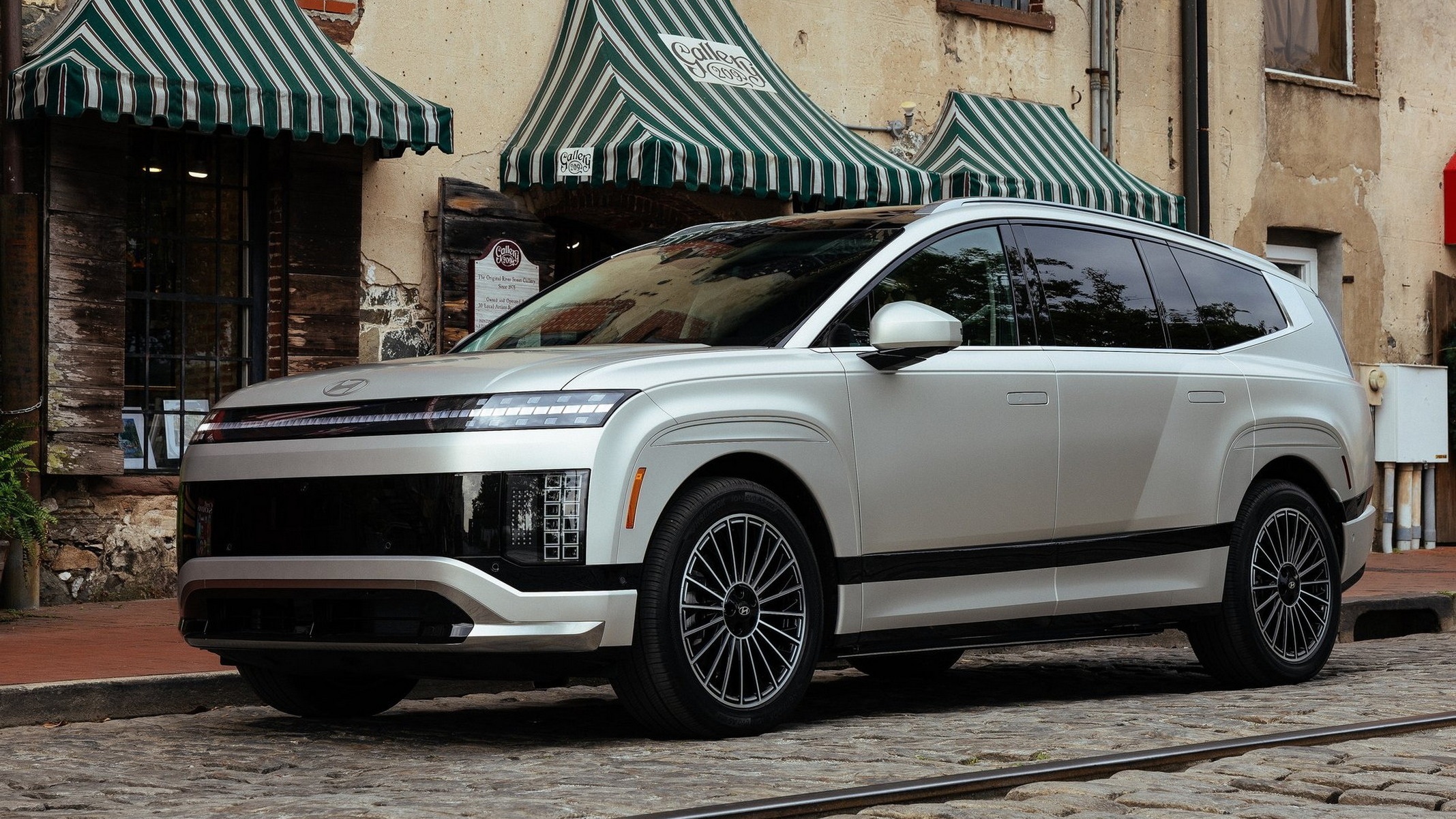
Hyundai Ioniq 9

If so, then it may end up being similar in size to the Chinese-built Elexio, which we drove earlier this year. If that’s the case, the Ioniq 7 may inevitably snatch some sales from the Elexio in markets where both are sold. Crucially, Hyundai’s ‘Ioniq’ branded models are positioned as slightly more premium offerings, helping to differentiate the two. In addition, the Elexio uses a 400-volt system and front-wheel drive, so the Ioniq 7 will have it beat on the powertrain front, too.

A Kia EV3-Sized SUV Is Also Coming

 Hyundai Is Working On Both An Ioniq 4 And An Ioniq 7
Hyundai Ioniq 5

Hyundai isn’t just working on the long-awaited Ioniq 7. The company is also developing a smaller EV that may be badged the Ioniq 4. It’s expected to be similar in size to the new Ioniq 3 hatchback, but unlike that model, it will be a slightly more conventional SUV and similar to the Kia EV3.

In morphing the Ioniq 3 into an SUV, Hyundai’s designers are believed to have given it a boxier, more upright design, so it may hold slightly broader appeal than the somewhat odd Ioniq 3. In addition, it’ll offer more interior space than the Ioniq 3, so it should be better for young families.

Hyundai will probably use the same battery packs and electric motors as the Ioniq 3 in the new Ioniq 4, meaning 42 kWh and 61 kWh batteries will be available.

 Hyundai Is Working On Both An Ioniq 4 And An Ioniq 7

British Traffic Officers Testing Hyundai Ioniq 9 EV For Highway Duty

  • The UK’s National Highways Traffic Officers are civilians, not police.
  • The Ioniq 9s have been converted for frontline duty, with additional lights, horns, and cameras.
  • The agency is looking at further purchases this year, if the trials are successful.

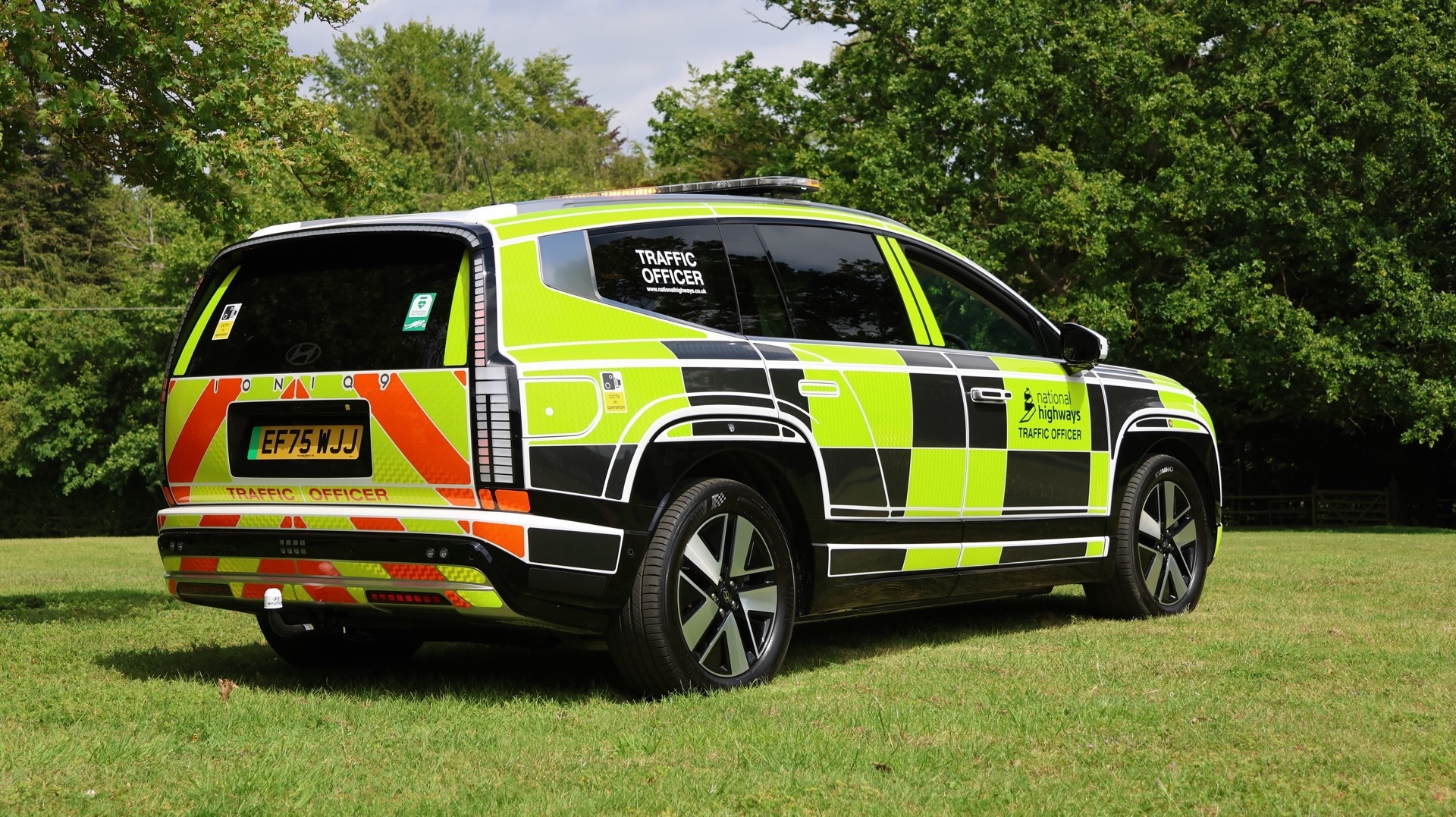
The UK’s Traffic Officers are looking for an all-new, all-electric tool for their fleet, as National Highways runs testing on the Hyundai Ioniq 9. Four examples of the full-size electric SUV have been commissioned for use by the agency and are currently deployed for evaluation on England’s motorways and major A-roads.

These seven-seaters from Hyundai have been decked out in the highway agency’s traditional high-visibility livery, with reflective decals and the all-important emergency lighting systems. In addition to the low-profile amber and red LED light bar, there are additional warning lights installed in the rear windscreen, side mirrors, front bumper, and tailgate, plus a programmable LED signboard for good measure.

Read: Fake Cop Pulls Over Tesla, Then Calls Real Cops On Himself

Add the lighting, CCTV, a 100W bullhorn, and the additional juice needed for the full suite of on-board equipment for patrolling the UK’s roads, and you’re looking at some significant power draw. Normally, that would be especially concerning for an EV. However, the folks at Richell Vehicle Conversions, who handled the conversion, thought of that and have fitted the on-test Ioniq 9s with their own dedicated 240 Ah auxiliary battery system.

Even though the auxiliary battery system is kept separate from the 110 kWh battery that powers the rest of the car, it’s still not clear what the extra draw and added weight (plus the aerodynamic penalty of the lightbar) will do to the Ioniq 9’s 385-mile (620 km) electric range. Still, at least the Ioniq 9 comes with rapid charging thanks to its 800-volt architecture.

 British Traffic Officers Testing Hyundai Ioniq 9 EV For Highway Duty

Although they may look like police cars at a passing glance, National Highways Traffic Officers and their vehicles aren’t actually affiliated with the UK police force. However, despite the role of a traffic officer being one of a civilian, officers are allowed to stop and direct traffic, pull drivers over for safety reasons, and close lanes of a motorway. What they can’t do is arrest or charge drivers or search vehicles.

Either way, if the tests are successful, UK roadgoers may be seeing a lot more of these EVs, provided they’re up to the task. The trail is being used as the UK’s National Highways is considering further purchases during 2026.

 British Traffic Officers Testing Hyundai Ioniq 9 EV For Highway Duty

Images: Hyundai

Hyundai Isn’t Done Making Its Performance EVs Fun To Drive

  • Hyundai may tune its simulated gears to provide realistic engine braking.
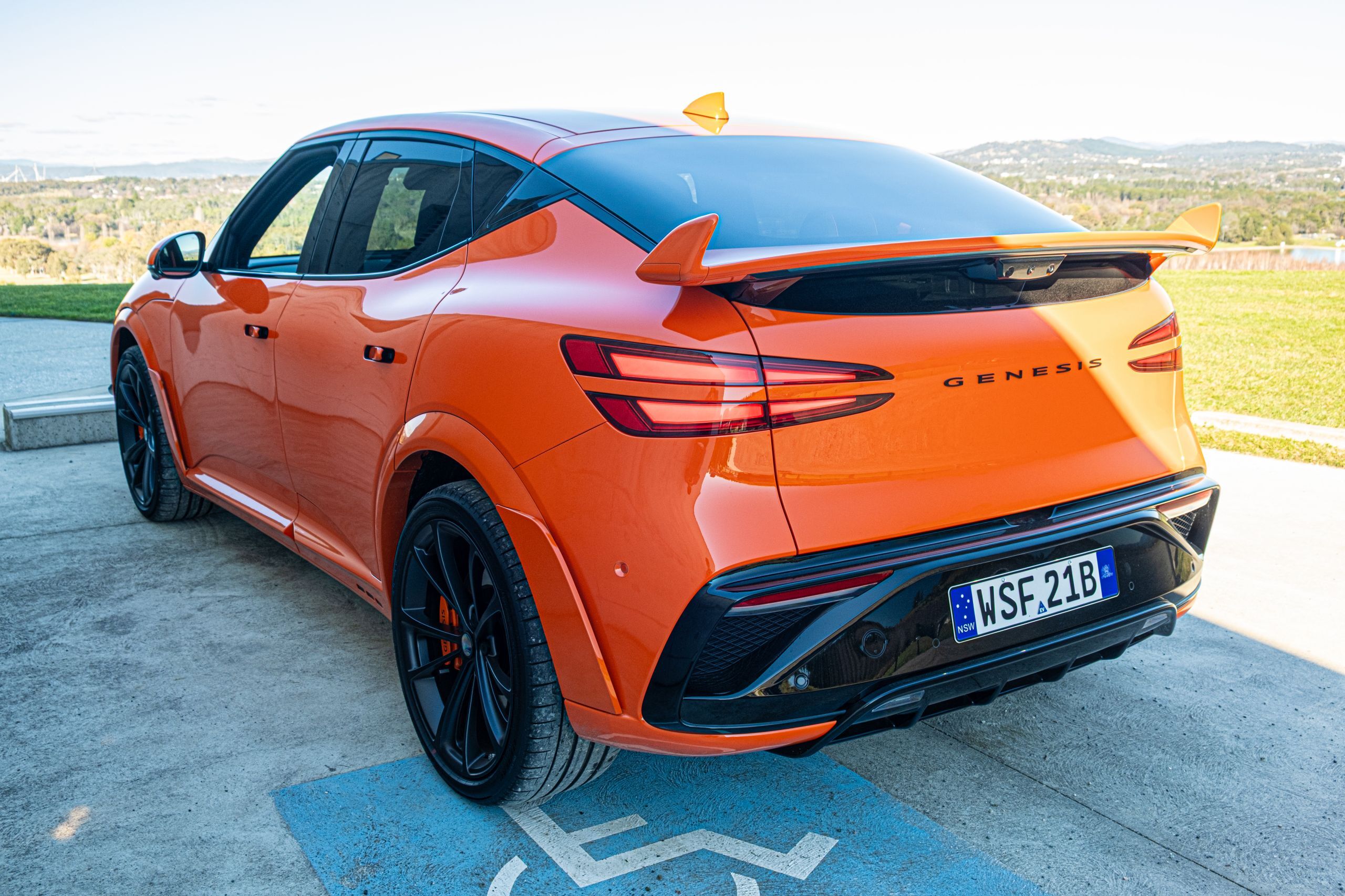
  • Models like the Hyundai Ioniq 5 N and Genesis GV60 Magma prove EVs can be fun.
  • There’s no word on which EV from Hyundai could be the first with this tech.

After Hyundai pioneered the use of a simulated transmission in its high-performance EVs, and has nearly perfected an ICE-inspired soundtrack in them, too, one may have expected engineers at the brand to kick up their feet and let the rest of the industry play catch-up. As it turns out, they’re looking to make driving an EV even more exhilarating.

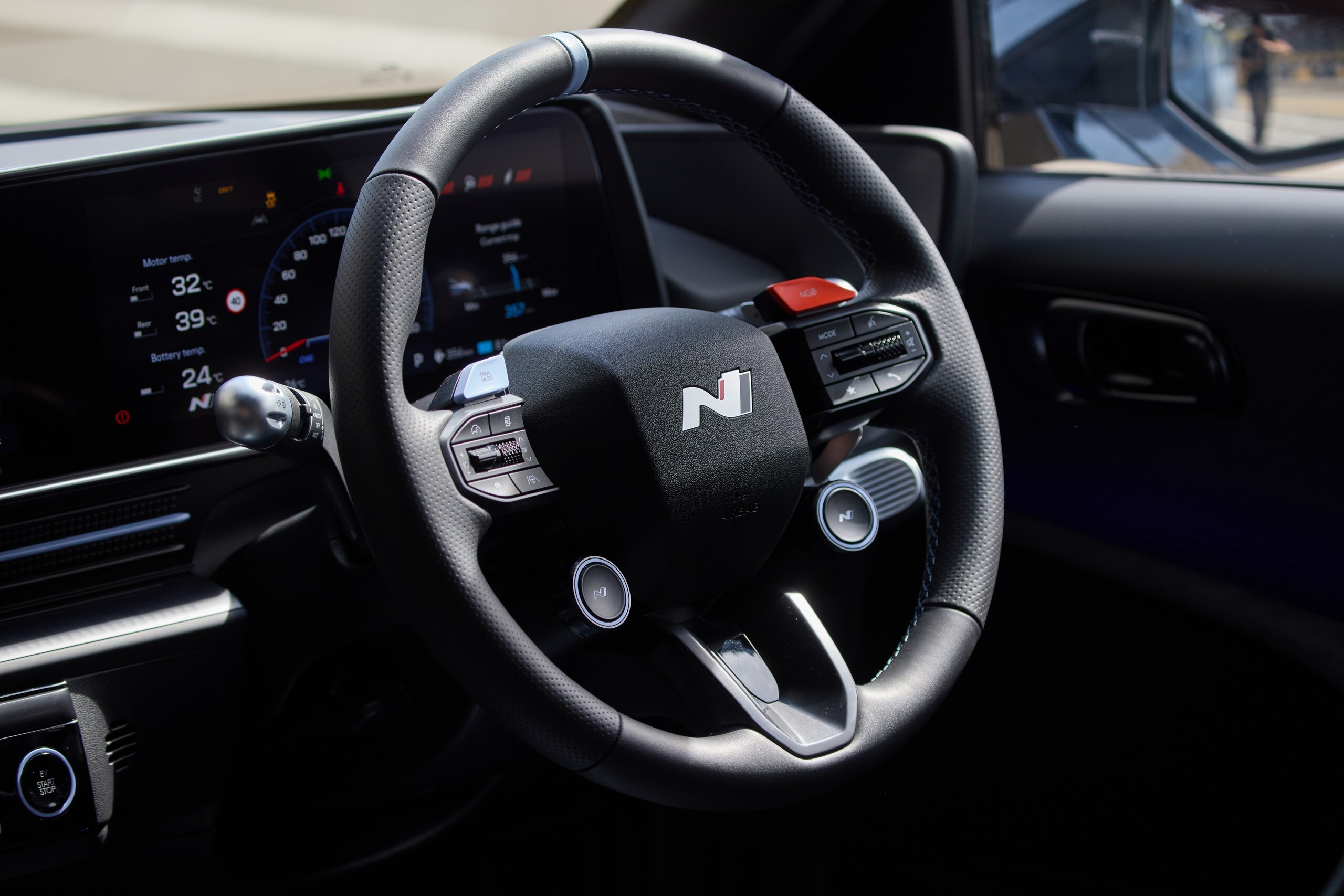
A patent recently filed in the U.S. reveals the South Korean brand is attempting to make the virtual gear shifter found in models like the Ioniq 5 N, Ioniq 6 N, Kia EV6 GT, and Genesis GV60 Magma even more engaging. To do so, Hyundai may be developing a way to replicate the engine braking found in combustion-powered cars.

Review: Genesis’s New GV60 Magma Keeps The N Car Madness Without The Boy-Racer Baggage

Building upon the current setup, which imposes torque limitations and a rev limiter, this new system would tweak the amount of “engine” braking the driver experiences depending on what gear is selected and the revs. As in a gas car, if the revs are high and the driver is in a low gear, the amount of off-throttle engine braking would increase.

Fun-Focused Software

 Hyundai Isn’t Done Making Its Performance EVs Fun To Drive
Genesis GV60 Magma

Obviously, given that Hyundai, Kia, and Genesis EVs use electric motors, rather than engines, all of this would be controlled by advanced software. It would use on-the-fly tweaks to the regenerative braking, CarBuzz reports, and certainly sounds like an intriguing way to make driving one of the brand’s electric motors that much more engaging. As it stands in current electric Hyundai N, Kia GT, and Genesis Magma models, the level of “engine” braking present is the same, regardless of what gear is selected and what the revs are.

It remains to be seen if a system like this would be introduced in updated versions of the current Ioniq 5 N and Ioniq 6 N, or if we’ll have to wait for an all-new model before this system becomes a reality. A high-performance N version of the small Ioniq 3 is in the works and could be a great candidate for such a system.

 Hyundai Isn’t Done Making Its Performance EVs Fun To Drive

Hyundai Ioniq 9 Recalled Because The Seats Can Squish Kids

  • The Ioniq 9 is being recalled for a similar issue to the Palisade.
  • More than 5,300 Hyundai Ioniq 9s are being recalled in the United States.
  • Hyundai will start alerting impacted owners from November 9.

More than six months after tens of thousands of Hyundai Palisade models were recalled due to dangerous power-folding seats, the electric Ioniq 9 is being recalled for a similar issue. Hyundai says it’s aware of five consumer complaints about the defect and has been notified of two alleged injuries.

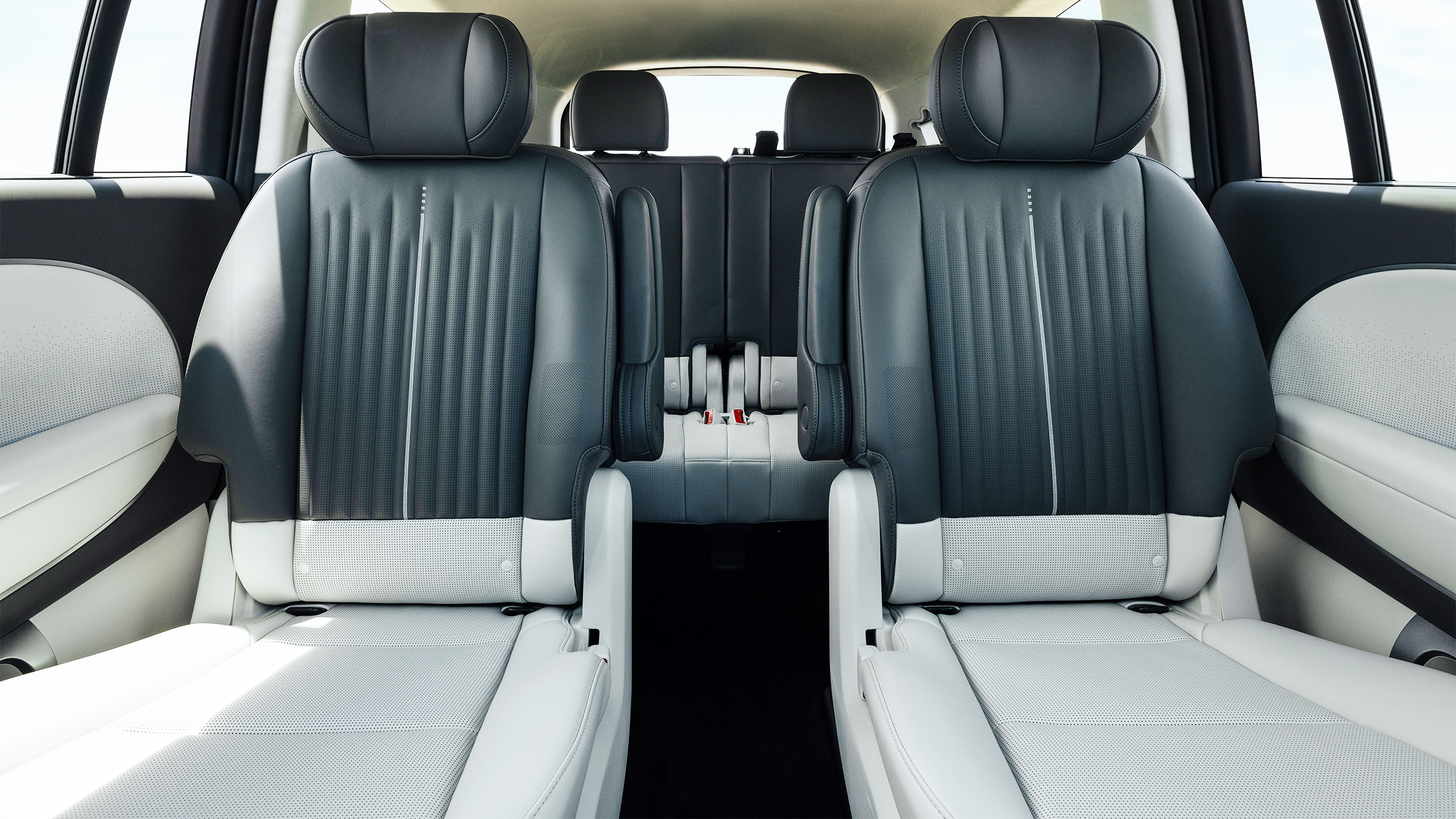
As was the case with the Palisade, Hyundai says the second-row power-seat assemblies of the 2026 Ioniq 9 may not respond if they come into contact with an occupant or object while folding away. This issue attracted global attention in March when it was revealed that a two-year-old girl was crushed by the folding seats of a 2026 Palisade.

Read: Child Death Leads To 2026 Hyundai Palisade Recall, But Still No Fix

This latest recall affected 5,360 Hyundai Ioniq 9 models manufactured between March 17, 2025, and May 4, 2026, with the Korean car manufacturer reporting that 100 percent of recalled vehicles have the fault.

While the issue is similar to the one which impacted the Palisade, it’s not identical. Hyundai notes the Ioniq 9 uses different seat architectures, software, motors, and supplier components to the Palisade and that it evaluated the Ioniq 9’s seats separately.

What’s The Fix?

\\\\\\\\\\

Hyundai says it began investigating the second-row folding seats of the Ioniq 9 in March and it determined the seats can fold at forces over the company’s established limits.

 Hyundai Ioniq 9 Recalled Because The Seats Can Squish Kids

Owners of affected models will be alerted from November 9. Prior to this date, Hyundai is urging owners to use caution while operating the power-folding seat functions. To resolve the potentially deadly fault, dealership technicians will inspect the seat controller software version and update the logic for the power seat functions. Owners who have opted in to receive over-the-air software updates will receive a fix this way.

It’s not just the Hyundai Palisade and Ioniq 9 that have been hit with a power folding seat issue. Earlier this year, Kia recalled hundreds of 2027 Telluride models, noting they also lacked sufficient anti-pinch protection for second-row occupants. In July, GM revealed the electric Vistiq could also have a similar fault, this time impacting its third-row seatbacks.

\\\\\\\\

Hyundai Ioniq 5 N Imagined As A Group B Monster With ICE Power

  • Khyzyl Saleem created a Group B-inspired Hyundai Ioniq 5 N.
  • The concept ditches the EV powertrain for WRC turbo ICE power.
  • The ultra-aggressive bodykit takes cues from classic rally icons.

The Hyundai Ioniq 5 N is one of the most exciting performance-focused EVs, and while it is technically based on a crossover, it looks like a proper hot hatch. The sharp lines of the model inspired independent designer Khyzyl Saleem to create a wild concept, evoking the spirit of the Group B Rally icons from the ’80s.

The model is dressed with a custom bodykit, altering its proportions and making it look ready for the special stages. The front end has been redesigned with a pronounced carbon fiber splitter and extra LEDs on the vented hood.

More: Coga Takes Hyundai Ioniq 5 Beyond N With Very Wild, Very Pink Body Kit

The profile features ultra-wide fender extensions with integrated cooling intakes. The flying buttresses over the C-pillars are reminiscent of the Lancia Delta S4, which is a fitting homage since the greenhouse of the Ioniq 5 sends subtle Delta vibes.

The tail is even more aggressive with a massive wing and an equally large diffuser. The rally car treatment also includes Lexan windows, a roll cage, and a new set of five-spoke alloy wheels finished in black. The designer also created a slightly different version with a smaller rear wing and a bronze shade, looking like a homologation special.

\\\\\\

Khyzyl Saleem / Facebook

Hyundai never experimented with a Group B entry, but they retain a strong presence in WRC, competing at the highest level against Toyota Gazoo Racing. The Korean automaker started with the Accent WRC in 2000, followed by the i20 WRC in 2014, and the more recent i20 N Rally1 in 2022. With the i20, Hyundai won two WRC Manufacturer’s titles in 2019 and 2020, and one Driver’s title in 2025 (Thierry Neuville).

Swapping EV For ICE?

Taking inspiration from Hyundai’s motorsport involvement and, despite the fully electric nature of the donor Ioniq 5, Khyzyl said he likes to imagine the concept with a combustion engine. More specifically he wants the “screaming” turbocharged 1.6-liter four-cylinder engine from the WRC rally car – presumably in mid-ship position – although he would also consider rotary power.

More: Hyundai’s EVs Already Fake Engine Sounds, And Now They Might Vibrate Too

After the latest regulatory changes that removed the hybrid boost from Rally1 contestants, the turbo engines have a maximum permitted output of 375 hp (280 kW / 380 PS). This is lower than the 641 hp (478 kW / 650 PS) from the dual electric motors of the roadgoing Ioniq 5 N, making us wonder if Hyundai could come up with a more potent hybrid setup.

In any case, the Group B-inspired Ioniq will likely stick to the digital world. Still, the project is part of a broader collaboration between Hyundai USA and Khyzyl Saleem. Last month, the company shared renderings of a Baja-inspired Santa Fe concept on social media, asking their followers which Hyundai model should the_kyza try next.

\\\\\

Khyzyl Saleem / Facebook

One German Sedan Beat Every Tesla On Battery Health After 93,000 Miles

  • Top performers include the Hyundai Ioniq 5, Audi Q8 e-tron, and BMW i4.
  • Mercedes CLA retained 94 percent health, but the Model Y retained just 90.3 percent.
  • The largest ever EV battery degradation study also revealed several weak options.

Battery degradation has long been one of the reasons new car buyers have held out on purchasing an EV. However, data from a new study reveal that the top-performing EVs lose less than 5 percent of their range after 93,205 miles (150,000 km) of driving, meaning battery packs will easily last the average life of most new cars.

The study, published by Aviloo, has been labeled the largest independent study of used EV batteries ever conducted. More than 500,000 battery tests have been published, and the results show how 20 of the industry’s most popular EVs perform.

Read: A Seven-Year-Old Tesla Model 3 Survived 380,000 Miles, Its Range Did Not

 One German Sedan Beat Every Tesla On Battery Health After 93,000 Miles
Aviloo

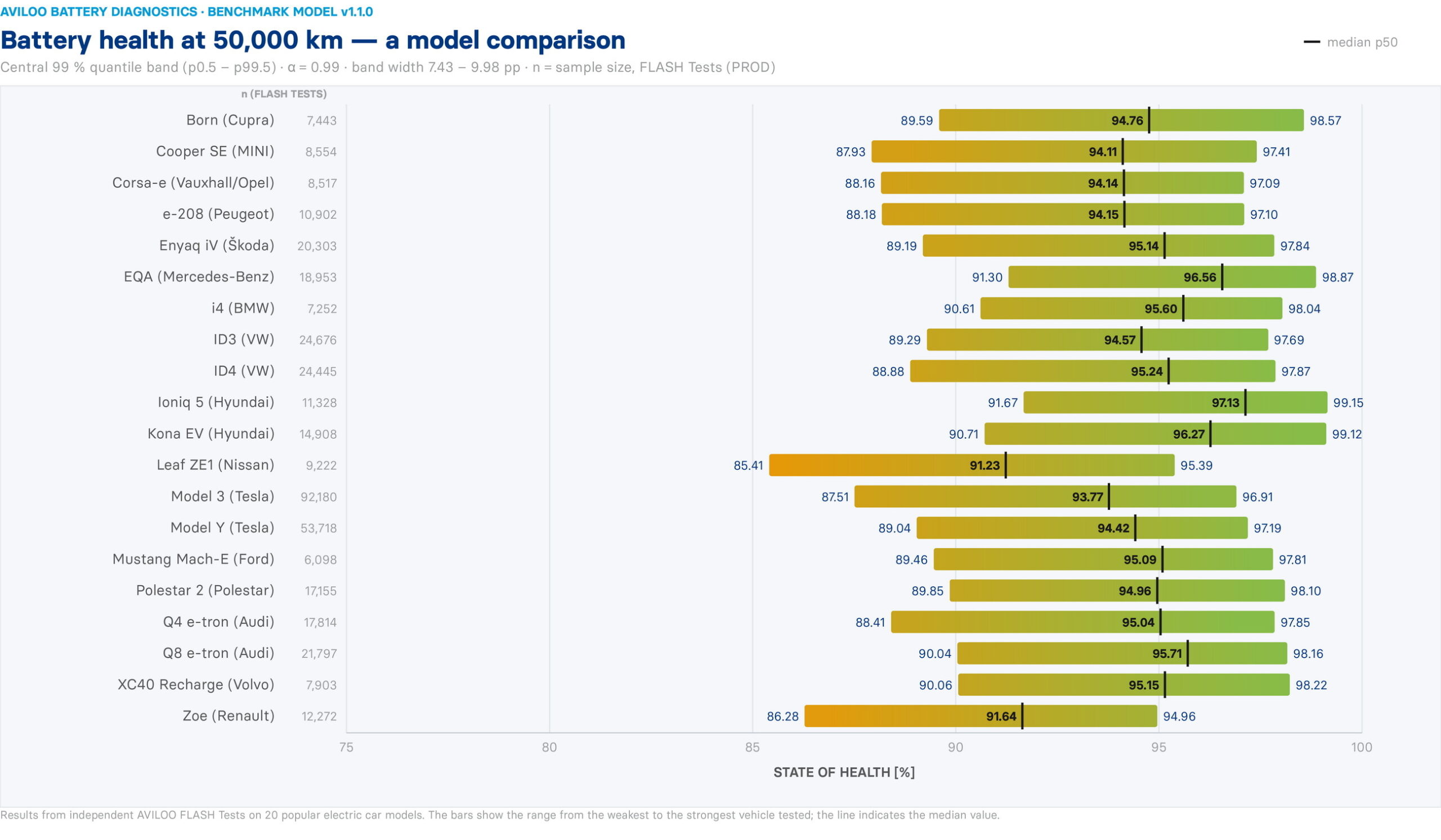
The Hyundai Ioniq 5 performed best after 31,068 miles (50,000 km) of testing, retaining 97.1 percent of its original usable capacity. Other strong performers after 31,068 miles included the Mercedes-Benz CLA at 96.6 percent, the Hyundai Kona EV at 96.3 percent, the Audi Q8 e-tron with 95.7 percent, the BMW i4 with 95.6 percent, and both the Volvo XC40 Recharge and VW ID.4 at 95.2 percent battery retention.

 One German Sedan Beat Every Tesla On Battery Health After 93,000 Miles
Aviloo

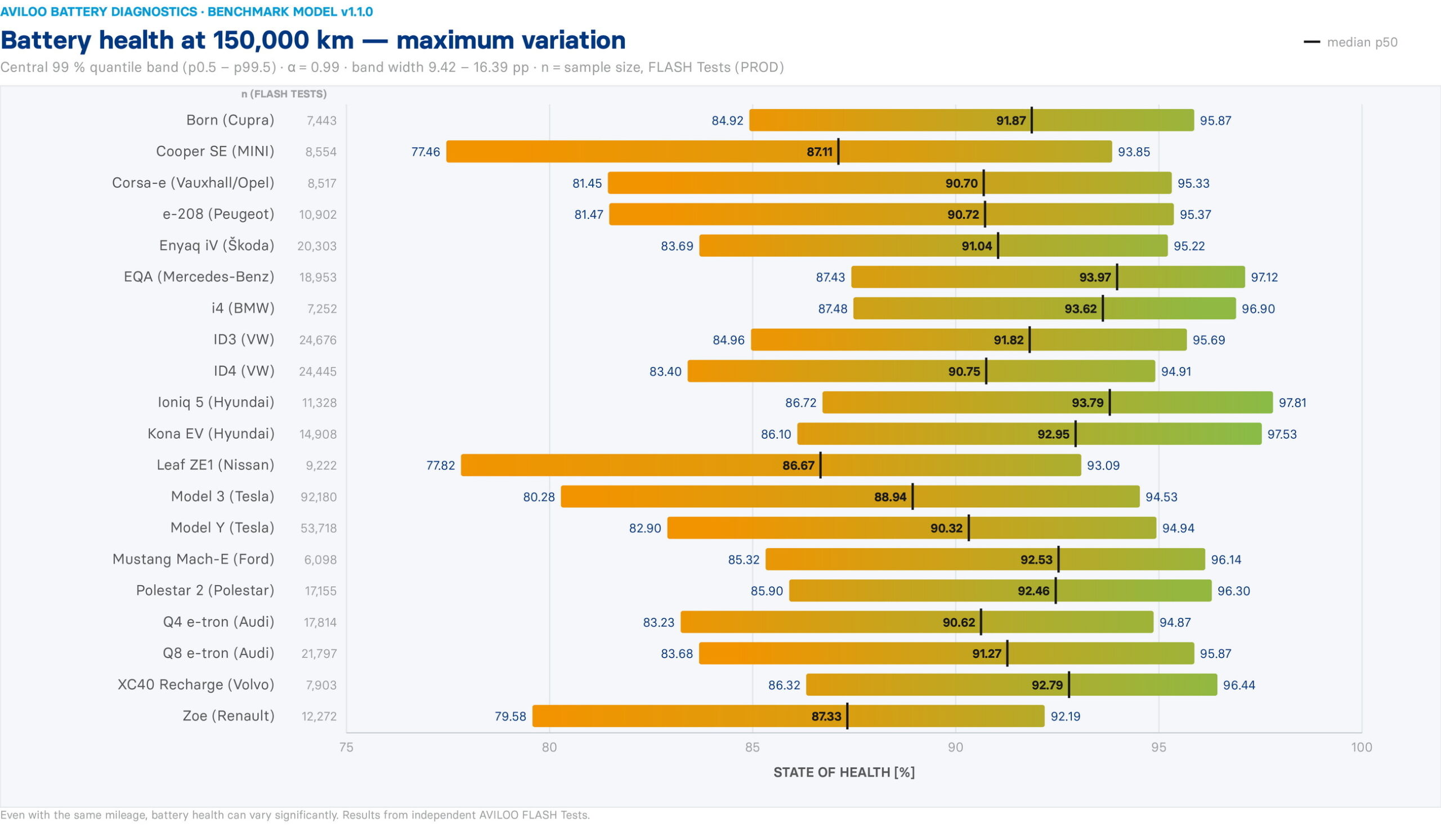
After 93,205 miles of driving, the Mercedes-Benz CLA came out on top with a battery health of 94 percent. This placed it ahead of the Hyundai Ioniq 5 (93.6 percent), Hyundai Kona EV (93 percent), Volvo XC40 Recharge (92.8 percent), Ford Mustang Mach-E (92.5 percent), and the Polestar 2, also at 92.5 percent.

Teslas Disappoint

 One German Sedan Beat Every Tesla On Battery Health After 93,000 Miles
Aviloo

Several popular EVs did not perform as well as the competition. Most notable was the Tesla Model Y, which retained just 90.3 percent of its battery capacity after 93,205 miles, and the Tesla Model 3, which retained 88.9 percent of its battery capacity. Other poor performers included the Renault Zoe (87.3 percent), Mini Cooper SE (87.1 percent), and Nissan Leaf (86.7 percent), all of which have relatively small batteries.

 One German Sedan Beat Every Tesla On Battery Health After 93,000 Miles
Aviloo

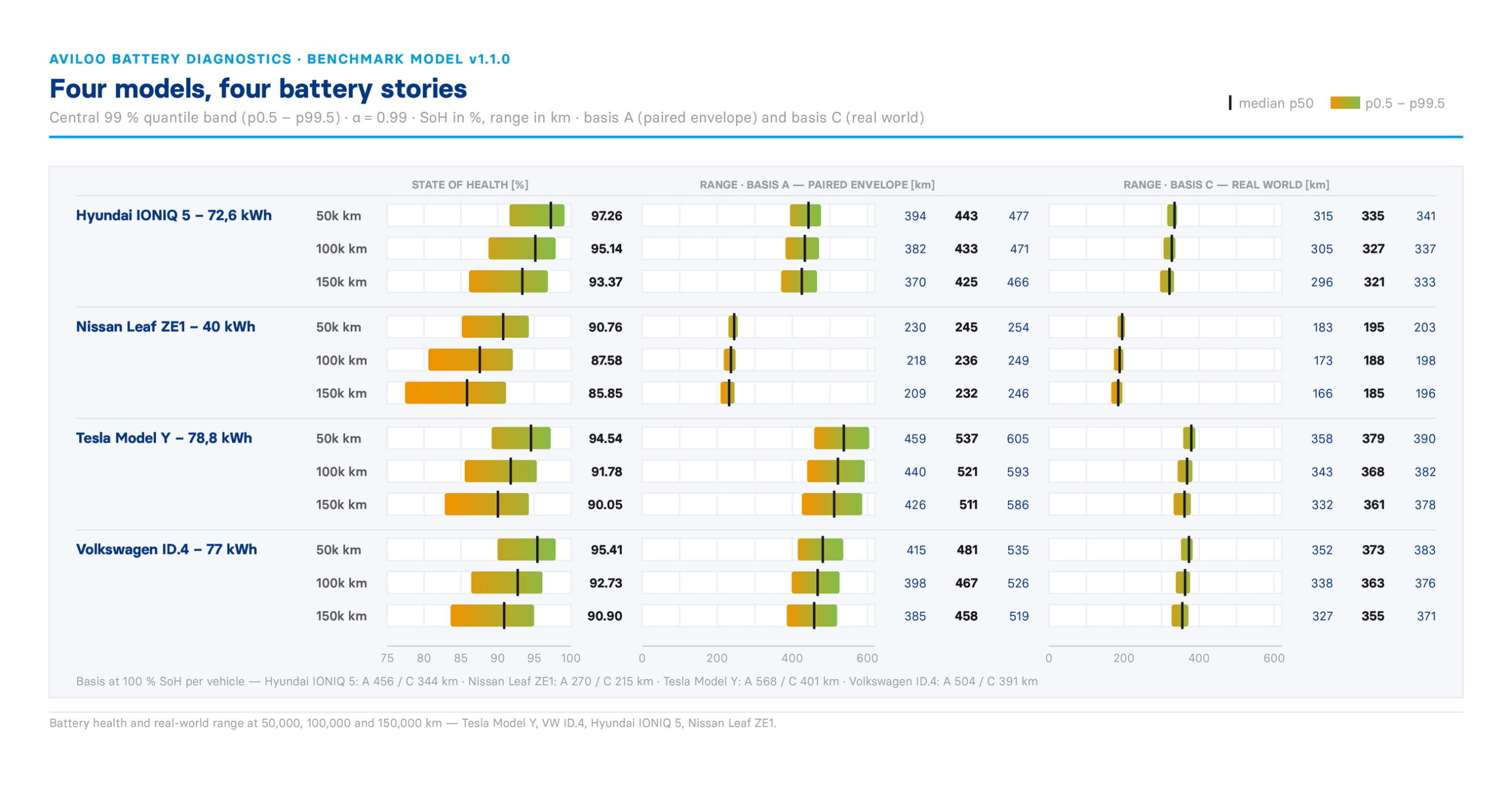
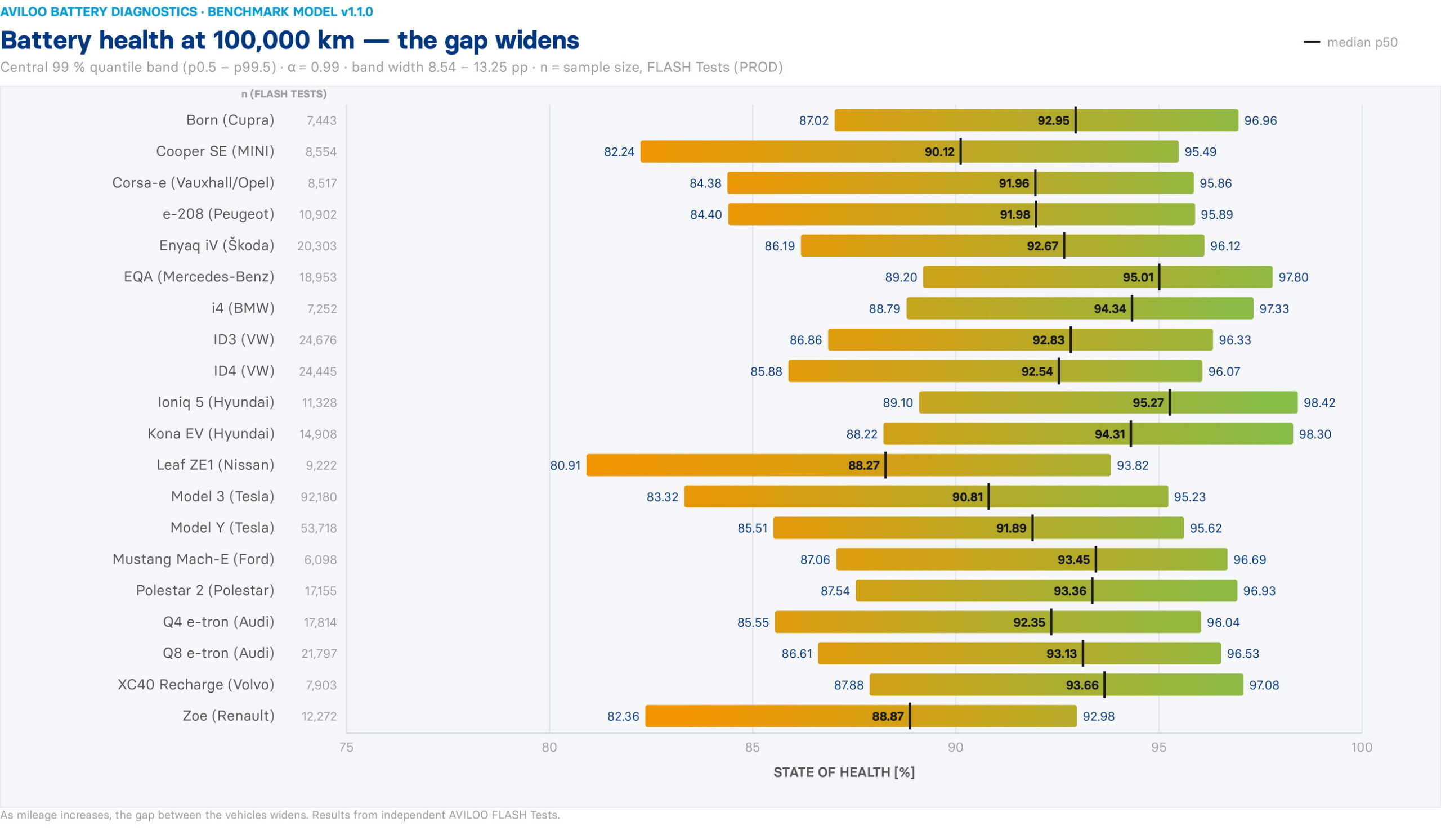
Importantly, the results of this study don’t mean every Mercedes-Benz CLA will have 94 percent battery health after 93,205 miles, or every Peugeot e-208 will have 90.7 percent battery health. The study examined the median across all vehicles and found that good and bad examples of the same car can have battery health ratings that vary by as much as 13.5 percent. Nevertheless, the study demonstrates just how good current EV batteries are.

Model31,000 mi /
50,000 km
62,000 mi /
100,000 km
93,000 mi /
150,000 km
Drop
31K-93K mi
Mercedes-Benz EQA96.6%95.0%94.0%2.6 pp
Hyundai Ioniq 597.1%95.3%93.8%3.3 pp
BMW i495.6%94.3%93.6%2.0 pp
Hyundai Kona EV96.3%94.3%93.0%3.3 pp
Volvo XC40 Recharge95.2%93.7%92.8%2.4 pp
Ford Mustang Mach-E95.1%93.5%92.5%2.6 pp
Polestar 295.0%93.4%92.5%2.5 pp
Cupra Born94.8%93.0%91.9%2.9 pp
Volkswagen ID394.6%92.8%91.8%2.8 pp
Audi Q8 e-tron95.7%93.1%91.3%4.4 pp
Škoda Enyaq iV95.1%92.7%91.0%4.1 pp
Volkswagen ID495.2%92.5%90.8%4.5 pp
Peugeot e-20894.2%92.0%90.7%3.4 pp
Vauxhall/Opel Corsa-e94.1%92.0%90.7%3.4 pp
Audi Q4 e-tron95.0%92.4%90.6%4.4 pp
Tesla Model Y94.4%91.9%90.3%4.1 pp
Tesla Model 393.8%90.8%88.9%4.8 pp
Renault Zoe91.6%88.9%87.3%4.3 pp
MINI Cooper SE94.1%90.1%87.1%7.0 pp
Nissan Leaf ZE191.2%88.3%86.7%4.6 pp
SWIPE

Hyundai’s New Nine-Seat Electric Van Matches The ID. Buzz On Price And Beats It On Size

  • Hyundai opens European orders for the new Staria Electric.
  • It packs an 84 kWh battery and offers up to 430 km of range.
  • The electric van is priced from €57,450 ($66,800) in Germany.

The Hyundai Staria Electric arrived in Korea earlier this year alongside the rest of the facelifted lineup, and the spaceship-shaped van has now made it to Europe, where Hyundai is positioning it against the VW ID. Buzz. The Staria is the bigger vehicle in every dimension that counts, with more room inside for people and their luggage.

Picking the Staria Electric out from its gasoline and hybrid siblings takes a look at the nose, where a redesigned front bumper hides the grille behind a smooth panel, adds a charging port, and puts active shutters in the lower intake. Aero wheels and a dedicated badge on the enormous tailgate finish the job.

More: Electric Kia PV7 Is Coming For The Ford Transit

At 5,253 mm (206.8 in) long, the Staria towers over the VW ID. Buzz and the Kia PV5. It also out-measures the standard Ford E-Tourneo Custom, VW e-Caravelle, Peugeot e-Traveller, Citroen e-Spacetourer, Opel Zafira-e Life, and Fiat E-Ulysse, though the long-wheelbase versions of those go further. It’s the same story with the new Mercedes-Benz VLE executive shuttle.

Generous Equipment

\\\\\

In Europe, the Staria Electric is available in three trim levels, called Trend, Prime, and Calligraphy. The base version comes standard with full-LED headlights, dual 12.3-inch displays, heated front seats, parking sensors, a reversing camera, a few ADAS and a three-row nine-seater layout.

More: Hyundai Is Now Charging You Extra For A Damn Gauge Cluster

The optional assistance package adds navigation, highway assist and a V2L adapter, while the premium package adds electric sliding doors and tailgate, sliding windows, sunshades, acoustic and heat-insulating privacy glass, plus a wireless charging pad. All of those come standard in the Staria Electric Prime which adds leather upholstery and ventilated front seats while offering an optional sliding roof for the first row and fixed panoramic roof for the second row.

 Hyundai’s New Nine-Seat Electric Van Matches The ID. Buzz On Price And Beats It On Size
The Staria Electric Trend and Prime (left) have a different look compared to the Caligraphy (right).

The pictured Staria Electric Calligraphy is the only version with a seven-seat layout, built around a pair of comfort seats in the second row with heating, ventilation, and relaxation functions. The flagship also gets ambient lighting, a Bose sound system, a 360-degree camera, a suede-style headliner, Nappa leather, and the Passenger View and Talk system.

More: You Can Sleep And Even Wash Your Dishes In This Hyundai Van, But You Can’t Buy It Yet

Outside, the Calligraphy separates itself with a different front bumper housing larger projection headlights, Parametric Pixel LED taillight towers that climb to the roofline, and an exclusive Galaxy Maroon paint option.

Space For Nine And Their Luggage

\\\\

Cargo capacity runs to 1,303 liters (46.0 cu ft) behind the third row in the nine-seater, with a 24-liter (0.85 cu ft) frunk for the charging cables. Towing capacity is 2,000 kg (4,409 lbs) and maximum payload is 750 kg (1,653 lbs).

More: Kia Brought Its Electric Van To America As Something New York Actually Needs

Under the skin, the van is powered by a single front-mounted electric motor producing 215 hp (160 kW / 218 PS). Energy is stored in a 84 kWh battery pack allowing WLTP range of up to 430 km (267 miles) between charges. Thanks to the 800-volt architecture, the Staria Electric can charge from 10-80% in approximately 20 minutes when connected to a DC charger, while it also gets a standard heat pump and battery heating system.

German Pricing

\\\\

In Germany, the the Hyundai Staria Electric starts at €57,450 ($66,800) for the entry-level Trend trim, €63,650 ($74,000) for the mid-tire Prime, and €66,950 ($77,800) for the flagship Calligraphy. The assistance and premium packages add €2,100 ($2,400) each, while the panorama package adds €1,300 ($1,500).

By comparison, the smaller VW ID. Buzz Pro with the long wheelbase and the 86 kWh battery starts at €57,887 ($67,300) in the same market. On the other hand, the VW e-Caravelle starts at €66,080 ($76,800) with the short-wheelbase and the 70.9 kWh battery.

\\\\

Hyundai

Hyundai Is Now Charging You Extra For A Damn Gauge Cluster

  • The entry-level Hyundai Ioniq 3 isn’t available with a 9.9-inch digital display.
  • Korea’s Avante / Elantra can be optioned with the small screen for $255.
  • Hyundai is following the trend that Tesla started a decade ago with the Model 3.

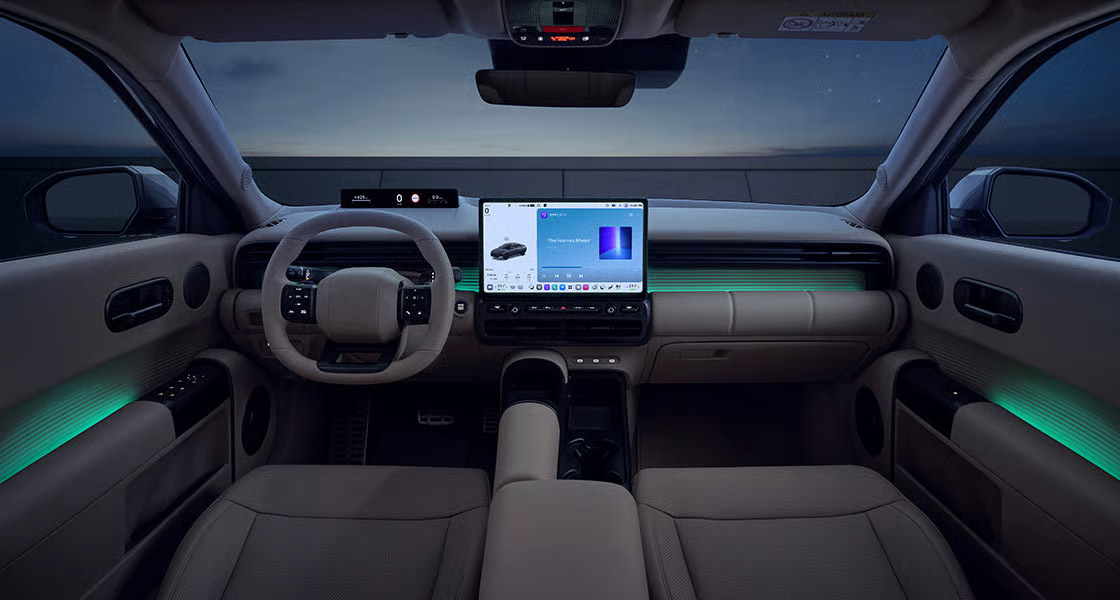
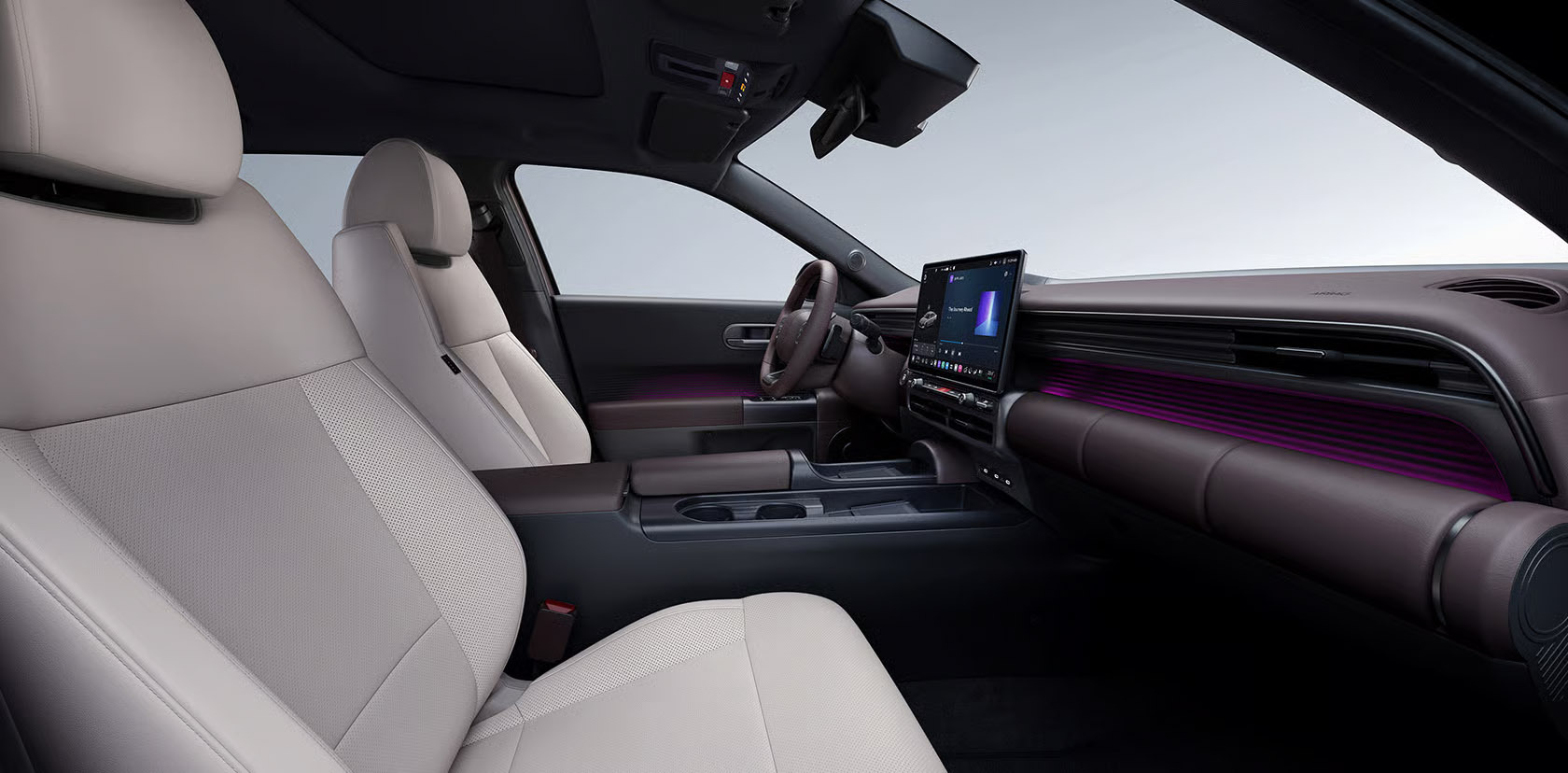
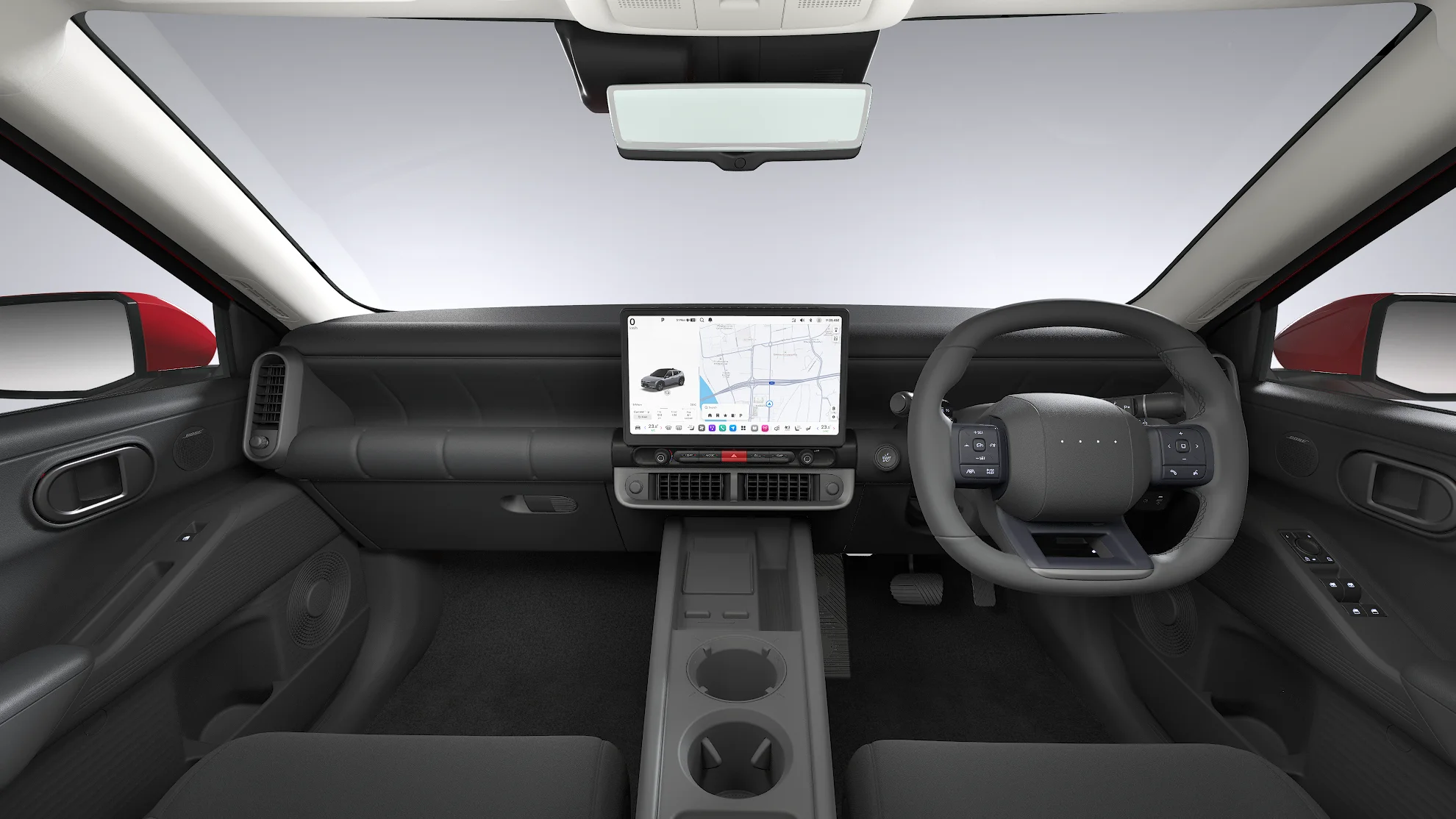
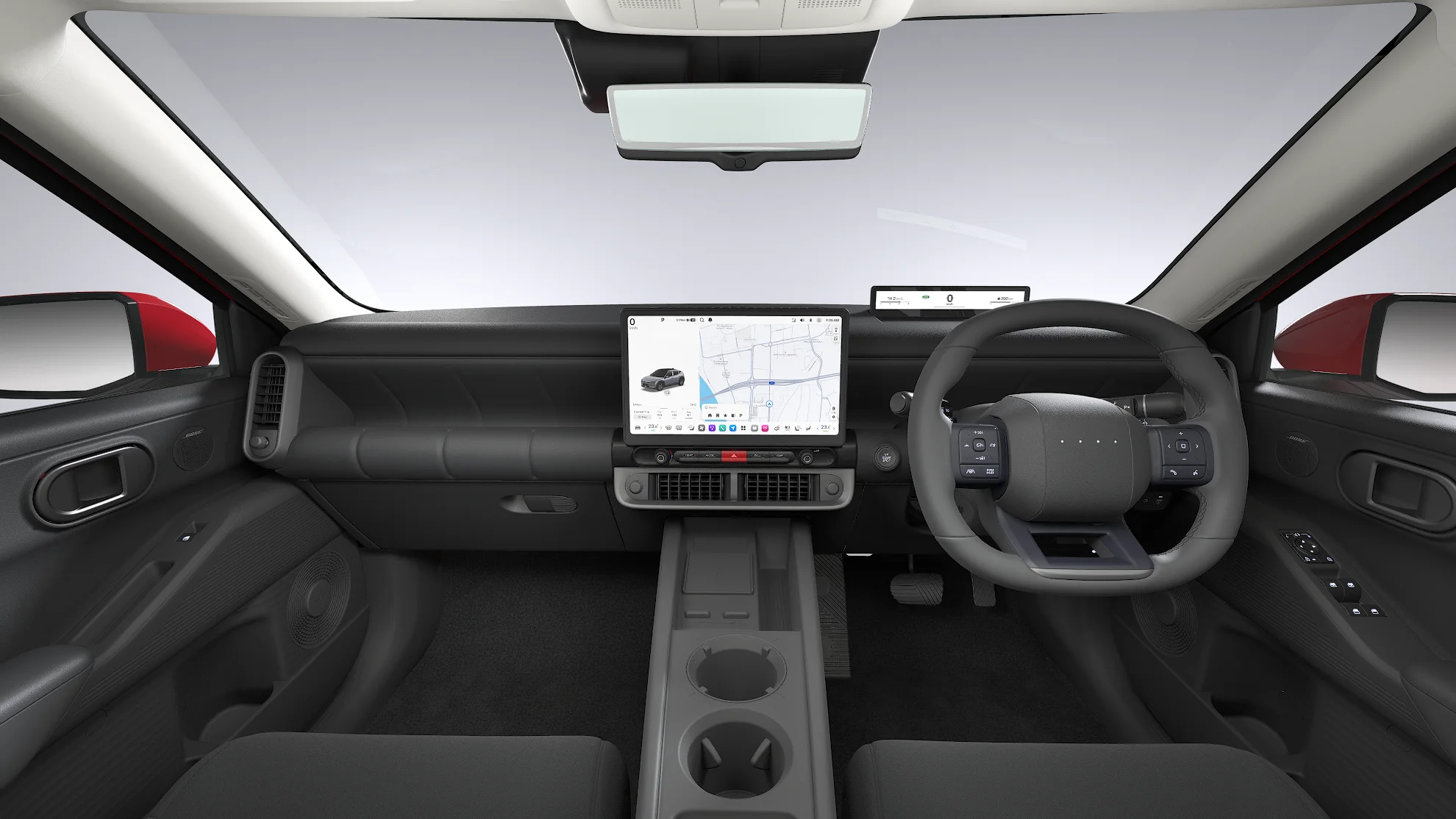
Hyundai has an all-new generation of interiors, introduced first on the Grandeur in Korea and since carried over to the Ioniq 3, Avante/Elantra, and Tucson. Every one of them is built around Pleos Connect, a large central infotainment screen that borrows its layout and its logic from Tesla, and there is no shortage of processing power behind the glass. On the cheaper trims, though, one piece of hardware got left off the list.

It has now emerged that the new 2027 Avante/Elantra, which just launched in Korea, and the global-market Ioniq 3 go without a digital instrument cluster in front of the driver in base trims, an item which has been standard-fit on most of Hyundai’s current-generation cars.

A Cluster You Have To Pay For

 Hyundai Is Now Charging You Extra For A Damn Gauge Cluster
2027 Hyundai Elantra / Avante with (above) and without (below) the driver display.
 Hyundai Is Now Charging You Extra For A Damn Gauge Cluster

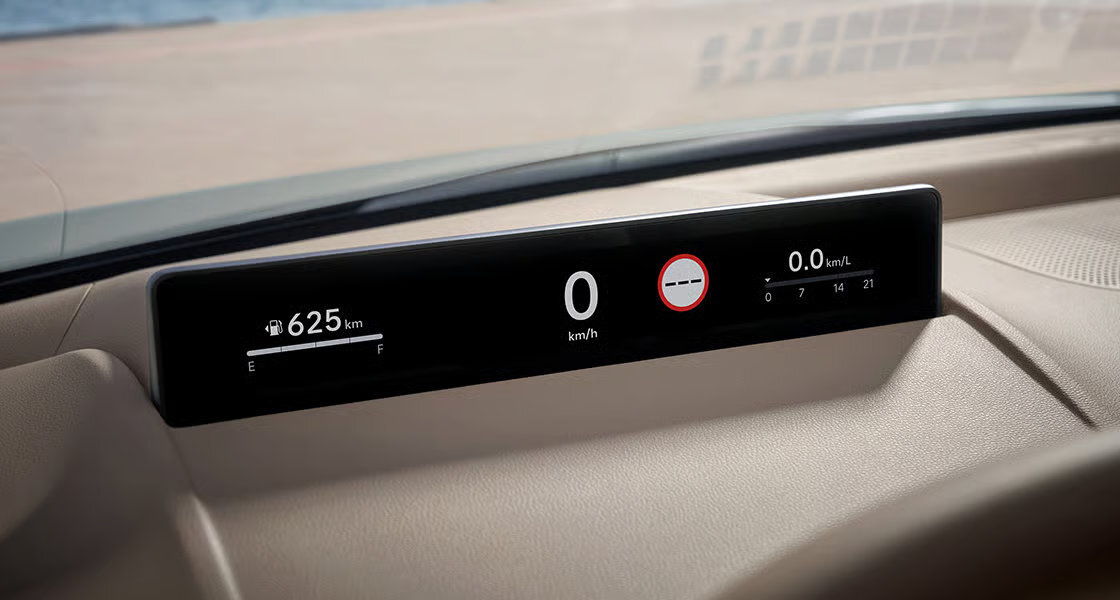
According to Motor1, Korean buyers can add a slim 9.9-inch cluster to the Avante, though it costs 350,000 won (US$255). No such option box appears to exist for base Ioniq 3 models, leaving owners to read everything off the central touchscreen. The Ioniq 3 also goes without a head-up display, exactly like a Tesla Model 3 or Model Y. In the UK, the entry-level £22,245 (about $30,000) Ioniq 3 Advanced arrives without the cluster, while the £25,595 (roughly $34,500) Premium trim and above include it.

Read: Hyundai’s Radical New Tucson Makes The RAV4 Look Half-Asleep

It’s hardly a secret that screens are the cheaper option for manufacturers. A panel of glass and the software behind it costs less than the gauges, bezels, wiring, and physical switchgear it replaces, which explains why the industry has moved this way with so little resistance. Cost is not the whole story, though. Buyers have been asking for this kind of interface, the tablet-style layout with app menus and over-the-air updates, and Hyundai’s new setup answers that request.

Hyundai Should Know Better

 Hyundai Is Now Charging You Extra For A Damn Gauge Cluster
2027 Hyundai Elantra / Avante driver display.

Even so, it’s pretty poor form from Hyundai to make such a small screen an optional extra, rather than fitting it as standard equipment. The display includes important functions like speed, speed-limit signs, range figures, and efficiency details. We’ve yet to try out the new Pleos system, but having to glance over to the infotainment display to check your speed is a bit of a nuisance.  

The new Elantra and Tucson will be the first Hyundai models sold in the US with the Pleos Connect system next year. Here’s hoping we get slightly more well-equipped versions that include the cluster screen as standard equipment.

 Hyundai Is Now Charging You Extra For A Damn Gauge Cluster
UK market 2027 Hyundai Ioniq 3 without (above) and with (below) the driver display.
 Hyundai Is Now Charging You Extra For A Damn Gauge Cluster

Hyundai Is Slashing Battery Costs And Increasing Their Lifespan By 20%

  • Hyundai’s Level 2+ semi-autonomous driving system arrives in 2028.
  • Future EVs will use new cells that reduce battery costs by 30%.
  • Global production capacity is set to increase by 1.27 million units.

Hyundai’s massive product push dominated their investor day event, but it wasn’t the only thing the company announced. Quite the opposite as the automaker talked about increasing production, ramping up autonomous driving efforts, and offering improved technology.

Starting with autonomous driving, the first Ioniq 5 Waymo robotaxis will be delivered in the fourth quarter and they’ll “enable an international expansion of robotaxi services as early as 2027.”

More: Hyundai Is Launching More Than 100 New Vehicles By 2030

Besides the Waymo effort, Hyundai-owned Motional will use Ioniq 5 robotaxis. They’re scheduled to begin commercial operations later this year in Las Vegas. Additional cities should then follow in 2027.

On the consumer front, “Hyundai Motor Group is standardizing its sensor architecture around the NVIDIA ecosystem so that data acquired by Hyundai Motor, Kia, 42dot, and Motional can be integrated and used to a single consistent standard.” This means learnings from one company can be applied to others.

\\\

Hyundai is also working to deploy its autonomous driving artificial intelligence, known as Atria AI, by the end of the year. It will eventually be used to power the company’s Level 2+ system, which arrives in 2028.

The automaker went on to say “Atria AI will be extended progressively across mass-produced vehicles, building a full lineup of autonomous driving capability from Level 2+ to Level 4.” Since Hyundai sells millions of vehicles annually, they’ll collect a ton of data, and this will be used to rapidly improve the AI’s self-driving capabilities and performance.

Improved EVs

\\\

Hyundai has been an electric vehicle pioneer and this experience is about to pay off as the company has developed its own battery cells. They “deliver more than double the output of the high-nickel cells … used previously, while cutting charging time by 40 percent.” The new cells will apparently debut in the upcoming Santa Fe or Genesis range-extended vehicle.

Starting next year, EVs will use new “mid-nickel NCM cells.” This will reduce battery costs by approximately 30%, while “maintaining optimal performance under real-world driving conditions.” Furthermore, the new batteries will have 30% more energy than equivalent LFP batteries of the same size.

Lastly, the company will improve its cloud-based battery management system by 2028. This will reportedly extend battery life by an average of 20%.

Amazon Partnership

 Hyundai Is Slashing Battery Costs And Increasing Their Lifespan By 20%

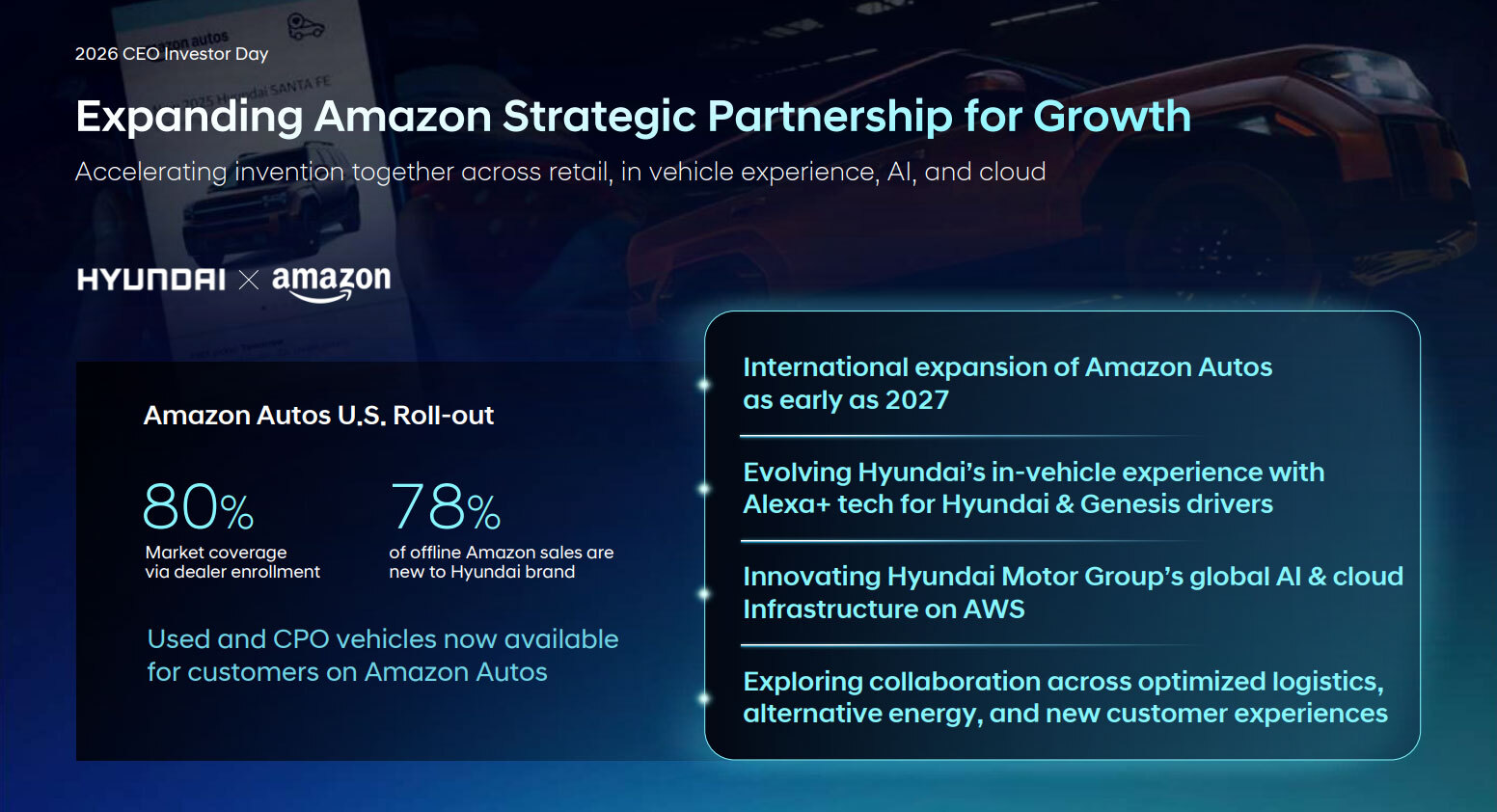
Hyundai’s partnership with Amazon on Amazon Autos appears to be a success as they’ll expand listings to markets outside of the United States next year. Alexa built-in will also roll out across the Hyundai lineup, while Genesis models will follow.

Speaking of tech, Hyundai is relying on Amazon Web Services to accelerate their “cloud and AI capabilities.” Amazon is also said to be looking at using Hyundai fuel cell vehicles.

Increased Production Capacity

 Hyundai Is Slashing Battery Costs And Increasing Their Lifespan By 20%

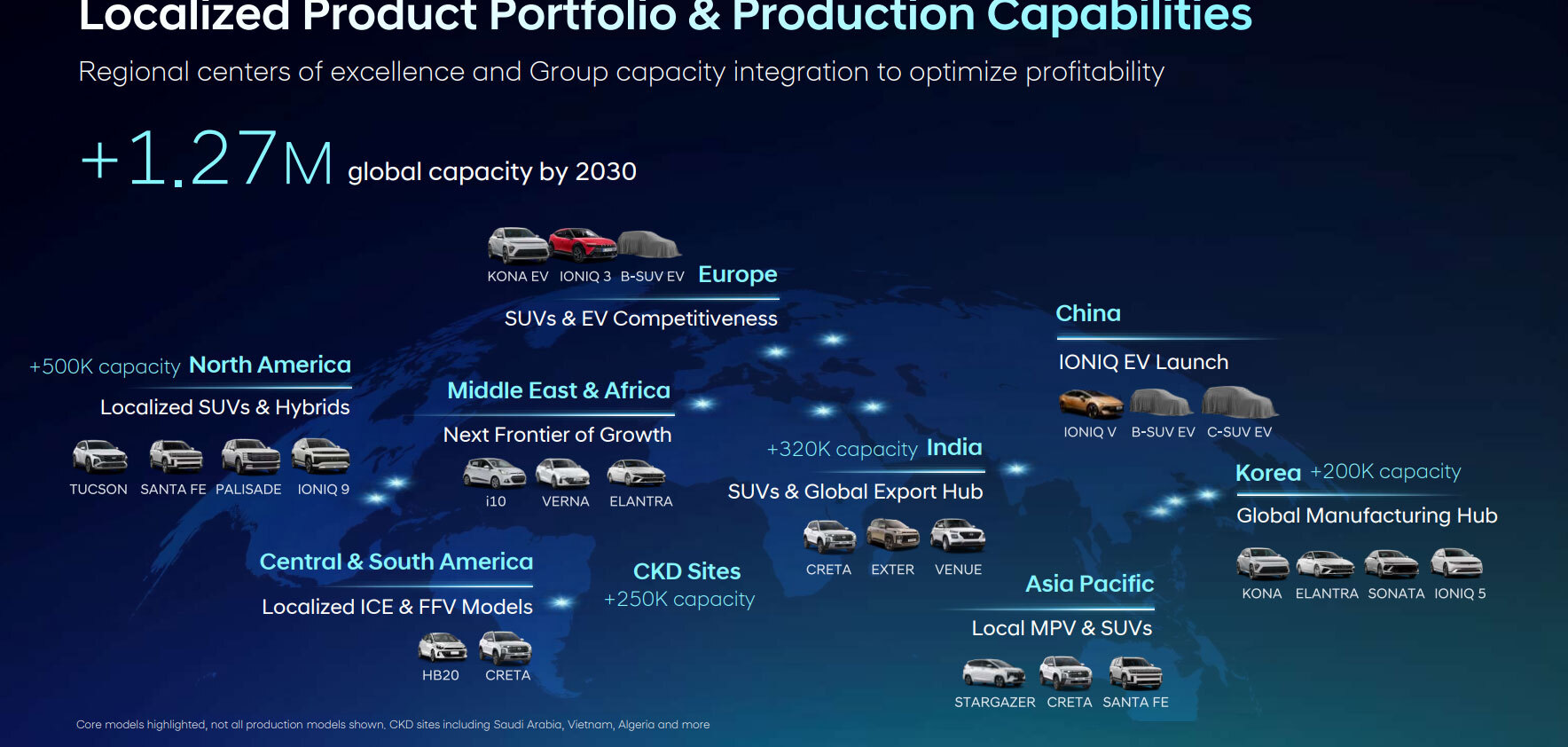
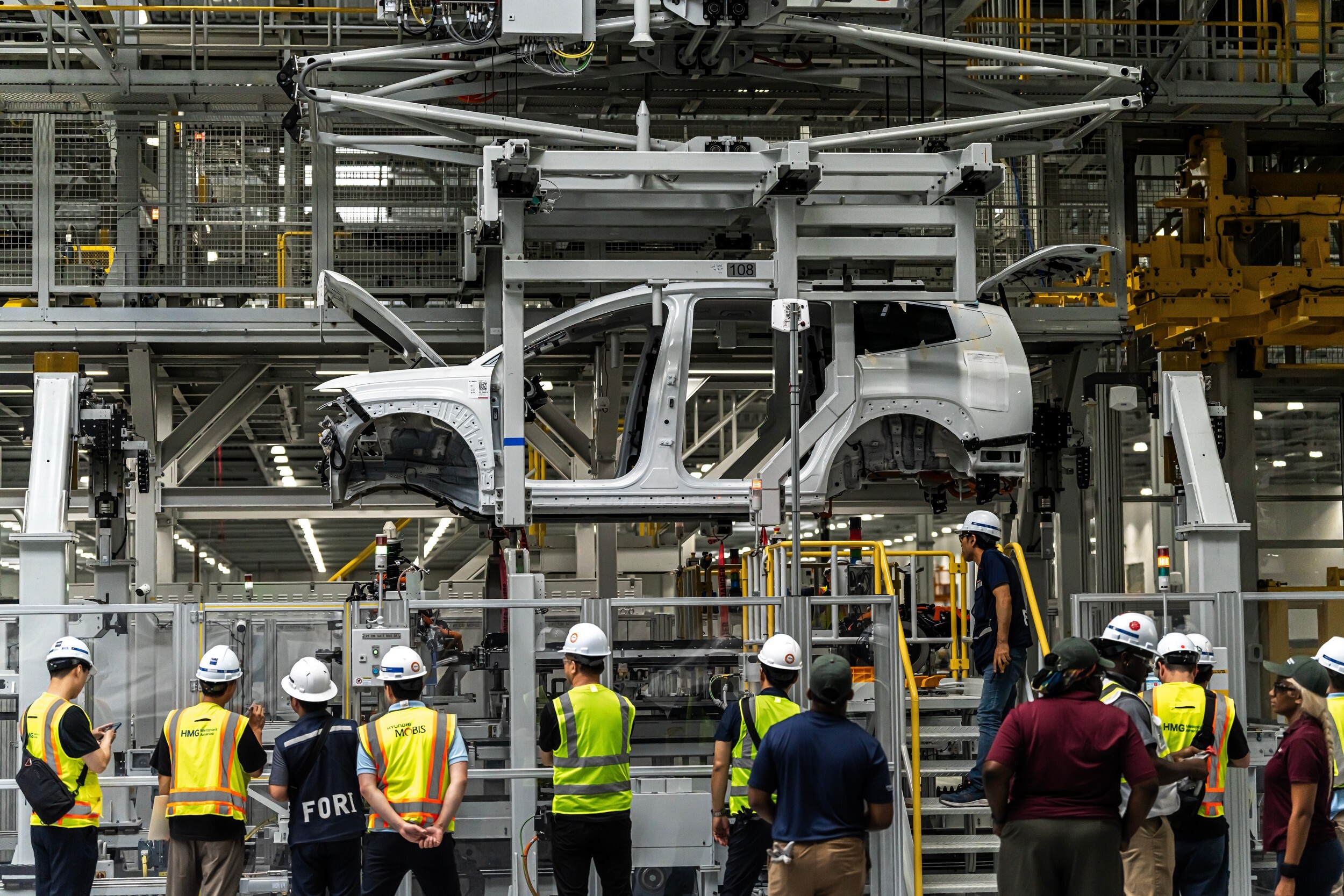
With more than 100 new models coming by 2030, Hyundai is ramping up their production capacity by 1.27 million units globally. North American plants will be able to build an additional 500,000 units, while Indian facilities add 320,000 units. Korean production will increase by 200,000 vehicles, while CKD sites will see their capacity grow by 250,000 units.

Focusing in on North America, Hyundai is increasing their local parts sourcing target to 80%. That’s up from 60% and the automaker confirmed there will be more than ten hybrids on the continent by 2030, which are produced at Hyundai Motor Manufacturing Alabama and Hyundai Motor Group Metaplant America.

 Hyundai Is Slashing Battery Costs And Increasing Their Lifespan By 20%

Hyundai Is Launching More Than 100 New Vehicles By 2030

  • Hyundai is launching more than 100 products by 2030.
  • 58 launches in North America including 22 from Genesis.
  • Europe is getting five new EVs including a D-segment SUV.

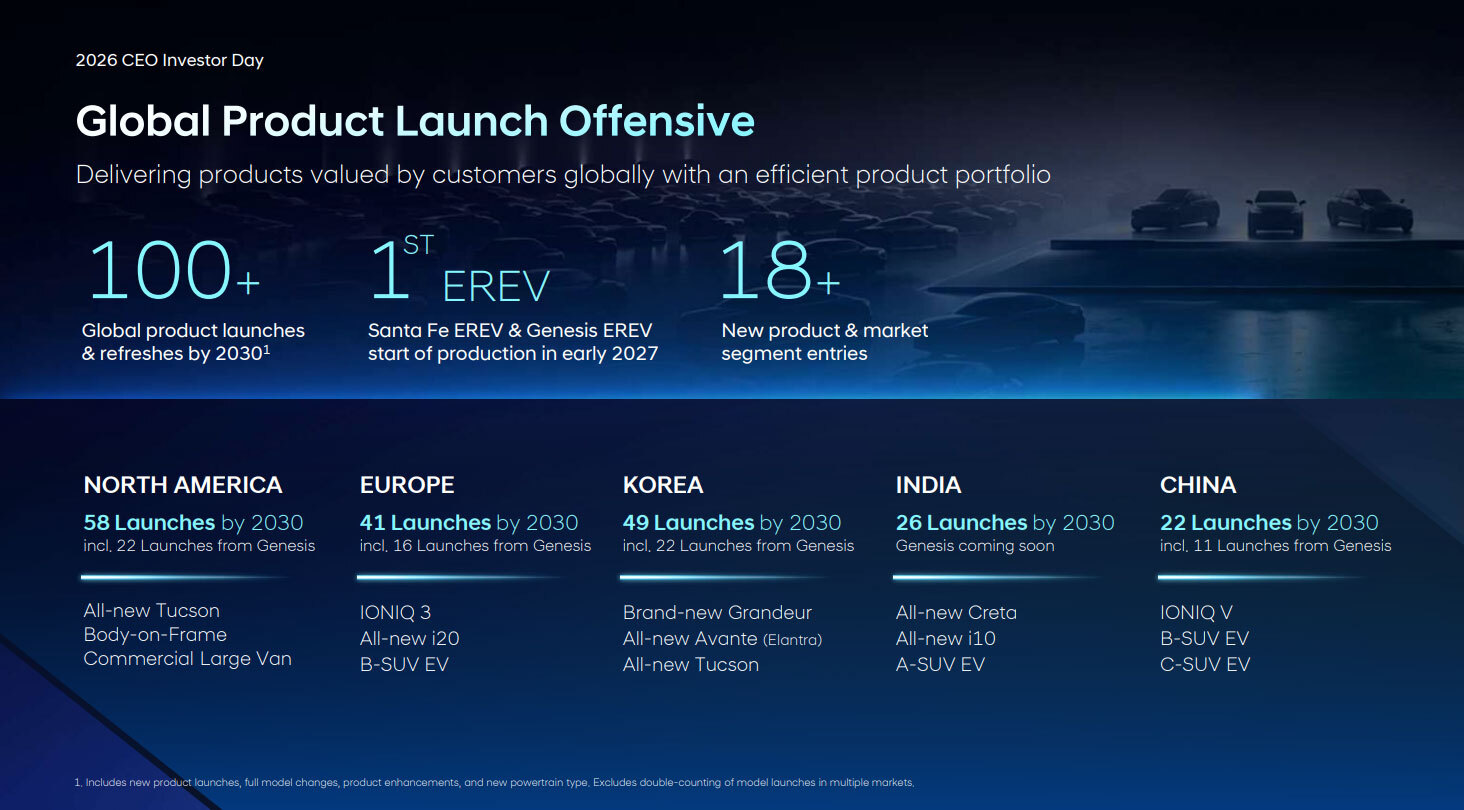
Hyundai has announced plans to introduce more than 100 new or refreshed models by 2030. Seven new vehicles are coming in the next eight months and the automaker promises there will be more than 18 different entries into “new products and market segments.”

While there’s a lot to cover, the company used their 2026 CEO Investor Day to announce a major product offensive. It’s a global effort as there will be “58 launches in North America, 49 in Korea, 41 in Europe, 26 in India, and 22 in China.” We’ve already seen a number of these as Hyundai said they include the new Elantra, Tucson, and Ioniq 3.

More: Hyundai’s Radical New Tucson Makes The RAV4 Look Half-Asleep

They’ll be joined by a range-extended Santa Fe as well as an all-new global B-segment SUV. Europe will get a second B-segment model, while India will get an even smaller A-segment electric crossover.

 Hyundai Is Launching More Than 100 New Vehicles By 2030

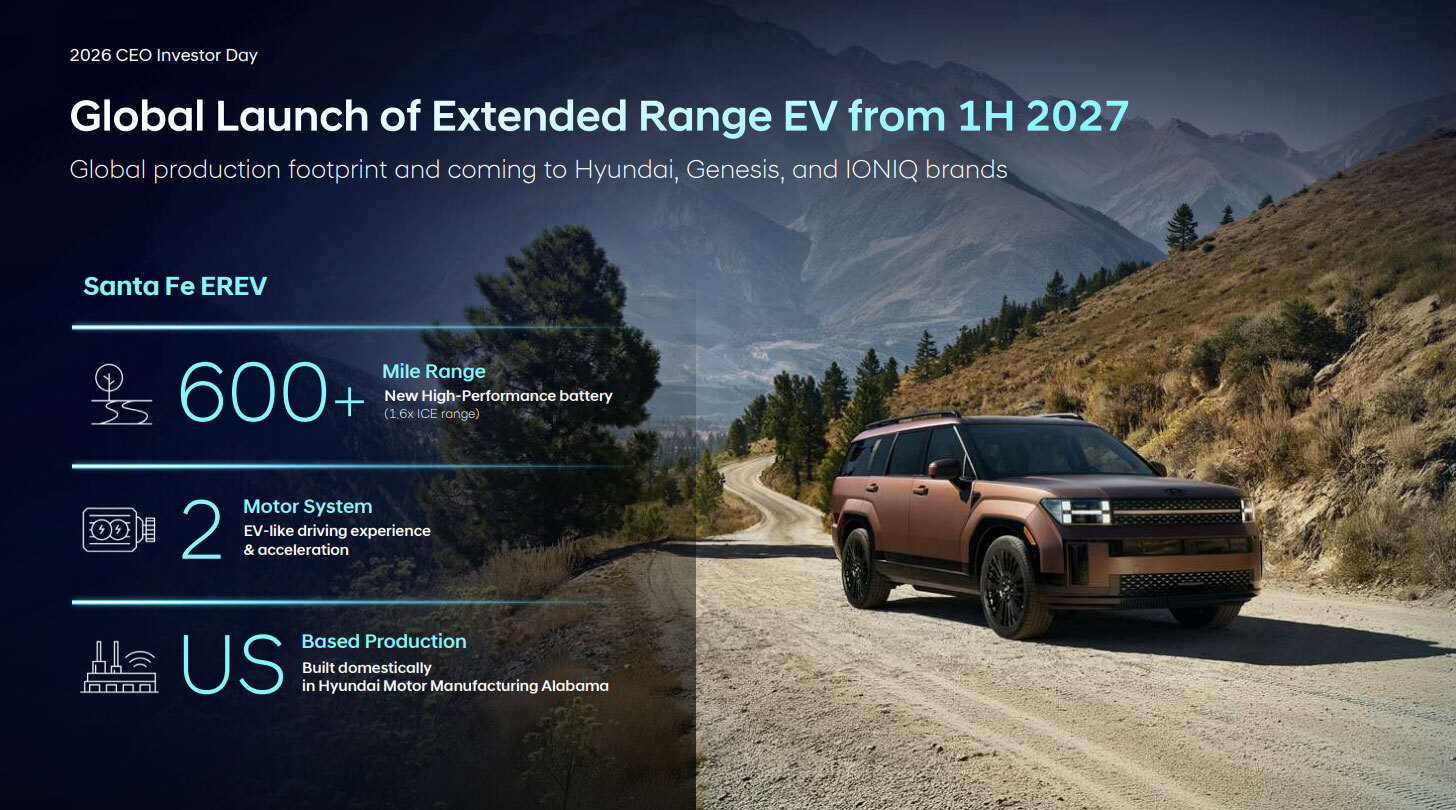
The Santa Fe EREV arrives in the first half of 2027 and it’s expected to have a combined range of more than 600 miles (966 km). It will be built at Hyundai Motor Manufacturing Alabama and deliver an EV-like driving experience, but without “range and charging anxiety.”

Europe Is Getting Five New EVs

 Hyundai Is Launching More Than 100 New Vehicles By 2030

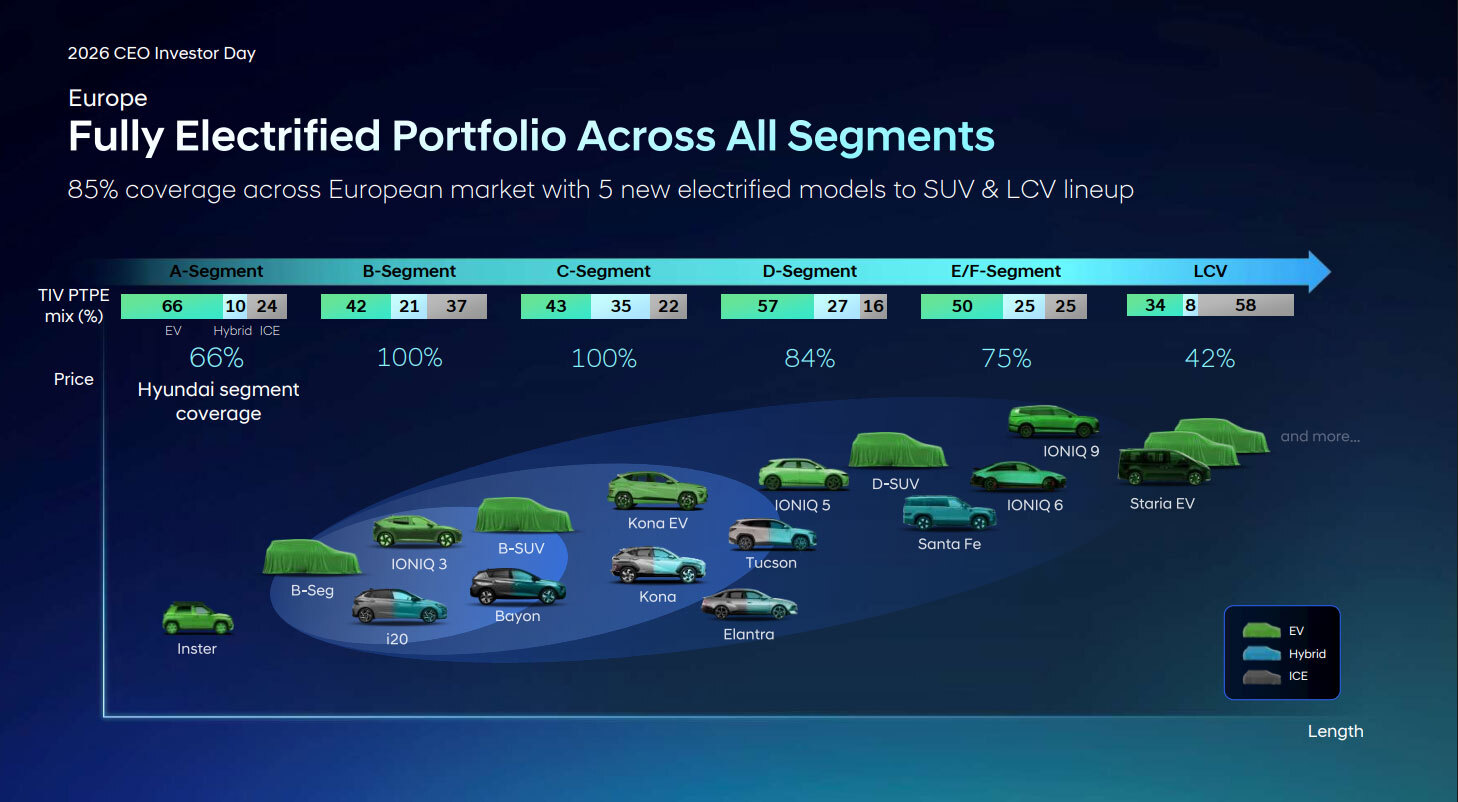
The company was largely coy on additional nameplates, but confirmed Europe will have a “fully electrified portfolio” that includes five all-new crossovers and light commercial vehicles. Hyundai hopes this will increase European EV sales from 116,000 units in 2025 to more than 420,000 units by 2030.

While Hyundai didn’t say much, they quietly revealed the two upcoming B-segment vehicles will be fully electric. They’ll be joined by a large D-segment electric crossover as well as two electric vans.

In India, a new electric crossover arrives in the fourth quarter with a next-generation infotainment system as well as a Level 2 semi-autonomous driving system. It will be followed by an ICE-powered mid-size SUV in the future.

A Chinese Turnaround With Fresh Product

 Hyundai Is Launching More Than 100 New Vehicles By 2030

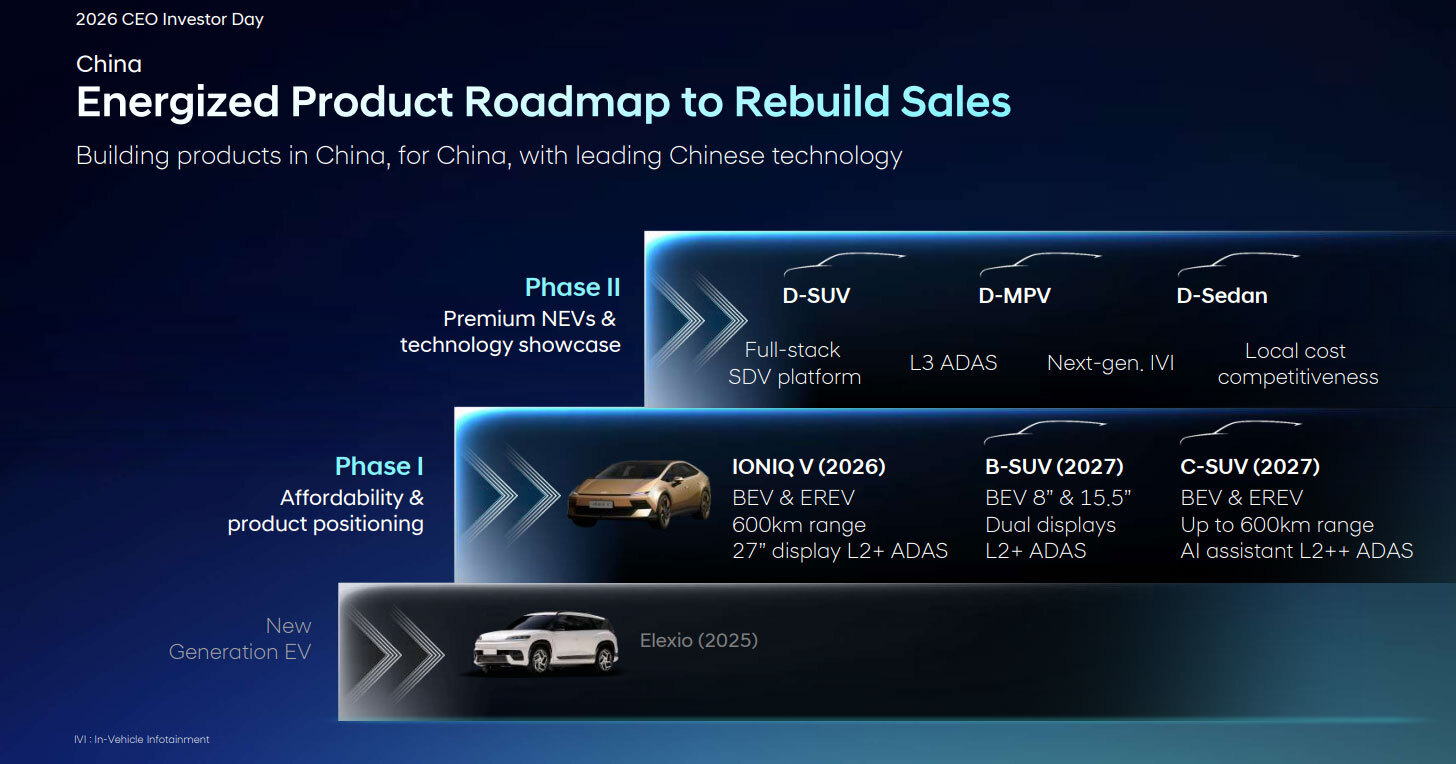
Hyundai is “pursuing a turnaround” in China, which will be spearheaded by the Ioniq V. The model will be followed by electric and range-extended vehicles in 2027.

The B-SUV will be fully electric, while the C-SUV will offer electric and range-extended powertrains. The latter will provide up to 373 miles (600 km) of range overall.

They’ll eventually be followed by three D-segment vehicles including a sedan, crossover, and MPV. These will have Level 3 autonomous driving technology as well as what sounds like a next-generation powertrain.

Genesis Looks For Growth

 Hyundai Is Launching More Than 100 New Vehicles By 2030

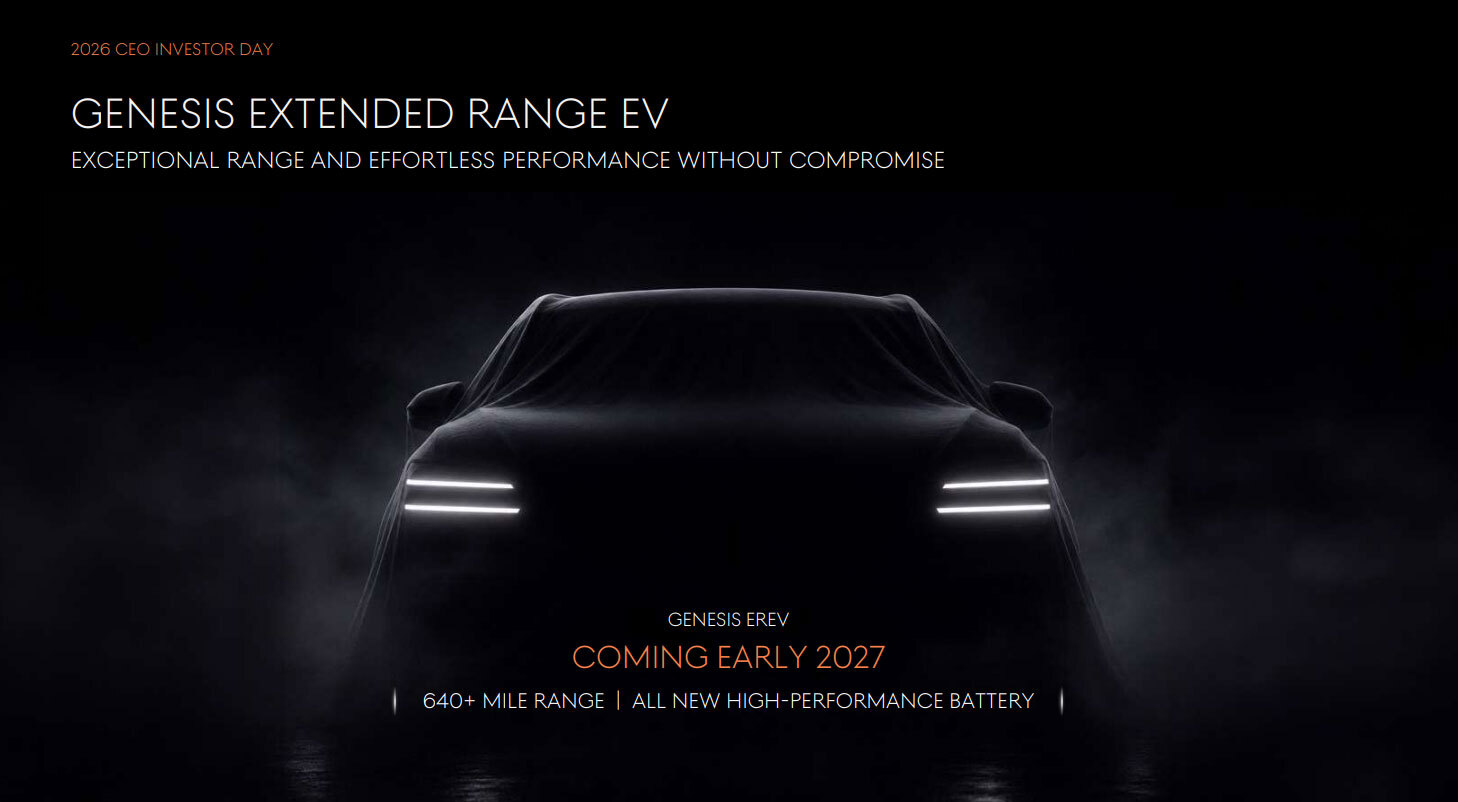
Genesis’ revamp is being led by the new GV90 as well as the GV80 Hybrid. The company also confirmed plans for a range-extended SUV in 2027, which will deliver more than 640 miles (1,030 km) of range.

While Genesis was coy on specifics, a slide mentioned 22 launches from the luxury brand in North America alone. That’s nearly a third of the models coming to the continent, but the figure undoubtedly includes variants.

 Hyundai Is Launching More Than 100 New Vehicles By 2030

The luxury brand will also enter new markets including India and the Asia Pacific region in the near future. If everything goes according to plan, they’ll be in more than 40 countries by 2030 and have annual sales of 350,000. To put that number into perspective, Lexus sold 370,260 vehicles in the United States last year.

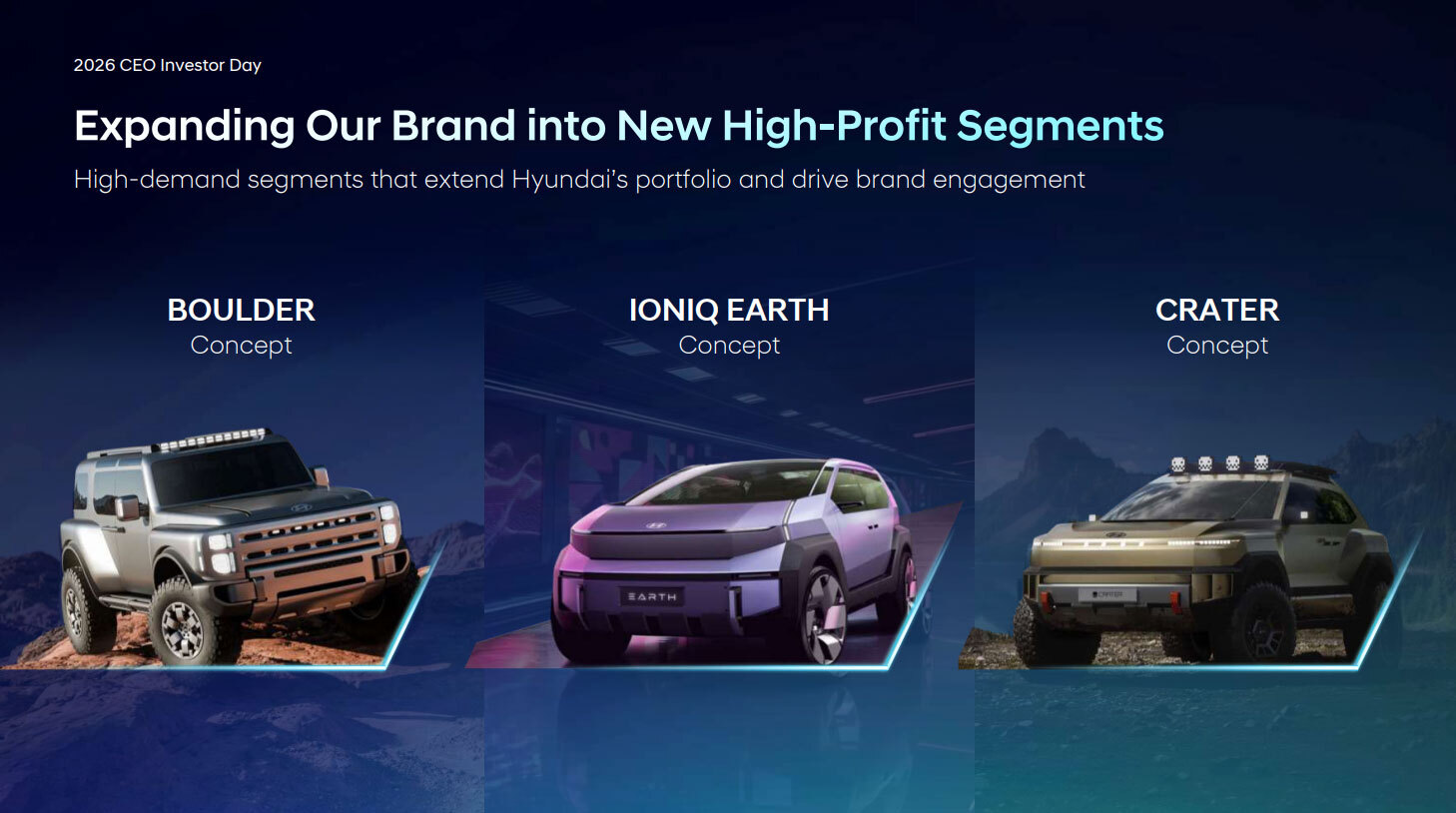
Getting back to Hyundai, the company will expand the N lineup and try to increase sales to 100,000 units annually by 2030. The automaker is also targeting so-called ‘white spaces,’ where they don’t have much of a presence and there’s “significant opportunities for growth.” To fill these voids, the company will launch body-on-frame vehicles including a midsize pickup.

 Hyundai Is Launching More Than 100 New Vehicles By 2030

Good News, There’s A Cheaper Way Into Hyundai N Coming, Plus A RWD Surprise

  • Hyundai confirms new mid-tier performance series below full N.
  • New models will share powertrains and parts from existing N cars.
  • Brand aims to reach 100,000 annual performance sales by 2030.

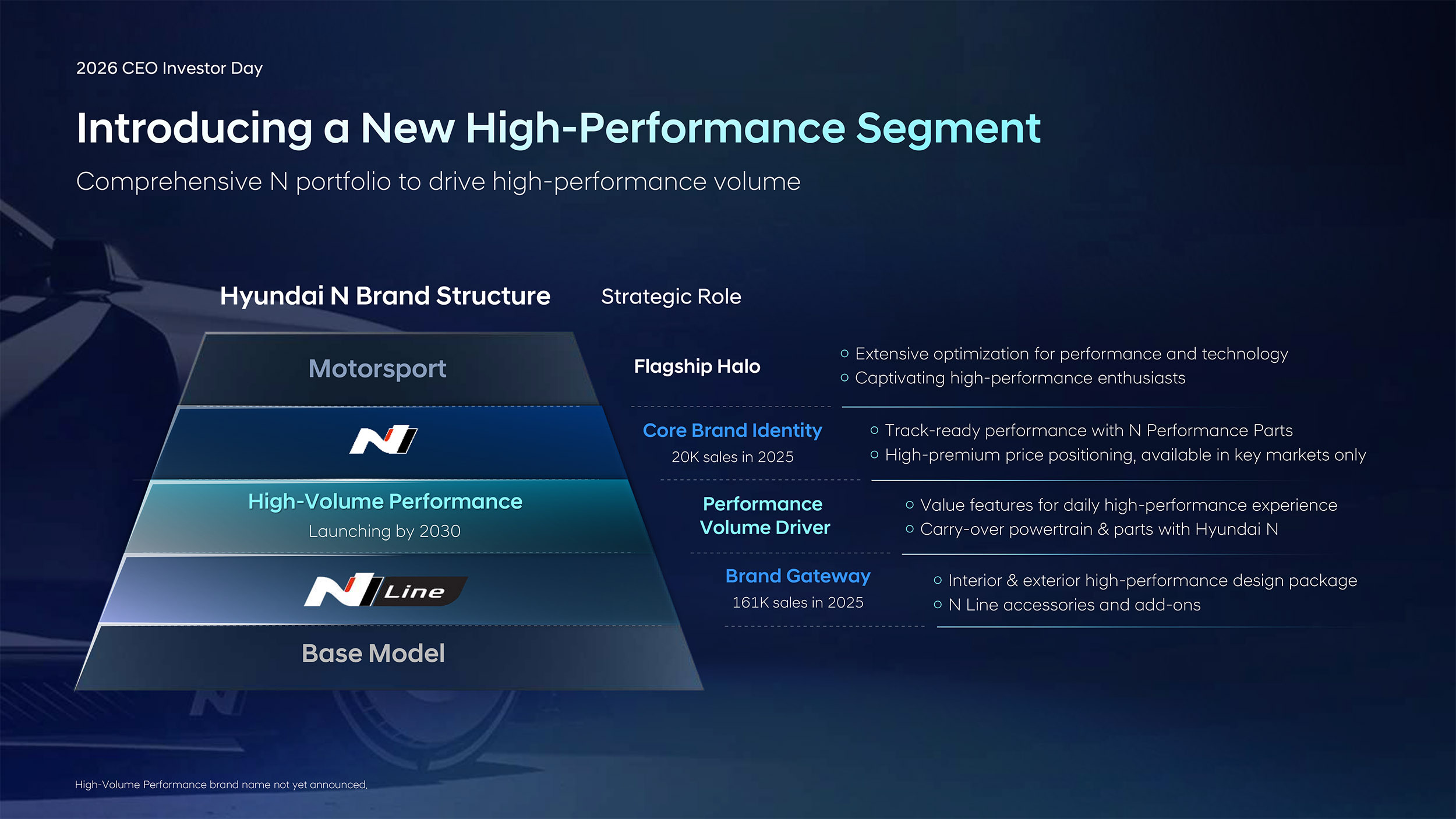
The Hyundai N performance division has won over many automotive enthusiasts, and the company capitalized on its popularity with the softer and more affordable N Line variants. Now, Hyundai has confirmed plans to introduce a third performance tier positioned right in between, targeting high-volume segments.

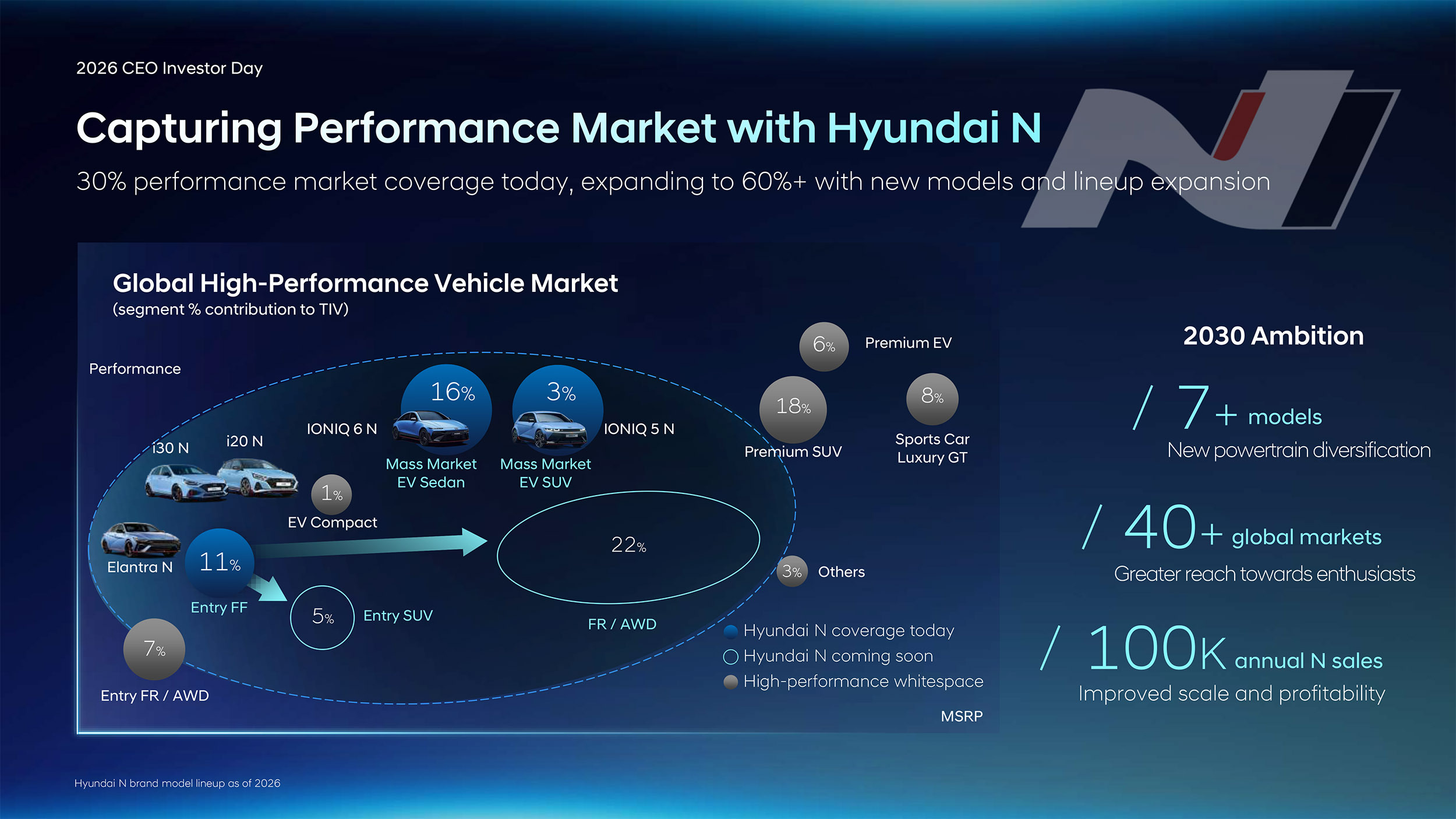
The news was shared during Hyundai’s 2026 Investor Day event in Korea. Jose Munoz, Hyundai President and CEO, said that performance is a “profitable business” and “not just an emotional one”. He added that Hyundai N currently covers around 30% of the performance market, and they plan to go over 60% by 2030.

More: Hyundai’s IONIQ V Has Lambo Looks And 225 HP, So We Imagined The N

To do that, the N lineup will grow from the current five models to over seven. Those will be offered across 40 markets, targeting 100,000 sales per year by 2030, which is five times the 20,000 sales of 2025.

A New Family Of Performance Models

 Good News, There’s A Cheaper Way Into Hyundai N Coming, Plus A RWD Surprise

More importantly, Munoz said: “We are adding something between N and N Line: a new volume high-performance variant carrying over powertrain and parts from N, so a customer who wants that feeling every day on the way to work can have it without buying a track car.”

More: Hyundai Wants Soft Ride And Sharp Handling From One Clever Sway Bar

While the upcoming “High-Volume Performance” tier does not yet have a commercial nameplate, Australian media Drive fittingly described it as the “N Lite”. Judging from the CEO’s comments, Hyundai engineers could harvest components from the existing N models and repackage them with a greater focus on everyday usability.

In terms of aero and styling, differences between the N Line and the N are already subtle, so we expect the new series to follow a similar path, bringing more aggression compared to the standard Hyundai models. As for the powertrain, we expect a mix of electric and hybrid depending on the model.

Targeting Sales Growth

 Good News, There’s A Cheaper Way Into Hyundai N Coming, Plus A RWD Surprise

The CEO explained why they decided to expand its performance lineup: “N sold 20,000 units last year; N Line sold 161,000. This sits between them, and it is where the volume is.”

More: The New Elantra N Could Be The Poor Man’s RS6 Avant, But The Wagon Isn’t Happening

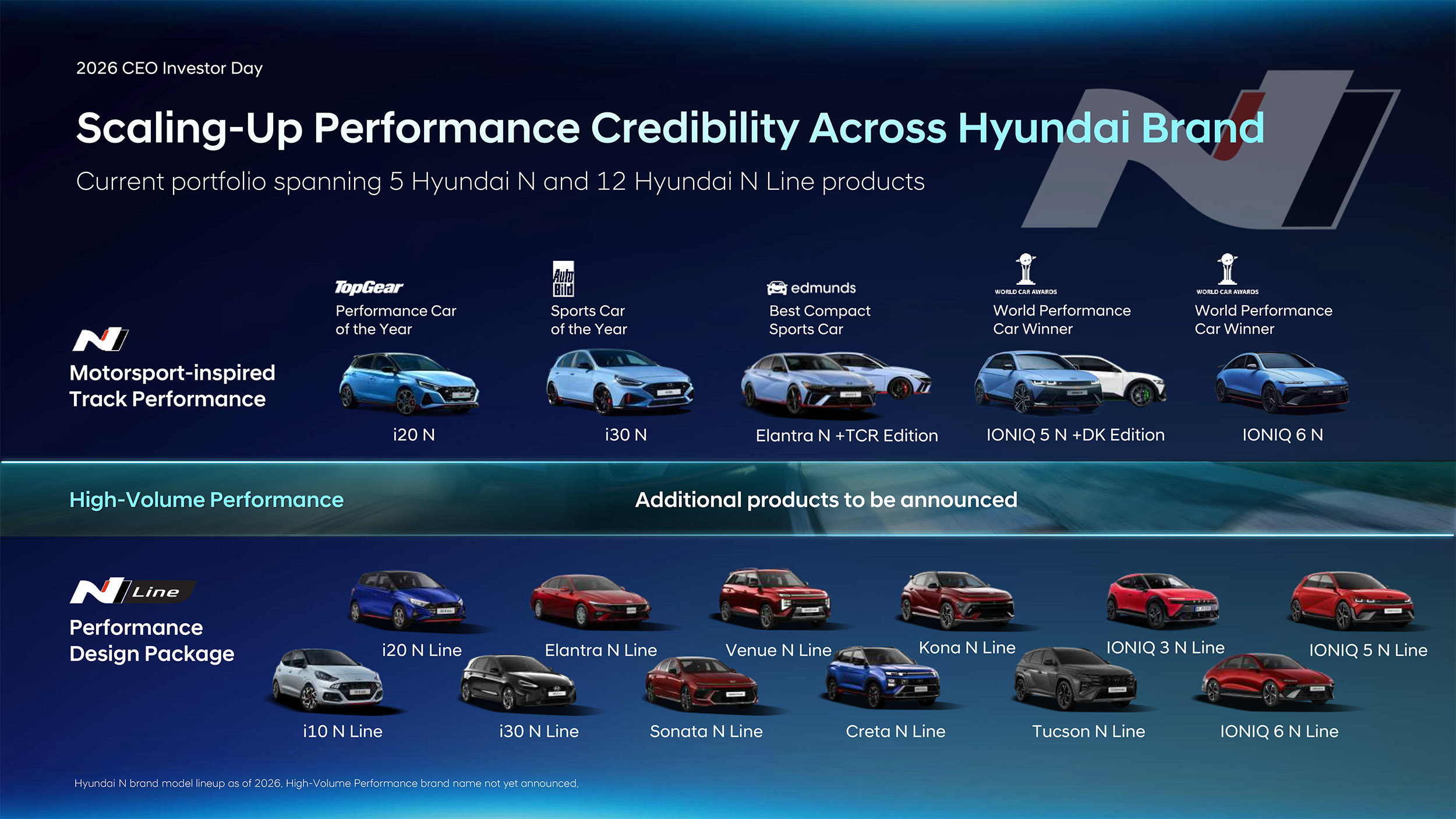
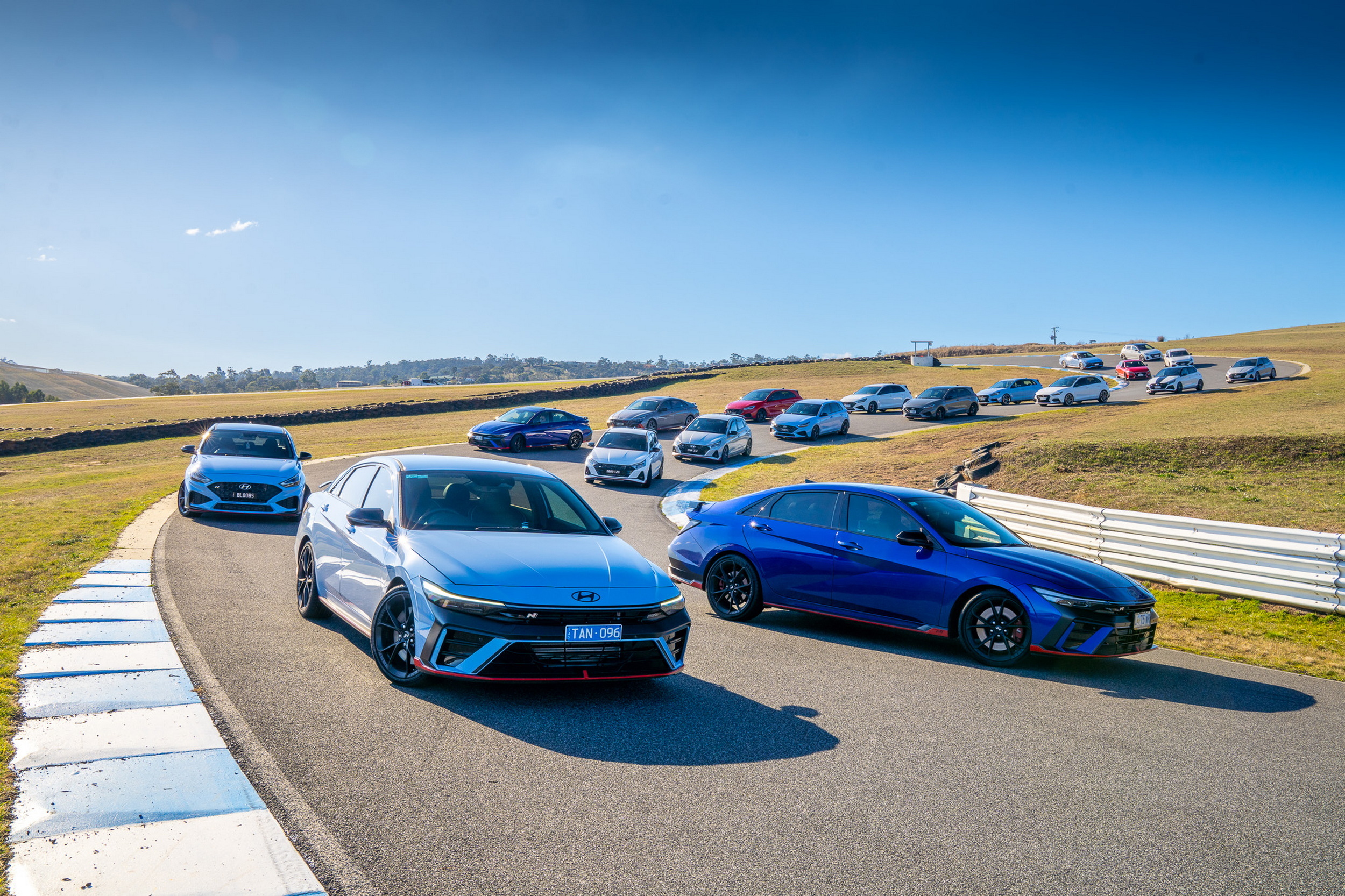
The automaker currently has five N and twelve N Line models worldwide, although the current i20 and i30 hot hatches will soon get discontinued and the Elantra sports sedan is about to enter a new generation.

More To Come, Including A RWD Surprise

Future additions include an entry-level performance SUV that could replace the discontinued Kona N, and a yet-unnamed model riding on a new front-engine, RWD/AWD architecture. The latter sounds exciting for driving enthusiasts and has the largest market-covering potential of 22% – at least according to Hyundai. However, the graph suggests it will be priced above the Ioniq 5 N and the Ioniq 6 N, so don’t expect it to come cheap.

 Good News, There’s A Cheaper Way Into Hyundai N Coming, Plus A RWD Surprise

Other whitespace high-performance opportunities yet to be explored by Hyundai include an even cheaper entry-level RWD/AWD model (7%), a compact EV (1%), a premium EV (6%), a premium SUV (18%), a Luxury GT (8%), and others (3%). Among those, we can only think of the rumored Hyundai Ioniq 3 N, which sounds fitting to the subcompact/compact EV description.

In any case, Hyundai has more than a few aces up its sleeve, potentially creating one of the largest performance lineups among mainstream automakers.

 Good News, There’s A Cheaper Way Into Hyundai N Coming, Plus A RWD Surprise

Hyundai

Hyundai’s Ioniq V Looks Like A Lambo, Is As Big As A Camry, And Costs Less Than America’s Cheapest New Car

  • Hyundai’s new electric Ioniq V starts at the equivalent of just $17,800 in China.
  • Top-spec Long Range version claims 404-mile range yet still costs only $20,800.
  • China’s V not available in US or Europe gets huge screens, Lambo-look styling.

When Hyundai launched the original Ioniq Hybrid in America in 2017, it started at $22,200. Almost a decade later, Chinese buyers can order an entirely new, fully electric Ioniq sedan for less. The wedgy Ioniq V has entered pre-sales at just 119,900 yuan, which equates to only $17,800 at current exchange rates. That’s nearly $3,000 less than the cheapest new car in America right now, which also happens to be a Hyundai, the Venue.

That’s for the Standard Edition. Upping the spend to 129,900 yuan ($19,300) gets the Smart Driving Edition, while 139,900 yuan ($20,800) buys the Long Range model, Auto Home reports. Those are some startling numbers when viewed from America or Europe, and remind us how cutthroat the competition is in the Chinese car market.

Related: Police Are Slipping Warning Cards Under Hyundai And Kia Wipers Again

\\\\\\\

The Ioniq V is a China-focused model developed under Beijing Hyundai, and despite what the prices suggest, it’s no cramped subcompact. At 4,900 mm (193 inches) long with a 2,900 mm (114-inch) wheelbase, it occupies roughly the same footprint as a Hyundai Sonata or a Toyota Camry. The Sonata measures 193.3 inches long on a 111.8-inch wheelbase; the Camry 193.5 inches on a 111.2-inch wheelbase.

 Hyundai’s Ioniq V Looks Like A Lambo, Is As Big As A Camry, And Costs Less Than America’s Cheapest New Car

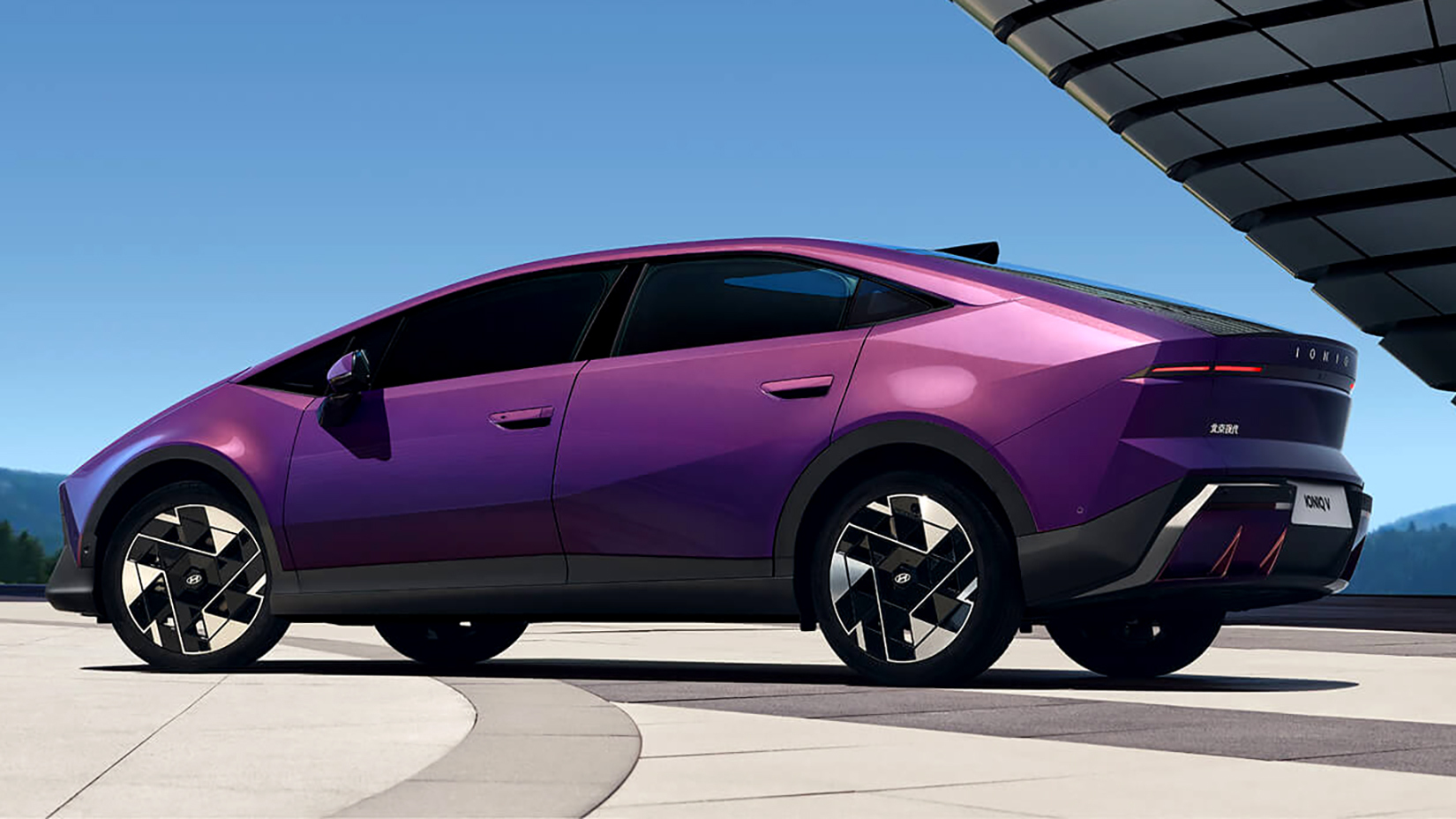
The Ioniq V wraps frameless doors and fastback proportions around some properly cyberpunk styling, and the paint chart runs eight colors deep, well past the silvers and grays Western buyers get stuck with. Cyber Gold, Gamma Green and a funky Dimensional Purple are all on the list.

Inside, there’s a vast 27-inch 4K display running Qualcomm’s Snapdragon 8295 chip, plus a head-up display. Hyundai has also thrown Chinese AI models from Baidu and ByteDance into the infotainment system, while Momenta supplies the driver-assistance technology. Hyundai’s site additionally boasts nine airbags and extensive active safety equipment.

404 Miles Of Range, But Not Really

\\\\\\\

Power comes from a single electric motor with either 188 hp (191 PS / 140 kW) or 225 hp (228 PS / 178 kW). CATL supplies 53.5 kWh and 66.8 kWh LFP batteries, producing four claimed CLTC ranges spanning 323 to 404 miles (520 to 650 km). Those optimistic Chinese-cycle numbers don’t translate directly into equivalent EPA range, naturally, but even if they’re 20 percent lower the value proposition is difficult to ignore.

There’s no guarantee the Ioniq V will ever reach Western showrooms, much less at anything resembling Chinese pricing. Or that Hyundai will ever create the N version to capitalize on that Lamborghini-esque design, even though our own renders suggest it would look fantastic. But $17,800 for a brand-new electric sedan this stylish sounds like a great deal whichever side of the Pacific you’re on.

\\\\\\\

Hyundai

Rivian, Hyundai, Toyota, And Cadillac Are Fighting For Tesla’s Scraps

  • A surge in sales helped Tesla secure a 55 percent market share in July.
  • The Tesla Model Y alone accounts for 37 percent of all EVs sold in the US in July.
  • Through the second quarter, Chevy had a 6 percent share, followed by Hyundai.

Tesla remains far and away the biggest seller of electric cars in the United States, and despite rivals’ efforts, very little progress has been made in eroding the EV leader’s commanding market share.

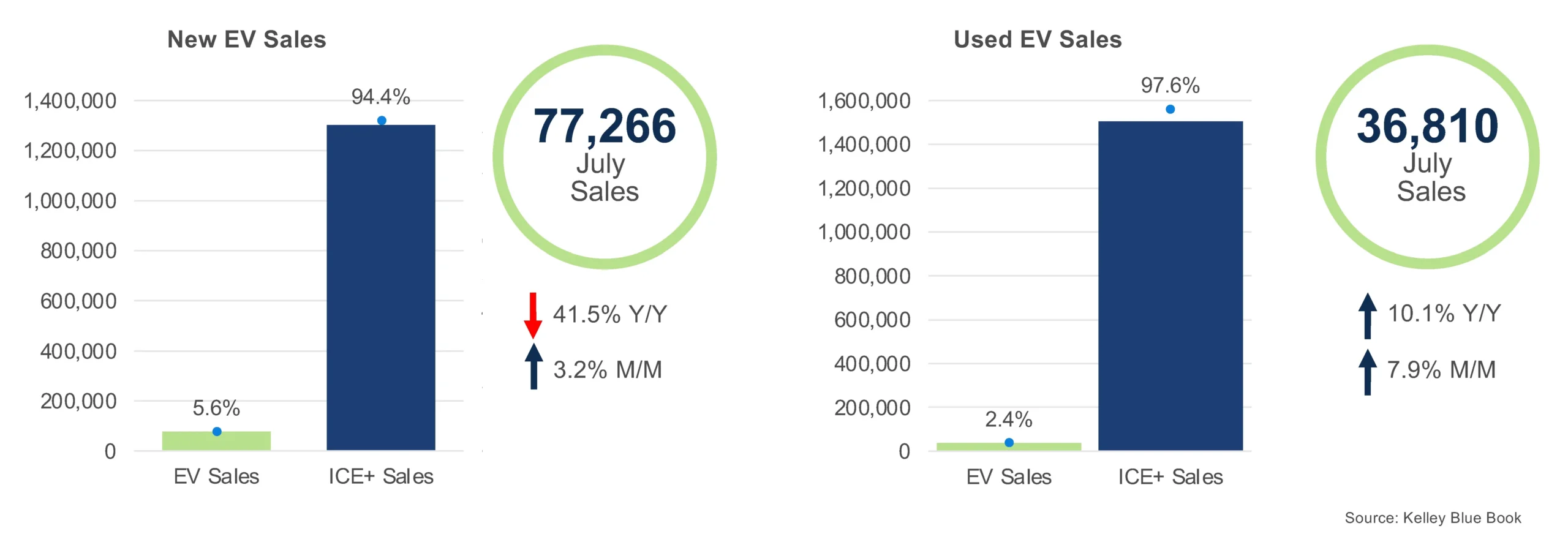
July brought 77,266 new EV sales, up 3.2 percent from June and down 41.5 percent from the same month last year. Electric models made up 5.6 percent of all new-vehicle sales. The year-over-year drop has a simple explanation. In July 2025, the federal EV tax credit was still alive, and buyers rushed to cash it in before the Trump administration killed the incentive in September.

Read: Tesla Delivered More Cars Than Any Q2 Ever, And Its Stock Had The Worst Day Ever

Of last month’s electric cars, 42,435 were Teslas, according to Cox Automotive, good for 55 percent of the market. Tesla’s volume climbed 4.9 percent from June. The Model Y did the heavy lifting, as it always does, accounting for 37 percent of every new EV sold in the country. Basically, the nameplate outsold every rival automaker’s entire electric portfolio.

 Rivian, Hyundai, Toyota, And Cadillac Are Fighting For Tesla’s Scraps

Tesla’s share throughout the entire second quarter was slightly lower at 50.5 percent, with the company selling a total of 124,800 EVs in the US during this period, down 13.1 percent from last year, when 143,535 were sold. In Q2, the brand with the next-largest slice of the EV pie was Chevrolet at 6 percent, followed by Hyundai at 5.8 percent, Cadillac at 4.9 percent, Toyota at 4.8 percent, and Rivian at 4.6 percent. Ford’s share remains a disappointing 3.9 percent, although its July sales were up 18.9 percent from June.

Hyundai posted the strongest month-over-month gain among the major brands in July, up 36 percent. Kia also moved higher, largely on the strength of the EV9.

 Rivian, Hyundai, Toyota, And Cadillac Are Fighting For Tesla’s Scraps

Sales Surge Pinches Supply

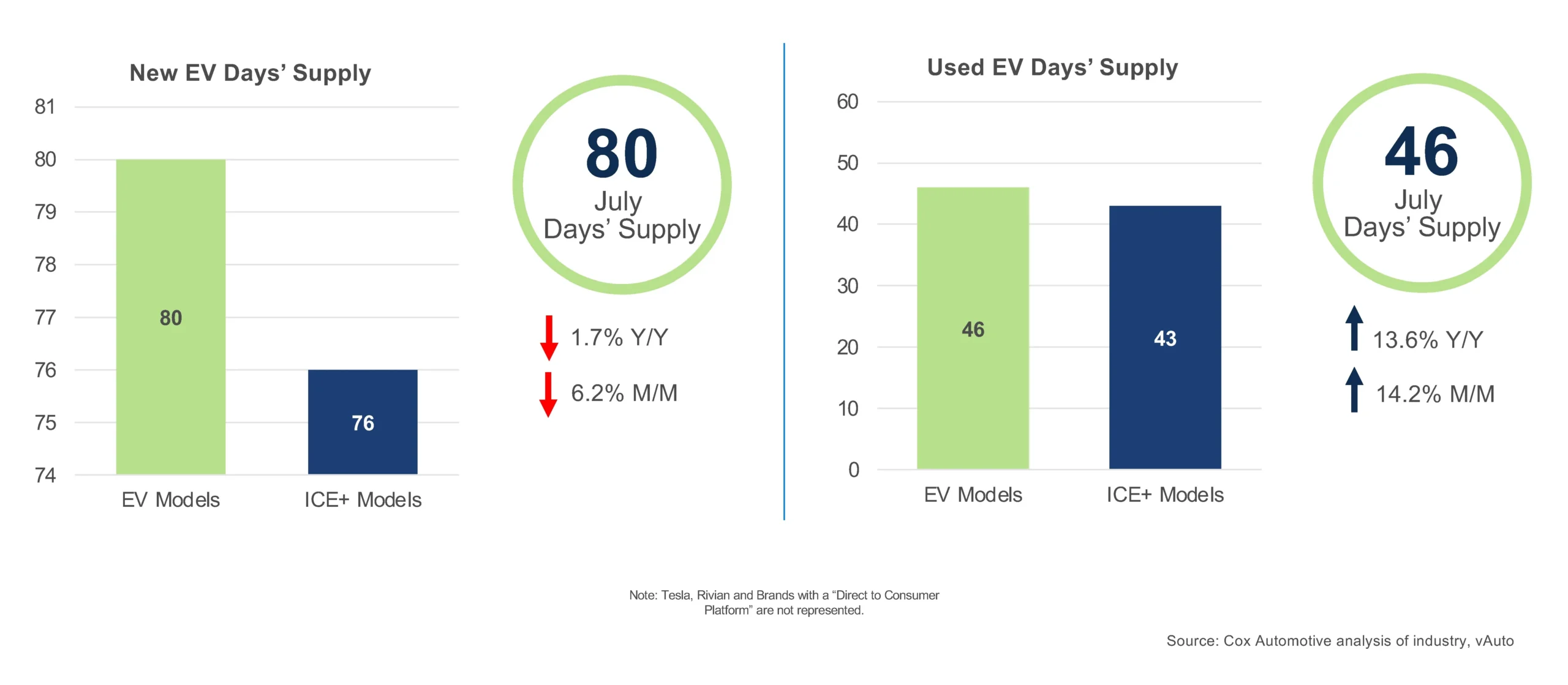
As EV sales climbed in July, the average days’ supply of new EVs fell 6.2 percent month over month to 80 days, and 1.7 percent below where it sat a year earlier. Electric inventory now runs four days above ICE models, down from a nine-day gap in June. Volkswagen carried the heaviest load at 147 days, with Porsche at 138 and Nissan at 133. Subaru ran leanest at 46 days, then Hyundai at 52, and Lexus at 58. Used EVs moved the other way, rising 14.2 percent from June to 46 days, above ICE models for the first time since February 2026.

Used EV sales rose 7.9 percent month over month to 36,810 in July, 10.1 percent better than a year ago. Secondhand electrics took 2.4 percent of the market.

The Price Gap Hasn’t Closed

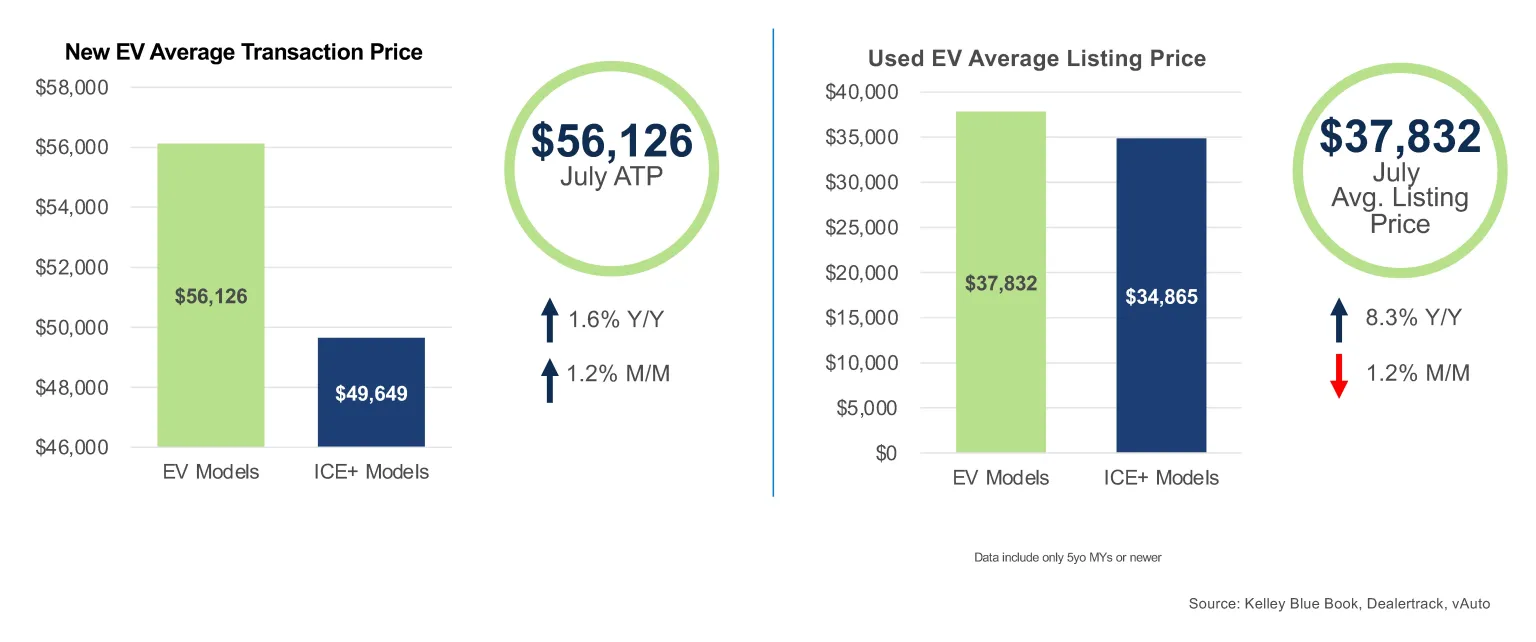
Electric cars remain the more expensive choice on both the new and used side. Average transaction prices for new EVs rose 1.2 percent in July to $56,126, against $49,649 for the average combustion model, and 1.6 percent higher than a year earlier. Incentives shrank over the same stretch, from 13.1 percent of ATP, or $7,290 per vehicle, in June to 11.8 percent, or roughly $6,626, in July. Used electrics average $37,832 against $34,865 for gas equivalents. Those prices slipped 1.2 percent from June but hold 8.3 percent above where they were a year ago.

 Rivian, Hyundai, Toyota, And Cadillac Are Fighting For Tesla’s Scraps
❌
❌