❌

Normal view

There are new articles available, click to refresh the page.
Yesterday — 30 September 2026Electric Vehicles - Latest News | Carscoops

Suzuki Confirms Light Range Extender Setup Alongside More Efficient Hybrids

  • Suzuki unveils 10-year tech roadmap with faster vehicle development.
  • Modular e-Axles will be used across BEVs, Series HEVs, and Light REEVs.
  • The plan includes a new turbo engine and weight-saving measures.

Suzuki has announced its roadmap for the next decade, focusing on a multi-pathway approach, reduced development times, and increased modularity. The company is working on a new turbo gasoline engine, a mild-hybrid system, and a modular series hybrid family of powertrains which is set to include its first-ever light range extender setup.

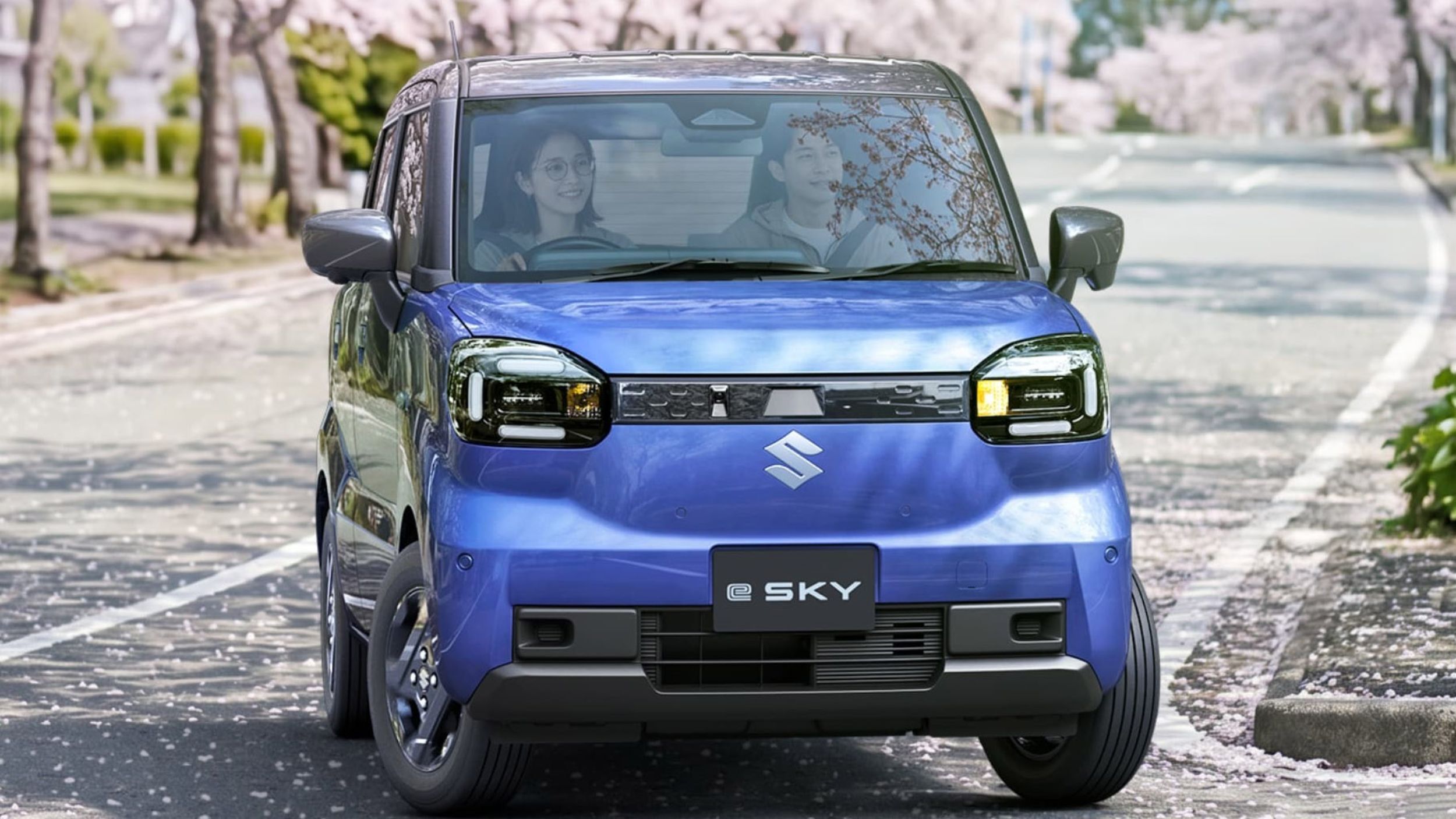
According to Suzuki, the new e-Axle 3-in-1 system used in the fully electric e Sky kei car, will evolve into a modular 6-in-1 unit with the exact same dimensions. This will be shared across BEVs and HEVs, under the “Right x Light Mobile Tech” philosophy, and will also be available in a 10% larger version for subcompact, compact, and midsize models.

More: Suzuki’s New Electric Kei Car Squeezes 193 Miles From A Really Tiny Battery

Urban EVs such as the e Sky will get a 94 hp (70 kW / 95 PS) front electric motor paired with a 13 hp (10 kW / 14 PS) rear motor in 4WD trims.
 Suzuki Confirms Light Range Extender Setup Alongside More Efficient Hybrids
Suzuki e Sky

Larger models will feature a more potent 174 hp (130 kW / 177 PS) primary e-Axle and an optional 40 hp (30 kW / 41 PS) e-4WD unit at the back. Suzuki wants its electric motors to be free of Heavy Rare Earths, improving their recyclability.

Hybrids And Light REEVs

Smaller models will benefit from a new mild-hybrid system, targeting to cut down carbon emissions by 15% which translates to 150 kg (331 lbs) less CO2 for every 10,000 km (6,214 miles). The more advanced Series HEV powertrain targets a 29% reduction, doubling the CO2 savings to 300 kg (661 lbs) per 10,000 km (6,214 miles).

More: Think You Know The Suzuki Alto? There Are Five Different Versions On Sale Right Now

More importantly, in the new Series HEV powertrain which sounds like a successor to the current Strong Hybrid unit, the ICE will be working as a generator. This allows engineers to evolve it further into a “REEV Light” setup by adding plug-in capability and “right-sizing” the battery pack. Suzuki said that its range-extender won’t require an oversize battery, and will combat range anxiety compared to BEVs.
 Suzuki Confirms Light Range Extender Setup Alongside More Efficient Hybrids
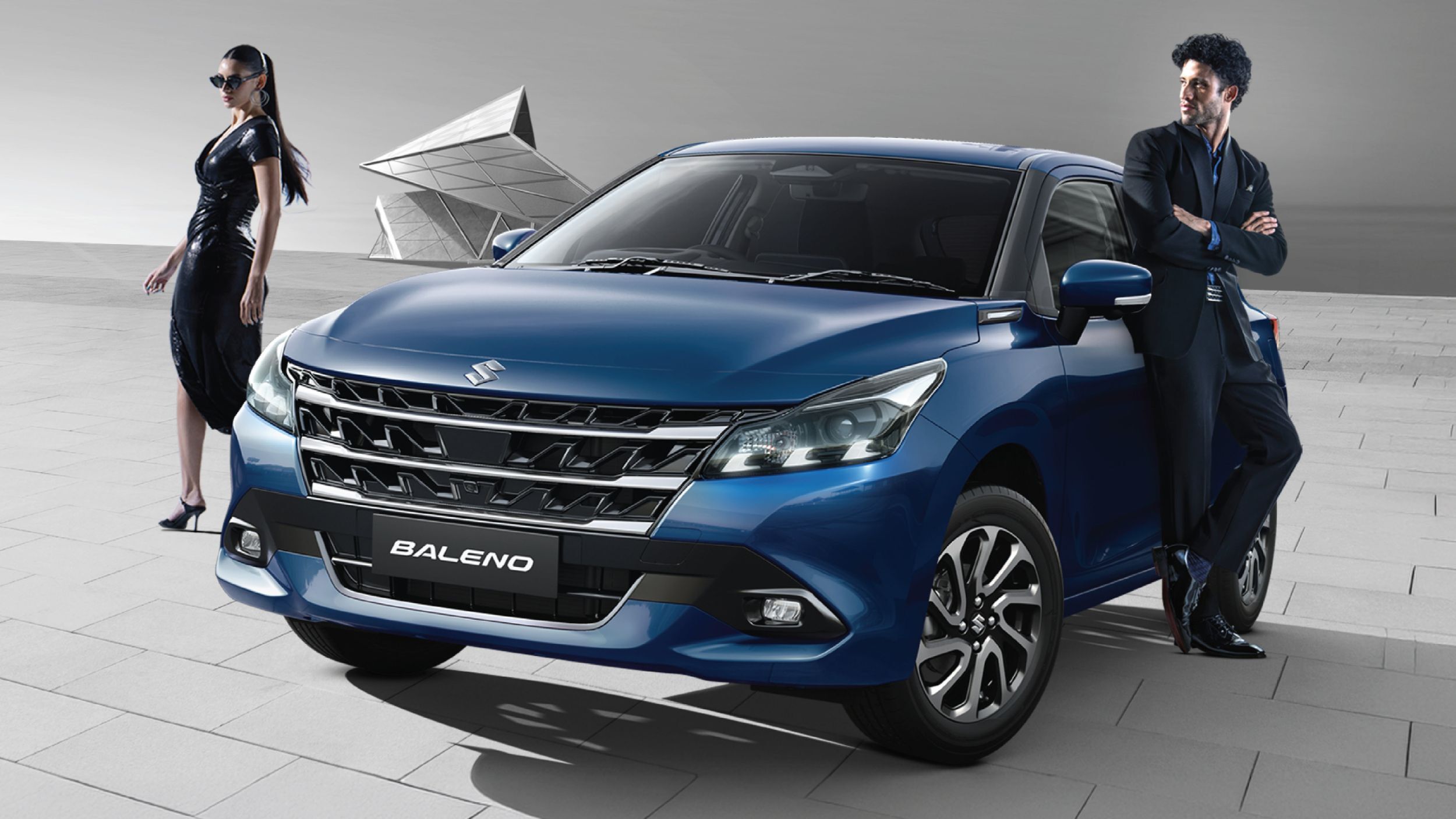
The recently facelifted Suzuki Baleno.

As reported by Autocar India, the smallest Suzuki models to get the upcoming Series HEV system are expected to be the Baleno hatchback and the Fronx SUV. This means that the S-Cross, Vitara, Grand Vitara, and Victoris, are potential candidates.

New Turbo ICE

Despite the focus on modular electrified powertrains, the Japanese automaker remains loyal to combustion power. A new Direct Injection Turbocharged gasoline engine is being developed for markets like India, likely to be joined by a CNG variant.

More: Suzuki’s Decade-Old $6,500 Hatch Loses A Cylinder To Chase Mileage

The long term goal of Suzuki engineers is to improve ICE thermal efficiency from the 40% of the current 1.2-liter Z12E three-cylinder engine to an ambitious 50% on future powertrains. This can be achieved by high-EGR lean combustion, waste-heat recovery, low-viscosity lubricants, nano-carbon materials, and an improved Miller-cycle operation.

Lighter Is Better

 Suzuki Confirms Light Range Extender Setup Alongside More Efficient Hybrids
Suzuki Swift

Suzuki is known for producing lightweight cars, and will continue to do so in the future, despite the fact that stricter safety and emission regulations for 2030 and beyond are expected to add 80 kg (176 lbs) to each vehicle. In order to offset these mandatory gains, the automaker plans to reduce weight by 100-120 kg (220-265 lbs) per vehicle across its entire lineup, without compromising safety.

More: Suzuki’s Old Swift Sport Made 138 HP. The New One Makes A Splitter

Engineers went to great lengths for the new “S Light” weight-reduction initiative. Examples include the use of M8 bolts with smaller heads that could save 1 gram per unit across over 2,000 fasteners per car, and utilizing 1,470 MPa ultra-high-tensile steel for crash-critical zones.

The strategy briefing also included the “SDV Lite” term for a simplified Software-Defined Vehicle architecture. As for safety, the company wants to find ways to route heavy masses away from the occupants in the event of a crash, and standardize ADAS across its future lineup. Starting from 2031, a new Central Zone ECU will slash electronic costs by 30% and module weight by 15%.

Faster Development To Fight The Chinese

Another important element of the future roadmap is development times. Suzuki wants to halve them to 24 months by 2030, matching the fast-paced cycles of Chinese automakers. The plan includes boosting development efficiency by 30% and production efficiency by 50% at the Manesar plant in India, by using digital tools and modular components.

Finally, the company has announced its goal of increasing its annual manufacturing capacity in India to 4 million units by 2030.
\\\\\\\\\

Suzuki

Before yesterdayElectric Vehicles - Latest News | Carscoops

Mazda’s Electric SUV Gains LiDAR Self-Driving Tech For Under $22k

  • Mazda has introduced an updated EZ-60 in China, one year after its launch.
  • The SUV gains a LiDAR sensor and more advanced autonomous capabilities.
  • It retains the EV and EREV powertrain options, starting at ¥113,900 ($17,000).

The Mazda EZ-60 – known as the CX-6e in export markets – has been on sale in China for only one year, but that didn’t stop the Changan Mazda joint venture from giving it an early technological update. The SUV, which is available with range-extender and fully electric powertrains, gains upgraded sensors enabling more advanced semi-autonomous capabilities.

The highlight of the refreshed EZ-60 is the addition of a roof-mounted LiDAR. This is combined with three millimeter-wave radars, 12 ultrasonic sensors, and 11 high-definition cameras, continuously monitoring the surrounding environment. The impressive setup allows Navigation-on-Autopilot (NOA) driving on highways when travelling at speeds of up to 130 km/h (81 mph), and in urban traffic at speeds of up to 80 km/h (50 mph).

More: Mazda Says The SUV Boom Still Isn’t Over. Sorry Sedan Fans

According to Mazda, the model can now handle roundabouts and highway ramps, perform automated lane changes, U-turns, and features autonomous parking with upgraded memory. The systems are classified as Level 2+ and have been tested in hazardous scenarios including nighttime driving under heavy rain conditions and navigating narrow mountain passes with tree branches encroaching into the travel lane.

\\\\\\\\\\\\

Changan Mazda / Weibo

Setting aside the LiDAR pod on the roof on certain trims, the exterior design of the 4,850 mm (190.9 in) long SUV remains unchanged.

More: Big Changes Coming To Mazda’s Large SUVs After Sales Sputter

The same applies to the interior with the carry-over 26.45-inch infotainment display stretching on the passenger side of the dashboard and nine airbags fitted as standard. High-spec trims are equipped with a 50-inch augmented reality head-up display (optionally upgraded to 100-inch projection), and dual front zero-gravity seats with eight-point massage function that can recline by 120 degrees transforming into beds.

\\\\\\\\\\\\\\\

Changan Mazda / Weibo

Under the skin, the EZ-60 retains Changan’s EPA1 architecture with carry-over EREV and BEV powertrain options. Both employ a rear-mounted electric motor producing 255 hp (190 kW / 258 PS). The BEV has a 77.94 kWh battery offering a CLTC range of up to 373 miles (600 km).

More: No, Mazda Hasn’t Confirmed A New 300-HP AWD Mazdaspeed3

The EREV adds a 1.5-liter gasoline engine producing 97 hp (72 kW / 98 PS) which acts purely as a generator for the 31.73 kWh battery pack. This allows an alleged combined range of up to 808 miles (1,301 km) between charging and refueling stops.

\\\\\\\\

Changan Mazda / Weibo

The 2027 Mazda EZ-60 is already available to order in China. Pricing starts at ¥113,900 ($17,000) for the base EREV 200 Air trim but the LiDAR-equipped range begins with the EREV 200 Pro LiDAR at ¥145,900 ($21,700) and tops out at ¥166,900 ($24,900) for the flagship EV 600 Max LiDAR.

More: Mazda Priced Its New CX-6e At $20,500 In China And Nearly Double That In Australia

It remains to be seen whether the aforementioned updates will find their way into the Mazda CX-6e in the near future. The model landed in the Old Continent and in Australia earlier this year, so Mazda might wait before introducing any new features to export markets.

\\\\\\

Changan Mazda / Weibo

Tuner Imagines A Dacia Spring Hot Hatch, But There’s A Problem

  • German tuner Carpoint uses AI to envision a hotter Dacia Spring.
  • The bodykit includes extreme aero and wide fender extensions.
  • The problem is that the urban EV only makes 80 horsepower.

German dealer Carpoint GmbH, known for modifying Dacia Dusters through its Redust brand, has shared its wild vision for the new Dacia Spring. The company presented a heavily modified version of the budget-friendly EV, featuring track-inspired aero, a widebody treatment, and a lowered chassis.

Before prospective buyers of the new Spring get excited, we have to inform them that the tuning package currently exist only in the form of AI-generated renderings, as the new Dacia EV has yet to reach dealers in Europe. Still, Carpoint is no stranger to offering styling upgrades for Dacia models, so they might be cooking up something special for the newcomer.

More: Dacia Duster Redust Sport Is All Show, No Go, Yet Costs Up To $55K

The digital concept gives the small hatchback a motorsport overhaul. The front end gains an oversized splitter with integrated fins and canards. The add-ons appear to bolt on the stock bumper, although the tuner added extra DRLs on the plastic cladding.

\\\\\\\\

Carpoint GmbH / Facebook

The profile features aggressive side skirts, wide fender extensions and a new set of alloy wheels. The new shoes are much larger than the stock 16-inch steelies with hubcaps, and appear to hide beefier disc brakes with red calipers. Furthermore, the light blue model has faux vents and side gills on the fenders for a more dramatic appearance.

More: New Dacia Spring EV Flees From China And Pays The Price

At the back, the towering wing and the large diffuser with an F1-style brake light wouldn’t look out of place on a TCR racecar. Finally, the electric hatchback rides on a noticeably lowered suspension and has wider tracks.

What About The Powertrain?

The biggest problem with Carpoint’s vision is the lack of power. The new Dacia Spring might have gotten a more potent electric motor compared to its predecessor, but it still makes an uninspiring 80 hp (60 kW / 82 PS) and 175 Nm (129 lb-ft) of torque. According to the automaker, the 0-100 km/h (0-62 mph) sprint is completed in 12.1 seconds and top speed is limited at 130 km/h (81 mph).

\\\\\\\\

Dacia

With most tuners not being able to upgrade electric powertrains, the underwhelming performance of the EV doesn’t make it a good candidate for such an extreme visual makeover. Furthermore, Dacia has promised that the entire lineup of the new Spring will cost under €20,000 ($23,100) before subsidies, and most budget-conscious buyers won’t be willing to spend thousands on bodykits.

More: Dacia Made A Pickup Out Of The Duster And Forgot The Pickup Part

Besides the new Spring, Carpoint has also shared renderings of the Striker wagon with a similarly sporty treatment contrasting the crossover nature of the donor vehicle. It remains to be seen whether any of these parts will reach production, resulting in some of the wildest Dacia builds yet.

\\\\\

Carpoint GmbH / Facebook

Cheap Thrills: Stellantis Adds Extra Plastic And Mobile Office To Base Vans

  • Citroen Berlingo and Opel Combo gain cheaper trims in Europe.
  • The vans feature unpainted bumpers and a redesigned dashboard.
  • The Opel Combo Start is priced from €22,400 ($26,000) in Germany.

Stellantis has introduced two new entry-level trims for the Citroen Berlingo and Opel Combo twins in Europe, making them more accessible and more practical. The base models benefit from a redesigned interior which transforms into a mobile office, and will be available with gasoline, diesel, mild-hybrid, and fully electric powertrains.

From the outside, the Citroen Berlingo Van First and the Opel Combo Start have slightly different faces compared to the rest of the lineup. The lower bumper appears to be carried over but the upper portion sheds the body-colored finish for unpainted plastic and gains a simplified design for the grille. The rest of the bodywork remains unchanged.

More: Opel’s Cheapest New Car Is Now A Family SUV With Three Pedals And Steelies

Note that the Berlingo Van has different headlights compared to the Berlingo which is better aligned with Citroen’s passenger car and SUV lineup.

More Practicality Inside The Cabin

More substantial changes take place inside the cabin, making us wonder why Opel and Citroen didn’t apply this treatment to the entire lineup of the Combo and Berlingo vans. The dashboard and door panels have been redesigned with the goal of improving “robustness” and “ergonomic handling” for business owners and fleet operators using the LCVs for delivery services and on construction sites.

 Cheap Thrills: Stellantis Adds Extra Plastic And Mobile Office To Base Vans

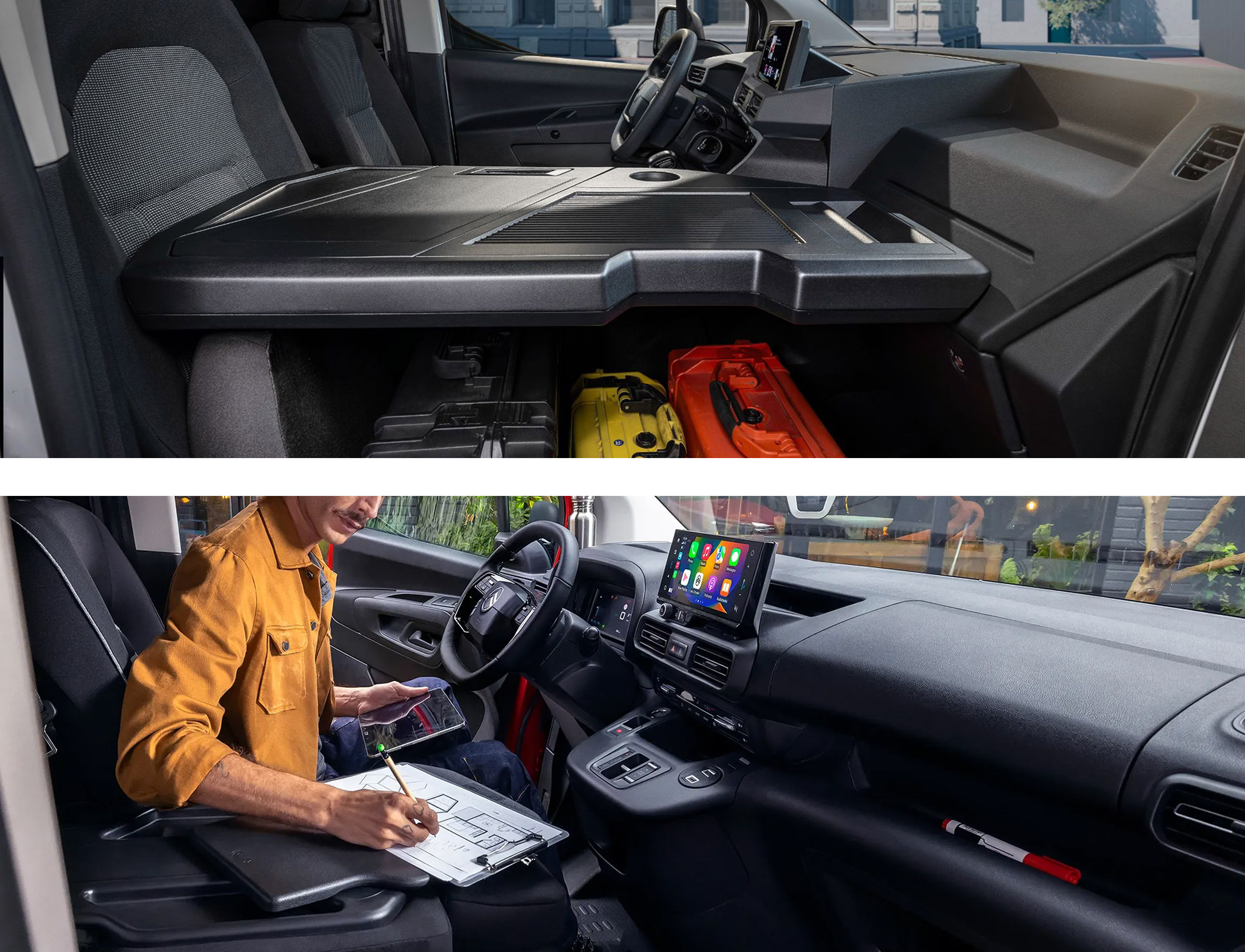
Highlights include the extra shelfs on the dash, the new drawer under the driver’s seat, and the standard FlexiSeat for the front passenger. The latter can be folded upwards, creating extra space for packages, tool boxes or other equipment and increasing the van’s total load volume by 0.5 cubic meters (17.7 cubic feet).

More: This Smart Kit Turns Your Stellantis Van Into A Camper On The Go

More importantly, the FlexiSeat can be optionally combined with the ModuTable. This costs €300 ($350) and offers a surface that can be used as an extra shelf with cupholders or as a mobile desk for your laptop. When not in use, the ModuTable can be stored behind the cabin wall in the cargo area. Still, Citroen said that professionals drive alone for about 80% of the time so it will likely be used quite often.

Finally, the FlexCargo/Moduwork configuration adds a third seat at the front which turns into a load-through when transporting longer items.

\\\\\\\\\

Citroen Berlingo Van First

The compact vans remain available in two body lengths, delivering a load volume between 3.3-4.4 cubic meters (116.5-155.4 cubic feet). The maximum payload capacity is unchanged at 1,000 kg (2,205 lbs).

Multiple Powertrain Options

As with the rest of the lineup, the entry-level vans offer the option between gasoline, diesel and fully electric powertrains, with a mild-hybrid variant set to join the lineup in 2027.

More: Stellantis Turns ICE FWD Vans Into 4x4s With Rear Electric Motor Conversion

The turbo 1.2-liter engine is good for 109 hp (81 kW / 110 PS), while the 1.5-liter turbodiesel produces 101 hp (75 kW / 102 PS) or 129 hp (96 kW / 131 PS). All ICE variants are exclusively offered with a six-speed manual gearbox, although the upcoming mild hybrid will get a dual-clutch automatic. Finally, the EV has a single electric motor generating 134 hp (100 kW / 136 PS), and a 42 kWh battery offering up to 270 km (168 miles) of WLTP range.

Pricing

\\\\

The base Opel Combo Start with the gasoline engine is priced from €22,400 ($26,000) before VAT in Germany, lowering the entry point in the compact van’s lineup by €1,000 ($1,200). The diesel starts from €23,200 ($26,900) and the electric from €28,500 ($33,100).

More: This New Fiat Might Be Stellantis’ Most Halfhearted Reboot Yet

Citroen has yet to announce pricing for the Berlingo Van First, but we expect similar figures with its Opel twin. It will be interesting to see whether the same treatment will be applied to the nearly identical Peugeot Partner, Fiat Doblo, and Toyota ProAce City.

\\\\\\\\\\\

Opel Combo Start

The Kia PV5 Chassis Can Transform Into A Tipper, Box Van, Food Truck, Or Camper

  • The Kia PV5 has a Chassis bodystyle variant next to the Cargo and Passenger.
  • The EV is available with a Long Range powertrain featuring a 71.2 kWh battery.
  • Various body conversions are scheduled to launch in the UK later this year.

Kia has recently unveiled the new PV7 van ahead of its market launch in the second half of 2027, but until then, the smaller PV5 remains its core LCV. Besides the Cargo and Passenger variants with an enclosed body, the PV5 is also available in a Chassis bodystyle, serving as a blank canvas for all kinds of conversions.

The PV5 Chassis retains the futuristic front end of its siblings, but the rear has been chopped to reveal the bare chassis, turning it into a two-seater. The 4,610 mm (181.5 in) long LCV features a custom bulkhead with a rear windshield, and a pair of taillights mounted directly on the steel beams. As with the vans, it is available with 16-inch steelies and hubcaps or alloy wheels of the same size, retaining the same with a 2,995 mm (117.9 in) wheelbase.

More: Stellantis Has A New Manual Turbodiesel Truck But It’s Not What You Think

The chassis bodystyle is the ideal base for aftermarket conversions. Examples include refrigerated vans, box vans, mobile workshops, dropside pickups, tippers, ambulances, service vans and compact campers. Kia has already exhibited a PV5 with an integrated kitchen turning it into a food truck. The automaker promised that more conversions will follow later this year in collaboration with its UK partner TGS Automotive Group.

\\\\\\\\\\

Kia

Despite the utilitarian looks, the two-seater cabin of the PV5 Cargo retains the amenities of is van siblings including a 7.5-inch digital instrument cluster, a 12.9-inch infotainment display, heated seats and steering wheel, wireless charging, and a comprehensive ADAS suite.

Long Range Thrills

One and a half year after the debut of the Kia PV5 lineup in production form, Kia has launched the PV5 Chassis in the UK, exclusively available in the Long-Range configurator. This is fitted a a front-mounted electric motor generating 161 hp (120 kW / 163 PS) and a large 71.2 kWh battery pack, offering an estimated WLTP range of 259 miles (416 km) between charges.

More: Crown Vics Chased Suspects On The Ground. Kia’s Police Van Chases Them From The Sky

Other markets get access to the Kia PV5 Chassis Mid-Range with the smaller 51.5 kWh battery and a less powerful electric motor producing 120 hp (89 kW / 122 PS). Both Long-Range and Mid-Range models have a maximum payload of 1,005 kg (2,216 pounds), closely matching most diesel-powered midsize pickups.

\\\\

Kia

Mercedes-AMG’s Super SUV Shows More Skin Ahead Of October Reveal

  • The electric Mercedes-AMG SUV was spotted with less camouflage.
  • New model will share tech with the AMG GT 4-Door Coupe.
  • Tri-motor setup could pack 1,153 hp, emitting fake V8 sounds.

Mercedes-AMG is almost ready to expand its lineup with its first dedicated electric SUV. Shortly after the automaker shared official teasers, our spy photographers caught a prototype wearing significantly less camouflage.

The SUV, codenamed X591, is the high-riding sibling of the Mercedes-AMG GT 4-Door Coupe. Even under the remaining camo, the aggressive styling is evident, with an aerodynamic roofline and muscular shoulders making it look like a hybrid between a coupe-SUV and sporty estate.

More: The Mercedes-AMG CLE 646 Will Demolish An M4, But You Can’t Buy One

The latest prototype gives us an unobstructed view of its greenhouse. The AMG will also stand out thanks to its unique lighting signature with Y-shaped LEDs up front, an oversized front grille, and round taillights. The latter are probably becoming a trademark AMG choice for its latest standalone models.

Another cool detail is the black alloy wheels featuring five double spokes in front of massive brake discs with yellow brake calipers. Inside, we expect a screen-heavy setup similar to the coupe, paired with more space for passengers and their luggage.

\\\\\\\\\\\\\

Baldauf

The fully electric model rides on the dedicated AMG.EA platform using an 800-volt system. It will use the advanced Yasa-developed axial-flux electric motors and F1-inspired battery technology with direct liquid cell cooling.

More: 1,153 HP Not Enough? Mercedes-AMG Is Working On An Even Hotter GT 4-Door

Judging from the AMG 4-Door Coupe, the flagship tri-motor setup could produce up to 1,153 hp (860 kW / 1,169 PS) and 2,000 Nm (1,475 lb-ft) of torque, allowing a 0-100 km/h (62 mph) in around 2.5 seconds. AMG could also offer a dual-motor variant with 805 hp (600 kW / 816 PS) and 1,800 Nm (1,328 lb-ft) of torque.

Despite being an EV, the new model will sound and feel like an ICE-powered AMG thanks to the AMGFORCE S+ system. This includes fake but highly detailed V8 sounds emitted from internal and external speakers, and simulated gearshifts.

\\\\\\\\\\\\\

Baldauf

The high-riding model is expected to inherit the 106 kWh battery from the 4-Door Coupe, supporting ultra-fast DC charging speeds of up to 600 kW. This will allow it to replenish around 460 km (286 miles) of range in 10 minutes of charging.

More: AMG GT Black Series Looks Like It’s Smashed The Ring Record Before It’s Even Hit The Track

Finally, it will come equipped with the latest chassis tech, including an AMG Active Ride Control air suspension with semi-active roll stabilization, and a rear-axle steering system, which is visible on the spy shots.

The official debut of the new AMG model is scheduled for October 17. The event will take place at the Mercedes-Benz Museum in Stuttgart, coinciding with the 140th anniversary of Karl Benz patenting the first automobile.

\\\\\\\

Mercedes-AMG

Alfa Romeo’s Entire Lineup Gains A Racing Boat-Inspired Treatment

  • Alfa Romeo launches new Edizione Luna Rossa special editions.
  • They include the Junior, Tonale, Giulia, and Stelvio in Europe.
  • The models gain yacht-inspired colors and special touches inside.

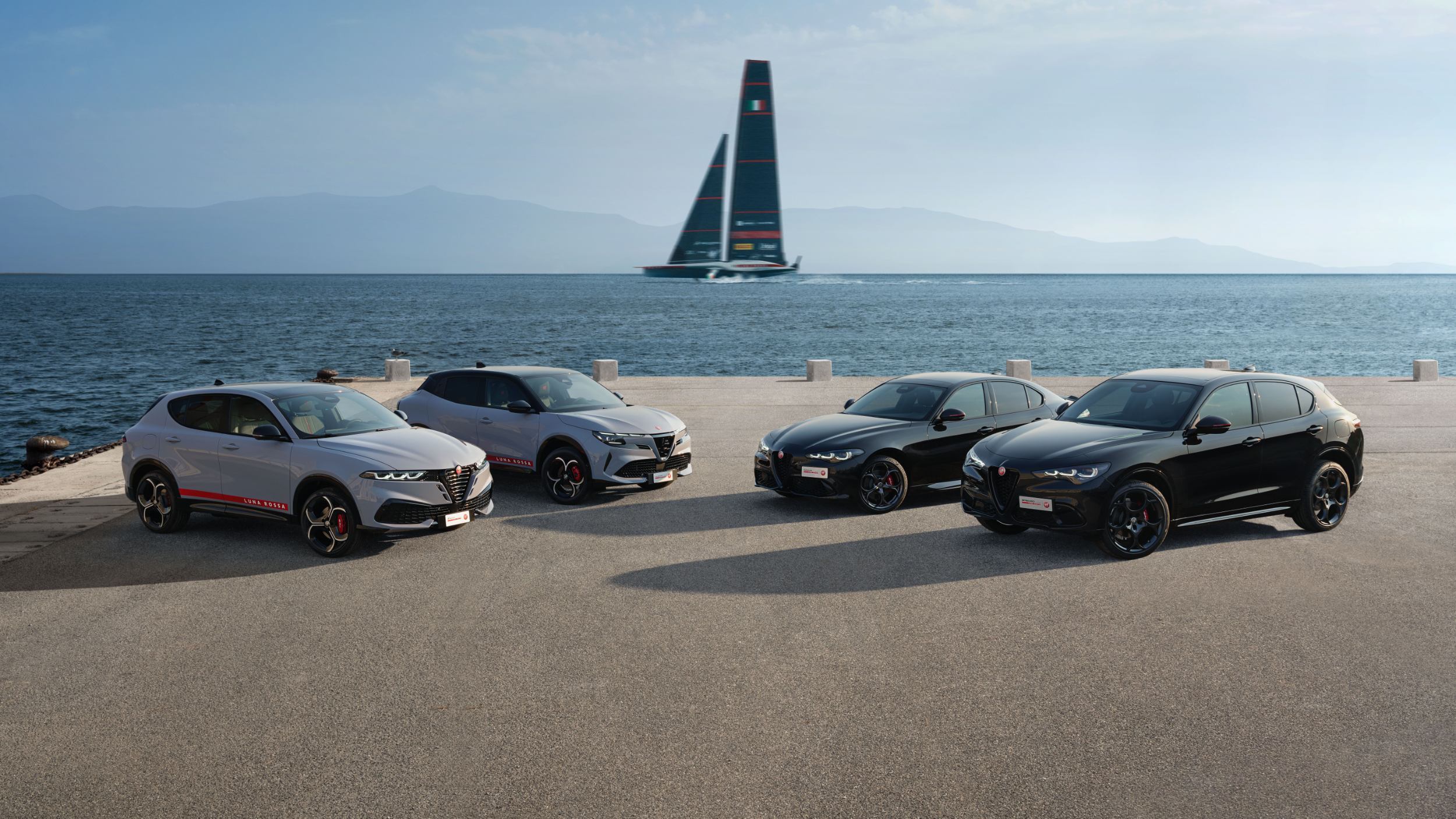
Alfa Romeo is gearing up for the debut of a mysterious concept at the Paris Motor Show next month, but before that happens they have a new special series in store. The Biscione brand has introduced Edizione Luna Rossa editions for its entire lineup, including the Junior, Tonale, Giulia and Stelvio.

Luna Rossa is an Italian yacht-racing team competing at the America’s Cup. Its collaboration with Alfa Romeo was inaugurated in June 2025, followed by the debut of the ultra-exclusive Giulia Quadrifoglio Luna Rossa in January 2026. While the first model was only produced in 10 units with custom colors and a unique aero package, the Edizione Luna Rossa models are available for everyone, serving as the flagships of their respective lineups.

More: Take A Ride With Me To Alfa’s Homeland In Its Smallest SUV, Sins And All

The special editions feature boat-inspired colors, custom touches inside-out, and a dedicated Alfa Romeo emblem. However, not every model is the same, with the Junior and the Tonale getting a different treatment than the stealthier and more exclusive Giulia and Stelvio.

\\\\\\\\\\\\\\\\\\\

Alfa Romeo Junior Edizione Luna Rossa

Starting with the subcompact and compact SUVs, the Junior and the Tonale Edizione Luna Rossa feature a gray shade with Gloss Black accents and red stripes on the profile, although buyers can also choose black or white for the main color of the body.

Review: The Junior Is Everything Alfa Romeo Needed And Nothing Alfisti Wanted

The wheels measure 18 inches on the Junior and 20 inches on the Tonale, both featuring a gloss black diamond cut finish and three-spoke designs. Besides the larger wheels, the Tonale also gets Brembo brakes with red brake calipers.

\\\\\\\\\\\\\\\\\\\

Alfa Romeo Tonale Edizione Luna Rossa

Inside, we find black and gray upholstery, with 3D knit technology on the premium fabric, red stripes featuring Luna Rossa lettering, and red Alfa Romeo emblems. The SUVs also feature aluminum sports pedals and kick plate, new graphics for their digital cockpits, and ambient lighting.

More: Alfa Teases The Tonale’s Successor, And Maybe A Dodge Called Goes Like Hell

Equipment is pretty generous, with the Edizione Luna Rossa being the highest-spec trims. In terms of powertrains, the Junior offers the option between hybrid and fully electric setups, while the Tonale is available with hybrid and PHEV options.

\\\\\\\\\\\\\\\\\\\\\\\

Alfa Romeo Stelvio Edizione Luna Rossa

Moving on to the midsize offerings, the aging Giulia and Stelvio take a different route, focusing more on exclusivity and sportiness. The mechanically-related models are pictured with a blacked-out configuration, but the color palette of the Edizione Luna Rossa editions also include white and Etna Red shades.

More: Alfa Romeo Swears The Next Giulia And Stelvio Aren’t Dead, They’re Just ‘Under Study’

Independently of the color, the aging duo benefits from extensive use of carbon fiber on the exterior and the interior, red Alfa Romeo emblems, and the Luna Rossa logo on the mirror caps. The Giulia features Quadrifoglio-inspired side skirts and rear spoiler combined with Gloss Black 19-inch alloy wheels, with the Stelvio riding on 21-inch wheels.

\\\\\\\\\\\\\\\\\\\\

Alfa Romeo Giulia Edizione Luna Rossa

The monochrome interior features a generous amount of carbon fiber on the dashboard, center console, and door cards, alongside leather and recycled Econyl fabric upholstery. Red stripes on the steering wheel and seatbacks break the monotony of black, alongside the matching Alfa Romeo emblems.

Review: Alfa’s 2026 Giulia Quadrifoglio Is Over A Decade Old And Still Out-Handles A New M3

The Edizione Luna Rossa Giulia and Stelvio come standard with a Harman Kardon Hi-Fi system and the electronically controlled suspension. Finally, the electric sunroof is standard on the sedan and optional on the SUV.

As with the regular Giorgio-based models, the special editions are available with the 2.2-liter turbodiesel in two power outputs, while UK buyers also have access to the 2.0-liter gasoline engine that has been phased out in Europe. In other words, only the V6-powered Quadrifoglios escape the Luna Rossa treatment.

The Junior, Tonale, Giulia, and Stelvio Edizione Luna Rossa will gradually go on sale on European markets, positioned at the top of the lineup of each non-Quadrifoglio model. Pricing will be announced closer to the market launch.

More: Alfa Romeo Charged $22,000 Extra For Gold Trim, And Dubai Said Yes

According to Stellantis, the partnership between the two Italian brands goes deeper than colors, materials, and special emblems. More specifically, Alfa Romeo “has provided its expertise in simulation, dynamics and virtual analysis to Luna Rossa, while also collaborating on the development and fine-tuning of the control software for the systems that manage sail movement.”

 Alfa Romeo’s Entire Lineup Gains A Racing Boat-Inspired Treatment

Alfa Romeo

Renault 8 Gordini Is Back As A Bold Electric Coupe With Rally Heritage

  • Renault has unveiled a fully electric reboot of the 8 Gordini.
  • The concept features café racer styling and a 270 hp motor.
  • It is not destined for production and will remain a one-off.

Renault is clearly not done reviving past icons with the R4 and R5 production models. The automaker has just launched a new concept car, inspired by the Renault 8 Gordini from the ’60s. The modern reincarnation of the classic rally sedan is a two-seater coupe with a fully electric powertrain and a retro-flavored design. Unfortunately, it is not destined for production, although elements from its design might influence future models.

The original Renault 8 Gordini was launched in 1964 as the high-performance version of the rear-engined rear-wheel-drive family sedan designed for winding mountain passes. The “la Gorde” featured an upgraded engine with nearly double the horsepower of the donor vehicle, a lowered suspension, beefier brakes, four or six headlights, and a blue paint with white racing stripes.

More: Updated Renault 5 Borrows The Clio Williams Look But Gains Miles, Not Speed

The new Renault 8 Gordini Concept evokes the Café racer spirit of the original, looking like a reverse restomod with a low and wide stance. The coupe measures 4.12 m (162 in) long, 1.88 m (74 in) wide, and 1.27 m (50 in) tall, riding on 19-inch and 20-inch alloy wheels.

\\\\\\

Six round LED headlights are mounted on a grille-less V-shaped nose, with flush taillights disappearing into the bodywork when not in use. The coupe also features sporty bumper intakes with a body-colored splitter, boxy and wide fenders, flying buttresses on the C-pillars, a roof spoiler, a rear ventilation grille, and a large diffuser. Of course, it wears the iconic blue livery with white stripes running along the carbon fiber body.

More: Renault Rafale Hypnotic Is The Brand’s Most Expensive SUV To Date

The interior is a celebration of minimalism and a nod to the analog era. Instead of oversized screens, Renault added six round dials with thick bezels, mounted on a brushed aluminum strip on the dashboard. We also find tasteful Alcantara inserts, an aluminum center console with physical switches, and a pair of bucket seats with black and blue corduroy upholstery.

The French automaker revealed that its designers were so enthusiastic about the brief, they submitted over 300 sketches. Alexandre Malval, Renault’s Vice President of Design, said that the goal was “to spark emotion by drawing on both our heritage and modern times, bringing together the icons of yesterday and the future.”

\\\

Renault didn’t share information about the underpinnings of the concept, other than revealing it is powered by a single electric motor which is good for 266 hp (198 kW / 270 PS) sending power to the rear wheels.

More: Renault’s $185,000 R5 Turbo Exposes What’s Really Wrong With EVs

While we would like to believe otherwise, Renault made it clear that the R8 Gordini concept is a one-off and it’s not going to evolve into a production model. Instead, it serves as a follow up to homage projects like the R17 electric restomod x Ora Ïto concept car, and the Renault 5 Diamant art car.

The new concept will make its first public outing at the Renault Carwalk on September 24, before being exhibited at the Paris Motor Show next month. Eventually, it will end up at the new Renault Collections museum in Flins which is scheduled to open its doors for the public in around 15 months.

\\\\

Renault

Stellantis Is Working On A New Wagon, But It’s Not Coming To America

  • A new Opel STX Concept will debut at the Paris Motor Show.
  • It shows the brand’s vision for a future aero-efficient estate.
  • It might evolve into the next Opel Astra, arriving before 2030.

Stellantis has shared the first teaser of the Opel Sports Tourer eXperimental (STX) Concept ahead of its unveiling at the Paris Motor Show on October 12. The concept is believed to preview a future production wagon, that could replace the Opel Astra before the end of the decade.

According to the automaker, the Opel STX Concept represents “its vision for the future of estate cars”. Opel has been offering family-friendly wagons since the Olympia Rekord Caravan from 1953, while the Sports Tourer moniker is used for the estate variant of the current Astra.

More: Opel Astra GSE Line Brings OPC-Like Power, But Don’t Call It A Hot Hatch

Florian Huettl, Opel CEO, said: “As the name indicates, the Opel STX Concept will give our vision of the future of an aero-efficient estate – a body style that Opel played a pioneering role in establishing in Europe. It shows our next generation design language and feature elements that you will see in future production models.”

The announcement is accompanied by a single teaser that doesn’t reveal much about the design. What we can see is STX concept lettering on what appears to be a portion of the front bumper, featuring a carbon-style finish against a blue or silver bodywork. The company didn’t mention anything about the concept’s powertrain type, but chances are it will feature some sort of electrification.

 Stellantis Is Working On A New Wagon, But It’s Not Coming To America
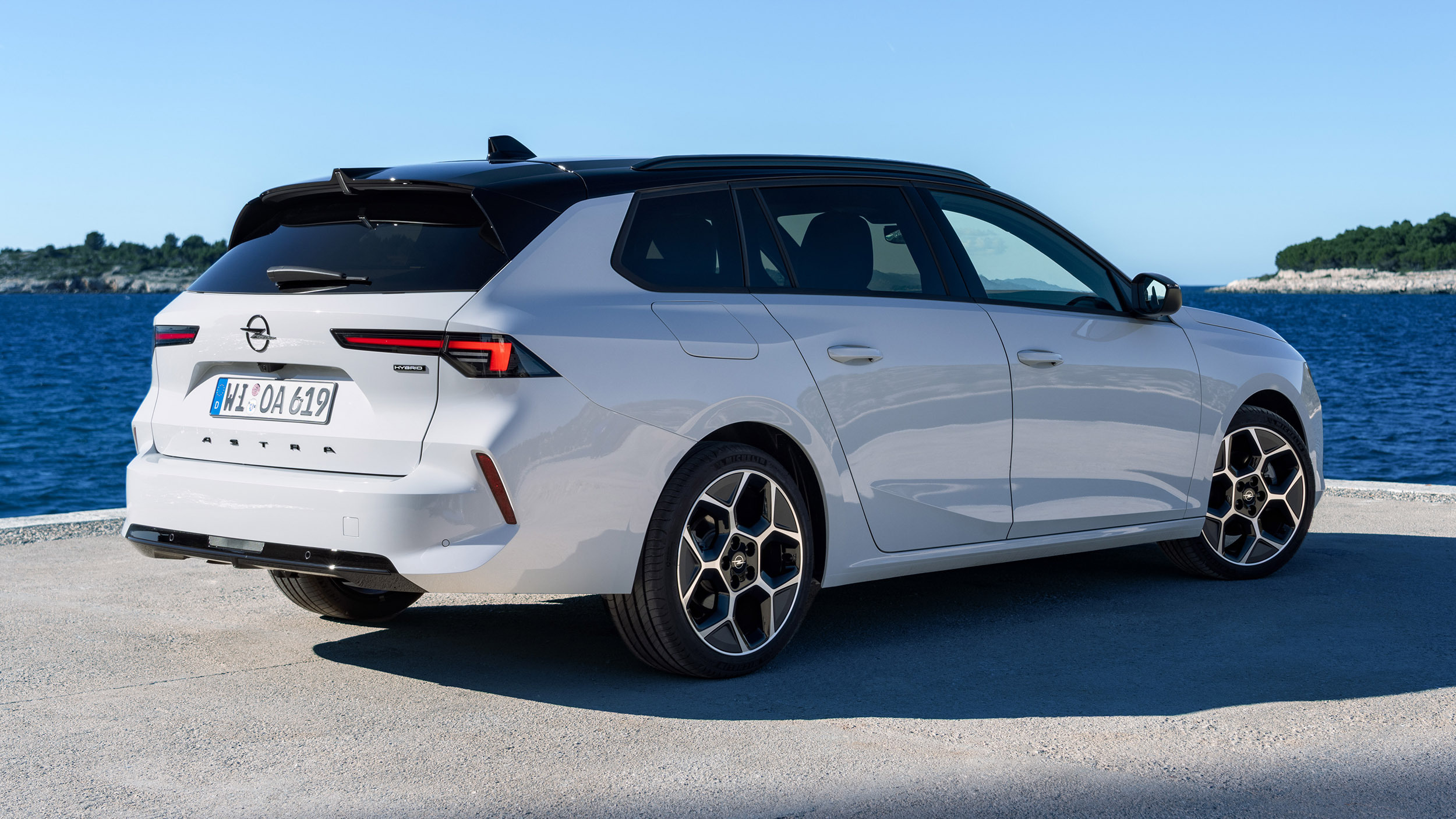
The current Opel Astra Sports Tourer.

Stellantis has confirmed that the next generation of the Astra will arrive before 2030. The model will ride on the new STLA One architecture, offering the option between fully electric and hybrid powertrains.

More: This Stellantis Brand Thinks A Wagon Might Make More Sense Than A Hatchback

Furthermore, the Opel CEO has revealed that an estate variant of the next Astra has been locked in, while hinting that the hatchback’s shape may evolve into a non-traditional bodystyle. Reading between the lines, the Astra could evolve into a sporty compact wagon and the upcoming concept might give us a good idea of what to expect.

The official debut of the Opel STX Concept is scheduled for October 12 at the Mondial de l’Automobile in Paris, although the automaker might share more teasers and additional information as we move closer to that date. The wagon will be joined by the GSE 27FE single seater for the upcoming Formula E championship, the fully electric Corsa GSE hot hatch, and the new Astra GSE Line trim.

 Stellantis Is Working On A New Wagon, But It’s Not Coming To America
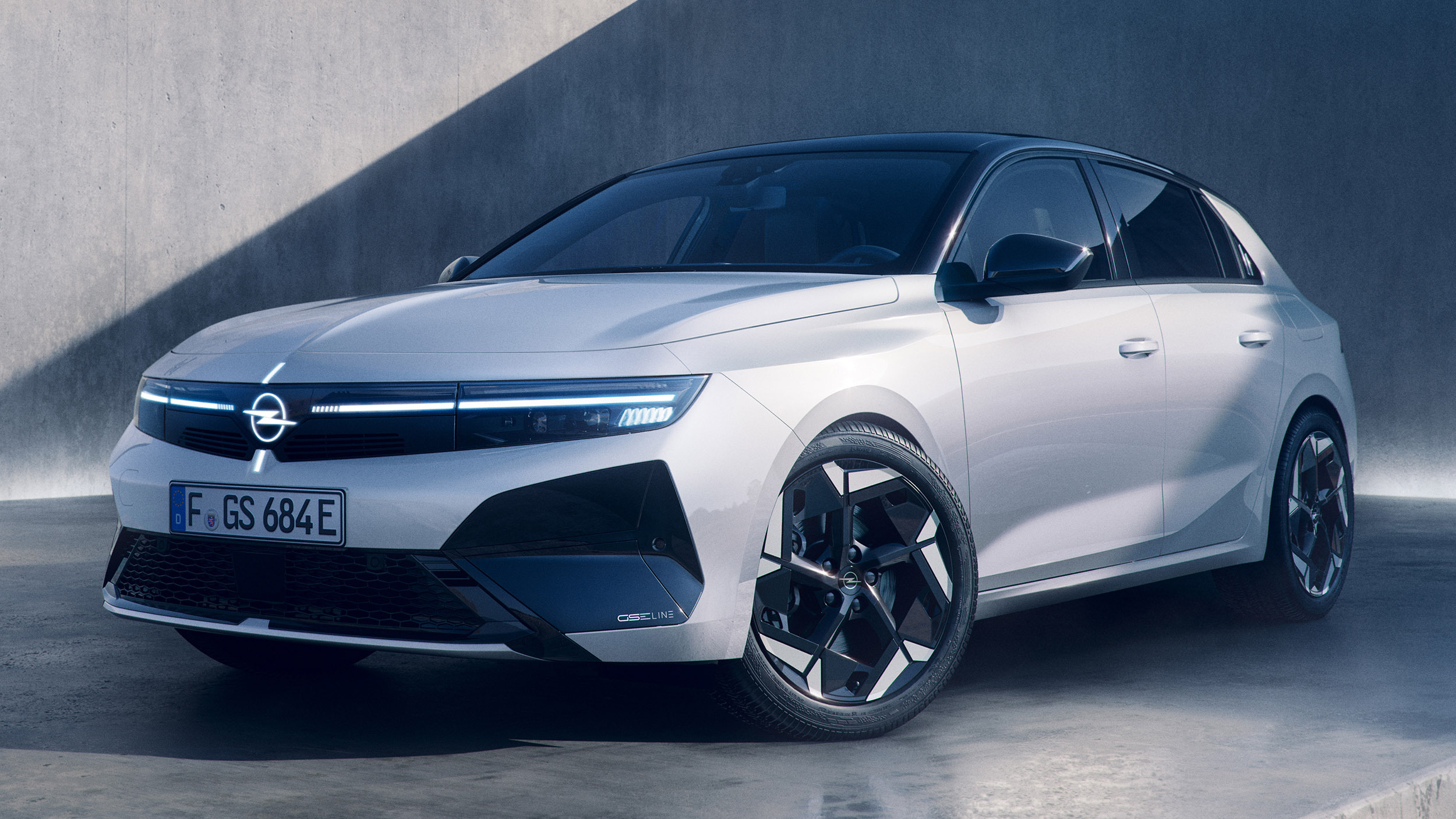
Opel Astra GSE Line

Nissan’s New Entry-Level EV Pixelates The Renault Twingo

  • Nissan revives the Pixo badge for an affordable urban EV.
  • It is a twin to the Renault Twingo with Nissan styling cues.
  • It makes 81 hp and offers a 161-mile (259 km) WLTP range.

Nissan is dusting off an old nameplate for a new urban EV. The Nissan Pixo is a twin to the Renault Twingo E-Tech and a sibling to the Dacia Spring EV, featuring pixelated styling and modern technology. The model will be sold in Europe and the UK, serving as an entry point in the lineup positioned under the R5-based Nissan Micra.

Measuring 3,796 mm (149.4 in) long, the Nissan Pixo is only 7 mm (0.3 in) longer than the Renault Twingo, while sharing the 2,492 mm (98.1 in) wheelbase. The greenhouse, roof structure, and most of the profile are identical to the Renault, with Nissan designers focusing their efforts on the front and rear ends.

More: Renault Shipped 100 Frog-Eyed Twingos To The UK Purely So You Can Stare At Them

The Pixo swaps the curves and frog-style headlights of the Twingo for a boxier grille-less nose. The squared-off headlights with diagonal LED graphics are inspired by pixels, while the front bumper adopts clean surfacing with plastic cladding around the central intake.

\\\\\\\\\\\\\\\\\\\\\\\\\\\\\\\\\\\\\\\\\

Setting aside the front fenders and the futuristic alloy wheels, the profile doesn’t hide its Renault roots. However the rear end gains redesigned taillights and a simpler tailgate, which are slightly reminiscent of the Nissan Micra K12 from the ’00s. These are joined by Nissan-specific cladding on the rear bumper and Pixo lettering on the plastic trim around the rear windshield. Finally, the color palette gains the fresh Wonder Purple and Gear Blue shades.

More: New Dacia Spring EV Flees From China And Pays The Price

Inside, the dashboard, the steering wheel, and the digital cockpit with Gemini integration are derived from the Renault twin. The same applies to the reclining and foldable rear seats adding practicality points to the urban EV. Nissan brags about the 356 lt (12.6 cubic feet) cargo capacity including the 50 lt (1.8 cubic feet) compartment for charging cables, and the extra 18 lt (0.6 cubic feet) of in-cabin storage. Furthermore there are 23 Easter eggs for owners to discover.

\\\\\\\\\\\\\\\\\\\\\\\\\\\\\\\\\\\\\\\\\\\\\\\

Under the skin, the Pixo is identical to the Renault Twingo and the Dacia Spring. A front-mounted electric motor is good for 81 hp (60 kW / 82 PS), while a 27.5 kWh Lithium Iron Phosphate (LFP) battery delivers a WLTP range of 161 miles (259 km). The EV is compatible with 50 kW DC charging, replenishing the battery from 15-80% in 28 minutes.

More: The Nissan Micra is Back And It’s Unrecognizable

The Nissan Pixo will go on sale in Europe and the UK, with production taking place at the Novo Mesto factory in Slovenia alongside the closely-related Renault Twingo and Dacia Spring. Pricing and pre-order information will be announced from December 2026 onwards. However, judging from the Renault, the entry-level EV from Nissan will most likely start from under €20,000 ($22,800).

Hardcore Nissan fans might remember that the original Pixo which was sold in Europe between 2009 and 2013, was also a rebadged urban hatchback. However, this one was based on the Suzuki Alto and came fitted with a 1.0-liter gasoline engine.

\\\\\\\\\\\

Nissan

Lapo Elkann And Giugiaro Turned The Smallest Fiat Into A Speedster

  • Fabrizio Giugiaro and Lapo Elkann unveiled two custom Fiat Topolinos.
  • The Top. L is a speedster, and the Top. J has two extra rearward-facing seats.
  • These are Lapo Elkann’s first automotive projects since he left Garage Italia.

The Fiat Topolino is the smallest and cheapest offering from the Italian brand, designed as a twin to the Citroen Ami. The L6e light quadricycle classification comes with weight and performance limitations, but it didn’t stop seasoned automotive designer Fabrizio Giugiaro and Italian entrepreneur Lapo Elkann from using it as a base for their latest project.

The two men are close friends and wanted to create something together for a long time. Instead of building an exotic supercar or an expensive restomod, their first project was to “take one of the smallest and most accessible cars on the road and turn it into something surprising – something capable of delivering emotion and fun.”

More: Stellantis’ Cheapest New Vehicle In America Is A $14K Fiat You Can’t Take On The Highway

The result is a pair of Topolino-based concepts created by GFG Style, the design studio founded by Giorgetto and Fabrizio Giugiaro after leaving Italdesign. The Top. L (Love) is a roofless speedster, and the Top. J (Joy) is a four-seater with a fabric top.

A Tiny Speedster With A Big Attitude

\\\\

Top. L by GFG Style

The Top. L swaps the roof and greenhouse of the Topolino for a short wraparound windshield. Instead of doors, the concept is fitted with Wicker Ropes, which are available as an option on the roadgoing Topolino Dolcevita.

More: We Imagined Stellantis’ Tiny EV As Jeep, Dodge, And Chrysler Oddballs

Other highlights include redesigned LED headlights reminiscent of the Fiat 500, vintage-style multi-spoke chrome wheels, and a Matte Aquamarine exterior finish combined with matching leather and Alcantara upholstery. According to GFG Style, the attitude of the Top. L was inspired by James Dean’s iconic Porsche 550 Spyder nicknamed “Little Bastard”.

A Four-Seater Version With An Asterisk

\\\

Top. J by GFG Style

Next is the Top. J, designed to accommodate four people in an unconventional configuration. The cargo area has been retrofitted with a rearward-facing bench, leaving the legs of the rear passengers hanging over the rear bumper. The additional seats mean that the Top. J doesn’t comply with the L6e regulations, and could only be registered in the higher L7e segment.

More: Citroen’s Funky Buggy Is Back With Gold Steelies And Tube Doors

The model features a cloth canopy for sun protection and tube doors for an open-air driving experience, skipping the windows entirely.

The blue and green livery is inspired by the Ferrari 166 MM driven by Avvocato Gianni Agnelli in the ’50s, while matching the preferences of Umberto Agnelli and Lapo Elkann’s signature colors from his time at Garage Italia. The same theme continues inside the cabin, with blue and green shades for the terry cloth and leather upholstery.

No Changes Under The Skin

 Lapo Elkann And Giugiaro Turned The Smallest Fiat Into A Speedster
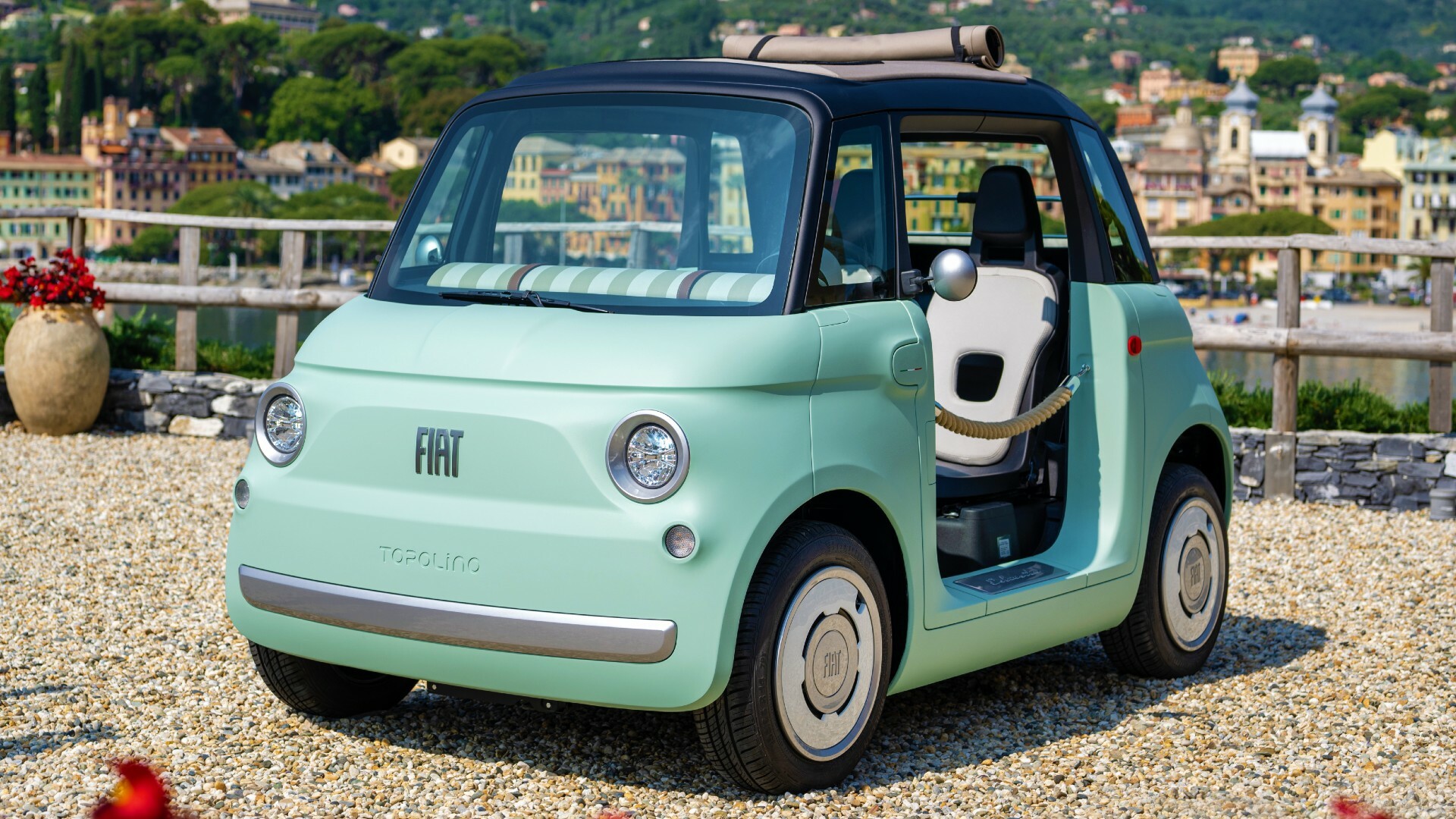
Fiat Topolino

The concepts retain the underpinnings of the Topolino. The factory setup includes a single electric motor producing 8 hp (6 kW) and a 5.5 kWh battery for a claimed 47 miles (75 km) of range. While the little Fiat won’t set any speed records, Lapo and Fabrizio claim that “passion for cars has nothing to do with horsepower.”

More: Stellantis Thinks Your 16-Year-Old Wants An 8-HP Abarth

Lapo Elkann said: “Fabrizio and I had wanted to create something together for a long time. We share a friendship, a passion for cars, design and motion, and above all a lateral way of thinking. We had fun transforming the Topolino, playing with colors, materials and volumes.”

The company didn’t announce any production plans, but Fabrizio Giugiaro and Lapo Elkann confirmed their intention to continue their collaboration with more projects in the future.

Not The First Special Topolinos

 Lapo Elkann And Giugiaro Turned The Smallest Fiat Into A Speedster
Fiat Topolino Sport

GFG Style is not the first company to redesign the EV. Back in 2024, Italian firms Castagna Milano and Carrozzeria Garavini took on the same challenge, resulting in a pair of coachbuilt specials available for sale in limited numbers as pricey conversions.

More: Fiat Topolino Gets A Cute Makeover For A Not-So-Cute $50,000

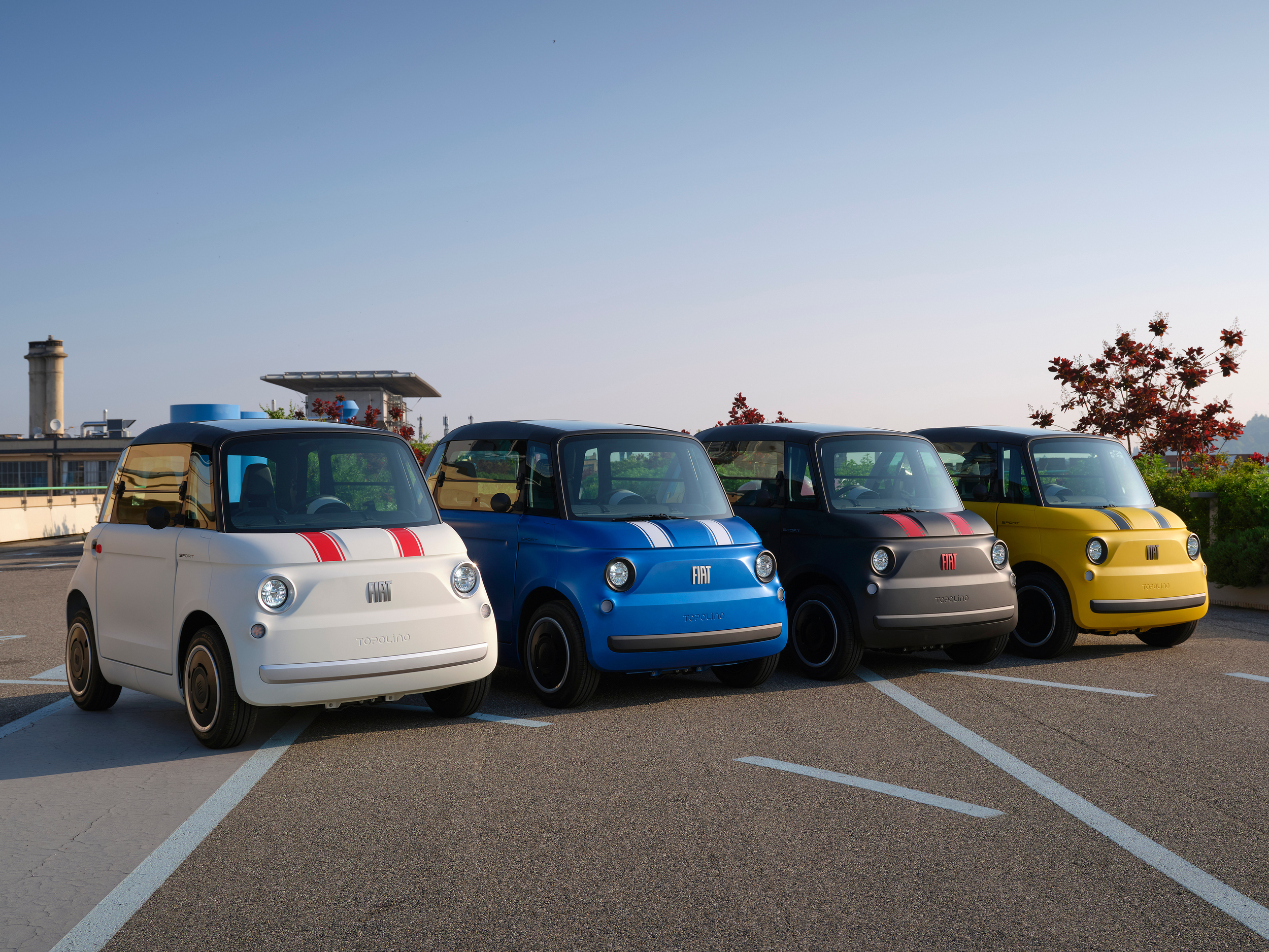
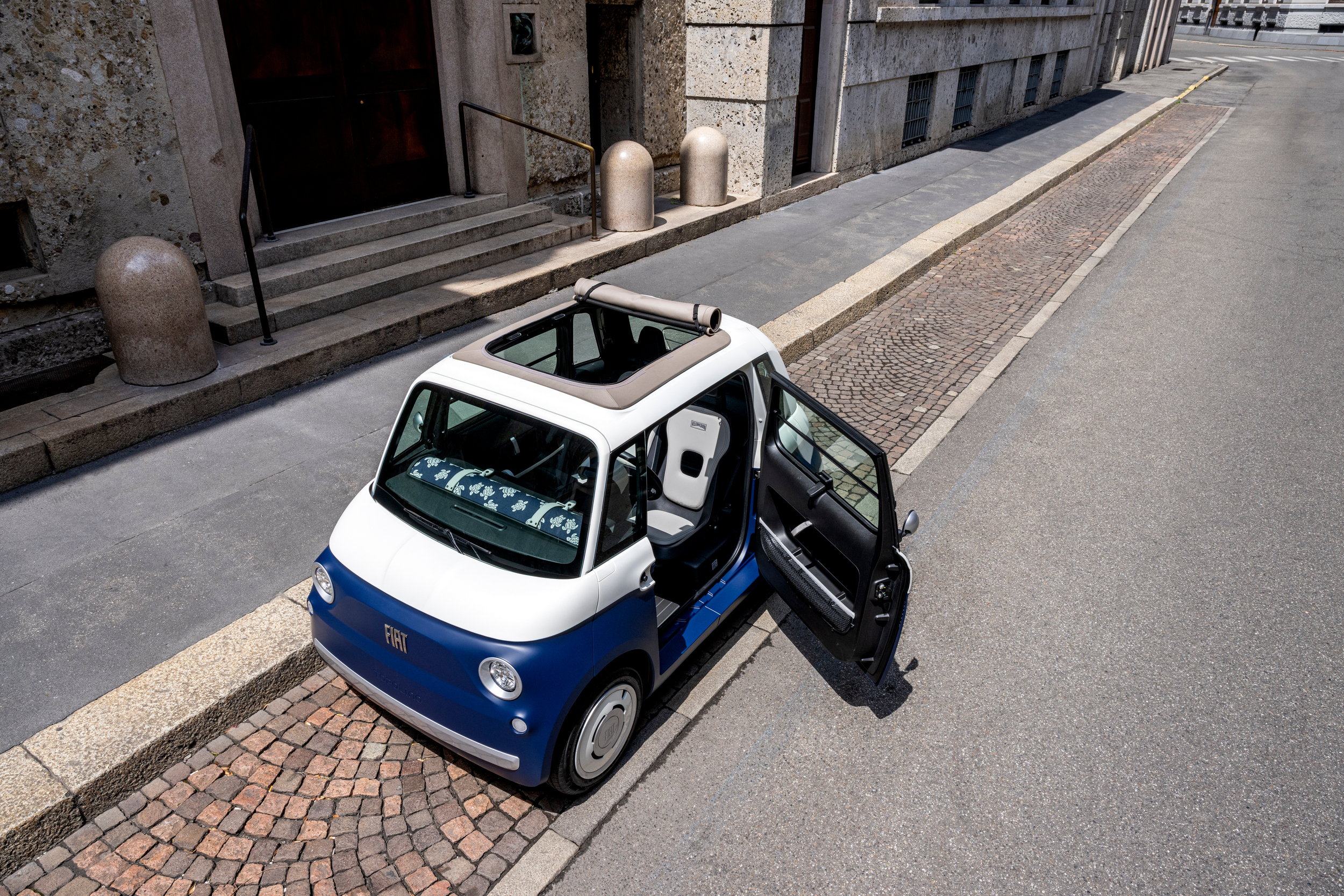
Fiat has also capitalized on customization options for the Topolino by unveiling the Sport and Vilebrequin variants alongside the mechanically-related Multiplina four-seater concept earlier this year. Furthermore, there are rumors about a potential Abarth-branded version of the EV, although any upgrades will be focused on styling.

 Lapo Elkann And Giugiaro Turned The Smallest Fiat Into A Speedster
Fiat Topolino Vilebrequin

Citroen Makes Budget Models More Expensive With Stylish New Outdoor Edition

  • Citroen launches Outdoor variants for the C3, C3 Aircross, and Ami.
  • The flagship trims gain rugged looks and improved equipment.
  • Dutch pricing starts at €30,950 ($35,500) for the C3 Outdoor.

Citroen is one of Stellantis’ most affordable brands alongside Fiat and Opel. However, as proven by Dacia, there is plenty of demand for flagship trims of budget models in Europe. The French automaker is now introducing a new Outdoor edition for the C3, C3 Aircross, and Ami, featuring more rugged styling and a longer list of standard equipment.

Before you get excited about the off-road capability of the hatchback and SUV models, bear in mind that the Outdoor treatment is more of a styling package. Right off the bat, Citroen explains that their understanding of adventure is “not about extreme conditions or long journeys, but about the ability to make every drive more pleasant, more fun, and extra inspiring.”

Review: Stellantis Gave Citroen C3 And Fiat Grande Panda The Same Bones, But Not The Same Soul

The Outdoor editions of the C3 and C3 Aircross are positioned above the Max trim in the lineup and stand out thanks to several styling updates. The highlight is the redesigned bumpers, inspired by the earlier Citroen C3 Aircross Marine Nationale Concept.

\\\\\\\\\\\\\\\\\\\\\\\\\\\\\\\\\\\\\\\\\\\\\\\\\

Citroen C3 Aircross Outdoor

The front bumper adopts boxier intakes, Infra Red accents, and a pronounced skid plate finished in gray. The profile gains gray decals on the doors with an Outdoor logo featuring the Migoo comic book mascot. More importantly, the models ride on a new set of 17-inch alloy wheels with boxy spokes and an Infra Red Citroen logo in the middle. Specifically for the C3 Aircross, Citroen added a set of chunkier roof rails.

More: Opel’s Cheapest New Car Is Now A Family SUV With Three Pedals And Steelies

The Sequoia Green shade is new, but buyers can also order the Outdoor specials in Perla Nera Black, Mercury Gray, Polar White, or Bright Blue. At the back, changes are limited to the reshaped silver garnish on the lower section of the rear bumper.

Inside, we find an exclusive graphic pattern on the Advanced Comfort seats with the Migoo mascot laser-etched on the backrests and an Outdoor badge on the dashboard. Furthermore, Infra Red was chosen for the stitching, the seatbelts, and the Citroen emblem on the steering wheel. Naturally, the Outdoor models come standard with a generous equipment list.

\\\\\\\\\\\\\\\\\\\\\\\\\\\\\\\\\\\\\\\\\\\\\\

Citroen C3 Outdoor

As with the rest of the Citroen C3 and C3 Aircross lineup, the new variants are available with gasoline, mild-hybrid, and fully electric powertrain options and front-wheel drive. Note that the French models share their Smart Car chassis and engines with the Opel Frontera, Fiat Grande Panda, the Fiat Grizzly and an upcoming model from Chrysler.

More: Fiat’s New Grizzly SUV Is Hunting The Dacia Bigster, And It Didn’t Come Alone

The new Outdoor treatment has also been applied to Citroen’s heavy quadricycle. The highlight of the Ami Outdoor is the roll-down fabric sunroof, previously limited to the Ami Buggy. The exterior is finished in Khaki Green with special decals and Infra Red accents. Furthermore, the EV gains a rally-inspired roof spoiler and a set of white steelies.

\\\\\\\\\\\\\\\\\\\\\\\\\\\\\\\\\\\

Citroen Ami Outdoor

Inside, the two-seater cabin has a unique upholstery, the mascot on the backrests, Infra Red seatbelts, and a bunch of optional accessories fitted as standard. Interior amenities include a dashboard storage compartment, bag hook, door storage pockets, floor mats, a central storage net, and a smartphone holder.

The Outdoor special editions will be available to order in the Netherlands starting on October 1, ahead of a wider rollout across European markets. Dutch pricing starts at €30,950 ($35,500) for the C3 Outdoor and at €35,250 ($40,400) for the C3 Aircross Outdoor, positioning them at the very top of their respective lineups.

\\\\\\\\\

Citroen Outdoor Lineup

Opel Astra GSE Line Brings OPC-Like Power, But Don’t Call It A Hot Hatch

  • New Opel Astra GSE Line produces up to 276 hp in fully electric form.
  • It replaces the GS trim, available across the entire powertrain lineup.
  • Despite the OPC-matching power, it doesn’t promise hot hatch thrills.

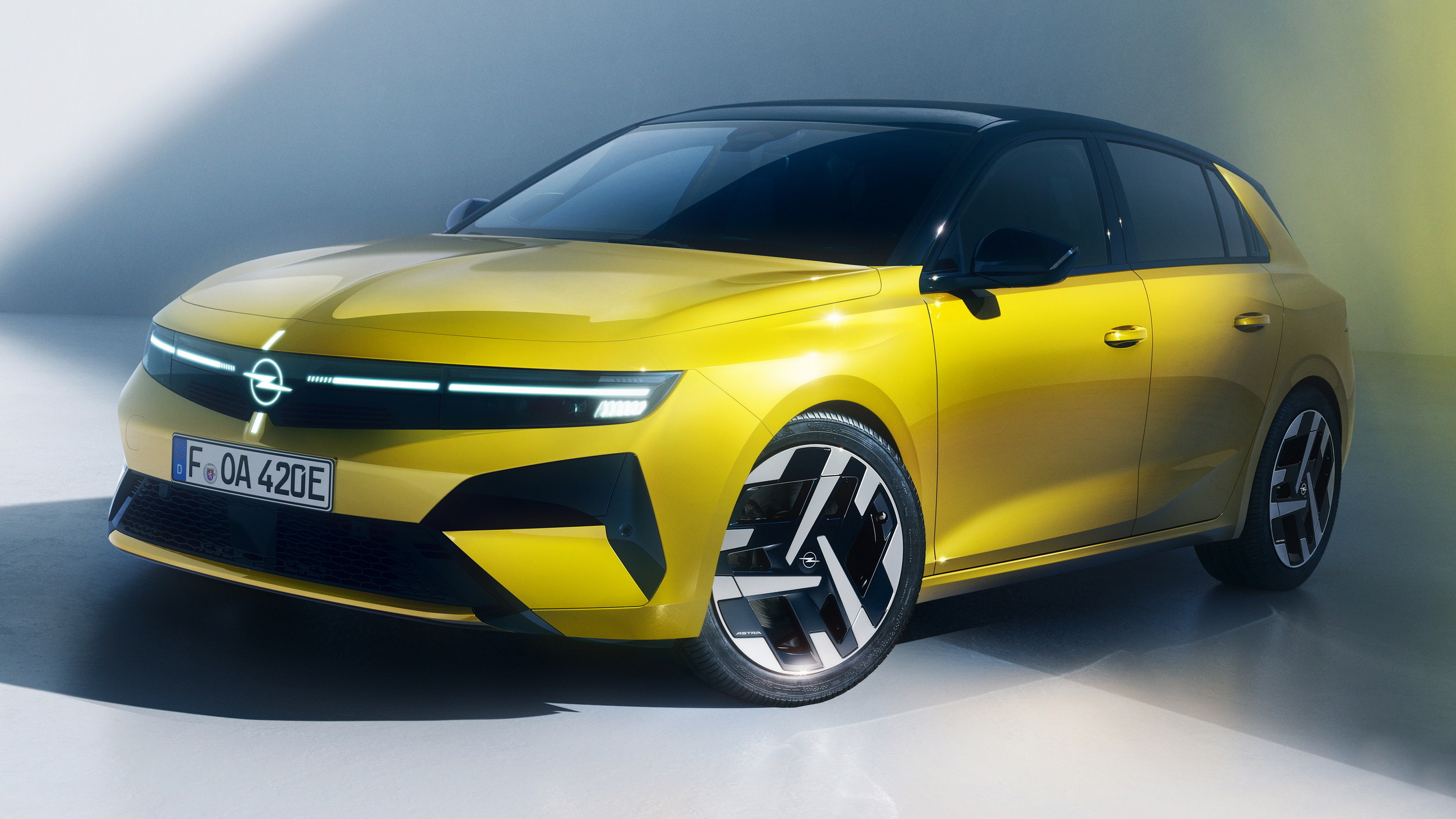
The Opel Astra is one of the most popular compact cars in Europe, but the latest generation never got a proper hot hatch variant to rival the VW Golf GTI. While this is still the case, Stellantis has dialed up the power with a new Astra GSE Line trim, matching the power output of long-gone Astra OPC models in its most potent fully electric form.

Opel used to offer a GSe variant of the Astra with 222 hp (165 kW / 225 PS) from a plug-in hybrid powertrain, while featuring sportier looks and a sharper chassis setup. The new GSE Line is a replacement for the sporty GS trim, and will be available with every available powertrain option in the Astra lineup, including gasoline, mild-hybrid, plug-in hybrid and battery electric models.

More: Opel’s New Corsa GSE Beats Peugeot’s GTI Using Peugeot’s Own Powertrain

The big news is that the flagship Opel Astra GSE Line will inherit the single electric motor from the new Corsa GSE and Mokka GSE siblings, producing 276 hp (206 kW / 280 PS). This matches the output of the turbo 2.0-liter engine in the Astra OPC J, sold between 2012 and 2018. Still, don’t expect it to be a full-blown hot hatch.

 Opel Astra GSE Line Brings OPC-Like Power, But Don’t Call It A Hot Hatch
The Opel Astra GSE Line (above) compared to the Astra GS (below) it replaces.
 Opel Astra GSE Line Brings OPC-Like Power, But Don’t Call It A Hot Hatch

Visually, the GSE Line adopts a sportier stance than the GS it replaces and the rest of the facelifted Astra lineup. The front bumper molding is the same, but there’s extra glossy black trim around the side intakes with discreet “GSE Line” lettering.

More: This Stellantis Brand Thinks A Wagon Might Make More Sense Than A Hatchback

Other changes include the trim-specific LED color in the Opel Vizor grille and 17-inch diamond-cut alloy wheels, which are optionally available in an 18-inch version. The company only showed photos of the hatchback, so we don’t know whether the GSE Line treatment will be applied to the wagon.

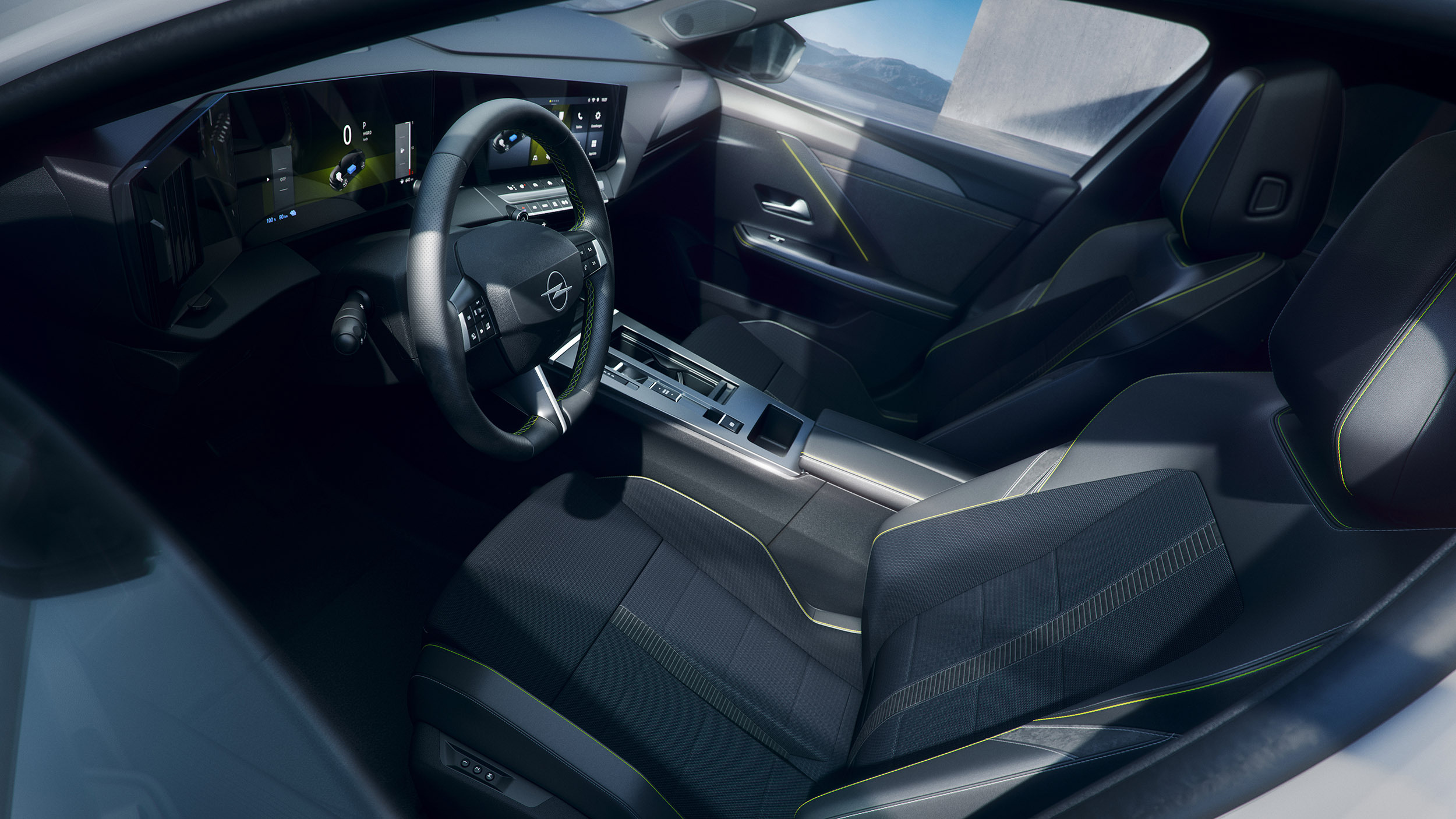
Inside, designers added bright yellow stitching and piping to the steering wheel, door cards, and center armrest, alongside aluminum sports pedals and an optional pair of sports seats with integrated headrests. As with the lesser Astra trims, the digital cockpit comprises dual 10-inch displays.

 Opel Astra GSE Line Brings OPC-Like Power, But Don’t Call It A Hot Hatch

Opel didn’t mention any chassis tweaks, suggesting the GSE Line will likely get a standard suspension, although that may vary depending on the powertrain under the hood. Note that the Astra GSe PHEV did have a sportier setup, including a recalibrated steering, new ESP settings, and a 10 mm (0.4 inches) lowered suspension with new springs and oil-filled Koni FSD dampers.

More: Stellantis Confirms The Next Astra And Corsa Land Before 2030

Marc Fetzer, Opel Vice President Current Product, said that the Astra GSE Line will show how the “extra sportiness” of the GSE models can be combined with “maximum practicality for everyday use”, while giving customers a “free choice” between powertrains.

The new Opel Astra GSE Line will make its first public outing at the Paris Motor Show next month, followed by a market launch in spring 2027. Opel has confirmed that further GSE Line models will follow later in 2027, likely including the Grandland SUV.

\\\\\\\\

Stellantis

Volvo Will Launch 13 New Models By 2030, And Not All Of Them Will Be SUVs

  • Volvo’s new product offensive includes 13 new model launches in 4 years.
  • Seven models will reach Western markets, and six will be reserved for China.
  • Lineup to include hybrid and EV powertrains across different bodystyles.

Volvo has presented what it calls “the largest and most ambitious global product push in its 99-year history”, in an effort to improve profitability and double its market share. The automaker will launch 13 new models by the end of 2030, including hybrids and EVs.

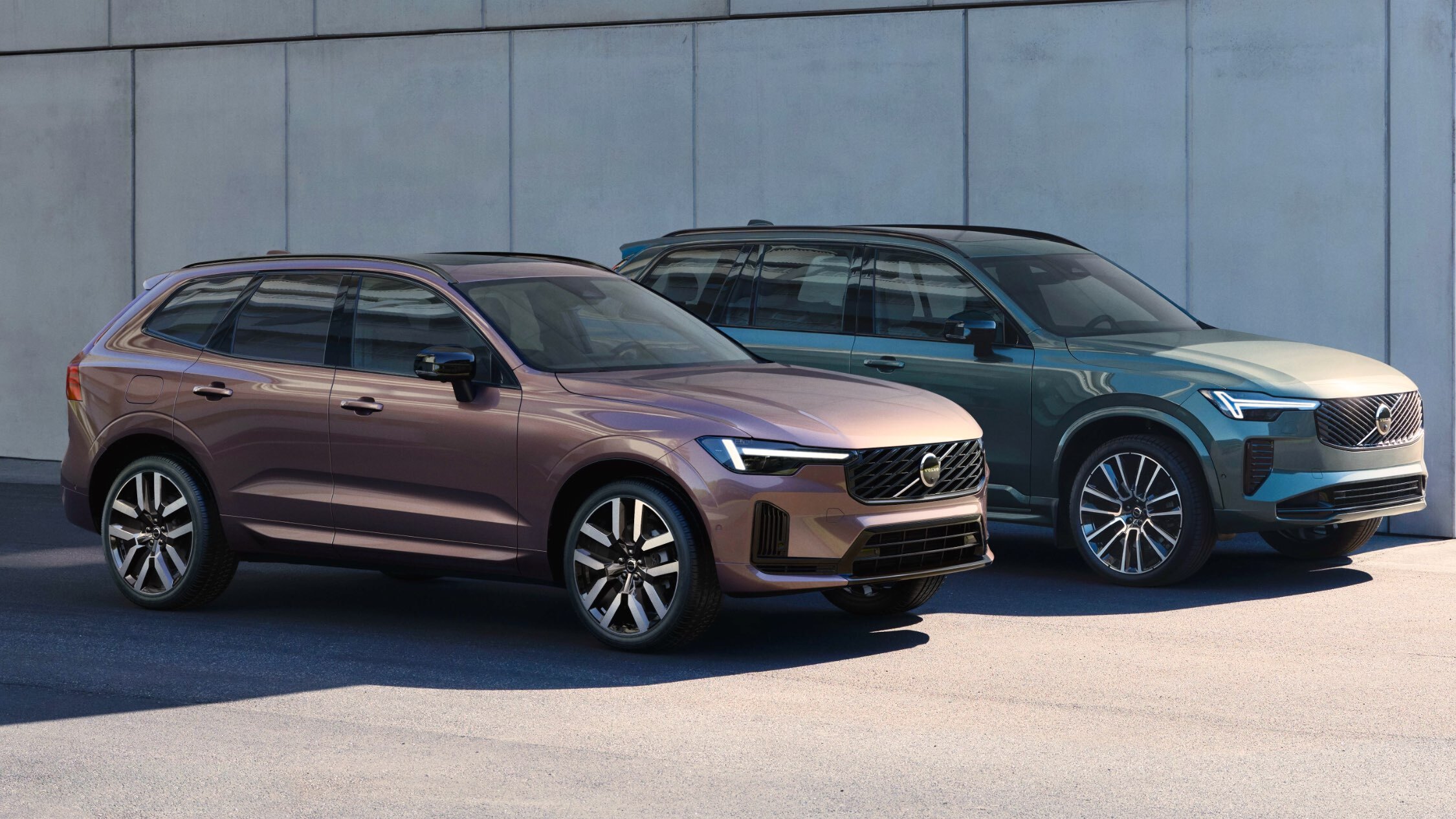
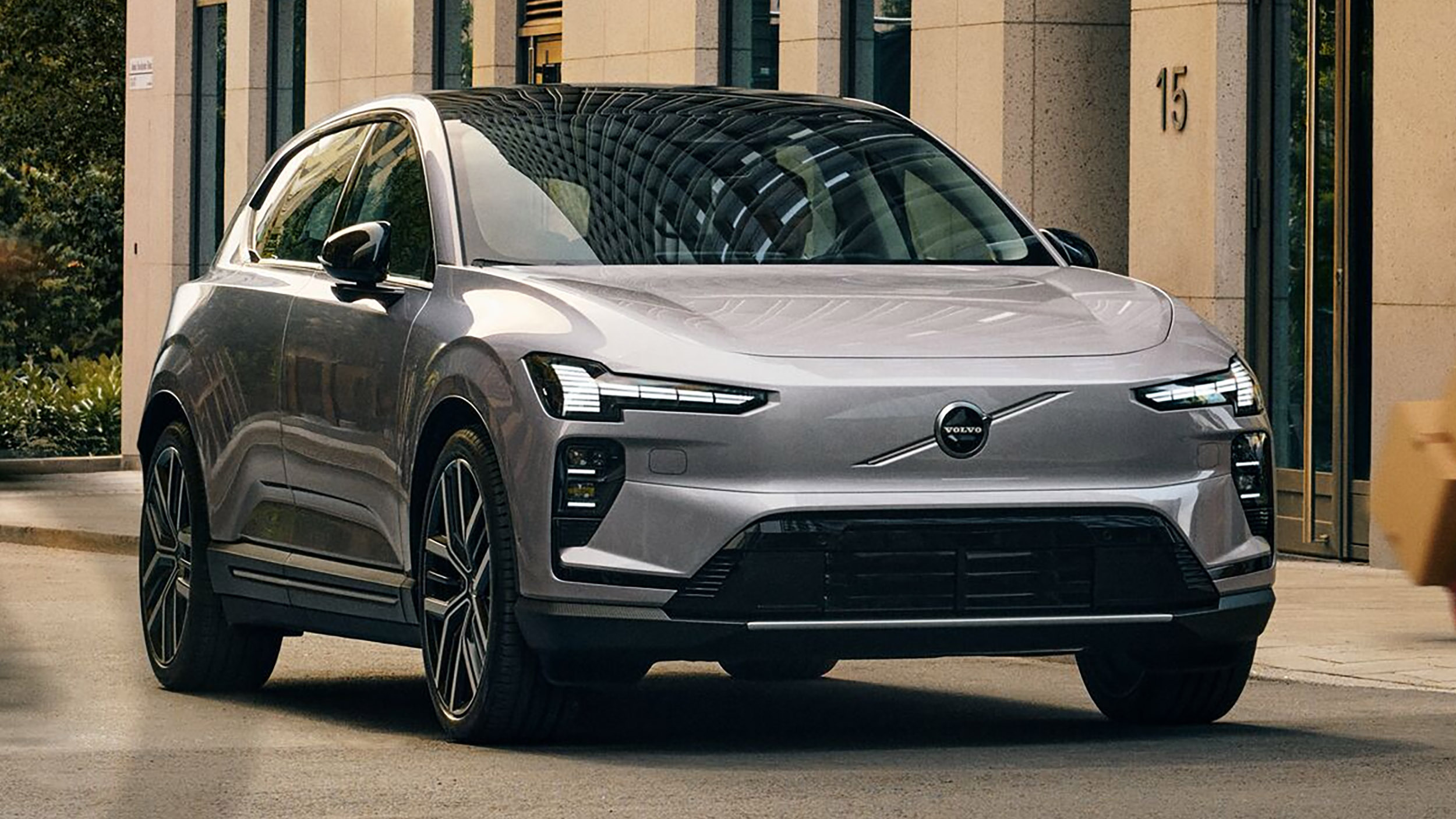
The announcement comes shortly after Volvo introduced updated versions of the XC40, EX40, EC40, and XC60, alongside a new plug-in hybrid powertrain for the XC60 and XC90 with up to 124 miles (200 km) of EV-only range.

More: Volvo’s New PHEVs Drive So Far On Electric You Might Not Use The Gas Engine For Months

Unlike the aforementioned extensive facelifts, the 13 announced models will be all-new. Seven are destined for Western markets including Europe and North America, while the other six will be heading to China.

 Volvo Will Launch 13 New Models By 2030, And Not All Of Them Will Be SUVs
The facelifted Volvo XC60 and XC90 have just received a new PHEV powertrain.

More importantly, Volvo has confirmed that its future lineup will include cars in new segments, so expect a few surprises, and a potential return to wagons.

More: Volvo May Bring Sedans And Wagons Back To America

The company will preview an evolution of its styling language with a new concept car in 2027. This will be penned under the direction of Thomas Ingenlath, who returns as Volvo’s Chief Design Officer after a seven-year stint as the Polestar CEO.

The new models destined for Western markets will ride on the SPA2 (EX90, ES90) and SPA3 (EX60) architectures, using the HuginCore computing platform. The Chinese models will use shared platforms and a market-specific tech stack developed in collaboration with parent brand Geely. The goal is to increase component commonality across Geely Group vehicles from the current 10 percent to as much as 30 percent by 2030.

 Volvo Will Launch 13 New Models By 2030, And Not All Of Them Will Be SUVs
The fully electric Volvo EX60 rides on the SPA3 platform.

Hakan Samuelsson, Volvo president and CEO, said: “Our showrooms will look very different in 2030”, adding that they want to become “the leading premium car brand”. The CEO outlined the four pillars behind the new product offensive as “regionalized product offerings, leadership in electrification, unique synergies with Geely, and complete customer offers that goes beyond the car alone”.

More: Volvo Could Turn Its Belgian Plant Into A Tariff Back Door For China

Overall, Volvo wants to double its market share by introducing more EVs alongside third-generation hybrids for those not ready to make the switch. The company promised to treat its customers with regular over-the-air software updates, and make buying a new Volvo easier and more transparent with special offers and fast-delivery model variants.

 Volvo Will Launch 13 New Models By 2030, And Not All Of Them Will Be SUVs
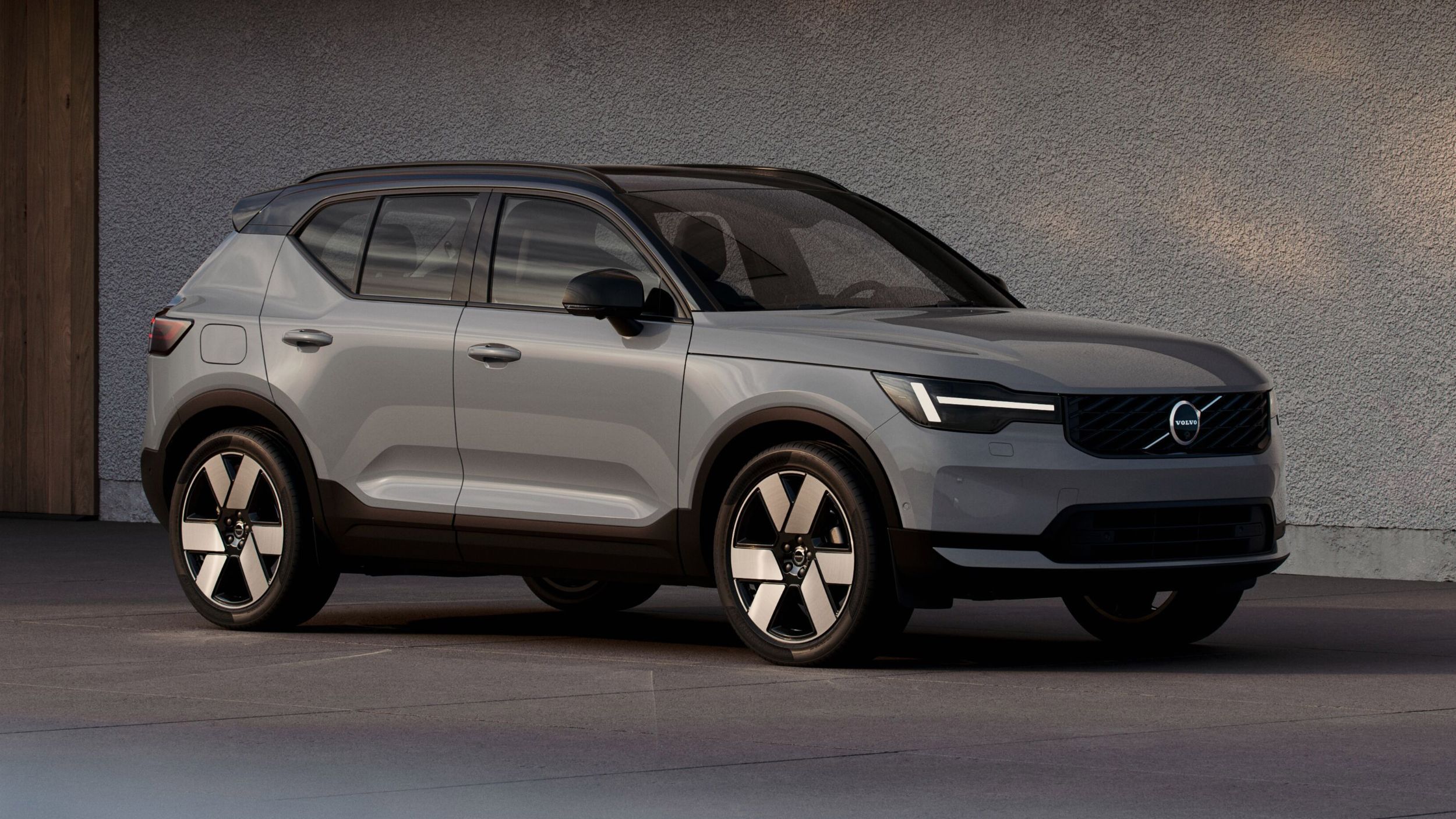
The recently facelifted Volvo XC40.

Hyundai Ioniq 5 N Imagined As A Group B Monster With ICE Power

  • Khyzyl Saleem created a Group B-inspired Hyundai Ioniq 5 N.
  • The concept ditches the EV powertrain for WRC turbo ICE power.
  • The ultra-aggressive bodykit takes cues from classic rally icons.

The Hyundai Ioniq 5 N is one of the most exciting performance-focused EVs, and while it is technically based on a crossover, it looks like a proper hot hatch. The sharp lines of the model inspired independent designer Khyzyl Saleem to create a wild concept, evoking the spirit of the Group B Rally icons from the ’80s.

The model is dressed with a custom bodykit, altering its proportions and making it look ready for the special stages. The front end has been redesigned with a pronounced carbon fiber splitter and extra LEDs on the vented hood.

More: Coga Takes Hyundai Ioniq 5 Beyond N With Very Wild, Very Pink Body Kit

The profile features ultra-wide fender extensions with integrated cooling intakes. The flying buttresses over the C-pillars are reminiscent of the Lancia Delta S4, which is a fitting homage since the greenhouse of the Ioniq 5 sends subtle Delta vibes.

The tail is even more aggressive with a massive wing and an equally large diffuser. The rally car treatment also includes Lexan windows, a roll cage, and a new set of five-spoke alloy wheels finished in black. The designer also created a slightly different version with a smaller rear wing and a bronze shade, looking like a homologation special.

\\\\\\

Khyzyl Saleem / Facebook

Hyundai never experimented with a Group B entry, but they retain a strong presence in WRC, competing at the highest level against Toyota Gazoo Racing. The Korean automaker started with the Accent WRC in 2000, followed by the i20 WRC in 2014, and the more recent i20 N Rally1 in 2022. With the i20, Hyundai won two WRC Manufacturer’s titles in 2019 and 2020, and one Driver’s title in 2025 (Thierry Neuville).

Swapping EV For ICE?

Taking inspiration from Hyundai’s motorsport involvement and, despite the fully electric nature of the donor Ioniq 5, Khyzyl said he likes to imagine the concept with a combustion engine. More specifically he wants the “screaming” turbocharged 1.6-liter four-cylinder engine from the WRC rally car – presumably in mid-ship position – although he would also consider rotary power.

More: Hyundai’s EVs Already Fake Engine Sounds, And Now They Might Vibrate Too

After the latest regulatory changes that removed the hybrid boost from Rally1 contestants, the turbo engines have a maximum permitted output of 375 hp (280 kW / 380 PS). This is lower than the 641 hp (478 kW / 650 PS) from the dual electric motors of the roadgoing Ioniq 5 N, making us wonder if Hyundai could come up with a more potent hybrid setup.

In any case, the Group B-inspired Ioniq will likely stick to the digital world. Still, the project is part of a broader collaboration between Hyundai USA and Khyzyl Saleem. Last month, the company shared renderings of a Baja-inspired Santa Fe concept on social media, asking their followers which Hyundai model should the_kyza try next.

\\\\\

Khyzyl Saleem / Facebook

Nissan Kicks Heads To Europe With Hybrid Power Alongside Two New EVs

  • The Nissan Kicks e-Power will be sold in Europe, the UK, and Turkey.
  • Production will take place at Nissan’s Sunderland plant in the UK.
  • It will be joined by the new Pixo EV and the next-gen Juke EV.

Nissan has announced that the Kicks e-Power will become available in Europe, the UK, and Turkey, with production taking place at the Sunderland Plant in England. The automaker has also confirmed two new EVs for European markets – the Pixo urban hatchback and the next-generation Juke.

The current Nissan Kicks was introduced in 2024 in North America, with the Kicks e-Power arriving in 2026 in Japan. Naturally, European customers will gain access to the electrified version, in line with the region’s strict emission regulations and strong hybrid demand.

Review: The 2026 Nissan Kicks Isn’t Bad, It’s Just Surrounded By Good Choices

Measuring 4,365 mm (171.85 in) long, the Kicks will be one of Europe’s biggest B-SUVs, being longer even than its cousin, the Juke that stretches to 4,210 mm (165.8 in) long. Direct rivals include the Toyota C-HR, the Hyundai Kona, and the VW T-Roc, which are also available with self-charging hybrid powertrains.

\\\\\\\\\\\\\\

Nissan Kicks (Japan)

Nissan didn’t share the detailed specifications of the EU-spec Kicks, but we expect it to be similar – if not identical – to the Japanese version. The subcompact crossover features Nissan’s third-gen e-Power hybrid technology, with an electric motor moving the wheels and a combustion engine acting as a generator.

More: Nissan’s Old Kicks Returns, And It Drives Like An EV Without Ever Plugging In

In Japan, the Kicks e-Power is fitted with a 1.4-liter three-cylinder gasoline engine with 97 hp (72 kW / 98 PS), a front-mounted electric motor generating 141 hp (105 kW / 143 PS), an optional rear-mounted electric motor contributing another 67 hp (50 kW / 68 PS), and a lithium-ion battery. It remains to be seen whether Europe will get both the FWD and AWD (e-4ORCE) powertrain options, as well as the adventurous Rock Creek trim.

Production In The UK

\\\\

Nissan Sunderland facilities

The EU-spec Kicks e-Power will be manufactured in Sunderland alongside the Juke, Qashqai, and Leaf, following a £170 million ($229 million) investment. The plant celebrates its 40th anniversary this year, and has built a total of 12 million vehicles since the first Nissan Bluebird rolled off the assembly line back in 1986.

More: This Is How Nissan Copied China To Slash Development Times In Half

The UK factory will be the fourth production location for the second-gen Kicks, which is currently made in Japan, Mexico, and Brazil. A facelifted version of the first-gen Kicks with hybrid power still survives in some regions, like Thailand. Since the debut of the original in 2016, Nissan has sold over 1.8 million units in more than 70 countries.

Two New EVs

\\\\\\\\\\\\\

A camouflaged prototype of the new Nissan Pixo | Photos: SH Proshots

Besides the European arrival of the Kicks, Nissan has also confirmed that a new electric city car will be unveiled next week. The model will adopt the Pixo nameplate and will serve as a twin to the Renault Twingo and the Dacia Spring, albeit with Nissan-specific styling.

More: Nissan’s Strangest-Looking SUV Just Got Stranger, And It’s Going Electric To Prove It

Last but not least, Nissan said that the all-new third generation of the Juke will also be manufactured in Sunderland starting in 2027, migrating to a fully electric powertrain. This explains why the automaker brought the Kicks e-Power to Europe, offering a hybrid alternative to the upcoming zero-emission Juke.

Massimiliano Messina, Chairperson of Nissan AMIEO Region, said: “Electrification with choice is what European customers want, and the introduction of Kicks will further demonstrate how Nissan has options for all.”

\\\\

Nissan Juke EV

BYD’s New Electric Semi For Europe Beats Tesla In Almost Every Metric

  • BYD debuts the ETT44 electric heavy-duty tractor in Hannover.
  • It packs up to 1,006 hp and a massive 651 kWh Blade battery.
  • 1.5 Megawatt charging adds 248 miles of range in 20 minutes.

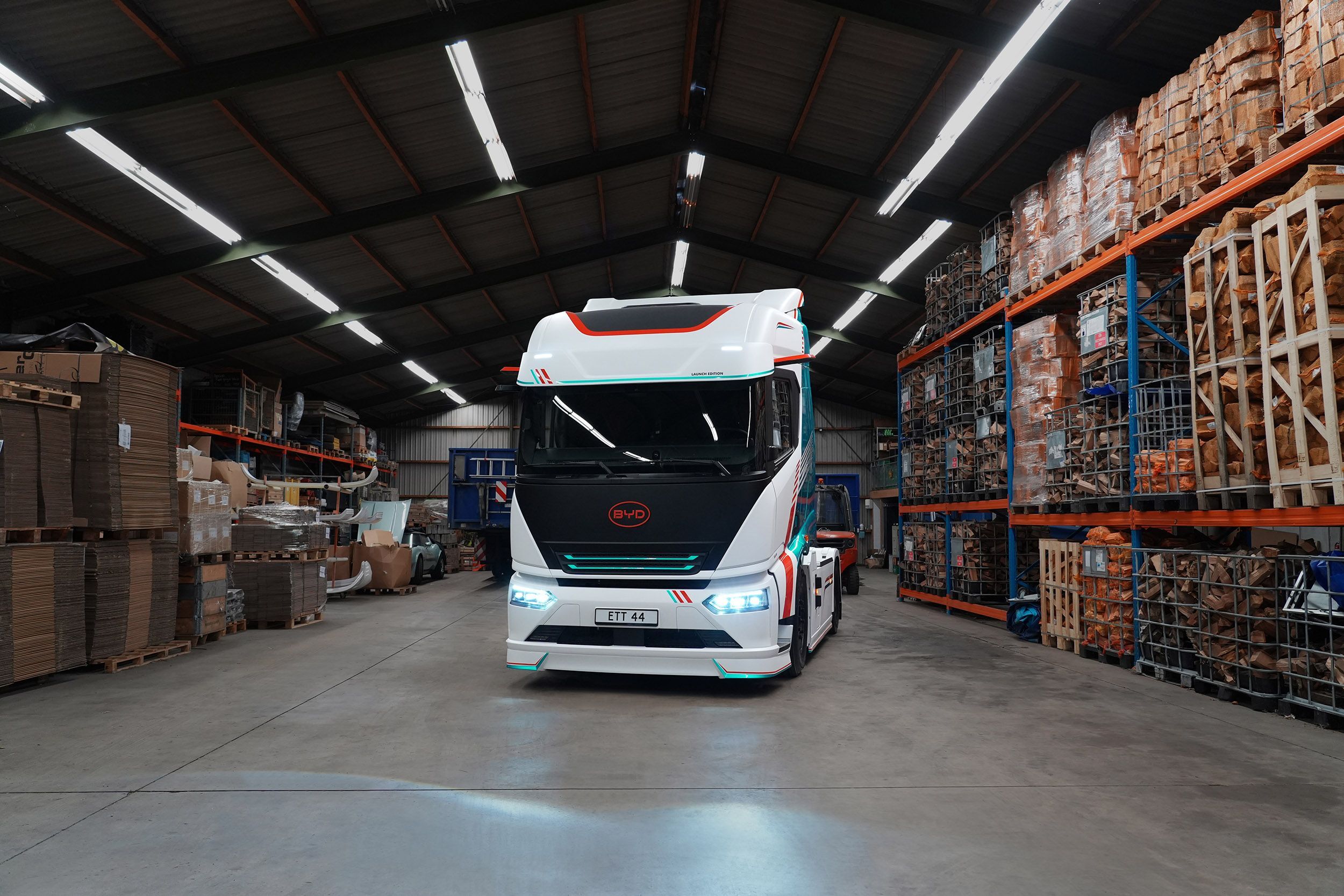
Chinese automotive giant BYD has made headlines at the IAA Transportation 2026 in Hannover with the premiere of its new commercial flagship vehicle. The ETT 44 is a fully electric heavy-duty tractor designed for Europe’s long-haul transport sector bringing loads of power, a massive battery pack and ultra-fast charging.

Visually, the ETT 44 shares the upright cab-over design with the existing ETH 20, ETH 28, and ETH 8 heavy-duty rigs, and comes standard with a high-roof sleeper cab layout. The launch edition is distinguished by aero add-ons on the front bumper, side skirts, above the windshield, and on the roof, alongside a custom grille and a special livery.

More: Chinese Brands Are Building 90,000 Cars In Europe. In Ten Years, Make That 1.5 Million

The interior boasts a digital instrument cluster, a 12.8-inch infotainment display, and large screens for the mirror-replacing cameras. We can also see an array of physical controls, a car-like gear knob, multiple cup holders, storage compartments, and a radio. Behind the seats is a bed for the driver. The ETT 44 rides on air suspension and comes equipped with an extensive ADAS suite.

\\\\\

BYD

Under the skin, the specs beat the European-market Tesla Semi, which was also introduced at the same event. BYD’s 4×2 electric tractor is powered by a single electric motor generating up to 1,006 hp (750 kW / 1,020 PS). It is available with two LFP BYD Blade battery options with capacities of 434 kWh and 651 kWh, with advertised range figures of 400 km (249 miles) and 600 km (373 miles) respectively.

More: BYD Flash-Charged Its Luxury EV Over 350 Times In A Week Covering Nearly 19,000 Miles, Then Checked The Battery

The base version has a maximum charging rate of 950 kW, which increases to an impressive 1,500 kW in the long-range variant. This means that both models can charge from 20-80% in as little as 20 minutes when connected to a compatible MCS charger. For comparison, the EU-market Tesla Semi has a 550 km (342-mile) range and supports charging speeds of up to 800 kW.

Weight Figures

\\\\\\

BYD

The BYD ETT 44 measures 6,400 mm (252.0 in) long, 2,530 mm (99.6 in) wide, and 3,820 mm (150.4 in), tall with a 3,800 mm (149.6 in) wheelbase. This footprint is similar to other European heavy-duty tractors such as the Mercedes-Benz eActros 600, Man eTGX, Scania 45 R Electric, and DAF XF Electric.

More: Half Of British Drivers Would Now Buy A Chinese Brand They Couldn’t Name 3 Years Ago

Its curb weight ranges between 10,950-11,140 kg (24,141-24,560 lbs) with a gross weight rating of 20 tons (44,092 lbs) and a gross combination weight of 44 tons (97,003 lbs) as dictated by European regulations. BYD says that the model would be capable of a gross combination weight of 65 tons (143,300 lbs).

Notably, even the capped gross figure is higher than the Tesla Semi, which maxes out at 40 tons (80,000 lbs), although it has a lighter curb weight of 9,100 kg (20,062 lbs).

BYD has yet to announce pricing for the ETT 44, which is expected to hit European roads in the coming months. However, the company has already confirmed a standard 10-year or 1.2 million km (750,000-mile) warranty for the battery pack, offering peace of mind to future owners.

 BYD’s New Electric Semi For Europe Beats Tesla In Almost Every Metric

BYD

Kia Makes Regular Vans Feel Outdated With New PV7

  • Kia introduced the production version of the fully electric PV7 van.
  • It offers up to 460 km (286 miles) of range and supports fast charging.
  • Sales in Europe and Korea will commence in the second half of 2027.

Kia has introduced the all-new PV7 at the IAA Transportation 2026 in Hannover, Germany. Positioned as the big brother of the Kia PV5, the electric van brings increased cargo volume, a heavier payload, and a more advanced 800V architecture.

Design-wise, the production PV7 is an evolution of the 2024 concept, sharing styling cues with the PV5. The van features split LED headlights on its short nose, a wraparound greenhouse, sculpted fenders, sliding rear doors, and a generous amount of protective cladding around the bodywork. According to Kia, the plastic bits prone to damage are replaceable to simplify repairs and reduce downtime.

More: Kia Brought Its Electric Van To America As Something New York Actually Needs

Inside, the modern dashboard looks nothing like your typical workhorse. The digital cockpit comprises a 9.9-inch instrument cluster and a 14.6-inch touchscreen running the Android-based Pleos Connect infotainment system and incorporating the Gleo AI voice assistant. Occupants are also treated with ambient lighting, plenty of storage compartments and physical buttons on the two-spoke steering wheel and under the central display.

\\\\\\\\\\\\

Kia

The standard PV7 measures 5,350 mm (210.6 in) long and has a 3,500 mm (137.8 in) wheelbase. Those figures make it 655 mm (25.8 in) longer than the PV5, although it remains smaller than large vans like the Ford E-Transit. Still, Kia will roll out Long and High Roof versions in the future, bringing greater cargo-carrying capabilities. Overall, the PV7 lineup will eventually include no less than 23 variants.

More: Crown Vics Chased Suspects On The Ground. Kia’s Police Van Chases Them From The Sky

The automaker showed the three-seater Cargo and nine-seater Passenger variants of the PV7. The latter adds rear windows and a regular tailgate instead of barn doors.

The Cargo Long has a volume of 6.1 cubic meters (215.4 cubic feet), while the Cargo High Roof can handle 8 cubic meters (282.5 cubic feet). Maximum payload is rated at 1,200 kg (2,646 lbs) for the PV7 Compact, while longer items can slide under the passenger seat thanks to a load-through partition.

\\\\\\\\\\\\\\\\\\\\\\\\\\

Kia PV7 Cargo

For shuttle and fleet operations, the PV7 Passenger offers 7-seat, 9-seat, and 11-seat configurations arranged in three or four rows. The three-row seven-seater adopts Kia’s Long-rail Easy Remove seat system, allowing rear seats to slide or be completely removed. It also has rear climate controls and USB-C charging ports. In terms of safety, the van gets seven airbags and a comprehensive ADAS suite.

More: Hyundai’s New Nine-Seat Electric Van Matches The ID. Buzz On Price And Beats It On Size

The PV7 rides on the EV-dedicated E-GMP.S platform, but instead of the PV5‘s 400-volt system, it gets an 800-volt architecture. It is powered by a single front-mounted electric motor producing up to 268 hp (200 kW / 272 PS) and 420 Nm (310 lb-ft) of torque.

\\\\\\\\\\\\\\\\\\\\\\\\\\\\\\\\

Kia PV7 Passenger

Buyers will get the choice between a 71.5 kWh battery or a larger 96.2 kWh unit. The latter offers a WLTP range of over 460 km (286 miles) for the PV7 Cargo. More importantly, the battery can charge from 10-80% in around 25 minutes when plugged into a 350 kW DC fast charger and supports V2L functionality. The PV7 is also the first Kia to come equipped with dual charging ports, including a front AC/DC port and an optional rear-side AC port.

More: Kia’s Carnival Grows 11 Inches Taller In Korea

The Kia PV7 will roll out in Korea and Europe in the second half of 2027, followed by other global markets. The company has also confirmed that the even larger PV9 will follow in 2029, further expanding its LCV lineup.

\\\\\\\\\\\\\\\\\\\\\\\\\\\\

Kia PV7 Cargo

The Mitsubishi Eclipse Cross You Can’t Have Just Got Way Cheaper

  • The Mitsubishi Eclipse Cross EV receives updates one year after its debut.
  • The EV gains a new 67 kWh battery option and an upgraded 89 kWh unit.
  • The electric crossover with Renault bones has a much lower entry price.

Americans might be stuck with the aging Mitsubishi Eclipse Cross for now, but Europeans have access to a new generation with electric power. Exactly one year after its debut, the Mitsubishi Eclipse Cross EV gains new battery options, mirroring the technical updates introduced by its French twin – the Renault Scenic E-Tech.

The highlight is the addition of a smaller 67 kWh battery option with Lithium Iron Phosphate (LFP) chemistry, offering a WLTP range of 472 km (293 miles). The same unit is already used in the facelifted Renault Megane E-Tech.

More: Renault Gave The Updated Megane EV A Meaner Face And A Slower 0-62

The larger battery option retains the Nickel Manganese Cobalt (NMC) chemistry but its capacity has grown from the original 87 kWh to 89 kWh. As a result, the maximum WLTP range has been increased by 15 km (9 miles) to a more generous 650 km (404 miles).

Both batteries are compatible with DC charging, replenishing 15-80% of their charge in 24 and 28 minutes respectively. Independently of the battery pack, power comes from a single front-mounted electric motor generating 220 hp (164 kW / 223 PS), which is 5 hp (4 kW) more than before.

\\\\\\

Mitsubishi

Predictably, Mitsubishi didn’t bother changing anything on the exterior design of the EV after a year on sale. The interior has also been carried over with dual 12.3-inch displays running Renault’s Google-based infotainment software.

More: Mitsubishi Is Turning The Pajero Into A Family Of SUVs, And One’s Coming For The RAV4

The updated Mitsubishi Eclipse Cross EV will be available to order in European markets from November 2026. In the Netherlands, the cheapest Mid-Range option with the 67 kWh battery starts at a discounted €32,990 ($38,300) including an electric benefit of €3,000 ($3,500).

The Long-Range variant with the upgraded 89 kWh battery will arrive later on, but the outgoing model is still available starting from €40,490 ($46,900). Note that the Eclipse Cross EV had an introductory price of €45,690 ($53,000) in the Dutch market when it arrived last year, meaning that the entry point in the lineup has dropped by €12,700 ($14,700).

\\\\\\\\\\\\\\\\\

Mitsubishi

Volvo’s Decade-Old XC40 Refuses To Die, Gains Design And Tech Updates

  • Volvo applies a second facelift to the XC40, extending its lifecycle.
  • It gains modern styling cues, a larger screen, and improved safety.
  • The fully electric EX40 and EC40 benefit from the same updates.

Volvo has announced substantial updates for the 40 series SUVs, including the evergreen XC40, its fully electric EX40 twin and the closely-related EC40 coupe-SUV. All three models receive a redesigned face, larger screens, AI tech, and improved safety features in a quest to stay relevant against younger rivals.

The XC40, in production since 2017, received a facelift in 2022, but the 2027 update is more substantial. The fully electric coupe-SUV variant debuted in 2021 as the C40 Recharge before being renamed to EC40 in 2024 and receiving its first facelift for 2027.

More: New Volvo EX50 Could Be Better, Bigger And Cheaper Than The SUV It Replaces

Visually, the first thing you notice is the reshaped headlights with the trademark Thor’s Hammer LED graphics, joined by a cleaner front bumper. The grille is wider than before, reaching out to the headlights, and adopts the body-colored finish of the zero-emission EX40 and EC40.

\\\\\\\\\\\\\\\\\\\\\\\\\\\\\\\\\\\\\\\\

Volvo XC40

The sculpted profile is largely unchanged, but the diamond-cut alloy wheels measuring 18, 19 or 20 inches are new. The rear end benefits from sharper LED taillights in the XC40 and EX40, alongside fresh surfacing on the tailgate and the rear bumper. Volvo has also shown photos of the Black Edition variants combining a stealthy finish with a dark-themed cabin.

More: Volvo May Bring Sedans And Wagons Back To America

Inside, the centerpiece is the larger 11.2-inch central touchscreen (up from 9 inches), with its top end sticking out of the dashboard. The display runs Volvo’s latest infotainment software with Google Gemini integration. Other interior updates include a new wireless charging pad, “refined” ambient lighting, and new materials such as Arianne Cardamom leather, Brown Ash or Black Ash wood accents, and aluminum inserts.

\\\\\\\\\\\\\\\\\\\\\\\\\\\\

Volvo EC40

On the safety front, the XC40 gets new hardware and software. Volvo threw in new radars, a new forward camera, and a total of 12 ultrasonic sensors. These enable a 3D view for the optional 360-degree camera system and make the optional Pilot Assist with lane change assist run more smoothly. The company has also added a Door Opening Alert and real-time hazard detection for the emergency braking and steering functions.

More: The EX30 Is Dead, But Volvo’s Next Cheap EV Is Already On The Way To America

The XC40 continues to be powered by the familiar mild-hybrid turbo 2.0-liter four-cylinder engine, available with different outputs depending on the market.

The fully electric EX40 and EC40 also retain their existing single-motor and twin-motor configurations, delivering up to 584 km (363 miles) of WLTP range. Note that the PHEV powertrain option has been discontinued.

\\\\\\\\\\\\\\\\\\\\\\\\\\\\\\\\

Volvo EX40

The updated Volvo 40 series is scheduled to enter production in Belgium later this fall. Depending on the market, deliveries are expected to start in early 2027 with pricing to be announced.

The main rivals of the Volvo 40 series in the premium compact SUV segment include the soon-to-be facelifted BMW X1 and X2, the brand new Mercedes-Benz GLA, and the Audi Q3 / Q3 Sportback.

❌
❌