Normal view

There are new articles available, click to refresh the page.
Before yesterdayMain stream

Hyundai’s Chinese 2026 Elexio Gets So Much Right, And That’s The Frustrating Part | Review

PROS ›› Good tech, comfortable ride, better than EV5 CONS ›› Poor ADAS, pricey, inefficient, slow-charging

Electric vehicles make up just over 8 percent of new car sales in Australia, so they are hardly dominant. Yet the competitive noise has increased dramatically in recent years, thanks largely to a surge of new Chinese brands. Hyundai’s counterpunch is the Elexio, its latest EV and one aimed squarely at that fast-growing crowd.

The Elexio is unlike any other electric Hyundai so far. Crucially, it was not developed entirely in-house, but rather brought to life through its joint venture partnership with BAIC Motors.

Review: The 2026 Ioniq 9 Calligraphy’s Biggest Threat Is Hyundai Itself

This means it is built in China, tapping into the country’s vast manufacturing scale and efficiency, paired with the engineering experience and brand weight of a legacy player like Hyundai. When it was revealed last year, it looked set to remain a China-only model. Instead, it has now landed in Australia, and we were among the first to get behind the wheel earlier this month.

QUICK FACTS
› Model:2026 Hyundai Elexio Elite
› Starting Price:AU$61,990 ($44,000) as tested
› Dimensions:181.6 L x 73.8 W x 65.8 in H (4,615 x 1,875 x 1,673 mm)
› Wheelbase:108.2 in (2,750 mm)
› Curb Weight:2,105 kg (4,640 lbs)
› Powertrain:Single electric motor / 88.1 kWh battery
› Output:215 hp (160 kW) / 236 lb-ft (320 Nm)
› 0-62 mph~8.0 seconds
› Transmission:Single-speed
› Efficiency:19.5 kWh/100 km as tested
› On Sale:Now
SWIPE

According to Hyundai, the Elexio has been designed to neatly slot between the Kona EV and Ioniq 5 in its line-up, serving as an all-electric alternative to the Hyundai Tucson. It’s Hyundai’s answer to popular competitors like the Tesla Model Y, Kia EV5, BYD Sealion 7, and Xpeng G6, and this is reflected in the price.

Can It Compete On Price?

\\\\\\\\\\\\\\\\\\\\\\\\\\\\\\\\\\\\\\\\\\\\\\\\\\\\\\\\\\\\\\\\\\\

Hyundai Australia

Two versions will be offered: the base Elexio and the flagship Elexio Elite. Prices for the base version will start at AU$58,990 (US$41,900) before on-road costs, while the Elite will be priced from AU$61,990 (US$44,000). However, the Elite will be available for AU$59,990 (US$42,600), including all on-road costs, in a limited-time deal running until the end of March.

Hyundai is predicting big things for the Elexio and expects it to be its best-selling EV in Australia. Achieving this won’t be easy. The Kia EV6 undercuts the Elexio at AU$56,770 (US$40,300), the Tesla Model Y Premium is available from AU$58,900 (US$41,800), and the BYD Sealion 7 Premium is available from AU$54,990 (US$39,000). The superb Zeekr 7X also undercuts it at AU$57,900 (US$41,100).

Big Battery, Modest Charging Speeds

 Hyundai’s Chinese 2026 Elexio Gets So Much Right, And That’s The Frustrating Part | Review

So, what do you get for your money in the world of the Elexio? Like Hyundai’s Ioniq models, and unlike the Kia EV5, the Chinese-built Elexio uses the familiar E-GMP platform. However, it doesn’t have an 800-volt architecture like the Ioniqs, instead using a 400-volt system.

With this in mind, charging the battery pack 10-80 percent on a 150 kW charger, with peak speeds in the mid-120s, will take 38 minutes. This is slightly slower than the Kia EV5, which takes 36 minutes, but whereas it has a compact 64.2 kWh battery, the Hyundai has a much larger and more practical 88.1 kWh unit.

This battery powers a front-mounted electric motor with 160 kW (215 hp) and 310 Nm (236 lb-ft). Hyundai quotes a combined efficiency of 18.2 kWh/100 km, which is okay, but certainly not class-leading.

A Digital-First Cabin

\\\\\\\\\\\\\\\\\\\

Photos Brad Anderson/Carscoops

We only sampled the Elexio in flagship Elite trim, so first impressions came fully loaded. Stepping into the cabin for the first time, it is immediately clear this is not your typical Hyundai interior.

Dominating the interior is a massive widescreen 27-inch display, encompassing both the central infotainment display and a display for the passenger. This screen houses Hyundai’s new Connect-C infotainment system and runs on Android Automotive with a powerful Snapdragon 8295 processor and Unreal 3D graphics engine.

While there are several cars on sale in China with a similar passenger and infotainment screen, this is one of the first implementations of a display like this in a Western market. It looks great, providing excellent colors, clarity, and response. However, it’s not particularly practical to use, especially when you’re driving.

\\\\\\\\\\\\\\\\\\\\\

Photos Brad Anderson/Carscoops

I am quite tall with long arms, yet adjusting the climate controls or digging into vehicle settings on the move meant leaning forward and stretching almost to the limit. It should not feel like a light workout just to change the temperature. The more traditional screens in other current Hyundai models are much easier to reach, as are the tablet-like displays found in many of the Elexio’s rivals.

Read: Hyundai’s New EV Costs Over Twice As Much In Australia As In China

On the plus side, the new Connect-C system is good and is far more modern than Hyundai’s outgoing software. It has a much smartphone-like layout with convenient shortcuts on the driver’s side.

In a Hyundai first, a traditional gauge cluster has been replaced by a head-up display. In photos, it doesn’t look like a HUD at all, but rather a physical cluster positioned at the base of the windshield. In reality, it is a true head-up display, albeit it projects onto a small black area of the windshield, providing better contrast than HUDs that project onto normal glass.

The obvious downside of this is that if you chip or crack the windshield, you probably won’t be able to buy a generic HUD-compatible replacement, but rather need one from Hyundai with this black element.

Quality And Space

 Hyundai’s Chinese 2026 Elexio Gets So Much Right, And That’s The Frustrating Part | Review

The rest of the cabin is quite minimal, as many EVs are today. In terms of fit and finish, it feels on par with some Chinese rivals, like the BYD Sealion 7, and is certainly more premium than the Kia EV5. There’s soft-touch suede on the dashboard and door panels, as well as heated and ventilated front seats, and plenty of leather. Dual wireless chargers are also standard on the Elite.

Overall, space and comfort are good, whether that be in the front row or the second-row. While the Elexio only has a wheelbase of 2,750 mm (108.2 inches), 5 mm (0.1 inches) less than the Tucson and 250 mm (9.8 inches) less than the Ioniq 5, there’s still plenty of legroom for rear passengers, and that includes adults. Cargo space is decent, rated at 506 liters (17.8 cubic-feet) or 1,540 liters (54.3 cubic-feet) with the rear seats folded 60/40 flat.

Disappointingly, neither Elexio model has a panoramic glass roof, which is common in electric SUVs at this price point, nor a frunk, even though there’s plenty of space for one.

How Does It Drive?

\\\\\\\\\

Photos Brad Anderson/Carscoops

Driving the Elexio revealed that it is a solid performer, and it does some things well. However, it fails to stand out from the competition and could benefit from some tweaks to lift it to a new level.

As any EV should, the Elexio’s powertrain is smooth and quiet, providing more than enough grunt for everyday driving duties, whether that be in urban settings or on the highway.

Review: Why Kia’s New EV5 SUV Makes More Sense Than A Model Y

With 160 kW (215 hp) and 310 Nm (236 lb-ft), the Elexio has exactly the same power as the front-wheel drive Kia EV5. Crucially, it doesn’t suffer from the same horrible torque steer that the EV5 does. In fact, there’s no torque steer whatsoever, which is a great thing. However, like the EV5, the Elexio does love to spin up its inside front wheel should you get greedy with the throttle and play around with the traction control.

 Hyundai’s Chinese 2026 Elexio Gets So Much Right, And That’s The Frustrating Part | Review

Efficiency is not so good. After several stints behind the wheel of the Elexio, we averaged 19.5 kWh/100 km, which is quite poor, particularly given that we averaged 20.5 kWh/100 km in the Sealion 7 Performance, and it has an extra 230 kW (308 hp) and 380 Nm (280 lb-ft) of torque.

Like other Hyundai and Kia EVs, the Elexio has paddle shifters behind the steering wheel to adjust the level of brake regeneration, which is something every EV should have. I spent most of my time in the one pedal i-Pedal mode, with it bringing the SUV to a smooth and predictable stop every time. The transition between the mechanical brakes and the regen is also imperceptible, so kudos to Hyundai for that.

The brand says that, like most of the cars it sells in Australia, the Elexio has been specifically tuned for local roads by teams of engineers from South Korea. I was pleasantly surprised with the Elexio’s ride, finding it to be comfortable and softer than many other EVs, which can be too firm and harsh over bumps.

Software Still Finding Its Feet

\\\\\\\\\\\\\\

Photos Brad Anderson/Carscoops

In addition to tweaking the suspension for Australia, Hyundai insinuated during a press briefing that the Elexio’s advanced driver assistance system have also been set up for local conditions. Despite this, further refinements are needed.

During long highway jaunts, there were several instances when the lane-keeping assist and lane-centering functions failed to recognize clearly-marked lines, causing it to slowly drift into adjacent lanes. In addition, I experienced some slow ping-ponging between lane markings. This is odd as the dozens of other Hyundai and Kia models I’ve tested in recent years all have great lane-keeping systems, keeping you locked in the center of the lane on well-marked highways.

Review: 2026 Zeekr 7X Performance Is Proof That Tesla Isn’t The Benchmark Anymore

In addition, there was an instance where I had the adaptive cruise control enabled on a 100 km/h (62 mph) country road when suddenly, the Elexio suddenly braked to 75 km/h (47 mph) despite there being no object or car in front of me. I suspect the large semi-truck traveling in the opposite direction in the lane next to me fooled the system.

Like so many other new cars built in China, the Hyundai Elexio’s driver monitoring system is overactive, ringing the moment you yawn or take your eyes off the road. Additionally, turning it offer requires multiple steps through the menu, which is frustrating.

Verdict

\\\\\\\\\\\\\\\\

Photos Brad Anderson/Carscoops

The Hyundai Elexio is definitely better than the Kia EV5, which has quickly gained popularity in Australia and is the best-selling EV from a legacy brand in the local market. With this in mind, there’s a good chance that the Elexio should also sell well for Hyundai, and it’ll likely attract many shoppers who were previously interested in the Kona EV or Ioniq 5.

However, it may be prudent for buyers to exercise some patience before getting an Elexio. Earlier this year, Hyundai slashed prices of the Inster by AU$7,288 ($5,200), and reduced the Kona Electric by more than AU$13,000 ($9,200). If internal sales targets are missed, similar price adjustments for the Elexio would hardly be surprising.

Just as importantly, Hyundai’s latest EV still needs a few software refinements, particularly to its ADAS, before it feels like the clear choice in an increasingly crowded segment.
\\\\\\\\\\\\\\\\\\\\\\\\\\\\\\\\\\\\\\\\\\\\\\\\\\\\\\\\\\\\\\\\\\\\\\\\\\\\\\\\\

Photos Brad Anderson/Carscoops

New Base Volvo EX30 In Europe Has 45% Less Power Than Yours

  • Europe gets a new base EX30 with 148 hp and 211 miles of range.
  • It adds updated UX and V2L, both coming via OTA updates.
  • Production moves from China to Europe to avoid EU tariffs.

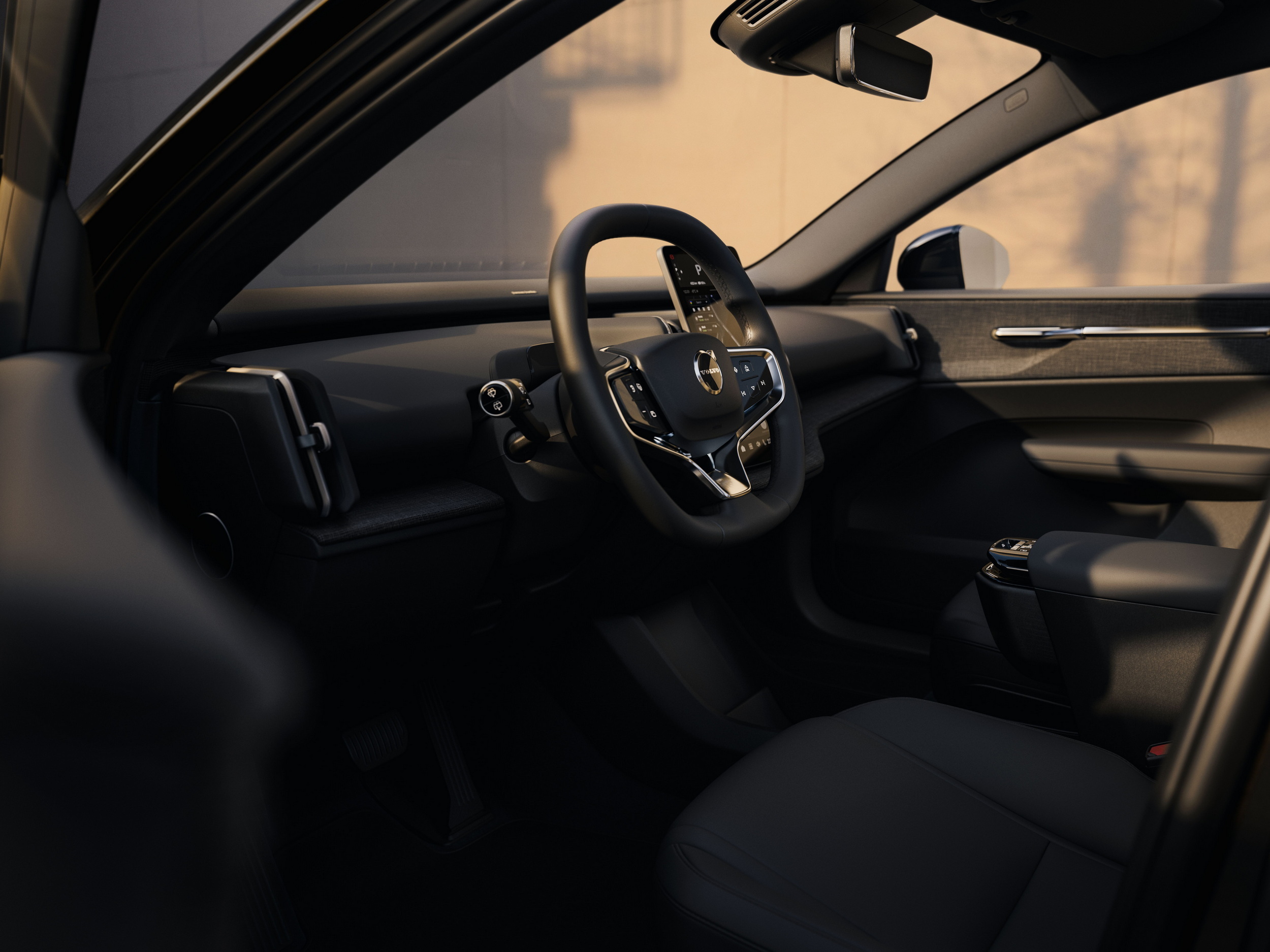
The Volvo EX30 has been updated in Europe for 2026, mirroring changes already introduced on the US-spec model. The range now gains a new entry-level powertrain, refreshed infotainment, new Vehicle-to-Load capability, and a Europe-exclusive Black Edition.

For European buyers, the headline is a lower entry point into the Volvo EV range. The EX30 now comes with a less potent electric motor producing 148 hp (110 kW / 150 PS), positioned as a more affordable alternative to the existing single-motor 268 hp (272 PS) and dual-motor 422 hp (428 PS) versions.

More: Volvo Pulls 40,000 EVs Back For Costly Battery Replacement

This new variant, not available in North America, can be paired with a 51 kWh battery pack delivering 339 km (211 miles) of WLTP range. Step up to the 69 kWh battery and the range increases to 476 km (296 miles). More miles, same compact footprint, and a little more choice at the showroom.

Turn Your Volvo Into A Power Bank

\\\\\\\\\\\\\

Volvo says the EX30 is now hardware-compatible with Vehicle-to-Load (V2L), though the feature will initially roll out in selected markets. With an optional adapter, the battery can power external kit such as electric bicycles, sound systems, or your increasingly elaborate camping setup.

More: Volvo’s Giving Millions Of Older Cars A New Brain Without Touching The Hardware

There is also an infotainment update, bringing what Volvo calls a completely redesigned settings and controls system, plus a customizable content bar. Crucially, existing EX30 owners are not being left behind. The new user experience and V2L functionality will arrive via over-the-air updates scheduled for this summer.

The EX30 Black Edition

\\\\\\

The EX30 only arrived in 2023, so there was no pressing need for a mid-cycle nip and tuck for either the standard model or the chunkier Cross Country. Instead, Volvo has opted for a wardrobe change. Enter the new Black Edition, now extended to its smallest SUV in line with the rest of the range.

Review: New Zeekr X Got Me Questioning My Feelings For Volvo

Despite the name, you are not limited to one shade of noir. The Black Edition can be specified in Onyx Black, Vapour Grey, or Crystal White. Whichever you choose, the chrome has been quietly retired in favor of a high-gloss black finish. That treatment covers the 19-inch alloy wheels, the Volvo badge up front, and the lettering across the tailgate.

Inside, there is Nordico upholstery with contrasting stitching and dark flax decor to complete the theme.

 New Base Volvo EX30 In Europe Has 45% Less Power Than Yours

If you like the darker cabin but not the full blackout look, the Black interior specification is also available across the broader EX30 lineup. There is also a new option called Harvest. Inspired by late Scandinavian summer evenings, it brings light-colored, woven recycled textile upholstery for the seats and door inserts, paired with a Nordico dashboard, dark flax decor, and a black headliner.

Pricing for the updated range will be confirmed at a later date. European-market EX30s are now built in Belgium, after Volvo shifted production from China to sidestep import tariffs.

\\\\\

Volvo

New Lancia Crossover Appears In The Wild Hiding A Famous Old Name

  • Lancia’s flagship crossover was spotted in winter tests.
  • New Gamma will offer electric, mild-hybrid, and PHEV options.
  • It will be built in Melfi, Italy, alongside the DS No8.

Stellantis’ grand Lancia revival, or as they called it, ‘Renaissance’, has not exactly burst out of the gates. The new Ypsilon subcompact hatchback has struggled to gain momentum, which is not quite a surprise. Still, phase two is already taking shape, and it brings with it a familiar name. The Lancia Gamma is coming back.

More: Lancia HF Integrale Returns With White Wheels And Something To Prove

This time, it arrives as an electrified crossover, and our spies have spotted a prototype for the first time during winter testing. The test car reveals enough to give us a better sense of what to expect ahead of its official debut later this year.

\\\\\\

Unlike the original Gamma, which was offered from 1976 through 1984 as a fastback saloon and coupe, the new model takes a very different route. It is now a crossover, effectively the Italian sibling to France’s DS No8. From the spy shots, the Gamma appears more upright than the DS, leaning closer to coupe-SUV territory than to a traditional crossover.

Design Direction Takes Shape

\\\\\\\\

Baldauf

At the front, expect familiar cues borrowed from the smaller Ypsilon. The split LED headlight layout looks set to return, joined by an illuminated T-shaped grille that, intentionally or not, brings to mind a Mandalorian helmet. Down below, the lower bumper intake has a clean, contemporary design and seems to incorporate active shutters flanking an ADAS sensor.

Down the sides, the surfacing closely mirrors the DS, right down to the door handles and mirror caps, though the Gamma appears to get slightly larger windows. The wheels look modest in size, which is usually a giveaway that this is not the upcoming HF performance version.

More: One Lancia Ypsilon HF Is Fast The Other Just Pretends

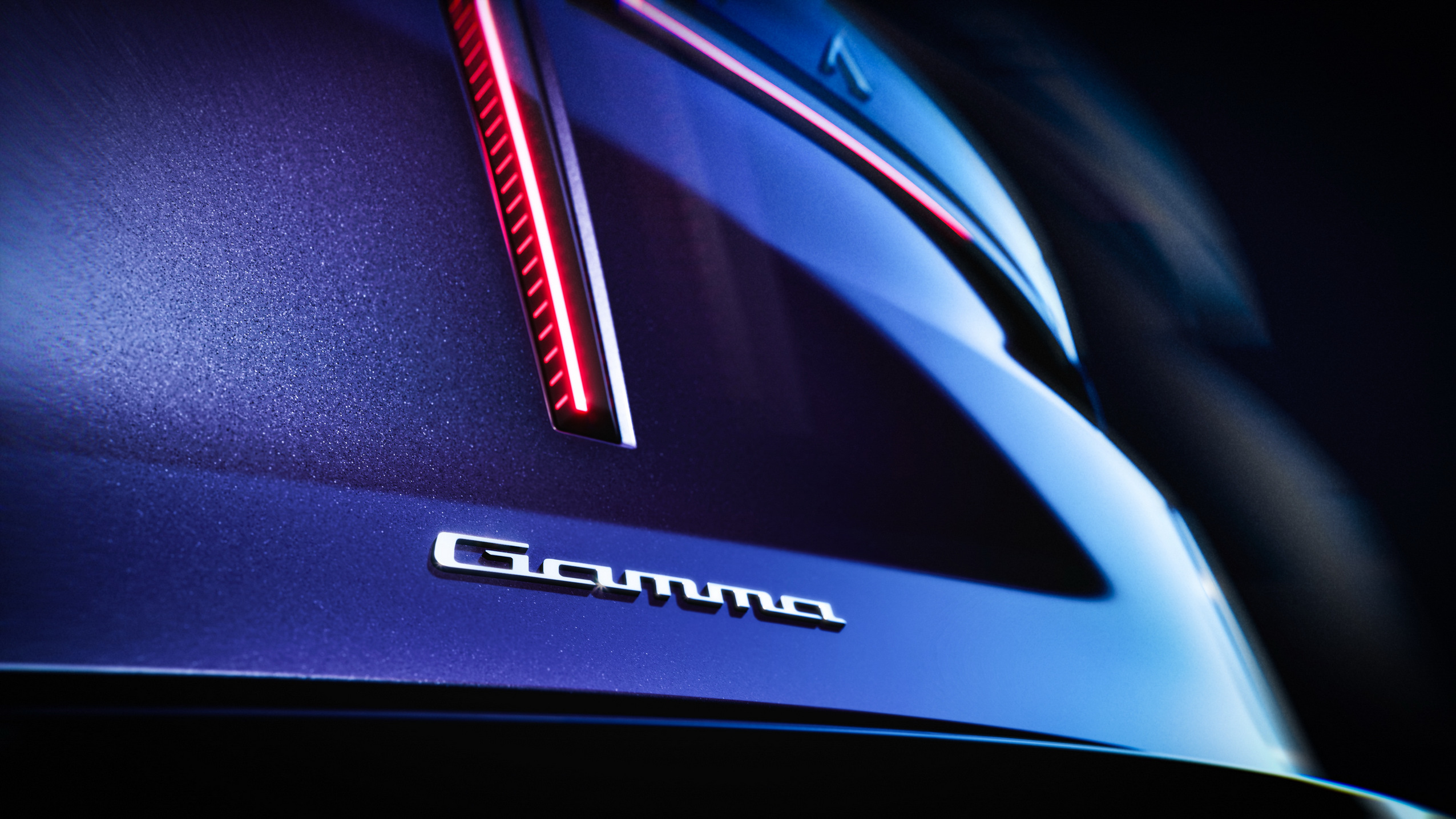
At the rear, heavy camouflage does its best to hide the details, but you can still make out the coupe-style rear glass flowing into what seems to be an integrated spoiler. An official teaser released in late 2024 indicates that the full-width LED taillights will adopt a T-shaped lighting signature, directing your eye toward the Gamma lettering across the sculpted tailgate. There are no visible tailpipes beneath the diffuser, reinforcing the likelihood that this particular prototype is fully electric.

Inside, expect a mix of premium and sustainable materials, along with Lancia’s signature “tavolino,” a mini round coffee-table integrated into the center console. The digital setup should include a 10.25-inch instrument cluster paired with a 16-inch infotainment display running the Lancia SALA system.

A Broader Powertrain Mix

 New Lancia Crossover Appears In The Wild Hiding A Famous Old Name

Like the DS No8, the Lancia Gamma will sit on Stellantis’ STLA Medium platform and roll out of the Melfi plant in Italy. Both models were originally pitched as fully electric, but Stellantis has since recalibrated. Mild-hybrid and plug-in hybrid options are now part of the plan.

More: Stellantis Bet Big On EVs, Now It’s Betting On The Engine Europe Wrote Off

Looking at what Stellantis already has on the shelf, we can speculate on the powertrain lineup. The entry-level Gamma is expected to be powered by a turbocharged 1.2-liter mild-hybrid unit generating 143 hp (107 kW / 145 PS). At the opposite end, the Gamma HF could pack dual electric motors delivering up to 370 hp (276 kW / 375 PS), complete with AWD.

\\\\\\\\\

In terms of range, the larger 97 kWh battery pack could allow the Gamma to cover up to 435 miles (700 km) between charging stops.

Lancia has confirmed the new Gamma will arrive in 2026, so expect a steady drip of details over the coming months. It will later be joined by a new Lancia Delta in 2028, rounding out a three-model lineup for the revived Italian brand.

\\\\\\\\\

Baldauf

Mazda Admits It Learned From China, And Its Future EVs Will Show It

  • Mazda says the CX-6e is a clear step beyond the 6e.
  • Working with Changan brought a steep learning curve.
  • Those lessons will shape Mazda’s future in-house EVs.

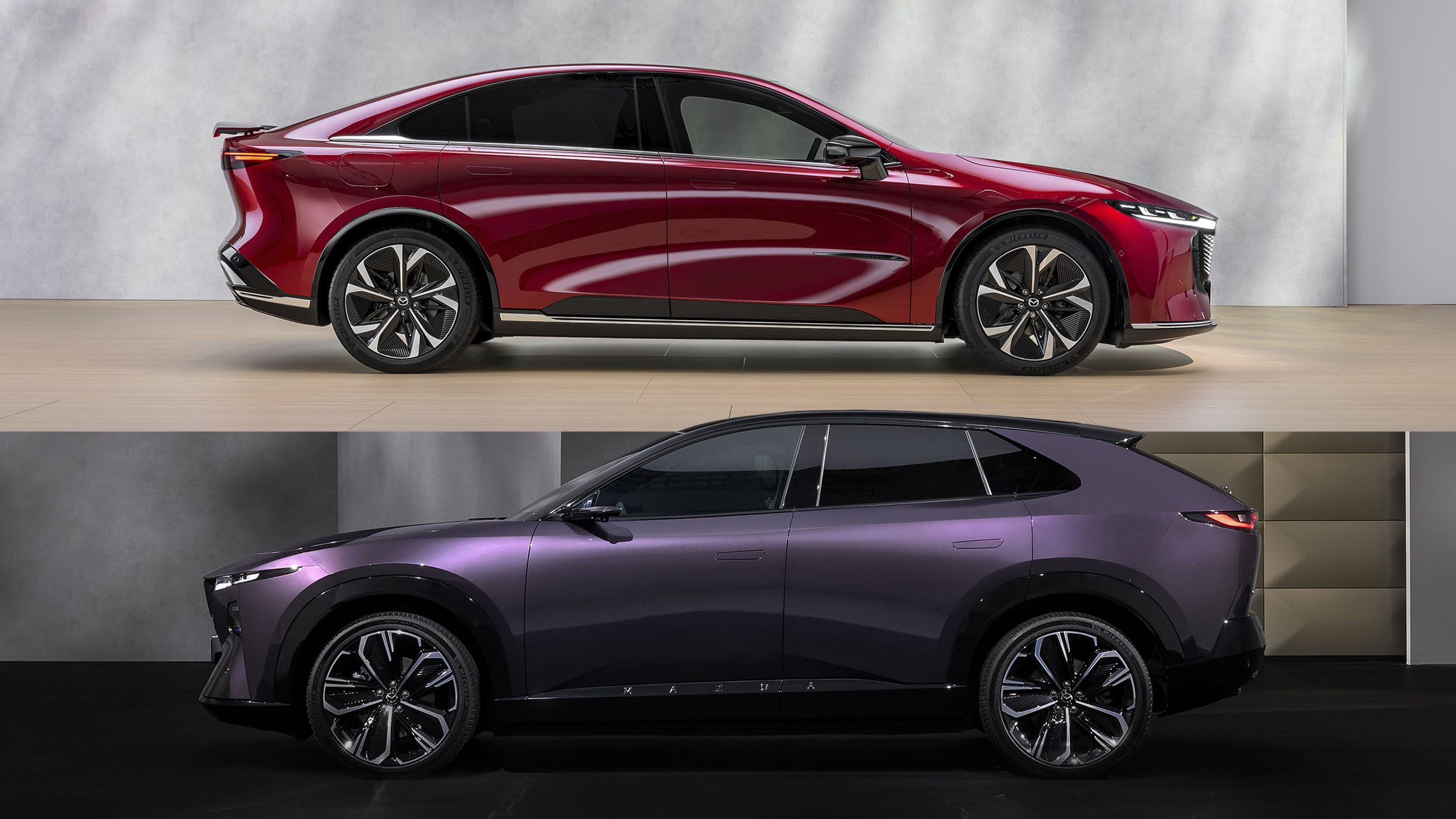
Mazda has moved on from the niche MX-30 crossover, reshuffling its fully electric lineup in China and select global markets, though not North America, with the 6e sedan and the CX-6e SUV. The two mechanically related EVs arrived in quick succession, yet a senior Mazda Europe executive says there is a noticeable development gap between them, largely due to the steep learning curve that came with partnering up with Changan.

Christian Schultze, Director of Technology Research at Mazda Europe, explained the process in an interview with AutoRAI. Both models are heavily based on the Deepal L07 sedan and S07 SUV from Changan’s dedicated EV brand, adapted for global markets under the Mazda joint venture.

Bridging Cultures Through Engineering

So what actually separates the Mazda 6e, launched in 2024, from the CX-6e that arrived a year later? According to Schultze, progress came in increments.

More: Mazda Secretly Built A V6 MX-5, Then Killed It Over One Ugly Problem

“I’d say we’ve taken another half-step forward. The 6e was the first joint development with our partner Changan Mazda Automobile for a car that would be sold in Europe. That was a huge learning experience for them, because they had never before developed a car specifically for the European market. It was also a learning experience for us, because we suddenly had to explain much more than we were used to heading into Hiroshima.”

 Mazda Admits It Learned From China, And Its Future EVs Will Show It
The Mazda 6e (above) and the CX-6e (below).

Schultze explained that while the R&D center in Hiroshima works seamlessly with the European team, adding Changan Mazda Automobile changed the dynamic. The shared understanding required for such projects had to be built from the ground up, a process that took more time and effort than Mazda initially expected.

More: New Mazda MX-5 NE Isn’t Going Electric, But It’s Not Staying Pure Either

Despite looking almost identical to the Chinese-spec Mazda EZ-6 sedan and EZ-60 SUV, the European versions had to meet different regulations. That proved challenging for engineers unfamiliar with European requirements.

“When we develop a car together with Hiroshima, we essentially already get about 98 percent of what we’re looking for. Then it’s mainly just fine-tuning here and there. With Changan Mazda Automobile, we had to go much further back to basics,” he said.

“For example, they had never created a setup for European radar systems. We had to explain the requirements and why they were important. What we appreciated was how quickly they responded and how willing they were to understand. But we first have to convey that understanding.”

The SUV Is More Mature

 Mazda Admits It Learned From China, And Its Future EVs Will Show It
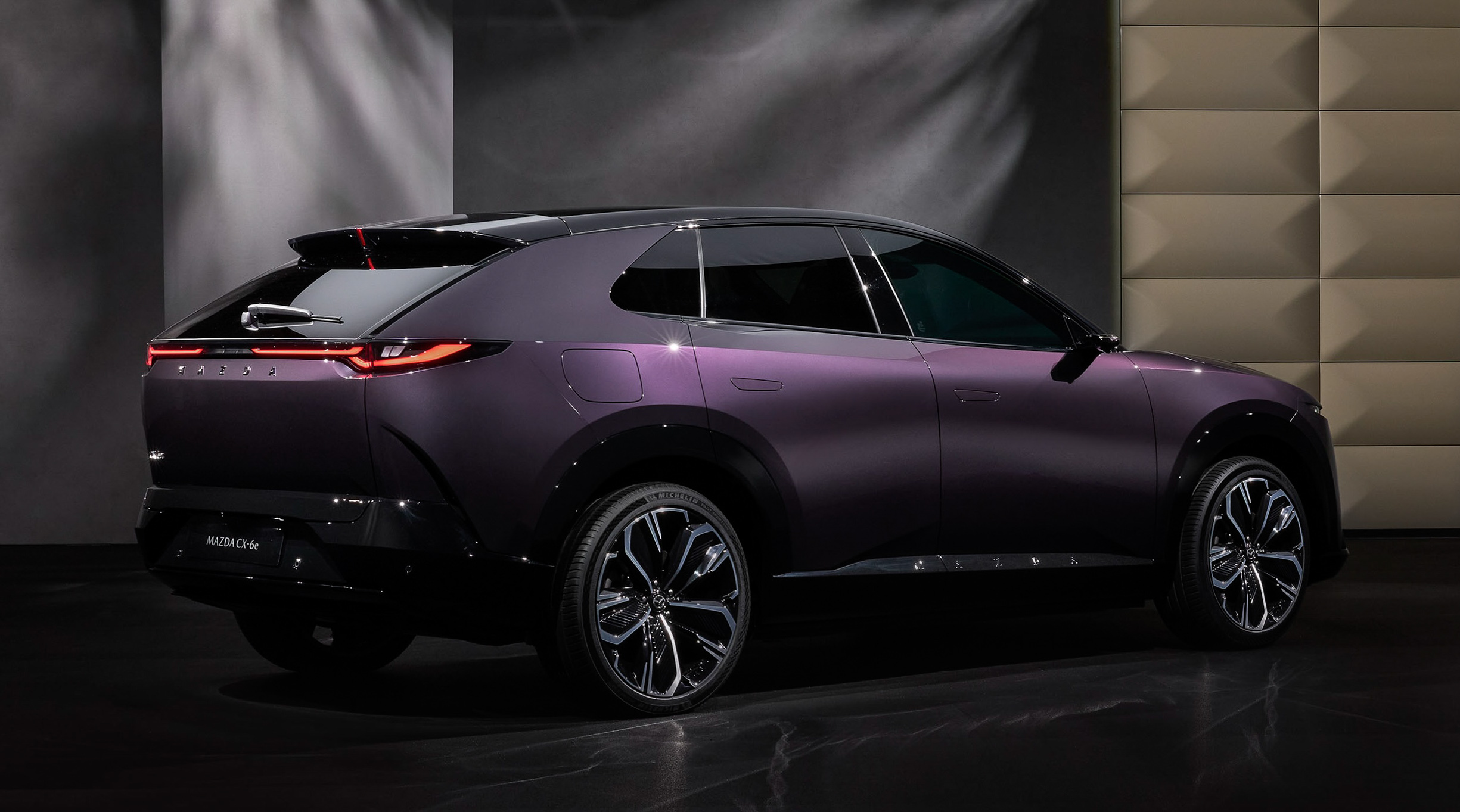
Mazda CX-6e

Despite the early hurdles, the knowledge gained from the 6e program helped Mazda refine the CX-6e.

Schultze noted that the SUV’s electric motor is a “further development,” offering “greater efficiency and a higher continuous power output” than the sedan. That fits with Mazda’s philosophy of making each new model incrementally better.

More: Mazda’s Rotary Sports Coupe Plan Faces A Roadblock It Can’t Engineer Around

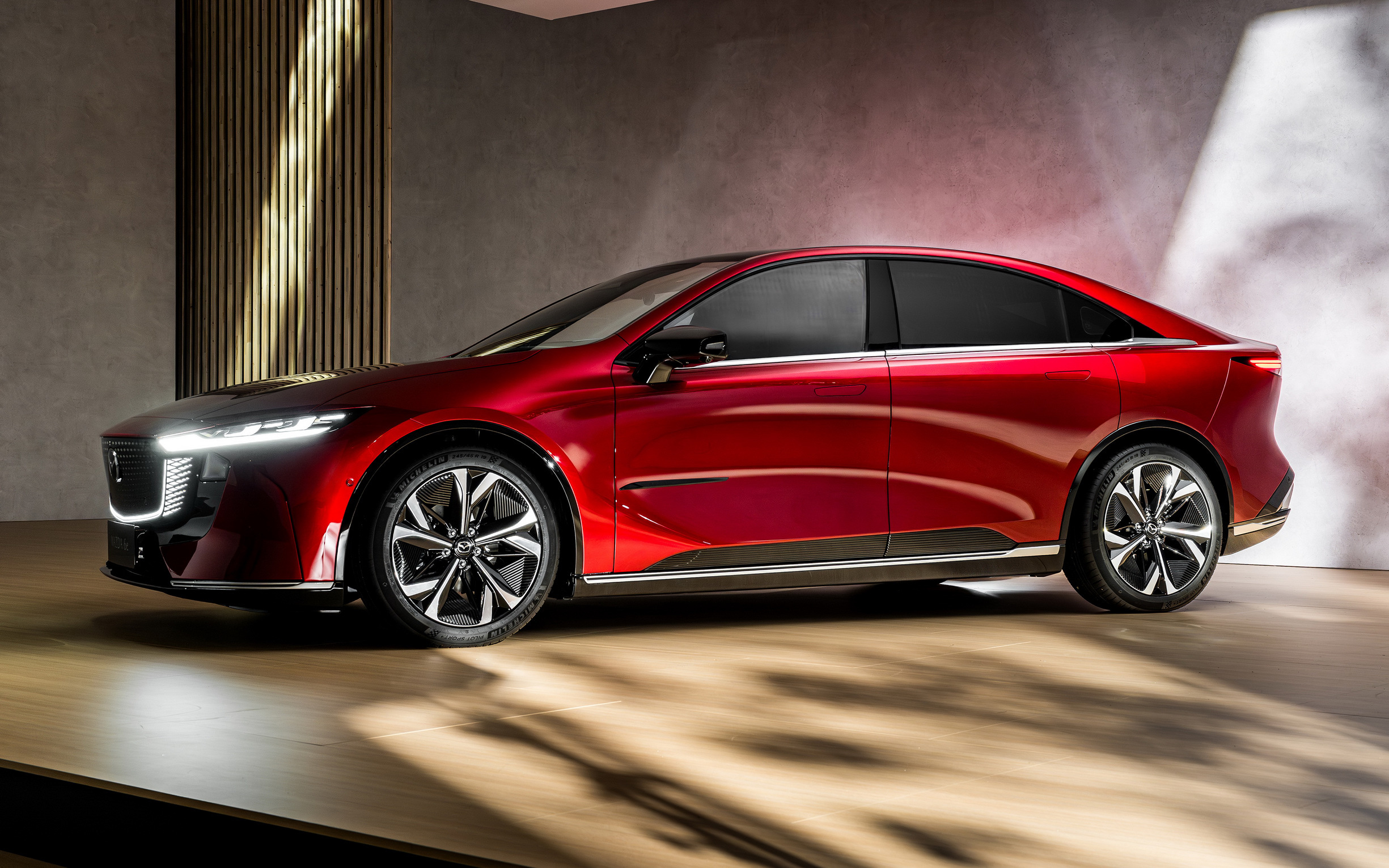
The Mazda 6e sedan currently sold in mainland Europe and the UK produces 255 hp (190 kW / 258 PS) in Standard Range form and 241 hp (180 kW / 245 PS) in Long Range trim. The CX-6e retains the higher output with the larger 80 kWh battery.

Lessons Beyond One Platform

 Mazda Admits It Learned From China, And Its Future EVs Will Show It
Mazda6e

Schultze confirmed that R&D lessons from the Changan joint venture will influence future EVs built on Mazda-developed architecture.

“We’re pursuing a strategy where we collaborate with partners, for example, in the field of electric vehicles, and develop our own electric models. Our roadmap shows that one of the next EVs will be based on a fully Mazda-owned platform. Moreover, our insights are growing every day, thanks in part to market feedback. For example, we learned a lot from the reactions to the Mazda 3, and those insights have been incorporated into our internal objectives. The same applies to the lessons we’re learning from the CX-6e.”

More: This SUV Just Did Something Only Two Other Mazdas In History Have Ever Done

He also highlighted how modern technology allows continuous improvement without waiting for a facelift or full generational change.

“The great advantage of today’s world is that many systems are digital or electronic. This means we can implement improvements even during ongoing production. In the past, in the purely mechanical world, if a switch felt too heavy, it would stay that way for four years until the next model change. Fortunately, those days are behind us.”

 Mazda Admits It Learned From China, And Its Future EVs Will Show It
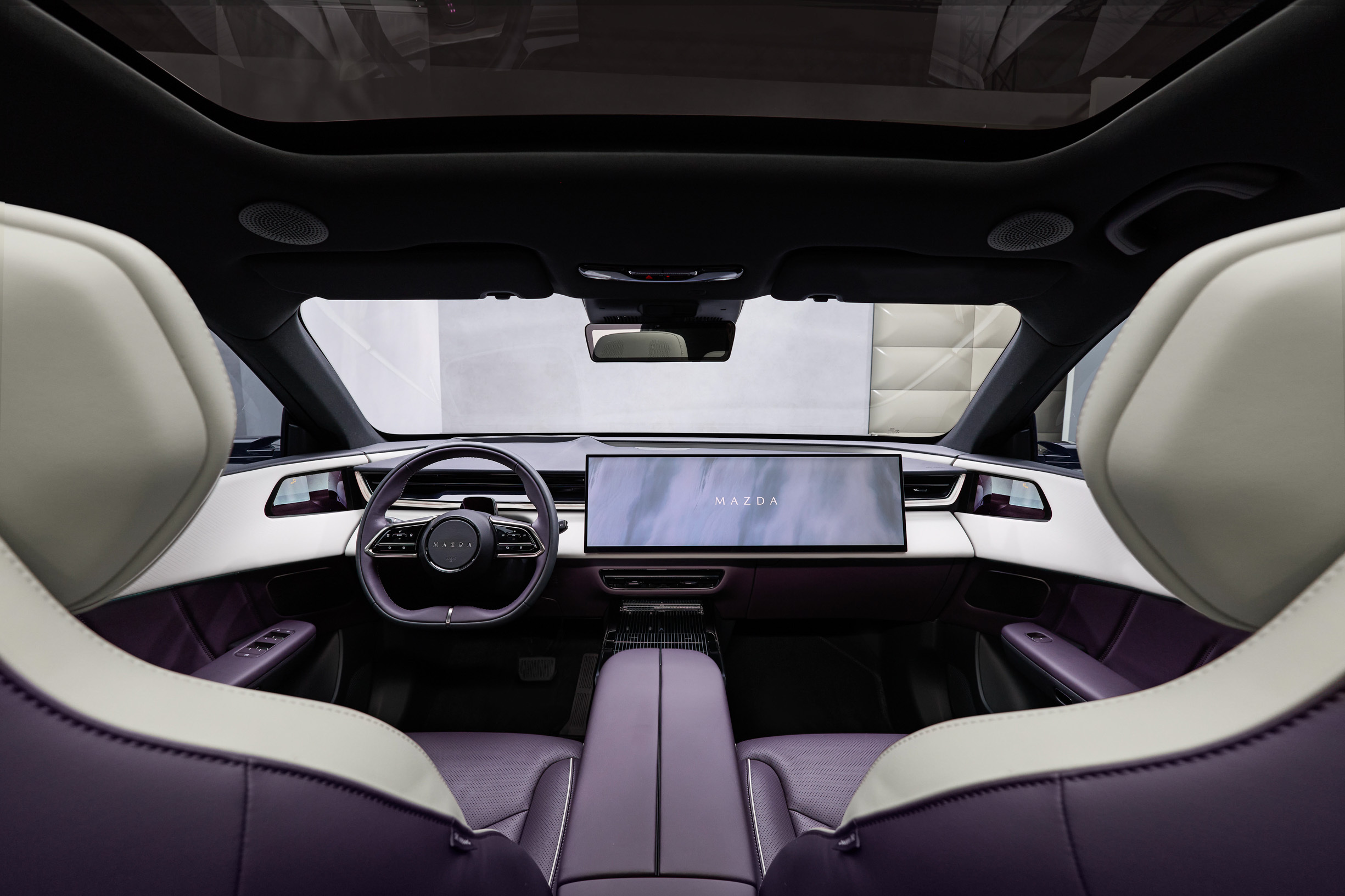
The interior of the Mazda CX-6e

Audi’s Smallest EV Gives Up Its Interior Secrets

  • Audi’s upcoming A2 e-tron has been snapped inside and out.
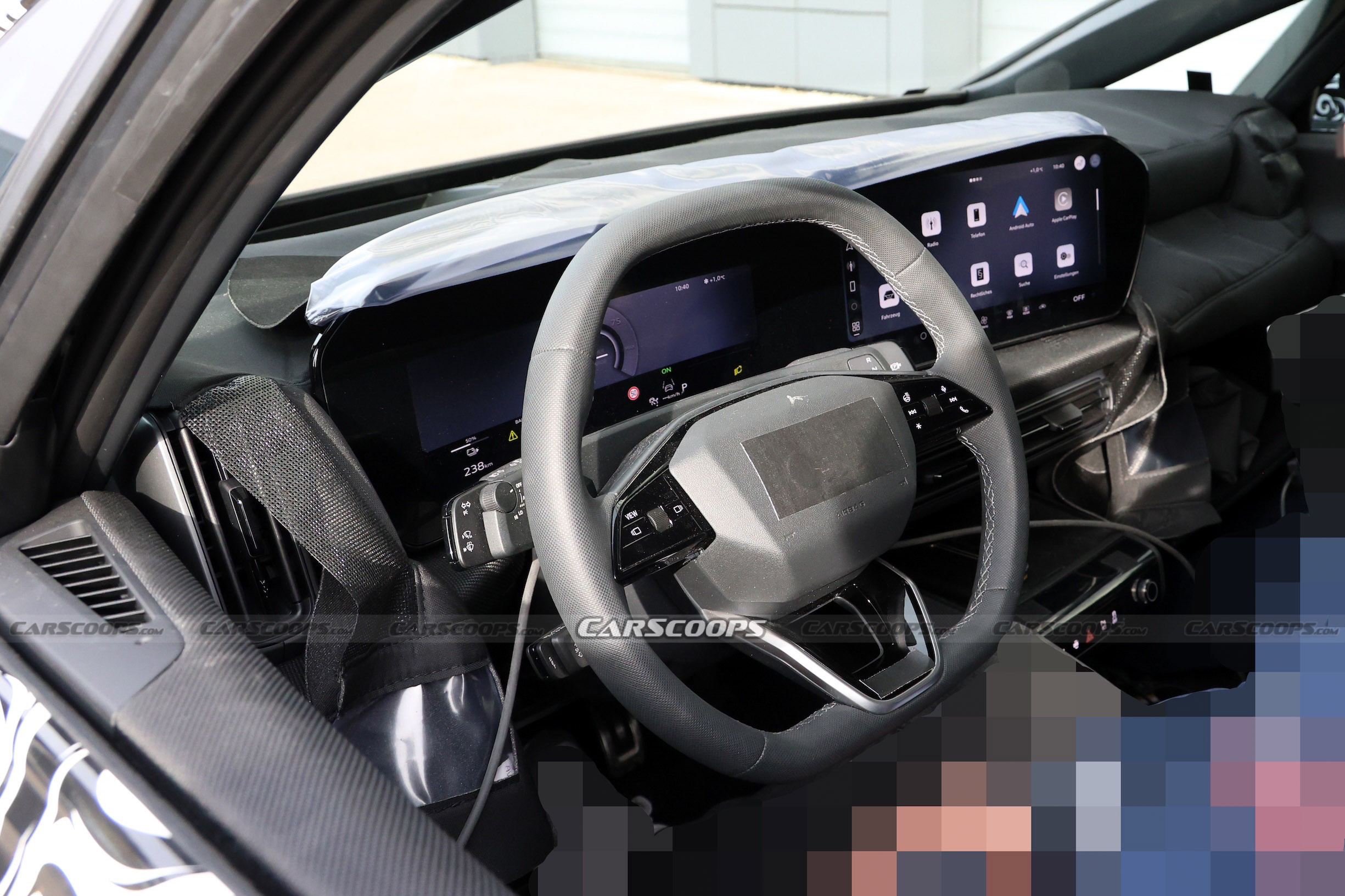
  • The BMW iX1-sized SUV has a widescreen digital dashboard.
  • MEB platform from Q4 e-tron could give 350+ miles of range.

We’ve seen the outside of the upcoming Audi A2 e-tron plenty of times, but now we finally get a peek inside. And surprise, it looks like Audi raided the new Q3 parts bin for its smallest EV, a car that’s retro in name, but definitely not in nature.

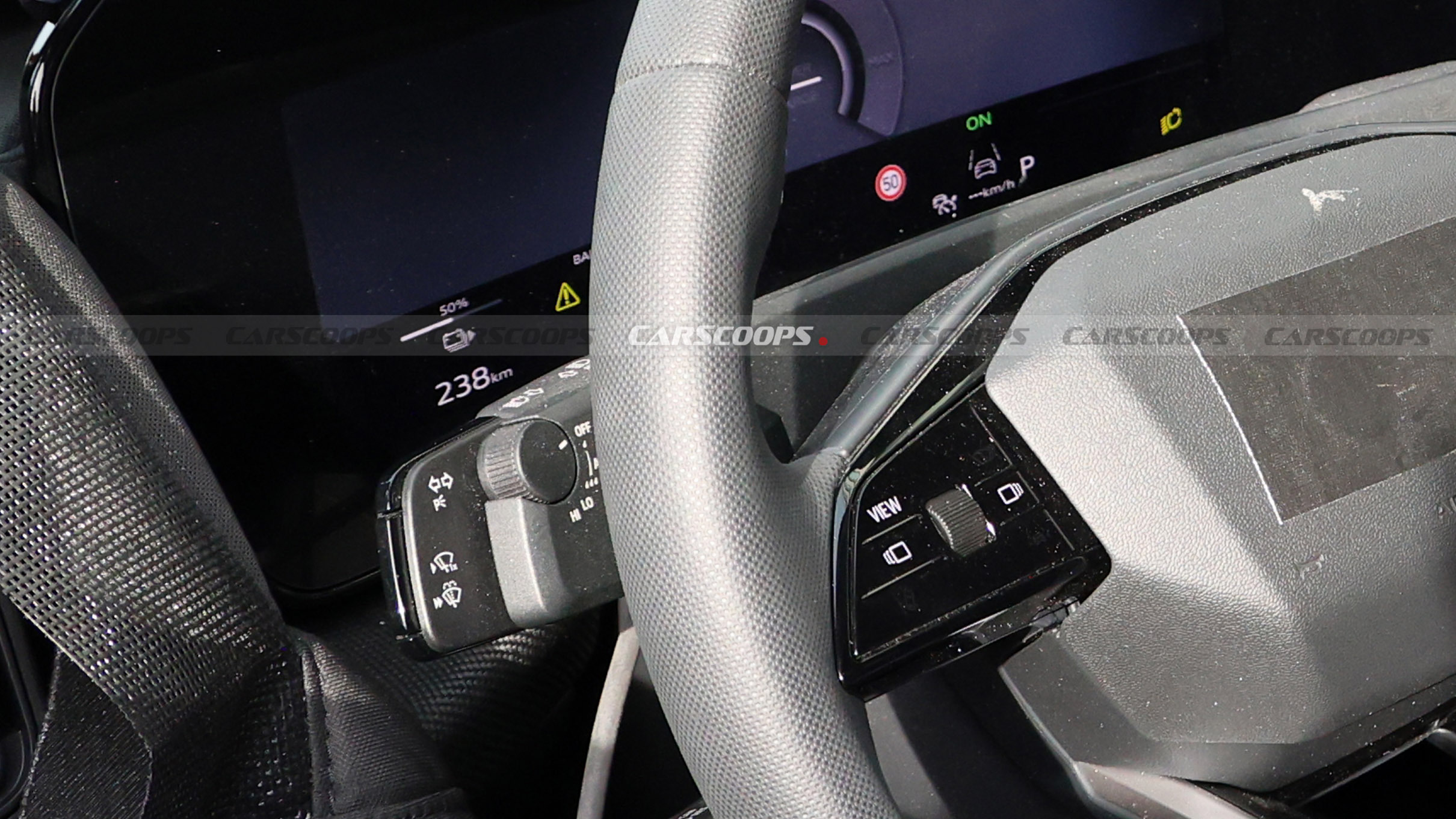
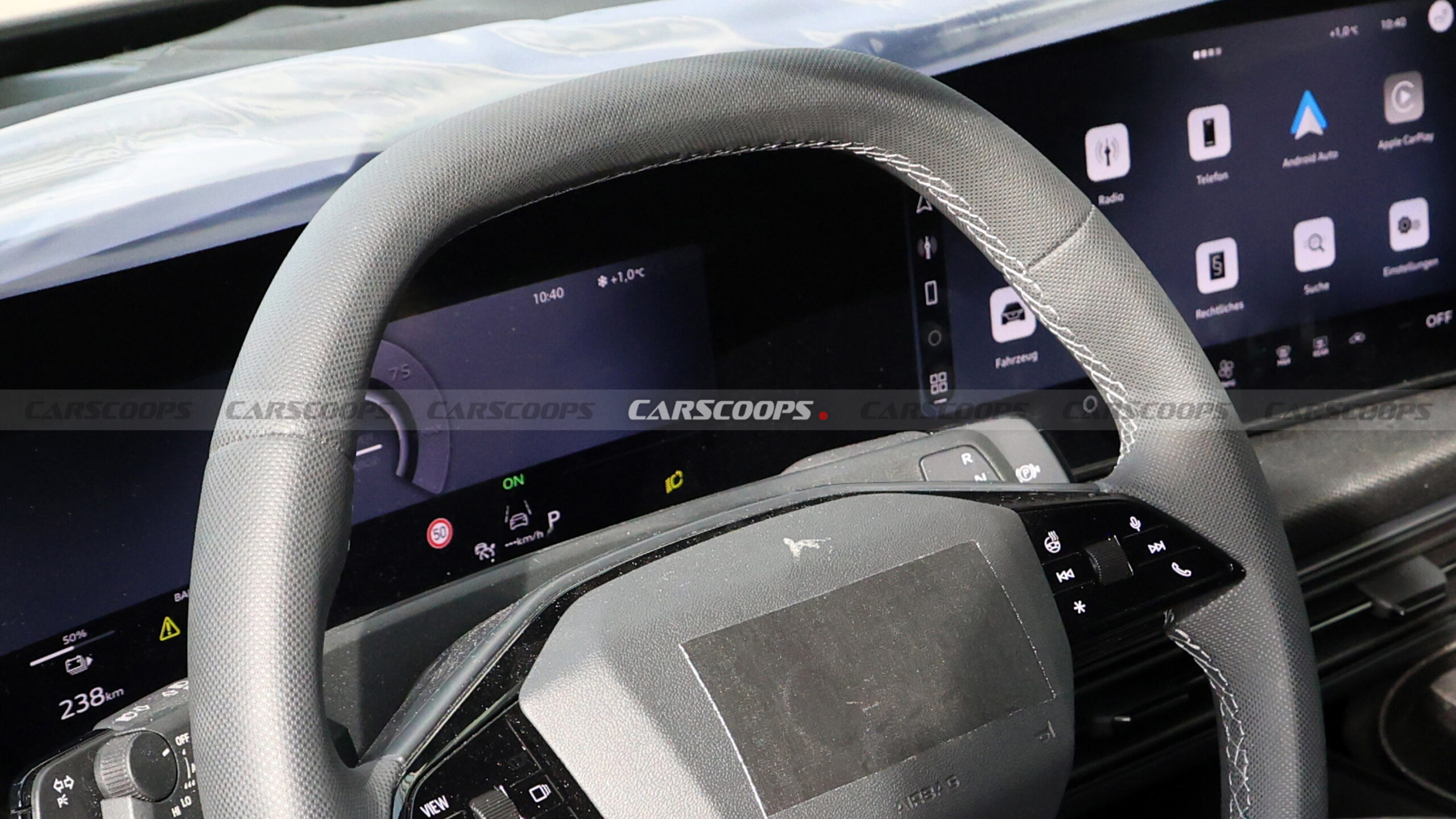
The spy shot reveals a clean, tech-forward cabin that mirrors the latest Audi Q3 revealed last September. There’s the familiar curved digital driver display flowing neatly into a central MMI touchscreen, plus Audi’s chunky, squared-off steering wheel with multi-function controls.

More: Audi’s Updated Q4 Is Coming With Changes You Won’t See At First

Even the controversial new-style column stalks look lifted straight from the Q3, where they made their debut.

 Audi’s Smallest EV Gives Up Its Interior Secrets

If anything, it confirms Audi isn’t treating this as a bargain basement EV. The A2 e-tron might be the baby of the lineup, but inside it still looks properly premium. Expect configurable ambient lighting, sustainable trim options, and Audi’s latest AI-based voice assistant with app integration and streaming services. Level 2 driver assistance tech should also be on the menu.

Older platform

\\\\\\\\

SHProshots

Underneath, it rides on Volkswagen Group’s familiar 400-volt MEB platform used on countless VW Group models like the VW ID.3 and ID.4 and Audi’s own Q4 e-tron. Single-motor MEB cars are rear-wheel drive, but dual-motor quattro variants will also be available, and yes, whispers of an A2 RS version are already doing the rounds.

The base version is tipped to pack a single front-mounted motor producing 201 hp (204 PS / 150 kW), fed by a 63 kWh battery delivering around 250 miles (402 km) of range. Step up the ladder and single-motor outputs could climb past 268 hp (272 PS / 200 kW), with a larger battery offering up to 348 miles (560 km) on the WLTP cycle, and maybe more.

Modern Classic

 Audi’s Smallest EV Gives Up Its Interior Secrets

The A2 name, as you probably know, is a throwback. The original Audi A2 was an aluminium spaceframe oddball that ran from 1999 to 2005 and never really sold in huge numbers, but later gained cult status. Audi skipped the obvious Q2 badge choice this time, reviving A2 instead, reports say, betting on nostalgia with a modern e-tron twist.

Design-wise, the exterior looks noticeably different from the bigger Q4 e-tron, as seen in our recent artist impression. There’s a nod to the original A2 with its upright stance and that split-style rear glass effect, but it’s sharper, wider and more assertive.

Slim daytime running lights sit high, the main lamps are lower in the bumper, and the closed-off grille gives it a confident EV face.

 Audi’s Smallest EV Gives Up Its Interior Secrets

The A2 will effectively replace both the gas-powered A1 hatch and Q2 SUV in Europe, and slot beneath the Q4 e-tron. Key rivals include the Volvo EX30, BMW iX1, Smart #1, Alfa Romeo Junior, and Mini Aceman, so prices should start south of €35,000 (£31,000 / $41,000 ) when sales start next year.

\\\\\\\\\

SHProshots

Mercedes Baby G-Class Ditches Its EV-Only Plan

  • Shrunken G-Class will offer both hybrid and fully electric options.
  • Hybrid borrows 1.5-liter turbo engine from new CLA, report says.
  • EV version targets nearly 450-mile range, far better than big G EV.

Mercedes’ upcoming baby-G was supposed to be the cute, chunky electric-only gateway into G-Class ownership. But the automotive market is changing fast, and so are Benz’s plans, as it reacts to cooling demand for EVs in some markets, especially for its own electric cars. As a result, the boxy SUV will now come with hybrid power.

More: Mercedes Wants This Baby G-Wagen To Win Buyers The Big One Never Could

Internally nicknamed Little G, Autocar reports, the compact, GLB-sized, two-row off-roader is due in 2027 and will still be available as a pure EV. But a companion hybrid model is now in development, using the turbocharged four-cylinder from the latest Mercedes-Benz CLA sedan.

 Mercedes Baby G-Class Ditches Its EV-Only Plan
Illustrations Nikita Chuyko / Kolesa

The change speaks to a wider reset inside Mercedes. The company has stepped back from its earlier EV-only plans, with CEO Ola Källenius confirming it will keep selling combustion models well into the 2030s to stay flexible across different markets. Tepid demand for the electric G-Class has, by most accounts, helped concentrate minds.

Read: Mercedes’ Electric G Flops So Hard It Could Change What Comes Next

The hybridized 1.5-liter unit is designed by Mercedes and built by Horse Powertrain in China, a joint venture involving Geely and Renault. Exactly how much kick it will deliver in the Little G is unknown, but the new CLA 220 hybrid makes 208 hp (211 PS) and 280 lb-ft (380 Nm) of torque, and gets to 62 mph (100 kmh) in 7.1 seconds.

In the CLA, the engine is paired with a gearbox-mounted electric motor that allows short periods of engine-off driving.

450-mile Range

 Mercedes Baby G-Class Ditches Its EV-Only Plan
Illustrations Nikita Chuyko / Kolesa

Prefer your G a little more refined? The EV variant will reportedly come standard with two motors and all-wheel drive to preserve off-road credibility, Autocar says.

Also: Mercedes’ Smallest SUV Points To A Different Kind Of Compact Future

An 85 kWh NMC battery is tipped to deliver close to 450 miles (724 km) of WLTP range, which would be seriously impressive for something shaped like a luxury brick – it’s not far short of the CLA 350 sedan’s 418-479 miles (672-771 km) figures. The full-size electric G580 with EQ technology, you might recall, is only rated for 280 WLTP miles (450 km).

Regardless of powertrain, the Little G will be sold exclusively with four-wheel drive, and both versions are tipped to feature advanced torque vectoring capable of distributing drive to individual wheels to mirror the off-road ability of the larger G-Class.

Slab Sides

 Mercedes Baby G-Class Ditches Its EV-Only Plan
Illustrations Nikita Chuyko / Kolesa

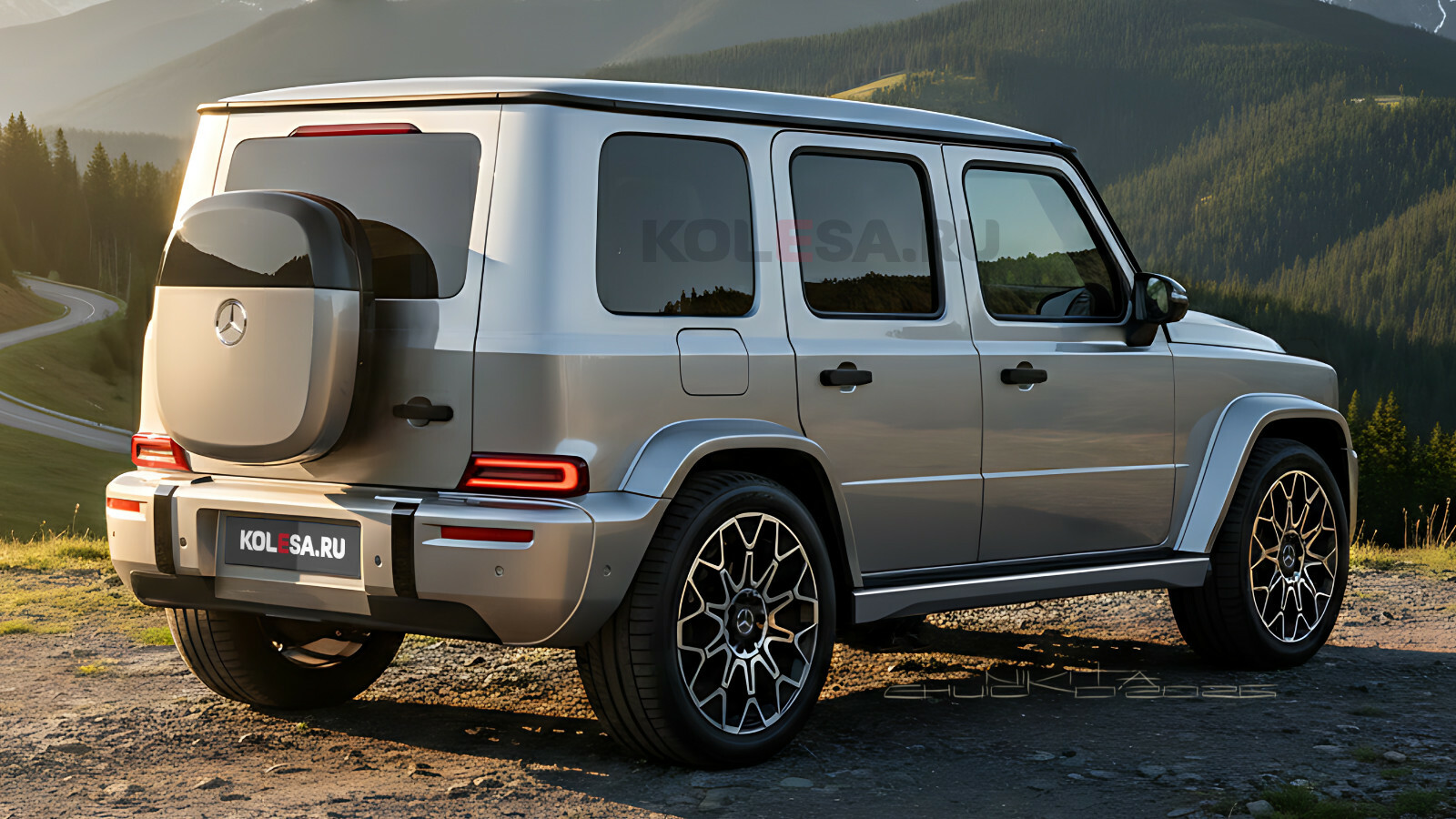
Where the baby G does follow its big brother’s lead, though, is in military-chic charm. Unofficial renders from Nikita Chuyko for Kolesa give us a credible idea of what the finished SUV could look like, showing round headlights, upright glass, three big side windows and a tailgate-mounted spare.

It looks like someone left a G-Class in the dryer too long, and the good news is the slow-selling G580 EV’s $163k price should also shrink, hopefully by around 50 percent.

Unlike many compact crossovers pretending to be rugged, the Little G is said to ride on a bespoke ladder-frame platform rather than sharing underpinnings with Mercedes’ electric GLC or C-Class.

That should help it take on the incoming Land Rover Defender Sport, the Little G’s most natural rival, though that gets a unibody structure. We can’t wait to see them duke it out in the dirt next year.

\\\\\\\\\\\\\\

Baldauf

Lamborghini Scraps EV Supercar After Admitting Interest Was ‘Close To Zero’

  • Lamborghini has canceled the electric Lanzador over low demand.
  • The brand will stick with plug-in hybrids across its range.
  • CEO Stephan Winkelmann says EVs risk becoming costly hobbies.

Lamborghini has officially shelved plans for its first production EV, deciding instead to lean harder into high-performance plug-in hybrids through 2030. In Sant’Agata’s world, electricity is welcome, just so long as it’s boosting a V8 or V12 rather than replacing one.

More: Audi Boss Says TT Successor Is Safe Even As Porsche Faces Doubts

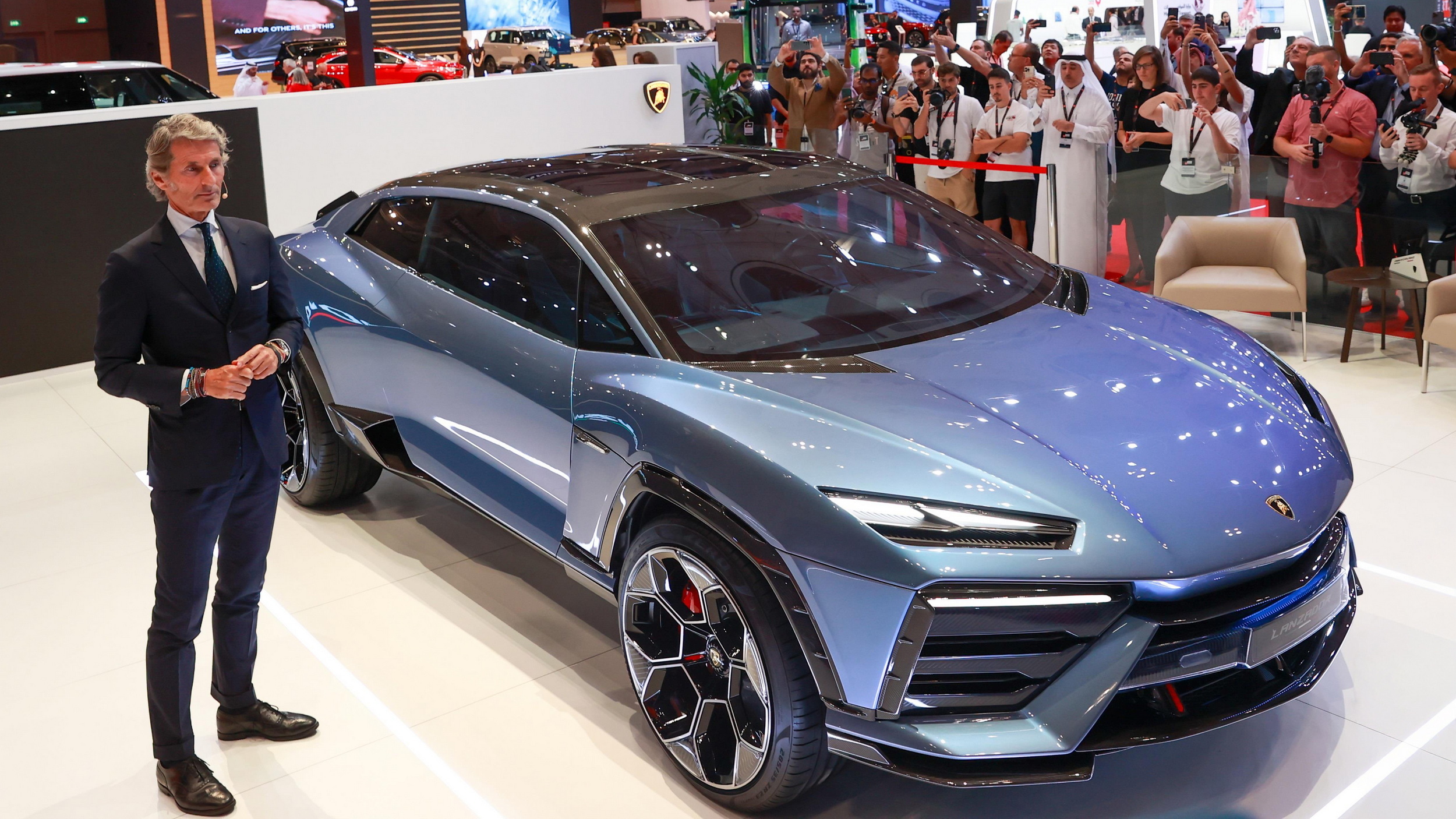
The model in question, previewed by the Lamborghini Lanzador concept in 2023, was supposed to arrive before the end of the decade as a fully electric 2+2 crossover. Instead, it is heading back to the drawing board, if not straight into the history books.

A Strategic Backflip On EVs

Speaking to the Sunday Times, Lamborghini CEO Stephan Winkelmann confirmed the EV won’t be joining the production lineup and will instead give way to another plug-in hybrid offering. He also cautioned that going all-in on electric could turn into an “expensive hobby,” noting that the “acceptance curve” for zero-emission tech among Lamborghini’s clientele is “close to zero.” Not exactly a ringing endorsement.

Winkelmann went on to say that Lamborghini buyers are still chasing the full “emotional experience,” meaning the styling, the performance, and, crucially, the noise. That, in his view, is something EVs cannot yet replicate in their current form. So for now, combustion engines remain very much on the menu, and will continue to be built “for as long as possible.”

Hybrids Take Priority

 Lamborghini Scraps EV Supercar After Admitting Interest Was ‘Close To Zero’
Stephan Winkelmann with the 2023 Lamborghini Lanzador Concept.

The call to axe the project was reportedly made behind closed doors late last year, after extensive talks with customers and dealers, along with a thorough market analysis. In other words, Lamborghini did the homework and did not like what it saw. As Winkelmann put it:

“Investing heavily in full-EV development when the market and customer base are not ready would be an expensive hobby, and financially irresponsible towards shareholders, customers [and] to our employees and their families. Plug-in hybrids offer the best of both worlds, combining the agility and low-rev boost of electric battery technology with the emotion and power output of an internal combustion engine.”

More: Ferrari’s First EV Exterior Is So Radical Even Its Designer Is Nervous About Your Reactions

Pressed by the Sunday Times on whether Lamborghini would ever build a full EV, Winkelmann left the door slightly ajar, albeit with a very firm hand on the handle.

“Never say never, but only when the time is right,” he said. “For the foreseeable future, only PHEVs. We will continue to develop electrification because we also need to be ready. The times we are living in are fast moving; if you don’t react fast, you risk going out of business or losing momentum. Therefore we need a solid financial base to reinvest in the future.”

 Lamborghini Scraps EV Supercar After Admitting Interest Was ‘Close To Zero’
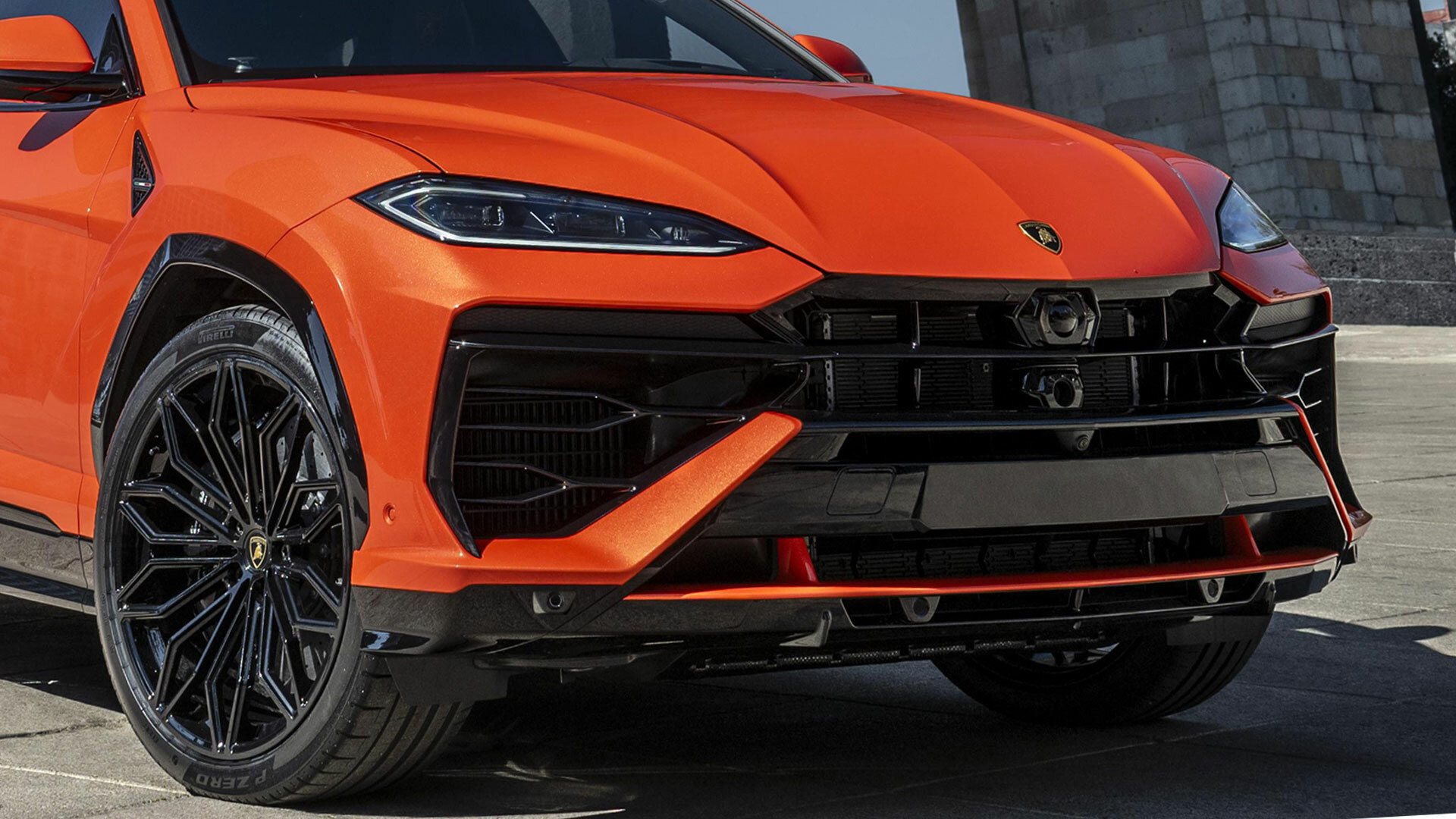
Lamborghini Urus

Lamborghini’s current lineup is now fully hybridised, from the Urus SUV to the Temerario and Revuelto supercars, each pairing combustion muscle with electric assistance. The formula seems to be working. Last year Sant’Agata shifted a record 10,747 cars, with the Urus comfortably leading the charge.

Protecting The Brand’s Best Seller

The performance-focused SUV was supposed to enter a new generation in 2029, transitioning to a fully electric powertrain, but that is no longer the case. After speaking with customer groups, Lamborghini concluded that a battery-powered Urus would not exactly set its order books alight.

More: Lamborghini’s Next Surprise Might Be A V12 Supercar You Can Take Camping

According to Winkelmann, they simply couldn’t risk it with their best seller. The Urus is the brand’s financial backbone. Supercars may command higher margins, but they occupy what he calls a “tiny segment” compared with the Urus market, which is “bigger and more stable.” In other words, you do not gamble with the model that pays the bills.

Winkelmann also pointed to the regulatory road ahead. “We have a big task as an automotive industry. Everybody’s speaking about 2035, but there’s a big date which is very dangerous at 2030, due to the emissions. And this is something which is not clear enough, in my opinion, today.”

 Lamborghini Scraps EV Supercar After Admitting Interest Was ‘Close To Zero’
The current Lamborghini lineup, including the Temerario, Urus, and Revuelto.

This Electric Crossover Starts At $7K, Batteries Not Included

  • The Tata Punch EV gets an early facelift in India.
  • Brings styling tweaks, more power, and extra range.
  • Starts at $7,150 if you lease the battery separately.

Two years. That’s all Tata Motors has given the fully electric Punch before wheeling out a facelift. In the fast-moving world of small EVs, standing still is not an option. The 2026 Tata Punch EV goes beyond a nip and tuck, bringing a larger battery, quicker charging, and a finance trick designed to make the sticker price look far friendlier.

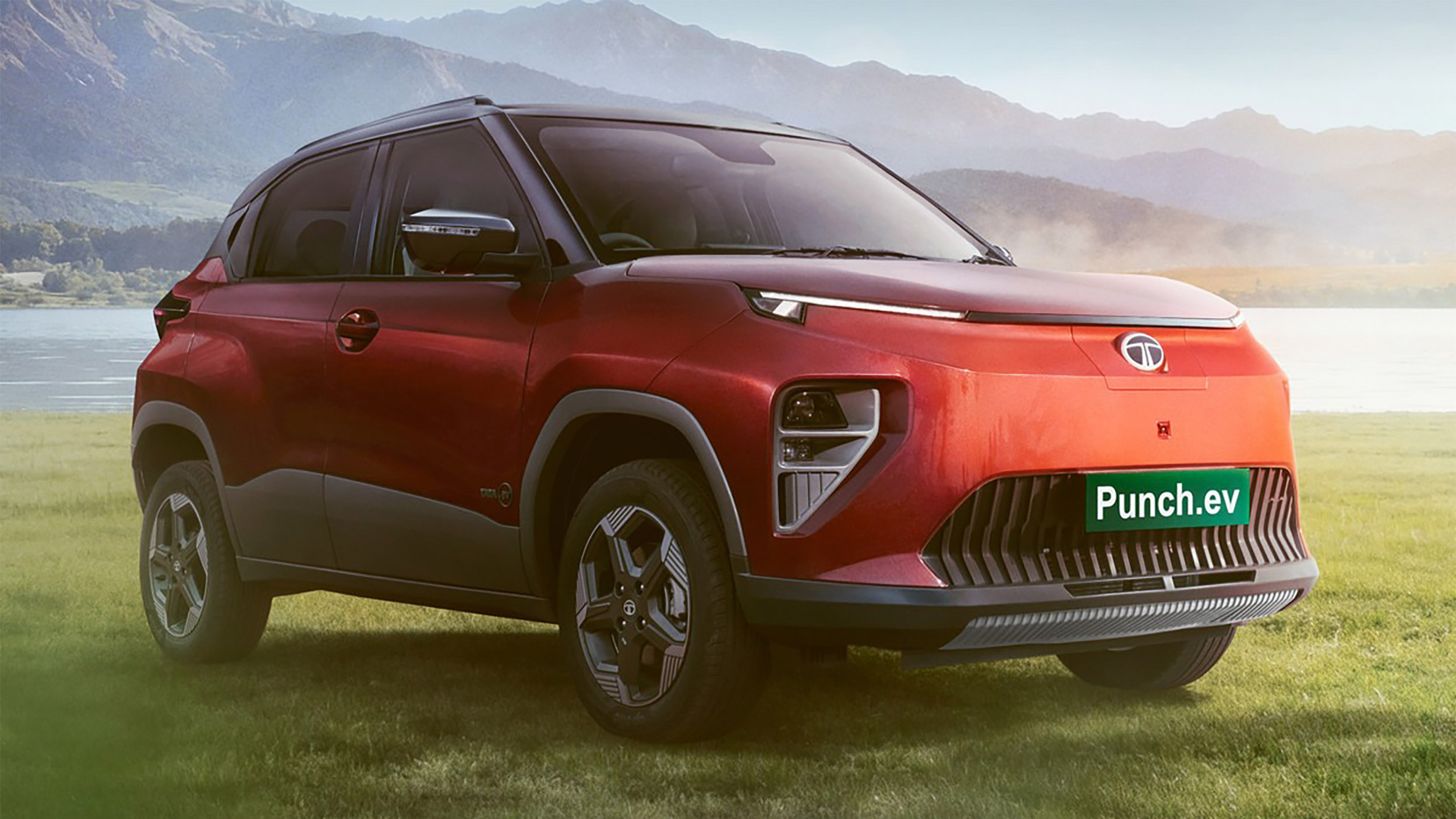
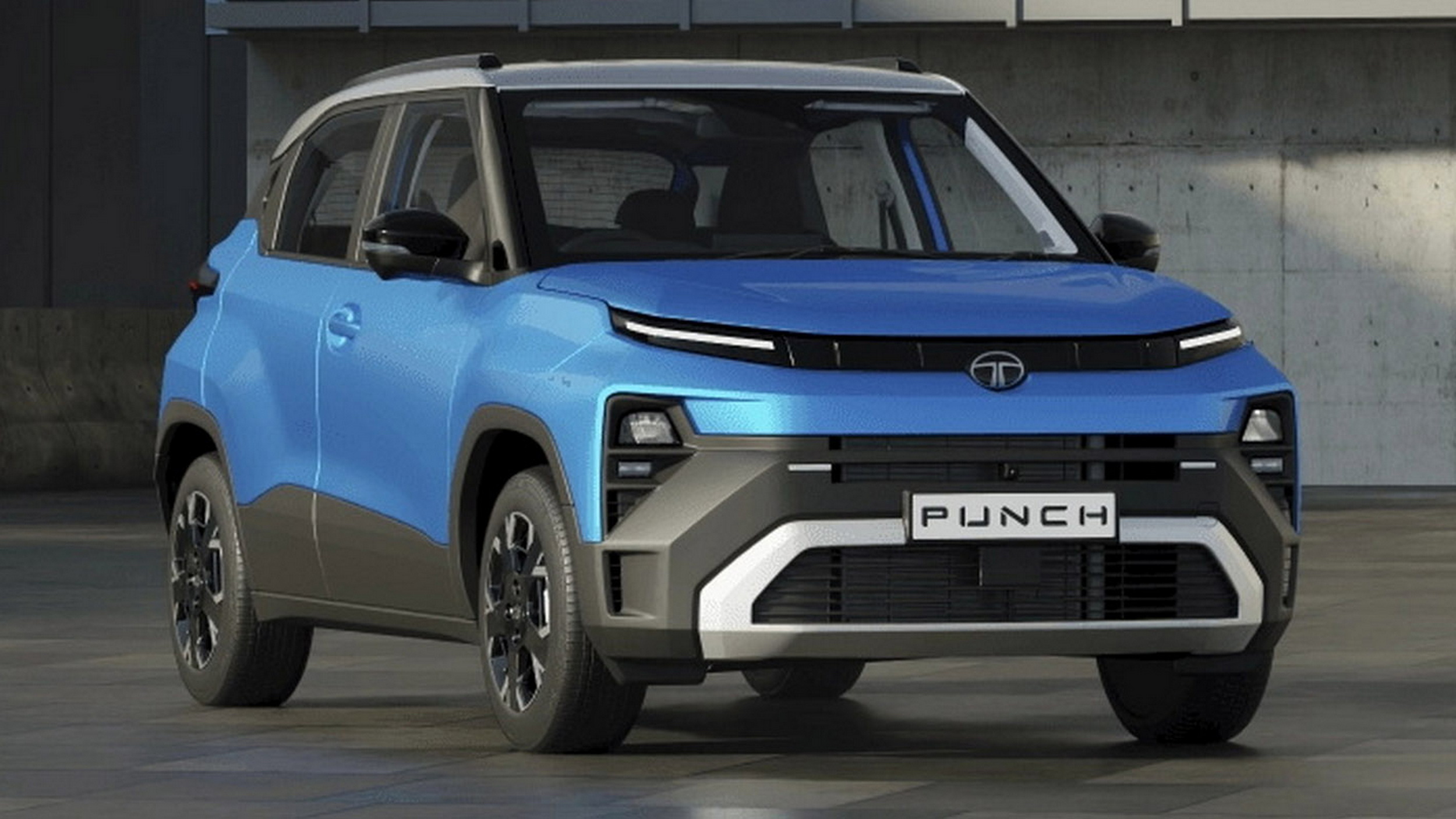
Starting with the exterior, the Punch EV gains a redesigned face with a cleaner bumper, though the split headlights have been carried over. It also benefits from new 16-inch alloy wheels and full-width taillights that mirror the recently facelifted ICE-powered Punch.

More: Land Rover’s Owner Built A Baby Land Rover For Less Than A Bespoke Paint Job

The interior is largely unchanged. Higher trims pack dual 10.25-inch displays, wireless charging, ventilated seats, a voice-activated sunroof, and a 360-degree camera. Six airbags are standard across the range, although the base car makes do without an infotainment screen.

More Punch And Longer Range

\\\\\\\\

More important changes hide under the skin. The Punch EV benefits from larger battery packs with capacities of 30 kWh and 40 kWh, each up by 5 kWh.

Tata claims a real-world range of up to 355 km (221 miles), which is 75 km (47 miles) more than before. Charging gets a lift too. The updated Punch EV now supports a 65 kW DC fast charger, up from 50 kW, cutting the 20-80 percent top-up time to 26 minutes.

There’s a modest bump in output as well. Power rises by 6 hp (5 kW). The Medium-Range version makes 85 hp (65 kW), while the Long Range variant produces 127 hp (95 kW). Tata says the latter hits 0-100 km/h (0-62 mph) in 9 seconds, trimming 0.5 seconds from the previous figure.

The Price Hack

\\\\\\\\\\\\\\\\\\\\\

Here’s where things get interesting. Despite the added kit, Tata has lowered the entry price. The attention-grabbing ₹6.49 lakh ($7,150) starting figure comes via a BaaS (battery as service) scheme. You buy the car, but lease the battery separately at ₹2.6 per km ($0.029 per mile).

More: JLR’s Parent Company Made An Electric SUV With Drift Mode For Just $25K

Prefer to own the lot outright? Prices then range from ₹9.69 lakh ($10,700) to ₹12.59 lakh ($13,900), depending on specification. Even so, that undercuts the pre-facelift model, which makes the updated Punch EV look like stronger value.

At 12,000 km a year, the battery lease works out to ₹31,200 (about $348). Drive 15,000 km and it rises to ₹39,000 (about $435) annually. Over five years at that higher mileage, you would pay ₹1.95 lakh (around $2,175). Add that to the ₹6.49 lakh ($7,150) purchase price and the total comes to roughly ₹8.44 lakh (about $9,325), still below the ₹9.69 lakh ($10,700) entry point of the version that includes the battery. The more you drive, the smaller the gap becomes.

The ICE-powered Tata Punch, meanwhile, ranges from Rs. 5.59 Lakh ($6,200) to Rs. 10.54 Lakh ($11,700).

 This Electric Crossover Starts At $7K, Batteries Not Included
The Tata Punch EV (above) compared to the ICE-powered Punch (below).
 This Electric Crossover Starts At $7K, Batteries Not Included

Mercedes G-Class Got Too Big And Expensive, The Little G Is Meant To Fix It

  • The mini Mercedes G-Class will rival Land Rover’s baby Defender.
  • Underpinning the SUV will be a bespoke ladder frame chassis.
  • Launches as an EV, but combustion power remains a possibility.

Sales of the Mercedes-Benz G-Class surged 23 percent last year to a record 49,700 vehicles. Not bad for a machine that still drives like it could climb a mountain on the school run. Now, those who can’t get enough of the G-Wagen will soon have another compelling, albeit smaller, option.

Read: Mercedes Wants This Baby G-Wagen To Win Buyers The Big One Never Could

The so-called ‘Little G’ is on the way, promising all the boxy attitude of the full-size model in a tighter, more affordable package. Positioned beneath the full-size model, the Little G marks Mercedes’ first serious attempt to stretch the G-Class name beyond a single model line.

A Compact G Takes Shape

\\\\\\\\

Baldauf

Also known as the mini G and baby G, this new addition to the Mercedes-Benz line-up should have enthusiasts paying close attention. It’s expected to rival the smaller Defender currently in development at Jaguar Land Rover. For now, it’s confirmed to launch as an all-electric model, while a combustion-powered version remains possible in the future.

The latest round of spyshots of the Little G shows the model testing in the depths of the European winter. While this prototype is still under heavy camouflage and some body cladding, there’s no hiding the overall shape. It looks just like a G-Class should, just scaled to about 70 percent and softened slightly around the edges.

\\\\\\

Baldauf

Found at the front are the circular headlights you’d expect, with outer rings that serve as the turn signals. It also has blocky front quarter panels and a remarkably flat hood. This particular prototype can also be seen on a set of mismatched wheels and with a pair of roof rails. Although future powertrain options have not been detailed, this prototype is clearly an EV, as evidenced by the lack of exhaust.

Like the larger G 580 with EQ Technology, the test cars appear to retain signature details such as a side-hinged rear door and an external spare wheel cover. On the electric version, that rear-mounted housing is expected to double as storage for charging cables, echoing the setup already offered on the full-size EV.

Bespoke Bones Beneath The Boxy Body

Underpinning the new model will be a bespoke chassis. According to the former chief technology officer of Mercedes, Markus Schäfer, the Little G will have a “miniature ladder-frame chassis,” adding that it will have similar qualities “when it comes to suspension and wheel size,” to the larger model.

\\\\\\\\

EV Rollout Plan

Mercedes is set to launch the baby G as a fully electric SUV. Exact battery sizes and motor outputs are still under wraps, but expect it to borrow heavily from the tech already rolling out in Merc’s newer EVs, including the GLA and GLC electric models.

What it won’t get, according to Schäfer, is a range-extender setup. Smaller and mid-size Mercedes models are steering clear of that halfway-house solution, which means the Little G should stick with proper, full battery-electric hardware.

As for combustion power, nothing is confirmed. Mercedes hasn’t shut the door on it, but it hasn’t opened it either. If an ICE version does materialize, it’ll likely depend on the market. For now, the company is keeping its options open.

\\\\\\\

Baldauf

The 2026 Leapmotor C10 REEV Fixes The Biggest EV Problem Only To Fail At The Basics | Review

PROS ›› Smooth powertrain, generous range, well-priced CONS ›› Tech gremlins, subpar AC, inconsistent ADAS

Range extenders are enjoying a bit of a renaissance at the moment. Early examples like the Chevrolet Bolt and BMW i3 gave the world a preview of what these powertrains were capable of, but they largely fell out of favor in the middle of the last decade as carmakers shifted their focus to fully electric models.

Review: Before You Buy A Small SUV, Look At Kia’s 2026 K4 Turbo Hatch First

Things have changed. Thanks in large part to several major Chinese manufacturers, range-extender EVs are becoming more common and are even being adopted by legacy brands like Ford and Hyundai. Last year, Leapmotor, Stellantis’ Chinese partner brand, joined the movement by adding a range-extender option to its mid-size C10 SUV, and we had the chance to live with it over the Christmas period.

QUICK FACTS
› Model:2026 Leapmotor C10 REEV Ultra Hybrid
› Price:AU$47,888 (US$33,500) as tested
› Dimensions (L x W x H):186.5 x 74.8 x 66.1 in (4,739 x 1,900 x 1,680 mm)
› Wheelbase:111.2 in (2,825 mm)
› Curb Weight:1,950 kg (4,299 lbs)
› Powertrain:1.5-liter four-cylinder / Single electric motor
› Output:212 hp (158 kW) / 236 lb-ft (320 Nm)
› 0-62 mph:8.5 seconds
› Transmission:Single speed
› Efficiency:14.5 kWh/100 km, 6.1 l/100 km as tested
› On Sale:Now
SWIPE

In markets where charging infrastructure is still patchy and long-distance driving is simply part of life, the range-extender idea holds up. You get the smooth, instant response of an EV without planning your schedule around charging stops.

On paper, the C10 REEV arrives at the right moment, pitching itself as sensible rather than compromised. In reality, while the powertrain delivers on that promise, the experience is undercut by a collection of nagging tech issues that chip away at its appeal.

What Changes With The REEV?

\\\\\\\\\\\

Photos Brad Anderson/Carscoops

The first Leapmotor I tested last year was the regular C10 EV, equipped with a 69.9 kWh battery and a rear-mounted electric motor with 215 hp and 236 lb-ft (320 Nm). The C10 REEV is quite a bit different.

Review: I Drove Stellantis’ Chinese Electric SUV That Rivals Tesla For Just $30K

Under the hood sits a 1.5-liter four-cylinder that never drives the wheels, serving solely as a generator to charge the battery pack. That battery is a 28.4 kWh unit powering a rear-mounted electric motor rated at 158 kW (212 hp) and 320 Nm (236 lb-ft) of torque.

Leapmotor says the C10 REEV can travel up to 1,150 km (715 miles) between top-ups and charges, average 15.2 kWh/100 km in electric operation, and has a quoted fuel consumption of 0.9 l/100 km (261 US mpg).

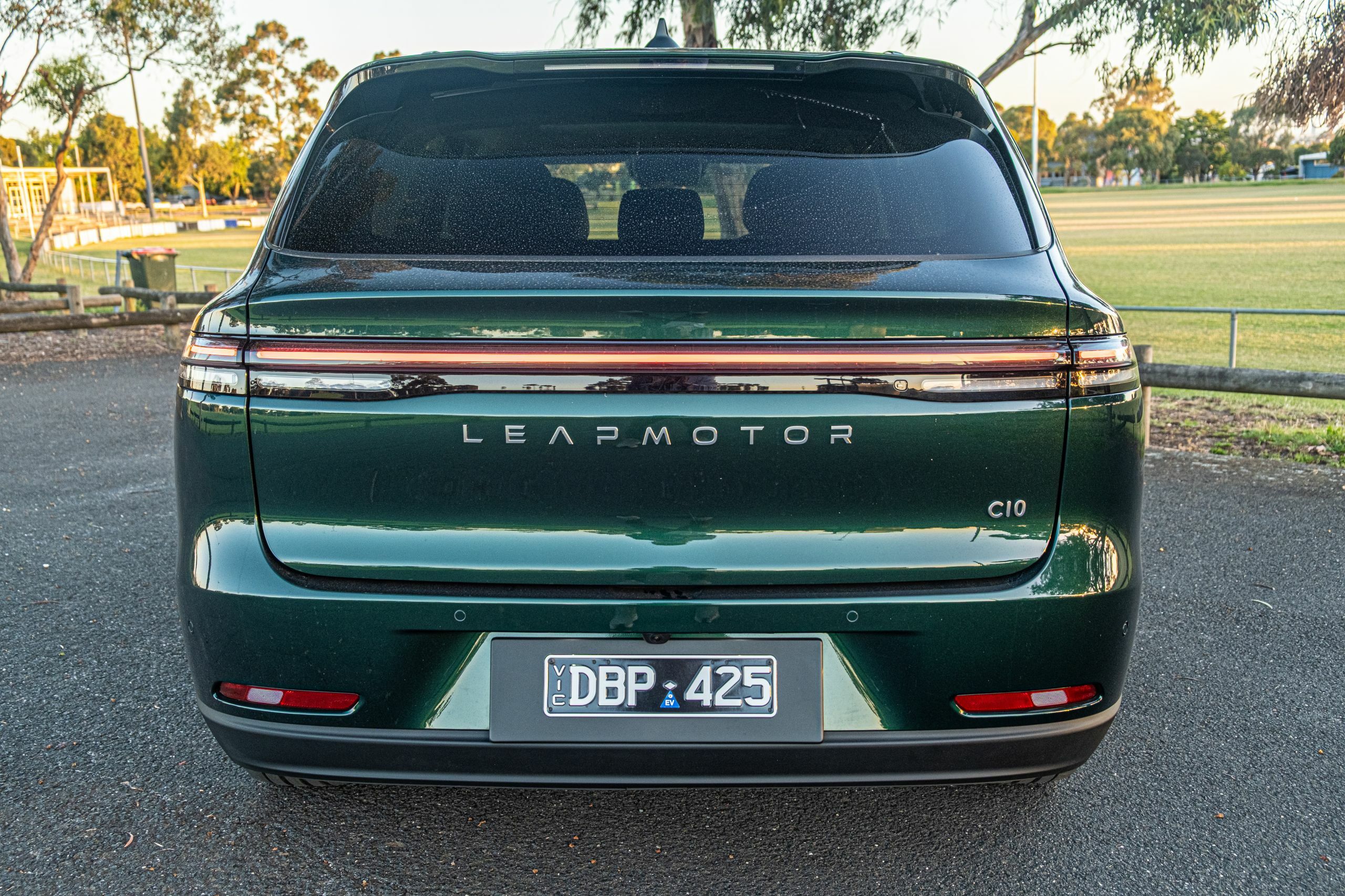
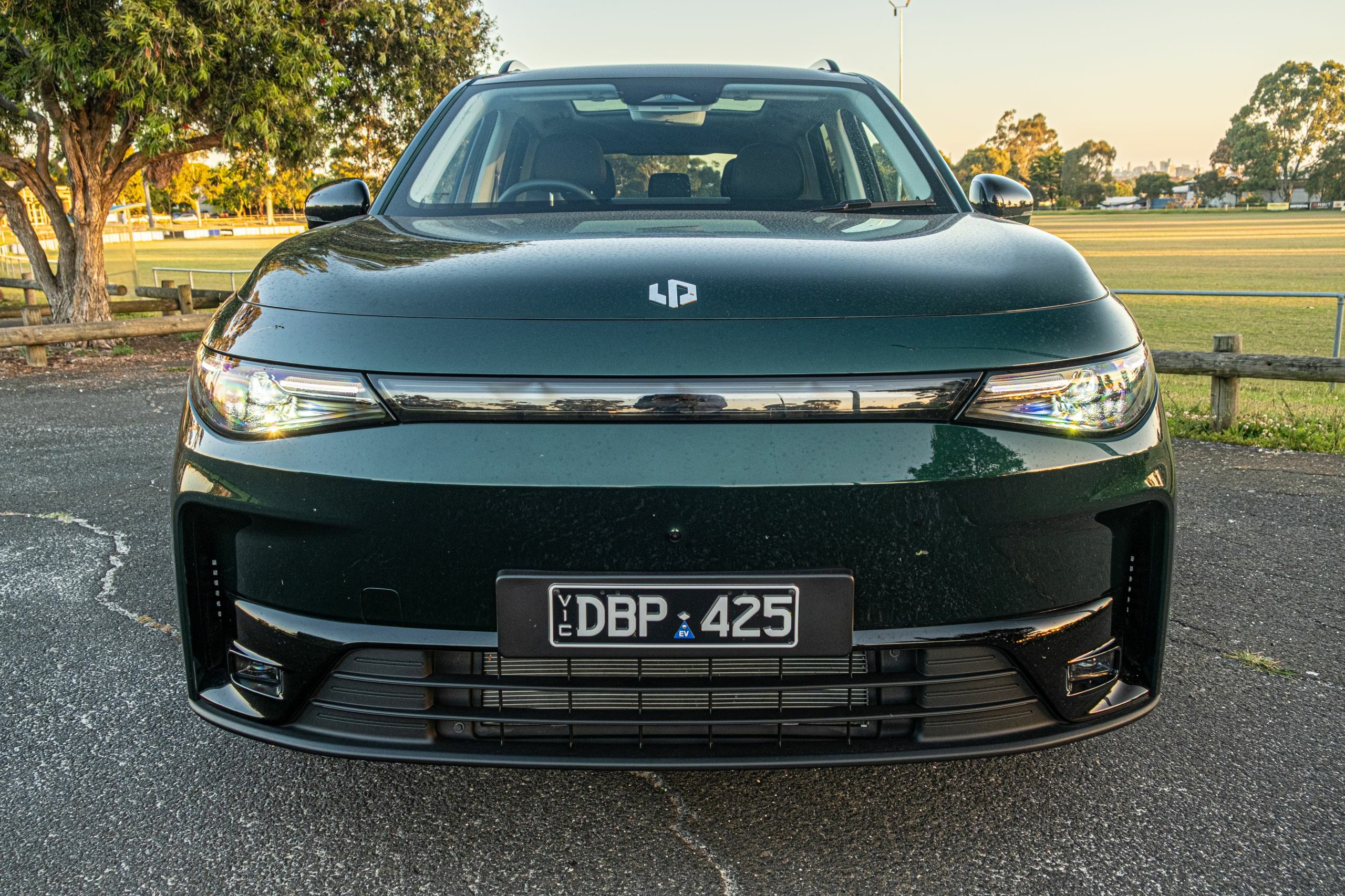
Visually, there’s nothing differentiating the C10 REEV from the EV. That means it looks as uninspiring as the EV, with not even the slightest bit of personality.

How’s The Interior?

\\\\\\\\\\\\

Photos Brad Anderson/Carscoops

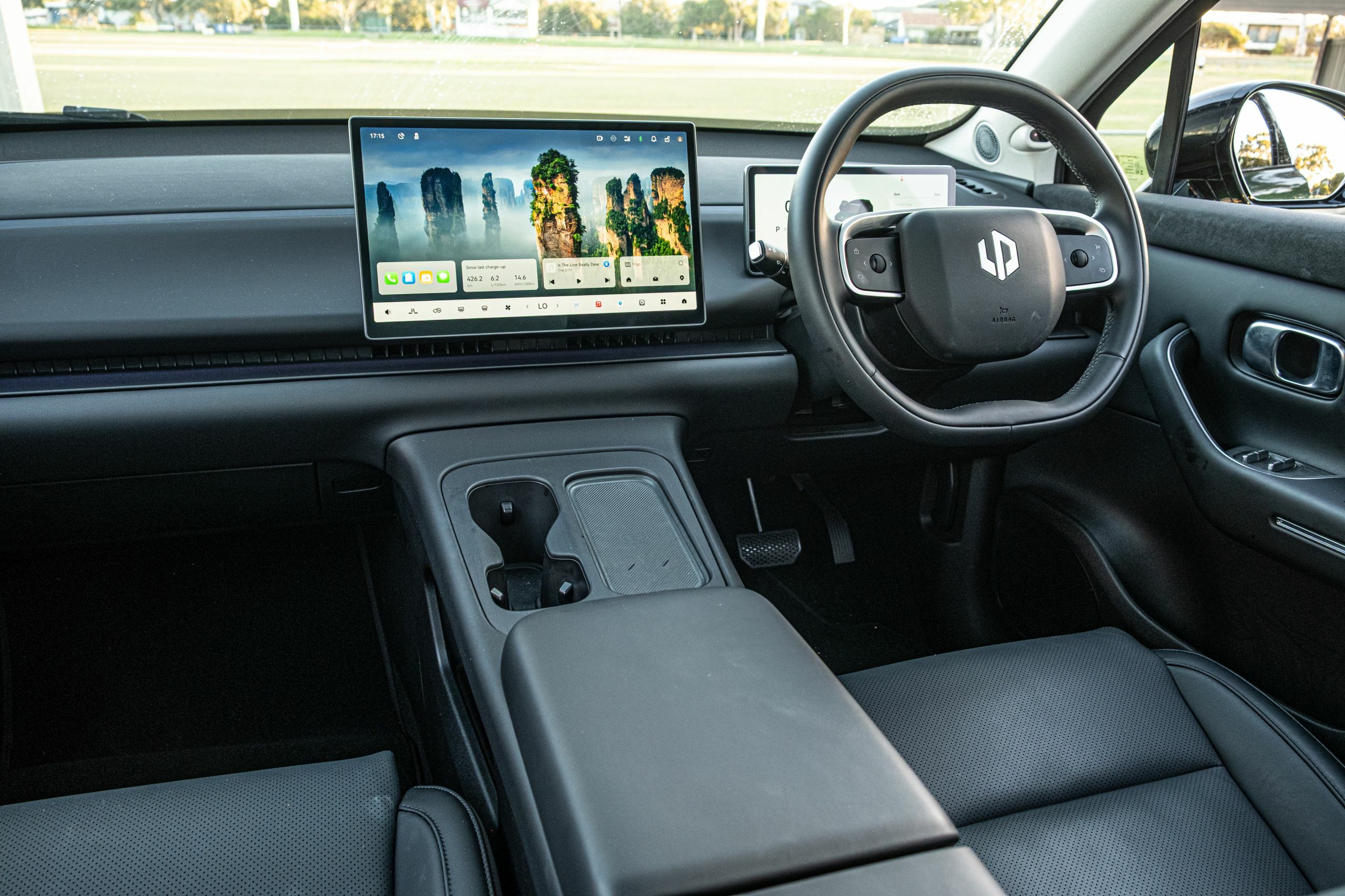
In the cabin, it’s also very familiar. Leapmotor has done exactly what Tesla popularized with the Model 3 and Model Y, opting for an ultra-minimalist design that some people will love, but others will hate.

A 14.6-inch infotainment display sits at the center of the dash running on Leapmotor’s in-house operating system, which uses Android as its base. While we wouldn’t go as far as to describe the C10’s infotainment as good as Tesla’s, it’s surprisingly not far off.

The tablet-like design doesn’t require a steep learning curve to get used to, and the display is very responsive to the touch. Admittedly, some of the settings hidden in the menu are a little too comprehensive, and it can be difficult to find things while on the move. Fortunately, there is a swipe-down notification menu that can be configured with dozens of different toggles for important vehicle functions, ensuring they’re never more than a couple of touches away.

\\\\\\\\\\\\\\\\\

Photos Brad Anderson/Carscoops

Frustratingly, the display does not support smartphone mirroring, so there’s no Android Auto or Apple CarPlay, leaving me to place my phone in the cupholder for navigation. Additionally, the quality of the reversing camera is shocking and not up to modern standards. The infotainment system also needs 15 seconds to load after the car is turned on, by which time I’d often already reversed without the camera loading and started driving away.

All of the materials used feel pleasantly plush, particularly the soft-touch leather adorning the seats, door panels, dashboard, and center console. However, I found that the leather marked very easily, so while it looks nice, it doesn’t stay clean for very long.

Entering and exiting the C10 REEV also turned into a bigger hassle than it should have been. In the first C10 I tested, I easily synced my phone with it and used it as the key. When I tried to use the Leapmotor app on my phone to do the same with this C10, it refused to work. A bit of digging suggests this could have been because the VIN had already been assigned to another device. Apparently, resetting the infotainment system should have fixed it. It didn’t.

Do Small Annoyances Add Up?

 The 2026 Leapmotor C10 REEV Fixes The Biggest EV Problem Only To Fail At The Basics | Review

This left me with no choice but to use the silly keycard for my two weeks with the C10 REEV. Not only is a keycard inferior to a traditional key in every single way, but it also doesn’t have any buttons, meaning I had to tap the NFC logo on the driver’s side mirror every time I wanted to lock or unlock it. It doesn’t even have a proximity locking/unlocking function, so when unloading things out of the passenger side or the trunk, I’d have to walk back around to the driver’s mirror and tap it.

I get it, keycards are in fashion (thanks, Tesla…), but they are just not nice to use.

My issues didn’t stop here. The air conditioning is genuinely disappointing. With the temperature turned down to its lowest setting, the AC on, and the fan speed at full, the C10 would only blow out mildly cool air, equivalent to what most cars do with the AC turned off and just the fans running. In the Australian summer, that was very annoying.

Set those issues aside, and the cabin of the C10 REEV is a nice place to spend time. It’s spacious, and there’s plenty of room in the rear, too. Cargo space is also good, as it can swallow up to 546 liters (19.2 cubic feet) or 1,375 liters (48.5 cubic-feet) with the rear seats folded down.

Smooth Power

\\\\\\\\\\

Photos Brad Anderson/Carscoops

Out on the open road, I quickly grew quite fond of the range-extender powertrain, and actually preferred it to the more traditional full-EV version.

As the engine is only ever operating in the background to charge the battery, it doesn’t intrude on the driving experience at all. In fact, even when I had the Leapmotor in the mode that prioritizes the engine charging the battery, the four-cylinder barely ever revved to beyond 2,000 rpm, so it couldn’t be heard. Around town, it’ll happily sit at less than 1,200 rpm, remaining completely silent while the instant power and torque of the rear-mounted electric motor make the REEV drive just as smoothly as an EV.

I ended my two weeks with the C10 REEV averaging 14.5 kWh/100 km, while fuel consumption sat at 6.1 l/100 km (38.5 US mpg).

On The Road

 The 2026 Leapmotor C10 REEV Fixes The Biggest EV Problem Only To Fail At The Basics | Review

Admittedly, the Leapmotor isn’t particularly fun or engaging to drive. It takes 8.5 seconds to reach 100 km/h (62 mph) and isn’t the type of SUV that likes to be driven in a sporty manner. Drive it calmy, and it does the job just fine.

As I found in my first test of the all-electric C10, the driver assistance systems leave a lot to be desired. The SUV includes both adaptive cruise control and active lane centering, neither of which works well. Even if the adaptive cruise is set and the C10 detects a vehicle ahead, it’ll struggle to maintain a consistent distance from it, repeatedly accelerating and decelerating to hold position.

The lane centering also needs improvement. I spent hours on end sitting on well-marked highways during my time with the Leapmotor, and it’d consistently ping-pong between the lines. That’s unacceptable in this day and age.

 The 2026 Leapmotor C10 REEV Fixes The Biggest EV Problem Only To Fail At The Basics | Review

The C10 REEV also has several other overactive sensors, like the driver attention monitoring system and speed limit warnings. Fortunately, these can be easily disabled in the swipe-down menu, and I didn’t find them to be as intrusive as I did when I first tested the C10 six months ago.

Ride quality is good most of the time, but there were a few instances when it felt like I hit the bump stops after going over speed bumps a little too fast, which most cars would have easily dealt with. The steering is exceptionally light, particularly in the Comfort setting, but it can be configured to feel slightly firmer in Sport mode.

Verdict

\\\\\\\\\\\

Photos Brad Anderson/Carscoops

The Leapmotor C10 REEV has promise. The trick hybrid powertrain works well, combining all of the benefits of a traditional EV like smoothness and instant power, without any of the downsides like range anxiety, particularly in Australia, where the charging network is sub-par.

However, the overall experience of living with the C10 is marred by poorly calibrated safety systems and some tech gremlins that need to be fixed. If these systems can be improved with software updates, the C10 REEV would be a very tempting proposition.

\\\\\\\\\\\\\\\\\\\\\\\\\\\\\\\\\\\\\\\\\\\\\\\\\\\\\\\\\\\\\\\\\\\\\\\\\\\\\\

Photos Brad Anderson/Carscoops

Cadillac’s Electric Escalade Learns A Hard Lesson From Its Loudmouth V8 Sibling

  • Cadillac’s flagship SUVs are very evenly matched in a sprint.
  • Electric Escalade IQ packs 750 hp and 785 lb-ft of torque.
  • Escalade-V delivers an almighty 682 hp and 653 lb-ft total.

There’s something uniquely American about building an SUV with insane straight-line performance and then expecting it to hustle like a sports car. The Escalade-V and its unrelated Escalade IQ electric sibling may be two of the most gloriously excessive vehicles Cadillac sells today. Both deliver supercar levels of power, which makes the obvious question hard to resist.

More: There’s Only One Way A Mustang Dark Horse Can Beat A BMW M4 Like This

Curious to see which one is actually quicker, Edmunds lined them up for one of its U-drag races. Watching these two dinosaur-sized SUVs subjected to hard launches, heavy braking, and tight turns feels surreal and just plain absurd in the best possible way.

Gas V8 Power Versus Electric Surge

 Cadillac’s Electric Escalade Learns A Hard Lesson From Its Loudmouth V8 Sibling
2026 Cadillac Escalade-V

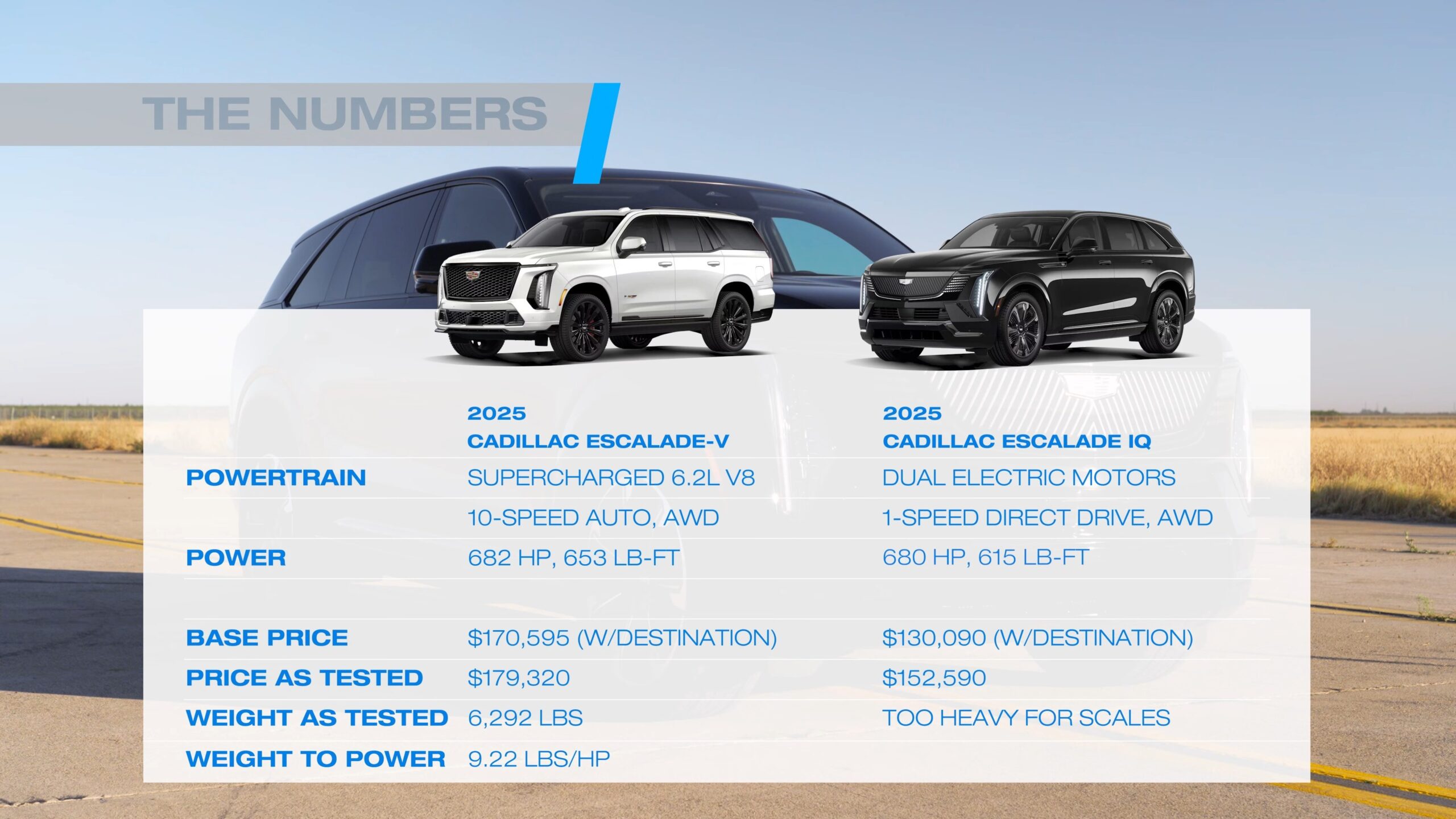
On paper, the Escalade-V and IQ are closely matched, even though their powertrains could not be more different. The V is powered by Cadillac’s 6.2-liter supercharged V8, producing 682 hp and 653 lb-ft (885 Nm) of torque, paired with a 10-speed automatic transmission that drives all four wheels.

By contrast, the Escalade IQ relies on a pair of electric motors and a substantial 212 kWh battery pack. In standard form, it delivers 680 hp and 615 lb-ft (834 Nm) of torque. Switch it into Velocity Max mode, and those figures climb to a healthier 750 hp and 785 lb-ft (1,063 Nm).

 Cadillac’s Electric Escalade Learns A Hard Lesson From Its Loudmouth V8 Sibling
Edmunds

The Escalade IQ needs this additional grunt to somewhat offset its insane heft. Whereas the combustion-powered V weighs around 6,300 lbs (2,857 kg), depending on configuration, the IQ weighs in at 9,100 lbs (4,127 kg), making it one of the heaviest passenger vehicles currently on sale.

Read: 2026 Cadillac Escalade IQL Is Long, Really Long

That weight difference shapes the entire contest. In a straight line, instant electric torque can mask mass for a moment, but physics always keeps score. The U-drag format, with its hard launch, heavy braking, tight turn, and sprint to the line, exposes not just power but how well each SUV manages it.

 Cadillac’s Electric Escalade Learns A Hard Lesson From Its Loudmouth V8 Sibling
2025 Cadillac Escalade IQ

During the first test, the V8-powered version got the jump off the line. After the U-turn, however, the transmission struggled to find the right gear, and the hesitation cost the Escalade-V its lead. That opened the door for the electric IQ to surge past and cross the line several lengths ahead.

Also: When A Super Venom Mustang Shows Up, Hellcats Turn Into Pussycats

Things were closer in the second race. This time, the electric model had the best launch, although the V regained some of that lost time under braking. The duo was neck-and-neck as they raced to the finish, but the IQ just ran out of puff at the top end, allowing the V to narrowly win.

This Rivian R1S Parking Incident Triggered A $54,000 Repair Bill

  • Rear quarter damage triggered a $53,736 repair bill.
  • Labor alone accounted for $29,856 of the estimate.
  • Quarter panel replacement requires major disassembly.

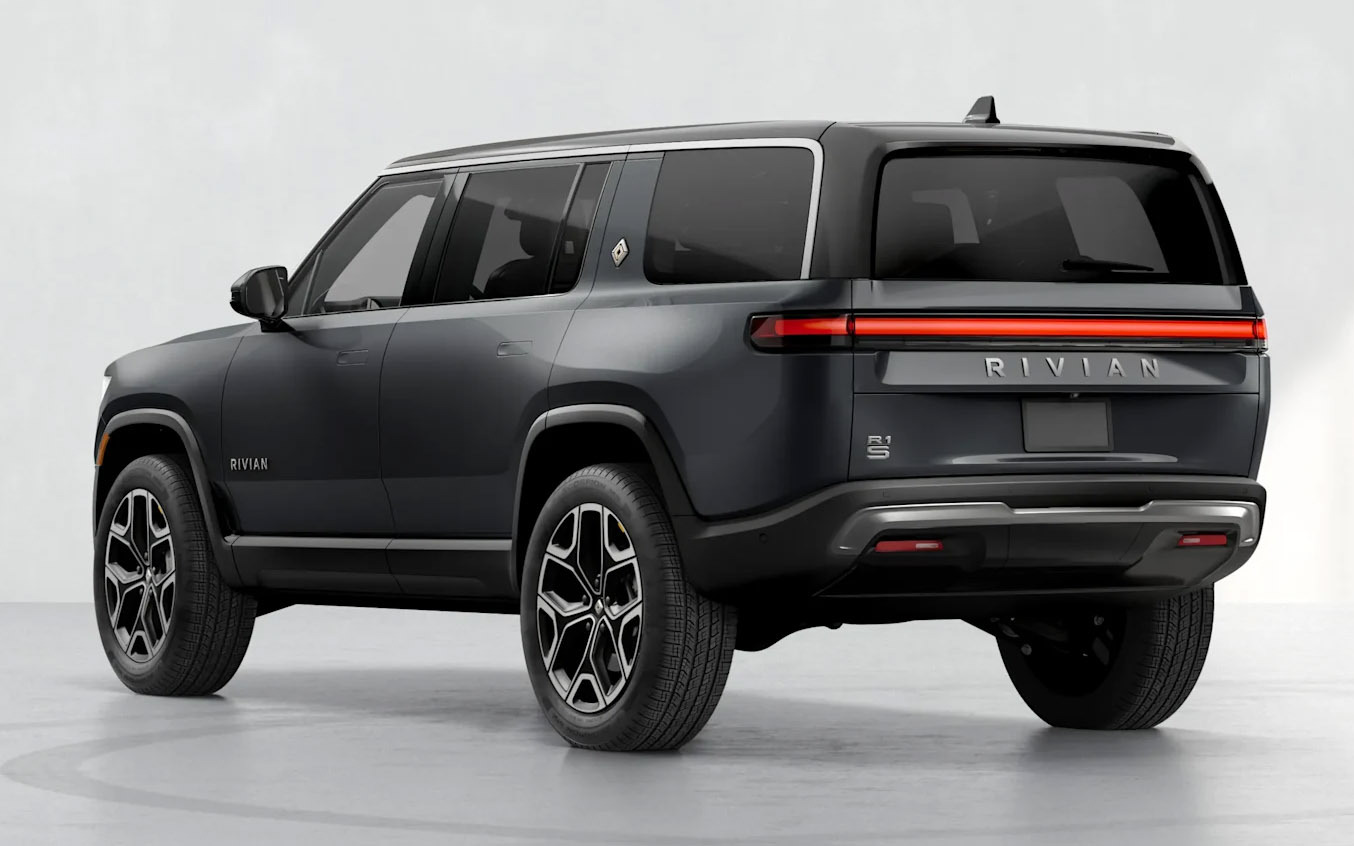
Modern vehicles may be packed with advanced engineering and clever design, but even a minor fender-bender can sometimes trigger catastrophic repair bills. If you own a Rivian R1S or R1T, you might want to keep your fingers crossed that one of the rear quarter panels is never damaged. If it is, repair costs can climb past $50,000, prompting some insurers to write off vehicles that, at least on paper, could be repaired.

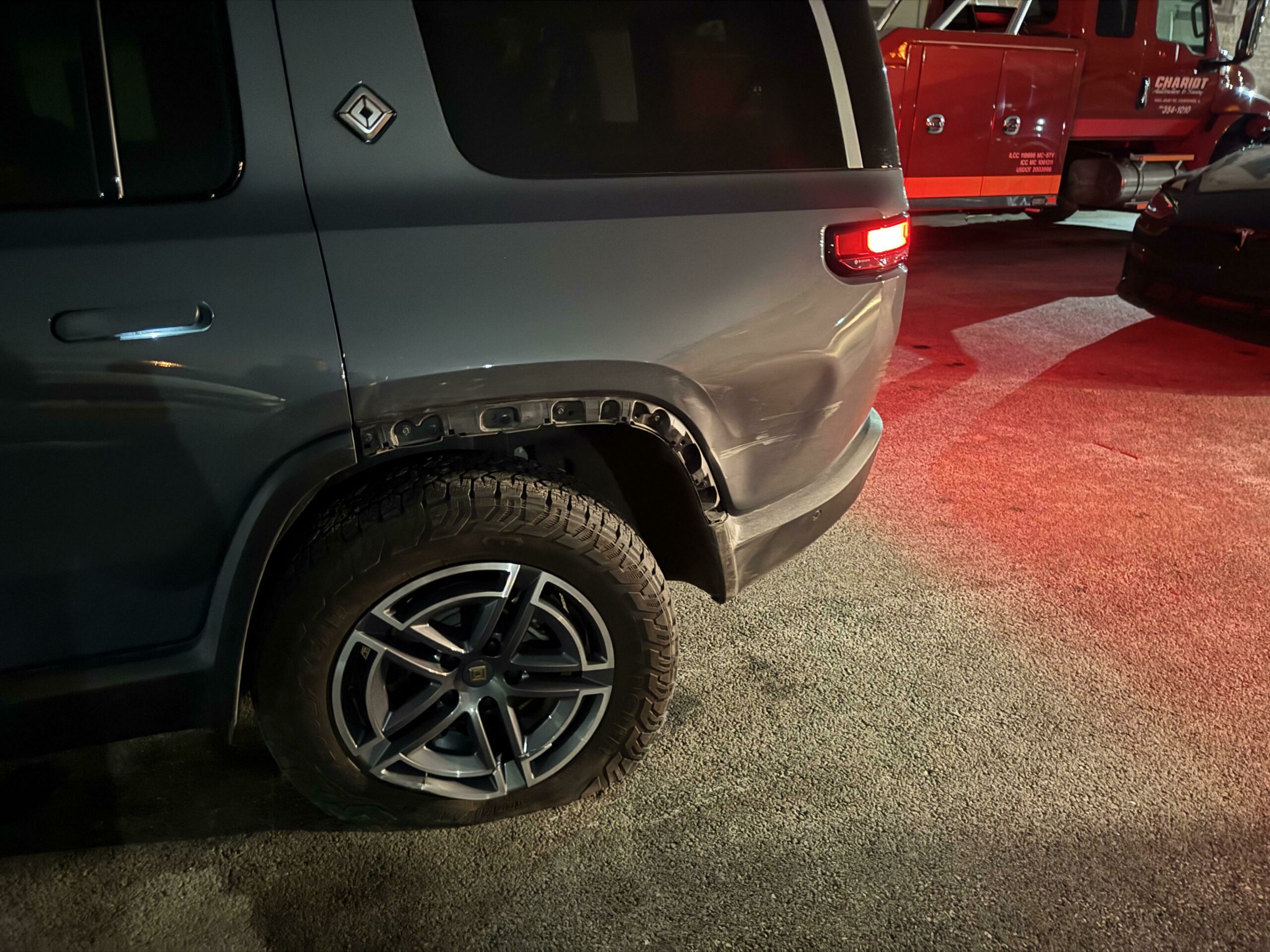
An R1S owner recently took to Reddit to share the bill shock he experienced after someone hit his wife’s SUV while it was parked. A photo posted on the forum shows a large dent in the rear quarter panel, along with damage to the wheel and, as it turns out, the frame and suspension too.

Read: Paintless Dent Removal Magician Saved Rivian R1 Owner From $41k Bodyshop Invoice

In the grand scheme of things, the damage does not appear catastrophic. You might reasonably assume the repair would run a few thousand dollars. That assumption would be wrong.

 This Rivian R1S Parking Incident Triggered A $54,000 Repair Bill
Reddit u/jgilbs

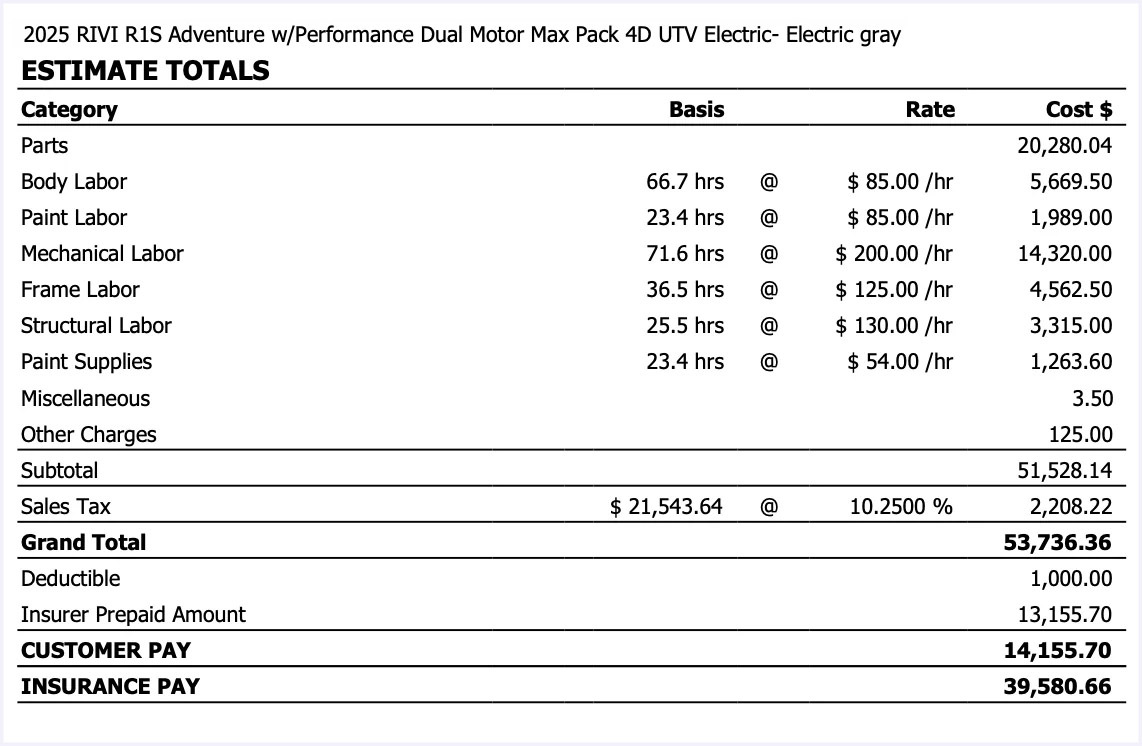
An authorized Rivian repair facility quoted the owner $53,736 to fix this R1S, or more than half the MSRP of a 2026MY that in this configuration, retails for around $100,000. Of that sum, $29,856 is attributed to labor alone. Insurance would cover close to $40,000, leaving the owner responsible for a little over $14,000.

Why Does It Cost So Much?

It appears much of the cost is related to the complexity of replacing the quarter panel, as it can’t simply be removed and replaced with another. Previous cases of similar damage indicate that much of the SUV’s interior must be stripped and that most of the R1S’s side must be removed, cut, and reassembled. In some cases, it’s been reported that the panoramic glass roof may also have to be removed.

Things can be even costlier for owners of R1T models, as the rear-quarter panel is even larger and stretches up and over the side windows, ending at the A-pillars.

 This Rivian R1S Parking Incident Triggered A $54,000 Repair Bill
Reddit u/jgilbs

According to the owner, “replacing the quarter panel is the majority of that cost. No motor battery or frame damage”. Some commenters questioned the reference to frame damage because the repair quote specifically mentioned it in one line item. The owner, however, clarified that “the side of the vehicle is considered an integral part of the frame”.

He also explained that “suspension work was quoted as 13 total hours of labor vs. about 250 hrs total. So roughly thats 5% of the price”, adding that this was “one of the top Rivian certified shops in our area, who Rivian themselves recommended”.

Also: Can You Believe This Rivian R1T Damage Repair Cost $21,000?

Without a more detailed breakdown, it is difficult to draw firm conclusions. Still, this is hardly the first time we’ve seen excessively high Rivian repair costs, including a $21,000 estimate for what was described as a relatively minor backup incident.

 This Rivian R1S Parking Incident Triggered A $54,000 Repair Bill

A Pattern Of High Repair Bills

While this particular example appears to involve underlying damage, which may justify more extensive work, the total still sounds steep. In cases without structural or deeper damage, more affordable solutions do exist.

More: Rivian Owner’s DIY Repair Saves Thousands After Mishap And Teaches Us A Lesson

Many paintless dent removal specialists have repaired similar quarter panel damage for a fraction of the quoted insurance repair cost, restoring the panel rather than replacing it. Just pray that you don’t damage the taillight too.

Jeep’s Smallest SUV Is Getting A Facelift, And It’s Not Just For Europe This Time

  • Camouflaged Jeep Avenger prototype spotted in winter testing.
  • The subcompact is due for a facelift in 2027, four years after launch.
  • Production of the SUV expands to Brazil with a localized version

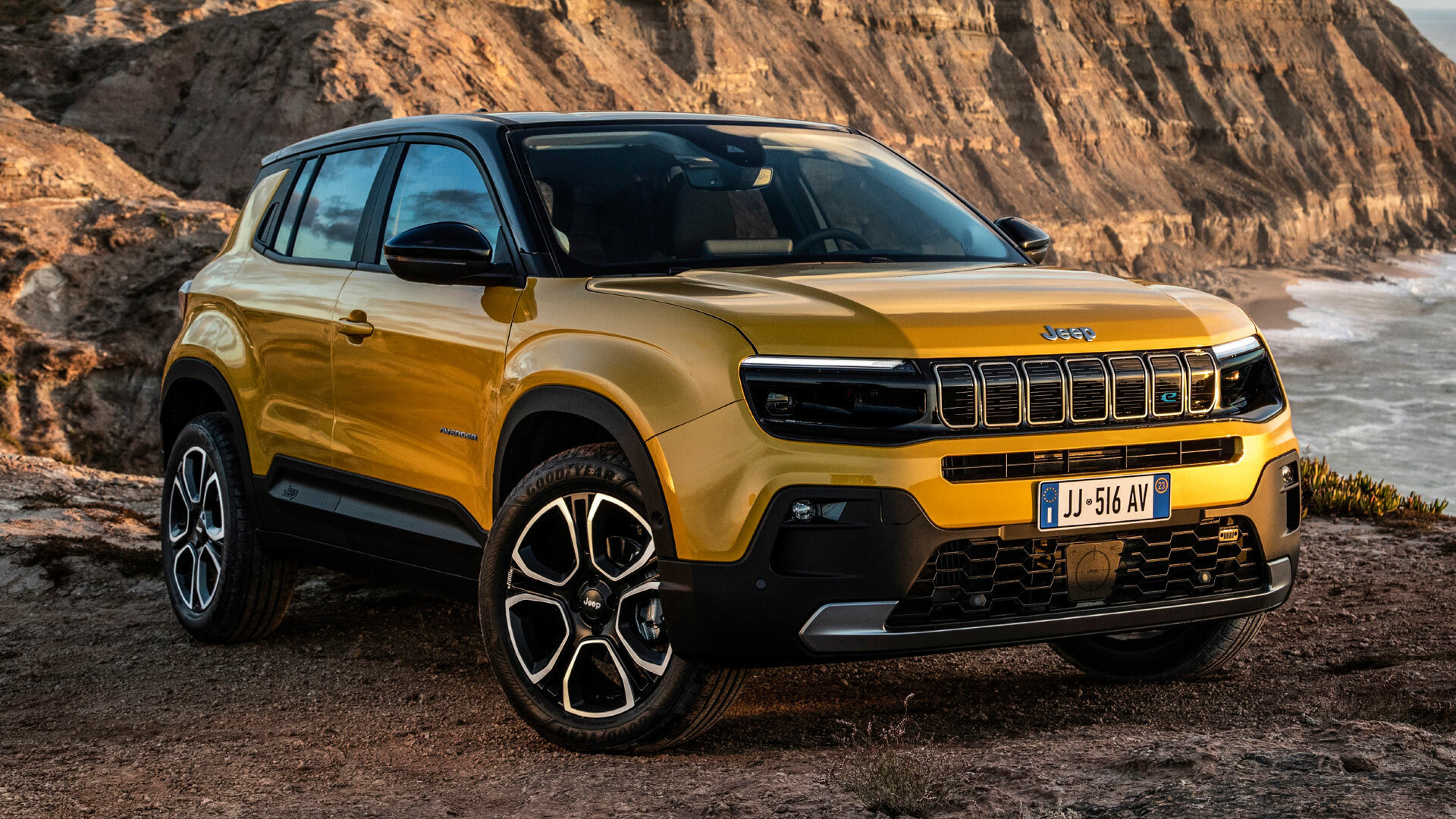
The Jeep Avenger might still seem fresh to many drivers, but Stellantis isn’t waiting around. Just a few years after its 2023 debut, the small SUV is already heading for a mid-cycle refresh. The updated model is expected to arrive in early 2027, and now, we’re getting our first look.

Caught during cold-weather testing in Europe, a camouflaged prototype hints at what Jeep may be changing on its smallest offering.

Review: Jeep Avenger EV Is A Fun Little Gem That’s Too Small For US

The development vehicle wears a full wrap with Jeep-branded graphics, doing its best to hide the details. But through a few narrow openings, the split LED headlights and cooling intakes seem to be in exactly the same spots as before. One noticeable adjustment, though: the fog lights have shifted slightly lower in the front bumper.

\\\\\\\\\\\\\\\\\\

Baldauf

The sculpted profile of the Avenger will most likely be carried over from the current version. Still, the plastic cladding might get a mild revision, and we’re expecting some new alloy wheel designs and exterior colors to freshen things up.

Review: Jeep Avenger Proves ICE And Manual Combo Can Still Be Compelling

At the back, the prototype doesn’t seem to wear any redesigned panels, although this could change as we move closer to the launch date. The single tailpipe suggests that the turbo 1.2-liter three-cylinder gasoline engine lies under the hood, either in non-electrified or mild-hybrid forms.

What To Expect Inside

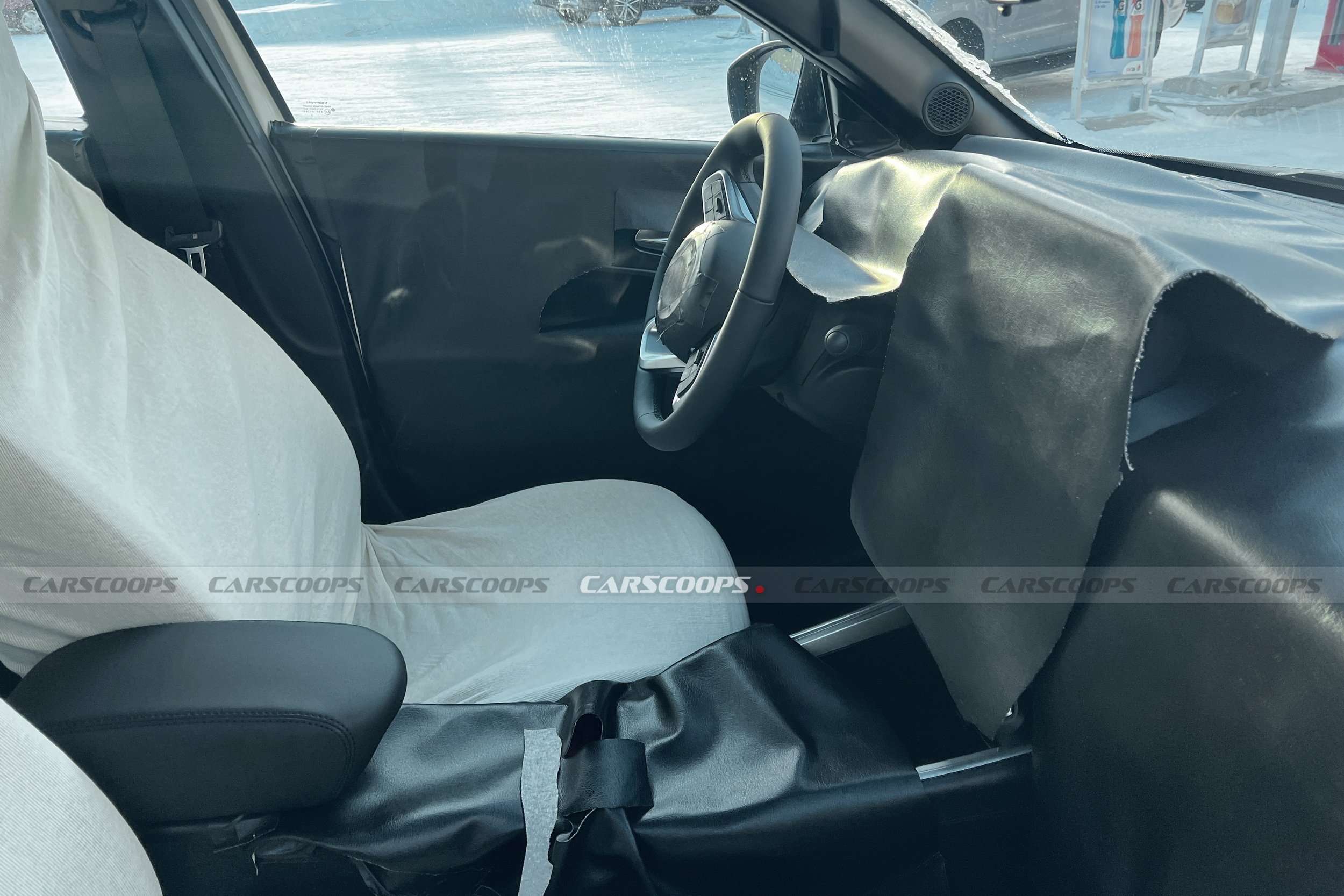
Our spy photographers managed to get a glimpse inside the cabin, though Stellantis engineers didn’t make it easy. Everything from the dashboard to the door panels and seats was concealed beneath vinyl. The SUV still appears to feature the free-standing infotainment display, positioned separately from the digital instrument cluster. Even so, the effort to hide it all suggests that changes are coming.

 Jeep’s Smallest SUV Is Getting A Facelift, And It’s Not Just For Europe This Time

It remains to be seen whether Jeep will add softer materials instead of the hard plastics of the current model, at least on the main touchpoints. We also expect that equipment will be updated with the latest connectivity and safety tech from the Stellantis parts bin.

As for the mechanical side, it’s too early for specifics, but there’s no sign of a major overhaul. The current Avenger offers internal combustion, mild-hybrid, and fully electric options, and that lineup will likely continue. An all-wheel-drive variant is already available through the mild-hybrid 4xe trim, and that setup should carry over.

More: Jeep’s Smallest SUV Will Be Built In South America With A Local Twist

The Avenger rides on Stellantis’s updated CMP/eCMP platform, shared with several other models including the Alfa Romeo Junior and Fiat 600. It also underpins the Lancia Ypsilon, Opel Corsa and Mokka, Peugeot 208 and 2008, and DS3. That shared DNA means many of the same components and configurations are likely to remain in play for the refresh.

\\\\\\\\\\\\\\\

Baldauf

We’ll keep watching the test fleet as Jeep continues development. With any luck, the next round of spy shots will reveal more by shedding some of the camouflage.

Outside of Europe, the smallest Jeep is getting ready for a wider rollout. Production will soon begin in Brazil, where the Avenger will be offered with region-specific updates. In fact, this camouflaged prototype might not just preview a facelift for Europe, it could also be part of the testing program for a localized South American version with its own powertrain changes.

 Jeep’s Smallest SUV Is Getting A Facelift, And It’s Not Just For Europe This Time
The fully electric version of the Jeep Avenger.

The Brand That’s Going All In On EVs Warns Thousands Of EV Owners To Park Outside Again

  • Jaguar is recalling 2,278 I-Paces in the United States.
  • Battery flaw may cause thermal overload and short circuits.
  • Affected I-Paces will get software limiting charging capacity.

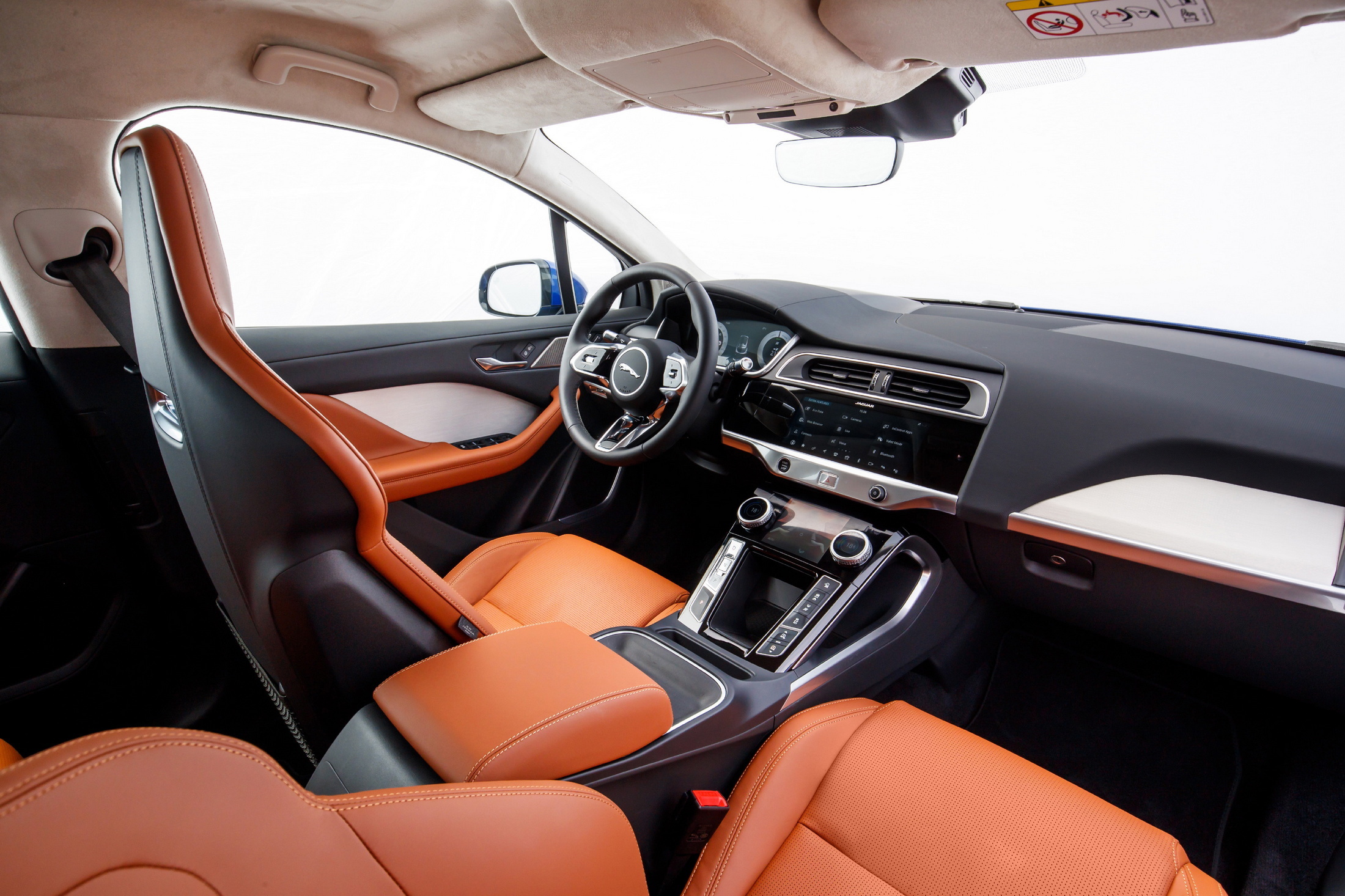
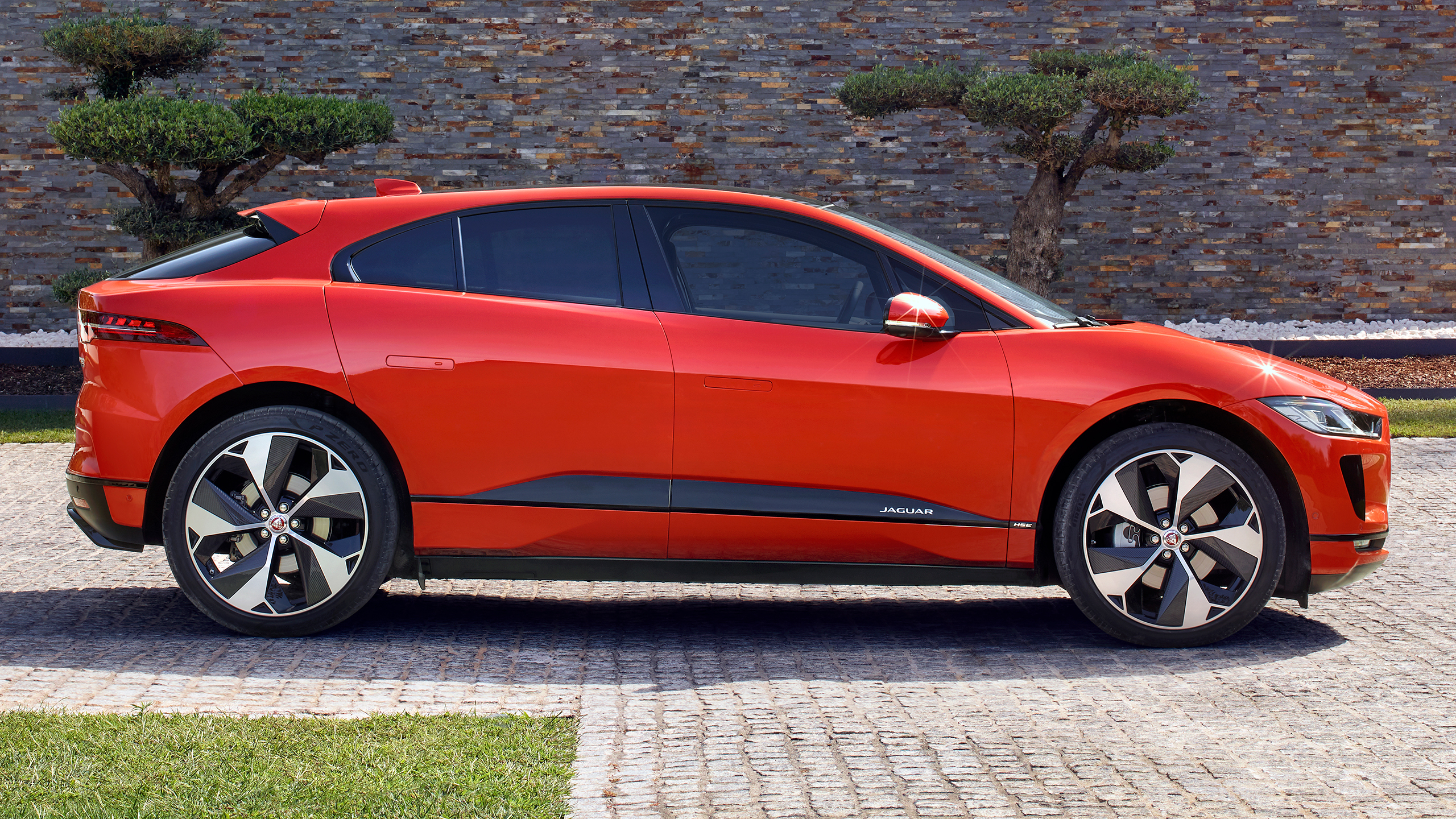
The Jaguar I-Pace was praised upon its release in 2018, even being named both the World Car of the Year and European Car of the Year in 2019. But that early momentum hasn’t aged well. Over the years, the I-Pace’s reputation has unraveled under the weight of battery-related problems, repeated recalls, and even a US buyback program.

Read: This Car Loses 73% Of Its Value After Just Five Years

Now, the I-Pace is back in the spotlight for all the wrong reasons. Jaguar has issued yet another recall in the United States due to a serious battery defect, something that doesn’t bode well for its EV aspirations.

More Battery Trouble

 The Brand That’s Going All In On EVs Warns Thousands Of EV Owners To Park Outside Again

This time, the culprit is thermal overload linked to a folded anode tab, which could cause a short circuit. Battery supplier LG has acknowledged there may be additional problems, though investigations are still ongoing.

Also: Jaguar I-Pace Owners Told To Park Outside After 3 Fires Involving Previously Recalled EVs

This latest recall impacts 2,278 I-Paces. Of these, 1,824 are 2020 models built from April 8, 2019, to January 8, 2020, while 454 are 2021 models assembled from March 9, 2020, to June 10, 2021.

According to Jaguar, none of the vehicles involved in this latest recall were taken off the road under prior recall campaigns, nor have their battery packs been replaced, as other I-Paces have.

What Owners Are Being Told

 The Brand That’s Going All In On EVs Warns Thousands Of EV Owners To Park Outside Again

Jaguar is so concerned about the battery issue that it is urging owners to take immediate precautions. Vehicles should be parked outdoors and kept away from buildings. Additionally, owners are being told to charge their vehicles to no more than 90 percent and only when outside.

More: Jaguar I-Pace EV’s Tragic End, From World Car Of The Year To Scrapyard Junk

The issue appears to be persistent. Jaguar has revealed that several 2019 I-Pace models recalled in the past for fire risk were subjected to another recall in 2024. These cases prompted a deeper examination of the battery system, leading directly to the current action.

Impacted models will will receive updated software that limits the maximum state of charge to 90 percent while Jaguar continues work on a permanent fix. Dealers will be notified of the recall starting February 19, and owners should expect official communication from Jaguar no later than April 3.

 The Brand That’s Going All In On EVs Warns Thousands Of EV Owners To Park Outside Again

EV Sales Fell Off A Cliff, Yet New Car Prices Still Set Another Record

  • January’s average new car price hit a record as incentives quietly pulled back.
  • Affordable models still exist, but true entry-level cars keep disappearing.
  • Electric car prices slip slightly, but EV sales have taken a dramatic slide.

You might have set a New Year’s resolution to slim down, but new-car prices made no such commitment. According to fresh industry data, prices just set another record for January, proving that handing over $50k for a virgin vehicle is basically normal now. But the number of people who think buying an EV is the normal thing to do has dropped dramatically.

More: A Third of Americans Are Priced Out Of New Cars, And It’s Getting Worse

The average transaction price in January reached $49,191, up nearly 2 percent from a year earlier and the highest ever recorded for the month, according to KBB. Although prices dipped slightly from December, Cox Automotive called the drop “seasonally normal,” explaining that the market usually “takes a breather” after year-end, when luxury vehicles make up a larger share of sales.

The average new-vehicle manufacturer’s suggested retail price (MSRP), commonly called “the asking price,” also kept climbing, now sitting at $51,288 and staying north of fifty grand for 10 straight months.

New-Vehicle Average Transaction Price
 EV Sales Fell Off A Cliff, Yet New Car Prices Still Set Another Record

Last month’s pricing uptick came even as sales mix shifted away from year-end luxury volumes. “We hit a new January high even as prices naturally pulled back from December’s luxury-heavy finish,” said Erin Keating, executive analyst at Cox Automotive.

“Consumers are still finding plenty of options below the industry average, especially in core segments like best-selling compact SUVs, but the disappearance of true entry-level vehicles continues to lift the floor higher.”

Incentives Pull Back Hard

Incentives fell to about 6.5 percent of transaction prices, down from higher levels late last year, meaning buyers are shouldering the burden of those higher prices. Automakers are clearly in margin-protection mode, offering just enough in the way of deals to keep metal moving but not enough to feel generous.

Luxury models and big pickups got the juiciest offers, while compact and midsize cars were left mostly to fend for themselves.

Few Bargains Remain

Compact SUVs remain the value choice. With average prices around $36,000 and down 0.6 percent, they sit well below the industry average and continue to dominate sales. Meanwhile, true bargain basement cars are basically extinct. With the Mitsubishi Mirage gone and the recently axed Nissan Versa reduced to whatever stock is still hanging around, the US market has waved goodbye to the sub $20,000 new car.

 EV Sales Fell Off A Cliff, Yet New Car Prices Still Set Another Record

At the other end of the spectrum, full-size pickups are still living large. Average prices in that segment remain comfortably above $70,000, and buyers are still lining up, with more than 150,000 big trucks finding homes last month.

January marked the fifth consecutive month where full-size pickups averaged over $70K, reinforcing their outsized role in propping up the market average. Subcompact cars, by contrast, struggle to attract more than a few thousand takers a month. Fewer than 4,000 were sold industry-wide last month.

EVs Shunned

Electric vehicle prices actually slipped to around $55,700, down 0.6 percent lower than a year ago, although Tesla’s fell 2.2 percent in the same period. Incentives for EVs also cooled sharply, dropping to 12.4 percent of ATP, down from 18.3 percent in December. Even at those reduced levels, they remain well above the industry average.

However, we wouldn’t be surprised if they are kicked back in to shore up demand, which has dropped alarmingly, according to the data.

KBB says only 66,000 EVs were sold in January, being down a fifth from January 2025, and you can bet the loss of tax credits from October played a big role. In fact, that total reflects a nearly 30 percent year-over-year drop and a 20 percent decline from December. Tesla accounted for about 60 percent of total EV sales.

Average transaction price by automaker
Jan ’26Dec ’25Jan ’25MoM changeYoY change
BMW$71,396$72,139$71,684-1.0%-0.4%
Ford Motor Company$58,041$58,451$56,187-0.7%3.3%
Geely Auto Group$60,034$61,317$60,443-2.1%-0.7%
General Motors$53,588$55,803$53,274-4.0%0.6%
Honda Motor Company$38,984$38,874$38,4800.3%1.3%
Hyundai Motor Group$38,292$38,890$37,813-1.5%1.3%
Mazda Motor Corporation$36,089$36,237$36,093-0.4%0.0%
Mercedes-Benz Group AG$76,410$75,819$78,0200.8%-2.1%
Renault-Nissan-Mitsubishi Alliance$35,753$36,888$35,144-3.1%1.7%
Stellantis$56,634$55,417$53,7402.2%5.4%
Subaru Corporation$37,522$37,125$34,8301.1%7.7%
Tata Motors$99,594$101,565$96,935-1.9%2.7%
Tesla Motors$52,628$53,678$53,795-2.0%-2.2%
Toyota Motor Corporation$46,207$45,571$44,2541.4%4.4%
Volkswagen Group$57,744$58,624$54,272-1.5%6.4%
Industry$49,191$50,318$48,2802.2%1.9%
SWIPE
Average transaction price by brand
Jan ’26Dec ’25Jan ’25MoM changeYoY change
Acura$49,911$49,817$52,4320.2%-4.8%
Audi$64,573$65,968$65,260-2.1%-1.1%
BMW$73,653$73,935$74,353-0.4%-0.9%
Buick$36,229$36,765$35,147-1.5%3.1%
Cadillac$83,667$86,931$86,721-3.8%-3.5%
Chevrolet$49,208$50,429$47,934-2.4%2.7%
Chrysler$48,252$47,646$47,9001.3%0.7%
Dodge$49,589$48,166$50,4753.0%-1.8%
Ford$57,249$57,620$55,745-0.6%2.7%
Genesis$65,223$65,571$63,202-0.5%3.2%
GMC$64,806$67,196$65,126-3.6%-0.5%
Honda$37,886$37,661$37,1040.6%2.1%
Hyundai$37,966$38,050$36,776-0.2%3.2%
Infiniti$68,538$70,793$67,350-3.2%1.8%
Jeep$52,386$49,589$49,3995.6%6.0%
Kia$36,414$36,761$36,644-0.9%-0.6%
Land Rover$101,554$104,193$99,386-2.5%2.2%
Lexus$64,231$61,877$60,7013.8%5.8%
Lincoln$72,264$71,957$65,4300.4%10.4%
Mazda$36,089$36,237$36,093-0.4%0.0%
Mercedes-Benz$76,410$75,819$78,0200.8%-2.1%
MINI$40,906$41,061$40,990-0.4%-0.2%
Mitsubishi$31,593$34,238$28,645-7.7%10.3%
Nissan$34,677$34,848$33,916-0.5%2.2%
Porsche$128,761$128,593$111,9660.1%15.0%
Ram$64,850$64,612$63,6230.4%1.9%
Subaru$37,522$37,125$34,8301.1%7.7%
Tesla$52,628$53,678$53,795-2.0%-2.2%
Toyota$43,105$42,345$41,6151.8%3.6%
Volkswagen$38,324$38,732$37,415-1.1%2.4%
Volvo$59,815$61,131$60,498-2.2%-1.1%
Industry$49,191$50,318$48,2802.2%1.9%
SWIPE
Average transaction price by segment
CategoryJan ’26Dec ’25Jan ’25MoM changeYoY change
Compact Car$27,306$26,939$27,0711.4%0.9%
Compact SUV/Crossover$36,414$36,414$36,5700.0%-0.4%
Entry-level Luxury Car$57,803$57,672$57,9310.2%-0.2%
Full-size Pickup Truck$66,102$66,384$65,251-0.4%1.3%
Full-size SUV/Crossover$79,492$79,731$75,385-0.3%5.4%
High Performance Car$137,774$137,992$117,837-0.2%16.9%
High-end Luxury Car$125,918$122,758$120,6212.6%4.4%
Luxury Car$60,093$62,491$57,619-3.8%4.3%
Luxury Compact SUV/Crossover$51,380$52,176$51,647-1.5%-0.5%
Luxury Full-size SUV/Crossover$103,461$98,854$111,4974.7%-7.2%
Luxury Mid-size SUV/Crossover$74,444$73,219$73,6101.7%1.1%
Luxury Subcompact SUV/Crossover$38,309$38,790$38,956-1.2%-1.7%
Mid-size Car$33,838$33,554$33,3690.8%1.4%
Mid-size SUV/Crossover$49,890$49,143$48,3591.5%3.2%
Minivan$48,033$47,697$47,9340.7%0.2%
Small/Mid-size Pickup Truck$43,426$43,144$43,5330.7%-0.2%
Sports Car$47,848$49,334$47,749-3.0%0.2%
Subcompact Car$25,610$24,665$22,3193.8%14.7%
Subcompact SUV/Crossover$30,877$30,883$29,6530.0%4.1%
Van$61,917$59,028$61,7994.9%0.2%
Industry$49,191$50,318$48,2802.2%1.9%
SWIPE

Data Cox Automotive/Kelley Blue Book

Honda Walks Back Its EV Plans As Losses Spiral

  • Honda logged its fourth straight quarter of operating losses.
  • EV-related write-offs reached $1.71 billion through December.
  • A revised EV roadmap is expected to be announced this year.

Honda, like many other automakers, is learning just how expensive missteps and overinvestment in the EV market can be. The Japanese company has already taken major write-offs tied to its electric vehicle efforts and now finds itself in damage control after multiple consecutive quarters of operating losses.

Read: Honda’s New Electric SUV Might Be Small But Its Global Ambitions Are Big

In the nine months ending December 31, Honda reported 267.1 billion yen (or $1.71 billion) in write-offs and expenses tied to its push into electric vehicles. While the financial impact hasn’t reached the same level as Ford’s EV setbacks, it remains a troubling sign for Honda’s strategy.

Losses Pile Up

 Honda Walks Back Its EV Plans As Losses Spiral

Honda has shelved several upcoming EV models and recently logged its fourth straight quarter of operating losses. For the first three quarters of its fiscal year, those losses total 166.4 billion yen, or $1.07 billion. Industry outlet Auto News projects that the full-year impact could reach 700 billion yen, around $4.48 billion, all stemming from its EV ventures.

Speaking about Honda’s most recent financial results, executive vice president Noriya Kaihara acknowledged the firm needs “to conduct a fundamental review of our strategies to rebuild our competitive strength.”

GM Partnership Unwinds

 Honda Walks Back Its EV Plans As Losses Spiral

Things will soon become even more costly. Honda is ending its close cooperation with General Motors on EVs, due in part to slow sales of the Acura ZDX and Honda Prologue, both of which use GM’s Ultium EV platform. It’s understood that Honda reduced the number of vehicles it purchased from GM, and compensated the carmaker.

Redrawing The EV Map

As recently as 2024, Honda said it aimed to sell up to 2 million EVs annually by 2030. However, it greatly overestimated the global popularity of EVs, which has undoubtedly been affected in part by the change in administration in the US just over twelve months ago. According to Kaihara, the company now plans to “significantly revise our future EV strategy” and expects to unveil an updated roadmap in the near future.

 Honda Walks Back Its EV Plans As Losses Spiral

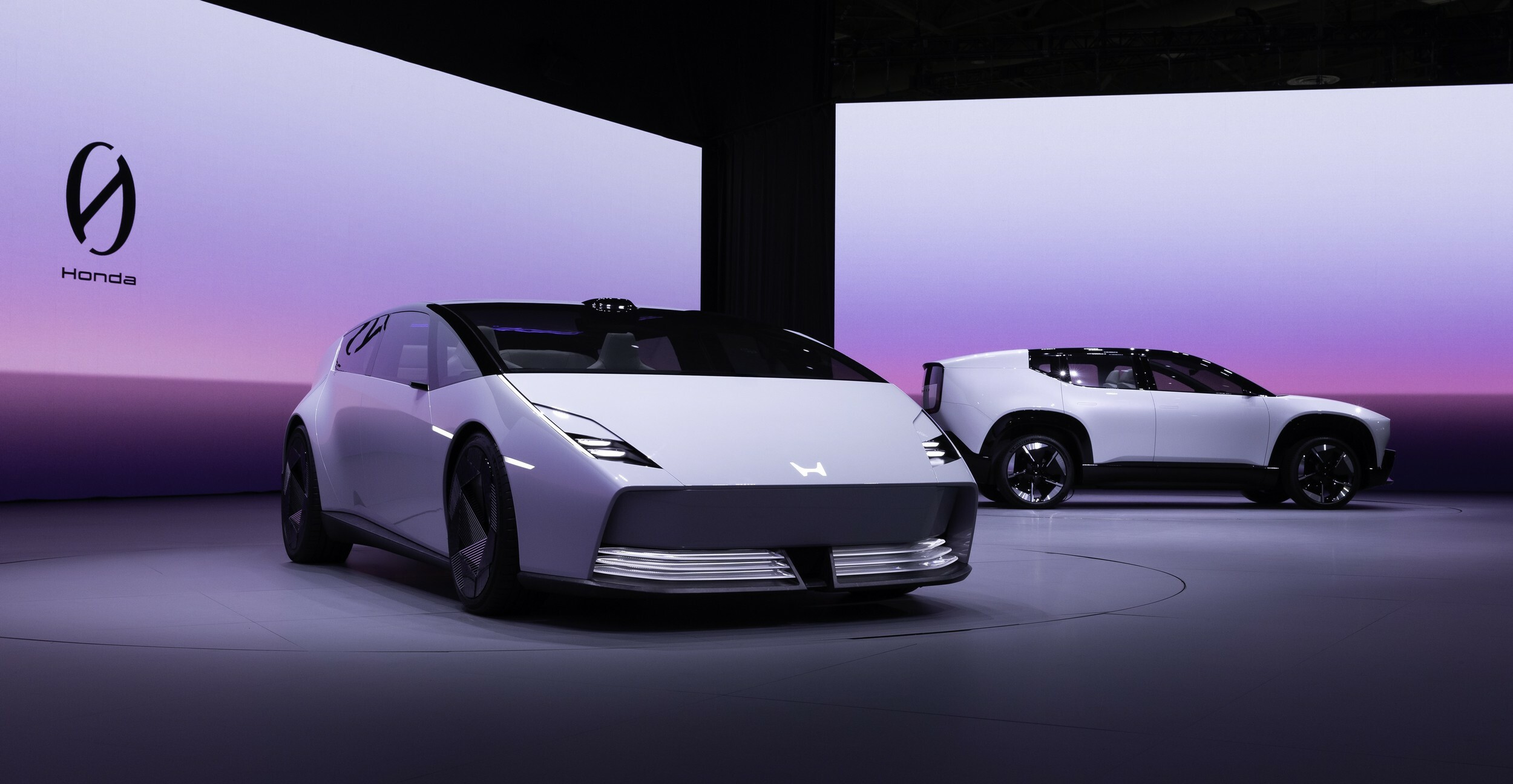
That said, Honda recently told us during a roundtable that the new electric Acura RSX and Honda 0 Series SUV are still on track for a launch later this year.

Central to this realignment will be a renewed emphasis on hybrid models. Honda aims to double its hybrid sales to 2.2 million units in 2020, signaling a clear pivot away from its earlier EV-heavy approach.

 Honda Walks Back Its EV Plans As Losses Spiral

New Toyota Highlander Drops Its Biggest Tradition, And I Got A Front-Row Look

  • Toyota’s 2027 Highlander is electric only with no gas option.
  • Two trims launch later this year with up to 320 miles range.
  • New platform brings larger dimensions and improved packaging.

For over twenty years, the Toyota Highlander has quietly been a heavy hitter. It’s never been wildly flashy, it’s never pretended to be an off-road giant, and yet, it’s been one of Toyota’s most important family haulers. Even with the arrival of the larger Grand Highlander that siphoned off some spotlight (and a fair share of sales), the original has held steady as a central figure in the lineup.

Read: Subaru’s Next SUV Is Big, Electric, And Very Toyota

Now, for 2027, the brand is tearing up what seemed like a tried and true formula for something much bigger and far bolder than ever before. This all-new Highlander is an EV aimed squarely at the heart of the mid-sized market. 

QUICK FACTS
OutputXLE FWD: 221 hp / 198 lb-ft

XLE AWD: 338 hp / 323 lb-ft

Limited AWD: 338 hp / 323 lb-ft
Overall Length198.8 in (5,050 mm)
Overall Width78.3 in (1,989 mm)
Overall Height67.3 in (1,709 mm)
Wheelbase120.1 in (3,050 mm)
Cargo Volume45.6 ft³ (1,292 L) with 3rd row folded

15.9 ft³ (450 L) with 3rd row up
Range (Est.)XLE FWD (77 kWh): 287 miles

XLE FWD (77 kWh): 270 miles

XLE AWD & Limited (95.8 kWh): 320 miles
SWIPE

Again, this isn’t just a new generation of the Highlander. It’s like a train switching tracks altogether. Buyers can’t get a gas-powered version, no matter how much they pay. That alone makes this a huge shift but Toyota didn’t stop there. This new SUV arrives with a new platform, larger proportions (color us shocked), and more technology than ever before. 

Bigger And Bolder

\\\\\\\

Photos Stephen Rivers/Carscoops

Visually, the new Highlander leans heavily into the new styling that we’ve seen from the brand in recent years. Who would’ve guessed that the Prius would spark a styling revolution? Nevertheless, that’s what’s happened, and the hammerhead front-end has slowly moved from Toyota’s most famous hybrid to the BZ line and now to the Highlander. In this case, that equates to an aerodynamically slippery front end, slim LED DRLs, flush door handles, and broad fenders. 

More: Toyota’s Most Forgettable SUV Outsold Mitsubishi’s Entire Lineup

It’s also considerably larger than the last-gen Highlander. Overall length jumps to 198.8 inches (+3.9 in.), width to 78.3 inches (+2.3 in.), and height to 67.3 inches (-0.8 in.). More importantly, the wheelbase now stretches to 120.1 inches (+7.9 in.). Don’t forget that the very first Highlander had a wheelbase of 106.9 inches (2,716 mm).

\\\\\\\

Photos Stephen Rivers/Carscoops

The two share little more than a name at this point. That said, the roofline is lower than the outgoing version. Combining that lower roof with a longer and wider body provides a planted stance. 

Toyota says those revised proportions weren’t just about aesthetics. The longer wheelbase allows for a roomier cabin, easier third-row access, and better overall packaging for the battery underneath. Ultimately, it’s all about how the car shuttles passengers, so let’s dive into that interior space. 

Cabin Acoutrement

\\\\\\\\\\\\\\\\

From the front seats, what stands out most is that this Highlander feels more elegant and straightforward. Everything is centered around a 14-inch infotainment system and a 12.3-inch digital gauge cluster. Thankfully, Toyota includes physical buttons and switches for vital functions like climate controls. 

Both trims come standard with SofTex upholstery, heated front seats, customizable ambient lighting with 64 colors, and Toyota’s latest multimedia system. A panoramic glass roof is available on the base XLE trim and standard on the Limited. It’s the largest ever fitted to a Toyota. 

\\\\\\\\\\

Photos Stephen Rivers/Carscoops

In the second row, things are pretty stellar as well. Captain’s chairs are standard. Buyers of the XLE AWD can choose an optional bench to increase seating from six to seven. Perhaps the boldest claim from Toyota is that the third row can comfortably fit adults. 

Review: The Toyota Grand Highlander Is A Jack Of All Trades, Master Of Some

After sitting in it myself, I can say that short adults might find it perfectly livable. No question, it has some nice features like USB-C ports, climate vents, and the flexibility to recline the backrest a little. That said, please don’t try to carry around taller folks back there for very long.

\\\\\\\\\\\

Photos Stephen Rivers/Carscoops

Toyota lists cargo space at 45.6 cubic feet (1,292 liters) with the third row folded and 15.9 cubic feet (450 liters) with it upright. For comparison, the gas-powered Grand Highlander offers over 57 cubic feet behind the second row and just above 20 cubic feet behind the third. So while the new EV Highlander is spacious, it’s not quite as roomy as its larger sibling.

Power And Range

 New Toyota Highlander Drops Its Biggest Tradition, And I Got A Front-Row Look

While all 2027 Highlanders use an electric powertrain, buyers do have a few options on that front. Toyota will offer a front-wheel drive XLE with a 77.0 kWh battery and 287 miles of range as the base model. It offers just 221 horsepower and 198 lb-ft of torque.

Above that is an AWD XLE with the same battery and 270 miles of range, but buyers can also spec a larger 95.8 kWh battery to acquire up to 320 miles of range. Those who opt for the Limited trim get both the larger battery and AWD standard, along with the same 320-mile range. 

Read: Toyota Just Swapped Its ‘Car Guy’ CEO For An Accountant

Performance varies by configuration. AWD models deliver up to 338 horsepower and 323 lb-ft of torque, while FWD versions make 221 hp and 198 lb-ft. Paddle shifters control regenerative braking, and AWD models add features like Multi-Terrain Select and Crawl Control—yes, even on an EV.

Charging hardware includes a standard NACS port for DC fast charging, with Toyota estimating a 10–80 percent charge in about 30 minutes under ideal conditions (which is a very important qualifier). A dual-voltage home charging cable is included, along with battery preconditioning and Plug & Charge capability.

Tech And Safety

 New Toyota Highlander Drops Its Biggest Tradition, And I Got A Front-Row Look

Toyota has long led the way with regard to standard safety tech, and the Highlander gets to continue that legacy. It’s the debut vehicle for Safety Sense 4.0. It bundles updated driver aids, including pre-collision braking, adaptive cruise control, lane-tracing assist, and proactive driving assist. The Limited adds Traffic Jam Assist, Advanced Park, a panoramic view monitor, and lane change assist. 

Of all the big new tech features, vehicle-to-load might be the most likely to fly under the radar. It allows the car to power external devices, such as power tools at a job site, or to act as a backup power source during an outage. That’s a really beneficial feature for a family SUV trying to stand out. 

What’s Left?

Toyota still hasn’t allowed us to drive it, though we have good reason to believe it’ll be a positive experience. More on that in the next couple of weeks. For now, we know that sales begin late this year, but we still don’t have pricing. 

 New Toyota Highlander Drops Its Biggest Tradition, And I Got A Front-Row Look

Normally, we’d make pricing the biggest key to success here, and no doubt, it’ll be vital. That said, the EV market in America is cooling off. Federal tax incentives are gone, and plenty of brands are backtracking or ditching EV goals altogether. For Toyota, putting this big a name on this EV says that it has a lot of confidence in how it’ll sell. 

It certainly helps that production will take place in the U.S. at Toyota’s Kentucky facility, with the battery sourced from North Carolina. That should eliminate much of the concern over tariffs and help to keep prices low. That said, it would be shocking to see this thing start at under $50,000.

Is a price above that figure attractive enough in this market? Only time will tell. If it’s lower than that, it’ll probably sell well despite the market thanks to one of the most recognizable names in the segment. 
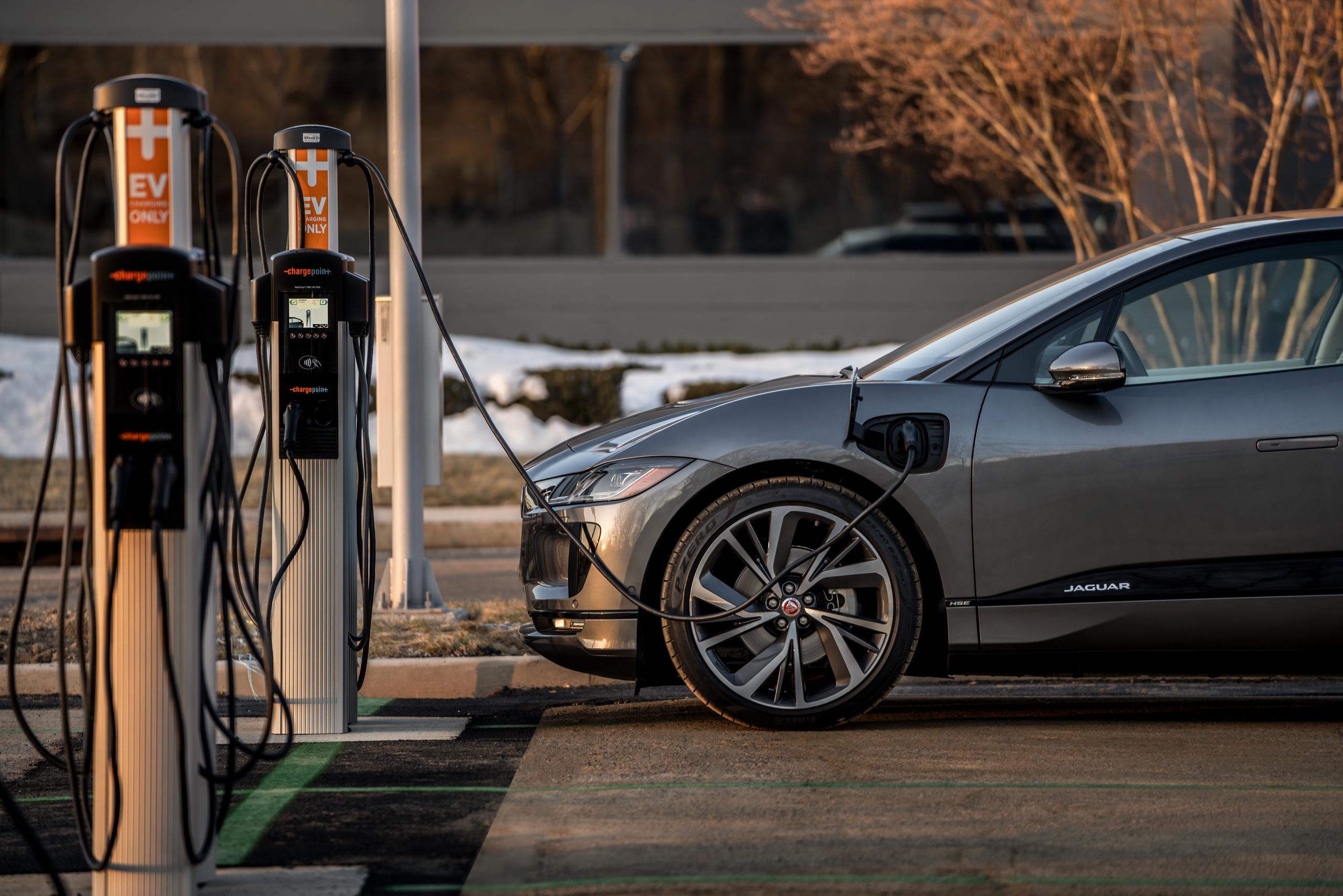
\\\\\\\\\\\\\\\

Photos Stephen Rivers for Carscoops

Subaru’s Next SUV Is Big, Electric, And Very Toyota

  • Subaru’s next electric SUV will feature three-row seating.
  • It’s based on Toyota’s new all-electric Highlander platform.
  • Production was delayed but Subaru says it’s coming in 2026.

Subaru is preparing to expand its EV lineup with something larger and more family-focused. Soon, the company’s range will welcome a three-row electric SUV designed to compete with newer offerings in the segment. Like the compact Solterra before it, this won’t be a ground-up Subaru product but a rebadged version of Toyota’s upcoming all-electric three-row Highlander.

We’ve known about Subaru’s plans to have its own version of the latest Toyota for several years now. In fact, Toyota and Subaru confirmed in 2023 that both brands would receive the new model, anticipating that production would start in 2025. While that date has come and gone, Subaru of Americas chief operating officer Jeff Walters recently confirmed it’s still happening.

Read: Subaru’s New $35K SUV Breaks Years Of AWD Tradition

Speaking with Auto News, Walters said that Subaru’s version of the three-row EV is scheduled to arrive later this year. He added that the model is being targeted at two-car households with home charging capabilities. It will join the electric Solterra, as well as the similarly Toyota-derived Uncharted and Trailseeker, in Subaru’s growing U.S. EV portfolio.

\\\\\\

2027 Toyota Highlander teaser.

Will Subaru Add Its Own Edge?

What we haven’t seen yet is how closely Subaru’s new entry will mirror Toyota’s new electric Highlander. Given past collaborations, it’s reasonable to expect minimal differentiation beyond some badging and minor design tweaks on the front and rear ends, along with unique side trimmings. Still, there’s a chance Subaru could roughen things up a bit, as it did with the Uncharted, which shares its bones with Toyota’s C-HR

Toyota’s new three-row electric SUV will look virtually identical to the bZ Large prototype previewed a few years ago, closely resembling the smaller Toyota bZ. This new model has been a long time coming and will give Toyota a legitimate rival to the electric Kia EV9 and Hyundai Ioniq 9.

A Lexus Too?

There’s also a possibility Subaru won’t be the only one getting a version of Toyota’s latest EV. According to previous reports, Lexus is working on a premium variant as well. This model could go by the name TZ and serve as an electric counterpart to the gas-powered TX, further spreading Toyota’s electric SUV platform across its portfolio

 Subaru’s Next SUV Is Big, Electric, And Very Toyota
2026 Subaru Solterra

The Chinese Carmaker That Copied Rolls-Royce Just Added More SUVs To The Pile

  • Dreame has launched a third car brand called Star Motor.
  • Two of the new models closely resemble Dongfeng vehicles.
  • One upscale SUV channels China’s take on the Rolls-Royce.

Just a month after Chinese vacuum cleaner firm Dreame unveiled three high-performance EVs at the CES show in Las Vegas, it has previewed three additional models it plans to add to its fleet. These will be launched under the new Star Motor brand, existing alongside Dreame’s Nebula Next and Kosmera brands.

The first two models are the T08 and T08L. Both are striking off-roaders, with the T08L sharing much of its design with the T08 but is considered even more focused on off-road performance. There’s no denying the T08 models are striking, but their design isn’t unique. In fact, they almost look like direct copies of two other bold Chinese off-roaders.

Read: Chinese Brands Bring Not One, Not Two, But Three Bugatti-Style Super Sedans To CES

Those two models come from Dongfeng, where they are badged the M917 and M817. Dreame has quite clearly copied Dongfeng’s homework with the T08L, crafting bodywork that looks almost identical to the M917, as well as near-identical headlights. The T08 looks mostly the same but has slightly different headlights, apparently copied from the smaller M817.

The similarities between Star Motor’s T08 and Dongfeng’s M917 are particularly apparent from the sides. It has virtually identical squared-off fenders, the same exposed hinges on the front doors, and door panels that look exactly the same as the M917. The only unique element that Star Motor appears to have designed is a distinctive front bumper.

\\\\
 The Chinese Carmaker That Copied Rolls-Royce Just Added More SUVs To The Pile
Dongfeng’s M917

Star Motor hasn’t actually unveiled the T08 and T08L, and only previewed them with a couple of images at a recent company event. As such, we don’t know what kind of powertrains they will have, other than the fact that they will include rear-wheel steering that can turn the rear wheels by up to 24 degrees.
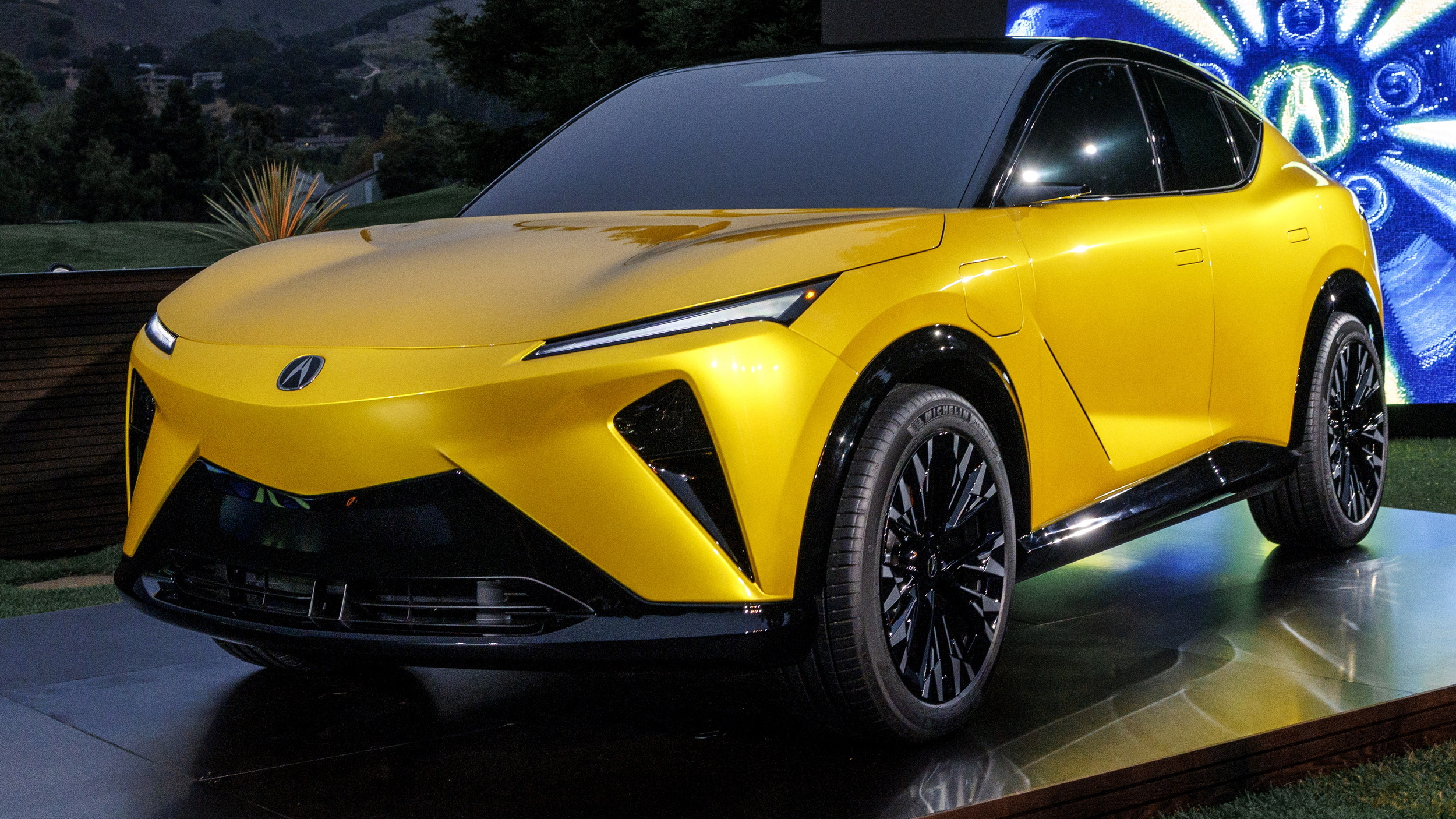
Rolls-Royce Fighter

Previewed alongside the T08 and T08L was the Star Motors D09 that looks to be positioned as the firm’s flagship luxury SUV, akin to the Rolls-Royce Cullinan. It shares similarities with the Cullinan lookalike that Dreame previewed last year and could be the production version of that model.

The front of the D09 is dominated by a grille that makes even a Rolls-Royce grille seem small. It also has prominent LED daytime running lights up front, a LiDAR mounted on the roof, and a set of fancy-looking wheels.

 The Chinese Carmaker That Copied Rolls-Royce Just Added More SUVs To The Pile
Star Motor D09
 The Chinese Carmaker That Copied Rolls-Royce Just Added More SUVs To The Pile
An early rendering of Dreame’s Cullinan-inspired SUV

Skoda’s Smallest EV Has One Big-Car Surprise

  • Skoda Epiq is the brand’s smallest EV and Kamiq alternative.
  • Built on VW’s MEB Plus with FWD and up to 267 miles of range.
  • Related to VW ID. Polo and Cupra Raval, starts from €26,000.

This year’s new Skoda Epiq still wearing a psychedelic disguise, but underneath the swirls and squiggles is a very clear message. This is the electric SUV for people who like their cars small on the outside, big on the inside and don’t want to pay a premium for swapping a combustion powertrain for an electric one.

Think of the Epiq as the baby brother to the Elroq and Enyaq, and the electric cousin of the Kamiq. At just under 4,200 mm (165 inches) long and riding on a 2,601 mm (102 inches) wheelbase, it’s squarely in city-friendly crossover territory.

Related: Skoda’s Affordable EV Looks Like It Wanted To Be A Jeep

However, Skoda claims packaging magic gives it one of the biggest boots in its class, at a surprising 475 liters (16.8 cu-ft). Fold the seats and you get 1,344 liters (47.5 cu-ft), which is properly useful family car stuff.

What’s Underneath?

\\\\\

Under the skin, the Epiq is Skoda’s first model on the new MEB Plus platform, a cost focused evolution of the VW Group’s electric toolkit. Unlike larger rear drive MEB cars, this one is front wheel drive, which helps free up cabin and cargo space.
It’s also closely related to the upcoming VW ID. Polo and the Cupra Raval, all part of the group’s affordable urban EV push along with the ID. Cross SUV.

Tortoise Or Hare?

The not very epic entry-level Epiq 35 makes 85 kW, or about 114 hp (116 PS), from a single front motor that gets it to 62 mph (100 kmh) in 11.2 seconds, and uses a 38.5 kWh LFP battery for up to 196 miles (315 km) of range. But a maximum 50 kW charge speed means fills will be slow, so this one is best suited to urban sorties from the house, not road trips.

\\\\\

The Epiq 40 bumps power to 133 hp (135 PS / 99 kW) and drops to 62 mph sprint to 9.8 seconds, with similar battery capacity but slightly faster 90 kW DC charging. At the top sits the Epiq 55 with 208 hp (211 PS / 155 kW) and a larger 55 kWh NMC battery good for up to 267 miles (430 km) of range.

Charging peaks at up to 133 kW on the bigger battery, meaning a 10 to 80 percent top up can take just over 20 minutes, and the 62 mph time is a spritely 7.4 seconds. That makes this little Skoda more road trip capable than you might expect from something that looks ready to spend its life dodging delivery vans and cyclists.

Big Screen, Eco Materials

Inside, Skoda promises its usual Simply Clever touches, a 13 inch central screen, a small digital driver display and lots of recycled materials. It hasn’t released any interior images of the finished car yet, but the cabin pics of the Epiq concept shown in the gallery below are surely at least 85 percent on the money.

We’ll get the real images in the coming weeks, along with prices, which are expected to start at $26,000 (£25k for the UK), matching those of the combustion Kamiq. That looks like good value next to Kia’s EV3, though the base EV3 is much more powerful and longer-legged. Renault’s 4 E-Tech also poses a strong threat thanks to its even lower entry price, better range and acceleration and more interesting design.

\\\\\\\\\\\\\\\\\\\\\

Epiq concept (Skoda)

❌
❌