Normal view

There are new articles available, click to refresh the page.
Before yesterdayMain stream

Nissan’s New Midsize SUV Costs Less Than A Kicks And Has More Screens Than A Mercedes

  • The NX8 arrives in two flavors, pure electric and range-extender.
  • Longest-range EREV version covers over 900 miles on a full tank.
  • Pricing ranges between ¥149,900-199,900 ($21,900-29,200).

Update: The new NX8 is now on sale in China. Pricing starts lower than expected, and Nissan is offering both a pure electric and a range-extender version. This story has been updated with full pricing, specs, and new photos.

Nissan has introduced a new midsize SUV developed in partnership with Dongfeng in China, marking the latest addition to its growing, budget-conscious N-series lineup. Named the NX8, the model joins the existing N6 and N7 sedans and is offered with a selection of electrified powertrains.

More: Nissan’s New Hybrid Sedan Is As Big An Altima For Thousands Less Than A Versa

The exterior design follows the same styling language as its sedan counterparts, with clean surfacing and a grille-free front fascia. A full-width daytime running light runs across the split headlights and wraps around the front fenders, while OLED tail lights extend across the rear.

The overall shape leans toward conventional SUV proportions, marked by flush-fitting door handles and pronounced shoulders.

How Big Is It?

\\\\\\\\\\\\

The midsize NX8 measures 4,870 mm (191.7 inches) in length, 1,920 mm (75.6 inches) in width, and 1,680 mm (66.1 inches) in height, with a wheelbase of 2,917 mm (114.8 inches).

More: Nissan’s Old Kicks Returns, And It Drives Like An EV Without Ever Plugging In

That makes it 222 mm (8.7 inches) longer than the Rogue (X-Trail) and 152 mm (6 inches) shorter than the Pathfinder. Interestingly, its wheelbase is 17 mm (0.7 inches) longer than the Pathfinder’s, which should translate to slightly better interior space.

A High-Tech Interior

Inside, we find dual 15.6-inch infotainment displays on the dashboard, which are separate from the 10.25-inch digital instrument cluster and run on the Qualcomm Snapdragon 8295P chipset. The flagship trim adds a 63-inch augmented reality head-up display and a 25-speaker audio system.

\\\\\\\\\\\\\\\\\\\\\\\\\\\\\

Additional highlights include AI Zero Gravity Seats 2.0 with massage, heating, and ventilation, along with contactless airflow control, an onboard refrigerator, and Motion Sickness Prevention Technology 3.0.

The five-seater cabin can transform into a comfortable couch/bed by fully reclining the front seatbacks. Furthermore, the boot has extra space under the floor, and is complemented by a frunk in the battery electric versions.

In terms of safety, the SUV is fitted with up to 29 sensors including a roof-mounted lidar unit. This the hardware for the Momenta-based Advanced Driver Assistance promising sophisticated autonomous capabilities.

Powertrain Options

\\\\\\

The Nissan NX8 is offered with both range-extender (EREV) and fully electric (BEV) powertrains, each using lithium iron phosphate battery packs supplied by CATL.

More: Nissan Thinks You’re Not Mature Enough To Appreciate What It Just Launched In Japan

The EREV pairs a turbocharged 1.5-liter engine acting as a generator with a single electric motor producing 335 hp (250 kW/ 340 PS). It delivers an EV-only range of 310 km (193 miles) and a combined range of 1,450 km (901 miles) under CLTC testing.

The BEV variant produces either 288 hp (215 kW / 292 PS) or 335 hp (250 kW / 340 PS). Range is rated at 580 km (360 miles) and 650 km (404 miles), respectively, under the CLTC cycle. These figures exceed the Leaf’s 303-mile EPA rating on paper, though CLTC estimates typically run 20 to 30 percent higher than EPA results, so real-world differences may be smaller than they appear. The larger 81 kWh battery supports ultra-fast charging at up to 463 kW, taking it from 10 to 80 percent in 12 minutes.

How Much Does It Cost?

\\\\\\\\\\\\\

Nissan has initially launched the NX8 in China but as with the N6 and N7 sedans, it is expected to be exported to additional markets. Whether that will include Western regions like Europe and Australia, however, remains to be seen.

In its home market, the SUV is currently priced between ¥149,900-199,900 ($21,900-$29,200), depending on the powertrain and trim level. That’s roughly in line with what you would pay for the older Kicks Play in the US ($21,520), which remains Nissan’s most affordable model there, and still less than the new Kicks ($22,430). It also comes in well below the new Leaf EV, which starts at $29,990 in America.

These figures reflect introductory pricing for the launch period, with standard pricing set at ¥159,900-209,900 ($23,400-30,700). Even so, the China-spec model remains considerably cheaper than the Nissan Rogue, which starts at $29,490 in the US market.

Nissan NX8 Pricing
TrimPowertrain TypeLaunch PriceUSD
NX8 150 ProEREV¥149,900$21,900
NX8 150 MaxEREV¥159,900$23,400
NX8 310 MaxEREV¥169,900$24,900
NX8 580 ProBEV¥149,900$21,900
NX8 580 MaxBEV¥159,900$23,400
NX8 650 MaxBEV¥174,900$25,600
NX8 Master EditionBEV¥199,900$29,200
SWIPE
\\\\\\\

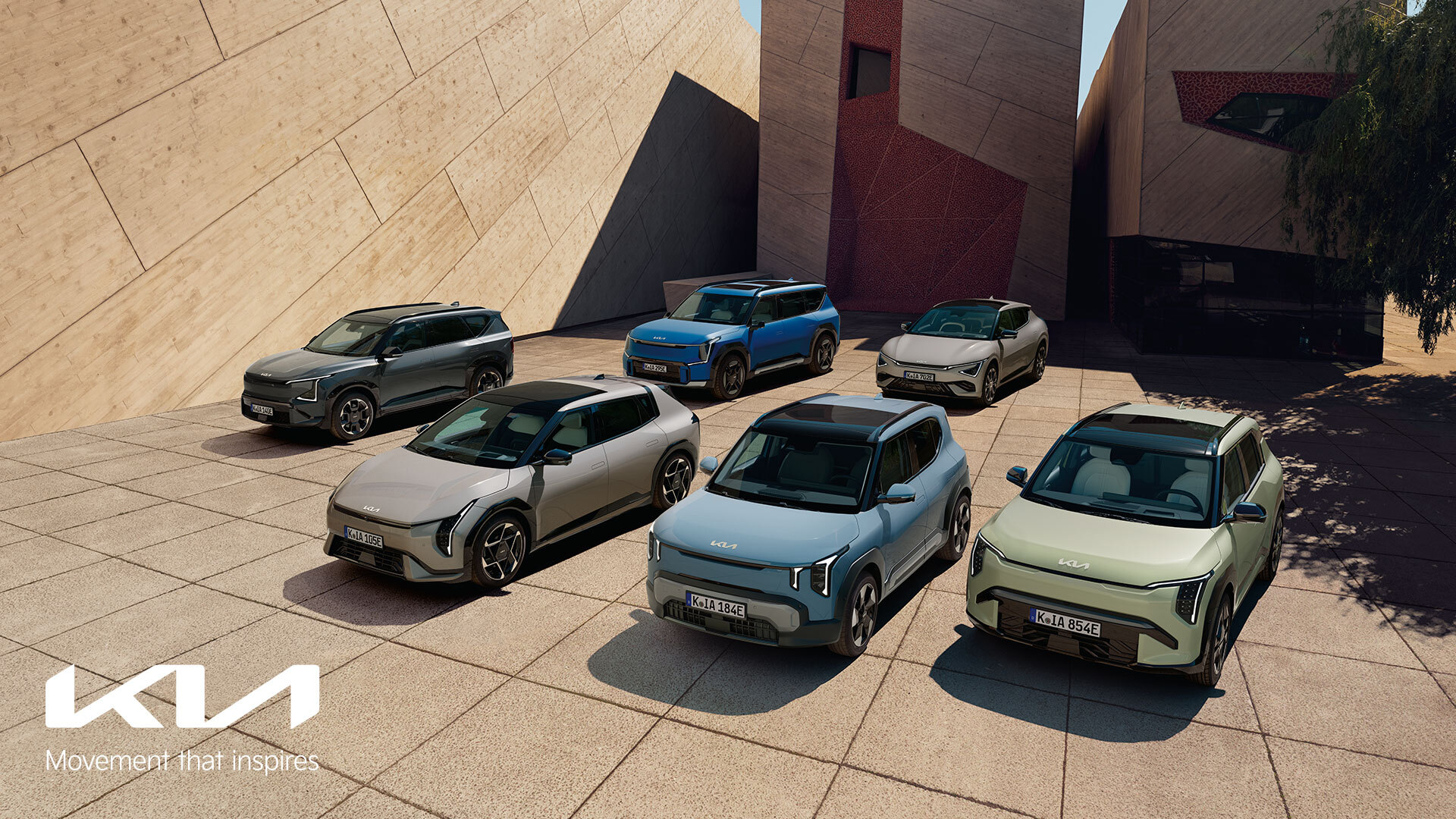
Kia’s Baby EV1 Kicks Off A Tsunami Of New Models, And They’re Not All Electric

  • Kia readies subcompact EV1 hatch based on new EV2 SUV hardware.
  • Brand targets one million EV sales globally while boosting hybrid lineup.
  • New platform coming later with 40% bigger batteries, 9% more power. 

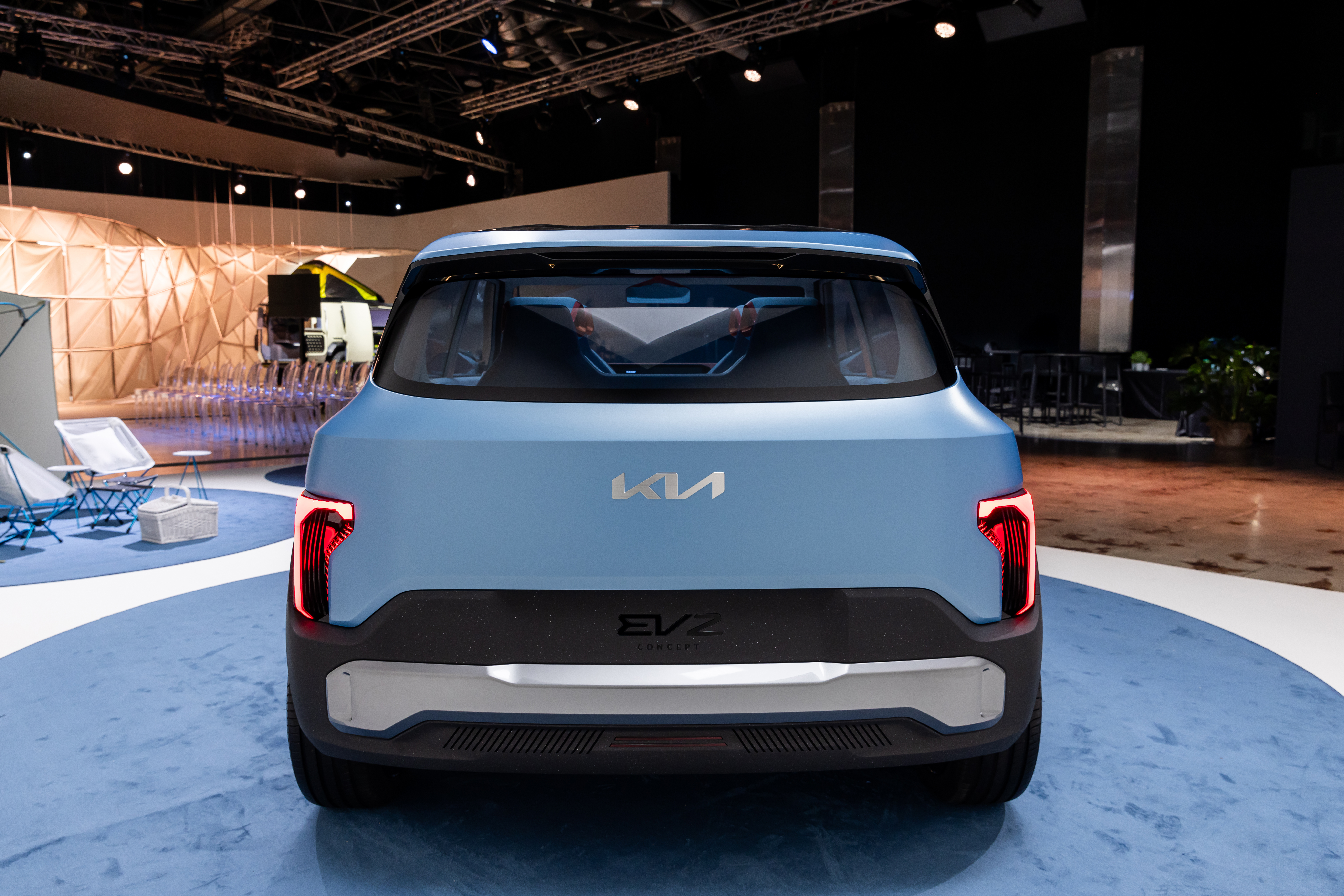
Kia just pulled the covers off its future plans, and while there’s plenty to digest, the real headline act for Europe is a tiny newcomer with big expectations. Enter the upcoming EV1, a compact electric hatch that’s shaping up to be Kia’s most affordable EV yet when it debuts next year.

Think of it as the lower, sleeker sibling to the EV2. It’s aimed squarely at Europe’s hotly contested supermini class, going up against the Renault 5, Peugeot e208 and Vauxhall Corsa Electric.

More: Kia’s Cheapest Electric SUV Drops A Seat To Hit Its Price

Under the skin, the EV1 is expected to share its hardware with the EV2, meaning a 400-volt E GMP platform and two battery options. Entry models should get a 42.2 kWh pack with roughly 200 miles (322 km) of range, while higher trims could use a 61 kWh battery pushing closer to 300 miles (483 km). Power outputs will likely mirror the EV2’s, so expect something in the region of 145 hp (147 PS / 108 kW) on base or mid-spec cars.

Kia also says this will be its first car in the segment to be a software-defined vehicle, one where everything from infotainment to vehicle systems is deeply integrated and updateable. Despite the clever tech, prices are likely to start at a little over £20,000 (€23,000), making it a genuine mass market EV.

New EV Platform In The Works

 Kia’s Baby EV1 Kicks Off A Tsunami Of New Models, And They’re Not All Electric

But the EV1 is just one piece of a much bigger puzzle. Kia wants 14 EVs globally by 2030 and annual electric sales of one million units. That’s part of a broader push to hit 4.13 million total sales and a 4.5 percent global market share.

Beyond the EV1, Kia will launch a new electric platform that it says will deliver up to 40 percent bigger batteries with 15 percent greater energy density powering motors that are 9 percent gruntier. An electric SUV to bridge the gap between the EV5 and EV9 is also on the way.

Big Hybrid Push

 Kia’s Baby EV1 Kicks Off A Tsunami Of New Models, And They’re Not All Electric

But Kia isn’t going all in on EVs just yet, especially not in the US, CEO Ho Sung Song admitting that the rate of global electric adoption had slowed. So hybrids are getting a major boost, with 13 HEV models planned and annual hybrid sales targeted at 1.1 million units. New hybrid versions of key models like the Telluride, Seltos and K4 are coming, as are hybrid and range-extender versions of the midsize body-on-frame truck Kia will debut before 2030.

Furthermore, the Korean brand is doubling down on commercial vehicles like the PV5, adding a bigger PV7 in 2027 and PV9 two years later. It’s also pushing robotics, with factory bots and delivery solutions in development. So yes, the EV1 might be small, but it’s leading a very big plan.

 Kia’s Baby EV1 Kicks Off A Tsunami Of New Models, And They’re Not All Electric
The new Kia EV2 electric crossover.

The Chinese Luxury Brand Mercedes Helped Create Is Now Coming For Mercedes’ European Buyers

  • The Z9 GT Shooting Brake makes 1,139 hp in EV guise, hitting 62 mph in 2.7 seconds.
  • A PHEV variant offers 126 miles of electric range and a combined total of 500 miles.
  • BYD plans 3,000 European charging stations within 12 months alongside the launch.

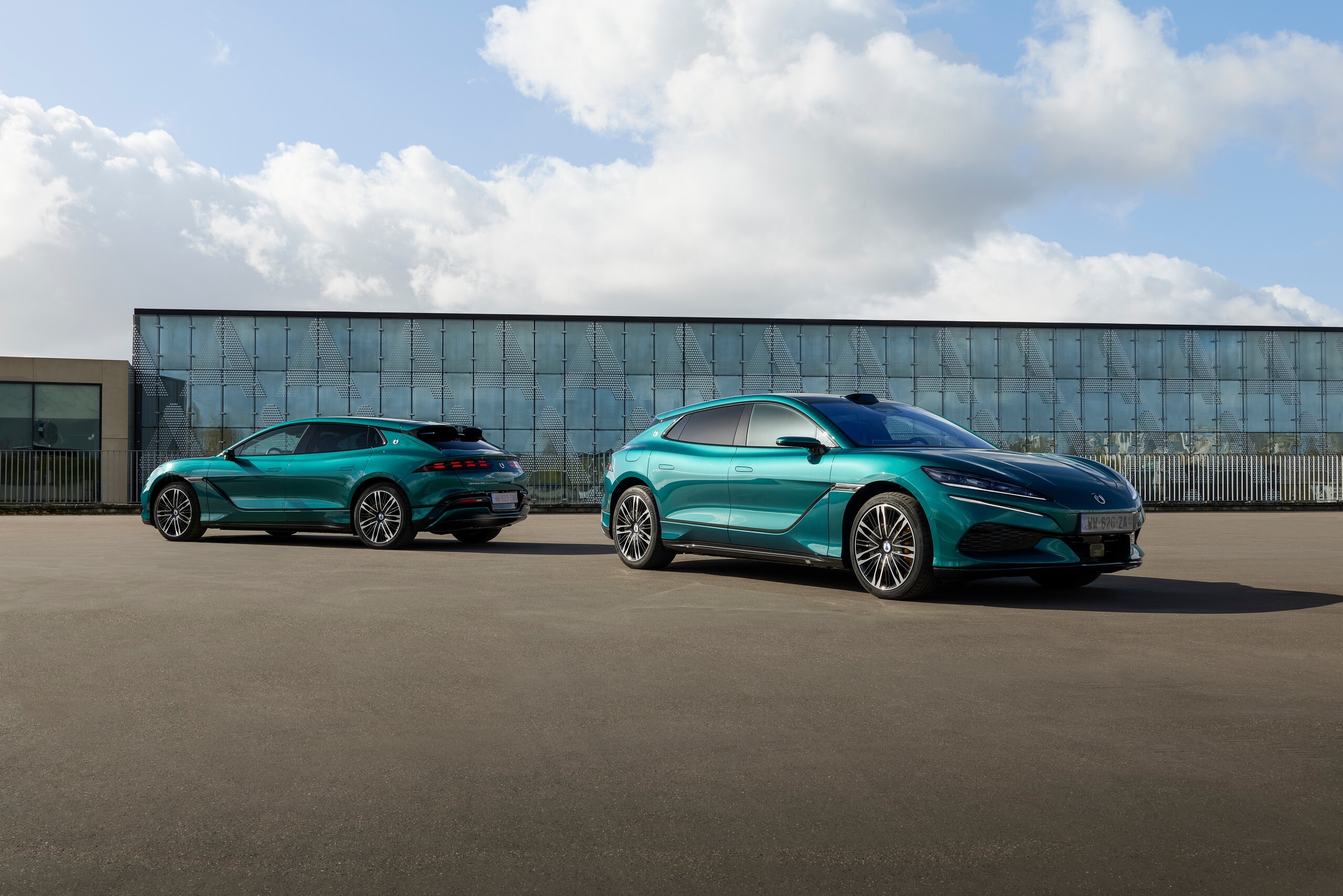
BYD isn’t content with its core brand competing against the world’s biggest carmakers. It has now launched its premium Denza brand in Europe. There’s a certain irony here, as Denza was originally created as a joint venture between BYD and Mercedes-Benz owner Daimler, blending Chinese EV expertise with German premium know-how. It was established in 2010 before Mercedes-Benz gradually stepped back and exited entirely in 2024.

The rollout begins in Germany, France, Italy, Spain, and the UK, with two key models leading the way. By the end of 2026, Denza is expected to be present in 30 countries across the continent.

Also: BYD Says Five-Minute Charging Adds 310 Miles, BMW Says Read The Fine Print

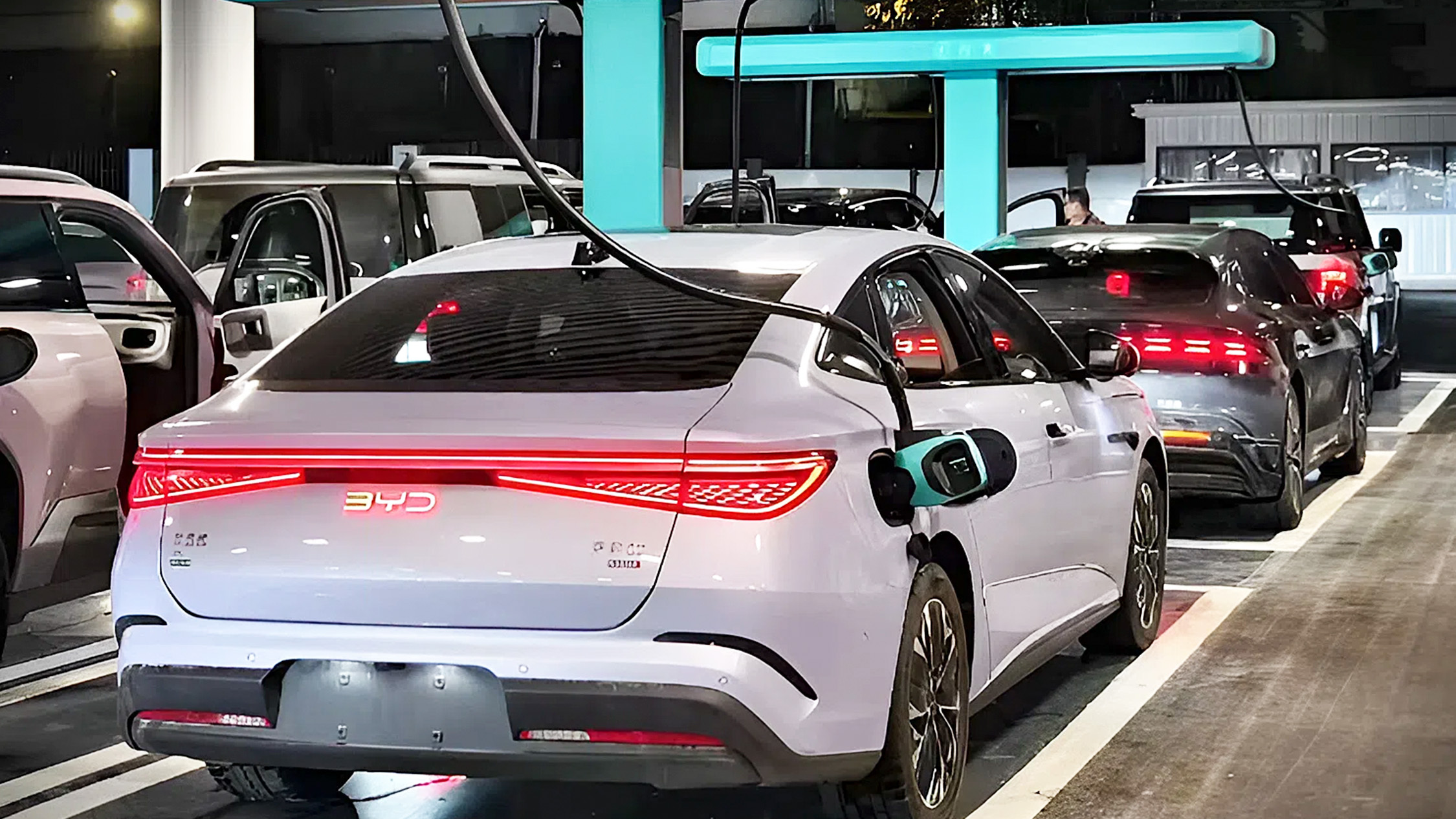
Those opening acts are the D9 DM-i minivan and the Z9GT Shooting Brake. The D9 leans on a plug-in hybrid setup, while the Z9GT gives buyers a choice between full electric and plug-in hybrid power. Their arrival also lines up with BYD’s wider push to roll out its Flash Charging system internationally. Over the next 12 months, the company aims to install 3,000 charging stations across Europe, with another 3,000 planned for markets beyond China.

 The Chinese Luxury Brand Mercedes Helped Create Is Now Coming For Mercedes’ European Buyers

Denza has already been selling the Z9GT Shooting Brake in China for quite some time, and it’s one of the country’s most intriguing family cars. Based on the firm’s e3 Platform, the all-electric model uses a sizeable 122.49 kWh battery pack, a front motor with 308 hp (230 kW) and 302 lb-ft (410 Nm) of torque, as well as two 416 hp (310 kW) and 295 lb-ft (400 Nm) motors at the rear axle, giving it a combined 1,139 hp (850 kW) and 892 lb-ft (1,210 Nm) of torque.

Read: BYD’s Premium Z Sports Car Is Gunning Straight For Porsche’s Pride

The sprint to 62 mph (100 km/h) is dealt with in just 2.7 seconds, and the top speed is 167 mph (269 km/h), more than enough for high-speed cruising on the German Autobahn. The EV has a quoted WLTP driving range of 372 miles (599 km), and thanks to BYD’s 1,500 kW Flash Charging system, it charges from 10-70 percent in five minutes and 10-97 percent in nine minutes.

A High-Powered Plug-In

\\\\\

The plug-in hybrid version uses a 2.0-liter turbocharged four-cylinder engine producing 170 hp (127 kW) and 236 lb-ft (320 Nm), along with a 268 hp (200 kW) front motor and two 248 hp (185 kW) rear motors producing 266 lb-ft (360 Nm) each, resulting in a combined output of 765 hp (570 kW) and 763 lb-ft (1,035 Nm).

More: BYD Boss Brags Z9 GT Is ‘Ten Times Better’ Than Premium Euro Rivals

It also features a sizeable 63.82 kWh battery and can travel 126 miles (203 km) on all-electric power, or 500 miles (805 km) when combined with the engine. It needs just 3.6 seconds to hit 62 mph (100 km/h) and tops out at 161 mph (259 km/h).

Both versions come standard with carbon ceramic brakes and include rear-wheel steering. They also included BYD’s advanced DiSUS-A dual-chamber air suspension system and can tow up to 2,000 kg (4,409 lbs). A rear-wheel-drive-only version of the electric Z9 GT will launch later this year, boasting greater driving range.

\\\

The D9 DM-i minivan features a plug-in hybrid, all-wheel-drive powertrain delivering up to 130 miles (209 km) of electric-only range and a combined range of 590 miles (950 km). It also supports BYD’s Flash Charging technology.

Market-specific pricing for the new Denza models has yet to be announced, though details are expected to follow shortly.

\\\\\\\\\\\\\

Denza Lands In Europe To Shake Up The EV Segment

  • The Z9GT Shooting Brake churns out a massive 1,139 hp in EV guise.
  • A plug-in hybrid version with a 63.82 kWh battery is also offered.
  • Joining the sleek Z9GT Shooting Brake is Denza’s D9 DM-i minivan.

Not satisfied with its namesake brand expanding worldwide and rivaling some of the world’s largest car manufacturers, BYD has officially launched its premium Denza brand in Europe. Bringing with it two compelling models, the firm is initially launching in Germany, France, Italy, Spain, and the UK, but by the end of 2026, it will be present in 30 countries across the continent.

The two models launched are the D9 DM-i minivan and the Z9GT Shooting Brake. The D9 is a plug-in hybrid, while the Z9GT is offered in all-electric and plug-in hybrid guises, and the launch of both models coincides with BYD’s planned international rollout of its new Flash Charging system. Within the next 12 months, it plans to establish 3,000 stations in Europe and 3,000 others in markets outside of China.

Read: BYD’s Premium Z Sports Car Is Gunning Straight For Porsche’s Pride

Denza has already been selling the Z9GT Shooting Brake in China for quite some time, and it’s one of the country’s most intriguing family cars. Based on the firm’s e3 Platform, the all-electric model uses a sizeable 122.49 kWh battery pack, a front motor with 308 hp (230 kW) and 302 lb-ft (410 Nm) of torque, as well as two 416 hp (310 kW) and 295 lb-ft (400 Nm) motors at the rear axle, giving it a combined 1,139 hp (850 kW) and 892 lb-ft (1,210 Nm) of torque.

The sprint to 62 mph (100 km/h) is dealt with in just 2.7 seconds, and the top speed is 167 mph (269 km/h), more than enough for high-speed cruising on the German Autobahn. The EV has a quoted WLTP driving range of 372 miles (599 km), and thanks to BYD’s 1,500 kW Flash Charging system, it charges from 10-70 percent in five minutes and 10-97 percent in nine minutes.

A High-Powered Plug-In

\\\\\

The plug-in hybrid version uses a 2.0-liter turbocharged four-cylinder engine producing 170 hp (127 kW) and 236 lb-ft (320 Nm), along with a 268 hp (200 kW) front motor and two 248 hp (185 kW) rear motors producing 266 lb-ft (360 Nm) each, resulting in a combined output of 765 hp (570 kW) and 763 lb-ft (1,035 Nm). It also features a sizeable 63.82 kWh battery and can travel 126 miles (203 km) on all-electric power, or 500 miles (805 km) when combined with the engine. It needs just 3.6 seconds to hit 62 mph (100 km/h) and tops out at 161 mph (259 km/h).

Both versions come standard with carbon ceramic brakes and include rear-wheel steering. They also included BYD’s advanced DiSUS-A dual-chamber air suspension system and can tow up to 2,000 kg (4,409 lbs). A rear-wheel-drive-only version of the electric Z9 GT will launch later this year, boasting greater driving range.

The D9 DM-i minivan is equipped with a plug-in hybrid, all-wheel drive powertrain offering 130 miles (209 km) of electric driving range, and a combined driving range of 590 miles (950 km). It also supports BYD’s Flash Charging technology.

Market-specific pricing details for the new Denza models have yet to be announced, but are expected to be confirmed soon.

Denza D9 DM-i
\\\
Denza Z9GT Shooting Brake
\\\\\\\\\\\\\

Germany’s EV Market Was In Freefall A Year Ago, Now EVs Are Outselling Gas Cars

  • New EVs are now out-selling petrol-powered cars in the country.
  • On January 1, Germany reintroduced subsidies for electric cars.
  • Sales of hybrid and plug-in hybrid models are also on the rise.

It hasn’t taken long for the EV pendulum to swing back in Germany. Less than a year after Europe’s biggest car market pulled the plug on EV subsidies and watched demand stumble, fresh incentives have stepped in and buyers are piling back in like the discount aisle just reopened.

Despite economic jitters tied to trade tensions and the war in Iran, Germany’s car market picked up pace in March, with registrations rising 16 percent compared to the previous month. A total of 294,161 vehicles were registered, and a striking 24 percent of them were battery-electric. That translates to 70,663 EVs sold during the month.

Read: EV Buyers Just Got A Huge Break In Germany That Lasts Ten Years

This surge has pushed EVs ahead of both petrol and diesel models, which now account for 22.8 percent and 12.8 percent of the market, respectively.

This represents a significant 66.2 percent increase over the 42,521 sold in March of last year. Year-to-date, a total of 159,630 BEVs have been sold, up 41.3 percent from the 112,968 sold across the January-March period in 2025.

Hybrids Join The Party

 Germany’s EV Market Was In Freefall A Year Ago, Now EVs Are Outselling Gas Cars

It’s not just EVs that have surged in popularity this year. Sales of hybrid models, including plug-in hybrids, climbed 16.2 percent in March to 117,845 units. First-quarter figures are up as well, rising 10.4 percent to 282,600 units. Hybrids now account for 40.1 percent of all new car registrations in the country.

Several brands contributed to the surge in electrified vehicle sales. For example, BYD sold 3,438 vehicles in March, up 327.1 percent from the year prior. Sales from Leapmotor also rose 318.1 percent to 1,388, and Tesla sales climbed 315.1 percent to 9,252 units. This year, 12,829 new Tesla models have been sold in Germany, up 160 percent from the same period last year.

Among established brands, Opel (+43.0%), Audi (+25.0%), and BMW (+16.5%) posted strong gains in March, while Skoda reached an 8.4 percent market share, making it the top import brand.

As of January 1, new electric vehicles registered in Germany are exempt from motor vehicle tax until December 31, 2035. Additionally, EVs are eligible for a base subsidy of €3,000 ($3,500) and up to €6,000 ($7,000) for lower-income households. Similarities, plug-in hybrids, and extended-range EVs can receive subsidies of up to €4,500 ($5,200).

Overall registrations for the first quarter of the year rose by 5.2 percent compared to the same period last year.

Germany Car Sales March 2026
BrandMar-26Market
Share
Mar-26
Diff. vs
Mar-25
Jan-Mar
26
Market
Share
YTD-26
Diff. vs
YTD-25
ALFA ROMEO5270.2-26.11,3520.2-30.1
ALPINE1240138.53660.1145.6
ASTON MARTIN6801420
AUDI22,0137.52551,5867.47.1
BENTLEY520131240-24.4
BMW24,3088.316.558,5478.48.1
BYD3,4381,2327.19,1201.3644.5
CADILLAC9050180-35.7
CITROEN4,9631.712.113,0551.912
DACIA6,5522.2-5.213,7702-21.1
DAF TRUCKS1020
DEEPAL80210
DS1930.1-45.34550.1-60.3
FERRARI1890.10.54210.1-8.3
FIAT6,5482.22917,0312.465.6
FORD9,5113.28.723,9053.4-7.4
GWM1830.136.63300-42.5
HONDA1,2700.4262,1920.310.3
HYUNDAI10,2733.529.523,7063.416.5
INEOS240-38.58601.2
IVECO127033.7271015.8
JAC1010
JAECOO80100
JEEP1,3110.48.52,8430.4-14.3
KGM3010.122.96400.1-20.7
KIA6,1722.133.314,3762.13.5
LADA20
LAMBORGHINI1350-17.23380-8.6
LAND ROVER1,6780.635.13,8010.514
LEAPMOTOR1,3880.5318.13,1680.5370.7
LEXUS3020.1-227940.1-26.5
LOTUS38018.8780-20.4
LUCID170142.9350
LYNK & CO13602640633.3
MAN880-47.63120-14.3
MASERATI450-44.41070-28.2
MAXUS10-92.330-86.4
MAZDA6,7522.327.612,8301.820.8
MERCEDES23,7108.17.559,0958.4-2.4
MG ROEWE2,5590.921.96,1770.912.3
MINI3,5401,242.39,1341.336.3
MITSUBISHI1,3770.5-233,0570.4-40.3
MORGAN16045.522015.8
NIO20-90.580-87.5
NISSAN4,2061.4-149,0781.3-3.2
OMODA1010
OPEL13,6974.74333,5644.838.9
PEUGEOT6,2192.13.515,4282.2-0.9
POLESTAR4560.227.71,2840.250.2
PORSCHE2,8351-12.18,3601,25
RENAULT6,1952.1413,3921.9-3.7
ROLLS ROYCE270-15.6750-25.7
SEAT16,3605.6-4.937,4435.4-14.6
SKODA24,8548.43462,4388.924.6
SMART6950.2189.61,5170.250
SUBARU3310.1-27.97950.1-26.5
SUZUKI2,7620.93.96,1900.91.5
TESLA9,2523.1315.112,8291.8160
TOGG330X950X
TOYOTA7,2832.5-1.415,7062.2-14.9
VINFAST17088.961010.9
VOLVO4,6521.6-10.412,6011.8-22.4
VW52,55617.93.2131,01218.7-5.3
XPENG5490.2211.91,2070.2179.4
ZEEKR80300
OTHER1,2150.47.92,7030.4
TOTAL294,161100%16%699,404100%5%
SWIPE
 Germany’s EV Market Was In Freefall A Year Ago, Now EVs Are Outselling Gas Cars

A Chinese Car Has Never Topped UK Sales Before. One Just Did

  • Jaecoo 7 leads UK sales charts after a strong March debut run.
  • Plug-in hybrid demand drove most of the SUV’s early momentum.
  • Electrified vehicles reached record highs across the UK market.

The UK’s sales charts don’t usually throw up surprises, yet March 2026 did exactly that. A relatively new Chinese SUV, the Jaecoo 7, jumped straight to the top spot, becoming the best-selling new car in the country. It’s the first time a Chinese model has led the UK market, landing right in the middle of the industry’s busiest sales month, which also saw electrified vehicles and BEVs hit record numbers.

More: UK Buyers Now Love This ‘Temu Range Rover’ More Than The Real Thing

Not everything is rosy, though, as some analysts are already questioning how long that pace can last.

Chinese Intruder Steals The Crown

 A Chinese Car Has Never Topped UK Sales Before. One Just Did
SMMT

The compact SUV from Chery, carrying styling that leans heavily on Range Rover cues, has even picked up a nickname online, with some calling it the “Temu Range Rover” in a tongue-in-cheek dig to its bargain-luxury vibe and resemblance to the real thing.

It racked up 10,064 registrations in March, enough to push past familiar heavyweights like the Ford Puma, which logged 9,193 units, and the Nissan Qashqai with 8,718. The rest of the top five followed a predictable script, with the Kia Sportage at 7,310 units and the Vauxhall Corsa close behind at 6,315.

More: Ford Fixes Puma Gen-E’s Biggest Weakness And Adds A Clever Upgrade

Since arriving in the UK in September 2025, the Jaecoo 7 has steadily hovered around the top ten, but this latest jump changes the tone. It now sits second in the year-to-date rankings with 15,569 registrations, closing in on the Ford Puma, which still holds the overall lead for the first quarter of 2026 with 16,128 sales. The gap is small enough to make the next few months worth watching closely.

\\\\\\\\\\\\\\\

According to Jaecoo, the plug-in hybrid version equipped with its Super Hybrid System (SHS-P) has quickly become the star of the lineup, accounting for 85% of the SUV’s sales in March.

More: The Brand Behind The ‘Temu Range Rover’ Just Made A Temu Mercedes GLS

In the UK, the Jaecoo 7 starts at £29,105 ($38,600) for the gasoline model, climbing to £35,175 ($46,600) for the range-topping PHEV. Even at the top end, it undercuts plug-in hybrid rivals of similar size, which gives it a clear pricing edge. It also manages up to 56 miles (90 km) of electric-only driving, enough to land in a lower tax bracket and make it appealing to fleet buyers.

The Chery-owned brand leans on a 7-year warranty to ease the usual doubts that come with a new badge. Its UK presence is growing quickly too, with a retail network now up to 124 locations. Together, sister brands Omoda and Jaecoo have moved more than 80,000 vehicles in the UK in just 19 months. March alone accounted for 17,861 registrations.

The Biggest Month On Record For Electrified Vehicles

\\\\\\\\\\\\

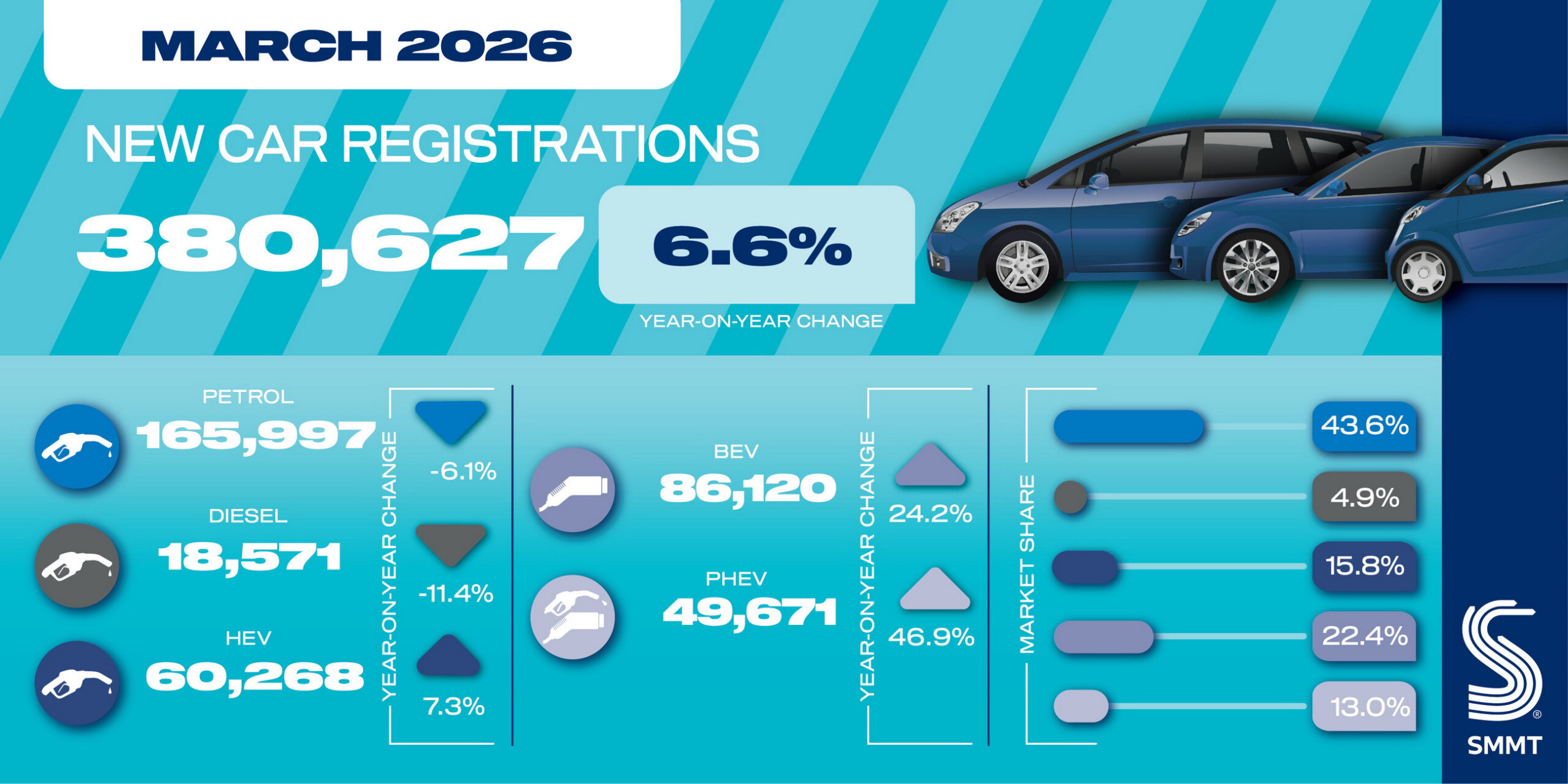
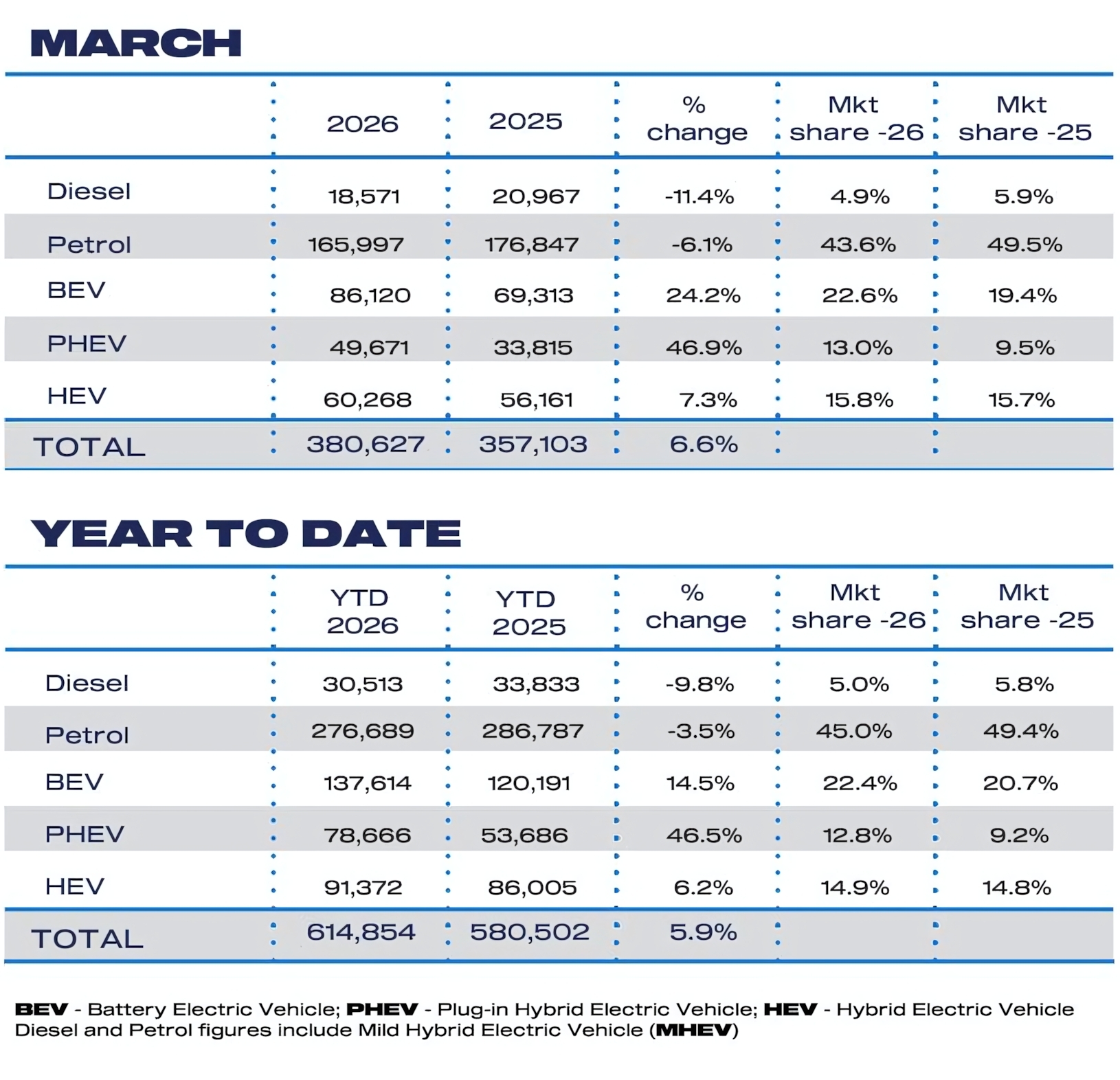
The UK’s new car market picked up pace in March, with the Society of Motor Manufacturers and Traders reporting a 6.6% increase to 380,627 registrations, making it the strongest month since 2019. Private buyers led the charge with a 10.1% jump, while fleet sales rose 3.5% and business registrations climbed 18.8%.

More: Rivian Beat Four Major Automakers In EV Sales, And Its Biggest Model Hasn’t Even Launched Yet

Electrified vehicles delivered a record-setting month, led by a 46.9% surge in plug-in hybrids. Self-charging hybrids followed with a 7.3% increase, while battery electric vehicles climbed 24.2%. It also marked the strongest month on record for fully electric cars in the UK

In market share terms, plug-in hybrids took 13%, self-charging hybrids reached 15.8%, and battery electric vehicles claimed 22.6% of UK sales in March. That last figure looks strong, but it still sits well short of the government’s 33% Zero Emission Vehicle target for 2026.

UK New Car Registrations 2026
ModelMarch 2026ModelYear To Date 2026
1. Jaecoo 710,0641. Ford Puma16,128
2. Ford Puma9,1932. Jaecoo 715,569
3. Nissan Qashqai8,7183. Kia Sportage14,190
4. Kia Sportage7,3104. Nissan Qashqai12,853
5. Vauxhall Corsa6,3155. Vauxhall Corsa10,552
6. Volvo XC406,3116. Volvo XC409,288
7. MG HS6,1357. VW Golf9,176
8. VW Golf5,8908. MG HS9,147
9. Tesla Model Y5,1779. Nissan Juke8,512
10. BMW 1-Series4,93610. Mini Cooper8,109
SWIPE

Source SMMT

Clouds On The Horizon

Even with record numbers on paper, the mood behind the scenes is far less celebratory. SMMT says automakers are leaning heavily on discounts just to keep momentum going. At the same time, battery costs are running about 30% higher than expected, while public charging prices have climbed 140% over the past five years. That combination leaves margins looking increasingly fragile.

More: The Iran War Could End Tomorrow. The Auto Industry Could Still Lose Over A Million Sales

The situation is further complicated by the ongoing Iran crisis. While the conflict has pushed fuel prices sharply higher and nudged more drivers to consider EVs, it also risks eroding consumer confidence as everyday costs rise across the board.

 A Chinese Car Has Never Topped UK Sales Before. One Just Did

Mike Hawes, SMMT Chief Executive, said:

“The strongest new car market since 2019, with the highest ever volume of EV registrations, is a boost to the industry and the economy. However, the headlines belie the costs incurred and the challenges involved. Much of March’s performance will be from orders placed before the start of the Iran conflict, which threatens to raise the cost of living, undermining consumer confidence. Against this backdrop, and with the EV market falling further away from mandated levels despite record levels of incentives, an urgent review of the transition is required to secure a sustainable market, economic growth and the UK’s net zero ambitions.”

 A Chinese Car Has Never Topped UK Sales Before. One Just Did
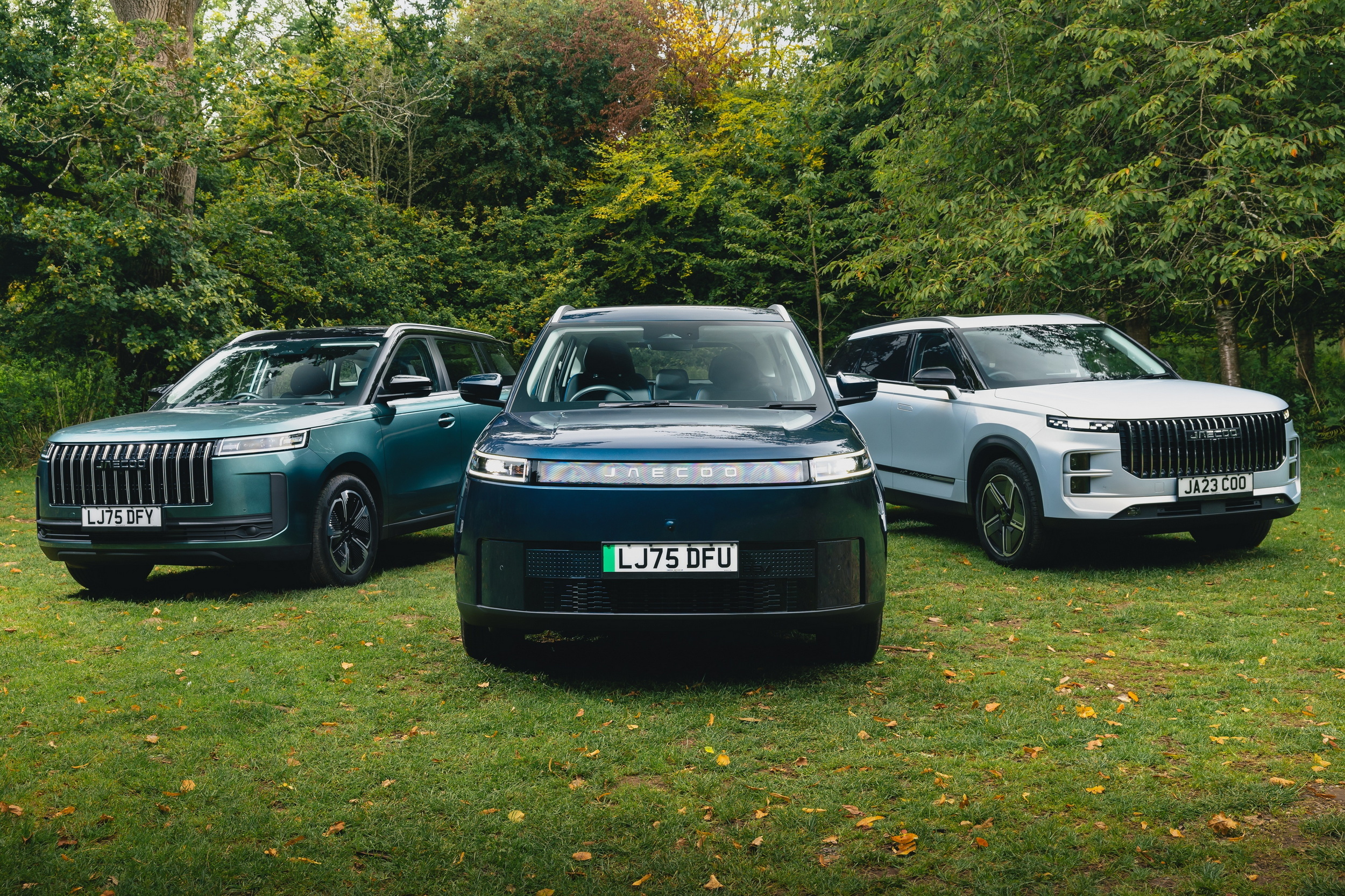
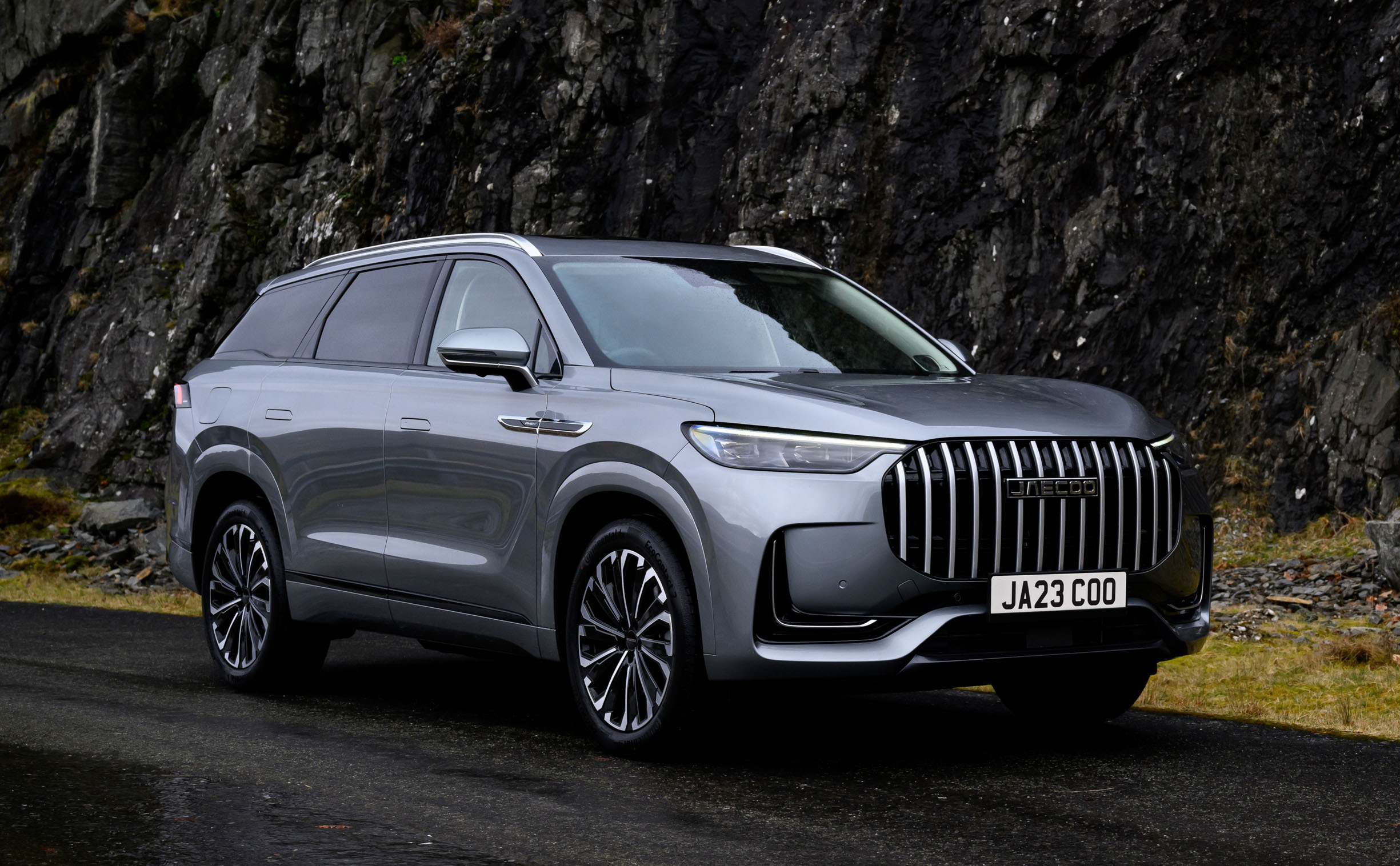
The Jaecoo 5 (left), the E5 (middle) and the 7 (right) will soon be joined by the Jaecoo 8 flagship (below).
 A Chinese Car Has Never Topped UK Sales Before. One Just Did

GM’s Only Answer To Toyota’s Seventeen Hybrids Is A $109K Corvette

  • Some automakers ignored hybrids to bet big on EVs.
  • That bet went bad and could get worse as gas prices soar.
  • Toyota and Hyundai stand to benefit from diverse lineup.

A few years ago, automakers faced a tough choice. They could eschew hybrids and plug-in hybrids to go all-in on EVs, or adopt a more balanced, but expensive approach that saw them invest in multiple technologies.

A number of companies went the electric route and that ended up costing them greatly as adoption was slower than they anticipated. If that wasn’t bad enough, the United States eliminated the federal tax credit and governments rolled back overly ambitious green agendas.

More: Gas Was $2.98 A Month Ago. It Just Crossed $4 For The First Time Since 2022

This has pushed automakers to cancel EVs and abandon plans to go electric-only. Companies have posted huge losses and now they’re suddenly playing catch-up with rivals that took a more nuanced approach.

Expensive Gas Is Going To Make Things Even Worse

 GM’s Only Answer To Toyota’s Seventeen Hybrids Is A $109K Corvette

Since some companies were betting on a quick transition to EVs, a number of them don’t have many hybrids or plug-in hybrids to offer customers. That’s bad news in an era where the national average price of a gallon of gasoline is above $4 and climbs to nearly $6 in some states.

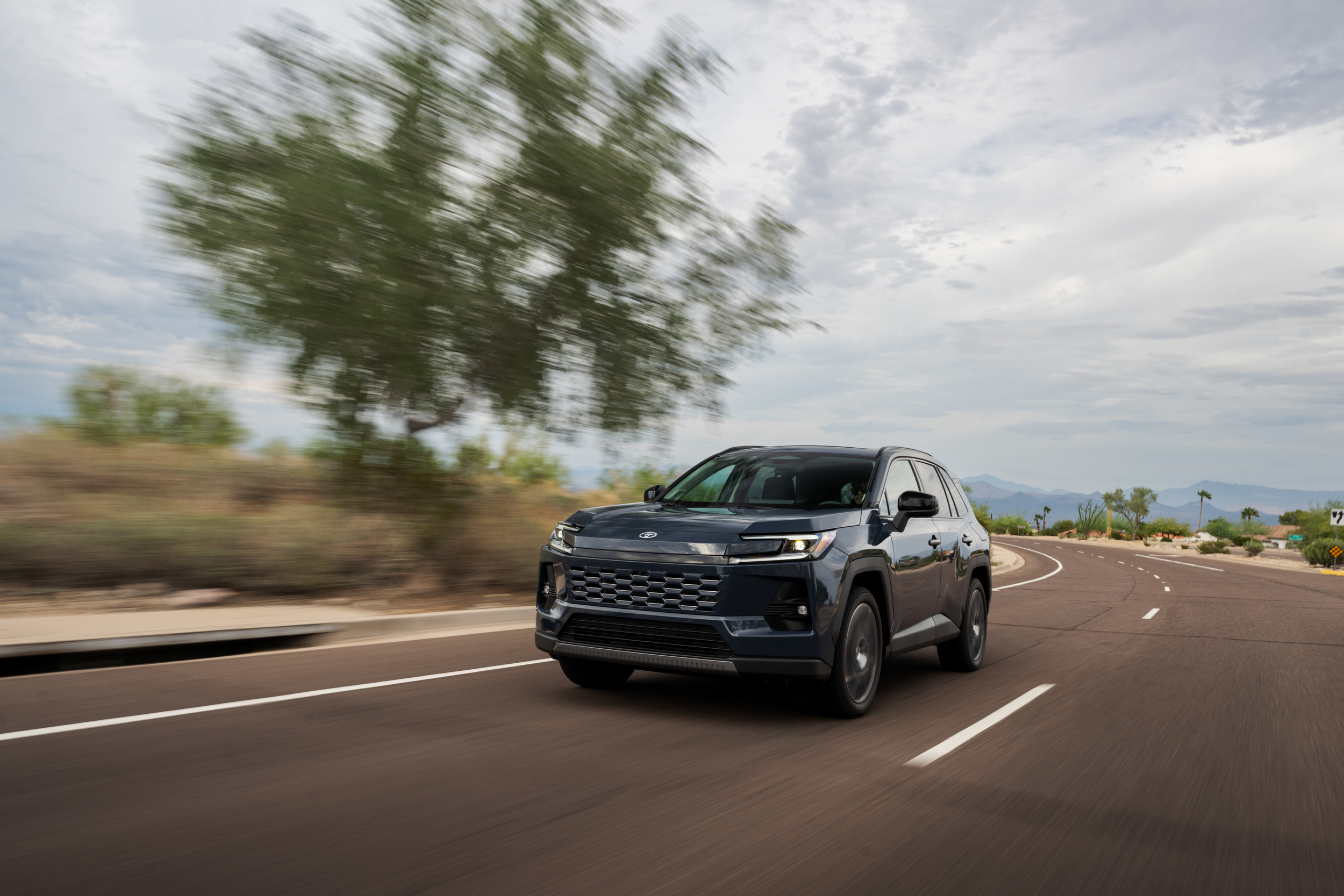
The only hybrid GM has in America is the $108,600 Corvette E-Ray and that’s a huge problem. Consumers in the market for a compact crossover might look at an Equinox, which returns up to 26 mpg city, 29 mpg highway, and 27 mpg combined. That’s not terrible, but the Toyota RAV4 gets 47 mpg city, 40 mpg highway, and 43 mpg combined. This is a huge difference, especially in an era of sky high gas prices.

 GM’s Only Answer To Toyota’s Seventeen Hybrids Is A $109K Corvette

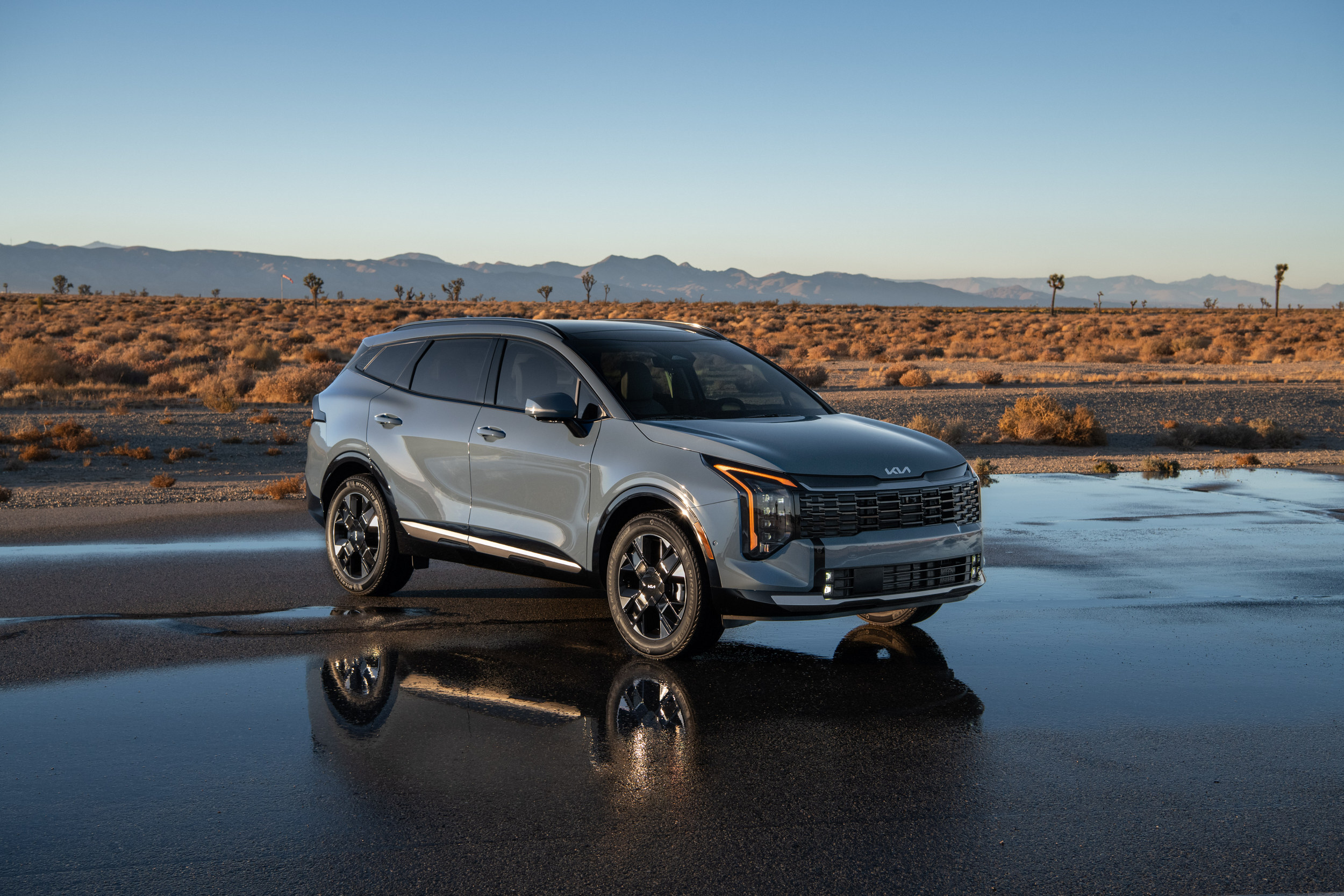
Hyundai and Kia also offer hybrid competitors in the form of the Tucson and Sportage. The former offers up to 38 mpg across the board, while the latter returns up to 41 mpg city, 44 mpg highway, and 42 mpg combined. It’s also worth noting all three competitors offer plug-in hybrid variants, while GM doesn’t offer a single one in the United States.

General Motors isn’t the only automaker that bet big on EVs and lived to regret it. Ford has a limited hybrid lineup that consists of the Maverick and F-150. The Escape, which offered hybrid and plug-in hybrid options, was recently killed off, while the Explorer Hybrid is limited to police and the Pope.

Hybrid Sales Are Skyrocketing

 GM’s Only Answer To Toyota’s Seventeen Hybrids Is A $109K Corvette

While the war in Iran is barely more than a month old, hybrid sales are booming. Kia recently revealed sales of hybrids soared 73% to set a new quarterly record.

Last month was also Hyundai’s best ever March for hybrid sales. The company noted hybrids saw a huge jump in the first quarter as the Elantra Hybrid was up 141%, while the Sonata Hybrid soared 107%. The Santa Fe Hybrid also got a 47% boost as consumers embraced efficiency.

 GM’s Only Answer To Toyota’s Seventeen Hybrids Is A $109K Corvette

While Toyota sales fell 6.9% in the first quarter, high gas prices could help to reverse that trend as the company offers a dizzying array of hybrids. Seventeen, to be exact, according to our last count. This includes the Camry, Corolla, Crown, Corolla Cross, and Prius, as well as the Crown Signia, Highlander, Grand Highlander, Land Cruiser, RAV4, 4Runner, Tacoma, Tundra, Sequoia, and Sienna. Two of those, the Prius and RAV4, are also offered as plug-in hybrids.

That’s a huge lineup, especially compared to Ford, GM, and Stellantis. The latter recently killed off plug-in hybrids and only offers the new Cherokee Hybrid in America. However, range-extended variants of the Ram 1500 and Grand Wagoneer are coming.

While EVs do offer some cover to these companies during periods of high gas prices, consumers have been clear: most want hybrids, not fully electric vehicles.

 GM’s Only Answer To Toyota’s Seventeen Hybrids Is A $109K Corvette

Land Rover Let The Freelander Go. China Brought It Back As An Electrified SUV

  • The Freelander name returns on a new electrified 4×4 developed jointly in China.
  • It rides on an 800-volt platform supporting EV, PHEV, and range-extender setups.
  • Export versions will be bespoke regional models, not adapted China-market cars

The Freelander name has been dormant since 2015, but Jaguar Land Rover’s Chinese joint venture with Chery has brought it back as something entirely new. Instead of a badge within Land Rover’s lineup, it now stands alone as its own brand, focused squarely on electrified off-roaders. The first look at that direction comes in the form of a concept rather than a production-ready model.

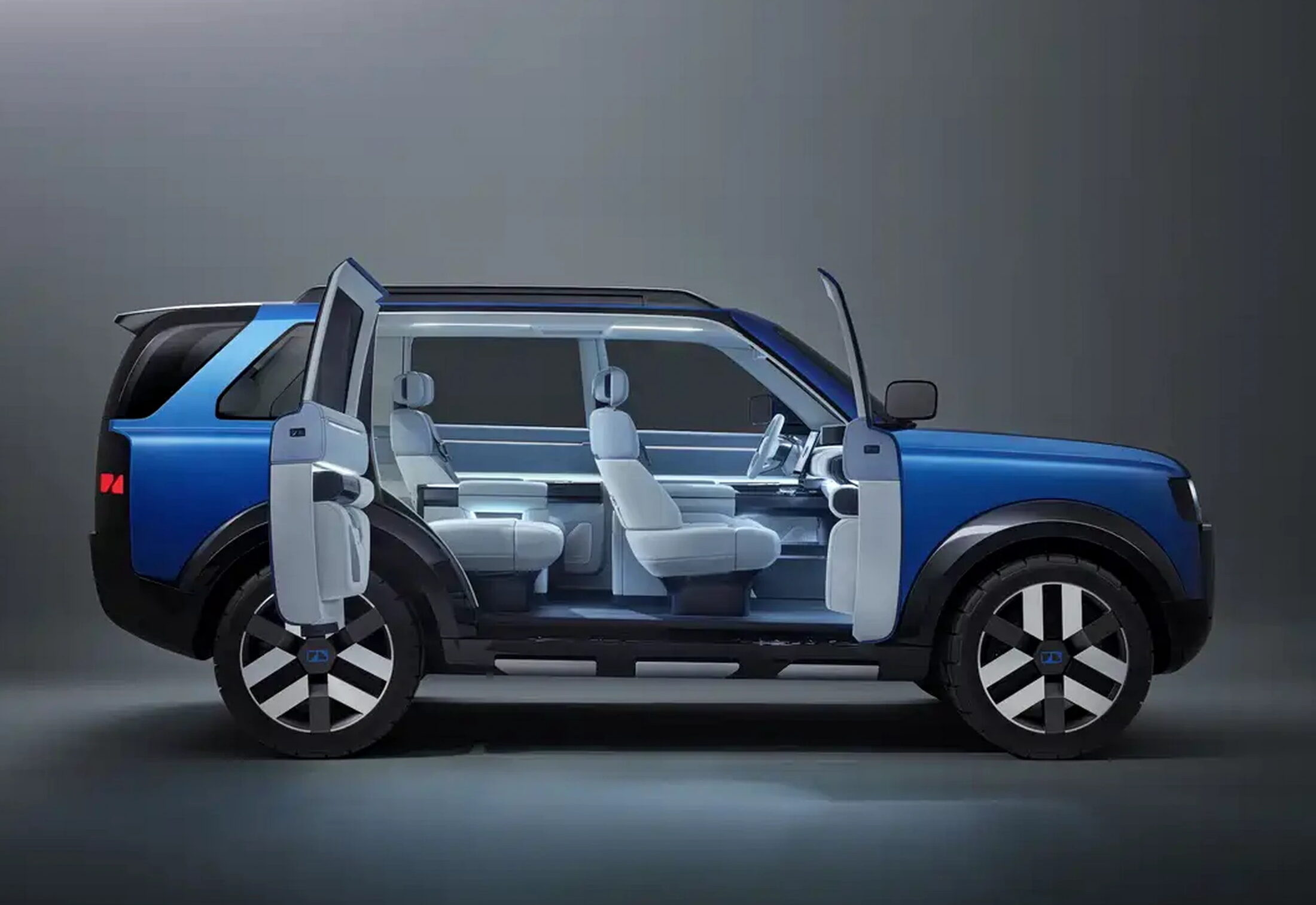
The Concept 97 takes its name from the Freelander’s original 1997 debut. While it wears no Land Rover badges, its design still leans heavily on the brand’s visual language, blending cues from the original Freelander with elements reminiscent of the modern Defender. The design is a product of collaboration between the teams at the UK and China.

More: The Freelander Is Coming Back, Just Not As A Land Rover

The company showed two cocnept models, finished in Glacier Blue and Thousand Mountain Green. Both feature black cladding paired with aluminum accents across the hood, grille, skid plate, and tailgate. The wheels and tires lean toward concept-car theatrics, and the suicide doors underline that this is still very much a showpiece. Expect those to give way to something more conventional in production, unless Land Rover decides to keep things interesting, at least with the doors.

Design Details Pull From Different Eras

\\\\\\\\\\\

Look closer and the references become more specific. The angled D-pillar is a clear callback to the three-door Freelander from 1997, including the era when it even offered a soft-top. Meanwhile, the black trim beneath the headlights and the pixel-style LED arrangement echo the facelifted model introduced in 2003.

More: Jaguar Land Rover’s Design Boss Is Out After Two Decades With No Successor Named

Around back, the taillights are tucked into a strip of black trim, contrasting against an upright aluminum-finished tailgate. The rear skid plate mirrors the front, and a sizeable roof spoiler caps things off with a slightly more modern flourish.

High-Tech Interior With Six Seats

\\\\\\\

The interior adopts a three-row six-seater configuration, with a rear bench that looks like a couch. A pillar-to-pillar display is mounted on the base of the windshield, joined by a large infotainment touchscreen. We can also see a pair of rotating dials and physical buttons on the steering wheel, alongside traditional stalks.

Second-row passengers have access to a drop-down screen, and a high-mounted center console similar to the one between the front seats. The SUV is also equipped with the latest Qualcomm Snapdragon 8397 chip, and Huawei’s Qiankun Intelligent Driving ADS 4.1 system featuring a 896-line LiDAR sensor.

Six Models Planned, But Not For Everyone

 Land Rover Let The Freelander Go. China Brought It Back As An Electrified SUV

This is not a one-off exercise. The company says six production models will arrive under the Freelander brand over the next five years. China comes first, with global expansion planned afterward, although that rollout carries a significant caveat.

Every model will be built at the CJLR plant in Changshu, effectively replacing the soon-to-be discontinued Land Rover Discovery Sport and Range Rover Evoque on the production line. With production rooted entirely in China, current US tariff conditions make an American launch highly unlikely. Canada, however, thanks to newly reduced tariffs, could still be in play.

More: Here’s The New Freelander Before You’re Supposed To See It

The SUVs are expected to ride on Chery underpinnings, supporting range-extender, plug-in hybrid, and fully electric powertrains. Based on earlier spy shots and leaked images, the first production Freelander of this new era will likely be a three-row, six-seat model, closely mirroring the Concept 97.

\\\\\\\\\\\\\\

Photos Chery Jaguar Land Rover, Weibo

Europe’s ICE Car Sales Collapsed 23% In A Single Month, As EVs Surge

  • EVs accounted for 18.8 percent of EU sales in the first two months of 2025.
  • Petrol car registrations collapsed 23.3 percent in February across the bloc.
  • BYD doubled its European sales while matching Tesla’s 1.8 percent market share.

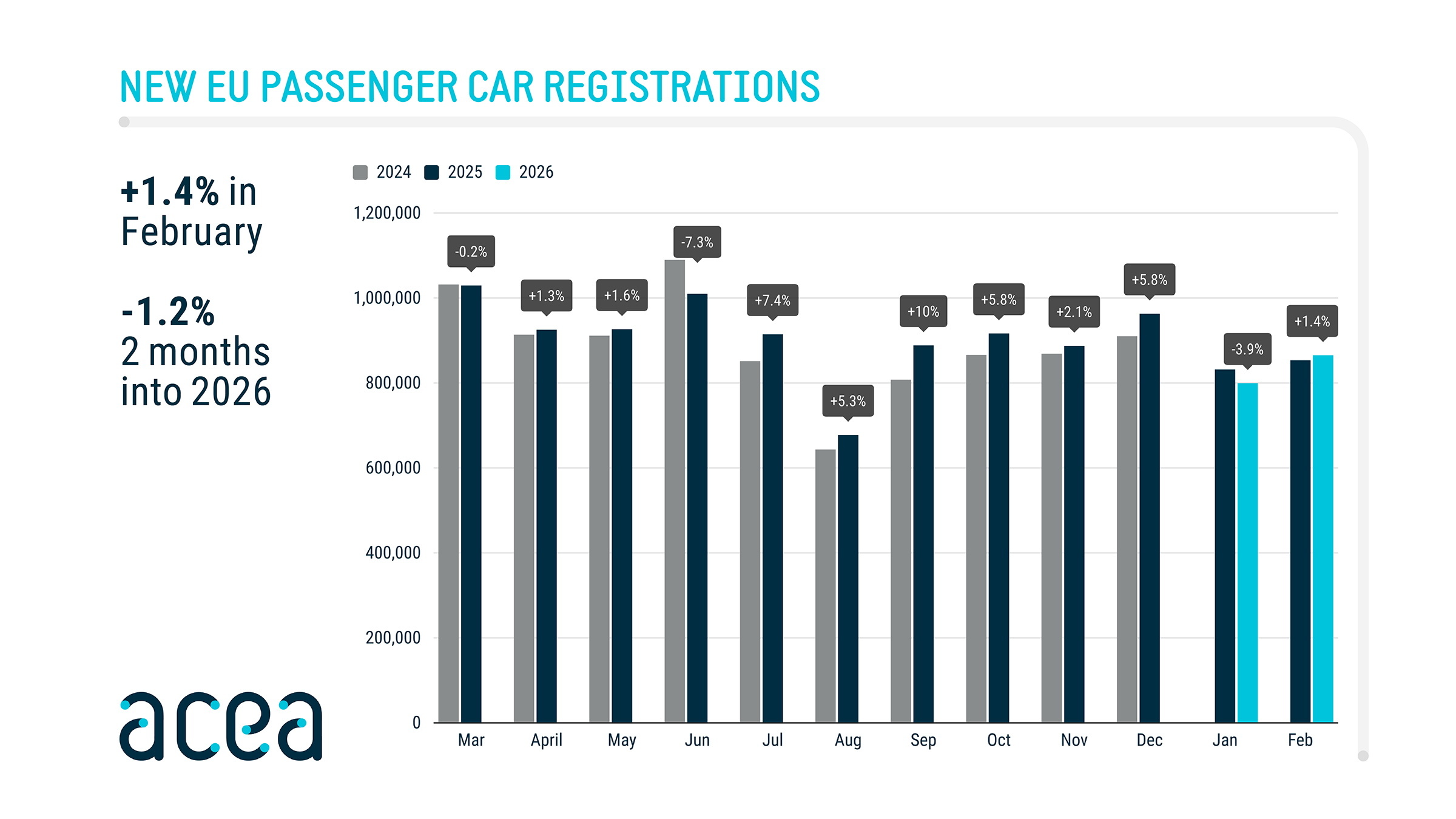
Sales of battery-electric vehicles across the European Union continue to rise and are now nipping at the heels of petrol-powered cars. Due to the ongoing war in Iran and spiking oil prices, EV demand could jump even further. However, market conditions remain mixed, with total car registrations across the EU, Britain, and EFTA rising just 1.7 percent in February to 979,321 units, signaling only modest overall growth.

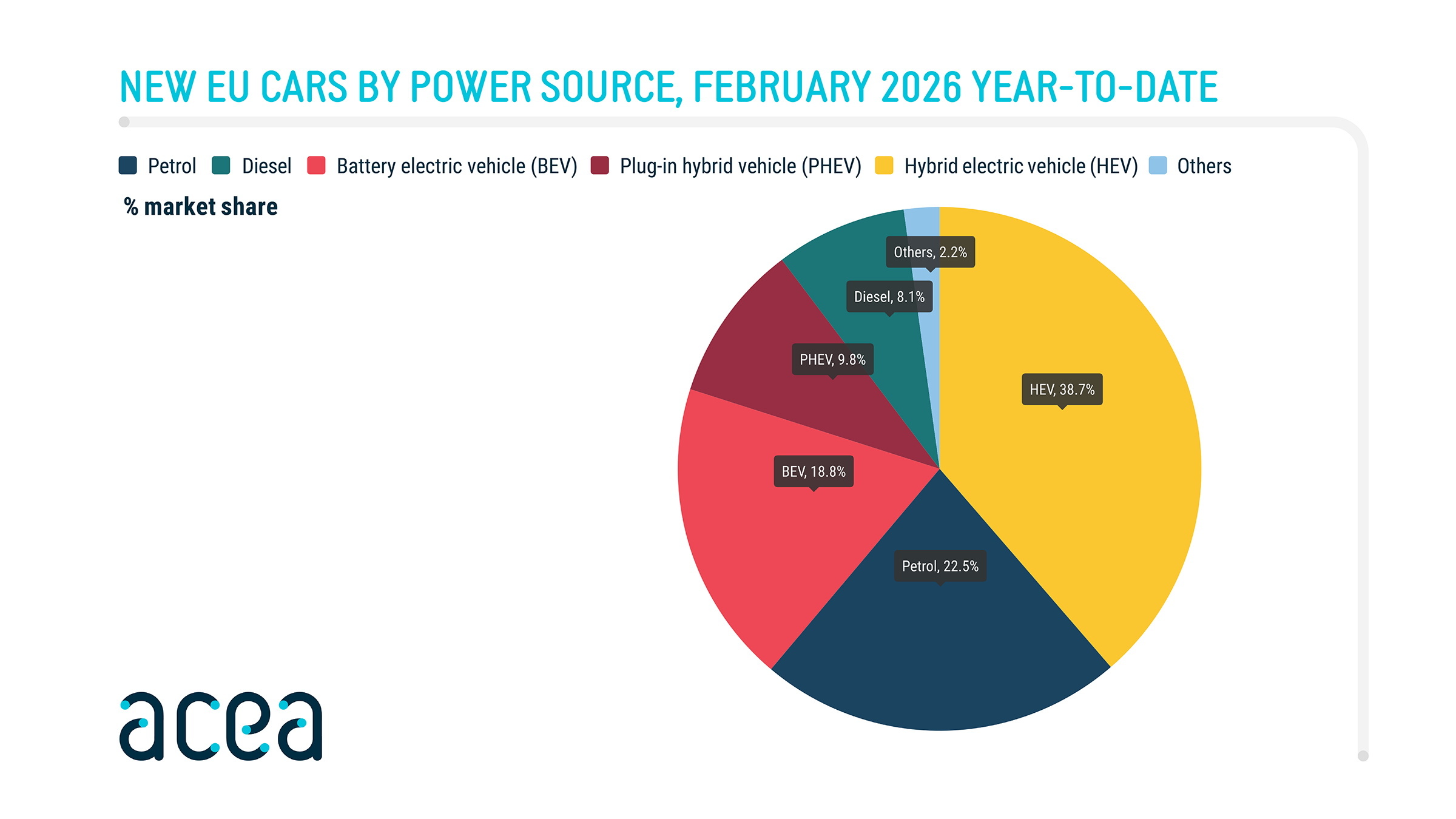
Registration data from Europe’s ACEA reveals that EVs accounted for 18.8 percent of the new car market across January and February, a notable increase from 15.2 percent over the same period last year. A total of 312,369 EVs were registered in the first two months of the year, thanks in part to France (38.5 percent increase) and Germany (26.3 percent increase).

Read: EV Buyers Didn’t Disappear, They Just Moved Somewhere Automakers Don’t Love

This growth has been supported by a surge of more affordable EV models and national incentive programs that continue to encourage adoption. However, not every European country bought more electric vehicles. In fact, EV sales declined by a significant 34.9 percent in the Netherlands and 11 percent in Belgium.

 Europe’s ICE Car Sales Collapsed 23% In A Single Month, As EVs Surge

Notably, Tesla’s registrations rose 11.8 percent year-on-year, snapping a prolonged decline, though it still trailed BYD by a slim margin. Both brands held a 1.8 percent market share, while BYD’s sales more than doubled over the same period, highlighting growing pressure at the top of the EV segment.

Hybrid Boost

Hybrid vehicles remain the most popular powertrain choice in Europe, accounting for 38.7 percent of the market. This placed HEVs well ahead of cars powered solely by petrol, which have accounted for 22.5 percent of new car registrations this year.

Across February alone, battery-electric, plug-in hybrid, and hybrid vehicles together represented 67 percent of registrations, up from 58.5 percent a year earlier.

 Europe’s ICE Car Sales Collapsed 23% In A Single Month, As EVs Surge
ACEA

Petrol car sales are also on a downward trajectory, dropping 23.3 percent in February, with France reporting a massive 48.5 percent decrease. Registrations also dropped 22.8 percent in Germany, 20.8 percent in Spain, and 18.6 percent in Italy. Last year, petrol cars had a 29 percent share of the market, and this time next year, EVs may have overtaken them if current trends continue.

Plug-in hybrids were behind HEVs, petrol cars, and EVs as the fourth most popular powertrain choice, securing a 9.8 percent share of the market, over 7.4 percent last year. Sales reached 162,751 in the first two months, thanks in part to Italy (116.1 percent increase), Spain (71.5 percent increase), and Germany (23.8 percent increase). Trailing behind PHEVs are diesel vehicles with an 8.1 percent share, down 17.7 percent, and ‘others’ with a 2.2 percent share.

 Europe’s ICE Car Sales Collapsed 23% In A Single Month, As EVs Surge

Here’s The New Freelander Before You’re Supposed To See It

  • Freelander returns as a standalone electrified brand under JLR and Chery.
  • Teaser and spy shots reveal pixel-style LED headlights and a boxy SUV design.
  • A global rollout is planned following the first model’s initial launch in China.

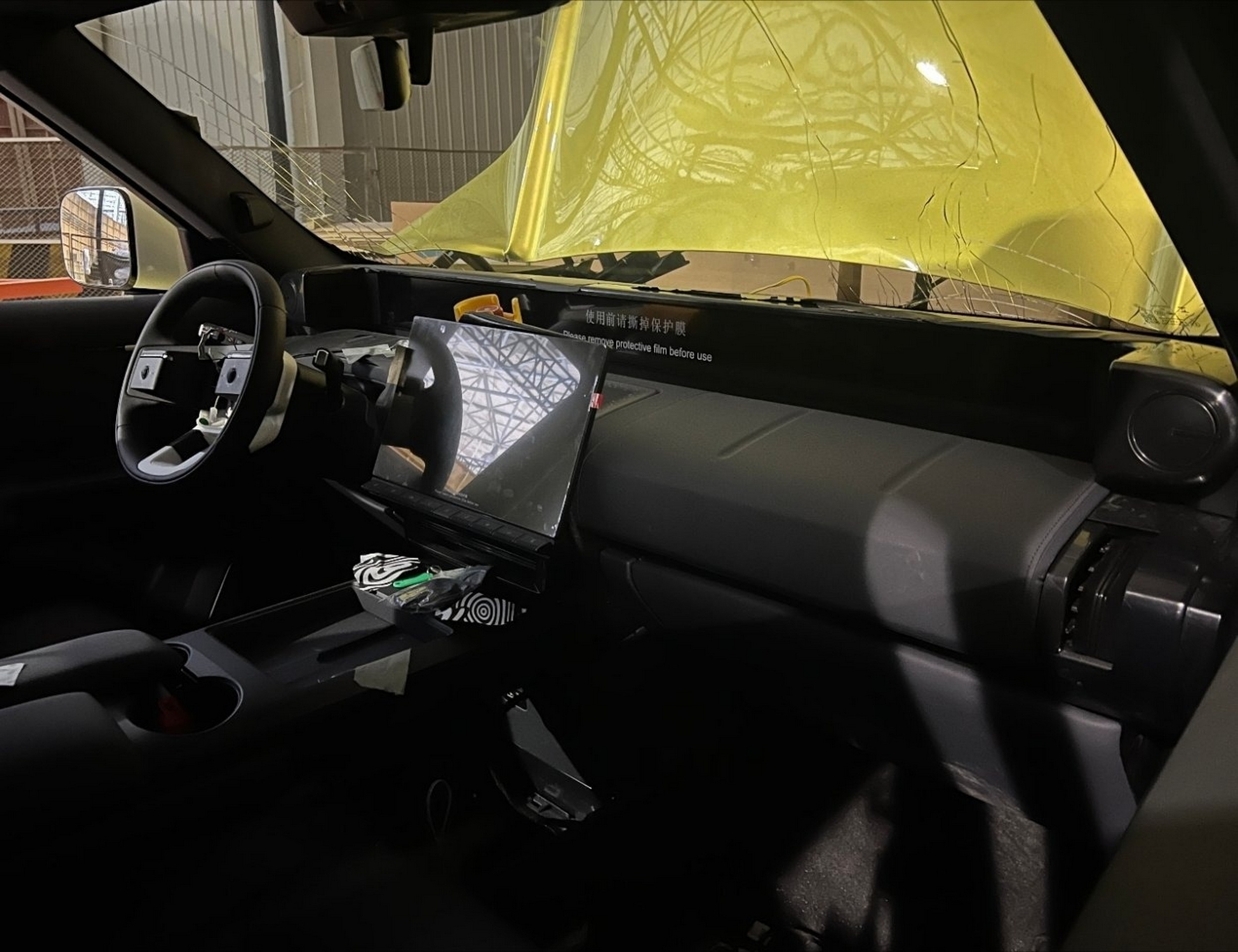
Update: So much for waiting on the official reveal. The first proper look at Land Rover’s newly spun-off Freelander brand has arrived early, thanks to a set of crash test images from China that show far more than intended just days before the March 31 debut.

The Freelander-badged SUV appears significantly larger than its Land Rover predecessor, adopting a more upright, squared-off stance. Visually, it sits somewhere between a Defender and a Discovery, with boxy headlights featuring modern LED graphics, a tall rear end, thick plastic cladding, and Freelander lettering pressed into the bodywork.

 Here’s The New Freelander Before You’re Supposed To See It

A look inside reveals a tech-heavy cabin, headlined by what appears to be a pillar-to-pillar display stretching across the base of the windscreen. It is paired with a large, freestanding infotainment screen. Beyond the tech, the electrified SUV seems to offer a three-row, six-seat configuration, trimmed in light blue leather upholstery.

The original story follows below.

\\\\\

Photos Weibo

The Freelander name is making an unexpected return, though not in the way many would have predicted just a few years ago. Jaguar Land Rover’s Chinese joint venture with Chery has confirmed that the new Freelander will debut on March 31. This time, the badge does not belong to Land Rover at all, instead re-emerging as a standalone electrified brand with no traditional ties to its former parent.

The first teaser focuses on the rectangular headlights, featuring pixel-style LED graphics. We can also spot an upright nose and hints of fender extensions, paired with gray plastic cladding on the front bumper.

More: Jaguar Land Rover’s Design Boss Is Out After Two Decades With No Successor Named

The upright lines across the front seem to nod to the original design. The Land Rover Freelander first arrived in 1997, followed by a second generation in 2006 that stayed on sale until 2015, when it was ultimately phased out in favor of the Discovery Sport.

Overall, the new model leans heavily on the Land Rover Defender’s design playbook, much like a growing number of SUVs coming out of China. Still, with JLR’s UK studio leading the design, this one at least has a legitimate claim to the look.

\\\\\\\\

Earlier spy shots have already given away much of the Freelander’s stance, revealing a boxy silhouette that leans heavily into SUV convention. It is expected to feature a three-row layout, with an overall length stretching beyond 5,100 mm (200.8 inches), placing it firmly in large family hauler territory.

Under the skin, the SUV is expected to ride on Chery’s modular architecture. The platform is designed to support both fully electric and range-extender powertrains, while also enabling ultra-fast charging,

More: Jaguar Built Its Last Gas Car, Now It Might Build China’s Next Best-Seller

Production of the new model will be centralized at the CJLR plant in Changshu, China. The facility is currently undergoing a ¥3 billion ($436 million) investment as it transitions away from the aging Land Rover Discovery Sport and Range Rover Evoque, preparing instead for the upcoming Freelander lineup.

The Chinese joint venture has also begun scaling up its workforce, recently sharing a recruitment poster on social media that lists more than 30 open positions across its Shanghai and Suzhou operations. The recruitment drive confirms that JLR and Chery are building an entirely new corporate infrastructure. While the new brand will initially launch in China, a wider global rollout is planned for the near future.

Spy Shots: Chery-JLR Freelander SUV for China

Freelander is a new brand under Chery-JLR. The Chinese name is 神行者 (Shén Xíngzhě). Freelander will manufacture various SUVs based on Chery platforms.

The spy shots show a boxy off-road-style SUV during winter tests in Northern… pic.twitter.com/IduwHRG5vw

— Tycho de Feijter (@TychodeFeijter) February 1, 2026

Aircapture and Almanac Beer Co. Launch World’s First Commercial Beer Carbonated with CO? Captured From the Atmosphere with Direct Air Capture

By: newenergy
24 March 2026 at 16:11

Flow – Clean Air Edition uses 99.999% pure atmospheric CO? captured onsite by Aircapture’s Direct Air Capture system, which enables breweries to generate their own CO? and reduce reliance on unpredictable, fossil-fuel-based supply chains.   ALAMEDA, Calif., March 23, 2026 — Aircapture, a pioneer in Direct Air Capture (DAC) technology, and California craft beer brewery Almanac …

The post Aircapture and Almanac Beer Co. Launch World’s First Commercial Beer Carbonated with CO? Captured From the Atmosphere with Direct Air Capture appeared first on Alternative Energy HQ.

Smart Thinks Its E-Class-Sized Sedan Looks Like A Shark, And Stands By It

  • Smart has shared more photos of the #6 ahead of its market launch in China.
  • The flagship fastback sedan adopts shark-inspired styling cues and active aero.
  • It will be initially available with a PHEV powertrain offering a 1,125-mile range.

Smart may be best known for its pint-sized two-door hatchbacks, but its lineup has been steadily expanding to include SUVs and coupe-style crossovers. Now it is pushing further upmarket with something entirely different. The Geely and Mercedes-backed brand has unveiled its first fastback, pairing an aerodynamic silhouette with what it describes as, “shark-inspired” styling cues.

More: You’re Not Wrong, The New Mercedes GLB Looks Suspiciously Like A Smart

Following its earlier appearance in regulatory filings, Smart has now released a fresh batch of images of the #6 EHD. Mercedes-Benz was responsible for the exterior, and Smart says the whole thing takes its cues from marine predators.

At the front, the hood integrates functional air channels that Smart has branded “Bionic Shark-Gills.” Around the rear, a four-stage adjustable spoiler is said to echo the movement of a shark’s tail Or so the company claims, so take that with a pinch of seal salt.

Other details include tightly drawn body surfacing along the profile, aggressive LED headlights linked by a central grille element, and full-width LED taillights set within a sculpted rear panel.

\\\\\\\\\\

At 4,906 mm (193.1 in) long, the #6 sits in executive sedan territory, being closer to a Mercedes E-Class or BMW 5-Series than anything Smart used to build. The 2,926 mm (115.2 in) wheelbase is the longest the brand has put into production, which should pay dividends for cabin space.

The interior has yet to be revealed, but spy shots suggest it will feature a tall center tunnel and a large infotainment display with the latest tech, similar to the Smart #5 SUV.

Electrified Powertrains

The Smart #6 sits on Geely’s PMA2+ architecture, a further development of the widely used SEA platform that also underpins models like the Zeekr 007 and its GT counterpart. It will debut as a plug-in hybrid, with fully electric versions set to follow, including a range-topping Brabus variant.

More: Smart’s About To Drop A #2 On The City Car Segment

The EHD, short for Extended Hybrid Drive, uses Geely’s NordThor 2.0 system. It pairs a turbocharged 1.5-liter gasoline engine with a front-mounted electric motor, delivering a combined 429 hp (320 kW / 435 PS). The headline figure is range, with a claimed 1,810 km (1,125 miles) on the CLTC cycle, including up to 285 km (177 miles) in electric-only driving.

The Smart #6 EHD is scheduled to launch in China in the coming months, ahead of a global rollout. Pricing will be announced at a later date.

\\\\\\\

Smart

Bentley Scraps Four Future EVs, But One Model Still Survives

  • Bentley is delaying most EVs as luxury demand stays uncertain.
  • Hybrids and gas models will take priority through the decade.
  • Only one EV is confirmed before 2030 despite earlier plans.

The automotive industry is undergoing a gigantic shift, and Bentley is changing too. The British luxury brand had big plans to go all electric, but consider that plan delayed big time. Now, it’ll launch just one EV before 2030, and the rest of the lineup will use gas or hybrid powertrains.

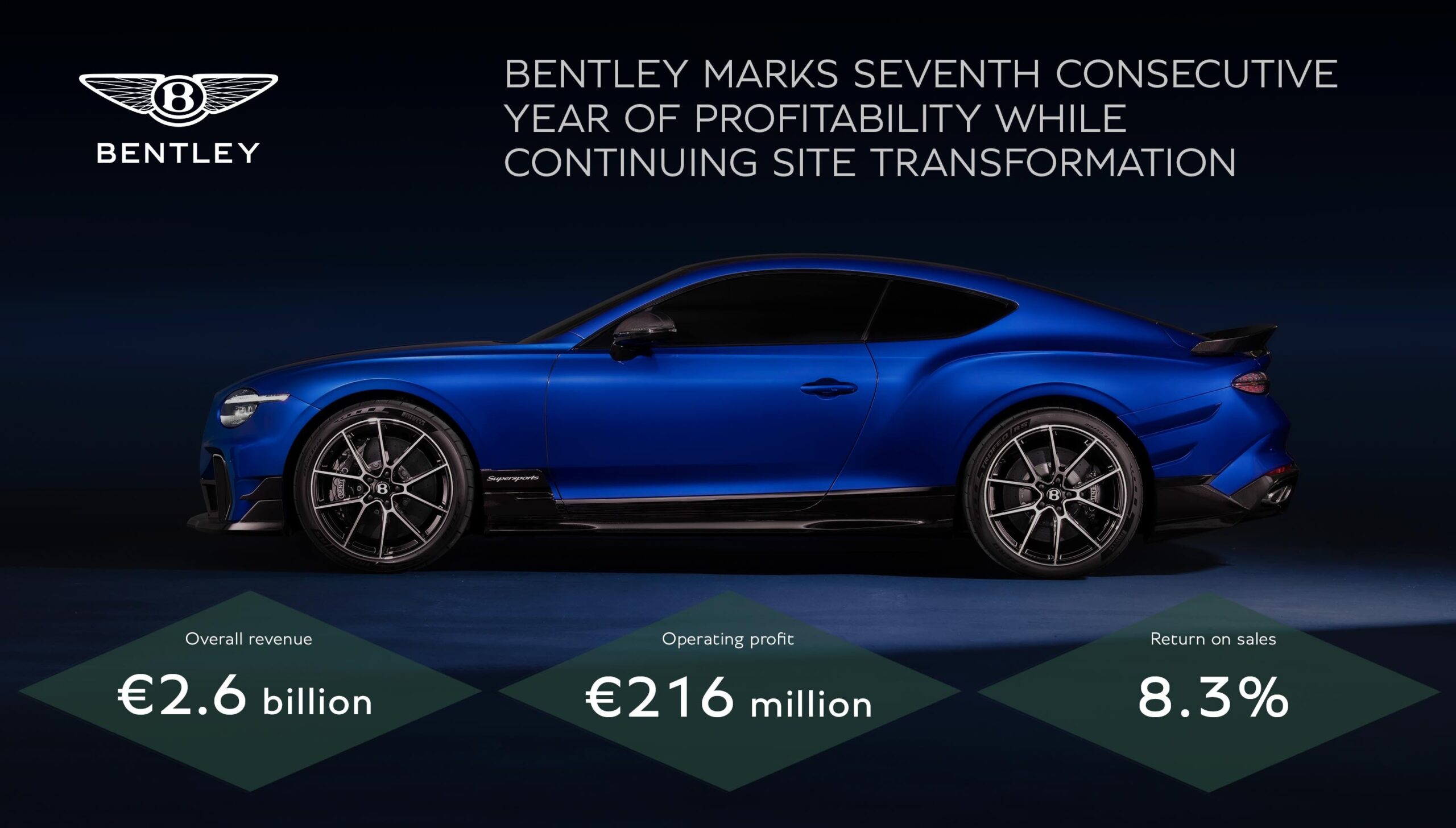
This all comes as Bentley reports its seventh straight year of profitability despite a 42 percent drop in that figure year over year, and layoffs hit the company.

The company had previously outlined an ambitious strategy that would see five fully electric Bentleys arrive by 2035. Now, only the first one, an SUV-like EV due in 2027, is still locked in, while the rest of the program has effectively been put on ice.

More: Bentley’s New SUV Will Hit 100 Miles In Seven Minutes

That first EV is expected to be revealed before the end of this year and will ride on Volkswagen Group’s Premium Platform Electric (PPE) architecture, which also underpins several other upcoming luxury EVs. The four additional EVs were originally being developed on the Porsche-led platform that has since been canceled, effectively ending those projects.

\\\\\\\

Future Lineup Prioritizes Hybrids

Instead of rapidly expanding its EV lineup, the brand will lean heavily on plug-in hybrids and gas engines. It might even keep traditional combustion models around longer than expected. That’s big news all by itself and provides an extra layer of exclusivity for future buyers.

Bentley CEO Frank-Steffen Walliser said the company has had to rethink its entire product plan as the market shifts. Some of that comes directly from customer demands. Recent plug-in hybrid versions of the Continental GT and Flying Spur were well received, and the company says these electrified V8 models can meet future emissions rules without giving up the performance buyers expect.

According to Car&Driver, he also noted that future models will continue adopting plug-in hybrid systems, and confirmed that retrofitting EVs with combustion or hybrid powertrains is not part of the company’s strategy due to feasibility constraints.

 Bentley Scraps Four Future EVs, But One Model Still Survives

That said, it seems clear why Bentley is being cautious. The company reported its seventh straight year of profitability, but deliveries fell five percent, with weaker demand in China cited as a major factor. Bentley says it remains financially solid, but the changing market means it has to be selective about where it invests next. A 42 percent drop in profit is nothing to ignore, and Bentley is making moves to improve its position.

See: What Bentley’s Smaller SUV Could Look Like Is Already Stirring Debate

Bentley is also cutting some 140 jobs in the UK. That’s only a portion of total layoffs, which Walliser says will likely amount to 275 employees, mostly in office jobs. Some of the changes are due to forces outside of Bentley itself.

The Volkswagen group is no longer going to build the Porsche-led Scalable Systems Platform that was going to underpin multiple Bentley products. Without it, the brand had basically no choice but to abandon its plans. Despite that, it’ll still likely go EV-only at some point… just not anytime soon.

\\\

VW Teases Facelifted Vans, But The Real Changes Are Hidden Inside

  • Volkswagen previews refreshed Caddy and Multivan vans for 2026.
  • Larger infotainment screens arrive with simpler, more intuitive menus.
  • Other models, including the ID. Buzz, are also lined up for upgrades.

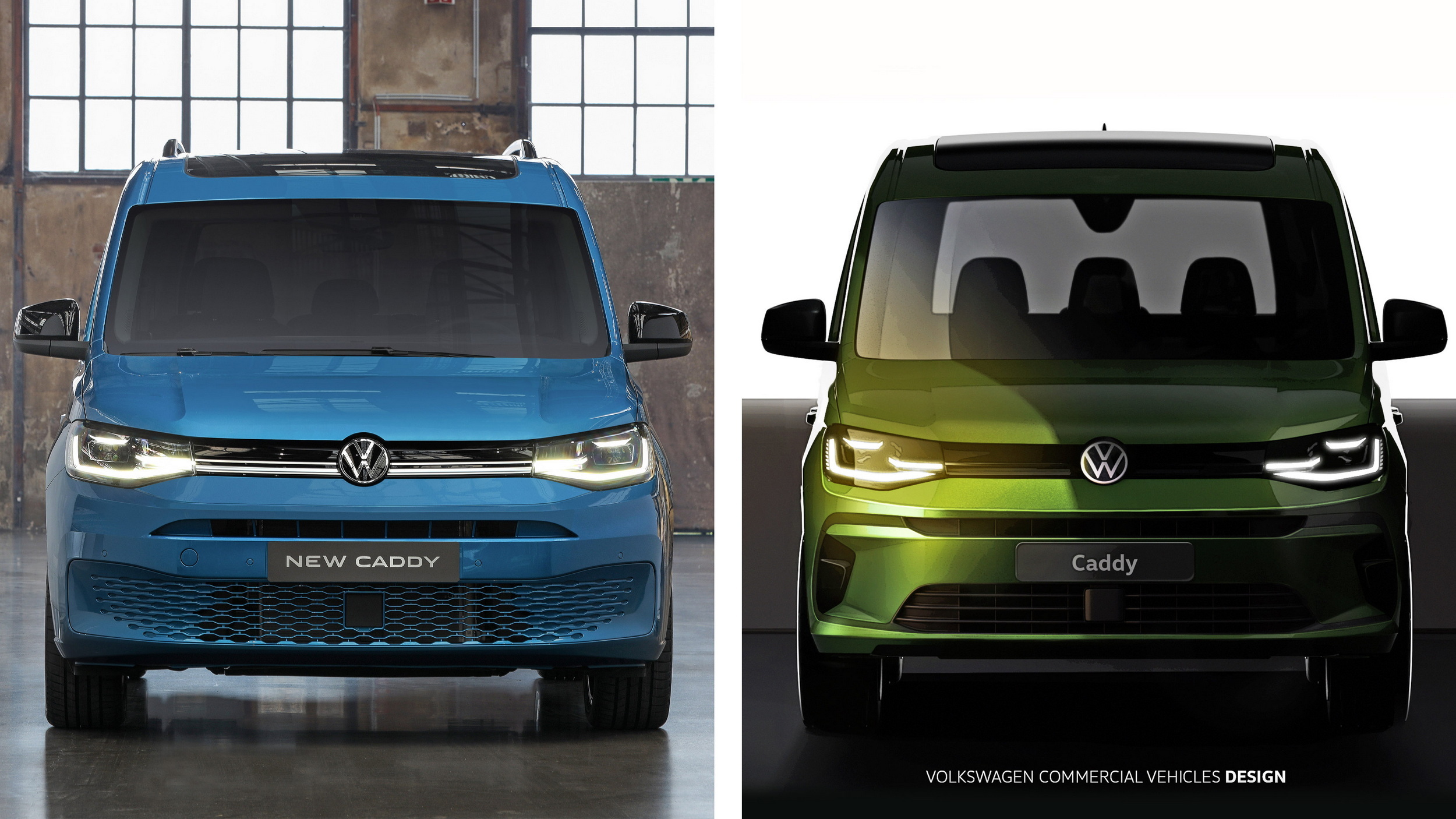
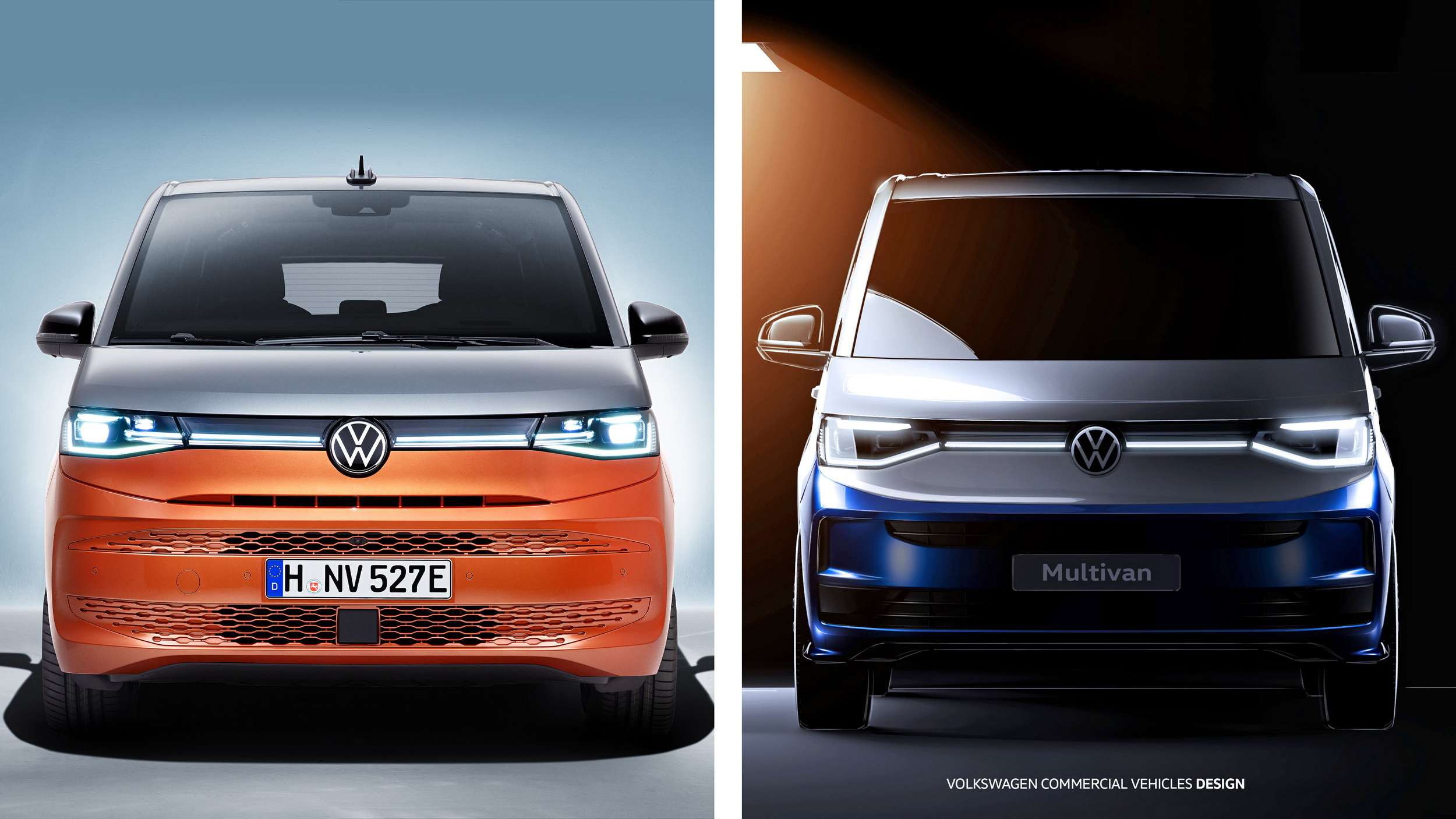
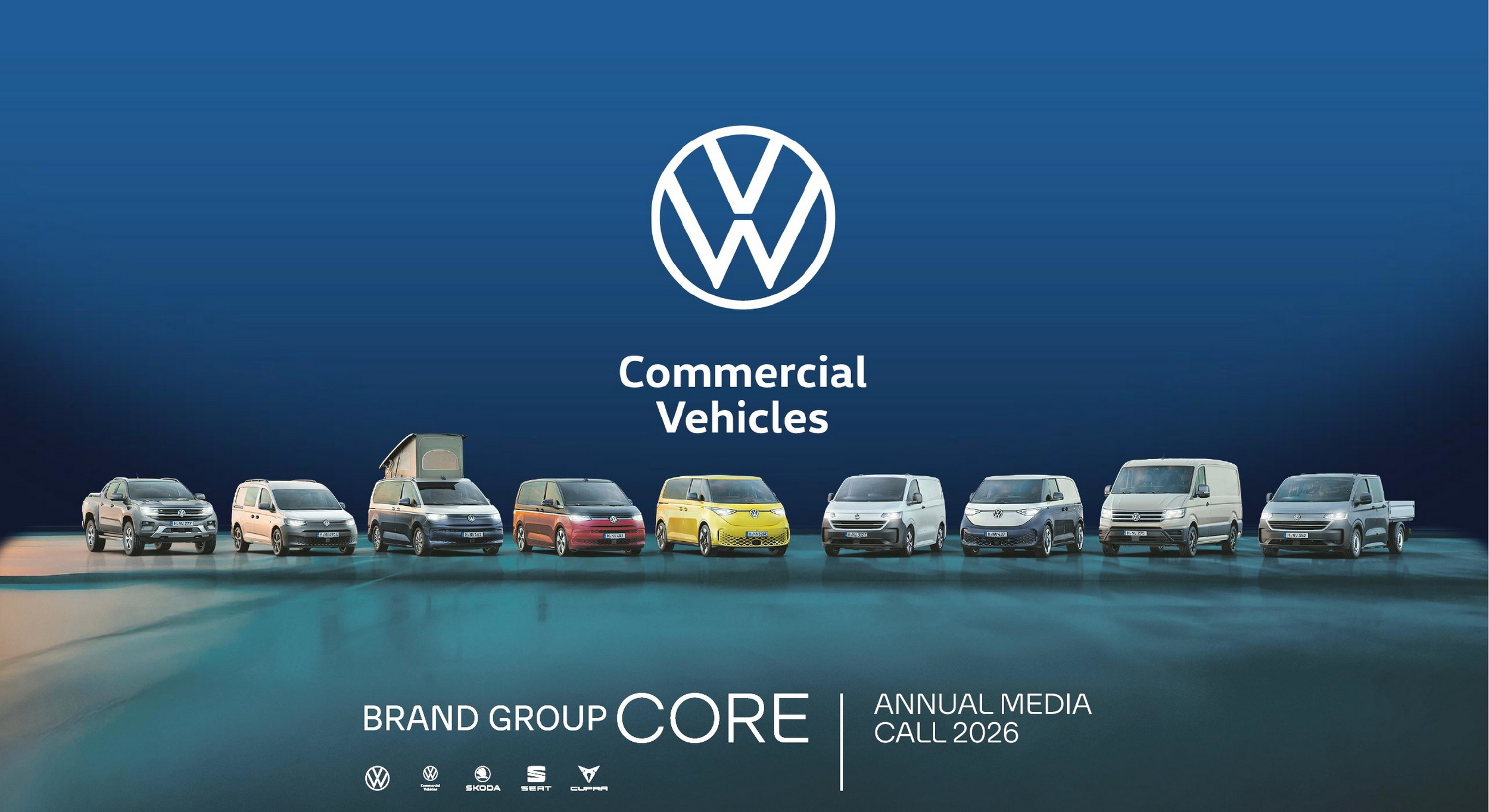
Volkswagen’s commercial vehicles division has offered a preview of what’s coming next for its van lineup at the 2026 Annual Media Conference. Alongside a business update, the company released official sketches teasing facelifted versions of the Caddy and the Multivan T7, both scheduled to arrive later this year with styling revisions and cabin upgrades.

The first teaser focuses on the Caddy. Up front, the van picks up a redesigned bumper that replaces the previous body-colored mesh pattern with more traditional cooling intakes. The grille shown in the sketch appears to drop illuminated elements altogether, though it remains unclear whether that detail will apply across the entire trim range.

More: Volkswagen Renames Its Hatch To ID.3 Neo, But The Real Change Is Inside

The Multivan T7 receives a similar refresh, although its front end retains the LED light strip spanning the grille. The headlights adopt revised LED graphics, and the van shown in the teaser wears a new two-tone paint scheme that echoes the look of the ID. Buzz.

 VW Teases Facelifted Vans, But The Real Changes Are Hidden Inside

Beyond the exterior tweaks, Volkswagen says both vans will receive what it calls “significantly optimized interior solutions.” The most obvious change will be larger infotainment displays paired with simpler, more intuitive menus, an update the company claims will make everyday use noticeably easier for owners.

More: VW Locks Gas Tiguan In Until 2035 With Two Major Updates Planned

It has also been confirmed that the 2026 MY updates will be applied to the California version of the Multivan T7, which was caught by our spy photographers during winter testing. For now, Volkswagen has not indicated any mechanical changes. Powertrain options for the Caddy and Multivan are expected to carry over largely unchanged from the current lineup.

 VW Teases Facelifted Vans, But The Real Changes Are Hidden Inside

Upgrades For Other Vans

The update cycle is not limited to the Caddy and Multivan. Volkswagen also plans to expand electrified options across the rest of its van range in 2026. That includes new plug-in hybrid powertrains for the Ford-based VW Transporter and Caravelle, giving both models a partially electric option for the first time.

More: VW’s ID. Buzz Picks Up A Feature No Minivan Has Any Business Offering

The fully electric ID. Buzz is also due for a few new tricks. Volkswagen plans to add Vehicle-to-Load (V2L) capability, allowing owners to power external devices directly from the van’s battery. A “Good Night” package and a dedicated Camp Mode are also on the way.

Finally, the Grand California flagship camper will be “comprehensively upgraded based on customer feedback”, and the Crafter will become available with a three-way tipper bodystyle.

Financial Hurdles Amid A Fresh Start

 VW Teases Facelifted Vans, But The Real Changes Are Hidden Inside

The product push comes as VW Commercial Vehicles tries to bounce back from a difficult 2025. Sales revenue actually rose 11% to €16.86 billion ($19.3 billion), but operating profit plunged 67% to €245 million ($281 million).

More: Volkswagen To Slash 50,000 Jobs After Profits Fell Off A Cliff

Much of the decline was attributed to provisions set aside for CO2 fines in the European Union, largely tied to the slower-than-expected ramp-up of fully electric LCVs. Even so, the brand maintained a solid net cash flow of €1 billion ($1.15 billion) to support future product updates. Deliveries also edged up, with VW Commercial Vehicles selling 428,000 units in 2025, a 6% increase compared to 2024.

\\\\\\\

Volkswagen Commercial Vehicles

Even A Facelift Cannot Hide The New BMW 7-Series’ Giant Grille

  • The facelifted BMW 7-Series debuts next month in Beijing.
  • Teaser hints at a redesigned front and new lighting signature.
  • The luxury sedan gains Neue Klasse “tech clusters” in update.

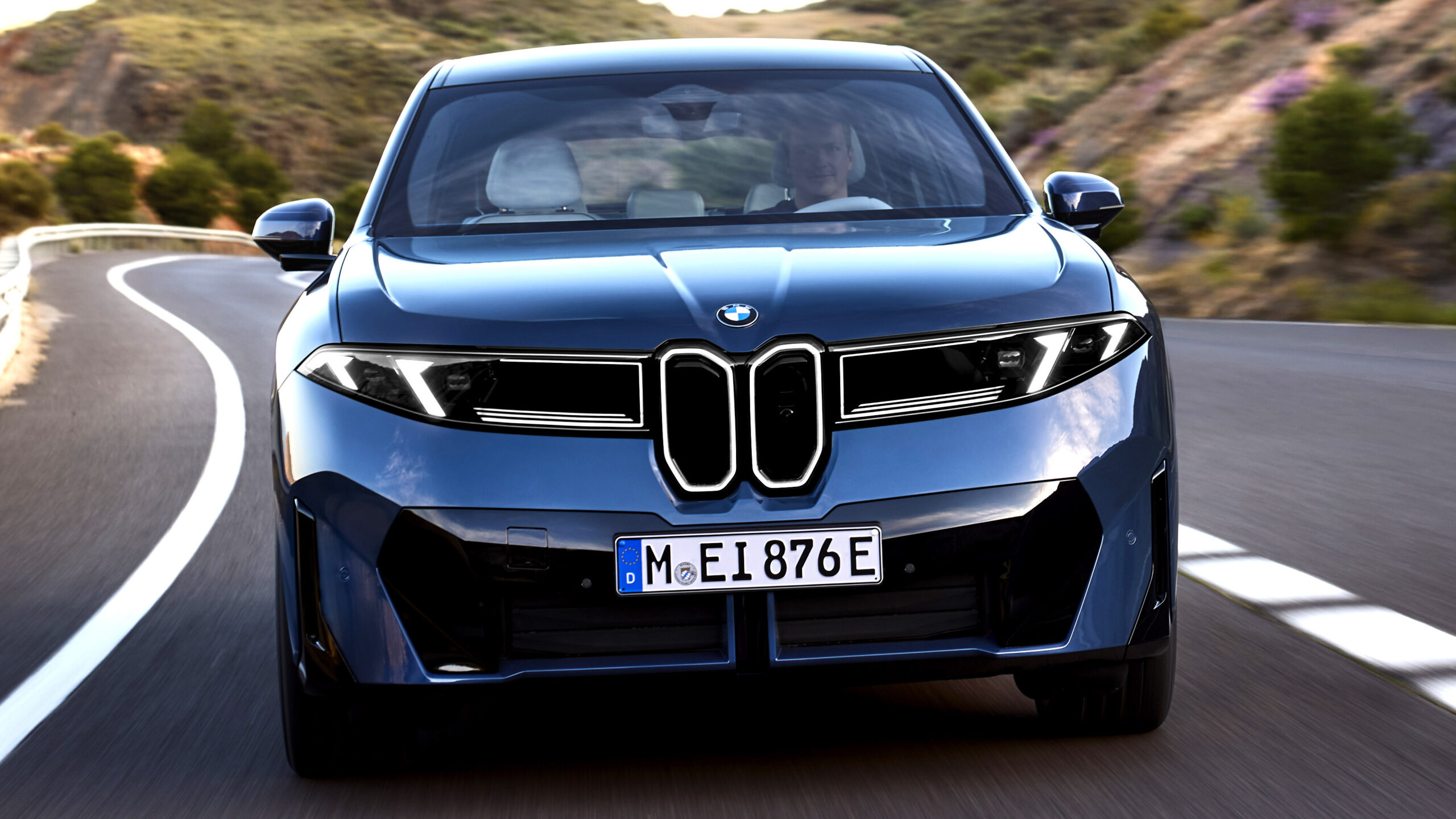
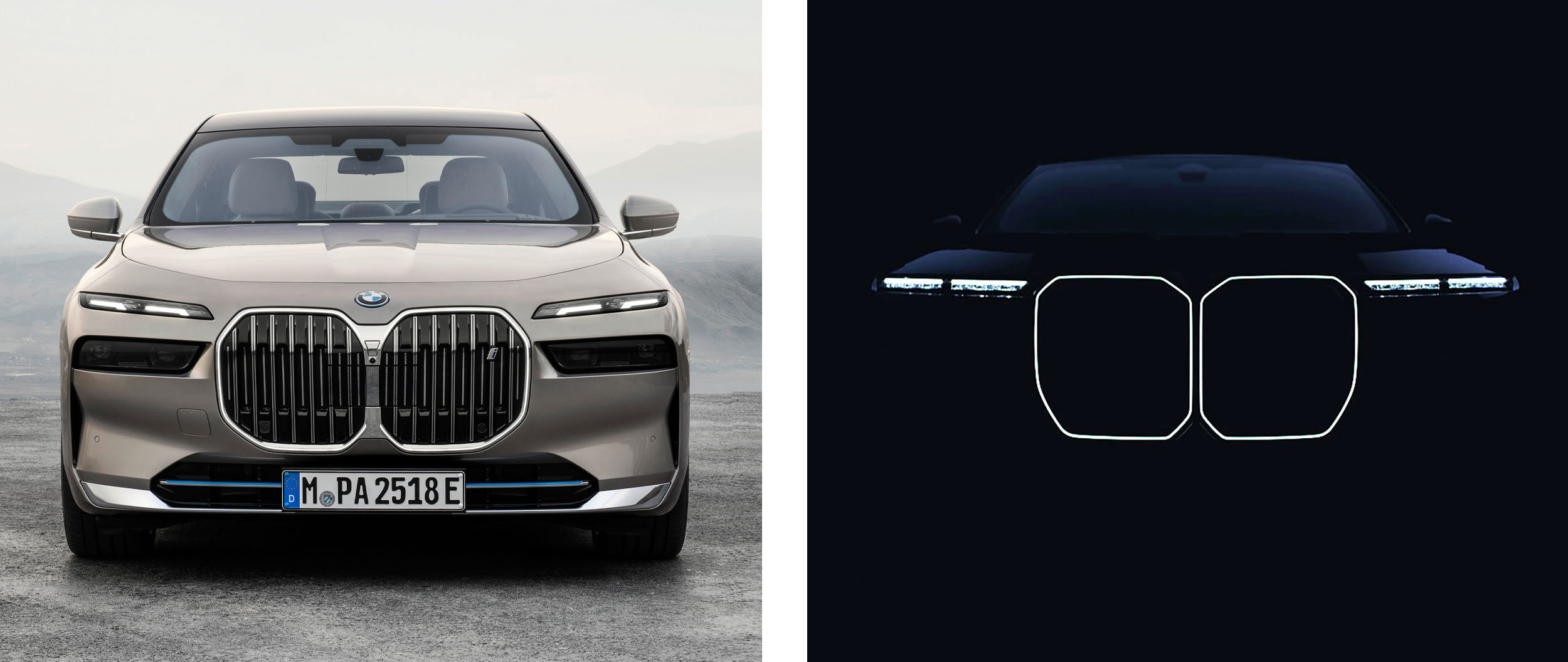
BMW is getting ready to freshen up its flagship sedan. After months of camouflaged prototypes roaming public roads, the company has finally released its first official teaser of the facelifted 7-Series, confirming the luxury sedan will make its global debut at Auto China in Beijing next month.

The current 7-Series generation arrived in 2022, which means it is right on schedule for BMW’s mid-cycle LCI update, short for Life Cycle Impulse. The shadowy teaser image focuses on the front end, revealing a new lighting signature with slimmer, more horizontal daytime running lights. They sit on either side of a larger, more squared-off illuminated kidney grille.

More: BMW’s New Electric 3-Series Has A Reveal Date

Judging from earlier spy shots, the kidney grille appears to switch from vertical slats to a horizontal layout. The split headlight arrangement remains, although the lower clusters that house the main beams look slightly smaller than before.

The side profile does not appear to be changing much. Expect the familiar long-wheelbase silhouette to carry over largely untouched, while the rear receives the usual facelift treatment with updated LED taillights and minor revisions to the bumper.

Neue Klasse Technology

 Even A Facelift Cannot Hide The New BMW 7-Series’ Giant Grille

At BMW’s 2026 Annual Conference, chairman Oliver Zipse confirmed that the facelifted 7-Series will serve as the first current model to inherit what the company calls “technology clusters” from the upcoming Neue Klasse lineup. The next-generation X5 is expected to follow shortly after, with its own debut slated for later this summer.

More: This BMW 7-Series Looks Like A Chauffeur Car, Until Your Day Turns Ugly

For the flagship sedan, that means several of the brand’s next-generation digital systems will make their way into the cabin. Among them is BMW Panoramic Vision, the wide pillar-to-pillar display stretching across the base of the windshield, along with the company’s new iDrive X operating system.

Behind the scenes, BMW also plans to integrate four central computing units, referred to internally as “Superbrains,” which handle major vehicle functions and software processes.

\\\\\\

Despite those upgrades, the big sedan will not migrate to the Neue Klasse platform itself. Instead, the facelift keeps the current CLAR architecture underneath. As with the outgoing model, it will remain available with gasoline, plug-in hybrid, and fully electric (i7) powertrain options, possibly with small refinements. It is also safe to assume that the 7-Series will gain a new variant from the BMW Alpina sub-brand.

The teaser for the mid-lifecycle update of the BMW 7-Series arrives just weeks after Mercedes unveiled a heavily refreshed version of its longtime rival, the S-Class. The luxury sedan also faces growing competition in China from newcomers such as the Huawei-backed Maextro S800.

\\\\\\

Baldauf

Porsche’s Next Sedan Could Replace Both The Panamera And Taycan

  • Porsche may merge Panamera and Taycan into a single lineup.
  • A shared sedan line could cut costs but keep two platforms.
  • The successor would likely offer ICE PHEV and EV options.

Are two separate Porsche sedans one too many? It’s a fair question, especially as the performance luxury world adjusts to the slower, slightly messier reality of electrification. The answer may well be yes, as the Zuffenhausen brand is reportedly considering a consolidation of its lineup that would see the Panamera and Taycan folded into a single model line, without actually turning them into the same car.

The whole “merging without actually merging” idea comes down to platform strategy. Porsche could build a future sedan family that follows the same dual-track playbook already used by the Macan and Cayenne, where combustion and hybrid models sit on one architecture while fully electric versions use another.

More: Porsche’s Most Extreme Taycan Yet Exists For A Very Personal Reason

The news marks a fairly notable pivot from Porsche’s earlier line on the matter. Back in 2024, Kevin Giek, Vice President of the Taycan Product Line, described the Taycan as a “long-lasting” nameplate, putting it in the same durability bracket as the 911. He also made it clear that the facelifted model would not be the end of the road, with Porsche planning to keep evolving it over time.

 Porsche’s Next Sedan Could Replace Both The Panamera And Taycan
The current Porsche Panamera (top) and Taycan (bottom).

According to a report from Autocar, the rethink comes down largely to cost. Porsche recently took a €1.8 billion ($2.1 billion) write-down tied to delays in platform development, which tends to sharpen the pencils in Stuttgart rather quickly. Folding strategies together could help the company avoid the less appealing option of canceling one of the engineering programs outright just to balance the books.

Which One Will Survive?

We still do not know which badge Porsche might send to the great brochure archive in the sky, the Panamera or the Taycan. What we do know is which one buyers currently prefer. Last year the combustion-powered Panamera shifted 27,701 units, nearly 70 percent more than the 16,339 Taycans delivered in the same period. Taycan deliveries have dropped sharply over the past two years, a slide significant enough to make Porsche take a long look at its electrification plans.

 Porsche’s Next Sedan Could Replace Both The Panamera And Taycan
The 2026 Porsche Panamera’s interior.

The third-generation Panamera arrived in late 2023 riding on Porsche’s MSB architecture, and it is already penciled in for a mid-cycle refresh around 2027. The Taycan, meanwhile, first appeared in 2019 on the EV-dedicated J1 platform and received its facelift in 2024. Read between the lines and the likely scenario is fairly clear. Proper replacements for both sedans probably will not arrive until sometime after the end of the decade.

More: Porsche’s Panamera Is Crushing The Taycan EV, Now The 2028MY Wants To Squeeze Harder

What seems far more certain is the powertrain buffet. Whatever replaces today’s cars will almost certainly be offered with ICE, hybrid, and fully electric setups, giving buyers plenty of choice. Combustion-powered versions could sit on Porsche’s PPC architecture, while the EV variants would likely move to the newer SSP Sport platform. One sedan shape, several very different ways to make it go fast. Very Porsche, really.

What About The Design?

 Porsche’s Next Sedan Could Replace Both The Panamera And Taycan
Porsche Panamera 4 E-Hybrid

The two might occupy roughly the space and wear broadly similar shapes, but they go about it quite differently. The Taycan is the sportier-looking one, lower, tighter, and built with aerodynamics very much in mind. The Panamera, being the combustion car, stretches out a bit more. It is 89 mm (3.5 inches) longer, 44 mm (1.7 inches) taller, and rides on a wheelbase that is 50 mm (2 inches) longer.

More: Porsche Custom Builds Usually Stay One-Off, Not These Four

There are differences in body styles too. The Panamera can be had in long-wheelbase form for those who prefer their Porsche with a little extra rear legroom. The Taycan, meanwhile, branches out into Cross Turismo and Sport Turismo variants.

If Porsche does march toward a unified sedan line, some of those distinctions will probably have to shrink. Even so, the electric version could still wear its own visual identity, much like the new Cayenne Electric.

Whether the Taycan name ends up as a trim level or the Panamera simply absorbs its electric sibling altogether, the real takeaway sits higher up the strategy ladder. Porsche’s focus is no longer on pushing electrification at any cost, but on building a proper multi-energy lineup that gives buyers a choice.

 Porsche’s Next Sedan Could Replace Both The Panamera And Taycan
The 2026 Porsche Taycan’s cabin.

BYD Sales Crash 41% In China As Its Main Rival Takes The Lead

  • BYD’s China sales have tumbled 36 percent in 2026.
  • About half of BYD vehicles this year were exported.
  • Geely sold 76,000 more vehicles than BYD in China.

For much of the past three years, it has often seemed as though BYD could do no wrong. The company steadily launched new models, expanded its lineup, and watched its sales climb at an impressive pace. However, the start of 2026 has been alarmingly slower, allowing fellow Chinese automaker Geely to pull ahead.

Through the first two months of this year, BYD has sold 400,241 vehicles, down 36 percent from the year prior. Of these, 190,190 vehicles were sold in February, a drop of 9.5 percent from the past month, due in large part to the Lunar New Year holiday, but it was also a 41 percent drop compared to the same month last year.

Apparently, shrinking tax breaks and a dip in buyer confidence are starting to cool the market. Plenty of shoppers are opting to wait it out, holding off to see what new models land and whether government trade in schemes become clearer before committing their cash.

Read: A Chinese Brand Just Knocked Ford Out Of The Global Top Six

While BYD is facing some struggles at home, it continues to gain popularity in foreign markets. In February alone, it exported 100,600 of its new energy vehicles, consisting of EVs and plug-in hybrids. Include January in those figures, and BYD has exported 201,082 vehicles.

 BYD Sales Crash 41% In China As Its Main Rival Takes The Lead

Competitors Step Up

While BYD is facing growing pains, several other Chinese automakers are enjoying the opposite problem. Through the first two months of 2026, Stellantis partner Leapmotor’s sales have climbed 19 percent to 60,126 units. Xiaomi’s EV division is up 48 percent year over year to more than 59,000 units. Zeekr has posted an 84 percent surge across January and February, while Nio deliveries have jumped 77 percent, according to CNBC.

Geely is also having a particularly strong run. So far this year, it has delivered roughly 76,000 more vehicles than BYD. That is notable because it marks the first time Geely has outsold BYD for at least two consecutive months since 2022. While Geely currently leads within China, it trails slightly in overseas markets, exporting 181,891 vehicles so far this year.

According to Bloomberg, BYD chief executive Wang Chuanfu acknowledged the growing pressure back in December. He said rival automakers had begun closing the technological gap that once gave BYD a clear edge, something that now appears to be showing up in the sales figures.

 BYD Sales Crash 41% In China As Its Main Rival Takes The Lead
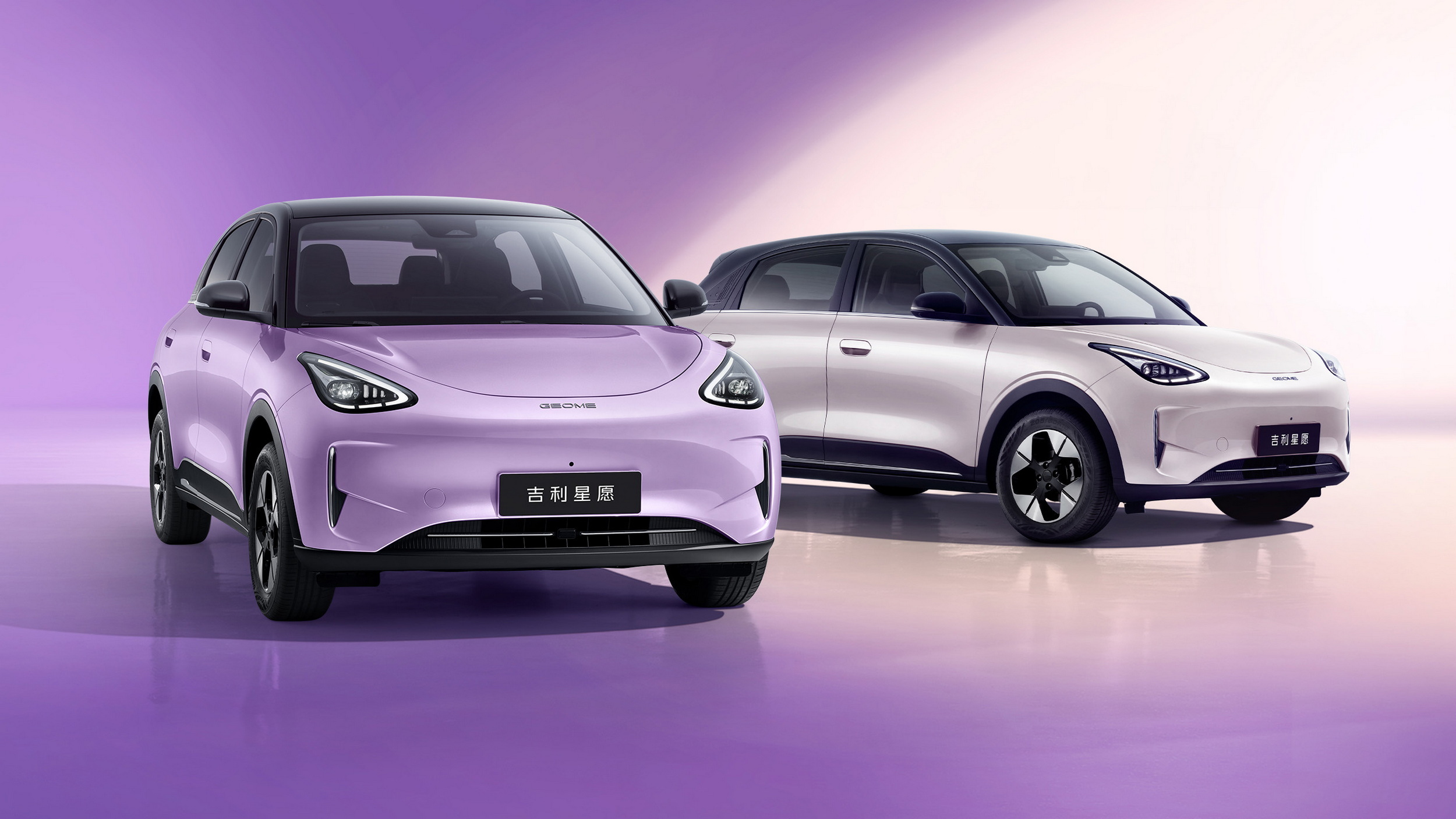
Geely Galaxy Xingyuan

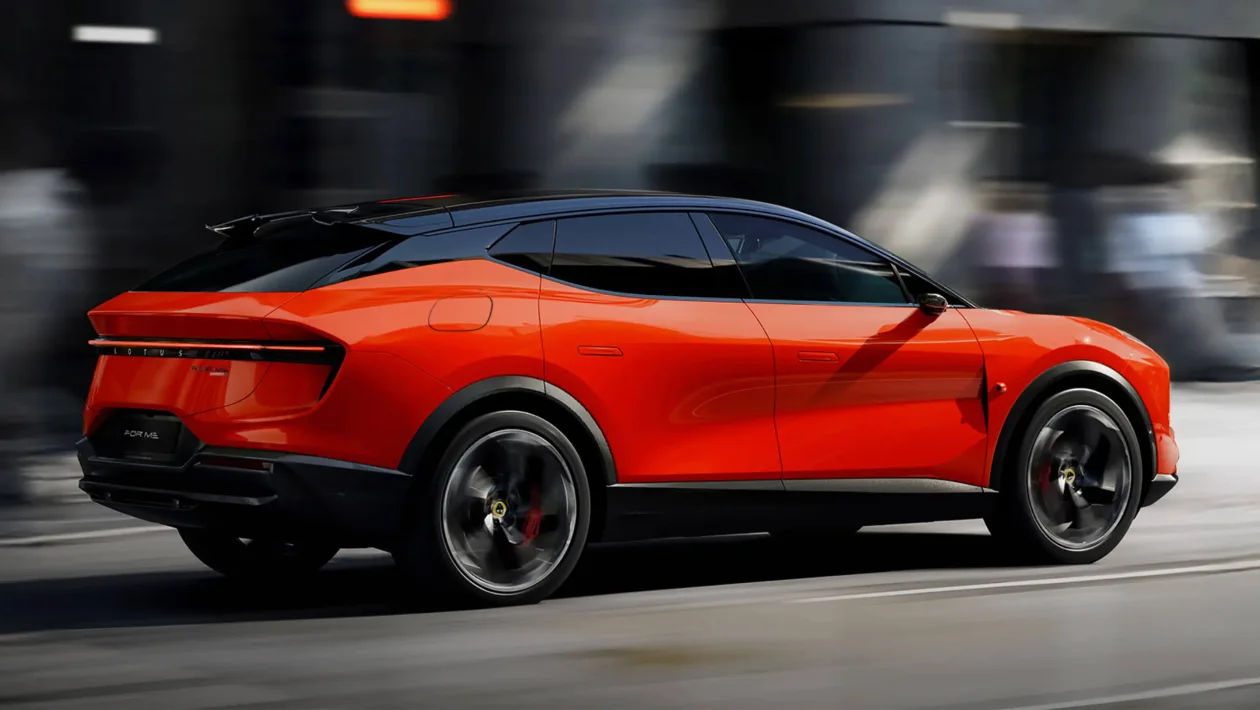
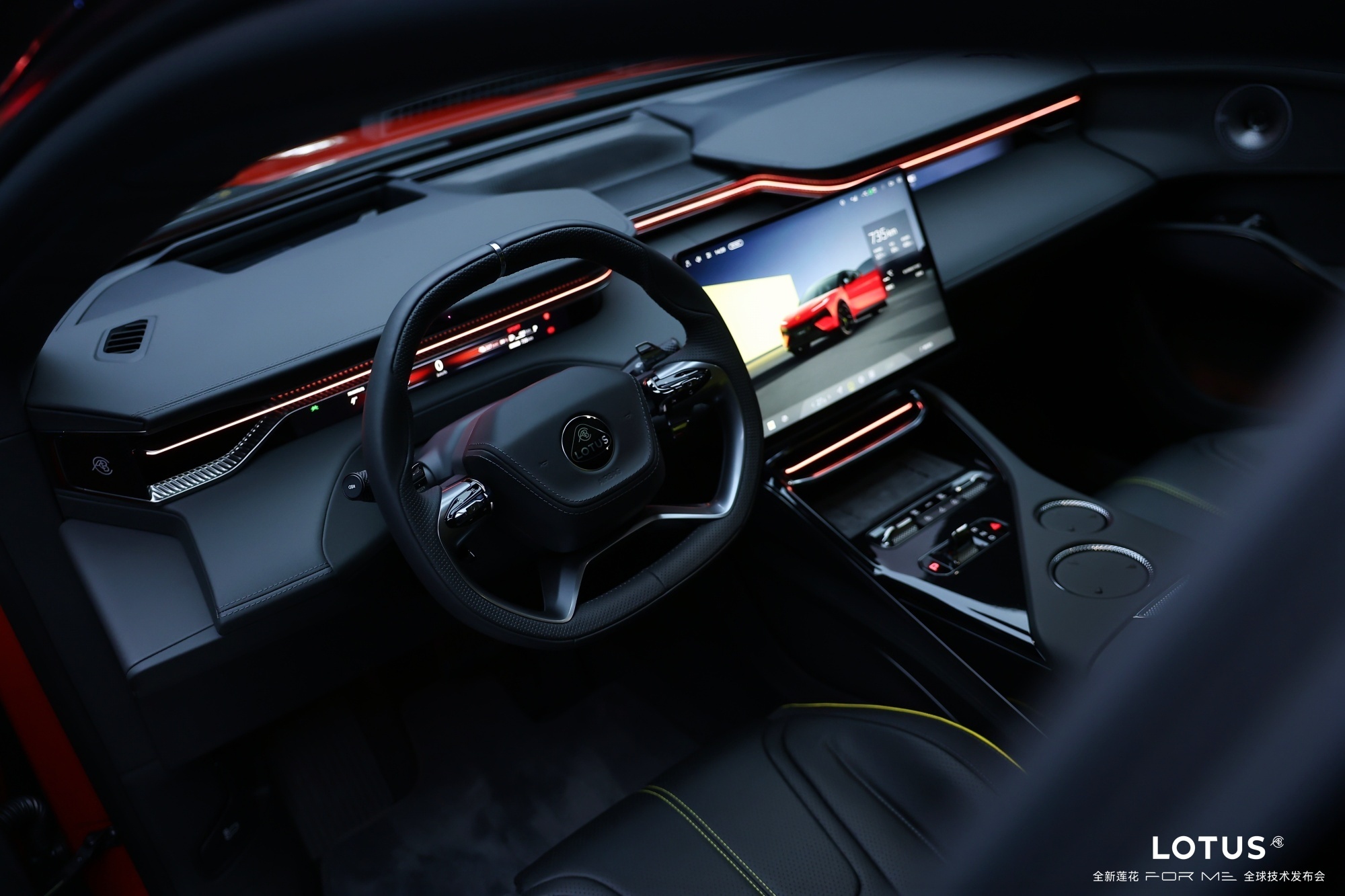
Lotus Built A 939 HP Hybrid SUV For Me, Apparently

  • Lotus reveals a plug-in hybrid Eletre called For Me in China.
  • The SUV uses a 900-volt system and a large 70 kWh battery.
  • Total output reaches 939 hp, edging past the Eletre R.

Lotus has been quite open about plans to introduce a plug-in hybrid version of the Eletre in China. What slipped under the radar until now is the name change. Meet the Lotus For Me. Yes, that really is the official name for the Chinese market. Thankfully, the rest of the world will not have to explain it at dinner parties.

The automaker calls the PHEV a “hyper-SUV,” built around its new X-Hybrid architecture. The setup uses a 900-volt electrical system paired with a 70 kWh battery pack and two electric motors. Combined output lands at 939 hp, which is slightly more than the flagship all-electric Eletre R. A 2.0-liter turbocharged four-cylinder is also part of the powertrain, stepping in when the battery needs backup.

Read: Lotus Might Slash Eletre’s Price In Half In Canada

Off the line, the For Me reaches 100 km/h (62 mph) in just 3.3 seconds. It continues to 200 km/h (124 mph) in 10.5 seconds and clears the quarter-mile in 11.16 seconds.

Electric Range And Charging Capability

More surprising are the range claims. Lotus says the SUV can travel 260 miles (418 km) on electricity alone and more than 870 miles (1,400 km) when the hybrid system is working together. WLTP-rated fuel consumption is quoted at just 0.07 l/100 km under ideal test conditions, which is impressive on paper and, as usual, a bit harder to match outside a laboratory.

 Lotus Built A 939 HP Hybrid SUV For Me, Apparently

The battery pack supports 6C charging rates, which means it can jump from 30-80 percent in just eight minutes.

What Else Is New?

Visually, there is almost nothing separating the new For Me from the regular Eletre. Aside from fresh badges, functional exhaust pipes, and a few extra cooling vents up front, the design remains largely unchanged.

Under the skin, the same 48-volt active anti-roll bars as the Eletre have been retained, as has the trick dual-chamber air suspension and dual-valve adaptive dampers. Despite the fitment of a new plug-in hybrid system, the For Me weighs roughly the same as the Eletre, varying between 2,575 kg (5,676 lbs) and 2,626 kg (5,789 lbs), depending on the specification.

 Lotus Built A 939 HP Hybrid SUV For Me, Apparently

Lotus says the For Me will go on sale in China later this month. Europe is next in line in mid-2026, followed by North America, the Middle East, Asia Pacific, and other markets before the end of the year.

What Is Lotus Tuned Specification?

Its debut also coincides with Lotus introducing a new internal standard called Lotus Tuned Specification (LTS). According to the company, LTS is a proprietary engineering and dynamic tuning framework that brings several core systems under one coordinated development process. Lotus engineers worked alongside key suppliers to co-develop components such as the brakes, active stabilizer bars, and suspension hardware.

\\\\\\\\\\\\\\\\

Improving solar cell performance

By: newenergy
29 January 2026 at 19:14

With the rise of power-hungry applications like AI and data centers, it’s critical that the performance of renewable energy sources keeps pace. Researchers in the University of Saskatchewan’s (USask) Department of Chemistry are exploring ways to improve the efficiency of a promising new type of solar cell made from perovskite crystals. Perovskites are a group …

The post Improving solar cell performance appeared first on Alternative Energy HQ.

Offshore wind stop-work orders are costing consumers, delaying needed electricity

By: newenergy
28 January 2026 at 19:12

January 28, 2025 – At a time when the administration claims the U.S. is facing a nationwide energy emergency and consumers are increasingly concerned about rising electricity costs, its efforts to stop five large offshore wind projects under construction along the Atlantic Coast could cost consumers billions of dollars and keep much-needed new electricity off …

The post Offshore wind stop-work orders are costing consumers, delaying needed electricity appeared first on Alternative Energy HQ.

❌
❌