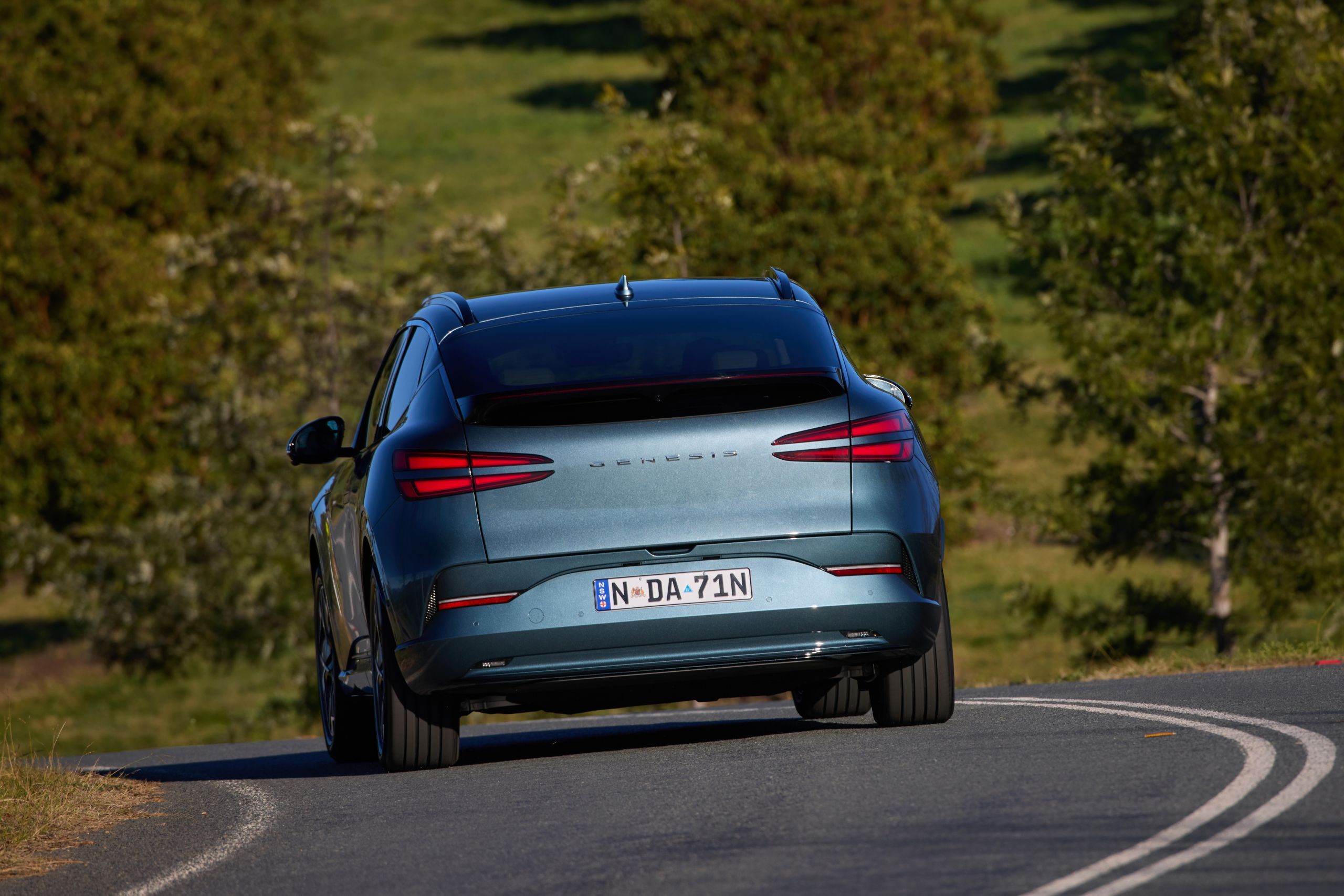
The owner says the plug-in hybrid’s fuel filler cap was locked after he left China.
Zeekr says it locks down elements of the 9X for security reasons if they leave the country.
Mr. Liu is planning a cross-continent trip in his 9X, traveling from China to Europe.
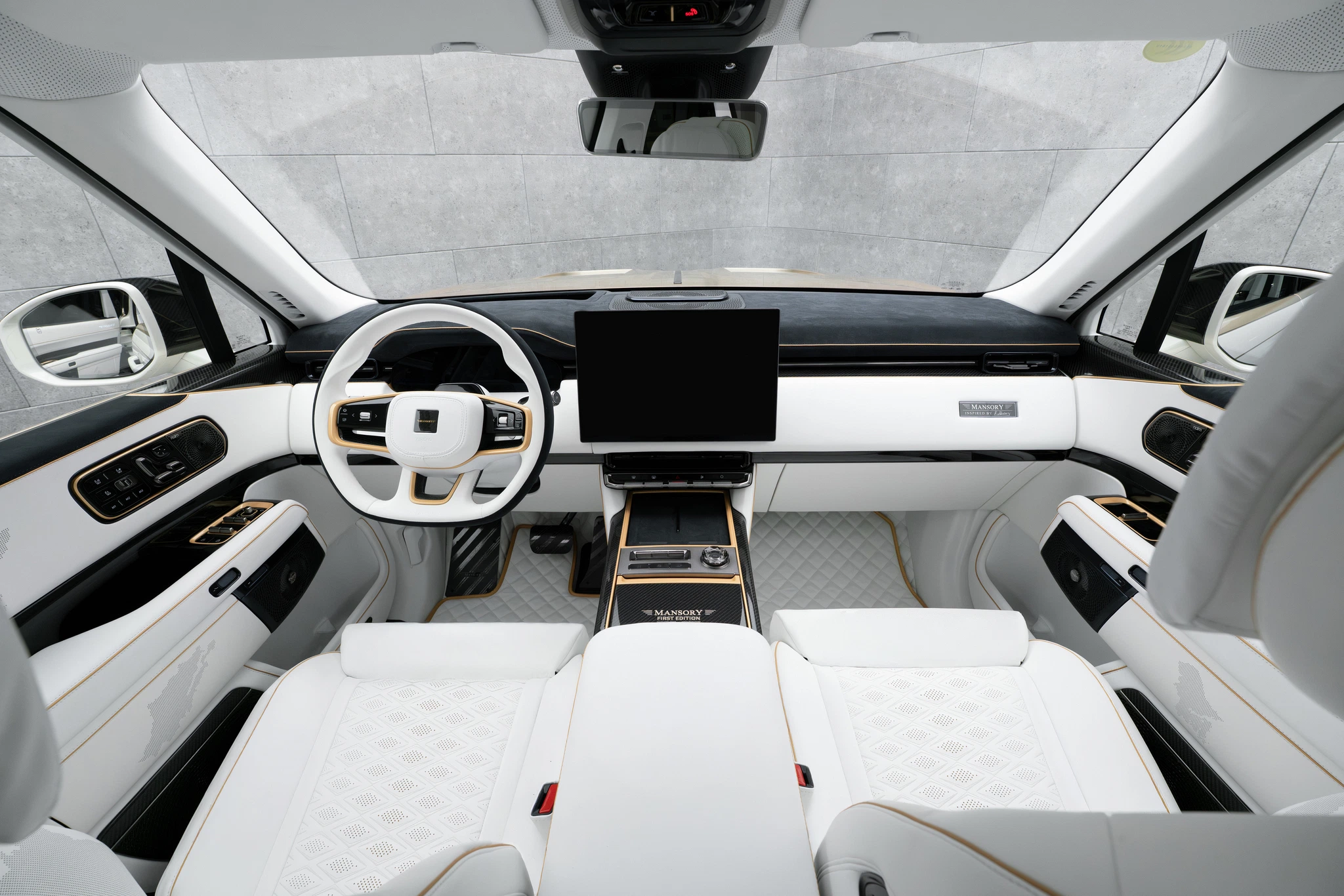
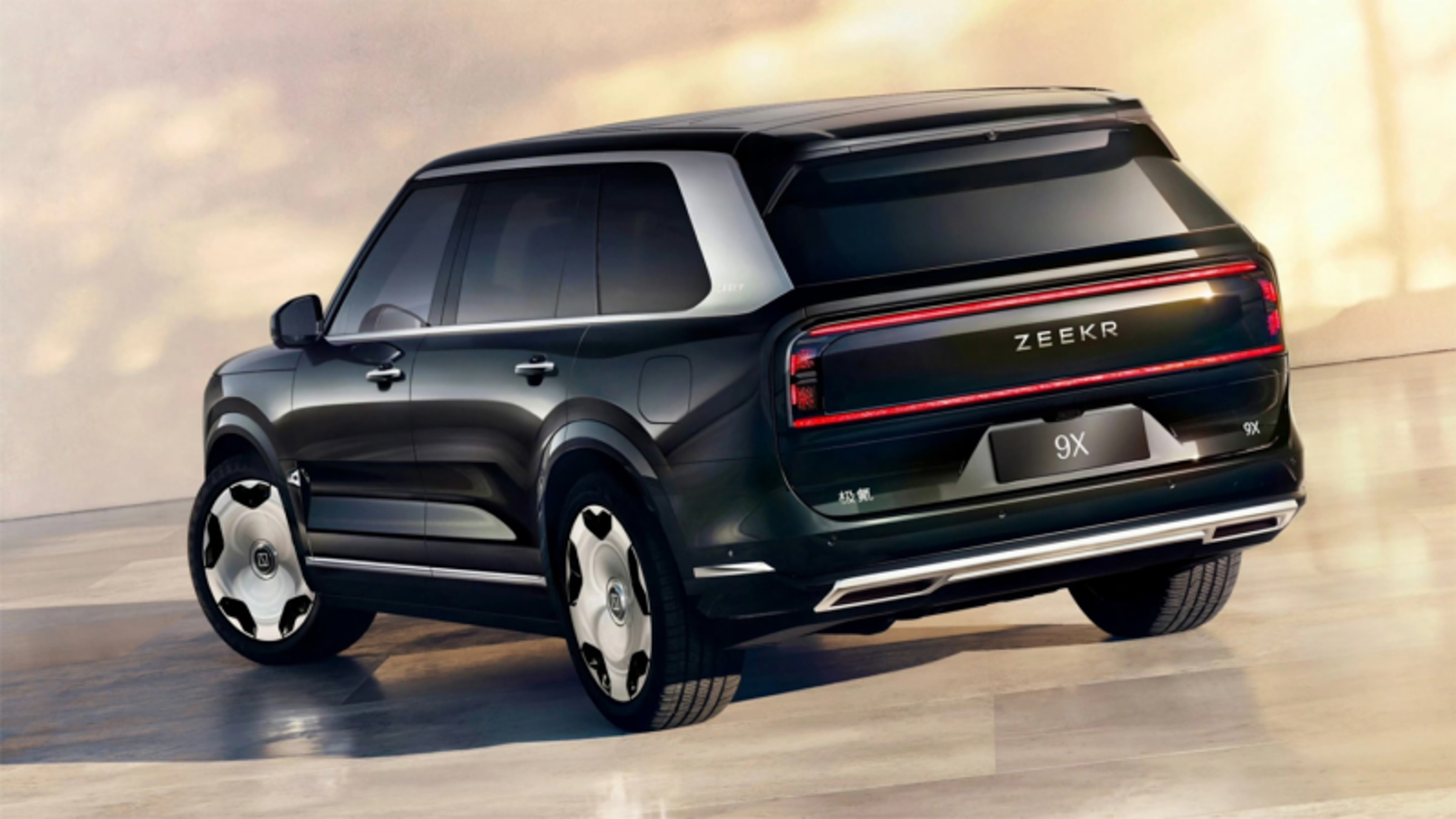
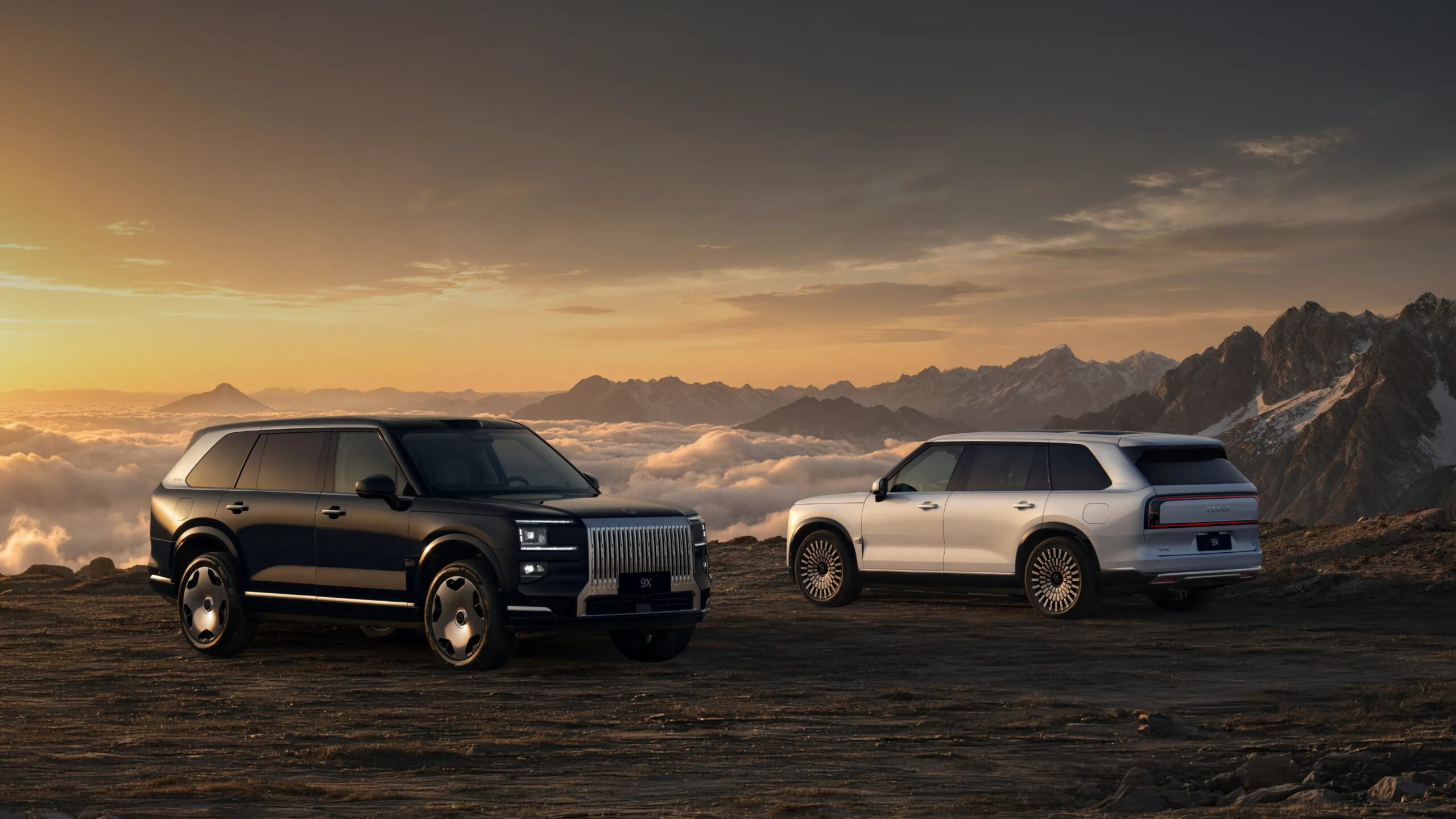
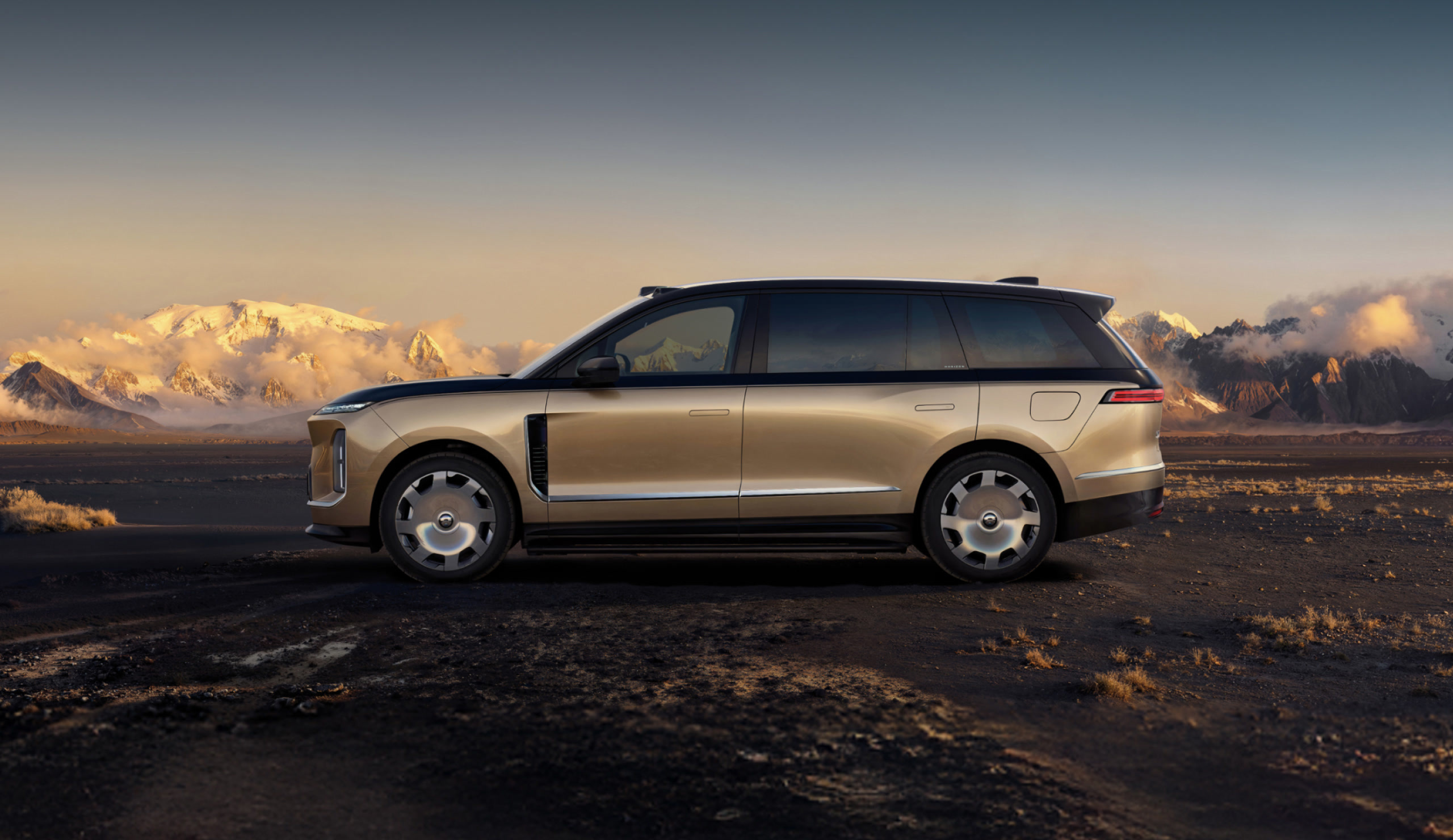
The Zeekr 9X is a deeply luxurious SUV stuffed with technology, and by most measures that counts as a selling point, but one owner in China has run into the flip side of all that intelligence. As he found out, the 9X may be smart enough to become a problem for the person who actually paid for it.
Earlier this month, 9X owner Mr. Liu set off on a planned road trip from China all the way to Europe, a journey meant to be the ultimate test of Zeekr’s flagship SUV. Things went sideways as soon as he crossed into Kazakhstan, forcing the brand to step in so his trip could continue.
Liu claims that once he left China, his 9X clamped down hard. The navigation quit, the glove box locked itself, and, most maddening of all, the electronically operated fuel filler cap stayed shut for more than 30 hours. He points out that his local Zeekr dealer knew about the trip ahead of time, since the 9X was in for routine maintenance beforehand, yet nobody mentioned these limits.
Too Much Tech?
No doubt eager to get its side of the story out before Liu’s experience went viral, Zeekr spoke to the National Business Daily and explained that the SUV’s security mechanisms kicked in the moment it left China. That triggers on-screen prompts and pop-up warnings and also restricts certain functions. The system, Zeekr later said, is meant to deter theft and smuggling.
Although Zeekr says the powertrain and brakes will continue to operate normally, it is not possible to open the fuel filler cap or charging port electronically, as is usually done in the 9X. Instead, the only way to open the fuel filler door is to hold the hazard light button inside the cabin for five seconds. Additionally, the charging flap can be opened by applying direct and firm pressure to it. While this all sounds rather easy, we suspect very few 9X owners know the hazard light switch can double as an opener for the fuel cap.
The restrictions were ultimately lifted through an authorization code sent to the 9X. However, CarNewsChina understands this may be something the owner has to do every time he crosses into a new country. Zeekr has since apologized, saying that real safety “shouldn’t be solely defined by the manufacturer” and framing its revised approach as “control by the user & protection by the manufacturer.”
A Passcode And An Apology
The company has now added a passcode generator to its companion app, letting owners create their own unlock codes after a cross-border lockout. Whether those codes work offline is unclear, since signal is hard to find near international crossings. Zeekr has also promised an over-the-air update with an opt-out toggle that turns cross-border lockouts off by default, sparing Liu a fresh authorization code every time he enters a new country.
Zeekr has already expanded into multiple countries, Europe included. Vehicles sold there presumably skip these location-based restrictions, given how often drivers hop between countries in a single trip.
The long-wheelbase versions of the X5 and iX5 use self-driving tech from Momenta.
BMW partnered with Momenta in mid-2025 to power its local self-driving systems.
One of the iX5’s all-electric versions will have a driving range of over 621 miles.
Less than a month after the all-new BMW X5 premiered, long-wheelbase versions of it and the electric iX5 have arrived in China, and beyond the added length you would struggle to spot anything separating them from the X5s headed to Western markets.
The stretch comes from reworked underpinnings, giving the Chinese models a wheelbase 5.1 inches (130 mm) longer and pushing the gap between the axles to 124.6 inches (3,165 mm). To put that into perspective, the larger X7 sold globally measures 122.2 inches (3,105 mm) between its wheels, so anyone who plans to spend more time in the back seat than behind the wheel might find this X5 the smarter buy.
When BMW rolled out the domestic long-wheelbase versions of the new i3 and iX3 earlier this year, it dropped the pop-out door handles used on those models globally, switching to flap-style handles to satisfy Chinese regulations. The X5 L and iX5 L needed no such fix, keeping the handle tabs built into the pillars, an approach shared with the Ford Mustang Mach-E.
Chinese Autonomy
Perhaps the biggest change related to the driver-assistance systems. It runs software from Chinese company Momenta, using locally trained end-to-end artificial intelligence and providing ‘address-to-address driver assistance.’ While it does not include a LiDAR, as many new cars from China do, it’s likely to be more advanced than the system BMW offers elsewhere.
One minor visual change made to the SUV is the presence of distinctive graphics near the Hofmeister kink and different wheel designs. As standard, the X5 L and iX5 L also feature diagonal daytime running lights, rather than the X-shaped lights of their global model. However, these units will be offered as an option. BMW’s Chinese team has also added extra light strips between the DRLs and the kidney grilles. The front bumper is also slightly less imposing.
Interior Upgrades
Several changes have been made to the cabin, making the long-wheelbase model even more luxurious than the standard model. These include new seats for the front passenger and rear occupants, and a fold-down theatre screen in the second row that supports 8K streaming and gaming. There are also different color options.
BMW has yet to publish powertrain figures for either car, but the company says the local iX5 L will cover more than 621 miles (1,000 km) between charges on the CLTC cycle.
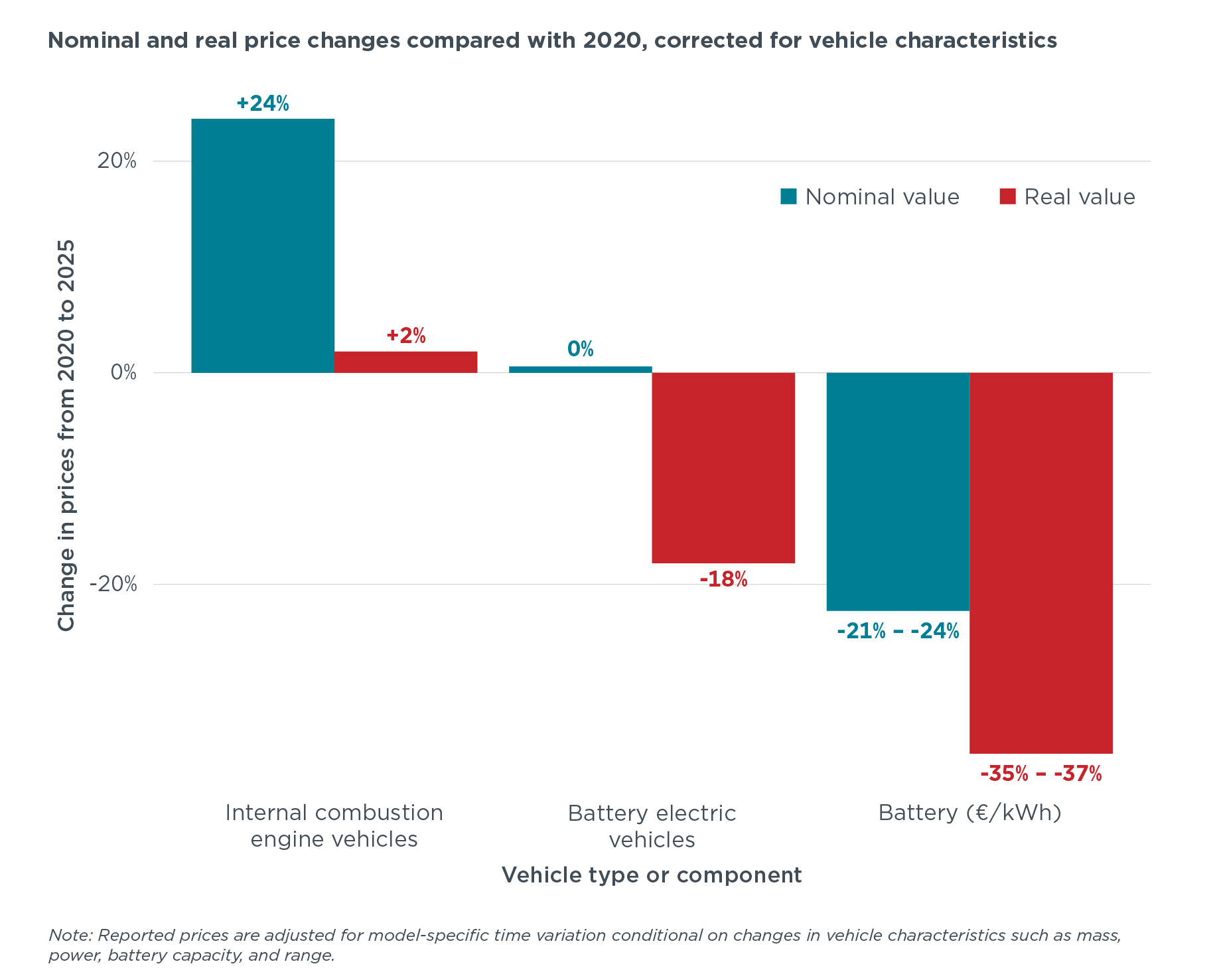
Battery costs fell about 35 percent in real terms since 2020.
Equivalent electric models dropped roughly 18 percent over five years.
Combustion cars moved the other way, growing about 2 percent.
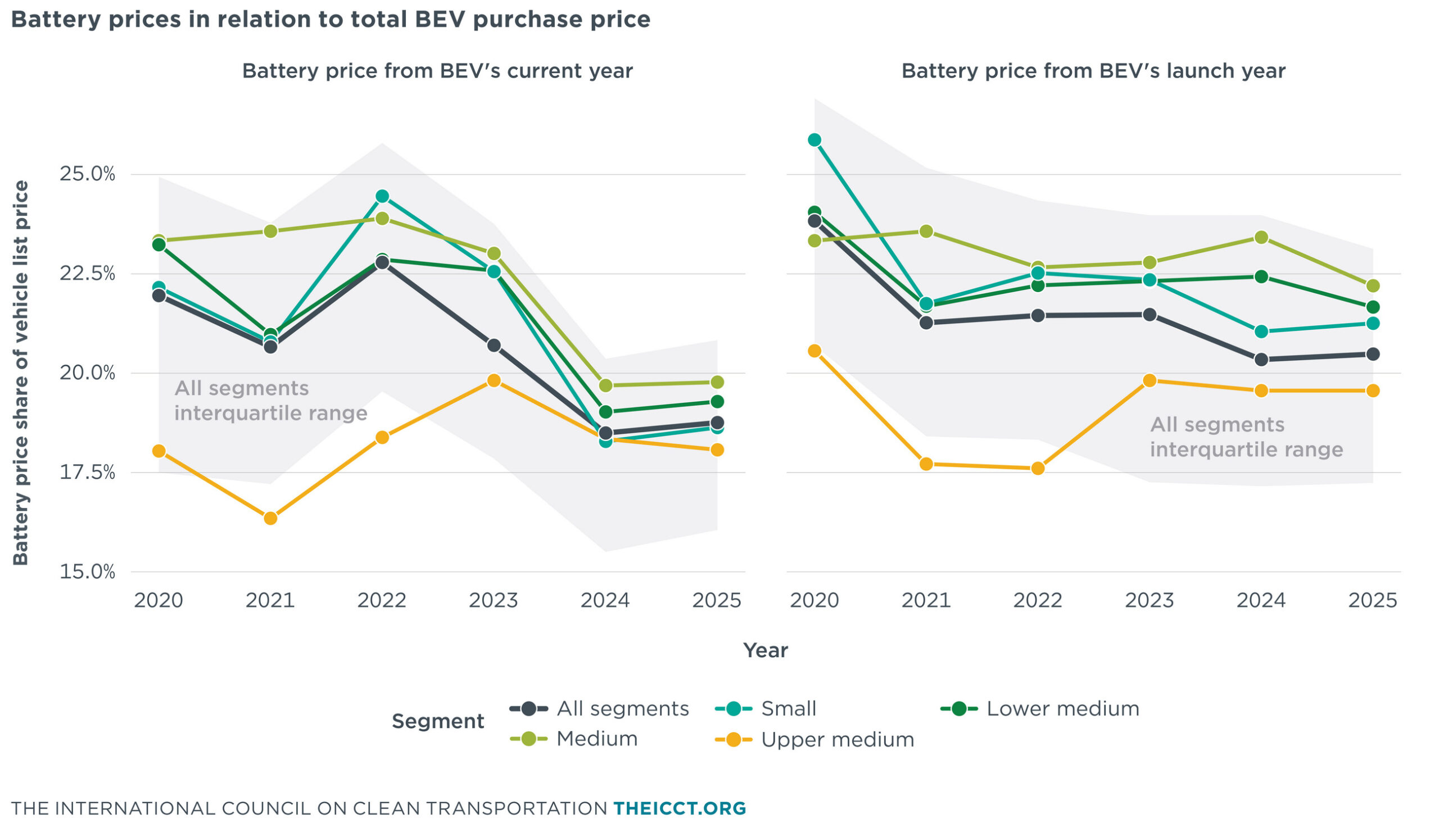
Every year we’re told the next breakthrough in battery technology will finally make EVs more affordable. Quietly, that’s already started happening… at least on the manufacturing side. According to a new study out of Germany, global battery costs have fallen by roughly 35 percent in real terms since 2020. Yet if you’ve been shopping for an EV lately, you’ve probably noticed they haven’t become dramatically cheaper. In fact, the median advertised price actually went up. Here’s why.
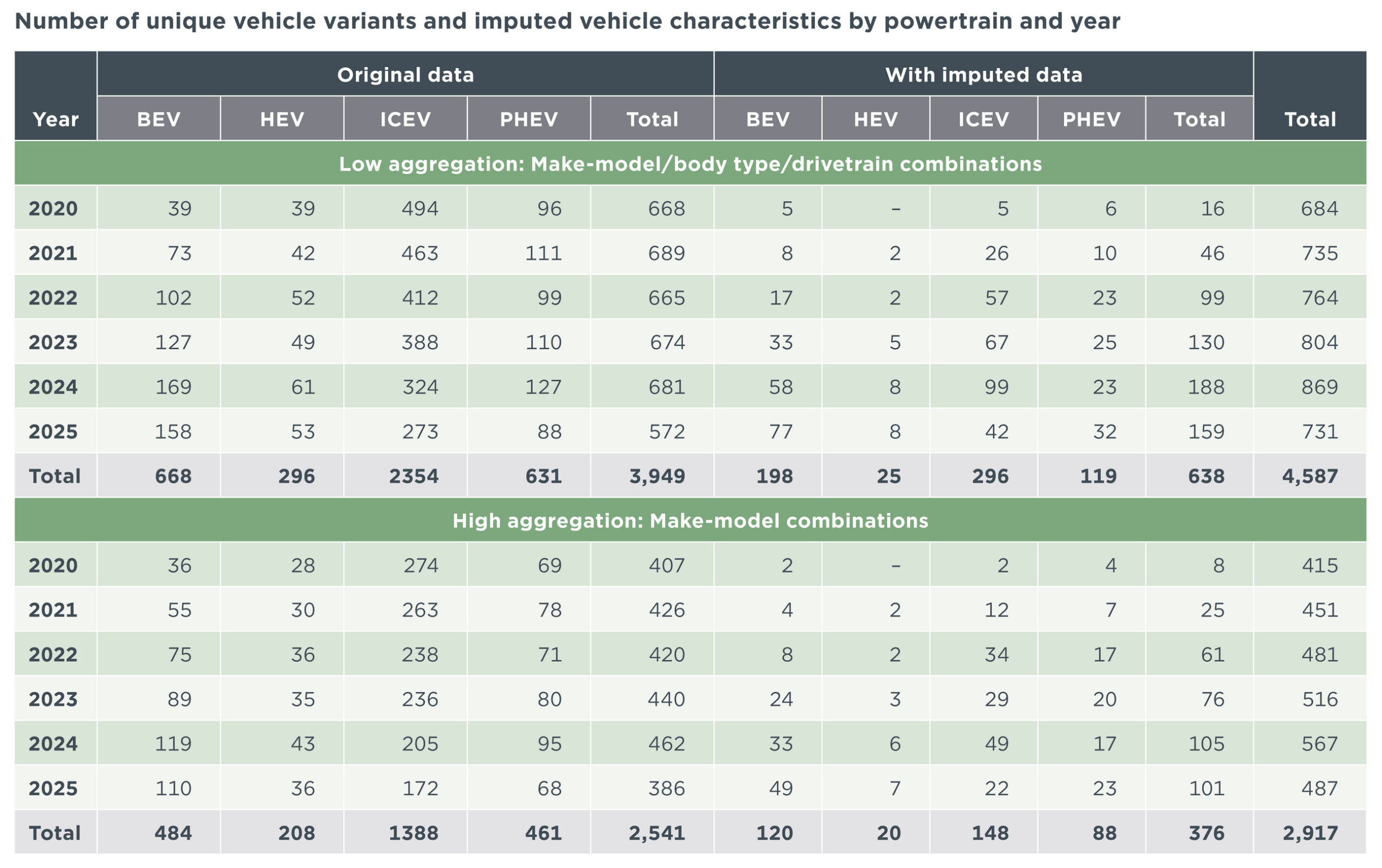
Researchers from the International Council on Clean Transportation (ICCT) analyzed more than 100,000 passenger car configurations sold in Germany between 2020 and 2025. When comparing equivalent models and adjusting for inflation, vehicle weight, power output, battery capacity, and electric range, they found battery electric vehicle prices fell by about 18 percent in real terms over the five-year period. Yes, prices fell by almost one-fifth. At the same time, internal combustion vehicles became roughly 2 percent more expensive.
The study attributes much of that price drop to falling battery costs. What’s particularly interesting is the gap between the roughly 35 percent decline in battery prices and the 18 percent reduction in vehicle prices. Researchers say manufacturers appear to have used some of those savings to increase driving range, improve vehicle specifications, or offset research and development costs instead of cutting sticker prices even further.
Why The Median Price Climbed
On top of that, the overall market tells us an even more interesting story. The study confirms that individual EV models became cheaper while the median advertised price across the entire German market actually went up, growing from around €38,000 ($44,000) in 2020 to €54,000 ($62,000) in 2025.
That’s largely because the number of available EV models exploded from 38 to 159 during the study period, with much of that growth coming from larger, more expensive vehicles in the lower-medium, medium and upper-medium segments. Buyers shopping for smaller, more affordable EVs still have relatively few choices, with mini and small cars accounting for just 14 percent of all BEV models on sale.
It’s worth noting that the findings reflect the German market rather than the United States, where incentives, taxes and consumer preferences differ considerably. Even so, the report highlights an important reality for anyone expecting dramatically cheaper EVs. Falling battery costs don’t automatically translate into lower sticker prices. Sometimes they become longer range, more equipment, or simply more expensive vehicles.
Used EV prices rose sharply in the US while overall used market softened.
Tesla models dominated price increases but 911 values dropped by 10 %.
Higher fuel costs due to Iran war may have pushed shoppers back to EVs.
For the past few years, buying a used EV has been a waiting game, with would-be buyers often waiting for prices to fall a little further. That strategy may no longer be paying off. Used electric vehicle prices are climbing rapidly while the rest of the used car market continues to drift in the opposite direction, making dream cars like the Porsche 911 more affordable.
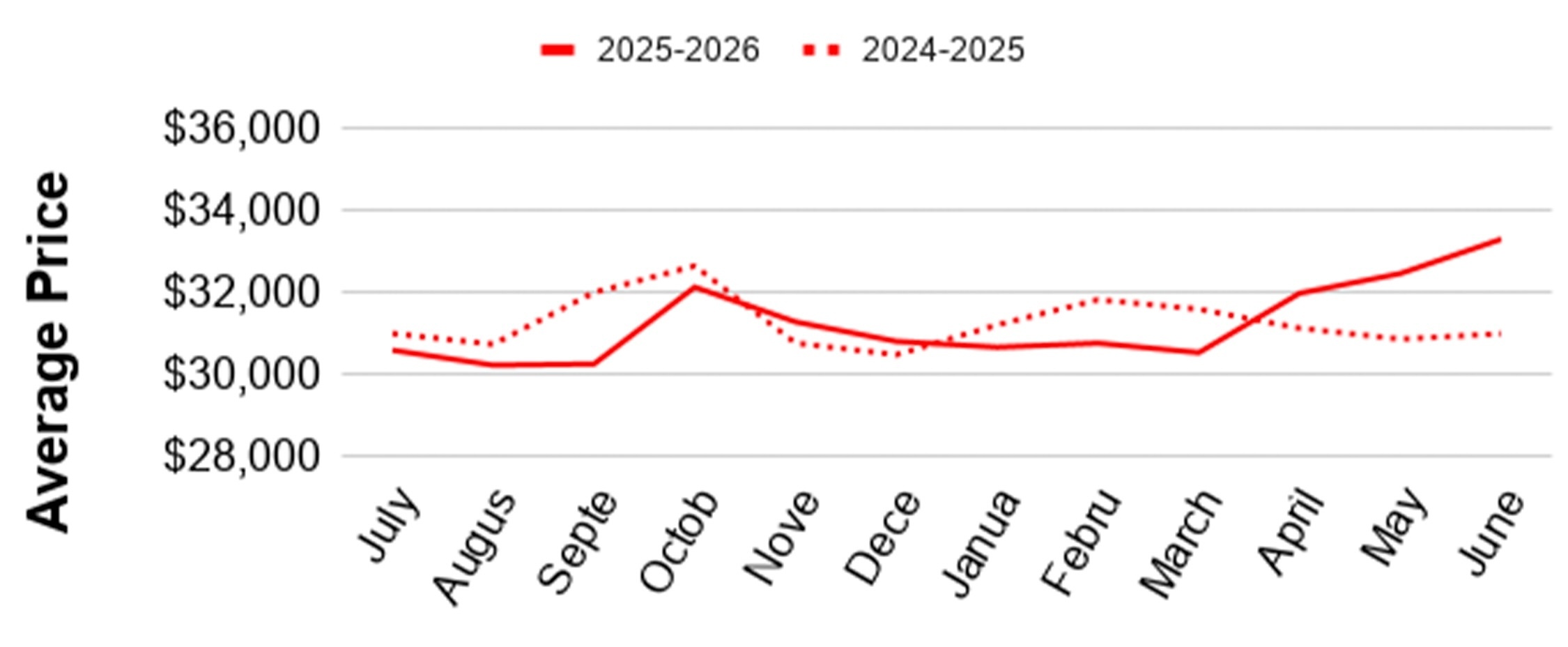
New data from iSeeCars suggests the turnaround isn’t a one-month anomaly, either. Used EV prices have now posted three straight months of year-over-year gains, moving from a 2.7 percent increase in April to 5.2 percent in May before reaching 7.4 percent in June.
That pushed the average price of a one- to five-year-old used EV to $33,305 in June. Compared with the same month last year, that’s an increase of $2,308. Meanwhile, the average used vehicle price fell by 1.3 percent year over year, highlighting just how differently the EV segment is behaving.
Rising fuel costs may have helped trigger the shift, iSeeCars Executive Analyst Karl Brauer logically suggests. Gasoline prices rose sharply during the Iran conflict earlier this year, but it took several weeks before buyers adjusted their shopping habits and begin gravitating back toward EVs.
Average 1-5 YO EV Prices
Tesla was the biggest beneficiary of the trend. All four of the brand’s core models landed among the 10 used vehicles with the largest year-over-year price increases. The Model X led the entire market, jumping 17.5 percent to an average price of $60,950.
The Model 3 wasn’t far behind with a 13.5 percent increase, while the Model S climbed 13.1 percent and the Model Y gained 12.0 percent. “Tesla makes up nearly half of the top 10 used models with the highest price increase,” Brauer noted.
Perhaps just as telling is what didn’t appear in the rankings. Not a single EV showed up among the 20 used vehicles with the steepest price declines. Instead, that list was populated by a mix of luxury vehicles, pickups, SUVs, hybrids, and conventional gasoline-powered models. The Lincoln Corsair posted the biggest percentage value drop (-14.7 %), but the Porsche 911 was right behind it (-10.6 %), and reminds us that there’s a silver lining to every cloud.
New spy photos reveal production GLA bodywork beneath reduced camouflage.
Electric crossover shares platform, cabin technology, hardware with CLA sedan.
GLA will also be available with hybrid power and potentially as a 671 hp AMG EV.
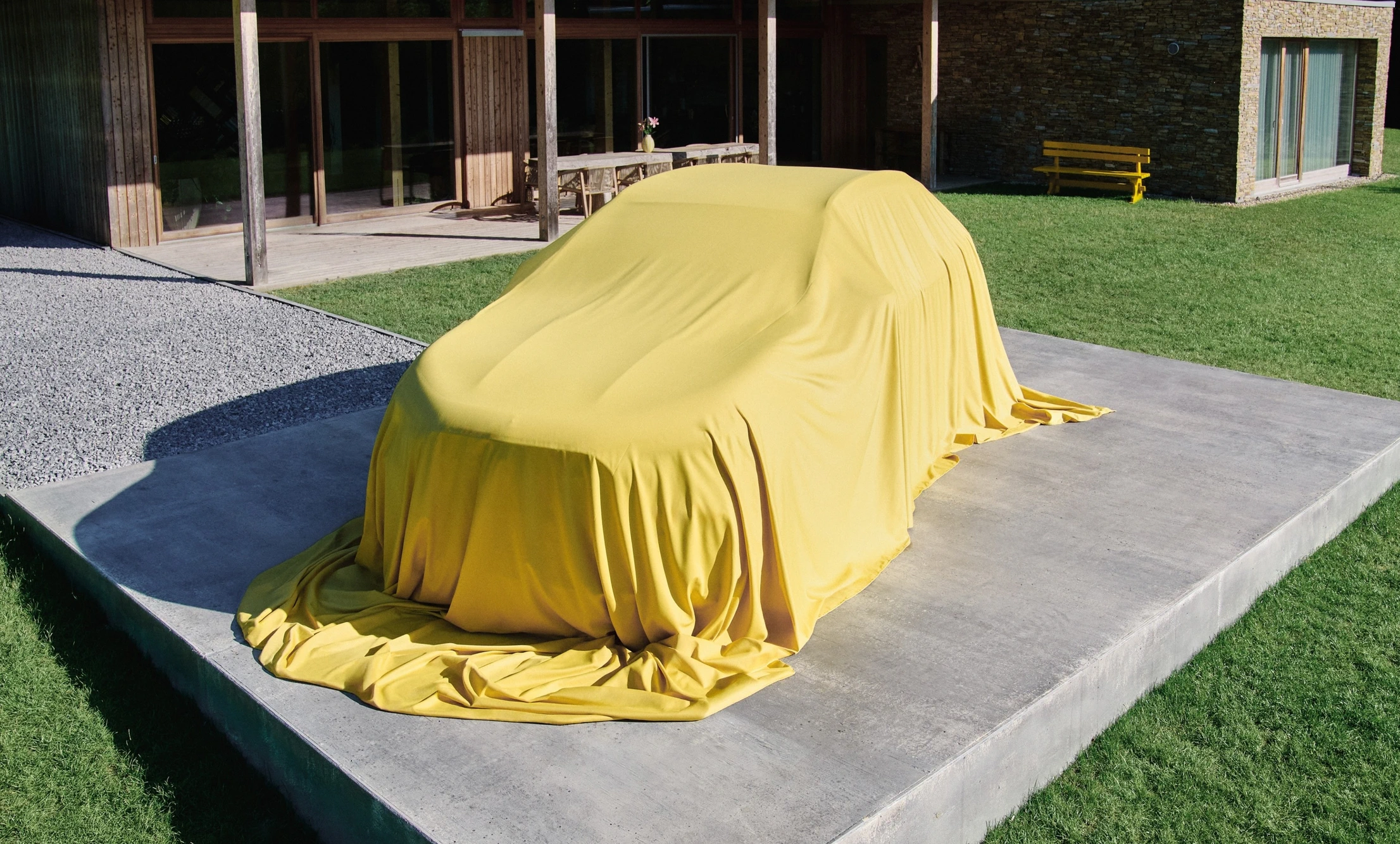
Mercedes has been gradually peeling back the layers on its next-generation GLA, and now it’s put a date on the full unveiling. . The company has confirmed the small crossover will break cover on July 29, releasing a teaser of the sheet-draped car to mark the occasion. The lineup follows the same multi-fuel approach as the new GLB: combustion versions keep the GLA name, while an electric model called the GLA Electric takes over from the outgoing EQA.
These latest spy shots, meanwhile, finally give us a much clearer look at its shape. While the front and rear remain disguised, the sides have largely stepped out of witness protection.
Compared with the heavily camouflaged prototypes we spotted earlier this year, this latest tester reveals its doors, glasshouse, and much of its body surfacing. The result is a cleaner and more sophisticated design that looks noticeably more aerodynamic than today’s GLA.
Baldauf
The newly exposed profile confirms several styling details we could previously only guess at. Flush-mounted door handles are present, helping to reduce drag, while a rising window line injects a little visual drama into an otherwise smooth-sided body. Combined with the gently sloping roofline, the overall effect is once again more sleek crossover than upright SUV. If it’s boxy you want, you need the new GLB that’s already on sale.
The GLA’s nose remains hidden behind camouflage, but Mercedes has already shown us the direction it’s heading. Expect a scaled-down interpretation of the retro-futuristic grille treatment introduced on the larger GLC EQ.
Stars-Shaped DRLs
Baldauf
The rear end is similarly concealed, though there are still clues hiding beneath the camouflage. Look closely and you can just make out the signature star-shaped lighting graphics that Mercedes has been rolling out across its latest EVs. Expect those illuminated three-pointed stars to feature prominently at both ends of the production GLA.
Up To Three Screens Available
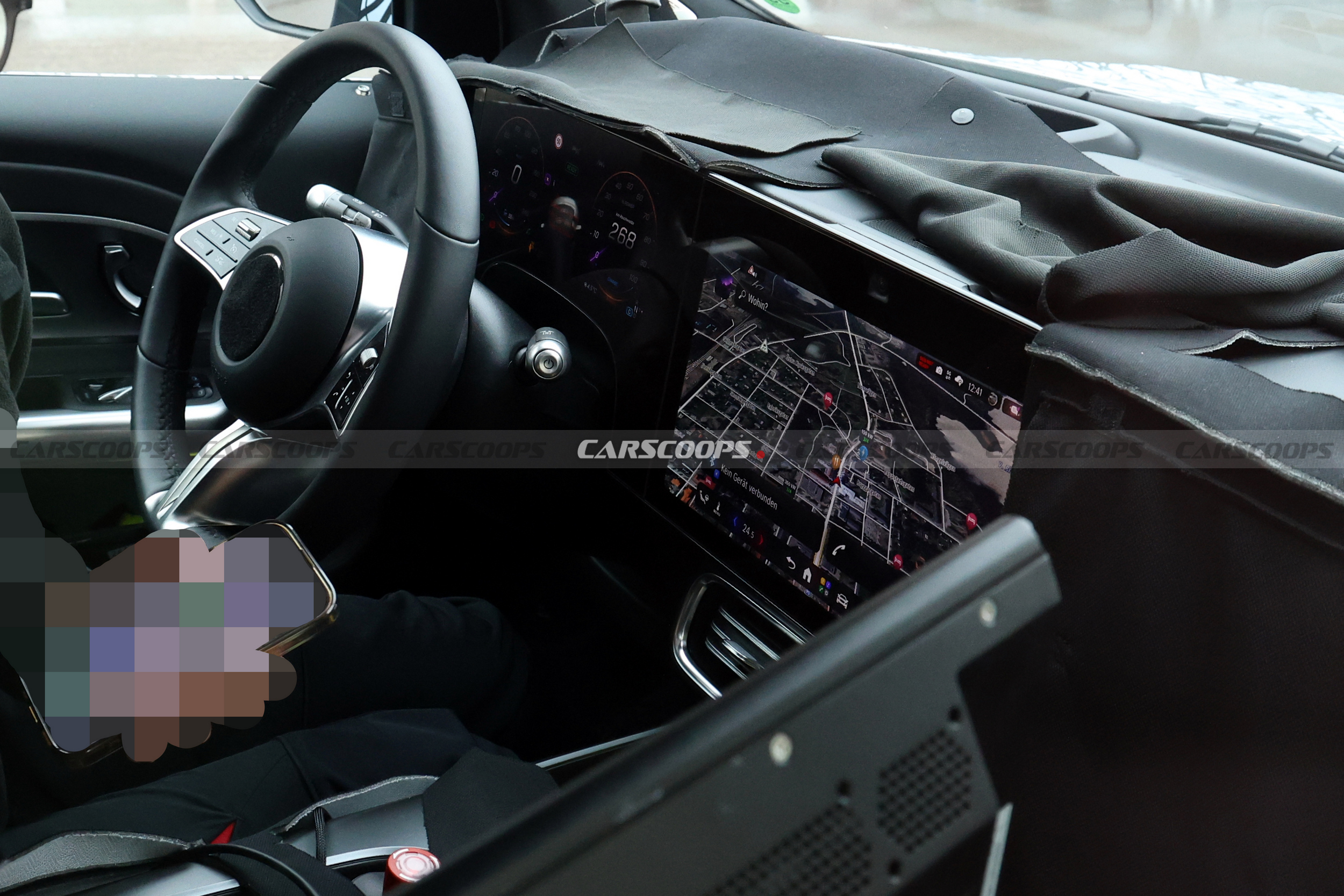
Unfortunately, these photos don’t provide a fresh look inside, but that’s not a huge problem because we’ve already seen the goodies in a previous spy shot haul (below). Like the CLA and GLB, the GLA EQ should offer an optional MBUX Superscreen setup combining a 10.25-inch digital cluster with dual 14-inch displays stretching across the dashboard.
Underneath, the newcomer shares its platform and powertrains with its compact Mercedes brothers. That likely means a rear-drive version producing 268 hp (272 PS / 200 kW) and an all-wheel-drive model generating 349 hp (354 PS / 260 kW). Both should draw energy from an 85 kWh battery and benefit from an 800-volt electrical architecture capable of ultra-fast charging.
And for anyone worried the GLA EQ might be too sensible, don’t forget we’ve already caught an electric AMG version testing. If it borrows the hardware from the upcoming AMG CLA, this compact crossover could eventually pack as much as 671 hp (680 PS /500 kW).
Of course not everyone wants an EV, so Mercedes has ICE fans covered too, or it will have. The EV arrives this fall but combustion versions of the new GLA fitted with 1.5-litre hybrid engines will follow in spring 2027.
One of the first Rivian R2s has been auctioned online.
The $61,485 SUV only fetched four bids and $63,500.
R2 Performance sports 656 hp and 330 miles of range.
Rivian launched the highly anticipated R2 on June 9 and it appears the excitement was short-lived. One of the first models recently sold at auction and it only garnered four bids.
The electric crossover ended up selling for $63,500, which was only $2,015 above its sticker price of $61,485. This means the seller likely ended up losing money on the vehicle after factoring in taxes and expenses.
The R2 Performance Launch Edition was listed on Cars&Bids and the auction wrapped up yesterday. The Catalina Cove crossover only had 71 miles (114 km) on the odometer and it was purchased last month.
Cars&Bids
The seller said they were a “day 1 deposit holder,” which suggests they reserved the R2 back in March of 2024. The seller added they’ve owned several Rivians over the years, but ended up buying a Kia EV9 for his wife.
Despite this, they decided to take the first Catalina Cove R2 that arrived at their local center with the expectation of keeping it and selling the EV9. She apparently liked the three-row EV better, so they decided to flip the Rivian.
While that could just be a story, it seems plausible enough as it’s hard to plan out your vehicle needs and timing nearly two and a half years in advance.
Regardless, it’s interesting that the R2 didn’t sell for more money. The model is still in short supply and the company is “inviting reservation holders to order in rolling batches.” If you reserve today, it’ll take roughly a week to get estimated timing for your order invitation.
As a refresher, the R2 Performance starts at $57,990 and features a dual-motor all-wheel drive system developing 656 hp (489 kW / 665 PS) and 609 lb-ft (825 Nm) of torque. It enables the crossover to accelerate from 0–60 mph (0-96 km/h) in 3.6 seconds and travel up to 330 miles (531 km) on a single charge.
It comes nicely equipped with Matrix LED headlights, Compass Yellow accents, and 21-inch wheels. Buyers will also find 12-way power front seats with heating and ventilation as well as heated rear seats and a heated steering wheel. They’re accompanied by birch wood trim, a nine-speaker premium audio system, and a flashlight integrated into the driver’s door.
The Launch Edition adds a handful of notable extras including a special key fob and a lifetime subscription to Autonomy+, which provides Universal Hands-Free driving on over 3.5 million miles (5.6 million km) of roads in the United States and Canada. The special edition also comes with a tow package that enables the model to haul up to 4,400 lbs (1,996 kg).
A 2025 Cadillac Escalade IQ sold for nearly $47,000 less than its original MSRP.
Electric SUV had covered only around 13k miles and showed no accident history.
Even heavily optioned luxury EVs continue to face steep early depreciation.
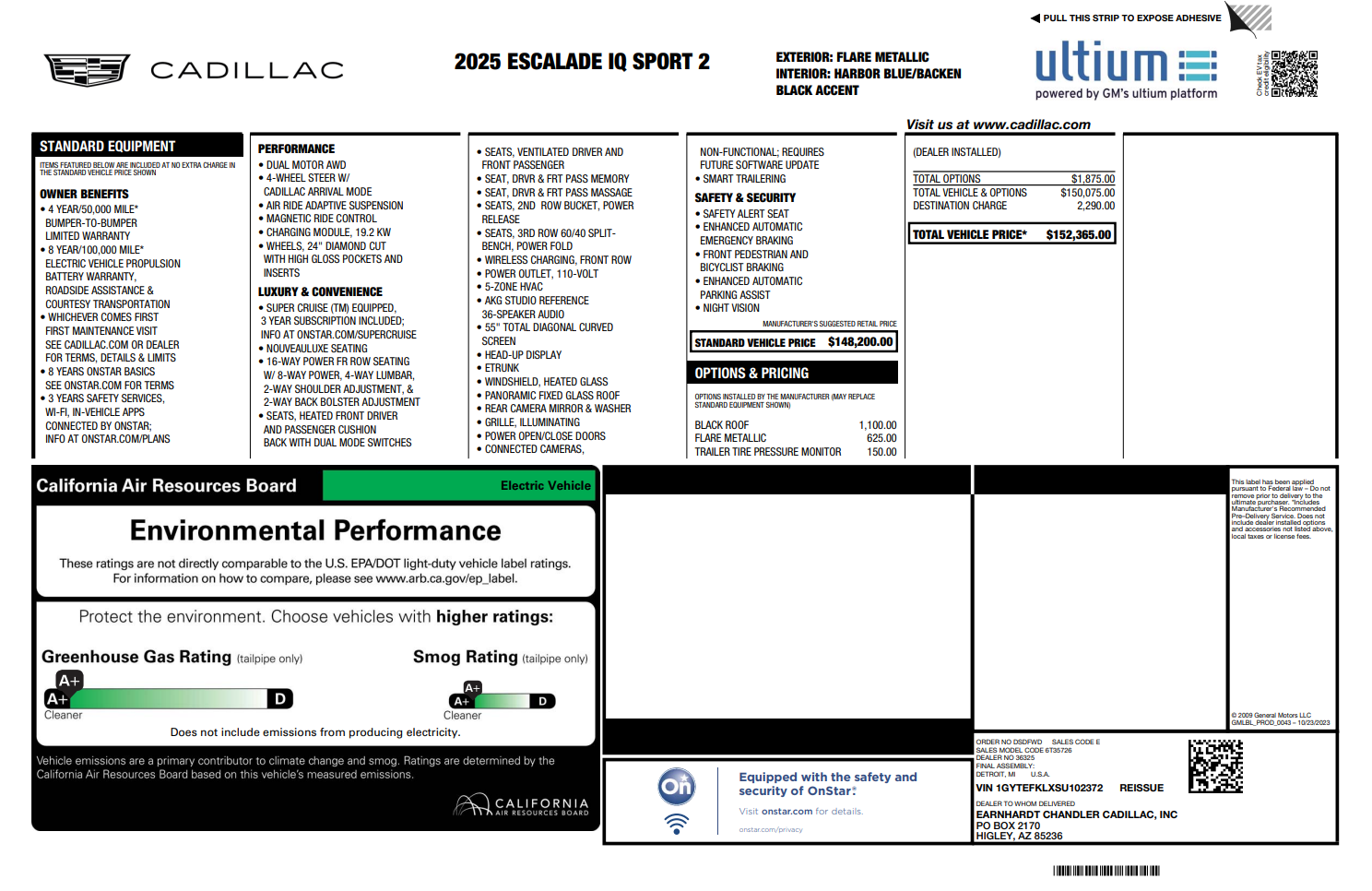
Luxury vehicles have never been immune to depreciation, but the latest sale of a nearly new Cadillac Escalade IQ shows just how punishing the first year of ownership can be for high-end EVs. After covering just 13,000 miles, a 2025 Escalade IQ Sport 2 changed hands for $105,000 despite carrying a window sticker of more than $152,000 when new. That’s roughly $47,000 that just went up in smoke over what amounts to barely a year’s worth of driving.
Sold on Bring a Trailer on July 19, the Flare Metallic example attracted 24 bids before the hammer fell at $105,000. While that’s still a six-figure SUV, it’s approximately 31 percent below its original MSRP of $152,365. Put another way, the original buyer, if they paid MSRP, lost $3.64 for every mile that this SUV was on the road. That doesn’t account for electricity, insurance, or maintenance.
The sale highlights a trend that’s become increasingly common across premium electric vehicles. Buyers willing to shop the used market can often save tens of thousands of dollars while getting a vehicle that’s barely broken in. This particular Escalade IQ wasn’t exactly a stripped-down example either. It featured Cadillac’s dual-motor all-wheel-drive powertrain producing up to 750 hp (559 kW) and 785 lb-ft (1,064 Nm) of torque in Velocity Max mode, fed by a massive 205-kWh battery pack.
It also came loaded with virtually every luxury feature buyers expect from Cadillac’s electric flagship. Highlights included Air Ride Adaptive Suspension, four-wheel steering, Super Cruise, Night Vision, a 36-speaker AKG Studio Reference sound system, heated and ventilated massaging front seats, heated second-row captain’s chairs, a panoramic glass roof, and the massive 55-inch curved dashboard display.
Photos BaT
The seller also fitted custom 24-inch Vivid Racing forged wheels, removed the rear badging, and added gloss-black vinyl accents to the grille surround and C-pillars, though the original appearance could easily be restored. Importantly, the Carfax was clean, showing no reported accidents or damage, although it did note at least one open recall.
Don’t get us wrong. $105,000 is a boatload of money for any vehicle. Nobody needs something this expensive. But having tested one in person, it’s a truly luxurious machine in most of the ways that matter. Letting someone else absorb the depreciation just makes the ownership experience sweeter.
A Mach-E owner discovered a hidden tracking module beneath his dashboard.
The device appears linked to a recently disclosed security vulnerability.
Most owners face little real-world hacking risk despite the alarming headlines.
Car hacking is becoming a more alarming issue every day, it seems. Just this week, security researchers announced that they’d found another major vulnerability that could affect any car from any brand built in the last few decades. After watching a video about the hack, one Ford owner found exactly that same type of device in his own car. Here’s why you might want to take a peek in your own vehicle and why the threat in this case isn’t as scary as it may seem.
The Reddit user said the idea came after watching a recent Wired video detailing security researchers’ discovery of vulnerabilities in the KARR Security System. That’s an aftermarket alarm and tracking device frequently installed by dealerships. We’ve covered similar products in the past. In this case, the owner was simply curious, so he pulled a panel out from under his dash and, sure enough, found the module.
How To Find One In Your Own Car
These devices are often plugged into the OBDII port via a splitter, so they’re hard to spot initially. Some can route directly to or from the battery as well. The owner wasted little time removing the module, which appears to have been installed using a plug-and-play T-harness beneath the dashboard. With that simple action, he disconnected himself from the vulnerability. If you have a similar device hidden in your vehicle, removal is often that simple.
Researchers at the University of California San Diego recently disclosed a Bluetooth vulnerability affecting certain KARR Security System modules, estimating that more than two million vehicles could have the devices installed. According to the researchers, the flaw could allow someone within Bluetooth range to unlock a vehicle, trigger its alarm, or disable its ignition until the owner installs a firmware update. Importantly, they cannot start the car with this hack. The company behind the system has since released a patch.
Why You Probably Shouldn’t Panic
That said, this isn’t a reason for owners to panic. While the researchers successfully demonstrated the vulnerability in controlled testing, exploiting it requires specialized software and close proximity to the vehicle. Moreover, while two million cars is an objectively big number, it also accounts for less than one percent of cars on the road in America. With that in mind, the chances of someone targeting your car this way remain extremely low.
Instead, the bigger takeaway may be that many owners have no idea aftermarket electronics are tucked behind their dashboards in the first place. Dealers often install them for theft prevention, inventory management, or as part of an optional security package. In this case, our Mustang Mach-E owner says his purchase paperwork never mentioned it. Thankfully, a little insight into its possible existence was enough for him to find and delete it.
New Kia design story video reveals a shooting brake Meta Turismo model.
The electric GT concept adopts a more practical estate layout.
Engineering feasibility for a production version of the sedan is underway.
The Kia Vision Meta Turismo Concept is a sleek electric sports sedan that has us hungry for a proper successor to the sadly gone Stinger. A new video walking through the concept’s design story hints that Kia might have a second bodystyle in mind.
The official footage, shot inside the design studio, shows a pair of scale models sitting next to hand-drawn sketches. They look like early variations on the Meta Turismo theme, each with a different silhouette.
Next to the coupe-style sedan sits a model with a reworked roofline that reads as a futuristic shooting brake. The long-roof version differs from the final concept in a few other details beyond its distinctive greenhouse, though it uses the same wheels and overall dimensions.
Kia Worldwide / YouTube
The Meta Turismo Shooting Brake hasn’t progressed to a full-size prototype and may never leave the early ideation stage. Its appearance in the video, and in the opening image, still confirms that Kia’s designers didn’t restrict their grand touring vision to a single bodystyle.
If it gets the green light for production, such a model would offer extra headroom and superior cargo capacity while retaining the striking visual impact of a low-slung GT. It would also mark Kia’s return in the estate segment after the discontinuation of the Kia Ceed SW, and the closely related ProCeed in some markets, including Europe.
A Sports Sedan For Gamers
In the design story, Kia’s creative team shed light on the core philosophy behind the Meta Turismo project. The initial briefing tasked designers with envisioning a performance sedan tailored specifically for the “gamer generation”. According to Kia, the target group is drivers who move seamlessly between digital and physical environments.
Inside, the futuristic interface includes a removable retro gaming console mounted on the side of the dashboard. There are four individual seats, with the driver’s chair styled differently from the passengers’, plus organic and sustainable materials including silk and wood. The team also noted that a cab-forward architecture let them maximize cabin space without wrecking the proportions.
Will It Reach Production?
The Vision Meta Turismo concept broke cover in December 2025, then appeared publicly at Milan Design Week and the Busan International Mobility Show in spring 2026. Pitched as the spiritual heir to the Stinger, it swaps that car’s twin-turbo 3.3-liter V6 for a fully electric powertrain.
While Kia has yet to confirm production intent, Global Design Chief Karim Habib and Europe Design Boss Oliver Samson have previously revealed that engineering feasibility work is already underway. The primary hurdle remains establishing a viable business case for a new halo car. Here’s hoping Kia finds one, and brings the more practical sibling along for the ride too.
Plenty of Americans yearn for adventure, but not in an electric SUV or pickup.
Hankook’s new study says 64% of Americans want to go off-roading this summer.
The study shows local pickup drivers would take an ICE over an electric off-roader.
A new study has revealed that Americans are feeling adventurous this summer, eager to get away from civilization and enjoy some off-roading. Of those surveyed, the overwhelming majority would take a combustion-powered vehicle over an EV.
Hankook Tire’s latest Gauge Index survey found that 64 percent of respondents are interested in taking an all-terrain or off-road driving adventure this year. That’s a huge jump from the 34 percent who expressed interest in doing the same last year.
But, as is often the case with studies like these, there’s more than meets the eye. Last year’s survey asked a different question. The 34 percent figure didn’t measure people planning an off-road adventure at all; it counted respondents who named “off-roading proficiency” as the top recreational driving skill they wanted to learn.
74 percent of Gen Z and 72 percent of Millennials want to take an off-road trip this year. However, it’s not just younger folk who want to make the most out of summer, as 57 percent of Gen X drivers and 42 percent of Baby Boomers want to do the same.
ICEs Rule Over EVs
The study also sheds light on what types of vehicles motorists think are best for these trips. 52 percent believe an SUV is best, while 36 percent would go with a pickup truck. Unsurprisingly, most people still favor combustion engines over EVs, with 79 percent preferring a gas-powered SUV over an electric one, while 87 percent of pickup drivers would take an ICE model over an EV.
It appears most of those interested in an off-road experience want something tame, rather than climbing over rocks at Moab. As such, 45 percent said they plan to take a trip along wooded trails while just 17 percent would prefer exploring a desert.
Of course, it’s worth noting that this study, just like so many others you read about, only polled a small group of people. In fact, Hankook quizzed just 1,000 randomly selected American drivers aged 18 and older. So, if you’re someone who has no interest in off-roading, you can rest easy knowing millions of others feel the same.
VW once considered a range-extender version of the ID. Buzz.
Tight overhangs and EV-dedicated platform made it impossible.
A new multi-energy Space platform will underpin future vans.
The fully electric VW ID. Buzz hasn’t found the audience VW hoped for in North America, and that has the company weighing some drastic options. One was a range-extender powertrain, an idea that died on packaging grounds. Meanwhile, VW is developing a new multi-energy architecture for its future LCV lineup, meant to reduce complexity and cut costs.
The ID. Buzz news comes from Stefan Mecha, CEO of VW Commercial Vehicles. Speaking to Australian outlet Go Auto, he conceded that a combustion-engined variant had been on the table: “I would not be telling the truth if I said we have not looked at this. Is this a feasible exercise? Probably not… I think from this end, the ID. Buzz is an electric vehicle and it will stay an electric vehicle.”
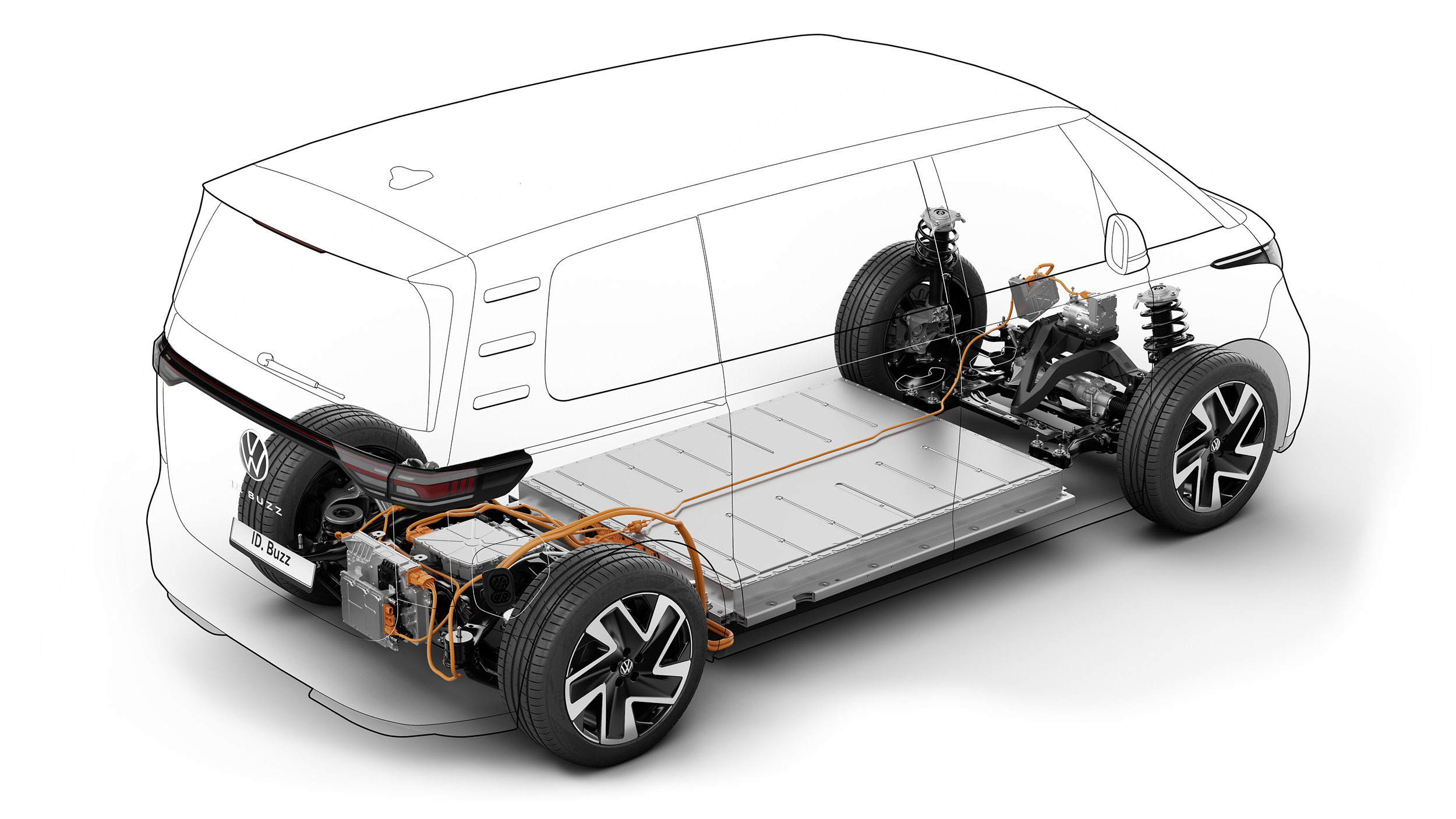
The van’s short overhangs and EV-only bones left nowhere to put a range extender. The MEB architecture was built for battery electric vehicles and nothing else, so shoehorning in a combustion engine would have meant an expensive redesign.
VW moved 60,700 ID. Buzz vans in 2025, double its 2024 tally. North America accounted for just 6,140 of them, which is why the brand skipped the 2026 model year entirely to clear leftover stock. The EV returns to the US for 2027 with minor updates and a camping-friendly trim joining the lineup.
One Platform To Rule Them All
In the same interview, Mecha laid out a structural overhaul aimed at what he calls “costly platform fragmentation” across the LCV portfolio.
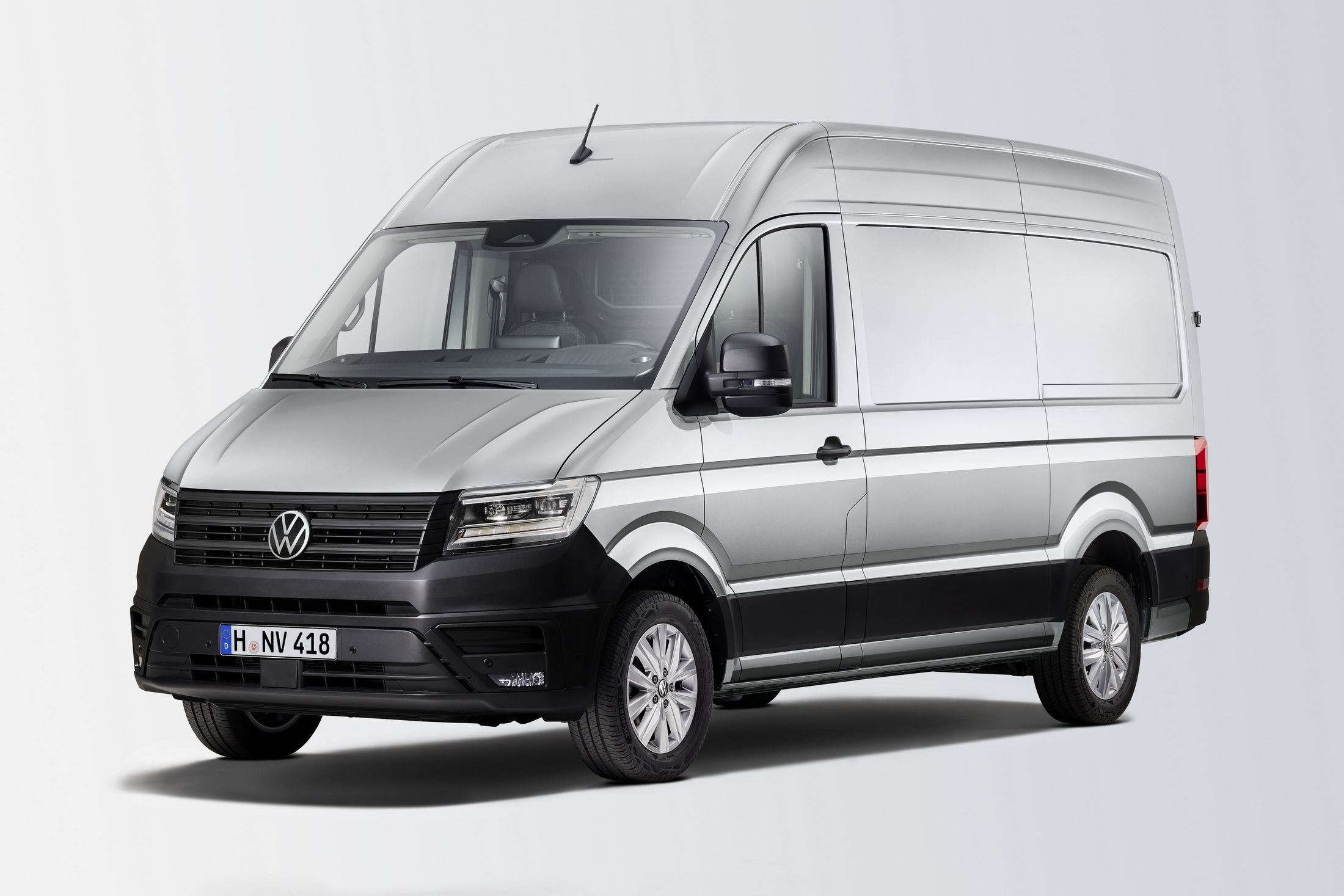
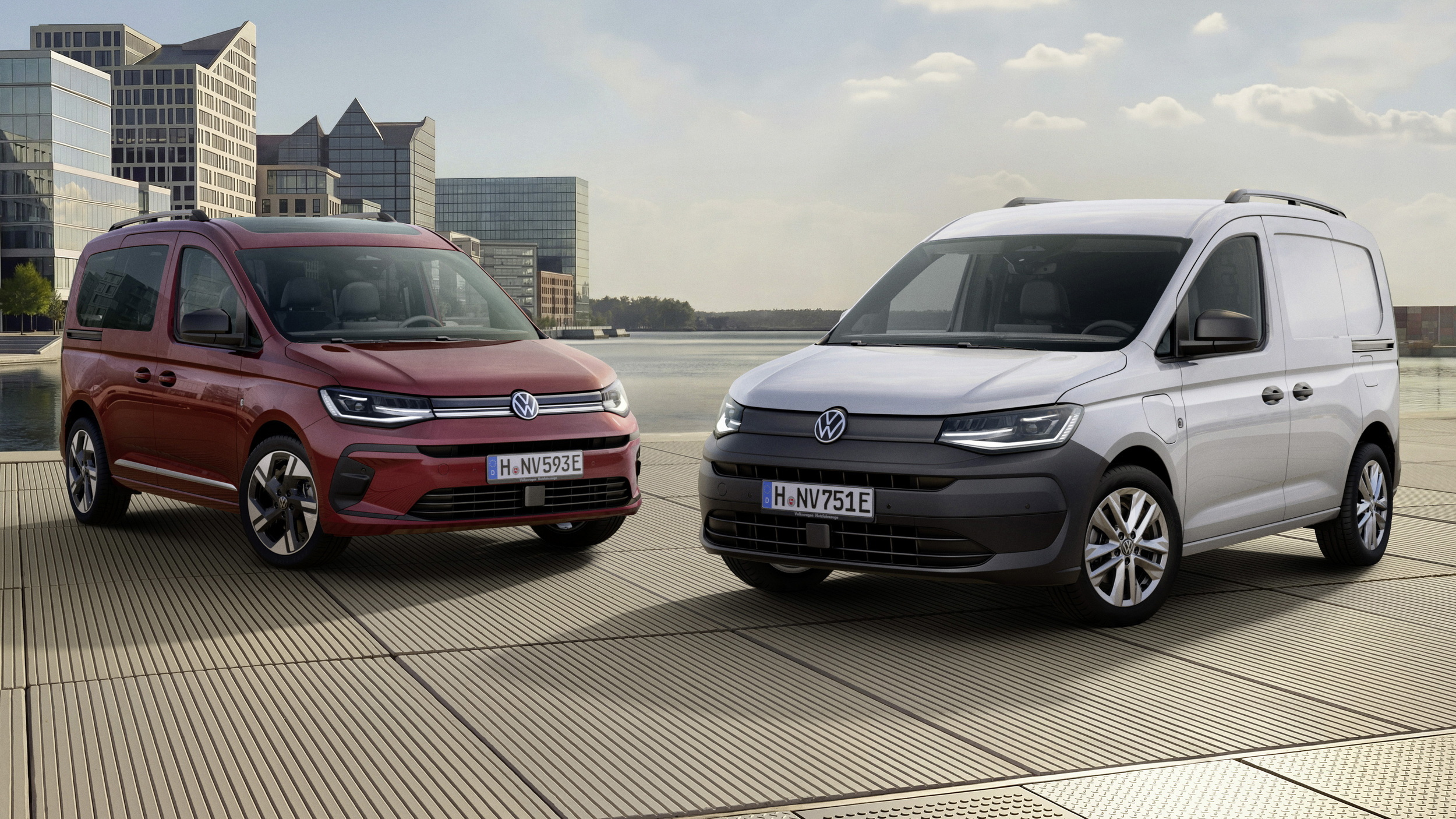
The company currently relies on four separate platforms right now. The Caddy and Multivan T7 sit on MQB, the ID. Buzz uses MEB, the Transporter T7 shares its underpinnings with the Ford Transit Custom, and the Crafter has a larger bespoke chassis of its own.
To streamline manufacturing and R&D, Volkswagen will retool its Hanover plant and develop a new common architecture for the next decade dubbed the Space platform. This is expected to underpin the next-generation Caddy, Multivan, and Transporter lineups, and supply components for the next Crafter.
Drawing conclusions this early would be premature, but the ID. Buzz faces an uncertain future given the scale of the cuts announced across the VW Group range.
Mecha said commercial buyers are moving to fully electric vans more slowly than expected, leaving VWCV on the hook for hefty carbon emissions penalties under European fleet rules. The Space platform was conceived as an EV architecture, but it’s being adapted to take hybrid powertrains as well.
Before the new platform arrives, VW is working on expanding its electric LCV lineup next to the ID. Buzz and the e-Transporter. One is a successor to the e-Crafter that was sold between 2018 and 2022. The updated model will likely offer a significantly longer range, improving the usability of the large van to rival the Ford e-Transit and Renault Master E-Tech.
The automaker is also considering a zero-emission variant of the Caddy. The current generation of the compact van debuted in 2020 and received a facelift in mid-2026, offering diesel and PHEV powertrain options.
It remains to be seen whether the e-Caddy will utilize an electrified version of the MQB architecture, as seen in the discontinued e-Golf, or jump into the MEB platform.
Volkswagen is preparing Level 3 automated driving for China by next year.
Horizon Robotics supplies the AI foundation models behind the new stack.
Seven new energy vehicles get an urban L2++ upgrade later this year.
Volkswagen’s driver assistance tech in the West has never threatened the class leaders, but in China the company plans to put Level 3 automated driving in customer cars in the second half of 2027. Level 3 means the car handles the driving within set conditions and the driver stops being the moment-to-moment backup, something no VW-badged model in Europe or North America can do today.
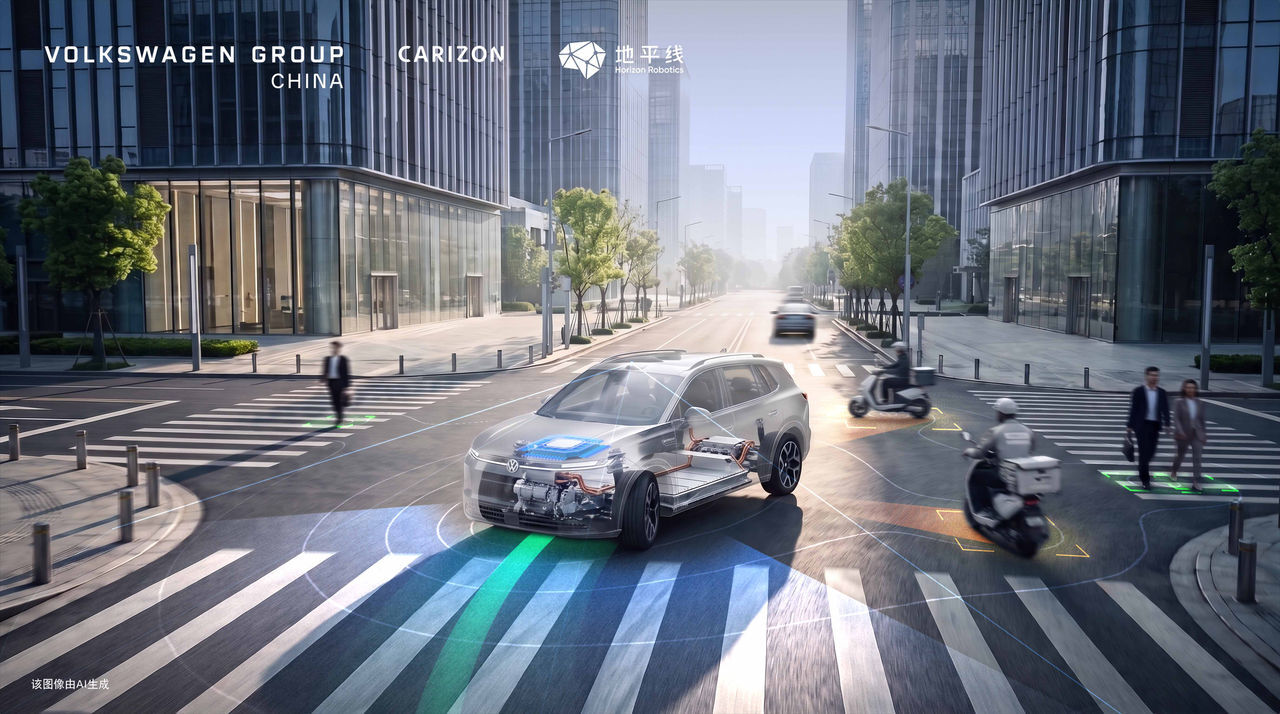
The German automaker is working alongside Chinese firm Horizon Robotics to make it happen. The duo operate a joint venture known as Carizon and, through a strengthened deal agreed to between the companies, Horizon’s AI foundation-model capabilities will be used to develop and accelerate the creation of an advanced new AI driving solution for VW.
The automaker’s unified AI driving model will be trained to handle end-to-end driving tasks and, thanks to Horizon’s technologies, better anticipate the behavior of other road users, creating a safer and more reliable system.
This driving stack will be integrated within VW’s China Electronic Architecture (CEA), its first locally developed zonal electronic and electrical architecture. This will ensure the complex automated driving functions can be added to several model lines not only in China, but also in the “Global South,” according to VW.
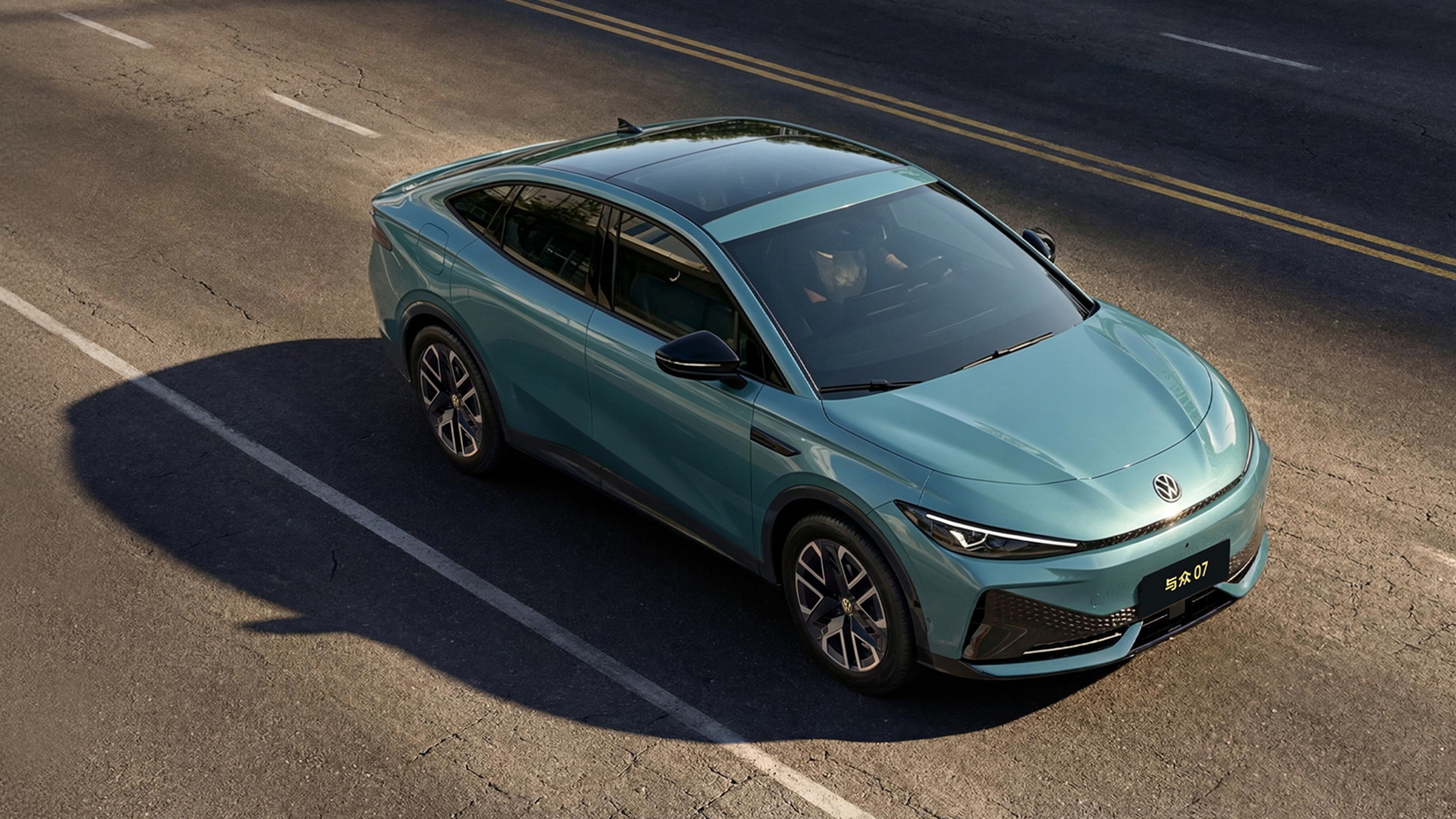
Carizon’s L2+ ADAS already appears in several VW models sold in China, among them the ID. Unyx 07 and ID. Unyx 06, with highway Navigate on Autopilot and memory parking. An L2++ version arrives later this year, extending Navigate on Autopilot into cities and destined for seven of VW’s new energy vehicles in the Chinese market.
“China has become one of Volkswagen Group’s key innovation and technology hubs, particularly in software, artificial intelligence and automated driving,” VW Group chief executive Oliver Blume said. “Our deepened collaboration within CARIZON further strengthens our ability to develop and scale AI-based solutions for automated driving.”
Ford is leaning on Apple Maps and their data for future vehicles.
$30,000 electric truck will have Apple-powered navigation system.
Next-gen BlueCruise will use Apple data for improved hands-off driving.
Android Automotive OS and Google Maps have been adopted by a number of automakers, but Apple is fighting back with a MapKit for Automotive SDK. It promises to provide a “beautiful and easy-to-use navigation experience powered by Apple Maps directly to the vehicle’s displays.”
The technology will be integrated into Ford’s Universal Electric Vehicle Platform, which will underpin their highly anticipated $30,000 pickup as well as an assortment of other affordable EVs. Furthermore, Ford will use “road-level information from Apple Maps as part of the development of its next-generation BlueCruise” semi-autonomous driving system. The automaker said this will result in a more seamless hands-free driving experience.
The companies didn’t release pictures or many details, but said drivers can expect natural language turn-by-turn directions as well as real-time traffic and incident information. Users can also look forward to an intuitive search feature with “detailed place cards.” There will also be multiple “routing options to help users easily find the best route to their destination.”
While the automaker and tech giant didn’t elaborate, there’s little doubt the routing options will factor in recharging stops for long distance trips. This functionality is already built into Apple Maps as it monitors the battery and analyzes elevation changes as well as other factors along your route to identify appropriate charging stations along the way. It can also provide real-time charging station availability and help to find the nearest compatible charging station when the battery gets extremely low.
Baldauf
Aside from already existing features, Ford confirmed the new integration will have a battery preconditioning function. This likely means that when drivers navigate towards a charging station, the battery will precondition itself for optimal charging when it arrives.
Ford CEO Jim Farley remarked, “Our new midsize electric vehicle will be priced around $30,000 and redefines what advanced technology can be – simple, useful, and truly attainable for more customers. We’re proud to embed Apple Maps’ navigation and mapping technology directly into our Universal Electric Vehicle Platform, giving customers the ultimate navigation experience alongside our Ford app, a full suite of software, and next-generation BlueCruise, all enabled by a new zonal architecture.”
Apple’s senior vice president of Services and Health, Eddy Cue, added “With our new MapKit for Automotive SDK, we’re bringing Maps further into drivers’ daily lives, giving them an incredibly accurate and easy-to-use navigation system that is seamlessly integrated into Ford vehicles.”
Chinese brands captured 34% of Europe’s plug-in hybrid market in June.
PHEV sales climbed as tariffs made battery-electric imports less appealing.
Chinese EV sales across Europe have remained largely steady.
Europe’s tariffs on Chinese EVs were supposed to slow the advance across the region. Chinese brands responded by pivoting to plug-in hybrids instead, and the results speak for themselves. PHEVs from China now make up more than a third of the region’s plug-in hybrid sales. The tariff wall stands where it was, but the traffic routed around it, because the barrier went up around one powertrain and not the other.
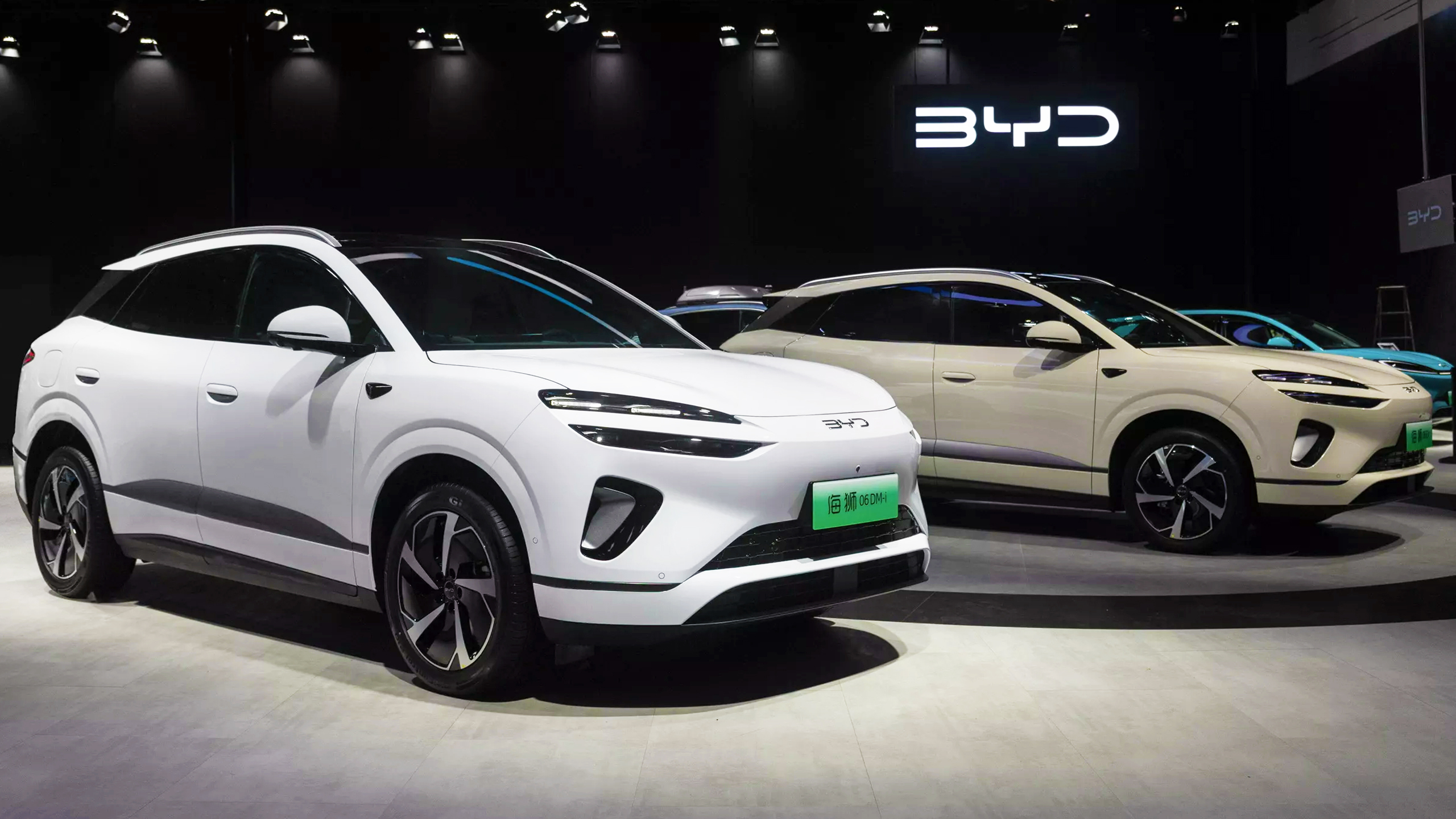
Local sales data shows Chinese firms taking a 34 percent share of PHEV deliveries last month, with BYD, Chery, and Geely leading the charge, alongside brands with European ownership ties such as Polestar and Leapmotor.
Dataforce puts Chinese manufacturers at 11 percent of all new car sales in June and 15 percent of the EV market. That second figure sounds healthy, but EV sales haven’t kept pace with plug-in hybrids, hovering between 10 and 15 percent for the past 18 months.
Looking at the hybrid market as a whole, which includes hybrids and plug-ins, Chinese automakers had a market share close to 25 percent.
What Will Europe Do?
Europe’s answer likely won’t be economic measures aimed specifically to assist local car manufacturers, but rather to punish Chinese firms. The European Commission is moving closer to imposing tariffs against plug-in hybrids imported from China into the region. Handelsblatt reported that as soon as a majority of EU members give their approval to these new tariffs, they can be implemented.
It’s understood that tariffs against PHEVs could follow a similar formula to those implemented against EVs in 2024. As such, they could vary between car manufacturers, depending on how they cooperate with European authorities. In the case of the EV tariffs, they vary between 7.8 and 35.3 percent.
The Chinese Are Now Building Locally
Importantly, Chinese brands may already have the answer to these new tariffs. Many have already committed to building vehicles in Europe, including BYD, which now operates a plant in Hungary, as well as SAIC, which will build a site in northern Spain. In addition, Auto News notes that Dongfeng, Chery, Geely, and Leapmotor will or could use existing plants in Europe to build their own vehicles, skirting around any potential new tariffs.
Battery EVs outsold every other powertrain in Germany during June.
Hybrids finished second by fewer than a thousand registrations.
Petrol cars slipped to a fifth of the market in a combustion stronghold.
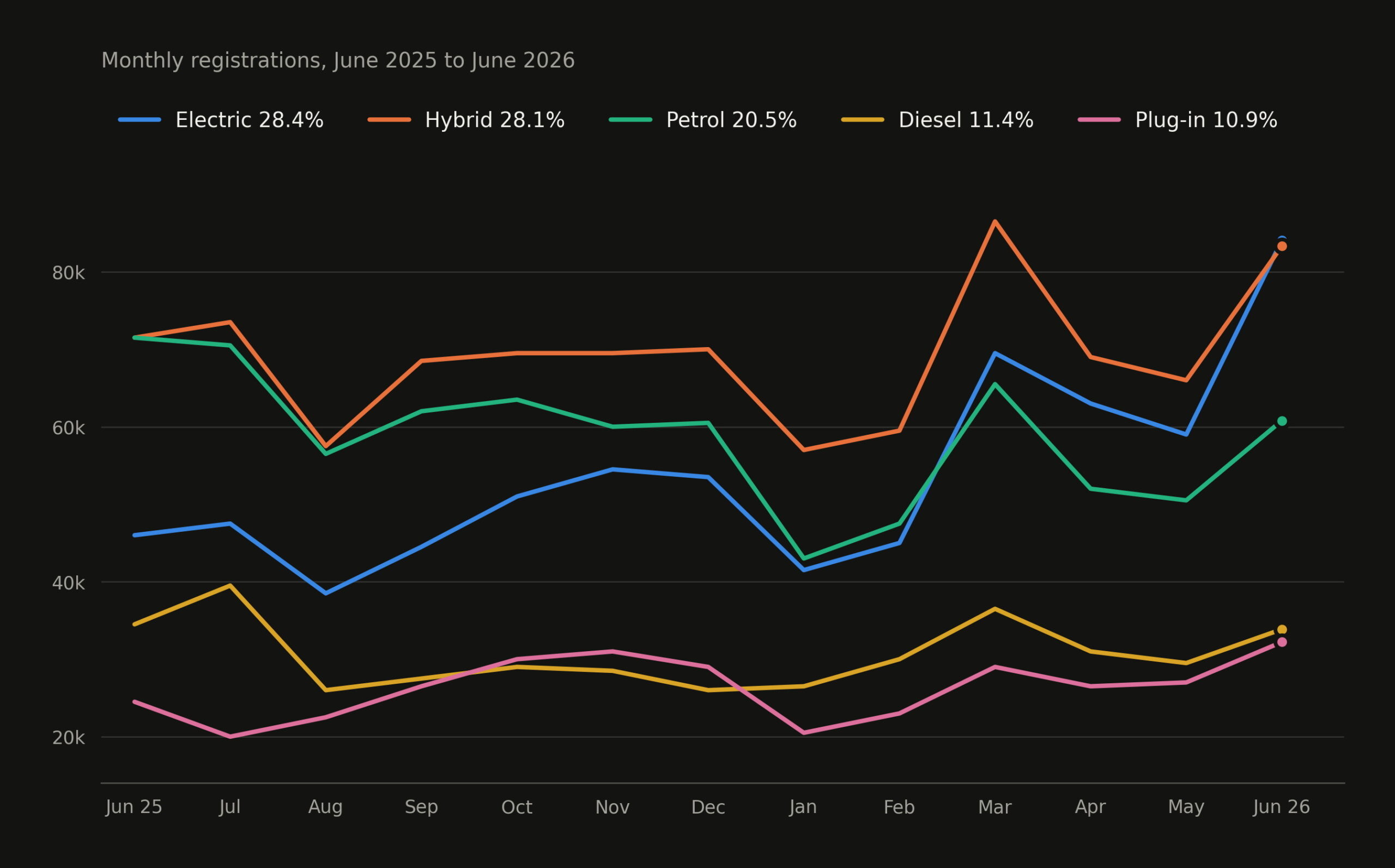
Germany’s turn to electric cars stopped being theoretical last month. Battery-electric models outsold every other powertrain in June, taking 28.4 percent of the country’s market and finishing ahead of hybrids for the first time. That figure would have looked absurd two years ago in a country whose industrial identity is welded to the internal combustion engine.
Figures from the Federal Motor Transport Authority (KBA) reveal that 84,057 new EVs were sold last month, a 78.2 percent rise from June last year. This allowed EVs to narrowly edge out hybrids, which had been the most popular powertrain option the month prior. Hybrid registrations came to 83,315, a hair behind the EV total but still good for a 28.1 percent share.
Crucially, both EVs and hybrids are now comfortably outselling traditional petrol-powered vehicles, which held a 20.5 percent share of the market with 60,796 registrations in June. Trailing petrol-powered cars were diesels with 33,862 sales, or an 11.4 percent market share, slightly ahead of plug-in hybrids with 32,212 sold, enough for a 10.9 percent share.
Which EVs Are Most Popular?
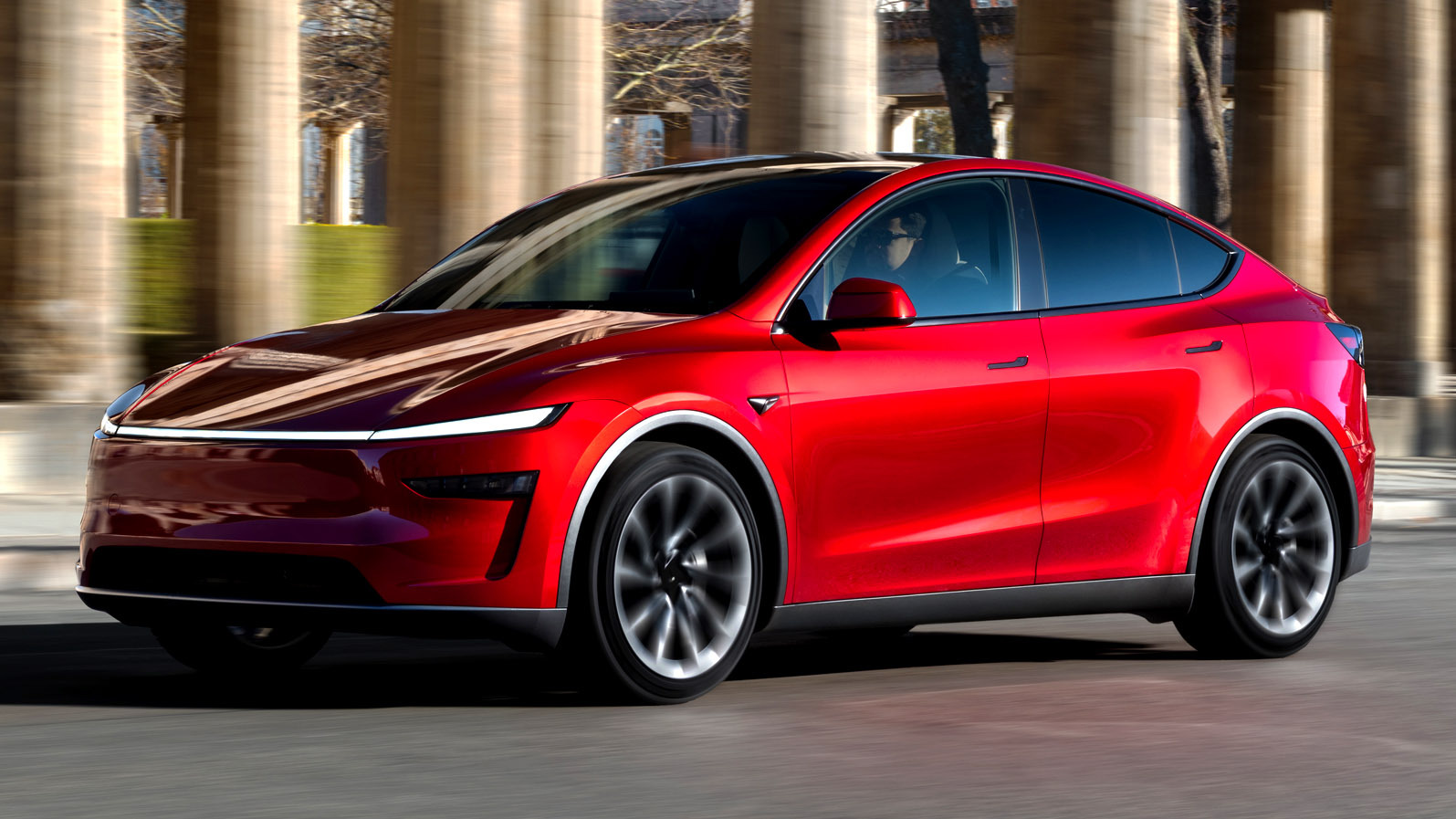
The most popular EV in Germany last month was the Tesla Model Y with an impressive 6,023 sales recorded. This placed it well ahead of the VW ID.3 in second with 3,514 registrations, followed by the Skoda Enyaq with 3,383, and the Skoda Elroq with 3,315. Other cars among the top 10 best-selling EVs included the BMW X1, Mini (it’s unclear which specific model), Audi A6 e-tron, VW ID.7, Cupra Tavascan, and Mercedes-Benz CLA Electric.
The Model Y proved to be so popular that it was actually the third best-selling new car overall in June. It only trailed the VW Golf, which recorded 8,117 sales, and the VW T-Roc, with 6,808 units sold.
Although EV and hybrid sales are surging in Germany, the vast majority of the nation’s total vehicle fleet still relies solely on fossil fuels. In fact, there are currently 61.3 million registered vehicles on German roads, of which 59.3 percent are powered by petrol and 27 percent by diesel engines. Hybrids account for 6.5 percent while BEVs have a 4.1 percent share.
PROS ›› Sleek design, nice cabin, efficient powertrain, great ride CONS ›› Expensive, cramped rear seats, some outdated tech
The GV60 has always been a bit of an enigma. It shares its mechanical components with the Hyundai Ioniq 5 and Kia EV6, but the Genesis badge buys a more serious run at luxury and a higher price to go with it. Buyers have responded accordingly, which is to say the GV60 has never come close to matching the sales figures of its corporate siblings.
For the 2027MY, the automaker is looking to better differentiate the GV60 from the cars it shares a platform with. The range has undergone a shake-up in Australia, including the introduction of a new rear-wheel-drive model and the removal of the former all-wheel-drive performance version. Filling the void left behind by this model is the all-new GV60 Magma, serving as a compatriot to the Ioniq 5 N.
As the GV60 has navigated an ever-competitive market in an effort to find its niche, so too has the Genesis brand. Not satisfied with simply focusing on luxury models, it’s now going all-in on performance, creating the Magma brand, entering endurance racing, and now, toying with the idea of establishing its own GT3 racing team.
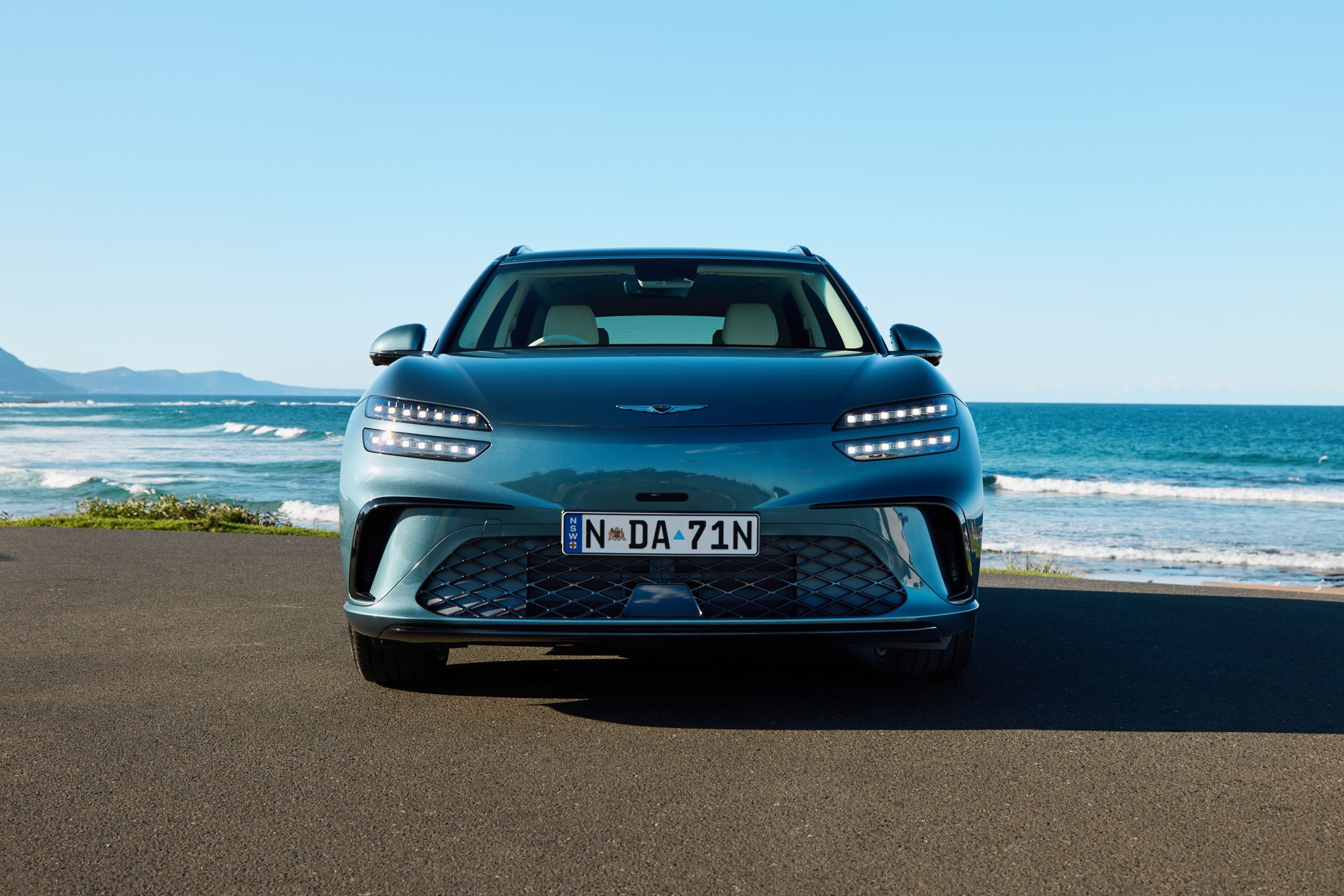
To see if the GV60 has finally found its niche in the market, we spent some time with the new rear-drive model in Canberra.
QUICK FACTS
› Model:
2027 Genesis GV60 Advanced
› Starting Price:
AU$88,300 (US$61,800), plus on-road costs
› Dimensions:
178.9 x 74.4 W x 62.2 in H (4,545 x 1,890 x 1,580 mm)
› Wheelbase:
114.1 in (2,900 mm)
› Curb Weight:
2,075 kg (4,574 lbs)
› Powertrain:
84 kWh battery | single electric motor
› Output:
225 hp (168 kW) / 258 lb-ft (350 Nm)
› 0-62 mph
~7.5 seconds
› Transmission:
Single speed
› Efficiency:
18.5 kWh/100 km as tested
› On Sale:
Now
SWIPE
Genesis Australia
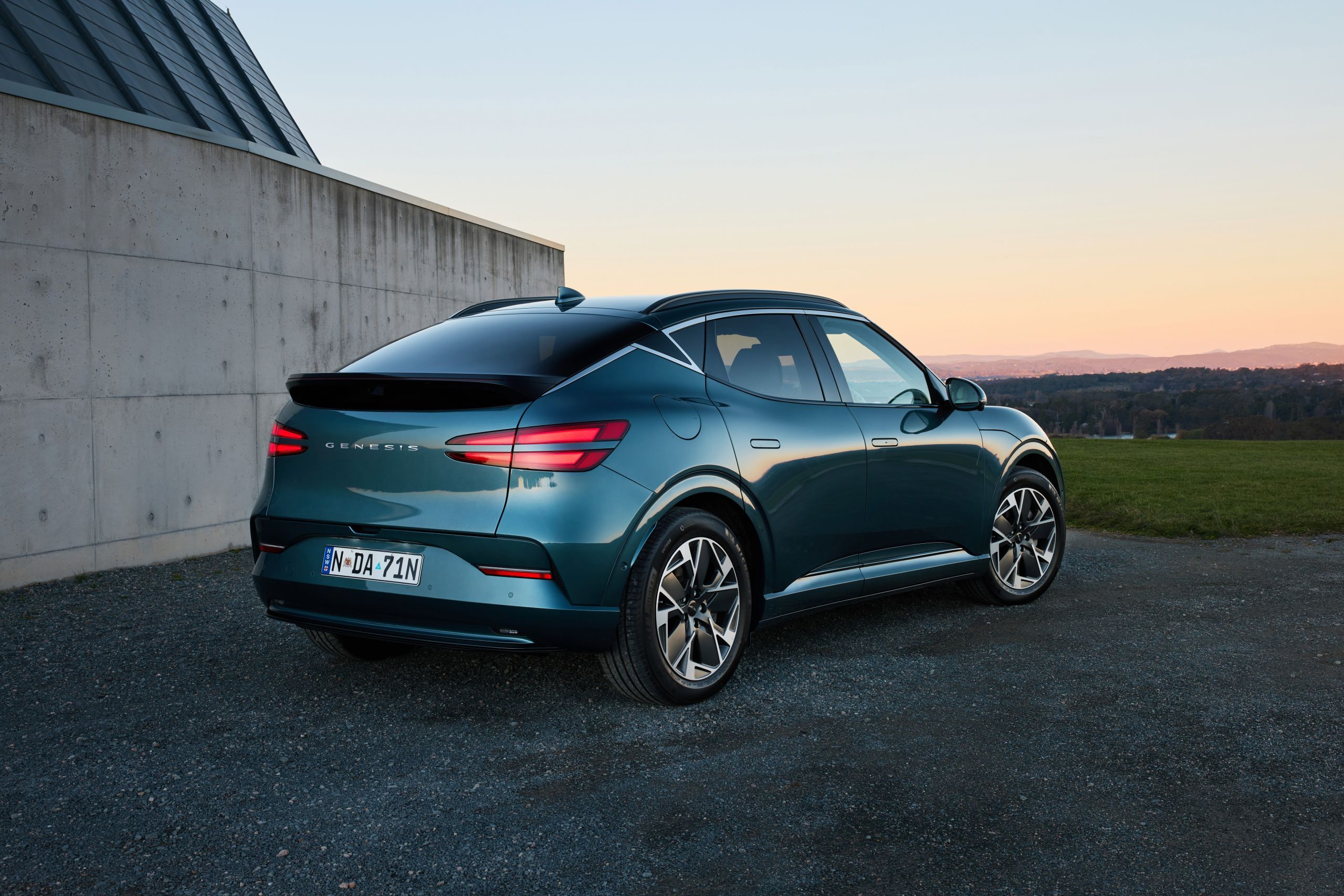
Looking at photos of the updated GV60, you could be excused for thinking it’s exactly the same as the one that’s been on sale for the past few years. Evidently, Genesis wasn’t interested in overhauling its design, sticking to its recent formula of minor visual and technological upgrades.
Among the key changes made are reshaped front and rear bumpers, tweaked headlights, and new 19-inch wheels. Also new is the price.
When the GV60 first launched in Australia, exclusively in all-wheel-drive configurations, it started at AU$103,700 (US$72,500). In 2022, this was okay, as the market wasn’t as hot as it is now. With more affordable Chinese EVs now hitting the market, Genesis has been forced to cut prices, ditch the standard all-wheel-drive model, and launch the Advanced
Like recent updates made to the Ioniq 5 and EV6, it features a new 84 kWh battery pack and a new electric motor with 168 kW (225 hp) and 350 Nm (258 lb-ft). The price has also fallen to AU$88,300 ($61,800). Then there’s the new flagship GV60 Magma, priced from AU$130,000 (US$91,200) that we’ll be testing soon.
This version has been a long time coming. It follows a familiar recipe to the Ioniq 5 N and Ioniq 6 N, rocking twin electric motors that combine to deliver 448 kW (601 hp) and 700 Nm (516 lb-ft) of torque. It’s the first model launched by Magma and is a sign of things to come with other performance cars to come. Crucially, Magma should not be considered in the same vein as Hyundai N, as it has a different philosophy: it’s eager to retain the luxury and refinement it’s known for while adding some extra thrills. You’ll be able to hear our thoughts on the GV60 Magma next week.
This Is No Hyundai Interior
Genesis Australia
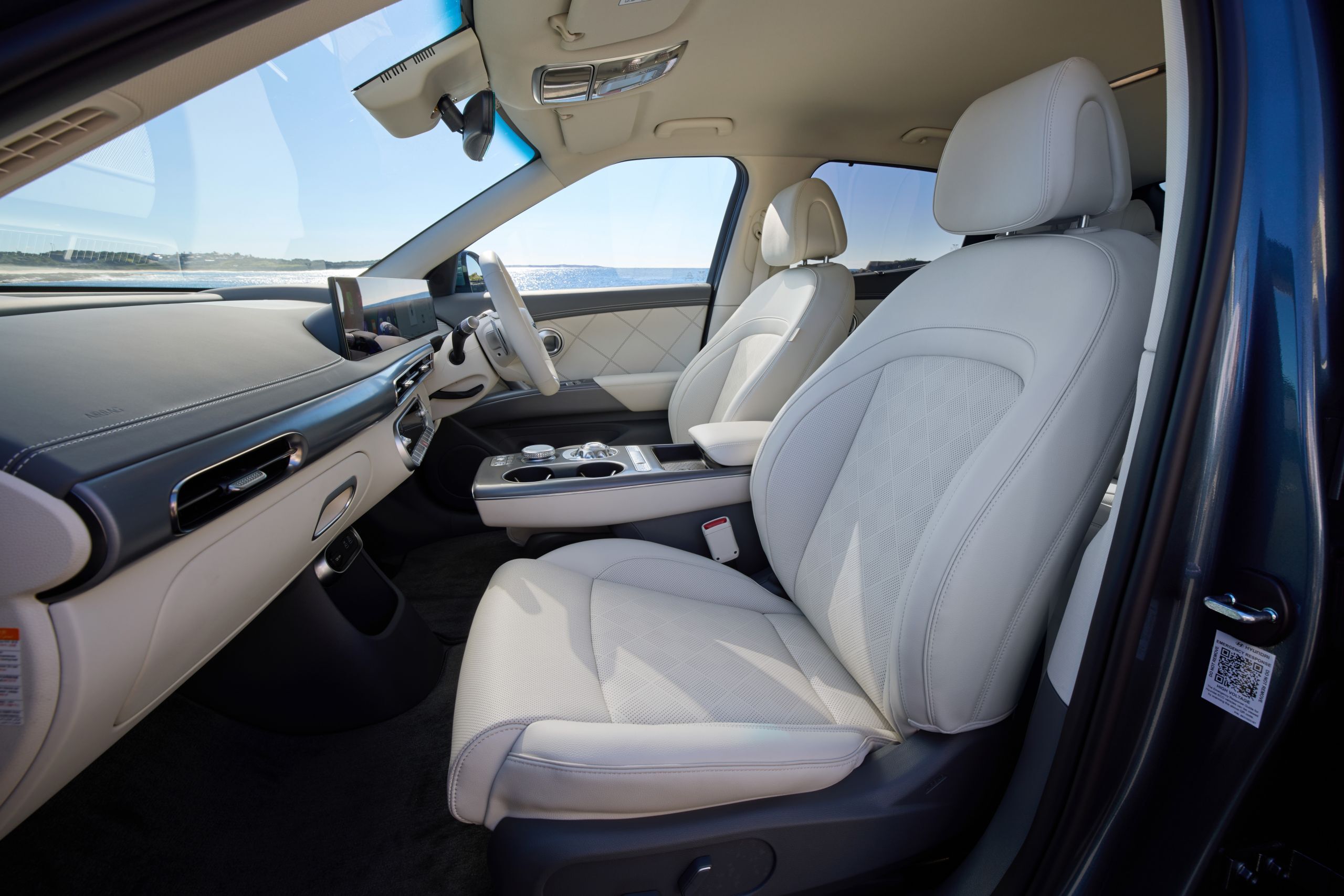
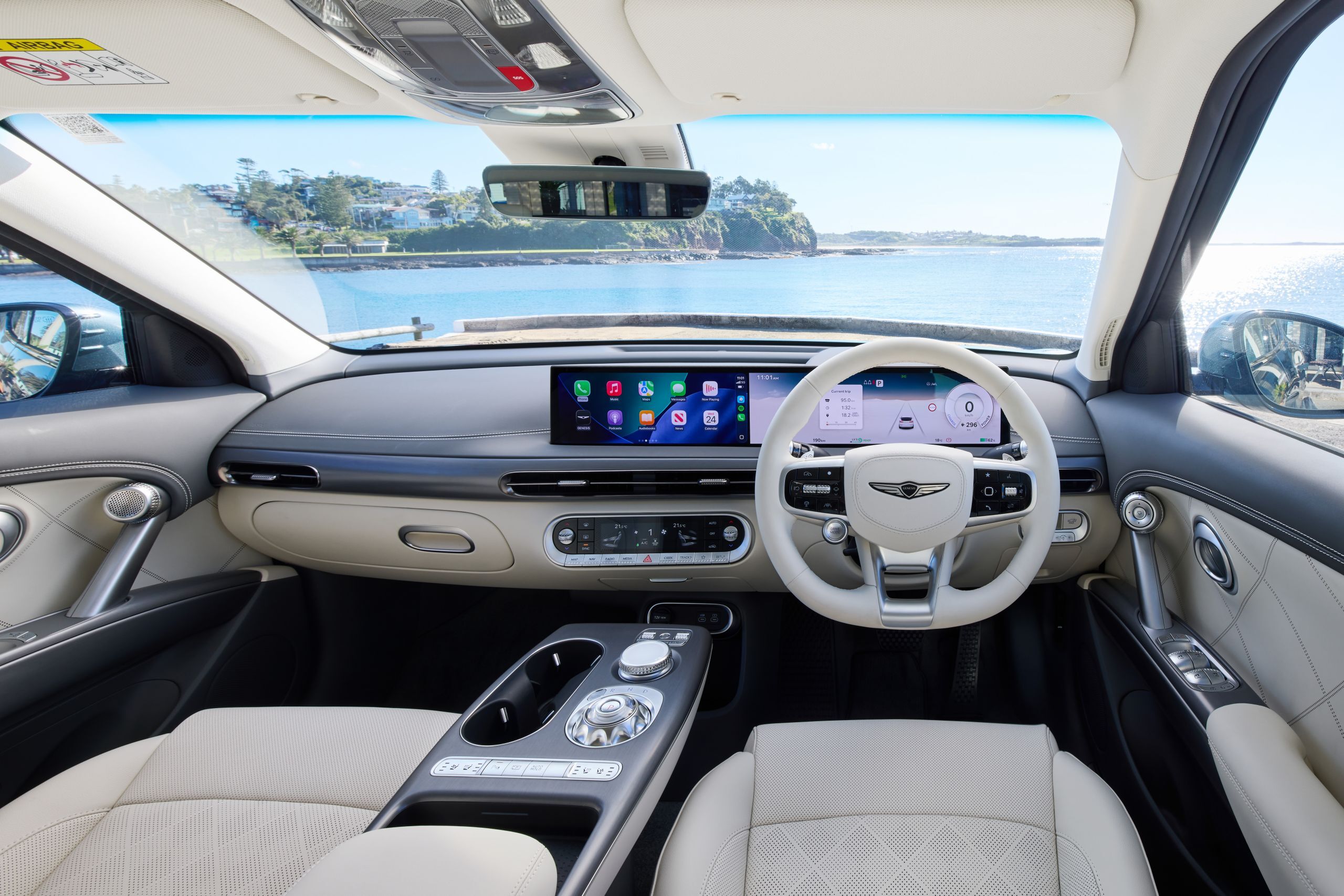
Cabin changes to the GV60 Advanced, like those made on the outside, are relatively minimal. A key addition is Hyundai’s excellent 27-inch infotainment and gauge cluster and an updated steering wheel.
As ever, the GV60 continues to give occupants a classy feel that makes it a joy to spend time driving.
Wireless Apple CarPlay and Android Auto are both standard across all GV60 models, and both work well. Compared to some all-new EVs from Asia, the GV60’s displays are relatively simple and lack some of the quirky features, games, and funky graphics. On the plus side, this means the software is exceedingly easy to navigate, without any overly complex menus.
As with all current Genesis models, the cabin of the GV60 feels premium and well thought out. Unlike so many other EVs out there, they are not overly reliant on screens, retaining a separate climate control screen and buttons. Among all EVs on the market, few do as good a job as the GV60 in perfectly combining tactile controls with screens. This includes the car’s famous spinning Crystal Sphere gear selector, which has been retained.
A welcome update is the fitment of standard wing mirrors. The pre-facelift GV60 had been available with cameras, instead of mirrors, and while they worked well enough, they did leave a little to be desired. No doubt the cost of replacing them, were they to ever get damaged, would have been astronomical, too.
Other welcome features found within the Genesis include leather-appointed, 12-way adjustable driver and front passenger seats, heated and ventilated front seats, and dual-zone climate control. There’s also all the standard safety equipment you’d expect, including forward collision-avoidance assist, lane keeping assist and lane following assist, as well as parking aids and a 3D, surround-view monitor.
All That An EV Should Be
For everyday driving, the GV60 Advanced is a smooth and all-round quiet performer, which is just what existing Genesis owners would expect and is demanded by buyers coming from other luxury brands.
As with the pre-facelift model, the updated GV60 feels much like an Ioniq 5, although behind the wheel, it does feel slightly smaller and nimbler, owing to the 100 mm (3.9-inch) shorter wheelbase. Of course, it’s also noticeably more luxurious than the Hyundai, or the Kia EV6, and I think this alone is enough to justify the higher price tag.
Beyond this new model receiving a larger battery pack, it also includes improved pre-heating and cooling functions to boost charging speeds. Genesis doesn’t quote a peak DC charging speed for the standard GV60, instead noting that it supports DC fast charger stations rated at up to 350 kW.
Other E-GMP-based EVs from the Hyundai Motor Group typically cap out at around 220 kW or 230 kW. The driving range has been boosted to 561 km (348 miles) on the WLTP cycle, and a charge from 10-80 percent can take as little as 18 minutes through an appropriately fast charger. The GV60 also supports a vehicle-to-load (V2L) function, capable of delivering up to 3.6 kW of power, enough to run power tools and household appliances.
Chassis changes have also been made. This includes the fitment of a new low-friction U-joint to reduce steering friction and updated rear hydraulic bushings, minimizing vibrations and noise transmitted through the chassis. The GV60 Advanced beautifully soaks up imperfections in the road, although admittedly, most of the roads we drove on during the launch were silky smooth.
Thick, acoustic glass adds to the sense of isolation while behind the wheel of the GV60. It really is a serene experience, although much the same can be said about loads of other EVs on the market. This is ultimately one of the core appeals of electric powertrains, and is something that is nigh-on impossible to replicate in a combustion car.
Genesis Australia
Acceleration is solid, although certainly not neck-snapping quite like the old, all-wheel drive Performance model. Genesis doesn’t quite have a 0-100 km/h (0-62 mph) time, but it feels somewhere around the mid-7-second mark.
Updates have also been made to the regenerative braking. Like the older model, this new one includes four different levels of brake regen, including a one-pedal driving mode, all configurable using the steering wheel-mounted paddle shifters. A new feature is the full auto mode, which intelligently tweaks the level of regeneration depending on what the car thinks is appropriate, using traffic flow and navigation information and even taking into consideration upcoming intersections and roundabouts. For the most part, it works well.
Genesis quotes a combined efficiency of 16.7 kWh/100 km over the combined cycle. We ended up averaging 18.5 kWh/100 km, although this was over a relatively short loop of mountainous roads, so improvements can be expected in more ordinary and urban driving environments.
Verdict
There’s a lot to like about the 2027 GV60. It is an exceptionally polished and well-rounded EV and feels special enough to command a price premium over the related Hyundai Ioniq 5 and Kia EV6. For those looking for a practical, comfortable, and stylish EV, it is an excellent option.
Ultimately, it will not be a huge volume seller like some of the larger and cheaper EVs that have started to flood the Australian market. When compared to other premium alternatives from legacy brands, like Lexus with its RZ priced from AU$84,500 (US$59,300), and the BMW iX1 available from AU$79,900 (US$56,100), the GV60 stacks up quite nicely. Then again, you can buy a Tesla Model Y Premium for AU$68,900 ($48,200). Ultimately, the GV60 is an excellent choice for the discerning buyer, but perhaps not for the masses.
The Volkswagen Group has launched an attractive new program in Germany.
Known as e.loop, it enables employers to offer their employees cheap EVs.
Drivers can save up to 50% compared to a traditional 24 or 36 month lease.
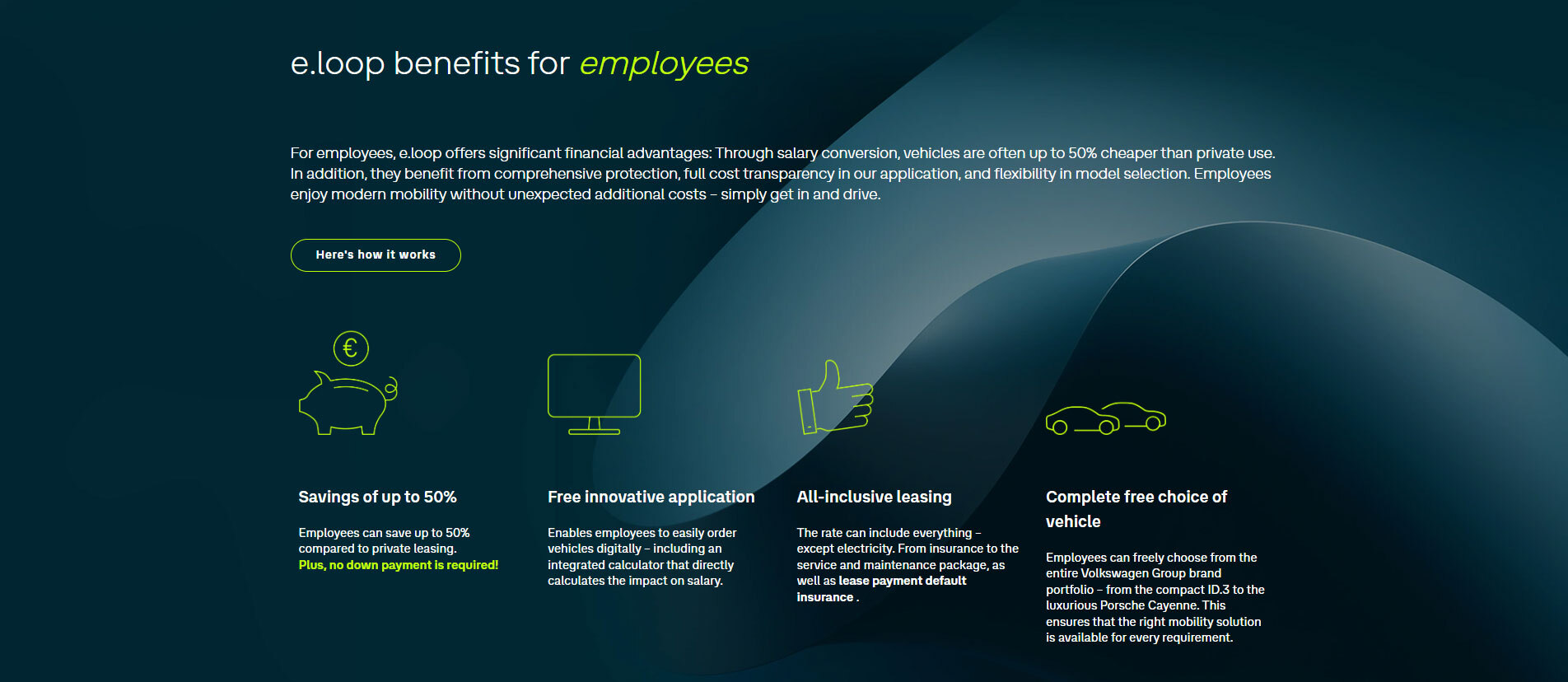
Volkswagen Group Retail Deutschland (VGRD) has rolled out an “innovative salary conversion” program that enables shoppers to get discounts on electric vehicles. This isn’t pocket change as the company noted customers can save up to 50% compared to private leasing without a down payment.
The program is known as e.loop and it effectively sees employers lease a new EV for their employees with money taken out of their salary. That sounds a little convoluted, but the automaker said the employer signs an agreement with VGRD and then employees can select their desired vehicle online. “The monthly payment is deducted directly from gross income as part of a salary sacrifice arrangement, automatically resulting in a benefit in payroll taxes.”
Volkswagen suggests this is as simple as a four or five step process, and much of it can be done online. They went on to note the program should be attractive to employers as it enables them to take advantage of tax benefits for electric vehicles, helps retain and attract workers, and improves their Environmental, Social, and Governance (ESG) profile. They added it requires minimal administrative effort and provides access to everything from the Volkswagen ID.3 to the Porsche Cayenne Electric.
Employees get significant savings and all-inclusive ownership. This includes the vehicle, insurance, and maintenance. Volkswagen suggests the process is relatively straight forward and the hardest choice is selecting what EV you want.
Automobilwoche says the program is similar to company bike initiatives and customers can choose between 24 or 36 month terms. The program already appears to be a hit as VGRD said interest is “very high” and officials believe the e.loop program could account for 5-10% of new cars sales in Germany by 2030.
While the program sounds like a win-win for employers and employees, there appears to be some possible downsides. The biggest is that companies could get stuck with a car after an employee leaves the organization.
Through June, China sold 8.7 million new cars, down 20.2% year over year.
The CPCA expects passenger car sales to reach 20.4 million this year.
One analyst sees only seven or eight local EV makers surviving by 2030.
After a sustained period of extraordinary growth, the Chinese car market is suffering from some serious growing pains. New car sales have collapsed this year, so much so that it may end up being the worst year for the Chinese auto industry since 2021.
Figures from the China Passenger Car Association show passenger vehicle deliveries down 20.2 percent through the first half of the year, with 8.7 million units. The industry body expects a total of 20.4 million new cars to move this year, which would represent a fall of 14 percent from 2025, when dealers sold 23.7 million units.
That outlook may be optimistic. The head of Hong Kong/China Industrials Research at Citic CLSA Xiao Feng told CNBC that he expects total year sales to be down 20 percent from last year. He predicts that sales of new energy vehicles, including plug-in hybrids and battery-electric vehicles, will drop roughly 5-6 percent this year.
ICEs Are Mostly To Blame
Perhaps unsurprising, it’s combustion-powered vehicles that are having the biggest impact on the total sales decline. In fact, ICE sales were down 39 percent year-on-year in June, accounting for 78 percent of the market’s total decline. This has largely been due to rising oil prices, triggered by the conflict in Iran.
The Chinese government has also pulled back some of its support for EVs. The cost of lithium has increased, as have the prices of the chips that new and advanced EVs rely so heavily on.
A Rebound On The Horizon
Things could improve next year. Feng anticipates a strong rebound in consumer demand, boosted by a surge in exports from Chinese car manufacturers.
As the Chinese car market ebbs and flows, a period of significant consolidation is expected. Feng believes that by 2030, there will be just seven or eight major EV companies in the country, and foreign brands are expected to have real difficulty competing, likely prompting many to exit the nation entirely.
Polestar won’t appeal the US ban ending sales after the 2027 model year.
Volvo secured an exemption, but Polestar won’t pursue the same route.
America accounted for just 6% of Polestar’s global sales last year.
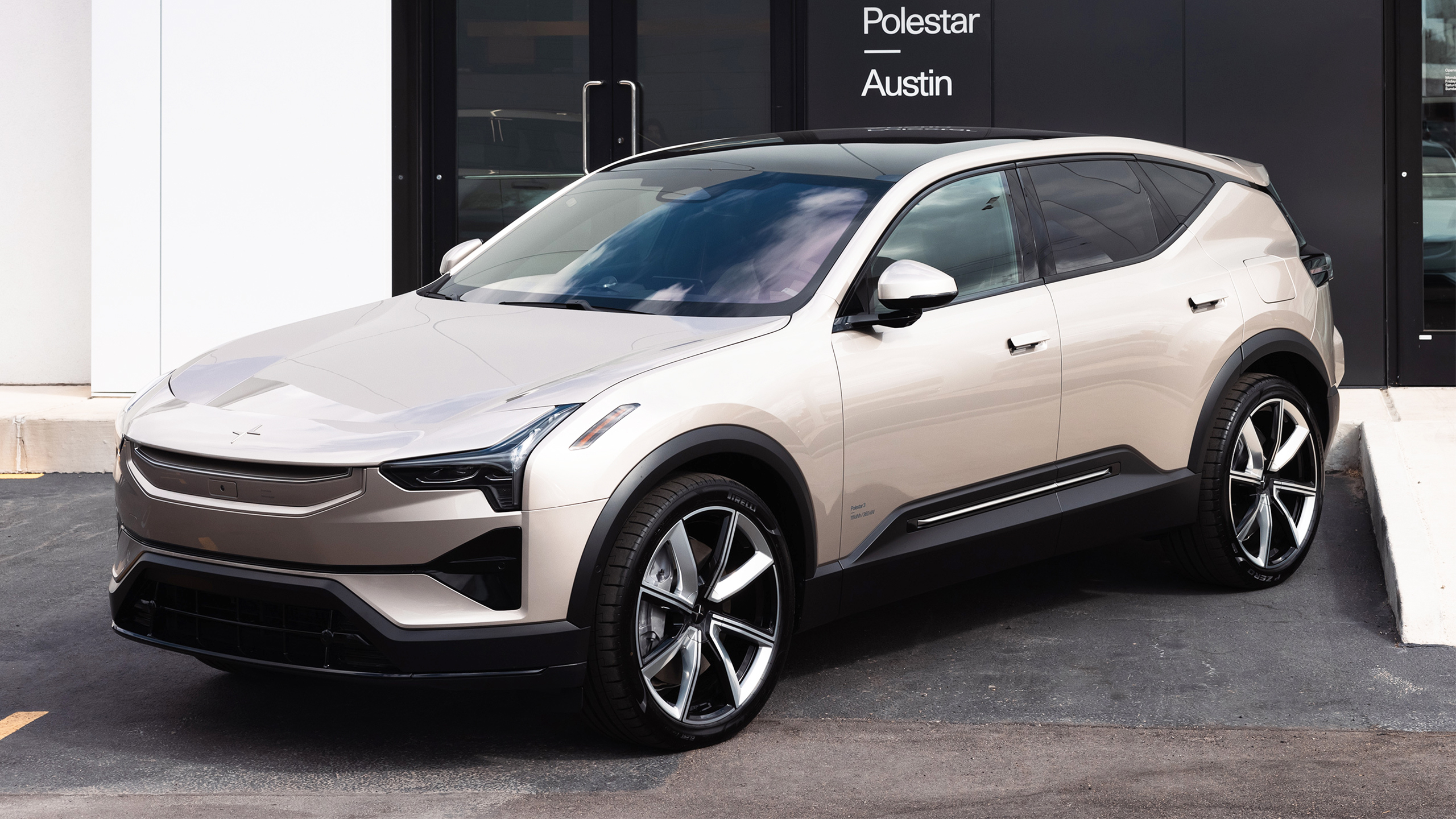
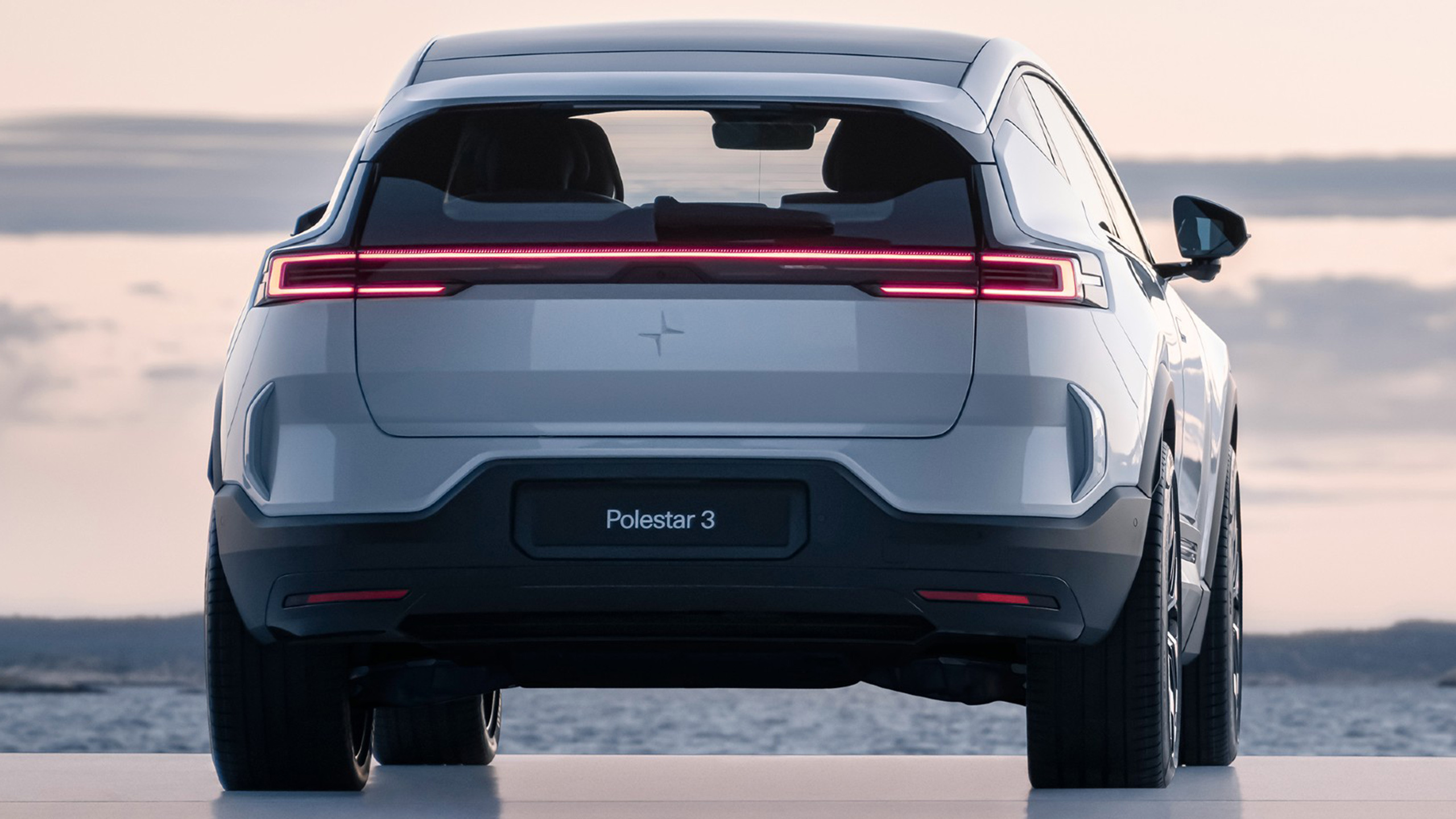
Polestar will soon bid farewell to the United States and instead focus on markets where its models are more popular. That’s bad news for customers across the country, and worse news for the 32 Polestar dealerships operating here.
The US Department of Commerce’s Bureau of Industry and Security said last month that it would not allow Polestar to sell new cars in the country beyond the 2027 model year, citing the company’s Chinese ownership and technology.
Polestar could have contested the decision and pushed government officials for an exemption like the one granted to Volvo. If that failed, it could have gone to court. Despite having those options, Polestar says it won’t appeal the ban.
“We will instead focus our investments on markets where we have a strong brand position and ability to achieve profitable growth, with a strong weighting towards Europe,” Polestar spokesman Michael Ofiara told the Wall Street Journal.
Last year, Polestar sold a measly 5,747 vehicles in the United States, even though the Polestar 3 and Polestar 4 are both excellent cars. With numbers that thin, the US accounted for just 6 percent of the company’s global sales, and it’s entirely possible the brand would have walked away before long even with permission to keep selling.
The Dealer Fallout
Dealerships are now left holding the bag. Many Polestar dealers, who frequently sell Volvo models too, have spent millions building out facilities for the EV-focused brand, presumably hoping it might one day grow into a serious volume seller to rival European rivals and maybe even Tesla.
One dealer owner, Matthew Haiken, told the WSJ he had sunk “millions” into a new Polestar dealership in East Hanover, New Jersey, only to pause construction last month when the ban was first announced. Learning that Polestar won’t appeal the decision, he said, is “really upsetting to hear.”
How the company plans to make things right with dealers is still unclear. According to New York attorney Russell McRory, state laws often require manufacturers to compensate dealers when they exit a market, and the usual way to sidestep that obligation is bankruptcy. Polestar says it will work with dealers to “manage this transition,” but hasn’t offered specifics.
Deals On The Way Out
Now that it’s heading for the exit, Polestar wants the stock gone, and earlier this month it put real money on the hood of the Polestar 3 and 4. The discounts run as deep as $25,000, though buying from a brand on its way out of the country carries obvious risk. The saving grace is that Polestar isn’t going under. It stays in business everywhere else, and its US service centers will remain open to look after the cars already sold.
“We will continue to sell our existing stock of vehicles in the U.S., and our retailers will continue to support customers through sales, service and aftersales activities,” a press spokesman told the publication.
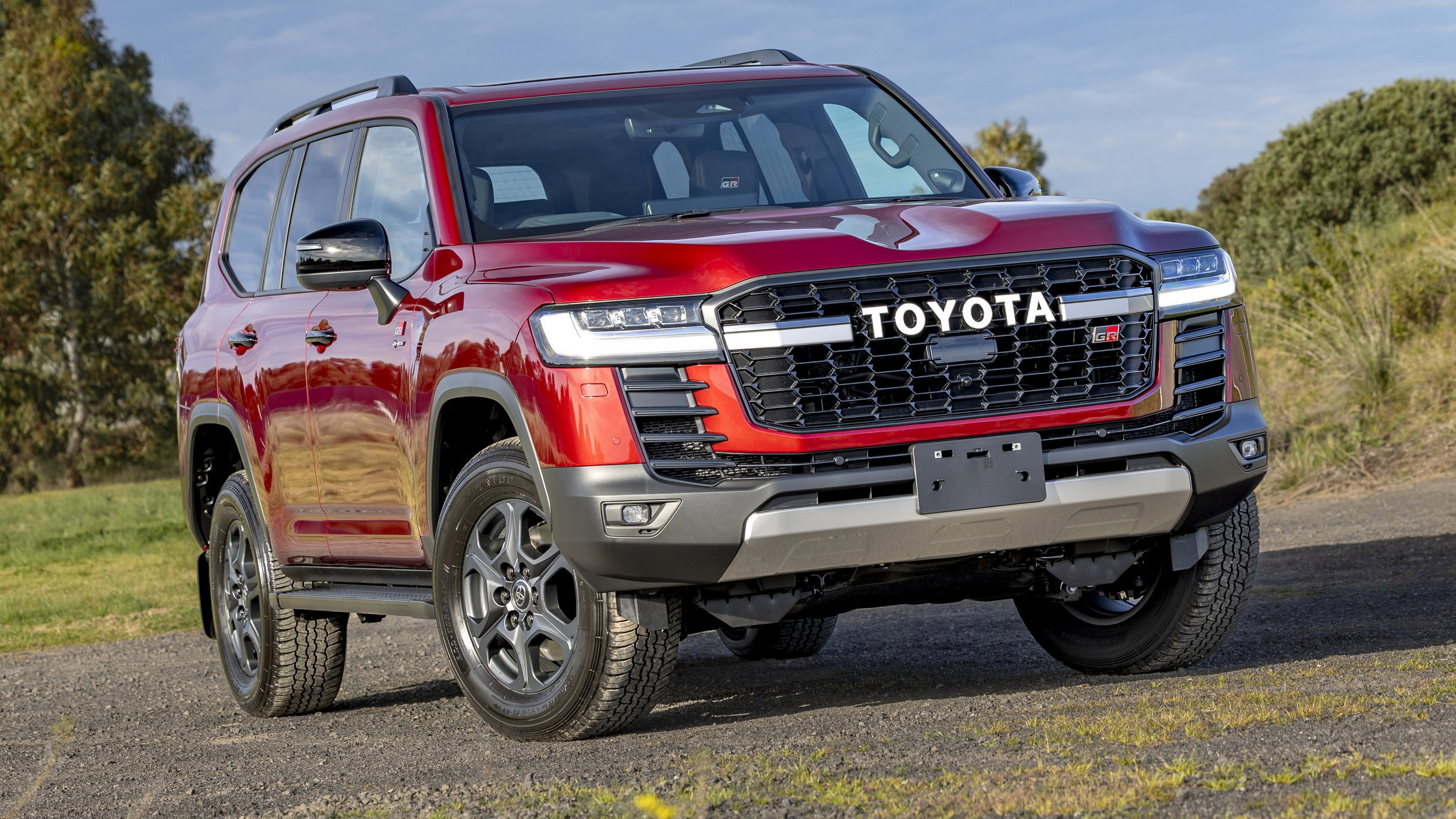
A Land Cruiser prototype was photographed standing beside the GR Sport.
A Toyota Europe executive shared the image and called it a legend evolving.
The photo points to the electric unibody model previewed back in 2023.
Update: Toyota Motor Europe has asked Carscoops to remove the image, noting that it was shared from a personal Facebook account. The photo has been taken down, and Toyota has not commented on the prototype itself.
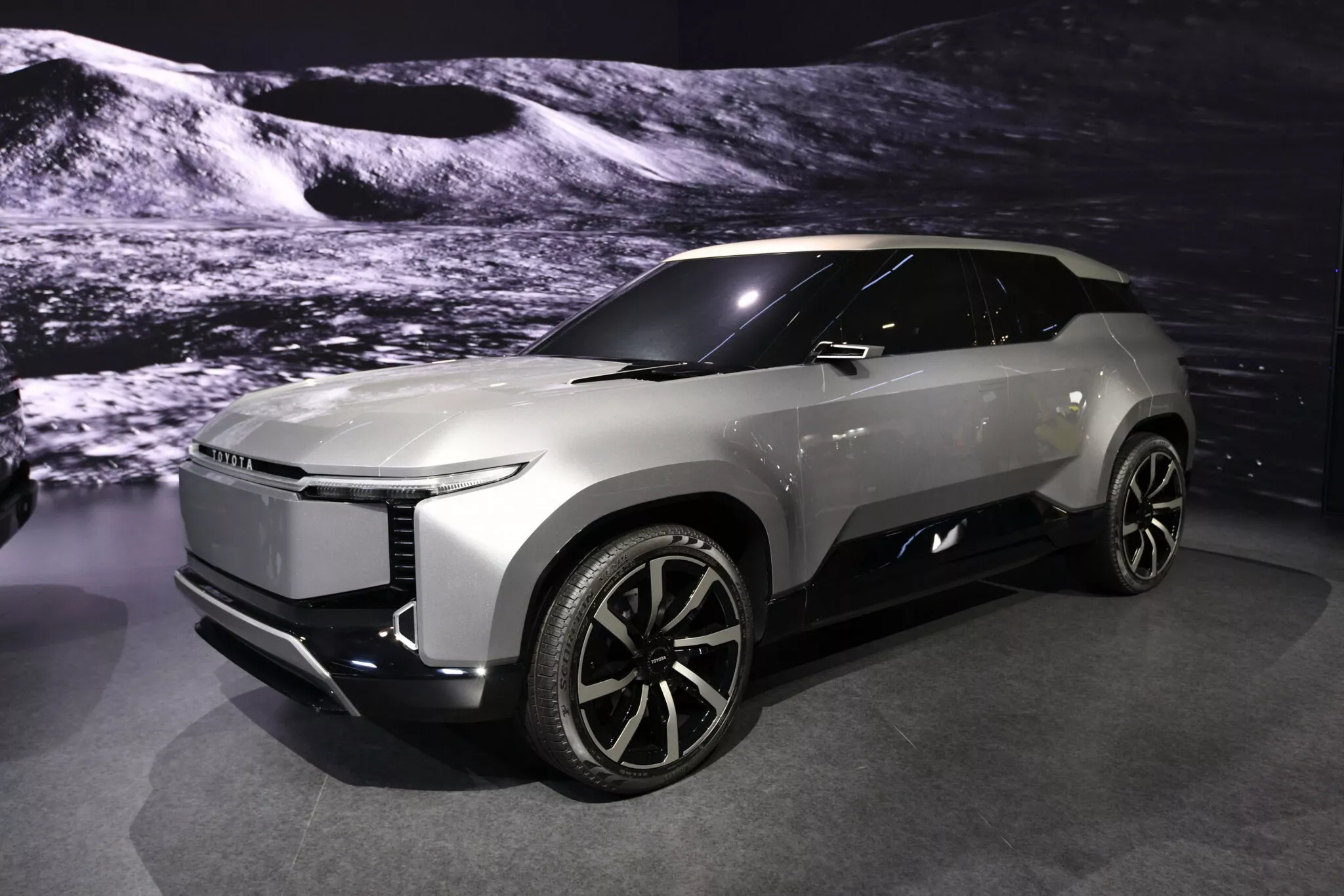
A Toyota executive may have handed us our first look at the next branch of the Land Cruiser family, after the baby FJ Cruiser built for Asian markets. The camouflaged prototype standing next to the current Land Cruiser GR Sport could be the first Land Cruiser to pair an electric powertrain with a unibody chassis, and it most likely got photographed during benchmarking and development testing.
The mystery SUV appeared in a photo shared on Facebook by a Toyota Europe executive. The caption referenced the Land Cruiser and the Tahara plant, leaving little doubt about what we’re looking at.
The shot was taken at the Tahara manufacturing facility in Japan, which is home to production for the Land Cruiser 250 Series, the closely related Lexus GX, and the Toyota 4Runner.
The unnamed prototype is wrapped in camouflage, with cutouts for the headlights and cooling intakes. The team members posing in front of it block much of the view, but a couple of interesting details still come through.
The position of the horizontally arranged headlights and the lower bumper area are consistent with the Land Cruiser Se concept from 2023, but the prototype has a new opening on the nose. Ground clearance also looks slightly lower than on the Land Cruiser Series 300, though the overall height won’t come across as much different.
The 2023 Land Cruiser Se concept measured 5,150 mm (202.8 inches) long with a 3,050 mm (120.1 inches) wheelbase. That makes it 35 mm (1.4 inches) longer than the 300 Series, with an extra 200 mm (7.9 inches) between the axles. Whether the production version keeps that footprint remains to be seen.
Unibody Underpinnings
2023 Toyota Land Cruiser Se
Overall, the mysterious SUV could be similar in size to the Toyota Grand Highlander. It also rides on multi-spoke alloy wheels similar to those found on the luxurious Century SUV. The thread tying those models together is their unibody architecture (TNGA-K).
That same construction is expected to headline the fully electric Land Cruiser, which could use the e-TNGA platform or an evolved version of it. Switching to a unibody chassis will likely make this the best-handling Land Cruiser yet, though it will inevitably cost something in off-road capability against the ladder-frame stablemates like the FJ, 70 Series, 250 Series, and 300 Series.
On the powertrain side, and as Australia’s Drive reports, a battery-electric setup will likely outperform the current ICE and hybrid Land Cruisers. There have also been reports of a possible range-extender option, and the cooling intake on the front bumper makes that scenario sound credible.
The most potent Land Cruiser to date is the self-charging hybrid variant of the Series 300, with a combined output of 457 hp (341 kW / 464 PS) and 790 Nm (583 lb-ft) of torque from a twin-turbo 3.5-liter V6 and a single electric motor.

 Login
Login