Reading view

There are new articles available, click to refresh the page.

New Base Volvo EX30 In Europe Has 45% Less Power Than Yours
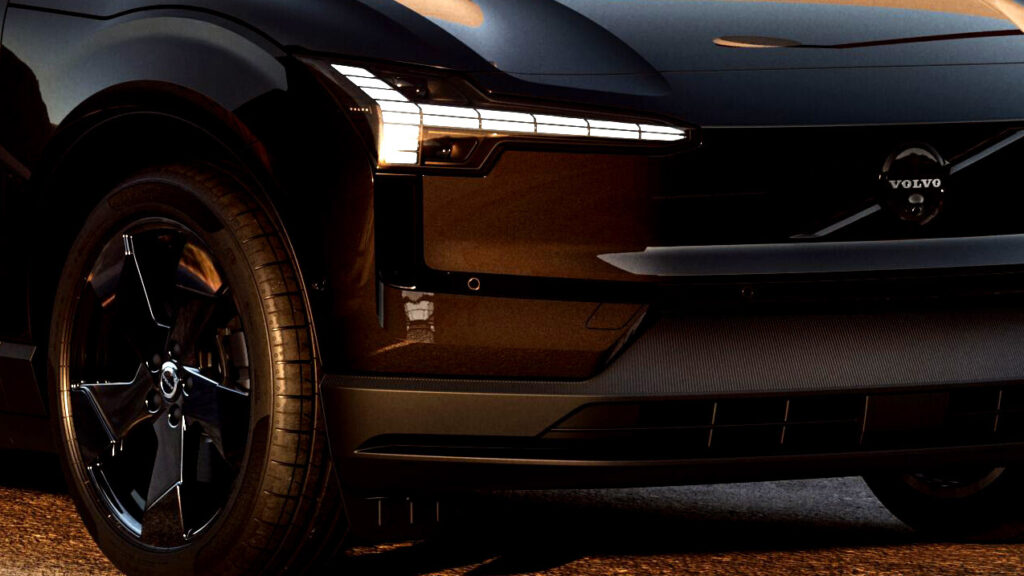
  • Europe gets a new base EX30 with 148 hp and 211 miles of range.
  • It adds updated UX and V2L, both coming via OTA updates.
  • Production moves from China to Europe to avoid EU tariffs.

The Volvo EX30 has been updated in Europe for 2026, mirroring changes already introduced on the US-spec model. The range now gains a new entry-level powertrain, refreshed infotainment, new Vehicle-to-Load capability, and a Europe-exclusive Black Edition.

For European buyers, the headline is a lower entry point into the Volvo EV range. The EX30 now comes with a less potent electric motor producing 148 hp (110 kW / 150 PS), positioned as a more affordable alternative to the existing single-motor 268 hp (272 PS) and dual-motor 422 hp (428 PS) versions.

More: Volvo Pulls 40,000 EVs Back For Costly Battery Replacement

This new variant, not available in North America, can be paired with a 51 kWh battery pack delivering 339 km (211 miles) of WLTP range. Step up to the 69 kWh battery and the range increases to 476 km (296 miles). More miles, same compact footprint, and a little more choice at the showroom.

Turn Your Volvo Into A Power Bank

\\\\\\\\\\\\\

Volvo says the EX30 is now hardware-compatible with Vehicle-to-Load (V2L), though the feature will initially roll out in selected markets. With an optional adapter, the battery can power external kit such as electric bicycles, sound systems, or your increasingly elaborate camping setup.

More: Volvo’s Giving Millions Of Older Cars A New Brain Without Touching The Hardware

There is also an infotainment update, bringing what Volvo calls a completely redesigned settings and controls system, plus a customizable content bar. Crucially, existing EX30 owners are not being left behind. The new user experience and V2L functionality will arrive via over-the-air updates scheduled for this summer.

The EX30 Black Edition

\\\\\\

The EX30 only arrived in 2023, so there was no pressing need for a mid-cycle nip and tuck for either the standard model or the chunkier Cross Country. Instead, Volvo has opted for a wardrobe change. Enter the new Black Edition, now extended to its smallest SUV in line with the rest of the range.

Review: New Zeekr X Got Me Questioning My Feelings For Volvo

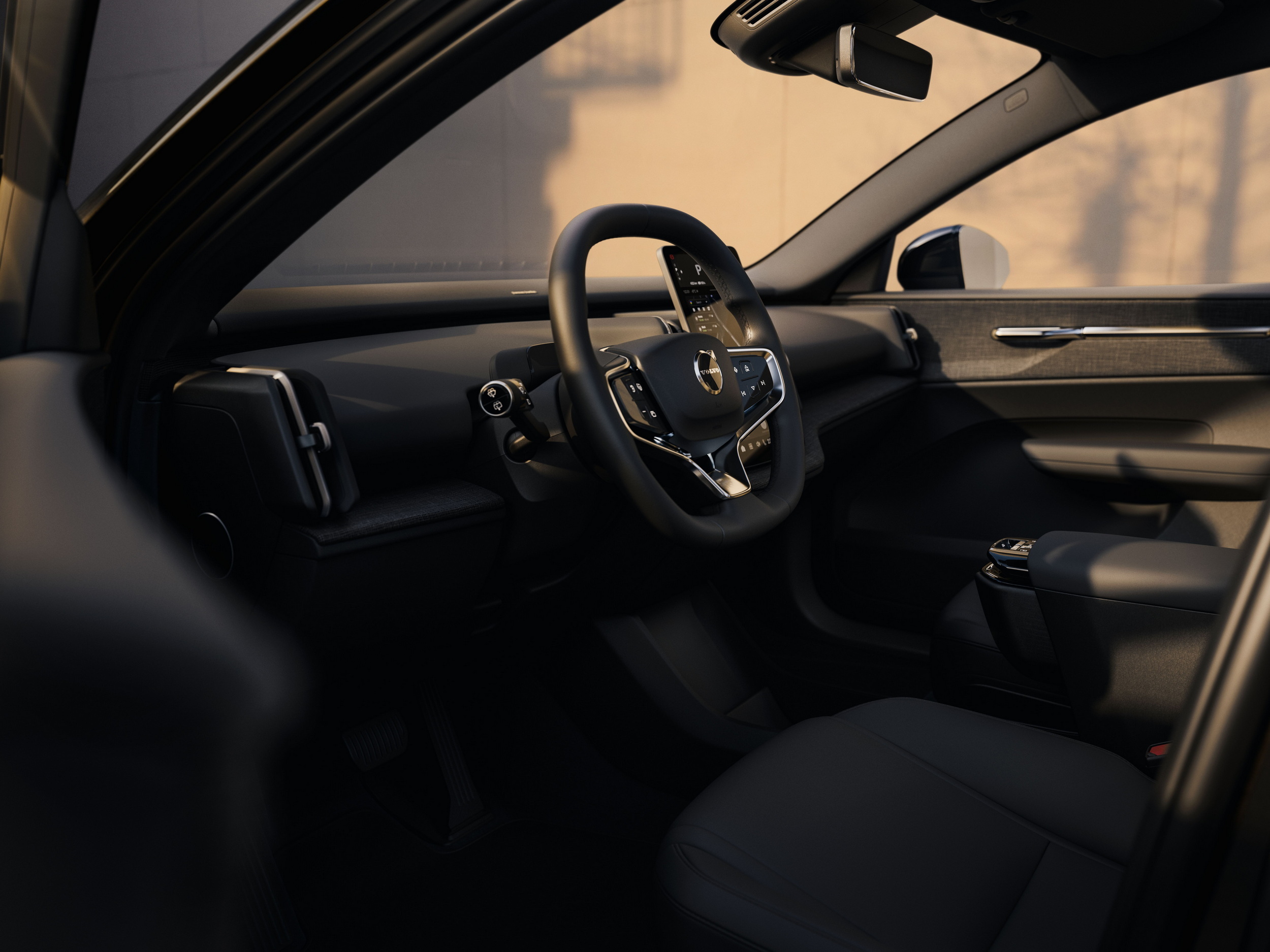
Despite the name, you are not limited to one shade of noir. The Black Edition can be specified in Onyx Black, Vapour Grey, or Crystal White. Whichever you choose, the chrome has been quietly retired in favor of a high-gloss black finish. That treatment covers the 19-inch alloy wheels, the Volvo badge up front, and the lettering across the tailgate.

Inside, there is Nordico upholstery with contrasting stitching and dark flax decor to complete the theme.
 New Base Volvo EX30 In Europe Has 45% Less Power Than Yours

If you like the darker cabin but not the full blackout look, the Black interior specification is also available across the broader EX30 lineup. There is also a new option called Harvest. Inspired by late Scandinavian summer evenings, it brings light-colored, woven recycled textile upholstery for the seats and door inserts, paired with a Nordico dashboard, dark flax decor, and a black headliner.

Pricing for the updated range will be confirmed at a later date. European-market EX30s are now built in Belgium, after Volvo shifted production from China to sidestep import tariffs.
\\\\\

Volvo

New Lancia Crossover Appears In The Wild Hiding A Famous Old Name

  • Lancia’s flagship crossover was spotted in winter tests.
  • New Gamma will offer electric, mild-hybrid, and PHEV options.
  • It will be built in Melfi, Italy, alongside the DS No8.

Stellantis’ grand Lancia revival, or as they called it, ‘Renaissance’, has not exactly burst out of the gates. The new Ypsilon subcompact hatchback has struggled to gain momentum, which is not quite a surprise. Still, phase two is already taking shape, and it brings with it a familiar name. The Lancia Gamma is coming back.

More: Lancia HF Integrale Returns With White Wheels And Something To Prove

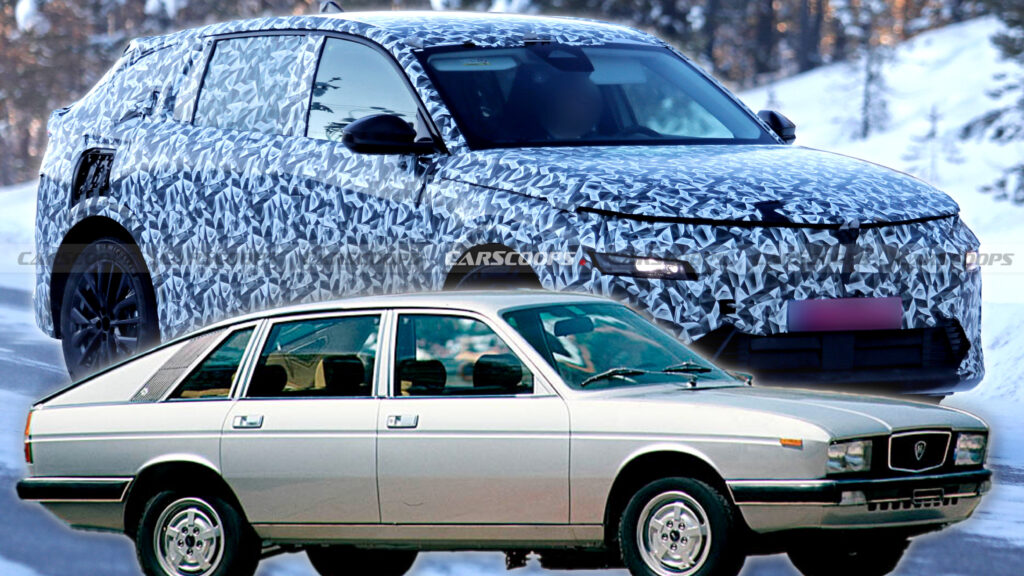
This time, it arrives as an electrified crossover, and our spies have spotted a prototype for the first time during winter testing. The test car reveals enough to give us a better sense of what to expect ahead of its official debut later this year.

\\\\\\

Unlike the original Gamma, which was offered from 1976 through 1984 as a fastback saloon and coupe, the new model takes a very different route. It is now a crossover, effectively the Italian sibling to France’s DS No8. From the spy shots, the Gamma appears more upright than the DS, leaning closer to coupe-SUV territory than to a traditional crossover.

Design Direction Takes Shape

\\\\\\\\

Baldauf

At the front, expect familiar cues borrowed from the smaller Ypsilon. The split LED headlight layout looks set to return, joined by an illuminated T-shaped grille that, intentionally or not, brings to mind a Mandalorian helmet. Down below, the lower bumper intake has a clean, contemporary design and seems to incorporate active shutters flanking an ADAS sensor.

Down the sides, the surfacing closely mirrors the DS, right down to the door handles and mirror caps, though the Gamma appears to get slightly larger windows. The wheels look modest in size, which is usually a giveaway that this is not the upcoming HF performance version.

More: One Lancia Ypsilon HF Is Fast The Other Just Pretends

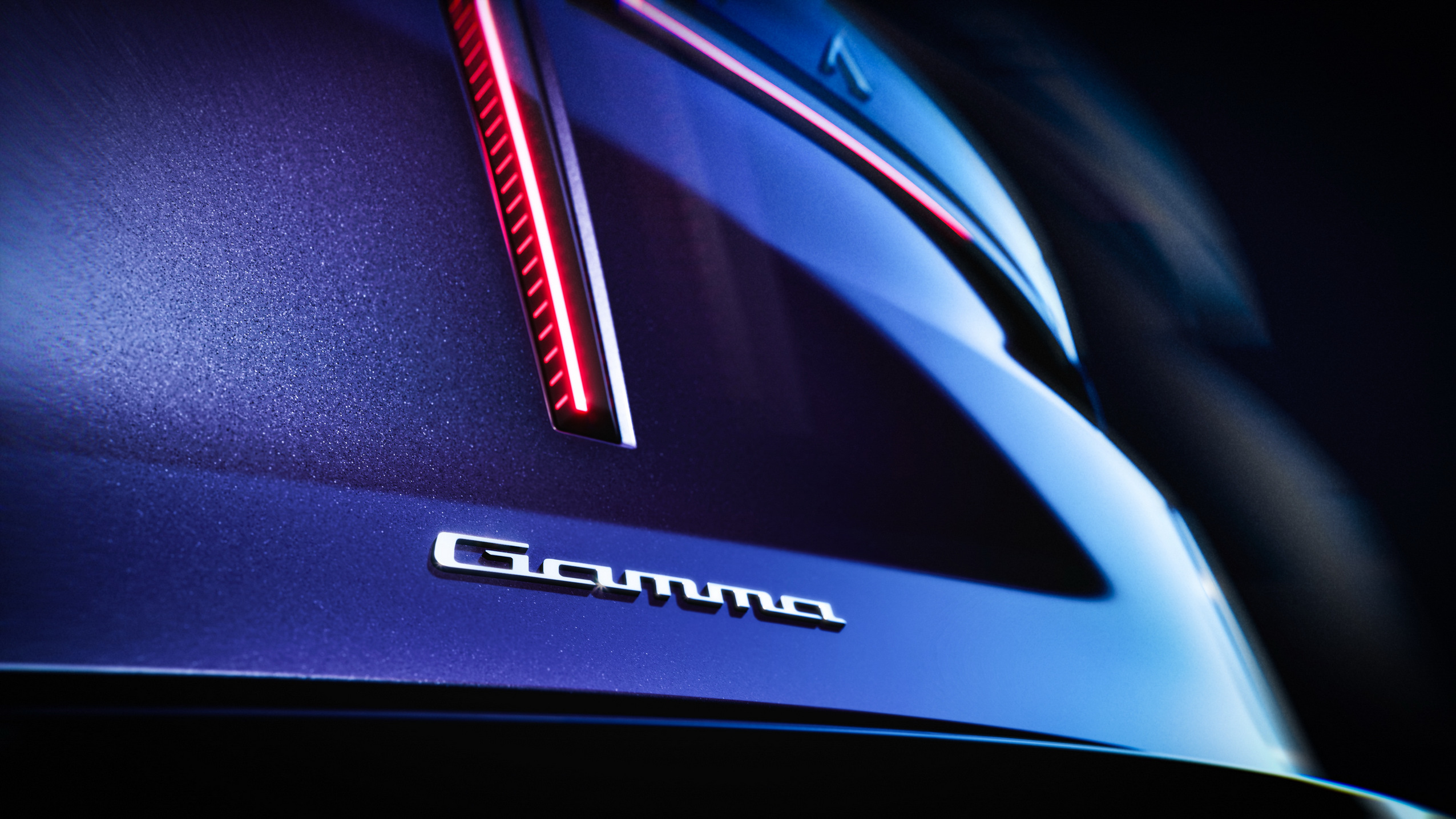
At the rear, heavy camouflage does its best to hide the details, but you can still make out the coupe-style rear glass flowing into what seems to be an integrated spoiler. An official teaser released in late 2024 indicates that the full-width LED taillights will adopt a T-shaped lighting signature, directing your eye toward the Gamma lettering across the sculpted tailgate. There are no visible tailpipes beneath the diffuser, reinforcing the likelihood that this particular prototype is fully electric.

Inside, expect a mix of premium and sustainable materials, along with Lancia’s signature “tavolino,” a mini round coffee-table integrated into the center console. The digital setup should include a 10.25-inch instrument cluster paired with a 16-inch infotainment display running the Lancia SALA system.

A Broader Powertrain Mix

 New Lancia Crossover Appears In The Wild Hiding A Famous Old Name

Like the DS No8, the Lancia Gamma will sit on Stellantis’ STLA Medium platform and roll out of the Melfi plant in Italy. Both models were originally pitched as fully electric, but Stellantis has since recalibrated. Mild-hybrid and plug-in hybrid options are now part of the plan.

More: Stellantis Bet Big On EVs, Now It’s Betting On The Engine Europe Wrote Off

Looking at what Stellantis already has on the shelf, we can speculate on the powertrain lineup. The entry-level Gamma is expected to be powered by a turbocharged 1.2-liter mild-hybrid unit generating 143 hp (107 kW / 145 PS). At the opposite end, the Gamma HF could pack dual electric motors delivering up to 370 hp (276 kW / 375 PS), complete with AWD.

\\\\\\\\\

In terms of range, the larger 97 kWh battery pack could allow the Gamma to cover up to 435 miles (700 km) between charging stops.

Lancia has confirmed the new Gamma will arrive in 2026, so expect a steady drip of details over the coming months. It will later be joined by a new Lancia Delta in 2028, rounding out a three-model lineup for the revived Italian brand.

\\\\\\\\\

Baldauf

Mazda Admits It Learned From China, And Its Future EVs Will Show It

  • Mazda says the CX-6e is a clear step beyond the 6e.
  • Working with Changan brought a steep learning curve.
  • Those lessons will shape Mazda’s future in-house EVs.

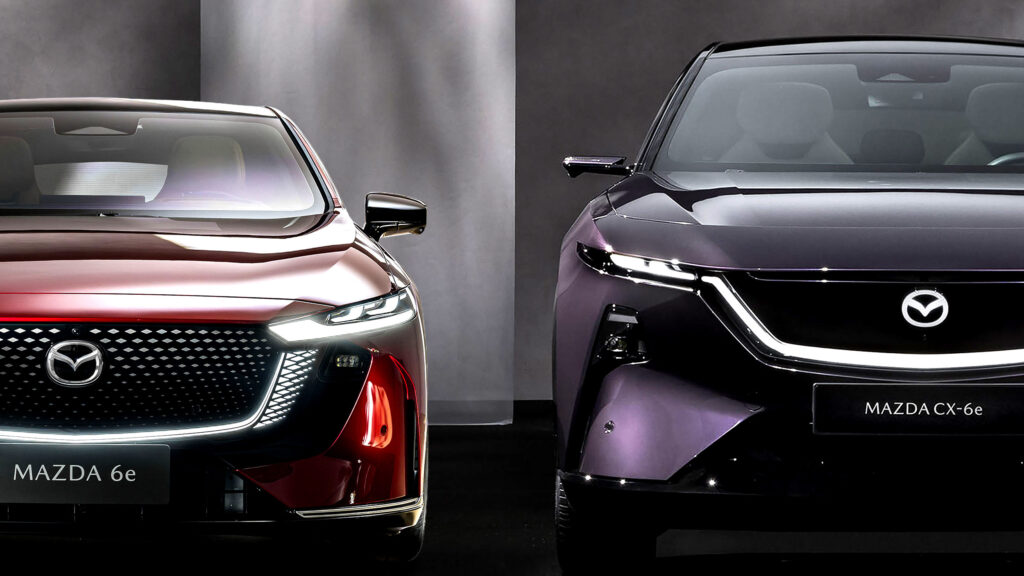
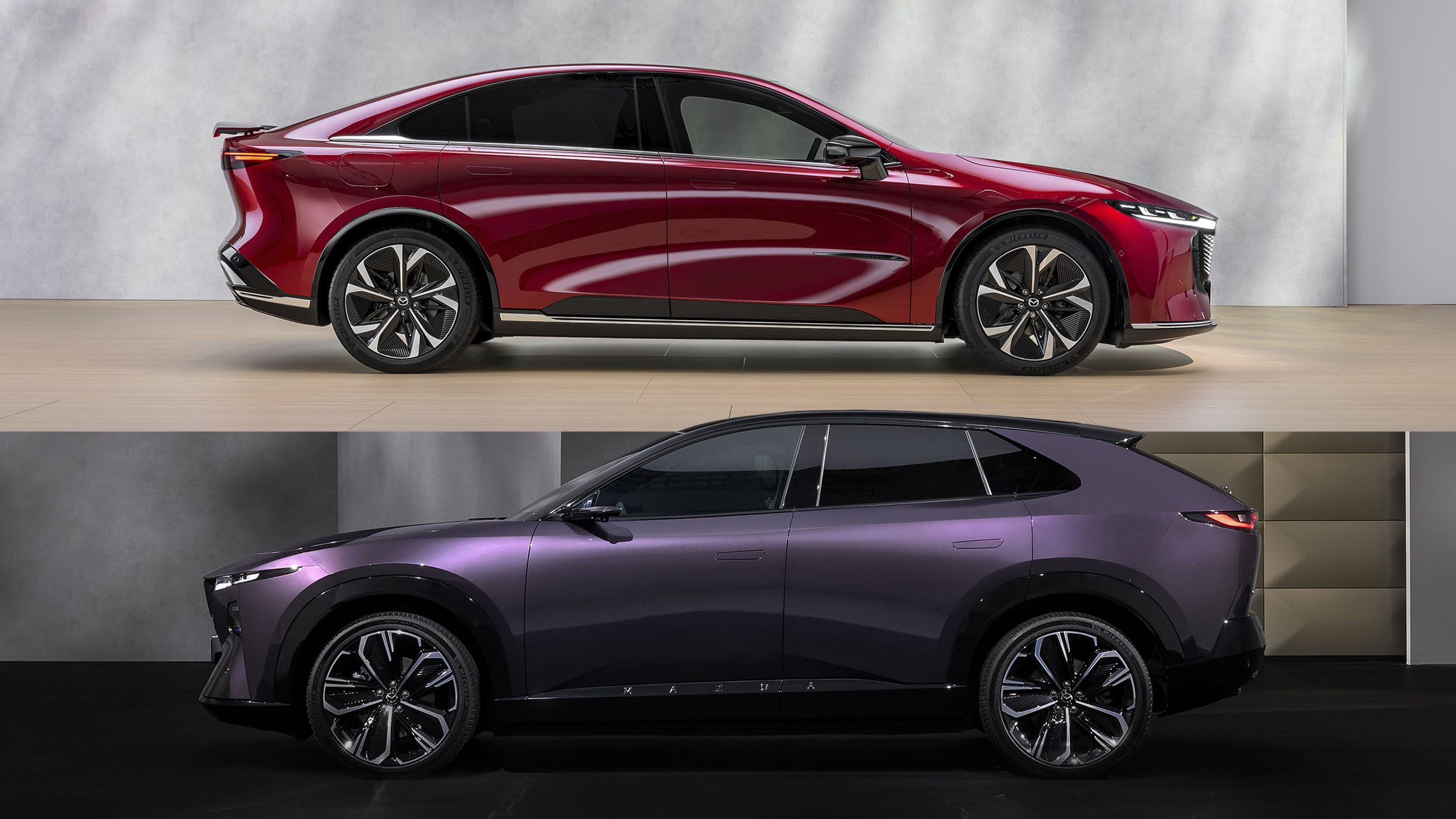
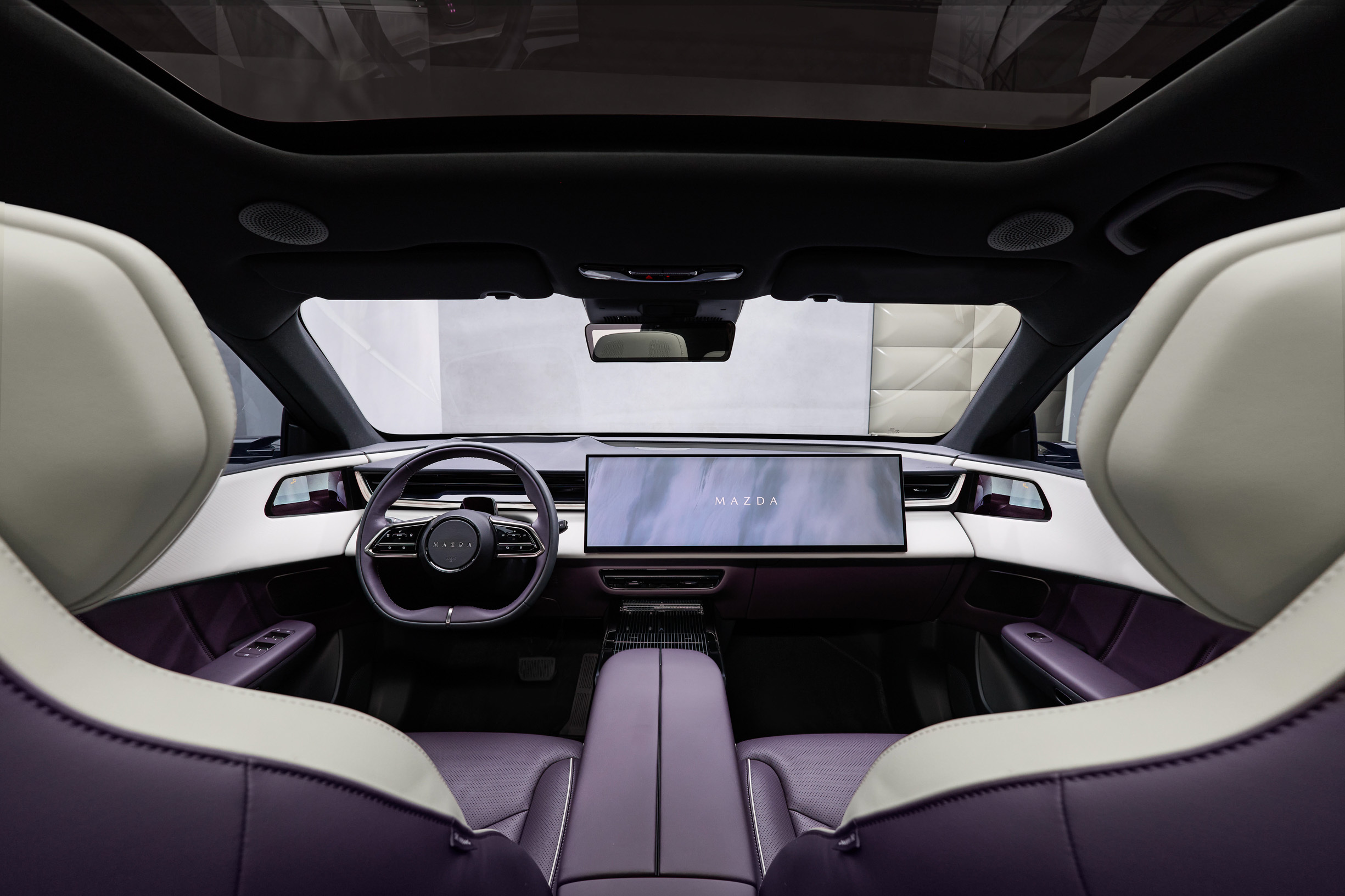
Mazda has moved on from the niche MX-30 crossover, reshuffling its fully electric lineup in China and select global markets, though not North America, with the 6e sedan and the CX-6e SUV. The two mechanically related EVs arrived in quick succession, yet a senior Mazda Europe executive says there is a noticeable development gap between them, largely due to the steep learning curve that came with partnering up with Changan.

Christian Schultze, Director of Technology Research at Mazda Europe, explained the process in an interview with AutoRAI. Both models are heavily based on the Deepal L07 sedan and S07 SUV from Changan’s dedicated EV brand, adapted for global markets under the Mazda joint venture.

Bridging Cultures Through Engineering

So what actually separates the Mazda 6e, launched in 2024, from the CX-6e that arrived a year later? According to Schultze, progress came in increments.

More: Mazda Secretly Built A V6 MX-5, Then Killed It Over One Ugly Problem

“I’d say we’ve taken another half-step forward. The 6e was the first joint development with our partner Changan Mazda Automobile for a car that would be sold in Europe. That was a huge learning experience for them, because they had never before developed a car specifically for the European market. It was also a learning experience for us, because we suddenly had to explain much more than we were used to heading into Hiroshima.”

 Mazda Admits It Learned From China, And Its Future EVs Will Show It
The Mazda 6e (above) and the CX-6e (below).

Schultze explained that while the R&D center in Hiroshima works seamlessly with the European team, adding Changan Mazda Automobile changed the dynamic. The shared understanding required for such projects had to be built from the ground up, a process that took more time and effort than Mazda initially expected.

More: New Mazda MX-5 NE Isn’t Going Electric, But It’s Not Staying Pure Either

Despite looking almost identical to the Chinese-spec Mazda EZ-6 sedan and EZ-60 SUV, the European versions had to meet different regulations. That proved challenging for engineers unfamiliar with European requirements.

“When we develop a car together with Hiroshima, we essentially already get about 98 percent of what we’re looking for. Then it’s mainly just fine-tuning here and there. With Changan Mazda Automobile, we had to go much further back to basics,” he said.

“For example, they had never created a setup for European radar systems. We had to explain the requirements and why they were important. What we appreciated was how quickly they responded and how willing they were to understand. But we first have to convey that understanding.”

The SUV Is More Mature

 Mazda Admits It Learned From China, And Its Future EVs Will Show It
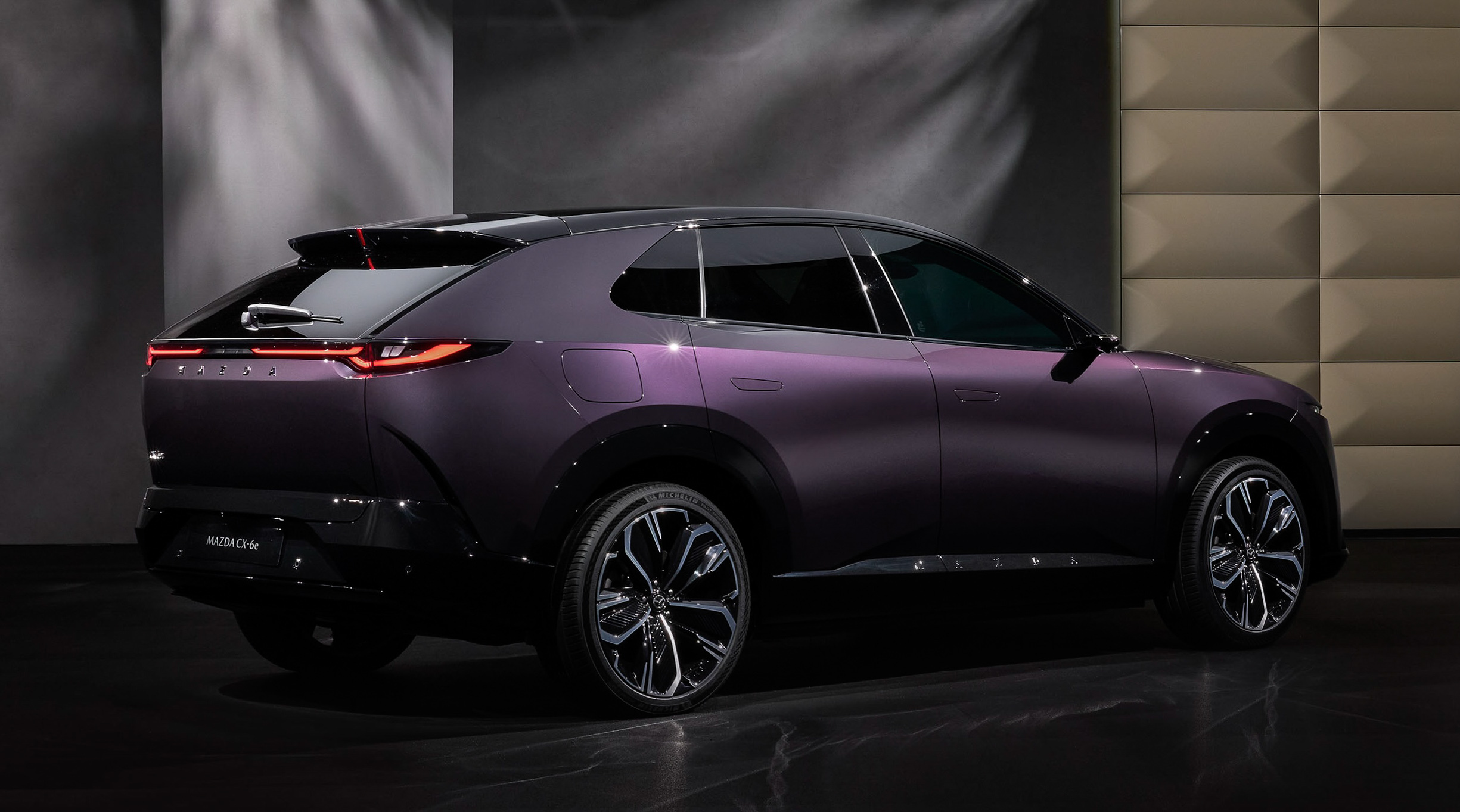
Mazda CX-6e

Despite the early hurdles, the knowledge gained from the 6e program helped Mazda refine the CX-6e.

Schultze noted that the SUV’s electric motor is a “further development,” offering “greater efficiency and a higher continuous power output” than the sedan. That fits with Mazda’s philosophy of making each new model incrementally better.

More: Mazda’s Rotary Sports Coupe Plan Faces A Roadblock It Can’t Engineer Around

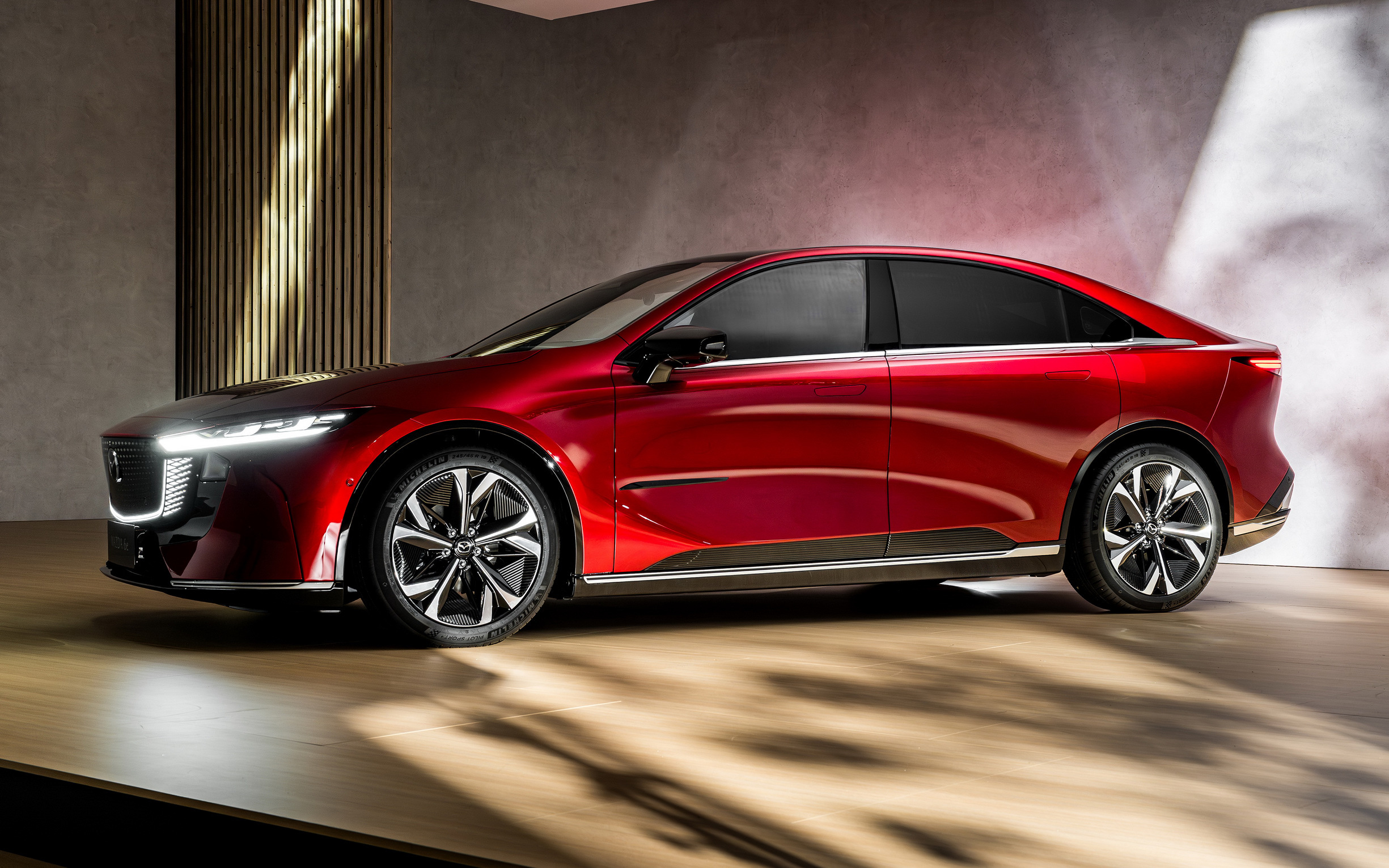
The Mazda 6e sedan currently sold in mainland Europe and the UK produces 255 hp (190 kW / 258 PS) in Standard Range form and 241 hp (180 kW / 245 PS) in Long Range trim. The CX-6e retains the higher output with the larger 80 kWh battery.

Lessons Beyond One Platform

 Mazda Admits It Learned From China, And Its Future EVs Will Show It
Mazda6e

Schultze confirmed that R&D lessons from the Changan joint venture will influence future EVs built on Mazda-developed architecture.

“We’re pursuing a strategy where we collaborate with partners, for example, in the field of electric vehicles, and develop our own electric models. Our roadmap shows that one of the next EVs will be based on a fully Mazda-owned platform. Moreover, our insights are growing every day, thanks in part to market feedback. For example, we learned a lot from the reactions to the Mazda 3, and those insights have been incorporated into our internal objectives. The same applies to the lessons we’re learning from the CX-6e.”

More: This SUV Just Did Something Only Two Other Mazdas In History Have Ever Done

He also highlighted how modern technology allows continuous improvement without waiting for a facelift or full generational change.

“The great advantage of today’s world is that many systems are digital or electronic. This means we can implement improvements even during ongoing production. In the past, in the purely mechanical world, if a switch felt too heavy, it would stay that way for four years until the next model change. Fortunately, those days are behind us.”

 Mazda Admits It Learned From China, And Its Future EVs Will Show It
The interior of the Mazda CX-6e

Stellantis Revives Opel’s Hot Hatch, In A Very Different Form

  • The Corsa GSE is a fully-electric hot hatch version.
  • It will likely use a 278 hp motor with a limited-slip diff.
  • Expect sharper looks, bigger brakes, and tighter suspension

Stellantis has confirmed a new performance version of the Opel and Vauxhall Corsa subcompact hatchback. It will wear the GSE badge, effectively reviving the spirit of the long-retired Vauxhall Corsa VXR and its Opel Corsa OPC twin, only this time with electrons instead of petrol.

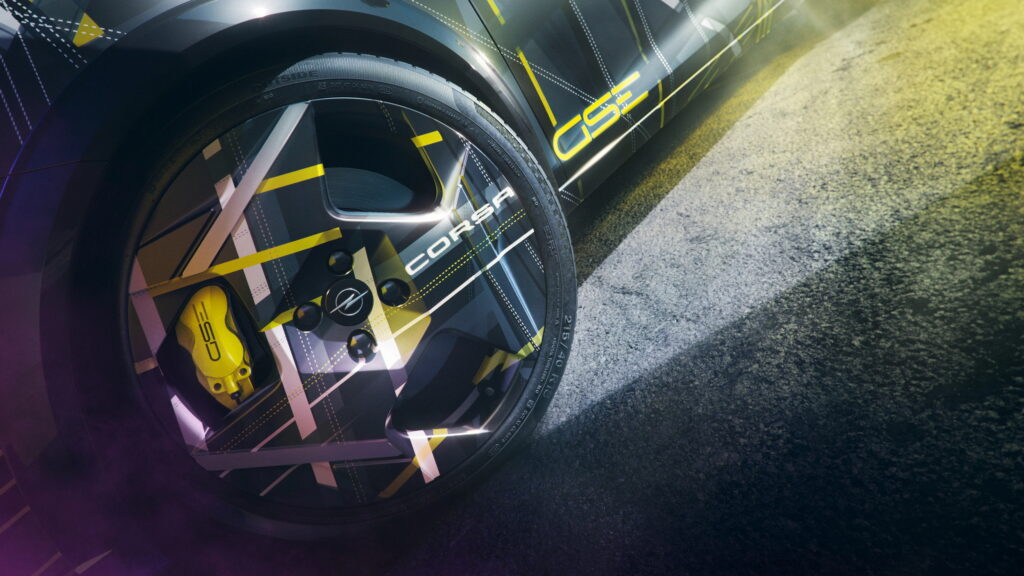
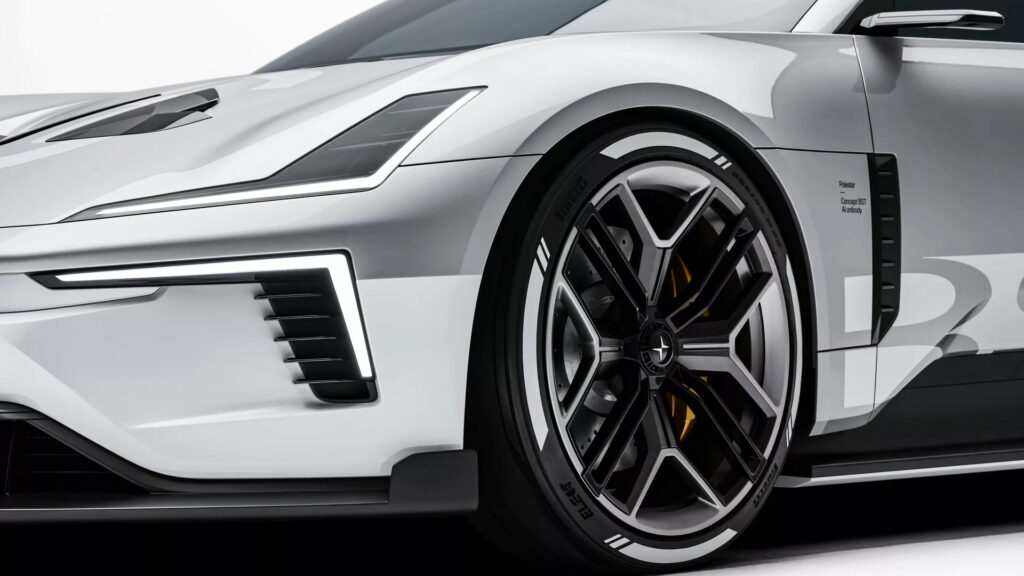
So far, the company has released a single teaser image of the upcoming hot hatch, zoomed tightly on the front wheel. The car wears a camouflage wrap featuring Corsa and GSE lettering, along with black, yellow, and white graphics. The 18-inch alloy wheels have a distinctive three-spoke design, with yellow brake calipers visible behind them.

More: The First Electric GTI Isn’t From VW

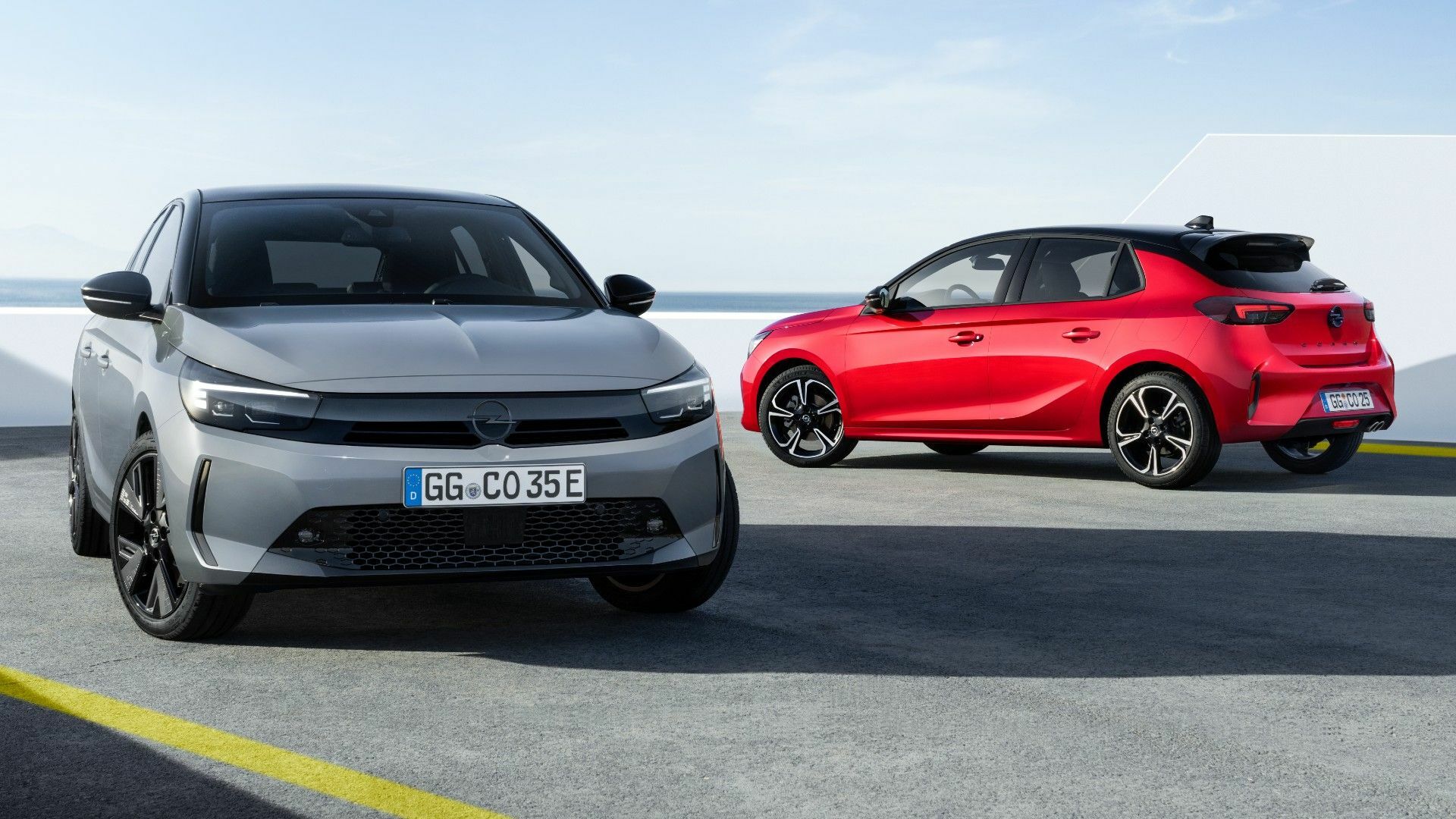
The body panels appear largely unchanged from the current-generation Corsa introduced in 2019 and updated in 2023. The GSE does gain additional cladding around the wheel arches, echoing the treatment seen on the new Peugeot E-208 GTI.

 Stellantis Revives Opel’s Hot Hatch, In A Very Different Form
Opel Mokka GSE

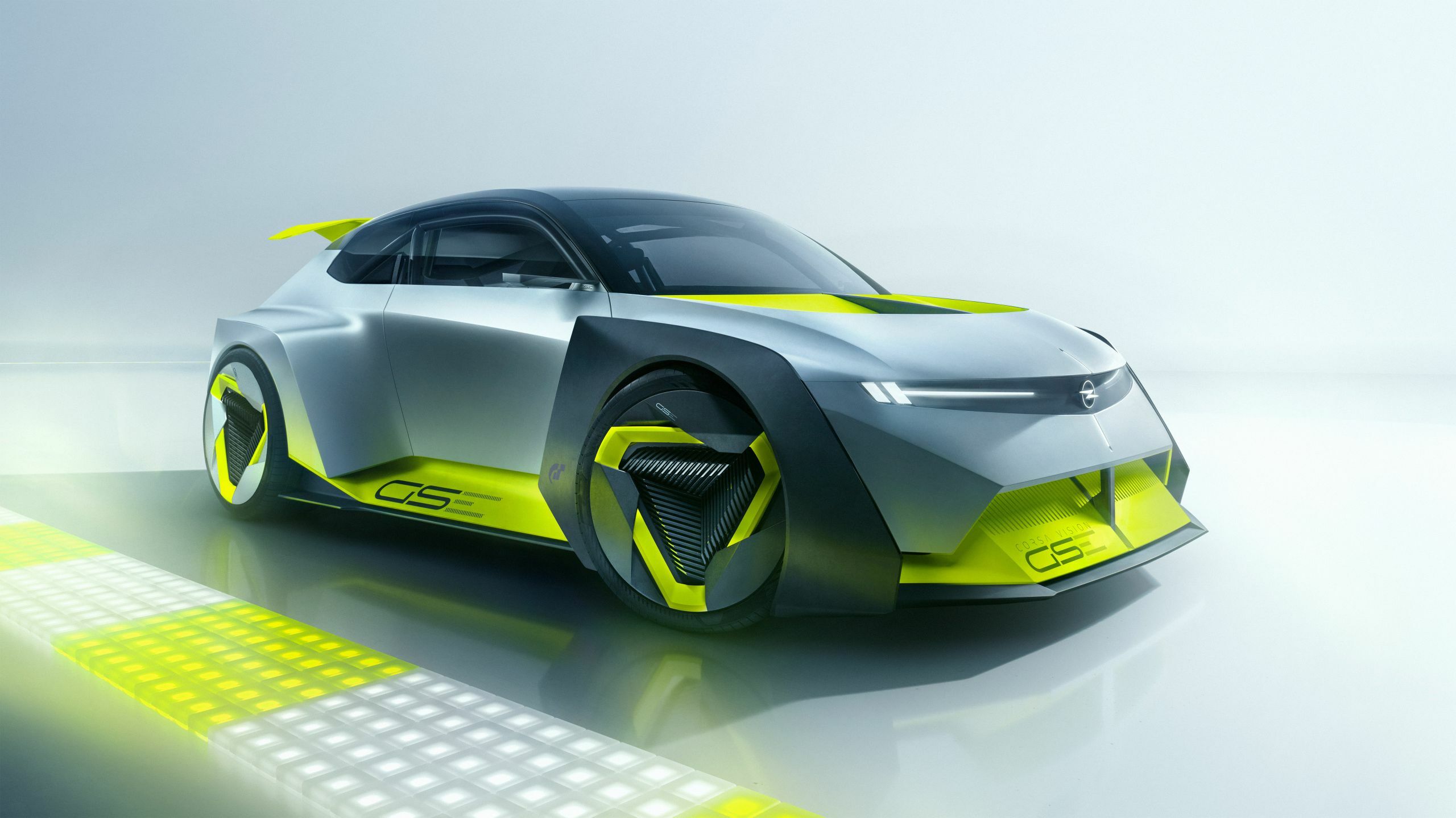
Expect redesigned bumpers and a few sharper details borrowed from the unhinged Opel Corsa GSE Vision Gran Turismo concept. Whether it also gains a slimmer Vizor grille with updated LEDs is still anyone’s guess, but it would hardly be a surprise.

Shared Underpinnings

Stellantis is keeping the hard numbers quiet for now, yet the safe money says the Corsa GSE will share its hardware with the Mokka GSE subcompact SUV. That puts it in the same technical family as the Abarth 600e, Alfa Romeo Junior Veloce, Peugeot E-208 GTI, and Lancia Ypsilon HF.

More: One Lancia Ypsilon HF Is Fast The Other Just Pretends

Like those cars, it is expected to use a front-mounted electric motor producing 278 hp (207 kW or 280 PS) and 345 Nm (254.5 lb-ft) of torque. A Torsen limited-slip differential, uprated brakes, and a firmer suspension setup complete the package. Power will likely come from the familiar 54 kWh lithium-ion battery, good for an estimated 200-230 miles (322-370 km) of range.

 Stellantis Revives Opel’s Hot Hatch, In A Very Different Form
Opel Corsa GSE Vision Gran Turismo Concept

According to Eurig Druce, Managing Director of Vauxhall and the Stellantis UK Group:

“The Corsa GSE will combine small and agile practicality with thrilling, pure electric, motorsport-inspired power and dynamics. Vauxhall has a proud heritage of hot hatches, and we’re excited to now offer customers those same thrills but combined with the electrifying performance and zero emissions in use of these new GSE models.”

More: Opel Corsa Gains Sporty Bits, Lowered Suspension, And More Power By Irmscher

The Opel and Vauxhall Corsa GSE will arrive in Europe and the UK later this year, stepping in as the new flagship of the Corsa lineup above the GS Line. Alongside its Peugeot E-208 GTI and Lancia Ypsilon HF relatives, it will square up against the upcoming VW ID.Polo GTI and the rumored Hyundai Ioniq 3 N.

 Stellantis Revives Opel’s Hot Hatch, In A Very Different Form
The facelifted version of the Opel Corsa F debuted in 2023.

Lamborghini Scraps EV Supercar After Admitting Interest Was ‘Close To Zero’

  • Lamborghini has canceled the electric Lanzador over low demand.
  • The brand will stick with plug-in hybrids across its range.
  • CEO Stephan Winkelmann says EVs risk becoming costly hobbies.

Lamborghini has officially shelved plans for its first production EV, deciding instead to lean harder into high-performance plug-in hybrids through 2030. In Sant’Agata’s world, electricity is welcome, just so long as it’s boosting a V8 or V12 rather than replacing one.

More: Audi Boss Says TT Successor Is Safe Even As Porsche Faces Doubts

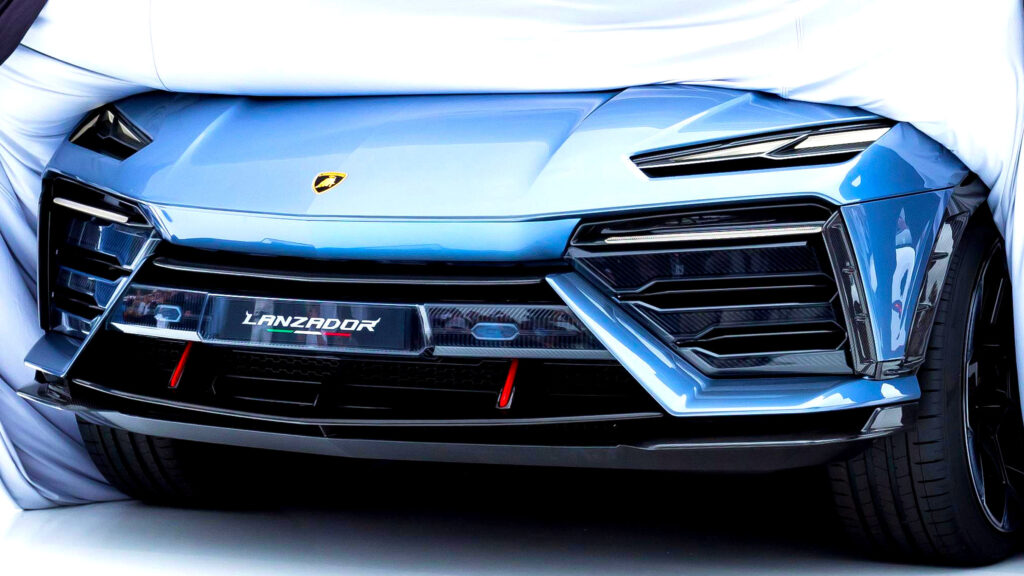
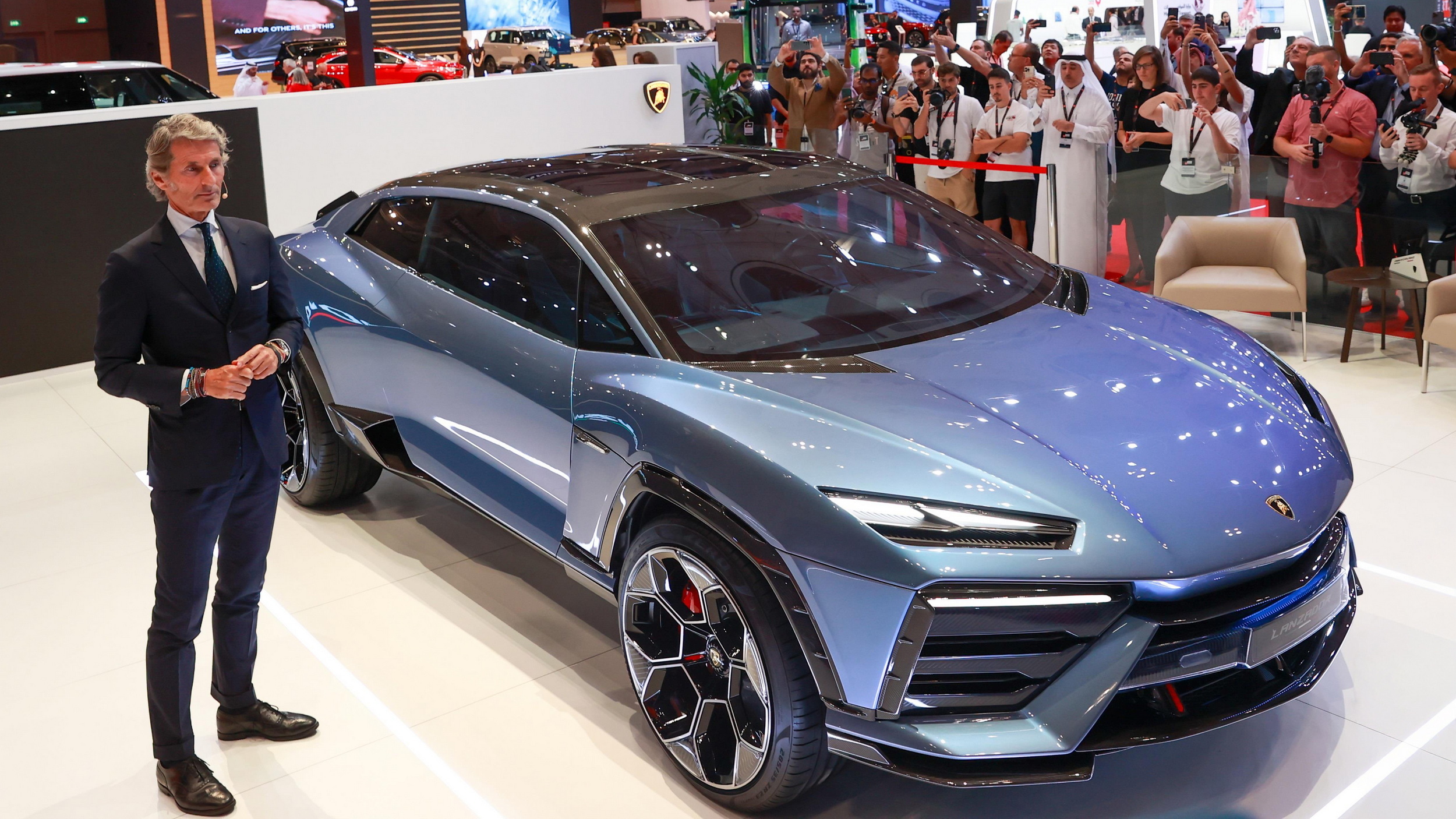
The model in question, previewed by the Lamborghini Lanzador concept in 2023, was supposed to arrive before the end of the decade as a fully electric 2+2 crossover. Instead, it is heading back to the drawing board, if not straight into the history books.

A Strategic Backflip On EVs

Speaking to the Sunday Times, Lamborghini CEO Stephan Winkelmann confirmed the EV won’t be joining the production lineup and will instead give way to another plug-in hybrid offering. He also cautioned that going all-in on electric could turn into an “expensive hobby,” noting that the “acceptance curve” for zero-emission tech among Lamborghini’s clientele is “close to zero.” Not exactly a ringing endorsement.

Winkelmann went on to say that Lamborghini buyers are still chasing the full “emotional experience,” meaning the styling, the performance, and, crucially, the noise. That, in his view, is something EVs cannot yet replicate in their current form. So for now, combustion engines remain very much on the menu, and will continue to be built “for as long as possible.”

Hybrids Take Priority

 Lamborghini Scraps EV Supercar After Admitting Interest Was ‘Close To Zero’
Stephan Winkelmann with the 2023 Lamborghini Lanzador Concept.

The call to axe the project was reportedly made behind closed doors late last year, after extensive talks with customers and dealers, along with a thorough market analysis. In other words, Lamborghini did the homework and did not like what it saw. As Winkelmann put it:

“Investing heavily in full-EV development when the market and customer base are not ready would be an expensive hobby, and financially irresponsible towards shareholders, customers [and] to our employees and their families. Plug-in hybrids offer the best of both worlds, combining the agility and low-rev boost of electric battery technology with the emotion and power output of an internal combustion engine.”

More: Ferrari’s First EV Exterior Is So Radical Even Its Designer Is Nervous About Your Reactions

Pressed by the Sunday Times on whether Lamborghini would ever build a full EV, Winkelmann left the door slightly ajar, albeit with a very firm hand on the handle.

“Never say never, but only when the time is right,” he said. “For the foreseeable future, only PHEVs. We will continue to develop electrification because we also need to be ready. The times we are living in are fast moving; if you don’t react fast, you risk going out of business or losing momentum. Therefore we need a solid financial base to reinvest in the future.”

 Lamborghini Scraps EV Supercar After Admitting Interest Was ‘Close To Zero’
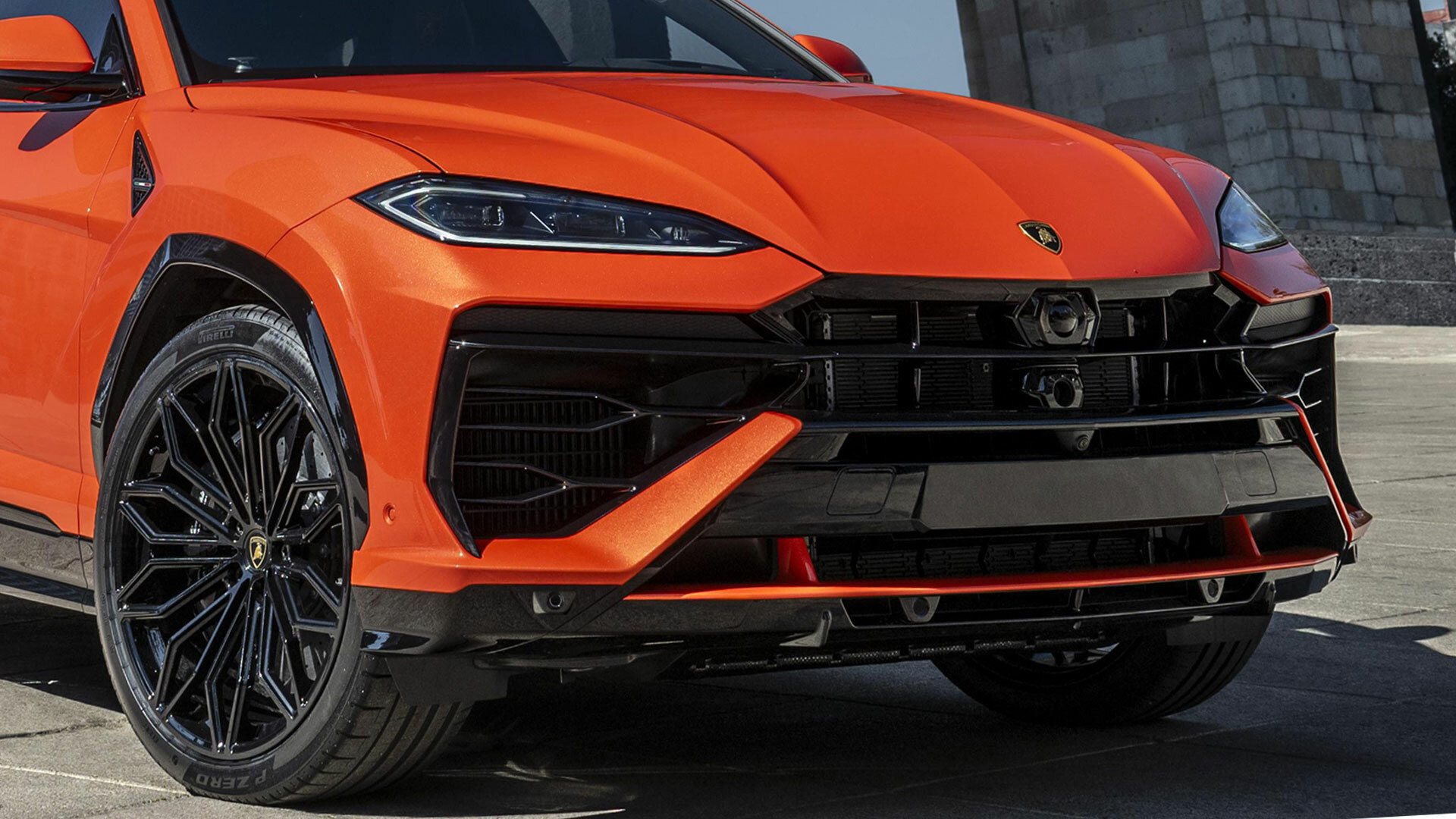
Lamborghini Urus

Lamborghini’s current lineup is now fully hybridised, from the Urus SUV to the Temerario and Revuelto supercars, each pairing combustion muscle with electric assistance. The formula seems to be working. Last year Sant’Agata shifted a record 10,747 cars, with the Urus comfortably leading the charge.

Protecting The Brand’s Best Seller

The performance-focused SUV was supposed to enter a new generation in 2029, transitioning to a fully electric powertrain, but that is no longer the case. After speaking with customer groups, Lamborghini concluded that a battery-powered Urus would not exactly set its order books alight.

More: Lamborghini’s Next Surprise Might Be A V12 Supercar You Can Take Camping

According to Winkelmann, they simply couldn’t risk it with their best seller. The Urus is the brand’s financial backbone. Supercars may command higher margins, but they occupy what he calls a “tiny segment” compared with the Urus market, which is “bigger and more stable.” In other words, you do not gamble with the model that pays the bills.

Winkelmann also pointed to the regulatory road ahead. “We have a big task as an automotive industry. Everybody’s speaking about 2035, but there’s a big date which is very dangerous at 2030, due to the emissions. And this is something which is not clear enough, in my opinion, today.”

 Lamborghini Scraps EV Supercar After Admitting Interest Was ‘Close To Zero’
The current Lamborghini lineup, including the Temerario, Urus, and Revuelto.

A Gullwing Door Hides The Coziest Room On Wheels

  • Isuzu Elf box truck was repurposed into a cozy room.
  • Inside are a wooden floor, shelves, a couch, and table.
  • Isuzu has also built camper and pickup versions of it.

Forget the cold, hard plastics and hose-down austerity usually associated with commercial vehicle interiors. Isuzu’s latest creation flips that script, turning its Multi Utility Vehicle into something that lets you park your living room almost anywhere, preferably somewhere with a view worth staring at.

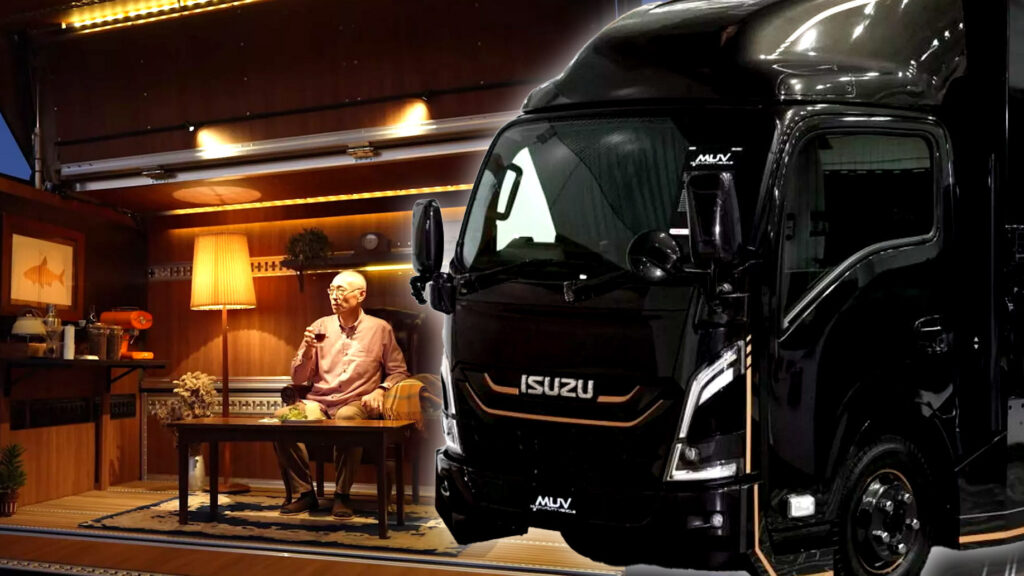
The concept is based on the standard cab version of the Isuzu Elf, featuring a black exterior with gold accents and aerodynamic panels on the roof and sides. But the real talking point is what Isuzu has done with the cargo area out back.

More: You Can Buy Isuzu’s Wildest Concept, But You Better Have A Big Lawn

A gullwing door and a drop-down side panel swing open to reveal a snug space that looks more theatre set than box truck. There is a wooden floor, lashing rails, modular shelving and actual furniture. A drop-down table is set up for brewing your coffee of choice, best enjoyed from the comfort of a proper couch rather than a fold-out stool.

\\\\\\\\

It feels tailor-made for a pop-up coffee shop, though in reality it would probably serve primarily as a promotional showpiece. In the accompanying video, one occupant seems perfectly content sipping his drink while watching the sun dip below the horizon.

The Elf MUV was created in collaboration with bodywork specialists Nippon Fruehauf and was exhibited at the Tokyo Auto Salon 2026. It is not heading for showrooms any time soon, but it highlights how much imagination can be squeezed out of a humble commercial vehicle.

\\\\\\\\\\

What About The Other Rooms?

If you like the idea of escaping into nature but would rather bring more than a sofa, Isuzu has another answer. The Be-Cam GeoRoam sits somewhere between camper and motorhome and was developed with Nippon Tokushu Body.

\\\\\\\\\\\\\\\\\\\

This build rides on the wide-cab, long-wheelbase Elf, which frees up a far more generous rear section. It also throws in some proper adventure kit, including a bull bar, roof rack and extra LEDs, giving it a stance that says it is ready to head well past the campsite entrance.

More: Tiny Kei Truck Becomes A Real Tiny Home On Wheels

The interior looks like a mini apartment, with warm tones and plenty of wood surfaces. You get a dining area, a fully equipped kitchen, a sofa that converts into a bed and a separate rear bedroom, complete with a projector for late-night film sessions.

\\\\\\\\\

The Rugged Workhorse

Isuzu has also rolled out a more work-focused take on the Elf. The Elfmio Cross Style Concept is a dropside pickup that swaps lounge vibes for a tougher look, helped along by new wheels and optional add-ons such as the rear metal frame. It is based on the Space Cab bodystyle, which means it can be driven in Japan with a standard driver’s license.

More: Isuzu’s New Pickup Is Luxury In The Front, Business In The Back

Across all three concepts, the mechanical bits are lifted straight from the regular Elf. That means a 3.0-liter turbodiesel paired with a nine-speed dual-clutch automatic and the option of 4WD. Output stands at either 148 hp or 173 hp. Alternatively, there is a zero-emission Elf powered by a 161 hp electric motor, drawing from a modular battery pack offered in 60, 100 or 180 kWh capacities.

Below are the official videos showcasing the different use-case scenarios. Which one would you take home?

Photos Isuzu / Tokyo Auto Salon

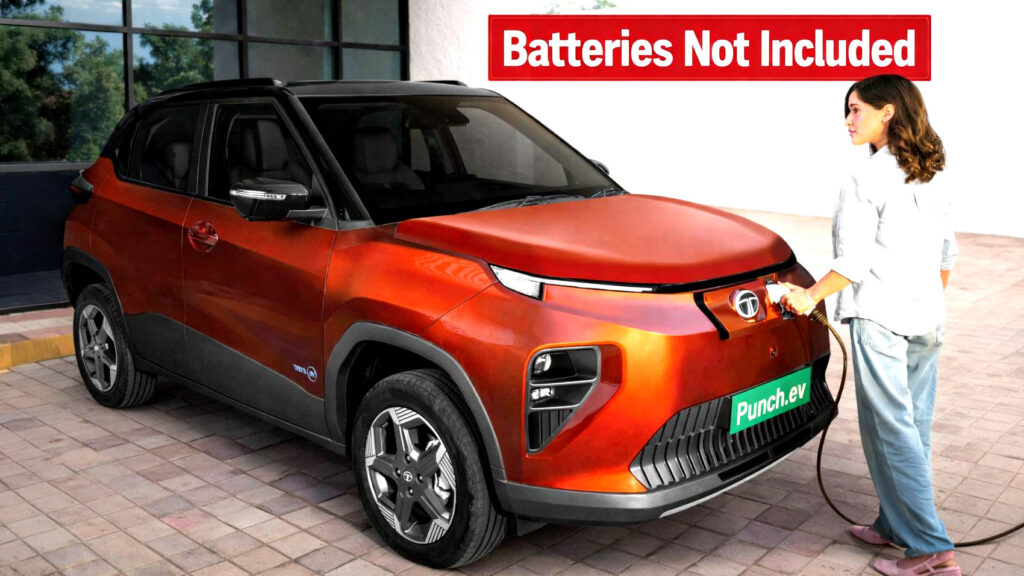
This Electric Crossover Starts At $7K, Batteries Not Included

  • The Tata Punch EV gets an early facelift in India.
  • Brings styling tweaks, more power, and extra range.
  • Starts at $7,150 if you lease the battery separately.

Two years. That’s all Tata Motors has given the fully electric Punch before wheeling out a facelift. In the fast-moving world of small EVs, standing still is not an option. The 2026 Tata Punch EV goes beyond a nip and tuck, bringing a larger battery, quicker charging, and a finance trick designed to make the sticker price look far friendlier.

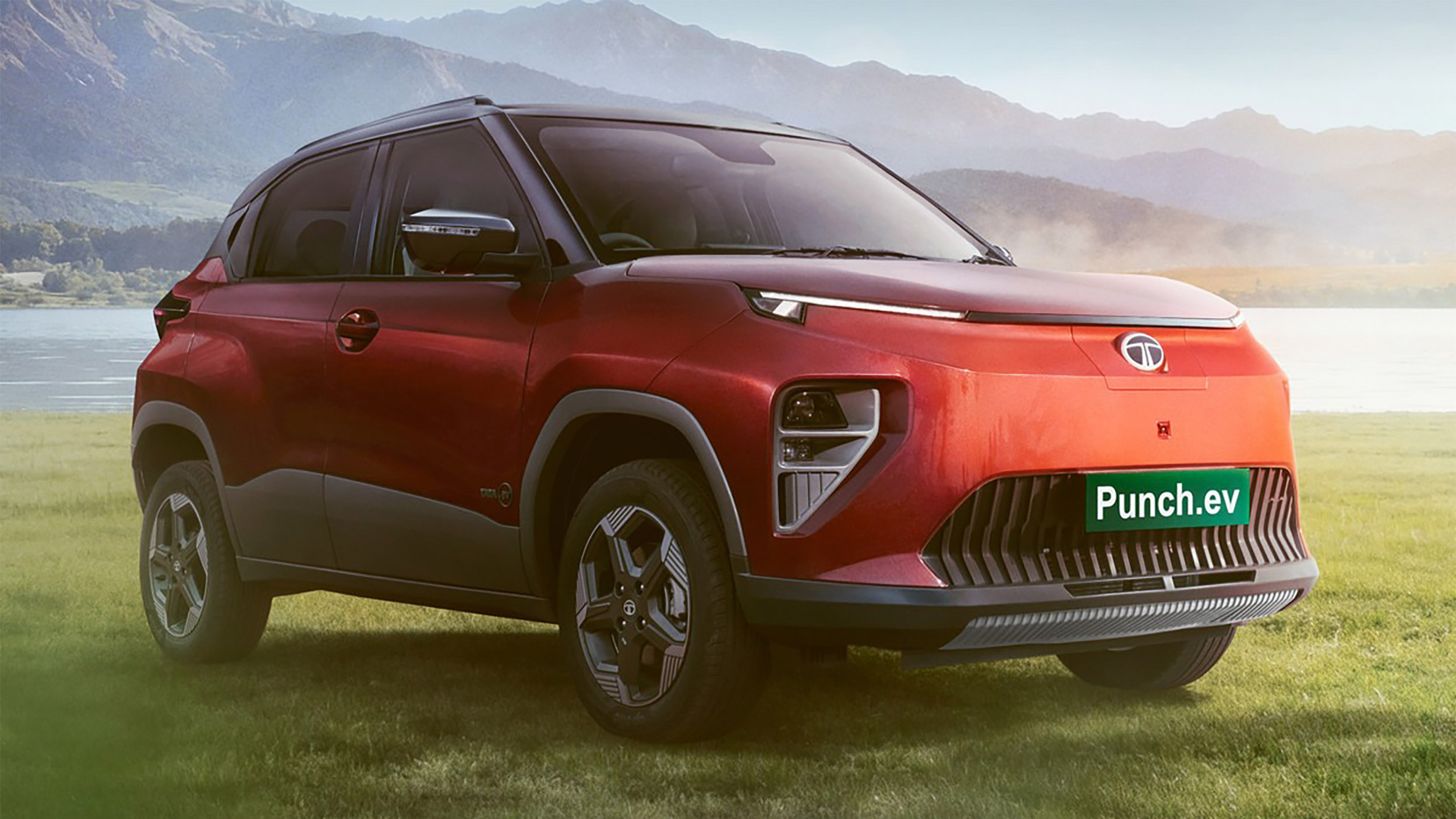
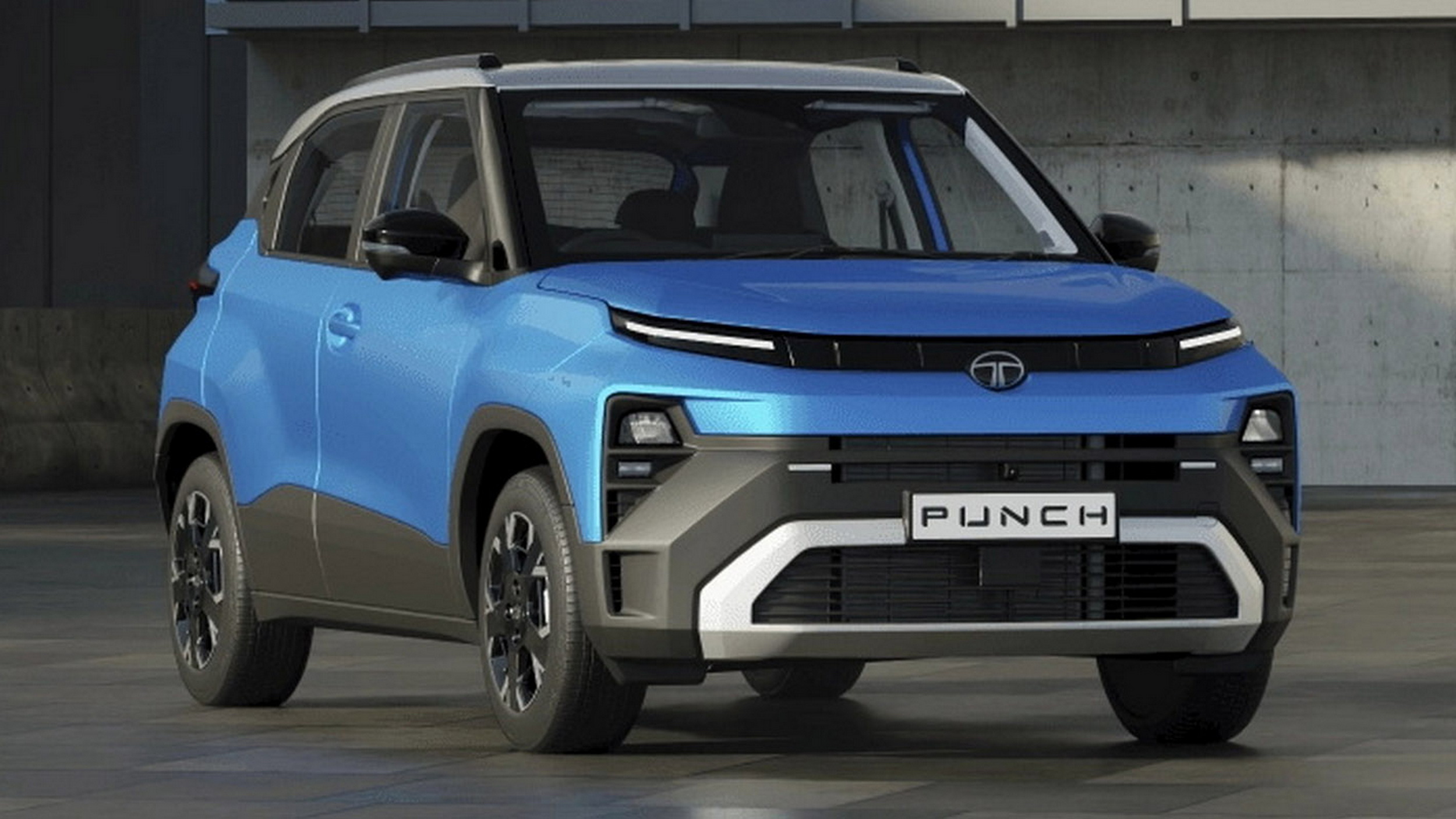
Starting with the exterior, the Punch EV gains a redesigned face with a cleaner bumper, though the split headlights have been carried over. It also benefits from new 16-inch alloy wheels and full-width taillights that mirror the recently facelifted ICE-powered Punch.

More: Land Rover’s Owner Built A Baby Land Rover For Less Than A Bespoke Paint Job

The interior is largely unchanged. Higher trims pack dual 10.25-inch displays, wireless charging, ventilated seats, a voice-activated sunroof, and a 360-degree camera. Six airbags are standard across the range, although the base car makes do without an infotainment screen.

More Punch And Longer Range

\\\\\\\\

More important changes hide under the skin. The Punch EV benefits from larger battery packs with capacities of 30 kWh and 40 kWh, each up by 5 kWh.

Tata claims a real-world range of up to 355 km (221 miles), which is 75 km (47 miles) more than before. Charging gets a lift too. The updated Punch EV now supports a 65 kW DC fast charger, up from 50 kW, cutting the 20-80 percent top-up time to 26 minutes.

There’s a modest bump in output as well. Power rises by 6 hp (5 kW). The Medium-Range version makes 85 hp (65 kW), while the Long Range variant produces 127 hp (95 kW). Tata says the latter hits 0-100 km/h (0-62 mph) in 9 seconds, trimming 0.5 seconds from the previous figure.

The Price Hack

\\\\\\\\\\\\\\\\\\\\\

Here’s where things get interesting. Despite the added kit, Tata has lowered the entry price. The attention-grabbing ₹6.49 lakh ($7,150) starting figure comes via a BaaS (battery as service) scheme. You buy the car, but lease the battery separately at ₹2.6 per km ($0.029 per mile).

More: JLR’s Parent Company Made An Electric SUV With Drift Mode For Just $25K

Prefer to own the lot outright? Prices then range from ₹9.69 lakh ($10,700) to ₹12.59 lakh ($13,900), depending on specification. Even so, that undercuts the pre-facelift model, which makes the updated Punch EV look like stronger value.

At 12,000 km a year, the battery lease works out to ₹31,200 (about $348). Drive 15,000 km and it rises to ₹39,000 (about $435) annually. Over five years at that higher mileage, you would pay ₹1.95 lakh (around $2,175). Add that to the ₹6.49 lakh ($7,150) purchase price and the total comes to roughly ₹8.44 lakh (about $9,325), still below the ₹9.69 lakh ($10,700) entry point of the version that includes the battery. The more you drive, the smaller the gap becomes.

The ICE-powered Tata Punch, meanwhile, ranges from Rs. 5.59 Lakh ($6,200) to Rs. 10.54 Lakh ($11,700).

 This Electric Crossover Starts At $7K, Batteries Not Included
The Tata Punch EV (above) compared to the ICE-powered Punch (below).
 This Electric Crossover Starts At $7K, Batteries Not Included

This Scissor-Door Micro EV Packs Nearly Twice The Torque Of A Lamborghini V12 Supercar

  • DM Performance fitted a Stark Varg motor to the Twizy.
  • It delivers 692 lb-ft through a custom chain-drive diff.
  • Micro EV beat an Audi S1 to 100 mph and spun donuts.

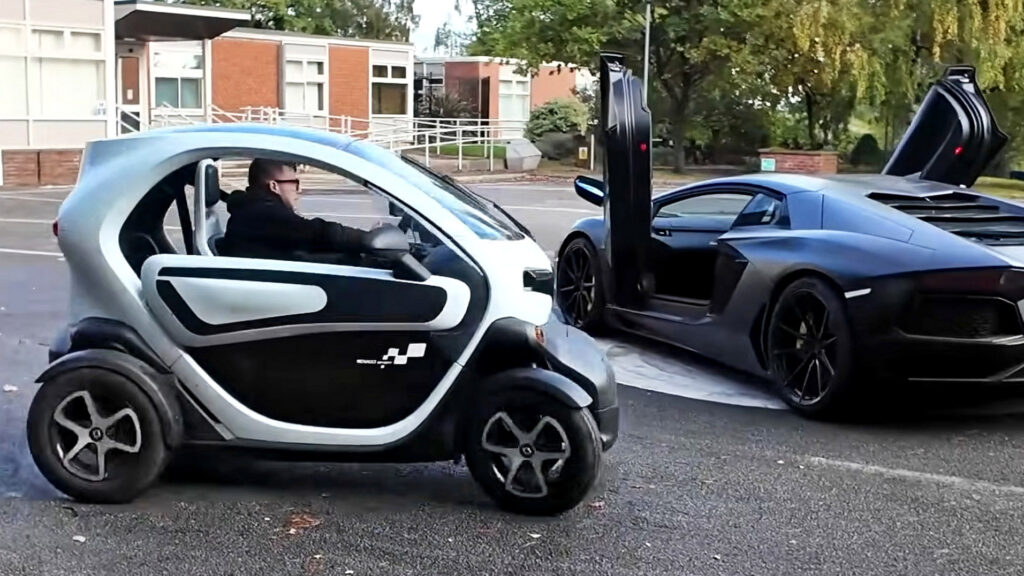
The now-discontinued Renault Twizy was known for its futuristic styling, scissor doors and unconventional seating layout, but never for outright performance. No one has ever accused it of being fast. That, naturally, made it the perfect candidate for something irresponsible.

Enter the UK-based mad scientists at DM Performance, who looked at this humble heavy quadricycle and decided it needed more chaos. Their solution was simple in theory and mildly unhinged in practice: rip out the weedy motor and transplant the heart of the world’s most powerful electric motocross bike.

More: Renault’s Smallest And Quirkiest EV Is Dead

The project started with a full teardown. Out went the factory-fit 17 hp (13 kW) motor. In came the powertrain from a Stark Varg, effectively the electric equivalent of a 450cc gasoline engine. The result is 80 hp (60 kW), a staggering 396 percent jump in output that completely rewrites the Twizy’s modest résumé.

\\\\\\\\

DM Performance / YouTube

But torque is the real headline here. The Stark Varg motor is rated at a frankly absurd 692 lb-ft (938 Nm). For context, the Lamborghini Aventador in the opening photo delivers 690 hp and 509 lb-ft (690 Nm), which means this pint-sized French creation is packing nearly double the torque of a V12 supercar!

More: World’s Least Powerful Gullwing Door Sports Car Finally Gets The Rotary Power It Deserved

It actually gets wilder. The supercharged 6.2-liter V8 in a 2027 Ram TRX produces 680 lb-ft (921 Nm). Now picture that sort of twist in a vehicle that weighs roughly ten times less than the Ram, and you begin to understand just how outrageous this thing really is.

Engineering The Swap

Making it all fit required serious surgery. DM Performance cut away the original rear cradle to accommodate the new motor and engineered a custom chain-drive system to replace the Twizy’s direct-drive transaxle.

\\\\\\

DM Performance / YouTube

To cope with the tidal wave of torque, they modified the original differential with a custom stainless steel casing and high-pressure grease to mimic the behavior of a limited-slip diff. A set of Maxpeedingrods coilovers was also installed to reduce the risk of an impromptu rollover.

Finally, the French EV received another transplant. The Stark Varg battery pack weighs 32 kg (70 lbs), significantly lighter than the Twizy’s 100 kg (220 lbs) battery, while offering slightly higher capacity and the ability to discharge massive amounts of energy for high-performance motors.

Smoke, Speed, And Proof

The unique “Stark Twizy” proved its performance credentials by winning a 100 mph (161 km/h) drag race against a more powerful Audi S1 Quattro hot hatch. The builders also took it for a drift session and even performed donuts around a Lamborghini Aventador.

A History Of Madness

This isn’t the first time DM Performance has turned a tiny EV from the heavy quadricycle segment into a monster. They previously completed a wild Citroen Ami using similar Stark Varg internals, though they noted the rear-wheel-drive layout of the Twizy made it a much better platform for hooning.

Electric swaps not your thing? They have also created a turbocharged Hayabusa-swapped Tuk Tuk tricycle. That machine weighs 460 kg (1,014 lbs) and produces a frankly terrifying 305 hp (227 kW / 309 PS) on the dyno.

The Next Lexus IS May Go In A Very Different Direction

  • Lexus plans to turn the next IS into a dedicated EV.
  • It may adopt styling cues from the 2023 LF-ZC concept.
  • Output could reach 500 hp with up to 620 miles of range.

Lexus has just given the aging IS another facelift, sharpening the nose, tidying up the cabin, and revising the chassis. It keeps the familiar formula alive a little longer. Behind the scenes, though, work on a full successor is underway, and reports from Japan suggest it will arrive in 2027 as an EV-only model.

Talk of a zero-emission IS dates back to late 2021, when Lexus unveiled the Electrified Sedan concept. The LF-ZC concept that followed in 2023 offered a clearer look at a future production EV, promising a slippery shape, gigacasting manufacturing, and prismatic battery shells said to double range.

More: Japan’s Refreshed Lexus IS Gets Something You Don’t

Even as enthusiasm for EV sedans has cooled in some markets, though not all, with buyers drifting back to hybrids and governments trimming, or in the case of the US scrapping, tax incentives, Toyota has stuck to its multi-path strategy. Combustion, hybrid, and electric powertrains are all set to coexist in future models such as the Corolla.

\\\\\\\\\\\\\

Lexus

Despite these issues, there are signs Lexus may stick with the original EV-only vision for the next IS, echoing the brand’s recent concept-heavy direction with projects like the new LFA Concept and the six-wheeled LS Concept revealed in late 2025.

Targeting The German EV Trio

According to a report from Japan’s Best Car, the next Lexus IS will abandon internal combustion entirely and become a dedicated EV. It is expected to compete directly with the upcoming BMW i3 Neue Klasse, Audi A4 e-tron, and Mercedes-Benz C-Class EQ. All three German rivals are expected around 2027, which conveniently matches the rumored debut timing for the Lexus.

More: BMW’s New i3 Is Becoming Easier To Picture

\\\\\\\

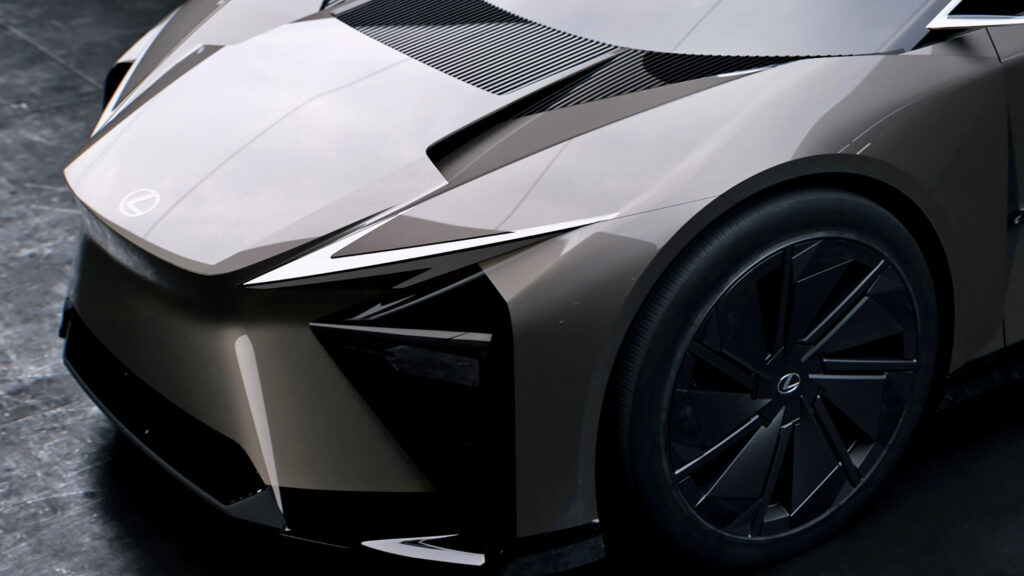
The report suggests the production IS will draw heavily from the LF-ZC concept, adopting a low-slung silhouette that favors aerodynamics over traditional three-box sedan proportions. It is rumored to measure around 4,790 mm (188.6 inches) long, positioning it below the new Lexus ES, which has stretched to 5,140 mm (202.4 inches).

Expect Tesla-like gigacasting to feature in the manufacturing process, along with a high-tech interior packed with advanced connectivity and safety systems.

\\\\

Theottle

Digital artist Theophilus Chin has previously produced speculative renderings of the next IS, blending cues from the larger ES with the proportions of the 2021 Electrified Sedan concept. The results look closer to production, while still reflecting Lexus’ current design language. That said, Toyota has signaled it will grant Lexus more creative freedom, so the final car could end up more adventurous than these illustrations suggest.

Advanced Tech Beneath The Surface

Regardless of how radical it looks, the next IS is expected to double down on EV hardware. The report points to a lineup starting with a single-motor, rear-wheel-drive version, topped by a dual-motor AWD flagship producing close to 500 horsepower. A steer-by-wire system and a carefully tuned chassis aligned with the “Lexus Driving Signature” philosophy are also likely.

More: Audi A4 Returns As EV With Concept TT Styling To Give BMW Something To Worry About

What is more interesting is the potential of solid-state battery technology, with range estimates exceeding 620 miles (1,000 km). If that figure proves realistic, it would make the case for a hybrid alternative harder to justify and give Lexus a meaningful edge in the premium compact EV segment.

With a rumored launch in late 2027, the new Lexus IS should already be in advanced stages of development. Do not be surprised if Lexus starts dropping more direct hints about its electric sedan plans in the near future.

\\\\\\\\\\\\\\

Lexus

Ford’s $30K Pickup Wants To Beat Cybertruck At Its Own Game

  • Ford’s upcoming $30k electric truck reveals new details.
  • Sketches show an ultra-aerodynamic, wind-cheating shape.
  • Radical tech cuts weight, trims costs, and simplifies wiring.

Ford has lifted the lid a little further on its so-called “Universal Electric Vehicle” project, the one tasked with delivering a brand-new $30,000 electric midsize truck in 2027. The tech breakdown in the 14-minute teaser packs plenty of stuff, but it is the design sketches that really grab your attention, offering the first glimpse of what this thing might look like in the metal.

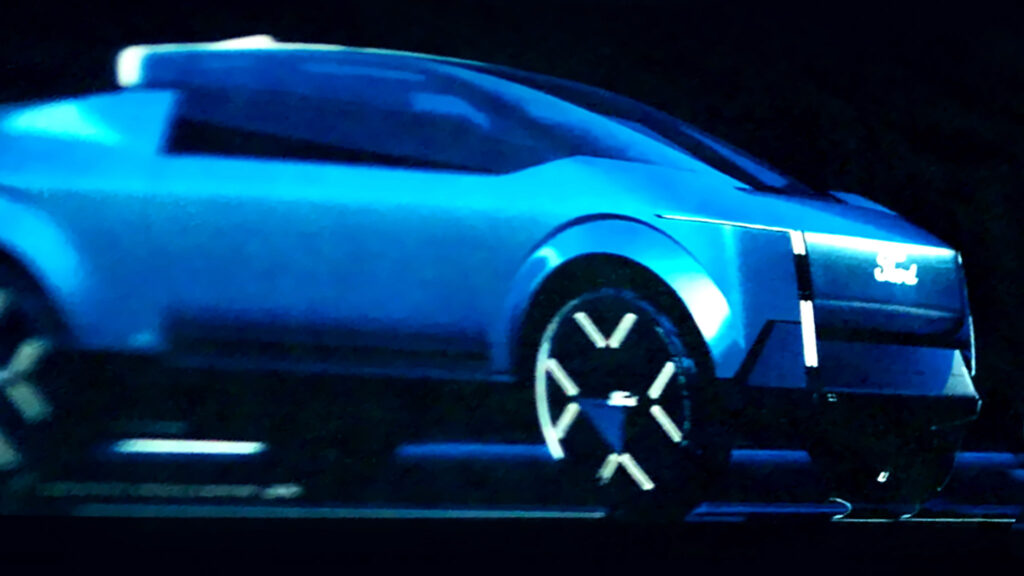
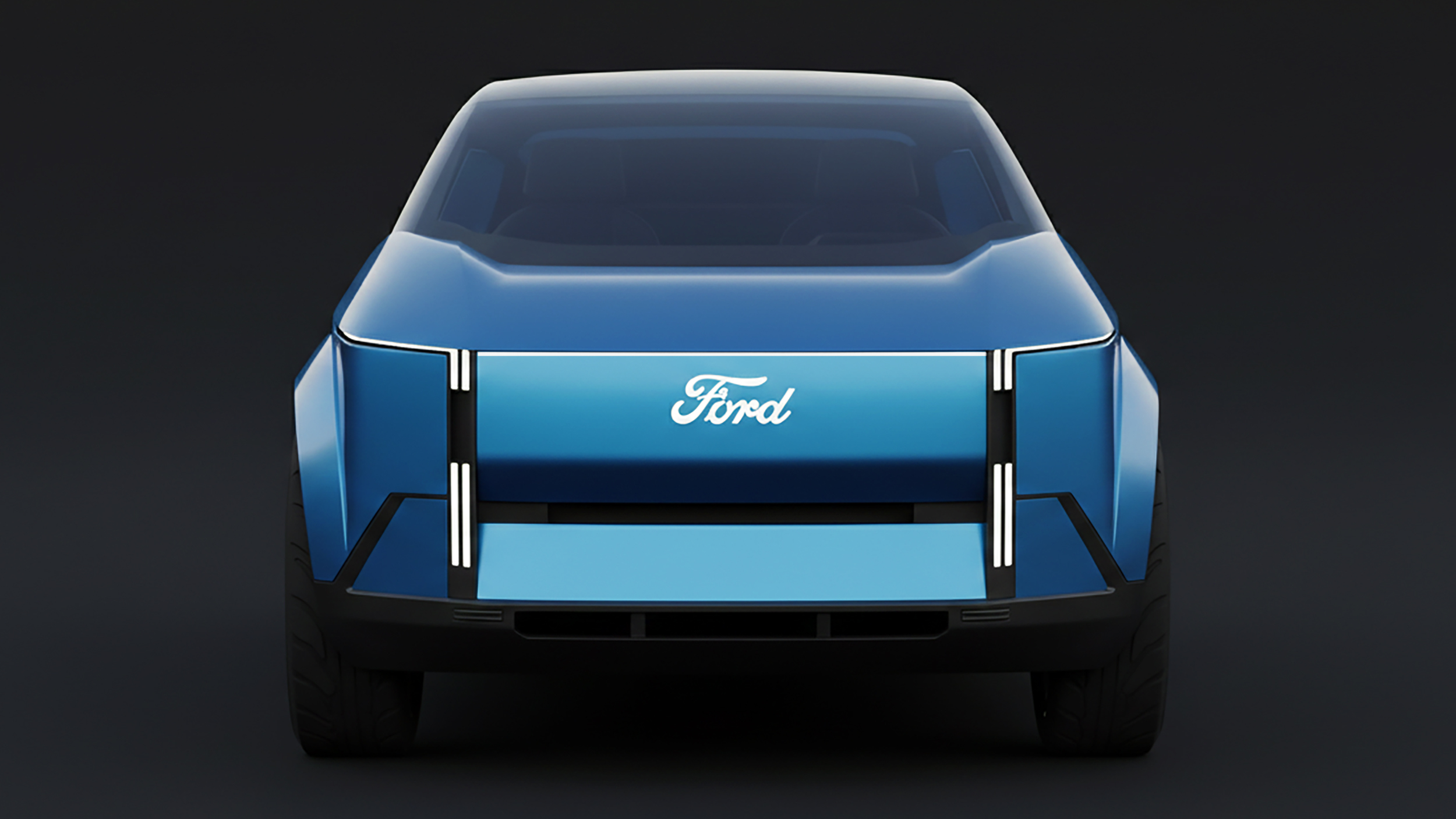
From those early drawings, which also align with the ghost images seen so far, the truck appears slippery and futuristic. Think of it as a softer, more rounded take on the larger Tesla Cybertruck, minus the origami and unpolished edges, not to mention with a far more reasonable entry price. Up front, there are slim vertical LEDs, an illuminated Ford badge, and horizontal intakes carved into the bumper.

More: The One Car Ford Refuses To Build Is One Dealers Want The Most

The windshield stretches deep into the hood and flows into an integrated roof spoiler at the rear. Despite the futuristic surfacing, this is still (likely) a Ranger-sized pickup with a traditional dual-cab layout. Practicality has not been shown the door.

\\\\\\\

Ford

Low Drag Is Key

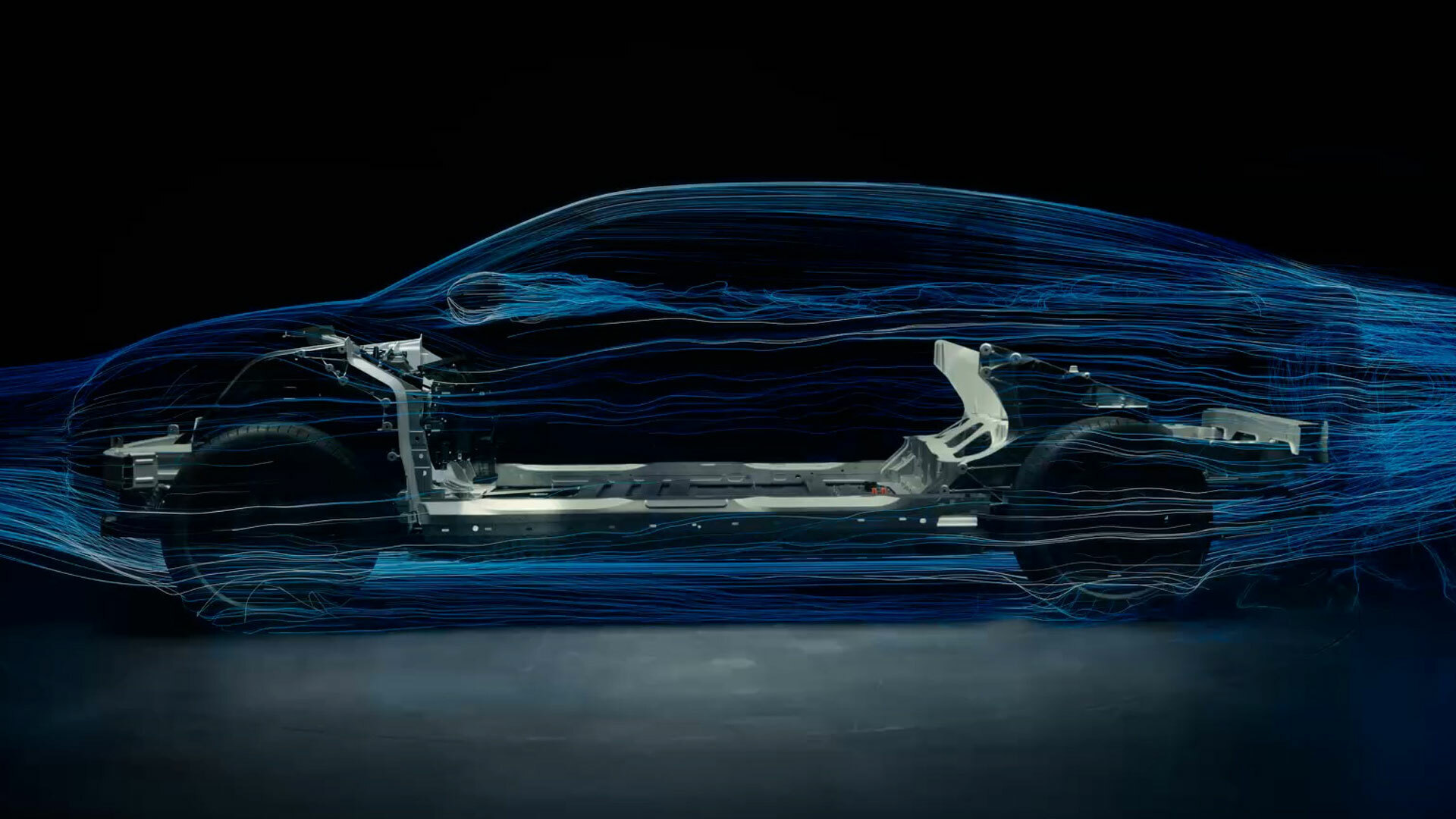
Unsurprisingly, the aerodynamics team had a heavy hand in shaping this truck, with former F1 experts brought in to chase every last fraction of efficiency. The mission was simple: slash drag hard enough that smaller batteries could deliver the required range, keeping production costs in check.

More: Ford Says Every Millimeter Of Roof Saves $1.30 On Its New $30K EV Truck

The curved roof reportedly reduces the turbulence typically created by a pickup bed. The side mirrors are 20 percent smaller than standard items, adding 1.5 miles (2.4 km) of range, while specially designed underbody panels contribute another 4.5 miles (7.2 km).

In total, Ford estimates these measures deliver 50 miles (80 km) of additional range compared to a similarly sized truck with a more conventional shape. That is not a rounding error.

 Ford’s $30K Pickup Wants To Beat Cybertruck At Its Own Game
Speculative rendering based on the official teasers.

Lower Production Costs

Aerodynamics are only half the story. Ford has also focused heavily on reducing manufacturing complexity. The company will use large aluminum unicastings, broadly similar in principle to Tesla’s gigacasting method. Structural components drop from 146 pieces in today’s Ford Maverick to just two, and overall weight is said to be 27 percent lower than rival offerings.

More: Next Ford And GM Pickups May Swap Mechanical Linkages For Lines Of Code

Fewer parts and fewer joints mean fewer robots on the line, which Ford claims results in “measurable gains” in both build quality and production efficiency.

 Ford’s $30K Pickup Wants To Beat Cybertruck At Its Own Game

it also appears that Ford engineers have borrowed lessons from reverse-engineering Chinese and Tesla EVs. The new truck’s wiring is 4,000 feet (1.2 km) shorter than that of the Mustang Mach-E crossover, trimming 22 pounds (10 kg). It will run prismatic lithium iron-phosphate (LFP) battery cells and a separate 48V system for auxiliary functions.

More: Ford Could Bring Back Sedans After Realizing It Can’t Afford Not To

The skunkworks team behind Ford’s next generation of EVs is led by former Tesla executive Alan Clarke, bringing 12 years of experience from the rival automaker.

As for the name, Ford is staying quiet. A recent patent filing hints at a possible return of the Ranchero badge, though nothing is confirmed. The affordable pickup is due in 2027 and will be followed by additional affordable EVs, with a sedan reportedly on the wish list.

Polestar Boss Says It’s Time To Outrun BMW M And Mercedes-AMG

  • Polestar plans more BST variants across its future EV range.
  • CEO points to stronger focus on track and acceleration gains.
  • BST badge may grow into a full performance sub-brand soon.

Polestar’s designers and engineers may be working overtime to prepare four new EV launches by 2028, but management is already looking beyond the rollout. High-performance variants are on the agenda, suggesting that expansion will not come at the expense of speed.

Michael Lohscheller, Polestar CEO, spoke about the future during a media gathering at the Gothenburg headquarters in Sweden. As reported by Auto Express, he said:

“In terms of how we will continue to deliver performance with our future models, I think we’re going to deliver a more consistent way in terms of performance cars, in terms of the specifications. We want to focus a bit more on performance, because that is where we can do even better going forward, on track, on acceleration, but also in terms of being superior to others.”

More: One-Off Polestar Arctic Circle Edition Models Are Rally-Inspired EVs Ready For Action

Just a few months ago, Polestar was forced to shut down its last UK-based R&D facility as it took a $900 million loan from parent company Geely to survive heavy losses. Despite the closure of the engineering center responsible for the development of the Polestar 5, Lohscheller believes that the brand still has the expertise to take on BMW M, Mercedes-AMG, and Audi RS.

\\\\\\\\

Central to this strategy is the expansion of the “BST” (short for “Beast”) moniker, which will evolve from a limited-production experiment with the Polestar 2 BST Editions into a high-performance sub-brand. Note that Polestar itself used to be the performance sub-brand of Volvo.

More: New Polestar 5 Doesn’t Need A Rear Window To Put Porsche On Notice

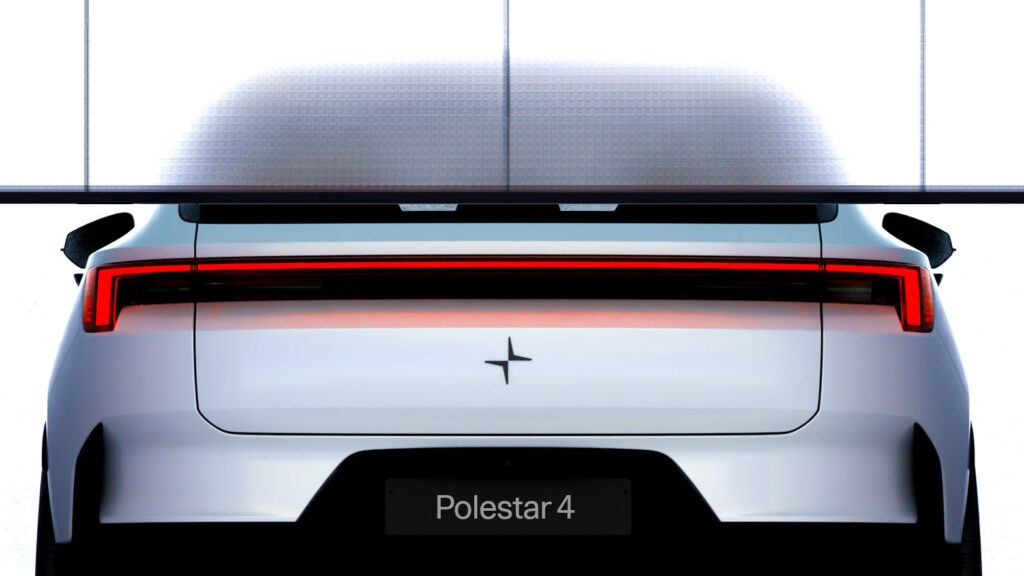
While the CEO didn’t get into details, candidates for future BST variants are the next-gen Polestar 2 sedan, the recently updated Polestar 3 SUV, and the Polestar 4 coupe crossover, which will soon gain an estate bodystyle.

As for the Polestar 5 grand tourer, it already packs 872 hp (650 kW / 884 PS) in Performance guise, meaning that an even hotter version could challenge the likes of the Audi RS e-Tron GT, Porsche Taycan Turbo GT, and Xiaomi SU7 Ultra.

Back in 2024, the company revealed the track-focused Polestar Concept BST that was based on the 6 roadster. However, the rollout of this model has been pushed back, with focus being shifted to more profitable models in mainstream segments.

\\\\\\

Polestar

EV Repair Costs Are Starting To Drop, But The Real Bill Is Hiding Elsewhere

  • Repairable EV collision claims rose sharply in 2025.
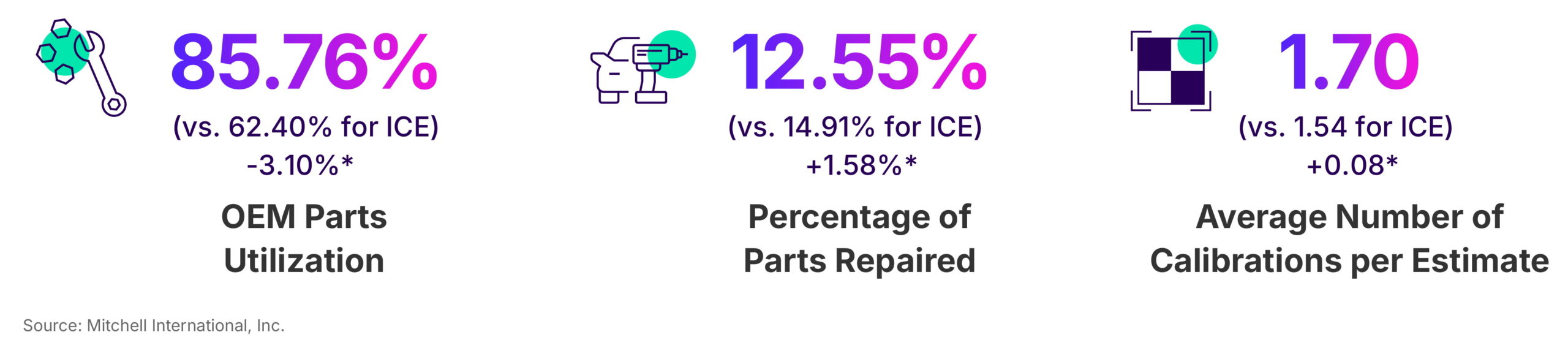
  • EVs required an average of 1.70 calibrations per estimate.
  • US EV total loss values fell 6% due to depreciation.

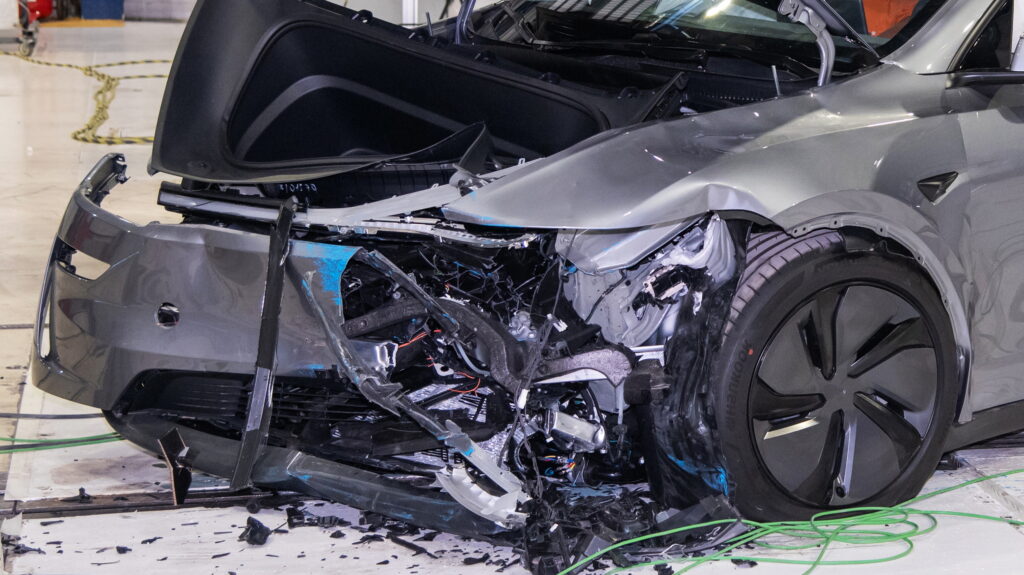
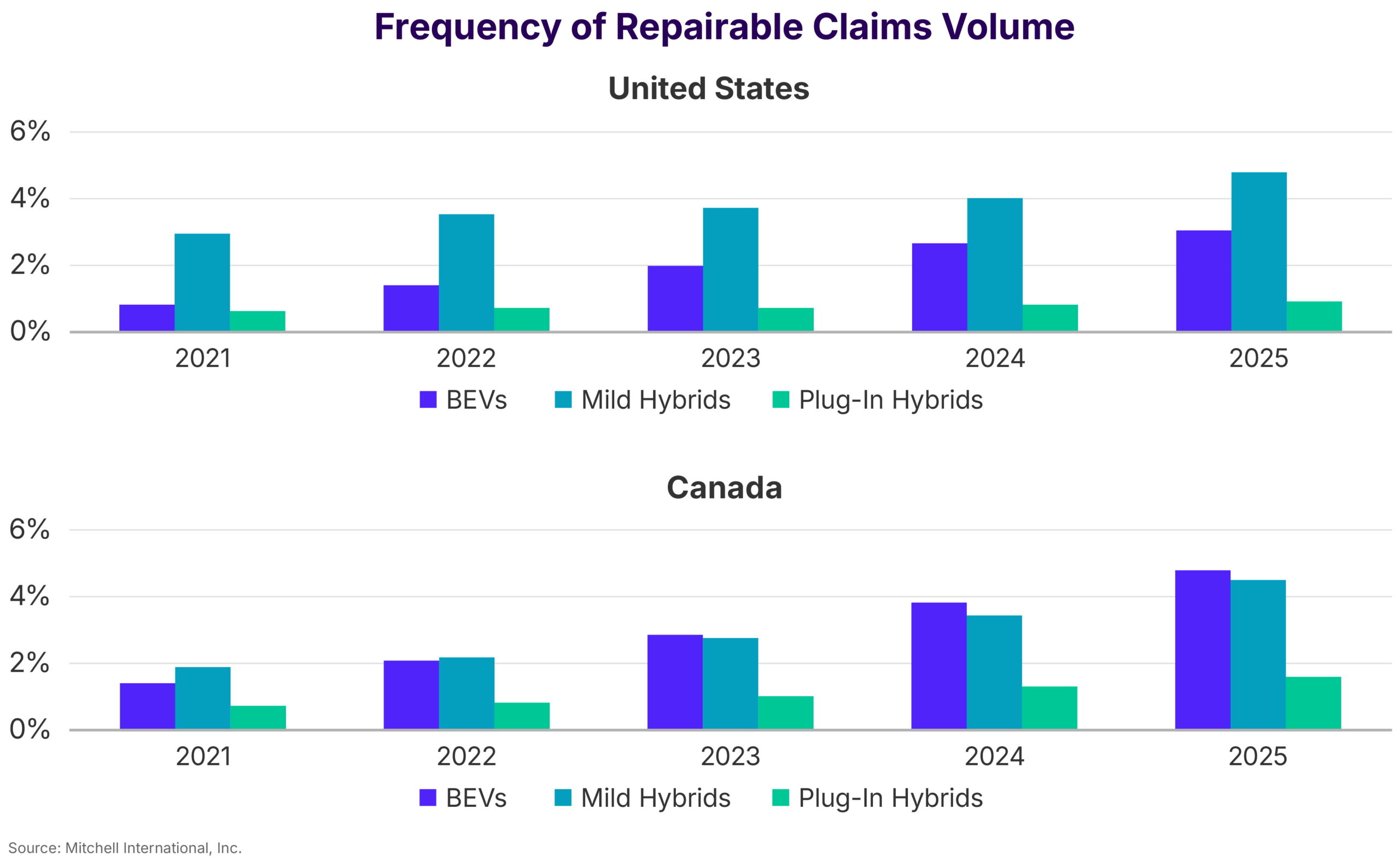
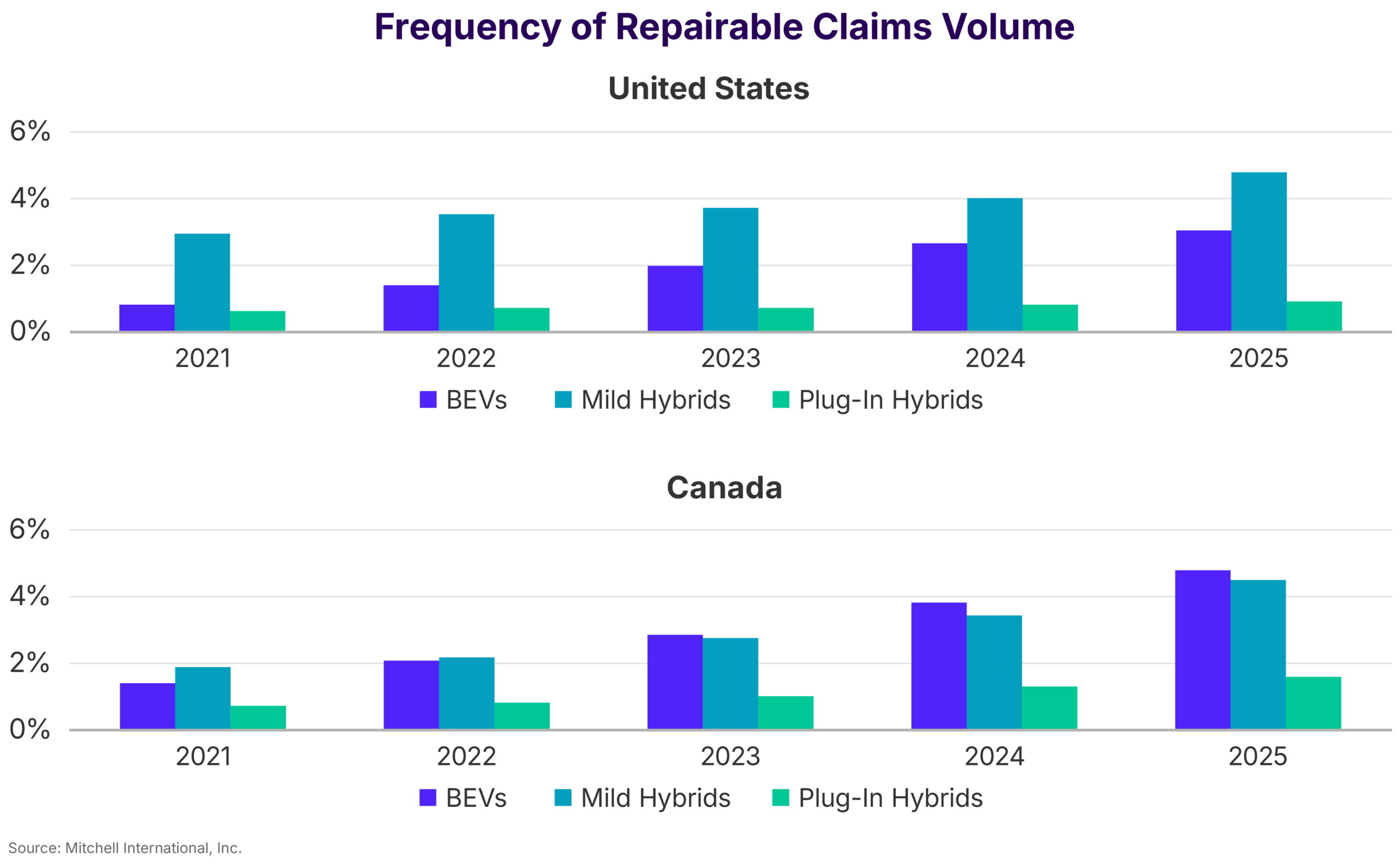
Electric vehicles are turning into a proper migraine for the insurance industry. According to the latest report from collision management software provider Mitchell, repairable collision claims for EVs jumped 14% in the US and 24% in Canada during 2025.

What makes these numbers particularly jarring is the fact that EV sales growth slowed down in 2025 as government tax incentives expired and consumer interest shifted to hybrids. Cox Automotive estimates that new EV sales dropped approximately 2% in the US, with S&P Global Mobility reporting a 0.4% decline in new EV registrations.

More: Car Repair Costs Are Exploding And It’s Not Just About Tariffs

Even Tesla’s grip on the market loosened slightly, with its US market share slipping to 46.2% from 48.7% in 2024 as more competitors gained ground.

Rising Repair Complexity

Even so, the existing EV fleet is aging into more accidents, and the complexity of repairing them is becoming a logistical and financial hurdle for the repair industry.

Ryan Mandell, Mitchell’s vice president of strategy and market intelligence, explained: “Due to their dense electrical architectures, software-driven systems and interconnected, sensor-heavy designs, these vehicles require additional diagnostic and calibration operations when damaged that can add cost, complexity and cycle time to each repair.”

 EV Repair Costs Are Starting To Drop, But The Real Bill Is Hiding Elsewhere

The “Plugged-In: EV Collision Insights” report also examined other electrified vehicles. Repairable claims for PHEVs increased 6% in the US and 26% in Canada in 2025. Mild-hybrid models (MHEV) recorded increases of 20% in the US and 29% in Canada. It is worth noting, however, that MHEV sales in the US surged 28% in 2025.

Also: Why Even The Smallest Accident Is Designed To Destroy Your Wallet

Across North America, British Columbia recorded the highest EV repair demand at 8.48%, followed by Quebec at 8.21% and California at 6.58%.

Which Models Top The Claims List?

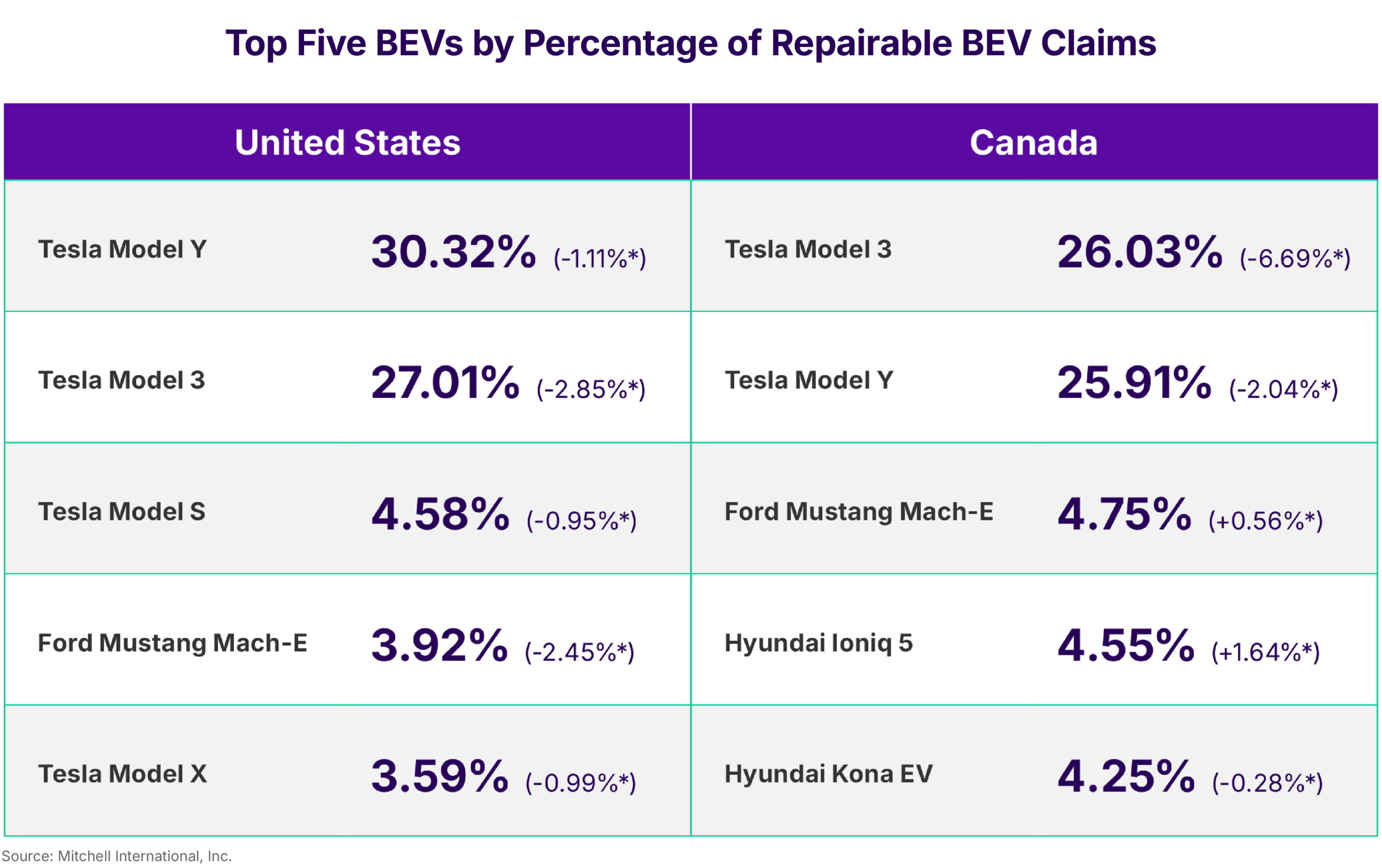
Looking at individual models, Tesla continues to dominate claims volume. In the US, the Model Y accounts for 30.32% of repairable BEV claims, followed by the Model 3 at 27.01%, meaning the two together represent more than half of all such claims. The pattern is similar in Canada, although the positions are reversed, with the Model 3 at 26.03% slightly ahead of the Model Y at 25.91%.

 EV Repair Costs Are Starting To Drop, But The Real Bill Is Hiding Elsewhere
*Difference between 2025 and 2024.

The Economics Of Fixing An EV

There is at least one sliver of good news. On the repair side, the average cost to fix an EV fell 5% in the US, from US$ 6,707 to US$ 6,395, and declined 2% in Canada in 2025. ICE-powered vehicles and PHEVs remained largely flat in the US, while MHEVs saw their average claim cost rise 4%, from $4,865 to $5,054.

Nevertheless, the higher repair complexity of electrified vehicles is reflected in their “calibrations per estimate” rating, which tracks how often sensors and systems must be recalibrated after repairs. In 2025, the average number of revisions was 1.70 for EVs and 1.63 for hybrids, compared to 1.54 for ICE-powered vehicles.

Mitchell’s data also shows that 86% of EV parts dollars go toward OEM components, with only 13% of parts deemed repairable rather than replaceable. For ICE-powered vehicles, 62% of parts dollars go to OEMs, and 15% of components are considered repairable.

 EV Repair Costs Are Starting To Drop, But The Real Bill Is Hiding Elsewhere
 EV Repair Costs Are Starting To Drop, But The Real Bill Is Hiding Elsewhere

The Depreciation Trap

Mitchell also reported that total loss market values declined across most powertrain types in 2025, with EVs seeing the sharpest drops. In the US, EV values fell 6%, from US$ 30,126 in 2024 to US$ 28,185 in 2025. In Canada, they dropped 13%, from CA$ 41,775 to CA$ 36,504.

More: China’s EV Boom Is Cooling, And The Big Names Are Feeling It

By comparison, ICE vehicle values declined 2.55% in the US, from $14,241 to $13,887, and 6.12% in Canada, from $17,049 to $16,005. Hybrids presented a more mixed picture, with US values rising 4.18%, from $18,453 to $19,225, while Canadian values fell 4.40%, from $30,268 to $28,938.

Analysts attribute the steeper EV declines to accelerated depreciation, the arrival of more budget-friendly models, and shifts in consumer sentiment.

 EV Repair Costs Are Starting To Drop, But The Real Bill Is Hiding Elsewhere

Volvo Walked Away From Wagons, Now Polestar Steps In

  • Polestar plans four new EV launches by 2028.
  • A more practical Polestar 4 wagon arrives this year.
  • A new Polestar 2 and 7 SUV will also join the range.

Polestar may be wrestling with the sort of losses that keep finance teams awake at night, but it is not backing off. The Geely-owned brand has four new EVs lined up before 2028, each aimed at the market’s sweet spots. On the way are the 5 grand tourer, a more practical wagon take on the 4, a fully reworked 2 sedan, and an all-new 7 compact SUV. Busy times ahead.

The “Wagon” Polestar 4

Polestar’s current best seller is the 4, though its coupe-style roofline has always leaned more toward drama than practicality. That changes in the fourth quarter of 2026, when a new variant arrives with roof rails and a redesigned tail, complete with an actual rear window. Revolutionary, we know.

The aim is to attract a “wider customer base”, which is executive-speak for people who enjoy seeing out the back.

More: Polestar 4 Pricing Is Out And So Is The Rear Window

CEO Michael Lohscheller says the updated 4 “combines the space of an estate and the versatility of an SUV with the dynamic performance that is Polestar”. In plain terms, it keeps the same underpinnings as today’s car but swaps in a reshaped silhouette and a roomier cabin. Same bones, more boots-and-dogs potential.

The Next-Gen Polestar 2

 Volvo Walked Away From Wagons, Now Polestar Steps In

Next up is a full new generation of the Polestar 2, due in early 2027. The current Tesla Model 3 rival has been around since 2019 and received a mid-lifecycle update in 2023, so a deeper rethink feels timely.

More: 2026 Polestar 2 Looks The Same But Hides Major Interior Upgrade

An official, albeit blurry, teaser suggests the 2 will trade its slightly crossover-ish stance for something lower and sleeker, complete with split LED headlights and a pared-back bumper design. Less high-riding fastback, more grounded sports saloon. Or at least that seems to be the direction of travel.

Europe-Built Compact SUV

 Volvo Walked Away From Wagons, Now Polestar Steps In

Then there is the Polestar 7, landing in 2028 as a contender in Europe’s largest EV segment. And yes, Polestar’s naming scheme remains mildly baffling. It will be built in Slovakia and share its hardware with Volvo models. Lohscheller describes it as a “progressive performance-driven car” offered at “a very attractive price point”.

The Grand Tourer Is Here

At the top of the tree sits the Polestar 5 grand tourer, which only reinforces the point about that confusing nomenclature. Revealed in production form at the 2025 Munich Motor Show, it is scheduled to begin European deliveries in summer 2026. This is the halo car, the statement piece.

It rides on a lightweight bonded aluminum platform and, in Performance guise, packs a dual-motor setup producing up to 872 hp (650 kW / 884 PS). That is comfortably in the realm of serious performance, and proof that Polestar still wants to talk about speed as much as sustainability.

Optimism Despite Heavy Losses

All of this comes against a complicated financial backdrop. Last year, Polestar posted its best-ever retail sales, shifting 60,119 vehicles, up 34 percent, while also wrestling with deepening losses.

Even so, the mood at the top remains upbeat. Despite what Lohscheller calls a “challenging geopolitical and economic environment”, he remains optimistic about the future: “We are targeting the heart of the EV market, where customer demand and profit pools are high.” Confident words. Now comes the hard part.

\\\\\\\\\\

Polestar

Jeep’s Smallest SUV Is Getting A Facelift, And It’s Not Just For Europe This Time

  • Camouflaged Jeep Avenger prototype spotted in winter testing.
  • The subcompact is due for a facelift in 2027, four years after launch.
  • Production of the SUV expands to Brazil with a localized version

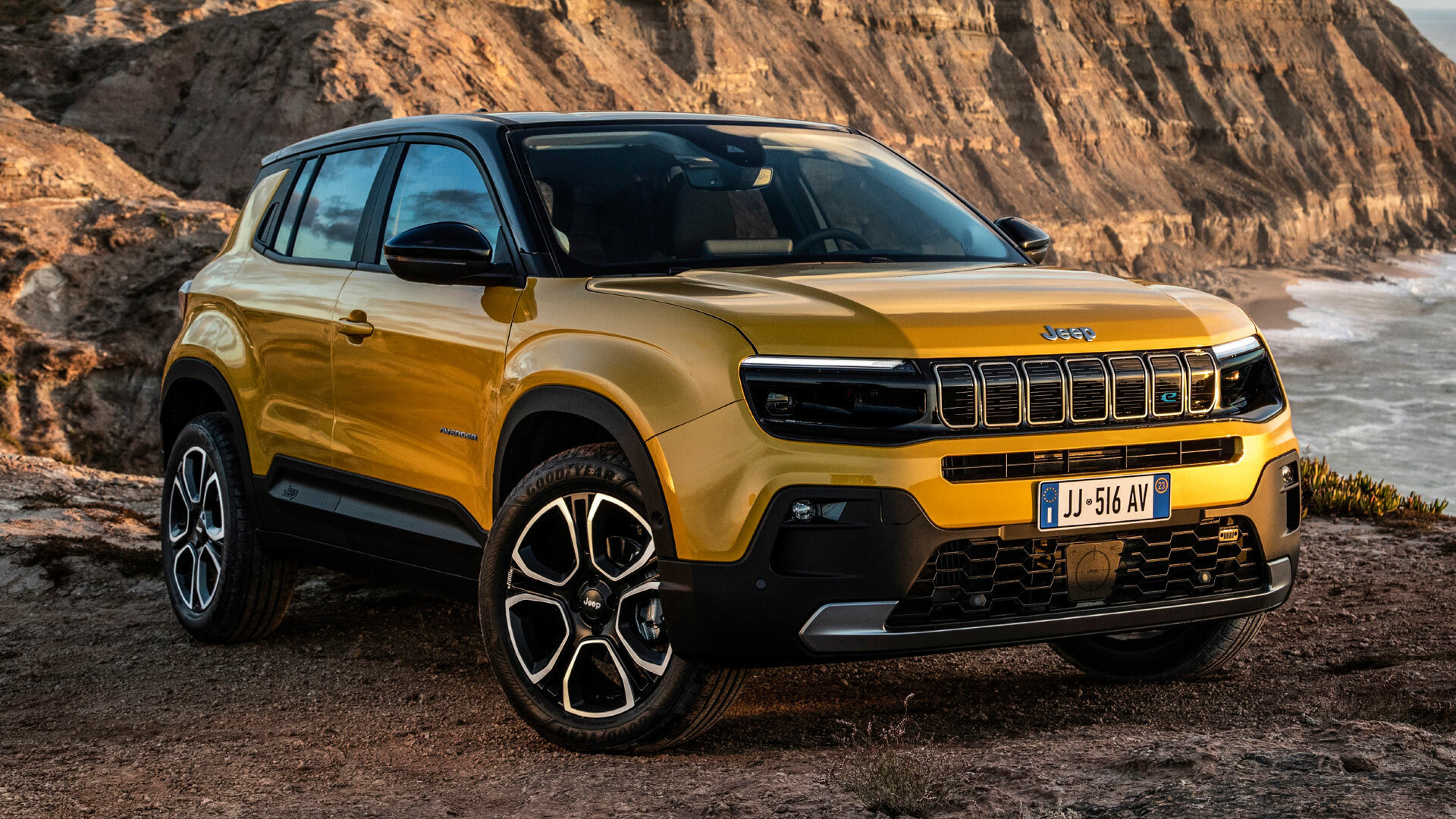
The Jeep Avenger might still seem fresh to many drivers, but Stellantis isn’t waiting around. Just a few years after its 2023 debut, the small SUV is already heading for a mid-cycle refresh. The updated model is expected to arrive in early 2027, and now, we’re getting our first look.

Caught during cold-weather testing in Europe, a camouflaged prototype hints at what Jeep may be changing on its smallest offering.

Review: Jeep Avenger EV Is A Fun Little Gem That’s Too Small For US

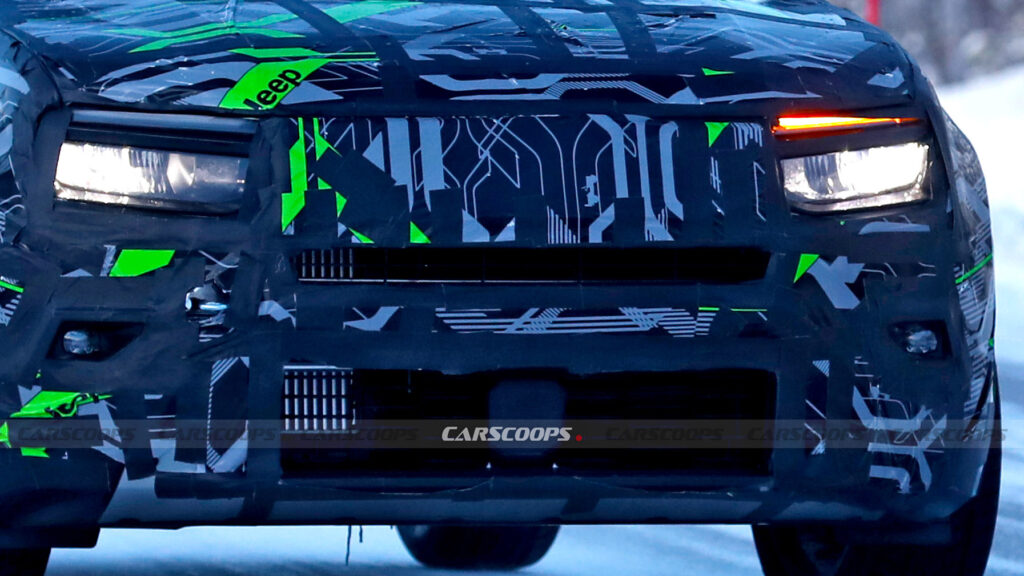
The development vehicle wears a full wrap with Jeep-branded graphics, doing its best to hide the details. But through a few narrow openings, the split LED headlights and cooling intakes seem to be in exactly the same spots as before. One noticeable adjustment, though: the fog lights have shifted slightly lower in the front bumper.

\\\\\\\\\\\\\\\\\\

Baldauf

The sculpted profile of the Avenger will most likely be carried over from the current version. Still, the plastic cladding might get a mild revision, and we’re expecting some new alloy wheel designs and exterior colors to freshen things up.

Review: Jeep Avenger Proves ICE And Manual Combo Can Still Be Compelling

At the back, the prototype doesn’t seem to wear any redesigned panels, although this could change as we move closer to the launch date. The single tailpipe suggests that the turbo 1.2-liter three-cylinder gasoline engine lies under the hood, either in non-electrified or mild-hybrid forms.

What To Expect Inside

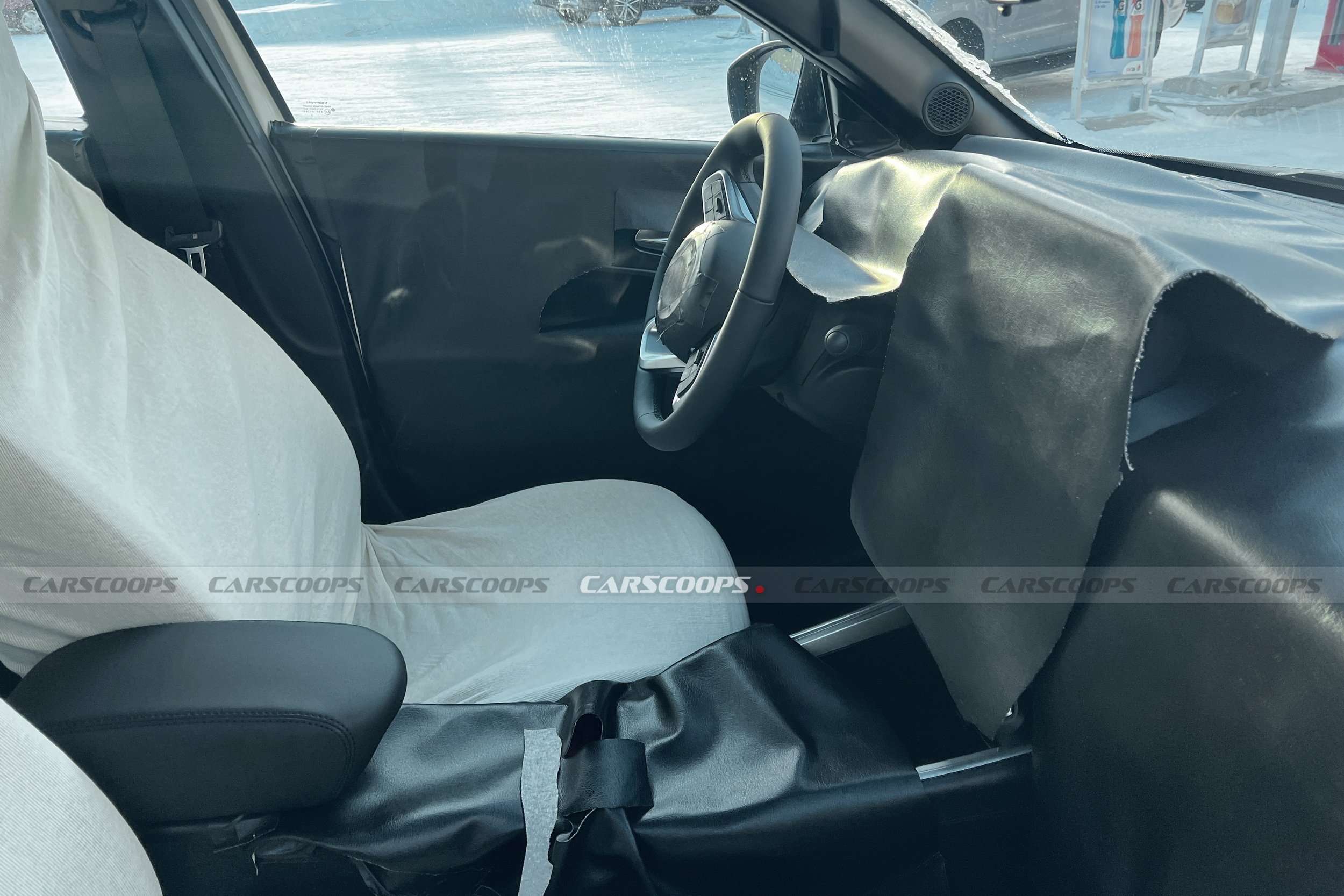
Our spy photographers managed to get a glimpse inside the cabin, though Stellantis engineers didn’t make it easy. Everything from the dashboard to the door panels and seats was concealed beneath vinyl. The SUV still appears to feature the free-standing infotainment display, positioned separately from the digital instrument cluster. Even so, the effort to hide it all suggests that changes are coming.

 Jeep’s Smallest SUV Is Getting A Facelift, And It’s Not Just For Europe This Time

It remains to be seen whether Jeep will add softer materials instead of the hard plastics of the current model, at least on the main touchpoints. We also expect that equipment will be updated with the latest connectivity and safety tech from the Stellantis parts bin.

As for the mechanical side, it’s too early for specifics, but there’s no sign of a major overhaul. The current Avenger offers internal combustion, mild-hybrid, and fully electric options, and that lineup will likely continue. An all-wheel-drive variant is already available through the mild-hybrid 4xe trim, and that setup should carry over.

More: Jeep’s Smallest SUV Will Be Built In South America With A Local Twist

The Avenger rides on Stellantis’s updated CMP/eCMP platform, shared with several other models including the Alfa Romeo Junior and Fiat 600. It also underpins the Lancia Ypsilon, Opel Corsa and Mokka, Peugeot 208 and 2008, and DS3. That shared DNA means many of the same components and configurations are likely to remain in play for the refresh.

\\\\\\\\\\\\\\\

Baldauf

We’ll keep watching the test fleet as Jeep continues development. With any luck, the next round of spy shots will reveal more by shedding some of the camouflage.

Outside of Europe, the smallest Jeep is getting ready for a wider rollout. Production will soon begin in Brazil, where the Avenger will be offered with region-specific updates. In fact, this camouflaged prototype might not just preview a facelift for Europe, it could also be part of the testing program for a localized South American version with its own powertrain changes.

 Jeep’s Smallest SUV Is Getting A Facelift, And It’s Not Just For Europe This Time
The fully electric version of the Jeep Avenger.

Honda’s Super-One Wants To Be A Hot Hatch So Bad It Pretends To Shift Gears

  • Honda reveals production Super-One ahead of its Japan launch.
  • Electric hot hatch gets wide arches, power boost, and fake noise.
  • UK, Europe, and Asia-Pacific markets confirmed for release.

Forget the clinical efficiency and silent hum of modern EVs. Honda has other ideas. The brand is channeling some of its spikiest ’80s spirit into the electric era, drawing a direct line from the analog madness of the City Turbo II to its latest pint-sized experiment.

After showing off a prototype at the Japan Mobility Show, Honda has pulled the curtain back on the production-ready Super-One via a new teaser site ahead of its domestic launch.

More: Honda Walks Back Its EV Plans As Losses Spiral

The Super-One isn’t just a slightly jazzed-up N-One e:. It’s a city-sized hot hatch, with a wider stance, upgraded chassis, and an electric powertrain that tries to evoke the grit of a gasoline engine with synthesized sounds. Honda says it’s a spiritual successor to the City Turbo II Bulldog from the 1980s.

Widebody Pocket Rocket

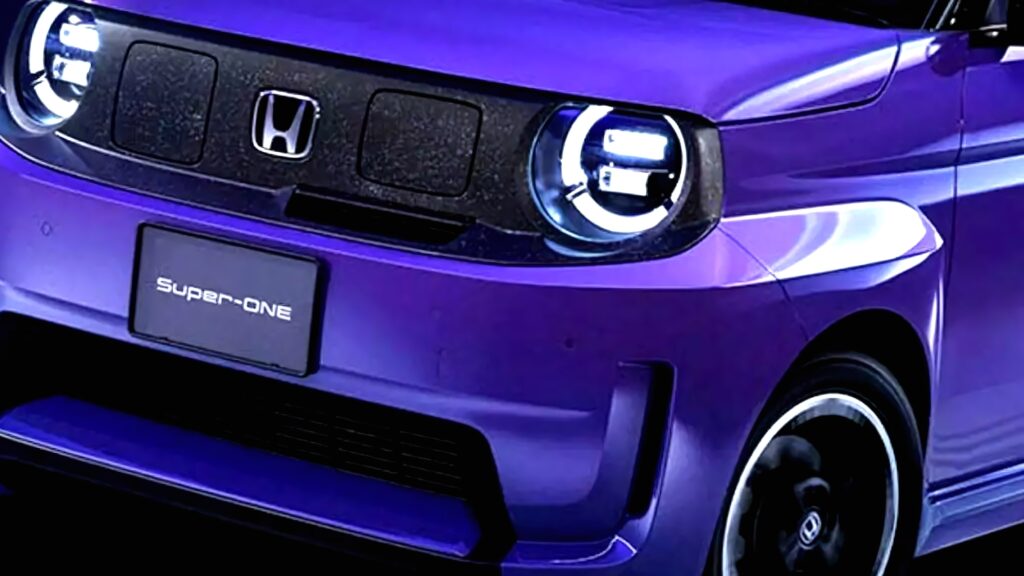
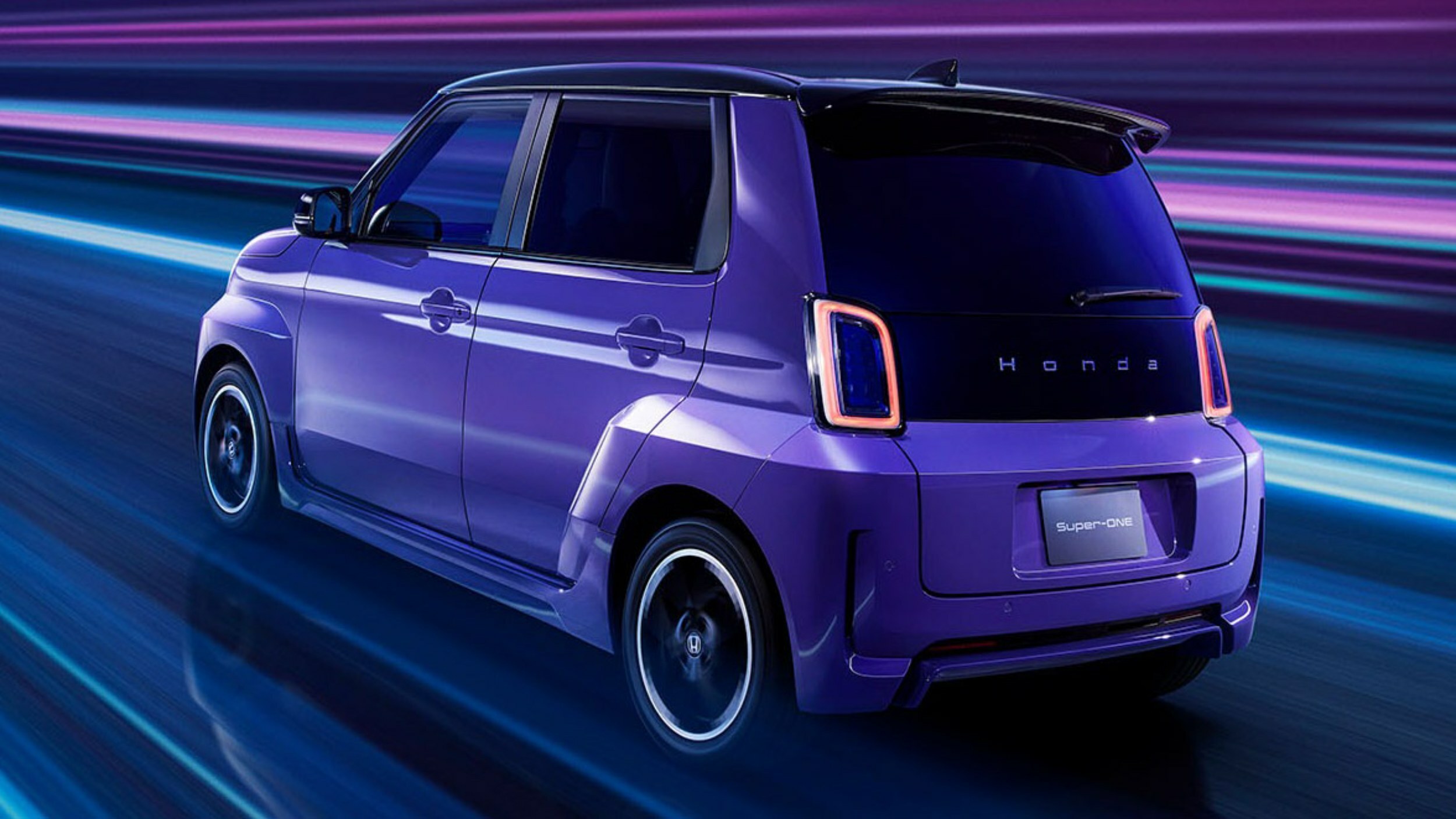
Visually, the Super-One stands out with reshaped bumpers featuring functional air ducts, distinctive “blister fenders” along the sides, and a roof spoiler. It also rides on a new set of 15-inch alloy wheels finished in matte Berlina Black with a machined face, paired with wider Yokohama tires.

\\\\\\\\\

In terms of size, the Super-One comes in at 3,589 mm (141.3 inches) long, 1,573 mm (61.9 inches) wide, and 1,616 mm (63.6 inches) tall. That makes it 194 mm (7.6 inches) longer, 98 mm (3.8 inches) wider, and 71 mm (2.8 inches) taller than the standard N-One e:, though it retains the same 2,520 mm (99.2-inch) wheelbase.

More: Prelude, Type R And CR-V Get Sporty HRC Makeovers, And Honda Didn’t Stop There

Honda has introduced a new color called Boost Violet Pearl, inspired by lightning and offered exclusively on the Super-One. Other available finishes include Platinum White Pearl, Crystal Black Pearl, Citron Yellow Pearl, and Mono Gray, each offered in both monotone and bi-tone combinations.

What About The Interior?

Inside, the dashboard layout is mostly carried over from the N-One e:, but the Super-One adds its own touches with reshaped seats featuring heavier bolsters, purple accents, and custom graphics for the 7-inch digital instrument cluster. When Boost Mode is activated, the display shifts to show a simulated tachometer.

\\\\\

Adding to the theatrics, the Active Sound Control system mimics gear shifts and engine growls through the standard eight-speaker Bose premium audio setup. Equipment levels are generous, with a 9-inch infotainment system, heated front seats, a heated steering wheel, and Honda’s full suite of advanced driver assistance features.

Power Boost

The pint-sized hot hatch is driven by a front-mounted electric motor. While Honda hasn’t officially confirmed the output, earlier details from the Singapore Motor Show in January suggest it delivers 94 hp (70 kW / 95 PS) in Boost Mode.

More: The Manual Honda That Thinks It’s A Baby Type R

That might not sound like a lot, but it represents a healthy increase over the 63 hp (47 kW / 64 PS) of the N-One e:. Even so, it is less powerful than the discontinued Honda e that produced 152 hp (113 kW / 154 PS) in its most potent form.

 Honda’s Super-One Wants To Be A Hot Hatch So Bad It Pretends To Shift Gears

The added power and increased width mean the Super-One will be classified as a passenger vehicle rather than a kei car. Honda has not yet revealed battery capacity or range figures, though the N-One e: uses a 29.6 kWh unit.

Rounding out the changes, the sporty EV features a custom chassis setup with a lowered suspension and wider tracks for improved handling.

How Much Does It Cost?

Full details on the Super-One’s pricing and launch timing will follow in the coming weeks. However, Japanese outlet Creative Trend reports that Honda is targeting a price range between ¥3,000,000 and ¥3,500,000 (approximately $19,700 to $22,900) before incentives.

That positions it higher than the standard N-One e:, which starts at ¥2,699,400 ($17,600) and can drop as low as ¥1,625,400 ($10,600) with full subsidies applied.

Following its debut in Japan, the Super-One will also reach additional markets including the UK, Europe, Australia, New Zealand, and select parts of Asia.

AC Schnitzer Can’t Wait For BMW, Gives i5 Its Own Facelift

  • AC Schnitzer shared new BMW i5 photos with aero-focused mods.
  • The electric sedan wears a subtle kit and 21-inch alloys.
  • Owners can add lowering springs and wheel spacers for stance.

BMW is already preparing a mid-cycle refresh for the 5-Series and its all-electric sibling, the i5, but current owners don’t have to wait for the facelift to give their cars more visual presence. Thanks to aftermarket specialists like AC Schnitzer, there are already options on the table.

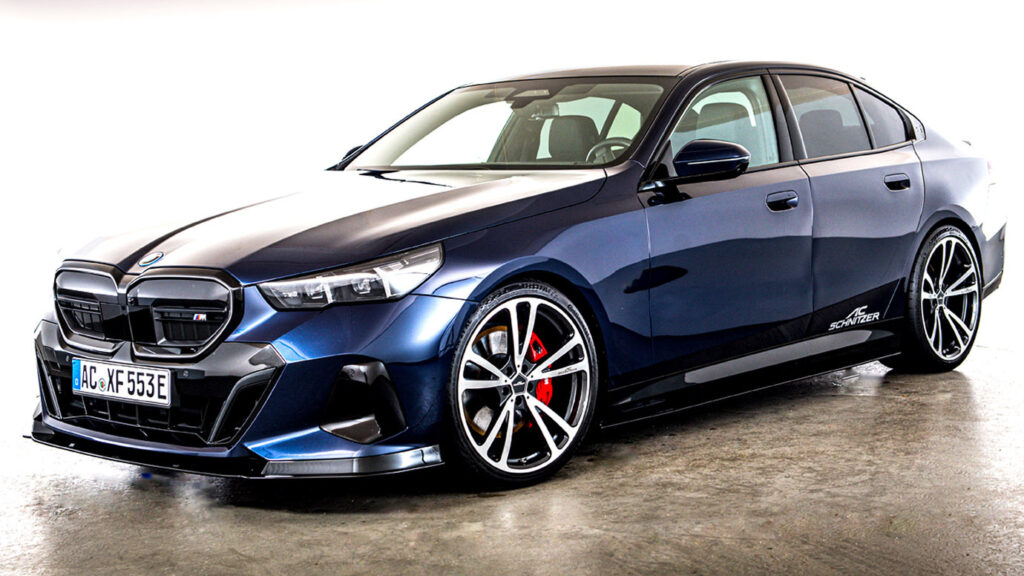
The German tuning brand has just released images of a newly modified i5 that comes across as a more civilized version of the ultra-aggressive M5.

More: What Happens When The M5 Loses Restraint And Gains Nearly 800 HP

AC Schnitzer originally announced a series of styling and chassis upgrades for the G60/G61 generation in 2024. At the time, the preview focused on the internal combustion variants. This latest update showcases the same upgrades applied to the fully electric i5, specifically the range-topping M60 xDrive model.

What Does The Package Include?

\\\\\\\\\\\

The styling kit brings a more aggressive stance, starting with a front splitter that works in tandem with matching side skirts and two distinct spoilers at the rear. Touring models get their own unique rear spoiler variation. These parts are tailored for i5 units equipped with the M Sport package, which already comes with sportier bumpers as standard.

For those who want an extra dose of visual drama, the tuner offers stripe decals along the sides. The most impactful upgrade, however, might be the new alloy wheels, which come in three designs, multiple finishes, and sizes ranging from 19 to 21 inches in diameter.

More: BMW’s Neue Klasse Plan Starts To Blur As You Look At The 2027 5-Series

The example shown wears 21-inch AC3 FlowForming wheels with a five double-spoke pattern, paired with bold red brake calipers for contrast. Suspension tweaks include lowering springs that reduce ride height by 20 to 25 mm (0.8 to 1 inch), along with spacers that increase the track width by 20 mm (0.8 inch), giving the i5 a more grounded stance.

\\\\\\

The i5 M60 xDrive donor car is the most powerful electric version in the 5-Series lineup. Straight from the factory, it’s equipped with dual electric motors delivering a combined 593 hp (445 kW / 601 hp) and 820 Nm (605 lb-ft) of torque.

Still, AC Schnitzer insists that’s “not enough” for its tuning team. Even so, it’s unlikely they’ll venture into performance upgrades for the EV, instead reserving those efforts for the internal combustion models, including the upcoming M5.

What Do The Upgrades Cost?

As for the cost of dressing up the i5, the upgrades are mostly shared with the standard 5-Series. The front splitter is priced at €1,290 ($1,500), while the side skirts come in at €840 ($1,000). The roof spoiler adds €490 ($580), and the subtle rear lip spoiler another €540 ($640).

Wheels represent the biggest investment, potentially adding up to €5,390 ($7,700) depending on spec. Additional parts include spacers at €486 ($580) and lowering springs priced at €581 ($830).

\\\\\\\\\

AC Schnitzer

VW’s ID. Buzz Picks Up A Feature No Minivan Has Any Business Offering

  • VW has launched factory partition for the cabin of the ID. Buzz.
  • The composite wall adds cargo-style utility to the five-seater EV.
  • Available for SWB and LWB models, it costs €1,856 in Germany.

Ever wished your family-friendly van could moonlight as a workhorse? Volkswagen Commercial Vehicles is narrowing the divide (quite literally) between passenger comfort and utility with a new factory accessory designed for the European market ID. Buzz.

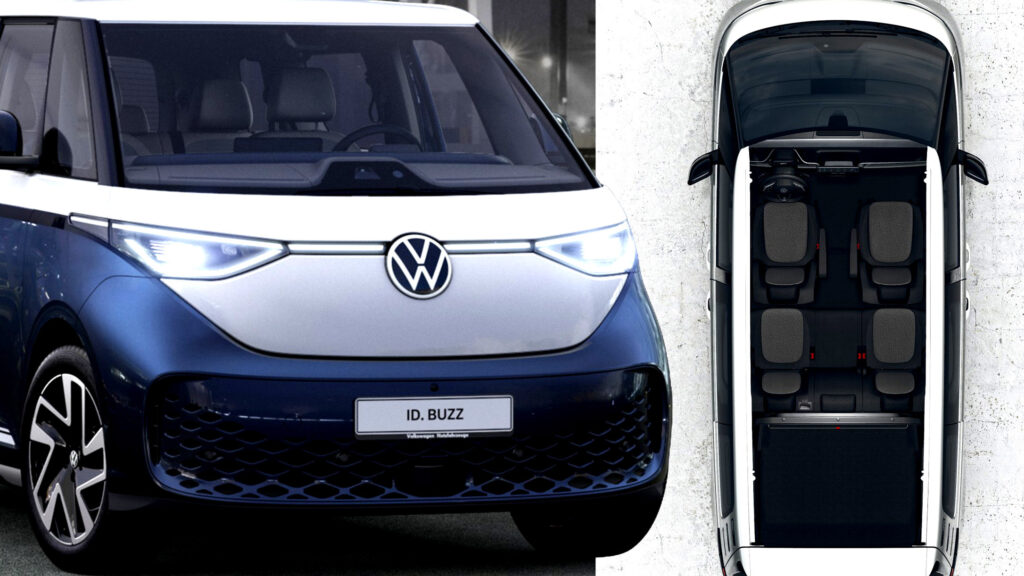
Developed in collaboration with long-time partner Snoeks Automotive in the Netherlands, the fixed partition gives owners a way to convert the rear of their five-seat electric van into a proper cargo area, without sacrificing everyday practicality.

More: VW Spruces Up ID.Buzz Cargo With Factory Bodykit And Fake Windows

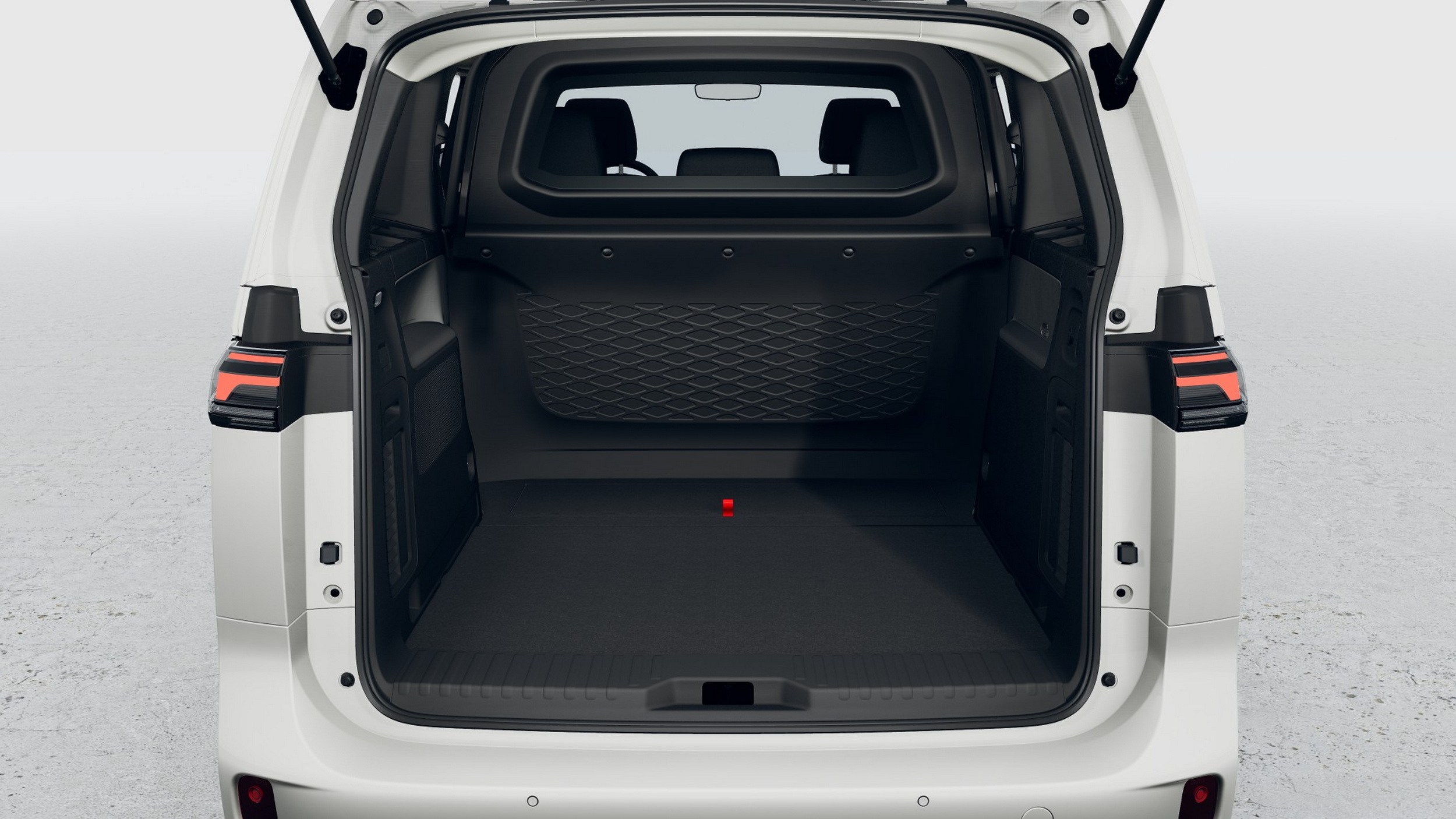
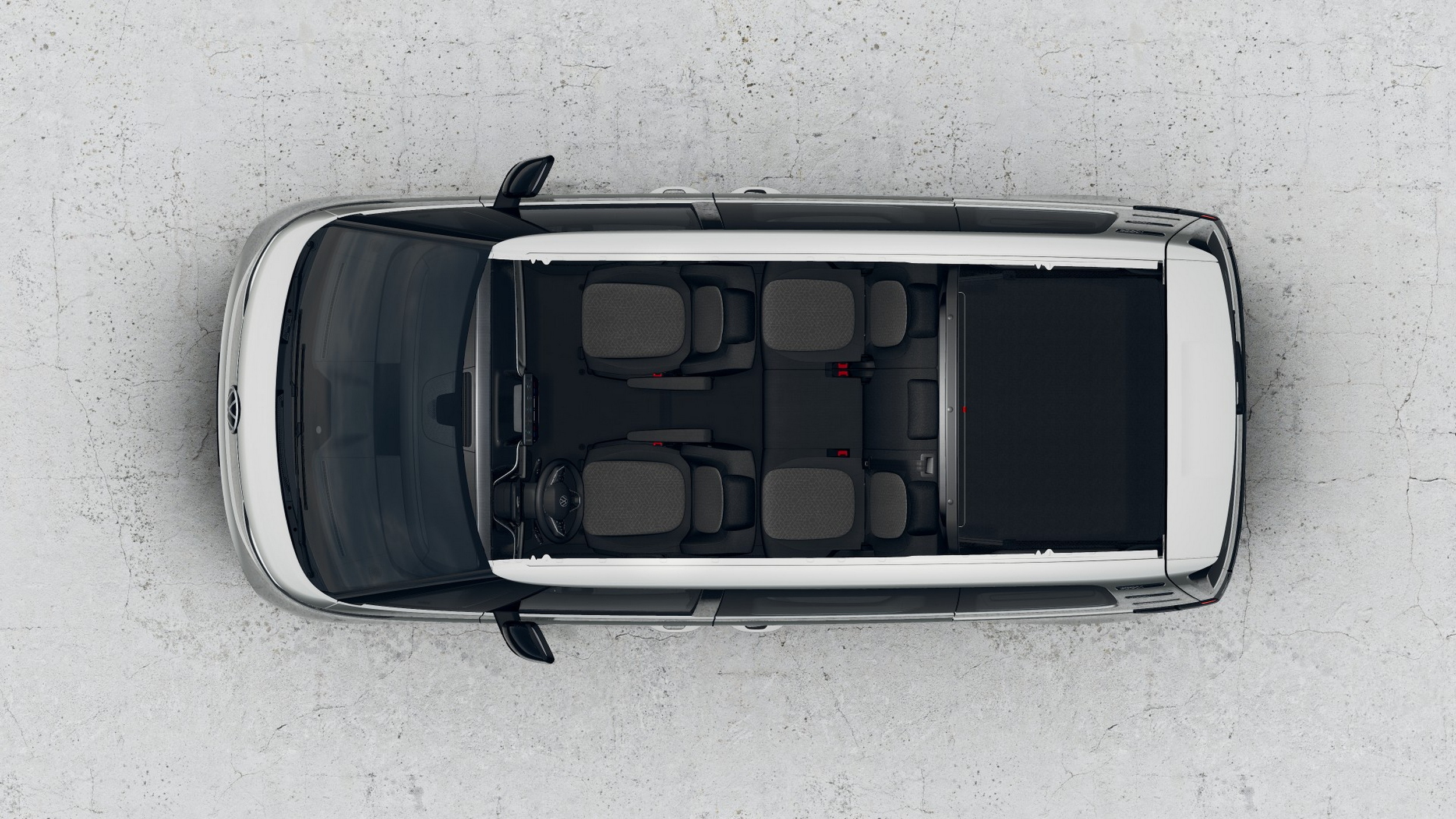
The new partition is mounted directly behind the second row and includes a window, preserving the ID. Buzz’s five-seat layout while creating a separate floor-to-ceiling cargo space much like the ID. Buzz Cargo variant.

Beyond safety, the partition keeps dirt, smells, and noise from the cargo area out of the cabin, while also helping the climate control system work more efficiently by reducing the volume of the space that needs to be heated or cooled.

 VW’s ID. Buzz Picks Up A Feature No Minivan Has Any Business Offering

The divider is made from Compax, a composite material known for being both lightweight and durable. To avoid a purely industrial feel, Volkswagen finished it in a high-grade soft-touch surface. There’s even a built-in storage compartment under the floor, designed specifically to hold the charging cable. Importantly, the setup doesn’t interfere with rear seatbelts or the operation of the side airbags.

More: VW’s New Van Shows Up In GTI Cosplay, But No One Told The Engine

The new accessory can be fitted to both the standard and long-wheelbase versions of the ID. Buzz. For the short wheelbase, it’s offered on the Freestyle, Pure, Energy, and Pro trims. For the longer model, it’s available on the Energy and Pro lines. In Germany, pricing starts at €1,856.40, or roughly $2,000 based on current exchange rates.

While the ID. Buzz remains part of VW’s European lineup, the electric minivan has skipped the 2026 MY in the US market, due to lower-than-expected demand. A return isn’t off the table, though. Volkswagen may bring it back in 2027 with more substantial updates aimed at attracting US buyers.

 VW’s ID. Buzz Picks Up A Feature No Minivan Has Any Business Offering

Volkswagen Commercial Vehicles

He Put 165,000 Miles On His Xiaomi, And The Real Surprise Was The Battery

  • Owner averaged 373 miles daily, driving more than some taxis.
  • Brake pads never replaced, thanks to regenerative braking system.
  • Car used 47,800 kWh of power, equal to 506 full charge cycles.

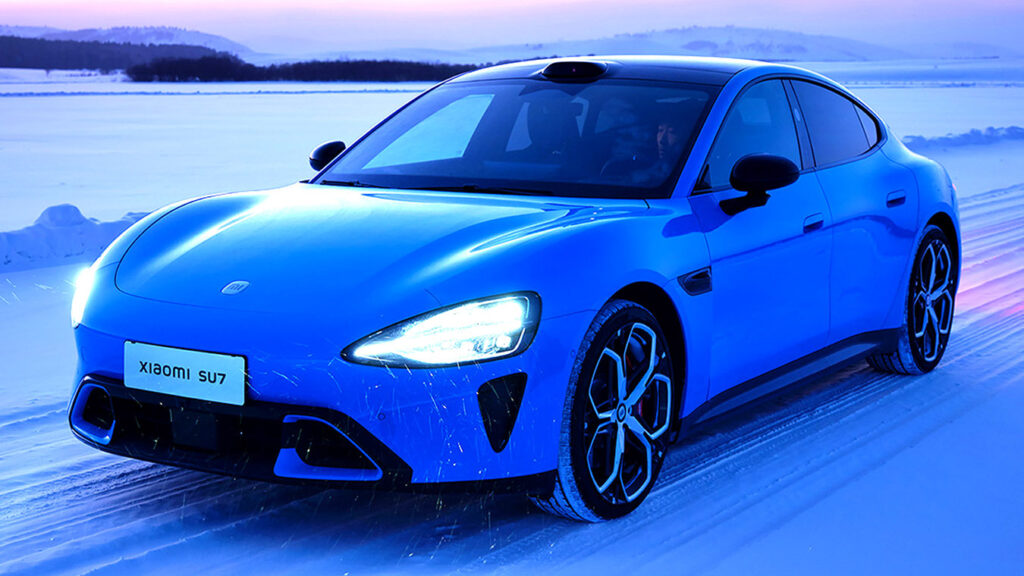
The Xiaomi SU7 hasn’t been on the market for very long, but one owner in China put the electric sedan through its paces at a rate higher than most taxis. The model has covered an astonishing 165,134 miles (265,757 km) in just 16 months (476 days), offering a real-world look at how the EV hardware handles heavy use.

What is likely the highest mileage Xiaomi in existence was highlighted on a video that was uploaded on Bilibili by Jackson’s Sunset Drive. The vehicle in question is an Aqua Blue SU7 Pro owned by Mr. Feng, who drove an average of 373 miles (600 km) every day since he took delivery.

More: His Hyundai Ioniq 5 Battery Still Held 88% After 360,000 Miles

For context, the daily trip matches the distance between Los Angeles and San Francisco, with the total distance covered being the equivalent of 6.63 times the circumference of the Earth.

Battery Health After 165,000 Miles

The most impressive takeaway from the high-mileage experiment is the battery’s state of health, as measured by an official Xiaomi service station. Despite the intensive usage, the 94.3 kWh lithium iron phosphate Shenxing battery pack from CATL has retained 94.5% of its original capacity.

As Carnewschina points out, the rival Tesla Model 3 Long Range comes with an eight-year, 120,000-mile (193,120 km) warranty, promising a battery health of at least 70 percent after that period.

 He Put 165,000 Miles On His Xiaomi, And The Real Surprise Was The Battery

Minimal Wear And Tear

In the case of the Xiaomi, it isn’t just the battery that is holding up. The owner claims the vehicle has never required a brake pad replacement, which is a testament to the efficiency of its regenerative braking system. Furthermore, the coolant remains pure, with zero water contamination.

More: After 100K Miles, VW’s EV Barely Lost Range Thanks To One Trick

The Pro trim of the fully electric sedan is fitted with a rear-mounted motor producing 295 hp (220 kW / 299 PS) and 400 Nm (295 lb-ft) of torque. According to the automaker, the 94.3 kWh battery offers a CLTC range of 830 km (516 miles) in this variant.

Fuel Savings

Doing the math, based on an estimated efficiency of 18 kWh/100km, Mr. Feng’s Xiaomi has consumed roughly 47,800 kWh of electricity over the past 18 months. This translates to around 506 full charge/discharge cycles for the 94.3 kWh battery.

 He Put 165,000 Miles On His Xiaomi, And The Real Surprise Was The Battery

Overall, Mr. Feng estimates that by opting for the electric sedan over an ICE-powered vehicle he has saved over ¥100,000 ($14,400) in fuel costs over the 265,757 km (165,134 miles). That is a significant amount considering that the starting price of a Xiaomi SU7 Pro is ¥245,900 ($35,400) in China.

More: Ford’s Jim Farley Was “Shocked” After Tearing Down Chinese And Tesla EVs

Predictably, the video has gained traction and was even shared by Xiaomi CEO Lei Jun. The owner revealed that he plans to continue racking up miles on his EV, targeting to reach 600,000 km (372,823 miles) within three years.

The Xiaomi SU7 has recently made headlines for outselling the rival Tesla Model 3 in China, with 258,164 units delivered in 2025. The company has already announced a refreshed version of the sedan, which is set to arrive in April 2026 with more advanced ADAS, a standard LiDAR, and a longer driving range of up to 560 miles (902 km) in the CLTC cycle.

\\\\\\\\

Xiaomi

Avatr Just Extended The 06 In More Ways Than One

  • Avatr 06T is a shooting brake version of the 06 sedan.
  • Targets Nio ET5T with BEV and EREV powertrains.
  • Debuts Huawei’s new LiDAR and ADS 4.0 tech suite.

Update: Following a series of teasers, Avatr has unveiled the first official photos of the wagon, revealing its exterior design in full for the first time.

Even as SUVs continue to dominate global sales, the Chinese market still makes room for sleeker wagons. One of the latest to step forward is the Avatr 06T, a streamlined shooting brake designed as a more practical counterpart to the brand’s electric sedan aimed at the Tesla Model 3.

The automaker has revealed the exterior design of the new model ahead of an imminent debut. As expected, the front design, complete with split LED headlights, is carried over from the Avatr 06 sedan launched last year. What sets the 06T apart are the roof rails and an extended roofline that flows into a reshaped rear section.

More: Avatr’s 18-Foot Concept Makes The Ghost Look Petite And Germans Look Twice

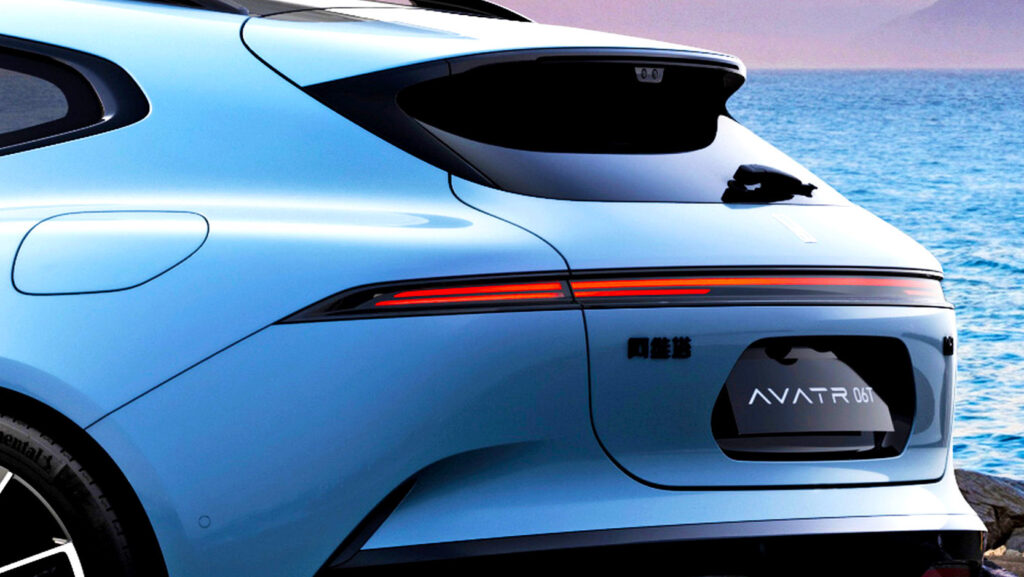
The rear shoulders are more defined, and the rising beltline contributes to a sportier stance than the sedan, helped along by a prominent rear spoiler. The wagon also features a steeply inclined rear windscreen, setting it apart from the sedan’s windowless tail.

\\\\\\\\\\\\

The slim full-width LED taillights have a Jaguar-like feel and are paired with a sculpted bumper and an aerodynamic diffuser. The black cladding on the profile and tail sends crossover vibes, although Avatr designers decided to keep the wheel arches clean.

More: Kia Built A New Wagon In Mexico That Looks Better Than The Sedan

Another important update is the revised door handles that deviate from the flush design of the sedan. This is probably the company’s response to China’s new rules about door handles, and will gradually find its way to the rest of the lineup.

The 06T is expected to share the same 2,940 mm (115.7 inches) wheelbase as the 06 sedan, with an overall length of 4,855 mm (191.2 inches).

Inside, the layout will likely carry over too, including the 35.4-inch display along the base of the windshield and the 15.6-inch touchscreen running HarmonyOS 5.0. Rear passengers can expect more headroom and additional space for luggage.

 Avatr Just Extended The 06 In More Ways Than One
Avatr 06 Sedan

Huawei Hardware Takes the Lead

The wagon will be the first model to feature Huawei’s next-generation 192-line LiDAR sensor, mounted on the roof, along with the latest Qiankun ADS 4.0 driver assistance system. The updated LiDAR boosts detection range to 250 meters (820 feet), a 20 percent improvement over the previous version.

Underneath, the 06T is expected to share its platform with the 06 sedan and the closely related 07 SUV. Both offer a choice between fully electric and range-extender powertrains. The dual-motor EV delivers up to 590 hp (440 kW / 598 PS), while the EREV variant offers a combined range of up to 1,250 km (777 miles). Both versions support 5C fast charging.

\\\\\\\

When Will It Arrive?

The Avatr 06T is slated to launch in the Chinese market in the coming months. It will compete more directly with the Nio ET5T than with high-end wagon offerings like the Denza Z9 GT, Stelato S9T, and Zeekr 007 GT. Pricing hasn’t been announced, but the 06 sedan currently starts at ¥209,900 ($30,200) in China.

The growing appeal of the 06 and 07 has helped Avatr push average monthly sales to around 10,000 units in China. Even so, the automaker, backed by Changan, Huawei, and CATL, still needs higher volume to keep pace with rivals like Zeekr and Nio.

Toyota’s New EV Kei Vans Cost Three Times More Than Their Gas Versions

  • Toyota and Daihatsu launch electric kei vans in Japan.
  • Powertrain delivers 63 hp and up to 160 miles of range.
  • Prices are nearly triple those of gasoline equivalents.

After years of delays and development setbacks, Japan’s long-awaited electric kei vans from Toyota, Daihatsu, and Suzuki have officially made the leap from concept to production.

The three brands have confirmed the market launch of their collaborative battery-powered van lineup: the Toyota Pixis Van BEV, the Daihatsu e-Hijet Cargo, and the Daihatsu e-Atrai RS. Suzuki’s equivalent, the nearly identical e-Every, is also on the way. These production models arrive almost three years after the original trio debuted in prototype form back in 2023.

More: Daihatsu Hijet Is Available In 26 Configurations, Including Tiny Dump Trucks

On the outside, these new zero-emission vans mirror their combustion-engine siblings, which have been on sale since 2021. The main visual clue is the addition of a charging port on the front bumper.

Between the Toyota and Daihatsu versions, the only visible difference lies in the badges. The e-Atrai RS, Daihatsu’s more passenger-friendly variant, is sold exclusively in a single RS trim. It features black steel wheels, color-matched accents, chrome detailing, and power sliding doors on both sides.

\\\\\

Inside, the highlight is the new shifter, sourced from other Toyota models such as the Prius. Equipment includes heated front seats and auto A/C for greater efficiency, a USB port, an AC 100V outlet for powering external devices, and an enhanced preventing safety system called Smart Assist.

Practicality remains central, with an overhead compartment and smart storage solutions integrated throughout the cabin. More importantly, the move to electric power leaves both the cargo space and the 350 kg (772 lb) maximum load capacity untouched.

Fully Electric Powertrain

The kei vans are identical under the skin, riding on the Daihatsu New Global Architecture (DNGA) platform with a new powertrain developed jointly by Suzuki, Daihatsu and Toyota.

More: Daihatsu Built A Sleeper Kei Car With A Roll Cage And It’s Headed For Sale

A single rear-mounted electric motor (e-axle) produces 63 hp (47 kW / 64 PS) and 126 Nm (93 lb-ft) of torque. That matches the output of the turbocharged 660cc three-cylinder gasoline engine, with an added 35 Nm (26 lb-ft) of torque.

\\\\\

The floor-mounted lithium-ion battery pack has a capacity of 36.6 kWh, allowing a WLTC range of 160 miles (257 km) between charges. This is 36 miles (57 km) more than the targeted figure during development, and should be enough for urban deliveries. It is also slightly better than the 152 mile (245 km) range of the Honda N-Van e: which is their main competitor.

A full charge is completed in around 6 hours from a standard 6 kW outlet, while a 50 kW fast charger will take it to 80% in 50 minutes. Finally, the EVs are compatible with Vehicle-to-Home (V2H) technology.

More: For $8,500, Nissan Will Sell You A Kei Truck That Still Thinks It’s The ’90s

Engineers have also applied BEV-specific structural reinforcements to the chassis, promising better handling thanks to the lower center of gravity, and improved ride comfort thanks to the new trailing-link rigid-axle rear suspension and the optimised spring rates.

\\\\\\\\\\\\\\\\\\

A Premium for Zero Emissions

The jump to electric doesn’t come cheap. Both the Toyota Pixis Van BEV and Daihatsu e-Hijet Cargo start at ¥3,146,000 (about $20,300 at current exchange rates) in Japan, nearly three times the cost of their entry-level gasoline counterparts, which begin at ¥1,100,000 (roughly $7,100). The Daihatsu e-Atrai RS comes in higher still, starting from ¥3,465,000 ($22,400).

Production will take place at Daihatsu’s plant in Nakatsu, Japan. Toyota is targeting 50 sales per month, while Daihatsu expects to move around 300 units monthly.

❌