Reading view

There are new articles available, click to refresh the page.

Kia Makes Regular Vans Feel Outdated With New PV7
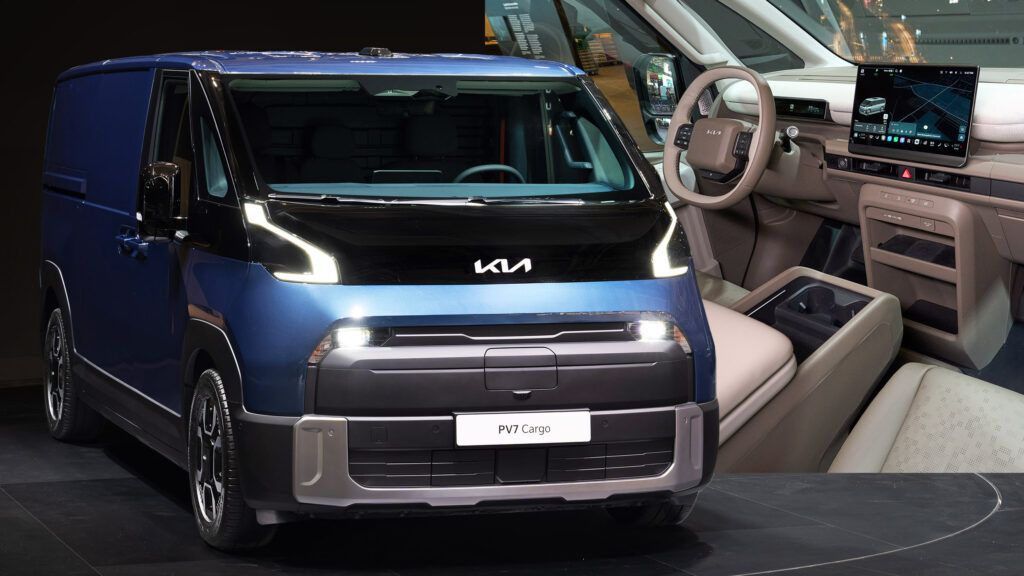
  • Kia introduced the production version of the fully electric PV7 van.
  • It offers up to 460 km (286 miles) of range and supports fast charging.
  • Sales in Europe and Korea will commence in the second half of 2027.

Kia has introduced the all-new PV7 at the IAA Transportation 2026 in Hannover, Germany. Positioned as the big brother of the Kia PV5, the electric van brings increased cargo volume, a heavier payload, and a more advanced 800V architecture.

Design-wise, the production PV7 is an evolution of the 2024 concept, sharing styling cues with the PV5. The van features split LED headlights on its short nose, a wraparound greenhouse, sculpted fenders, sliding rear doors, and a generous amount of protective cladding around the bodywork. According to Kia, the plastic bits prone to damage are replaceable to simplify repairs and reduce downtime.

More: Kia Brought Its Electric Van To America As Something New York Actually Needs

Inside, the modern dashboard looks nothing like your typical workhorse. The digital cockpit comprises a 9.9-inch instrument cluster and a 14.6-inch touchscreen running the Android-based Pleos Connect infotainment system and incorporating the Gleo AI voice assistant. Occupants are also treated with ambient lighting, plenty of storage compartments and physical buttons on the two-spoke steering wheel and under the central display.

\\\\\\\\\\\\

Kia

The standard PV7 measures 5,350 mm (210.6 in) long and has a 3,500 mm (137.8 in) wheelbase. Those figures make it 655 mm (25.8 in) longer than the PV5, although it remains smaller than large vans like the Ford E-Transit. Still, Kia will roll out Long and High Roof versions in the future, bringing greater cargo-carrying capabilities. Overall, the PV7 lineup will eventually include no less than 23 variants.

More: Crown Vics Chased Suspects On The Ground. Kia’s Police Van Chases Them From The Sky

The automaker showed the three-seater Cargo and nine-seater Passenger variants of the PV7. The latter adds rear windows and a regular tailgate instead of barn doors.

The Cargo Long has a volume of 6.1 cubic meters (215.4 cubic feet), while the Cargo High Roof can handle 8 cubic meters (282.5 cubic feet). Maximum payload is rated at 1,200 kg (2,646 lbs) for the PV7 Compact, while longer items can slide under the passenger seat thanks to a load-through partition.

\\\\\\\\\\\\\\\\\\\\\\\\\\

Kia PV7 Cargo

For shuttle and fleet operations, the PV7 Passenger offers 7-seat, 9-seat, and 11-seat configurations arranged in three or four rows. The three-row seven-seater adopts Kia’s Long-rail Easy Remove seat system, allowing rear seats to slide or be completely removed. It also has rear climate controls and USB-C charging ports. In terms of safety, the van gets seven airbags and a comprehensive ADAS suite.

More: Hyundai’s New Nine-Seat Electric Van Matches The ID. Buzz On Price And Beats It On Size

The PV7 rides on the EV-dedicated E-GMP.S platform, but instead of the PV5‘s 400-volt system, it gets an 800-volt architecture. It is powered by a single front-mounted electric motor producing up to 268 hp (200 kW / 272 PS) and 420 Nm (310 lb-ft) of torque.

\\\\\\\\\\\\\\\\\\\\\\\\\\\\\\\\

Kia PV7 Passenger

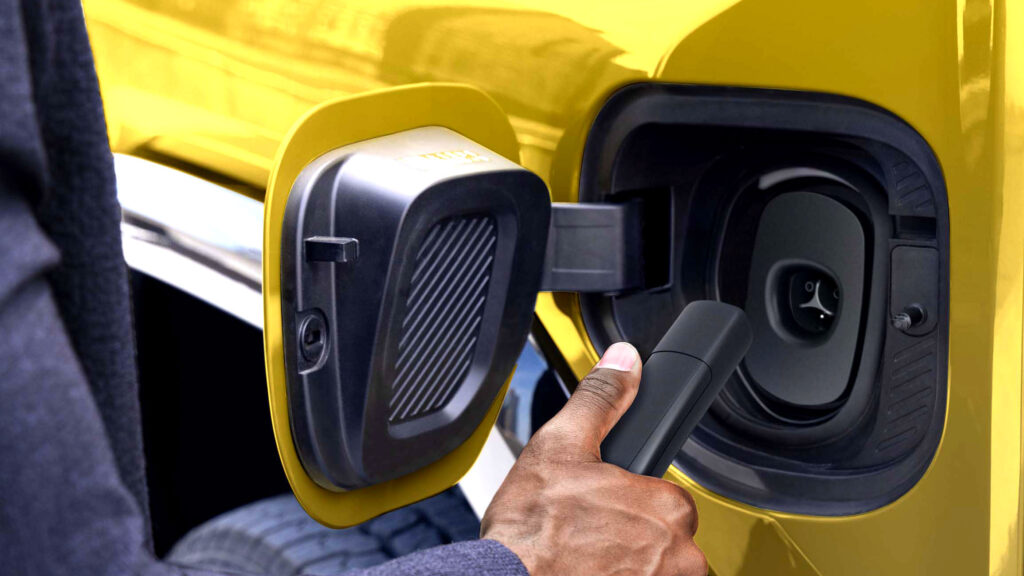
Buyers will get the choice between a 71.5 kWh battery or a larger 96.2 kWh unit. The latter offers a WLTP range of over 460 km (286 miles) for the PV7 Cargo. More importantly, the battery can charge from 10-80% in around 25 minutes when plugged into a 350 kW DC fast charger and supports V2L functionality. The PV7 is also the first Kia to come equipped with dual charging ports, including a front AC/DC port and an optional rear-side AC port.

More: Kia’s Carnival Grows 11 Inches Taller In Korea

The Kia PV7 will roll out in Korea and Europe in the second half of 2027, followed by other global markets. The company has also confirmed that the even larger PV9 will follow in 2029, further expanding its LCV lineup.
\\\\\\\\\\\\\\\\\\\\\\\\\\\\

Kia PV7 Cargo

VW’s Hypermiling Supercar Is Back

  • VW turned its electric ID. Polo into a concept coupe with a slippery 0.158 Cd.
  • The 2+2 achieved a proven 400+ mile range from a modest 54.9 kWh battery.
  • Carbon bodywork inspired by the 2013 XL1 conceals a 133 hp electric motor.

Speed thrills, but VW thinks efficiency can too. The German brand has just whipped up a new hyper-frugal EV concept that channels the style and spirit of its bonkers XL1 from 2013. And the range figures are kind of wild.

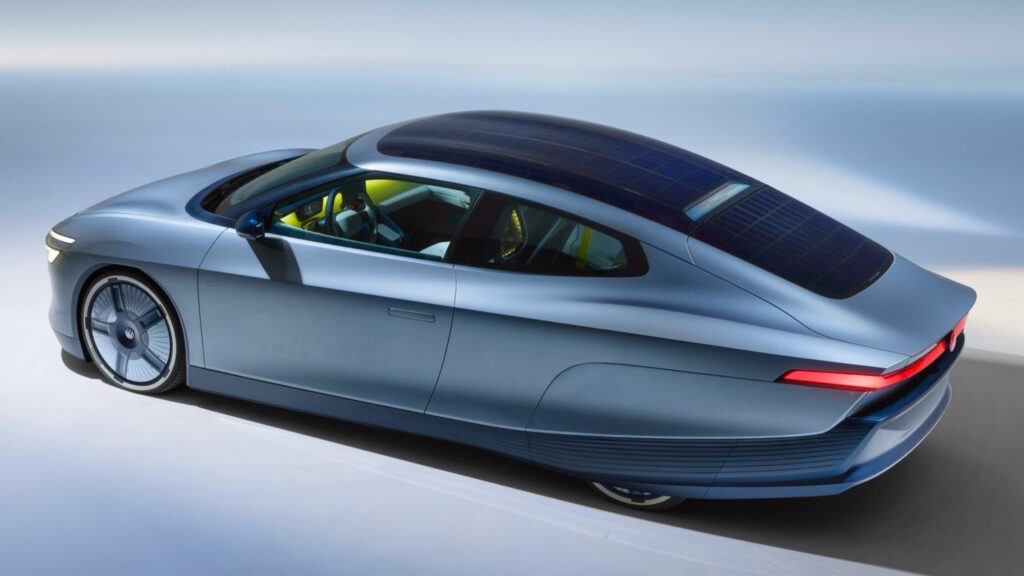
Called the Mission Efficiency, the teardrop-shaped 2+2 coupe has a fairly conventional front end, but the extended bodywork tapers at the rear over an incredibly narrow track. That slippery shape and runway model-skinny 155-section tires help deliver a 0.158 Cd drag coefficient. For a bit of context, the Lucid Air, the most aerodynamically efficient production car on sale, has a 0.197 Cd.

Related: 5 Surprising Similarities Between Tesla’s Cybercab And VW’s XL1

Under the skin, the Mission Efficiency is effectively the new ID. Polo, an electric hatch that rides on VW’s MEB+ EV platform. A single 133 hp (135 PS / 99 kW) motor drives the front wheels for a 9-second zero-to-62 mph (100 km/h) time. And there’s a 54 kWh (usable) battery under the floor, which is essentially the production Polo’s 52 kWh pack but with the lifespan-enhancing safety buffer removed to squeeze out another 2.9 kWh.

But while a 138 mm (5.4 inches) taller and 722 mm (28.4 inches) shorter Polo equipped with the 52 kWh battery achieves around 5.4 miles per kWh, the concept recorded 6.48 mpkWh. On a real-world 794-mile (1,278 km) trip from VW’s Wolfsburg base to Vienna, Austria, it eked out the equivalent of 412 miles (663 km) from a single charge. Engineers also added a 370 W photovoltaic panel to the glass, which it reckons could be worth 18.6 miles (30 km) of range per day in good weather.

Who Needs Brake Fluid, Anyway?

\\\\\\\\

Other efficiency-boosting tricks employed to achieve that feat include using electro-mechanical rear brakes to save weight by junking the hydraulic lines and fluid. The Polo platform is topped with an aluminium structure, and the doors, trunk and hood are made from CFRP composite. And inside, there’s no infotainment screen or even speakers, the idea being that your smartphone and a portable Bluetooth speaker will do the same job.

Will VW put the Mission Efficiency on sale? It certainly won’t be mass-produced, but ideas like the fluid-free rear brakes could possibly make it to a future production EV. And let’s not forget that VW did sell 250 examples of the original XL1.

\\

Conceived by the VW Group’s late Ferdinand Piech as a kind of economy yin to his Bugatti Veyron’s power-crazed yang, the XL1 was built like a hypercar and featured a carbon body, carbon brakes and gullwing doors. But instead of a quad-turbo V12 it got an 800 cc two-cylinder diesel hybrid powertrain making just 68 hp (69 PS). Zero to 62 mph took 12.7 seconds.

Weirdly though, it was fantastic fun to drive. I had a go back in 2019 (pics below) and was blown away by the feel from the unassisted steering, and the kind of chassis balance you’d expect from a supercar. The ID. Polo hardware means the Mission Efficiency won’t be anything like as tactile. But its mission is even more relevant.

\\\\\\\\\\\\\

VW, Chris Chilton

VW Has Created A New Version Of The Ultra-Efficient XL1

  • VW’s Mission Efficiency has an exterior design very similar to the old XL1.
  • The car will embark on a record-setting journey from Wolfsburg to Vienna.
  • A teardrop-shaped design will help the Mission Efficiency cut through the air.

Between 2013 and 2016, VW built 250 diesel plug-in hybrid XL1s. Capable of traveling 62 miles (100 km) on a single liter of diesel, it came to life after more than a decade of development. VW is now about to unveil a spiritual successor to the XL1, dubbed the Mission Efficiency.

The new model, created as a battery-electric vehicle, has been teased ahead of a debut this week. Like the XL1 that came before it, the Mission Efficiency aims to go as far as possible while consuming very little energy.

Read: VW’s ID. Polo Waiting List Is So Long You’ll Get A McLaren Sooner

VW will use the Mission Efficiency concept to travel from Wolfsburg to Vienna as part of what it calls a “record-setting journey.” Very little is known about what VW will do on this near-500-mile journey, but it’ll probably try to either make the trip on a single charge using a very small battery, or instead, set out to achieve a breathtaking efficiency rating.

A Modern XL1

The concept car’s design clearly draws heavily on the XL1 from just over a decade ago. Like that car, this one has a sleek, teardrop shape that’ll let it slip through the air with as little disturbance as possible.

\\\\\\

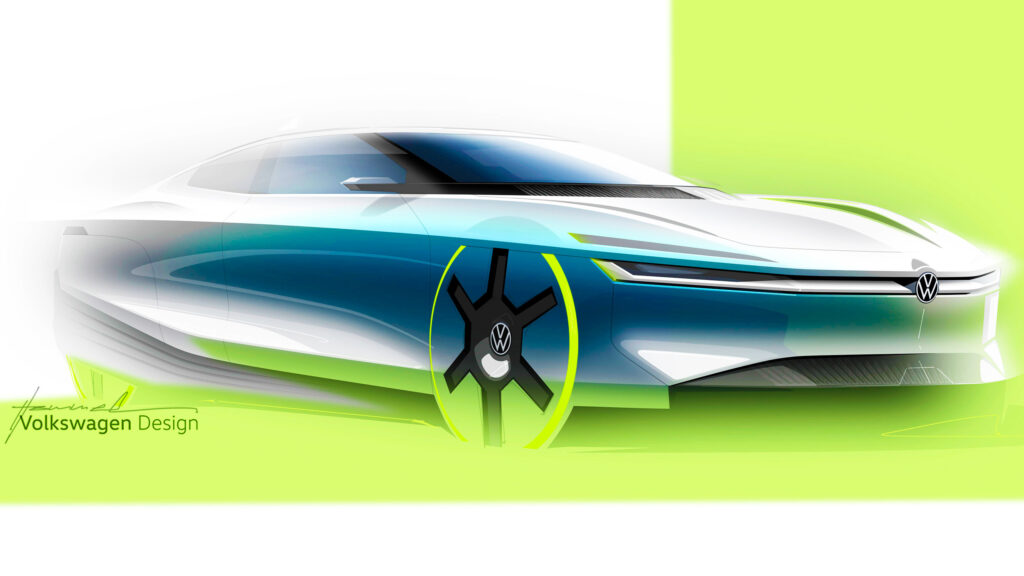
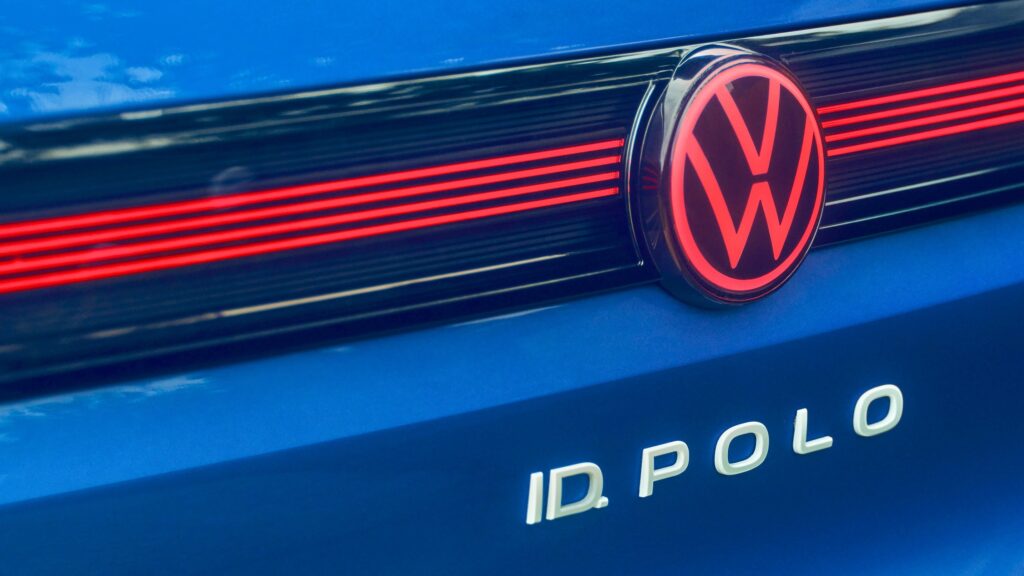
At the front of the concept is a full-width LED light bar, along with subtle daytime running lights and an illuminated VW emblem. Sketches of the sides reveal flowing panels and wheel covers at the rear. In addition, the rear end appears to be noticeably slimmer than the front, much like the XL1. The rear features a single light bar and a glowing badge.

In a statement, VW says the vehicle’s mission is “to explore the boundaries of what is possible with a fully functional everyday vehicle that is largely based on production technology.”

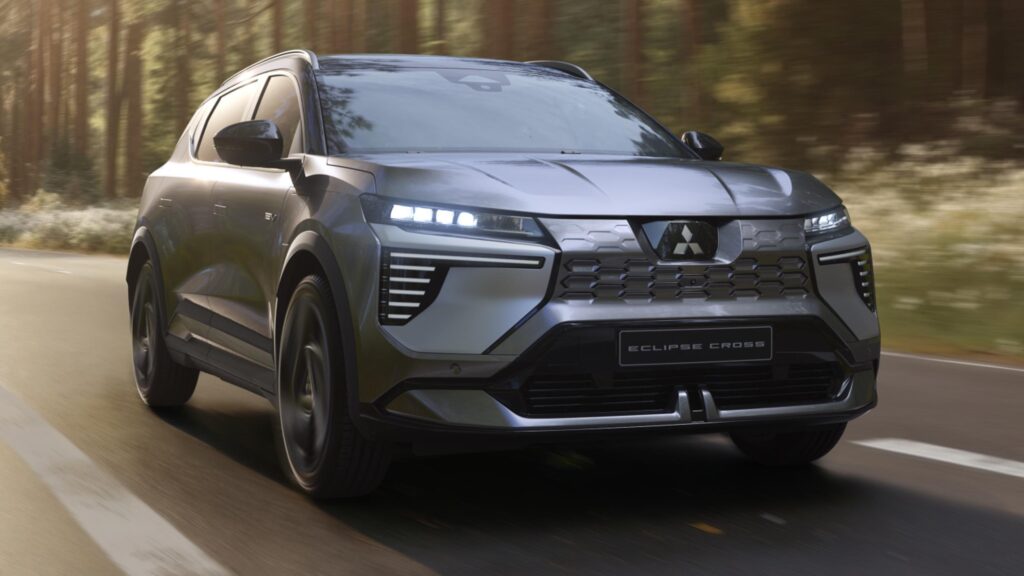
The Mitsubishi Eclipse Cross You Can’t Have Just Got Way Cheaper

  • The Mitsubishi Eclipse Cross EV receives updates one year after its debut.
  • The EV gains a new 67 kWh battery option and an upgraded 89 kWh unit.
  • The electric crossover with Renault bones has a much lower entry price.

Americans might be stuck with the aging Mitsubishi Eclipse Cross for now, but Europeans have access to a new generation with electric power. Exactly one year after its debut, the Mitsubishi Eclipse Cross EV gains new battery options, mirroring the technical updates introduced by its French twin – the Renault Scenic E-Tech.

The highlight is the addition of a smaller 67 kWh battery option with Lithium Iron Phosphate (LFP) chemistry, offering a WLTP range of 472 km (293 miles). The same unit is already used in the facelifted Renault Megane E-Tech.

More: Renault Gave The Updated Megane EV A Meaner Face And A Slower 0-62

The larger battery option retains the Nickel Manganese Cobalt (NMC) chemistry but its capacity has grown from the original 87 kWh to 89 kWh. As a result, the maximum WLTP range has been increased by 15 km (9 miles) to a more generous 650 km (404 miles).

Both batteries are compatible with DC charging, replenishing 15-80% of their charge in 24 and 28 minutes respectively. Independently of the battery pack, power comes from a single front-mounted electric motor generating 220 hp (164 kW / 223 PS), which is 5 hp (4 kW) more than before.

\\\\\\

Mitsubishi

Predictably, Mitsubishi didn’t bother changing anything on the exterior design of the EV after a year on sale. The interior has also been carried over with dual 12.3-inch displays running Renault’s Google-based infotainment software.

More: Mitsubishi Is Turning The Pajero Into A Family Of SUVs, And One’s Coming For The RAV4

The updated Mitsubishi Eclipse Cross EV will be available to order in European markets from November 2026. In the Netherlands, the cheapest Mid-Range option with the 67 kWh battery starts at a discounted €32,990 ($38,300) including an electric benefit of €3,000 ($3,500).

The Long-Range variant with the upgraded 89 kWh battery will arrive later on, but the outgoing model is still available starting from €40,490 ($46,900). Note that the Eclipse Cross EV had an introductory price of €45,690 ($53,000) in the Dutch market when it arrived last year, meaning that the entry point in the lineup has dropped by €12,700 ($14,700).

\\\\\\\\\\\\\\\\\

Mitsubishi

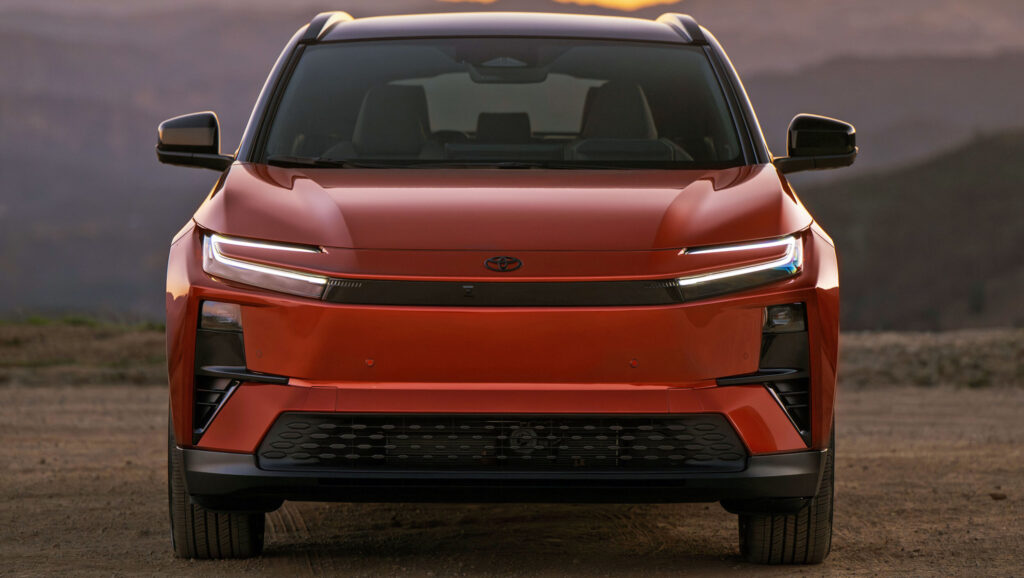
Testing Of A Mysterious Future Toyota EV Sparked A Recall Of The New C-HR

  • Toyota is conducting two new recalls that impact an assortment of models.
  • The 2026 C-HR can lose drive power due to a software programming issue.
  • A handful of trucks and SUVs have incorrect load carrying capacity labels.

The Toyota CH-R returned for 2026 as an electric crossover, but it’s already getting recalled. As the government explained, the battery can become “overcharged” and shut down the powertrain while driving.

The issue impacts 8,521 vehicles and is being blamed on a software programming error. Toyota first discovered the issue in April during testing of an undisclosed “future BEV model.” This sparked a review of electronic control units in other EVs and this eventually identified the 2026 C-HR as being impacted.

More: Toyota Delays New Electric Highlander Before It Even Launches

The issue involves a faulty battery protection logic, which is intended to limit the charging of the battery. Due to a programming error, the battery can become overcharged in certain conditions.

This mainly appears to be a problem in low temperatures, when the battery is at a high state of charge, and when the vehicle is in regenerative mode for a long time. In effect, if you live up in the mountains, fully charged your C-HR overnight, and are driving down into the city while relying heavily on the regenerative braking system, it could be an issue.

 Testing Of A Mysterious Future Toyota EV Sparked A Recall Of The New C-HR

While that’s just an example, it highlights how rare the problem appears to be. Speaking of which, Toyota isn’t aware of any warranty claims or field reports related to the issue. If a problem were to occur, warning lights and a buzzer would activate to alert drivers to the loss of motive power.

Since this is a simple software issue, the fix is straightforward as dealers will update the electronic control unit. Notifications are scheduled to go out on October 18.

Label Mistake

 Testing Of A Mysterious Future Toyota EV Sparked A Recall Of The New C-HR

In other Toyota recall news, 135 vehicles have an incorrect load carrying capacity modification label. The problem impacts a handful of different models including the 2024 Tacoma and 2025 Tundra as well as the 2026 4Runner and RAV4.

The recall is the result of data entry errors as accessory weight values were wrong in one of Toyota’s systems. This threw off calculations and resulted in labels that could cause people to overload their vehicles.

Toyota discovered the problem during an internal audit that found eight accessory parts with weight discrepancies. To address the problem, dealers will replace the label with a correct one.

 Testing Of A Mysterious Future Toyota EV Sparked A Recall Of The New C-HR

Trump Administration Blasts Ford For Its Business Dealings With China

  • Transportation Secretary Sean P. Duffy has criticized recent Ford business deals.
  • Duffy criticized Ford’s battery licensing deal with Chinese giant CATL.
  • Ford says the Trump administration is simply trying to capture headlines.

The Trump administration isn’t pleased with Ford’s close ties to certain Chinese companies, prompting a fierce rebuke from Ford, which continues to tout itself as “the most American automaker.” The tit-for-tat comes just before a meeting between US President Donald Trump and Chinese President Xi Jinping later this month.

In a letter to Ford chief executive Jim Farley dated September 3 and recently made public, Transportation Secretary Sean P. Duffy expressed “profound concern” about the “strategic trajectory of Ford,” claiming the historic brand is “actively intertwining its future with Chinese state-backed enterprises.”

Read: Ford Is Partnering With The Chinese Automakers It’s Fighting To Keep Out Of America

Ford’s relationship with Chinese battery manufacturer CATL appears to have rubbed the Trump administration the wrong way. The licensing deal, first signed in 2023, would have allowed Ford to manufacture EV batteries using CATL’s chemistry. Still, a recent decline in demand for EVs in the US prompted Ford to start assembling lithium-iron phosphate cells using CATL tech for energy storage systems.

 Trump Administration Blasts Ford For Its Business Dealings With China

“The prioritization of imported Chinese technical expertise and operational know-how – even in a scaled-back capacity – challenges the spirit of American national and economic security and supply-chain independence policies,” Duffy wrote.

The transportation secretary also took issue with Ford’s recent deal with Geely in Spain, saying it “helps strategic adversaries secure a vital foothold in Western markets.” The letter also addressed ongoing talks between Ford and BYD to share hybrid vehicle components.

“When a company intentionally chooses to deepen operational dependencies on strategic competitors, it fails to act as the reliable partner the American public and this DOT require,” Duffy added.

 Trump Administration Blasts Ford For Its Business Dealings With China

Ford Responds

It didn’t take long for Ford to respond. The company described Duffy’s letter as “a wrongheaded attempt to capture headlines at the expense of a company that has done more for American manufacturing than virtually any other in the nation’s history.”

“BlueOval Battery Park Michigan in Marshall is a Ford-owned and Ford-operated facility representing billions of dollars in investment and approximately 1,700 new American jobs,” Ford’s statement reads, noting “it is producing batteries in Michigan, with American workers, for Ford vehicles also built in America.”

 Trump Administration Blasts Ford For Its Business Dealings With China
Ford BlueOval Battery Park

Volvo’s Decade-Old XC40 Refuses To Die, Gains Design And Tech Updates

  • Volvo applies a second facelift to the XC40, extending its lifecycle.
  • It gains modern styling cues, a larger screen, and improved safety.
  • The fully electric EX40 and EC40 benefit from the same updates.

Volvo has announced substantial updates for the 40 series SUVs, including the evergreen XC40, its fully electric EX40 twin and the closely-related EC40 coupe-SUV. All three models receive a redesigned face, larger screens, AI tech, and improved safety features in a quest to stay relevant against younger rivals.

The XC40, in production since 2017, received a facelift in 2022, but the 2027 update is more substantial. The fully electric coupe-SUV variant debuted in 2021 as the C40 Recharge before being renamed to EC40 in 2024 and receiving its first facelift for 2027.

More: New Volvo EX50 Could Be Better, Bigger And Cheaper Than The SUV It Replaces

Visually, the first thing you notice is the reshaped headlights with the trademark Thor’s Hammer LED graphics, joined by a cleaner front bumper. The grille is wider than before, reaching out to the headlights, and adopts the body-colored finish of the zero-emission EX40 and EC40.

\\\\\\\\\\\\\\\\\\\\\\\\\\\\\\\\\\\\\\\\

Volvo XC40

The sculpted profile is largely unchanged, but the diamond-cut alloy wheels measuring 18, 19 or 20 inches are new. The rear end benefits from sharper LED taillights in the XC40 and EX40, alongside fresh surfacing on the tailgate and the rear bumper. Volvo has also shown photos of the Black Edition variants combining a stealthy finish with a dark-themed cabin.

More: Volvo May Bring Sedans And Wagons Back To America

Inside, the centerpiece is the larger 11.2-inch central touchscreen (up from 9 inches), with its top end sticking out of the dashboard. The display runs Volvo’s latest infotainment software with Google Gemini integration. Other interior updates include a new wireless charging pad, “refined” ambient lighting, and new materials such as Arianne Cardamom leather, Brown Ash or Black Ash wood accents, and aluminum inserts.

\\\\\\\\\\\\\\\\\\\\\\\\\\\\

Volvo EC40

On the safety front, the XC40 gets new hardware and software. Volvo threw in new radars, a new forward camera, and a total of 12 ultrasonic sensors. These enable a 3D view for the optional 360-degree camera system and make the optional Pilot Assist with lane change assist run more smoothly. The company has also added a Door Opening Alert and real-time hazard detection for the emergency braking and steering functions.

More: The EX30 Is Dead, But Volvo’s Next Cheap EV Is Already On The Way To America

The XC40 continues to be powered by the familiar mild-hybrid turbo 2.0-liter four-cylinder engine, available with different outputs depending on the market.

The fully electric EX40 and EC40 also retain their existing single-motor and twin-motor configurations, delivering up to 584 km (363 miles) of WLTP range. Note that the PHEV powertrain option has been discontinued.

\\\\\\\\\\\\\\\\\\\\\\\\\\\\\\\\

Volvo EX40

The updated Volvo 40 series is scheduled to enter production in Belgium later this fall. Depending on the market, deliveries are expected to start in early 2027 with pricing to be announced.

The main rivals of the Volvo 40 series in the premium compact SUV segment include the soon-to-be facelifted BMW X1 and X2, the brand new Mercedes-Benz GLA, and the Audi Q3 / Q3 Sportback.

Porsche’s Boxster EV Is Almost Showroom-Ready, But Is The Showroom Ready For An Electric 718?

  • Porsche’s 718 Boxster Electric has been spied testing for the first time in months.
  • The zero-emissions, two-seat ragtop has dropped almost all of its heavy disguise.
  • Single motor comes standard, but available bi-motor creates first AWD Boxster.

More than two years have passed since we last spied a Boxster Electric prototype testing. It’s almost like Porsche forgot about it. And there must be some suits at Stuttgart who would rather forget about it, because the world in which the EV sports car is about to debut is very different to the one Porsche imagined when it green lighted the project more than five years ago.

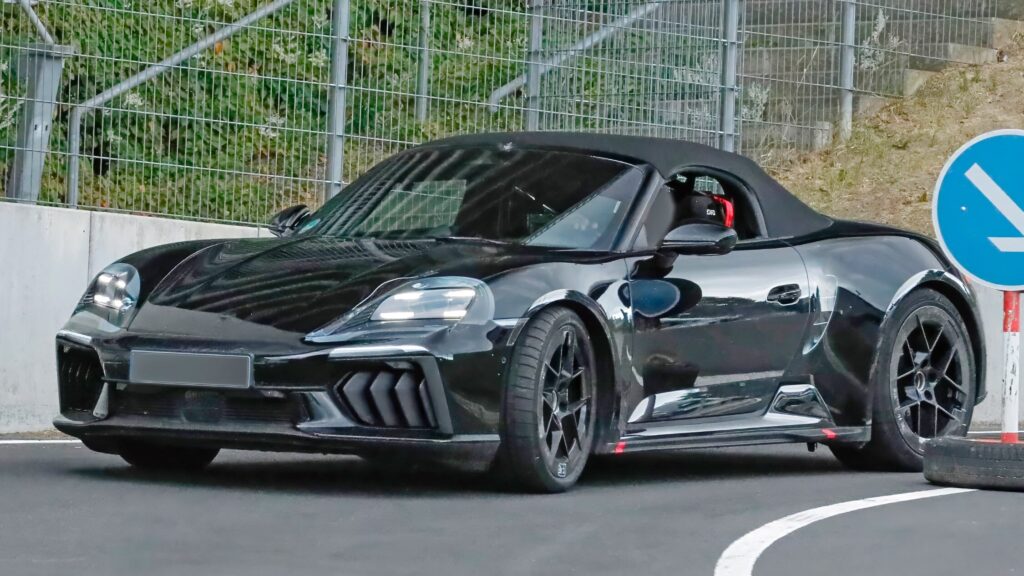
We’ll get to that problem in a minute, but for now let’s take a look at these fresh spy shots because they show the Boxster EV with almost non camo for the first time ever. Sure, it’s still got some misleading stickers around the front and rear lights and rear quarters, but we can see the true shapes of those lights and the heavy disguise has gone from the bumpers.

Related: Porsche’s Next Supercar Could Be An Audi That’s Really A Lamborghini

That means we can see this Boxster has the same vertical, active cooling slats in its front grille that Porsche has already deployed in the 911 GTS and Turbo. Lesser models, and their Cayman EV counterparts, are likely to have a simpler grille design, as the base 911 Carrera and Carrera S have. Shots from the rear showing a diffuser panel and lack of exhaust tailpipes confirm Porshe is sticking to its EV plan for the two-seater – for now, at least.

Besides the grille, there’s another indicator that we’re looking at a hotter version of the Boxster Electric. Previous spy shots showed a digital gauge cluster and conventional internal door handles. But this car has fabric, loop-style handles of the kind usually reserved for cars like the 911 GT3 or the old Cayman GT4 and its Boxster Spyder brother.

Choose One Or Two Motors

 Porsche’s Boxster EV Is Almost Showroom-Ready, But Is The Showroom Ready For An Electric 718?

Intel from sources close to Porsche suggests base cars will get a single motor driving the rear wheels, but the big news is the rumored availability of dual-motor powertrains in more expensive versions that will give the Boxster and Cayman their first all-wheel drive options.

If Porsche’s GT4 e-Performance racer concept is any guide, expect up to 604 hp (612 PS / 450 kW) for the hottest AWD cars and the option of a virtual paddle-shift transmission, a feature recently added to the Taycan lineup. A T-shaped battery mounted in the transmission tunnel and behind the seats keeps the floorpan low and replicates the weight distribution of a typical mid-engined, ICE-powered car.
EV First, Gas Later

\\\\\\\\\\\\\

The Boxster and Cayman Electric go in sale in 2027, but a couple of years after that, they’ll be joined by combustion versions, potentially limited to the top of the lineup. That was never part of the plan, but Porsche’s hand has been forced by a dramatic slowdown in EV sales.
The Boxster and Cayman Electric were conceived in the late 2010s, a period when Porsche’s Taycan was still enjoying its honeymoon glow and the car industry was projecting electric cars would soon relegate old-fashioned combustion vehicles to a sideshow act. Now, in 2026, it’s true that EV sales are riding high, though not universally.

Taycan To Tap-Out?

One in four mass-market cars sold in Europe is now electric and the numbers are growing. But luxury buyers and American drivers aren’t buying EVs. They want gas cars. The Taycan is tanking and could reportedly die soon, but since it was too late to scrap the Boxster and Cayman Electric, which have the added complication of sharing their platform and hardware with Audi’s upcoming TT replacement, Porsche opted to re-engineer them for combustion power instead.

Would you buy an electric Boxster or is Porsche setting itself up for a massive fall? Leave a comment and let us know.

\\\\\\\\\\\\\

Baldauf

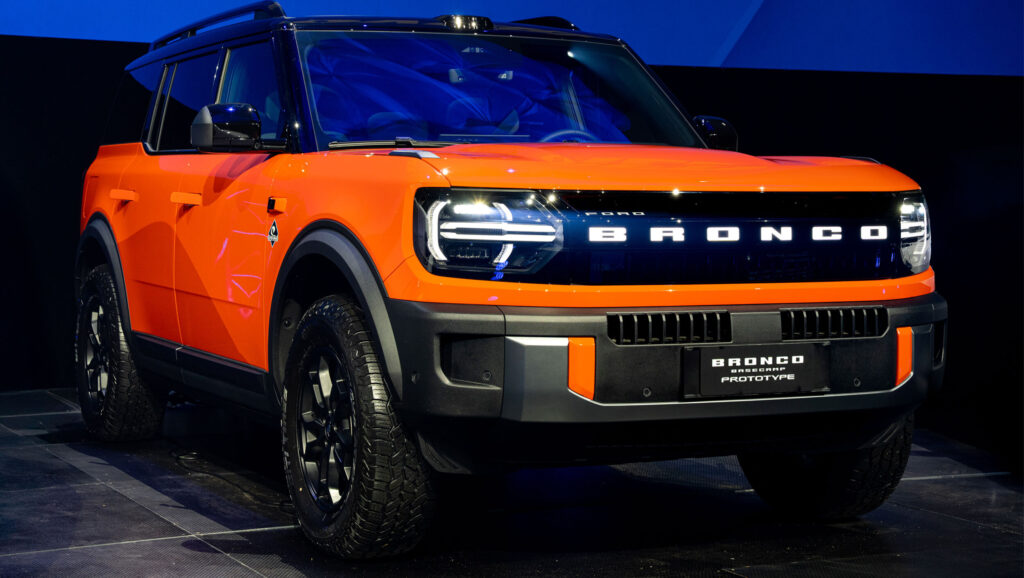
Bronco Basecamp Breaks Out Of China And Heads Down Under

  • The Ford Bronco Basecamp is coming to Australia and New Zealand.
  • Model arrives next year with a range-extended powertrain and pop-up roof.
  • Crossover could have a combined output of 416 hp and 442 lb-ft of torque.

Nearly a decade after wrapping up production in Australia, Ford has announced big plans for the land down under. As part of an event, the company announced plans to “double coverage of the Australian vehicle market to over 60% within three years.” The automaker is also aiming for “over 90% of its volume sold to be all-new or significantly refreshed by the end of 2030.”

The centerpiece of this plan is to bring the Bronco Basecamp to Australia and New Zealand in the second half of 2027. The model launched in China last year and targets a “new breed of outdoor enthusiasts.”

More: Ford’s Electrified Bronco Arrives In China With A Pop Up Roof Surprise

Ford didn’t say much about the local variant, but confirmed it will have a “super hybrid extended-range electrified powertrain.” It consists of two electric motors, a 49 kWh battery pack, and a turbocharged 1.5-liter engine that acts exclusively as a generator.

The company said this will deliver the smooth and responsive driving dynamics of an electric vehicle, but with a range of 497 – 559 miles (800 – 900 km). It also goes without saying, you can simply fill up with gas and be back on your way.

\\\\\\\\\\\\\\

Ford didn’t talk numbers, but the Bronco Basecamp starts at ¥229,800 ($34,245 USD / $47,565 AUD) in China and features a combined output of 416 hp (310 kW / 421 PS) and 442 lb-ft (600 Nm) of torque. The model also has a CLTC electric-only range of 137 miles (220 km).

While Ford didn’t say much about the vehicle, they noted it’s built for adventure and would make the perfect camping companion. When it’s time to go to sleep, all the seats fold down and an inflatable mattress can be placed on top of them to create a bed.

When morning comes, the rear swing gate has a “Wild Kitchen” with a fold-down table. The model even has Pro Power Onboard, which enables owners to access up to 6.6 kW of juice to power equipment such as coffee makers, cooktops, and lights.

The upscale Bronco Basecamp Outer Banks goes even further as it has an electric pop top that rises at the touch of a button to increase headroom, such as when camping. The Outer Banks also has a 7.5-liter center console compartment that can be warmed or chilled.

Besides the Bronco Basecamp, Ford announced the electric Transit City will arrive in November for $50,000 AUD ($36,100 USD). Around the same time, the Mustang Dark Horse T8-Spec will land at dealers. The automaker also announced the local launch of Ford Pro, which will be supported by a new seven-year, unlimited kilometer warranty for commercial customers who exclusively rely on Ford dealerships for servicing.

\\\\\\\\\\\\\\

Mercedes’ New E-Class Electric Is Washing Bad Memories Of The Soap-Bar EQE Clean Away

  • Mercedes’ E-Class EV loses camo, reveals production headlights.
  • New rear lights ditch star graphics for cleaner straight-line LEDs.
  • Expect 800-volt tech, rapid charging and 483 hp in E400 guise.

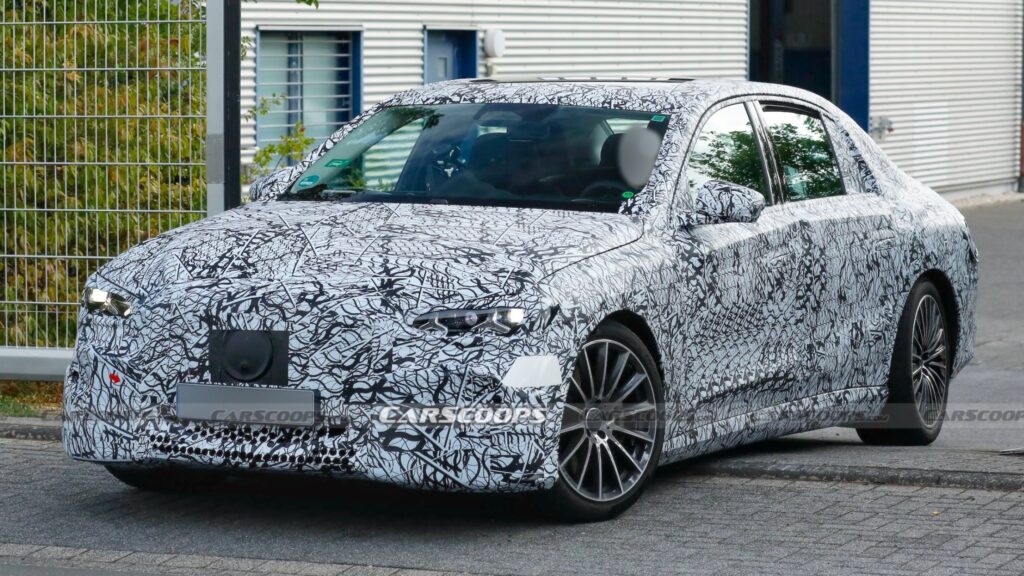
Mercedes’ EQE was a flop, lasting just four model years in the US. Its battery tech was outdated, and the melted soap-bar styling certainly didn’t help. Now, as the EQE bows out, Mercedes is preparing its replacement, and these new revealing spy shots suggest the E-Class Electric has learned a valuable lesson. Turns out a battery-powered sedan can actually look like a regular sedan, and be all the better for it.
The latest prototype has ditched much of the heavy camouflage we saw when we last caught an E-Class Electric testing in January. We’ve got our first proper look at the production headlights, which reveals a pair of Mercedes’ star-shaped daytime running lights in each lamp cluster, ensuring nobody mistakes this thing for a BMW after dark.

Also: Blob Be Gone! The EQE Gives Way To A Proper Sedan

\\\\\\\

Baldauf

And though we still can’t see it, we’re expecting Mercedes’ gigantic illuminated grille treatment, already rolled out on its latest electric GLC and C-Class, to feature out front when the EV goes on sale next year. Whether you think it looks reassuringly expensive or as tacky as Times Square squeezed between two headlights, it will certainly give the E-Class Electric some real presence, something the bland EQE always lacked even after its last-ditch facelift.

There’s a surprise at the other end, though. Earlier test cars wore placeholder taillights, and we expected the finished units to continue Mercedes’ current obsession with three-pointed stars. Instead, the production lamps appear to feature straight-line graphics and thankfully no stars at all.

Beneath the skin is Mercedes’ MB.EA architecture already in play with the C-Class Electric and its GLC SUV cousin. Based on what we know of those cars, the E-Class will feature an 800-volt electrical system, and charging speeds reaching 330 kW.

Out-Charges BMW And Audi

\\\\\\\

Baldauf

That’s not quite a match for the 400 kW inhalation rate of BMW’s Neue Klasse iX3 and i3, but it easily trumps the 205 kW offered by the Benz’s direct rival, the BMW i5, and the 270 kW of Audi’s A6 e-tron. Both of those cars, though, also offer a wagon body style option the sedan-only E-Class won’t.

A dual-motor E400 version using the C400 4Matic’s setup could deliver 482 hp (489 PS / 360 kW) and a zero-to-62 mph (100 km/h) time of just over 4 seconds, although Mercedes hasn’t confirmed specifications yet. The C400 employs a 94 kWh gross battery to deliver 473 miles (762 km) of claimed WLTP range, and Mercedes might not feel the need to go bigger because the i5’s pack is only 84 kWh gross and promises 356 miles (573 miles).

\\\\\\\\\\

Baldauf

We can’t see inside the E-Class Electric in these pictures, but again, the existing EVs have set a precedent we expect Mercedes to keep following. If it does, the mid-size sedan will get a full-pillar-to-pillar digital dashboard in its most luxurious form, though buyers will almost certainly have to pay extra for the passenger screen one recent study told us hardly gets used.

\\\\\\\\\

Baldauf

Audi Is Paying Lessees $10,000 To Keep The EVs They Already Have

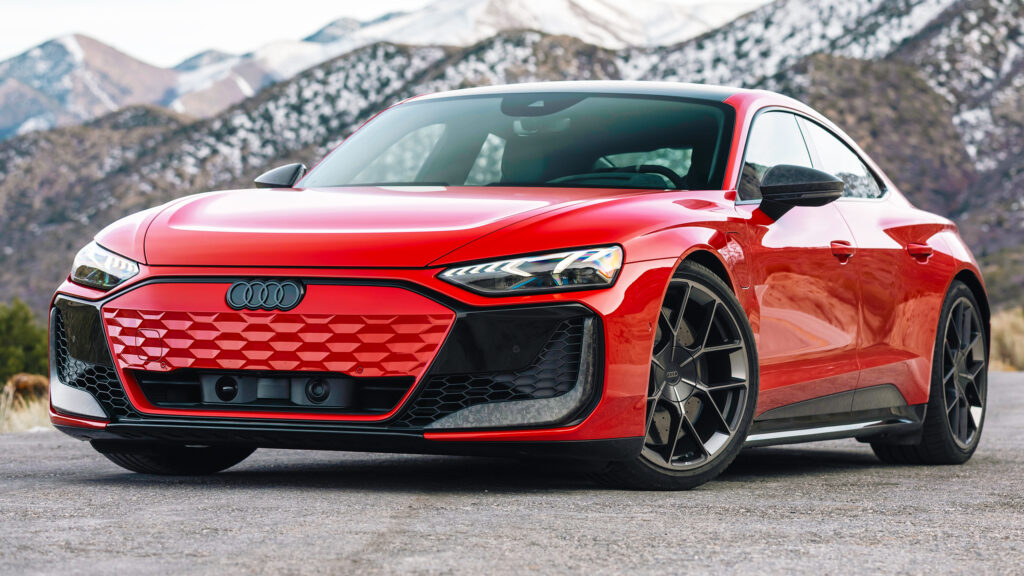
  • Incentives are currently available for the Audi e-tron GT, Q4 e-tron, and Q8 e-tron.
  • Audi has increased the Q4 e-tron buyout incentive from $3,000 to $5,000.
  • These discounts may convince some to buy out their lease when the term ends.

Audi is eager to see current lessees of its electric models buy out their vehicles at the end of their terms, and it’s offering some pretty generous incentives to encourage them to do so.

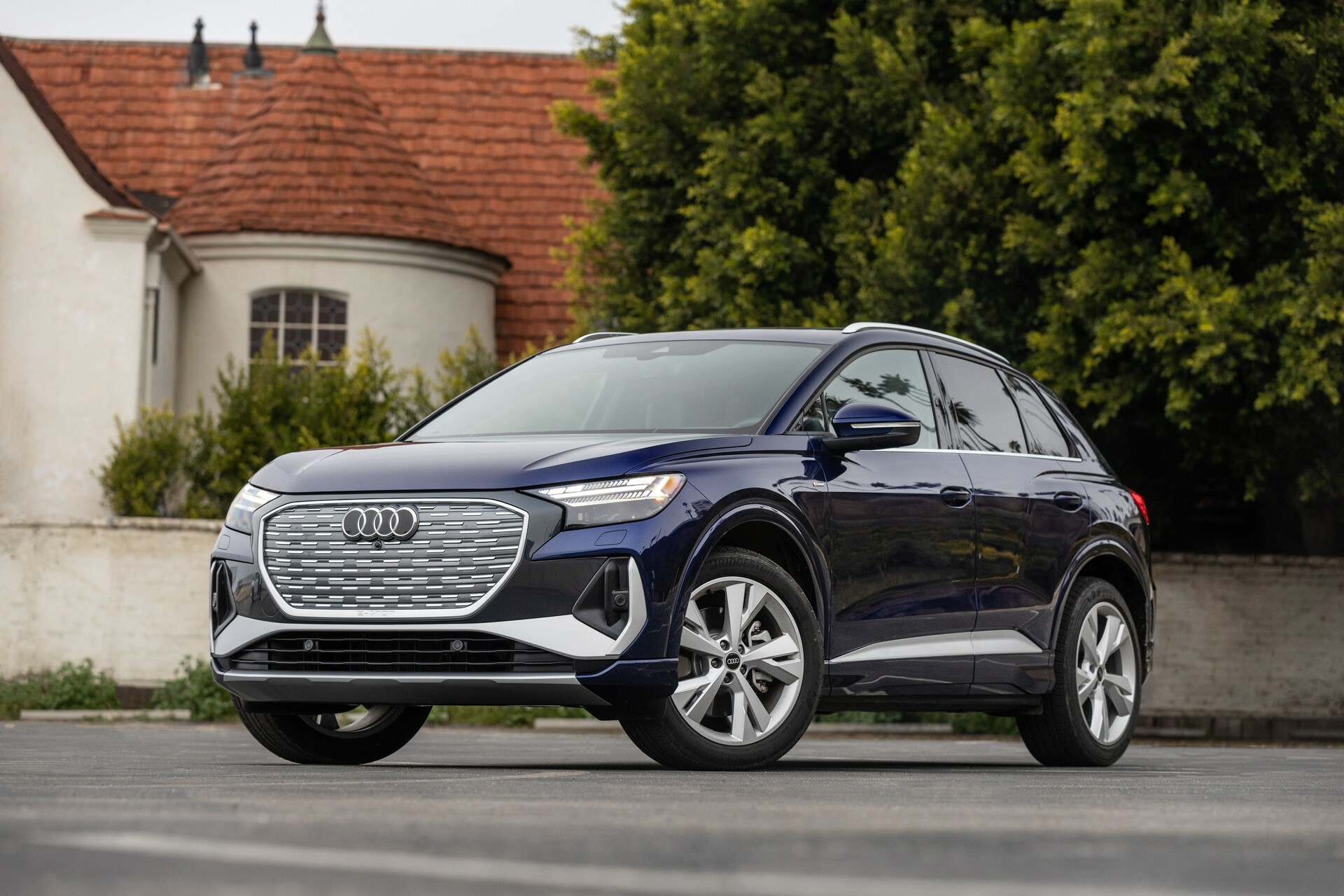
A recent Audi BEV Lessee Buyout Option Incentive, sent to dealerships on September 1, reveals that current e-tron GT lessees are being offered a $10,000 discount to purchase their vehicle at the end of the lease term. In addition, a $5,000 purchase incentive is available for the Q4 e-tron, while a $4,000 one has been confirmed for the Q8 e-tron.

Read: Audi’s New A2 Revives A Genius Idea That Was 25 Years Too Early

In addition, dealerships stand to benefit as they will receive $500 for each lessee who uses the incentive to buy out their vehicle. This incentive program was first launched in July, but now the Q4 e-tron’s discount has increased to $5,000 from the original $3,000, CarsDirect reports.

The move may make it a little easier to digest the extraordinary depreciation Audi EVs and other electric models from premium brands continue to experience in the United States and elsewhere.

 Audi Is Paying Lessees $10,000 To Keep The EVs They Already Have
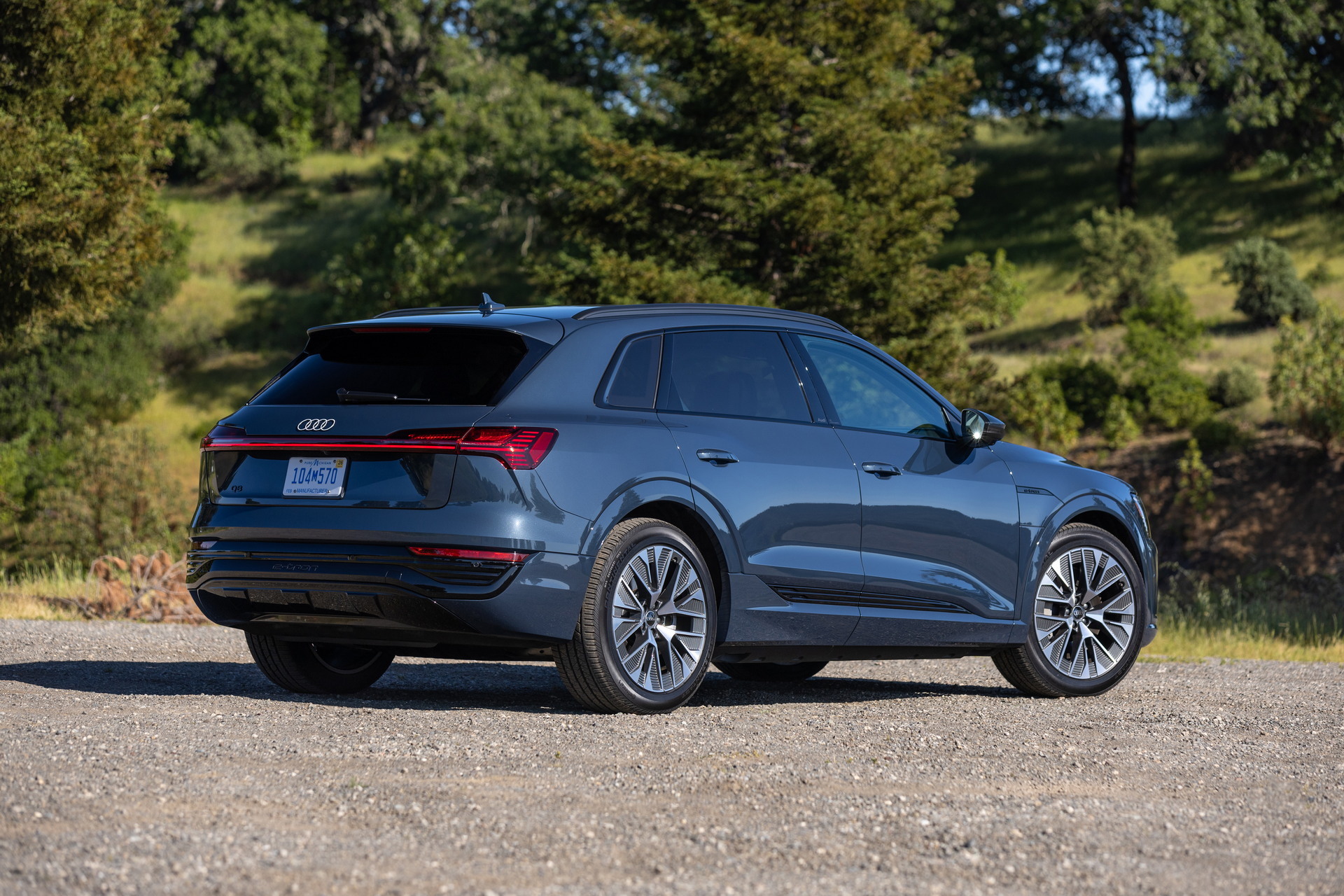
Audi Q8 e-tron

In the case of original Audi RS e-tron GT models, a car that once started at around $140,000, it’s now easy to find relatively low-mileage examples for under $55,000. Prices of the updated 2025 RS e-tron GT Performance have also cratered, from an MSRP exceeding $170,000 to less than $120,000.

It’s worth noting that Audi discontinued the Q8 e-tron in the United States more than 18 months ago, so those who currently lease one won’t be able to replace it with a like-for-like electric SUV from the German brand. The Q4 e-tron continues, and it was recently updated in Europe.

 Audi Is Paying Lessees $10,000 To Keep The EVs They Already Have

Sources: CarsDirect

Range Rover’s Boss Just Told The World What He Thinks Of China’s Temu Range Rovers

  • JLR says buyers are willing to pay extra to get “the best of the best.”
  • Range Rover is eager to further differentiate its models from rival brands.
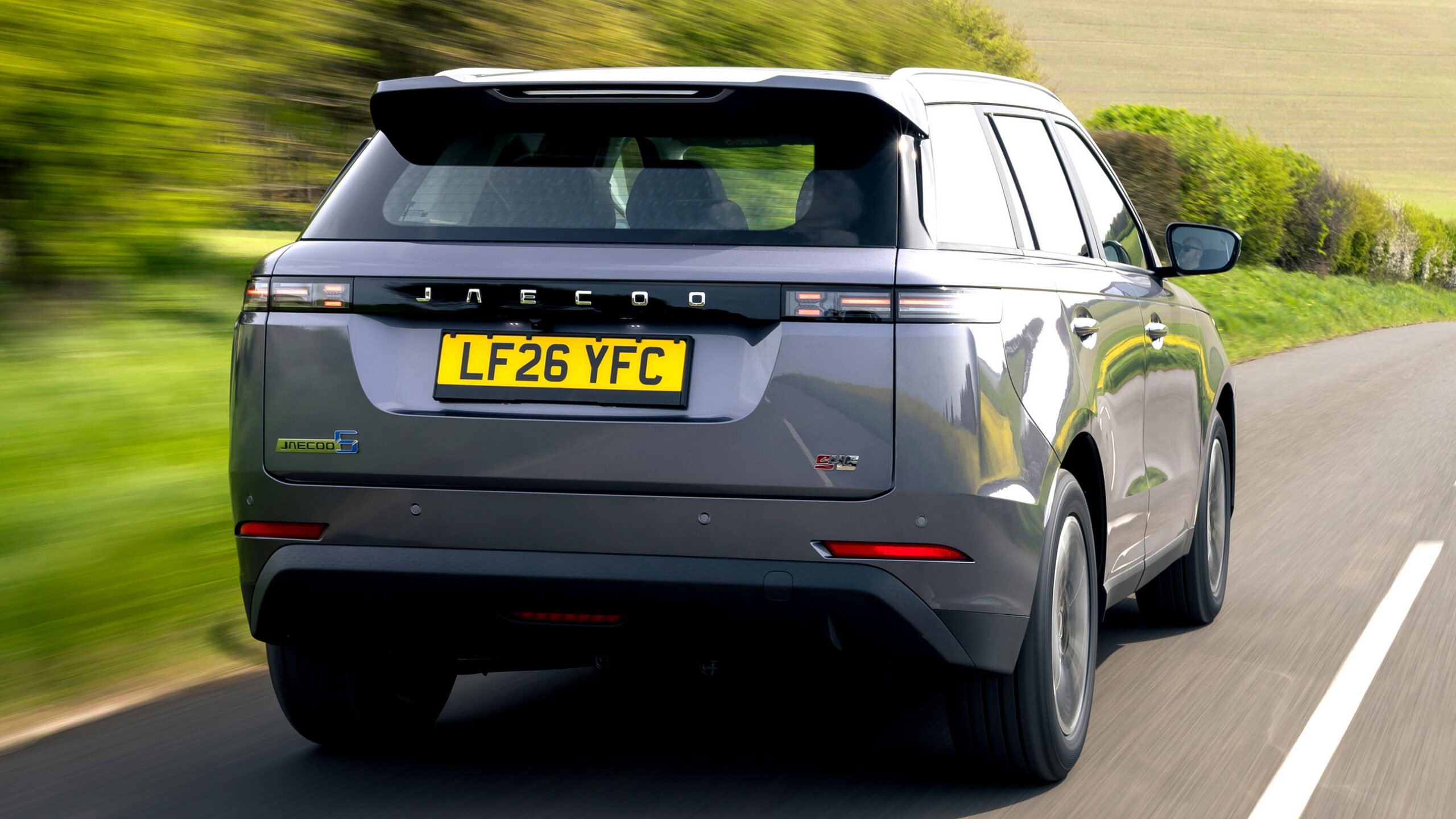
  • Jaecoo models such as the J5 and J7 have been compared with Range Rovers.

Jaguar Land Rover isn’t concerned about vehicles emerging from China with designs suspiciously similar to its own, noting they cannot match the heritage of Range Rover and have so far yet to impact the brand’s sales.

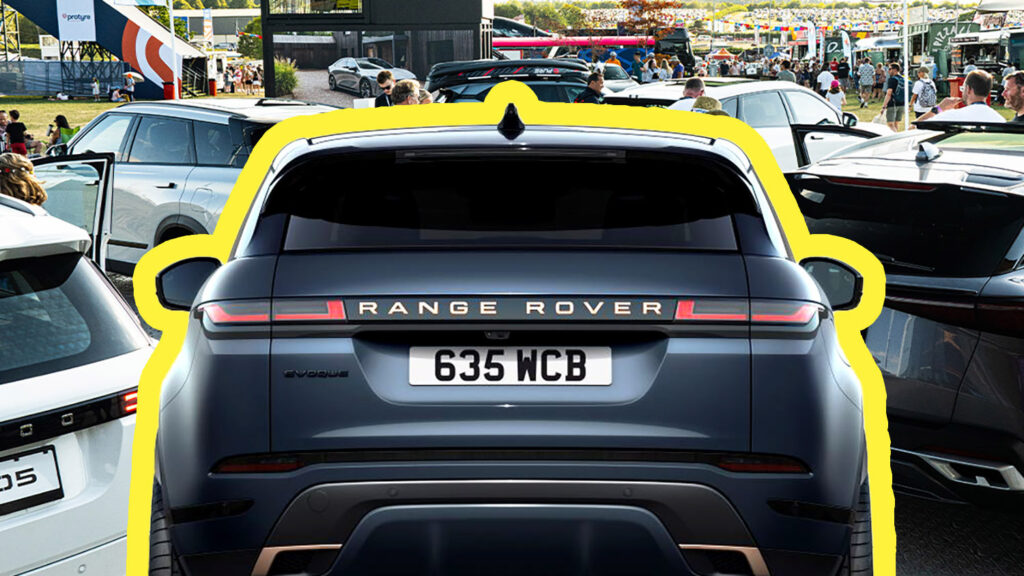
Of all the new SUVs being launched by Chinese brands, none have drawn more comparisons to existing Range Rover models than those from Chery-owned Jaecoo, specifically the J5 and the J7, often labeled as the ‘Temu Range Rover.’ We tested the J5 recently, though it obviously doesn’t compete in the same segment as any Range Rover. Speaking with Australian media recently, global Range Rover managing director Martin Limpert said if anything, having its designs copied is a “compliment.”

Read: They Nicknamed It The Temu Range Rover, Car Insurers Are Pricing It Like The Real One

“If other brands… copy our designs [it] is a signal that within the luxury world our design seems to be inspirational… what is important for us is to stay [as] the original – that’s why we will keep evolving,” Limpert told Car Sales. “It’s probably a bit of a badge of honor – we take it as a compliment.”

Range Rover Still Stands Out

\\\\\\\\\\

Jaecoo 7

Limpert went on to add that people buy a Range Rover because “they want the best of the best,” and they’re willing to “pay the extra money” for it.

“We are operating from a position of strength… having that British originality, design and engineering ingenuity built over more than five decades and five generations of Range Rover has specifically brought us into a position where we are thankfully synonymous with the choice of [world] leaders.”

 Range Rover’s Boss Just Told The World What He Thinks Of China’s Temu Range Rovers

As impressive as some new Chinese vehicles are, they obviously lack the heritage and name cachet of some legacy brands. However, recent sales trends show that car buyers in the lower end of the market are buying Chinese cars in growing numbers, often won over by their value. Buyers in the premium and luxury segments are very loyal to the brands they like, however, and it won’t be easy for new entrants to sway shoppers out of car companies they already trust.

Moving forward, Range Rover’s global marketing boss Ryan Miller added that the company will continue to differentiate its models from the competition. One obvious example of this is the new low-slung GT, set to launch soon as the brand’s fifth model.

 Range Rover’s Boss Just Told The World What He Thinks Of China’s Temu Range Rovers
Jaecoo 5

New Dacia Spring EV Flees From China And Pays The Price

  • New Dacia Spring is a Euro-made budget-friendly urban EV.
  • It has a Renault platform, 80 hp and a 155-mile WLTP range.
  • The entire lineup will be priced under €20k before subsidies.

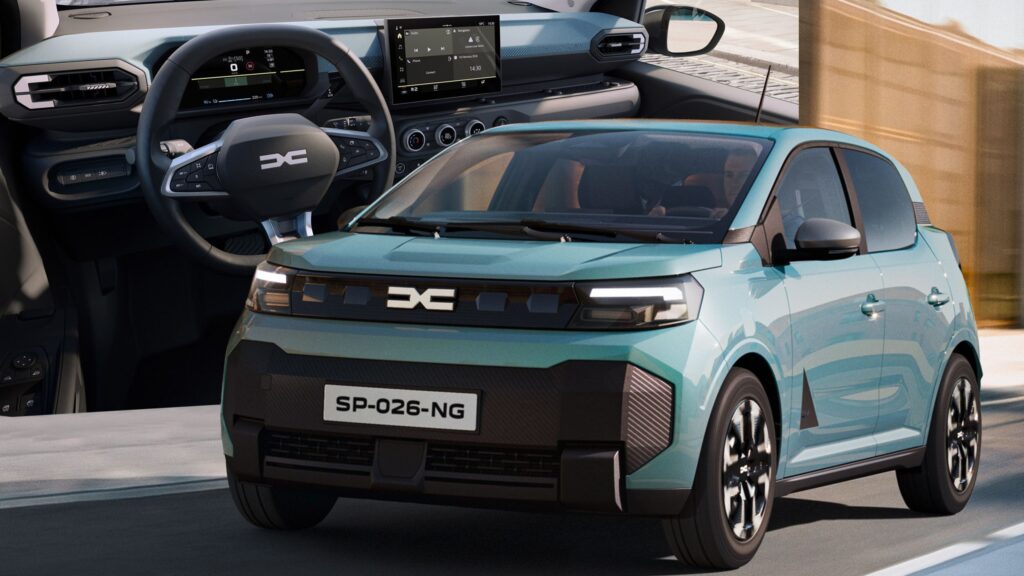
Dacia has unveiled a new generation of the Spring, marking a complete overhaul for one of Europe’s most affordable urban EVs. The small hatchback is built on Renault bones, promising a 155-mile range, clever design features and a sub-€20k ($23k) price tag. Unlike its Chinese-built predecessor, the new Spring will be manufactured in Slovenia, avoiding import tariffs in Europe.

The new model swaps the aging CMFA-EV platform of its predecessor for the new RG-EV architecture. This is another name for the AmpR Small platform, already underpinning the Renault Twingo E-Tech, Renault 5 E-Tech and Nissan Micra hatchbacks.

More: Dacia’s Sub-$28K Striker Claims To Be Three Cars At Once

\\\\\\\\\\\\\\

Power comes from a Twingo-sourced electric motor producing 80 hp (60 kW / 82 PS) and 175 Nm (129 lb-ft) of torque, sending power to the front wheels. The 0-100 km/h (0-62 mph) sprint is completed in 12.1 seconds and top speed is limited at 130 km/h (81 mph). Energy is stored in a small 27.5 kWh Lithium Iron Phosphate (LFP) battery pack, offering up to 250 km (155 miles) of WLTP range.

The battery needs 28 minutes to charge from 15-80% when connected to a 50 kW DC fast charger, or 2 hours and 55 minutes from a 7 kW wallbox using the standard AC charger.

\\\\\\\\\\\\\\\\\

The shift to the new platform gives the urban EV different proportions and a larger footprint while keeping weight low at 1,212 kg (2,672 lbs). The new Spring is 150 mm (5.9 in) longer and 180 mm (7.1 in) wider compared to its predecessor, stretching to 3,850 mm (151.6 in) long. It is also 61 mm (2.4 in) longer than the Renault Twingo E-Tech twin, while adopting a different styling language.

More: Renault Shipped 100 Frog-Eyed Twingos To The UK Purely So You Can Stare At Them

Unlike the Renault which is known for its frog-style headlights and soft curves, the Dacia looks less playful and more utilitarian. Designers gave it boxy LEDs, a generous amount of plastic cladding on the bumpers, conventional door handles and steel wheels measuring 15 or 16 inches in diameter.

\\\\\\\\\\\\\\\\\\\\\\\\\\\\\\\\\\\

Inside, the larger body translates to a more spacious cabin although the model retains the four-seater layout. The cargo space has a capacity of 337 liters (11.9 cubic feet) and grows to 1,283 liters (45.3 cu ft) when folding the 50/50 split rear bench. Dacia has also added a optional 18-liter (0.6 cubic feet) frunk, plenty of storage solutions around the cabin, and the modular YouClip accessory mounting system.

More: Renault’s New Duster Looks Like An Expensive Dacia, Until You See The Price

\\\\\\\\\\\\\\\\\\\\\\\\\\\\\\\\\\\\\\\\

The dashboard appears to be covered in hard plastics with a large piece of colorful trim above the practical tray breaking the monotony of black. The standard 7-inch digital instrument cluster is joined by a 10.1-inch infotainment display on the flagship Journey trim, although the entry level Expression will be limited to a smartphone mount.

Occupants are treated with fabric seats and scratchy plastics on the door cards, designed to keep the costs low. Finally, the model has a familiar “My Safety” button allowing the driver to quickly disable or enable ADAS.

\\\\\\\\\\\\\\\\\\\\\\\\\\\\\\\\\\\\\\\\\

Production of the new Dacia Spring takes place at the Novo Mesto plant in Slovenia alongside the Renault Twingo E-Tech. The market launch is expected in late 2026, with the first deliveries scheduled for early 2027. Dacia has yet to announce detailed pricing but confirmed that all variants will cost under €20,000 ($23,000) before local EV subsidies.

More: Opel’s Cheapest New Car Is Now A Family SUV With Three Pedals And Steelies

This suggests that the new model will be more expensive compared to the outgoing Chinese-built Spring, which started from a heavily discounted €11,900 ($13,800) in Germany earlier this year. The latter will remain on sale alongside the new generation for a transitional period, serving as a cheaper alternative.

The new Spring is one of four new Dacia EVs set to debut by 2030 according to the official roadmap, including the upcoming Sandero EV with a slightly larger footprint.

\\\\\\

Dacia

Electric AMG C-Class Pops Its Wing As BMW M3 EV Battle Looms

  • 2028 AMG C-Class EV prototype shows off its deployable rear spoiler.
  • AMG division is developing active aero, rear steering and a firmer chassis. 
  • Rumored 778 hp output would help it outrank AMG’s smaller CLA 45 EV.

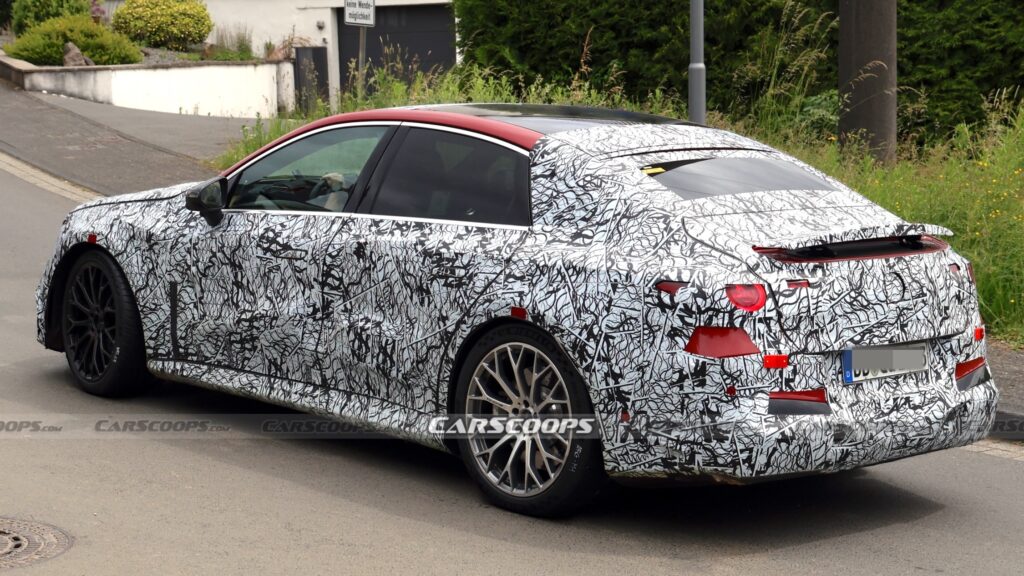
Another electric AMG is creeping closer to production, and this time it’s literally raised its game. Fresh spy shots of the upcoming AMG C-Class EV have caught its pop-up rear spoiler deployed, giving us another clue about the car Mercedes hopes will keep the electric BMW M3 honest.

The regular electric C-Class debuted in April, but AMG’s version is still undergoing development ahead of an expected 2027 launch. Curiously, this latest prototype is actually more disguised than the one we saw in June, with additional camouflage obscuring the taillights and lower doors, suggesting its an older test car. But at least it forgot to hide the interesting bit.

Related: 2027 Mercedes-AMG CLA 45 EV Debuts With 3 Motors, 671 HP And A Vibrator

\\\\\

SH Proshots

Rising from the trunk lid is the active rear spoiler we’d previously suspected was lurking there. Sources say the AMG will use active aerodynamic hardware to genuinely key the fat tires into the road surface, so the wing isn’t simply an elaborate way of telling everyone you bought the expensive C-Class.

Elsewhere, this prototype wears different wheels from the last one we spied, while the production car is expected to get a more aggressive AMG body kit. Underneath, Mercedes is reportedly developing modified air suspension and rear-wheel steering, with AMG promising an “authentic experience” covering performance, handling and even sound.

Can fake sounds be authentic? The recently revealed electric CLA 45 uses synthesized combustion noises, simulated gearshifts and even active seat shakers to replace some of the sensations EVs normally delete. So we expect similar features in the electric AMG C-Class, and plenty of power to go with them.

778 HP Rumored

\\\\\

SH Proshots

Mercedes hasn’t confirmed the specs of the AMG C-Class, but between what we already know about the CLA 45 and the C400 4MATIC Electric, and rumors coming out of Affalterbach, a Yasa tri-motor setup producing around 778 hp (789 PS / 580 kW) seems likely.

The hot C-Class will need serious muscle simply to outrank the CLA 45, which already produces up to 671 hp (680 PS / 500 kW) from its own three-motor powertrain. The standard C400 4MATIC Electric, meanwhile, has two motors and makes a more modest 482 hp (490 PS / 360 kW). The C400 also supports DC charging at up to 330 kW and can travel up to 473 miles (762 km) on a charge, though the AMG C-Class won’t match those figures if it retains the C400’s 94 kWh battery.

Ultimately, though, AMG’s biggest challenge won’t be beating its little brother. BMW is preparing its first electric M3, meaning two of Germany’s defining performance sedans are heading into the battery era at roughly the same time.

\\\\\

SH Proshots

Tiny, Slow, And Super Cheap: The VinFast VF 2 Could Come To America And Europe

  • VinFast has suggested the tiny VF 2 could eventually be sold outside Vietnam.
  • The two-door microcar has 40 hp, a top speed of 50 mph, and 130 miles of range.
  • Company implied it could be positioned as a golf cart alternative like the Topolino.

VinFast had grand ambitions, but things didn’t go according to plan. However, the company isn’t giving up and recently hinted their new microcar could eventually come to Europe and the United States.

In a meandering press release, VinFast Canada said the “microcar is quietly making a comeback.” They went on to note the success of the Citroën Ami and Fiat Topolino, the latter of which is now available in America.

More: Stellantis’ Cheapest New Vehicle In America Is A $14K Fiat You Can’t Take On The Highway

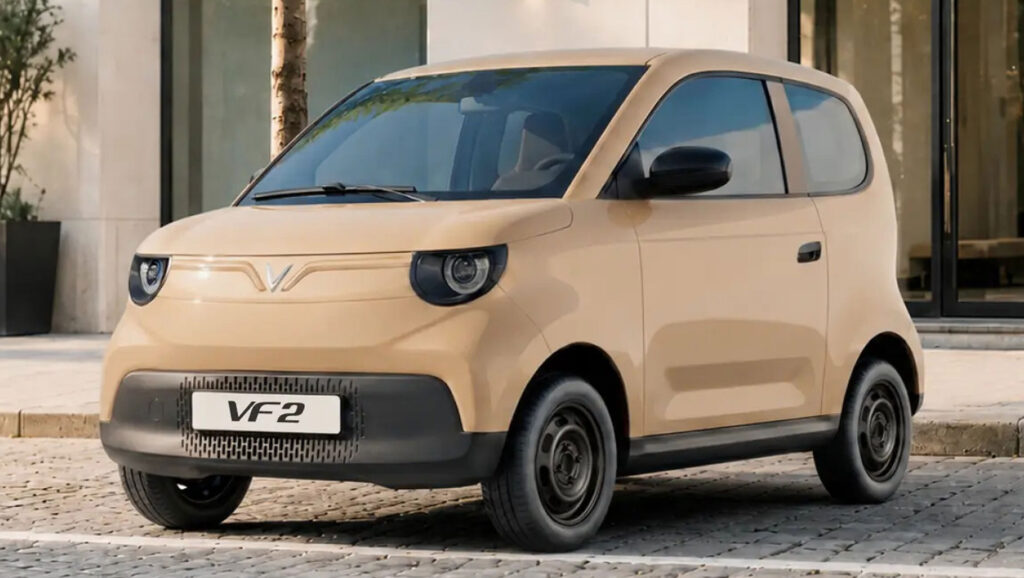
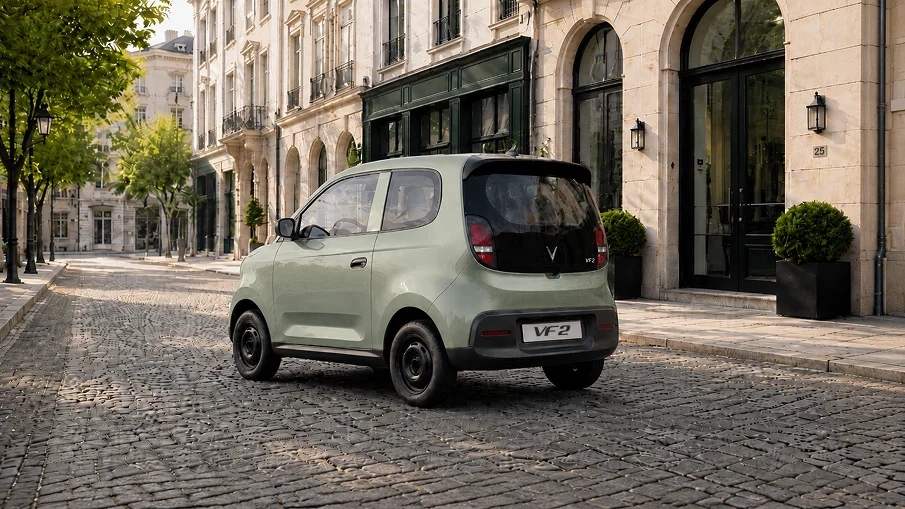
The company then pivoted to the VF 2, which is their smallest model. The two-door, four-seater measures 121.7 inches (3,090 mm) long, 58.9 inches (1,496 mm) wide, and 65.5 inches (1,663 mm) tall with a wheelbase that spans 81.3 inches (2,065 mm). To put those numbers into perspective, the Fiat 500e is over 21.3 inches (540 mm) longer.

While the VF 2 is tiny, it only costs $7,214 (đ188 million) in Vietnam, which is “roughly as much as a premium motorcycle.” Despite the bargain basement pricing, the company noted the model has LED headlights, air conditioning, a 7-inch display, and 13-inch alloy wheels. They’re joined by a handful of safety features including a driver’s airbag, anti-lock brakes, and a traction control system.

\\\\

Power comes from an 18.3 kWh battery pack, which feeds a rear-mounted motor developing 40 hp (30 kW / 41 PS) and 48 lb-ft (65 Nm) of torque. This enables the car to have an NEDC range of up to 130 miles (210 km). When the battery is low, a 24 kW DC fast charger can take it from 10% to 70% in approximately 34 minutes.

Those numbers aren’t very impressive, but VinFast noted they’d be perfect for the “urban commuter who drives alone.” That’s a relatively niche market, but a super cheap car certainly has some appeal, even if the top speed is limited to 50 mph (80 km/h).

\\\

While the automaker acknowledged they haven’t announced plans to bring the VF 2 to North America or Europe, they added such a decision “would not be entirely out of place.” The company went on to say that, “In many developed markets, even entry-level vehicles have become increasingly expensive, with the average new vehicle selling for more than $50,000 by the end of last year.” This suggests they see a place for something far cheaper.

The company went on to imply the VF 2 could follow in the footsteps of the Topolino and be positioned as an alternative to golf carts for neighborhood transportation. As they noted, “Walk through many newly developed residential communities in the world today, and it is no longer unusual to see golf carts being driven well beyond the golf course. Their popularity suggests there is demand for small, simple vehicles designed primarily for short urban trips.”

 Tiny, Slow, And Super Cheap: The VinFast VF 2 Could Come To America And Europe

One German Sedan Beat Every Tesla On Battery Health After 93,000 Miles

  • Top performers include the Hyundai Ioniq 5, Audi Q8 e-tron, and BMW i4.
  • Mercedes CLA retained 94 percent health, but the Model Y retained just 90.3 percent.
  • The largest ever EV battery degradation study also revealed several weak options.

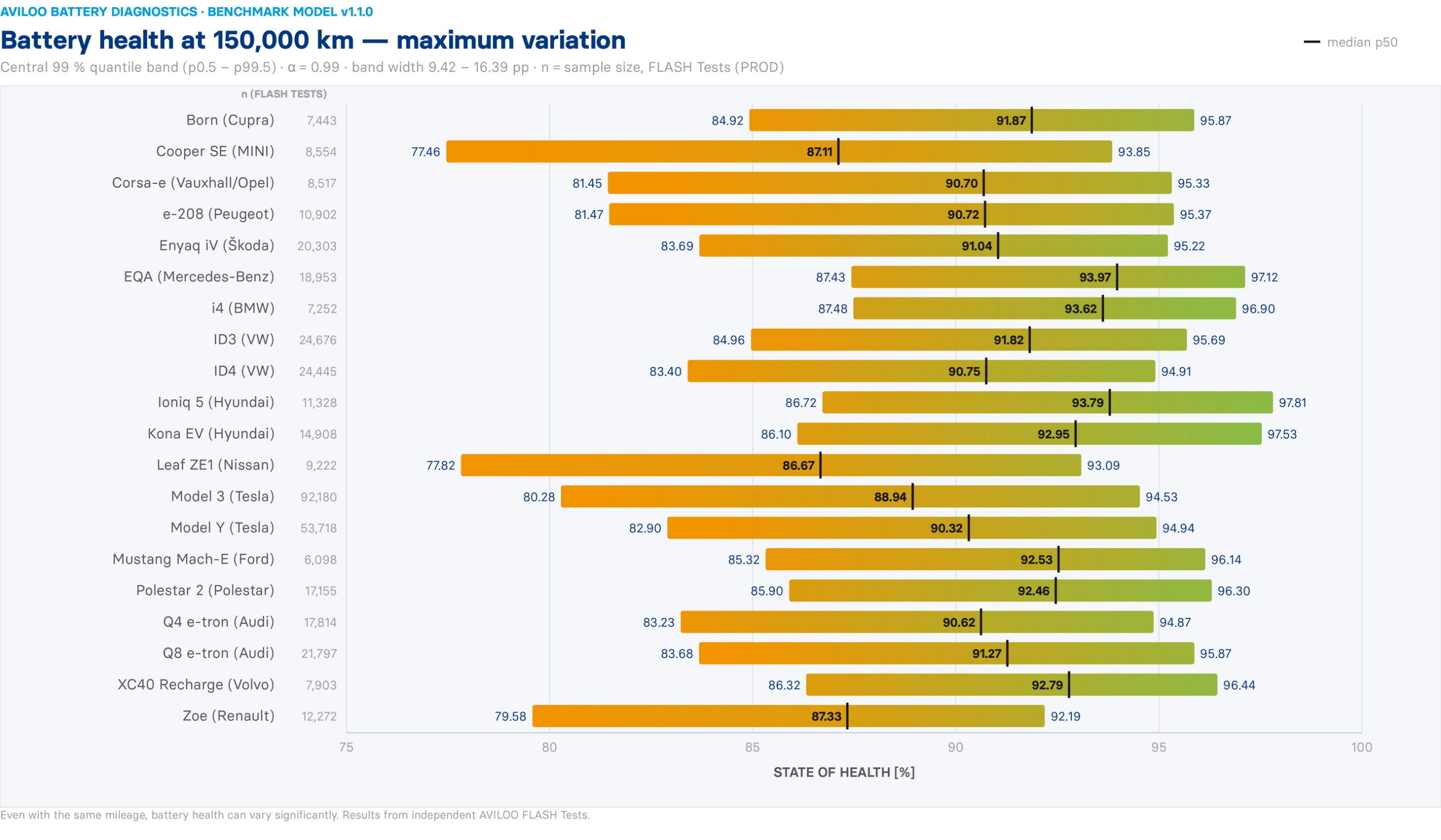
Battery degradation has long been one of the reasons new car buyers have held out on purchasing an EV. However, data from a new study reveal that the top-performing EVs lose less than 5 percent of their range after 93,205 miles (150,000 km) of driving, meaning battery packs will easily last the average life of most new cars.

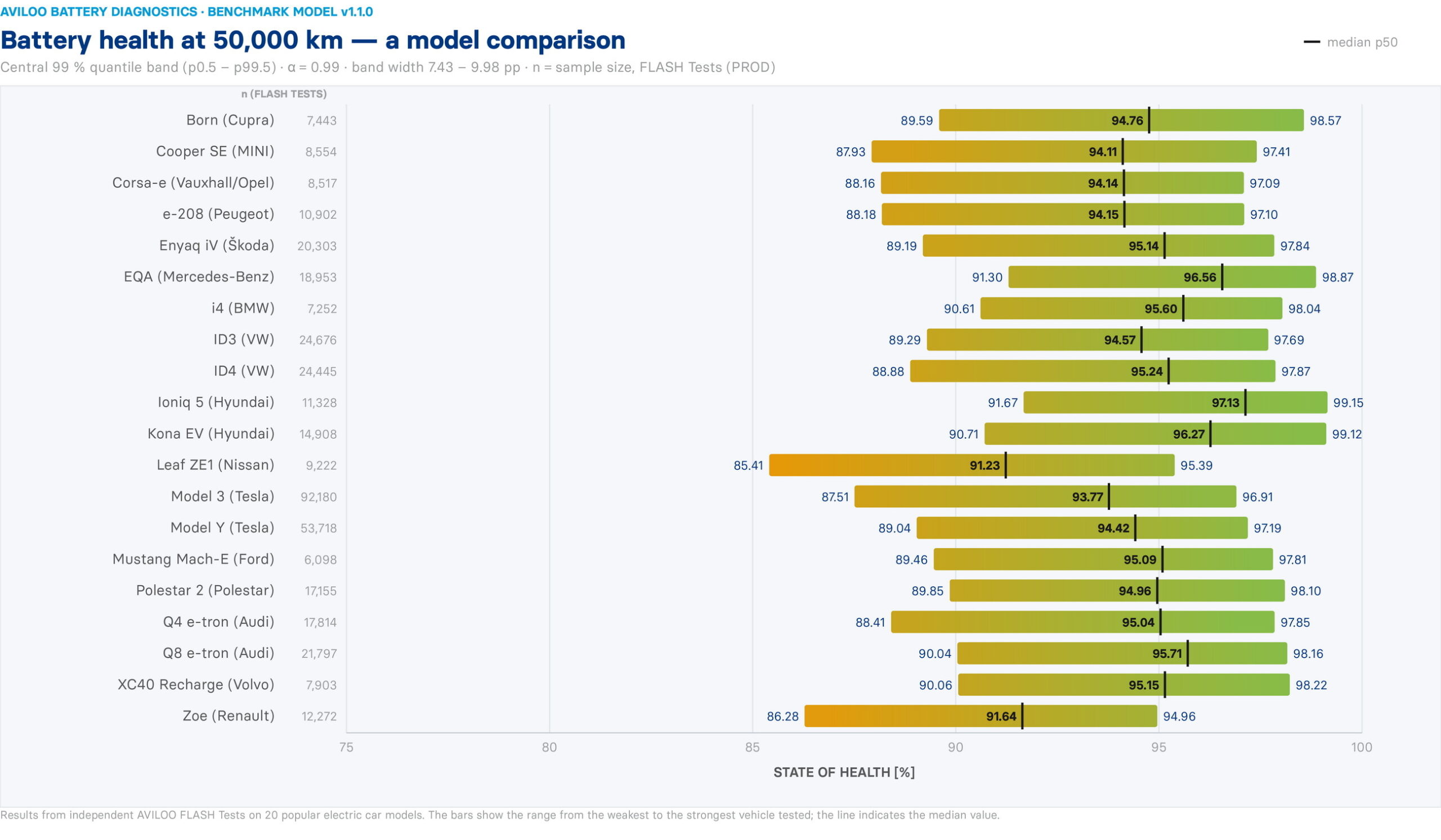
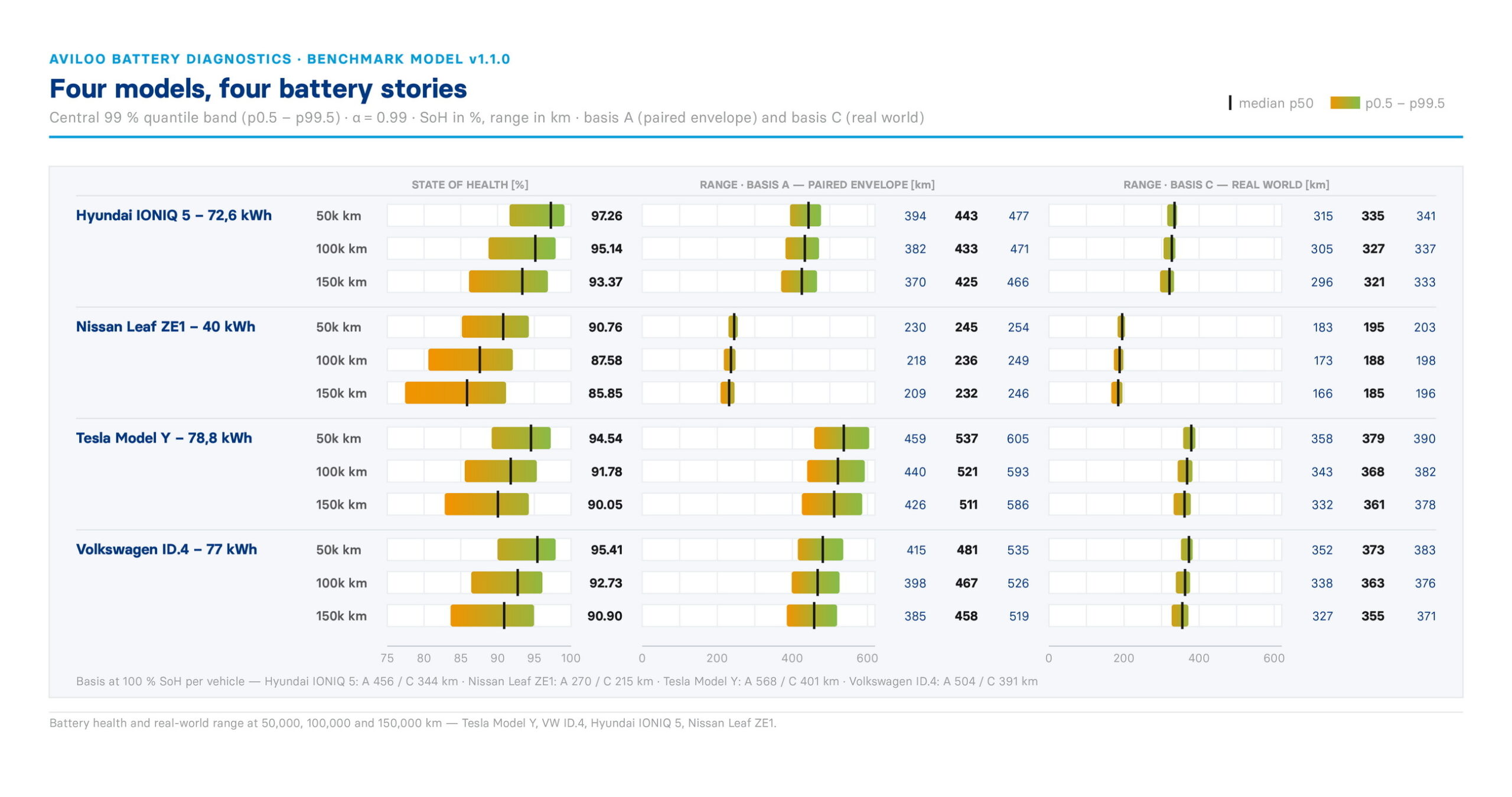
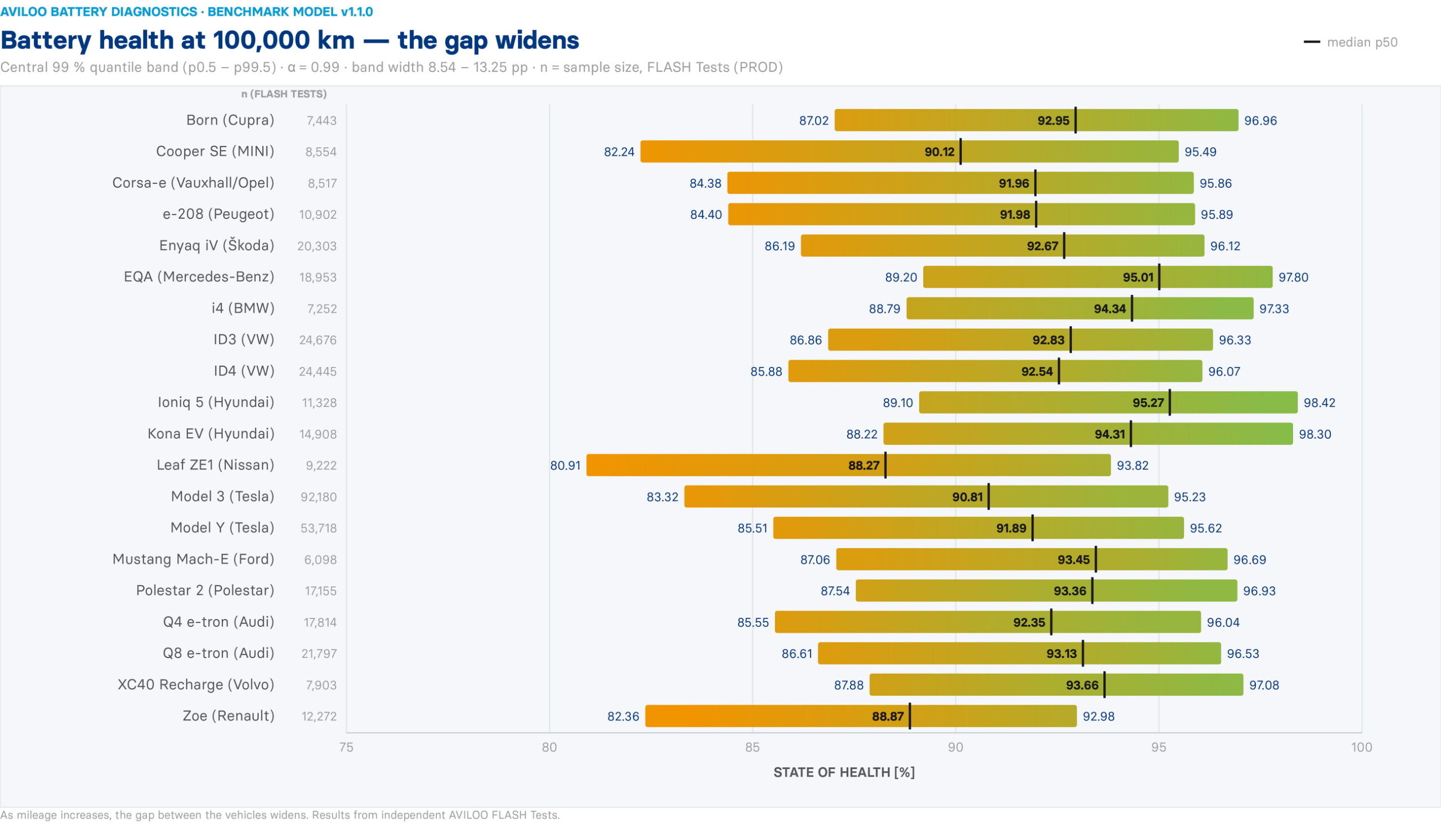
The study, published by Aviloo, has been labeled the largest independent study of used EV batteries ever conducted. More than 500,000 battery tests have been published, and the results show how 20 of the industry’s most popular EVs perform.

Read: A Seven-Year-Old Tesla Model 3 Survived 380,000 Miles, Its Range Did Not

 One German Sedan Beat Every Tesla On Battery Health After 93,000 Miles
Aviloo

The Hyundai Ioniq 5 performed best after 31,068 miles (50,000 km) of testing, retaining 97.1 percent of its original usable capacity. Other strong performers after 31,068 miles included the Mercedes-Benz CLA at 96.6 percent, the Hyundai Kona EV at 96.3 percent, the Audi Q8 e-tron with 95.7 percent, the BMW i4 with 95.6 percent, and both the Volvo XC40 Recharge and VW ID.4 at 95.2 percent battery retention.

 One German Sedan Beat Every Tesla On Battery Health After 93,000 Miles
Aviloo

After 93,205 miles of driving, the Mercedes-Benz CLA came out on top with a battery health of 94 percent. This placed it ahead of the Hyundai Ioniq 5 (93.6 percent), Hyundai Kona EV (93 percent), Volvo XC40 Recharge (92.8 percent), Ford Mustang Mach-E (92.5 percent), and the Polestar 2, also at 92.5 percent.

Teslas Disappoint

 One German Sedan Beat Every Tesla On Battery Health After 93,000 Miles
Aviloo

Several popular EVs did not perform as well as the competition. Most notable was the Tesla Model Y, which retained just 90.3 percent of its battery capacity after 93,205 miles, and the Tesla Model 3, which retained 88.9 percent of its battery capacity. Other poor performers included the Renault Zoe (87.3 percent), Mini Cooper SE (87.1 percent), and Nissan Leaf (86.7 percent), all of which have relatively small batteries.

 One German Sedan Beat Every Tesla On Battery Health After 93,000 Miles
Aviloo

Importantly, the results of this study don’t mean every Mercedes-Benz CLA will have 94 percent battery health after 93,205 miles, or every Peugeot e-208 will have 90.7 percent battery health. The study examined the median across all vehicles and found that good and bad examples of the same car can have battery health ratings that vary by as much as 13.5 percent. Nevertheless, the study demonstrates just how good current EV batteries are.

Model31,000 mi /
50,000 km
62,000 mi /
100,000 km
93,000 mi /
150,000 km
Drop
31K-93K mi
Mercedes-Benz EQA96.6%95.0%94.0%2.6 pp
Hyundai Ioniq 597.1%95.3%93.8%3.3 pp
BMW i495.6%94.3%93.6%2.0 pp
Hyundai Kona EV96.3%94.3%93.0%3.3 pp
Volvo XC40 Recharge95.2%93.7%92.8%2.4 pp
Ford Mustang Mach-E95.1%93.5%92.5%2.6 pp
Polestar 295.0%93.4%92.5%2.5 pp
Cupra Born94.8%93.0%91.9%2.9 pp
Volkswagen ID394.6%92.8%91.8%2.8 pp
Audi Q8 e-tron95.7%93.1%91.3%4.4 pp
Škoda Enyaq iV95.1%92.7%91.0%4.1 pp
Volkswagen ID495.2%92.5%90.8%4.5 pp
Peugeot e-20894.2%92.0%90.7%3.4 pp
Vauxhall/Opel Corsa-e94.1%92.0%90.7%3.4 pp
Audi Q4 e-tron95.0%92.4%90.6%4.4 pp
Tesla Model Y94.4%91.9%90.3%4.1 pp
Tesla Model 393.8%90.8%88.9%4.8 pp
Renault Zoe91.6%88.9%87.3%4.3 pp
MINI Cooper SE94.1%90.1%87.1%7.0 pp
Nissan Leaf ZE191.2%88.3%86.7%4.6 pp
SWIPE

VW’s ID. Polo Waiting List Is So Long You’ll Get A McLaren Sooner

  • VW ID. Polo EV buyers could wait 10 months for delivery, German media says.
  • More than 30,000 orders landed before customers could even take a test drive.
  • The related Skoda Epiq and Cupra Raval are also experiencing strong demand.

Waiting an eternity for delivery of a new Ferrari or special Porsche is to be expected. But waiting almost a year for a Volkswagen Polo? That’s reportedly what some buyers of the new electric ID. Polo face after demand for VW’s affordable EV blew past expectations.

VW’s order books have already swallowed more than 30,000 European ID. Polo orders, despite customers initially having to commit without seeing the car at a dealership, let alone taking a test drive, according to German media.

Related: VW’s New ID. Tiguan Finally Stops Pretending It’s An ID.4

“The entire ID. Polo range is sold out. The waiting time is at least ten months,” the head of a major VW dealer group told Automobilwoche.

That makes ordering a bespoke ID. Polo potentially more patience-testing than ordering something vastly more exotic. McLaren Palm Beach, for instance, says a factory-ordered McLaren can take anywhere from “eight weeks to six months,” although it cautions that exact delivery dates can’t be guaranteed.

Order Today, Get It June 2027

 VW’s ID. Polo Waiting List Is So Long You’ll Get A McLaren Sooner

Of course nobody is genuinely cross-shopping an ID. Polo and a McLaren. One costs €24,995 ($32,400 / £23,945) and the other around 10 times as much. But the comparison highlights how unusual a 10-month queue is for a mainstream small car.

VW says it’s now increasing output at its Martorell factory in Spain, though customers unwilling to wait may find pre-configured cars sitting at dealerships. A dealer told Automobilwoche that cars ordered now might not arrive until May or June of 2027.

Same Platform, Similar Wait Times

 VW’s ID. Polo Waiting List Is So Long You’ll Get A McLaren Sooner

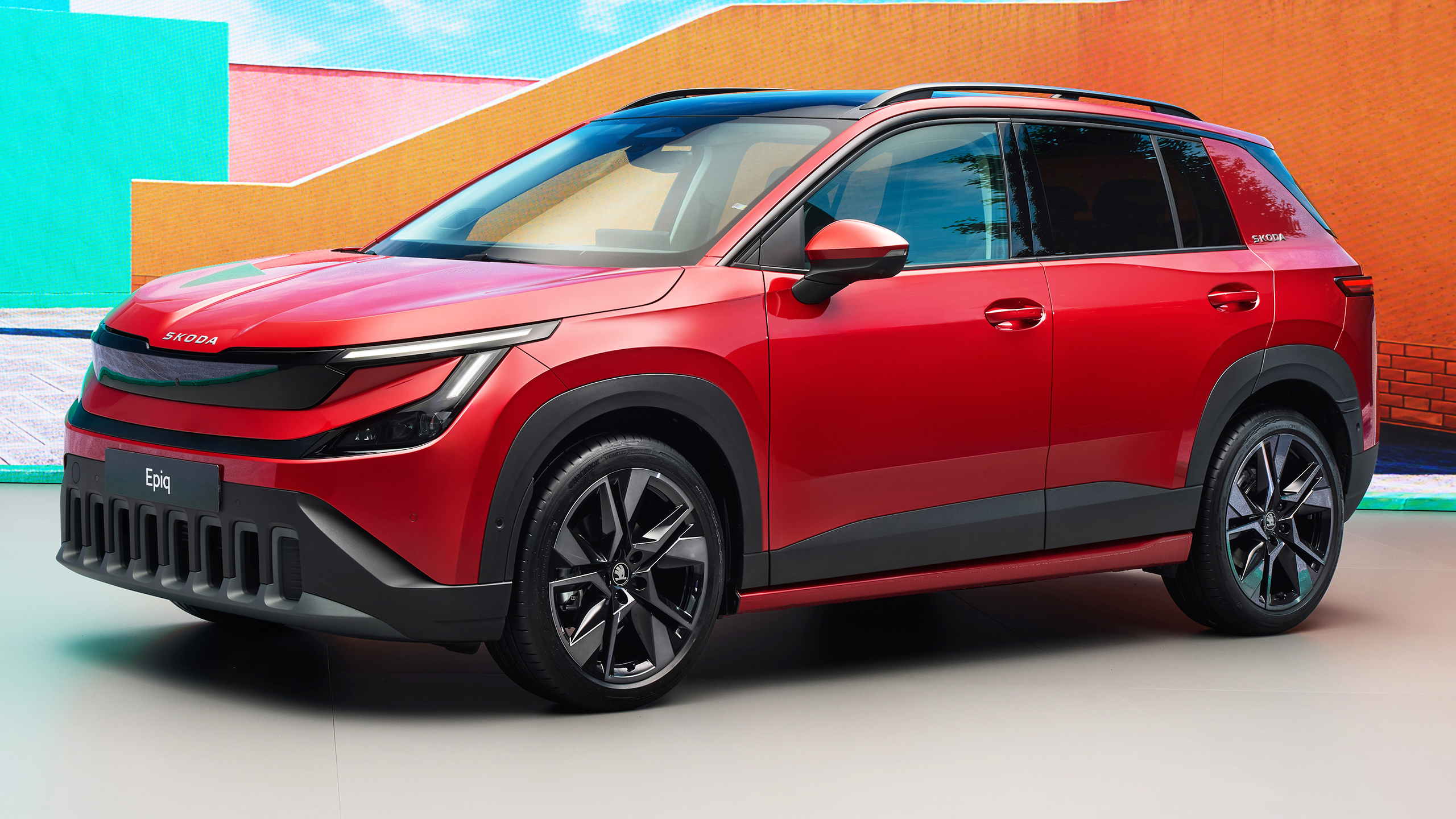
And the VW brand isn’t alone in having this particular problem. Sister company Skoda has reportedly collected more than 35,000 orders for its related Epiq (above), while dealers say Cupra’s Raval (below) is also booked out for months. Both share their single-motor, front-wheel drive MEB+ hardware with the ID. Polo, and are also built at Martorell. All three are part of the VW Group’s plan to bring EV prices closer to traditional combustion-powered small cars in an effort to fend off Chinese opposition.

The related ID. Cross SUV is also reportedly attracting plenty of early interest too, while the facelifted ID.3 Neo is facing waits of two to three months. That’s all good news for VW, and boy could it use some right now. It’s cutting 100,000 workers, shutting multiple plants, and looks likely to kill off the Seat brand after 2030 in an effort to turn around its fortunes.

 VW’s ID. Polo Waiting List Is So Long You’ll Get A McLaren Sooner

VW, Skoda, Cupra

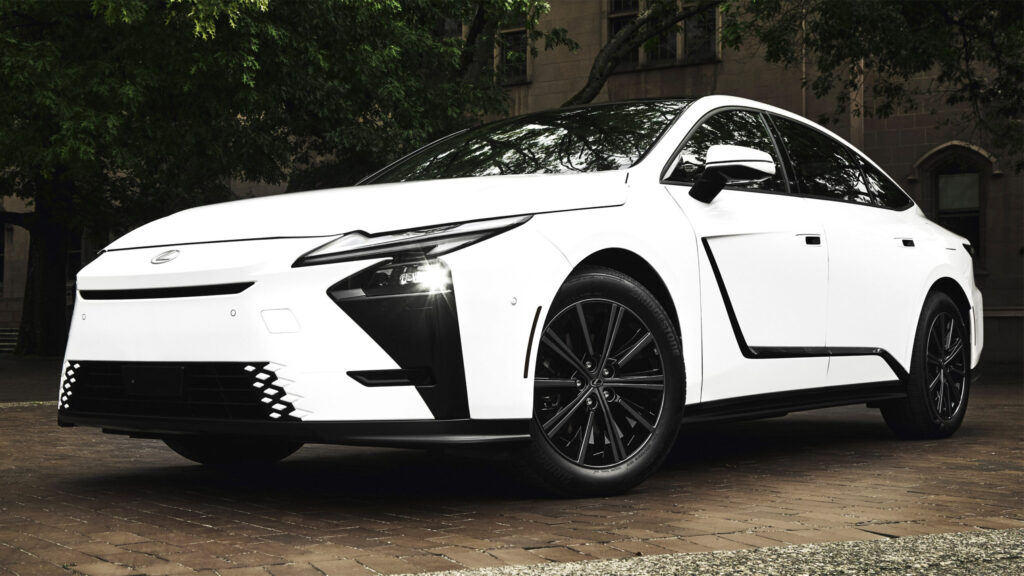
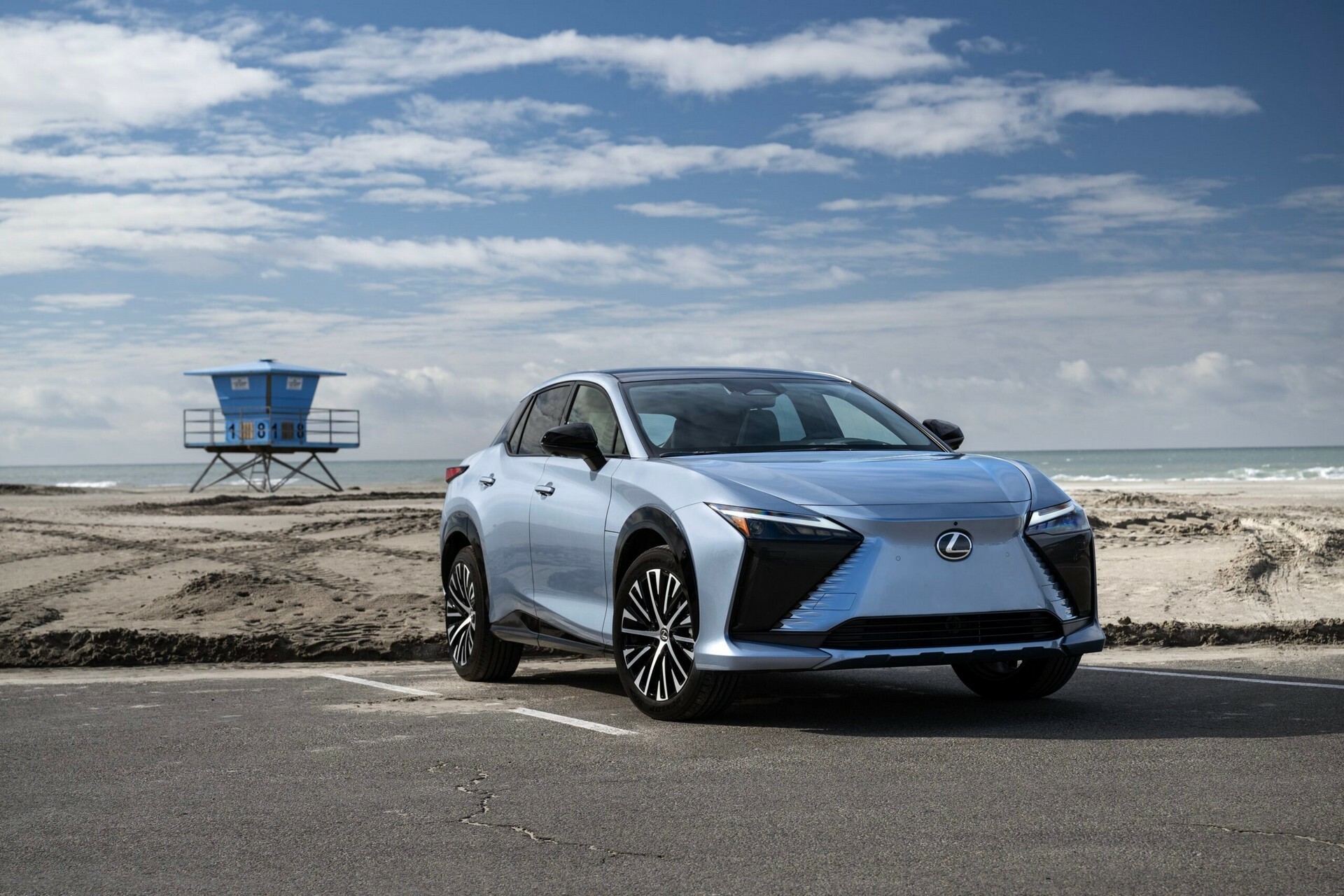
Lexus Just Fixed The One Thing California’s EV Rebate Won’t Do For Many Buyers

  • Lexus is rebating the California buyers the state program shuts out.
  • The MyLexusEV rebate carries no price cap and no first-timer rule.
  • Lexus is allowing the new discount to be stacked with other incentives.

Lexus has stepped up for Californian residents who are ineligible for the MyFirstEV Program discounts, announcing an incentive it hopes will drive sales of the all-electric RZ and the new ES EV.

Under the MyFirstEV Program, shoppers receive an instant rebate of up to $3,500 for new zero-emission vehicles and $1,750 for used models, but only if you’ve never owned a ZEV previously and are a verified California resident, so many locals aren’t eligible. There’s also an MSRP cap of $50,000.

Read: First-Time EV Buyers To Get $3,500 Instant Rebate In California

The MyLexusEV Rebate does not have these same restrictions, providing an instant $2,500 rebate with no MSRP cap, regardless of whether someone is a first-time EV buyer.

 Lexus Just Fixed The One Thing California’s EV Rebate Won’t Do For Many Buyers

The good news doesn’t stop there for interested buyers of the RZ and ES EV. The MyLexusEV Rebate can be stacked with other discounts, including a current $4,000 Lease Cash Incentive for the 2026 RZ, boosting savings up to $6,500, CarsDirect notes. There are currently no other incentives available for the Lexus ES EV.

Lexus is no doubt eager to boost sales of the RZ and ES EV in the United States. Through the first half of this year, 7,814 examples of the RZ had been sold, an impressive 106.8 percent increase from the 3,779 sold in the first half of 2025. By comparison, sales of the ES, which just entered its eighth generation, have slipped 79.7 percent this year to just 3,896, down from 19,181, although this can be largely attributed to the model change, rather than a huge decline in demand. Sales of the all-electric version haven’t been published, but it’s unlikely to sell in numbers to rival the combustion model.

\\\\\\\\

Polestar Has A Shiny New Concept But Everything Else Is On Fire

  • Formula 2030 previews styling for Polestar’s next-generation 2 and 7 models.
  • Polestar shares plunged nearly 30 % after disappointing Jan-June financials.
  • EV brand is also being forced out of the US market while Volvo gets to stay.

Polestar has announced a futuristic concept designed to show us where it’s heading by 2030, just as investors are wondering whether it’ll even get there.

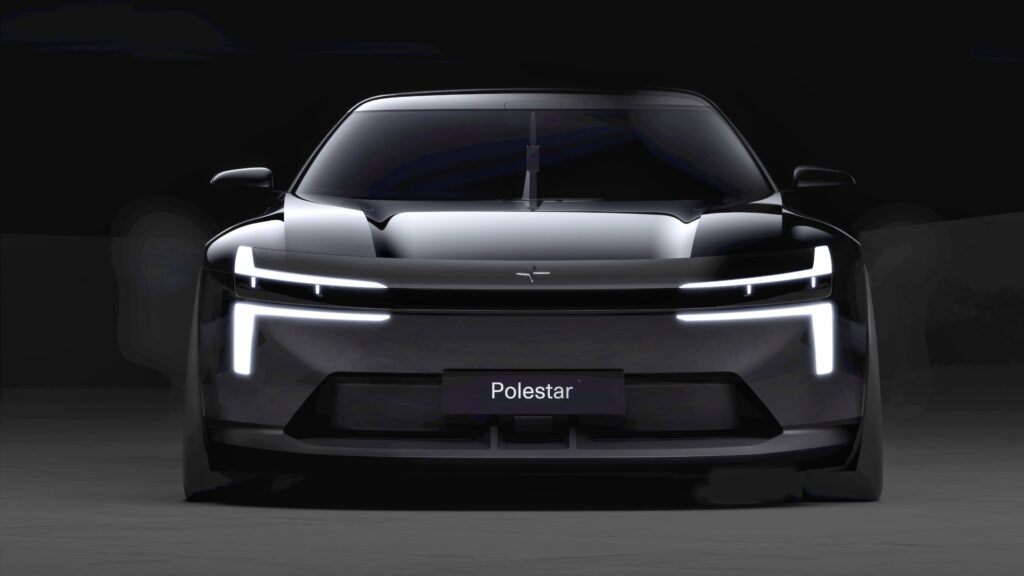
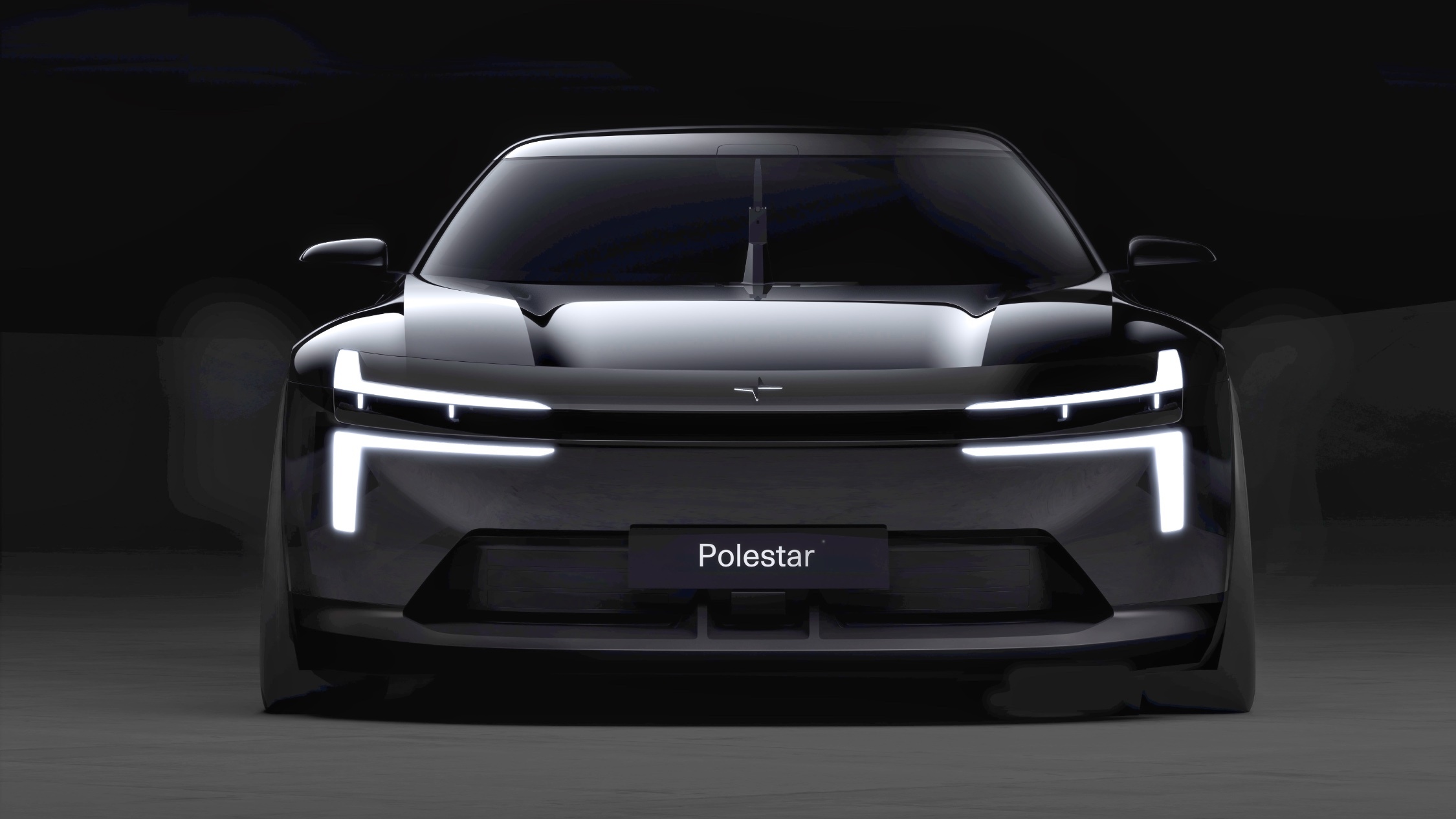
Called Formula 2030, the concept is intended to preview Polestar’s next design era under design boss Philipp Römers. We haven’t actually seen it in full yet, but the sole image shows a low-slung car with motorsport-style vertical windshield wiper. Investors, retailers and selected customers will get an early peek at Polestar’s Gothenburg headquarters before a global unveiling later this year.

Related: $25M Dealer Lawsuit Says Polestar Rigged Its Own US Ban, A Senator Says $35K Per Car Is Why

The brand says the car will provide clues to the next Polestar 2, due in 2027, as well as the upcoming 7. Expect an evolution of the company’s familiar minimalist Scandinavian look rather than a complete reset, with signature details such as its Dual Blade headlights sticking around.

Unfortunately, Polestar’s accountants have more immediate concerns than headlights. The company’s shares recently dropped 29.4 percent following its first-half 2026 results. Vehicle sales increased just 0.4 percent compared with the same period last year, while revenue slipped 4.4 percent to $1.4 billion.

Polestar still lost $842 million during those six months, although that loss was 29 percent smaller than the one recorded during the first half of 2025. The company has also dialed back its planned 2026 production growth, warning that competition remains intense.

Polestar 4 SUV Leads New-Model Charge

 Polestar Has A Shiny New Concept But Everything Else Is On Fire

There are brighter spots. New products including the Polestar 4 SUV (below) give the company fresh metal to sell, but not in America. The brand is being pushed out of the US after failing to secure authorization to sell 2027-model-year vehicles under connected-car rules targeting technology linked to China.

To add insult to injury fellow Geely brand Volvo received an exemption, despite the Polestar 3 sharing hardware, software and a South Carolina production line with the Volvo EX90. A New Jersey dealer has even sued Polestar for at least $25 million, alleging the automaker had already been planning an American retreat.

The Formula 2030 concept tells us Polestar has plenty of plans for tomorrow. First, though, it needs to navigate today.

\\\\\\\\\\

Polestar

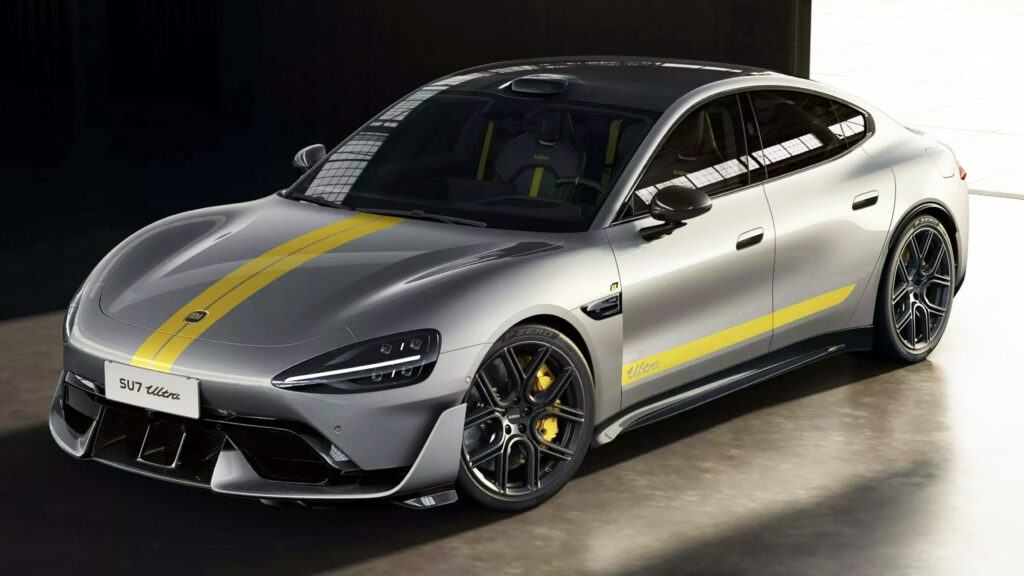
Xiaomi Conquered China In Two Years, Now It’s Coming For Europe

  • Xiaomi brings its EVs to Europe next year, starting in Germany.
  • Sales will run through dealers, not Xiaomi’s own direct model.
  • A China EV tariff of up to 45.3 percent could bite hard.

After conquering its home market of China with several exciting EVs, Xiaomi will soon start selling its cars internationally. Things will kick off in Europe next year, including in Germany, with the signing of several memorandums of understanding with dealership groups to make it happen.

Read: Xiaomi’s New $38,400 SUV Runs 314 Electric Miles Before Burning A Drop Of Gas

Xiaomi already operates a large research and development center in Munich, Germany, and will work alongside groups including LUEG Mobility GmbH, a Mercedes-Benz dealer, and Emil Frey Germany, one of the nation’s largest automotive dealership groups. Working with experienced partners will allow Xiaomi to hit the ground running with dealers that have already established trust with customers across Germany and have extensive experience in new-car sales.

\\\\\

In addition, working with dealerships rather than selling vehicles directly to consumers will give prospective buyers the chance to touch and feel Xiaomi products in the flesh before handing over any of their hard-earned cash.

Xiaomi’s models in Europe will be more expensive than the ones it sells in China. The EU imposes hefty tariffs on EVs imported from China, significantly increasing their prices. Xiaomi had yet to launch its first EV, the SU7 sedan, when the European Commission launched its investigation into Chinese EVs in 2023, and as a result, the technology company didn’t participate in the probe. As noted by the South China Morning Post, this means it could be hit with the highest possible duty of 45.3 percent.

\\\\\\\

Xiaomi’s Skynomad

Since it started selling vehicles, Xiaomi has delivered more than 700,000 units in China, a remarkable achievement given how new it is to this ultra-competitive industry. However, in China, Xiaomi is a well-established consumer product brand, often viewed as the ‘Apple of China.’ This gave it a huge competitive advantage over other new-vehicle brands as it’s already a trusted name.

Although Xiaomi products are also available in several overseas markets, they remain a relatively small player in regions like Europe and won’t be able to rely on familiarity to win over customers. Instead, it will need to convince shoppers with great features and competitive pricing, which is a tall task indeed, especially in the hotly contested markets of the Old Continent.

\\\\
❌