The carmaker has revealed its future M-branded EVs will have quad-motor powertrains.
Powering the long-awaited electric M3 will be a 100 kWh pack with cylindrical cells.
In addition to adding simulated gearshifts, BMW will include a special soundscape in M EVs.
The era of all-electric performance cars from BMW M is nearly upon us. For years, the brand has been feverishly developing its next generation of cars and has confirmed that the first of these new models, the electric M3, will debut in 2027.
At the center of all future electric models from BMW M, starting with the M3, will be an innovative powertrain based on the sixth-generation technologies found across the standard Neue Klasse family. At the front axle, there will be two motors, while at the rear, there will be a further two motors, each of which drives a single rear wheel.
BMW isn’t yet ready to reveal how much power its quad-motor system will produce, but don’t be surprised if future EV Neue Klasse models have four-digit horsepower ratings. The motors are arranged in parallel, delivering power to one gearbox per wheel. Each of the two drive units also incorporates an inverter. The motors also allow for the precise control of power and torque at each wheel, creating what BMW says is a driving experience “that has never been achieved before.”
In news that will no doubt please hardcore driving enthusiasts, M says the front axle can be fully decoupled, turning its models into rear-wheel-drive beasts. Switching into RWD will also improve efficiency and boost driving range, so you can save the planet and spin up the wheels at the same time.
Purist Features
This isn’t where the driver-focused features will end. Much like the Hyundai Ioniq 5 N, electric M Neue Klasse models, like the M3 EV, will include simulated gear shifts and a special soundscape, aiming to add some emotion into the EVs, which are often void of excitement.
Supplying the motors will be a 100 kWh battery pack using BMW’s latest cylindrical cells. Driving ranges will obviously vary depending on the model, but the brand notes the pack has been designed to withstand the rigors of racetrack use. To offset some of the hefty weight of the electric powertrain, these electric M models will include lightweight natural fiber components.
The ’Heart of Joy’ high-performance control unit will control all driving-related processes, like control of the wheels and the steering, operating alongside four high-performance computers. To put it simply, M’s Neue Klasse models will be tech fests aiming to put the driver at the center of the experience.
Jeep dropped the Wrangler in Europe over new regulations.
Jeep’s UK chief says a new version could arrive down the line.
He hopes the SUV can follow the path of Land Rover’s Defender.
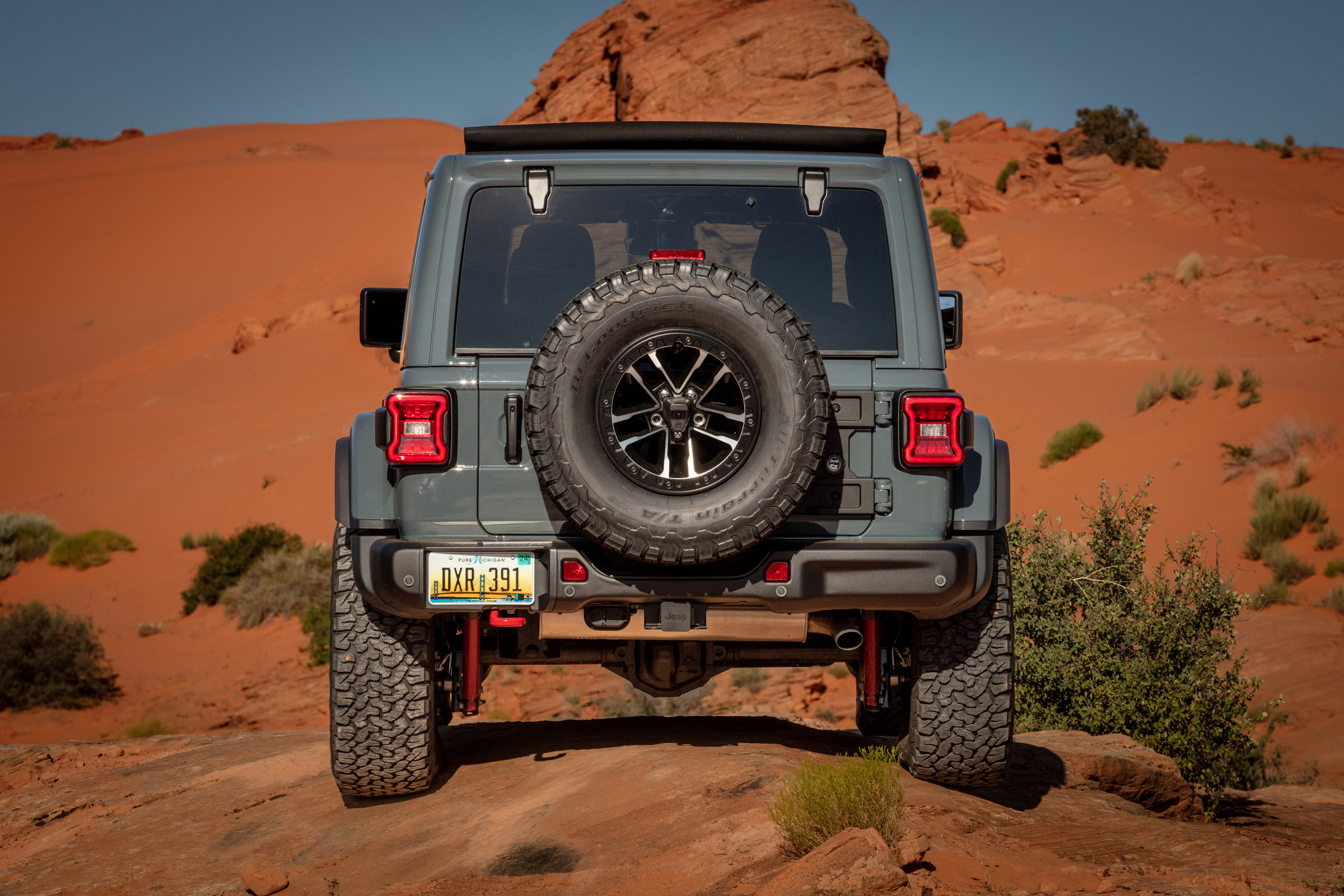
European buyers might soon get another shot at the Jeep Wrangler, after the model was recently discontinued across the continent. You’ll still find it at dealerships through the first half of 2026, but only what’s left in stock. After that, buyers will have to wait for Jeep to introduce the next-generation model.
Jeep recently stopped taking new orders the current Wrangler in Europe, including the UK, because it no longer complies with updated GSR2 safety regulations. These require modern driver-assistance and monitoring systems, which the Wrangler lacks, along with updated cybersecurity protections.
On top of that, emissions played a role in its departure. The turbocharged 2.0-liter GME-T4 inline-four used in European models emits up to 269 grams of CO₂ per kilometer, putting it in the same category as some high-performance V8 SUVs. The fact that Jeep discontinued all hybrid variants in the US, probably didn’t help either.
It may be gone for now, but it won’t be gone forever.
According to Jeep UK managing director Kris Cholmondeley, the current model has been “a victim of regulation” and he is confident there will be “another incarnation down the line.”
“I’ve had chats with the head of Europe and the head of the global team,” Cholmondeley told Auto Express. “I think we’re all aligned that we’d like to see it back – that’s what I would say. What and when? I don’t know. I honestly don’t know if it could come back as plug-in hybrid or full-electric. I just know the brand; it’s got such heritage, it seems silly to lose that.”
Lessons from the Defender
Although limited details are known about the next-generation Wrangler, it will almost certainly lean heavily on electrification with plug-in hybrid versions, and perhaps even an EV. Cholmondeley is hopeful that Jeep can replicate what Land Rover has done with the new Defender, making a future generation of the Wrangler more refined, while still retaining the off-roading abilities that have made it so iconic.
“Look at [the Land Rover] Defender,” he said. “If you can take something like a Wrangler and have a little bit of refinement, but still keep its personality, you see the hundreds [of sales] going to thousands, don’t you?”
While the Wrangler is one of Jeep’s most iconic models, the British director said the brand can retain an important presence in Europe, even without it in its range.
“Wrangler has been an enduring icon, but it has always been niche. That’s lovely for the heart – [but] in terms of the ongoing viability, a good brand can die by being too niche and not having a broader commercial appeal,” he told Autocar.
“Our job is to protect the core and the spirit and broaden the appeal. So I love Wrangler and everything it stands for, but I also love Avenger and Compass. They’ve got all that Jeep DNA running through them, but they’ve got much broader appeal.”
Tesla has introduced a new seven-seat version of the Model Y.
Seats cost $2,500 and are limited to the Model Y Premium AWD.
There are also other changes including a larger 16-inch display.
Tesla has introduced a new seven-seat version of the facelifted Model Y Premium. It’s available exclusively on the all-wheel drive Premium variant and costs an additional $2,500.
While the company hasn’t provided specifics on the fold-flat third row, it appears nearly identical to the setup found in the pre-facelift Model Y, meaning it can accommodate two small children at best. Unfortunately, they won’t find much back there besides two cup holders and some armrests integrated into the cargo area.
Pricing starts at $51,490 and the vehicle has an EPA-estimated range of 327 miles (526 km). The crossover can also accelerate from 0-60 mph (0-96 km/h) in 4.6 seconds, before hitting a top speed of 125 mph (201 km/h).
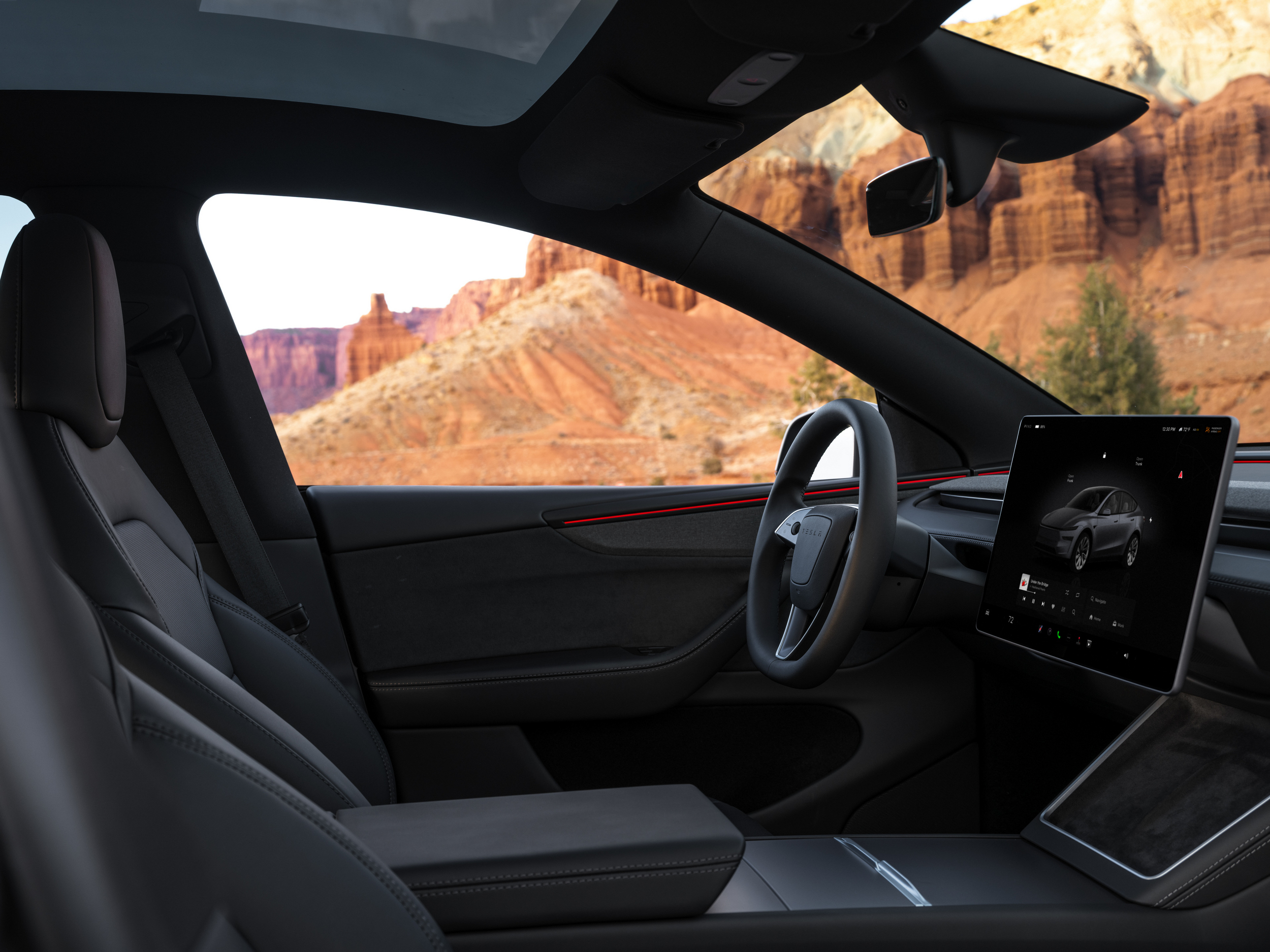
In other news, Tesla revealed all Premium and Performance variants will now come equipped with a black headliner and a larger 16-inch infotainment system. That’s up slightly from the previous 15.4-inch display.
Tesla didn’t mention additional changes, but reports suggest the model also gains matte black badging and a new 20-inch wheel design. The latter are known as the Helix 2.0 and they cost $2,000. Unfortunately, the titanium colored wheels lower the range of the aforementioned all-wheel drive Model Y Premium to 303 miles (488 km).
Newsom proposes $200M to replace canceled federal EV tax credits.
Plan targets point-of-sale rebates for new zero-emission vehicles.
Rebate follows pressure from automakers and environmental groups.
California California is moving to jumpstart electric vehicle momentum in the wake of the now-vanished $7,500 federal tax credit, and it’s bringing serious money to the table. To keep buyers engaged and support EV adoption, the state plans to introduce a new point-of-sale incentive designed to lower the upfront cost of electric vehicles right at the dealership.
The centerpiece of Governor Gavin Newsom’s newly unveiled $348.9 billion state budget proposal includes a one-time $200 million allocation for a point-of-sale rebate program targeting light-duty zero-emissions vehicles. Specifics are still under development, including how many rebates will be offered and which vehicles will qualify.
Next Phase of the EV Push
“Despite federal interference, the governor maintains his commitment to protecting public health and achieving California’s world-leading climate agenda,” California Air Resources Board spokesperson Lindsay Buckley said. “This incentive program will help continue the state’s ZEV momentum, especially with the federal administration eliminating the federal EV tax credit and carpool lane access.”
Car buyers in California rushed to snag new EVs in the third quarter of last year before the tax credit expired. Indeed, a record number of 124,700 zero-emission vehicles and plug-in hybrids were purchased across the state between July and September, the highest number on record. Predictably, sales tapered off in the fourth quarter once the credit was gone.
It’s not just consumers who will be pleased to hear California has incentives up its sleeve. Back in September, a group of automakers including Honda, Hyundai, VW, Audi, and Rivian sent a letter to Governor Newsom, urging the state to create a $5,000 EV rebate to offset the loss of the federal incentive previously scrapped under the Trump administration.
An incentive program won’t just benefit the hip pockets of locals. As reported by the LA Times, transportation is the largest source of climate and air pollution in California, so the more zero-emissions vehicles that can be sold there, the cleaner the air will become.
Governor Newsom added that the state “refuse[s] to be bystanders” as China and other countries lead the industry’s shift to EVs.
“We must continue our prudent fiscal management, funding our reserves, and continuing the investments Californians rely on, from education to public safety, all while preparing for Trump’s volatility outside our control,” he said. “This is what responsible governance looks like.”
Truck buying pushed U.S. average transaction prices to a new high.
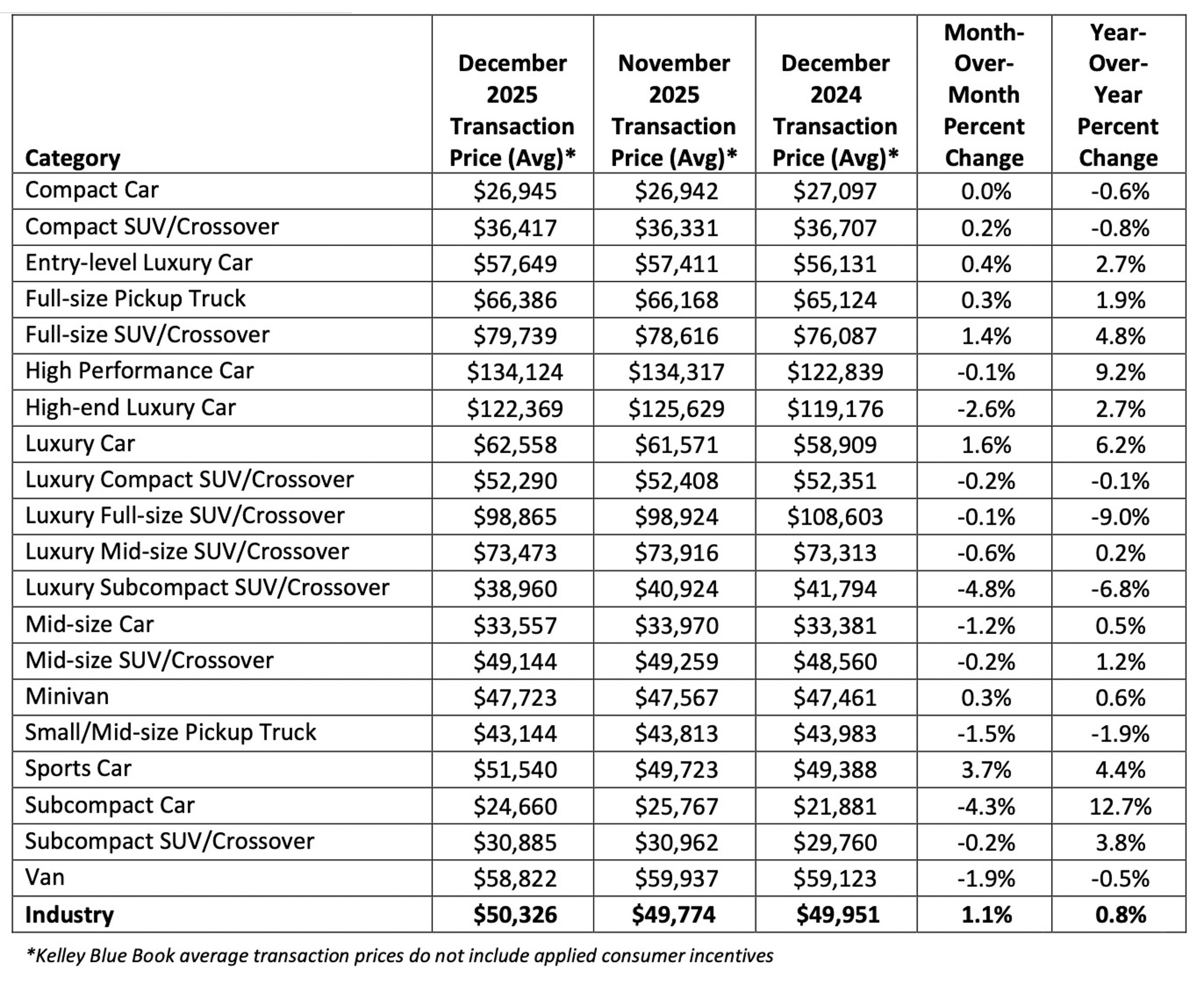
December 2025 ATP hit $50,326, up 0.8% yearly and 1.1% monthly.
Over 233,000 full-size trucks sold at a $66K average, Cox says.
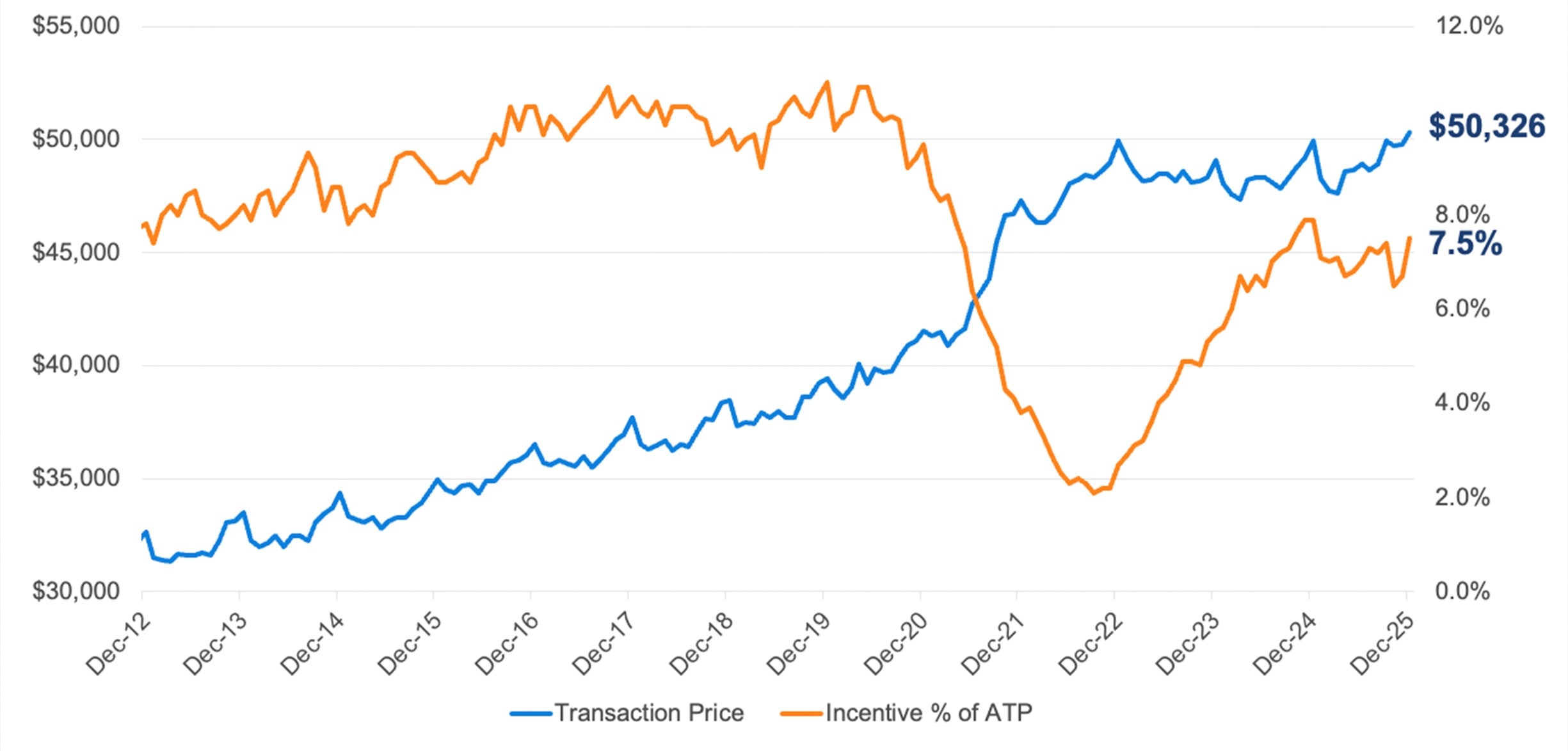
New vehicle prices traditionally peak in December, but last month they really boomed, the average transaction price (ATP) in America reaching an all-time high after breaking the $50,000 barrier for the first time in September of 2025. And it was trucks, appropriately enough, that did the heavy lifting.
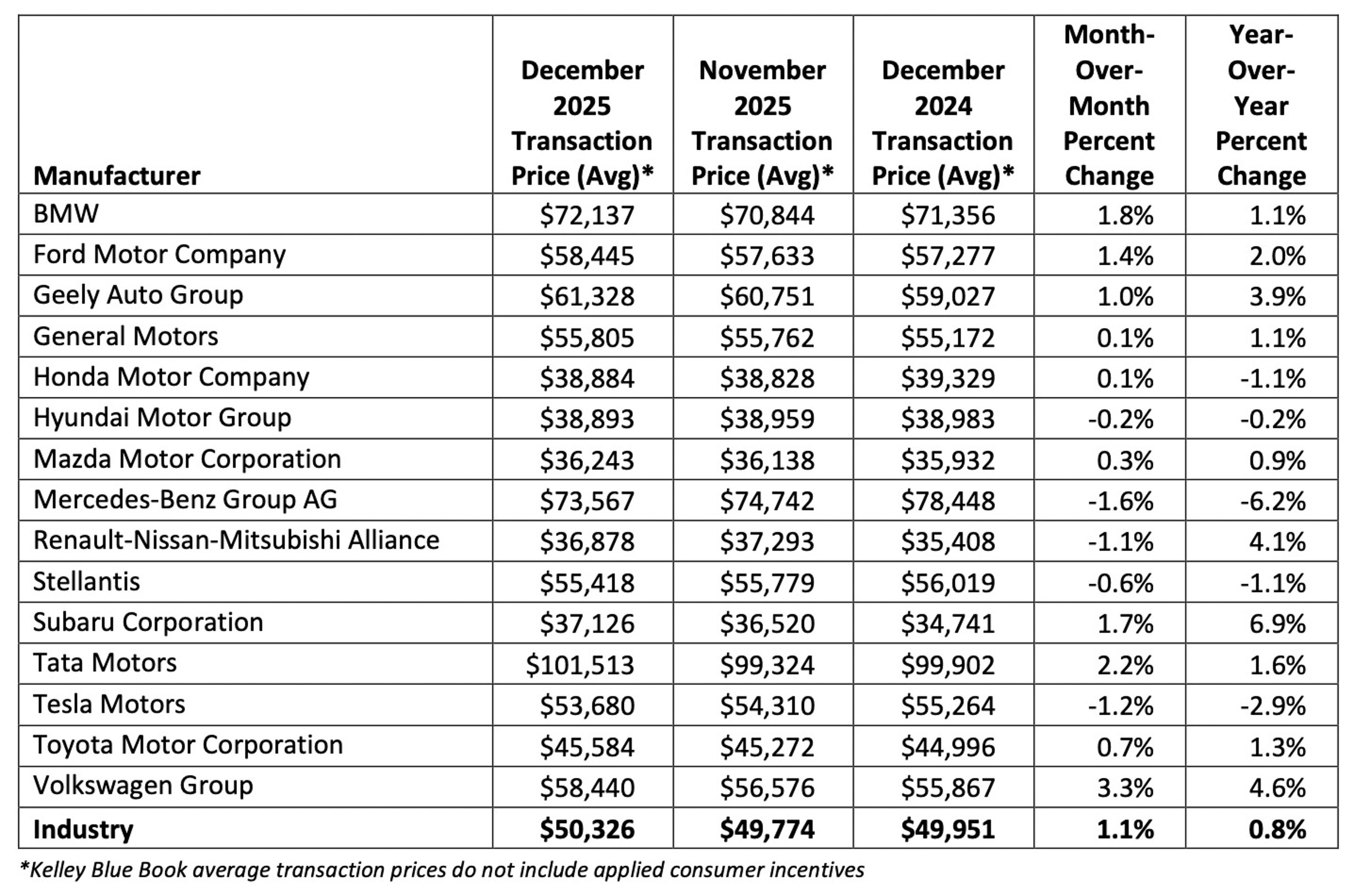
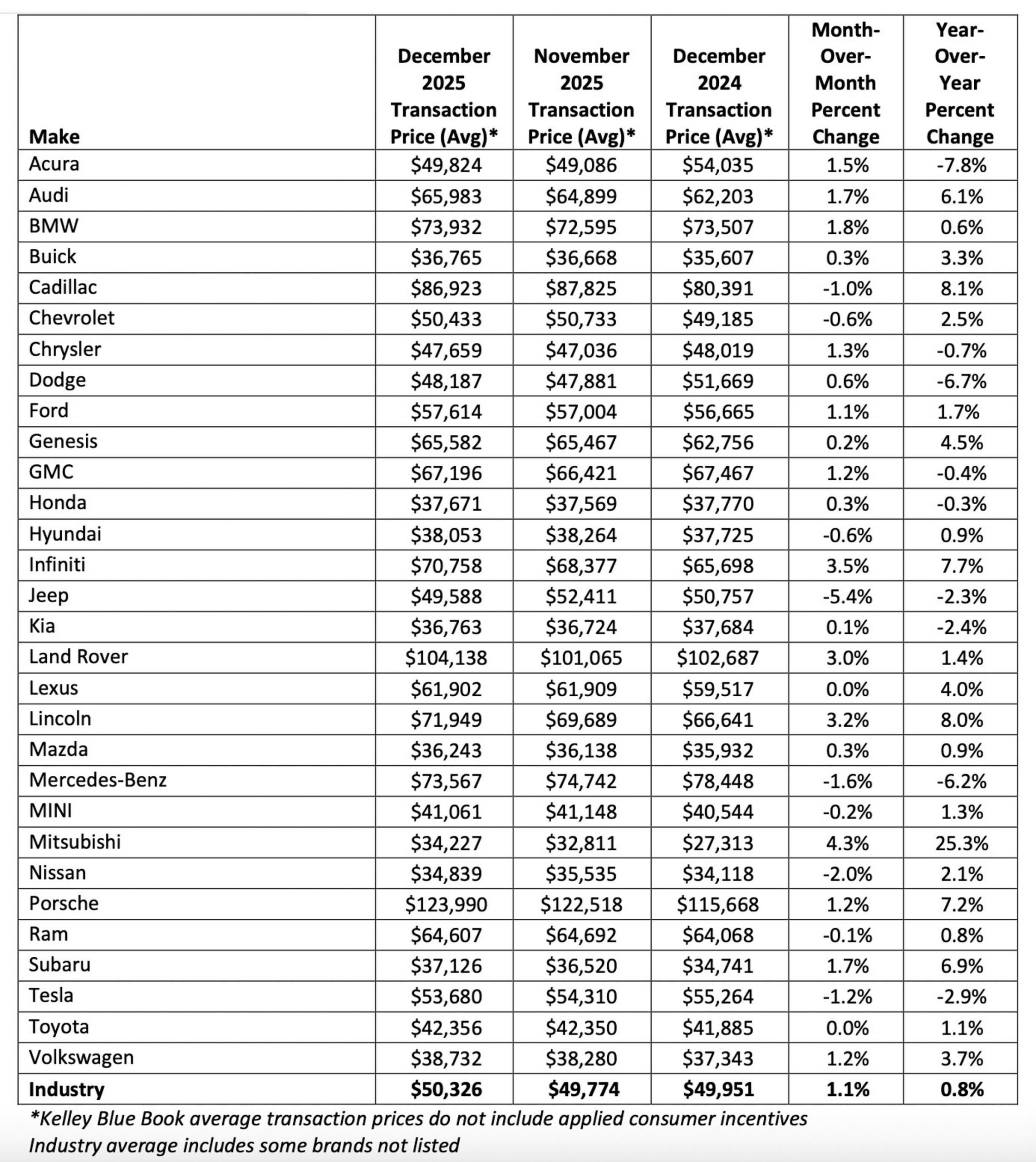
Kelley Blue Book says the average transaction price for a new vehicle climbed to $50,326 in the final month of 2025, up 0.8 percent year on year and up 1.1 percent from November. Americans’ desire to put a pickup on their driveway helped fuel that growth, with drivers splurging a staggering $15 billion on full-size trucks in December alone.
Jumbo pickups including the Ford F-150 and Chevy Silverado had an averaged price of $66,386 in December, according to Cox Automotive’s data, that average a modest 1.9 percent higher than the previous December. But over 233,000 of them were sold, turning the segment into a kind of economic leaf blower that pushed the entire industry’s average higher.
Choosing luxury
That truck performance confirms that average prices aren’t simply rising because everything naturally gets more expensive, even when inflation is low. They’re rising because buyers are choosing more expensive stuff. Nearly 20 percent of shoppers went for luxury rides in December, according to Cox and that doesn’t even include high-end trucks, which increasingly behave like luxury vehicles with bed liners.
December’s $50,326 ATP, by the way, reflects what buyers are actually paying at the dealership. It wasn’t the only number to hit a new high. The average new-vehicle manufacturer’s suggested retail price (MSRP), often referred to as the “asking price,” also set a record last month, reaching $52,627. That figure is 1.2 percent higher than it was in December 2024. Notably, the average MSRP has stayed above $50,000 for eight straight months.
The industry average incentive rose to 7.5 percent of transaction price, higher than November but lower than last year and far lower than pre-covid levels. That means the sticker shock is real regardless of the difference between ATP and MSRP.
“We typically see elevated prices in December, as the market delivers a strong mix of high-end and luxury vehicle sales,” said Cox Automotive Executive Analyst Erin Keating. “It’s important to remember, the Kelley Blue Book ATP is a reflection of what was sold in a given month, not what is available. Last month, nearly 20% of shoppers bought luxury, a peak for 2025 – and that doesn’t include the volume of high-end pickups that were snapped up by affluent shoppers.”
Big EV Incentives
On the electric front it was a mixed bag, which is hardly surprising given how much uncertainty tariffs and the loss of tax credits has injected into a segment whose growth has slowed. Average EV transaction prices dipped slightly from November but stayed higher than a year ago at just over $58,000 on average.
But much more generous incentives – a record 18 percent, more than twice that for combustion cars – must have played a big role in pushing monthly electric sales above 84,000 units in December. That last figure is the best since credits were axed in September, but 2025’s total EV sales of around 1.28 million is down 2 percent on 2024, Cox analysts say.
Honda’s new borderless H emblem arrives on cars starting 2027.
It will appear on 0 Series EVs and 13 next-generation hybrids.
The new badge rollout includes dealers, branding, and motorsport.
Update: We reached out to Honda for clarification on whether its new logo will appear solely on electrified vehicles (EVs and hybrids) or across all models, including gasoline-powered ones.
“Honda has announced that the new H-Mark will be applied to EV/HEV models launched after 2027,” a US spokesperson told us. “Honda has no details to share regarding gasoline models at this time.”
Honda is preparing for a small but symbolic shift in its visual identity as it steps deeper into electrification. The company has announced that a newly designed emblem will begin appearing on its electrified production vehicles and across other areas of its automotive business, including dealerships and motorsport divisions.
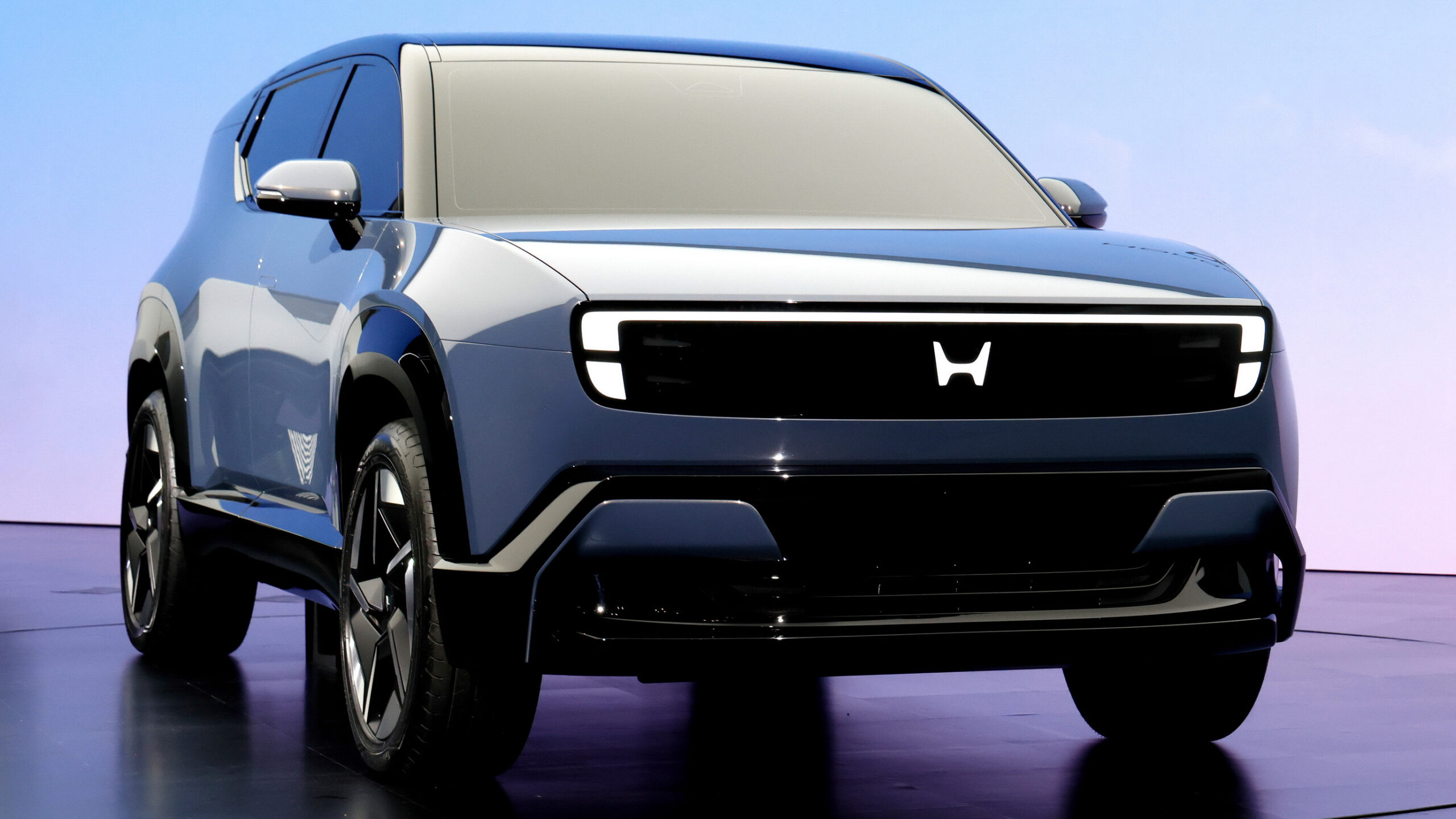
The classic H mark has been reimagined with a simplified, borderless design and will make its production debut on future electric vehicles and next-generation hybrids beginning in 2027.
Which Models Get It First?
The new logo made its first appearance on Honda’s 0 Series concepts, revealed in early 2024. The first production model expected to wear it is the 0 SUV, which will be built in Ohio. That vehicle was originally slated to launch in 2026, although the first confirmed use of the new badge is now set for 2027.
Following the 0 SUV, Honda will introduce the closely related 0 Saloon, which also features the illuminated emblem. A third vehicle, the compact 0 Alpha SUV, is being developed as a global model, with particular attention to the Japanese and Indian markets.
Alongside its all-electric lineup, Honda has confirmed the emblem will appear on a series of new hybrids as well. Between 2027 and 2031, the company plans to roll out 13 new vehicles featuring an updated version of its e:HEV hybrid system. The revised setup promises better efficiency, stronger performance, and tighter integration of components.
This means the Prelude coupe and the upcoming Super-One hatchback could be among the final new models to carry the current emblem, unless Honda opts to retrofit them with the new badge as part of future model year updates.
While there is no mention of future ICE-powered products, Honda has confirmed that the new branding will be “rolled out gradually across automobile models and other business areas” such as dealerships, communications initiatives, and motorsport activities.
The H mark has served as Honda’s signature since 1963, with previous redesigns arriving in 1969, 1981, 1991, and 2001. The latest version, inspired by the image of two outstretched hands, is intended to symbolize a “second founding” for the brand as it moves through a period of transformation.
Peaq becomes Skoda’s first electric seven-seat SUV later in 2026.
Based on 2022’s Vision 7S concept with modern solid design language.
Rides on same MEB platform as other VW Group EVs including ID. Buzz
Skoda has finally put a name to its long awaited electric seven-seater, and it’s a short one with a lot riding on it. The new flagship will be called Peaq, to reflect its position at the top of the Skoda lineup, and it arrives in summer 2026 as the brand’s biggest and most ambitious EV yet.
Remember the stylish Vision 7S concept from 2022? The Peaq is that car toned down just enough for production and aimed straight at families who want space, comfort and zero tailpipe emissions without jumping into premium brand pricing. Think of it as an electric Kodiaq, only smoother, quieter and more digital.
The Vision 7S was the first full expression of Skoda’s Modern Solid design language, and though Skoda hasn’t yet revealed any pictures of the Peaq beyond its badge and a handful of dark teasers, it’s expected to stick pretty close to that look. That means a blocky, confident shape, a clean Tech Deck front end instead of a traditional grille, flush door handles and distinctive T shaped lighting signatures front and rear.
We’ve already seen heavily disguised prototypes testing at the Nürburgring, and while the camo played tricks with the details, the proportions made one thing clear. This is a big car by European standards at around 5m (197 inches) long, with three rows and a proper road presence.
VW family ties
Under the skin, the Peaq will ride on the Volkswagen Group’s MEB platform, the same architecture used by cars like Skoda’s own, smaller Enyaq, and the VW ID. Buzz and ID. 7. The original concept packed an 89 kWh battery and promised over 373 miles of range on the WLTP cycle, and something close to that is expected for the production version.
Rear-wheel drive and dual-motor all-wheel drive versions are likely, with the quicker model delivering around 335 hp (340 PS / 250 kW), though Skoda could theoretically offer an entry-level model with rear-wheel drive, as VW does with the ID. Buzz in Europe.
Skoda admits the Peaq will be its most expensive model yet, sitting above the Enyaq, but it’ll still pitched as a value choice compared with rivals like the Kia EV9, Volvo EX90 and Hyundai Ioniq 9. If we were heading up those other brands we’d be taking this Peaq threat very seriously.
Facelifted Mercedes EQS has been spotted in winter testing.
Expect revised bumpers and optional star-pattern lighting.
Powertrain upgrades may include 800V system and new motors.
Mercedes is already looking forward to a fully electric S-Class with EQ Technology but, before it arrives, the company will introduce a second facelift for the slow-selling EQS. It’s expected to debut later this year with changes that are more than just skin deep.
Recently spied undergoing cold weather testing, the 2027 EQS looks pretty unremarkable. However, a closer inspection reveals the car will come equipped with star-infused headlights. The taillights carryover, for now, but they’ll likely follow suit on the production model.
Additional changes are hard to see, but it appears the model will have a lightly revised rear bumper. The front end could also be updated, although it’s hard to be certain with all that camouflage.
Mercedes has been tight-lipped about the car, but it’s expected to adopt a new 800 volt electrical architecture. This is a significant update and one that Polestar and Volvo did with the 3 and EX90.
Baldauf
We’ll likely learn more in the coming months, but we can expect significantly improved charging times. The upgrades won’t end there as the model is also rumored to get an improved battery cell chemistry as well as in-house developed electric motors known as eATS 2.0. The model could also trade its single-speed gearbox for a new two-speed unit.
These changes should significantly improve efficiency and range. It’s too early to talk numbers, but the EQS 450 Plus offers an EPA range of 390 miles (628 km). That’s fantastic, but it’s nowhere close to the Lucid Air, which can travel up to 512 miles (824 km) between charging sessions.
EV sales from Nissan’s rivals jumped sharply late last year.
Japan now offers EV subsidies of up to $8,300 per buyer.
BYD will launch its all-electric Racco kei car this year.
Electric vehicle sales in Japan have never quite taken off, but disruptions are underway. For nearly 15 years, Nissan held the top spot in the country’s EV market, thanks largely to the Leaf. Now, that grip is loosening.
A cooling appetite for Nissan’s EVs and rising demand for newer offerings from rivals have pushed the market into a new phase. For the first time, Nissan has been overtaken as Japan’s top-selling EV brand in quarterly sales, with Toyota stepping into the lead during Q4 2025.
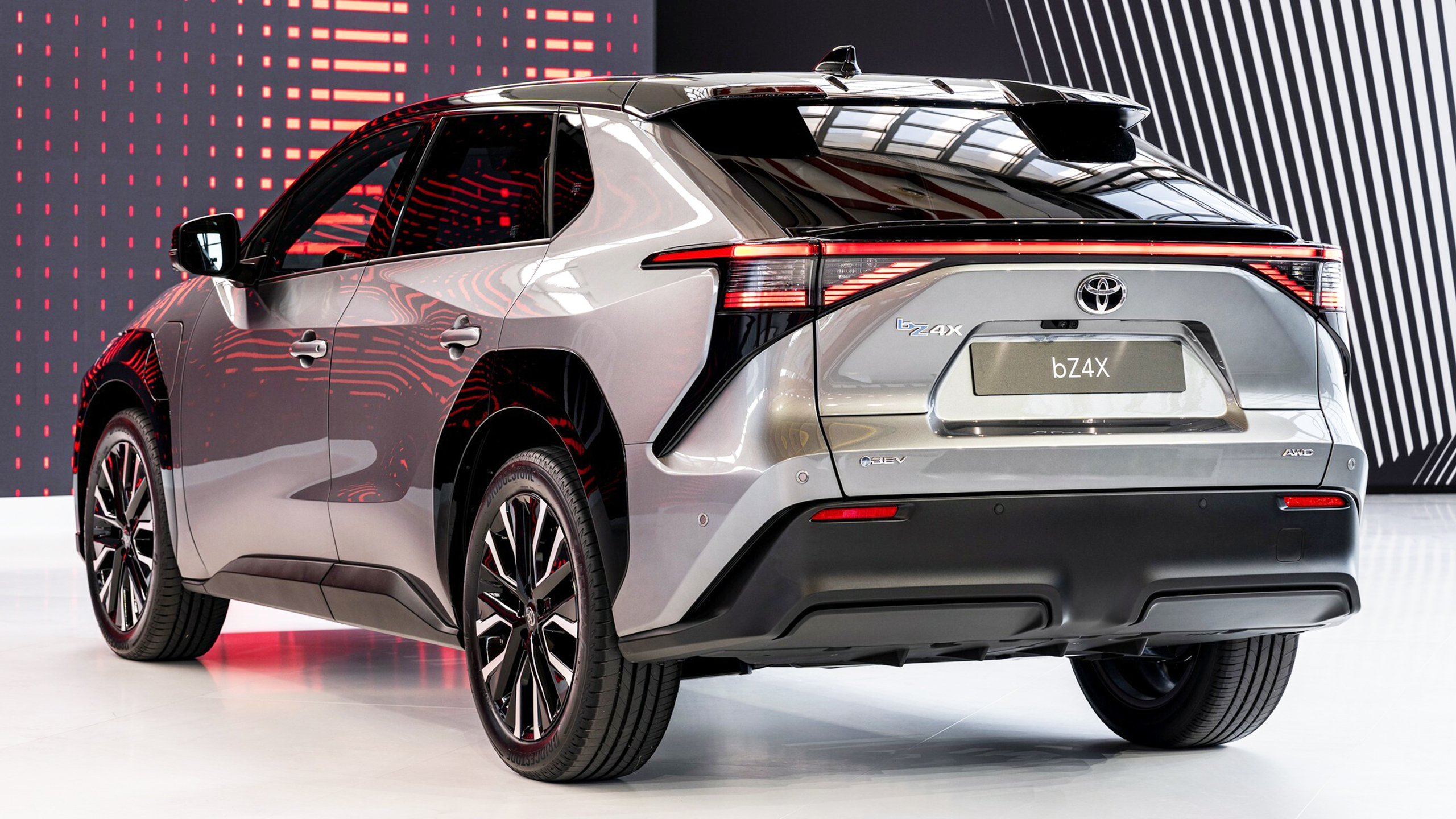
According to the latest data from Japan’s automotive industry association, Toyota sold 3,684 EVs domestically in the fourth quarter of 2025, a surge helped by the October launch of the bZ4X. While that figure is still modest by global standards, it represents a thirteenfold increase over the same period in 2024.
Nissan, meanwhile, saw its electric sales plunge 56 percent to 2,857 vehicles. The Leaf and Sakura both experienced weaker demand in the closing months of the year.
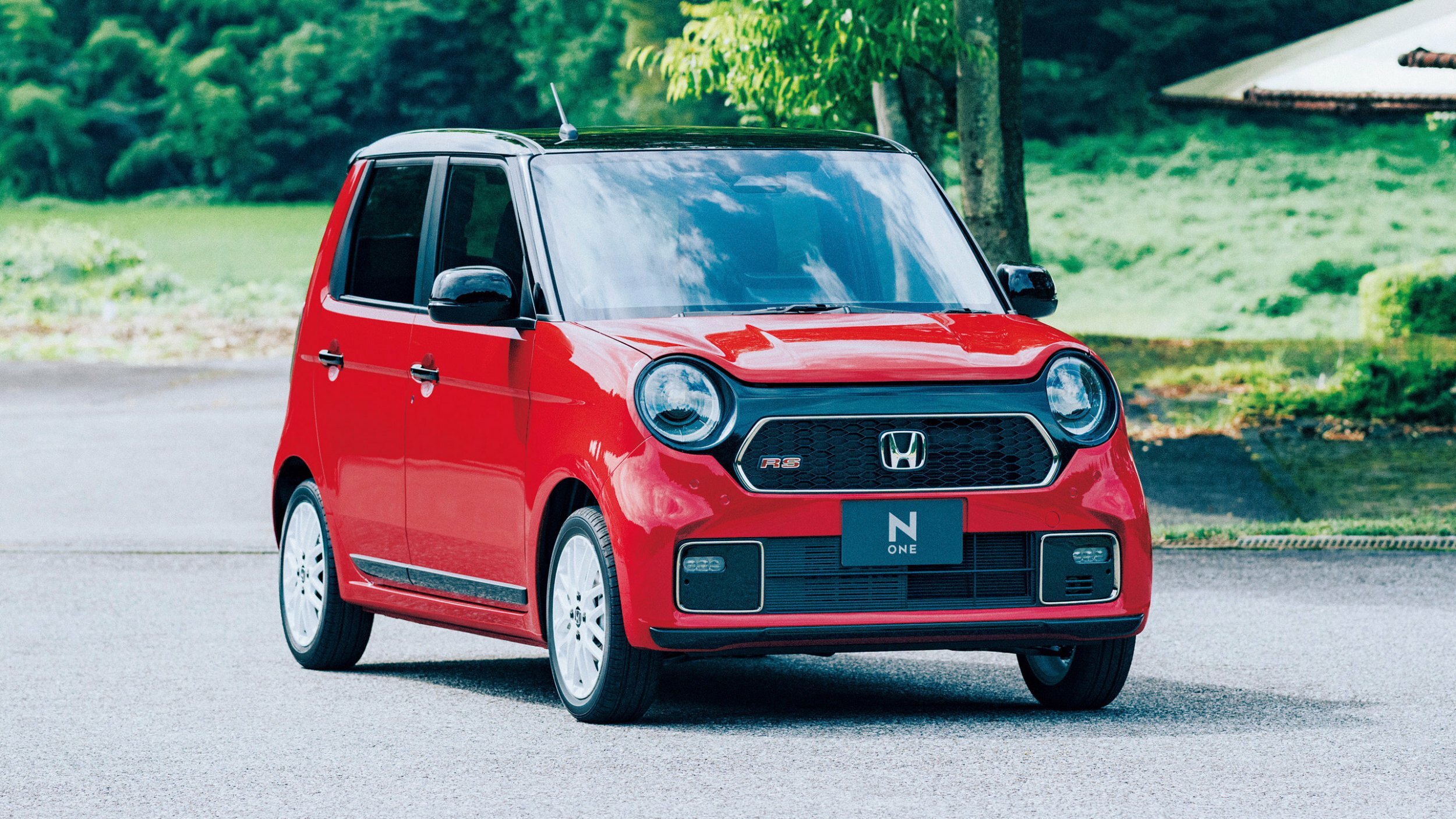
The momentum wasn’t limited to Toyota. According to Nikkei Asia, Honda also made gains, boosted by the launch of the N-One e:. With a range of up to 295 kilometers (183 miles) on a single charge, it now holds the title for longest-range electric minicar in the market.
Honda sold 2,732 units in Q4, a lift that was enough to pass Tesla, which also saw its numbers rise. Tesla’s sales increased by 62 percent year over year, reaching 2,600 vehicles in the quarter.
EVs Still a Niche in Japan
While EV sales have accelerated in much of the world over the past few years, they still make up only a small fraction of the Japanese market. At present, electric vehicles account for just 1.9 percent of all new car sales in the country. This is the lowest share among advanced economies.
Several new models slated for launch in 2026 could help lift that figure, and the government is moving to speed up the transition too. This year, qualifying buyers can receive up to 1.3 million yen ($8,300) in subsidies, aimed at nudging more drivers toward electric.
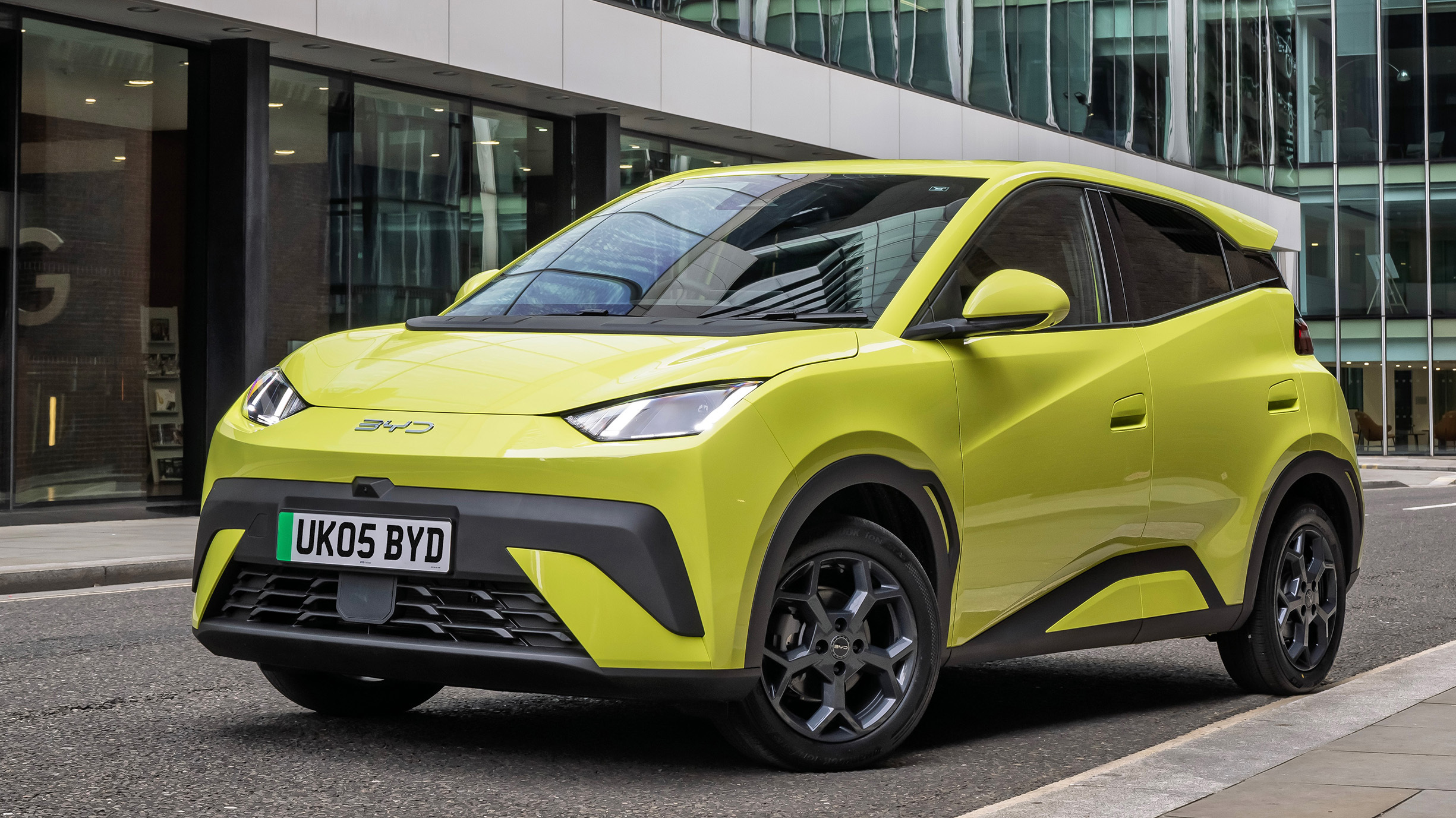
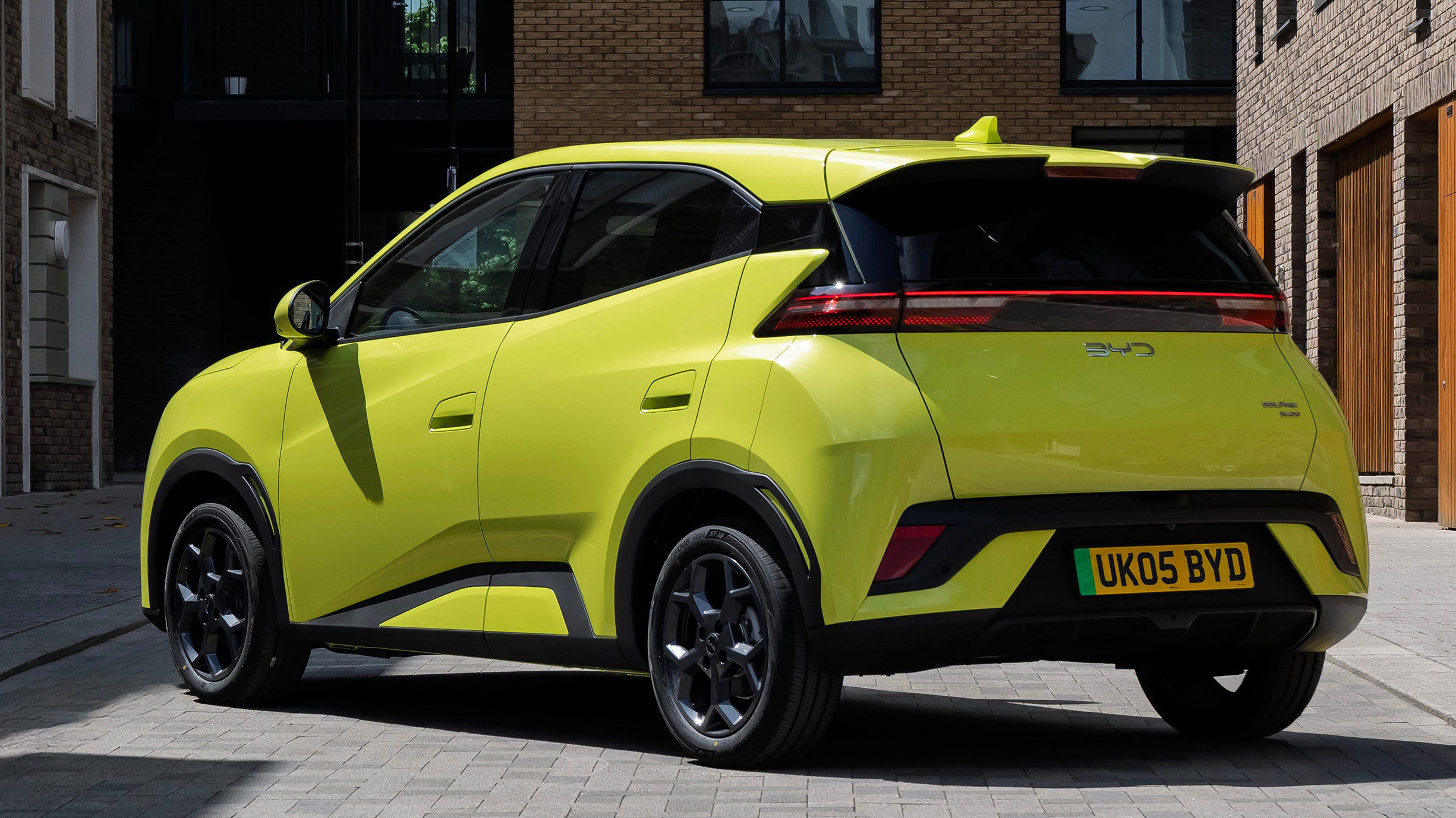
BYD may soon become a more significant contender. The Chinese automaker posted a 72 percent increase in Q4 sales, reaching 832 units. It plans to launch its all-new Racco electric kei car in the Japanese market this year, positioning it to make a more aggressive push into a historically difficult segment.
EU may replace tariffs on Chinese EVs with price controls.
Minimum pricing could ease tensions but still limit imports.
Policy shift would protect European-built cars from China.
After months of trade tension and shifting political winds, the European Union is now considering a dramatic reversal of its electric vehicle policy. Just 18 months after introducing steep tariffs aimed at shielding domestic manufacturers from a flood of Chinese EVs, officials are weighing a new approach that could scrap those levies altogether.
But that doesn’t mean those Chinese automakers will have things their own way.
Instead of tariffs of up to 45 percent, the exact rate varying depending on how much financial assistance the EU investigators believed each Chinese brand got from the Chinese government, the EU is looking into setting minimum prices for the Asian imports.
Chinese companies would need to submit pricing proposals “adequate to eliminate the injurious effects of the subsidies and provide equivalent effect to duties,” according to a European Commission document seen by the South China Morning Post. Other factors, such as planned future investments in the EU, would be taken into account, the report says.
Trade Tensions
A minimum price would allow Western automakers building cars within the EU to compete with the likes of BYD and Chery. But because the Chinese brands wouldn’t have to hand over tariff cash and would instead keep profits, the system would ease trade tensions between the two regions.
After the EU slapped tariffs on imported EVs, China responded by introducing tariffs on goods heading the other way, including dairy, pork, and brandy, Bloomberg reports.
The EU’s tariffs ironically hurt some of the Western brands they were supposed to help, because cars like the BMW iX3, which was made in China and shipped to Europe for sale, were also subject to the duties. Volvo moved its Euro-market production of EX30 electric SUVs from China to Belgium to escape the tariffs.
Unstoppable
And despite the introduction of those tariffs, Chinese brands have taken an increasingly large share of the European car market. Its EVs continued to prove popular, but its hybrid models, which are not subject to tariffs, have been flying out of showrooms.
In 2024, Chinese cars accounted for around 2.5 percent of European sales; by the end of last year that had grown to around 7 percent, and almost one in every 10 cars sold in the UK in 2025 came with a Chinese badge.
ES9 is China’s longest electric SUV with a 127.9-inch wheelbase.
Dual electric motors deliver 697 hp and 516 lb-ft of torque total.
It supports three-minute battery swaps across Nio’s network.
For China’s most wealthiest car buyers, the appeal of driving often takes a back seat to being driven. Luxury isn’t measured in horsepower alone, but in legroom, comfort, and the ability to stretch out while someone else handles traffic.
With that in mind, Nio is preparing a new electric SUV designed squarely for this audience, and for larger families as well. Shown here in newly released photos, the Nio ES9 is set to join the brand’s growing lineup, slotting in just above the ES8.
Big Numbers, Bigger Presence
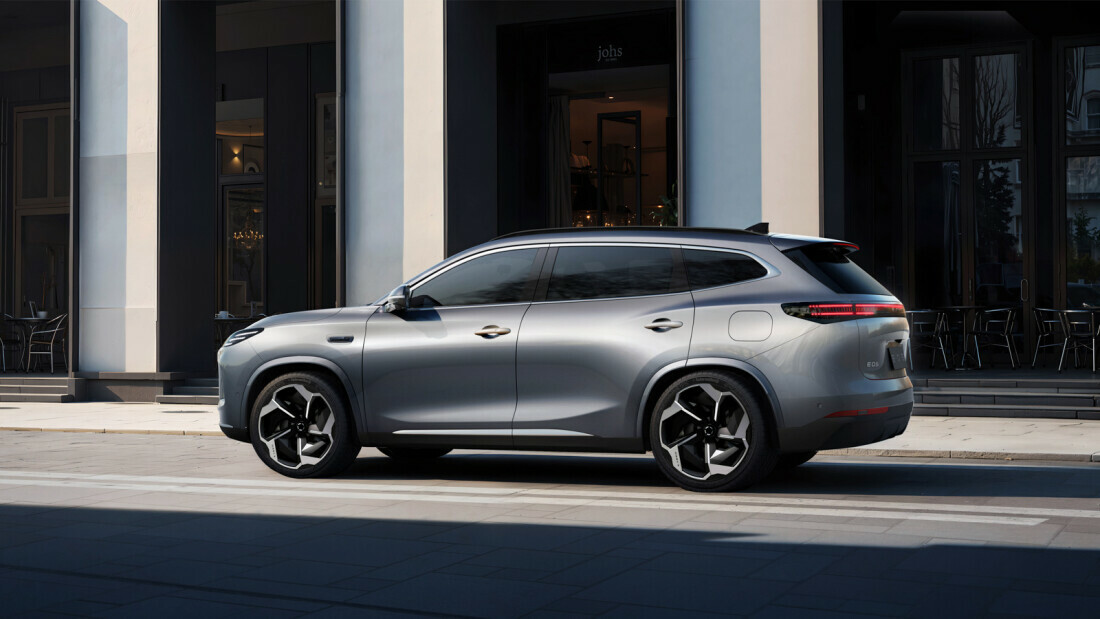
This upcoming flagship will become the largest electric SUV available in China, overtaking the ES8 for that title, according to CarNewsChina. Figures from the Ministry of Industry and Information Technology confirm it stretches 5,365 mm (211.2 inches) in length, spans 2,029 mm (79.8 inches) in width, and stands 1,870 mm (73.6 inches) tall.
That makes it 85 mm (3.3 inches) longer, 29 mm (1.1 inches) wider, and 70 mm (2.7 inches) taller than the ES8. More importantly, the wheelbase stretches to 3,250 mm (127.9 inches), an increase of 120 mm (4.7 inches) over the ES8, which translates to noticeably more room for passengers.
To put that in perspective, its footprint lands somewhere between the standard Cadillac Escalade and the extended-wheelbase Escalade ESV.
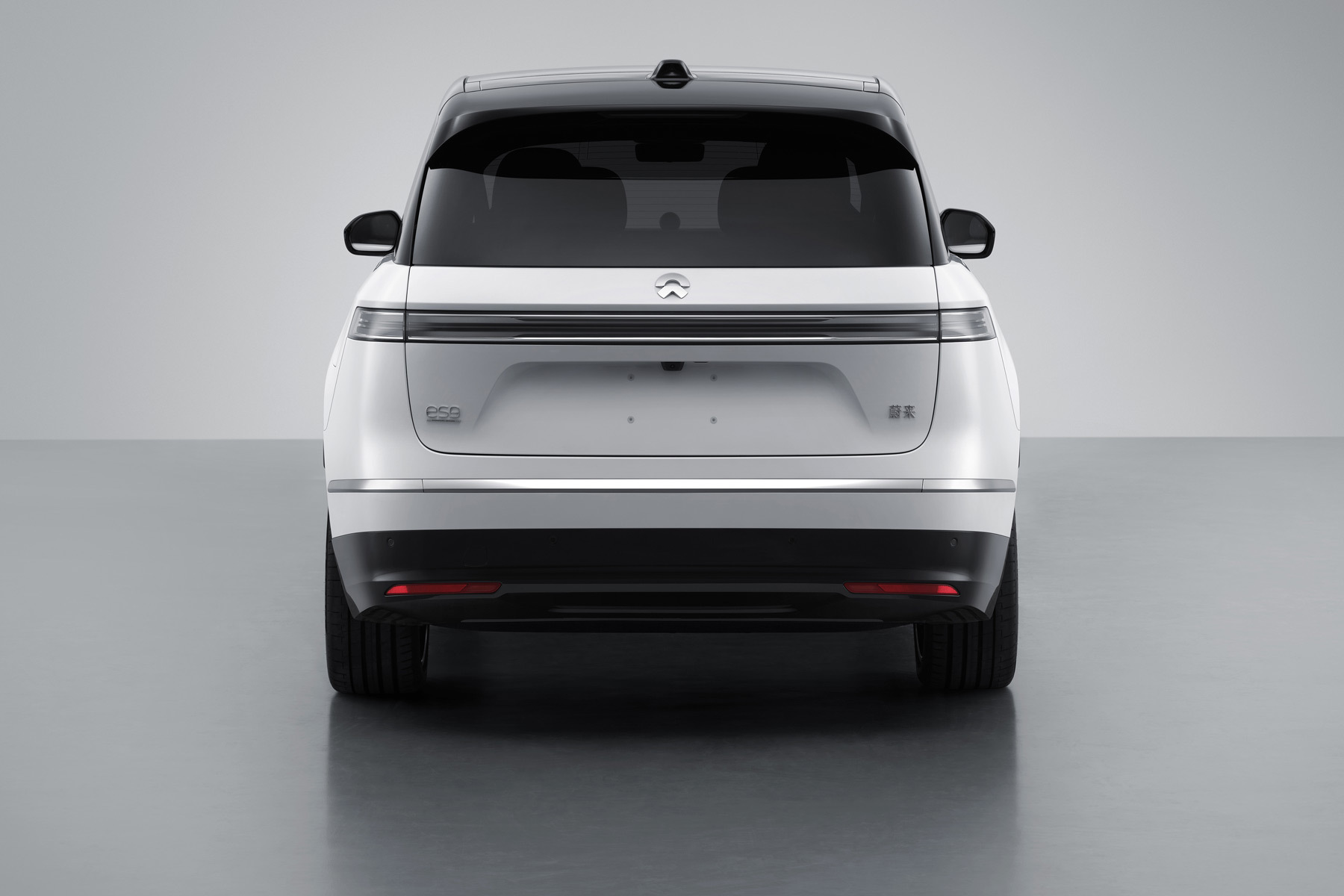
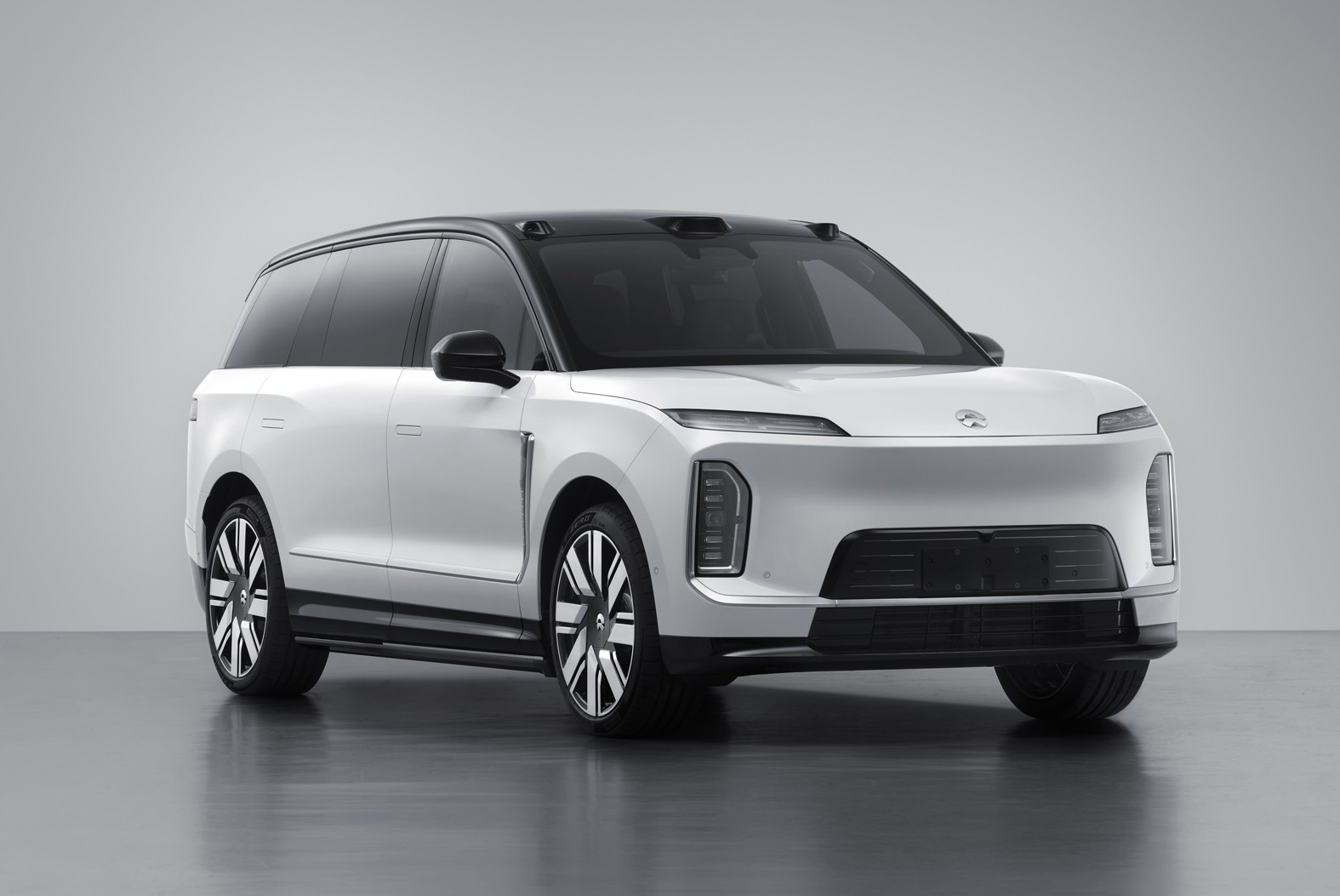
Visually, the design of the ES9 is very similar to its smaller brother, although it does have a more upright and squared front fascia. There are split DRLs and headlights at the front, alongside a large grille and a ribbon of black along the bottom of the bumper. As with the ES8, there’s a LiDAR protruding from the roof.
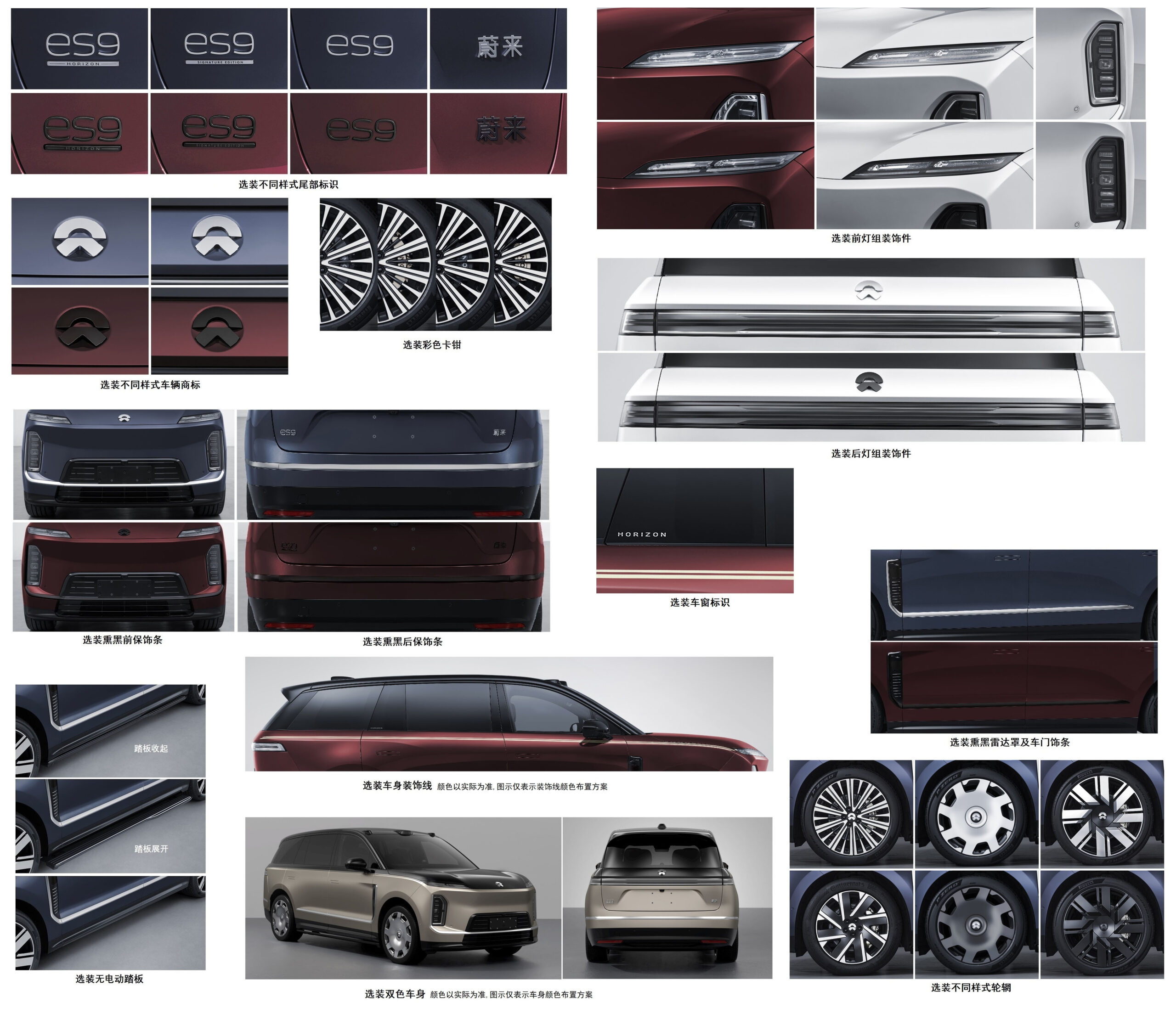
Around back, the design leans toward simplicity, featuring a single LED light bar and little else of interest. Other photos of the SUV reveal that retractable side steps will be available, as will at least six different wheel designs/finishes. Shoppers will also be able to choose between black or silver accents running along the body.
Dual-Motor Drive
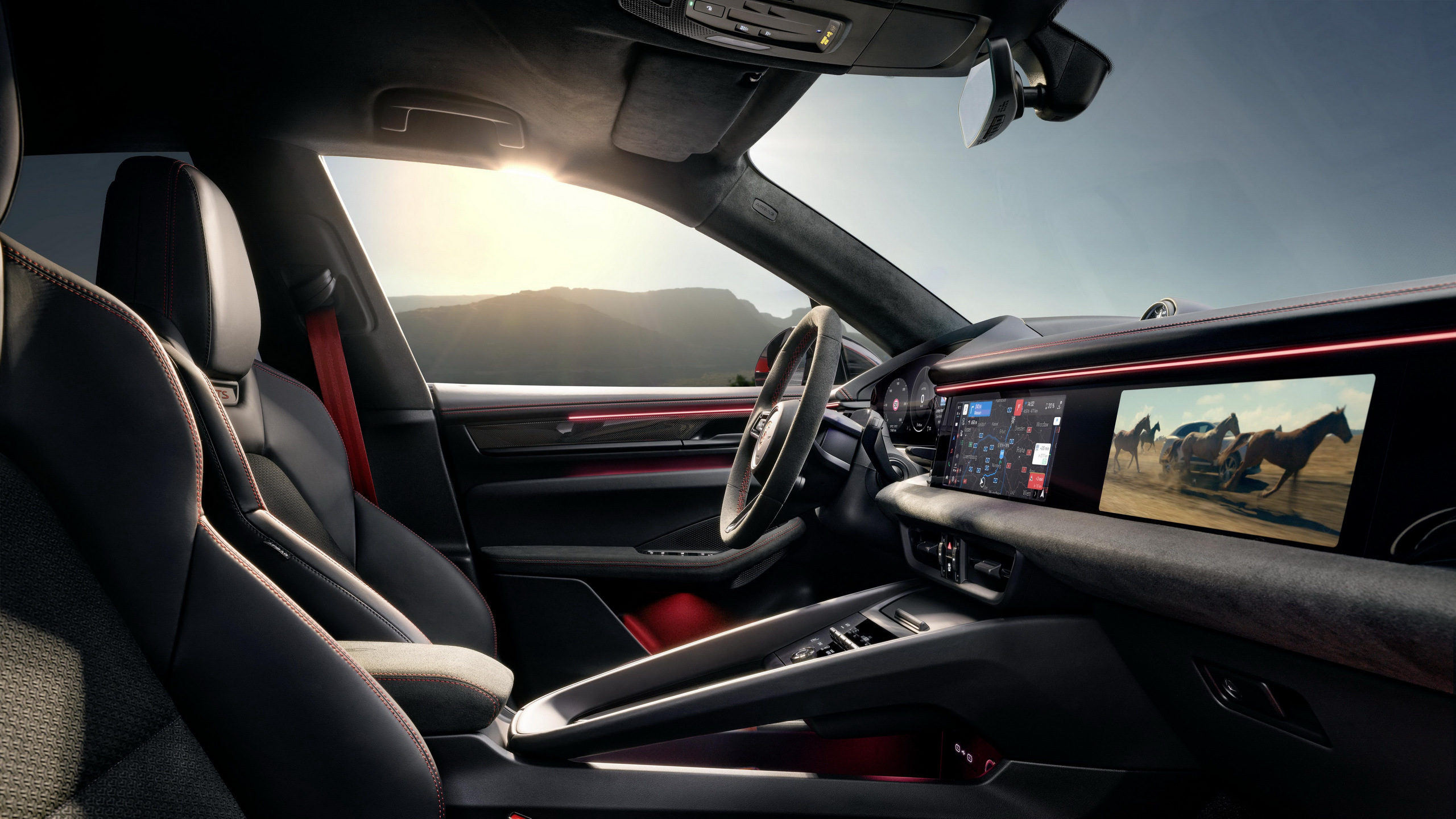
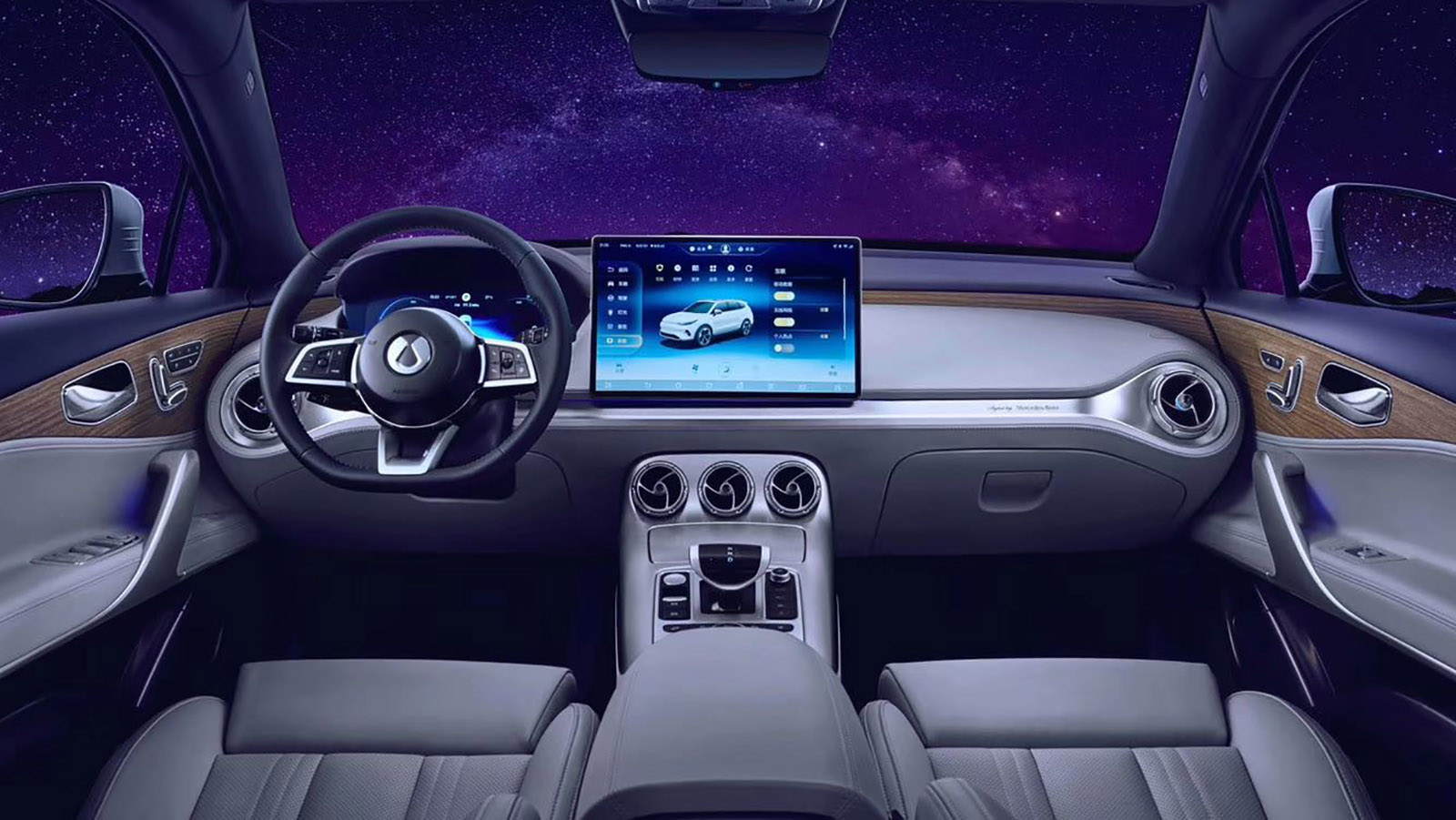
We don’t yet know what the cabin of the ES9 will look like, but we do have some important powertrain details. Powering the SUV will be a 241 hp (177 kW) electric motor at the front axle and a 456 hp (335 kW) motor at the rear axle, combining to deliver 697 hp (513 kW) and 516 lb-ft (700 Nm) of torque. The battery pack will be sourced from CATL and is expected to have a capacity of 102 kWh.
There’s no word on what charging speeds this battery will support, but in the land of Nio, charging times aren’t particularly important, as Nio operates a huge battery-swapping network where a depleted battery can be replaced with a fully charged one in just 3 minutes.
A full reveal is expected in the coming months, with its domestic launch set to follow soon after. Availability in markets outside China has not yet been confirmed.
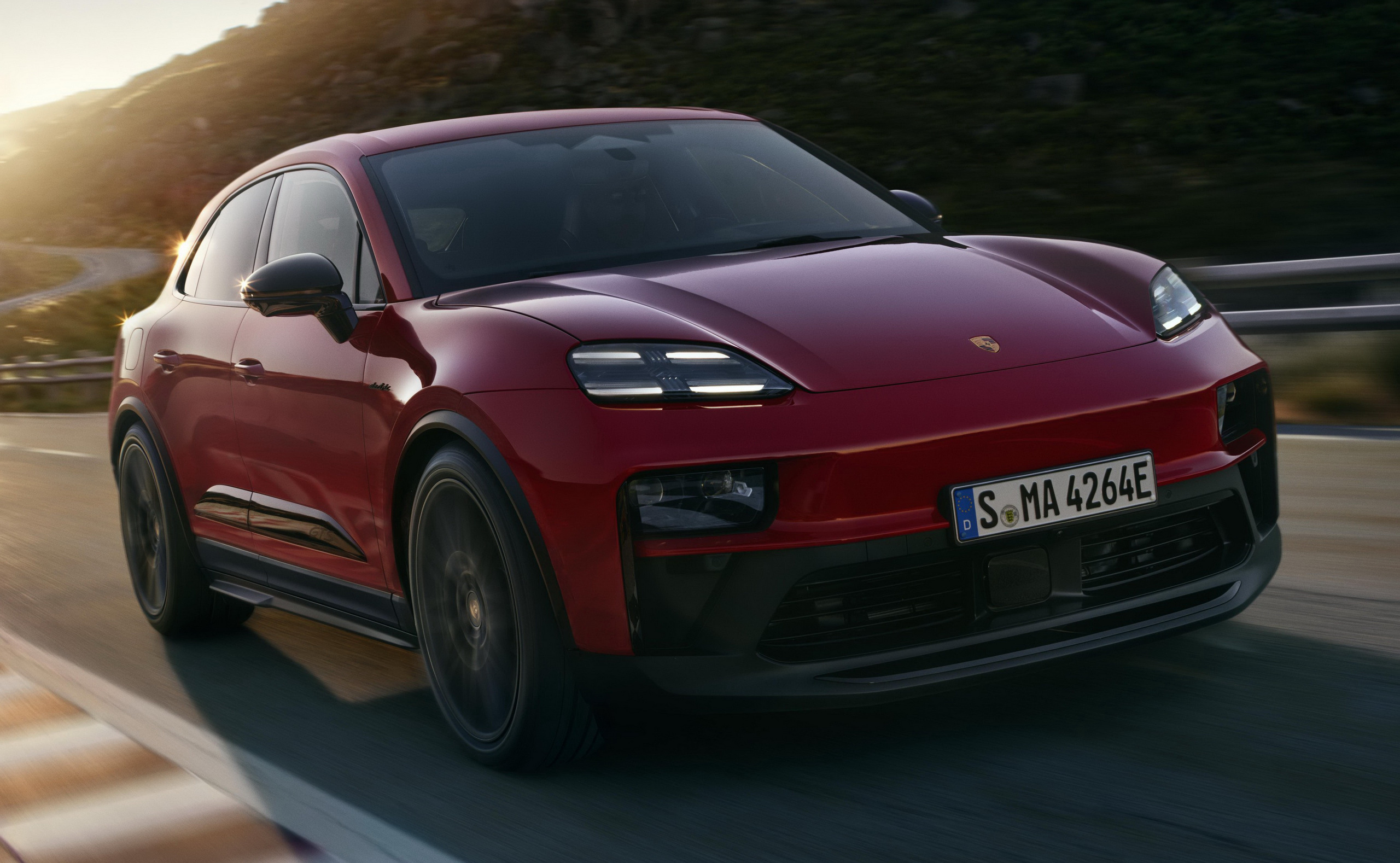
Porsche admits its EV-only Macan strategy was a misstep.
New gas-powered SUV will arrive before end of 2028.
Future 718s will offer gas, hybrid, and electric options.
Plenty of automakers are rethinking their electric vehicle strategies. Some names make it easy to shrug and say, well, they probably bit off more than they could chew. Stellantis, for instance, has struggled to steer its EV plans with any consistency. But it’s not just the usual suspects pulling U-turns.
On the other side of that coin, you’ll find Porsche, which, like Stellantis and other mainstream brands, is now backtracking hard on its EV plans. The brand’s former CEO just openly admitted that making the Macan an EV-only model was a mistake. Porsche has plans to fix its foible, too.
A Misstep in the Macan Playbook
Former CEO Oliver Blume, who stepped down at the start of 2026, revealed that making the next-generation Macan electric-only was a mistake. Speaking with Frankfurter Allgemeine Zeitung, Blume said, “We were wrong about the Macan,” reflecting on Porsche’s 2019 decision to retire the gas-powered Macan in favor of a fully electric model.
We were there when the EV launched in early 2024. While purists didn’t love it, plenty of folks figured that most Macan buyers cared more about the badge than the engine. But cooling demand for pricey luxury EVs and regulatory hurdles made the all-electric Macan a tougher sell than some expected. Blume acknowledged that hindsight is 20/20.
“Based on the data at the time, we would have made the same decision,” Blume said, “but the situation today is different. We are responding by adding combustion engines and hybrids.” Porsche now plans to reintroduce a gas-powered compact crossover but it won’t be called the Macan.
The Macan misstep isn’t the only one the brand is handling. Porsche also confirmed that future 718 sports cars, initially slated to go EV-only, will offer combustion and hybrid options.
It turns out that even one of the world’s most famous and focused brands can misread the market and industry to an almost embarrassing degree. In the end, we all just end up with more Porsches in more flavors and I can’t say I’m sad about that.
Cybertruck owner added a center seat to carry four kids up front.
Tesla showed this layout in 2019 but never offered it to buyers.
Custom seat has no visible airbags, which may affect crash safety.
Tesla owners aren’t strangers to modifying their vehicles. Sometimes, that action comes out of a desire for additional safety. Other times, it’s because Tesla itself didn’t deliver on a previous promise. And occasionally, those two aspects of design come into fierce opposition. That’s what happened here.
A father of four needed space for his entire family, and when it became clear that Tesla wouldn’t offer a six-seat Cybertruck, he took matters into his own hands. He commissioned a custom version and later shared the results in a Tesla group on Facebook.
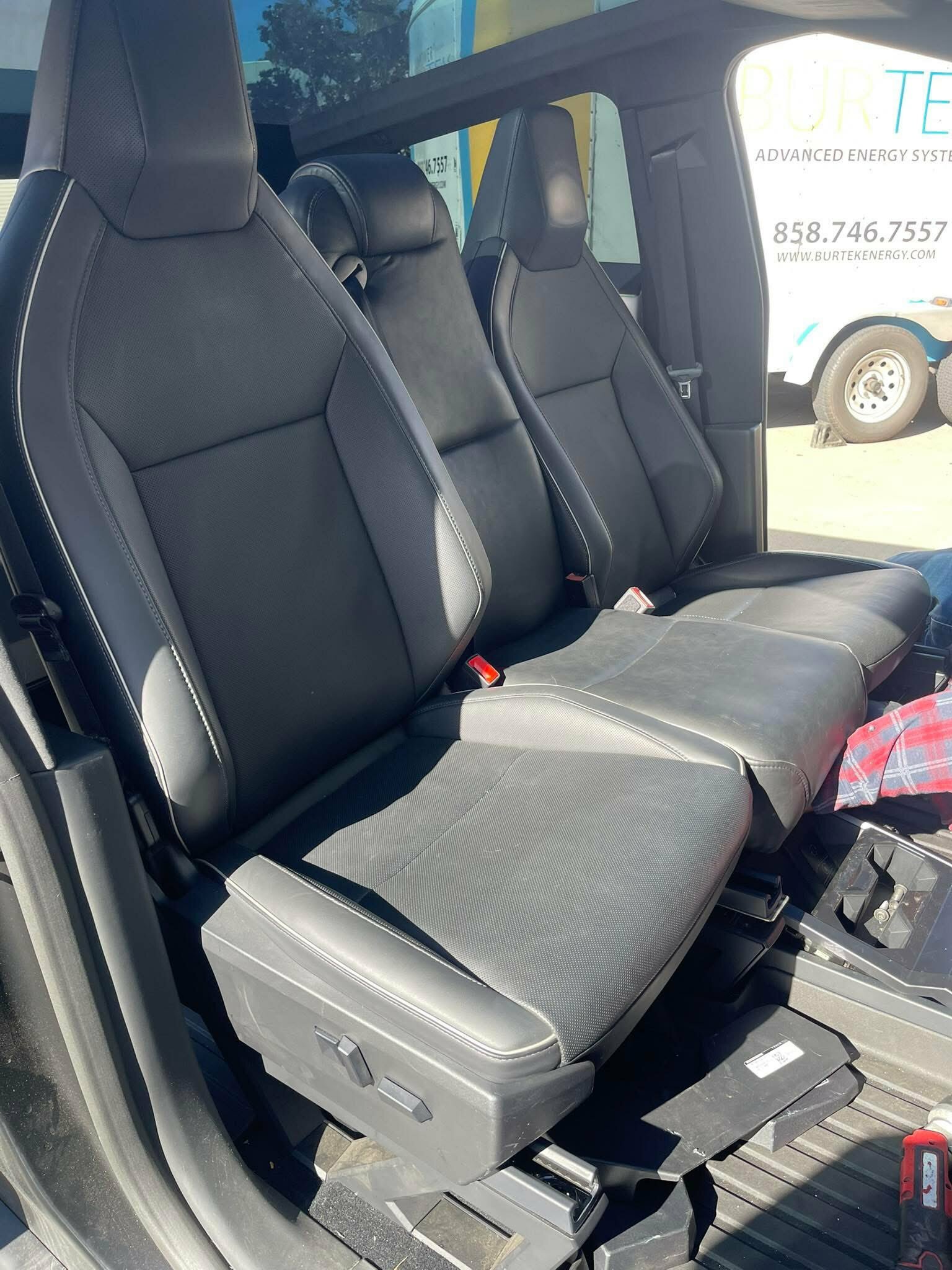
The custom setup removes the center console of the truck and replaces it with a narrow upright seat wedged between the original pair. It comes complete with a seatbelt, but that might be where safety ends. We’ll come back to that, though. Let’s focus first on the design itself.
It’s a far cry from the angular unit Tesla once teased, but at least the upholstery matches. Some folks might not even realize that it’s an aftermarket addition because of that.
What Killed Tesla’s Center Seat Plans?
At the same time, it’s tough to call this a big win for now. While Tesla originally showed renders of a similar setup, it never came to pass. Many believe that’s because of safety regulations regarding the center seat.
Some observers have noted that the truck includes a driver’s side inboard airbag, which could strike anyone seated in the center. There’s also no airbag directly in front of that position. And beyond the lack of protection, there’s always a chance the seat may not be anchored to mounting points strong enough to hold up in a crash.
To be clear, this isn’t a knock on the owner’s intentions. Wanting to carry your entire family with you is obviously normal and easy to understand. But it does highlight a recurring Tesla theme. The brand and CEO often make bold promises, offer flashy renderings, and then production vehicles quietly walk things back a bit.
Tesla once showed a front bench. That version never reached production, and now an owner has stepped in to fill the gap with a custom modification. In doing so, he’s taking on a level of risk that some might find concerning in a six-figure vehicle. Maybe the solution here is to just get the Model X since it actually has room for the whole family.
BMW cut prices across 31 models to stay competitive in China.
Fourteen brands launched incentives before the New Year rush.
Officials fear price cuts could trigger harmful deflation risks.
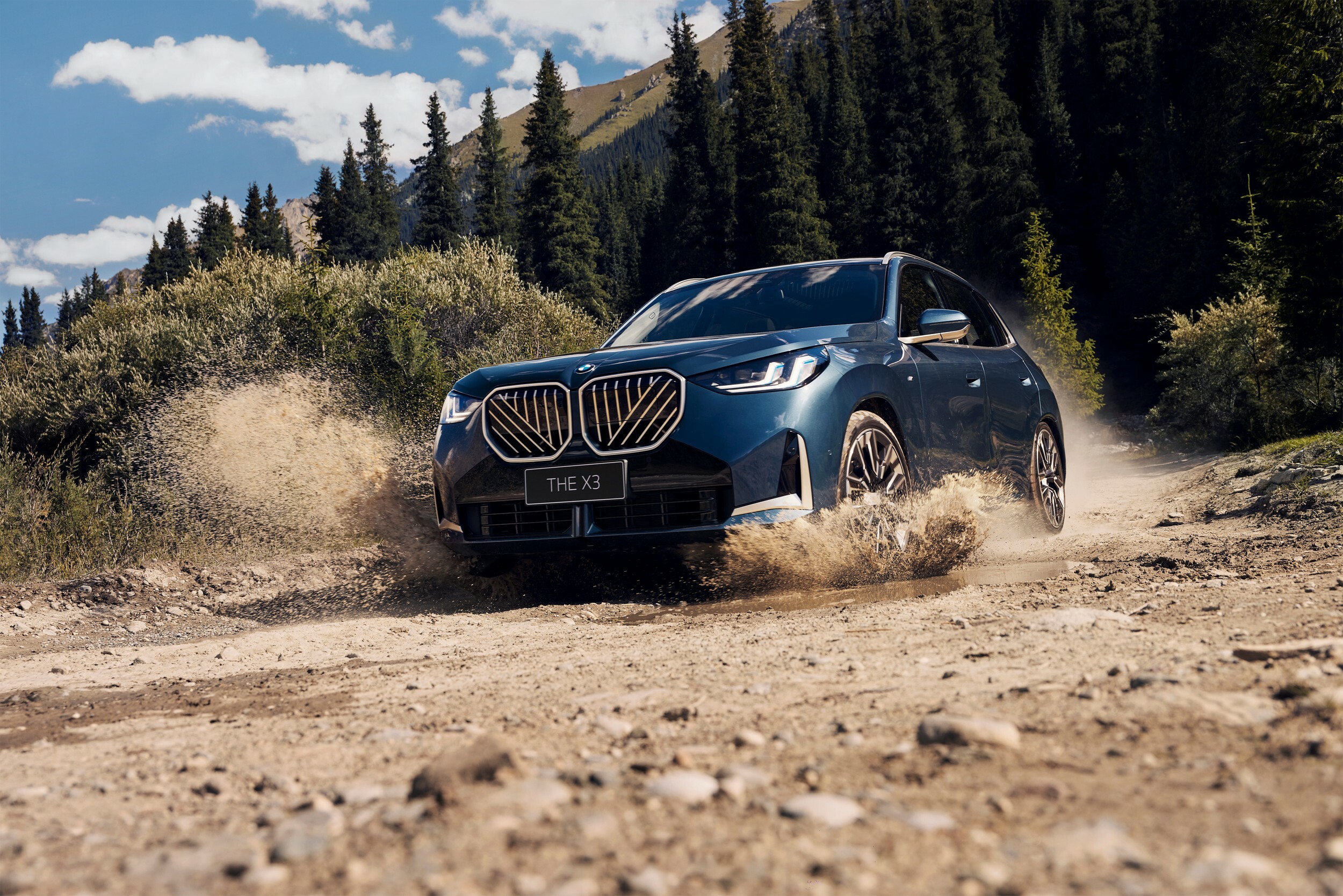
Price cuts aren’t just a domestic strategy for Chinese automakers. Even Western legacy brands are jumping in. Last week, BMW announced sweeping reductions across 31 of its models in China, highlighting a more aggressive effort to keep pace with intensifying competition in the world’s largest auto market.
The biggest cut came to the BMW i7 M70L, the high-performance flagship of the all-electric 7-Series. This dual-motor sedan delivers 659 horsepower and 811 lb-ft (1,100 Nm) of torque. As of last week, it now carries a price tag that’s 301,000 yuan lower, a reduction of roughly $42,000.
While the i7 had the largest drop in raw numbers, the steepest percentage cut went to the iX1 eDrive25L. BMW trimmed the price of the long-wheelbase variant of the compact SUV by 24 percent, bringing the new starting figure to 228,000 yuan, or about $32,600.
Speaking to Bloomberg, BMW said the price changes are part of its “regular price management,” adding that “final transaction prices are independently negotiated and determined between authorized BMW dealers and customers.”
How Far Will Discounts Go?
Behind the curtain, though, the timing suggests more than just routine recalibration. November marked the second straight month of declining sales in China, according to data from the China Passenger Car Association. That slide has spurred several automakers to adjust pricing.
Meanwhile, regulators have introduced measures designed to prevent brands from undercutting costs, prohibiting sales below production cost and banning dealer incentives that push prices beneath that threshold, Bloomberg reports.
BMW’s recent cuts appear to bring official pricing closer to what customers were already paying after negotiations. According to Yale Zhang, managing director at Automotive Foresight, the updated stickers largely reflect existing transaction norms rather than undercutting them. “The new prices aren’t any lower than typical dealer selling prices,” Zhang noted.
When Deals Become a Warning Sign
Big savings could be just around the corner. With the Chinese New Year approaching in February, many manufacturers are expected to introduce further incentives in hopes of front-loading first-quarter sales.
At least 14 car brands have already rolled out some form of discount or incentive program since the beginning of 2026. Zhang believes this trend is less a temporary blip than a reflection of broader pressures within the market.
“Various kinds of promotional activities may ebb and flow in the market from time to time, but they are here to stay,” Zhang told the news outlet.
Chinese authorities, meanwhile, are taking a cautious stance. With more manufacturers opting to slash prices, regulators are increasingly concerned about the potential knock-on effects. They worry that an extended period of discounts could spark deflation, disrupt the automotive supply chain, and put downward pressure on wages.
Toyota revealed the Euro-spec Hilux at Brussels Motor Show.
New EV version joins the mild-hybrid diesel in the lineup.
Hilux BEV offers 160-mile range with dual-motor AWD setup.
The Hilux has spent decades surviving anything the world throws at it, from mud and floods to plummeting from a Top Gear crane – though not being dropped from a helicopter. Now Toyota is testing its most famous small pickup with a more complicated challenge: staying relevant in an electric future.
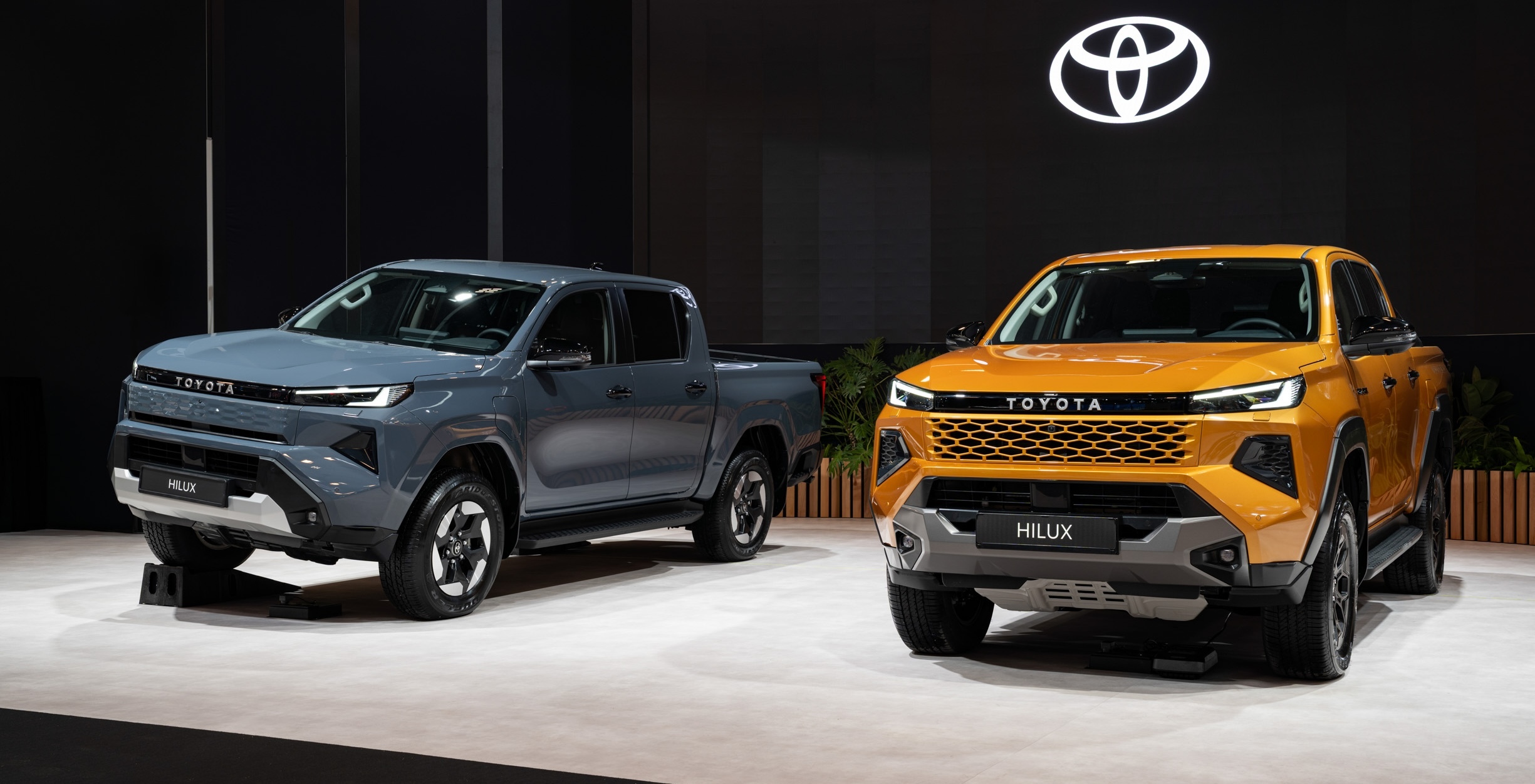
Toyota unveiled the Euro-spec ninth-generation Hilux in mild-hybrid and fully electric Hilux BEV form at this week’s Brussels Motor Show, months after both trucks debuted in Asia. The first ever EV Hilux is big news, but soon it won’t be the only version of the unstoppable truck that doesn’t emit any tailpipe nasties.
As we reported last year, Toyota Toyota hasn’t just confirmed that it’s working on a hydrogen-powered Hilux that will arrive later, it’s already testing them out in the open. Yes, the same pickup that built its legend hauling bricks and sheep is about get a fuel-cell stack.
Multipath Meets Multipurpose
Toyota calls this its multipath strategy, though for many buyers little will change. Because they’ll still be able to get a truck with the same 201 hp (204 PS) 2.8 litre diesel mild hybrid (shown above) that made its debut in the previous generation Hilux’s twilight years. Some less-developed European countries will even get a non-hybrid diesel.
In the UK and Europe the 48-volt oil burner is expected to be the volume seller even after the EV’s arrival. It keeps up the old model’s 1,000 kg (2,205 lbs) payload and 3,500 kg (7,720 lbs) tow ratings, while being smoother and slightly cleaner than before.
Electric But Still Unbreakable
But business-owning truck buyers with an eye on cutting running costs and tax bills will want to give the Hilux BEV a look. It uses a 59.2 kWh battery with motors on both axles for permanent all-wheel drive.
The front motor makes 151 lb-ft (205 Nm) and the rear 198 lb-ft (268 Nm), and Toyota quotes a WLTP range of 160 miles (258 km), which sounds unimpressive in a passenger-car context, but that climbs to 236 miles (380 km) in urban use.
Payload drops to 715 kg (1,580 lbs) and towing to 1,600 kg (3,530 lbs) in the EV, but the fundamentals remain. You’re getting the same body-on-frame construction, 212 mm (8.4 inches) of ground clearance and 700 mm (27.6 inches) of wading depth, whichever power source you choose. And the BEV gets a special off road drive mode tuned for electric torque and braking.
All In the Grilles
Both hybrid and BEV models adopt the same new Cyber Sumo design that was reportedly developed by Toyota’s Australian team. Characterized by stronger angles and flatter surfaces, it gives the Hilux and more modern, big-truck look, though it seems not everyone loves it. The EV is easily identified by its hole-free grille panel and (less obvious) re-shaped silver bumper insert.
The modern makeover continues inside the crew cab-only interior where drivers and passengers are treated to a 12.3-inch digital gauge pack and same-sized tablet touchscreen, plus a steering wheel from the new Land Cruiser.
There are dual storage compartments on the passenger side, dashboard-mounted cupholders, and a full suite of electronic safety gadgets, but Toyota remembered to cram in plenty of physical switches for regularly-used functions.
UK sales start in June, Toyota says, and prices – guaranteed to be higher than for the outgoing truck – will be revealed within the next few months.
Jason Fenske’s Lucid Air critique triggered direct engineer talks.
Lucid outlined software fixes and upcoming UX 3.0 overhaul plans.
This isn’t typical service, but Lucid’s response stands out.
Negative YouTube reviews of cars have earned a certain reputation over the years. Some are so brutal they’re blamed, rightly or not, for helping to sink entire automakers, like the high-profile case of Fisker about a year ago. This time, though, a critical video sparked something different. A public takedown led not to fallout, but to potential fixes, and not just for one frustrated owner.
Jason Fenske of Engineering Explained leased a Lucid Air, ended up having issues with it, and has now been in direct contact with the brand. The result is going to benefit countless Lucid owners in the future.
A Critical Eye Meets a Willing Ear
When Jason Fenske published a blunt video detailing his disappointment with a newly leased Lucid Air Touring, it wasn’t a rage-bait takedown or a viral stunt. It was a long, technical breakdown of how a mechanically brilliant EV was being kneecapped by frustrating software, clumsy UX decisions, and some puzzling hardware quirks.
Rather than simply ignoring it and continuing on with its plans, the EV maker reached out. According to Fenske, what followed was a constructive discussion with engineers and even the SVP of engineering, Imad Dlala.
Evidently, the team at Lucid provided insider details and previews of upcoming changes. That’s where this story really takes its biggest turn. Lucid owners have a lot to look forward to if Fenske’s information proves reliable.
Lucid Plots a UX Overhaul
The biggest news is software. Lucid confirmed it’s actively improving phone-as-key reliability, door handle behavior, mirror positioning in reverse, percentage-versus-miles range inconsistencies, and Tesla Supercharger Plug & Charge support.
More significantly, a full UX 3.0 overhaul is planned for early fall 2026, bringing multitasking, faster profile switching, improved CarPlay stability, better voice commands, and a more intuitive interface. Owners with newer hardware, or those willing to pay to upgrade, will get access.
Lucid also confirmed vehicle-to-home power capability is coming in the first half of 2026, promising up to 17 kW peak output without requiring a separate home inverter, an area where Lucid’s hardware advantages could genuinely shine.
Fenske estimates that his Lucid could power his home for four days if they lost power, and that’s without changing any of the behavior his family is accustomed to.
Not All Feedback Gets a Reply
At the same time, he remains cautious, and rightly so. Promises aren’t fixes, and the Lucid Air still struggles with daily usability today. But admitting problems, engaging with informed criticism, and outlining concrete changes is more than many automakers manage.
In addition, this isn’t how most customers get treated. Fenske runs Engineering Explained, has a massive audience, and speaks the same technical language as Lucid’s engineering team. That context matters. Still, what Lucid outlined is meaningful. Especially for current and future owners.
SUVs may have flooded European streets, but compact, affordable hatchbacks haven’t packed up and left just yet. Stellantis seems to have taken note, quietly repositioning the Citroen C3 into a value-focused crossover-style hatchback and offering Fiat the same platform to build the new Grande Panda. We recently drove both, back to back, curious to see whether the distinctions ran deeper than design.
Citroen and Fiat play a specific role within the Stellantis portfolio. They’re the budget-conscious brands, tasked with delivering the most affordable cars in each segment. That’s why the new C3 and Grande Panda are built on the cost-effective Smart Car platform, rather than the more sophisticated CMP architecture underpinning their Opel Corsa, Peugeot 208, and Lancia Ypsilon cousins.
Despite the lower-cost foundations, Stellantis didn’t skimp on drivetrains. Buyers get the same menu of internal combustion, mild hybrid, and full electric powertrains.
Quick Facts
Model
Fiat Grande Panda
Citroen C3
Powertrain Options
ICE / Mild Hybrid / Electric
ICE / Mild Hybrid / Electric
Length
3,999 mm (157.4 inches)
4,015 mm (158.1 inches)
Width
1,763 mm (69.4 inches)
1,755 mm (69.1 inches)
Height
1,585 mm (62.4 inches)
1,577 mm (62.1 inches)
Wheelbase
2,540 mm (100 inches)
2,540 mm (100 inches)
Weight
1,240-1,554 kg (2,734-3,427 lbs)
1,226-1,491 kg (2,703-3,286 lbs)
Boot
361-412 lt (12.8-14.6 cubic feet)
310 lt (11 cubic feet)
Price (Greece)
from €16,990 ($19,900)
from €17,300 ($20,300)
SWIPE
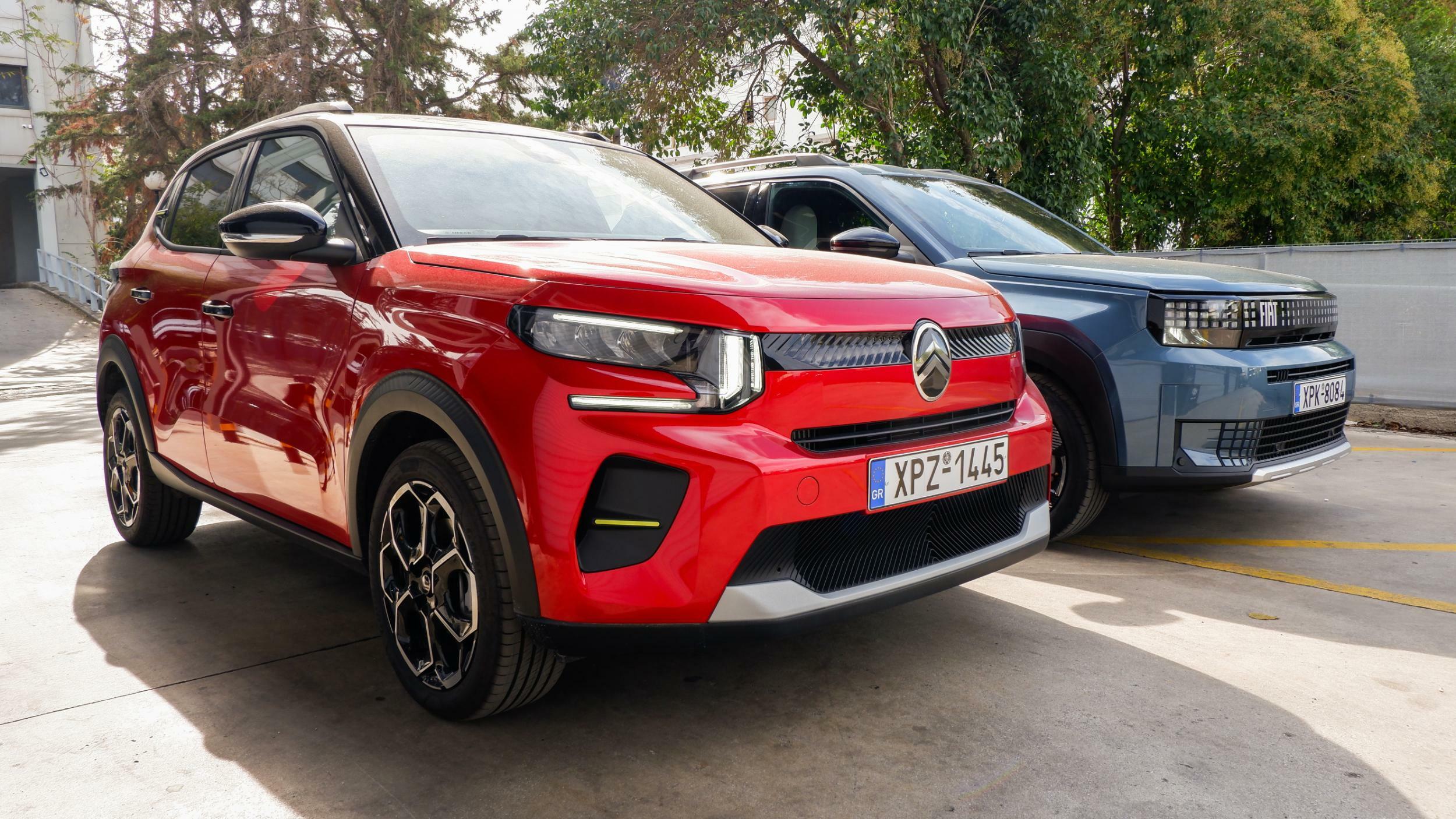
Predictably, the two hatchbacks share a wheelbase and sit within millimetres of each other in length and width. The Citroen measures 16 mm (0.6 inches) longer, while the Fiat is 5 mm (0.2 inches) wider. On paper, these are rounding errors, but the styling does help differentiate them more than the tape measure might suggest.
Different Shells
Photos Thanos Pappas for CarScoops
Most would agree that Citroen and Fiat’s designers did well to set their cars apart. Although the two models inevitably share core proportions, roof structure, and key hardpoints, every body panel is unique. That gave each brand the freedom to apply its own design language across the entire exterior.
The Citroen looks chunky and aggressive with sculpted details, while the Fiat is boxier and retro-futuristic with many Easter Eggs doubling as references to its Italian origins. Both hatchbacks sit higher than usual and carry crossover styling cues, but the slightly thicker plastic cladding and taller roof rails of the Grande Panda make it look a bit more adventurous than the C3.
Examples that highlight the fine line between cost-cutting and design statement include the combinations of the identical mirror caps with different indicators (from the Stellantis parts bin), the shared door handles with bespoke door stampings, and the common greenhouse with slightly different window lines.
Two Interiors, Two Moods
Photos Thanos Pappas for CarScoops
The unique character of each model is even more pronounced inside the cabin. The Citroen has a modern and minimalist approach, with horizontal lines on the dashboard. Highlights include the small two-spoke steering wheel, the tiny digital instrument cluster that resembles a head-up display, and the fabric trim that disguises the hard plastics.
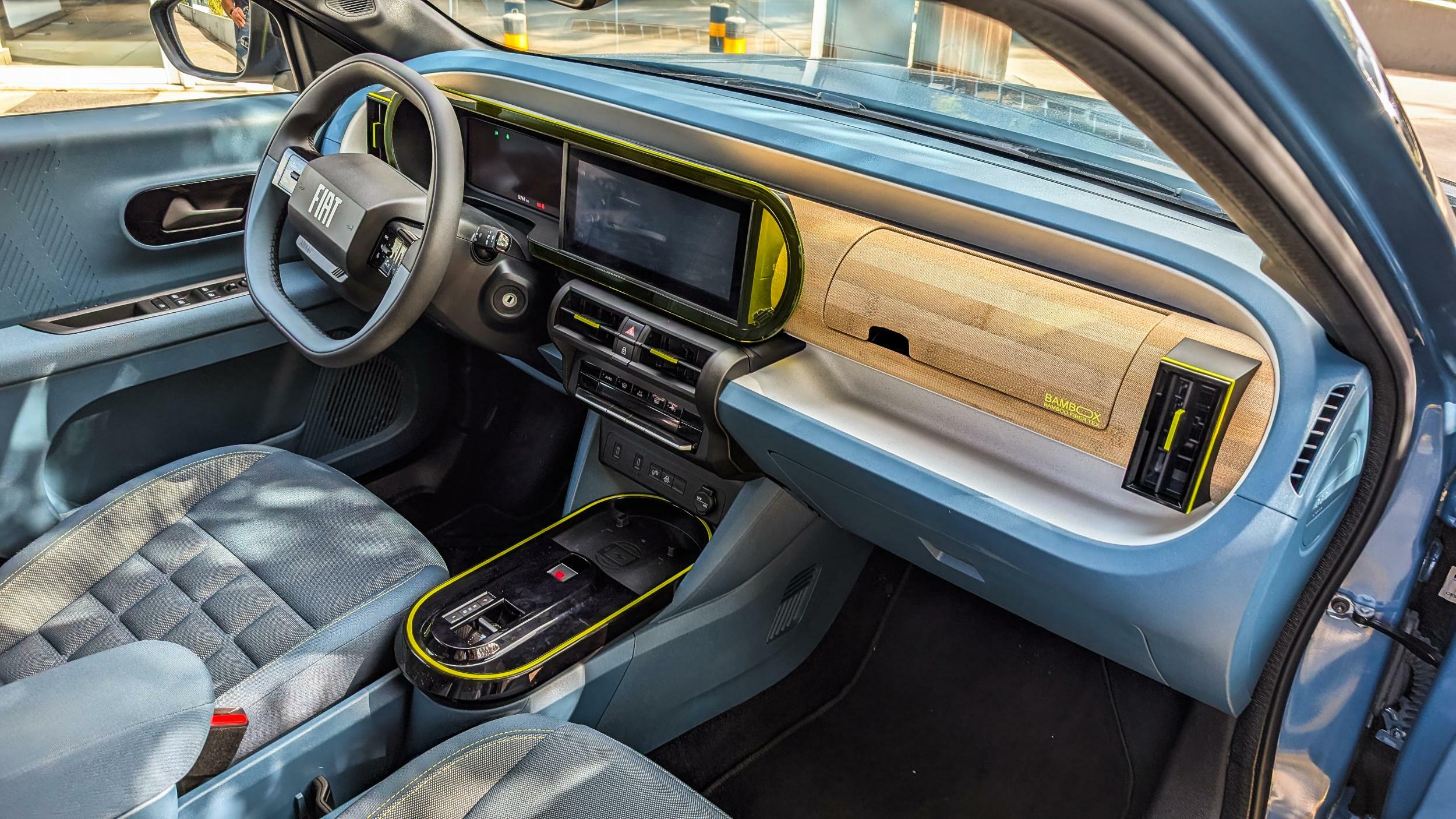
The Fiat is far more playful and colorful. It has an oval shaped digital cockpit with a miniature Panda trapped in the transparent perimeter, a Bamboo-like cover for the glovebox, vintage emblems and glossy black surfaces.
Of course, many of the core components are shared. The climate controls remain mercifully physical, the infotainment screen is a 10.25-inch unit across the board, and most of the switchgear and door handles are the same. It’s what you’d expect from two cars built from the same parts bin.
Comfort and Practicality
Cabin space feels identical, with both cars offering enough legroom and headroom for four adults to travel comfortably. The seats are plush and equally stylish in their own regard, leaving Citroen’s “Advanced Comfort” marketing claim mostly symbolic. The boot also looks the same to the naked eye, despite the notable difference on paper in favor of the Fiat.
Overall, the Fiat has the most unique interior ambiance that will make passengers smile. On the other hand, the Citroen might age better and has a narrow lead in perceived quality – most likely due to the darker trim.
Trim levels mirror each other from the base models to the range-toppers we tested. In Greece, the Fiat is the more affordable choice across the range. But in other markets like Germany and the UK, the Citroen often comes in cheaper, at least for the electric versions.
Driving Impressions
Behind the wheel, the similarities are immediately obvious. Contrary to what some reviews suggest, both models share identical suspension geometry and a soft overall tune. The Citroen does have a slight advantage over rough surfaces, thanks to its “Progressive Hydraulic Cushions” that take the edge off full damper extension.
Both small hatchbacks are very easy to drive and proved to be agile in Athens’ narrow streets. Of course, performance is identical across the range, which includes electric and turbocharged 1.2-liter engines in regular and mild-hybrid forms. The Grande Panda may eventually offer an all-wheel-drive version, potentially reviving the spirit of the Panda 4×4.
The steering feel is also very similar, but at least it gave me something to write about. In the Grande Panda I got the sense of the ultra-light City mode of older Fiats – but only when stationary. The Citroen’s steering adds a barely perceptible touch of extra weight, likely a result of the smaller steering wheel diameter.
Verdict
Photos Thanos Pappas for CarScoops
In the end, the Citroen C3 and Fiat Grande Panda are two interpretations of the same idea, delivered in French and Italian dialects. Both target the value end of the subcompact market and use a shared platform to keep costs down, while still managing to carve out distinct personalities through design.
They don’t face much direct competition beyond the Dacia Sandero Stepway, though small SUVs and traditional hatchbacks are always hovering nearby. Beneath the styling, they’re mechanically identical, with only slight differences in ride and agility. The C3 feels a bit more composed when the suspension hits its limits, while the Grande Panda comes across as slightly more nimble. These nuances only really emerge if you drive them one after the other.
For car enthusiasts and romantics, a little more character in the driving dynamics wouldn’t have gone amiss, but for most buyers, design is what matters. On that front, the fraternal twins deliver more than enough distinction to stand on their own.
The final verdict ends in a clear draw, with each car bringing its own strengths to the table and appealing to slightly different sensibilities. The Grande Panda leans into playful energy and quirky charm, while the C3 carries itself with a more restrained, minimalist poise. If it came down to styling alone, which one would you take home?
Localization will help Chinese carmakers boost global vehicle sales.
VW and Toyota’s market share could fall sharply in key segments.
Analysts expect Tesla’s share to rise from 2 to 8 percent globally.
In just a few years, Chinese automakers may do more than disrupt the global car industry. As they scale up overseas and lean into their strengths in electrification and cost control, the shift looks less like a disruption and more like a permanent redrawing of the map. If the current pace holds, they could control a third of the global market within five years.
Analysts at UBS, the Swiss investment bank and financial services company, point out that while China’s domestic car market continues to grow, it’s the overseas expansion that’s becoming increasingly important for them. According to their latest estimates, foreign markets now represent about 20 percent of industry sales for Chinese carmakers, and in some cases, up to 50 percent of their profits.
The Global Impact of Expansion
UBS says its forecast remains unchanged from two years ago, even as Chinese manufacturers scale up production in Europe and some legacy automakers begin stepping back from their EV plans, citing uncertain returns and cooling demand.
“The main drag was due to Europe’s slowdown of EV adoption, and tariffs and protectionism against Chinese EVs,” said Paul Gong, UBS’s lead analyst for Chinese EVs. “I think 2024 progress was slower than expected, but recent signs have shown some catch-up.”
The South China Morning Post (SCMP) reports that China’s long-term bets on electric vehicles, vertical integration, and aggressive supply chain development appear to be paying off. These moves haven’t just given Chinese brands a cost advantage, they’ve made it easier to scale production and respond quickly to market shifts.
Chinese Carmakers Gain Speed as Global Rivals Lose Ground
Frank Diana, a managing partner at Tata Consultancy Services, says China’s edge is not just about scale but about speed. “The fact that [China] has been learning aggressively means that they’re going to have a dominant position and market share,” he explained. “But they’re not alone … you will see the rise of other players in the space.”
UBS forecasts that the rise of Chinese brands will cut deep into the dominance of current global leaders. Combined, Volkswagen and Toyota now hold 81 percent of the market share in key segments. By 2030, that number could drop to just 58 percent. Meanwhile, Tesla’s global share, currently sitting at around 2 percent, could grow to as much as 8 percent by the same year.
Also helping Chinese brands expand internationally is a move to localized production. In Thailand, automakers such as SAIC Motor, Great Wall, BYD, GAC, Changan Automobile, and Chery already operate assembly plants. Great Wall and BYD have also established manufacturing in Brazil, with BYD developing a large-scale facility in Hungary to support its growing footprint in Europe.
India Eyes a Bigger Role
China isn’t the only nation that could see its car industry expand rapidly by 2030. India, too, is positioning itself for growth. Domestic automakers like Tata and Mahindra are increasing their share in the local market and looking outward.
However, they face stiff competition, not only from dominant player Maruti Suzuki, but also from Chinese-owned MG Motor, which has introduced several new models to Indian buyers. BYD has also begun to establish a presence, and both Chery and Great Wall have plans to enter the market, reports SCMP.
Still, analysts suggest that China’s early investments gave it a lasting edge. The ability to learn quickly, build tightly controlled supply chains, and manage costs efficiently has kept its companies ahead.
“The EV supply chain is dominated by Chinese companies,” said analyst Ramakrishnan. “The India EV supply chain, including electronics, is imported from China.”
Fewer Players, Bigger Stakes in the Next Phase of EVs
In Diana’s view, the current market is heading toward consolidation. China’s early lead puts it in a strong position as the EV space matures into a more concentrated field of major players.
“So there will be consolidation even at the EV market level, and you end up with 10 to 15 platform orchestrators made up of [original equipment manufacturers and] big technology companies,” he said.
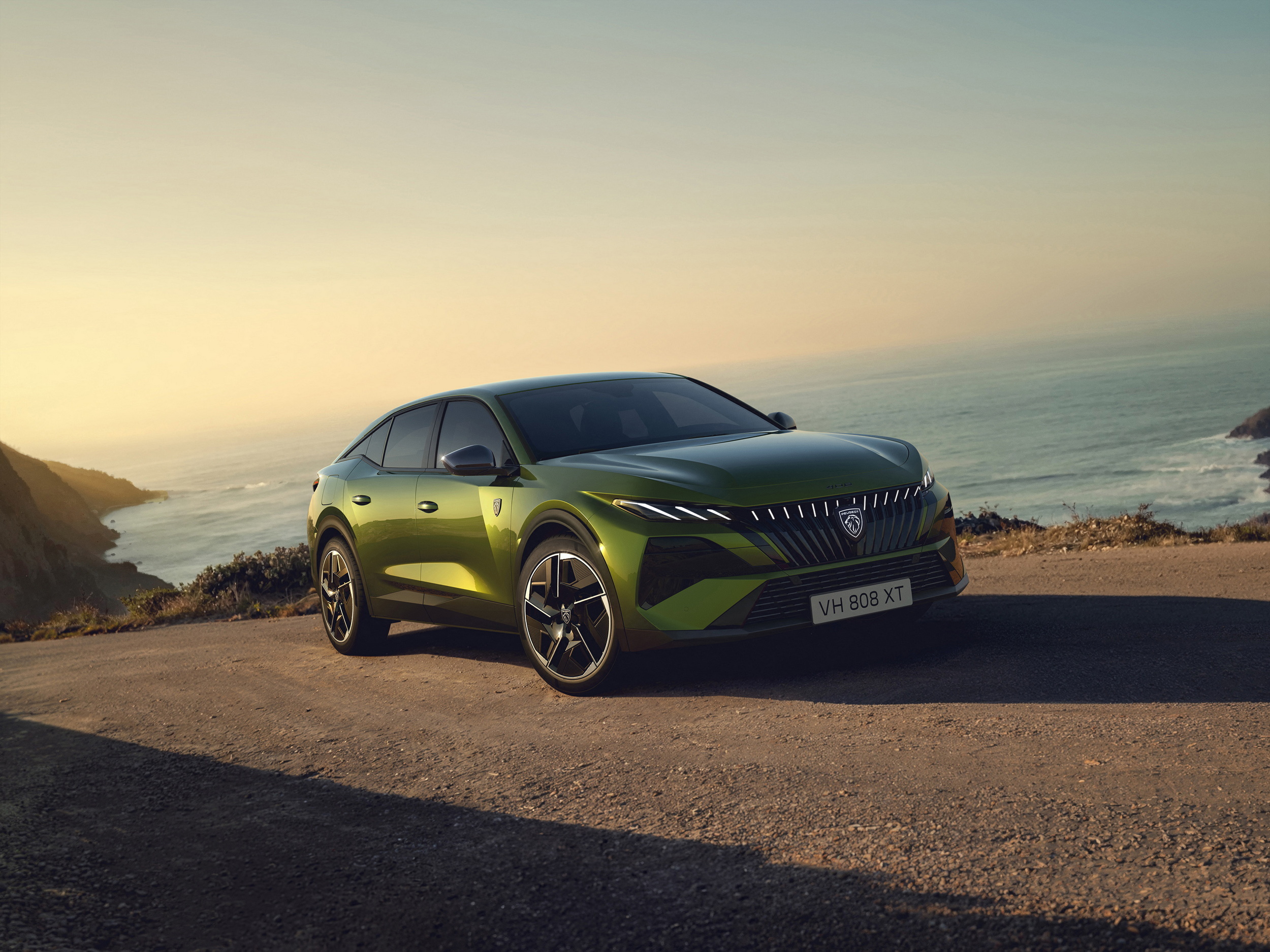
Peugeot has introduced the facelifted 408 crossover in Brussels.
It features a new front end, updated wheels, and a revamped cluster.
The E-408 gains several features including battery pre-conditioning.
The Brussels Motor Show is in full swing, and Peugeot has brought a familiar face with a sharper edge. The refreshed 408 makes its debut with a sportier, more upscale design along with a few well-placed upgrades.
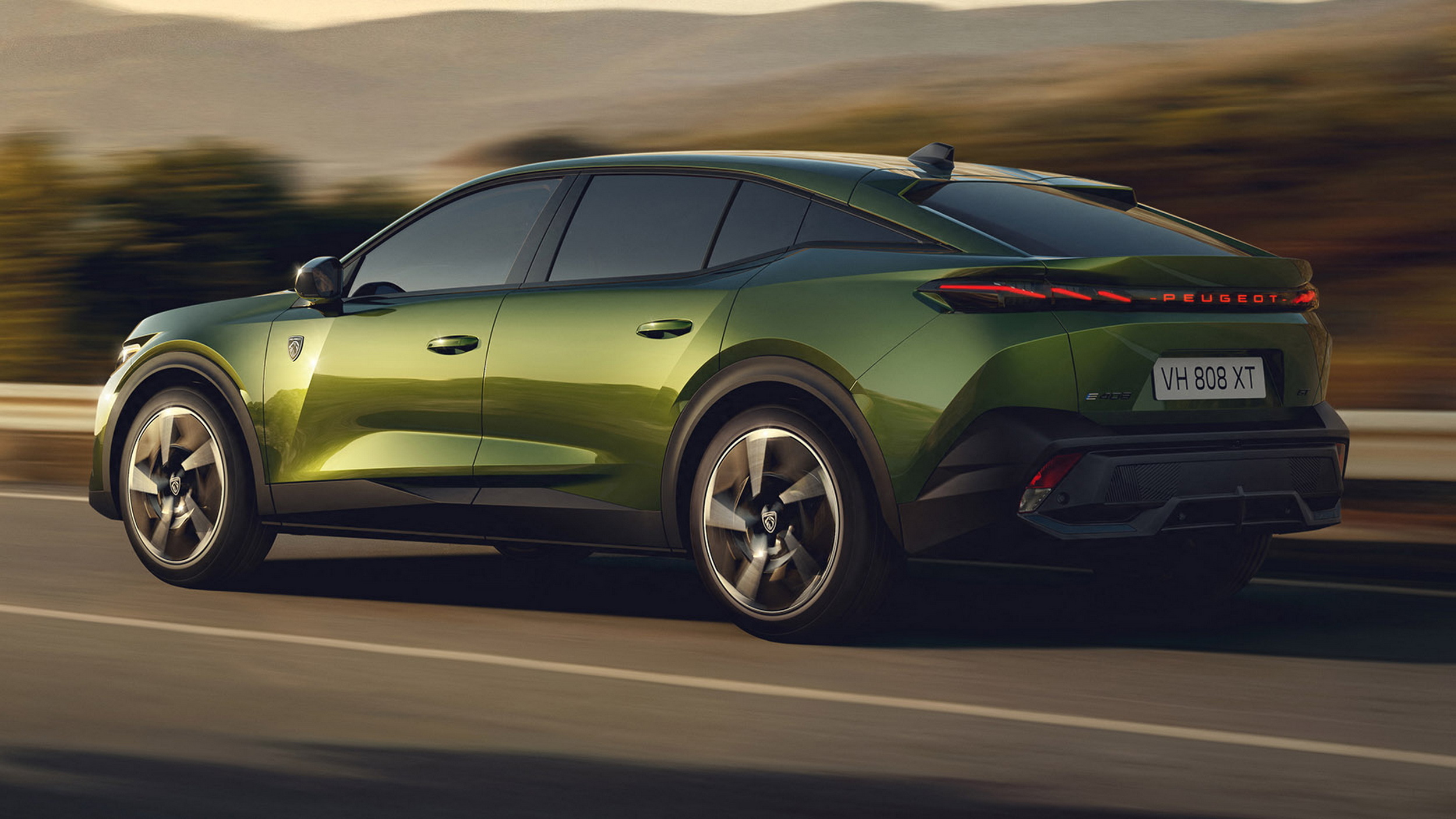
The changes are immediately apparent as the fastback crossover has been ‘defanged.’ As part of the makeover, the model adopts split lighting units with an upper section that has three “claws.” These serve as daytime running lights as well as animated turn signals.
The headlights reside below and are “almost invisible” as they’re surrounded by gloss black accents. This enables them to effectively blend into the background.
Designers gave the 408 a more expressive grille that features an illuminated logo on higher-end variants. The Lion badge also has a radar sensor hidden behind it, which helps to create a cleaner appearance.
Elsewhere, there’s a new bumper and a revised central intake. The latter trades a honeycomb mesh pattern for horizontal lines.
The rear end largely carries over, but the traditional logo has been replaced by illuminated “Peugeot” lettering. This is a first for the company and it’s joined by gloss black accents as well as revamped taillights.
Last but not least, the model rides on updated wheels ranging in sizes from 17- to 20-inches. Customers will also find a revised color palette that includes an exclusive new color known as Flare Green. It changes from bright yellow in sunlight to deep green in shadows.
Minor Interior Changes
While exterior styling changes are pretty noticeable, the same can’t be said about interior updates. These blend into the background, but include updated trim and upholstery.
The model also gains a new 10-inch digital instrument cluster, which sports improved graphics. It’s joined by a familiar 10-inch infotainment system.
An Updated EV With New Features
The E-408 carries over with a 58.2 kWh NMC battery pack, which feeds an electric motor developing 210 hp (157 kW / 213 PS) and 253 lb-ft (343 Nm) of torque. This enables the model to have a WLTP combined range of 283 miles (456 km).
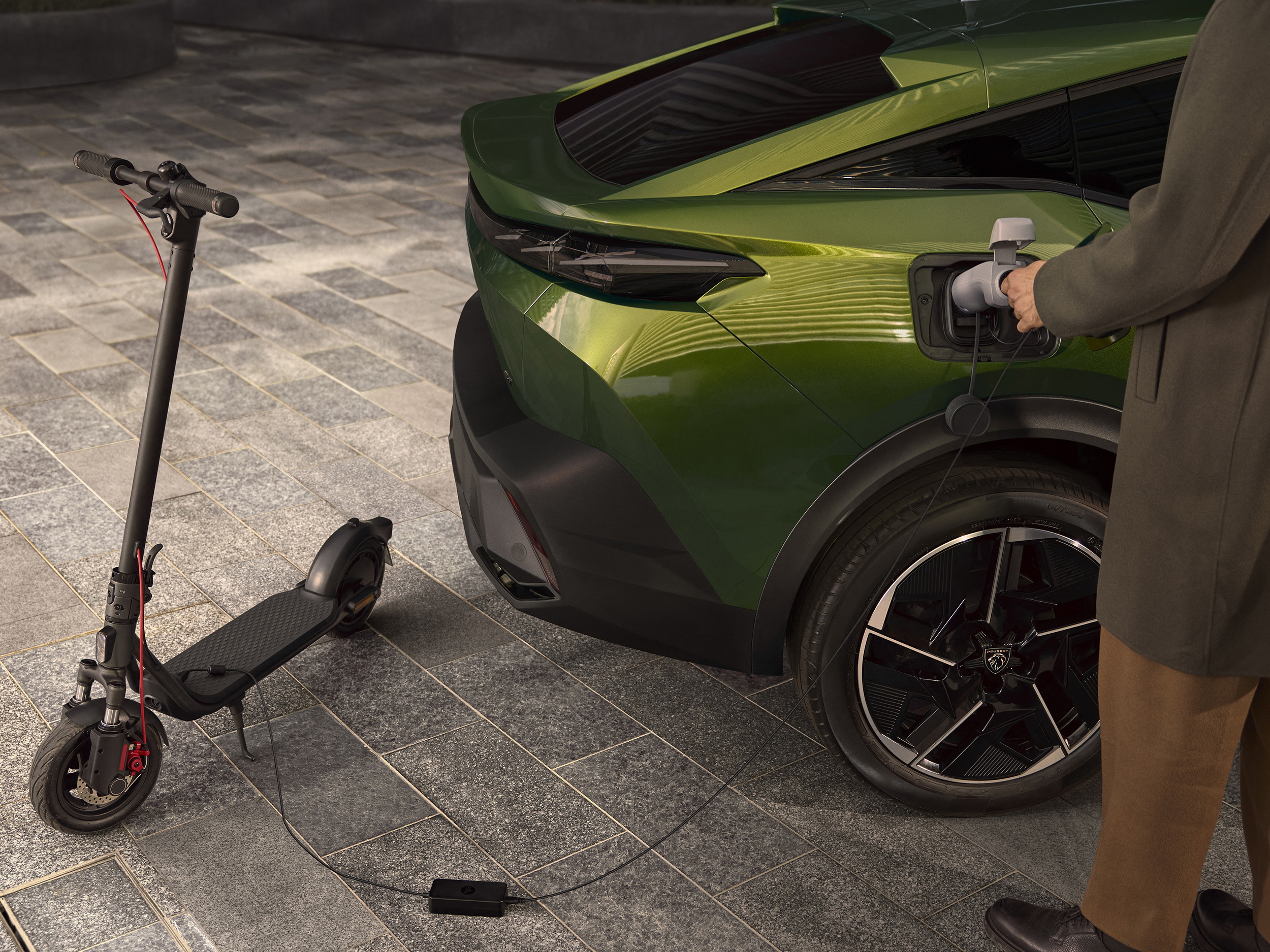
While the powertrain will give you déjà vu, there are several new features including a battery pre-conditioning system. In cold weather, owners can tell the battery to heat up at the touch of a digital button. The GT trim takes this up a notch as navigating to a charging station will automatically trigger battery pre-conditioning at the perfect time.
Customers will also find a new Plug & Charge capability as well as a Vehicle To Load function that delivers up to 3.5 kW of power. The model also has a new “80% charge limit” function for AC charging at home.
Hybrid And Plug-In Hybrid Power Too
If you’re not ready to go fully electric, you can opt for a plug-in hybrid powertrain that consists of a 178 hp (132 kW / 180 PS) petrol engine, a 123 hp (92 kW / 125 PS) electric motor, a 14.6 kWh lithium-ion battery, and a seven-speed dual-clutch transmission. This enables the crossover to have a combined output of 237 hp (177 kW / 240 PS) and an electric-only range of up to 53 miles (85 km).
Customers can also opt for a hybrid variant, which has a petrol engine with 143 hp (107 kW / 145 PS). It’s connected to an electrified six-speed dual-clutch transmission and the model consumes 5.0 L/100 km (47 mpg US) in the WLTP combined cycle.
2027 Chevy Bolt supports Tesla Superchargers and fast charging.
Powered by an LFP battery and a 210 hp single electric motor.
Pricing starts at $29,990, but a cheaper version will soon follow.
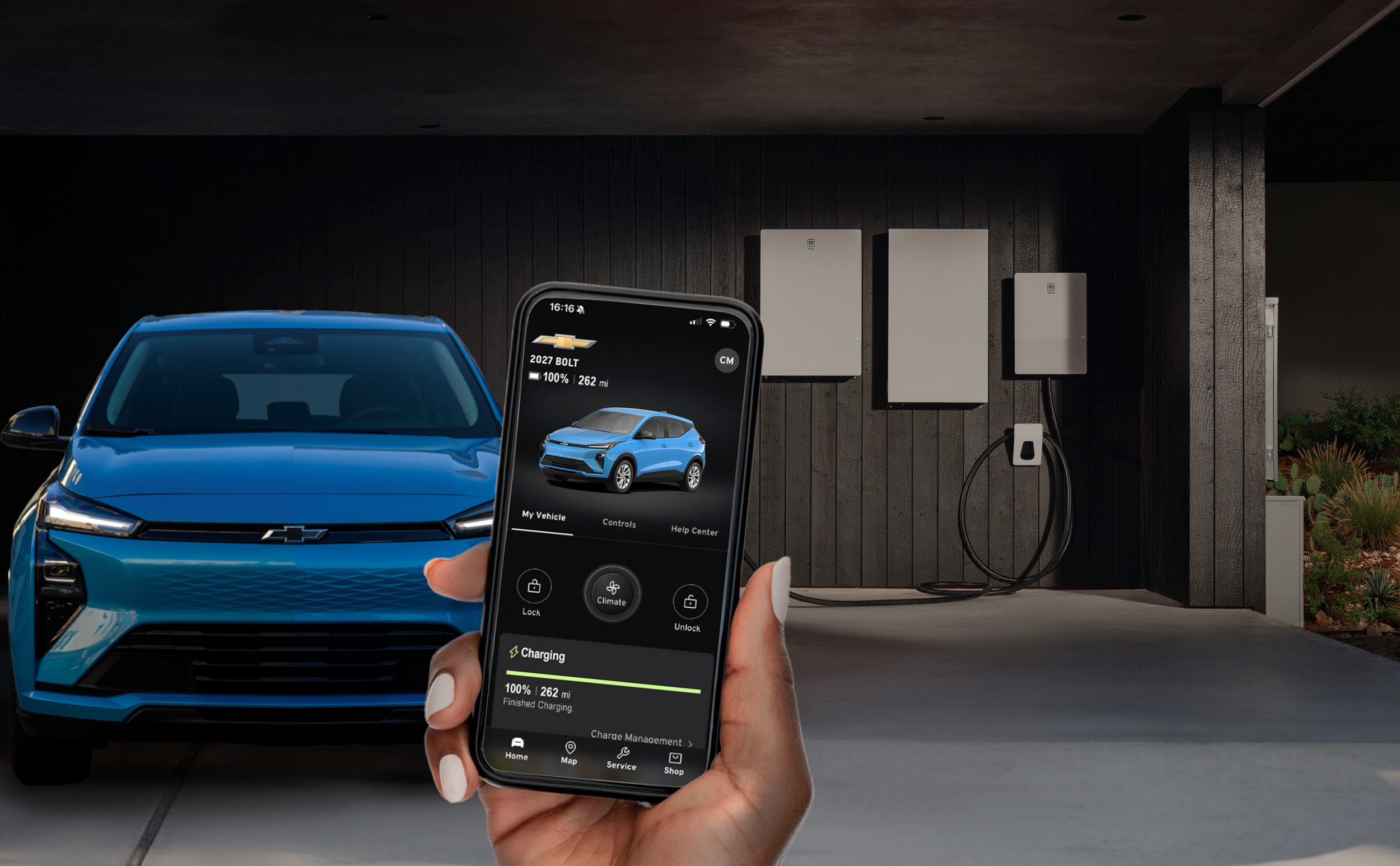
Chevrolet introduced the 2027 Bolt last fall and now they’ve revealed the electric crossover has an EPA-estimated range of 262 miles (422 km). That’s more than GM’s original estimate of 255 miles (410 km) and it blows past the previous Bolt (259 miles) and Bolt EUV (247 miles).
Despite having more range than before, the Bolt falls short of the 2026 Nissan Leaf. We drove the Japanese EV earlier this year and it has an EPA rating of up to 303 miles (488 km). That’s 41 miles (66 km) more than the Bolt and this is a pretty noticeable advantage.
However, you shouldn’t write the Bolt off as it has some standout features, including the Super Cruise semi-autonomous driving system. The hatch also has a Vehicle-to-Home bi-directional charging capability, which means it can power your house in the event of an outage (when paired with a GM Energy Home System).
Buyers will also find an 11-inch digital instrument cluster and an 11.3-inch infotainment system with Google built-in.
Power comes from a 65 kWh LFP battery pack, which feeds an electric motor developing 210 hp (157 kW / 213 PS) and 169 lb-ft (229 Nm) of torque. When the battery is low, a 150 kW DC fast charger can take it from 10% to 80% in just 26 minutes. Speaking of which, the Bolt is the first Chevrolet to have a native NACS port and this means easy access to Tesla Superchargers.
The 2027 Bolt starts at $29,990 – including destination – and is currently arriving at dealerships. It will be followed by an even more affordable variant that begins at $28,995.
Both prices undercut the Leaf, which starts at $31,485 out the door. That being said, Nissan has already confirmed plans for an entry-level variant with a smaller 52 kWh battery. It’s also worth noting the Bolt is a “limited run model,” while the Leaf will be sticking around.

 Login
Login