Normal view

There are new articles available, click to refresh the page.
Before yesterdayMain stream

Mercedes Baby G-Class Ditches Its EV-Only Plan

  • Shrunken G-Class will offer both hybrid and fully electric options.
  • Hybrid borrows 1.5-liter turbo engine from new CLA, report says.
  • EV version targets nearly 450-mile range, far better than big G EV.

Mercedes’ upcoming baby-G was supposed to be the cute, chunky electric-only gateway into G-Class ownership. But the automotive market is changing fast, and so are Benz’s plans, as it reacts to cooling demand for EVs in some markets, especially for its own electric cars. As a result, the boxy SUV will now come with hybrid power.

More: Mercedes Wants This Baby G-Wagen To Win Buyers The Big One Never Could

Internally nicknamed Little G, Autocar reports, the compact, GLB-sized, two-row off-roader is due in 2027 and will still be available as a pure EV. But a companion hybrid model is now in development, using the turbocharged four-cylinder from the latest Mercedes-Benz CLA sedan.
 Mercedes Baby G-Class Ditches Its EV-Only Plan
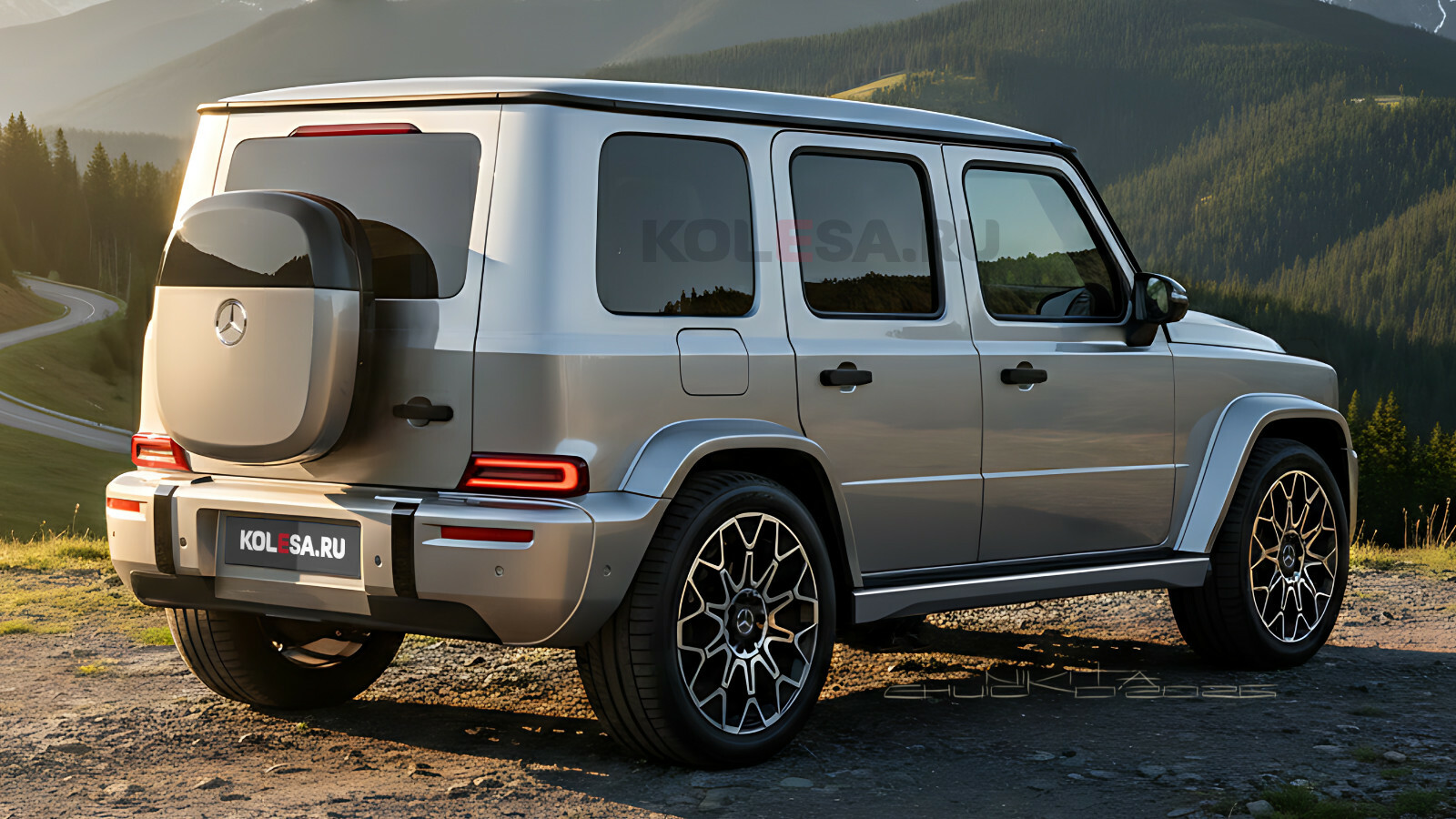
Illustrations Nikita Chuyko / Kolesa

The change speaks to a wider reset inside Mercedes. The company has stepped back from its earlier EV-only plans, with CEO Ola Källenius confirming it will keep selling combustion models well into the 2030s to stay flexible across different markets. Tepid demand for the electric G-Class has, by most accounts, helped concentrate minds.

Read: Mercedes’ Electric G Flops So Hard It Could Change What Comes Next

The hybridized 1.5-liter unit is designed by Mercedes and built by Horse Powertrain in China, a joint venture involving Geely and Renault. Exactly how much kick it will deliver in the Little G is unknown, but the new CLA 220 hybrid makes 208 hp (211 PS) and 280 lb-ft (380 Nm) of torque, and gets to 62 mph (100 kmh) in 7.1 seconds.

In the CLA, the engine is paired with a gearbox-mounted electric motor that allows short periods of engine-off driving.

450-mile Range
 Mercedes Baby G-Class Ditches Its EV-Only Plan
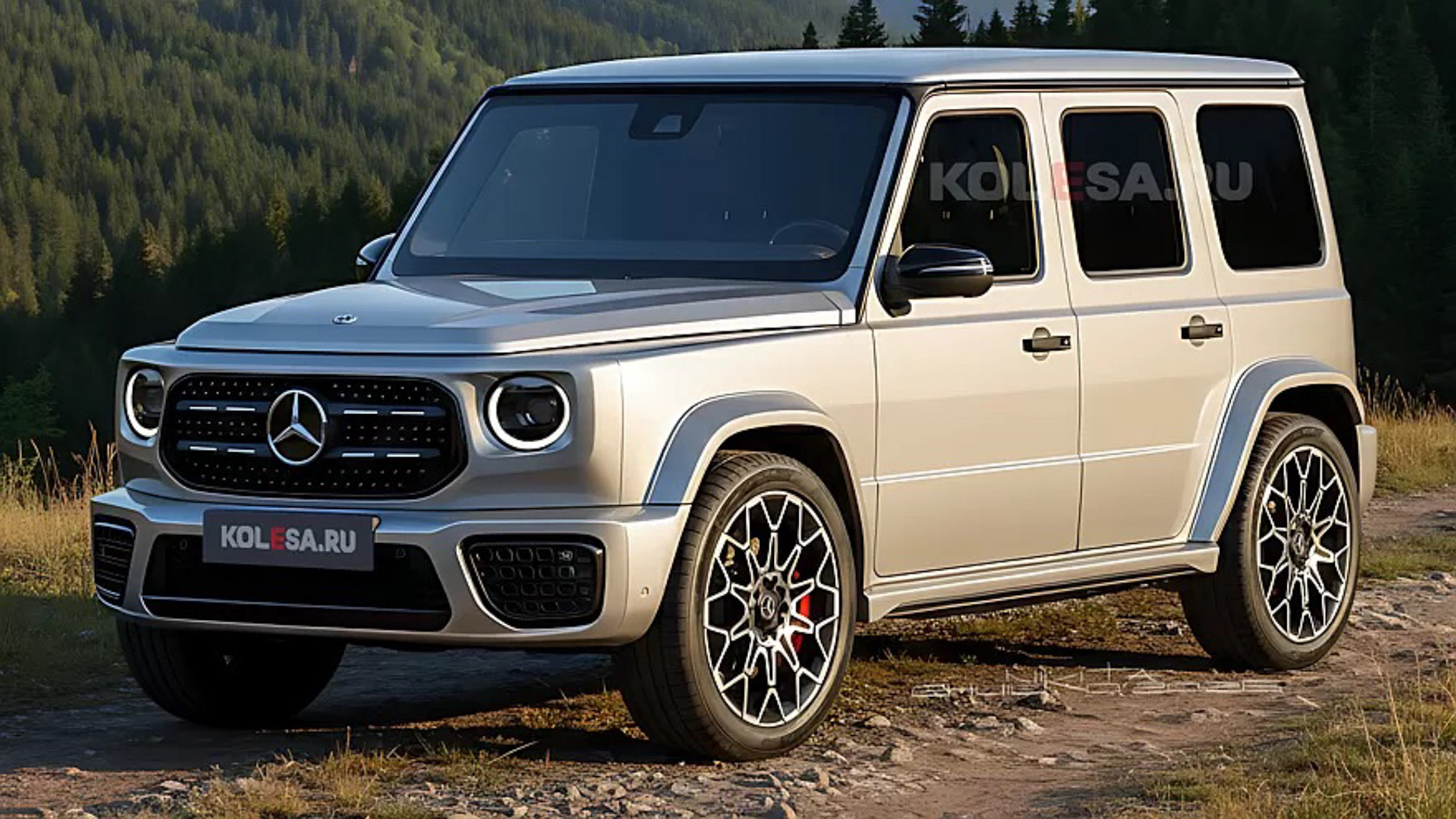
Illustrations Nikita Chuyko / Kolesa

Prefer your G a little more refined? The EV variant will reportedly come standard with two motors and all-wheel drive to preserve off-road credibility, Autocar says.

Also: Mercedes’ Smallest SUV Points To A Different Kind Of Compact Future

An 85 kWh NMC battery is tipped to deliver close to 450 miles (724 km) of WLTP range, which would be seriously impressive for something shaped like a luxury brick – it’s not far short of the CLA 350 sedan’s 418-479 miles (672-771 km) figures. The full-size electric G580 with EQ technology, you might recall, is only rated for 280 WLTP miles (450 km).

Regardless of powertrain, the Little G will be sold exclusively with four-wheel drive, and both versions are tipped to feature advanced torque vectoring capable of distributing drive to individual wheels to mirror the off-road ability of the larger G-Class.

Slab Sides

 Mercedes Baby G-Class Ditches Its EV-Only Plan
Illustrations Nikita Chuyko / Kolesa

Where the baby G does follow its big brother’s lead, though, is in military-chic charm. Unofficial renders from Nikita Chuyko for Kolesa give us a credible idea of what the finished SUV could look like, showing round headlights, upright glass, three big side windows and a tailgate-mounted spare.

It looks like someone left a G-Class in the dryer too long, and the good news is the slow-selling G580 EV’s $163k price should also shrink, hopefully by around 50 percent.

Unlike many compact crossovers pretending to be rugged, the Little G is said to ride on a bespoke ladder-frame platform rather than sharing underpinnings with Mercedes’ electric GLC or C-Class.

That should help it take on the incoming Land Rover Defender Sport, the Little G’s most natural rival, though that gets a unibody structure. We can’t wait to see them duke it out in the dirt next year.
\\\\\\\\\\\\\\

Baldauf

Lamborghini Scraps EV Supercar After Admitting Interest Was ‘Close To Zero’

  • Lamborghini has canceled the electric Lanzador over low demand.
  • The brand will stick with plug-in hybrids across its range.
  • CEO Stephan Winkelmann says EVs risk becoming costly hobbies.

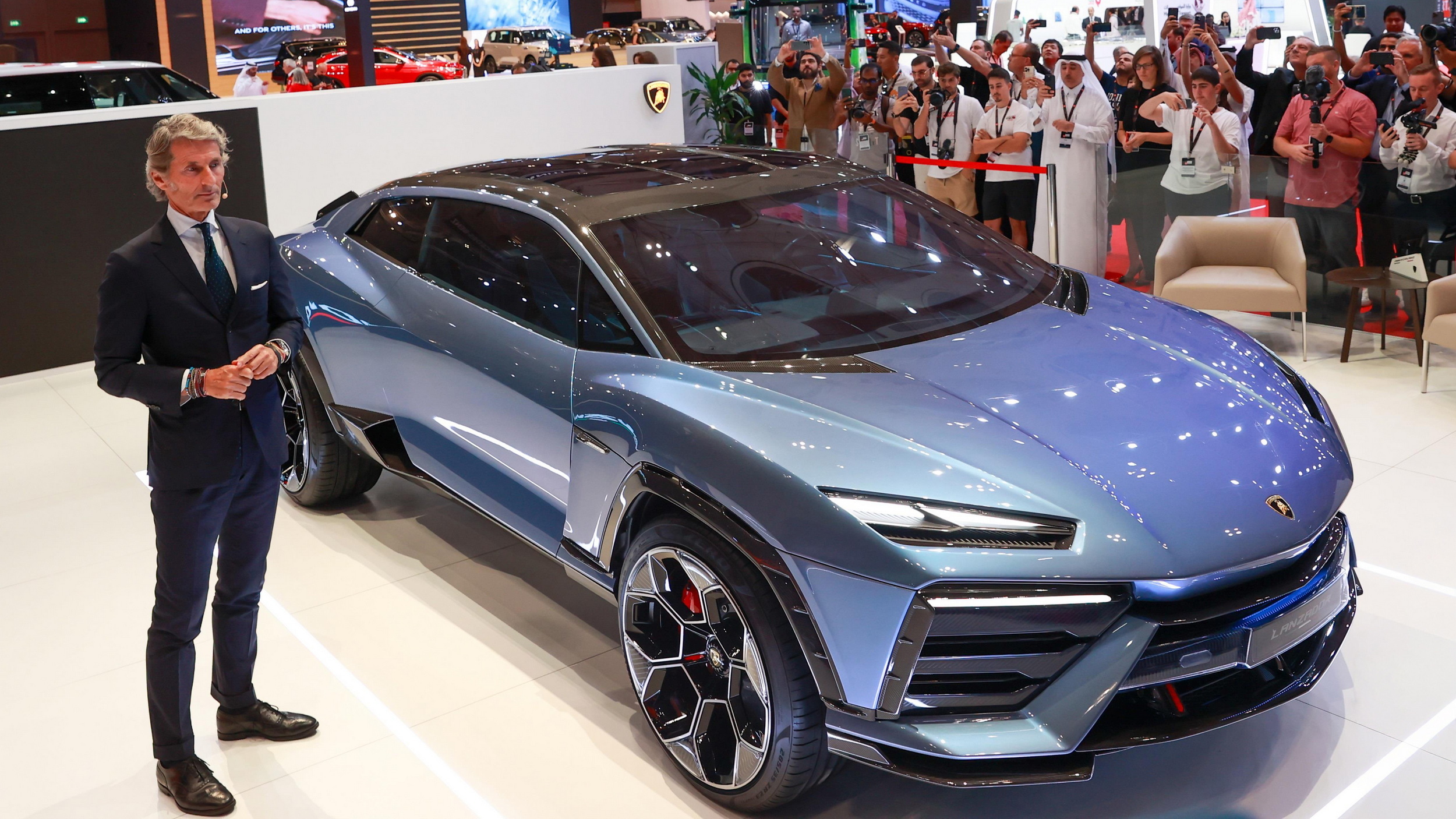
Lamborghini has officially shelved plans for its first production EV, deciding instead to lean harder into high-performance plug-in hybrids through 2030. In Sant’Agata’s world, electricity is welcome, just so long as it’s boosting a V8 or V12 rather than replacing one.

More: Audi Boss Says TT Successor Is Safe Even As Porsche Faces Doubts

The model in question, previewed by the Lamborghini Lanzador concept in 2023, was supposed to arrive before the end of the decade as a fully electric 2+2 crossover. Instead, it is heading back to the drawing board, if not straight into the history books.

A Strategic Backflip On EVs

Speaking to the Sunday Times, Lamborghini CEO Stephan Winkelmann confirmed the EV won’t be joining the production lineup and will instead give way to another plug-in hybrid offering. He also cautioned that going all-in on electric could turn into an “expensive hobby,” noting that the “acceptance curve” for zero-emission tech among Lamborghini’s clientele is “close to zero.” Not exactly a ringing endorsement.

Winkelmann went on to say that Lamborghini buyers are still chasing the full “emotional experience,” meaning the styling, the performance, and, crucially, the noise. That, in his view, is something EVs cannot yet replicate in their current form. So for now, combustion engines remain very much on the menu, and will continue to be built “for as long as possible.”

Hybrids Take Priority

 Lamborghini Scraps EV Supercar After Admitting Interest Was ‘Close To Zero’
Stephan Winkelmann with the 2023 Lamborghini Lanzador Concept.

The call to axe the project was reportedly made behind closed doors late last year, after extensive talks with customers and dealers, along with a thorough market analysis. In other words, Lamborghini did the homework and did not like what it saw. As Winkelmann put it:

“Investing heavily in full-EV development when the market and customer base are not ready would be an expensive hobby, and financially irresponsible towards shareholders, customers [and] to our employees and their families. Plug-in hybrids offer the best of both worlds, combining the agility and low-rev boost of electric battery technology with the emotion and power output of an internal combustion engine.”

More: Ferrari’s First EV Exterior Is So Radical Even Its Designer Is Nervous About Your Reactions

Pressed by the Sunday Times on whether Lamborghini would ever build a full EV, Winkelmann left the door slightly ajar, albeit with a very firm hand on the handle.

“Never say never, but only when the time is right,” he said. “For the foreseeable future, only PHEVs. We will continue to develop electrification because we also need to be ready. The times we are living in are fast moving; if you don’t react fast, you risk going out of business or losing momentum. Therefore we need a solid financial base to reinvest in the future.”

 Lamborghini Scraps EV Supercar After Admitting Interest Was ‘Close To Zero’
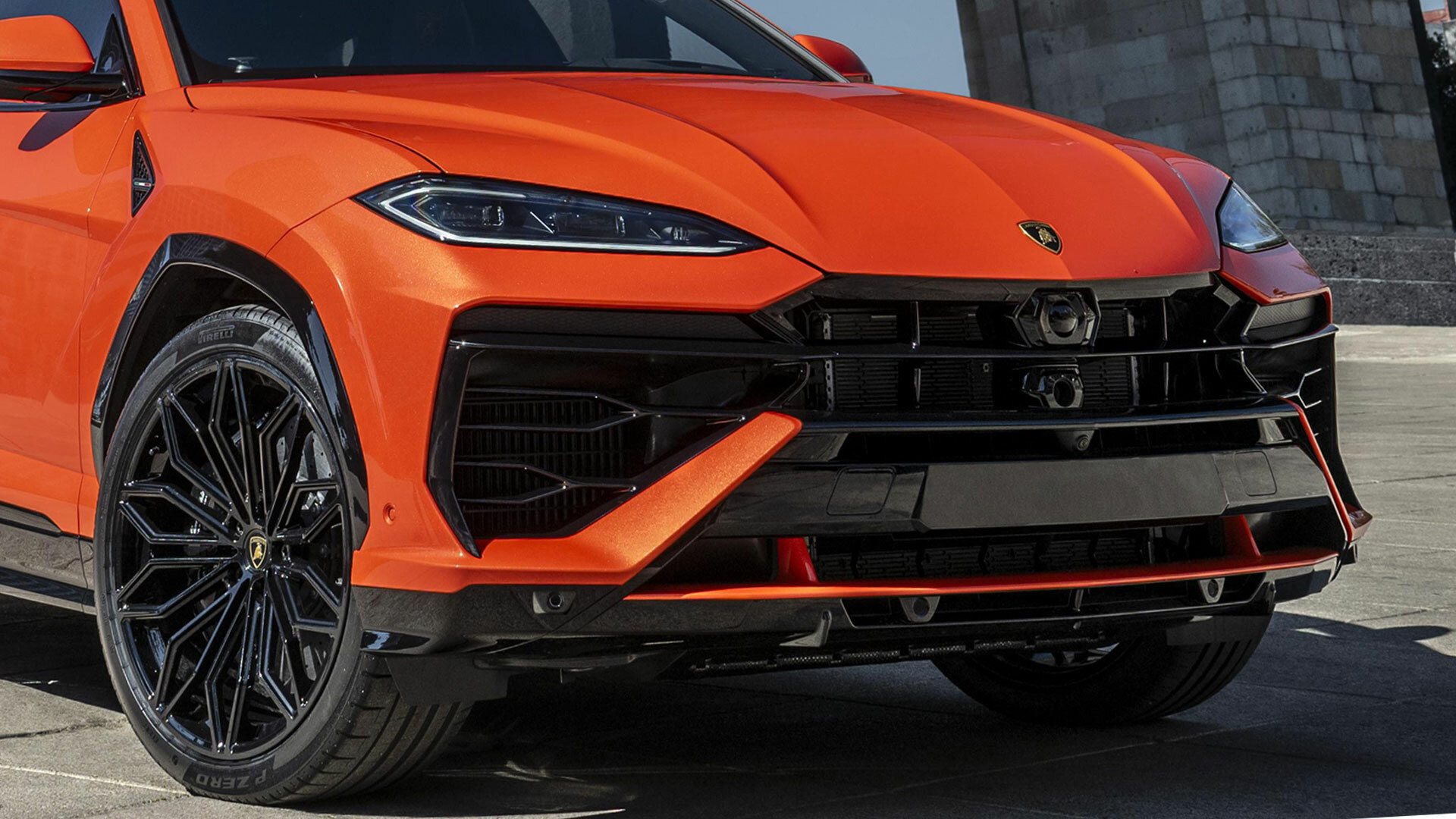
Lamborghini Urus

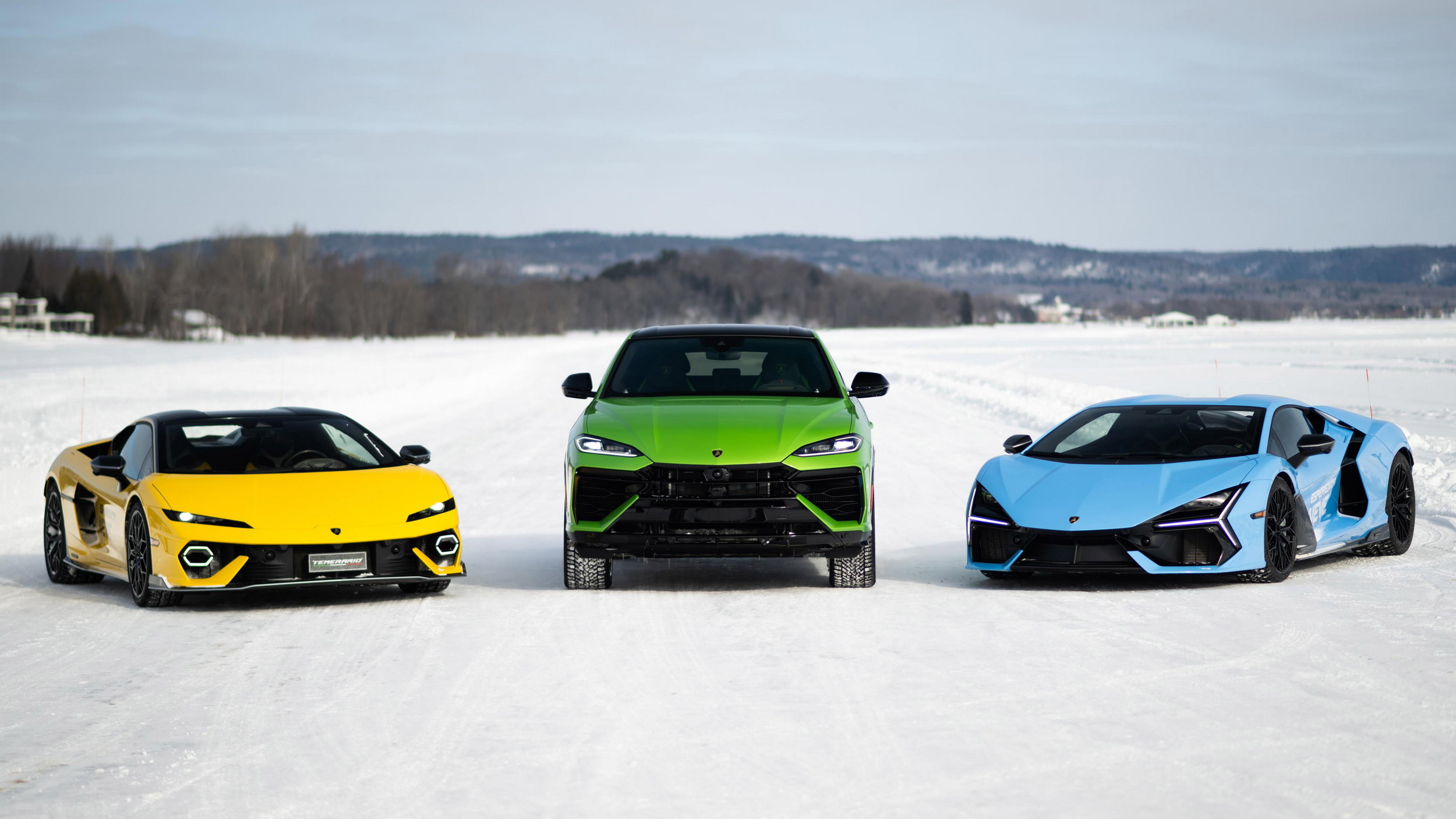
Lamborghini’s current lineup is now fully hybridised, from the Urus SUV to the Temerario and Revuelto supercars, each pairing combustion muscle with electric assistance. The formula seems to be working. Last year Sant’Agata shifted a record 10,747 cars, with the Urus comfortably leading the charge.

Protecting The Brand’s Best Seller

The performance-focused SUV was supposed to enter a new generation in 2029, transitioning to a fully electric powertrain, but that is no longer the case. After speaking with customer groups, Lamborghini concluded that a battery-powered Urus would not exactly set its order books alight.

More: Lamborghini’s Next Surprise Might Be A V12 Supercar You Can Take Camping

According to Winkelmann, they simply couldn’t risk it with their best seller. The Urus is the brand’s financial backbone. Supercars may command higher margins, but they occupy what he calls a “tiny segment” compared with the Urus market, which is “bigger and more stable.” In other words, you do not gamble with the model that pays the bills.

Winkelmann also pointed to the regulatory road ahead. “We have a big task as an automotive industry. Everybody’s speaking about 2035, but there’s a big date which is very dangerous at 2030, due to the emissions. And this is something which is not clear enough, in my opinion, today.”

 Lamborghini Scraps EV Supercar After Admitting Interest Was ‘Close To Zero’
The current Lamborghini lineup, including the Temerario, Urus, and Revuelto.

EV Repair Costs Are Starting To Drop, But The Real Bill Is Hiding Elsewhere

  • Repairable EV collision claims rose sharply in 2025.
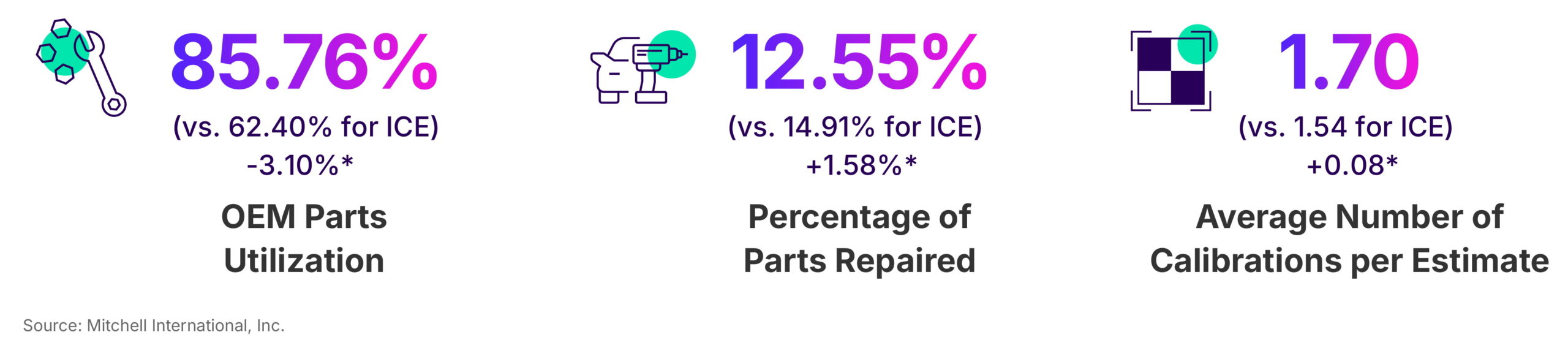
  • EVs required an average of 1.70 calibrations per estimate.
  • US EV total loss values fell 6% due to depreciation.

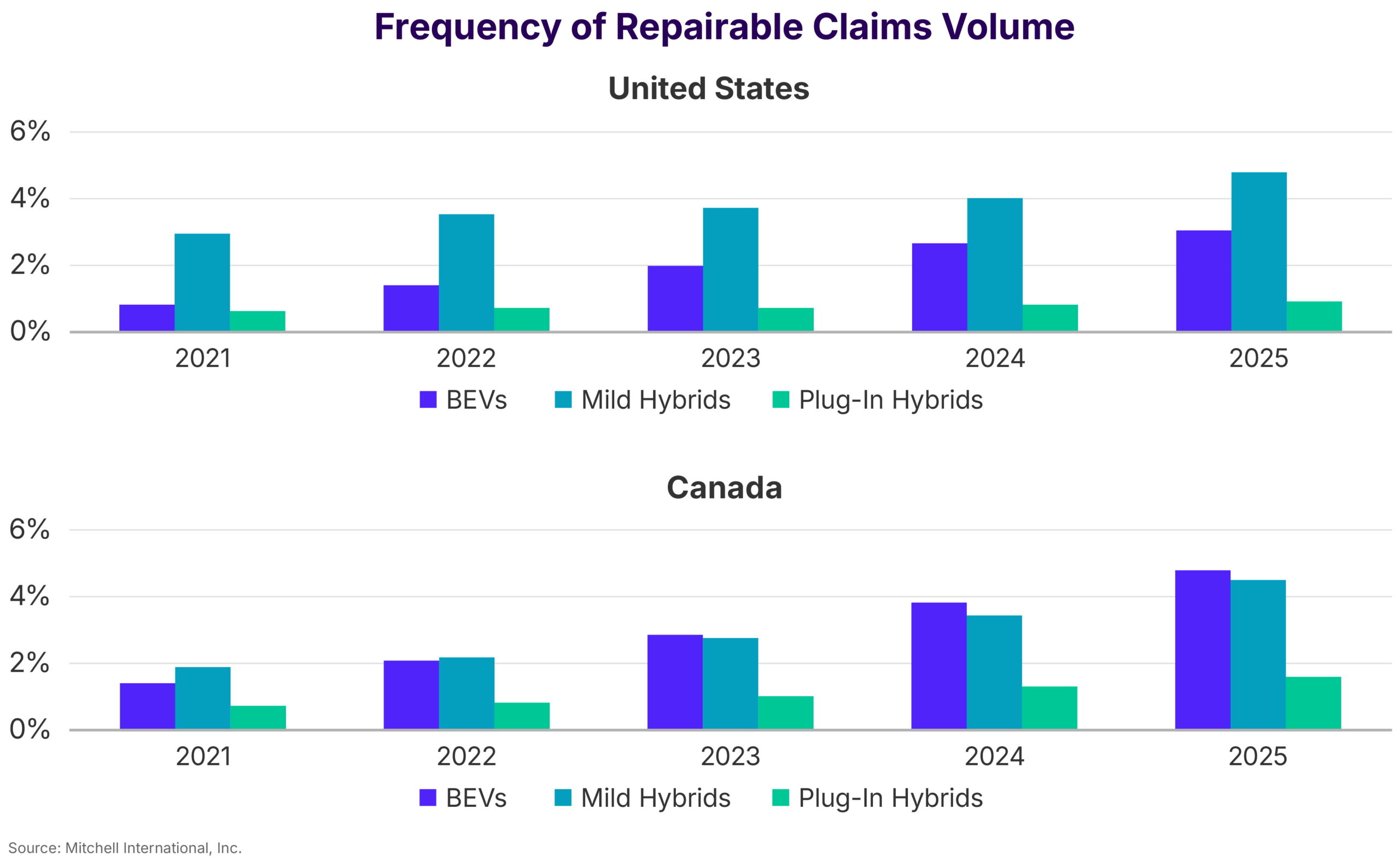
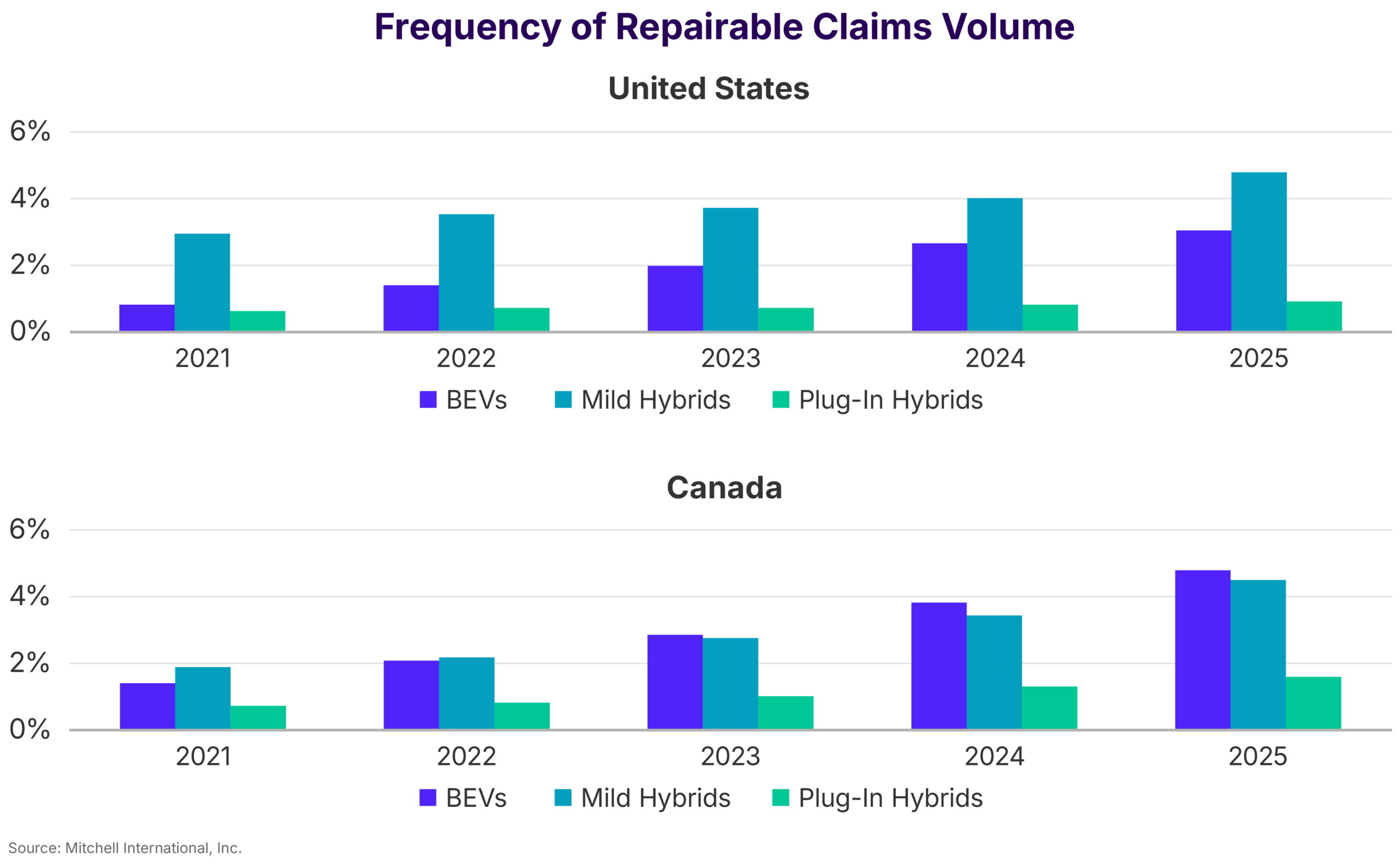
Electric vehicles are turning into a proper migraine for the insurance industry. According to the latest report from collision management software provider Mitchell, repairable collision claims for EVs jumped 14% in the US and 24% in Canada during 2025.

What makes these numbers particularly jarring is the fact that EV sales growth slowed down in 2025 as government tax incentives expired and consumer interest shifted to hybrids. Cox Automotive estimates that new EV sales dropped approximately 2% in the US, with S&P Global Mobility reporting a 0.4% decline in new EV registrations.

More: Car Repair Costs Are Exploding And It’s Not Just About Tariffs

Even Tesla’s grip on the market loosened slightly, with its US market share slipping to 46.2% from 48.7% in 2024 as more competitors gained ground.

Rising Repair Complexity

Even so, the existing EV fleet is aging into more accidents, and the complexity of repairing them is becoming a logistical and financial hurdle for the repair industry.

Ryan Mandell, Mitchell’s vice president of strategy and market intelligence, explained: “Due to their dense electrical architectures, software-driven systems and interconnected, sensor-heavy designs, these vehicles require additional diagnostic and calibration operations when damaged that can add cost, complexity and cycle time to each repair.”

 EV Repair Costs Are Starting To Drop, But The Real Bill Is Hiding Elsewhere

The “Plugged-In: EV Collision Insights” report also examined other electrified vehicles. Repairable claims for PHEVs increased 6% in the US and 26% in Canada in 2025. Mild-hybrid models (MHEV) recorded increases of 20% in the US and 29% in Canada. It is worth noting, however, that MHEV sales in the US surged 28% in 2025.

Also: Why Even The Smallest Accident Is Designed To Destroy Your Wallet

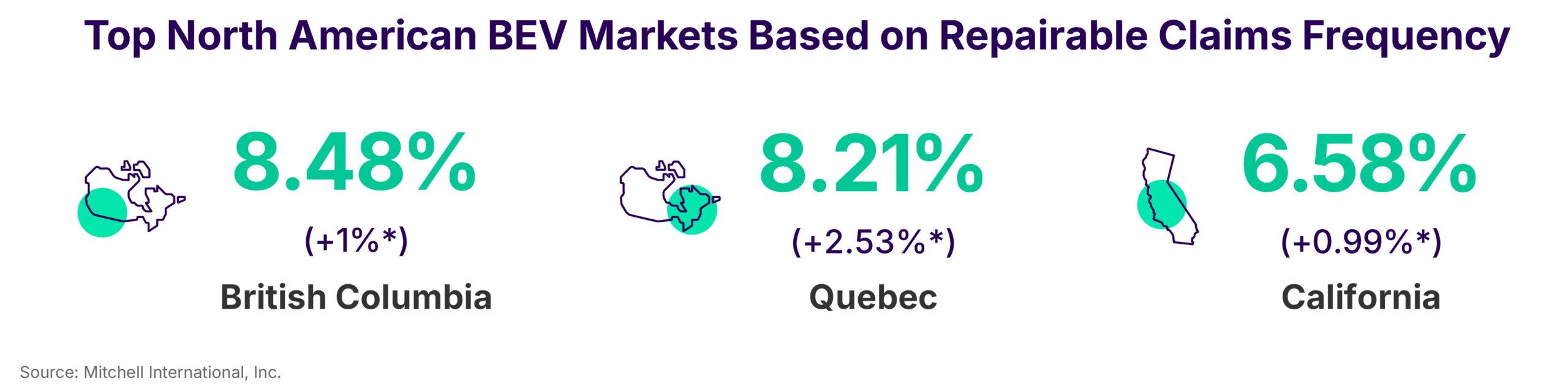
Across North America, British Columbia recorded the highest EV repair demand at 8.48%, followed by Quebec at 8.21% and California at 6.58%.

Which Models Top The Claims List?

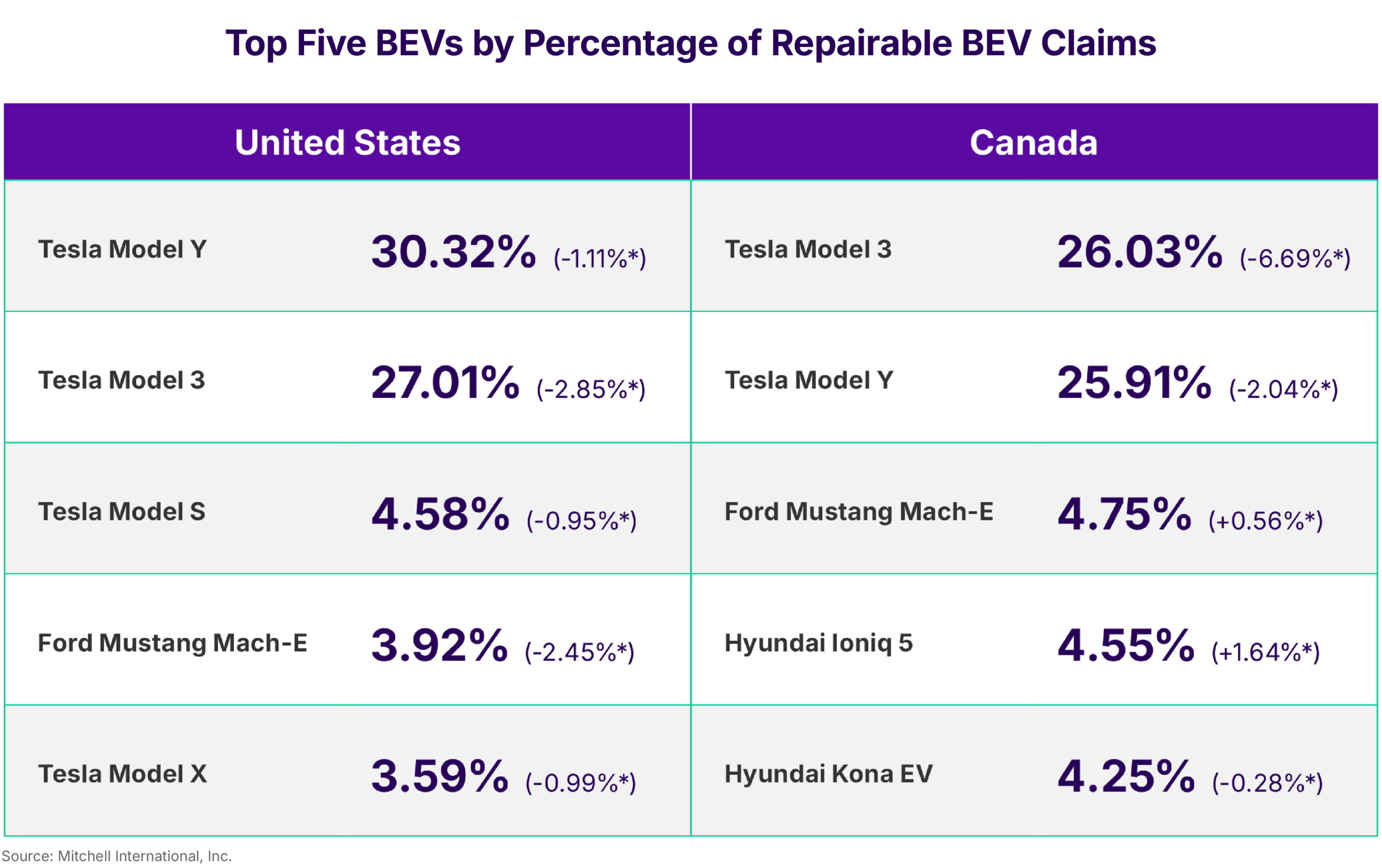
Looking at individual models, Tesla continues to dominate claims volume. In the US, the Model Y accounts for 30.32% of repairable BEV claims, followed by the Model 3 at 27.01%, meaning the two together represent more than half of all such claims. The pattern is similar in Canada, although the positions are reversed, with the Model 3 at 26.03% slightly ahead of the Model Y at 25.91%.

 EV Repair Costs Are Starting To Drop, But The Real Bill Is Hiding Elsewhere
*Difference between 2025 and 2024.

The Economics Of Fixing An EV

There is at least one sliver of good news. On the repair side, the average cost to fix an EV fell 5% in the US, from US$ 6,707 to US$ 6,395, and declined 2% in Canada in 2025. ICE-powered vehicles and PHEVs remained largely flat in the US, while MHEVs saw their average claim cost rise 4%, from $4,865 to $5,054.

Nevertheless, the higher repair complexity of electrified vehicles is reflected in their “calibrations per estimate” rating, which tracks how often sensors and systems must be recalibrated after repairs. In 2025, the average number of revisions was 1.70 for EVs and 1.63 for hybrids, compared to 1.54 for ICE-powered vehicles.

Mitchell’s data also shows that 86% of EV parts dollars go toward OEM components, with only 13% of parts deemed repairable rather than replaceable. For ICE-powered vehicles, 62% of parts dollars go to OEMs, and 15% of components are considered repairable.

 EV Repair Costs Are Starting To Drop, But The Real Bill Is Hiding Elsewhere
 EV Repair Costs Are Starting To Drop, But The Real Bill Is Hiding Elsewhere

The Depreciation Trap

Mitchell also reported that total loss market values declined across most powertrain types in 2025, with EVs seeing the sharpest drops. In the US, EV values fell 6%, from US$ 30,126 in 2024 to US$ 28,185 in 2025. In Canada, they dropped 13%, from CA$ 41,775 to CA$ 36,504.

More: China’s EV Boom Is Cooling, And The Big Names Are Feeling It

By comparison, ICE vehicle values declined 2.55% in the US, from $14,241 to $13,887, and 6.12% in Canada, from $17,049 to $16,005. Hybrids presented a more mixed picture, with US values rising 4.18%, from $18,453 to $19,225, while Canadian values fell 4.40%, from $30,268 to $28,938.

Analysts attribute the steeper EV declines to accelerated depreciation, the arrival of more budget-friendly models, and shifts in consumer sentiment.

 EV Repair Costs Are Starting To Drop, But The Real Bill Is Hiding Elsewhere

Tesla Still Rules EV Satisfaction, Though One Rival Just Caught Up

  • EV owner satisfaction has reached an all-time high.
  • Best models come from Tesla, BMW, and Cadillac.
  • Most EV owners would consider getting another one.

Electric vehicles have come a long way in the past few years, and the progress is finally showing up where it matters most: in owner satisfaction. According to the latest data, these steady gains in technology and infrastructure are translating into record-high approval from drivers.

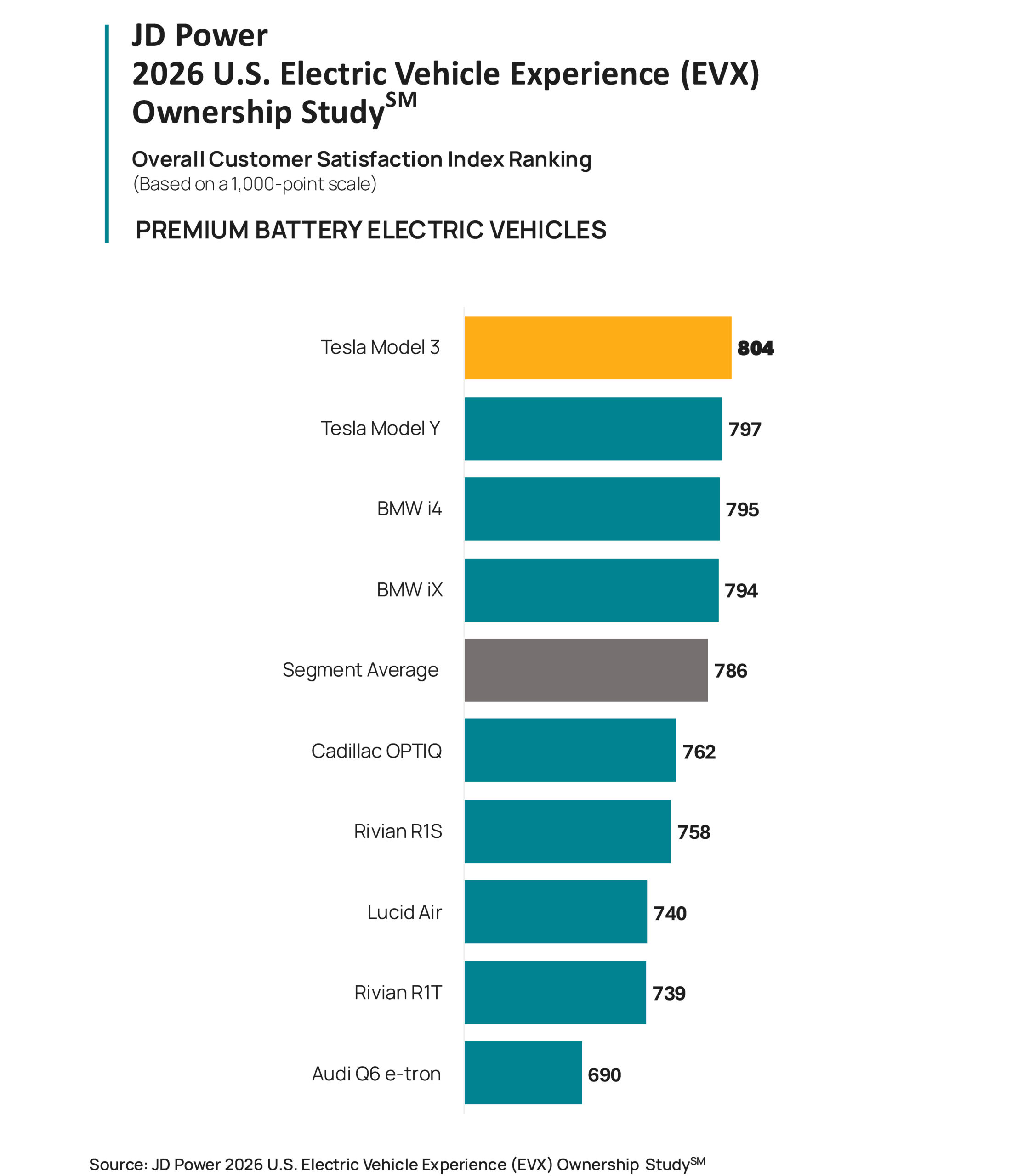
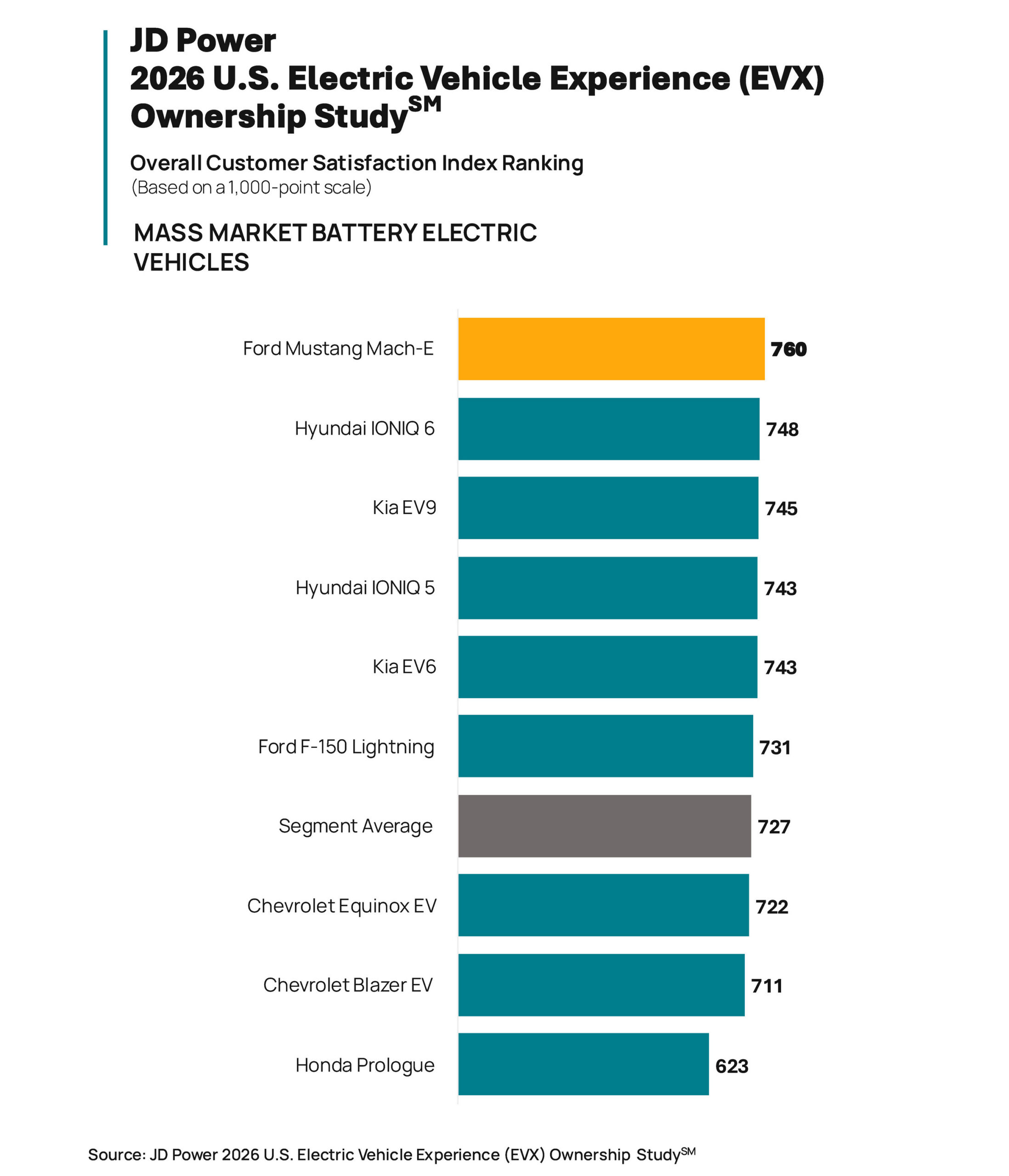
That’s the verdict from JD Power’s 2026 U.S. Electric Vehicle Experience Ownership Study, which found premium EV satisfaction climbed from 756 points last year to 789 in 2026. Mainstream EVs also improved two points to hit 727 out of 1,000.

More: A Third of Americans Are Priced Out Of New Cars, And It’s Getting Worse

The highest rated premium EVs were the Tesla Model 3 (804), Tesla Model Y (797), and BMW i4 (795). On the flip side, the new Audi Q6 e-tron came in dead last at 690. It placed well below the Lucid Air (740) and Rivian R1T (739).

 Tesla Still Rules EV Satisfaction, Though One Rival Just Caught Up

Segment Standouts And Stragglers

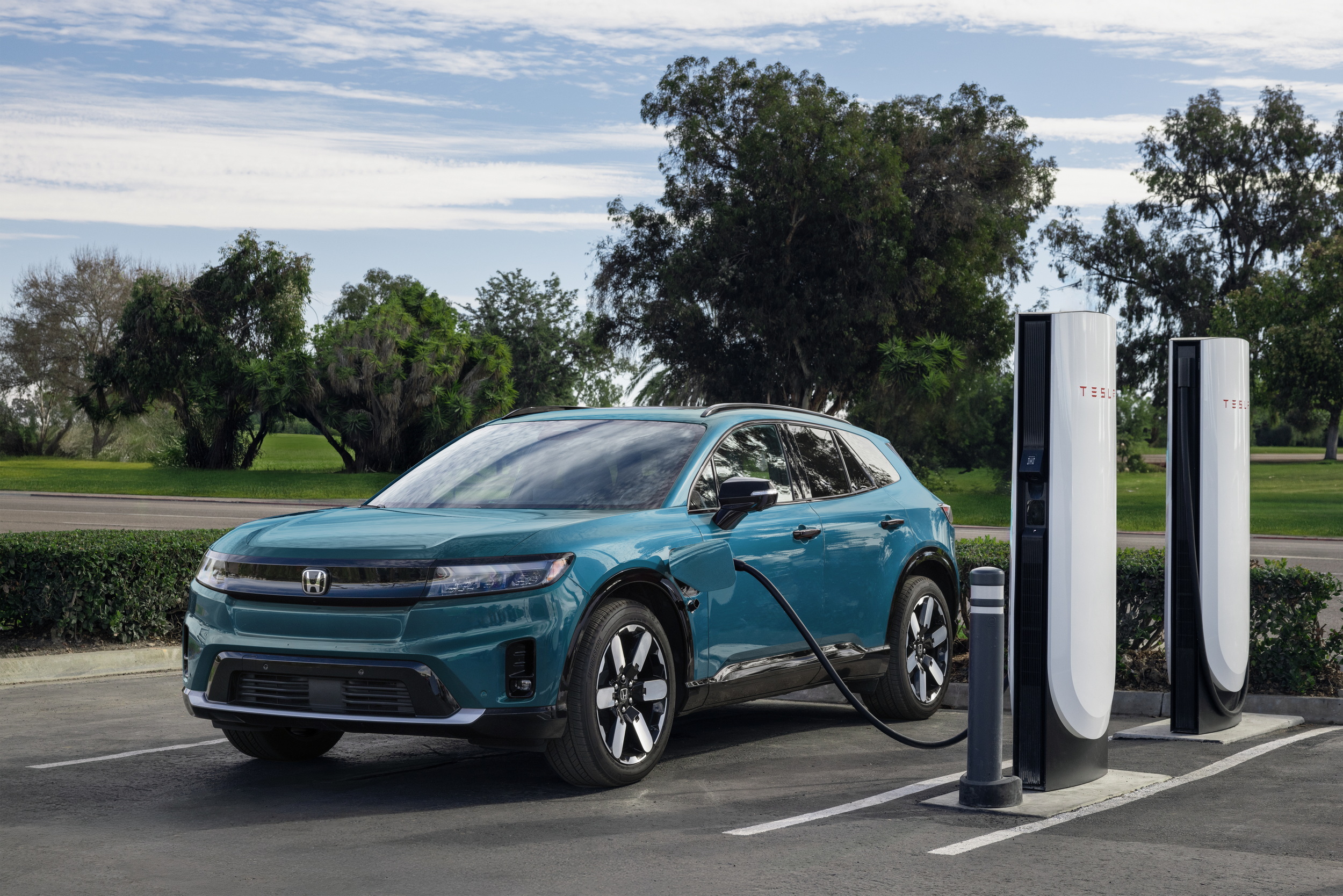
On the mass market side of the equation, the Ford Mustang Mach-E took top honors with a score of 760. The electric pony car was followed by the Hyundai Ioniq 6 (748) and Kia EV9 (745). Interestingly, the two lowest rated EVs were the Chevrolet Blazer EV (711) and Honda Prologue (623). That’s a huge point spread considering both models are built by GM and have a lot in common.

Of course, things aren’t completely straightforward as the study examined ten different factors. This includes the “accuracy of stated battery range, availability of public charging stations, battery range, cost of ownership, driving enjoyment, ease of charging at home, interior and exterior styling, safety and technology features, service experience, and vehicle quality and reliability.”

Encouragingly, 96 percent of EV owners said they would consider buying or leasing another one and the study also found quality has improved. That’s especially true of premium EVs, which had 15.9 fewer problems per 100 vehicles compared to last year. This brought the total down to 75 and JD Power said this was driven by noise improvements as well as fewer problems with driver assistance technology.

 Tesla Still Rules EV Satisfaction, Though One Rival Just Caught Up

Is Charging Still A Concern?

The study also found that EV drivers are becoming more satisfied with public charging. Scores climbed by over 100 points and this is being attributed to growing charging infrastructure as well as the opening of Tesla’s Supercharger network to other automakers.

Last but not least, EV drivers are more satisfied than those with plug-in hybrids. Premium EVs scored 114 points higher than their PHEV rivals, while mainstream electric vehicles had a 117 point advantage. Part of this can be chalked up to the cost of ownership as plug-in hybrid drivers have to deal with a more complex powertrain that involves gas and electricity.

In a statement, JD Power’s Brent Gruber said “Improvements in battery technology, charging infrastructure and overall vehicle performance have driven customer satisfaction to its highest level ever. What’s more, the vast majority of current EV owners say they will consider purchasing another EV for their next vehicle, regardless of whether they benefited from the now-expired federal tax credit.”

 Tesla Still Rules EV Satisfaction, Though One Rival Just Caught Up

China’s EV Boom Is Cooling, And The Big Names Are Feeling It

  • BYD sold 205,518 cars in January, down from 300,538 last year.
  • EV and plug-in hybrid sales both dropped compared to 2025.
  • Analysts say Beijing may revive incentives if sales stay low.

Demand for electric cars in China may be cooling, and some of the country’s biggest automakers are starting to feel the chill. Several of the most prominent domestic brands, including BYD, Xpeng, and Xiaomi, reported noticeable drops in January sales.

Data shows that BYD sold 205,518 vehicles in China last month. The number sounds solid on its own, but it marks a sharp decline from the 300,538 vehicles the company moved in January 2025.

Read: A $9,500 Hatch Stole Tesla’s Best-Seller Crown In China

Both BYD’s electric vehicles and plug-in hybrids were affected. Of the 205,518 vehicles sold last month, 83,249 were EVs and 122,269 were PHEVs. A year earlier, those numbers stood at 125,377 and 171,069 respectively. Exports took a hit too, dropping to 100,482 units in January from 133,172 in December.

Is Government Policy Slowing Sales?

These figures suggest weakening demand in China and possibly overproduction for overseas markets, but a recent government policy change may go some way to explaining the drop. As of January 1, the country reinstated a 5 percent purchase tax for new energy vehicles, having previously exempted them from a 10 percent tax for more than a decade, CNBC reports.

 China’s EV Boom Is Cooling, And The Big Names Are Feeling It

“We see increasing pressure on China’s auto market in 2026, driven by a combination of policy and competitive factors,” Helen Liu, partner at Bain & Company, told CNBC. She added that recent tax changes may prompt some consumers to delay purchases, while automakers hold back on new model launches.

“We know [EV sales will] slow, we just don’t know by how much,” added Tu Le, founder of Sino Auto Insights. “We’ll know much better after the first quarter is over.”

Rough Starts And Reversals

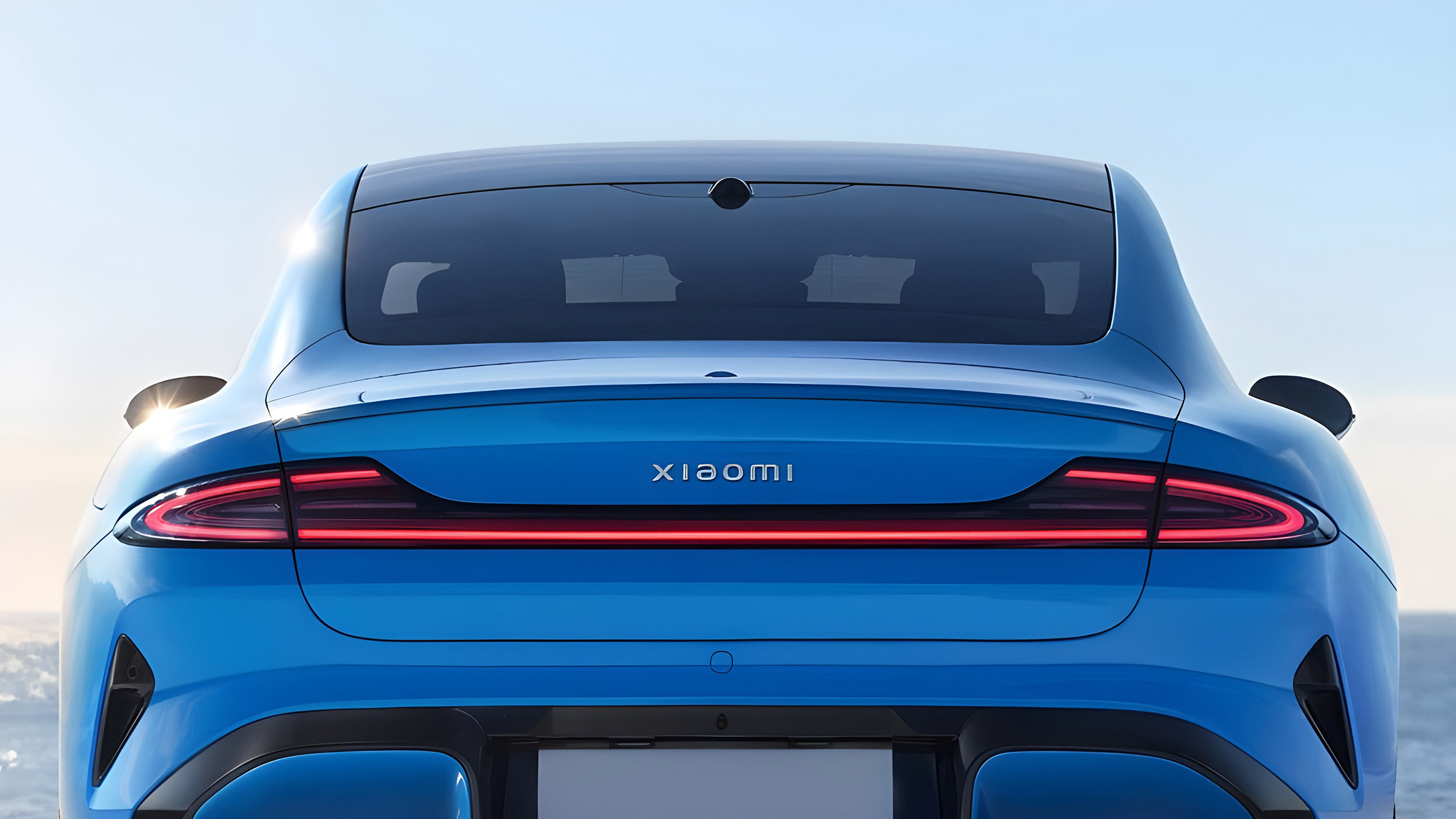
Xiaomi also struggled out of the gate. It sold 39,000 cars in January, which was an improvement over the same time last year, but a steep drop from the more than 50,000 EVs delivered in December. Xpeng’s January was even rougher. Sales fell 34.1 percent year-on-year to 20,011 units, and the month-on-month drop was starker still at 46 percent compared to December 2025.

Li Auto’s performance dipped as well, with deliveries slipping to 27,668 units for the month.

Competitors Capitalize

 China’s EV Boom Is Cooling, And The Big Names Are Feeling It

However, it’s not all bad news. One of the few bright spots was Aito, a newer brand backed by Huawei’s operating system, which reported more than 40,000 deliveries in January, marking a gain of more than 80 percent compared to the same month last year.

Sales at Leapmotor rose to 32,059, while Nio also reported an increase to 27,182 units. Geely sold more than 270,000 cars in January, a 1 percent increase year-on-year. Interestingly, its EV sales fell by 15 percent, while its PHEV sales rose 37 percent.

That performance has pushed Geely into second place in the country’s EV market behind BYD, thanks in part to strong momentum from its Galaxy and Zeekr brands.

Will China Step In?

The slowdown has fueled speculation that Beijing may step in once again. If the slump continues into the first quarter, analysts believe the government could reinstate certain subsidies or incentives

 China’s EV Boom Is Cooling, And The Big Names Are Feeling It

Canada Scraps EV Mandate And Loses Faith In America

  • Canada is scrapping its EV sales mandate and changing course.
  • The 2035 target shifts from 100% EVs down to just 75% now.
  • Clean car incentives return as Canada distances from the U.S.

Canadian Prime Minister Mark Carney has introduced a new automotive strategy that “rewards the production of made-in-Canada vehicles and harnesses our world-class capabilities in artificial intelligence and technology expertise to build the cars of the future.”

As part of this effort, the country is revamping its electric vehicle mandate once again. The goal is to “rationalize emissions reduction policies” and put Canada on a path that will see 75% of sales come from EVs by 2035. That would then climb to 90% by 2040. This is a notable shift as the country was previously looking at reaching 100% by 2035.

More: Canada Walks Back EV Mandate Amid US Trade War

Furthermore, Canada is repealing the Electric Vehicle Availability Standard and increasing emissions standards. The government said this will “allow manufacturers to use a wide array of technologies to meet the [new] standards and respond to consumer preferences in the near-term, while driving EV adoption over time.”

New Incentives For Canadians To Go Green

While the country is tapping the brakes on the electric vehicle transition, they’ll encourage Canadians to buy EVs with a new five-year program that will provide individuals and businesses with incentives to go green. Electric and fuel cell vehicles will be eligible for up to $5,000 CAD (3,658 USD), while plug-in hybrids can get up to $2,500 CAD ($1,829 USD).

Canada’s auto industry is facing huge pressures, leaving workers and businesses in a state of uncertainty. So we’re taking control — and launching a new strategy that will transform the industry to be a global leader in electric vehicles.

We’ll reward the production of…

— Mark Carney (@MarkJCarney) February 5, 2026

There’s a $50,000 CAD ($36,574 USD) limit on the final transaction price for vehicles made in countries Canada has a free-trade agreement with, but Canadian-made EVs and PHEVs have no price cap at all.

To further encourage adoption, Canada will invest $1.5 billion CAD ($1.1 billion USD) to improve their charging infrastructure. This aims to make it “easier and more convenient for drivers to charge their EVs across the country.”

Incentives For Businesses As Well

 Canada Scraps EV Mandate And Loses Faith In America

The government is setting aside up to $3.1 billion CAD ($2.3 billion USD) to “help the auto industry adapt, grow, and diversify to new markets.” There will also be tax incentives to encourage companies to invest in electric vehicles as well as clean technologies.

On top of that, the country aims to strengthen the competitiveness of their auto sector by rewarding companies that produce and invest in Canada. They’ll also maintain counter-tariffs on automotive imports from the United States and look to grow automotive imports from elsewhere.

China is front and center as vehicles will be imported from there in the near future. Ultimately, Canada hopes Chinese automakers will setup shop in the country and build vehicles locally. This could help fill the void left by American automakers, who have moved some production stateside.

Support For Autoworkers

 Canada Scraps EV Mandate And Loses Faith In America

Canada announced a handful of measures designed to protect autoworkers in an era of trade wars and electrification. In particular, there will be a new Work-Sharing grant that aims to support worker retention and prevent layoffs.

The country will also provide employment assistance and reskilling support for up to 66,000 people including displaced auto workers. This will be made possible by a $570 million CAD ($417 million USD) investment.

American Tariffs Push Canada To Embrace Other Countries

 Canada Scraps EV Mandate And Loses Faith In America

The government noted over 90% of Canadian-made vehicles and 60% of Canadian-made parts are exported to the United States. This is a huge problem as Canadian-made vehicles have faced a 25% tariff in America (on non-US content) since April.

The country said the tariff is “threatening Canada’s automotive manufacturing industry and the 125,000 direct jobs it supports.” Given this, the country is looking to develop a more independent economy and one that can ship Canadian-made vehicles to new export markets.

In a statement, Carney said “Canada’s new government is fundamentally transforming our economy – from one reliant on a single trade partner, to one that is stronger, more independent, and more resilient to global shocks. We are making strategic decisions and generational investments to build a strong Canadian auto sector, where Canadian workers build the cars of the future.”

Unifor welcomes elements of the new federal auto policy, while calling for bold steps to protect Canadian auto jobs and secure a future for workers at idled plants in Brampton and Ingersoll. #canlabhttps://t.co/r8CXSmPp0S

— Unifor (@UniforTheUnion) February 5, 2026

Scout Built An Electric Truck, Buyers Are Choosing Something Else

  • Scout says 85 percent of buyers chose the range extender models.
  • A four cylinder engine recharges the 63 kWh battery on board.
  • Reservations for Terra and Traveler have passed 150,000 already.

Volkswagen is investing a significant amount of money to revive the Scout brand and is facing costly overruns. Still, the gamble might be paying off, as early demand for the upcoming Terra pickup and Traveler SUV has been unexpectedly strong.

In a recent interview, a company spokesperson confirmed that more than 150,000 reservations have been placed across the two models. It’s worth noting, though, that these are fully refundable, so as always, there’s a gap between raising a hand and writing a check. Still, for a vehicle that doesn’t yet exist beyond concept form, that’s a solid show of intent.

Read: Scout Concept Rethinks What Actually Belongs On The Back Of An SUV

Of those reservations, Scout CEO Scott Keogh told InsideEVs that roughly 85 percent are for the extended-range models, with only 15 percent opting for the pure EV variants.

A Telling Preference

\\\\\\\\\\

The decision to launch both the Terra and Traveler as extended-range electric vehicles (EREVs) appears to have struck a nerve. Dubbed the “Harvester,” these versions use a compact four-cylinder generator mounted at the rear, paired with a 63 kWh lithium-ion battery and an electric motor. The result is a combined range of over 500 miles, which clearly resonates with customers wary of battery-only limits.

According to Keogh, Scout has been surprised by just how popular the EREV options are proving. “We felt very good about it,” he said. “Did I think it was 85/15? No. I thought it might be more 60/40, let’s put it that way.” 

He went on to point out that Scout’s call to go EREV from day one has since been echoed by announcements from other major brands, including Ford, Hyundai, Kia, and Jeep, all of whom are preparing range-extender models of their own.

 Scout Built An Electric Truck, Buyers Are Choosing Something Else

“We felt good about it, and we still do obviously feel good about it,” he added. “We feel better about it now, because, let’s be honest, when you’re all alone, you feel good, but you’re still a little bit alone. Now that others have made similar announcements, it’s like, okay, yeah, people are jumping in.”

All future Scout models will be built at a plant in Blythewood, South Carolina. This site was initially expected to cost $2 billion, but according to a new report, that figure has ballooned to $3 billion. Production of the Terra and Traveler is scheduled to begin in 2027.

\\\\\\\\

Offshore wind stop-work orders are costing consumers, delaying needed electricity

By: newenergy
28 January 2026 at 19:12

January 28, 2025 – At a time when the administration claims the U.S. is facing a nationwide energy emergency and consumers are increasingly concerned about rising electricity costs, its efforts to stop five large offshore wind projects under construction along the Atlantic Coast could cost consumers billions of dollars and keep much-needed new electricity off …

The post Offshore wind stop-work orders are costing consumers, delaying needed electricity appeared first on Alternative Energy HQ.

EVs Outsold Gas Cars In Europe For The First Time, But It’s Complicated

  • Hybrids topped Europe’s powertrain sales with 4.5 million units.
  • Plug-in hybrids overtook diesel with a 33.4 percent sales increase.
  • In December, BEVs outsold gas cars for the first time in Europe.

Electrified vehicles are no longer playing second fiddle in Europe’s car market. Sales of battery-electric, plug-in hybrid, and traditional hybrid models climbed sharply across the continent last year, while demand for gasoline and diesel vehicles continued to shrink.

Read: One in 10 New Cars Sold in Europe Last Month Was Chinese

The shift picked up real momentum in December, when BEV sales pulled ahead of gas-powered cars for the first time in the European Union, even as policymakers were making plans to ease emissions regulations.

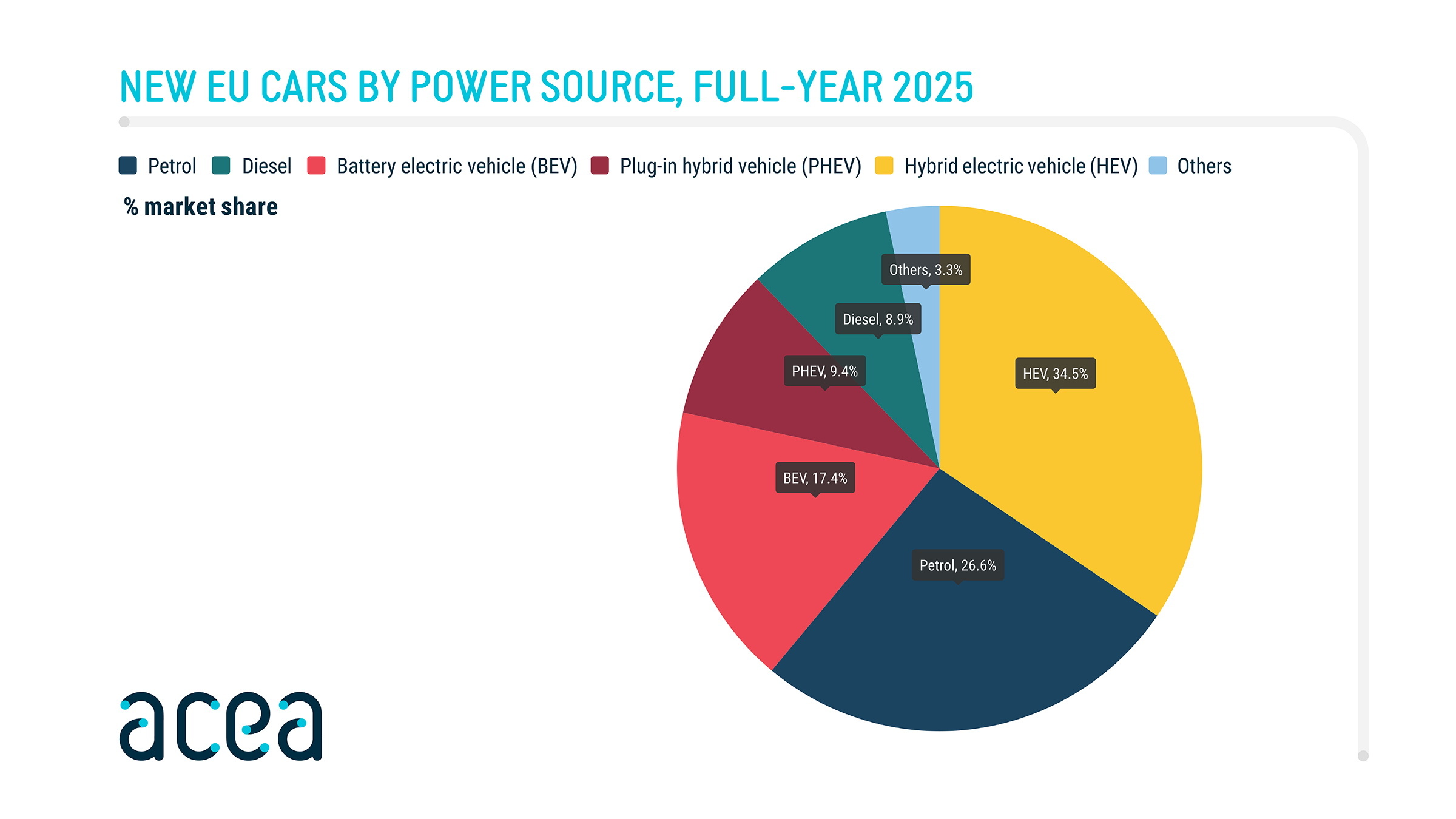
That month, BEVs accounted for 22.6 percent of the market, slipping just ahead of petrol cars at 22.5 percent. Hybrids held the largest share overall at 33.7 percent, followed by plug-in hybrids with 10.7 percent. Diesel fell further to 7.2 percent, while alternatives like LPG closed the list at 3.3 percent.

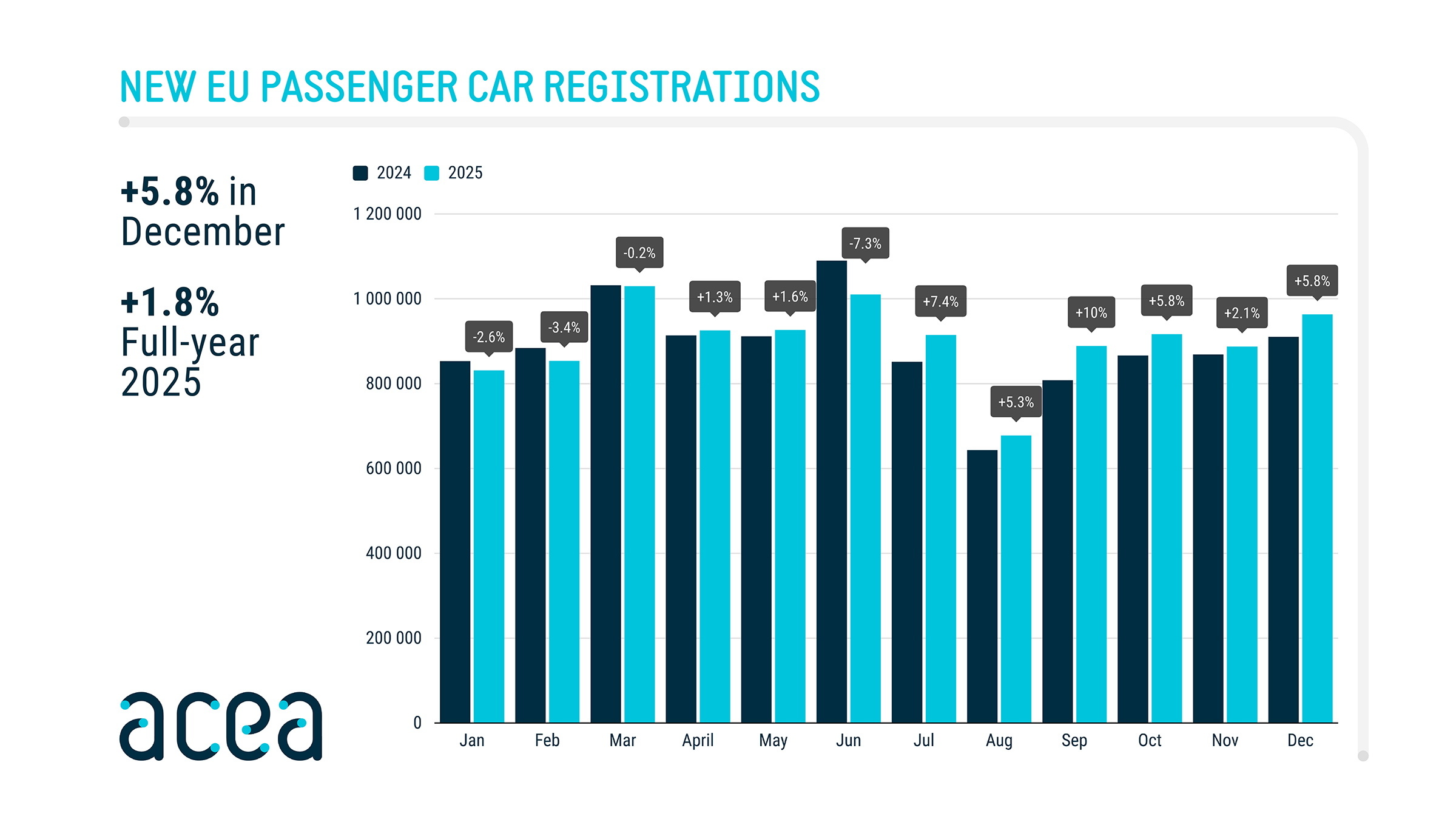
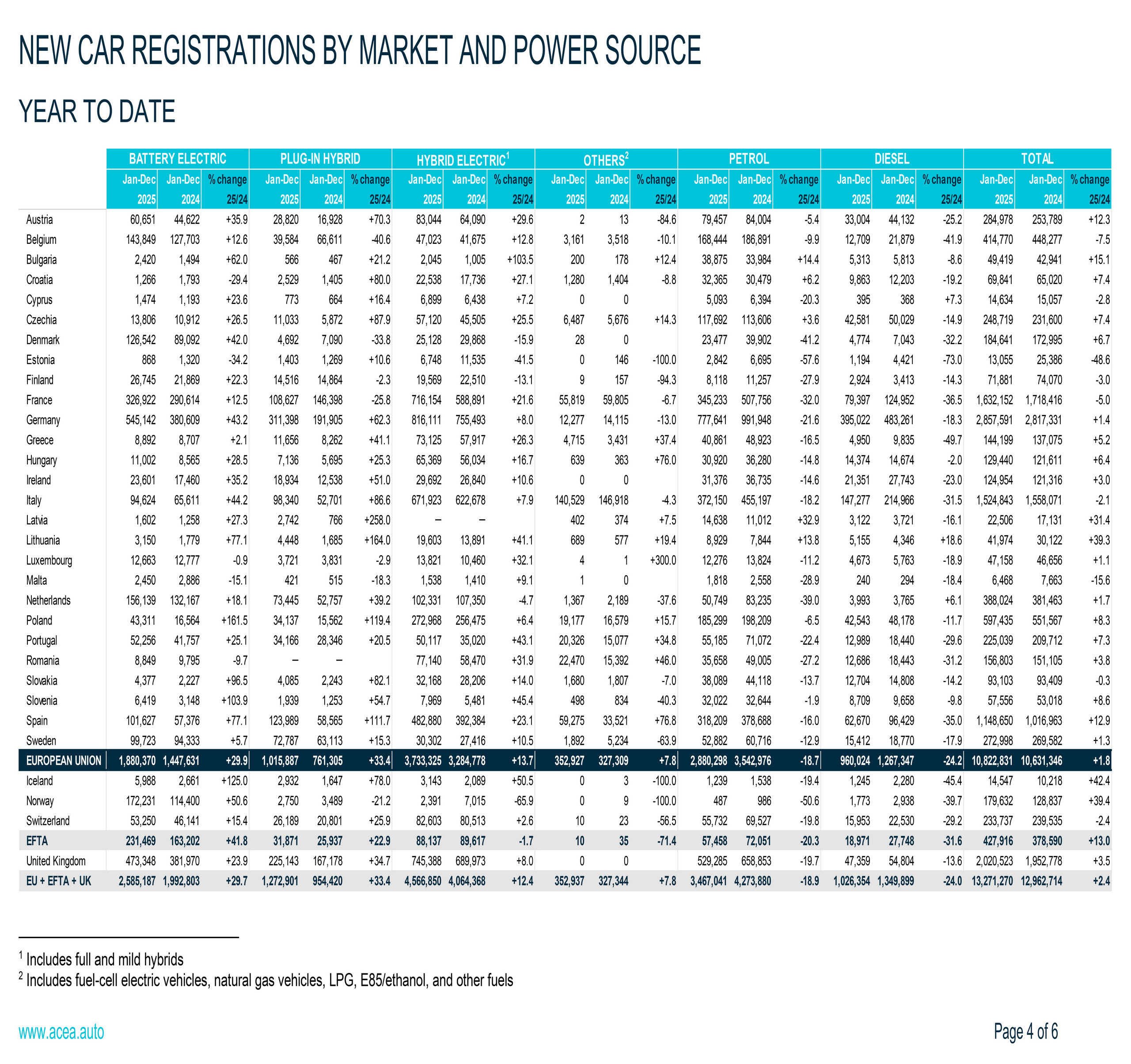
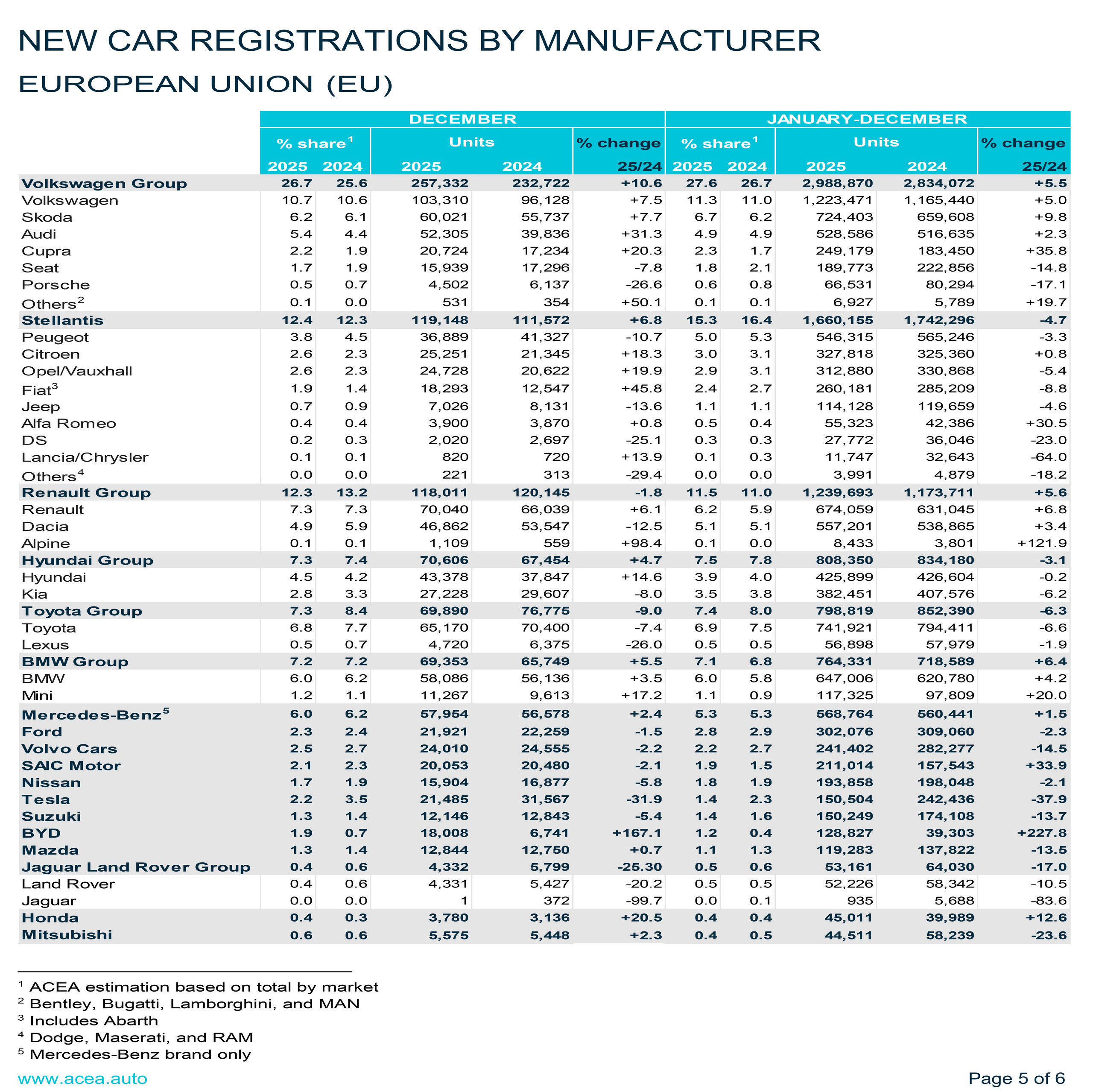
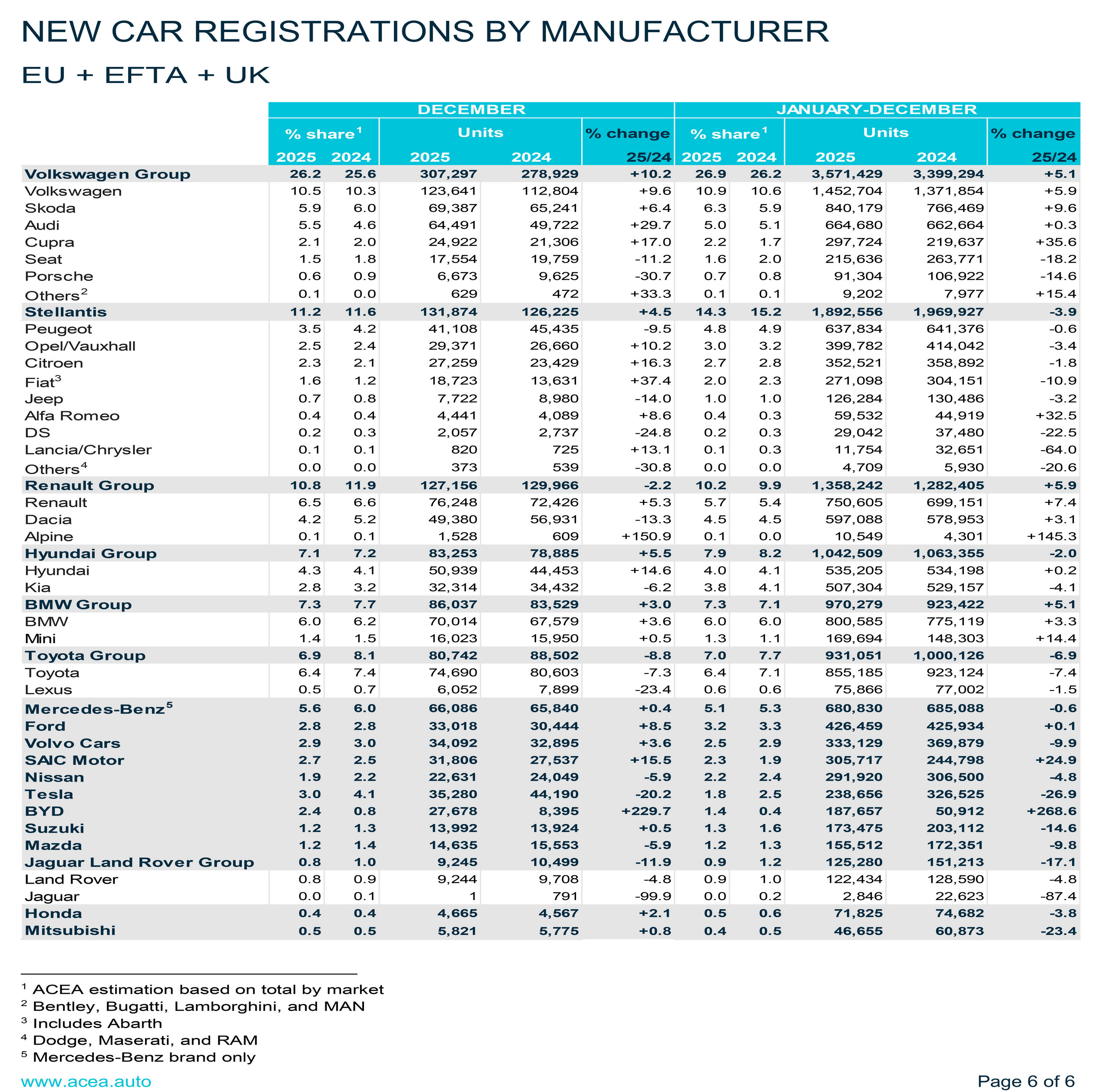
Across the European Union, the UK, and members of the European Free Trade Association, including Iceland, Norway, and Switzerland, a total of 13,271,270 new vehicles were sold throughout 2025. That marks a modest but notable 2.4 percent uptick from the previous year. Within that total, BEVs accounted for 2,585,187 sales, a significant 29.7 percent increase over the 1.9 million sold in 2024.

Hybrids Lead the Charge

 EVs Outsold Gas Cars In Europe For The First Time, But It’s Complicated

Despite the BEV surge, traditional hybrids took the crown as the continent’s best-selling powertrain last year. A total of 4,566,850 hybrids were sold, reflecting a 12.4 percent increase and pushing them past gasoline-powered cars for the first time.

In 2024, petrol models held a narrow lead with 4,273,880 units sold, but in 2025, that number dropped sharply by 18.9 percent to 3,467,041.

Similarly, demand for diesel cars fell by a considerable 24 percent, down from 1,349,899 to just 1,026,354 units. This allowed plug-in hybrids to overtake diesels, selling a total of 1,272,901, or a 33.4 percent rise from 2024.

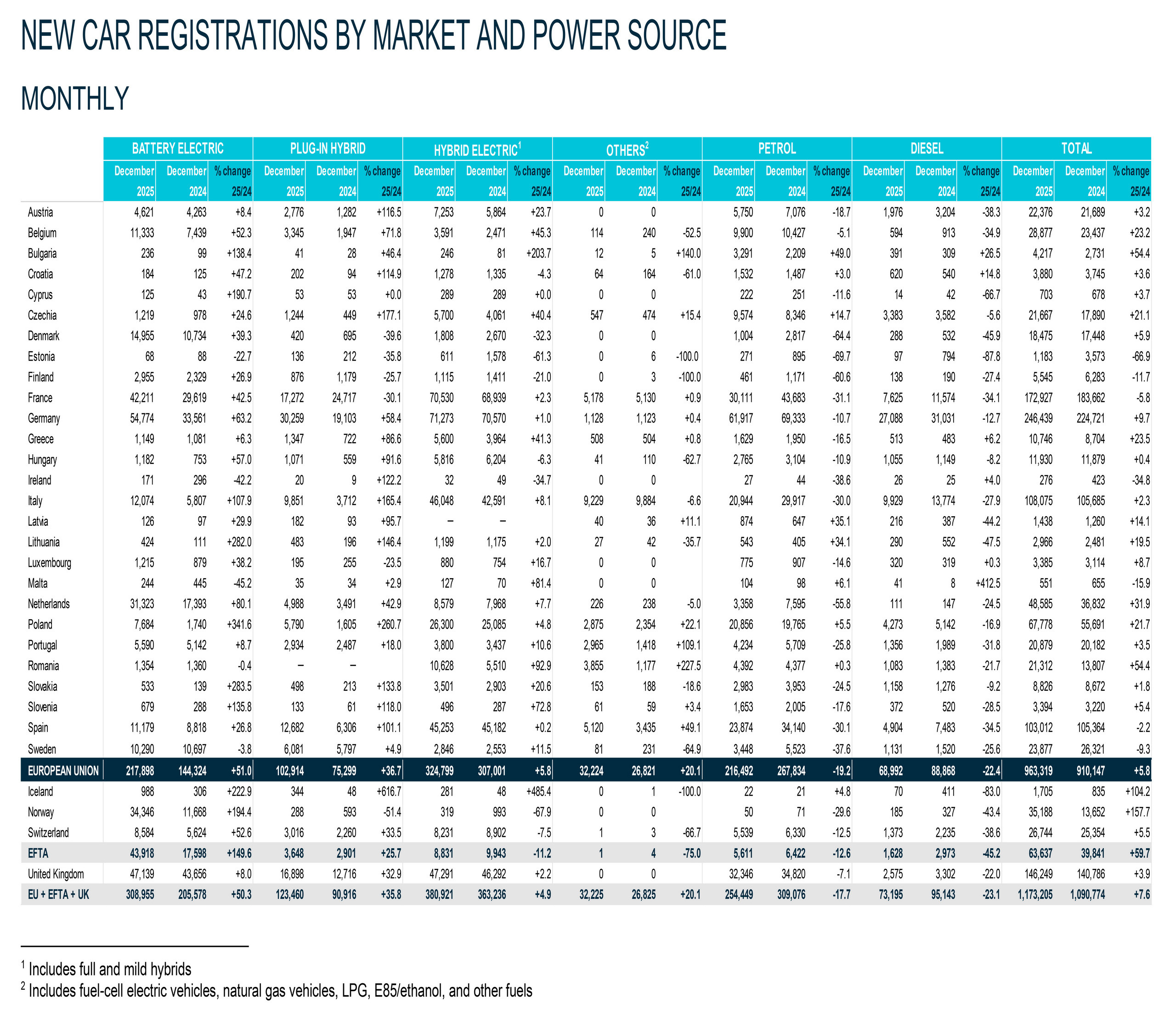
December’s numbers laid bare the speed of change. BEV registrations soared to 308,955, up 50.3 percent compared to the same month a year earlier. That was enough to edge out gasoline car sales, which declined 17.7 percent to 254,449. Diesel models also slumped in December, with sales falling 23.1 percent to 73,195.

As in the January-December period, hybrids remained the most popular powertrain choice in December, with sales reaching 380,921, up 4.9 percent. Demand for plug-in hybrids also rose 35.8 percent to 123,460.

The Story Behind the Numbers

 EVs Outsold Gas Cars In Europe For The First Time, But It’s Complicated

While it’s easy to conclude that EVs outsold gas-powered cars entirely in December, that’s not entirely true. These figures from the European Automobile Manufacturers’ Association include full and mild hybrids in the ‘hybrid electric’ category, which led the industry in sales.

The vast majority of full hybrid and mild hybrids on sale use gas-powered combustion engines, whether that’s to drive the wheels, charge the battery pack, or a combination of both, so it would perhaps be more accurate to lump together hybrid electric and gas-powered vehicles into the same category. If that were the case, they would come out well ahead of BEVs.

 EVs Outsold Gas Cars In Europe For The First Time, But It’s Complicated
 EVs Outsold Gas Cars In Europe For The First Time, But It’s Complicated
 EVs Outsold Gas Cars In Europe For The First Time, But It’s Complicated
 EVs Outsold Gas Cars In Europe For The First Time, But It’s Complicated

Unlocking Brazil’s Untapped Biomass Potential

By: newenergy
13 January 2026 at 17:13

Driving R&D Excellence in Refining Low Carbon Products: Unlocking Brazil’s Untapped Biomass Potential The global refining and petrochemicals landscape is undergoing a fundamental transformation. What was once a linear, fossil-centric value chain is rapidly shifting toward a diversified ecosystem built on low carbon products. This shift is no longer driven solely by compliance pressures—it is …

The post Unlocking Brazil’s Untapped Biomass Potential appeared first on Alternative Energy HQ.

The US Is Seeing Slower Coal Plant Retirements, But Don’t Mistake It for a Return to Coal

By: newenergy
9 January 2026 at 17:12

By: Britt Burt, Senior VP of Research for the Power industry A new round of headlines has revived an old storyline about the United States “bringing coal back.” As an expert of nearly four decades, I can confidently say that this interpretation misses what is actually happening on the grid. Coal is not gaining ground …

The post The US Is Seeing Slower Coal Plant Retirements, But Don’t Mistake It for a Return to Coal appeared first on Alternative Energy HQ.

IRS Sued Over Anti-Solar and Wind Tax Rules

By: newenergy
20 December 2025 at 00:42

Tribal utility, localities, and consumer and environmental groups argue tax guidance illegally hurts renewable energy. WASHINGTON, D.C. (Dec. 18, 2025) – A broad array of groups with strong interests in clean and affordable energy sued the IRS and Treasury Department over new rules for tax credits that unfairly and illegally discriminate against wind and solar …

The post IRS Sued Over Anti-Solar and Wind Tax Rules appeared first on Alternative Energy HQ.

Federal Judge Vacates Trump’s Unlawful Wind Energy Ban

By: newenergy
9 December 2025 at 17:06

Boston, MA – Last night, the U.S. District Court for the District of Massachusetts ruled that Donald Trump’s executive order banning wind projects in the United States was unlawful and vacated the order. Donald Trump issued an executive order on the first day of his administration that paused all leasing, permitting and approvals for wind projects, killing tens of …

The post Federal Judge Vacates Trump’s Unlawful Wind Energy Ban appeared first on Alternative Energy HQ.

Solid-state sodium batteries could be safer, cheaper, more powerful option

By: newenergy
14 November 2025 at 16:41

We rely on batteries now more than ever, from our phones and laptops to electric vehicles. But the ones powering today’s technologies aren’t without their shortcomings. They can be expensive, flammable, and they rely on increasingly in-demand materials that must be mined and processed. Researchers at Western University are working on a new type of …

The post Solid-state sodium batteries could be safer, cheaper, more powerful option appeared first on Alternative Energy HQ.

Atlas Renewable Energy inaugurated Shangri-La solar park in Colombia

By: newenergy
12 November 2025 at 20:05

BOGOTÁ, NOV. 12, 2025 – Atlas Renewable Energy, a leading international provider of renewable energy solutions, officially inaugurated the Shangri-La solar project, located in Ibagué, Tolima. It marks the start of operations of its first project in the country. Shangri-La has an installed capacity of 201 MWp, representing a decisive step in the expansion of …

The post Atlas Renewable Energy inaugurated Shangri-La solar park in Colombia appeared first on Alternative Energy HQ.

US Offshore Wind Pipeline Halves as Policy Shifts and Costs Rise

By: newenergy
12 November 2025 at 17:29

New tariffs and a federal leasing freeze compound cost pressures and regulatory challenges, limiting growth prospects. Houston, 12 Nov. 2025: The US offshore wind pipeline contracted sharply over the past year, falling to 23 projects from 45, as developers face a closing window for tax credits, a freeze on federal leasing and new trade frictions, …

The post US Offshore Wind Pipeline Halves as Policy Shifts and Costs Rise appeared first on Alternative Energy HQ.

How Heat Pumps Fit Into the Future Grid

By: newenergy
23 October 2025 at 16:01

As more homes in the UK move away from gas heating systems, the need for a sustainable but effective method of heating and providing hot water for the home has become paramount. Heat pumps are rapidly emerging as a lead player in the game of decarbonised energy systems. But they are more than just efficient …

The post How Heat Pumps Fit Into the Future Grid appeared first on Alternative Energy HQ.

California Smashes ZEV Sales Record in Q3  

By: newenergy
15 October 2025 at 18:24

WHAT YOU NEED TO KNOW: California’s demand for zero-emission vehicles (ZEVs) is surging despite federal attempts to derail the Golden State’s pursuit of a 100% clean energy future. A record 29.1% of all new cars purchased in Q3 of 2025 were ZEVs. SACRAMENTO — Today, Governor Gavin Newsom announced that Californians purchased 124,755 zero-emission vehicles (ZEVs) in the third …

The post California Smashes ZEV Sales Record in Q3   appeared first on Alternative Energy HQ.

Optimizing the recovery of lithium

By: newenergy
14 October 2025 at 15:35

Lithium is a critical mineral used in batteries for electric vehicles, grid storage, and a host of personal electronics. It is also relatively scarce, so being able to efficiently isolate it from various host minerals is very important. Canada holds substantial stores of lithium: It’s estimated we have 5.7 million tons in total reserves (including …

The post Optimizing the recovery of lithium appeared first on Alternative Energy HQ.

Anti-renewable policies are going to cost consumers

By: newenergy
4 September 2025 at 16:52

Stop-work orders for wind undercut investor confidence in financing all energy projects, including nuclear September 3, 2025 – The administration’s energy dominance agenda will fail, done in by collapsing investor confidence, unless the White House stops issuing stop-work orders for offshore wind. Undercutting these projects, each of which has billions of private investment dollars committed …

The post Anti-renewable policies are going to cost consumers appeared first on Alternative Energy HQ.

❌
❌