Normal view

There are new articles available, click to refresh the page.
Today — 14 April 2026Main stream

You’d Have To Be High To Pay $159,420 For Tesla’s Signature Editions

  • Tesla ends Model S and X run with Signature Edition farewell specials.
  • Limited versions go to invited buyers only, each priced at $159,420.
  • They stand out with Garnet Red paint paired with gold accents.

Tesla is preparing to phase out the two EVs that defined its early success, but not without giving them one last push into the spotlight. Just days after reports emerged that remaining Model S and Model X inventory had been hit with $15,000 price hikes, there is a new sting for anyone who paid up. Both models are being sent off with a final, tightly capped Signature Edition, reserved for a small group of buyers who received email invites.

The Model S sedan and Model X SUV have been around since 2012 and 2015, respectively. After a final update in mid-2025, Tesla confirmed in January 2026 that both would leave production later this year, clearing space at the Fremont plant in California for humanoid robot assembly.

More: Tesla’s Replacing Half Its Lineup With Something That Doesn’t Even Have Wheels

While Tesla has not formally announced the send-off, the news surfaced on X through Ryan McCaffrey, host of the Ride the Lightning podcast. Invitations have already gone out, with a private launch event reportedly set for May.

\\\\\\

Tesla will build 250 units of the Model S and just 100 units of the Model X Signature Editions. Both are priced at $159,420. Yes, the last three digits are a wink to Musk’s well-known favorite number, a reference rooted in cannabis culture. And yes, it is a ridiculously steep jump, with premiums of $59,430 for the sedan and $54,430 for the SUV over the standard Plaid versions. For what is essentially a farewell package, that is serious money, even by Tesla standards.

Signature Edition Visual Identity

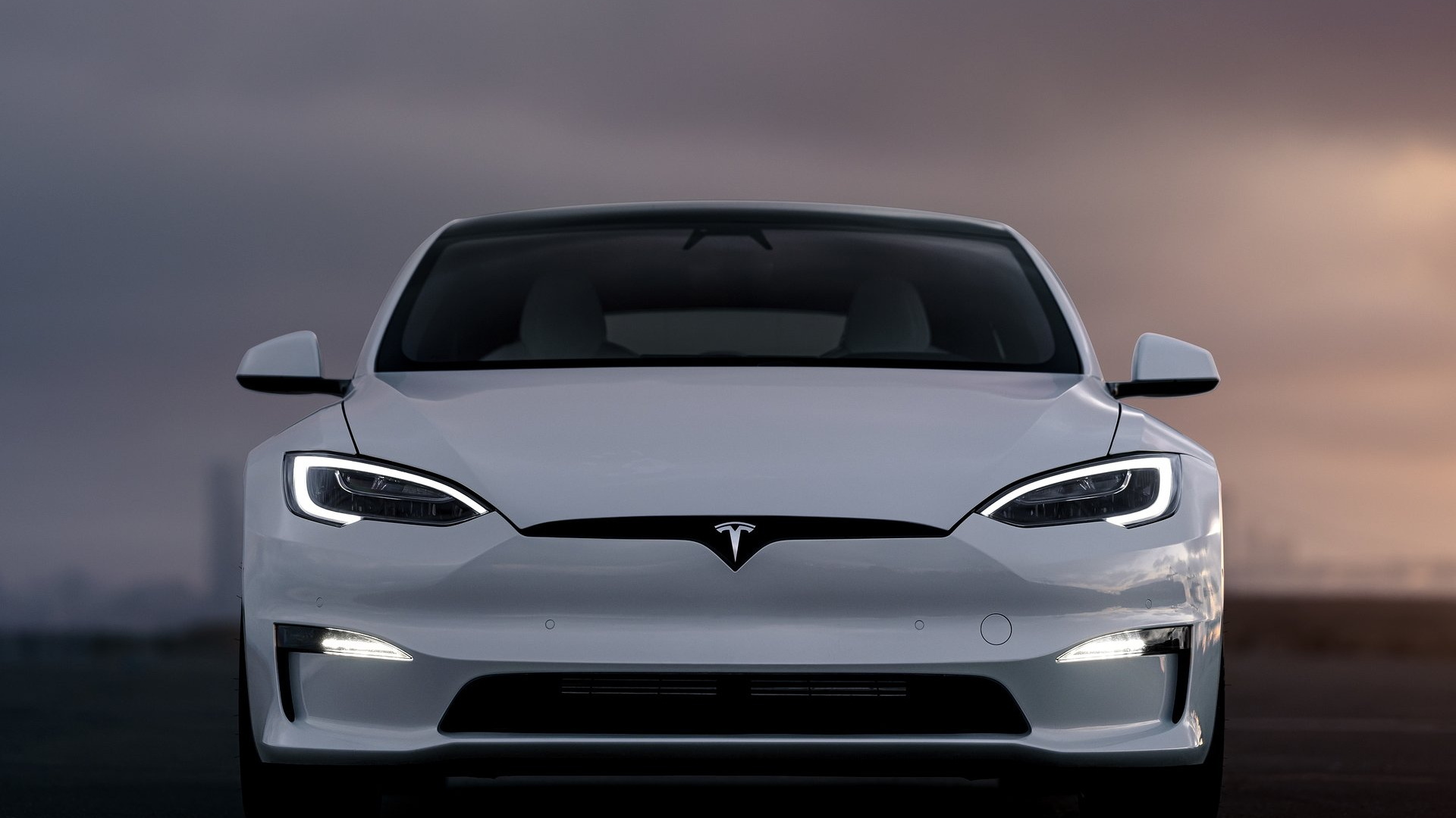
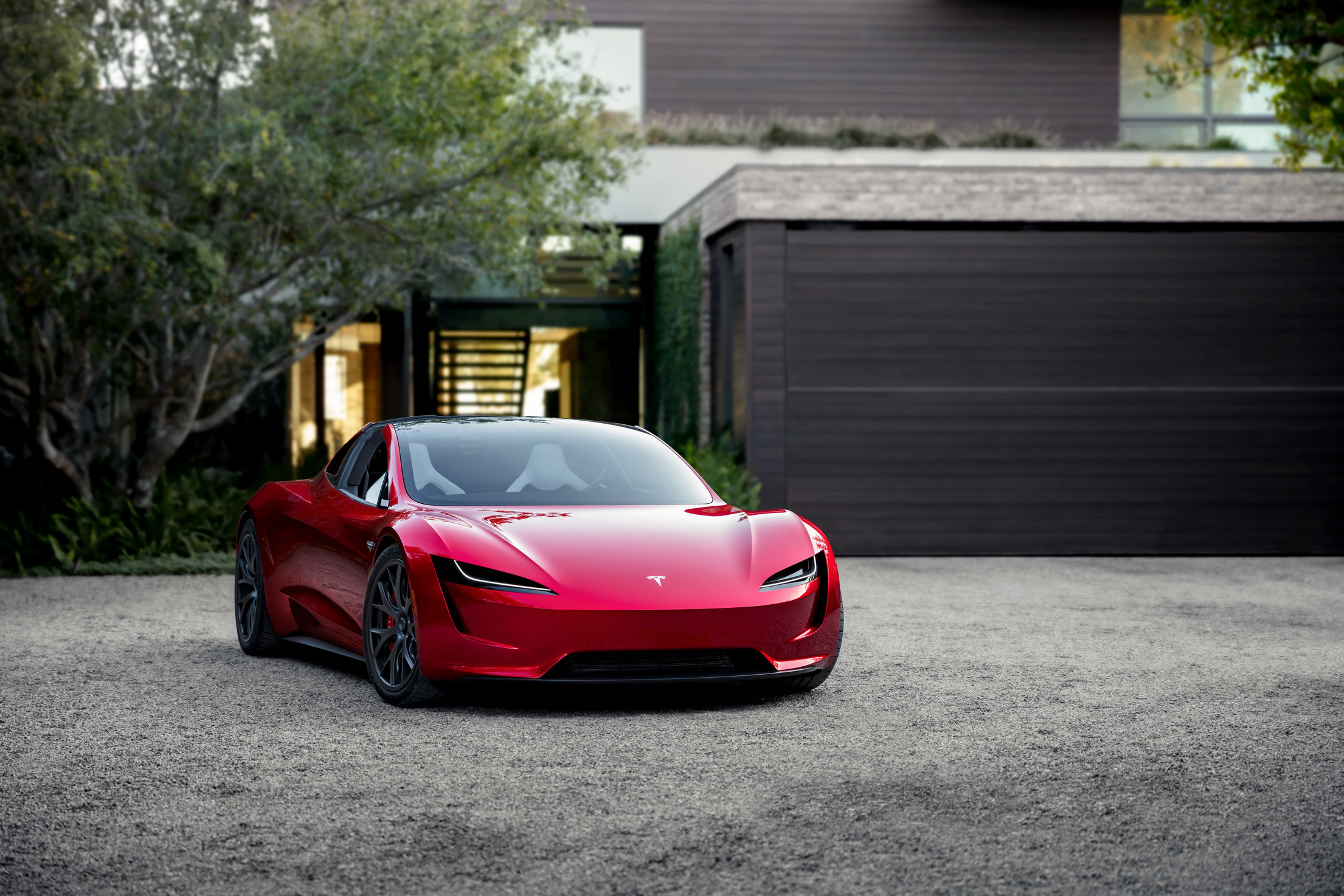
Both models wear an exclusive Garnet Red finish, inspired by the original Model S launch color. It is paired with gold emblems, giving the cars a celebratory tone. Inside, there is a white Alcantara interior, a yoke steering wheel, and Signature branding throughout.
 You’d Have To Be High To Pay $159,420 For Tesla’s Signature Editions

The Model S sits on 21-inch Velarium wheels with gold brake calipers over carbon ceramic brakes. The Model X gets 22-inch Machina wheels.

More: Tesla’s FSD Was Branded Controversial, But Dutch Safety Regulators Called It The Safest System In The Test

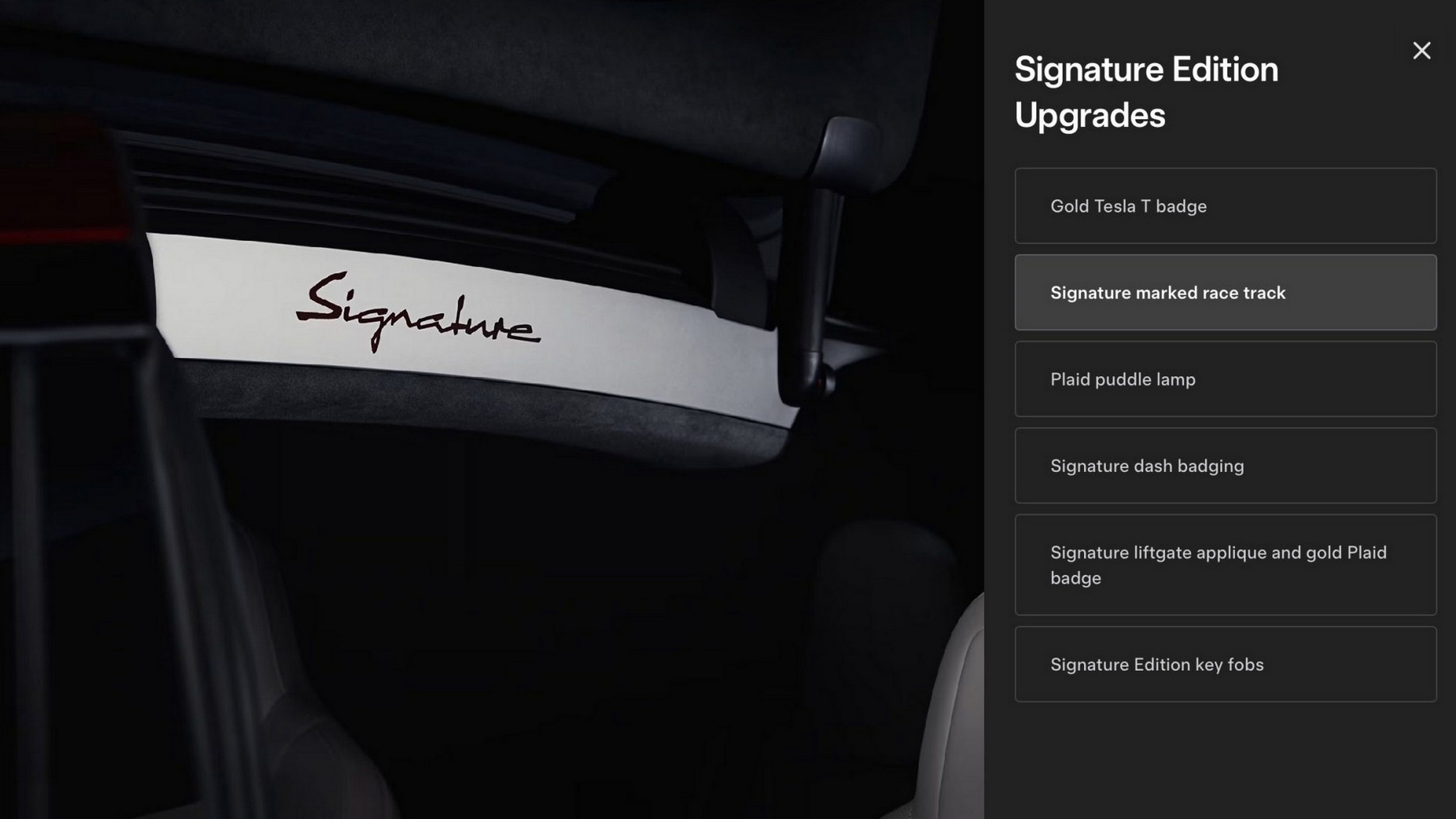
Tesla has also added a numbered plate on the dashboard, special key fobs, and Plaid puddle lights. Finally, the EVs come standard with a Luxe Package including free lifetime access to Tesla Superchargers and the Full Self-Driving (FSD) system.

Underneath, nothing changes mechanically. Both cars retain the tri-motor Plaid setup, delivering 1,020 hp (760 kW / 1,034 PS) and 1,420 Nm (1,047 lb-ft) of torque. Still absurdly quick, still more than enough, if you can stomach that $60K pill.
\\\\

Screenshots: Tesla via Teslarati

Tesla’s FSD Was Branded Controversial, But Dutch Safety Regulators Called It The Safest System In The Test

  • Owners in the Netherlands will soon be able to use Tesla’s FSD system.
  • The Dutch safety agency will now submit FSD for EU-wide approval.
  • Tesla’s FSD system was found to outperform other driver assistance systems.

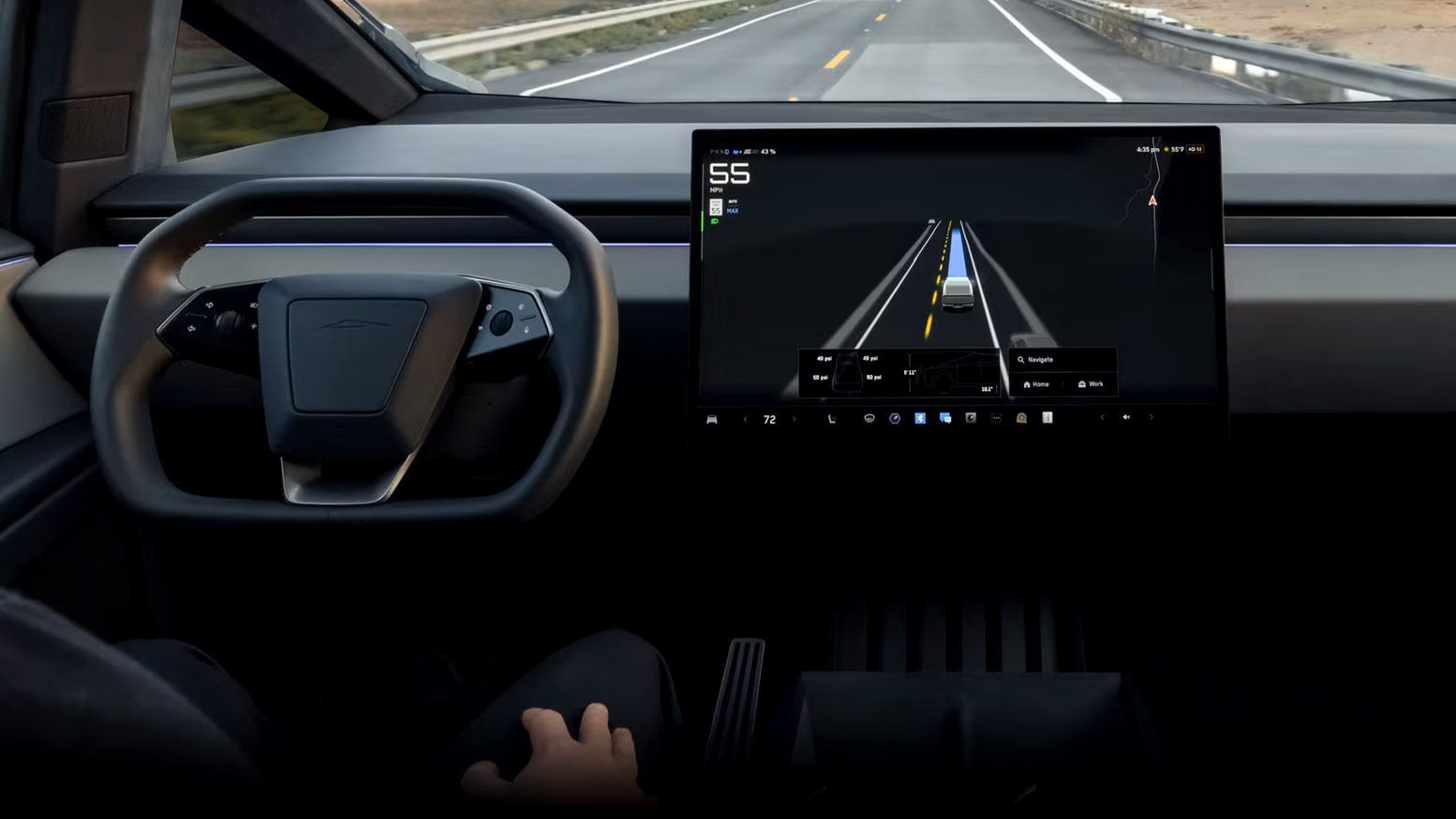
Tesla’s controversial Full Self-Driving system has received the green light for use in the Netherlands, and this could just be the start of its expansion across Europe. The decision comes after more than 18 months of tests and analysis by the RDW, the Dutch vehicle authority.

The most recent version of Tesla’s supervised FSD system “makes a positive contribution to road safety,” the RDW said. Now that it has the agency’s approval, Tesla says it will soon start rolling out the technology across the Netherlands, allowing owners to experience hands-free driving in both urban and highway settings.

Read: Feds Expand Tesla FSD Investigation After Visibility Failures

Even more important than the system’s approval for use in the Netherlands is that the RDW’s approval means it can be introduced across all European Union member states at a later date.

Before this happens, however, RDW must submit the application for authentication across the entire region, and all member states must vote on it. A majority vote is needed for the system to be approved EU-wide, and even if a majority is not achieved, individual countries can still decide to approve the system, Reuters notes.

Tackling The Country’s Most Difficult Roads

Smooth https://t.co/zJdymUNkcm

— Elon Musk (@elonmusk) April 12, 2026

Since the approval, Tesla has flooded its X account with videos of the FSD Supervised system being tested in the Netherlands. Importantly, the RDW noted that “a vehicle with FSD Supervised is not self-driving,” pointing out that “the driver remains responsible and must always maintain control.”

“The Tesla driver assistance system supports the driver more than other systems because it takes over multiple driving tasks when it is switched on,” the agency said in a statement. It added that “due to the continuous strict monitoring of the driver in the vehicle, the system is safer than other driver assistance systems,” noting it was tested both on test tracks and on public roads.

If a driver is consistently found to be not fully alert while behind the wheel, the system will trigger various signals to catch their attention. In extreme cases, the system can shut down and temporarily be prevented from switching back on.

Passed the 🇳🇱 wife test @aelluswamy ! pic.twitter.com/zpZqTR1DkD

— Sander Smit (@Sandersmit83) April 12, 2026
Yesterday — 13 April 2026Main stream

Mazda Bet Big On New Tech And Paid For It In The Reliability Rankings

  • Lexus, Subaru, and Toyota top Consumer Reports’ latest reliability rankings.
  • Tesla climbs sharply, while Mazda tumbles thanks to trouble with new SUVs.
  • Hybrids keep impressing, but EVs and PHEVs still cause trouble for owners.

If you want a new car that spends more time on your driveway than at the dealer, Consumer Reports has some familiar advice. Stick with the usual suspects, be suspicious of shiny new tech, and maybe don’t volunteer to beta test an automaker’s latest big idea.

At the top of the pile, Toyota grabbed first place with Subaru second and Lexus third. Honda and BMW rounded out the top five. Consumer Reports based the study on survey data covering about 380,000 vehicles, so this is the kind of league table that has credibility, and isn’t just the result of an angry guy yelling into a forum thread about his rogue SUV.

Related: A CX-90 Owner Returned His New SUV After One Day, Bought Another, And Got The Same Problem

If you’re wondering who had the best transformation, that would be Tesla. It jumped eight places from last year’s study to ninth overall, helped largely by stronger showings from the Model 3 and, in particular, the Model Y. That doesn’t mean everything in Tesla land is suddenly flawless, because the Cybertruck still landed below average, but it does suggest the company is finally getting a better grip on some of the fit, finish, and hardware gremlins that used to follow it around.

Mazda’s PHEV Nightmare

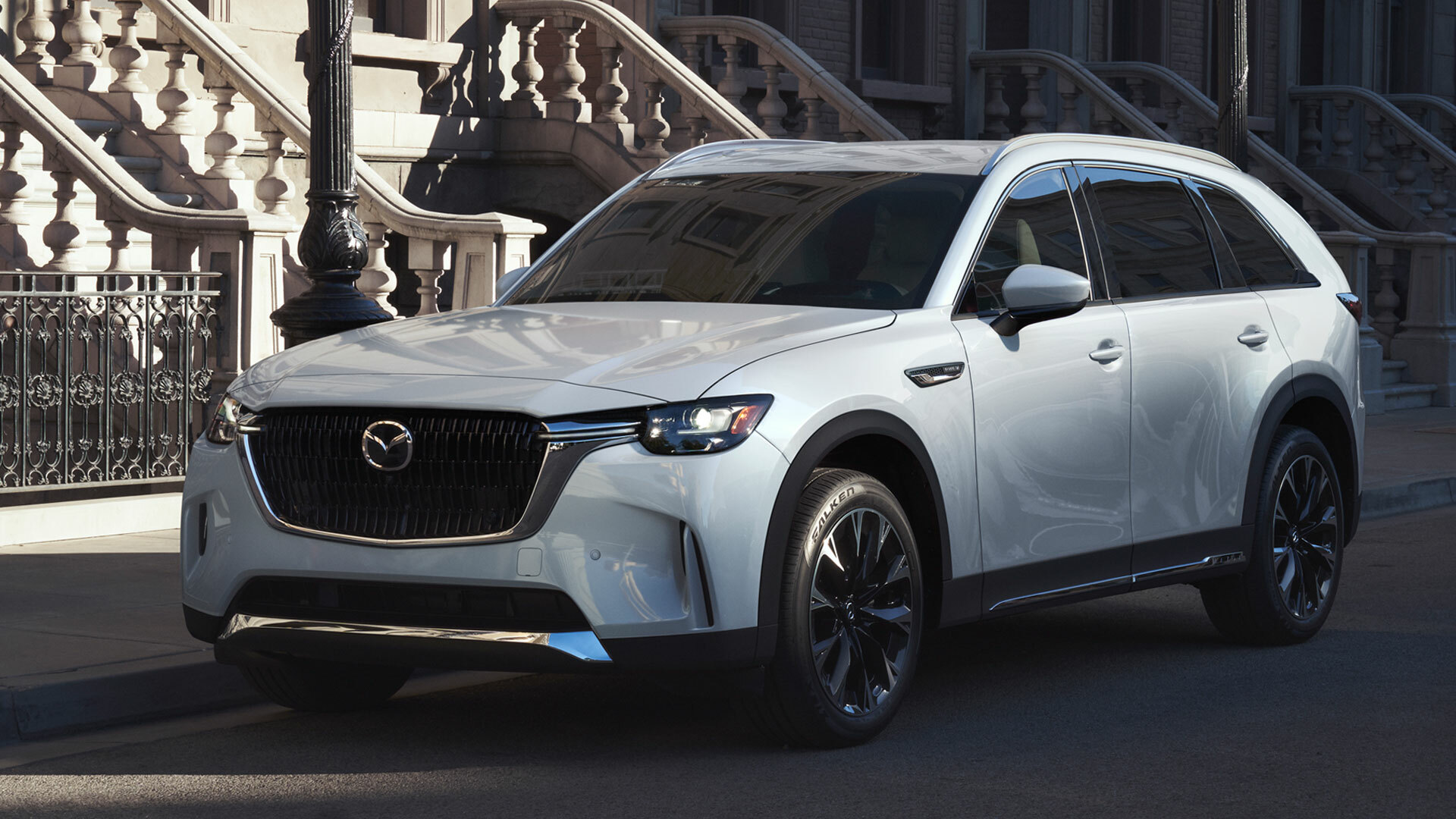
The brand that took the awkward tumble was Mazda, which dropped eight spots to 14th. Older Mazda models still did reasonably well, but the newer, more complicated CX-70 and CX-90, especially in plug-in hybrid form, apparently kept causing trouble.

That’s a classic case of what happens when an automaker gets ambitious with new platforms, new drivetrains, and new tech all at once. Sometimes the engineering team nails it. Sometimes the owners become unwitting, unpaid members of the R&D squad.

 Mazda Bet Big On New Tech And Paid For It In The Reliability Rankings
Mazda

Consumer Reports also says hybrids continue to be a safe option for ICE fans looking for better economy. EVs and PHEVs, meanwhile, remain overrepresented among the least reliable models in the survey, especially when they’re brand new or heavily redesigned.

Buick Leads Detroit Brands

 Mazda Bet Big On New Tech And Paid For It In The Reliability Rankings

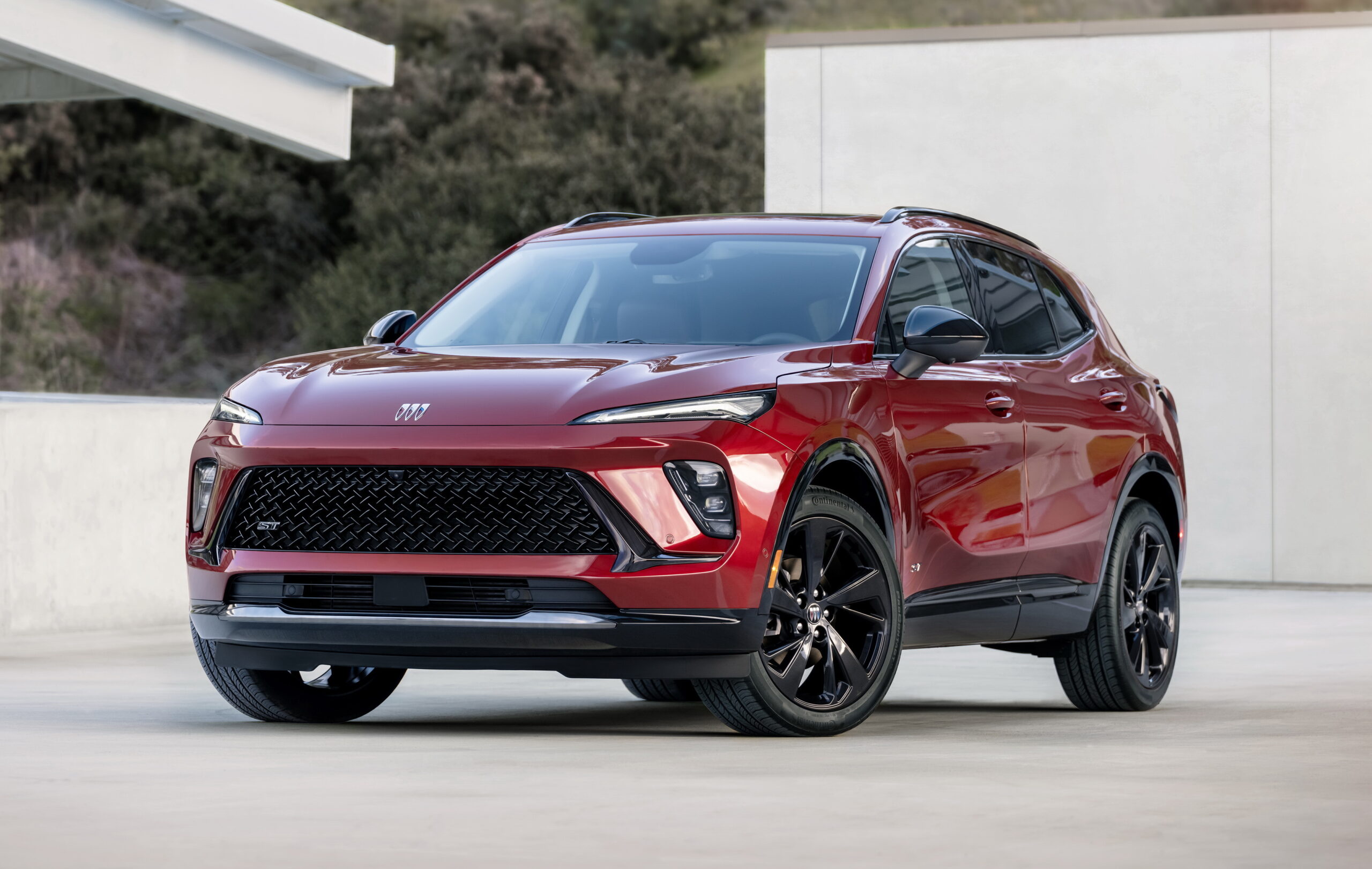
There were a few other eyebrow raisers in the rankings. Buick was the highest placed traditional Big Three Detroit brand at eighth, Ford landed 11th, and relative newcomer Rivian brought up the rear, though it’s worth pointing out that Jaguar, Land Rover, Fiat, Alfa Romeo and more were excluded from the study due to a lack of data.

Consumer Reports also found Asian brands still dominate on reliability, Europeans sit in the middle, and domestic brands trail overall, even if Tesla’s jump gave Team America something to celebrate. 

And reliability is worth celebrating. No, it’s never going to be sexy, but unless your idea of excitement includes hanging around in waiting rooms and constantly swapping into loaner crossovers, Consumer Reports has a pretty clear message: maybe let somebody else test the cutting edge first.

Consumer Reports Reliability Study
Position BrandScore
1Toyota66
2Subaru63
3Lexus60
4Honda59
5BMW58
6Nissan57
7Acura54
8Buick51
9Tesla50
10Kia49
11Ford48
12Hyundai48
13Audi44
14Mazda43
15Volvo42
16Volkswagen42
17Chevrolet42
18Cadillac41
19Mercedes-Benz41
20Lincoln40
21Genesis33
22Chrysler31
23GMC31
24Jeep28
25Ram26
26Rivian24
SWIPE

Consumer Reports

BYD’s 200 Software Updates Last Year Made Toyota’s 8 Look Like A Rounding Error

  • Chinese brands are outpacing Western automakers on updates.
  • Legacy manufacturers are struggling to keep up, says report.
  • Despite this, Chinese marques are struggling to monetize software.

In an era where cars are less mechanical than they are tech showpieces on wheels, your car is becoming more akin to your phone in terms of how its lifecycle is updated. Modern vehicles are packed with screens and features, all governed by software, software that can be updated, refined, and patched with relative ease. According to one report, there’s a company that understands that better than any others.

That company is none other than BYD, the Chinese New Energy Vehicle specialist that continues to make headlines, both good and bad. In this instance, the firm is employing over-the-air (OTA) software updates to increase vehicle performance and the life cycle of its models.

See Also: China Does What Many Drivers Wish Someone Would Do About Car Screens

In mid-February, BYD released the fourth OTA update to its Han L sedan, a flagship vehicle of the Dynasty family, which was first unveiled in April 2025. The upgrade will introduce an enhanced driver assistance system, which is end-to-end AI-driven to improve its perception and decision-making in complex driving scenarios.

The new features will take about two hours to install, and owners will be in a position to utilize the new features without going to an automobile dealership.

Chinese Lead In OTA Updates

 BYD’s 200 Software Updates Last Year Made Toyota’s 8 Look Like A Rounding Error

Chinese manufacturers, such as BYD, seem to be leading in the OTA update sphere. While the concept may have been pioneered by brands such as Tesla, the evidence would suggest that Western manufacturers are lagging.

In the past, vehicles would receive only minor changes, often via facelifts and perhaps even several years after being introduced. OTA technology has broken this pattern and enabled the cycle of continuous improvements to keep vehicles updated throughout their lifetime in a similar manner as smartphones.

BYD leads this change with its active strategy of updates. In 2025, Nikkei Asia reports that the company released about 200 software updates on its Ocean and Dynasty brands. Other brands like Aito, a creation of Huawei Technologies and Seres Group, and startups like Leapmotor have become more prolific when it comes to OTA updates. Tesla, by comparison, only had 16 OTA updates last year. Toyota and VW didn’t fair any better, with eight and five respectively.

 BYD’s 200 Software Updates Last Year Made Toyota’s 8 Look Like A Rounding Error

Nissan, with its new N7 electric car, however, managed to push out its first update just two months after its launch, unlocking new applications and longer voice recognition capabilities. “OTA updates must be developed even before product launch as part of the car’s lifecycle, in order to keep up,” said Isao Sekiguchi, managing director of Dongfeng Nissan.

There is a catch. The N7 is not a clean-sheet Nissan effort, but a joint project with Dongfeng Motor Corporation, built on the Chinese partner’s eπ 007 platform.

Less Opportunities To Monetize Updates

 BYD’s 200 Software Updates Last Year Made Toyota’s 8 Look Like A Rounding Error

BYD’s rapid rate may be explained by the vertical integration development model, i.e. in-house design of semiconductors, operating systems, and hardware, designed by BYD. Such control allows the company to update it at a very high speed and efficiently without modifying the user experience.

However, OTA updates have an economic cost. It’s not just the cost incurred in developing and rolling out each update. While the extension of technological relevance of a vehicle may enhance the resale values and decrease the occurrence of complete model redesigns, OTA technology is difficult to commercialize.

In China, updates are generally free of charge, which rules out the opportunity to add to a company’s bottom line. Instead, Tesla-like subscription-based solutions are being considered by the industry. XPeng is mulling over more advanced levels of autonomous driving, particularly Level 4 technology, which could be marketed as an extra service. This would mirror the strategy Tesla already used with its Full Self-Driving subscription in North America.

 BYD’s 200 Software Updates Last Year Made Toyota’s 8 Look Like A Rounding Error
Before yesterdayMain stream

Polestar Is Dangling Up To $21,000 Off For Tesla Owners, More If You’re A Costco Member

  • After incentives, the base Polestar 3 is available for less than $50,000.
  • Existing Tesla owners are being offered a $3,000 conquest bonus.
  • Polestar is also offering a bonus for BMW, Audi, and Mercedes owners.

For most American buyers, Tesla remains the quintessential electric vehicle brand, accounting for roughly 46 percent of all EVs sold locally last year. Despite its stranglehold over the industry, competitors continue to announce incentives aimed at convincing current Tesla owners to jump ship, and Polestar is the latest.

Review: We Drove The Polestar 4 And It Wants To Change Your Mind On EVs

If you want to jump behind the wheel of a new Polestar 4 or Polestar 3, now could be the time to do it. Until April 30, the outgoing 2025 Polestar 3 includes an $18,000 ‘Polestar Clean Vehicle Incentive’ on purchases, slashing the SUV’s starting price. What’s more, it’s being sold with a $3,000 conquest bonus for any existing Tesla owner, regardless of whether someone wants to buy or at lease the 3.

 Polestar Is Dangling Up To $21,000 Off For Tesla Owners, More If You’re A Costco Member

It’s not just Tesla owners who can benefit. A $3,000 loyalty bonus is available to current Polestar owners, and a $1,000 conquest bonus is available to anyone who owns or leases an ICE or EV model from BMW, Audi, Mercedes-Benz, Porsche, or Cadillac. If you’re a Costco member, you may also be eligible to receive a discount of either $1,000 or $1,250. All up, we’re looking at potential savings of $21,000, or up to $22,250 for Costco members.

Importantly, these incentives are only for the 2025 Polestar 3, which has a 400-volt electrical architecture, whereas the 2026 model uses a more advanced 800-volt system. Nevertheless, it remains a good EV, and the base model can now be had for less than $50,000. The incentives also cut prices of the Long Range Dual Motor to under $55,000, while the Long Range Dual Motor with Performance Package can be purchased for less than $60,000.

Or Would You Prefer No Rear Window?

\\\\\\

Polestar is also offering several incentives for the 2026 Polestar 4. For starters, it’s available with a $10,000 clean vehicle incentive, which can be combined with a $4,000 conquest bonus for Tesla owners, a $3,000 loyalty bonus for existing Polestar owners, or a $1,000 conquest incentive for owners of BMW, Audi, Mercedes-Benz, Porsche, or Cadillac models.

Like the Polestar 3, the smaller 4 also offers up to $1,250 in incentives for Costco members. The main $10,000 incentive alone reduces prices of the Long Range Single Motor to $46,400, while the Long Range Dual Motor drops to $52,900.

\\\\\\\

The Gap Between What Tesla Built And What It Sold Just Broke A Company Record

  • Tesla grew Q1 deliveries year over year, but missed analyst expectations.
  • Production outpaced sales, creating the largest inventory gap in years.
  • Shares dropped more than 4 percent after the company’s delivery report.

Tesla’s global sales edged up in the first quarter of 2026, but that did little to calm investors. Despite the increase, the company’s production and delivery figures sent shares down more than 5 percent on Thursday, marking their sharpest drop of the year. The stock is now down about 20 percent in 2026.

Read: Tesla’s Sales Collapsed By Nearly 90% In The Land Of EVs

In total, Tesla sold 358,023 vehicles worldwide in Q1 2026. That marks a 6 percent increase over the same quarter last year, when it delivered 336,681 vehicles. The bigger contrast comes against the previous quarter. Deliveries are down 14.3 percent from the 418,227 vehicles handed over in Q4 2025.

US Sales Range Estimates

The company has not released a detailed breakdown for the US, but estimates from Autonews and Cox Automotive put first-quarter deliveries somewhere between 110,000 and 122,196 units. That range points to a decline of roughly 4.6 percent to 15 percent in its home market, depending on where the final number lands.

According to Morningstar analyst Seth Goldstein, there are two key reasons to explain why sales fell.

“Tesla’s first-quarter deliveries reflect the U.S. tax credit expiration as well as FSD ​not yet being approved in the EU,” he told Reuters. “These factors will likely continue to weigh on deliveries until Tesla gets EU approval and until we enter the fourth quarter in the U.S.”

 The Gap Between What Tesla Built And What It Sold Just Broke A Company Record

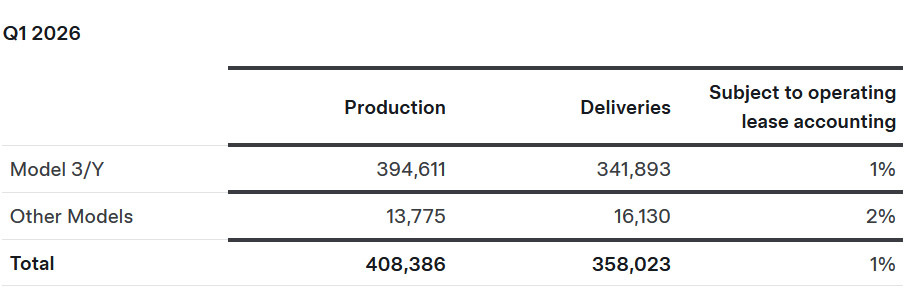
As deliveries softened compared to the previous quarter, the gap between vehicles produced and sold widened to its largest level in four years. Tesla ended the quarter with 408,386 vehicles built, leaving a surplus of 50,363 units in inventory.

Data cited by Business Insider shows this is the largest gap between production and deliveries the company has recorded. That stands out for a business that has typically kept supply and demand closely aligned. The closest comparison comes from the same period in 2024, when production exceeded deliveries by around 46,500 vehicles.

Lower Than Analyst Expectations

 The Gap Between What Tesla Built And What It Sold Just Broke A Company Record

The carmaker began to temper expectations for the first quarter last week, publishing a delivery consensus based on estimates from more than a dozen analysts. This suggests Tesla would end the quarter with 365,645 deliveries, but it fell short of that. Separate estimates from StreetAccount had projected around 370,000 deliveries.

The analysts also predicted Tesla would deploy 14.4 GWh worth of energy storage, but it actually delivered just 8.8 GWh of energy storage products. That figure is also down from 10.4 GWh in Q1 2025 and 14.2 GWh in Q4 2025.

As we’ve come to expect, the Model 3 and Model Y account for the bulk of the company’s sales, with 341,893 finding new homes. The remaining 16,130 vehicles delivered included a mix of the Cybertruck, Semi and the now-discontinued Model S and Model X.

\\\\\\

Tesla’s Third Row Is Back, And It’ll Cost UK Families £12,500 To Get There

  • Brits can now order a seven-seat Tesla Model Y for £54,490.
  • Option is only available on the pricey Long Range AWD trim.
  • Seven-seats are already available in America and in Europe.

The Tesla Model Y is trying to win back big families and maybe a few lost sales rankings too. Tesla has quietly slipped a seven-seat option back into the UK lineup, and it might be just the nudge the crossover needs.

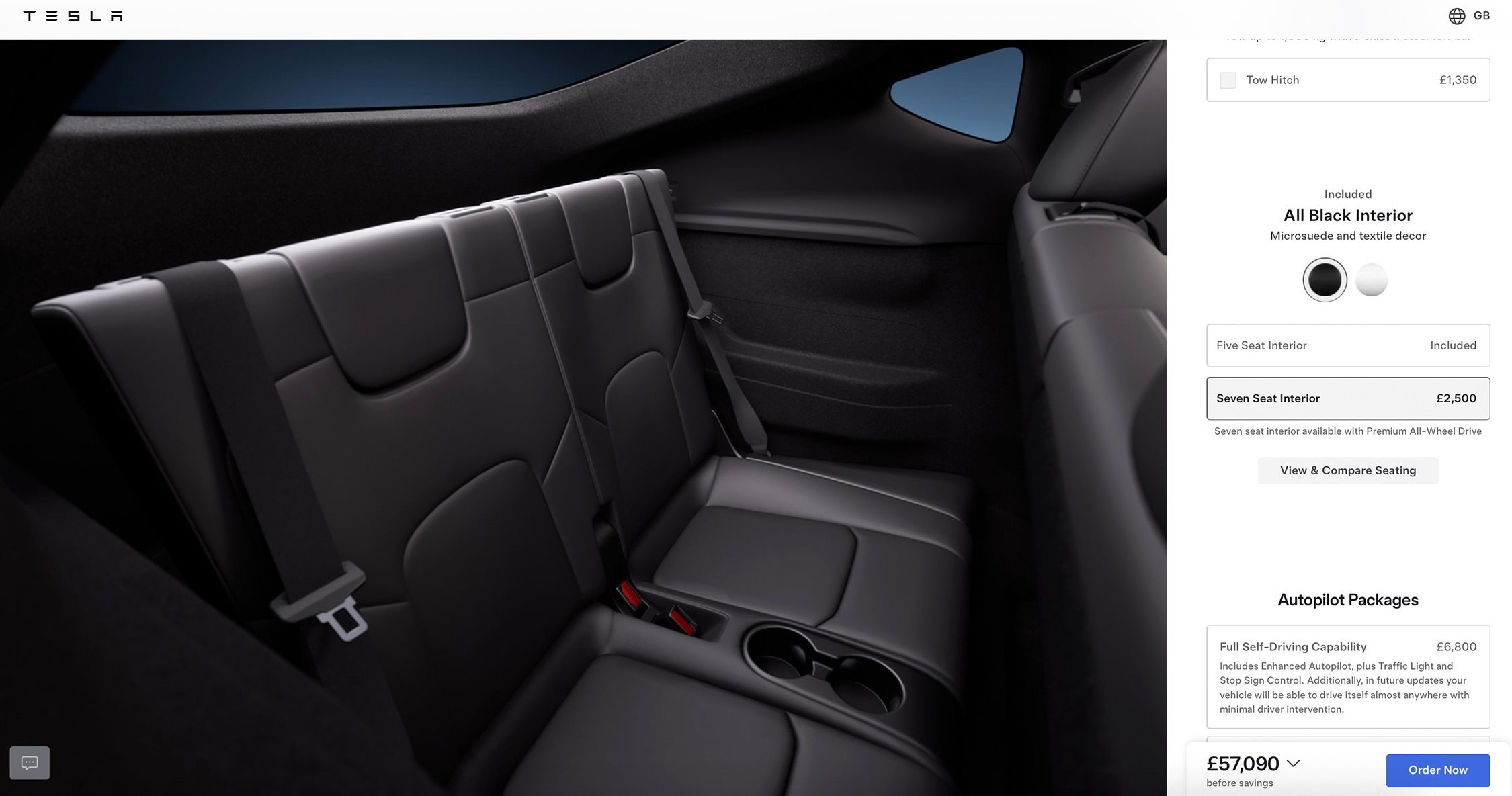
For £54,490 (equal to $68,500 at current rates), buyers get a pair of extra seats tucked neatly into the boot, an option already available in the US and the EU. That is £2,500 ($3,100) more than the regular version, versus $2,500 in the US, but that’s not the real catch. The bummer here is you can only have those extra chairs if you also choose the Long Range All-Wheel Drive model which costs £10k ($12,500) more than the entry-level single-motor SUV.

Related: Jim Farley Promises A New Affordable Ford EV To Take On Tesla’s Model 3 And Y

At least it means you still get plenty of punch to move seven bodies around. Twin motors deliver brisk acceleration, hitting 60 mph (97 kmh) in about 4.6 seconds, which is quicker than most people need when ferrying kids to school.

Tesla’s online configurator shows an identical sprint time for the five-seat version, and also suggests both are rated at 391 miles (630 km) WLTP. But UK websites like Auto Express claim the extra chairs cut the electric range to 372 miles (599 km). Even if that lower number is true, the Model Y would still be among the longest-legged seven-seat electric SUVs.

 Tesla’s Third Row Is Back, And It’ll Cost UK Families £12,500 To Get There

With all seven seats up, there is still room for a couple of carry-on suitcases, plus extra storage in the frunk. Fold the rearmost row flat and the Model Y turns back into a load-lugging champ. But the third row itself is best described as optimistic. Tesla admits it is more suited to children, and the lack of Isofix points limits its usefulness for younger passengers. Still, there are USB-C ports and cupholders, so at least those in the back will not feel entirely forgotten.

Not The Only Seven-Seat EV

This move also drops the Model Y back into the ring with rivals like the Peugeot E-5008 and Mercedes EQB, both of which have been courting family buyers looking for electric practicality with three rows of seats.

The bigger question is whether this is enough to boost Tesla’s fortunes in the UK. The Model Y used to dominate sales charts but slipped out of the top ten in 2025 despite a facelift. Adding two extra seats might not sound revolutionary, but for growing families it could be exactly what was missing.

 Tesla’s Third Row Is Back, And It’ll Cost UK Families £12,500 To Get There

Tesla

Jim Farley Promises A New Affordable Ford EV To Take On Tesla’s Model 3 And Y

  • Ford developing an affordable EV aimed at the Model 3 and Model Y.
  • The new model is expected to ride on Ford’s flexible UEV architecture.
  • A $30K electric pickup on the same platform is expected to arrive ahead of it.

We’re in the third inning of a nine-inning game, says Ford’s CEO Jim Farley. What’s he talking about? Electric vehicle adoption. And the automaker has plenty coming down the pipeline before the game is over, he adds. Chief among those products is an affordable EV built to directly take on the Tesla Model 3 and Model Y.

Ford has spent the past few years insisting it still believes in EVs, even as it slashed programs, killed the F-150 Lightning, and pivoted hard toward hybrids. That shift is one that plenty of other automakers are also going through, but none seem to have the exact same game plan as the Blue Oval brand.

More: Farley Admits Ford Got The F-150 Lightning Wrong

“We really want to bet on all of it. We’re going to have an all-hybrid lineup. So Bronco… everything you can buy at Ford will have a hybrid. We’ll also have EREVs for towing. We’ll have an all-electric, affordable vehicle to compete with Model Y and Model 3,” Farley said during an appearance on the Spike’s Car Radio podcast.

That last part is the most notable. Ford already sells the Mustang Mach-E, a relatively affordable EV that offers similar benefits to the Model Y. At the same time, the Ford lags behind in several key metrics, including range, performance, charging speed, and more. Farley clearly wants to change that.

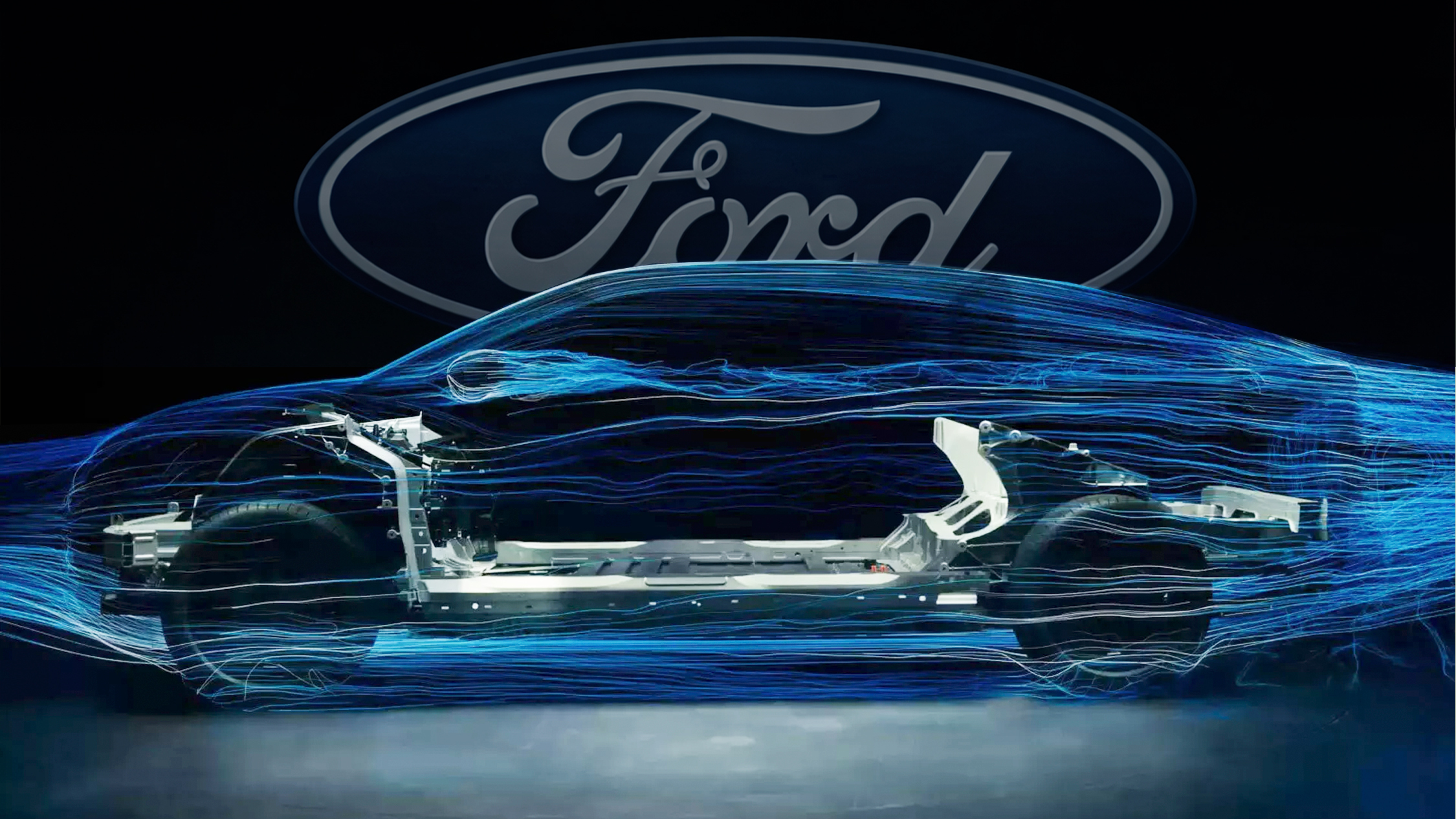
To that end, the brand is working on something new and unique. This future Model Y/Model 3 fighter will almost certainly ride on the company’s Universal EV Platform, or UEV, a new architecture developed by a secretive “skunkworks” team made up largely of former Tesla and Formula 1 engineers. According to Ford, the platform can support up to eight body styles, including compact crossovers, sedans, pickups, vans, and larger SUVs.

Ford’s first UEV-based model is expected to be a roughly $30,000 midsize electric pickup arriving in 2027. The Model 3 and Model Y rival would likely follow shortly after, potentially debuting later that year or in 2028.

 Jim Farley Promises A New Affordable Ford EV To Take On Tesla’s Model 3 And Y

Toyota’s bZ Outsold The Prius, And Now A Second US-Made Electric SUV Is Coming

  • Toyota plans to offer seven electric models in the US lineup by 2027.
  • US-built Highlander EV will be joined by another electric SUV.
  • EV sales are climbing, with the bZ outselling the Prius in Q1 2026.

While much of the industry is quietly backing away from aggressive EV rollouts, Toyota is doing the opposite. The company is doubling down on its zero-emission push in North America, wagering that more Americans are ready to make the switch, even after the scrapped tax credits and incentives last year.

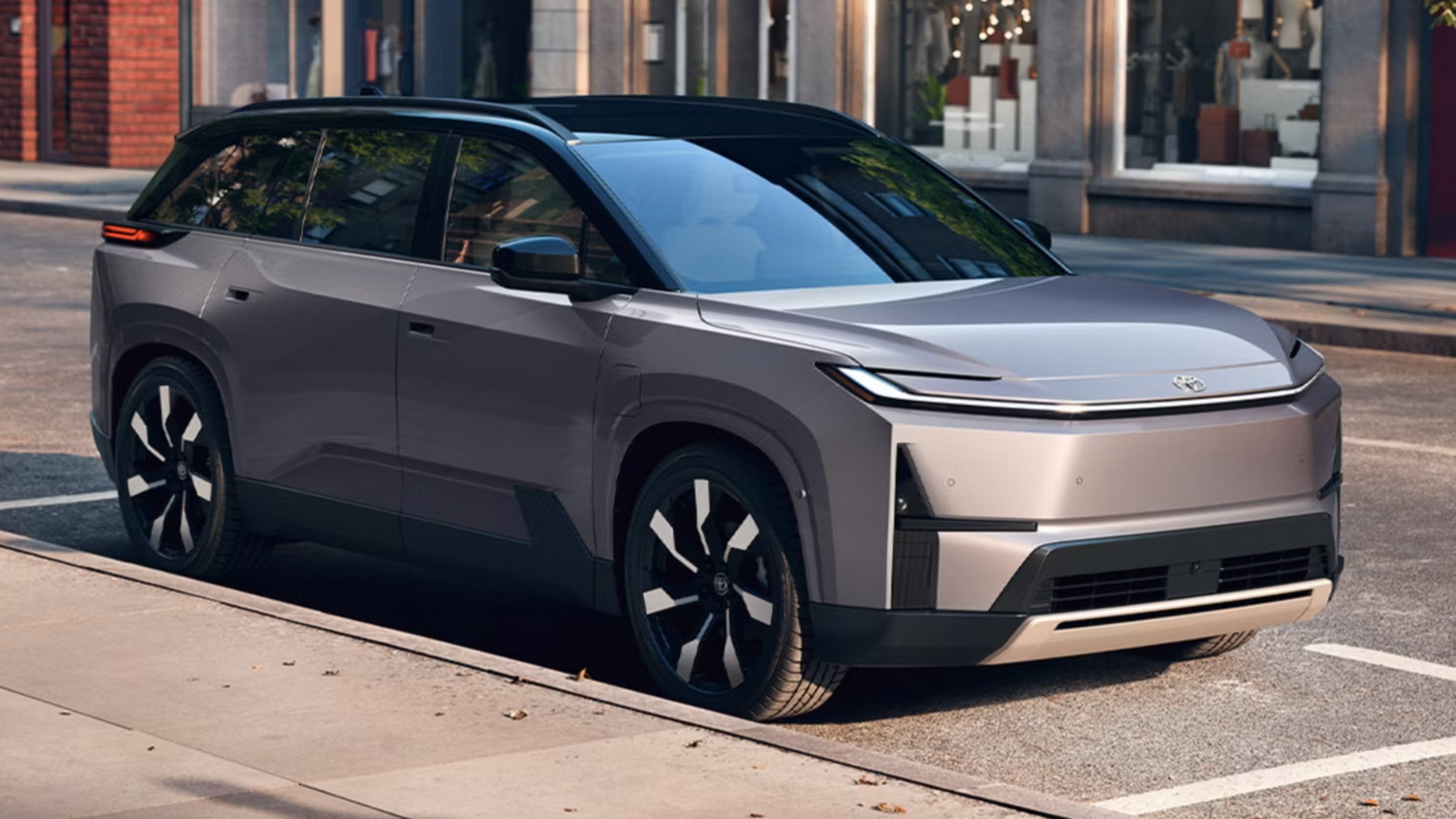
By 2027, Toyota plans to offer seven fully electric models in the country. Among them is a still-unnamed mystery SUV that will be built in the United States.

More: Toyota’s Electric Hilux Costs $20K More Than The Diesel, And That’s Not Even The Worst Part

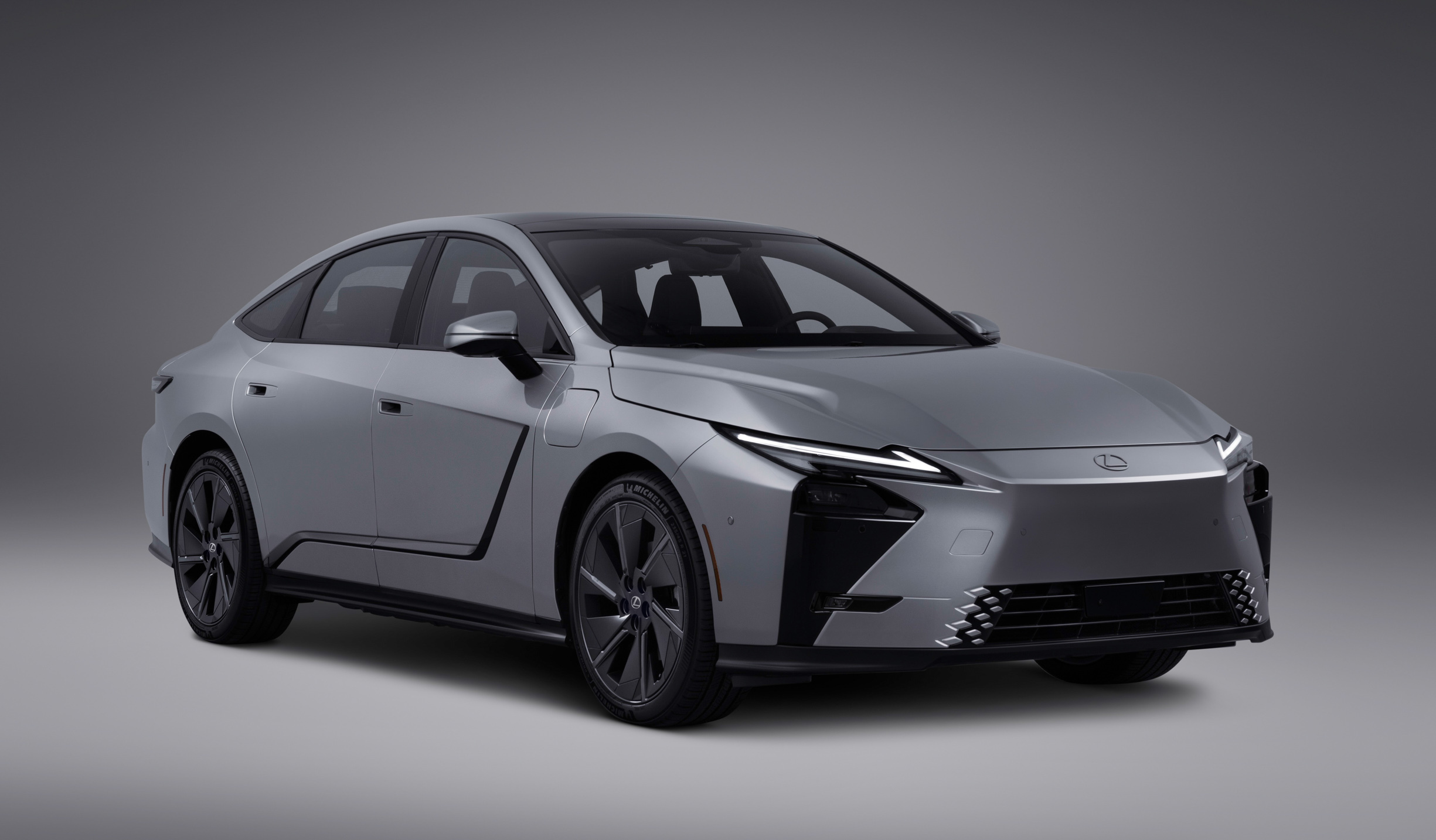
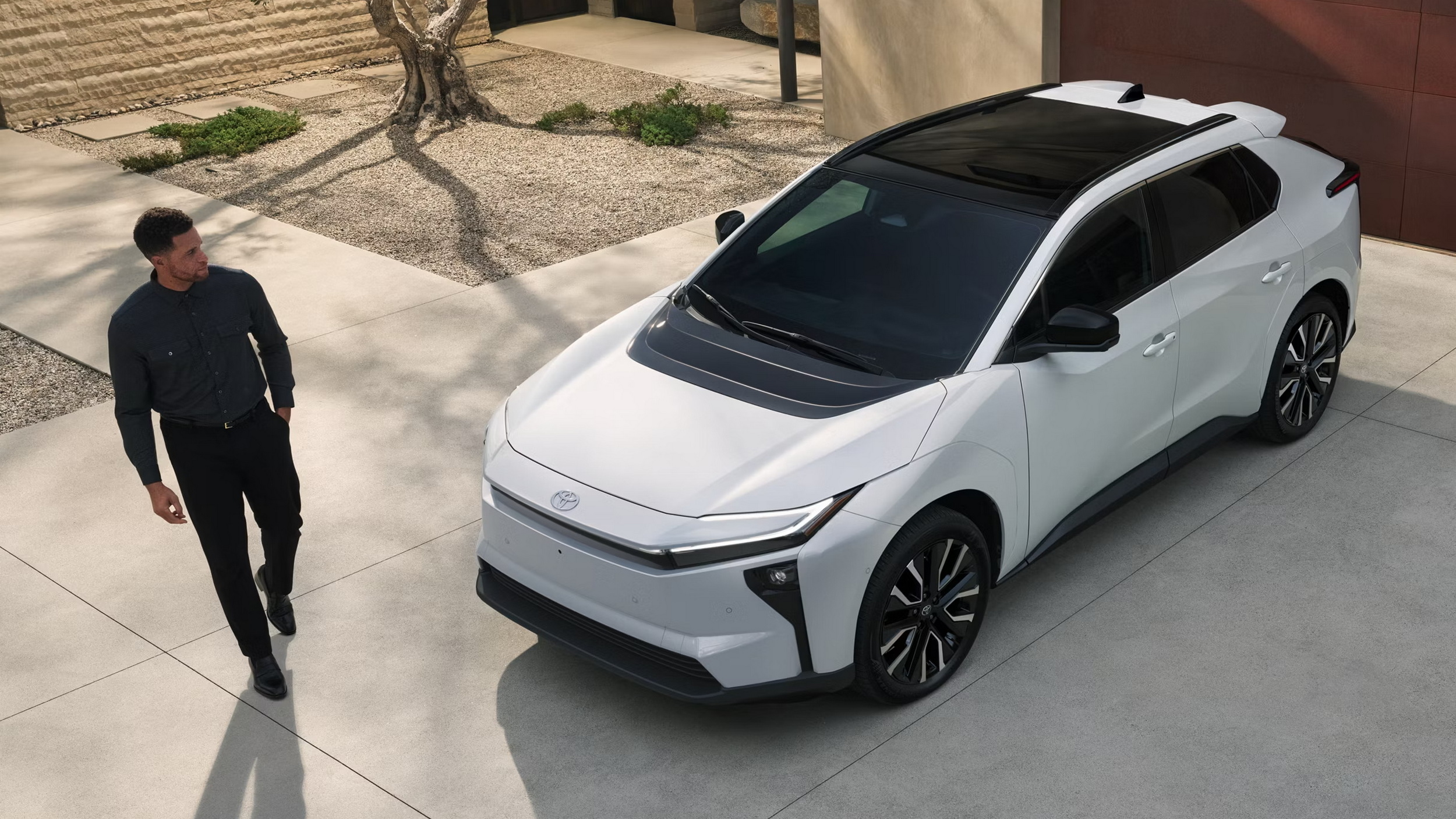
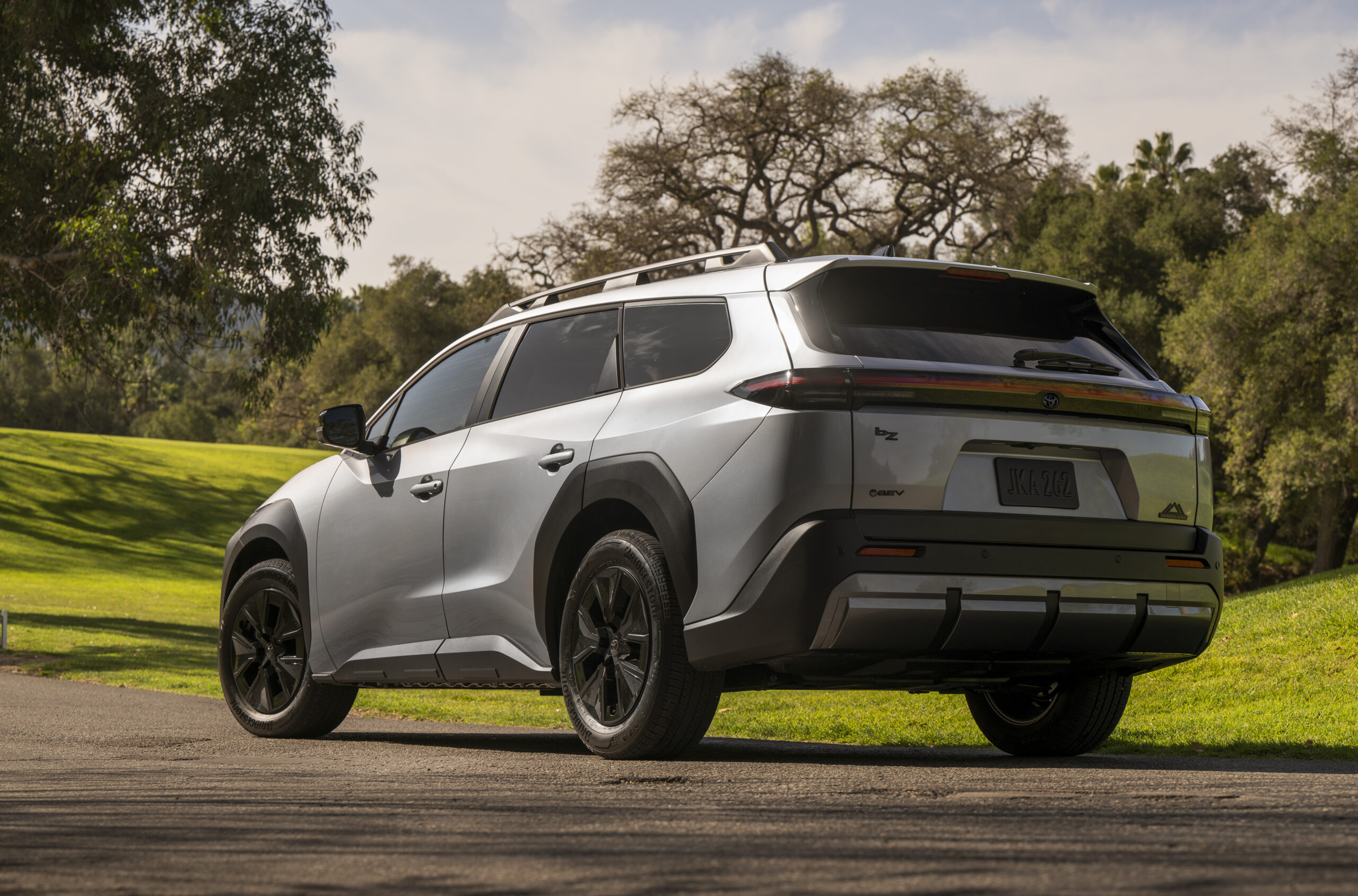
Right now, the Japanese automaker’s North American EV lineup sits at four models, and all of them are imported. That group includes the Toyota bZ, bZ Woodland, C-HR, and Lexus RZ. A fully electric Lexus ES sedan is set to arrive later this month, with the all-electric 2027 Toyota Highlander scheduled to follow in late 2026.

North America EV Expansion Plans

 Toyota’s bZ Outsold The Prius, And Now A Second US-Made Electric SUV Is Coming
2027 Toyota Highlander

The Highlander EV marks a turning point for the brand. It will be the first electric Toyota built in North America, assembled in Kentucky, with batteries sourced from North Carolina. But this is really just the first step in Toyota’s USA EV strategy.

According to a Bloomberg report, the second US-built EV is set to be an SUV already in development. Details remain scarce, including its size and where it will fit within the lineup, but production is also slated for Kentucky, with a planned start in 2027.

Mark Templin, executive vice president and chief operating officer at Toyota Motor North America, says the company plans to give buyers “multiple options.” The idea is fairly simple: if Toyota can secure 15% of the overall market in the US, it should be able to capture a similar share of the EV segment.

 Toyota’s bZ Outsold The Prius, And Now A Second US-Made Electric SUV Is Coming
Lexus ES

He also gave a better sense of who these upcoming EVs are meant to attract, referring to them as “Tesla killers.” The target, in his view, is a familiar group.

More: Toyota’s Flagship Electric Sedan Undercuts Tesla Model S By Nearly $96,000 In China

“We’ll probably see what I call boomerang customers, people who loved Prius for being the greenest car in the industry that maybe went to a Tesla – and then we get those people back. Two weeks ago in Japan, I drove three of our future battery electric cars. They’re fantastic. And I think they’re going to be Tesla killers.”

Recovering After A Rough Start

 Toyota’s bZ Outsold The Prius, And Now A Second US-Made Electric SUV Is Coming
2026 Toyota bZ

Toyota didn’t exactly nail its first swing at EVs. The bZ4X landed with a bit of a thud, but things are starting to look promising. The updated bZ and the related Lexus RZ are finally gaining traction, with deliveries more than doubling in March 2026.

The numbers are revealing, with the bZ reaching 10,029 sales in Q1 2026, up from 5,610 a year earlier, a jump of about 79%. Over the same period, Prius sales fell to 9,737 from 16,653, a drop of roughly 42%. That’s been enough for the bZ to move ahead of the Prius so far this year, which shows just how quickly things can flip.

Hybrids Remain The King

Even so, hybrids are still doing the heavy lifting. They made up 55% of Toyota’s North American sales in March 2026, up from 49% a year earlier. And that number probably doesn’t tell the whole story, since plenty of buyers are still stuck on waiting lists despite factories running flat out.

More: The Soon-To-Be-Axed Supra Has More Than Doubled Its Sales This Year

Toyota clearly knows where its strength lies. The company has committed $10 billion to its U.S. operations in the coming years, including $1 billion to expand plants in Kentucky and Indiana. EVs are part of the plan, but hybrids remain the safe bet that keeps the numbers moving.

 Toyota’s bZ Outsold The Prius, And Now A Second US-Made Electric SUV Is Coming
2026 Toyota bZ Woodland

Three Million Teslas A Year By 2030 Is The Bet. Twenty-Three Firms Made It.

  • Analysts expect Tesla deliveries to more than double by 2030.
  • Q1 2026 delivery expectations sit around 420,000 vehicles.
  • Tesla’s early release hints at softer near-term expectations.

Analysts believe that Tesla is on track to double its global deliveries by the end of the decade. That’s a huge bet, and it relies on more factories, cheaper models, and a broader global footprint that can push annual volume into the millions. That said, there’s a bit of a disconnect. If that’s indeed what the future looks like, the same analysts’ Q1 2026 predictions aren’t exactly screaming momentum.

The automaker just compiled estimated reports from 23 big-time analyst firms, including UBS, Barclays, Wells Fargo, and more. Wall Street expects Tesla to deliver roughly 420,000 vehicles in Q1 2026. For a company evidently on the verge of explosive growth, that figure leaves some room for head-scratching because it’s nearly flat compared to 2025 levels.

More: This Might Be The Tesla Roadster’s Biggest Update Since 2017

That said, the professionals betting on the future clearly see a path ahead. Their consensus is that Tesla will deliver 1,689,691 cars this year. That’s actually just above the 1,636,129 figure it managed in 2025, with a a modest 3.3% increase year over year.

Starting in 2027, their estimates just go up, up, and away, though. Notably, 2027 is the latest year in which all 23 firms provided an estimate, in this case, of 1,880,496 deliveries.

Twenty of the firms predicted (on average) that Tesla will deliver 2,128,187 cars in 2028. Just 13 firms went as far as to provide a consensus for 2029 and 2030. Those figures hit 2,613,623 deliveries for 2029 and then 3,032,000 the following year.

Q4-2025Q1-202620262027202820292030
Model 3/Y deliveries406,585351,1791,623,6971,742,4981,867,2542,159,8742,426,452
All other models11,64213,94660,685131,509240,229423,599570,590
        
Total deliveries418,227365,6451,689,6911,880,4962,128,1872,613,6233,032,000
        
Median418,227363,3711,678,9001,866,2731,979,3482,384,6782,626,100
Standard deviation 25,94185,769203,762409,565656,881826,093
Number of estimates provided 232323201313
        
Energy Storage Deployments (GWh)14.214.465.288.1112.5139.1166.1
        
Median14.214.364.687.3114.1138.2169.1
Standard deviation 1.35.210.616.825.031.1
Number of estimates provided 181718161010
SWIPE

As is the case now, analysts believe the vast majority of the cars that Tesla does sell will be the Model 3 and Model Y by a factor of around eight to one overall. Notably, that mix diminishes to as low as four to one by 2030 in the consensus.

That’s important because it suggests that Tesla will need to continue to heavily invest in the growth and proliferation of both the Model Y and Model 3. Those two will largely bolster the car side of Tesla’s business if this consensus is correct.

What it doesn’t clarify is what falls under those “other models.” With the Tesla Model S and Tesla Model X out of the picture, the lineup narrows quickly. That leaves the Tesla Cybertruck as the only other vehicle currently in play, alongside plans for the Tesla Cybercab and, if Elon Musk is to be taken at his word, something he has teased as “way cooler than a minivan.

The decision to publish this consensus ahead of its Q1 report is also significant and Tesla has done this in the past. It could be that it’s hoping to anchor expectations if results end up lower than some hoped for.

 Three Million Teslas A Year By 2030 Is The Bet. Twenty-Three Firms Made It.

This $36,000 Used Tesla SUV Still Hits 0-60 in 2.9 Seconds

  • Used Model X offers more performance per dollar than a new Tesla.
  • A 2018 Model X P100D just sold for $36,000 with only 26,000 miles.
  • At that price, 680 hp and a 2.9-second 0-60 is an extraordinary deal.

Tesla has been chasing a $35,000 EV for the U.S. market since roughly 2015, when the Model 3’s unveiling promised to democratize electric motoring. It came close with the $36,990 Model 3 Rear-Wheel Drive launched last year, and the entry-level Model Y RWD at $39,990. But for buyers who want a genuinely affordable Tesla without the feel of a stripped-out special, the used market is where things get interesting.

Read: Tesla Quietly Kills Its Flagship EVs In Europe Just After Updating Them

Once-flagship versions of Tesla’s three-row Model X are now available for around $35,000 or so, and after eight years of depreciation, they represent a rather compelling proposition.

\\\\\\\\\\\\\\\\

Bring a Trailer

A 2018 Model X P100D recently sold for $36,000 on Bring a Trailer. Yes, it’s eight years old, which explains the price, but it has only covered 26,000 miles (41,800 km), which is remarkably low for its age. Barring anything catastrophic, the SUV should deliver tens of thousands of additional trouble-free miles, provided it has been routinely maintained and kept up to date with software updates.

Supercar Performance With SUV Practicality

Before Tesla’s Plaid models were a thing, the P100D-branded models represented the pinnacle of performance. In the Model X, a pair of electric motors produces a combined 680 hp, enough to send it to 60 mph (96 km/h) in just 2.9 seconds. Find an SUV buyer who claims they need something faster than that, and we’ll tell you they’re lying.

Tesla only recently announced it would stop building the Model X, hardly a surprise given how few have been sold in recent years. But when it was first launched, it was incredibly innovative.

\\\\\\\\\\\\\

Bring a Trailer

We’d argue the cabin of this original model is more appealing than newer models, which adopted Tesla’s landscape-oriented touchscreen, rather than a vertical one. There are also loads of carbon fiber throughout and plenty of plush black leather.

Three-row electric SUVs still have relatively limited appeal, but at this price point, with this mileage, and with this level of performance, there’s no denying that something like this offers good value for the money.

Tesla’s Next Model “Way Cooler Than A Minivan”, And That’s All Musk Will Say

  • Elon Musk teased a new Tesla model described as “cooler than a minivan”.
  • Tesla is discontinuing the Model S and Model X by the end of the year.
  • A Cybertruck-derived three-row SUV appeared as a clay model in 2025.

Elon Musk has confirmed that Tesla is working on a new model, and the internet has done what the internet does: immediately begun speculating. The leading theory involves a rugged, three-row SUV inspired by the Cybertruck.

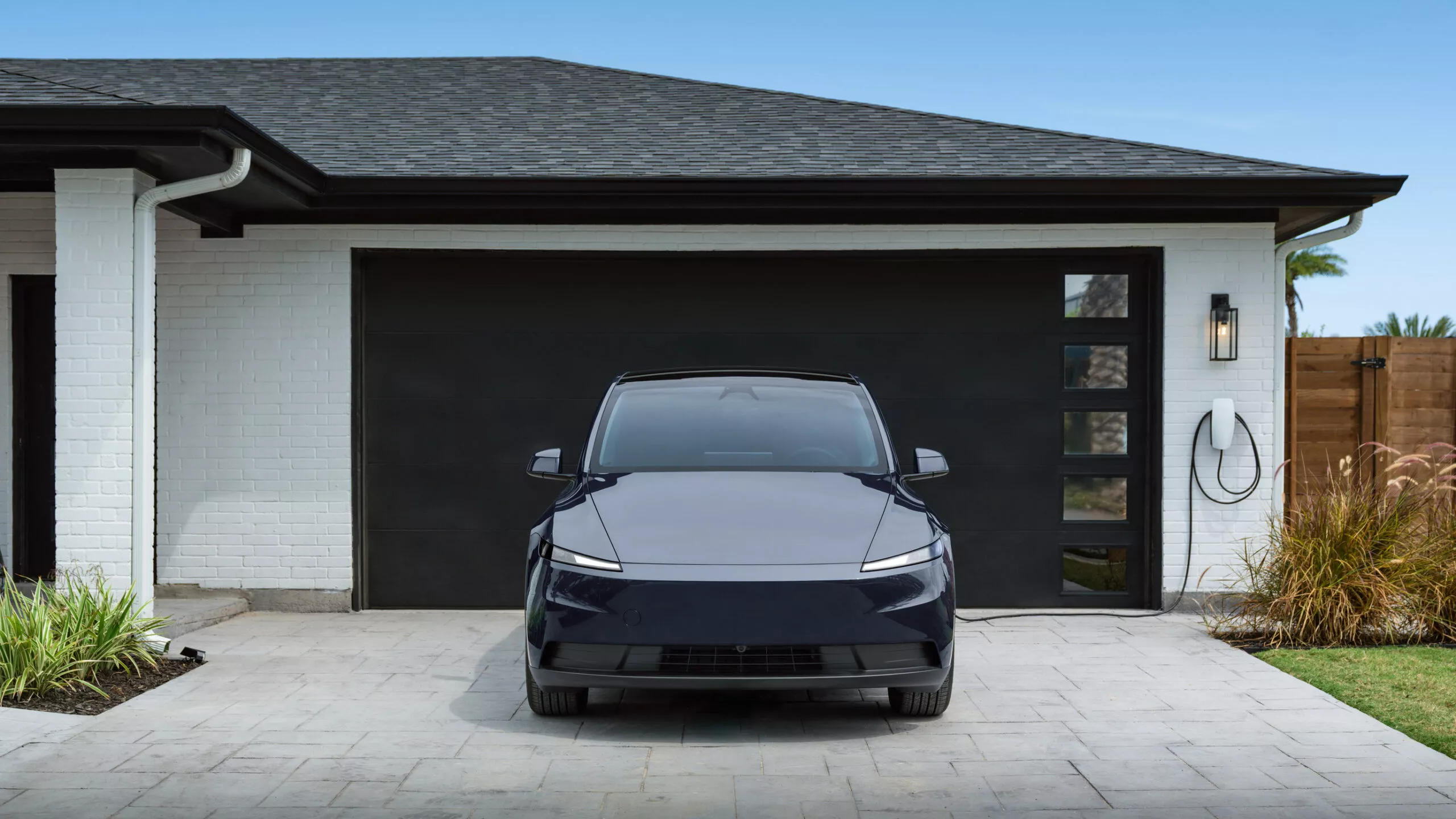
Unless, of course, the big reveal turns out to be the three-row Model Y L recently spotted at Gigafactory Texas, in which case Musk’s gift for generating hype will have once again conjured a drum roll worthy of a stadium concert. Wouldn’t be the first time.

But we digress. On March 24, the Tesla CEO shared a post on X noting that the Cybertruck’s rear bench is large enough to fit three child seats or three adults. A follower then suggested he “make a minivan,” to which Musk replied: “Something way cooler than a minivan is coming.”

More: Tesla Roadster Delayed Again, Weeks Late But Years Behind

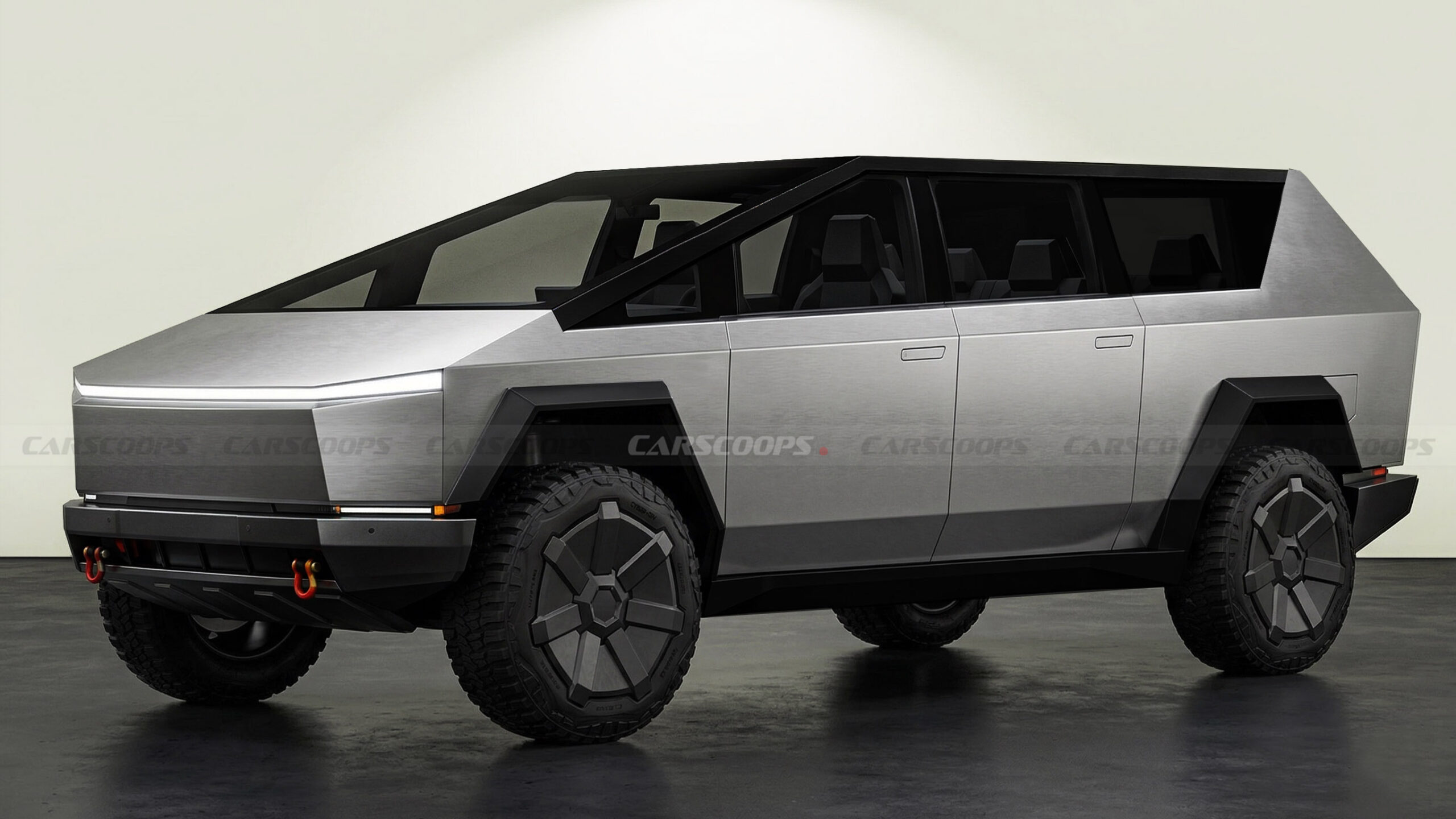
One credible scenario involves what has been dubbed by the internet, the CyberSUV. Back in September 2025, a clay model appeared in the background of an official Tesla video, suggesting a potential SUV sibling to the Cybertruck.

 Tesla’s Next Model “Way Cooler Than A Minivan”, And That’s All Musk Will Say
Our rendering of a Cybertruck-derived SUV (above) based on the clay model from last year (below).
 Tesla’s Next Model “Way Cooler Than A Minivan”, And That’s All Musk Will Say

The mockup featured a redesigned roofline and greenhouse, while the front-end design, full-width LED bar, and flat stainless steel surfacing appeared to carry over from the truck.

The timing matters, too, since Tesla is winding down production of the Model S and Model X this year, leaving a conspicuous gap in its production capacity.

More: Musk Lectures Legacy Brands On Cars, Even As Tesla Drifts Beyond Them

A CyberSUV would be larger and more spacious than the Model Y and Model X, positioning it against full-size SUVs such as the Cadillac Escalade.

Repurposing the Cybertruck platform for an SUV makes strategic sense. Sales of the electric truck are abysmal, given initial expectations, and an SUV twin could help Tesla increase production at Giga Texas while tapping a segment that American buyers never stopped loving. Keeping R&D costs down would be another advantage, particularly if the new model shared its underpinnings along with numerous exterior and interior components with the Cybertruck.

Could It Be A Longer Model Y?

Well this is interesting at Giga Texas today … what do YOU think this is? 🤔😎 pic.twitter.com/U9pLvqbf7L

— Joe Tegtmeyer 🚀 🤠🛸😎 (@JoeTegtmeyer) March 23, 2026

As we mentioned, another possibility is a stretched Model Y heading to North America. Last year, Musk stated that this model wouldn’t enter US production until late 2026, if at all. Footage from outside Gigafactory Texas, however, tells a somewhat different story.

More: Musk Said The U.S. Wouldn’t Get This Tesla. Texas Factory Footage Disagrees

Drone pilot Joe Tegtmeyer captured a large vehicle shell wrapped in blue plastic and sitting inside a wooden crate. Many believe the shell belongs to the Tesla Model Y L, already sold in China with extended bodywork and six-seat seating.

Whether the new Tesla will actually be cooler than a minivan remains to be seen. Hopefully, Tesla will clear up the mystery soon.

Something way cooler than a minivan is coming

— Elon Musk (@elonmusk) March 25, 2026

Musk Said The U.S. Wouldn’t Get This Tesla. Texas Factory Footage Disagrees

  • Mystery vehicle at Tesla Texas plant looks longer than the Model Y.
  • Fans think it could be the stretched Model Y L already sold in China.
  • If true, Tesla may be readying a larger family SUV as Model X goes away.

Every time a drone buzzes over Tesla’s Texas Gigafactory, the internet immediately goes into detective mode. Usually, the result is a grainy shot of construction equipment and a few wild guesses. This time, though, the mystery object might actually be something real. Fans of the brand have torn these shots apart like they’ll reveal whether or not alien life exists.

Drone pilot Joe Tegtmeyer recently captured footage of a large vehicle shell sitting inside a wooden crate outside Tesla’s Gigafactory Texas. The structure was wrapped in blue plastic and surrounded by construction materials. That didn’t stop folks from trying to suss out exactly what we’re looking at. Most think it’s Tesla’s Model Y L.

Read: Tesla’s Budget Model Y Gets Grip And Grit For $2K More, But Don’t Call It Standard

That’s the long-wheelbase take on Tesla’s compact crossover, first rolled out in China last year. It matters more than it might seem at first glance. This is effectively Tesla’s only proper three-row crossover heading into the near future. Yes, you can spec tiny rear seats in the standard Model Y, though calling them usable depends on how much you like the people riding back there.

The Model X is about to go away with the death of its flagship stablemate, the Model S. That leaves Tesla with a big gap in the market. A lengthened Model Y would help plug that third-row-sized hole.

Well this is interesting at Giga Texas today … what do YOU think this is? 🤔😎 pic.twitter.com/U9pLvqbf7L

— Joe Tegtmeyer 🚀 🤠🛸😎 (@JoeTegtmeyer) March 23, 2026

The vehicle in the drone footage appears to be little more than a body shell. These unfinished body structures allow automakers to continue development or manufacturing testing without building a full car to do so. It’s a normal part of production and something we’d expect from Tesla if it were setting up to sell the Model Y L in the U.S. market.

As Teslarati pointed out, observers have done just about everything they can to sort this out. Some used AI to create renders. Others compared how the dimensions came together compared to the standard Model Y. Some went as far as to superimpose the Model Y L’s window shapes over the shell.

More: Tesla’s Model Y L Gets Bigger And Pricier With New Six-Seat Layout

\\\\\\\\\\\

The Chinese market Tesla Model Y L.

All signs, at least for now, point toward this being the Model Y L, or something very close to it. One user even shared a rare overhead shot of what appears to be the production SUV, and the resemblance lines up almost too neatly to ignore. The proportions, the silhouette, the overall footprint, it all matches.

That said, there’s no word on when or even if the vehicle could come to the U.S. market in any official capacity. Musk once seemed to indicate that it might not ever end up in the States. These images seem to indicate otherwise, though with Tesla, certainty has never really been part of the package.

It looks the same as my Model Y L. pic.twitter.com/uVf98xpvTE

— @BananaMemeClub (@BananaMemeClub) March 23, 2026

Lead image Joe Tegtmeyer @ X

Every Tesla Is Missing The Door Handle The Cybercab Just Introduced

  • Tesla has designed a new door handle similar to what Audi and Lexus use.
  • The new interior handle houses both the electric and mechanical releases.
  • Other Tesla models will be updated with these safer door releases.

Following a spate of fatal incidents involving Tesla models with door handles that allegedly couldn’t be opened after a crash, and several lawsuits, we now have our first chance to see the new inner door handles that Tesla has developed. Perhaps surprisingly, these new handles have premiered on the self-driving Cybercab.

Development of Tesla’s mass-market robotaxi is continuing, and the carmaker continues to make changes to the car. Recently, a pair of YouTubers had the chance to take an in-depth look at a new Cybercab prototype, revealing the new handles and a slew of other features.

Read: Cybercab Spotted Up Close, Steering Wheel, Panel Gaps And All

In the current Tesla Model 3, Model Y, and Cybertruck, there are individual interior buttons to open the doors, and then physical pulls incorporated into the handles. At the rear, the emergency releases are generally located in the door pockets, beneath a plastic panel, possibly making them hard to find in an emergency, particularly for someone unfamiliar with the car.

Tesla’s solution has been to switch to a small latch that can be lifted lightly to trigger the electronic release, opening the door. If you then pull the same latch harder, it will serve as the manual release. It’s a much better system than the one currently used and is similar to the door latches used by companies like Audi and Lexus, where the electronic and manual releases share the same switch or handle.

Tesla has also gone to the trouble of adding braille to the release, helping those with visual impairments to find it. That’ll be particularly useful in the Cybercab, where people will be driven around by the car’s advanced self-driving suite without anyone else on board. This new door pull is presumably the same one that will be added across all other existing Tesla models.

What Else Is New?

 Every Tesla Is Missing The Door Handle The Cybercab Just Introduced

Several other changes have been made to the Cybercab. For example, it now includes a charging port at the rear, despite initially being presented without one because Tesla only wanted them to be charged wirelessly. However, the more significant change made on a prototype Carscoops recently spied was the presence of a steering wheel, which given the autonomous nature of the Cybercab was a surprise.

\\\\\\

Photos Robert G. | Lead screenshot Kim Java / YouTube

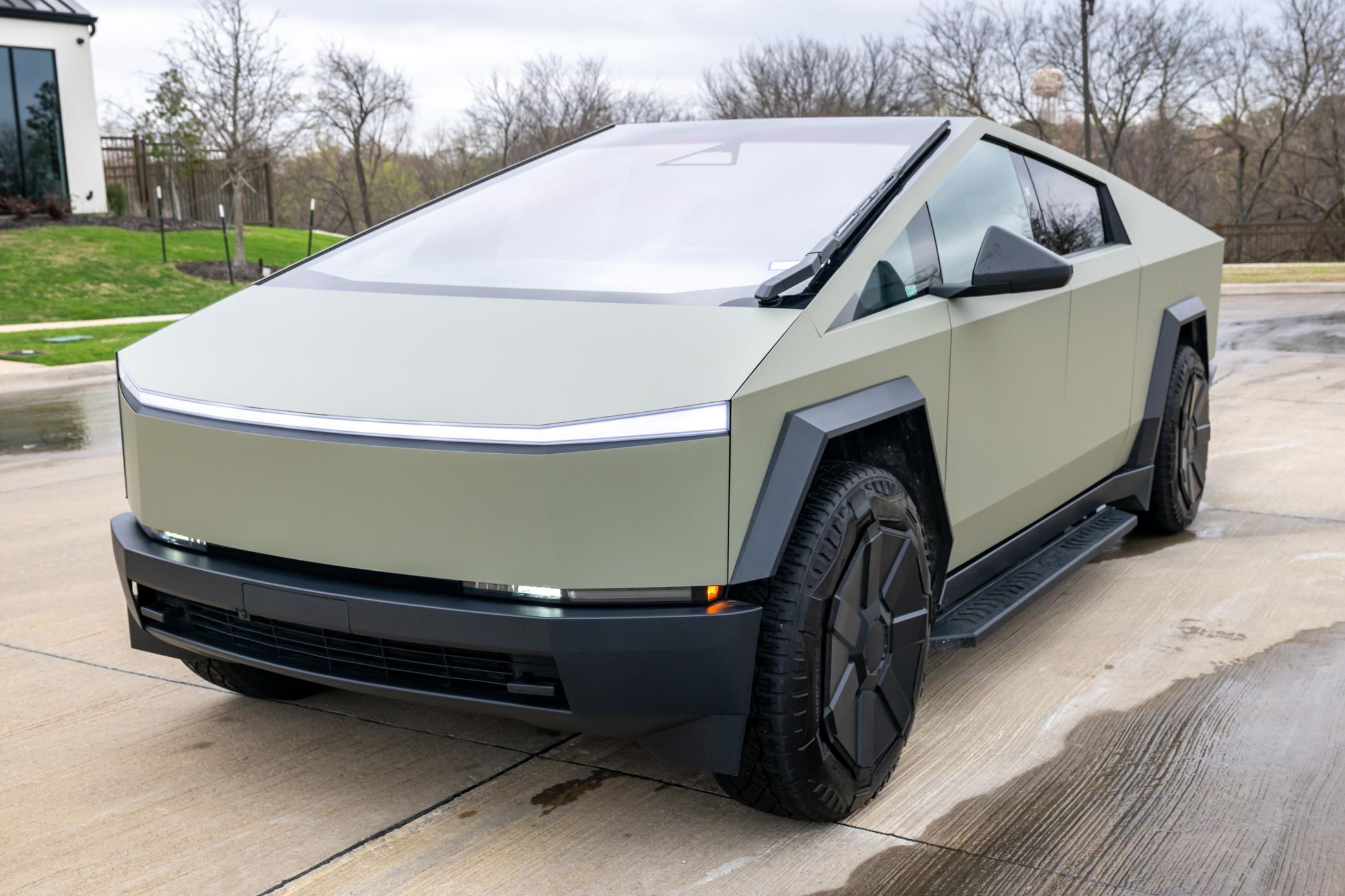
The Cybertruck Nobody Wanted New Is Now The One Nobody Wants Used

  • The Cybertruck Long Range RWD was only built for a limited time last year.
  • This pickup has a single electric motor and a 123 kWh battery pack.
  • Tesla lowered the Cybertruck’s towing capacity from 11,000 lbs to 7,500 lbs.

The Tesla Cybertruck’s Long Range RWD variant was short-lived, produced for less than six months, yet that rarity has done little to shield it from steep depreciation. Just look at this 2025 example, which recently changed hands for just $56,500.

Tesla introduced the Cybertruck Long Range RWD last year, pricing it from $69,990 and undercutting the All-Wheel Drive model by $10,000. However, it never proved particularly popular as Tesla cut out some important features to achieve the somewhat more approachable price tag.

 The Cybertruck Nobody Wanted New Is Now The One Nobody Wants Used

To get there, Tesla stripped back more than just an electric motor. The front axle is left unpowered, and buyers also miss out on a powered tonneau cover, 120/240V outlets, and the premium 15-speaker sound system, replaced here by a basic seven-speaker setup. The interior takes another step down with textile seats instead of leather and no rear touchscreen.

Capability takes a hit too. Towing drops from 11,000 lbs (4,989 kg) to 7,500 lbs (3,401 kg), while payload falls from 2,500 lbs (1,133 kg) to 2,006 lbs (910 kg). It’s a long list, and not the kind that quietly disappears once you’ve signed the paperwork.

Read: New Video Shows Tesla Nearly Going Off Overpass With Mom And Baby Inside

With this in mind, it’s perhaps no surprise that demand for used examples isn’t particularly strong. This Cybertruck was sold on Cars & Bids earlier this week, falling well short of its original price tag of $73,490, which included optional $3,500 20-inch Cyber wheels with 35-inch tires.

The Least Desirable Cybertruck?

\\\\\\\\

Cars & Bids

The fact that the owner also spent several thousand dollars to wrap the truck in Halo Green, add aftermarket side steps, and fit leather seat covers doesn’t seem to have boosted interest. It has just 5,800 miles (9,334 km) on the clock, which should have helped its value, but clearly hasn’t made much difference.

There is, at least, one clear strength. The RWD Long Range model carries a sizeable 123 kWh battery pack, giving it the best range of any Cybertruck at an EPA-rated 350 miles (563 km). That should be a headline advantage. Still, pairing that range with a rear-wheel-drive setup in a pickup limits how useful it feels in the real world, especially for buyers who expect capability to match the look.

In the end, this version lands in an awkward middle ground. It is cheaper, yet not cheap enough. It goes farther, yet gives up too much along the way. And in a segment where image and ability matter just as much as numbers, that balance does not seem to be working.

\\\\\\\\\\\\\\\\\\

Cars & Bids

EV Speed Comes At A Price, So Where’s The Sweet Spot?

  • A Tesla owner performed a series of real range tests in his single-motor Model Y.
  • He drove the same route 30-mile route at 50 mph, 60mph, 70 mph and 80 mph.
  • Going 80 mph vs 50 mph cut time by 38% but dropped range by same amount.

Speed or efficiency? For as long as there have been cars, drivers have had to weigh up that decision. Going faster means getting from A to B sooner, but is going to burn through more fuel, costing you more money.

And now, in the EV age, there are added pressures. Some electric cars are only good for 250 real-world miles (402 km), and BYD’s new 1,500 kW chargers aren’t here yet, meaning that if you need to stop mid-journey you can easily add 15-30 minutes to your trip, more than wiping out the time you saved by flexing your right ankle.

Related: Tesla’s Budget Model Y Gets Grip And Grit For $2K More, But Don’t Call It Standard

So what’s the sweet spot? That’s what one Tesla-owning YouTuber behind the Carwire channel decided to find out by conducting a series of test runs in his single-motor, rear-wheel drive Model Y.

He ran the same 30-mile (50 km) looping route along local multi-lane freeways (dual-carriageways in UK-speak) at 50 mph (81 km/h), 60 mph (96 km/h), 70 mph (113 km/h) and 80 mph (129 km/h), noting the Wh/mile efficiency for each trip.

Taking those numbers and assuming a 75 kWh usable battery capacity, he was able to extrapolate realistic freeway-type range figures, plus a hypothetical time for a 200-mile (302 km) journey based on the time taken to complete each loop at the different speeds. While this isn’t exactly super-scientific, it still delivers a useful comparison that highlights the huge effects different speeds have on efficiency and journey time.

The first loop, taken at a steady 50 mph, would result in 200-mile trip in the Model Y taking four hours. But the excellent 224.7 Wh/mi efficiency gives a calculated 333-mile (536 km) range, meaning you’d get to your destination with stacks of charge to spare.

80 MPH Decimates Range

At the other end of the scale, the 80 mph run crashed efficiency to 366.2 Wh/mi, and the range to just 204 miles (328 km). So while technically you could handle the 200-mile journey in one go, and in only 2 hours and 30 minutes, few people would risk not filling up before they hit the finish line.

The sweet spot, as Carwire concludes, seems to be somewhere between 60 and 70 mph. Bumping the speed up to 60 mph cuts a handy 40 minutes off the 50 mph journey time, yet the 300-mile (483 km) range is only 33 miles (53 km) lower.

Pushing the needle up to 70 mph cuts another half hour from the trip, and though the efficiency starts to tumble the 248-mile calculated range would still let you comfortably complete your 200-mile run without charging, or stressing that you probably ought to.

Speed Versus Time And Efficiency
50 mph60 mph70 mph80 mph
Journey time4 hours3 hours 20 mins2 hours 51 mins2 hours 30 mins
Efficiency224.7 Wh/mi249.9 Wh/mi302.2 Wh/mi366 Wh/mi
Calculated range333 miles300 miles248 miles204 miles
SWIPE

Carwire

Feds Expand Tesla FSD Investigation After Visibility Failures

  • NHTSA upgrades FSD probe to engineering analysis stage.
  • Over 3.2 million Tesla vehicles are included in investigation.
  • FSD may fail to detect vehicles in low visibility conditions

The NHTSA has intensified its scrutiny of Tesla’s Full-Self Driving system, focusing on how it copes when visibility drops. That escalation pushes the probe closer to a potential recall, one that could affect more than 3.2 million vehicles across the United States.

The agency first opened a preliminary evaluation in October 2024 to assess FSD’s ability to detect and respond appropriately in reduced roadway visibility. That probe has now been upgraded to an engineering analysis, which will examine how the vision-only system behaves in adverse conditions and whether it can alert drivers with enough time to react.

Read: Tesla Owners Furious After FSD Transfer Rules Change Again

According to regulators, Tesla developed and implemented a degradation detection system after transitioning to its camera-based vision setup in mid-2021, abandoning radar and other sensors. The company began working on an update to this system in June 2024, following a report of a fatal crash involving one of its vehicles on November 28, 2023

Rain Is FSD’s Enemy

 Feds Expand Tesla FSD Investigation After Visibility Failures

In its preliminary evaluation, the NHTSA began piecing together how Tesla’s Full Self-Driving system behaves in less-than-ideal conditions. The agency learned from Tesla that FSD’s ability to detect and respond to poor road conditions may have contributed to 3 of the 9 incidents identified by the Office of Defects Investigation (ODI).

In the crashes reviewed, the system failed to recognize common roadway conditions that affected camera visibility and did not issue alerts when camera performance degraded until just before impact.

A subsequent review of Tesla’s responses uncovered other crashes that occurred under similar circumstances. In these cases, the FSD system also lost track or “never detected a lead vehicle in its path.” The NHTSA also notes that Tesla says internal data and labeling limitations have prevented a uniform identification and analysis of crash events with the system engaged, meaning there is a possibility of under-reporting crashes.

The probe covers an estimated 3,203,754 Tesla vehicles, including the 2016-2026 Model S and X, 2017-2026 Model 3, 2020-2026 Model Y, and 2023-2026 Cybertruck models equipped with FSD.

 Feds Expand Tesla FSD Investigation After Visibility Failures

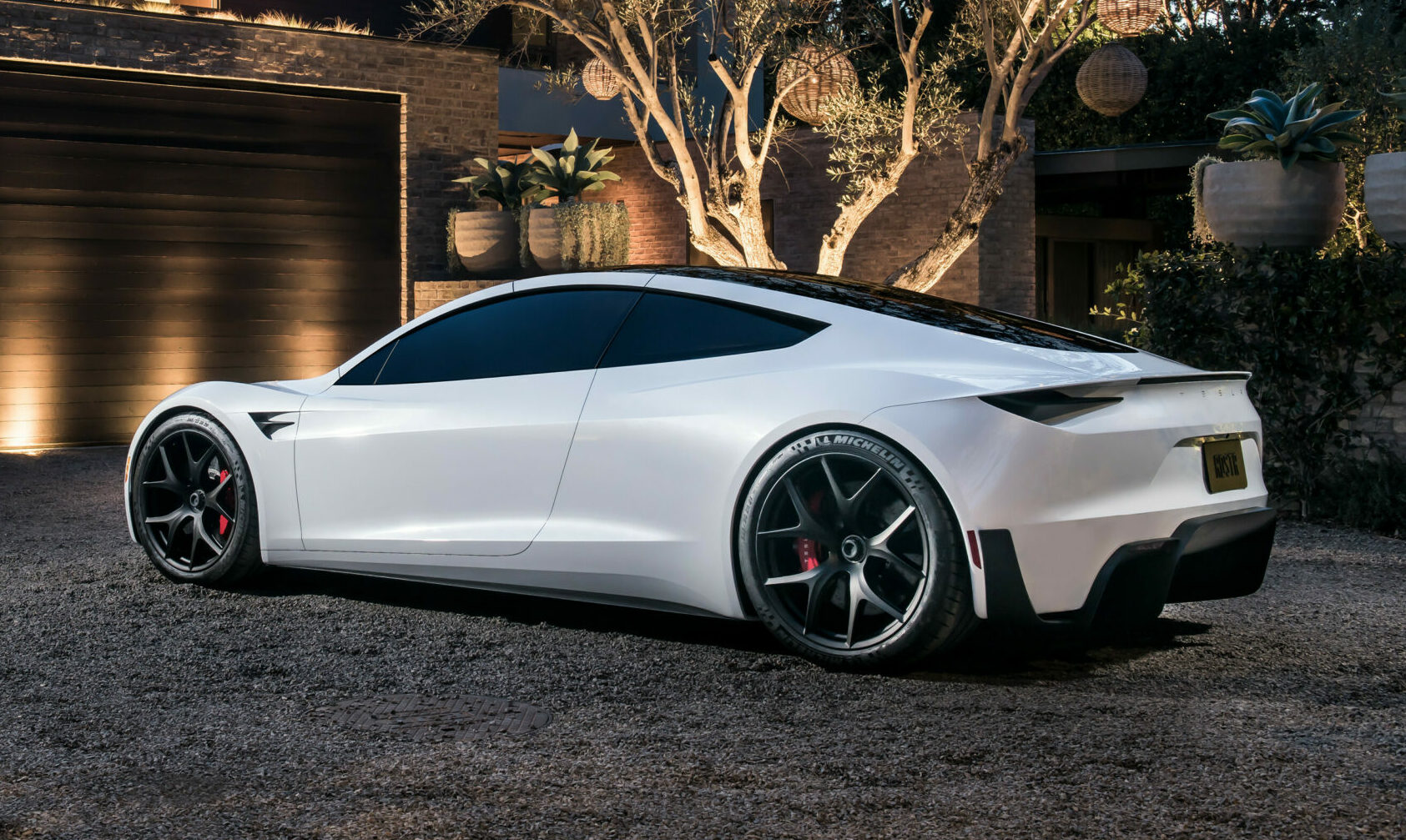
Tesla Roadster Delayed Again, Weeks Late But Years Behind

  • Tesla has delayed the Roadster again, now aiming for a late-April 2026 demo.
  • EV clashes with Tesla’s push toward steering-wheel-free autonomous vehicles.
  • After a decade of hype, the Roadster feels increasingly out of step with its future.

Sit down for this, because it might shake everything you thought you knew. The Tesla Roadster is delayed once again. Now that you’ve recovered from the shock of this news, let it be known that this time the delay is only a few weeks beyond the previous demo date of April 1. Every day that Tesla waits to bring this car to production, the less it makes sense, and that seems to be the viewpoint of the automaker itself.

CEO Elon Musk confirmed the latest delay on his social media platform X, writing in part, “New Roadster unveil probably in late April.” That moves it back from April 1, itself already a revision after missing earlier targets in 2020, 2021, 2022, 2023, 2024, and “late 2025.” Still, Musk insists it will be “a banger next-level.”

The second-generation Roadster has been pushed back so many times that its timeline now spans multiple presidential administrations, several Tesla product cycles, and an entire industry shift toward autonomy. At this stage, it’s starting to get really weird.

More: This Might Be The Tesla Roadster’s Biggest Update Since 2017

Musk and Tesla executives have hyped the Roadster as the “last best driver’s car,” a halo vehicle meant to prove EVs can outperform anything with pistons. Of course, plenty of EVs have come and gone that already made that point (at least on drag strips or shorter race tracks). The kicker is that while Tesla has delayed this car over and over and over again, its own view of the future has dramatically shifted.

True.

New Roadster unveil probably in late April. https://t.co/NShZxpK5cI

— Elon Musk (@elonmusk) March 17, 2026

The company is betting heavily on fully autonomous vehicles, including the upcoming Cybercab, which could, in theory, arrive without a steering wheel or pedals at all. That’s the way Tesla initially pitched it before regulations dampened that possibility. That creates a strange contradiction.

On one hand, Tesla says the future doesn’t require human drivers. On the other hand, it’s still teasing a six-figure performance car built entirely around the idea that driving engagement matters. At this rate, it likely doesn’t show up in production form until Tesla actually masters Full Self-Driving (Unsupervised).

New Roadster unveil hopefully next month.

It will be a banger next-level. https://t.co/sO0iB63l07

— Elon Musk (@elonmusk) March 17, 2026

EV Sales Plunge 41% In The US As Post-Incentive Reset Takes Hold

  • EV registrations fell sharply in January as market momentum faded.
  • Cadillac ranked as the No. 2 EV brand behind Tesla with modest growth.
  • Gas and hybrid vehicles gained market share as EV demand softened.

Newly-released sales figures from the United States is starting to reveal just how much electric vehicle demand leaned on the federal EV tax credit that was discarded on September 30 last year. With that incentive now gone, the early numbers suggest the market is already feeling the adjustment, and it has not been a subtle one.

Data from S&P Global Mobility shared by Auto News show that 59,802 new EVs were registered in January, a massive 41 percent drop from a year earlier. Out of nearly 1.2 million vehicles registered that month, that leaves fully electric models with just a 5.1 percent share of the market, down from 8.3 percent a year earlier.

Meanwhile, gasoline vehicles quietly expanded their hold, rising 2.3 percentage points to claim 76.6 percent of registrations. Hybrids also edged upward, gaining 1 point to reach a 14.7 percent share.

Read: Global EV Sales Just Fell 11%, But Carmakers Found A Surprising Backup Plan

Tesla still sits comfortably at the top of the US EV market, which will surprise absolutely no one. In January alone, 32,123 new Teslas were registered. Even so, Tesla is not immune to the slowdown, with registrations down 26 percent from a year earlier. Despite that drop, its share of the EV market jumped 11 percent to 53.7 percent.

Cadillac ranked a distant second with 3,189 registrations, more than ten times behind Tesla. However, the brand was one of the few to post growth, with registrations rising 8.1 percent year over year. Its share of the EV market also increased by 2.3 percent to 5.3 percent.

 EV Sales Plunge 41% In The US As Post-Incentive Reset Takes Hold

Many other carmakers have also seen their EV sales fall off a cliff. For example, there were 3,027 new Hyundai EVs registered in January, down 23 percent from the year prior. This decline was led by the Ioniq 5, which saw its deliveries slide 22 percent to 2,101 vehicles.

Ford’s EV registrations also dropped 67 percent to 2,772, while Chevrolet’s fell 55 percent to 2,658. Toyota, however, reported a 25 percent increase, although its EV registrations totaled just 2,529, meaning it still trails many competitors.

According to iSeeCars executive analyst Karl Brauer, “there’s going to be a shakeout to the new reality with no federal EV incentives, which was the carrot, and no greenhouse gas penalties, which was the stick.”

Auto News notes that EV registrations have declined year over year every month since the tax credit was scrapped on September 30. S&P Global Mobility analyst Tom Libby says the drop was “expected,” adding, “it’s a reset, and it’s going to be a very slow process moving forward.”

January 2026 EV Sales USA
BrandSalesDiff. vs Jan-25
Tesla32,123-26%
Cadillac3,189+8.1%
Hyundai3,027-23%
Ford2,772-67%
Chevrolet2,658-55%
Toyota2,529+25%
Rivian2,232-25%
Lucid1,633+97%
BMW1,501-60%
Kia1,462-58%
GMC1,156-31%
Lexus810+166%
Honda658-85%
Volvo599-32%
Subaru555-51%
Porsche495-60%
Volkswagen488-90%
Mercedes-Benz374-84%
Audi319-82%
Polestar299-34%
Nissan249-88%
Ram137
Jeep106-29%
Mini98-57%
Dodge80-65%
Genesis62-87%
Fisker41-70%
BrightDrop38-50%
VinFast37-76%
Rolls-Royce24-20%
Acura15-99%
Fiat15-91%
Maserati12+140%
Jaguar6-98%
Zeekr3
SWIPE

 S&P Global Mobility

Tesla Files New Seat Patent For A Supercar That’s Been Sitting Since 2017

  • Tesla filed a new “Vehicle Seat System” patent with the U.S. office.
  • The design replaces gears with flexible hinges for motion.
  • Electric motors are swapped for smaller multi-axis actuators.

Tesla has a knack for dropping surprises at just the right time, and its latest patent has sent anticipation for the new Roadster skyrocketing. A filing published this month describes a new approach to performance seating, one that replaces the normal train of metal brackets and hinges with a single sculpted shell.

The document that was first spotted by Teslarati outlines a monolithic frame that integrates the seat base, backrest, headrest, and side supports into a single composite structure. It’s a radical departure from the multi-piece setups of most sports cars. The fact that such materials as Kevlar-nylon and carbon-nylon composites are mentioned gives us an indication of Tesla’s purpose of reducing unnecessary weight while providing the seat with more strength.

Read: This Might Be The Tesla Roadster’s Biggest Update Since 2017

Conventional seats also depend on dozens of connected parts, each of which adds mass and introduces possible points of failure. By making the seat all in one, the engineers are hoping for a lighter build with fewer places for the wear and tear of time.

Design Built For Performance

\\\

The patent also points out the way Tesla wants these seats to behave. Rather than having metal gears recline the structure, they depend on what they call an integrated flexible hinge which means the material itself flexes where it is needed to do so. And that allows the frame to bend in certain areas, but be rigid in others, enabling designers to fine-tune the seat for support during hard acceleration or tight cornering.

Tesla isn’t stopping at the frame though. The patent substitutes for ordinary electric motors and rails with small actuators that can move the seat in various directions. With the six degrees of freedom, the system is capable of moving the seat with more precision than most luxury vehicles. It’s a degree of adjustability normally reserved for high-end performance interiors.

An Imminent Reveal?

 Tesla Files New Seat Patent For A Supercar That’s Been Sitting Since 2017

This patent comes at a time when Tesla fans also are watching closely. Elon Musk recently announced that the Roadster’s design reveal is on April 1, and it’s cause for high expectations for a car that has been stuck in the development limbo for years.

The timeline has stretched far beyond the original plan. Tesla first showed a Roadster prototype back in 2017 and initially targeted a 2020 launch. That deadline came and went. Still, recent trademark filings for updated Roadster badges suggest the company may finally be preparing to reveal the production version in full.

Weight reduction has always been one of Tesla’s tenets as an engineering company, as well as the move to large castings for structural components. A more graduated and integrated seating configuration makes a lot of sense in that strategy, especially for a vehicle that is eyeing extreme acceleration figures.

 Tesla Files New Seat Patent For A Supercar That’s Been Sitting Since 2017
❌
❌