Reading view

There are new articles available, click to refresh the page.

Testing Of A Mysterious Future Toyota EV Sparked A Recall Of The New C-HR
  • Toyota is conducting two new recalls that impact an assortment of models.
  • The 2026 C-HR can lose drive power due to a software programming issue.
  • A handful of trucks and SUVs have incorrect load carrying capacity labels.

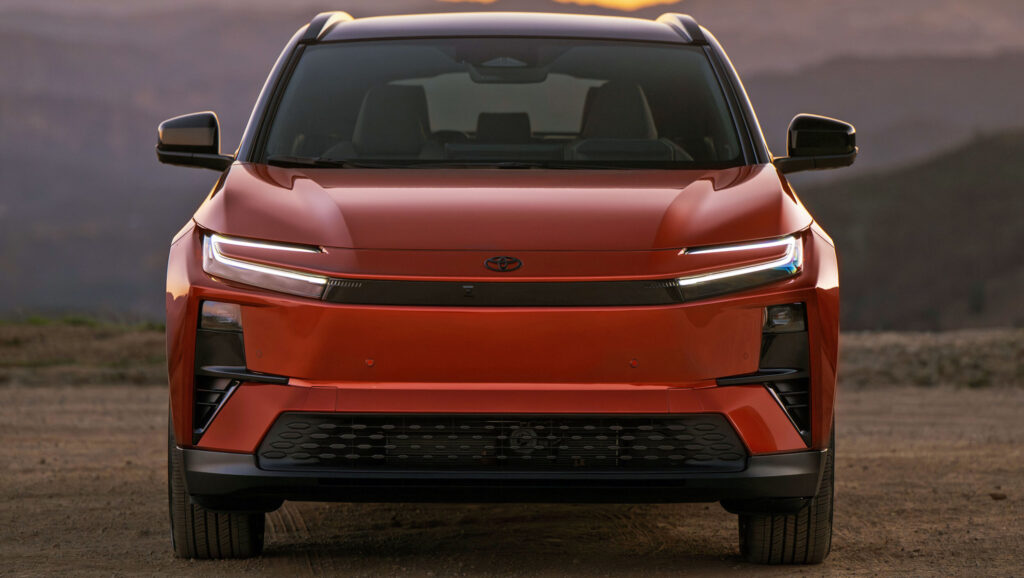
The Toyota CH-R returned for 2026 as an electric crossover, but it’s already getting recalled. As the government explained, the battery can become “overcharged” and shut down the powertrain while driving.

The issue impacts 8,521 vehicles and is being blamed on a software programming error. Toyota first discovered the issue in April during testing of an undisclosed “future BEV model.” This sparked a review of electronic control units in other EVs and this eventually identified the 2026 C-HR as being impacted.

More: Toyota Delays New Electric Highlander Before It Even Launches

The issue involves a faulty battery protection logic, which is intended to limit the charging of the battery. Due to a programming error, the battery can become overcharged in certain conditions.

This mainly appears to be a problem in low temperatures, when the battery is at a high state of charge, and when the vehicle is in regenerative mode for a long time. In effect, if you live up in the mountains, fully charged your C-HR overnight, and are driving down into the city while relying heavily on the regenerative braking system, it could be an issue.

 Testing Of A Mysterious Future Toyota EV Sparked A Recall Of The New C-HR

While that’s just an example, it highlights how rare the problem appears to be. Speaking of which, Toyota isn’t aware of any warranty claims or field reports related to the issue. If a problem were to occur, warning lights and a buzzer would activate to alert drivers to the loss of motive power.

Since this is a simple software issue, the fix is straightforward as dealers will update the electronic control unit. Notifications are scheduled to go out on October 18.

Label Mistake

 Testing Of A Mysterious Future Toyota EV Sparked A Recall Of The New C-HR

In other Toyota recall news, 135 vehicles have an incorrect load carrying capacity modification label. The problem impacts a handful of different models including the 2024 Tacoma and 2025 Tundra as well as the 2026 4Runner and RAV4.

The recall is the result of data entry errors as accessory weight values were wrong in one of Toyota’s systems. This threw off calculations and resulted in labels that could cause people to overload their vehicles.

Toyota discovered the problem during an internal audit that found eight accessory parts with weight discrepancies. To address the problem, dealers will replace the label with a correct one.

 Testing Of A Mysterious Future Toyota EV Sparked A Recall Of The New C-HR

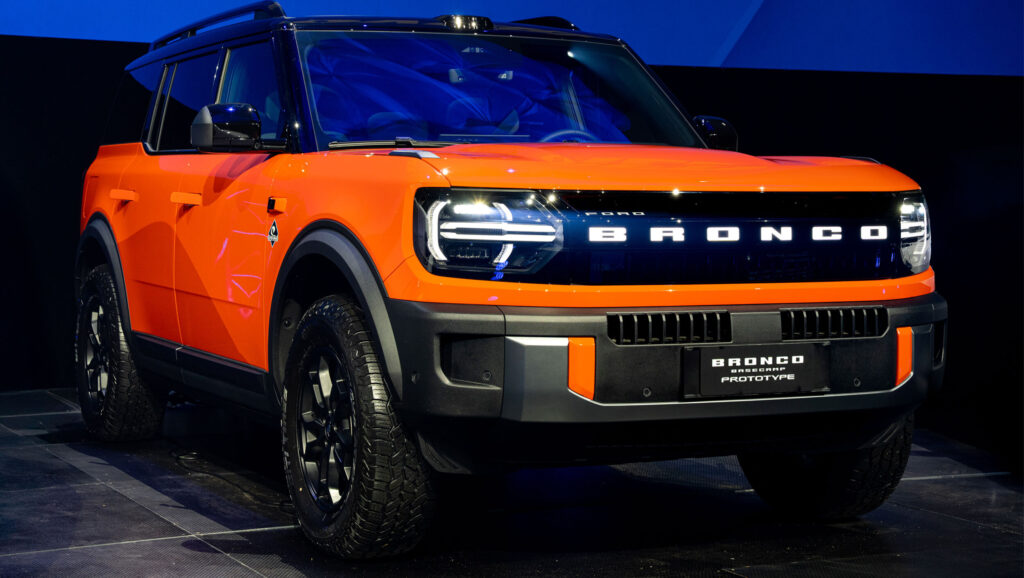
Bronco Basecamp Breaks Out Of China And Heads Down Under

  • The Ford Bronco Basecamp is coming to Australia and New Zealand.
  • Model arrives next year with a range-extended powertrain and pop-up roof.
  • Crossover could have a combined output of 416 hp and 442 lb-ft of torque.

Nearly a decade after wrapping up production in Australia, Ford has announced big plans for the land down under. As part of an event, the company announced plans to “double coverage of the Australian vehicle market to over 60% within three years.” The automaker is also aiming for “over 90% of its volume sold to be all-new or significantly refreshed by the end of 2030.”

The centerpiece of this plan is to bring the Bronco Basecamp to Australia and New Zealand in the second half of 2027. The model launched in China last year and targets a “new breed of outdoor enthusiasts.”

More: Ford’s Electrified Bronco Arrives In China With A Pop Up Roof Surprise

Ford didn’t say much about the local variant, but confirmed it will have a “super hybrid extended-range electrified powertrain.” It consists of two electric motors, a 49 kWh battery pack, and a turbocharged 1.5-liter engine that acts exclusively as a generator.

The company said this will deliver the smooth and responsive driving dynamics of an electric vehicle, but with a range of 497 – 559 miles (800 – 900 km). It also goes without saying, you can simply fill up with gas and be back on your way.

\\\\\\\\\\\\\\

Ford didn’t talk numbers, but the Bronco Basecamp starts at ¥229,800 ($34,245 USD / $47,565 AUD) in China and features a combined output of 416 hp (310 kW / 421 PS) and 442 lb-ft (600 Nm) of torque. The model also has a CLTC electric-only range of 137 miles (220 km).

While Ford didn’t say much about the vehicle, they noted it’s built for adventure and would make the perfect camping companion. When it’s time to go to sleep, all the seats fold down and an inflatable mattress can be placed on top of them to create a bed.

When morning comes, the rear swing gate has a “Wild Kitchen” with a fold-down table. The model even has Pro Power Onboard, which enables owners to access up to 6.6 kW of juice to power equipment such as coffee makers, cooktops, and lights.

The upscale Bronco Basecamp Outer Banks goes even further as it has an electric pop top that rises at the touch of a button to increase headroom, such as when camping. The Outer Banks also has a 7.5-liter center console compartment that can be warmed or chilled.

Besides the Bronco Basecamp, Ford announced the electric Transit City will arrive in November for $50,000 AUD ($36,100 USD). Around the same time, the Mustang Dark Horse T8-Spec will land at dealers. The automaker also announced the local launch of Ford Pro, which will be supported by a new seven-year, unlimited kilometer warranty for commercial customers who exclusively rely on Ford dealerships for servicing.

\\\\\\\\\\\\\\

Tiny, Slow, And Super Cheap: The VinFast VF 2 Could Come To America And Europe

  • VinFast has suggested the tiny VF 2 could eventually be sold outside Vietnam.
  • The two-door microcar has 40 hp, a top speed of 50 mph, and 130 miles of range.
  • Company implied it could be positioned as a golf cart alternative like the Topolino.

VinFast had grand ambitions, but things didn’t go according to plan. However, the company isn’t giving up and recently hinted their new microcar could eventually come to Europe and the United States.

In a meandering press release, VinFast Canada said the “microcar is quietly making a comeback.” They went on to note the success of the Citroën Ami and Fiat Topolino, the latter of which is now available in America.

More: Stellantis’ Cheapest New Vehicle In America Is A $14K Fiat You Can’t Take On The Highway

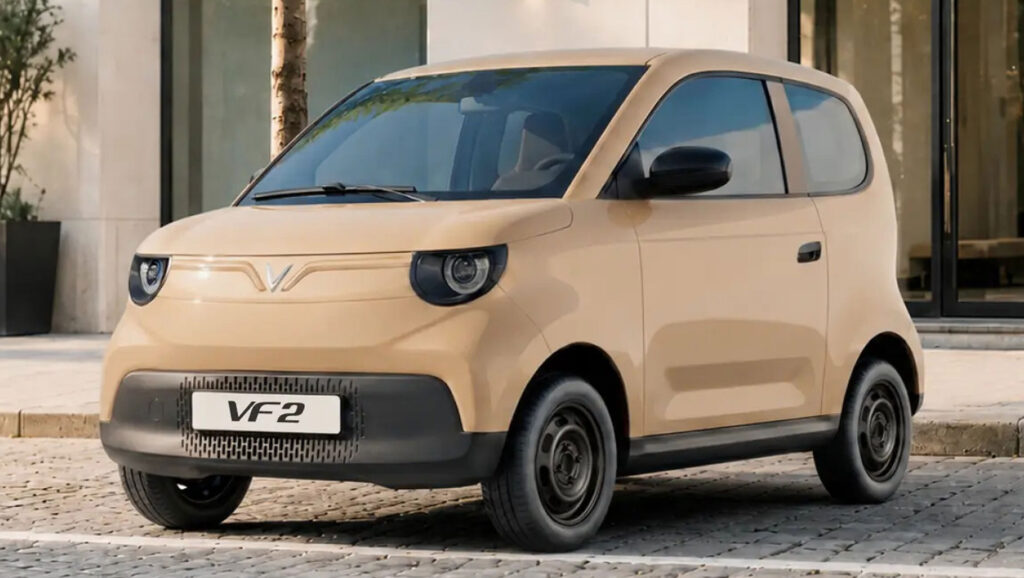
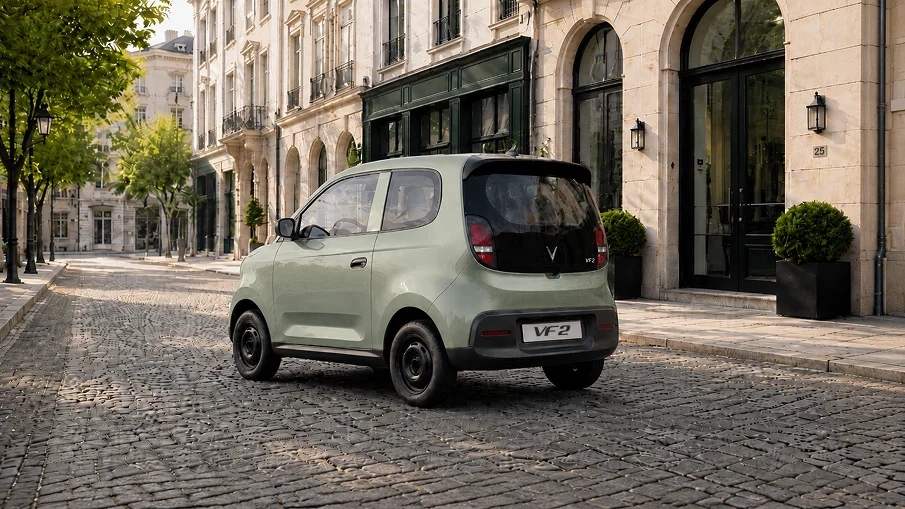
The company then pivoted to the VF 2, which is their smallest model. The two-door, four-seater measures 121.7 inches (3,090 mm) long, 58.9 inches (1,496 mm) wide, and 65.5 inches (1,663 mm) tall with a wheelbase that spans 81.3 inches (2,065 mm). To put those numbers into perspective, the Fiat 500e is over 21.3 inches (540 mm) longer.

While the VF 2 is tiny, it only costs $7,214 (đ188 million) in Vietnam, which is “roughly as much as a premium motorcycle.” Despite the bargain basement pricing, the company noted the model has LED headlights, air conditioning, a 7-inch display, and 13-inch alloy wheels. They’re joined by a handful of safety features including a driver’s airbag, anti-lock brakes, and a traction control system.

\\\\

Power comes from an 18.3 kWh battery pack, which feeds a rear-mounted motor developing 40 hp (30 kW / 41 PS) and 48 lb-ft (65 Nm) of torque. This enables the car to have an NEDC range of up to 130 miles (210 km). When the battery is low, a 24 kW DC fast charger can take it from 10% to 70% in approximately 34 minutes.

Those numbers aren’t very impressive, but VinFast noted they’d be perfect for the “urban commuter who drives alone.” That’s a relatively niche market, but a super cheap car certainly has some appeal, even if the top speed is limited to 50 mph (80 km/h).

\\\

While the automaker acknowledged they haven’t announced plans to bring the VF 2 to North America or Europe, they added such a decision “would not be entirely out of place.” The company went on to say that, “In many developed markets, even entry-level vehicles have become increasingly expensive, with the average new vehicle selling for more than $50,000 by the end of last year.” This suggests they see a place for something far cheaper.

The company went on to imply the VF 2 could follow in the footsteps of the Topolino and be positioned as an alternative to golf carts for neighborhood transportation. As they noted, “Walk through many newly developed residential communities in the world today, and it is no longer unusual to see golf carts being driven well beyond the golf course. Their popularity suggests there is demand for small, simple vehicles designed primarily for short urban trips.”

 Tiny, Slow, And Super Cheap: The VinFast VF 2 Could Come To America And Europe

Kia’s Next Electric Van Is A 17-Foot Box On Wheels And It’s Coming For VW

  • Spy photographers have snapped Kia’s upcoming PV7.
  • Electric van slots above the PV5 and is aimed at businesses.
  • Could share some powertrains with its smaller counterpart.

Kia is gearing up to introduce the new PV7 at the IAA Transportation show on September 14 and they recently released a handful of teaser images. Spy photographers are now filling in the blanks as they’ve spotted the commercial vehicle undergoing testing in Europe.

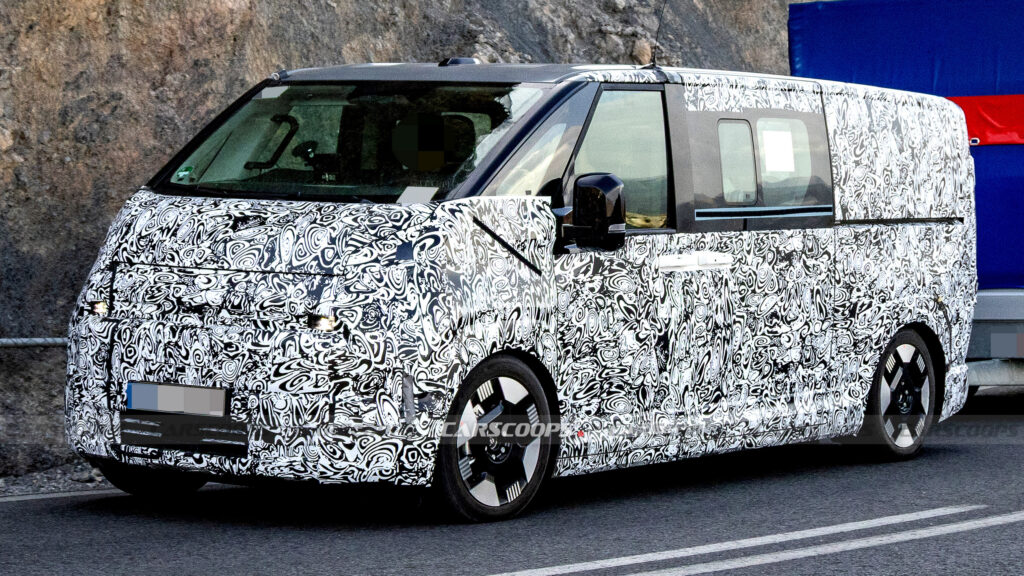
Set to become the second member of the Platform Beyond Vehicle lineup, the PV7 follows in the footsteps of the PV5 that was introduced last year. As a result, it features a stepped front end and an expansive windshield. They’re joined by black upper accents and lower black plastic body cladding.

More: Electric Kia PV7 Is Coming For The Ford Transit

\\\\

SHProshots

The model has a “one-box profile” and that’s putting it lightly as the van is essentially a box on wheels. The prototype seen by spy shooters features dual sliding doors with an odd window arrangement in the middle. They’re accompanied by a relatively flat roof that helps to maximize cargo capacity.

Around the back, there’s a vertical liftgate and a small rear bumper. They’re accompanied by vertical taillights as well as a recessed license plate area. The van also has thick rear pillars with black accents to create the illusion of a wraparound greenhouse.

\\\\\

SHProshots

The PV7 was previewed by a concept in 2024 and will reportedly measure around 208.6 inches (5,300 mm) long. To put that into perspective, the PV5 Cargo Long is 184.8 inches (4,695 mm) long and has a 117.9-inch (2,995 mm) wheelbase.

The model will ride on the Electric-Global Modular Platform for Service (E-GMP.S), which is a fleet-focused version of the E-GMP architecture that underpins the Hyundai Ioniq 5, Kia EV6, and Genesis GV60, among others.

Powertrain details remain a mystery, but the PV5 offers a 43.3 kWh LFP battery pack as well as 51.5 and 71.2 kWh NCM batteries. They power electric motors with outputs of 120 hp (89.4  kW / 122 PS) and 184 lb-ft (250 Nm) of torque as well as 161 hp (120 kW / 163 PS) and 184 lb-ft (250 Nm).

Given the PV7’s size, we wouldn’t be surprised to find the 51.5 and 71.2 kWh batteries, and they could potentially be joined by an even larger pack. The 161 hp (120 kW / 163 PS) electric motor also seems like a safe bet and it could be joined by an even more powerful one as well. That being said, we’ll find out for sure later this month.

\\\\\

SHProshots

New Ford Fathom Prototype Breaks Cover Ahead Of Its 2027 Debut

  • Ford’s CEO has released new teaser images of the Fathom.
  • Midsized electric truck follows in the footsteps of the Maverick.
  • Debuts next year and will start at $29,945 including destination.

Getting a good look at the Fathom has been about as easy as capturing a real phantom on camera. However, Ford CEO Jim Farley recently took to social media to release high quality teaser images.

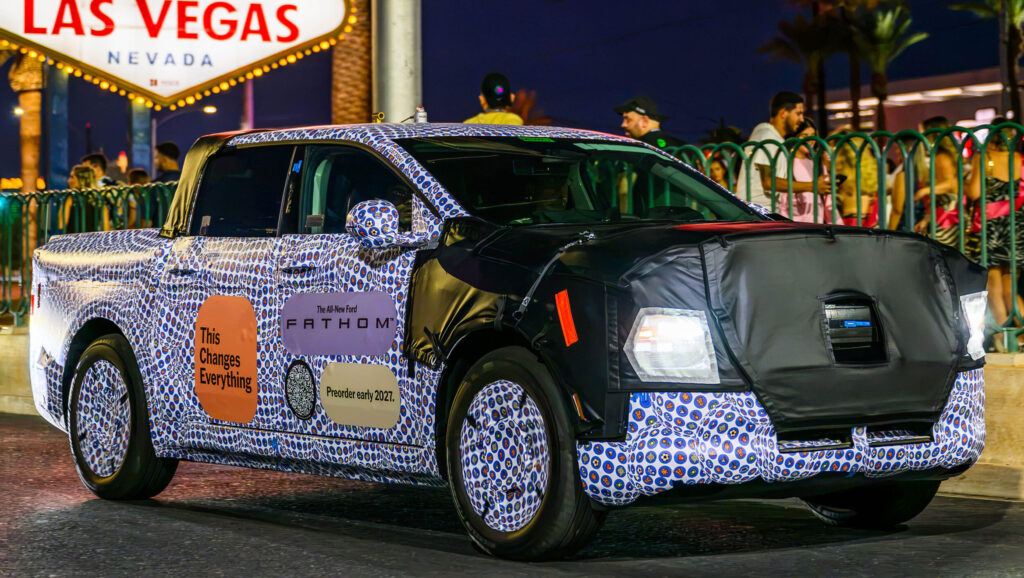
They show the midsized electric truck traveling past the iconic Las Vegas sign. Of course, we’re more interested in the pickup than the tourist trap.

More: Ford Spent $2 Billion On A Factory To Build Its $28K Fathom Pickup In Three Pieces

Dressed in colorful camouflage, the Fathom follows in the footsteps of the Maverick as it has an upright front end with a wide lower intake. Bulky cladding hides the grille, but it’s flanked by mid-mounted headlights that have an angular accent toward the inside.

\\

Photos Ford / Jim Farley

Further back, we can see streamlined bodywork and aerodynamically optimized wheels, which are also wrapped in disguise. They’re joined by traditional door handles as well as tiny mirrors. The latter don’t look particularly good, but Ford has previously said their 20% smaller size results in an extra 1.5 miles (2.4 km) of range.

Other notable highlights include rounded wheel arches and what appears to be an angular lip around the upper bed. Elsewhere, there are vertical taillights and a relatively plain rear bumper with an offset license plate.

A closer inspection reveals the cab is slightly smaller than it appears as the prototype has been equipped with a sizeable rear spoiler. This pushes out the black camouflage and undoubtedly contributes to the truck’s efficiency.

\\

Photos Ford / Jim Farley

Despite being smaller than it appears, Ford has previously confirmed the Fathom has more passenger volume than the Toyota RAV4. This means we can expect more than 98.9 cubic feet (2,801 km) of space for occupants.

Additional details are limited, but Ford has said the truck will have a large touchscreen display with an easy-to-use navigation system powered by Apple Maps. It will also have Apple CarPlay and Android Auto compatibility, digital key technology, a bidirectional charging capability, and next-generation BlueCruise hands-free driving.

#FordFathom in the wild. https://t.co/SwmOUzeJv1 pic.twitter.com/CNERthHQEV

— Jim Farley (@jimfarley98) September 1, 2026

Specifications remain a mystery, but Ford has hinted at multiple battery packs. The base model comes with the “standard-range battery,” so that suggests there will also be a long-range variant.

Unfortunately, we still have a wait ahead of us as Ford won’t introduce the model until 2027. When pre-orders begin early next year, pricing will start at $28,350 before a $1,595 destination fee.

\\\\\\\\\\\\\\\\\

Baldauf

Subaru EV Sales Jumped 21%, Despite Huge Solterra Decline

  • Subaru sales climbed 1.3% last month to 62,028 units.
  • Ascent saw a 37.2% increase, while WRX soared 191%.
  • New EVs helped to grow sales, but Solterra plummeted.

It’s a new month and that means sales data is slowly trickling in. Some of the latest is from Subaru and it reveals August sales climbed 1.3% to 62,028 units.

While the brand didn’t break any records like Kia, they noted the Ascent, Crosstrek, Outback, and WRX had their best month of the year. The Crosstrek was the top performer with 19,541 sales, which was a 4.4% decline from a year ago.

More: Subaru Is Spending $9,650 Per Solterra Just To Get Them Off Lots

The Forester was up 17.8% to 16,760 units, while the Outback slid 3.4% to 15,233. It’s also worth noting dealers sold five Legacy sedans, despite the fact that production ended nearly a year ago.

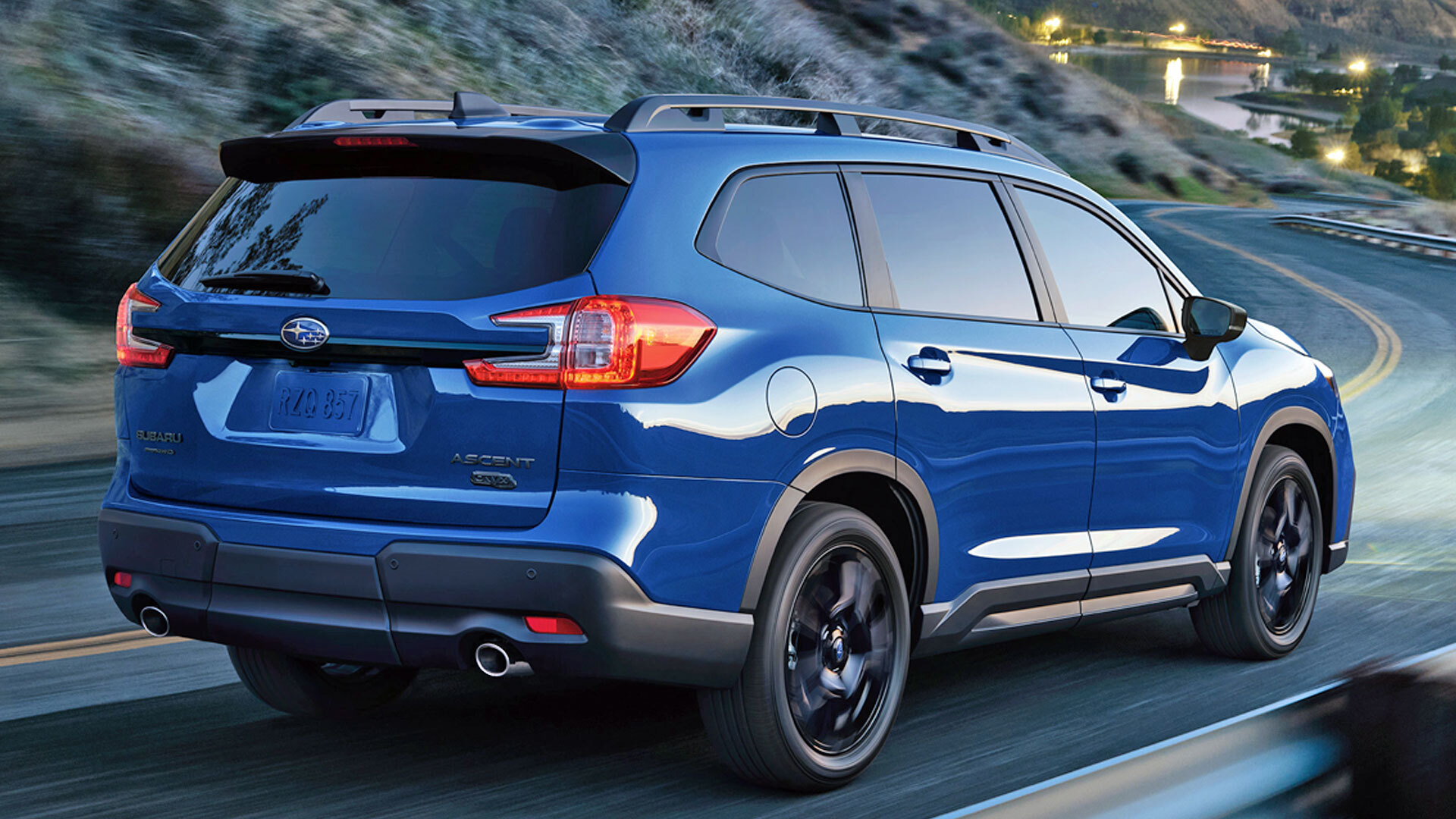
The biggest surprise for August was the Ascent, which saw sales climb 37.2% to 5,155 units. The 2027 model was announced in June and only received minor changes such as a new Deepwater Blue Pearl paint job and USB Type-C charging ports. Those are hardly the kind of things that would drive sales in a crossover that was introduced in 2017.

 Subaru EV Sales Jumped 21%, Despite Huge Solterra Decline

While the Ascent’s sudden sales jump is a mystery, the WRX’s 191% increase is a no-brainer. The brand slashed pricing earlier this year and focused on affordability.

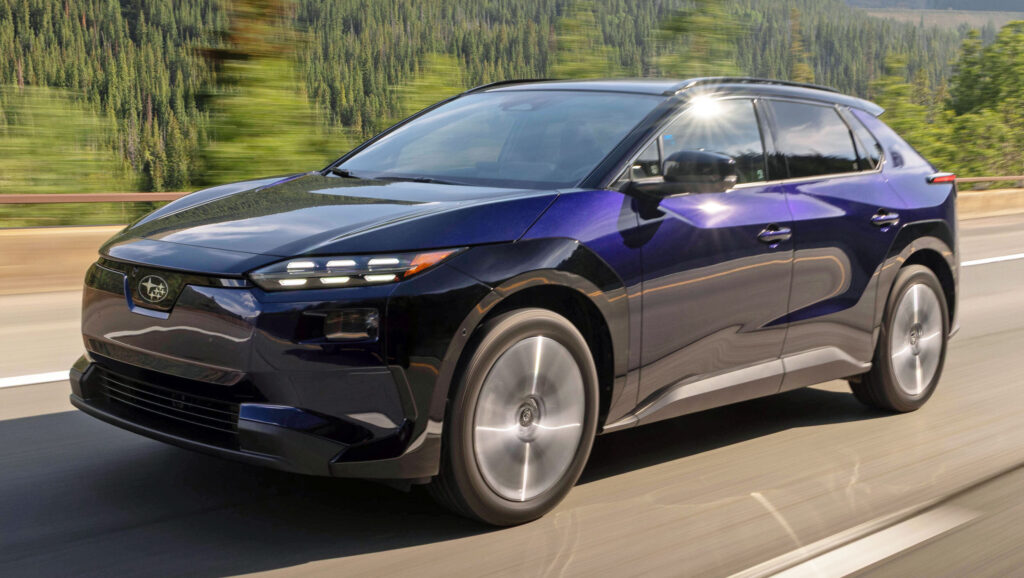
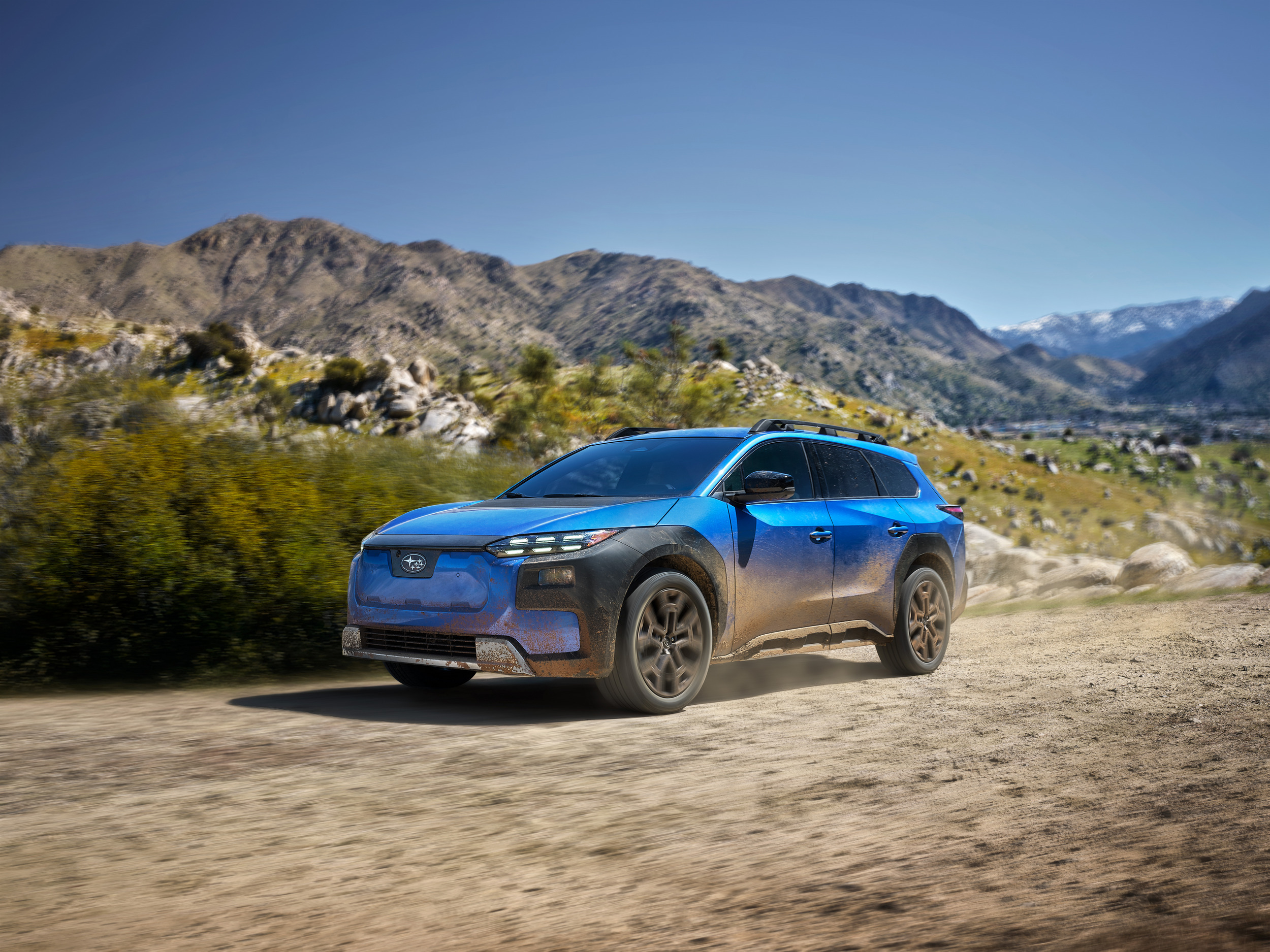
That brings us to EVs, which paint a mixed picture. Solterra sales fell 86.6% to a dismal 197 last month. At the same time, Subaru sold 1,248 Trailseekers and 320 Uncharted EVs.

 Subaru EV Sales Jumped 21%, Despite Huge Solterra Decline

This implies the new Trailseeker and Uncharted could be cannibalizing sales from the older Solterra. However, it may not be that simple as a quick search suggests dealers only have 70 new Solterras in stock. That’s less than two weeks of supply, so the lack of product appears to be hampering sales.

That being said, overall sales of EVs were up slightly as Subaru sold 1,765 in August. That’s a 21.3% increase compared to the 1,466 sold a year ago.

Subaru US Sales August 2026
Aug 26Aug 25% ChgYTD 26YTD 25% Chg
Ascent5,1553,75737.2%28,92528,2432.4%
BRZ2352206.8%2,0202,107-4.1%
Crosstrek19,54120,442-4.4%122,953128,404-4.3%
Forester16,76014,22517.8%140,487122,08315.1%
Impreza1,5562,644-41.2%11,39619,995-43%
Legacy52,087-99.8%2,20615,163-85.5%
Outback15,23315,768-3.4%92,108104,007-11.4%
Solterra1971,466-86.6%5,4729,529-42.6%
Trailseeker1,24800%4,76100%
Uncharted32000%3,17000%
WRX1,778611191%10,3247,49937.7%
TOTAL62,02861,2201.3%423,822437,030-3%
SWIPE

Kia Sets All-Time August Sales Record As Hybrids Soar

  • Kia had a record-breaking August as Americans bought 83,793 vehicles.
  • Six different models set a new monthly sales record including the Telluride.
  • Hybrid sales were up 99%, thanks to gas prices above $4 per gallon nationally.

Kia’s stellar year continues as the brand has set a new August sales record in the United States. Dealers moved 83,793 vehicles last month, which was 786 more than a year ago.

The brand didn’t just break one record either as the K4, K5, Carnival, Seltos, Sportage, and Telluride all posted their best August in history. Kia also noted hybrid sales were up 99%, which can largely be credited to high gas prices caused by the war in Iran.

More: Kia’s New EV3 Starts Under $30,000 And Undercuts Nissan Leaf

While consumers embraced hybrids to save at the pump, gas prices weren’t high enough to get them to switch to EVs. Sales of the EV6 tumbled 60% to 712 units, while the larger EV9 fell 33% to 1,789.

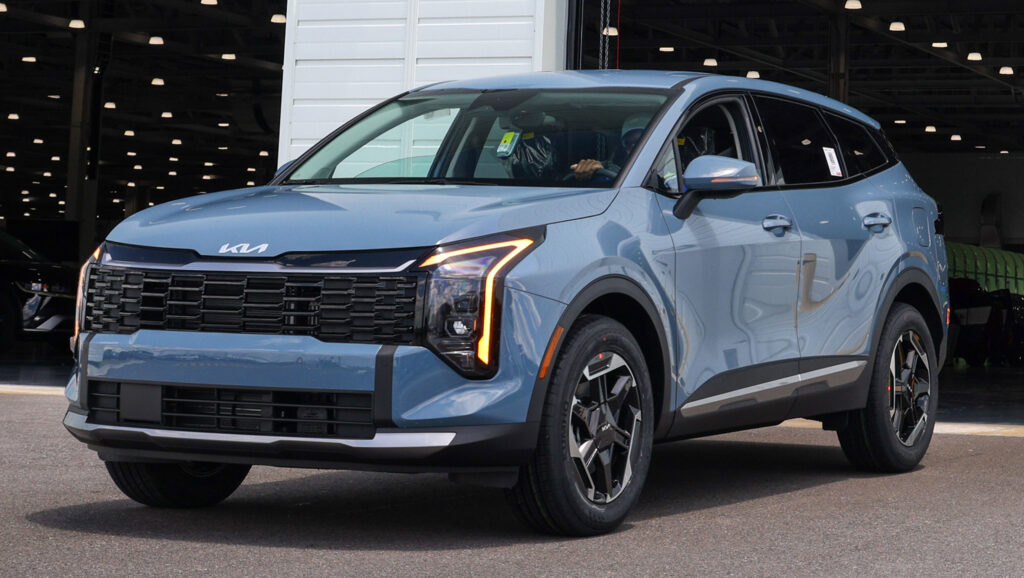
The big winner last month was the Sportage as Americans snapped up 18,723 of them. This was a slight increase from a year ago, but sales are up nearly 8.5% year-to-date.

 Kia Sets All-Time August Sales Record As Hybrids Soar

The Sportage was followed by the affordable K4 (12,881) and Telluride (12,693). The latter was recently redesigned and consumers appear to be digging it as sales are up 16.7% year-to-date. This was undoubtedly aided by the introduction of a hybrid variant with its recent redesign.

Speaking of redesigned models, the 2027 Seltos appears to be off to a strong start as August sales surged 65.3% to 9,214 units. The classier crossover starts at $24,990 and will be followed by a hybrid variant later this year.

 Kia Sets All-Time August Sales Record As Hybrids Soar

It’s also worth noting Kia was able to set a new monthly sales record despite the elimination of the Soul. That model found 5,548 buyers in August of 2025, while last month’s sales fell to zero.

Kia also has a few things to look forward to including the facelifted Niro and all-new EV3. The latter found six early adopters last month and should generate some interest thanks to a starting price of $29,890.

Kia August 2026 US Sales
ModelAug 26Aug 25YTD 26YTD 2025
EV91,7892,67910,4749,354
EV67121,7965,4298,961
EV36060
K4/Forte12,88112,09198,55498,814
K57,5236,84752,61147,291
Soul05,5483,48036,339
Niro2,9833,12418,47217,663
Seltos9,2145,57450,52535,430
Sportage18,72318,023129,713119,587
Sorento9,8808,62668,26667,510
Telluride12,69312,17798,11184,090
Carnival7,3896,52254,73645,602
Total83,79383,007590,377570,641
SWIPE

Nissan Waves To The Renault Twingo With New Entry-Level EV

  • The Nissan Wave has been spied ahead of a launch next year.
  • Hatchback is a lightly revised version of the Renault Twingo.
  • Model sports a more traditional design and should be affordable.

Nissan launched the redesigned Micra last year and a report, in January, suggested it could be followed by an even smaller EV known as the Wave. Spy photographers have now snapped the model and it’s a lightly revised version of the Renault Twingo.

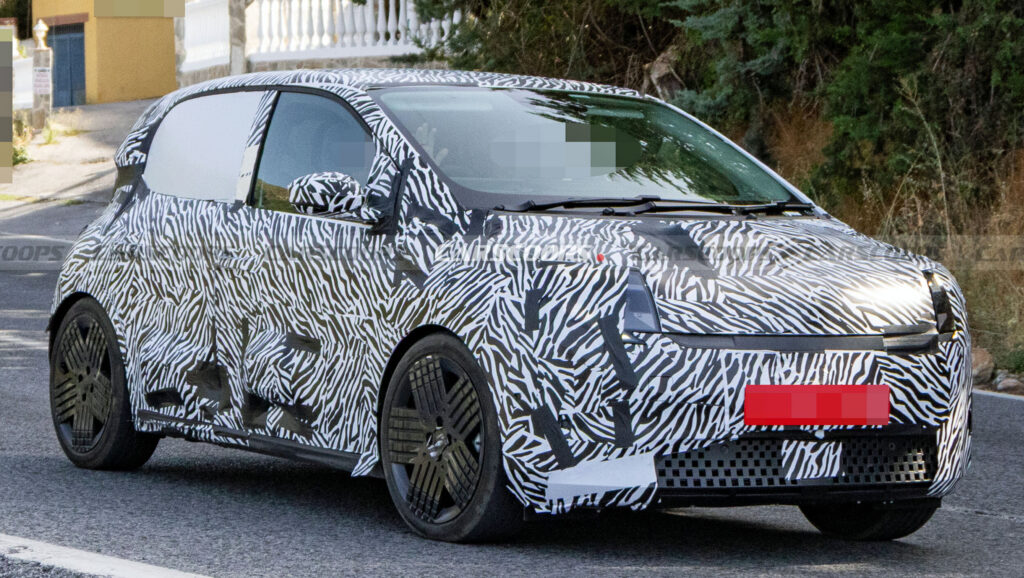
Dressed in heavy camouflage, the Wave has a revised front end that trades circular lighting units for squared off ones with an angular lower accent. The latter appear to be part of a C-shaped daytime running light signature.

More: New Nissan Wave Could Bring Back A Cult Era Of Retro JDM Cars

Elsewhere, we can see a wider central bar as well as a revamped intake with a cube-like design. They’re accompanied by a more traditional hood and a lower sensor pod that is covered by camo.

The profile appears to carryover virtually untouched, but we can expect restyled wheels that are unique to Nissan. They’ll likely have an aerodynamically optimized design to maximize range.

\\\\\

SHProshots

Continuing around back, there’s a no-nonsense rear end that adopts more traditional taillights. The bumperettes have also been ditched, resulting in a cleaner, more modern design.

Spy photographers didn’t get much of a look inside, but we can see a curved upper dashboard as well as a freestanding infotainment system. This suggests the cabin will follow in the footsteps of the Twingo, which has a 7-inch digital instrument cluster and a 10-inch infotainment system.

 Nissan Waves To The Renault Twingo With New Entry-Level EV

SHProshots

Motivation will likely be provided by a familiar 27.5 kWh battery pack, which feeds an electric motor developing 80 hp (60 kW / 82 PS) and 129 lb-ft (175 Nm) of torque. This enables the Twingo to accelerate from 0-62 mph (0-100 km/h) in 12.1 seconds, before hitting a top speed of 81 mph (130 km/h).

While the electric city car won’t be winning any races, it should have a WLTP range of up to 163 miles (263 km). The model should also cost around €19,500 ($22,595) like its Renault counterpart.

\\\\\\\\

SHProshots

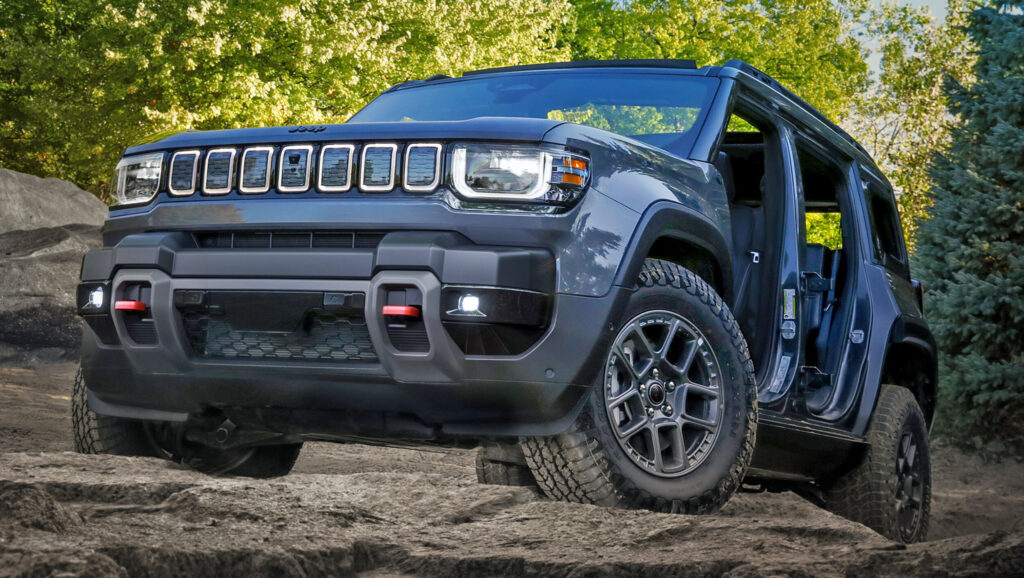
Jeep Recon EV Has More Power Than Originally Announced

  • Jeep has quietly updated the performance specs for the Recon.
  • It produces an extra 20 hp, but the range remains pretty bad.
  • Model starts at $65,000, but some dealers already list discounts.

The Jeep Wagoneer S was an overpriced flop and dealers are still struggling to get rid of 2025 models. A quick search online reveals a number of massive discounts including one model that stickered for $67,590 being listed for $40,855. That’s a savings of $26,735 and it even includes an $855 documentation fee.

Unfortunately for Jeep, the Wagoneer S is closely related to the upcoming Recon. It starts at $65,000 before a $1,995 destination fee.

More: Jeep’s $65,000 Recon Is Surprisingly Fast, But Can It Outrun The EV Slowdown?

The hefty price tag puts the model in an awkward spot as it will arrive shortly after the smaller Rivian R2. It costs $57,990 in Performance guise and will be followed by a more affordable Premium – which begins at $53,990 – later this year.

While we’ve already compared the two models, it appears some Jeep dealers are worried about history repeating itself. As a result, they’re already slapping discounts on the Recon ahead of launch.

 Jeep Recon EV Has More Power Than Originally Announced

These aren’t anything to write home about and they’re nowhere close to the massive markdowns we’ve seen on the Wagoneer S. However, Jeff Wyler Chrysler Dodge Jeep Ram of Columbus shows a $720 discount on their Recon Moab.

Over in California, Van Nuys Chrysler Dodge Jeep Ram has a $500 discount on their Moab. This means the $67,590 MSRP has been knocked down to $67,090 before a $122 document and electric filing fee.

 Jeep Recon EV Has More Power Than Originally Announced

Bomnin Chrysler Dodge Jeep Ram Doral also has a $500 discount on their incoming Recon, but the savings is more than offset by massive fees. This includes a $999 dealer fee as well as a $499 electronic fee.

As for the handful of other vehicles listed online, they’re largely priced at MSRP. That being said, it’s too early to read into anything as the crossover hasn’t even launched yet.

Recon Has More Power Than Originally Announced

\\\\\\\\\\

Digging a little deeper, we discovered that Jeep quietly updated specifications for the Recon. When the model was introduced in 2025, it was rated at 650 hp (485 kW / 659 PS) and 620 lb-ft (840 Nm) of torque.

The company has now bumped the output up to 670 hp (500 kW / 679 PS). This will enable the crossover to accelerate from 0-60 mph (0-96 km/h) in as little as 3.6 seconds, before hitting a top speed of 112 mph (180 km/h).

Besides having an additional 20 hp (15 kW / 20 PS), Jeep has tweaked the range estimate. It originally stood at 250 miles (402 km), before being lowered to a maximum of 230 miles (370 km).

Jeep now lists the range as 222 miles (357 km) for the Recon Moab and 240 miles (386 km) for the Overland trim. The latter will arrive sometime after launch and details remain to be seen.

\\\\\\\\

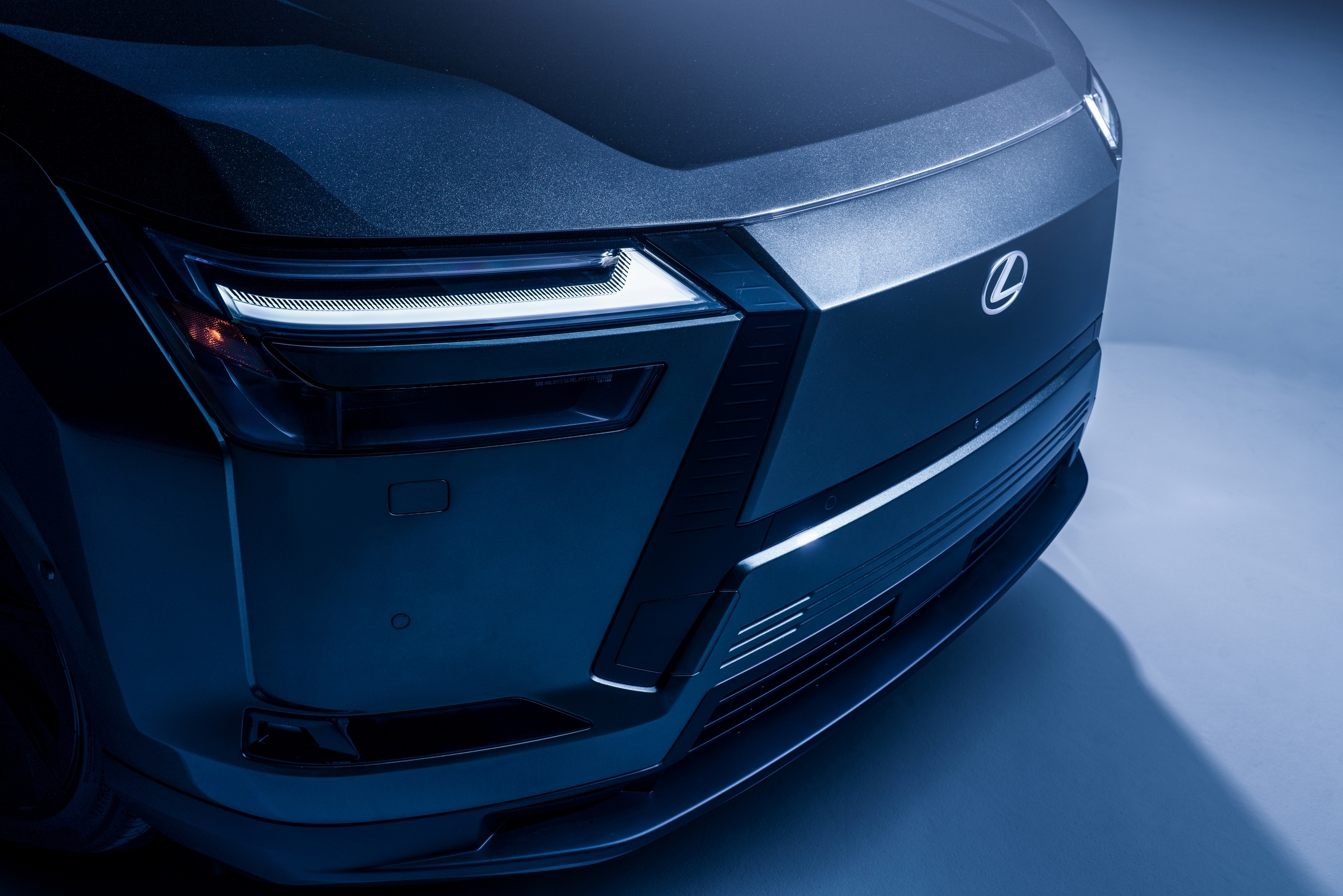
Next-Gen Lexus EV Arrives Soon With Gigacasting Tech

  • Lexus is gearing up to launch a next-gen EV in China.
  • Will use gigacasting to save weight and increase range.
  • Crossover could play a big role in growing Chinese sales.

After a slow start, Toyota and Lexus have significantly expanded their electric lineups. However, one of their most important models will reportedly go into production in the fall of 2027.

According to Nikkei Asia, Lexus will build a next-generation electric vehicle at a new plant in Shanghai. Little is known about the model at this point, but it’s reportedly a crossover that will be “made with leading-edge technology, including gigacasting to mold multiple aluminum body parts together as a single large piece.”

More: Lexus Killed Its Next Electric Sedan, Then Approved Its Replacement The Same Day

The use of gigacasting was pioneered by Tesla and has been slowly spreading across the auto industry. It will be used on the upcoming Ford Fathom and it promises significant weight savings. In the case of the Lexus EV, this could increase the crossover’s range by “several percent.”

While Toyota usually reserves its most advanced production techniques for Japan or the United States, the Lexus is being billed as the “rare exception.” Electric vehicles dominate in China and the company has struggled there as they only sold 182,458 vehicles in 2025. For comparison, the luxury brand moved 370,260 units in the United States that same year.

 Next-Gen Lexus EV Arrives Soon With Gigacasting Tech

Lexus is reportedly planning to build around 1,000 units per month in the model’s first year. However, production is slated to ramp up to “tens of thousands” of units annually.

The model appears to be a Chinese-exclusive, which would be a bit of a change for the automaker. A quick look at the company’s current lineup reveals an assortment of familiar models including the NX, RX, GX, and LX. They’re joined by the ES, LS, LM, and RZ. The latter is the brand’s sole electric vehicle in a market that practically demands them.

 Next-Gen Lexus EV Arrives Soon With Gigacasting Tech

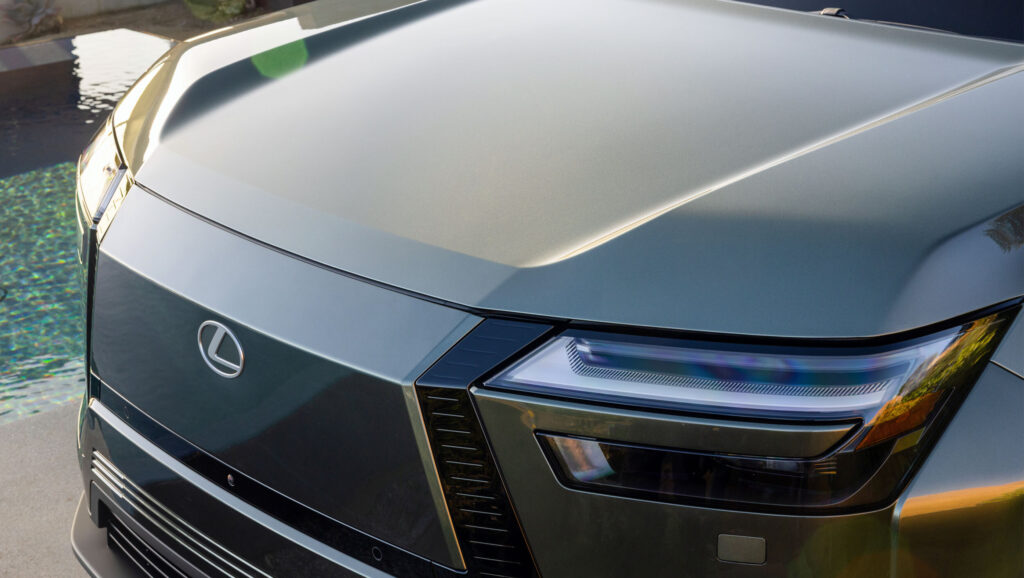
Lexus TZ pictured

VW’s First Electric California Is An ID. Buzz With A Bed

  • Volkswagen has introduced the new ID. California Cruise campervan.
  • It’s based on the ID. Buzz and offered with short or long wheelbases.
  • Model features a folding mattress, window blinds, and camping gear.

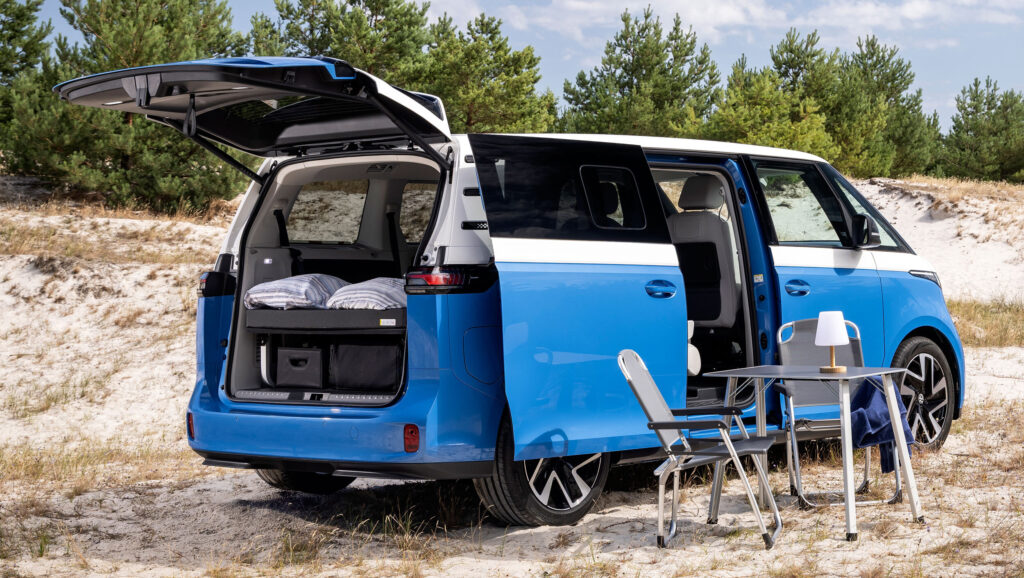
Volkswagen Commercial Vehicles has used the Düsseldorf Caravan Salon to introduce the new ID. California Cruise. It’s based on the ID. Buzz Pro and is the first fully electric California variant.

Available with either a short or long wheelbase, the van is instantly recognizable as the only exterior changes are California lettering on the liftgate and “California Cruise” decals on the sides. However, once you get to your destination, you can install front window vents or blackout curtains.

More: VW’s Fix For Heavy Campervans Is An Inflatable Kitchen

Speaking of preparing for sleep, the van features a rear platform that houses a tri-fold mattress. It’s 3.5 inches (9 cm) thick and measures 80 inches (2,030 mm) long by 47.2 inches (1,200 mm) wide. Volkswagen says two people can sleep comfortably on the mattress, although the interior setup looks a little awkward.

To ensure you’re comfortable at night, the van has a retained power function that enables the battery to continue operating interior lights, USB charging ports, and the climate control system. Volkswagen said it can work up to 48 hours, but the exact time largely depends on the battery’s starting charge and the outside temperature.

Since camping isn’t much fun if you’re cooped up inside, the ID. California Cruise comes with two camping chairs and a table. They’re stored beneath the rear platform and appear to be housed in a zippered bag.

\\\\\\\\

Rounding out the highlights are “exclusive seat covers in the ‘Miwo’ design with an integrated California wordmark.” Volkswagen also noted the van has a vehicle-to-load function, which makes camping far more enjoyable as it turns the van into a giant power station that provides up to 2,000 watts of juice. This means it can power everything from coffee makers to coolers and electric cooktops.

The ID. California Cruise arrives early next year and German pricing starts at €60,761 ($70,813). Volkswagen also teased additional California EVs are coming by 2028.

While the ID. California Cruise isn’t coming stateside, Americans will get a similar ID. Buzz Tourer 4Motion. It features a fold-out mattress, front ventilation panels, and window blinds as well as an exterior table and chairs.

\\\\\\\

Bentley’s Torcal Is Basically A Mid-Grade Cayenne Electric With 850 HP And A British Accent

  • Bentley officials have released preliminary specs for the Torcal EV.
  • PPE-based crossover has a 113 kWh battery and around 850 hp.
  • Model weighs roughly 6,000 lbs and has a WLTP range of 370 miles.

Bentley has spent the past few months revealing minor details about the upcoming Torcal. Now, we’re starting to learn specifications ahead of the crossover’s unveiling next month.

While we already knew the model would ride on the PPE platform and share a lot in common with the Porsche Cayenne Electric, Autocar recently took a spin in a prototype. During the preview, officials confirmed the Torcal has a dual-motor all-wheel drive system that produces around 850 hp (634 kW / 862 PS).

More: Bentley’s Torcal Will Offer Something No Other Automobile Has

That’s slightly above our estimate of 800 hp (597 kW / 811 PS), but it still slots nicely between the 657 hp (490 kW / 666 PS) Cayenne S Electric and 1,139 hp (849 kW / 1,155 PS) Cayenne Turbo Electric. This likely means the crossover will rocket from 0-60 mph in the low three second range and have a limited top speed of 155 mph (250 km/h).

\\\\\\\\\\\\\\

SHProshots

The crossover uses a front motor sourced from the Audi Q6 e-tron, while the rear motor hails from the Cayenne Electric. It also borrows the latter model’s 113 kWh battery pack and this is said to give it a WLTP range of approximately 370 miles (595 km). Unsurprisingly, the crossover is expected to weigh around 5,952 lbs (2,700 kg). For comparison, the Cayenne S Electric comes in at 5,695 lbs (2,583 kg).

Other highlights are slated to include an air suspension, four-wheel steering, and active anti-roll bars. The company has also previously confirmed the model will offer a mood selector, Ombre wood trim, 100% Merino wool upholstery, and a curved infotainment system.

\\\\\\\\

Hyundai Is Slashing Battery Costs And Increasing Their Lifespan By 20%

  • Hyundai’s Level 2+ semi-autonomous driving system arrives in 2028.
  • Future EVs will use new cells that reduce battery costs by 30%.
  • Global production capacity is set to increase by 1.27 million units.

Hyundai’s massive product push dominated their investor day event, but it wasn’t the only thing the company announced. Quite the opposite as the automaker talked about increasing production, ramping up autonomous driving efforts, and offering improved technology.

Starting with autonomous driving, the first Ioniq 5 Waymo robotaxis will be delivered in the fourth quarter and they’ll “enable an international expansion of robotaxi services as early as 2027.”

More: Hyundai Is Launching More Than 100 New Vehicles By 2030

Besides the Waymo effort, Hyundai-owned Motional will use Ioniq 5 robotaxis. They’re scheduled to begin commercial operations later this year in Las Vegas. Additional cities should then follow in 2027.

On the consumer front, “Hyundai Motor Group is standardizing its sensor architecture around the NVIDIA ecosystem so that data acquired by Hyundai Motor, Kia, 42dot, and Motional can be integrated and used to a single consistent standard.” This means learnings from one company can be applied to others.

\\\

Hyundai is also working to deploy its autonomous driving artificial intelligence, known as Atria AI, by the end of the year. It will eventually be used to power the company’s Level 2+ system, which arrives in 2028.

The automaker went on to say “Atria AI will be extended progressively across mass-produced vehicles, building a full lineup of autonomous driving capability from Level 2+ to Level 4.” Since Hyundai sells millions of vehicles annually, they’ll collect a ton of data, and this will be used to rapidly improve the AI’s self-driving capabilities and performance.

Improved EVs

\\\

Hyundai has been an electric vehicle pioneer and this experience is about to pay off as the company has developed its own battery cells. They “deliver more than double the output of the high-nickel cells … used previously, while cutting charging time by 40 percent.” The new cells will apparently debut in the upcoming Santa Fe or Genesis range-extended vehicle.

Starting next year, EVs will use new “mid-nickel NCM cells.” This will reduce battery costs by approximately 30%, while “maintaining optimal performance under real-world driving conditions.” Furthermore, the new batteries will have 30% more energy than equivalent LFP batteries of the same size.

Lastly, the company will improve its cloud-based battery management system by 2028. This will reportedly extend battery life by an average of 20%.

Amazon Partnership

 Hyundai Is Slashing Battery Costs And Increasing Their Lifespan By 20%

Hyundai’s partnership with Amazon on Amazon Autos appears to be a success as they’ll expand listings to markets outside of the United States next year. Alexa built-in will also roll out across the Hyundai lineup, while Genesis models will follow.

Speaking of tech, Hyundai is relying on Amazon Web Services to accelerate their “cloud and AI capabilities.” Amazon is also said to be looking at using Hyundai fuel cell vehicles.

Increased Production Capacity

 Hyundai Is Slashing Battery Costs And Increasing Their Lifespan By 20%

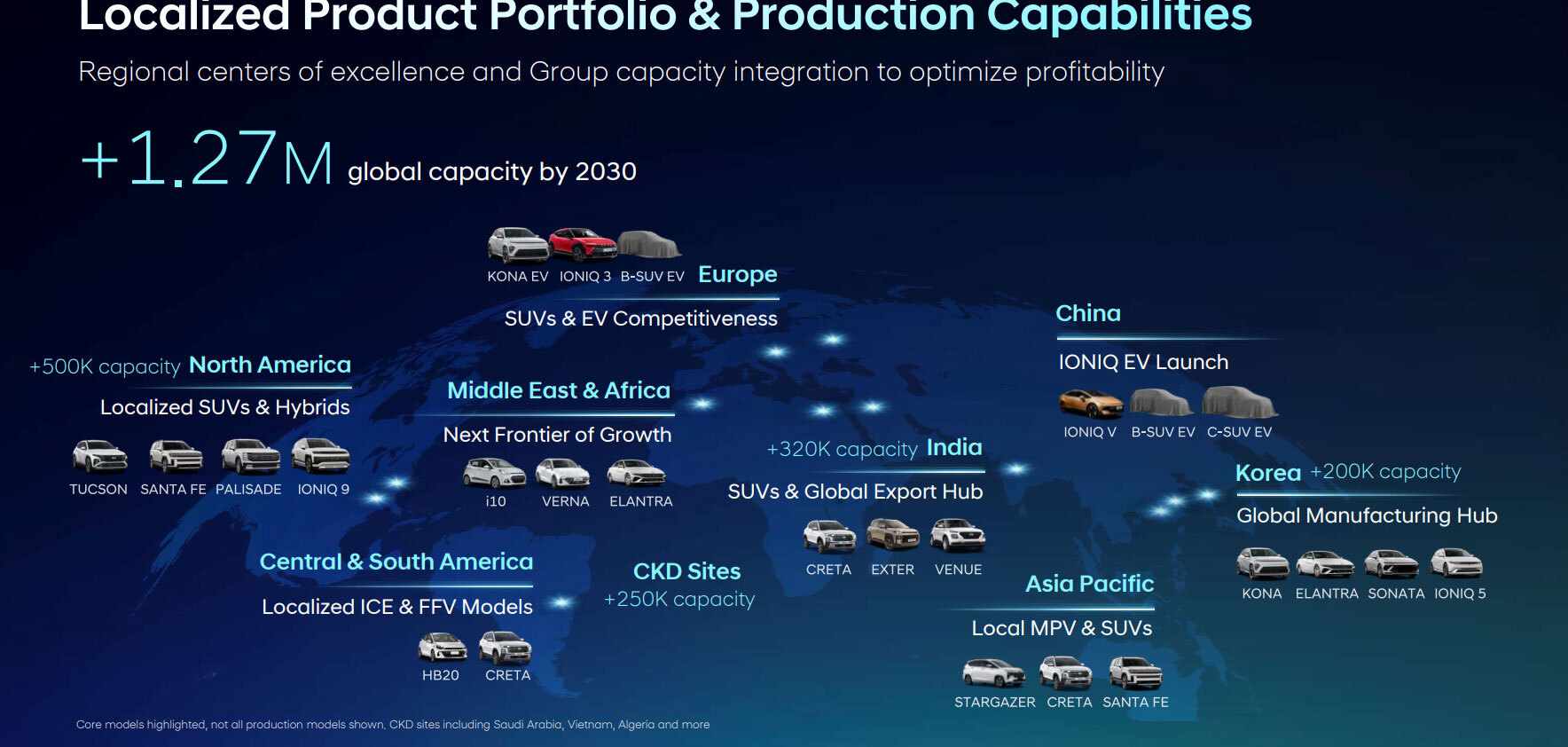
With more than 100 new models coming by 2030, Hyundai is ramping up their production capacity by 1.27 million units globally. North American plants will be able to build an additional 500,000 units, while Indian facilities add 320,000 units. Korean production will increase by 200,000 vehicles, while CKD sites will see their capacity grow by 250,000 units.

Focusing in on North America, Hyundai is increasing their local parts sourcing target to 80%. That’s up from 60% and the automaker confirmed there will be more than ten hybrids on the continent by 2030, which are produced at Hyundai Motor Manufacturing Alabama and Hyundai Motor Group Metaplant America.

 Hyundai Is Slashing Battery Costs And Increasing Their Lifespan By 20%

Hyundai Is Launching More Than 100 New Vehicles By 2030

  • Hyundai is launching more than 100 products by 2030.
  • 58 launches in North America including 22 from Genesis.
  • Europe is getting five new EVs including a D-segment SUV.

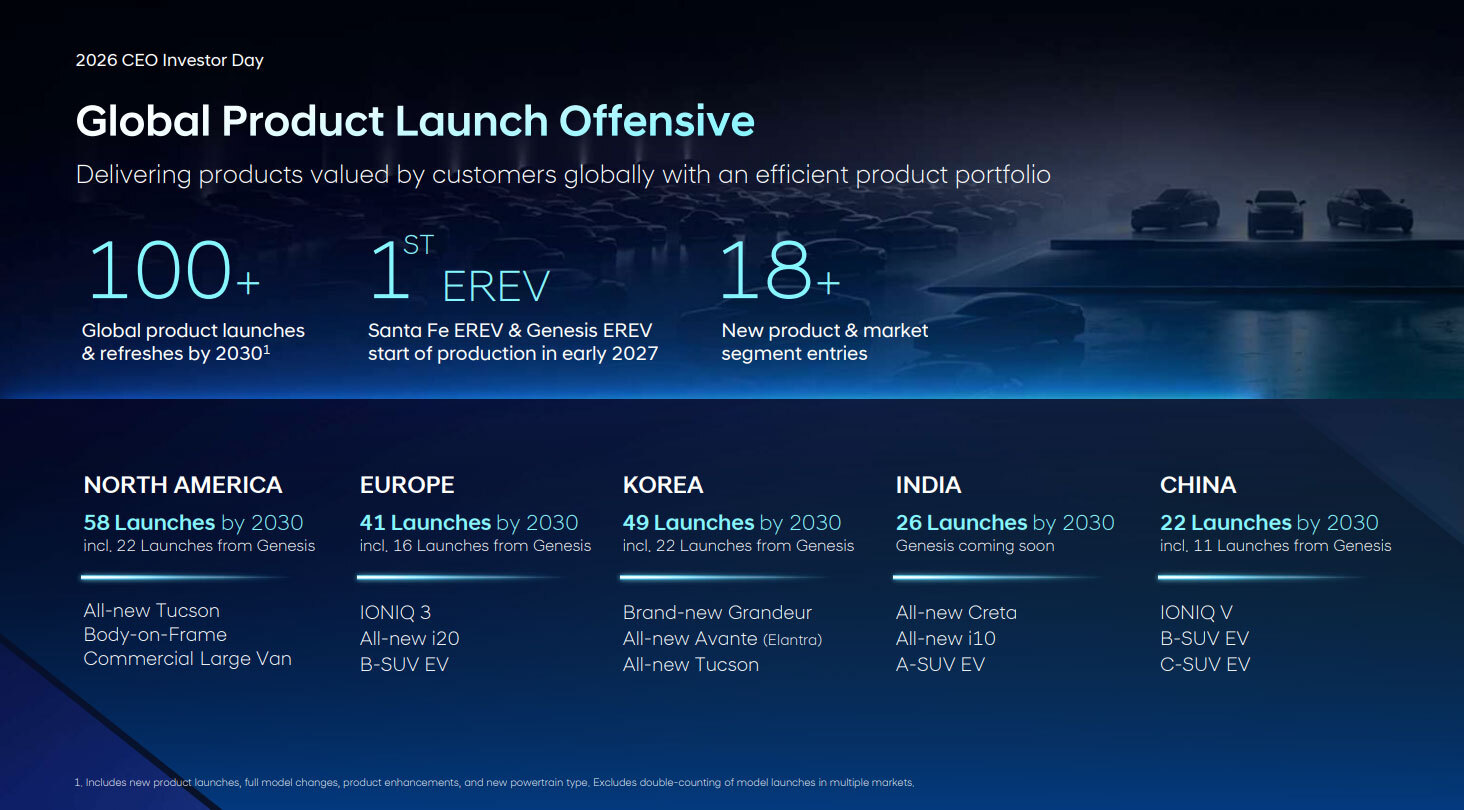
Hyundai has announced plans to introduce more than 100 new or refreshed models by 2030. Seven new vehicles are coming in the next eight months and the automaker promises there will be more than 18 different entries into “new products and market segments.”

While there’s a lot to cover, the company used their 2026 CEO Investor Day to announce a major product offensive. It’s a global effort as there will be “58 launches in North America, 49 in Korea, 41 in Europe, 26 in India, and 22 in China.” We’ve already seen a number of these as Hyundai said they include the new Elantra, Tucson, and Ioniq 3.

More: Hyundai’s Radical New Tucson Makes The RAV4 Look Half-Asleep

They’ll be joined by a range-extended Santa Fe as well as an all-new global B-segment SUV. Europe will get a second B-segment model, while India will get an even smaller A-segment electric crossover.

 Hyundai Is Launching More Than 100 New Vehicles By 2030

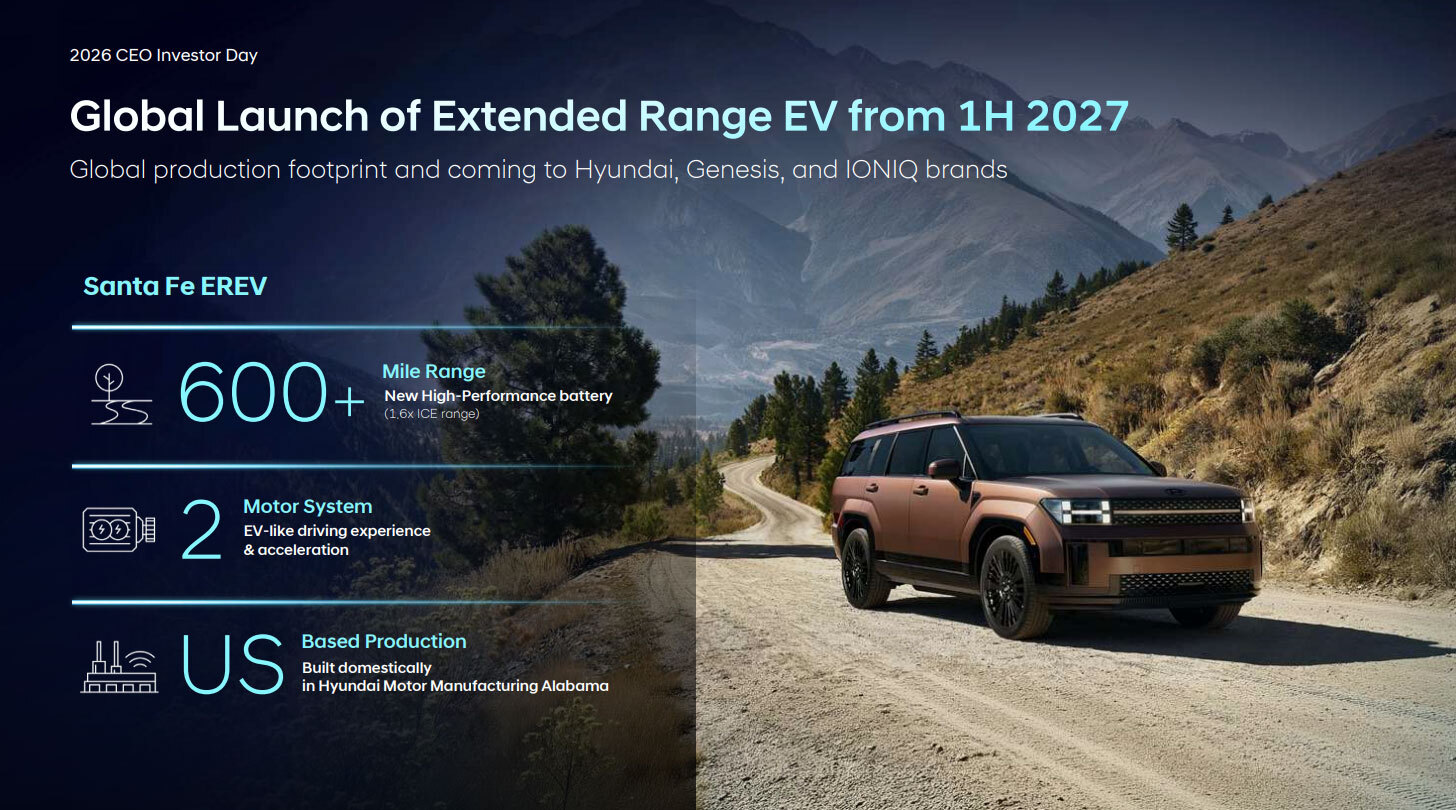
The Santa Fe EREV arrives in the first half of 2027 and it’s expected to have a combined range of more than 600 miles (966 km). It will be built at Hyundai Motor Manufacturing Alabama and deliver an EV-like driving experience, but without “range and charging anxiety.”

Europe Is Getting Five New EVs

 Hyundai Is Launching More Than 100 New Vehicles By 2030

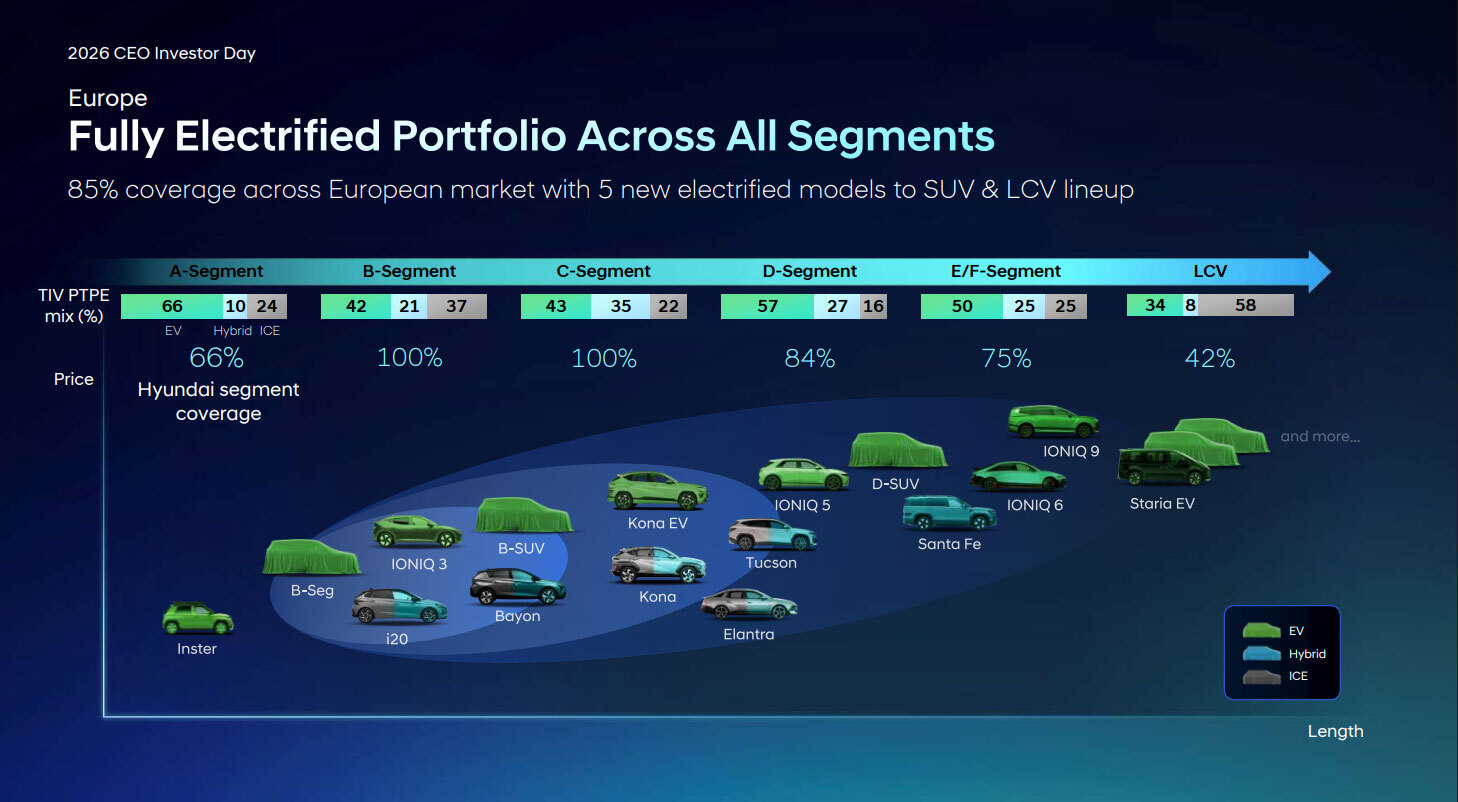
The company was largely coy on additional nameplates, but confirmed Europe will have a “fully electrified portfolio” that includes five all-new crossovers and light commercial vehicles. Hyundai hopes this will increase European EV sales from 116,000 units in 2025 to more than 420,000 units by 2030.

While Hyundai didn’t say much, they quietly revealed the two upcoming B-segment vehicles will be fully electric. They’ll be joined by a large D-segment electric crossover as well as two electric vans.

In India, a new electric crossover arrives in the fourth quarter with a next-generation infotainment system as well as a Level 2 semi-autonomous driving system. It will be followed by an ICE-powered mid-size SUV in the future.

A Chinese Turnaround With Fresh Product

 Hyundai Is Launching More Than 100 New Vehicles By 2030

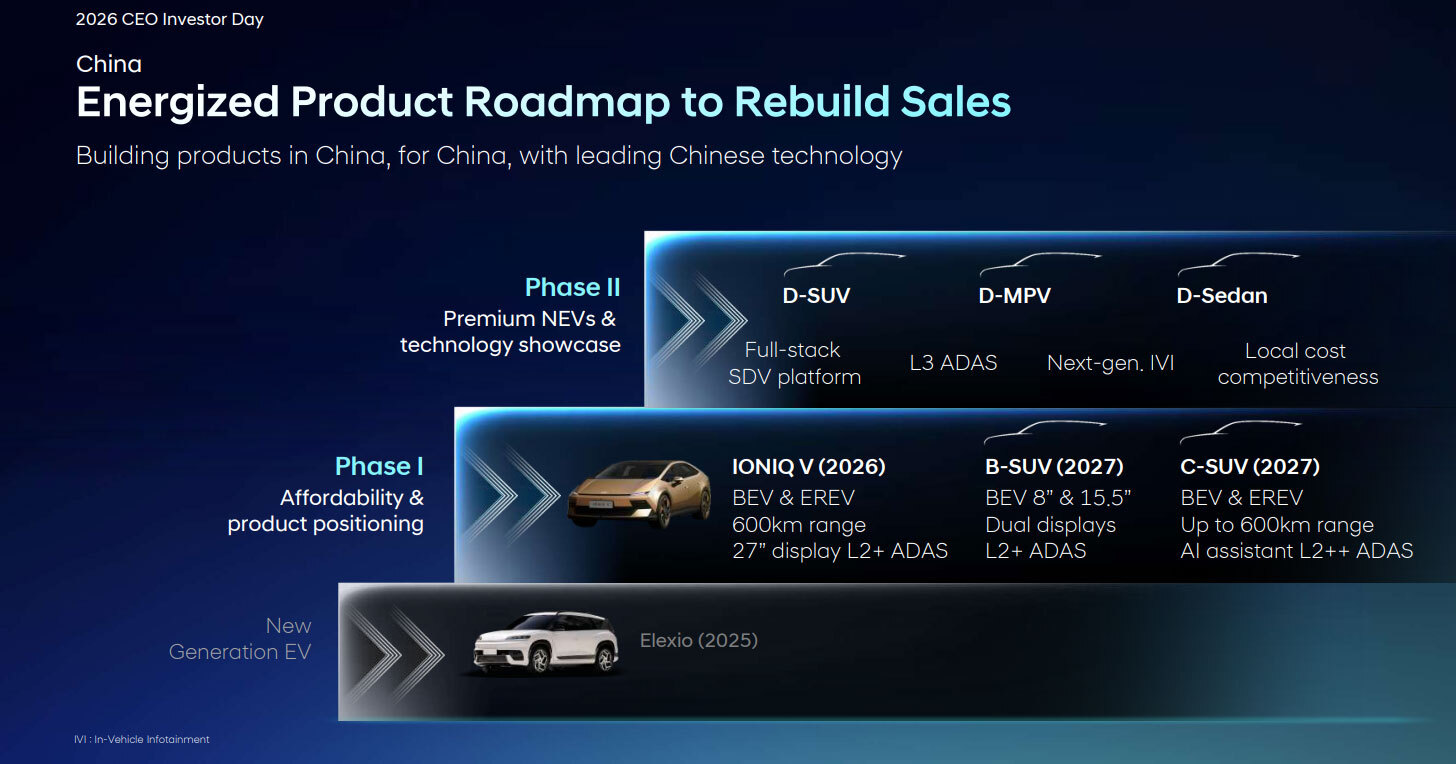
Hyundai is “pursuing a turnaround” in China, which will be spearheaded by the Ioniq V. The model will be followed by electric and range-extended vehicles in 2027.

The B-SUV will be fully electric, while the C-SUV will offer electric and range-extended powertrains. The latter will provide up to 373 miles (600 km) of range overall.

They’ll eventually be followed by three D-segment vehicles including a sedan, crossover, and MPV. These will have Level 3 autonomous driving technology as well as what sounds like a next-generation powertrain.

Genesis Looks For Growth

 Hyundai Is Launching More Than 100 New Vehicles By 2030

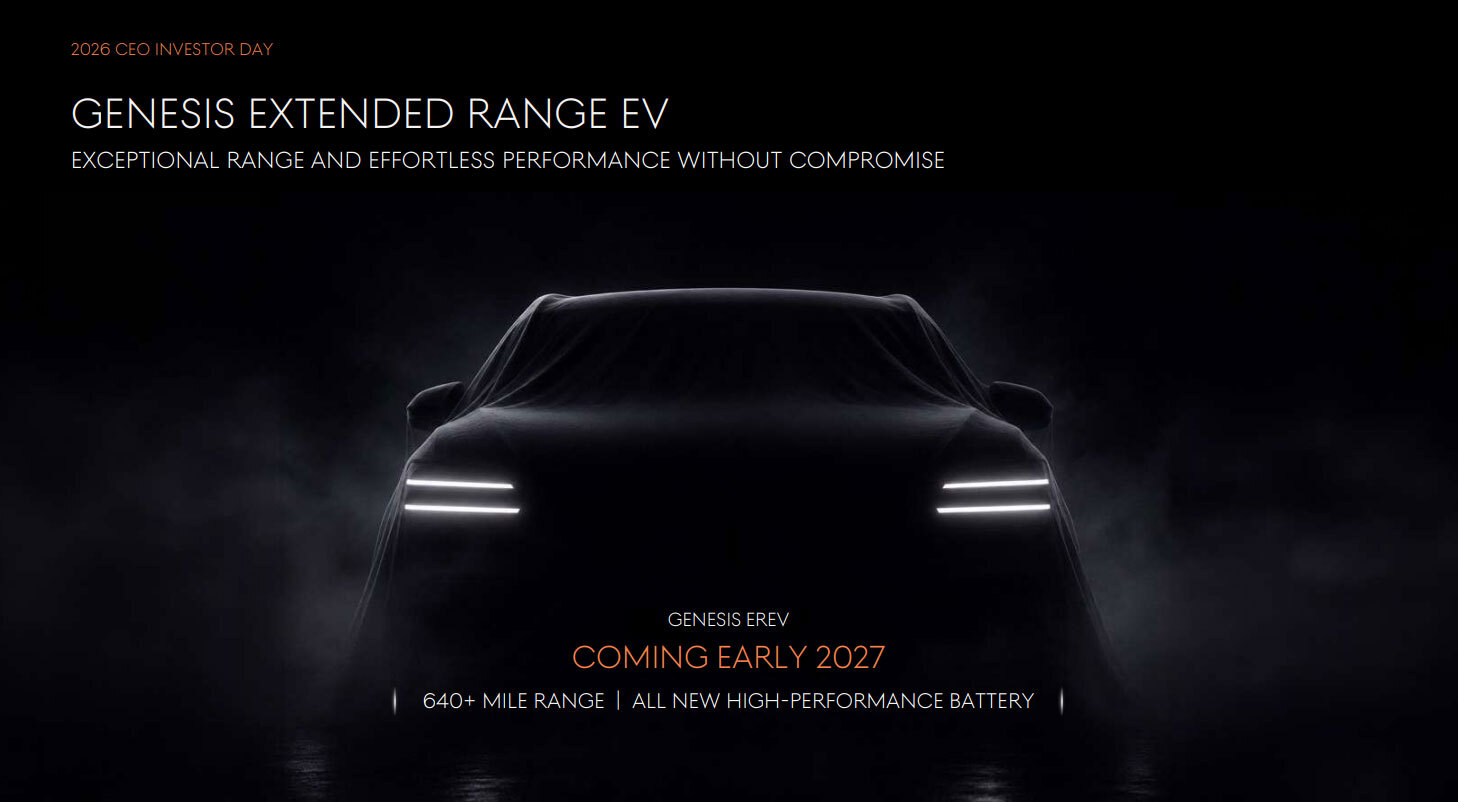
Genesis’ revamp is being led by the new GV90 as well as the GV80 Hybrid. The company also confirmed plans for a range-extended SUV in 2027, which will deliver more than 640 miles (1,030 km) of range.

While Genesis was coy on specifics, a slide mentioned 22 launches from the luxury brand in North America alone. That’s nearly a third of the models coming to the continent, but the figure undoubtedly includes variants.

 Hyundai Is Launching More Than 100 New Vehicles By 2030

The luxury brand will also enter new markets including India and the Asia Pacific region in the near future. If everything goes according to plan, they’ll be in more than 40 countries by 2030 and have annual sales of 350,000. To put that number into perspective, Lexus sold 370,260 vehicles in the United States last year.

Getting back to Hyundai, the company will expand the N lineup and try to increase sales to 100,000 units annually by 2030. The automaker is also targeting so-called ‘white spaces,’ where they don’t have much of a presence and there’s “significant opportunities for growth.” To fill these voids, the company will launch body-on-frame vehicles including a midsize pickup.

 Hyundai Is Launching More Than 100 New Vehicles By 2030

Ford’s $28k Electric Truck Is Set To Spawn A New Lincoln Crossover

  • Lincoln is reportedly gearing up to launch a small electric crossover.
  • Model will be based on the same platform that underpins the Fathom.
  • Bronco-based SUV is coming alongside redesigned Aviator and Navigator.

In 2020, Lincoln revealed it was working on a Rivian-based EV. Despite being touted as “pivotal,” the model was axed three months later in the wake of the coronavirus pandemic.

Following its death and a break up with Rivian, Ford focused on building Lincoln EVs in-house. The automaker had grand plans of turning Oakville Assembly into a “Canadian hub of electric vehicle manufacturing,” which would build five EVs.

More: Ford Spent $2 Billion On A Factory To Build Its $28K Fathom Pickup In Three Pieces

One of these was rumored to be an electric Aviator, but the company pivoted again. As part of the revamp, the EVs were killed and Oakville was transformed into a truck plant.

Nearly a decade after the saga began, Lincoln still doesn’t offer an electric vehicle. While that probably ended up working out in their favor, as adoption was much slower than automakers anticipated, it’s a far cry from what was originally planned.

However, a new report suggests Lincoln is once again gearing up to launch an EV. According to Automotive News, the brand will build a small crossover at Louisville Assembly in the “coming years.”

 Ford’s $28k Electric Truck Is Set To Spawn A New Lincoln Crossover

Little is known about the model at this point, but the publication says it will be based on the new Universal Electric Vehicle platform that underpins the Fathom pickup. That model goes into production in 2027 and will also be built in Louisville, Kentucky.

This suggests the crossover could be an electric replacement for the Corsair. The American-made model went out of production last year and an updated version was expected to be imported from China for 2027. However, Lincoln recently announced plans to “phase out the importation of vehicles from China for the U.S. market,” so its fate remains unclear.

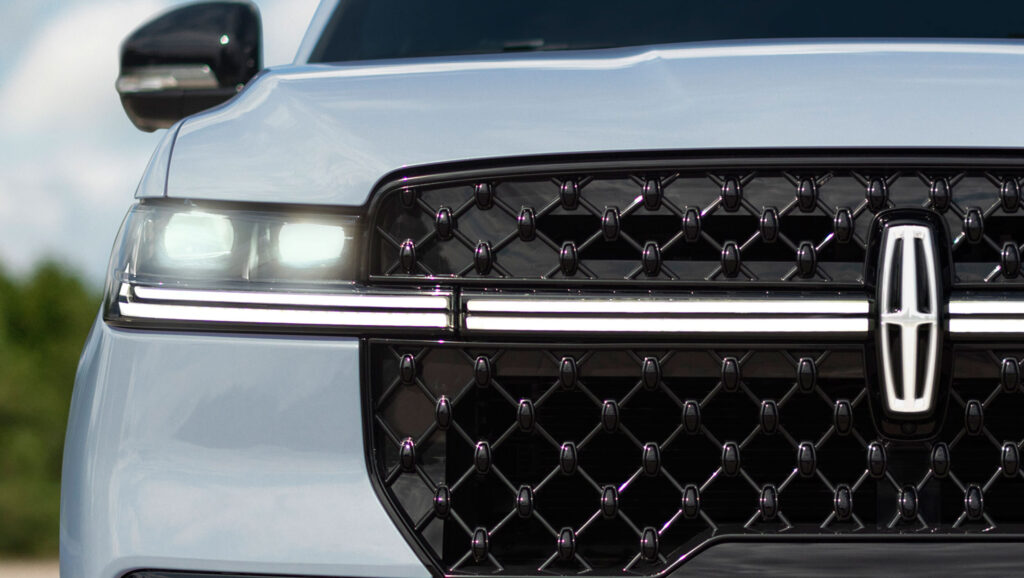
The EV won’t be alone as Lincoln is also said to be working on a Bronco-based luxury SUV. The publication also says we can expect a redesigned Aviator and Navigator towards the end of the decade.

 Ford’s $28k Electric Truck Is Set To Spawn A New Lincoln Crossover

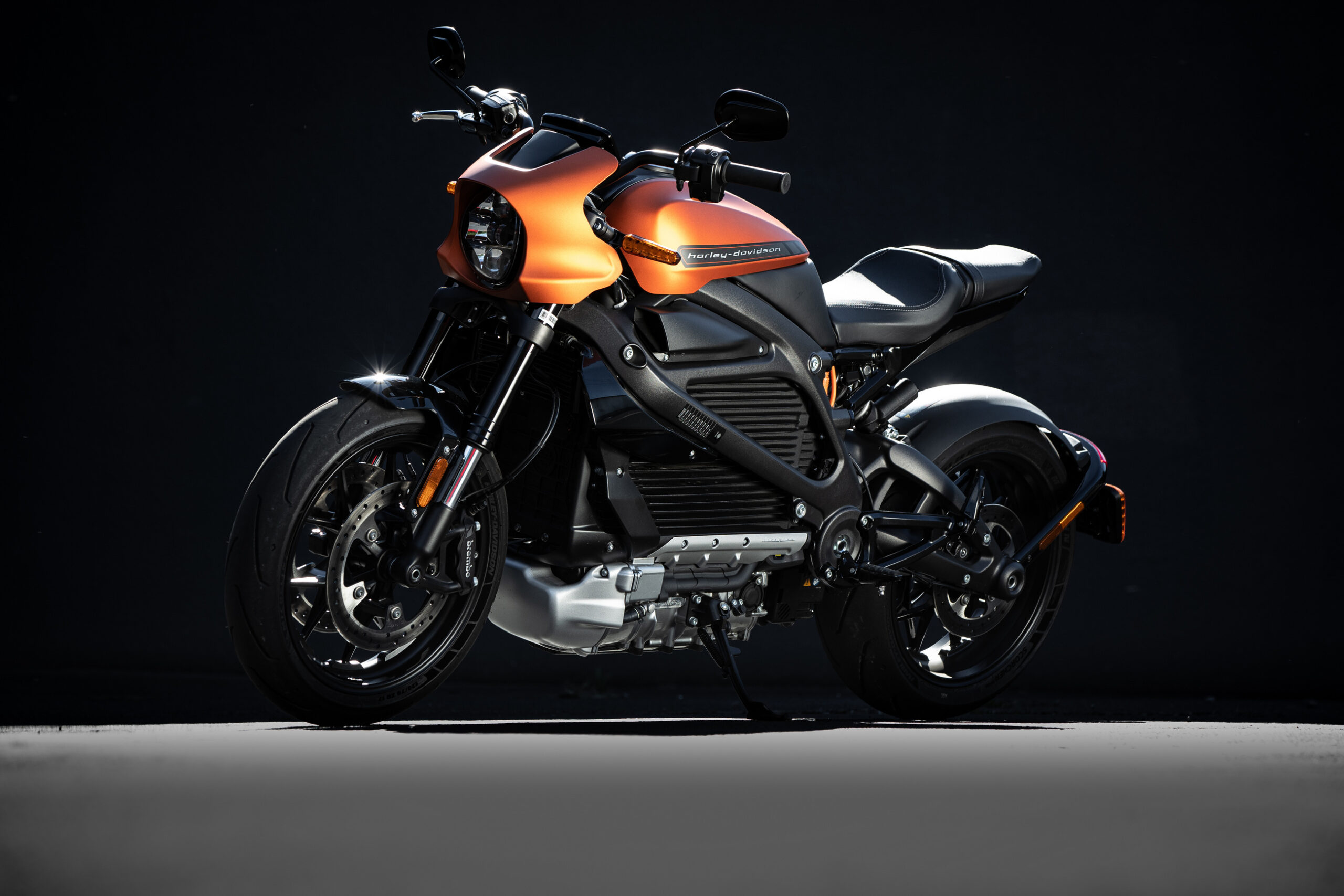
LiveWire’s One Now Costs Less Than Half The Original Electric Harley

  • Pricing for the LiveWire One motorcycle has been reduced to $13,999.
  • That’s a $2,500 savings and is less than half what the original LiveWire cost.
  • Company has been battling dismal sales and a stock delisting threat.

Harley-Davidson had high hopes for LiveWire and spun the motorcycle off into its own brand. However, times have changed, and the company has struggled to find its footing.

In the first quarter of 2026, LiveWire only sold 91 electric motorcycles. That’s roughly one per day, but it’s a 176% improvement from the 33 bikes sold in the first quarter of 2025.

More: LiveWire One Debuts As Cheaper Electric Motorcycle Without Harley Badging

 LiveWire’s One Now Costs Less Than Half The Original Electric Harley
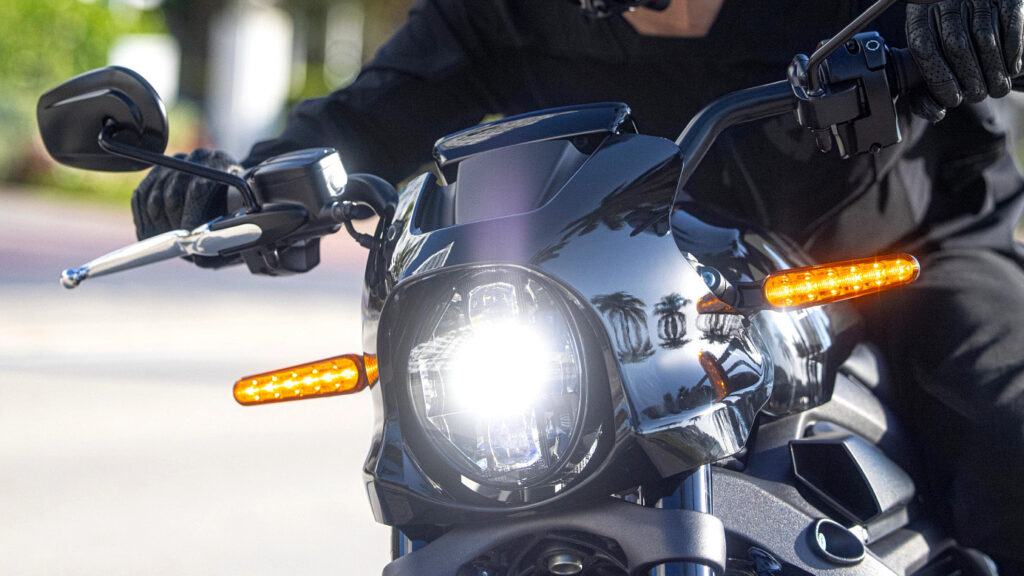
The LiveWire originally debuted as an electric Harley-Davidson in 2019.

The only bright spot has been the company’s affordable STACYC e-bikes, which found 3,959 takers in Q1. Overall, LiveWire posted a $18.1 million consolidated net loss in the first quarter, and that was down from a $19.3 million loss a year ago.

 LiveWire’s One Now Costs Less Than Half The Original Electric Harley

That’s not great, and the New York Stock Exchange notified LiveWire in July that they were in danger of being delisted because their stock price was less than $1.00 per share over a consecutive 30-trading-day period. The company recently regained compliance, but just barely, as their stock sits at $1.14 per share as of this writing.

Among the whirlwind of bad news, LiveWire has slashed pricing for their range-topping One motorcycle. The model now starts at $13,999, which is $2,500 less than the previous MSRP of $16,499. That’s a 15% reduction, and it’s worth noting the original Harley-Davidson LiveWire started at $29,799.

 LiveWire’s One Now Costs Less Than Half The Original Electric Harley

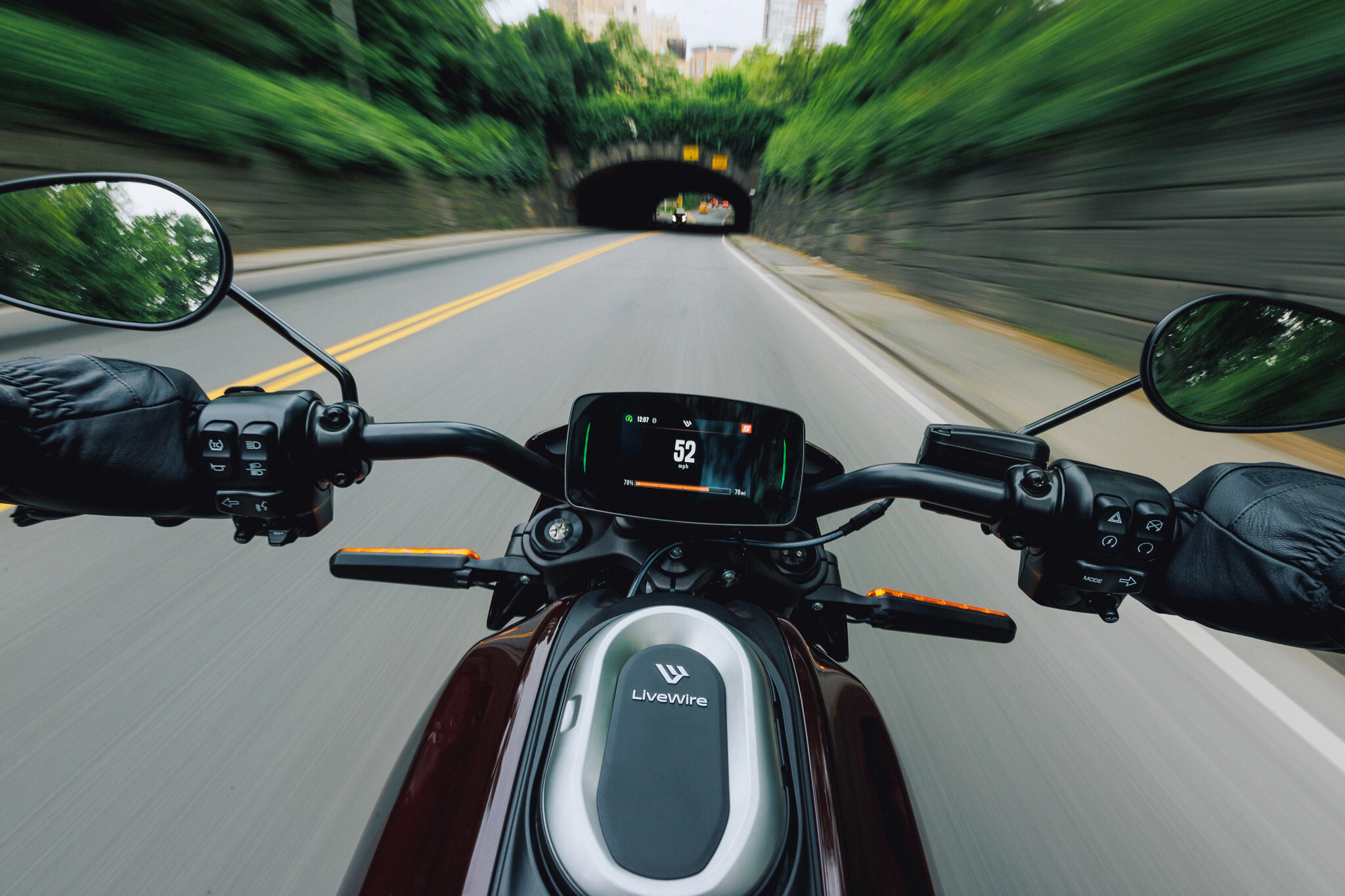
As a refresher, the One has a 15.4 kWh battery pack that feeds an electric motor developing 100 hp (75 kW / 101 PS) and 84 lb-ft (114 Nm) of torque. It enables the model to accelerate from 0-60 mph (0-96 km/h) in three seconds flat, before hitting a top speed of 110 mph (177 km/h).

While the bike is fast, it only has a combined range of 95 miles (153 km). Furthermore, the charging system is relatively slow, as a DC fast charger can take it from 0-80% in a leisurely 40 minutes. With a Level 1 or Level 2 charger, expect around 13 miles (21 km) of range per hour of charging.

\\\\\\\\\\\

The Era Of The 1,973 HP Wagon Could Be Upon Us

  • BYD’s Denza is working on a hardcore version of the Z9 GT.
  • Has aggressive aerodynamics reminiscent of the Z Special Edition.
  • Model could have a tri-motor powertrain with up to 1,973 hp.

Wagons don’t get much wilder than the Denza Z9 GT, which features a tri-motor powertrain developing 1,140 hp (850 kW / 1,156 PS) and 892 lb-ft (1,210 Nm) of torque. This enables the model to rocket from 0-62 mph (0-100 km/h) in 2.7 seconds and it can also crab walk as well as do ‘tank turns.’

Needless to say, it’s an insane car. However, new spy photos suggest Denza is kicking things up a notch with a far more extreme variant that could echo the upcoming Z Special Edition.

More: Denza’s 1,139 HP Wagon Will Now Drift Any Shape You Draw On The Screen

Recently spied in Europe, the camouflaged prototype sports an all-new front end with a massive, V-shaped central intake. It’s accompanied by sizable panels that channel air to vertical curtains. We can also see a prominent front splitter with vertical elements at the outside edges.

Aggressive aerodynamics continue further back as there are large fins behind the front wheels. Designers also gave the car sculpted side skirts, which feature a vertical support in the middle of the rear door. That would likely hamper entry and egress, but the backseat has apparently been removed and replaced by a roll cage. We can also see extended wheel arches as well as lightweight wheels that are backed up by a high-performance braking system.

\\\\\\\\\

The rear end is dominated by a massive wing and it’s accompanied by a small, mid-mounted spoiler. Designers also installed a supersized diffuser as well as vertical air channels at the corners.

Little else is known about the prototype at this point, but the Denza Z Special Edition has a track-grade thermal management system and a combined output in excess of 1,973 hp (1,471 kW / 2,000 PS). Denza has claimed this will enable the coupe to accelerate from 0-62 mph (0-100 km/h) in less than 1.7 seconds.

Even if the prototype isn’t that extreme, it could borrow from the tamer Z or Z Racing. The former has a tri-motor powertrain producing 1,582 hp (1,180 kW / 1,604 PS) and 914 lb-ft (1,240 Nm) of torque, which enables the model to run from 0-62 mph (0-100 km/h) in 2.25 seconds and hit a top speed of 186 mph (300 km/h). The Z Racing is even quicker as it hits 62 mph (100 km/h) in 1.96 seconds and tops out at 217 mph (350 km/h).

\\\\\\\\\\\\\

Bentley’s Torcal Will Offer Something No Other Automobile Has

  • The Bentley Torcal will offer 100% Merino wool.
  • Electric crossover will also have Ombre wood trim.
  • Debuts next month and will cost around $225,000.

Bentley will unveil their fully electric Torcal a little over a month from now. As part of an effort to build excitement, the company is slowly trickling out details.

The latest update focuses on the interior and reveals the crossover will have something no other automobile offers – 100% Merino wool. As the company explained, the luxurious material is celebrated for its “softness, warmth and natural elegance,” but hasn’t been used in automotive applications due to durability concerns.

More: Bentley Showcases High-Tech Interior For New Torcal EV

Bentley wanted to address that, so they teamed up with Fox Brothers. The British firm specializes in cloth, flannel, and tweed, and they were tapped to develop a special material for the Torcal. It’s the “world’s first 100 percent Merino wool automotive fabric capable of meeting the exacting demands of a luxury vehicle” and is also the “first automotive wool fabric to achieve 100 percent certification by the Responsible Wool Standard.”

The Merino wool interior will be offered in “six carefully curated colorways” and Bentley said each “combines complementary tones from the same color family, creating depth, harmony and a contemporary sense of sophistication.”

Besides talking about wool, Bentley revealed the Torcal will usher in a new Ombre Veneer. It’s created from “sustainably sourced walnut off-cuts” and recycled paper.

Up to 1,000 individually selected layers are pressed together, before being sliced less than a millimeter thick. The company said, “Four distinct walnut shades flow naturally from deep black through dark smoke and light smoke before revealing the richness of natural walnut. The result is both contemporary and timeless: a striking expression of modern luxury rooted in traditional craftsmanship.”

Customers will also find a new option known as Sunburst Aluminum by Mulliner. It’s billed as a reinterpretation of the classic engine-turned aluminum dashboards of the past.

\\\\\\\

As for the Torcal itself, it’s essentially a Porsche Cayenne Electric that went to Oxford. This means it’s instantly recognizable, despite having unique front and rear ends. The model will also sport an ultra-luxury interior with a curved display as well as a mood selector.

Powertrain details remain a mystery, but the Cayenne has a 113 kWh battery pack, a 390 kW DC fast charging capability, and outputs of 435 hp (324 kW / 441 PS), 657 hp (490 kW / 666 PS), and 1,139 hp (849 kW / 1,155 PS). The Bentley will presumably have around 800 hp (597 kW / 811 PS), but we’ll find out for sure on September 23.

\\\\\\\\\\\\\\\\

SHProshots

The Curse Of Fisker Continues As Karma Reboots Their Delayed Gyesera

  • Karma is gearing up to launch their overdue Gyesera sedan.
  • It was supposed to be fully electric, but is now range-extended.
  • Car is set to arrive in December and cost a laughable $139,995.

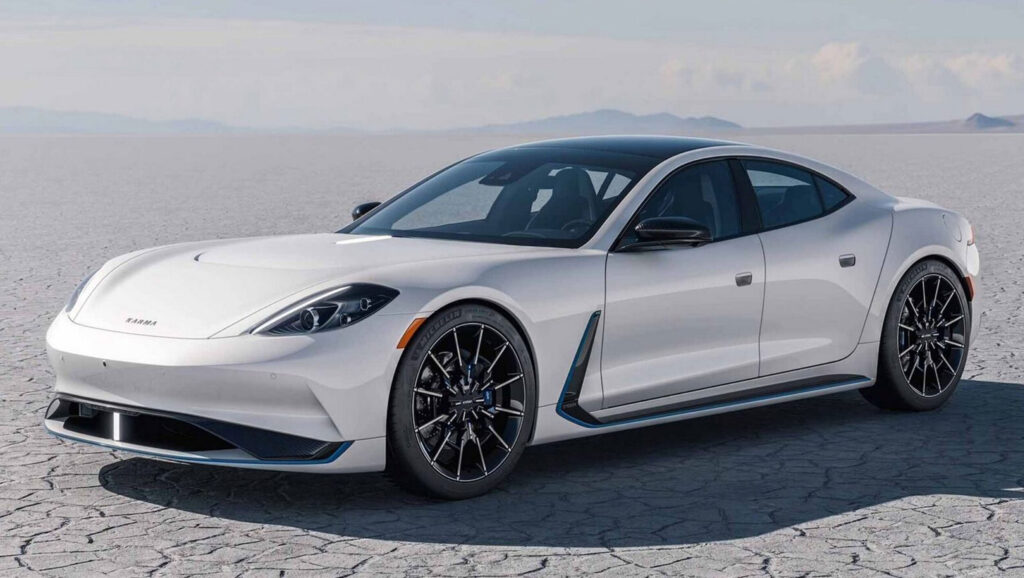
We haven’t heard much from Karma Automotive lately, but the brand didn’t quietly slip into the night. Quite the opposite as they’re returning to Monterey Car Week with the 2027 Gyesera Grand Coupe.

The model was originally announced in 2024 and was intended to be a fully electric vehicle with a 120 kWh battery pack, 590 hp (440 kW / 598 PS), and over 250 miles (402 km) of range. The car was supposed to be launched in late 2024 or early 2025, but that clearly never happened.

More: Karma Gyesera Evolves The Fisker Karma Legacy With 590-HP Electric GT

Now, the Gyesera has been rebooted as a range-extended vehicle. The model – which traces its roots back to the ill-fated Fisker Karma launched in 2011 – promises to combine exclusivity with a razor-sharp design as well as “luxurious refinement for four passengers.”

The car features an undisclosed engine, a 28.1 kWh battery pack, and an electric motor. This gives the Gyesera a claimed output of 566 hp (422 kW / 574 PS) and 546 lb-ft (739 Nm) of torque. Buyers can expect to accelerate from 0-60 mph (0-96 km/h) in less than 3.7 seconds, before hitting a top speed of 146 mph (235 km/h). The company went on to say the model will have an electric-only range of 80 miles (129 km) and an overall range of up to 380 miles (612 km).

That’s a slight improvement from the Revero, which had 536 hp (400 kW / 543 PS) and a 0-60 mph (0-96 km/h) time of 4.5 seconds. The model also had a shorter overall range of 360 miles (579 km).

\\\\\\

Additional details are limited, but the 2027 Gyesera features a lightly revised design with exposed carbon fiber, updated rear badging, and the company’s new “Target Lighting” philosophy. We can also see a ventilated hood as well as 21- and 22-inch wheels.

Karma didn’t say much about the interior, but it’s essentially an updated version of the Revero. Highlights include a 12.3-inch digital instrument cluster, a 10.1-inch infotainment system, and individual rear seats that are separated by a full-length center console. The car also comes equipped with Bridge of Weir leather, a JL Audio system, and a wireless smartphone charger that is inconveniently hidden in the center console.

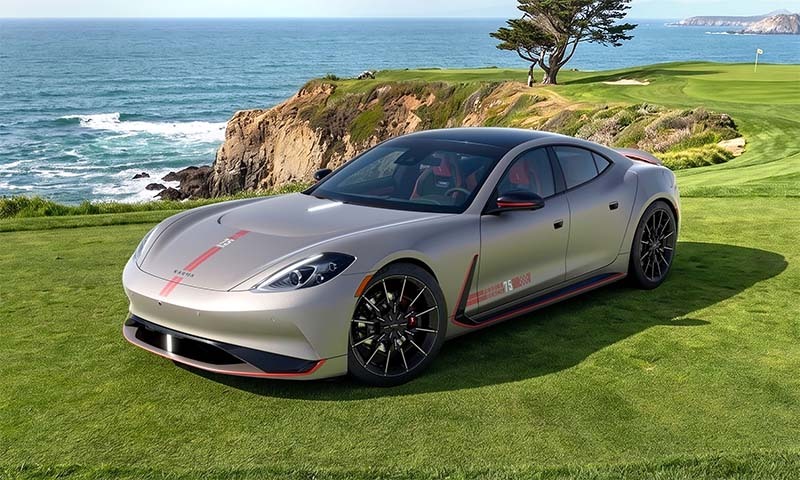
In honor of the 75th Pebble Beach Concours d’Elegance, Karma will introduce a Gyesera in a “PB75” livery that features an Electrum Gold exterior with Stellar Red stripes. They’ll be joined by black 22-inch wheels in front of red brake calipers. Inside, there will be black and red leather seats as well as platinum accents.

 The Curse Of Fisker Continues As Karma Reboots Their Delayed Gyesera

If everything goes according to plan, the Gyesera will arrive at dealerships this December and start at $139,995.

Besides the Gyesera, Karma is bringing along the Amaris GT and Kaveya. The former is “expected” to arrive in the fourth quarter of 2027, while the latter is penciled in for the first quarter of 2028.

Assuming the 1,000 hp (746 kW / 1,014 PS) Kaveya isn’t vaporware, it will cost around $400,000. Of course, that’s a big if, as Karma originally said the entry-level variant would arrive in the fourth quarter of 2025.

\\\\\\\\\\\\\

2027 Rivian R1 Finally Gets Its Most Requested Feature, And It Costs Up To $4,000

  • Rivian has introduced the 2027 R1S and R1T.
  • Both models feature a revamped trim structure.
  • Updated interior offers new captain’s chairs.

With the R2 trickling into the hands of owners, Rivian is revamping the R1T and R1S. The changes started earlier this year with the elimination of the entry-level Dual Standard variants and is continuing for the 2027 model year.

As part of an effort to sharpen their flagship status, the R1 lineup has been simplified into three “curated” trims. The R1 Premium has a dual-motor all-wheel drive system developing 533 hp and 610 lb-ft of torque, which enables it to accelerate from 0-60 mph in as little as 4.5 seconds. Customers can also order a $5,000 performance upgrade, which increases the output to 665 hp and 829 lb-ft. This lowers the 0-60 time to 3.4 seconds.

More: Rivian Revives Its Forest Edge Cabin And Wants $9,000 For It

The R1T Premium has a range of 300 miles, while the R1S can travel 329 miles between charges. If that’s not far enough, a $7,000 long range battery increases the distance to 410 miles on the R1S and 380 miles on the R1T.

\\\\

The R1 Performance family has a tri-motor powertrain producing 850 hp and 1,103 lb-ft of torque. This drops the 0-60 mph time to as little as 2.9 seconds, while both models are rated at 371 miles of range.

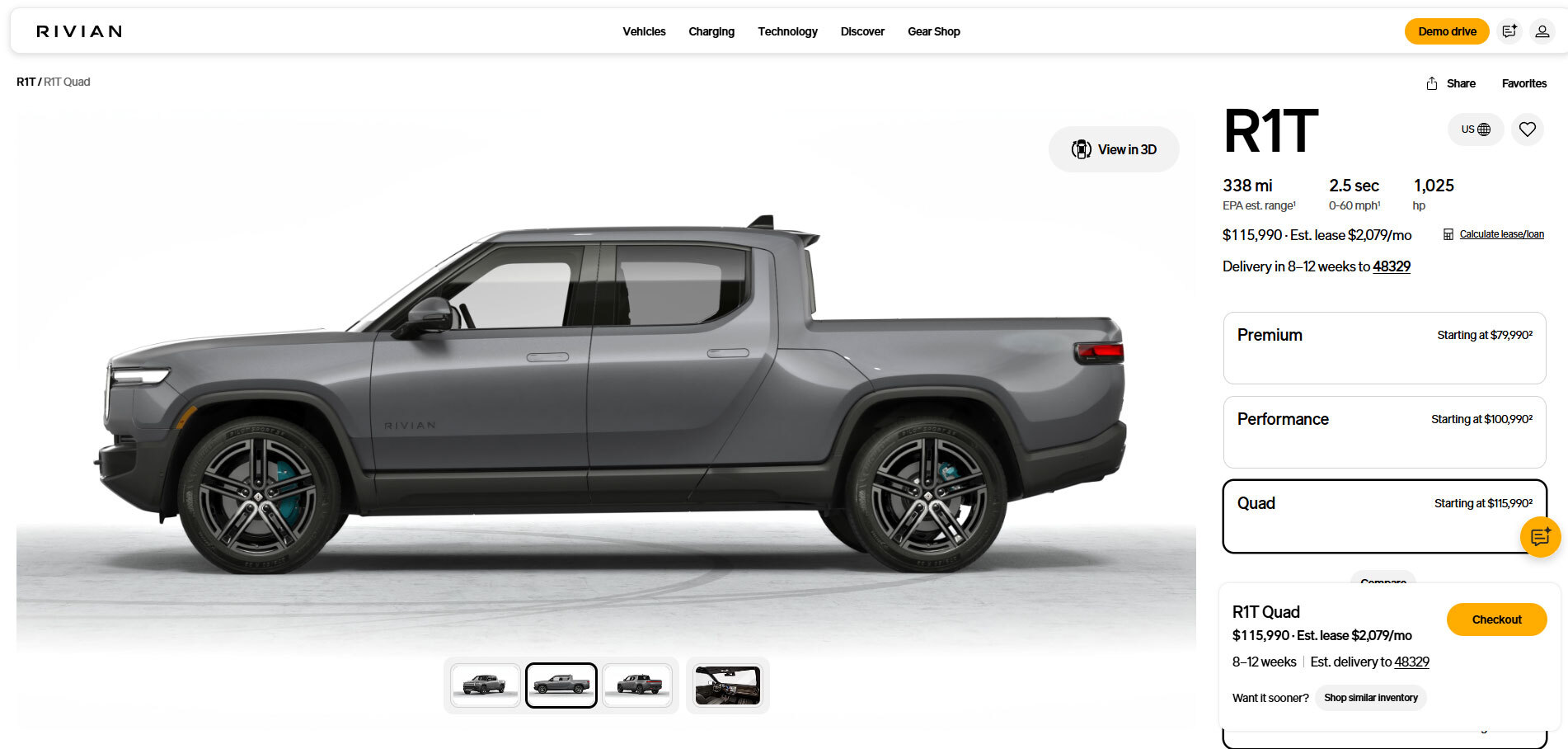
While the Dual and Tri names were phased out, Rivian kept the Quad moniker for the range-topping R1. It has 1,025 hp and 1,198 lb-ft of torque, which enables the models to hit 60 mph in as little as 2.5 seconds. Buyers will also find a range of up to 374 miles, depending on which tires and wheels they opt for.

Small Changes Inside And Out

\\\\\\\\

Besides revamped trim names, Rivian has updated the cabin. The Performance and Quad have three Signature interiors known as Slate Sky, Black Mountain, and Ocean Coast. They have colorful seats as well as walnut, ash, or weathered driftwood trim.

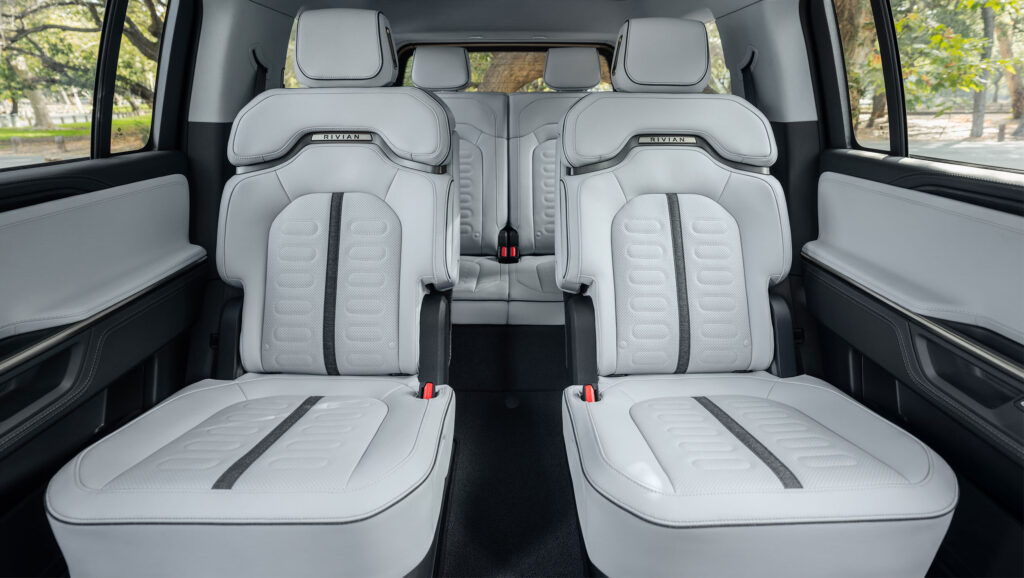
Speaking of the cabin, Rivian has finally listened to consumers and delivered the “most requested interior feature to date.” It’s second-row captain’s chairs in the R1S and they cost a whopping $4,000 on the entry-level Premium. However, they’re only $1,500 on the Performance and Quad.

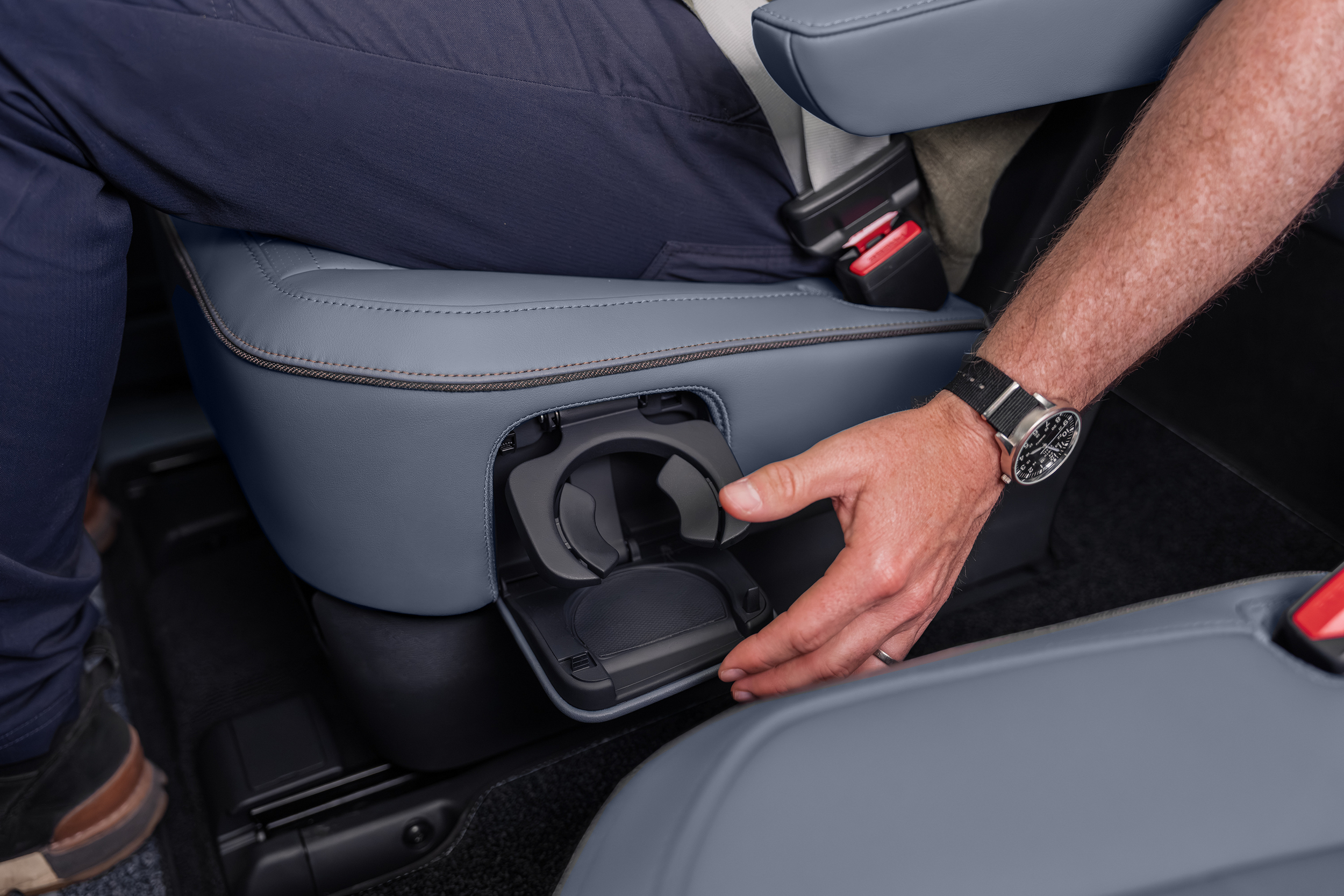
The new six-seat configuration sees the crossover outfitted with heated, second-row captain’s chairs that are separated by a small pass-through. The seats are also notable for featuring integrated cup holders that fold down.

 2027 Rivian R1 Finally Gets Its Most Requested Feature, And It Costs Up To $4,000

On the styling front, there isn’t much to report but the R1T and R1S gain a new color known as Esker Silver. The R1T Premium also rides on a new 20-inch Adventure wheel, which is wrapped in all-season rubber.

The 2027 Rivian R1 configurator is already live and pricing starts at $79,990 for the R1T and $83,990 for the R1S.

 2027 Rivian R1 Finally Gets Its Most Requested Feature, And It Costs Up To $4,000
❌