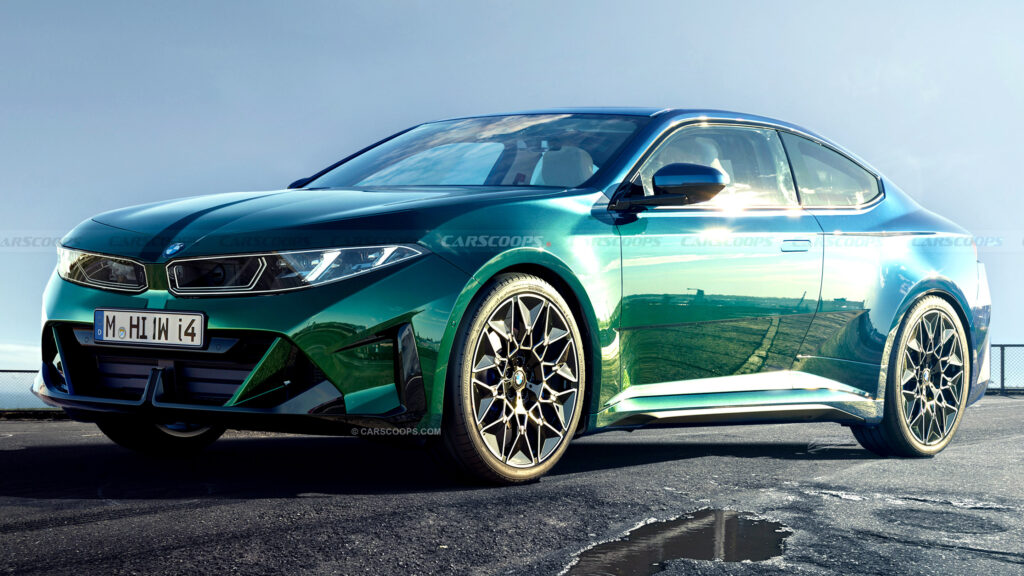
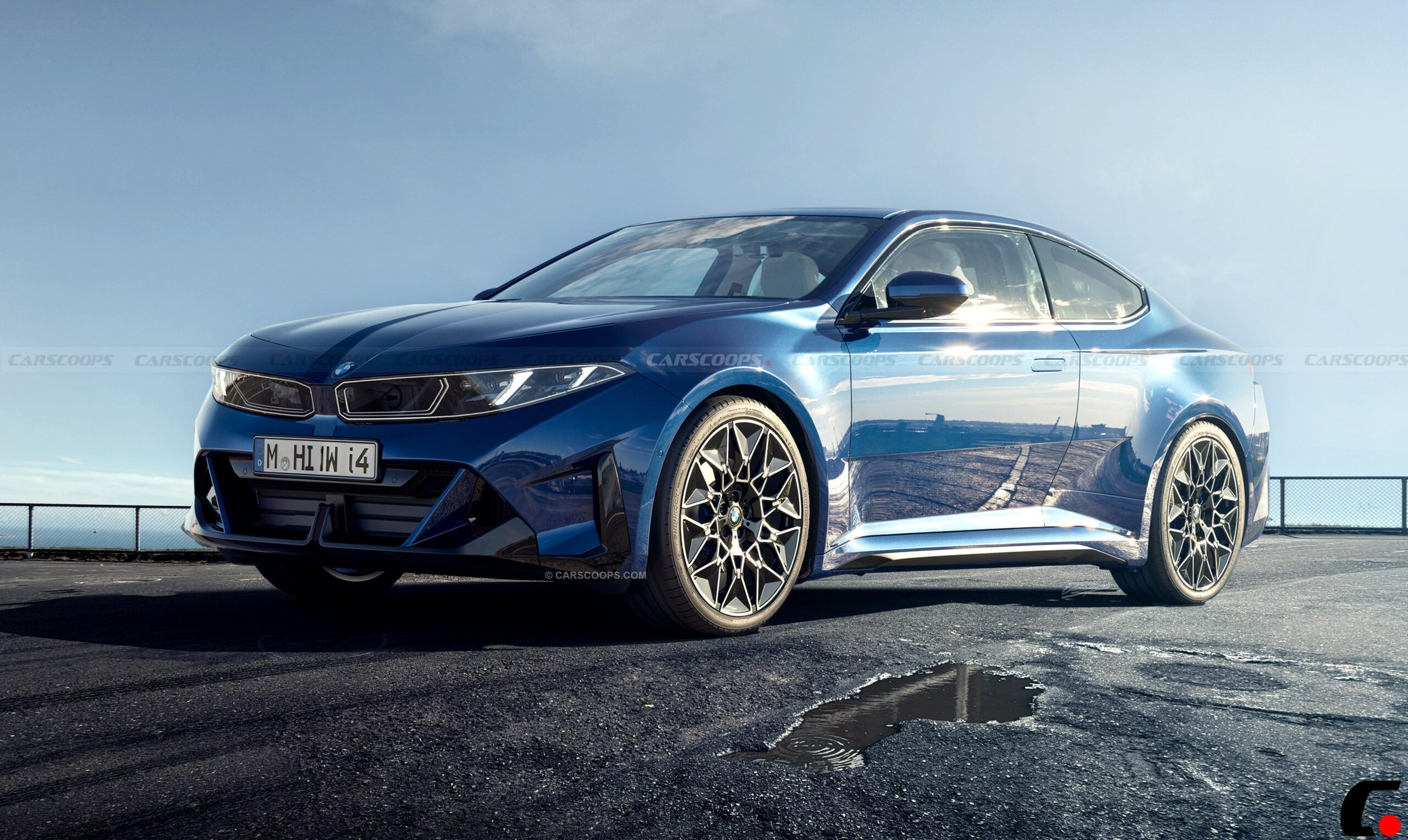
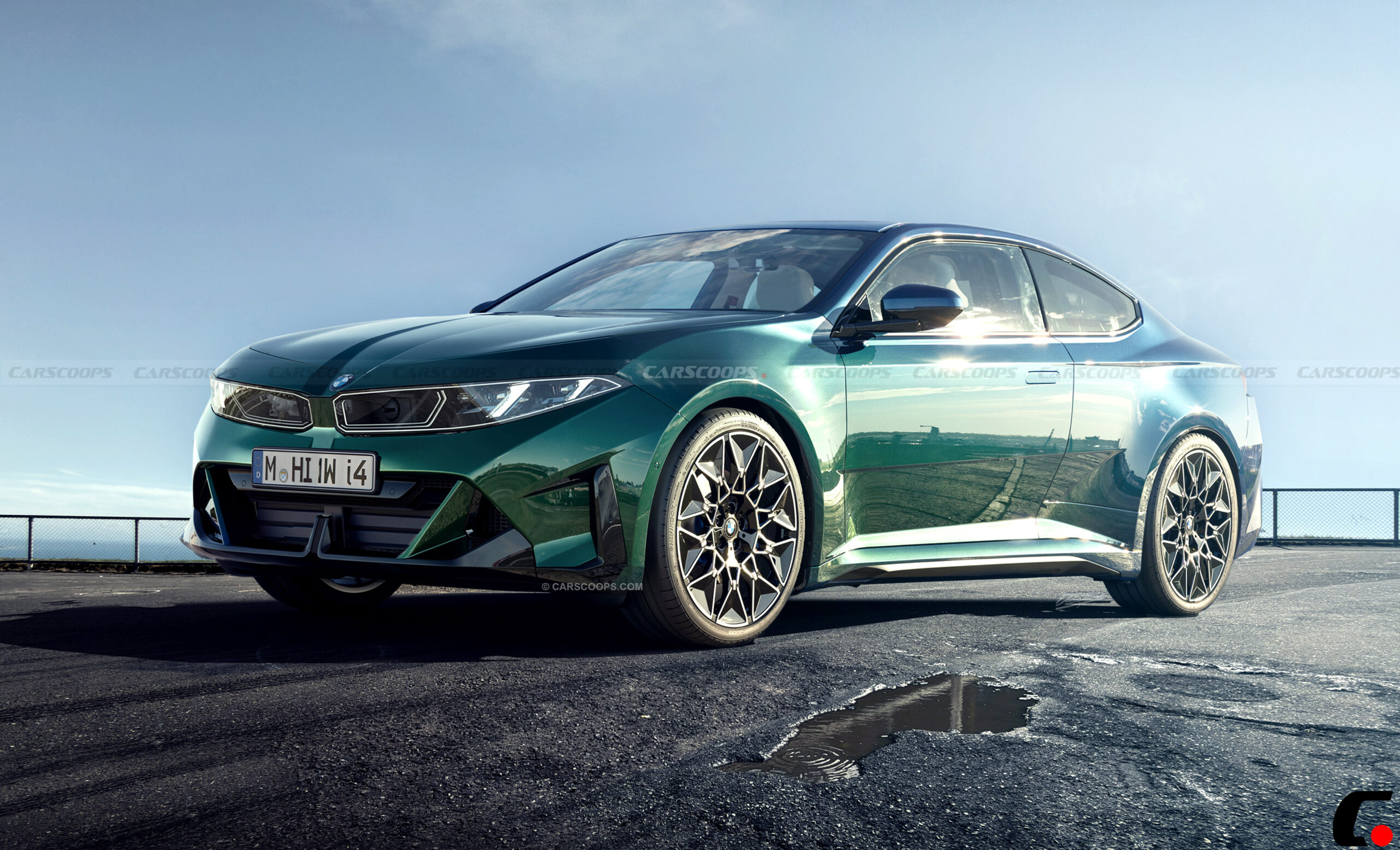
We imagine a sleeker two-door i4 Coupe as an addition to the i3 Sedan.
Sportier chassis tuning and rear-drive bias would sharpen its dynamic character.
Neue Klasse architecture enables quad-motor setups with serious performance.
As electric platforms reshape proportions, design identity is facing a quiet but meaningful test across the industry. BMW has stirred up an online storm of controversy with its latest i3 electric Sedan. Set to complement the petrol-powered 3 Series, its Neue Klasse styling and stance have divided opinion far and wide.
The good news is BMW has confirmed the NA0-coded i3 will get a touring variant to dial back some of the sedan’s less flattering aspects, but a two-door coupe feels like a more natural extension of the range. Curious? Read on as we put pen to pixel and envisage what it might look like.
Let’s address the elephant in the room – styling. BMW has a long history of iconic design, from strong axle-to-dash ratios to twin kidney grilles, the Hofmeister Kink, and balanced proportions. The i3 Sedan, however, rewrites that familiar playbook in ways that feel unfamiliar. Its front-drive proportions still read as athletic, yet the upright stance exudes nervousness.
Our study keeps the better aspects of the i3, but translates it into a more svelte two-door form. We’ve lowered the roofline, elongated the doors, and given it a tighter glasshouse, with better proportions skewed toward visual dynamism rather than rear-seat usability.
The leading edge of the facia now leans forward in a shark-nosed fashion, and the grille’s lighting signature now has three-dimensional depth to avoid the perspective distortion that plagues the sedan’s nose. Out back, we envisage bolder haunches, a ducktail spoiler and slimmer, 3-dimensional OLED taillights.
Digital Drive
The interior of the new BMW i3 sedan.
Inside, the i4 coupe would ideally mirror the sedan’s radical shift in cabin philosophy, and its Panoramic IDrive display stretching across the dashboard. However, we’d ditch much of the touch-sensitive interfaces (including that steering wheel) for physical controls and swap the dash for one that’s more driver-oriented.
Despite its coupe format, a practical 2+2 layout will be central to the deal, and largely retain the same 114.1 in (2,898 mm) wheelbase as its four-door donor car. Chassis tuning would likely skew sportier than the sedan, with adaptive dampers, rear-wheel-drive bias, and near 50:50 weight distribution forming the baseline.
Volts To Velocity
Like the sedan, the i4 coupe uses BMW’s sixth-generation eDrive system, which is built around cylindrical battery cells and an 800-volt electrical architecture. Battery capacity would sit around 75–90 kWh usable, delivering up to approximately 600 km (WLTP) or 440 miles (EPA) depending on configuration.
Output for the dual-motor i4 50 xDrive model could exceed 463 hp (345 kW) and 476 lb-ft (645 Nm) of torque. A thumping i4M variant would amp the pace, with quad motors generating close to 1000 hp, and a rear-drive mode that decouples the front axle.
BMW has not announced plans for an i4 coupe, so its arrival remains speculative. However, with Neue Klasse models forming the backbone of BMW’s next-generation EV strategy, additional bodystyles beyond the i3 sedan and wagon appear inevitable.
Would you love to see the i4 coupe come to life, or rather a straight-six-powered ICE version? Share your thoughts in the comments below.
PROS ›› Great power, extremely spacious, refined CONS ›› Ioniq 9 is more luxurious, expensive, inefficient
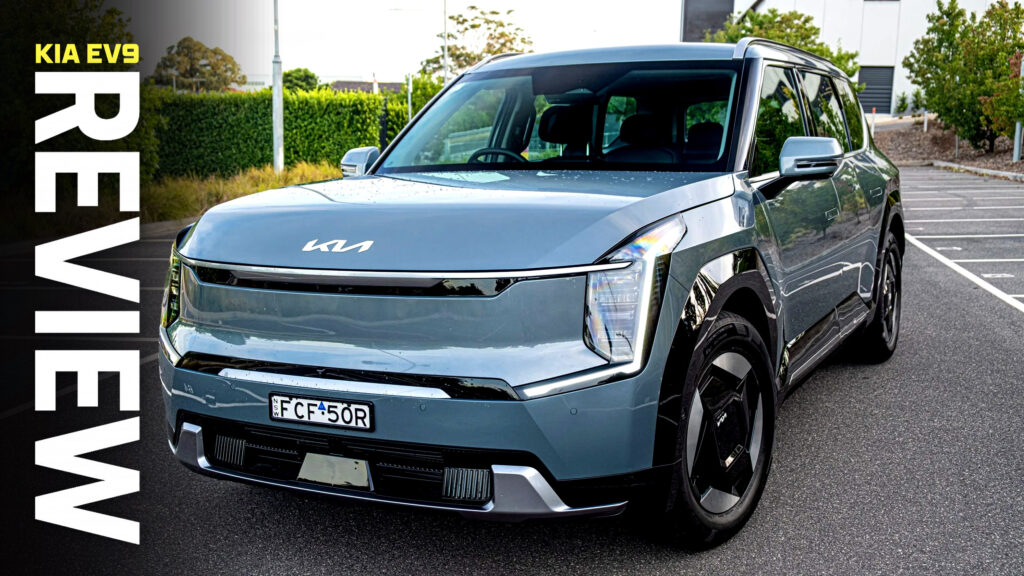
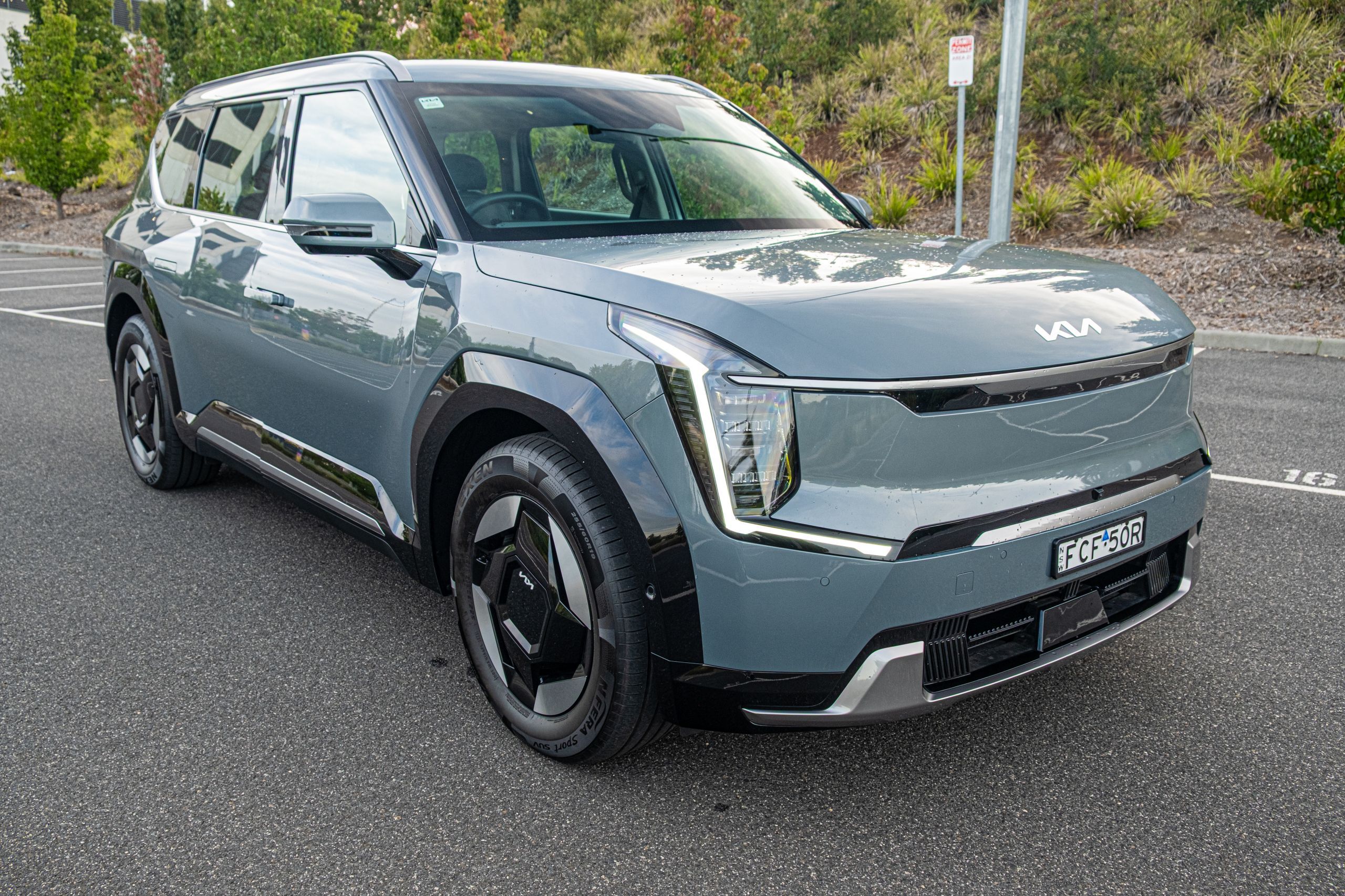
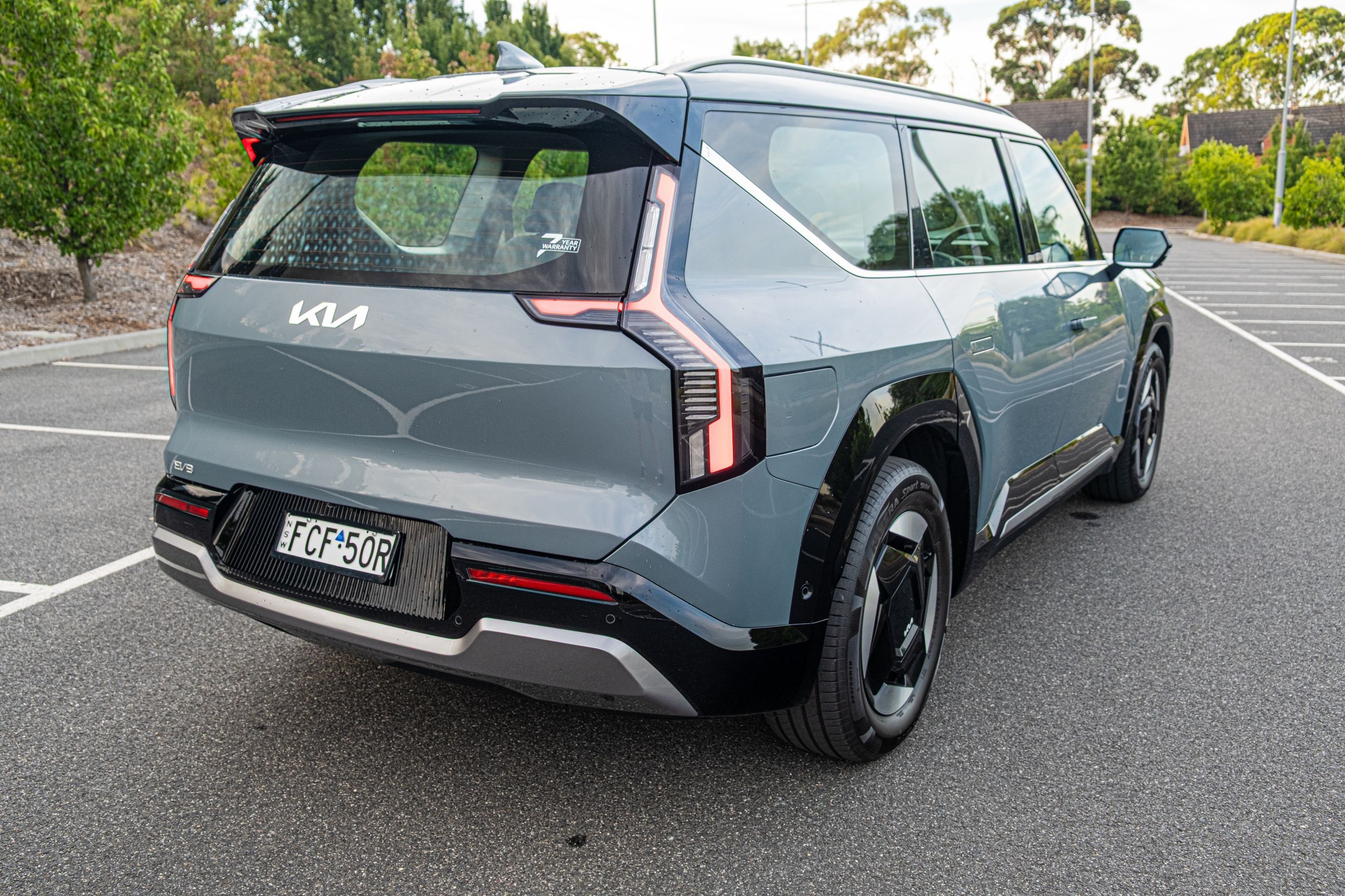
Kia’s EV9 arrived in Australia two years ago as the first fully electric SUV with three rows, and it didn’t try to blend in. The styling leaned hard into concept car territory, all sharp edges and presence, and it marked a turning point for the Korean brand as it pushed further upmarket. Locally, it wasn’t just another launch. It felt like a statement piece, and arguably the most important model Kia had put its name on in years.
In the two years since its launch, the segment hasn’t exactly exploded into life. Australia’s three-row EV space is still oddly thin, with only the Volvo EX90 and the sorted Hyundai Ioniq 9 joining the conversation so far. There’s also the looming arrival of the seven-seat Tesla Model Y L, which technically has three rows, in the same way a folding chair technically counts as living room furniture.
The question is, two years on, does the EV9 still hold the same appeal it had when it first launched, or has it been overshadowed by some of the newer competition? We spent a week with the mid-range Kia EV9 Earth to see where it now stands.
QUICK FACTS
› Model:
2026 Kia EV9 Earth
› Starting Price:
AU$119,273 ($84,231)
› Dimensions:
197.2 L x 78 W x 69.1 in H (5,010 x 1,980 x 1,755 mm)
› Wheelbase:
122 in wheelbase (3,100 mm)
› Curb Weight:
2,552 kg (5,626 lbs)
› Powertrain:
Dual electric motors / 99.8 kWh battery
› Output:
380 hp (283 kW) / 516 lb-ft (700 Nm)
› 0-62 mph
6.0 seconds
› Transmission:
Single speed
› Efficiency:
23 kWh/100 km as tested
› On Sale:
Now
SWIPE
Local prices for the EV9 have remained steady since the model’s introduction. While this is a good thing, it still remains pricey. The range starts with the Air, priced from AU$106,404 ($75,100) when factoring in all the on-road costs and fees, while the Earth we lived with kicks off from AU$119,273 ($84,231).
Then there’s the performance-focused GT, set to arrive shortly and expected to start just shy of AU$150,000 ($106,000). At that point, you’re not just shopping for a big electric SUV. You’re making a fairly serious financial statement.
Photos Brad Anderson/Carscoops
There’s a lot to like about the mid-range EV9 Earth on paper. It uses the same powertrain as the GT-Line, meaning there’s a 99.8 kWh battery pack and a pair of electric motors boasting 283 kW (380 hp) and 700 Nm (516 lb-ft) of torque. By comparison, the base model has a smaller 76.1 kWh pack and just a single, rear-mounted electric motor.
Kia quotes a solid driving range of 512 km (318 miles) in the EV9 Earth, the most of any model, as well as a 0-100 km/h (0-62 mph) time of 6.0 seconds. This is down from the GT-Line’s 5.3-second time and likely has to do with some electronic trickery, given it has the same powertrain.
Spacious, Functional, But A Bit Drab Interior
Photos Brad Anderson/Carscoops
Given the large footprint of the EV9, it should come as no surprise that the interior is absolutely vast. It’s a proper seven-seater – or six-seater when configured with the captain’s chairs – yet you quickly get used to the size of it.
Like other EV9 variants, as well as many other Kia EVs, the dashboard is dominated by a 12.3-inch infotainment display, a 5-inch climate control panel, and a 12.3-inch digital gauge cluster.
The implementation of the climate control screen leaves a little to be desired. It’s sandwiched between the two larger displays and is completely blocked by the rim of the steering wheel. Fortunately, Kia has included physical switches for the temperature and fan speed further down on the dash, so I very rarely had to use the screen to make adjustments. Even still, we’d prefer a narrow, horizontal display below the air vents for the climate settings.
Photos Brad Anderson/Carscoops
Just a few months ago, we drove the Hyundai Ioniq 9, a vehicle that shares its underpinnings with the EV9. Australia only gets that model in flagship Calligraphy guise, priced from AU$128,413 ($90,700), and while it’s more expensive than the EV9 Earth, the interior feels far plusher.
This isn’t to say the cabin of the EV9 is a disappointment. In fact, it’s very nice. But, whereas Hyundai has used a host of different colors, materials, and shapes in the Ioniq 9, the cabin of the EV9 is rather drab, offered exclusively with black artificial leather. There are no metal accents, or even faux metal parts, and instead just a bunch of leather (which isn’t particularly soft), small pieces of fabric on the dashboard and door panels, and plenty of black plastic. We’d expect more at this price point.
Functionally, the interior is great. Wireless Apple CarPlay and Android Auto come standard, although the Earth misses out on the head-up display of the GT-Line. It also does without Parking Collision Avoidance Assist – Forward, Kia’s relaxation seats, dual sunroof, rear privacy glass, small cube LED headlights, alloy sport pedals, premium door scuff panels, second-row sun blinds, and a 14-speaker Meridian sound system. Instead, it makes do with an 8-speaker system that’s adequate, but not particularly inspiring.
Photos Brad Anderson/Carscoops
There’s no knocking the space or comfort on offer, however. The front seats are great, as are the ultra-soft headrests. There are also plenty of charging ports, as well as heated and ventilated functions for the front seats.
Similarly, the second-row is incredibly spacious with ample legroom and headroom, even in the middle seat. Thanks to the upright roofline, there’s even plenty of headroom at the rear and slightly more than in the Ioniq 9. Cargo space is also good, with 828 liters (29.2 cubic feet) if the third row is folded down, and 2,318 liters (81.8 cubic feet) if the second- and third-row seats are folded away.
A GT Badge Isn’t Needed For Performance
While the Kia EV9 Earth isn’t marketed as a sporty SUV, unlike the GT-Line and GT models, it certainly has a sporty edge to it.
Unlike the Ioniq 9 Calligraphy, which has more power than all EV9 models bar the flagship GT, the EV9 doesn’t waft down the road quite the same. Instead, it rides noticeably firmer and has a more dynamic edge to it. This isn’t to say it feels like an out-and-out performance car, because it doesn’t, but it’s clear Kia’s engineers were eager to create something that driving enthusiasts like ourselves would appreciate.
It’s very common for big EVs to ride quite firmly – hardly a surprise given how heavy they can be. While the EV9 does lean towards firmness rather than suppleness, even in Earth configuration, it still remains comfortable and soaks up bumps nicely, almost as well as a high-priced European rival.
Photos Brad Anderson/Carscoops
Thanks to the suspension setup, the EV9 handles surprisingly well and offers a tremendous amount of grip given its size. The Nexen tires aren’t the most premium option, given the SUV’s hefty price tag. By comparison, the GT-Line rocks Continental rubber. Kia has done a commendable job of keeping the cabin quiet, eliminating any excessive tire or wind noise, even though the EV9 has a front area like a semi-truck.
The steering has a nice weight, even though it’s largely devoid of feel. Similarly, the brakes have been well-tuned, and there’s no noticeable crossover between the regenerative braking and the mechanical units. Like other Hyundai and Kia EVs, the regen can be adjusted on the fly with the paddle shifters.
Annoyances with the EV9 are few and far between, although the driver monitoring system is a little overactive, beeping and flashing even if you just take your gaze away from the road for a moment, even if that’s just to look in the mirrors. In addition, the multimedia shortcut buttons, incorporated into the dash with haptic buttons similar to what’s found in the Nissan Ariya, are very hard to use on the move.
The EV9’s 800-volt electrical architecture means the battery pack can be charged from 10-80 percent in just 24 minutes, which is impressive given the 99.8 kWh pack is quite sizeable. Yes, there are some Chinese brands that have pushed charging speeds to new levels in recent years, but the EV9 is more than adequate in this department.
In news that won’t surprise you, efficiency leaves a little to be desired. Kia quotes 22.3 kWh/100 km, but we ended up averaging 23 kWh/100 km, and that was driving almost exclusively in the Eco mode, always in one-pedal driving on a mix of urban roads and highways.
Verdict
Photos Brad Anderson/Carscoops
The Kia EV9 has been a relatively strong performer for the brand ever since it was launched. In Australia, 269 examples were sold last year, and while that was down 50 percent from the year prior, it did outsell the Volvo EX90, which shifted 209 units. In the US, sales have been in freefall since the $7,500 federal EV tax credit was scrapped, and in 2025, 15,051 were sold, down from 22,017 the year prior.
Should Kia be panicking? Probably not. The market for all-electric, three-row SUVs will never be huge, and a drop in demand doesn’t mean the EV9 has somehow become less appealing since its introduction. Indeed, it is just as good now as it ever was.
However, not only does it have to deal with competition from within the Kia stable, such as from the Sorento and the Telluride, but shoppers also need to be convinced to buy it over the Hyundai Ioniq 9 which is better, even if it costs a little more. Like so many other EVs, it will likely remain most appealing to those only interested in owning an electric vehicle, not necessarily a spacious seven-seat SUV that provides the best value for money. If you’re still after that, Kia’s hybrid alternatives might be a better option.
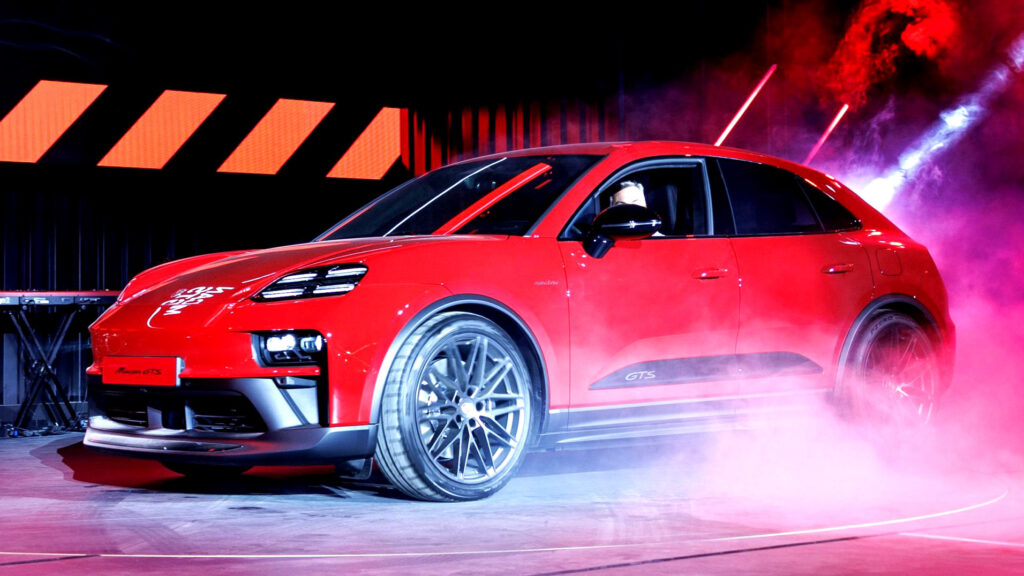
Porsche says Chinese brands present an intriguing opportunity for it.
Executives see Chinese EV brands as a pathway to future premium buyers.
Many current buyers are likely focused on value rather than brand prestige.
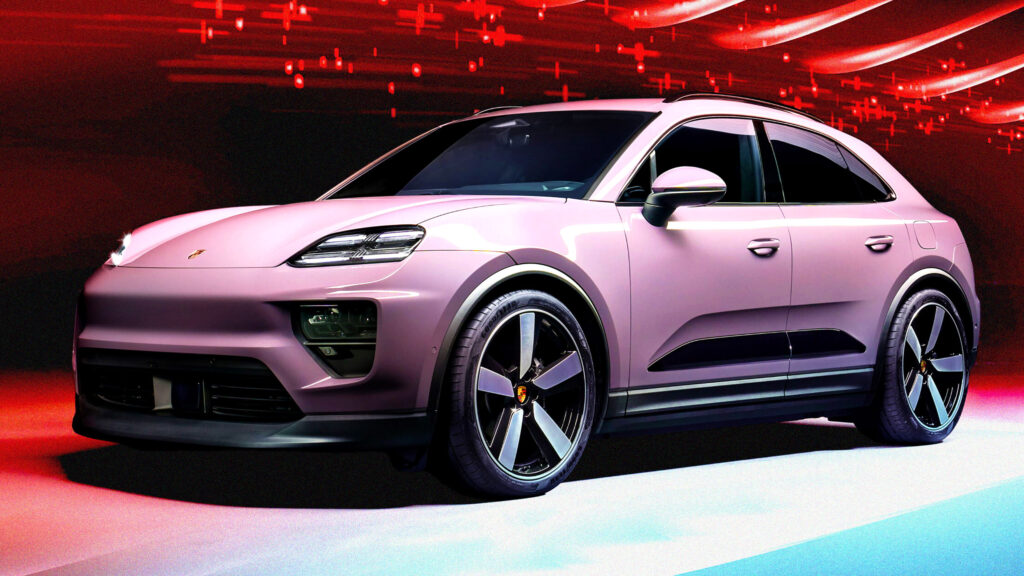
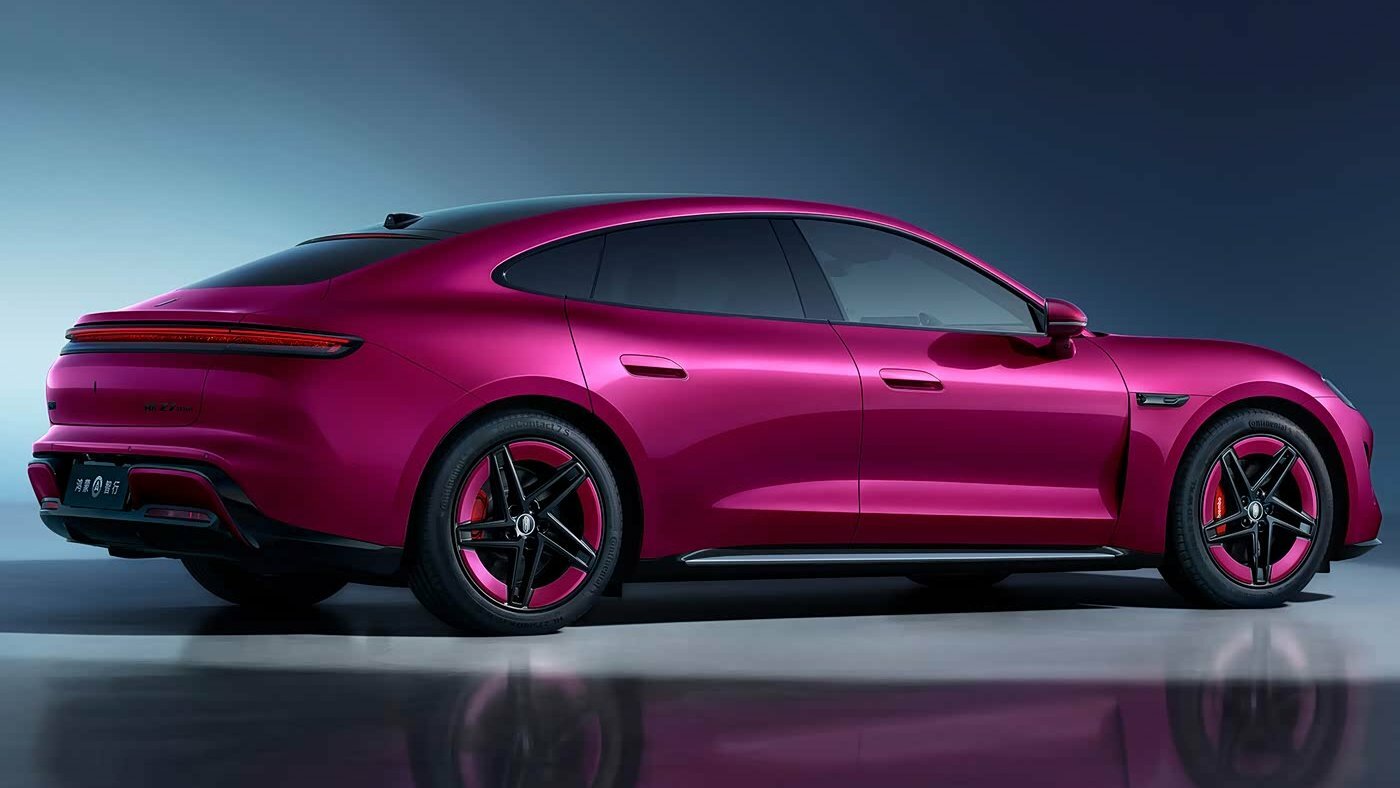
Surging demand for domestic brands in China has dealt a heavy blow to Porsche, pushing the company to shutter roughly 30 percent of its dealerships as sales have plunged 50 percent since 2022. The slide shows little sign of easing. In the most recent quarter alone, Porsche lost another 21 percent of its market share.
Yet despite the growing pressure from Chinese automakers, the brand insists the trend could work in its favor, at least in select Western markets such as Australia.
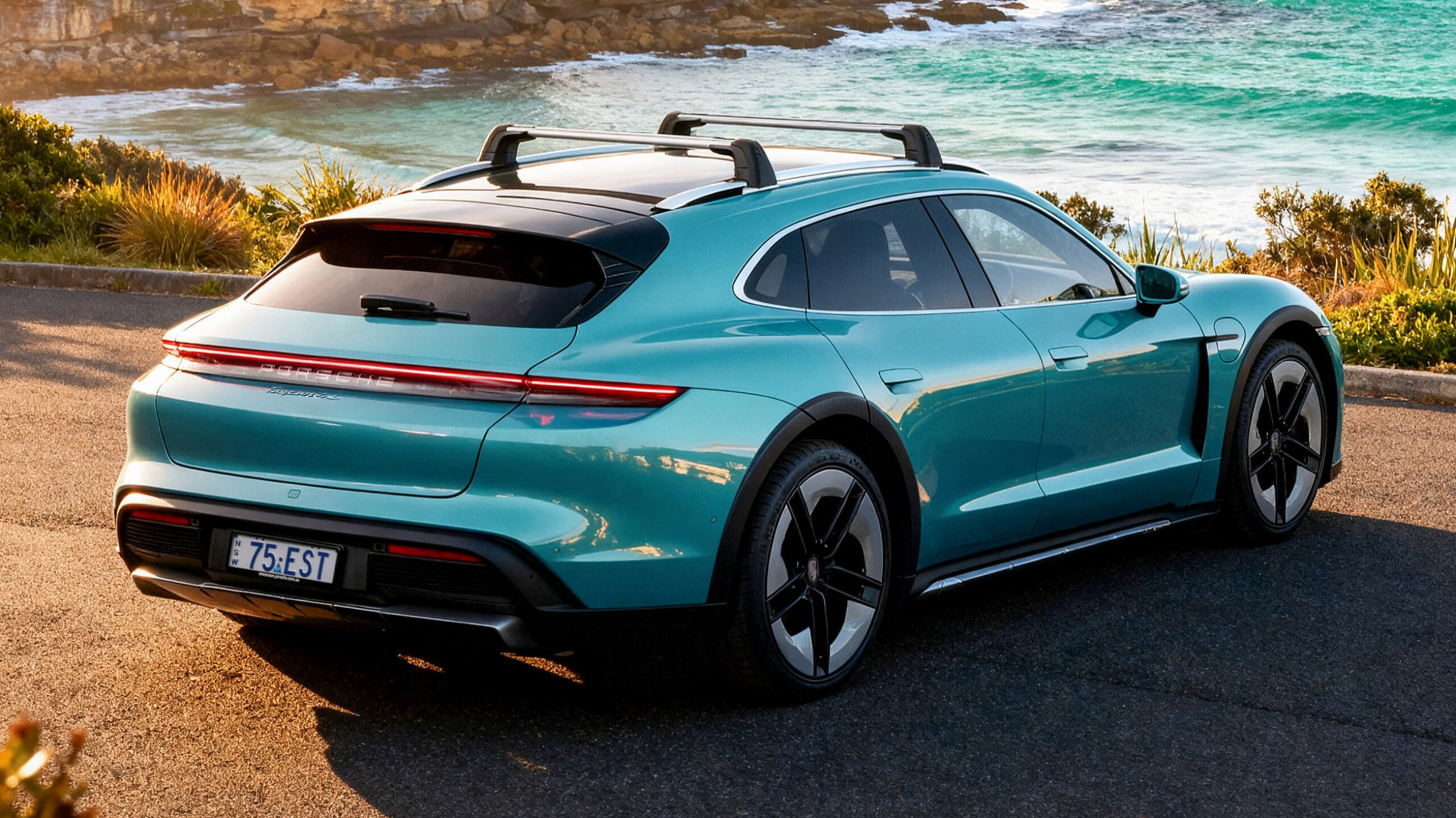
While the number of vehicles from China available in Australia continues to increase by the month, the German sports car maker doesn’t face the same level of competition as it does elsewhere. According to Porsche Cars Australia chief executive Daniel Schmollinger, many buyers entering the market through more affordable Chinese models may eventually set their sights higher.
“I wouldn’t call it concern; I wouldn’t call it worried; I look at it as an opportunity,” he told Australia’s Drive. “They’re obviously in a different price range from where we are. I’m actually happy to see these brands being successful here because at one point in time we will see, like after three years, first-time electric in a Chinese brand, people will want what’s next. And what is the next step? Then we are here for them.”
From Chinese To German?
While this certainly seems possible, there’s absolutely no guarantee that those buying an EV from a Chinese company now will be interested in upgrading to a Porsche in the future. Indeed, if they’re after a new EV from China, they’re likely quite budget-conscious and are looking for something that presents good value for money.
If, for example, someone were to buy a 700 hp EV from China for a third of the price of a Porsche, would they really have any interest in upgrading in a few years just for the German badge? Porsche is likely betting that these individuals’ incomes will grow, and as they do, it’s certainly possible they will start looking at more traditionally premium brands.
After incentives, the base Polestar 3 is available for less than $50,000.
Existing Tesla owners are being offered a $3,000 conquest bonus.
Polestar is also offering a bonus for BMW, Audi, and Mercedes owners.
For most American buyers, Tesla remains the quintessential electric vehicle brand, accounting for roughly 46 percent of all EVs sold locally last year. Despite its stranglehold over the industry, competitors continue to announce incentives aimed at convincing current Tesla owners to jump ship, and Polestar is the latest.
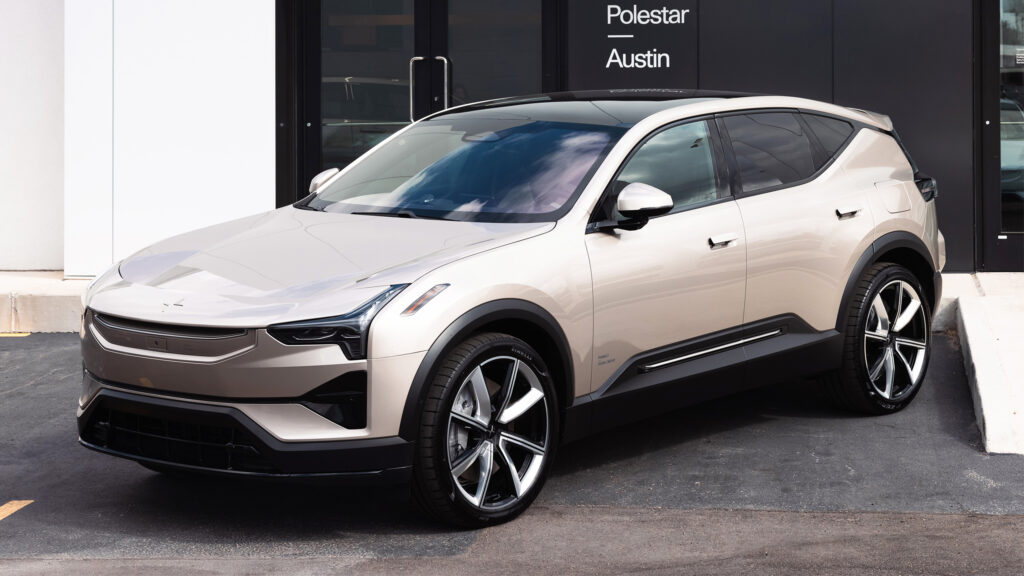
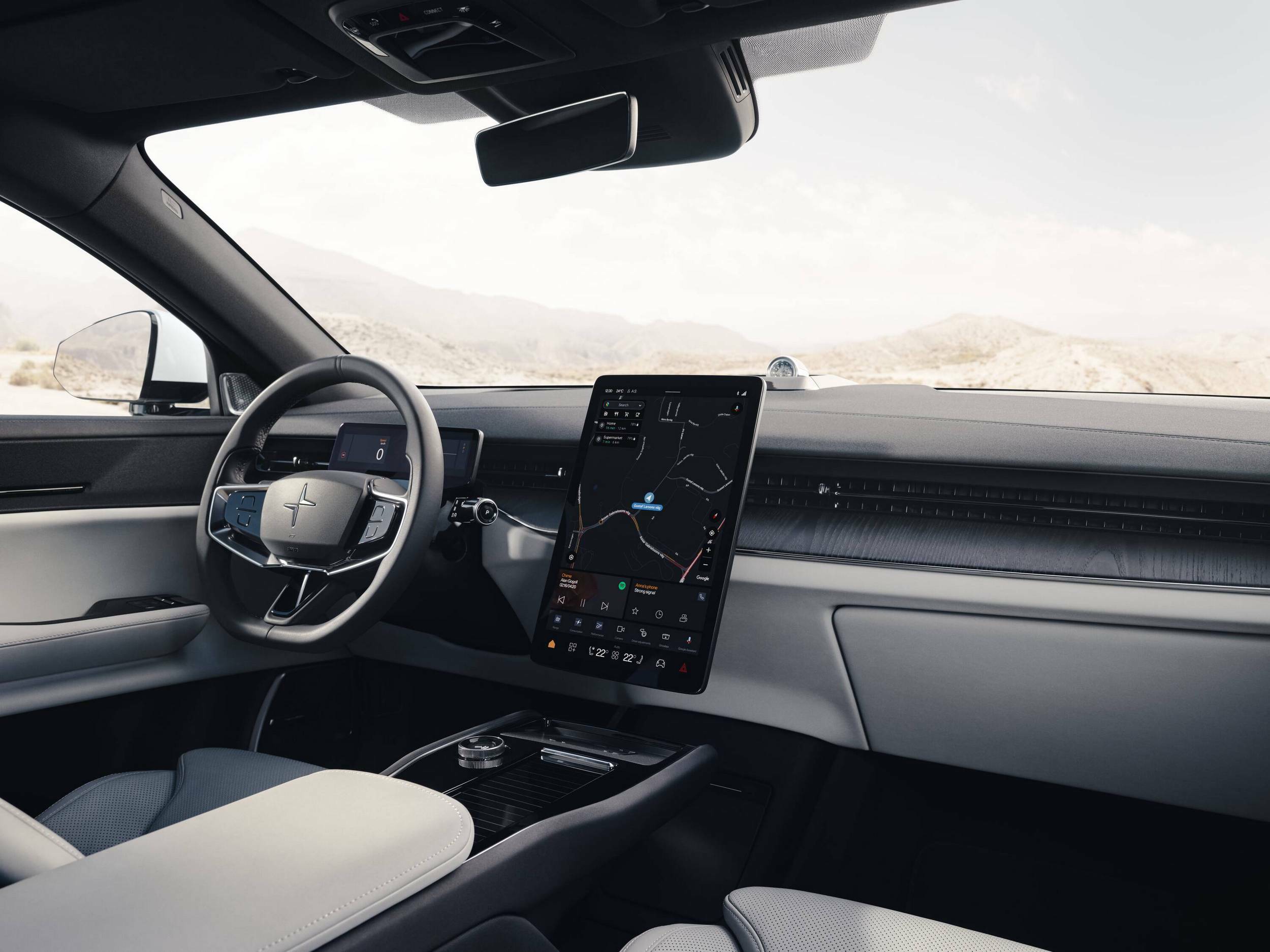
If you want to jump behind the wheel of a new Polestar 4 or Polestar 3, now could be the time to do it. Until April 30, the outgoing 2025 Polestar 3 includes an $18,000 ‘Polestar Clean Vehicle Incentive’ on purchases, slashing the SUV’s starting price. What’s more, it’s being sold with a $3,000 conquest bonus for any existing Tesla owner, regardless of whether someone wants to buy or at lease the 3.
It’s not just Tesla owners who can benefit. A $3,000 loyalty bonus is available to current Polestar owners, and a $1,000 conquest bonus is available to anyone who owns or leases an ICE or EV model from BMW, Audi, Mercedes-Benz, Porsche, or Cadillac. If you’re a Costco member, you may also be eligible to receive a discount of either $1,000 or $1,250. All up, we’re looking at potential savings of $21,000, or up to $22,250 for Costco members.
Importantly, these incentives are only for the 2025 Polestar 3, which has a 400-volt electrical architecture, whereas the 2026 model uses a more advanced 800-volt system. Nevertheless, it remains a good EV, and the base model can now be had for less than $50,000. The incentives also cut prices of the Long Range Dual Motor to under $55,000, while the Long Range Dual Motor with Performance Package can be purchased for less than $60,000.
Or Would You Prefer No Rear Window?
Polestar is also offering several incentives for the 2026 Polestar 4. For starters, it’s available with a $10,000 clean vehicle incentive, which can be combined with a $4,000 conquest bonus for Tesla owners, a $3,000 loyalty bonus for existing Polestar owners, or a $1,000 conquest incentive for owners of BMW, Audi, Mercedes-Benz, Porsche, or Cadillac models.
Like the Polestar 3, the smaller 4 also offers up to $1,250 in incentives for Costco members. The main $10,000 incentive alone reduces prices of the Long Range Single Motor to $46,400, while the Long Range Dual Motor drops to $52,900.
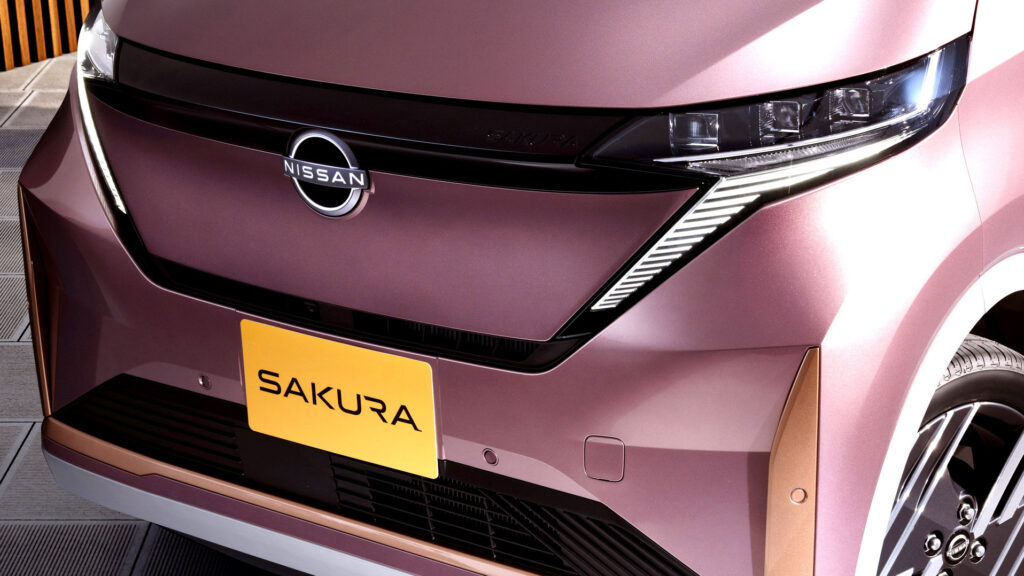
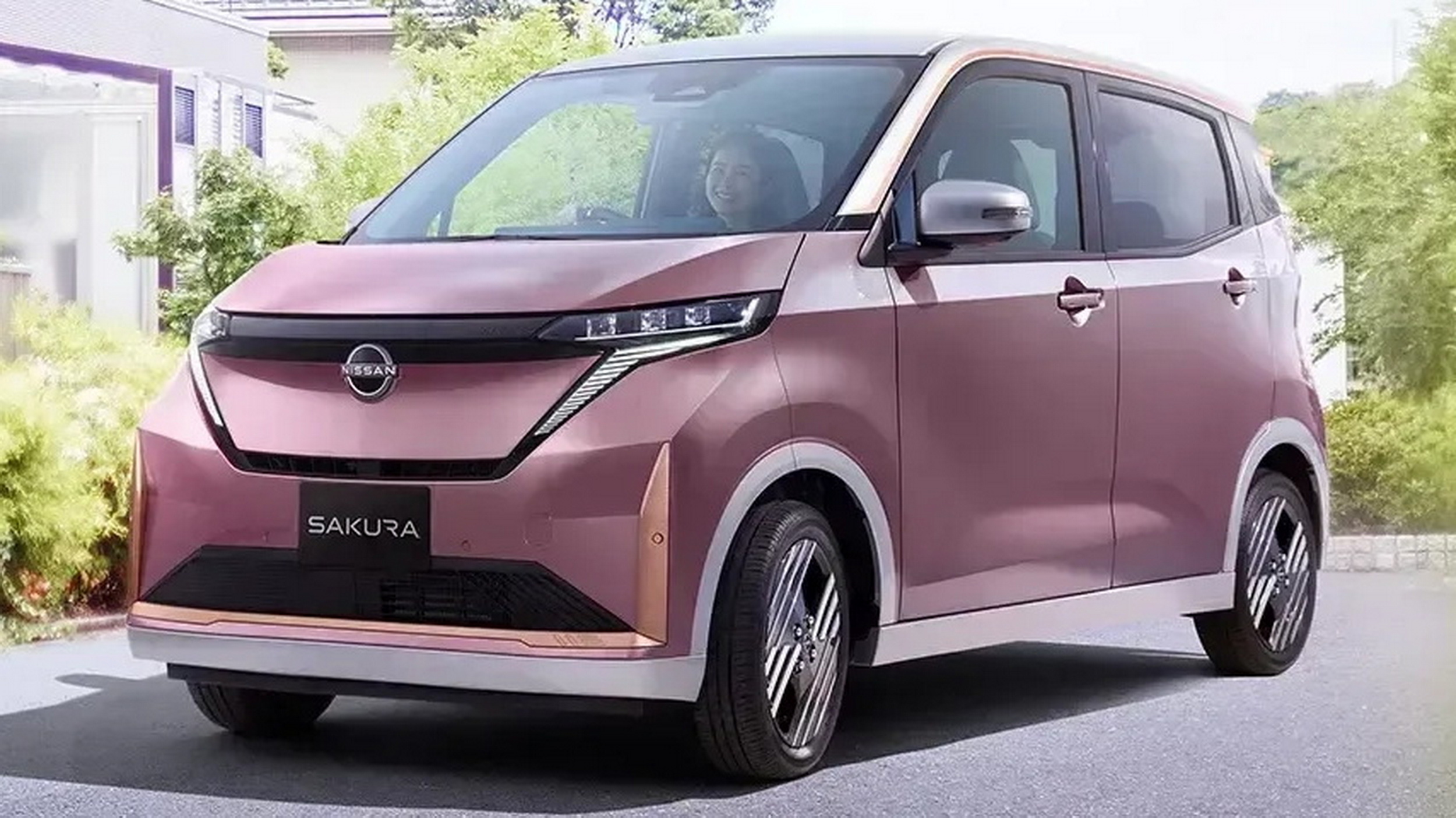
The facelifted Nissan Sakura adopts a redesigned grille and bumper.
It also gains a new color and an extra cup holder inside the cabin.
We don’t expect any upgrades to the fully electric powertrain.
Nissan is lining up a major product presentation in Japan on April 14, but it has quietly slipped in a facelift reveal ahead of schedule. The Sakura receives mild exterior and interior tweaks, aimed at keeping it relevant in Japan’s fast-moving electric kei car segment.
The model was originally introduced in 2022, as the production version of the IMk concept from 2019. Still, Nissan played it safe with small changes, likely due to a limited budget.
Fresh Face And Floral Hues
The most noticeable change is up front, where a redesigned fascia introduces a body-colored grille section that mimics the Nissan Leaf. It’s paired with a revised bumper that brings sharper angles and more pronounced vertical elements along the sides.
The LED headlights carry over unchanged, as does the sheet metal along the profile. Around the back, things appear largely untouched as well, although the lower portion of the rear bumper remains out of view.
The color palette gains a new shade called “Minamono Sakura”, inspired by cherry blossoms floating on water. In the pictured example, the paint combines copper and silver accents, creating an unusual tri-color finish.
Key-Sized Improvements Inside
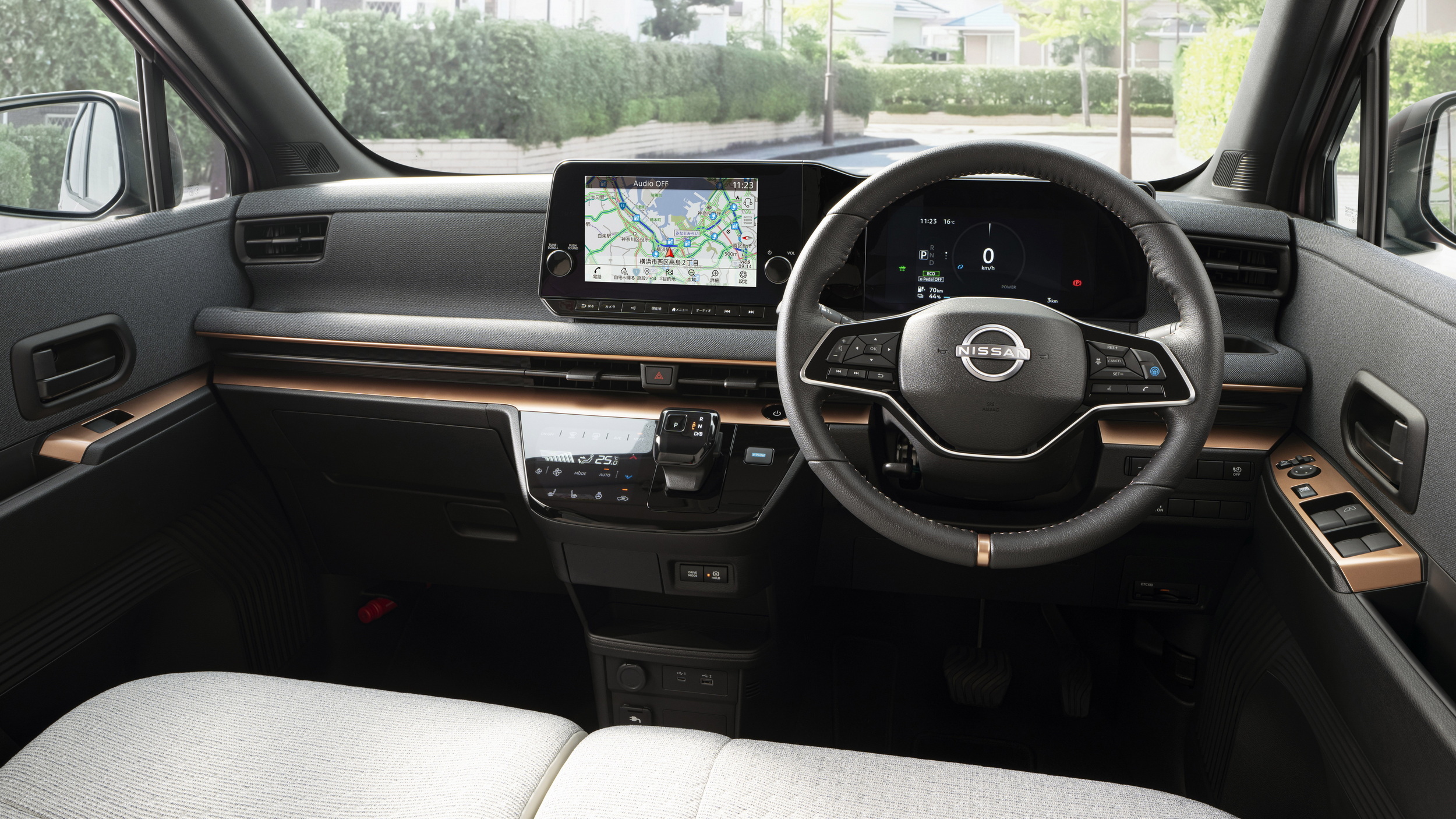
Inside, Nissan has shared just a single image, and at first glance, it looks unchanged. A closer look reveals addition of an extra cup holder on the passenger side.
Designers didn’t seem to bother changing the 7-inch digital instrument cluster and 9-inch infotainment, but they did relocate the USB Type-C ports lower in the center console.
While the company has yet to release detailed specifications, there is little reason to expect meaningful changes under the skin. The outgoing Sakura uses a single electric motor producing 63 hp (47 kW) and 195 Nm (144 lb-ft) of torque, paired with a 20 kWh battery that delivers a WLTC-rated range of 180 km (112 miles).
The facelifted kei car is expected to reach the Japanese market in the coming weeks, at which point pricing details should be confirmed. For reference, the current model starts at ¥2,599,300 ($16,300) for the base X trim and rises to ¥3,082,200 ($19,400) for the flagship G.
Nissan says the model has been Japan’s best-selling EV for four consecutive years, recording 14,093 sales in 2025. Competition comes from familiar domestic rivals, including the Mitsubishi eK X EV twin, the Honda N-One e: and N-Van e:, as well as the upcoming BYD Racco.
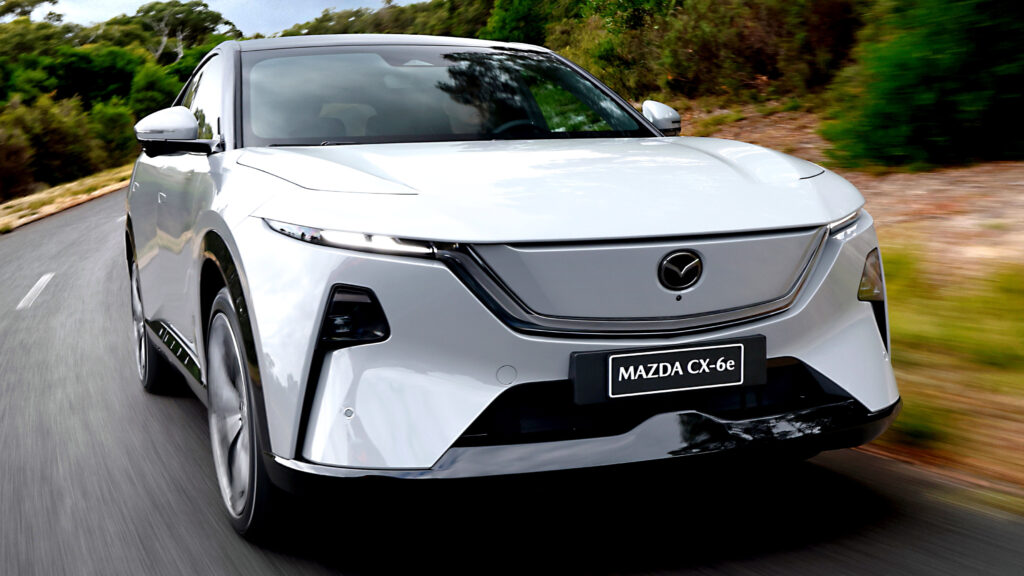
The CX-6e comes exclusively with a 78 kWh battery and a rear motor.
Mazda Australia will sell the CX-6e in GT and Azami configurations.
Customer deliveries of the all-electric SUV will start in September.
As more Chinese-built EVs make their way into global markets, legacy brands are starting to blur traditional pricing expectations. Just a few months after Hyundai began selling its China-made Elexio in Australia, Mazda has launched its only all-electric SUV in the country, also built in China. The new CX-6e is positioned as a direct rival to the Tesla Model Y and undercuts it on price, although there is no dual-motor version available.
The CX-6e is produced in China through the Changan Mazda joint venture and is closely related to the Deepal S07, which is already sold in Australia. Pricing for the entry-level GT starts at AU$53,990 (equal to US$38,000 at current rates) before on-road costs.
While it’s cheaper than the base Tesla Model Y Premium RWD that starts at AU$58,900 (US$41,500), it’s also nearly twice as expensive as the same model in China. There, the entry-level CX-6e EV starts at 139,900 yuan (US$20,500 or AU$28,900).
Chinese buyers also benefit from a lower entry point thanks to a range-extended version. It pairs a 1.5-liter four-cylinder engine with a smaller 31.7 kWh battery, effectively using the engine as a generator. That variant starts at 129,900 yuan (US$19,000 or AU$26,900), though it isn’t offered in Australia.
For their money, Australian buyers will get a sharp-looking SUV with a 78 kWh lithium iron phosphate (LFP) battery and a rear-mounted electric motor with 255 hp (190 kW) and 214 lb-ft (290 Nm). Key features of the CX-6e GT include a huge 26.45-inch central infotainment and passenger display, 19-inch alloy wheels, radar cruise control, heated and ventilated front seats, a heated steering wheel, and a 23-speaker audio system.
Tech-Filled, And Cheap
Those with a little more money to spend can opt for the CX-6e Azami, priced from AU$56,990 (US$40,100). It includes the same powertrain but adds digital wing mirrors, a digital rearview mirror, and 21-inch alloy wheels.
Both models have a claimed driving range of 301 miles (484 km) over the combined cycle. Mazda Australia hasn’t published the CX-6e’s peak DC charging speed, but notes the battery can be charged from 30-80 percent in 15 minutes, which is decent yet far from class-leading.
No doubt in a bid to help boost early interest in the SUV, the first 1,000 Australian customers who pre-order the CX-6e GT will receive a complimentary upgrade to the Azami. There is only one optional package, a Warm Beige interior trim available on both variants for AU$1,000 ($700).
BYD opens its 5,000th fast charging station across China.
A new KFC tie-up links meals with rapid charging stops.
Expansion plans include thousands of sites across Europe.
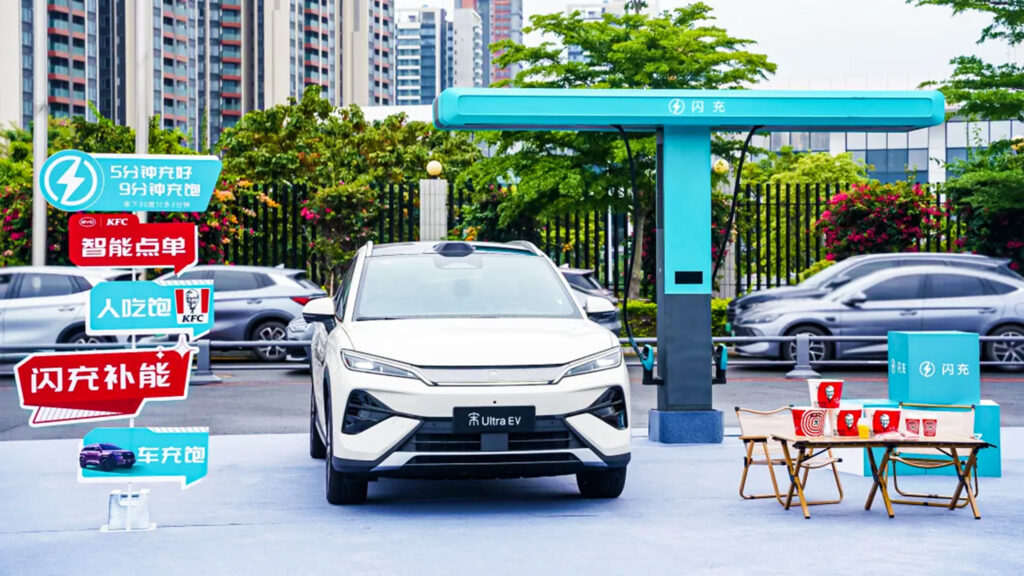
In China’s growing EV market, convenience is starting to matter just as much as range or charging speed. BYD isn’t the type of company that does things in halves. Only a month after announcing its new 1,500 kW charging technology, it has opened its 5,000th Flash Charging station in China and partnered with KFC to broaden its footprint.
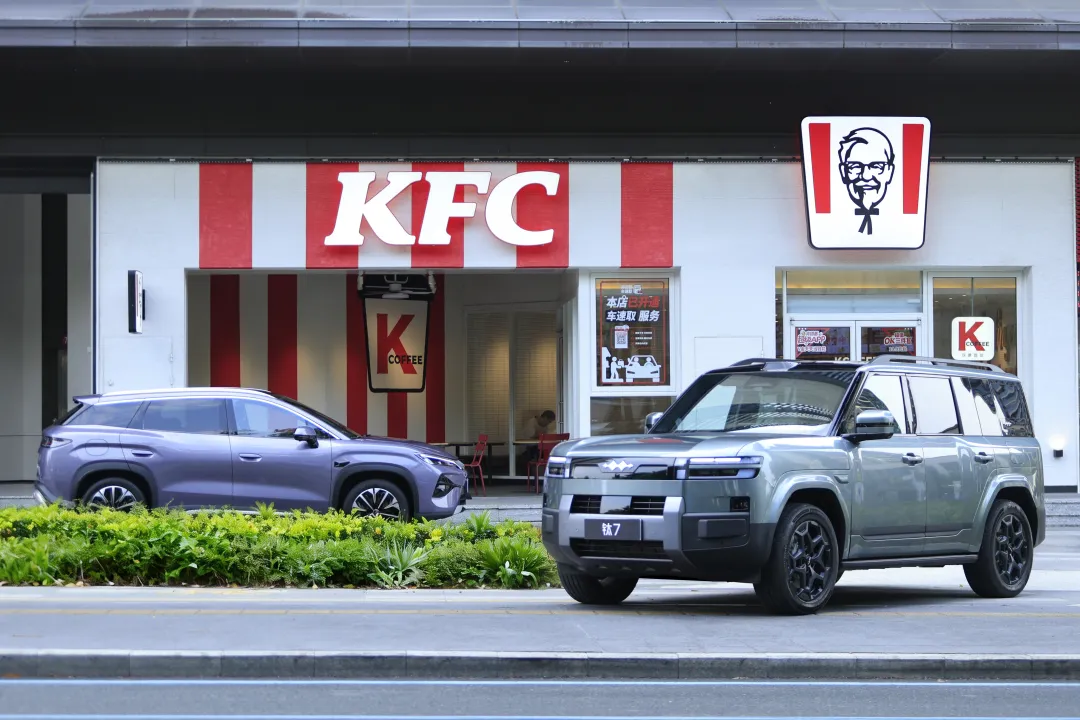
Through a collaboration with the fast-food giant, BYD will establish so-called ‘9-minute drive-thru’ areas at KFC locations across the country, referencing the Flash Chargers’ ability to take one of the firm’s EVs from 10-97 percent in just nine minutes. The partnership is being developed with Yum China, the operator behind KFC’s extensive local network.
For owners who enjoy grabbing a burger or fried chicken on the go, the deal makes practical sense. It also mirrors similar partnerships in the US involving Volvo, Mercedes, and Starbucks, where charging points have been added to many of the coffee chain’s stores.
To simplify ordering, the KFC app will be integrated into BYD infotainment systems. When an order is placed through the screen, the vehicle’s location is tracked as it approaches the nearest KFC, ensuring the food is ready and hot on arrival.
Flash Charging Goes Global
BYD has not said how many KFC locations will receive Flash Chargers, but it aims to install 20,000 stations across China by the end of the year. The company also plans to roll out 6,000 Flash Charging stations outside China throughout 2026, including 3,000 across Europe.
The Flash Charging stations can be configured similarly to traditional gas stations. According to BYD, vehicles equipped with its second-generation blade battery can charge from 10-70 percent in just 5 minutes and from 10-97 percent in nine minutes. The company also highlights performance in cold conditions, stating that vehicles can charge from 20-97 percent in 12 minutes even at -22° F (-30° C).
Honda brings Japan’s Super-One EV to Europe as Super-N.
Tiny EV has simulated transmission shifts and sound effects.
Sub £20k price is low, but so is 94 hp output, 128-mile range.
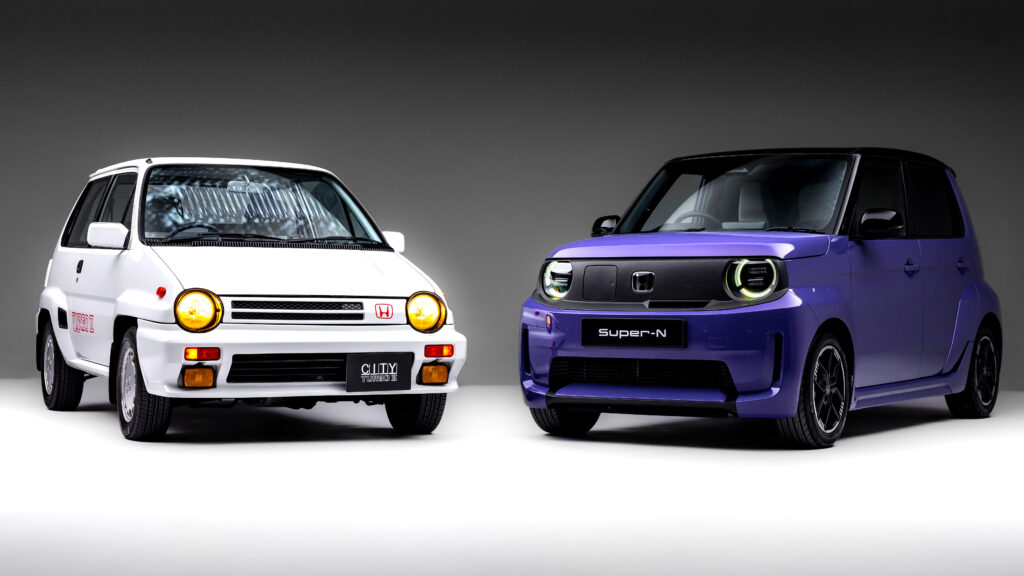
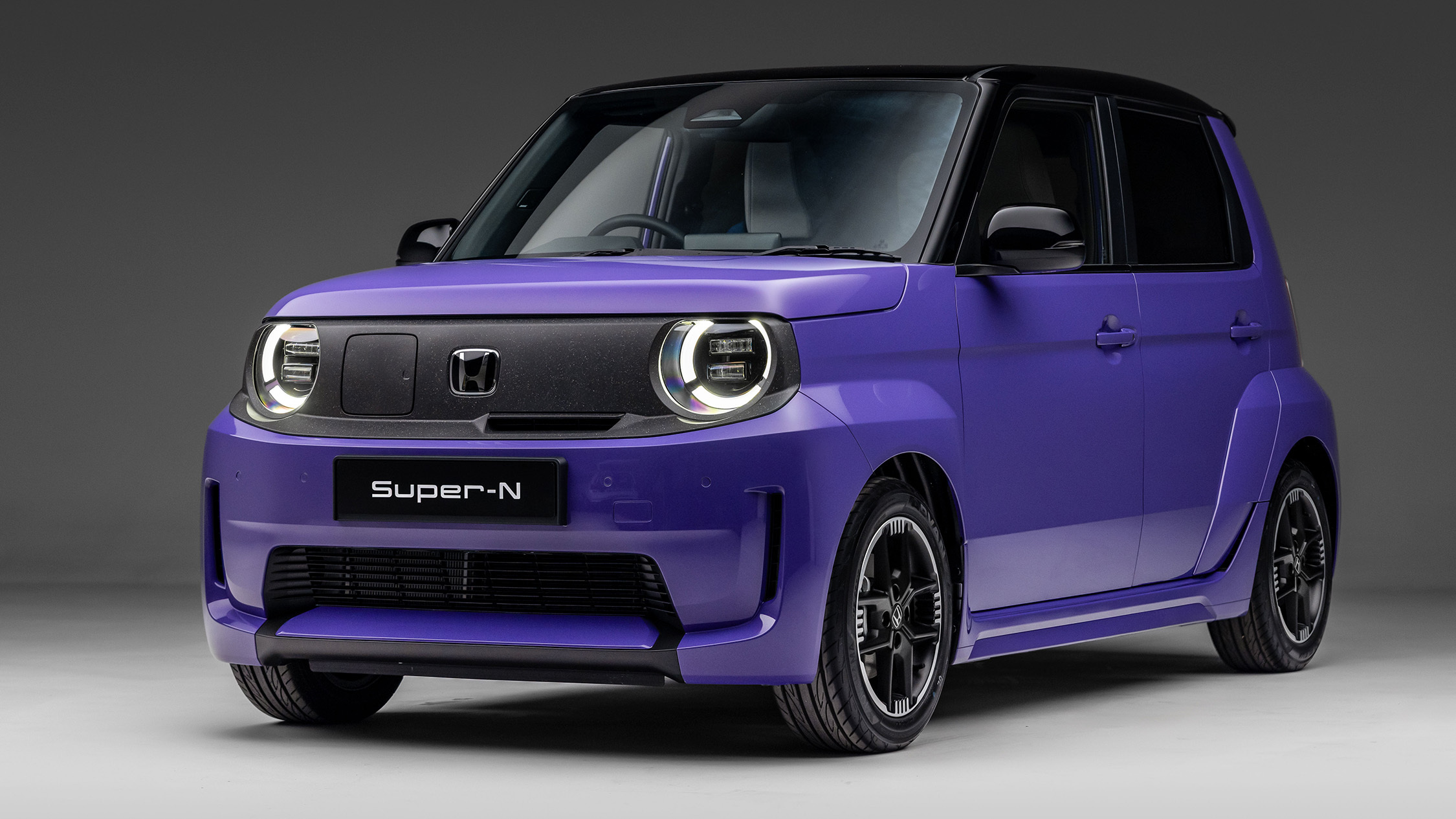
Honda has decided that what the world really needs right now is a tiny electric city car with dreams if being a rowdy ’80s hot hatch. Meet the Super-N, a kei car escapee heading to the UK and mainland Europe this July with a sub £20,000 (about $26,900 or €22,900 at current rates) price and a very clear mission to prove you can have fun even with a two-digit power output.
The Super-N is Europe’s version of the Japanese Super-One, itself a pumped-up evolution of Honda’s JDM N Series cars, but with a heavy dose of nostalgia thrown in. It borrows its attitude from the legendary City Turbo II, which means chunky arches, aggressive bumpers, and enough visual drama to make other sub-£20k EVs like the Dacia Spring look downright dull.
Under the short 3.59 m (141.3 inches) skin, a compact, front-mounted e-axle delivers between 63 hp (64 PS / 47 kW) and 94 hp (95 PS / 70 kW), with the higher figure unlocked in something called Boost Mode. That might not sound like much, but this is one of the lightest EVs around, so it should feel perkier than the numbers suggest.
Fake Gears And Sounds
Anyway, Boost Mode doesn’t just add power. It also brings a simulated seven-speed gearbox and fake engine noise, just like the acclaimed Hyundai Ioniq 5 N. The idea is to give drivers something closer to an old-school hot hatch experience, and convince ICE diehards that affordable EVs can be entertaining.
Range is very much city-focused. Honda quotes up to 199 miles (320 km) in urban driving, though that drops to 128 miles (206 km) combined. Still, that’s more than enough for daily duties, and this car isn’t pretending to be a motorway muncher anyway.
Sports Seats And Go-Faster Lighting
Inside, the Super-N gets playful with supportive seats, blue accents, and ambient lighting that switches to purple when you hit Boost Mode and start pushing the uprated chassis. Honda says the suspension has been specially tuned for UK and European roads, and the setup must be stiffer than what you get in the non-sporty, slab-sided N-One e: offered alongside the Super-One in Japan.
UK sales start in July, but fun as the Super-N looks, it won’t have things its own way. Renault’s stylish new Twingo also hits European roads this year, and will match the Honda’s sub-£20k price.
911 bucks the trend with 22 % demand upswing and more variants on the way.
Porsche isn’t having the best time right now. Fresh from admitting that operating profit plummeted 93 percent in 2025, the automaker has revealed that sales in the first quarter of this year sank 15 percent to 60,991 cars, down from 71,470 a year ago.
The company says it saw this coming due to the end of 718 production and Macan Electric sales settling down after the flurry of interest at last year’s debut. But there’s a problem looming ahead that could make things worse before they get better.
The biggest red flag sits right in the middle of Porsche’s lineup. The Macan, previously the brand’s best selling model, managed 18,209 deliveries, down 23 percent, but here’s the kicker. More than half of those, 10,130 units, were still combustion versions, while the electric version accounted for only 8,079, down a massive 43 percent from last year. With the ICE Macan heading for the exit this summer, and no replacement due for a couple of years, Porsche is about to lose its volume backbone.
911 Is Growing, But Nothing Else Is
Elsewhere, the Cayenne kept things relatively steady with 19,183 deliveries, down just 4 percent, and with Macan sales falling, the bigger SUV is now the most bought. And the 911 is out here ignoring the downturn entirely. Sales of the iconic sports car jumped 22 percent to 13,889 units, proving once again that heritage still sells, even when the broader market gets shaky.
But most Porsche models ended Q1 battered and bruised. The Taycan dropped 19 percent to 3,420 units, while the Panamera plunged 42 percent to 4,498 – due to a model transition, Porsche claims – particularly in China. The 718 range, now effectively retired, collapsed 60 percent to just 1,792 cars.
Porsche Q1 Sales By Model
Model
2025
2026
Change
Cayenne
20,055
19,183
-4%
Macan total
23,555
18,209
-23%
(of which Electric)
14,185
8,079
-43%
911
11,390
13,889
22%
Taycan
4,203
3,420
-19%
Panamera
7,769
4,498
-42%
718 Boxster/Cayman
4,498
1,792
-60%
SWIPE
The regional picture doesn’t help much either. North America remained Porsche’s biggest market with 18,344 deliveries, though that’s down 11 percent, likely not helped by changing incentives and tariff pressures. Europe excluding Germany fell 18 percent to 14,710, while overseas markets dropped 20 percent to 12,640.
China Woes Worsen
China has been a problem for a while, and deliveries in the country sank 21 percent to 7,519 units as domestic brands tighten their grip on the premium space. Porsche says it’s focusing on value over volume there, but that’s often what companies say when volume disappears.
Put it all together and Porsche’s explanation about product timing only tells part of the story. Between a cooling EV market, rising competition, and the imminent loss of the ICE Macan, the next few quarters could get even more uncomfortable.
Denza’s entry-level Z9 sedan uses a single rear motor producing 496 hp.
The existing Z9 GT Shooting Brake is heading to Europe and Australia soon.
Design changes include revised lighting, door handles, and new mirror options.
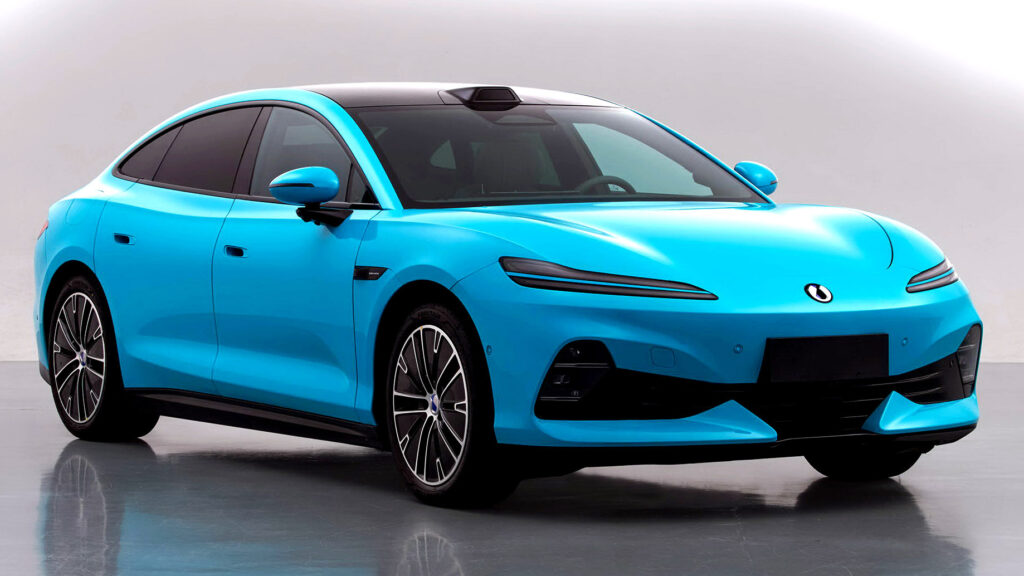
In a market where rapid model updates have become the norm, even relatively new EVs are already due for mid-cycle reinvention. Just 18 months after BYD’s Denza brand unveiled its all-electric Z9 sedan as a counterpart to the Z9 GT Shooting Brake, the first images and details of a revised version have surfaced. It has a thoroughly updated design and, fittingly, is now even more powerful.
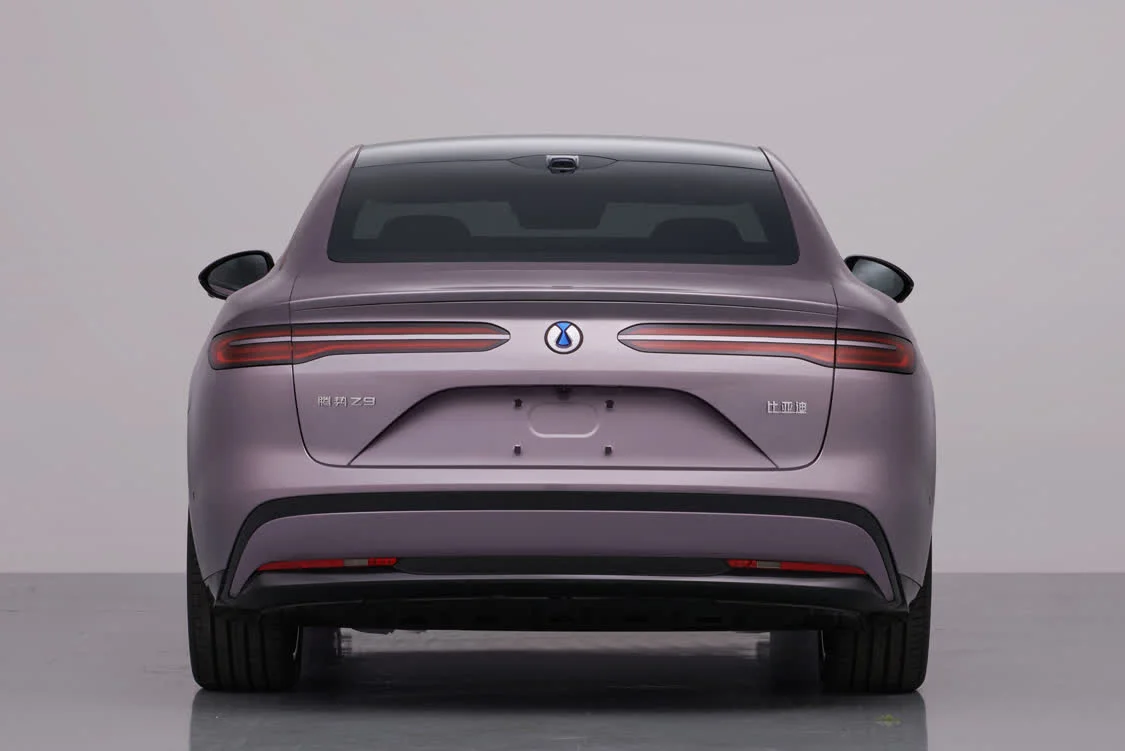
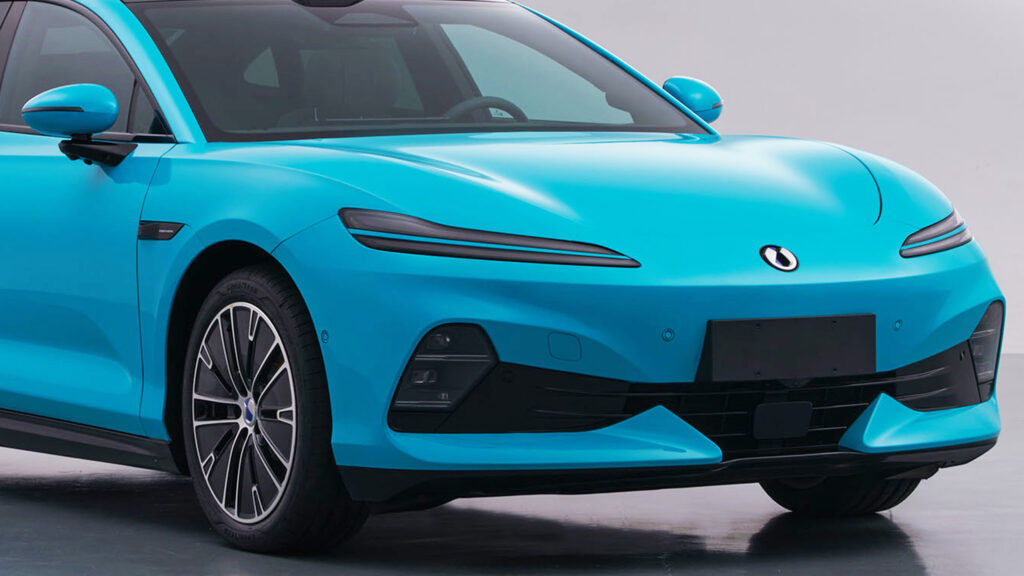
These images from China’s Ministry of Industry and Information Technology (MIIT) show the updated Z9 sports all-new bodywork. Visible at the front are revised split LED daytime running lights, while the headlights have been positioned alongside the black lower grille section.
The sides remain sleek, although there are now new optional wing mirrors similar to those used by Volvo and Polestar models. The door handles have also been redesigned, while new slim LED taillights are found at the rear. The car is 5,090 mm (200.3 inches) long, 1,980 mm (77.9 inches) wide, stands just 1,490 mm (58.6 inches) tall, and has a generous 3,025 mm (119-inch) wheelbase.
Power For All
Two distinct, all-electric versions are mentioned in the MIIT filings. The first is a single-motor version with a rear-mounted electric motor delivering 496 hp. There’s no word on how large the car’s battery pack will be, but the weight of this model will vary between 2,397 kg (5,284 lbs) and 2,438 kg (5,374 lbs), depending on the specification. The top speed is listed at 155 mph (250 km/h).
As we’ve learned from Denza, simply having almost 500 hp isn’t enough. Sitting at the top of the Z9 sedan family will be a tri-motor version with a pair of 416 hp motors and a single 362 hp motor, delivering 1,328 hp. That gives it a power advantage over the existing Z9 GT Shooting Brake that tops out at 1,274 hp. The top speed of this model will be 168 mph (270 km/h), and it’ll be a little heavier, weighing in at 2,588 kg (5,705 lbs).
Details of this new model emerged shortly after Denza announced it was taking the current Z9 GT Shooting Brake global and will start selling it in Europe and Australia. Given that an updated sedan is in the works, it seems likely a new version of the Shooting Brake is also on the cards, mimicking some of the design changes made to the sedan.
Hyundai has unveiled two Ioniq concepts, badged the Venus and Earth.
The Venus is a high-riding sedan that looks nothing like the Ioniq 5.
Both concept cars feature radical interiors to inspire production models.
China’s EV market has become a proving ground where global brands often rethink their playbook from the ground up. The Ioniq brand has served as Hyundai’s premium series of EVs in Western markets for several years. Now Hyundai is bringing Ioniq to China, but not with any existing models. Instead, it has revealed two concepts ahead of the Auto China show in Beijing.
All future Ioniq models bound for China will follow a new naming convention, one that swaps numbers for planets as Hyundai reshapes its electric lineup for the market. With this in mind, its first two concepts are dubbed the Venus and the Earth, the former a sharp looking sedan that strongly recalls a Lamborghini four-door, while the latter takes the form of an SUV.
According to Hyundai, the Ioniq series will “evolve beyond a product lineup into a broader mobility ecosystem tailored to local customers” as it develops.
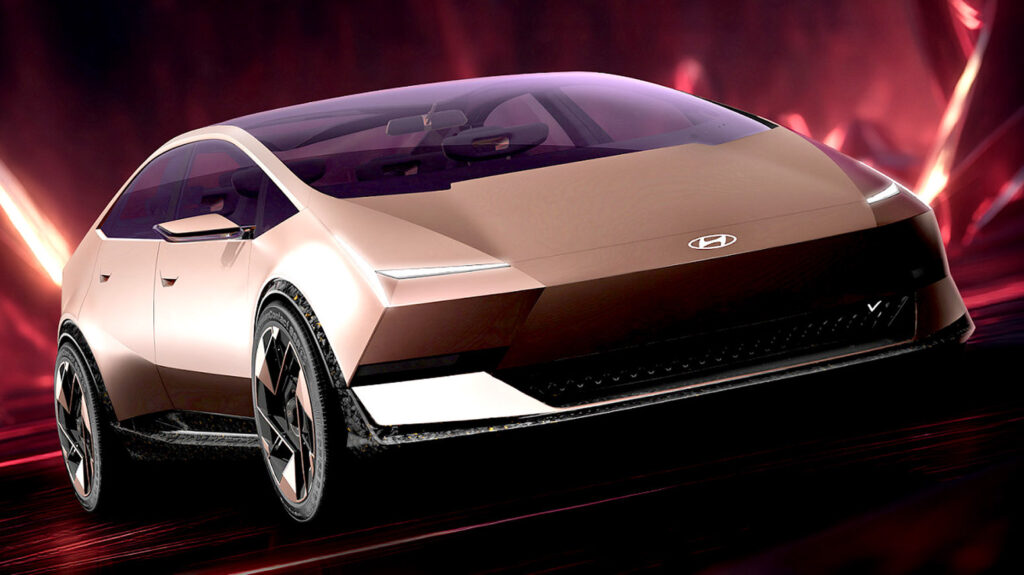
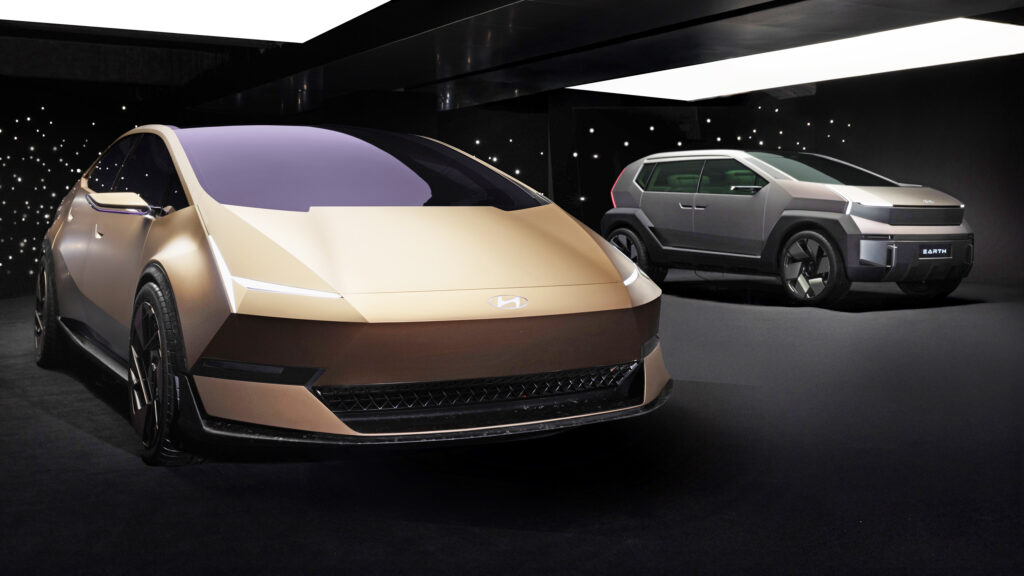
Hyundai says the Venus and Earth serve as design ‘barometers’ for future production models. The Venus has been presented in a shade of Radiant Gold and looks unlike any other Ioniq model we’ve seen. Like an Ioniq 5, it sits quite high and has an aggressive front end with slim LEDs and a gaping grille.
The cabin is also quite intriguing, featuring a slew of gold accents and a panoramic screen for the infotainment system and the front passenger, similar to the current Hyundai Elexio built in China. Just how much of this concept’s interior will influence future production models remains to be seen, but it certainly makes a statement.
No Ordinary Hyundai
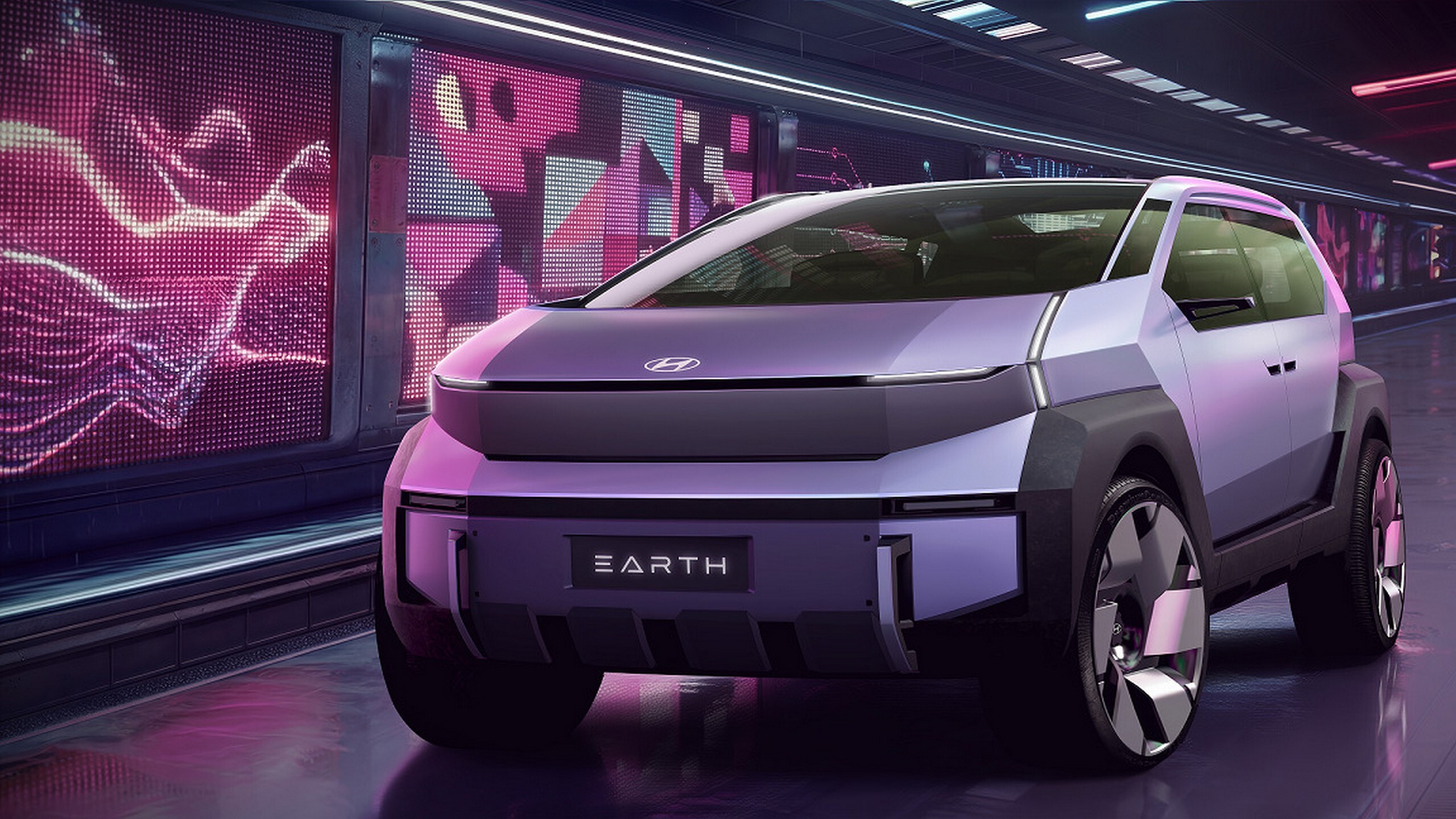
Hyundai’s Earth SUV is even more dramatic. Sharing some similarities to recent Kia concepts, it has a bold front fascia and a rugged design, painted in a shade Hyundai calls Aurora Shield. A peek inside the cabin reveals suicide rear doors, a tablet-like central touchscreen, and special seats with air-filled modules.
“Starting with the two concept cars unveiled today, we will continue to present products that reflect deep insight into Chinese customers and our genuine commitment to this market,” Beijing Hyundai Motor Company president Li Fenggang said.
“Built on IONIQ’s uncompromising principles of world-class safety and quality, we will soon introduce production models that seamlessly combine the smart driving and smart cabin experiences that Chinese consumers demand.”
Hyundai has yet to announce when the first of its China-only Ioniq models will be launched, but they shouldn’t be too far off.
The flagship Z9 will churn out an extraordinary 1,328 hp from three motors.
Denza is also readying a single-motor Z9 sedan with 496 hp at the rear wheels.
A slew of design changes have been made to the sleek Chinese sedan.
Just 18 months after BYD’s Denza brand unveiled its all-electric Z9 sedan as a counterpart to the Z9 GT Shooting Brake, the first images and details of a revised version have surfaced. It has a thoroughly updated design and, fittingly, is now even more powerful.
These images from China’s Ministry of Industry and Information Technology (MIIT) show the updated Z9 sports all-new bodywork. Visible at the front are revised split LED daytime running lights, while the headlights have been positioned alongside the black lower grille section.
The sides remain sleek, although there are now new optional wing mirrors similar to those used by Volvo and Polestar models. The door handles have also been redesigned, while new slim LED taillights are found at the rear. The car is 5,090 mm (200.3 inches) long, 1,980 mm (77.9 inches) wide, stands just 1,490 mm (58.6 inches) tall, and has a generous 3,025 mm (119-inch) wheelbase.
Power For All
Two distinct, all-electric versions are mentioned in the MIIT filings. The first is a single-motor version with a rear-mounted electric motor delivering 496 hp. There’s no word on how large the car’s battery pack will be, but the weight of this model will vary between 2,397 kg (5,284 lbs) and 2,438 kg (5,374 lbs), depending on the specification. The top speed is listed at 155 mph (250 km/h).
As we’ve learned from Denza, simply having almost 500 hp isn’t enough. Sitting at the top of the Z9 sedan family will be a tri-motor version with a pair of 416 hp motors and a single 362 hp motor, delivering 1,328 hp. That gives it a power advantage over the existing Z9 GT Shooting Brake that tops out at 1,274 hp. The top speed of this model will be 168 mph (270 km/h), and it’ll be a little heavier, weighing in at 2,588 kg (5,705 lbs).
Details of this new model emerged shortly after Denza announced it was taking the current Z9 GT Shooting Brake global and will start selling it in Europe and Australia. Given that an updated sedan is in the works, it seems likely a new version of the Shooting Brake is also on the cards, mimicking some of the design changes made to the sedan.
Hyundai has unveiled two Ioniq concepts, badged the Venus and Earth.
The Venus is a high-riding sedan that looks nothing like the Ioniq 5.
Both concept cars feature radical interiors to inspire production models.
The Ioniq brand has served as Hyundai’s premium series of EVs in Western markets for several years. Now, Hyundai is launching Ioniq in China, but it’s not doing so with any existing models. Instead, it has presented two concepts ahead of the Auto China show in Beijing.
All future Ioniq models sold by Hyundai in China will be named after planets. With this in mind, its first two concepts are dubbed the Venus and the Earth, the first of which is a sleek sedan while the latter is an SUV. Hyundai has declared that its Ioniq series will “evolve beyond a product lineup into a broader mobility ecosystem tailored to local customers” as it develops.
Hyundai says the Venus and Earth serve as design ‘barometers’ for future production models. The Venus has been presented in a shade of Radiant Gold and looks unlike any other Ioniq model we’ve seen. Like an Ioniq 5, it sits quite high and has an aggressive front end with slim LEDs and a gaping grille.
The cabin is also quite intriguing, featuring a slew of gold accents and a panoramic screen for the infotainment system and the front passenger, similar to the current Hyundai Elexio built in China. Just how much of this concept’s interior will influence future production models remains to be seen, but it certainly makes a statement.
No Ordinary Hyundai
Hyundai’s Earth SUV is even more dramatic. Sharing some similarities to recent Kia concepts, it has a bold front fascia and a rugged design, painted in a shade Hyundai calls Aurora Shield. A peek inside the cabin reveals suicide rear doors, a tablet-like central touchscreen, and special seats with air-filled modules.
“Starting with the two concept cars unveiled today, we will continue to present products that reflect deep insight into Chinese customers and our genuine commitment to this market,” Beijing Hyundai Motor Company president Li Fenggang said. “Built on IONIQ’s uncompromising principles of world-class safety and quality, we will soon introduce production models that seamlessly combine the smart driving and smart cabin experiences that Chinese consumers demand.”
Hyundai has yet to announce when the first of its China-only Ioniq models will be launched, but they shouldn’t be too far off.
Mercedes continues to struggle as global sales fell 6% in Q1.
The company was hammered by a 27% decline in China.
Automaker boasts about EVs, but wants you to forget some.
We’re nearly a third of the way through April, but first quarter sales data continues to trickle out. Some of the latest numbers are from Mercedes and they’re painting a mixed picture.
Starting in the United States, Q1 passenger car retail sales fell approximately 3% to around 70,000 units. Unfortunately, it’s hard to get an accurate picture of things as the automaker no longer breaks sales down by model. Instead, the company now lumps vehicles together and cherry picks numbers that it likes.
With that massive and annoying caveat aside, Mercedes said they had a “strong performance despite significant market headwinds.” Maybach sales jumped 22%, while the G-Class saw a 16% increase. The SL received a 47% boost, while the GLC and GLE were up 17% and 19%, respectively.
Mercedes also claimed that “customer interest and excitement surrounding the CLA continues to build across the U.S. market.” However, the company declined to provide numbers, so they were presumably pretty bad. The automaker stopped short of confirming this, but implied the situation will improve as “wider availability” is expected in the second quarter as they originally prioritized European sales.
Mercedes US Retail Sales Q1
Q1 2026
Diff.
Mercedes USA Passenger Cars
70,000
-3%
Mercedes Vans USA
8,500
-6%
Total Sales
78,500
-3%
SWIPE
The firm didn’t even bother mentioning the EQE, EQE SUV, EQS, or EQS SUV. This implies sales were as hot as an Anchorage dumpster fire in January, but surely a yoke will turn things around.
On the van side of the equation, sales fell 6% to roughly 8,500 units. The automaker could barely feign interest, but said they remain “focused on delivering versatile, premium van solutions that support evolving business needs.”
That’s meaningless nonsense, but at least we can look forward to the new VLE and VLS. The latter is getting an ultra-luxurious Maybach variant that promises private jet levels of comfort.
Sales Down Globally As Well
Zooming out, global passenger car sales fell 6% in the first quarter to around 419,400 units. This came despite a 9% increase in EVs, which found around 44,300 takers.
Speaking of which, the automaker said the “new electric GLC has generated more orders in the first three months than any other electric vehicle in our history.” They added order books for the CLA, GLB, and GLC EVs are “filled well into the second half of the year.”
EVs weren’t the only bright spot as European orders for the facelifted S-Class were “above expectations.” The automaker is also expecting to receive a boost from the updated GLE and GLS.
Confusingly, the global release said American car sales climbed 20% to 81,100 units. The company noted these are rounded “preliminary figures,” but that’s significantly more than the 70,000 mentioned earlier. However, this appears to be a case of retail sales vs overall numbers.
[Update: Despite being labeled as “Mercedes-Benz Cars sales” in the international release, the US figure of 81,100 units is said to be total group sales. This implies it includes the 70,000 car and 8,500 van retail sales as well as an additional 2,600 fleet sales.]
This, combined with a lack of model level details, results in a confusing maze of piecemeal information that – at times – seems contradictory. Regardless, the brand is tanking hard in China as sales were down 27% to around 111,600 units.
When it comes to vans, global sales fell 3% to approximately 80,300 units. Sales of EVs spiked 29%, but Mercedes only sold 6,100.
Rolls-Royce’s new electric crossover will have a split-opening hood.
It features a central spine as well as two outer panels that lift up.
SUV will likely mix BMW Neue Klasse tech with Spectre developments.
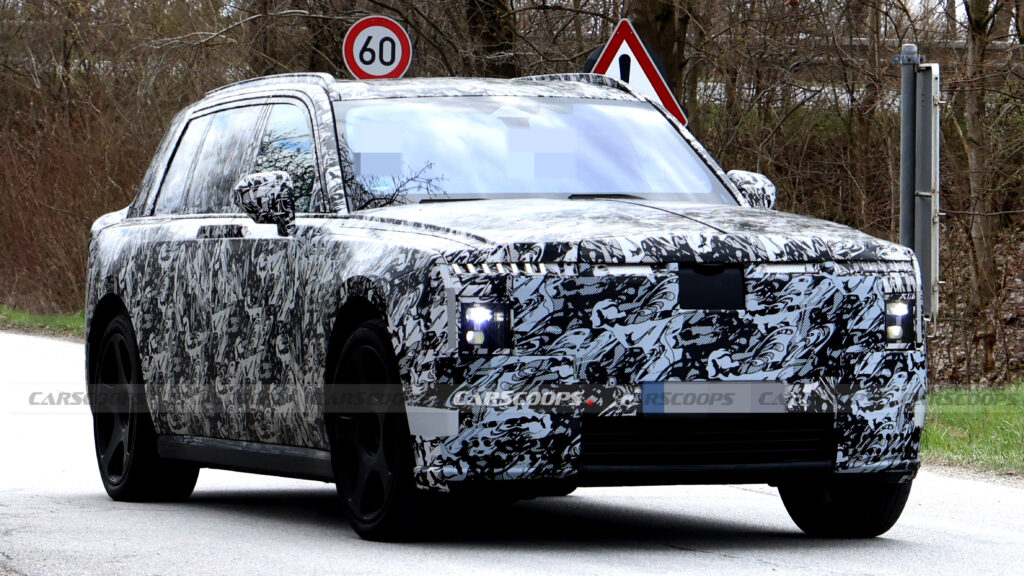
Rolls-Royce is working on an electric crossover to battle the Bentley Barnato and spy photographers recently snapped a prototype undergoing testing in Munich. While that’s notable by itself, the model appears to have an old school split hood.
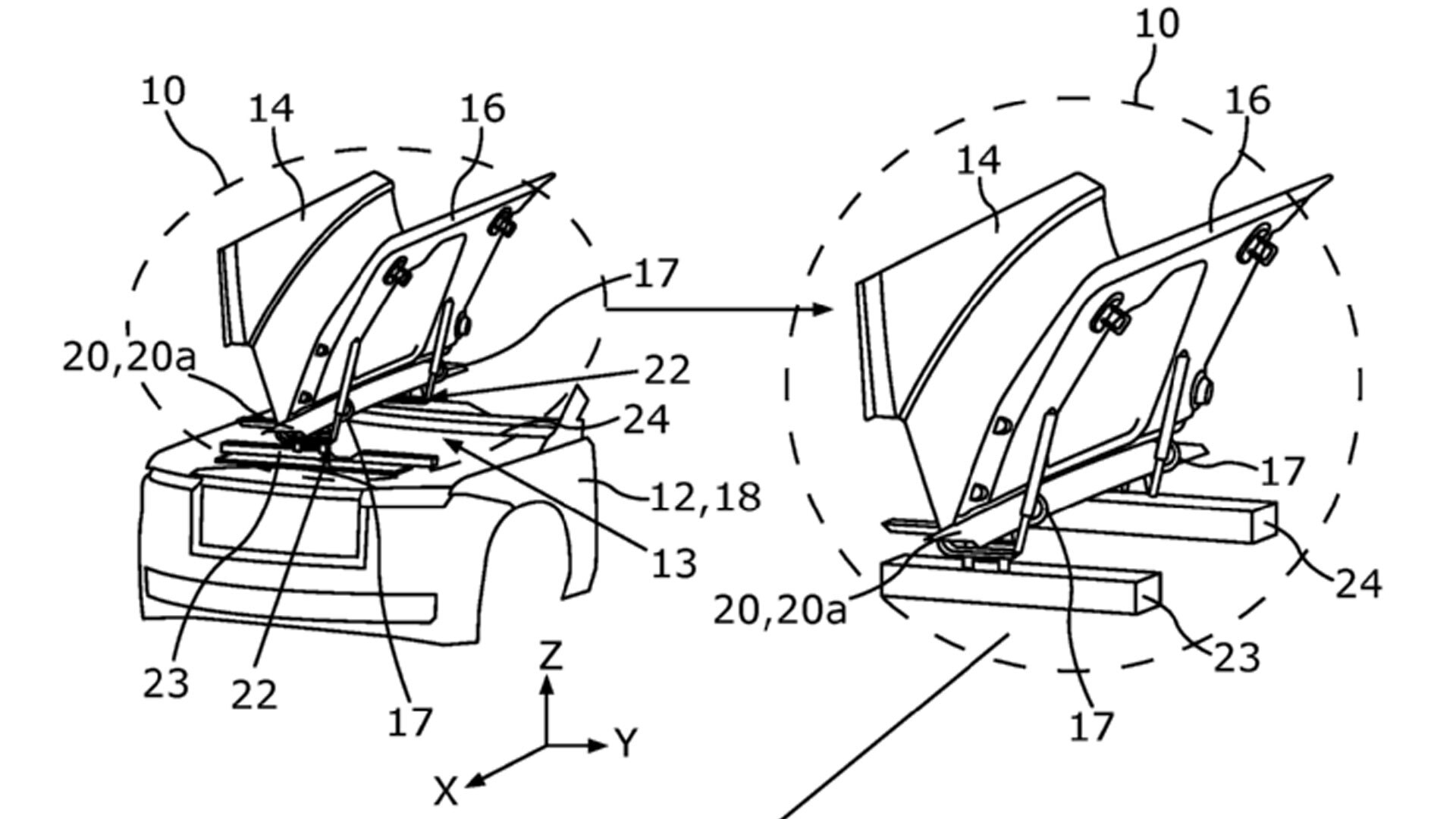
Thanks to a beefy camera lens, we can see the ‘hood’ will have a central spine with a retractable spirit of ecstasy hood ornament at the front. On either side are two movable panels, which apparently lift up similar to a trunk lid.
Rolls-Royce filed a patent for the idea in 2024 and it gives you a pretty good idea of what to expect. We can also see what appears to be a hinge at the front of the hood, although it looks like a drill attachment with a Phillips bit when you zoom in closer.
SHProshots
Forgotten tools aside, the crossover has a fully enclosed grille with a top-mounted camera. It’s flanked by split lighting units including lower headlights with “RR” badging. The model also sports a wide lower intake with horizontal bars.
The rest of the design is far more conventional and closely echoes the current Cullinan. As a result, there’s a strong shoulder line and slab-sided bodywork. They’re joined by a familiar greenhouse, a relatively flat roof, and a thick rear pillar.
The déjà vu design continues out back, but the EV has a unique bumper that lacks exhaust cut outs. The bumper also houses the license plate recess, which is a change as it’s mounted to the liftgate on the Cullinan.
These similarities originally had us believing the model was the second-generation Cullinan. However, there’s been some speculation that the two crossovers could co-exist alongside each other – at least initially.
SHProshots
While there are more questions than answers at this point, the model will undoubtedly follow in the footsteps of the Spectre. The coupe sports a 102 kWh battery pack as well as a dual-motor all-wheel drive system developing 577 hp (430kW / 584 PS) and 664 lb-ft (900Nm) of torque.
This enables the model to accelerate from 0-60 mph (0-96 km/h) in 4.4 seconds and have a WLTP range of 329 miles (530 km). There could also be a more powerful Black Badge variant with 650 hp (485 kW / 659 PS) and 793 lb-ft (1,075 Nm) of torque.
That being said, the crossover could benefit from newer technologies like the facelifted 7-Series. BMW recently announced the flagship sedan is getting their Gen6 eDrive technology and this will include a cylindrical cell lithium-ion battery with a 20% higher energy density. We can also expect the model to incorporate some other Neue Klasse advancements.
The Mercedes C-Class with EQ Technology is losing its disguise.
New photos give us our best look at the EV’s streamlined bodywork.
Should offer a dual-motor all-wheel drive system developing 483 hp.
Spy photographers have snapped the Mercedes C-Class EQ on multiple occasions and the automaker officially previewed the model last fall. It now appears to be getting closer to its debut as lightly camouflaged prototypes have been spied undergoing testing in Germany.
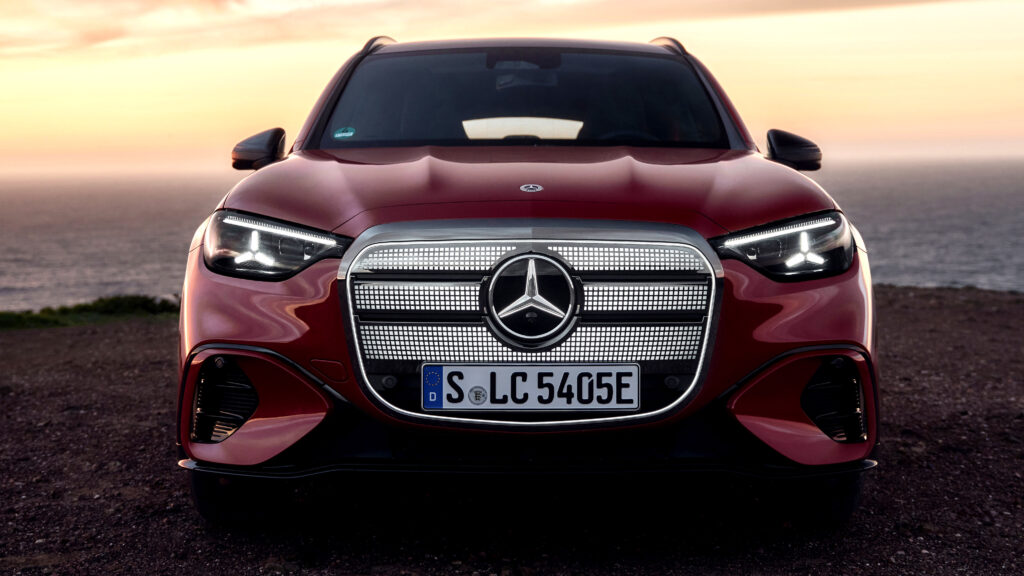
While the front end is still heavily disguised, a previous teaser image has revealed the model will follow in the footsteps of the GLC EQ and adopt an illuminated, fully enclosed grille. It will also sport a light up surround as well as nearby star-infused headlights.
More notably, we can see our first glimpse at the production hood. It features soft curves and a protruding middle section.
Moving further back, there’s streamlined bodywork and a rakish windscreen that flows into a sloping roof. The overall design recalls the EQE and EQS, but the C-Class EQ has a sportier and less exaggerated greenhouse. We can also see the model will be offered with both traditional and flush-mounted door handles as well as an assortment of different wheels.
Baldauf
Two of the prototypes appear to be equipped with an AMG or Night Package. They have an assortment of changes including sportier wheels, black window trim, black side skirts, and black mirror caps.
Out back, there are muscular rear haunches and a trunk with an integrated spoiler. They’re joined by a rounded bumper as well as taillights with circular accents featuring star graphics.
Spy photographers didn’t get a good look inside, but previous images have suggested the cabin will echo its crossover counterpart. This suggests the sedan could be offered with three different screen setups, including a relatively basic version with a 10.25-inch digital instrument cluster and a 14-inch infotainment system.
The middle option would be an MBUX Superscreen, which throws a 14-inch front passenger display into the mix. However, the real show stopper should be a 39.1-inch MBUX Hyperscreen that spans the width of the dashboard.
Powertrains And Range
Baldauf
Powertrain details are more mysterious, but the GLC EQ gives us a pretty good idea about what to expect. It has a 94 kWh battery pack, which feeds a dual-motor all-wheel drive system developing 483 hp (360 kW / 490 PS) and 590 lb-ft (800 Nm) of torque. This enables the crossover to accelerate from 0-62 mph (0-100 km/h) in 4.3 seconds, hit a top speed of 130 mph (210 km/h), and have a WLTP range of 418 miles (673 km).
However, we can expect additional variants including models with rear-wheel drive. The company has previously said one version will offer 497 miles (800 km) of range, which would fall well short of the BMW i3’s 559 miles (900 km).
There’s no word on when the C-Class EQ will be unveiled, but the photos suggest a debut could be right around the corner and the automaker has previously said 16 new models are coming this year – including six EVs.
Kia confirms midsize pickup with hybrid and range extender powertrain options.
Truck targets US buyers with towing skills, off road ability and a roomy cabin.
Wider Kia strategy includes more hybrids, EV growth and big US sales targets.
Kia’s nearly ready to saddle up and ride into America’s most fiercely loyal segment, and it’ll be doing it with the help of two totally different electrified powertrains.
We’ve known for a while that Kia, along with its Hyundai sister brand, are working on a pair of midsize pickups for the US. They’ll be proper body-on-frame trucks designed to deprive Toyota and Ford salesmen of truck hunters that might otherwise have snapped up a Tacoma or Ranger.
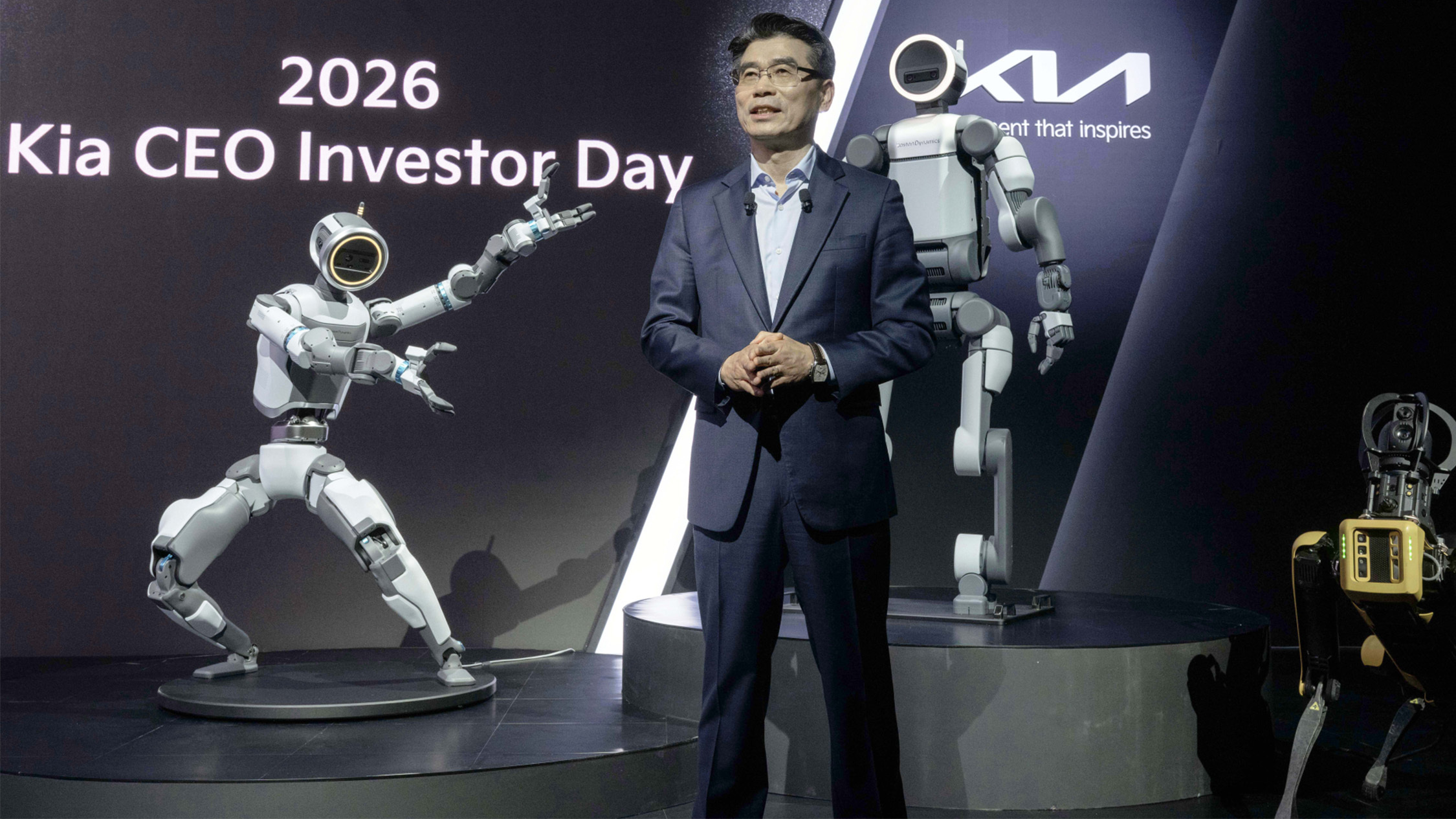
What wasn’t confirmed until today at Kia’s investor briefing, is what will be under the hood of those trucks. A hybrid option seemed likely, but Kia CEO Ho Sung Song says the pickup will offer buyers the choice of both hybrid and range-extender electric powertrains. That means it won’t just be chasing the usual suspects like the Tacoma and Ranger, but could potentially steal sales from more bigger, high-tech machinery like the Rivian R1T and Tesla Cybertruck.
Details are still thin, but Kia says the truck will offer proper capability where it matters. Expect solid towing, genuine off road chops and a roomy double-cab layout designed for real world use.
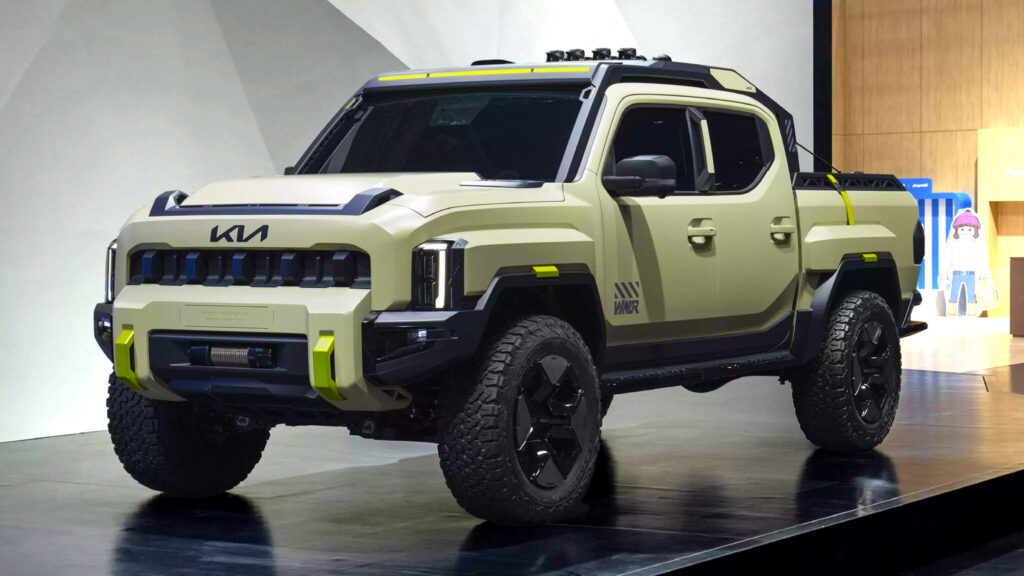
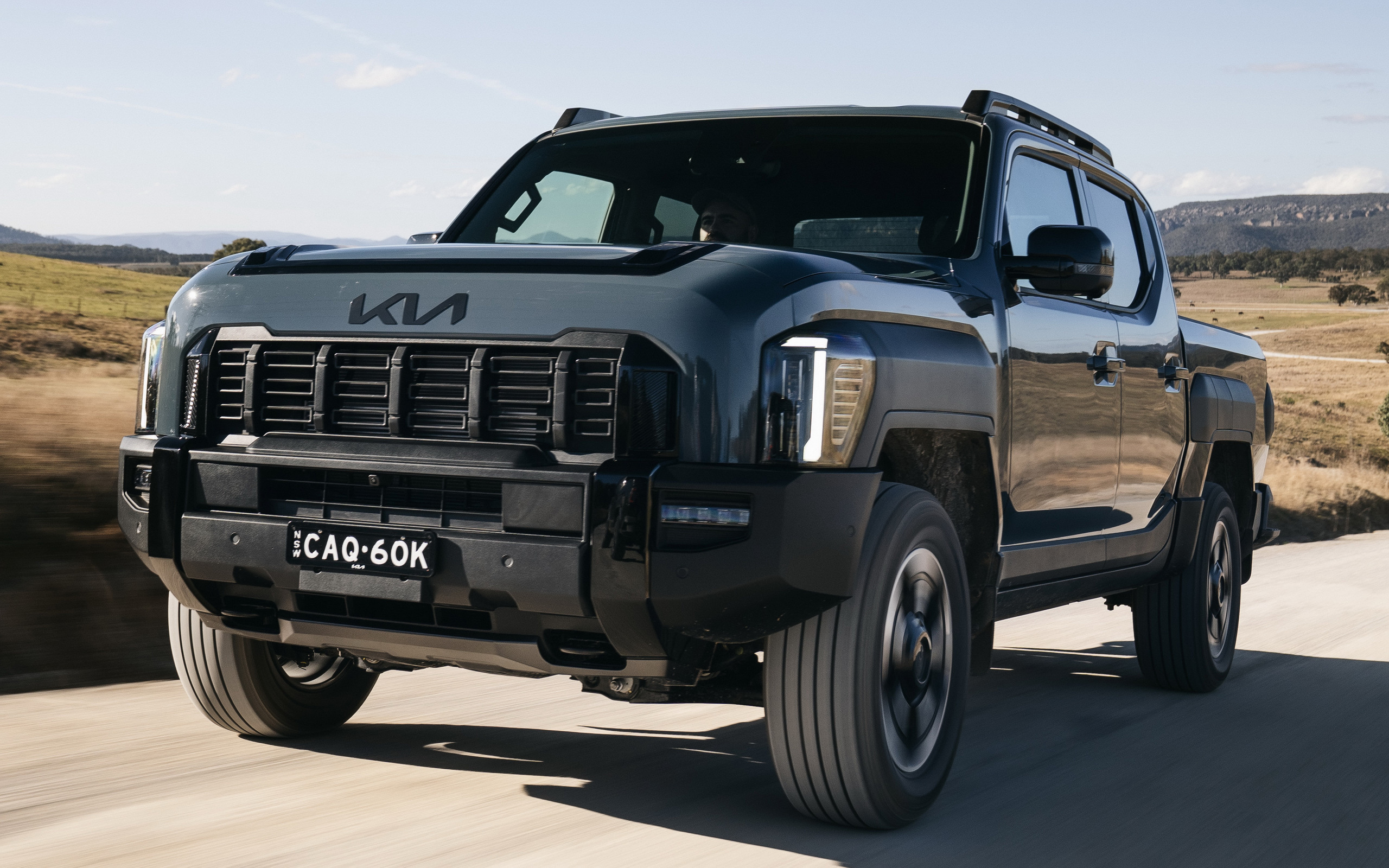
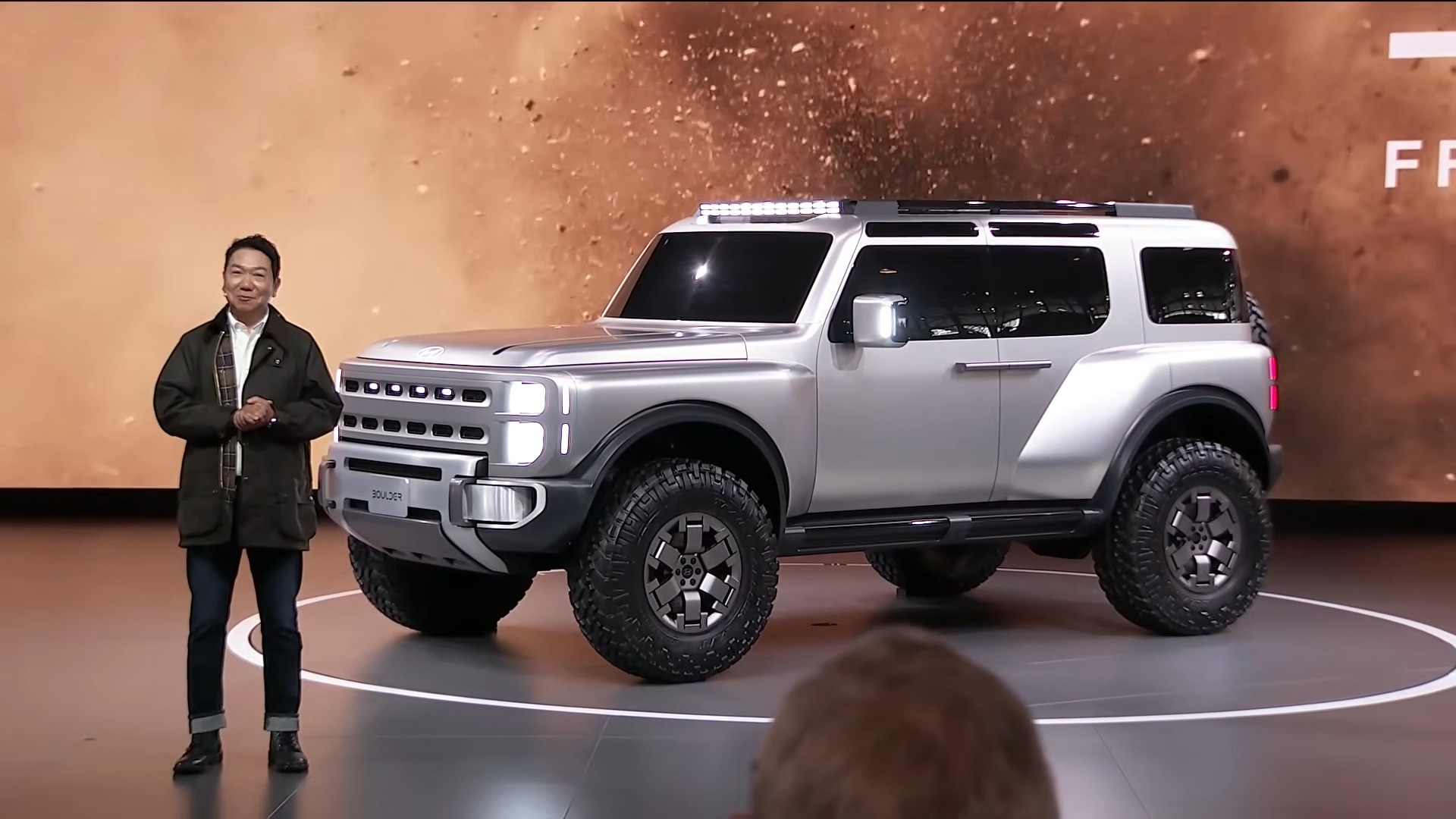
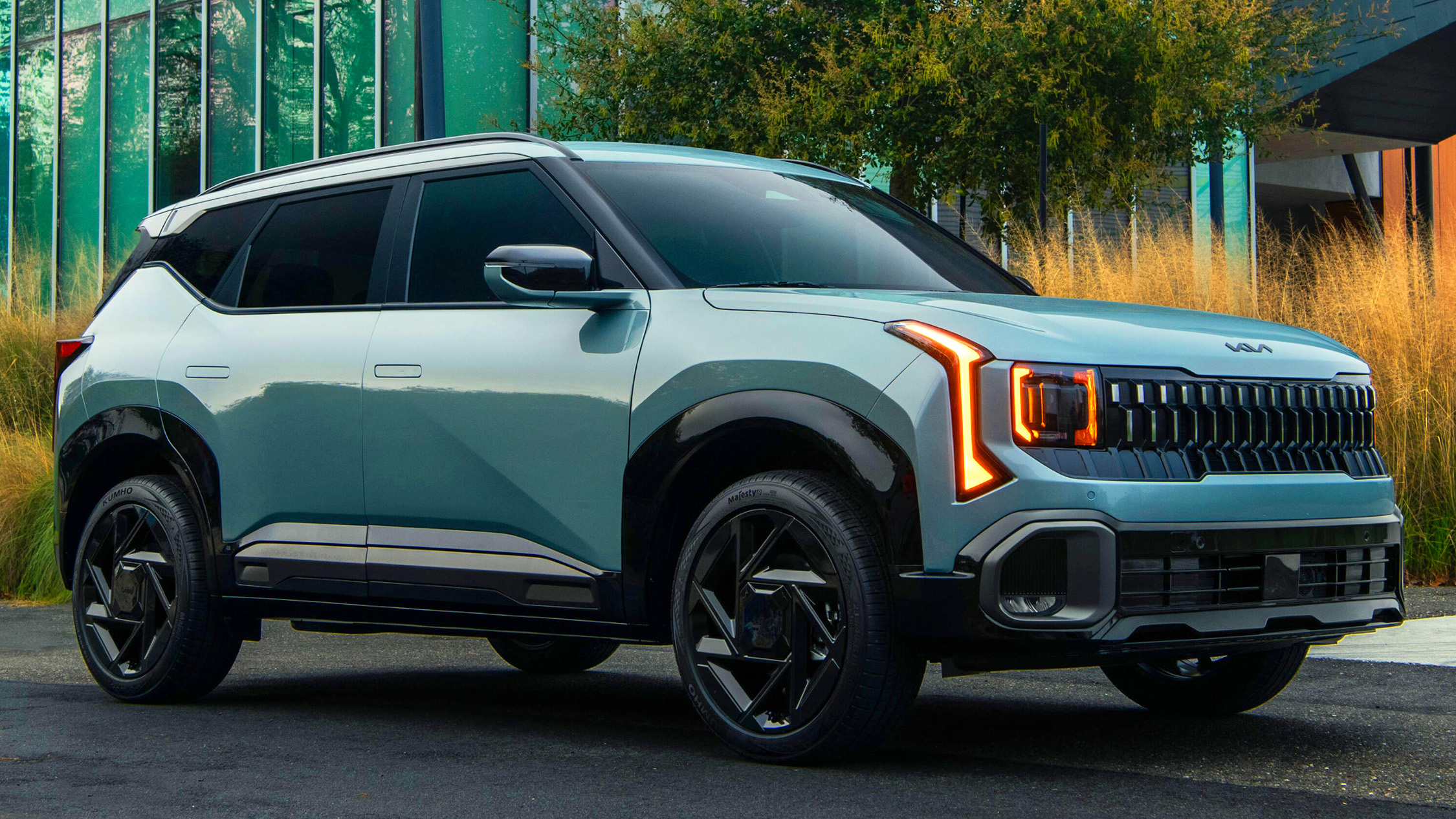
Underneath, it will share its rugged bones with a future Hyundai truck previewed by the Boulder SUV concept unveiled at the New York Auto Show earlier this month. Given the Boulder’s butch aesthetic, we can expect both trucks to have plenty of attitude, but hopefully it’ll be less ugly than the Kia Tasman truck (shown above and in the lead image) that’s sold in Australia and other markets.
This new pickup won’t just be a niche addition either. Kia reckons it can shift around 90,000 units annually in North America, Auto News reports, and carve out a meaningful slice of the segment. That’s ambitious for a brand that’s never sold a truck in the US before, but then Kia isn’t exactly lacking in confidence these days.
Hybrids For US, EVs For Europe
The truck also fits neatly into Kia’s broader US push. The company is targeting more than one million annual sales stateside by 2030, with a 6.2 percent market share. To get there, it’s doubling down on hybrids, expanding from four to eight nameplates and adding electrified options to core models.
That includes big hitters like the Telluride, which is set to gain hybrid and range extender variants, plus the Sportage, which Kia wants to push past 200,000 annual sales. Even the smaller Seltos is getting in on the action with a new look (seen above) and a hybrid version aimed at cracking six-figure sales.
And while America gets a tough new truck, Europe is getting something much smaller but just as important. A new EV1 hatch is on the way to take on cars like the Renault 5, proving Kia’s strategy really does cover everything from city streets to dusty trails.
The NX8 arrives in two flavors, pure electric and range-extender.
Longest-range EREV version covers over 900 miles on a full tank.
Pricing ranges between ¥149,900-199,900 ($21,900-29,200).
Update: The new NX8 is now on sale in China. Pricing starts lower than expected, and Nissan is offering both a pure electric and a range-extender version. This story has been updated with full pricing, specs, and new photos.
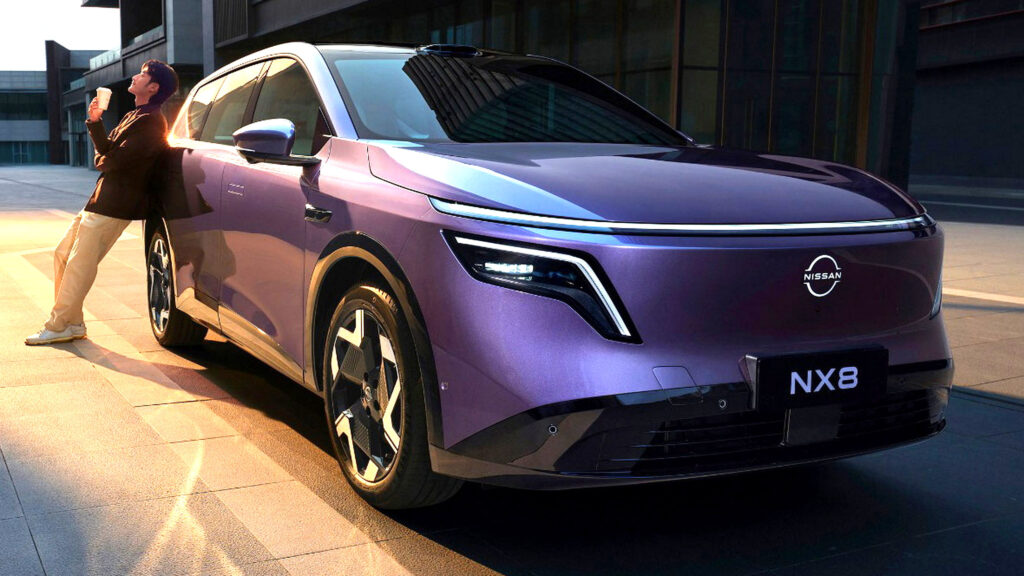
Nissan has introduced a new midsize SUV developed in partnership with Dongfeng in China, marking the latest addition to its growing, budget-conscious N-series lineup. Named the NX8, the model joins the existing N6 and N7 sedans and is offered with a selection of electrified powertrains.
The exterior design follows the same styling language as its sedan counterparts, with clean surfacing and a grille-free front fascia. A full-width daytime running light runs across the split headlights and wraps around the front fenders, while OLED tail lights extend across the rear.
The overall shape leans toward conventional SUV proportions, marked by flush-fitting door handles and pronounced shoulders.
How Big Is It?
The midsize NX8 measures 4,870 mm (191.7 inches) in length, 1,920 mm (75.6 inches) in width, and 1,680 mm (66.1 inches) in height, with a wheelbase of 2,917 mm (114.8 inches).
That makes it 222 mm (8.7 inches) longer than the Rogue (X-Trail) and 152 mm (6 inches) shorter than the Pathfinder. Interestingly, its wheelbase is 17 mm (0.7 inches) longer than the Pathfinder’s, which should translate to slightly better interior space.
A High-Tech Interior
Inside, we find dual 15.6-inch infotainment displays on the dashboard, which are separate from the 10.25-inch digital instrument cluster and run on the Qualcomm Snapdragon 8295P chipset. The flagship trim adds a 63-inch augmented reality head-up display and a 25-speaker audio system.
Additional highlights include AI Zero Gravity Seats 2.0 with massage, heating, and ventilation, along with contactless airflow control, an onboard refrigerator, and Motion Sickness Prevention Technology 3.0.
The five-seater cabin can transform into a comfortable couch/bed by fully reclining the front seatbacks. Furthermore, the boot has extra space under the floor, and is complemented by a frunk in the battery electric versions.
In terms of safety, the SUV is fitted with up to 29 sensors including a roof-mounted lidar unit. This the hardware for the Momenta-based Advanced Driver Assistance promising sophisticated autonomous capabilities.
Powertrain Options
The Nissan NX8 is offered with both range-extender (EREV) and fully electric (BEV) powertrains, each using lithium iron phosphate battery packs supplied by CATL.
The EREV pairs a turbocharged 1.5-liter engine acting as a generator with a single electric motor producing 335 hp (250 kW/ 340 PS). It delivers an EV-only range of 310 km (193 miles) and a combined range of 1,450 km (901 miles) under CLTC testing.
The BEV variant produces either 288 hp (215 kW / 292 PS) or 335 hp (250 kW / 340 PS). Range is rated at 580 km (360 miles) and 650 km (404 miles), respectively, under the CLTC cycle. These figures exceed the Leaf’s 303-mile EPA rating on paper, though CLTC estimates typically run 20 to 30 percent higher than EPA results, so real-world differences may be smaller than they appear. The larger 81 kWh battery supports ultra-fast charging at up to 463 kW, taking it from 10 to 80 percent in 12 minutes.
How Much Does It Cost?
Nissan has initially launched the NX8 in China but as with the N6 and N7 sedans, it is expected to be exported to additional markets. Whether that will include Western regions like Europe and Australia, however, remains to be seen.
In its home market, the SUV is currently priced between ¥149,900-199,900 ($21,900-$29,200), depending on the powertrain and trim level. That’s roughly in line with what you would pay for the older Kicks Play in the US ($21,520), which remains Nissan’s most affordable model there, and still less than the new Kicks ($22,430). It also comes in well below the new Leaf EV, which starts at $29,990 in America.
These figures reflect introductory pricing for the launch period, with standard pricing set at ¥159,900-209,900 ($23,400-30,700). Even so, the China-spec model remains considerably cheaper than the Nissan Rogue, which starts at $29,490 in the US market.
Kia readies subcompact EV1 hatch based on new EV2 SUV hardware.
Brand targets one million EV sales globally while boosting hybrid lineup.
New platform coming later with 40% bigger batteries, 9% more power.
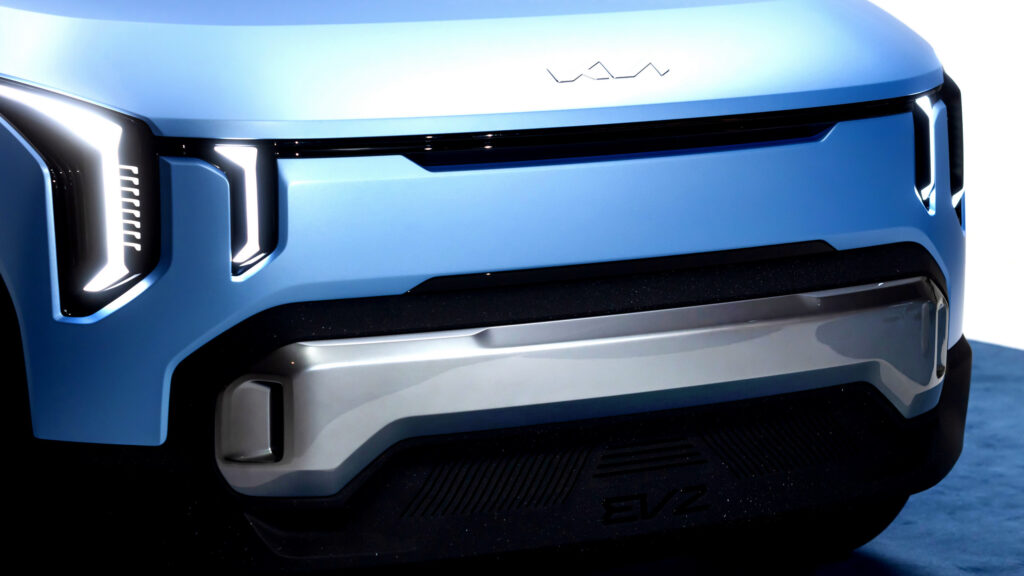
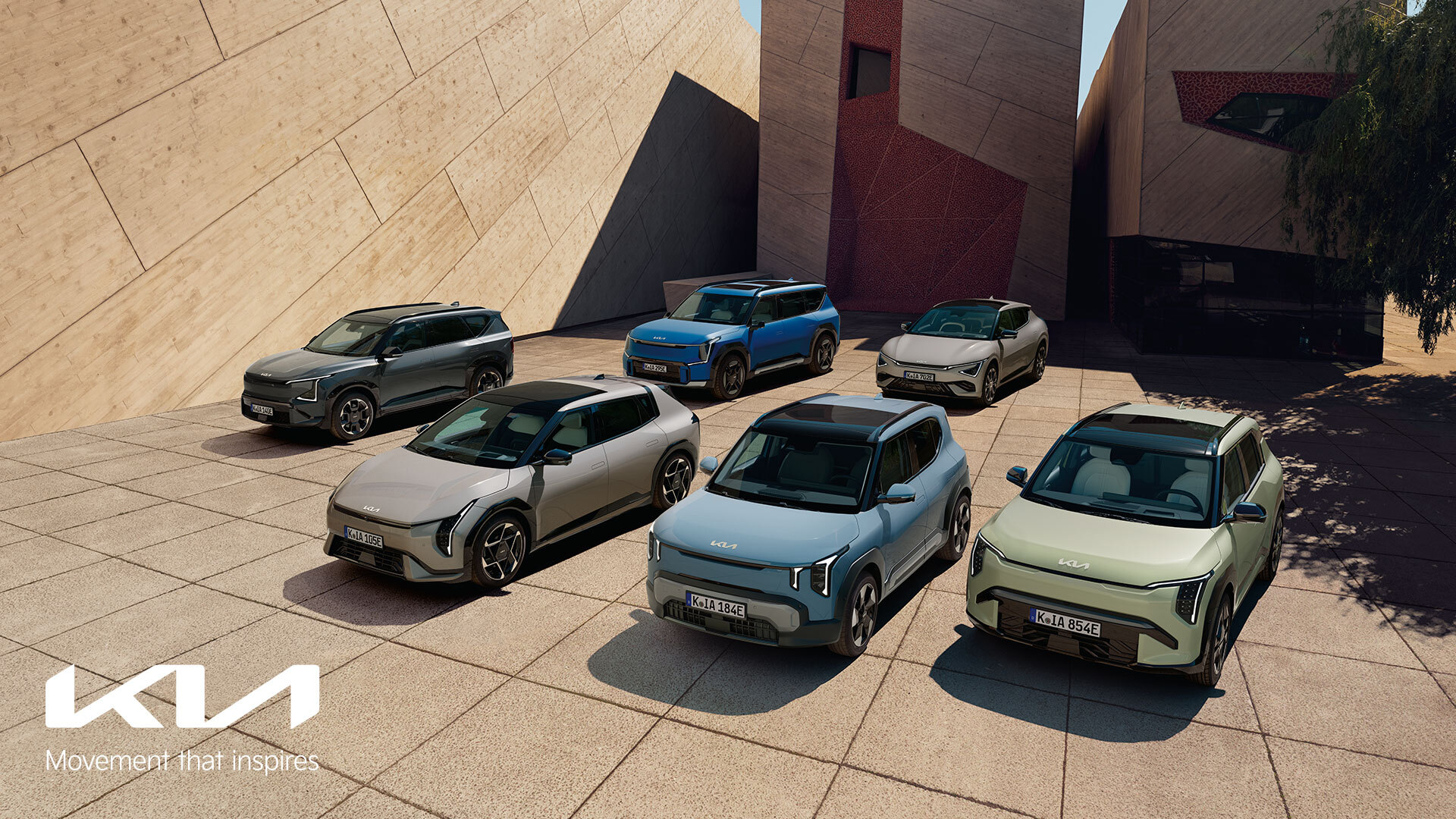
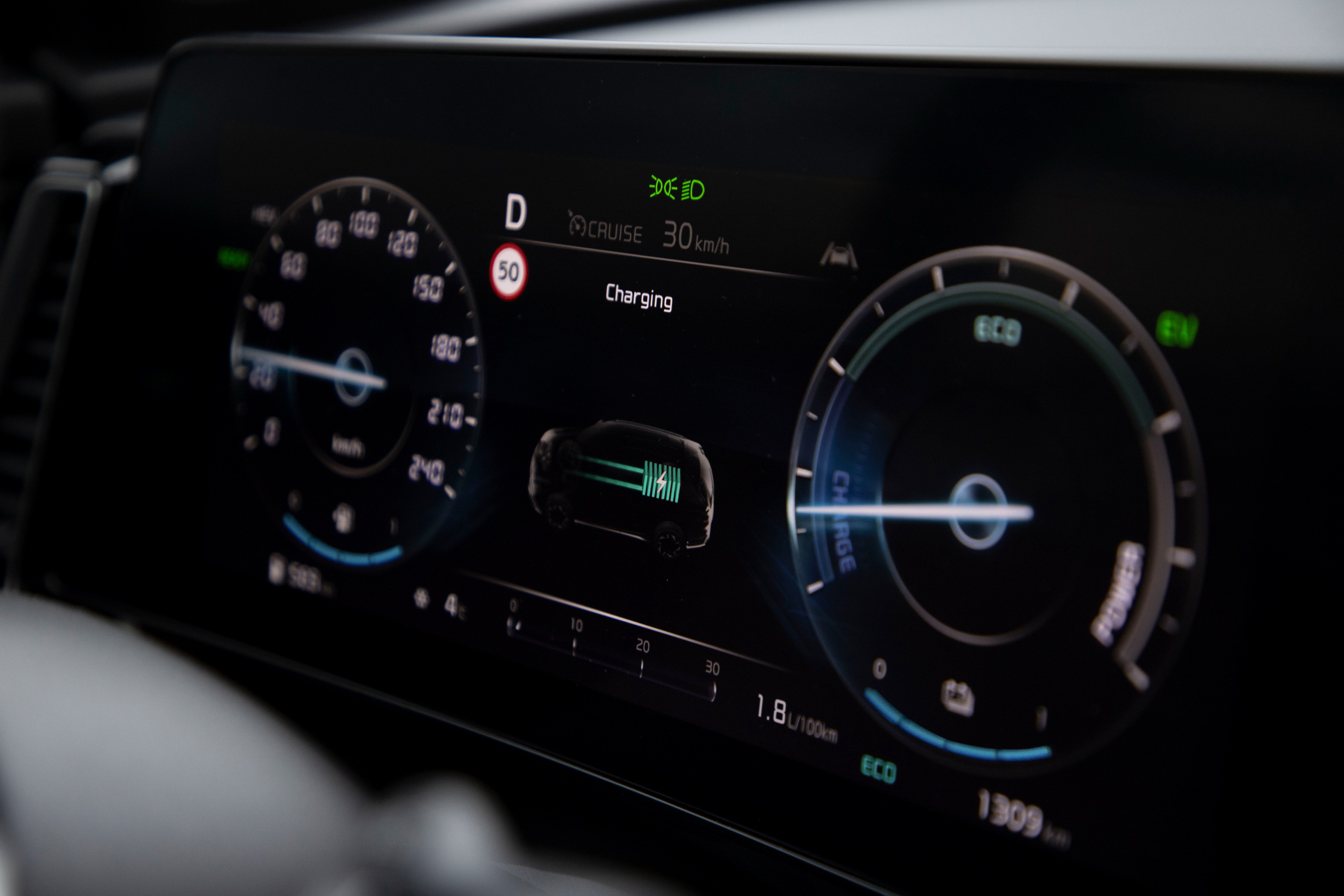
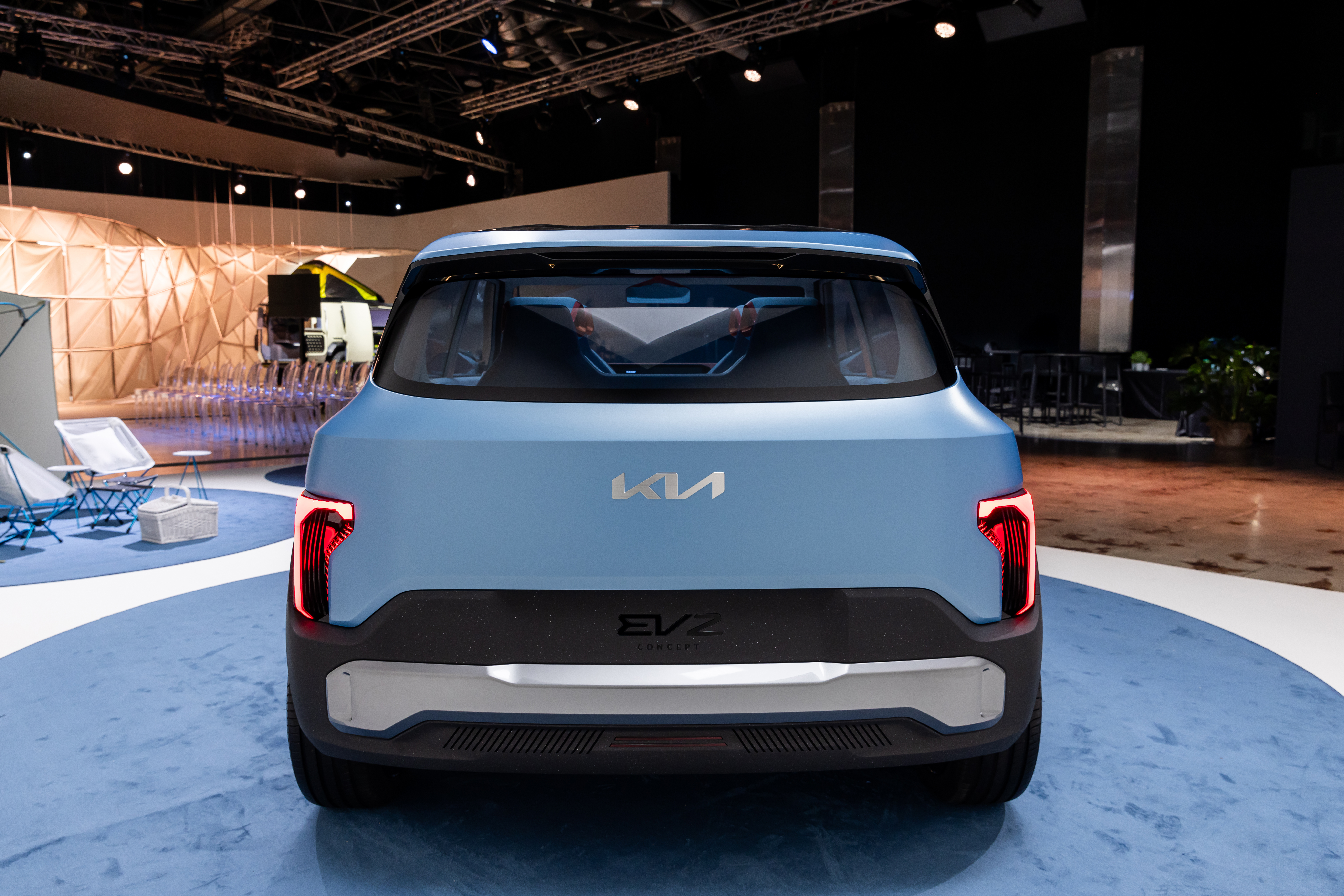
Kia just pulled the covers off its future plans, and while there’s plenty to digest, the real headline act for Europe is a tiny newcomer with big expectations. Enter the upcoming EV1, a compact electric hatch that’s shaping up to be Kia’s most affordable EV yet when it debuts next year.
Think of it as the lower, sleeker sibling to the EV2. It’s aimed squarely at Europe’s hotly contested supermini class, going up against the Renault 5, Peugeot e208 and Vauxhall Corsa Electric.
Under the skin, the EV1 is expected to share its hardware with the EV2, meaning a 400-volt E GMP platform and two battery options. Entry models should get a 42.2 kWh pack with roughly 200 miles (322 km) of range, while higher trims could use a 61 kWh battery pushing closer to 300 miles (483 km). Power outputs will likely mirror the EV2’s, so expect something in the region of 145 hp (147 PS / 108 kW) on base or mid-spec cars.
Kia also says this will be its first car in the segment to be a software-defined vehicle, one where everything from infotainment to vehicle systems is deeply integrated and updateable. Despite the clever tech, prices are likely to start at a little over £20,000 (€23,000), making it a genuine mass market EV.
New EV Platform In The Works
But the EV1 is just one piece of a much bigger puzzle. Kia wants 14 EVs globally by 2030 and annual electric sales of one million units. That’s part of a broader push to hit 4.13 million total sales and a 4.5 percent global market share.
Beyond the EV1, Kia will launch a new electric platform that it says will deliver up to 40 percent bigger batteries with 15 percent greater energy density powering motors that are 9 percent gruntier. An electric SUV to bridge the gap between the EV5 and EV9 is also on the way.
Big Hybrid Push
But Kia isn’t going all in on EVs just yet, especially not in the US, CEO Ho Sung Song admitting that the rate of global electric adoption had slowed. So hybrids are getting a major boost, with 13 HEV models planned and annual hybrid sales targeted at 1.1 million units. New hybrid versions of key models like the Telluride, Seltos and K4 are coming, as are hybrid and range-extender versions of the midsize body-on-frame truck Kia will debut before 2030.
Furthermore, the Korean brand is doubling down on commercial vehicles like the PV5, adding a bigger PV7 in 2027 and PV9 two years later. It’s also pushing robotics, with factory bots and delivery solutions in development. So yes, the EV1 might be small, but it’s leading a very big plan.
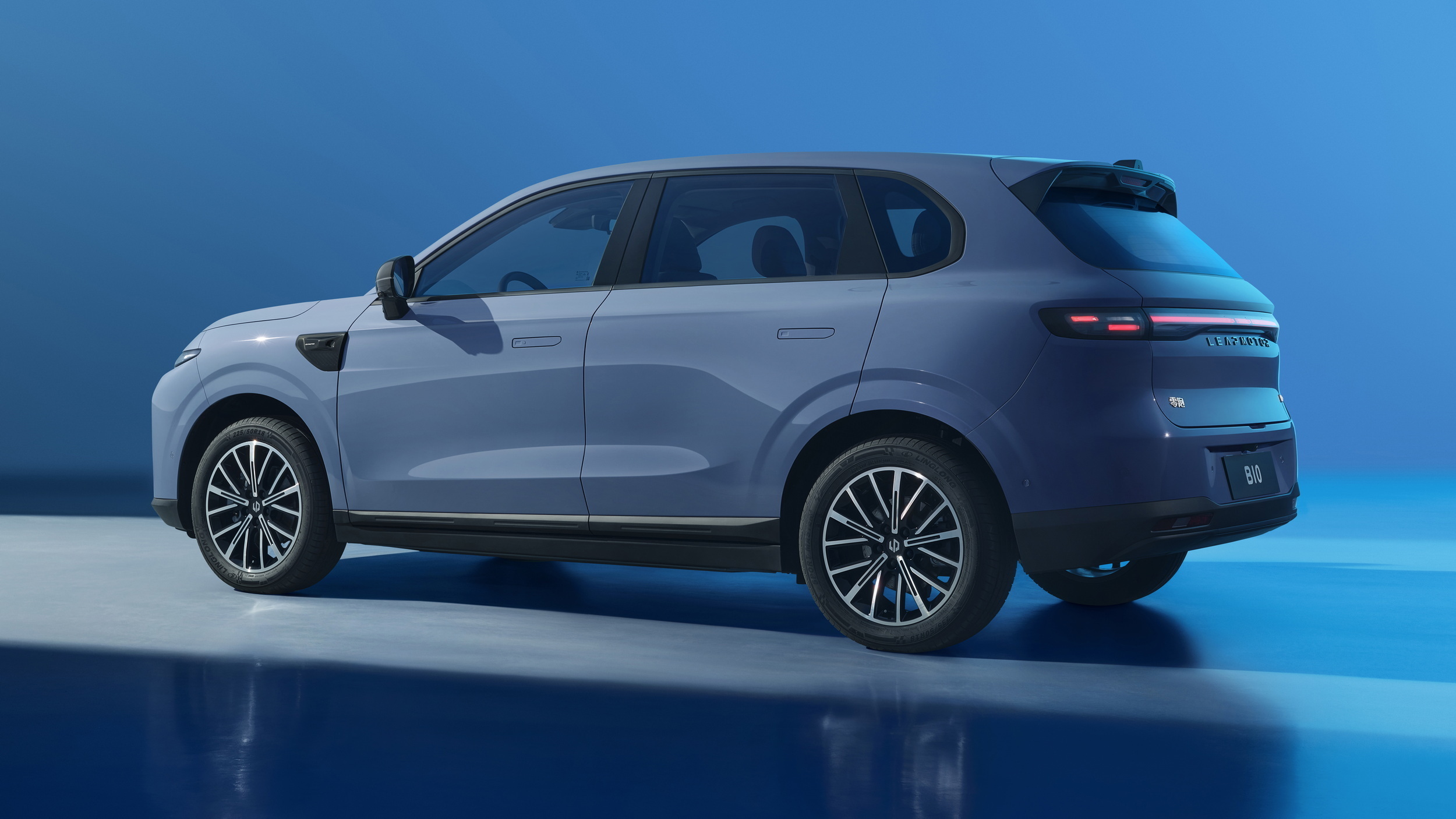
A new Opel EV may be built at a Spain plant alongside the Leapmotor B10 model.
Leapmotor is expected to supply key electrical and electronic parts to Stellantis.
Stellantis aims to deepen its ties after buying a 20 percent stake in the company.
Facing mounting pressure to cut costs and speed up timelines, Stellantis is looking beyond its own engineering bench. The automaker is reportedly exploring a plan to co-develop a new EV for Opel, and possibly Alfa Romeo too, with Leapmotor, leaning heavily on the Chinese firm’s underlying technologies.
The move comes as Stellantis recalibrates its EV strategy following a $25 billion writedown tied to scaling back parts of its electric vehicle roadmap.
China-Based Development Plans
Unnamed sources claim that the new Opel could use the same architecture as the Leapmotor B10. Whether it will share the exact same powertrain remains unclear, but Leapmotor is expected to supply key systems, including electrical and electronic components, effectively doing much of the heavy lifting under the skin.
In addition, much of the development work would take place in China, with Opel focusing primarily on exterior design. Reuters reports that discussions between the two companies began late last year, and a deal could be finalized in the coming weeks.
Stellantis acquired a 20 percent stake in Leapmotor in 2023 and has since supported the brand’s international expansion through their joint venture, Leapmotor International. This entity oversees sales and production outside China. If approved, the new Opel SUV would be built at Stellantis’ Zaragoza plant in Spain, which is also set to assemble the Leapmotor B10 starting later this year.
An Alfa Romeo Next?
It is understood that the new Opel could enter production in 2028, with annual output targeted at around 50,000 units. Leapmotor has responded cautiously to the reports, noting that it continues discussions with partners, including Stellantis, but has no plans for full platform-level collaboration. Instead, it remains focused on supplying its own in-house components.
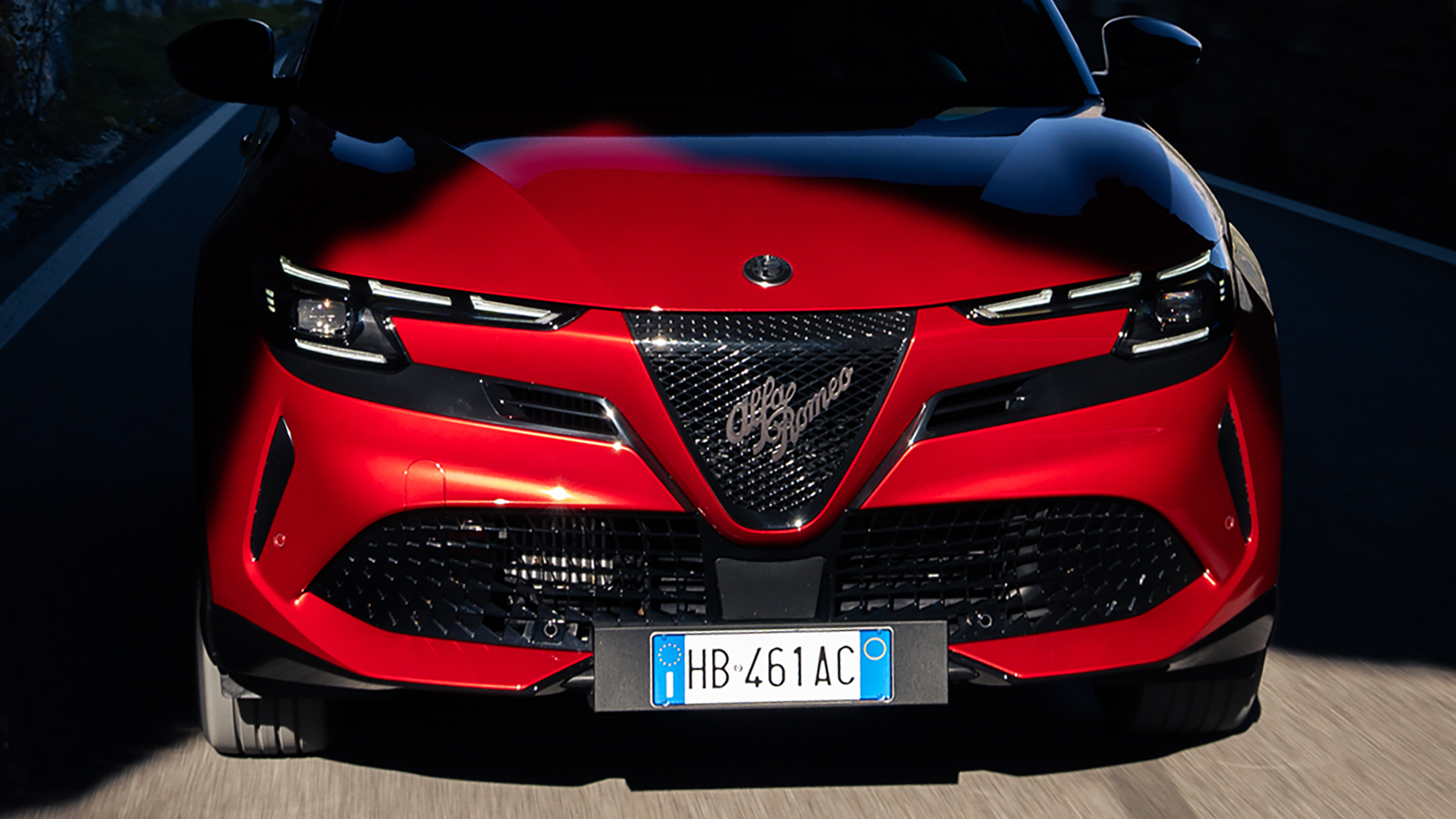
The close-knit partnership between Stellantis and Leapmotor may extend beyond a single Opel EV. Early discussions have considered applying Leapmotor’s technology to smaller A-segment models, which would likely require separate production lines. The same report also points to a possible Alfa Romeo model based on the B10 architecture, which could also be produced in Zaragoza.

 Login
Login