Reading view

There are new articles available, click to refresh the page.

Chief Engineer Says He Reported A ‘Nazi’ Slur At Lucid, Then Got Fired

  • Eric Bach sues Lucid alleging wrongful firing and discrimination.
  • He says an HR executive called him a “German Nazi” internally.
  • Lucid rejects his claims as absurd amid ongoing executive exits.

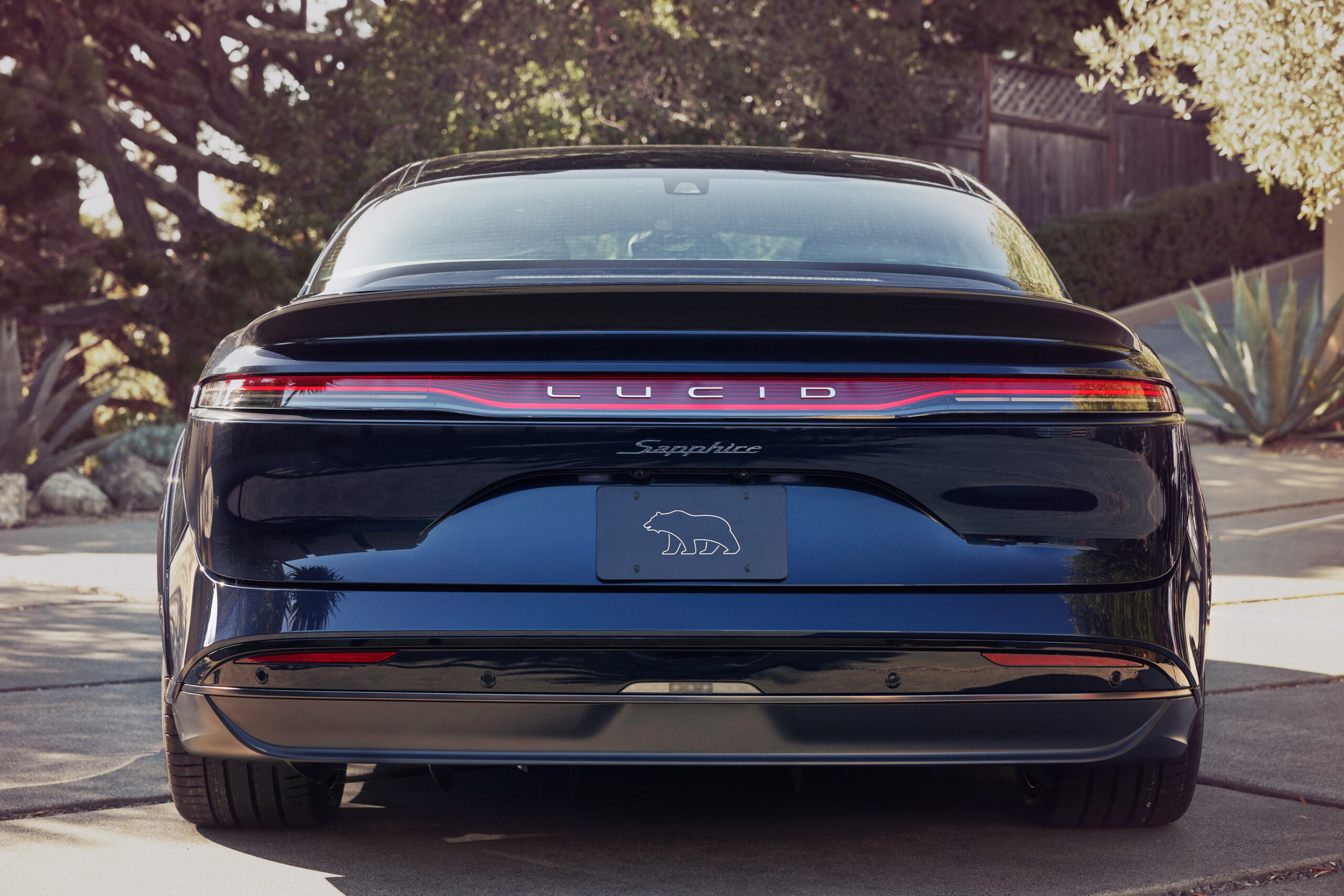
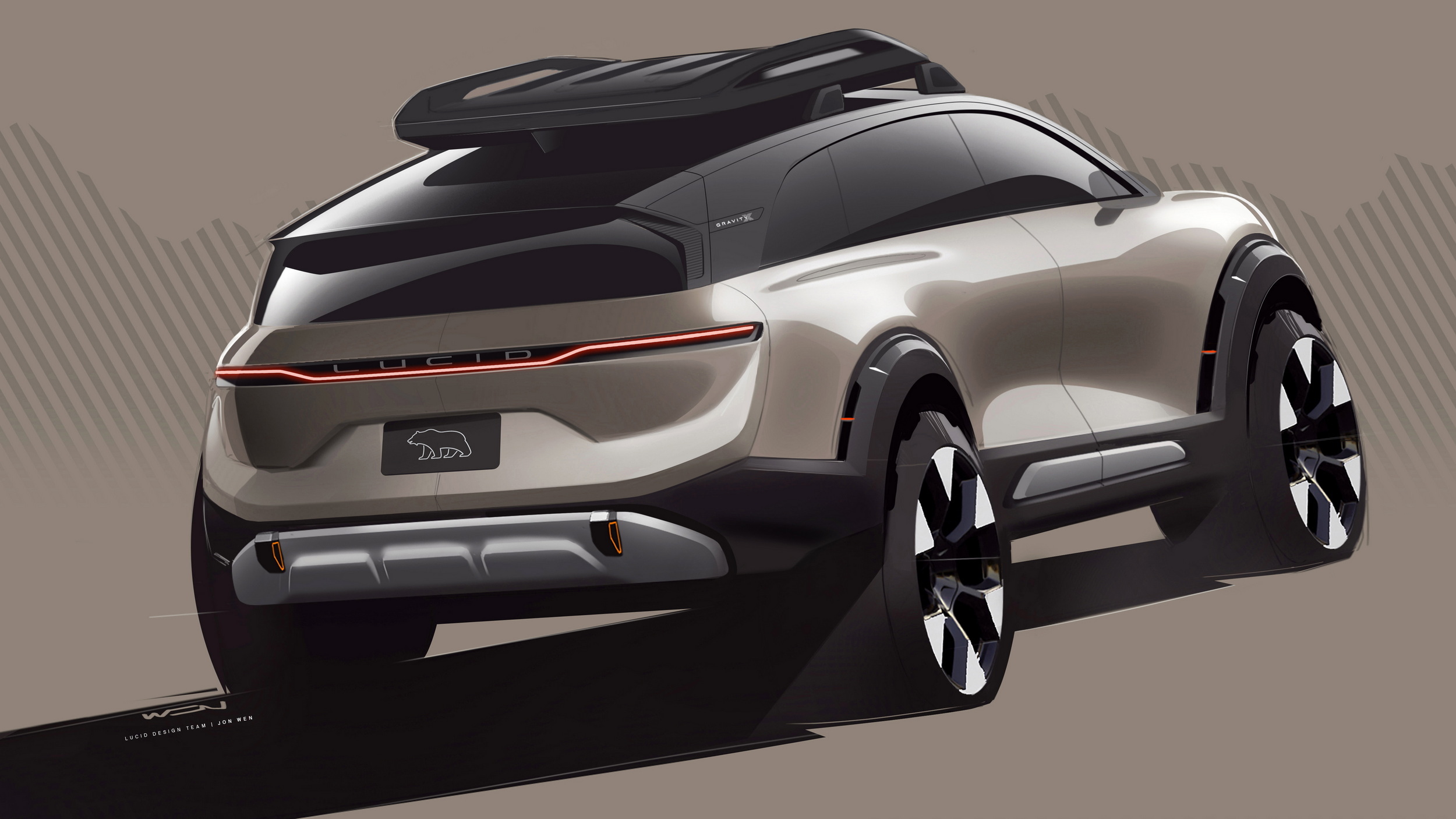
Lucid Motors has plenty on its plate already. Cash burn, slow production ramps, a delayed Gravity SUV launch, and media stories about drivers being shafted with huge repair costs. Now it can add one more thing to the list: a high-profile lawsuit from its former chief engineer that claims a serious lack of harmony at the Newark, CA, HQ.

Eric Bach, who spent a decade at Lucid and rose to become Senior Vice President of Product and Chief Engineer, has filed a federal lawsuit alleging wrongful termination, discrimination, and retaliation.

What Sparked the Fallout?

At the center of the complaint is a claim that a senior HR executive referred to him as a “German Nazi” during an internal investigation into workplace culture. Bach was born and raised in Germany and says the remark was deeply offensive and discriminatory.

Also: Spilled Water Bricks Lucid, Repair Costs As Much As A Used Corolla

According to the lawsuit, Bach learned about the comment in mid-2025, months after the start of an HR-led culture probe Bach claims was already “tainted by racist beliefs.”

During that investigation, he says he was stripped of key responsibilities, including oversight of Lucid’s electric powertrain division, and excluded from board meetings.

After encouraging a colleague to report the remark through internal channels, Bach claims Lucid confirmed the comment was made, yet failed to act meaningfully.

Pushed Out

Things escalated from there. Bach says the company began pressuring him to resign in October 2025 before firing him outright on November 5. Lucid’s public statement at the time merely said he had “departed,” offering no hint of the brewing conflict behind the scenes.

 Chief Engineer Says He Reported A ‘Nazi’ Slur At Lucid, Then Got Fired
Linkedin

Lucid, for its part, is having none of it. The automaker issued a blunt response calling Bach’s legal claims “absurd” and says it is confident the facts will show legitimate reasons for his termination.

Company sources have pointed to long-running product delays, quality issues, and execution problems, arguing that leadership restructuring was overdue.

Bach’s responsibilities were partially handed to Emad Dlala, who was promoted to Senior Vice President of Engineering and Digital after Bach’s exit.

Tricky Timing
 Chief Engineer Says He Reported A ‘Nazi’ Slur At Lucid, Then Got Fired

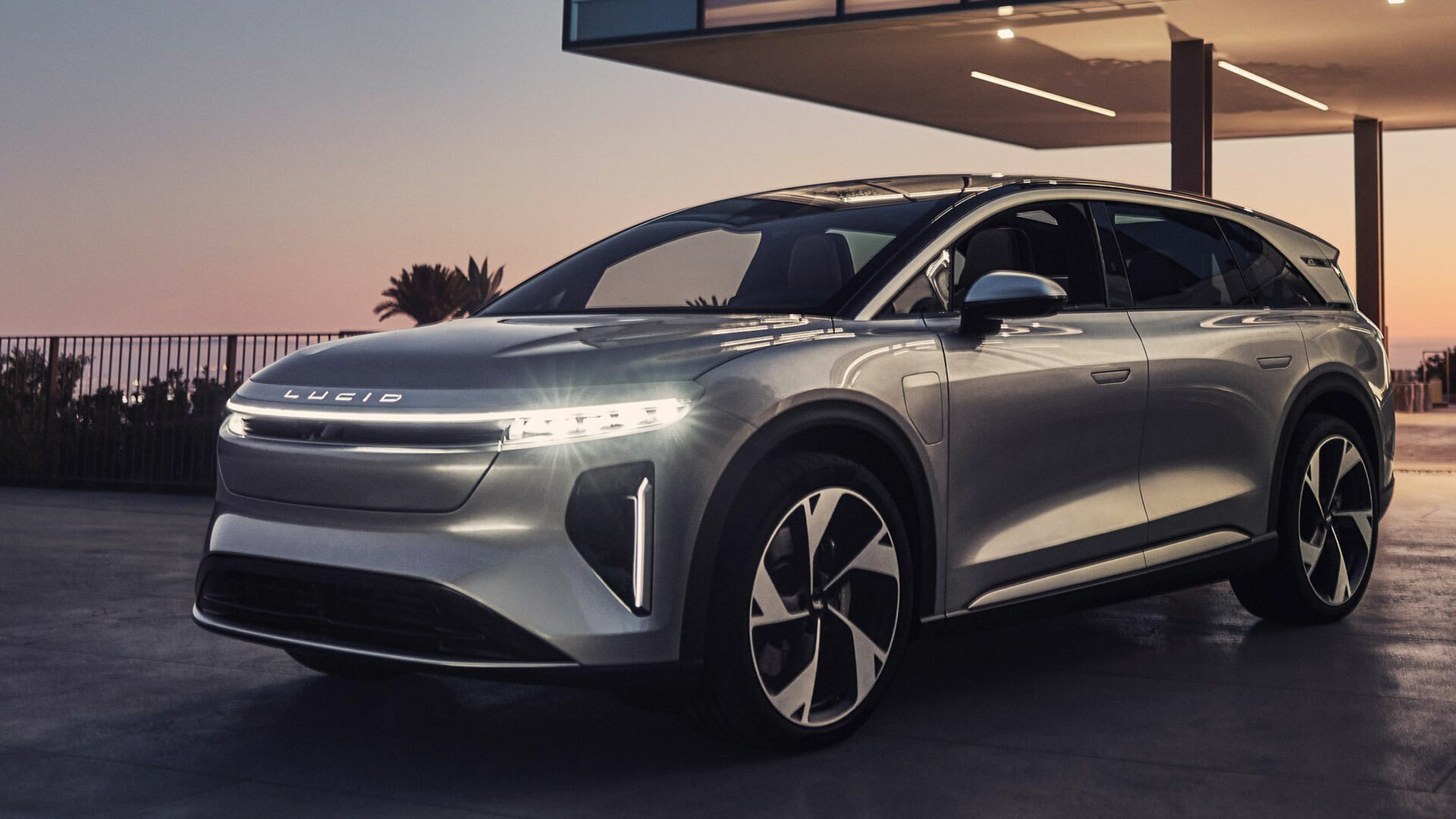
The lawsuit lands at an awkward moment for Lucid. The company is still trying to ramp production of the Gravity SUV while developing a more affordable midsize EV due in late 2026.

Executive turnover has been relentless, with former CEO Peter Rawlinson resigning earlier this year and multiple vice presidents exiting across different strands of the business.

Also: Lucid Teases $50K Mid-Size SUV As It Readies L4 Autonomous Driving

Bach’s complaint paints a very different picture of his standing, citing praise from board members and repeated salary increases, and even suggestions that he was being groomed for a future CTO role.

He’s now requesting damages and a very public jury trial. For a company built on calm luxury, Lucid’s latest saga is anything but serene.
 Chief Engineer Says He Reported A ‘Nazi’ Slur At Lucid, Then Got Fired

Sources: Wigdor, Tech Crunch

Cupra’s Electric Hatch Quietly Sharpens Its Look While You’re Distracted By Raval

  • Updated Cupra Born prototypes spotted testing with light camo.
  • Visual changes appear focused on revised lights and bumpers.
  • Facelifted car goes on sale in 2026 alongside smaller Raval EV.

Cupra may be gearing up to steal the spotlight in 2026 with the all-new Raval subcompact EV, but it hasn’t forgotten about the car that helped define its electric identity.

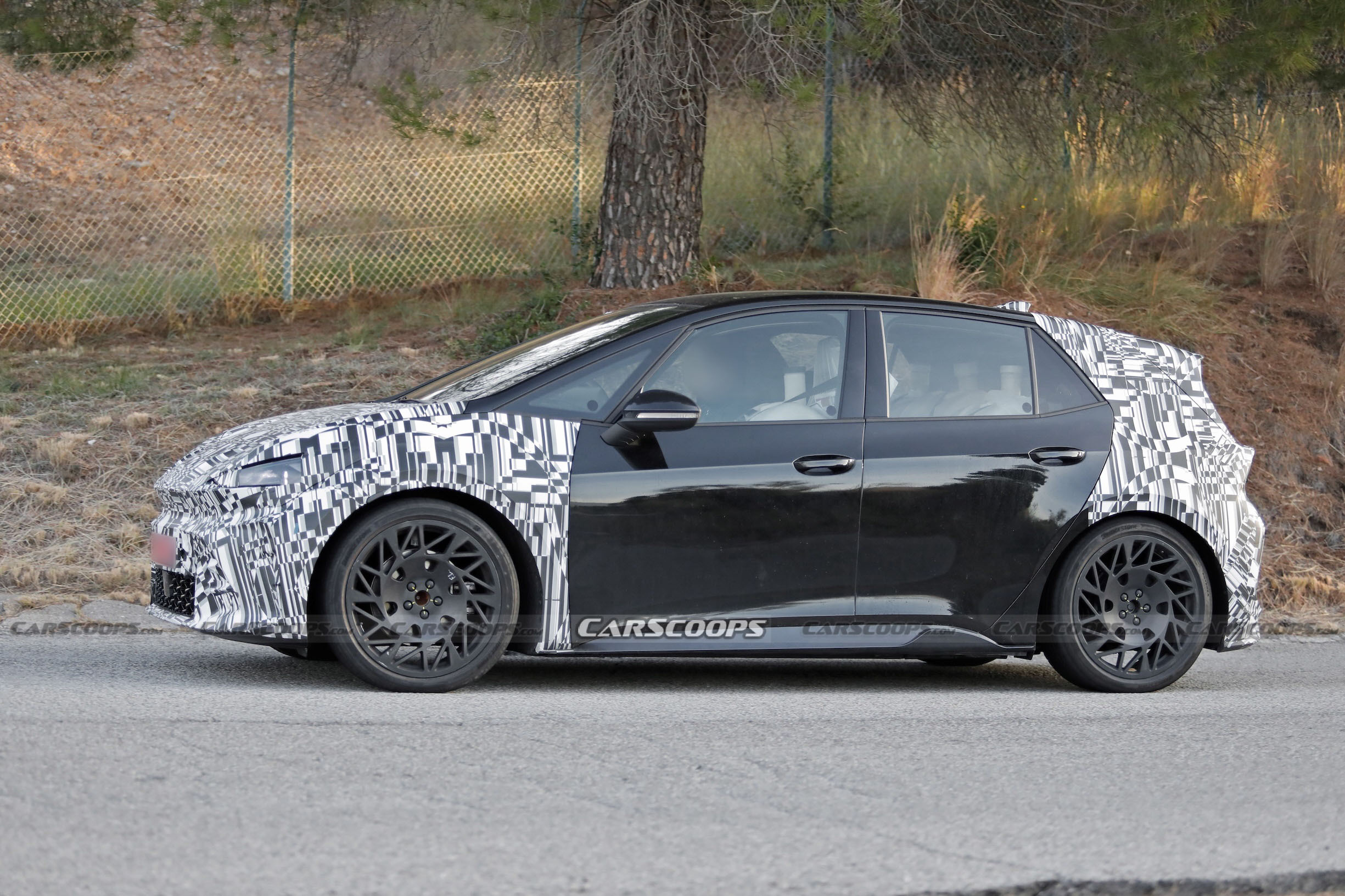
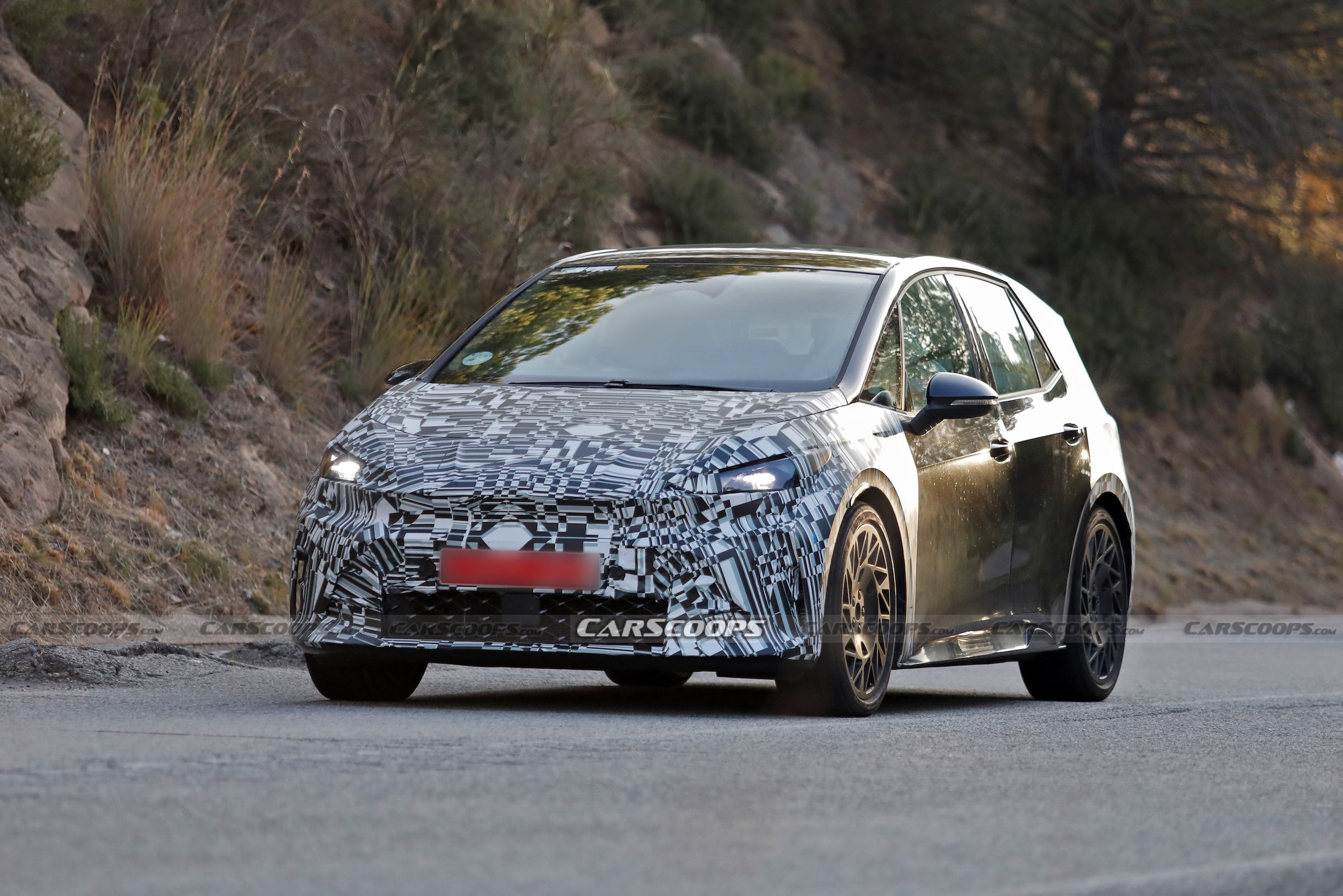
Fresh spy shots of a lightly camouflaged Cupra Born prototype show the brand is still hard at work on a mid-life update for its popular electric hatchback, even if the changes aren’t exactly revolutionary.

Related: Cupra’s New EV Troublemaker Looks Like It Has Circular Saw Blades For Wheels

We last caught the refreshed Born testing around six months ago, and judging by these latest images, Cupra’s approach remains firmly evolutionary rather than radical.

That’s probably not a bad thing, as the Born is still one of the better-looking small EVs on the market, and in our opinion, it’s far more dynamic than the VW ID.3 hatch it’s based on.

 Cupra’s Electric Hatch Quietly Sharpens Its Look While You’re Distracted By Raval

As before, camouflage is concentrated around the front and rear, hinting at redesigned bumpers and updated lighting graphics. Up front, the lower grille appears taller and more sculpted, flanked by vertical outer vents that should add some visual width and aggression.

It’s a subtle tweak, but one that aligns the Born more closely with Cupra’s latest design language seen on models like the Tavascan and Terramar, plus the Raval.

At the back, the refresh seems equally restrained. The rear bumper appears to house a reworked diffuser with a more pronounced lip at the corners, giving the Born a slightly lower, tougher stance. Again, nothing dramatic, but enough to differentiate the facelifted car from earlier models if you know where to look.

A topped and tailed ID.3

 Cupra’s Electric Hatch Quietly Sharpens Its Look While You’re Distracted By Raval
Baldauf

The doors, roofline, and overall proportions appear untouched, which is no surprise considering just how much the Born shares with its Volkswagen ID.3 sibling. In fact, the two cars are so closely related that even the doors are interchangeable, making sweeping body changes impossible without VW Group-wide approval.

Inside, we don’t expect many surprises. Cupra already addressed the Born’s biggest interior weakness in 2024 by fitting VW’s much-improved 12.9-inch touchscreen, and the cabin quality far outshines the ID.3’s, so any further upgrades are likely limited to trim and software tweaks.

Up to 322 hp

\\\\\\

Baldauf

Mechanically, the Born lineup should remain familiar. The existing 201 hp (204 PS / 150 kW) and 228 hp (231 PS / 170 kW) rear-wheel-drive variants will likely carry over, alongside the punchy 322 hp (327 PS / 240 kW) VZ hot hatch introduced last year.

While big power bumps aren’t expected, Cupra may try to eke out a few extra miles of range from the 59, 77, and 79 kWh battery options.

With the Born already capable of up to 369 miles (594 km) on a charge, this refresh looks less about reinvention and more about keeping Cupra’s electric hatch sharp so it still looks and feels on the pace in 2026 when the smaller, front-wheel drive Raval arrives.

\\\\\\

Baldauf

Ford Turns To French Carmaker To Revive Fiesta

  • Ford and Renault will collaborate on two new electric cars for Europe.
  • Renault 5 may inspire a new Fiesta in 2028, with a crossover to follow.
  • Both EVs will be built in France by Renault with unique Ford styling.

Ford has finally found a way back into Europe’s affordable small-car market by borrowing one of Renault’s smartest ideas.

Related: Renault Is Emptying Its Secret Vault And The Concept Cars Inside Are Unreal

The two automakers have announced a new strategic partnership that will see Ford launch at least two electric cars for Europe using Renault’s Ampr EV platform, the same architecture used in the Renault 4 and 5.

What’s Replacing the Fiesta?

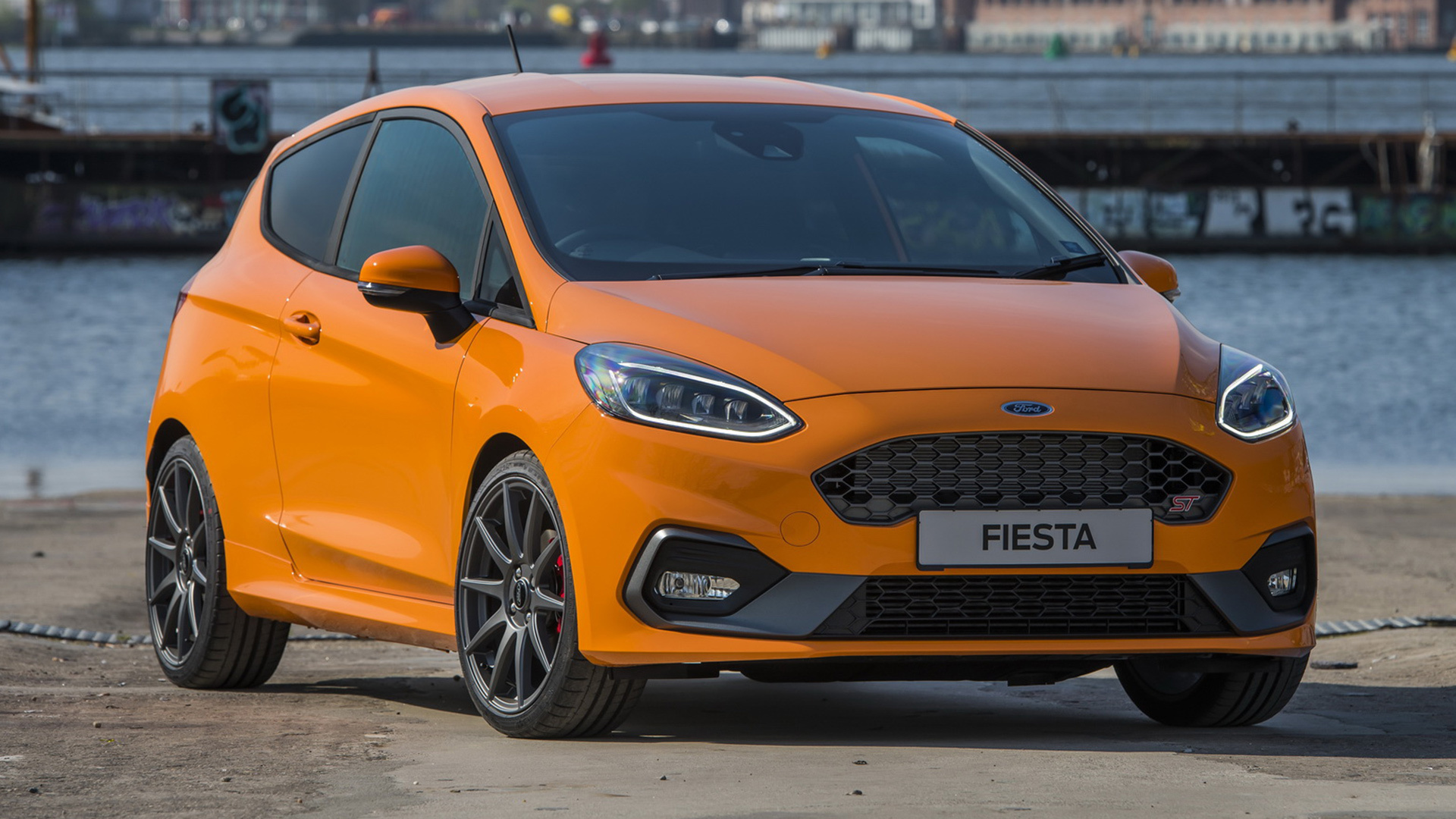
One of Ford’s upcoming EVs is expected to become a spiritual successor to the Fiesta, a car Ford unceremoniously killed off in 2023 after eight generations and nearly five decades.

The new electric supermini is due to arrive in early 2028 and will be built alongside the Renault 5 at Renault’s ElectriCity complex in Douai, France.

The second model will likely be a compact electric crossover based on the Renault 4, potentially replacing the Puma Gen-E somewhere down the line.

 Ford Turns To French Carmaker To Revive Fiesta
The discontinued Ford Fiesta.

Given Ford’s Explorer EV is based on VW’s ID.4 you might have expected Ford to borrow the upcoming ID.Polo and ID.Cross’s MEB platform for its new small cars, but instead it turned to Renault.

Crucially, Ford is insisting these won’t be lazy badge-engineering exercises. Unlike the new Nissan Micra, which is essentially a rebodied Renault 5, Ford says its new EVs will be “distinct Ford-branded vehicles” designed in-house.

Expect unique styling, bespoke interiors, and chassis tuning aimed squarely at delivering the driving feel Ford fans expect.

Under the skin, though, the shared EV hardware will be identical. That likely means front-mounted motors producing 121 hp (122 PS / 90 kW) in regular versions and 215 hp (218 PS / 160 kW) in a reborn Fiesta ST, plus battery options of 40 kWh and 52 kWh.

Can It Save Ford in Europe?

 Ford Turns To French Carmaker To Revive Fiesta
Renault

For Ford, time is of the essence. With Focus production ended, the Fiesta long gone and its Explorer and Capri electric SUV and crossover underperforming, the brand’s market share has cratered.

A Fiesta-sized EV priced close to the Renault 5’s expected €25,000 (£22k/$29k) mark could be exactly what Ford needs to regain relevance.

But a new lineup of subcompact EVs isn’t all we’ll see as a result of this partnership. The duo has also agreed to explore the possibilities of joining forces for new light commercial vehicles.

 Ford Turns To French Carmaker To Revive Fiesta
Renault

Spilled Water Bricks Lucid, Repair Costs As Much As A Used Corolla

  • A trunk spill caused limp mode, warning lights, and left the Air stuck.
  • Warranty coverage was denied, and insurance may reject the repair bill.
  • It follows a similar Ioniq 5 incident where a water spill cost nearly $12k.

Doctors and health influencers are always telling us that drinking tons of water is the secret to clearer skin, sharper minds, strain-free poops and longer lives. But if there’s one group that absolutely should not stay hydrated, it’s modern electric vehicles, because a few drops could leave them with a massive medical bill.

Just ask Reddit user u/raging_onyx who leased a Lucid Air and saw his Thanksgiving week turn into a $15,000 lesson in why electric cars and water should never meet.

What Happened?

The disaster started with a perfectly innocent trip to a grocery store to refill a water container. But a pothole encountered on the way back tipped that container over, causing a catalog of faults that eventually rendered the vehicle completely immobile.

Also: $4,900 For A Taillight? Lucid’s Ridiculous Lease Charges Are Scaring Off Buyers

Within seconds of the spill happening the dash lit up like Times Square, the EV jumped into limp mode, regen braking tapped out, and the driver got a warning to pull over. When he found a local residential area to stop and tried to reboot the system, the Air wouldn’t shift out of Park.

A Very Expensive Lesson

 Spilled Water Bricks Lucid, Repair Costs As Much As A Used Corolla

Lucid customer support, in an impressive display of holiday cheer, suggested two things: call insurance, and brace for the possibility the car was totaled. Happy Thanksgiving!

Also: Insurance Offered $1,700 For This R1T Mishap, Rivian Wanted A Fortune

There was more bad news when the first tow truck driver arrived and said he couldn’t move the sedan, since the Air wouldn’t shift into neutral. Fortunately, by the next day, neutral was found and a second truck was able to tow the stranded car.

Finally, the EV reached a service center, where the advisor initially estimated the repair at under $1,000. Bearable, right? This turned out to be off by roughly the price of a used Corolla.

 Spilled Water Bricks Lucid, Repair Costs As Much As A Used Corolla

The real number, the rep later confirmed, was about $15,000, and it wouldn’t be covered by warranty, because the spill was technically the driver’s fault.

More: A $2 Water Bottle Just Cost This Hyundai Driver Nearly $12,000

As of the Reddit post, the driver was still waiting to find out whether his insurance would step in to cover the costs. You’d think the answer would be yes, but that’s not always how these things always play out.

Just last month, we reported on a similar incident involving a Hyundai Ioniq 5. A small water spill in the rear footwell damaged the car’s wiring, and neither the manufacturer nor the insurance company was willing to cover the $11,882 repair bill.

 Spilled Water Bricks Lucid, Repair Costs As Much As A Used Corolla

Source: Reddit

Tesla’s Model 3 Standard Spoils Europe With An FM Radio

  • Tesla has introduced a cut-price, less luxurious Model 3 Standard to Europe.
  • Std grade cars take 1 second longer to reach 62 mph, lose 134 miles of range.
  • The Model Y Standard has already been available in the EU since October.

Tesla has added a no-frills Model 3 Standard to its revamped European lineup in a bid to boost flagging sales, months after the stripped-down EV made its US debut. But the EU versions of the entry-level 3 come with one piece of retro kit denied US buyers – who might not even notice it’s missing.

We’re talking about an FM radio, equipment that hasn’t been worth bragging about since Gerald Ford was in the White House.

Related: Tesla’s Standard EVs Don’t Even Have A Radio, But Will You Care?

In the US, only Model 3 Premiums and up get the radio, a decision rooted more in cost saving than any lingering notion that a radio is a luxury item. Neither gets an AM radio, by the way, and only the EU version has a digital radio.

 Tesla’s Model 3 Standard Spoils Europe With An FM Radio

According to a 2023 study, cutting the radio unit could save Tesla around $50–70 per car, since it no longer needs to shield radio waves from interference created by the electric motors.

In other respects, the EU-spec Model 3 Standard (€36,990 in Germany) follows the US car’s lead. It gets a smaller battery versus the €44,990 Premium that cuts the WLTP range from 466 miles (750 km) to 332 miles (534 km), and the trip to 62 mph (100 kmh) takes 6.2 seconds instead of 5.2 seconds.

Bye-bye, rear touchscreen

Alloy wheels are replaced with 18-inch steelies and plastic hub caps, and the ambient lighting, rear touchscreen, electrically adjustable steering column, and heated rear seats are gone. You also get simple cloth on the chairs and a hi-fi downgrade from nine to seven speakers.

 Tesla’s Model 3 Standard Spoils Europe With An FM Radio
Tesla

And there’s one other significant change that you won’t spot until you drive down the road for the first time. The Standard Tesla makes do with basic passive shock absorbers, whereas the Premium gets slightly more sophisticated frequency-dependent shocks that deliver a smoother ride. 

But as with the US Standard, the EU base trim retains its panoramic glass roof. The Model Y Standard also keeps its glass roof, but mean old Tesla covers it over from the inside to remind you that you were too tight to pay for the Premium.

The base Y, which also loses its front and rear light bars and alloy wheels, is now on sale in the UK (for £41,990), as well as the EU. But so far, the Model 3 Standard is not available in Britain.

\\\\\\

Tesla

Rivian Turns One-Off Miami Showpiece Into A Very Pricey Limited Run

  • Rivian is putting its Miami-inspired R1S one-off into limited production.
  • Only 10 examples of the R1S Quad Miami Edition will be available.
  • At $134,990 the Miami is $13k more than a regular quad-motor R1S.

Cast your mind back to September and you might recall Rivian’s designers having a bit of fun with an R1S to celebrate the opening of a new store in South Florida. The automaker created a one-off concept SUV with a 1980s Miami-inspired paint scheme that made it look like the EV had jumped right out of Grand Theft Auto: Vice City.

Also: Insurance Offered $1,700 For This R1T Mishap, Rivian Wanted A Fortune

But that tropical fantasy is no longer a one-off. Rivian has confirmed it will build a limited run of purchasable replicas. Naturally, there’s a cost attached to owning one of these beach-party specials.

What Makes it Special?

\\\\\\\\\\

Called the R1S Quad Miami Edition, the colorful SUV is, as the name suggests, based on the top-spec, Corvette-scaring quad motor R1S, whereas the original concept was built around a three Motor R1S Tri model. But there are no changes to the life’s-a-beach visuals that you’ll either love or hate.

Only 10 examples will be built, each featuring the same Glacier White body accented by splashes of aqua and pink on the doors, 22-inch Miami Edition wheels and front bumper. While the doors stick to aqua blue stripes, the wheels get both colors, as does the nose, where a pink towing eye pokes from a blue bumper.

Even the interior doesn’t escape the Miami makeover, though if we’re honest we think Rivian seemed to lose interest once it got to the cabin. The sole flourishes appear to be a stripe of pink on the headrest and some floormats that look like they’re made from the same material as straw beach mats (hopefully they’re more substantial).

\\\\

Having four electric motors rather than three means the Miami Edition gets 1,025 hp (1,039 PS / 764 kW) instead of 850 hp (862 PS / 634 kW), dropping the zero to 60 mph (97 kmh) time from 2.9 to 2.6 seconds. Not that you’d get much opportunity to feel the difference when you’re cruising South Beach.

The Price of Standing Out

But the fun graphics will definitely turn more heads than any stock R1S Tri or Quad, and you’d hope they do given the pricing markup.

Rivian is asking $134,990 for the Miami Edition, which is $13,000 more than you’d pay for a regular R1S Quad. It’s only building 10, so it’ll probably have no trouble selling them, but do you think it’s a good deal?

 Rivian Turns One-Off Miami Showpiece Into A Very Pricey Limited Run
Rivian

Ford’s Gas Mustang Nearly Outsold Its Entire EV Lineup, Which Pretty Much Says It All

  • Combustion Mustang sales almost doubled to 4,207 units in November.
  • Ford only sold 4,247 F-150 Lightnings, Mustang Mach-Es, and E-Transits.
  • EVs look healthier YTD, but they’ve dropped harder than the pony car.

Is the now 61-year-old gas-powered Mustang still relevant in 2025? American drivers clearly think so, judging by fresh sales figures. The pony car Ford has been building since the Beatles were still together is now going toe to toe with the company’s entire electric lineup in a race that’s closer than a Z28 vs Boss 302 quarter-mile grudge match.

Related: Someone Paid New Porsche 911 Money For A 1992 Mustang Still Wrapped In Plastic

According to Ford’s newly released November sales report, the gas-powered Mustang racked up 4,207 sales while Ford’s three EVs combined only reached 4,247. That is a margin of only forty cars.

Mustang sales exploded by 78.6 percent compared with the previous November’s stats, while the EVs lost almost as much ground.

What Happened to the EVs?

Mach-E plunged almost 50 percent to 3,014 units, the F 150 Lightning cratered 72 percent to just 1,006, and the poor E Transit dropped more than 80 percent to 227, figures no doubt deeply affected by the loss of federal tax credits, which expired at the end of September.

 Ford’s Gas Mustang Nearly Outsold Its Entire EV Lineup, Which Pretty Much Says It All

To be fair to the EVs, the comparison is more embarrassing in the short term than across the whole year. Year to date, Ford EVs have achieved 78,556 sales while the Mustang trails at 40,870.

Even so, the electric lineup is down 7.3 percent compared with the same period last year, while the Mustang held relatively steady, falling by a less worrying 1.6 percent.

But US drivers didn’t snub their noses at electrification entirely. Hybrid sales climbed 13.6 percent to 16,301 units in November and are up 19.4 percent to 206,497. That means Ford has sold three times as many hybrids so far during 2025 as it has EVs.

Any Bright Spots Beyond the Mustang?

 Ford’s Gas Mustang Nearly Outsold Its Entire EV Lineup, Which Pretty Much Says It All

Looking beyond the gas versus electrons drama, there were a few standout performers. Explorer lit up the SUV side with a huge 41.5 percent November gain and nearly 20,226 sales despite celebrating its sixth birthday this year.

The Ranger also punched well above its weight with a 35.8 percent jump as the midsize truck continues its comeback.

The Maverick is another star performer. Its sales are up 43.3 percent for the month and nearly 12 percent for the year. On the Lincoln side, things were less happy, with November brand sales dropping 12.3 percent, although the Navigator is up 42.9 percent in the first 11 months of 2025.

Ford and Lincoln sales 2025
Nov ’25Nov ’24% DiffYTD ’25YTD ’24% Diff
Energy type
Total Electrified Vehicles20,54825,172-18.4285,053257,69310.6
Electric Vehicles4,24710,821-60.878,55684,774-7.3
Hybrid Vehicles16,30114,35113.6206,497172,91919.4
ICE144,377141,2012.21,714,3641,629,6085.2
Total vehicles164,925166,373-0.91,999,4171,887,3015.9
Vehicle Type
SUVs64,02267,294-4.9809,278794,7871.8
Trucks96,69696,7240.01,149,2691,050,9869.4
Cars4,2072,35578.640,87041,528-1.6
Total vehicles164,925166,373-0.91,999,4171,887,3015.9
FORD BRAND
Bronco Sport9,2129,601-4.1122,380113,3408.0
Escape7,05410,344-31.8132,471133,604-0.8
Bronco11,04510,3207.0132,21697,10536.2
Mustang Mach-E3,0145,938-49.247,88244,8776.7
Edge01,661-100.03,04065,217-95.3
Explorer20,22614,29941.5198,819178,24311.5
Expedition5,3375,852-8.877,41369,24311.8
Ford SUVs55,88858,015-3.7714,221701,6291.8
F-Series60,96167,459-9.6749,471685,7779.3
Memo: F-150 Lightning (electric)1,0063,643-72.425,58328,313-9.6
Ranger6,8455,03935.862,86440,94953.5
Maverick9,8836,89943.3141,873126,76011.9
E-Series2,9743,292-9.737,76036,4943.5
Transit15,33913,08017.3147,045139,7905.2
Memo: E-Transit2271,240-81.75,09111,584-56.1
Transit Connect00N/A08,781-100.0
Heavy Trucks694955-27.310,25612,435-17.5
Ford Trucks96,69696,7240.01,149,2691,050,9869.4
Mustang4,2072,35578.640,87041,528-1.6
Ford Cars4,2072,35578.640,87041,528-1.6
Ford Brand156,791157,094-0.21,904,3601,794,1436.1
LINCOLN BRAND
Corsair1,8932,147-11.823,89624,571-2.7
Nautilus2,3053,292-30.030,58032,447-5.8
Aviator2,5372,4792.321,18822,565-6.1
Navigator1,3991,3612.819,39313,57542.9
Lincoln SUVs8,1349,279-12.395,05793,1582.0
Lincoln Brand8,1349,279-12.395,05793,1582.01
SWIPE

Ford

Kia’s EV2 Jumps From Concept To Sure Thing On January 9

  • We’ll get our first look at the finished Kia EV2 SUV on January 9.
  • The subcompact utility goes into battle with Renault’s 4 E-Tech.
  • It’s expected to cost around €30,000 (£26k) when sales start.

Kia’s effort to cover almost every EV base takes another big step forward in January with the debut of the smallest car in its electric family. We’ve already seen the EV2 in concept form at the beginning of this year, but 11 months on we’ll get to see how much of it has made the leap to the street.

The trending Korean brand didn’t reveal too much about the production version of its baby SUV this week beyond announcing its scheduled appearance at the Brussels Motor Show and confirming it will be built in Europe for its local clients.

Related: Kia’s Smallest EV Could Become One Of Its Most Thrilling Performance Models

But Kia did release three teaser images, and though the car is covered in a sheet in all of them, we can where the production EV2 differs from the concept unveiled at Kia EV Day 2025. The good news is the overall profile and chunky proportions are unchanged.

Small changes, same effect

We can see the squared-off nose, the kink in the waistline, the slightly sporty slope to the rear section of the roof and the spoiler at the top of the rear hatch. Those same details appeared on the EV2 concept, and though the production car’s DRLs, visible through the sheet, aren’t exactly the same, they’re close enough.

But it’s also easy to spot some major, and inevitable, departures. The front overhang looks longer, because concepts don’t need to meet crash regulations but road cars do, and there looks to be a conventional B-pillar too.

\\\\\\

Kia

Kia promises the EV2 will feature “roomy, adjustable space,” but we’ll have to wait until January 9 to find out exactly what that means. By folding the rear seats and sliding the front bench backwards, passengers in the concept could relax, stretch their legs, and sit on the flat floor when parked.

AWD looks, FWD reality

Other details that won’t be uncovered until the debut include the power and range stats. But from what we know about Kia’s other affordable (sub-EV6) electric cars, we can be sure it will have 400- rather than 800-volt charging and despite its all-wheel drive styling, will feature a single motor acting on the front wheels even on sporty GT models.

The closely related Hyundai Inster has a choice of 39 kWh and 46 kWh batteries, is rated at 203-229 miles (327-369 km) of range and the biggest of its two available motors makes just 113 hp (114 PS / 84 kW). Let’s hope Kia’s version punches a little harder.

The EV2 will go on sale during 2026 and Kia is believed to be targeting a €30,000 (£26k / $35k) price to compete with other electric SUVs such as the Renault 4 E-Tech.

The images below are of the EV2 Concept revealed at Kia Day in February 2025.

\\\\\\

Kia

The Power Behind McMurtry And Lotus Evija Could Bring Back Concorde

  • Helix’s hypercar electric motors are now headed for supersonic flight.
  • Astro Mechanica wants Mach 3 travel to feel like ordinary air travel.
  • Helix currently supplies motors for McMurtry Spéirling and Lotus Evija.

UK-based Helix has already built a reputation in the industry for giving the world’s wildest EVs their punch. You might not recognize its name, but you’ll have seen its work if you’ve watched a McMurtry Spéirling, Lotus Evija, or Aston Martin Valkyrie swallow up the horizon on a YouTube video.

Also: McMurtry Speirling Smashes Top Gear Lap Record, Beats F1 Car

Now Helix is working with Californian startup Astro Mechanica on an engine concept that claims it can make supersonic passenger air travel viable again.

What’s The Idea?

Astro Mechanica is chasing what the late, great Concorde never could. It wants long-range supersonic aircraft that are efficient enough for everyday use.

To make that possible, the company has built a propulsion system called Duality. It is an adaptive hybrid electric setup that uses both a gas turbine and electric drive to shift personalities depending on speed.

 The Power Behind McMurtry And Lotus Evija Could Bring Back Concorde
The McMurty Speirling

At takeoff, it behaves like a turbofan. At lower supersonic speeds, it behaves like a turbojet. When things get seriously quick, it transforms into something closer to a ramjet.

That flexibility is meant to solve the problem that killed commercial supersonic air travel in the first place. The engines were great at going very fast but not great at everything else, and gobbled up a ton of fuel.

Power Behind The Concept

The current fourth-generation Duality prototype uses four Helix SPX242-94 electric motors. Each produces up to 536 hp (544 PS / 400 kW) of peak power. They drive the two-stage compressor of the propulsor unit and can run continuously at 402 hp (408 PS / 300 kilowatts).

 The Power Behind McMurtry And Lotus Evija Could Bring Back Concorde
Helix/Astro Mechanica

But custom-designed radial flux motors for the fifth generation of Astro Mechanica’s propulsion system are also in development, these ones pumping out up to 1,274 hp (1,292 PS / 950 kW) of peak muscle for extreme-altitude flying.

The company is targeting a first flight in three years and commercial operations within a decade. If it takes until 2035 and Astro Mechanica is the first to offer supersonic air travel, we’ll have waited 32 years since Concorde was retired to see a passenger airplane break the sound barrier.

\\\\\\\\\

Helix/Astro Mechanica, McMurty, Lotus

Tesla Just Did Something No Automaker Has Ever Pulled Off In Norway

  • Tesla shatters Norway’s all-time yearly sales record, with a month still left.
  • Model Y leads a 34.6% YTD surge as buyers sprint to beat a new tax hike.
  • Tesla’s global sales are expected to drop 7 percent by the end of this year.

Tesla may be battling slumping sales across the US, Europe, and China this year, but there’s one corner of the world where Elon Musk can still hang the “Mission Accomplished” banner without irony.

Also: BYD Sold Nearly Three Times As Many Cars As Tesla In Europe

In Norway, the EV-obsessed Nordic nation, Tesla has secured its most impressive bragging right of 2025 with a near 35 percent sales lift year-to-date.

Tesla Broke a Long-Standing Record

The US electric vehicle brand is pulling in buyers so hard that it has sold more cars in the first 11 months of this year than any automaker has ever managed in an entire 12-month period in Norwegian history.

According to fresh registration data from OFV, the country’s official vehicle registry, Tesla moved 28,606 cars from January through November, blowing past Volkswagen’s long-standing record of 26,575 set back in 2016.

November alone saw a stunning 6,215 new Teslas hit the road, nearly triple last year’s tally, as Norwegians rushed to dealerships ahead of a scheduled EV tax hike landing on January 1.

Norway at one time exempted all EVs from tax in an effort to boost take-up, and even after a circa-$50k cap was introduced, most low- and mid-ranking Model 3s and Ys were below the threshold and still avoided the duty. But that limit is set to be lowered again next year and will scoop up Tesla’s most popular EVs.

The most popular of those in Norway right now is the Model Y, which remains the country’s favorite crossover even after a brief sales dip early in the year. Once the long-awaited refresh arrived in Q2, the Y rebounded strongly.

Norway’s Relentless EV March

 Tesla Just Did Something No Automaker Has Ever Pulled Off In Norway
Tesla

But even drivers who are turned off by CEO Elon Musk and the Tesla brand are still loving electric power. An incredible 98.3 percent of all new cars sold last month were fully electric, Reuters reports, keeping Norway on track for its goal of ending new combustion-engine sales entirely in 2025.

VW grew its sales by almost 50 percent YTD and Kia by an incredible 153 percent, but neither gets close to Tesla’s market share.

And yet, Norway’s Tesla boom stands in stark contrast to the company’s global reputation for 2025. Worldwide deliveries are expected to fall 7 percent, consultancy Visible Alpha says, and US sales dropped 24 percent in October, having enjoyed a brief 18 percent rise in September as buyers tried to get into an EV before the federal tax credit program ended.

Norway EV Sales 2025
BrandNOV-25YTD-25Diff. YTD
1 Tesla6,21528,60634.6%
2 Volkswagen2,19818,69049.8%
3 Volvo1,86711,41118.1%
4 BMW1,1048,60442.7%
5 Toyota3098,171-34.6%
6 Skoda9587,28223.0%
7 Audi6285,63613.6%
8 Ford8465,57573.4%
9 Mercedes-Benz5885,17659.9%
10 Hyundai6625,027-5.6%
11 Nissan3824,412-13.5%
12 MG4874,278-3.8%
13 BYD1724,19676.1%
14 XPeng5293,36795.5%
15 Kia5513,262153.1%
16 Polestar3513,22370.4%
17 Peugeot2622,35528.3%
18 Lexus1271,66221.2%
19 Porsche1721,43333.7%
20 Mazda3181,404-10.3%
SWIPE

OFV

Are EV Drivers At Risk From Radiation? A New Study Has The Answers

  • A new study tested whether EVs expose drivers to hidden radiation.
  • The German researchers tested 11 electric cars while driving and charging.
  • Engineers used dummies packed with sensors to capture real conditions.

A new study has just delivered some reassuring news for anyone who has ever wondered whether sitting on top of a massive battery pack might quietly turn them into a human antenna. Electric cars, it turns out, aren’t the stealth radiation chambers some might imagine.

Germany’s ADAC auto club recently took a deep dive into electromagnetic fields in electric cars and found that drivers and passengers are exposed to very low levels of radiation.

Related: You Might Want To Keep Your Car Windows Closed While Charging

In fact, the results show that EVs are no more dangerous than any other modern vehicle and in some cases they actually give off less electromagnetic – or “electrosmog” – activity than cars with combustion engines.

What Did They Test?

 Are EV Drivers At Risk From Radiation? A New Study Has The Answers

The study was commissioned by Germany’s Federal Office for Radiation Protection. It involved testing eleven electric cars along with a couple of hybrids and one conventional gasoline model.

Engineers from ADAC placed ten probes into a seat dummy and moved it through at least two seating positions while the vehicles were driven and charged. They wanted to know how strong the magnetic fields get under realistic conditions and whether any of them approach the thresholds that scientists consider risky.

During the on-road testing, the team observed a few brief spikes in magnetic field strength during hard acceleration and braking or when electrical components were activated. These peaks, though, are nothing unusual in a car that relies on high voltage circuitry and electric motors.

What the Numbers Show

According to ADAC, the electric fields and current densities that would actually arise in a human body under those conditions remained well below the recommended limits.

And the higher values were measured in the footwell, not near the head. In other words, there is nothing happening inside the cabin that would trouble your cells, your nerves, or your pacemaker.

 Are EV Drivers At Risk From Radiation? A New Study Has The Answers

One surprising finding came from a feature many of us use without a second thought. Heated seats produce some of the strongest electromagnetic readings, and this was true not only in electric cars but also in plug in hybrids and even the lone combustion model in the study.

Even then, however, the numbers were far from dangerous. The most noticeable variations happened in the footwell near the electric drive units and their cabling while the head and torso area barely registered anything at all.

Does Charging Change Anything?

Charging did not make much difference either. AC charging created stronger readings around the plug at the moment the session began yet these levels also fell safely inside all guidelines. And despite its higher power output, DC fast charging produced weaker fields than the slower AC charging.

 Are EV Drivers At Risk From Radiation? A New Study Has The Answers

Sources: ADAC

A $2 Water Bottle Just Cost This Hyundai Driver Nearly $12,000

  • Hyundai Ioniq 5 owner faces $12K bill after bottle spilled water.
  • Company denied warranty, citing damage from an external factor.
  • State Farm also refused coverage, claiming gradual wiring corrosion.

Most drivers think spilling a bottle of water in their car is annoying at worst. Maybe you get a damp carpet and some condensation on your windows. Maybe your floor mats start to smell like a gym bag.

What you probably do not expect is a repair bill that costs more than a used Honda Civic. But that’s exactly what happened to one Hyundai driver.

Related: Stop Sale Issued For Hyundai Ioniq 5 As Sonata Gas Tanks Risk Melting

Mike McCormick was driving his Ioniq 5 on the freeway in Florida when a traffic snarl-up ahead forced him to hit the brakes. That move sent a water bottle in one of the rear cupholders flying forward and eventually to the floor, where its contents found their way into some wiring harness connectors, though it’s not clear if the bottle’s cap was on, off or somewhere in between at the time.

Within a few minutes of the water bottle performing its base jump, McCormick noticed various warning lights come up on the dash. Then the turn signals stopped working and by the time he got home he couldn’t shut the car off.

How One Bottle Became a Bill

 A $2 Water Bottle Just Cost This Hyundai Driver Nearly $12,000

After inspecting the two-year-old EV, a Hyundai dealer told him the underfloor and under-seat wiring harnesses would both have to be replaced. Annoying, but how much could a few wires cost, right? The answer is a whole lot, as the bill ballooned to a crazy $11,882.08.

And according to the company, the damage was caused by an “external factor,” and not a factory defect, meaning McCormick was on the hook for the whole repair cost.

Okay, you’re thinking, go to plan B: insurance. He tried that too, and State Farm denied his claim, suggesting that its investigation showed the damage to the wiring harness had occurred over time, rather than as a result of the one water bottle spill. Talk about rock and a hard place.

Why So Fragile?

 A $2 Water Bottle Just Cost This Hyundai Driver Nearly $12,000

WFTV Channel 9’s report on the story highlighted the vulnerability of the Ioniq 5’s wiring harness below the Ioniq 5’s seat by referencing another owner who was left with a five figure bill for new harnesses after a dealer found his had frayed.

Also: Sure, You Can Replace Ioniq N Brakes, But Only With Hyundai’s $6K Tool Or A $2K Locked Workaround

And that’s not the only unexpected bill some of the EV drivers have come across. If you want to replace your own brake pads on the sporty Ioniq 5 N, maybe after a track day, you need access to special software and tools that can cost thousands of dollars. Some owners suggest cheaper unofficial workarounds, but those come with inherit risks, including the possibility of voiding your warranty or creating even costlier problems if anything goes wrong.

Do you think Hyundai or the insurance company should pay for the repairs to McCormick’s EV, or is it right that he’s being forced to foot the bill? Leave a comment and let us know.

Thanks to Marco for the tip!

Sources: WFTV 9

Cupra’s New EV Troublemaker Looks Like It Has Circular Saw Blades For Wheels

  • Cupra reveals camouflaged Raval EV with sporty chassis and three trims.
  • Shares VW’s new MEB+ platform with ID. Polo, ID. Cross, and Epiq.
  • Top-spec VZ trim gets 233 hp, while lower trims feature 208 hp motors.

Cupra has peeled back just enough camo to give us our first proper look at the little Raval, its feisty new electric compact hatch that promises to inject some welcome attitude into the small-EV segment when it lands in early 2026.

Also: Cupra Builds A Street Hatch That Thinks It’s A Race Car With Removable Rear Seats

The Raval sits on Volkswagen Group’s updated MEB+ platform, the same one that will underpin the VW ID. Polo, ID. Cross and Skoda Epic.

All four will be built in Spain and Cupra didn’t just design its own version – it actually led the chassis-tuning development for the whole family. Each brand still gets its own flavor, but the Raval is, predictably, the spicy one.

What Sets It Apart?

\\\\\

At just over 4,000 mm (157.5 inches) long, the Raval is subcompact-sized, but Cupra insists it’s not just for the school run. That’s why the engineers dropped the chassis 15mm lower than on other MEB+ cars, stiffened the suspension, added progressive steering and fitted disc brakes at both ends.

There are Dynamic Chassis Control adaptive dampers – presumably not standard, details are still TBC – and even base models at launch come with a single, front-mounted electric motor making 208 hp (211 PS / 155 kW). That gives a range of 278 miles (450 km) from a battery of an unspecified capacity.

Stepping up from base Dynamic trim to Dynamic Plus adds more ADAS features, intelligent parking functions, Matrix LED headlights, bucket seats, and a posh Senhheiser 12-speaker audio system.

The Performance Step-Up

\\\\\\

However, the flagship VZ is a different animal altogether thanks to its more powerful 233 hp (226 PS / 166 kW) motor, electronic differential and sporty steering knuckle.

The VZ also gets a 10 mm (0.39 inches) wider track, standard 19-inch wheels with an awesome circular-saw-style design and Dinamica bucket seats, though Cupra’s teaser pics don’t show the interior.

The downside is a range drop to 249 miles (400 km). Other less powerful models could arrive down the line to make the Raval more affordable once the initial buzz has died down, but the launch range is targeting a starting price of €26,000 (£23k / $30k).

\\\\\\

Cupra

Annoying Driver Aid Beeps Just Got Their Final Warning

  • Euro NCAP’s overhaul debuts more realistic, consumer-focused tests.
  • ADAS systems will be rated on usefulness, annoyance, and real driving.
  • EV door handles must stay powered after crashes to aid rescuers.

Euro NCAP is sharpening its safety pencil. The organization behind the star ratings brands love to boast about is rolling out a huge shake-up of its testing program for 2026 that includes a crackdown on those annoying ADAS warnings that plague modern cars.

More: Tesla Penalized Over A Word In Driver Assistance Tests And It Could Cost Them

The reboot splits vehicle safety into four clear stages: Safe Driving, Crash Avoidance, Crash Protection and Post-Crash Safety. Each category gets its own score and star ratings will depend on strong performance across all of them.

The idea is that cars must keep you out of trouble, protect you when things go wrong, and then help rescuers get you out quickly.

What Changes on the Road?

 Annoying Driver Aid Beeps Just Got Their Final Warning

One of the most headline-grabbing updates addresses a problem that has led to genuine tragedies. Electric vehicles with pop-out or powered door handles will now be required to keep those handles working even after a crash.

Fire crews have repeatedly complained that some EVs lock up after an impact and refuse to open, which slows rescues and in extreme cases costs lives. Euro NCAP wants that fixed – and soon.

Driver assistance systems are also getting a long overdue reality check. Until now most ADAS evaluations happened on a closed track where systems behaved like model citizens.

Out on actual roads things are rather different. Automatic lane-keeping can yank the wheel when you least expect it and constant beeps and bongs send drivers rushing for the off switch, defeating the whole point of the safety gear.

Rewards for Buttons

 Annoying Driver Aid Beeps Just Got Their Final Warning
Volvo

From 2026 cars will earn extra points for advanced driver-monitoring systems that genuinely keep tabs on a distracted driver rather than perform glorified blink detection. They can even gain credit if they can spot signs of alcohol or drug impairment and take action.

Meanwhile a long awaited change will finally reward cars that keep proper physical buttons for common controls. After years of touchscreen everything, drivers have made their frustration extremely clear.

Related: EU Regulators Say Drivers Are Dying Inside Cars With Electric Door Handles

Crash avoidance tests will expand to include more realistic scenarios that involve motorcyclists, cyclists and urban hazards.

Smoothness matters, too. Lane support that darts the wheel like a nervous cat will lose points even if it technically avoids an impact, and there will be rewards for vehicles that recognize when a driver presses the gas pedal when they meant to hit the brake.

Different Dummies

 Annoying Driver Aid Beeps Just Got Their Final Warning
Euro NCAP

Crash protection also gets more granular. Dummies with different body shapes ages and sizes will be used to reflect the people who actually sit in cars, echoing a move happening in US crash testing.

And simulations and sled tests will support full crashes for better accuracy, giving more detail about side-impact protection and the risk to pedestrians posed by structural areas like the windshield.

Also: Senators Want Cheaper Cars, Even If It Means Getting Rid Of Automatic Braking

Finally, the post-crash stage receives a modern boost with new rules for EV battery isolation, those flush handles rules we mentioned earlier, and automated SOS functions that must tell first responders how many people were in the car, even if seatbelts were not buckled.

Electric cars must also be able to warn drivers about battery-fire risks even after a crash.

The new protocols represent the biggest overhaul of NCAP testing since 2009, but we won’t have to wait another 17 years for the next big refresh. The organization says it will update its protocols every three years from 2026, a decision that reflects just how quickly assistance tech is evolving on new cars.

 Annoying Driver Aid Beeps Just Got Their Final Warning

Plug-In Hybrid And EV Drivers Face Pay-Per-Mile Tax In The UK

  • EVs to be taxed 3p per mile in the UK starting April 2028.
  • PHEV owners to pay 1.5p per mile to offset lost fuel taxes.
  • Grants extended to 2030, with the £50k luxury threshold raised.

The UK government has just detonated a policy bomb under Britain’s electric-car market. Hidden inside the Chancellor’s Budget announcement is confirmation that both EVs and hybrids will face a new per-mile road charge, marking the first time electric motoring will stop being a tax-free ride.

After years of looking for a replacement for fuel duty as petrol and diesel sales decline, the Treasury has finally shown its hand.

Related: Your Green Plug-in Hybrid Is An Eco Sham, Study Finds

Britain is officially preparing to tax EVs for every mile they travel, shifting them into the same revenue-raising category as combustion cars even as it still claims to support the transition to cleaner transport.

How Will It Work?

Drivers of fully-electric cars will pay 3 p ($0.40) per mile and plug-in drivers are to be stung with a 1.5 p ($0.20) charge.

A driver covering up to 8,500 miles (13,700 km) will end up with a bill of around £255 ($336), the BBC reports, which is still roughly half of what a combustion-car driver would pay in fuel duty to drive the same distance.

The Office for Budget Responsibility (OBR) estimates the plan would bring in £1.1 billion ($1.45 billion) in its first year, a figure which could virtually double two years later, depending on how EV sales go. The trouble is, their take-up is expected to be hit by the introduction of this very scheme.

When and How?

 Plug-In Hybrid And EV Drivers Face Pay-Per-Mile Tax In The UK

The Budget didn’t include all the fine print. Important details such as how the number of miles driven will be accurately logged, comes later. But mileage-based charging is definitely coming, scheduled to kick in from April 2028.

Some US states, including Oregon, already have mileage-based charging schemes, as does New Zealand.

To soften the blow and keep drivers interested in EVs, the UK government is simultaneously raising the price threshold for the “expensive car supplement” on its VED from £40,000 to £50,000 ($53-66k) starting April 2026. That means a Tesla Model Y or Kia EV6 owner won’t be hit by punitive road-tax surcharges quite as quickly as before.

In other words: here’s a little carrot before we get to the pay-per-mile stick. Ministers will also extend the EV grant scheme – which offers subsidies of up to £3,750 ($4,950) – all the way to 2029-30, costing it around £300 million ($395 million) per year.

 Plug-In Hybrid And EV Drivers Face Pay-Per-Mile Tax In The UK

“This Is The Way” Says Porsche Exec After Driving Hyundai’s Ioniq 5 N

  • Porsche engineers were blown away by the Hyundai Ioniq 5 N’s fun driving character.
  • N Grin Boost, virtual shifts, and synthetic sounds made a big impression.
  • German brand may add similar features to its electric 718 due in 2027.

Porsche engineers are not exactly easy to impress. These are the people who spend their days perfecting GT3s and wringing every last drop of magic from flat-six engines and setting Nurburgring lap records.

So when two of the brand’s most senior engineering bosses drove the Hyundai Ioniq 5 N and came away buzzing like teenagers leaving an arcade, you know something interesting is happening in the electric-car world.

Also: Hyundai Ioniq 5 N Gets A Cheaper Version But You Can’t Have It

Frank Moser, Porsche’s vice president in charge of the 718 and 911 lines, admitted to Australia’s Drive that he has driven the Ioniq 5 N “several times” and called it an “eye-opening” experience.

Moser even dragged along Andreas Preuninger, the legendary head of Porsche GT cars, whose blood type is probably 98 RON premium, and definitely not amps.

From Skeptic to Convert?

Preuninger was not exactly enthusiastic at first. According to Moser, he grumbled, “I don’t want any of that electric stuff” when the idea was floated. But once they climbed inside and Moser pressed the Hyundai’s N Grin Boost button, the GT boss instantly turned into a believer.

“He was ‘wow’” Moser said, describing the moment Hyundai’s punchiest EV unleashed its full 641 hp ( 650 PS / 478 kW) and 568 lb-ft (770 Nm). “We learnt a lot from that car,” Moser told Australia’s Drive. “That’s why we decided to have a deeper look.”

It was not just the acceleration that snagged Porsche’s attention. The Ioniq 5 N’s signature party tricks, including its virtual gearshifts and synthesized powertrain noises, have Porsche seriously considering similar features for its upcoming electric 718 sports car.

Can Sound Create Soul?

\\\\\\\\\\\

Hyundai calls these systems N e-shift and N Active Sound+, and they replicate the snap of a dual-clutch gearbox and offer a selection of digital engine noises (most of them pretty lame, in my experience).

It is the kind of thing EV purists roll their eyes at, but performance engineers instantly understand. It makes the car feel alive and the driver connected to the driving experience.

“This is the way,” Moser said of the synthesized features, while making clear that Porsche wouldn’t force them on drivers.

“The customer could decide if he wants to drive in complete silent mode, or he wants to be part of the game, feeling the virtual sounds of a flat six and the virtual gear shifts,” Moser said. “That would be the direction for the future.”

Tuning the Future

 “This Is The Way” Says Porsche Exec After Driving Hyundai’s Ioniq 5 N

Our money’s on it being part of a Sport Chrono-type option package that’ll add at least $2,000 to the bill of the new electric Porsche 718 Boxster and Cayman.

The first 718 EV arrives in early 2027, and Moser promises it will be “really lightweight for an electric car,” though he declined to reveal an exact or even ballpark weight figure.

One thing is clear: Hyundai has just influenced one of the world’s most respected sports-car makers. Who could have imagined that happening 20 years ago?

One Change To This Defender Makes A Safari Even More Magical

  • Sarara safari lodge in Kenya had its diesel Land Rover Defenders EV-converted.
  • Switch was handled by Electrogenic, which built Jason Momoa’s 1929 Rolls EV.
  • As well as being quieter, the conversion enables the safari tours to run all year.

Out in northern Kenya’s rugged Matthews Range, where dusty tracks thread through elephant herds wandering at dawn, the loudest thing on a safari should absolutely not be your truck.

Yet for years, Sarara’s trusted but tired diesel Land Rover Defenders clattered and coughed their way across the bush, reliable and practical but about as subtle as a generator in a library.

Related: This Vintage Rolls-Royce Is Now Twice as Powerful and Completely Silent

Now, thanks to Oxford-based EV conversion specialists Electrogenic, those old warhorses have been reborn, and suddenly, safaris at Sarara sound more like nature documentaries than construction sites.

What Powers Them?

Two of Sarara’s Defenders got Electrogenic’s E62 kit consisting of a 62 kWh battery under the hood and a 161 hp (163 PS / 120 kW) water-cooled motor, delivering a real-world range of 120 miles (193 km) in mixed on-road driving, with 160+ miles (258 km) for off-road use.

\\\\\\\\\\

A third Land Rover received the more serious E93 kit, which has a 93 kWh battery and 201 hp (204 PS / 150 kW) water-cooled motor, delivering a real-world range of 150 miles, with 200+ miles (320 km) for off-road use. All three SUVs can take 6.6 kW AC charging but also fairly rapid CCS fills, too, which juice the 62 kWh battery up in 50 minutes.

Electrogenic, of course, has form. This is the same outfit Hollywood star Jason Momoa tapped to transform his 1929 Rolls-Royce Phantom II into a silent, sinister EV cruiser.

For Sarara, the team shipped in their “drop-in” electric powertrain kit, complete with pre-terminated wiring looms and a plug-and-play philosophy, and trained local mechanics to handle the transplant. Three Defenders were converted in just two weeks.

How Silence Saves the Safari

 One Change To This Defender Makes A Safari Even More Magical
Electrogenic

On paper, the main motivation was survival. During Kenya’s rainy season, the roads into the 850,000-acre (344,000 hectares) conservancy turn into axle-deep mud pits, making diesel deliveries nearly impossible.

In past years, Sarara had to scale back operations entirely when fuel trucks failed to arrive. With the new electric Defenders running off solar power generated on site, the camp can now operate year-round.

But the real magic happens out on the trails. With silent motors and zero tailpipe emissions, the electrified Defenders let guides ease up on wildlife without disturbing them, and without spoiling guests’ enjoyment of it.

\\\\\\\\\\

And the EVs aren’t just greener; they’re better off-road as well. Instant torque helps the Defenders claw up slippery inclines, while regenerative braking doubles as a natural form of hill-descent control. They still retain the original transfer box and low-range gearing, too, so capability hasn’t been sacrificed.

Sarara’s team loved the project so much that the lodge is now an official Electrogenic installer, ready to help electrify other African 4×4 fleets.

\\\\\\\\\\\

Electrogenic

An American EV Was Germany’s Most Defective Vehicle This Year

  • One in five cars in Germany failed annual roadworthiness inspection.
  • VW’s Golf, Touareg, and T-Roc dominated rankings across segments.
  • Mercedes led long-term quality with lowest defects among older cars.

Germany’s car-check watchdog has crunched the reliability numbers and once again, Tesla finds itself parked at the very bottom of the heap. The 2026 TÜV-Report, covering annual roadworthiness inspections of approximately 9.5 million vehicles between July 2024 and June 2025, found that Tesla EVs occupied the two bottom spots in the league table.

The Model 3, which was the worst-ranked car for the two previous years was found to have a defect rate of 13.1 percent, meaning one in every 7.6 cars in the two-to-three-year-old ages group failed the Hauptuntersuchung safety check.

Why Is The Model Y So Troubled?

But the Model Y was even worse. It had a defect rate of 17.3 percent, versus 3.5 percent for a Mini Cooper SE, making it the worst TÜV has seen in this age group in a decade. The biggest defect culprits were the axle assembly, suspension, brakes and lighting.

Related: Tesla Is Now The World’s Most Avoided EV Brand And It’s Probably Musk’s Fault

Pulling back to look at the bigger picture covering cars of all ages reveals that 21.5 percent, or one in five cars failed the inspection due to a “significant” or “dangerous” defect, an increase of 0.9 percent on last year, ADAC reported. And the proportion with minor defects rose 0.8 percent to 12.3 percent.

Other reliability villains include the BMW 5-series and 6-series in both the 4-5-year-old and 8-9-year-old age groups, the Dacia Duster in the 6-7 and 10-11 age groups and the Renault Clio among 12-13-year-old cars.

Electric Cars Defect Rate, 2-3 Years Old
 An American EV Was Germany’s Most Defective Vehicle This Year
ADAC/TÜV

Pop the Champagne for VW

But with every list of losers there has to be a list of winners, and for cars that have passed their fourth birthday, this one is headed by Volkswagen.

The VW Golf wagon and T-Roc scored well in the 4-7-year-old categories and the automaker’s Touareg was top of the oldies. The Mazda CX-3 and Mercedes B-Class were also commended.

Looking at the 2-3-year-old group, Fiat’s 500e toped the small car category, proving to Tesla that EVs can be reliable, the Mazda 2 and BMW 1-series were the top-rated small car and compact, and the C-class took the mid-range award (if you’re reading from the US, those classifications will look kinda messed up).

The T-Roc popped up again to take best SUV, and the B-class bagged most reliable nearly-new minivan.

Rate of Serious Inspection Defects
 An American EV Was Germany’s Most Defective Vehicle This Year
ADAC/TÜV

One big change in this year’s study is the introduction of an award for long-term quality, handed out to brands whose vehicles, aged 10+ exhibit the lowest average defect rate for safety-related faults and stand for quality, durability, and good service.

Mercedes took gold with an 18.5 percent defect rate – almost matching that of a 2-3-year-old Model Y – Audi was second with 19.2 percent and Toyota snuck onto the podium’s last step with a 22 percent defect rate.

Winners By Segment, 2-3 Years Old
ClassWinner
Mini carsFiat 500e
Small carsMazda 2
Compact BMW 1 Series
Mid-rangeMercedes C-Class
SUVVW T-Roc
MinivanMercedes B-Class
SWIPE
Winners In Other Age Groups
AgeWinner
4–5 yearsVW Golf Sportsvan, VW T-Roc
6–7 yearsVW T-Roc
8–9 yearsMazda CX-3
10–11 yearsMercedes B-Class
12–13 yearsVW Touareg
SWIPE

VW’s Make-Or-Break Small Electric SUV Steps Out For The First Time

  • VW’s 2025 ID.Cross concept is being developed into a production EV.
  • Electric counterpart to subcompact T-Cross ushers in new VW design.
  • Concept had a front-mounted 208 hp motor and a 261-mile range.

Volkswagen’s smallest electric SUV has crawled out of the concept studio and onto public roads. Our spy photographers just snagged the very first shots of the ID.Cross prototype, giving us an early look at the subcompact EV that VW previewed with the ID.Cross concept at last September’s Munich Auto Show.

It’s still wrapped in camouflage, but even through the swirls, the production version looks remarkably close to the original concept.

Related: VW Revives Classic Nameplates With A New Mission To Fight Off China’s EV Surge

The proportions look almost copy-and-paste. The ID.Cross sits has short overhangs, a rounded nose and a slightly pinched tail that mirrors the concept’s “urban-friendly” footprint.

Expect the real thing to land close to the concept’s numbers, which were designed to squeeze maximum cabin space from a small footprint: roughly 4,160 mm (163.8 inches) in length, making it shorter than America’s Taos and right in the heart of the subcompact EV class.

\\\\\\\\\\

Even under wrap, the headlight and taillight outlines look familiar from the Munich show, hinting at VW’s newest light-bar family face. And though we can’t see them, we’re sure the three illuminated rectangles embedded in the concept’s black C-pillar have also made the cut.

The concept’s whimsical yoga-studio-on-wheels interior probably won’t survive 100 percent unchanged, though, so don’t expect pastel mood lighting or Zen-garden textures in the base model.

But VW’s latest compact cabin architecture, with a bigger infotainment screen and improved physical switchgear, should appear here.

What Powers It?

\\\\\

SH Proshots

Under the skin, the ID.Cross rides on the latest evolution of the MEB platform, tweaked for a new front-wheel-drive generation of small EVs including the ID.Polo.

The concept was pitched with a single-motor setup producing around 208 hp (211 PS / 155 kW), and that’s a believable target for the production version, though we expect to also see less powerful versions join the lineup to improve accessibility.

VW didn’t give a battery size for the concept but claimed it could deliver a 261-mile (420 km) WLTP electric range, and again, that’s a solid indicator about the kind of touring ability we’ll get from the real thing when it makes its global debut next year.

Will The US Get It?

US sales are yet to be confirmed, but in Europe the ID.Cross will cost from around £25k/€28k ($32k) when it goes head to head with other electric crossovers like the Kia EV2, Toyota Urban Cruiser, and its VW Group cousins, the Skoda Epiq and Cupra Raval.

\\\\\\\\\\\\\\\\\

Stefan Baldauf, Guido ten Brink, VW

Tesla Is Now The World’s Most Avoided EV Brand And It’s Probably Musk’s Fault

  • Over half of EV owners now avoid certain brands for political reasons.
  • Tesla leads global “no thanks” list, with China the top country avoided.
  • Study reveals growing divide between affordability, politics, and perception.

Electric car buyers have always been an opinionated bunch. Ask 10 EV drivers why they went electric, and you’ll hear everything from saving the planet, to saving money, to “I just like torque.” But a new global study suggests many are now choosing and avoiding brands for a different reason entirely: politics.

Related: Tesla Drivers Say Musk Makes Them Look Like Fascists So They’re Suing

Global EV Alliance surveyed more than 26,000 electric-vehicle owners across 30 countries and discovered that a large proportion of EV drivers avoid certain brands or countries specifically because of political factors.

Tesla is the most-avoided brand, while China, perhaps predictably, is the most-avoided country of production.

What Shapes an EV Buyer’s Loyalty?

 Tesla Is Now The World’s Most Avoided EV Brand And It’s Probably Musk’s Fault

Of those who said they avoid specific brands, 41 percent named Tesla, a stunning figure for a company that essentially invented the modern mass-market EV segment. China was called out as a country of origin to avoid by 12 percent, while 5 percent of respondents said they avoid US-built EVs altogether.

The study didn’t spell out which political issues were driving the Tesla aversion, but it isn’t exactly hard to imagine respondents’ grievances.

Tesla CEO Elon Musk has spent the last few years ping-ponging between political controversies, online fights, and eyebrow-raising hand gestures that have sparked everything from newspaper op-eds to calls for boycotts.

Some Tesla owners seem willing to separate the car from the CEO, but for others, Musk’s extracurricular activities have made the brand a no-go. A recent report suggested the CEO’s antics had cost the company more than a million sales.

What brands/countries would you avoid for political reasons?
 Tesla Is Now The World’s Most Avoided EV Brand And It’s Probably Musk’s Fault
Global EV Alliance

The survey reveals interesting regional quirks. In the US, Germany, the UK, Australia, and even electric-loving Norway, more than 45 percent of EV drivers said they would avoid Tesla, suggesting that the brand’s home market and the world’s biggest EV adopters are among the least forgiving.

But in India and Hungary, just 2 percent and 6 percent of EV owners said they would avoid the brand.

The Cost of Country of Origin

China-built EVs also face wildly different levels of acceptance, ranging from a 2-percent avoid rating (Italy, Poland) to 43 percent (Lithuania). This may come down to availability and affordability. In developing markets, Chinese EVs dominate the lower-cost end of the spectrum, which means political preferences sometimes take a back seat to price and practicality.

But generally, as EV sales continue to rise globally and drivers have more choice, brand identity and origin are becoming more important. It’s no longer just about range and charging speed. Drivers are paying attention to who builds the cars, where they come from, and even who posts what on social media.

If automakers weren’t already watching their public image, this survey gives them another reason to tread carefully. In the EV world, it turns out politics can be just as important as performance. You can check out the full study here.

 Tesla Is Now The World’s Most Avoided EV Brand And It’s Probably Musk’s Fault
 Tesla Is Now The World’s Most Avoided EV Brand And It’s Probably Musk’s Fault
❌