Lamborghini says it doesn’t need an EV until at least 2030.
Ferrari’s controversial Luce debut appears to be influencing rivals.
Lamborghini will keep combustion engines alive with hybrids for now.
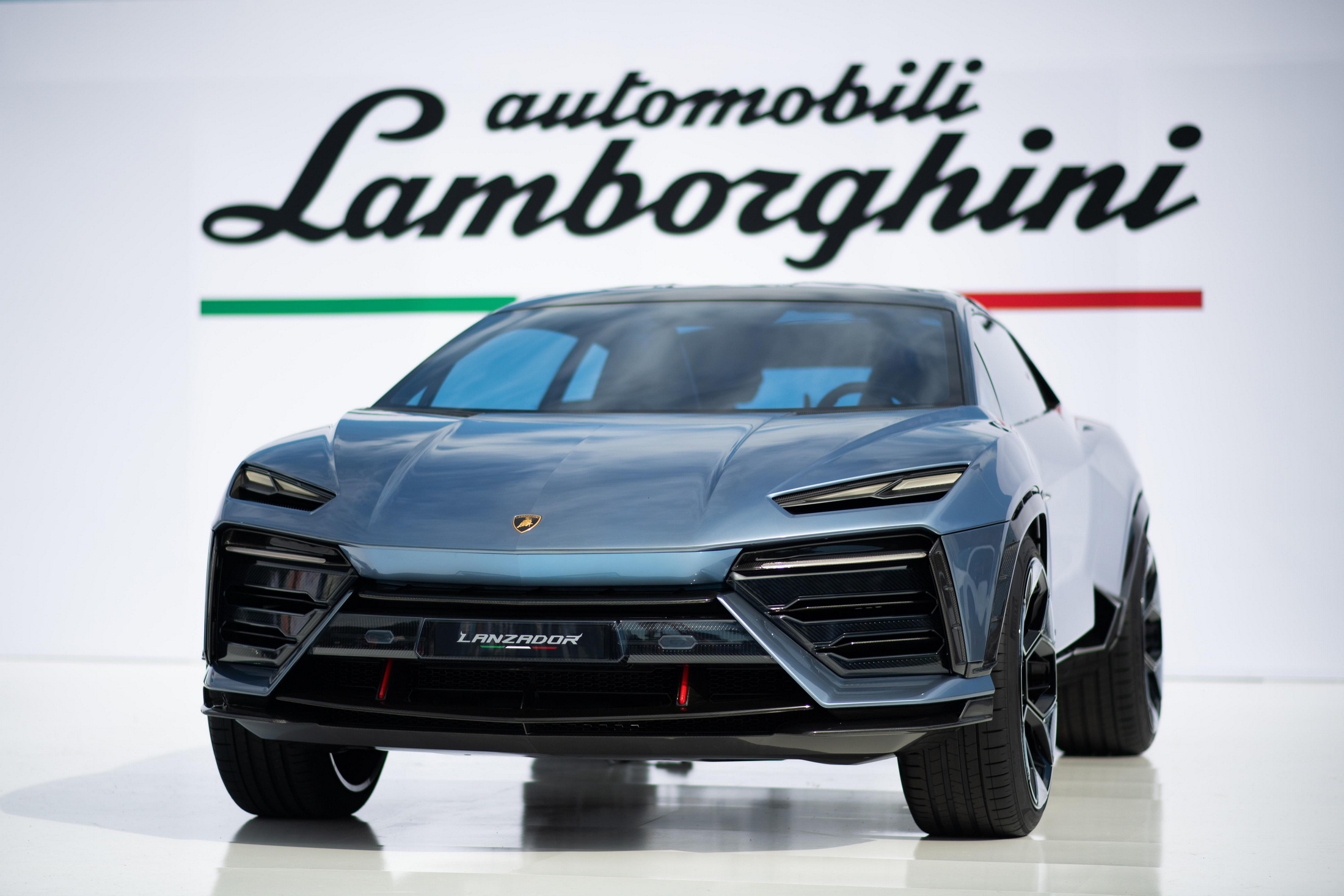
Ferrari’s controversial Luce debut got plenty of attention, though perhaps not the kind Maranello was hoping for. Rather than have cross-town rival Lamborghini feeling like it’s behind the times, it appears as though the brand’s CEO is even more content now that the Lanzador didn’t remain on schedule for an earlier debut. He’s openly doubling down on the idea that Lamborghini was right to delay the brand’s first EV.
In a round table with journalists, asked about the reaction to the Luce, Lamborghini CEO Stephan Winkelmann said his company made the “right decision” in postponing its first fully electric car, arguing that customer demand for electric supercars simply hasn’t materialized the way much of the industry assumed it would.
According to Handelsblatt, Winkelmann said Lamborghini has spent years monitoring demand in the luxury segment. To no one’s surprise who’s been paying attention, the company found that acceptance of electric vehicles hasn’t climbed at anything close to the pace many had forecast.
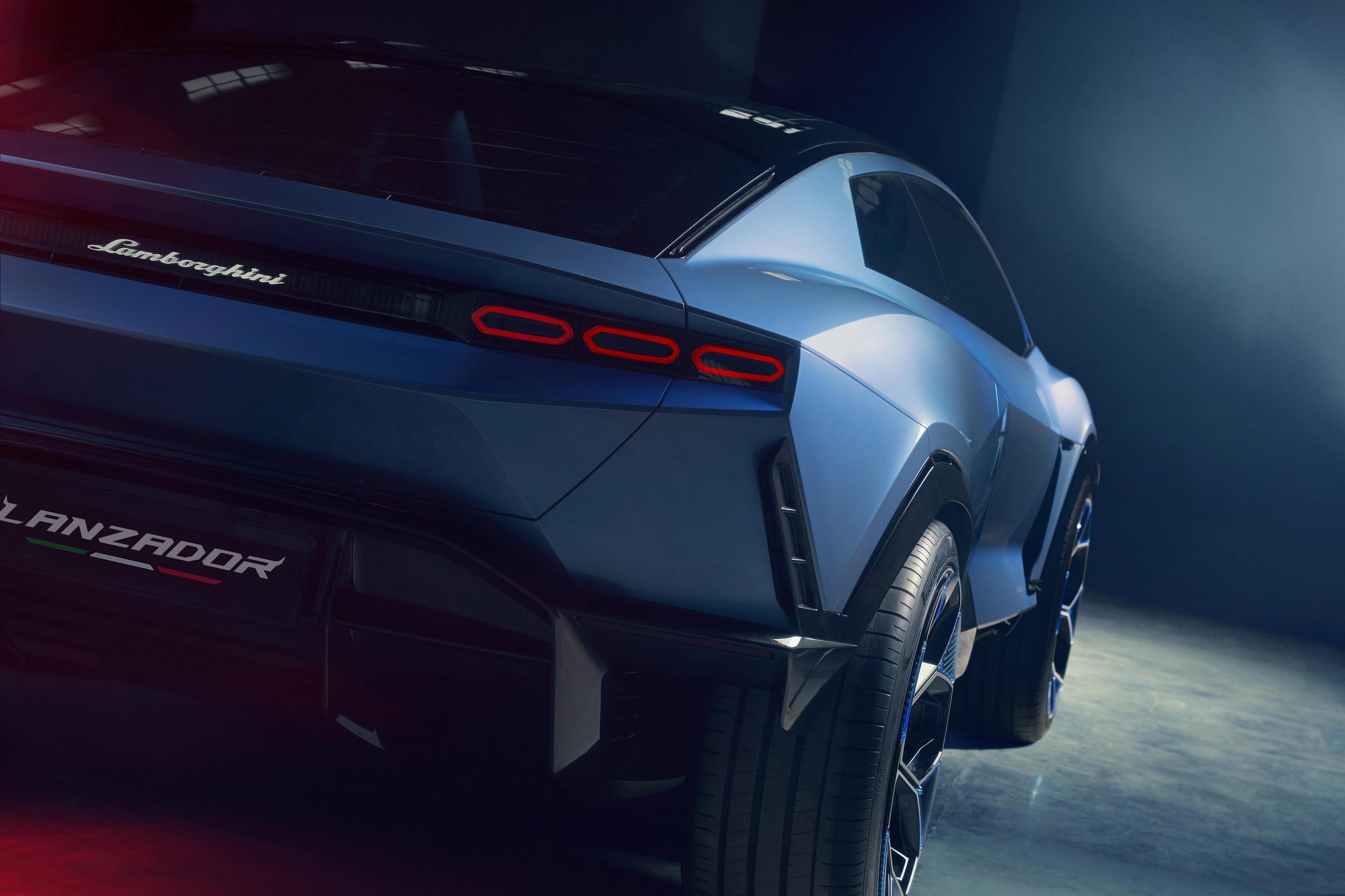
The automaker had planned to launch the all-electric Lanzador before the end of the decade. Initially, production was simply delayed. Now, it won’t happen until at least 2030, if not later, because acceptance for EVs within the brand’s target demographic was “close to zero.” For now, Lamborghini has scrapped it and is looking at a new hybrid model to join the lineup in the near future.
Importantly, European regulations currently call for a ban on the sale of new combustion-powered vehicles beginning in 2035, although exemptions for e-fuels and certain low-volume manufacturers remain under discussion. While many exotic-car makers spent the last several years announcing ambitious EV programs, Lamborghini now appears content to let others test the waters first.
That’s probably a wise move considering its positioning. While nowhere near as successful as Ferrari, Lamborghini has its position underneath Volkswagen Group going for it. It’s currently one of the most profitable divisions. In 2025, it generated €3.2 billion ($3.7 billion) in revenue. Even though operating profit slipped from €835 million ($970 million) to €768 million ($892 million), the company still posted a remarkable 24 percent operating margin.
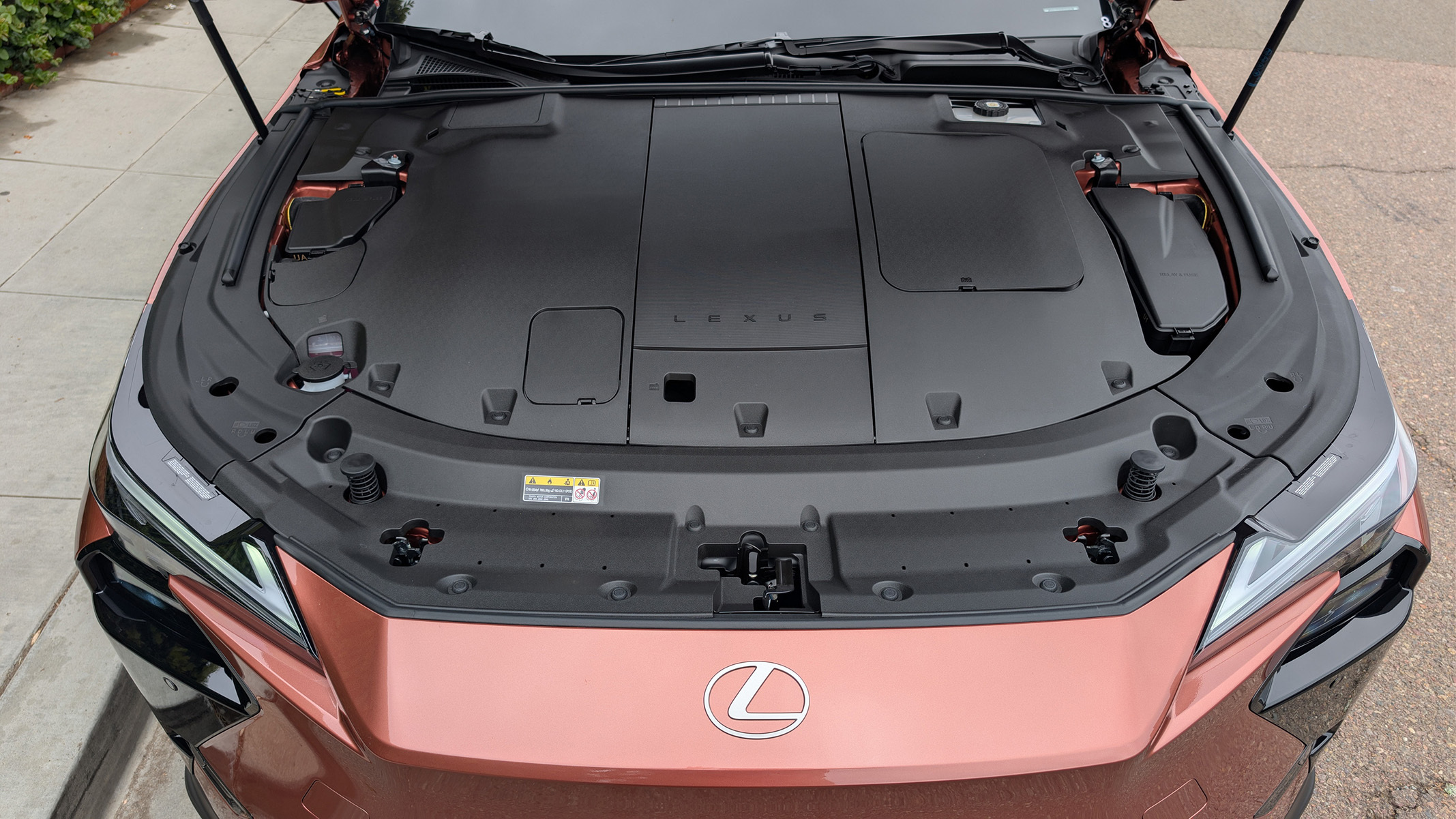
Lexus plans EVs and hybrids from one common vehicle architecture.
Flexible platforms help preserve profits if consumer tastes change.
Experts say Lexus benefits from Toyota technology and buying power.
For years, automakers, including Lexus that once pledged to go EV-only by 2035, told us the future would be electric. Now that EV growth has cooled in several key markets, many of those same companies are quietly changing course, often at a huge cost. Lexus, however, thinks it has found a smarter, less financially painful way forward.
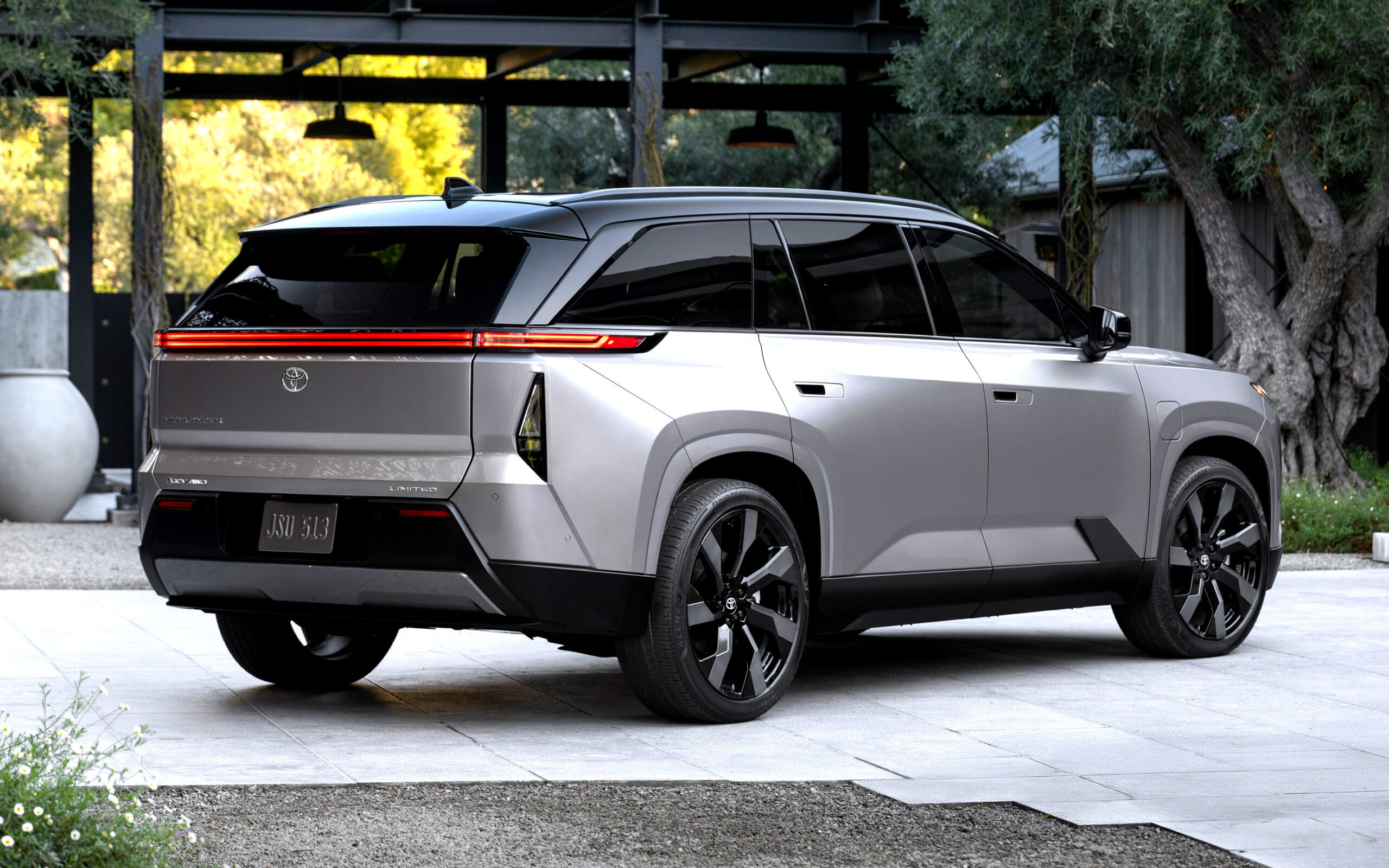
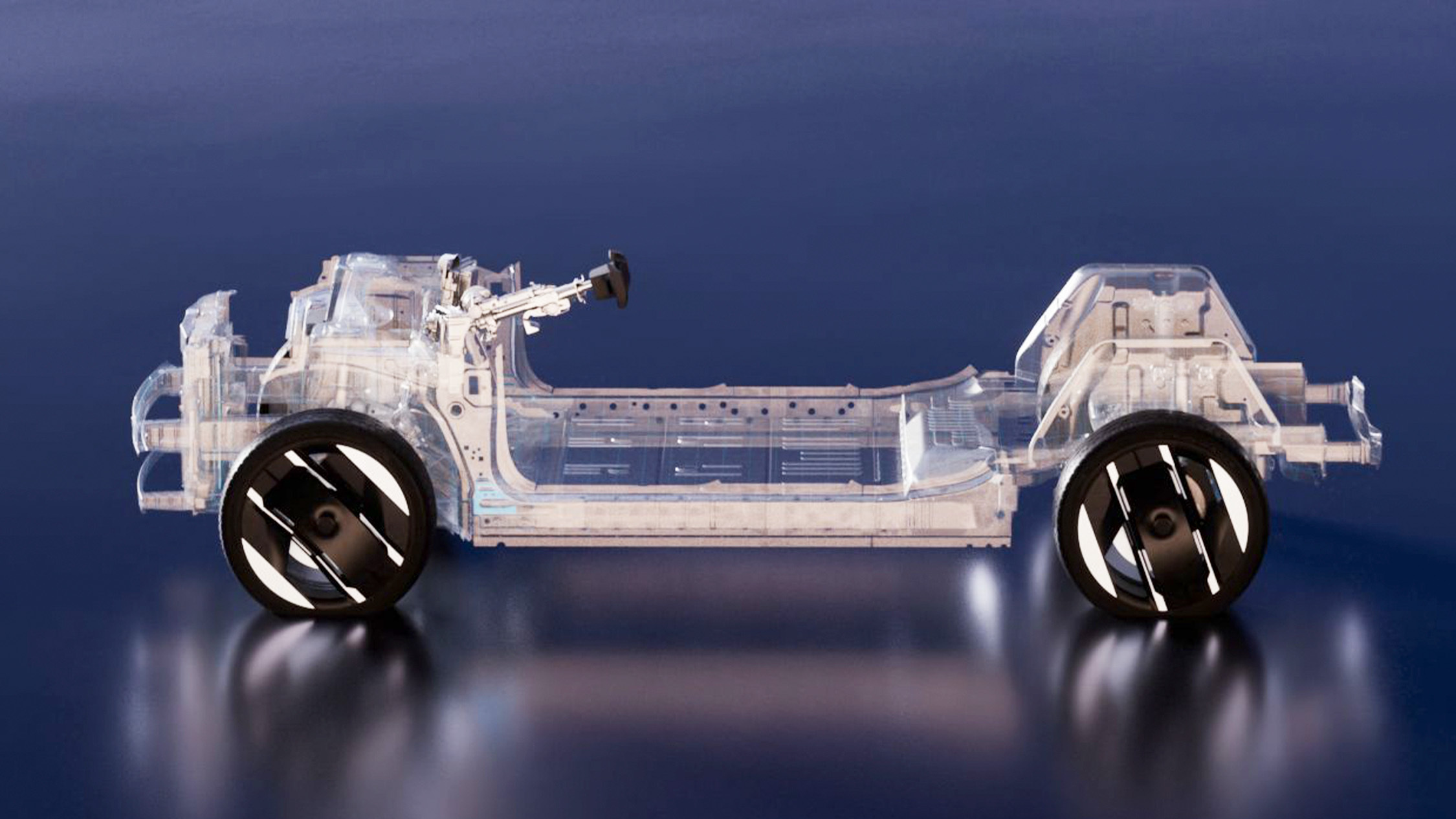
Instead of betting everything on dedicated EV platforms, or U-turning in favor of old-fashioned gas cars, Toyota’s luxury division is developing vehicles that can be built as either hybrids or fully electric models using much of the same underlying architecture. It’s a strategy designed to give Lexus maximum flexibility while competitors wrestle with expensive shifts in demand.
Future products will be designed so the two brands can install either a battery pack or a hybrid powertrain within essentially the same vehicle structure, according to Lexus and Toyota executives who presented the plan to Handelsblatt and other media at the Shimoyama development center in Japan. That means Lexus can react faster if customer demand swings toward EVs, hybrids, or somewhere in between. Or if the next US president reinstates tax credits for cleaner vehicles.
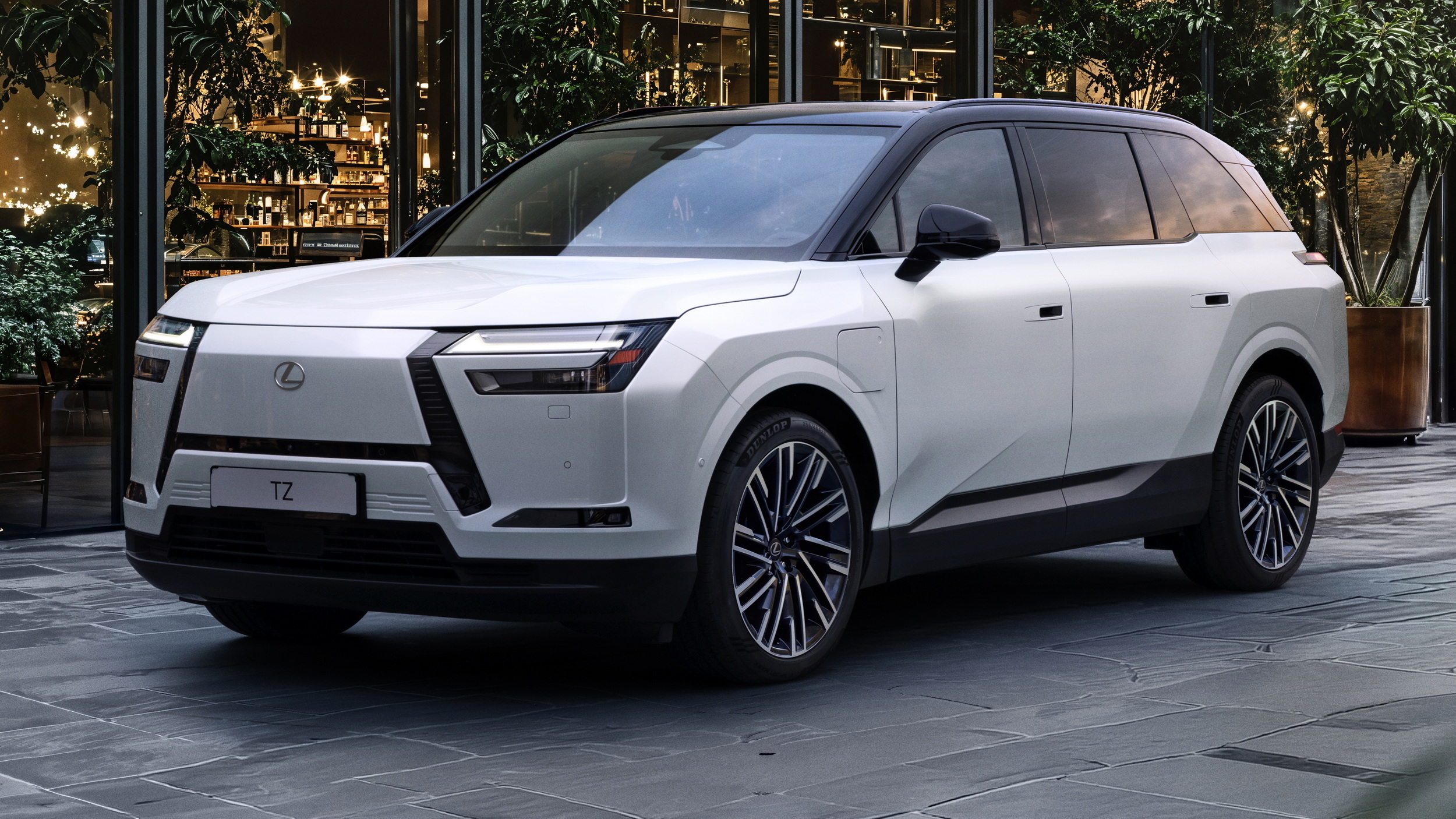
Toyota CTO Hiroki Nakajima told reporters that Lexus’s upcoming TZ electric SUV is expected to be profitable from launch in North America. That’s a claim many automakers would love to make right now, because some, like Honda/Acura and Porsche, are hurting badly from having written off billions of dollars in EV development, and US EV sales are dire.
Christopher Richter, an automotive analyst at CLSA in Tokyo, traces that edge to Lexus’s lower cost base. Toyota doesn’t break out Lexus financials, but Richter told the German outlet he figures the brand’s margins sit well into the double digits. By comparison, Mercedes posted a return on sales of 5% last year and BMW managed 5.3%. The trick, Richter says, is that Lexus can charge BMW money while leaning on the purchasing volume and development resources of the world’s largest carmaker.
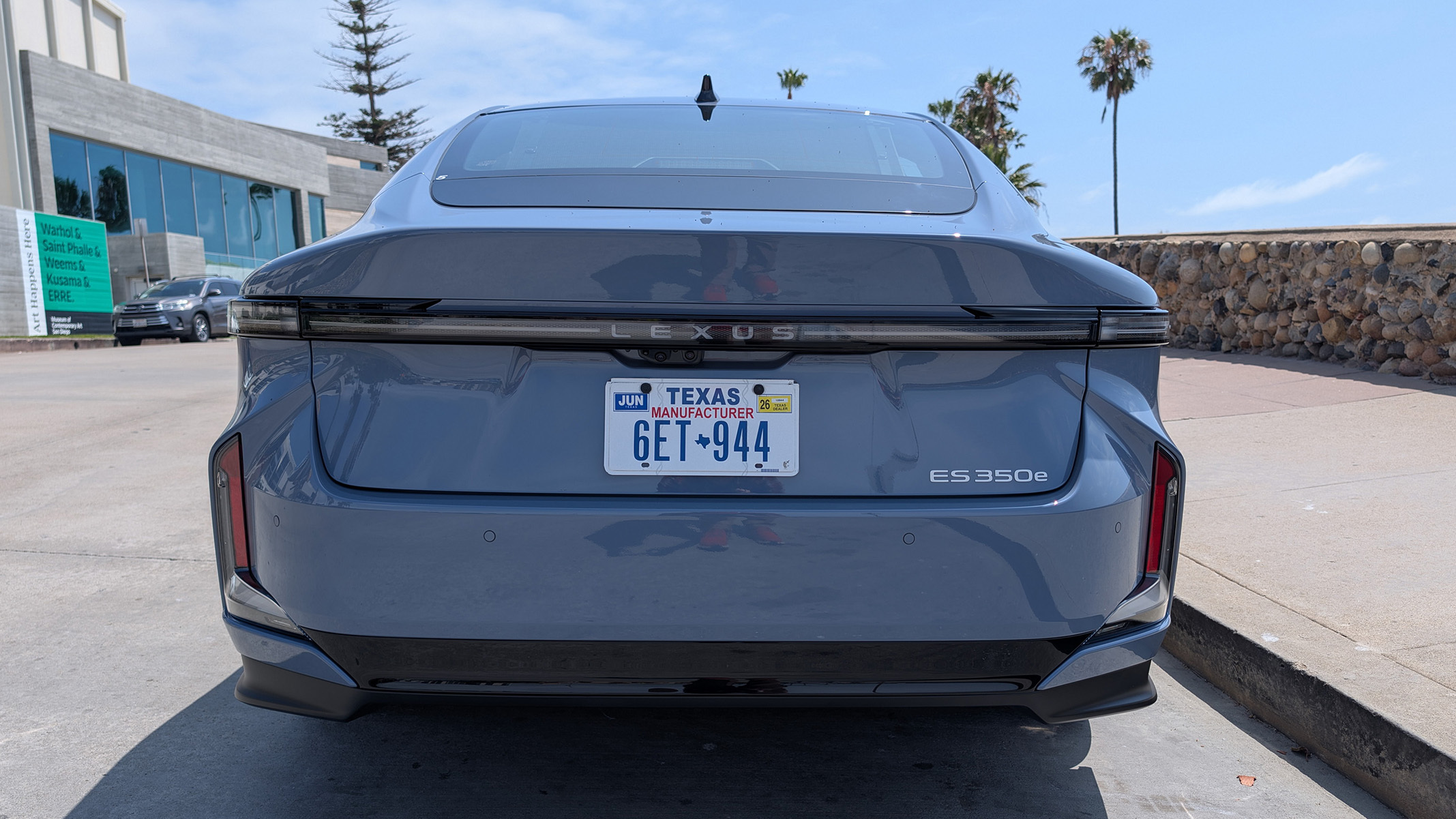
The TZ isn’t the first Lexus or only Lexus to benefit from common-platform thinking. The new ES sedan is already available as a hybrid or EV, both versions built from the same basic architecture. It’s not a strategy peculiar to Lexus. BMW and Mercedes also build some EVs and hybrid cars on shared platforms, including the X1 and iX1, 5-series and i5, and CLA.
But the two German brands also have EV-specific platforms. BMW’s new ICE 3-series sedan, for instance, will look almost identical to the i3 electric 3-series, yet they’ll ride on totally different architectures.
Profit Over Volume
BMW and Mercedes both sell more than twice as many cars as Lexus, which moved 882,291 vehicles worldwide in 2025, nearly half of them in North America. In particular, Mercedes shifted around 1.8 million that year and BMW close to 2.2 million under its core brand. But in the luxury game it’s profit, not registrations, that counts, and Toyota’s upscale division seems convinced it holds the better hand.
A VW board member says more needs to be done to push the pros of EVs.
VW will use its expertise in China to help expand its European model range.
Despite this, the company won’t sell range-extender EVs in Europe.
One of VW’s most influential board members believes that once automakers actually convince buyers to go electric, internal combustion cars could end up viewed the same way we now see horses, an outdated form of transportation.
According to Martin Sander, VW’s board member for sales, marketing, and aftersales, more needs to be done to persuade people to buy an EV, rather than simply talking about ICE bans, such as the 2030 deadline in the UK.
“[Today] I look out of the window: not many horses – it’s predominantly cars,” he told Auto Express. “This is why I hate the discussion about the ICE (internal combustion engine) ban. Everyone is just talking about the ICE ban. How do you convince customers about a new technology if you’re only talking about when there will be a date when you are not allowed to use these vehicles – vehicles you have got used to over the last decades – anymore?”
Sander believes that “over time, more and more customers will be convinced” to buy an EV if barriers to ownership, such as improvements to charging infrastructure, are removed. “Let’s talk about what we need to do to actually convince customers: the charging infrastructure; talk positively about the advantages of electric vehicles, and possibly do something around the energy prices,” he noted.
The board member suggested that if these conditions are met, the number of customers interested in owning an ICE-powered vehicle could drop to as little as “three, four, five percent” by 2035.
Interestingly, while VW transitions towards electrification in Europe, it doesn’t plan to introduce any of the range-extender EVs it offers in China, suggesting that demand for this powertrain won’t be strong enough in Europe.
Despite this, Sander notes that the lessons VW is taking from its expansion of electrified vehicles in China will help it overseas.
“Everything we are learning in China will help us to be competitive in all the other markets around the globe where we are competing with the Chinese,” he said. “On our end it’s very much about scale, efficiency and cost, and this is what we are working on diligently. We have to be competitive. There’s no alternative.”
Electrogenic converted Jason Momoa’s vintage Land Rovers to electric power.
Two classic Harleys now combine combustion engines with electric propulsion.
A modern off-grid trailer packs enough battery power for month-long adventures.
Jason Momoa has developed an electromod habit that would make most petrol-loving classic car purists break out in hives. First came an electric 1929 Rolls-Royce Phantom II. Then a one-off miniature Bentley Blower EV. Now Hollywood’s Aquaman has handed a pair of rare Land Rovers and a trio of century-old Harley-Davidsons to an EV conversion company.
The latest chapter in Momoa’s increasingly eclectic garage comes courtesy of British EV specialist Electrogenic, which features prominently in the second season of his HBO Max documentary series On The Roam. This time, the company tackled five classic conversions, while also creating a battery-packed adventure trailer for extended off-grid expeditions.
Let’s start with the motorcycles, because they put a really different spin on the whole idea of converting old ICE machines to electricity. Rather than removing the original engines, Electrogenic transformed a pair of Harley-Davidson Model JDs from the 1920s into plug-in hybrids.
Choose Your Power
Momoa can choose the bikes to be propelled by 15 hp (15 PS / 11 kW) of electric power, the original 20 hp (20 PS / 15 kW) gasoline power, or both at once on his 1924 and 1927 model JD plug-ins. There’s even enough electric assistance from the 190 lb-ft (260 Nm) electric motor to eliminate the traditional kick starter.
A third bike, a 1921 Harley-Davidson Model FD, went fully electric after its original engine was deemed beyond repair. All three use discreet 2.7 kWh battery packs hidden inside period-style panniers good for more than 50 miles (80 km) of electric riding, and feature modern braking upgrades.
Photos Electrogenic
The Land Rover conversions are definitely more conventional. A 1949 Series I and a highly collectible 1961 Series IIA 109 Dormobile camper have both been converted to full electric power. Electrogenic retained the Landies’ original four-wheel-drive systems and transfer cases, meaning they should still be every bit as capable off-road, only much faster and quieter on it.
The Series I gets a 48 kWh battery and a 201 hp (204 PS / 150 kW) motor, while the Dormobile uses a larger 62 kWh pack paired with a 161 hp (163 PS / 120 kW) motor. Both offer around 150 miles (240 km) of real-world range and CCS fast charging. The Dormobile even swaps its original gas cooking setup for an induction hob, creating what is effectively a fully electric classic camper.
And finally, Electrogenic also kitted out Momoa’s Schutt Industries XVENTURE XV-2 camping trailer with a massive 93 kWh battery pack for those long, wilderness getaways. It can reportedly power camping equipment for up to a month while also serving as a mobile charging station. What do you think Momoa’s next EV commission should be?
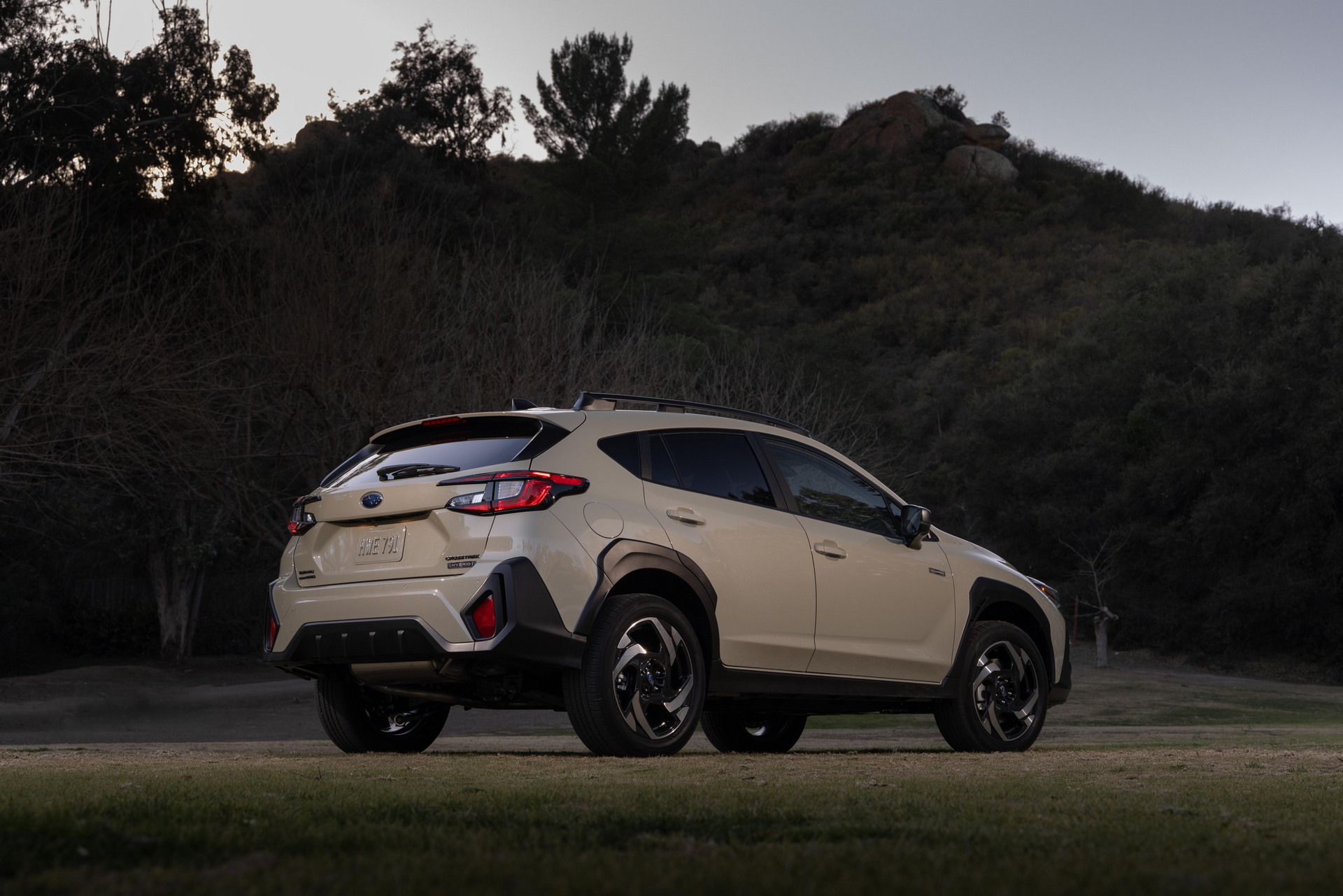
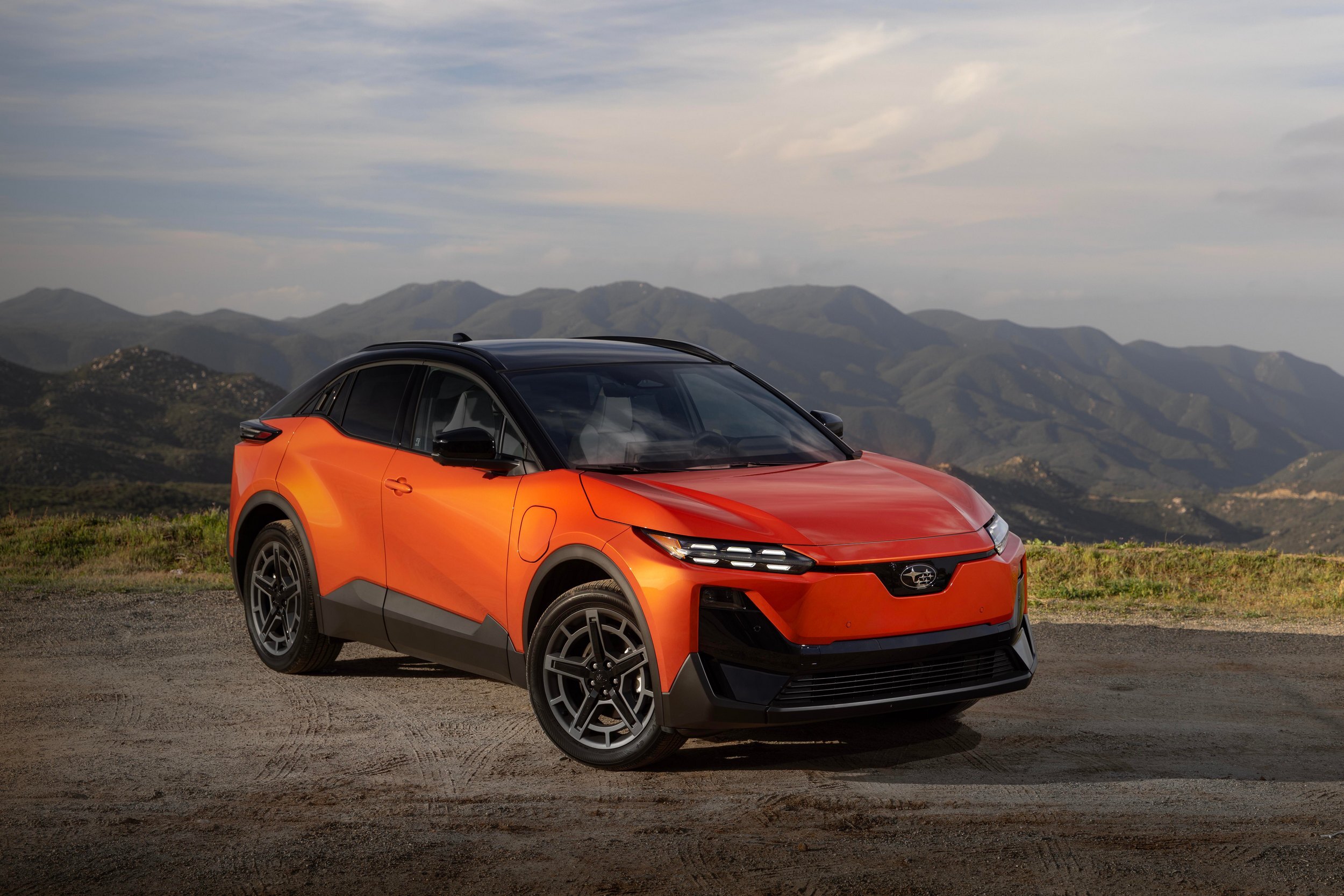
Following significant price cuts, WRX sales soared nearly 150%.
Model starts at $32,495 and has a 2.4-liter turbo with 271 hp.
Overall sales were up 10.6%, thanks to the Crosstrek and Forester.
The Honda Prelude continues to kick the Subaru BRZ’s butt as the former sold 318 hybrid coupes in May. That outpaced their more traditional rival, which only moved 255 units.
Thankfully, it wasn’t all bad news for sporty Subies as WRX sales soared 147.9% to 1,195 units. The company didn’t bother mentioning the low-volume sedan in their sales release, but the increase is hardly surprising given the fact that they slashed prices and brought back the entry-level variant.
Thanks to the changes, the 2026 WRX begins at $32,495 and that’s $5,255 less than last year’s model. Subaru also lowered the price of the WRX Premium by $3,755, while the WRX Limited was slashed by $3,685. Even the WRX GT and WRX tS got a $2,710 reduction.
Putting the fun stuff aside, overall Subaru sales were up 10.4% last month to 57,748 units. This was largely due to strong demand for the Crosstrek and Forester.
Subaru noted the Crosstrek achieved its best May ever, while hybrid sales hit a new monthly record. The Japanese automaker also posted its best-ever EV monthly sales of 3,094 units.
While the Solterra dropped 39.8%, the decline in sales was more than offset by the new Trailseeker and Uncharted. It’s worth noting the latter EV even outsold the aforementioned WRX.
As for the rest of the lineup, it wasn’t pretty and we’re not talking about the Outback. Sales of the aging Ascent continued their descent, while the Impreza plunged 35.8%. The zombie Legacy found 90 takers, but sales should fade quickly as a quick search suggests less than 100 new units remain in inventory.
Fiat revealed two Grizzly SUVs heading to global markets this year.
The compact models will serve as flagships above the Grande Panda.
Buyers can pick petrol, mild-hybrid, or fully electric power.
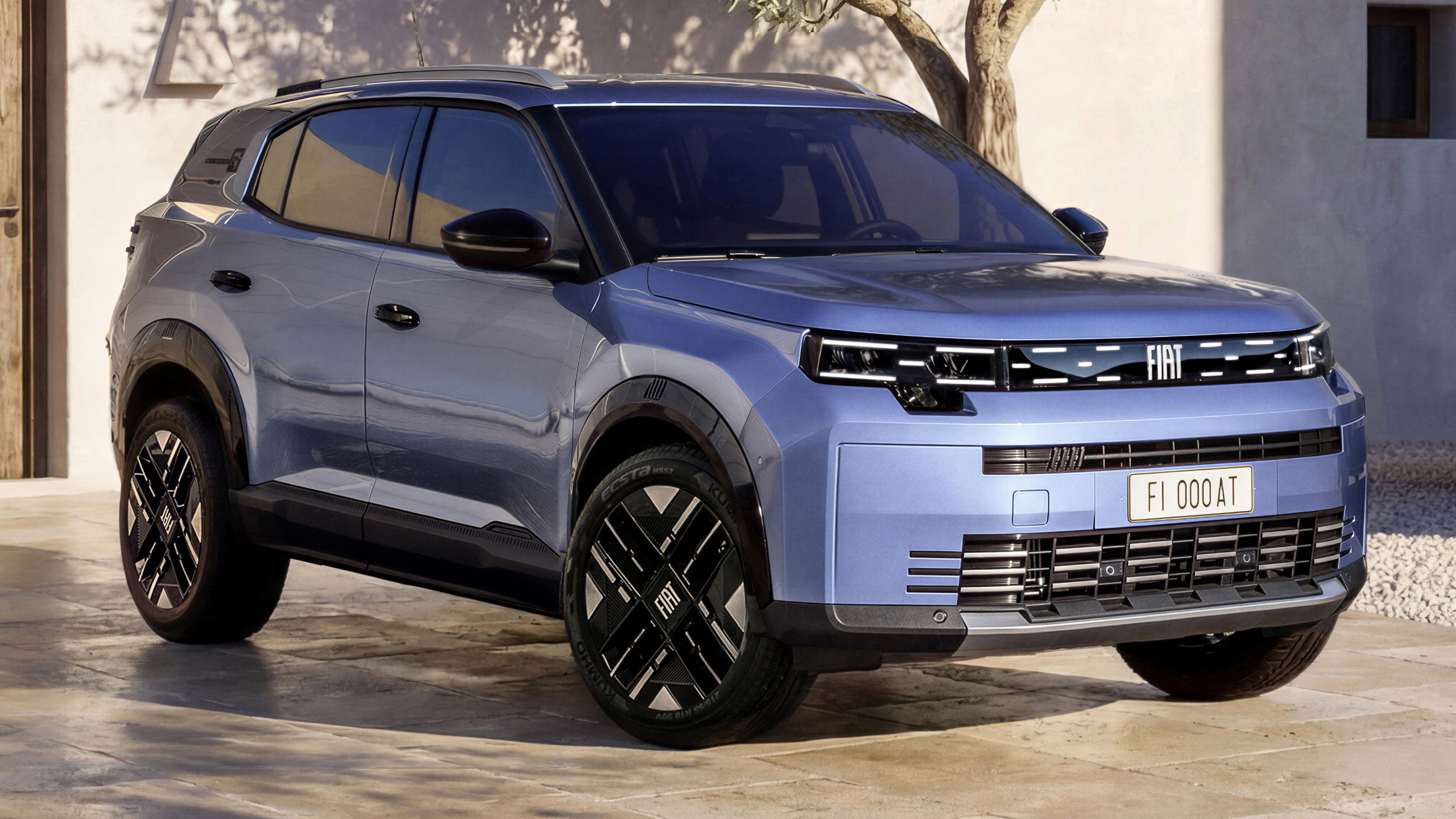
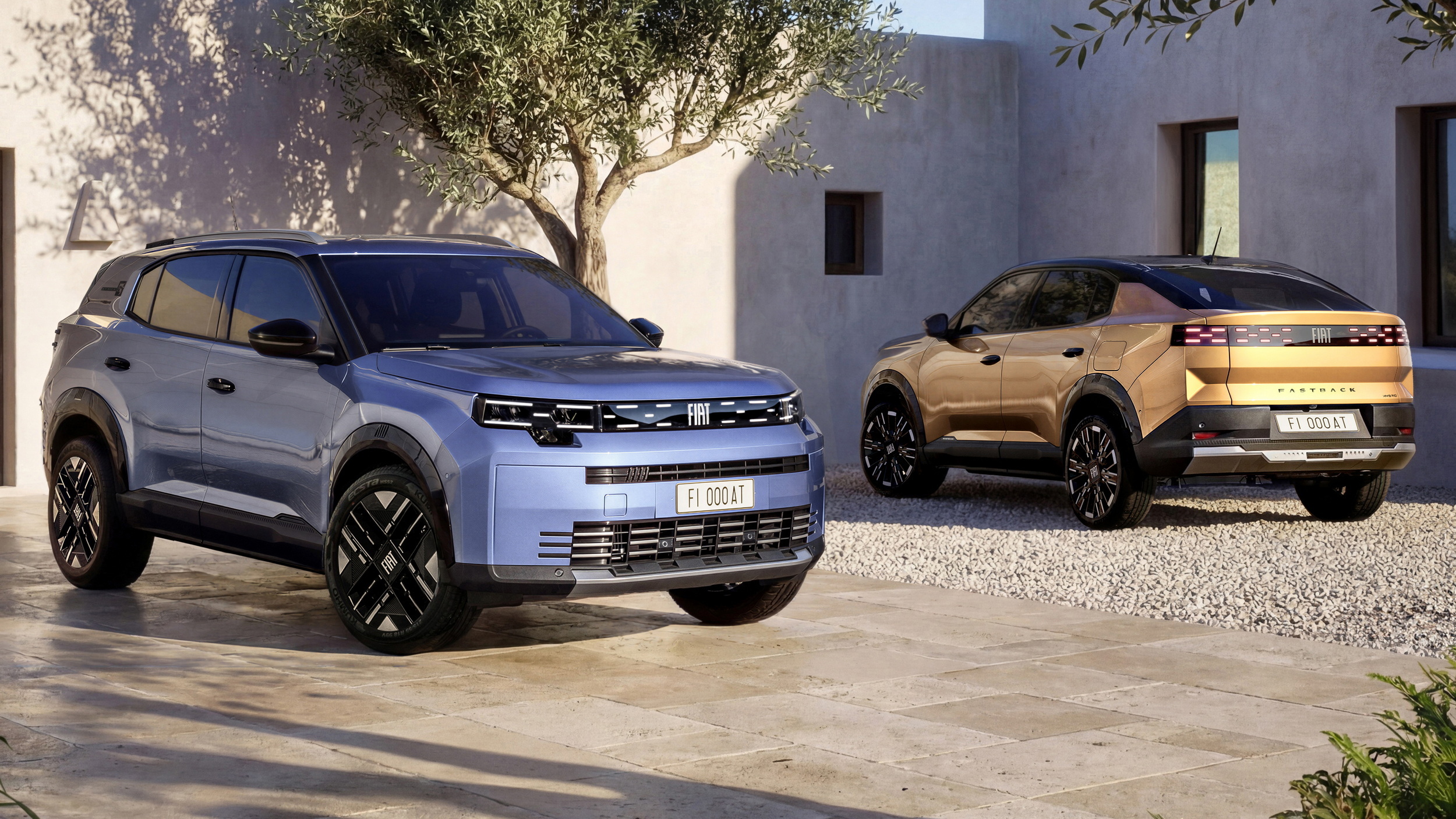
Fiat has handed over fresh photos of the Grizzly and Grizzly Fastback, both due in global markets before the year is out. These compact SUVs now sit at the top of the range, larger and more practical than the Grande Panda beneath them. Affordability stays part of the pitch, and buyers get a spread of powertrain choices to pick from.
The Italian company calls the Grizzly a versatile, spacious and approachable SUV, naturally suited to family use. Read between the lines and the target is obvious. This is aimed squarely at the Dacia Bigster, itself a stretched take on the popular Duster.
The styling leans boxy, with sculpted surfaces and modern detailing throughout. The sharp LED headlights run down into the bumper, the grille is illuminated, the wheel arches are squared off, and the greenhouse borrows a Citroen flavor. The alloys finish the look with a futuristic edge.
The Grizzly Fastback gets a sloped roofline toward the rear and drops the roof rails of the standard version. The coupe-SUV tail brings full-width LED lights, a subtle ducktail spoiler, a recess across the bumper and tailgate, and plenty of plastic cladding.
Fiat designers seem to have found the right balance between visual separation and cost-cutting, since the two SUVs appear to share most of their body panels. On size, the company says the Grizzly duo comes in under 4.5 meters (177.2 inches) long.
While we have yet to see photos of the interior, Fiat says that the Grizzly and the Grizzly Fastback will “elevate the in-car experience through refined interiors, attention to detail, and technologies designed to simplify everyday life”. They also promise “exceptional interior space” and segment-leading cargo capacity with the latter being a strong selling point.
The new models ride on Stellantis’ Smart Car architecture, the same platform already underpinning the Fiat Grande Panda, Citroen C3, C3 Aircross, and Opel Frontera. Fiat has confirmed the Grizzly family will arrive with a full powertrain offer, from petrol to BEV. That points to the 1.2-liter engine in regular and mild-hybrid forms, plus the fully electric setup borrowed from its Stellantis stablemates.
The Grizzly and Grizzly Fastback will be sold across several regions, including Europe, the Middle East, Africa, and Latin America. Depending on the market, they could act as an indirect replacement for the discontinued Fiat Tipo and the smaller Pulse and Fastback. The rollout starts in the second half of 2026, beginning with Europe and the Middle East and Africa.
Fiat CEO Olivier Francois said: “[The] Grande Panda marked the return of Fiat to affordable family movers. With Grizzly and Grizzly Fastback, we’re completing this lineup with two vehicles designed around different needs, different lifestyles, but sharing the same idea: smart, accessible and rooted in Fiat’s design DNA. Together, they bring Fiat back at the heart of the family mobility market with a complete and coherent line-up”.
High gas prices have supercharged Hyundai’s hybrid and EV sales.
Hybrid sales soared 90% in May, while EVs were up 10%.
Overall sales climbed 3% as Korean brand moved 87,468 units.
The national average price of a gallon of regular gasoline is $4.29 and that’s up nearly $1.15 from a year ago. However, some states like California are paying over $6 per gallon.
Given the sky-high prices, it’s no surprise that customers are embracing hybrids and even showing renewed interest in EVs. That’s certainly the case over at Hyundai, where hybrid sales soared 90% compared to last year. Sonata Hybrid sales were up 250%, while the Santa Fe (30%), Elantra (29%), and Tucson (10%) hybrids also experienced gains.
Electric vehicles also bounced back following the elimination of the federal tax credit last year. In fact, the Ioniq 5 celebrated its best May ever as sales jumped 28% to 5,002 units. The model is now up 16% year-to-date as customers have snapped up 18,395 electric hatchbacks.
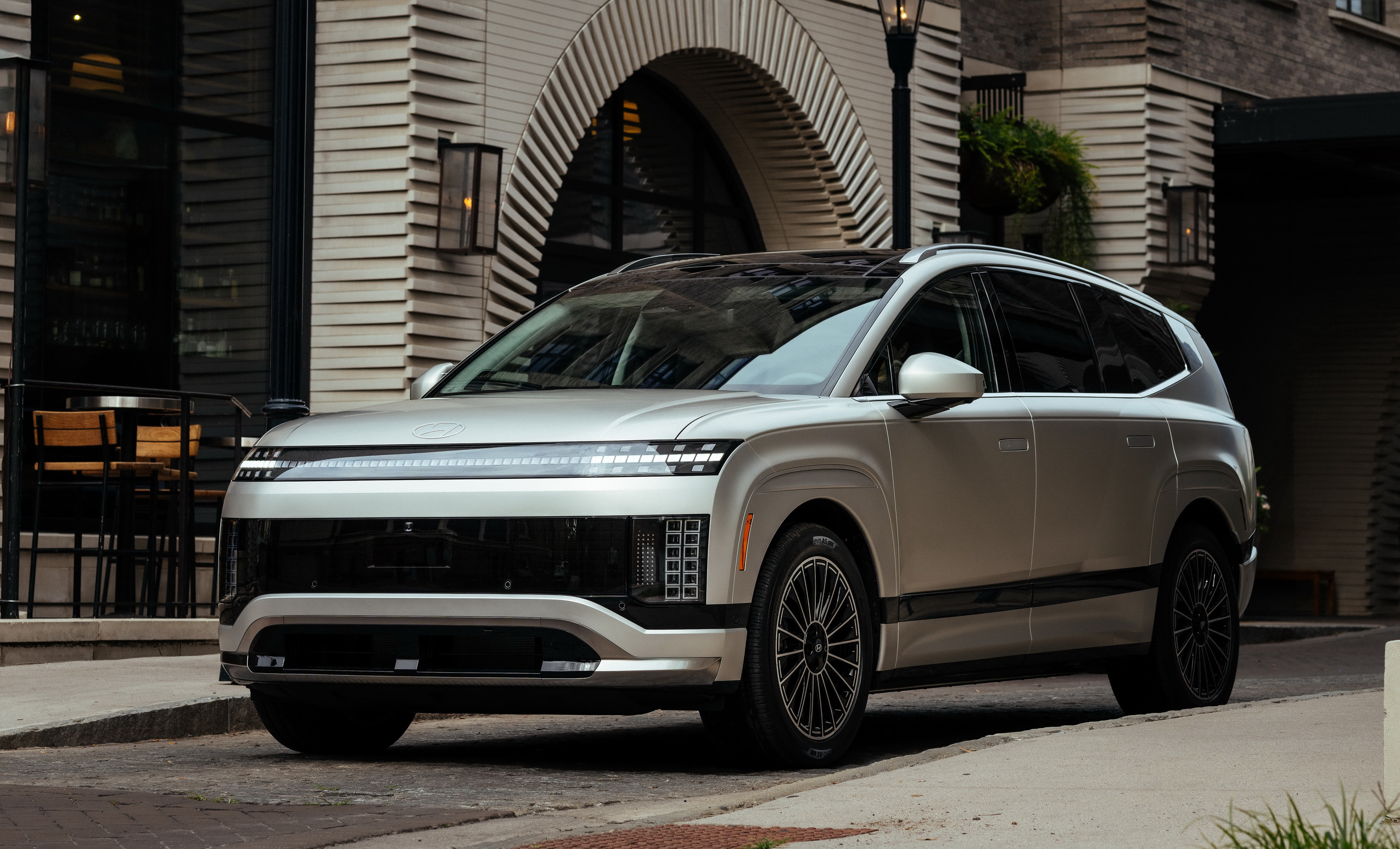
The Ioniq 9 is also doing okay as customers bought 1,145 last month. That’s not great, but it’s still a 279% increase from this time last year.
Overall, Hyundai sales were up 3% to 87,468 units. This was largely due to the Tucson, which found 20,581 buyers in May. The crossover was followed by the affordable Elantra, which was up 7% to 16,819 units. The Palisade is also proving popular as consumers snapped up 13,089 of them.
As for the losers, they’re not much of a surprise as Ioniq 6 sales fell 85% to 176 units. Of course, that’s hardly shocking as the company dropped the mainstream model and the high-performance N variant isn’t on sale in America yet.
The Santa Cruz plunged 41%, while the Venue fell 27%. The latter feels like a relic from a bygone era, while the unibody truck is expected to be living on borrowed time.
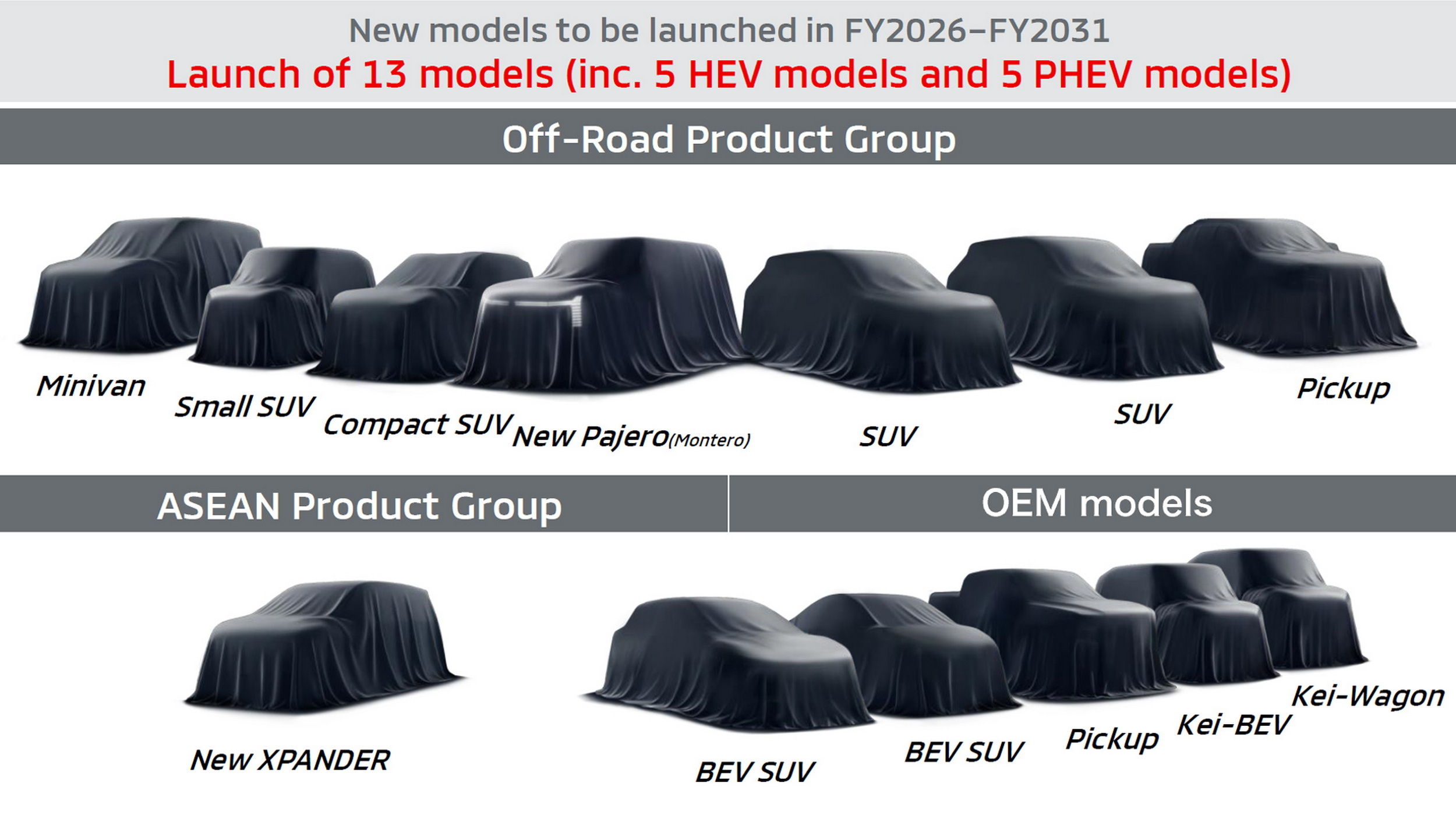
Mitsubishi confirms the launch of 13 new models over the next six years.
The lineup includes a baby Pajero and a new pickup for North America.
Five hybrids, five PHEVs, and three BEVs dominate the strategy.
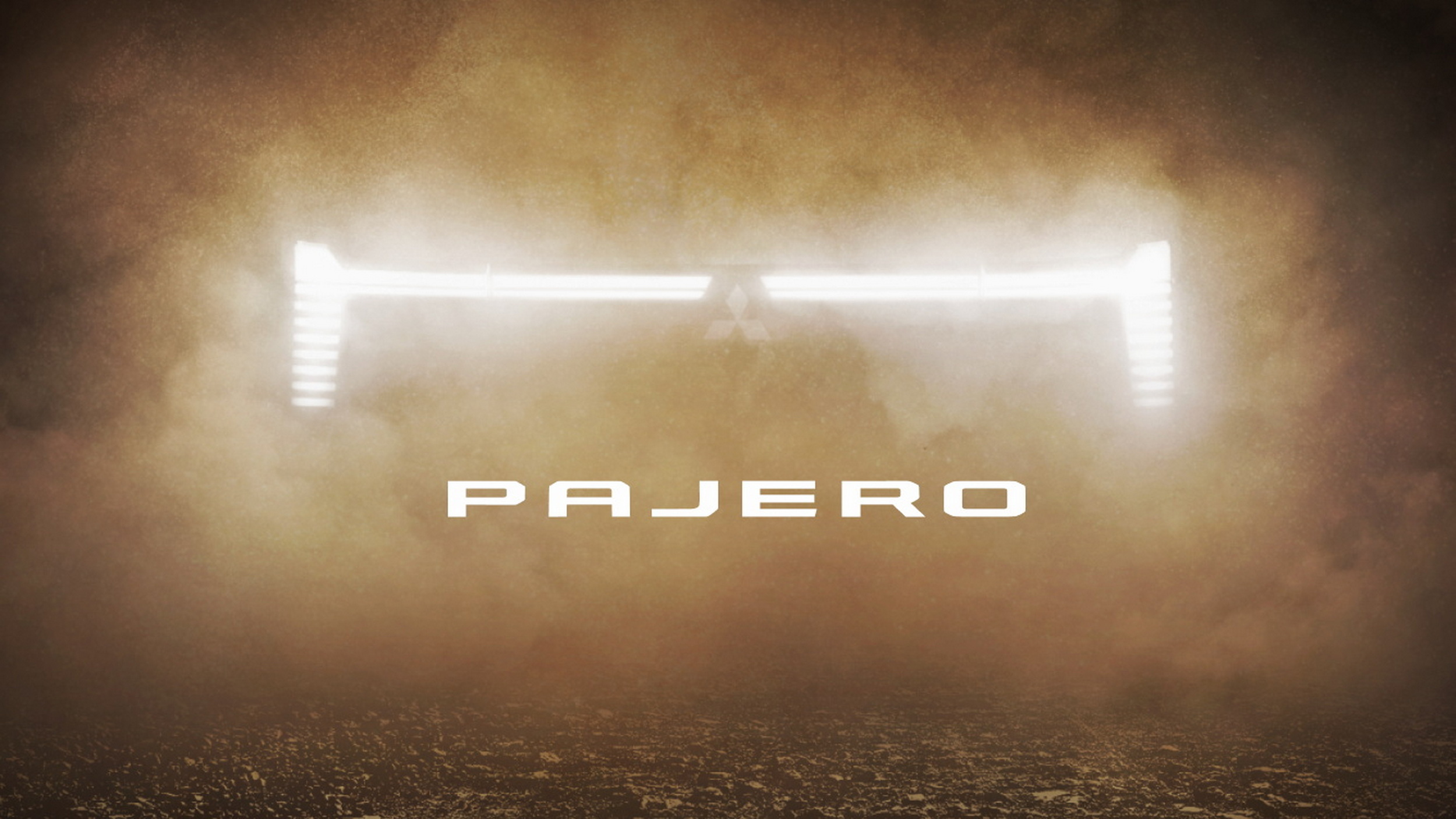
Mitsubishi has confirmed the return of the Pajero, previously sold as the Montero in markets like North America, reborn as a flagship cross-country SUV on ladder-frame underpinnings. That alone would be news. It is also just one of thirteen model debuts the Japanese firm has promised over the next six years.
One of the more important details to emerge is that the Pajero name will spread across a family of vehicles, led by that flagship SUV based on the Triton pickup, joined by a compact SUV and a small one that could slot into the kei car segment. The baby Pajero looks to be a different animal from the existing Delica Mini, itself one of the most rugged-looking kei cars Japan has to offer.
There is also a minivan coming under what Mitsubishi calls its off-road product group, which reads like a successor to the aging, but still popular in Japan, Delica D:5. That van has soldiered on since 2007 with two facelifts to its name. Rounding out the off-road push are two more SUVs Mitsubishi is staying quiet about, plus a pickup that may well turn out to be the facelifted Triton.
Over in ASEAN markets, Mitsubishi will roll out a new generation of the Xpander, the hybrid crossover minivan that first appeared in 2017 and was facelifted in 2022.
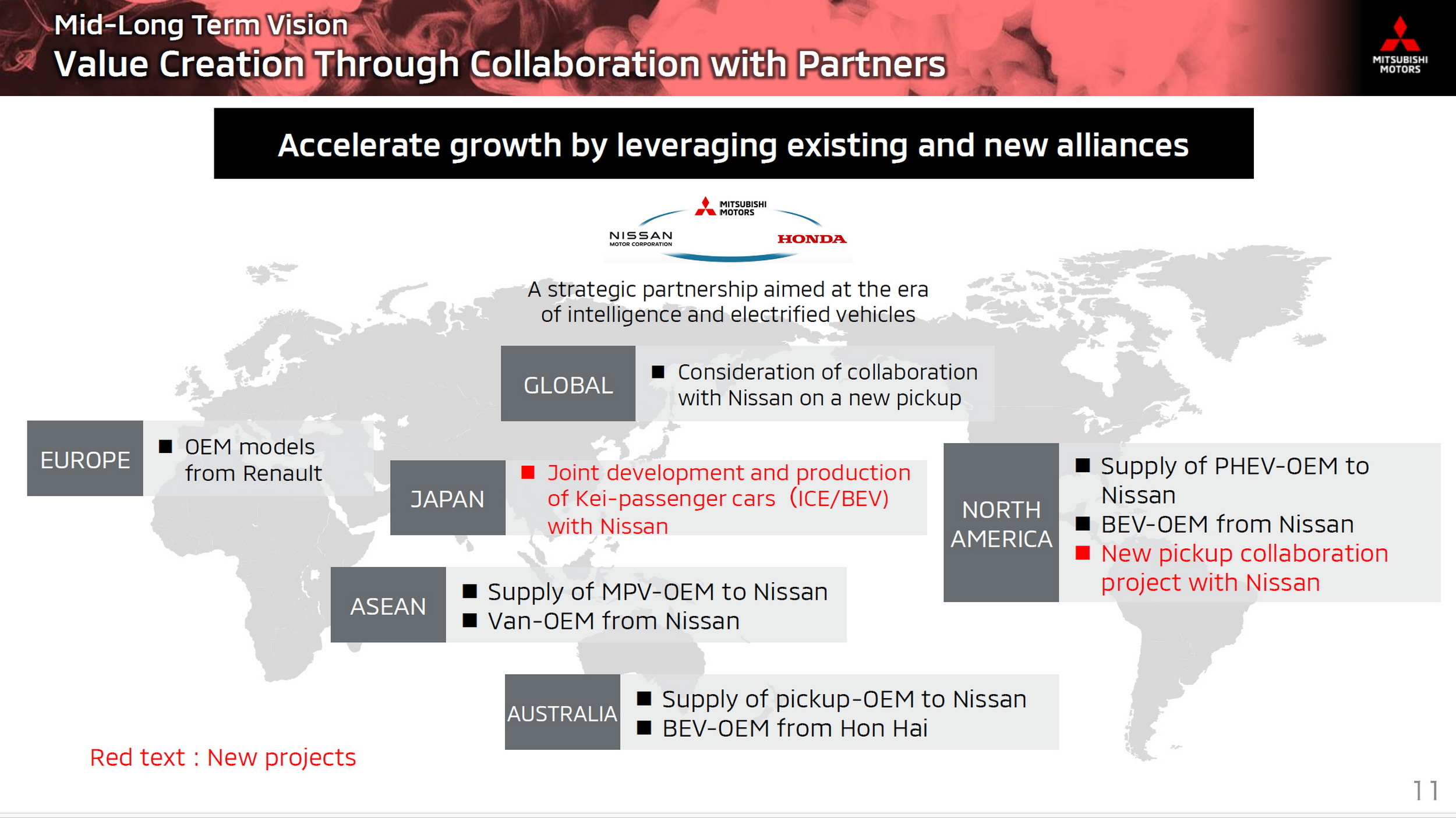
The other five launches will be the fruit of collaboration with other brands. There is a fully electric coupe-SUV built on the Nissan Leaf, another electric SUV developed with Foxconn, a pair of Nissan-sourced kei wagons offered in combustion and EV forms, and a new pickup.
Two Pickup Projects With Nissan, Maybe Three
Speaking of trucks, another slide in the presentation mentions a new “pickup collaboration project with Nissan” for North America. A separate global pickup project is also under consideration, again with Nissan, alongside an updated Triton that is likely already in development
Worth untangling the web here. The Australian-spec Nissan Navara is based on the current Mitsubishi Triton, while the electrified Nissan Frontier Pro draws on the Chinese Dongfeng Z9. That second one could feed into the global project, since it is rumored to reach Europe wearing Navara badges and could just as easily put on a Mitsubishi suit for markets with strict emissions rules.
HEVs, PHEVs, and BEVs
In terms of powertrains, Mitsubishi’s future relies heavily on electrification. The company announced that five of the 13 upcoming models will be self-charging hybrids, and another five will be plug-in hybrids.
Since three models are listed as BEVs in the official teaser, there is no room for any non-electrified offering. That is a little puzzling, since the Pajero was thought to use the 2.4-liter turbodiesel from the Triton, though that engine could presumably gain hybrid assistance.
In fact, Mitsubishi explicitly states they are developing in-house PHEV/HEV-dedicated engines boasting a world-class 48% thermal efficiency, confirming their deployment across all models – including those riding on ladder-frame underpinnings.
To fight off rapid-fire releases from new competitors, the brand is using AI and digital transformation to slash development lead times by 20%. They are shrinking the timeline from the current 45 months down to 36 months to get these 13 models to market faster.
Chinese EVs are depreciating rapidly in Europe, a new study reveals.
Weak residual values in Germany are concerning to lease companies.
Private buyers are also feeling the pain when it comes time to sell.
Chinese automakers have spent the last few years steamrolling into Europe with bargain prices, generous equipment, and monthly lease deals looking almost too good to ignore. But there’s a growing catch buyers are starting to notice. Those bargain EVs can lose value frighteningly quickly once they leave the showroom.
Fresh figures from Germany’s DAT vehicle valuation group show Chinese EVs and plug-in hybrids are depreciating twice as fast as the industry average. And the rate of depreciation is only getting worse.
That creates headaches for almost everyone involved. Owners face painful trade-in figures, manufacturers risk swallowing losses through guaranteed buyback schemes, and leasing companies suddenly discover the cars returning are worth far less than expected.
Martin Weiss from DAT told Autonews Europe that “it is not enough to launch a good product.” Brands also need strong support systems behind the scenes if they want used buyers to remain confident years later. Part of the problem is uncertainty. Plenty of European buyers wonder whether some Chinese brands will actually stick around long term. Concerns about servicing, replacement parts, and dealer networks continue making cautious used buyers think twice.
Not Just Chinese EVs Suffering
But it’s not only Chinese brands feeling the pressure. Britain’s EV market is also watching residual values tumble across the board, in part due to the influx of cars from China, the Financial Times reported recently. Quoting figures from Indicata, it claimed the average three-year-old EV as of last month was worth 38 percent of its original value, compared with 46 percent in Germany, France and Spain. In contrast, a same-age petrol car in the UK retained 45 percent of its value, and a hybrid, 51 percent.
Carmakers are under huge pressure to increase EV sales, so many are throwing massive discounts at new models to hit UK government targets. That’s pushed a Chinese car, the Jaecoo 7, to the top of the UK sales chart for the first time ever, but it leaves nearly-new EVs looking overpriced beside heavily incentivized factory-fresh cars.
Ironically, rapid technological progress is also hurting values. Chinese brands especially release updates at breakneck speed, meaning today’s cutting-edge EV can suddenly feel old-fashioned months later. Great for innovation perhaps, but brutal if you’re trying to protect resale values.
PROS ›› Classy cabin, great fuel economy, spacious second row CONS ›› A bit boring to drive, some questionable materials, no RWD
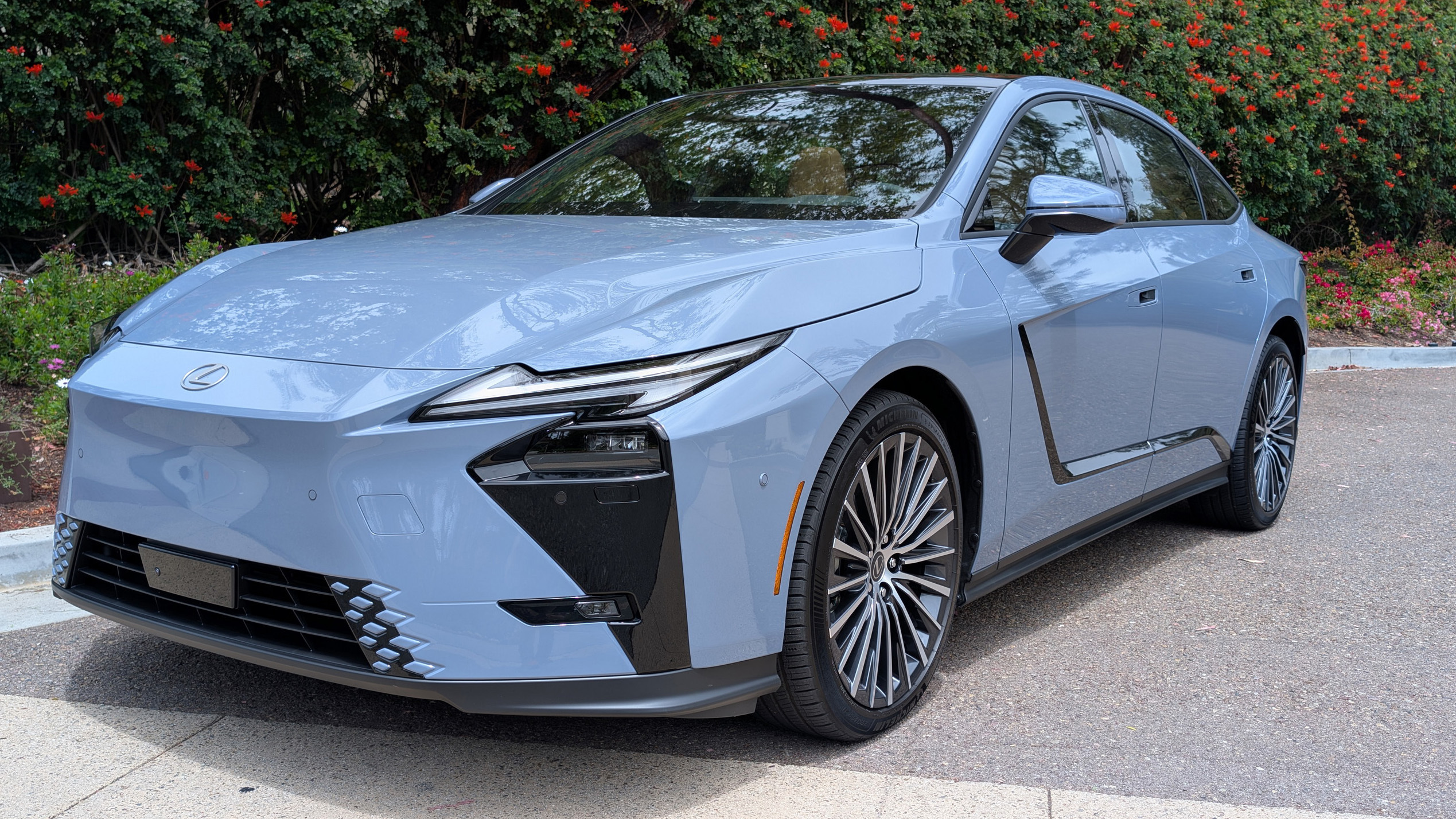
For decades, the Lexus ES has existed in a comfortable little bubble. Buyers loved it because it was quiet, reliable, spacious, and almost aggressively committed to not upsetting anyone. It wasn’t sporty, it wasn’t especially daring, and if you asked enthusiasts about it, many would respond with a shrug and a comment about retirement communities.
That wasn’t really criticism either. Lexus knew exactly what the ES was and, more importantly, who it was for. The formula worked so well that the brand had little reason to mess with it. Why reinvent a luxury sedan that’s spent years quietly printing money? Now Lexus says it’s broadened the ES formula.
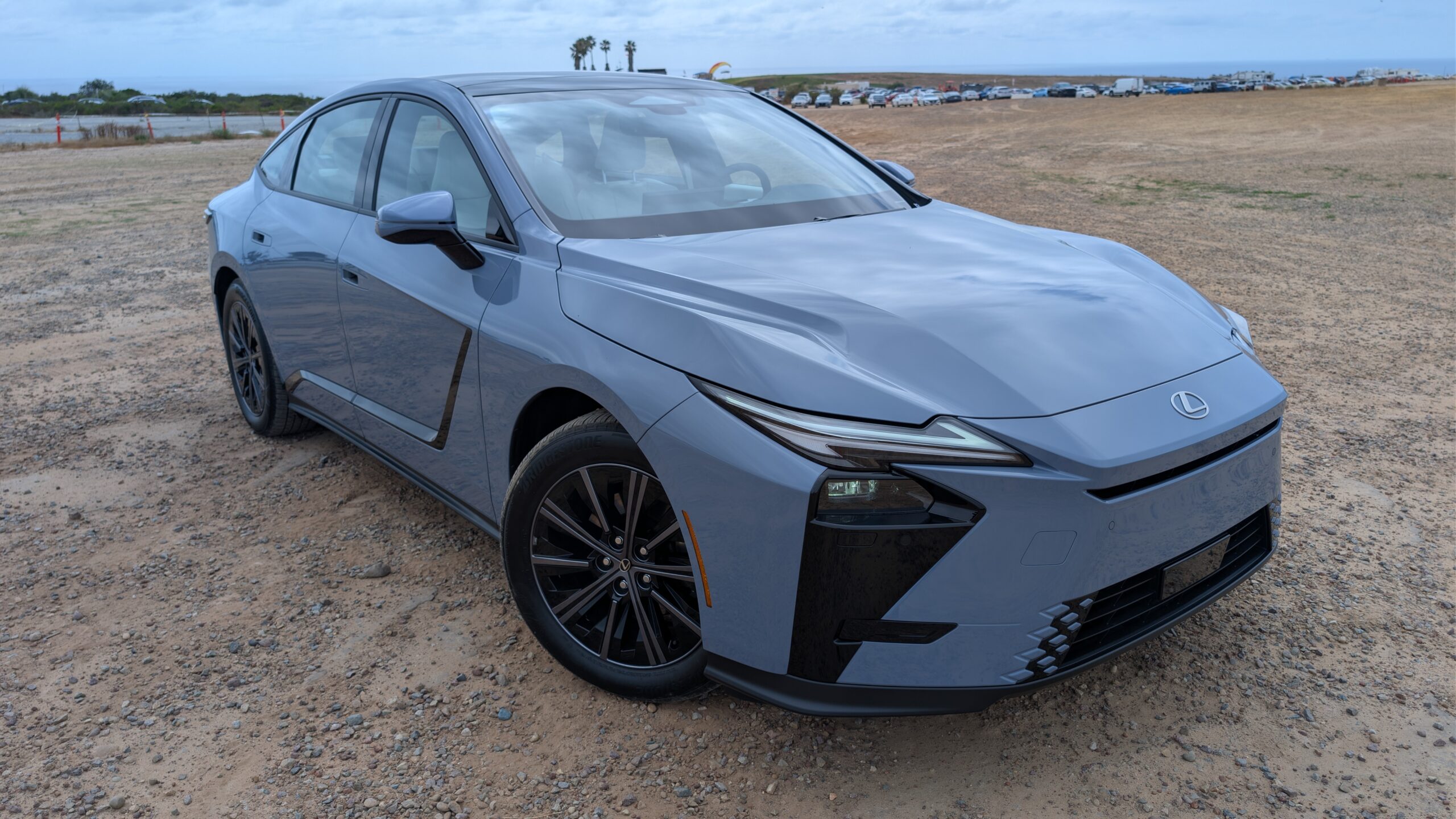
After driving the all-new 2026 ES lineup around San Diego, including the ES 350h AWD hybrid, ES 350e, and range-topping ES 500e AWD, there’s evidence the company wasn’t just tossing around marketing jargon. The eighth-generation ES is a big change. It’s literally larger in every direction, rides on a new multi-pathway architecture supporting both hybrid and EV variants, and, for the first time ever, gets fully electric versions.
That also created an unusual challenge for this review. The new ES is really two different cars wearing nearly identical sheet metal. One relies on Lexus’ latest hybrid system while the other embraces full electrification, and they deliver very different experiences from behind the wheel. So rather than force them into one giant blended driving section, we’re splitting that section of this review into two. One set of impressions for the hybrid and another for the EVs.
QUICK FACTS
› Model:
2026 Lexus ES
› Starting Price:
$48,895–$60,295 + $1,395 destination (depending on trim/powertrain)
› Dimensions:
202.4 in L x 75.6 in W x 61.2 in H (5,141 x 1,920 x 1,554 mm)
› Curb Weight:
Hybrid: 4,001–4,134 lbs (1,815–1,875 kg)
EV: 4,608–4,928 lbs (2,090–2,235 kg)
› Powertrain:
ES 350h – 2.5-liter four-cylinder hybrid + rear electric motor, eCVT AWD ES 350e – Single Motor FWD electric ES 500e – Dual-motor AWD electric
› Output:
ES 350h – 244 hp (182 kW) ES 350e – 221 hp (167 kW) / 198 lb-ft (268 Nm) ES 500e – 338 hp (252 kW)
› MPG / Range:
Hybrid – 47 city / 42 highway / 44 combined MPG (AWD) Electric – 272–307 miles EPA-estimated
› On Sale:
Hybrid – June 2026 Electric – Now
SWIPE
Because after spending a day hopping between all three variants, one thing became clear: they may look nearly identical, and sitting in them produces the same vibe… but they absolutely don’t feel identical once you’re moving. So did Lexus finally build an ES with some personality? Or is this just a modernized appliance for those who don’t really love driving to begin with? Read on to find out.
Styling
Aside from actual ES owners and sincere fans, most folks probably couldn’t provide many details about what the ES generations look like from one to the next. Most blended into traffic so effectively that you could probably lose one in a Costco parking lot within minutes. Not this one.
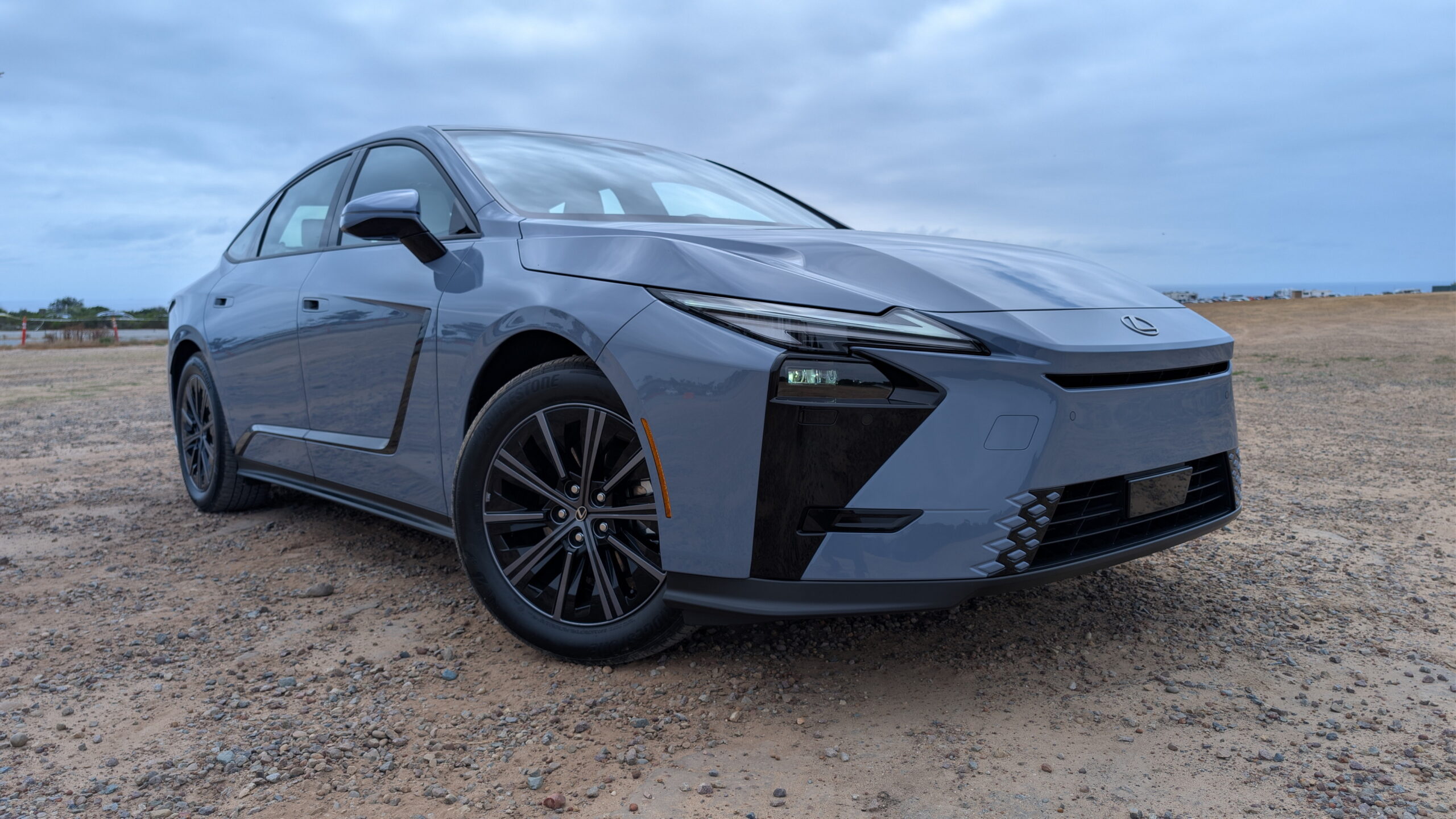
The new ES genuinely looks striking. During our drive, it repeatedly turned heads and, at one point, one distracted Mazda driver seemed more interested in staring at the Lexus than the road ahead. That’s anecdotal, sure, but the point stands. People noticed it.
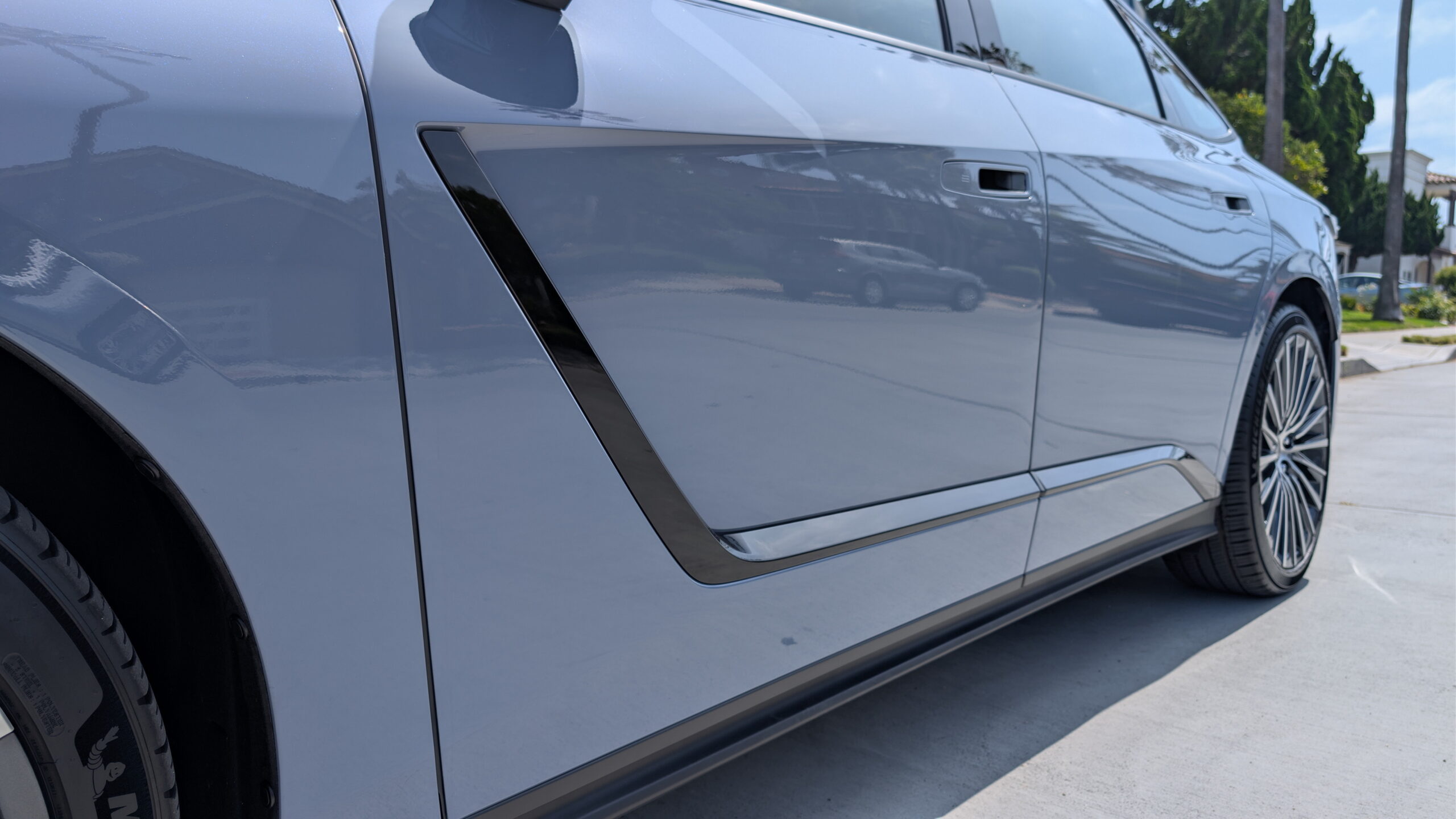
The side profile is dominated by an enormous character strake that feels very Lexus. It very much reminds me of the Maxwell tape ad “Blown Away Guy.” Some people are going to hate it. Others will love it. That’s okay. Lexus has spent years pushing design further than Toyota, and it continues doing exactly that here.
The hood itself is wild too. There are creases and surfacing details piled on top of more creases and surfacing details. Exhibit should pop out any moment, asking if we wanted creases on our creases. Depending on your taste, it’ll either feel bold or overworked. It’s probably one of the many touches Lexus is using to make this look as far afield from a Toyota product as it can.
The rear, meanwhile, is where things come together best. The Blade-style taillight treatment works, the proportions are cleaner than before, and the trunk opens surprisingly wide. Useful details still matter in a sedan like this. Dimensionally, this thing has grown significantly too. Wheelbase stretches to 116.1 inches, while total length swells to 202.4 inches.
Cabin Appointments
The cabin immediately creates a strong first impression. The seats are excellent. Bolstering is good, thigh support is good, visibility is good, and the seating position doesn’t leave you perched awkwardly high like some modern luxury vehicles (especially electrified ones). Add in the massage functionality, and long highway drives should be easy work.
Fit and finish are generally impressive, too. This isn’t a flagship, but that doesn’t mean that Lexus suddenly abandoned quality. Panel fit felt mature and well-sorted. The available bamboo trim also deserves praise. It looks genuinely interesting and, importantly, it’s real material rather than some totally fake printed substitute. Luxury trims get illuminated bamboo layering integrated into the cabin design as well.
Of course, then you start touching things, and a few cracks begin to appear.
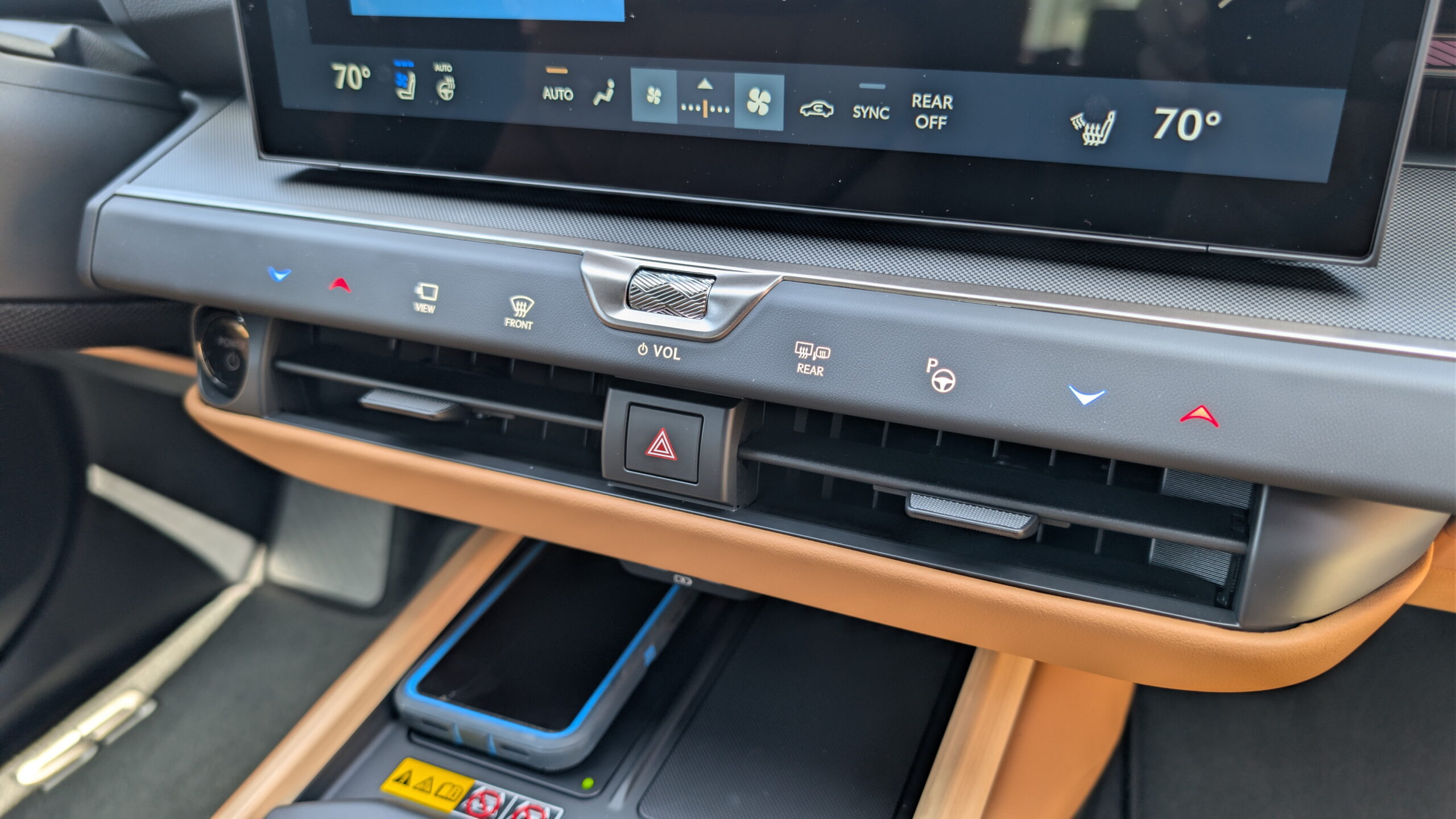
For example, the look of the HVAC controls is nice. It’s uniform, simple, and most importantly, we’re talking about physical buttons. But Lexus hid them all under a long rubberized panel. It feels a lot like (and I realize very few ES buyers will get this reference) the texture of gaming controller stalks. That’s all well and good, but only to a point.
Since everything lives on one strip and relies almost entirely on symbols, you still glance down to make sure you’re pressing the right thing. Worse, if one switch fails, replacing it means replacing or, at very least, removing a much larger assembly. Plenty of buyers won’t care because they’ll sell before the warranty runs out, but it’s worth considering for second or third buyers and especially beyond.
The steering wheel buttons don’t help. Some feel oddly cheap for a Lexus, and the infotainment volume knob looks expensive while somehow feeling… not expensive.
Thankfully, the infotainment system itself provides no real reason for anything but praise. Every ES gets a 14-inch touchscreen and a 12.3-inch digital driver display. The screen is bright, responsive, and fairly intuitive once you learn your way around it. The Mark Levinson 17-speaker system absolutely rips, too.
Rear seat buyers get interesting options too. The Executive Package adds heated, ventilated, and massaging rear seats plus a deployable ottoman on the passenger side. That’s delightfully weird and surprisingly cool. Lexus says buyers get 13.3 cubic feet of cargo space, which is fine for the class. The extra length of this car really goes toward rear-seat comfort over all else. From that standpoint, it’s a clear winner, as at 6’6”, my head only grazed the roof and my legs had space for days.
Driving Impressions
ES 350h
First and foremost, let’s focus on the ES 350h. The hybrids will no doubt be the volume sellers here. Lexus imagines that 80 percent of buyers will pick the hybrid, and it’s easy to see why. It’s the tech that most are familiar with, and the two versions couldn’t be much more different when it comes to range and performance.
The ES 350h uses a 2.5-liter four-cylinder hybrid setup producing 244 hp (182 kW), a CVT, and offers up to 46 mpg combined in FWD form. Lexus also says the range exceeds 600 miles. Our test car started the day with 629 miles of predicted range. That’s outstanding and makes this a genuine highway mile crusher for those who regularly take longer drives.
Those who opt for the AWD version won’t give up much in fuel economy either. It gets up to 44 mpg, but keep in mind that performance doesn’t really change. The FWD version does 0-60 mph in 7.3 seconds, while the AWD gets an electric motor for the rear axle and does the same sprint in 7.1 seconds. Those figures are acceptable, but far from what the average enthusiast will consider reasonable.
Around town, the ES is dialed in. It’s comfortable, quiet, composed, and just a pleasant place to spend time. I’d stop short of saying that it feels particularly nimble or playful, but it doesn’t feel clumsy, dopey, or disappointing. While the steering verges on overly light, the pedal feedback deserves real praise. It’s easy to get hybrid braking systems wrong, but Lexus absolutely nailed it here. Modulating the brakes on what starts out as a harder braking event is easy enough that you can finish that same event with a deft and subtle touch easily.
There’s only one problem that really stands out, but it only pops up under one circumstance, and to solve it, there’s a simple fix. Never ever drive the EV.
ES 350e / ES 500e
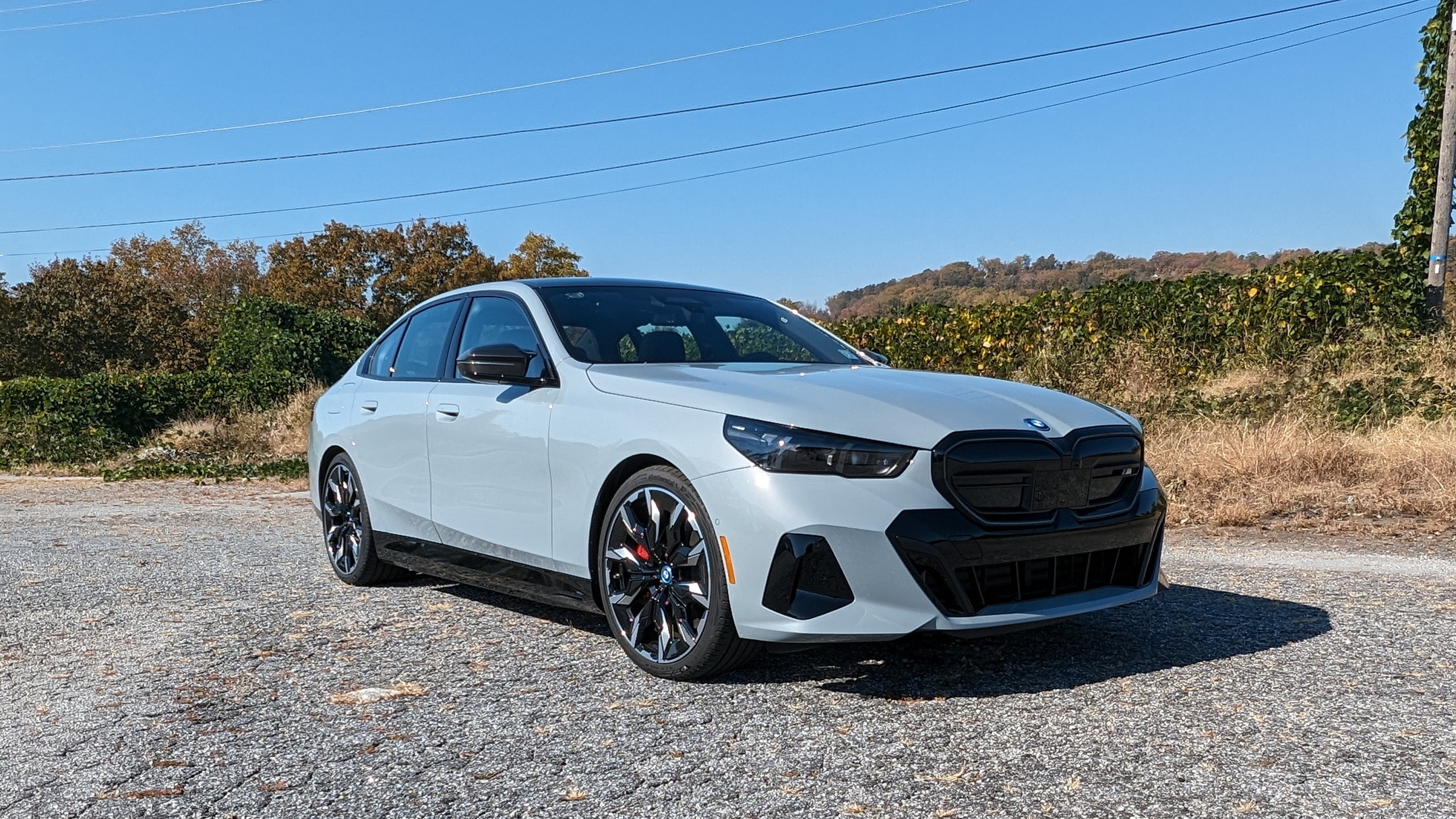
Back when we tested the BMW i5 and its gas-powered counterparts, we noted something unique. The gas-burners felt decidedly more fun to drive because, while they weren’t as quick, they were so much lighter that chucking them around was more engaging. Somehow, Lexus has done the exact opposite here. If anything, the EVs feel more playful, but that’s not why hybrid buyers need to stay away.
The problem is that the EVs are so quiet that the hybrid feels abnoxiously loud after driving them back to back. Don’t get us wrong. The hybrids aren’t actually loud in the grand scheme of things. But adding a relatively unrefined efficiency-focused four-cylinder to a CVT and lengthy acceleration times for things like getting on the highway, and these two are in different leagues when it comes to interior noise.
Recentering on the driving experience itself, the ES 350e starts with 221 hp (167 kW), front-wheel drive, and up to 307 miles of range. It reaches 60 mph in 7.4 seconds. That’s right, a modern automaker just built an EV that’s slower than its hybrid equivalent. Leave it to Lexus, I guess. From behind the wheel, though, it’s surprisingly good. Obviously, the throttle response is far more direct.
The steering and braking are similar to the hybrid, but it’s worth noting that there’s no simple one-pedal driving setting. Instead, Lexus allows drivers to increase or decrease regenerative braking via pedals. That’s nice, but one-pedal driving is even nicer for those who prefer it.
The ES 500e is the real winner here. Its dual-motor setup pumps out 338 hp (252 kW) and launches to 60 mph in 5.1 seconds. This is the one for drivers. Acceleration hits hard down low. It feels punchy, nimble in traffic, and more premium because it actually feels like Lexus wanted to compete dynamically.
Even then, this still feels slightly conservative. Like Lexus got halfway toward building a true German sports sedan rival and then eased off. Still, if I had to choose? Easy. I’d charge at home and buy the ES 500e. NACS charging capability only sweetens the deal.
Competition
Pricing is where the new ES starts making a strong argument. The hybrid lineup begins at just over $51,000, while the EV range spans from roughly $49,000 for the ES 350e to just over $60,000 for a loaded ES 500e AWD Luxury. That’s notable because key rivals often start much higher. A BMW i5 begins around $68,500, while the Mercedes E-Class starts in the mid-$60,000 range before options begin their inevitable attack on your wallet.
Then there are the numbers. The ES 350h offers up to 46 mpg combined and over 600 miles of estimated range, while the EVs deliver between 272 and 307 miles depending on trim and wheel choice. The ES 500e also puts down 338 hp (252 kW) and reaches 60 mph in 5.1 seconds, making it quick enough to stay in the conversation even if it won’t embarrass German rivals at a stoplight.
The difference is philosophy. BMW and Mercedes still prioritize performance and prestige. Lexus seems content offering a quieter, less complicated luxury experience that also happens to cost thousands less. Whether that’s enough depends entirely on what you want out of a luxury sedan.
The Verdict
The old ES formula worked because Lexus understood exactly what its buyers wanted. It wasn’t a big flagship sedan, and it wasn’t a tight compact sports sedan either. This new one adds a little more spice without completely abandoning the script. The hybrid remains the rational choice.
But the EVs, especially the ES 500e, finally inject some personality into a sedan that spent years avoiding it. Lexus broadened the ES. I just wish it had gone a little further. Thankfully, this is just the start of the generation. There’s plenty of time left for an ES 500e F. Note that we didn’t say “F-Sport.” Hope Lexus is listening.
Honda is developing a new platform that can adapt to EV and hybrid powertrains.
Despite recent U-turn, Honda still expects EVs to be more important after 2030.
New architecture additional to hybrid one revealed this month, Auto News reports.
Honda may have bonfired its original North American EV strategy, but it hasn’t stopped believing electric cars matter. Instead, the company’s preparing a different kind of future that gives it a bit more wriggle room if things don’t go to plan.
Fresh from writing off $15.7 billion in EV investment over the scrapped 0 Series North American EV program, the Japanese automaker is developing a next-generation electric vehicle platform. But this one will be capable of supporting both hybrid and fully electric powertrains, Automotive News reports.
That flexibility is a key attribute, and signals a major shift in how Honda views the industry’s transition toward electrification. Rather than locking itself into a single solution, Honda wants options. After changing market conditions, weakening policy support from the US government, and mounting political uncertainty, the company now appears far more cautious about committing exclusively to fully-electric vehicles.
That doesn’t mean Honda thinks EVs are dead. Far from it, actually. Company president Toshihiro Mibe reportedly said Honda still expects electric adoption to accelerate after 2030, even if hybrid demand remains stronger than previously predicted throughout the remainder of this decade.
“The market could change depending on the Trump administration over the next two and a half years and the outcome of the November midterm elections,” Mibe said, according to Auto News. “We are studying systems and next-generation EV concepts that would work no matter which way things evolve.”
Series 0 Too Inflexible
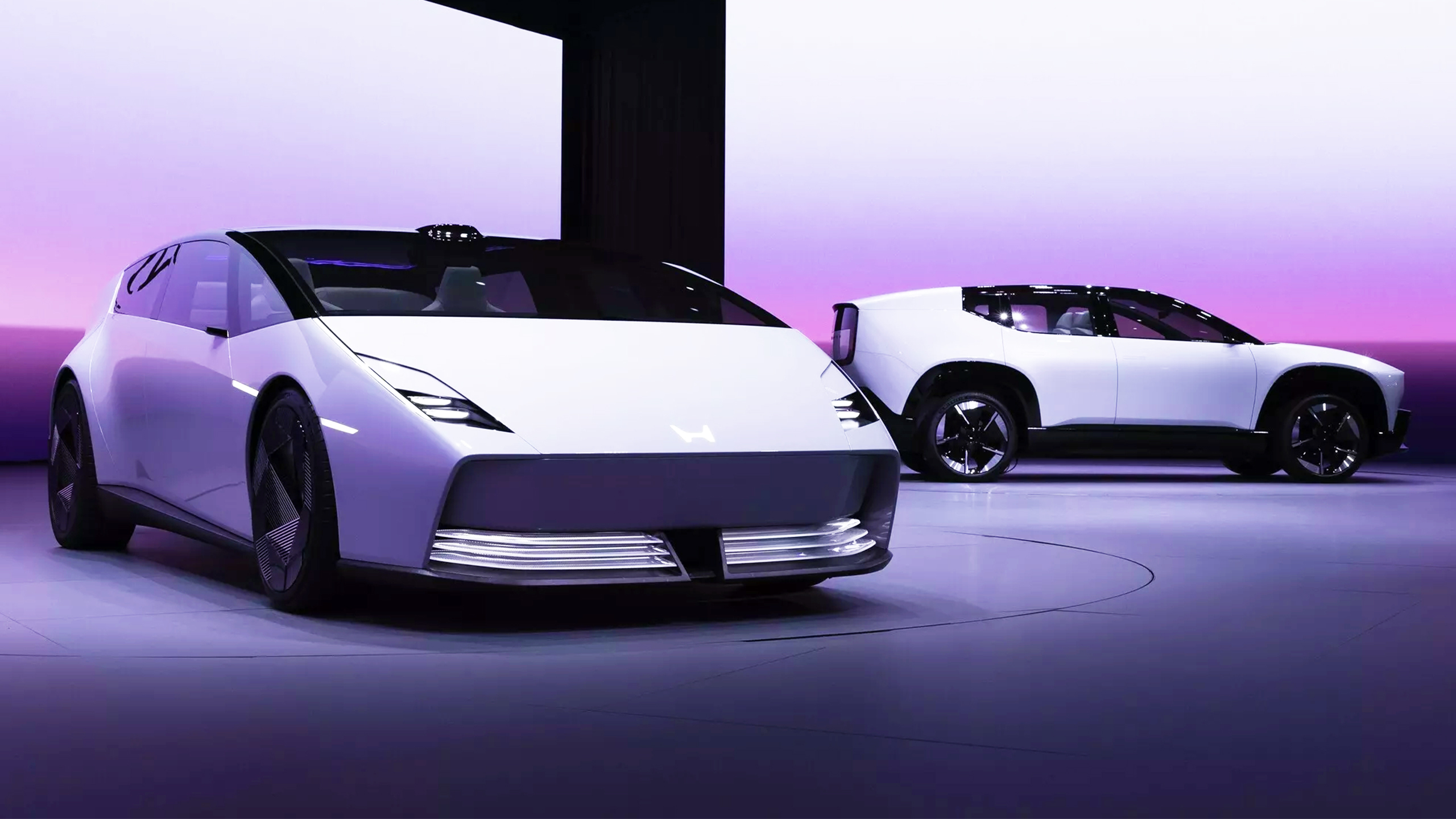
That philosophy explains why Honda’s future platform needs to handle multiple powertrain types, rather than just fully electric, as the Series 0 sedan and SUV (above) would have done. The company reportedly believes the balance between hybrids and EVs could continue shifting depending on regulations, incentives, charging infrastructure, and trade policies. A flexible architecture would allow Honda to react far quicker than manufacturers tied to expensive EV-only platforms.
In the short term, Honda’s strategy focuses on hybrids, and not EVs at all. The automaker recently revealed plans to launch 15 hybrid models by 2029 on a platform that’s different from the combined EV/hybrid one revealed this week. And it has mapped slightly different courses for Honda and Acura. The premium brand will push hybrids to its customers, while Honda will offer ICE and hybrid options to attract more cost-conscious buyers.
The report also says Honda will wait to learn the outcome of trade negotiations between the US, Canada, and Mexico before deciding whether to reactivate its plans for an EV production hub in Canada, which it put on hold earlier in May.
A 143-hp hybrid opens the lineup with a claimed 621-mile range.
Three electric versions follow, topping out at 370 hp and AWD.
The Gamma rides on STLA Medium bones shared with the DS No8.
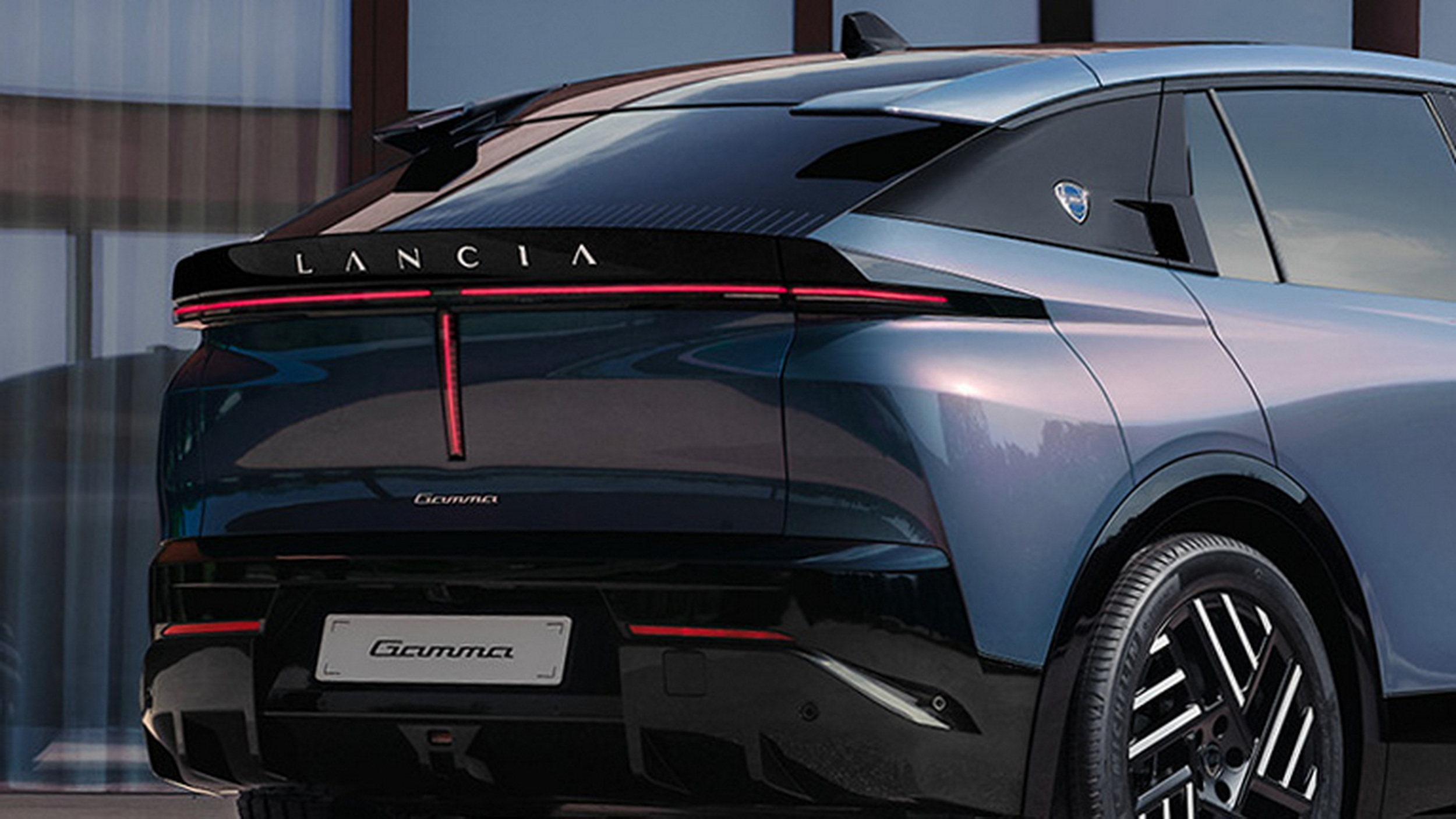
Stellantis is not letting Monday’s Alfa Romeo Giulietta news take the week. Less than 24 hours after confirming a replacement for the Giulietta compact hatch, the group has rolled out the first official images and details of the incoming Lancia Gamma, in advance of its Paris Motor Show debut in October. The new Gamma is being pitched as a crossover fastback, with hybrid and fully electric powertrains both on the menu.
The styling picks up where the new Ypsilon subcompact hatchback left off. Up front, split LED headlights and DRLs lean into the Mandalorian-helmet look the brand seems committed to, with active shutters cut into the lower bumper for cooling and aero duty.
Down the sides, the surfacing is clean, the door handles sit flush in the lift from DS Automobiles, and a thin band of gloss-black cladding wraps the wheel arches. The roofline is not as aggressively raked as the Peugeot 408 or the DS No8, both of which sit on related Stellantis bones, but the Gamma still carries the coupe-SUV stance the segment now expects.
There is a deeper cut for Lancia fans too. The black trim running down the C-pillars is a subtle callback to the original Gamma Berlina fastback saloon.
Lancia
The crossover measures 4.67 m (183.9 inches) long, 1.89 m (74.4 inches) wide, and 1.66 m (65.4 inches) tall, which makes it roughly 15 cm (5.9 inches) shorter and 80mm (3.2 inches) taller than the DS No8. We keep mentioning the French fastback because the two models share the STLA Medium architecture, and both are built at the Melfi plant in Italy.
One Hybrid, Three EVs
Stellantis has confirmed an entry-level hybrid producing 143 hp (107 kW / 145 PS) with a claimed range north of 1,000 km (621 miles). It is almost certainly an electrified take on the turbocharged 1.2-liter three-cylinder used across the group, in everything from the Peugeot 208 to the Jeep Compass.
The rest of the Gamma lineup goes fully electric, with three outputs and battery sizes to pick from. The base EV opens the range with 227 hp (169 kW / 230 PS) and over 540 km (335 miles) of range. A step up brings 242 hp (180 kW / 245 PS) and more than 740 km (460 miles). At the top sits a dual-motor all-wheel-drive flagship producing a combined 370 hp (276 kW / 375 PS), with up to 675 km (419 miles) on a single charge.
Big Screens And A Coffee-Table Console
The interior has a similar layout to the DS No8, including what appears to be a 10.25-inch digital instrument cluster and a 16-inch infotainment display. The bigger display runs Lancia’s SALA system and absorbs the climate controls into the touch interface.
Where Lancia separates itself is the center console, anchored by the brand’s signature “tavolino” tray that takes its cues from a small coffee table. The Italian crossover also gets its own ambient lighting setup and different door cards than its French cousin, along with a three-spoke steering wheel with integrated controls.
Given where Lancia is trying to position itself, the cabin should lean upscale, and the pictured example mixes black fabric with white synthetic leather and a handful of metal-look accents. The edge of a panoramic roof peeks into the photo, and the overall shape suggests this could be the most family-friendly Lancia since the long-gone Phedra minivan.
Order books open after the summer, with pricing yet to be confirmed and more details promised over the coming months.
Porsche won’t build a fully electric 911 this decade.
The iconic sports car will rely on hybrid setups instead.
The 718 family will be the first to take the EV road.
The purists can exhale. Porsche has no intention of building a fully electric 911 for the foreseeable future, sticking with combustion and hybrid power for the model that more or less defines the brand.
The experimentation will happen elsewhere. The next-generation 718 Cayman and Boxster are still on track for battery power, even after internal reviews and program delays threatened to muddy that plan. Both cars will be sold as EVs alongside combustion variants that will sit higher in the range.
Daniel Schmollinger, CEO of Porsche Cars Australia, spoke to local media CarSales about electrification plans in the sports car segment:
“We will go with the 718 electric as the first two-door electric sports car. The 911 for the moment stays what it is. With the T-hybrid technology, it shows what is possible without a full battery but still making use of this amazing technology.”
Porsche has always positioned the 911 as the last combustion model standing, even in a future where the rest of the lineup went electric. The plan has not changed, though the context around it has. Weaker EV demand has forced Zuffenhausen to walk back its electrification timeline, which only pushes a battery-powered 911 further into the realm of the hypothetical.
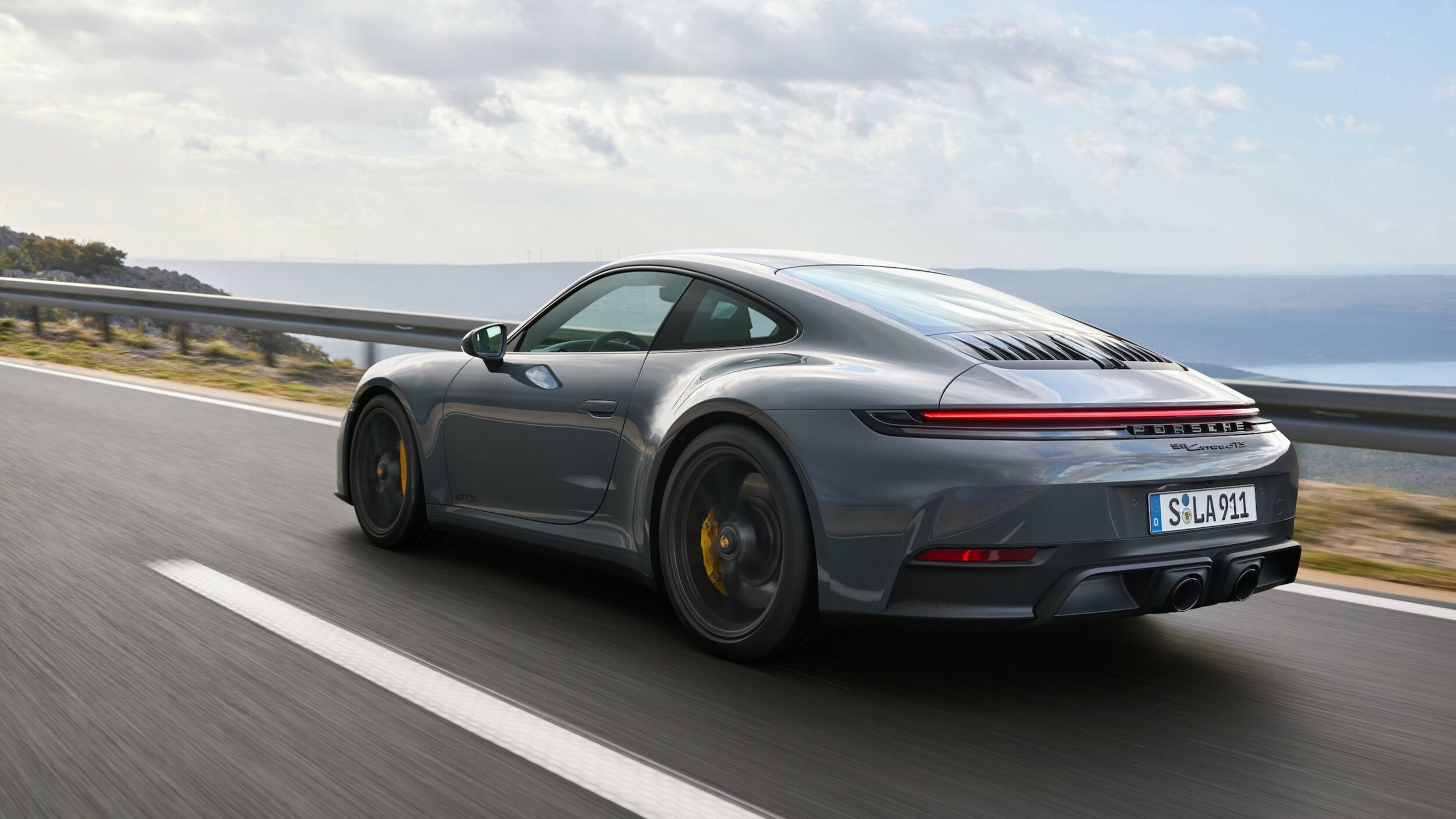
The T-Hybrid system used in the GTS and Turbo S trims of the 992.2 generation leverages electrification to boost performance without taking on the weight penalty of a battery electric setup. Expect Porsche to follow a similar path for other members of the lineup, while sticking to non-hybrid solutions for iconic models like the GT3 RS.
The Macan Case
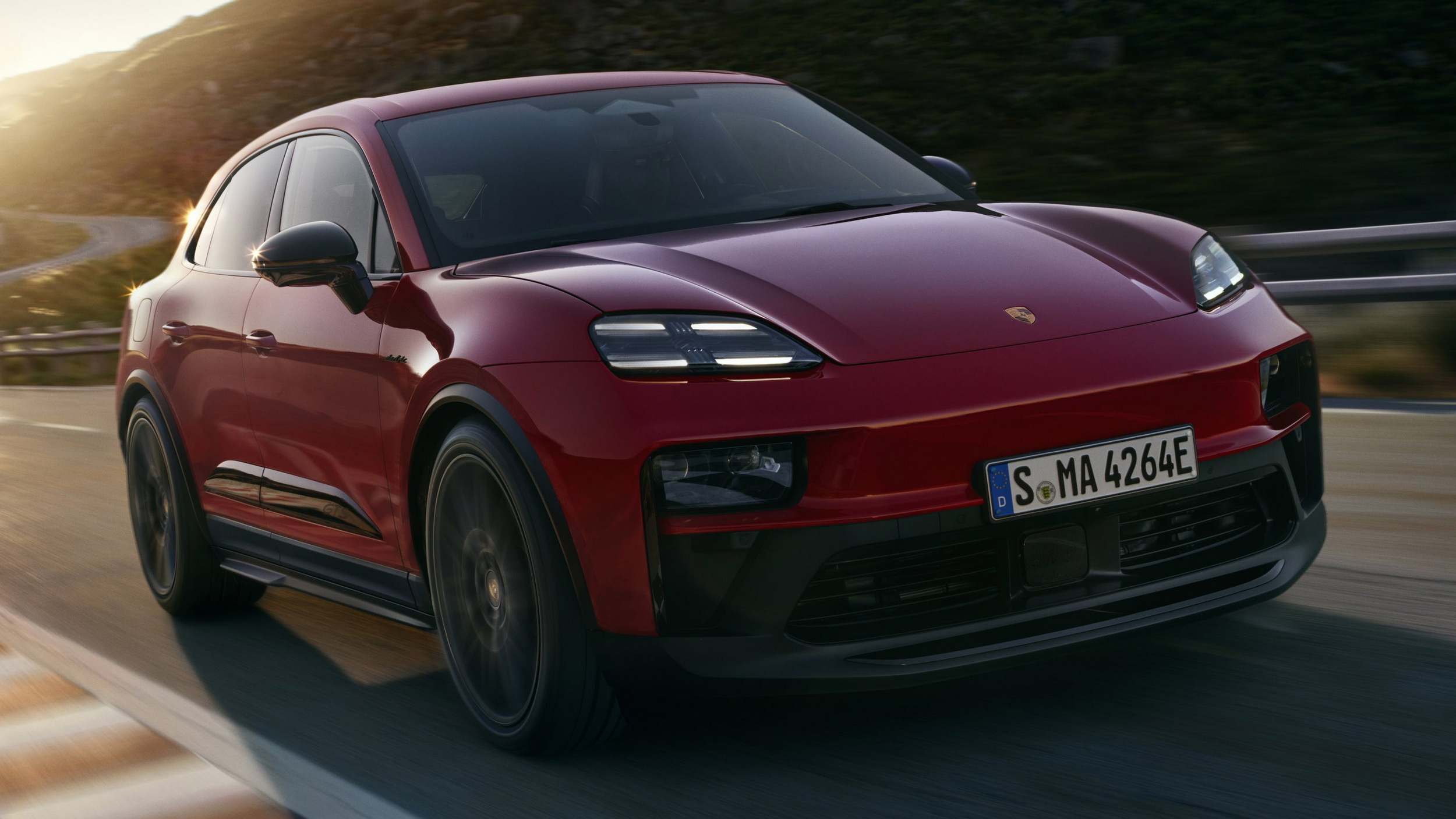
Schmollinger touched upon the subject of the Macan EV, admitting that initial sales volumes are no match for those of its aging petrol-powered predecessor. The latter will soon bow out of production in Germany, with Porsche stockpiling examples to meet market-specific demand.
Nevertheless, the CEO of Porsche Australia attributes the lack of interest for the EV to consumer readiness rather than the vehicle itself: “It’s not a decision against the car, or the Macan as such, it’s a decision against not being ready for electric. That’s totally fine. Everyone needs to choose the technology and the car they’re comfortable with.”
Hedging Across The Lineup
The response across the rest of the range is to offer everything. The Cayenne is sold with gasoline, plug-in hybrid, and full electric powertrains, and a hybrid version of the next Macan is in development to run in parallel with the EV. It is a portfolio built to absorb whichever direction the market actually moves.
Synthetic fuel, the other lever Porsche has been pulling, remains a long way from relevance. Schmollinger admits the technology is “far from mainstream.” He also notes that he drives an EV himself, and that Porsche always expected EV adoption to move at different speeds in different markets, depending on charging networks, policy, and consumer appetite.
Cupra’s aggressive-looking Tindaya concept is officially heading for production, the automaker’s boss says, meaning Europe’s premium SUV crowd is about to get a new headache. The dramatic electric crossover will sit above the Tavascan and Terramar in Cupra’s lineup and target established players like the new BMW iX3, Volvo EX60, and Mercedes-Benz GLC EV.
And with a design we described last fall as looking like it was whipped up by Lamborghini on a wild night out, we can imagine it grabbing sales from drivers who think those other premium SUVs are just too dull.
The concept first appeared at last year’s Munich motor show looking more like a sci-fi prop than a realistic production model. At the time, Cupra played it mostly as a design and technology statement. Now, though, Seat-Cupra boss Markus Haupt has confirmed the company is deadly serious about bringing it to showrooms.
“It looks fantastic. Why should we not build the Tindaya?” Haupt told Autocar in a recent interview. “We are indeed looking at our plans for when we could build the Tindaya, but it’s something I can promise. This car will see the streets in some years.”
Premium-Sized, Premium-Priced
At 4,720 mm (185.8 inches) long, the Tindaya is sized right for Europe’s lucrative premium SUV segment. That’s a crowded neighborhood packed with familiar badges from Germany, plus challengers from brands like Genesis, Lexus and Volvo. Cupra clearly believes buyers want something less conservative than another neatly tailored executive crossover.
Pricing is expected to start around £60,000, making it much more expensive than the cars in Cupra’s current lineup, but again, right for the segment. While neither Haubt or Autocar said as much, we suspect the Tindaya is the bigger of the two models that would have led Cupra’s plan to expand to North America. That expansion is no longer happening due to tariffs and weak US demand for EVs.
Electric Or Range Extender
The Tindaya will ride on Volkswagen Group’s upcoming SSP electric platform, which is set to replace today’s MEB architecture across multiple brands, the magazine says. But the report claims Cupra still hasn’t locked down the final powertrain setup. The original concept used a 489 hp (496 PS / 365 kW) range-extender arrangement combining electric power with combustion support, but Haupt suggested everything remains on the table while the company watches market trends evolve.
“All this discussion is changing by the day, very fast,” he said. “Which powertrains will we have in the end? It’s a decision we have not taken now.”
That flexibility is one advantage of belonging to the sprawling Volkswagen empire. SSP reportedly supports everything from pure EVs to electrified combustion-assisted setups, depending on regional demand.
Lexus says EV power may make more sense for future F-Sport models.
Chief engineer Kohei Chiashi believes electrification enables new possibilities.
The ES500e can send all available torque rearward in some situations.
Performance and electrification spent years looking like reluctant roommates. Enthusiasts rolled their eyes, automakers talked about efficiency, and every new hybrid sports car seemed to come with a warning that excitement wasn’t the priority. Fast forward to now, and electrification has infiltrated nearly everything, from economy cars to six-figure exotics with varying degrees of success.
Increasingly, performance brands aren’t asking if electricity belongs in the conversation, but how much of it should be involved. According to the engineer behind the all-new Lexus ES, electrification may end up shaping the future of F-Sport too.
Chief Engineer Makes The Case For Batteries
While speaking with ES chief engineer Kohei Chiashi during the new ES first-drive launch event, we asked which powertrain made more sense if Lexus ever wanted to build a more performance-focused F-Sport variant: hybrid or battery-electric. His answer was revealing.
“Personally, I think the BEV is well-suited because electrification has raw power and we can manipulate the powertrain more granularly to produce different types of performance within that envelope,” Chiashi told us.
That line may sound like standard EV talking points at first, but Chiashi followed it with something more interesting. According to him, the ES500e’s system can send 100 percent of available torque to the rear wheels in certain situations. Drivers don’t control that behavior directly, though, so before anyone starts imagining a drift button hidden in a submenu, Lexus isn’t going there.
Why An F-Sport ES Isn’t Here Yet
The answer also helps explain why Lexus isn’t rushing to add an F-Sport model to the ES lineup immediately. According to Chiashi, the ES500e already checks many of the boxes that F-Sport traditionally represented, and introducing another trim at launch would have complicated things.
That doesn’t mean Lexus has abandoned the idea. Chiashi made clear the company is still considering future possibilities. If nothing else, the comments offer an interesting glimpse into where Lexus performance thinking may be headed. F once stood for naturally aspirated V8s and high-revving theatrics. The next chapter might involve software, instant torque, and a whole lot more electricity.
Gas prices jumped 46 percent in four months, hitting traditional vehicles the hardest.
EV annual energy costs barely moved while gas vehicles saw a $706 average increase.
Large SUVs, trucks, and minivans got hammered, with some owners facing $1,600+ jumps.
Gas prices have a way of fading into the background when they’re stable. Then they spike, and suddenly every fill-up feels like a minor financial crisis. Drivers of thirsty trucks and body-on-frame SUVs know the feeling all too well. A new study suggests 2026 has turned into one of those years where fuel costs go from annoyance to budget item almost overnight.
According to a new study from iSeeCars, gasoline prices climbed nearly 46 percent between January and April, moving from $2.81 to $4.10 per gallon. The picture has only worsened since. At the time of publishing on May 24, the national average sits at $4.52 for regular, $5.01 for mid-grade, $5.39 for premium, and $5.62 for diesel.
Even working from the smaller January-to-April window the study covers, the math is ugly: an average annual fuel-cost increase of $706 for traditional gas-powered vehicles. EV drivers, meanwhile, barely felt it, with annual charging costs up just $11.
Fuel Cost Increase By Drivetrain: Jan vs. Apr 2026
Drivetrain
Avg. Miles Per Year
Annual Fuel Cost Jan-26
Annual Fuel Cost Apr-26
Diff.
ICE
13,323
$1,533
$2,240
$706
Hybrid
14,696
$1,055
$1,540
$486
PHEV
11,660
$1,385
$1,676
$291
EV
11,880
$714
$725
$11
SWIPE
iSeeCars
The data comes from an analysis of more than 2.1 million three-year-old used vehicles sold in 2025. Researchers looked at average annual mileage and paired it with fuel costs in January and April to estimate how much ownership costs changed in just four months.
The hit landed unevenly across powertrains. Internal-combustion vehicles were hit the hardest, jumping from $1,533 to $2,240 in annual fuel costs. Hybrids took a smaller hit, rising $486. Plug-in hybrids landed in the middle with a $291 increase. EVs barely moved at all, increasing from $714 to $725 annually, and that’s even more impressive when you consider that the study didn’t just sample drivers who can charge at home.
Fuel Cost Increase for Major Gas Vehicle Segments: Jan vs. Apr 2026
Segment
Avg. Miles Per Year
Annual Fuel Cost Jan-26
Annual Fuel Cost Apr-26
Diff.
Minivans
19,292
$2,472
$3,610
$1,139
Trucks
14,369
$2,154
$3,146
$992
SUVs
12,731
$1,479
$2,161
$681
Passenger Cars
13,714
$1,316
$1,922
$606
SWIPE
iSeeCars
Here’s the kicker. Efficiency alone wasn’t the whole story. Mileage played a huge role, too. Minivans, surprisingly, took the biggest hit of any segment. Annual fuel costs rose by $1,139, climbing to $3,610. Of course, a big piece of that is how much most minivans (save for the VW ID.Buzz) are built for lots of miles. Trucks with their comical fuel economy and brick-like drag coefficient weren’t far behind with a $992 jump.
SUV owners were almost karmically hit the hardest, with the Toyota Sequoia topping the charts at an average $1,623 increase. The Chevrolet Suburban came in second with $1,542, and the top three rounded out with the Nissan Armada at $1,513. Zoom out, and this may explain why hybrids continue gaining traction. They avoid the range anxiety and charging headaches some buyers still worry about, while taking a lot of the sting out of gas-price roulette.
Top 10 Vehicles With the Biggest Fuel Cost Increases
ES chief engineer says he’s “not personally happy” with the SUV takeover.
Lexus poured “everything” into the new ES because it refused to give up.
The comments came during our first-drive event for the new ES.
SUVs are absolutely everywhere these days. No matter where you look, they’re not just present, they’re getting bigger, taller, and selling in greater numbers than ever. Most automakers have pushed that reality harder than they’ll admit. SUVs are great for profit margins, and they also benefit from looser emissions rules tied to vehicle footprint. Despite all of that, the Lexus ES is bucking the trend with an all-new generation.
During our time at the brand’s first-drive launch event, we asked ES chief engineer Kohei Chiashi a simple question. Why do luxury sedans still matter in an SUV world? His answer wasn’t the sort of carefully polished corporate response we’ve come to expect from so many others.
“For me personally, I love sedans,” Chiashi told us. “This situation with SUVs everywhere is something I’m not personally happy with. I was very passionate about not giving up on the ES. For us, we poured everything we could into the ES because we care about it so much.”
The Sedans Lexus Has Already Lost
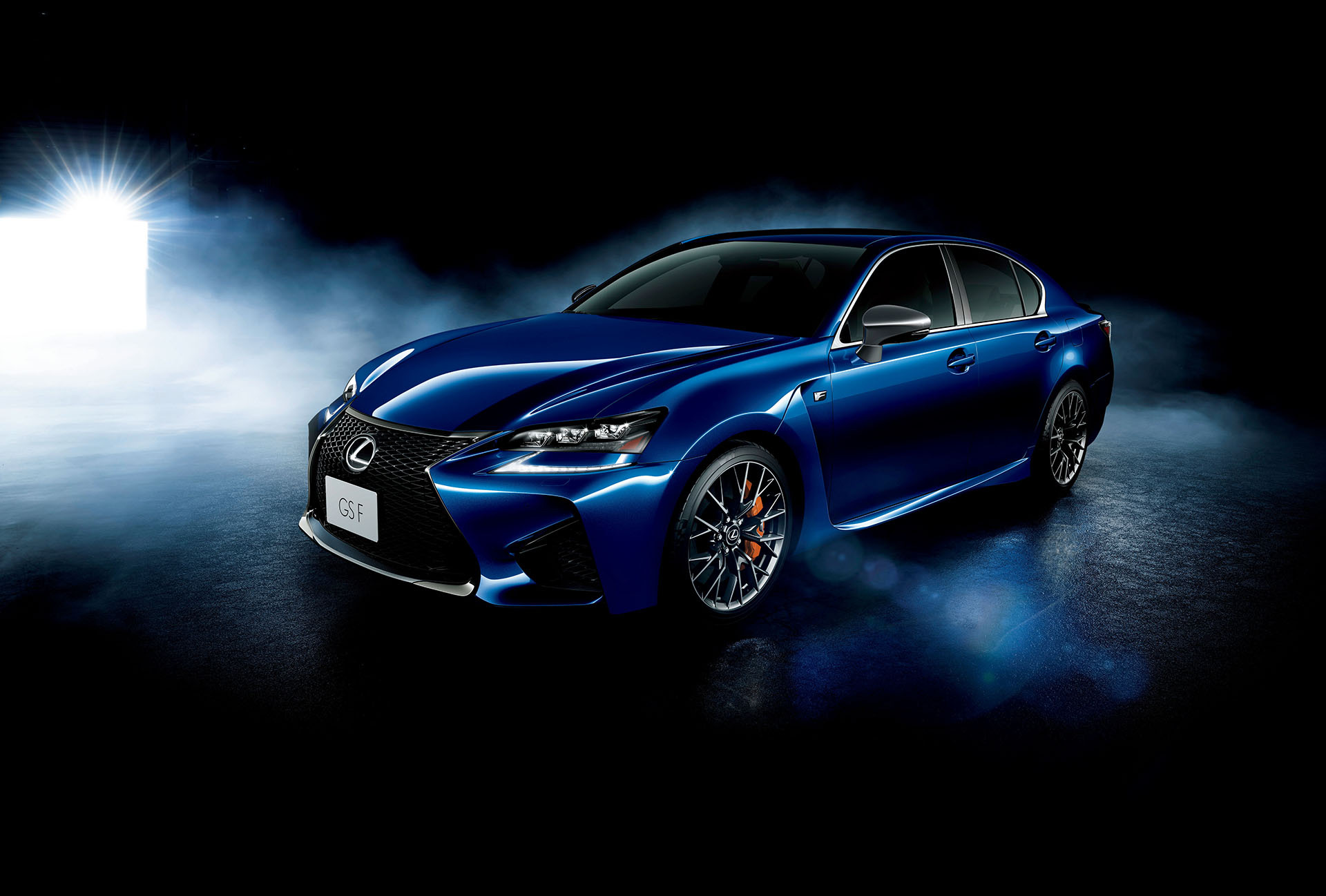
That comment carries extra weight when viewed against Lexus’ recent history. The company has already watched parts of its sedan lineup disappear or shrink in importance. The GS was discontinued in 2020, the LS has become increasingly niche with Lexus even contemplating a six-wheel minivan replacement, and the future of traditional luxury sedans has looked less certain as SUVs continue to dominate nearly every segment.
Against that backdrop, keeping the ES relevant meant doing more than simply refreshing an existing formula. Lexus expanded the sedan’s role dramatically. The new generation now supports both hybrid and battery-electric powertrains while growing larger and more spacious in the process.
Interestingly, Chiashi also made it clear that Lexus didn’t approach the ES as some kind of reluctant compromise or farewell tour. Instead, the focus stayed on protecting the model’s identity: comfort, cabin space, and effortless long-distance driving. The funny thing is that the ES may now matter more than ever. Fighting for it seems to have been the right choice for everyone involved.
Alfa Romeo will launch a new compact SUV and a halo model.
Maserati has officially confirmed a pair of E-segment models.
Both Stellantis brands will leverage multi-energy platforms.
Stellantis used its FaSTLAne 2030 strategy update to telegraph the obvious, which is that the next five years will be busy ones for nearly every brand under its roof. The plan calls for 60 all-new products and 50 refreshes across the portfolio, and to the surprise of anyone who had written them off, Alfa Romeo and Maserati are both on the invite list.
Alfa’s contribution includes two cars that sit apart from the long-awaited replacements for the Stelvio and Giulia. One is a new C-segment SUV. The other is a limited-production halo model. Both were shown under sheets during the official presentation, though the webcast slipped in a mockup rendering of the SUV.
The yet-unnamed model has a sporty stance making us wonder if Alfa Romeo will bring back the Giulietta nameplate. It has aggressive LEDs, a larger than usual trilobo grille, and an aerodynamic roofline. Overall, it appears to bridge the gap between the subcompact Junior and the compact Tonale, potentially serving as a rival to the likes of the Cupra Formentor, VW T-Roc, and Toyota C-HR.
As with most Stellantis products, the upcoming C-SUV will most likely be offered with hybrid and fully electric powertrain options. It is also expected to get the new STLA SmartCockpit infotainment.
The other new Alfa Romeo is a “Bottega Fuoriserie” product, and a follow-up to the limited-production 33 Stradale. However, unlike the mid-engined supercar, this one appears to have a hatchback or shooting brake bodystyle. Chances are it will evoke the styling of a classic model from the Alfa Romeo history and share its underpinnings with a Maserati.
More Maserati Models
Speaking of the Trident brand, it will expand its lineup with an SUV and a grand tourer positioned in the E-Segment. The first will likely be a successor to the discontinued Levante, sitting above the Grecale which is getting a facelift soon alongside the GranTurismo and GranCabrio.
The other model has a low-slung silhouette with a long hood and a grand tourer stance reminiscent of the Ferrari 12cilindri. Its sharp nose is similar to the 2016 Maserati Alfieri concept but its footprint appears to be larger. The pushed-back cabin and the sloping roofline suggest it will have a two-seater cabin unlike the 2+2 layout of the GranTurismo and GranCabrio.
While there is no word on technical specifications, we expect the E-Segment Maseratis to come fitted with combustion engines rather than taking the EV route.
Alfa Romeo will launch a new compact SUV and a halo model.
Maserati has officially confirmed a pair of E-segment models.
Both Stellantis brands will leverage multi-energy platforms.
Stellantis’ FaSTLAne 2030 strategy includes the debut of 60 new and 50 refreshed products across its brand portfolio. Luckily, Alfa Romeo and Maserati are also invited in the party, confirming a few interesting launches.
Alfa Romeo has teased a new C-SUV and a limited production halo model which are separate from the upcoming successors of the aging Stelvio and Giulia. In the official presentation, the new models were covered under a veil, but the webcast gave us a sneak peak of the SUV in a mockup rendering.
The yet-unnamed model has a sporty stance making us wonder if Alfa Romeo will bring back the Giulietta nameplate. It has aggressive LEDs, a larger than usual trilobo grille, and an aerodynamic roofline. Overall, it appears to bridge the gap between the subcompact Junior and the compact Tonale, potentially serving as a rival to the likes of the Cupra Formentor, VW T-Roc, and Toyota C-HR.
As with most Stellantis products, the upcoming C-SUV will most likely be offered with hybrid and fully electric powertrain options. It is also expected to get the new STLA SmartCockpit infotainment.
The other new Alfa Romeo is a “Bottega Fuoriserie” product, and a follow-up to the limited-production 33 Stradale. However, unlike the mid-engined supercar, this one appears to have a hatchback or shooting brake bodystyle. Chances are it will evoke the styling of a classic model from the Alfa Romeo history and share its underpinnings with a Maserati.
More Maserati Models
Speaking of the Trident brand, it will expand its lineup with an SUV and a grand tourer positioned in the E-Segment. The first will likely be a successor to the discontinued Levante, sitting above the Grecale which is getting a facelift soon alongside the GranTurismo and GranCabrio.
The other model has a low-slung silhouette with a long hood and a grand tourer stance reminiscent of the Ferrari 12cilindri. Its sharp nose is similar to the 2016 Maserati Alfieri concept but its footprint appears to be larger. The pushed-back cabin and the sloping roofline suggest it will have a two-seater cabin unlike the 2+2 layout of the GranTurismo and GranCabrio.
While there is no word on technical specifications, we expect the E-Segment Maseratis to come fitted with combustion engines rather than taking the EV route.
Stellantis plans a wave of affordable new vehicles before the decade’s end.
New global STLA One platform supports hybrids, EVs, and gasoline models.
Jeep, Ram, Peugeot, and Fiat receive biggest investments in a $70 billion plan.
Stellantis just pulled the covers off a gigantic new global strategy, and buried beneath all the boring corporate jargon is something buyers will really care about. Affordable cars are back.
The company says it plans several new sensibly-priced vehicles for North America, including two models priced below $30,000, and seven coming in under $40,000, all before the decade ends.
North America will receive 11 all-new vehicles by 2030 as part of a wider global product offensive involving more than 60 launches and 50 major refreshes. And rather than trying to push EVs to audiences that don’t necessarily want an electric car, Stellantis is still betting on a broad mix of powertrains. The company confirmed future plans include 29 EVs, 15 plug-in hybrids or range-extenders, 24 hybrids, and nearly 40 combustion or mild-hybrid vehicles.
The backbone of this new strategy is a fresh modular architecture called STLA One that will underpin more than 30 models globally. Launching in 2027, it’s designed to replace multiple existing platforms with one scalable setup, supporting everything from compact hatchbacks to midsize SUVs.
Stellantis says it’s engineered specifically for different propulsion systems and can feature steer-by-wire tech, STLA AutoDrive autonomy, and STLA Brain software architecture. It will also deliver something called STLA SmartCockpit to allow drivers more interaction with their cars, and EVs get cell-to-body battery integration to reduce cost and weight.
The automaker is also reshuffling its brand priorities. Jeep, Ram, Peugeot, and Fiat have now become the company’s four primary global brands and receive the lion’s share of future investment. Around 70 percent of development spending will go toward those names and the Pro One commercial vehicle business.
Other Brands Play Second Fiddle
Other brands still survive, though they’ll get what they’re given when it comes to hardware, rather than get a say in what that hardware is. Alfa Romeo, Dodge, Chrysler, Citroen, and Opel are positioned as strong regional players using shared technology and platforms. Maserati also gets a time extension with two new flagship E-segment models promised, while Lancia and DS continue operating as niche specialty brands.
Europe’s side of the plan includes a fresh wave of compact crossovers, hybrids, and city EVs designed to better compete against Chinese rivals rapidly expanding across the continent. Those cars could include the return of the iconic back-to-basics Citroen 2CV. Stellantis is also teaming up with its long-time partner in China, Dongfeng, to build and sell Voyah-brand cars in Europe.
And earlier this week it announced it was partnering with Jaguar Land Rover to develop cars for North America, a deal that could help JLR sidestep punishing import tariffs on the European-built cars it sells in the US.

 Login
Login