Reading view

There are new articles available, click to refresh the page.

VW’s $3K ID.Buzz Camping Kit Adds A Bed And Runs The A/C For Two Full Days

  • New Good-night Package for the VW ID.Buzz turns it into a micro-camper.
  • The $3k factory kit includes a bed, window blinds, table, and chairs.
  • New software mode runs the cabin climate control for up to 48 hours.

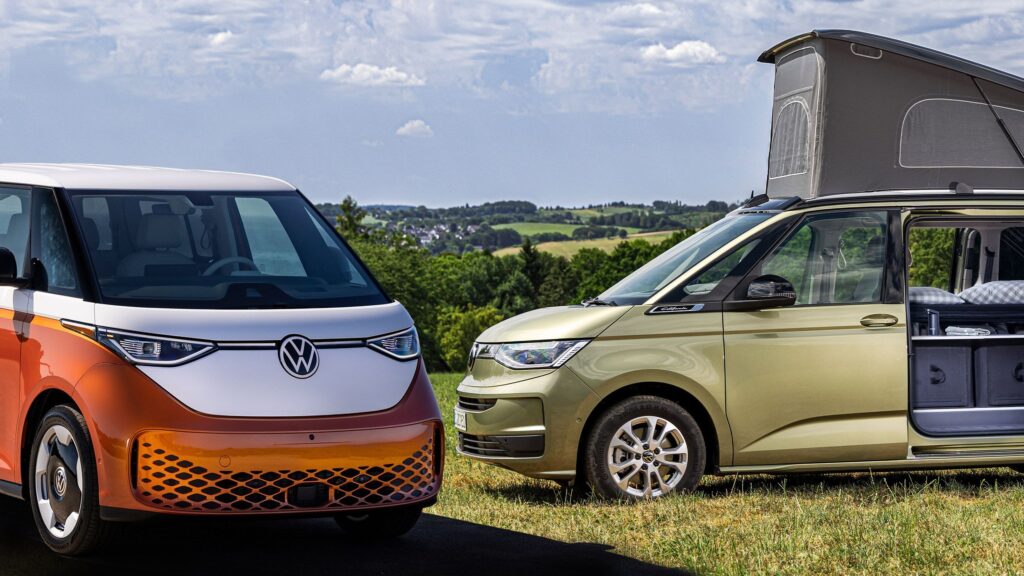
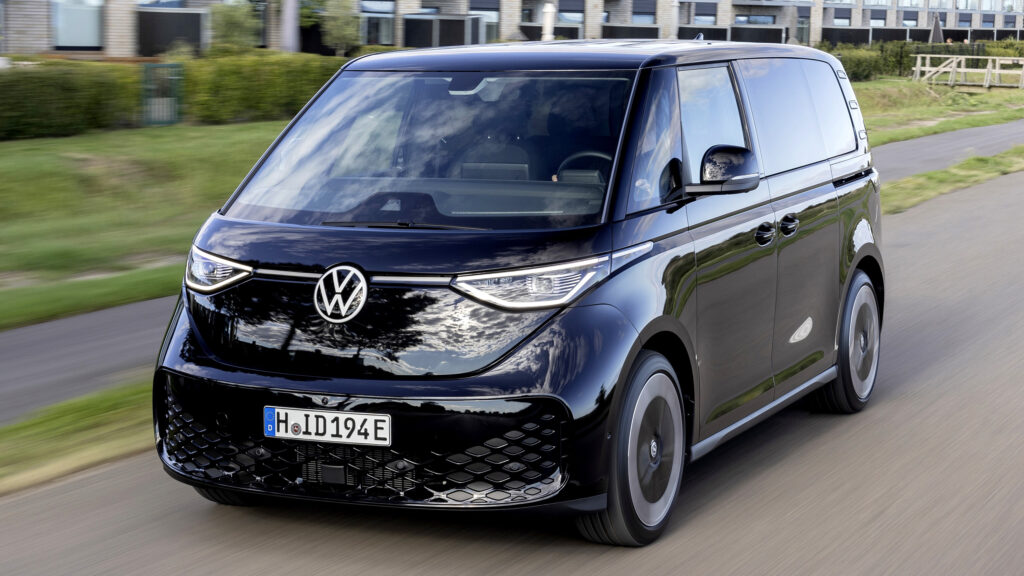
VW hasn’t given the ID.Buzz the full California treatment yet, but the new Good-Night package introduced in Europe is the nearest thing to it. The electric van picks up a double bed, a V2L function, and an “overnight” mode, all of it aimed at buyers who’d rather spend a night in the van than book a room.

At the heart of the package sits a bed frame with a folding mattress measuring 2 m (78.7 inches) long and 1.2 m (47.2 inches) wide. It mounts above the folded rear seats, and when nobody’s sleeping in it, the whole thing stows away in the trunk.

More: VW’s 2026 ID. Buzz Adds 335 HP And Real Buttons, America Gets Neither

VW also tossed in a blackout set for the windows to keep prying eyes out. Pair that with the ventilation grilles fitted to the side windows, which keep air moving through the cabin overnight, and the basics of sleeping in a parked van are covered.

There’s no awning in the deal, but the package does include a table and two chairs, so a meal or a drink alongside the van is part of the plan.

\\\\\\\\\\\\

The hardware is only half the story. The kit also brings a new “Overnight” mode to the infotainment, which keeps the A/C running for up to 48 hours and holds the cabin at a steady temperature no matter what the weather does outside. Rounding it out is the V2L (vehicle-to-load) function added with the 2026 model year updates, letting the 230-volt outlet push up to 2,000 watts into e-bikes, laptops, coolers, and coffee machines.

More: Aftermarket Camper Kits Transform VW ID.Buzz Into Road-Trip Machine

And that leads us to pricing. The Good Night package is available for all passenger versions of the ID. Buzz priced from €2,600 ($3,000) in Germany. The factory-backed upgrade can be ordered now.

\\\\\\\\\\

Dacia’s Budget EV Is Leaving China For Europe, And It’s Getting Pricier

  • Next-gen Dacia Spring confirmed with production shifting to Europe.
  • The EV will switch to the modern Renault Twingo E-Tech platform.
  • It will have a boxier styling, a four-seat cabin, and a sub-€18k price.

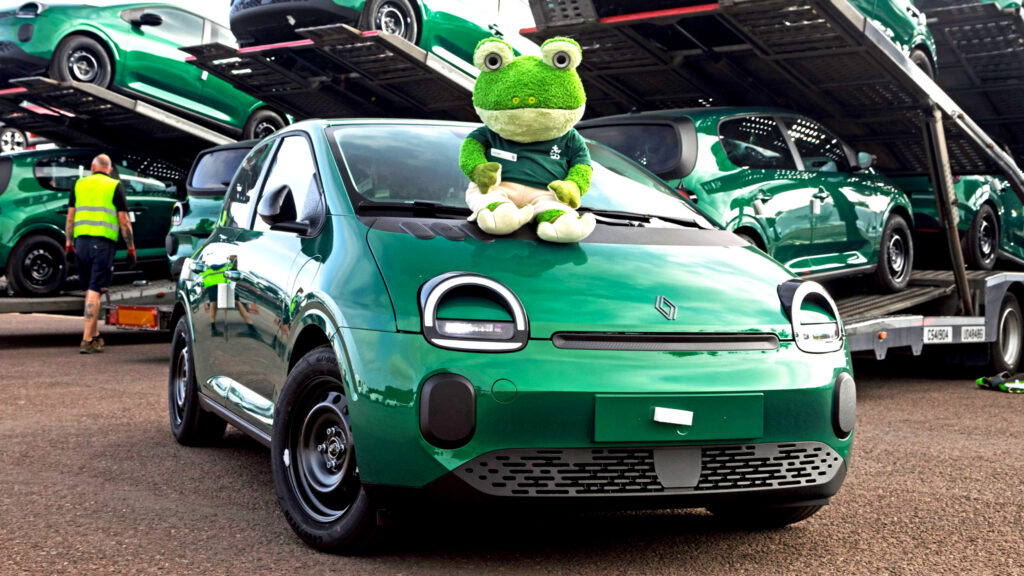
Dacia has confirmed that its next budget EV will keep the Spring name, badged as the New Spring to set it apart from the car it joins rather than replaces. The big news isn’t the name though. It’s the move out of China and onto a modern Renault platform, which fundamentally changes what this little urban EV is.

The original Spring launched in 2021 as a China-built rebadge of the Renault Kwid, riding on the aging CMFA-EV architecture. Dacia gave it a comprehensive exterior and interior overhaul in 2024, then added power and a new battery in 2025. That city car sticks around, but the clean-sheet New Spring slots in above it with European production and a far more current foundation.

More: Dacia Striker Brings The Budget Wagon Back For Under €25K

The official teaser reveals a boxy rear end with clean surfacing and squared-off LED taillights. This follows an earlier sketch of the profile, confirming that the New Spring will adopt a five-door hatchback silhouette with a compact footprint.

 Dacia’s Budget EV Is Leaving China For Europe, And It’s Getting Pricier

Dacia

While we have yet to see the interior, Dacia promises that the New Spring will have “four real seats and a proper boot”. Expect the same essentials-first approach, likely with the brand’s clever YouClip accessory-mounting system for added versatility.

More: Renault’s Bug-Eyed Twingo Just Schooled VW On How To Do Cheap And Cheerful

The real upgrade is underneath. The New Spring swaps the old CMFA-EV bones for the AmpR Small architecture that underpins the new Renault Twingo E-Tech. Dacia is staying quiet on specs, but the Twingo’s 80 hp motor and 27.5 kWh battery are the obvious carryovers.

According to Dacia, the Spring has sold nearly 210,000 units in Europe since its debut in 2021, helped by its standing as one of the most affordable EVs in the region. Pricing for the new locally-built model is expected to start from under €18,000 ($21,000 / £16,000), meaning it will be more expensive than the old Spring, which started from a heavily discounted €11,900 ($13,700) in Germany earlier this year.

While we wait for Dacia to reveal more photos and details, you can check out the earlier spy shots of the urban EV.

\\\\\\\\\

Baldauf

Mitsubishi’s $11,700 Kei Car Is A Backup Generator That Happens To Drive

  • Mitsubishi’s electric kei car gets a cleaner, color-matched design.
  • New power outlet allows it to act as a mobile power bank.
  • Base pricing drops to an affordable $11,700 with local subsidies.

The Mitsubishi eK Cross EV has picked up a mid-cycle refresh in Japan, arriving after the closely related Nissan Sakura EV got the same treatment. The electric kei car wears a redesigned front end, adds fresh paint options, and brings more equipment to the cabin.

Gone is the Dynamic Shield grille that defined the outgoing car, replaced by a redesigned bumper with more body-colored trim. Mitsubishi kept the split headlights but paired them with a slim illuminated bar where the grille used to be, along with smaller intakes below. The result reads cleaner and a little friendlier, and it puts visual distance between the EV and the combustion eK Cross.

More: Mitsubishi’s Building A Kei-Sized Pajero, And A Nissan Pickup For America

The profile looks familiar but Mitsubishi designers have removed the plastic cladding from the wheel arches and the side skirts. The color palette includes five new bi-tone shades and two new colors increasing the total number to eleven.

\\\\\\\\\

A Cabin That Doubles As A Power Bank

Inside, a new 100V AC accessory outlet sits on the lower dashboard, capable of powering external devices that draw up to 1,500 watts. That lets the EV double as a mobile power bank on camping trips, or a backup generator for your home when the grid goes down.

More: Mitsubishi’s New Kei Van Channels Its Inner Pajero

The flagship P trim gains two USB-C ports and one USB-A. Furthermore, Mitsubishi has expanded the standard heated steering wheel and heated front seats to the mid-spec G grade. On the safety front, a Rear Seat Alert system is standard across the lineup.

Under the skin, the micro-EV carries over the same electric motor producing 63 hp (47 kW / 64 PS) and 195 Nm (144 lb-ft) of torque. The 20 kWh lithium-ion battery pack, also unchanged, delivers a WLTC range of 180 km (112 miles) that should be fine for urban commutes.

How Much Does It Cost?

\\\\

The updated Mitsubishi eK Cross EV is already available to order in Japan, with the first deliveries expected later this month. Pricing starts at ¥2,446,400 ($15,200) for the base G Business Package and tops out at ¥3,214,200 ($20,000) for the flagship P trim. Factor in Japan’s EV subsidies, though, and the entry price drops to a more sensible ¥1,872,400 ($11,700).

Also: Subaru’s Cheapest New Car Is A $7,200 Kei Van With Three Pedals

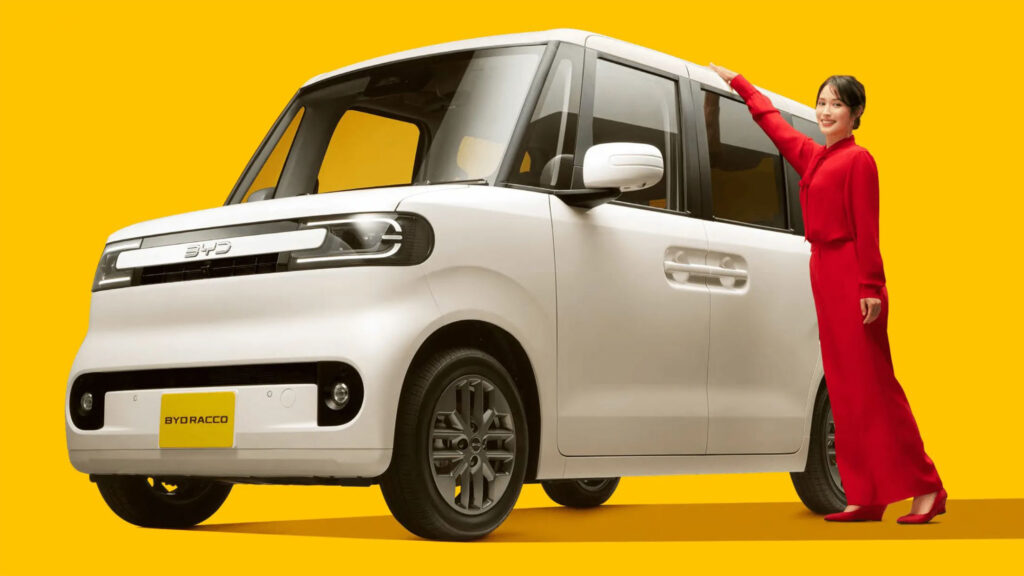
Setting aside the closely related Nissan Sakura EV, the main rival of the electric kei car is the Honda N-One e:, though the upcoming BYD Racco looms as a major threat too. Beyond the eK Cross EV, Mitsubishi’s kei lineup includes the ICE-powered eK Cross, eK Wagon, eK Space, and Delica Mini.

\\\\\\

Mitsubishi

Dacia’s Budget EV Is Leaving China For Europe, And It’s Getting Pricier

  • Next-gen Dacia Spring confirmed with production shifting to Europe.
  • The EV will switch to the modern Renault Twingo E-Tech platform.
  • It will have a boxier styling, a four-seat cabin, and a sub-€18k price.

Dacia has confirmed that its next budget EV will keep the Spring name, badged as the New Spring to set it apart from the car it joins rather than replaces. The big news isn’t the name though. It’s the move out of China and onto a modern Renault platform, which fundamentally changes what this little urban EV is.

The original Spring launched in 2021 as a China-built rebadge of the Renault Kwid, riding on the aging CMFA-EV architecture. Dacia gave it a comprehensive exterior and interior overhaul in 2024, then added power and a new battery in 2025. That city car sticks around, but the clean-sheet New Spring slots in above it with European production and a far more current foundation.

More: Dacia Striker Brings The Budget Wagon Back For Under €25K

The official teaser reveals a boxy rear end with clean surfacing and squared-off LED taillights. This follows an earlier sketch of the profile, confirming that the New Spring will adopt a five-door hatchback silhouette with a compact footprint.

 Dacia’s Budget EV Is Leaving China For Europe, And It’s Getting Pricier

Dacia

While we have yet to see the interior, Dacia promises that the New Spring will have “four real seats and a proper boot”. Expect the same essentials-first approach, likely with the brand’s clever YouClip accessory-mounting system for added versatility.

More: Renault’s Bug-Eyed Twingo Just Schooled VW On How To Do Cheap And Cheerful

The real upgrade is underneath. The New Spring swaps the old CMFA-EV bones for the AmpR Small architecture that underpins the new Renault Twingo E-Tech. Dacia is staying quiet on specs, but the Twingo’s 80 hp motor and 27.5 kWh battery are the obvious carryovers.

According to Dacia, the Spring has sold nearly 210,000 units in Europe since its debut in 2021, helped by its standing as one of the most affordable EVs in the region. Pricing for the new locally-built model is expected to start from under €18,000 ($21,000 / £16,000), meaning it will be more expensive than the old Spring, which started from a heavily discounted €11,900 ($13,700) in Germany earlier this year.

While we wait for Dacia to reveal more photos and details, you can check out the earlier spy shots of the urban EV.

\\\\\\\\\

Baldauf

Mitsubishi’s $11,700 Kei Car Is A Backup Generator That Happens To Drive

  • Mitsubishi’s electric kei car gets a cleaner, color-matched design.
  • New power outlet allows it to act as a mobile power bank.
  • Base pricing drops to an affordable $11,700 with local subsidies.

The Mitsubishi eK Cross EV has picked up a mid-cycle refresh in Japan, arriving after the closely related Nissan Sakura EV got the same treatment. The electric kei car wears a redesigned front end, adds fresh paint options, and brings more equipment to the cabin.

Gone is the Dynamic Shield grille that defined the outgoing car, replaced by a redesigned bumper with more body-colored trim. Mitsubishi kept the split headlights but paired them with a slim illuminated bar where the grille used to be, along with smaller intakes below. The result reads cleaner and a little friendlier, and it puts visual distance between the EV and the combustion eK Cross.

More: Mitsubishi’s Building A Kei-Sized Pajero, And A Nissan Pickup For America

The profile looks familiar but Mitsubishi designers have removed the plastic cladding from the wheel arches and the side skirts. The color palette includes five new bi-tone shades and two new colors increasing the total number to eleven.

\\\\\\\\\

A Cabin That Doubles As A Power Bank

Inside, a new 100V AC accessory outlet sits on the lower dashboard, capable of powering external devices that draw up to 1,500 watts. That lets the EV double as a mobile power bank on camping trips, or a backup generator for your home when the grid goes down.

More: Mitsubishi’s New Kei Van Channels Its Inner Pajero

The flagship P trim gains two USB-C ports and one USB-A. Furthermore, Mitsubishi has expanded the standard heated steering wheel and heated front seats to the mid-spec G grade. On the safety front, a Rear Seat Alert system is standard across the lineup.

Under the skin, the micro-EV carries over the same electric motor producing 63 hp (47 kW / 64 PS) and 195 Nm (144 lb-ft) of torque. The 20 kWh lithium-ion battery pack, also unchanged, delivers a WLTC range of 180 km (112 miles) that should be fine for urban commutes.

How Much Does It Cost?

\\\\

The updated Mitsubishi eK Cross EV is already available to order in Japan, with the first deliveries expected later this month. Pricing starts at ¥2,446,400 ($15,200) for the base G Business Package and tops out at ¥3,214,200 ($20,000) for the flagship P trim. Factor in Japan’s EV subsidies, though, and the entry price drops to a more sensible ¥1,872,400 ($11,700).

Also: Subaru’s Cheapest New Car Is A $7,200 Kei Van With Three Pedals

Setting aside the closely related Nissan Sakura EV, the main rival of the electric kei car is the Honda N-One e:, though the upcoming BYD Racco looms as a major threat too. Beyond the eK Cross EV, Mitsubishi’s kei lineup includes the ICE-powered eK Cross, eK Wagon, eK Space, and Delica Mini.

\\\\\\

Mitsubishi

Peugeot Is Putting Le Mans Badges On Everything, Except Two Models

  • Peugeot will roll out Le Mans special editions across six of its models.
  • Expect sporty styling, premium interiors, and high-output powertrains.
  • The official debut is scheduled for the 2027 24 Hours of Le Mans.

Peugeot is honoring the 100th anniversary of its first participation in the 24 Hours of Le Mans in 1926 with a series of special editions across its entire car and SUV lineup.

The Peugeot 24 Hours Le Mans edition will be available for the 208 hatchback, the 308 hatchback and estate, the 408 fastback, as well as on the 3008 and 5008 SUVs. In other words, only the Rifter and Traveller vans escape the special treatment.

More: Peugeot’s First Electric GTi Does 62 MPH In 5.5 Seconds For Under €43,000

The special editions will be based on the high-spec GT trim of the respective models. The full lineup appeared on an official teaser one year before their commercial launch, which is scheduled for the 2027 24 Hours of Le Mans.

Peugeot promises “unique” styling touches and a combination of “elegant black” with the signature blue hue of the illustrious race. Still, we can’t spot any differences with the GT variants of the existing models in the dark teaser.

\\\\\

Peugeot

Phil York, head of Peugeot Marketing and Communications, spoke to Auto Express about the upcoming specials. He said that the Le Mans edition is a “different package” compared to the GTi, but claims it will bring “some real value to the customer”.

More: Peugeot’s Next Flagships Are Being Designed For China Whether Europe Likes It Or Not

While the official announcement focuses on the styling aspect of the special editions, the official said, “We won’t make it design only, it has to be the full package. We want technology!”

The equipment and powertrain lineup of the upcoming models will be announced on a later date. However, chances are they will be based on the plug-in hybrid or electric variants of each model, which usually have the highest output.

What Happened At Le Mans This Year?

The announcement lands right on the heels of the 94th edition of the 24 Hours of Le Mans. Toyota Racing returned to the top step of the podium with a stellar 1-3 finish, with BMW M in second place and Cadillac taking fourth. It was a weekend of high drama that saw the end of Ferrari’s three-year winning streak, with the sole surviving 499P Hypercar crossing the line in fifth, just ahead of the Alpine A424. Meanwhile, the updated Peugeot 9X8 hybrid hypercars secured the 11th and 12th positions.

 Peugeot Is Putting Le Mans Badges On Everything, Except Two Models
The pictured Peugeot 9X8 #94 finished at the 11th place in the 24H of Le Mans this year.

BMW’s Electric M3 Concept Stands Next To The E30 And Hopes You Approve

  • The BMW M Concept Neue Klasse previews the upcoming electric M3.
  • It looks like an i3 on steroids, with a bodykit and a four-seater cabin.
  • Power comes from quad electric motors and a 100 kWh battery.

The M3 is about to get the multi-energy treatment that BMW has been rolling out across its lineup. A combustion M3 is still coming, but ahead of it BMW pulled the wraps off the M Concept Neue Klasse, and this is the electric one in everything but name. Think of it as a near-production preview of the upcoming i3M, which is the badge it’s rumored to wear.
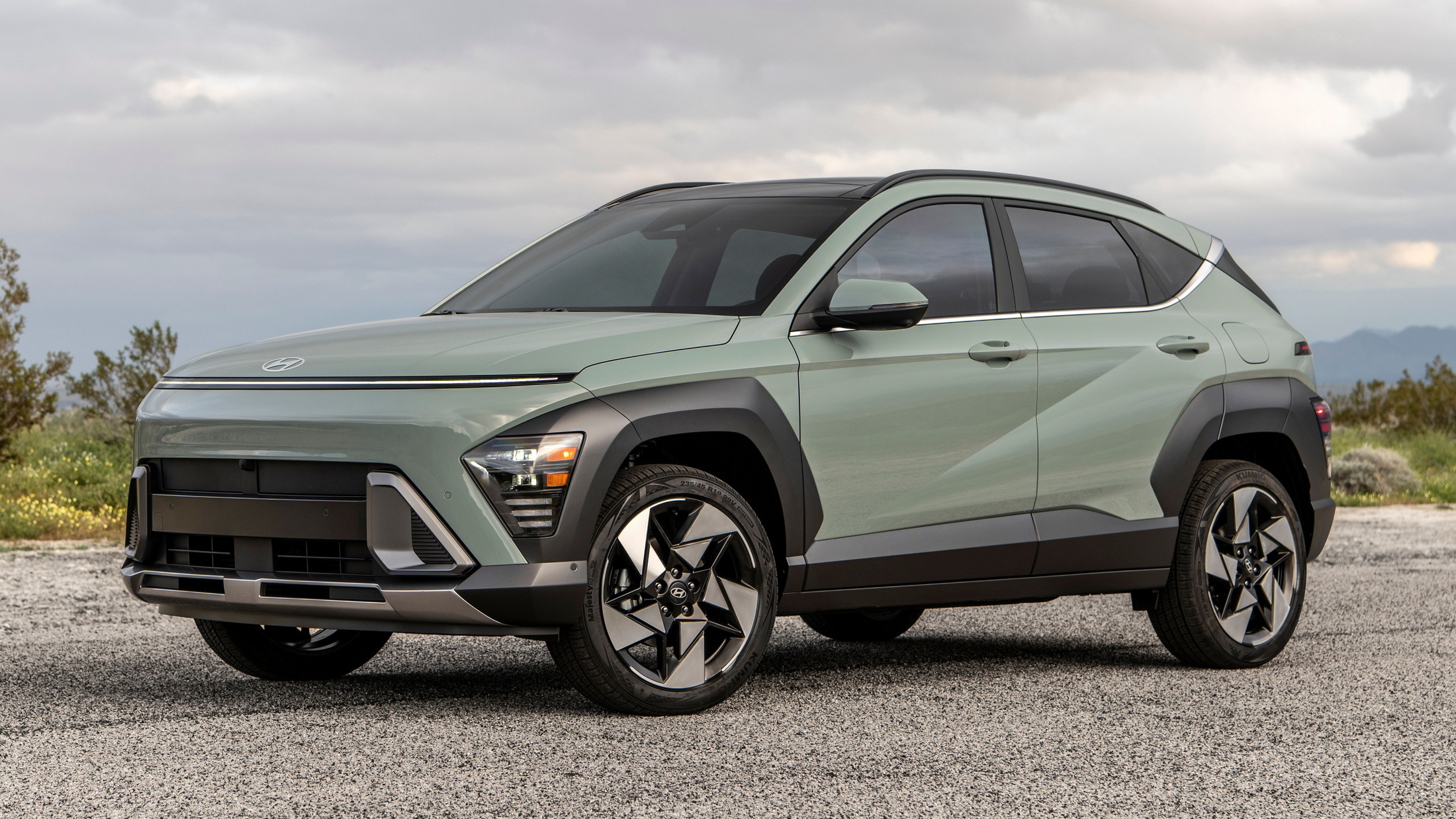
The concept broke cover at the 24 Hours of Le Mans, where BMW officially called it a “preview of the new design language for high-performance automobiles from BMW M GmbH” and said it “sends a clear signal for the brand’s all-electric future.”

More: BMW’s Hottest M3 CS Loses 70 HP But Gains A Manual

BMW can dress up the language however it likes. The fact is, this thing looks like an i3 sedan that spent a winter in the gym, and parking it next to the E30 M3 for photos settles any question about what it stands in for, even if it’s bound to wear an i-badge that some purists will never read as a real M3. The shape carries over from last year’s Vision Driving Experience concept, cleaned up and pushed closer to something you could actually buy.

A Track-Ready Take On The i3 Sedan

\\\\\\\\\\\\\\\\

The greenhouse and LEDs recall the i3 sedan, but everything else has changed. The M treatment adds custom front and rear bumpers with large openings inspired by high-speed multihull sailing boats, cube-shaped LEDs called “track lights,” much wider front and rear fenders, and a pronounced ducktail spoiler.

More: BMW’s Vision Alpina Is Built Around A Car It Already Killed

The bodywork wears a Monza Red metallic shade, with the dark-finished splitter, side skirts, diffuser, hood scoop, and roof made of natural fiber. The M Yellow Lights pull straight from racing, and the mirrors are aerodynamically optimized. The concept rides on center-lock wheels with negative camber, and the M-specific chassis brings wider tracks and a lowered stance.

Inside: Four Buckets And A Roll Cage

\\\\\\\\\\\\\\\\\\\\\\\

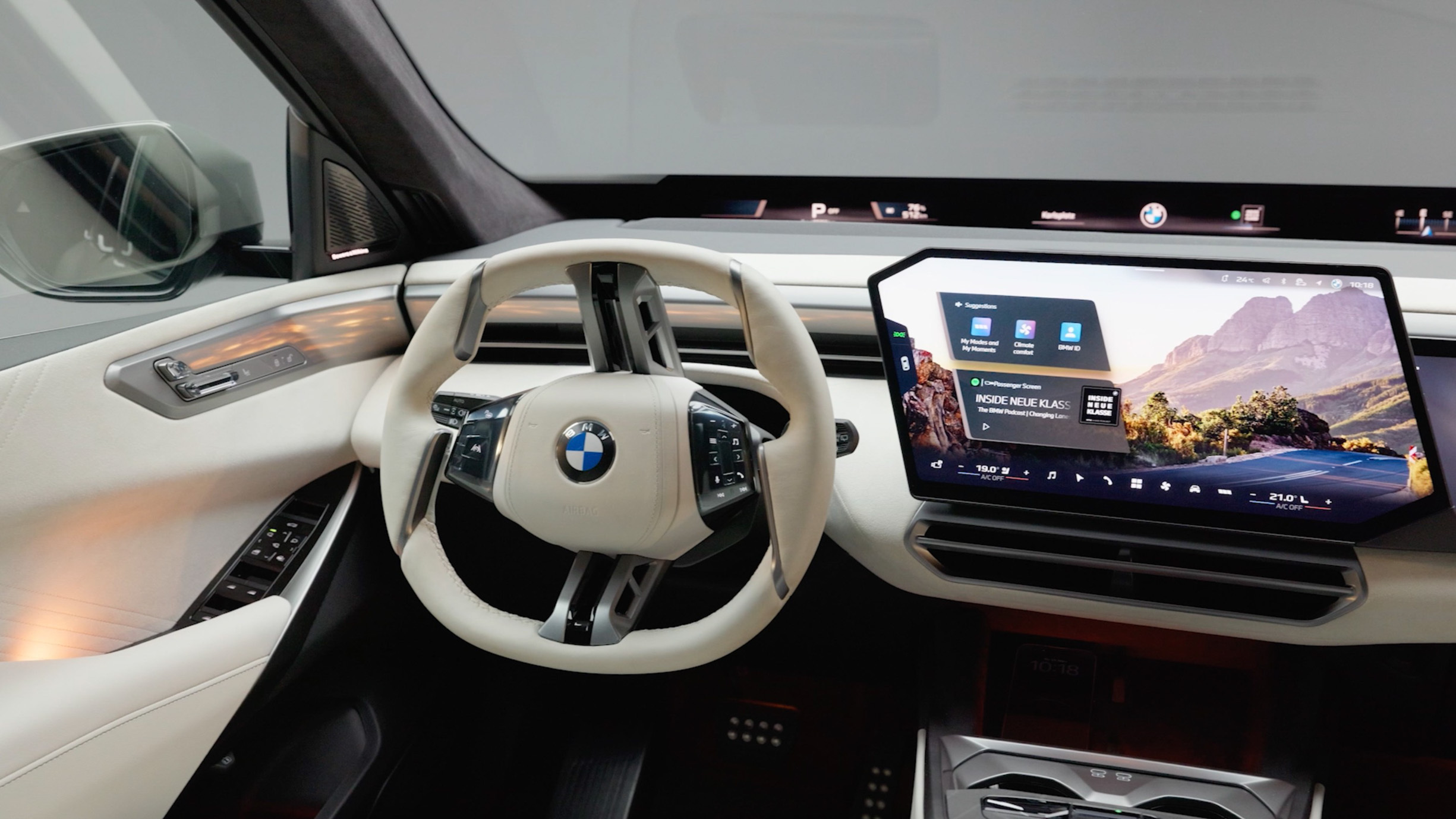
The cabin carries over the Neue Klasse hardware and design from the i3, including the infotainment and the BMW Panoramic iDrive screen at the base of the windshield. Everything else marks this out as a performance sedan.

More: BMW’s New iX5 M Could Make The Gas X5 M Look Weak

There are four independent bucket seats trimmed in Merino leather, with five-point belts and structural elements made of natural fiber. A roll cage wrapped in Nubuck leather matches the steering wheel and door cards. The dashboard is trimmed in a black knit material with backlighting, and the steering wheel and center console break from the i3 with custom controls and red accents.

Quad Motors And 800 Volts

\\\\\\\\\\\\\\

Under the skin, we find the BMW M eDrive quad-motor system. It builds on the Neue Klasse’s Gen6 foundation but was specifically developed for electric M models. BMW hasn’t quoted a combined output, though sources put the electric M3 anywhere between 700 and 1,000 hp (710-1,014 PS). The 2025 concept reportedly generated 13,269 lb-ft (17,990 Nm) of torque.

More: BMW’s First-Ever AWD M2 Has A Button That Makes It Rear-Drive Again

Power is managed by the BMW M Dynamic Performance Control System, which is part of the Heart of Joy superbrains. The company promises a “new interpretation of dynamics, agility, and precision” thanks to the wheel-specific control of power and brakes.

The 800-volt architecture pairs with a battery pack rated at more than 100 kWh. It uses an M-specific version of the sixth-gen cylindrical cells built to handle higher outputs while supporting fast charging and longer range. The battery housing is structurally integrated with the axles for added rigidity.

\\\\\\\\\\\\\\\\\\\

Franciscus van Meel, Chairman of the Board of Management of BMW M GmbH, said: “Even in the new all-electric era, we continue the M-typical tradition of transferring both technological innovations and defining design features directly from motorsport into series production”.

More: A 1,000 HP Electric M3 And A 552 HP Gas M3 Will Have The Same Price Tag

BMW hasn’t set a date for the debut of the electric M3 (or iM3), but 2027 looks like the likely window. Reports also point to a mild-hybrid six-cylinder successor to the gas M3, dressed in Neue Klasse styling and tech, that would sell alongside the EV.

Alfa Just Facelifted The Tonale. Now It Could Kill It

  • Alfa Romeo Tonale production will reportedly end in November 2027.
  • The Pomigliano d’Arco factory will retool for affordable urban EVs.
  • Alfa plans a new compact SUV and a premium compact hatchback.

When Alfa Romeo introduced the Tonale in 2022, the company framed it as one of the most important models for the brand’s future. It was the first electrified Alfa, it marked the brand’s entry into the popular compact SUV segment, and it spawned a second version in the short-lived Dodge Hornet. Now the Tonale looks set to reach the automotive graveyard sooner than anyone expected.

Stellantis hasn’t confirmed anything, but recent information from the Italian metalworker unions FIM-CISL and UILM points to production at the Pomigliano d’Arco factory ending in November 2027. That timing comes despite the facelifted Tonale that debuted in late 2025 with revised styling and an upgraded interior.

Review: Alfa Romeo’s 2026 Tonale Finally Earns The Badge On Its Nose

A five-and-a-half-year run is short by Alfa standards. The aging Giulia and Stelvio are scheduled to stay in production for more than 11 years. Older models tell the same story, with the MiTo and Giulietta hatchbacks lasting 10 and 11 years respectively. So what is pushing the compact SUV into early retirement?

 Alfa Just Facelifted The Tonale. Now It Could Kill It

Start with the factory. Pomigliano d’Arco, home to the Tonale and the Fiat Panda, has to be completely retooled for an upcoming low-cost urban EV project. That program is expected to grow into the next-gen Fiat Pandina and a mechanically related Citroen, both aiming to make electric mobility more affordable for European buyers.

Review: The Junior Is Everything Alfa Romeo Needed And Nothing Alfisti Wanted

Slow sales are another likely factor. Tonale production crossed the 100,000-unit milestone in 2024, but demand has cooled since the arrival of the subcompact Junior, which became the volume seller the brand had been chasing.

Finally, it is worth mentioning that the Tonale rides on the aging FCA Small Wide 4×4 LWB architecture, also used by the previous-gen Jeep Compass from 2016. This platform traces its routes to the distant 2005, well before the FCA-PSA merger and during the collaboration with General Motors.

 Alfa Just Facelifted The Tonale. Now It Could Kill It

Even if Tonale production ends in November 2027, remaining stock could keep the SUV on sale through 2028. The closely related Dodge Hornet, for its part, was discontinued in early 2026 after only three years on the market.

Another Compact SUV?

While the Tonale is slowly heading into the sunset, Alfa Romeo recently announced it is developing a new compact SUV. The yet-unnamed model will be based on the STLA Medium architecture, most likely offering the choice between hybrid and fully electric powertrains.

More: Now That It’s Dead, You Can Buy A New Hornet For Nearly Half The Price

While we don’t have a debut date, the new crossover is part of the Fastlane 2030 strategy meaning it will arrive before the end of the decade. Alfa is also working on a new compact hatchback that will ride on the STLA One platform serving as the spiritual successor of the long-discontinued Giulietta. Those two models will fill the gap of the Tonale in the compact segment, hopefully sticking around for longer than their predecessor.

 Alfa Just Facelifted The Tonale. Now It Could Kill It

Stellantis

Japan’s Lexus ES Offers A Splitter Up Front And A Foot Deodorizer Down Below

  • Japan’s 2026 Lexus ES gets exclusive factory aerodynamic body kits.
  • Advanced illumination features project graphics onto the pavement.
  • Modellista drops the sedan an inch and lights up its illuminated side skirts.

Lexus has brought the eighth-generation ES sedan to its home market, following the sedan’s earlier debut in the US and Europe. The hybrid and electric powertrains carry over unchanged, but Japanese buyers get access to a wider selection of optional accessories, including subtle bodykits and interior lighting.

Review: We Drove The 2026 Lexus ES Hybrid And EV, And One Version Stands Out

The standout from the official catalog is the Lexus Genuine Aero Parts Set. It drops the sedan’s stance and sharpens its aerodynamics, with a splitter, side skirts, and a rear bumper extension finished in glossy black. The kit also pairs with droplet-shaped fins on each D-pillar, which Lexus says steady the vortices along the rear quarters to improve stability and steering response.

\\\\\

Lexus

For buyers chasing something different, Modellista has its Advanced Luxury Package. It adds body-colored pieces that cut ground clearance along the profile by up to 26 mm (1 inch). The side skirts are illuminated and paired with mirror covers that integrate fins. Rounding it out is a set of 21-inch forged aluminum wheels in dark premium metallic.

More: New Lexus ES Looks Great But This F-Sport Render Looks Even Better

While Japan has all of these options for the exterior, US buyers are currently restricted to black emblems, wheel locks, and protective films. Another difference between the two markets is the variety of lighting accessories.

Lighting And Projections

\\\\\\\\\\\\\\\

Lexus

The Japanese-spec ES can be had with Projection Welcome Illumination, which casts a Lexus emblem onto the pavement ahead of the car, joined by side-projection lighting that throws geometric graphics down the flanks.

The catalog also covers illuminated door sills, a cargo sill, and Lexus-branded puddle lamps, all available in the US too. Buyers who want more can add illuminated cup holders and door pockets in a range of colors.

More: This Lexus Wagon Looks So Good It’ll Make You Mad It’s Not Real

The rest of the interior list runs to headrest pillows, a rear footrest with deodorizing properties, seatback storage pockets with a tablet holder, and premium floor and luggage mats. The lineup also includes the ES350e Rr Comfort package, the equivalent of the US-spec Executive Package, aimed at owners who prefer the back seat. Lexus also doubles down on anti-theft measures with physical locks for the wheels and the steering wheel.

Japanese Pricing

\\\\\\\\\\\\\\\\\\\\\\\\

Lexus

The Lexus ES is on sale in Japan starting at ¥7,900,000 ($49,200) for the entry-level hybrid ES350h FWD. At the top sit the electric ES350e FWD with the Rr Comfort Package and the ES500e AWD Version L, both at ¥9,200,000 ($57,300). The US-spec car runs a bit higher, between $51,095 and $60,295 depending on trim.

More: Lexus’s New ES Infotainment Acts Like A Tablet, Talks Back In The Gender You Pick

In terms of optional upgrades, the Lexus Genuine Aero Parts Set retails for ¥293,700 ($1,800), the Aero Stabilizing Fins for ¥22,000 ($140), and the Modellista package for ¥642,400 ($4,000), with the 21-inch wheels adding another ¥964,700 ($6,000). The Projection Welcome Illumination is priced at ¥55,000 ($340) for the grille and ¥83,600 ($520) for the side.

And last but not least, Lexus offers a deodorizing footrest, for the driver and passenger whose feet have become a known issue, at ¥46,200 ($290), the headrest pillows ¥38,500 ($240), the seatback storage pocket ¥17,600 ($110), and the luggage mat ¥30,800 ($190).

\\\\\\\\\\\\\\\\

Modellista

Volvo’s Decade-Old XC40 Spied Testing Yet Another Facelift

  • Volvo is working on another round of major updates for the XC40.
  • A second facelift is expected in 2027, bringing fresh styling cues.
  • Prototypes confirm combustion engines remain alongside the EV.

The Volvo XC40 has aged into one of the most stubbornly durable products in the Swedish lineup. It showed up as a concept in 2016, reached production in 2017, and got a facelift in 2022. A next-generation version is rumored to be in the works, but new spy shots tell a different story for the near term. The current car is lined up for another round of updates, with a possible reveal in 2027.

The hot weather testing season has already started in Spain, and Volvo’s engineering teams are making the most of the demanding conditions. Not long after we caught a facelifted XC60 prototype, our spy photographers have now bagged an updated XC40.

More: Volvo’s Decade-Old XC60 Just Got A Facelift, And Another One Is Already Coming

The lightly camouflaged prototype retains the signature side windows and sculpted profile of the existing model, but the front end has been redesigned. The headlights appear to be slimmer with heavier contours and Thor’s hammer LED graphics, while the revised grille is intentionally hidden under a piece of camo.

The front bumper adopts a cleaner design, doing without the side intakes of its predecessors and adding thicker cladding on the pronounced chin. At the back, the traditional L-shaped taillights are covered in black tape, an attempt to disguise the updated LED graphics.

\\\\\\\\\\\

SH Proshots

Other changes include the flatter surfacing on the tailgate and the smaller reflectors low on the rear bumper. The dual tailpipes poking out of the rear end are just provisional units, and they’ll be swapped for a different design on the production model.

A few spy shots also offer a glimpse inside the cabin. The biggest change looks to be a new portrait-oriented infotainment display, similar to the one in the EX30. Volvo could add new materials and upholstery options, too.

More: A Slate Designer Spent His Spare Time Redrawing Volvo’s Lost Wagon

The powertrain lineup will most likely carry over the existing mild-hybrid, plug-in hybrid, and fully electric (EX40) options. The combustion engines might get updates, though, to stay compatible with Europe’s strict emission rules for a few more years. Volvo’s engineers could also tweak the chassis setup in search of a more refined ride.

The XC40’s second facelift should land in 2027, the year the nameplate turns ten. The electric EX40 will almost certainly inherit the same updates, separated by a few styling cues that mark it as the zero-emission one. It competes with the BMW X1, Mercedes GLA, Audi Q3, and Alfa Romeo Tonale.

\\\\\\\\\

SH Proshots

MG’s New Baby EV Is Coming For The Renault 5 And VW ID. Polo

  • New MG concept previews a small electric hatchback at Goodwood FOS.
  • It will be joined by another study described as an “electric design vision”.
  • MG’s stand for 2026 will also feature robots and production models.

MG is heading to the 2026 Goodwood Festival of Speed with more than a parking spot. The SAIC-owned brand trading on its British past confirmed two concept cars bound for production, parked alongside interactive robot displays and a spread of current models.

The first concept is a subcompact hatchback running a fully electric powertrain, due on the road in 2027. The model still has no name, but the teasers tell the story. The nose is rounded and grille-less with headlights that lean cute rather than aggressive. The MG badge sits on the C-pillar, and the tail goes sporty with modern LEDs and a large roof spoiler.

More: The New MG 07 Flagship’s Looks Say Porsche Taycan, Its Price Says Corolla

The EV slots into Europe’s B-segment as the zero-emission counterpart to the MG2 Hybrid. That puts it straight into the path of the Renault 5 E-Tech, Nissan Micra, VW ID. Polo, Cupra Raval, Mini Cooper Electric, Peugeot E-208, and the rest of the subcompact-EV field.

 MG’s New Baby EV Is Coming For The Renault 5 And VW ID. Polo

MG didn’t show the other concept but described it as an “electric design vision”. Still, it won’t be a simple design study as it will evolve into an “aspirational upcoming model to further enhance the MG lineup.”

As for production models, the automaker will display the MGS9 PHEV, the MG4 EV, the ZS Hybrid, the HS PHEV, the Cyberster and the IM5 sedan from last year. Furthermore, the MGS9 PHEV, the MGS6 EV and the Cyberster will participate at the hill climb.

More: MG To Open New Spanish Plant As Chinese Invasion Of Europe Continues

The MG booth at Goodwood will also include a “display of robots to entertain the public with interactive performances”.

Everything about the new concepts gets revealed at the festival premiere on July 9, when MG Global Design Vice President Jozef Kaban does the unveiling honors.

 MG’s New Baby EV Is Coming For The Renault 5 And VW ID. Polo
MG

Good News, There’s A New Mitsubishi Eclipse. Bad News, It’s A Rebadged Nissan Leaf

  • Mitsubishi is reviving the Eclipse name for a fully electric crossover.
  • Unique fascias and lighting set it apart from its Nissan sibling.
  • Mitsubishi plans to launch the new model in North America this fall.

The Eclipse name keeps finding new homes that have nothing to do with the sport coupe sold from 1989 to 2011. First it landed on the Eclipse Cross crossover, and now Mitsubishi has confirmed a new Eclipse Sportback EV bound for North America as a 2027 model in the back half of this year. Beneath that Triple Diamond badge sits nothing more than a lightly reskinned new-generation Nissan Leaf, so anyone holding out for a true heir to the original should brace for disappointment.

Visually, most people will just see a Leaf wearing Mitsubishi emblems, but the Eclipse Sportback does have a few redesigned bits. Up front, the bumper gets a different grille and horizontal intakes with aerodynamic detailing. Despite the official claims, the LED headlights look awfully close to the Nissan units, the difference being that they aren’t connected by a strip of black trim.

More: Mitsubishi’s Building A Kei-Sized Pajero, And A Nissan Pickup For America

The profile is also identical, keeping the original crossover fastback silhouette, though it picks up fresh EV emblems on the front doors along with chrome accents around the windows and on the three-spoke 18-inch aero wheel covers borrowed from the Leaf S+.

 Good News, There’s A New Mitsubishi Eclipse. Bad News, It’s A Rebadged Nissan Leaf

At the back, Mitsubishi’s designers kept their input minimal: a sculpted rear bumper, a new tailgate that drops the glossy black trim of the Nissan, and custom LED taillight graphics. Naturally, the Eclipse Sportback won’t get the Z-inspired “3D holographic LEDs” of the flagship Nissan Leaf Platinum+ trim.

More: Nissan’s New Rogue Plug-in Hybrid Isn’t Even A Nissan

The company hasn’t shown the interior yet, but don’t expect much beyond a Mitsubishi emblem on the steering wheel. The Leaf comes with dual screens measuring 12.3 or 14.3 inches, depending on the trim. Whether the Mitsubishi version gets the dimming panoramic electrochromic roof and the clever Bose Personal audio setup with speakers built into the headrests remains to be seen.

 Good News, There’s A New Mitsubishi Eclipse. Bad News, It’s A Rebadged Nissan Leaf

Under the skin, the Eclipse Sportback rides on the CMF-EV architecture shared with the Nissan Leaf and Ariya. Full technical specs will come later, but the Leaf offers a choice between 52 kWh and 75 kWh battery packs and a single electric motor making either 174 hp (130 kW / 176 PS) or 214 hp (160 kW / 218 PS). EPA range tops out at 303 miles (488 km).

More: Nissan Beats Tesla To $25K EV Musk Said Would Never Happen

Mitsubishi has promised more details and pricing in the near future ahead of the market launch. The company also confirmed the Eclipse Sportback will be joined by an “all-new rugged, off-road derivative of the Outlander SUV” in early 2027, followed by a new or significantly revised vehicle every year through 2030.

\\\\\\\\\

Mitsubishi

A Slate Designer Spent His Spare Time Redrawing Volvo’s Lost Wagon

  • A former Volvo designer revived the brand’s lost wagon as a concept.
  • The V77 and XC77 wear a three-door aerodynamic shooting brake body.
  • Bauhaus thinking and Dieter Rams shape the studies’ clean surfacing.

Volvo’s current lineup leans hard on SUVs, but the brand built its reputation on wagons, and there’s reason to believe it hasn’t given up on them. Neither has at least one of the people who used to design its cars. A former Volvo designer set out to bring the old formula back with a pair of digital concepts, the V77 and XC77, each built around a mix of minimalism and sustainability.

The man behind them is Julien Fesquet, a Los Angeles-based professional designer currently working for Slate Auto. His resume reads like a grand tour of the industry, with stops at Volvo, Honda, Jaguar Land Rover, BMW, and Ferrari.

More: Volvo’s Prettiest Wagon Returns, But Only A Lucky Few Will Own One

The V77 and XC77 are a personal project, drawing on Bauhaus principles and the work of Dieter Rams, the industrial designer whose thinking eventually shaped the look of Apple products. Both wear a three-door shooting brake body with a low nose and an aerodynamic roofline. Staying true to Volvo’s playbook, the V77 is built for the road while the XC77 adds crossover cues and a lifted stance.

\\\\\\\\\\\\\\\

Illustrations: Julien Fesquet

Beyond the compact footprint and genuinely handsome proportions, the concepts trade in clean surfacing and restraint. The low-mounted headlights fade into a covered grille via a digital gradient, and the Volvo emblem has been pared down to a single horizontal line.

More: Volvo 240R EV Study Throws A Brick At Electric Performance

The profile is distinguished by large alloy wheels, supercar-style creases on the front fenders, a flat beltline, and a bi-tone livery with a darker finish for the lower bodywork. The rear section is even more striking, with a glass tailgate surrounded by ultra-slim LEDs. The designer also placed emphasis on the Color, Materials, and Finish (CMF) strategy, proposing the use of recycled materials and an unpainted body for the V77.

Inside, we find two rows of seats and a rather large boot. The V77 adopts a Cream Yellow interior theme inspired by the Volvo 850 T-5R, while the XC77 gets an Orange interior that complements its earthy brown exterior panels.

\\\\\\\\\\\\\\\\\

Illustrations: Julien Fesquet

Fesquet didn’t list any specs, but the absence of cooling vents and tailpipes suggests the digital concepts were envisioned with a fully electric powertrain.

More: The EX30 Is Dead, But Volvo’s Next Cheap EV Is Already On The Way To America

Fesquet told CarScoops: “Volvo is a brand with iconic station wagon, very minimal functional boxy designs in the past. It still has beautiful cars, but it tends to be oriented to more traditional automotive design. I thought it would be interesting to break the modern Volvo codes and imagine what it could look like if it was still a more minimal, functional, and industrial design. Something modern, sophisticated yet boxy, but without forgetting the need of aerodynamic performance. This led to this shooting brake silhouette with a low nose, sleek roof and low ground clearance.”

What About Real Volvo Wagons?

Volvo has recently wound down production of the aging V60 and V90, along with the adventurous XC60 and XC90. Even so, wagon fans aren’t completely out of luck.

Chief technology officer Anders Bell has said the new SPA3 architecture, which debuted underneath the EX60 SUV, can support a range of bodystyles, low-slung models included. Volvo hasn’t confirmed any wagon yet, so the question comes down to whether demand will be there to justify the spend. For now, we wait.

\\\\\\\\\\\\\

Illustrations: Julien Fesquet

BMW Beat 23 Other EVs In Range, Then Beat Its Own Too

  • BMW iX3 went the furthest of any EV in Norway’s summer test.
  • Xpeng X9 minivan beat its official range by a wide margin.
  • Most of the 24 EVs barely strayed from their stated range figures.

Most modern EVs look like long-haul champions on the spec sheet, but the paper numbers and the real world don’t always shake hands. The Norwegian Automobile Federation (NAF) and its independent membership magazine Motor are back with the bi-annual “El Prix” range test, putting 24 electric models through their paces to see which ones live up to their official WLTP ratings, and which ones fall flat.

This round was run under the kindest conditions an EV could ask for. NAF conducted the test during the Norwegian summer, with dry roads and temperatures hovering between 12 and 18°C (53.6 to 64.4°F).

More: EV Range Claims Still Sound Great, Until Freezing Temps Hit

The standout was the new BMW iX3 50 xDrive, which covered 781 km (485 miles) on a single charge. That’s not just close to its claim, it’s 1.5 percent beyond its official WLTP figure and a hefty 11.7 percent more than its advertised EPA range.

 BMW Beat 23 Other EVs In Range, Then Beat Its Own Too
BMW iX3

Predictably, the new iX3 posted a much higher range figure than the model it replaces. Even so, NAF points out that the previous-gen iX3 tested back in 2021 still holds the all-time summer record for positive deviation, beating its rating by 23.5 percent with 556 km (345 miles) of range.

More: EV Speed Comes At A Price, So Where’s The Sweet Spot?

As for the ultimate record for the longest range, it belongs to the Lucid Air that achieved 832 km (517 miles) in the summer of 2025. This year Lucid showed up with the Gravity SUV instead, which ran for 720 km (447 miles) before the battery gave out, falling 3.7 percent short of its expected figure.

 BMW Beat 23 Other EVs In Range, Then Beat Its Own Too
Xpeng X9

The BMW drove the furthest, but the most impressive result of the year came from the XPeng X9. The Chinese minivan posted a real-world range of 646 km (401 miles), beating its WLTP rating of 580 km (360 miles) by 11.4 percent. That kind of overachievement is nothing new for XPeng, as the G9 SUV topped its advertised range by 13 percent back in the 2023 test.

More: This EV’s Real Range Misses By 23% But That’s Not The Worst Part

At the opposite end sat another Chinese model, the MG IM6 sedan, which managed just 446 km (277 miles), falling 11.7 percent short of its WLTP figure. Nils Sødal, senior communications adviser at NAF, said the result caught the team off guard: “We were surprised to see such a large negative deviation for this MG, especially when the other MG model, the S6, achieved a positive deviation of 3.4 per cent.”

The rest of the field stayed within a tight band, deviating from their stated range by anywhere from -5.7 to +5.4 percent, helped along by the dry roads and mild summer temperatures.

 BMW Beat 23 Other EVs In Range, Then Beat Its Own Too
Toyota bZ (bZ4 in Europe)

Interestingly, the facelifted Toyota bZ4X perfectly matched its WLTP figure of 506 km (314 miles) on the real-world test. However, the driver stated that the Japanese model showed 0% remaining battery 18 km (11 miles) before it actually ran dry. Keep in mind that NAF pushes these EVs to their absolute limit, driving each one until it’s completely discharged.

Below you can see the results for the full batch of 24 EVs that took part in the summer 2026 edition of the “El Prix,” ranked from the longest to the shortest range on a single charge.

Test Results
ModelWLTP Stated RangeReal-World Range Deviation
BMW iX3770 km (478 miles)781 km (485 miles)+1.5%
Lucid Gravity748 km (465 miles)720 km (447 miles)-3.7%
Mercedes-Benz CLA708 km (440 miles)675 km (419 miles)-4.7%
Mercedes-Benz GLC 400643 km (400 miles)665 km (413 miles)+3.4%
Xpeng X9580 km (360 miles)646 km (401 miles)+11.4%
Polestar 3625 km (388 miles)601 km (373 miles)-3.8%
Mercedes-Benz GLB 350563 km (350 miles)593 km (368 miles)+5.3%
Toyota C-HR+607 km (377 miles)587 km (365 miles)-3.4%
Kia EV4594 km (369 miles)575 km (357 miles)-3.3%
Hyundai Ioniq 9600 km (373 miles)566 km (352 miles)-5.7%
Smart #5540 km (336 miles)556 km (345 miles)+3%
Kia EV5520 km (323 miles)509 km (316 miles)-2.1%
Toyota bZ4X506 km (314 miles)506 km (314 miles)
MG S6485 km (301 miles)502 km (312 miles)+3.4%
Citroen E-C5 Aircross513 km (319 miles)500 km (311 miles)-2.5%
Mazda 6e479 km (298 miles)485 km (301 miles)+1.2%
BYD Atto EVO470 km (292 miles)460 km (286 miles)-2.1%
MG IM6505 km (314 miles)446 km (277 miles)-11.7%
Changan Deepal S05445 km (277 miles)431 km (268 miles)-3.1%
Kia PV5412 km (256 miles)420 km (261 miles)+1.8%
Hyundai Inster360 km (224 miles)373 km (232 miles)+3.5%
KGM Musso379 km (235 miles)369 km (229 miles)-2.6%
Dongfeng Vigo340 km (211 miles)348 km (216 miles)+2.3%
Kia EV2308 km (191 miles)325 km (202 miles)+5.4%
SWIPE
 BMW Beat 23 Other EVs In Range, Then Beat Its Own Too
Lucid Gravity

Fiat’s New Grizzly SUV Is Hunting The Dacia Bigster, And It Didn’t Come Alone

  • Fiat revealed two Grizzly SUVs heading to global markets this year.
  • The compact models will serve as flagships above the Grande Panda.
  • Buyers can pick petrol, mild-hybrid, or fully electric power.

Fiat has handed over fresh photos of the Grizzly and Grizzly Fastback, both due in global markets before the year is out. These compact SUVs now sit at the top of the range, larger and more practical than the Grande Panda beneath them. Affordability stays part of the pitch, and buyers get a spread of powertrain choices to pick from.

The Italian company calls the Grizzly a versatile, spacious and approachable SUV, naturally suited to family use. Read between the lines and the target is obvious. This is aimed squarely at the Dacia Bigster, itself a stretched take on the popular Duster.

More: Stellantis Puts Cheap Cars Under $30,000 Back On America’s Menu

The styling leans boxy, with sculpted surfaces and modern detailing throughout. The sharp LED headlights run down into the bumper, the grille is illuminated, the wheel arches are squared off, and the greenhouse borrows a Citroen flavor. The alloys finish the look with a futuristic edge.

 Fiat’s New Grizzly SUV Is Hunting The Dacia Bigster, And It Didn’t Come Alone

The Grizzly Fastback gets a sloped roofline toward the rear and drops the roof rails of the standard version. The coupe-SUV tail brings full-width LED lights, a subtle ducktail spoiler, a recess across the bumper and tailgate, and plenty of plastic cladding.

More: Stellantis Swears Its Rebadges Won’t Be Lazy, But Only Four Brands Get 70% Of The Cash

Fiat designers seem to have found the right balance between visual separation and cost-cutting, since the two SUVs appear to share most of their body panels. On size, the company says the Grizzly duo comes in under 4.5 meters (177.2 inches) long.

While we have yet to see photos of the interior, Fiat says that the Grizzly and the Grizzly Fastback will “elevate the in-car experience through refined interiors, attention to detail, and technologies designed to simplify everyday life”. They also promise “exceptional interior space” and segment-leading cargo capacity with the latter being a strong selling point.

 Fiat’s New Grizzly SUV Is Hunting The Dacia Bigster, And It Didn’t Come Alone

The new models ride on Stellantis’ Smart Car architecture, the same platform already underpinning the Fiat Grande Panda, Citroen C3, C3 Aircross, and Opel Frontera. Fiat has confirmed the Grizzly family will arrive with a full powertrain offer, from petrol to BEV. That points to the 1.2-liter engine in regular and mild-hybrid forms, plus the fully electric setup borrowed from its Stellantis stablemates.

More: Fiat’s Pandina Replacement Has Three Seats And The Driver Sits In The Middle

The Grizzly and Grizzly Fastback will be sold across several regions, including Europe, the Middle East, Africa, and Latin America. Depending on the market, they could act as an indirect replacement for the discontinued Fiat Tipo and the smaller Pulse and Fastback. The rollout starts in the second half of 2026, beginning with Europe and the Middle East and Africa.

Fiat CEO Olivier Francois said: “[The] Grande Panda marked the return of Fiat to affordable family movers. With Grizzly and Grizzly Fastback, we’re completing this lineup with two vehicles designed around different needs, different lifestyles, but sharing the same idea: smart, accessible and rooted in Fiat’s design DNA. Together, they bring Fiat back at the heart of the family mobility market with a complete and coherent line-up”.

\\\\\\\

Stellantis

Mitsubishi’s Building A Kei-Sized Pajero, And A Nissan Pickup For America

  • Mitsubishi confirms the launch of 13 new models over the next six years.
  • The lineup includes a baby Pajero and a new pickup for North America.
  • Five hybrids, five PHEVs, and three BEVs dominate the strategy.

Mitsubishi has confirmed the return of the Pajero, previously sold as the Montero in markets like North America, reborn as a flagship cross-country SUV on ladder-frame underpinnings. That alone would be news. It is also just one of thirteen model debuts the Japanese firm has promised over the next six years.

One of the more important details to emerge is that the Pajero name will spread across a family of vehicles, led by that flagship SUV based on the Triton pickup, joined by a compact SUV and a small one that could slot into the kei car segment. The baby Pajero looks to be a different animal from the existing Delica Mini, itself one of the most rugged-looking kei cars Japan has to offer.

More: This Strange Off-Road Minivan Keeps Getting Facelifts After Nearly 19 Years And Still Sells Out

There is also a minivan coming under what Mitsubishi calls its off-road product group, which reads like a successor to the aging, but still popular in Japan, Delica D:5. That van has soldiered on since 2007 with two facelifts to its name. Rounding out the off-road push are two more SUVs Mitsubishi is staying quiet about, plus a pickup that may well turn out to be the facelifted Triton.
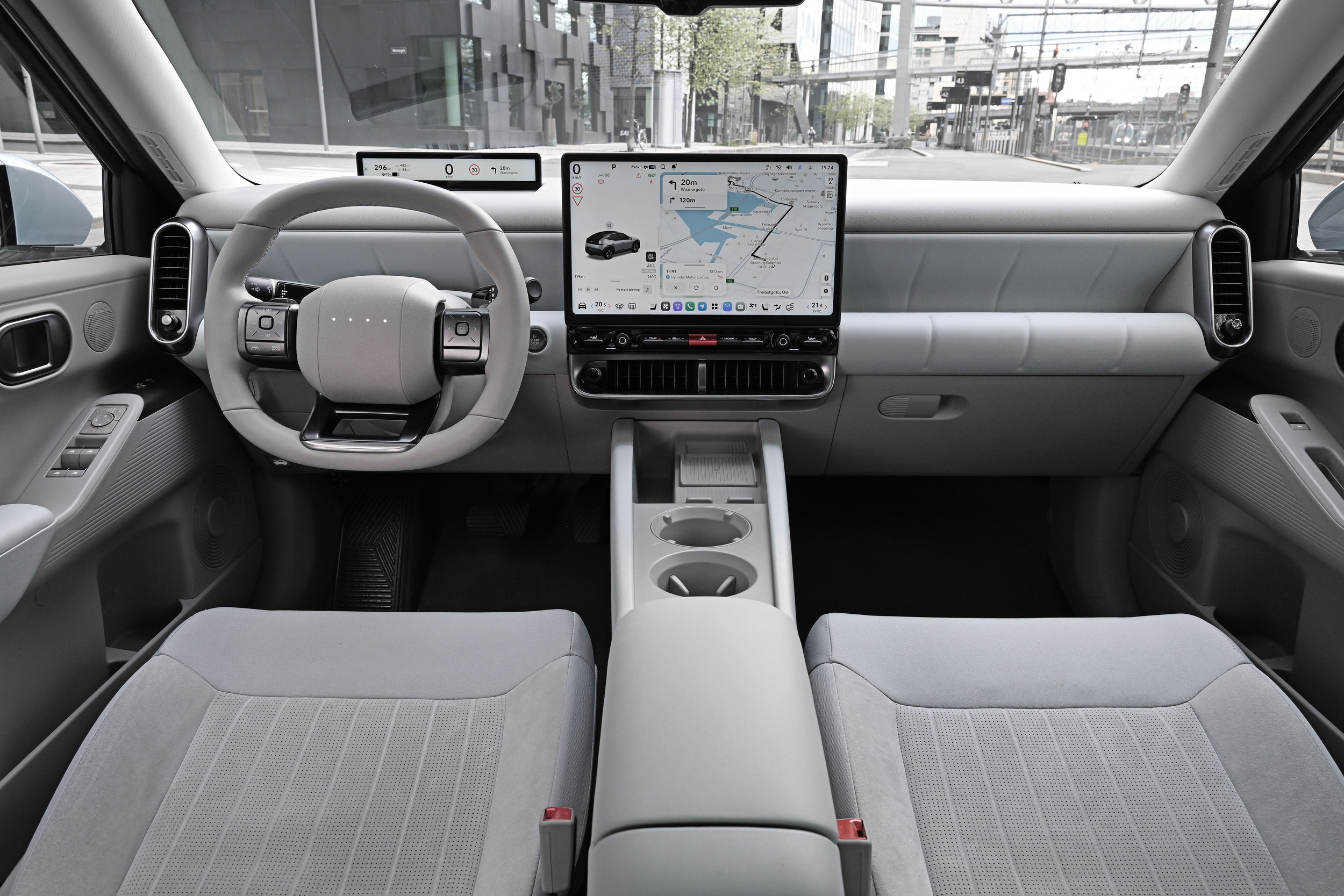
 Mitsubishi’s Building A Kei-Sized Pajero, And A Nissan Pickup For America

Over in ASEAN markets, Mitsubishi will roll out a new generation of the Xpander, the hybrid crossover minivan that first appeared in 2017 and was facelifted in 2022.

More: Mitsubishi’s New 400HP Compact Comes From The Same Factory As Your iPhone

The other five launches will be the fruit of collaboration with other brands. There is a fully electric coupe-SUV built on the Nissan Leaf, another electric SUV developed with Foxconn, a pair of Nissan-sourced kei wagons offered in combustion and EV forms, and a new pickup.

Two Pickup Projects With Nissan, Maybe Three

 Mitsubishi’s Building A Kei-Sized Pajero, And A Nissan Pickup For America

Speaking of trucks, another slide in the presentation mentions a new “pickup collaboration project with Nissan” for North America. A separate global pickup project is also under consideration, again with Nissan, alongside an updated Triton that is likely already in development

More: Mitsubishi’s New Triton Raider Got Everything Except The One Thing It Needed

Worth untangling the web here. The Australian-spec Nissan Navara is based on the current Mitsubishi Triton, while the electrified Nissan Frontier Pro draws on the Chinese Dongfeng Z9. That second one could feed into the global project, since it is rumored to reach Europe wearing Navara badges and could just as easily put on a Mitsubishi suit for markets with strict emissions rules.
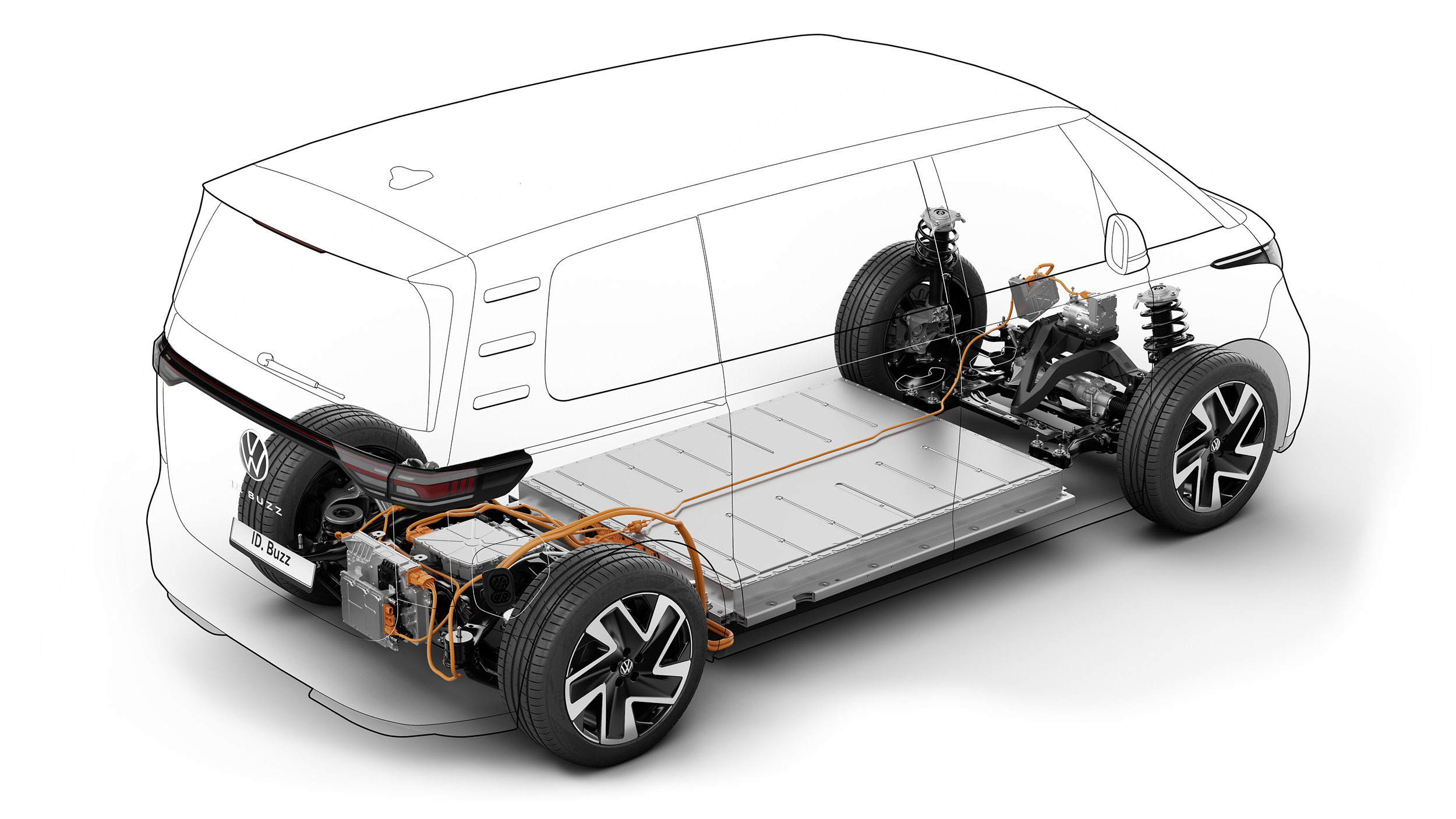
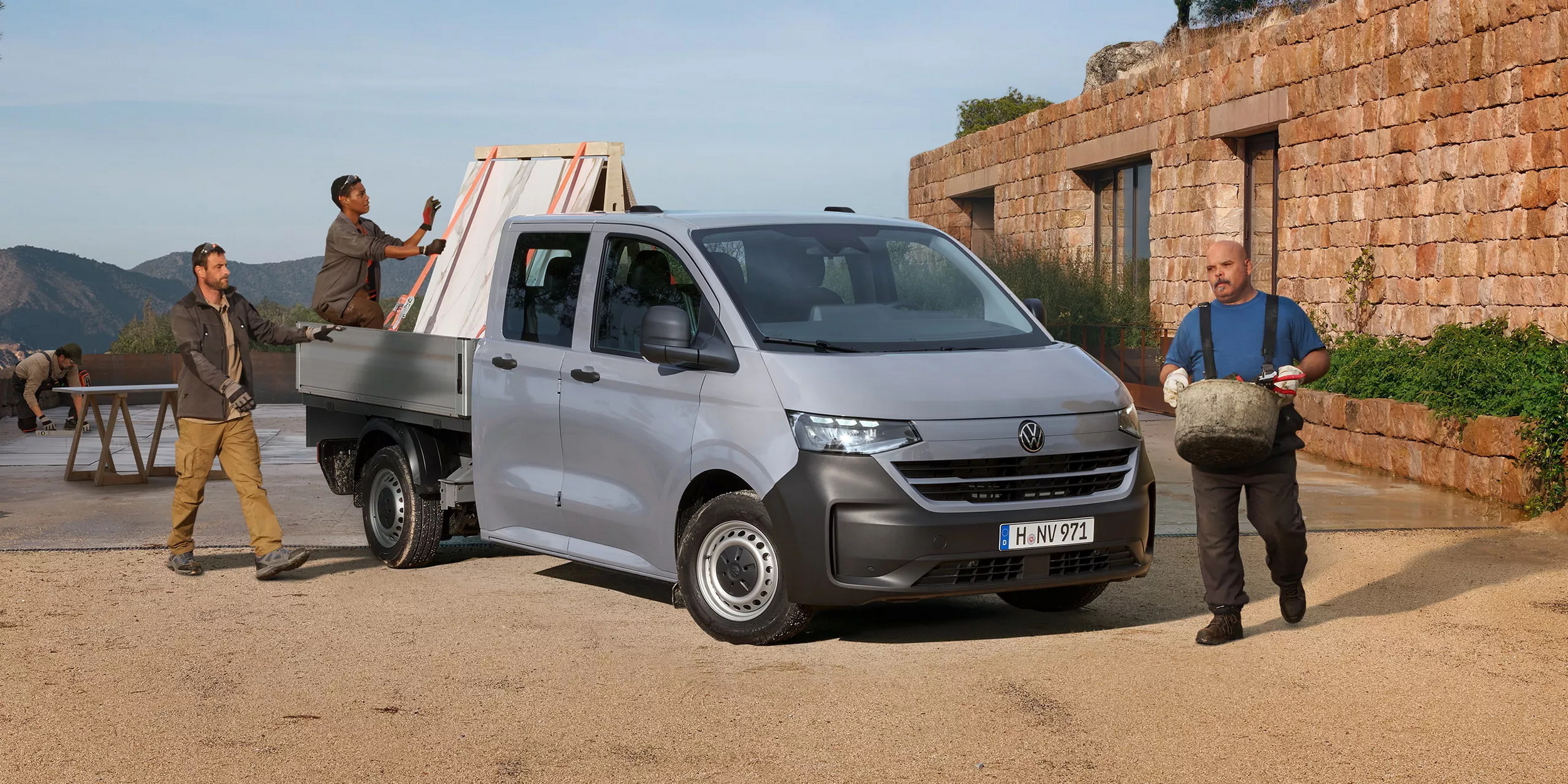
HEVs, PHEVs, and BEVs

In terms of powertrains, Mitsubishi’s future relies heavily on electrification. The company announced that five of the 13 upcoming models will be self-charging hybrids, and another five will be plug-in hybrids.

 Mitsubishi’s Building A Kei-Sized Pajero, And A Nissan Pickup For America

Since three models are listed as BEVs in the official teaser, there is no room for any non-electrified offering. That is a little puzzling, since the Pajero was thought to use the 2.4-liter turbodiesel from the Triton, though that engine could presumably gain hybrid assistance.

More: Mitsubishi Is Still Selling A New 4WD Pickup For Used Corolla Money

In fact, Mitsubishi explicitly states they are developing in-house PHEV/HEV-dedicated engines boasting a world-class 48% thermal efficiency, confirming their deployment across all models – including those riding on ladder-frame underpinnings.

To fight off rapid-fire releases from new competitors, the brand is using AI and digital transformation to slash development lead times by 20%. They are shrinking the timeline from the current 45 months down to 36 months to get these 13 models to market faster.

\\\\\\\\\

Mitsubishi

The Fun 2026 Renault 5 EV America Will Never Get To Buy | Review

PROS ›› Design, exceptional ride, handling, equipment CONS ›› Rear legroom, limited range on the highway

Plenty of carmakers reach into their own past and come back with clumsy pastiche. Renault is one of the few that gets it right. The R5 E-Tech is among the more desirable electric subcompacts in Europe right now, so we took the keys for a week to find out whether it holds up as something you actually live with.

The production version landed in 2024, three years after the concept, carrying retro-futuristic styling that reaches back to the original R5 of 1972. The French subcompact serves as a zero-emission alternative to the closely sized Clio and a successor to the aging Zoe, while sitting just above the Twingo E-Tech that has only recently joined the range.

None of this is coming to America. Renault left the US decades ago, and the R5 was built around European prices, European streets, and European tastes, with no plan to cross the Atlantic. So consider this a look at the charming little electric hatch America would probably love but can’t have.

More: Renault Finally Has A Proper Premium SUV, But Europe Doesn’t Get It

Our press car is the flagship Iconic trim painted in the striking but optional Pop Yellow shade with a sparkle effect, arguably the best fit for the new R5. The vivid color comes paired with a Diamond Black roof, a red accent strip along the flank, and 18-inch Chrono alloys, though I would take the Techno wheels given the choice. Iconic trim is also the only way to get the stronger 148 hp electric motor and the larger 52 kWh battery pack.

QUICK FACTS
› Model2026 Renault 5 E-Tech Iconic
› PowertrainSingle Electric Motor (FWD)
› Output148 hp (110 kW / 150 PS)
› Torque245 Nm (180 lb-ft)
› 0-100 km/h (0-62 mph)8.0 seconds*
› Top Speed150 km/h (93 mph)*
› Battery52 kWh Lithium-ion
› Range (WLTP)410 km (255 miles)
› Dimensions154.4 in L x 69.8 in W x 59 in H (3,922 x 1,774 x 1,498 mm)
› Wheelbase100 in (2,540 mm)
› Boot Capacity326 lt (11.5 cubic feet)
› Curb Weight1,524 kg (3,360 lbs)*
› Price (Greece)from €33,200 ($39,100)
SWIPE

*Manufacturer

\\\\\\\\\\\\\\

Photos Thanos Pappas for Carscoops

Looks are subjective, but everyone I interacted with had good things to say about the design of the R5, which turned more heads than most press cars I have reviewed. Besides the exotic color, my favorite details are the vertical LED taillights with a three-dimensional finish, the sculpted fenders, and the rally-style DRLs on the front bumper.

More: Renault’s New Electric Van Probably Looks Better Than Your Car

The result is a car with a sporty, playful character that is genuinely hard to ignore in a market drowning in interchangeable SUVs.

I am also taken with the small bump on the hood, a clear callback to the cooling vents of the classic 5 that earns its keep functionally too. Walk up to the car and the 5 emblem lights up in segments, reading out the battery charge level before you have even opened the door.

Premium Tech In A Small Package

\\\\\\\\\\\\\\\\\\\\\\

Photos Thanos Pappas for Carscoops

The interior is filled with tech, especially in the flagship Iconic trim. The rather bulky digital cockpit sits high, comprising a 10.3-inch digital instrument cluster that changes colors depending on the driving mode and a crisp 10.1-inch touchscreen that’s slightly angled towards the driver.

Review: The 2026 Renault Austral Facelift Is Polished, But It Has A BMW-Sized Problem

Renault’s Google-powered OpenR infotainment has intuitive menus and connects seamlessly to a smartphone. More importantly, it is joined by a row of physical climate controls on the center console. The only ergonomic foul is the volume buttons which are awkwardly positioned on top of the screen, although there is a dedicated stalk behind the steering wheel for easier operation.

Another slightly irritating thing is that the ChatGPT-powered “Reno” AI assistant kept popping up at irrelevant times during my conversation with the front passenger, reminding me of the animated paperclip from the old Windows Office.

The buttons on the steering wheel control most functions, including a Multi Sense button for switching drive modes (Eco, Comfort, Sport, Perso). The gear stalk only has drive and reverse, leaving park out of the equation. Equipment is quite generous with heated seats and steering wheel, wireless charging, and a full suite of ADAS including an auto parking function that works great.

\\\\\\\\\\\\\\

Photos Thanos Pappas for Carscoops

In terms of materials, Renault’s color a trim department did a great job in creating a youthful environment. The yellow recycled textile on the seats and front doors is a nice touch, paired with synthetic leather and yellow stitch, also found on the passenger side of the dashboard.

More: Radical Espace Reboot Leads Renault’s 36-Car Plan To Fight China’s Threat

As for practicality, the rear seats of the 3,922 mm (154.4 inches) long hatchback might feel cramped for tall passengers if they sit behind a tall driver. Legroom and headroom are tighter than a Fiat Grande Panda, although adequate for an urban-focused offering. The boot has a capacity of 326 lt (11.5 cubic feet) which is slightly above average for the segment. Don’t look for a frunk as the electric motor takes up all of the space under the hood.

Sharp Reflexes and Highway Manners

On the road, the Renault 5 E-Tech clearly punches above its weight. The real surprise is the balanced chassis setup with the sophisticated multi-link rear axle giving it the ride refinement of a much larger vehicle.

\\\\\\\\\\

Photos Thanos Pappas for Carscoops

The suspension soaks up potholes in the city and make it a comfortable cruiser on the highway where you’ll appreciate the exceptional noise insulation. At the same time, it is firm enough to stay flat and composed on a twisty road. The planted stance and low center of gravity are combined with a direct and communicative steering which is a rarity among modern EVs.

More: Ford Turns To French Carmaker To Revive Fiesta

The front mounted electric motor produces up to 148 hp (110 kW / 150 PS) which feels like the right number for the size and positioning of the EV, making me wonder if the Alpine A290 is really necessary. While the R5 is far from Tesla-fast with a 0-100 km/h (0-62 mph) acceleration in a modest 8 seconds, the power delivery is more usable and natural, especially to those coming from a combustion vehicle.

\\\\\\\\\\\\\\\\\\\\

Photos Thanos Pappas for Carscoops

In the city, it is helpful to use the B function with regenerative braking every time you lift off the throttle. I was going to complain about the lack of a one-pedal drive function although this was recently added to the Techno and Iconic trims with the more potent engine. Still, this won’t be offered as an update to existing owners.

Range And Charging

The 52 kWh battery pack offers a claimed WLTP range of up to 410 km (255 miles), which sounds far better than the 300 km (186 miles) of the smaller 40 kWh unit. In real life, you can easily match and surpass the 400 km (249-mile) barrier within an urban environment, where the EV is surprisingly efficient.

On the highway you’re probably looking at something closer to 250 km (155 miles) depending on the conditions and the speed.

\\\\\\\

Photos Thanos Pappas for Carscoops

During my time with the EV, I completed a 240 km (150-mile) highway trip without a charging stop. I had the A/C on and kept a stable 120 km/h (75 miles) speed for the most part, arriving to my destination with 10% battery charge and 40 km (25 miles) of remaining range.

More: The World’s Favorite Renault Got Longer, Wider And Weirder

However, the returning trip was different. While I traveled at similar speeds and even used the Eco mode that limits power and drops the top speed to 115 km/h (72 mph), I was forced to stop on the way as the range estimate was not enough to complete the trip. Thankfully, I found a fast charger so I only needed to stop for about 15 minutes to get back to a safe range estimate.

The R5 is capable of 100 kW fast charging, taking the battery from 15-80% in 30 minutes. Using a standard 11 kW wall box, a full charge takes around 4.5 hours. Furthermore, the model has V2L capability with a special adapter.

Pricing And Rivals

\\\\\\\\\

Photos Thanos Pappas for Carscoops

In Greece, where we tested it, the R5 E-Tech range opens with the Evolution trim at €26,900 ($31,700), or €22,400 ($26,400) once the local EV subsidies are applied. Keep in mind, prices include VAT (sales tax), which in the case of EVs is at the reduced rate of 13% rather than the standard 24%, as well as delivery fees.

Base kit is generous, but the entry car comes only with the smaller 40 kWh battery and the 118 hp (88 kW / 120 PS) motor. Step up to the mid-spec Tecno and you can have the 52 kWh battery paired with the 148 hp (110 kW / 150 PS) motor, priced at €33,200 ($39,100). The flagship Iconic, with the full features list, lands at €35,200 ($41,500) before subsidies.

More: VW’s New ID. Polo Starts Under $30K And Comes With Massage Seats

Overall, the cheapest R5 E-Tech closely matches the more budget-oriented and family-friendly Fiat Grande Panda Electric, while high-spec trims are priced on par with the base Mini Cooper E. Other contestants in the subcompact segment include the Peugeot e-208, Opel Corsa-e, Lancia Ypsilon Elettrica, and Citroen e-C3.

Still, the biggest rivals of the French EV are the upcoming VW ID.Polo and Hyundai Ioniq 3, both expected to hit European roads in the coming months. The R5 also faces strong internal competition from the new Renault Clio Full Hybrid E-Tech, especially for buyers who don’t have access to a home charger.

Notably absent from that list is the United States. In Greece the R5’s high trims line up on price against the base Mini Cooper E, a car Americans can actually buy. The Renault sitting next to it at the same money, the more characterful of the two, is the one they cannot.

Verdict

 The Fun 2026 Renault 5 EV America Will Never Get To Buy | Review

After spending a week with the Renault 5 E-Tech, I found myself just as excited as the day I first picked up the keys. This small hatchback successfully balances a sporty, playful character with genuine everyday usability.

Besides its stunning looks, the R5 makes a compelling case for the ideal second vehicle, one that excels as a refined urban dweller while remaining equally capable of handling weekend getaways, comfortable highway stints, and spirited runs on twisty B-roads.

While it may not offer segment-leading interior space, and the desirable high-spec flagship trim carries a premium price tag, the R5 is a car that never fails to put a smile on your face, making you feel several years younger.

Photos and Videos: Thanos Pappas for Carscoops

Hate The $640K Luce All You Want, Ferrari’s Boss Says The Money’s In

  • Ferrari CEO defends the Luce amidst heavy backlash from the public.
  • Vigna revealed they have already received bank transfers for the EV.
  • He also said the €550k ($640k) price is “fair to pay for innovation”.

A car can be panned by the public and still find buyers, and Ferrari is betting the gap between the two is wider than the noise suggests. The Luce’s unveiling set off a wave of criticism and dragged on the company’s share price before it rebounded, yet CEO Benedetto Vigna insists there is “strong interest” from clients, and that the €550,000 ($640,000) asked for Ferrari’s first EV is “fair to pay for innovation.”

Vigna made the case at an event in Modena on Thursday, where he said there is “strong interest, including from new clients.” He claimed buyers who attended the debut earlier this week have already put money down. “We’ve already received bank transfers, clients who were there want it,” the CEO said.

More: Deepfake Video Has Ferrari’s CEO And Jony Ive Saying What They Really Think About The Luce

According to Reuters, around 1,600 prospective customers saw the EV in person on Monday and Tuesday in Rome, with order books opening on Wednesday. The company will announce precise figures about the number of Luce orders in July, as part of the financial results for Q2 2026.

\\\\\\\\\

Photos Ferrari

The loudest complaints concern the way the Luce looks, a design that breaks sharply with Ferraris of the past. The electric sedan was penned by LoveFrom, the studio founded by former Apple design chief Jony Ive and Marc Newson. Most fans came away cold, missing the emotion they expect from Maranello, while others pointed an uncomfortable resemblance to cars from far less exotic brands.

More: Ferrari’s Luce Is A Four-Door EV Designed By The iPhone Guy

The CEO believes that critics would change their minds if they saw the Luce in person: “If you see it and try it, you immediately understand it was not copied and it has ​nothing to share with other EVs you have seen ​and are ⁠produced by others, in terms of interiors, exterior and performance.”

 Hate The $640K Luce All You Want, Ferrari’s Boss Says The Money’s In

Vigna also stressed that the electric Luce is an addition to the range, not a replacement, and that Ferrari will keep building ICE and hybrid cars alongside it.

Ferrari shares are clawing back ground after sliding 8.8 percent in the wake of the Luce’s debut. The current CEO’s optimism isn’t universally shared. Former boss Luca di Montezemolo took a dimmer view, arguing the Luce is “hurting Ferrari” and that the company risks the “destruction of a legend.”

Who do you think is right? Sound off in the comments below.

\\\\\\\\

Photos Ferrari

The Tommykaira ZZ Lives Again With A Facelift, But Only One Exists

  • Ex-GLM employees gave the second-gen Tommykaira ZZ a facelift.
  • The street-legal model features a redesigned nose with slim LEDs.
  • It retains the stock underpinnings and 305 hp electric powertrain.

The Tommykaira ZZ is a rare Japanese sports car that has been discontinued since 2021, but that didn’t stop a designer and an engineer who used to work in its parent company from giving it a facelift. The result is the Number Nine Works Sweep 9, a street-legal one-off build with an interesting backstory.

The project is the fruit of collaboration between automotive designer Ryuhei Ishimaru and engineer Yuji Fujitsuka who was responsible for the development of the second-gen Tommykaira ZZ. Both used to work for GLM, which was the brand behind the second-gen Tommykaira. However, they have since moved on starting their own companies, the independent design studio Fortmarei and the engineering firm Number 9 Works.

More: Rare TommyKaira ZZ Sends Fans Into A Wild Bidding War And The Dealer Still Said No

The two men got together this year, bringing the discontinued Tommykaira ZZ into the present with a styling refresh. The goal was to redesign the front cowl with factory-grade quality, while preserving the rear section and the original livery. They also wanted the resulting vehicle to be fully compliant with Japanese safety regulations, adding another layer of complexity into the project.

 The Tommykaira ZZ Lives Again With A Facelift, But Only One Exists
The second-ten Tommykaira ZZ (above) and the Number Nine Works Sweep 9 (below).
 The Tommykaira ZZ Lives Again With A Facelift, But Only One Exists

The highlight of the Number Nine Works Sweep 9 is the ultra-slim LED headlights with an elongated shape that look much sleeker than the original units. These are combined with extra LEDs on the bumper that has received a cleaner design without any intakes.

More: This Retro Roadster Is Not What You Think It Is

The grille-less nose and the sculpted front fenders blend nicely with the carry-over bodywork on the profile. Still, it would be nice to see a similar redesign of the rear end that retains the Lotus-sourced quad round taillights.

The whole build was realised by the engineer, the designer, and a few skilled craftsmen. More importantly, it is a fully functional model with Japanese license plates that can be driven on public roads.

\\\\\\\\\\\

Predictably, the Number Nine Works Sweep 9 doesn’t have any performance or chassis upgrades over the donor vehicle.

Unlike the original Tommykaira ZZ from the ’90s that was powered by a 2.0-liter four-cylinder engine, the second generation that debuted in 2014 has a fully electric powertrain. The sports car is based on a tub-style chassis with a single electric motor producing 305 hp (227 kW / 309 PS) and 415 Nm (306 lb-ft) of torque.

More: A Corvette That Forgot It Was A Corvette Just Sold For Near-New C8 Money

The team doesn’t plan on applying the same treatment to more examples of the model, although we can easily see why owners of the second-gen Tommykaira ZZ would want to approach them. In any case, this project proves that focused styling tweaks can make a big difference in the aura of a vehicle.

Designer Ryuhei Ishimaru told CarScoops: “Number Nine Works Sweep 9 is a 2026 street-legal technology demonstrator built on the Tommykaira ZZ EV platform, balancing strict safety compliance with its original design language. It is a very personal “moment of truth” for me, as it’s a collaboration with the original engineer after 10 years.”

\\\\\\\\\

Ryuhei Ishimaru

Chery Just Lined Up A Kei Car For Japan, And Suzuki Should Be Worried

  • Chery is entering Japan through a joint venture called Emta.
  • The first model is a boxy electric kei hatchback due in 2027.
  • A Japanese factory could come after 2030 if sales targets land.

Chery’s global appetite shows no sign of slowing, and the Chinese brand has now identified its next target: Japan’s kei car segment. The company is taking part in a newly formed joint venture built around electric vehicles, the most protected corner of one of the world’s most insular markets.

The Singapore-based outfit, EMT (Electric Mobility Technology), is a five-way alliance. Chery and fellow Chinese automaker Jiangsu Yueda Automobile Group sit alongside Japanese retailer Autobacs Seven, Chinese battery maker Gotion, and Japanese industrial painting firm Anest Iwata. The venture will trade under the Emta brand, short for Easy, Made To All.

More: Chery Borrowed The RS6’s Face, The A5’s Profile, And The A7’s Tail, All On One Sedan

According to Car News China, Emta has staffed itself with executives drawn from Honda, Mazda, and Nissan. The CEO is He Xiaoqing, whose track record includes senior posts at Changan Ford, SAIC, and Chery itself.

The Emta #01 Leads The Charge

The opening act is the Emta #01, a small electric hatchback due in production form in the second half of 2027. The styling is boxy and clean, with covered-grille LED graphics that hint at Suzuki more than at anything Chinese. Rear sliding doors round out the package, simplifying access to a cabin that, by kei standards, needs every millimeter it can find.

 Chery Just Lined Up A Kei Car For Japan, And Suzuki Should Be Worried

The Emta #01 measures 3.4 m (133.9 inches) long, putting it in the same footprint as Chinese microcars like the Chery QQ Ice Cream. Full technical specs are still under wraps, but the car will ride on Chery underpinnings, almost certainly with a Gotion battery pack. Expect the latest infotainment and connectivity tech on board, along with Level 2 ADAS.

More: BYD’s Tiny EV Has Japan’s Best-Selling Kei Car Rethinking Its Entire Future

Production will take place in China, with Autobacs Seven handling sales in Japan. Emta wants the price to land somewhere close to a conventional ICE-powered kei car. When it arrives next year, the Emta #01 will be only the second kei car of Chinese origin, following the BYD Racco.

Following the 2027 launch, Emta plans to expand its lineup with three additional EVs by 2029. The official teaser suggests that those will be a small hatchback, a small crossover, and a minivan. The long-term goal is to establish a Japanese factory after 2030 if sales targets are met.

 Chery Just Lined Up A Kei Car For Japan, And Suzuki Should Be Worried

EMTA

❌