Normal view

There are new articles available, click to refresh the page.
Today — 28 April 2026Vehicles

‘Hero’ Teacher Praised by Parent Florida School Bus Crash Evacuation

28 April 2026 at 01:47

A parent is calling a kindergarten teacher a hero after he helped children escape a school bus following a crash April 2, near the Jacksonville Zoo, reported News 4 Jax.


Mandy Rubin spoke at a Duval County school board meeting, recounting the moments after a semi-truck rear-ended a bus carrying about 30 San Pablo elementary school students.

Rubin reportedly said teacher Franz Lerch helped keep her son calm and safely freed him from his seat in the chaotic aftermath of the crash.

“Mr. Lerch, in an extreme moment of crisis, was calm and collected, keeping my child calm while he worked to cut him loose from his seat,” Rubin said.

She urged district leaders to formally recognize Lerch, calling his actions selfless and courageous.

“He’s a hero in every sense of that word,” Rubin stated. “I also know that he would not single himself out. I know that any teacher would have acted similarly without thought for themselves. Because, to a public-school teacher, any child is their child.”

Student Injuries Could Have Been Worse Without Hero’s Actions

Her comments reportedly drew applause from those attending the meeting. Duval County Schools Superintendent Dr. Christopher Bernier also addressed the crash during the meeting, acknowledging staff at San Pablo Elementary School. He recognized the school’s assistant principal for stepping in to help lead the campus while the principal went to the hospital following the incident.

Four children were reportedly injured and taken to the hospital, while a fifth person was also transported. Reported injuries include two broken legs, cuts to the head and chest pain. Officials have not released updates on the conditions of those injured.

According to the article, the semi-truck driver told police he saw the bus stopped at railroad tracks and attempted to brake, but said his brakes were not working. The driver reportedly swerved in an attempt to avoid the bus but was unable to prevent the collision.

The investigation into the crash remains ongoing as families and school officials continue to recover from the incident.


Related: New York School Bus Driver Dies After Medical Emergency
Related: Brother and Sister Help Save School Bus Driver During Medical Emergency in Ohio
Related: Massachusetts School Bus Driver Crashes into Trees Due to Medical Emergency
Related: Minnesota Student Radios Help After School Bus Driver Suffer Medical Emergency


Editor’s Note: The article states “cut the seats.” STN inferred the article is relating to seatbelts, especially as Florida law requires the lap restraints. 

The post ‘Hero’ Teacher Praised by Parent Florida School Bus Crash Evacuation appeared first on School Transportation News.

WATCH: Exclusive Leadership Event Summons Transportation Leaders for Networking, Professional Development

27 April 2026 at 16:53

The Transportation Director Summit returns to Nevada this summer for a two-day exclusive leadership event designed to empower student transportation leaders.

The training begins Friday, July 10 at the STN EXPO West conference. The first part of the event features a Welcome Networking Reception and Top Challenges Discussion hosted by STN Publisher and President Tony Corpin. To attend, participants are qualified as leading their transportation operations and must fill out a survey on their leading challenges they face. Corpin will facilitate discussion on those points. The participants will be matched with vendor partners who provide technological solutions that could assist with these operational challenges.

The exclusive leadership event continues Saturday morning in scenic South Lake Tahoe for an all-day networking and leadership training experience. Monday’s keynote speaker Bruce Turkel will provide training modules on “All About Them Leadership Lab: Turning Insight Into Action.” During the day, Turkel will discuss how his signature mindset can be used to strengthen communication with team members and align goals, which improve performance and create lasting leadership impact. Turkel’s four-part training includes learning to understand what people truly value, purposely communicating with clarity, building stronger connections through trust, and guiding teams through uncertainty to create successful results.

A Leadership Networking Retreat

The transportation directors will enjoy breakfast and lunch courtesy the vendor partners sponsoring the event. All participants wlll make new connections, engage in targeted discussions that address their specific challenges, and leave with practical applications and strategies to transform their operations. Transportation will be provided Saturday to and from Incline Village.

Applicants for this exclusive leadership event must hold the position of transportation director or a qualified equivalent and be able to attend both days of the Summit. Email for more information about qualifying for the Transportation Director Summit.

The Early Bird Deadline for main conference registration ends June 5, register at stnexpo.com/west. In addition to the Transportation Director Summit, the STN EXPO West conference features educational sessions, a dynamic keynote speaker, hands-on training and unique networking experiences.


Related: Turkel to Uncover Secrets of Communicating Relevance at STN EXPO West
Related: WATCH: Active-threat Response Training Subject of Opening STN EXPO West Session
Related: STN EXPO West Registration Open for 2026, Features Innovative Conference Experience

The post WATCH: Exclusive Leadership Event Summons Transportation Leaders for Networking, Professional Development appeared first on School Transportation News.

Event Resolution at the Speed of Automation

By: STN
27 April 2026 at 16:17

Ian stood patiently at the crowded bus stop when he noticed a nearby woman glaring at him. Is she mad at me? he wondered. A moment of unease settled in, but because he didn’t recognize her, he brushed it off as mistaken identity. Soon after, his normal morning took a frightening turn.

The woman’s aggression escalated to physical assault, leaving Ian shaken. His split upper lip and swollen cheek caught the driver’s attention as he boarded the bus, and she immediately pressed the panic button.

What happened to Ian? How and why did he sustain injuries? The busy driver missed the event as she approached the stop, so the transportation director had many questions. Within minutes, he had answers.

The Solution

ARMOR™ Software Suite, an advanced, wireless fleet management tool, and an integrated interior/exterior surveillance system enabled the speedy resolution. Two of the suite’s many features played crucial roles: automated event alerts and automated video downloading. These features could be equally effective at streamlining resolutions for your operation. Read on to learn how.

ARMOR Admin/Actions for automated event alerts.

Automated Event Alerts

Seconds after Ian’s driver pressed the panic button, ARMOR auto-generated an alert and sent it to the transportation director’s cellphone. This alert compelled the director to check ARMOR Live’s high-definition views to assess the situation. The views revealed a distressed, injured Ian, but no other details. How did the director gather relevant information so quickly? He clicked over to ARMOR AutoPilot, an archive for auto-downloaded video clips.

ARMOR AutoPilot to review auto-downloaded video clips.

Automated Video Downloads

During setup, the director configured ARMOR to download video clips automatically, minimizing trips to manually pull hard drives. He also directed ARMOR to add three minutes of pre- and post-event video to clips flagged by the panic button. These actions facilitated his review and response to Ian’s situation. Here’s how: The pre-event video captured the actual assault and the woman responsible. He immediately identified her as the mother of the classmate who Ian allegedly bullied.

Thanks to ARMOR’s automated capabilities, the transportation director quickly obtained proof of the assault to share with administration and law enforcement. Even more, ARMOR helped minimize investigation time and stress for his operation.

Would you like to minimize hard drive retrieval for your team? Save hours on event resolution? Provide wireless access to fleet data and video via internet-connected mobile devices? The safety and time-saving benefits could be transformative for your operation.

Solution requires additional hardware and specific cellular service/data plans. Ask for details.

Let us show you all the ways ARMOR can simplify fleet management.

Contact us, call 800.228.9275 or connect with your sales rep today.

For more REI solutions, visit: radioeng.com.

The post Event Resolution at the Speed of Automation appeared first on School Transportation News.

Failed EV Startup Bollinger Forced To Sell Off Its Assets

  • Manufacturing equipment and 20 electric trucks from Bollinger will be sold.
  • The Michigan Economic Development Corp is also looking to recoup $1 million.
  • Bollinger’s founder recently bought back the company’s IP for two of its EVs.

While the modern era of electric cars has led to the successful establishment of several new brands, such as Rivian and Lucid, many others have tried and failed. One of them is Bollinger Motors, a small company that had wanted to launch a pair of utilitarian, electric off-roaders.

After struggling to get off the ground, Bollinger officially merged with California-based Mullen Automotive last year, but even that apparently wasn’t enough to save it. A US court recently ordered the auction of Bollinger’s assets because it had failed to pay several suppliers.

Read: Bollinger Gets A Patent For Their Unique Passthrough And Frunkgate

Key manufacturing equipment from Bollinger will be sold through an online auction. This will include battery testing and validation systems used by the car manufacturer, as well as vehicle lifts and tooling. More importantly, 20 examples of the Bollinger B4 Class 4 electric truck will be available, along with other vehicles, shop equipment, and inventory.

A Tale Of Troubles

 Failed EV Startup Bollinger Forced To Sell Off Its Assets
Bollinger B4

Not only is Bollinger being forced to liquidate its assets, but the company is also being investigated by the Department of Labor and Economic Opportunity following dozens of complaints about unpaid wages or benefits.

As reported by Crains Detroit, the Michigan Economic Development Corp is also seeking to be repaid roughly $1 million of a $3 million award that was disbursed to the company in 2023. At the time, Bollinger said it’d invest $44 million into the state and create 237 jobs in Detroit.

Bollinger may not be gone forever, though. Last month, company founder and former chief executive Robert Bollinger bought back the intellectual property and prototypes of the original B1 and B2 electric off-roaders for less than $250,000. He was able to buy back these important assets after the company was ordered into receivership by a judge in Ohio. It’s unclear if Robert Bollinger plans to try to revive the B1 and B2, but he recently told The Detroit News that he believes there’s an opening in the EV market for vehicles like them.

\\\\\\\\\\

Slate’s Electric Truck Debuted A Year Ago, The Silence Is Becoming Deafening

  • Last week marked one year since Slate introduced their electric truck.
  • The company hasn’t said much since then, but has over 160,000 reservations.
  • Pricing begins in the mid-$20,000 range and deliveries are set for late 2026.

Slate Auto burst onto the scene a year ago as they introduced their affordable electric truck on April 24, 2025. It generated a ton of interest thanks to a starting price of under $20,000 after federal incentives.

Fast forward a year and the company hasn’t said much since then. Sure, they post flashy videos on social media, but there’s a concerning lack of substance for a vehicle that’s supposed to be launched in the coming months.

More: Slate’s $28K EV Truck Is So Basic Even The Repair Network Is DIY

The last update came on April 16, when Slate revealed they received $650 million in funding and have secured over 160,000 reservations. That’s a lot, but you can reserve the vehicle for $50 and the fee is fully refundable. Furthermore, as we’ve seen with the Tesla Cybertruck, a huge number of reservations doesn’t always pan out to be a ton of orders – especially when the price jumps significantly.

Despite a lack of meaningful updates, the company has previously said the truck will have a 52.7 kWh battery that feeds a rear-mounted motor producing 201 hp (150 kW / 204 PS) and 195 lb-ft (264 Nm) of torque. That should enable the model to accelerate from 0-60 mph (0-96 km/h) in eight seconds, before hitting a top speed of 90 mph (145 km/h).

Swipe to see us go topless.

Posted by Slate Auto on Friday, April 3, 2026

This is said to give the truck a range of 150 miles (241 km), but the company has mentioned an optional 84.3 kWh battery pack that increases the distance to 240 miles (386 km). When the battery is low, a 120 kW DC fast charger can take it from 20-80% in less than 30 minutes.

While we know a number of specifications, additional details are hazy. However, Slate has said the model will have 17-inch steel wheels, crank windows, and a universal phone mount as your smartphone will function as the infotainment system.

The company has also touted a handful of driver assistance systems such as active emergency braking, forward collision warning, and up to 8 airbags. More notably, the truck will be offered with a flat-pack accessory kit that transforms the vehicle into an SUV complete with a roll cage and a rear seat. The company has also promised over 100 accessories and an assortment of wraps.

\\\\\\\

While the silence is becoming deafening, Slate has promised to reveal more details in June. That’s when final pricing will be announced and when customers can begin pre-ordering the truck.

With the federal tax credit eliminated, Slate now says the model is expected to begin in the “mid-$20,000’s.” That’s significantly more than the original estimate of under $20,000 and it’s roughly on par with the $28,145 Ford Maverick. More worryingly for Slate, the Blue Oval is also working on a $30,000 electric truck, but they’ve been pretty tight-lipped about it themselves.

 Slate’s Electric Truck Debuted A Year Ago, The Silence Is Becoming Deafening

Hyundai’s ICCU Recall Was Supposed To Close The Book On Stranded EV Owners, A Lawsuit Says It Reopened It

  • Hyundai, Kia, and Genesis EV owners say ICCU failures are still stranding drivers.
  • Lawsuit claims replacement ICCUs may be just as defective as the originals.
  • 12-volt battery drain, limp mode, and total power loss remain key complaints.

Hyundai and Kia have built some genuinely impressive electric vehicles over the last few years but one issue continues to plague many owners. A single part called the Integrated Charging Control Unit, or ICCU for short, manages charging between the high-voltage battery and the 12-volt system to ensure both systems work properly and in harmony.

The thing is that when the ICCU fails, the car can largely become a giant brick. Hyundai and Kia have issued recalls to fix ICCU-related issues but now a class action lawsuit claims that the fix is just using more bad parts.

More: Hyundai Fixed His ICCU Then Let Thieves Total The Rest Before He Even Saw It

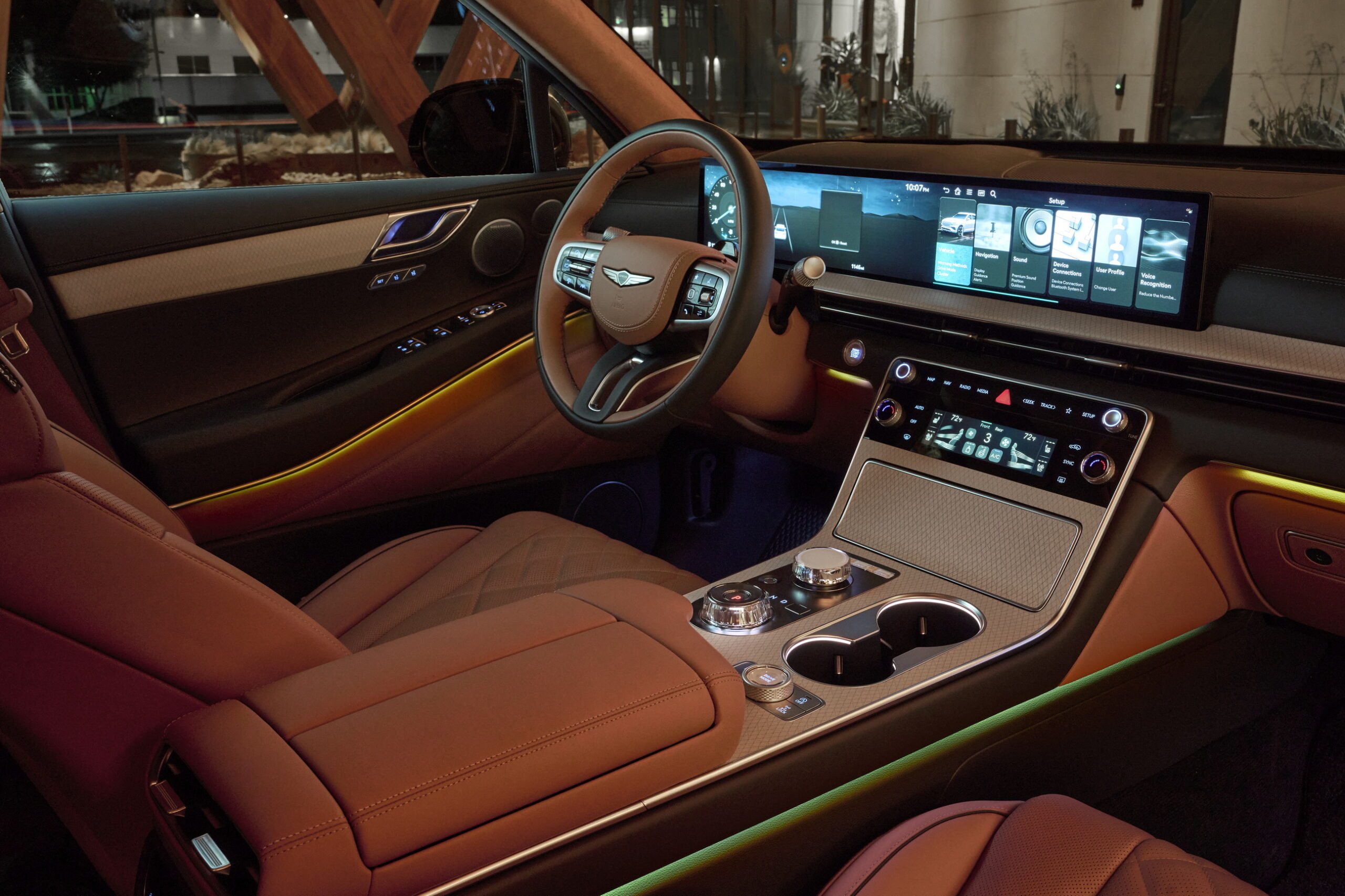
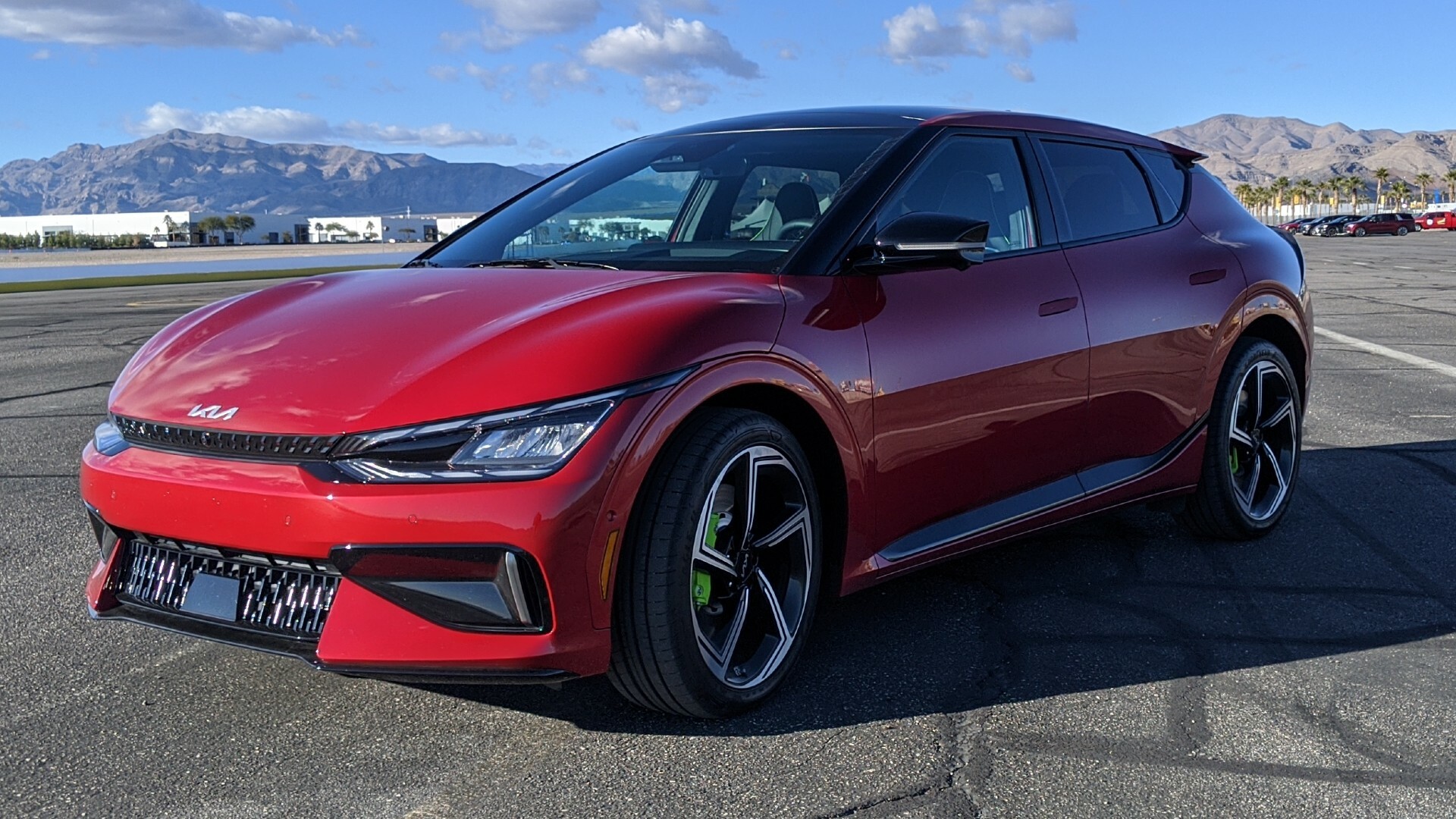
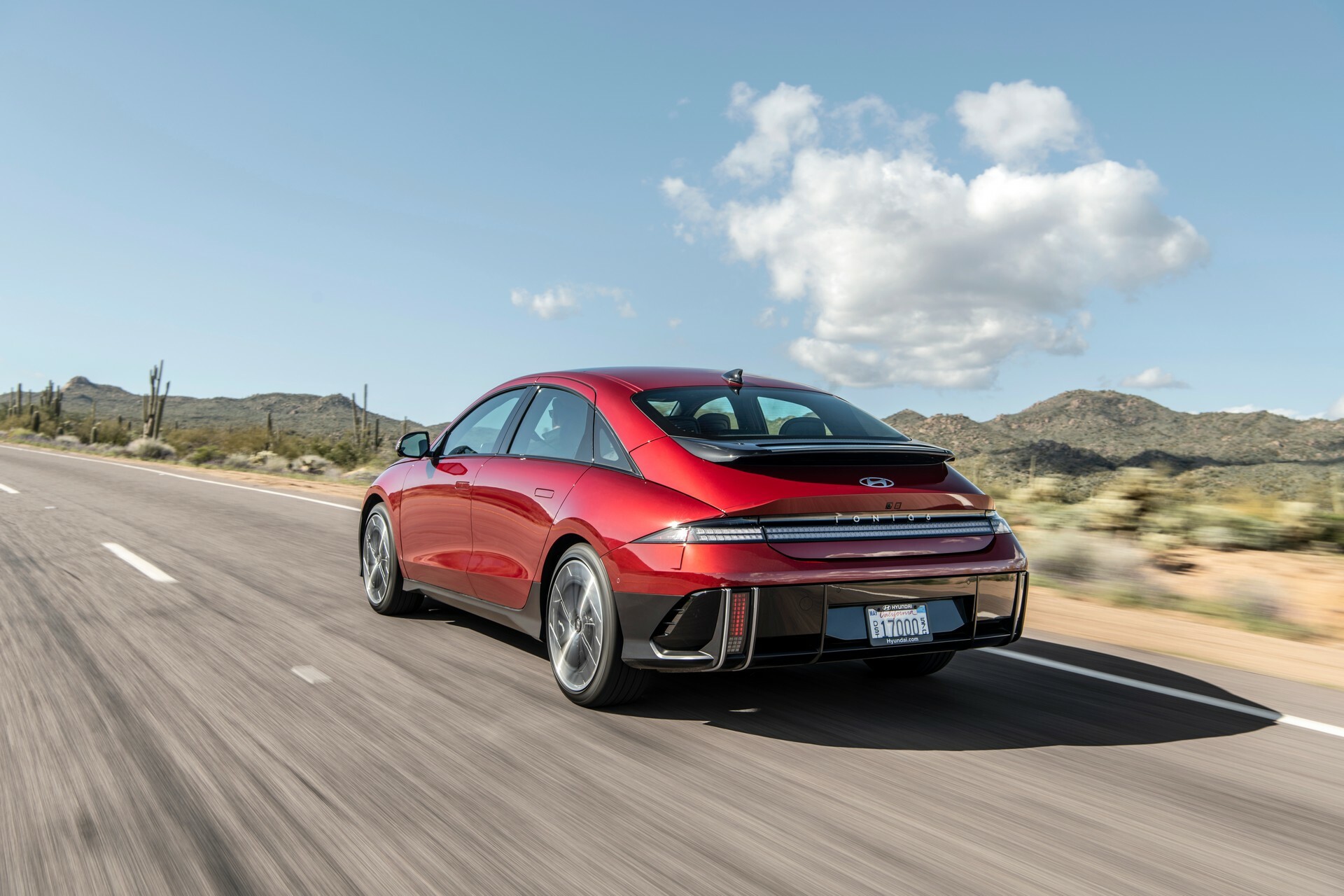
The lawsuit, filed in U.S. District Court for the District of New Jersey, targets Hyundai Motor Company, Kia, Genesis Motor, and Hyundai Kefico, the supplier behind the charging control units. Affected vehicles include the 2022–2024 Kia EV6, 2022–2024 Hyundai IONIQ 5, 2023–2025 Hyundai IONIQ 6, 2023–2025 Genesis GV60, 2023–2025 Genesis Electrified GV70, and 2023–2024 Genesis Electrified GV80.

 Hyundai’s ICCU Recall Was Supposed To Close The Book On Stranded EV Owners, A Lawsuit Says It Reopened It

According to the filing reviewed by Carcomplaints, the central grievance isn’t that these cars have problems. It’s that they allegedly keep having them after a recall was meant to put the matter to rest. Two plaintiffs, Hayes Young of New Jersey and Roy Williams of Kentucky, say their recall service accomplished nothing.

Young says his 2023 IONIQ 5 SEL suffered a dead 12-volt battery in December 2025 that required replacement under warranty. He claims the problem returned, and his dealer allegedly pointed to the ICCU as the cause, yet no replacement was offered.

 Hyundai’s ICCU Recall Was Supposed To Close The Book On Stranded EV Owners, A Lawsuit Says It Reopened It
Stephen Rivers for Carscoops

Williams says his leased 2025 EV6 entered limp mode after a loud bang, requiring a tow to the dealer. After battery charging, software updates, and eventually a battery replacement failed to solve things, the ICCU was reportedly replaced in March 2026.

The lawsuit also cites owner complaints involving charging plug damage during home charging and dashboard warnings like “Check Electric Vehicle System” and “12-volt battery voltage low stop safely.”

Importantly, none of the defendants (Hyundai, Kia, etc) has responded to the suit. Typically in cases like this, the automaker(s) will file a motion to dismiss but it may be several days or longer before the next step in the process takes place.

 Hyundai’s ICCU Recall Was Supposed To Close The Book On Stranded EV Owners, A Lawsuit Says It Reopened It

Tesla’s California Sales Fell 24 Percent, Nearly Everyone Else Got Crushed

  • California EV sales dropped 40% year over year in the first quarter.
  • Tesla shed the most volume yet gained share as rivals fared worse.
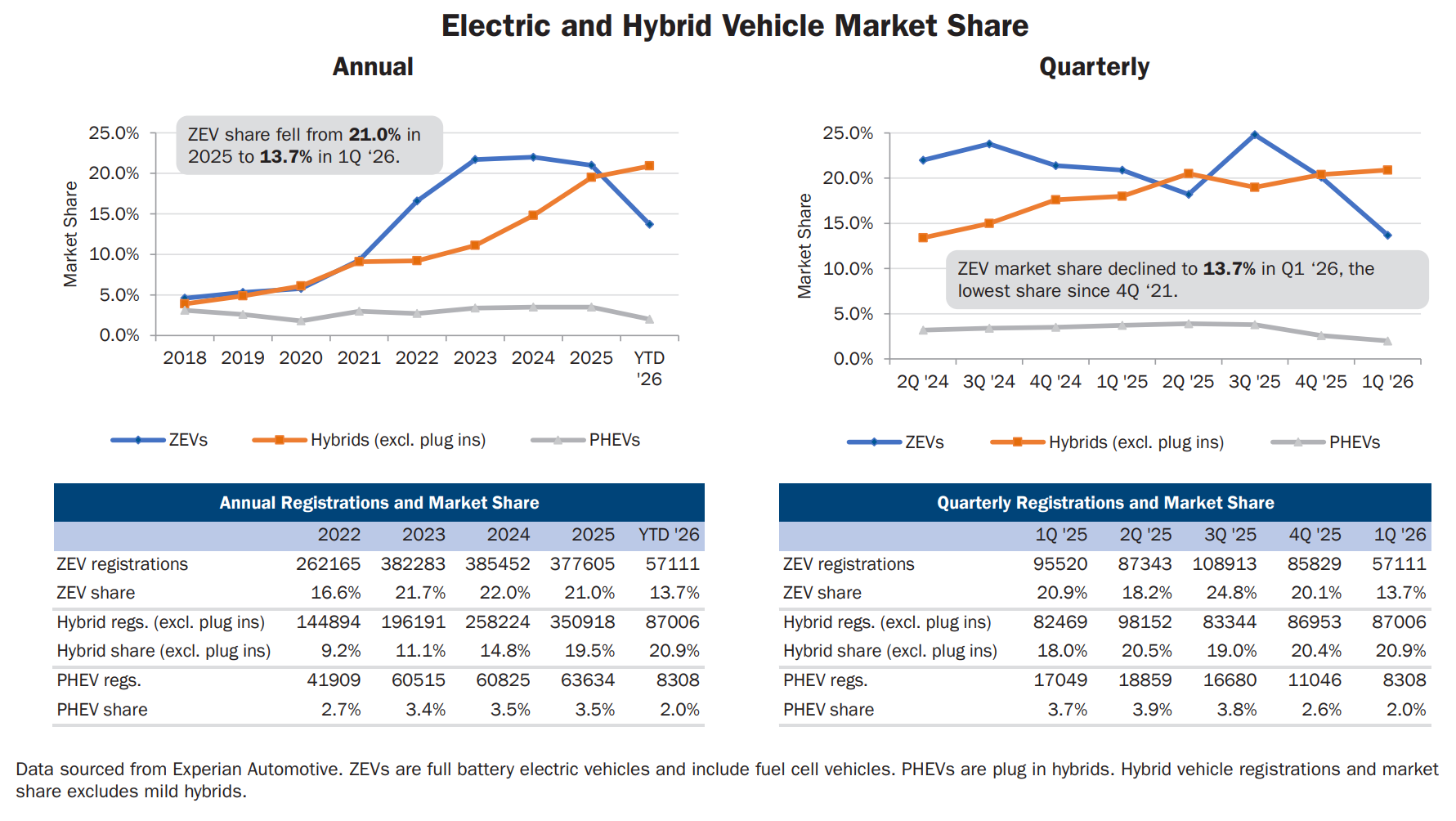
  • ZEV market share across the state has slipped to just 13.7%.

For years, California has set the pace for EV adoption in America, the bellwether other states watched. Now the bellwether is wobbling. Recent sales data reveal a significant decline in the state’s EV registrations through the first quarter of the year, driven by a sharp drop in demand for new Tesla models.

So far this year, a total of 57,111 zero-emission vehicles (ZEV) have been sold across the Golden State. This represents a significant 40.2 percent decline from the 95,520 sold over the same period last year, and comes on the back of an overall drop in new car registrations of 8.9 percent, falling from 457,525 to 416,810.

Read: Rivian Beat Four Major Automakers In EV Sales, And Its Biggest Model Hasn’t Even Launched Yet

The decline in demand for ZEVs means they accounted for just 13.7 percent of the total market in Q1 2026. By comparison, they had a 16.6 percent share in Q1 2022, peaking at 22 percent in Q1 2024 before falling slightly to 21 percent in Q1 2025.

Things look particularly troubling for Tesla. First-quarter registrations fell 24.3 percent to 31,958, down from 42,211 a year earlier. In raw volume, no brand lost more. In percentage terms, Tesla actually weathered the storm better than most of its rivals. Despite its own losses, Tesla’s slice of the EV pie grew from 44.2 percent in Q1 2025 to 56 percent last quarter, less because Tesla improved than because everyone else collapsed around it.

 Tesla’s California Sales Fell 24 Percent, Nearly Everyone Else Got Crushed

Most Brands Suffer

The collapse around Tesla is brutal. Over at Acura, ZEV sales fell from 1,279 to just 11 units in Q1, down 99.1 percent. Audi managed 210 registrations against 2,319 a year earlier, down 90.9 percent. BMW fell 58.9 percent, from 5,301 to 2,180. Chevrolet dropped 59.6 percent to 1,875. Ford was off 58.8 percent at 2,374. Honda plunged 81.6 percent to 832. Dodge mustered 16 units, down 79.7 percent. Hyundai held up comparatively well, off 30.4 percent at 3,586.

Only a handful of brands moved the other way. Lexus posted the standout figure, climbing 192.1 percent to 1,405 units, while Toyota grew 37.8 percent to 2,599 and Lucid added 37.1 percent to reach 1,315. Cadillac edged up 17.1 percent to 1,771.

Several factors have fed into the decline. Affordability concerns remain prevalent across the state, as they are throughout the country, while financing costs remain high due to current interest rates. Additionally, tariffs have driven higher prices, and overall inflation has spiked, while the phase-out of the federal tax credit has done the rest. None of this is mysterious, it all adds up.

Top 25 Selling Hybrid, ZEV, and PHEV Models
RankModelSales
1Tesla Model Y22,907
2Toyota Camry14,903
3Honda CR-V8,315
4Tesla Model 35,688
5Honda Civic5,507
6Toyota RAV44,770
7Honda Accord4,330
8Toyota Corolla3,639
9Toyota Sienna3,252
10Toyota Grand Highlander3,027
11Hyundai Ioniq 52,778
12Lexus RX2,714
13Ford Maverick2,631
14Kia Sportage2,588
15Toyota bZ4X2,527
16Hyundai Santa Fe2,201
17Hyundai Tucson2,194
18Toyota Prius2,139
19Mazda CX-501,963
20Lexus NX1,827
21Kia Niro1,805
22Subaru Forester1,704
23Tesla Model X1,652
24Ford Mustang Mach-E1,578
25Rivian R1S1,520
SWIPE
California ZEV Sales 2026
MakeQ1-25Q1-26% Diff.
Acura1,27911-99.1
Audi2,319210-90.9
BMW5,3012,180-58.9
Cadillac1,5121,77117.1
Chevrolet4,6411,875-59.6
Dodge7916-79.7
Ford5,7582,374-58.8
Genesis54692-83.2
GMC913376-58.8
Honda4,510832-81.6
Hyundai5,1563,586-30.4
Jeep14742-71.4
Kia3,0021,554-48.2
Lexus4811,405192.1
Lucid9591,31537.1
Mazda20-100.0
Mercedes-Benz3,617654-81.9
MINI20761-70.5
Nissan1,447150-89.6
Other1,059133-87.4
Polestar316219-30.7
Porsche1,335409-69.4
Ram1141,300.0
Rivian2,8721,841-35.9
Subaru924465-49.7
Tesla42,21131,958-24.3
Toyota1,8862,59937.8
Volkswagen2,404445-81.5
Volvo636524-17.6
TOTAL95,52057,111-40.2
SWIPE

A 550 HP Inline-Six From The Charger Could End Up In Alfa’s Next Giulia And Stelvio

  • The redesigned Alfa Romeo Giulia and Stelvio are due in 2028.
  • They’ll be offered with conventional, electric, and plug-in hybrid power.
  • Models reportedly had to be reengineered to allow for engine cooling.

Alfa Romeo was set to launch redesigned versions of the Giulia and Stelvio this year. However, the company got cold feet after seeing other automakers deal with lackluster demand for electric vehicles.

Instead of pushing the models out and hoping for the best, Alfa embraced a radical rethink and is delaying the vehicles to give them additional powertrains. While the redesigned sedan and crossover ride on the STLA Large platform, which underpins the Dodge Challenger and allows for both ICE and electric powertrains, things are more complicated than just installing an engine.

More: Alfa Romeo Scraps New Giulia And Stelvio Plans To Start Fresh

According to Autocar, the vehicles had to be reengineered to “allow more cooling for combustion powertrains.” As part of the makeover, the models will reportedly be equipped with new fascias as well as a functional grille.

\\\\\\

The exact details remain to be seen, but patent images of the Stelvio surfaced last year and showed the model would have slender headlights and a small V-shaped grille. The crossover also had sizable intakes, although they appeared to be largely blocked off.

Elsewhere, there was streamlined bodywork, pronounced wheel arches, plastic body cladding, and a rounded roof. The original Stelvio design also included an angular rear window, a large spoiler, and a distinctive taillight area.

A Powertrain For Everyone

 A 550 HP Inline-Six From The Charger Could End Up In Alfa’s Next Giulia And Stelvio

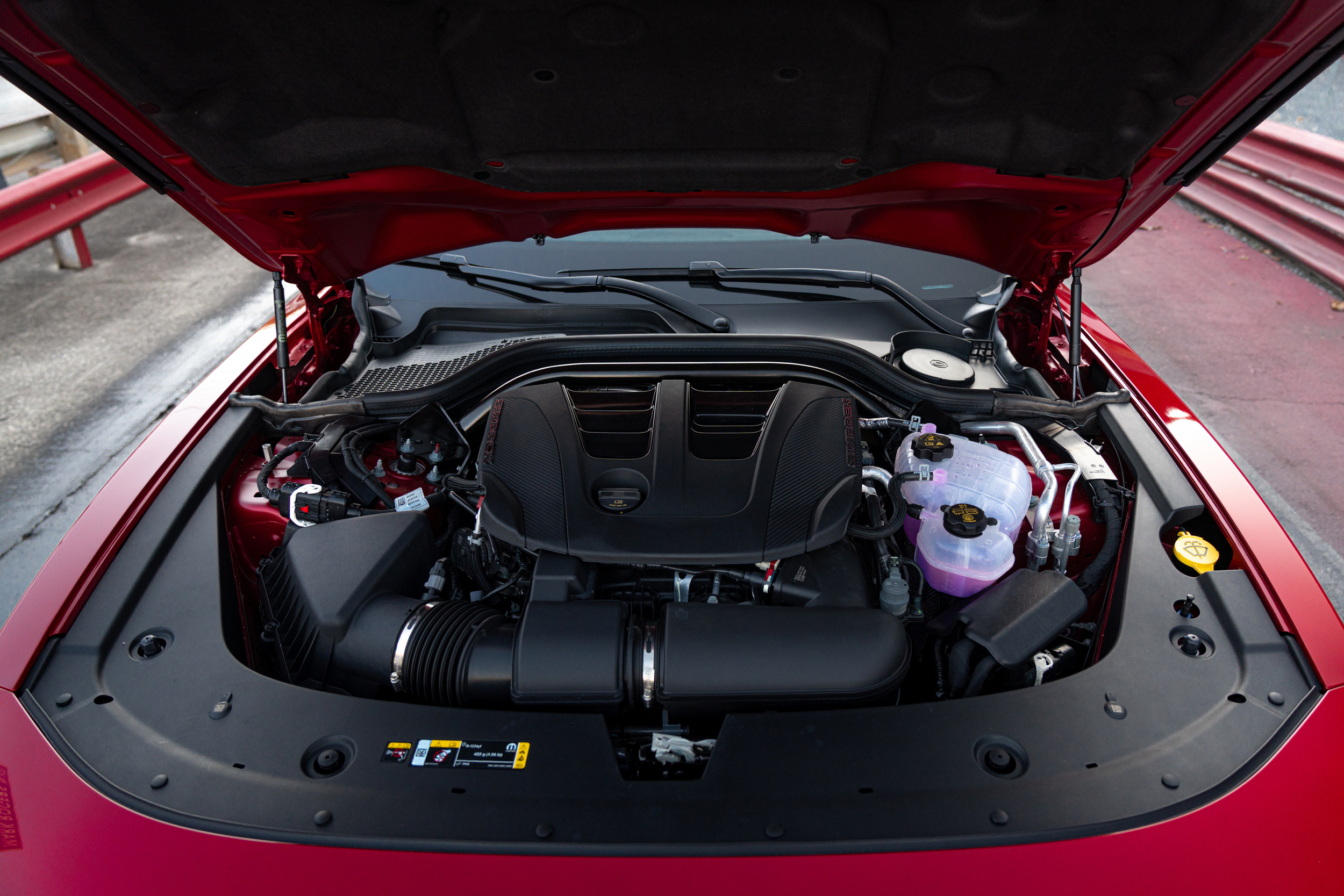
The Giulia and Stelvio will reportedly be offered with an assortment of different powertrains. The lineup will reportedly kick off with turbocharged four-cylinder engines with mild-hybrid technology. The company is also said to be looking at the twin-turbo 3.0-liter inline-six that powers the Charger Scat Pack and produces 550 hp (410 kW / 558 PS).

Customers will also be able to opt for plug-in hybrid and electric options. Little is known about them, but the PHEVs could echo other Stellantis models.

The electric variants are also mysterious, but the automaker has previously said the STLA Large platform can accommodate 101-118 kWh battery packs as well as electric motors with outputs ranging from 168 hp (125 kW / 170 PS) to 443 hp (330 kW / 449 PS). While earlier reports claimed the Quadrifoglio variants could have a tri-motor powertrain producing more than 1,000 hp (746 kW / 1,014 PS), the publication threw water on that idea and noted “no model in the Stellantis stable currently produces that much power.”

\\\\\\\\

That being said, the Maserati GranTurismo Folgore has a tri-motor powertrain producing 751 hp (560 kW / 761 PS) and 995 lb-ft (1,348 Nm) of torque. This enables the model to rocket from 0-60 mph (0-96 km/h) in 2.6 seconds and onto a top speed of 202 mph (325 km/h).

Numerous questions remain, but Alfa Romeo seems to believe that delaying the launch was the right move. As CEO Santo Ficili explained, “We need to consider the entire world because the brand is global” and not every market is ready to go fully electric. He went on to say, “We need to find a way to satisfy the needs of our customers” and that means electric, plug-in hybrid, and ICE options.

\\\\\\\\\\

China Told Automakers To Stop Cutting Prices, BYD Just Made It Worse

  • BYD’s average price cuts reached about 10 percent across its range in March.
  • China’s auto industry is still grappling with serious overcapacity issues.
  • Officials have warned carmakers against triggering a damaging price war.

The Chinese auto industry has spent the better part of two years waiting for the price war to burn itself out. It hasn’t, and car companies are showing no signs of relenting. Facing declining sales, BYD is instituting significant price cuts, as are key rivals Geely and Chery.

Almost a year has passed since Chinese authorities sat down with the heads of more than a dozen carmakers and pressed them to call off the price war before it became a race to the bottom. The country’s market regulator called for efforts to “comprehensively rectify ‘involutionary’ competition,” borrowing a phrase Premier Li Qiang has used for the industry’s increasingly self-defeating behaviour.

Read: Dozens Of Chinese EV Brands Could Collapse In The Next Year

It appears little has changed. Data from Bloomberg reveals the average price reduction across BYD models increased to 10 percent in March. Meanwhile, Geely and Chery are running discounts of around 15 percent, though those have held roughly steady through the past twelve months.

China Doesn’t Have Enough Car Buyers

 China Told Automakers To Stop Cutting Prices, BYD Just Made It Worse

Overcapacity within China’s automotive sector is at the root of the problem. Last year, approximately 23 million new vehicles were sold in the country, but its car factories have the capacity to produce 55.5 million vehicles a year. This has prompted many local brands to ramp up vehicle exports. Last month, EV exports from China more than doubled.

Now facing greater scrutiny from regulators, companies, including BYD, are being forced to pay suppliers much more quickly than in the past. Prior to local authorities getting involved, automakers had been delaying invoice fulfillment for months at a time, allowing them to offer deep discounts to spark sales. Now, invoices must be paid more promptly, increasing liabilities on carmakers’ balance sheets. For BYD, this has pushed its debt-to-equity ratio to 25 percent.

“It seems to be good for the customers, but it’s not — manufacturers are losing money,” the secretary general of the International Organization of Motor Vehicle Manufacturers, François Roudier, said. “It hurts the full system.”

 China Told Automakers To Stop Cutting Prices, BYD Just Made It Worse

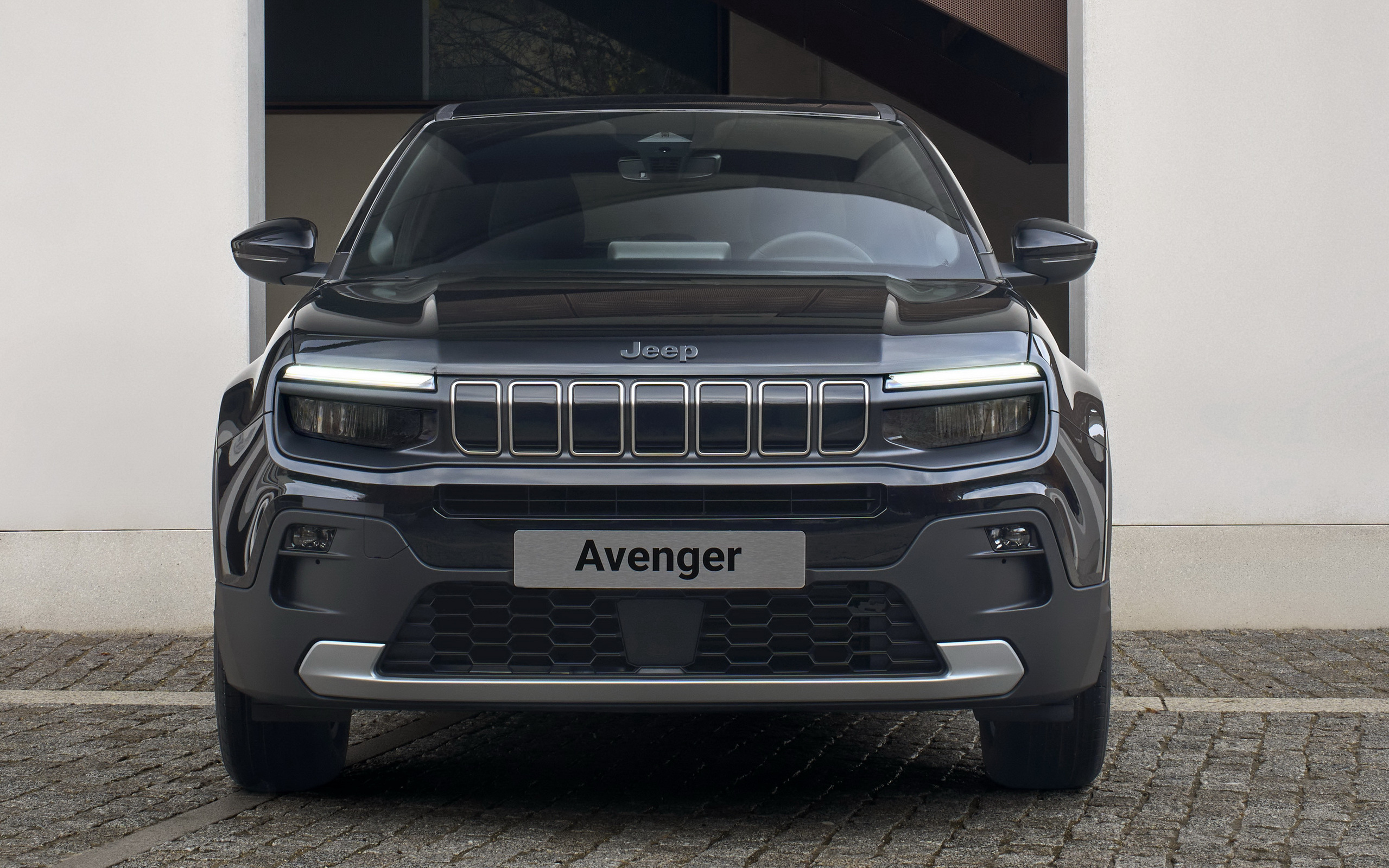
Jeep’s Baby SUV Is Getting An Illuminated Grille And It Looks Better Than It Sounds

  • Jeep has teased a facelifted version of the Avenger in Europe.
  • The seven-slot grille gains cleaner looks and integrated LEDs.
  • Besides Europe, the Avenger will also be sold in South America.

Jeep is preparing a mid-cycle update for its smallest SUV in Europe, arriving barely three years after launch. The facelifted Avenger has surfaced in a low-lit teaser, offering a first look at the latest interpretation of the brand’s seven-slot grille.

Jeep calls the revised grille a breakthrough, although it reads as a close relative of what is already on the newer Compass. The slots keep the Avenger’s chamfered profile, now with slimmer separations and no visible bezels, which cleans up the look without straying far from the original idea.

More: An American SUV Not Sold in America Was Italy’s Second-Best Seller

The main talking point is the addition of seven LEDs, echoing the Compass. These extend the Avenger’s slim daytime running lights, positioned above the primary headlamp units. For those wondering, the first Jeep to feature an illuminated grille was the Grand Wagoneer Concept from 2022.

\\\\\\\\\

Beyond the revised seven-slot treatment, the Avenger is likely to receive updated front and rear bumpers, along with fresh color choices and new alloy wheel designs. The roof rails shown in the teaser point to the Avenger 4xe The North Face special edition, although they could just as easily filter through to other trims in the facelifted range.

Review: Jeep Avenger EV Is A Fun Little Gem That’s Too Small For US

Jeep has said little about cabin changes. Even so, heavily camouflaged dashboards on test prototypes suggest the digital cockpit may be due an update. There is also scope for improved material quality, with softer finishes potentially replacing some of the harder plastics used in the current model.

 Jeep’s Baby SUV Is Getting An Illuminated Grille And It Looks Better Than It Sounds
The current Jeep Avenger in the special Black Edition trim.

We don’t expect big changes under the skin, as the Avenger is already available with ICE, mild-hybrid, and fully electric powertrain options from the Stellantis parts bin. The current lineup is crowned by an all-wheel-drive variant (mild-hybrid 4xe) featuring dual electric motors and a turbo 1.2-liter gasoline engine.

More: Jeep Gives The 2027 Renegade A New Face, But The Biggest Upgrade Is Hidden Inside

The Avenger is also set to expand beyond Europe, with a South American launch planned. Production will begin later this year at the Porto Real plant in Brazil.

It remains unclear whether the Brazilian-market model will adopt the same visual updates as the facelifted European version, which is built in Tychy, Poland. Either way, a region-specific powertrain is expected, tailored to local requirements rather than simply mirroring the European setup.

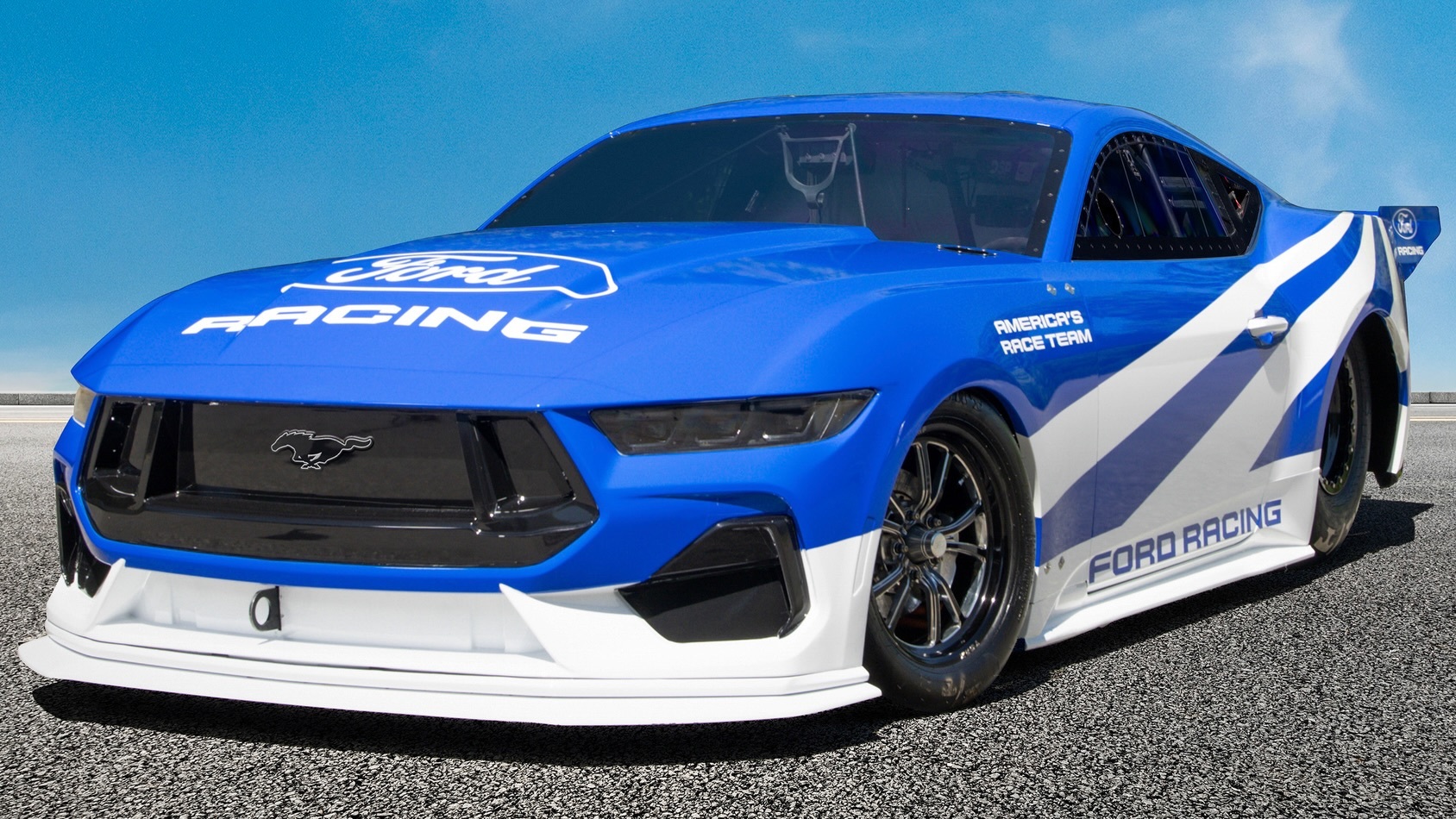
A 2,200 HP Mustang Silently Outran Every V8 Cobra Jet Ford Has Ever Built

  • A pair of electric motors combine for 2,200 hp in this racer.
  • Ford Racing has also shed 1,100 lbs from the Cobra Jet 1800.
  • Drag racer includes a centrifugal clutch and a 2-speed gearbox.

Ford has made a habit of creating wild all-electric performance machines, such as the SuperVan 4.2, the F-150 Lightning SuperTruck, and the Super Mustang Mach-E. It’s now revealed its latest other-worldly EV, and this one is all about smashing records on the drag strip.

Dubbed the Mustang Cobra Jet 2200, it’s the third all-electric Cobra Jet Ford has built, starting with the 1400 in 2021, and then the 1800 in 2023. As you may have guessed from its name, the new Mustang Cobra Jet 2200 churns out 2,200 hp, a truly astonishing figure that easily eclipses even the Rimac Nevera and Pininfarina Battista hypercars.

Read: You’ve Never Seen A Mustang Mach-E Like This One

Driving the Cobra Jet 2200 are two electric motors. These can each produce around 1,200 hp and weigh roughly half as much as they did in the Cobra Jet 1800 from just three years ago.

Despite being an EV, the Cobra Jet 2200 uses a centrifugal clutch to deliver torque in a controlled manner at launch. It also uses a two-speed transmission and includes a battery on the undertray and two additional battery packs at the rear. There’s also a battery at the front, which can be moved to adjust the weight distribution depending on track conditions.

The Power Of Electric

 A 2,200 HP Mustang Silently Outran Every V8 Cobra Jet Ford Has Ever Built

What’s particularly impressive about the Cobra Jet 2200 is that not only does it have way more power than the 1800, but it also weighs about 1,100 lbs (499 kg) less than its predecessor, tipping the scales at roughly 3,325 lbs (1,500 kg). According to Ford, the combination of immense power, the clutch, transmission, and the relatively light overall weight, the Cobra Jet 2200 apparently needs just 6.76 seconds to run down the quarter-mile, hitting up to 222 mph.

Ford Racing took the car to the NHRA 4-Wide Nationals in Charlotte over the weekend and performed several sub-7-second sprints down the quarter-mile. It quickly set a new world record for an EV with a time of 6.87 seconds at 221 mph, but in a subsequent run, it lowered it to 6.81 seconds.

The Cybertruck Hit 118 MPH In The Quarter Mile, A 56-Year-Old Chevy Still Beat It

  • Modified Chevy Chevelle narrowly beats a Cybertruck whose driver had terrible reactions.
  • Tesla recovers late, posts quicker ET and higher trap speed, but still technically loses.
  • A better Tesla reaction in a rematch would have transformed the result in Cybertruck’s favor.

The classic muscle scene is seriously tribal, but the one thing guaranteed to get GM, Mopar, and Ford fans to unite is a race between a V8 and a modern EV. And that’s exactly what’s served up in this surprising video, where a Tesla Cybertruck ventures onto a drag strip.

In the left lane is a 1970 Chevrolet Chevelle Malibu, and while we don’t know the full details of the car in question, it’s obviously not rocking that year’s base inline-six. It rolled to the line wearing fat sticky rear rubber, aftermarket wheels, and the sort of stance that says this thing doesn’t spend much time below full throttle.

Related: In Florida, 148 MPH Gets You Arrested. In California, It Gets You A Ticket

The biggest factory motor available in 1970 Chevelles delivered 454 cubes (7.4 liters) of displacement, and modern builds on that big-block base can easily generate 500-600 hp (507-608 PS) in naturally aspirated form.

Cybersnooze

We’ve all seen enough EV videos to expect the Cybertruck to hook up instantly and erupt from the line, leaving the Chevelle struggling to get its tires hooked up. A few seconds later, the Tesla would be flashing across the finish with the Chevy trailing behind, its pride in tatters.

But that’s not how it worked out here. When the lights change, the Chevy gets the jump immediately and charges ahead, opening enough daylight to make it seem like the race might be over before the Tesla has fully woken up. For the first half of the quarter mile, the old-school muscle car looks comfortably in command.

Then the Cybertruck gets its act together. Once it’s moving and the motors are fully delivering, the giant stainless wedge storms downtrack and begins hauling in the Chevy at an alarming rate. What had looked like an easy Chevelle win suddenly becomes a blink-and-you-miss-it finish line showdown.

Times Come Second

You’ll need slowed playback to separate them by seeing whose numbers come up first, but the Chevelle appears to nose ahead at the line. In drag racing, that’s what counts. First across wins, even if the stopwatch tells a slightly different story.

And the stopwatch did tell a different story. The Cybertruck completed the quarter in 11.39 at 118.6 mph (191 km/h), that ET and trap speed suggesting it’s the top-spec Cyberbeast, which has a tri-motor setup and 845 hp (856 PS / 630 kW). The Chevelle registered 11.69 seconds at 114.9 mph (185 kmh).

So on this occasion, muscle fans got to celebrate taking an EV’s scalp, but you just know that if the Cybertruck sorted his reactions for a rematch, it would be a different story.

 The Cybertruck Hit 118 MPH In The Quarter Mile, A 56-Year-Old Chevy Still Beat It

YouTube/@Wheels

Xiaomi’s 990 HP Family SUV Costs Less Than A Base Macan EV And Outguns The Turbo

  • Xiaomi revealed the flagship YU7 GT at the Beijing Auto Show this week.
  • The SUV was developed in part at the Nürburgring for sharper handling.
  • Pricing is expected to start between $65,800 and $73,100 in China.

As expected, Xiaomi unveiled the flagship version of its YU7 SUV, known as the GT, at the Beijing Auto Show. It’s nowhere near as extreme as the SU7 Ultra, but it has been developed in part at the Nürburgring and brings with it a slew of upgrades over lesser variants.

As our own spy images from earlier this month revealed, the YU7 GT looks a lot more aggressive than the standard version. For example, it has flared wheel arches and a much more menacing front fascia, complete with a new blacked-out grille and unique air intakes. Positioned on the hood is a special badge made from carbon fiber and 24-karat gold.

Read: Xiaomi Brings Its 1,000HP YU7 GT To Porsche’s Backyard Naked And Unafraid

Xiaomi will sell the YU7 GT with 21- and 22-inch wheels, and has also upgraded its brakes. Other styling and aerodynamic tweaks are also found at the rear, including a dramatic diffuser and a small lip spoiler.

For as much as the YU7 GT may resemble a Ferrari Purosangue, it’s under the skin where most of the action is happening. Xiaomi has equipped the YU7 GT with a new front motor delivering 386 hp and a new rear motor with 604 hp, resulting in a combined 990 hp.

Although that falls well short of the SU7 Ultra’s 1,527 hp, it’s still a ludicrous amount of power for a family SUV, easily outgunning EVs like the flagship Porsche Macan Turbo Electric and its 630 hp.

Not Just About Power

\\\\

Xiaomi has yet to release full performance specifications for the GT, including how quickly it can lap Green Hell. What we do know is that it will run on to 186 mph (300 km/h), and it’s safe to presume the sprint from a standstill to 62 mph (100 km/h) will be dealt with in the low-2-second range.

Beyond upgrading the motors, Xiaomi has included a new air suspension system, rear-axle torque vectoring, and made tweaks to the traction control. Buyers eager to take their YU7 GTs to the track will also be able to configure it with optional carbon ceramic brakes from Brembo.

Prices have yet to be confirmed, but the model is expected to start between 450,000 yuan ($65,800) and 500,000 yuan ($73,100). Xiaomi will be hopeful that it helps to reinvigorate interest in the YU7, which has seen sales decline from a peak of almost 40,000 units last December to just under 15,000 in March.

\\\\\\\\\

Baldauf

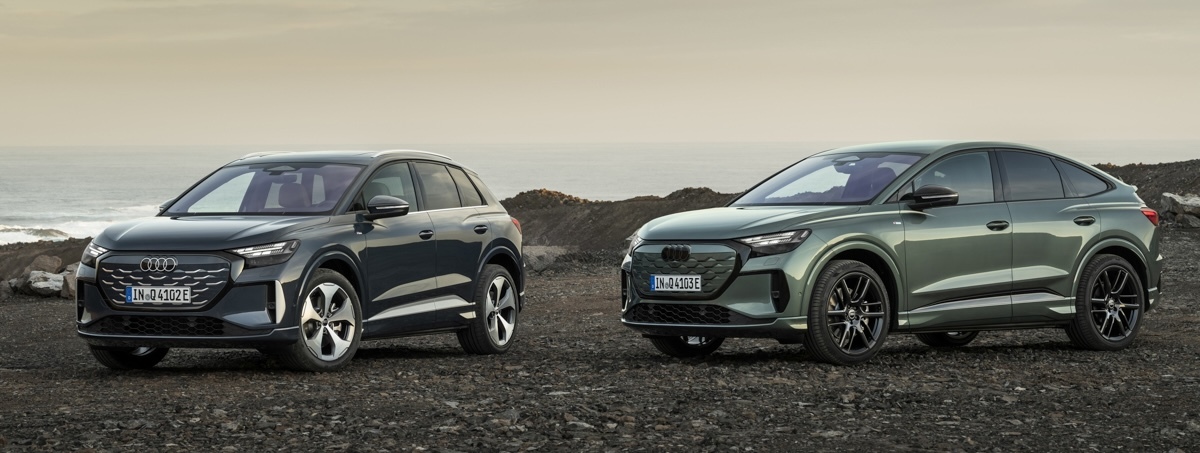
Audi Fixed The 2027 Q4 E-Tron’s Controls Everyone Complained About, Then Removed A Different Set

  • Refreshed Audi Q4 has a new interior with ChatGPT and an optional passenger screen.
  • Base 201 hp model adds 18 miles of range, but still does less than 290 miles on a charge.
  • Higher-spec versions can do up to 367 miles and now charge at 185 kW instead of 175 kW.

Audi gave its Q4 e-tron electric SUV a major update in 2023, but now it’s time for another one. You’ll spot the new version by its segmented digital LED lights and body-color grille, but the important tweaks are inside and underneath, including the controversial decision of removing some physical controls.

More: Audi’s New RS6 Could Steal Its V8 From A Very Different Brand

A revised rear motor, new power electronics, smarter software, and lower-friction transmission oil combine for efficiency gains of around 10 percent over the outgoing model. The headline figure belongs to the Audi Q4 Sportback e-tron performance, which can travel up to 367 WLTP miles (591 km). The same model’s 82 kWh battery can now charge at up to 185 kW up from 175 kW before, which is enough for a 10 to 80 percent top-up in around 27 minutes.

\\\\\\\\\\\\\\\\

That’s still well below the 250-ish kW you can shovel down the neck of a Genesis GV60, which can do the 10-80 sprint in less than 20 minutes, but it’s a welcome improvement all the same. As is the 18 additional miles (29 km) added to the range of the base 201 hp (204 PS / 250 kW) trim with the 59 kWh battery, though since Audi only quoted 263 miles (424 km) before, it’s still not exactly a road-trip weapon.

The base model is only available with a single motor and rear-wheel drive, as is the 282 hp (286 PS / 160 kW) mid-spec car, despite it previously being offered with a choice of two- or all-wheel drive. The top-line 335 hp (340 PS / 250 kW) is Quattro-only.

Bi-Directional Charging

 Audi Fixed The 2027 Q4 E-Tron’s Controls Everyone Complained About, Then Removed A Different Set

The biggest practical upgrade for campers and outdoors people is bidirectional charging, a first for Audi, though one other brands have offered for a few years already. In select European markets, Vehicle-to-Home also allows the battery to feed energy back into a house, helping store solar power or trim electricity bills.

Another practical improvement comes in the form of a much more useful towing allowance. Quattro versions now tow up to 1,800 kg (3,970 lbs), up by 400 kg (882 lbs). The trunk still offers 520 litres, expanding to 1,490 litres with the rear seats folded, and an electric tailgate is now standard too, which you kind of expect with a premium car these days.

Passenger Screen And AI

\\\\\\\\\\\

Inside, Audi’s given the Q4 a more premium cabin with a panoramic display combining an 11.9-inch driver screen and 12.8-inch central touchscreen. There’s also an optional 12-inch passenger display, augmented reality head-up display, and ChatGPT integration. It brings the Q4’s cabin into line with other recent Audis like the bigger Q6 e-tron and the A5 and A6 sedans.

Wireless charging gets a boost with two cooled 15-watt pads up front, while Android Automotive underpins the infotainment system. Criticisms of the Q4 at launch focused heavily on the interior quality but Audi says the cabin’s been improved with softer materials, ambient lighting, and a redesigned centre console that should make daily use easier.

The controls story remains slightly conflicted. In the facelifted model, Audi has walked back some of the steering wheel’s touch-sensitive inputs, replacing them with proper scroll wheels. At the same time, the physical climate controls have been removed, leaving those functions buried in screen menus.

\\\\\\\\\\\\\\\\\

Audi

Yesterday — 27 April 2026Vehicles

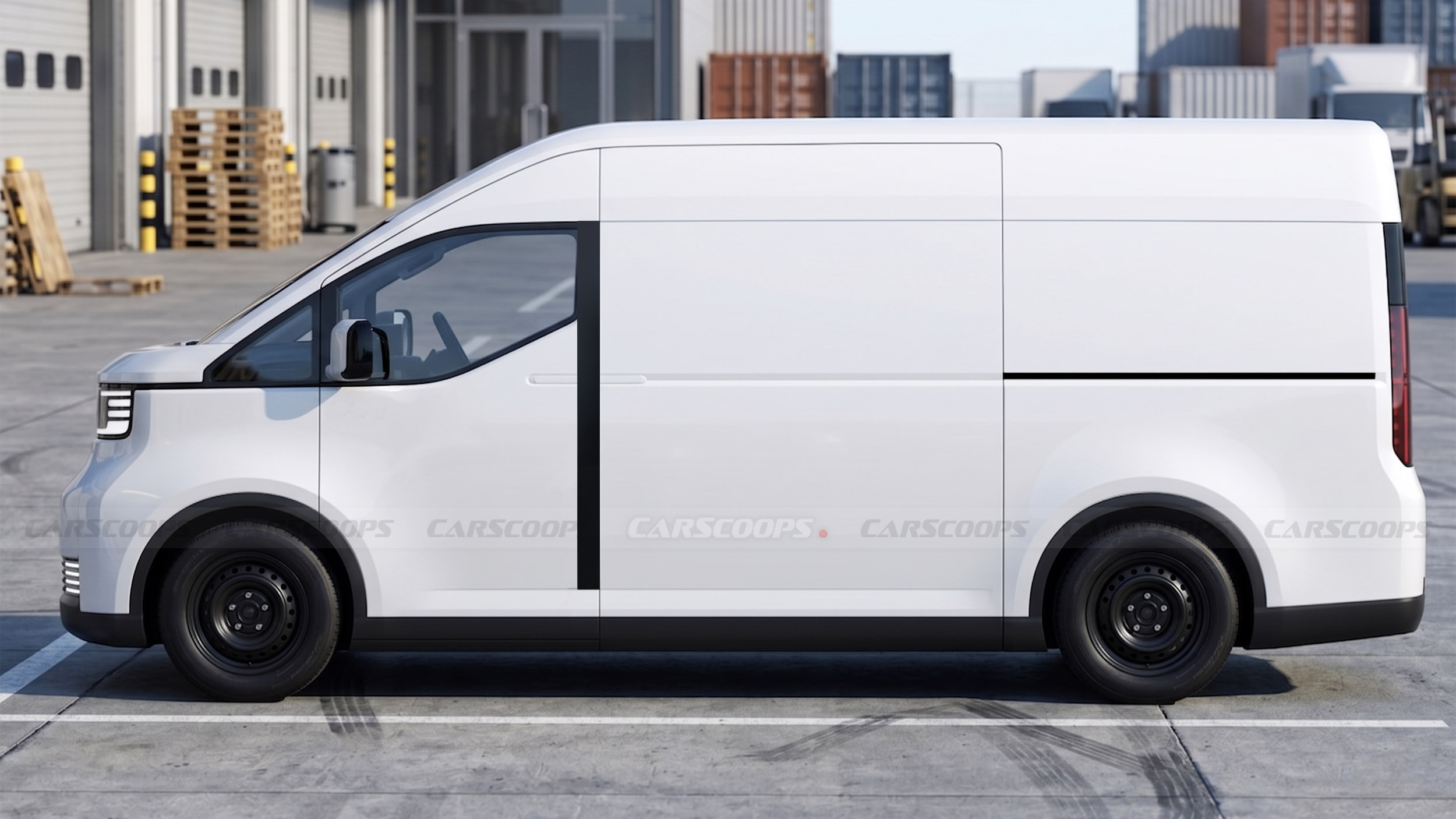
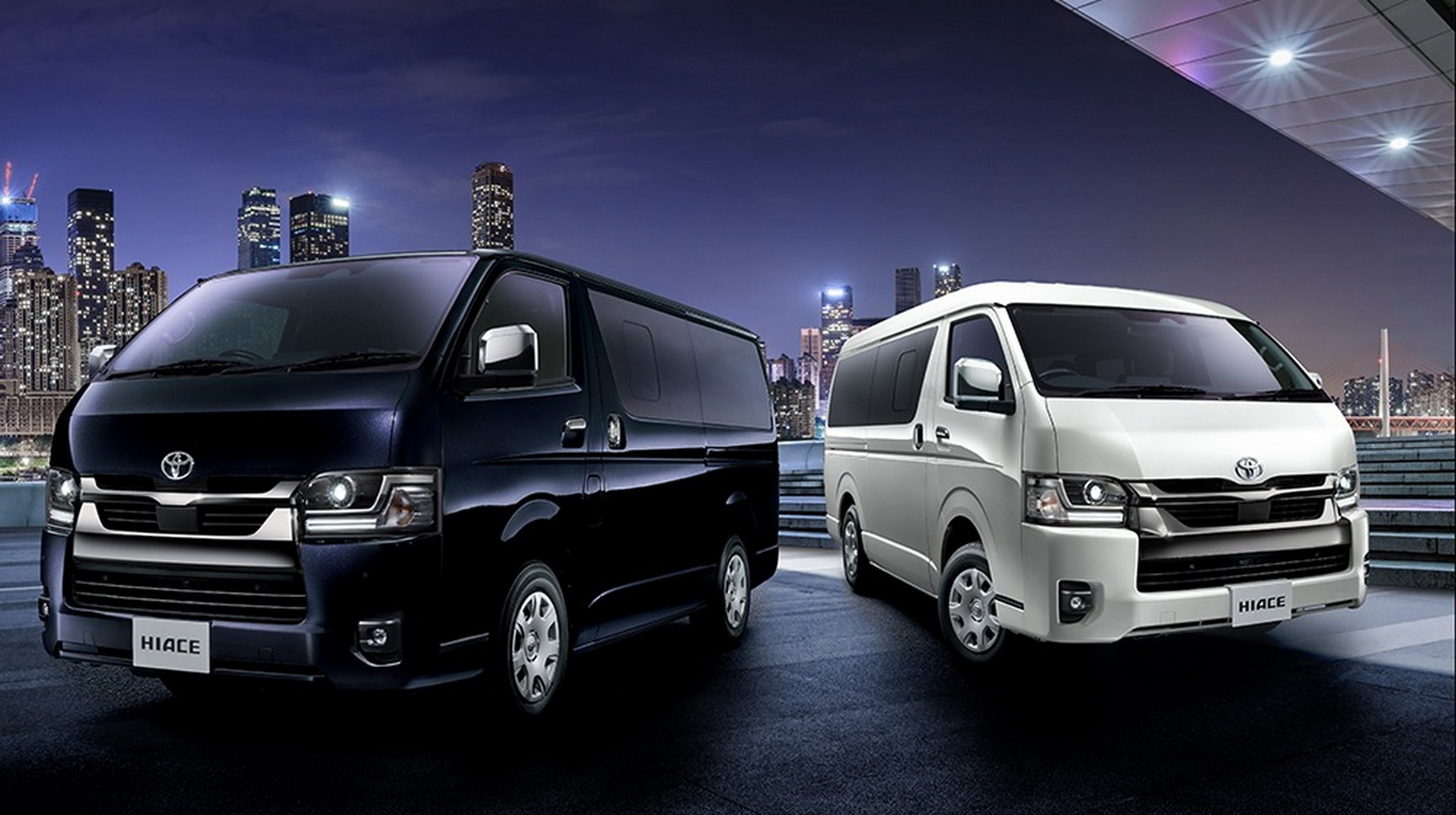
The Toyota Van That Refused To Change For 22 Years Is Being Replaced, And It’ll Look Nothing Like Before

  • A new generation Toyota HiAce is expected to make its debut by early 2027.
  • It will switch to the TNGA platform and drop its long-used cab-over layout.
  • Multiple body styles are expected, along with an available hybrid powertrain.

After more than two decades of soldiering on through countless updates, Japan’s most familiar workhorse is finally getting a proper rethink. The Toyota HiAce remains one of the world’s most popular commercial vehicles, but the current H200 generation has been on sale in Japan since 2004, making a strong case for a successor. A new model is rumored to debut by early next year, marking the biggest change in the nameplate’s history.

More: This Van Should Be Dead By Now, But Toyota Keeps Updating It After 22 Years

In 2019, Toyota introduced the H300 generation of the HiAce, though Japan stuck to the older cabover H200 van. The latter has received countless model year updates over the past 22 years, but it is inevitably getting closer to retirement.

What Will The Next HiAce Look Like?

The Toyota HiAce Concepts that debuted at the 2025 Japan Mobility Show are the best indication of the next generation model, which will finally give Japanese buyers access to a modern Toyota light commercial vehicle (LCV).

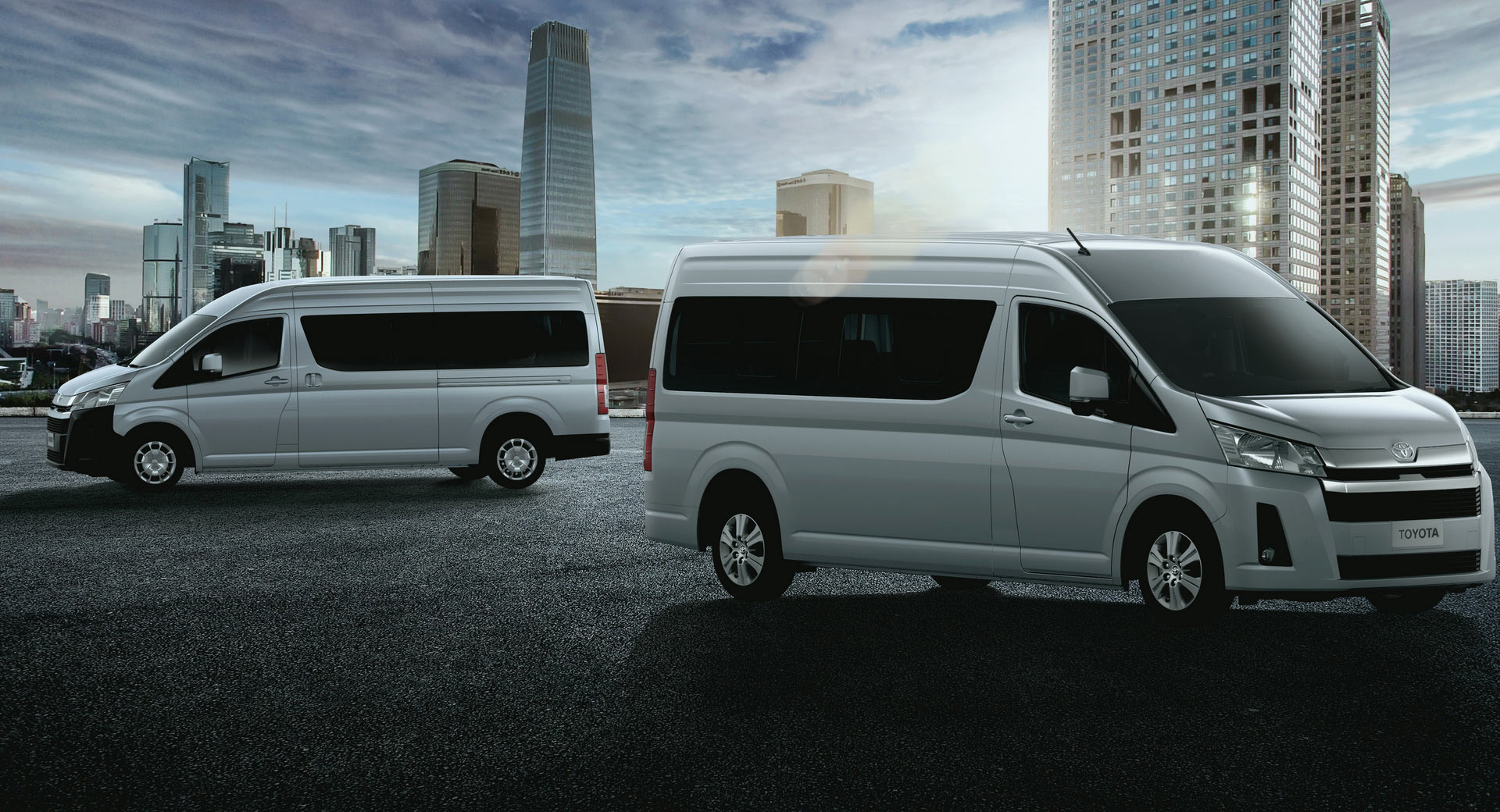
One of the concepts features a long-wheelbase, high-roof bodystyle, while the other is a standard van. Both have modern LEDs and clean surfacing inspired by the 2023 Toyota Kayoibako concept. Crucially, while the new HiAce will abandon the cab-over styling of the H200, it will have a shorter hood than the H300, making it more suitable for the tight roads of Japan.

 The Toyota Van That Refused To Change For 22 Years Is Being Replaced, And It’ll Look Nothing Like Before

Illustration: Thanos Pappas for CarScoops

Our exclusive rendering previews the upcoming production-spec HiAce as a white commercial van with a high roof and a long wheelbase, riding on black steelies. The narrow side windows of the concepts will likely be reserved for passenger-oriented trims, while the lighting units might gain simpler LED graphics for cost-saving reasons.

More: Toyota’s Next Corolla Cross Is Growing Up, And The RAV4 Should Be Worried

Toyota will most likely offer several bodystyle variants of the LCV, following the example of the current HiAce, which is available in different widths, heights, and lengths. It is safe to assume the new model will also serve as a base for passenger shuttles and even camper conversions.

Furthermore, the lineup will be joined by a smaller van based on the Daihatsu Kayoibako-K concept, designed for urban deliveries and short camping adventures.

TNGA Platform Brings Big Changes

\\\\\\\\\\

2025 Toyota HiAce Concepts

Local media reports suggest the new HiAce will share components with the H300 generation currently sold in markets such as the Philippines, Thailand, and Australia. The LCV is expected to ride on the TNGA platform, with improvements in safety and ride quality over the aging H200.

Besides switching from a mid-engined to a front-engined layout, the HiAce will reportedly introduce a self-charging hybrid powertrain option. This will likely be more powerful and more efficient than the existing diesel and gasoline engines.

More: This 14-Year-Old Van Refuses To Die And Somehow Keeps Getting New Gear

As hinted at by the Global HiAce BEV concept from 2023, a fully electric version of the LCV was under consideration. However, the latest rumors suggest the zero-emission powertrain has been put on hold due to shifting market conditions.

According to Creative Trend, citing information from local agency Apollo News Service, the new generation of the HiAce is expected to debut in late 2026 or early 2027. We will keep an eye out for more information about the popular van and update this story accordingly.

 The Toyota Van That Refused To Change For 22 Years Is Being Replaced, And It’ll Look Nothing Like Before
The current H200 generation (above) sold in Japan, and the H300 (below) sold in the Philippines.
 The Toyota Van That Refused To Change For 22 Years Is Being Replaced, And It’ll Look Nothing Like Before

His Cybertruck Made It to 100,000 Lyft Miles Before Sending A $7,200 Reminder

  • One owner used his Cybertruck for Lyft and crossed the 100,000-mile mark.
  • Low charging costs were great, but one repair alone cost him $7,200.
  • Despite several issues, he still says it’s the best vehicle for the job.

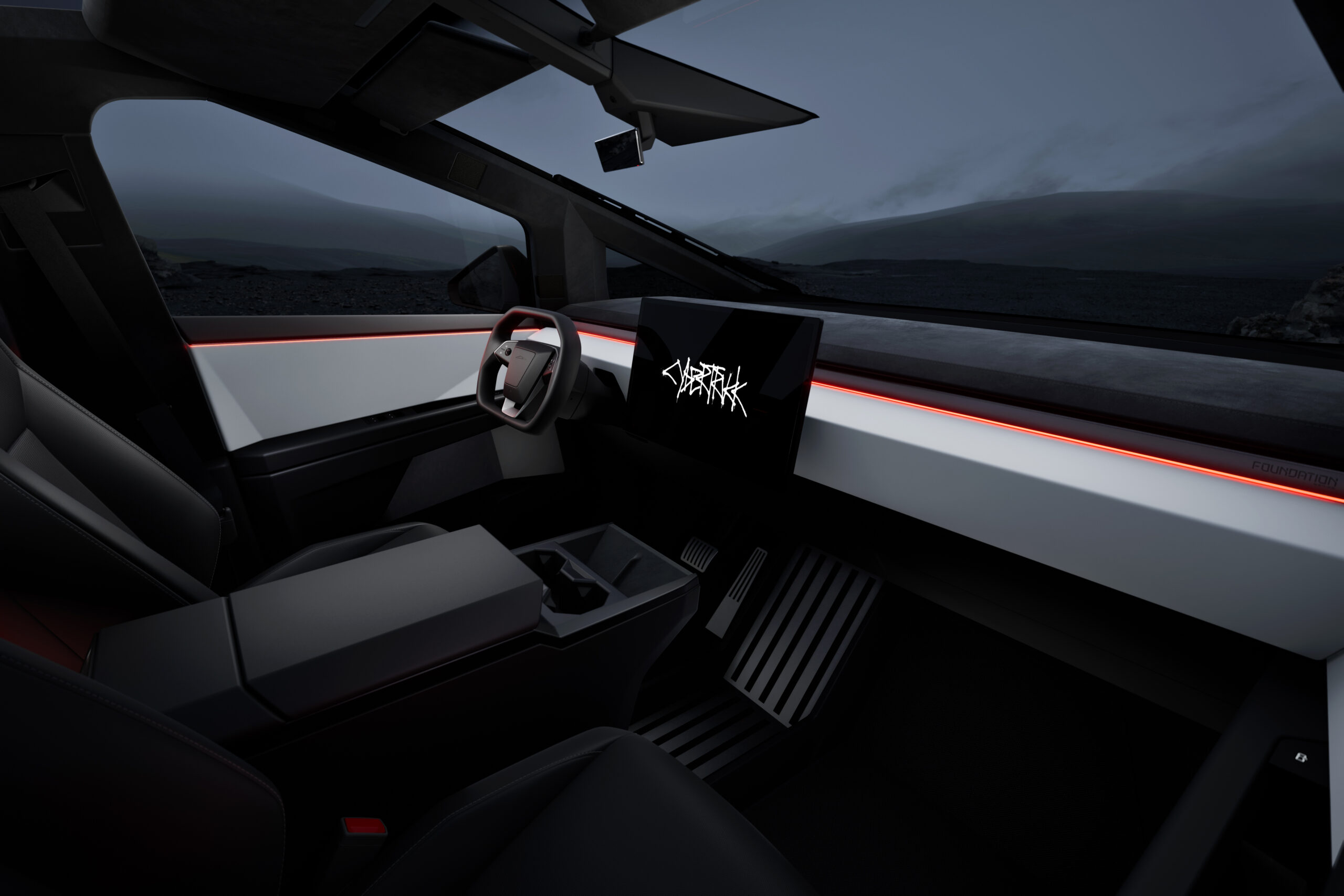
Most Cybertruck buyers appear to be the kinda folks that want to make a statement. The focus of this story is an owner who uses it to make a living. After piling up 100,000 miles, mostly for Lyft in Nashville, he says the slab-sided truck is everything from a money-saving workhorse to a warranty-free financial gut punch waiting to happen. Despite everything he’s experienced, he still wants to take this thing to a million miles.

The inventively named user LyftDr1ver on CybertruckOwnersClub shared their story early this week. They say they drive over seven hours at a time for work, which helps explain how they’ve racked up mileage in the six figures.

Driving a conventional truck that much every day would no doubt cost a great deal in gas or diesel. This person is reportedly paying around $12 a day. They say that’s around $350 a month. If you’ve been to a gas pump lately, you know how wildly low those operating costs are. There are other benefits to the Tesla as well.

More: Uber And Lyft Drivers Are Using FSD Teslas As Robotaxis

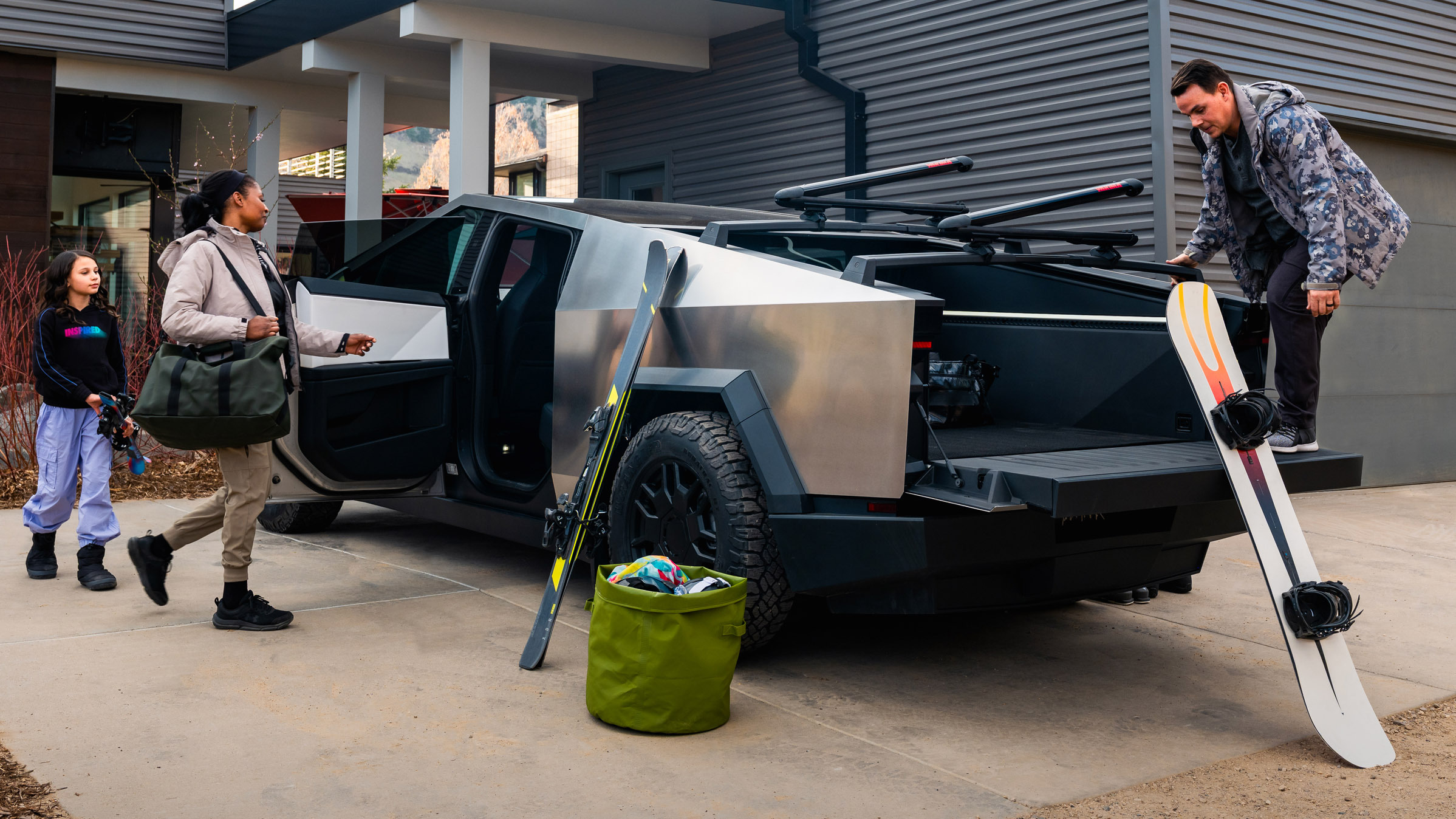
The driver reports that passengers like the interior space, the panoramic roof, and the smooth ride. The sound system is another highlight, and the truck bed is “ridiculously functional and spacious,” too. One thing that might surprise most is that this person reports a good experience driving in heavy traffic despite its size, thanks to the steer-by-wire setup. Of course, there are downsides to consider as well.

 His Cybertruck Made It to 100,000 Lyft Miles Before Sending A $7,200 Reminder

Being an early Cybertruck build, there are plenty of build-quality annoyances. A tonneau cover that leaks, a suspension clunk that won’t go away, a wireless charger that heats phones up too much, and an initial set of tires that went bald 40,000 miles into the ownership experience. They also note the battery has degraded to about 299 miles of range at full charge.

None of that is as rough as dealing with the $7,200 repair bill for a failed power conversion system that died at around 60,000 miles. As the owner says, “Tesla shows no mercy when you’re outside your warranty.” Those fuel savings dry up real quick after a bill like that, but it’s worth noting that most gas or diesel vehicles would also have some big maintenance bill of this sort with this kind of mileage.

At this point, the owner has two big hopes. First, that the truck doesn’t break down, and second, that they can drive it until the odometer shows seven figures. For some reason, those goals seem ambitious at best, but hey, more power to you, LyftDr1ver.

 His Cybertruck Made It to 100,000 Lyft Miles Before Sending A $7,200 Reminder
Photos Tesla

BYD’s Nine-Minute Charge Was Industry Leading For About Four Weeks

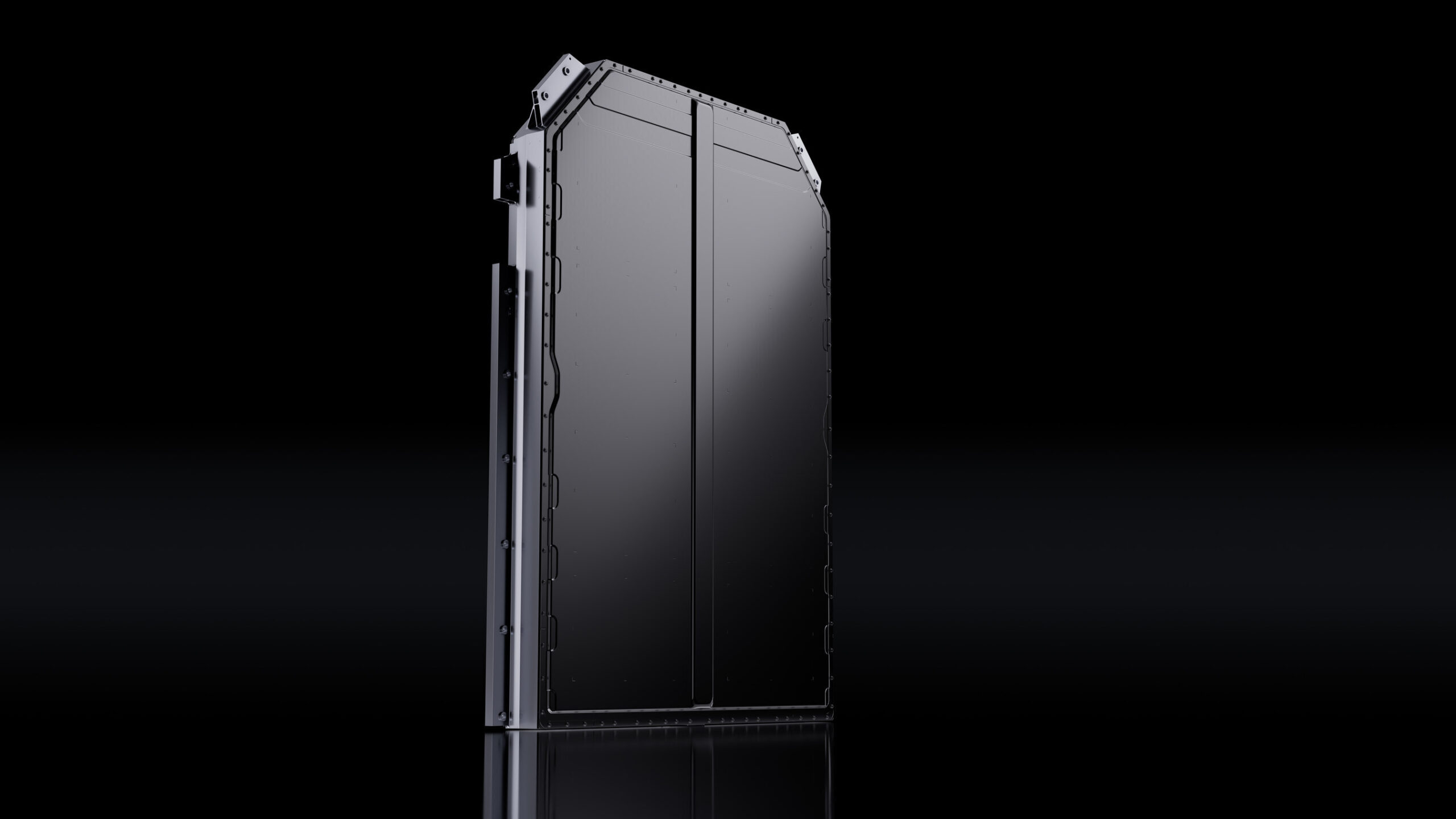
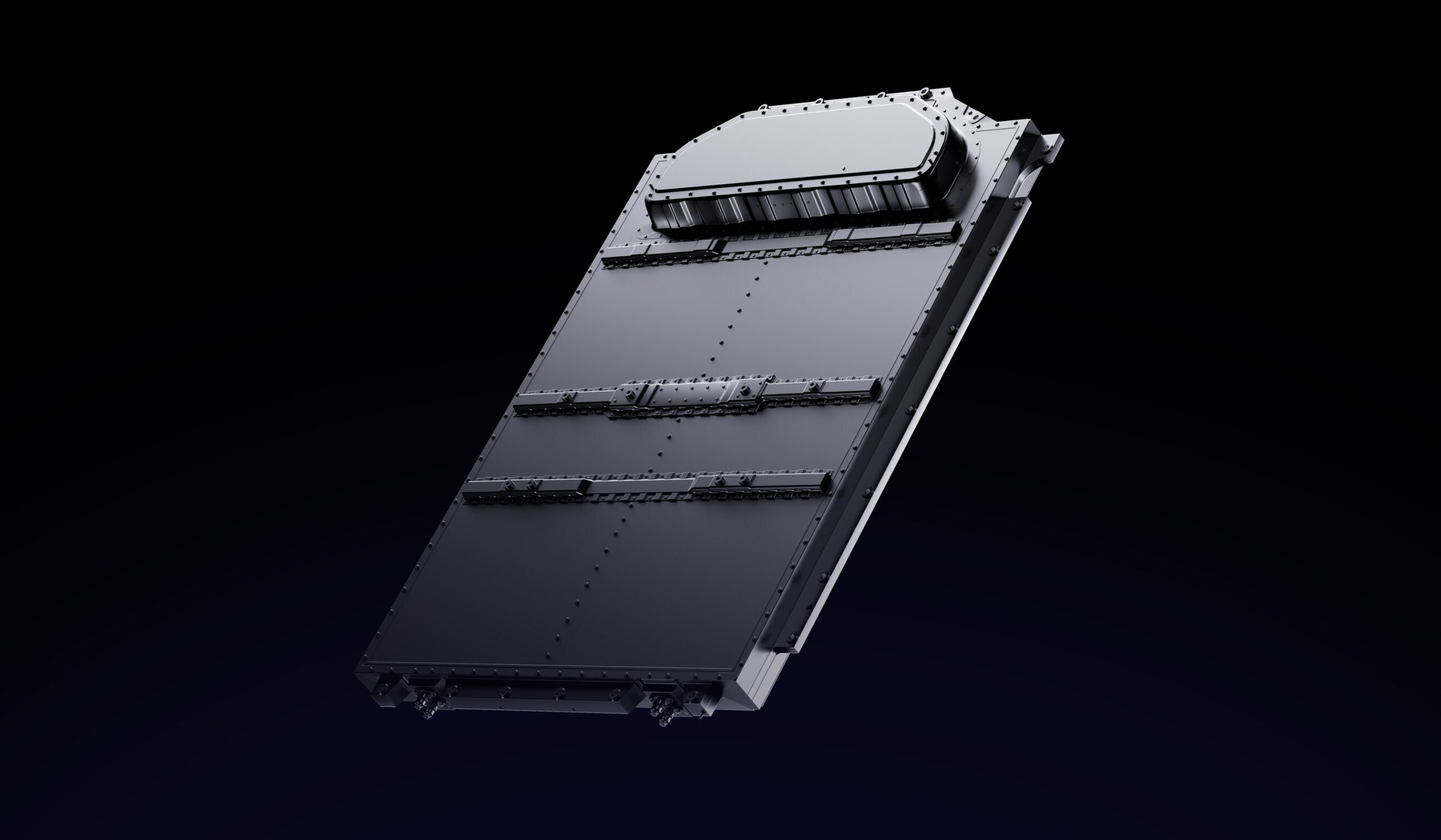
  • CATL says its new Shenxing 3 charges from 10 to 98 percent in 6.5 minutes.
  • The Qilin 3 promises 621 miles of range while weighing only 1,378 pounds.
  • Company is betting fast charging and battery swapping will drive EV adoption.

Electric vehicles are quick, quiet, and typically offer awesome packaging and an easier maintenance schedule than combustion-powered cars. Where they struggle to keep up with their gas-powered competition is on the refueling side of things.

Charging infrastructure is nowhere near what it is for gas-powered cars, and when one does find a charger, it can take a long time to get a battery that’s flat back to full. Now, CATL says it’s found a solution, and it’ll charge a battery from 10 to 98 percent in just 6.5 minutes.

More: This New Battery Could Outlive You, Never Mind Your Car

According to The Wall Street Journal, the new Shenxing 3 battery hits that mark in roughly 6.5 minutes, beating the charging capability BYD revealed just last month, which took nine minutes to go from 10 to 97 percent, or seven minutes from 10 to 70. Bernstein analysts told the publication the new battery “effectively closes the gap with ICE vehicles.”

 BYD’s Nine-Minute Charge Was Industry Leading For About Four Weeks

CATL says the new pack is capable of a 10C charging rate and can go from 10 to 80 percent in just 3 minutes and 44 seconds. Even more impressive, the company claims the battery can still charge from 20 to 98 percent in around nine minutes even when temperatures plunge to -22 degrees Fahrenheit (-30 Celsius).

Perhaps most impressive is that CATL says these charging speeds don’t destroy long-term battery life. Evidently, the Shenxing 3 still retains over 90 percent of its capacity after 1,000 full charging cycles.

CATL also introduced the new Qilin 3 battery, which it says can deliver up to 621 miles (1,000 km) of range while weighing just 1,378 pounds (625 kg). That makes it significantly lighter than comparable packs and, according to the company, improves efficiency, acceleration, braking, and handling. Oh, and wait, there’s more.

 BYD’s Nine-Minute Charge Was Industry Leading For About Four Weeks

A new Qilin Condensed battery can deliver up to 932 miles (1,500 km) of range in a sedan or over 621 miles (1,000 km) in a full-size SUV. Obviously, that kind of range would be a giant benefit for the EV industry as it would reduce range anxiety and the need for additional charging infrastructure.

CATL says the Shenxing 3 and Qilin 3 batteries are intended for production vehicles rather than distant concepts, with the first applications likely arriving within the next year or so. The more ambitious Qilin Condensed battery appears further off, while CATL says its sodium-ion battery will enter mass production by the end of 2026.

 BYD’s Nine-Minute Charge Was Industry Leading For About Four Weeks
❌
❌