Rising electricity prices still trail well behind the surge at the pump.
Big savings can be found in states with high gas costs and low electricity costs.
However, EVs tend to cost more to insure, eating into the fuel savings.
A new analysis of the US car market reveals how much the average driver could save on fuel by switching to an EV. On average across the country, replacing a gasoline-powered vehicle with a typical EV charged at home currently saves drivers nearly $1,500 a year at the pump. However, that figure varies considerably by state, with the West generally delivering the biggest savings.
By pairing the average driving distance of American motorists with typical fuel and electricity prices, Bloomberg has mapped where buying an EV makes the most sense. Leading the charge is Washington, home to the third-highest gas prices in the country yet also among the cheapest states for electricity, largely thanks to hydroelectric power and public utilities. As a result, locals making the switch could save up to $2,346 a year. Oregon ranks close behind, with estimated annual savings of $2,057.
Other states where typical fuel costs far outweigh average EV charging costs include Nevada, Arizona, Idaho, Montana, Utah, Wyoming, and Colorado. Roughly one-third of drivers considering an EV cite potential fuel savings as their motivation, a recent JD Power survey found.
The same survey showed interest climbing in May, with 26 percent of car shoppers calling themselves “very likely” to go electric, up three percentage points from a year earlier.
EV Market Share By State (Jan-Apr 2026)
State
EV Market Share
California
15.7%
Washington
13.8%
Nevada
11.1%
Hawaii
9.1%
Oregon
8.4%
US average
5.5%
Wyoming
1.3%
South Dakota
1.2%
North Dakota
1.1%
West Virginia
1.1%
Oklahoma
0.6%
SWIPE
S&P Global / Bloomberg
The Costs That Cut The Other Way
Admittedly, the average EV still costs more than a comparable combustion model, but buyers also benefit from lower running costs and noticeably less maintenance. That price gap has been narrowing too, though EVs do tend to depreciate faster. And the recent climb in fuel prices, set off by the war in Iran, has only strengthened the case for going electric.
That said, Bloomberg reports electricity prices have crept up as well, climbing 8.6 percent over the past 12 months, partly on demand from AI data centers. Even so, those increases are minor next to the surge at the pump.
“Given how high gas prices are, you’re doing a lot of savings everywhere, but these places are pretty good,” Zero Emission Transportation Association research director Corey Cantor said. “It’s definitely a huge selling point.”
Cantor added that buyers often overlook fuel costs: “You see gas signs everywhere, but you don’t necessarily see dollars per kilowatt signs, unless you’re using an app. You kind of have to crunch the numbers yourself.” States where electricity is cheap and gas is expensive, he said, are where the shift could stick: “Those are the types of places that give you optimism for long-term EV transition, because it’s really just market forces at work.”
The Insurance Catch
Of course, there’s always a but. One cost the fuel math analysis leaves out is insurance, where EVs tend to lose ground. A separate Insurify study we shared recently found that in Washington, the same state topping the savings chart, a newer EV runs 30 percent more to insure than a comparable gas model, $3,260 against $2,515. Oregon shows an even wider gap at 36 percent, and Nevada sits at 26 percent. So part of what you save at the plug, you hand back to the insurer.
The picture isn’t uniformly grim, though. Nationally the average EV runs $3,159 a year to insure versus $2,218 for a gas car, a 42 percent spread, but that collapses to 18 percent once you line up only 2024-and-newer models against each other.
A few states reverse the order entirely. Montana and West Virginia both insure a newer EV for 4 percent less than the gas equivalent, and Nebraska leans the same direction. None of it cancels the fuel savings, but it does mean what you actually pay to run an EV rides on your zip code’s insurance rates as much as the gap between gas and electricity.
PROS ›› Great interior design, fun tech, quick CONS ›› Small battery, expensive, not overly practical
The Countryman arrived 16 years ago to a chorus of skeptics, the brand’s first five-door crossover and, to a certain kind of purist, evidence that Mini had started losing the plot. Plenty of people figured it would flop and take some of the brand’s credibility with it, but It didn’t. Three generations later, the Countryman is still here, now sold with either a combustion engine or a fully electric powertrain.
I’ve long been curious about what the Countryman is like to drive and live with, so when I was asked to test the flagship all-electric SE ALL4, I jumped at the opportunity. In a world where most new crossovers and SUVs are increasingly similar, the Countryman represents something different.
The fun is still in there, the quality that made old Minis worth driving even when they made no rational sense. Few offerings on the market bottle it the way Mini does. None of which means the Countryman gets a free pass, because it asks you to live with a few compromises in exchange.
QUICK FACTS
› Model:
2026 Mini Countryman SE ALL4
› Starting Price:
AU$83,862 ($60,600) including on-road costs
› Dimensions:
175 L x 72.5 W x 64.3 in H (4,445 x 1,843 x 1,635 mm)
› Wheelbase:
105.9 in (2,692 mm)
› Curb Weight:
2,000 kg (4,409 lbs)
› Powertrain:
64.6 kWh battery / dual electric motors
› Output:
308 hp (230 kW) / 364 lb-ft (494 Nm)
› 0-62 mph
5.3 seconds as tested
› Transmission:
Single speed
› Efficiency:
17.2 kWh/100 km as tested
› On Sale:
Now
SWIPE
Photos Brad Anderson/Carscoops
Four different versions of the Countryman are available in Australia. The base model is known as the Countryman C, fitted with a 1.5-liter turbocharged four-cylinder and priced from AU$56,700 ($39,700). Those seeking emissions-free driving can alternatively order the Countryman in E configuration, with a single motor EV starting at AU$75,526 ($52,900). The next most expensive model is the JCW Countryman ALL4 with a 2.0-liter turbo and priced from AU$78,652 ($55,100).
We didn’t test either of these models and instead spent time behind the wheel of the flagship Countryman SE ALL4, a dual-motor electric model starting from AU$80,737 ($56,600), and priced at AU$83,862 ($60,600) in the Favored trim like our tester. While it’s not quite fitting of a John Cooper Works badge, the SE ALL4 still offers plenty of performance.
Powering the model is a 64.6 kWh battery pack and a pair of electric motors, combining to produce 230 kW (308 hp) and 494 Nm (365 lb-ft) of torque. Mini says that’s enough to reach 100 km/h (62 mph) in 5.6 seconds, while boasting a claimed driving range of 432 km (268 miles).
A Fun-Filled Cabin
Photos Brad Anderson/Carscoops
Regardless of how much money you have or what segment of the industry you’re looking to buy a new car in, you’ll be hard-pressed to find one with a cabin that stands out. The Countryman and other current Mini models are different.
Whereas most other car manufacturers have completely disregarded their histories of interior design, Mini hasn’t. Instead, it’s managed to assemble a cabin that not only feels premium but, more importantly, has a sense of theater and fun to it that few others can match.
The star of the show is the circular OLED infotainment display in the center of the dashboard, just like Mini models of old – albeit now fully digitized. The screen is beautifully crisp with excellent color reproduction, but even more importantly, it has interactive software that’s simply joyful to use.
Photos Brad Anderson/Carscoops
Toggle between the different drive modes, or ‘Experience Modes’ as Mini calls them, and the display’s colors will change, and unique graphics will play. All of the climate control settings are housed on the screen, but they’re easy enough to use on the move and include shortcut buttons for the temperature, heated seats, and heated steering wheel. Wireless Apple CarPlay and Android Auto are also featured, although they only occupy a large box in the center of the screen.
The playful cabin elements continue across the dashboard, which is adorned with an interesting blue fabric and vertical air vents. Perhaps my favorite feature is the tactile toggles below the screen, including one to turn the vehicle on or off, which mimic the look and feel of turning a key and serve as a modern interpretation of the toggles used by the previous generation of Mini cars.
Other interesting aspects of the interior include the taught piece of fabric serving as the bottom spoke on the steering wheel, vertical door handles, and an intriguing cubby behind the cup holders. Multi-colored blue and orange fabric on the door cards added to the playfulness of the cabin.
As mentioned, our tester was the Favoured spec, which included a panoramic glass roof, an interior camera, a massaging driver’s seat, and a 12-speaker Harmon Kardon audio system. One particularly fascinating feature is the ambient lighting. Unlike most other cars that use simply LED strips, the Countryman uses tiny projectors in the door panels and behind the central screen to display different patterns, further adding to the sense of occasion.
Overall comfort in the Countryman SE ALL4 is good, with the seats offering plenty of support, even though they are on the firmer side. However, given that the Countryman is considered a small SUV, it is no surprise that head and legroom in the second row are limited for occupants over 6 feet tall. For shorter folk, it’s just fine. Cargo capacity in the rear is a solid 460 liters (16.2 cubic feet).
It Looks Tame But Is Packing A Punch
While the Countryman SE ALL4 may not have a JCW badge, it is quicker than some other Mini John Cooper Works models. The power, combined with a surprising amount of poise, makes this SUV very enjoyable to drive, even though it is all-electric.
Mini says the model can reach 100 km/h (62 mph) in 5.6 seconds. Using our Dragy GPS timer, we weren’t just able to easily match that time, but on multiple runs, hit 100 km/h in just 5.3 seconds. What’s particularly impressive is that the Countryman accelerates so effortlessly that it doesn’t necessarily feel as quick as it is, so passengers shouldn’t worry about feeling sick whenever the driver mashes the throttle.
Rolling acceleration is also strong. Running from 60-120 km/h (37-75 mph) took 4.79 seconds during our testing, which is just a couple of tenths behind some smaller and lighter hot hatches. For overtaking duties, the electric Countryman offers up more than enough grunt.
Photos Brad Anderson/Carscoops
As you’d expect from an EV, the Countryman SE ALL4 is equipped with a configurable regenerative braking system. Annoyingly, adjustments are buried deep within the infotainment screen, and after tweaking with them once, I quickly forgot how to change the settings. On the plus side, drivers can simply switch in B mode with the gear selection toggle, engaging one-pedal driving mode.
I spent most of the week in one-pedal mode and averaged 17.2 kWh/100 km. That’s respectable, given the Countryman isn’t the slipperiest SUV on the market and given the power on offer. However, because the battery pack is smaller than most competitors’, owners will struggle to get 400 km (248 miles) from a charge in the real world. That’s fine if you can charge at home, but if you can’t, you’ll be making at least weekly trips to the nearest charging station.
Charging speeds are also sub-par. The Countryman SE ALL4 supports peak DC charging speeds of just 130 kW, meaning it takes 29 minutes to top up the battery from 10-80 percent.
On poorly paved roads, the Countryman does bounce around a bit and is a touch firmer than we’d like, but that’s not unusual for electric SUVs. On the flip side, the suspension setup, paired with the Pirelli P Zero tires, gives the Mini tremendous grip, and it’s a hoot to drive along a mountain road.
The experience can be ramped up in ‘Go Kart Mode,’ which is the sportiest of the available driving modes. In addition, it sharpens throttle response, adds some heft to the steering, triggers a spaceship-inspired soundscape to envelop the cabin, and displays live power and torque outputs.
The Countryman’s overall lighthearted nature helps it stand out from the competition, even though it’s objectively behind some rivals on the technology front. In terms of safety, it has all the features you’d expect, including autonomous emergency braking and active cruise control with lane-centering. It also has a self-parking feature that works astonishingly well, particularly when parallel parking.
Verdict
Photos Brad Anderson/Carscoops
There’s no denying that the Mini Countryman SE ALL4 is fun. However, the limited driving range and slow charging speeds are major hurdles that prospective buyers will need to weigh before placing an order. As with Mini models of yesteryear, the electric Countryman remains a niche product and isn’t the type of SUV you buy if you’re simply after practicality.
For me, the Countryman’s cabin is the highlight and should definitely help it appeal to a younger demographic, perfectly meshing modern technologies and conveniences with the classic tactility that’s sadly missing from most other new cars. If you buy the Countryman, you’ll be doing it with your heart, not your head.
Photos Brad Anderson/Carscoops
Before yesterdayElectric Vehicles - Latest News | Carscoops
The Mercedes-AMG C-Class Electric is inching closer to production.
Features a familiar design, but beefier brakes and an active spoiler.
Sedan could have a tri-motor powertrain with around 789 hp.
Mercedes unveiled the C-Class Electric in April, so attention is now turning to the AMG variant. A prototype was recently spied undergoing testing in the Alps and it should be far more attractive than the latest GT 4-Door.
While the prototype is heavily camouflaged, it closely resembles the standard model. However, we can expect a fully enclosed version of the company’s Panamericana grille. The images also suggest the bumper will mimic the one found on the AMG Line variants.
The sides more readily identify this as an AMG variant as we can see lightweight wheels that are backed up by a high-performance braking system. The latter feature ventilated discs as well as golden brake calipers. They’re joined by black mirror caps and familiar looking side skirts.
While it’s odd seeing an AMG variant without a four-tailpipe exhaust system, the C-Class EV appears to have an active rear spoiler. We also wouldn’t be surprised to find a sportier diffuser.
Baldauf
Spy photographers didn’t get a look inside, but the cabin should largely carryover from the standard model. This means we can expect a minimalist interior with an MBUX Superscreen that consists of a 10.3-inch digital instrument cluster, a 14-inch infotainment system, and a 14-inch passenger display.
Customers should also be able to get a 39.1-inch MBUX Hyperscreen, a dual wireless smartphone charger, and an illuminated panoramic glass roof. The model also offers Burmester 3D and 4D sound systems with stainless steel speaker grilles.
Since this is a high-performance variant, we can expect the interior will come equipped with an AMG steering wheel as well as standard sport seats. We also wouldn’t be surprised to find unique trim and special accents.
The C400 4MATIC Electric features a 94 kWh battery pack that feeds a dual-motor all-wheel drive system developing 482 hp (360 kW / 489 PS) and 590 lb-ft (800 Nm) of torque. This enables the model to accelerate from 0-60 mph in 3.9 seconds and have a WLTP range of up to 473 miles (762 km). Buyers will also find a 330 kW DC fast charging capability, which enables the car to get 202 miles (325 km) of range in as little as 10 minutes.
The AMG variant will undoubtedly be more powerful, but details remain hazy. However, rumors have suggested the car might have a tri-motor setup with around 789 hp (588 kW / 800 PS). That remains to be seen, but a debut could come later this year.
Bentley’s upcoming electric crossover has been spied inside and out.
Model sports curved displays, wood trim, and real metal accents.
Barnato is expected to cost around $200,000 and echo the Cayenne Electric.
Bentley is gearing up to introduce their “urban SUV” later this year and spy photographers have snapped new pictures of a prototype near the Nürburgring. While the exterior is hardly a surprise at this point, there are a couple of revealing interior images.
Drivers will sit behind a new three-spoke steering wheel, which has wing-like stalks similar to the Audi Q3. The right side has a shifter, while the left side has an assortment of light and wiper controls.
While an ultra-luxury SUV shouldn’t be rummaging around in the parts bin of a $44,000 crossover, Bentley did spruce things up a bit. We can see real metal accents as well as a knurled shifter surround. They’re joined by a unique steering wheel with a two-tone design, gloss black accents, and knurled thumb wheels.
More notably, the latest pictures give us a better look at the dashboard. The steering wheel resides in front of a curved digital instrument cluster, which reveals an undisguised look at the crossover’s rear end.
The infotainment system really stands out as it features a curved display with a portrait orientation. It’s a unique design and we can see the system will have a home button as well as HomeLink connectivity built-in.
SHProshots
There’s also a bottom row dedicated to climate controls and seat settings. However, occupants won’t have to fiddle with the display to adjust some preferences as the center console has dedicated climate control switchgear.
The front passenger side dashboard is also uncovered for the first time and it sports a sizable piece of wood trim. This is a nice departure from the onslaught of front passenger displays we’ve been seeing recently.
Other highlights include thick metal trim and circular air vents. We can also see contrast stitching and metal pedals.
SHProshots
On the styling front, the Barnato closely echoes the Porsche Cayenne Electric. The similarities are most notable in profile, but the Bentley has a unique front end with a fully enclosed grille that is expected to mirror the one found on the EXP 15 concept. It’s flanked by circular lights that will likely resemble those found on the Continental and Flying Spur.
Below, there are wide intakes with a diamond mesh insert. They’re accompanied by a sensor pod that is mounted in the middle.
The rest of the design is pretty unremarkable, but we can see front fender badges, pronounced wheel arches, and a rear side charging port. The rump is partially covered by cladding, but the aforementioned interior image suggests the crossover will have a curvaceous butt with taillights that echo the rest of the lineup.
SHProshots / Porsche
Bentley hasn’t said much about the crossover, but it will ride on the PPE platform that underpins an assortment of models including the Audi A6 and Q6 e-trons as well as the Porsche Macan and Cayenne Electric. The latter has a 113 kWh battery pack, a 390 kW DC fast charging capability, and outputs of 435 hp (324 kW / 441 PS), 657 hp (490 kW / 666 PS), and 1,139 hp (849 kW / 1,155 PS).
The Barnato, or whatever it’s called, will likely fall somewhere in between the latter two figures. Bentley has also said the model will be capable of getting 100 miles (161 km) of range in as little as seven minutes.
Bentley Americas CEO Mike Rocco has previously revealed the model will arrive in the United States in the third quarter of 2027 and likely be priced on the “lower end.” This suggests the crossover could cost around $200,000 to $250,000.
Slate’s break-even point will be selling 80,000 electric models a year.
Entry-level pickup starts at $24,950, and the SUV starts at $29,950.
Cheap production methods and materials separate it from other EV startups.
Rivian and Lucid both spent years bleeding cash on the road to profitability. Slate Auto doesn’t expect to walk the same path. The startup believes it can reach positive free cash flow and earnings before taxes, depreciation, and amortization by 2027, all while building a vehicle that stickers below $25,000. Slate counts Amazon founder Jeff Bezos and Los Angeles Dodgers controlling owner Mark Walter among its backers, and it says every vehicle it builds should land gross-margin positive.
The company pegs its break-even point at roughly 80,000 vehicles a year, a little more than half the 150,000-unit annual capacity of its coming factory in Warsaw, Indiana. Not only does its electric pickup undercut other EVs sold in the US, but it also costs far less to build than the competition, thanks to a back-to-basics philosophy and low-cost parts, including plastic body panels.
Slate Auto credits “a different cost structure and a different business model than other automakers have,” pointing to the truck’s simplified design, its manufacturing process, and its approach to customization.
Speaking to CNBC, chief executive Peter Faricy conceded that going gross-margin positive by 2027 is “an ambitious goal,” but said it’s exactly what the company is chasing. “No other automotive company has been able to do that before. So it’s ambitious. It’s going to take a lot of work. Nothing’s guaranteed in life, but you have to have ambitious goals if you want to achieve big things,” he said.
Earlier this week, it was confirmed that the all-electric pickup will start at $24,950 before taxes, fees, and destination charges. While this is more than the initial sub-$20,000 price tag promised by Slate, that was before the Trump administration axed the $7,500 federal EV tax credit. Two SUV versions round out the lineup, the Squareback from $29,950 and the Fastback from $31,950.
Will Cheap Prices Equal Strong Demand?
Chris Barman, Slate’s president of vehicles, expects the SUVs to make up about 60 percent of sales. Reservations have already passed 180,000, and reserving one now takes a $300 nonrefundable deposit, up from the refundable $50 fee Slate charged at the start.
Every version shares the same powertrain: a battery pack good for 205 miles (330 km) of range and a rear-mounted electric motor with 181 hp and 195 lb-ft (264 Nm) of torque. Each one leaves the line looking identical, and buyers sort out the differences afterward through dozens of upgrades and accessories.
Wrap It Yourself
The launch catalog runs past 175 accessories, more than 80 of them under $500. Slate will also sell over 100 standard vinyl wrap colors from $499.99 to $1,599.99, leaning on wrap-ready composite body panels rather than paint and sparing itself the expense of a paint shop entirely. The catch is that the wrapping is on you, since Slate hands over the materials and leaves the labor at your door.
An IPO, Eventually
The startup has pulled in more than $1.3 billion across three funding rounds, starting with one led by a Bezos-affiliated investment and followed by two more under Walter’s TWG Global. Faricy said an IPO is still on the table, though he thinks “2027 is probably too soon,” since Slate wants production launched and the business scaled before it tests the public markets
Each Cybrdisc wheel carries a load rating of 3,196 pounds on its own.
A full set starts at $7,195, with the polished finish costing more.
Owners can trade in their factory wheels for a $1,000 rebate back.
Although the Tesla Cybertruck has failed to sell in the numbers originally touted by Elon Musk, it has carved out a niche and created plenty of enthusiast owners, many of whom have started modifying their trucks. For those really wanting to make a statement, Unplugged Performance has the answer.
The Californian firm, which has established itself as America’s pre-eminent Tesla tuner, already offers dozens of accessories and upgrades for the Cybertruck. It has now launched a new forged 24-inch wheel package for the electric pickup, which looks a heck of a lot more premium than the Cybertruck’s original wheels and cheap plastic aero covers.
These wheels, known as the Cybrdisc, are each 9.5 inches wide and are forged from 6061-T6 aluminum. The retrofuturistic full-disc face takes its cues from 1970s wedge cars and the vinyl-record look of the disco era, with stacked concentric circles flowing into a polished surface.
Each wheel has a remarkable load rating of 3,196 lbs (1,450 kg), which should be more than enough to deal with the driving demands of a typical Cybertruck owner. In addition, the disc-style face of the wheels helps smooth airflow along the sides of the Tesla compared to traditional multi-spoke wheels.
UP’s Cybrdisc wheels are offered in Gloss Black with a machined silver logo and polished edges, Satin Black, and a Full Polished finish. They can be wrapped in either 295/45 tires or 315/45 rubber for owners wanting to maximize the on-road and off-road presence of their EV.
There’s no word on how much each of these wheels weighs, but they certainly can’t be light. They also aren’t cheap. In fact, a set of four of these 24-inch wheels starts at $7,195 for the Gloss Black and Satin Black options, or $7,995 for the Full Polished finish. For those on a slightly tighter budget, UP does let shoppers trade in their OEM wheels for a $1,000 rebate.
New Good-night Package for the VW ID.Buzz turns it into a micro-camper.
The $3k factory kit includes a bed, window blinds, table, and chairs.
New software mode runs the cabin climate control for up to 48 hours.
VW hasn’t given the ID.Buzz the full California treatment yet, but the new Good-Night package introduced in Europe is the nearest thing to it. The electric van picks up a double bed, a V2L function, and an “overnight” mode, all of it aimed at buyers who’d rather spend a night in the van than book a room.
At the heart of the package sits a bed frame with a folding mattress measuring 2 m (78.7 inches) long and 1.2 m (47.2 inches) wide. It mounts above the folded rear seats, and when nobody’s sleeping in it, the whole thing stows away in the trunk.
VW also tossed in a blackout set for the windows to keep prying eyes out. Pair that with the ventilation grilles fitted to the side windows, which keep air moving through the cabin overnight, and the basics of sleeping in a parked van are covered.
There’s no awning in the deal, but the package does include a table and two chairs, so a meal or a drink alongside the van is part of the plan.
The hardware is only half the story. The kit also brings a new “Overnight” mode to the infotainment, which keeps the A/C running for up to 48 hours and holds the cabin at a steady temperature no matter what the weather does outside. Rounding it out is the V2L (vehicle-to-load) function added with the 2026 model year updates, letting the 230-volt outlet push up to 2,000 watts into e-bikes, laptops, coolers, and coffee machines.
And that leads us to pricing. The Good Night package is available for all passenger versions of the ID. Buzz priced from €2,600 ($3,000) in Germany. The factory-backed upgrade can be ordered now.
US blocked Polestar from selling new cars after the 2027MY.
The Connected Vehicle Rule shut the Geely-owned brand out.
Existing 3 and 4 inventory stays on sale until stock is gone.
Polestar can no longer sell new cars in the United States past the 2027 model year. The US Department of Commerce’s Bureau of Industry and Security refused the EV maker the clearance it needs to keep doing business in the country, citing the Connected Vehicle Rule. Geely owns a majority stake in the brand, and that Chinese ownership is the reason the rule bites.
Washington has spent months working to block cars built and exported from China, with the Trump administration casting the effort as protection for domestic manufacturing. Polestar just happens to be the latest brand swept up in it.
The Connected Vehicle Rule, finalized under the Biden administration, bars cars with Chinese or Russian software and hardware in their connectivity systems from the US market on national-security grounds. The fear is data and remote access, a connected car built within Beijing’s reach feeding information home or tampered with from afar.
Software restrictions land first, for the 2027 model year, with the hardware side following in 2030. Automakers need an authorization to sell in America, and while Polestar didn’t get one, sister brand Volvo, also Geely-owned, secured a waiver in May. Lincoln and Buick will have to clear the same hurdle, since both sell Chinese-built models in the States, the Nautilus and Envision respectively.
The South Carolina Problem
Washington’s decision hits hardest on the Polestar 3, the only model the automaker builds here in the United States, assembled at its South Carolina factory since 2024. Those American-made examples don’t stay local either, since they’re shipped across to Europe as well. What happens to that operation now is up in the air.
Existing stock is safe for now, with whatever 3 and 4 inventory remains in the States still up for sale. But with the brand effectively locked out of the country, the real question is whether anyone will want one, even with a promise to keep servicing those cars and looking after the people who already bought them.
Europe Was Always The Plan, Says Polestar
Polestar doesn’t appear to be contesting the decision either, and its own numbers might explain why. The U.S. was never where the money came from, with 94 percent of its retail sales in the first quarter of 2026 landing outside America. CEO Michael Lohscheller is pointing what’s left toward Europe and other growth markets. “The automotive industry is entering a new phase, based on regional dynamics,” he said in a statement.
“Our strategy reflects that, with Europe being our largest growth engine and our plan to manufacture Polestar 7 in Europe,” Lohscheller continued. “Our record sales in 2025 and the first quarter of 2026 show that we are making strong progress, with several new market launches taking place in Europe this year. In addition, we will continue to invest in markets where we have opportunities to continue to grow, like Southeast Asia, Eastern Europe, Latin America and Canada.”
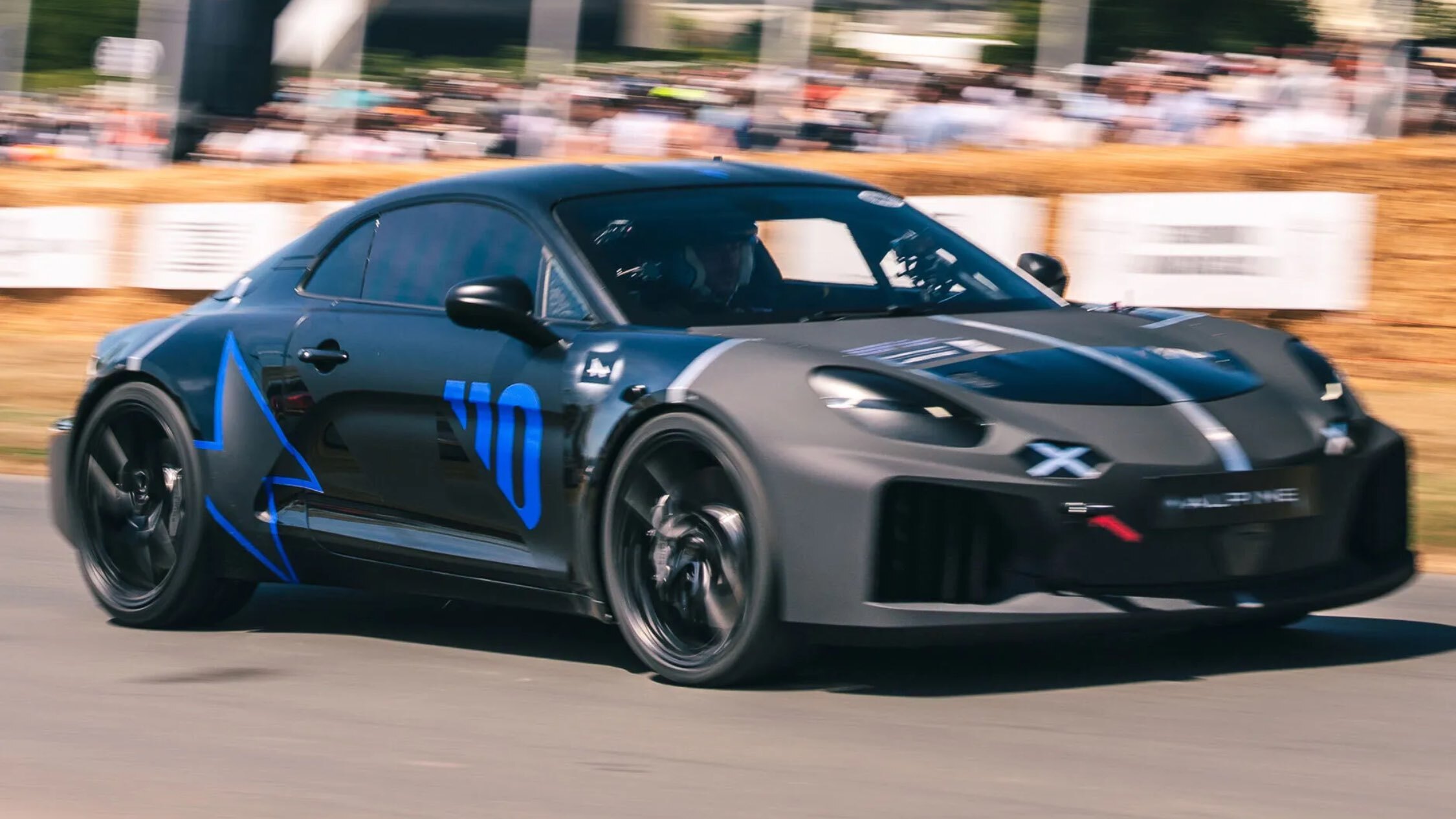
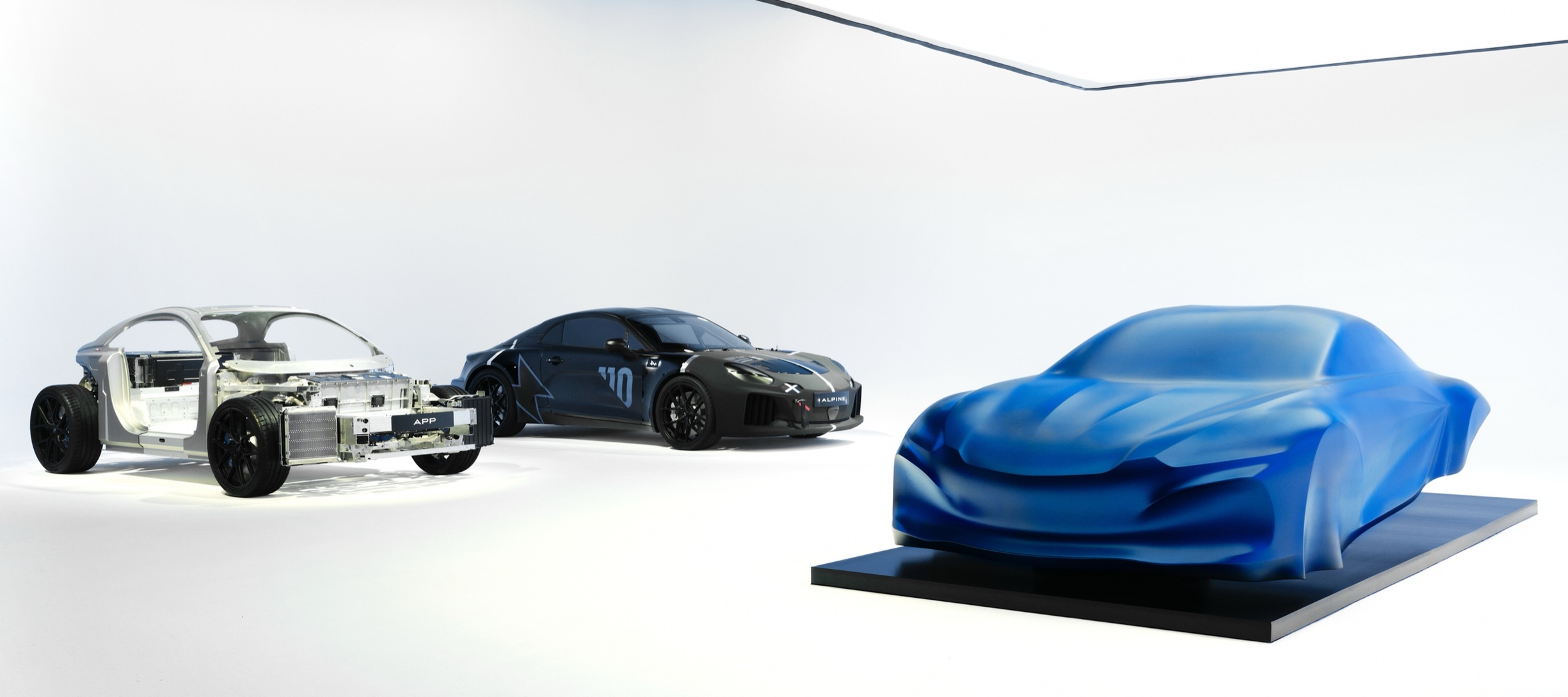
Lexus shelved the production version of the LF-ZC sedan concept.
Its gigacast modular platform survives and is still heading to production.
The smart money says the new EV arrives as a crossover, not a sedan.
In late 2023, Lexus pulled the wraps off its innovative LF-ZC concept, a high-riding sedan riding on a new electric platform, with a launch planned for this year and the BMW i3 in its sights. The timeline slipped to mid-2027 before Lexus killed the program outright last month, ending a project that never made it past the concept stage.
Scrapping the LF-ZC doesn’t mean Lexus is walking away from electric cars. As we recently reported, much of the engineering created for the concept survives and heads to production anyway. That includes the gigacasted modular structure, which splits the body into separate front, center, and rear sections that bolt together as one.
In addition, the electrical and electronic platform used for new advanced driver-assistance systems will reach production, as will the concept’s prismatic battery cells. We may not have to wait long to see them reach the road.
Toyota vice president and chief technology officer Hiroki Nakajima says Lexus has already settled on a “successor vehicle” to take the place the canceled LF-ZC left open, which means the replacement was decided before the original was even cold.
Some Of The Hard Work Is Already Done
“We did indeed discontinue development,” he told Nikkei CrossTech. “It was at a point where we needed to make significant investments, such as arranging molds and mass production equipment for the LF-ZC. However, many new technologies cultivated during the development of the LF-ZC, such as Gigacast, a new electrical and electronic platform for advanced driver-assistance systems (ADAS), and miniaturization and weight reduction, have already been completed. We will develop a successor vehicle that utilizes these new technologies.”
Nakajima-san went on to reveal that Lexus approved a “successor” to the LF-ZC on the same day it canceled development of that model, agreeing to repurpose the LF-ZC’s technologies for this new model.
We don’t yet know what form this new EV will take. The safe money points to an electric crossover or SUV, on the logic that either would move more metal than another sedan. The new BMW iX3 and Mercedes-Benz GLA EQ just hit the market, and it’s possible Lexus may fancy its chances in developing a competitor to them.
The Mercedes-AMG GLA Electric has been spied in Europe.
Model looks relatively tame, but sports a few telltale upgrades.
Crossover could have three motors and more than 500 hp.
Spy photographers have snapped the electric Mercedes GLA on multiple occasions, but now they’ve gotten up close and personal with the AMG variant. It’s a hot electric crossover that looks suspiciously like a supersized hatchback.
While the front end is heavily disguised, it will likely follow in the footsteps of the CLA and GLB. Details are hard to make out, but we can see star-infused headlights and a wide lower intake.
The side profile is more revealing as there are extended fender flares that hint at a wider track. The performance variant is also notable for riding on lightweight wheels that are backed up by a beefy braking system with red calipers up front. They’re accompanied by low-profile tires and a sport-tuned suspension, which appears to have a lower ride height.
It’s hard to tell this is an AMG variant as the prototype’s booty is completely unremarkable. However, the production model could be distinguished by a slightly sportier bumper.
SHProshots
Putting the bland exterior aside, the cabin will largely carryover from its MMA counterparts. That being said, there are some notable performance touches including a leather and Alcantara flat-bottom steering wheel. The steering wheel also has two lower ‘buttons’ with integrated displays.
Elsewhere, we can see silver trim and heavily bolstered seats with white contrast stitching. The screens are largely covered, but we can expect a familiar 10.25-inch digital instrument cluster and a 14-inch infotainment system. They should be joined by an optional 14-inch front passenger display.
SHProshots
The GLA Electric is expected to be offered in 250+ and 350 4MATIC guise. In the CLA, the latter has an 85 kWh battery pack and a dual-motor all-wheel drive system producing a combined output of 349 hp (260 kW / 354 PS) and 380 lb-ft (515 Nm) of torque. It enables the sedan to accelerate from 0-60 mph (96 km/h) in 4.8 seconds and have an EPA range of 312 miles (502 km).
The AMG variant will undoubtedly improve on those numbers and rumors have suggested the crossover could have three axial flux motors producing more than 500 hp (373 kW / 507 PS). They could be accompanied by a unique battery with a higher energy density than the regular model.
The recently introduced AMG GT 4-Door has a similar layout as it has two axial flux motors out back and one up front. However, that model has a far higher output of 1,153 hp (860 kW / 1,169 PS).
Shell has introduced the new Triple 10 Challenge concept.
It’s billed as an affordable and efficient electric vehicle.
Car relies on and promotes the company’s Recharge fluid.
Shell has quietly unveiled a new concept known as the Triple 10 Challenge. It’s being described as a “ground-breaking proof-of-concept vehicle designed to inspire a new design philosophy for the next-generation of battery electric vehicles.”
Designed to be compact and affordable, the car is named after three key targets. They include getting 10-km/kWh, having a 10-tonne CO2e lifecycle footprint, and a recharging time of less than 10 minutes.
Starting with the latter, the car’s “compact” battery can go from a 10% to 80% charge in 9 minutes and 54 seconds. That’s pretty quick and the time is achieved with a relatively common 175 kW DC fast charger.
The concept is also eco-friendly thanks to its lightweight design, “optimized battery capacity,” and use of recyclable materials. Furthermore, the EV is envisioned to use 100% renewable energy for recharging, so the combination of these factors could give it a “50% reduction in lifecycle emissions compared to typical battery electric vehicles in the European market.”
On the efficiency front, Shell said the concept is the “first road-worthy vehicle to have successfully demonstrated the potential of a simplified, single-circuit cooling architecture to efficiently manage the thermal load of the car’s entire powertrain, even under the most extreme fast-charging scenario in real-world conditions.” This is effectively the main point as Shell has a new fluid to sell.
In this case, it’s Recharge thermal fluid. The company said the dielectric liquid “allows for direct immersion cooling of the battery and indirect cooling of the powertrain components, including the motor and power electronics.” Shell claimed the fluid allowed them to “unlocked the potential for faster charging, lighter systems, and improved lifecycle efficiency – using technologies that exist and can scale today.”
While hard numbers were few and far between, the firm claimed an “over 30% improvement in overall energy efficiency compared to many current-generation EVs.” Shell also noted the battery pack cost has been reduced by around 25% thanks to an efficient design with fewer modules, a simplified housing architecture, and the company’s fluids.
The oil giant didn’t delve into specifications, but confirmed Empel Systems developed the car’s electric motor and drive unit, while RML worked on the battery and integration.
That’s not a lot to go on, but the Triple 10 appears to be a small five-door hatchback with an upright front fascia and an expansive light bar. They’re joined by digital side mirrors, flush-mounted door handles, and wheel discs with a ‘fake’ alloy design. We can also see a flowing roof and a minimalist interior with what looks like a rotary shifter.
China’s Zeekr has entered Europe with a lineup of four EVs.
Its European chief says the brand matches German premium rivals.
Zeekr wants showrooms in five German metro areas by year’s end.
Zeekr, the upmarket arm of the Geely Group, genuinely believes its cars stand shoulder to shoulder with the best from Germany’s premium brands. The man running Zeekr in Europe staked that claim in a recent interview, even though the company’s European operations have been up and running for barely six month,
That executive is Lothar Schupet, who logged 23 years at BMW before crossing over. Under him, Zeekr has rolled out a handful of models on European roads: the entry-level Zeekr X, the larger 7X SUV, the 001 estate, and the new 7GT. The brand is courting fleet buyers ahead of private ones for the moment, mostly because it currently has no dealership network anywhere in the region yet.
“I am firmly convinced that our products impress with quality and performance,” Schupet told Car-Editors. “In my opinion, we are on par with all premium manufacturers. That’s the basic premise.”
Based on our experience with the Zeekr 7X earlier this year, we can understand Schupet’s confidence. Jacked-packed with technology, the 7X feels every bit as premium as something from BMW or Audi, and yet costs significantly less.
Dealerships Are Coming
During the same interview, Schupet added that Zeekr’s initial goal in Europe was to reach as many business customers as possible, particularly those who had used vehicles from other premium brands in their fleets. As this has happened, interest from private customers has steadily grown. Although Zeekr doesn’t have a dealership network, it has established several test-drive centers and has begun accepting “a few hundred” orders from private buyers.
Zeekr hopes to have sales locations across five metropolitan areas in Germany by the end of this year, including Hamburg, Düsseldorf/Cologne, Frankfurt, Stuttgart, Munich, and perhaps also Berlin. These will join the 10 existing test-drive centers across the country.
Asked which existing dealers Zeekr hopes to bring into its network, Schupet said they’re aiming directly at the premium segment.
“Of course, we are specifically targeting dealers in the premium segment. These include the traditional German brands BMW, Audi, and Mercedes. But also Jaguar and Maserati dealerships that may currently have spare capacity and are open to something new. As a Geely Group brand, we are naturally also looking at Volvo and Polestar dealerships too,” he said.
No European Production, For Now
Asked if Zeekr is interested in building its electric cars in Europe, Schupet acknowledged it’s an option, but said there’s no need to do so at this stage.
“Strategically, there is the option of producing locally,” he said. “This has certain advantages, but also carries risks. The speed, flexibility, and agility with which things are done in China are not easy to implement in Europe. Bureaucracy also hinders many decision-making processes. While the punitive tariffs make it challenging to implement a sustainable business model with manufacturing in China… we have now found a business case that works.”
Slate’s electric pickup starts at $24,950 before fees and taxes.
Projected range has increased to 205 miles on the standard battery.
First customer deliveries are scheduled to begin in late 2026.
For months, Slate has been promising an affordable new truck. Now, the Jeff Bezos-backed startup has finally put real numbers behind that promise. The company announced today that its all-electric pickup will start at $24,950 before taxes, fees, destination charges, or optional equipment, while also revealing better-than-expected range figures. The order books are now open, and we’re all going to find out just how much of an appetite America has for a stripped-down EV.
According to Slate, customers can now place a preorder with a $300 non-refundable deposit to secure a delivery window. The startup says buyers don’t need to choose accessories or configurations immediately. A key part of its strategy is to sell a basic vehicle first and upsell customization later.
The biggest surprise might be the range. Slate originally projected lower figures, but now says the standard battery pack should deliver 205 miles (330 km) of range. That’s not class-leading by any stretch, but it’s more than many expected from a vehicle targeting such a low price point. Beyond that, the formula sounds as though it’s unchanged from its original debut.
The truck itself remains intentionally simple. It’s a two-seat electric pickup with a projected towing capacity of up to 2,000 pounds (907 kg). Power windows, a conventional infotainment system, and plenty of the equipment buyers now treat as standard, a key fob among them, appear to be missing from all three body styles on the official configurator: the Blank State pickup, the Squareback SUV, and the Fastback SUV.
Instead, Slate is betting that customers would rather buy a basic truck and add features over time than finance a vehicle loaded with equipment they may never use.
That philosophy extends beyond the pickup itself. Slate also confirmed that both of its SUV conversion variants, known as the Squareback and Fastback, will start at $29,950 and $31,950 respectively. The timing here is key because when Slate first announced its plans, the federal EV tax credit would’ve offered up to $7,500 off. When that ended, pricing was the big question. Now, with the pricing announced, the real challenge begins.
The company reportedly has around 180,000 reservations, but converting inexpensive reservation holders into actual buyers is a very different test. If Slate succeeds, it could prove that affordability matters more than horsepower, touchscreen size, or even battery range. If it fails, it’ll be another reminder that building a cheap vehicle is often harder than building an expensive one.
Skoda has unveiled their new electric flagship, the Peaq.
It offers three powertrains and up to 402 miles of range.
Three-row crossover uses 110+ lbs of recycled materials.
Skoda’s electric vehicle offensive continues as the company has officially unveiled the three-row Peaq. It’s the brand’s new flagship and the model is even larger than the Kodiaq.
Previewed by the Vision 7S concept, the crossover has a Modern Solid design that incorporates T-shaped lighting units and a gloss black Tech-Deck Face. They’re joined by a sculpted hood, angular air curtains, and a stylized lower intake.
Moving further back, we can see a rakish windscreen that flows into a long, sloping roof. The model wears streamlined bodywork and is notable for being the first Skoda to have flush-mounted door handles. They help the Peaq to achieve a drag coefficient as low as 0.249.
Other notable highlights include a distinctive greenhouse and a thick rear pillar. They’re accompanied by 19- to 21-inch wheels as well as a panoramic roof with Dynamic Shade Control. The latter uses electricity to adjust its transparency and Skoda said the roof is divided into nine individually controllable segments.
The rear end is relatively plain, but the model has T-shaped taillights and a prominent spoiler. Buyers will also find large “SKODA” lettering and an angular rear bumper.
Customers looking for something slightly more stylish can opt for the Sportline variant. It features gloss black accents and lettering as well as an available black roof. It also includes a lightly revised cabin with black sport seats and a three-spoke sport steering wheel.
In terms of size, the model measures 191.9 inches (4,874 mm) long and has a wheelbase that spans 116.7 inches (2,965 mm). This means the Peaq is 7.3 inches (185 mm) shorter than the Hyundai Ioniq 9 and has 6.5 inches (165 mm) less between the wheels.
A Classy, But Minimalist Cabin
The minimalist design continues inside, where there’s a digital instrument cluster and a 13.6-inch infotainment system. The latter runs Android and sports a vertical orientation, which is another first for Skoda.
Putting screens aside, we can see a floating center console, a tiered dashboard, and a wide center console. Physical switchgear has largely been eliminated, but there are dedicated controls for commonly used features.
The Peaq offers five- and seven-seat configurations and will be offered with an assortment of options. Highlights include a 16-speaker Sonos premium audio system and a dual Qi2 wireless smartphone charger that has an output of 25W.
Skoda is also proud of the optional Relax Package, which sees the crossover outfitted with lounge-like front seats. They have ergonomic legrests as well as ventilation and massage functions. The package also includes two headrest pillows as well as a center console table.
When it comes to space, the model offers up to 75.9 cubic feet (2,150 liters) of luggage room. If that’s not enough, the frunk provides an additional 1.3 cubic feet (37 liters).
Customers will find an assortment of driver assistance systems including Front Assist, Crossroad Assist, Turn Assist, and Side Assist. These standard systems can be joined by optional Travel Assist 3.0 and Top Area View 360°.
Three Powertrains
The Peaq rides on the MEB+ platform and offers three powertrains including an entry-level 60 variant. It uses a 63 kWh NMC battery as well as a rear-mounted motor developing 201 hp (150 kW / 204 PS) and 258 lb-ft (350 Nm) of torque. This enables the crossover to accelerate from 0-62 mph (0-100 km/h) in as little as 8.4 seconds, before hitting a top speed of 99 mph (160 km/h).
More importantly, customers can expect a WLTP range of 285 miles (459 km). When the battery is low, a 160 kW DC fast charger can take it from 10-80% in as little as 27 minutes.
The mid-level Peaq 90 has a larger 91 kWh battery pack and a beefier motor producing 282 hp (210 kW / 286 PS) and 402 lb-ft (545 Nm) of torque. This lowers the 0-62 mph (0-100 km/h) time to 7.1 seconds, while the range increases to 402 miles (647 km).
Furthermore, the model has an upgraded 199 kW fast charging capability, which means it can go from 10-80% in just 28 minutes. While that’s nearly identical to the base model, you have to remember it’s charging a larger battery.
Last but not least is the range-topping 90x. It combines the 91 kWh battery with a dual-motor all-wheel drive system producing 295 hp (220 kW / 299 PS). 62 mph (100 km/h) comes in as little as 6.7 seconds, while the range drops to 381 miles (613 km).
Rounding out the highlights are a one-pedal driving mode and a bidirectional charging capability. The crossover can also tow up to 4,409 lbs (2,000 kg).
Nissan has reportedly stopped development of the Qashqai EV.
Automaker was coy, but mentioned “significant volatility” in demand.
Project may not be entirely dead, but a restart could have a big delay.
The Nissan Qashqai is the brand’s best-selling vehicle in Europe, so it wasn’t much of a surprise when the company announced plans for an electric version in 2023. However, like a handful of EVs, it’s quietly been dropped.
Citing six people familiar with the matter, Reuters is reporting the company has halted development of the model. The project is said to have been frozen in early 2025 and it appears to be a victim of Nissan’s massive restructuring.
The firm’s “Mobility Intelligence for Everyday Life” plan calls for streamlining their lineup and eliminating 11 models. When the strategy was announced, the company said they would be “exiting low-performing models and reallocating reinvestment to growth areas.”
While the lineup is shrinking, an assortment of new vehicles are on the horizon including a new Xterra, Skyline, and Juke EV. The latter was pitched as a “Europe Core model that combines bold, distinctive design with full electrification and intelligent features.”
The article implies the project was halted over cost concerns, but it sounds like the idea of a Qashqai EV might not be entirely dead. However, two sources told the publication that if the program were to be restarted, the model likely wouldn’t be launched until the early 2030’s.
The automaker declined to address the status of the vehicle in a statement to Reuters, but said they’re committed to expanding their electrified lineup. However, they noted Europe has experienced “significant volatility” in electric vehicle demand, so they’re pursuing a “balanced” electrification strategy.
This suggests the development freeze might not have been about money, but a lack of demand. Regardless, Nissan doesn’t seem particularly interested in building a Qashqai EV at the moment.
Lucid is cutting roughly 18% of its U.S. workforce to save cash.
The automaker is eliminating a production shift in Arizona.
Former interim CEO Marc Winterhoff has departed immediately.
Lucid is doing all it can to get the Cosmos crossover to market quickly, but before that, it’s cutting more of its workforce and seemingly hitting the reset button… again. Four months after laying off 12% of its workforce, the EV startup is cutting another 18% of its U.S. employees while simultaneously shutting down a production shift at its Arizona factory.
The move affects full-time staff, contractors, and hourly workers alike. The automaker’s biggest issue might not be production or development, but rather, finding buyers.
The company announced the cuts Monday alongside the immediate departure of former interim CEO and chief operating officer Marc Winterhoff. Lucid is eliminating the COO position entirely as part of a broader restructuring effort under new CEO Silvio Napoli, who officially stepped into the top job on June 1.
According to Lucid, the layoffs should generate approximately $158 million in annualized savings while costing about $32 million in severance and related expenses. “These are difficult decisions taken to align production with demand, reduce inventory, and adapt to declining market conditions,” a Lucid spokesperson said in a statement to CNBC. “They are part of a broader effort to simplify the company, sharpen execution, and position Lucid to become more competitive over time.” That mention of demand is the key detail here.
Lucid has pretty much already proven that it can build a world-class EV. The Air is a sincerely impressive electric sedan. The Gravity takes that formula and applies it to a three-row SUV praised for its range, luxury, and performance. Despite that, none of the brand’s efforts have resulted in the kind of sales volume needed to support a brand with thousands of employees and ambitions of becoming a major player in the industry.
The elimination of the second shift at Lucid’s AMP-1 factory in Casa Grande, Arizona, underscores the problem. Automakers don’t typically idle production capacity when demand is outpacing supply. Earlier this year, Lucid produced roughly 5,500 vehicles in the first quarter but delivered just over 3,000, leaving inventory levels higher than executives would like.
That’s what makes the brand’s upcoming Cosmos crossover such a big deal. Increasing overall demand is absolutely vital for Lucid right now. The Cosmos is supposed to start at under $50,000, which automatically opens up a whole new demographic of buyers. If Lucid can manage to take some sales away from Tesla and other rivals in the process, these layoffs could eventually look like very wise belt-tightening. If it doesn’t, they’ll just look like one more step away from the success Lucid once hoped for.
Scenic facelift appears ready with styling borrowed from updated Megane.
Google Gemini and new software features are likely to enhance the interior.
Range may remain unchanged thanks to already impressive battery capacity.
The facelifted Renault Scenic E-Tech has been spotted in disguised form again, but thanks to a strange timing quirk, Renault has accidentally made our job of decoding the upcoming changes much easier. The spy shots landed on the very same day the company unveiled the new-look Megane E-Tech, giving us a pretty clear preview of what’s next for the bigger Scenic SUV.
The updated Megane arrives with a completely reworked front end featuring a new grille treatment like the one on the Captur and Symbioz, fresh lighting elements, and a more assertive – and less obviously electric – look. The camouflaged Scenic prototype appears to be wearing much of the same visual makeover, which makes sense given the two EVs already share plenty of hardware beneath the skin.
The Scenic is already one of the stronger offerings in its segment, so it’s not like it requires any major help. It looks good, drives well, and has a great electric range, so unlike the Megane, which gains a larger battery as part of its update, the Scenic may not need major changes in that department.
With its existing 87 kWh battery already delivering more than 380 miles (612 km) of WLTP range, Renault could decide that a fresh face and upgraded technology are enough to keep the Scenic competitive for the next phase of its life. And since the new Megane stuck with the old one’s 217 hp (220 PS / 160 kW) electric output, the Scenic probably will, too.
Google Gemini Onboard
The software enhancements introduced on the Megane seem almost certain to carry across. That means Google Gemini integration should be on the cards, allowing drivers to interact with the vehicle using more natural voice commands. There’s also a decent chance Renault will bring over some of the smaller improvements that debuted on the Megane, including new charging and connectivity features, expanded app support, new driver recognition functions, and upgraded connected services.
For now, Renault isn’t saying when the refreshed Scenic will make its official debut. But with prototypes already out testing and the Megane’s makeover now public, we’d be surprised if the wait stretched much longer than a few weeks. The official shots of the freshly-revealed Megane E-Tech in the gallery below give you an idea of what to expect from the Scenic.
The Mustang Mach-E may not survive into a second generation.
Ford’s new Universal EV platform will launch next year with a pickup.
Jim Farley admits Ford built its first EVs the wrong way.
Could Ford’s new Universal EV platform spell the end of the Mustang Mach-E? Recent comments from the automaker suggest it’s a real possibility, even if the company isn’t prepared to commit one way or the other right now.
With the F-150 Lightning gone, the Mustang Mach-E stands as the only EV Ford still sells in the United States. The current car will hang around through at least 2027, and a report from last year indicated the model might not see any meaningful upgrades until sometime after 2030. However, even this does not seem guaranteed.
As part of a campaign to promote the new Universal EV platform, Ford answered a series of questions from its fans. One of them got straight to the point and asked whether the new architecture would underpin a future Mustang Mach-E. The answer was clear.
“No, it will not be used for the Mustang Mach-E,” Ford responded. “This platform was built from a clean sheet to maximize vehicle efficiency.”
First-Gen Wasn’t Good Enough
As noted by Ford Authority, Ford boss Jim Farley has said the car manufacturer went about creating its first generation of EVs, including the Mustang Mach-E, in the “wrong way.” The new Universal EV platform will first be used by a compact pickup truck, recently spied up close in the United States. The platform will then be used by several other Ford models.
Had Ford been committed to keeping the Mustang Mach-E for a long time and building it through to a second generation, using this new platform would have been an obvious choice. Now, if it decides to keep selling the Mach-E until 2030, or well beyond that date, it could quickly start to feel outdated compared to Ford’s second-generation EVs. What’s more, it’s reported that the Ford Escape will be revived in all-electric form towards the end of the decade using the UEV architecture, likely further limiting the appeal of the Mach-E.
Renault refreshes Megane EV with Captur nose design and extra equipment.
New LFP battery boosts range to 310 miles and increases charge speeds.
Google Gemini joins expanded tech spec together with upgraded ADAS.
Last year at the Munich Motor Show, Renault CEO Fabrice Cambolive said the Megane E-Tech Electric was due for a hot hatch-inspired makeover. Nine months on, that update is here, and while it doesn’t deliver a real Megane hot hatch, and it’s actually slower, it does make the E-Tech even more appealing in just about every other way.
The design changes are impossible to miss because Renault has completely reworked the front end with a new bumper, grille and lights. The Megane E-Tech now has the same family face as other Renault models like the Captur and Symbioz, and looks much less cuddly. Other visual updates include fresh wheel designs and a new Satin Blue paint finish.
Under the skin, Renault has replaced the old 60 kWh battery with a new 67 kWh usable LFP pack. It pushes maximum WLTP range from a poor 285 miles (459 km) to a more reasonable 310 miles (499 km) and helps bring charging performance up a notch. Peak DC charging climbs to 165 kW, allowing a 15 to 80 percent recharge in around 24 minutes.
The front-wheel-drive powertrain remains familiar, with a 217 hp (220 PS / 160 kW) electric motor producing 221 lb-ft (300 Nm) of torque, just as before. The bigger battery appears to have put a tiny dent in performance though, increasing the zero to 62 mph (100 kmh) time from 7.5 to 7.6 seconds.
But engineers have also retuned the steering and revised the suspension setup to compensate for the larger battery, so there’s a chance you’ll not notice the difference out on the road.
Same Screens, New Software
Inside the Megane, it might also take a while to notice any differences. On the surface, nothing much has changed, but the software that runs the twin-screen dashboard gets a substantial update. Google Gemini joins the OpenR Link system, there are now more than 100 downloadable apps, and a new driver-recognition feature can automatically load personal settings when it recognizes who’s behind the wheel.
The range has also been simplified to Techno and Esprit Alpine trims, both carrying more standard equipment than before. That word ‘more’ kind of sums up everything about this Megane makeover. It was already a solid electric family hatch, but these updates give it a sharper look, and boost both range and equipment. Now all we need is the true Megane RS hot hatch CEO Cambolive got us all hopeful for.
Range Rover discounts reportedly approach 60 % in China as demand collapses.
Locally built Evoque L SUV costs as little as $27,000, Bloomberg investigation reveals.
News comes as JLR adds hybrid option to EV-only baby Defender for ICE-loving US.
Poor old JLR can’t seem to get it right. The company confirmed today it’s re-engineering its upcoming baby Defender to accommodate hybrid powertrains because EV demand isn’t growing fast enough in gas-loving America. But also today we heard about a very different problem for the British automaker on the other side of the world, where EV obsession means ICE Range Rovers are being brutally discounted in China to secure a sale.
According to a report from Chinese media outlet Jiemian, a locally built Range Rover Evoque L has recently been advertised for as little as 179,800 yuan, equivalent to around $26,600. That’s nearly 60%, or a whopping $36,900 less than its official list price of 429,800 yuan ($63,500) and a startling discount for a premium SUV wearing one of the most prestigious badges in the business.
Gas Cars Are Bleeding Value Across China
The Evoque’s plight isn’t unique. Data shows discounts on gasoline-powered cars climbing sharply from January to May 2026 as dealers struggle to move inventory. According to data from the China Passenger Car Association, the average gasoline-car discount ran to 33,000 yuan ($4,900) over the first five months of the year, nearly double the 17,000 yuan ($2,500) dealers were knocking off a year earlier.
EVs and plug-in hybrids are holding up far better, reflecting just how rapidly Chinese buyers have embraced electrified vehicles.
The situation has become particularly painful in the used-car market. As more motorists trade combustion-powered vehicles for EVs, resale values have fallen sharply, creating a vicious cycle that makes buyers increasingly nervous about purchasing another gasoline vehicle. In May alone, the average ICE transaction price dropped 19 percent, and a typical three-year-old used car is now only worth 38 percent of its original value, versus 60 percent in 2023, Bloomberg reports.
US Wants MORE Gas Cars
It’s fascinating how this contrasts with the announcement JLR made the very same day. The British automaker confirmed that its new compact Defender (above), along with future EMA-based models widely expected to include the next Velar and Evoque, will now offer a full hybrid option despite originally being conceived as EVs.
That move appears heavily influenced by disappointing EV sales in America, now JLR’s biggest market. While Chinese buyers are rapidly abandoning combustion power – and JLR products in general, forcing the company to withdraw Western-style vehicles – many US customers remain hesitant to make the jump to fully electric vehicles.
It’s a perfect illustration of the challenge facing every global automaker. Build too many EVs and you risk missing sales in America. Build too many gasoline cars and you could end up slashing prices in China. For companies like JLR, navigating that divide is complicated, expensive and full of risk.