Slate Auto is only a few months away from what could become the most consequential moment in its brief existence. It will soon tell the world exactly how much its trucklet will cost. We already know it is targeting the “mid-$20,000 range,” but whether or not that’ll be cheap enough for widespread adoption is an open question.
This week, the startup teased on social media that final pricing for its two-door EV will arrive in late June. In the video, CEO Chris Barman reiterates that the base “Blank Slate” model is still expected to land in the mid-$20,000 bracket.
“We’ve been working tirelessly to get the lowest price possible,” Barman said. “While we’re not pencils down just yet, we’re wrapping negotiations on final parts with suppliers. We’re on track to share new info on the price in June. We think it’ll be worth the wait.”
Obviously, the mid-$20,000 range is a break from Slate’s initial promise of a truck that starts under $20,000. That said, its initial promise relied heavily on the now-defunct $7,500 federal EV tax credit. Without it, breaking that price barrier was always going to be a stretch given material costs and industry margins. The updated estimate sounds a lot more realistic, but also far less revolutionary.
The Reality Ahead
Let’s say that the trucklet launches with relatively approachable MSRP. Slate will still need to nail the details. Execution at the manufacturing, service support, parts supply, and consumer education level will be paramount. Other startup automakers have failed on fewer issues.
Then, there’s the competition. We’ve pointed out just how unattractive a $25,000-$28,000 Slate might appear next to something like the Ford Maverick. That isn’t the only compact truck in the market and the Blue Oval brand is already working on an electric version of its own, which it promises to start from $30,000.
And while we’re still light on specifics, it is hard to imagine Ford delivering something as unapologetically stripped back as the Slate, which famously does without even basic features like integrated speakers and power windows.
That all said, a small, affordable, modular EV with tons of personality might just manage to escape the fray. Production is supposed to begin by the end of the year in Indiana.
The automotive industry never slows down, and EV brands feel that pressure more than most. Lucid is responding to the market and to its own position by cutting 12 percent of its workforce. The move comes as it attempts to tighten spending and move closer to profitability as it ramps up Gravity production.
The layoffs were confirmed to Bloomberg in an emailed statement, following the leak of an internal memo from interim CEO Marc Winterhoff that circulated within the company and was seen by Techcrunch.
In the memo, Lucid addresses the cuts head on. “Saying goodbye to colleagues is never easy,” Winterhoff wrote. “We are grateful for the contributions of those impacted by today’s actions, and we are providing severance, bonus, continued health benefits, and transition support to help them through this period.”
Bloomberg reports that the majority of workers affected are salaried and corporate roles. Hourly workers tied directly to manufacturing, logistics, and quality operations at Lucid’s Arizona facility are not expected to be part of this reduction. That’s not all that shocking, given the brand’s need to ramp up production of the Gravity SUV and continue development of its Midsize platform.
“Importantly, today’s actions do not affect our strategy,” Winterhoff wrote. “Our core priorities remain unchanged, and we continue to focus on the start of production of our Midsize platform. With disciplined execution, we are also focused on further expansion into the robotaxi market, continued ADAS and software development, and growth in sales of Lucid Gravity and Air across existing and new geographies.”
A Murky Future
Right now, Lucid’s momentum is almost entirely pinned on the Gravity SUV. It undoubtedly broadens appeal beyond the ultra-luxury Air sedan expanding its reach to a more popular segment. That said, it’s not exactly what most buyers would consider mainstream or affordable.
That’s why the Midsize platform is so key to Lucid’s future. Tesla’s Model 3 and Model Y turned a niche player into a volume powerhouse, and Lucid is hoping for a similar inflection point.
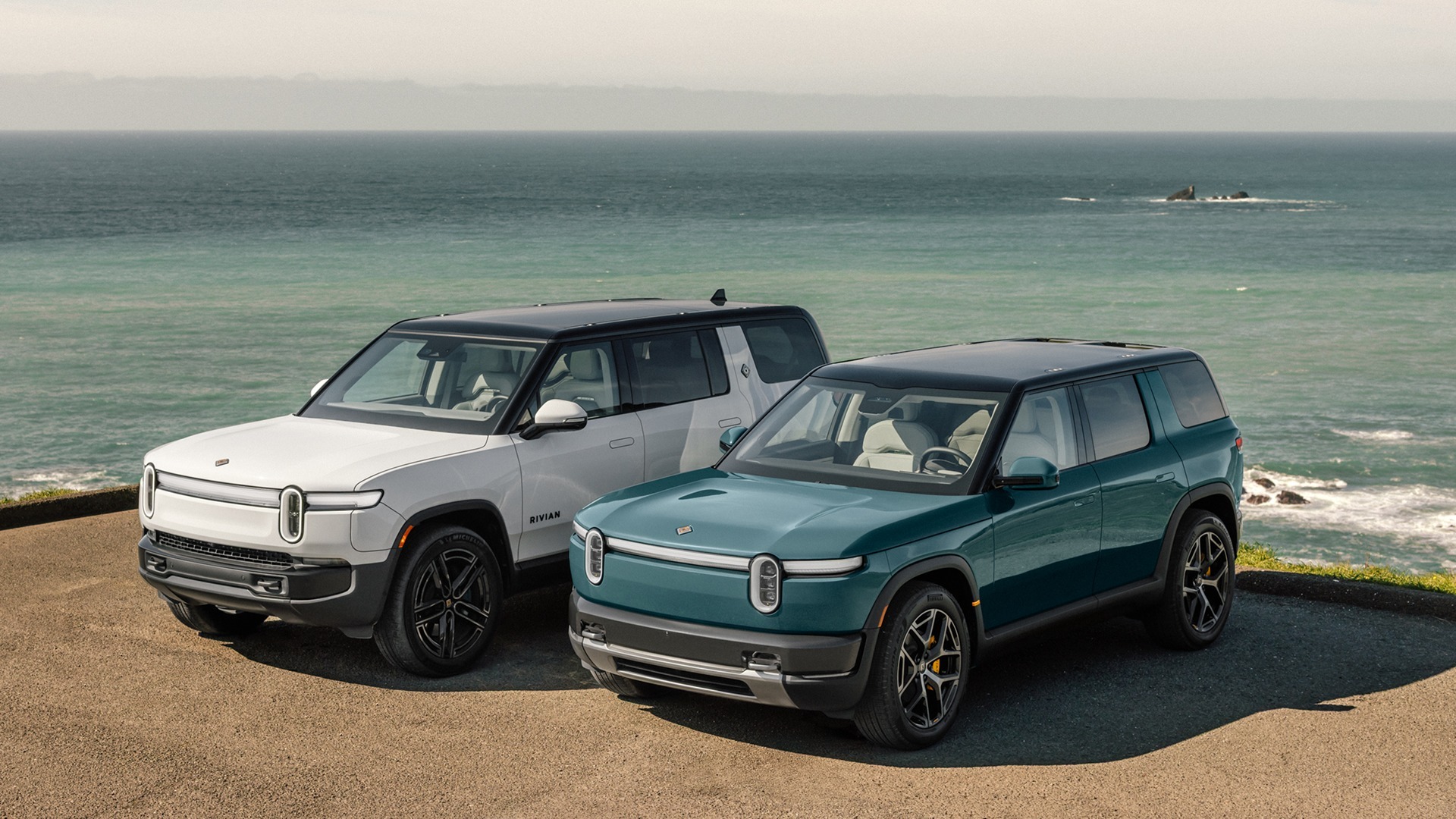
Rivian is following a similar playbook with the R2. By the end of the year, we should have a clearer picture of who is getting closer to that goal. In a cooling US EV market, profitability is no longer a nice to have. It is the whole game.
The mini Mercedes G-Class will rival Land Rover’s baby Defender.
Underpinning the SUV will be a bespoke ladder frame chassis.
Launches as an EV, but combustion power remains a possibility.
Sales of the Mercedes-Benz G-Class surged 23 percent last year to a record 49,700 vehicles. Not bad for a machine that still drives like it could climb a mountain on the school run. Now, those who can’t get enough of the G-Wagen will soon have another compelling, albeit smaller, option.
The so-called ‘Little G’ is on the way, promising all the boxy attitude of the full-size model in a tighter, more affordable package. Positioned beneath the full-size model, the Little G marks Mercedes’ first serious attempt to stretch the G-Class name beyond a single model line.
A Compact G Takes Shape
Baldauf
Also known as the mini G and baby G, this new addition to the Mercedes-Benz line-up should have enthusiasts paying close attention. It’s expected to rival the smaller Defender currently in development at Jaguar Land Rover. For now, it’s confirmed to launch as an all-electric model, while a combustion-powered version remains possible in the future.
The latest round of spyshots of the Little G shows the model testing in the depths of the European winter. While this prototype is still under heavy camouflage and some body cladding, there’s no hiding the overall shape. It looks just like a G-Class should, just scaled to about 70 percent and softened slightly around the edges.
Baldauf
Found at the front are the circular headlights you’d expect, with outer rings that serve as the turn signals. It also has blocky front quarter panels and a remarkably flat hood. This particular prototype can also be seen on a set of mismatched wheels and with a pair of roof rails. Although future powertrain options have not been detailed, this prototype is clearly an EV, as evidenced by the lack of exhaust.
Like the larger G 580 with EQ Technology, the test cars appear to retain signature details such as a side-hinged rear door and an external spare wheel cover. On the electric version, that rear-mounted housing is expected to double as storage for charging cables, echoing the setup already offered on the full-size EV.
Bespoke Bones Beneath The Boxy Body
Underpinning the new model will be a bespoke chassis. According to the former chief technology officer of Mercedes, Markus Schäfer, the Little G will have a “miniature ladder-frame chassis,” adding that it will have similar qualities “when it comes to suspension and wheel size,” to the larger model.
EV Rollout Plan
Mercedes is set to launch the baby G as a fully electric SUV. Exact battery sizes and motor outputs are still under wraps, but expect it to borrow heavily from the tech already rolling out in Merc’s newer EVs, including the GLA and GLC electric models.
What it won’t get, according to Schäfer, is a range-extender setup. Smaller and mid-size Mercedes models are steering clear of that halfway-house solution, which means the Little G should stick with proper, full battery-electric hardware.
As for combustion power, nothing is confirmed. Mercedes hasn’t shut the door on it, but it hasn’t opened it either. If an ICE version does materialize, it’ll likely depend on the market. For now, the company is keeping its options open.
New interiors may debut with the next Polestar 2 and 7.
The current Polestar 3 and 4 rely heavily on one screen.
Polestar also plans to expand its interior color range.
Like many other EV makers, Polestar has largely followed Tesla down the minimalist route, filling its cabins with screens, clean surfaces, and very few physical controls in models such as the Polestar 4 and 5. That approach is now set to change.
The company has confirmed it will begin reintroducing more physical switches inside its cars, a move that will likely be welcomed by drivers who prefer not to hunt through menus to adjust basic functions.
Take the Polestar 4 as it stands today. Physical controls are limited to the steering wheel, the seat adjustments, the stalks, plus a Play and Pause button and a volume dial on the center console. Beyond that, nearly everything lives inside the touchscreen.
To its credit, Polestar never removed every physical button. Still, the cabins can feel pared back to the point of austerity. Speaking to InsideEVs while previewing upcoming models, Polestar head of design Philipp Römers confirmed that more buttons are on the way, though he stopped short of detailing which functions will regain dedicated controls.
Römers added that Polestar plans to add more interior color options, noting that its customers are on average roughly 10 years younger than those of Audi, Mercedes, and BMW. Improvements will also be made to the Android Automotive-based infotainment system, and it will soon offer more scope for personalization.
Unfortunately, we won’t see new Polestar interiors for quite some time. For example, the updated Polestar 4 ‘wagon,’ complete with a rear window, will likely retain the same cabin as the existing model. Similarly, the Polestar 5 grand tourer will get a familiar minimalist cabin.
The first real glimpse of a revised interior could come with the second-generation Polestar 2, recently teased ahead of its launch next year. After that, the new Polestar 7, due in 2027 and positioned above the current Polestar 3 SUV, should follow suit.
Lexus plans to turn the next IS into a dedicated EV.
It may adopt styling cues from the 2023 LF-ZC concept.
Output could reach 500 hp with up to 620 miles of range.
Lexus has just given the aging IS another facelift, sharpening the nose, tidying up the cabin, and revising the chassis. It keeps the familiar formula alive a little longer. Behind the scenes, though, work on a full successor is underway, and reports from Japan suggest it will arrive in 2027 as an EV-only model.
Talk of a zero-emission IS dates back to late 2021, when Lexus unveiled the Electrified Sedan concept. The LF-ZC concept that followed in 2023 offered a clearer look at a future production EV, promising a slippery shape, gigacasting manufacturing, and prismatic battery shells said to double range.
Even as enthusiasm for EV sedans has cooled in some markets, though not all, with buyers drifting back to hybrids and governments trimming, or in the case of the US scrapping, tax incentives, Toyota has stuck to its multi-path strategy. Combustion, hybrid, and electric powertrains are all set to coexist in future models such as the Corolla.
Lexus
Despite these issues, there are signs Lexus may stick with the original EV-only vision for the next IS, echoing the brand’s recent concept-heavy direction with projects like the new LFA Concept and the six-wheeled LS Concept revealed in late 2025.
Targeting The German EV Trio
According to a report from Japan’s Best Car, the next Lexus IS will abandon internal combustion entirely and become a dedicated EV. It is expected to compete directly with the upcoming BMW i3 Neue Klasse, Audi A4 e-tron, and Mercedes-Benz C-Class EQ. All three German rivals are expected around 2027, which conveniently matches the rumored debut timing for the Lexus.
The report suggests the production IS will draw heavily from the LF-ZC concept, adopting a low-slung silhouette that favors aerodynamics over traditional three-box sedan proportions. It is rumored to measure around 4,790 mm (188.6 inches) long, positioning it below the new Lexus ES, which has stretched to 5,140 mm (202.4 inches).
Expect Tesla-like gigacasting to feature in the manufacturing process, along with a high-tech interior packed with advanced connectivity and safety systems.
Theottle
Digital artist Theophilus Chin has previously produced speculative renderings of the next IS, blending cues from the larger ES with the proportions of the 2021 Electrified Sedan concept. The results look closer to production, while still reflecting Lexus’ current design language. That said, Toyota has signaled it will grant Lexus more creative freedom, so the final car could end up more adventurous than these illustrations suggest.
Advanced Tech Beneath The Surface
Regardless of how radical it looks, the next IS is expected to double down on EV hardware. The report points to a lineup starting with a single-motor, rear-wheel-drive version, topped by a dual-motor AWD flagship producing close to 500 horsepower. A steer-by-wire system and a carefully tuned chassis aligned with the “Lexus Driving Signature” philosophy are also likely.
What is more interesting is the potential of solid-state battery technology, with range estimates exceeding 620 miles (1,000 km). If that figure proves realistic, it would make the case for a hybrid alternative harder to justify and give Lexus a meaningful edge in the premium compact EV segment.
With a rumored launch in late 2027, the new Lexus IS should already be in advanced stages of development. Do not be surprised if Lexus starts dropping more direct hints about its electric sedan plans in the near future.
A teaser suggests a sleek but fairly traditional design.
Production could begin in China for the Russian market.
The Russian car industry looks very different from the one that existed before the invasion of Ukraine four years ago. As Western automakers made a swift exit after the war erupted, Chinese brands moved in just as quickly, expanding their presence and absorbing a sizable chunk of the market. A few domestic names are also resurfacing, including one of its most Volga.
The Volga name rose to prominence in the 1950s as a series of executive cars built and sold in Russia by local firm GAZ until 2012, when production ended. Back in its heyday, the Volga wasn’t something you simply drove. It was what you were driven in if you held the right title in the Soviet hierarchy. That alone turned it into a cultural fixture.
Now, after more than a decade on ice, the name is finally set to return, having initially been slated for a revival in 2024.
Volga, now under the umbrella of China’s Changan, presented three different vehicles in May 2024, known as the K30, X5 Plus, and K40. The trio included two crossovers and a sedan, each based on existing Changan vehicles sold in China. The plan was to build them in China and ship them to Russia for final assembly, with market launch targeted for late 2024.
For whatever reason, that rollout never materialized. Now, however, the Chinese-owned Volga appears ready to try again, launching a new Russian-language website and releasing a pair of teasers previewing its first model.
The vehicle shown in the teaser resembles one of the crossovers presented in 2024, though with subtle visual changes. A side-profile sketch suggests a conventional SUV silhouette, complete with a large grille, squared wheel arches, and a rear design with taillights that faintly echo the Audi Q8. Reports indicate it will be joined by two additional models.
A separate teaser for the cabin was also released, showing a flat-bottomed steering wheel, a digital instrument cluster, and a large central infotainment screen. In general, it looks quite conventional, which in this context may be exactly the point.
Ford’s upcoming $30k electric truck reveals new details.
Sketches show an ultra-aerodynamic, wind-cheating shape.
Radical tech cuts weight, trims costs, and simplifies wiring.
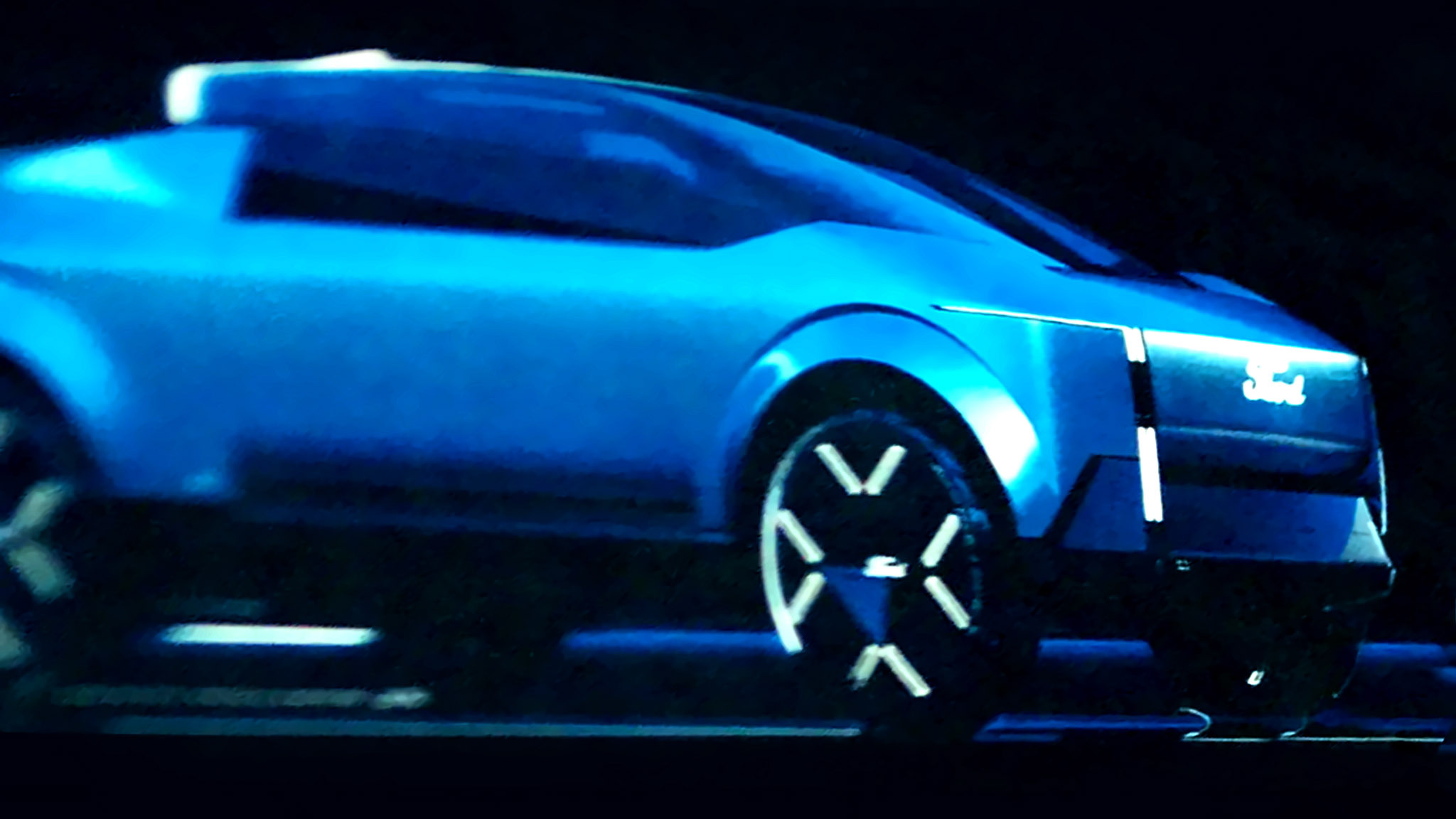
Ford has lifted the lid a little further on its so-called “Universal Electric Vehicle” project, the one tasked with delivering a brand-new $30,000 electric midsize truck in 2027. The tech breakdown in the 14-minute teaser packs plenty of stuff, but it is the design sketches that really grab your attention, offering the first glimpse of what this thing might look like in the metal.
From those early drawings, which also align with the ghost images seen so far, the truck appears slippery and futuristic. Think of it as a softer, more rounded take on the larger Tesla Cybertruck, minus the origami and unpolished edges, not to mention with a far more reasonable entry price. Up front, there are slim vertical LEDs, an illuminated Ford badge, and horizontal intakes carved into the bumper.
The windshield stretches deep into the hood and flows into an integrated roof spoiler at the rear. Despite the futuristic surfacing, this is still (likely) a Ranger-sized pickup with a traditional dual-cab layout. Practicality has not been shown the door.
Ford
Low Drag Is Key
Unsurprisingly, the aerodynamics team had a heavy hand in shaping this truck, with former F1 experts brought in to chase every last fraction of efficiency. The mission was simple: slash drag hard enough that smaller batteries could deliver the required range, keeping production costs in check.
The curved roof reportedly reduces the turbulence typically created by a pickup bed. The side mirrors are 20 percent smaller than standard items, adding 1.5 miles (2.4 km) of range, while specially designed underbody panels contribute another 4.5 miles (7.2 km).
In total, Ford estimates these measures deliver 50 miles (80 km) of additional range compared to a similarly sized truck with a more conventional shape. That is not a rounding error.
Aerodynamics are only half the story. Ford has also focused heavily on reducing manufacturing complexity. The company will use large aluminum unicastings, broadly similar in principle to Tesla’s gigacasting method. Structural components drop from 146 pieces in today’s Ford Maverick to just two, and overall weight is said to be 27 percent lower than rival offerings.
Fewer parts and fewer joints mean fewer robots on the line, which Ford claims results in “measurable gains” in both build quality and production efficiency.
it also appears that Ford engineers have borrowed lessons from reverse-engineering Chinese and Tesla EVs. The new truck’s wiring is 4,000 feet (1.2 km) shorter than that of the Mustang Mach-E crossover, trimming 22 pounds (10 kg). It will run prismatic lithium iron-phosphate (LFP) battery cells and a separate 48V system for auxiliary functions.
The skunkworks team behind Ford’s next generation of EVs is led by former Tesla executive Alan Clarke, bringing 12 years of experience from the rival automaker.
As for the name, Ford is staying quiet. A recent patent filing hints at a possible return of the Ranchero badge, though nothing is confirmed. The affordable pickup is due in 2027 and will be followed by additional affordable EVs, with a sedan reportedly on the wish list.
The electric C-Class gets a larger LED-lit grille up front.
It rides on MB.EA with a 94 kWh battery and 800-volt tech.
The dual-motor C400 could deliver a combined 483 hp.
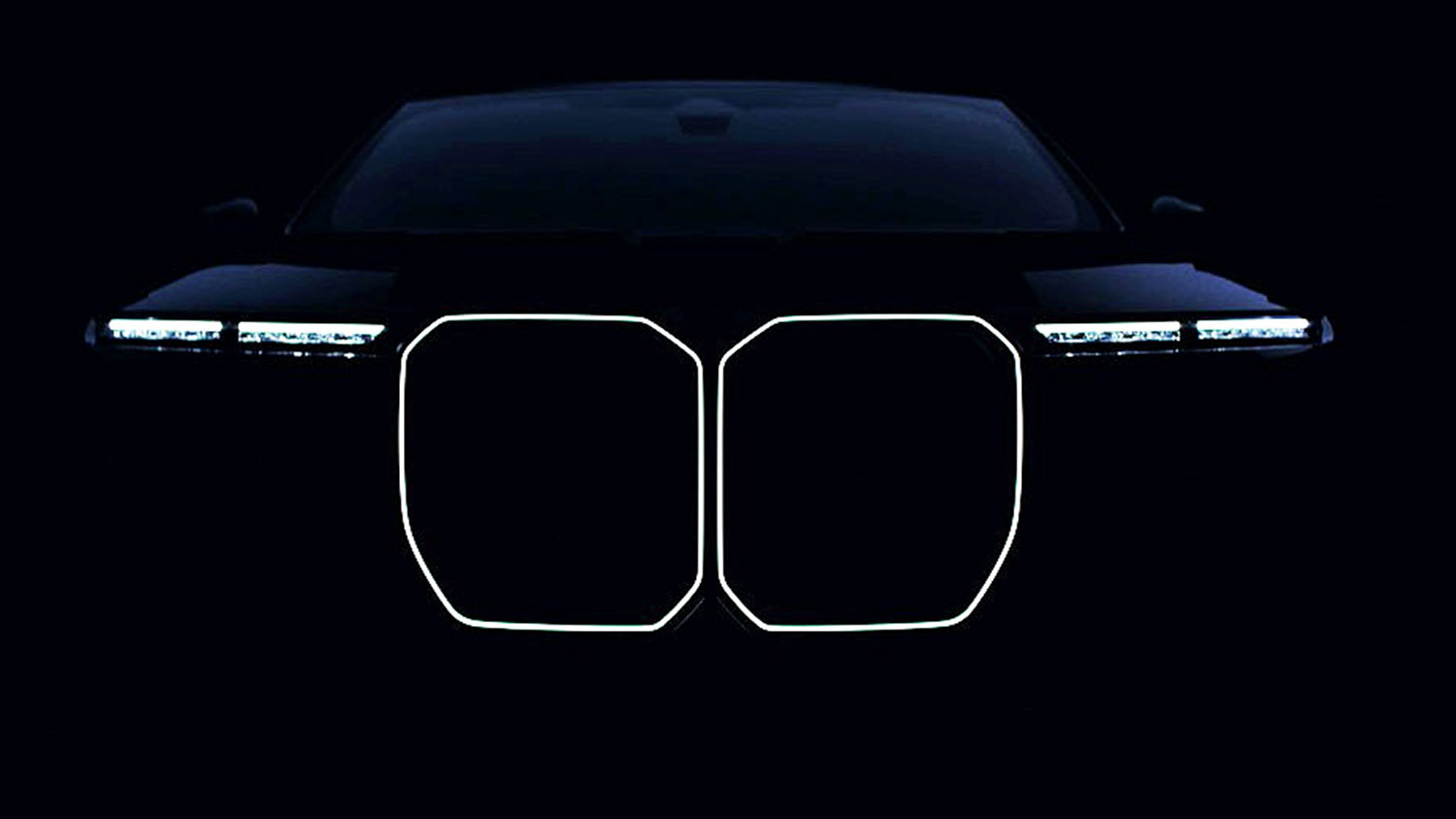
Shortly after pulling the covers off the electric GLC EQ last year, Mercedes-Benz slipped out a shadowy teaser of the upcoming all-electric C-Class. It was the sort of image designed to spark arguments rather than answer questions. Now, a new batch of renderings based on that teaser gives us a clearer sense of where the compact executive EV could be headed.
Front and center sits the talking point. The C-Class EV’s grille looks set to grow rather than shrink, ignoring the recent retreat from oversized snouts at BMW and Audi. Instead, Mercedes appears ready to make it the visual anchor of the car, in much the same way Rolls-Royce leans on its Pantheon grille.
These renderings from Kolesa show how the grille should come standard with a thick silver or chrome-finished bezel, three horizontal slats, and hundreds of little LEDs.
Flanking it is a fresh headlight design, complete with the now-familiar star-shaped daytime running light signature seen on other new Mercedes models. All told, the lights, plus the grille, give the new sedan a very intriguing look, although we wouldn’t exactly call it elegant.
We have not had this officially confirmed, but some reports suggest the electric C-Class could adopt a liftback layout, much like the new Audi A5. If that proves accurate, expect a cleaner, more tapered rear than the combustion-powered version. The renderings show slim LED taillights set within a gloss-black panel that spans the full width of the car.
Just like the GLC EQ, the new C-Class EV will be based on the MB.EA architecture and come standard with a 94 kWh battery pack and an 800-volt electrical architecture, supporting 330 kW charging speeds. Mercedes has confirmed it will offer a driving range of up to 497 miles (800 km), easily eclipsing the 443 miles (713 km) offered up by the GLC EQ.
The first version could wear a C400 badge, pairing dual electric motors for a combined 483 hp. That should be enough for 0 to 60 mph (96 km/h) in under five seconds, which is brisk by any sensible definition.
Naturally, AMG versions are on the way too. One prototype has already been spotted testing on large 21-inch wheels with carbon-ceramic brakes.
Mercedes’ new C-Class teaser and camouflaged prototypes spotted by our spies.
As for the cabin, details remain under wraps. Mercedes could simply transplant the 39.1-inch seamless MBUX Hyperscreen from the GLC EQ, turning the dashboard into one continuous slab of illuminated glass. Alternatively, it may opt for the newer Superscreen layout featured in the latest CLA, pairing a 10.25-inch digital instrument cluster with a 14-inch central infotainment display and a matching 14-inch passenger screen.
The new C-Class EQ is expected to debut before the end of this year, with a global launch slated for early 2027.
Polestar plans more BST variants across its future EV range.
CEO points to stronger focus on track and acceleration gains.
BST badge may grow into a full performance sub-brand soon.
Polestar’s designers and engineers may be working overtime to prepare four new EV launches by 2028, but management is already looking beyond the rollout. High-performance variants are on the agenda, suggesting that expansion will not come at the expense of speed.
Michael Lohscheller, Polestar CEO, spoke about the future during a media gathering at the Gothenburg headquarters in Sweden. As reported by Auto Express, he said:
“In terms of how we will continue to deliver performance with our future models, I think we’re going to deliver a more consistent way in terms of performance cars, in terms of the specifications. We want to focus a bit more on performance, because that is where we can do even better going forward, on track, on acceleration, but also in terms of being superior to others.”
Just a few months ago, Polestar was forced to shut down its last UK-based R&D facility as it took a $900 million loan from parent company Geely to survive heavy losses. Despite the closure of the engineering center responsible for the development of the Polestar 5, Lohscheller believes that the brand still has the expertise to take on BMW M, Mercedes-AMG, and Audi RS.
Central to this strategy is the expansion of the “BST” (short for “Beast”) moniker, which will evolve from a limited-production experiment with the Polestar 2 BST Editions into a high-performance sub-brand. Note that Polestar itself used to be the performance sub-brand of Volvo.
While the CEO didn’t get into details, candidates for future BST variants are the next-gen Polestar 2 sedan, the recently updated Polestar 3 SUV, and the Polestar 4 coupe crossover, which will soon gain an estate bodystyle.
As for the Polestar 5 grand tourer, it already packs 872 hp (650 kW / 884 PS) in Performance guise, meaning that an even hotter version could challenge the likes of the Audi RS e-Tron GT, Porsche Taycan Turbo GT, and Xiaomi SU7 Ultra.
Back in 2024, the company revealed the track-focused Polestar Concept BST that was based on the 6 roadster. However, the rollout of this model has been pushed back, with focus being shifted to more profitable models in mainstream segments.
Repairable EV collision claims rose sharply in 2025.
EVs required an average of 1.70 calibrations per estimate.
US EV total loss values fell 6% due to depreciation.
Electric vehicles are turning into a proper migraine for the insurance industry. According to the latest report from collision management software provider Mitchell, repairable collision claims for EVs jumped 14% in the US and 24% in Canada during 2025.
What makes these numbers particularly jarring is the fact that EV sales growth slowed down in 2025 as government tax incentives expired and consumer interest shifted to hybrids. Cox Automotive estimates that new EV sales dropped approximately 2% in the US, with S&P Global Mobility reporting a 0.4% decline in new EV registrations.
Even Tesla’s grip on the market loosened slightly, with its US market share slipping to 46.2% from 48.7% in 2024 as more competitors gained ground.
Rising Repair Complexity
Even so, the existing EV fleet is aging into more accidents, and the complexity of repairing them is becoming a logistical and financial hurdle for the repair industry.
Ryan Mandell, Mitchell’s vice president of strategy and market intelligence, explained: “Due to their dense electrical architectures, software-driven systems and interconnected, sensor-heavy designs, these vehicles require additional diagnostic and calibration operations when damaged that can add cost, complexity and cycle time to each repair.”
The “Plugged-In: EV Collision Insights” report also examined other electrified vehicles. Repairable claims for PHEVs increased 6% in the US and 26% in Canada in 2025. Mild-hybrid models (MHEV) recorded increases of 20% in the US and 29% in Canada. It is worth noting, however, that MHEV sales in the US surged 28% in 2025.
Across North America, British Columbia recorded the highest EV repair demand at 8.48%, followed by Quebec at 8.21% and California at 6.58%.
Which Models Top The Claims List?
Looking at individual models, Tesla continues to dominate claims volume. In the US, the Model Y accounts for 30.32% of repairable BEV claims, followed by the Model 3 at 27.01%, meaning the two together represent more than half of all such claims. The pattern is similar in Canada, although the positions are reversed, with the Model 3 at 26.03% slightly ahead of the Model Y at 25.91%.
There is at least one sliver of good news. On the repair side, the average cost to fix an EV fell 5% in the US, from US$ 6,707 to US$ 6,395, and declined 2% in Canada in 2025. ICE-powered vehicles and PHEVs remained largely flat in the US, while MHEVs saw their average claim cost rise 4%, from $4,865 to $5,054.
Nevertheless, the higher repair complexity of electrified vehicles is reflected in their “calibrations per estimate” rating, which tracks how often sensors and systems must be recalibrated after repairs. In 2025, the average number of revisions was 1.70 for EVs and 1.63 for hybrids, compared to 1.54 for ICE-powered vehicles.
Mitchell’s data also shows that 86% of EV parts dollars go toward OEM components, with only 13% of parts deemed repairable rather than replaceable. For ICE-powered vehicles, 62% of parts dollars go to OEMs, and 15% of components are considered repairable.
The Depreciation Trap
Mitchell also reported that total loss market values declined across most powertrain types in 2025, with EVs seeing the sharpest drops. In the US, EV values fell 6%, from US$ 30,126 in 2024 to US$ 28,185 in 2025. In Canada, they dropped 13%, from CA$ 41,775 to CA$ 36,504.
By comparison, ICE vehicle values declined 2.55% in the US, from $14,241 to $13,887, and 6.12% in Canada, from $17,049 to $16,005. Hybrids presented a more mixed picture, with US values rising 4.18%, from $18,453 to $19,225, while Canadian values fell 4.40%, from $30,268 to $28,938.
Analysts attribute the steeper EV declines to accelerated depreciation, the arrival of more budget-friendly models, and shifts in consumer sentiment.
Ford is making a big fuss about their upcoming $30k EV.
Affordable options already exist and can be bought now.
Ford is preparing to launch a $30,000 electric truck, and the steady drumbeat of promotion is starting to wear a little thin. Earlier this month, the Blue Oval released three glorified blog posts about the affordable mid-size pickup and a 14 minute video, which was approximately 10 minutes too long.
Before that, the company talked about failure and Henry Ford’s ill-fated stints at the Detroit Automobile Company and the Henry Ford Company. The automaker then said they’re pursuing similar bold efforts as it “works to design and assemble affordable electric vehicles.”
The thing is that $30,000 electric vehicles already exist and can be bought today. While the upcoming model will be notable for being a mid-size truck that introduces some new techniques and technology, it might not be as revolutionary as Ford would have you believe.
The Blue Oval will likely continue trickling out trivial details for months to come, but shoppers could easily head to their nearest Chevy dealer and snag an Equinox EV. While the model starts at $34,995, the company is offering $6,500 in incentives, and this lowers the price of entry to $28,495 before factoring in the $1,800 destination fee.
The bowtie brand also recently brought back the Bolt, which starts at $27,600 and has a $1,395 destination fee. This means you can get an electric hatchback with 262 miles (422 km) of range for $28,995.
Chevrolet isn’t alone as the redesigned Nissan Leaf starts at $29,990 before a $1,495 destination charge. It will eventually be joined by an even more affordable variant that has a smaller battery pack and a less powerful electric motor.
All three of these vehicles are available now, although they lack a truck bed. Ford is banking on the latter being a big differentiator, although early teaser images suggest this won’t be your typical pickup as the company is focusing on range and efficiency.
Before yesterdayElectric Vehicles - Latest News | Carscoops
BMW M is planning to introduce around 30 models by 2029.
This includes new and facelifted M or M Performance vehicles.
The future of the manual looks bleak, given low global demand.
Last year, BMW announced a major product blitz that will see the company introduce over 40 new or updated vehicles by 2027. Unsurprisingly, BMW M is working on a major offensive of their own.
Speaking to CarSales, BMW M CEO Frank van Meel said “We’re working on up to 30 new models that will come out in the next two and a half years.” That’s a lot, but it’s important to note the number includes both M and M Performance vehicles.
While the executive didn’t say what to expect, other than the i3 M, spy photographers have snapped an assortment of prototypes in recent months. Besides the facelifted M5 and M5 Touring, the company is working on a new M3 and iX3 M.
They’ll be joined by redesigned versions of the X5, X6, and X7, which will spawn a mix of M and M Performance variants. We can also expect M Performance versions of the facelifted 7-Series.
The Rise Of M Performance EVs
Speaking of M Performance variants, van Meel said electrified models – such as the i4 M60 – have proven popular in countries where regulations on combustion engines make traditional performance cars expensive. As he noted, “In France, you have to pay 18,000 euros ($21,212) CO2 tax on a combustion engine M2.”
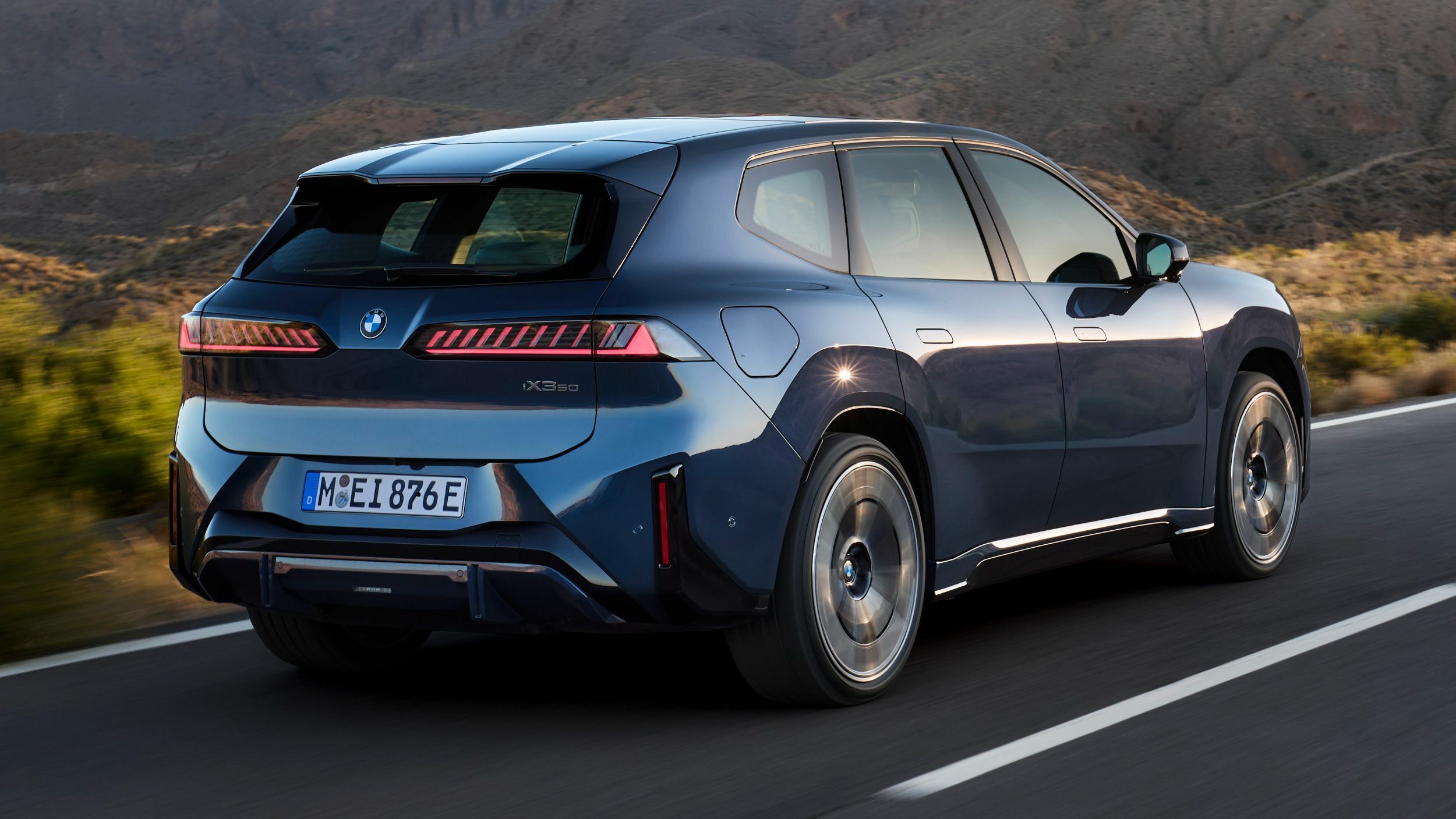
That’s ridiculously steep and it bodes well for the upcoming i3 M, which will feature a quad motor powertrain. However, the executive said he isn’t sure how customers will respond to the model. While only time will tell, van Meel believes the vehicle has “exactly the technology everyone has been waiting for … in a high-performance [electric] car.”
Despite the focus on electric vehicles, BMW M isn’t putting all its eggs in one basket. Quite the opposite as the executive said they have a “long tradition” of six- and eight-cylinder engines, and “we are planning to continue this because we have a big community worldwide, and also a lot of people that are maybe not ready yet, or live in environments where it’s really difficult, to charge the electric cars.”
Manual Seems Doomed
While internal combustion engines are sticking around, the manual might not be as lucky. As van Meel explained, “From an engineering standpoint, the manual doesn’t really make sense because it limits you in torque and also in fuel consumption.”
However, he added that from an emotional and customer standpoint, “a lot of people still love manuals, so that’s why we kept them, and we intend to keep them as long as possible.”
Unfortunately, the clock appears to be ticking as he said “It’s going to be quite difficult, in the future, to develop completely new gearboxes because the segment in the market is quite small, and the suppliers are not so keen on doing something like that.” This means manual transmissions will likely be safe for the “next couple of years,” but it will likely become “difficult to keep the manuals alive, especially in the next decade.”
EV owner satisfaction has reached an all-time high.
Best models come from Tesla, BMW, and Cadillac.
Most EV owners would consider getting another one.
Electric vehicles have come a long way in the past few years, and the progress is finally showing up where it matters most: in owner satisfaction. According to the latest data, these steady gains in technology and infrastructure are translating into record-high approval from drivers.
That’s the verdict from JD Power’s 2026 U.S. Electric Vehicle Experience Ownership Study, which found premium EV satisfaction climbed from 756 points last year to 789 in 2026. Mainstream EVs also improved two points to hit 727 out of 1,000.
The highest rated premium EVs were the Tesla Model 3 (804), Tesla Model Y (797), and BMW i4 (795). On the flip side, the new Audi Q6 e-tron came in dead last at 690. It placed well below the Lucid Air (740) and Rivian R1T (739).
Segment Standouts And Stragglers
On the mass market side of the equation, the Ford Mustang Mach-E took top honors with a score of 760. The electric pony car was followed by the Hyundai Ioniq 6 (748) and Kia EV9 (745). Interestingly, the two lowest rated EVs were the Chevrolet Blazer EV (711) and Honda Prologue (623). That’s a huge point spread considering both models are built by GM and have a lot in common.
Of course, things aren’t completely straightforward as the study examined ten different factors. This includes the “accuracy of stated battery range, availability of public charging stations, battery range, cost of ownership, driving enjoyment, ease of charging at home, interior and exterior styling, safety and technology features, service experience, and vehicle quality and reliability.”
Encouragingly, 96 percent of EV owners said they would consider buying or leasing another one and the study also found quality has improved. That’s especially true of premium EVs, which had 15.9 fewer problems per 100 vehicles compared to last year. This brought the total down to 75 and JD Power said this was driven by noise improvements as well as fewer problems with driver assistance technology.
Is Charging Still A Concern?
The study also found that EV drivers are becoming more satisfied with public charging. Scores climbed by over 100 points and this is being attributed to growing charging infrastructure as well as the opening of Tesla’s Supercharger network to other automakers.
Last but not least, EV drivers are more satisfied than those with plug-in hybrids. Premium EVs scored 114 points higher than their PHEV rivals, while mainstream electric vehicles had a 117 point advantage. Part of this can be chalked up to the cost of ownership as plug-in hybrid drivers have to deal with a more complex powertrain that involves gas and electricity.
In a statement, JD Power’s Brent Gruber said “Improvements in battery technology, charging infrastructure and overall vehicle performance have driven customer satisfaction to its highest level ever. What’s more, the vast majority of current EV owners say they will consider purchasing another EV for their next vehicle, regardless of whether they benefited from the now-expired federal tax credit.”
Tesla says the first Cybercab has left the Texas line.
Musk still targets a sub-$30,000 version by 2027.
Milestone revived MKBHD’s viral head-shaving bet.
Don’t look now, but Tesla might actually be on schedule, if not slightly ahead, at least for now, with its Cybercab program. The automaker says the first production example rolled off the line on Tuesday, more than a month earlier than Elon Musk previously suggested. Its CEO also confirmed pricing.
Of course, plenty of hurdles remain if Tesla plans to sell one before the end of the decade. And yes, at least one major YouTuber could end up shaving his head if Musk’s team pulls it off.
Tesla posted a photo on February 17 showing the team at Gigafactory Texas surrounding the first production Cybercab. While there’s still no clear timetable for full-scale production, Musk previously indicated that manufacturing wouldn’t even begin until April. I double-checked my calendar, and it still says February.
Importantly, this is almost certainly a pilot build and not a car destined for a customer. That said, it’s a significant step forward for a brand often associated with shifting timelines.
Public Bets And Pricing
That reputation likely played a role in Marques Brownlee (MKBHD) saying in 2024 that if Tesla launched the car before 2027 at a price below $30,000, he’d shave his head on camera.
After Tesla announced the milestone, meme versions of a bald MKBHD quickly spread across X. Musk joined in, replying “Gonna happen 😂” to one such post. In a separate exchange, he also confirmed that Tesla still plans to sell a consumer version of the Cybercab before 2027 for “$30,000 or less”.
Hurdles Ahead
That all sounds promising, but Tesla has to do more than simply build the car. The Cybercab is meant to be the brand’s first true autonomous vehicle sold without a steering wheel or pedals. Since unveiling it, however, Tesla has hinted that those controls could return if regulations require them.
And that’s where the real challenge begins. Federal vehicle safety standards assume a human driver is present, and insurance frameworks do too. The NHTSA may need to grant exemptions for certain rules, while individual states could impose their own restrictions on autonomous vehicles operating on public roads.
In other words, building the Cybercab might prove easier than getting it legally approved. Whether Tesla can clear those hurdles before 2027 remains an open question.
CHP warned cold weather drains EV batteries faster.
The alert came after a Rivian R1S ran out of charge.
The incident took place in snowy Truckee, California.
California is known for its beach vibes, but the state’s climate offers a little bit of everything. That’s especially true in the mountain town of Truckee, which reportedly received more than 10 inches of snow in the past 24 hours.
While snow is a fact of life in the Sierra Nevadas, some people aren’t used to the cold conditions. That appears to include a Rivian R1S driver, who discovered how weather can impact range.
On Facebook, the California Highway Patrol posted a short clip of an R1S that apparently ran out of juice in the middle of a snow covered intersection. Authorities didn’t say what happened, but the video was accompanied by a message saying “Cold weather drains batteries faster than you think. If you’re rolling over the Summit, make sure your charge level matches your confidence level.”
They also advised drivers to charge up, slow down, and carry snow chains. While that’s a good reminder, police appeared to mock EVs and the driver as the post was tagged #ItsElectric and #MakeGoodDecisions.
Last week, they joked about a Tesla driver who lost control and went down an embankment. In that post, they said “Chain control was lifted earlier this morning and some of you took that as a personal challenge to full send anyway.” It was accompanied by an assortment of tags including #MakeGoodDecisions, #DonnersGonnaDonner, and #SlowYourRoll.
This appears to be a common theme with the Truckee post, but the criticism isn’t limited to EV drivers. Some people seem to get a kick out of this as one popular comment was “My new winter goal is to not be featured on your social media page.”
Chain control was lifted earlier this morning and some of you took that as a personal challenge to full send anyway….
A touchless car wash tore off a Rivian R1T roof panel.
Clips and adhesive were ripped loose in the incident.
Repairs may require interior trim removal for access.
A Rivian R1T owner has just learned the hard way that “touchless” does not mean “harmless.” Sure, these washes skip the spinning brushes, but that does not make them gentle. As it turns out, high-pressure water and moving hardware can still do a number on a six-figure electric pickup.
Posting on Reddit, the owner says he recently took his R1T through a touchless car wash for the first time when a black plastic panel at the rear of the EV’s roof suddenly popped off. That panel covers a fair bit of electronic gubbins, including the antenna, and is secured with clips and adhesive. Obviously, it is meant to stay put.
Photos show several of those clips torn loose, with adhesive strips peeled back as if the truck had tried to shed its own roof trim. It would be easy to blame water pressure or the industrial-strength dryers at the end of the tunnel, but that does not appear to be what happened.
According to the owner, one of the wash’s spraying arms became lodged under the roof panel, apparently misjudging the height of the pickup. Instead of gliding past, it hooked underneath and pried the piece upward. Not exactly part of the premium wash package.
Some commenters on the Reddit thread suggest that in order for Rivian to repair the rear roof panel, it’s possible that part of the interior will have to be removed to gain access to all of the wires positioned beneath the panel. Additionally, the third brake light of the R1T is positioned directly above the rear window near this panel, and may also need to be replaced.
Then there’s the matter of who will end up paying for the repairs. The owner says the car wash’s insurance will cover the costs, though that likely means a round of negotiations between insurers before any money changes hands. In the meantime, the damaged truck could spend weeks, possibly longer, waiting in a body shop bay for parts and repairs. So much for a quick rinse.
Tesla drops Autopilot term in California to avoid license suspension.
Brand’s new models now only come with cruise control as standard.
EV buyers are being pushed towards $99 FSD subscriptions instead.
After years of sparring with California regulators, Tesla has agreed to stop using its famous Autopilot term in the state, neatly sidestepping a 30-day suspension that would have frozen sales in its biggest US market with nearly 180,000 deliveries last year.
The California Department of Motor Vehicles (DMV) wasn’t amused by Tesla’s marketing language, arguing that phrases like “Autopilot” and “Full Self Driving Capability”, later softened to “Full Self-Driving (Supervised)”, gave buyers the impression their cars could drive themselves. The DMV pointed out that they can’t now, and never could, operate as autonomous vehicles.
The formal accusations were filed in 2023, though regulators traced the issue back to marketing language used as early as May 2021. At the time, Tesla described its system as capable of handling short and long-distance trips with no action required by the person in the driver’s seat, a claim the DMV said crossed a legal line.
60 Days To Find A Fix
A judge agreed and proposed suspending Tesla’s dealer and manufacturer licenses for a month. That would have been awkward timing for a company trying to convince the world that robotaxis are just around the corner. The DMV offered Tesla 60 days to fix the issue before the suspension started, and instead of digging in, Tesla wisely took corrective action.
“The DMV is committed to safety throughout all California’s roadways and communities,” said DMV Director Steve Gordon. “The department is pleased that Tesla took the required action to remain in compliance with the State of California’s consumer protections.”
So Autopilot, as a marketing term, is now gone in California (though you’ll still find it on the brand’s EVs elsewhere in the world). The company had already softened Full Self Driving into Full Self Driving Supervised to make it crystal clear that, no, the car is not fully autonomous. By complying with the deadline, Tesla avoided the suspension and kept the revenue rolling in.
Autopilot Feature Phased Out
This is not just a word swap, though. We reported last month that Tesla had already begun phasing out the previously standard Autopilot system on its cars, replacing it with Traffic Aware Cruise Control and pushing buyers toward a $99 per month Full Self Driving subscription.
Lane centering that rivals include as standard now lives behind a paywall, and CEO Elon Musk has hinted that the subscription price could rise over time. From a business perspective, it’s clever, but from a branding perspective, it looks like a climbdown.
Autopilot was one of Tesla’s most recognizable terms, though it was also one due to be left behind in the coming years as the far more sophisticated FSD improves to the point where it really can deliver full self-driving.
Jony Ive admits anxiety before the Luce’s big reveal.
Ferrari’s first EV pursues a singular, radical design.
It debuts in May ahead of its planned 2028 launch.
Ferrari is no stranger to controversy, and it rarely shies away from it either. Its upcoming all-electric Luce could turn out to be the most polarizing project yet. The man behind the design, Jony Ive, Apple’s former design chief who shaped the iPhone and several other era-defining products, admits he is feeling the pressure.
That seems like a perfectly reasonable response with a historic unveiling just two months away, especially when you are tasked with redefining what a Ferrari is supposed to be in the modern era.
This isn’t just another EV launch after all. It is Ferrari, a brand built on racing at the highest levels and on exciting V12 supercars, sometimes only obtainable through wild buying rituals, and now venturing into the silent world of EVs.
A Defining Electric Debut
SHProshots
Calling it a big deal would be a massive understatement, which is probably why Ferrari hired Ive and fellow designer Marc Newson for the task of shaping the Luce.
The exterior, in fact, has been penned by LoveFrom, the design house founded by Ive and Australian designer Newson, which makes this less a routine Ferrari project and more a collision between Maranello and Silicon Valley minimalism.
Speaking to Autocar, Ive openly admitted that he’s “anxious” about revealing the car to the world. It’s not concern over the design itself that sparks that feeling, but instead the gravity of just how big this moment is for Ferrari. He called it “still clearly a Ferrari,” but went on to say that “It’s a different manifestation based on some of the beliefs around simplicity and the inherent beauty of something.”
On the flip side, his co-designer, Newson, highlighted the freedom offered with such a project. “One of the great and serendipitous sort of things is that this is an electric vehicle, the first electric Ferrari, right? So that afforded us a degree of freedom that perhaps we would otherwise have not had: literal physical freedom or creative freedom… on many levels here,” he said.
Inside The Luce Philosophy
At this stage, we’ve already seen official bits of the interior. The brand unveiled the dash earlier this month. It’s quite the departure from other modern Ferraris. That’s key because Ive and Newson say that the entire car has a “consistency and a singularity” about it.
Ive has also stressed that there is “no disconnection” between the exterior and interior, noting that both were designed simultaneously rather than by separate departments. In his view, that approach results in a complete package that feels cohesive rather than pieced together.
What we also know so far is that the Luce will be a four-door, four-seat GT with a ride height similar to the Purosangue, and that it will feature a 1000hp four-motor powertrain. Ive has hinted that the car will be “big” in its proportions and just as radical on the outside as it is within.
Will The Luce Use Rear-Hinged Doors?
SHProshots
To that end, we wonder if the exterior will be far more retro-futurist than previously expected. While Ive was talking about the new Luce, our spies caught another heavily disguised prototype undergoing testing in northern Sweden this week.
Like earlier Luce testers, this one was wrapped in makeshift panels from top to bottom, making it extremely difficult to interpret what is happening underneath beyond a general sense of its proportions and size.
One detail our photographers did catch appears to be a set of door handles, circled in red, positioned just under the B-column in the middle section. According to our photographer, the Luce may be using suicide-style rear doors that open toward the front of the vehicle, similar to the Purosangue. This has not been officially confirmed, and it could just as easily be Ferrari engaging in a bit of cheeky misdirection.
We will know for certain in May, when Ferrari finally unveils its first EV.
A more practical Polestar 4 wagon arrives this year.
A new Polestar 2 and 7 SUV will also join the range.
Polestar may be wrestling with the sort of losses that keep finance teams awake at night, but it is not backing off. The Geely-owned brand has four new EVs lined up before 2028, each aimed at the market’s sweet spots. On the way are the 5 grand tourer, a more practical wagon take on the 4, a fully reworked 2 sedan, and an all-new 7 compact SUV. Busy times ahead.
The “Wagon” Polestar 4
Polestar’s current best seller is the 4, though its coupe-style roofline has always leaned more toward drama than practicality. That changes in the fourth quarter of 2026, when a new variant arrives with roof rails and a redesigned tail, complete with an actual rear window. Revolutionary, we know.
The aim is to attract a “wider customer base”, which is executive-speak for people who enjoy seeing out the back.
CEO Michael Lohscheller says the updated 4 “combines the space of an estate and the versatility of an SUV with the dynamic performance that is Polestar”. In plain terms, it keeps the same underpinnings as today’s car but swaps in a reshaped silhouette and a roomier cabin. Same bones, more boots-and-dogs potential.
The Next-Gen Polestar 2
Next up is a full new generation of the Polestar 2, due in early 2027. The current Tesla Model 3 rival has been around since 2019 and received a mid-lifecycle update in 2023, so a deeper rethink feels timely.
An official, albeit blurry, teaser suggests the 2 will trade its slightly crossover-ish stance for something lower and sleeker, complete with split LED headlights and a pared-back bumper design. Less high-riding fastback, more grounded sports saloon. Or at least that seems to be the direction of travel.
Europe-Built Compact SUV
Then there is the Polestar 7, landing in 2028 as a contender in Europe’s largest EV segment. And yes, Polestar’s naming scheme remains mildly baffling. It will be built in Slovakia and share its hardware with Volvo models. Lohscheller describes it as a “progressive performance-driven car” offered at “a very attractive price point”.
The Grand Tourer Is Here
At the top of the tree sits the Polestar 5 grand tourer, which only reinforces the point about that confusing nomenclature. Revealed in production form at the 2025 Munich Motor Show, it is scheduled to begin European deliveries in summer 2026. This is the halo car, the statement piece.
It rides on a lightweight bonded aluminum platform and, in Performance guise, packs a dual-motor setup producing up to 872 hp (650 kW / 884 PS). That is comfortably in the realm of serious performance, and proof that Polestar still wants to talk about speed as much as sustainability.
Optimism Despite Heavy Losses
All of this comes against a complicated financial backdrop. Last year, Polestar posted its best-ever retail sales, shifting 60,119 vehicles, up 34 percent, while also wrestling with deepening losses.
Even so, the mood at the top remains upbeat. Despite what Lohscheller calls a “challenging geopolitical and economic environment”, he remains optimistic about the future: “We are targeting the heart of the EV market, where customer demand and profit pools are high.” Confident words. Now comes the hard part.
PROS ›› Genuinely quick, nimble handling, faithful design features CONS ›› Tight rear seating, Uncharted undercuts it, limited cargo space
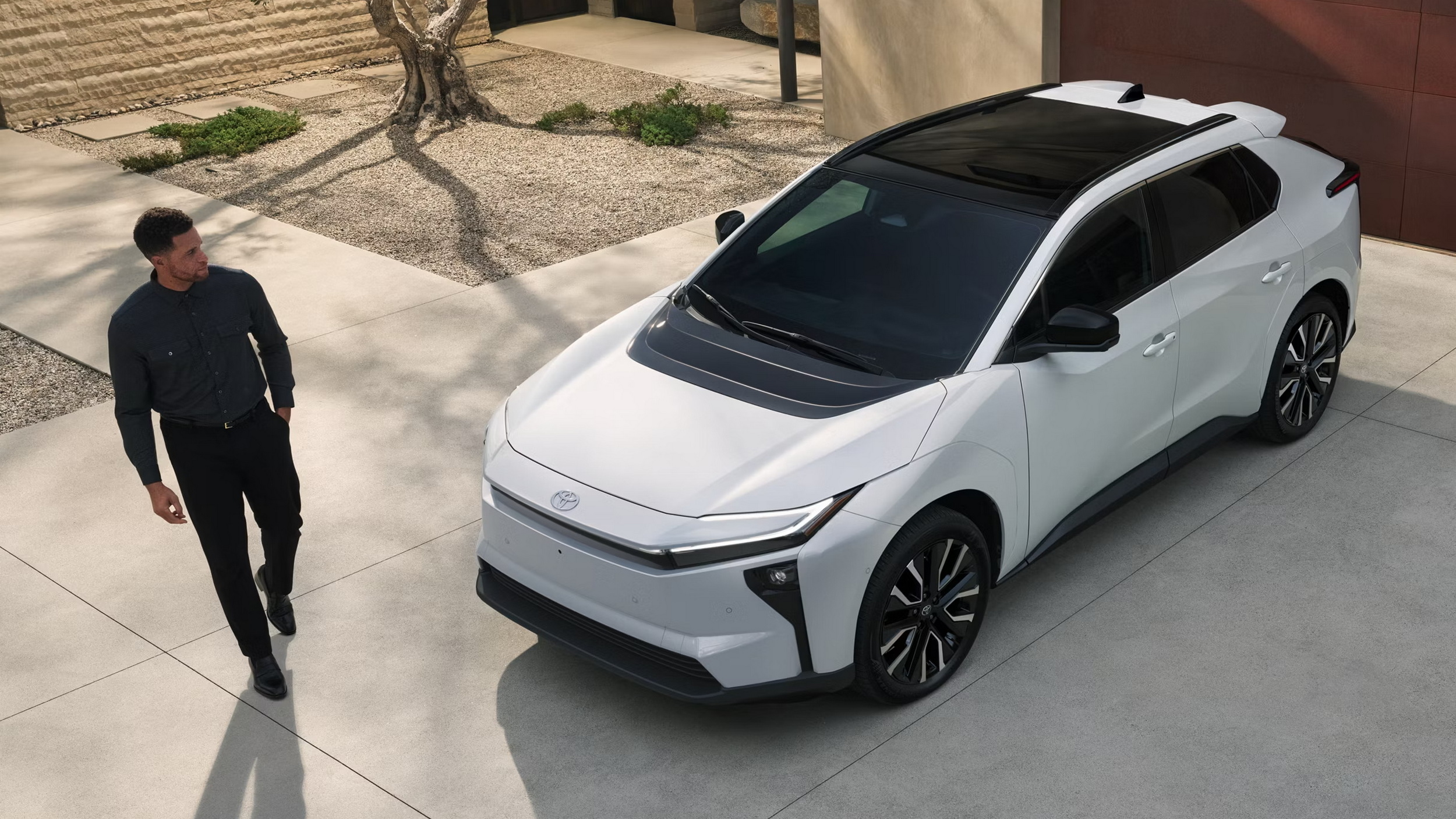
A quick look around the automotive industry would have most thinking that EV adoption is slowing down. Whether that perception holds true or not, Toyota is moving ahead full steam with not one, but three new electric vehicles, and the C-HR might be the most playful of the bunch. Yesterday, we talked about how the bZ Woodland is a great improvement on the old bZ4x.
Today, the focus shifts to the C-HR, a revived nameplate that now returns exclusively as an EV. It’s a huge deal beyond just the fact that it’s going electric. It’s the first formerly gas-powered Toyota nameplate to go fully electric. Sure, it only beat the new Highlander by a few months, but that’s more than enough. Both will have a big impact on Toyota moving forward.
While we don’t know what the Highlander will end up selling for, the C-HR is clearly aimed at a different demographic. With a starting price shy of $38,000 before destination and handling, it’s aimed at Tesla Model Y buyers wanting something a touch smaller. Packing standard all-wheel drive, 338 hp (252 kW), and almost 300 miles of range, it’s a new face in the segment that will no doubt blow up one day.
Quick Facts
› Model:
2026 Toyota C-HR
› Starting Price:
$37,000 (excluding destination)
› Dimensions:
177.9 L x 73.6 W x 63.8 in H (4,519 x 1,870 x 1,621 mm)
› Wheelbase:
108.3 in (2,751 mm)
› Curb Weight:
4,322 lbs (1,960 kg)
› Powertrain:
Dual electric motors / 74.7 kWh battery
› Output:
338 hp (252 kW)
› 0-60 mph
4.9 seconds
› Transmission:
Single speed
› Range:
Up to 287 Miles
› On Sale:
First-half of 2026
SWIPE
Now, all that’s left is to figure out if it’s good enough that it’ll gain a foothold for a long ride, or if it’s still a battery cell or two away from a fully-formed EV. Thankfully, a week of testing it in hilly Ojai, California, helped us figure out the good from the bad.
Styling
Photos Stephen Rivers/Carscoops
Let’s not play coy. While the C-HR’s nomenclature has always invited comparisons to Honda’s HR-V, the exterior designs couldn’t have been much more different when it first arrived. We’re happy to report that the same playful attitude carries over to this new electric version of the crossover.
The front end adopts Toyota’s newer hammerhead design language, with a low, aggressive nose and slim lights that visually widen the car. The coupe-like roofline flows cleanly into the rear, and from certain angles, the C-HR almost looks more hatchback than crossover, which works in its favor. It feels athletic despite being clearly compromised on that front.
Compared to the bZ Woodland, the C-HR looks tighter and more urban. It’s clearly aimed at buyers who want something sporty and expressive rather than rugged or adventurous. The wheel options help sell that image, too, with 18-inch alloys on the SE and aggressive 20-inch wheels on higher trims.
If the old C-HR was bold but polarizing, this one is more mature. It’s still stylish, but it’s less desperate for attention and more apt to provide an experience worthy of an offbeat appearance.
Cabin Space
Photos Stephen Rivers/Carscoops
Toyota told us early on that we’d see a lot of crossover between this and the bZ Woodland, and it was right. It leverages supportive front seats, an intuitive infotainment setup, a steering wheel that feels good in your hands, and visibility that’s better than the sloping roofline suggests. The driver’s position feels good, though; we’d love a little more adjustability from the steering wheel.
Photos Stephen Rivers/Carscoops
The 14-inch touchscreen dominates the dashboard and comes standard across the lineup. It’s responsive, cleanly laid out, and avoids the over-complicated UI issues that plague some competitors. Dual wireless charging pads and practical storage touches reinforce that Toyota still knows how to design for daily life.
Material quality is a step up from Toyota’s earlier EV efforts, too. Soft-touch surfaces and ambient lighting keep things modern without crossing into gimmicky territory. And then you climb into the rear seats. Things go from perfectly livable to suddenly only for the smallest around us.
How Tight Is Too Tight?
I get that as a taller-than-average guy, I won’t fit everywhere, but I was sincerely shocked at just how tight the back seats of the C-HR are. This is a compact crossover, and that’s clear as soon as we compare it to another new crossover in the form of the Mazda CX-5.
The Mazda has a wheelbase that is just 2.5 inches (63 mm) longer. Despite that, the CX-5 offers 7.7 inches (195 mm) of additional legroom, up to 2.8 inches of headroom, and in total over 10 cubic feet of extra space in the rear seats. Put simply, rear-seat occupants won’t be happy in the C-HR unless they’re relatively small. That said, they’ll fit kids just fine.
Cargo space fares better, with 25.3 cubic feet behind the rear seats and nearly 60 cubic feet with them folded. That’s perfectly usable for daily life, but the passenger packaging tells you clearly where Toyota’s priorities were.
Driving Impressions
Here’s where the plot thickens, in the best way possible. EVs are well-known for their instant torque, but that doesn’t automatically make one good to drive. The way the C-HR moves about the world is with more authority than one might expect. It’s sharp. The short wheelbase helps it manage bends with confidence. And the steering is more communicative than in the larger bZ Woodland.
Toyota claims 0-60 mph in 4.9 seconds, and it absolutely feels believable. This thing moves… not with the aggressive chaos of a GR Corolla, but with the smooth, relentless urgency only an EV can deliver. In fact, this might be the quickest pseudo-practical car in Toyota’s lineup right now. It’s not trying to be a sports car, yet it’s faster in a straight line than many cars that are.
The low battery placement keeps the center of gravity down, and the chassis feels planted through corners. Steering is light but accurate enough that you want to push a little harder than you probably expected. There’s a maturity to the tuning. It’s composed, predictable, and easy to trust. The brakes are excellent, too.
The regenerative braking paddles let you adjust deceleration on the fly, which adds a layer of driver involvement often missing from mainstream EVs. It’s not revolutionary, but it does make the driving experience feel more interactive.
Ride quality strikes a nice balance, too. It’s firm enough to feel sporty without punishing you over rough pavement. The C-HR doesn’t feel like a small SUV pretending to be sporty. It just feels like a well-sorted EV with some genuine personality. No, it’s a far cry from a Hyundai Ioniq 5 N or a Tesla Model Y Performance, but it’s the EV I’d pick from Toyota’s lineup if driving feel was all that mattered.
From a more practical standpoint, range tops out at 287 miles on the SE trim, dropping slightly with the larger wheels. Charging speeds max out at 150 kW DC fast charging. That’s enough to go from 10–80 percent in roughly 30 minutes under ideal conditions. As we’ve seen in the past, ideal conditions can be rare, but the inclusion of Tesla’s NACS port should help.
The C-HR lands in an increasingly crowded space, but its personality gives it, like the bZ Woodland, a unique angle. The Tesla Model Y remains the benchmark for space and usability. It’s roomier, more versatile, and easier to live with if rear-seat comfort matters. The Model 3, while technically a sedan, also beats the C-HR for rear-seat comfort despite looking smaller.
Frankly, comparing it on paper to most cars in the segment makes the C-HR look like a middling choice at best. Even pairing it against its badge-engineered sibling, the Subaru Uncharted, it costs more and isn’t available with front-wheel drive, which unlocks more range. That said, I’m not about to start complaining that we need more front-wheel drive cars.
Where the C-HR stands out is key, though. All-wheel drive is something that plenty of folks want and or need where they live. Second, it’s probably the easiest car in the segment to park, thanks to great sightlines and one of the shortest wheelbases here. That matters.
No, it’s not the quickest, cheapest, or most spacious. Instead, it’s leaning into the vibe of a compact, economical electric vehicle to the best of its ability in its current form. And that form just so happens to be quite attractive and fun.
The Verdict
Toyota just launched the new Highlander in all-electric form, which is a huge deal in itself, but let’s not forget that this new C-HR is the first formerly gas-powered Toyota to go all-EV in America. That’s also a big deal, and it makes this little commuter car an important inflection point in history.
To that end, it’s great to see that Toyota didn’t hold back here regarding performance. The C-HR is properly quick, genuinely fun to pilot, and even fun to look at. The front seats, infotainment, and overall driving position are all excellent, and on the road, it feels composed, lively, and far more engaging than many electric crossovers in its segment.
That said, it’s not without compromise. Rear-seat space is tight enough to be a real consideration, especially if you regularly carry adults. This is a crossover that prioritizes style and driving feel over maximum practicality. And honestly, that might be exactly the point. Here, the fun comes first, and the practicality, while important, comes in second place. Will it be a mix that sells well? Only time will tell.