Porsche is slashing costs after pulling back on EV expansion.
Delays and rising costs have plagued both electric sports models.
EV-only plan scrapped as ICE options return to the 718 lineup
Porsche has spent years developing its all-electric 718 Boxster and Cayman models, recently retiring the outgoing ICE generation to clear the stage for the EV duo. But despite that long runway, a new report suggests the company may pull the plug on both models before they ever reach showrooms.
Michael Leiters, the former CEO of McLaren, stepped into his new role as Porsche’s chief executive on January 1. And according to unnamed sources cited in a new report, one of his first major decisions could be to scrap the electric 718s entirely, due to mounting development costs and repeated delays.
Porsche is under pressure to rein in spending after pulling back from its earlier electric-only strategy, compounded by a sharp 26 percent drop in Chinese sales in 2025. Bloomberg reports that the brand is now weighing the addition of a plug-in hybrid variant to its lineup, a move that would require fresh architecture and substantial financial outlay.
These changes could cause further delays for the next-gen 718 models, and if they do eventually launch, they might already feel outdated by the time they reach the market.
Leiters has inherited a long to-do list from his predecessor Oliver Blume, who served as Porsche CEO for the past ten years. The brand’s EV pullback reportedly wiped out €1.8 billion ($2.1 billion) in operating profit last year. Meanwhile, new tariffs in the United States have added more friction, and Porsche’s recent market struggles led to its removal from Germany’s benchmark DAX index.
Carscoops contacted Porsche for comment. A company representative said Porsche was declining to comment on the “speculation”.
Changing Plans
Baldauf
The electric 718 Cayman and Boxster have already faced several delays. In early 2025, Blume revealed that Porsche was having trouble sourcing the high-performance battery cells it needed for the two models, in part due to Swedish battery manufacturer Northvolt filing for bankruptcy. Sales of the two models were due to start this year, but this now appears increasingly unlikely.
Clearly realizing that it couldn’t put all of its eggs in one basket, Porsche announced last September that flagship versions of the next-gen 718 would be updated to include internal combustion engines, likely including replacements for the Cayman GT4 and GT4 RS, as well as the 718 Spyder RS.
Just a few months later, it was revealed that combustion options could also be made available across a larger proportion of the 718 model line, not just the pricey flagships.
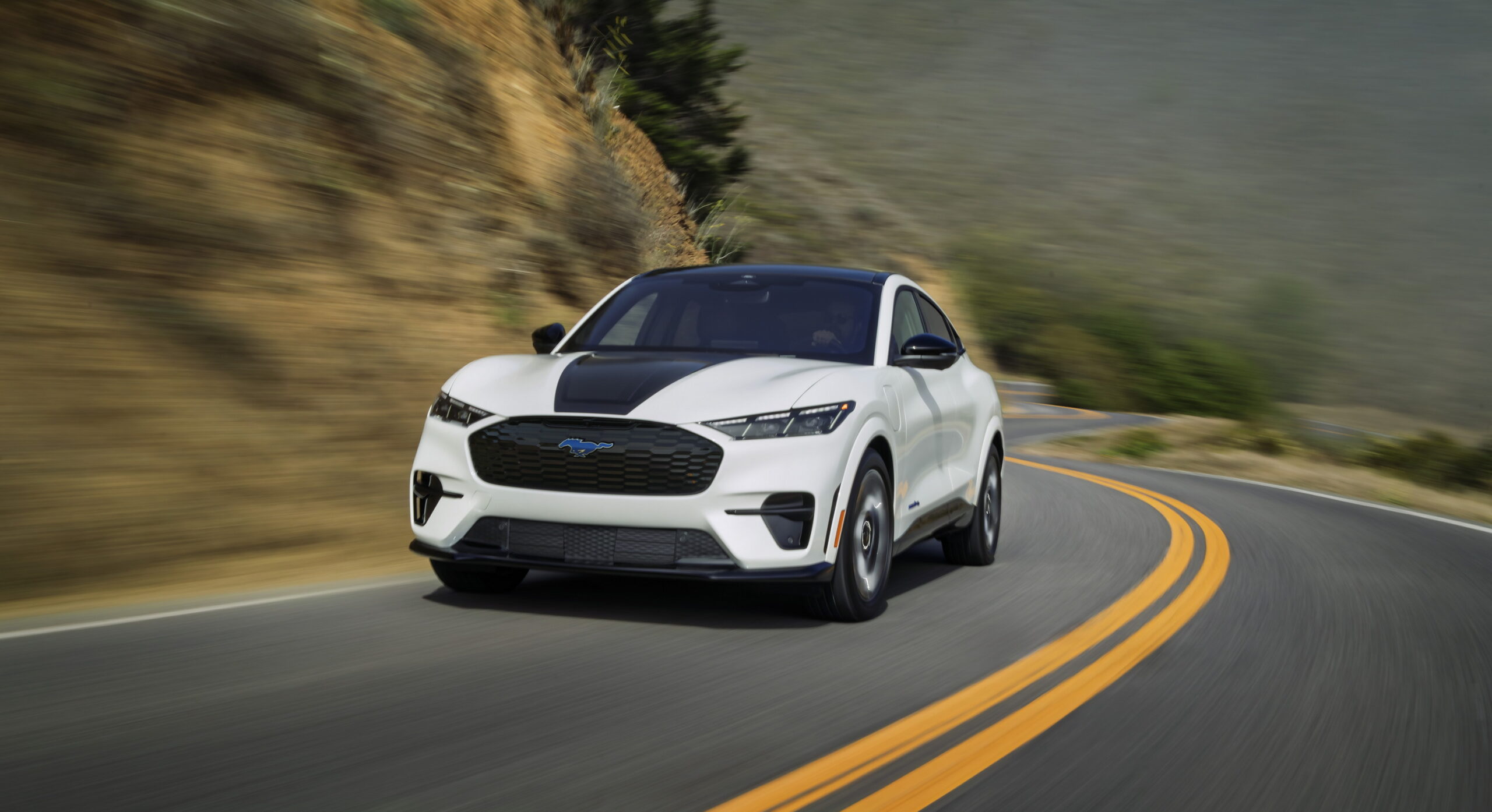
A rumored Ford-Xiaomi EV deal quickly drew national attention.
Both companies denied plans for any US-based collaboration.
Lawmakers quickly criticized idea despite both sides denying.
The global EV race has reached a point where even rumors can travel fast and land hard, and this week provided a clear example. Xiaomi and Ford have both denied a report that they are in talks to jointly manufacture new electric vehicles in the United States, pushing back against a surprise claim that the two companies were exploring a shared path forward.
The story, published over the weekend by The Financial Times and attributed to four people familiar with the matter, alleged that Ford had held discussions with Xiaomi about forming a joint venture to build future EVs on American soil. It also claimed Ford has spoken with other Chinese automakers about possible US-based collaborations, including BYD.
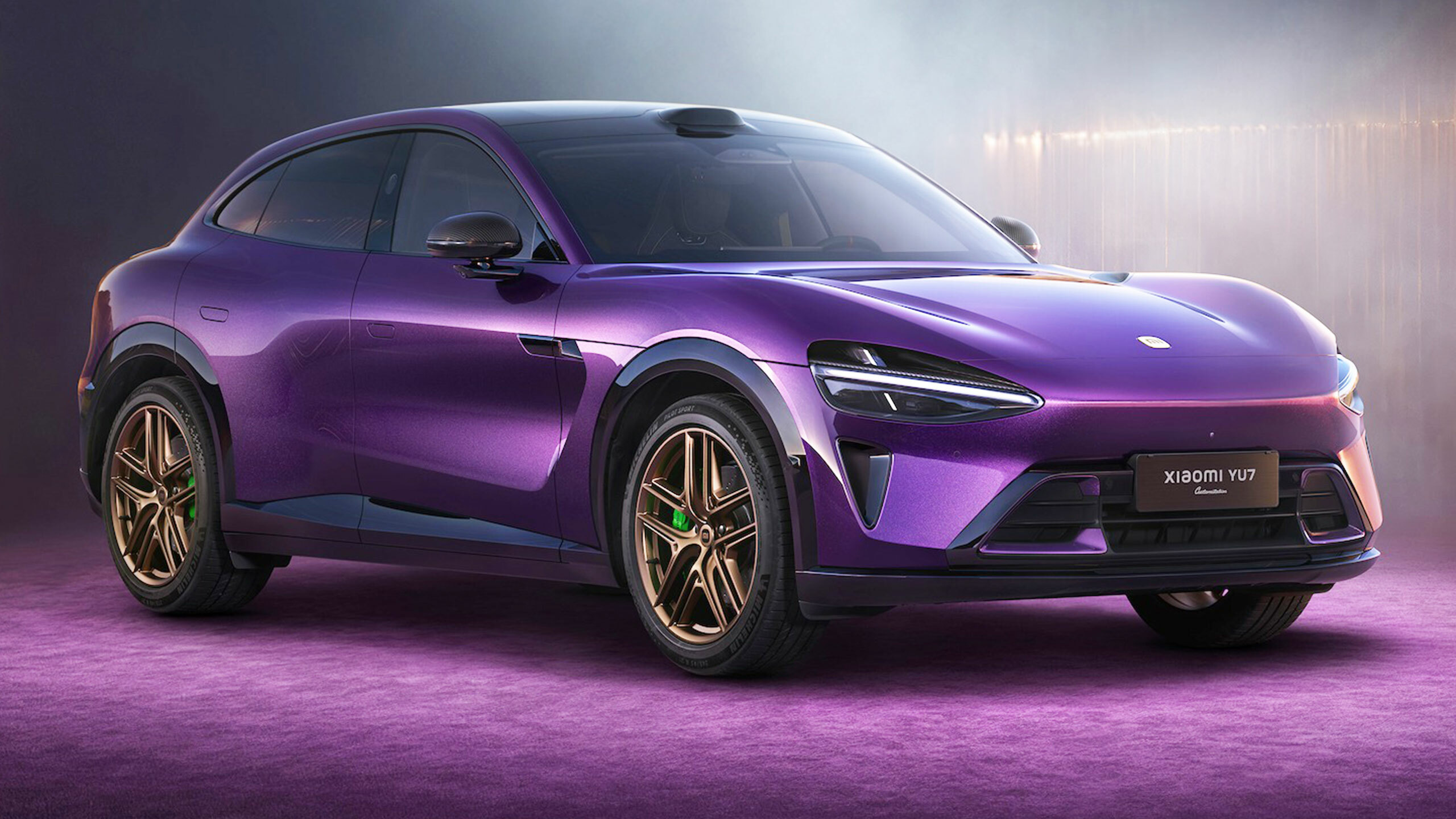
Adding weight to the speculation, Ford chief executive Jim Farley has been openly complimentary about Chinese EVs in recent years, with particular praise reserved for the Xiaomi SU7. His remarks, along with his personal use of the car, have fueled curiosity about how closely Detroit is watching developments in China’s EV market.
Both Sides Say No
However, shortly after the report was published, Ford pushed back, stating, “This story is completely false,” and adding, “There is no truth to it.” Xiaomi also denied any plans to collaborate with Ford on building EVs in the US.
“Reports that Xiaomi is discussing a joint venture with Ford Motor Co are false. Xiaomi does not sell its products and services in the United States and is not negotiating to do so,” the Chinese company said.
Would the U.S. Even Allow It?
Even the idea of such a deal is politically volatile. Any partnership between an American automaker and a Chinese firm would likely face immediate scrutiny in Washington.
Speaking to the Financial Times, Representative John Moolenaar, the Republican chair of the House China committee, said a Ford-Xiaomi deal would amount to “turning its back on American and allied partners, and it will make our country further dependent on China.”
Current federal policy makes the prospect even more unlikely. The Biden administration recently finalized rules that effectively block Chinese EVs from entering the U.S. market, citing national security risks.
Surprisingly, President Donald Trump has taken a more nuanced stance. While still critical of China on trade, he has said he’d support Chinese companies building factories in the U.S. and employing American workers.
“If they want to come in and build a plant and hire you and hire your friends and your neighbors, that’s great, I love that,” Trump said. “Let China come in.”
The Land Aircraft Carrier van includes a working eVTOL drone.
Xpeng will produce up to 10,000 units per year in Guangzhou.
The van runs an 800V EV platform with a range-extender setup.
If you thought Lexus’ six-wheeled minivan concept was a wild one, a radical reimagining floated as a possible LS flagship replacement, wait until you see what Xpeng has been working on.
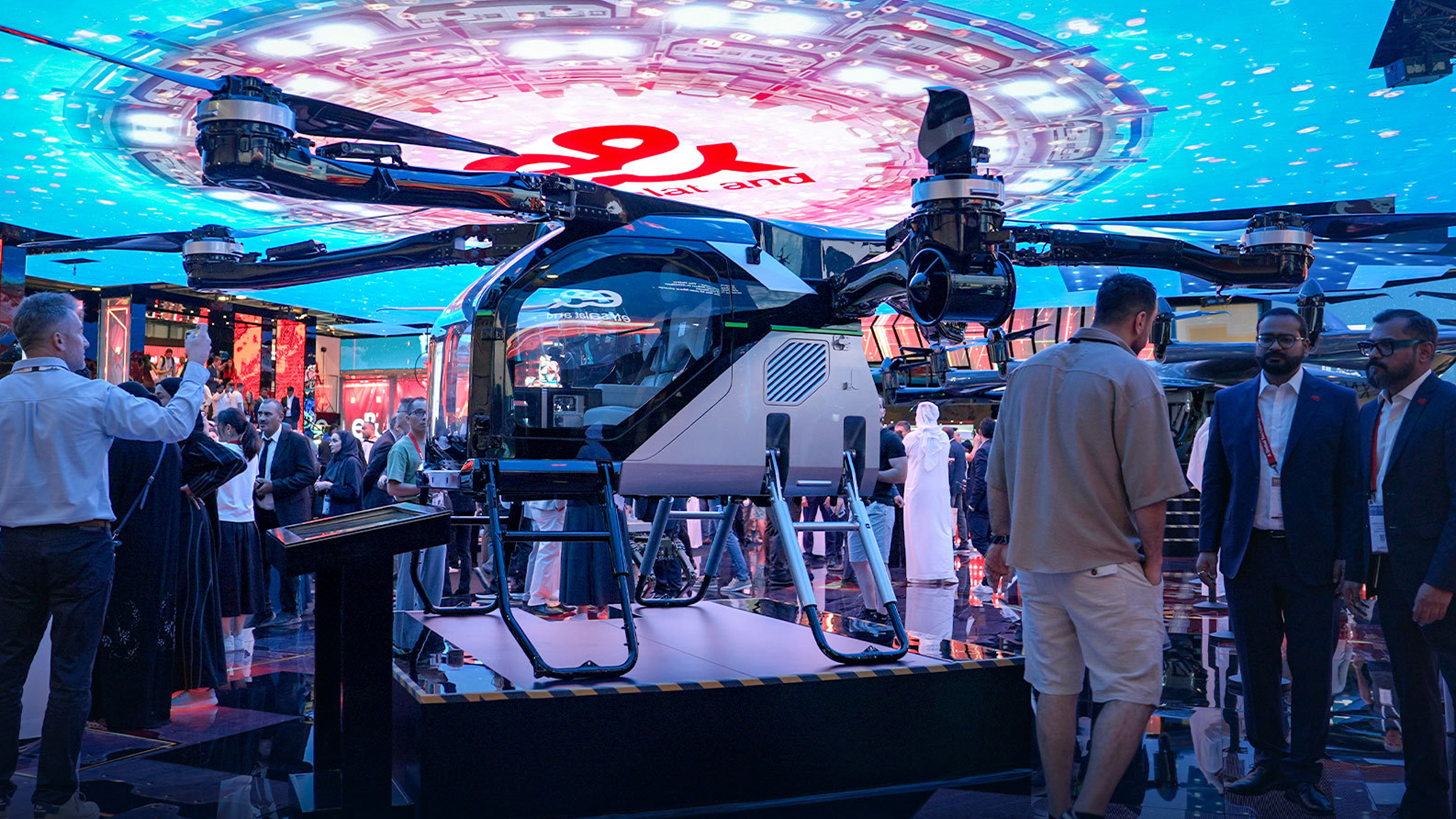
The Chinese tech company has developed a six-wheel minivan of its own, only this one takes things even further. Packed in the back is a fully functional eVTOL aircraft. And while Lexus is still firmly in the daydreaming phase, Xpeng is already preparing for customer deliveries later this year.
The six-wheeler, originally known as the AeroHT and now branded the Land Aircraft Carrier, is coming to market via Xpeng’s newly formed Aridge division, which focuses on aerial vehicles.
From a distance, it might pass for a modified cargo van with oversized ambitions, but this machine has a very specific purpose: it’s been built to transport and house one of Xpeng’s electric vertical take-off and landing aircraft.
Ready for Takeoff
Xpeng is manufacturing both the Land Aircraft Carrier and its matching eVTOL at a dedicated facility in Guangzhou. Production will start with 5,000 units per year, with plans to double that to 10,000. To keep the build process simple, Xpeng will offer only three exterior paint choices: Stellar Silver, Moonrock Gray, and Supernova White.
How Much Does It Cost?
The entire package, van and aircraft included, will start at around 2 million yuan, or approximately $287,000 at current exchange rates. The van itself stretches about 5.5 meters (18 feet) in length, spans 2 meters (6.6 feet) in width, and stands 2 meters tall. It’s sizable, but not unwieldy, especially considering it’s designed to carry an entire flying vehicle in its cargo area.
Technical specs on the van’s powertrain are still relatively sparse. What we do know is that it will run on an 800-volt electrical system and feature a range-extender EV setup. The company is targeting a driving range of more than 620 miles (1,000 kilometers).
In a clever bit of design integration, the van’s trunk will also serve as a charging station for the onboard aircraft.
Crash Raises Safety Concerns
Speaking of the aircraft itself, it’s made largely from carbon fiber and has six rotors. Although the eVTOL has received local airworthiness certification, a pair of prototypes collided with each other during a rehearsal flight at an airshow last September.
One of the aircraft crashed and burst into flames after the impact, but fortunately, no one was killed in the crash. However, the accident may erode some of the confidence those with an order have.
Chinese car cameras and sensors spark security fears.
Poland may join others banning them from military areas.
Ban could cover any car using Chinese sensors or tech.
Concerns over data security are prompting fresh scrutiny of Chinese-made electric vehicles in Europe, and Poland appears to be the latest country preparing to act. Officials there are looking to prohibit these cars from entering sensitive military areas, citing fears they could be used for surveillance.
The move would follow the UK’s recent decision to restrict Chinese EVs from military zones, part of a wider effort to prevent potential access to sensitive information gathered by modern automotive tech like cameras, radars and sensors that are now common on new cars.
Are Vehicles Becoming Spy Tools?
Cars from China, particularly EVs, are becoming an increasingly common sight on European roads, including in Poland. A recent study in the country referred to these vehicles as ‘Smartphones on Wheels,’ noting that onboard technologies enable environmental scanning and can capture sensitive geolocation data, among other capabilities, which can pose a serious safety risk.
“Smart cars have enormous data collection capabilities through high-resolution cameras, sensors, and LiDAR systems, which use active 3D mapping technology,” said Paulina Uznańska, author of the study, in comments reported by the Polish news agency PAP. “This creates a very high potential for the use of such vehicles for intelligence analysis purposes.”
Responding to the findings, General Wiesław Kukuła, Chief of the General Staff of the Polish Army, is expected to issue a formal directive soon that would ban Chinese-made vehicles from all military installations across the country. This would also include adjacent parking areas.
The Ministry of National Defense confirmed to national news agency PAP that it is currently drafting a policy to that effect.
Security Policy Tightens
UK lawmakers noted last year that the Chinese government holds legal rights to access data collected by the cameras, sensors, and radar systems in vehicles built with Chinese technology.
Following a similar approach, Poland’s ban is expected to apply not only to models from brands like BYD, MG, Nio, Xpeng, and Aiways, but also to any vehicles equipped with Chinese-made software or sensor components.
Beyond military installations, there is speculation that similar measures could reach other sectors. One industry expert has floated the possibility of extending the restrictions to key infrastructure hubs like airports. That said, such a policy would have to be carefully structured to comply with European competition laws and avoid regulatory backlash
We’ve grown accustomed to how quickly electric cars evolve, but few models illustrate that pace of change as clearly as the latest iteration of Audi’s e-tron GT. What is essentially Audi’s halo EV has been completely reengineered in just a few short years. This isn’t your usual mid-cycle refresh, and Audi isn’t pretending it is.
Sales of the original e-tron GT kicked off in Europe back in mid-2021, though Australian deliveries didn’t begin until late 2022. Fast forward just over 18 months, and Audi has already rolled out a completely new e-tron GT line-up, one so far ahead of its predecessor that even the latest base model now outguns the previous RS flagship in power.
QUICK FACTS
› Model:
2026 Audi RS e-tron GT Performance
› Starting Price:
AU$309,900 ($216,800) as tested
› Dimensions:
4,996 mm (196.6 in.) Length
2,158 mm (84.9 in.) Width
1,394 mm (54.8 in.) Height
2,901 mm (114.2 in.) Wheelbasee
› Curb Weight:
2,330 kg (5,136 lbs)
› Powertrain:
Dual electric motors / 97 kWh battery
› Output:
912 hp (680 kW) / 757 lb-ft (1,027 Nm) w/Launch
› 0-62 mph
2.5 seconds
› Transmission:
Twin speed
› Efficiency:
21.0 kWh/100 km as tested
› On Sale:
Now
SWIPE
This new model went on sale Down Under towards the end of 2025, and we recently had the opportunity to live with the flagship model in the range, the all-new RS e-tron GT Performance. I was not prepared for what I would discover.
What’s New?
Photos Brad Anderson/Carscoops
Most would agree that the e-tron GT is an extraordinary piece of automotive design. We’d argue it’s the best-looking EV on the market, and one of the finer-looking sedans of the past decade. However, the original RS version just didn’t look special enough.
Aside from minor visual tweaks, the flagship version looked virtually identical to the base model, which was somewhat disappointing for an RS-branded car. Audi appears to have addressed these complaints and, for the 2026 RS e-tron GT and RS e-tron GT Performance models, has ensured they stand out from the base version.
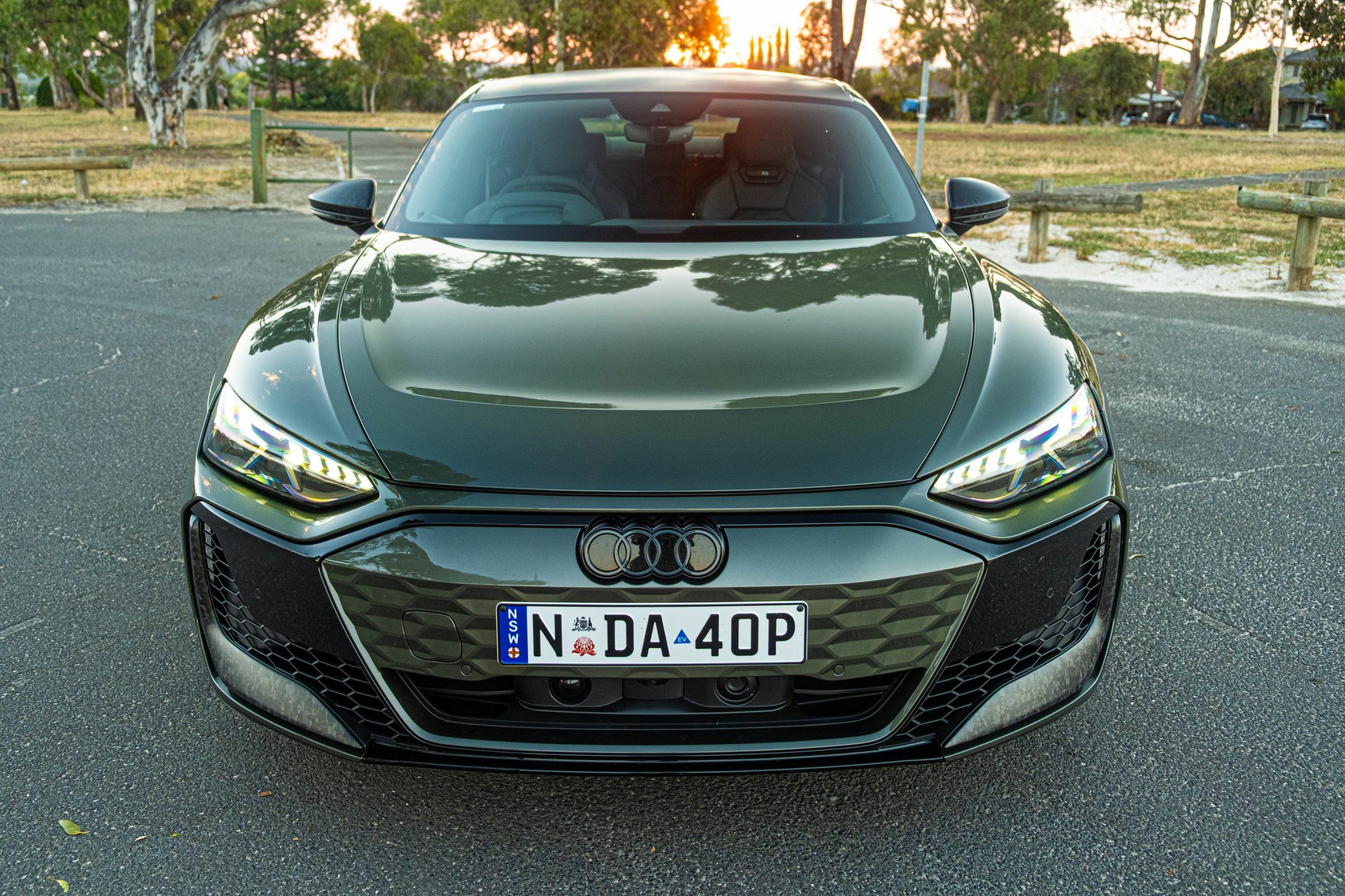
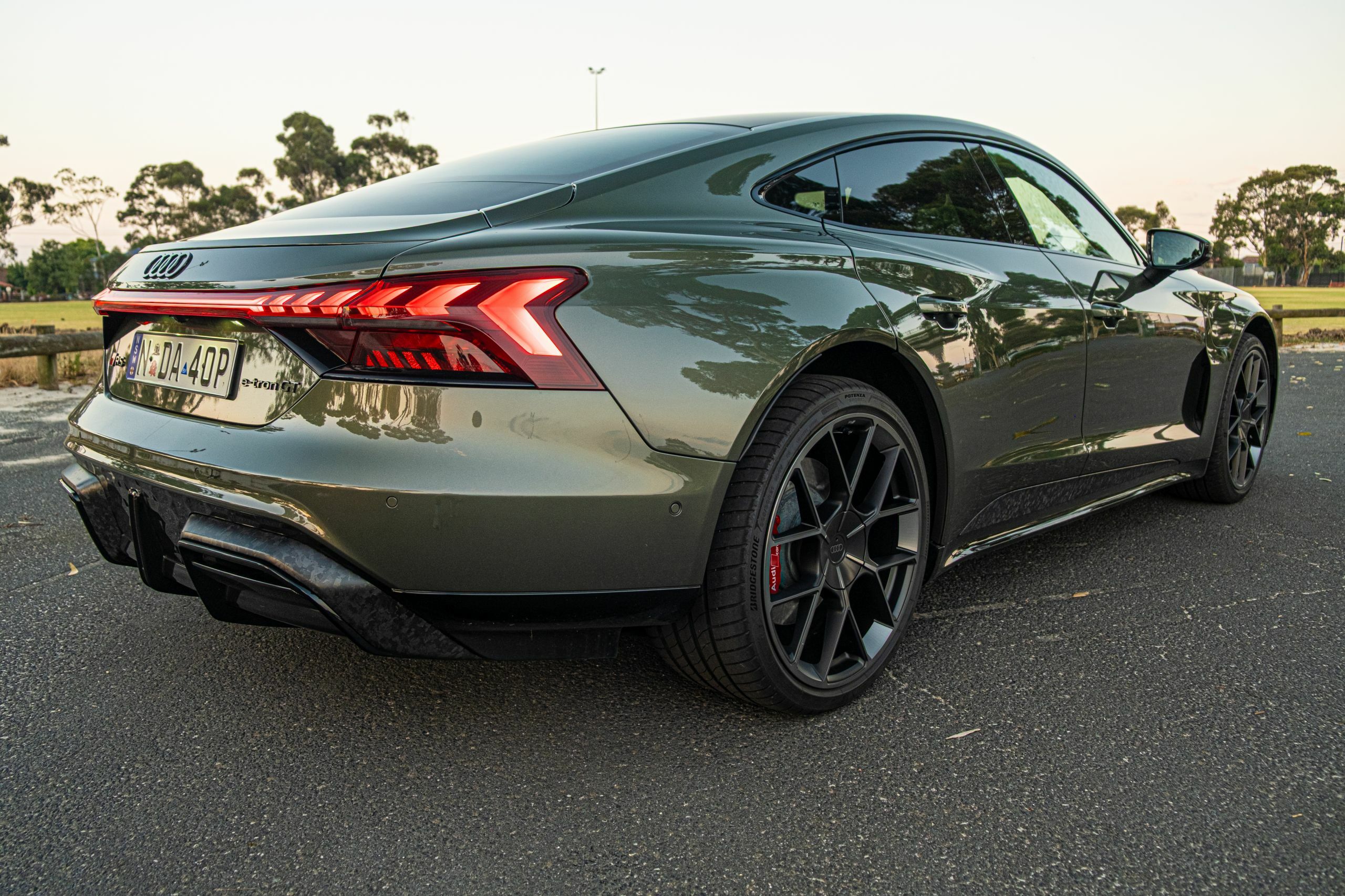
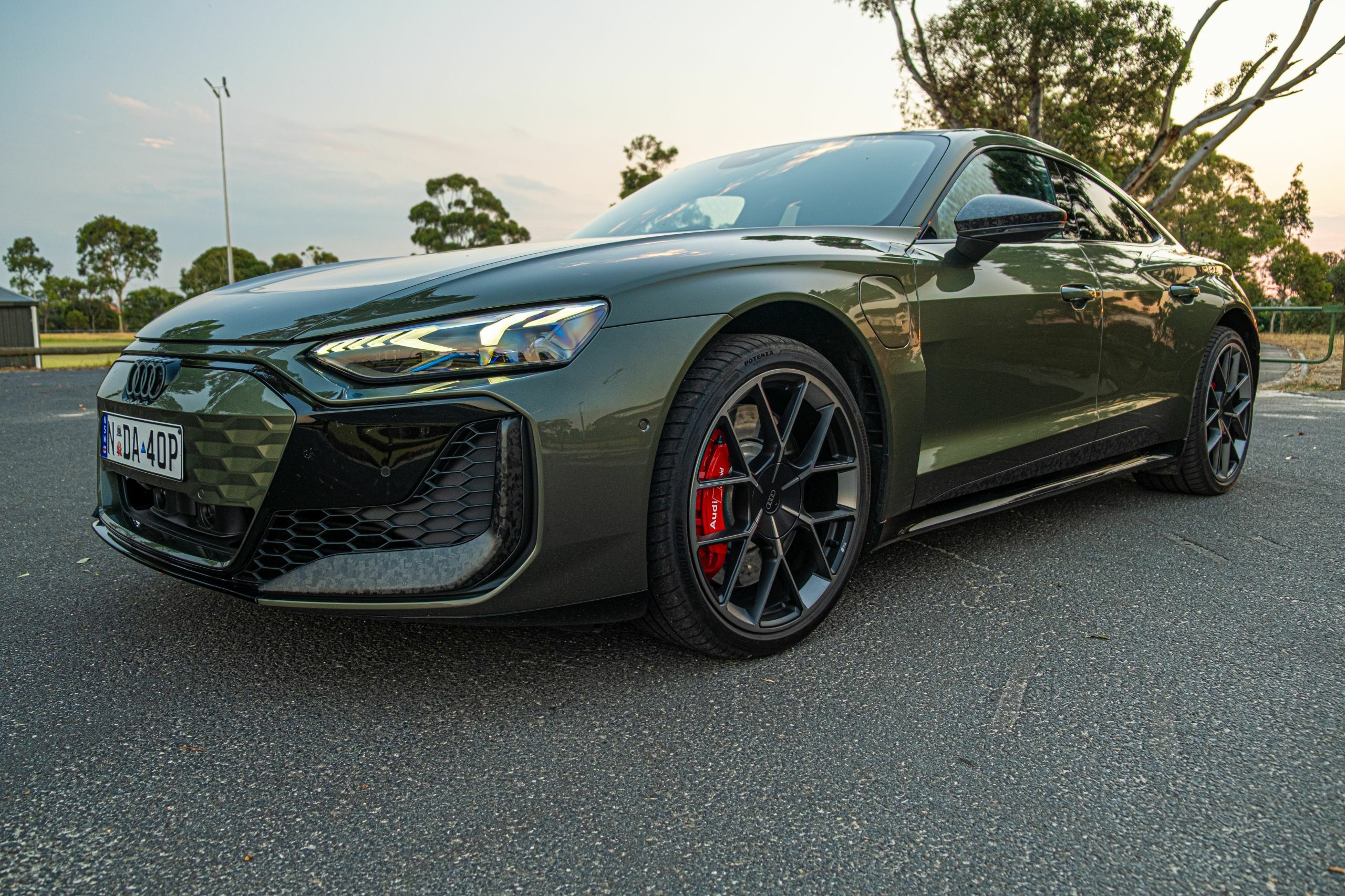
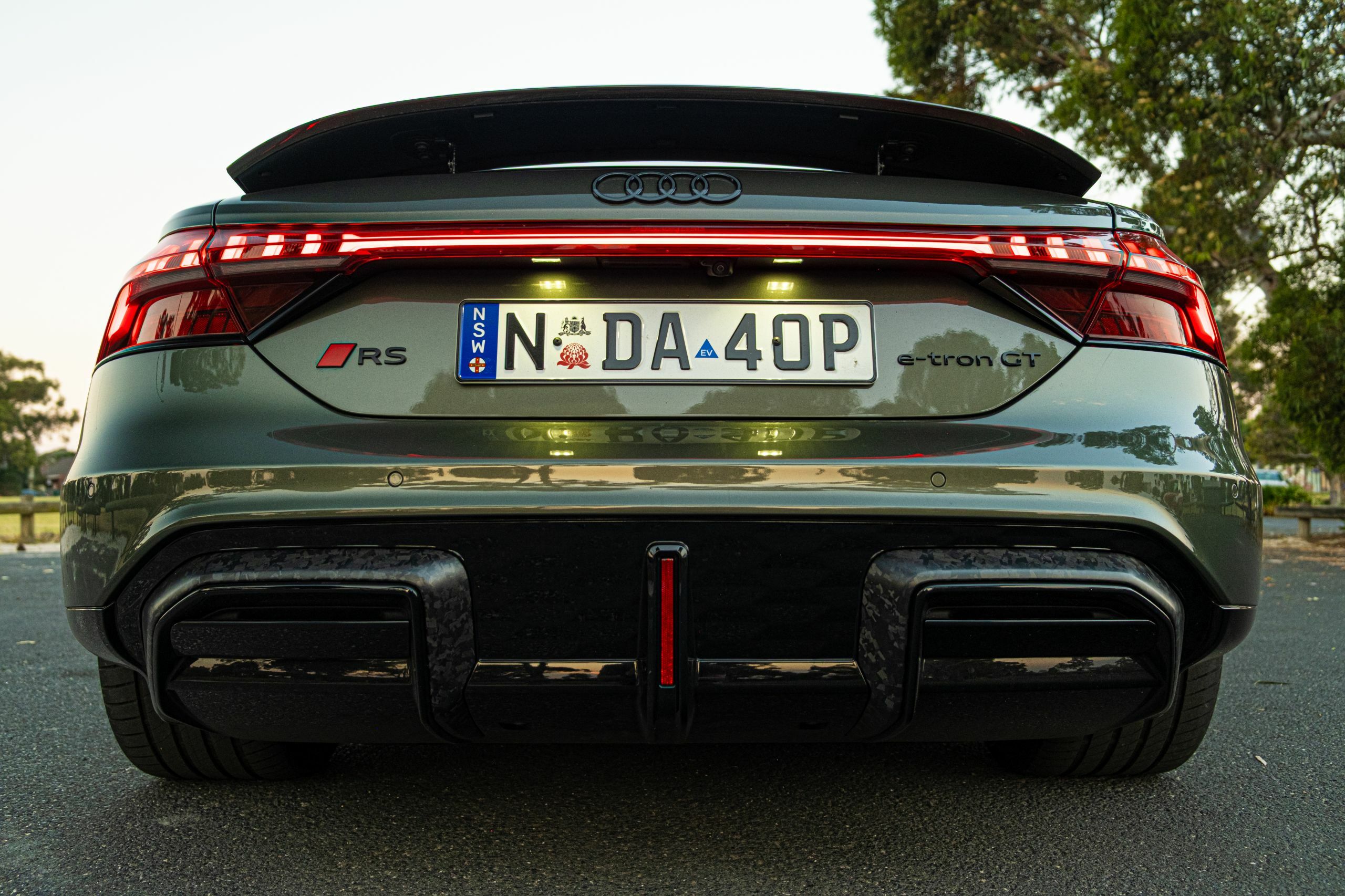
The most obvious updates are found at the front. While the same basic grille has been retained, the front air intakes are now more aggressive, with a forged carbon fiber finish, as on our test car. The bold new touches continue at the rear with a bespoke diffuser, also finished in forged carbon, and a set of unique six double-spoke 21-inch wheels.
An Updated Powertrain
These updates are welcome, but they pale in comparison to the changes that Audi has made under the skin. The 84 kWh battery pack of the old model has been removed and replaced with a larger 97 kWh battery that weighs 9 kg (19.8 lbs) less. Additionally, all three e-tron GT versions now support DC charging speeds of up to 320 kW, a welcome boost from the 270 kW of the old model.
Then there’s the power. The base S e-tron GT has 500 kW (670 hp) and 717 Nm (529 lb-ft) with launch control, allowing it to hit 100 km/h (62 mph) in 3.4 seconds and drive 558 km (347 miles) on a charge. The mid-tier RS e-tron GT is rated at a peak of 630 kW (845 hp) and 865 Nm (638 lb-ft), running to 100 km/h in 2.8 seconds and boasting a driving range of 522 km (324 miles).
The daddy of the line-up is the RS e-tron GT Performance we tested, Audi’s equivalent to the refreshed Taycan Turbo S. It peaks out at 680 kW (912 hp), 1,027 Nm (757 lb-ft) of torque, and can hit 100 km/h in a claimed 2.5 seconds. It does all of these while boasting a range of 528 km (328 miles). It’s not cheap, however. In Australia, prices for the flagship start at AU$309,900 ($216,800), though our test car included several options, bringing the total to AU$324,400 ($226,900).
A Cabin To Remember
Photos Brad Anderson/Carscoops
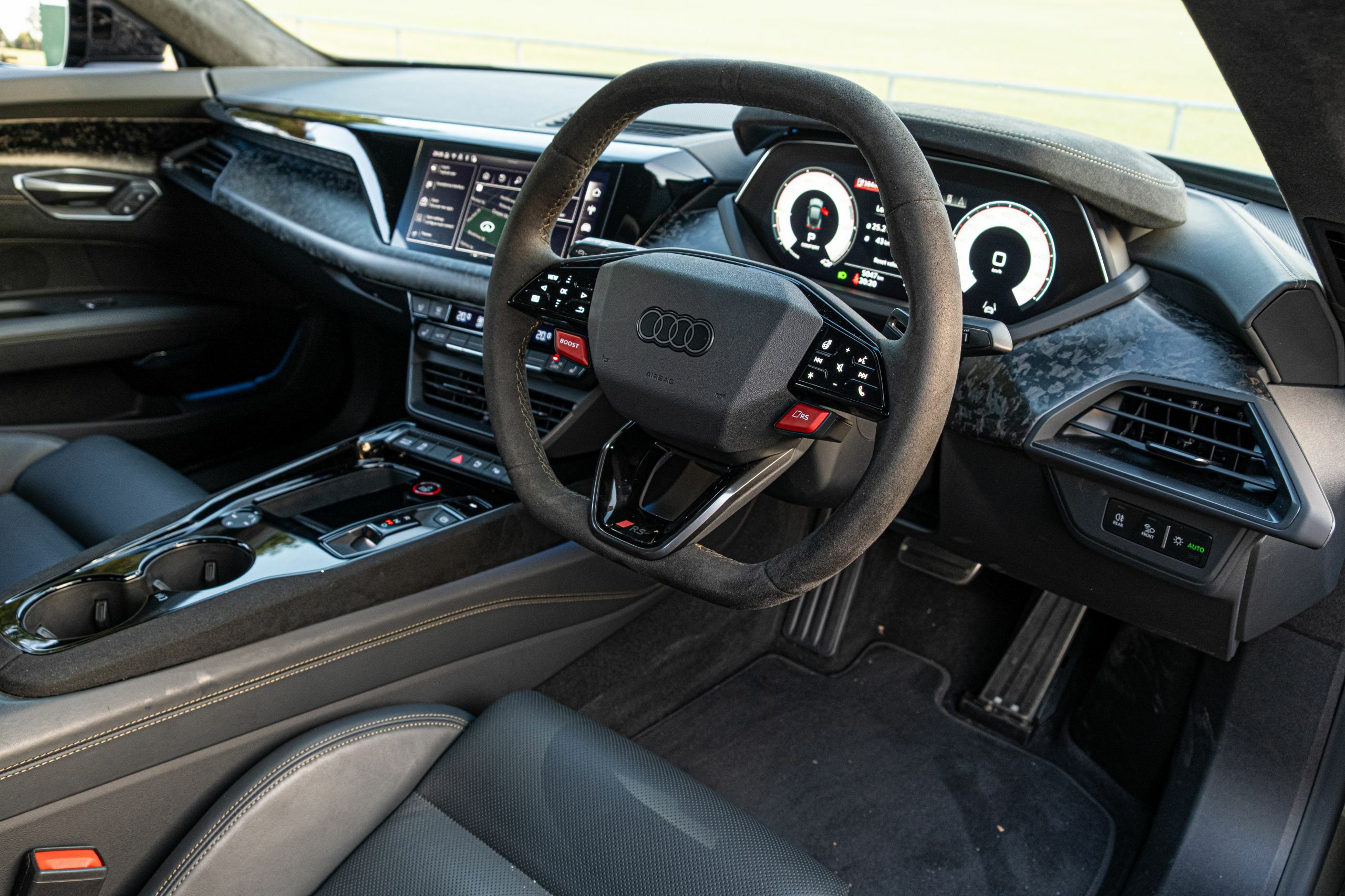
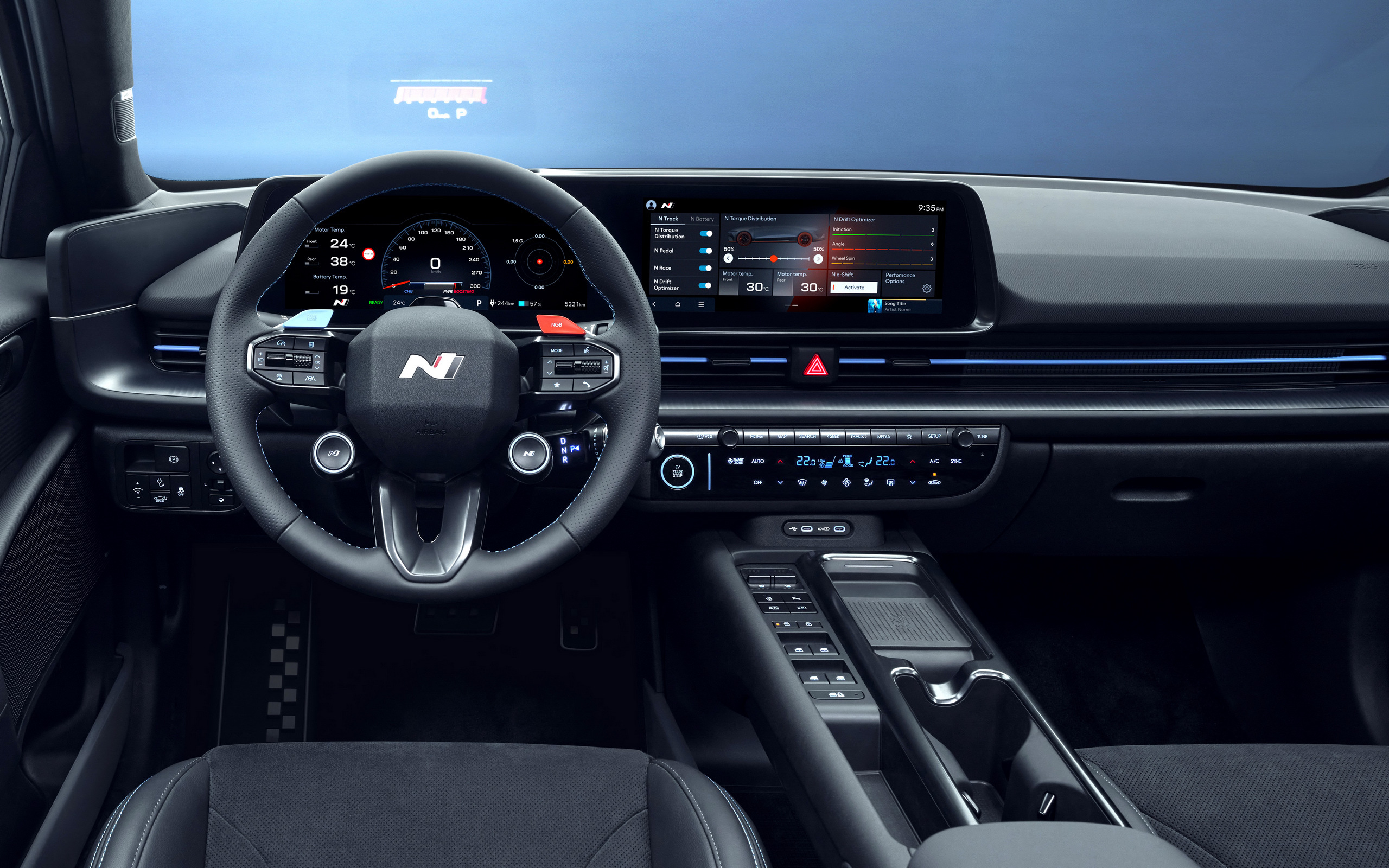
The interior of the new RS e-tron GT Performance is largely the same as the pre-facelift model, but does benefit from some updates. These include a new flat-bottom and flat-top Alcantara steering wheel with bright red Boost and RS buttons.
Our tester was also fitted with the AU$4,500 ($3,100) performance design package, adding several green accents and Nappa leather. It also included the AU$10,000 ($7,000) Matt carbon camouflage package, which adds forged carbon to the exterior, side sills, dashboard, and door panels. The look of the carbon won’t be to everyone’s tastes, but it’s certainly striking.
Most touchpoints are excellent, and the cabin carries a premium feel. Still, much of the switchgear and lower-grade plastics come straight from less expensive Audi models, which is somewhat disappointing given the car’s sky-high price tag.
Among the key features carried over from the pre-facelift model are the superb RS-branded front seats, the 10.1-inch infotainment display, and the 12.3-inch digital instrument cluster. There’s wireless Apple CarPlay and Android Auto, a thumping 16-speaker Bang & Olufsen audio system, and among the finest front seat massage functions of any car currently on sale. To put it simply, the RS e-tron GT is a joy to spend time in.
Perhaps the most obvious downside of the incredibly good looks and that swooping roofline is that headroom in the rear isn’t great for tall adults. It also feels a little sparse back there with just a pair of USB-C ports and simple fan speed controls.
Unrelenting Acceleration
Photos Brad Anderson/Carscoops
Heading into my week with the RS e-tron GT Performance, I knew it was going to be the quickest car I’d ever driven. But nothing could quite prepare me for this EV’s ferociousness off the line, and yet its plushness and comfort during daily driving.
As mentioned, Audi quotes a 0-100 km/h time of 2.5 seconds. Try as I might, I was never able to match that with my GPS timer, recording a best time of 2.63 seconds, covering the sprint to 100 km/h in just 39.1 meters (129 feet). If you can actually feel the difference between 2.63 and 2.5 seconds, congratulations, you might be part stopwatch. As for what that kind of speed feels like? Absolutely brutal.
Pin the throttle and the Audi throws you back into the seat, building speed in a way that is truly terrifying. Like the original e-tron GT, this new model retains a two-speed transmission. While the original shifts into second gear at around 85 km/h (53 mph), the flagship Performance model will hold first gear for as long as possible, enabling remarkable acceleration.
During my testing, it felt like the car changed into second gear at around the 120 km/h (75 mph) mark, and when it does, the EV accelerates even faster, as if it’s a spaceship getting sucked into a black hole. It’s absolutely mesmerizing. Remarkably, the car delivers this performance while struggling to put all its power to the ground.
Regardless of whether the ESC is on, in Sport mode, or disabled entirely, the car will spin all four wheels to beyond 100 km/h, leaving faint black tire marks in its wake. I have no doubt that if I had been able to find a grippier piece of tarmac to reduce wheel slip, a 2.5-second run would have been achievable.
Chassis Changes
Photos Brad Anderson/Carscoops
Equally impressive as the way the RS e-tron GT Performance lurches forward is the new active suspension system. It builds upon the already remarkable setup of the old car, using technology similar to what’s found in the facelifted Porsche Taycan.
There’s trick air suspension working alongside two-valve dampers that eliminate the need for traditional anti-roll bars. In Comfort mode, the system is so advanced that it can actually lean the car into a corner, while in one of the RS modes, the suspension activates to eliminate even the slightest hint of body roll. Yes, despite the car weighing 2,330 kg (5,137 lbs), it has an uncanny ability to remain flat, even during high-speed slaloms.
I was offered my first taste of this system when I unlocked the car for the first time. As soon as I opened the driver’s door, the ride height quickly jumped up a couple of inches, making it easier to get in. When exiting, the same thing happens. It’s a neat party feature that can be disabled if owners prefer not to have it.
Presented with a mountain road, the car absolutely shines. Fitted with 265/35 front and 305/30 Bridgestone Potenza Sport tires, the RS e-tron GT Performance can speed through corners beyond what some potent sports cars can do, with very little fuss. It’d take a very brave soul to push this thing to its limits on the road, and it probably needs to be driven on a track to be fully appreciated.
As with before, the comfort is also superb. With the suspension in one of the softer settings, the e-tron GT soaks up bumps better than any other Audi, oftentimes making potholes and speed bumps feel almost non-existent. It honestly beggars belief how comfortable the car is on long journeys. An all-wheel steering system also ensures it’s easy to drive in tight urban areas and parking lots, reducing the risk of curbing those inevitably very expensive wheels.
All of the incredible performance comes at the expense of efficiency. Audi quotes efficiency of 21 kWh/100 km, and while I was able to match that figure, it’s slightly higher than the old car. But, just like you shouldn’t buy an Audi RS6 Avant expecting it to be fuel efficient, the Performance isn’t the type of EV you should buy if you want to eke out as much range as possible.
Critiquing the car’s handling is rather difficult. Some may find the steering to feel overly assisted and unnaturally sharp, but I grew accustomed to it very quickly.
One frustrating issue I experienced with the parking sensors is that they beep incessantly and loudly, as if you’re about to hit something, even when there are several inches of clearance. There were also a couple of occasions when the rear-cross traffic alert system was engaged while I was reverse parking, even though there was no risk of hitting anything.
Verdict
The e-tron GT remains the best EV that Audi currently produces, and the flagship RS e-tron GT Performance provides true supercar-levels of performance, making it one of the most engaging and enjoyable EVs to drive, too.
The additional performance Audi has added is extraordinary, but it comes at a cost. The old flagship started at AU$246,875 ($172,700), or more than AU$63,000 ($44,000) less than the new one. That’s a sizeable price hike, regardless of the changes made. If this new model follows the same depreciation curve as the pre-facelift model, it could be an absolute bargain in a few years.
Hyundai is bidding to build 12 submarines for Canada.
Canada may link the deal to local Korean car production.
Korea accounts for 12 percent of car sales in the country.
Just two weeks after announcing a major trade deal with China that sharply reduced tariffs on EV imports, Canada is exploring another pivotal agreement, this time with South Korea, that could open the door to more car production on Canadian soil.
Although the two countries have had a free trade agreement since 2015, removing tariffs on most goods, this new Memorandum of Understanding (MoU) points to a growing interest in deeper cooperation.
Both countries are responding to the unpredictability of U.S. trade policy under the Trump administration by diversifying their economic alliances. Still, for all the optics, neither has the capacity to replace the United States as a primary economic pillar.
The current priority is to strengthen South Korea’s automotive presence in Canada. That could include domestic manufacturing of Korean-branded vehicles as well as increased production of electric vehicle components and battery technologies.
“This agreement will grow our auto sector, create good jobs and reinforce Canada’s position as a global leader in future-ready vehicle manufacturing,” said Industry Minister Mélanie Joly in a statement on Thursday.
Ties Between Auto and Defence
Canada appears to be courting major Korean automakers such as Hyundai, especially in light of South Korea’s bid to replace Canada’s current submarine fleet.
According to CTV News, both Hyundai and defence contractor Hanwha are involved in a proposal to build and maintain 12 submarines for the Royal Canadian Navy. If selected, the deal could be worth up to $100 billion over the next 30 to 40 years.
Hanwha, a sprawling South Korean industrial group, has already laid groundwork by signing five separate MoUs with Canadian companies to incorporate their technologies and products into its submarine offerings. Among those agreements is a $275 million commitment toward a new structural steel beam mill in Ontario.
South Korea’s Growing Footprint in Canada’s Auto Market
In 2024, South Korean vehicles made up 12 percent of all cars sold in Canada, amounting to 228,257 units. In a statement, the Canadian government emphasized its aim to strengthen the domestic battery supply chain by encouraging investment and collaboration in battery manufacturing, materials processing, and the refinement, processing, and recycling of Canadian critical minerals.
Flavio Volpe, president of the Automotive Parts Manufacturers’ Association, believes the timing aligns well for Canada to boost its domestic auto sector by leveraging upcoming defence investments.
“Today the business case is there to build a plant here in Canada, perhaps making electric vehicles… and to build where they sell,” he said. “Canada is interested in buying submarines and there are two healthy bidders. And both of those healthy bidders have automakers that sell a lot of cars here and sell batteries here.”
Slate’s EV truck will be built in a repurposed Indiana factory.
Old printing plant now features robots and anti-slip flooring.
Talks with suppliers next week may bring cost-cutting updates.
Breaking into the car market with an all-new vehicle is one of the hardest plays in the industry, even more so for a company with no legacy network whatsoever or any prior production history. But Slate Auto is pressing ahead with its plan to launch an affordable, all-electric pickup truck.
While key details about the production version, including pricing, are still being ironed out, the company has shared progress from the plant where it’ll be built.
Rather than building the truck overseas, perhaps somewhere where labor costs are lower, Slate Auto is manufacturing it right here in the US. It’s being brought to life at a plant in Warsaw, Indiana, which for decades served as a major printing facility, employing up to 500 people.
A Factory Transformed
As you can imagine, repurposing the site into an electric vehicle facility involves some extensive changes. Among them, 630,000 square feet of anti-slip flooring is being laid to accommodate the factory’s new layout and safety protocols.
Automation is already underway, with robotic laser welders and large-format 3D laser scanners arriving on site. According to Slate, production of its EV pickup is still scheduled to begin before the end of the year.
What Happens Without the Tax Credit?
The truck’s ultimate reception will no doubt hinge on its price. Originally, Slate Auto said it would start below $20,000 when factoring in the now-defunct $7,500 federal EV tax credit. But with that credit now scrapped under the Trump administration, the EV won’t be as cheap as originally promised.
A few months later, the company quietly updated its website to say the “Blank Slate is expected to be priced in the mid-twenties.” Although no further details were provided, the update was widely thought to reflect the anticipated changes to the federal EV tax credit at the time.
When asked about the change, Slate Auto CEO Chris Barman brushed off the concern, saying “it doesn’t matter,” and insisting the truck remains affordable. She didn’t elaborate further.
“We’re still working really closely with our suppliers to see what opportunities we have to continue to bring costs down, to see what we can do to pass along to the customer before we announce final pricing,” she said.
Slate’s CEO also mentioned that pricing will be a central part of the discussions at a meeting with the company’s suppliers scheduled for next week.
“A big part of that is going to be talking about, are there more opportunities for cost reduction? And the way we’re looking at that is we want to pass it on to the customer,” she said.
Tesla’s Robotaxis crash every 55,000 miles, far more than humans.
Human-driven crash estimates are around once every 200,000 miles.
Robotaxis operate only in Austin, despite Musk’s 2025 nationwide claim.
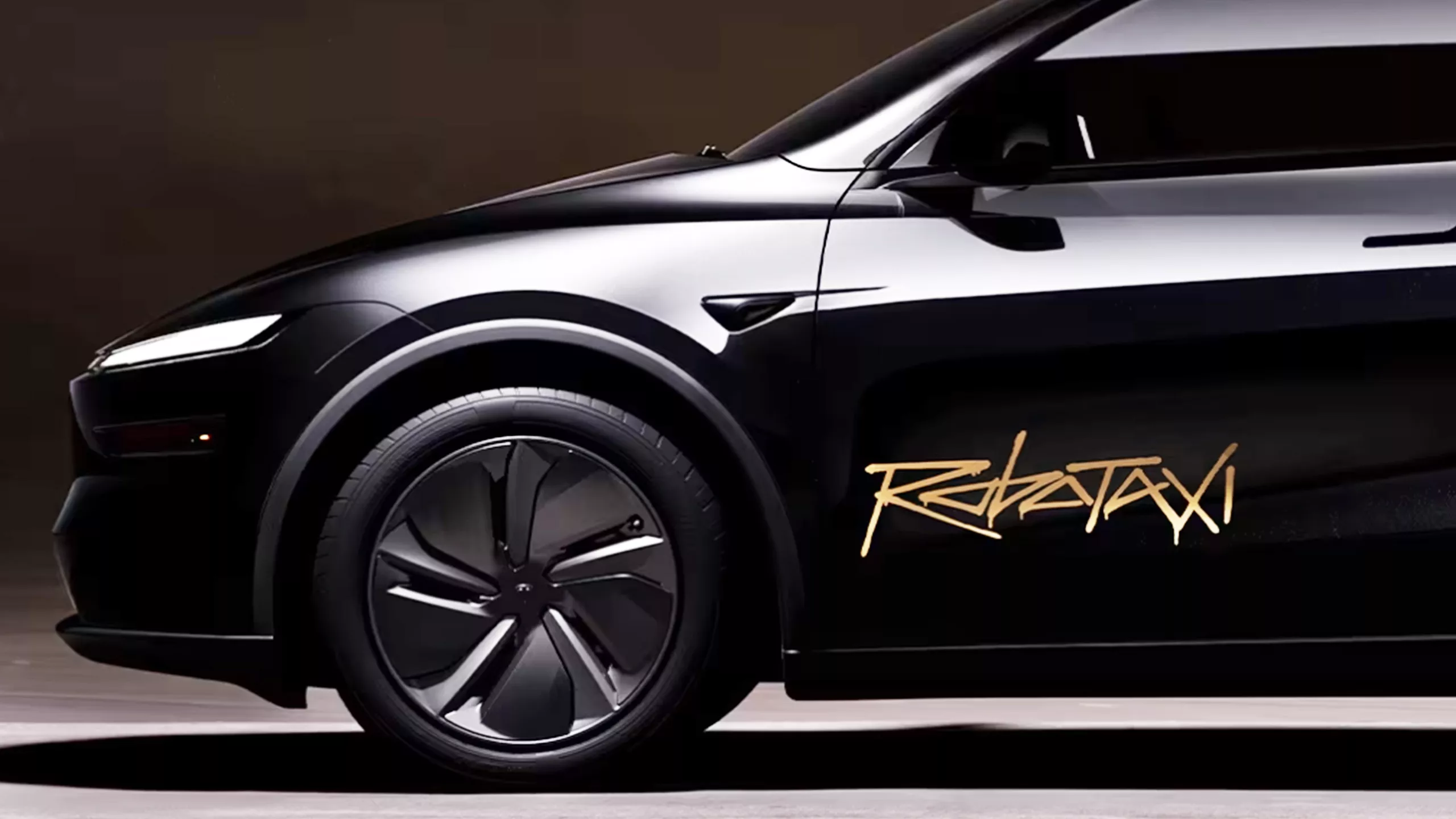
As many probably expected, Tesla’s Robotaxi service hasn’t grown the way Elon Musk predicted, and it’s not running as smoothly as the company might have hoped. New data shows that the autonomous cars Tesla is operating in Austin, Texas, are crashing far more often than human drivers.
According to figures submitted to the National Highway Traffic Safety Administration, Tesla’s Robotaxis were involved in nine crashes between July and November of last year. During that period, the fleet logged about 500,000 miles, which works out to an incident roughly every 55,000 miles.
The Numbers Behind the Crashes
That rate might not seem disastrous at first glance. But NHTSA data shows that human drivers report one police-notified crash about every 500,000 miles. Factoring in unreported incidents, estimates suggest a more realistic figure of one crash every 200,000 miles.
Even by that more forgiving measure, humans are still significantly outperforming Tesla’s current autonomous system. Electrek reported this disparity, pointing out the shortfall in Tesla’s safety metrics.
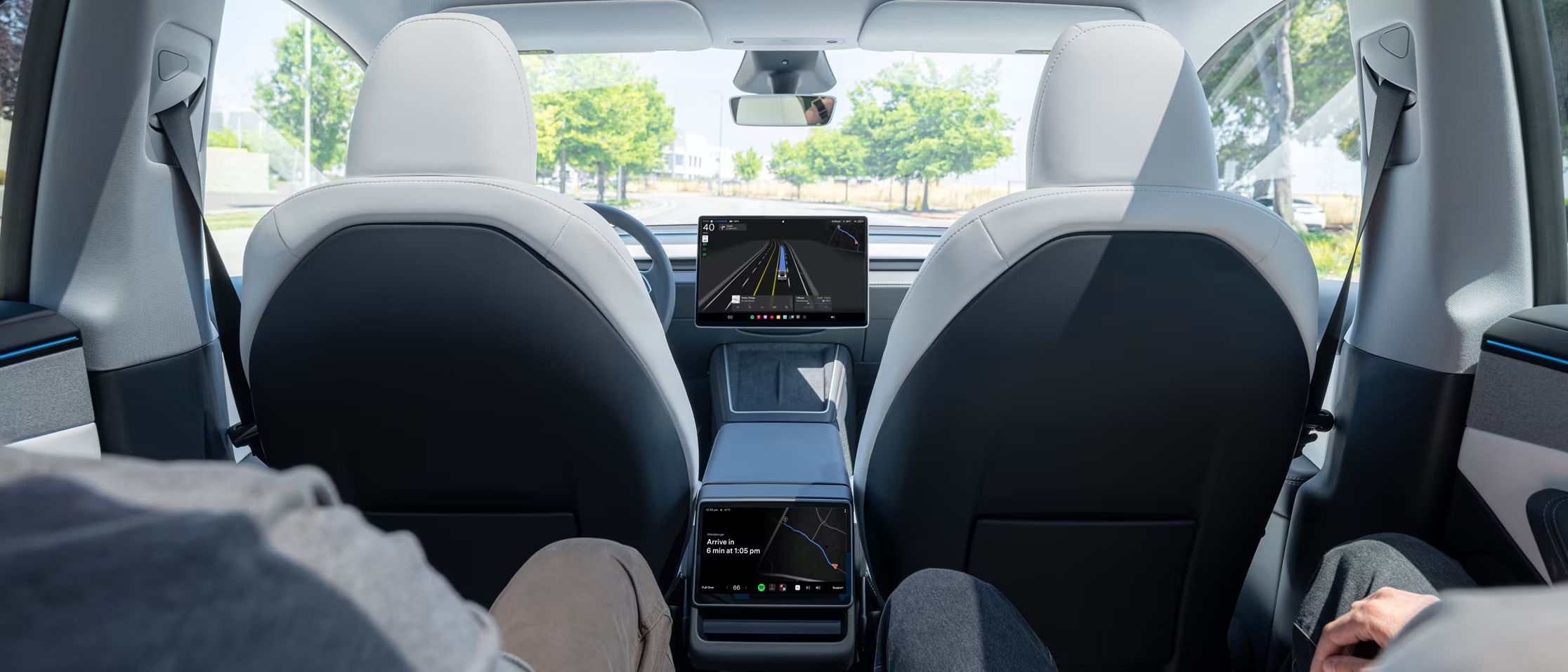
What makes this more concerning is that each robotaxi has a safety monitor riding in the front passenger seat. Even with a human on board to intervene, the vehicles are still getting into more accidents per mile than human drivers typically do alone.
What Isn’t Tesla Saying?
Tesla doesn’t appear to be exactly transparent about these crashes, either. The reports submitted to the NHTSA are heavily redacted, leaving only limited details available.
In one case from September 2025, a robotaxi reportedly “hit an animal at 27 mph,” but there’s no information on how or why it happened. That same month, another vehicle was involved in a collision with a cyclist, though again, the specifics are missing.
Overall, Tesla reported nine crashes involving its Robotaxi fleet in Austin, between July and November 2025, according to incident data uncovered by Electrek in NHTSA’s Standing General Order crash reports:
November 2025: Right turn collision
October 2025: Incident at 18 mph
September 2025: Hit an animal at 27 mph
September 2025: Collision with cyclist
September 2025: Rear collision while backing (6 mph)
September 2025: Hit a fixed object in parking lot
July 2025: Collision with SUV in construction zone
July 2025: Hit fixed object, causing minor injury (8 mph)
July 2025: Right turn collision with SUV
Robotaxi’s Slow Expansion
In July of last year, Musk made the rather absurd claim that Tesla’s Robotaxi service would reach “half of the population of the US” by the end of 2025. It’s now 2026, and the service is still limited to just one city: Austin, Texas.
Tesla has expanded its service to the San Francisco Bay Area in California, but because it doesn’t have a permit to operate fully autonomous vehicles in the state, each Model Y is equipped with a human driver. It’s hardly a Robotaxi service then, but rather simply a ride-hailing taxi service.
That said, Tesla isn’t giving up on the idea. During its Q4 earnings call this week, the company confirmed plans to expand the program into seven new cities, including Dallas, Houston, Phoenix, Miami, Orlando, Tampa, and Las Vegas, all within the first half of the year.
McLaren patent reveals a sound-based EV feedback system.
Sounds shift left, right, front, and rear with power delivery.
Drivers would hear torque vectoring as audible stereo feedback.
Electric cars make a lot of sense for most people. They’re smooth, quiet, and easy to live with, which is great for getting from A to B without any drama. But if you’re someone who actually enjoys driving, chances are most EVs feel a bit flat. They do the job, sure, but outside of the instant acceleration, there’s not much to get the pulse racing.
Hyundai challenged that norm with the launch of the Ioniq 5 N a couple of years ago, proving that electric power doesn’t have to mean a lifeless drive. Now, other manufacturers are paying attention. Porsche and Lamborghini are among those working on dynamic EV soundtracks designed to inject some drama into the otherwise silent experience.
It turns out McLaren is exploring a similar path, but with its own spin. A recently filed patent hints at a more complex approach to EV acoustics.
EV Sound Gets Smarter
Submitted to the United States Patent and Trademark Office, the filling outlines a system that modulates artificial sound depending on traction and power distribution.
In practice, if the left-side wheels lose grip, the car could direct more torque to the right and, at the same time, shift more sound output to the speakers on that side. The goal seems to be enhancing driver perception by linking sound with how the car is behaving underneath you.
The patent, unearthed by CarBuzz, also describes a setup where sounds can move between the front and rear depending on where power is being delivered. It doesn’t specify what those sounds would actually be, but McLaren could take inspiration from Hyundai’s approach and recreate tones similar to its own combustion models.
Is This Just A Patent Placeholder?
Of course, as with any technology patent, there’s no guarantee McLaren will actually use such a system in any of its future vehicles.
McLaren’s overall EV plans also remain a little murky. For now, the brand has made it clear that combustion engines and hybrid setups are still a priority. The 4.0-liter twin-turbo V8 will be staying in the lineup for the foreseeable future.p CYVN Holdings, a major stakeholder in Nio.
Nick Collins, McLaren’s head of product, shared last year that any future EV would likely target a specific market, China being the most likely candidate. That car could incorporate tech from an existing Chinese EV brand.
It’s worth pointing out here that McLaren is now under the wing of CYVN Holdings, an Abu Dhabi-based investment firm that also holds a significant stake in Nio
Waymo plans to launch paid UK robotaxi service as soon as September.
Mapping London streets now using Jaguar I-Pace vehicles with drivers.
Cars equipped with radar, lidar, and cameras to capture road data.
Londoners may soon find themselves riding in the front seat of the future, as Waymo prepares to bring its fully autonomous robotaxis to the streets of the UK. The self-driving tech firm has announced plans to launch in London, taking advantage of new regulations that will permit robotaxis to operate in the city starting in the second half of this year.
Waymo’s UK rollout comes even as scrutiny builds back home. This week, the NHTSA opened an investigation after one of the company’s robotaxis struck a child near an elementary school in Santa Monica, California, during drop-off hours.
London’s Local Transport Minister Lilian Greenwood has confirmed that Waymo, which is owned by Google-parent Alphabet, will launch a pilot service in April, before launching in full as early as September.
To ensure the robotaxis can handle the intricacies of London’s roads, several of its vehicles are already being tested with a safety driver behind the wheel, helping map the city’s streets.
These test vehicles typically operate 24 hours a day, 7 days a week, and are driven in select London boroughs, including Camden, Hackney, Hammersmith and Fulham, Lewisham, Newham, and the City of Westminster.
Data Collection Meets Cybersecurity Requirements
Waymo says it’s currently gathering data across the widest possible range of London streets, using the advanced cameras, lidar, and radar fitted to the Jaguar I-Pace models.
In a statement to the BBC, Minister Greenwood emphasized that all Waymo robotaxis will be subject to strict safety criteria before they’re allowed on the road. This includes resilience against cyber attacks and secure software protocols to protect against hacking.
Once the vehicles have sufficiently mapped London’s roads and meet all regulatory standards, users will be able to request a ride through the Waymo app. The service is expected to carry a “premium” price point, with fares adjusted upward during periods of high demand, though exact pricing has not yet been announced.
Growing Competition
Waymo isn’t the only company eyeing the capital. Both Uber and Lyft have expressed interest in launching robotaxi services in London once the legal framework allows. With regulators clearing a path for autonomous vehicles, the city is shaping up to be a key battleground for the next phase of ride-hailing innovation.
IM Motors revealed the LS9 Hyper SUV with three electric motors.
It features a 1.5L turbo range extender and 65.9 kWh battery pack.
Rear-wheel steering gives it a 16.2-foot turning radius in tight spots.
IM Motors, the upscale joint venture from MG and Chinese e-commerce giant Alibaba, has pulled the covers off its latest flagship. Named the LS9 Hyper, this SUV builds on the standard LS9 that debuted last year, layering in high-spec upgrades aimed at Chinese buyers who want their tech-laden luxury served in insulated comfort.
Whereas IM Motors’ smaller offerings like the IM5 and IM6 go all-in on battery-electric power, the LS9 Hyper takes a different route. It’s a range extender rather than a full EV. Under the hood is a 1.5-liter turbocharged four-cylinder engine with 153 horsepower, but its only job is to recharge the 65.9 kWh battery.
Power is delivered through a single 215 hp electric motor at the front axle, backed up by two 261 hp motors at the rear. This setup offers an estimated all-electric range of 191 miles (308 kilometers). The three electric motors also provide torque vectoring, though we don’t think many owners will be hustling this beast through the corners.
The LS9 Hyper also debuts a clever all-electric, all-wheel 24-degree smart steering system, believed to be a first for a vehicle in this class. It achieves a turning radius of just 4.95 meters (16.2 feet), roughly two meters tighter than a Smart ForTwo.
As you can no doubt tell from the photos, this thing is big. In fact, it is 5,279 mm (207.8 inches) long, 2,000 mm (78.7 inches) wide, and stands 1,806 mm (71.1 inches) tall with a massive 3,160 mm (124.4-inch) wheelbase.
The exterior design isn’t particularly noteworthy, but it does look classy. At the front, a light bar and vertically oriented headlights. It also includes a roof-mounted LiDAR and is available with 20-, 21-, and 22-inch wheels. Adding to the fancy looks are silver accents running along the base of the side and rear windows.
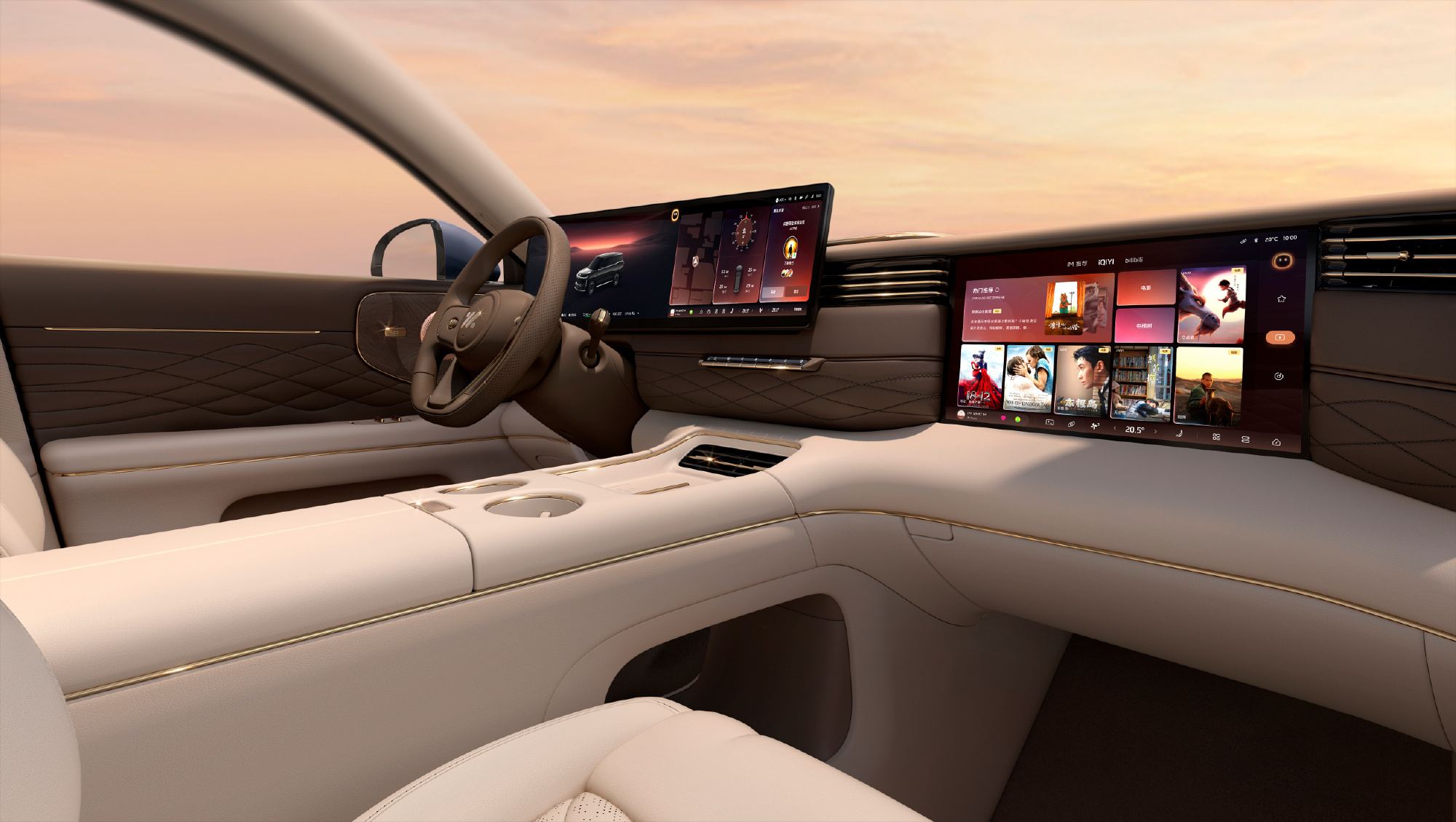
Many of the fancy MG’s best features are found in the cabin, which hasn’t been revealed yet, though it’s expected to mirror the LS9 shown here. There’s a single 27.1-inch display, encompassing the cluster and infotainment screen, as well as a separate 15.6-inch monitor for the front passenger.
Audiophiles will have plenty to enjoy with the Bang & Olufsen sound system, while all occupants benefit from massaging seats and an underfloor heating system. Rear-seat passengers aren’t overlooked either, with access to a 27-inch 5K display that folds down from the headliner.
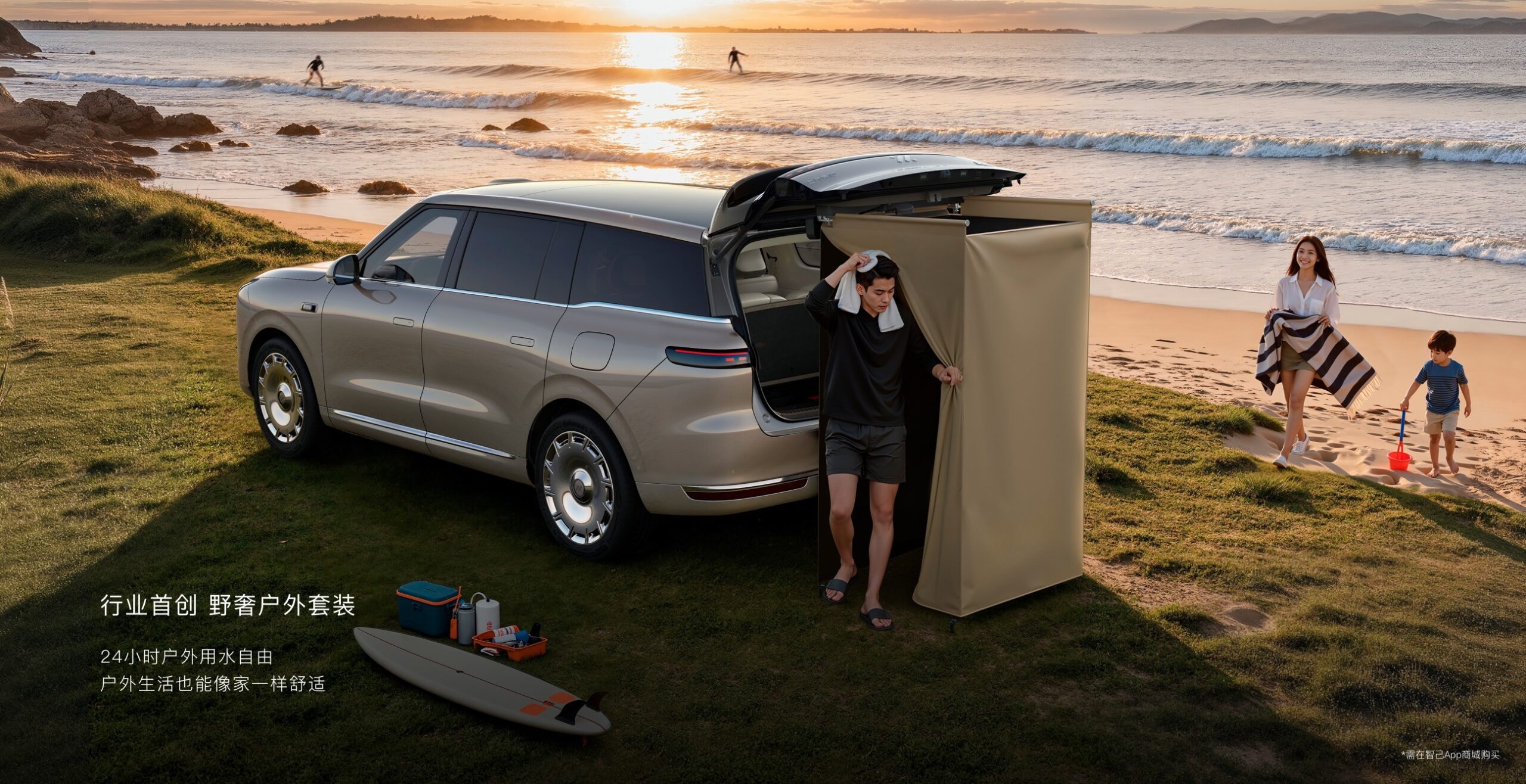
And in case that’s not quite enough, as with the regular LS9, IM will also offers the option of an integrated shower unit built into the tailgate.
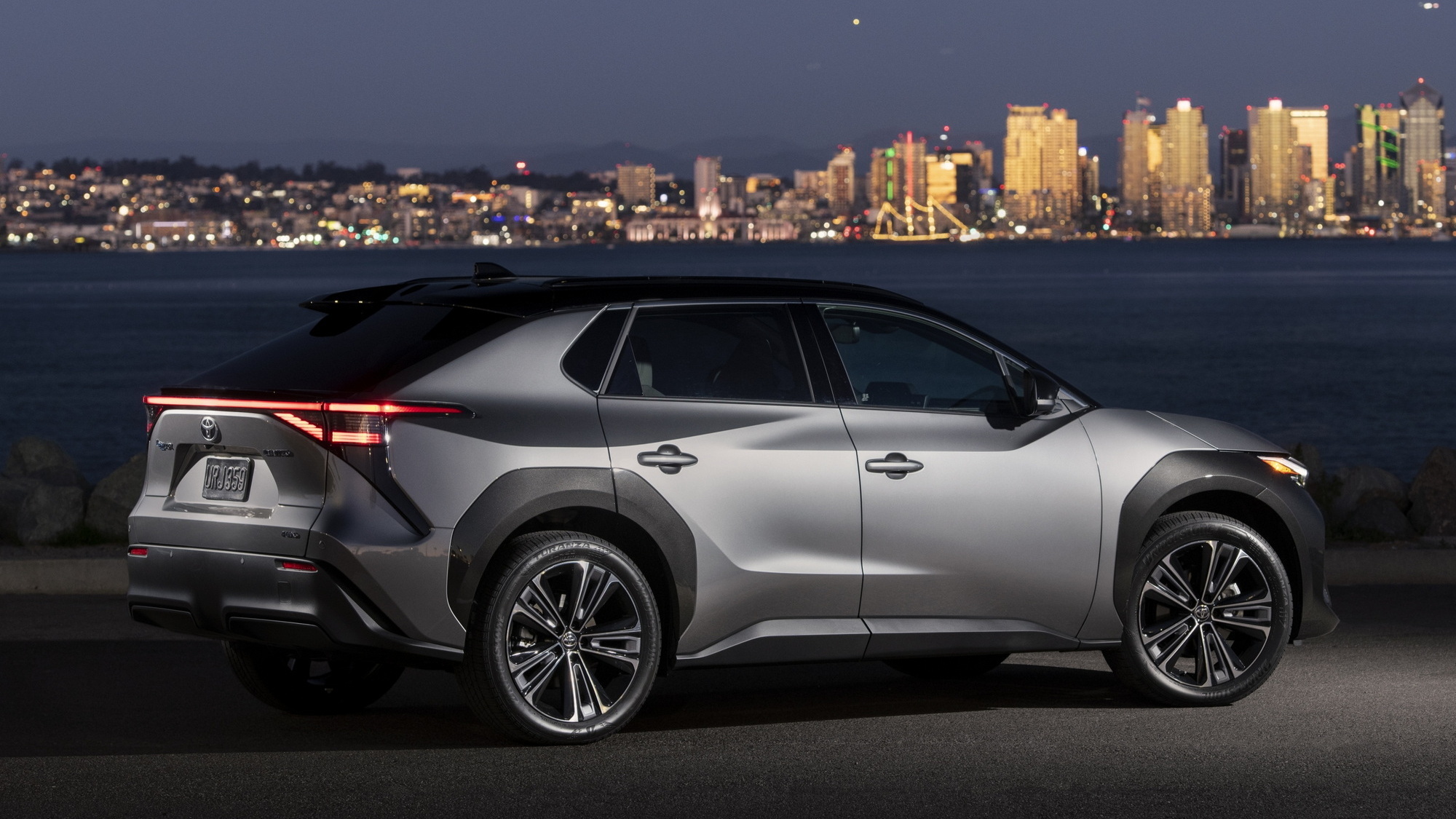
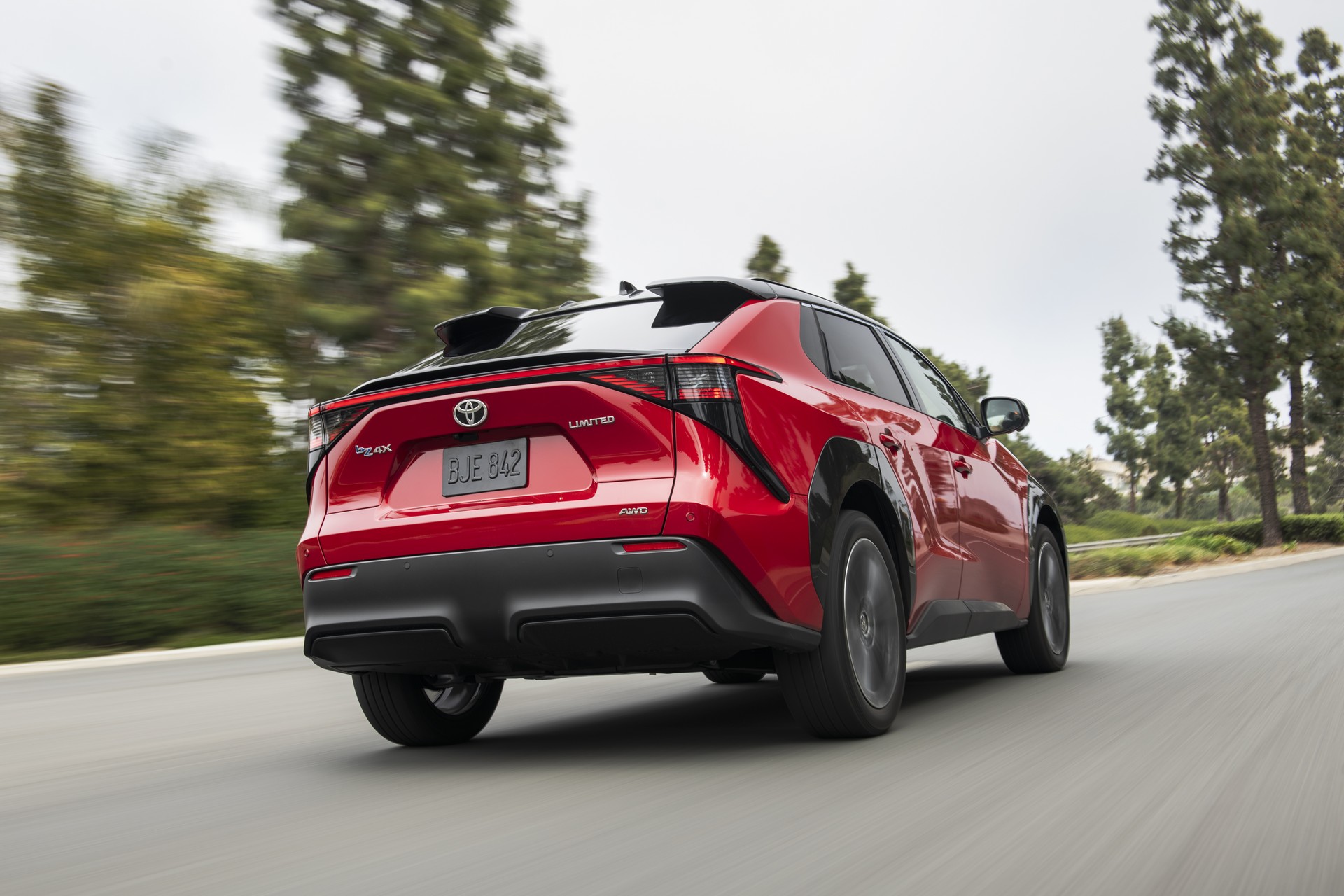
Toyota bZ4X recall stems from incorrect taillights being sold.
Korea-spec lights lack the side marker lamp required in US.
Catalog wrongly listed Korea lights as suitable for US vehicles.
Even the most reliable brands can slip up now and then, and this time, it’s Toyota turn in the spotlight. While known for its solid track record in quality control, the automaker has nonetheless found itself navigating a rather awkward parts mishap involving the bZ4X.
Several units will now face a recall in the United States, all due to a mix-up with replacement taillights. So, what exactly went wrong?
Confused Parts Cross Borders
A recall notice issued by the National Highway Traffic Safety Administration (NHTSA) reveals that taillights originally intended for service replacements in South Korea were accidentally distributed in the U.S. Some of those may have ended up installed on American-market bZ4X models.
Due to differences in automotive lighting regulations between the two countries, the South Korean-spec taillights don’t meet American standards. The key issue lies in the side marker, as the Korean units include a side marker reflector, but U.S. regulations require a side marker lamp to comply with Federal Motor Vehicle Safety Standards.
Toyota first caught wind of the problem in October, when a parts order came through from Canada requesting a Korea-spec left-hand taillight assembly for the bZ4X. That raised a red flag, prompting the company to dig deeper.
The investigation revealed a potential cause of the mix-up. Both U.S. and Korean versions of the replacement parts had been listed in the catalog, but the Korean version also displayed the term “USA” in its description, likely confusing some who purchased a replacement light.
Toyota believes that a total of 79 right-hand and left-hand replacement taillight assemblies designed for South Korea could have ended up in the United States, although it hasn’t specified how many have been fitted to customer cars.
What Happens Now?
Owners who’ve had a taillight replaced on their bZ4X will be notified via mail. Toyota dealers will inspect the installed parts to determine whether the correct U.S.-spec lights were used. If any Korean-spec units are found, Toyota will replace them at no cost.
Hybrids topped Europe’s powertrain sales with 4.5 million units.
Plug-in hybrids overtook diesel with a 33.4 percent sales increase.
In December, BEVs outsold gas cars for the first time in Europe.
Electrified vehicles are no longer playing second fiddle in Europe’s car market. Sales of battery-electric, plug-in hybrid, and traditional hybrid models climbed sharply across the continent last year, while demand for gasoline and diesel vehicles continued to shrink.
The shift picked up real momentum in December, when BEV sales pulled ahead of gas-powered cars for the first time in the European Union, even as policymakers were making plans to ease emissions regulations.
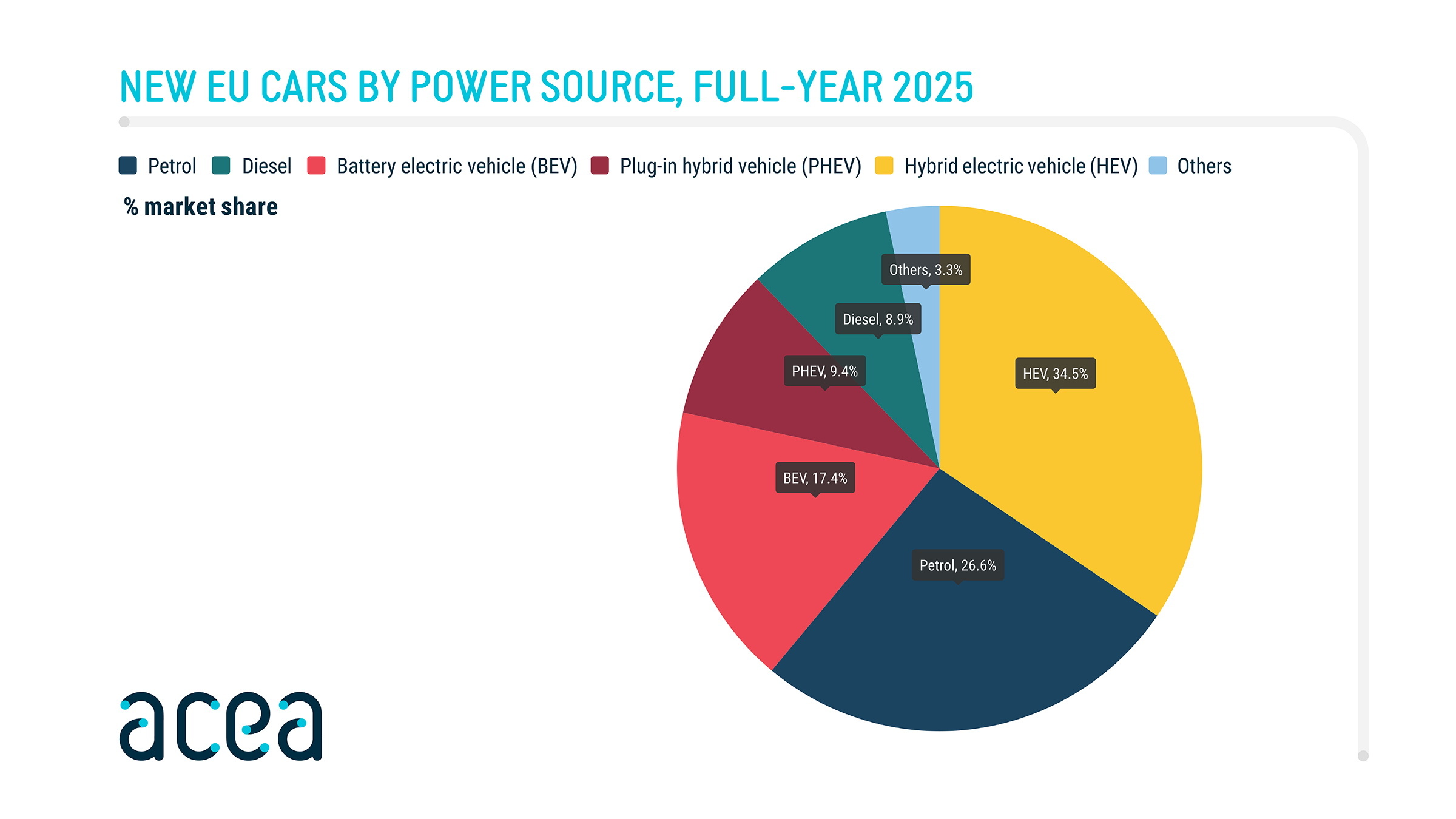
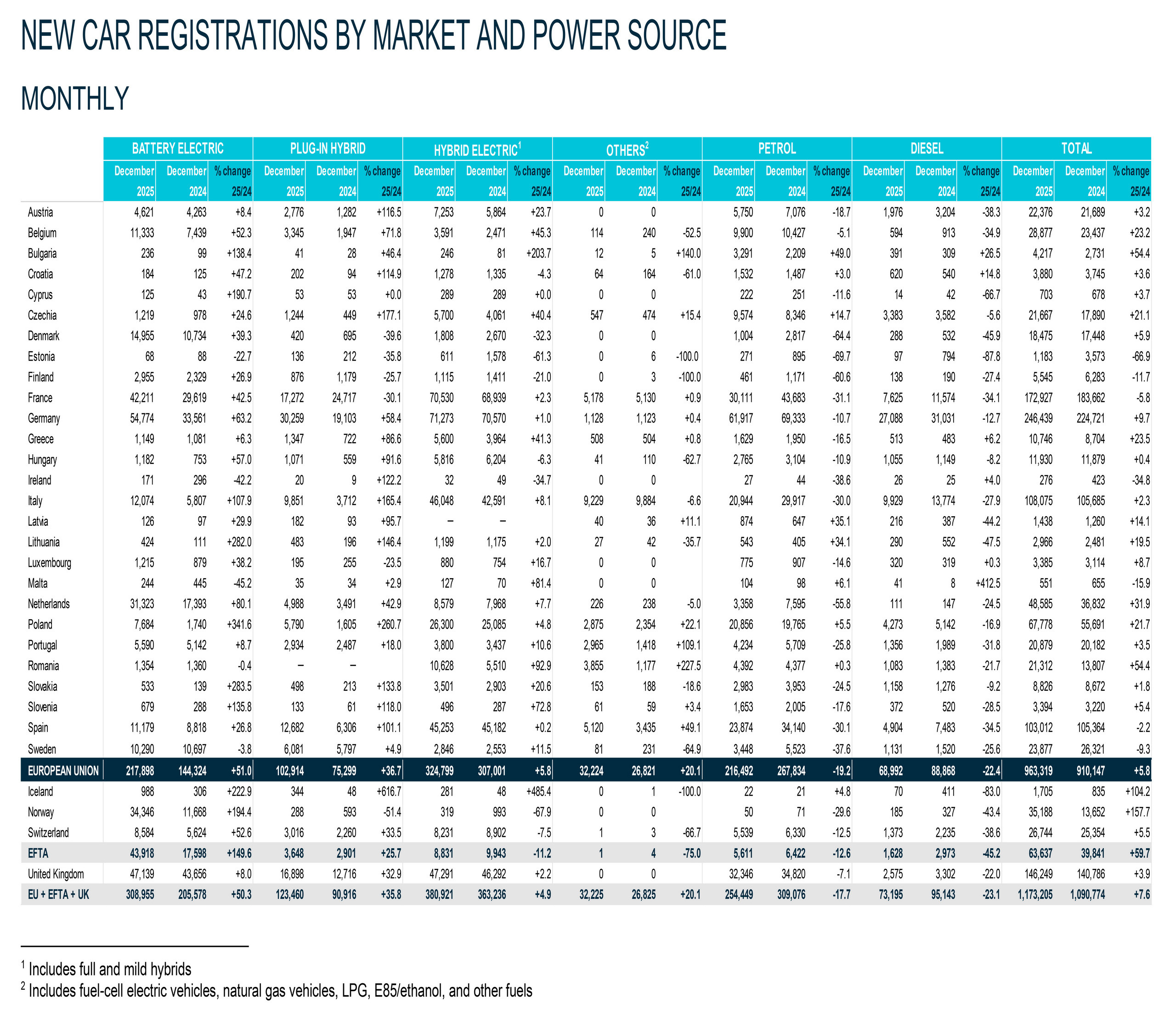
That month, BEVs accounted for 22.6 percent of the market, slipping just ahead of petrol cars at 22.5 percent. Hybrids held the largest share overall at 33.7 percent, followed by plug-in hybrids with 10.7 percent. Diesel fell further to 7.2 percent, while alternatives like LPG closed the list at 3.3 percent.
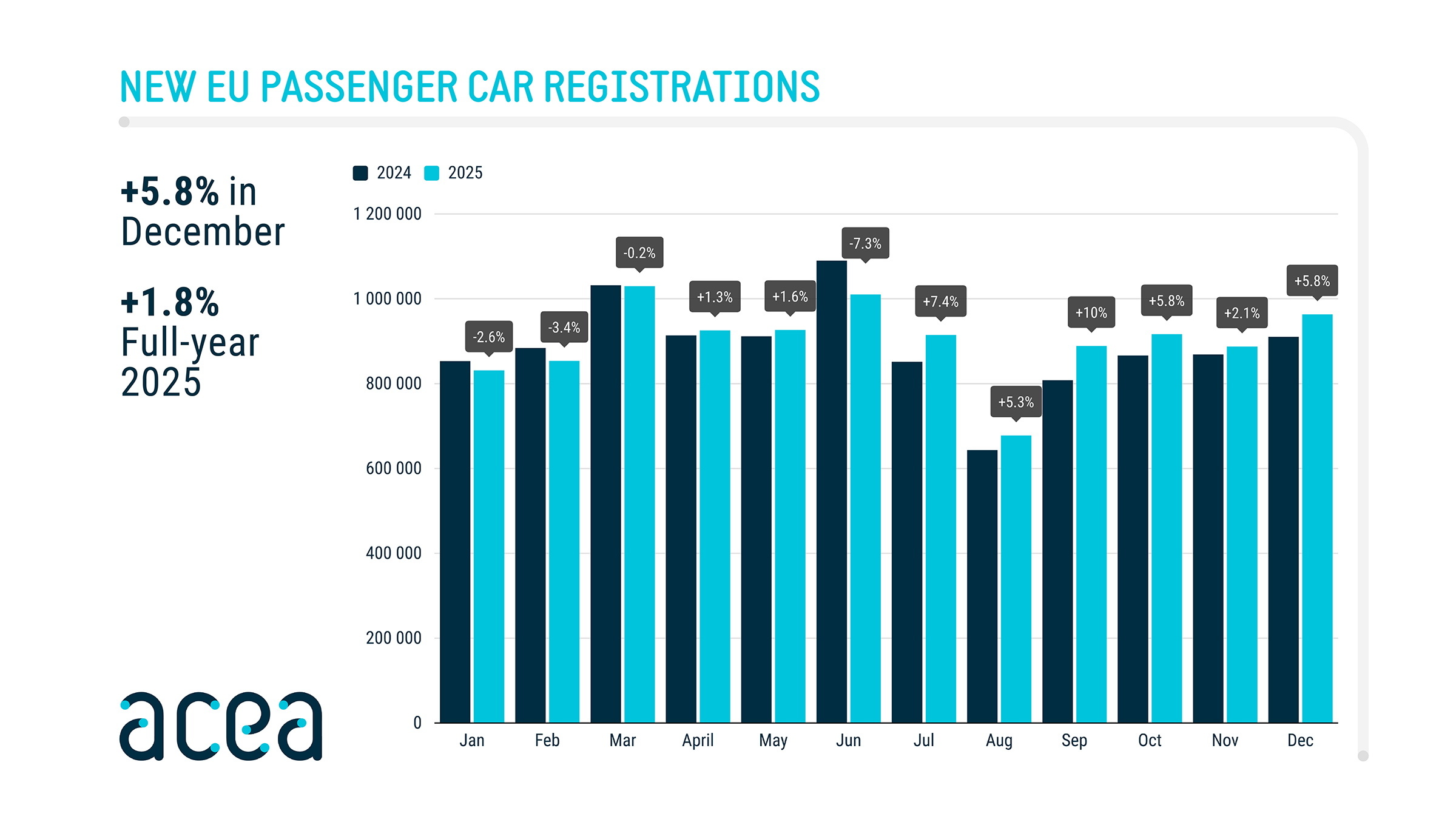
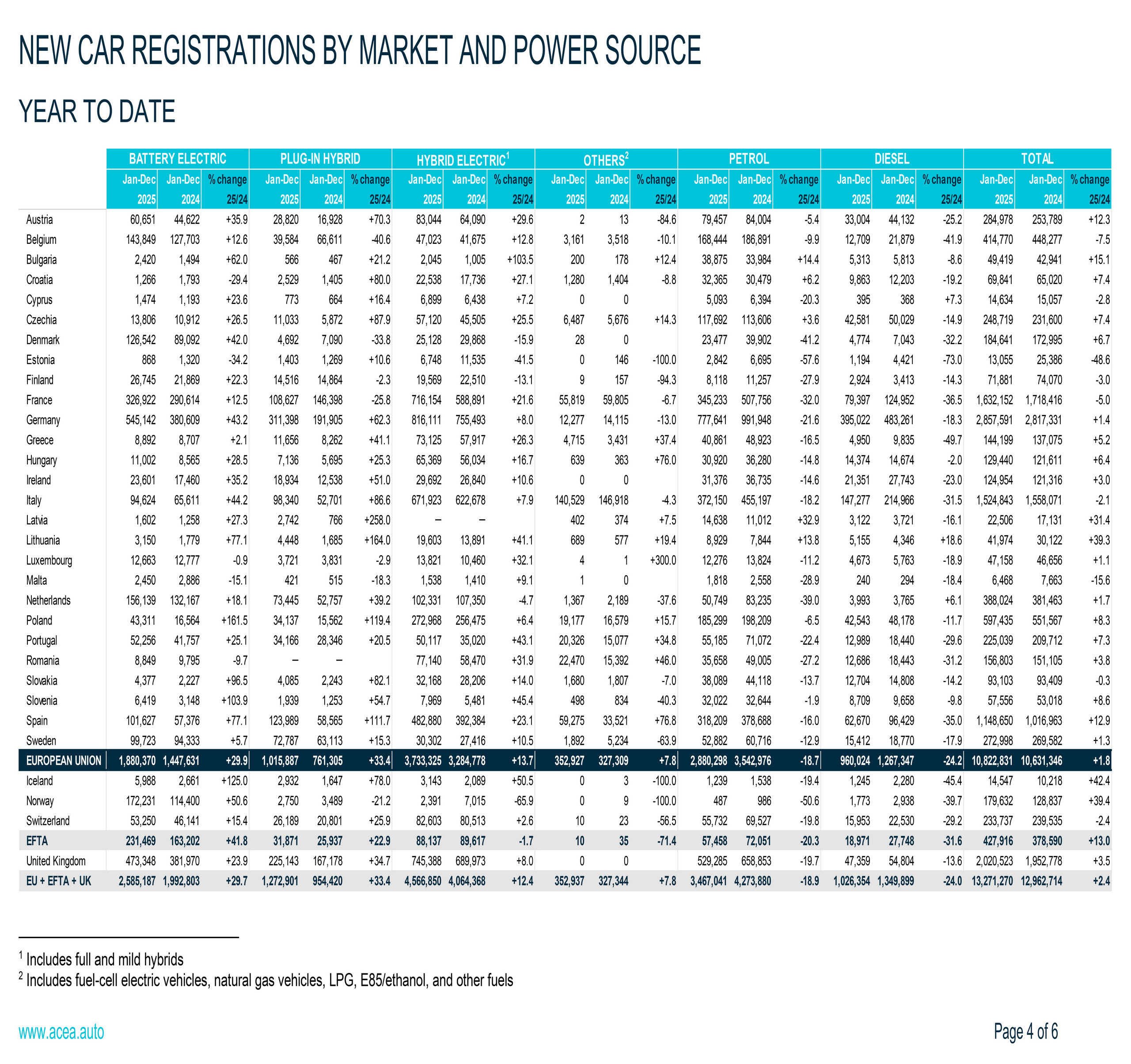
Across the European Union, the UK, and members of the European Free Trade Association, including Iceland, Norway, and Switzerland, a total of 13,271,270 new vehicles were sold throughout 2025. That marks a modest but notable 2.4 percent uptick from the previous year. Within that total, BEVs accounted for 2,585,187 sales, a significant 29.7 percent increase over the 1.9 million sold in 2024.
Hybrids Lead the Charge
Despite the BEV surge, traditional hybrids took the crown as the continent’s best-selling powertrain last year. A total of 4,566,850 hybrids were sold, reflecting a 12.4 percent increase and pushing them past gasoline-powered cars for the first time.
In 2024, petrol models held a narrow lead with 4,273,880 units sold, but in 2025, that number dropped sharply by 18.9 percent to 3,467,041.
Similarly, demand for diesel cars fell by a considerable 24 percent, down from 1,349,899 to just 1,026,354 units. This allowed plug-in hybrids to overtake diesels, selling a total of 1,272,901, or a 33.4 percent rise from 2024.
December’s numbers laid bare the speed of change. BEV registrations soared to 308,955, up 50.3 percent compared to the same month a year earlier. That was enough to edge out gasoline car sales, which declined 17.7 percent to 254,449. Diesel models also slumped in December, with sales falling 23.1 percent to 73,195.
As in the January-December period, hybrids remained the most popular powertrain choice in December, with sales reaching 380,921, up 4.9 percent. Demand for plug-in hybrids also rose 35.8 percent to 123,460.
The Story Behind the Numbers
While it’s easy to conclude that EVs outsold gas-powered cars entirely in December, that’s not entirely true. These figures from the European Automobile Manufacturers’ Association include full and mild hybrids in the ‘hybrid electric’ category, which led the industry in sales.
The vast majority of full hybrid and mild hybrids on sale use gas-powered combustion engines, whether that’s to drive the wheels, charge the battery pack, or a combination of both, so it would perhaps be more accurate to lump together hybrid electric and gas-powered vehicles into the same category. If that were the case, they would come out well ahead of BEVs.
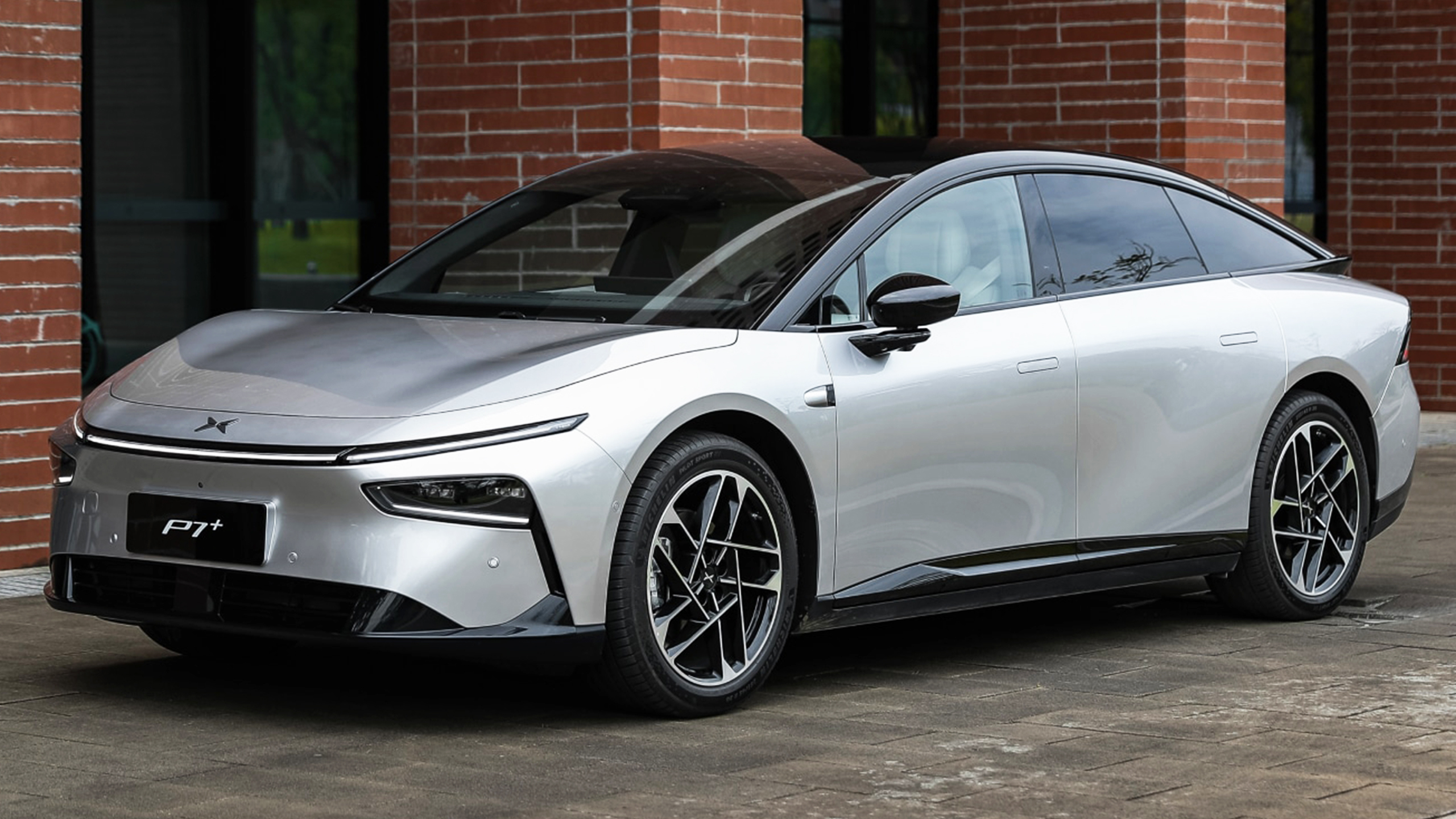
Xpeng’s P7+ undercuts VW’s ID7 with a €43,600 starting price.
It uses 800V tech for faster 350 to 446 kW charging speeds.
Long-range P7+ offers 530 km versus ID7’s 619 km estimate.
While VW and Xpeng are teaming up to develop new EVs for China, the partnership hasn’t stopped a quiet rivalry from unfolding. Xpeng has just rolled out its latest electric sedan, the P7+, across European markets, and it’s not shy about naming its target, which is none other than the VW ID.7, one of Europe’s top-selling EVs.
The P7+ has already spent time on the Chinese market, but it recently arrived in Europe with more than just a new badge. It debuted in European specification at the Brussels Auto Show earlier this month and is now being built locally at Magna Steyr’s contract manufacturing facility in Graz, Austria.
Like the ID.7, it’s a streamlined, low-profile sedan with a strong focus on range and high-speed charging.
A Cheaper Entry, With Compromises
One thing the Xpeng has going for it over the VW is price. In Germany, the entry-level P7+ starts at just €43,600 ($51,200), significantly undercutting the ID.7 that kicks off from €54,105 ($64,900). However, whereas the base ID.7 uses a 77 kWh battery and has a WLTP driving range of 385 miles (619 km), the base P7+ uses a much smaller 62 kWh pack, restricting its range to 283 miles (455 km).
Shoppers who want to travel farther between stops will need to pay at least €49,600 ($59,500) for the long-range model, which boasts a 75 kWh pack and a 329-mile (530 km) range. However, that pales in comparison to the flagship ID.7 Pro S with its 86 kWh pack and 440-mile (708 km) range.
Charging Without Compromise
According to Sven De Smet, head of brand and marketing at Xpeng Europe, who spoke to AutoNews, one of the key advantages of the P7+ is its faster charging capability. The VW tops out at 200 kW for DC fast charging, while the base P7+ can reach 350 kW, and the long-range version peaks at 446 kW.
“We believe charging is one of the pain points,” De Smet said. “A big battery is heavier, which means it consumes more electricity, which means you charge it more.”
Xpeng also points out that the smaller, lighter battery packs in the P7+ should have a positive impact on handling and overall driving dynamics. That could prove appealing to European drivers, who often place a premium on responsiveness and efficiency.
The question now is whether the P7+ can match the ID.7’s strong European sales. Last year, VW moved 76,368 units of the ID.7 across the continent, putting it in seventh place among all EVs sold. That figure put it just 10,000 units behind the Tesla Model 3. Xpeng may be the challenger in this case, but it’s stepping into a crowded field.
Strategic Partners, Not Just Rivals
VW holds a five percent stake in Xpeng following a $700 million investment, but the ties run deeper than capital. The two brands are jointly developing several EVs for the Chinese market, including at least one model built on Xpeng’s Edward platform. VW has also committed to integrating aspects of Xpeng’s tech stack, including its proprietary Turing chip and VLA 2.0 software, into future models.
Rivian R2 enters validation build phase ahead of mid-2026 launch.
Company’s Illinois plant expansion supports 215,000 units yearly.
The R2 targets over 300 miles of range and Supercharger access.
If the R1S and R1T were the cars that gave birth to Rivian, the upcoming R2 will be the one that decides whether the brand thrives or stays in infancy. And that moment is arriving quickly, as the mid-size SUV appears to be on track to reach its first customer driveways by June, thanks to the rapid expansion of Rivian’s production facility in Normal, Illinois.
The R2 could be make-or-break for the EV startup. If it’s a success, it could establish the EV brand as a serious mass-market player in the US. If it fails, Rivian may remain a niche brand forever.
It will be produced at a new 2.6 million-square-foot section of Rivian’s Illinois plant, and the first validation build vehicles have already started rolling off the line.
These vehicles are production-intent, not pre-production prototypes, and will help validate key factory processes before Rivian can start building customer vehicles at scale.
As reported by WGLT, Rivian built the new manufacturing center in just 11 months, and at full capacity, the site will be able to produce up to 215,000 vehicles a year, including 155,000 R2s.
Rivian didn’t originally plan to build the R2 in Illinois. When the SUV was first announced in early 2024, the company said it would be assembled at a forthcoming $5 billion factory in Georgia.
That site, however, remains in early development, with substantial construction work expected to begin later this year. If completed as proposed, it could eventually build up to 400,000 vehicles per year, primarily R2 and future R3 models.
RJ Scaringe/Instagram
The EV maker has yet to announce final specifications for the R2 and likely won’t do so until closer to its launch. When the SUV first appeared in prototype form two years ago, the company confirmed it would ride on an all-new midsize platform and be offered in single-, dual-, and tri-motor configurations.
We do have a few technical details already. The R2 will use 4,695-type cylindrical battery cells and, in its base form, deliver more than 300 miles (483 km) of range. It will also feature a built-in NACS port as standard, giving it access to Tesla’s Supercharger network without the need for adapters or retrofits.
The Price Question
Perhaps the most important detail is still the price. Rivian initially projected a starting MSRP of around $45,000. That number will be crucial if the company hopes to compete head-on with Tesla’s Model Y. Holding that price point could be key to making the R2 not just another statement piece, but a genuinely competitive offering in the heart of the EV market.
Canada cut tariffs on Chinese EVs from 100 percent to 6.1.
Trump threatened 100 percent tariffs in response to deal.
China now wants to build EVs in Canada with local partners.
Canada’s recent trade deal with China was bound to cause controversy. The agreement slashes tariffs on Chinese EVs from 100 percent down to just 6.1 percent, prompting U.S. President Donald Trump to threaten 100 percent tariffs on Canada if the deal proceeds. Still, China insists the arrangement is meant to benefit both countries and isn’t a zero-sum game.
Under the new deal, up to 49,000 EVs from China can be imported to Canada at a reduced 6.1 percent tariff rate, though at least half of them must cost $35,000 or less by 2030.
Unifor labor union president Lana Payne argues the deal opens the door for China to quickly capture critical market share. Ontario Premier Doug Ford has voiced similar concerns, warning that Canada could be inundated with low-cost EVs, without any firm commitment from China to invest in the local economy.
Beijing Signals Willingness to Build in Canada
Despite those concerns, Chinese Ambassador to Canada Wang Di says China’s fast-growing automakers are being urged to invest directly in Canada and produce vehicles domestically.
“All these projects will be beneficial to the development of the Canadian EV industry, and will be helpful for job growth in Canada, and will help Canadian consumers to be able to buy higher quality and more affordable cars,” Wang told CTV News. “The character of China-Canada practical co-operation is complementarity and mutual benefit.”
“China encourages and supports Chinese companies to make investments and start-up companies here in Canada, on the basis of the market rules,” he continued. “At the same time, we hope that the Canadian side will provide a fair, non-discriminatory, and predictable business environment for the Chinese companies that come here.”
According to Wang, that is what Beijing ultimately wants to see, if companies choose to take up the opportunity.
“If Chinese companies will come to Canada to work with Canadian partners for investment, for opening factories or for joint ventures, all of these projects will be win-win,” he said.
Perhaps in a thinly veiled swipe at the Trump administration, Wang added that “unlike some other countries, China will not only take into consideration of its selfish interest, we don’t want ‘only we win and others lose.’”
The head of the Canada-China Energy and Environment Forum, Wenran Jiang, would like to see Canadian juggernaut Magna International partner with a Chinese car manufacturer to build EVs in Canada. Recently, it was confirmed that Magna would partner with GAC to build the Aion V, but it’ll be built at the parts giant’s factory in Graz, Austria.
“If they can do that, we can do it certainly here in Ontario,” Jiang said, adding that such cooperation could help bridge regional divides over China policy. “We could do probably better if we leverage our regional advantages and work together as a team.”
Updated SU7 model could boost Xiaomi sales significantly in 2026.
SU7 sales topped 258,000 units, Model 3 reached 200,361 in China.
Technology giant aims to sell 550,000 vehicles in China this year.
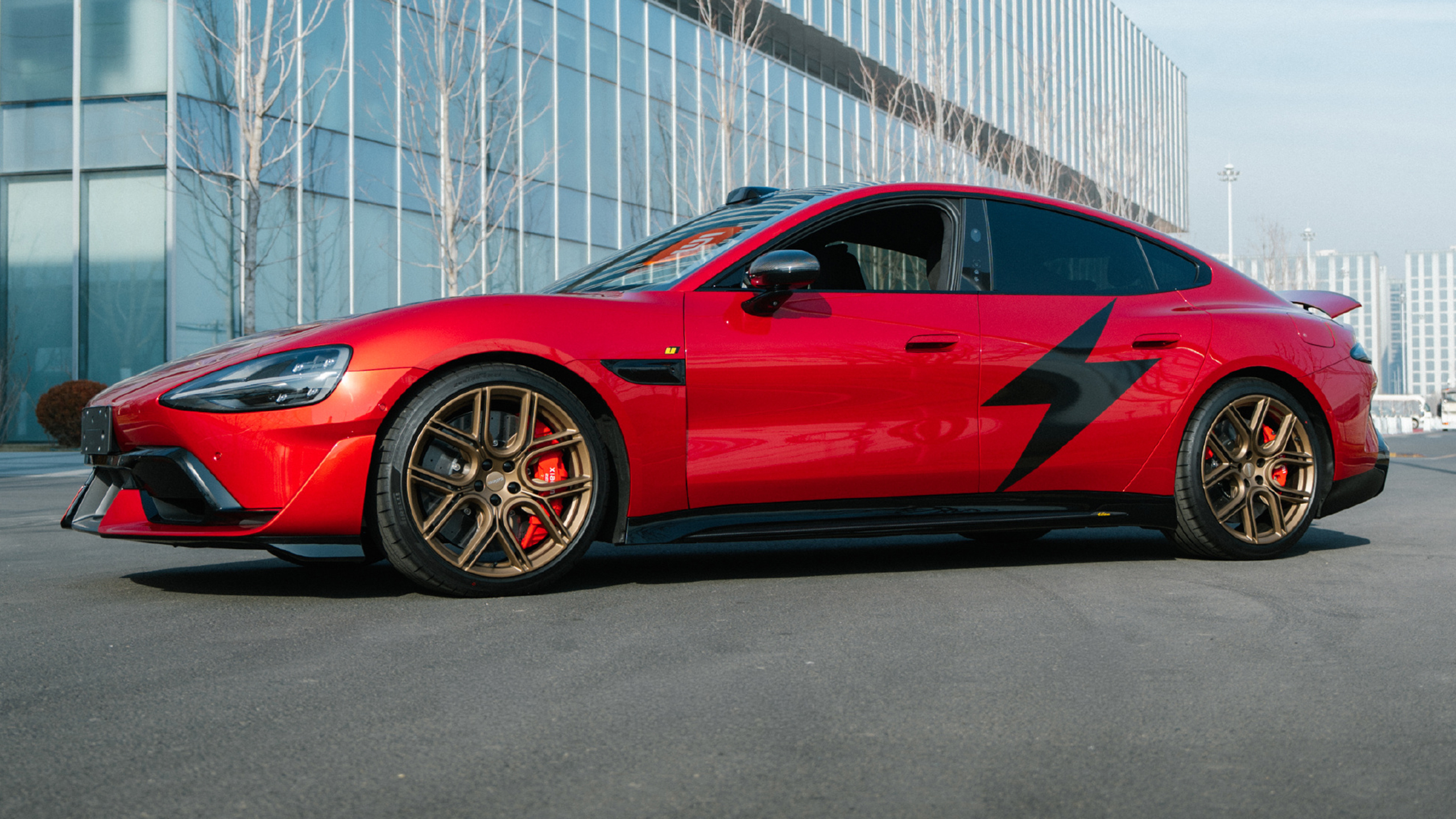
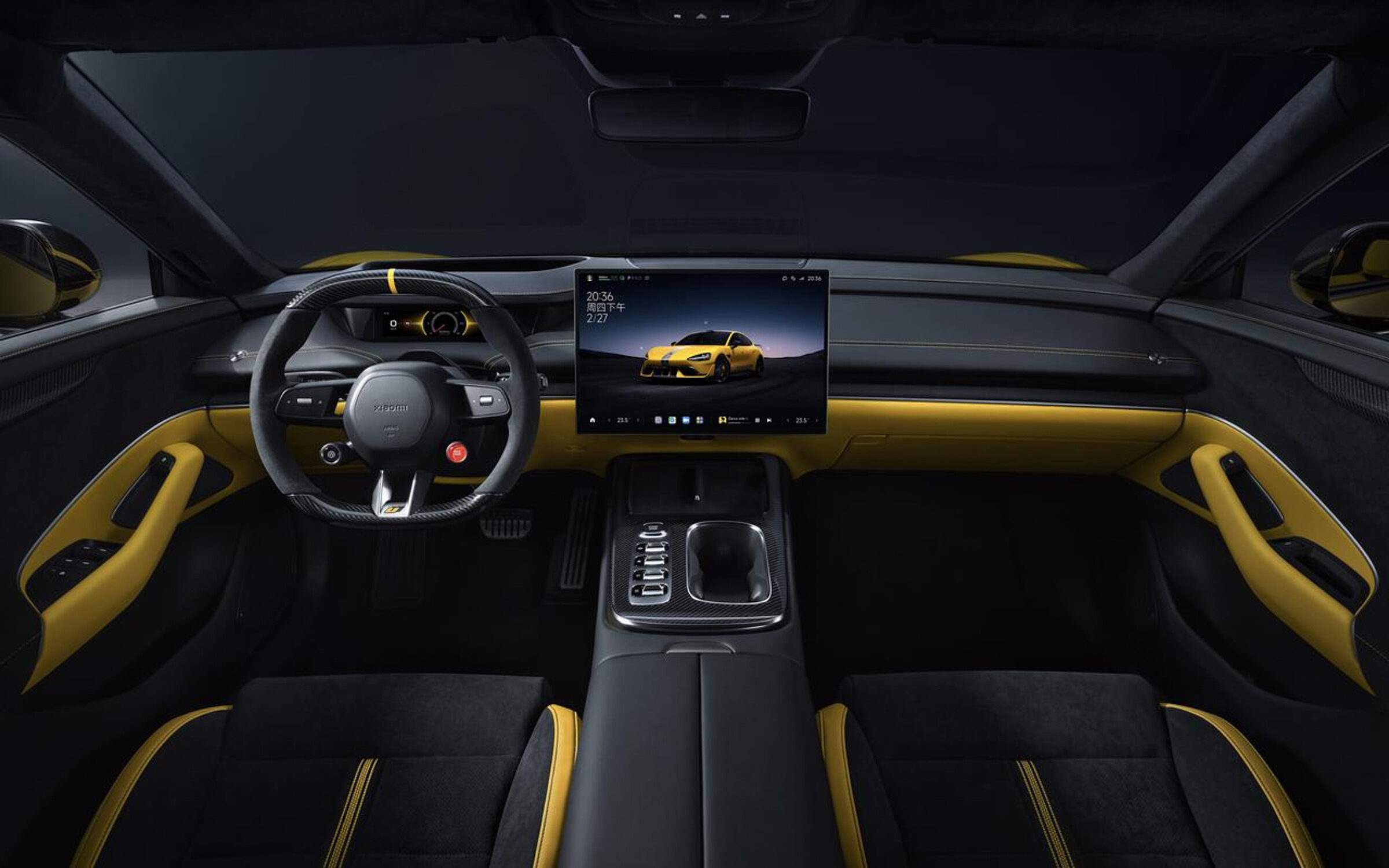
Xiaomi has quickly established itself as an automaker to be reckoned with in China, and last year, it achieved something that would’ve seemed unlikely just a few years ago: its all-electric SU7 sedan outsold the Tesla Model 3.
Once the brand of choice for EV-hungry Chinese consumers, Tesla now finds itself outpaced by domestic rivals that are rapidly improving their game. Xiaomi is leading that charge.
Data from the Chinese Passenger Car Association shows that in 2025, Xiaomi sold 258,164 SU7s. That’s nearly double the roughly 135,000 units it moved in 2024, a figure made more impressive given that the SU7 only launched in April of that year.
Perhaps more notably, it overtook the Tesla Model 3, which saw 200,361 deliveries in the same period.
What’s Driving the Switch?
Chinese buyers have responded well not only to the SU7’s design inside and out but also to the technology it packs and the performance it delivers.
The base version undercuts a comparable Model 3 by roughly 9 percent, according to a report from the South China Morning Post, giving it a clear pricing advantage. Strong driving range and well-specced hardware round out the package, allowing the SU7 to compete in a segment Tesla once dominated.
“Tesla’s dominance in the premium EV segment has been eroded by its Chinese competitors that are able to churn out vehicles on par with its technology standards while offering them at lower prices,” a senior manager at the Shanghai-based consultancy Suolei told the outlet. “Xiaomi’s success is a strong boost for Chinese carmakers, which are all trying to move up the value chain.”
What’s in Store for 2026?
This year is shaping up to be even bigger for Xiaomi. In April, an updated SU7 will be launched, complete with more advanced driving assistance functions, including LiDAR across the entire family, and an improved driving range of up to 902 km (560 miles) on the CLTC cycle.
Within the first 15 days of pre-orders opening, Xiaomi reportedly secured 100,000 reservations for the refreshed model.
In total, Xiaomi sold 411,800 vehicles last year and is targeting 550,000 in 2026. This will also be the first full year of availability for the YU7 SUV, which could become its best-selling model.
Back in October, the YU7 notched 33,662 sales in a single month, even edging past the Tesla Model Y. Xiaomi’s third model, the YU9, will also make its debut this year as a range-extender EV.
India will slash tariffs on European ICE cars from 110 to 40 percent.
European carmakers currently hold less than 4 percent market share.
Local market is projected to grow from 4.4M to 6M units by 2030.
India has long guarded its domestic car industry with near-impenetrable tariffs, making foreign vehicles a rare sight on its roads unless built locally. That’s about to change.The country is now getting ready to lower those duties on European Union cars, dropping them from a steep 110 percent to 40 percent.
Final terms of the trade agreement between India and the EU will be outlined later this week, but the current proposal outlines that tariffs on EU-made combustion-engine cars will fall to 40 percent for up to 200,000 units annually. Over time, that figure is expected to drop even further, eventually settling at 10 percent.
In order to protect local firms like Mahinda & Mahindra as well as Tata Motors, battery-electric vehicles would be excluded from the tariff cuts for the first five years. After that, European-made BEVs will also qualify for the reduced tariff structure.
Only cars priced above €15,000 (roughly $17,700) would be eligible for the reduction, a threshold designed to limit direct competition with mass-market offerings from firms such as Maruti Suzuki. These models dominate India’s affordable car segment and are critical to local industry stability.
According to Reuters, the deal is still under negotiation, with finer details yet to be finalized. Certain provisions remain subject to revision before the full announcement is made.
A Massive Market, Ripe for Growth
India now ranks as the third-largest new car market in the world, trailing only the United States and China. Yet European brands currently hold less than a 4 percent share of annual sales, positioning India as a key target for future expansion. Around 4.4 million new vehicles were sold in the country last year, with forecasts suggesting that number could climb to 6 million by 2030.
While the trade pact is expected to give EU carmakers a clearer path into the Indian market, it could also make things easier for Indian textile and jewellery exports. Those goods currently face US tariffs as high as 50 percent, and access to a new market could help take some pressure off.
A patent shows the R1S with split tailgate and opening glass.
Rivian may add more physical switches and dials to the cabin.
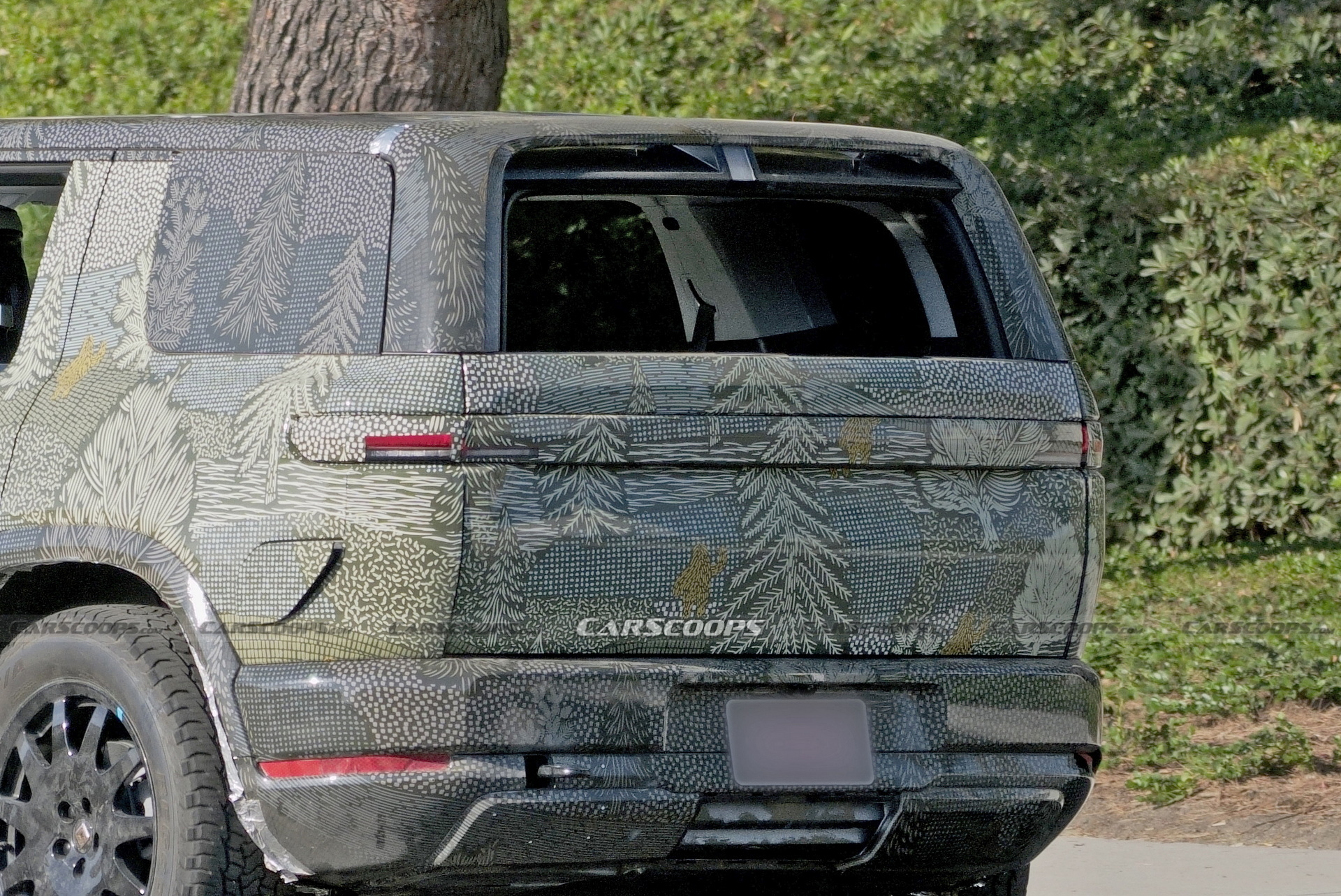
Spy shots confirm the upcoming R2 has a roll-down rear window.
Rivian introduced a wide range of updates to the R1S and R1T for the 2025 model year, focusing on improvements beneath the surface while keeping the exterior mostly untouched. But according to a newly discovered patent, the R1S might be in line for another tweak in the form of a revised tailgate featuring a glass section that opens on its own.
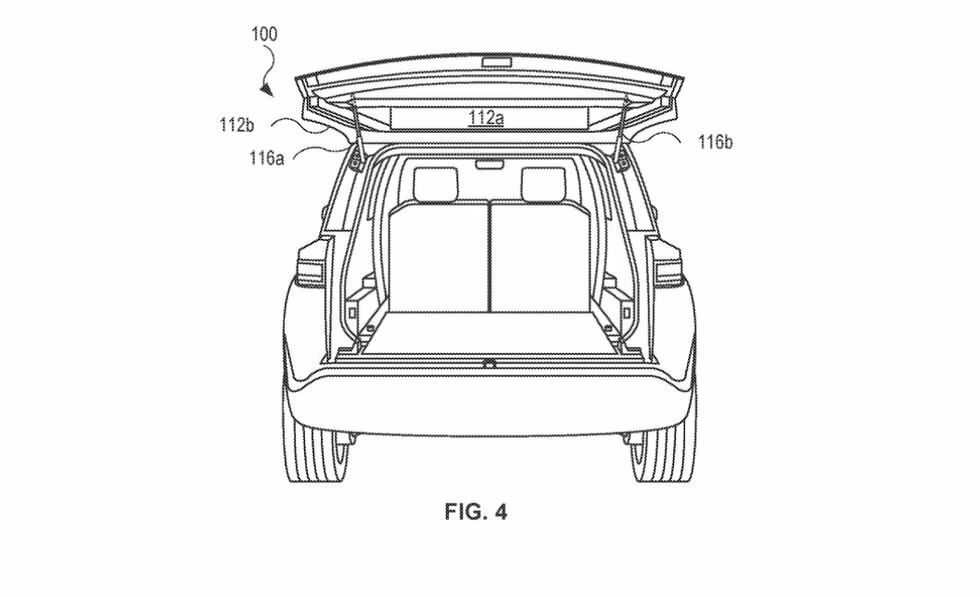
According to documents uncovered by Car&Driver, Rivian has patented a new tailgate design that appears to give the R1S the ability to open either the entire hatch or just the glass panel. It’s a setup familiar to anyone who’s used the Toyota Land Cruiser or the closely related Lexus GX. BMW’s 3-Series Touring wagon also offers a similar function.
The Toyota 4Runner also has something similar, although its rear window can actually roll down just like a side window, rather than opening out as Rivian’s patent shows. It’s a useful feature, allowing you to retrieve or store items without having to open the entire tailgate.
Rivian’s patent drawings show that this independently opening glass would be integrated into the current R1S split tailgate. That means Rivian could add the new feature without altering the SUV’s distinctive two-part rear hatch, maintaining the utility and visual character of the original design.
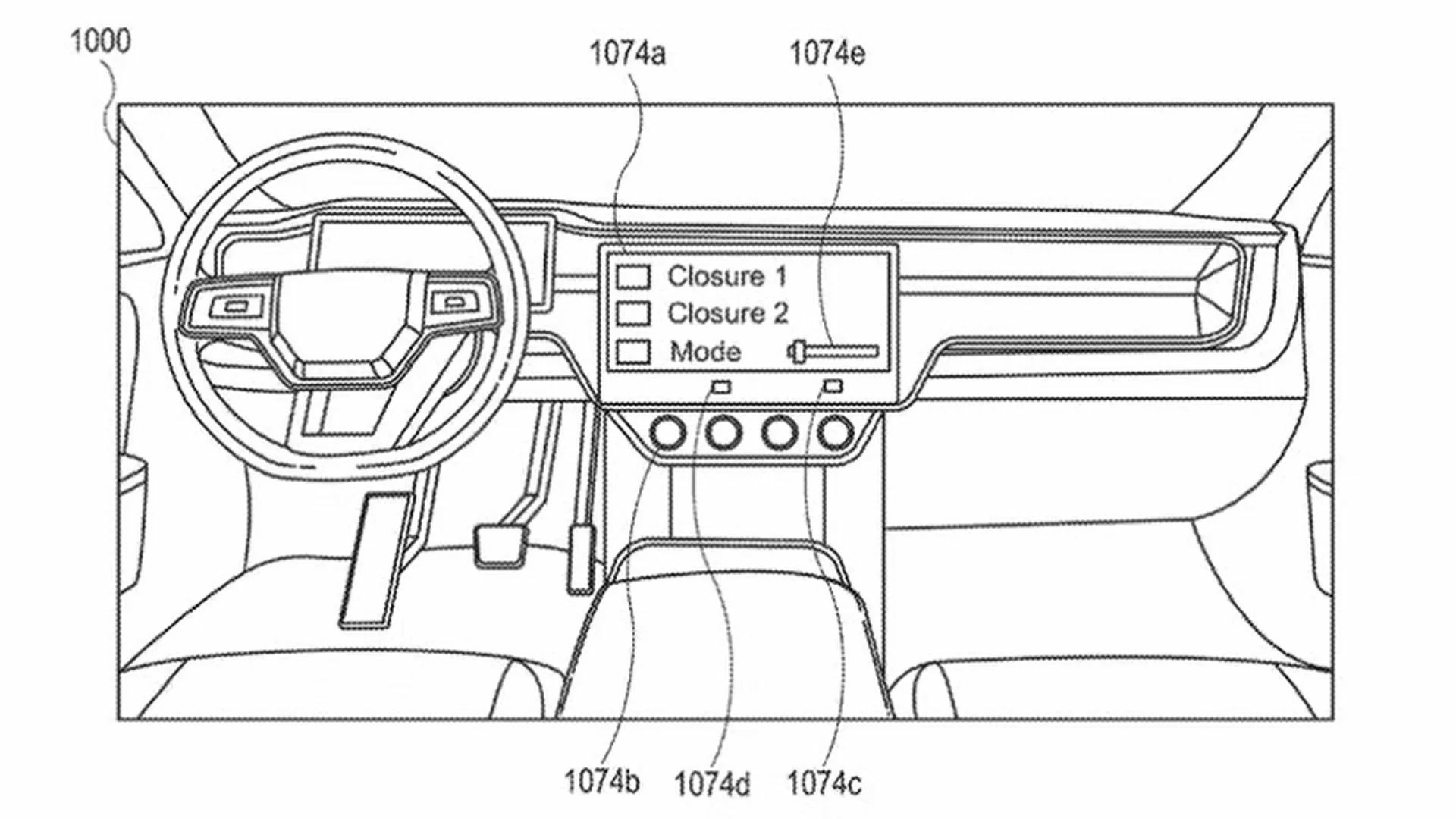
There may be more than just hardware updates in store. The same filing, as noted by Car&Driver,, shows an interior equipped with actual physical buttons and knobs, something the current R1S doesn’t offer. It’s possible these would supplement the screen-heavy layout with tactile controls for climate or audio settings, easing day-to-day usability.
The patent also hints at gesture-based controls, potentially including the now-common feature that lets drivers wave a foot under the rear bumper to pop the tailgate.
There’s no word on when the R1S, and perhaps the R1T too, could be updated for a second time, but it probably wouldn’t be at least for a couple of more years, particularly since Rivian has to focus on building the R2 and R3 models.
Interestingly, recent spy shots of the R2 revealed it will get a roll-down rear window just like the 4Runner, so Rivian is clearly thinking about improving practicality with its future models.
Tesla Cybertruck starts at $110,000 in the United Arab Emirates.
U.S. sales fell 48.1 percent to 20,237 units during 2025.
Elon Musk once predicted 500,000 annual Cybertruck sales.
Prior to launching the Tesla Cybertruck, Elon Musk suggested they could sell as many as 500,000 of them per year. However, as sales of the electric pickup never really picked up in the United States, Tesla has started selling the Cybertruck in more markets, the latest being the Middle East.
Earlier this month, the first Cybertrucks were delivered to customers in the United Arab Emirates (UAE). Roughly 60 units were handed over during a launch event held for the occasion.
While much of the early hype surrounding the electric truck has died down in the US, it’s a hot ticket in the Middle East, with many having already been imported into the region by enthusiastic buyers before Tesla made it official. Of course, the UAE and the broader Middle East remain relatively small markets and won’t help Tesla get anywhere near its early estimates for the Cybertruck.
As one of the world’s top oil producers, the UAE enjoys some of the lowest fuel prices globally, which makes electric vehicles a harder sell. With cheap gas and a strong car culture rooted in performance and presence, the appeal of a futuristic EV like the Cybertruck has more to do with novelty than necessity.
How Much Is a Cybertruck in Dubai?
Tesla Europe & Middle East/Twitter
In the UAE, pricing starts at AED404,900 for the dual-motor variant, roughly $110,000. That’s significantly more than the $79,990 price tag in the U.S. The top-end tri-motor Cyberbeast comes in at AED454,900, or about $123,000, which represents a smaller markup over its American counterpart at $114,900.
American Sales Crater
Back in the U.S., sales of the Cybertruck tumbled in 2025. Tesla moved just 20,237 units, down 48.1 percent from the 38,965 sold in 2024, the vehicle’s first full year on the market. The final quarter was especially tough, with only 4,140 trucks delivered. That’s a 68.1 percent drop compared to the 12,991 units shifted in Q4 of the previous year.

 Login
Login