Europe gets a new base EX30 with 148 hp and 211 miles of range.
It adds updated UX and V2L, both coming via OTA updates.
Production moves from China to Europe to avoid EU tariffs.
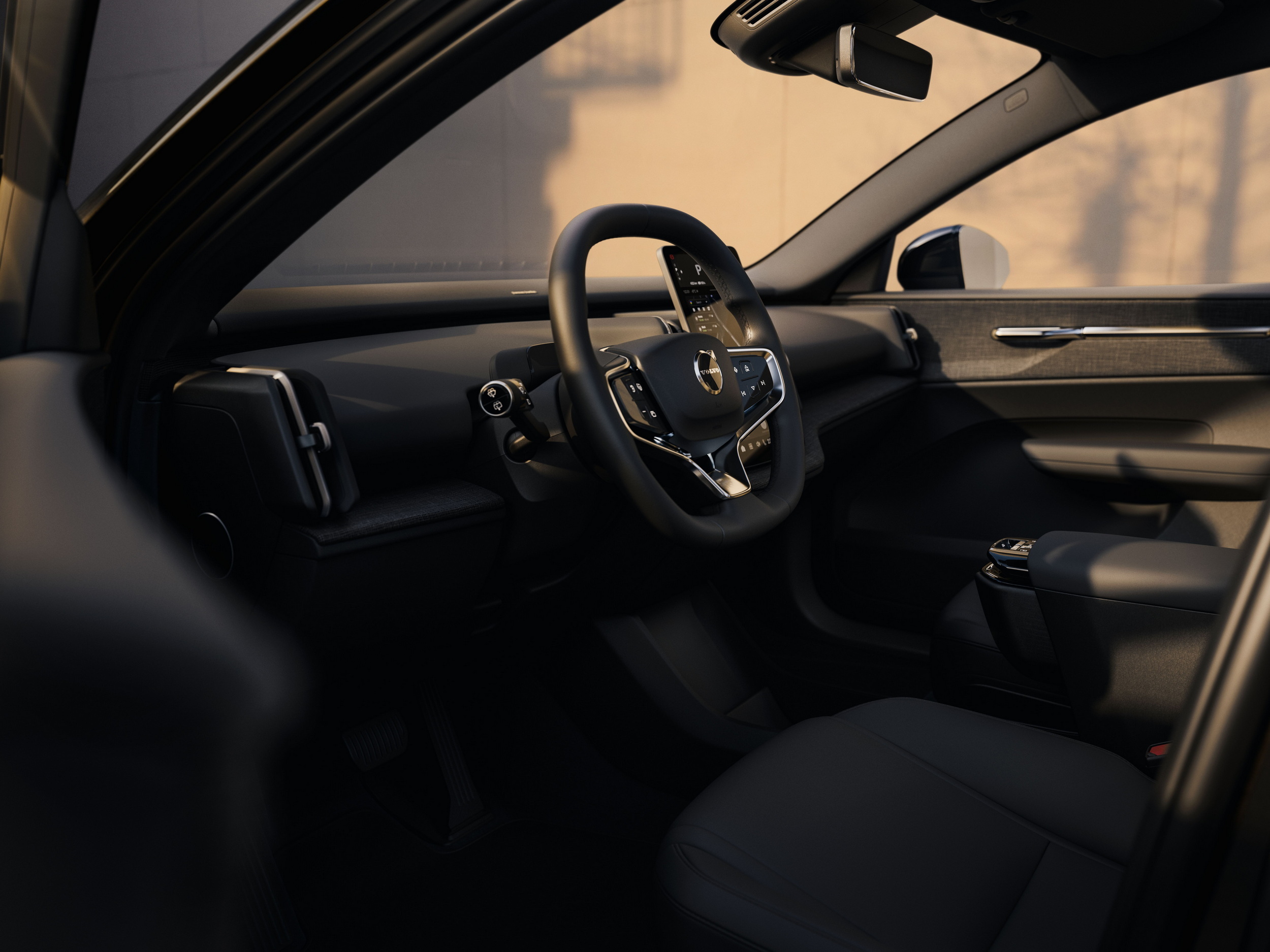
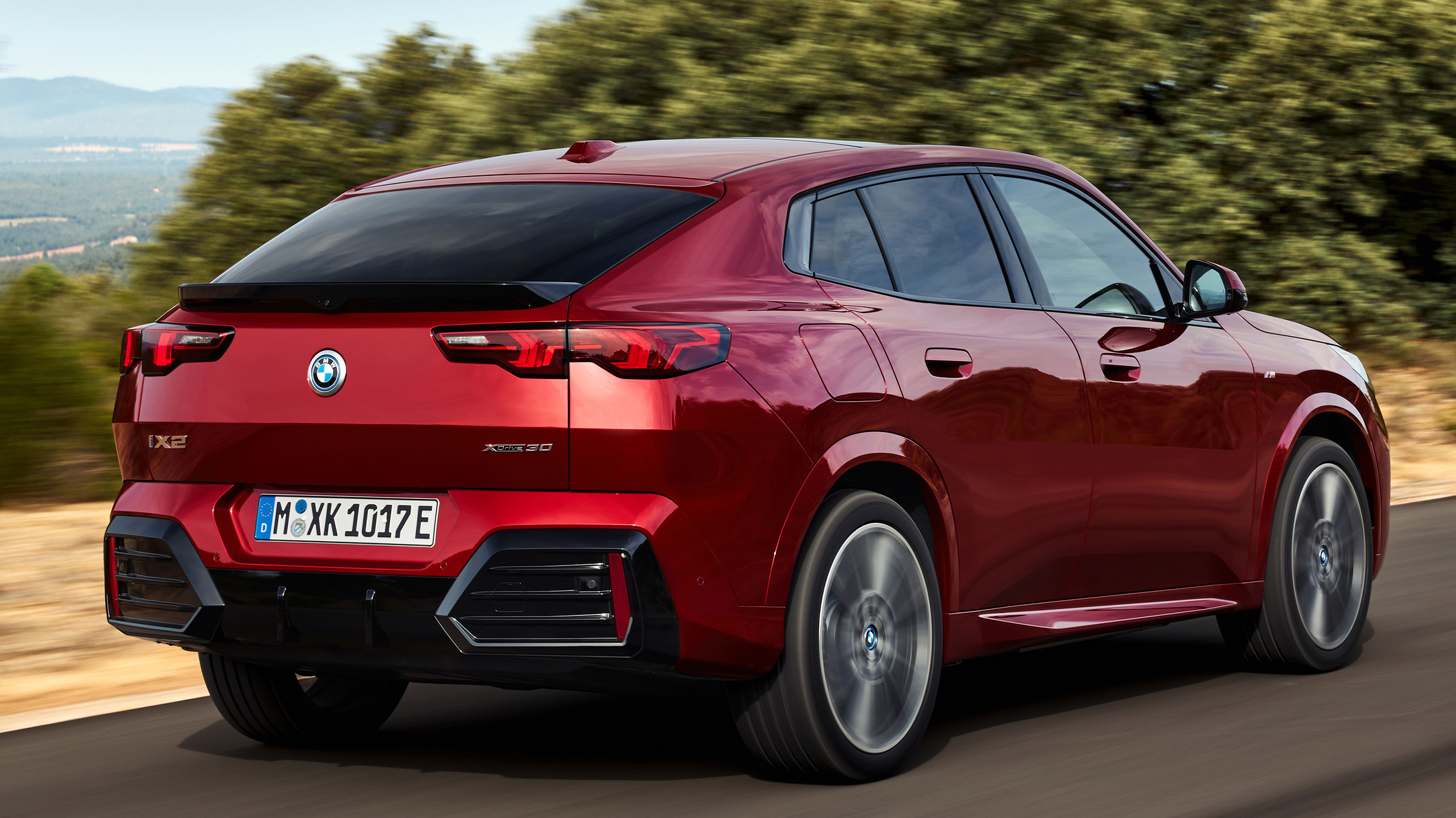
The Volvo EX30 has been updated in Europe for 2026, mirroring changes already introduced on the US-spec model. The range now gains a new entry-level powertrain, refreshed infotainment, new Vehicle-to-Load capability, and a Europe-exclusive Black Edition.
For European buyers, the headline is a lower entry point into the Volvo EV range. The EX30 now comes with a less potent electric motor producing 148 hp (110 kW / 150 PS), positioned as a more affordable alternative to the existing single-motor 268 hp (272 PS) and dual-motor 422 hp (428 PS) versions.
This new variant, not available in North America, can be paired with a 51 kWh battery pack delivering 339 km (211 miles) of WLTP range. Step up to the 69 kWh battery and the range increases to 476 km (296 miles). More miles, same compact footprint, and a little more choice at the showroom.
Turn Your Volvo Into A Power Bank
Volvo says the EX30 is now hardware-compatible with Vehicle-to-Load (V2L), though the feature will initially roll out in selected markets. With an optional adapter, the battery can power external kit such as electric bicycles, sound systems, or your increasingly elaborate camping setup.
There is also an infotainment update, bringing what Volvo calls a completely redesigned settings and controls system, plus a customizable content bar. Crucially, existing EX30 owners are not being left behind. The new user experience and V2L functionality will arrive via over-the-air updates scheduled for this summer.
The EX30 Black Edition
The EX30 only arrived in 2023, so there was no pressing need for a mid-cycle nip and tuck for either the standard model or the chunkier Cross Country. Instead, Volvo has opted for a wardrobe change. Enter the new Black Edition, now extended to its smallest SUV in line with the rest of the range.
Despite the name, you are not limited to one shade of noir. The Black Edition can be specified in Onyx Black, Vapour Grey, or Crystal White. Whichever you choose, the chrome has been quietly retired in favor of a high-gloss black finish. That treatment covers the 19-inch alloy wheels, the Volvo badge up front, and the lettering across the tailgate.
Inside, there is Nordico upholstery with contrasting stitching and dark flax decor to complete the theme.
If you like the darker cabin but not the full blackout look, the Black interior specification is also available across the broader EX30 lineup. There is also a new option called Harvest. Inspired by late Scandinavian summer evenings, it brings light-colored, woven recycled textile upholstery for the seats and door inserts, paired with a Nordico dashboard, dark flax decor, and a black headliner.
Pricing for the updated range will be confirmed at a later date. European-market EX30s are now built in Belgium, after Volvo shifted production from China to sidestep import tariffs.
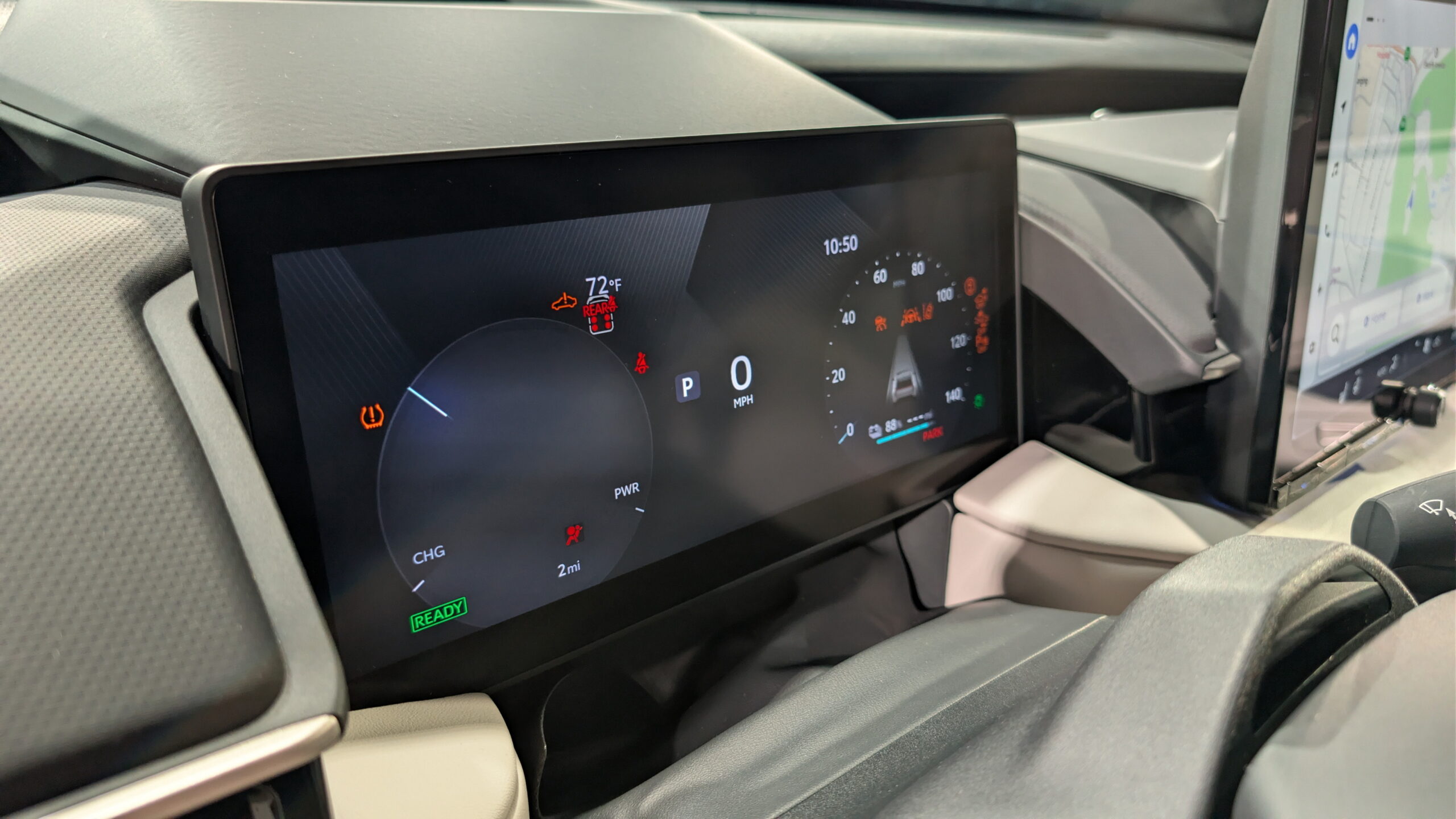
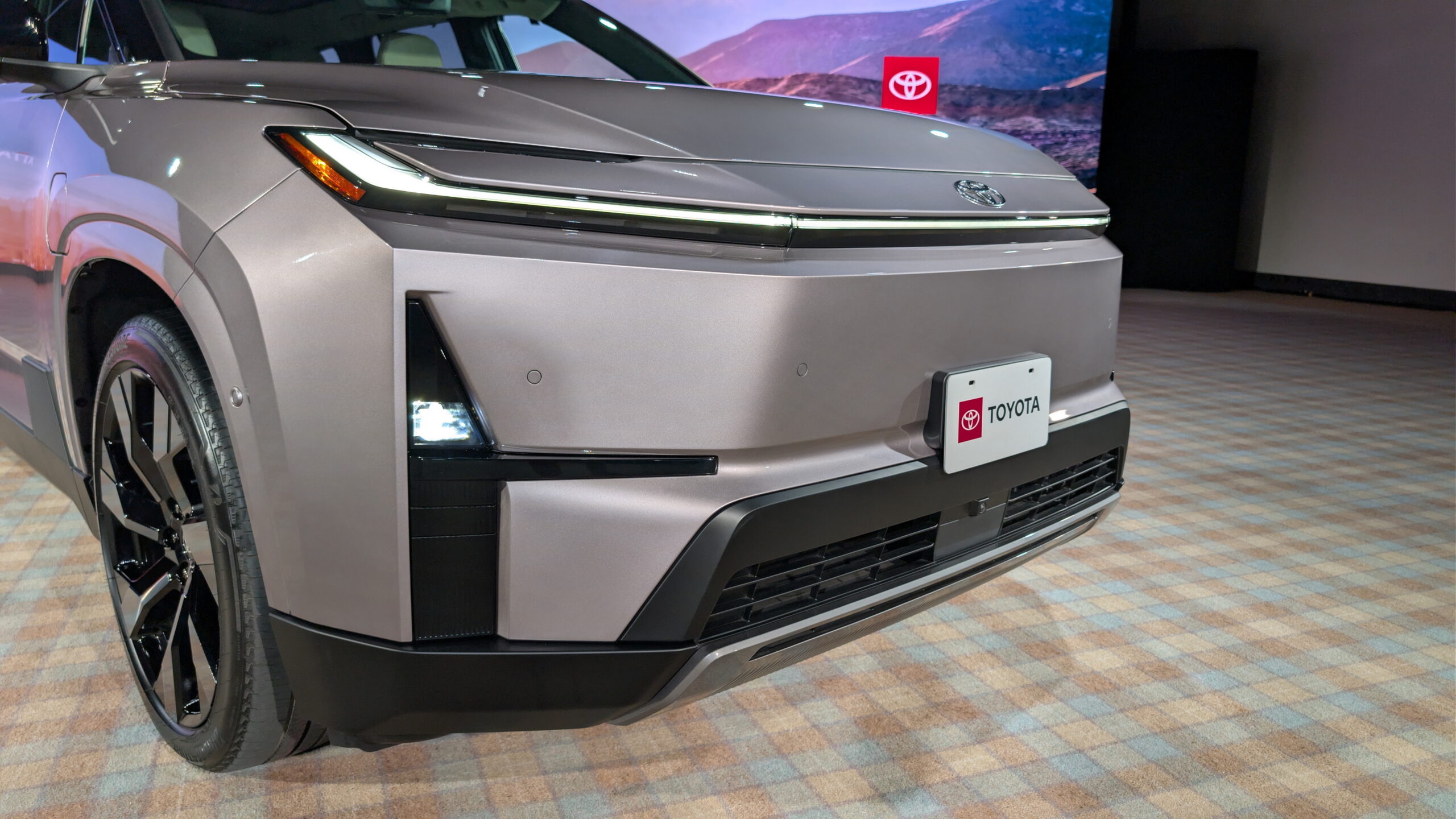
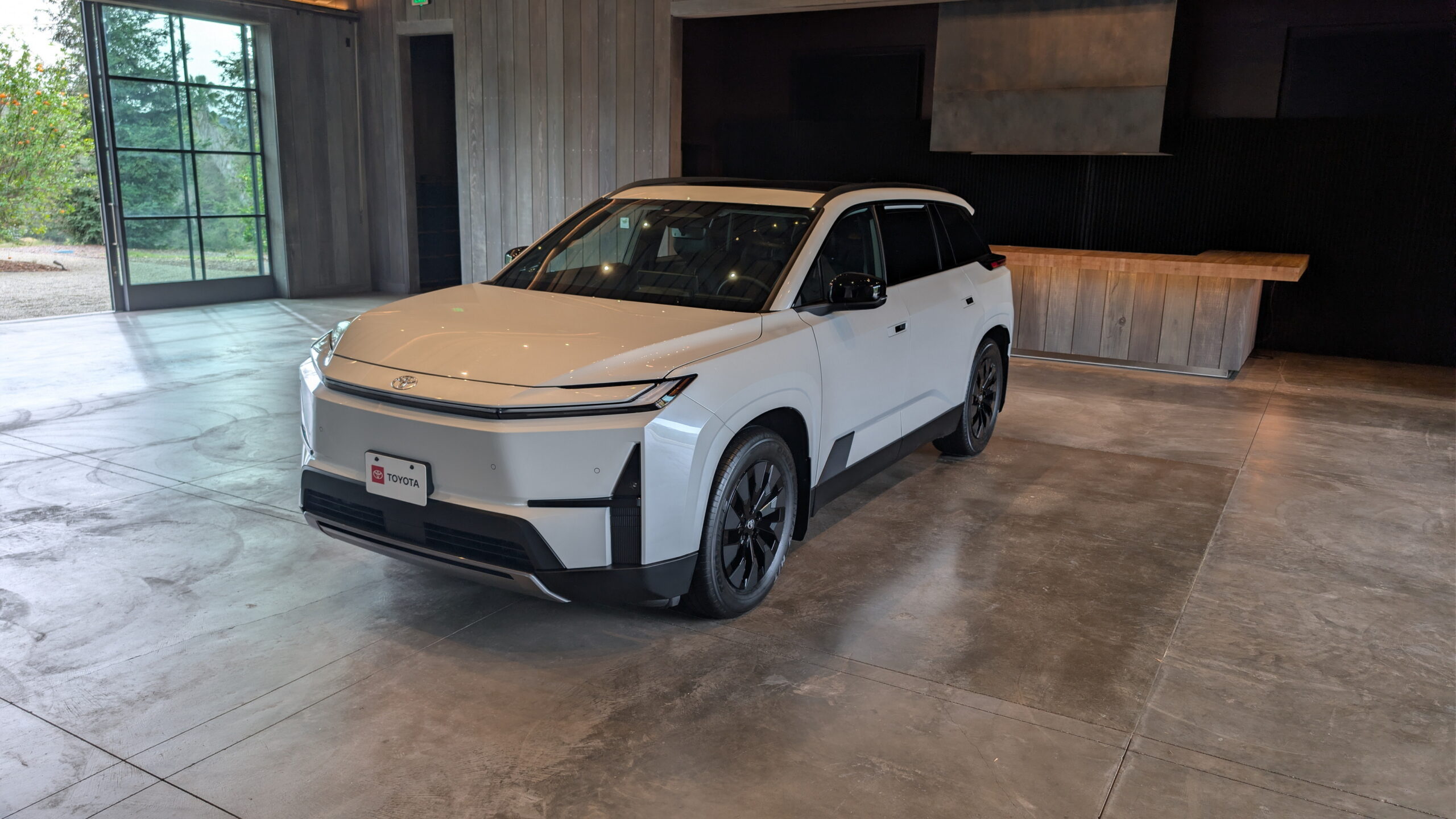
Toyota offers up to $6,500 in incentives on the new bZ Woodland.
Buyers can choose $5,000 cash or 0% financing with bonus cash.
Subaru’s Trailseeker remains cheaper despite Toyota’s early discounts.
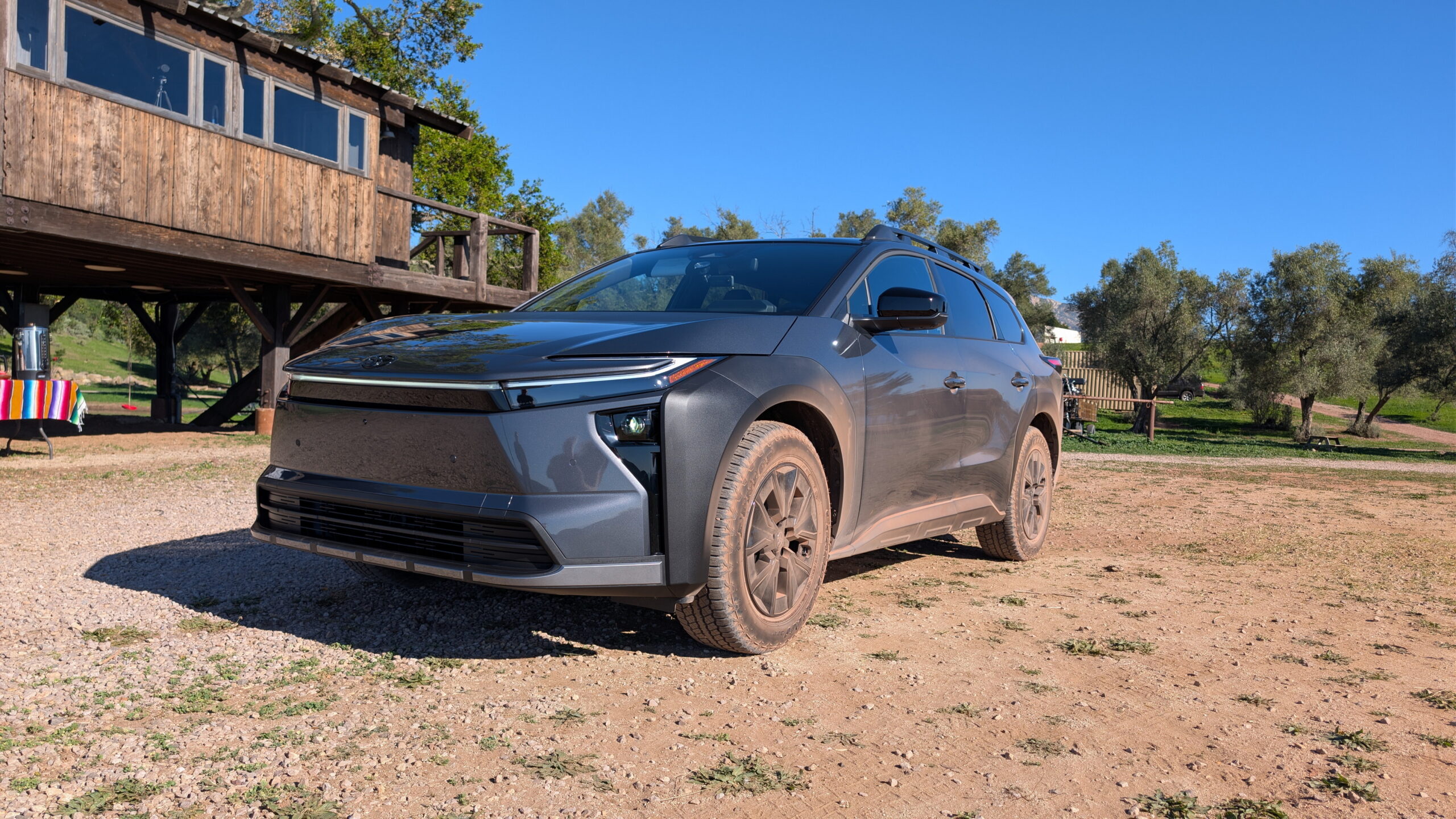
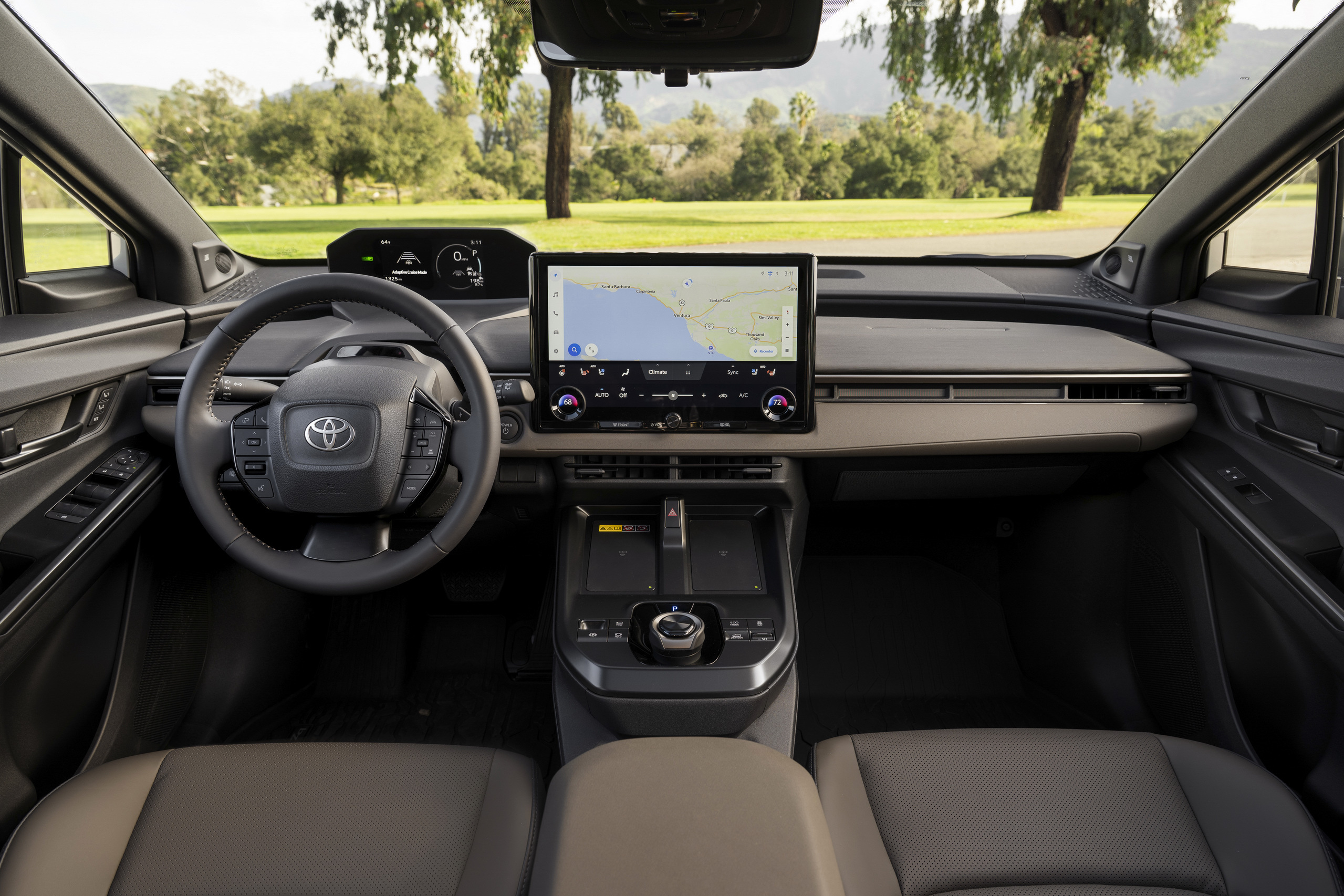
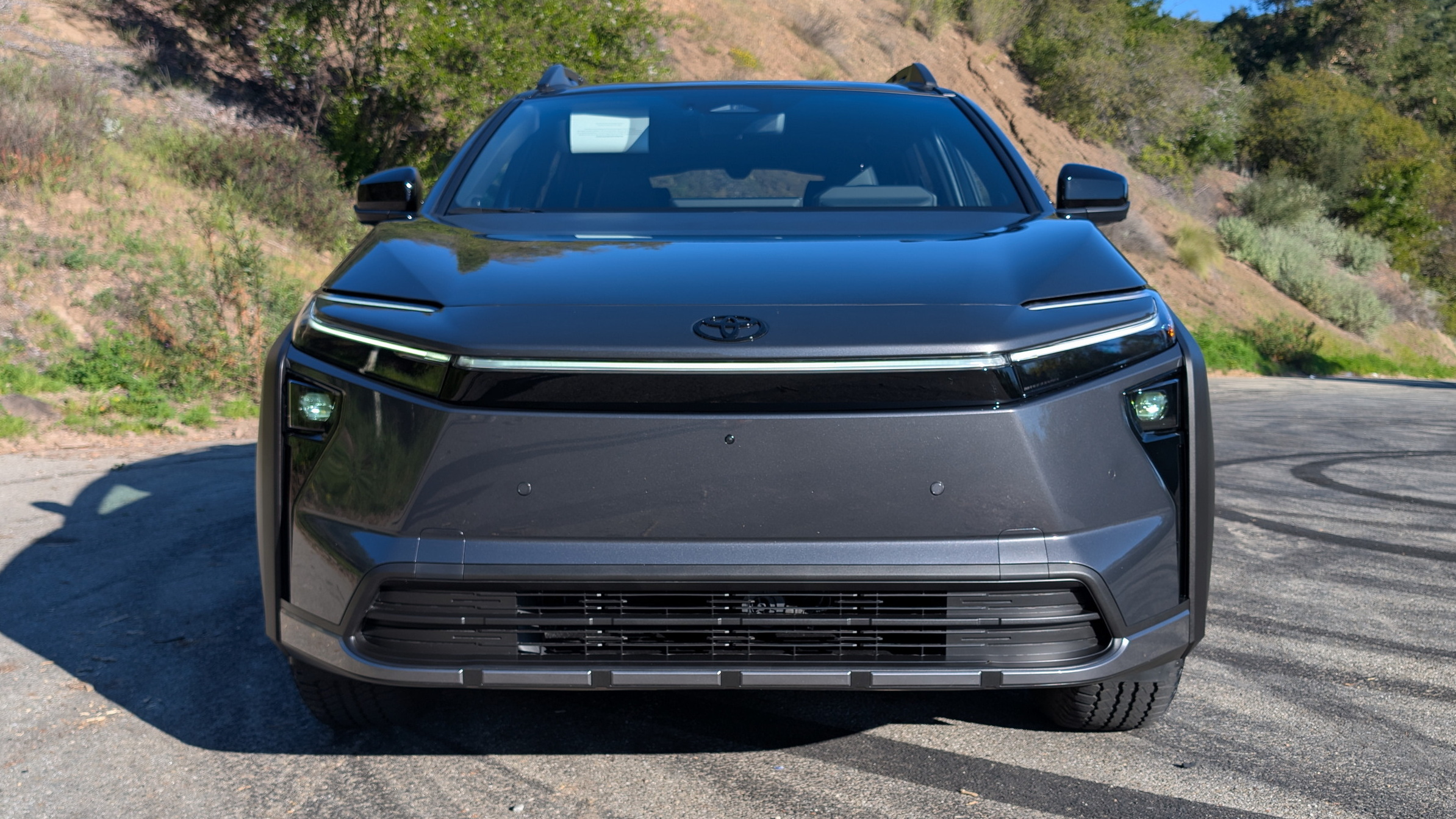
The new Toyota bZ Woodland arrives at a complicated moment for electric SUVs. Conceptualized and likely sent into a production cycle with federal tax credits in mind, the electric crossover is here without those credits to rely on. On top of that, its near identical Subaru twin, the Trailseeker, costs thousands less. Now, Toyota is putting discounts of up to $6,500 on its brand-new electric model to sweeten the deal.
According to Cars.com, the deals aren’t exactly hidden or subtle, either. Buyers can score $5,000 in customer cash, lessees get $6,500 in lease cash, and those with pristine credit can opt for 0% APR for 72 months plus $3,500 cash back. Not bad for a model that effectively just arrived on dealer lots.
Here’s how it breaks down. The $5,000 customer cash incentive functions like a rebate and lowers the price or amount financed. The $6,500 lease cash deal reduces the capitalized cost of the lease, which means lower monthly payments. The $3,500 cash back deal with 0 percent APR is exactly what it sounds like. A discount on the price and no interest on payments for six years. All deals expire on March 2nd.
With pricing starting at $46,750 (including $1,450 destination) and climbing to $48,850 for the Premium, Toyota clearly felt some pressure to keep this wagon-like EV competitive in a cooling segment. These deals should help, considering that the bZ Woodland seems incredibly similar to Subaru’s Trailseeker.
Pricing Pressure From Subaru
For its part, the Trailseeker starts at $39,995 before destination, and that’s without discounts. So even with $5,000 on the hood, the Toyota still plays in a higher price bracket. That means the Woodland’s biggest advantage may come down to brand loyalty, dealer networks, and whether buyers prefer Toyota’s design and packaging.
Again, Toyota probably cooked up this car when it thought the $7,500 federal EV subsidies would still exist at launch. With that in mind, this feels like an almost necessary move to keep the car moving off dealer lots.
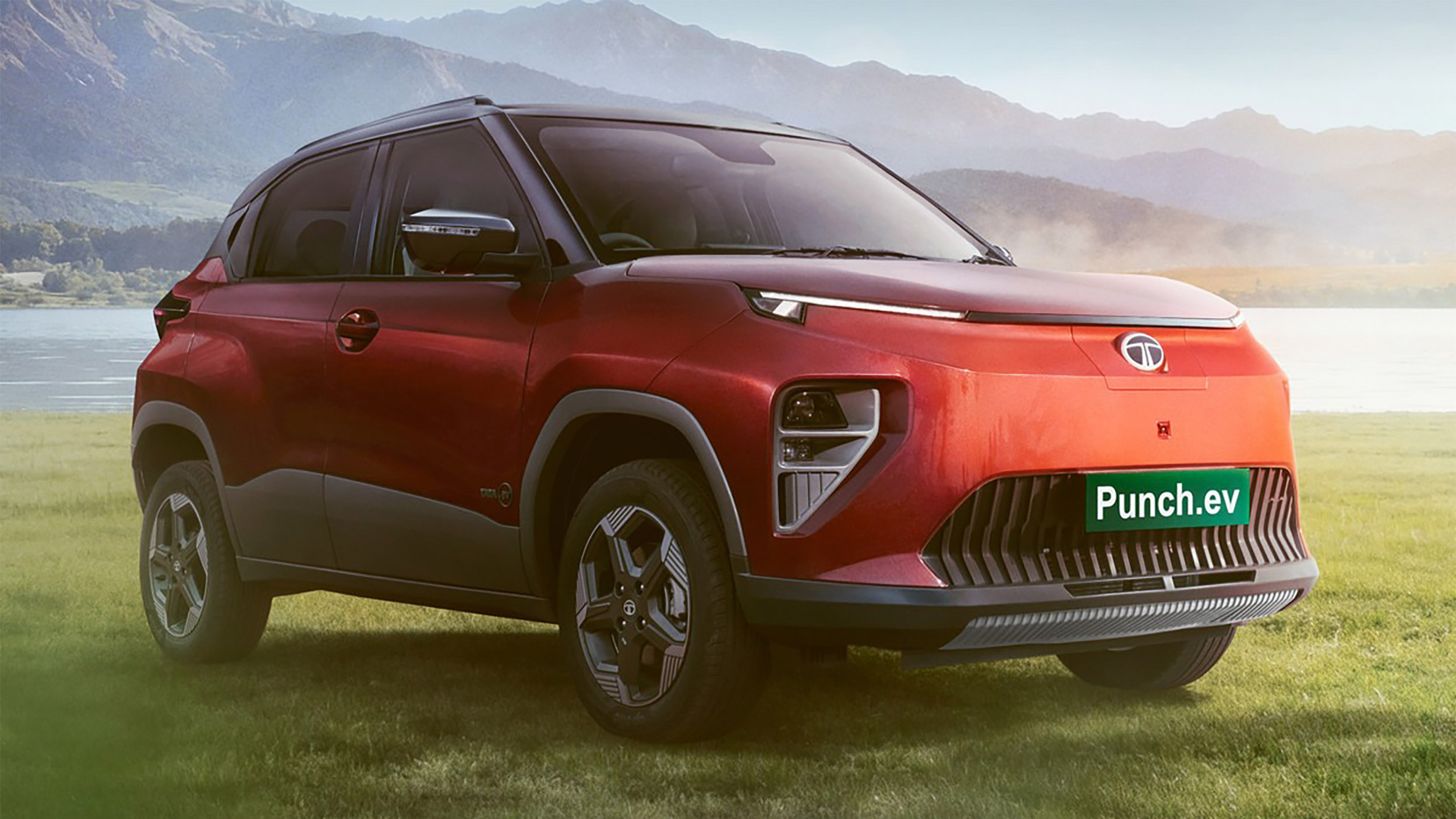
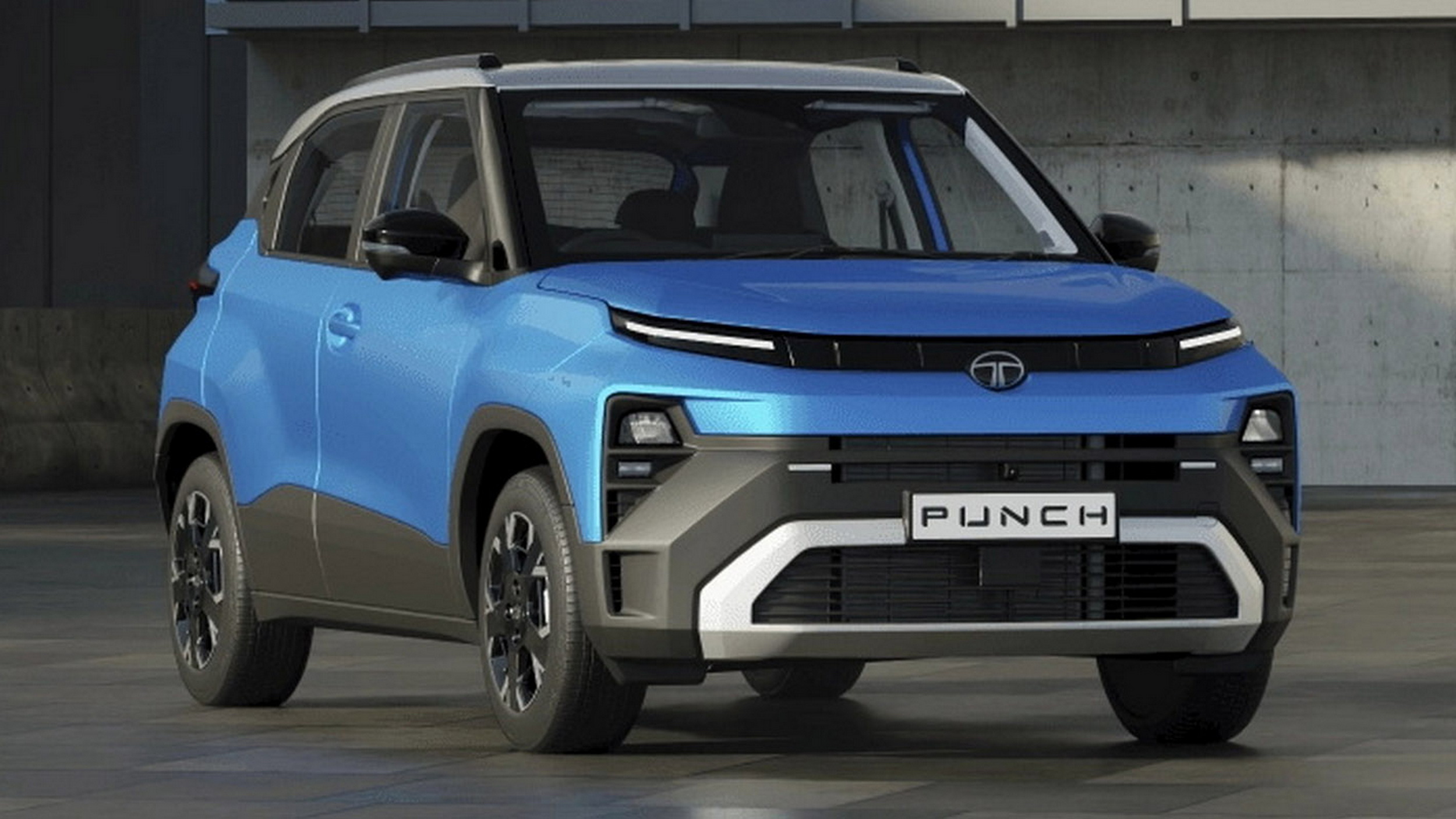
The Tata Punch EV gets an early facelift in India.
Brings styling tweaks, more power, and extra range.
Starts at $7,150 if you lease the battery separately.
Two years. That’s all Tata Motors has given the fully electric Punch before wheeling out a facelift. In the fast-moving world of small EVs, standing still is not an option. The 2026 Tata Punch EV goes beyond a nip and tuck, bringing a larger battery, quicker charging, and a finance trick designed to make the sticker price look far friendlier.
Starting with the exterior, the Punch EV gains a redesigned face with a cleaner bumper, though the split headlights have been carried over. It also benefits from new 16-inch alloy wheels and full-width taillights that mirror the recently facelifted ICE-powered Punch.
The interior is largely unchanged. Higher trims pack dual 10.25-inch displays, wireless charging, ventilated seats, a voice-activated sunroof, and a 360-degree camera. Six airbags are standard across the range, although the base car makes do without an infotainment screen.
More Punch And Longer Range
More important changes hide under the skin. The Punch EV benefits from larger battery packs with capacities of 30 kWh and 40 kWh, each up by 5 kWh.
Tata claims a real-world range of up to 355 km (221 miles), which is 75 km (47 miles) more than before. Charging gets a lift too. The updated Punch EV now supports a 65 kW DC fast charger, up from 50 kW, cutting the 20-80 percent top-up time to 26 minutes.
There’s a modest bump in output as well. Power rises by 6 hp (5 kW). The Medium-Range version makes 85 hp (65 kW), while the Long Range variant produces 127 hp (95 kW). Tata says the latter hits 0-100 km/h (0-62 mph) in 9 seconds, trimming 0.5 seconds from the previous figure.
The Price Hack
Here’s where things get interesting. Despite the added kit, Tata has lowered the entry price. The attention-grabbing ₹6.49 lakh ($7,150) starting figure comes via a BaaS (battery as service) scheme. You buy the car, but lease the battery separately at ₹2.6 per km ($0.029 per mile).
Prefer to own the lot outright? Prices then range from ₹9.69 lakh ($10,700) to ₹12.59 lakh ($13,900), depending on specification. Even so, that undercuts the pre-facelift model, which makes the updated Punch EV look like stronger value.
At 12,000 km a year, the battery lease works out to ₹31,200 (about $348). Drive 15,000 km and it rises to ₹39,000 (about $435) annually. Over five years at that higher mileage, you would pay ₹1.95 lakh (around $2,175). Add that to the ₹6.49 lakh ($7,150) purchase price and the total comes to roughly ₹8.44 lakh (about $9,325), still below the ₹9.69 lakh ($10,700) entry point of the version that includes the battery. The more you drive, the smaller the gap becomes.
The ICE-powered Tata Punch, meanwhile, ranges from Rs. 5.59 Lakh ($6,200) to Rs. 10.54 Lakh ($11,700).
The flagship version of the E7X delivers up to 671 hp.
Audi will offer 100 kWh and 109.3 kWh battery options.
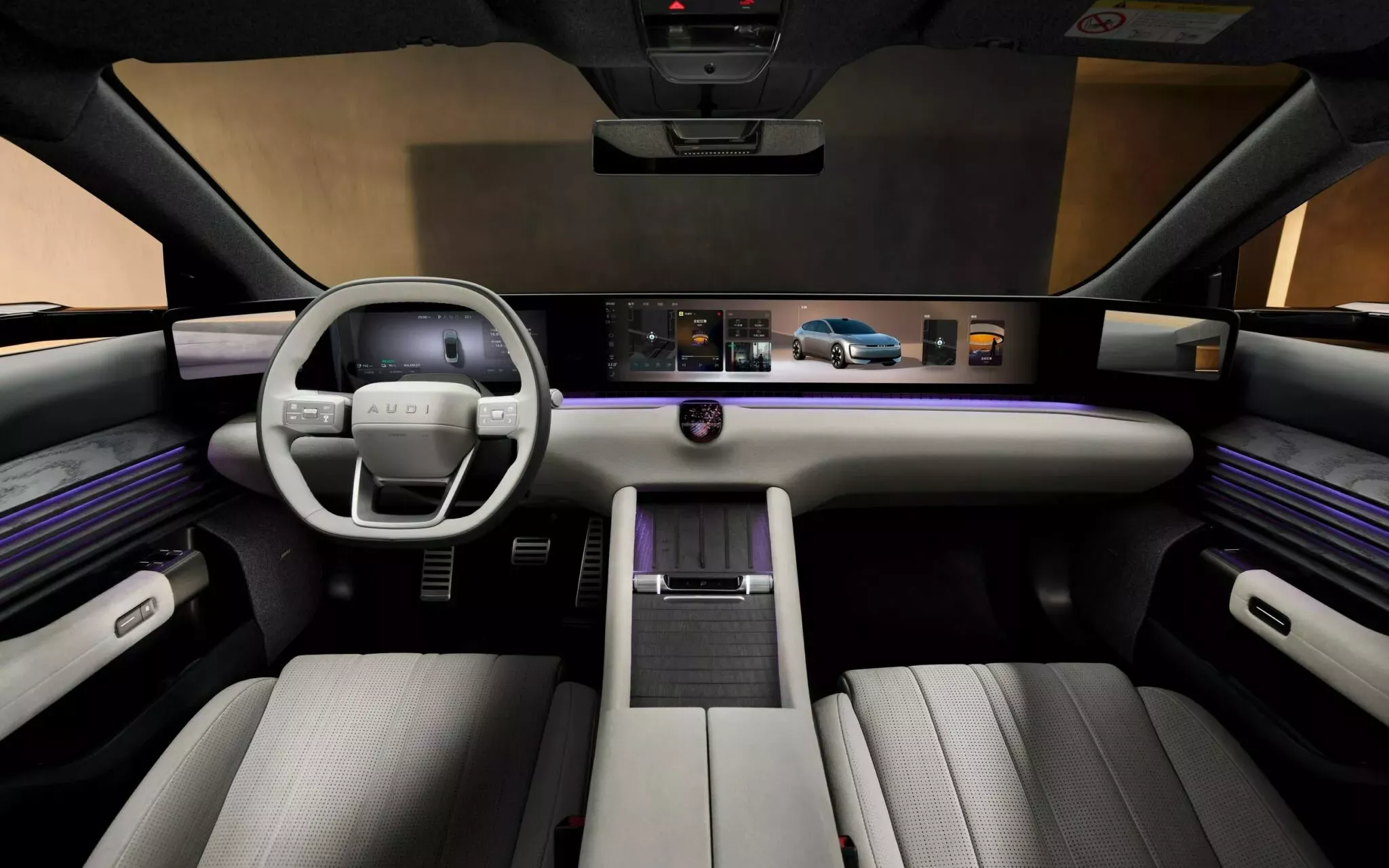
The E7X’s cabin closely resembles the Audi E5 Sportback.
In the space of just a few months, Audi has moved from teasing a China only concept to testing the finished product. Shortly after the first photos of the China only AUDI E7X surfaced, the company released a fresh image of its mid size electric SUV undergoing cold weather testing in China.
While several of Audi’s electric models in Western markets have felt stale and predictable, this one from its all-caps AUDI sub-brand for China looks like a real threat to the country’s homegrown EV powerhouses.
The design of the E7X is virtually identical to the E SUV Concept that AUDI presented at last November’s Guangzhou Auto Show. As such, it looks very similar to the E5 Sportback, albeit in the form of a high-riding crossover. Finished in a deep shade of purple and pictured driving on the snow, there’s no denying that it’s a head-turner.
The new image confirms that the front end will include an illuminated AUDI badge, with the intricate LED daytime running lights sweeping across the entire fascia. Created in partnership with Chinese juggernaut SAIC, the E7X is quite imposing, but should look right at home in some of the country’s bright and bustling cities.
Like the E5 Sportback, the E7X includes a prominent LiDAR poking out from the roof, as well as a set of digital wing mirrors. Details released in December by China’s Ministry of Industry and Information Technology confirmed that the digital mirrors will be optional, with traditional mirrors offered as an alternative.
At the rear, the lighting theme continues. An AUDI badge glows red, framed by LED taillights that wrap around the tailgate. There’s also a prominent split rooftop spoiler to aid in aerodynamics.
In terms of power, the electric E7X will have plenty. The entry-level model will use a rear-mounted motor with 402 hp, and an all-wheel drive version will also be available, fitted with dual motors to deliver 671 hp.
Shoppers will be able to choose between a 100 kWh battery and a 109.3 kWh unit, both compatible with an 800-volt electrical architecture. The E7X’s driving range will vary between 615 km (382 miles) and 751 km (466 miles), depending on the motor and battery configuration, as well as different wheel sizes.
The E7X measures 198.8 inches (5,049 mm) in length, 78.6 inches (1,997 mm) in width, and 67.3 inches (1,710 mm) in height, with a wheelbase stretching 120.5 inches (3,060 mm). That makes the production model slightly smaller and shorter than the original concept, though the overall proportions remain close.
More details about the E7X, including the all important pricing, are expected in the coming months.
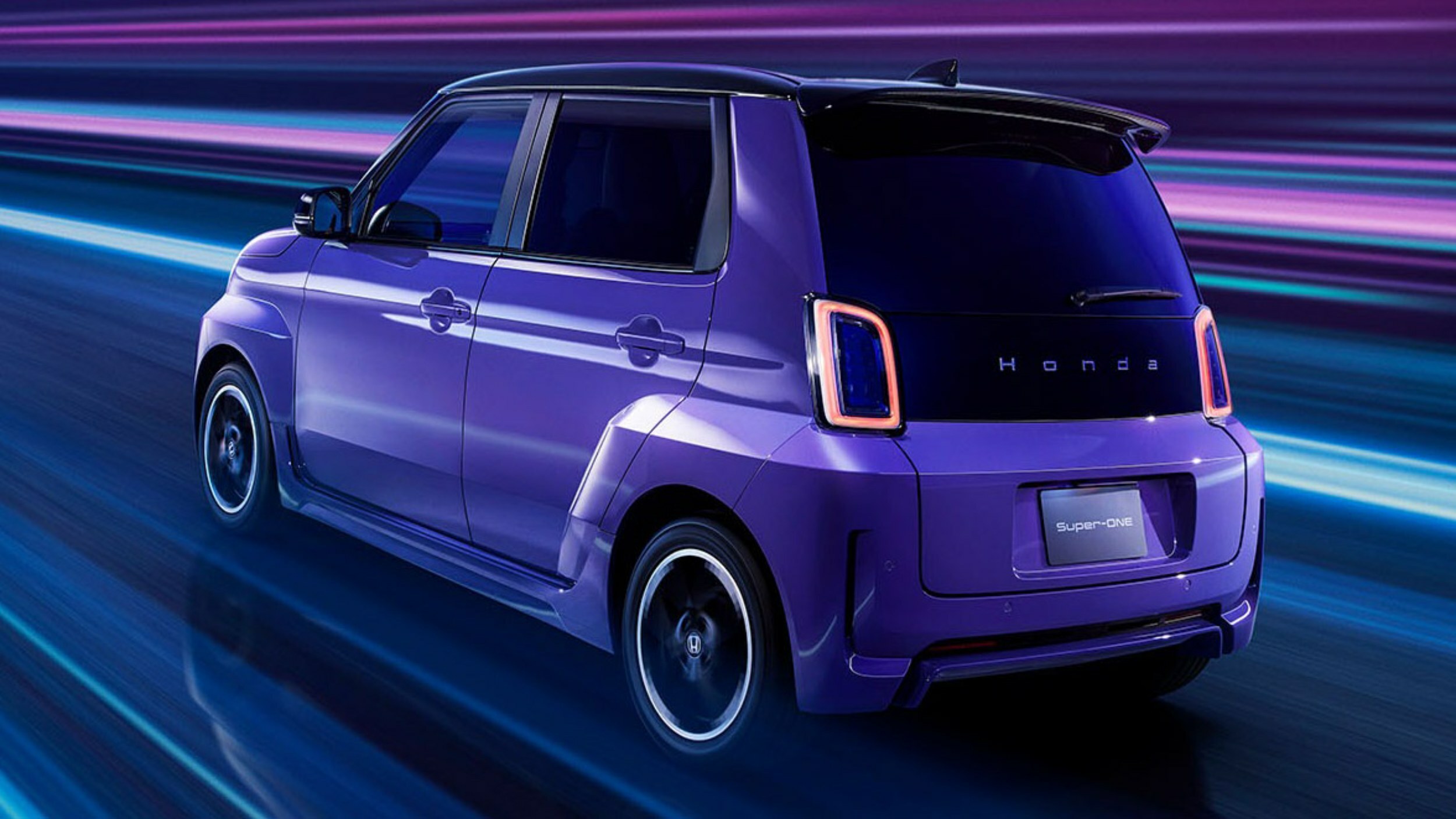
Honda reveals production Super-One ahead of its Japan launch.
Electric hot hatch gets wide arches, power boost, and fake noise.
UK, Europe, and Asia-Pacific markets confirmed for release.
Forget the clinical efficiency and silent hum of modern EVs. Honda has other ideas. The brand is channeling some of its spikiest ’80s spirit into the electric era, drawing a direct line from the analog madness of the City Turbo II to its latest pint-sized experiment.
After showing off a prototype at the Japan Mobility Show, Honda has pulled the curtain back on the production-ready Super-One via a new teaser site ahead of its domestic launch.
The Super-One isn’t just a slightly jazzed-up N-One e:. It’s a city-sized hot hatch, with a wider stance, upgraded chassis, and an electric powertrain that tries to evoke the grit of a gasoline engine with synthesized sounds. Honda says it’s a spiritual successor to the City Turbo II Bulldog from the 1980s.
Widebody Pocket Rocket
Visually, the Super-One stands out with reshaped bumpers featuring functional air ducts, distinctive “blister fenders” along the sides, and a roof spoiler. It also rides on a new set of 15-inch alloy wheels finished in matte Berlina Black with a machined face, paired with wider Yokohama tires.
In terms of size, the Super-One comes in at 3,589 mm (141.3 inches) long, 1,573 mm (61.9 inches) wide, and 1,616 mm (63.6 inches) tall. That makes it 194 mm (7.6 inches) longer, 98 mm (3.8 inches) wider, and 71 mm (2.8 inches) taller than the standard N-One e:, though it retains the same 2,520 mm (99.2-inch) wheelbase.
Honda has introduced a new color called Boost Violet Pearl, inspired by lightning and offered exclusively on the Super-One. Other available finishes include Platinum White Pearl, Crystal Black Pearl, Citron Yellow Pearl, and Mono Gray, each offered in both monotone and bi-tone combinations.
What About The Interior?
Inside, the dashboard layout is mostly carried over from the N-One e:, but the Super-One adds its own touches with reshaped seats featuring heavier bolsters, purple accents, and custom graphics for the 7-inch digital instrument cluster. When Boost Mode is activated, the display shifts to show a simulated tachometer.
Adding to the theatrics, the Active Sound Control system mimics gear shifts and engine growls through the standard eight-speaker Bose premium audio setup. Equipment levels are generous, with a 9-inch infotainment system, heated front seats, a heated steering wheel, and Honda’s full suite of advanced driver assistance features.
Power Boost
The pint-sized hot hatch is driven by a front-mounted electric motor. While Honda hasn’t officially confirmed the output, earlier details from the Singapore Motor Show in January suggest it delivers 94 hp (70 kW / 95 PS) in Boost Mode.
That might not sound like a lot, but it represents a healthy increase over the 63 hp (47 kW / 64 PS) of the N-One e:. Even so, it is less powerful than the discontinued Honda e that produced 152 hp (113 kW / 154 PS) in its most potent form.
The added power and increased width mean the Super-One will be classified as a passenger vehicle rather than a kei car. Honda has not yet revealed battery capacity or range figures, though the N-One e: uses a 29.6 kWh unit.
Rounding out the changes, the sporty EV features a custom chassis setup with a lowered suspension and wider tracks for improved handling.
How Much Does It Cost?
Full details on the Super-One’s pricing and launch timing will follow in the coming weeks. However, Japanese outlet Creative Trend reports that Honda is targeting a price range between ¥3,000,000 and ¥3,500,000 (approximately $19,700 to $22,900) before incentives.
That positions it higher than the standard N-One e:, which starts at ¥2,699,400 ($17,600) and can drop as low as ¥1,625,400 ($10,600) with full subsidies applied.
Following its debut in Japan, the Super-One will also reach additional markets including the UK, Europe, Australia, New Zealand, and select parts of Asia.
Toyota’s 2027 Highlander is electric only with no gas option.
Two trims launch later this year with up to 320 miles range.
New platform brings larger dimensions and improved packaging.
For over twenty years, the Toyota Highlander has quietly been a heavy hitter. It’s never been wildly flashy, it’s never pretended to be an off-road giant, and yet, it’s been one of Toyota’s most important family haulers. Even with the arrival of the larger Grand Highlander that siphoned off some spotlight (and a fair share of sales), the original has held steady as a central figure in the lineup.
Now, for 2027, the brand is tearing up what seemed like a tried and true formula for something much bigger and far bolder than ever before. This all-new Highlander is an EV aimed squarely at the heart of the mid-sized market.
QUICK FACTS
Output
XLE FWD: 221 hp / 198 lb-ft
XLE AWD: 338 hp / 323 lb-ft
Limited AWD: 338 hp / 323 lb-ft
Overall Length
198.8 in (5,050 mm)
Overall Width
78.3 in (1,989 mm)
Overall Height
67.3 in (1,709 mm)
Wheelbase
120.1 in (3,050 mm)
Cargo Volume
45.6 ft³ (1,292 L) with 3rd row folded
15.9 ft³ (450 L) with 3rd row up
Range (Est.)
XLE FWD (77 kWh): 287 miles
XLE FWD (77 kWh): 270 miles
XLE AWD & Limited (95.8 kWh): 320 miles
SWIPE
Again, this isn’t just a new generation of the Highlander. It’s like a train switching tracks altogether. Buyers can’t get a gas-powered version, no matter how much they pay. That alone makes this a huge shift but Toyota didn’t stop there. This new SUV arrives with a new platform, larger proportions (color us shocked), and more technology than ever before.
Bigger And Bolder
Photos Stephen Rivers/Carscoops
Visually, the new Highlander leans heavily into the new styling that we’ve seen from the brand in recent years. Who would’ve guessed that the Prius would spark a styling revolution? Nevertheless, that’s what’s happened, and the hammerhead front-end has slowly moved from Toyota’s most famous hybrid to the BZ line and now to the Highlander. In this case, that equates to an aerodynamically slippery front end, slim LED DRLs, flush door handles, and broad fenders.
It’s also considerably larger than the last-gen Highlander. Overall length jumps to 198.8 inches (+3.9 in.), width to 78.3 inches (+2.3 in.), and height to 67.3 inches (-0.8 in.). More importantly, the wheelbase now stretches to 120.1 inches (+7.9 in.). Don’t forget that the very first Highlander had a wheelbase of 106.9 inches (2,716 mm).
Photos Stephen Rivers/Carscoops
The two share little more than a name at this point. That said, the roofline is lower than the outgoing version. Combining that lower roof with a longer and wider body provides a planted stance.
Toyota says those revised proportions weren’t just about aesthetics. The longer wheelbase allows for a roomier cabin, easier third-row access, and better overall packaging for the battery underneath. Ultimately, it’s all about how the car shuttles passengers, so let’s dive into that interior space.
Cabin Acoutrement
From the front seats, what stands out most is that this Highlander feels more elegant and straightforward. Everything is centered around a 14-inch infotainment system and a 12.3-inch digital gauge cluster. Thankfully, Toyota includes physical buttons and switches for vital functions like climate controls.
Both trims come standard with SofTex upholstery, heated front seats, customizable ambient lighting with 64 colors, and Toyota’s latest multimedia system. A panoramic glass roof is available on the base XLE trim and standard on the Limited. It’s the largest ever fitted to a Toyota.
Photos Stephen Rivers/Carscoops
In the second row, things are pretty stellar as well. Captain’s chairs are standard. Buyers of the XLE AWD can choose an optional bench to increase seating from six to seven. Perhaps the boldest claim from Toyota is that the third row can comfortably fit adults.
After sitting in it myself, I can say that short adults might find it perfectly livable. No question, it has some nice features like USB-C ports, climate vents, and the flexibility to recline the backrest a little. That said, please don’t try to carry around taller folks back there for very long.
Photos Stephen Rivers/Carscoops
Toyota lists cargo space at 45.6 cubic feet (1,292 liters) with the third row folded and 15.9 cubic feet (450 liters) with it upright. For comparison, the gas-powered Grand Highlander offers over 57 cubic feet behind the second row and just above 20 cubic feet behind the third. So while the new EV Highlander is spacious, it’s not quite as roomy as its larger sibling.
Power And Range
While all 2027 Highlanders use an electric powertrain, buyers do have a few options on that front. Toyota will offer a front-wheel drive XLE with a 77.0 kWh battery and 287 miles of range as the base model. It offers just 221 horsepower and 198 lb-ft of torque.
Above that is an AWD XLE with the same battery and 270 miles of range, but buyers can also spec a larger 95.8 kWh battery to acquire up to 320 miles of range. Those who opt for the Limited trim get both the larger battery and AWD standard, along with the same 320-mile range.
Performance varies by configuration. AWD models deliver up to 338 horsepower and 323 lb-ft of torque, while FWD versions make 221 hp and 198 lb-ft. Paddle shifters control regenerative braking, and AWD models add features like Multi-Terrain Select and Crawl Control—yes, even on an EV.
Charging hardware includes a standard NACS port for DC fast charging, with Toyota estimating a 10–80 percent charge in about 30 minutes under ideal conditions (which is a very important qualifier). A dual-voltage home charging cable is included, along with battery preconditioning and Plug & Charge capability.
Tech And Safety
Toyota has long led the way with regard to standard safety tech, and the Highlander gets to continue that legacy. It’s the debut vehicle for Safety Sense 4.0. It bundles updated driver aids, including pre-collision braking, adaptive cruise control, lane-tracing assist, and proactive driving assist. The Limited adds Traffic Jam Assist, Advanced Park, a panoramic view monitor, and lane change assist.
Of all the big new tech features, vehicle-to-load might be the most likely to fly under the radar. It allows the car to power external devices, such as power tools at a job site, or to act as a backup power source during an outage. That’s a really beneficial feature for a family SUV trying to stand out.
What’s Left?
Toyota still hasn’t allowed us to drive it, though we have good reason to believe it’ll be a positive experience. More on that in the next couple of weeks. For now, we know that sales begin late this year, but we still don’t have pricing.
Normally, we’d make pricing the biggest key to success here, and no doubt, it’ll be vital. That said, the EV market in America is cooling off. Federal tax incentives are gone, and plenty of brands are backtracking or ditching EV goals altogether. For Toyota, putting this big a name on this EV says that it has a lot of confidence in how it’ll sell.
It certainly helps that production will take place in the U.S. at Toyota’s Kentucky facility, with the battery sourced from North Carolina. That should eliminate much of the concern over tariffs and help to keep prices low. That said, it would be shocking to see this thing start at under $50,000.
Is a price above that figure attractive enough in this market? Only time will tell. If it’s lower than that, it’ll probably sell well despite the market thanks to one of the most recognizable names in the segment.
Dreame has launched a third car brand called Star Motor.
Two of the new models closely resemble Dongfeng vehicles.
One upscale SUV channels China’s take on the Rolls-Royce.
Just a month after Chinese vacuum cleaner firm Dreame unveiled three high-performance EVs at the CES show in Las Vegas, it has previewed three additional models it plans to add to its fleet. These will be launched under the new Star Motor brand, existing alongside Dreame’s Nebula Next and Kosmera brands.
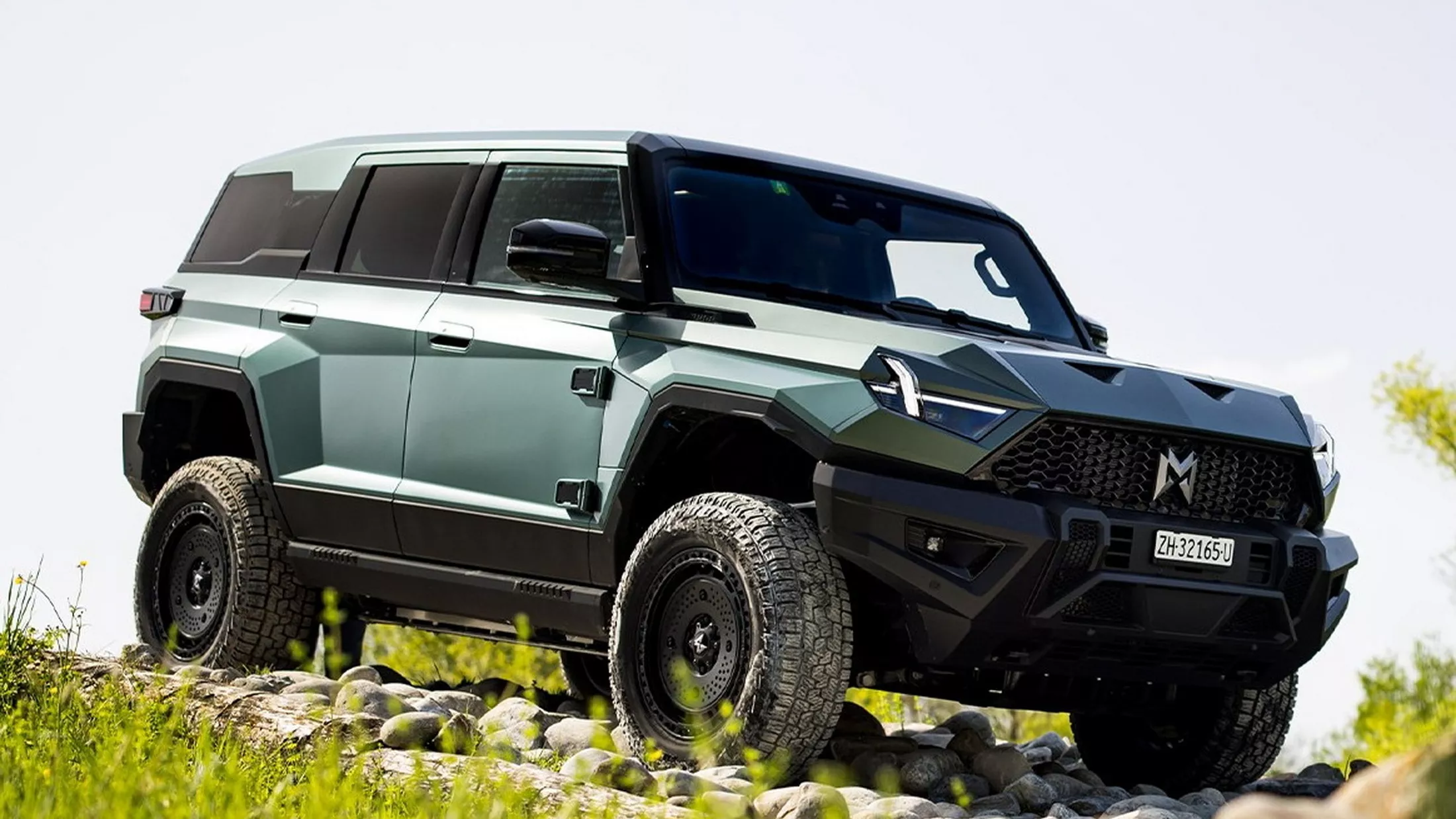
The first two models are the T08 and T08L. Both are striking off-roaders, with the T08L sharing much of its design with the T08 but is considered even more focused on off-road performance. There’s no denying the T08 models are striking, but their design isn’t unique. In fact, they almost look like direct copies of two other bold Chinese off-roaders.
Those two models come from Dongfeng, where they are badged the M917 and M817. Dreame has quite clearly copied Dongfeng’s homework with the T08L, crafting bodywork that looks almost identical to the M917, as well as near-identical headlights. The T08 looks mostly the same but has slightly different headlights, apparently copied from the smaller M817.
The similarities between Star Motor’s T08 and Dongfeng’s M917 are particularly apparent from the sides. It has virtually identical squared-off fenders, the same exposed hinges on the front doors, and door panels that look exactly the same as the M917. The only unique element that Star Motor appears to have designed is a distinctive front bumper.
Star Motor hasn’t actually unveiled the T08 and T08L, and only previewed them with a couple of images at a recent company event. As such, we don’t know what kind of powertrains they will have, other than the fact that they will include rear-wheel steering that can turn the rear wheels by up to 24 degrees.
Rolls-Royce Fighter
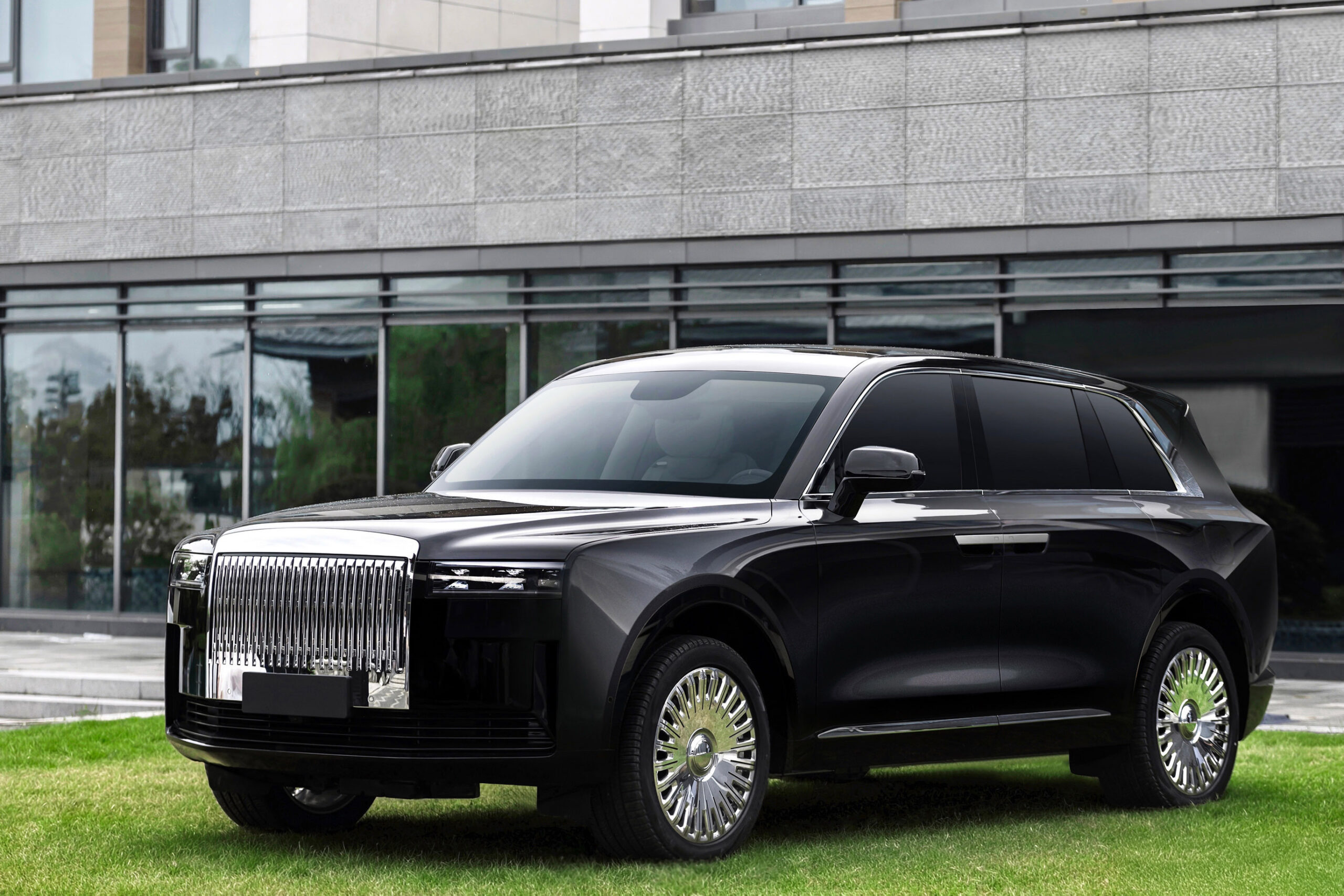
Previewed alongside the T08 and T08L was the Star Motors D09 that looks to be positioned as the firm’s flagship luxury SUV, akin to the Rolls-Royce Cullinan. It shares similarities with the Cullinan lookalike that Dreame previewed last year and could be the production version of that model.
The front of the D09 is dominated by a grille that makes even a Rolls-Royce grille seem small. It also has prominent LED daytime running lights up front, a LiDAR mounted on the roof, and a set of fancy-looking wheels.
Skoda Epiq is the brand’s smallest EV and Kamiq alternative.
Built on VW’s MEB Plus with FWD and up to 267 miles of range.
Related to VW ID. Polo and Cupra Raval, starts from €26,000.
This year’s new Skoda Epiq still wearing a psychedelic disguise, but underneath the swirls and squiggles is a very clear message. This is the electric SUV for people who like their cars small on the outside, big on the inside and don’t want to pay a premium for swapping a combustion powertrain for an electric one.
Think of the Epiq as the baby brother to the Elroq and Enyaq, and the electric cousin of the Kamiq. At just under 4,200 mm (165 inches) long and riding on a 2,601 mm (102 inches) wheelbase, it’s squarely in city-friendly crossover territory.
However, Skoda claims packaging magic gives it one of the biggest boots in its class, at a surprising 475 liters (16.8 cu-ft). Fold the seats and you get 1,344 liters (47.5 cu-ft), which is properly useful family car stuff.
What’s Underneath?
Under the skin, the Epiq is Skoda’s first model on the new MEB Plus platform, a cost focused evolution of the VW Group’s electric toolkit. Unlike larger rear drive MEB cars, this one is front wheel drive, which helps free up cabin and cargo space.
It’s also closely related to the upcoming VW ID. Polo and the Cupra Raval, all part of the group’s affordable urban EV push along with the ID. Cross SUV.
Tortoise Or Hare?
The not very epic entry-level Epiq 35 makes 85 kW, or about 114 hp (116 PS), from a single front motor that gets it to 62 mph (100 kmh) in 11.2 seconds, and uses a 38.5 kWh LFP battery for up to 196 miles (315 km) of range. But a maximum 50 kW charge speed means fills will be slow, so this one is best suited to urban sorties from the house, not road trips.
The Epiq 40 bumps power to 133 hp (135 PS / 99 kW) and drops to 62 mph sprint to 9.8 seconds, with similar battery capacity but slightly faster 90 kW DC charging. At the top sits the Epiq 55 with 208 hp (211 PS / 155 kW) and a larger 55 kWh NMC battery good for up to 267 miles (430 km) of range.
Charging peaks at up to 133 kW on the bigger battery, meaning a 10 to 80 percent top up can take just over 20 minutes, and the 62 mph time is a spritely 7.4 seconds. That makes this little Skoda more road trip capable than you might expect from something that looks ready to spend its life dodging delivery vans and cyclists.
Big Screen, Eco Materials
Inside, Skoda promises its usual Simply Clever touches, a 13 inch central screen, a small digital driver display and lots of recycled materials. It hasn’t released any interior images of the finished car yet, but the cabin pics of the Epiq concept shown in the gallery below are surely at least 85 percent on the money.
We’ll get the real images in the coming weeks, along with prices, which are expected to start at $26,000 (£25k for the UK), matching those of the combustion Kamiq. That looks like good value next to Kia’s EV3, though the base EV3 is much more powerful and longer-legged. Renault’s 4 E-Tech also poses a strong threat thanks to its even lower entry price, better range and acceleration and more interesting design.
Toyota confirmed the Highlander is returning in a new form.
Launches as 2027MY as a battery-electric three-row SUV.
Teasers show AWD and BEV badges, confirming key specs.
The next chapter of Toyota’s SUV lineup is about to begin and it’s all-electric. Meet the all-new 2027 Highlander. As we suspected, the latest teaser confirms that Toyota will indeed use the Highlander name for its new three-row SUV.
While the full reveal lands on Tuesday, there’s already plenty to unpack from what we’ve seen so far. Here’s what we know, and what we’re watching for. Full launch coverage will follow as soon as the wraps come off.
The new video goes a bit further than the previous two. While we don’t get a full look at the vehicle in question, we get something far more concrete: badges. During a short 11-second clip, we see the Highlander wordmark along with two other logos.
The first is Toyota’s BEV badge, indicating that what we’re looking at is an EV. Second, it’s the brand’s AWD logo, so we can expect that it’ll be a dual-motor SUV. In previous teasers, we saw the general shape of the rear of the Highlander and then a shot from the third row looking forward. Both pointed to what we’ve learned today about what Toyota decided to name this SUV.
In the past, we’d seen a concept named the bZ5x. Based on new renderings of what we think the Highlander will look like, the two seem to be one and the same. To that end, it’s worth noting the abandonment of the bZ and BZ nomenclature.
That’s a trend we’ve seen from other brands lately as well, including Volkswagen, which is bringing back familiar names like Polo and Tiguan for its upcoming EVs.
After a less-than-stellar launch of the bZ4X, Toyota revamped the branding to just BZ. It then reused that same name on the upcoming BZ Woodland. Why it ditched the BZ name in favor of Highlander alone probably just comes down to branding and the pull of name recognition.
In the end, it’s a lot easier to sell people on something they’re already familiar with, like the Highlander name, than to build interest around a brand-new one, even if the product itself has little, if anything, to do with the original.
You can be sure that we’ll dig around on that front, though, because as you’re reading this, we’re preparing to see the new Highlander up close and in person at the launch site.
It’ll get unveiled tomorrow at 9:30 p.m. EST. When it does, we’ll have full coverage with photos, video, and hopefully some insider tidbits on one of Toyota’s biggest new SUVs in years.
PROS ›› Interior, good tech, great value CONS ›› Inefficient, slow A/C, heavy
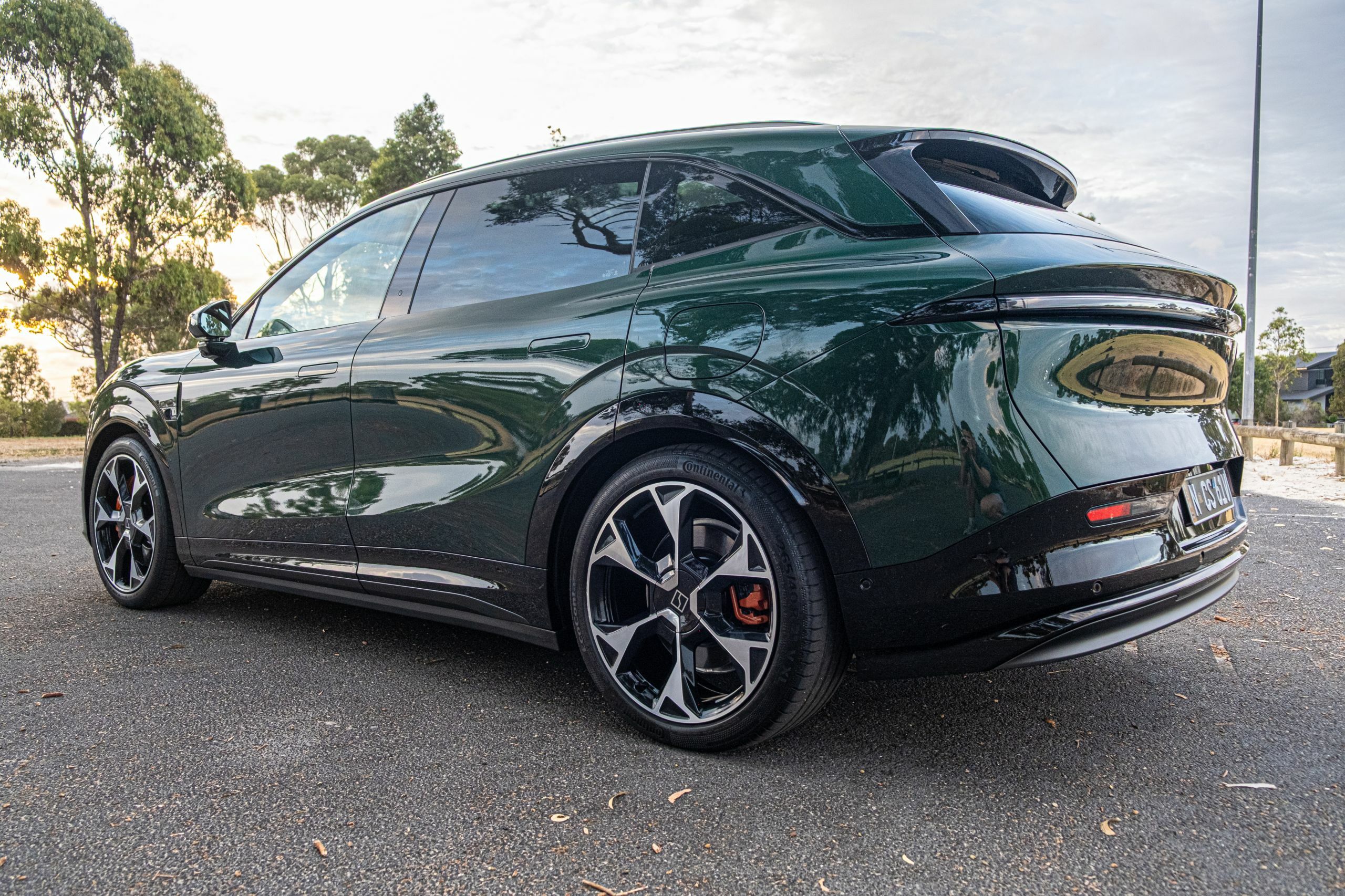
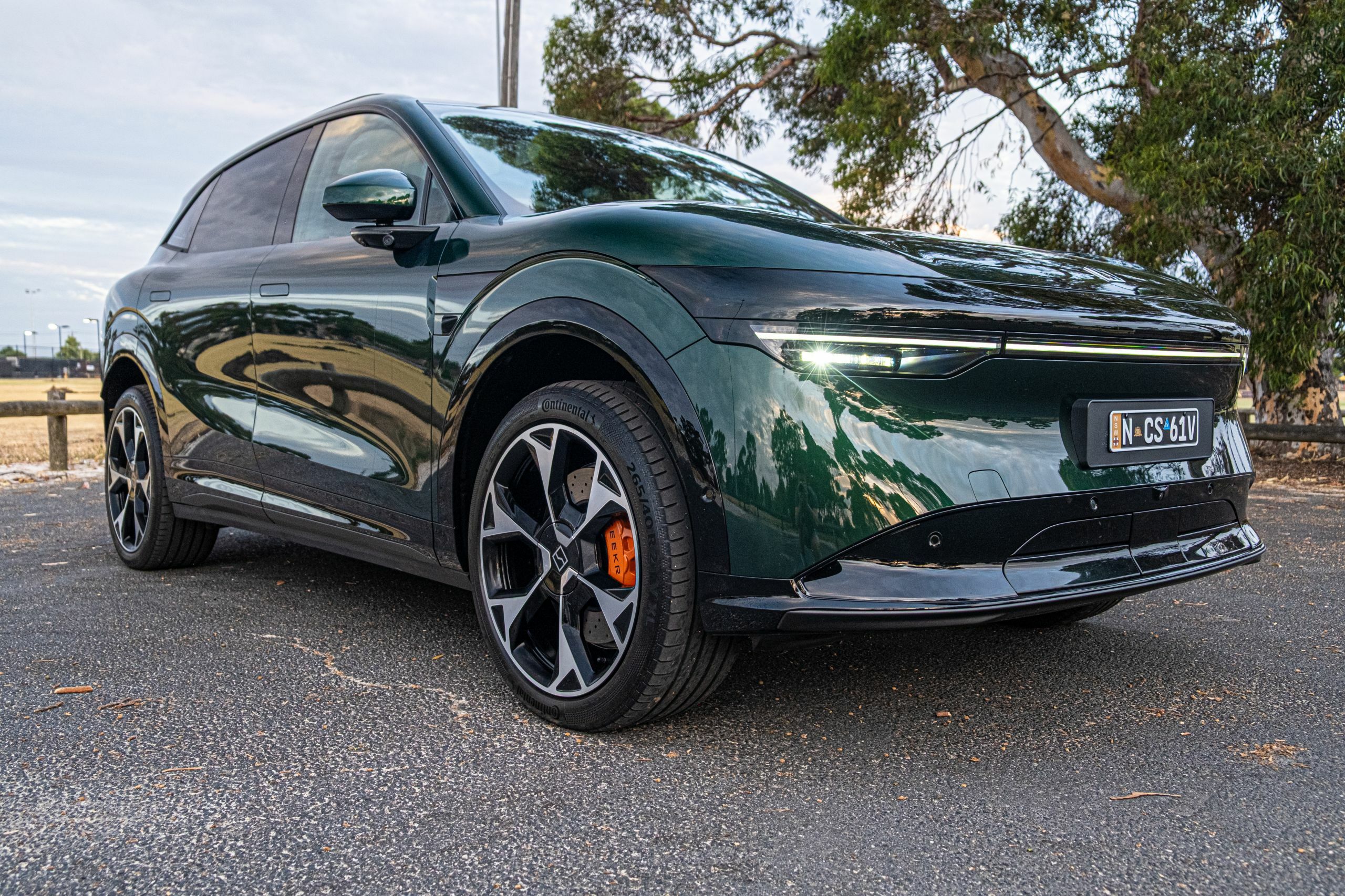
Electric car startups are everywhere these days, but most struggle to move beyond the hype. Zeekr is one of the rare exceptions. In just five years, Geely Group’s premium EV-focused brand has already rolled out a handful of genuinely impressive models and is making real progress with its battery tech.
Initially, Zeekr’s models were sold only in China, but the company has since expanded quickly abroad. First came the smaller X, a compact SUV that shares its tech with the Volvo EX30 and Smart #1. Most recently, Zeekr launched the 7X in Australia. It’s been pitched as a Tesla Model Y rival, but can it really measure up to the world’s most popular EV?
QUICK FACTS
› Model:
2026 Zeekr 7X Performance AWD
› Starting Price:
AU$72,900 ($50,800) as tested
› Dimensions:
4,787 mm (188.4 in.) Length
1,930 mm (75.9 in.) Width
1,650 mm (64.9 in.) Height
2,900 mm (114.1 in.) Wheelbase
› Curb Weight:
2,385 kg (5,258 lbs)
› Powertrain:
Dual electric motors / 100 kWh battery
› Output:
637 hp (475 kW) / 524 lb-ft (710 Nm)
› 0-62 mph (100kmh)
3.8 seconds
› Transmission:
Single speed
› Efficiency:
21.8 kWh/100 km
› On Sale:
Now
SWIPE
After spending time living with the flagship 7X Performance AWD, we came away convinced. It doesn’t just keep up with Tesla’s best, it beats it in several areas, and in some cases, rivals EVs that cost two or even three times more. In short, it’s well worth your attention.
How Much Does It Cost?
Photos Brad Anderson/Carscoops
Three different versions of the 7X are available. The range starts at AU$57,900 (equal to US$40,400 at current exchange rates) for the RWD, undercutting a Model Y Rear-Wheel Drive by AU$1,000 (US$700). Sitting in the middle of the 7X family is the Long Range RWD, priced at AU$63,900 (US$44,500), or AU$5,000 (US$3,500) less than the Model Y Long Range All-Wheel Drive.
Perched at the top of the line-up is the Performance AWD, starting at AU$72,900 (US$50,800), making it comparatively cheap compared to the AU$89,400 (US$62,300) Model Y Performance All-Wheel Drive.
So, what do you get for your money? The 7X Performance AWD uses a 100 kWh NMC battery and has electric motors at the front and rear, combining to produce a monstrous 475 kW (637 hp) and 710 Nm (524 lb-ft) of torque. Thanks to its advanced 800-volt architecture, it supports DC charging at up to 420 kW and AC charging at 22 kW.
What’s It Like Inside?
Photos Brad Anderson/Carscoops
It’s also a certifiable tech-fest, and this is no more obvious than in the cabin. Unlike Tesla and some competitors like Xpeng, Zeekr hasn’t adopted the same ultra-minimalistic approach that appeals to some but, to us, is usually an exercise in penny-pinching.
After pressing a button on the B-pillar to open the driver’s door, I was immediately struck by the remarkable fit and finish of the 7X’s cabin. Not only does it feel more premium and way more interesting than a Model Y, but it also feels of a higher standard than cars from legacy rivals like Kia’s EV5, and even BMW and Audi. In fact, the 7X’s cabin feels almost as plush as the Lotus Eletre I tested last year, which also comes from Geely but costs three times as much.
Photos Brad Anderson/Carscoops
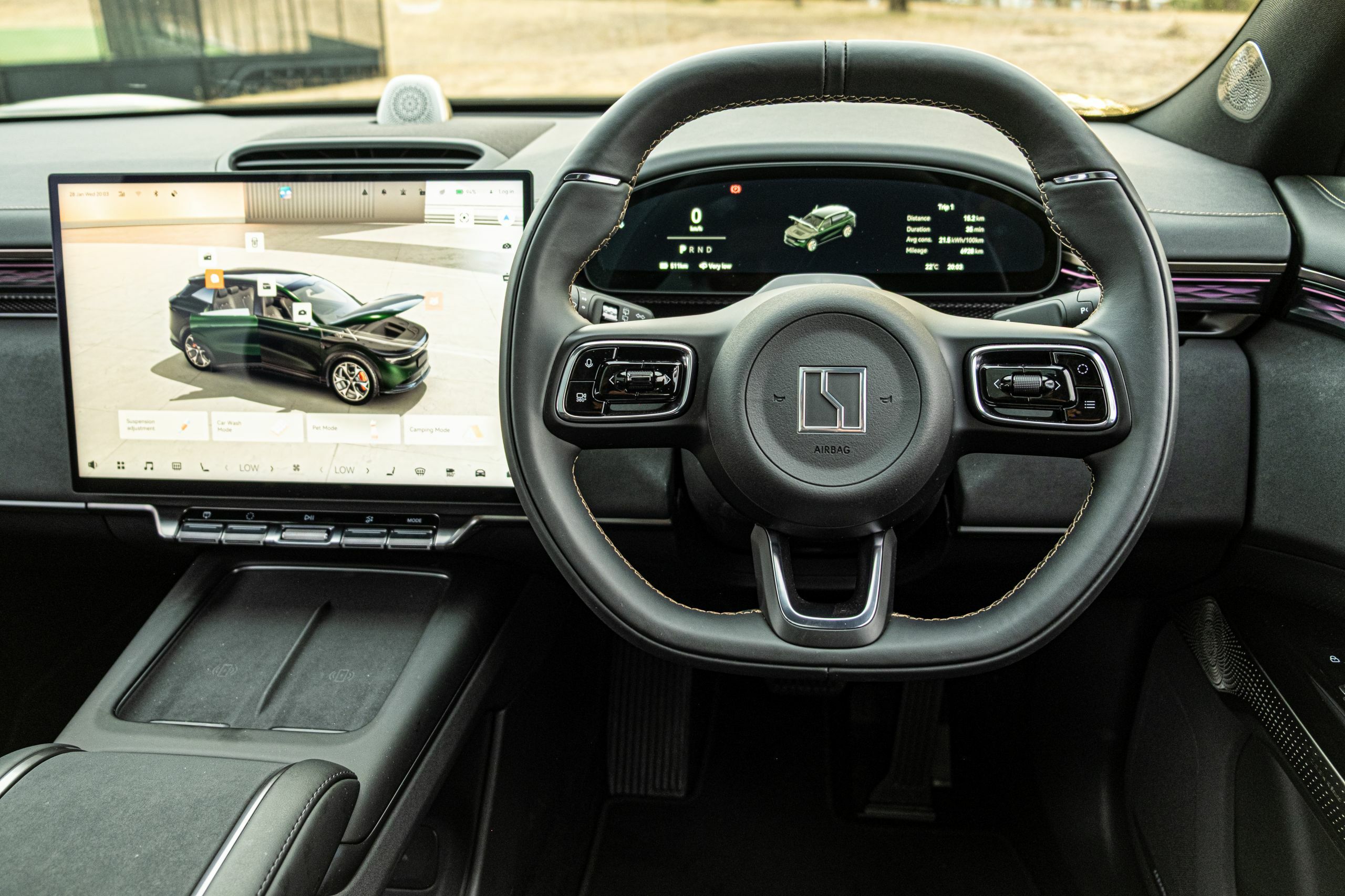
A 16-inch infotainment display sits in the center of the dashboard and is brilliant. It’s among the snappiest I’ve ever used, thanks to the high-end Qualcomm processor, and is an absolute joy to use.
Like so many other EVs, it has a smartphone-inspired setup with a swipe-down menu for shortcuts and notifications, as well as an in-depth settings menu. You don’t have to wait even a split second for the screen to load after sitting inside, and if your phone’s connected, Apple CarPlay or Android Auto will load instantaneously.
All the climate control settings are on the screen, and while auto scribes like ourselves often complain about this, it didn’t bother me in the 7X, as it’s easy to use, even on the move. However, I found it could take up to 5 minutes for the AC to start blasting really cold air on hot days.
What Else Makes The Cabin Stand Out?
The 13-inch digital instrument cluster and 36-inch head-up display are also superb, although the cluster offers very little scope for customization, which is a shame.
Zeekr’s designers and engineers were incredibly thoughtful when crafting the 7X’s cabin. There are beautiful knurled metal switches below the screen, metal speaker grilles on the pillars and door panels, and beautiful soft-touch materials across virtually every square-inch of the cabin, even along the lower parts of the door panels.
Elsewhere, there are hidden pockets on the door’s armrests, two 50-watt cooled wireless charging pads, and a gargantuan center console storage area. There are plenty of luxurious features too, including heated and ventilated seats, as well as massage functions for the front pews, which are among the best I’ve ever used. In the rear, there are even electronic sunshades that deploy at the press of a button, and hidden storage draws under the seats.
Photos Brad Anderson/Carscoops
The 7X Long Range RWD and Performance AWD also include a 21-speaker audio system that’s incredibly adjustable and of great quality, although it didn’t sound quite as crisp as I would have liked. Zeekr has also added a panoramic glass roof, and unlike some rivals, it includes a folding shade. There’s even an interior camera on the B-pillar, which displays a live video to the infotainment screen, allowing drivers to keep a watchful eye on their kids at any time.
What About The Trick Doors?
Then there are the doors. As mentioned, they’re electric. From inside, you touch a button, and they will open, using sensors to determine if there’s an object nearby, automatically adjusting how far they’ll open. When entering, the doors can be pulled shut manually or by pressing the same button. The driver can even close the doors by stepping on the brake, just like a Rolls-Royce.
For the most part, these doors work well, although there were occasions when they didn’t open as wide as they could have, even if there was nothing blocking them. Fortunately, the electric functions can be disabled, and they can be used like manual doors.
The 7X also has adaptive Magic Carpet air suspension with Zeekr’s Continuous Damping Control system and five different ride heights, including one where it looks slammed to the ground, and one where it sits high enough for off-roading.
Visibility is good, though the rear window view is very limited. Given how much tech is found inside the 7X, it’s perhaps surprising that there isn’t a digital rearview mirror, similar to what sister brand Polestar uses. Storage space is great with 539 liters (19 cubic-feet) of cargo space, and 1,978 liters (69.8 cubic-feet) with the rear seats folded down. There’s also a 42-liter (1.4 cubic foot) frunk.
How Does It Drive?
Photos Brad Anderson/Carscoops
With a serious amount of power, it’s no surprise that the 7X Performance AWD feels absolutely ferocious in a straight line. Zeekr says it needs just 3.8 seconds to hit 100 km/h, (62 mph) and that’s a figure we were able to match. There’s no need to worry about the acceleration being capped as the battery drains either, as it’ll still run sub-4.0 second times even below 30 percent state of charge.
The ‘Performance’ name could easily lead you to think this is a focused, razor-sharp model like a BMW M or an Audi RS, but that’s not the case. Let me explain.
SUVs, particularly heavy electric ones that place too much emphasis on dynamic handling, often have compromised levels of comfort. Some owners may be willing to live with this for an occasional blast along a mountain road, but for the vast, vast majority of driving scenarios, luxury EVs like the 7X need to feel polished and comfortable. That’s exactly the feeling Zeekr has achieved.
If you throw the 7X aggressively into turns, it offers immense levels of grip, but can feel a little unsettled. Additionally, the front seats offer very little bolstering, so you can slide around while behind the wheel. However, drive it at 80 percent of its capabilities, or below, and it feels just about perfect.
First is the ride. The adaptive suspension offers Comfort, Standard, and Sport options. The first is very supple, but perhaps is a little too floaty. For most of my time with the 7X, I drove it with the ride in Standard mode, finding it remained soft over speed bumps, without bouncing around unnecessarily. Even in the stiffer Sport mode, it feels softer than some other heavy electric SUVs, like the Kia EV5.
The steering also offers Comfort, Standard, and Sport settings. Regardless of which is selected, the steering remains sharp, even though it lacks communication like virtually all electronic steering systems on the market. Much to my surprise, I left it in Comfort most of the time, enjoying how light and direct the steering was.
Photo Credits: Brad Anderson/Carscoops
Zeekr has also done a superb job of calibrating the brakes, and they feel completely natural, as if there isn’t any regen going on, even though there is. Of course, there is also a one-pedal driving mode, perfect for use in town. However, the one-pedal mode isn’t nearly as strong as some rivals, so unless you lift off the throttle far in advance before a stop, you’ll still need to gently apply the brakes. That’s no drama, as even when driven spiritedly, the big orange calipers feel up to the task.
Whereas the RWD and Long Range RWD models have 19-inch wheels, the Performance AWD sits on larger 21-inch forged units wrapped in Continental EcoContact7 tires. Grip is good, although there’s quite a bit of tire noise at highway speeds. We suspect the 19-inch wheels are quieter.
Is Zeekr’s ADAS As Polished As The Rest?
Zeekr’s ADAS system is also a good one. It’s enabled just like Autopilot on a Tesla, offering good radar cruise control functionality, as well as active lane centering. During multiple long highway stints, it always kept me in the center of my lane and even includes an automatic lane-change function that worked faultlessly.
However, there was also one time when the entire ADAS system was disabled as I hit a bump while crossing onto a bridge. But, for the most part, it works well.
Interestingly, Australian models use a Mobileye software stack for their ADAS, where in other markets there’s an Nvidia system instead. This system is also included in the recently updated 7X launched in China, which features a 900-volt platform, and it is expected to come to Australia next year. According to some reports, the Nvidia system is even better, but we will have to wait and see.
How Far Can It Go?
Zeekr says the 7X Performance AWD can travel up to 543 km (337 miles) on a single charge and quotes power consumption of 19.9 kWh/100 km. During my time with it, I averaged 21.8 kWh/100 km with an even mix of urban and highway driving.
That’s not great, but it is better than the 22.4 kWh/100 km I averaged in the Audi SQ6 e-tron, even though it has 95 kW (127 hp) less grunt than the Zeekr. Those seeking better efficiency would be wise to opt for either the RWD or Long Range RWD models with driving ranges of 480 km (298 miles) and 615 km (382 miles).
What’s The Verdict?
Photos Brad Anderson/Carscoops
The Zeekr 7X is superb in almost all areas. Its cabin is a key highlight: not only does it feel way more premium than a Tesla, but it also feels nicer than the excellent BYD Sealion 7, and many other German EVs, for that matter. Vehicles like the 7X have shattered the illusion that you need to buy something from a premium legacy brand, and to pay a hefty price, to get a high-quality vehicle.
While I haven’t had the chance to drive the RWD and Long Range RWD versions, I suspect that these will suit most buyers more than the Performance AWD. Regardless, all three have been competitively priced, offer amazing features, and once again prove that when it comes to EVs, the Chinese do it better than most.
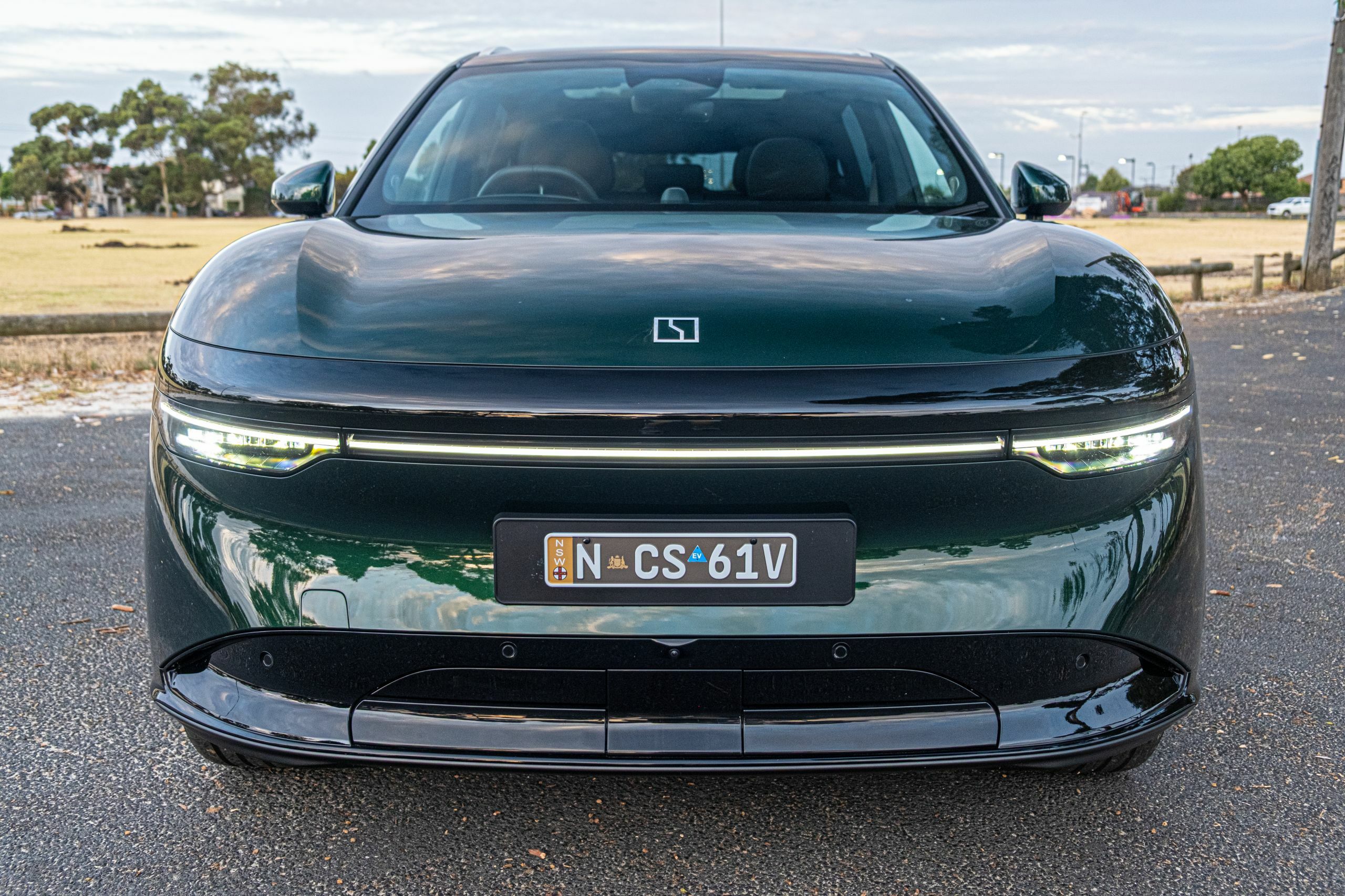
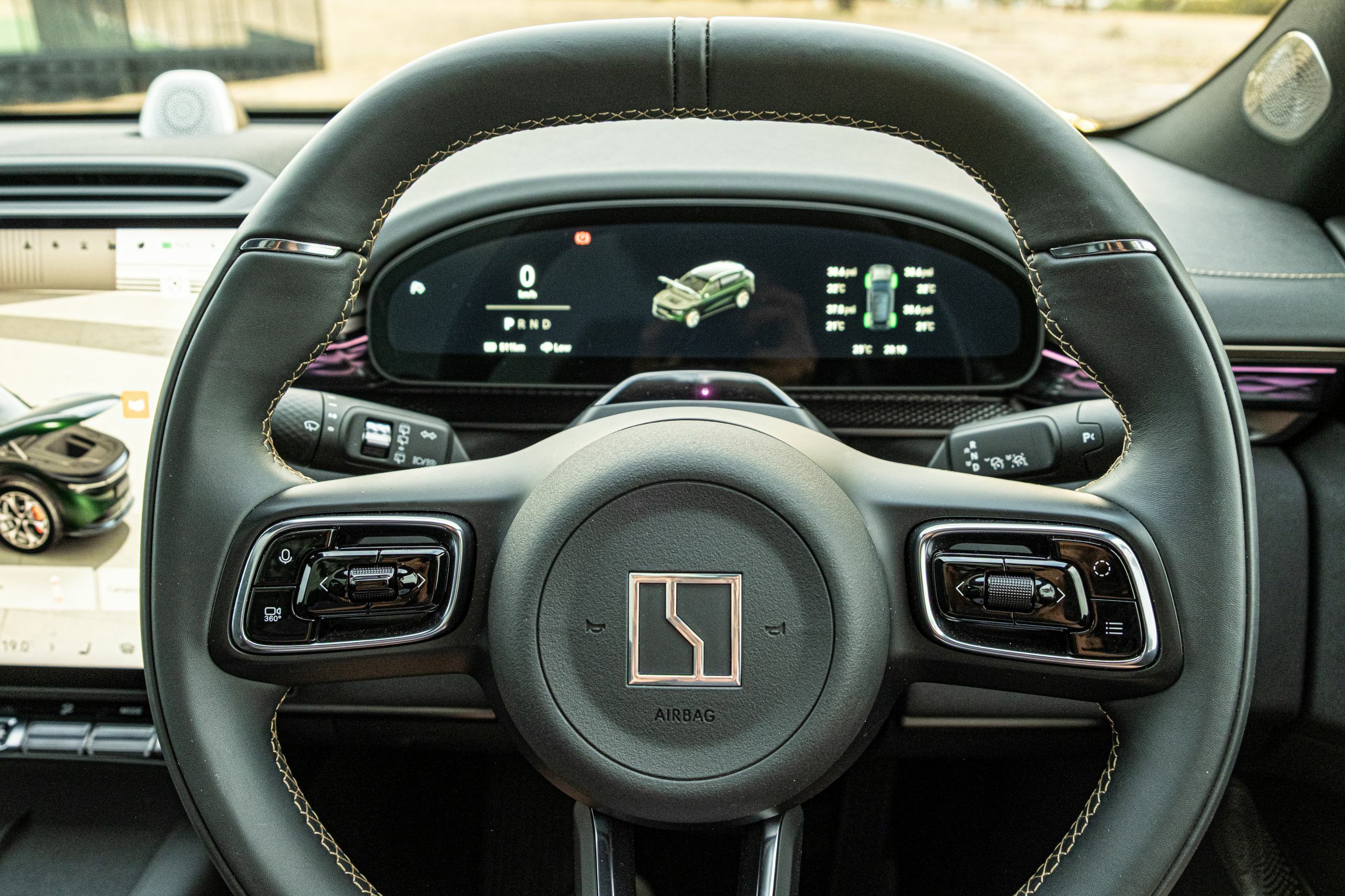
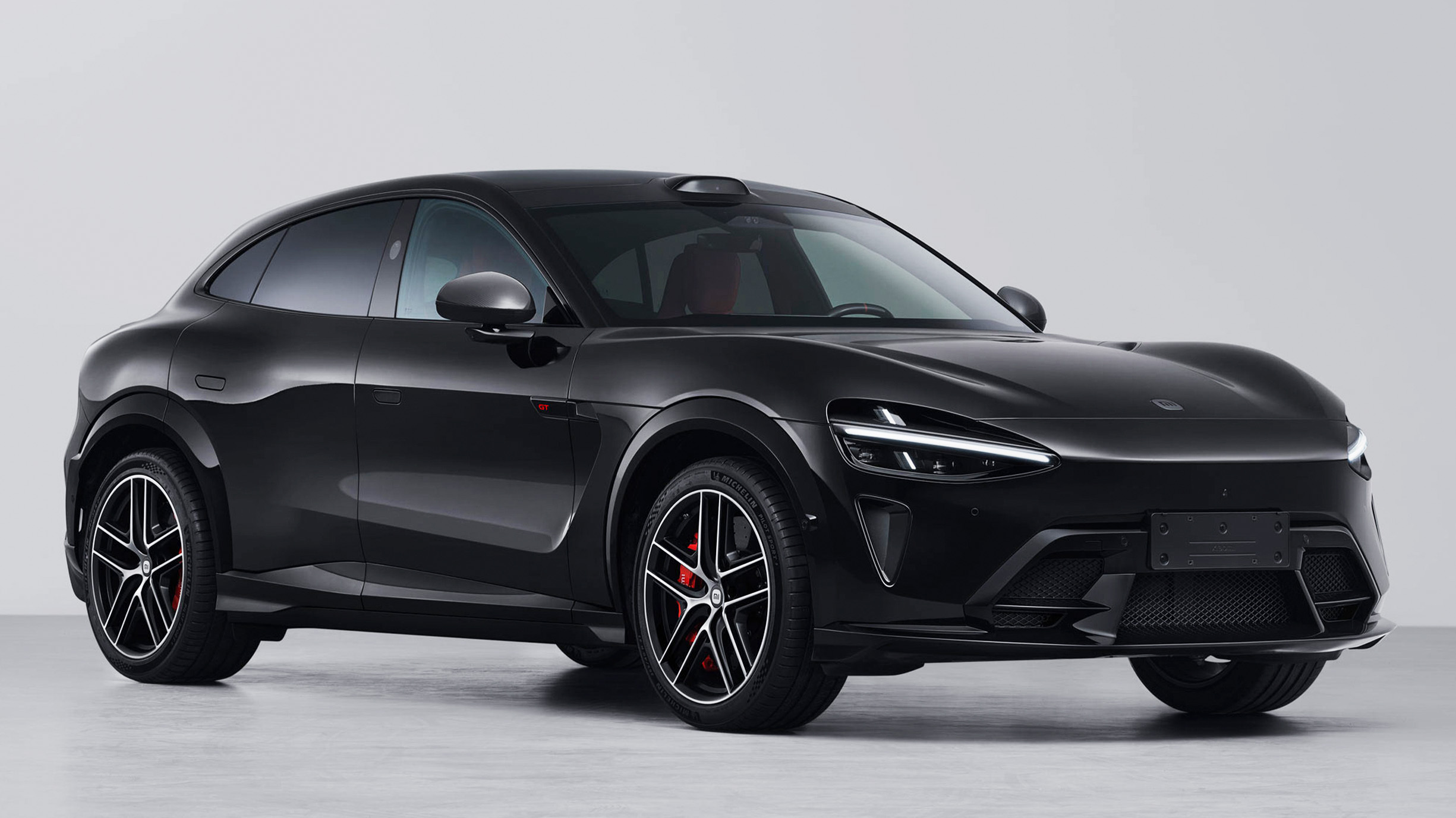
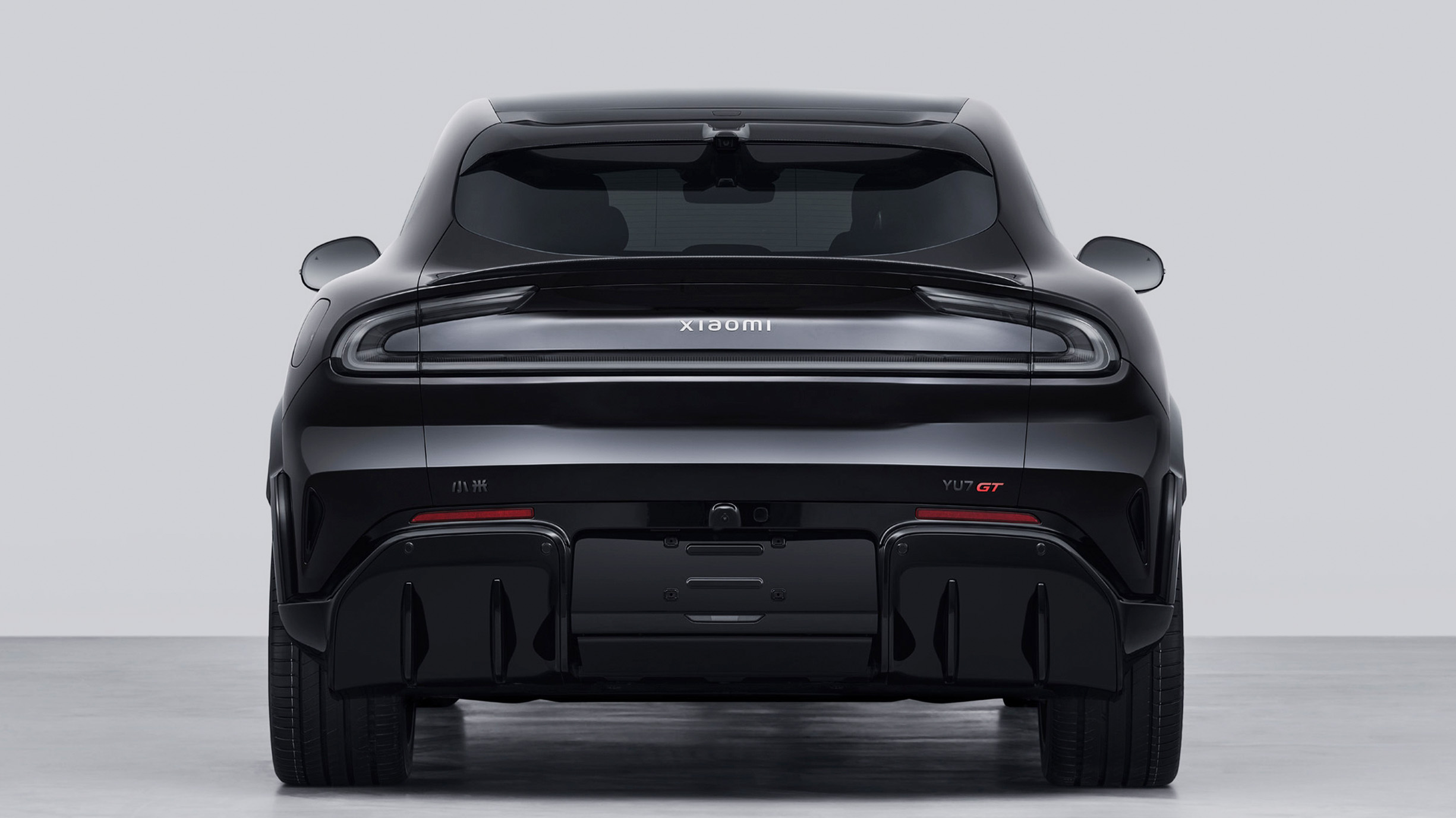
Electric YU7 GT packs 990 hp from dual-motor, all-wheel drive setup.
Voluptuous body bigger air intakes, large rear diffuser, red GT badge.
Reports say the Model Y Performance-eater could cost $60k-$70k.
Xiaomi isn’t content with making an SUV that looks almost as good as Ferrari’s. The Chinese tech giant’s high performance YU7 GT has surfaced in official Chinese filings, and if the numbers are right, this thing has enough power to make some V12 Purosangue owners sweat into their designer driving gloves.
The regular YU7 is already turning heads by mixing sleek looks with serious EV grunt. Now Xiaomi has cranked the dial way past sensible. The GT version gets a dual-motor setup pushing a combined 738 kW, which works out to about 990 hp (1,004 PS). Its combustion Ferrari lookalike makes do with 715 hp (725 PS / 733 kW).
Okay, so that’s not quite as crazy as the 1,526 hp (1,547 PS / 1,138 kW) punched out by the hottest version of the YU7’s sedan brother, the SU7 Ultra, but we doubt anyone who buys one will feel it lacking in go.
Spec papers logged with Chinas’ Ministry of Industry, Information and Technology (MIIT) list the top speed as 186 mph (300 kmh) and we’d put money on that being artificially limited. The battery is a lithium pack from CATL but electric range details are still under wraps.
Subtle Menace
Visually, the GT dials up the drama with, chunkier bumpers with angrier air intakes and a large rear diffuser. Red brake calipers peek out from behind 21 inch wheels, and there are matching red GT badges on the rail and doors to make sure nobody mistakes this for the sensible family version.
The regular YU7 lineup already stretches from single-motor, rear-drive models with around 315 hp (320 PS / 235 kW) up to dual-motor versions with as much as 681 hp (691 PS / 508 kW). Those cars helped Xiaomi rack up huge sales in China and even outranked the Tesla Model Y on home turf.
Priced to Shame Porsche
The YU7 GT sits higher, both in performance and, most likely, price. Early chatter from China point to a range between 450,000 and 500,000 yuan, or roughly $60,000 to $70,000. Porsche’s new Cayenne Turbo Electric makes significantly more power, with 1,139 hp (1,155 PS / 850 kW), but it starts at $163,000 in the U.S. and is expected to cost at least twice as much as the Xiaomi in China. No surprise, then, that Porsche is struggling.
2027 Audi A6 e-tron and Q6 e-tron launch in the second quarter.
Tactile scroll wheels replace some hated haptic buttons on wheel.
Prices start at $66,700 for A6 e-tron and $64,500 for Q6 e-tron.
Not long after updating the 2026 A5 and Q5 models for the US market, Audi has applied a similar round of changes to its electric offerings, the A6 e-tron and Q6 e-tron. Set to arrive in the second quarter as 2027 models, both come equipped with upgraded tech and features.
One of the most noticeable changes lies directly in front of the driver. Audi’s latest steering wheels come fitted with piano-black haptic-style buttons that work either by touch or swipe. They’re difficult to use and should probably be replaced altogether.
Audi hasn’t walked away from the design entirely, but at least it has scaled things back in the 2027MYs. Some of the more finicky haptic controls have been replaced with physical scroll wheels. The one on the right adjusts volume, while the left now controls gauge cluster menus and settings.
2027 Audi A6 e-tron
What Else is New?
As with the updated A5 and Q5, the electric A6 and Q6 models can be optioned with a dashcam through the Premium trim package, while the Premium Plus models include one as standard. The 4K dashcam is mounted at the base of the rear-view mirror and can be configured to automatically save recordings when triggered.
Audi has also added a new Technology package that includes an augmented-reality head-up display and a dedicated display for the front passenger. The infotainment system gets a few upgrades of its own. Navigation has been made more intuitive, and smartphone integration is smoother than before.
Similarly, the virtual cockpit has been tweaked with different displays and now has fewer icons. Regardless of the viewing mode selected, dedicated time and outside temperature displays will appear in the upper-right corner. Of more importance is the fact that a driver’s smartphone navigation, media, and telephone functions can be displayed directly onto the gauge cluster.
2027 Audi A6 e-tron and Q6 e-tron
For the 2027 A6 e-tron and Q6 e-tron models, Audi has also improved its voice control function, meaning it can now be used to operate things like the adaptive cruise control and air suspension. The central and passenger displays can now also be paired with controllers, making them even better for in-car gaming.
Driving Improvements
In terms of driving, Audi has improved the regenerative braking function to include a one-pedal mode. The S6 Sportback e-tron has also been updated to include a new Dynamic Plus driving mode that allows for controlled oversteer.
Three versions of the 2027 Audi A6 will be available. The standard 375 hp e-tron starts at $66,700, followed by the 456 hp e-tron quattro at $68,700. At the top sits the 543 hp S6 Sportback e-tron, priced at $79,600.
The Q6 e-tron comes in four versions. The base e-tron SUV quattro and e-tron Sportback quattro each produce 456 hp, with pricing starting at $64,500 and $68,300, respectively. Above those sit the SQ6 e-tron SUV at $73,200 and the SQ6 Sportback at $75,600.
BMW begins i3 pre-series production at its Munich facility.
Electric i3 promises strong performance and long driving range.
Gas-powered 3-Series continues using BMW’s CLAR platform.
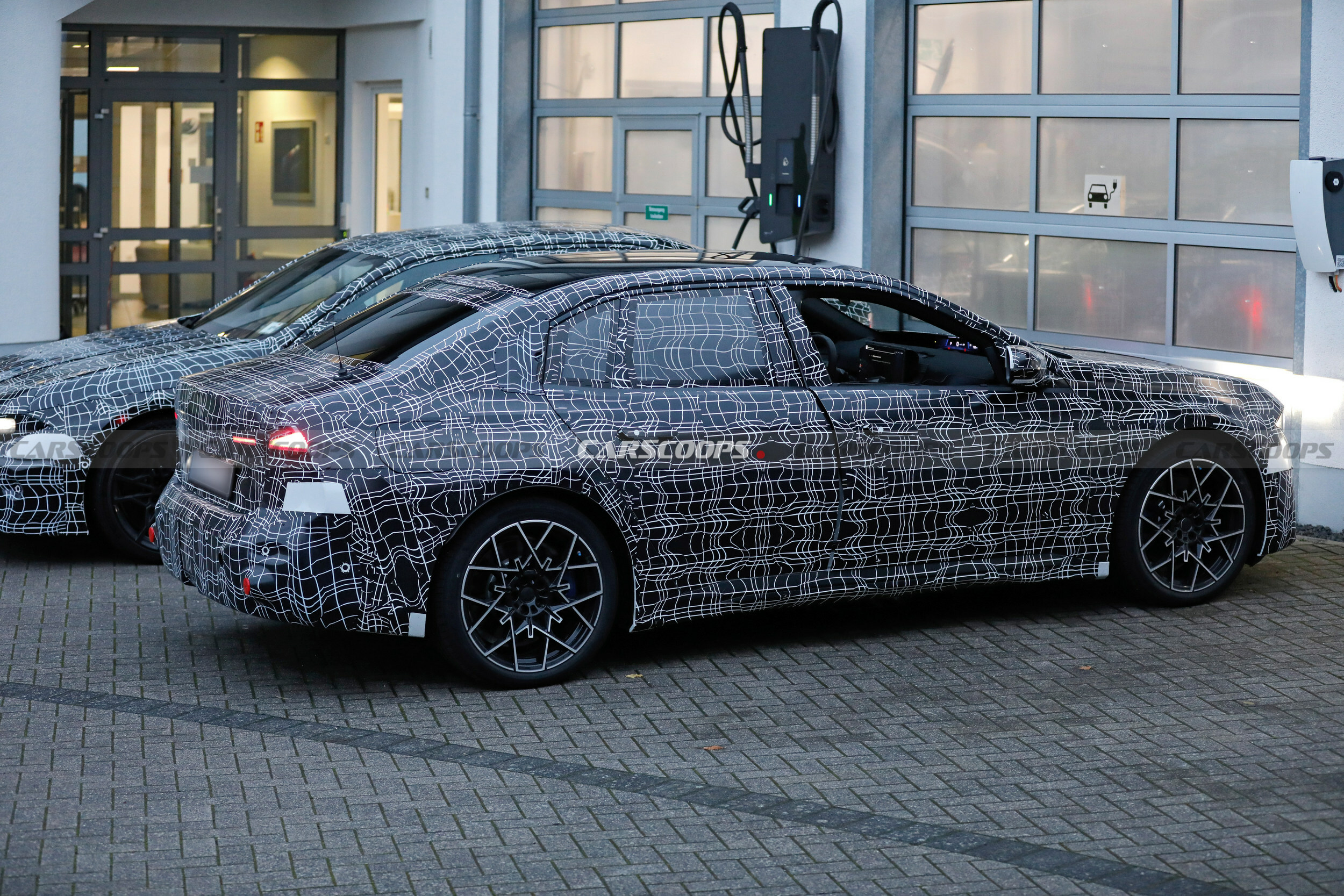
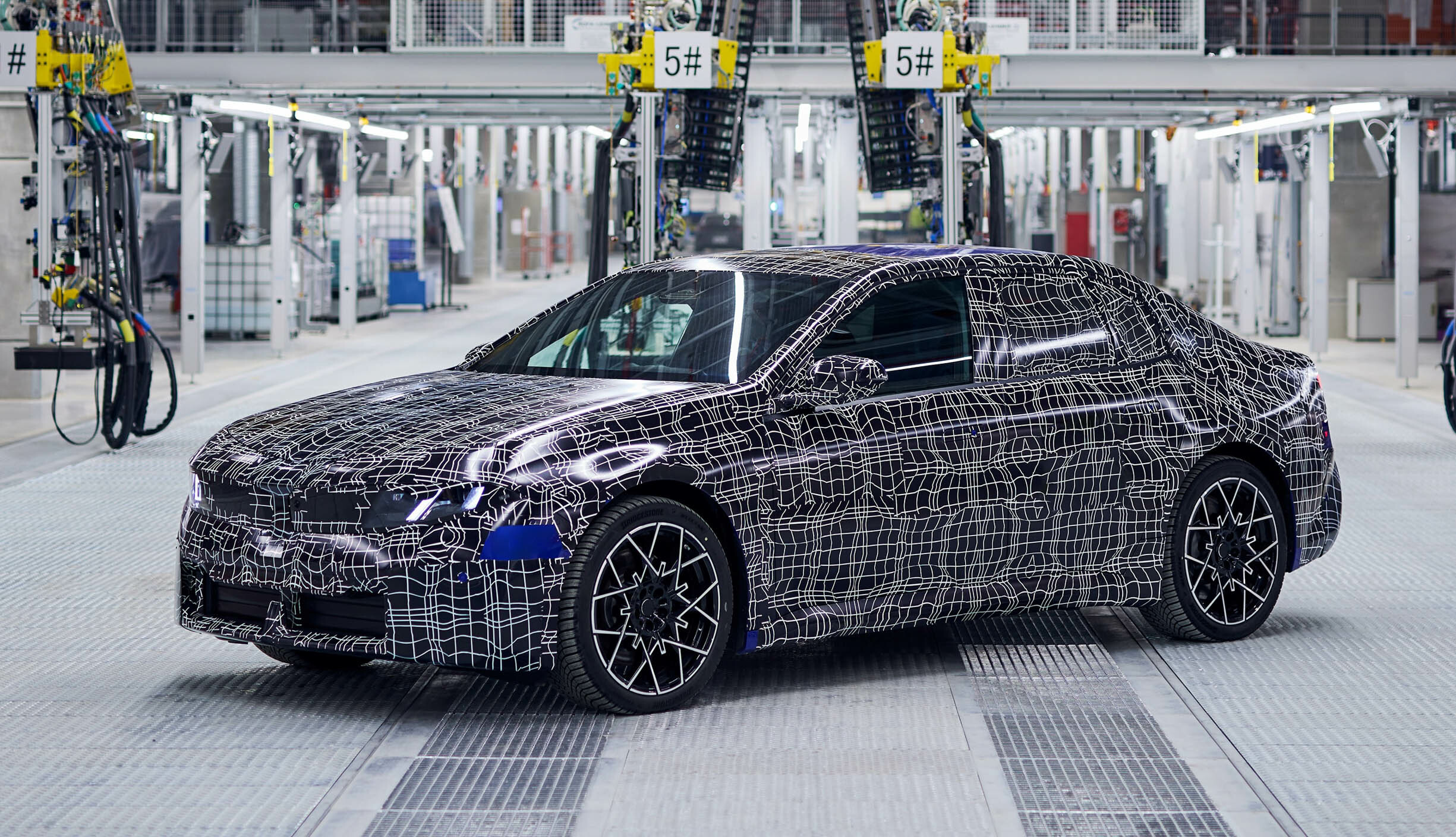
After months of spy shots and speculation, BMW’s all-new electric i3 is officially leaving the theoretical stage. The brand has begun pre-series production at its Munich plant, which means the future 3-Series EV is no longer just a prototype trying to evade Nürburgring photographers.
BMW released official images of camouflaged near-series cars to mark the milestone, confirming that production-spec hardware is now running through the factory. According to BMW, these early cars are built using full production processes, from the press shop to final assembly, to stress-test logistics, equipment, and workflows before series production begins in the second half of 2026.
This is a bigger deal than it sounds. Until now, early i3s were assembled partly at BMW’s pilot plant near its Research and Innovation Centre. With Munich’s new body shop, paint shop, and assembly areas now complete, the i3 finally goes through every production step under one roof, just like a real car should.
The timing fits perfectly with what we’ve seen on the road. Spy shots have shown the electric i3 and the next combustion 3-Series testing side by side, wearing similar Neue Klasse styling but hiding very different bones underneath.
The i3 rides on BMW’s dedicated Neue Klasse EV platform first seen on the 2026 iX3 SUV, while the gas-powered 3-Series sticks with an updated version of today’s CLAR architecture.
Spot the EV
But you won’t need to get them on a ramp to tell them apart, you’ll just have to look closely. The electric i3 has a flatter roofline, different door and window shapes, and even a relocated charging port compared to the fuel door on the ICE model. Inside, though, both will share a futuristic cabin, including a freestanding display and BMW’s pillar-to-pillar Panoramic iDrive screen.
iX3 Powertrain
Powertrain details remain unofficial, but based on what we already know about the iX3, expectations are sky high. The i3 50 xDrive is rumored to deliver around 463 hp (469 PS / 345 kW) and an EPA range that should exceed 400 miles (644 km), backed by a massive battery and ultra-fast DC charging.
An entry-level rear-wheel drive version will follow, with a hotter, heavier, M3 EV also confirmed.
BMW says employee training is now shifting from virtual reality to hands-on work with real machinery, which tells us the launch clock is ticking. The camouflage may still be on, but the electric i3 has clearly entered its final dress rehearsal and the full disguise-free show starts later this year with first deliveries coming in early 2027.
Avatr 06T is a shooting brake version of the 06 sedan.
Targets Nio ET5T with BEV and EREV powertrains.
Debuts Huawei’s new LiDAR and ADS 4.0 tech suite.
Update: Following a series of teasers, Avatr has unveiled the first official photos of the wagon, revealing its exterior design in full for the first time.
Even as SUVs continue to dominate global sales, the Chinese market still makes room for sleeker wagons. One of the latest to step forward is the Avatr 06T, a streamlined shooting brake designed as a more practical counterpart to the brand’s electric sedan aimed at the Tesla Model 3.
The automaker has revealed the exterior design of the new model ahead of an imminent debut. As expected, the front design, complete with split LED headlights, is carried over from the Avatr 06 sedan launched last year. What sets the 06T apart are the roof rails and an extended roofline that flows into a reshaped rear section.
The rear shoulders are more defined, and the rising beltline contributes to a sportier stance than the sedan, helped along by a prominent rear spoiler. The wagon also features a steeply inclined rear windscreen, setting it apart from the sedan’s windowless tail.
The slim full-width LED taillights have a Jaguar-like feel and are paired with a sculpted bumper and an aerodynamic diffuser. The black cladding on the profile and tail sends crossover vibes, although Avatr designers decided to keep the wheel arches clean.
Another important update is the revised door handles that deviate from the flush design of the sedan. This is probably the company’s response to China’s new rules about door handles, and will gradually find its way to the rest of the lineup.
The 06T is expected to share the same 2,940 mm (115.7 inches) wheelbase as the 06 sedan, with an overall length of 4,855 mm (191.2 inches).
Inside, the layout will likely carry over too, including the 35.4-inch display along the base of the windshield and the 15.6-inch touchscreen running HarmonyOS 5.0. Rear passengers can expect more headroom and additional space for luggage.
The wagon will be the first model to feature Huawei’s next-generation 192-line LiDAR sensor, mounted on the roof, along with the latest Qiankun ADS 4.0 driver assistance system. The updated LiDAR boosts detection range to 250 meters (820 feet), a 20 percent improvement over the previous version.
Underneath, the 06T is expected to share its platform with the 06 sedan and the closely related 07 SUV. Both offer a choice between fully electric and range-extender powertrains. The dual-motor EV delivers up to 590 hp (440 kW / 598 PS), while the EREV variant offers a combined range of up to 1,250 km (777 miles). Both versions support 5C fast charging.
When Will It Arrive?
The Avatr 06T is slated to launch in the Chinese market in the coming months. It will compete more directly with the Nio ET5T than with high-end wagon offerings like the Denza Z9 GT, Stelato S9T, and Zeekr 007 GT. Pricing hasn’t been announced, but the 06 sedan currently starts at ¥209,900 ($30,200) in China.
The growing appeal of the 06 and 07 has helped Avatr push average monthly sales to around 10,000 units in China. Even so, the automaker, backed by Changan, Huawei, and CATL, still needs higher volume to keep pace with rivals like Zeekr and Nio.
Tesla adds cheaper all-wheel drive Model Y for $41,990.
Hits 60 mph 2.2 seconds faster than the $39,990 RWD.
Bare spec is carried over, so no light bar or leather seats.
Affordability is a hot topic in America right now and Tesla is tapping into that by expanding on the base Model Y it announced last year. This updated version quietly drops the “Standard” trim name, adds all-wheel drive for improved traction, and knocks down the 0–60 mph (97 km/h) time. The tradeoff, however, is a notable drop in driving range.
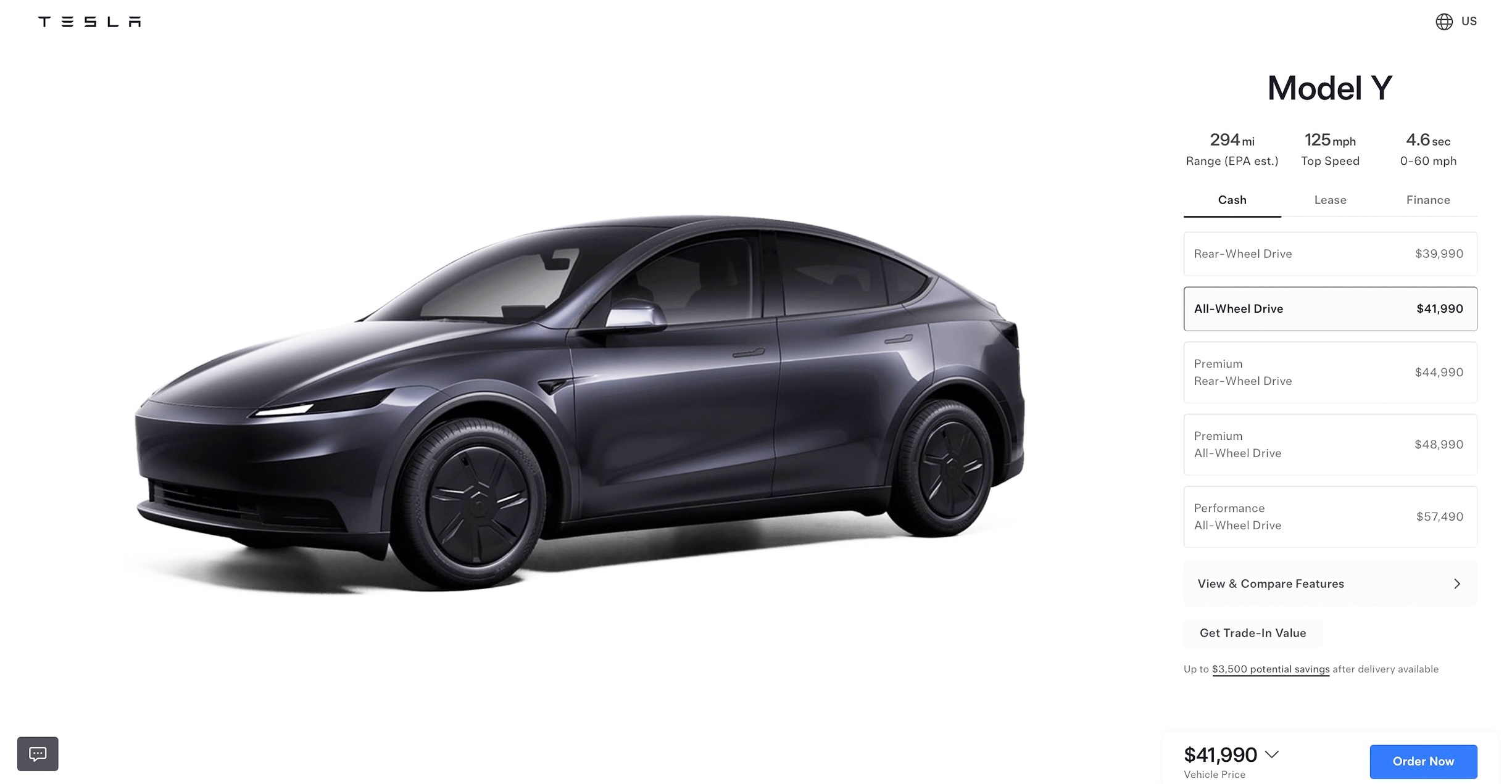
The new Model Y AWD lands at $41,990, sliding between the $39,990 base RWD and $44,990 Premium RWD, while offering a big saving versus the $48,990 Premium AWD. For buyers who want extra traction and stronger acceleration without leaping to the more expensive models, this is the new sweet spot in the lineup.
Performance is where the extra cash shows. With a motor now powering the front wheels as well as the rear, this version slashes the zero to 60 sprint from 6.8 seconds to 4.6 seconds, exactly the same time the $7k pricier Premium AWD needs.
What You Lose
The trade off is range. The extra weight of the front motor means this Model Y gives up around 27 miles (44 km) compared with the 321-mile (517 km) rear-wheel drive version, dropping the EPA range to just 294 miles (473 km). The Premium RWD is rated at 357 miles (575 km) and the Premium AWD claims 327 miles (526 km).
What hasn’t changed when compared with the single motor base Model Y is the stripped back equipment list. This is still a no frills Model Y, with no front light bar, cloth seats instead of the Premium’s leather, a basic hifi with seven instead of 15 speakers, no FM radio, cheaper dampers, smaller wheels and manual rear air vents. And although the panoramic glass roof is still there, Tesla has covered it over with headliner to remind you you’re in the poverty-spec trim.
Sales Slip
The timing makes sense. Tesla sales have cooled in several markets, including the US, a situation exacerbated by the loss of federal EV tax credits, and small lineup tweaks are an easy way to spark fresh interest without developing an entirely new vehicle. A cheaper all wheel drive option broadens the appeal, especially in colder states where buyers like the security of power going to all four wheels.
The Land Aircraft Carrier van includes a working eVTOL drone.
Xpeng will produce up to 10,000 units per year in Guangzhou.
The van runs an 800V EV platform with a range-extender setup.
If you thought Lexus’ six-wheeled minivan concept was a wild one, a radical reimagining floated as a possible LS flagship replacement, wait until you see what Xpeng has been working on.
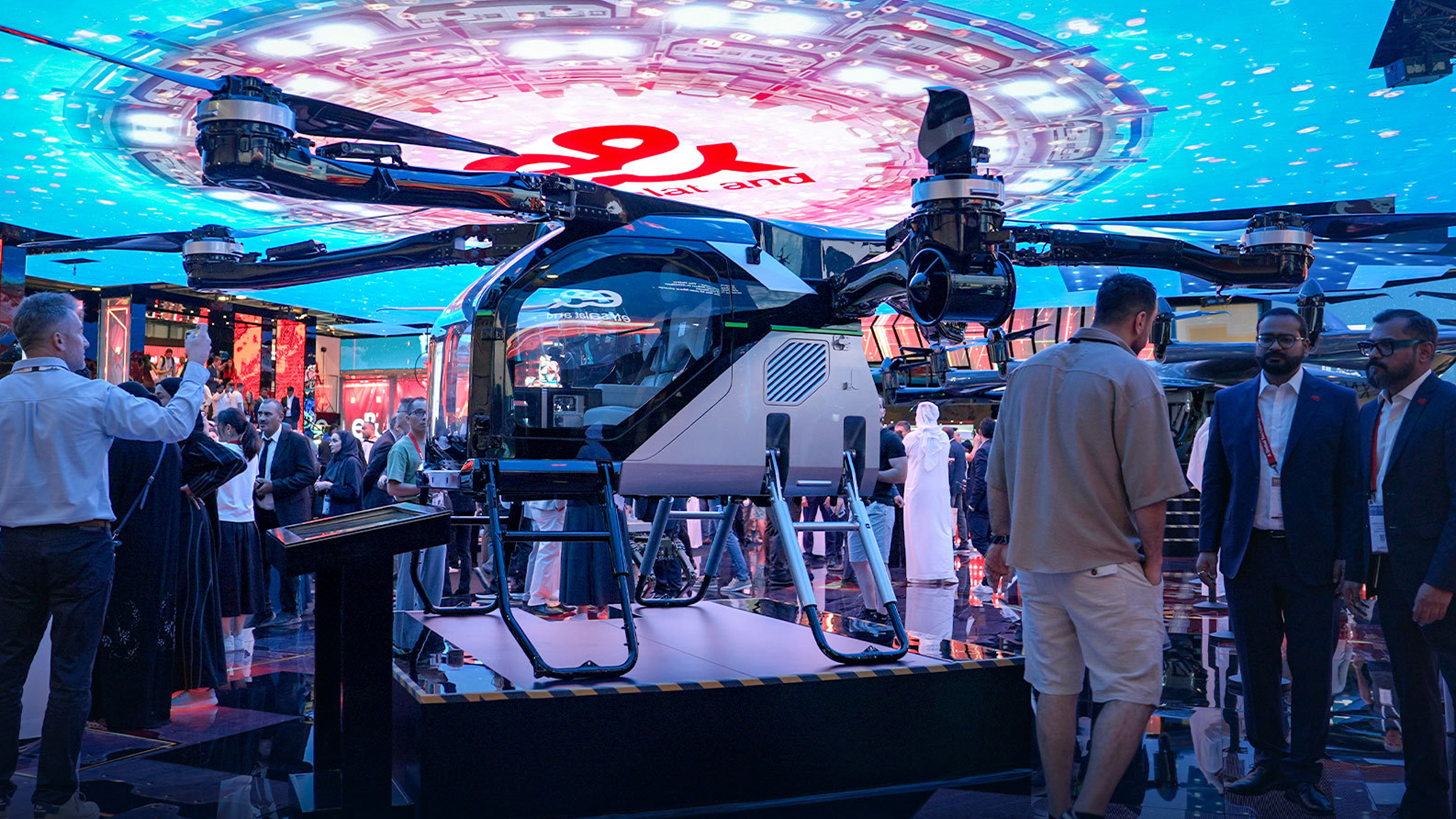
The Chinese tech company has developed a six-wheel minivan of its own, only this one takes things even further. Packed in the back is a fully functional eVTOL aircraft. And while Lexus is still firmly in the daydreaming phase, Xpeng is already preparing for customer deliveries later this year.
The six-wheeler, originally known as the AeroHT and now branded the Land Aircraft Carrier, is coming to market via Xpeng’s newly formed Aridge division, which focuses on aerial vehicles.
From a distance, it might pass for a modified cargo van with oversized ambitions, but this machine has a very specific purpose: it’s been built to transport and house one of Xpeng’s electric vertical take-off and landing aircraft.
Ready for Takeoff
Xpeng is manufacturing both the Land Aircraft Carrier and its matching eVTOL at a dedicated facility in Guangzhou. Production will start with 5,000 units per year, with plans to double that to 10,000. To keep the build process simple, Xpeng will offer only three exterior paint choices: Stellar Silver, Moonrock Gray, and Supernova White.
How Much Does It Cost?
The entire package, van and aircraft included, will start at around 2 million yuan, or approximately $287,000 at current exchange rates. The van itself stretches about 5.5 meters (18 feet) in length, spans 2 meters (6.6 feet) in width, and stands 2 meters tall. It’s sizable, but not unwieldy, especially considering it’s designed to carry an entire flying vehicle in its cargo area.
Technical specs on the van’s powertrain are still relatively sparse. What we do know is that it will run on an 800-volt electrical system and feature a range-extender EV setup. The company is targeting a driving range of more than 620 miles (1,000 kilometers).
In a clever bit of design integration, the van’s trunk will also serve as a charging station for the onboard aircraft.
Crash Raises Safety Concerns
Speaking of the aircraft itself, it’s made largely from carbon fiber and has six rotors. Although the eVTOL has received local airworthiness certification, a pair of prototypes collided with each other during a rehearsal flight at an airshow last September.
One of the aircraft crashed and burst into flames after the impact, but fortunately, no one was killed in the crash. However, the accident may erode some of the confidence those with an order have.
Toyota and Daihatsu launch electric kei vans in Japan.
Powertrain delivers 63 hp and up to 160 miles of range.
Prices are nearly triple those of gasoline equivalents.
After years of delays and development setbacks, Japan’s long-awaited electric kei vans from Toyota, Daihatsu, and Suzuki have officially made the leap from concept to production.
The three brands have confirmed the market launch of their collaborative battery-powered van lineup: the Toyota Pixis Van BEV, the Daihatsu e-Hijet Cargo, and the Daihatsu e-Atrai RS. Suzuki’s equivalent, the nearly identical e-Every, is also on the way. These production models arrive almost three years after the original trio debuted in prototype form back in 2023.
On the outside, these new zero-emission vans mirror their combustion-engine siblings, which have been on sale since 2021. The main visual clue is the addition of a charging port on the front bumper.
Between the Toyota and Daihatsu versions, the only visible difference lies in the badges. The e-Atrai RS, Daihatsu’s more passenger-friendly variant, is sold exclusively in a single RS trim. It features black steel wheels, color-matched accents, chrome detailing, and power sliding doors on both sides.
Inside, the highlight is the new shifter, sourced from other Toyota models such as the Prius. Equipment includes heated front seats and auto A/C for greater efficiency, a USB port, an AC 100V outlet for powering external devices, and an enhanced preventing safety system called Smart Assist.
Practicality remains central, with an overhead compartment and smart storage solutions integrated throughout the cabin. More importantly, the move to electric power leaves both the cargo space and the 350 kg (772 lb) maximum load capacity untouched.
Fully Electric Powertrain
The kei vans are identical under the skin, riding on the Daihatsu New Global Architecture (DNGA) platform with a new powertrain developed jointly by Suzuki, Daihatsu and Toyota.
A single rear-mounted electric motor (e-axle) produces 63 hp (47 kW / 64 PS) and 126 Nm (93 lb-ft) of torque. That matches the output of the turbocharged 660cc three-cylinder gasoline engine, with an added 35 Nm (26 lb-ft) of torque.
The floor-mounted lithium-ion battery pack has a capacity of 36.6 kWh, allowing a WLTC range of 160 miles (257 km) between charges. This is 36 miles (57 km) more than the targeted figure during development, and should be enough for urban deliveries. It is also slightly better than the 152 mile (245 km) range of the Honda N-Van e: which is their main competitor.
A full charge is completed in around 6 hours from a standard 6 kW outlet, while a 50 kW fast charger will take it to 80% in 50 minutes. Finally, the EVs are compatible with Vehicle-to-Home (V2H) technology.
Engineers have also applied BEV-specific structural reinforcements to the chassis, promising better handling thanks to the lower center of gravity, and improved ride comfort thanks to the new trailing-link rigid-axle rear suspension and the optimised spring rates.
A Premium for Zero Emissions
The jump to electric doesn’t come cheap. Both the Toyota Pixis Van BEV and Daihatsu e-Hijet Cargo start at ¥3,146,000 (about $20,300 at current exchange rates) in Japan, nearly three times the cost of their entry-level gasoline counterparts, which begin at ¥1,100,000 (roughly $7,100). The Daihatsu e-Atrai RS comes in higher still, starting from ¥3,465,000 ($22,400).
Production will take place at Daihatsu’s plant in Nakatsu, Japan. Toyota is targeting 50 sales per month, while Daihatsu expects to move around 300 units monthly.
We’ve grown accustomed to how quickly electric cars evolve, but few models illustrate that pace of change as clearly as the latest iteration of Audi’s e-tron GT. What is essentially Audi’s halo EV has been completely reengineered in just a few short years. This isn’t your usual mid-cycle refresh, and Audi isn’t pretending it is.
Sales of the original e-tron GT kicked off in Europe back in mid-2021, though Australian deliveries didn’t begin until late 2022. Fast forward just over 18 months, and Audi has already rolled out a completely new e-tron GT line-up, one so far ahead of its predecessor that even the latest base model now outguns the previous RS flagship in power.
QUICK FACTS
› Model:
2026 Audi RS e-tron GT Performance
› Starting Price:
AU$309,900 ($216,800) as tested
› Dimensions:
4,996 mm (196.6 in.) Length
2,158 mm (84.9 in.) Width
1,394 mm (54.8 in.) Height
2,901 mm (114.2 in.) Wheelbasee
› Curb Weight:
2,330 kg (5,136 lbs)
› Powertrain:
Dual electric motors / 97 kWh battery
› Output:
912 hp (680 kW) / 757 lb-ft (1,027 Nm) w/Launch
› 0-62 mph
2.5 seconds
› Transmission:
Twin speed
› Efficiency:
21.0 kWh/100 km as tested
› On Sale:
Now
SWIPE
This new model went on sale Down Under towards the end of 2025, and we recently had the opportunity to live with the flagship model in the range, the all-new RS e-tron GT Performance. I was not prepared for what I would discover.
What’s New?
Photos Brad Anderson/Carscoops
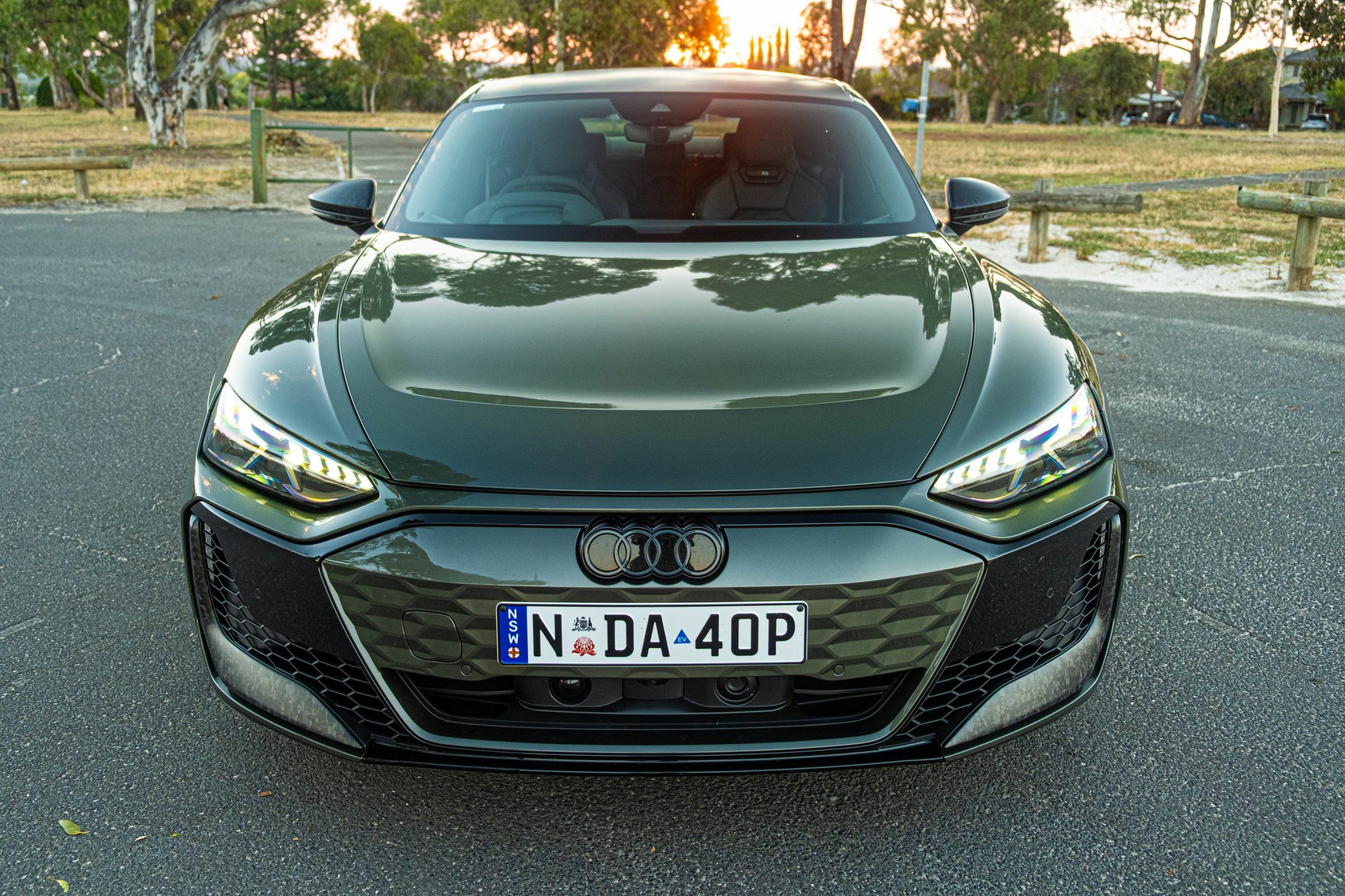
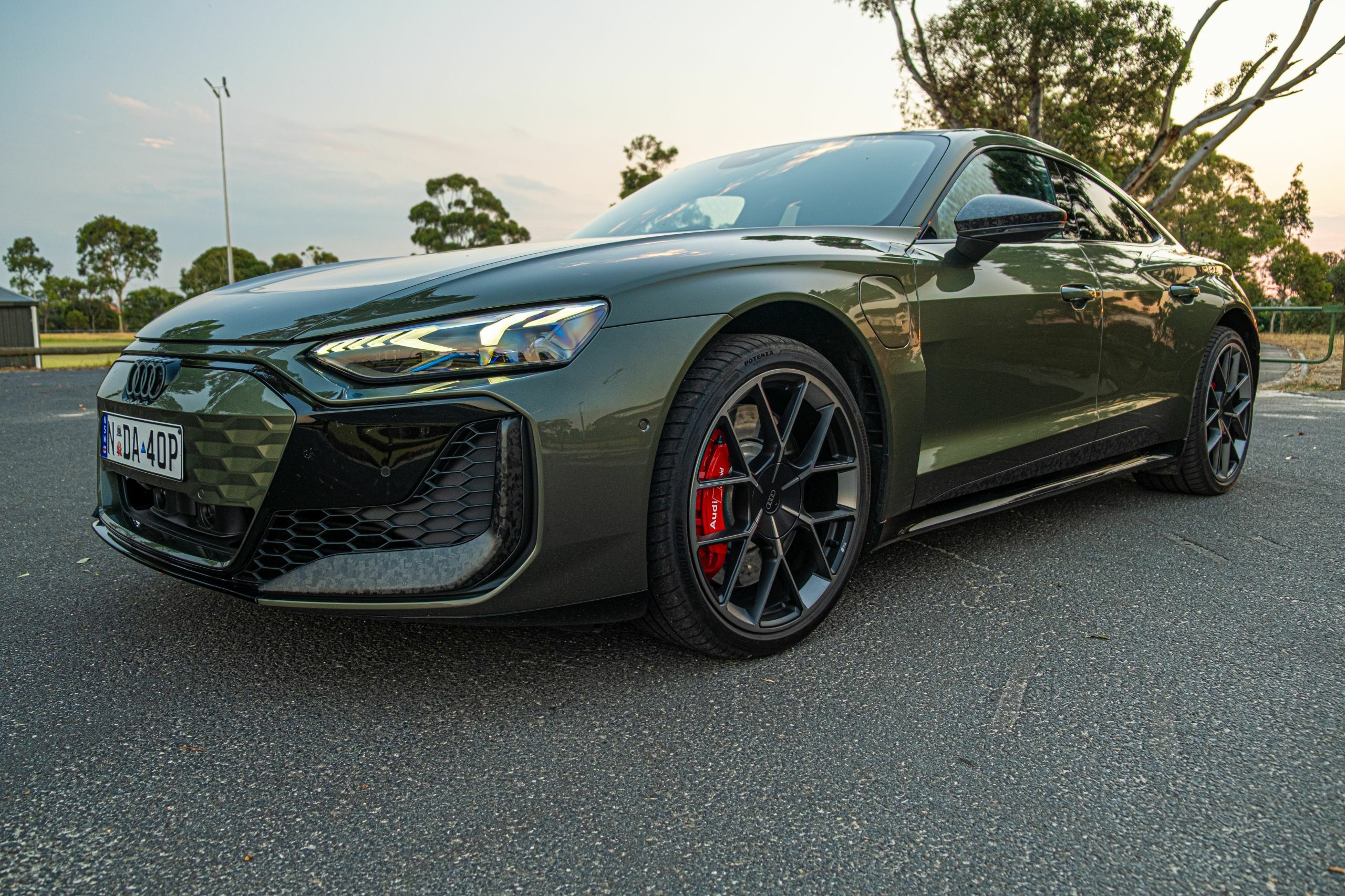
Most would agree that the e-tron GT is an extraordinary piece of automotive design. We’d argue it’s the best-looking EV on the market, and one of the finer-looking sedans of the past decade. However, the original RS version just didn’t look special enough.
Aside from minor visual tweaks, the flagship version looked virtually identical to the base model, which was somewhat disappointing for an RS-branded car. Audi appears to have addressed these complaints and, for the 2026 RS e-tron GT and RS e-tron GT Performance models, has ensured they stand out from the base version.
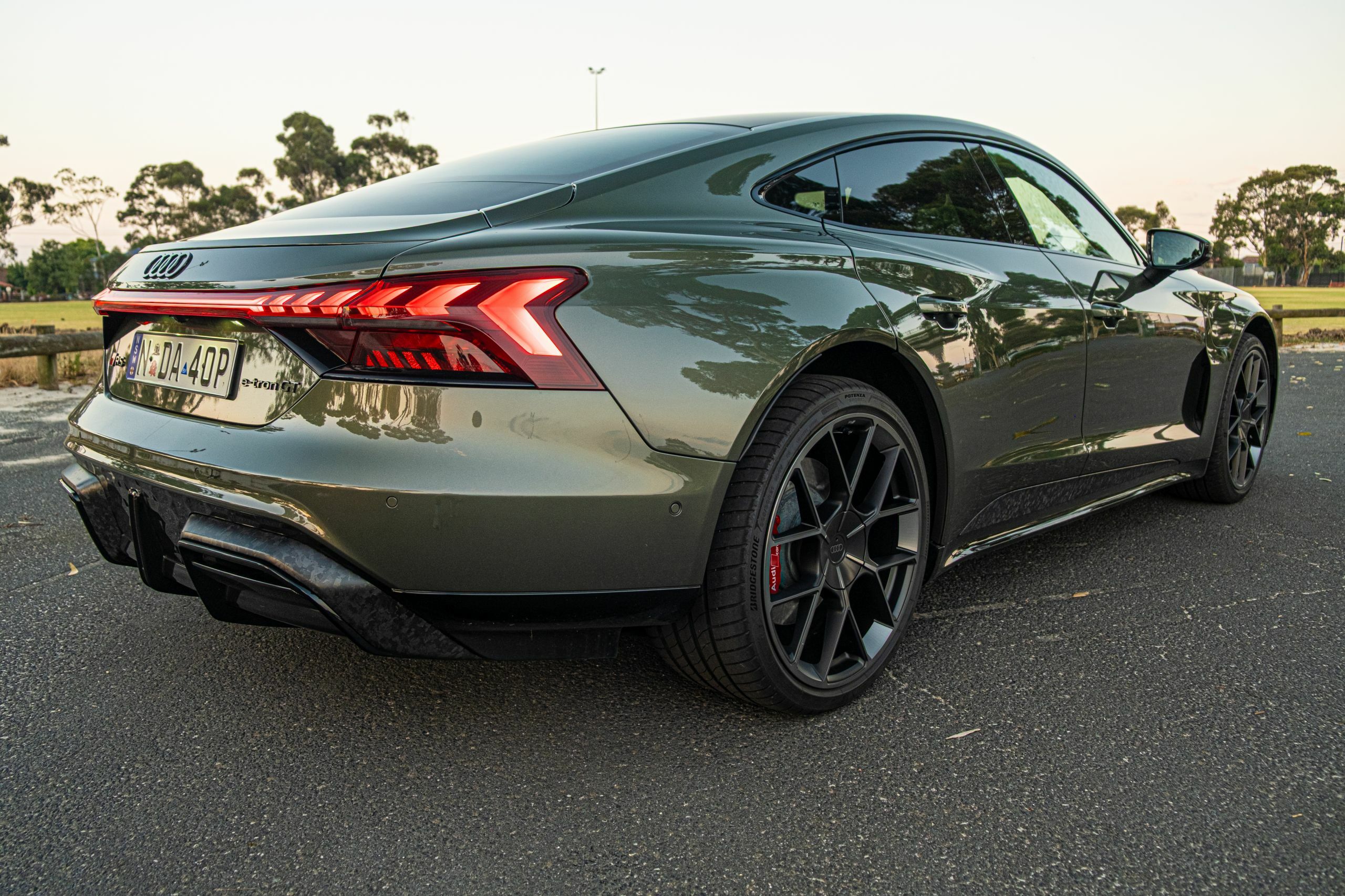
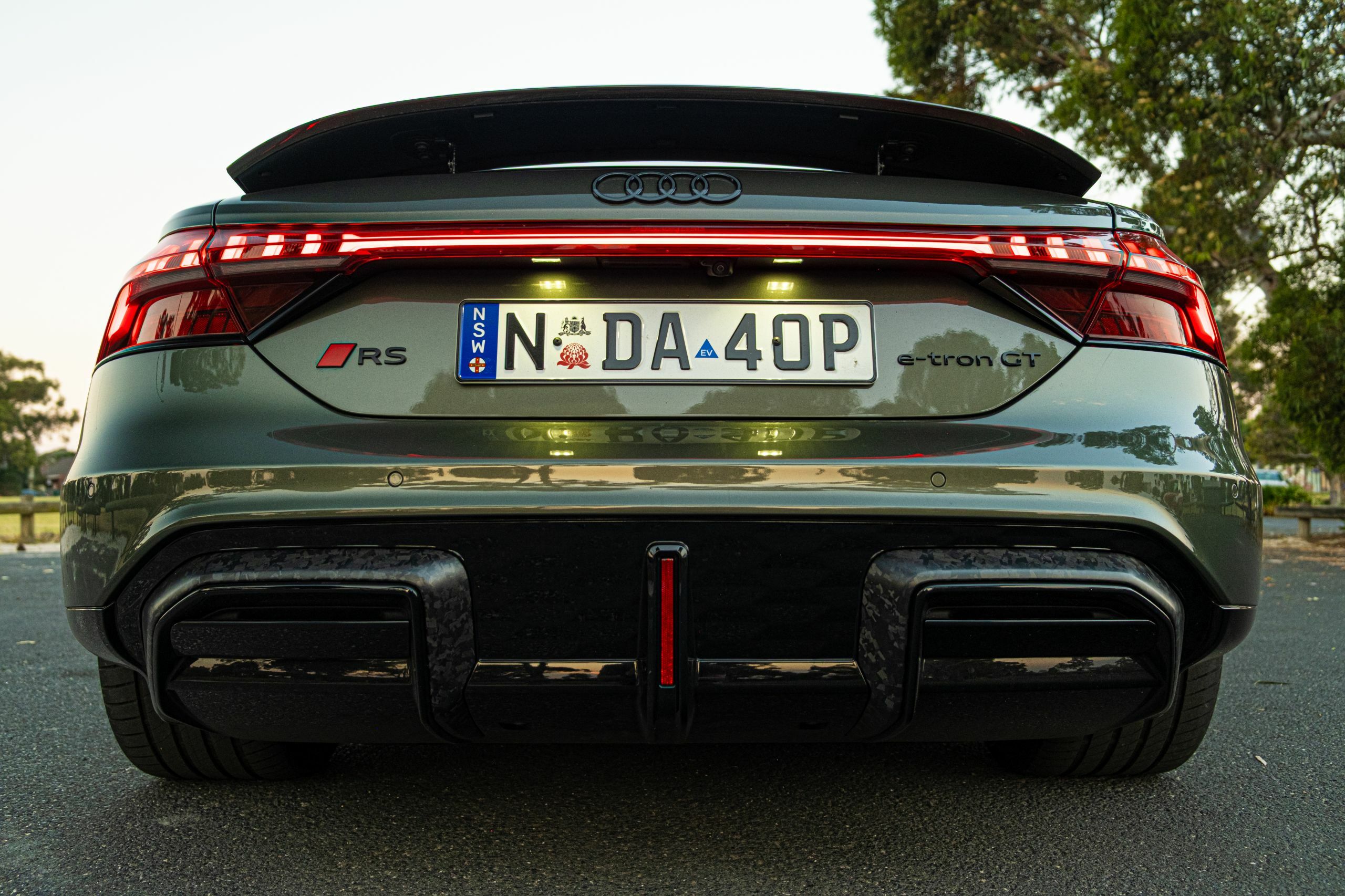
The most obvious updates are found at the front. While the same basic grille has been retained, the front air intakes are now more aggressive, with a forged carbon fiber finish, as on our test car. The bold new touches continue at the rear with a bespoke diffuser, also finished in forged carbon, and a set of unique six double-spoke 21-inch wheels.
An Updated Powertrain
These updates are welcome, but they pale in comparison to the changes that Audi has made under the skin. The 84 kWh battery pack of the old model has been removed and replaced with a larger 97 kWh battery that weighs 9 kg (19.8 lbs) less. Additionally, all three e-tron GT versions now support DC charging speeds of up to 320 kW, a welcome boost from the 270 kW of the old model.
Then there’s the power. The base S e-tron GT has 500 kW (670 hp) and 717 Nm (529 lb-ft) with launch control, allowing it to hit 100 km/h (62 mph) in 3.4 seconds and drive 558 km (347 miles) on a charge. The mid-tier RS e-tron GT is rated at a peak of 630 kW (845 hp) and 865 Nm (638 lb-ft), running to 100 km/h in 2.8 seconds and boasting a driving range of 522 km (324 miles).
The daddy of the line-up is the RS e-tron GT Performance we tested, Audi’s equivalent to the refreshed Taycan Turbo S. It peaks out at 680 kW (912 hp), 1,027 Nm (757 lb-ft) of torque, and can hit 100 km/h in a claimed 2.5 seconds. It does all of these while boasting a range of 528 km (328 miles). It’s not cheap, however. In Australia, prices for the flagship start at AU$309,900 ($216,800), though our test car included several options, bringing the total to AU$324,400 ($226,900).
A Cabin To Remember
Photos Brad Anderson/Carscoops
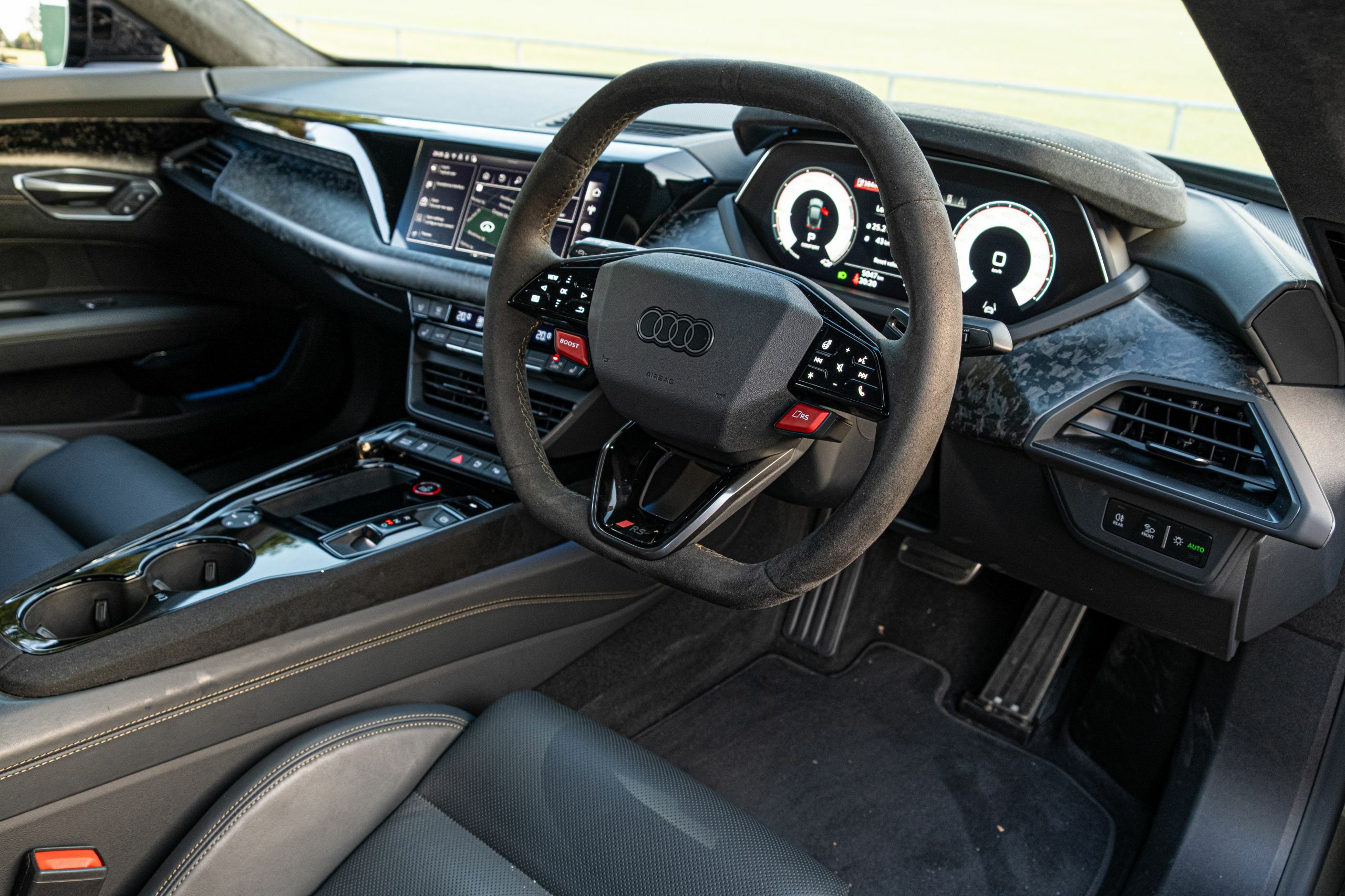
The interior of the new RS e-tron GT Performance is largely the same as the pre-facelift model, but does benefit from some updates. These include a new flat-bottom and flat-top Alcantara steering wheel with bright red Boost and RS buttons.
Our tester was also fitted with the AU$4,500 ($3,100) performance design package, adding several green accents and Nappa leather. It also included the AU$10,000 ($7,000) Matt carbon camouflage package, which adds forged carbon to the exterior, side sills, dashboard, and door panels. The look of the carbon won’t be to everyone’s tastes, but it’s certainly striking.
Most touchpoints are excellent, and the cabin carries a premium feel. Still, much of the switchgear and lower-grade plastics come straight from less expensive Audi models, which is somewhat disappointing given the car’s sky-high price tag.
Among the key features carried over from the pre-facelift model are the superb RS-branded front seats, the 10.1-inch infotainment display, and the 12.3-inch digital instrument cluster. There’s wireless Apple CarPlay and Android Auto, a thumping 16-speaker Bang & Olufsen audio system, and among the finest front seat massage functions of any car currently on sale. To put it simply, the RS e-tron GT is a joy to spend time in.
Perhaps the most obvious downside of the incredibly good looks and that swooping roofline is that headroom in the rear isn’t great for tall adults. It also feels a little sparse back there with just a pair of USB-C ports and simple fan speed controls.
Unrelenting Acceleration
Photos Brad Anderson/Carscoops
Heading into my week with the RS e-tron GT Performance, I knew it was going to be the quickest car I’d ever driven. But nothing could quite prepare me for this EV’s ferociousness off the line, and yet its plushness and comfort during daily driving.
As mentioned, Audi quotes a 0-100 km/h time of 2.5 seconds. Try as I might, I was never able to match that with my GPS timer, recording a best time of 2.63 seconds, covering the sprint to 100 km/h in just 39.1 meters (129 feet). If you can actually feel the difference between 2.63 and 2.5 seconds, congratulations, you might be part stopwatch. As for what that kind of speed feels like? Absolutely brutal.
Pin the throttle and the Audi throws you back into the seat, building speed in a way that is truly terrifying. Like the original e-tron GT, this new model retains a two-speed transmission. While the original shifts into second gear at around 85 km/h (53 mph), the flagship Performance model will hold first gear for as long as possible, enabling remarkable acceleration.
During my testing, it felt like the car changed into second gear at around the 120 km/h (75 mph) mark, and when it does, the EV accelerates even faster, as if it’s a spaceship getting sucked into a black hole. It’s absolutely mesmerizing. Remarkably, the car delivers this performance while struggling to put all its power to the ground.
Regardless of whether the ESC is on, in Sport mode, or disabled entirely, the car will spin all four wheels to beyond 100 km/h, leaving faint black tire marks in its wake. I have no doubt that if I had been able to find a grippier piece of tarmac to reduce wheel slip, a 2.5-second run would have been achievable.
Chassis Changes
Photos Brad Anderson/Carscoops
Equally impressive as the way the RS e-tron GT Performance lurches forward is the new active suspension system. It builds upon the already remarkable setup of the old car, using technology similar to what’s found in the facelifted Porsche Taycan.
There’s trick air suspension working alongside two-valve dampers that eliminate the need for traditional anti-roll bars. In Comfort mode, the system is so advanced that it can actually lean the car into a corner, while in one of the RS modes, the suspension activates to eliminate even the slightest hint of body roll. Yes, despite the car weighing 2,330 kg (5,137 lbs), it has an uncanny ability to remain flat, even during high-speed slaloms.
I was offered my first taste of this system when I unlocked the car for the first time. As soon as I opened the driver’s door, the ride height quickly jumped up a couple of inches, making it easier to get in. When exiting, the same thing happens. It’s a neat party feature that can be disabled if owners prefer not to have it.
Presented with a mountain road, the car absolutely shines. Fitted with 265/35 front and 305/30 Bridgestone Potenza Sport tires, the RS e-tron GT Performance can speed through corners beyond what some potent sports cars can do, with very little fuss. It’d take a very brave soul to push this thing to its limits on the road, and it probably needs to be driven on a track to be fully appreciated.
As with before, the comfort is also superb. With the suspension in one of the softer settings, the e-tron GT soaks up bumps better than any other Audi, oftentimes making potholes and speed bumps feel almost non-existent. It honestly beggars belief how comfortable the car is on long journeys. An all-wheel steering system also ensures it’s easy to drive in tight urban areas and parking lots, reducing the risk of curbing those inevitably very expensive wheels.
All of the incredible performance comes at the expense of efficiency. Audi quotes efficiency of 21 kWh/100 km, and while I was able to match that figure, it’s slightly higher than the old car. But, just like you shouldn’t buy an Audi RS6 Avant expecting it to be fuel efficient, the Performance isn’t the type of EV you should buy if you want to eke out as much range as possible.
Critiquing the car’s handling is rather difficult. Some may find the steering to feel overly assisted and unnaturally sharp, but I grew accustomed to it very quickly.
One frustrating issue I experienced with the parking sensors is that they beep incessantly and loudly, as if you’re about to hit something, even when there are several inches of clearance. There were also a couple of occasions when the rear-cross traffic alert system was engaged while I was reverse parking, even though there was no risk of hitting anything.
Verdict
The e-tron GT remains the best EV that Audi currently produces, and the flagship RS e-tron GT Performance provides true supercar-levels of performance, making it one of the most engaging and enjoyable EVs to drive, too.
The additional performance Audi has added is extraordinary, but it comes at a cost. The old flagship started at AU$246,875 ($172,700), or more than AU$63,000 ($44,000) less than the new one. That’s a sizeable price hike, regardless of the changes made. If this new model follows the same depreciation curve as the pre-facelift model, it could be an absolute bargain in a few years.
IM Motors revealed the LS9 Hyper SUV with three electric motors.
It features a 1.5L turbo range extender and 65.9 kWh battery pack.
Rear-wheel steering gives it a 16.2-foot turning radius in tight spots.
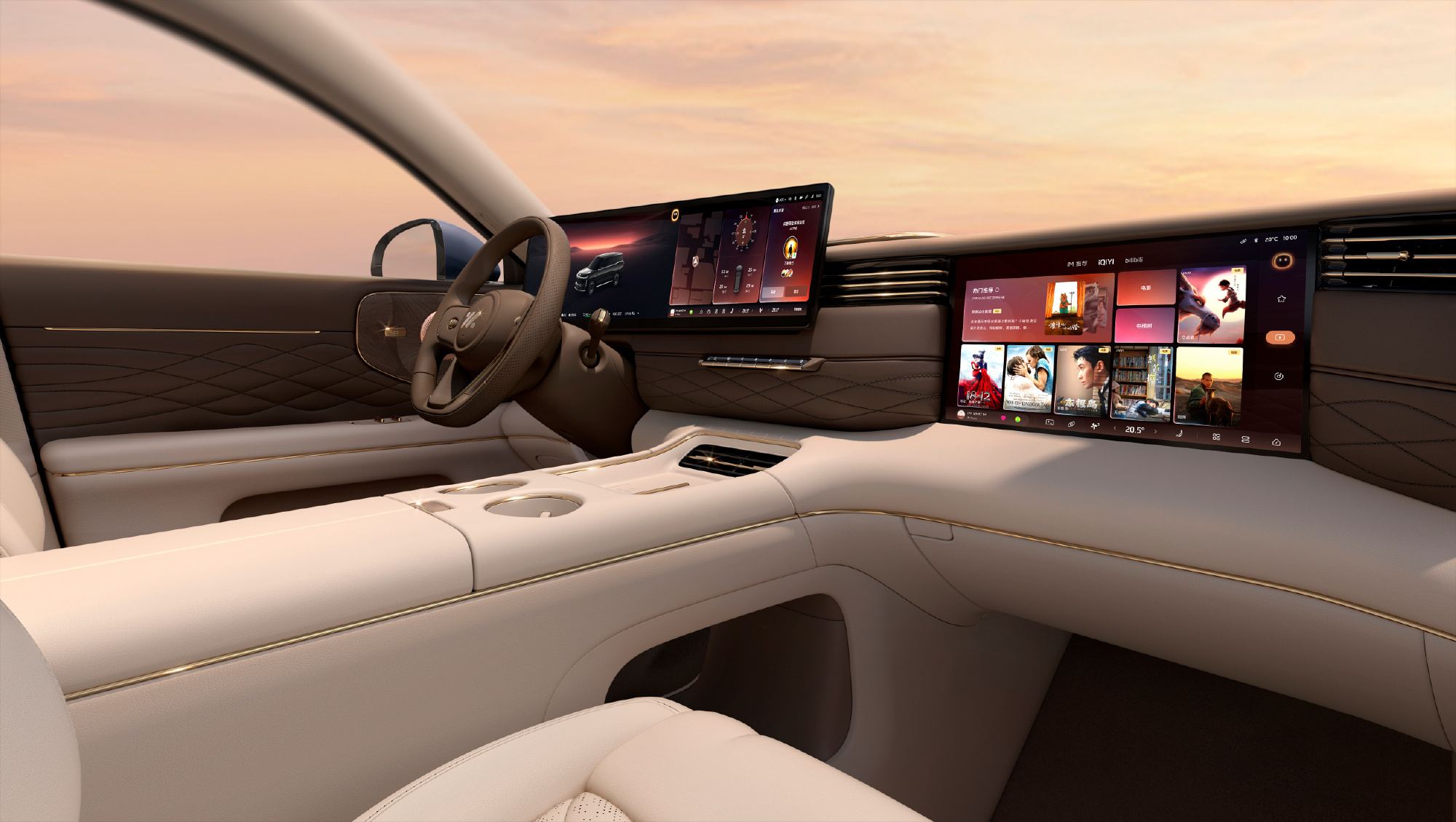
IM Motors, the upscale joint venture from MG and Chinese e-commerce giant Alibaba, has pulled the covers off its latest flagship. Named the LS9 Hyper, this SUV builds on the standard LS9 that debuted last year, layering in high-spec upgrades aimed at Chinese buyers who want their tech-laden luxury served in insulated comfort.
Whereas IM Motors’ smaller offerings like the IM5 and IM6 go all-in on battery-electric power, the LS9 Hyper takes a different route. It’s a range extender rather than a full EV. Under the hood is a 1.5-liter turbocharged four-cylinder engine with 153 horsepower, but its only job is to recharge the 65.9 kWh battery.
Power is delivered through a single 215 hp electric motor at the front axle, backed up by two 261 hp motors at the rear. This setup offers an estimated all-electric range of 191 miles (308 kilometers). The three electric motors also provide torque vectoring, though we don’t think many owners will be hustling this beast through the corners.
The LS9 Hyper also debuts a clever all-electric, all-wheel 24-degree smart steering system, believed to be a first for a vehicle in this class. It achieves a turning radius of just 4.95 meters (16.2 feet), roughly two meters tighter than a Smart ForTwo.
As you can no doubt tell from the photos, this thing is big. In fact, it is 5,279 mm (207.8 inches) long, 2,000 mm (78.7 inches) wide, and stands 1,806 mm (71.1 inches) tall with a massive 3,160 mm (124.4-inch) wheelbase.
The exterior design isn’t particularly noteworthy, but it does look classy. At the front, a light bar and vertically oriented headlights. It also includes a roof-mounted LiDAR and is available with 20-, 21-, and 22-inch wheels. Adding to the fancy looks are silver accents running along the base of the side and rear windows.
Many of the fancy MG’s best features are found in the cabin, which hasn’t been revealed yet, though it’s expected to mirror the LS9 shown here. There’s a single 27.1-inch display, encompassing the cluster and infotainment screen, as well as a separate 15.6-inch monitor for the front passenger.
Audiophiles will have plenty to enjoy with the Bang & Olufsen sound system, while all occupants benefit from massaging seats and an underfloor heating system. Rear-seat passengers aren’t overlooked either, with access to a 27-inch 5K display that folds down from the headliner.
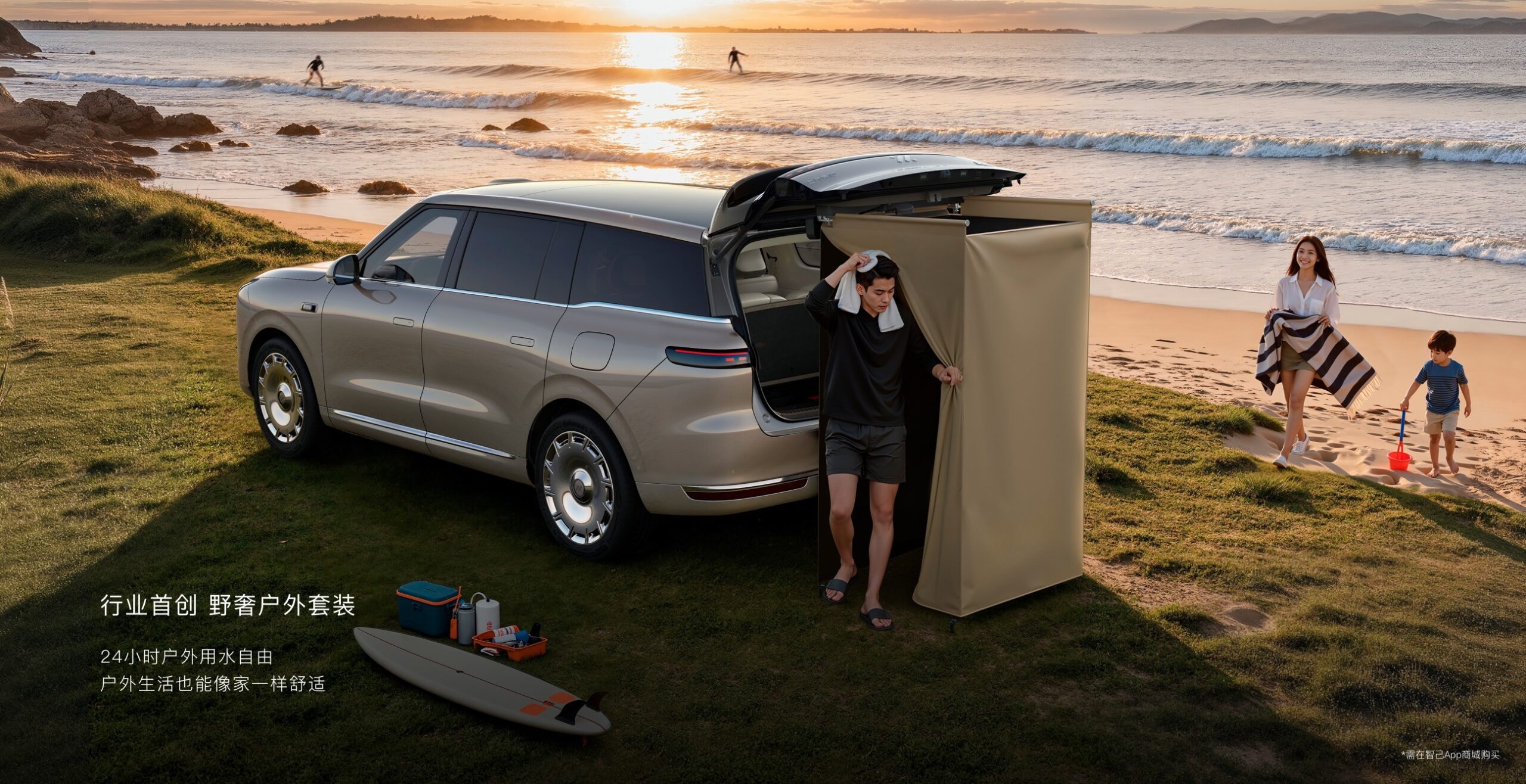
And in case that’s not quite enough, as with the regular LS9, IM will also offers the option of an integrated shower unit built into the tailgate.
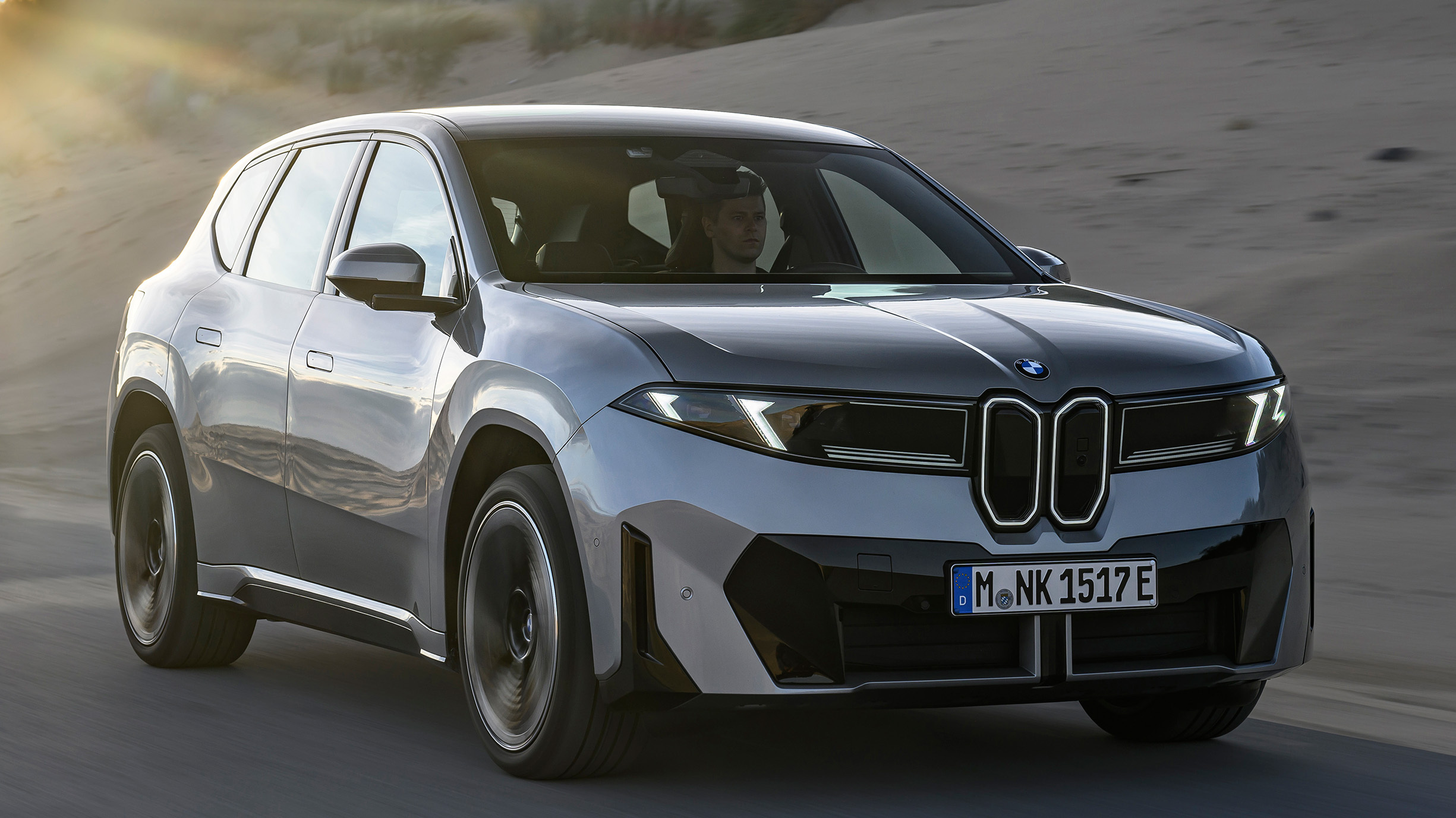
Neue Klasse iX3 demand is so strong BMW is adding production shifts early.
Strong early sales bode well for the Neue Klasse 3-Series arriving later this year.
BMW also upgrades charging, colors, and range for iX3 and other electric SUVs.
The Neue Klasse revolution has barely begun and already BMW has a problem. The good kind. Buyers are snapping up the new electric iX3 so quickly that it’s almost sold out through to the end of 2026, forcing the company to speed up plans for extra factory shifts.
That’s a big vote of confidence for a car customers haven’t even driven yet. Since its debut last autumn, the iX3 has made up around a third of BMW’s electric orders in Europe. Deliveries only start in March, yet much of the planned output is effectively gone.
To keep wait times from stretching into next winter, BMW is bringing forward a second production shift at its brand new Debrecen plant in Hungary, Auto News reports. The site is BMW’s first factory built purely for EVs, and while it’ll eventually build around 150,000 cars a year, it’s currently still ramping up. Clearly, that ramp needs to get steeper.
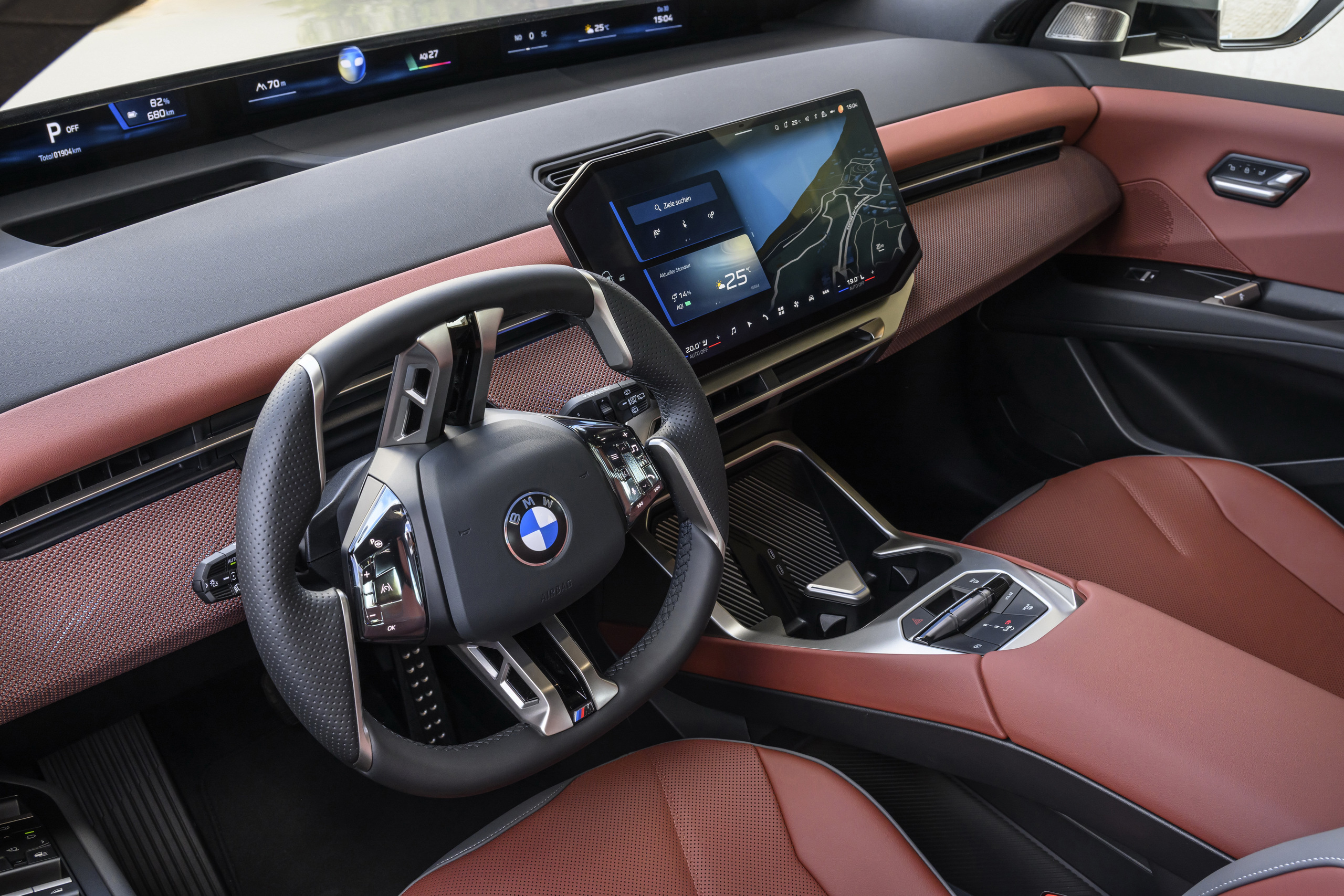
This matters far beyond one SUV. The iX3 is the first model on BMW’s all-new Neue Klasse platform and wears a bravely modern Neue Klasse design, as will the upcoming Neue Klasse 3-Series replacement later this year.
If buyers are this enthusiastic about the SUV, BMW executives will be feeling pretty good about the electric sports sedan waiting in the wings.
More Tech, More Color for 2027MY
BMW isn’t wasting time in adding polishing the package to make the iX3 even more desirable, either. From spring, the compact SUV gains an optional 22 kW AC charging upgrade, cutting home and workplace charging times. It also adds Vehicle to Load capability, letting owners power external devices at up to 3.7 kW and making camping trips more sophisticated.
There are fresh paint choices, too, including Eucalyptus Green metallic and Frozen Space Silver, plus some interior trim tweaks and the introduction of new options like a stainless steel loading sill, bright white steering wheel and an M-striped key.
Smaller SUVs Get Some Love Too
And BMW’s older electric crossovers aren’t being ignored this year, even if the iX3 is hogging the spotlight. The iX1 and iX2 receive more efficient silicon-carbide semiconductor components, boosting range by about 25 miles (40 km) depending on version. That’s a handy bump for everyday usability, improving the previously poor range of the best-performing eDrive20 to as much as 319 miles (514 km).

 Login
Login