Normal view

There are new articles available, click to refresh the page.
Yesterday — 27 February 2026Main stream

Stellantis Admits EV Bet Went Too Far, $26 Billion Later

  • Stellantis posts $26.3B net loss for FY 2025.
  • Dividend suspended, $5.9B bonds issued.
  • ICE and hybrid pivot lifts H2 shipments.

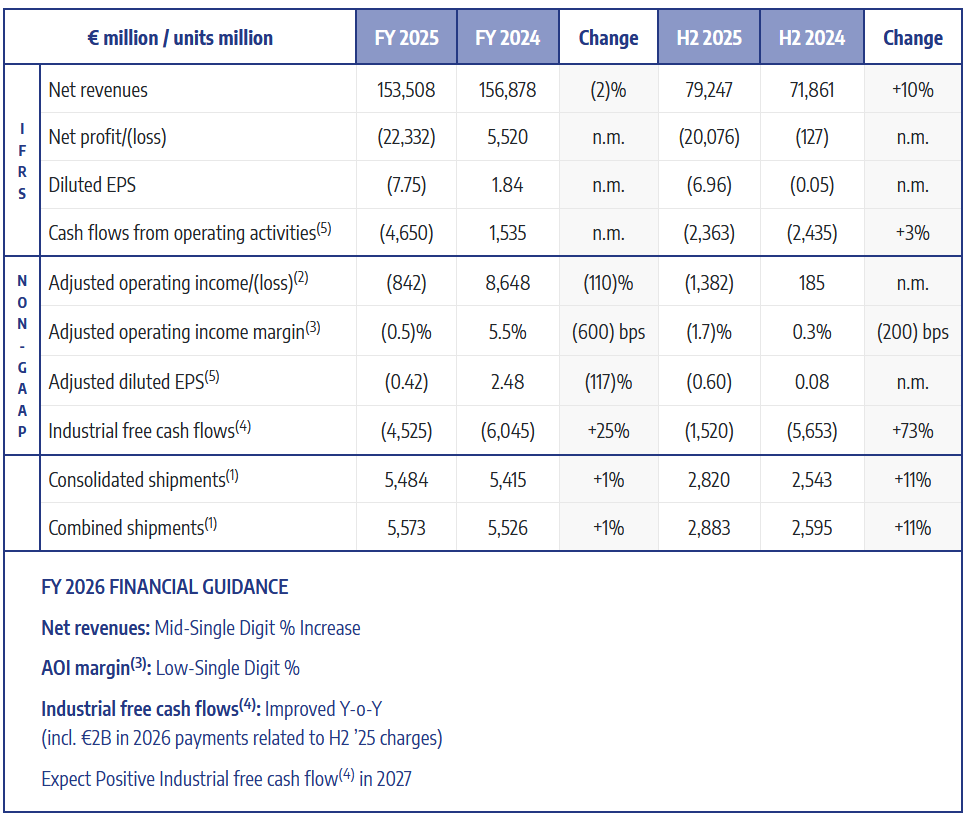
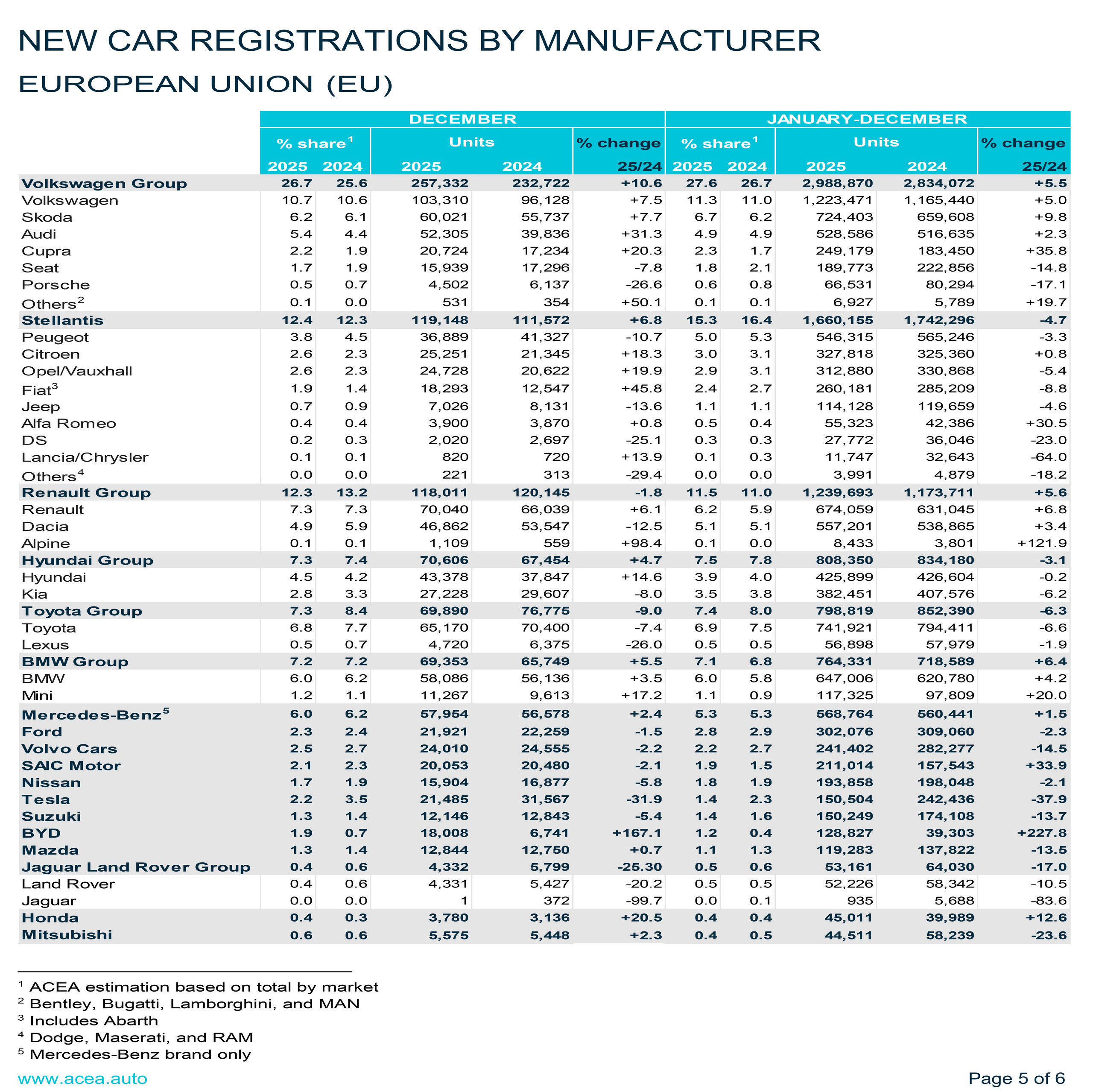
Stellantis has published its 2025 financial results, and they make for sobering reading. The headline figure is a €22.3 billion deficit, equal to $26.3 billion at current rates, marking the group’s first-ever annual loss. That swing looks even worse when set against 2024’s €5.5 billion ($5.8 billion) profit, which was already down 70% compared to 2023. In the span of two years, the company has gone from profitable to deep in the red.

The group, which owns 14 brands including Abarth, Alfa Romeo, Chrysler, Citroen, Dodge, DS Automobiles, Fiat, Jeep, Lancia, Maserati, Opel, Peugeot, Ram, and Vauxhall, attributes the damage to €25.4 billion ($30 billion) in “unusual charges,” largely tied to what it calls a “profound strategic shift to meet customer preferences.” In plain terms, Stellantis overestimated how quickly the market would pivot toward electric mobility and is now paying to recalibrate.

More: Stellantis Bet Big On EVs, Now It’s Betting On The Engine Europe Wrote Off

That is only part of the story. It wasn’t just a matter of customers being slow to embrace EVs. Several of Stellantis’ electric efforts, particularly in the US, struggled on their own terms. Models such as the Dodge Charger Daytona EV and the Jeep Wagoneer S were priced at the upper end of their segments yet struggled to justify that positioning against established rivals.

Rethinking Its EV Strategy

Regardless, that recalibration means canceling several electric models that were in development, mainly for the US market, and putting new emphasis on high-margin combustion engines. The return of the HEMI V8 in North America is the obvious attention grabber.

In Europe, diesel and mild-hybrid gasoline options are being folded back into the lineup across several current and upcoming models, including the now-delayed Alfa Romeo Stelvio and Giulia replacements.

 Stellantis Admits EV Bet Went Too Far, $26 Billion Later

“Our 2025 full year results reflect the cost of over-estimating the pace of the energy transition and of the need to reset our business around our customers’ freedom to choose from the full range of electric, hybrid and internal combustion technologies,” said Stellantis CEO Antonio Filosa.

“In the second half of the year we began to see initial, positive signs of progress with the early results of our drive to improve quality, strong execution of the launches of our new product wave and a return to top line growth. In 2026 our focus will be on continuing to close the execution gaps of the past, adding further momentum to our return to profitable growth.”

How Does Stellantis Plug The Gap?

The financial strain has prompted the board to suspend the 2026 dividend and authorize up to €5 billion ($5.9 billion) in hybrid bonds to shore up liquidity. Industrial free cash flow remained firmly negative at €4.5 billion ($5.3 billion), although that represents a 25% improvement on the previous year.

 Stellantis Admits EV Bet Went Too Far, $26 Billion Later

Net revenue totaled €153.5 billion ($181.1 billion), down 2% year-on-year. The decline is attributed to exchange rate headwinds and net pricing drops in the first quarter of 2025, neither of which tends to flatter the bottom line.

More: Stellantis Adds A Third Shift Where You Least Expect It

The group posted an adjusted operating loss of €842 million ($993.5 million). Still, the second half of the year showed signs of stabilization. Revenues rose 10% and shipments climbed 11% as inventories normalized. Stellantis also highlighted that H2 2025 marked the first six months under its renewed leadership team, a detail clearly intended to signal that the worst may already be in the rearview mirror.

Shipments Went Up But Shares Go Down

Combined shipments for 2025 reached 5.573 million vehicles, up 1% year-on-year. That keeps Stellantis in fifth place globally by volume, behind Toyota (11.3 million), Volkswagen Group (8.98 million), Hyundai Motor Group (7.27 million), and General Motors (6.11 million).

Momentum was stronger in the second half, with 2.883 million shipments, up 11% over H2 2024. North America did most of the heavy lifting, posting a 39% H2 increase as inventories returned to more normal levels and demand improved.

Investors, however, appear less convinced. Reuters reports that Stellantis shares have fallen by more than 30% this year, sliding to their lowest level since the PSA-FCA merger in 2021.

 Stellantis Admits EV Bet Went Too Far, $26 Billion Later

Stellantis

Before yesterdayMain stream

Toyota Slashes Thousands Off Its Newest EV Just Weeks After Launch

  • Toyota offers up to $6,500 in incentives on the new bZ Woodland.
  • Buyers can choose $5,000 cash or 0% financing with bonus cash.
  • Subaru’s Trailseeker remains cheaper despite Toyota’s early discounts.

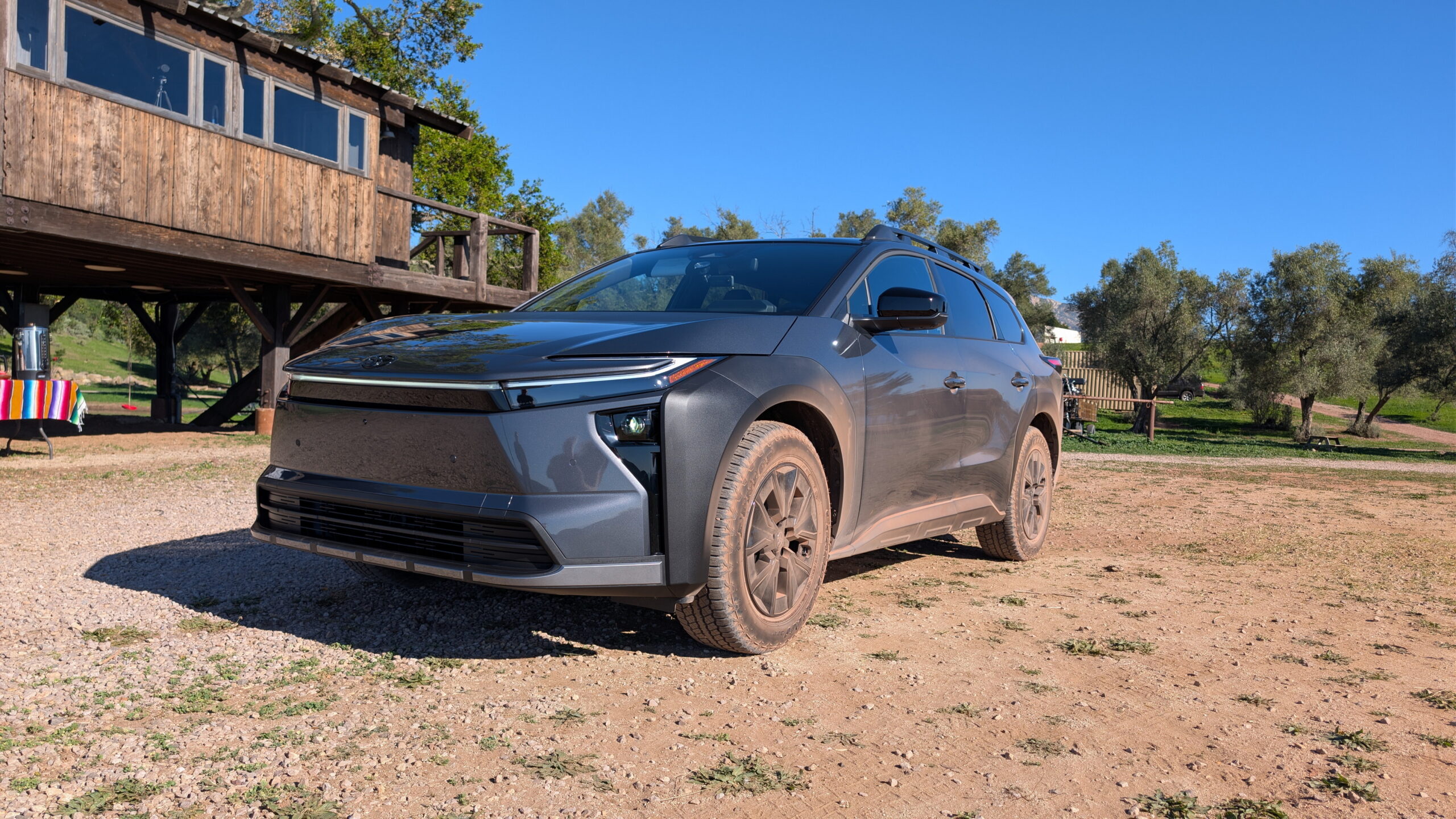
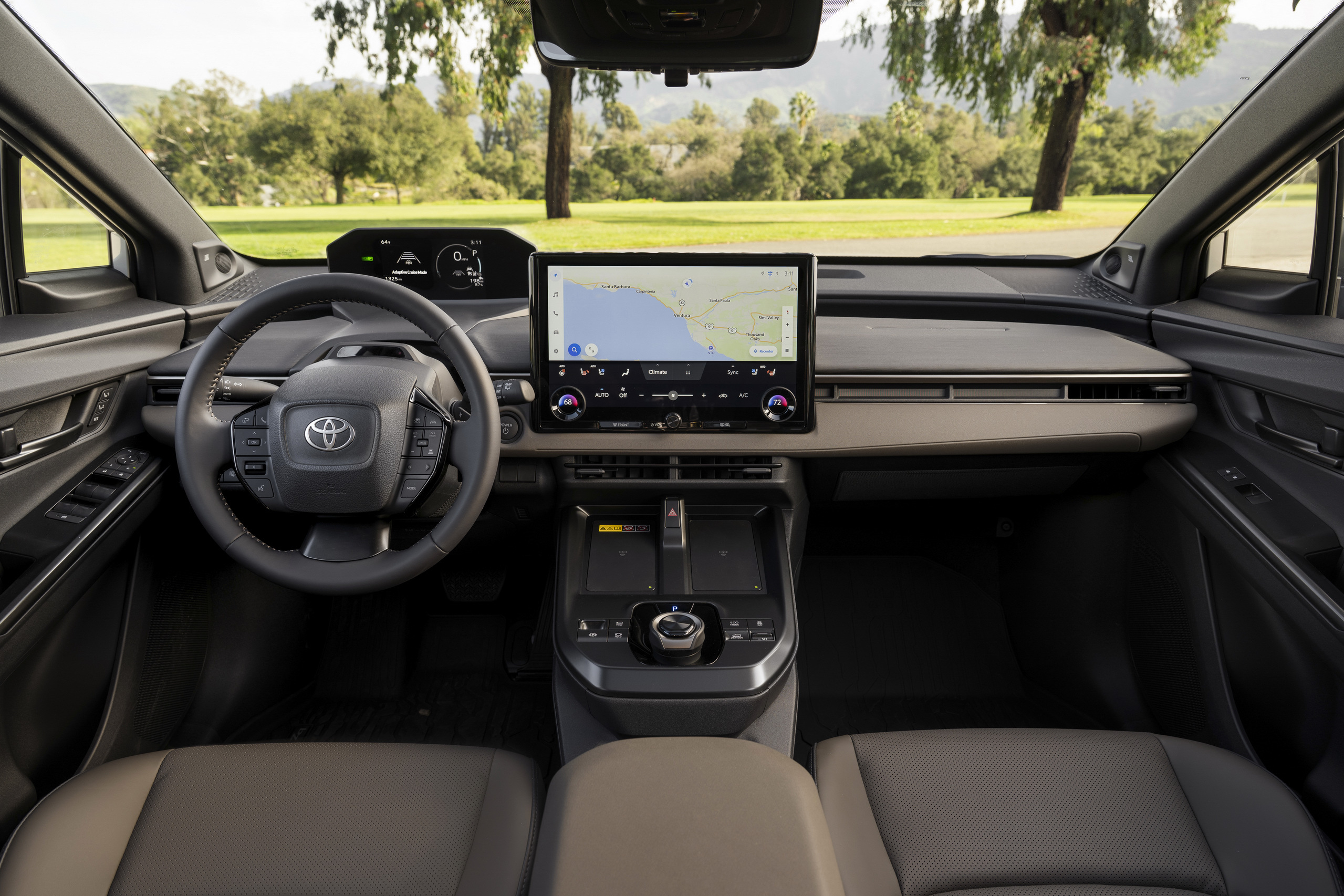
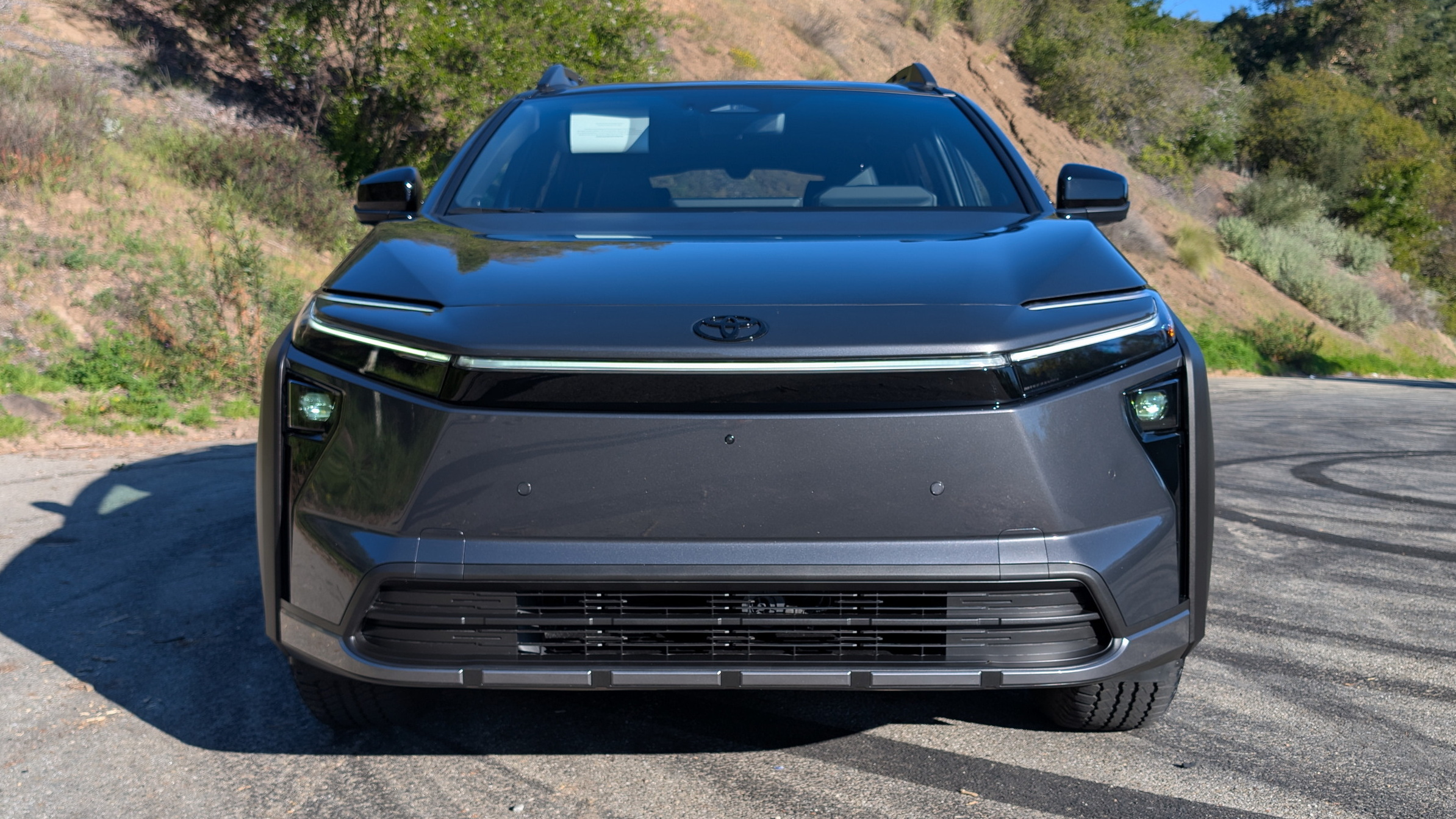
The new Toyota bZ Woodland arrives at a complicated moment for electric SUVs. Conceptualized and likely sent into a production cycle with federal tax credits in mind, the electric crossover is here without those credits to rely on. On top of that, its near identical Subaru twin, the Trailseeker, costs thousands less. Now, Toyota is putting discounts of up to $6,500 on its brand-new electric model to sweeten the deal.

According to Cars.com, the deals aren’t exactly hidden or subtle, either. Buyers can score $5,000 in customer cash, lessees get $6,500 in lease cash, and those with pristine credit can opt for 0% APR for 72 months plus $3,500 cash back. Not bad for a model that effectively just arrived on dealer lots.

How Do The Incentives Work?

 Toyota Slashes Thousands Off Its Newest EV Just Weeks After Launch
Stephen Rivers / Carscoops

Here’s how it breaks down. The $5,000 customer cash incentive functions like a rebate and lowers the price or amount financed. The $6,500 lease cash deal reduces the capitalized cost of the lease, which means lower monthly payments. The $3,500 cash back deal with 0 percent APR is exactly what it sounds like. A discount on the price and no interest on payments for six years. All deals expire on March 2nd.

Review: 2026 Toyota bZ Woodland Is Quicker Than A GR Corolla, But That’s Not Its Real Trick

With pricing starting at $46,750 (including $1,450 destination) and climbing to $48,850 for the Premium, Toyota clearly felt some pressure to keep this wagon-like EV competitive in a cooling segment. These deals should help, considering that the bZ Woodland seems incredibly similar to Subaru’s Trailseeker.

Pricing Pressure From Subaru

 Toyota Slashes Thousands Off Its Newest EV Just Weeks After Launch

For its part, the Trailseeker starts at $39,995 before destination, and that’s without discounts. So even with $5,000 on the hood, the Toyota still plays in a higher price bracket. That means the Woodland’s biggest advantage may come down to brand loyalty, dealer networks, and whether buyers prefer Toyota’s design and packaging.

First Drive: The 2026 Toyota C-HR Refuses To Grow Up And Goes All-In On EV Thrills 

Again, Toyota probably cooked up this car when it thought the $7,500 federal EV subsidies would still exist at launch. With that in mind, this feels like an almost necessary move to keep the car moving off dealer lots.

 Toyota Slashes Thousands Off Its Newest EV Just Weeks After Launch
Stephen Rivers for Carscoops

Tesla’s Sales Crash For The 13th Straight Month As Its Scariest Rival Cleaned Up

  • European car sales dropped 3.5 % in January.
  • EVs grew their market share to almost 20 %.
  • Hybrids are the most popular vehicle type.

Europe’s new car market didn’t exactly start the 2026 race in a flurry of smokey wheelspins. Registrations across the EU, UK, and EFTA slipped 3.5 percent year-on-year to 961,382 units in January. But beneath that soggy headline number, one brand was busy throwing its own party.

And it wasn’t Tesla. Across the EU, UK, and European Free Trade Association (EFTA) regions combined, Tesla registrations dropped 17.0 percent to 8,075 cars in January. That left the American EV giant with a 0.8 percent market share, down from 1.0 percent a year earlier, according to data from industry body ACEA.

It was also Tesla’s 13th consecutive month of declining sales in Europe, a reminder that this is no short-lived dip.

Also: Tesla’s Sales Collapsed By Nearly 90% In The Land Of EVs

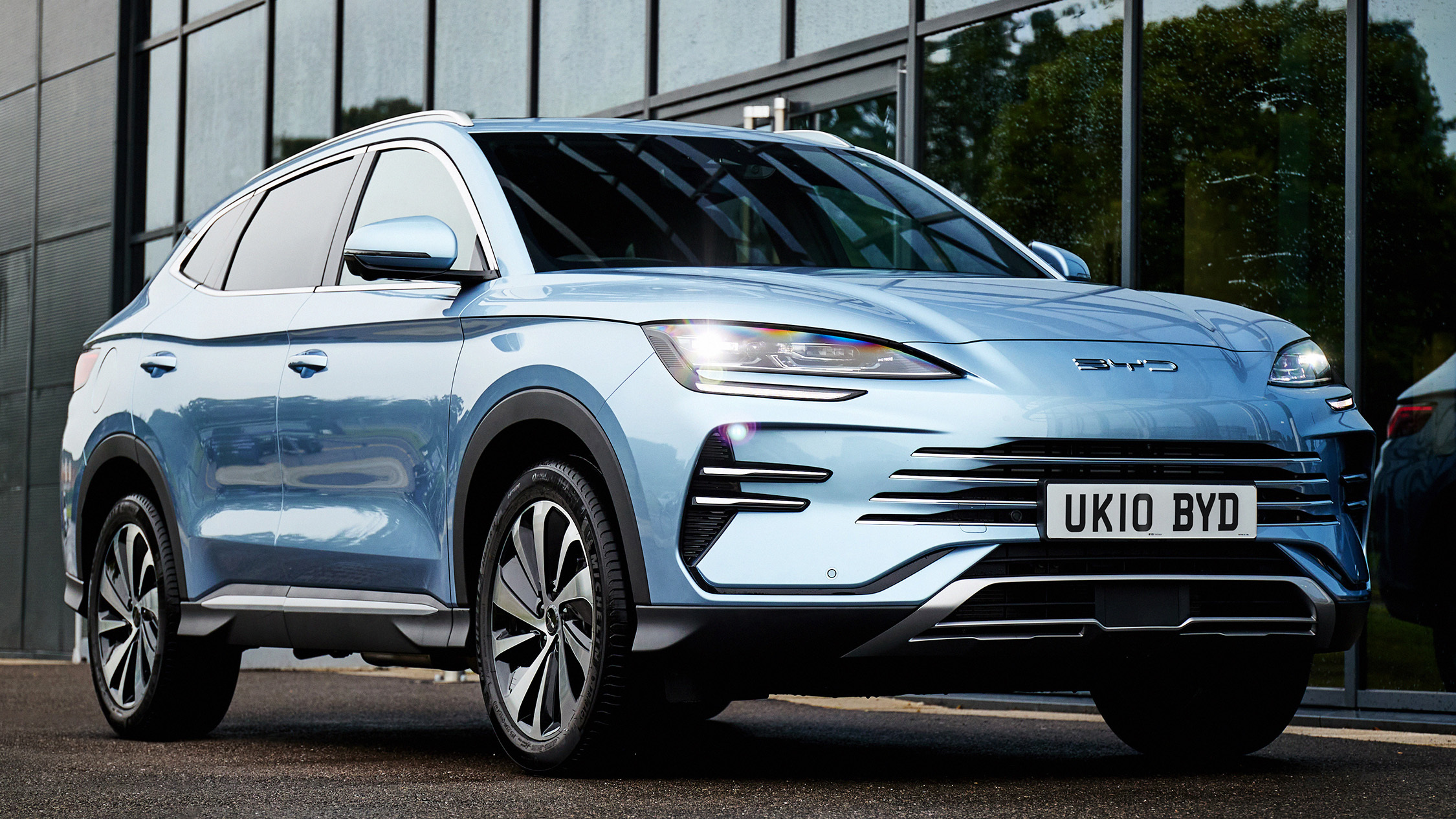
BYD, meanwhile, went into overdrive with its mix of EVs and hybrids. The Chinese brand shifted 18,242 cars across the same region, an impressive increase of 165.0 percent year-on-year (175 percent in the EU alone), and its share climbed to 1.9 percent, more than double Tesla’s slice of the pie.

Dacia’s Fall From Glory

 Tesla’s Sales Crash For The 13th Straight Month As Its Scariest Rival Cleaned Up

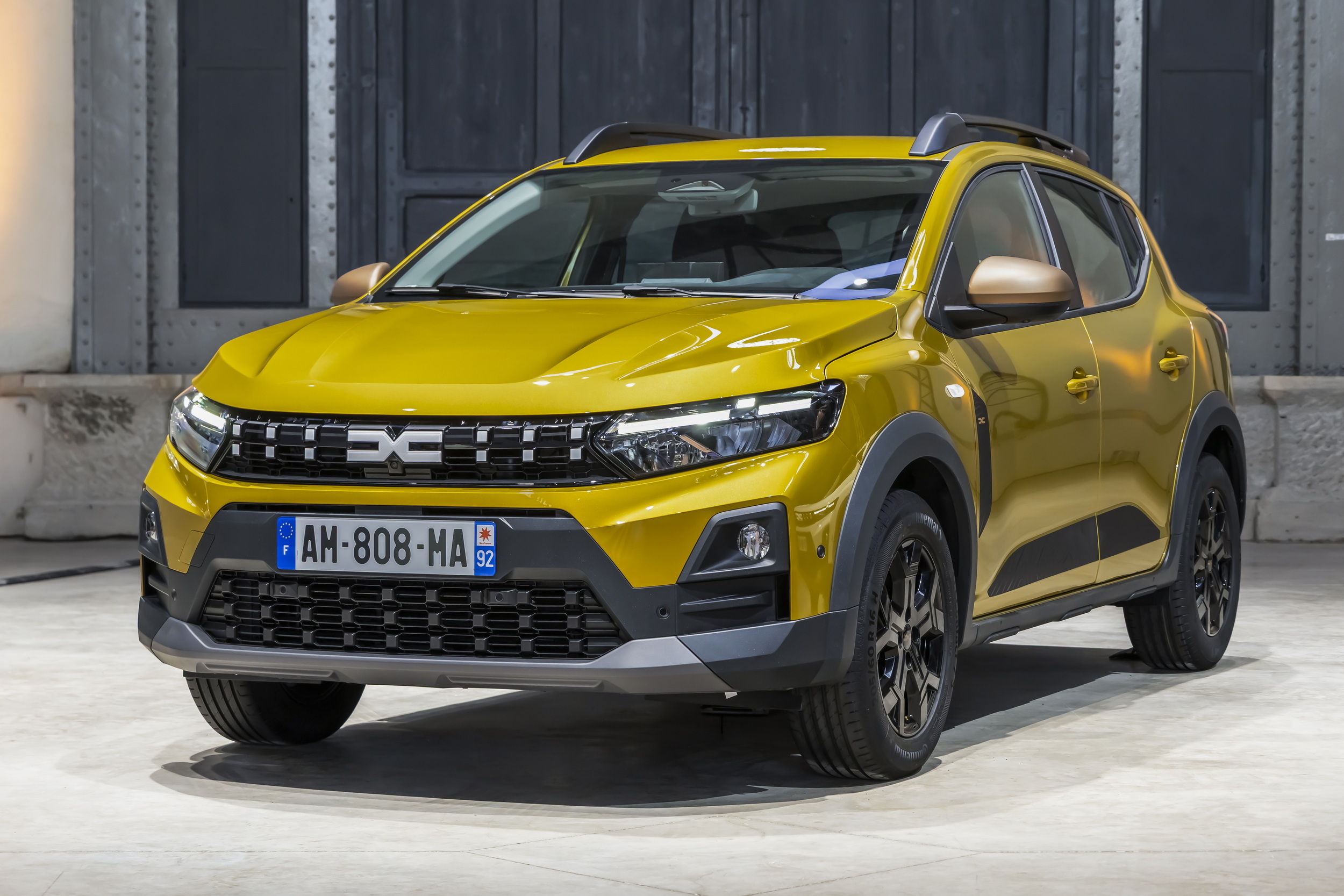
Tesla was far from the only automaker to take a beating in January. Renault Group also had a bruising month, its sales falling 15.0 percent to 83,201 units. That is a slide not too far off Tesla’s in percentage terms, though the Renault brand itself was up 4.4 percent. It was Renault-owned Dacia’s disastrous 35 percent drop that ruined the overall picture.

BMW (down 8.7 percent) and the VW brand (down 11.2 percent) were also left licking their wounds, while sister companies Mini (up 11.2 percent) and Skoda (up 10.1 percent) gleefully rubbed salt in them.

One In Five Cars Now An EV

 Tesla’s Sales Crash For The 13th Straight Month As Its Scariest Rival Cleaned Up

On the powertrain front, the shift to electrification keeps gathering pace. Sales of battery electric cars climbed 13.9 percent, meaning they now account for 19.3 percent of the EU market in January, up from 14.9 percent a year earlier. And plug-in hybrids climbed 32.2 percent while petrol registrations plunged 25.7 percent and diesel slid 22.0 percent.

Country by country, the picture was mixed. Germany and France both saw total registrations fall 6.6 percent, but their EV registrations jumped by 23.8 and 52.1 percent, respectively. And Norway, always an EV bellwether, endured a dramatic 76.3 percent drop in overall registrations, mostly due to the end of government incentives.

European Car Sales
BrandJan-26Jan-25Diff.Share ’26Share ’25
Volkswagen Group256,728266,798-3.8%26.7%26.8%
Volkswagen100,228112,885-11.2%10.4%11.3%
Skoda64,96758,98910.1%6.8%5.9%
Audi48,98449,230-0.5%5.1%4.9%
Cupra18,78220,449-8.2%2.0%2.1%
Seat15,58316,562-5.9%1.6%1.7%
Porsche7,5147,950-5.5%0.8%0.8%
Others (VW)670733-8.6%0.1%0.1%
Stellantis164,436154,1616.7%17.1%15.5%
Peugeot53,79955,432-2.9%5.6%5.6%
Opel/Vauxhall32,05428,43712.7%3.3%2.9%
Citroen31,03927,22714.0%3.2%2.7%
Fiat³29,41523,61724.6%3.1%2.4%
Jeep10,48411,022-4.9%1.1%1.1%
Alfa Romeo4,2784,794-10.8%0.4%0.5%
DS1,8232,192-16.8%0.2%0.2%
Lancia/Chrysler1,2831,05222.0%0.1%0.1%
Others (Stellantis)261388-32.7%0.0%0.0%
Renault Group83,20197,890-15.0%8.7%9.8%
Renault50,60448,4664.4%5.3%4.9%
Dacia31,81948,953-35.0%3.3%4.9%
Alpine77847165.2%0.1%0.0%
Hyundai Group72,89383,283-12.5%7.6%8.4%
Kia39,62241,762-5.1%4.1%4.2%
Hyundai33,27141,521-19.9%3.5%4.2%
BMW Group66,19170,200-5.7%6.9%7.0%
BMW54,57459,751-8.7%5.7%6.0%
Mini11,61710,44911.2%1.2%1.0%
Toyota Group69,13979,836-13.4%7.2%8.0%
Toyota63,80172,373-11.8%6.6%7.3%
Lexus5,3387,463-28.5%0.6%0.7%
Mercedes-Benz43,70442,5312.8%4.5%4.3%
Ford31,38536,117-13.1%3.3%3.6%
Nissan20,57025,010-17.8%2.1%2.5%
Volvo Cars20,36723,680-14.0%2.1%2.4%
SAIC Motor19,25419,611-1.8%2.0%2.0%
BYD18,2426,884165.0%1.9%0.7%
Suzuki12,79314,808-13.6%1.3%1.5%
Mazda11,02211,082-0.5%1.1%1.1%
Jaguar Land Rover Group10,24311,243-8.9%1.1%1.1%
Land Rover10,23710,263-0.3%1.1%1.0%
Jaguar6980-13.8%0.0%0.1%
Tesla8,0759,733-17.0%0.8%1.0%
Honda4,6264,994-7.4%0.5%0.5%
Mitsubishi2,2403,450-35.1%0.2%0.3%
SWIPE

ACEA: Figures for EU + UK + EFTA

Tesla Faces A Reckoning As This New SUV Outsold The Model Y Two To One

  • Chinese tech giant sold 37,869 YU7s in the first month of the year.
  • Geely placed two strong sellers in the national top five chart.
  • VW posted several top sellers despite the wider market slowdown.

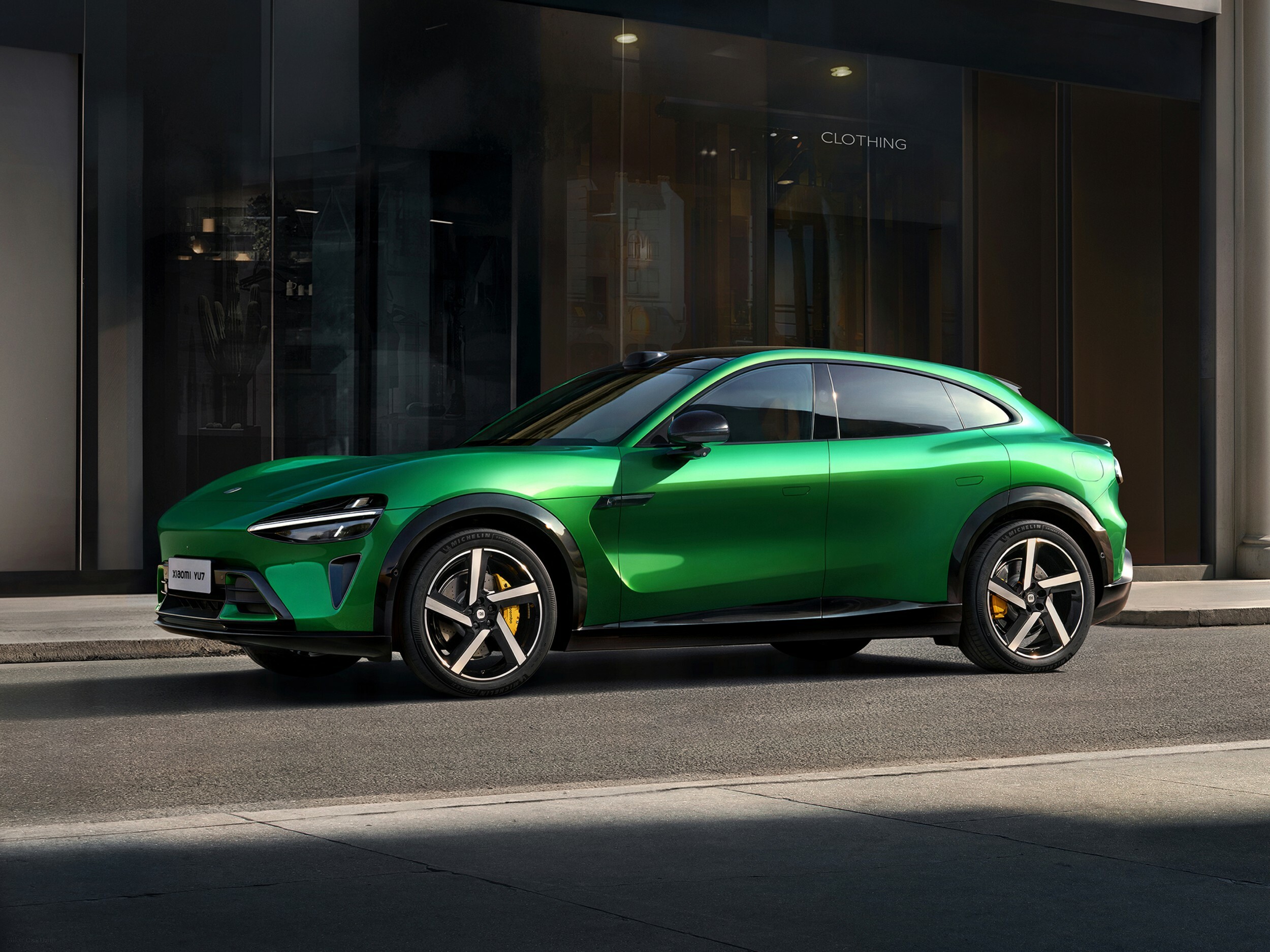
January tested the resilience of China’s auto market, exposing fault lines for some brands while spotlighting the rare breakout success. Many domestic manufacturers reported sales declines, with BYD among the most notable names to feel the squeeze. Yet even in a cooling climate, certain models found remarkable momentum. None more so than the Xiaomi YU7.

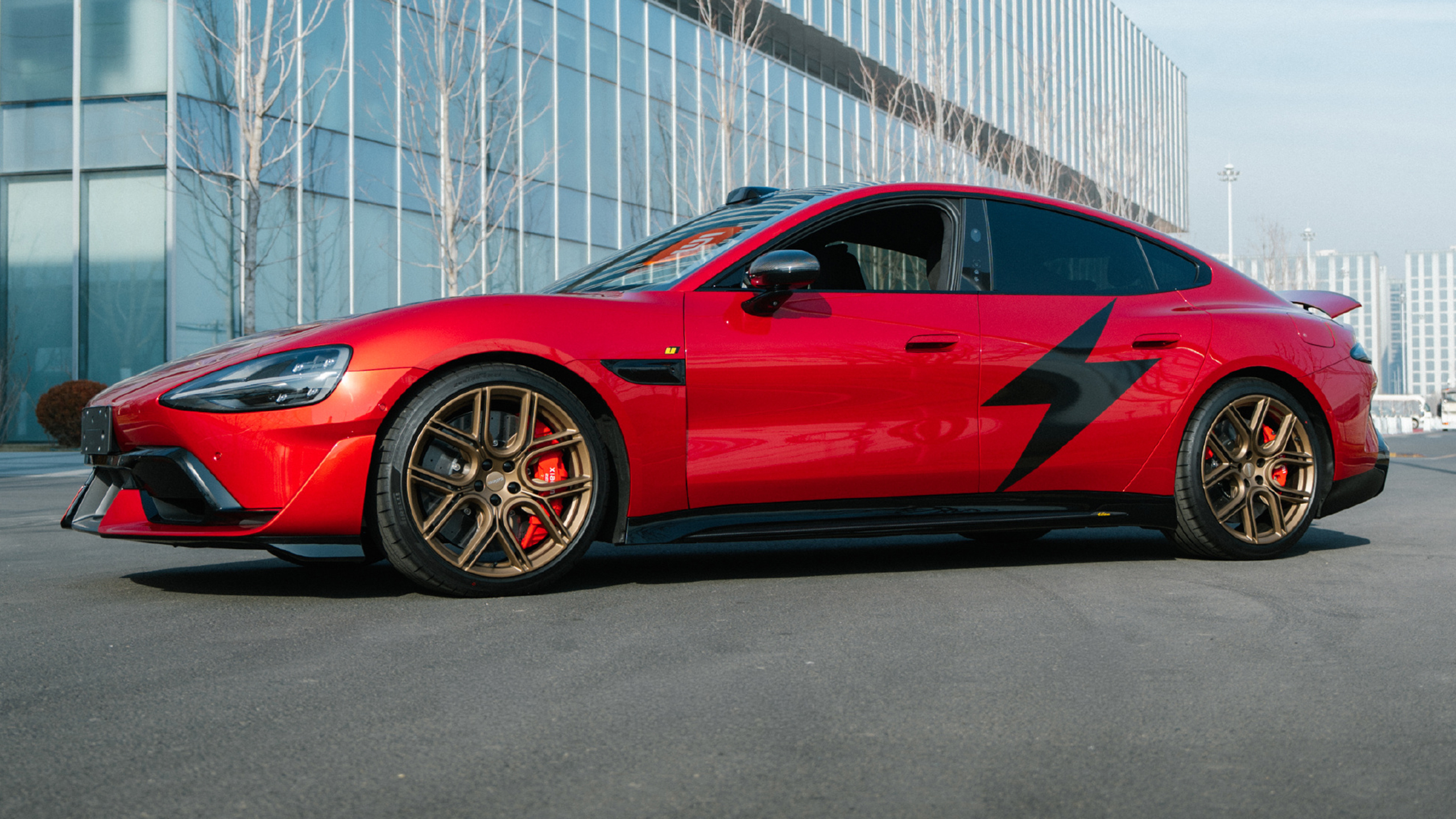
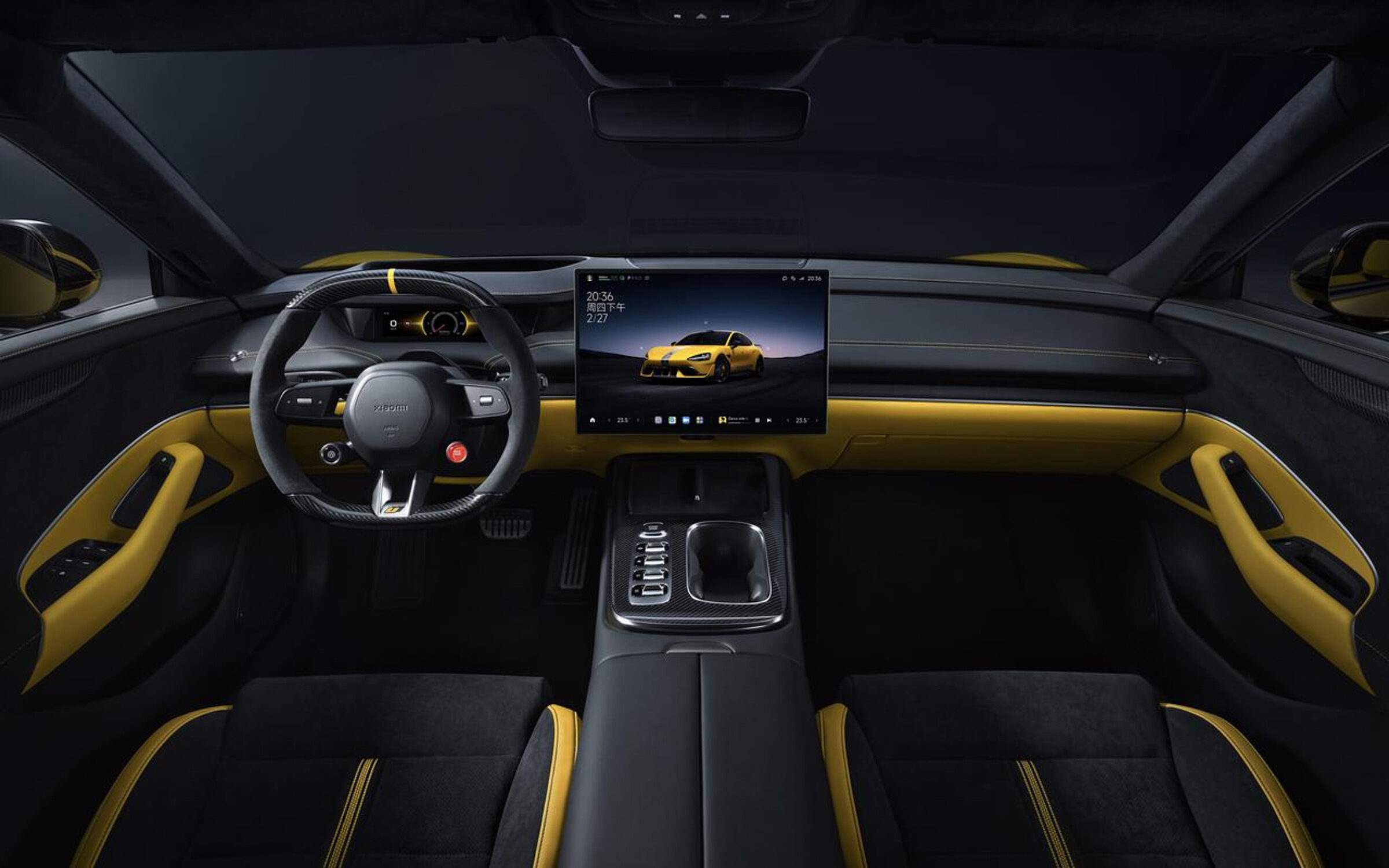
The all electric SUV, positioned as a rival to the Tesla Model Y and styled with more than a passing resemblance to the Ferrari Purosangue, was the best-selling new vehicle in China last month.

Read: This Ferrari SUV Lookalike From China Makes More Power Than The Real One

According to figures shared by Autohome, it moved 37,869 units, comfortably ahead of the Geely Boyue L in second place with 34,176 sales. The Geely Geome Xingyuan followed with 29,007, while the Aito M7 secured fourth with 26,454 units.

 Tesla Faces A Reckoning As This New SUV Outsold The Model Y Two To One

The presence of two Geely models in the top 5 best-sellers reflects a strong month for the group, with sales up 1 percent year-on-year to more than 270,000 units. The M7 from Aito, backed by Huawei and Seres, also surged in popularity, as did other models from the brand, helping it deliver more than 40,000 vehicles, a surge of over 80 percent from January 2025.

Sales of the YU7 in China have remained strong in recent months. December saw 39,089 units sold, making it the third best selling new car in China at the time. That figure represented a clear rise from November’s 33,729 and October’s 33,662.

It has also moved decisively ahead of the Tesla Model Y, selling more than twice as many units. The Model Y ranked only 20th last month, with 16,845 sales, a result that would have seemed unlikely not long ago. In fact, it was China’s best-selling model in December.

Familiar Names Climb The Charts

 Tesla Faces A Reckoning As This New SUV Outsold The Model Y Two To One
VW Sagitar

Perhaps the biggest surprises came from Volkswagen. It ranked fifth in China’s top 20 best-selling cars last month, led by the Sagitar with 25,316 units sold. VW also sold 23,481 Lavidas, 21,330 Tiguan Ls, 20,799 Passats, and 19,306 Magotans. In addition, the Nissan Slyphy sold 24,209 units, indicating that not all hope is lost for legacy carmakers in the country.

Things weren’t so rosy for BYD. It sold 205,518 vehicles in China last month across its brands, a significant decline from the 300,538 in January 2025. Only one of its models entered the top 20, the Fang Cheng Bao Ti7, which ranked 18th with 17,116 units sold.

China New Car Retail Sales January 2026
RankModelUnits
1Xiaomi YU737,869
2Geely Boyue L34,176
3Geely Geome Xingyuan29,007
4Aito M726,454
5Volkswagen Sagitar25,316
6Nissan Sylphy24,209
7Geely Xingyue L23,815
8Volkswagen Lavida23,481
9Volkswagen Tiguan L21,330
10Volkswagen Passat20,799
11Toyota Corolla20,188
12Volkswagen Magotan19,306
13Geely Xingrui19,027
14Honda CR-V18,900
15Toyota Frontlander18,629
16Nio ES817,645
17Toyota Camry17,426
18Fang Cheng Bao Ti717,116
19Li Auto i616,883
20Tesla Model Y16,845
SWIPE

Sources: Autohome, Carnewschina

EVs Just Did Something In America Not Seen In A Decade

  • US EV registrations dipped for the first time in a decade last year.
  • December sales plunged 48 percent after the EV tax credit repeal.
  • Analysts expect a slow recovery as prices and charging improve.

After a decade of growth, America’s electric car boom has stopped booming. In 2025, EV registrations slipped 0.4 percent to 1.3 million units, marking the first annual decline in at least 10 years. That’s not exactly a collapse, but it is the first crack in what once looked like an unstoppable surge.

The real drama arrived in December. Registrations plunged 48 percent year over year to just 75,427 vehicles after Congress repealed the $7,500 federal EV tax credit. EVs’ share of the overall market tumbled from 9.9 percent in December 2024 to 5.3 percent in the same month in ’25.

Related: EV Sales Are Booming Everywhere Except One Place

For the full year, EVs accounted for 7.8 percent of light vehicle registrations, down slightly from 8 percent in 2024, according to S&P Global Mobility data reported by Auto News. Meanwhile, total vehicle registrations rose 2.2 percent to 16.25 million units. In other words, Americans kept buying cars, but they increasingly chose ones with old-fashioned combustion engines.

Warning Signs Were There

 EVs Just Did Something In America Not Seen In A Decade

The slowdown didn’t come out of nowhere. Growth had already cooled from triple-digit surges earlier in the decade to an 11 percent gain in 2024. Through the first half of 2025, EV registrations were still up 4.6 percent before the July announcement that the tax credit would vanish at the end of September. Buyers rushed to beat the deadline in the third quarter, then the market fell silent in the fourth.

Price remains the elephant in the charging bay. Even with incentives, EV sticker prices have hovered above what mainstream buyers feel comfortable paying. Early adopters are largely spoken for, and the next wave of customers worries about charging access and range anxiety. Hybrids have quietly become the safe middle ground.

Tesla Trouble

 EVs Just Did Something In America Not Seen In A Decade

Tesla, still the heavyweight champion of EV sales, saw its registrations drop 6.8 percent for the year to 570,418 vehicles. Its market share slipped 3.1 percent to 44.9 percent. December was painful but not catastrophic, with a 35 percent decline.

The Model Y held its crown, but the Cybertruck and Model 3 both took heavy hits, and with the Model S and X due to be axed this year and the once-rumored small model not happening, this year is going to be tough, too.

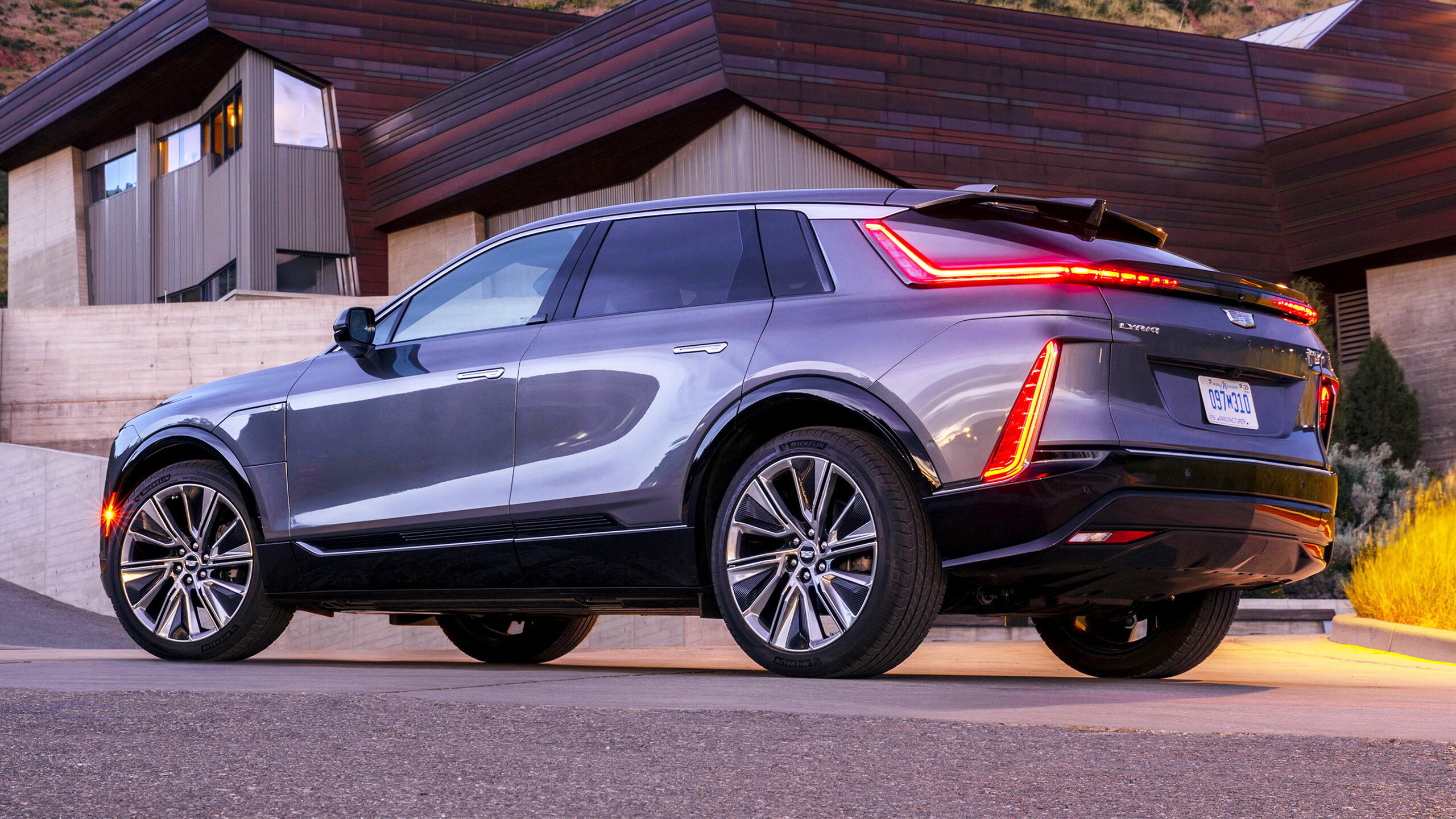
Ford endured an even steeper December slide of 61 percent, while Cadillac enjoyed a rare bright spot thanks to genuinely fresh models, something Tesla badly needs. Rivian and Hyundai also saw declines, underscoring that this was not a one-brand problem, though Rivian does at least have a plan in the form of the smaller R2 SUV that goes on sale this year.

So is that it for EVs? Was it just a brief fad, like fidget spinners? No, analysts expect a slow and steady rebound as automakers trim prices and expand incentives. Charging networks are improving, and some EVs are nearing price parity with comparable gas models. The boom may be over, but the electric story is far from finished.

 EVs Just Did Something In America Not Seen In A Decade
GM

China’s EV Boom Is Cooling, And The Big Names Are Feeling It

  • BYD sold 205,518 cars in January, down from 300,538 last year.
  • EV and plug-in hybrid sales both dropped compared to 2025.
  • Analysts say Beijing may revive incentives if sales stay low.

Demand for electric cars in China may be cooling, and some of the country’s biggest automakers are starting to feel the chill. Several of the most prominent domestic brands, including BYD, Xpeng, and Xiaomi, reported noticeable drops in January sales.

Data shows that BYD sold 205,518 vehicles in China last month. The number sounds solid on its own, but it marks a sharp decline from the 300,538 vehicles the company moved in January 2025.

Read: A $9,500 Hatch Stole Tesla’s Best-Seller Crown In China

Both BYD’s electric vehicles and plug-in hybrids were affected. Of the 205,518 vehicles sold last month, 83,249 were EVs and 122,269 were PHEVs. A year earlier, those numbers stood at 125,377 and 171,069 respectively. Exports took a hit too, dropping to 100,482 units in January from 133,172 in December.

Is Government Policy Slowing Sales?

These figures suggest weakening demand in China and possibly overproduction for overseas markets, but a recent government policy change may go some way to explaining the drop. As of January 1, the country reinstated a 5 percent purchase tax for new energy vehicles, having previously exempted them from a 10 percent tax for more than a decade, CNBC reports.

 China’s EV Boom Is Cooling, And The Big Names Are Feeling It

“We see increasing pressure on China’s auto market in 2026, driven by a combination of policy and competitive factors,” Helen Liu, partner at Bain & Company, told CNBC. She added that recent tax changes may prompt some consumers to delay purchases, while automakers hold back on new model launches.

“We know [EV sales will] slow, we just don’t know by how much,” added Tu Le, founder of Sino Auto Insights. “We’ll know much better after the first quarter is over.”

Rough Starts And Reversals

Xiaomi also struggled out of the gate. It sold 39,000 cars in January, which was an improvement over the same time last year, but a steep drop from the more than 50,000 EVs delivered in December. Xpeng’s January was even rougher. Sales fell 34.1 percent year-on-year to 20,011 units, and the month-on-month drop was starker still at 46 percent compared to December 2025.

Li Auto’s performance dipped as well, with deliveries slipping to 27,668 units for the month.

Competitors Capitalize

 China’s EV Boom Is Cooling, And The Big Names Are Feeling It

However, it’s not all bad news. One of the few bright spots was Aito, a newer brand backed by Huawei’s operating system, which reported more than 40,000 deliveries in January, marking a gain of more than 80 percent compared to the same month last year.

Sales at Leapmotor rose to 32,059, while Nio also reported an increase to 27,182 units. Geely sold more than 270,000 cars in January, a 1 percent increase year-on-year. Interestingly, its EV sales fell by 15 percent, while its PHEV sales rose 37 percent.

That performance has pushed Geely into second place in the country’s EV market behind BYD, thanks in part to strong momentum from its Galaxy and Zeekr brands.

Will China Step In?

The slowdown has fueled speculation that Beijing may step in once again. If the slump continues into the first quarter, analysts believe the government could reinstate certain subsidies or incentives

 China’s EV Boom Is Cooling, And The Big Names Are Feeling It

3 Out Of 4 Car Buyers In This EV-Loving Country Wouldn’t Touch This Brand

  • 75 percent of Germans say they probably won’t buy a Tesla.
  • Politics now shape how Germans view EV brands and buyers.
  • Domestic brands are gaining as Tesla’s appeal declines.

Tesla might be providing employment for thousands of Germans at its Berlin Gigafactory, but the nation’s car buyers have no interest in returning the favor by getting a Tesla of their own. A new survey suggests most Germans aren’t just hesitant about buying a Tesla, they’re actively swiping left on the idea.

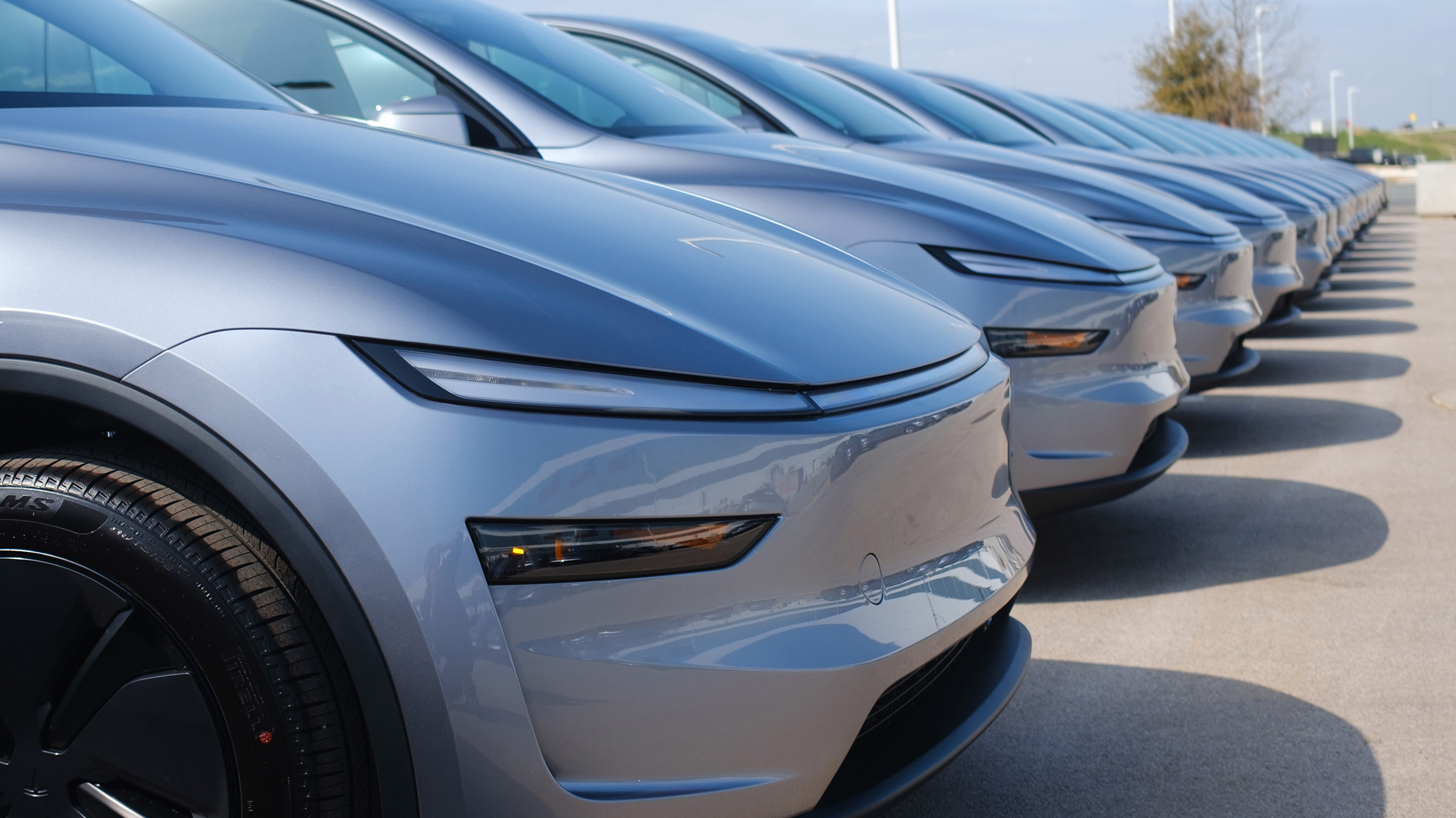
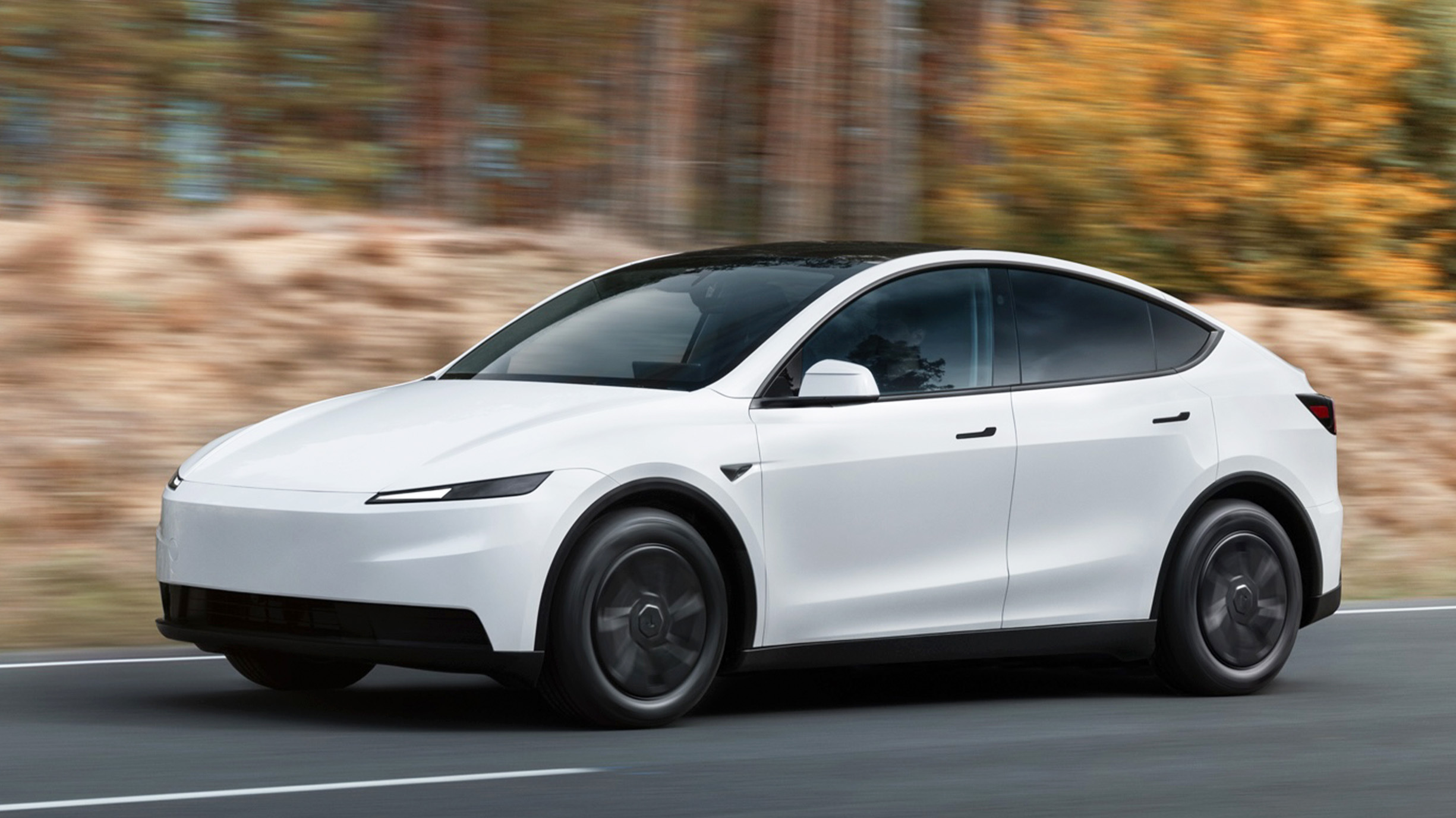
Related: Tesla’s Budget Model Y Gets Grip And Grit For $2K More, But Don’t Call It Standard

According to research from the German Economic Institute, more than three quarters of Germans say buying a Tesla is off the table. Around 60 percent called it completely out of the question, while another 16 percent polled in the study said they probably wouldn’t buy one.

That’s not a minor wobble in brand appeal, it’s a serious collapse, and helps makes sense of Tesla’s 27 percent sales decline in Europe last year.

What makes it more awkward is that interest in electric cars in general is not the problem. According to DW, the same survey shows plenty of Germans are open to EVs, especially from domestic brands. Around one in five new cars sold there is fully electric and roughly 40 percent of those surveyed said they could imagine buying an electric car from a German brand.

Musk Is The Problem

 3 Out Of 4 Car Buyers In This EV-Loving Country Wouldn’t Touch This Brand

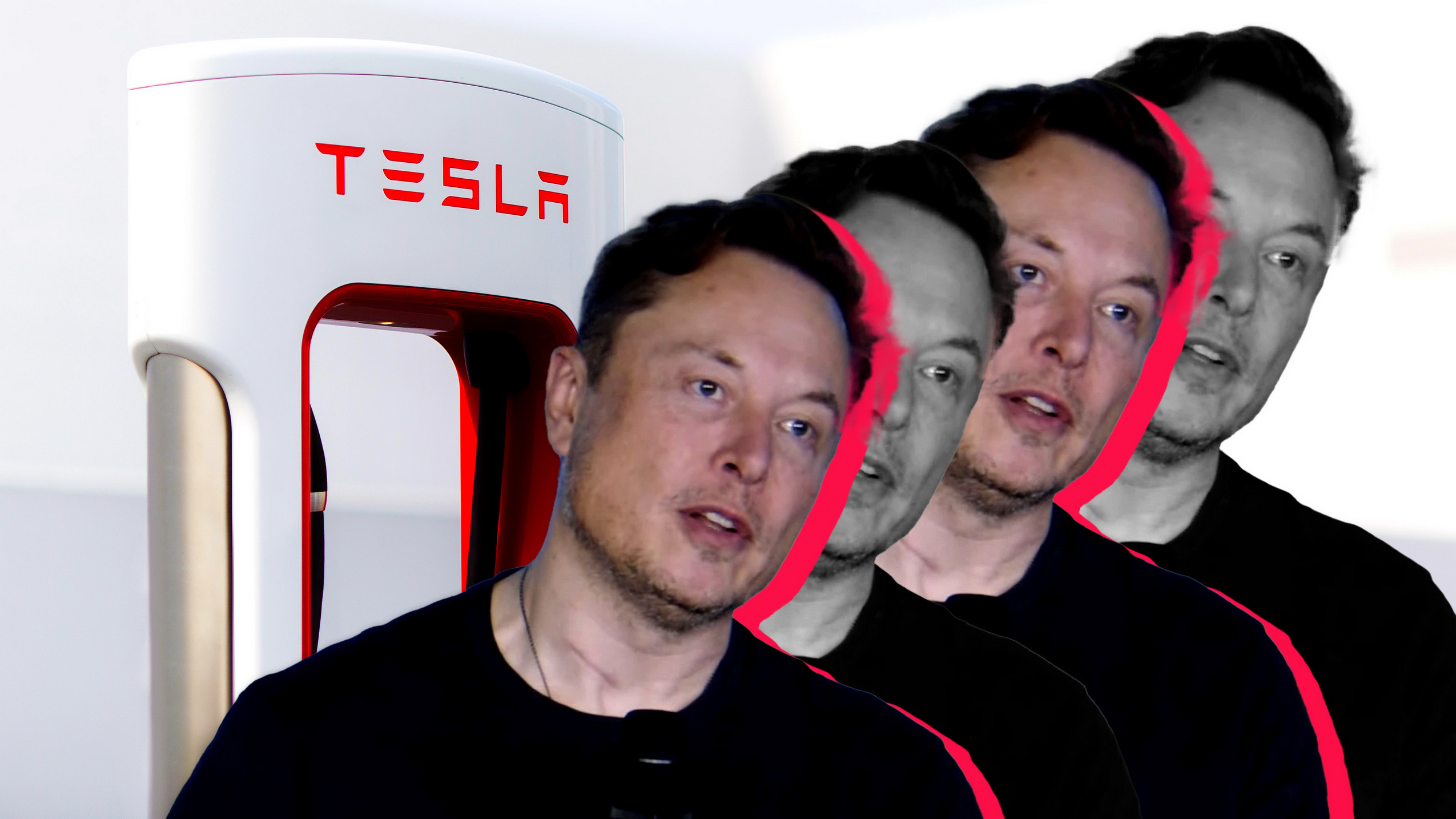
Researchers point to Tesla boss Elon Musk as a big part of the story. His outspoken political positions, including voicing support for Germany’s far-right AfD party, and his association with President Trump, and by proxy, tariffs and US threats against Greenland and European security, have not exactly gone down smoothly with many German buyers.

Read: Europe Just Replaced Tesla With A New EV Sales Champion

Political views now play a major role in EV purchasing decisions in Germany, turning what used to be a tech and environmental choice into something that feels far more tribal.

 3 Out Of 4 Car Buyers In This EV-Loving Country Wouldn’t Touch This Brand

Even groups you might expect to be more Tesla friendly aren’t rushing to sign order forms. Among supporters of Germany’s Green Party, who are generally enthusiastic about electric mobility, only one in 10 said they could imagine buying a Tesla.

On the other end of the political spectrum where AfD supporters live, enthusiasm for EVs overall is low, which drags Tesla interest down even further.

A Win For BMW And Mercedes

 3 Out Of 4 Car Buyers In This EV-Loving Country Wouldn’t Touch This Brand

For German automakers, this looks like an unexpected gift. With Tesla stumbling in the court of public opinion, local brands suddenly have more room to sell their own electric models without having to wrestle with Silicon Valley star power. BMW’s new iX3 is one EV capitalizing on Tesla apathy. It’s nearly sold out for the year.

It is a reminder that in the EV era, software and charging speeds matter, but so does how people feel about the badge on the hood. But maybe Elon Musk doesn’t care, because he has his eyes on a bigger prize.

Having revolutionised the car market, Musk is going all in on robots and robotaxis, which have the potential to generate even more money for Tesla. Last month the CEO confirmed the Model X and S would be axed this spring to make way for Optimus robot production.

 3 Out Of 4 Car Buyers In This EV-Loving Country Wouldn’t Touch This Brand
Tesla

Source DW

Ford Confirms Five New Affordable Models, And One Is Cheaper Than You Think

  • Ford will debut five new models under $40k before 2030.
  • They’ll be SUVs, trucks and cars with mix of powertrain types.
  • First affordable model is $30,000 electric truck coming ’27.

The average new car now stands at $50k, and that’s a stretch too far for many American drivers, who in some case have drifted to used lots and rival brands. But Ford wants to throw them a lifeline, well, actually five lifelines, promising a wave of sub-$40,000 vehicles before the end of the decade.

Ford executives told retailers at this week’s NADA Show meeting that five new models priced under $40k will join the lineup by the end of the decade, Automotive News reports. That is not just one bargain hero car, but a whole lineup.

Related: Ford Just Killed A Popular SUV And Dealers Are Not Happy

The first arrival is one we already know about, a midsize electric pickup coming next year, a truck dealers are already buzzing about. Previous reports suggest it could land around the $30k mark, which in today’s market qualifies as almost suspiciously affordable and could leave startup Slate’s electric truck dead in the water.

Cross-Segment

But Ford’s plans go far beyond one electric truck. Andrew Frick, who heads up Ford Blue and Model e, told Auto News the new products will span cars, trucks, SUVs, and vans with a mix of powertrains. These will be brand new nameplates, not just cheaper versions of existing models.

 Ford Confirms Five New Affordable Models, And One Is Cheaper Than You Think

“It will be across our lineup of cars, trucks, SUVs, vans, and it will be multi-energy,” Frick said. “That’ll start to fill in the product side, but we have work to do to help affordability in the near term more tactically.”

That sounds great, but dealers still have some short term pain to manage.

Short-term Gap

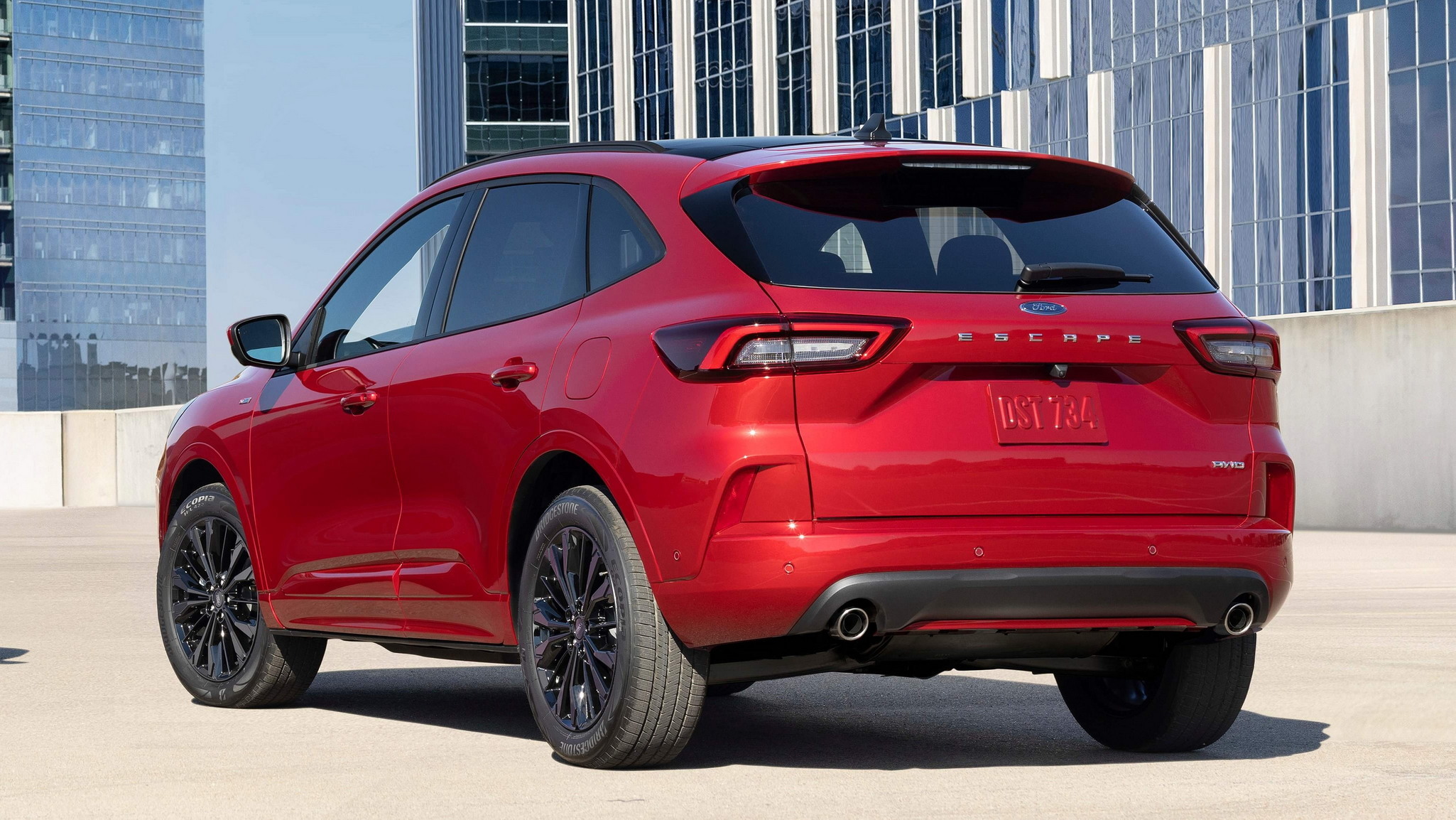
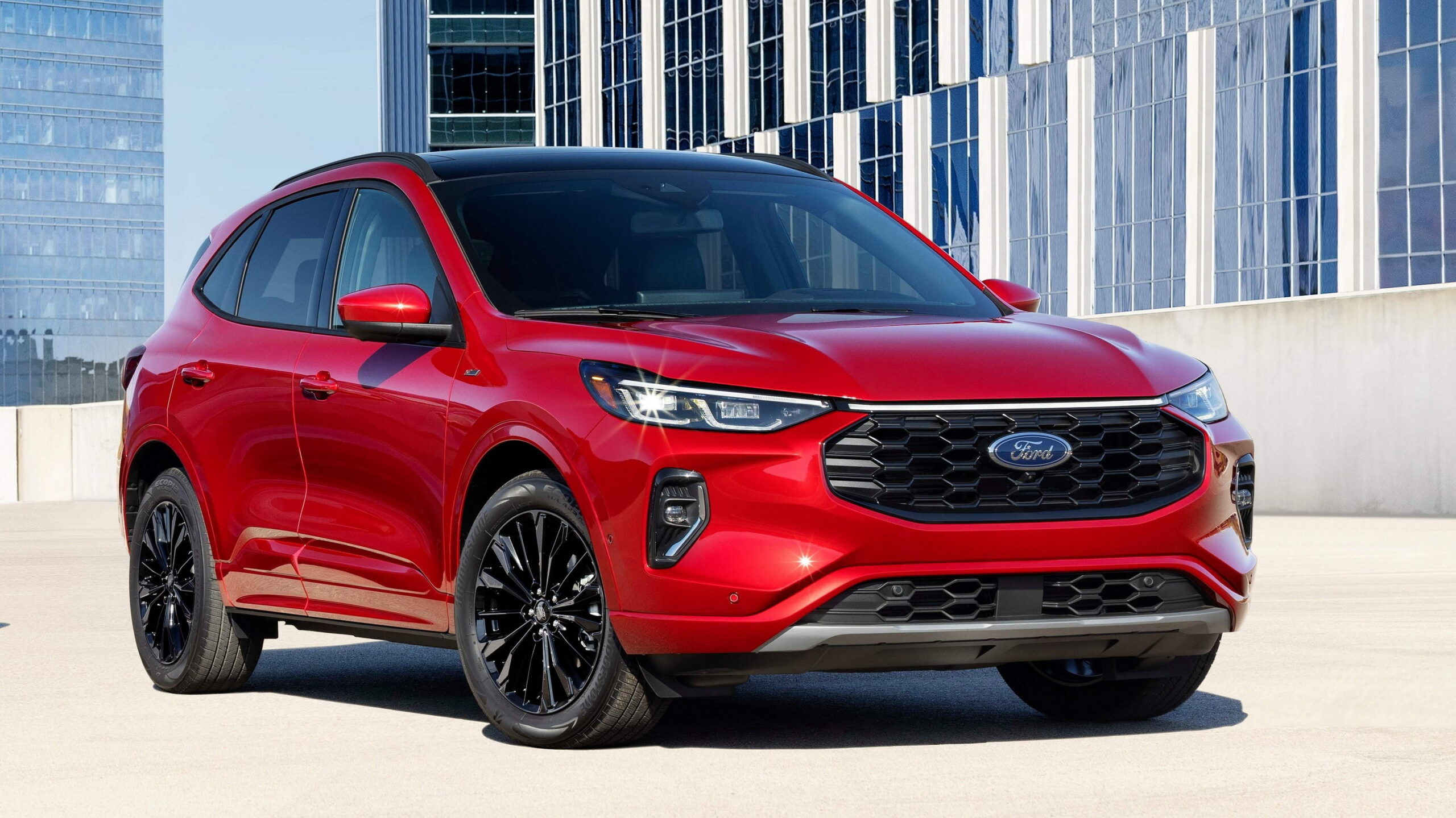
A big hole in the lineup is centered around the Escape (pictured below). Ford stopped building its entry level crossover in December, and although dealers still have stock to sell, at some point this year they’ll be left with a gap right where many first time and budget focused buyers used to land.

“We understand we’ll be selling Escape into this year, but at some point we’ll run out,” Frick explained. “That does not mean we cannot continue to drive profitable growth through the nameplates we have.”

 Ford Confirms Five New Affordable Models, And One Is Cheaper Than You Think

Dealers have been clear they would love a proper replacement, and while they are dreaming, maybe even an affordable sedan too.

In the meantime, Ford plans to push more entry level trims of models like Explorer and Bronco, lean harder on certified pre owned cars, and offer longer loans and first-time buyer programs. Frick told said there are about 10 separate actions in motion to tackle affordability, so the next time you head down to your Ford dealer, don’t be afraid to bargain hard.

 Ford Confirms Five New Affordable Models, And One Is Cheaper Than You Think
Ford

One Hyundai EV Is Falling Off A Cliff, The Other Just Shrugged It Off

  • Ioniq 6 sales collapse 61% in January, while Ioniq 5 only dipped slightly.
  • Hyundai SUVs and hybrids deliver strong gains, carry sales performance.
  • Overall, Hyundai sales rise 2% despite sharp drop for electric sedan.

Hyundai just posted its best January ever in the US, but if you zoom in on the EV corner of the showroom, you’ll probably find salesmen consoling one particular electric model. Because while one Ioniq barely flinched in the face of EV market turmoil, the other faceplanted. Hard, really hard.

Let’s start with the good-ish news. The Hyundai Ioniq 5 slipped just 6 percent year over year in January, which in today’s EV market basically counts as holding steady while everyone else is struggling to keep the fire alive. Hyundai moved 2,126 of them, proving the retro-futuristic crossover still has plenty of fans.

Related: Gas Or EV? Hyundai N Embraces Both With Two New Models For America

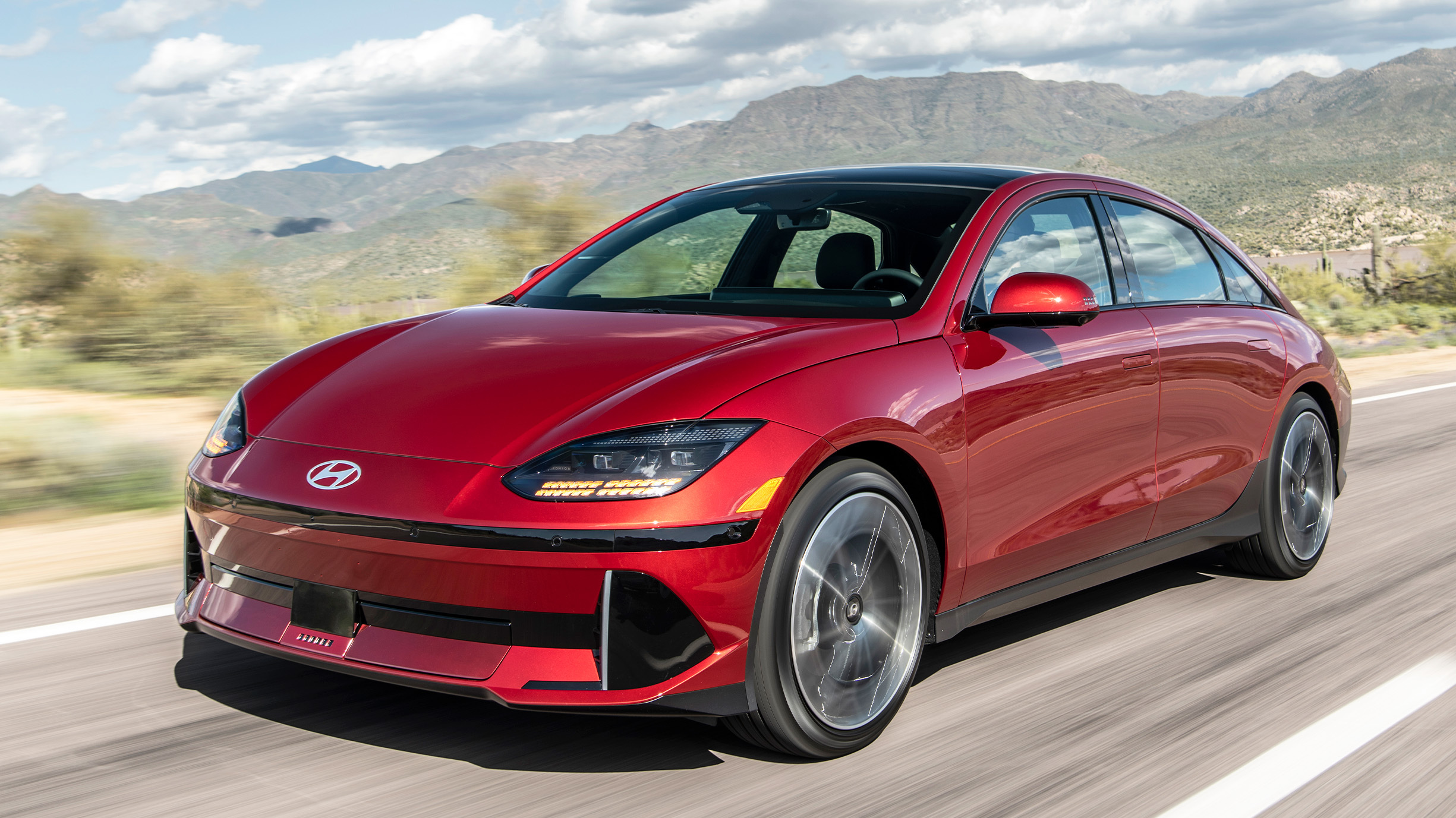
Now for the ouch. The Ioniq 6 didn’t just dip, it fell off a statistical cliff, plunging 61 percent to just 344 units. That’s the kind of number that makes accountants quietly close the spreadsheet and go for a walk. Stylish and slippery though it is, the sedan is clearly having a much tougher time finding buyers.

 One Hyundai EV Is Falling Off A Cliff, The Other Just Shrugged It Off

SUVs Equals Sales Success

If Hyundai needs a reminder of what Americans really want, it only has to glance at the SUV side of the ledger. The combustion Palisade surged 29 percent off the back of a refresh, while the Santa Fe climbed 9 percent.

Even the smaller Kona jumped 22 percent. Big, practical, and family-friendly continues to beat low and sleek in the real world.

Hybrids are the real heroes here, though. Hyundai says petrol-electric sales shot up 60 percent, showing buyers still love the idea of electrification, just maybe not one that doesn’t come with a plan B. Models like the Santa Fe Hybrid are clearly hitting the sweet spot between fuel savings and banishing charging anxiety.

 One Hyundai EV Is Falling Off A Cliff, The Other Just Shrugged It Off

Combustion Losers

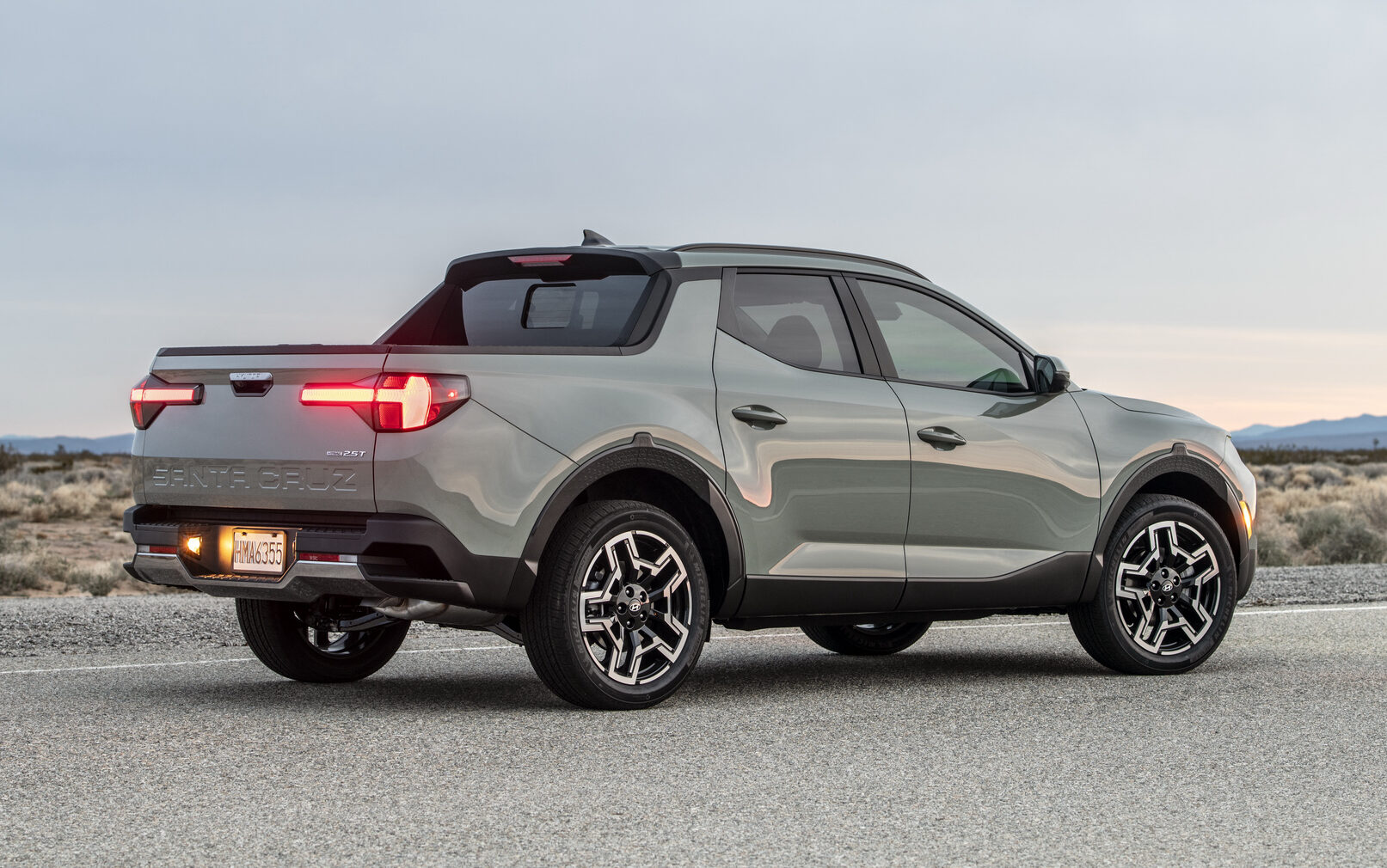
Not everything else was sunshine, though. The Sonata slid 34 percent, the dies-soon Santa Cruz dropped 32 percent, and Tucson eased back 4 percent. Still, with total Hyundai sales up 2 percent and SUVs making up the bulk of the action, the brand has a solid cushion.

We’ll be following the action closely to see if Hyundai can keep the good news flowing through 2026 – and what action it takes to turn the Ioniq 6’s dismal performance around.

Hyundai USA sales
ModelJan ’26Jan ’25Diff.
Elantra9,0918,866+3%
loniq 52,1262,250-6%
loniq 6344871-61%
loniq 95800
Kona5,3214,365+22%
Palisade8,6046,687+29%
Santa Cruz1,2121,786-32%
Santa Fe9,0118,296+9%
Sonata3,1404,757-34%
Tucson14,42815,025-4%
Venue1,7671,600+10%
TOTAL55,62454,5032%
SWIPE

Tesla’s Sales Collapsed By Nearly 90% In The Land Of EVs

  • VW ID.3, Toyota bZ4X, and Urban Cruiser beat Model Y.
  • EVs made up 94 percent of all new car sales in Norway.
  • Tesla sales increased in Italy, Spain, Sweden, and Denmark.

It’s no secret that Tesla’s dominance in Europe has been under pressure for a while, but few expected just how steep the drop would be in one of its most loyal markets. While Elon Musk’s polarizing behavior and the rise of competitive alternatives have chipped away at Tesla’s popularity across the continent, one country had stood firm. Until now.

Read: Europe Just Replaced Tesla With A New EV Sales Champion

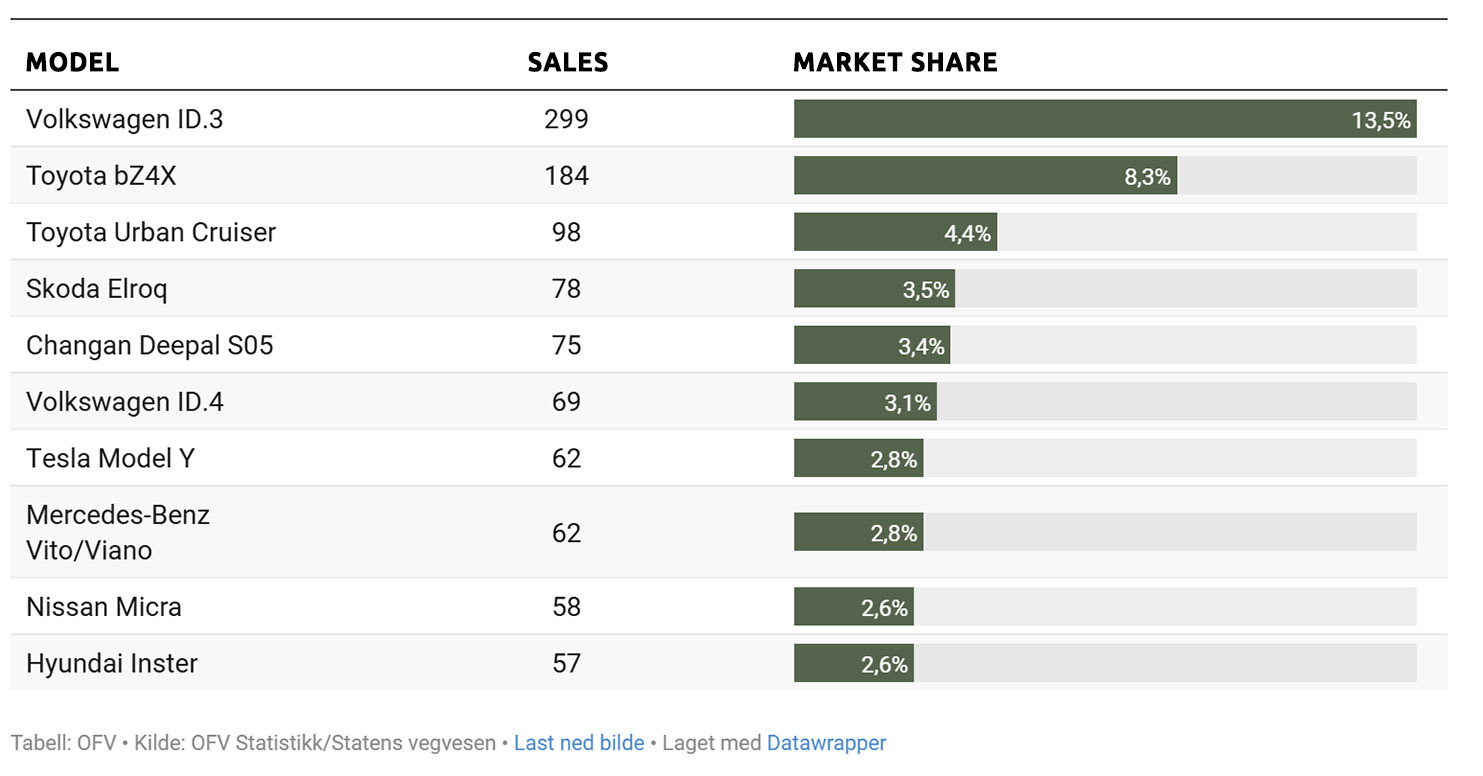
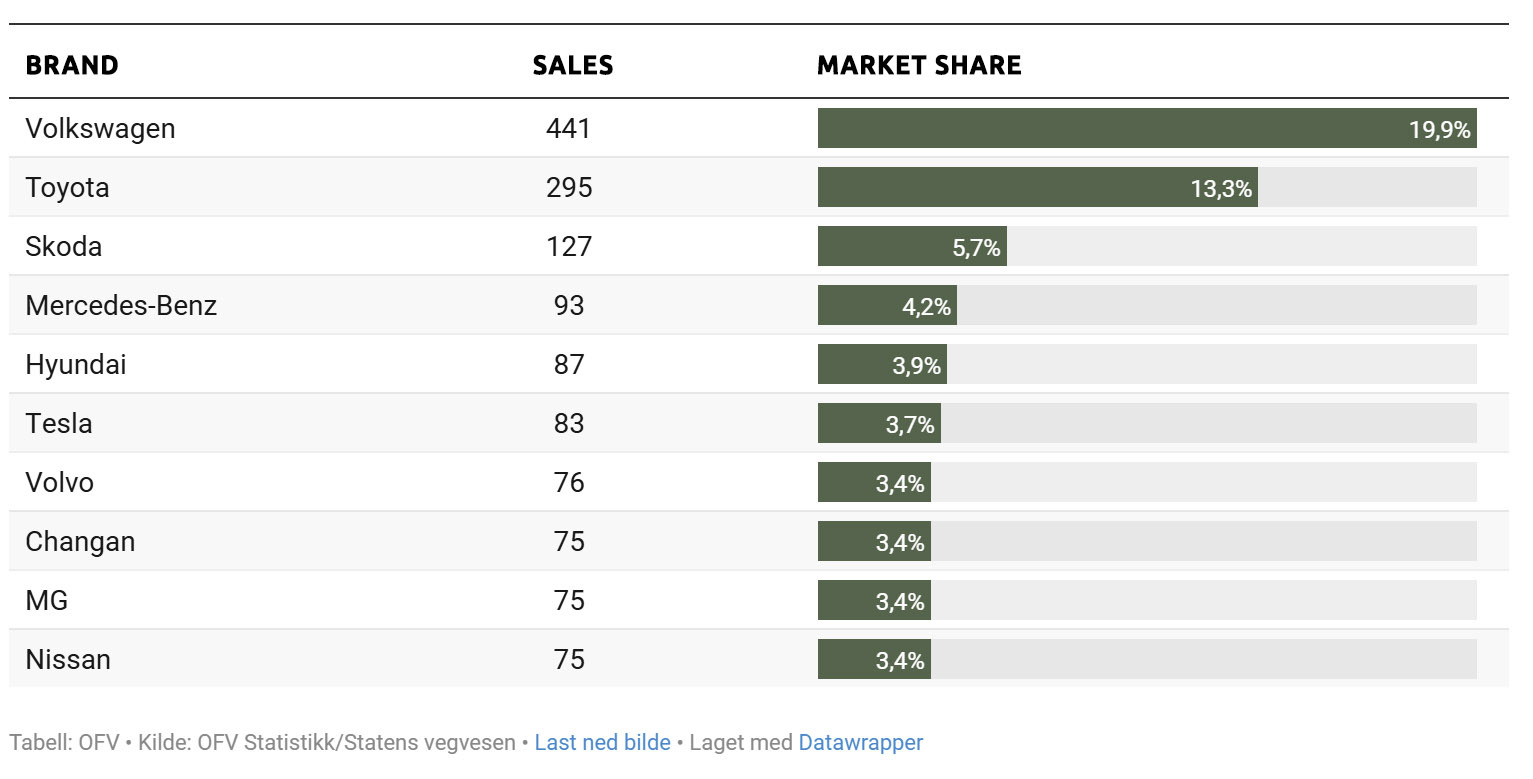
It turns out that even Norway, long considered Tesla’s European stronghold, may be losing interest. New registration data from January 2026 shows that only 62 units of the Tesla Model Y were delivered in Norway last month, accounting for just 2.8 percent of new car sales.

Across its full range, Tesla sold just 83 vehicles in total, marking an 88 percent decline compared to the same period last year.

Changing of the Guard

Several other electric vehicles now comfortably outpace the Model Y in Norwegian sales. Leading the pack in January was the Volkswagen ID.3, with 299 units registered, nearly five times as many as the Tesla.

Norway January 2026 Sales by Model
 Tesla’s Sales Collapsed By Nearly 90% In The Land Of EVs

The Toyota bZ4X followed with 184, ahead of the Toyota Urban Cruiser at 98 and the Skoda Elroq at 78. Even the relatively obscure Deepal S05 managed to beat the Model Y with 75 new registrations, while the Volkswagen ID.4 came in just above Tesla’s numbers with 69.

EVs Still Reign Supreme

Despite Tesla’s stumble, the Norwegian EV market remains overwhelmingly electric. A staggering 94 percent of all new vehicles sold in Norway last month were EVs. Diesel cars accounted for just 98 sales, while only 7 petrol-powered vehicles were registered across the entire country, the lowest number on record.

 Tesla’s Sales Collapsed By Nearly 90% In The Land Of EVs

While Tesla endured a difficult month in Norway, it did actually experience a bump in sales in certain European markets. For example, sales rose 70 percent in Spain to 456 examples. Additionally, sales jumped 75 percent in Italy to 713 units, rose 26 percent in Sweden to 512, and increased 3 percent in Denmark to 458.

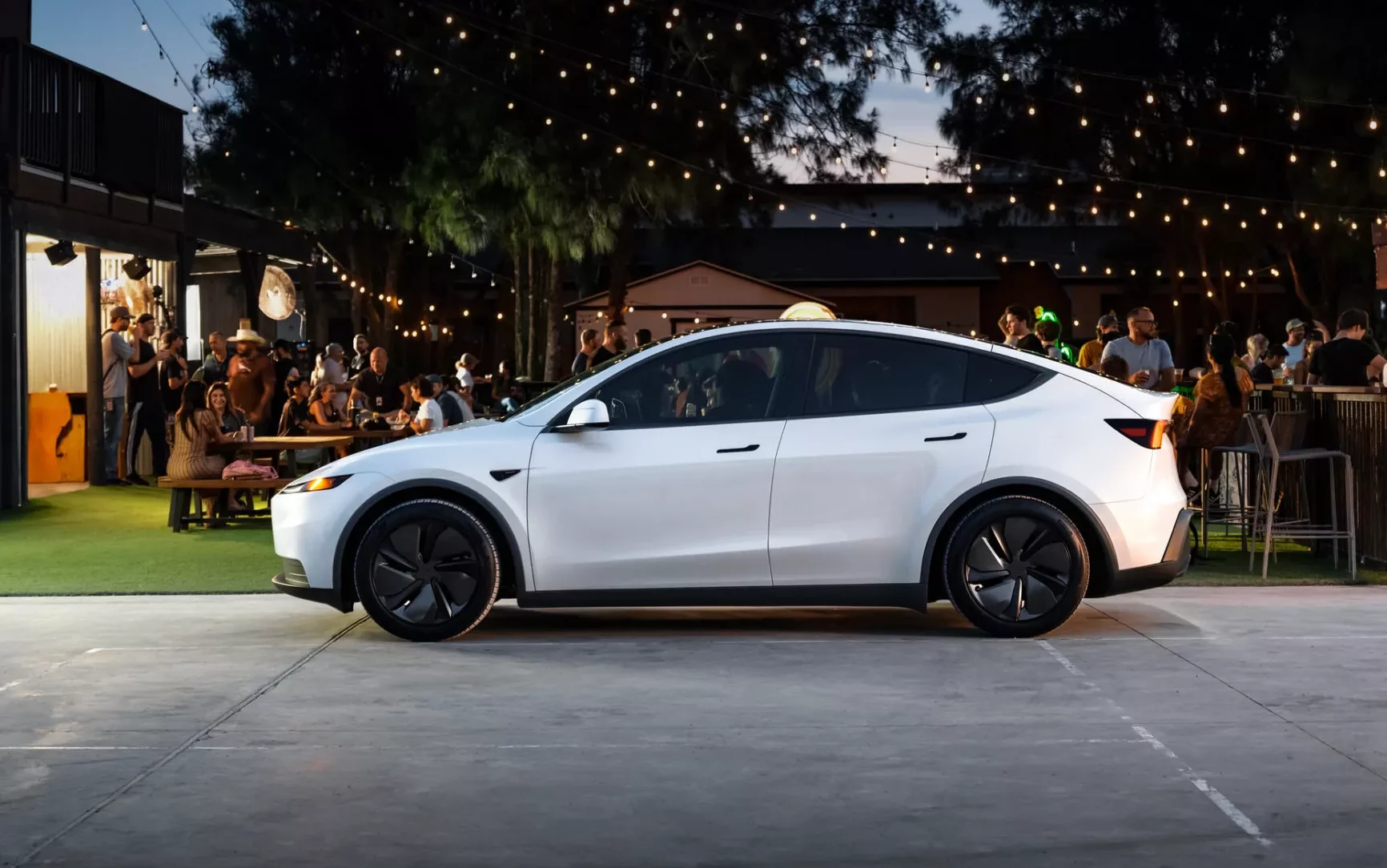
Likely contributing to this growth are the newly available, affordable, and stripped-out versions of the Model 3 and Model Y. These Standard variants were introduced to breathe new life into Tesla’s aging lineup, which has been increasingly criticized for lagging behind newer, more dynamic competitors.

Still, Tesla’s European picture remains mixed. A Reuters report highlights significant losses in key markets: sales in France fell 42 percent, Belgium dropped 31 percent, and the Netherlands saw a dramatic 67 percent decline. In Portugal, the dip was modest but noticeable at just over 3 percent.

New Threats on the Horizon

It will be interesting to see how the rest of 2026 plays out for Tesla in Europe. A growing number of Chinese brands are launching several new models in Europe, and in the second quarter, BYD will start mass production at its plant in Szeged, Hungary, allowing it to sell EVs tariff-free in the region.

Norway January 2026 Sales by Brand
 Tesla’s Sales Collapsed By Nearly 90% In The Land Of EVs

A $9,500 Hatch Stole Tesla’s Best-Seller Crown In China

  • Geely Galaxy Xingyuan was China’s best-selling vehicle in 2025.
  • Wuling Mini EV ranked second, ahead of the Tesla Model Y in 2025.
  • BYD stayed China’s top-selling brand by a wide margin in 2025.

A new electric subcompact has pulled off a quiet revolution in China’s fiercely competitive car market, topping the charts without the backing of Tesla or BYD. The Geely Galaxy Xingyuan, a fully electric hatchback, has officially become the country’s best-selling vehicle for 2025, racking up 465,775 registrations and ending the two-year reign of the Tesla Model Y.

More: Ford Held The Best-Seller Crown, But GM Outsold It On A Technicality

Known as the Geely EX2 in export markets, the Galaxy Xingyuan was introduced in 2024 and measures 4,135 mm (162.8 inches) in length. It sits in the subcompact category, going up against popular rivals like the BYD Dolphin, Wuling Bingo, and Aion UT.

It blends simple, approachable styling with a well-equipped interior and pricing that stays competitive, currently ranging from ¥65,800 to ¥95,800 ($9,500 to $13,800 at current exchange rates) in China.

GM JV Snags Second Spot

 A $9,500 Hatch Stole Tesla’s Best-Seller Crown In China
Wuling Hongguang Mini EV

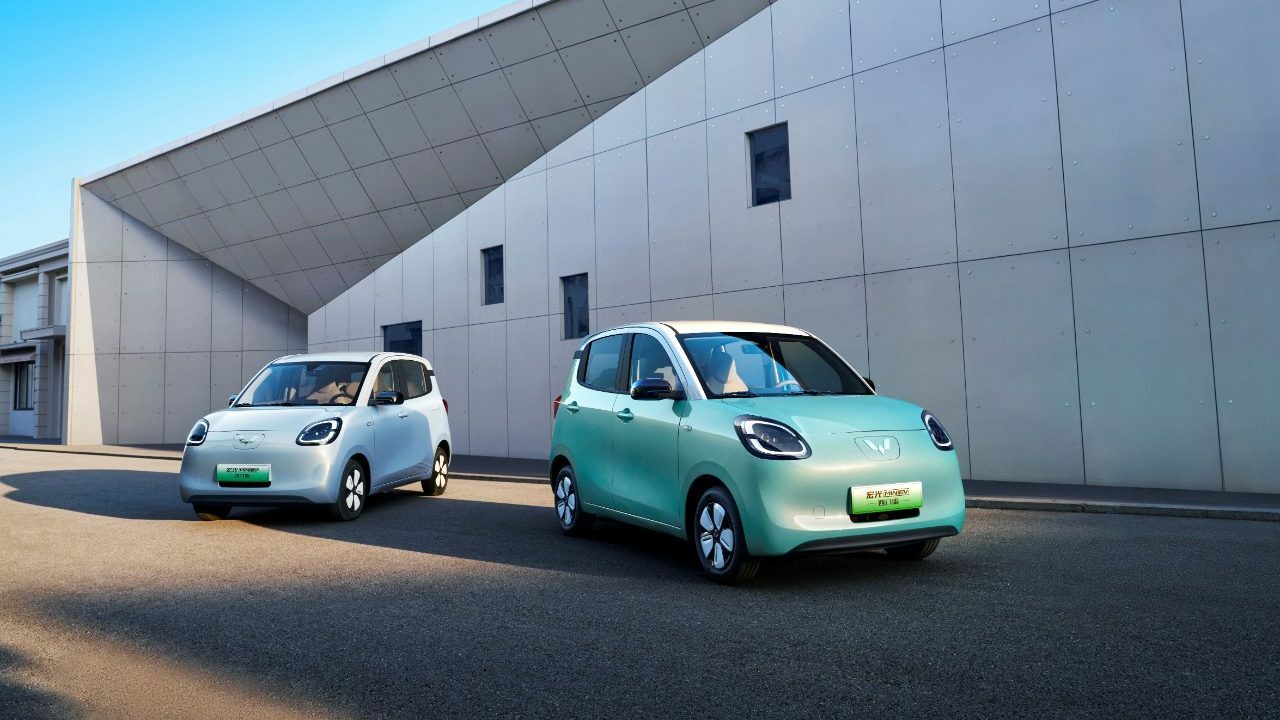
China’s second-best-selling vehicle in 2025 was the compact Wuling Hongguang Mini EV, repeating the success of its earlier version from 2021 and 2022. The pint-sized electric hatchback from the SAIC-GM-Wuling joint venture entered a new generation last year, bringing more playful styling and a new five-door variant. Those updates clearly landed well, helping it reach 435,599 units sold, a huge 82 percent jump over its 2024 total.

\\\\\\\\\\\\\\\\\\\\\\\\

Geely Galaxy Xingyuan

The Tesla Model Y, which held the top spot in 2023 and 2024, slipped to third place in 2025. It still put up strong numbers with 425,337 units sold, though that marked an 11.5 percent decline from the year before, even with the launch of a significantly updated version earlier in the year.

More: One in 10 New Cars Sold in Europe Last Month Was Chinese

In fourth place, the BYD Qin Plus sedan registered 387,315 units sold. Available as either a fully electric model or a plug-in hybrid, the Qin Plus had previously held the second spot in both 2023 and 2024 but saw its position slip this year.

The Nissan Sylphy sedan, known as the Sentra in the US, was China’s best-selling model from 2020 to 2022 before Tesla took over. Now down to fifth place with 320,000 sales, it still holds the distinction of being the country’s best-selling non-EV. A new generation has just arrived, which might give it a boost heading into next year.

RankModelPowertrainSales
1Geely Galaxy XingyuanEV465,775
2Wuling Hongguang Mini EVEV435,599
3Tesla Model YEV425,337
4BYD Qin PlusPHEV/EV387,315
5Nissan SylphyICE/Hybrid320,000
6BYD SeagullEV310,956
7BYD Qin LPHEV264,671
8Xiaomi SU7EV258,164
9Volkswagen LavidaICE245,000
10BYD Song PlusPHEV/EV200,276
SWIPE

Source: China Passenger Car Association (CPCA)

Another standout in China’s top 10 for 2025 is the Xiaomi SU7 sedan, which landed in eighth place with 258,164 units sold. The Chinese newcomer made headlines by outselling its direct rival, the Tesla Model 3, which slipped to eleventh with 200,361.

 A $9,500 Hatch Stole Tesla’s Best-Seller Crown In China

Local Brands Dominate The Charts

According to data from the China Passenger Car Association (CPCA), BYD held onto its lead as the largest manufacturer in China by total volume, selling 3,484,525 vehicles in 2025. Geely followed in second with 2,605,565 units, marking a striking 47% increase over the previous year.

Chinese brands as a whole captured 65 percent of the domestic market, while many foreign automakers that once dominated have struggled to keep up. FAW-Volkswagen secured third place with 1,531,276 sales, but joint ventures from Toyota and Honda have now dropped out of the top five.

RankBrand2025 SalesMarket Share
1BYD3,484,52514.70%
2Geely2,605,56511.00%
3FAW-Volkswagen1,531,2766.40%
4Changan1,400,8205.90%
5Chery1,348,4095.70%
SWIPE

Source: China Passenger Car Association (CPCA)

EVs Outsold Gas Cars In Europe For The First Time, But It’s Complicated

  • Hybrids topped Europe’s powertrain sales with 4.5 million units.
  • Plug-in hybrids overtook diesel with a 33.4 percent sales increase.
  • In December, BEVs outsold gas cars for the first time in Europe.

Electrified vehicles are no longer playing second fiddle in Europe’s car market. Sales of battery-electric, plug-in hybrid, and traditional hybrid models climbed sharply across the continent last year, while demand for gasoline and diesel vehicles continued to shrink.

Read: One in 10 New Cars Sold in Europe Last Month Was Chinese

The shift picked up real momentum in December, when BEV sales pulled ahead of gas-powered cars for the first time in the European Union, even as policymakers were making plans to ease emissions regulations.

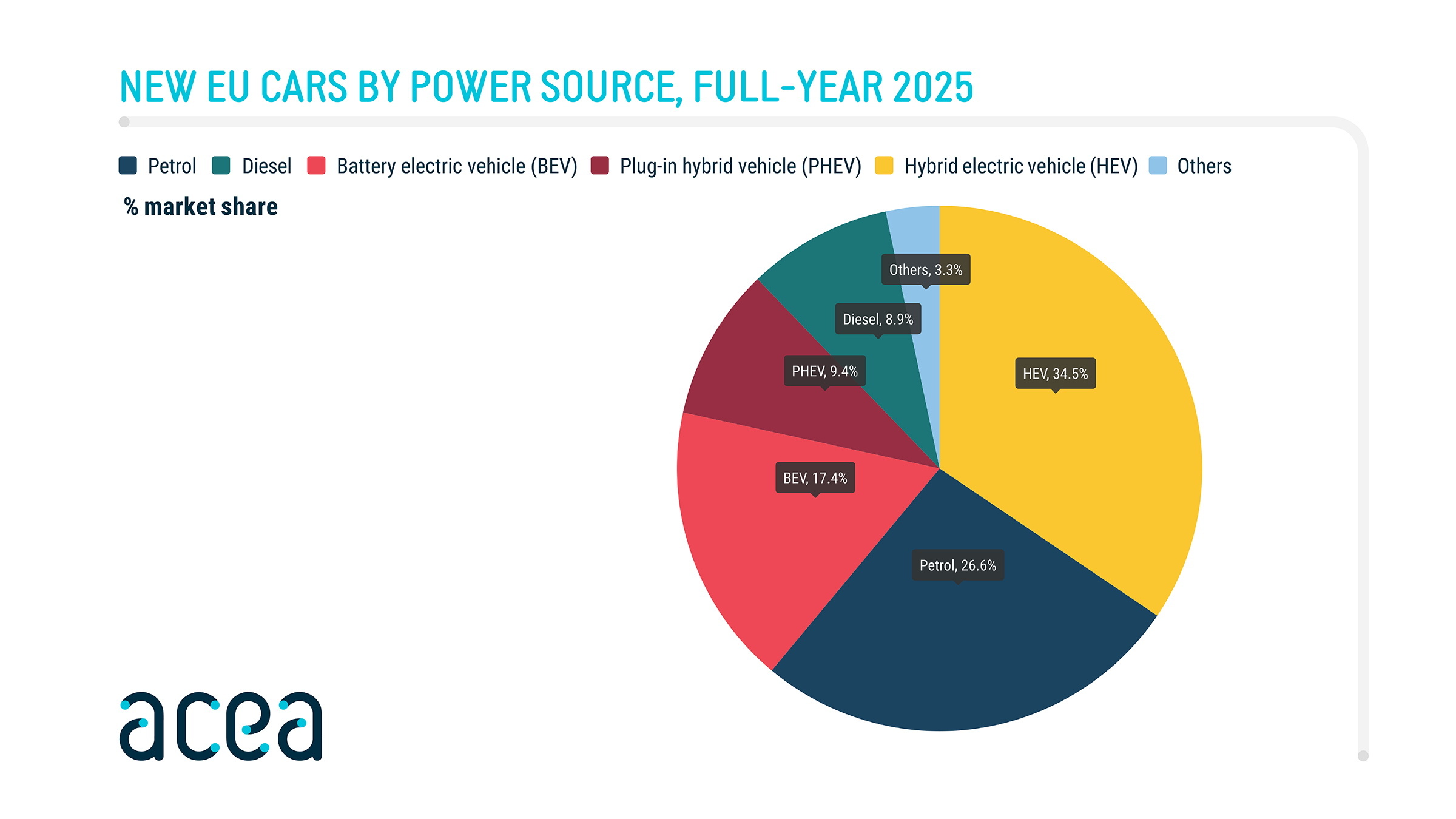
That month, BEVs accounted for 22.6 percent of the market, slipping just ahead of petrol cars at 22.5 percent. Hybrids held the largest share overall at 33.7 percent, followed by plug-in hybrids with 10.7 percent. Diesel fell further to 7.2 percent, while alternatives like LPG closed the list at 3.3 percent.

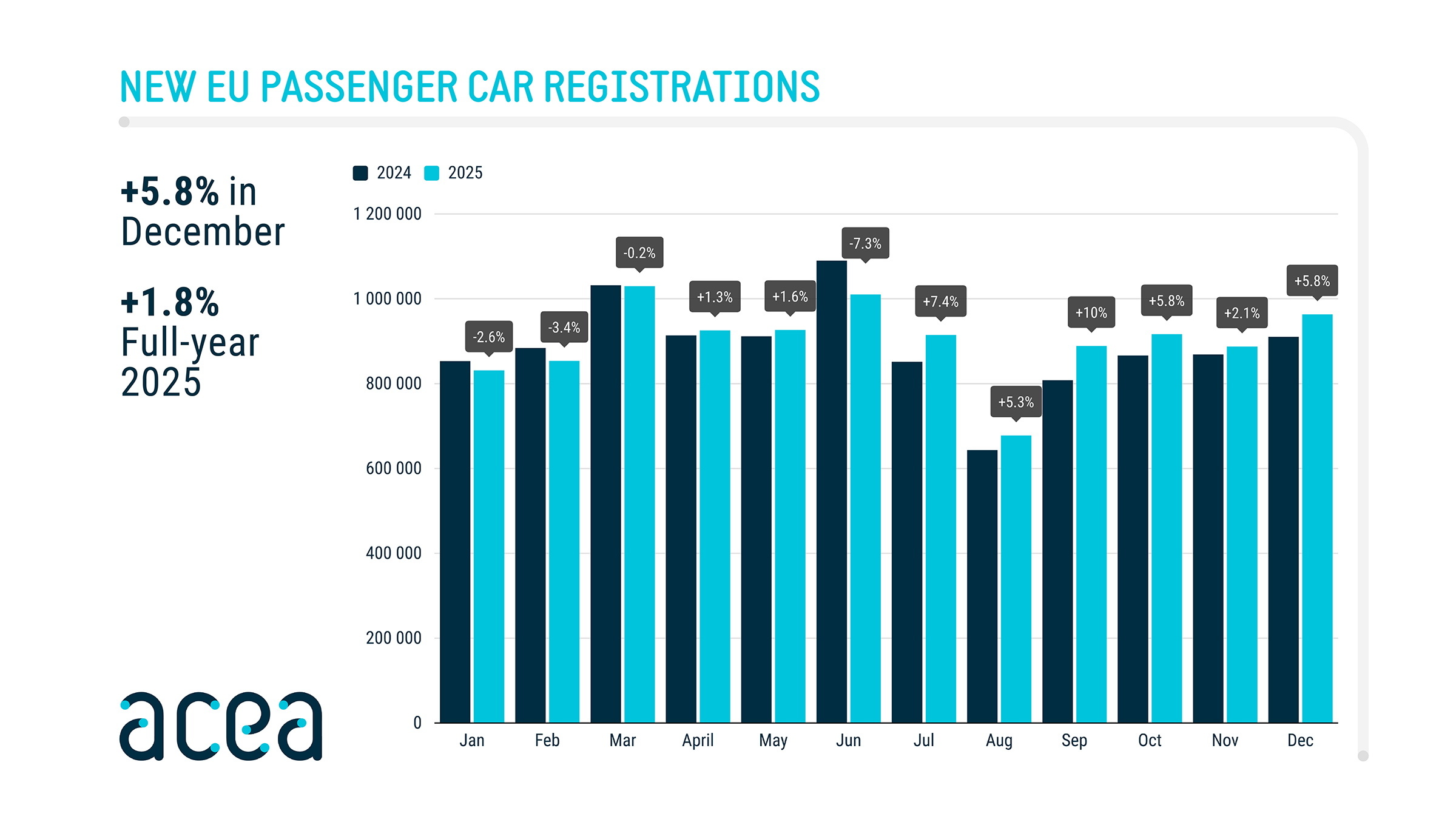
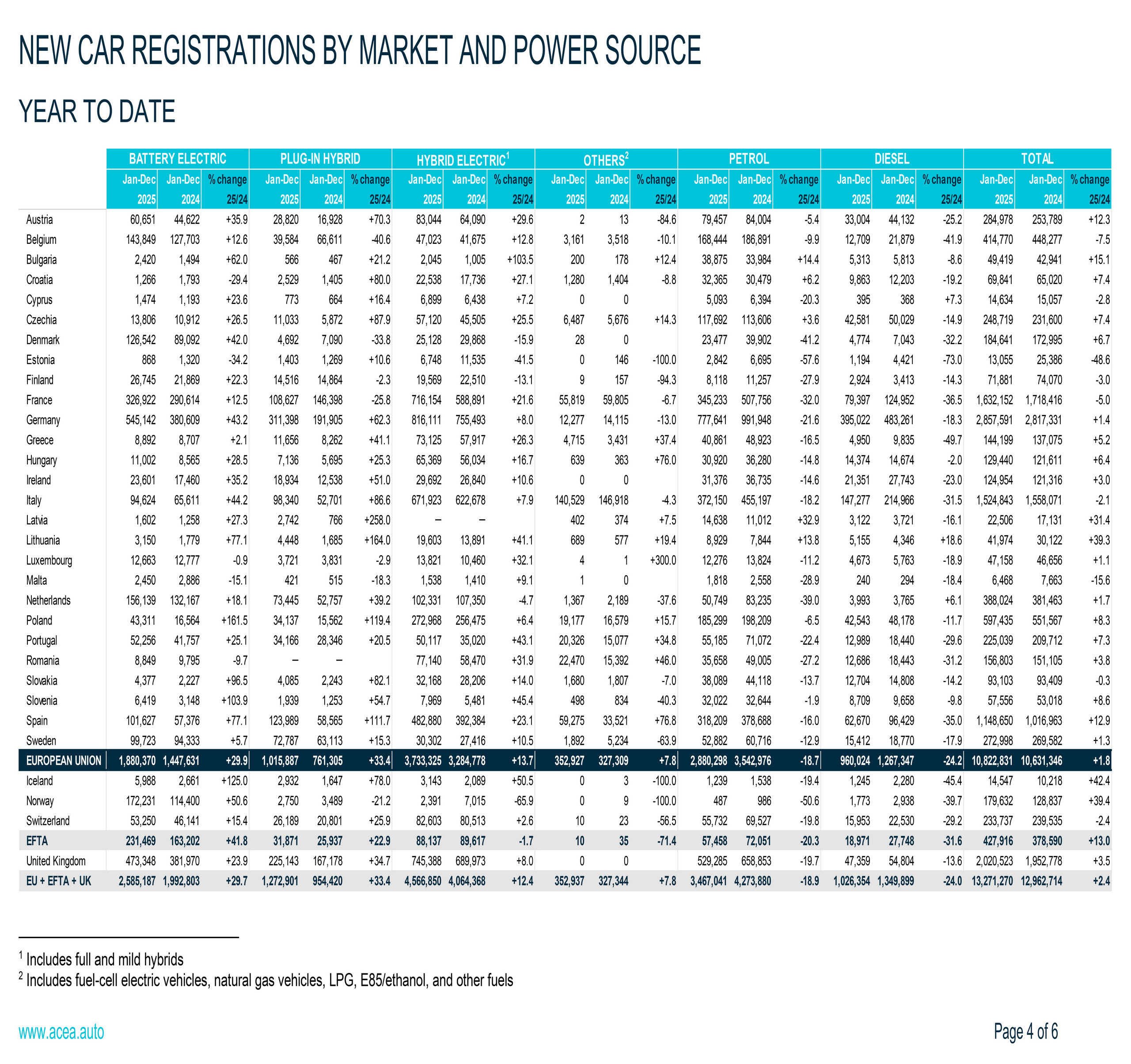
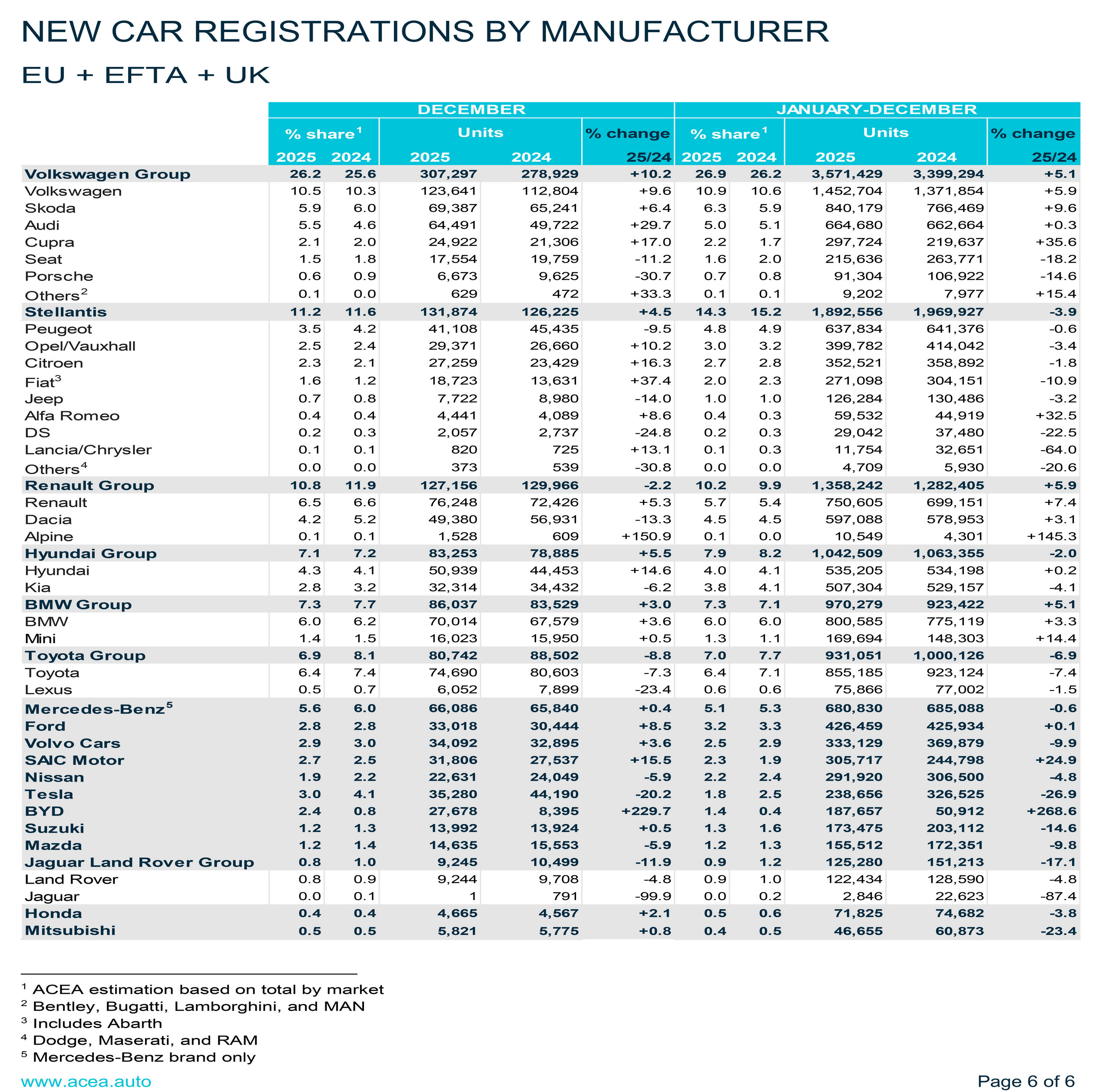
Across the European Union, the UK, and members of the European Free Trade Association, including Iceland, Norway, and Switzerland, a total of 13,271,270 new vehicles were sold throughout 2025. That marks a modest but notable 2.4 percent uptick from the previous year. Within that total, BEVs accounted for 2,585,187 sales, a significant 29.7 percent increase over the 1.9 million sold in 2024.

Hybrids Lead the Charge

 EVs Outsold Gas Cars In Europe For The First Time, But It’s Complicated

Despite the BEV surge, traditional hybrids took the crown as the continent’s best-selling powertrain last year. A total of 4,566,850 hybrids were sold, reflecting a 12.4 percent increase and pushing them past gasoline-powered cars for the first time.

In 2024, petrol models held a narrow lead with 4,273,880 units sold, but in 2025, that number dropped sharply by 18.9 percent to 3,467,041.

Similarly, demand for diesel cars fell by a considerable 24 percent, down from 1,349,899 to just 1,026,354 units. This allowed plug-in hybrids to overtake diesels, selling a total of 1,272,901, or a 33.4 percent rise from 2024.

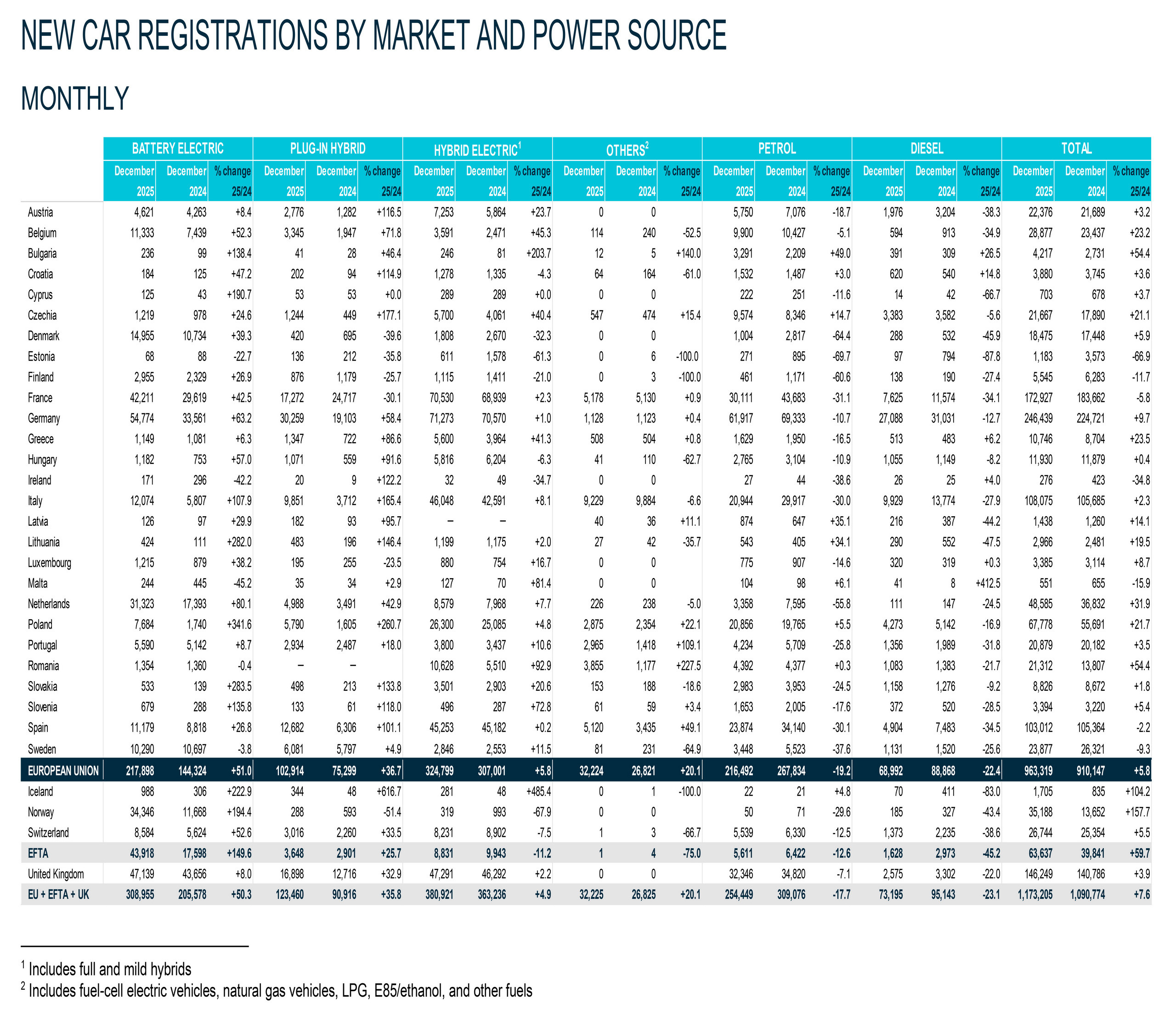
December’s numbers laid bare the speed of change. BEV registrations soared to 308,955, up 50.3 percent compared to the same month a year earlier. That was enough to edge out gasoline car sales, which declined 17.7 percent to 254,449. Diesel models also slumped in December, with sales falling 23.1 percent to 73,195.

As in the January-December period, hybrids remained the most popular powertrain choice in December, with sales reaching 380,921, up 4.9 percent. Demand for plug-in hybrids also rose 35.8 percent to 123,460.

The Story Behind the Numbers

 EVs Outsold Gas Cars In Europe For The First Time, But It’s Complicated

While it’s easy to conclude that EVs outsold gas-powered cars entirely in December, that’s not entirely true. These figures from the European Automobile Manufacturers’ Association include full and mild hybrids in the ‘hybrid electric’ category, which led the industry in sales.

The vast majority of full hybrid and mild hybrids on sale use gas-powered combustion engines, whether that’s to drive the wheels, charge the battery pack, or a combination of both, so it would perhaps be more accurate to lump together hybrid electric and gas-powered vehicles into the same category. If that were the case, they would come out well ahead of BEVs.

 EVs Outsold Gas Cars In Europe For The First Time, But It’s Complicated
 EVs Outsold Gas Cars In Europe For The First Time, But It’s Complicated
 EVs Outsold Gas Cars In Europe For The First Time, But It’s Complicated
 EVs Outsold Gas Cars In Europe For The First Time, But It’s Complicated

Tesla’s Problem In China Isn’t Nio Or BYD, It’s This EV That Just Outsold Them

  • Updated SU7 model could boost Xiaomi sales significantly in 2026.
  • SU7 sales topped 258,000 units, Model 3 reached 200,361 in China.
  • Technology giant aims to sell 550,000 vehicles in China this year.

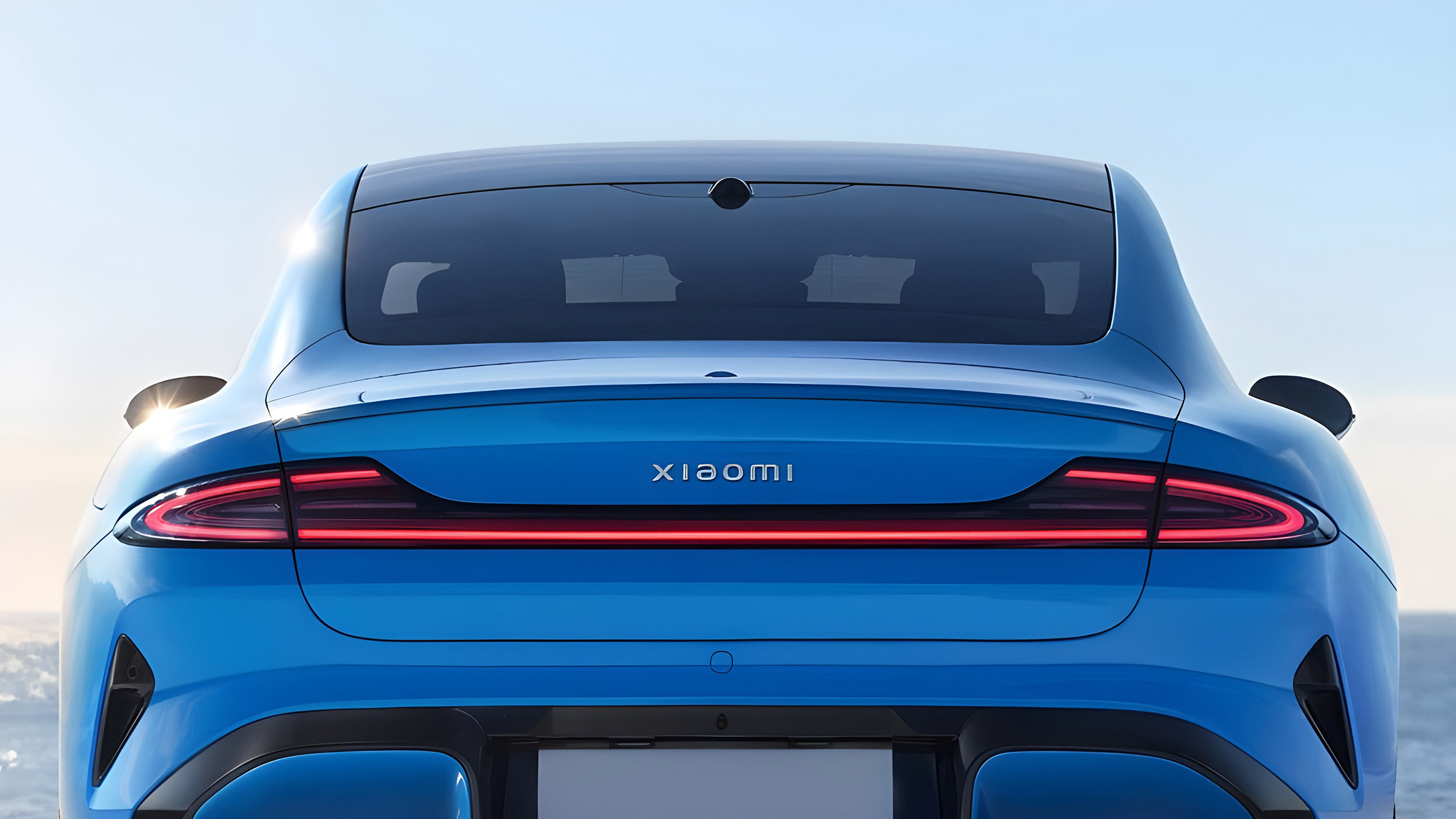
Xiaomi has quickly established itself as an automaker to be reckoned with in China, and last year, it achieved something that would’ve seemed unlikely just a few years ago: its all-electric SU7 sedan outsold the Tesla Model 3.

Once the brand of choice for EV-hungry Chinese consumers, Tesla now finds itself outpaced by domestic rivals that are rapidly improving their game. Xiaomi is leading that charge.

Read: Xiaomi’s YU7 Outsold Tesla’s Model Y And Now It’s Getting Personal

Data from the Chinese Passenger Car Association shows that in 2025, Xiaomi sold 258,164 SU7s. That’s nearly double the roughly 135,000 units it moved in 2024, a figure made more impressive given that the SU7 only launched in April of that year.

Perhaps more notably, it overtook the Tesla Model 3, which saw 200,361 deliveries in the same period.

What’s Driving the Switch?

 Tesla’s Problem In China Isn’t Nio Or BYD, It’s This EV That Just Outsold Them

Chinese buyers have responded well not only to the SU7’s design inside and out but also to the technology it packs and the performance it delivers.

The base version undercuts a comparable Model 3 by roughly 9 percent, according to a report from the South China Morning Post, giving it a clear pricing advantage. Strong driving range and well-specced hardware round out the package, allowing the SU7 to compete in a segment Tesla once dominated.

“Tesla’s dominance in the premium EV segment has been eroded by its Chinese competitors that are able to churn out vehicles on par with its technology standards while offering them at lower prices,” a senior manager at the Shanghai-based consultancy Suolei told the outlet. “Xiaomi’s success is a strong boost for Chinese carmakers, which are all trying to move up the value chain.”

What’s in Store for 2026?

 Tesla’s Problem In China Isn’t Nio Or BYD, It’s This EV That Just Outsold Them

This year is shaping up to be even bigger for Xiaomi. In April, an updated SU7 will be launched, complete with more advanced driving assistance functions, including LiDAR across the entire family, and an improved driving range of up to 902 km (560 miles) on the CLTC cycle.

Within the first 15 days of pre-orders opening, Xiaomi reportedly secured 100,000 reservations for the refreshed model.

Also: Ford’s Jim Farley Was “Shocked” After Tearing Down Xiaomi And Tesla EVs

In total, Xiaomi sold 411,800 vehicles last year and is targeting 550,000 in 2026. This will also be the first full year of availability for the YU7 SUV, which could become its best-selling model.

Back in October, the YU7 notched 33,662 sales in a single month, even edging past the Tesla Model Y. Xiaomi’s third model, the YU9, will also make its debut this year as a range-extender EV.

\\\\\\\\\\\\

Tesla’s Trying To Sell The Cybertruck Somewhere You’d Never Worry About Gas

  • Tesla Cybertruck starts at $110,000 in the United Arab Emirates.
  • U.S. sales fell 48.1 percent to 20,237 units during 2025.
  • Elon Musk once predicted 500,000 annual Cybertruck sales.

Prior to launching the Tesla Cybertruck, Elon Musk suggested they could sell as many as 500,000 of them per year. However, as sales of the electric pickup never really picked up in the United States, Tesla has started selling the Cybertruck in more markets, the latest being the Middle East.

Earlier this month, the first Cybertrucks were delivered to customers in the United Arab Emirates (UAE). Roughly 60 units were handed over during a launch event held for the occasion.

Read: Tesla’s Running Out Of Cybertruck Buyers, So Musk’s Other Companies Are Buying It

While much of the early hype surrounding the electric truck has died down in the US, it’s a hot ticket in the Middle East, with many having already been imported into the region by enthusiastic buyers before Tesla made it official. Of course, the UAE and the broader Middle East remain relatively small markets and won’t help Tesla get anywhere near its early estimates for the Cybertruck.

As one of the world’s top oil producers, the UAE enjoys some of the lowest fuel prices globally, which makes electric vehicles a harder sell. With cheap gas and a strong car culture rooted in performance and presence, the appeal of a futuristic EV like the Cybertruck has more to do with novelty than necessity.

How Much Is a Cybertruck in Dubai?

\\\\

Tesla Europe & Middle East/Twitter

In the UAE, pricing starts at AED404,900 for the dual-motor variant, roughly $110,000. That’s significantly more than the $79,990 price tag in the U.S. The top-end tri-motor Cyberbeast comes in at AED454,900, or about $123,000, which represents a smaller markup over its American counterpart at $114,900.

American Sales Crater

Back in the U.S., sales of the Cybertruck tumbled in 2025. Tesla moved just 20,237 units, down 48.1 percent from the 38,965 sold in 2024, the vehicle’s first full year on the market. The final quarter was especially tough, with only 4,140 trucks delivered. That’s a 68.1 percent drop compared to the 12,991 units shifted in Q4 of the previous year.

\\\\\\\

EV Sales Are Falling In The State You’d Least Expect And Rising Where You’d Never Guess

  • New growth hotspots emerged far outside traditional markets.
  • A major federal incentive ended late in the calendar year.
  • Charging access still varies widely across state lines.

After years of leading the national shift toward electric vehicles, California may be approaching an inflection point. For the first time since the pandemic, EV sales in the state are expected to dip in 2025, even as several other states report a sharp rise in adoption.

Read: California Has A New Way To Make EV Owners Pay

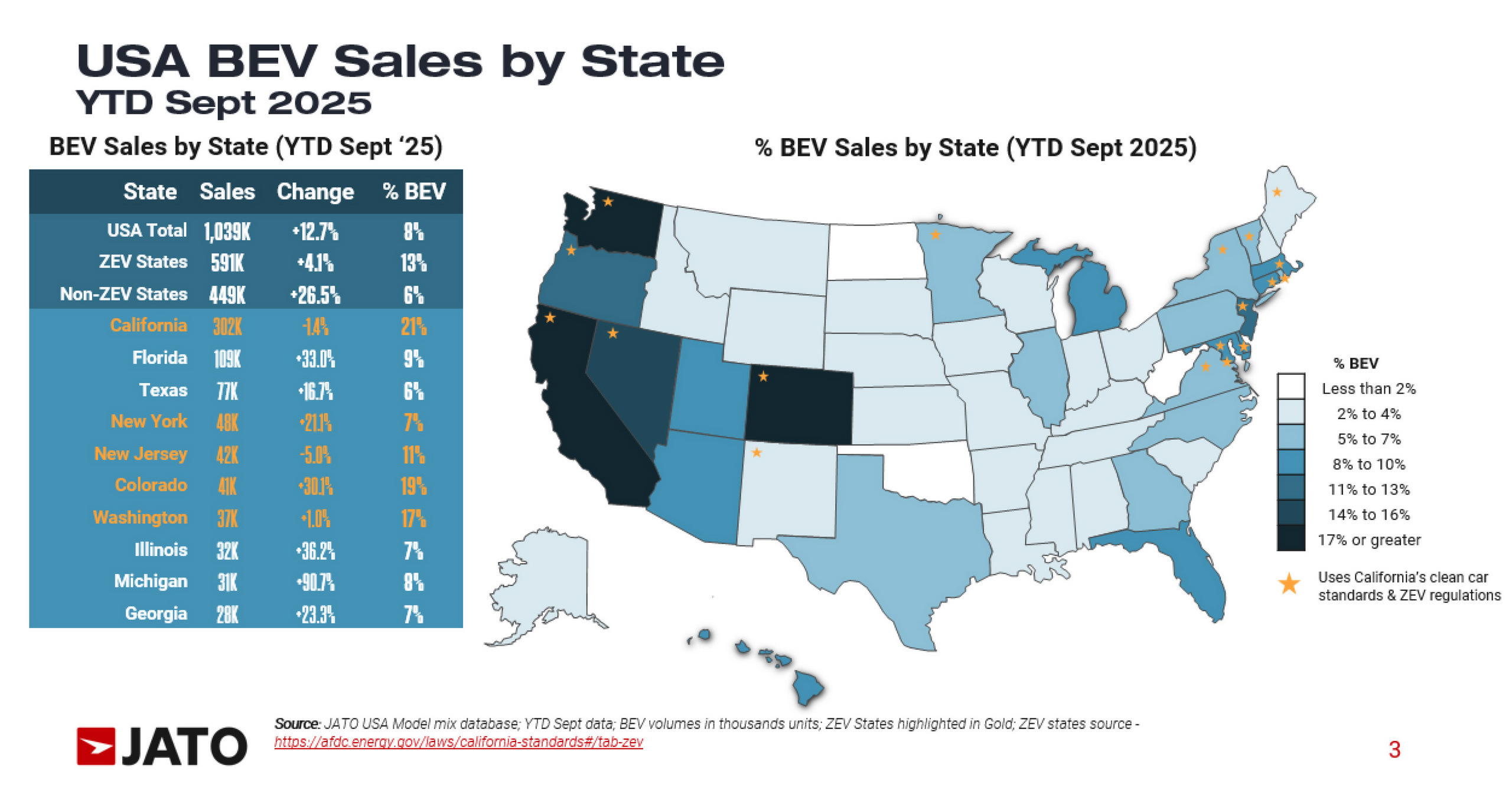
Data from JATO Dynamics shows that during the first nine months of 2025, before the federal EV tax credit ended, roughly 302,000 electric vehicles were sold in California. That figure represents a 1.4 percent decrease compared to the same period last year, hinting that the state’s EV market could be nearing saturation.

We don’t have figures for the last quarter of the year, but given the elimination of the $7,500 federal tax credit on September 30, it’s safe to assume the final numbers will look worse, unless buyers suddenly developed a taste for paying more.

 EV Sales Are Falling In The State You’d Least Expect And Rising Where You’d Never Guess

Despite this, California remains well ahead of the pack. EVs now account for 21 percent of new vehicle sales in the state, placing it above the District of Columbia (19 percent), Colorado (19 percent), Washington (17 percent), Nevada (16 percent), and Oregon (13 percent).

ZEV States Surge

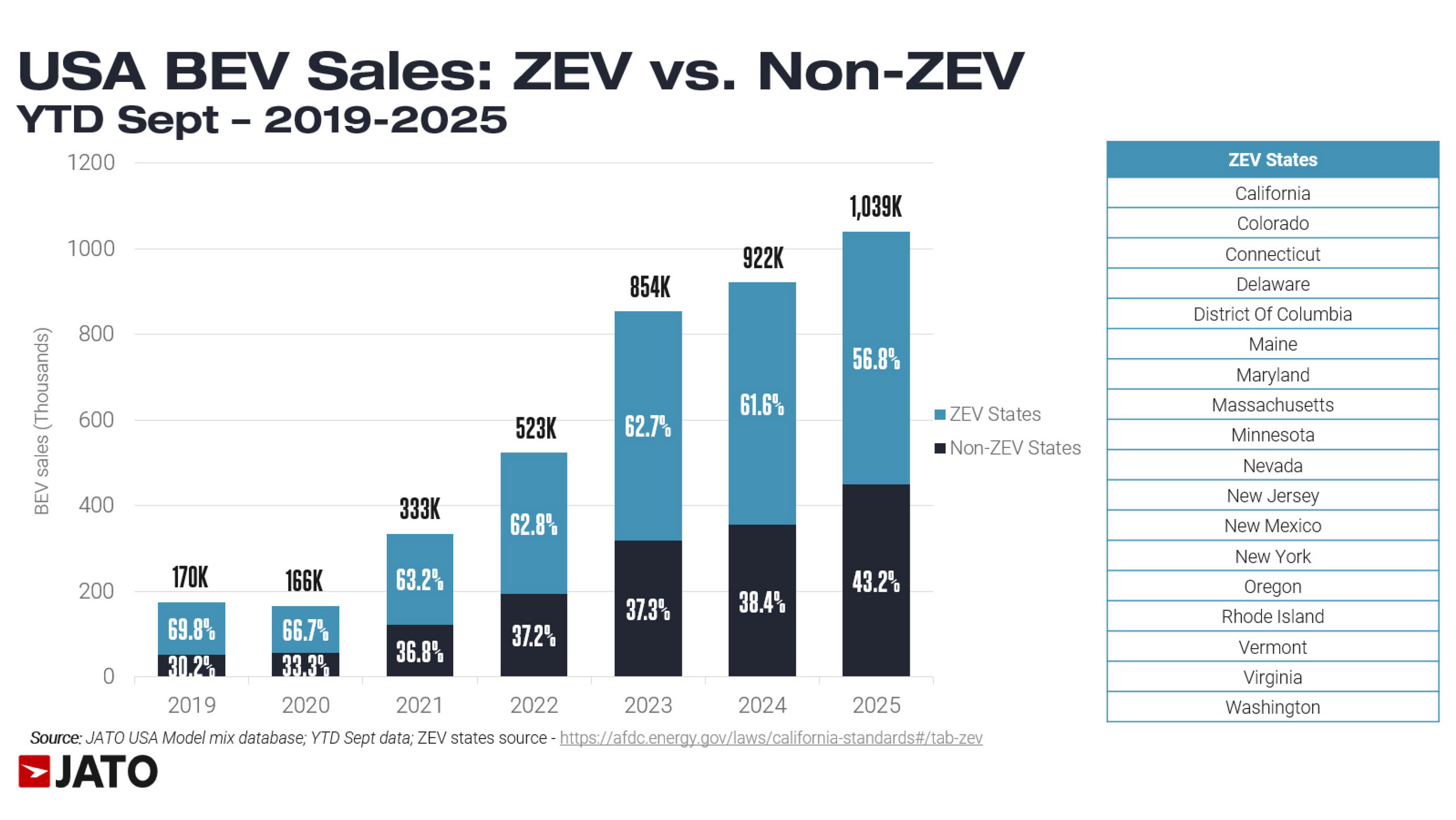
Several of these ZEV states saw marked gains last year. For example, New York’s EV sales rose 21.1 percent in the first three quarters, while Colorado posted a 30.1 percent increase. On average, EVs make up 13 percent of new car sales in ZEV states. In contrast, non-ZEV states average just 6 percent, contributing to a national average of 8 percent.

 EV Sales Are Falling In The State You’d Least Expect And Rising Where You’d Never Guess

EV sales also rose sharply in many non-ZEV states during the same period. Florida, in particular, recorded an impressive 33 percent jump between January and September 2025, reaching 109,000 units, which now represent 9 percent of new vehicle sales.

That jump in Florida is notable not only for its scale, but also because it comes without the backing of ZEV mandates or aggressive state-level incentives. In a politically conservative state where environmental policy isn’t front and center, the increase suggests that consumer demand, not legislation, is doing the heavy lifting.

Texas followed with a 16.7 percent rise to 77,000 units. Illinois saw a 36.2 percent increase, reaching 32,000. Georgia posted a 23.3 percent bump to 28,000, while Michigan led in growth rate, soaring 90.7 percent to 31,000 EVs sold.

“The rapid uptake in BEV sales in Michigan is a clear example of why growth in traditionally non-ZEV states presents such a valuable opportunity for domestic brands,” JATO analysis and reporting specialist Anthony Puhl said.

 EV Sales Are Falling In The State You’d Least Expect And Rising Where You’d Never Guess

“While it is possible for a brand to break into a new market, as Tesla has done on a national level, we expect BEV sales in other states to come from brands with which the population is already familiar.”

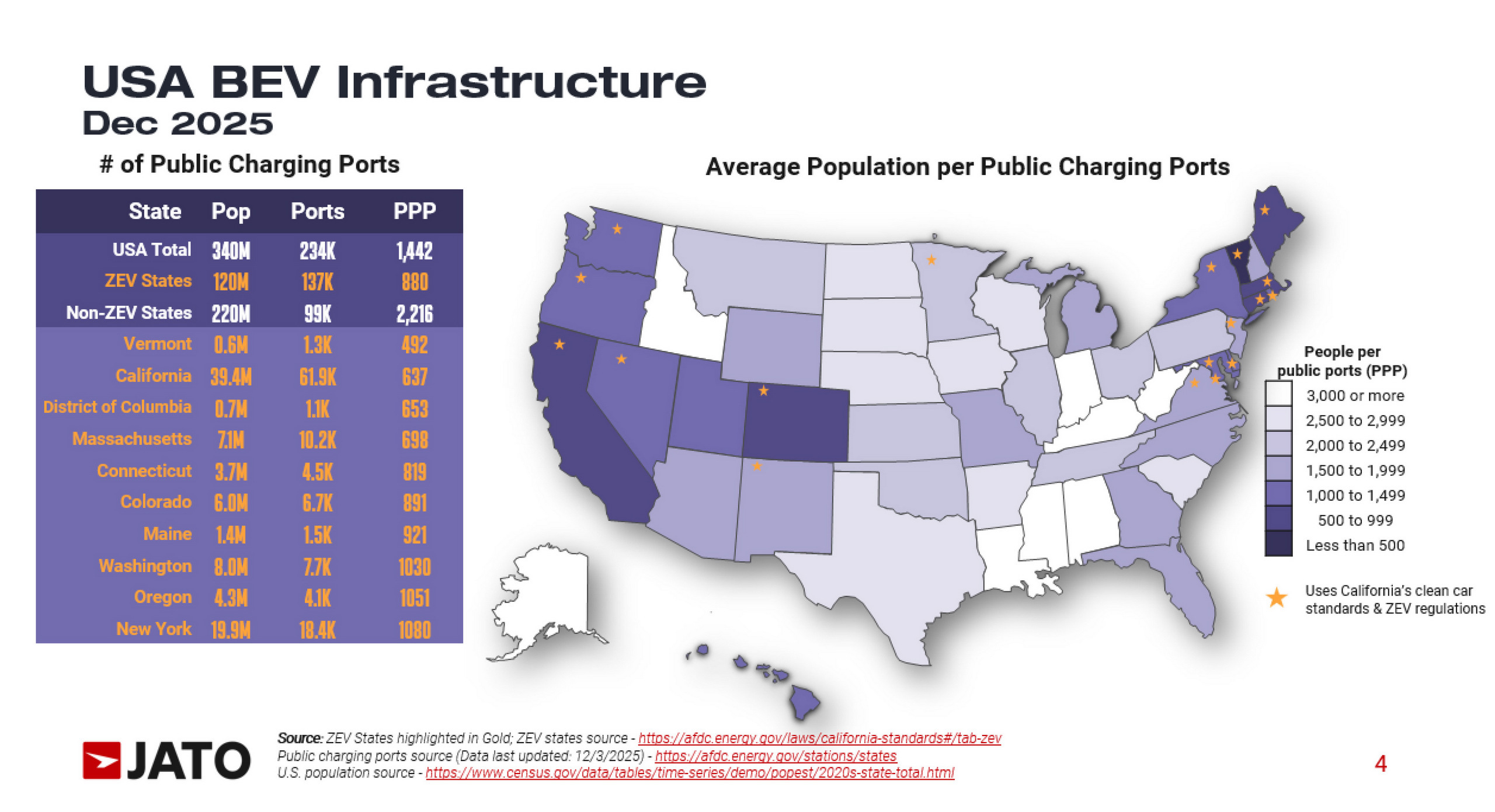
One of the key hurdles for EV adoption in non-ZEV states remains charging infrastructure. In ZEV states, there’s approximately one public charging point for every 880 people. In non-ZEV states, that number jumps significantly to one for every 2,216 people, highlighting a critical gap in support systems for EV owners.

 EV Sales Are Falling In The State You’d Least Expect And Rising Where You’d Never Guess
Jato Dynamics

Europe Just Replaced Tesla With A New EV Sales Champion

  • Model Y and Model 3 sales dropped sharply across Europe.
  • VW ID.3, ID.4, and ID.7 all saw major sales growth last year.
  • Tesla’s decline highlights growing EV pressure from rivals.

It’s no secret that Tesla had a tough run in Europe last year. After several years of outpacing legacy automakers in EV sales, 2025 brought a sharp reversal that few would have seen coming just a couple of years ago. The brand that once led the electric car race is now falling behind a familiar rival with a very different backstory.

Read: BYD Sold Nearly Three Times As Many Cars As Tesla In Europe

Volkswagen sold more battery-electric vehicles in Europe than Tesla last year. Yes, VW, the same manufacturer that was mired in the diesel emissions scandal just as Tesla was gearing up for the Model 3, has now overtaken the American brand on its home turf.

Changing of the Guard

According to figures from Dataforce reported by Autonews, the VW brand moved 274,417 fully electric vehicles in Europe in 2025, a jump of 56 percent from its 2024 total of 175,654. Things weren’t so pretty for Tesla.

Its sales declined 27 percent last year, dropping from 326,714 units to 238,765. This came despite the fact that the Tesla Model Y remains Europe’s best-selling EV with 151,331 units sold last year, significantly more than the 94,106 Skoda Elroqs that were sold over the same period. However, Model Y sales were still down 28 percent from 2024, when 210,265 were sold.

Europe’s Best-Selling EVs
RankModel20252024
1Tesla Model Y151,331210,265
2Skoda Elroq94,10646
3Tesla Model 386,261112,967
4Renault 5 E-Tech81,51713,097
5VW ID.480,12364,729
6VW ID.378,66754,467
7VW ID.776,36832,192
8BMW iX169,81653,272
9Kia EV366,8024,960
10Skoda Enyaq65,78767,331
TOTAL2,582,5951,990,956
SWIPE

Dataforce

Helping the VW brand take the top place from Tesla is the fact that it has a larger range of EVs. For example, the VW ID.4 sold 80,123 units last year, up 23.8 percent. A total of 78,667 VW ID.3s were sold, up 44.4 percent. The ID.7 also saw growth, with 76,368 units finding new homes, a 137.2 percent rise.

To put these figures into perspective, Tesla sold 86,261 Model 3s. And while that beat out any individual VW model, it was still down 23.6 percent from 2024.

VW Conquers All…Almost

VW’s strong year wasn’t limited to EVs. It also topped Europe’s plug-in hybrid (PHEV) segment, selling 159,173 units, a 205 percent jump from 2024. That was enough to comfortably beat BMW, with 142,285 sales, followed by Mercedes-Benz at 135,878 and Volvo at 104,270.

The VW brand also led in both gasoline and diesel vehicle sales. Its gas-powered lineup moved 737,821 units in 2025, staying well ahead of Peugeot’s 492,133, despite VW recording a 7.3 percent decline. Diesel sales reached 269,277 units, down 19.4 percent from the previous year, but still enough to edge out Mercedes, which sold 250,326.

Europe’s Top-Selling EV Brands
BrandSalesDiff. vs 2024
1VW274,41756%
2Tesla238,765−27%
3BMW193,18615%
4Skoda172,100117%
5Audi153,84851%
SWIPE

Dataforce

Traditional hybrids were the only powertrain segment that VW didn’t take top honors in, as Toyota held the crown with 626,675 sales. Although VW didn’t rank in the top five, things could change this year as it plans to launch the new T-Roc, complete with a hybrid powertrain.

 Europe Just Replaced Tesla With A New EV Sales Champion

Most Western Carmakers Could Be Pushed Out Of China By 2030

  • Foreign brands are losing ground to China’s EV tech dominance.
  • EV adoption in China rose, despite slower overall car sales.
  • Toyota, VW, and GM are restructuring their China operations

The hugely important Chinese car market is continuing to prove challenging for foreign automakers. Chinese manufacturers are maintaining their dominance on the home front, as the world’s largest car market continues to move towards electric and plug-in hybrid vehicles.

Domestic demand for these so-called New Energy Vehicles rose by 18 percent in 2025. This contrasts with the situation in Europe and the US, where the slowdown in EV adoption steals the headlines.

Tech Wars

One reason why imported cars are falling out of favor is the ability of local carmakers to adapt and update to changing technologies on the ground at a much faster pace. As brands such as BYD, Geely, and Changan continue to battle each other on tech features, they’re leaving Western manufacturers in the dust.

Read: EV Makers Just Got A New Problem In China, And It Starts In 2026

The ability for Chinese automakers to not only develop and implement new tech, but also integrate seamlessly with other existing Chinese tech (such as the WeChat and AliPay “super apps”) is something that consumers value highly.

 Most Western Carmakers Could Be Pushed Out Of China By 2030

According to Xiao Feng, speaking to the Wall Street Journal, this could mean that foreign car makers could mostly be pushed out of the Chinese car market by 2030. Save for some big players, such as Tesla, Toyota, and VW, it’ll be hard for imports to compete on both features and EV tech.

Passenger Car Slowdown

Although the adoption of EVs and plug-in hybrids is moving forward rapidly, last year China’s passenger car market grew at its slowest pace in three years, scoring a 4 percent increase and a total of 23.7 million vehicles.

Meanwhile, EV sales have been bolstered by local subsidies, with 2025 incentives being up to $2,900 when consumers traded in their old car for an EV or plug-in hybrid. Some 11.5 million car sales were made through the trade-in incentive, although in December, new car sales reportedly fell by 14%, due to some localities “running out” of their budgets for the incentives.

See Also: BMW And Porsche Just Lost China’s Luxury Market To A $100,000 Newcomer

 Most Western Carmakers Could Be Pushed Out Of China By 2030

It’s reported that Beijing will be looking at curtailing subsidies in 2026. Meanwhile, fierce local competition continues to affect both local and foreign brands, with many competitors seemingly locked into a price war.

One study, conducted by the China Automobile Dealers Association, claims that only 30 percent of dealers remained profitable in the first half of 2025, with 75 percent of those surveyed admitting they sold at least a few cars below cost.

Foreign Car Makers Restructure

Last year saw the departure of Mitsubishi from the Chinese market, as the company opted to end all manufacturing and sales, while JLR also underwent a significant scaleback in its product offerings. VW stopped making cars at its Nanjing plant.

Even Tesla, arguably the strongest non-local player, saw sales drop by around 5 percent while it lost the world’s best-selling EV tag to BYD.

However, with China being the largest market, many others are choosing to restructure rather than abandon ship completely. Toyota is building a new Lexus EV plant in Shanghai, VW is ready to launch a whole range of China-specific models, and GM will offer all its products with either an EV or a plug-in hybrid option.

 Most Western Carmakers Could Be Pushed Out Of China By 2030

GreenPower Accelerates Production of All-Electric School Buses; Secures Financing Facility of Up to $18 Million to Convert Record Backlog

By: STN
14 November 2025 at 16:55

LOS ANGELES — GreenPower Motor Company Inc. (NASDAQ: GP) (“GreenPower” or the “Company”) today announced accelerated production of its all-electric school bus lineup, supported by a financing facility of up to $18 million, deployable in tranches of up to $2 million. The facility is designed to optimize cash conversion cycles, enabling GreenPower to match capital deployment with production timing as the Company scales output.

“We are entering a period of meaningful operational leverage,” said Fraser Atkinson, CEO of GreenPower. “With more than $50 million in contracted orders for our Nano BEAST and BEAST school buses, this facility allows us to convert backlog into deliveries more efficiently. Before finalizing the facility, we pre-built over 100 Nano BEAST cab chassis and 30 BEAST chassis, significantly reducing production lead times. This creates a clear path toward accelerated revenue recognition, margin expansion, and improved operating cash flow.”

GreenPower remains the only fully electric OEM manufacturing both a Class 4 Type A and Class 8 Type D school bus. This vertically integrated, purpose-built platform strategy positions the Company to capture share as the school transportation sector transitions to zero-emission fleets supported by federal and state incentives.

About GreenPower Motor Company Inc.

GreenPower designs, builds and distributes a full suite of high-floor and low-floor all-electric medium and heavy-duty vehicles, including transit buses, school buses, shuttles, cargo van and a cab and chassis. GreenPower employs a clean-sheet design to manufacture all-electric vehicles that are purpose built to be battery powered with zero emissions while integrating global suppliers for key components. This OEM platform allows GreenPower to meet the specifications of various operators while providing standard parts for ease of maintenance and accessibility for warranty requirements. For further information go to www.greenpowermotor.com

The post GreenPower Accelerates Production of All-Electric School Buses; Secures Financing Facility of Up to $18 Million to Convert Record Backlog appeared first on School Transportation News.

Rohrer Bus Sales Announces Nicholas Cole as Executive Vice President & General Manager

By: STN
11 August 2025 at 19:45

DUNCANNON, Pa., – Rohrer Bus Sales proudly announces the appointment of Nicholas Cole as Executive Vice President & General Manager. Nick will be bringing over three decades of executive experience in the automotive, transportation, and mobility industries to Rohrer Bus. In this role, Nick will report directly to Skip Rohrer, President of Rohrer Bus Sales.

As Executive Vice President & General Manager, Nick will be responsible for integrating the Service and Parts Departments into the dealership, and working alongside Skip developing sales strategies to continue the growth of our dealership.

Nick is a seasoned leader known for transforming businesses and leading innovations across global organizations. His distinguished career includes leadership roles with Daimler AG, Avis Budget Group, Local Motors, and United Road. Most recently, Nick served as Senior Vice President of Sales & Marketing at United Road, where he led the OEM and remarketing sales teams.

Nick previously held the role of Senior Vice President of Sales & Deployment at Local Motors, a start-up manufacturer that introduced the first 3D-manufactured, electric, autonomous, commercial shuttle bus. As President of Zipcar International, he was responsible for global operations across Europe, and launching innovative B2B mobility as a service (MaaS) solutions. As CEO of Car2go North America, a Daimler AG subsidiary, he built and scaled the first point-to-point car-sharing service in the U.S. and Canada, transforming it from a start-up, to a viable enterprise with 14 markets across the U.S. and Canada.

Nick holds a B.S. in Business Administration with a concentration in Finance from Miami University in Oxford, Ohio. Nick and his wife, Heather, have two adult children. Although Nick currently resides in Plymouth, Michigan, he and Heather will be relocating to the Harrisburg area.

Please join us in welcoming Nick and Heather to the Rohrer Bus family.

For more info on Rohrer Bus, see https://www.rohrerbus.com.

Rohrer Bus is a full-service bus sales and transportation company offering a wide selection of new and pre-owned buses, vans, and transportation services. We have a long-standing reputation as a leading commercial vehicle dealer and school bus company, and we have been providing safe and reliable passenger transportation solutions dating back to the early 1900’s. Our inventory of sales vehicles consists of hundreds of different new and preowned vehicles at our 30,000-square-foot headquarters located in Duncannon, Pennsylvania, as well as our other locations in Maryland, DC, New Jersey, Virginia, West Virginia, and Delaware.

The post Rohrer Bus Sales Announces Nicholas Cole as Executive Vice President & General Manager appeared first on School Transportation News.

Blue Bird Reports Fiscal 2025 Third Quarter Results; Beats Third Quarter Guidance With Record Results; Raising 2025 Guidance and Long-Term Outlook; $100M Share Buy-back Announced

By: STN
11 August 2025 at 16:51

MACON, Ga.-Blue Bird Corporation (“Blue Bird”) (Nasdaq: BLBD), the leader in electric and low-emission school buses, announced today its fiscal 2025 third quarter results.
“I am incredibly proud of our team in delivering another outstanding result, achieving a new all-time quarterly record revenue and profit,” said John Wyskiel, President & CEO of Blue Bird Corporation. “The Blue Bird team continued to exceed expectations, improving operations, navigating tariffs, and expanding our leadership in alternative-powered buses. Our backlog remains strong with approximately 3,900 units at the end of the third quarter, despite industry orders slowing due to tariff-related pricing actions. Unit sales were above the same period as last year, and revenue was up by $65M, driven by product mix and pricing. We delivered an exceptional Adj. EBITDA of $58.5M for Q3 2025, a new all-time record for the Company.

“In our push to expand our leadership in alternative-powered school buses, we delivered a record 271 electric-powered buses this quarter. As of the end of the quarter, we have 1,200 EV buses either sold or in our firm order backlog, which supports our EV sales target for 2025.

“Based on our strong Q3 performance, we’ve raised our full-year financial guidance for Adjusted EBITDA to $210 million, with a 14.5% margin. This will be an all-time full-year record for Blue Bird, and we look forward to sustained profitable growth in the coming years.”

Raising FY2025 Guidance and Long-Term Outlook

“We are very pleased with the third quarter results, with our highest ever quarterly Adj. EBITDA,” said Razvan Radulescu, CFO of Blue Bird Corporation. “Our business is in a very strong position and we continue to deliver ahead of the plan we have been messaging. We are tightening our full-year 2025 guidance for Net Revenue at ~$1.45 Billion and raising our Adj. EBITDA guidance to $205-215 million and Adj. Free Cash Flow to $90-$100 million. Additionally, we are raising our long-term profit outlook towards an Adjusted EBITDA margin of 16%+ on ~$2 billion in revenue. We are confident in our profitable growth plans and are excited to announce a new $100 million share repurchase program.”

Fiscal 2025 Third Quarter Results

Net Sales

Net sales were $398.0 million for the third quarter of fiscal 2025, an increase of $64.6 million, or 19.4%, compared to $333.4 million for the third quarter of fiscal 2024. The increase in net sales is primarily due to an increase in Bus unit bookings, Bus customer and product mix changes and cumulative Bus price increases, including an increase that was intended to mitigate the impact of increased procurement costs for certain of our imported inventory as a result of the imposition of tariffs beginning during the third quarter of fiscal 2025, as well as a small increase in Parts sales.

Bus sales increased $64.2 million, or 20.8%, reflecting a 14.7% increase in unit bookings and a 5.4% increase in average sales price per unit. In the third quarter of fiscal 2025, 2,467 units booked compared to 2,151 units booked for the same period in fiscal 2024. The increase in unit price for the third quarter of fiscal 2025 compared to the same period in fiscal 2024 was primarily due to customer and product mix changes as well as price increases implemented to offset increases in inventory costs.

Parts sales increased $0.4 million, or 1.7%, for the third quarter of fiscal 2025 compared to the third quarter of fiscal 2024. This increase is primarily attributed to price increases implemented to offset increases in inventory costs that were partially offset by slight variations due to product and channel mix.

Gross Profit

Third quarter gross profit of $85.9 million represented an increase of $16.6 million from the third quarter of last year. The increase was primarily driven by the $64.6 million increase in net sales, discussed above, and partially offset by a corresponding increase of $48.1 million in cost of goods sold.

Net Income

Net income was $36.5 million for the third quarter of fiscal 2025, an increase of $7.7 million from the third quarter of last year. Among other smaller fluctuations, the $16.6 million increase in gross profit, discussed above, was offset by an increase of $6.2 million in selling, general and administrative expenses, primarily due to an increase in a) research and development expense in the third quarter of fiscal 2025 and b) labor costs.

Adjusted Net Income

Adjusted net income of $38.7 million represented an increase of $8.1 million from the third quarter of last year. The increase was primarily driven by the $7.7 million increase in Net Income, discussed above.

Adjusted EBITDA

Adjusted EBITDA was $58.5 million, which was an increase of $10.2 million compared with the third quarter of fiscal 2024. The increase primarily relates to the increase in gross profit, when adjusting for the impact of expenses that are excluded in calculating Adjusted EBITDA, as outlined in the gross profit discussion above that was partially offset by a smaller increase in selling, general and administrative expenses, when adjusting for the impact of expenses that are excluded in calculating Adjusted EBITDA, as discussed above.

Year-to-Date Fiscal 2025 Results

Net Sales

Net sales were $1,070.7 million for the nine months ended June 28, 2025, an increase of $73.8 million, or 7.4%, compared to $996.9 million for the nine months ended June 29, 2024. The increase in net sales is primarily due to an increase in Bus unit bookings, Bus customer and product mix changes and cumulative Bus price increases, including an increase that was intended to mitigate the impact of increased procurement costs for certain of our imported inventory as a result of the imposition of tariffs beginning during the third quarter of fiscal 2025, as well as a small increase in Parts sales.

Bus sales increased $73.7 million, or 8.0%, reflecting a 5.5% increase in units booked and a 2.4% increase in average sales price per unit. 6,892 units booked in the nine months ended June 28, 2025 compared with 6,534 units booked during the same period in fiscal 2024. The increase in unit price for the first nine months of fiscal 2025 compared to the same period in fiscal 2024 was primarily due to customer and product mix changes as well as price increases implemented to offset increases in inventory costs.

Parts sales increased $0.1 million, or 0.2%, for the nine months ended June 28, 2025 compared to the nine months ended June 29, 2024. This small increase is primarily attributed to price increases implemented to offset increases in inventory costs that were partially offset by slight variations due to product and channel mix.

Gross Profit

Fiscal year-to-date gross profit was $217.1 million, an increase of $20.5 million from the same period in the prior year. The increase was primarily driven by the $73.8 million increase in net sales, discussed above, and partially offset by a corresponding increase of $53.2 million in cost of goods sold.

Net Income

Net income was $91.2 million for the nine months ended June 28, 2025, a $10.3 million increase from the same period in the prior year. The increase in net income was primarily driven by the $20.5 million increase in gross profit, discussed above, and among other smaller fluctuations, was partially offset by an increase of $17.5 million in selling, general and administrative expenses, primarily due to an increase in a) share-based compensation expense recorded in the second quarter of fiscal 2025 relating to the retirement of our former President and Chief Executive Officer, b) labor costs and c) research and development expense.

Adjusted Net Income

Adjusted net income was $100.8 million for the nine months ended June 28, 2025, an increase of $11.3 million compared to the same period in the prior year. This is primarily due to the $10.3 million increase in Net Income, discussed above.

Adjusted EBITDA

Adjusted EBITDA was $153.4 million for the nine months ended June 28, 2025, an increase of $11.8 million compared to the same period in the prior year. This increase is primarily due to the increase in gross profit, when adjusting for the impact of expenses that are excluded in calculating Adjusted EBITDA, as outlined in the gross profit discussion above, that was partially offset by a smaller increase in selling, general and administrative expenses, when adjusting for the impact of expenses that are excluded in calculating Adjusted EBITDA, as discussed above.

Conference Call Details

Blue Bird will discuss its third quarter 2025 results in a conference call at 4:30 PM ET today. Participants may listen to the audio portion of the conference call either through a live audio webcast on the Company’s website or by telephone. The slide presentation and webcast can be accessed via the Investor Relations portion of Blue Bird’s website at www.blue-bird.com.

Webcast participants should log on and register at least 15 minutes prior to the start time on the Investor Relations homepage of Blue Bird’s website at http://investors.blue-bird.com. Click the link in the events box on the Investor Relations landing page.
Participants desiring audio only should dial 404-975-4839 or 833-470-1428. The access code is 189469.

A replay of the webcast will be available approximately two hours after the call concludes via the same link on Blue Bird’s website.

About Blue Bird Corporation
Blue Bird (NASDAQ: BLBD) is recognized as a technology leader and innovator of school buses since its founding in 1927. Our dedicated team members design, engineer and manufacture school buses with a singular focus on safety, reliability, and durability. School buses carry the most precious cargo in the world – 25 million children twice a day – making them the most trusted mode of student transportation. The company is the proven leader in low- and zero-emission school buses with more than 20,000 propane, natural gas, and electric powered buses in operation today. Blue Bird is transforming the student transportation industry through cleaner energy solutions. For more information on Blue Bird’s complete product and service portfolio, visit www.blue-bird.com.

The post Blue Bird Reports Fiscal 2025 Third Quarter Results; Beats Third Quarter Guidance With Record Results; Raising 2025 Guidance and Long-Term Outlook; $100M Share Buy-back Announced appeared first on School Transportation News.

❌
❌